Book Corner: Blood and Blade by Matthew Harffy

thumbnail_blood-blade-blog-tour-bannerThis week I am delighted to be a part of Matthew Harffy‘s blog tour, celebrating the release of his latest novel in the Bernicia Chronicles, Blood and Blade.

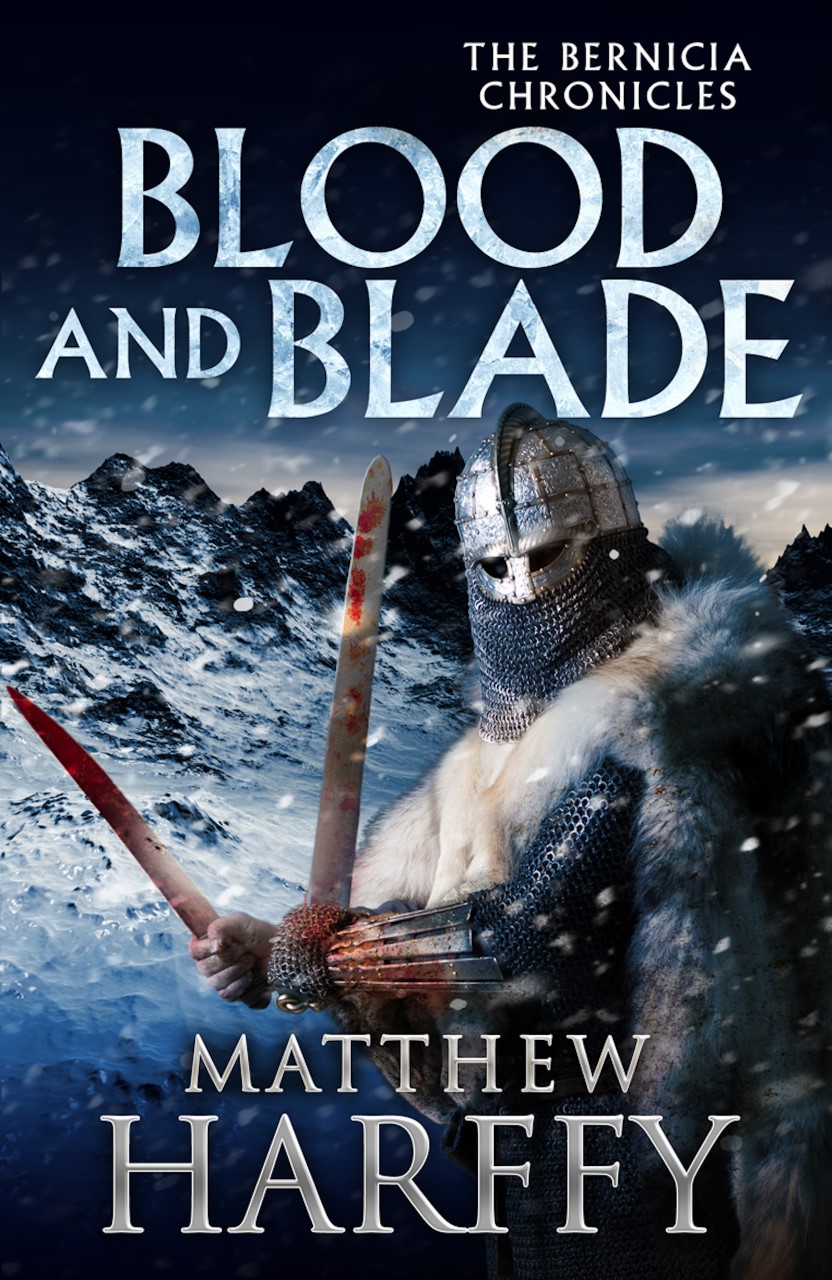
635AD. Anglo-Saxon Britain. A gripping, action-packed historical thriller and third instalment in The Bernicia Chronicles. Perfect for fans of Bernard Cornwell.

Oswald is now King of Northumbria. However, his plans for further alliances and conquests are quickly thrown into disarray when his wedding to a princess of Wessex is interrupted by news of a Pictish uprising.

Rushing north, Oswald leaves Beobrand to escort the young queen to her new home. Their path is fraught with danger and uncertainty, Beobrand must try to unravel secrets and lies if they are to survive.

Meanwhile, old enemies are closing in, seeking brutal revenge. Beobrand will give his blood and blade in service to his king, but will that be enough to avert disaster and save his kith and kin from the evil forces that surround them?

Beobrand Half-Hand is fast becoming one of my favourite Saxon heroes. Starting with The Serpent Sword, continuing with  The Cross and the Curse and now in Blood and Blade his story has told with passion and excitement by Matthew Harffy, with an eye to the great adventure. The author has honed his story-tellling skills to perfection in this 3rd novel of the series. The action continues unabated; from the first words of the opening chapter, Beobrand is in the thick of the fight, both politically and physically.

In Blood and Blade Matthew Harffy manages to transport the reader back to 7th century Britain, enveloping you in the Anglo-Saxon era. His knowledge and love of the time and its people shines through on every page and gives the whole book – indeed, the series – a deep impression of authenticity. You are taken on a journey,  which encompasses the length and breadth of England, from Hadrian’s Wall to the royal court of Wessex, we follow Beobrand’s journey as a warrior for his king, and courtier to his new queen. The landscape and people of Britain are vividly brought to life.

The fight scenes are wonderfully choreographed, enthusiastic and enjoyable. You can almost hear the clash of sword on shield, the screams of the wounded and howls of the warriors – I think I even,  physically, flinched in places!

For a heartbeat Beobrand saw the firelight glisten on the wicked iron point of the arrow. Torran aimed and held the arrow there momentarily. They were still too far away to attack. With every step though, his chance of missing, or of their byrnies protecting them, lessened.

“If you are not afraid, then lower your child’s toy and face me with sword and spear.”

Torran did not answer. His right hand let loose the bowstring and the arrow thrummed towards Beobrand. it flew straight and true. Beobrand watched its flight, a blur of white in the dawn. He saw the arrow come but did not react. He closed his eyes and accepted his wyrd.thumbnail_aria_harffy_blood-and-blade_e

There was a crash and a clatter, but no impact. No searing pain as the arrow split through metal rings and the soft flesh beneath.

Beobrand opened his eyes. For a moment the scene was confusing in the dawn-shadow of the hill. Someone was sprawled on the earth before him. Was it Acennan? No, the short warrior was still at his side. Then the figure groaned and rose up. Teeth flashed in the dark as the face broke into a savage grin. It was Attor. He held a shield in his left hand. From its hide-covered boards protruded that arrow that had been meant for Beobrand.

“Seemed you needed saving, lord,” he said, the glee of battle lending his tone a shrill edge.
Matthew Harffy has taken great care in developing his characters. Beobrand has grown older and wiser through his experiences. His battle skills are as keen as ever, while his political acumen and tactical wizardry is proving invaluable to his king, Oswald. His confidence has grown through his success, but the faith of his men and their willingness to follow him wherever he may lead – even if it is into an enemy shield wall.

And we learn more about his men. As Beobrand matures, he realises that it is not enough to have men fight for him; he has to learn about their pasts, their lives and their weaknesses. this is the book in which the lives of his friends and followers, such as Acennan, are given more depth and history, making their characters more realistic and human.

New characters are also introduced’ some friends, some enemies; they change the dynamic and bring in the promise of some great stories to come. As ever, Beobrand’s enemies are truly despicable, and will stop at nothing to bring the hero down, whether it is with arrow, sword or some more personal weapon. Beobrand has to use all his physical and mental strength to win through.

It is hard not to compare Matthew Harffy’s books with those of Bernard Cornwell. Much of the story is set around Bebbanburg (Bamburgh Castle), where Cornwell’s Last Kingdom stories began; but I don’t think that’s a bad thing. Both authors have their own unique styles, but a sense of adventure that will take their heroes on spectacular journeys. Any fan of Bernard Cornwell will find another favourite writer in Matthew Harffy.  However, Beobrand’s story is set a couple of centuries earlier and is a truly unique story. The hero of the Bernicia Chronicles will stand up against any Bernard Cornwell could produce.

thumbnail_harffy_matthewMatthew Harffy is the author of the Bernicia Chronicles, a series of novels set in seventh century Britain. The first of the series, The Serpent Sword, was published by Aria/Head of Zeus on 1st June 2016. The sequel, The Cross and The Curse was released on 1st August 2016. Book three, Blood and Blade, was released on 1st December 2016.

Book info and links:

The Serpent Sword, The Cross and the Curse and Blood and Blade are available on Amazon, Kobo, Google Play, and all good online bookstores. Killer of Kings and Kin of Cain are available for pre-order on Amazon and all good online bookstores.

Contact links:

Website: www.matthewharffy.com

Twitter: @MatthewHarffy

Facebook: MatthewHarffyAuthor

*

My book, Heroines of the Medieval World,  is now available in hardback in the UK from both Amberley Publishing and Amazon UK and worldwide from Book Depository. It is also available on Kindle in both the UK and USA and will be available in Hardback from Amazon US from 1 May 2018.

You can be the first to read new articles by clicking the ‘Follow’ button, liking our Facebook page or joining me on Twitter.


*

©Sharon Bennett Connolly 2016
Book Corner: Wynfield’s Kingdom, by MJ Neary

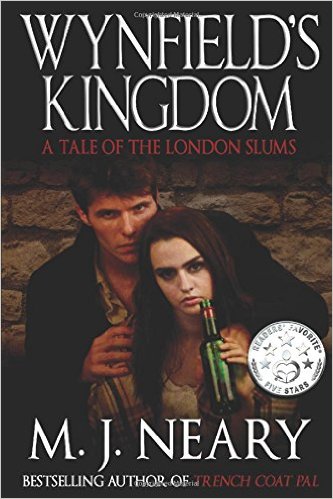
51si0e8ddl-_sx331_bo1204203200_My latest book review, of MJ Neary’s latest novel, Wynfield’s Kingdom: A Tale of the London Slums, the first novel of his stunning new series, set in Victorian South London, has gone live over at The Review today!

Wynfield’s Kingdom: A Tale of the London Slums is one of those amazing books which makes you feel like you’ve discovered something really special. Set mainly in the slums of Bermondsey and Southwark in South London, it paints an image of Victorian London which will stay with you for days – and nights – afterwards. The novel is an amazing story of human existence and endurance, with so many twists and turns that it will not fail to surprise and mesmerise you. The fact you never quite know what the next chapter will bring keeps you hooked and curious to the very end.

Tom did not trust Diana. She might have been helpless but certainly not harmless. Feebleness and innocence are not synonyms. She was dangerous precisely because of her physical weakness. One could expect anything from her. Tom feared that she would torch the tavern out of sheer spite.

“She’s your burden now,” he told Wynfield. “I wash my hands. You brought her here, so you watch over her now. If she starts making trouble, I’ll kick both of you out on the streets. I won’t have any nonsense in my house. You both came here as patients. I allowed you to stay here and that alone was unwise on my part.”

To read the full review of this fantastic novel – and to enter the prize draw and be in with a chance of winning an e-book in the giveaway, simply visit The Review and leave a comment. Good luck!

*

My book, Heroines of the Medieval World,  is now available in hardback in the UK from both Amberley Publishing and Amazon UK and worldwide from Book Depository. It is also available on Kindle in both the UK and USA and will be available in Hardback from Amazon US from 1 May 2018.

Be the first to read new articles by clicking the ‘Follow’ button, liking our Facebook page or joining me on Twitter.

*

©Sharon Bennett Connolly 2016
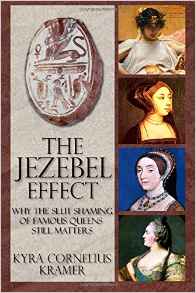
Book Corner: The Jezebel Effect by Kyra Cornelius Kramer

indexThe fact that Cleopatra is better known for her seductions than her statecraft, and that Jezebel is remembered as a painted trollop rather than a faithful wife and religiously devout queen, isn’t a way for historians to keep these interesting women in the public eye, rather it’s a subversion of their power, a re-writing of history to belittle and shame these powerful figures, preventing them from becoming icons of feminine strength and capability. Slut shaming has its roots in our earliest history, but it continues to flourish in our supposedly post-feminist, equal-rights world. It is used to punish women for transgressions against gender norms, threatening the security of their place in society and warning that they’d better be “good girls” and not rock the patriarchal boat, or they, too could end up with people believing they’ve slept with everything from farm animals to relatives. This is The Jezebel Effect

The Jezebel Effect: Why the Slut Shaming of Famous Queens Still Matters by Kyra Cornelius Kramer is a remarkable, thought-provoking analysis of the way queens have been treated and judged, based on their sexuality. The author is passionate about her subject and pulls no punches. Her arguments are well thought out and presented in such an honest, forthright manner that it is as if she is talking to you personally. It is a surprisingly enjoyable book; and I guarantee you will learn something new and find yourself re-appraising your own thoughts and approaches to women in history.

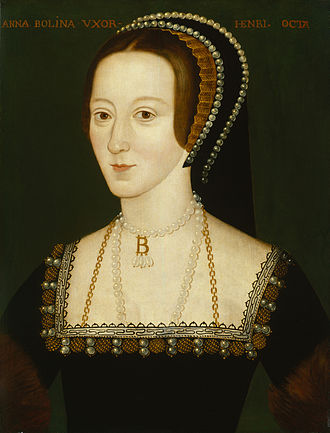
330px-anne_boleyn
Anne Boleyn

Starting with the biblical queen, Jezebel, and including Cleopatra, Anne Boleyn, Katherine Howard and Catherine the Great, Kyra Kramer  uses these queens as case studies demonstrating the way a woman’s reputation can be won, lost or destroyed through her sexual activities. Taking each queen in turn, their lives are analysed in great detail, demonstrating how political and personal slander were used by their enemies to create their bad-girl images.

For the last 500 or so years, the most popular version of Anne’s life has her playing the role of sultry harlot, a woman willing to use her sexuality as the bait to trap a king. At the very least it has been taken for granted that she wanted to be queen and manipulated Henry in order to achieve her goal. She looms in the public mind as “the most popular femme fatale, far outranking Cleopatra or Catherine the Great of Russia”. Inasmuch as Anne has been cast as a sly temptress making a gambit for the throne, here execution seldom engenders pity…

Kyra Kramer uses the queens as examples of how the stories of their lives have been manipulated as a political weapon to discredit and to apportion blame. The author goes on to present modern-day situations and makes an amazing case of showing how the way women were treated and vilified in the past is informing our thoughts and opinions of today, and how the shaming of women due to their sexual practices is continuing, and expanding, especially in the internet age.

This book will make you think again about how you present and represent women in your own life – it made me rethink a portion of my book as I realised I had conceptualised one of my ‘Heroines’ based on the deeply entrenched way women have been viewed for centuries. We see it in everyday life: a woman has an affair with a married man and it is she who is blamed, not the man; a female politician gets threatened with rape because she acts against the norm, Kyra Kramer demonstrates how such concepts have been used and developed throughout the centuries.

The Jezebel Effect: Why the Slut Shaming of Famous Queens Still Matters is a fabulous, fascinating read that will make you think again of how women have been viewed in the past, and are still being viewed today. It’s an enjoyable read that combines the history with the philosophy and politics of the sexual activities of some of the most famous – and infamous – of queens. It is a forthright analysis of women’s history that will leave you not only thinking about its contents for days afterwards, but about your own approach – whether you’re a man or a woman – to how women are seen and appraised every day.

*

My book, Heroines of the Medieval World,  is now available in hardback in the UK from both Amberley Publishing and Amazon UK and worldwide from Book Depository. It is also available on Kindle in both the UK and USA and will be available in Hardback from Amazon US from 1 May 2018.

Be the first to read new articles by clicking the ‘Follow’ button, liking our Facebook page or joining me on Twitter.

*

©Sharon Bennett Connolly 2016
Meet the blogger: “History the Interesting Bits”

Kate Braithwaite's avatarKate Braithwaite

screen-shot-2016-10-06-at-11-17-53-amToday I’m beginning a series of interviews with history bloggers – a great source for writers and history lovers in general. I’m delighted to start with Sharon Connolly who writes one of my absolutely favourite history blogs, History The Interesting Bits! Sharon has a great eye for an interesting story and I particularly like her mini biographies.

I’ll let Sharon introduce herself…

sharonI have been fascinated by history for over 30 years now. I have studied history academically and just for fun – I’ve even worked as a tour guide at historical sites. I’m now having great fun, passing on my love of the past to my 11-year-old son, who is a Horrible Histories fanatic. He is a fantastic research assistant and loves exploring historic sites with me. I started writing my blog in January 2015 and in March this year signed a contract with Amberley to write my first…

View original post 953 more words

William de Warenne, the Conqueror’s Man

History...the Interesting Bits
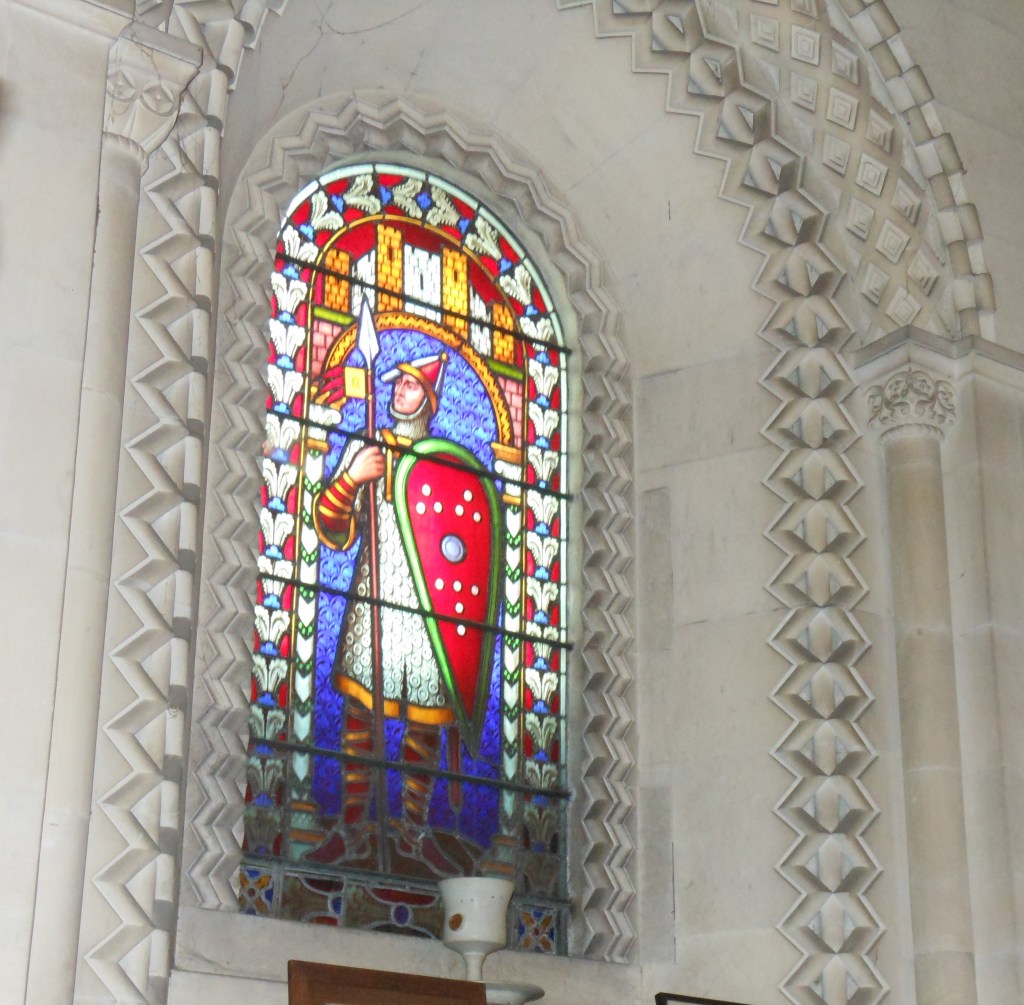
William de Warenne, 1st earl of Surrey

William de Warenne, first earl of Surrey, was a younger son of Rodulf de Warenne and his wife Beatrix. It is possible that Beatrix was a niece of Duchess Gunnor of Normandy, making young William a cousin of William the Bastard, duke of Normandy. The family name is probably derived from the hamlet of Varenne, part of the Warenne lands in the department of Seine-Inférieure, Normandy. William’s older brother, Rodulf or Ralph, would inherit the greater part of the Warenne family estates in Normandy.

His birth, as you might expect, is shrouded in the fog of time; a younger son of the minor nobility does not tend to get a mention until he does something remarkable or becomes someone notable. Although still young William was considered a capable and experienced enough soldier to be given joint command of a Norman army, by the mid-1050s. His first recorded military action is in the campaign against his own kinsman, Roger (I) de Mortemer of 1054, as one of the commanders of an army which defeated the French.

De Warenne was rewarded with some of the Mortemer lands; some of which he managed to retain even after Mortemer’s restoration to favour, including the castles of Mortemer and Bellencombre. Bellencrombe would become the capital of the de Warenne estates in Normandy. De Warenne received more rewards from the confiscated lands of William, count of Arques in 1053. Duke William’s confidence in de Warenne is demonstrated in the fact he was one of the barons consulted during the planning of the invasion of England in 1066.

In fact, William de Warenne is one of only a handful of Norman barons known to have fought at the Battle of Hastings on 14th October, 1066 as King William recalled his presence at the battle on his deathbed. De Warenne was rewarded with vast swathes of land throughout the country. According to the Domesday survey his lands extended over 13 counties; stretching from Conisbrough in Yorkshire to Lewes in Sussex. His territories were acquired over the course of the reign of William I and elevated him the highest rank of magnates. By 1086 his riches were only surpassed by the king’s half-brothers and his own kinsman, Roger de Montgomery. He is still in the Top 20 list of the richest people in History.

330px-bayeuxtapestryscene52
Battle of Hastings, 1066

Throughout his career, William de Warenne acquired lands in numerous counties, sometimes by nefarious means. Much of the property, such as Conisbrough, had formerly belonged to the late king, Harold. In Norfolk he is said to have asserted lordship over freemen not necessarily assigned to him. He had disputes with neighbouring landowners in Conisbrough, over which properties were sokelands and he is said to have stolen lands from the bishop of Durham and the abbot of Ely. Some acquisitions were obtained peacefully, such as the manor of Whitchurch in Shropshire, which was left to him by his kinsman Roger de Montgomery. William was an energetic and attentive landowner, and improved the economy of most of his estates; more than tripling his sheep flock at Castle Acre and doubling the value of his Yorkshire estates in just 20 years (at a time when the county was devastated by the Harrying of the North.

In 1067 William de Warenne was one of 4 prominent Normans appointed to govern England during William the Conqueror’s absence in Normandy. Following the Conquest, he continued to support the king and – subsequently – his son, William II Rufus – as a military commander for over 20 years. In 1074 he was with is father at  the abbey of Holy Trinity in Rouen and in 1083-85 he fought with the king on campaign in Maine, being wounded at the siege of the castle of Sainte-Suzanne.

In 1075, along with Richard de Clare, his fellow justiciar, he was sent to deal with the rebellion of Earl Ralph de Gael of East Anglia. De Gael had failed to respond to their summons to answer for an act of defiance and so the 2 lords faced and defeated the rebels at Fawdon in Cambridgeshire, mutilating their prisoners afterwards. Ralph withdrew to Norwich Castle; besieged for 3 months he managed to escape his attackers by boat, while the castle surrendered and was occupied by de Warenne.

History...the Interesting Bits
Gundrada de Warenne

William de Warenne was married to a Flemish noblewoman, Gundrada; her brother Gerbod was sometime earl of Chester and another brother, Frederic, held lands in Norfolk which eventually passed to Gundrada. He was murdered by Enlgish freedom fighter, Hereward the Wake; his murder giving rise to a personal feud between Hereward and William de Warenne:

Among his other crimes, by trickery [Hereward] killed Frederick, brother of Earl William of Warenne, a man distinguished by lineage and possessions, who one night was surrounded in his own house. On account of his murder, such discord arose between Hereward and the aforesaid William that it could not be settled by any reparation nor in any court.1

There has been considerable debate among historians over the theory that Gundrada may have been the daughter of William the Conqueror, but the confusion appears to have come from an unreliable charter belonging to Lewes Priory and Gundrada being part of the household of King William’s wife, Matilda; though it does seem likely that Matilda and Gundrada were related in some way, perhaps distant cousins. Gundrada and William were married sometime around the time of the Conquest, either before or after the expedition to conquer England.

They had 3 children together. Their eldest son, William, would succeed his father as Earl of Surrey and de Warenne. He married Isabel de Vermandois, widow of Robert de Beaumont, earl of Leicester; with whom he had, apparently, been having an affair even before the earl’s death. Young William had a chequered career, he supported the claims of Robert Curthose, duke of Normandy, to the English throne against the duke’s younger brother, Henry I. However, duke Robert lost and was captured and imprisoned by Henry. Henry eventually forgave William, who fought for the king at the Battle of Bremule and was with Henry he died in 1135.

A second son, Rainald de Warenne, led the assault on Rouen in 1090, for William II Rufus, in the conflict between the English king and his older brother, Duke Robert. However, by 1105 Rainald was now fighting for the duke against the youngest of the Conqueror’s sons, Henry I, defending the castle of Saint-Pierre-sur-Dives for the duke. He was captured by Henry the following year, but had been freed by September 1106. It is possible he died shortly after, but was certainly dead by 1118 when his brother issued a charter, in which he gave 6 churches to Lewes Priory, for the soul of deceased family members, including Rainald.

Gundrada and William also had a daughter, Edith, who married Gerard de Gournay, son of the lord of Gournay-en-Bray. Gerard also supported William II Rufus against Duke Robert and took part in the Crusade of 1096. Edith later accompanied him on pilgrimage back to Jerusalem, sometime after 1104, where he died. Gerard was succeeded by their son, Hugh de Gournay, whose daughter Gundreda would be the mother of Roger de Mowbray. Edith then married Drew de Monchy, with whom she had a son, Drew the Younger.

Castle_Acre_Castle
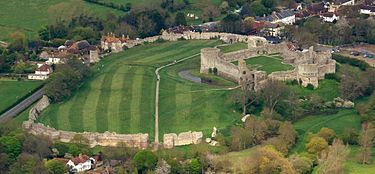
Castle Acre Castle, Norfolk

Gundrada died in childbirth at Castle Acre in Norfolk on 27th May 1085. She was buried in the chapter-house of the couple’s own of foundation Lewes Priory.

William’s second wife was a sister of Richard Guet, who was described as ‘frater comitissae Warennae’ when he gave the manor of Cowyck to Bermondsey Abbey in 1098.2 Guet was a landowner in Perche, Normandy, but his sister’s name has not survived the passage of time. All we know of her is that, a few days after her husband’s death, she attempted to gift 100 shillings to Ely Abbey in restitution for damage caused by William de Warenne. The monks refused the donation, hoping that Warenne’s departing soul had been claimed by demons.3

Despite this reputation at Ely, William de Warenne and his wife, Gundrada, had a reputation for piety. At some point in their marriage, either in 1077 or between 1081 and 1083, they went on pilgrimage to Rome. Due of war in Italy they only got as far as the great abbey of Cluny in Burgundy, where they were received into the fellowship of monks. On their return to England they founded a priory at Lewes, following the Cluniac rule and a prior and 3 monks were sent from Cluny to establish the foundation. It was the first Cluniac foundation in England.

pevensey_castle_aerial_alt
Pevensey Castle

Following the Conqueror’s death, William fought in support of the late king’s second son, William II Rufus against his older brother, Robert Curthose, who had inherited the dukedom of Normandy. He was rewarded in early 1088 with the earldom of Surrey. The new earl fought for William II Rufus during an invasion by Robert’s supporters and was badly wounded in the leg at the siege of Pevensey Castle, East Sussex, in the spring of 1088. He was taken to Lewes, where he died of his wounds on 24th June of the same year. Earl Warenne was buried beside his first wife, Gundrada, in the chapter-house of Lewes Priory.

Following the dissolution of Lewes Priory in the 16th century, Gundrada’s tombstone was 1st moved to Isfield Church; it was moved again in 1775 to the parish church of St John the Baptist at Southover in Lewes. The remains of Gundrada and William, themselves, were discovered in 2 leaden chests in 1845, when the railway line was excavated through the priory grounds. They were laid to rest, for a final time, at the Southover church, in 1847.

*

The story of William and Gundrada de Warenne appears in my book, Silk and the Sword: the Women of the Norman Conquest. It is told in much greater detail in Defenders of the Norman Crown: The Rise and Fall of the Warenne Earls of Surrey

*

Footnotes: ¹The Warenne (Hyde) Chronicle edited and translated by Elisabeth M.C. van Houts and Rosalind C. Love; 2Early Yorkshire Charters Volume 8: The Honour of Warenne, Edited by William Farrer and Charles Travis Clay; 3ibid

Images: Gundrada church window ©lewespriory.org.uk; William de Warenne church window ©Sharon Bennett Connolly; Bayeux Tapestry, Castle Acre and Pevensey Castle courtesy of Wikipedia.

SourcesEarly Yorkshire Charters Volume 8: The Honour of Warenne, Edited by William Farrer and Charles Travis Clay; England Under the Norman and Angevin Kings by Robert BatlettBrewer’s British Royalty by David WilliamsonBritain’s Royal Families, the Complete Genealogy by Alison Weir; british-history.ac.uk; kristiedean.com; English Heritage Guidebook for Conisbrough Castle by Steven Brindle and Agnieszka Sadrei; The Warenne (Hyde) Chronicle edited and translated by Elisabeth M.C. van Houts and Rosalind C. Love; oxforddnb.com.

*

My Books

Signed, dedicated copies of all my books are available through my online bookshop.

OUT NOW! Scotland’s Medieval Queens

Books by Sharon Bennett Connolly

Scotland’s history is dramatic, violent and bloody. Being England’s northern neighbour has never been easy. Scotland’s queens have had to deal with war, murder, imprisonment, political rivalries and open betrayal. They have loved and lost, raised kings and queens, ruled and died for Scotland. From St Margaret, who became one of the patron saints of Scotland, to Elizabeth de Burgh and the dramatic story of the Scottish Wars of Independence, to the love story and tragedy of Joan Beaufort, to Margaret of Denmark and the dawn of the Renaissance, Scotland’s Medieval Queens have seen it all. This is the story of Scotland through their eyes.

Scotland’s Medieval Queens gives a thorough grounding in the history of the women who ruled Scotland at the side of its kings, often in the shadows, but just as interesting in their lives beyond the spotlight. It’s not a subject that has been widely covered, and Sharon is a pioneer in bringing that information into accessible history.’ Elizabeth Chadwick (New York Times bestselling author)

Available now from Amazon and Pen and Sword Books

Also by Sharon Bennett Connolly:

Books by Sharon Bennett Connolly

Heroines of the Tudor World tells the stories of the most remarkable women from European history in the time of the Tudor dynasty, 1485-1603. These are the women who ruled, the women who founded dynasties, the women who fought for religious freedom, their families and love. Heroines of the Tudor World is now available for pre-order from Amberley Publishing and Amazon UK. Women of the Anarchy demonstrates how Empress Matilda and Matilda of Boulogne, unable to wield a sword themselves, were prime movers in this time of conflict and lawlessness. It shows how their strengths, weaknesses, and personal ambitions swung the fortunes of war one way – and then the other. Available from Bookshop.orgAmberley Publishing and Amazon UKKing John’s Right-Hand Lady: The Story of Nicholaa de la Haye is the story of a truly remarkable lady, the hereditary constable of Lincoln Castle and the first woman in England to be appointed sheriff in her own right. Available from all good bookshops Pen & Sword Booksbookshop.org and Amazon

Royal Historical Society

Defenders of the Norman Crown: The Rise and Fall of the Warenne Earls of Surrey tells the fascinating story of the Warenne dynasty, from its origins in Normandy, through the Conquest, Magna Carta, the wars and marriages that led to its ultimate demise in the reign of Edward III. Available from Pen & Sword BooksAmazon in the UK and US, and Bookshop.orgLadies of Magna Carta: Women of Influence in Thirteenth Century England looks into the relationships of the various noble families of the 13th century, and how they were affected by the Barons’ Wars, Magna Carta and its aftermath; the bonds that were formed and those that were broken. It is now available in paperback and hardback from Pen & SwordAmazon, and Bookshop.orgHeroines of the Medieval World tells the stories of some of the most remarkable women from Medieval history, from Eleanor of Aquitaine to Julian of Norwich. Available now from Amberley Publishing and Amazon, and Bookshop.orgSilk and the Sword: The Women of the Norman Conquest traces the fortunes of the women who had a significant role to play in the momentous events of 1066. Available now from Amazon,  Amberley Publishing, and Bookshop.org.

Alternate Endings: An anthology of historical fiction short stories including Long Live the King… which is my take what might have happened had King John not died in October 1216. Available in paperback and kindle from Amazon.

Podcast:

A Slice of Medieval

Have a listen to the A Slice of Medieval podcast, which I co-host with Historical fiction novelist Derek Birks. Derek and I welcome guests, such as Bernard Cornwell and Elizabeth Chadwick, and discuss a wide range of topics in medieval history, from significant events to the personalities involved.

Every episode is also now available on YouTube.

*

Don’t forget! Signed and dedicated copies of all my books are available through my online bookshop.

For forthcoming online and in-person talks, please check out my Events Page.

You can be the first to read new articles by clicking the ‘Follow’ button, liking our Facebook page or joining me on TwitterThreadsBluesky and Instagram.

*

©2016 Sharon Bennett Connolly, FRHistS

Book Corner: Interview with Steven McKay

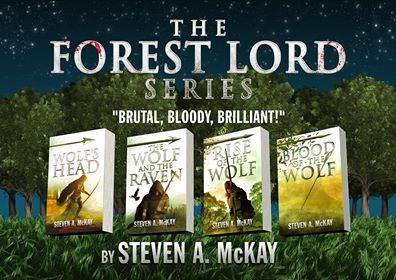
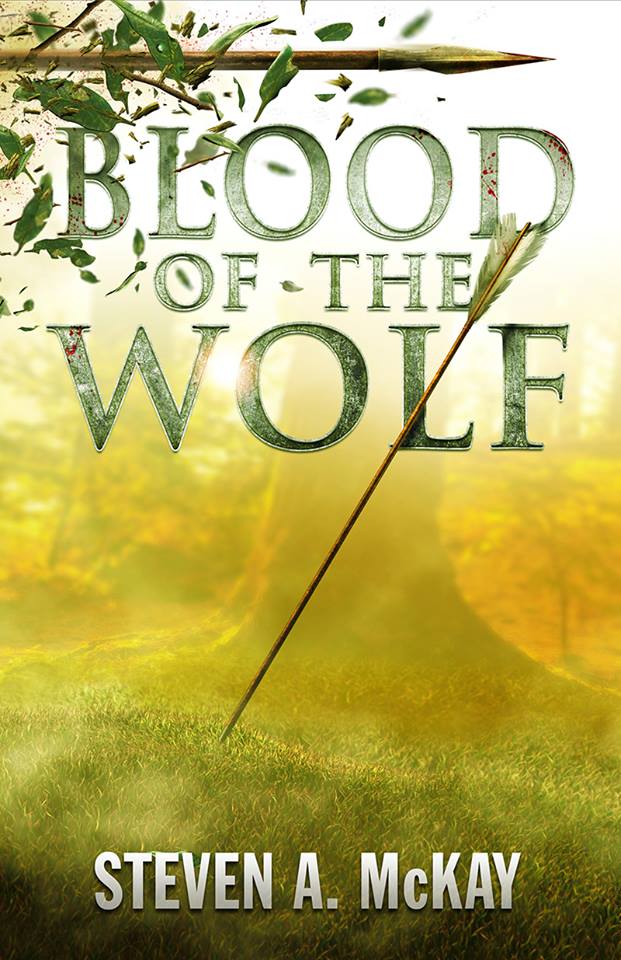
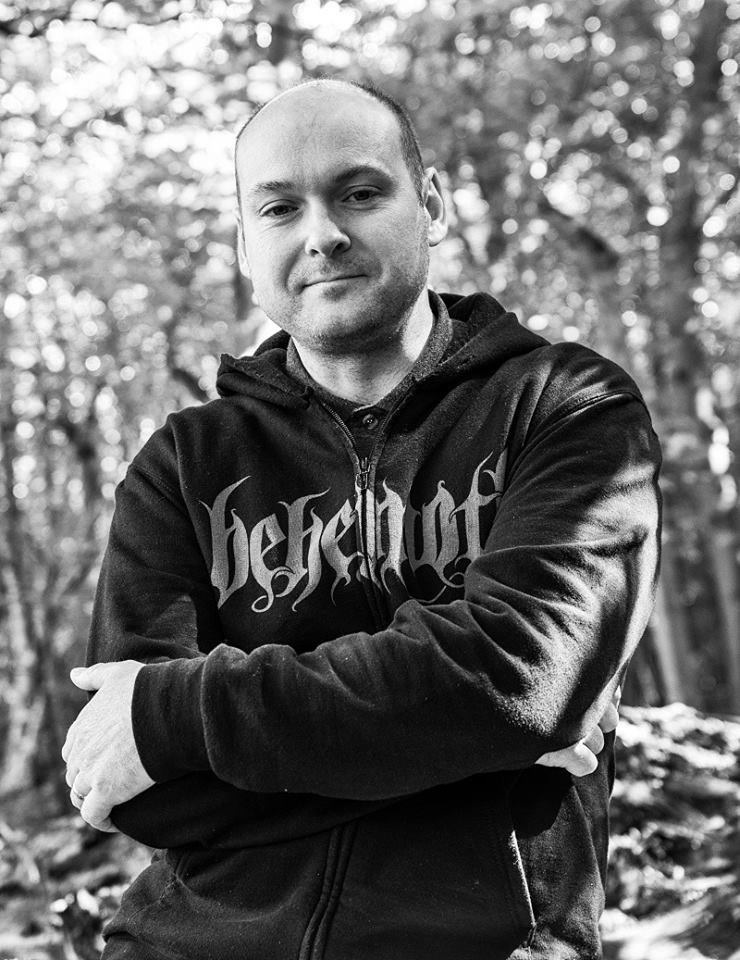
14527501_1508064435887266_874228221_nToday it is an absolute pleasure to welcome author Steven McKay to the blog. Steven has written the wonderful Forest Lord series, chronicling the adventures of everyone’s favourite legend, Robin Hood. With the final book, Blood of the Wolf, out this month, Steven talked to me about his writing, inspiration and what’s coming next.

Hi Steven, thanks so much for agreeing to be a guest interviewee on my blog, History…the Interesting Bits. So, here’s the questions …

What made you become a writer?

I always wanted to write stories, ever since I was a child. I would write little daft things in my school books and things like that. I think some people are creative and have a need to let their imagination run a bit wild be it through writing or art or music or whatever. I love to create songs on my guitars, and obviously write novels now but, sadly, I’m a terrible painter.

Who are your major writing influences?

Boringly, Bernard Cornwell is number one, just as he probably is for 90% of the people you talk to! The great thing about Cornwell is, he covers so much ground and so many periods. I don’t have any interest in his Sharpe stuff, for example, but his Arthurian and Saxon books are right up my street. And he does it so well that it always gives any writer inspiration and hopes of someday being that damn good!

Apart from that, I love Tolkien’s world-building, Philip K. Dick’s ability to get right inside a reader’s head, and David Gemmell’s great heroes.

How long do you spend researching a novel before you start writing?

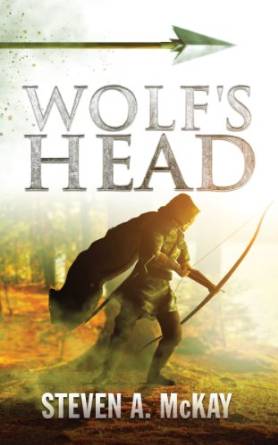
Well, I had to do a lot of research for my debut novel, Wolf’s Head, since I wasn’t really very clued-up on the middle-ages OR the Robin Hood legend. So I spent a good year or so, on and off, getting a feel for the period and the characters but, once I had that solid foundation I didn’t really need to do any more research before writing the other books in the series.

Now, though, I’m going to start a brand new series, set in post-Roman Britain, and again, I’m going to have to find out how the people lived and what the whole culture and landscape was like.

Hopefully I can learn quickly…

What comes first, your storyline or your research?

As above, it rather depends on what the book will be about. I just wrote a new short story with my characters from the Robin Hood books and I didn’t have to do any research prior to coming up with the plot. I obviously had to check certain facts once it was done but that happens at the end of every book, when you’re proofreading and editing.1st

For my new series I will need to do some research to figure out what directions the story might go, but I have a vague idea of what’s going to happen in the first book at least.

Do you know how a book is going to end when you start writing, or do your characters ‘surprise’ you?

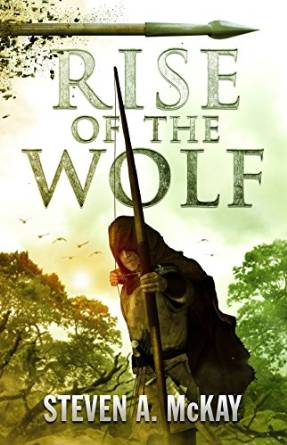
Generally, yes, I know what will happen. And, of course, with Robin Hood the story is well known and has to be stuck to fairly closely or it’s not Robin Hood any more. So in that respect I’ve always had an idea how each book will pan out, although along the way certain things happen when I’m writing that I didn’t expect. The characters really do come to life and take things in their own direction sometimes, without the writer’s prior knowledge! Friar Tuck always seemed to do that when I was writing his scenes – it was his idea for Robin to travel to London in Rise of the Wolf, the thought had never even crossed my mind originally!

Have you always been interested in Robin Hood?

No, not at all. I’m not really sure why, as I did always love that other great British hero, King Arthur, but Robin Hood never interested me until I decided to write a book about him. I think I never really engaged with the legend because there hadn’t been a great, modern interpretation of it the way there had been with Arthur. Bernard Cornwell had written great books about that as had Stephen Lawhead, and there was the movie Excalibur which I enjoyed, not to mention the whole mythology of Merlin…Robin, on the other hand, wasn’t really so well-known, to me at least. Had I been just a couple of years older I probably would have got into the TV series Robin of Sherwood when it came out in the 80’s and developed an interest from there but nope, I only started watching that as research for my own novel.

Needless to say, the Robin Hood legend is much deeper and more interesting than I first thought!

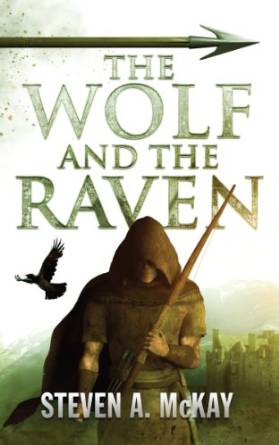
There are 3 Forest Lord books so far, Wolf’s Head, Rise of the Wolf and The Wolf and The Raven how many more adventures are there to come? Did you know how many books would be in the series when you started writing the story?

The fourth book, Blood of the Wolf, will be published on October 14th 2016 and this will be the last in the series. I planned it to be a trilogy but the second book took itself off in unforeseen directions and I needed to add an extra volume to do everything I wanted with the story. Incidentally, that second book, The Wolf and the Raven, was probably the most fun to write of all of them, perhaps because I let the characters go where they wanted without forcing them to stick to my plan!
What is in store for Robin next?

Nothing, I’m afraid. You’ll need to read Blood of the Wolf to see how things end for him. I do have a brand new short story, “The Stapleford Prisoner” featuring him and Little John but I don’t know when, or how, that will be published. I also plan on doing anothe2r novella, this time starring Will Scaflock but I haven’t started it yet. It will hopefully serve as a stopgap for my readers until I can get the next series underway.

I love the fact the stories are set in the reign of Edward II, rather than the more traditional Richard the Lionheart/King John era. What made you do this?

When I researched the legend the main thing I wanted to do was write about a realistic hero, so I tried to find out if there had been a real Robin Hood. I don’t believe there was one, single outlaw with that name, but there was a decent case for a Robert Hood living in the time of King Edward II having contributed to much of the early stories that became the legend we now all know. It seemed as good a starting point as any and certainly gave things a fresh slant since everyone always sets their Hood tales in a much earlier period.

Your Robin Hood has also moved from Sherwood Forest to Barnsdale Forest, is there are particular reason, or did Robin just fancy a change of scenery?

As above, the earliest ballads about Robin were actually set in Barnsdale and the real Robert Hood I mentioned came from Wakefield in Yorkshire. So again, that gave me a new direction to take the tired old tales and make them a little bit different. That said, much of the action in the books does take place in Nottingham as I believe any outlaw gang would have had to move around from place to place to avoid the law. The sheriff in my books, Sir Henry de Faucumberg was actually the Sheriff of Nottingham and Yorkshire in real life although I did use some artistic license with the dates he served….

A lot of actors have played Robin Hood through the years, do you have a particular image of Robin when you’re writing him?

No, not at all. I mean he’s tall and extremely well-built. Any good medieval longbowman would have been really muscular so that’s obvious but, other than that, I don’t really have a picture of him in my head and I don’t like to describe characters too exactly as I like to let the reader come up with their own image. Making the reader’s imagination fill in some blanks is the best way to draw them into the story I think.

What do you enjoy most about writing?

Just the way that I can pour out my imagination and make the stories in my head come to life. I’m constantly making up little stories in my head, imagining dialogue and actions and whatever, even about everyday events. My mind never seems to stop planning things, or imagining how some scene – even a completely mundane one – might pan out.1

Planning and writing books is basically a way of harnessing that energy and making it useful.

What is the worst thing about writing?

Probably waiting to see what readers think of a new book. I can’t tell if a new one is any good or not, it’s impossible, so I have to rely on readers’ opinions. It’s a horrible, nail-biting time waiting on feedback from beta readers and reviewers and hard not to badger them constantly about whether they like it or not.

Apart from that, editing can be a pain – structurally editing a novel I mean. It can be a really daunting thing trying to rearrange certain scenes and events into a cohesive whole and I usually wish it would just happen by magic so I can get on with simply writing again!

How long does it take to do a project from start to finish? Do you write one book at a time, or have several on the go at once?

Well, I’ve been writing for about four years now and in that time I’ve managed to write four novels and a couple of novellas. Basically, I like to do a novel and a novella every year or so. I only concentrate on one thing at a time so I don’t get confused, especially now with this next series being set in a different era altogether. That will require a whole new mindset which is why I haven’t started on it yet, until Blood of the Wolf is done and dusted and out there for people to buy.

Who are your favourite personalities from history? Is there anyone you would particularly like to write about, but haven’t yet?

Jesus! Sorry, that’s not a blasphemous oath, that’s my answer to the question. I’m not a religious person but I think both the Old and New Testaments of the Bible have great stories in them and it would be interesting to write a realistic version of, in particular, Jesus’s life. I did start to research the project years ago but it never came to anything. I’m not sure if it would be a good or a bad thing because there’s so much potential to offend a huge amount of people, but it’s something I would like to do eventually.

Perhaps.

Do you ever get writer’s block? If so, how do you get around it?

No, not really. I don’t sit down to write unless I have something planned. I like to think about what scene I’ll be working on next and have it ready in my head so when I start writing it just flows out.

Do you find social media – such as Facebook and Twitter – a benefit or a hindrance?

I don’t see how anyone can say they’re a hindrance – they’re basically free adv14527440_1508064235887286_1454685879_nertising and an amazing way to engage with your readers. I try to do my “social media admin” smartly – so if someone retweets me, I’ll reciprocate, but I do it on my phone as it’s much faster and I can do it when I have a spare minute during the day.

Don’t make the mistake of sitting down for an hour every day and interacting with people on a kind of schedule, because it will soon become boring. Fit it around your day, use every tool you have, from phone to tablet and laptop. Free apps like Hootsuite are also a massive help.

What is your next project, once Robin Hood is complete?

The working title for the next book is The Druid. Rather than a large cast of well-known, iconic characters that I was working with in the Hood books, this time I want to create one single warrior druid living in Britain just as the Romans have left. I love this land and it will be great to explore the geography of it through the eyes of a druid. It also has the added bonus that not much is known about the druids so I can have a little more freedom than I did with my Forest Lord series.

I’m really looking forward to writing it!

Thank you so much for agreeing to an interview, Steven, and for taking the time to answer my questions – I hope they weren’t too onerous.

Not at all, thank you for having me! It’s always great to chat about my work to people.

14528431_1508064125887297_483274802_nMore about Steven:

Steven McKay was born in 1977 near Glasgow in Scotland. He live in Old Kilpatrick with his wife and two young children. After obtaining his Bachelor of Arts degree with the Open University he decided to follow his life-long ambition and write a historical novel.

He plays guitar and sings in a heavy metal band when they can find the time to meet up.

You can check out his website here. Steven also has an Amazon Author page and can be found on Twitter and Facebook.

*

My book, Heroines of the Medieval World,  is now available in hardback in the UK from both Amberley Publishing and Amazon UK and worldwide from Book Depository. It is also available on Kindle in both the UK and USA and will be available in Hardback from Amazon US from 1 May 2018.

Be the first to read new articles by clicking the ‘Follow’ button, liking our Facebook page or joining me on Twitter.

*

©2016 Sharon Bennett Connolly.


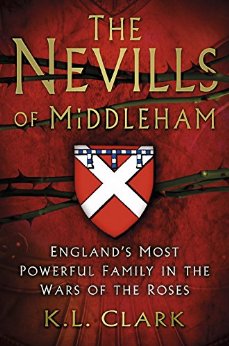
Book Corner: Interview with Karen Clark, author of The Nevills Of Middleham

51i0f-eet8l-_sy346_Hi Karen, congratulations on the release of your book, The Nevills of Middleham: England’s Most Powerful Family in the Wars of the Roses and thank you so much for agreeing to an interview. Welcome to History…the Interesting Bits.

Tell me about your book – how did it come about?

My name was very kindly passed to History Press by my friend, Amy Licence, when they first came up with the idea of a book about the Nevills. Of course, despite doubts and nerves, I jumped at the chance.

Chronicling an entire family is a huge undertaking, what made you write about the Nevills? What is it about them that fascinates you?

“Warwick rose toweringly. His rose-dappled mantle swirled; black hair curled on his brow. Everything of him was puissant and challenging and might have said: Behold us! We of the blood royal, of Edward the Third.”*

I read that paragraph when I was about fifteen and was intrigued. I wanted to know more. Who was this guy? I’ve spent years – decades – since then trying to find out! It hasn’t always been easy. Before the internet, books weren’t always easy to come by and primary sources next to impossible. The whole family fascinates me, as you say. I think any 15th century family has the potential to fascinate and intrigue but it was the Nevills who claimed me.

*Hawley Jarman, Rosemary, 1973, The King’s Grey Mare, Collins, London, p53

Who is your favourite Nevill? And why?

049-2
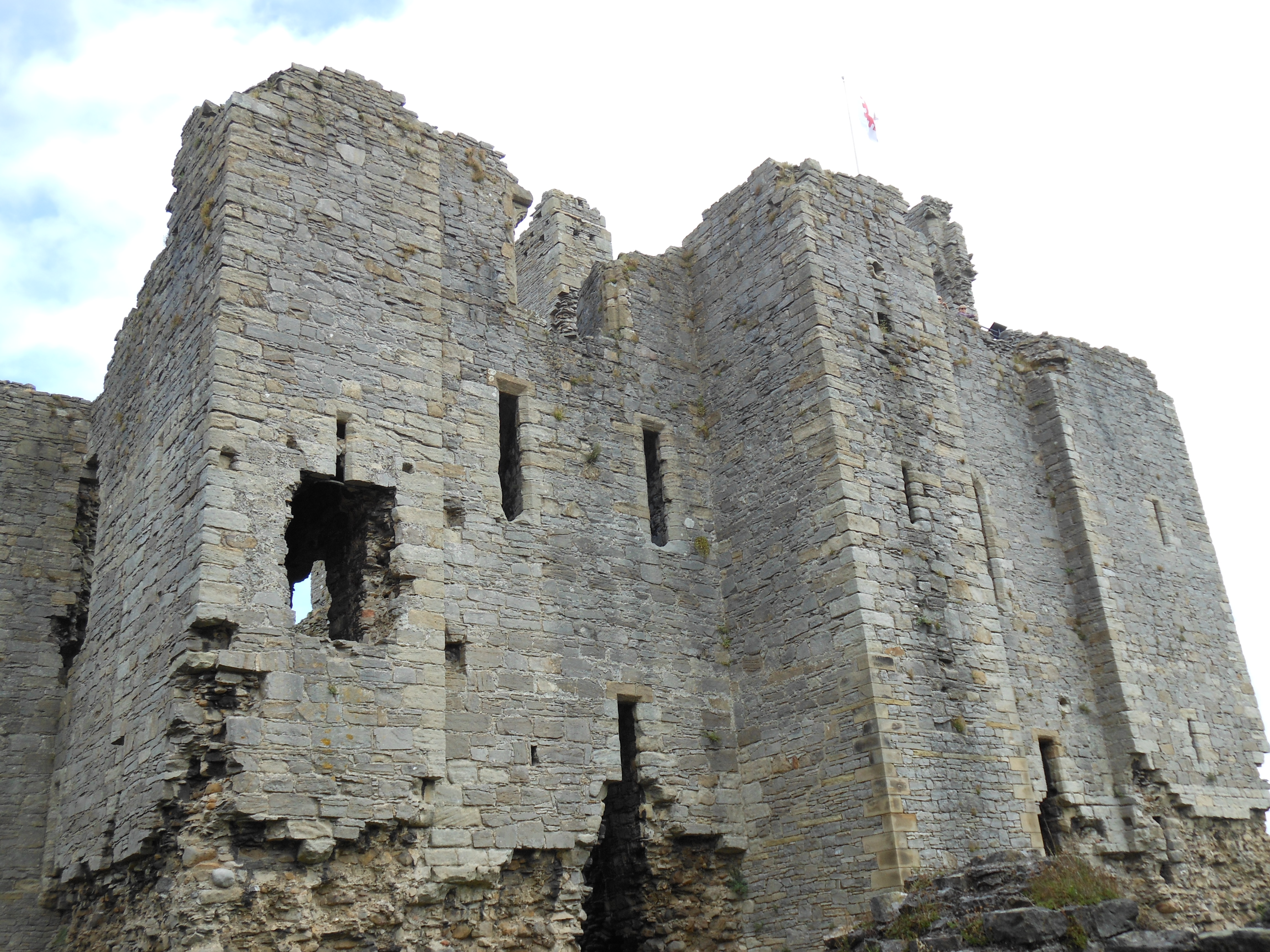
Middleham’s keep

Well, that changes depending on my mood! They all have something to recommend them. The one I’ve got to know best over the last few years is Thomas so he might be my current favourite. I’ve also got a huge soft spot for Alice and her husband, Henry Fitzhugh. I have no idea why! The Fitzhughs didn’t live that far from Middleham and Alice and Henry would have grown up together, though I’d hesitate to even suggest the ‘childhood sweethearts’ thing. They knew each other all their lives and while her sisters all married men who lived far away, Alice remained close to her old family home until Henry’s death.

And which Nevill do you like least?

There isn’t one!

The Nevills were involved in some of the greatest events to shape English history, but eventually lost everything, do you see them as heroes or villains?

Neither. Both. Sometimes one and sometimes the other but mostly, I think, they inhabited the shadowy in-between of moral ambiguity. Enlightened self-interest is one of the more interesting driving forces of change, and Warwick certainly operated from that principle when pushing for reform and regime change, but he could also be unconscionably self-interested in a most unenlightened way. To use a rather tired phrase often trotted out to cover a multitude of sins, they were of their time. But, at times, Warwick could be far more ruthless than that. The executions in Calais in 1460, the extra-legal killings of earl Rivers and the Herberts, the bloodbath after the battle of Hexham (which wasn’t Warwick’s responsibility alone, his brother John and Edward IV were also behind this orgy of executions that lasted days and stretched from Hexham to York) all point to a man with scant ability to forgive. Handing out second chances was not something Warwick tended to do. I think those people who wandered into Warwick’s unreality field certainly saw him as a hero. To the people of Burgundy, he has gone down in history as one of the vilest villains of all time. Like a lot of things, it depends where you stand.

068-2
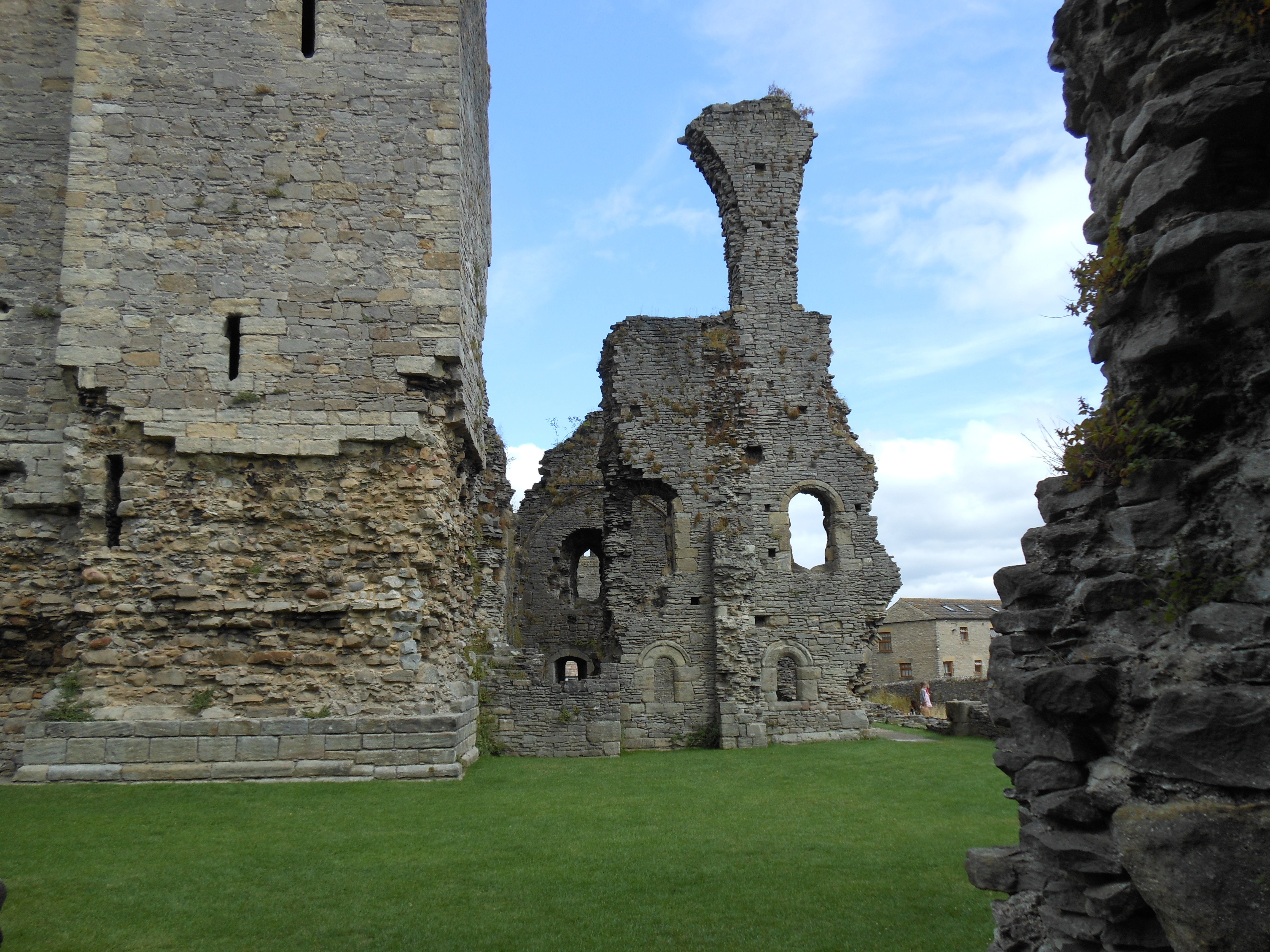
Middleham’s great hall

You have written both history and historical fiction – which is the easiest and which the most fun?

Non-fiction is easier to write. While you can speculate some – indeed, you kind of have to from time to time – you don’t have to dream up motivations and relationships. If you don’t know where someone was for six months, you just make a note of that and move on. There’s no gap filling to be done. But it’s that very difficulty that makes writing historical fiction so stimulating. You can’t (always) just leave a six month gap, you have to find somewhere for them to be and something for them to do, you have to establish how they felt about the various other people in the story, you have to give them a voice. I think the exercise of researching more rigorously and writing non-fiction will make me a better writer of fiction but the proof of that will be in the pudding.

What do you enjoy most about writing?

It’s a bit like breathing. I’ve never stopped to ask why I do it. I just have to. Thinking about it now… when everything’s flowing and the words are just pouring out (good or bad), when every sentence sparks the next, when fictional characters pick up their story and take off with it, when a sudden realisation hits you that this is why someone did something, or that is what drives them… those are the best bits.

What is the worst thing about writing?

The loneliness.

How do you organise your writing day?

I don’t! I get up, sit down at my desk and maybe I start work. Or I get up again and do something else. Or I put on some music, crank it up and dance until my dog tells me to stop. Organising isn’t my strongest suit. It’s probably why it’s taken as long as it has before I’ve got serious about writing. I’ve been writing all my life. I couldn’t wait to start school coz they were going to teach me how to write and that would mean all the little stories that were locked in my head could be set free. But I had to work for a living for years and that became my focus and my priority, along with growing my children up. Since making the decision that, if I didn’t get something happening soon, it was never going to, I have the freedom just to let it all flow. I can write for hours one day and faff around for hours the next. No self-discipline, that’s my problem! Writing The Nevills changed that to a large degree, as I had a deadline imposed from without. That meant more days writing and fewer faffing.

How long have you spent researching the Nevills?

056-2
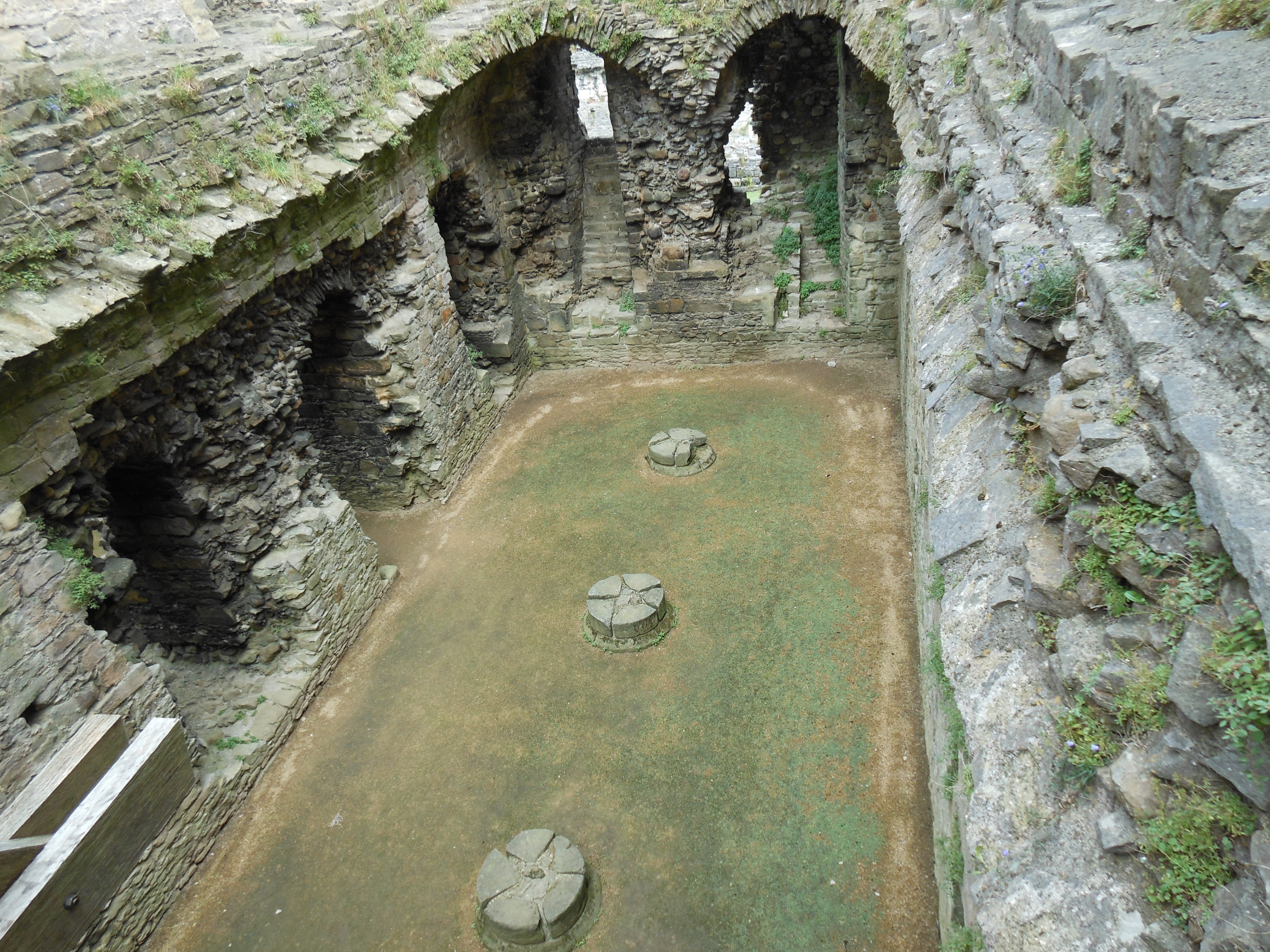
Inside the bailey at Middleham

Years! Decades! For a long time, it was pretty desultory. I bought books when I could, though they weren’t always easy to come by. For the longest time, I didn’t even know what was available. Then along came the internet! The decline of bricks and mortar bookshops is lamented by many but I can’t quite feel the same hostility towards Amazon (and the like) I know others do. Living where I do, a long way from bookshops of any kind, online book stores have been an unalloyed blessing. And there’s so much primary source material on the internet! I’ve spent hours and hours tracking down a reference to some obscure text and, nine times out of then, I’ve found it. So, in the last few years, particularly since I started writing The Nevills, the research has got more intense and deeper.

Do you find social media – such as Facebook – a benefit or a hindrance?

Oh, definitely a benefit! The support I’ve had from friends is incalculable. Discussions and debates, someone pointing out a source I hadn’t come across before, the flourishing of ideas… it’s been great! If I hadn’t stumbled across Susan Higginbotham’s blog several years ago now I wouldn’t be doing what I’m doing, a book about the Nevills would probably have been written but not by me. I cannot stress enough how much facebook friends like Susan, Amy and you, Sharon, have helped me on this journey.

What is your next project?

073-2
The village of Middleham

I really want to get the first Nevill novel finished. It’s nearly done but I think my imminent trip to the UK will feed into that beautifully. Apart from that, I have a zillion ideas waiting to be explored – a fantasy series I’m about halfway through writing, a science fiction idea that refuses to go away, a crime novel with a BDSM theme, a book I’ve been working on for decades that needs either to be dusted off and looked at again or shelved permanently, the rest of the Nevill fiction… then, the other night, a news story about North Korea sparked yet another idea. I either need a guaranteed next life or a dedicated team of offsiders!

A huge ‘THANK YOU‘ to Karen for taking the time to chat and answer my questions. I wish her every success with the book.

About Karen’s Book

51i0f-eet8l-_sy346_The Nevills of Middleham: England’s Most Powerful Family in the Wars of the Roses: In 1465, the Nevills must have thought they’d reached the pinnacle of power and influence in England. Richard Nevill was the king’s right-hand man and married to the richest woman in the kingdom; John Nevill was an accomplished soldier who’d done much to stabilise the new dynasty; and George Nevill was not only chancellor but newly enthroned as Archbishop of York.

The Nevill women were as active as their male counterparts. As sisters and wives, daughters and daughters-in-laws, they had the ears of the elite in England and were not afraid of wielding their influence. And they were not always on the same side.

Cracks in the stability of the most powerful family in England began to show. Rivalries led to serious conflict that worsened when King Edward IV impulsively married Elizabeth Wydeville, a choice of bride that did not please everyone. The Nevills had already lost a great deal for the Yorkist cause. Within six years, as the Wars of the Roses turned into one of the bloodiest periods of English history, they’d lose even more for the Lancastrians.

The Nevills of Middleham is available now from the History Press.

About Karen

K.L. CLARK’s research of the Nevill family and the Wars of the Roses spans over a decade and she is currently working on a series of novels about the Nevills. She has presented two papers on the Wars of the Roses to the Richard III Society, writes the popular blog A Nevill Feast and is an active member of the Facebook history community. She lives in Australia with her family. http://www.nevillfeast.wordpress.com.

*

My book, Heroines of the Medieval World,  is now available in hardback in the UK from both Amberley Publishing and Amazon UK and worldwide from Book Depository. It is also available on Kindle in both the UK and USA and will be available in Hardback from Amazon US from 1 May 2018.

Be the first to read new articles by clicking the ‘Follow’ button, liking our Facebook page or joining me on Twitter.

*

©2016 Sharon Bennett Connolly.


King Eadwig ‘All-Fair’ and the Coronation Scandal

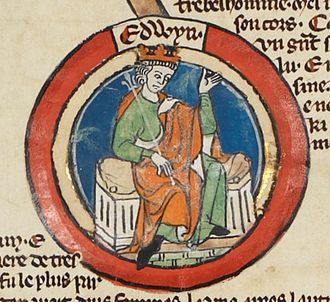
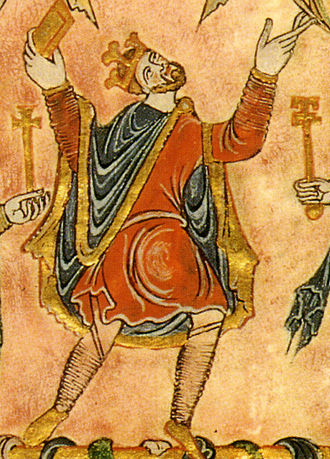
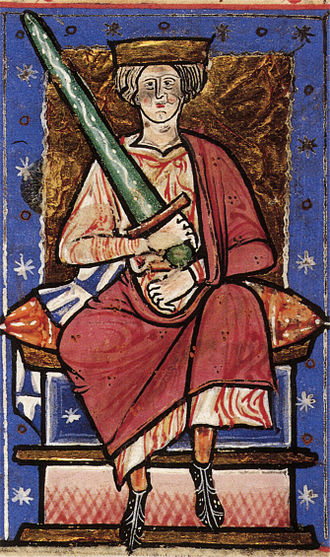
eadwig_-_ms_royal_14_b_vi
King Eadwig

While researching Edward the Martyr and his stepmother, Ælfthryth, I came across a very interesting character. Eadwig (or Edwy) was young Edward’s uncle; the elder brother of Edward’s father, Edgar the Peaceable. Eadwig has one of the worst reputations of the Anglo-Saxon kings, even though he only reigned for 4 years; he was, supposedly, found in a compromising situation when he was meant to be presiding over his coronation feast.

I just had to know more about this king!

Eadwig was born around 940. He had an impressive royal pedigree, being the eldest surviving son of Edmund I (the Elder) and his 1st wife, Ælfgifu of Shaftesbury, who was later known as St Elgiva. Edmund was the son of Edward the Elder and, therefore, the grandson of King Alfred the Great, thus making Eadwig King Alfred’s great-grandson.

Eadwig’s mother Ælfgifu died in 944, and was buried at Shaftesbury Abbey; she left little Eadwig and his baby brother, Edgar, to be raised by their father. Although Edmund married again, he only survived his 1st wife by 2 years; he was stabbed by Leofa, an exiled thief, on 29 May 946, possibly as part of an assassination plot, although later sources suggest Edmund had recognised Leofa in the crowd and was killed while trying to arrest him.

With his eldest son no more than 6 years old, Edmund was succeeded as king by his brother, Eadred (known as Eadred Debilis Pedibus (“Weak-in-the-Feet”). Eadred’s chief supporters included his mother, Queen Eadgifu the 3rd wife of Edward the Elder, Archbishop Oda (or Odo) of Canterbury, Dunstan, abbot of Glastonbury and Æthelstan Half-King ealdorman of East Anglia.

330px-edmund_i_-_ms_royal_14_b_v
Edmund I, Eadwig’s father

As Eadred’s health failed, more responsibilities were entrusted to his chief supporters. Dunstan, for instance,  as well as being entrusted with the production of charter in the king’s name he was also given the guardianship of the royal treasures. Æthelstan is said to have been foster-father to Edgar, Eadwig’s younger brother, so it is possible that both boys were raised in his household.

Although we know nothing of Eadwig’s childhood it is assumed he was raised away from court, as his name does not appear on any charters during the reigns of his father or uncle. Eadwig and his brother only start appearing in authentic texts in 955, Eadred’s final year.

Eadred died on 23rd November 955 and was succeeded by 15-year-old Eadwig. A typical teenager, Eadwig immediately set about trying to assert his independence. He made appointments that were calculated to reduce the power and influence of Æthelstan Half-King, and then turned his attention to his grandmother, Queen Eadgifu, depriving her of all her possessions.

The most powerful and influential people in the country were probably pulling their hair out in frustration in no time. However, life carried on and Eadwig’s coronation took place at Kingston-Upon-Thames, probably at the end of January 956. And it was at the feast, to celebrate the coronation, that Eadwig’s reputation took a spectacular nosedive.

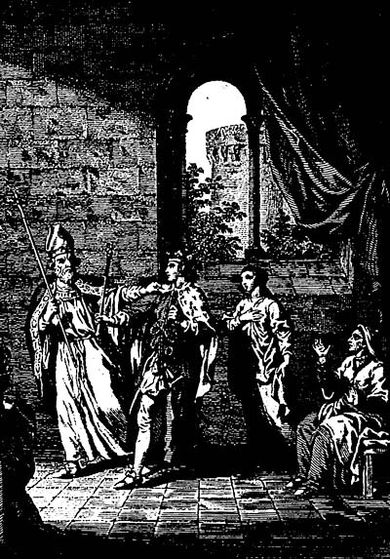
aelfgifu-mortimer
Eadwig defending Aelfgifu to Archbishop Oda

Eadwig seems to have grown bored – or tired – of the celebrations and retired to his own apartments, even though the coronation feast was in full swing. When Archbishop Oda noticed Eadwig’s absence, he sent Abbot Dunstan (the future saint and archbishop of Canterbury) in search of the errant king. Dunstan supposedly found Eadwig in a compromising situation with a young woman, ‘a girl of ripe age’¹ … and her mother. It is said that Dunstan was so furious he physically attacked the 2 women before dragging Eadwig back to the banquet.

The younger lady involved was most likely Ælfgifu, soon to be Eadwig’s wife. The story, however, is related in the life of St Dunstan and could well be an invention or, at the least, an exaggeration designed to highlight the conflict between Eadwig and the church, over his choice of bride. And during the battle of wits between king and church Ælfgifu’s mother, Æthelgifu, pressed Eadwig to have Dunstan deprived of all his possessions and sent into exile.

However, it seems the church held the upper hand; Eadwig and Ælfgifu were separated in 957 or 958 on the orders of Archbishop Oda ‘because they were too closely related’². Research suggests that Ælfgifu was from a junior or dispossessed branch of the royal family, possibly descended from Æthelred I (r. 865-71), brother of Alfred the Great, thus making the young lovers 3rd cousins. Ælfgifu lived on into the reign of King Edgar the Peaceable, but disappears from the historical record after 96.

Eadwig did not remarry.

Other aspects of Eadwig’s life appear to have been just as chaotic; his reign taken up with political disputes and trying to pacify his rebellious nobles. Eadwig’s surviving charters show a favouritism towards laymen, rather than the church, although he is remembered as a benefactor of Abingdon Abbey. Eadwig appointed 3 new ealdordoms during 956 alone, including Æthelwold, son of Æthelstan Half-King and 1st husband of Ælfthryth, the wicked stepmother of Edward the Martyr.

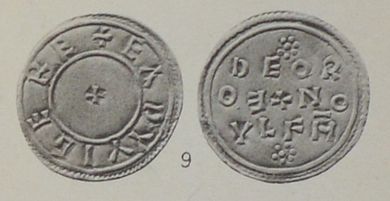
coin_of_king_eadwig_of_england
Coin of King Eadwig

By the summer of 957 the kingdom was divided in 2; the king ‘was wholly deserted by the norther people, being despised because he acted foolishly in the government committed to him, ruining with vain hatred the shrewd and the wise, and admitting with loving zeal the ignorant and those like himself’³. A political settlement was reached, probably aimed at preventing civil war, based on a geographical division of the country, rather than personal loyalties. Eadwig was to rule all the lands south of the River Thames, while his younger brother, Edgar, would rule in the north. Although the fact that it was Eadwig’s coins that were the country’s only currency until 959 suggests that Eadwig maintained overall authority.

This became the status quo until Eadwig’s death on 1st October 959 at Gloucester, when the kingdom was once again united under one ruler, King Edgar. Aged only around 19 when he died, the manner of Eadwig’s death is a mystery; it’s possible he died from some inherited family ailment, or a convenient accident, I suppose we’ll never know…. Eadwig was buried in the New Minster at Winchester, founded by his grandfather, King Edward the Elder.

s_594_diploma_of_king_eadwig_for_aelfwine_ad_956-tif
Diploma of King Eadwig for Aelfwine

Poor Eadwig’s reputation has suffered at the hands of the biographers of the early church leaders, particularly in the Life of St Dunstan, which depicts Eadwig as a debaucher, a despoiler of the church and an incompetent king. While William of Malmesbury called him a ‘wanton youth’ who ‘misused his personal beauty in lascivious behaviour’ 4, his nickname of ‘All-Fair’ suggests he wasn’t all bad. The chronicler, Æthelweard saying that Eadwig ‘for his great beauty he got the nickname Pancali [‘All-Fair’] from the common people’.5 According to the chronicler, Eadwig ‘held the kingdom for four years and deserved to be loved.’6

*

Footnotes: ¹ quoted by Simon Keynes in oxforddnb.com; ² Anglo-Saxon Chronicle, s.a. 958, text 1; ³ Vita S. Dunstan, ch. 24; 4 quoted by Simon Keynes in oxforddnb.com; 5 Chronicle of Æthelweard, 4.8; 6 ibid.

*

Pictures courtesy of Wikipedia

Sources: Brewer’s British Royalty by David Williamson; Britain’s Royal Families, the Complete Genealogy by Alison Weir; The Wordsworth Dictionary of British History by JP Kenyon; The Anglo-Saxons in 100 Facts by Martin Wall; Kings, Queens, Bones and Bastards by David Hilliam; The Mammoth Book of British kings & Queens by Mike Ashley; The Oxford Companion to British History Edited by John Cannon; oxforddnb.com.

*

My Books

Signed, dedicated copies of all my books are available through my online bookshop.

OUT NOW! Heroines of the Tudor World

Heroines of the Tudor World tells the stories of the most remarkable women from European history in the time of the Tudor dynasty, 1485-1603. These are the women who ruled, the women who founded dynasties, the women who fought for religious freedom, their families and love. These are the women who made a difference, who influenced countries, kings and the Reformation. In the era dominated by the Renaissance and Reformation, Heroines of the Tudor World examines the threats and challenges faced by the women of the era, and how they overcame them. From writers to regents, from nuns to queens, Heroines of the Tudor World shines the spotlight on the women helped to shape Early Modern Europe.

Heroines of the Tudor World is now available for pre-order from Amberley Publishing and Amazon UK.

Coming 30 January 2025: Scotland’s Medieval Queens

Scotland’s history is dramatic, violent and bloody. Being England’s northern neighbour has never been easy. Scotland’s queens have had to deal with war, murder, imprisonment, political rivalries and open betrayal. They have loved and lost, raised kings and queens, ruled and died for Scotland. From St Margaret, who became one of the patron saints of Scotland, to Elizabeth de Burgh and the dramatic story of the Scottish Wars of Independence, to the love story and tragedy of Joan Beaufort, to Margaret of Denmark and the dawn of the Renaissance, Scotland’s Medieval Queens have seen it all. This is the story of Scotland through their eyes.

Available for pre-order now.

Also by Sharon Bennett Connolly:

Women of the Anarchy demonstrates how Empress Matilda and Matilda of Boulogne, unable to wield a sword themselves, were prime movers in this time of conflict and lawlessness. It shows how their strengths, weaknesses, and personal ambitions swung the fortunes of war one way – and then the other. Available from Bookshop.orgAmberley Publishing and Amazon UKKing John’s Right-Hand Lady: The Story of Nicholaa de la Haye is the story of a truly remarkable lady, the hereditary constable of Lincoln Castle and the first woman in England to be appointed sheriff in her own right. Available from all good bookshops Pen & Sword Booksbookshop.org and AmazonDefenders of the Norman Crown: The Rise and Fall of the Warenne Earls of Surrey tells the fascinating story of the Warenne dynasty, from its origins in Normandy, through the Conquest, Magna Carta, the wars and marriages that led to its ultimate demise in the reign of Edward III. Available from Pen & Sword BooksAmazon in the UK and US, and Bookshop.org

Ladies of Magna Carta: Women of Influence in Thirteenth Century England looks into the relationships of the various noble families of the 13th century, and how they were affected by the Barons’ Wars, Magna Carta and its aftermath; the bonds that were formed and those that were broken. It is now available in paperback and hardback from Pen & Sword,  Amazon, and Bookshop.orgHeroines of the Medieval World tells the stories of some of the most remarkable women from Medieval history, from Eleanor of Aquitaine to Julian of Norwich. Available now from Amberley Publishing and Amazon, and Bookshop.orgSilk and the Sword: The Women of the Norman Conquest traces the fortunes of the women who had a significant role to play in the momentous events of 1066. Available now from Amazon,  Amberley Publishing, and Bookshop.org.

Alternate Endings: An anthology of historical fiction short stories including Long Live the King… which is my take what might have happened had King John not died in October 1216. Available in paperback and kindle from Amazon.

Podcast:

Have a listen to the A Slice of Medieval podcast, which I co-host with Historical fiction novelist Derek Birks. Derek and I welcome guests, such as Bernard Cornwell, and discuss a wide range of topics in medieval history, from significant events to the personalities involved.

*

Don’t forget! Signed and dedicated copies of all my books are available through my online bookshop.

For forthcoming online and in-person talks, please check out my Events Page.

You can be the first to read new articles by clicking the ‘Follow’ button, liking our Facebook page or joining me on TwitterThreads and Instagram.

©2016 Sharon Bennett Connolly FRHistS
Guest Post: The Two Women in the life of Harold II by Sharon Bennett Connolly

Today I have a guest article over at Paula Lofting’s blog. Paula’ s novels, Sons of the Wolf and The Wolf Banner, chart the story of Harold II, so I take a look at the 2 women in his life.

paulalofting's avatarThe Road to Hastings and other Stories

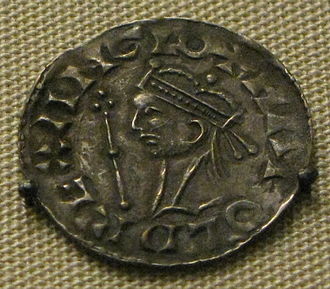
330px-harold_godwinson_silver_coin

Harold Godwinson was born around 1022 and did more in the 44 years he was on this earth, than most people could achieve in 3 lifetimes. He received the earldom of East Anglia in 1044 and, as the son of Godwin, earl of Wessex, he succeeded to his father’s earldom in 1053. His sister was the wife of King Edward the Confessor, his brother was the earl of Northumberland (for a time). Harold was not only one of the king’s foremost earls but also one of his most respected advisors. In short, the Godwinsons were the most powerful family in the kingdom, after the king himself. At one point Harold, along with his father and brothers, had been exiled from England after quarrelling with the king. He is even said to have sworn an oath to back William of Normandy’s claim to the English throne in the likely event that…

View original post 1,177 more words

England’s First Queen, the Original Wicked Stepmother?

330px-A_Chronicle_of_England_-_Page_072_-_Edward_Murdered_at_Corfe
Queen Ælfthryth and King Edward at Corfe

After writing an article about Edward the Martyr the other week, I thought it only fair to take a look at the other side of the story and write about Ælfthryth, England’s first ever crowned queen and Edward’s stepmother – and possible murderer.

Author Annie Whitehead researched Ælfthryth for her book Alvar the Kingmaker and rather likes her. So she can’t be all bad – can she?

Ælfthryth was probably born around 945; the daughter of Ealdorman Ordgar of Devon and an unknown woman who is said to have been descended from the royal family. As you can imagine, after the passage of more than 1,000 years, nothing is known of her childhood; although she had a least one sibling, a brother, Ordulf, who was founder of Tavistock Abbey. She was married around the age of 11 to Æthelwold, the son of Æthelstan Half-King (I have to do a post about him! What a name!) and ealdorman of East Anglia.

Æthelwold died in 962, probably in a hunting accident, although there were rumours of murder on the orders of his wife’s supposed lover, King Edgar. Edgar and Æthelwold would have known each other very well. After being orphaned as a baby, Edgar was raised in Æthelstan’s household alongside his own sons; of whom Æthelwold was one of the youngest.  Some stories have Edgar wielding the dagger himself, while others don’t even mention murder. Whether the suspicion arose at the time of the event, or following Ælfthryth’s marriage to Edgar 2 years later, is also unclear.

Edgar’s marital history was already chequered. Ælfthryth could be Edgar’s second or third wife; she was certainly the third relationship by which children were born. Edgar’s first wife, Æthelfled “the Fair”, was the mother of his eldest son, Edward (the Martyr). Following Æthelfled’s death, Edgar had a relationship with Wulfryth from which a daughter, Edith, was born around 963/964. The sources are uncertain as to whether or not Edgar and Wulfryth married, and some even suggest that she was a nun Edgar had seduced; although this may be confusion due to the fact that Wulfryth entered a convent shortly after Edith was born. Edith joined her mother in the abbey at Wilton, where Wulfryth eventually became abbess; in time both mother and daughter would be venerated locally as saints.

New_Minster_Charter_966_detail_Edgar
King Edgar the Peaceable

Ælfthryth and Edgar were married in 964 and were soon the parents of 2 sons; Edmund and Æthelred. Despite having an older half-brother, Edward, it is Edmund who appears as Edgar’s acknowledged heir; his name being above that of Edward’s in a charter of 966, witnessed by both boys, which founded the New Minster at Winchester. Poor Ælfthryth must have been distraught when, in 971 and still only a child of about 7, young Edmund died.

The grandson of Edward the Elder, and great-grandson of Alfred the Great, Edgar had been king since 959; however on 11 May 973 he had a coronation, at Bath Abbey. Whether this was his first coronation, or a second ceremony seems to be still debated by historians. Edgar was about 30 and the venerated Archbishop Dunstan of Canterbury officiated. It is the first known coronation of a queen of England, Ælfthryth.

According to the Oxford Dictionary of National Biography there is a near contemporary account of the coronation, which depicts Ælfthryth feasting with many abbots and abbesses, wearing a silken gown sewn with pearls and precious stones. The coronation was an important display for Edgar and Ælfthryth, as a way to emphasise the legitimacy of their union, especially given Edgar’s marital history, and the claims of their children as Edgar’s heirs. Ælfthryth’s new position as a consecrated queen would give her surviving son, Æthelred, seniority over Edgar’s oldest son, Edward, whose mother was never queen.

However, when it came down to it, Æthelred’s tender age was held against him, when Ælfthryth’s security was destroyed just 3 years later. King Edgar died unexpectedly at the young age of 32. With their eldest son dead and the youngest only 7 years old, the crown went to Edgar’s eldest son, the 12/13-year-old Edward. Edward faced opposition when Ælfthryth pressed Æthelred’s claim, supported by several leading figures, including Bishop Æthelwold of Winchester and her first husband’s brother, Æthelwine, ealdorman of East Anglia.

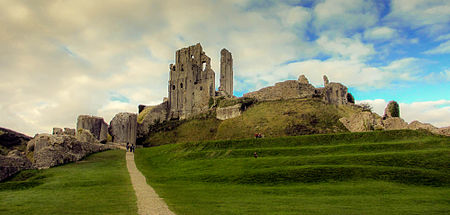
Corfe_Castle,_Dorset
Corfe Castle, Dorset

However, with the backing of the revered, future saint, Archbishop Dunstan it was Edward who was crowned. Following his coronation Edward honoured his father’s promises to his wife, confirming the gift of jurisdiction over the whole of Dorset as Ælfthryth’s dower. As a consequence, Ælfthryth and her son, Æthelred, settled at Corfe, in the Purbeck Hills; it was a large estate surrounding a defensive mound, which would later become the Norman stronghold of Corfe Castle.

And it was at Corfe on 18th March 978 that Ælfthryth’s reputation was irrevocably damaged, following a visit from 16-year-old King Edward. Whether Edward had been out hunting, or was in the area to specifically visit his stepmother and half-brother seems to be uncertain. However, he did send a message that he would be calling on them and Ælfthryth’s retainers were awaiting the young king at the gate, when he arrived with a small retinue. Still sitting in the saddle he was handed a drink; and stabbed. It must have been a horrific sight, as the king’s horse panicked and bolted, racing off with Edward’s foot stuck in the stirrup and the dying king being dragged along behind.

330px-Ethelred_the_Unready
Æthelred II the Unready

The Anglo-Saxon Chronicle recorded:

No worse deed than this was ever done by the English nation since they first sought the land of Britain. Men murdered him, but God hath magnified him. He was in life an earthly king. He is now after death a heavenly saint.¹

Although Edward’s brother, Æthelred, only around 10 years old but now king of England, was above suspicion due to his age, Ælfthryth had no such protection. Some traditions go so far as to accuse Ælfthryth of wielding the dagger herself. However, while most believe she was complicit in the murder, it is by no means certain and it is entirely possible that court malcontents, who had migrated to Æthelred’s corner, were responsible for the murder.

Ælfthryth rode out the ensuing furore and with her son as the new king, Ælfthryth was exonerated of any complicity; amid the necessity of stabilising the country, establishing the new reign and rescuing England’s reputation. Æthelred was crowned at Kingston, Surrey, on 4th May 979, a year after his brother’s death and just a few months after the reburial of Edward’s remains, with great ceremony, at Shaftesbury. A council was established to assist the young king in ruling the country, probably involving Queen Ælfthryth, who may have acted as regent during Æthelred’s minority; it also included the aging Dunstan, Archbishop of Canterbury, Æthelwold, bishop of Winchester, and Ælfhere, ealdorman of Mercia.

As Dowager Queen Ælfthryth’s dower lands in Rutland and east Suffolk helped to extend West Saxon rule over East Anglia as a whole.

Even when Æthelred was old enough to rule alone, Ælfthryth did not retire entirely. Following her son’s marriage to Ælfgifu of York, it was Ælfthryth who seems to have had the responsibility of raising their first-born son and ætheling, Æthelstan. Æthelstan died aged about 20 in 1014, 2 years before his father, and spoke warmly of his grandmother in his will. Æthelred and Ælfgifu had over 10 children together, including Æthelred’s eventual successor in 1016, Edmund II Ironside, before Ælfgifu died; Æthelred then married Emma of Normandy, mother of England’s future kings, Harthacnut by her 2nd husband, King Cnut, and Edward the Confessor by Æthelred.

As queen Ælfthryth had substantial influence over the nunneries of England; she ousted the abbess of Barking, a cousin of Edgar’s second wife, Wulfthryth.  She endowed convents at Amesbury and Wherwell; her granddaughter would eventually become abbess of the latter.

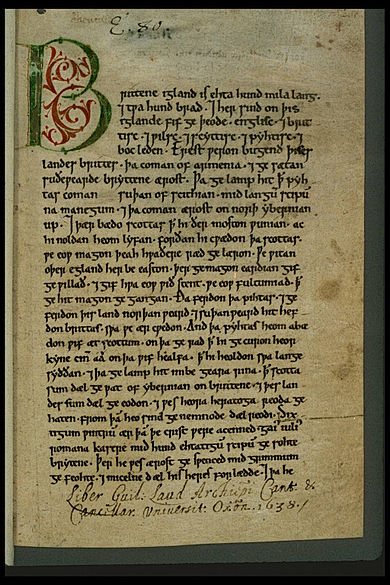
Peterborough.Chronicle.firstpage
The Anglo-Saxon Chronicle, Peterborough

And it was to Wherwell that the queen did eventually retire from the limelight, sometime before the year 1000, dying there on 17 November in either 999, 1000 or 1001.

Over a thousand years later Ælfthryth’s actions and reputation are still being debated by historians. While it is not inconceivable that she played a part in Edward the Martyr’s death, we also have to be aware that women of power and influence were much vilified in Medieval times; a strong, independent woman would be blamed for many crimes, simply because she dared to know her own mind….

While I am not entirely convinced of her innocence, neither am I certain of her guilt.

Ælfthryth’s career and influence, however, stretched far beyond that one action. As the first crowned queen of England, her prestige and honour is incomparable with those who had gone before her. And it is telling, perhaps, that her daughter-in-law, Ælfgifu of York, was never crowned, nor was accorded the title while her Ælfthryth still lived. The next crowned Queen of England was Æthelred’s second wife, Emma of Normandy, who married the king after his mother’s death.

*

Footnotes:

¹ Anglo-Saxon Chronicle quoted by Martin Wall in The Anglo-Saxons in 100 Facts.

*

Pictures:

Courtesy of Wikipedia

Sources:

Brewer’s British Royalty by David Williamson; Britain’s Royal Families, the Complete Genealogy by Alison Weir; The Wordsworth Dictionary of British History by JP Kenyon; The Anglo-Saxons in 100 Facts by Martin Wall; Kings, Queens, Bones and Bastards by David Hilliam; The Mammoth Book of British kings & Queens by Mike Ashley; The Oxford Companion to British History Edited by John Cannon; oxforddnb.com.

*

My Books:

Signed, dedicated copies of all my books are available through my online bookshop.

Coming on 15 June 2024: Heroines of the Tudor World

Heroines of the Tudor World tells the stories of the most remarkable women from European history in the time of the Tudor dynasty, 1485-1603. These are the women who ruled, the women who founded dynasties, the women who fought for religious freedom, their families and love. These are the women who made a difference, who influenced countries, kings and the Reformation. In the era dominated by the Renaissance and Reformation, Heroines of the Tudor World examines the threats and challenges faced by the women of the era, and how they overcame them. From writers to regents, from nuns to queens, Heroines of the Tudor World shines the spotlight on the women helped to shape Early Modern Europe.

Heroines of the Tudor World is now available for pre-order from Amberley Publishing and Amazon UK.

Out Now! Women of the Anarchy

Two cousins. On the one side is Empress Matilda, or Maud. The sole surviving legitimate child of Henry I, she is fighting for her birthright and that of her children. On the other side is her cousin, Queen Matilda, supporting her husband, King Stephen, and fighting to see her own son inherit the English crown. Women of the Anarchy demonstrates how these women, unable to wield a sword, were prime movers in this time of conflict and lawlessness. It show how their strengths, weaknesses, and personal ambitions swung the fortunes of war one way – and then the other.

Available from Bookshop.orgAmberley Publishing and Amazon UK.

Also by Sharon Bennett Connolly:

King John’s Right-Hand Lady: The Story of Nicholaa de la Haye is the story of a truly remarkable lady, the hereditary constable of Lincoln Castle and the first woman in England to be appointed sheriff in her own right. It is is available from King John’s Right-Hand Lady: The Story of Nicholaa de la Haye is the story of a truly remarkable lady, the hereditary constable of Lincoln Castle and the first woman in England to be appointed sheriff in her own right. Available from all good bookshops or direct from Pen & Sword Booksbookshop.org and AmazonDefenders of the Norman Crown: The Rise and Fall of the Warenne Earls of Surrey tells the fascinating story of the Warenne dynasty, from its origins in Normandy, through the Conquest, Magna Carta, the wars and marriages that led to its ultimate demise in the reign of Edward III. Available from Pen & Sword BooksAmazon in the UK and US, and Bookshop.org

Ladies of Magna Carta: Women of Influence in Thirteenth Century England looks into the relationships of the various noble families of the 13th century, and how they were affected by the Barons’ Wars, Magna Carta and its aftermath; the bonds that were formed and those that were broken. It is now available in paperback and hardback from Pen & Sword,  Amazon, and Bookshop.orgHeroines of the Medieval World tells the stories of some of the most remarkable women from Medieval history, from Eleanor of Aquitaine to Julian of Norwich. Available now from Amberley Publishing and Amazon, and Bookshop.orgSilk and the Sword: The Women of the Norman Conquest traces the fortunes of the women who had a significant role to play in the momentous events of 1066. Available now from Amazon,  Amberley Publishing, and Bookshop.org.

Alternate Endings: An anthology of historical fiction short stories including Long Live the King… which is my take what might have happened had King John not died in October 1216. Available in paperback and kindle from Amazon.

Podcast:

Have a listen to the A Slice of Medieval podcast, which I co-host with Historical fiction novelist Derek Birks. Derek and I welcome guests, such as Bernard Cornwell and Elizabeth Chadwick, and discuss a wide range of topics in medieval history, from significant events to the personalities involved.

*

Don’t forget! Signed and dedicated copies of all my books are available through my online bookshop.

For forthcoming online and in-person talks, please check out my Events Page.

You can be the first to read new articles by clicking the ‘Follow’ button, liking our Facebook page or joining me on Twitter and Instagram.

*

©2016 Sharon Bennett Connolly FRHistS