Heroines of the Medieval World is available from today.
These are the stories of women, famous, infamous and unknown, who shaped the course of medieval history. The lives and actions of medieval women were restricted by the men who ruled the homes, countries and world they lived in. It was men who fought wars, made laws and dictated religious doctrine. It was men who were taught to read, trained to rule and expected to fight. Today, it is easy to think that all women from this era were downtrodden, retiring and obedient housewives, whose sole purpose was to give birth to children (preferably boys) and serve their husbands. Heroines of the Medieval World looks at the lives of the women who broke the mould: those who defied social norms and made their own future, consequently changing lives, society and even the course of history.
Some of the women are famous, such as Eleanor of Aquitaine, who was not only a duchess in her own right but also Queen Consort of France through her first marriage and Queen Consort of England through her second, in addition to being a crusader and a rebel. Then there are the more obscure but no less remarkable figures such as Nicholaa de la Haye, who defended Lincoln Castle in the name of King John, and Maud de Braose, who spoke out against the same king’s excesses and whose death (or murder) was the inspiration for a clause in Magna Carta.
Women had to walk a fine line in the Middle Ages, but many learned to survive – even flourish – in this male-dominated world. Some led armies, while others made their influence felt in more subtle ways, but all made a contribution to their era and should be remembered for daring to defy and lead in a world that demanded they obey and follow.
Writing Heroines of the Medieval World has been a wonderful experience. I learned as much about myself as I did about these amazing women from history. It has been a pleasure and a privilege to bring them out of the shadows and tell their stories.
Reviews
And the first reviews are already in. Thanks to the Review blog for being quick off the mark with this fabulous, wonderful, amazing review.
“Sharon has a wonderful way of writing, it appears effortless, easy and utterly fascinating.” Karrie Stone
“The book is written in a friendly, easily readable style that belies the impact and interest of the words, each of which has been carefully considered to ensure that the meaning is clear to any reader of any level and maintain its academic importance and integrity.” Diana Milne.
And from Caroline Angus Baker: “Heroines of the Medieval World is a book that caught my interest the moment I laid eyes on it…this book is a great addition to any library. The author has done a wonderful job and this is a surprisingly easy read…”
Thank Yous
I also owe a huge thank you to author Tony Riches for his wonderful blog post today, highlighting the release of Heroines. What an incredible surprise!
And grateful thanks to Mary Anne Yarde and Louise Wyatt for their wonderful posts celebrating the release of Heroines of the Medieval World.
Some great questions from the Medieval Archives – I loved doing this one.
*
Heroines of the Medieval World, is now available in hardback in the UK from both Amberley Publishing and Amazon UK and worldwide from Book Depository. It is also available on Kindle in both the UK and USA and will be available in Hardback from Amazon US from 1 May 2018.
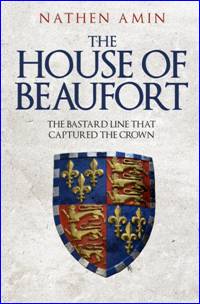
Today it is my pleasure to welcome author Nathen Amin to the blog. Nathen has stopped by on the last day of his blog tour with an extract from his wonderful new book, House of Beaufort, focusing on the Siege of Rouen which took place between July 1418 and January 1419 as part of Henry V’s attempt to conquer Normandy, and ultimately claim the French throne.
The Siege of Rouen (Extract from House of Beaufort by Nathen Amin)
By the summer of 1418, the king’s army was camped outside the gates of Rouen, the final obstacle in reconquering the duchy. Although the city was the second largest in France, it had suffered from the intermittent civil war between the Armagnac and Burgundian factions and had been brutally occupied by both forces. Now, it was to be harassed once more, this time by the English.
In mid-July, King Henry dispatched his uncle Thomas Beaufort to seek the city’s surrender, accompanied by ‘a fayre manye of men of arms and archers’. The duke of Exeter had spent the first few months of the year in England but on 3 March received a summons from his nephew requesting his services once again in France. By May, the duke was back on Norman soil, attended by a force of 500 men-at-arms and 1,500 archers, and on 1 July was appointed Count of Harcourt after capturing the town’s castle. He was also given custody of Lillebonne Castle, situated halfway between Harfleur and Rouen and timely motivation for the exhausting task that lay ahead.
According to the Brut Chronicle, upon arriving outside Rouen, Exeter set up camp and ‘displayed his banner’ before sending ‘herodes into the toun, and bade them to yeld it’. If they chose not to submit, then the duke promised they would ‘deie an harde and sharped deth, and withoute eny mercy or grace’. A small skirmish occurred when ‘a grete meny of men at arms, both on horsbak and eke on foot’ emerged from the town, although Exeter’s resilient force managed to ‘ovirthew an hep of them’, capturing thirty prisoners in the process . It was clear the Rouennais were not going to yield to the duke, who promptly departed south to Pont-de-l’Arche to inform his king. An unimpressed Henry V swiftly mobilised the remainder of his troops and returned to Rouen alongside his uncle.
The siege began in earnest on 29 July 1418, with the city well defended by large numbers of crossbowmen and artillery weaponry. English siege equipment, which had proved effective throughout the campaign, was rendered useless as Henry’s soldiers could not get within range of the city walls to create any discernible damage. Since brute force was not an option, the king resolved to starve the citizens into surrender. Henry spread his commanders around the city to block any attempts by French relief forces bringing supplies, with himself based in the east and his brother Clarence in the west. Exeter was positioned ‘on the north syde, before the Port Denys’, and the three chief commanders were capably supported by John Mowbray, earl of Norfolk, James Butler, earl of Ormond, the lords Harrington, Talbot, Roos, Willoughby and Fitzhugh, and Sir John Cornwallis.
King Henry V
The English expected the Rouennais to surrender after a token resistance, whilst those within the walls stubbornly awaited the arrival of a French army to come to their rescue. Neither occurred. Although outbreaks of dysentery and disease afflicted both Rouen and the English camp, commanders of both sides refused to back down. At one stage, an Englishman known as Sir John le Blanc, Governor of Harfleur and a member of Exeter’s retinue, challenged a French captain named Langnon, the bastard of D’Arly, to a jousting duel. Langnon agreed to the contest and emerged from the beyond the walls with around thirty companions. Although the intention of both men was to run the joust three times, Langnon ferociously unhorsed his adversary at the first attempt, who was then dragged into the city where he succumbed to his injuries. The Frenchman was urged by the English to return le Blanc’s lifeless body, for which he was begrudgingly paid four hundred nobles, possibly from the purse of a presumably demoralised Exeter himself.
By December, the citizens of Rouen were feeling the effect of the siege, having consumed most of their provisions. By Christmas they had ‘nothir bred, ale, nor wyne’ and were forced to survive on horsemeat and the flesh of dogs, mice, rats and cats. The city’s despairing commanders ordered all women and children, along with any old or sick men, to be evicted from Rouen at once as they were deemed to be of no military value. Considering many of those expelled were related to soldiers left behind, it seems likely the commanders intended for them to be honourably received into English hands as prisoners of war, to be fed and watered until the siege was over. They had not counted on the ruthless disposition of the English king.
Although several of King Henry’s soldiers initially endeavoured to feed the evictees from their own rations, he dispatched orders that no assistance was to be provided to the pleading masses. His command was adhered to, and the beleaguered citizens were left to starve in ditches halfway between the English and the city walls, slowly perishing in full view of both camps. It was an utterly brutal decision and intended to demotivate the watching garrison of Rouen, who could only look on shamefacedly as those they had expelled screamed for help that was not forthcoming.
A chilling insight into the horrors of the siege is found in a lengthy poem written by John Page, an English soldier present during the sustained attack. Page’s compassionate poem barely conceals the anguish he experienced during the winter of 1418, or the significant pity he felt for the innocent women and children of Rouen. In one resonating couplet, Page records how he witnessed a starving, orphaned ‘chylde of two yere or three, go a boute to begge hyt brede, fadyr and modyr bothe were dede’, whilst he also came across ‘women holdyn in hyr armys, dede chyldryn in hyr barmys (bosoms)’. After the citizens were expelled, a despondent Page noted how ‘women with their children in their arms’ were begging the soldiers to ‘have marcy uppon us, ye Englysche men’.
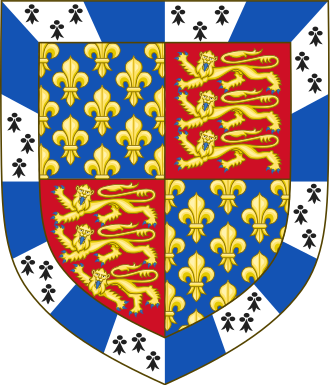
Arms of Thomas Beaufort, 1st Duke of Exeter
There could be no mercy until the English king was placated, and as Rouen could not withstand the tenacious monarch indefinitely, dialogue was finally opened between the two parties after Christmas. The city accepted terms of surrender on 19 January 1419 when, after six months of ‘toilsome siege and many assaults’, Thomas Beaufort was handed the keys to Rouen. The duke galloped into the city, ‘a valiant captain mounted on a goodly courser’, to formally seek the submission of the council. Trumpets, clarions and pipes heralded the duke’s arrival, with his English soldiers, perhaps charged with adrenaline, provocatively shouting ‘St George! St George!’ as they passed through the gates. Page reported the inhabitants were but ‘bonys and skyn’ and beheld their conquerors with great fear, prompting some of the residents to nervously ransom their lives ‘for fifty thousand pounds in gold’. Money was not enough to save a commander named Alain Blanchard; he was promptly executed for having hanged English prisoners from the walls in preceding months.
One can only wonder at the horror which greeted the duke as he rode through the disease-plagued, death-infested streets. Rotting corpses littered the roads, with Page confirming ‘in everyche strete lay dede’ whilst those who had only just survived the ordeal, ‘dyde faster than cartys myght cary away’. The stench alone must have overwhelmed Exeter and his men, forced to navigate their way through grim pandemonium. Even so, Thomas had a duty to perform, and so the duke ‘to the castelle fyrste he roode’ and ‘ryche baners up he set’, including those of St George and the arms of France and England. As the flags fluttered in the wind, their presence above the city represented not only a hard-fought English victory over Rouen, but also the duchy of Normandy.
With Exeter having secured the city, the king followed his uncle into Rouen the following afternoon, and whilst ‘the bells of all the churches were rung’, the surviving ecclesiastical figures emerged to greet the intimidating figure that had reduced their places of worship to rubble. Alongside his commanders, Henry offered thanksgiving in the cathedral before settling into his new lodgings within the castle. His nobles dispersed into the city to find accommodation in any buildings English cannons had failed to destroy.
Exeter finally had the opportunity to rest his weary body, and to reflect on events of previous months, particularly the waste of life that had occurred on both sides of Rouen’s walls. Tragic losses had not been limited to the Normans, for death had also struck at the heart of the Beaufort family. Accompanying his stepfather Clarence on the campaign had been the seventeen-year-old Henry Beaufort, 2nd Earl of Somerset, heir of John Beaufort, and Exeter’s nephew. Information about the youngster’s life is scarce, although his upbringing was overseen by Clarence and partly funded by his namesake uncle, the bishop of Winchester.
Likewise, young Henry’s death is also poorly documented, although later inquisitions in the summer of 1425 place the date of his demise to 25 November 1418, just as the siege of Rouen reached its climax. It’s unclear whether the cause was warfare or disease, or if his uncle Exeter was present at the time having been posted near to the Clarence forces in which the teenage earl served. There is no record of what happened to Henry’s body, whilst his earldom passed to his brother John who became the third Beaufort to hold the Somerset title within a decade. At what point Bishop Beaufort, or the boy’s mother Margaret Holland, became aware of his demise is also uncertain, as is his final resting place. This Henry Beaufort remains an enigma, something of a lost Beaufort, and his death was a sad consequence of the fall of Rouen.
*
Nathen Amin grew up in the heart of Carmarthenshire and has long had an interest in history. He has a degree in Business and Journalism and runs the Henry Tudor Society. He has an active social media presence promoting historical sites in Wales. He now lives in York.
My book, Heroines of the Medieval World, is now available in hardback in the UK from both Amberley Publishing and Amazon UK and worldwide from Book Depository. It is also available on Kindle in both the UK and USA and will be available in Hardback from Amazon US from 1 May 2018.
You can be the first to read new articles by clicking the ‘Follow’ button, liking our Facebook page or joining me on Twitter.
The recent tensions between King Edward and his great ally the Earl of Warwick lie forgotten these past months, but even as winter tightens her grip on the land, the peace is shattered by a vicious attack on one of the King’s allies.
Long buried secrets are brought to the surface, and Thomas and Katherine must finally decide where their loyalties lie and to choose between fight or flight, knowing either choice will incur a terrible price.
From Lincoln to Bruges, from Barnet to the great battle at Tewkesbury, both must play their part in one of the most savage wars in history.
The wars of the roses.
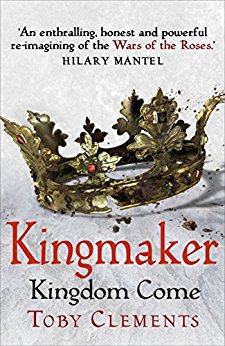
Kingdom Come is the fourth and final instalment of Toby Clements’ Kingmaker series. And what a thrilling finale. The book keeps you on the edge of your seat from the first page to the last. Fast-paced and full of action, it leaves you desperate to get to the end – and yet it is so enjoyable you never want the story to finish.
throughout the series we have followed Katherine (who used to be Kit) and Thomas from their first meeting at the Gilbertine Priory of Haverhurst, in their adventures through the most violent and tumultuous years of the Wars of the Roses, carrying a secret that could bring down the Yorkist cause in a heartbeat. They have leaned towards each side in the conflict, as the winds and fates changed, but Kingdom Come sees their fate firmly tied to that of Edward IV.
The story opens with the Welles raid on Thomas Burgh’s house at Gainsborough – now called Gainsborough Old Hall, but then, of course, it was new. It was a pleasure to read about Thomas and Katherine’s life in Lincolnshire, their travels from Marton to Gainsborough and Lincoln, especially seeing as I did the journey myself the next day. Living just over the river from Gainsborough, I can attest that Toby Clements’ research was impeccable and he describes the Lincolnshire landscape beautifully.
Further on they meet the carrier, coming warily towards them through a long straight stretch of tree-lined road. He will know what is afoot, she thinks, since he travels from Lincoln to Gainsborough and back three or four times a week. He sits in his cart, rather than walks alongside, and behind him, unusually, come three men in helmets, thick jacks, two armed with bills, the other a bow. Up close they look unsure of their own military might, and Katherine supposes they might be recruited from the Watch on one of the city gates, and are more used to leering at nuns and warming their hands over a brazier than fighting off bands of robbers.
‘God give you good speed,’ the carrier greets them when he recognises them, and they return the blessing, and the carrier draws up his mule. Despite his life on the move, he’s a fat man, awkward in his seat, under layers of filthy russet, like a shuffling, shaggy bear that you see in poor fairs. He speaks with a strained three dun-coloured puppies in a wicker cage and a fierce-looking cockerel that hangs by his spurs from the back of the cart. He tells them business is bad, as he always does when you meet him, but that is to be expected at this time of year.
Gainsborough Old Hall
‘Have you heard anything further of the attack on Thomas Burgh’s house?’ Katherine asks.
The man sucks his teeth.
‘A bad business, mistress. A bad business. Though no one killed, praise the Lord, save a servant boy thrown from a window.’
‘Is it known who did it?’
‘It is well known , mistress,’ he says, tipping his head. ‘For the perpetrator never sought to hide his sin, unlike Eve when first she tempted Adam.’
He is that sort of man. He licks his lips and speculates on the costrel of ale on Thomas’s saddle. Thomas sighs and hands it to the man, who takes it with thanks and drinks long. A strong smell emanates from the yeasty folds of his cloth.
‘It was Lord Welles,’ he tells them when he has wiped his lips with the back of his hand. ‘Lord Welles and another gentle who goes by the name of Sir Thomas Dimmock.’
Toby Clements has created wonderful, believable characters who are caught up in some of the most momentous events of English history. Thomas and Katherine are entirely human, a couple who have grown to depend on each other and a close circle of friends, and who have learned the hard way that they can rely on nobody else – particularly the rich and powerful. One theme that has run through all the books, is that the participants of the Wars of the Roses changed sides as often as the wind changes direction, and it is interesting to see yet more divided loyalties raise their heads.
The other participants, from the powerful Edward IV and Lord Hastings, to the lowly companions of Katherine and Thomas, are interesting, colourful characters, each with their own story. A wonderful quirk of the novel is some of the names by which these characters go by, from John-who-was-stabbed-by-his-Priest, Robert-from-the-plague-village and the skinny boy. These characters have their own life experiences, secrets and passions, their own stories interwoven within the great panorama of the larger story.
The different threads of the lives of not only Katherine and Thomas but also the nobles and kings – and the war itself – come together in Kingdom Come, in a thrilling conclusion that sees them again forced to take sides and fighting for survival.
Kingdom Come and the Kingmaker series as one of the best retellings of the Wars of the Roses that I have ever read. Meticulously researched and beautifully written, it draws the reader in from the first page and takes you on a marvellous journey through the most turbulent era of English history. Full of suspense, action and danger it grips you from the first moment, leaving you desperate to read to the end – and yet not wanting this magnificent story to finish.
*
Kingdom Come and the other 3 books in Toby Clements‘ Kingmaker series; Winter Pilgrims, Broken Faith and Divided Souls can all be found on Amazon.
*
My book, Heroines of the Medieval World, is now available in hardback in the UK from both Amberley Publishing and Amazon UK and worldwide from Book Depository. It is also available on Kindle in both the UK and USA and will be available in Hardback from Amazon US from 1 May 2018.
You can be the first to read new articles by clicking the ‘Follow’ button, liking our Facebook page or joining me on Twitter.
In just 6 weeks’ time Heroines of the Medieval World will be released. Writing the book has been a remarkable experience. It has also been a steep learning curve – there’s a big difference between writing blog posts and writing an entire book! And there have been moments of ‘What am I doing?!’ aplenty. However, I would not have been able to do it without the help and encouragement of everyone who reads my blog posts, who gives feedback and critique. Thank you!
Writing Heroines of the Medieval World has been a wonderful adventure. From organising chapters, decided who to include and who should be left out, proof reading and choosing what pictures to include; every step of the journey has brought new challenges and experiences. From the moment I came up with the title, I knew exactly what kind of book I wanted to write. And, thanks to the fabulous people at Amberley publishing, I will soon be holding it in my hands. Heroines of the Medieval World will tell the stories of about 50 of the most incredible women of the Middle Ages, looking at how they made their mark on the world, whether it was from being a king, such as Jadwiga of Poland, a fighter like Joan of Arc, or a survivor, as with Eleanor of Aquitaine. The book looks at the women who fought, suffered, lived and loved; women who made a difference through religion, writing, ruling – be it a country or their family estates – or through their royal blood and family ties.
And every single one of them made a difference to the world around them.
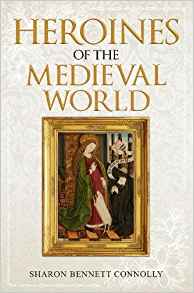
Coming up with the right book cover was not easy, and I owe a huge ‘thank you’ to the cover designer at Amberley who came up with this beautiful jacket. I was so happy with it that it brought tears to my eyes. It is stunning!
And here it is:
The front cover is an Anonymous painting from c.1465, Geertruy Haeck Kneeling in Adoration Before St Agnes from the Rijksmuseum’s collection. On the back is a photograph of Roche Abbey, South Yorkshire, the final resting place of Maud Clifford, Countess of Cambridge. The photo was taken by me during a visit this Spring.
About Heroines of the Medieval World
The lives and actions of medieval women were carefully controlled and restricted by the men who ruled the homes, countries and world they lived in. It was men who fought wars, made laws and dictated religious doctrine. It was men who were taught to read, trained to rule and who were expected to fight to defend their people and country. Today, it is easy to think that all women from this era were down-beaten, retiring and obedient housewives, whose sole purpose was to give birth to children (preferably boys) and serve their husbands. Heroines of the Medieval World looks at the lives of the women – some well-known and some almost forgotten to history – who broke the mould; those who defied social norms and made their own future, consequently changing lives, society and even the course of history.
Some of the women featured you will have heard of, such as Eleanor of Aquitaine, who was not only a duchess in her own right but also Queen Consort of France through her first marriage and Queen Consort of England through her second, in addition to being a crusader, a rebel and regent of England. Then there are those who have been all but forgotten, including Nicholaa de la Haye, the remarkable woman who defended Lincoln Castle in the name of King John, and Maud de Braose, who spoke out against the same king’s excesses and whose death (or murder) was the inspiration for a clause in the Magna Carta.
Women had to walk a fine line in the Middle Ages, but many learned to survive – even flourish – in this male-dominated world. Some led armies, while others made their influence felt in more subtle ways, but all made a contribution to the medieval era and should be remembered for daring to defy and lead in a world that demanded they obey and follow.
My book, Heroines of the Medieval World, is now available in hardback in the UK from both Amberley Publishing and Amazon UK and worldwide from Book Depository. It is also available on Kindle in both the UK and USA and will be available in Hardback from Amazon US from 1 May 2018.
*
You can be the first to read new articles by clicking the ‘Follow’ button, liking our Facebook page or joining me on Twitter.
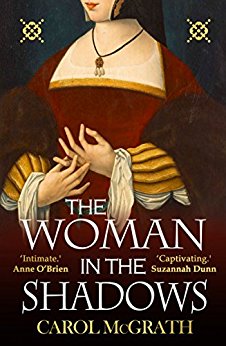
Today over at The Review, you can read my thoughts on Carol McGrath’s latest novel – out this week – The Woman in the Shadows, a fabulous look into the Tudor world of Thomas Cromwell’s wife Elizabeth.
And there’s a fabulous giveaway – a paperback copy of this new release.
Here’s a taster:
What a treat!
Carol McGrath’s latest book, The Woman in the Shadows is a fabulous fictional account of the life and times of Elizabeth Cromwell, wife of Henry VIII’s famous – some would say notorious – adviser. It is an enjoyable, thoughtful story which gives the reader an insight into life in Tudor London, in general, and in a Tudor household in particular. Following Elizabeth from the funeral of her first husband, through her widowhood and new love and marriage with Thomas Cromwell, this is not the story of Henry VIII and the Tudor court, but of the ‘ordinary’ people without whom the Tudors would not have been able to sustain their glamorous court.
Written in colourful, vivid language that draws you in from the first page, The Woman in the Shadows is a wonderful novel, full of life and imagery. …
To read the full review of this fantastic novel – and to enter the prize draw and be in with a chance in this fantastic giveaway, simply visit The Review and leave a comment.
Good luck!
*
My book, Heroines of the Medieval World, is now available in hardback in the UK from both Amberley Publishing and Amazon UK and worldwide from Book Depository. It is also available on Kindle in both the UK and USA and will be available in Hardback from Amazon US from 1 May 2018.
You can be the first to read new articles by clicking the ‘Follow’ button, liking our Facebook page or joining me on Twitter.
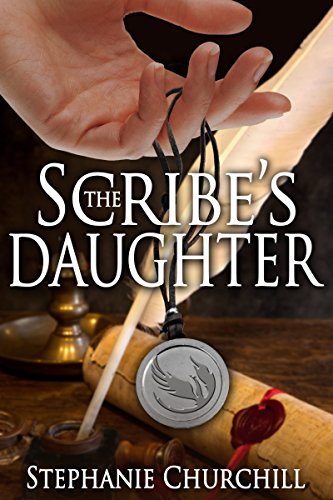
Today over at The Review, you can read my thoughts on Stephanie Churchill’s fantastic new debut novel, The Scribe’s Daughter, a fabulous adventure story that will leave you wanting more.
And there’s a fabulous giveaway – two Kindle copies available to 2 lucky winners.
Here’s a taster:
My first thought after finishing The Scribe’s Daughter was ‘Wow!’It is hard to believe this is a debut novel. It is so polished and intelligently written, having none of the naivety that can be found in, even, the best debut novels. I found myself picking up the book at any opportunity – every spare five minutes were spent in the world Stephanie Churchill has created. I was often reading late into the night, just to devour that little bit more of the story.
The author draws you into her world, building cities, towns, palaces and swamps from her imagination and setting them down in a medieval atmosphere from which it is impossible for the reader to escape. The language, descriptive expertise, attention to detail and wonderful use of imagery helps to create a world that surrounds and embraces the reader.
To read the full review of this fantastic novel – and to enter the prize draw and be in with a chance in this fantastic giveaway, simply visit The Review and leave a comment.
Good luck!
*
My book, Heroines of the Medieval World, is now available in hardback in the UK from both Amberley Publishing and Amazon UK and worldwide from Book Depository. It is also available on Kindle in both the UK and USA and will be available in Hardback from Amazon US from 1 May 2018.
You can be the first to read new articles by clicking the ‘Follow’ button, liking our Facebook page or joining me on Twitter.
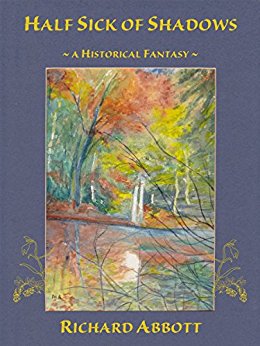
Today over at The Review, you can read my thoughts on Richard Abbott’s fantastic new historical fantasy novel, Half Sick of Shadows, a fabulous re-imagining of Alfred Lord Tennyson’s The Lady of Sahlott.
And there’s a fabulous giveaway! With one signed paperback copy going to a winner in the UK, or and ebook to anywhere else in the world.
Here’s a taster:
There is one great advantage to being a book reviewer; every now and then you get to read a gem of a book, one that you may never have discovered had you relied on Amazon’s reading recommendations. Half Sick of Shadows is one such treasure. This novel, inspired by Alfred Lord Tennyson’s epic poem The Lady of Shalott, is unique and engrossing from the very first page.
When trying to think of a single word that could be used to describe this novel, the only one that seemed to fit was ‘mesmerising‘.
The reader is instantly drawn into the world of the Lady, who can watch the lives and interactions of the people in the world only through the guide of a mirror. She can see the world, but is apart from it, safe in her own keep…..
To read the full review of this fantastic novel – and to enter the prize draw and be in with a chance in this fantastic giveaway, simply visit The Review and leave a comment.
Good luck!
*
My book, Heroines of the Medieval World, is now available in hardback in the UK from both Amberley Publishing and Amazon UK and worldwide from Book Depository. It is also available on Kindle in both the UK and USA and will be available in Hardback from Amazon US from 1 May 2018.
You can be the first to read new articles by clicking the ‘Follow’ button, liking our Facebook page or joining me on Twitter.
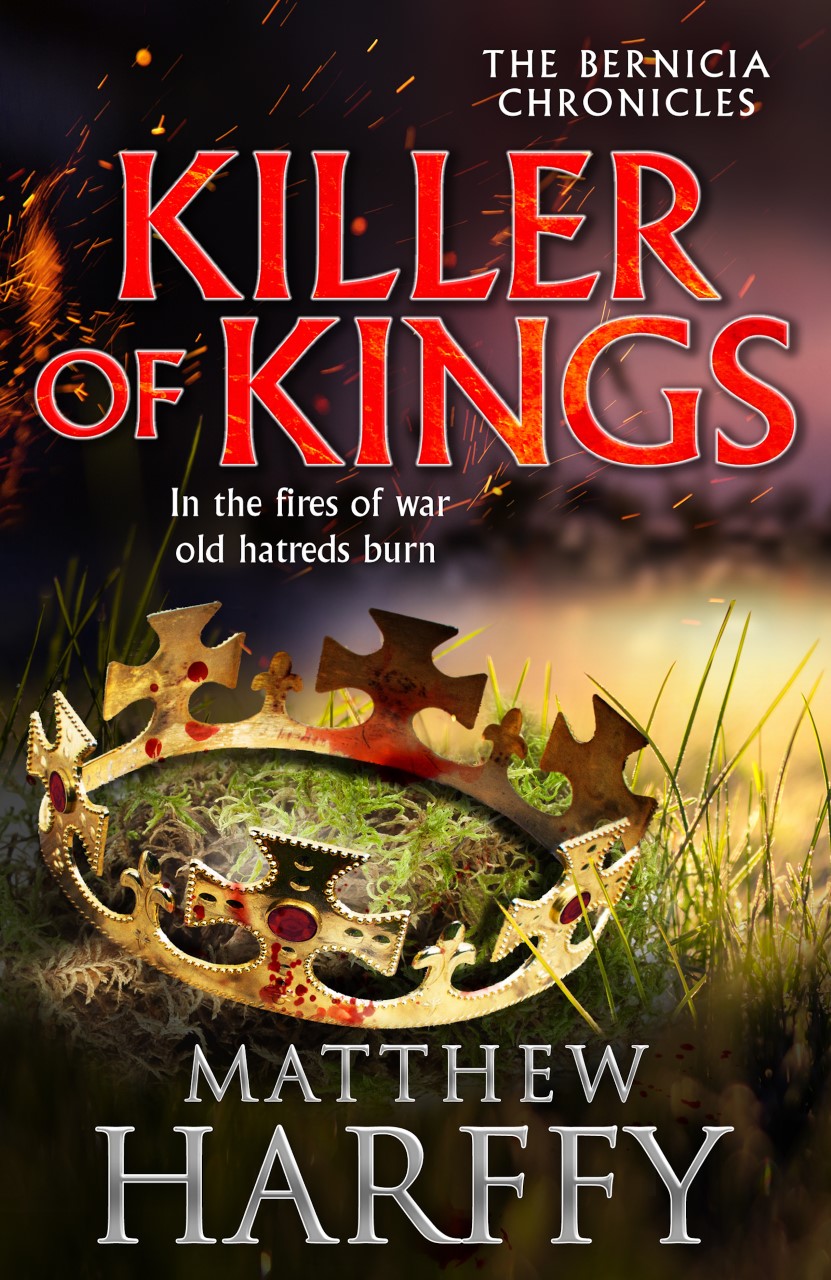
AD 636. Anglo-Saxon Britain. A gripping, action-packed historical thriller and the fourth instalment in The Bernicia Chronicles. Perfect for fans of Bernard Cornwell.
Beobrand has land, men and riches. He should be content. And yet he cannot find peace until his enemies are food for the ravens. But before Beobrand can embark on his bloodfeud, King Oswald orders him southward, to escort holy men bearing sacred relics.
When Penda of Mercia marches a warhost into the southern kingdoms, Beobrand and his men are thrown into the midst of the conflict. Beobrand soon finds himself fighting for his life and his honour.
In the chaos that grips the south, dark secrets are exposed, bringing into question much that Beobrand had believed true. Can he unearth the answers and exact the vengeance he craves? Or will the blood-price prove too high, even for a warrior of his battle-fame and skill?
This series just gets better and better!
Killer of Kings by Matthew Harffy is the 4th instalment in the Bernicia Chronicles, telling the story of Beobrand Half-Hand, a young Northumbrian thegn skilled in war. And, as readers have come to expect of the author, the novel has a strong, engaging story, that sees the hero travelling the length and breadth of Saxon England, fueled by duty to his king and a desire for revenge against the man who violated his wife and has, as yet, escaped retribution. Set in East Anglia, Kent, Mercia and Northumbria (Bernicia), we see Beobrand facing enemies, both old and new.
Matthew Harffy is a great story-teller. The Bernicia Chronicles are a must-read for anyone with a love of Anglo-Saxon England. The story is fast-paced and impossible to put down. Keeping you on the edge of your seat from the opening chapter, a desperation to know what happens next will keep you reading into the early hours.
Beobrand is developing into a wonderful character; a hero always questioning himself and other people’s perceptions of him. He has a growing sense of responsibility towards his duties, his men and their families, who rely on him for protection and patronage. In Killer of Kings we see Beobrand’s past and present collide; the mysteries of his childhood are revealed, tying up some loose ends, while at the same time helping to set his course in the present and, maybe, the future.
One last look at the other woman and then Edmonda grasped his hand. Beobrand pulled her up behind him with ease.
“God bless you all,” she said, sobbing.
“Hold on to me, girl,” said Beobrand. “Tight, mind, or you’ll fall when we start to ride.”
She did not reply, but her slim arms encircled his waist.
Swinging Sceadugenga’s head around, he turned to the mounted Waelisc warrior in the white cloak.
“You say you know me,” said Beobrand. “And yet, I know you not. What is your name, Waelisc?”
The man offered him a broad smile.
“I am Gwalchmei ap Gwyar. And you have now stolen two things of mine.”
The name meant nothing to Beobrand.
“What two things? What riddle is this?” How he would love to ride the man off his horse and smash that smile from his face.
“Well, now there is that girl. But she is nothing. That however,” he said, indicating Sceadugenga, “is another matter.”
What was the man speaking of? He made no sense.
“What do you mean?” Beobrand asked, his words as sharp and cold as shards of iron.
“That fine stallion you are riding,” said Gwalchmei, “is my horse.”
The storyline follows two interesting opposing paths. With one strand being Beobrand’s mission and his return face the demons of his past. While the other follows those left behind; Rheagan, the freed slave who is his current love interest, and those left to protect and maintain Beobrand’s manor of Ubbanford … who find themselves with their own enemy to face. The contrast between the struggles of those who left to fight, and of those left at home, is stark. It serves to offer a new insight into the intertwined fates of the warriors and their families, the worries of each for the other and their interdependency.
Whether it is setting the scene in a king’s hall, a simple cottage or on a battlefield, Matthew Harffy transports the reader so that the sights, sounds and smells are so vivid it’s hard to believe they’re not real. His attention to detail serves to paint the picture in the reader’s mind’s eye. The horrors of the battlefield are described with care and attention, with individual fights contrasting with the greater battle and individual, heroic deaths contrasting with the devastation once the battle has ended, leaving the reader exhilarated and bereft at the same time. It is not all about battles, however; even though he is a warrior, past experience has made Beobrand all-too-aware of the political consequences of war and the machinations of kings.
The Bernicia Chronicles are set in the Seventh Century, telling the story of a time even before King Alfred, when Anglo-Saxon England was made up of a number of disparate kingdoms, with kings fighting for supremacy over each other. With his exceptional knowledge of the time, Matthew Harrfy transports the reader back to this period, using his research to vividly recreate the people, buildings and landscape of the time.
Matthew Harffy has a knack of developing characters who are at once vivid, flawed, heroic and human. Each book sees Beobrand grow and mature, and carrying more scars from his experiences. The strong story lines and interesting personalities make Matthew Harffy one of the best authors of Dark Ages historical fiction of today. He is one of those authors I do not hesitate to recommend – and often. His books are fabulous, enjoyable, entertaining and true to the history of the period. The author’s descriptive skills and lively dialogue will draw you in and keep you captivated to the very end – and beyond.
*
About the author: Matthew Harffy grew up in Northumberland where the rugged terrain, ruined castles and rocky coastline had a huge impact on him He now lives in Wiltshire, England, with his wife and their two daughters.
My book, Heroines of the Medieval World, is now available in hardback in the UK from both Amberley Publishing and Amazon UK and worldwide from Book Depository. It is also available on Kindle in both the UK and USA and will be available in Hardback from Amazon US from 1 May 2018.
You can be the first to read new articles by clicking the ‘Follow’ button, liking our Facebook page or joining me on Twitter.
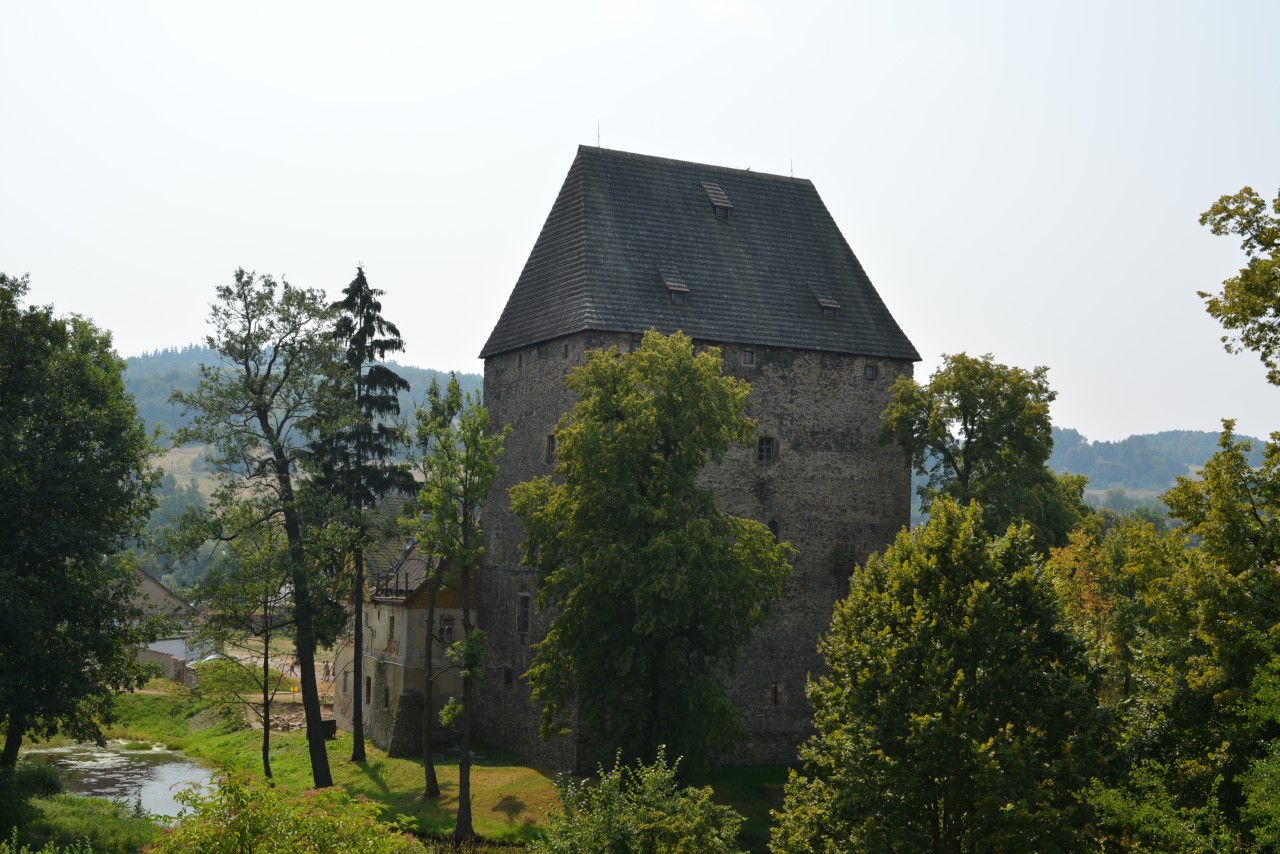
“Painted tower in Siedlęcin: the unique residence of an ambitious Silesian duke”¹
Ducal tower of Siedlęcin. Photo courtesy of sekulada.com
The 15th International Castellological Conference „Castrum Bene” took place at Książ Castle, in Lower Silesia, Poland, on 16th – 19th May, 2017. This year’s conference brought together, as it always does, prominent architectural historians and castellologists from across ten European countries. There were scholars from Poland, Hungary, Slovakia, Czech Republic, Germany, Croatia, to name but a few.
The annual International Castellological Conference is a great opportunity for the experts to come together, learn from each other and exchange ideas. The participants are always treated to a series of diverse and intellectually challenging papers, some giving interesting fresh perspectives on castle exploration and preservation. The papers show considered approach to the key castellological issues and bring together a wealth of knowledge, talent and experience.
„Castrum Bene” comes to Siedlęcin. Photo courtesy of Monika Filipińska
This year’s conference focused on castles as symbols of status. In their lectures the Polish experts discussed Henrys, the dukes of Silesia and their residences, castles and elites of the Cracow Land in the Middle Ages, motte-and-bailey castles of Lower Silesia.
18 May saw the participants taking a full-day study tour to the castles on the Piast Castles Trail. They visited, among others, Bolków, Świny and Wleń. In the Great Hall of the ducal tower of Siedlęcin they had an opportunity to listen to the lecture delivered by Dr Przemysław Nocuń, Jagiellonian University, Kraków, on the subject of the tower, its founder and unique wall paintings preserved in it.
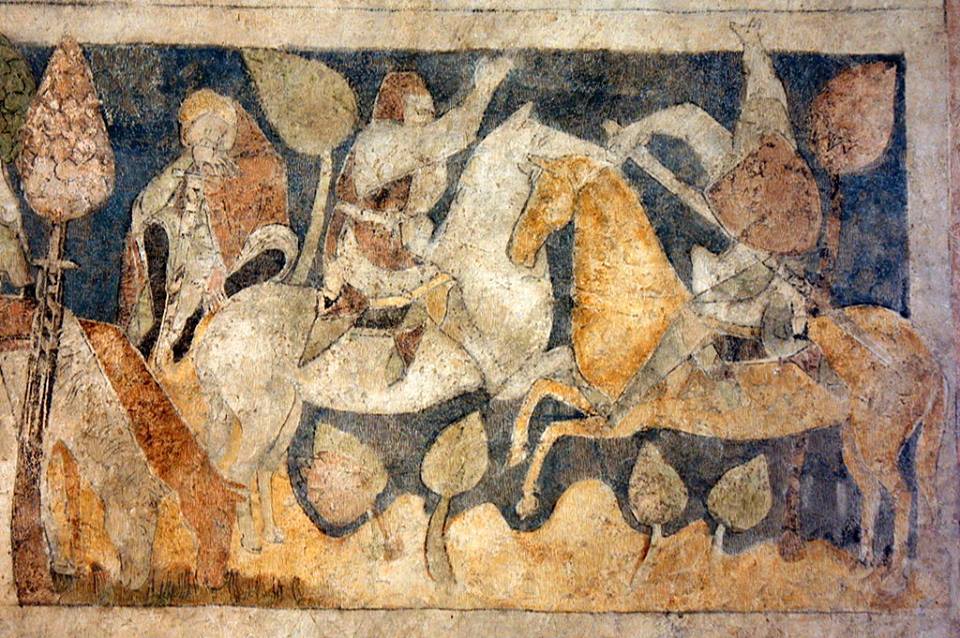
Lancelot fighting a duel with Tarquin, the Siedlęcin set, detail. Photo courtesy of Wikimedia Commons
The Ducal tower of Siedlęcin displays one of the most complete and important sets of 14th century domestic wall paintings in Central Europe. The paintings are a rarity both for their mixture of secular, religious and didactic themes, and for their leading subject being the legend of Sir Lancelot of the Lake. Both the tower and paintings reflect its builder’s high ambitions. Preserved monuments and names of the Arthurian characters given to the sons of the Silesian nobility indicate that the Arthurian legends were known at the courts of medieval Poland and Silesia. However, most of the preserved monuments with Arthurian motifs date from the second half of the 14th or from the 15th century, which makes the Siedlęcin set (created in 1320s -1340s) the earliest surviving example. Among the Piasts (Poland’s first ruling dynasty) Henryk I of Jawor (c. 1292 – 1346) is believed to be the first to commission the Arthurian paintings in one of his residences. Today Duke Henryk’s tower is the only place in the world where the medieval wall paintings depicting Sir Lancelot of the Lake have been preserved in situ. Their true subject matter was not recognised until the 1990s. Major conservation was carried out in 2006, actually saving them, for they were in very poor condition.
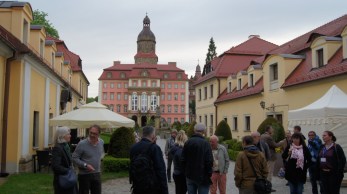
Participants of the The 15th International Castellological Conference „Castrum Bene” at Książ Castle. Photo courtesy of P. Nocuń
The tower house of Siedlęcin is one of the best preserved castles of this type in Central Europe. It was built as a ducal seat for both residential and defensive purposes (probably as a hunting „lodge”) near the River Bóbr [Bobber] crossing in the hunting territories north-east of Jelenia Góra [Hirschberg]. Initially crenelated, the tower stands 22 meters high (72 feet) with the remains of the moat still visible from the northern and eastern sides. The only siginificant alteration since the 14th century is the addition of a roof (in the 16th century). Preserved massive tie beams are the oldest surviving wooden ceilings in Poland. Dendrochronolocial research has revealed the trees used for their construction were cut down in 1313 , 1314 and 1315 respectively. Adjacent to the tower is a manor house which dates from 18th century.
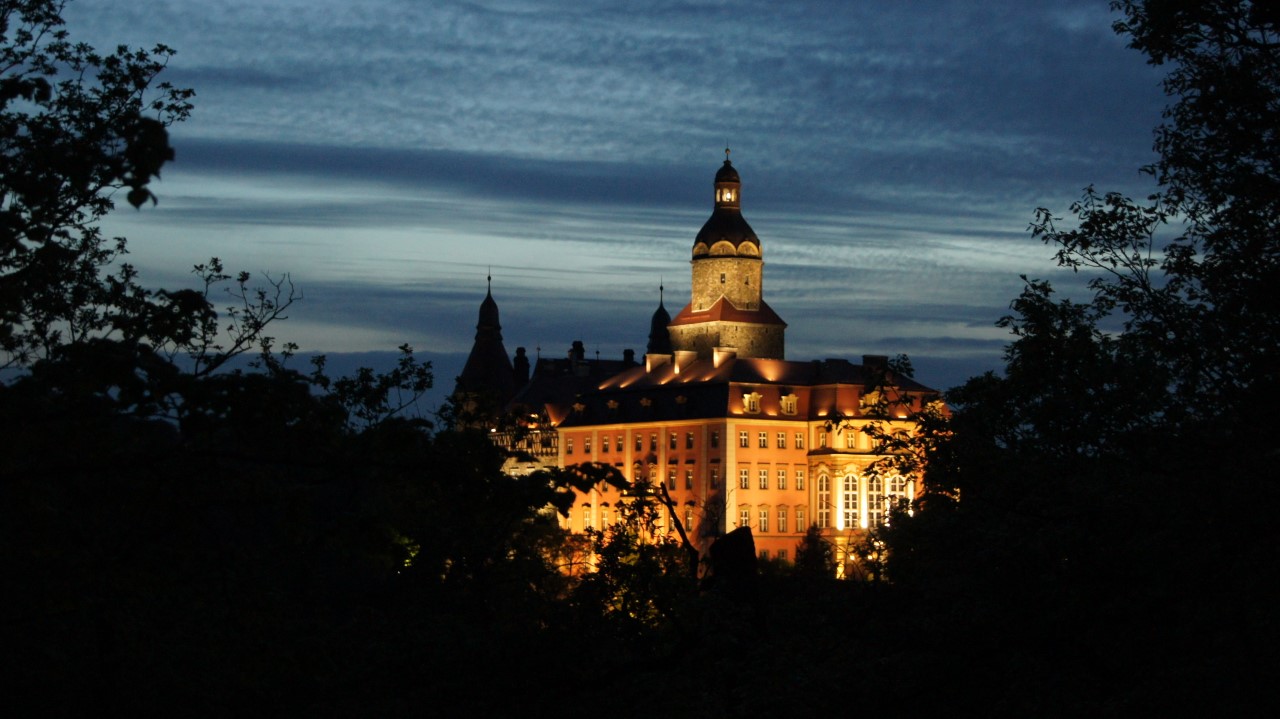
Książ Castle, the Lower Silesia, Poland. Photo courtesy of Przemysław Nocuń
The paintings have been preserved on the south wall of the tower’s finest interior space, being that of the former Great Hall on the second floor. The group includes representations of the scenes from the Vulgate Lancelot and depict Sir Lancelot of the Lake and his marvelous exploits with the focus on the beginning and ending of his brilliant career as a knight of the Round Table. There are scenes depicting the court of King Arthur, his queen Guinevere with her ladies, Guinevere’s kidnapping by Meleagant and her rescue by Lancelot. There are also representations of Lancelot and his cousin Lionel setting off for their first knightly adventure. Lancelot asleep under an apple tree and Lionel sleeping on guard, a duel between Lancelot and Tarquin and Lancelot with Arthur’s brother, Sir Kay. The unfinished portion depicts a duel between Lancelot and Sagramour and the healing of Urry de Hongre.
Sharon’s book, Heroines of the Medieval World, is now available in hardback in the UK from both Amberley Publishing and Amazon UK and worldwide from Book Depository. It is also available on Kindle in both the UK and USA and will be available in Hardback from Amazon US from 1 May 2018.
You can be the first to read new articles by clicking the ‘Follow’ button, liking our Facebook page or joining me on Twitter.
Saturday 20th May, 2017, marked the 800th anniversary of one of Medieval England’s most decisive battles. The Second Battle of Lincoln, also known as “The Lincoln Fair”, rescued England from the clutches of Louis, Dauphin of France and future King Louis VIII.
England had been in turmoil during the last years of the reign of King John, with the barons trying to curtail the worst of his excesses. It had been hoped that the 1215 issuing of Magna Carta would prevent war, but when John reneged on the Great Charter, war was inevitable. England’s disgruntled barons even went so far as to write to Philip II, King of France, and invite his son, Louis, to come and claim the throne. Louis jumped at the chance and landed on England’s shores in 1216.
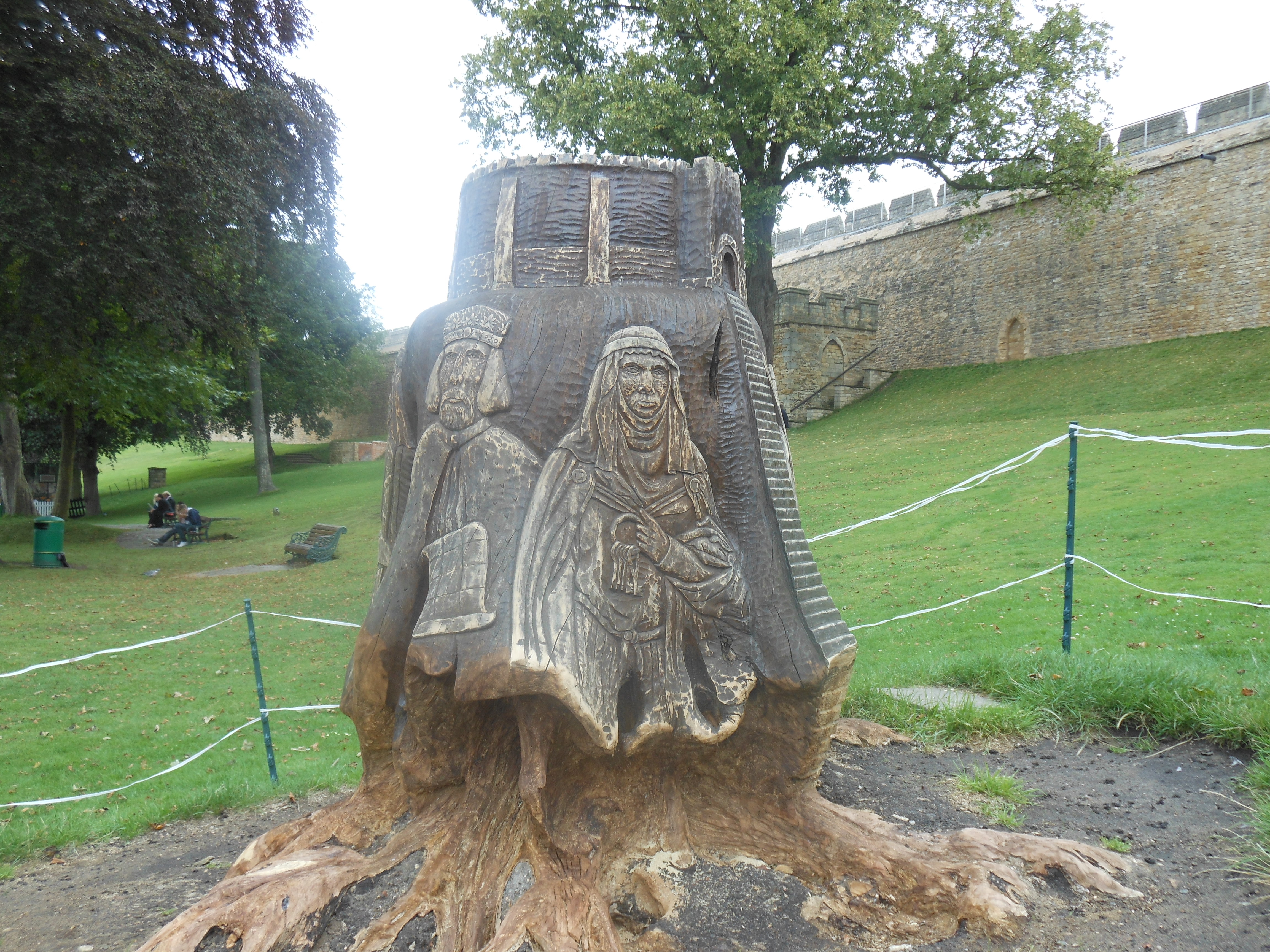
Strategically placed in the centre of the country, Lincoln was a target for the rebel barons and their French allies. An important Royalist stronghold, it was held by the redoubtable hereditary castellan, Lady Nicholaa de la Haye, who had been widowed in the early months of 1215. Lincoln Castle had already been under siege in 1216, when the northern rebels had been paid to go away. The rebels – including the King of Scotland – then fled north as John’s army advanced on the city. It was probably after the 1216 siege that Nicholaa made a show of relinquishing her post as castellan; however, John had other ideas:
And once it happened that after the war King John came to Lincoln and the said Lady Nicholaa went out of the eastern gate of the castle carrying the keys of the castle in her hand and met the king and offered the keys to him as her lord and said she was a woman of great age and was unable to bear such fatigue any longer and he besought her saying, “My beloved Nicholaa, I will that you keep the castle as hitherto until I shall order otherwise”.¹
John went even further to show his trust in Nicholaa, who was a long-time supporter of the unpopular king. As Louis consolidated his position in the south, John made an inspection of Lincoln castle in September 1216. He then moved south, losing his baggage as he crossed the Wash and falling ill as he travelled. After a brief stay at Swineshead Abbey, he made his way to Newark, where he died on the night of 18/19 October. Mere hours earlier, John had made history by appointing Nicholaa to the post of Sheriff of Lincolnshire. She was the first woman to ever be appointed sheriff in her own right. .
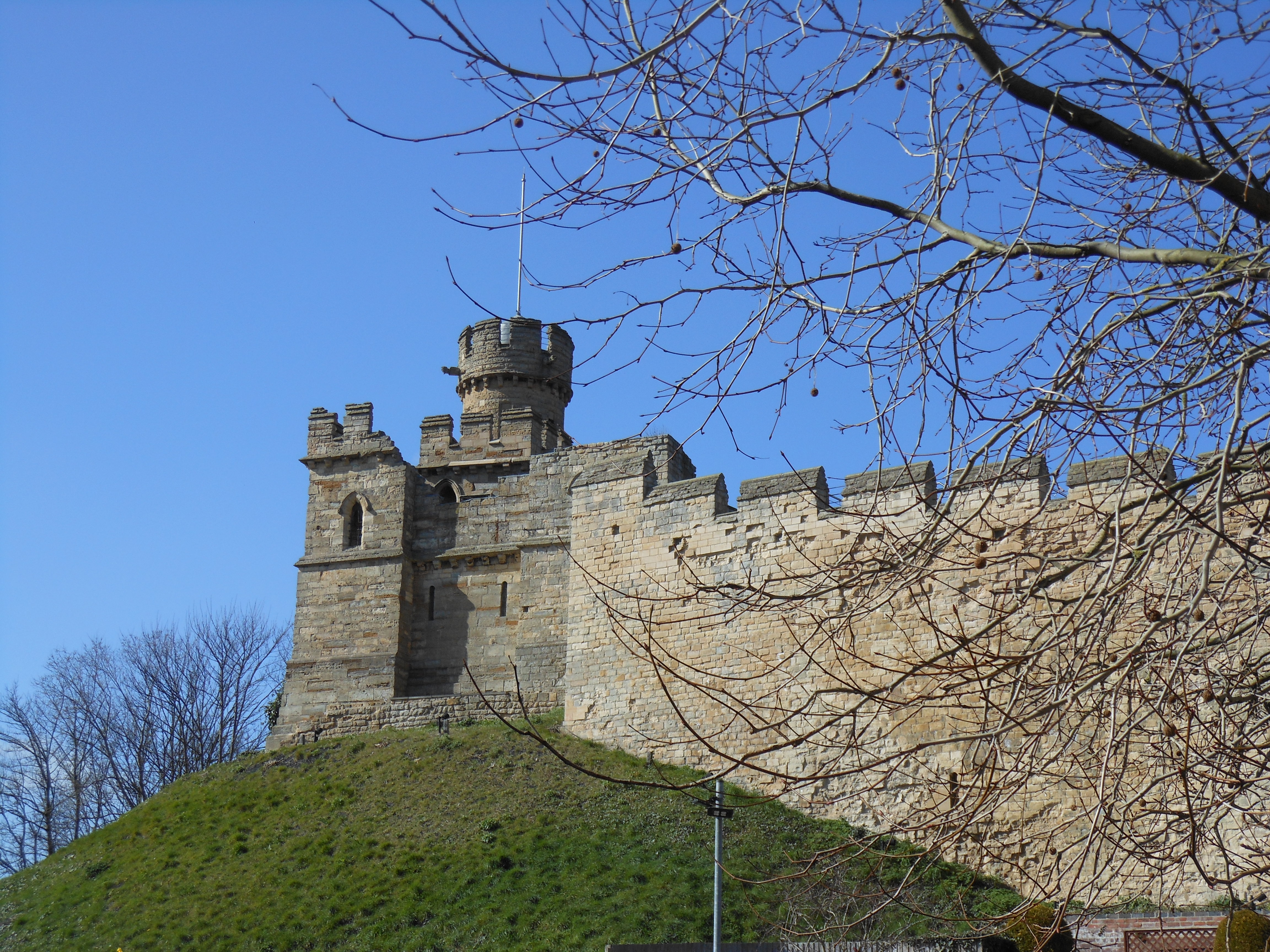
The Observatory Tower, Lincoln Castle
When John died, half of his country was occupied by a foreign invader and his throne now occupied by his 9-year-old son, Henry III. The only royal castles still in royalist hands were Windsor, Dover – and Lincoln. The elder statesman and notable soldier William Marshal, Earl of Pembroke was appointed Regent and set out to save the kingdom.
Following the coronation of young Henry, Magna Carta was reissued and some of the rebel barons returned to the fold, not wanting to make war on a 9-year-old king. However, Louis still had powerful supporters and did not seem keen to give up on his dream to rule England.
Louis’ forces, under the Comte de Perche, along with leading rebels Saher de Quincy, Earl of Wonchester, and Robert FitzWalter, marched north intending to relieve Mountsorel Castle, which was being besieged by the Earl of Chester. Fearing he was facing the entire French invading force, Chester had withdrawn as the French arrived and Perche’s forces diverted to Lincoln. Gilbert de Gant, on hearing news of John’s death, had occupied the city in late 1216 with a small force. He was now reinforced by Perche’s army and in early 1217, they laid siege to the castle. Now in her 60s, Nicholaa de la Haye took charge of the defences, with the help of her lieutenant, Sir Geoffrey de Serland.
For almost 3 months – from March to mid-May – siege machinery continuously bombarded the south and east walls of the castle. When the allied force proved insufficient to force a surrender, the French had to send for reinforcements. This meant that half of Louis’ entire army was now outside the gates of Lincoln Castle and provided William Marshal with an opportunity; one decisive battle against Louis’ forces at Lincoln could destroy the hopes of Louis and the rebel barons, once and for all.
Nicholaa de la Haye, Lincoln Castle
Risking all on one battle was a gamble, but one that Marshal was determined to take. Spurred on by the chivalrous need to rescue a lady in distress – the formidable Lady Nicholaa – Marshal ordered his forces to muster at Newark by 17th May. While the young king, Henry III, waited at Nottingham, Marshal’s army prepared for war. The papal legate, Guala Bicchieri, absolved the Royalist army of all their sins – of all the sins they had committed since their birth – and excommunicated the French and rebel forces, before riding to join the king at Nottingham.
While at Newark, Marshal set out the order of battle, although not without some argument. The Norman contingent and Ranulf, earl of Chester, both claimed the right to lead the vanguard. However, when Ranulf threatened to withdraw his men, it was decided to acquiesce to his demands.
Lincoln is an unusual city; its castle and cathedral sit at the top of a hill, with the rest of the city to the south, at the hill’s base. In the 12th century it was enclosed in a rectangular wall, which had stood since Roman times, with 5 gates, and the castle abutting the wall at the north-west corner. William Marshal decided not to attack Lincoln from the south, which would have meant heading up the Fosse Way (the old Roman road) and forcing a crossing of the River Witham, before climbing the steep slope to the castle and cathedral (so steep, the road going up is called Steep Hill to this day). Instead he chose to take a circuitous route, so he could come at the city from the north-west and attack close to the castle and cathedral, directly where the enemy troops were concentrated.
On the 19th May Marshal’s forces rode from Newark alongside the the River Trent and set up camp at Torksey, about 8 miles to the north of Lincoln, or Stow, depending on the source you read. Or, perhaps, both.
Coronation of Louis VIII and Blanche of Castile. Louis’ claim to England was through his wife, a granddaughter of Henry II
The English commanders included William Marshal, earl of Pembroke, his son, Young William Marshal, and nephew, John Marshal, in addition to Ranulf, Earl of Chester, William Longspée, Earl of Salisbury, Peter des Roches, Bishop of Winchester, and Faulkes de Breauté, King John’s mercenary captain. They led 406 knights, 317 crossbowmen and a large number of sergeants-at-arms, foot soldiers and camp followers.
Although Louis was in charge of the French forces in England, those in Lincoln were led by Thomas, Comte de Perche, himself a grandson of Henry II’s daughter Matilda, and therefore a cousin of King Henry III. Perche was also related to William Marshal; both were descended from sisters of Patrick, 1st earl of Salisbury. The commanders of the English rebels in the city included Robert FitzWalter and Saer de Quincey, Earl of Winchester. They led over 600 knights and several thousand infantry.
At various points in the lead up to the battle, William Marshal is known to have made some stirring speeches. When battle was imminent, he made one more;
Now listen, my lords! There is honour and glory to be won here, and I know that here we have the chance to free our land. It is true that you can win this battle. Our lands and our possessions those men have taken and seized by force. Shame be upon the man who does not strive, this very day, to put up a challenge, and may the Lord our God decide the matter. You see them here in your power. So much do I fully guarantee, that they are ours for the taking, whatever happens. If courage and bravery are not found wanting.
Coat of arms of William Marshal
And, if we die …, God, who knows who are his loyal servants, will place us today in paradise, of that I am completely certain. And, if we beat them, it is no lie to say that we will have won eternal glory for the rest of our lives and for our kin. And I shall tell you another fact which works very badly against them: they are excommunicated and for that reason all the more trapped. I can tell you that they will come to a sticky end as they descend into hell. There you see men who have started a war on God and the Holy Church. I can fully guarantee you this, that God has surrendered them into our hands.
Let us make haste and attack them, for it is truly time to do so!²
As with all battles, the information gets confusing as the fighting commences, timings get distorted and facts mixed. No two sources give exactly the same information. So the story of a battle is a matter of putting the pieces together and making sense of various snippets of information – much as it would have been for the commanders on the day.
In the dawn of 20th May the English Royalist army marched south towards Lincoln, probably climbing to the ridge at Stow so as not to have that climb nearer to Lincoln, with the enemy in sight. Marshal had hoped that, on reaching the plain in front of the city walls, the French and rebels would come out and meet him and a pitched battle would be fought outside of the city. Marshal was resting everything – the very future of England – on the outcome of that one battle. However, it seems that, although the allied leaders did come out and take a look at the forces arrayed before them, they then chose to stay inside the city walls and wait for the Royalists to come to them.
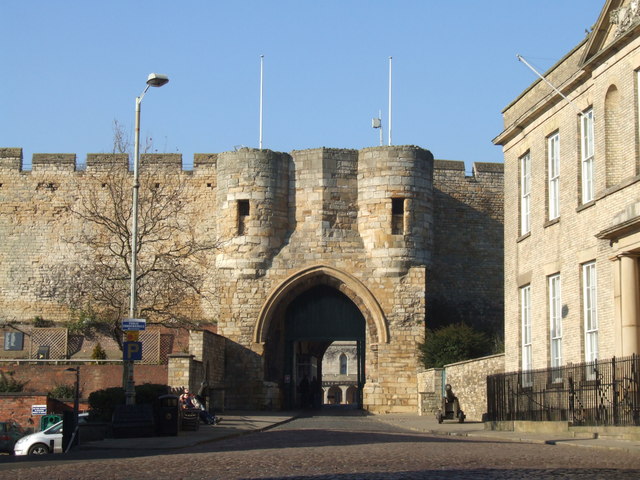
The West Gate of Lincoln Castle
William Marshal’s nephew, John Marshal was sent to the castle, to ascertain the situation within the city, but as he approached, Nicholaa’s deputy, Geoffrey de Serland, was making his way out to report to the English commanders that the castle was still in Nicholaa’s hands. It is not hard to imagine Nicholaa or her deputy climbing the tallest towers of the castle – perhaps the one now known as the Observatory Tower, used in Matthew Paris’s illustration – to watch out for an approaching relief force. Seeing the Marshal’s banners appearing in the north must have been an amazing feeling.
The castle itself had two main gates, one in the eastern wall and one in the west, with postern gates in the Lucy Tower to the south-east of the castle, the tower known as Cobb Hall to the north-east corner and another in the northern wall. On ascertaining that the castle still held, Peter des Roches then made his way inside, most likely by either the postern gate in Cobb Hall, or the one in the northern wall. Having met with Nicholaa de la Haye in the Lucy Tower, it seems he then made his way into the town via its postern gate, to check the defences and try to find a way into the city.
According to the Histoire, des Roches’ reconnaissance proved successful and he reported to Marshal that there was a gate within the north-west wall of the city, which, although blockaded, could be cleared. As Marshal set men to clearing the blockaded gate, the earl of Chester was sent to attack the North Gate as a diversion and Faulkes de Breauté took his crossbowmen into the castle via a postern gate and set them on the ramparts above the East Gate, so their bolts could fire down on the besiegers.
De Breauté fell into disgrace in 1224 and so the major source for the Battle of Lincoln – the Histoire de Guillaume le Maréschale – plays down his role in the battle. However, his crossbowmen managed to keep the French forces focussed on the castle, rather than Marshal’s forces outside the city. De Breauté did make a sortie out of the East Gate, to attack the besiegers, but was taken prisoner and had to be rescued by his own men; although at what stage of the battle this happened is uncertain.
The Histoire tells how it took several hours, it seems, for Marshal’s men to break through the gate. The 70-year-old William Marshal was so eager to lead the charge that he had to be reminded to don his helmet. Once safely helmeted, he led his men through the city gates and down Bailgate to approach the castle from the north, his men spilling into the space between castle and cathedral, where the main force of the besiegers were still firing missiles at the castle.
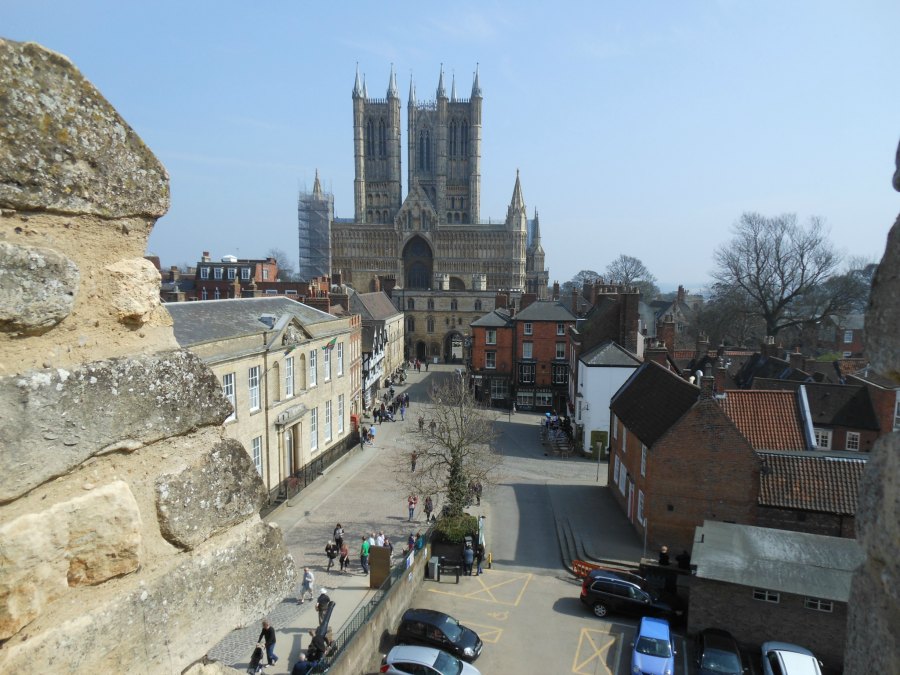
Lincoln Cathedral viewed from the Castle. The fiercest fighting was between the 2 great buildings
The English forces took the enemy so totally by surprise that one man – according to the Histoire he was the enemy’s ‘most expert stonethrower’² – thought they were allies and continued loading the siege machinery, only to have his head struck from his shoulders.
Almost simultaneously, it seems, the earl of Chester had broken through a gate to the northeast and arrived from behind the cathedral. Battle was joined on all sides. Vicious, close-quarter combat had erupted in the narrow streets, but the fiercest fighting was in front of the cathedral. In the midst of the melee, William Longspée took a blow from Robert of Roppesley, whose lance broke against the earl. The aged Marshal dealt a blow to Roppesley that the knight who, having crawled to a nearby house ‘out of fear, [he] went to hide in an upper room as quickly as he could’.³
The Comte de Perche made his stand in front of the cathedral, rallying his troops; and it was there he took a blow from Reginald Croc which breached the eye slit of his helmet. Croc himself was badly wounded and died the same day. The Comte continued to fight, striking several blows to the Marshal’s helmet (the one he had almost forgotten to don), before falling from his horse. It was thought the Comte was merely stunned until someone tried to remove his helmet and it was discovered that the point of Croc’s sword had pierced the count’s eye and continued into his brain, killing him.
With the death of their leader, the French and rebel barons lost heart and started pulling back. They fled downhill, to the south of the city. Although they briefly rallied, making an uphill assault, the battle was lost. There was a bottleneck as the defeated soldiers tried to escape through the city gates, made worse by a cow stuck in the South Gate and the bridge across the Witham as the enemy forces fled. The cow could not be moved and so the rebels butchered it – only to discover a dead cow was even harder to move. The rebel leaders, Saher de Quincey and Robert FitzWalter were both taken prisoner, as were many others. In total, about half of the enemy knights surrendered.
The battle had lasted no more than 6 hours.
The East Gate of Lincoln Castle
Sadly, in the aftermath of the battle, women took to the river with their children, in small boats, to escape the unwanted attentions of the victorious army. However, not knowing how to control the overloaded craft, many capsized and the women and children drowned.
The city, which had supported the rebels, was sacked, churches included; the excommunication seen as permission that everything was fair game. Although, one does wonder how much choice the citizens had in siding with the rebels and their French allies – survive or die would have been the reality. The battle earned the name ‘The Lincoln Fair,’ possibly because of the amount of plunder gained by the victorious English army.
Immediately the battle was won, William Marshal, earl of Pembroke, rode to Nottingham to inform the king of the victory. The Battle of Lincoln turned the tide of the war. On hearing of the battle, Louis immediately lifted his siege of Dover Castle and withdrew to London. His situation became desperate, his English allies were bristling against the idea of Louis giving English land as reward to his French commanders and were beginning to see the young Henry III as rightful king – after all, the son couldn’t be blamed for the actions of the father. In August of the same year Louis was soundly defeated at sea in the Battle of Sandwich, off the Kent coast. By September he had sued for peace and returned to France.
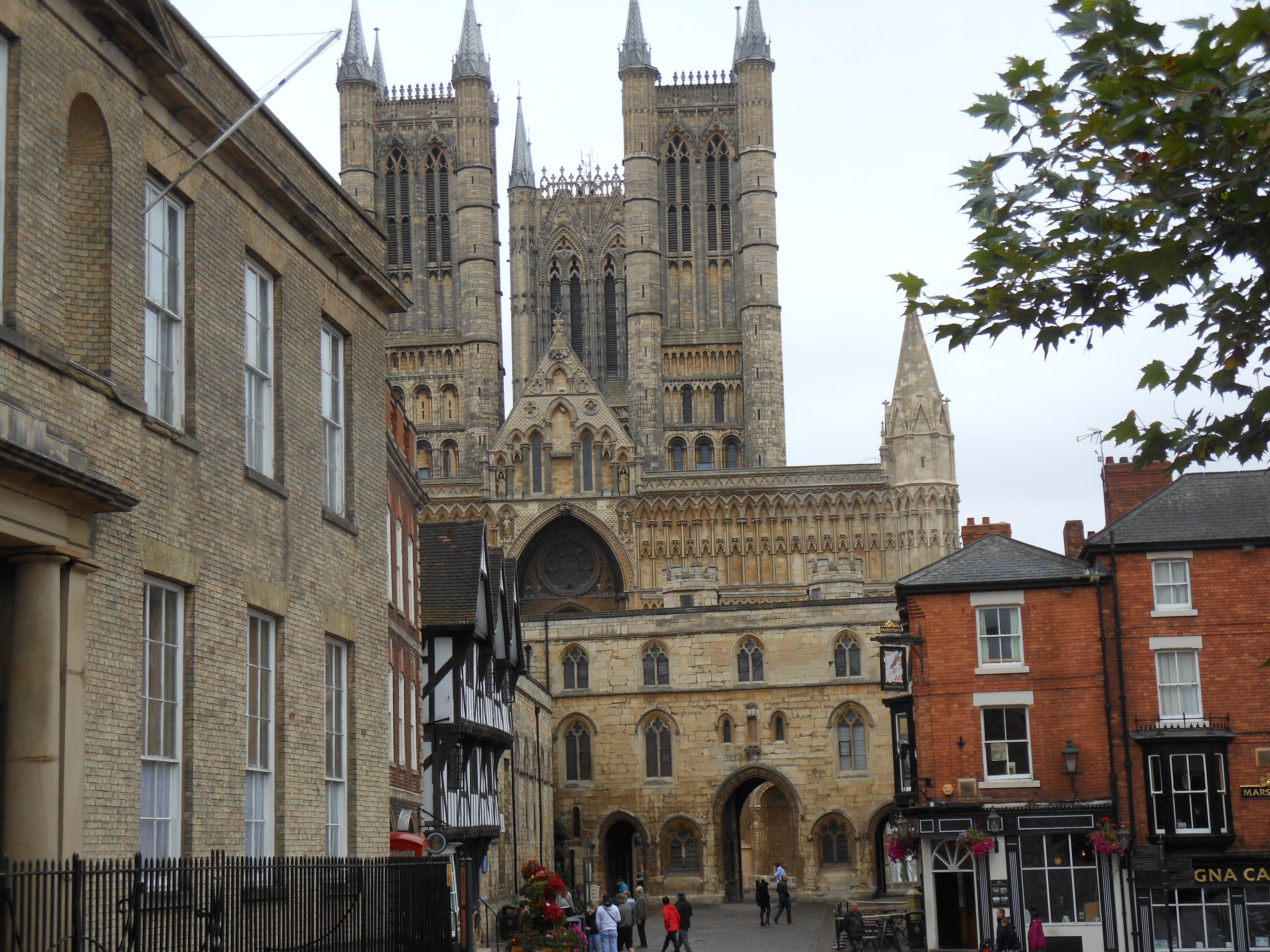
Lincoln Cathedral
In an incredible demonstration of ingratitude, within 4 days of the relief of the Castle, Nicholaa de la Haye’s position of Sheriff of Lincolnshire was given to the king’s uncle William Longspée, Earl of Salisbury, who took control of the city and seized the castle. Salisbury was the father-in-law of Nicholaa’s granddaughter – and heir – Idonea de Camville. However, not one to give up easily, Nicholaa travelled to court to remind the king’s regents of her services, and request her rights be restored to her. A compromise was eventually reached whereby Salisbury remained as Sheriff of the County, while Nicholaa held the city and the castle. Although Salisbury never gave hope of acquiring the castle, it was still in Nicholaa’s hands when he died in 1226.
The battle had been a magnificent victory for the 70-year-old regent, William Marshal, Earl of Pembroke, and is a testament to his claim to the title ‘The Greatest Knight’. He staked the fate of the country on this one battle and pulled off a decisive victory, saving his king and country. Although, he could not have achieved it, had Nicholaa not so stubbornly held onto Lincoln Castle.
*
Footnotes: ¹Irene Gladwin: The Sheriff; The Man and His Office; ²Histoire de Guillaume le Maréschal translated by Stewart Gregory; ³ Quoted in Thomas Asbridge’s The greatest Knight
Sources: King John by Marc Morris; Henry III The Son of Magna Carta by Matthew Lewis; The Demon’s Brood by Desmond Seward; The Greatest Knight by Thomas Asbridge; The Knight Who Saved England by Richard Brooks; The Plantagenet Chronicles edited by Elizabeth Hallam; Brassey’s Battles by John Laffin; 1215 The Year of Magna Carta by Danny Danziger & John Gillingham; The Life and times of King John by Maurice Ashley; The Story of Britain by Roy Strong; The Plantagenets, the Kings Who Made England by Dan Jones; England Under the Norman and Angevin Kings by Robert Bartlett; lincolnshirelife.co.uk; catherinehanley.co.uk; magnacarta800th.com; lothene.org; lincolncastle.com; Nick Buckingham; The Sheriff: The Man and His Office by Irene Gladwin; Elizabeth Chadwick; swaton.org.uk; Histoire de Guillaume le Mareschal translated by Stewart Gregory, usna.edu.
*
My Books
Signed, dedicated copies of all my books are available through my online bookshop.
Out now: Scotland’s Medieval Queens
Scotland’s history is dramatic, violent and bloody. Being England’s northern neighbour has never been easy. Scotland’s queens have had to deal with war, murder, imprisonment, political rivalries and open betrayal. They have loved and lost, raised kings and queens, ruled and died for Scotland. From St Margaret, who became one of the patron saints of Scotland, to Elizabeth de Burgh and the dramatic story of the Scottish Wars of Independence, to the love story and tragedy of Joan Beaufort, to Margaret of Denmark and the dawn of the Renaissance, Scotland’s Medieval Queens have seen it all. This is the story of Scotland through their eyes.
‘Scotland’s Medieval Queens gives a thorough grounding in the history of the women who ruled Scotland at the side of its kings, often in the shadows, but just as interesting in their lives beyond the spotlight. It’s not a subject that has been widely covered, and Sharon is a pioneer in bringing that information into accessible history.’ Elizabeth Chadwick (New York Times bestselling author)
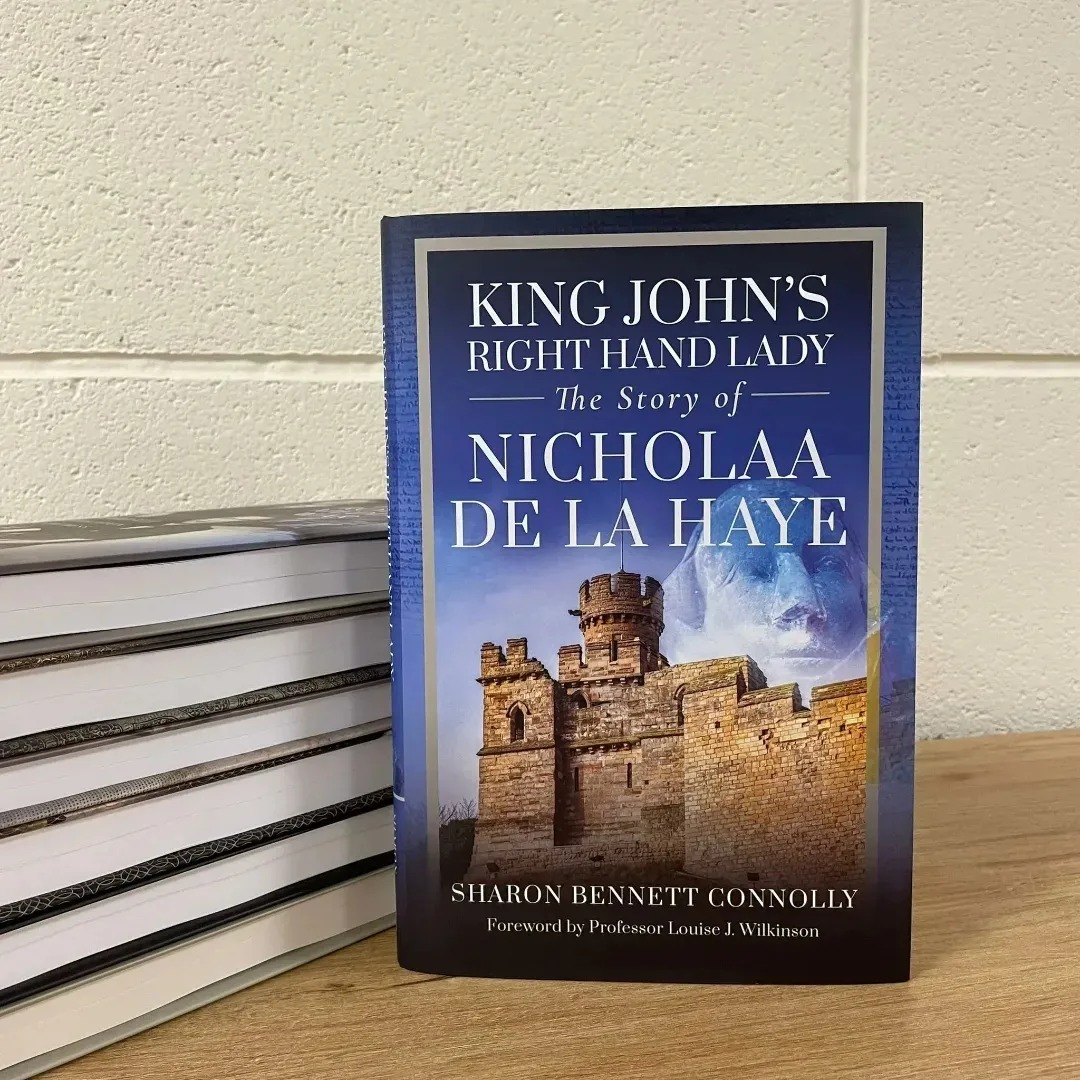
Heroines of the Tudor World tells the stories of the most remarkable women from European history in the time of the Tudor dynasty, 1485-1603. These are the women who ruled, the women who founded dynasties, the women who fought for religious freedom, their families and love. Heroines of the Tudor World is now available from Amberley Publishing and Amazon UK.Women of the Anarchy demonstrates how Empress Matilda and Matilda of Boulogne, unable to wield a sword themselves, were prime movers in this time of conflict and lawlessness. It shows how their strengths, weaknesses, and personal ambitions swung the fortunes of war one way – and then the other. Available from Bookshop.org, Amberley Publishing and Amazon UK. King John’s Right-Hand Lady: The Story of Nicholaa de la Haye is the story of a truly remarkable lady, the hereditary constable of Lincoln Castle and the first woman in England to be appointed sheriff in her own right. Available from all good bookshops Pen & Sword Books, bookshop.org and Amazon.
Alternate Endings: An anthology of historical fiction short stories including Long Live the King… which is my take what might have happened had King John not died in October 1216. Available in paperback and kindle from Amazon.
Podcast:
Have a listen to theA Slice of Medieval podcast, which I co-host with Historical fiction novelist Derek Birks. Derek and I welcome guests, such as Bernard Cornwell and Michael Jecks, and discuss a wide range of topics in medieval history, from significant events to the personalities involved. Every episode is also now available on YouTube.
*
Don’t forget!Signed and dedicated copies of all my books are available through my online bookshop.
For forthcoming online and in-person talks, please check out my Events Page.
 The day has finally arrived!






 History... the interesting bits!