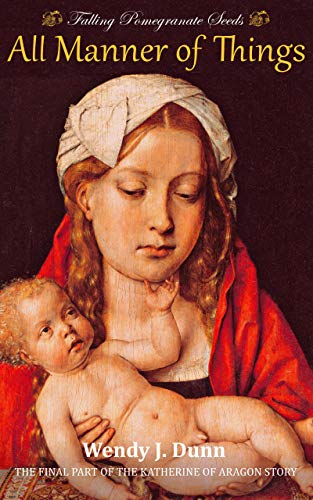
Book Corner: All Manner of Things by Wendy J. Dunn

Winter, 1539: María de Salinas is dying. Too ill to travel, she writes a letter to her daughter Katherine, the young duchess of Suffolk. A letter telling of her life: a life intertwined with her friend and cousin Catalina of Aragon, the youngest child of Isabel of Castile. It is a letter to help her daughter understand the choices she has made in her life, beginning from the time she keeps her vow to Catalina to share her life of exile in England.

Friendship.

Betrayal.

Hatred.

Forgiveness.

Love wins out in the end.

All Manner of Things by Wendy J. Dunn is the second book in the Falling Pomegranate Seeds series, although it works perfectly well as a standalone. In fact, if you didn’t know it was part of a series, nothing in the pages would tell you. You do not feel as if you are missing part of the story, or need to read the first book in the series, The Duty of Daughters, to grasp what is going on. Which makes it eminently readable for everyone.

And what a fabulous book it is!

All Manner of Things follows the story of Infanta Catalina (Katherine of Aragon) from her journey to the English court to marry Arthur Tudor, Prince of Wales, to the Field of the Cloth of Gold of 1520, when Henry VIII met Francis I in a spectacular display of pageantry and might. The event also marked the introduction of Anne Boleyn to English affairs; Anne was still in the service of Queen Claude of France but returned to England soon afterwards.

The story tells of the pitifully short marriage of Catalina and Arthur, the lonely years following Arthur’s death, when Catalina was a hostage, in all but name, of the English king, Henry VII, and the early years of her marriage to King Henry VIII. Historically, it documents how the relationship between Henry and Catalina changed over time, how a promising marriage and love was soured by Henry’s frequent infidelities, Catalina’s miscarriages and the many lost infants that turned a loving relationship sour.

All Manner of Things by Wendy J. Dunn is told through the eyes of Maria de Salinas, Catalina’s closest friend and companion, though no fan of Henry VIII, which puts an interesting slant on the story and shows Henry in two lights: how he is adored by his wife, and how his wife’s friend sees him. It is an interesting dichotomy that works wonderfully in the novel and demonstrates the author’s deep understanding of the Tudor court and the personalities involved.

The overriding theme of this book is friendship and love; the sisterly love and friendship between Catalina (Katherine of Aragon) and her childhood friend and almost-constant companion, Maria de Salinas.

When Maria returned to the bedchamber, Catalina was awake and at her writing desk. She lifted her head, put aside her quill and smiled at her. “You have been gone for a while.”

“I have been talking to our companions.”

“Mm…” Catalina picked up her quill again, her attention returned to the parchment in front of her.

“Catalina – could you please listen to e for a moment?”

Catalina twisted around. “What is it?”

“I think it would be wiser if we are not alone so much. The other women are your companions too. They are unhappy. I do not believe it is simply due to this long journey.”

Catalina pursed her mouth. “Do you know what troubles them?”

“They are jealous.” Maria sighed.

“Jealous?” A frown so alike her mother’s knotted between Catalina’s thinned eyebrows.

Maria sighed again. “Of me. They are jealous of me.”

Catalina looked taken aback. “But you and I have always been together.”

Maria shrugged. “I think it would be wise to remember the queen’s advice not to have obvious favourites. Once we are in England, your companions will form your inner court within your court.”

“But I think of you as my sister,” Catalina said. “Even mother kept those she trusted close to her, your mother for one.”

“Si, and like my mother for your mother, I vow to serve you to the day of our death. But the other girls begin to worry me. They are scared too about the sea voyage and, like us, they are leaving behind everything they love for England. Pray, for my sake, let us eat with them and spend more time getting to know them. I think if you befriend them, really befriend them, they won’t be so jealous and cause mischief. I do not like their black looks.”

Having researched Maria’s story myself, Maria’s life at court, marriage and constant support for her friend and queen, it is obvious that Wendy J. Dunn has done her homework. In All Manner of Things, Wendy J. Dunn captures wonderfully not only the friendship between Catalina (Katherine of Aragon’s name in her native Castilian) and Maria, but also the complications that arise from life at the Tudor court, and a friendship with a queen.

Wendy J. Dunn expertly recreates the Tudor court, the glamour of the royal family and the drama associated with all aspects of their lives – and of the lives of those who serve them. The reader is drawn into the relationships, the intrigues and the underlying falsehoods that accompany any court, expertly contrasting the ‘show’ with the friendships and relationships behind the scenes, of the queen with her ladies. The glamour of court life itself reveals the contradictions, and the changing relationships as the characters grow and are affected by the challenges they face and the secrets they have to keep.

Wendy J. Dunn wonderfully combines the history and fiction to create a gripping drama, where you will find it hard to know where fact ends and fiction begins. The storytelling is first class!

Falling Pomegranate Seeds: All Manner of Things by Wendy J. Dunn is available from Amazon.

About the Author:

Wendy J. Dunn is an Australian author, playwright and poet who has been obsessed by Anne Boleyn and Tudor History since she was ten-years-old. She is the author of two Tudor novels: Dear Heart, How Like You This?, the winner of the 2003 Glyph Fiction Award and 2004 runner up in the Eric Hoffer Award for Commercial Fiction, and The Light in the Labyrinth, her first young adult novel.

While she continues to have a very close and spooky relationship with Sir Thomas Wyatt, the elder, serendipity of life now leaves her no longer wondering if she has been channeling Anne Boleyn and Sir Tom for years in her writing, but considering the possibility of ancestral memory. Her family tree reveals the intriguing fact that her ancestors – possibly over three generations – had purchased land from both the Boleyn and Wyatt families to build up their own holdings. It seems very likely Wendy’s ancestors knew the Wyatts and Boleyns personally.

Wendy tutors at Swinburne University in their Master of Arts (Writing) program.

*

My books

Ladies of Magna Carta: Women of Influence in Thirteenth Century England looks into the relationships of the various noble families of the 13th century, and how they were affected by the Barons’ Wars, Magna Carta and its aftermath; the bonds that were formed and those that were broken. It is now available from Pen & Sword,  Amazon and from Book Depository worldwide.

Also by Sharon Bennett Connolly:

Heroines of the Medieval World tells the stories of some of the most remarkable women from Medieval history, from Eleanor of Aquitaine to Julian of Norwich. Available now from Amberley Publishing and Amazon and Book Depository.

Silk and the Sword: The Women of the Norman Conquest traces the fortunes of the women who had a significant role to play in the momentous events of 1066.  Available now from Amazon,  Amberley Publishing, Book Depository.

*

You can be the first to read new articles by clicking the ‘Follow’ button, liking our Facebook page or joining me on Twitter and Instagram.

©2021 Sharon Bennett Connolly.
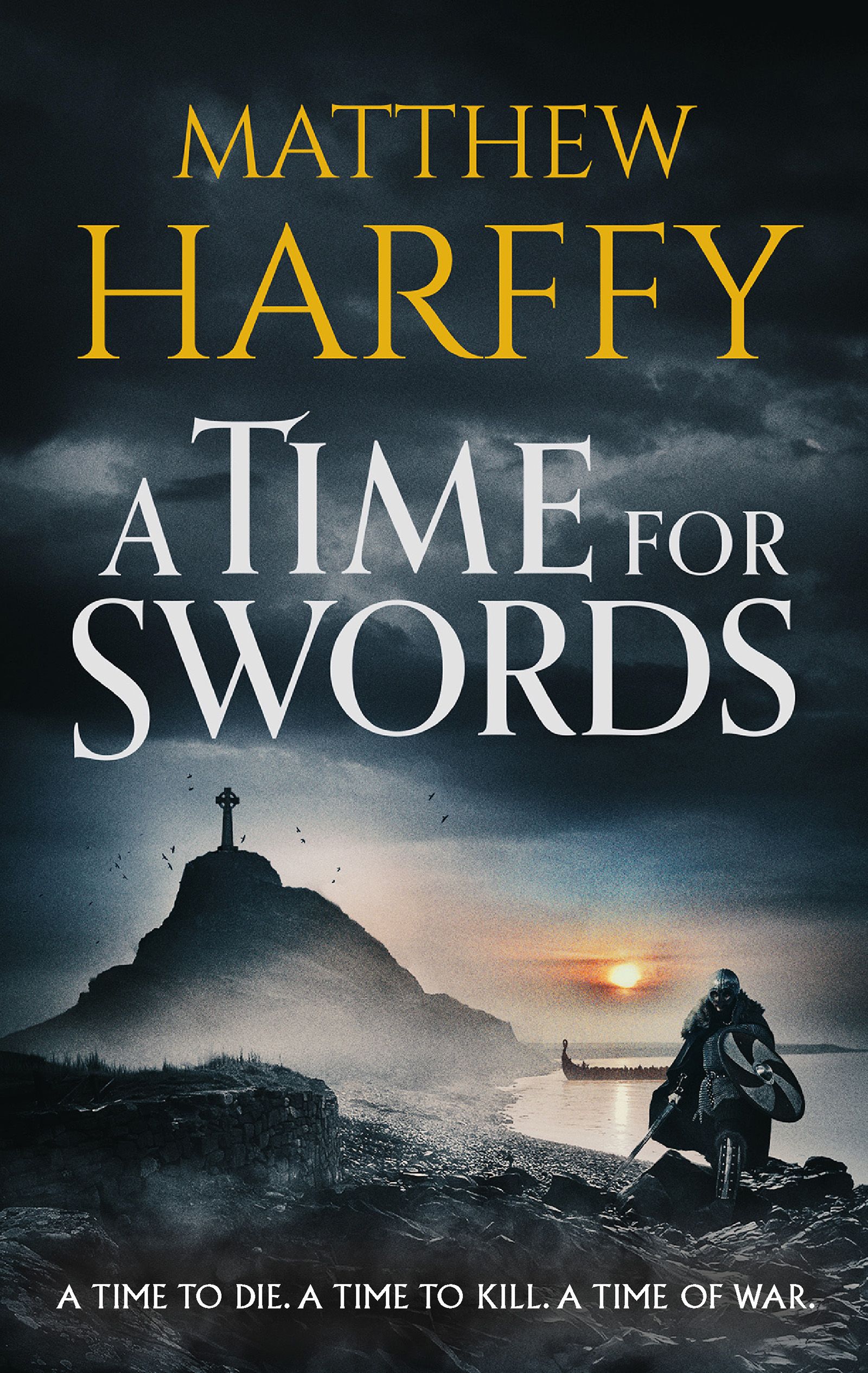
Book Corner: A Time for Swords by Matthew Harffy

When the Vikings attack, a novice monk’s life is changed forever in Matthew Harffy’s new historical adventure.

Lindisfarne, AD793.

There had been portents – famine, whirlwinds, lightning from clear skies, serpents seen flying through the air. But when the raiders came, no one was prepared.

They came from the North, their dragon-prowed longships gliding out of the dawn mist as they descended on the kingdom’s most sacred site.

It is 8th June AD793, and with the pillage of the monastery on Lindisfarne, the Viking Age has begun.

While his fellow monks flee before the Norse onslaught, one young novice stands his ground. He has been taught to turn the other cheek, but faced with the slaughter of his brothers and the pagan desecration of his church, forgiveness is impossible.

Hunlaf soon learns that there is a time for faith and prayer . . . and there is a time for swords.

It is my pleasure to be a part of Matthew Harffy’s blog tour for the release of the first book in what will be a new series, A Time for Swords.

It is always a worry when one of your favourite authors starts a new series – for author and reader, alike – that you may not like it, that the new hero doesn’t live up to the promise of the last hero – or even that the new hero is too similar to the last and the book appears formulaic.

Well, with Matthew Harffy, you needn’t worry about that. He seems to be able to create distinct characters and storylines at the drop of a hat. To be fair to Matthew, I am sure that it is not that easy – though he does make it look so! With Wolf of Wessex, his first foray away from the heroic Beobrand, Matthew Harffy proved his ability at storytelling did not just lay in one direction, and that he did have so much more in his repertoire.

With A Time for Swords, he has done it again!

Recreating the world of 8th century Northumbria, Matthew Harffy has left the 7th century behind to document the arrival of the Vikings on Britain’s shores, with the raid on Lindisfarne – Holy Island. A Time for Swords takes this raid as its starting point and pursues the likely reactions on the people of Northumbria following this unexpected explosion of violence on the peaceful island monastery. As we have come to expect from Matthew Harffy, the action starts on the very first page and doesn’t let the reader stop for breath until the very last.

My feet pounded the soft earth as I sped back towards the dwellings of the ceorls. A green plover, startled by my passing, burst from the long grass that brushed against my bare legs as I ran. I stumbled in shock and surprise at the bird’s screeching call, so like that of the screams of the people dying in the minster and the huts of the villagers. I rushed on, my lungs burning and the thickening smoke stinging my eyes.

I came up over the low rise from the beach to a scene of chaos. When I had left the minster at dawn, its buildings had rested peacefully, close to the natural harbour and overlooked by the mound of rock at the island’s tip. A few small fishing boats had been canted in the shallows of low tide, and teh morning had been still and quiet. Now the brightening day was filled with noise, fire and smoke.

And death.

In the harbour were three huge ships, sleek and menacing with terrifying carven serpent head prows. Around the ships were congregated several men. The land all around was full of movement. Dozens of armed warriors had poured from the ships and had made their way into the grounds of the minster. Three of the monastery buildings were burning, great pillars of flame and smoke smudging the sky. My heart lurched as I realised one of the fires was the scriptorium. I imagined the gold cover of The Treasure of Life melting, the parchment leaves curling, smouldering and then bursting into flames. Leofstan and I would never unpick the secrets within its pages now. I felt tears prickle my eyes as I thought of so many books being consumed, just like in my nightmare of Alexandria. Countless days of painstaking work and skill gone in an instant. So much knowledge snuffed out and lost. I was a long way off, but as I crested the rise I could feel the heat from the fires on my face.

The lead character, Hunlaf, is a monk who has discovered a skill with the sword, and who wants nothing more than to protect his brethren at the monastery at Werceworthe (Warkworth) from the attack that he knows is coming. The intrepid warrior monk manages to attract a small but fierce group of fighters to his cause, including Runolf, a Viking left behind in the raid on Lindisfarne, who has his own motives for confronting the Norse raiders.

Hunlaf is a likeable character, torn between his love of the church and the draw of the sword and the comradeship of warriors. He is a young, gifted fighter with an eagerness to learn and a desire to protect that means he will find it hard to back down from a fight. Each of the characters surrounding Hunlaf have their own stories and reasons for joining the fight, from the monk, Leofstan, with a warrior past of his own, to Runolf the Norseman fighting his own kind, to a Welshman always in need of proving himself and a young, fiery Irishman, Cormac, seeking vengeance for the fate of his family.

The storyline of A Time for Swords draws the reader in from the outset, taking you on a journey from the ruined Lindisfarne to York and on to the monastery at Warkworth. Matthew Harffy demonstrates his knowledge of the area, the people and the landscape, in Hunlaf’s travels. Harffy skillfully combines impeccable historical research with his wonderful storytelling, to create a novel that has a sense of authenticity about it. While the raid on Lindisfarne is historical fact, the subsequent events that young Hunlaf gets involved in are a creation of the author. However, Matthew Harffy supplements the fictional fighting by using the original landscape, the weapons used, fighting tactics and the very real threat of the Viking raiders, to add a sense of realism,

As you may have come to expect with Matthew Harffy, the fight scenes are where he is in his element. Beautifully choreographed, they are frenetic and vividly described with a passion unique to the author. and there is no guarantee that your favourite character will survive…

In short, A Time for Swords is one of those books which is not to be missed. Entertaining, exciting and totally gripping, the novel reaffirms, once more – if more affirmation is needed – Matthew Harffy’s status as one of the best authors of historical fiction around.

Read it – I promise, you will not be disappointed!

About the Author:

Matthew Harffy grew up in Northumberland where the rugged terrain, ruined castles and rocky coastline had a huge impact on him. He now lives in Wiltshire, England, with his wife and their two daughters.

Pre-order links:

Amazon UK: https://amzn.to/39T3MqJ

Follow Matthew:

Twitter: @MatthewHarffy

Website: www.matthewharffy.com

Follow Aries:

Twitter: @AriesFiction

Facebook: Aries Fiction

Website: http://www.headofzeus.com

*

My Books

Ladies of Magna Carta: Women of Influence in Thirteenth Century England looks into the relationships of the various noble families of the 13th century, and how they were affected by the Barons’ Wars, Magna Carta and its aftermath; the bonds that were formed and those that were broken. It is now available from Pen & Sword,  Amazon and from Book Depository worldwide.

Also by Sharon Bennett Connolly:

Silk and the Sword: The Women of the Norman Conquest traces the fortunes of the women who had a significant role to play in the momentous events of 1066.  Available now from Amazon,  Amberley Publishing, Book Depository.

Heroines of the Medieval World tells the stories of some of the most remarkable women from Medieval history, from Eleanor of Aquitaine to Julian of Norwich. Available now from Amberley Publishing and Amazon and Book Depository.

*

You can be the first to read new articles by clicking the ‘Follow’ button, liking our Facebook page or joining me on Twitter and Instagram.

©2020 Sharon Bennett Connolly

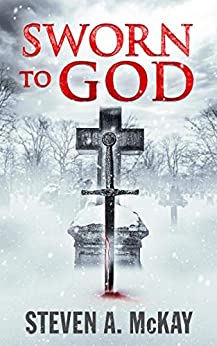
Book Corner: Sworn to God by Steven A. McKay

Yorkshire, AD 1329
A new religious group moves into an abandoned church just north of the village of Altofts, but when men start dying under strange and suspicious circumstances the local bailiff decides to investigate.

The Disciples of God and their charismatic leader, Lady Alice de Staynton, appear truly holy, but something sinister seems to be going on within the walls of the newly refurbished St Joseph’s. Certainly the bailiff, John Little, has his suspicions about some of the warrior-like male acolytes, but are his fears justified? Infiltrating the group seems to be the best course of action, although the volatile Will Scaflock is none too happy about being nominated for the job by Friar Tuck…
Following on from 2019’s Faces of Darkness, this standalone new story sees three legendary heroes battling invisible ‘Black Lords’ and far more dangerous earthly foes, but can they figure out what’s really going on in St Joseph’s before anyone else dies?
With twists and turns aplenty, and based on real events, historical fiction fans are sure to enjoy this action packed thriller as much as they did the author’s previous bestsellers The DruidLucia and Wolf’s Head.

Oooh goody, Steven A. McKay has a new novella out!

Actually, Sworn to God is more a short novel, than a novella. Not that that would ever be a problem. I seem to remember saying, after reviewing Faces of Darkness, that McKay really should think about doing a full-length detective series based on the exploits of Little John and Friar Tuck. These novellas are a delight to read, but they are not enough! They always leave you wanting more. And Sworn to God, despite its extra length, is no exception.

Sworn to God is a riveting detective story, looking into a mysterious cult in 14th century Yorkshire. Three former members of Robin Hood’s gang – Little John, Friar Tuck and Will Scarlet – are drawn to the mysterious Disciples of God after the suicide of one of the group’s members raises eyebrows. Tuck, Scarlet and Little John know that something is not quite right, but can’t put their finger on what – exactly – is wrong with the strange cult and its charismatic leader, Alice de Staynton, who is revered as Holy Mother by her disciples.

With his Robin Hood and Warrior Druid of Britain books, Steven A. McKay has gained a reputation as a writer of action and adventure in historical fiction. His novel of a slave in Roman Britain, Lucia, is my book of 2020 and demonstrated McKay’s depth as an author, and an incredible ability to get into the heads of his characters and human behaviour in the most trying times. With these novellas, he is also gaining a reputation as a writer of exceptional medieval mysteries. Sworn to God goes through a number of twists and turns that keep the reader entranced to the very end.

John let go of the acolyte, whose face was scarlet from lack of air and embarrassment. Before he could say anything though, Tuck was past him and John hurriedly followed.

A man lay slumped over the candlelit desk in the corner. He had a ring of straggly greying hair beneath a bald pate, looked about forty-five, and was very clearly deceased.

“Damn it!” John shouted. “If there was any hope of helping him, that idiot at the door -“

“Forget it,” Tuck said, patting the bailiff’s arm as if he was soothing a dog with its hackles up. “This fellow’s been dead for a while. Look at the colour of his skin.”

They could hear the Holy Mother ordering Colwin and David to marshal the villagers out of the church and on their way home. She was telling the people to take some food with them, to offset any irritation they might have felt at not being allowed to see the dead man – and exciting event at any time after all, never mind during a Christmas feast within the home of a strange new religious sect.

“Any evidence of violence?” Tuck muttered as he and John examined the corpse and the room about them in the wan, flickering light from the single candle on the desk.

“Doesn’t seem to be. No signs of a struggle, no apparent wounds or injuries on him, no discarded weapons …”

“What’s killed him then?” The friar eyed the dead man curiously. “He looks far too young to have died from old age as he sat here.”

The Holy Mother came into the room and exclaimed in shock at the sight before her. “Brother Morris,” she whispered from behind the hand that sought to mask her grief. “How?”

Little John, Friar Tuck and Will Scarlet are the unassuming heroes of Sworn to God. Drawn to the mystery surrounding the Disciples of God, they have a penchant for solving problems that few others can see. Steven A McKay has developed these wonderful characters through his original Forest Lord series, but now has developed them even further, giving them an inquisitiveness that has given them a new sense of purpose after their years as famous outlaws have come to an end.

For a Scot, Steven A. McKay demonstrates a deep understanding of the Yorkshire landscape and the mindset of Yorkshire people, which he uses to full effect in these wonderful novellas. His passion for the legend of Robin Hood, for medieval history and for storytelling, in particular, shines through on every page. He draws the reader into the story and takes them on a wonderful journey of mystery and discovery. Moreover, Sworn to God is developed from stories of real life religious cults, showing how a charismatic leader can evince the loyalty of their followers, and get people to do things they would never normally do. In this way, Sworn to God is not just a medieval mystery, but also a study of human nature and how these cults can develop, even today. The human need to belong drawing the lost and lonely into the fold.

As an author, Steven A. Mckay seems to be able to go from strength to strength. Sworn to God is a marvellous, entertaining and engaging read. It provides a wonderful diversion in these trying times – escapism at its best. If you have never read a Steven A. McKay novel, you are missing out on an incredible author and storytelling at its best. I cannot recommend Sworn to God highly enough. I loved it!

To buy the book: Amazon

About the author:

From Steven A. McKay: I was born in Scotland in 1977 and always enjoyed studying history – well, the interesting bits, not so much what they taught us in school. I decided to write my Forest Lord series after seeing a house called “Sherwood” when I was out at work one day. I’d been thinking about maybe writing a novel but couldn’t come up with a subject or a hero so, to see that house, well…It felt like a message from the gods and my rebooted Robin Hood was born.
My current Warrior Druid of Britain series was similarly inspired, although this time it was the 80’s TV show “Knightmare”, and their version of Merlin that got my ideas flowing. Of course, the bearded old wizard had been done to death in fiction, so I decided to make my hero a giant young warrior-druid living in post-Roman Britain and he’s been a great character to write.
I was once in a heavy metal band although I tend to just play guitar in my study these days. I’m sure the neighbours absolutely love me.
Check out my website at stevenamckay.com and sign up for the email list – in return I’ll send you a FREE short story, as well as offering chances to win signed books, free audiobooks and other quite good things!

My Books

Ladies of Magna Carta: Women of Influence in Thirteenth Century England  looks into the relationships of the various noble families of the 13th century, and how they were affected by the Barons’ Wars, Magna Carta and its aftermath; the bonds that were formed and those that were broken. It is now available from Pen & SwordAmazon and from Book Depository worldwide.

Also by Sharon Bennett Connolly:

Silk and the Sword: The Women of the Norman Conquest traces the fortunes of the women who had a significant role to play in the momentous events of 1066.  Available now from Amazon,  Amberley Publishing, Book Depository.

Heroines of the Medieval World tells the stories of some of the most remarkable women from Medieval history, from Eleanor of Aquitaine to Julian of Norwich. Available now from Amberley Publishing and Amazon and Book Depository.

*

You can be the first to read new articles by clicking the ‘Follow’ button, liking our Facebook page or joining me on Twitter and Instagram.

©2020 Sharon Bennett Connolly 

Guest Post: The Mallory Saga – Books 1-3

Today, it is a pleasure to welcome fellow author (and Bennett – wonder if we’re related?) Paul Bennett to History … The Interesting Bits. Paul is the author of the popular historical fiction series The Mallory Saga, of which the latest book, and third in the series, Crucible of Rebellion, has just hit the shops.

So, it’s over to Paul Bennett to tell us a little about the books and the inspiration behind them:

The Mallory Saga – Books 1-3

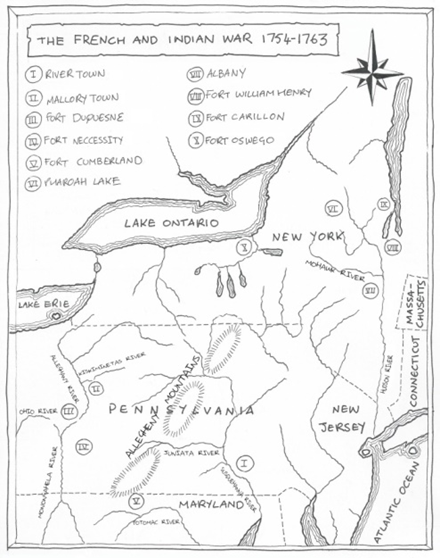
The inspiration to write was, in the beginning, merely to see if I could do it.  I had written short pieces over the years but to tackle a full blown novel was a daunting prospect.  Once the seed was planted I came up with a rough idea of telling the story of three siblings living somewhere in colonial America.  Choosing that general locale was a natural fit for me as I’ve been a lifelong student of American history and I felt that if I was going to write a historical fiction novel, it might be prudent to choose a subject I knew a little about. I picked The French and Indian War as the starting point for what was now becoming a possible series of books that would follow the Mallory clan through the years.  That war intrigued me and I saw a chance to tell the story through the eyes of the Mallory family.  It also provided me with the opportunity to tell the plight of the Native Americans caught up in this conflict.  The French and Indian War paved the way for the colonies to push further west into the Ohio River area.  It also set the stage for the events of the 1770’s.  Britain incurred a huge debt winning that war and looked to the colonies for reimbursement in the form of new taxes and tariffs.  Well, we all know how those ungrateful colonists responded. 

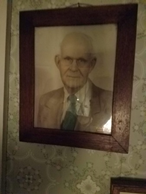
As to the name Mallory – I have a photo hanging on my living room wall of my great grandfather, Harry Mallory.  I got to know him when I was a young boy and was always glad when we visited him.  He lived a good portion of his life in western Pennsylvania which is where much of Clash of Empires takes place.  So, as a gesture to my forebears, Mallory became the name of the family. 

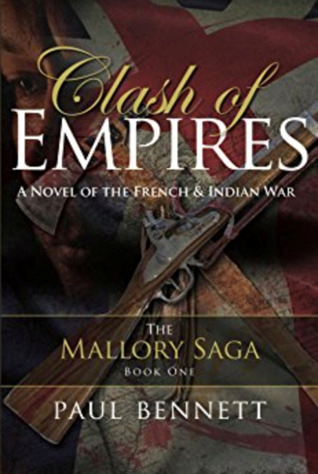
Clash of Empires

In 1756, Britain and France are on a collision course for control of the North American continent that will turn into what can be described as the 1st world war, known as The Seven Year’s War in Europe and The French and Indian War in the colonies.  The Mallory family uproots from eastern PA and moves to the western frontier and find themselves in the middle of the war. It is a tale of the three Mallory siblings, Daniel. Liza and Liam and their involvement in the conflict; the emotional trauma of lost loved ones, the bravery they exhibit in battle situations.  The story focuses on historical events, such as, the two expeditions to seize Fort Duquesne from the French and the fighting around Forts Carillon and William Henry and includes the historical characters George Washington, Generals Braddock, Forbes and Amherst.  The book also includes the event known as Pontiac’s Rebellion in which the protagonists play important roles.  Clash of Empires is an exciting look at the precursor to the events of July 1776; events that will be chronicled in the second book, Paths to Freedom, as I follow the exploits and fate of the Mallory clan.

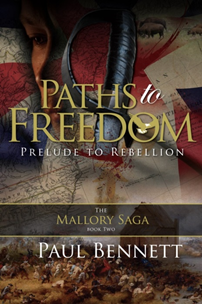
Paths to Freedom

In Paths to Freedom the children of the three Mallory siblings begin to make their presence known, especially Thomas, the oldest child of Liza and Henry Clarke (see right there, already another family line to follow), but Jack and Caleb, the twin sons of Liam and Rebecca along with Bowie, the son of Daniel and Deborah are beginning to get involved as well. The French and Indian War, the historical setting for book 1, was over, and the Mallory/Clarke clan is looking forward to settling and expanding their trading post village, Mallory Town, now that the frontier is at peace. And for a time they had peace, but the increasing discontent in the East, not so much toward the increasing rise in taxes, but the fact that Parliament was making these decisions without any input from the colonies, slowly made its way west to the frontier. Once again the Mallory/Clarke clan would be embroiled in another conflict.

Another facet of my saga is that the main characters are not always together in the same place or even the same event. In Paths my characters are spread out; some have gone East, some have gone West, some are sticking close to Mallory Town, so in effect there are three stories being told, and that means more plots, subplots, twists and surprises.

One of the aspects of the lead up to The Revolutionary War was the attempt by the British to ensure cooperation with the Native Americans, especially the Iroquois Confederation. The British had proclaimed that they would keep the colonies from encroaching on tribal lands, a strong inducement indeed. However, some tribes, like The Oneida, had established a good relationship with the colonists. I knew right away when I started book 2 that the relationship between the Mallory’s and the tribes would be part of it. Among the historical Native Americans who take part in Paths are the Shawnee Chiefs; Catecahassa (Black Hoof), Hokoleskwa (Cornstalk), Pucksinwah (father of Tecumseh), and the Mingo leader Soyechtowa (Logan).

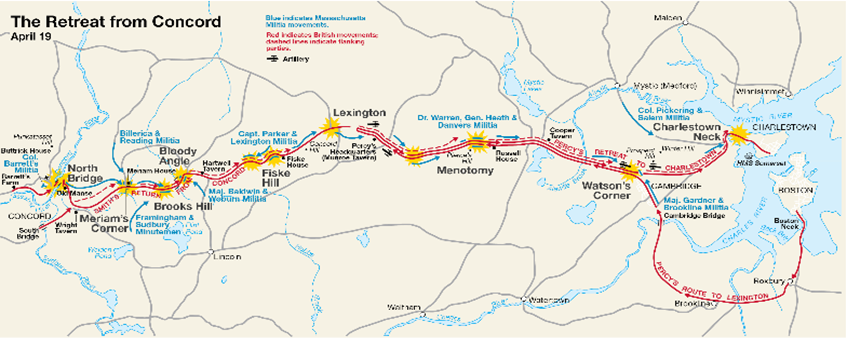
I also realized that I needed to get someone to Boston, and the Sons of Liberty. Thomas Clarke, the eighteen year old son of Liza and Henry, was the perfect choice for the assignment (mainly because he was the only child old enough at the time). J Through him we meet the luminaries of the Boston contingent of rebels, Paul Revere, Dr. Joseph Warren, John Hancock, and the firebrand of the bunch, Sam Adams. Plenty of history fodder to be had…British raid in Salem…Tea Party…the famous midnight rides…culminating with the Battle of Lexington and Concord. Oh yes, plenty of opportunities for Thomas.

An untenable situation arises in Mallory Town resulting in Liam and his two companions, Wahta and Mulhern, finding themselves on a journey to the shores of Lake Michigan and beyond. Driven by his restless buffalo spirit, Liam has his share of adventures; encountering a duplicitous British commander, meeting many new native tribes, some friendly, some not so much. A spiritual journey in a land not seen by many white men.

I ended Paths with the Battle of Lexington and Concord, the first shots of The Revolutionary War. The flint has been struck; the tinder has taken the spark. Soon the flames of war will engulf the land, and the Mallory clan will feel the heat in the third book, Crucible of Rebellion.

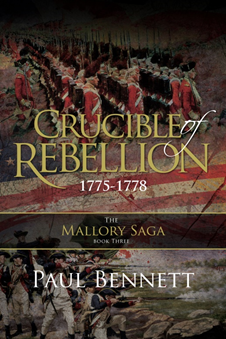
Crucible of Rebellion

The timeline for Crucible is 1775 – 1778. I decided to split the Revolutionary War into two books, mainly because there is so much more action as opposed to The French & Indian War…and because as I was writing, my characters insisted on some scenes I hadn’t previously thought of. J Book 4 of the saga is in the planning stages. Tentative title – A Nation Born.

The three Mallory siblings, Daniel, Liza, and Liam play important parts in CoR, but it is their children who begin to make their marks on the saga. Their youngest son, Ethan, and their daughter Abigail, of Daniel and Deborah travel with their parents to Boonesborough, and reside there with Daniel Boone. The war reaches even this remote frontier, prompting Daniel and Deborah to move further west in search of peace. However, the banks of The Wabash River prove not to be immune to conflict.

Their eldest son, Bo accompanies Liam’s twins, Jack and Cal, first to Fort Ticonderoga, then to Boston with a load of cannon for General Washington’s siege of Boston (the Noble Train of Artillery with Colonel/General Henry Knox). In Boston they meet up with Liza and Henry’s son Thomas, who is no longer a prisoner (can’t say more than that) J, Marguerite, and Samuel Webb.

General Washington has plans for the Mallory boys…plans which see some of them in a few of the more important battles of the war… the escape from Long Island, the surprise attack at Trenton, the turning point battles at Saratoga NY, as well as taking part in numerous guerilla type skirmishes.

A long ways away from the conflict Liam, with Wahta, are living with the Crow along the Bighorn River. Liza and Henry made the trip to Boonesborough with Daniel and Deborah, but do not go with them to The Wabash….they have their own adventures.

Although I write fiction tales, the historical aspect of the saga provides the backdrop. History is often overlooked, or is taught with a certain amount of nationalistic pride, whitewashing controversial events, much to the detriment of humankind. So I hope that what I write might help broaden the reader’s horizon a bit, that what they learned in school isn’t necessarily the whole story. Two main historical topics in the story of America that frequent The Mallory Saga are slavery, and the plight of the indigenous people who have lived here since before the founding of Rome; two historical topics that linger still in America’s story. Entertainment and elucidation; lofty goals for a humble scribe telling a tale.

Many thanks to Paul Bennett for a truly fascinating post and my best wishes for the success of Crucible of Rebellion.

The Humble Scribe

I am a retired (recently) data center professional. Not that I started out thinking I would spend nearly 50 years working in mainframe computer environments. My major interests, scholastically, in high school, and college were history, and anthropology. The Cuban missile crisis, Bay of Pigs, assassinations, Vietnam, Watergate, etc., were some of the events that shaped me, forming the basis for my cynical view of government. One of the results of this “hippie attitude” was that I quit school, and my job, taking a year and a half off to travel a bit, and enjoy life. During that period I began composing the odd poem or song lyric, but I knew in my heart, and from experience writing school term papers, final exams, and the like, that I was a prose writer. My favorite fantasy for my future at the time was to become a forest ranger sitting in some fire watch tower writing the great American novel. Life intervened, however, and I put that dream aside to marry, and raise a family, which meant I needed to be employed, thus decades of staring at computer screens ensued. As time went on, I began writing about the golf trips I took with my buddies. At first they were humor laced travelogues, but now they are fictional tales of my friends; the golf becoming a vehicle for creating a story. Then in 2013, I started writing book reviews, and communicating with authors about the process of writing a novel. My dream to write the great American novel returned.

Well I hope I’ve piqued your interest in American historical fiction, and in particular The Mallory Saga. If so moved, the buy links are below. Crucible of Rebellion paperback will be out soon. Follow the progress of The Mallory Saga here:

Facebook Page; Mallory Saga WordPress Blog.

To buy Paul’s books, simply click on the images below:

Paperback

Paths buy links

Kindle

Paperback

Crucible buy links

Kindle

My Books

Ladies of Magna Carta: Women of Influence in Thirteenth Century England  looks into the relationships of the various noble families of the 13th century, and how they were affected by the Barons’ Wars, Magna Carta and its aftermath; the bonds that were formed and those that were broken. It is now available from Pen & SwordAmazon and from Book Depository worldwide.

Also by Sharon Bennett Connolly:

Silk and the Sword: The Women of the Norman Conquest traces the fortunes of the women who had a significant role to play in the momentous events of 1066.  Available now from Amazon,  Amberley Publishing, Book Depository.

Heroines of the Medieval World tells the stories of some of the most remarkable women from Medieval history, from Eleanor of Aquitaine to Julian of Norwich. Available now from Amberley Publishing and Amazon and Book Depository.

*

You can be the first to read new articles by clicking the ‘Follow’ button, liking our Facebook page or joining me on Twitter and Instagram.

©2020 Sharon Bennett Connolly and Paul Bennett

Book Corner: Betrayal

“Loyalty breaks as easily as a silken thread.”

Misplaced trust, power hunger, emotional blackmail, and greed haunt twelve characters from post-Roman Britain to the present day. And betrayal by family, lover, comrade can be even more devastating.

Read twelve tales by twelve accomplished writers who explore these historical yet timeless challenges.

AD455—Roman leader Ambrosius is caught in a whirlpool of shifting allegiances
AD940—Alyeva and cleric Dunstan navigate the dangers of the Anglo Saxon court
1185—Knight Stephan fights for comradeship, duty, and honour. But what about love?
1330—The powerful Edmund of Kent enters a tangled web of intrigue
1403—Thomas Percy must decide whether to betray his sovereign or his family
1457—Estelle is invited to the King of Cyprus’s court, but deception awaits
1483—Has Elysabeth made the right decision to bring Prince Edward to London?
1484—Margaret Beaufort contemplates the path to treason
1577—Francis Drake contends with disloyalty at sea
1650—Can James Hart, Royalist highwayman, stop a nemesis destroying his friend?
1718—Pirate Annie Bonny, her lover Calico Jack, and a pirate hunter. Who will win?
1849/present—Carina must discover her ancestor’s betrayer in Italy or face ruin.

Betrayal: Historical Stories is a wonderful anthology of 12 short stories exploring the concept of betrayal, either of country, family or lovers. Featuring some of the best authors of the moment, Betrayal: Historical Stories features stories from post-Roman Britain to an alternative reality in modern times, where the Roman Empire never fell but continued under powerful, influential women in Roma Nova.

There is something in this book for everyone. There are kings and queens, knights, pirates and cavalier highwaymen. There are stories of love, loyalty and friendship combined with implacable enemies, broken promises, family secrets and – above all – betrayal!

The remarkable diversity of the stories make this anthology a gripping read. You never know what story you are going to come across next, whether its the exploits of Sir Francis Drake, the heartbreaking story of 13-year-old Edward V’s journey to London, from his proclamation as king to his deposition and imprisonment in the Tower of London. Each story is written by a different author; their voices are as distinct as their characters.

In a book of short stories, it is impossible to pick an extract that shows the full range of writing on offer. However, it is possible to choose and extract that highlights the high standard of writing throughout the book. So here’s an excerpt from Honour of Thieves by Cryssa Bazos:

A panicked rider appeared from around the bend, twisted in the saddle, his attention fixed behind him as though the hounds of hell snapped at his feet. When he finally turned to face the road ahead, he saw James barring his way and screamed. the rider yanked hard on teh reins, and his horse skidded to a bone’jarring halt. He fought to keep himself from launching over his horse’s head.

James levelled his pistol at him. ‘Stand and deliver!’

A bead of sweat trickled down the man’s brow. ‘Ah, Master Highwayman. Do you not remember me? I passed this way before. You afforded me a free pas through Moot Hill.’ When he received no acknowledgement, he pressed on, his voice cracking, ‘I’m the pauper you took pity on. Do you not recall?’

James studied the man. Same battered hat and frayed cloak, a nearly broken horse better suited for the pasture than the road. True, he had last taken the man for a beggar, as he was meant to, but since then he had learned the truth. ‘A thrice of days ago; I haven’t forgotten. I allowed you the freedom of the highway.’

‘Blessed be the day.’ The man beamed and wiped his forehead with his sleeve. ‘Naturally, there’s no profit accosting me.’ His smile faded when he realised that the pistol was still trained on him. ‘I’m not even a Parliamentarian – I’m a good Royalist still mourning his fallen king … like yourself.’

James lifted a brow, satisfied to see the man squirm. Lying sod. Many travellers had passed this way over the last year pretending to share the highwayman’s abhorrence for their Parliamentarian usurpers in order to save their purse. James had seen through their ruses, but this one had somehow rooked him. That set his teeth on edge. ‘You pled your case well, claiming to be a half-starved hare.’ He swept his gaze to the man’s new leather boots. Clearly, the man’s subterfuge did not extend to the discomfort of ill-fitting shoes. ‘I took pity on you – instead of taking, I gave you a goodly sum to keep you well and a few coins besides to drink my health.’

‘God save you -‘

‘Did you have that drink?’ James asked.

‘Of course! I sang your praises at a public house that night.’

‘Are you certain?’

Silence.

I have read some of the authors before. Derek Birks, Tony Riches, Annie Whitehead, Cryssa Bazos and Anna Belfrage are among my favourite authors and I have reviewed their books before. These short stories allowed me to revisit some of their best characters, from Ambrosius Aurelianus to Captain James Hart, Sir Stephan de l’Aigle and Kit and Adam de Guirande of Anna Belfrage’s The King’s Greatest Enemy series.

Reading Betrayal: Historical Stories was a combination of spending a few hours with old friends and meeting new ones. Elizabeth St John, Judith Arnopp and Alison Morton were authors I was familiar with, but had not read before. I am now going to rectify that and go through their back catalogue to catch up. Alison’s Roma Nova short story provided an intriguing alternative to the modern day, showing us how the world might be, had a Roman Empire survived and flourished into the modern world, under the auspices of 12 ruling families.

The stories are beautifully written, enjoyable diversions. It is impossible to choose a favourite! Betrayal: Historical Stories showcases some of the best writing in historical fiction today. It is a pure pleasure to read.

What a fabulous way to discover new authors and new adventures!

The Betrayal: Historical Stories anthology is available for free from Amazon UK and Amazon US.

*

My Books

Ladies of Magna Carta: Women of Influence in Thirteenth Century England  looks into the relationships of the various noble families of the 13th century, and how they were affected by the Barons’ Wars, Magna Carta and its aftermath; the bonds that were formed and those that were broken. It is now available from Pen & SwordAmazon and from Book Depository worldwide.

Also by Sharon Bennett Connolly:

Silk and the Sword: The Women of the Norman Conquest traces the fortunes of the women who had a significant role to play in the momentous events of 1066.  Available now from Amazon,  Amberley Publishing, Book Depository.

Heroines of the Medieval World tells the stories of some of the most remarkable women from Medieval history, from Eleanor of Aquitaine to Julian of Norwich. Available now from Amberley Publishing and Amazon and Book Depository.

*

You can be the first to read new articles by clicking the ‘Follow’ button, liking our Facebook page or joining me on Twitter and Instagram.

©2020 Sharon Bennett Connolly 

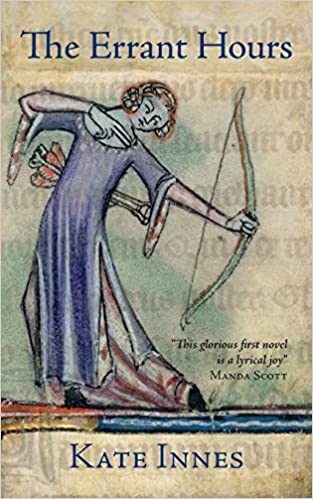
Book Corner: The Errant Hours by Kate Innes

A headlong journey through the physical and spiritual dangers of Plantagenet Britain, in all its savage pageantry. Welsh Marches, July 1284 – the uprising in Wales is over, the leader gruesomely executed, the dead are buried. But for Illesa Arrowsmith, the war’s aftermath is just as brutal. When her brother is thrown into the Forester’s prison on false charges, she is left impoverished and alone. All Illesa has left is the secret manuscript entrusted to her – a book so powerful it can save lives, a book so valuable that its discovery could lead to her death. When the bailiff’s daughter finds it, Illesa decides to run, and break her brother out of jail by whatever means. But the powerful Forester tracks them down, and Illesa must put herself and the book at the mercy of an unscrupulous knight who threatens to reveal all their secrets, one by one. Inspired by the seductive art of illuminated manuscripts, The Errant Hours draws from the deep well of medieval legend to weave a story of survival and courage, trickery and love.

Every now and again you come across a book that draws you in and makes you lose entire days to reading. For me, The Errant Hours by Kate Innes was one of those books: I lost the whole of last weekend to reading the final 200 pages because I HAD to get to the end. Of course, I now wish I’d taken a little longer over it, but this was a book I needed to devour. With just short of 400 pages of beautiful prose, a unique storyline and the perfect combination of intrigue, betrayal and love, The Errant Hours is a perfect book for lockdown or those long, dark, winter nights.

A brother-sister relationship most of us can relate to, family secrets and mysteries and a beautiful, valuable book all come together to create The Errant Hours by Kate Innes. Illesa Arrowsmith losing her home to her creditors and helping her reckless brother escape the Forester’s prison is only the start of her adventures; adventures that will lead her to the heart of the court of Edward I and into the political turmoil of the English conquest of Wales. While the national political climate contrasts perfectly with the turmoil in Illesa’s own life as she attempts to uncover her own origins and her feelings for Sir Richard Burnel, the knight who could be both protector and her accuser.

‘Illesa!’

She ignored the angry whisper and went back towards the torchlight. The guard’s head had changed position. She stood still, watching him. A thin stream of saliva came from the corner of his open mouth. His jerkin was unbuttoned. The iron chain was wound around his belt and the end hung down behind the bench.

Illesa slowly undid the buckle and loosened the chain, pulling it, link by link, off the leather belt. Gathering the chain in her hand, she pulled it up. There was a dull clang. The guard grunted and shifted on the bench, but his eyes remained closed. The ring holding the keys was caught between the wall and the bench. Illesa held the chain in her left hand and knelt down. She reached under the bench, her arms stretched around the guard, straining not to touch him. Her fingers brushed against the keys, and she let them rest on her palm. Illesa let the chain slip slowly out of her left hand until she held it, and the keys, in her right hand. She got shakily to her feet and ran to the cell door.

‘Where is the lock?’ she whispered.

‘Here, follow my hand.’Illesa saw the vague whiteness of Kit’s fingers; she put her own on top of them, feeling for the keyhole with her thumb.

‘Got it,’ she said, fumbling with the larger key.

It slid easily into the hole, but as she turned it there was a terrible screeching sound of metal against metal. Something hit the floor with a loud thump and a gasp of pain.

Kit pushed the door, nearly knocking Illesa over as he ran out of the cell.

‘Follow me!’

Kate Innes must have done a remarkable amount of research to produce such a historically accurate work of historical fiction. Although her leading characters are fictional, the supporting characters are very much historical fact, with Edward I, Eleanor of Castile, young Prince Alphonso and John, 6th Earl Warenne all making an appearance. I didn’t know one of the Warennes would be making an appearance in the story – it was such a lovely surprise!

I particularly liked Kate Innes’ portrayal of Earl Warenne as a brutal, brash lord who spares little thought for the niceties – he certainly comes across as that in my research for my own forthcoming book on the Warennes, Defenders of the Norman Crown: Rise and Fall of the Warenne Earls of Surrey. In fact, I think Kate Innes was a little more generous with Warenne’s personality than some chroniclers were!

The fictional characters, Illesa, her brother Kit and the knight, Richard Burnel, are the central actors in the story. Their personalities, appearance and relationships are wonderfully ‘fleshed’ out. Illesa is a strong female character, but one that is not out of place in 13th century England. A young woman with determination and capability, she is also all-too-aware of the limitations forced on her by her sex.

A beautifully crafted tome, The Errant Hours by Kate Innes is a unique insight into 13th century England. The narrative flows freely and Illesa’s story will keep the reader entranced from the first page to the last. I cannot recommend it highly enough and have already put book 2, All the Winding World, on my Christmas list.

The Errant Hours by Kate Innes is available from Amazon.

About the author:

Kate Innes was born in London and lived and worked in America and Zimbabwe. She is now based in Shropshire, and it is the history and natural beauty of this area that provides inspiration for both her fiction and poetry.

She originally trained as an archaeologist and a teacher, and then worked as a Museum Education Officer around the Midlands, writing poetry in her spare time. After the arrival of her children, Kate began work on her medieval novel ‘The Errant Hours’ which was published in 2015.

The Historical Novel Society selected ‘The Errant Hours’ as an ‘Editor’s Choice’, and it was added to the reading list of the Medieval Studies Department at Bangor University. It is one of Book Riot’s ‘One Hundred Must Read Medieval Novels’.

Her second novel, ‘All the Winding World’ is a sequel to ‘The Errant Hours’, set ten years later. It is due to be published on the 22 June 2018.

Kate has been writing and performing poetry for many years, usually with a particular focus on animals, art and the natural world. Her poem ‘Flocks of Words’ won first prize in the ‘Imagined Worlds’ Competition held by the Friends of Samuel Taylor Coleridge. Her first collection, also called ‘Flocks of Words’, was published in Spring 2017 and many of these poems form part of a performance with the acoustic music group ‘Whalebone’.

Kate runs writing workshops, gives illustrated talks, works collaboratively with communities and undertakes commissions and residencies.

http://www.kateinneswriter.com

*

My Books

Ladies of Magna Carta: Women of Influence in Thirteenth Century England  looks into the relationships of the various noble families of the 13th century, and how they were affected by the Barons’ Wars, Magna Carta and its aftermath; the bonds that were formed and those that were broken. It is now available from Pen & SwordAmazon and from Book Depository worldwide.

Also by Sharon Bennett Connolly:

Silk and the Sword: The Women of the Norman Conquest traces the fortunes of the women who had a significant role to play in the momentous events of 1066.  Available now from Amazon,  Amberley Publishing, Book Depository.

Heroines of the Medieval World tells the stories of some of the most remarkable women from Medieval history, from Eleanor of Aquitaine to Julian of Norwich. Available now from Amberley Publishing and Amazon and Book Depository.

*

You can be the first to read new articles by clicking the ‘Follow’ button, liking our Facebook page or joining me on Twitter and Instagram.

©2020 Sharon Bennett Connolly 

Book Corner: Drake – Tudor Corsair by Tony Riches

1564: Devon sailor Francis Drake sets out on a journey of adventure.

Drake learns of routes used to transport Spanish silver and gold, and risks his life in an audacious plan to steal a fortune.

Queen Elizabeth is intrigued by Drake and secretly encourages his piracy. Her unlikely champion becomes a national hero, sailing around the world in the Golden Hind and attacking the Spanish fleet.

King Philip of Spain has enough of Drake’s plunder and orders an armada to threaten the future of England.

I have read practically everything Tony Riches has ever written and I have to say, this is one of his best!

Drake – Tudor Corsair, is the first in a new Elizabethan Series. It follows the career of Sir Francis Drake from his first days as a sailor on a slave ship, to becoming captain of his own ship captain, to his raid on Cadiz and the Spanish Armada and to his final voyage as one of the greatest sailors England has ever produced. It is a life full of danger and adventure – and ambition.

As I have come to expect from Tony Riches, the book is meticulously researched and draws on primary sources to recreate Drake’s life as a novel. The result is a stunning, detailed story that draws the reader onto every aspect of Elizabethan naval life.

I confess, I knew nothing of Francis Drake beyond his participation in defeating the Spanish Armada. Tony Riches paints the portrait of a fascinating character, adventurous, ambitious, caring of his family and his crews. Drake pushed the boundaries of navigation, seamanship and – oftentimes – the law. He was a thorn in the side of the Spanish, preying on their colonies and treasure ships – they must have hated him.

I’d grown tired of remaining on the ship and wanted to experience something of Africa. I armed myself with an old sword, and found a leather bag to carry anything of value I discovered. For years I’d dreamed of searching for gold in this wild country, and now I had my chance.

Morgan cursed as the dark mud at the landing place chosen by our guide clung like glue to his boots. We walked in single file down the narrow path and I hacked at the undergrowth with my sword, mindful of stories of poisonous spiders, deadly snakes and dangerous animals.

The village came into view, in a clearing surrounded by thick forest. I was surprised by the silence; it seemed the villages had learned of our approach and fled. We’d been ordered to keep together, but the men began rushing from hut to hut, their discipline lost in the search for gold.

The first arrow flashed through the air and struck the man ahead of me in the throat. He fell with bright blood gushing from a deep wound. More arrows flew from the forest, finding their targets with deadly accuracy.

I froze in panic. We’d walked into a trap and were a long way from the boats. An arrow thudded deep into a tree close to where I stood, and Master Gilbert yelled in pain as another hit him in the shoulder.

A native ran towards me, his spear raised high in the air. Painted with red earth, he wore a necklace of curved white fangs. His muscular arm drew back, ready to put all his strength into the throw.

I turned and ran back the way we’d come, the yells and cries of pain urging me on as my heart pounded and I ran for my life. The low branch of a thorn tree scratched across my face, drawing blood, and I expected an arrow to strike my back at any moment.

Drake – Tudor Corsair is a thoroughly enjoyable read. Rich in detail and characters, it depicts the good and bad of Tudor history, delicately dealing with sensitive issues such as the slave trade, while not ignoring the brutality nor immorality of it. Tony Riches depicts the drama and danger of life at sea in a Tudor warship – fighting against not only the Spanish and the often violent natives, but also the elements themselves; the weather and the dangerous, uncharted coastlines.

Tony Riches’ characters are always rich and full of life. Sir Francis Drake himself is a likable character, he has some flaws, but comes across as someone who knows what he wants, who he wants to be and naturally takes command of every situation.

Drake – Tudor Corsair is a fabulous, entertaining read. It takes the reader on a journey full of adventure and fraught with danger, to the West Indies, Africa, South America and the Spanish coast. The various voyages and natives they encounter leave Drake – and the reader – in suspense as to whether they are friend and foe.

Tony Riches highlights the dangers faced by Drake and the brave adventurers of his era, who pushed their ships further and for longer in the name of discovery and of Elizabeth I. These were men who pushed the boundaries and often paid the ultimate price. As a result, Drake – Tudor Corsair is also a story of friendship, companionship and survival, with a twist of betrayal when ambition outweighs friendship.

And what’s more, Tony Riches is telling an epic, real-life story!

Drake – Tudor Corsair is out now and available from Amazon.

About the author:

Tony Riches is a full-time writer and lives with his wife in Pembrokeshire, West Wales, UK. A specialist in the history of the early Tudors, Tony is best known for his Tudor Trilogy. His other international best-sellers include Mary – Tudor Princess, Brandon – Tudor Knight and Katherine – Tudor Duchess.

For more information visit Tony’s author website http://www.tonyriches.com and his blog at http://www.tonyriches.co.uk. He can also be found at Tony Riches Author on Facebook and Twitter @tonyriches.

*

My Books

Ladies of Magna Carta: Women of Influence in Thirteenth Century England  looks into the relationships of the various noble families of the 13th century, and how they were affected by the Barons’ Wars, Magna Carta and its aftermath; the bonds that were formed and those that were broken. It is now available from Pen & SwordAmazon and from Book Depository worldwide.

Also by Sharon Bennett Connolly:

Silk and the Sword: The Women of the Norman Conquest traces the fortunes of the women who had a significant role to play in the momentous events of 1066.  Available now from Amazon,  Amberley Publishing, Book Depository.

Heroines of the Medieval World tells the stories of some of the most remarkable women from Medieval history, from Eleanor of Aquitaine to Julian of Norwich. Available now from Amberley Publishing and Amazon and Book Depository.

*

You can be the first to read new articles by clicking the ‘Follow’ button, liking our Facebook page or joining me on Twitter and Instagram.

©2020 Sharon Bennett Connolly

Book Corner: Lucia by Steven A. McKay

What makes life worth living for a slave of Rome?

The promise of vengeance no matter how long it takes.

At eight years old, Lucia is torn from the life she knew. Her village burned to the ground and parents murdered by Romans, she is kidnapped, sold and shipped abroad to the Villa Tempestatis in Britannia to serve the young Roman army officer Castus.

Faced with a bleak future of decades of servitude to her master, as well as sadistic brutality at the hands of his manageress, Paltucca, she finds herself fixated by one thought alone: vengeance.

Yet Villa Tempestatis, with its picturesque surroundings in Britannia’s green countryside, offers a life that’s a little easier than elsewhere in the Roman empire. The slaves form strong bonds of love and friendship, enjoy feasts and holiday celebrations together, and are even allowed, sometimes, to start a family. Many of them are happy enough with their lot.

Despite that, every moment of Lucia’s life is blighted by her hatred for Castus and Paltucca, and only seeing them both destroyed will bring her a measure of peace, even if it takes decades of work and planning…

From the moment you read the dedication in the front of Lucia, you will know you are in for an emotional rollercoaster:

Dedicated to all the men, women and children forced into slavery and forgotten by history.

And you would be right!

Lucia is one of those novels that will stay with you long, long … long after you have read the final page and closed the book (probably with a tear on your cheek). To say it is thought-provoking would be an understatement. This is one of those stories that will really get under your skin.

I have read everything Steven A. McKay has written, from his unique take on the Robin Hood stories to his wonderfully atmospheric Warrior Druid of Britain series, but Lucia is on another level. It is probably his best writing yet. It is a story that is at once desperate and uplifting, a story that touches you deep in your soul.

Set in a splendid villa in Roman Britain, Lucia captures perfectly a life of slavery. The brutality, the feeling of helplessness, the inhumanity is contrasted with the compassion, the humanity and the sense of family and comradeship with fellow slaves. Steve A. McKay clearly and cleverly depicts the blurred lines of the master and slave relationship and the slaves serve the Roman family, being detached from it and at the same time an integral part of the family life.

The villa was a wonderful sight on a July day like this, with its white plastered walls and red-tiled roofs seeming to glow in the sunshine, while its position on the hill afforded superb views of the land around: well-tended fields of corn and grain; groves of trees once sacred to the native Britons; and the sparkling waters of the narrow river that flowed past the western wing, providing their water for drinking, cleaning, cooking and, of course, bathing.

Sometimes, on particular beautiful days, Lucia forgot about her previous life, as the daughter of a warlord in Germania. Forgot about her previous existence before she was captured by the Romans who had destroyed her village, slaughtered her people and sold her at the market to her master.

It had been a year already since Publius Licinius Castus, a young Roman officer himself, had bought her from that terrible slave-market and shipped her here, to his lavish country villa in this damp land.

Villa Tempestatis

A lump came to her throat as an image of her parents – happy, smiling down with pride on their beloved daughter – came to her, and she angrily brushed away the tears forming in her eyes before they had a chance to streak her grimy cheeks.

Yes, sometimes she was able to forget her previous, free life in Germania, but it was never long before reality returned and she felt her spirit crushed so hard that it almost stopped her heart from beating.

The beauty of the villa and its surroundings hid the pain of dozens of slaves who had lived here over generations, young and old. Some of them, like Paltucca, were able to adapt and even thrive in such conditions, while others wilted and eventually, under the weight of what they’d lost, rendered themselves useless to the master. Those unfortunates soon disappeared, never to be heard of again.

Lucia wondered if she would end up like that one day, sold to be worked to death in a mine perhaps, when the stolen memory of the joy of her childhood became too much to bear.

Lucia explores the life of a girl forced into slavery by the Romans at the age of 8, and her relationship with her master and her fellow slaves. The book does a wonderful job of depicting not only the life of a slave but also their emotions, the fact that they do live their lives despite a lack of freedom, that they lived, loved, even raised families. It clearly demonstrates the contrast between the acceptance and cooperation that you still have to live, despite not being free, and that deep, constant yearning for freedom.

Lucia is one of those books for which you can write an awesome review – and yet, still know that your review will never do the book justice. It is, beyond doubt, the best thing Steven A. McKay has ever written, simply because it makes the reader re-evaluate the way they think and feel – and takes them to a depth of their soul they probably have never visited before.

Touching a topic that has affected lives throughout history, and yet seems just as relevant today; slavery. Lucia plays on all your emotions: anger, pity, empathy, love and hate. At times, Lucia is a hard book to read, but is essential reading on so many levels. Steven A McKay has written a truly riveting depiction of the life of a slave.

This is how books should be written, with passion and compassion. If you only read one more book this year, it should be Lucia.

Lucia is now available from Amazon

*

About the author:

Steven McKay was born in 1977 near Glasgow in Scotland. He live in Old Kilpatrick with his wife and two young children. After obtaining his Bachelor of Arts degree with the Open University he decided to follow his life-long ambition and write a historical novel.

He plays guitar and sings in a heavy metal band when they can find the time to meet up.

You can check out his website here. Steven also has an Amazon Author page and can be found on Twitter and Facebook.

*

My Books

Ladies of Magna Carta: Women of Influence in Thirteenth Century England  looks into the relationships of the various noble families of the 13th century, and how they were affected by the Barons’ Wars, Magna Carta and its aftermath; the bonds that were formed and those that were broken. It is now available from Pen & SwordAmazon and from Book Depository worldwide.

Also by Sharon Bennett Connolly:

Silk and the Sword: The Women of the Norman Conquest traces the fortunes of the women who had a significant role to play in the momentous events of 1066.  Available now from Amazon,  Amberley Publishing, Book Depository.

Heroines of the Medieval World tells the stories of some of the most remarkable women from Medieval history, from Eleanor of Aquitaine to Julian of Norwich. Available now from Amberley Publishing and Amazon and Book Depository.

*

You can be the first to read new articles by clicking the ‘Follow’ button, liking our Facebook page or joining me on Twitter and Instagram.

©2020 Sharon Bennett Connolly

Book Corner: Fugitive by Paul Fraser Collard

Roguish hero Jack Lark – soldier, leader, imposter – crosses borders once more as he pursues a brand-new adventure in Africa.

London, 1868. Jack has traded the battlefield for business, running a thriving club in the backstreets of Whitechapel. But this underworld has rules and when Jack refuses to comply, he finds himself up against the East End’s most formidable criminal – with devastating consequences.

A wanted man, Jack turns to his friend Macgregor, an ex-officer, treasure hunter and his ticket out of England. Together they join the British army on campaign across the tablelands of Abyssinia to the fortress of Magdala, a high-stakes mission to free British prisoners captured by the notorious Emperor Tewodros.

But life on the run can turn dangerous, especially in a land ravaged by war . . .

Stupendous!

That is the first word that came to my mind when I was asked what I thought of Fugitive by Paul Fraser Collard. Fugitive is book no. 9 in the adventures of Victorian rogue, Jack Lark. Over the last few years, the release of the latest of Jack Lark’s adventures has become one of the highlights of my summer. Last year’s holiday reading was The Lost Outlaw, and the year before that it was The Rebel Killer. And after such amazing books in recent years, Fugitive had a lot to live up to.

In many of the previous books, Jack has taken on the persona of others, officers and soldiers all. He has travelled the globe, fighting in hotspots from the Crimea to America, more often than not concealing his own identity. In Fugitive, Jack Lark is finally himself, though whether that it a good thing or not is open to discussion.

Jack Lark is a bit of a rascal, taking opportunities where he finds them and running with it. He has fought on both sides of the American Civil War, had a stint in the French Foreign Legion and is now going in search of a fortune – and adventure – in Africa as the British Empire’s inexorable expansion opens more opportunities for those willing to take the risk. And, of course, as with any Jack Lark adventure, things get complicated and he is followed by the trouble he hoped to leave behind in London…

‘Do you think -‘ Bertie started.

‘Hush now.’ Cooper was quick to interrupt. ‘He’s coming.’

The three men looked down the alley as one. Sure enough, a figure was approaching. The fog wrapped around him like a ghostly shawl, so that he was little more than an apparition, a dark shadow shrouded in mist.

‘Is that him?’ Bertie whispered.

‘That’s the captain all right,’ Cooper answered softly, the words barely audible.

The figure came closer. It did not hurry. It did not swagger or strut. It simply moved with purpose.

‘Have you got the rhino?’ There was no greeting. Just five short words, delivered staccato. Little could be seen of the captain’s face beneath a dark-coloured pork pie hat pulled down low. He was tall, just a shade under six foot, and was wearing a tightly buttoned overcoat.

‘Are you truly the captain?’ Oddly, it was Bertie who spoke for the three. He stared at the man, his eyes as wide as those of a child seeing a bear for the first time.

‘I’m the captain.’ The words were spoken softly, but every man heard them. ‘Now have you got the rhino?’

He lifted his chin as he repeated the question. For the first time, the three gentlemen got a good glimpse of his face. A scar ran down the left-hand side, the lower half disappearing into a heavy beard. But it was not that that drew their attention; it was the hard grey eyes that stared back at them as if the captain could see right down to their very souls.

The confirmation of identity was enough. Charles fished into his overcoat and pulled out a thick wedge of banknotes, which he held out in front of him.

The captain took the bundle swiftly. He did not check it. Instead, he carefully unbuttoned his coat and tucked the notes deep into an inside pocket. It was artfully done, every gesture sharp and controlled, the coat pulled open just long enough to give the three men a glimpse of the stout oak cudgel hooked into the captain’s belt.

‘Follow me.’ The captain turned on his heel and walked back down the alley, setting a rapid pace. He did not bother to see if they followed.

Just as his character is an expert at impersonation, Paul Fraser Collard has become a master at drawing out the drama and raising the tension to the very last pages of the book. His writing draws the reader in from the very first page and forces you to stay up late and get up early, just to get one more chapter in before work!

The research is, as always, impeccable, and the author takes the reader from the seedier areas of nighttime London to the fortress of Magdala, in the heart of Abyssinia, on a journey across seas, through the stifling heat of the desert and into the fortress itself, with danger and action following every step of the way. From fights in the backstreets of London to the pitched battles of the Victorian Imperial army against the poorly armed Abyssinian massed army, the reader is drawn into a world full of excitement, danger … and possibilities.

I love that Jack Lark is not a man who goes looking for trouble – he tends to fall into it. However, once trouble finds him, he doesn’t shirk from the challenge and faces whatever is set before him. The character development of Jack Lark himself, throughout all 9 books, is fascinating, and probably the best I’ve ever read. He grows and learns from each adventure and is more self-aware in Fugitive of his own abilities – and his failings. He finds out exactly who he is, discovering himself just as the reader does; accepting his flaws.

As the books are set half a century after the Peninsular War, Jack Lark’s adventure are often compare to those of Bernard Cornwell’s Richard Sharpe; with the comparison extending to the two authors. I am not sure Lark and Sharpe are too much alike, beyond the fact they each have a scar on their faces and are ferocious fighters. Sharpe fights within the British army system, whereas Lark is very much an outsider. However, they bot come from similar backgrounds and I can’t help but think that, had they met, they would have got on like a house on fire – or killed each other.

With that in mind, any fan of Bernard Cornwell would not be disappointed if they picked up a Jack Lark book to try. The wonderfully vivid and lively characters Paul Fraser Collard has created – and the very unlikely hero – are a treat for any lover of action and adventure in their historical fiction

*

About the author:

Paul Fraser Collard’s love of military history started at an early age. A childhood spent watching films like Waterloo and Zulu whilst reading Sharpe, Flashman and the occasional Commando comic, gave him a desire to know more of the men who fought in the great wars of the Nineteenth and Twentieth Centuries. This fascination led to a desire to write and his series of novels featuring the brutally courageous Victorian rogue and imposter Jack Lark burst into life in 2013. Since then Paul has continued to write, developing the Jack Lark series to great acclaim. To find out more about Paul and his novels visit www.paulfrasercollard.com or find him on twitter @pfcollard.

To buy the book: Amazon UKAmazon US.

*

My Books

Ladies of Magna Carta: Women of Influence in Thirteenth Century England  looks into the relationships of the various noble families of the 13th century, and how they were affected by the Barons’ Wars, Magna Carta and its aftermath; the bonds that were formed and those that were broken. It is now available from Pen & SwordAmazon and from Book Depository worldwide.

Also by Sharon Bennett Connolly:

Silk and the Sword: The Women of the Norman Conquest traces the fortunes of the women who had a significant role to play in the momentous events of 1066.  Available now from Amazon,  Amberley Publishing, Book Depository.

Heroines of the Medieval World tells the stories of some of the most remarkable women from Medieval history, from Eleanor of Aquitaine to Julian of Norwich. Available now from Amberley Publishing and Amazon and Book Depository.

*

You can be the first to read new articles by clicking the ‘Follow’ button, liking our Facebook page or joining me on Twitter and Instagram.

©2020 Sharon Bennett Connolly

Book Corner: The Northern Throne by Steven A. McKay

Bellicus the Druid and his friend Duro, a former Roman centurion, have already suffered a great deal in recent years but, for them, things are about to get even worse.
Britain is changing. The Romans have gone and warriors from many different places seek to fill the void the legions left behind. In the south, the Saxons’ expansion seems unstoppable despite the efforts of the warlord Arthur, while north of Hadrian’s Wall various kings and chieftains are always looking to extend their borders.

In Dun Breatann, Bellicus believes the disparate northern tribes must put aside their differences, become allies, and face the Saxon threat together, under one High King.

Or High Queen…

Small-minded men don’t always look at the bigger picture though, and, when Bellicus and Duro seek to form a pact with an old enemy, events take a shocking and terrible turn that will leave the companions changed forever.

This third volume in the Warrior Druid of Britain Chronicles is packed with adventure, battles, triumph, and tears, and at the end of it a new course will be set for Bellicus.

But at what cost?

One of the highlights of my reading year is when Steven A. McKay publishes a book, This year I have had the pleasure to read two! Steven has a book, Lucia: A Roman Slave’s Tale, coming out in October, which is incredibly thought-provoking – but more of that one nearer the time…

This summer the 3rd book in the Warrior Druid of Britain series was finally published. It seems like it has been a long wait since book 2, Song of the Centurion came out, but it has been well worth it! Steven A. McKay takes us on another, suspense-filled adventure with Bellicus the Druid and his Roman friend, Duro.

Bellicus’ story started with The Druid and a rescue mission into the heart of Anglo-Saxon England to recover young princess Catia. It continued in Song of the Centurion where Bellicus and his friend Duro, the former Roman centurion, fought to save Alt Clota from the machinations of its enemies and the growing paranoia of its king, Coroticus. Each story has led us to The Northern Throne, an adventure that proves more perilous and personal for Bellicus and Duro.

Set in the time of King Arthur and the Saxon invasion of Britain, the story takes us north of Hadrian’s Wall and into the lands of the Scots and Picts. As with the previous novels, Arthur is a supporting character, making a handful of cameo appearances, though I suspect his time will come, when he and Bellicus team up to fight the Saxon threat.

“Nicely done, lads,” Gerallt said approvingly. “With the Votadini taken care of, and the Dalriadans in disarray, all we have left to deal with are the Picts.”

Bellicus bodded. If they could defeat Drest it would put Narina in a very strong position. Ultimately, the druid would like to see her crowned High Queen of all the northern lands, and it seemed that day might be close. A Damnonii High Queen would nullify the growing threat the Christians’ posed to the old ways, while allowing the united tribes to face the Saxon threat at the side of Arthur and Merlin. The druid just had to find a way to steer events towards such a favourable outcome.

“How long have we got before Drest arrives in Alt Clota?” Gerallt asked the messenger, disturbing Bellicus from his reverie.

“At the speed they were marching when I observed them,” the messenger reported, “I’d say about 3 or 4 days, my lord.”
“That should be more than enough,” Duro said, resting his left hand on the pommel of his spatha. “If we leave here tomorrow at sun-up, we’ll be able to head them off on the road before they get anywhere hear Dun Breatann.”

“And we’re thirty men stronger now, too,” Gerallt said, smiling grimly. “We’ll be able top ambush the Pictish bastards just like we did the Votadini.”

“Hopefully you’re right, and we do surprise them,” Bellicus muttered, gazing hopefully into his half-empty cup. “Because if Cefin’s numbers are accurate, Drest’s army still outnumbers us.”

The triumph of these books is in Steven A. McKay’s portrayal of Bellicus the Druid. An author could easily fall into the realm of fantasy and explain the druidic rituals as magic. That is not the case with the Warrior Druid of Britain books. Bellicus is a clever, educated man who has studied the nature of humanity. Insightful and intelligent, he knows how to read people, their actions and expressions, and how to interpret their intentions.

His years of training have made him a well-respected, authoritative character and he uses his skills to great advantage. There is an air of mystery about him, but he is also portrayed as a man who is all-too-human, and whose flaws and pride can sometimes lead him into trouble of his own making.

And that is what makes these books so special!

The characters in The Northern Throne are wonderful creations, each one vivid and individual, from the heroes such as Duro and Bellicus, to the villains such as Drest and down to little Catia, the princess who is growing up and trying to find her role in the world, who is learning to fight, to command and to judge people for herself.

Steven A. McKay skillfully recreates the landscape, people and legends of 5th century Scotland. His knowledge of the area, and its traditions, shines through on every page, transporting the reader to the stark fortresses, wooded valleys and fast-flowing rivers; taking you on an astonishing adventure without leaving your seat. He brings all this together in a rich tapestry that forms the backdrop of these incredible stories.

The tension is high throughout The Northern Throne. One crisis leads to another, loyalties and friendships pushed are to the limits; and love and betrayal are two very fine lines. This combination makes for a thoroughly absorbing tale which entwines history, legend and myth and takes the reader along on Bellicus’ heroic journey.

In short, The Northern Throne is a wonderful, engaging adventure that, once again, leaves the reader desperate for the next instalment.

The Northern Throne is available now from Amazon UK.

About the Author:

Steven McKay was born in 1977 near Glasgow in Scotland. He live in Old Kilpatrick with his wife and two young children. After obtaining his Bachelor of Arts degree with the Open University he decided to follow his life-long ambition and write a historical novel.

He plays guitar and sings in a heavy metal band when they can find the time to meet up.

You can check out his website here. Steven also has an Amazon Author page and can be found on Twitter and Facebook.

*

My Books

Ladies of Magna Carta: Women of Influence in Thirteenth Century England  looks into the relationships of the various noble families of the 13th century, and how they were affected by the Barons’ Wars, Magna Carta and its aftermath; the bonds that were formed and those that were broken. It is now available from Pen & SwordAmazon and from Book Depository worldwide.

Also by Sharon Bennett Connolly:

Silk and the Sword: The Women of the Norman Conquest traces the fortunes of the women who had a significant role to play in the momentous events of 1066.  Available now from Amazon,  Amberley Publishing, Book Depository.

Heroines of the Medieval World tells the stories of some of the most remarkable women from Medieval history, from Eleanor of Aquitaine to Julian of Norwich. Available now from Amberley Publishing and Amazon and Book Depository.

*

You can be the first to read new articles by clicking the ‘Follow’ button, liking our Facebook page or joining me on Twitter and Instagram.

©2020 Sharon Bennett Connolly