The Woodville family are synonymous with the Wars of the Roses. While much has been published on the family as a whole, especially Elizabeth, wife of Edward IV, Anthony Woodville – the favourite sibling of Elizabeth – has been largely overlooked by history. He is famed for his arrest and execution in June 1483, but there is much more to learn from his life. Woodville was a man with an important cultural role. He was a knight, had a successful jousting career, and worked with the printing pioneer William Caxton. He was the printer’s only long-lasting patron in England and acted as translator for him, using the books printed by Caxton to educate Edward, Prince of Wales, the future Edward V.
This book seeks to bring Anthony Woodville out of the shadows of history, giving him the recognition he deserves and challenging the negative perceptions around him by investigating his personality and personal achievements in military, diplomatic and literary capacities.
I have always had the impression that Anthony Woodville would have stood out in any period of history. A Renaissance man, he championed the arts, patronised the printing press, was a renowned jouster and so well respected by his king that he was entrusted with the education and upbringing of the Prince of Wales – the future King Edward V.
I do think Woodville would have stood out in any generation, but it didn’t hurt that his sister was Elizabeth Woodville, Queen of England.
Anthony Woodville, as the queen’s brother, was at the centre of events during the reign of Edward IV. He accompanied his brother-in-law into exile when Henry VI briefly reclaimed the throne in 1470-71. He appeared in tournaments to celebrate the marriage of the king’s sister, Margaret, to the future duke of Burgundy. He was a poet and writer and was a patron of William Caxton, the man who brought the printing press to England. Caxton printed and published Woodville’s English translation of The Dictes and Sayings of the Philosophers. So why is there not a larger body of work on him?
Danielle Burton has rectified this omission with her fascinating, in-depth study, Anthony Woodville, Sophisticate or Schemer? She delves deep into Woodville’s life, family, loves and career.
The Woodville family are often viewed as grasping and power hungry. This is true of some of the family members, particularly Thomas Grey, Marquess of Dorset, who was the eldest son of Anthony’s sister Elizabeth by her first marriage to John Grey. However, Anthony, while of course benefitting from the advancement of his sister to the status of queen, notably avoided meddling wherever possible. His interests in piety, tutoring Edward, the Prince of Wales, jousting, and translating books let him play a background role in the Wars of the Roses.
While Anthony Woodville may have been a secondary figure in political terms, it is clear that he had a significant part in transforming English culture, especially through his patronage of William Caxton, as well as his tutelage of Edward. Prince of Wales, who resided at Ludlow Castle for around ten years. According to Dominic Mancini, and Italian visitor who stayed in England between late summer 1482 and July 1483, Anthony Woodville was ‘always considered a kind, serious and just man’ who was ‘tested by every vicissitude of life.’ It was for this reason that he had been entrusted with the ‘care and direction’ of the prince. Further to Mancini’s description of Anthony, he purposefully contrasts his character with that of other Woodvilles, who were ‘detested by the nobles.’ There is a certain amount of truth in this, for unlike some other family members Anthony preferred to stay away from court life, favouring more academic and religious pursuits.
As a debut work, Anthony Woodville, Sophisticate or Schemer? is very impressive. It is clear that Danielle Burton has done her research, thoroughly, using primary sources where possible. She uses her extensive knowledge of Anthony Woodville to suggest reasons for his actions and to fill in the gaps of our knowledge, clearly indicating her theories and supporting arguments. There are some minor errors, which other reviewers have highlighted, but nothing that changes the thrust of the arguments nor detracts from the enjoyment of reading. They certainly do not devalue the biography as a whole and are more a sign of the writer’s inexperience of the editing process. I certainly would not expect it to put a reader off.
I suspect Anthony Woodville is Danielle’s historical crush, but this adds to the passion in her retelling of his story. We all fall in love with our subjects, just a little bit. You cannot spend years studying a person without doing so.
Danielle Burton’s arguments are balanced and do not present Anthony Woodville and some flawless super hero. Rather, he is an accomplished knight who had his flaws and would often look to his own advantage. Who wouldn’t? He was, however, loyal to Edward IV and his nephew, Edward V. And, having been the younger Edward’s guardian since his early years, was probably a great influence on the teenage king. This would Explain why Richard, Duke of Gloucester – the future Richard III – saw him as a threat. In Anthony Woodville, Sophisticate or Schemer? Danielle looks into the events of 1483 in great detail, examining the relationship between Richard and Anthony and analysing what went wrong and why. Anthony Woodville’s execution at Pontefract Castle is a tragic consequence of the power struggle that followed the death of Edward IV and accession of Anthony’s charge, Edward V.
All in all, Anthony Woodville, Sophisticate or Schemer? by Danielle Burton is a much-needed addition to the study of the Wars of the Roses, highlighting a man of great influence who is often overlooked in favour of his royal contemporaries. It is an impressive piece of work.
To Buy the Book:Anthony Woodville, Sophisticate or Schemer? is available from Amazon or direct from Amberly Publishing.
About the Author: Danielle Burton has had a keen interest in the Wars of the Roses from a young age, including being a member of the Richard III Society since the age of 9. She has presented aspects of her research into the life of Anthony Woodville at various academic conferences, and works in the heritage sector.
*
My Books:
Signed, dedicated copies of all my books are available through my online bookshop.
Out Now!Women of the Anarchy
Two cousins. On the one side is Empress Matilda, or Maud. The sole surviving legitimate child of Henry I, she is fighting for her birthright and that of her children. On the other side is her cousin, Queen Matilda, supporting her husband, King Stephen, and fighting to see her own son inherit the English crown. Women of the Anarchy demonstrates how these women, unable to wield a sword, were prime movers in this time of conflict and lawlessness. It show how their strengths, weaknesses, and personal ambitions swung the fortunes of war one way – and then the other.
Coming on 15 June 2024: Heroines of the Tudor World
Heroines of the Tudor World tells the stories of the most remarkable women from European history in the time of the Tudor dynasty, 1485-1603. These are the women who ruled, the women who founded dynasties, the women who fought for religious freedom, their families and love. These are the women who made a difference, who influenced countries, kings and the Reformation. In the era dominated by the Renaissance and Reformation, Heroines of the Tudor World examines the threats and challenges faced by the women of the era, and how they overcame them. From writers to regents, from nuns to queens, Heroines of the Tudor World shines the spotlight on the women helped to shape Early Modern Europe.
King John’s Right-Hand Lady: The Story of Nicholaa de la Haye is the story of a truly remarkable lady, the hereditary constable of Lincoln Castle and the first woman in England to be appointed sheriff in her own right. Available from all good bookshops or direct from Pen & Sword Books, bookshop.org and Amazon. Defenders of the Norman Crown: The Rise and Fall of the Warenne Earls of Surrey tells the fascinating story of the Warenne dynasty, from its origins in Normandy, through the Conquest, Magna Carta, the wars and marriages that led to its ultimate demise in the reign of Edward III. Available from Pen & Sword Books, Amazon in the UK and US, and Bookshop.org.
Alternate Endings: An anthology of historical fiction short stories including Long Live the King… which is my take what might have happened had King John not died in October 1216. Available in paperback and kindle from Amazon.
Podcast:
Have a listen to theA Slice of Medieval podcast, which I co-host with Historical fiction novelist Derek Birks. Derek and I welcome guests, such as Bernard Cornwell and Elizabeth Chadwick, and discuss a wide range of topics in medieval history, from significant events to the personalities involved.
*
Don’t forget!Signed and dedicated copies of all my books are available through my online bookshop.
For forthcoming online and in-person talks, please check out my Events Page.
You can be the first to read new articles by clicking the ‘Follow’ button, liking our Facebook page or joining me on Twitterand Instagram.
Today, it is a pleasure to welcome debut author, Wendy Johnson, to History…the Interesting Bits as part of her blog tour to celebrate the launch of Wendy’s first novel, The Traitor’s Son.
Middleham Castle – Home to Kings and Kingmakers
Middleham Castle, North Yorkshire, bastion of the illustrious Neville family and home to both Richard Neville, earl of Warwick and his cousin, the future Richard III, is an evocative and fascinating place.
Eleven miles from the market town of Richmond, and a stone’s throw from Leyburn, the castle stands at the heart of Middleham, amid Wensleydale’s rolling hills. The visitor’s first impression, on approaching its cavernous gatehouse, is that these ruins have witnessed the very essence of history, and if only walls could talk, they would have a treasure trove of secrets to reveal.
An earlier castle once stood on nearby William’s Hill, but the present edifice began to rise in the 1170s. The fortress came into the possession of the Neville family when Mary FitzRanulph married Robert Neville in the thirteenth century. However, Middleham appears to have been considered less important than Robert’s other castles at Raby and Sheriff Hutton.1 Later Nevilles made a number of improvements – heightening the towers and creating a new and larger gatehouse – but it was in the later fifteenth century that the castle became the home of some of the most influential figures of the Wars of the Roses: the three Richards.
Richard Neville, earl of Salisbury; Richard Neville, earl of Warwick; and Richard Plantagenet, duke of Gloucester were each caught up in one of the most dramatic periods of English history, when the crown changed hands from Lancaster to York, York to Lancaster, and back again in the course of only ten years.
Following the fateful Battle of Wakefield in 1460, Salisbury was captured and executed. His son, the enigmatic and forceful Earl of Warwick, was largely responsible for helping Edward IV, the first Yorkist king, to win the throne in 1461.
Richard duke of Gloucester, Edward’s youngest brother, who ascended the throne as Richard III, spent much of his life at Middleham. Installed in his cousin, Warwick’s, household at the age of twelve, Richard embarked on his knightly training under the earl’s tutelage, learning the military and social graces required of a chivalric warrior. At the age of twenty, following his marriage to Warwick’s daughter, Anne, Middleham became Richard’s favourite residence.
My debut novel, The Traitor’s Son, re-imagines these early years. As a grieving and fatherless boy, Richard finds solace in the company of his cousin, the Earl of Warwick, whose paternal influence repairs the boy’s shattered life. The castle of Middleham plays an important role in the novel – representing a new and, at first, unnerving, part in Richard’s journey, as he wonders whether he is able to live up to the earl’s expectations. I have chosen to illustrate Richard’s early feelings for Middleham and for his formidable cousin in the following scene, when the boy has been summoned into Warwick’s presence.
‘Belly lurching, he follows the earl’s man down the tight spiral and out into the bailey. Kitchen boys are throwing out slops, bandying jests, sniggering. As he approaches, they fall silent, snatching caps and bobbing knees. The air is cool, pungent with the scent of verdure and horse dung, birds chirruping in the violet dusk. A solitary crow swoops from the keep, hops across the earth in the clumsy, jerking manner of his breed, then takes off again in the direction of the practice yard.
He should have fetched a cloak. It’s so much colder here in the land of the Nevilles, plagued as it is with a perpetual wind sweeping from the moors and striking like a whiplash. He shivers, wondering why Warwick has hauled him from what little comfort there is to be had on such a dismal evening. To draw conclusions on the day’s events? To tell him he has failed?
Torchlight bobs on towering stone as they mount the steps to the keep. Challenged twice in the ascent, he could be at Westminster, and Warwick a king at the heart of the labyrinth. Surely, he thinks, it’s the dread of the moment that gives this impression, the creeping suffocation of growing darkness, the brilliance of the wind-torn flames. Warwick is my cousin and my tutor; he is not my sovereign.
The Middleham known to both Richard and Warwick was larger than the ruined fabric we see today. In addition to the keep, towers and surrounding ranges, there would have been stables, an armoury, a blacksmith’s forge and many more domestic buildings all integral to the daily life of the castle, as well as to the role of its lord as upholder of his estates and a foremost figure in society. How magnificent that life was, can be gleaned by the splendour of the Middleham Jewel: a fifteenth century gold and sapphire pendent found in the vicinity of the castle in 1986. Current thinking is that the jewel belonged to a woman – the most likely candidate being Anne Beauchamp, Warwick’s countess, or possibly Anne Neville, Warwick’s daughter, and wife of Richard III. Although the original pendent is on display in the Yorkshire Museum, York, a replica has pride of place in the castle’s English Heritage shop.
I find that visualising the past can help stir the imagination, as one explores Middleham’s evocative and dramatic ruins. If you’ve never experienced Middleham’s magic for yourself, then try following in the footsteps of kings and kingmakers, you’ll not regret it.
“Exquisitely written. An evocative and thoughtful retelling of the early life of Richard III.” Philippa Langley, MBE
Synopsis:
Caught between a king and a kingmaker, young Richard Plantagenet knows he’ll have to choose…
1461: Richard Duke of York, King by Right, has been branded a traitor and slain by his Lancastrian foes. For his eight-year-old son—Richard Plantagenet—England has become a dangerous place.
As the boy grapples with grief and uncertainty, his elder brother, Edward, defeats the enemy and claims the throne. Dazzled by his glorious sibling, young Richard soon discovers that imperfections lurk beneath his brother’s majestic façade. Enter Richard Neville, Earl of Warwick—cousin, tutor, luminary—whose life has given him everything but that which he truly craves: a son. A filial bond forms between man and boy as they fill the void in each other’s lives. Yet, when treachery tears their world asunder, Richard faces an agonizing dilemma: pledge allegiance to Edward—his blood brother and king—or to Warwick, the father figure who has shaped his life and affections.
Painfully trapped between duty and devotion, Richard faces a grim reality: whatever he decides will mean a fight to the death.
In “The Traitor’s Son”, Wendy Johnson masterfully weaves a tapestry of loyalty, love, and sacrifice against the backdrop of England’s turbulent history. Through the eyes of a young Richard III, readers are transported into a world where every choice is fraught with peril, and the bonds of kinship are tested to their limits. As Richard Plantagenet navigates the explosive tensions within his own family, readers are swept along on a journey of intrigue and passion that will leave them spellbound until the final page.
1) Middleham Castle from the Gatehouse (Wendy Johnson); 2) Middleham Castle: North Range (Wendy Johnson); 3) Middleham Castle: Towards the Gatehouse (Wendy Johnson).
About the author:
Wendy has a lifelong passion for medieval history, its people, and for bringing their incredible stories to life. Her specific areas of interest are the fifteenth century, the Wars of the Roses, and Richard III in particular. She enjoys narratives which immerse the reader in the past, and tries faithfully to recreate the later Middle Ages within in her own writing. She has contributed to a number of historical anthologies and was a runner up in the Woman and Home Short Story Competition 2008.
A member of the Richard III Society since 1986, Wendy is also a founder member of Philippa Langley’s Looking for Richard Project, which located the king’s lost grave in 2012. She co-authored Finding Richard III: the Official Account of Research by the Retrieval and Reburial Project in 2014, and in 2019 received the Richard III Society’s Robert Hamblin Award.
THE TRAITOR’S SON, volume one in a Richard III trilogy, is Wendy’s debut novel and she is currently working on the sequel.
*
My Books:
Signed, dedicated copies of all my books are available through my online bookshop.
Out Now!Women of the Anarchy
Two cousins. On the one side is Empress Matilda, or Maud. The sole surviving legitimate child of Henry I, she is fighting for her birthright and that of her children. On the other side is her cousin, Queen Matilda, supporting her husband, King Stephen, and fighting to see her own son inherit the English crown. Women of the Anarchy demonstrates how these women, unable to wield a sword, were prime movers in this time of conflict and lawlessness. It show how their strengths, weaknesses, and personal ambitions swung the fortunes of war one way – and then the other.
Coming on 15 June 2024: Heroines of the Tudor World
Heroines of the Tudor World tells the stories of the most remarkable women from European history in the time of the Tudor dynasty, 1485-1603. These are the women who ruled, the women who founded dynasties, the women who fought for religious freedom, their families and love. These are the women who made a difference, who influenced countries, kings and the Reformation. In the era dominated by the Renaissance and Reformation, Heroines of the Tudor World examines the threats and challenges faced by the women of the era, and how they overcame them. From writers to regents, from nuns to queens, Heroines of the Tudor World shines the spotlight on the women helped to shape Early Modern Europe.
King John’s Right-Hand Lady: The Story of Nicholaa de la Haye is the story of a truly remarkable lady, the hereditary constable of Lincoln Castle and the first woman in England to be appointed sheriff in her own right. Available from all good bookshops or direct from Pen & Sword Books, bookshop.org and Amazon. Defenders of the Norman Crown: The Rise and Fall of the Warenne Earls of Surrey tells the fascinating story of the Warenne dynasty, from its origins in Normandy, through the Conquest, Magna Carta, the wars and marriages that led to its ultimate demise in the reign of Edward III. Available from Pen & Sword Books, Amazon in the UK and US, and Bookshop.org.
Alternate Endings: An anthology of historical fiction short stories including Long Live the King… which is my take what might have happened had King John not died in October 1216. Available in paperback and kindle from Amazon.
Podcast:
Have a listen to theA Slice of Medieval podcast, which I co-host with Historical fiction novelist Derek Birks. Derek and I welcome guests, such as Bernard Cornwell and Elizabeth Chadwick, and discuss a wide range of topics in medieval history, from significant events to the personalities involved.
*
Don’t forget!Signed and dedicated copies of all my books are available through my online bookshop.
For forthcoming online and in-person talks, please check out my Events Page.
You can be the first to read new articles by clicking the ‘Follow’ button, liking our Facebook page or joining me on Twitterand Instagram.
I am very fond of Joanna Arman as an author. She has a habit of bringing often-forgotten or ignored – or maligned – women to the fore and reassessing their role in history. Her biography of Æthelflæd,The Warrior Queen: The Life and Legend of Æthelflæd, Daughter of Alfred the Great, was an engaging and illuminating book, despite the challenges of writing about a woman who lived over a thousand years ago. Writing about any woman in history is challenging. Women are rarely mentioned in the chronicles. And when they are, contemporary sources are rarely balanced and often trying to advance a moral judgement of how women fell below the standard expected of them in their society. Which is why we need reappraisals of significant historic women, books which reassess their stories and apply the filter against the casual misogyny that women have suffered from throughout the centuries. Joanna Arman has set out to do that with books about two very different queens consort of England; Matilda of Scotland and Margaret of Anjou.
Matilda II: The Forgotten Queen
The wife of King Henry I and the mother of the Empress Maud is a woman and a Queen forgotten to history. She is frequently conflated with her daughter or her mother-in-law. She was born the daughter of the King of Scotland and an Anglo-Saxon princess. Her name was Edith, but her name was changed to Matilda at the time of her marriage. The Queen who united the line of William the Conqueror with the House of Wessex lived during an age marked by transition and turbulence. She married Henry in the first year of the 12th century and for the eighteen years of her rule aided him in reforming the administrative and legal system due to her knowledge of languages and legal tradition. Together she and her husband founded a series of churches and arranged a marriage for their daughter to the Holy Roman Emperor. Matilda was a woman of letters to corresponded with Kings, Popes, and prelates, and was respected by them all. Matilda’s greatest legacy was continuity: she united two dynasties and gave the Angevin Kings the legitimacy they needed so much. It was through her that the Empress Matilda and Henry II were able to claim the throne. She was the progenitor of the Plantagenet Kings, but the war and conflict which followed the death of her son William led to a negative stereotyping by Medieval Chroniclers. Although they saw her as pious, they said she was a runaway nun and her marriage to Henry was cursed. This book provides a much-needed re-evaluation of Edith/Matilda’s role and place in the history of the Queens of England.
Now, this is a book I have been waiting for!
And it is a book that has needed to be written for a long time. How useful it would have been when I was writing my own book, Women of the Anarchy. A complete biography of Matilda of Scotland – also referred to as Matilda II to distinguish her from her predecessor, Matilda of Flanders. As the wife of Henry I of England Matilda of Scotland is a woman often neglected and overlooked by historians. And yet, Queen Matilda was a truly remarkable queen and one who was well respected during her lifetime. Born as the eldest daughter of Malcolm III Canmore, King of Scots, and his saintly wife, Margaret of Wessex, and given the name Edith at birth, her name was changed to the more Norman name, Matilda, on her marriage to Henry I.
Joanna Arman expertly guides us through Queen Matilda’s life, from her childhood in a convent, supervised by her mother’s sister, Christina, through the various suitors who came calling to the controversy over her marriage to King Henry. Matilda II: The Forgotten Queen delves deep into the investigation into whether or not Matilda had ever been professed as a nun and presents the evidence and arguments for both sides. It is a fascinating study.
Queen Matilda’s role, as a queen, wife and mother, is examined in great detail, demonstrating her influence, both on her family and on England and Normandy. Matilda’s piety is shown as an anchoring force throughout her life, influencing the way she approaches problems and relationships. The queen is shown to be a deeply devout, kind and benevolent woman, with a strong sense of purpose and destiny.
Matilda II: The Forgotten Queen covers every aspect of the queen’s life, drawing on chronicles and charters to present what we know in a clear, engaging narrative that brings this often-overlooked queen to life. The book is accompanied by extensive notation and a through bibliography – I was flattered to discover my own book, Defenders of the Norman Crown: Rise and Fall of the Warenne Earls of Surrey, cited as a refence. It is an excellent biography, thoroughly researched and beautifully presented. I loved reading every word.
Margaret of Anjou: She-Wolf of France, Twice Queen of England
In 1445 a fifteen-year-old French girl left her homeland to marry the son of the great warrior Henry V. Sixteen years later, her husband had lost his throne and she had fled into exile. For a decade, she struggled to reclaim the throne of England before her final and shattering defeat at the Battle of Tewkesbury. It marked the final destruction of the House of Lancaster by Yorkist King Edward IV and his brothers. Margaret lost more than her family: she was also vilified. Shakespeare cast her as a sadistic killer who murdered the noble Richard, Duke of York. History cast her as a manipulative seductress whose destructive ambition was a major cause of the Wars of the Roses. Margaret of Anjou remains one of the most notorious consorts in medieval history, the queen we love to hate. But is her reputation deserved, or was she simply caught between the machinations and rivalries of powerful men? By examining Margaret’s life and actions in detail, this biography reveals a new side to the last foreign-born queen of medieval England. Margaret came from a family of strong women. Faced with hardship in the first years of her marriage, Margaret’s choices arose from a conviction that it was natural for a woman to take control in the absence of male leadership. A wealth of records have been left behind, allowing historians to investigate Margaret’s career as a beloved wife and, later, as the leader of a political faction struggling to secure the crown for her family. If the course of history had run differently, would she instead be considered a heroic warrior queen today – perhaps even England’s Joan of Arc?
At last! A balanced, objective biography of Margaret of Anjou that does not just regurgitate the ‘she-wolf’ trope (despite it being in the title).Peeling away the centuries of misogyny, Joanna Arman takes a new look at the historical record and presents a version of Margaret of Anjou, the long-suffering wife of the mentally-fragile king, Henry VI, that is much closer to the living, breathing woman she was. This does not mean that Margaret’s actions are excused away, that she is suddenly assessed as a saint. Rather, Joanna Arman presents Margaret of Anjou’s actions against the backdrop of the times; the challenges she was facing, and the actions she had to take in order to preserve her husband’s crown and her son’s inheritance.
Margaret is presented as a human being, prone to making mistakes just like the rest of us. She is also a woman, challenged with holding her own in a man’s world – and in a time of war. Joanna Arman presents the complete queen; a woman, a wife, a mother. And a leading protagonist in the Wars of the Roses. The book is a fascinating analysis of this influential queen, of her life, decisions and struggles that eventually led to her losing everything; her son, her husband and her crown.
Told with empathy, balance and passion, I defy anyone to not feel moved and invigorated by this fascinating study of a woman who had fought hard to hold on to everything, but lost it all. Faced with her husband’s mental illness and military ineptitude, Margaret tried to fill the void, to be king and queen. The male dominated society of 15th century England would not permit it. One wonders what Margaret might have achieved had she been allowed to take the reins of government. Her deadly rivalry with Richard, Duke of York, however, meant court factions would always manoeuvre against her, even after York’s death at Wakefield.
Joanna Arman has taken great care to ensure that Margaret of Anjou: She-Wolf of France, Twice Queen of England, is a biography of the queen. It is not a Lancastrian whitewash, nor a Yorkist hate-filled pamphlet. Margaret of Anjou is the centre of attention, the woman held out for appraisal, for assessment, for praise and criticism. That it is at once balanced, critical and empathetic is testament to Joanna Arman’s skill as the queen’s biographer.
To buy Margaret of Anjou: She-Wolf of France, Twice Queen of England: Amazon
*
My Books:
Signed, dedicated copies of all my books are available through my online bookshop.
Out Now!Women of the Anarchy
Two cousins. On the one side is Empress Matilda, or Maud. The sole surviving legitimate child of Henry I, she is fighting for her birthright and that of her children. On the other side is her cousin, Queen Matilda, supporting her husband, King Stephen, and fighting to see her own son inherit the English crown. Women of the Anarchy demonstrates how these women, unable to wield a sword, were prime movers in this time of conflict and lawlessness. It show how their strengths, weaknesses, and personal ambitions swung the fortunes of war one way – and then the other.
Coming on 15 June 2024: Heroines of the Tudor World
Heroines of the Tudor World tells the stories of the most remarkable women from European history in the time of the Tudor dynasty, 1485-1603. These are the women who ruled, the women who founded dynasties, the women who fought for religious freedom, their families and love. These are the women who made a difference, who influenced countries, kings and the Reformation. In the era dominated by the Renaissance and Reformation, Heroines of the Tudor World examines the threats and challenges faced by the women of the era, and how they overcame them. From writers to regents, from nuns to queens, Heroines of the Tudor World shines the spotlight on the women helped to shape Early Modern Europe.
King John’s Right-Hand Lady: The Story of Nicholaa de la Haye is the story of a truly remarkable lady, the hereditary constable of Lincoln Castle and the first woman in England to be appointed sheriff in her own right. Available from all good bookshops or direct from Pen & Sword Books, bookshop.org and Amazon. Defenders of the Norman Crown: The Rise and Fall of the Warenne Earls of Surrey tells the fascinating story of the Warenne dynasty, from its origins in Normandy, through the Conquest, Magna Carta, the wars and marriages that led to its ultimate demise in the reign of Edward III. Available from Pen & Sword Books, Amazon in the UK and US, and Bookshop.org.
Alternate Endings: An anthology of historical fiction short stories including Long Live the King… which is my take what might have happened had King John not died in October 1216. Available in paperback and kindle from Amazon.
Podcast:
Have a listen to theA Slice of Medieval podcast, which I co-host with Historical fiction novelist Derek Birks. Derek and I welcome guests, such as Bernard Cornwell and Elizabeth Chadwick, and discuss a wide range of topics in medieval history, from significant events to the personalities involved.
*
Don’t forget!Signed and dedicated copies of all my books are available through my online bookshop.
For forthcoming online and in-person talks, please check out my Events Page.
You can be the first to read new articles by clicking the ‘Follow’ button, liking our Facebook page or joining me on Twitterand Instagram.
It is always a pleasure to welcome historian and author, Toni Mount, to History… the Interesting Bits. Toni enjoys really getting a deep understanding of her characters, the lives they lived and the places they visited. For “The Colour of Sin”, her main characters were off on pilgrimage and that meant a lot of interesting places to research. Here, Toni talks about Canterbury Cathedral and how pilgrimage actually worked. Over to Toni Mount…
A Pilgrim’s Visit to Canterbury Cathedral
Christ Church Gate, Canterbury Cathedral
In order to research my new novel, The Colour of Sin, we visited Canterbury Cathedral. The story would involve our hero, Sebastian Foxley, taking his family on a pilgrimage to visit the shrine of St Thomas Becket in the cathedral, leaving behind his usual haunts in the City of London so a change of venue for him – and for me. I particularly wanted to get a feeling of what it would be like for a fifteenth-century pilgrim, to attempt to see things and experience them as he would have done. Fortunately, we had a wonderfully knowledgeable and helpful guide in Geoff Webb who was a mine of intriguing information.
Firstly, we had to remember that the cathedral was attached to a Benedictine monastery in those days so it was a far bigger larger complex of buildings, including the monks’ dormitory, rere-dorter or latrines, refectory, chapter house, infirmary, kitchen and other areas all of which would have been out-of-bounds to the pilgrims. Today, visitors can wander through the cloisters and view the garden with its water tower but for a pilgrim in 1480 this wouldn’t have been allowed. The magnificent chancel and choir were where the monks continued to hold their services throughout the day even as other areas of the cathedral were thronged with pilgrims. The same is the case today – most ordinary daily services are held in the choir but tourists may pass through whenever a service isn’t in progress, seeing some architectural wonders the medieval pilgrim would not have seen.
Secondly, how were the pilgrims ‘managed’ by the monks? Did they get a guided tour? Were they kept to a set route through the cathedral or could they wander off to admire the art works or the stained glass, or even the tomb or chantry chapel of someone important to them, personally? Geoff pointed out little windows high up, overlooking the place where Becket’s jewel-encrusted shrine would have stood. From here, the monks kept watch on the pilgrims gathered at the tomb, to make sure they behaved reverently and didn’t attempt to prise any gemstones from their settings as souvenirs. Elsewhere, stone seats were placed strategically for the similar purposes, where the monks could keep the crowds in order, if necessary.
The Nave, Canterbury Cathedral
Rather than a guided tour, there was a continuous line of pilgrims circling the cathedral, each following the one in front. On entering, the vast nave with its soaring fluted columns would have dragged every eye heavenwards. There would’ve been no seating but more than likely market stalls selling refreshments, pilgrim badges, phials of holy water and other saleable merchandise, the locals wouldn’t want to miss such a lucrative opportunity. The tour seems to have progressed along the side aisles, the north aisle having a specially constructed covered passage to take the pilgrims to the actual site of Becket’s martyrdom without disturbing the monks. Today, there is a plain stone table with a single candle burning upon it and a sculpture above representing the swords which slew Becket, forming an alarming jagged cross. This dates only to the 1990s but there would have been an altar here until the Reformation of 1538 destroyed it. Also, imprints on the floor show where memorial brasses were laid here, indicating important burials beneath. To the left is the chapel of Our Lady of the Martyrdom and St Blaise, newly constructed by the gifted mason and architect Richard Beke just thirty years before our hero, Seb Foxley’s pilgrimage.
In the area of the Martyrdom a flight of steps leads down to the crypt. For fifty years after he was slain, Becket’s tomb was down here among the Norman semi-circular arches of the 11th-century cathedral with its short, substantial round pillars, each with unique pattern and decoration, awaiting the completion of the ‘modern’ Trinity Chapel overhead. In 1220, the archbishop’s remains were ‘translated’ upstairs to the purpose-built and fabulous shrine. A later Chapel of Our Lady Undercroft was constructed down here in the mid-14th century by the royal architect, Henry Yevele, for Edward, the Black Prince. The prince wished to be buried here but, when he predeceased his father, Edward III, the king insisted that his eldest son, hero of Crecy and Poitiers, wouldn’t be hidden away in the undercroft but should share the prestigious Trinity Chapel with Becket, where every pilgrim would pass by the prince’s tomb and, hopefully, pray for his soul.
View in the Trinity Chapel, of the candle identifying the site of the shrine to St Thomas a Becket.
Beyond the Chapel of Our Lady Undercroft, towards the east, is the original site of Becket’s tomb between 1170 and 1220, still revered today with a candle burning on the floor and, beyond that, the circular Jesus Chapel, dedicated to Christ and his mother, the Virgin Mary. Pilgrims would have visited the undercroft as part of their ‘tour’. Graffiti adorn some of the walls beside the site of the tomb, among them a most artistic rendering of St John with his emblem of a majestic eagle. It’s thought that the graffiti were scratched in the stone by bored monks, spending hours here, watching the earlier pilgrims and making sure they didn’t do anything untoward in God’s house.
Also in the undercroft we saw a real jewel: St Gabriel’s Chapel. Its medieval wall paintings were encased in stone back in the 12th century because the wall was thought to be about to collapse – so Seb would have missed seeing them. Incidentally, this action kept them safe from the destruction of the Reformation and preserved them from the Puritan zealots of the Civil War, too. Now these once-forgotten paintings are revealed. To us, they are a marvel but to our medieval pilgrims they wouldn’t be unusual because the cathedral – and most parish churches – would have been painted with vivid murals, telling stories from the Bible for those who couldn’t read. St Gabriel’s other highlight is the glorious carvings on its central column, sharp, pristine and amusing, animals playing musical instruments, weird beasts and monsters conjured from the mason’s imagination.
Next door is the Black Prince’s Chantry Chapel where he planned prayers would be said forever for him and his beloved wife, Joan of Kent. Sadly for him, nine years after the prince’s death, in her will Joan requested burial beside her first husband and first love, Thomas Holland, Earl of Kent, at the Greyfriars, Stamford, Lincolnshire, and this was granted. The prince’s chantry is now used for services held in French. The Black Prince would have spoken courtly French so perhaps this is appropriate.
The magnificent stained glass of Canterbury Cathedral
Back up to the north aisle, we passed tombs of this archbishop and that, including that of Archbishop Chichele with its cadaver or memento mori beneath it, reminding all that no one escapes death. Next along is the tomb of Archbishop Thomas Bourchier, incumbent at the time of Seb’s visit. Bourchier was getting on in years so it’s quite possible that his tomb could have been under construction in 1480. Along the way, Geoff pointed out the glorious medieval stained glass windows. The Yorkist Royal window is famous, showing Edward IV kneeling with his two legitimate sons (the Princes in the Tower) behind him and facing his wife, Elizabeth Woodville, and their five daughters opposite. It was commissioned by Edward and glazed c.1480 so I don’t know whether Seb could have stood and admired this brand new window.
We climbed the steep stone stairs, dished and worn by the feet of countless pilgrims – I believe the pilgrim circuit ran anticlockwise, so they would have walked down these steps on the north side – up to the Trinity Chapel, now lacking the sumptuous shrine with its colonnaded openings through which pilgrims could reach in and touch the martyr’s coffin within for that moment of extra closeness to sainthood, to beseech Becket to put in a good word to God on their behalf. All around us were the vivid gemstone colours of the Miracle Windows, recording Becket’s known miraculous healings required as testimony to qualify for canonisation by the pope. Geoff told us to look for the green box shown at the end of each miracle story – the cash box in which the healed individual would put his donation to the cathedral in thanks for his recovery and a reminder to the pilgrims to do the same. I imagine these green boxes were all along the pilgrims’ route, maybe chained and the lids locked so nobody could help themselves to the offerings.
Ceiling of the Chapter House
Beyond the Trinity Chapel is the small, circular Corona Chapel, perhaps an even holier point of contact with St Thomas than the shrine. Corona means crown and it was here that the martyr’s severed crown of his head was kept in a jewelled reliquary, the remnant of his mortal remains most closely associated with the moment of his death since this injury killed him. Gory but holy. We were now on the south side of the cathedral.
Here we passed the Black Prince’s tomb, directly opposite that of his nephew, Henry IV and his queen, Joan of Navarre. Henry IV was the first Lancastrian king and had ousted the Black Prince’s son, Richard II, from the throne in 1399 and done away with him. So Henry was greatly in need of prayers for his soul and turned the Chapel of St Edward the Confessor, the saintly king, into a chantry for himself. The Black Prince’s likeness lies in full armour, hands together in prayer, gazing up forever at the tester above him, just as in a medieval bed. The tester is painted with the image of the Trinity for which the prince had special reverence, even clinging to life in his last illness long enough to die on Trinity Sunday. Above the tester are modern but authentic replicas of his helmet, surcoat-of-arms (embroidered by the Royal School of Needlework), gauntlets and shield.
Walking back towards the Choir, Cardinal Archbishop John Morton, nemesis of King Richard III, has a finely painted tomb. Seb would have been spared the sight of his patron’s future enemy. Instead, knowing Seb, he would probably have spent ages gazing at the stained glass and the mural paintings, causing a bottle-neck in the orderly progress of pilgrims around the cathedral, being told to move along by an impatient Benedictine, back down another long flight of worn stone steps – the pilgrims would have climbed these on their knees up towards the shrine – to return to the south aisle of the nave.
Tomb of Edward, the Black Prince
Another intriguing piece of masonry is on the wall of the south aisle. It consists of three little blind arched arcades: two Norman round arches and a pointed one of the earliest style. Geoff suggested this was the mason’s demonstration piece to the dubious monks showing them how a pointed arch would work and look, being a thing never seen before in England. Maybe it’s true, maybe not, but it’s a good story.
A detour up more steps gave us a great view down the nave on one hand and the fantastic 14th-century Choir Screen on the other with its carved Lancastrian kings, constructed to give the monks more privacy as they worshipped while the pilgrims streamed by on either side. Here there’s a massive stone armchair – doesn’t look very comfortable – the seat of the Ostiarius or gate-keeper monk who guarded the entrance to the monks-only choir, making sure no pilgrim wandered in where they didn’t belong.
Outside in the Precinct, we saw the colonnade of huge Norman arches that were once the Infirmary and I have to mention a modern installation – an enormous but charming warhorse, made of off-cuts of fencing.
My thanks go to our marvellous guide, Geoff Webb, and to Melodie Robson for organising this brilliant tour around Canterbury Cathedral and inspiring me with ideas for the novel, The Colour of Sin.
Come with Seb Foxley, Rose and their enigmatic friend Kit, a priest with a shadowy past, as they join a diverse group of pilgrims on what should be an uplifting spiritual journey to Canterbury Cathedral.
Beset by natural disasters and unexplained deaths, the dangers become apparent. Encountering outlaws and a fearsome black cat, every step is fraught with peril.
Amidst the chaos, Seb finds himself grappling with the mysteries surrounding him, as well as his own demons, while Rose’s reunion with her family sets off a chain of events with unforeseen consequences.
But the greatest threat lies in the shadows, where sinister forces unleash evil upon the unsuspecting pilgrims. In a world where trust is a scarce commodity and even allies may harbour dark intentions, Seb must uncover the truth and protect his fellow travellers.
Prepare to be enthralled by a tale of betrayal, intrigue and redemption as Seb Foxley races against time to unravel the malevolent secrets hidden within the heart of the pilgrimage. Who can you trust when even friends prove false?
Praise for Toni Mount’s Sebastian Foxley Medieval Murder Mystery Series
“An evocative masterclass in storytelling.” – Tony Riches, author of The Tudor Trilogy
“It’s superb. What a plot. What characters” – Carol McGrath, author of the She-wolves trilogy
“Toni mount gives you a real sense of actually being there”
“an excellent mystery, with multi-layers of plot”
“Much better than the average period detective story.”
“Toni Mount brings characters leaping off the page… plots that twist and turn, I am in heaven when reading her books”
Competition: Poster Giveaway
Want the chance to win a unique poster of The Colour of Sin by Toni Mount, the twelfth book in her Sebastian Foxley Medieval Murder Mystery series? You’ll be the only person in the world to have this full colour poster! Enter here!
About the Author:
Toni Mount earned her Master’s Degree as a mature student at the University of Kent by completing original research into a unique 15th-century medical manuscript.
She is the author of several successful non-fiction books including the number one bestsellers, Everyday Life in Medieval London and How to Survive in Medieval England, which reflects her detailed knowledge of the lives of ordinary people in the Middle Ages.
Toni’s enthusiastic understanding of the period allows her to create accurate, atmospheric settings and realistic characters for her Sebastian Foxley medieval murder mysteries.
Toni’s first career was as a scientist and this brings an extra dimension to her novels. She writes regularly for The Richard III Society’s Ricardian Bulletin and a variety of history blogs and is a major contributor to MedievalCourses.com.
As well as writing, Toni teaches history to adults, is an enthusiastic member of two creative writing groups and is a popular speaker to groups and societies.
The twelfth novel in Toni’s popular “Sebastian Foxley” murder mystery series, The Colour of Sin, is set in the ancient cathedral city of Canterbury, Kent.
*
My Books:
Signed, dedicated copies of all my books are available through my online bookshop.
Out Now!Women of the Anarchy
Two cousins. On the one side is Empress Matilda, or Maud. The sole surviving legitimate child of Henry I, she is fighting for her birthright and that of her children. On the other side is her cousin, Queen Matilda, supporting her husband, King Stephen, and fighting to see her own son inherit the English crown. Women of the Anarchy demonstrates how these women, unable to wield a sword, were prime movers in this time of conflict and lawlessness. It show how their strengths, weaknesses, and personal ambitions swung the fortunes of war one way – and then the other.
Coming on 15 June 2024: Heroines of the Tudor World
Heroines of the Tudor World tells the stories of the most remarkable women from European history in the time of the Tudor dynasty, 1485-1603. These are the women who ruled, the women who founded dynasties, the women who fought for religious freedom, their families and love. These are the women who made a difference, who influenced countries, kings and the Reformation. In the era dominated by the Renaissance and Reformation, Heroines of the Tudor World examines the threats and challenges faced by the women of the era, and how they overcame them. From writers to regents, from nuns to queens, Heroines of the Tudor World shines the spotlight on the women helped to shape Early Modern Europe.
King John’s Right-Hand Lady: The Story of Nicholaa de la Haye is the story of a truly remarkable lady, the hereditary constable of Lincoln Castle and the first woman in England to be appointed sheriff in her own right. Available from all good bookshops or direct from Pen & Sword Books, bookshop.org and Amazon. Defenders of the Norman Crown: The Rise and Fall of the Warenne Earls of Surrey tells the fascinating story of the Warenne dynasty, from its origins in Normandy, through the Conquest, Magna Carta, the wars and marriages that led to its ultimate demise in the reign of Edward III. Available from Pen & Sword Books, Amazon in the UK and US, and Bookshop.org.
Alternate Endings: An anthology of historical fiction short stories including Long Live the King… which is my take what might have happened had King John not died in October 1216. Available in paperback and kindle from Amazon.
Podcast:
Have a listen to theA Slice of Medieval podcast, which I co-host with Historical fiction novelist Derek Birks. Derek and I welcome guests, such as Bernard Cornwell and Elizabeth Chadwick, and discuss a wide range of topics in medieval history, from significant events to the personalities involved.
*
Don’t forget!Signed and dedicated copies of all my books are available through my online bookshop.
For forthcoming online and in-person talks, please check out my Events Page.
You can be the first to read new articles by clicking the ‘Follow’ button, liking our Facebook page or joining me on Twitterand Instagram.
For Women’s History Month it is my pleasure to welcome Rozsa Gaston to History…the Interesting Bits, with an article on Margaret of Austria. Rozsa is here to share with you why Margaret is important to history as a founding figure of European coalition politics.
Over to Rozsa….
Margaret knew, or was related to, most of early 16th century Europe’s rulers.
Her action-packed childhood prepared her for a lifetime of leadership as ruler of the Burgundian-Habsburg Netherlands, and as one of the most important treaty negotiators of her era.
Let’s look at the players in Margaret of Austria’s life:
Maximilian I, archduke of Austria and the future Holy Roman Emperor – was Margaret’s father.
Charles V –future King of Spain and Holy Roman Emperor, is her nephew and ward. Margaret was Charles V’s legal guardian until he was 15 years old.
Henry VIII of England –Margaret’s trade partner.English sheep provided the wool for Flanders’ cloth industry. Flanders, in the Low Countries, was world renown from the 12th century on for its fine cloth textiles and its tapestries, which were sought after the world over as a display of wealth and power.
Catherine of Aragon, Henry VIII’s queen– was Margaret’s former sister-in-law.
Anne Boleyn, Henry VIII’s 2nd queen -maid-of-honor at Margaret’s Court of Savoy in Mechelen (Malines) in the Burgundian-Habsburg Low Countries (now Belgium).
Philip the Handsome, Duke of Burgundy –was Margaret’s brother.
Juana the Mad – the daughter of Isabella and Ferdinand of Spain was Philip’s wife and Margaret’s sister-in-law.
Isabella and Ferdinand of Spain – Margaret’s former in-laws.
Louise of Savoy – former sister-in-law & the mother of Francis the First, King of France, Louise was the power behind the throne during her son’s reign.
Margaret of Austria was born in 1480 in Brussels, the only daughter of the heads of two of Europe’s top dynastic houses: the House of Burgundy and the House of Habsburg. Her mother, Mary of Burgundy, was ruler of Burgundy, the only child of Burgundy’s last duke. She was known throughout Europe as Mary the Rich.
Margaret’s father was Maximilian the First of Austria, head of the House of Habsburg and later to become Holy Roman Emperor. Mary and Maximilian’s dramatic love story is told in the 2017 Starz Mini Series Maximilian. Well worth viewing.
Margaret lost her mother in a riding accident at age two. One year later her father contracted with the French king, Louis the Eleventh, known as the Spider King, to marry Margaret to Louis’ son and heir, the future Charles VIII of France. Margaret was sent to France at age 3 to be raised at the French court to prepare her to become Queen of France one day.
Margaret’s statue towers over the main market square of Mechelen (pronounced “Meh ku luhn”) Belgium, 18 miles, or 29 kilometers, north of Brussels. Erected in 1849, it was made by sculptor Joseph Tuerlinckx.
Her palace in Mechelen is called the Court of Savoy. It was the first Renaissance palace built in the Low Countries and is a main tourist destination. The Low Countries are now known as the Benelux countries: Belgium, the Netherlands and Luxembourg.
Margaret held one of Europe’s most important Renaissance courts at her Court of Savoy for the duration of her career from 1507-1530 as ruler of the Burgundian-Habsburg Netherlands.
Here is Margaret’s palace, the Court of Savoy, in Mechelen, Belgium. Despite her title, Margaret of Austria hailed from what is now called Belgium, a country that was created in 1830, 300 years after she died.
In the 16th century the northern part of Belgium was known as Flanders, a Low Countries province within the realm of Burgundy. Everything in orange on this map is Burgundy. Burgundy now no longer exists, but it was the wealthiest realm in Europe in the 14th to late 15th centuries.
Margaret’s native tongue was French. She ruled the Burgundian-Habsburg Netherlands for 23 years, with the exception of two years, from 1515-1517. During those two years, her nephew and ward, Charles the Fifth, came of age, and typical of a teenage boy, he wanted to take control of his realm for himself.
But after two years of seeing how difficult it was to manage the Netherlands’ 17 different provinces all with conflicting economic interests, he handed back control to his aunt Margaret, who was a master at negotiating trade agreements and at putting together coalitions for the greater good of the Netherlands’ economic prosperity.
Margaret was confident, self-possessed, well-organized, and enjoyed being in charge. She did not show her hand. An excellent bluffer at both diplomatic negotiations and the gaming table, she played cards and gambled with heads of state and diplomats to the Low Countries who were sent to her Court of Savoy in Mechelen.
Margaret’s travels by the age of twenty-seven made her one of Europe’s most cosmopolitan princesses.
Jan. 10, 1480 – Margaret of Austria is born in Brussels.
Age 3 – She’s sent to France to be raised under Anne of France or Anne de Beaujeu to become its queen one day.
Age 11 –Margaret is jilted by Charles VIII of France, who marries Anne of Brittany instead.
Age 13- Margaret returns to Flanders in the Low Countries and waits for her father to make another match for her.
Age 17 – Margaret goes to Spain to marry Isabella and Ferdinand’s son Juan, heir to the Spanish throne. But – he dies six months after they marry.
Ages 19-21 – Back in Flanders in the Low Countries, Margaret awaits her father’s next marriage choice for her.
Age 21 – Margaret moves to Savoy when luck arrives with her marriage to Philibert, Duke of Savoy, a childhood friend who becomes the love of her life.
Age 24 – Luck departs when Philibert dies.
Age 26 – Margaret’s life changes completely when her brother, Philip the Handsome, Duke of Burgundy, dies in Spain, possibly of poisoning, and Margaret takes over rulership of the Burgundian-Habsburg Netherlands. She also takes over guardianship of Philip’s children, the future Charles the Fifth and his three sisters, all Habsburg royals who live in Brussels, and are now functionally orphaned, as their father has died and their mother, Juana of Castile, has gone insane and remains in Spain.
Ages 27-50 – Margaret lives in Mechelen where she rules the Netherlands and conducts her government from her palace, the Court of Savoy.
Age 50 – Margaret dies. Two years later her body is transported to Brou, France, where she is buried next to her beloved 2nd husband Philibert of Savoy. Savoy was a region between France, Switzerland and the duchy of Milan, which was very strategic in the 16th century because it controlled the pass through the Alps for French soldiers to march to Milan. At that time in history all the great European powers were interested in gaining a piece of Italy.
Margaret lived just at the moment that the feudal age gave way to the Renaissance.
Stuck at the French court for two years after being jilted by the French king, an unexpected friendship formed between Margaret and Anne of Brittany, who was three years older and who took her place as Queen of France.
Instead of hating each other, Margaret and Anne were both politically astute enough to recognize that they were pawns in the hands of the French. They became lifelong friends and wrote to each other until Anne of Brittany’s death. They sent scholars to serve at each other’s courts and were both instrumental in bringing Renaissance art and humanist learning to their respective courts of Burgundy and France.
After returning to the Low Countries from France at age 13, Margaret’s father Maximilian arranges a match for her with Isabella and Ferdinand of Spain’s son and heir, Juan. Maximilian also arranges for Margaret’s older brother Philip, Duke of Burgundy, to marry Juan’s sister, Juana, known to history as Juana the Mad. At age 17 Margaret is on track to become Queen of Spain. But after only 6 months of marriage her 19-year-old husband dies. 6 months later Margaret gives birth to their child, a stillborn daughter. She never has another child.
Margaret spends the year after Juan’s death at Isabella and Ferdinand’s Alhambra Palace in Granada, teaching French to their youngest daughter Catherine of Aragon, future Queen of England.
Queen Isabella of Spain is a huge influence on Margaret, who spends two years observing her ruling her kingdom as well as managing her husband Ferdinand, whose kingdom of Aragon is much smaller than Isabella’s kingdom of Castile.
Margaret and Catherine of Aragon remained lifelong friends.
At age 19 Margaret leaves Spain and returns to the Low Countries to await her father’s next marriage choice for her. Margaret’s 2nd husband, Philibert, Duke of Savoy, was a childhood friend from Amboise, where he also grew up at the French court with his sister Louise of Savoy. The same age as Margaret, he and she fell madly in love.
But Philibert was not interested in ruling Savoy and had left it to his illegitimate half brother to manage. Soon after Margaret arrived, she ousted his half brother and took over ruling Savoy herself. Philibert was not a natural-born leader, but an excellent athlete and hunter, very good-looking with a faithful heart. He was happy for Margaret to take the reins and he supported her leadership.
But at age 24, Philibert went out hunting on a hot day and developed a lung inflammation after drinking ice cold water from a mountain stream. He died 9 days later. Margaret remained in Savoy as Duchess and ruler for two more years, devoting herself to building a church to honor Philibert, and where she intended to be buried with him.
Margaret’s church at Brou is a masterpiece of flamboyant Gothic architecture. It’s a must-see for visitors to the Geneva-Lyon area. Commissioned by her in 1506 it took 26 years to build. Margaret is buried there with her husband Philibert and his mother, Margaret of Bourbon, who was from the same Bourbon or Bourbon dynasty that rules Spain today with King Felipe of Spain at its head.
The Church and Royal Monastery at Brou is 69 miles west of Geneva and 50 miles north of Lyon. Author of the foreword to my book on Margaret of Austria, Austrian archduke Géza von Habsburg has visited and says that the restaurant in its town square serves the best coq au vin (or chicken in wine sauce) in all of France.
These are the tomb effigies of Philibert and Margaret. Someone has placed a rose on Philibert’s chest, undoubtedly because he was so handsome.
Margaret designed the placement of Philibert’s effigy so that he appears to be looking at her.
The standard Renaissance style of the day was to place the lying-in-state effigy on top and the deathbed effigy on the bottom. Their actual tombs are in the crypt below the church nave. Unusually, they were not desecrated during the French Revolution because Brou was so obscurely located that the revolutionaries couldn’t find it. When Margaret’s tomb was opened in the 19th century, her long dark blonde hair was still intact.
Margaret of Austria and her father Maximilian I both hated the French. Why?
They had both been jilted by the French, due to the land grab of Charles the Eighth’s powerful older sister, Anne of France, who ruled France as regent while Charles was still a child.
In 1490 when Anne of Brittany was 13 and ruling Brittany, she was married by proxyto Margaret’s father Maximilian I. But he failed to come to her rescue when France invaded Brittany the next year. Anne never actually met Maximilian.
Charles, the 21-year-old king of France, was betrothed to Margaret, who was only 11 at that time. But in Dec. of 1491 Charles wed Anne of Brittany in order to acquire Brittany for France.
Margaret spent the next two years from ages 11-13 in limboin France, while Charles VIII of France and Maximilian I argued over the return of her dowry.
Anne of France was one of Europe’s most politically powerful women of the late 15th century. She escorted Margaret of Austria at age 3 from the Low Countries border to the French court in Amboise where Margaret lived for the next 10 years under her guardianship.
Plans to marry Margaret to the French king changed when Anne of France decided Brittany was a bigger plum for France to acquire than Margaret’s dowry lands on the French/Low Countries border. After eight years of overseeing Margaret’s education Anne of France cast Margaret aside overnight and replaced her with Anne of Brittany as Charles’ wife.
Margaret never forgave Anne of France or her younger brother Charles for their betrayal. But — the lessons Margaret learned from Anne of France in self-control and political maneuvering honed Margaret’s political skills as governor of the Netherlands and as an important treaty negotiator years later.
Game of Queens by well-known British historian and author Sarah Gristwood opens with a chapter on Margaret of Austria. I highly recommend Game of Queens to those interested in women who held political power in 16th century Europe.
Margaret not only ruled the Netherlands but negotiated pan-European treaties on behalf of her father Maximilian, the Holy Roman Emperor, her father-in-law Ferdinand of Aragon, and her nephew, Charles V, King of Spain and Holy Roman Emperor.
Treaty of Cambrai by Francisco Jover y Casanova, 1871
Margaret’s most important treaty was the 1529 Treaty of Cambrai that she negotiated with her sister-in-law Louise of Savoy. Louise of Savoy was the power behind the throne of her son Francis, King of France. The 1529 Treaty ofCambrai took 2 and a half weeks to negotiate and ended the war between the Holy Roman Empire and France. It is known to history as The Ladies’ Peace.
Margaret on the left signs on behalf of her nephew, Charles the Fifth, King of Spain and Holy Roman Emperor.
Louise of Savoy on the right signs on behalf of her son, Francis I, King of France.
In 1529 Charles V and Francis I were Europe’s two most powerful rulers. A close third was Henry VIII of England, but he was still up-and-coming in those days, and England was still a bit of a backwater compared to continental Europe.
All three of these men were young and ambitious, all ruled by powers behind the throne: Francis by his mother Louise, Henry by his chancellor Cardinal Wolsey, and Charles V by his aunt Margaret.
Charles V’s title of Holy Roman Emperor was an elected position. He ran against Francis I and Henry VIII for that office and won in 1519, due to Margaret’s gifts, visits, trade incentives, and bribes to the seven German Prince-Electors who voted him into office.
What was the secret of Margaret’s success? She had strong female mentors.She was mentored by Europe’s most powerful female political leaders of her times, Anne of France, and Isabella of Spain.
Secondly, Margaret had a devoted support team. She was supported in her political leadership by both her father, Maximilian of Austria, and her 2nd husband, Philibert of Savoy.She brought a team of six counselors with her to the Low Countries in 1507 from Savoy, including her legal counsel and two private secretaries. These men were devoted to her and served at her court for their entire lives.
The Card Players by Lucas van Leyden, c. 1525, Thyssen-Bornemisza Museum, Madrid
Another secret to Margaret’s success was that Margaret was a master bluffer both at cards and at the diplomatic negotiating table. She never showed her hand.
Henry VIII’s chancellor Cardinal Thomas Wolsey is thought to be on the right. You can see how worried he looks, up against master card shark Margaret. Margaret got a lot of deals done over the gaming table at her evening parties at the Court of Savoy. She was sociable, vivacious, charming, and careful not to let anyone know what she was really thinking. Her evening entertainments functioned in the same way as present-day CEO’s golf outings do where important decisions are made on the golf course.
This is a painting of Margaret of Austria’s nephew Charles V’s palace in Brussels, to give you an idea of the scope of Burgundian splendor. Coudenberg Palace burned down in 1731. You can tour its ruins today on Coudenberg Hill in the Royal Quarter neighborhood of Brussels in Belgium.
Without a doubt, I would say that Margaret of Austria was one of the most powerful and influential historical figures of the northern European Renaissance.
She set the precedent for successful female rule in the Netherlands, a tradition that continues to this day with unbroken female rulership from 1890 to 2013 thru Queens Wilhelmina, Juliana, and Beatrix.
Discover more of Margaret’s story in my 2023 book on her life, Margaret of Austria, with a foreword by noted historian Susan Abernethy of The Freelance Writer’s blog and European Women in History.
*
About the author:
Rozsa Gaston is a historical fiction author who writes books on women who reach for what they want out of life.
She is the author of Margaret of Austria, 2023 Chaucer Book Awards finalist for Pre-1750s Historical Fiction, the Anne of Brittany Series: Anne and Charles; Anne and Louis, General Fiction Winner of the 2018 Publishers Weekly Booklife Prize; Anne and Louis: Rulers and Lovers; and Anne and Louis Forever Bound, First Place Winner of the 2022 Chaucer Book Award for Pre-1750s Historical Fiction.
Other works include Sense of Touch, Marguerite and Gaston, and The Least Foolish Woman in France.
Gaston studied European history at Yale and received her master’s degree in international affairs from Columbia. She worked at Institutional Investor magazine, then as a columnist for The Westchester Guardian.
She is currently working on a book on Anne Boleyn at Margaret of Austria’s court. She lives in Bronxville, New York with her family.
Signed, dedicated copies of all my books are available through my online bookshop.
Out Now!Women of the Anarchy
Two cousins. On the one side is Empress Matilda, or Maud. The sole surviving legitimate child of Henry I, she is fighting for her birthright and that of her children. On the other side is her cousin, Queen Matilda, supporting her husband, King Stephen, and fighting to see her own son inherit the English crown. Women of the Anarchy demonstrates how these women, unable to wield a sword, were prime movers in this time of conflict and lawlessness. It show how their strengths, weaknesses, and personal ambitions swung the fortunes of war one way – and then the other.
Coming on 15 June 2024: Heroines of the Tudor World
Heroines of the Tudor World tells the stories of the most remarkable women from European history in the time of the Tudor dynasty, 1485-1603. These are the women who ruled, the women who founded dynasties, the women who fought for religious freedom, their families and love. These are the women who made a difference, who influenced countries, kings and the Reformation. In the era dominated by the Renaissance and Reformation, Heroines of the Tudor World examines the threats and challenges faced by the women of the era, and how they overcame them. From writers to regents, from nuns to queens, Heroines of the Tudor World shines the spotlight on the women helped to shape Early Modern Europe.
King John’s Right-Hand Lady: The Story of Nicholaa de la Haye is the story of a truly remarkable lady, the hereditary constable of Lincoln Castle and the first woman in England to be appointed sheriff in her own right. Available from all good bookshops or direct from Pen & Sword Books, bookshop.org and Amazon. Defenders of the Norman Crown: The Rise and Fall of the Warenne Earls of Surrey tells the fascinating story of the Warenne dynasty, from its origins in Normandy, through the Conquest, Magna Carta, the wars and marriages that led to its ultimate demise in the reign of Edward III. Available from Pen & Sword Books, Amazon in the UK and US, and Bookshop.org.
Alternate Endings: An anthology of historical fiction short stories including Long Live the King… which is my take what might have happened had King John not died in October 1216. Available in paperback and kindle from Amazon.
Podcast:
Have a listen to theA Slice of Medieval podcast, which I co-host with Historical fiction novelist Derek Birks. Derek and I welcome guests, such as Bernard Cornwell and Elizabeth Chadwick, and discuss a wide range of topics in medieval history, from significant events to the personalities involved.
*
Don’t forget!Signed and dedicated copies of all my books are available through my online bookshop.
For forthcoming online and in-person talks, please check out my Events Page.
You can be the first to read new articles by clicking the ‘Follow’ button, liking our Facebook page or joining me on Twitterand Instagram.
As always, it is a pleasure to welcome my dear friend Toni Mount to History… the Interesting Bits. Toni has just written an informative and highly entertaining book, How to Survive in Tudor England, and she is here today to tell us about what went in to publishing a book in Tudor times.
Over to Toni…
Creating Books in the Sixteenth Century
A Printing Press in the sixteenth century
I’ve been really busy this year, working on three books, all at the same time, each one at a different stage of production. I’m just completing the final proofs: text and images, and compiling the index for a popular history book – a fun guide to living in the Dark Ages – my next Sebastian Foxley medieval murder mystery is with the publisher and a third book is being researched. With so much scribing and checking going on, I thought this would be an opportunity to think about how my experiences of writing, printing and publishing might compare to those of a sixteenth-century author. What sort of books would they write? How would they write them? What were the new requirements of the printing press as opposed to books written by hand?
What sort of books would they write?
Some of the answers may surprise you. Religious subjects were to the fore around the time of the Reformation and would continue to be but self-help instruction books were extremely popular. Tales with a moral were reckoned most educational. History books tended to retell Classical events, such as the Siege of Troy, the founding of Rome and the Punic Wars fought between Romans and Carthaginians, as well as stories of the Roman emperors. The heroic exploits of Alexander the Great were retold as were those of King Arthur and his Knights of the Round Table in various guises. Science books were appearing too. With the advent of the printing press, scholarly treatises were no longer limited to a few hand-written copies but could be widely disseminated as printed editions. Since they were usually written in Latin as the universal language of academia and the Roman Catholic Church, they could be read – if not always understood – across Europe and the Americas. Novels, as such, were not yet recognised but obviously romantic stories of heroes and heroines, along with collections such as Chaucer’s Canterbury Tales and Boccaccio’s Decameron remained popular as ever. Poetry was also published.
One of the most popular religious books of the second half of the sixteenth century was Foxe’s Book of Martyrs. Originally published in London by John Day in 1563 under the title Actes and Monuments, it was written by John Foxe, a Protestant, giving an account of those who had suffered martyrdom at the hands of the Roman Catholic Church, particularly in England and Scotland, giving maximum coverage to those burnt at the stake during Mary Tudor’s reign. Now that Elizabeth was on the throne, the book became so popular it went through four editions and numerous reprints, including an abridged version known as the Book of Martyrs, before Foxe died in 1587. Long after his death, the book continued to influence anti-Catholic sentiments and was virtually compulsory reading for those of the Protestant faith in England.
A first edition of Foxe’s Book of Martyrs, 1563
Thomas Tusser [1524-80] was a farmer who fancied himself a poet. He wrote an instruction book for his fellow farmers – husbandmen – and their wives, all in rhyme. First published in 1557, A Hundreth Good Pointes of Husbandrie was enlarged and republished in 1573 as Five Hundred Points of Good Husbandry, being reprinted numerous times. It’s a fascinating book about country life and customs in the Tudor era and the source of information for some of my articles for this magazine. My favourite Tusser couplet is:
A respite to husbands the weather may send,
But housewife’s affairs have never an end.
How true.
Moral tales were regarded as educational and could also be fun to read. Aesop’s Fables were a perennial favourite, as were the adventures of Reynard the Fox, author unknown, but they date back to the eleventh century in France. The year 1481 saw the first printed edition of The History of Reynard the Fox to come from the Westminster press, just five years after William Caxton had set up the first ever printing business in England. Subsequent reprints appeared in 1489 and, after Caxton’s death, more were produced by Richard Pynson in 1494, 1500, 1506 and 1525. In fact, there were twenty-three editions of Reynard published in England in the sixteenth and seventeenth centuries, so Caxton had found a runaway bestseller.
Reynard, the anti-hero, relies on brains rather than brawn to get the better of his enemies, often having others do his dirty work. For example, in taking Tybert the Cat to the farmer’s barn where he can feast on mice, Reynard is well aware of the trap set by the farmer to catch him, after he stole some hens recently. Of course, it’s Tybert who gets trapped. But the Fox’s cleverness extends to the subtleness of a lawyer and the honeyed tongue of a courtier, saying all the right things, not only arguing his way out of trouble but to promoting his own cause at the king’s court – lessons to be learned for the would-be courtier perhaps.
One of the first scientific books was written by Robert Recorde, a Welsh mathematician living in England. Recorde was the first ‘popular science’ writer and, although he knew Greek and Latin, he taught and wrote in English so anyone who was literate could understand his work. In 1542, his text book on arithmetic, The Grounde of Artes, first introduced the plus, minus and equals signs [+, -, =] that make the writing of equations so much quicker. He read Nicolaus Copernicus’ ground-breaking book De Revolutionibus, published in 1543, that put the Sun, not the Earth, at the centre of the universe for the first time. Recorde gave the theories a lot of thought, noting his favourable conclusions in The Castle of Knowledge, published in 1551, agreeing that the new ‘heliocentric’ universe fitted the calculations more nearly and made more sense. In 1551, he published The Pathway to Knowledge, the first geometry book in English.
Robert Recorde’s The Ground of Arts [1542]
Towards the end of the Tudor period, William Gilbert, a physician in London for many years who served as Queen Elizabeth’s doctor, spent much of his time studying rocks as England’s first geologist. He was particularly fascinated by ‘lodestones’ that occur naturally as permanent magnets. Gilbert published his discoveries in his book De Magnete [About Magnets] in 1600. The book, written in Latin, soon became the standard text on magnetic phenomena throughout Europe. In it, Gilbert discussed and disproved the folktales about lodestones – that their effect was reduced if diamonds or garlic were nearby and that they could cure headaches. He replaced such odd ideas with proper physical laws of magnetism: that the north and south poles of a magnet attract each other but like poles repel.
Poetry, often of epic lengths, was far more popular in Tudor times than with today’s audience. Whereas Thomas Tusser wrote his practical instruction book in rhyming couplets, Edmund Spenser’s epic in six books, TheFaerie Queene, was very different, composed in ‘Spenserian stanzas’, a form the poet invented specially. TheFaerie Queene is a romance, taking elements from Arthurian legend, including a female knight, The Roman de la Rose and other medieval sources. Yet Spenser explains that his epic poem is full of ‘allegorical devices’ and intended ‘to fashion a gentleman or noble person in virtuous and gentle discipline’, so this too is an instruction book of sorts. The author presented the first three books to Queen Elizabeth in 1589 and was rewarded by her majesty with the very decent pension of £50 a year for life, so it was well worth the effort. Whether the queen ever read it – or perhaps Spenser read excerpts aloud to the court – we don’t know but it’s quite widely read today, often being a ‘set book’ in schools.
How would they write them?
Throughout the Tudor period, as well as for centuries before and since, the original work would have to be written out in long hand with pen and ink, occasionally on parchment but increasingly on paper. It is actually easier to make corrections on parchment because the ink can be scraped off the surface layer but it’s far more difficult with paper because the ink soaks right in. All corrections, re-writes and edits had to be copied out again which makes me ever grateful for my computer. Love poems were often exquisitely written in the final version and given as gifts to the beloved. Surprisingly, the idea of the typewriter was thought up in the mid-seventeenth century when an anonymous Englishman applied for a patent for just such a machine, supplying a full description, drawings and diagrams of his invention. Nothing ever came of it at the time, as far as we know, but more recently, the device was constructed from the diagrams and it worked! What a boon that would have been to authors and poets.
Tudor scribes copying from exemplars
With medieval manuscripts, all the text, any artwork, images or decoration would be done by hand on the page but, of course, the process had to be repeated for every subsequent copy. This meant each book was unique and expensive to produce so the spreading of ideas and knowledge was slow. The printing press, first invented in c.1440 by the German goldsmith, Johannes Gutenburg, and brought to England in 1476 by William Caxton [see above], made the mass production of books a possibility. Gutenburg also came up with the idea of making hundreds or even thousands of individual letters out of little squares of lead alloy – all reversed mirror images – and punctuation.
What were the new requirements of the printing press as opposed to books written by hand?
Just as today, the publisher/printer would require a perfect copy of the final manuscript of the book to work from. I simply attach my – hopefully – faultless final document to an email to the publisher and click ‘send’. The Tudor author would have taken his completed hand-written manuscript to the publisher, having kept at least one other perfect copy for himself, if he was wise. This was a good idea because a few manuscripts that were used as printers’ copies have survived to the present and they are scribbled with annotations and notes for the setting of the type and other parts of the process. The author’s pristine manuscript is gone forever if he didn’t have a second copy.
If illustrations are to be included in my books, I simple email a set of high resolution images, including photographs or downloaded pictures and diagrams. One thing I have to consider that a Tudor author wouldn’t need to bother about is the minefield of copyright on downloads. Early printed books – sometimes referred to as incunabulae – most often used woodcuts as a means of illustrating the text and the printer would have no qualms about using the same woodcut in a completely different work, if it served the purpose.
Movable type
A Tudor printing press was a hefty machine, often taller than a man. Gutenburg had copied the idea from the grape presses used in wine-making. The tiny individual metal letters or ‘type’ were set up by a compositor, in reverse order, right to left, into the required lines of text. Several lines were arranged at once in a wooden frame known as a galley. Once the galleys were composed, they would be laid face up in a large frame [a forme] and this was placed onto a flat stone [the bed or coffin]. The text was then inked using two ball-shaped pads with handles. The balls were made of dog skin leather – because it has no pores – and stuffed with sheep’s wool. The ink was applied to the text evenly. A damp sheet of paper was held in one frame [the tympan] by small pins: damp so the type ‘bit’ into the paper better. The sheet was then sandwiched between the tympan and another paper- or parchment-covered frame [the frisket] to fix it so it could not move, curl up or wrinkle.
The two frames with their paper sandwiched were then lowered so the paper lay on the surface of the inked type. The whole bed was rolled under the platen using a handle to wind it into place. Then came the part of the process that required the most muscle power: screwing down the platen, using a bar called the ‘devil’s tail’, so the inked type and woodcuts pressed against the paper, making a perfect impression. The bar was supposed to spring back, lifting the platen, the bed rolled out, the frames lifted and the printed paper released, all text and images now appearing the right way round.
That would complete the process for a poster but, to make a book, this sheet of pages had to be turned over and printed again, this time with the text for the alternate pages. The sheets would then be cut up and assembled in the correct order. I have printed little eight-page booklets and the logistics of getting the double-sided pages printed correctly required a bit of thinking. For an A5 booklet, pages 8 and 1 have to be printed side by side, in that order, on an A4 sheet which is then turned over and pages 2 and 7 printed on the other side. Pages 6 and 3 are then printed with 4 and 5 on the reverse. I’m sure there must be computer algorithm for this these days but imagine trying to work that out with eight or sixteen pages on a sheet to produce the 1,500 pages of Foxe’s Book of Martyrs.
Foxe’s book had the additional complication of being illustrated with over sixty woodcut impressions and was, at the time, the most ambitious publishing project undertaken in England. Earlier, I mentioned that previous woodcuts were often reused but Foxe’s subject matter was entirely new so every woodcut was made especially. Like the type, woodcuts also had to be made as reverse images, carved from a single block of fine-grained wood. The image also had to be ‘negative’ in that the parts cut away would appear white on the page, the ink only adhering to the raised wood remaining to give the dark lines of the picture. When Foxe’s book was finished, compiled and bound, ready for sale, it was said to weigh as much as a small infant. Well, I always think of my books as my ‘babies’ and, even with modern technology, they take at least as long to produce, from conception until I hold the final product in my hands.
If you wish to read about many interesting characters, places, clothing, food and pastimes of the sixteenth century, my new book How to Survive in Tudor Englandis published on 30th October 2023.
About the book:
Imagine you were transported back in time to Tudor England and had to start a new life there, without smart phones, internet or social media. When transport means walking or, if you’re lucky, horse-back, how will you know where you are or where to go? Where will you live and where will you work? What will you eat and what shall you wear? And who can you turn to if you fall ill or are mugged in the street, or God-forbid if you upset the king? In a period when execution by be-heading was the fate of thousands how can you keep your head in Tudor England?
All these questions and many more are answered in this new guide book for time-travellers: How to Survive in Tudor England. A handy self-help guide with tips and suggestions to make your visit to the 16th century much more fun, this lively and engaging book will help the reader deal with the new experiences they may encounter and the problems that might occur.
Enjoy interviews with the celebrities of the day, and learn some new words to set the mood for your time-travelling adventure. Have an exciting visit but be sure to keep this book to hand.
About the author:
Toni Mount researches, teaches and writes about history. She is the author of several popular historical non-fiction books and writes regularly for various history magazines. As well as her weekly classes, Toni has created online courses for http://www.MedievalCourses.com and is the author of the popular Sebastian Foxley series of medieval murder mysteries. She’s a member of the Richard III Society’s Research Committee, a costumed interpreter and speaks often to groups and societies on a range of historical subjects. Toni has a Masters Degree in Medieval Medicine, Diplomas in Literature, Creative Writing, European Humanities and a PGCE. She lives in Kent, England with her husband.
*
My Books
Signed, dedicated copies of all my books are available through my online bookshop.
Out now: King John’s Right-Hand Lady: The Story of Nicholaa de la Haye
In a time when men fought and women stayed home, Nicholaa de la Haye held Lincoln Castle against all-comers, gaining prominence in the First Baron’s War, the civil war that followed the sealing of Magna Carta in 1215. A truly remarkable lady, Nicholaa was the first woman to be appointed sheriff in her own right. Her strength and tenacity saved England at one of the lowest points in its history. Nicholaa de la Haye is one woman in English history whose story needs to be told…
On the one side is Empress Matilda, or Maud. The sole surviving legitimate child of Henry I, she is fighting for her birthright and that of her children. On the other side is her cousin, Queen Matilda, supporting her husband, King Stephen, and fighting to see her own son inherit the English crown. Both women are granddaughters of St Margaret, Queen of Scotland and descendants of Alfred the Great of Wessex. Women of the Anarchy demonstrates how these women, unable to wield a sword, were prime movers in this time of conflict and lawlessness. It show how their strengths, weaknesses, and personal ambitions swung the fortunes of war one way – and then the other.
Defenders of the Norman Crown: The Rise and Fall of the Warenne Earls of Surrey tells the fascinating story of the Warenne dynasty, of the successes and failures of one of the most powerful families in England, from its origins in Normandy, through the Conquest, Magna Carta, the wars and marriages that led to its ultimate demise in the reign of Edward III. Defenders of the Norman Crown: Rise and Fall of the Warenne Earls of Surrey is now available from Pen & Sword Books, Amazon in the UK and US, and Bookshop.org.
Alternate Endings: An anthology of historical fiction short stories including Long Live the King… which is my take what might have happened had King John not died in October 1216. Available in paperback and kindle from Amazon.
Podcast:
Have a listen to theA Slice of Medieval podcast, which I co-host with Historical fiction novelist Derek Birks. Derek and I welcome guests, such as Bernard Cornwell, and discuss a wide range of topics in medieval history, from significant events to the personalities involved.
*
Don’t forget!Signed and dedicated copies of all my books are available through my online bookshop.
For forthcoming online and in-person talks, please check out my Events Page.
You can be the first to read new articles by clicking the ‘Follow’ button, liking our Facebook page or joining me on Twitterand Instagram.
Today it is an absolute pleasure to welcome fellow historian Julia A. Hickey to History… the Interesting Bits. I have been following Julia’s work for many years and regularly turn to her blog, The History Jar, for information and inspiration for my own work. And, apparently, Julia does the same with History… the Interesting Bits, so we’re forming a bit of a mutual appreciation society. Julia’s latest book focuses on the Wars of the Roses and, in particular, the wife and daughters of Richard Neville, Earl of Warwick, known to history as ‘The Kingmaker.’ And here she is to give us a little taster of her book, The Kingmaker’s Women, Anne Beauchamp and Her Daughters, Isabel and Anne Neville by Julia A Hickey.
So, it’s over to Julia…
The Kingmaker’s Women, Anne Beauchamp and Her Daughters, Isabel and Anne Neville.
Julia A. Hickey
Anne Neville, Middleham Church
Isabel and Anne Neville led brief but turbulent lives. Their father, Richard Neville, 16th Earl of Warwick by right of his wife, Anne Beauchamp, was at the heart of the conflicts of the mid-fifteenth century, earning himself the name ‘Warwick the Kingmaker’. Countess Anne and her children were chronicled, on occasion, alongside the earl in his long-played political game spanning more than twenty years, concluding only with his death on a foggy Easter morning at Barnet in 1471. It is impossible to write about their lives without setting them in the context of the War of the Roses and the earl’s influence upon it.
Anne Beauchamp, descended from King Edward III, the Despensers and the Mortimers as well as the earls of Warwick, was married to Richard Neville in 1434 at Abergavenny when she was 8 years-old and her husband was only 6. The union was subsidiary to the wedding of their siblings Henry Beauchamp, the 13th Earl of Warwick’s heir, and Cecily Neville which was celebrated at the same time. There was no reason to expect that the marriage would transform Richard, who was heir to his father Richard Neville and his mother, Alice Montacute, the heiress of the Earl of Salisbury, into one of the most powerful nobles of the fifteenth century.
It was Anne’s unexpected inheritance of the earldom of Warwick and all its estates upon the death of her brother in 1446 followed by her young niece, named after her, in 1449 that transformed the couple’s fortunes. Anne, who had three elder half-sisters from the 13th earl’s first marriage to Elizabeth de Berkeley, was the only full-blooded relation of the 15th countess. The law, viewing the deceased countess’s collateral heirs, saw only that Anne was more closely related to her niece than the other women. Inheritance was not awarded based on direct descent from Richard Beauchamp, 13th Earl of Warwick who had been outlived by both his son and his granddaughter. The decision triggered a legal dispute and a feud with the families of Anne Beauchamp’s half-sisters which resonated throughout the conflict between York and Lancaster. As daughters of the 13th earl, Margaret, Eleanor and Elizabeth expected to be coheiresses to the earldom alongside their younger half-sibling. Margaret’s husband, John Talbot, contended that as the husband of the 13th earl’s eldest daughter, it was he rather than Richard Neville who should become the 16th Earl of Warwick by right marriage (jure uxoris).
Middleham Castle
The new countess travelled with her husband, oversaw the management of their estates in his absence, was party to his schemes and subject to the State’s wrath after his death. One of the consequences of the lived experience of the countess and her daughters was that they did not leave the kind of documentary trail that would help to shine a light upon their lives in present times. It was only when medieval women became widows in receipt of dower and jointure rights that they gained legal independence and a voice in the official record. Isabel, born in 1451, and Anne, born in 1456, grew up, lived and died largely unheralded in a masculine world, or so it appears at first glance. Dig deeper and the echo of women with voices demanding to be heard, including Countess Anne, can be found in court records, financial accounts, charters and wills; books commissioned by wealthy well-educated women like the Nevilles and Beauchamps; as well as the establishment of chantries and the building of parish churches throughout the realm.
Isabel Neville, who died when she was 25, was married, in secret at Calais, to King Edward IV’s brother George, Duke of Clarence in 1469. Her father was eager to link the Neville name with that of Plantagenet. Clarence was desirous of the match because Isabel was the elder daughter of one of England’s most powerful men and an heiress to vast estates. There was also a distinct possibility that Warwick would topple Edward from the throne as the relationship between the men deteriorated and place Clarence upon it in his brother’s stead. Circumstantial evidence demonstrates that Isabel was beloved by George who was only a year older than his bride. Unlike the king, Clarence had no known mistresses or illegitimate children. No one can know how Isabel felt about her husband; her experience as a fugitive in 1470, forced to give birth onboard ship to a still born child outside Calais; or the turning of her husband’s coat that September when he re-joined his brother’s cause. It had become clear that Warwick was less interested in making him king than Clarence might have previously supposed. Nor is it possible to know what the relationship between the two sisters was like when Anne Neville was placed in George’s custody in 1471 or even if Isabel supported George’s attempt to prevent the division of her parents’ estates. It is certainly true that Clarence was grief-stricken by his wife’s death and he was permitted, as he desired, to be interred next to Isabel at Tewkesbury following his own execution for treason in 1478.
Warwick Castle
The idea of heiress as powerless trophy is a trope embedded into our common view of Anne Neville, thanks to Shakespeare’s portrayal of her in Richard III as a pawn furthering her father’s ambitions. She has also served since Tudor times as a sickly cypher to illustrate Richard’s manifest evil. The story, told by Shakespeare, is based on Sir Thomas More’s History of King Richard III. In reality, Anne’s life was an example of the changeability of fortune depicted by the popular medieval philosophy of Fortuna’s wheel. History does not know if she was a woman of courage or shrewd intelligence in the way the Lady Margaret Beaufort is recognised, but John Rous who knew Anne described her as ‘amiable and beauteous and in conditions full commendable and right virtuous’. Whatever her health might have been, she was made of the same stern stuff as Henry Tudor’s mother to whom she was distantly related. Anne endured a sea battle when her father was forced to flee England in 1470; was married to Edward of Lancaster, the son of her father’s bitterest enemy; made a forced march with the Lancastrian army from the south of England to Tewkesbury in 1471; was widowed after five months of marriage; and escaped the clutches of her land-hungry brother-in-law. She preferred to risk the criminals of St Martin’s sanctuary near Westminster so that she could make a second marriage to Richard, Duke of Gloucester who would fight for her inheritance and see her returned to her own rightful position in society.
Anne’s marriage to Richard was unusual for a couple of their rank in that no dowry could be agreed for her because, by then, the estates associated with the Nevilles and the Earldom of Warwick lay within the king’s gift. The legal rights of Anne’s mother, the suo jure Countess of Warwick, were stolen from her by King Edward IV and Parliament through the simple expedient of having Anne Beauchamp declared legally dead. The countess’s letters written from sanctuary at Beaulieu following her husband’s death demanding her legal rights remain as testimony to both her own education and the potential power of aristocratic women to intervene in political decision making. The effectiveness of her correspondence to the highborn men and women who surrounded the king is best illustrated by Edward IV’s orders that she should be prevented from the continuation of her writing.
Memorial brass to Isabel Neville and George, Duke of Clarence, Tewkesbury Abbey
Had King Edward IV not died in 1483 while his eldest son was still a child, Anne Neville might have spent the remainder of her days overseeing her household and servants at Middleham as the Duchess of Gloucester. Hers would have been a story of estate management, a piety shared with her spouse, and the trials of childbirth.
Fortuna’s wheel carried Anne to the apex of society when her husband was declared King Richard III on 25 June 1483. As queen she chose to surround herself with Neville kinswomen familiar since childhood, including her own illegitimate half-sister, Margaret Huddleston who was married to the Lord of Millom. Fate continued its abrupt revolution. The loss of her only son, Edward of Middleham, followed hard on the heels of a double coronation and triumphant progress to York. It was not long before Anne became so unwell that her doctors prohibited the king from sharing her bed. As winter turned into spring in March 1485, Anne died and was buried in Westminster Abbey, leaving behind only rumour, speculation and rebellion. Five months later Richard was dead at Bosworth, buried with scant regard for ceremony, leaving Anne to be characterised as a victim rather than a woman born with a powerful name and the potential of political agency.
Even more extraordinary, the circumstances surrounding the end of Isabel and Anne Neville’s lives were both followed by accusations of murder and witchcraft. Clarence, to modern eyes at least, maddened with grief following the untimely death of Isabel in December 1476, accused one of his wife’s own household of murder. Ankarette Twynyho, possibly a trusted midwife, was shoehorned by the duke into an evolving stereotype of a witch. Clarence had no hesitation either in kidnapping the woman or having her judicially murdered. Later, the Tudor propaganda machine, whatever the truth of the matter, vilified Richard III as the murderer of his nephews, a poisoner and a man of such diabolical intensity that he terrified Anne into an early grave.
Countess Anne lived on after her daughters. Consigned to the footnotes or forgotten by history, the suo jure Countess of Warwick, declared legally dead in 1474, refused to be stripped of her voice or her rights. She may have commissioned The Pageants of Richard Beauchamp, Earl of Warwick and the Rous Roll that depict the lives of the Earls of Warwick, the countess, and Isabel and Anne. There was no such thing as a bad Earl of Warwick in her opinion. She knew that her power and that of her daughters lay in the land that they represented, in their kinship networks and the men they slept with.
A pragmatist and survivor, Countess Anne negotiated her return to legal life with the accession of the Tudors on the condition that she broke the entail that lay upon her estates and gifted then to Henry VII. When she died in 1492, she was buried next to her husband in Bisham Abbey. She left Isabel’s surviving children, Margaret and Edward, nothing, apart from a Plantagenet legacy that would see Edward, the 17th Earl of Warwick, executed for treason in 1499 and, Margaret Pole, suo jure Countess of Salisbury, butchered by an inept headsman in 1541.
Medieval chroniclers and the focus of history’s lens marginalises women like Countess Anne and her daughters by imposing a distinction between the masculine public and the feminine domestic spheres. The messy reality is that the countess and her daughters, and women like them, lived complex and sometimes contentious lives, risking everything to protect their family’s interests.
To Buy the Book
The Kingmaker’s Women, Anne Beauchamp and Her Daughters, Isabel and Anne Neville by Julia A Hickey, published by Pen and Sword is currently priced at £20.00. It is available direct from Pen and Sword as well as from Amazon and Waterstones. It is the third of Julia’s books to be published by Pen and Sword. The Son that Elizabeth I Never Had: The Adventurous Life of Robert Dudley explores the life of the Earl of Leicester’s illegitimate son while Medieval Royal Mistresses: Mischievous Women who Slept with Kings and Princes takes an overview of the women who shared the beds of some of England and Scotland’s rulers.
About the author
Julia Hickey describes herself as a general historian but is often drawn back to the Wars of the Roses and the Tudor period. Her interest in history began at an early age when she lived near Plymouth and her father recounted the story of Sir Francis Drake playing bowls before setting sail to vanquish the Armada. She has a particular passion for the reivers who operated in the borders between England and Scotland before James I ascended the throne in 1603 not only because riding names such as Armstrong and Musgrave resonate in her husband’s family tree but because a glimpse may be caught of ordinary men and women in ballads of the period. Little known or untold stories, the contribution made by women and the lives of people who populate the footnotes of History fascinate her. She is at her happiest exploring and photographing castles, ruins, cathedrals and stately homes – preferably followed by a visit to a café.
Her first degree was in English and History from the University of Kent which she followed up with an M.A. by research and teaching qualification. Since then, she has taught in a range of settings from secondary schools to venues used by the Workers Educational Association (WEA). These days she is a freelance speaker, writer and blogger at thehistoryjar.com. She can also be found at https://www.instagram.com/thehistoryjar/ and https://www.facebook.com/TheHistoryJar.
When she’s not writing, she can be found in her garden, enjoying the Peak District in all its seasons or crafting. Almost inevitably her interests take a historical turn. This year she has taken part in the Unstitched Coif, a co-created artwork and research project undertaken by a PHD student at Sheffield in association with the V & A Museum, using blackwork embroidery to stitch a previously unworked seventeenth century design.
*
My Books
Signed, dedicated copies of all my books are available through my online bookshop.
Out now: King John’s Right-Hand Lady: The Story of Nicholaa de la Haye
In a time when men fought and women stayed home, Nicholaa de la Haye held Lincoln Castle against all-comers, gaining prominence in the First Baron’s War, the civil war that followed the sealing of Magna Carta in 1215. A truly remarkable lady, Nicholaa was the first woman to be appointed sheriff in her own right. Her strength and tenacity saved England at one of the lowest points in its history. Nicholaa de la Haye is one woman in English history whose story needs to be told…
On the one side is Empress Matilda, or Maud. The sole surviving legitimate child of Henry I, she is fighting for her birthright and that of her children. On the other side is her cousin, Queen Matilda, supporting her husband, King Stephen, and fighting to see her own son inherit the English crown. Both women are granddaughters of St Margaret, Queen of Scotland and descendants of Alfred the Great of Wessex. Women of the Anarchy demonstrates how these women, unable to wield a sword, were prime movers in this time of conflict and lawlessness. It show how their strengths, weaknesses, and personal ambitions swung the fortunes of war one way – and then the other.
Alternate Endings: An anthology of historical fiction short stories including Long Live the King… which is my take what might have happened had King John not died in October 1216. Available in paperback and kindle from Amazon.
Podcast:
Have a listen to theA Slice of Medieval podcast, which I co-host with Historical fiction novelist Derek Birks. Derek and I welcome guests, such as Bernard Cornwell, and discuss a wide range of topics in medieval history, from significant events to the personalities involved.
*
Don’t forget!Signed and dedicated copies of all my books are available through my online bookshop.
For forthcoming online and in-person talks, please check out my Events Page.
You can be the first to read new articles by clicking the ‘Follow’ button, liking our Facebook page or joining me on Twitterand Instagram.
The ruthless reign of Henry IV and the clerical tyranny of Archbishop Arundel keep Brother Chandler and his friends under constant threat in this gripping medieval mystery featuring friar-sleuth Rodric Chandler.
Chester, 1400. Riding for his life, with a copy of Chaucer’s heretical Canterbury Tales in his possession, friar-sleuth Brother Chandler is ambushed on the road and wakes up in a stranger’s house.
Is his ‘rescuer’, wool merchant John Willoughby, friend . . . or foe? Willoughby declares that he, like Chandler, has renounced the self-crowned King Henry IV and will help Chandler get his dangerous belongings to safety. He seems trustworthy, but Chandler knows that if he’s caught by the King’s merciless censors together with the Tales, he’ll be burned at the stake.
But then Willoughby’s young wife perishes in a terrible accident at their house – or so it seems . . . Willoughby asks Chandler to help investigate if it was indeed an accident or if someone had a hidden agenda.
All Chandler wants to do is find safe haven for Chaucer’s Tales and return to London, but he accepts the case. Little does he know that it will lead to secrets being uncovered which will put not only Chandler but also those around him in unimaginable peril.
Incredible adventure!
I have to admit, there is a gap in my knowledge in medieval history around the reigns of Henry IV and Henry V. I have never liked Henry IV, despite the fact I love researching his father, John of Gaunt. I don’t know why? I have read some a handful on the first two Lancastrian kings, but never delved deeper into their lives and reigns. So, The Night of the Wolf by Cassandra Clark is a refreshing and fascinating story set in a period that is unfamiliar to me, though I may now have to look more deeply into Henry IV and the attitudes towards his usurpation of the throne from his cousin Richard II.
The Night of the Wolf is an intriguing murder mystery – if it is murder, that is, rather than an unfortunate accident – set after the accession of Henry IV and the death in Pontefract Castle of Richard II. The lead character is a monk who has fallen foul of King Henry in the past and is trying to stay under the radar of the authorities and stay alive.
Cassandra Clark’s hero of The Night of the Wolf, Brother Chandler, is a fascinating character, a renegade friar who has left his lover and child to keep them safe, and travelled north with a book written by Geoffrey Chaucer. Having escaped the pyre once, Chandler must find somewhere safe to secrete Chaucer’s works, and to keep himself out of the reach of the new king’s men. His personal mission is hampered when the lady of the house in which he is staying falls from a roof garden – or was pushed.
Brother Chandler is drawn into a web of lies and deceit that he must unravel.
Chandler hesitated to ask him if he might see the body. When he entered one of the small chambers in the new wing a trestle had been erected with a sheet covering the body. He felt he had no right to enter without permission but there was only a priest there and a nun with a companion crossing the yard and following Chandler inside. They were soon kneeling and murmuring through a prayer for the dead.
The priest got up and after few words to Chandler went over to the trestle and lifted the sheet to one side. Her body was horribly bruised. Chandler indicated that the sheet should be replaced. It told him nothing. After another prayer, he left.
The housekeeper was watching from the kitchen window as he crossed the yard and the flurried movement as he approached suggested that she was not alone. In fact most of the house servants seemed to have congregated round the big, square, scrubbed table where the kitcheners ate their meals. As one they rose to their feet when he entered. Again he had to explain about the task Willoughby had given him.
The housekeeper, a wide-hipped, red-haired woman of about fifty, wrapped in a large white apron took charge of him. ‘Sit, brother. We are honoured to have the opportunity to help you in this sad and terrible business …’And so on in the same tone he had already heard before.
It seemed to be the case that nobody knew anything, no one had seen anything, and they were all shocked and would never forget the terrible sight of the poor young mistress lying in the yard in a pool of blood.
‘The devil curses us,’one of the maids said. ‘It is a judgement,’and she began to sob.
‘Be quiet, Maud, you have done nothing to warrant judgement,’the housekeeper reproved. ‘You’re always drawing attention to yourself. It’s my view, brother,’she turned to Chandler, ‘that the poor thing tripped and fell, maybe going too near the edge of the roof in order to watch people passing by in the street. Why else would she go so near the edge?’
‘I understand your master had not yet instructed his men to finish their work there? Were they not about to fix up a railing of some sort?’
‘I believe so.’
‘We were told not to venture out there until it was safe.’ the tearful maid interrupted. ‘But Mistress Willoughby liked her own way and said she needed somewhere more peaceful than the noise of a wool merchant’s house with carts clattering into the yard all day.’
‘And you are…?’
Poor Brother Chandler tries not to get involved in the murderous events in Chester, he has enough problems of his own. But he cannot refuse the pleas of a grieving husband and embarks on an investigation that uncovers the divided loyalties and various intrigues of the leading citizens of Chester. Chandler is a sympathetic character, so easy to like that the reader finds themselves egging him but at the same time urging caution.
It is fascinating to read a murder mystery set in a time that must have been very unsettled for the ordinary Englishmen. A political coup and change in monarch that leaves the realm divided between the rightful king – as there had been rumours of Richard II’s death, but no confirmation – and the man who seized the throne. Cassandra Clark clearly demonstrates the suspicion and fear that must have abounded in 1400. No one knowing who to trust nor where individual loyalties lay. Betrayal lurked around every corner.
The Night of the Wolf is a fabulous, fast- paced, murder mystery that will keep the reader on the edge of their seat, or sitting up, reading, late into the night, desperate to discover the murderer and learn that Brother Chandler is safe, or not. With such a clever, intriguing plot, I defy any reader not to be mesmerised by Brother Chandler’s story.
About the Author
Cassandra Clark is an award-winning scriptwriter for theatre, radio and television, and the author of nine previous novels in the Hildegard of Meaux medieval mystery series. Running wild near the ruins of the Abbey of Meaux in the East Riding as a child became her inspiration for the series while the discovery in a dusty archive of the Chronicle of Meaux written in 1395 is the secret source for her research.
Signed, dedicated copies of all my books are available, please get in touch by completing the contact me form.
Out now: King John’s Right-Hand Lady: The Story of Nicholaa de la Haye
In a time when men fought and women stayed home, Nicholaa de la Haye held Lincoln Castle against all-comers, gaining prominence in the First Baron’s War, the civil war that followed the sealing of Magna Carta in 1215. A truly remarkable lady, Nicholaa was the first woman to be appointed sheriff in her own right. Her strength and tenacity saved England at one of the lowest points in its history. Nicholaa de la Haye is one woman in English history whose story needs to be told…
On the one side is Empress Matilda, or Maud. The sole surviving legitimate child of Henry I, she is fighting for her birthright and that of her children. On the other side is her cousin, Queen Matilda, supporting her husband, King Stephen, and fighting to see her own son inherit the English crown. Both women are granddaughters of St Margaret, Queen of Scotland and descendants of Alfred the Great of Wessex. Women of the Anarchy demonstrates how these women, unable to wield a sword, were prime movers in this time of conflict and lawlessness. It show how their strengths, weaknesses, and personal ambitions swung the fortunes of war one way – and then the other.
Alternate Endings: An anthology of historical fiction short stories including Long Live the King… which is my take what might have happened had King John not died in October 1216. Available in paperback and kindle from Amazon.
Podcast:
Have a listen to theA Slice of Medieval podcast, which I co-host with Historical fiction novelist Derek Birks. Derek and I welcome guests, such as Bernard Cornwell, and discuss a wide range of topics in medieval history, from significant events to the personalities involved.
*
For forthcoming online and in-person talks, please check out my Events Page.
You can be the first to read new articles by clicking the ‘Follow’ button, liking our Facebook page or joining me on Twitterand Instagram.
Christine de Pisan (sitting) lecturing to a group of men
Christine de Pisan was the first woman in history to make a living from writing.
Christine de Pisan was born around 1364 in Venice, Italy; the family was from the village of Pizzano, just outside Bologna. Her father, Tommaso di Benvenuto da Pizzano, was a graduate of the University of Bologna and was a lecturer in astrology at the university, but moved to Venice in 1357. In the late 1360s Tommaso was invited to join both the Hungarian and the French royal courts. He chose France and moved his family, including Christine and her two brothers Paolo and Aghinolfo, to Paris, in December 1368, becoming royal physician and astrologer to Charles V. Christine’s father paid particular attention to his daughter’s education, allowing her to be taught to the same standards as a boy of her age, although her mother disapproved. She was tutored in history, literature, religion and the classical languages.1
In 1380, at the age of fifteen, Tommaso arranged a marriage for Christine with Etienne de Castel. Ten years older than Christine, Etienne was a graduate of the University of Paris and became a royal secretary in the year they married. The position of royal secretary was a lifetime appointment and only open to the intellectual elite, as they were often involved in diplomatic events. In the same year, on 16 September, Tommaso’s patron Charles V died, leaving the family in a precarious financial position. Christine was further challenged by a series of tragedies toward the end of the decade. Her father, Tommaso, died in 1387, leaving Christine’s mother and niece in his daughter’s care. Around the same time, Christine lost a child, his name unknown; although two children, Marie and Jean, survived infancy. In 1390 her husband Etienne passed away at Beauvais and Christine was left with the responsibility of providing for herself and her young children, as well as her mother and niece.
Christine explained herself, in her book Mutation of Fortune, how she had to take on the mantle of the man of the house,
Let me summarise this moment,
Just who I am, what all this meant.
How I, a woman, became a man by a flick of Fortune’s hand
How she changed my body’s form
To the perfect masculine norm.2
Illumination from The Book of the City of Ladies
Etienne had taken care of all the family’s financial dealings and it was a steep learning curve for Christine to learn to manage the accounts and pay off the family’s debts. Shortly after Etienne’s death, Christine found work as a copyist for a number of Parisian manuscript workshops. Eventually, around 1399, she began to compose her own prose and poetry as a means of supporting her family, and it was the grief of losing Etienne that informed Christine’s early works of poetry. Initially, she would send her works to members of the court, who sent her money in gratitude, with patrons eventually including Louis, Duke of Orléans, the Duke de Berry and France’s queen, Isabella of Bavaria. And as Christine’s fame spread beyond France, she could also count Philip II the Bold, Duke of Burgundy, and Thomas Montagu, 4th Earl of Salisbury, among her patrons. Writing in ballads and lais (poetry put to music), Christine could express her love and grief for Etienne and the sense of loss and loneliness she now felt,
Like the mourning dove I’m now alone,
And like a shepherdless sheep gone astray,
For death has long ago taken away
My loved one whom I constantly mourn…3
Christine de Pisan’s poems, amounted to ten volumes of verses, including L’Épistre au Dieu d’Amours (Letter to the God of Loves) which was published in 1399. In the early 1400s she also published Letters on the Debate of the Romance of the Rose, a response to Jean de Meun’s Le Roman de la Rose (The Romance of the Rose) attacking the traditional view of women causing the sins of men. Christine is, above all, remembered and revered for her work, Le Livre de la Cité des Dames (The Book of the City of Ladies), published in 1405. Well received in France, even in her own lifetime, it was later translated into Flemish and English. The book tells of the lives of past and present heroines, including pagan, Hebrew and Christian ladies who were renowned for being examples of exemplary womankind, famed for their chastity, loyalty and devotion. It included the lives of female saints who remained steadfast in their devotion to God in the face of martyrdom. City of Ladies was Christine’s response to the misogynistic portrait of womankind that was present in many works of the era, in which women were blamed for the misery in which men found themselves. The book suggests that women were capable of being anything, from warriors to artists and teachers, but stops short of suggesting that her contemporaries should pursue such careers.4
A page from Christine de Pisan’s The Book of the Three Virtues
In the same year, 1405, the sequel to City of Ladies, entitled Le Livre des Trois Vertus (The Book of the Three Virtues) was also published. This text was more of an instructional treatise, showing women how they should behave and how they could make a significant contribution to society from their various social spheres. In it Christine recommends that women should be modest and obedient as virgins, tolerant and humble as wives, and courageous and dignified as widows. It is possible that Le Livre des Trois Vertus was written as a book of instruction for eleven-year-old Marguerite de Nevers, the daughter of the Duke of Burgundy and bride of Louis of Guyenne, the heir to the throne of France. Although the book appears to be a contradiction of Christine’s own life, when she was making a name for herself as a writer to support her family, it has to be remembered that Christine was living in a male-dominated era, rather than the 21st century. She has often been advanced as the first feminist, but while she wanted to correct the negative view of women and improve the conditions of women, advancing arguments for better education and a role beyond the home, she was not intending to be revolutionary.
Christine’s writing proved so successful that she managed to pull herself out of debt and make a living at it; she was the first woman to ever become a professional writer. Her ability to write for varied audiences meant her work was often sought after. She eventually started receiving commissions to write specific items for her noble patrons, including political and moral works. A biography of Charles V, Le Livre des Fais et des Bonnes Meurs du Sage Roy Charles V (The Book of the Deeds and Good Character of the Wise King Charles V), which Christine wrote in 1404, was commissioned by the late king’s brother Philip, Duke of Burgundy. Her other works included The Book of the Body Politic and Feats of Arms and Chivalry. The latter was published anonymously as Christine doubted it would be taking seriously if a woman was identified as the author.
As Charles VI increasingly slipped into bouts of madness in the early 15th century, and France found itself on the verge of civil war, Christine would write about peace and the necessity of stable government. However, as France was dragged back into the Hundred Years War against England, she became increasingly marginalised. She retired from public life and retreated to the convent at Poissy, where her daughter was a nun. Her last work, in 1429, Le Ditié de Jehanne d’Arc (The Poem of Joan of Arc), extolled the virtues of Joan, the Maid of Orléans, as valiant and brave, chaste and pure; it was the only work written about Joan during her own lifetime. Writing at the height of Joan’s success. It portrayed the Maid, the leader of the revival of French fortunes in the war against the English, as the embodiment of the women Christine had written of in City of Ladies. However, Christine does not appear to have lived long enough to see the final chapters, and the tragedy, of Joan’s life – her imprisonment and death at the hands of the English. Christine probably died in 1430, the year before Joan.
Christine de Pisan presents her book to Isabeau of Bavaria, Queen of France
Christine de Pisan was one of the most remarkable women of her age. In her world, women were denied their own voice and independence. There were strictures placed on every aspect of their lives, by tradition and society. And yet she circumvented these strictures, not only by writing, but by writing to make a living, and by giving a voice and identity to women everywhere. She was not a feminist; the notion of feminism simply did not exist. However, she was a forerunner for the feminist movement, and a sign of the independence that women would eventually achieve.
The poet, political and social observer Christine de Pisan was the culmination of a series of remarkable female trailblazers, including Hildegard of Bingen, Heloise (of Heloise and Abelard fame) and Marie de France. She proved that women were just as capable as men of making successful careers as writers.
*
Notes:
1. The Life and Triumphs of Christine de Pizan (article), faculty.msmc.edu; 2. The Writing of Christine de Pizan translated by Nadia Margolis, edited by Charity Cannon Willard; 3. ibid; 4. The Book of the City of Ladies by Christine de Pisan, translated by Rosalind Brown-Grant
*
My Books:
Signed, dedicated copies of all my books are available through my online bookshop.
Coming 30 January 2025: Scotland’s Medieval Queens
Scotland’s history is dramatic, violent and bloody. Being England’s northern neighbour has never been easy. Scotland’s queens have had to deal with war, murder, imprisonment, political rivalries and open betrayal. They have loved and lost, raised kings and queens, ruled and died for Scotland. From St Margaret, who became one of the patron saints of Scotland, to Elizabeth de Burgh and the dramatic story of the Scottish Wars of Independence, to the love story and tragedy of Joan Beaufort, to Margaret of Denmark and the dawn of the Renaissance, Scotland’s Medieval Queens have seen it all. This is the story of Scotland through their eyes.
Heroines of the Tudor World tells the stories of the most remarkable women from European history in the time of the Tudor dynasty, 1485-1603. These are the women who ruled, the women who founded dynasties, the women who fought for religious freedom, their families and love. Heroines of the Tudor World is now available for pre-order from Amberley Publishing and Amazon UK.Women of the Anarchy demonstrates how Empress Matilda and Matilda of Boulogne, unable to wield a sword themselves, were prime movers in this time of conflict and lawlessness. It shows how their strengths, weaknesses, and personal ambitions swung the fortunes of war one way – and then the other. Available from Bookshop.org, Amberley Publishing and Amazon UK. King John’s Right-Hand Lady: The Story of Nicholaa de la Haye is the story of a truly remarkable lady, the hereditary constable of Lincoln Castle and the first woman in England to be appointed sheriff in her own right. Available from all good bookshops Pen & Sword Books, bookshop.org and Amazon.
Alternate Endings: An anthology of historical fiction short stories including Long Live the King… which is my take what might have happened had King John not died in October 1216. Available in paperback and kindle from Amazon.
Podcast:
Have a listen to theA Slice of Medieval podcast, which I co-host with Historical fiction novelist Derek Birks. Derek and I welcome guests, such as Bernard Cornwell and Ian Mortimer, and discuss a wide range of topics in medieval history, from significant events to the personalities involved.
*
Don’t forget!Signed and dedicated copies of all my books are available through my online bookshop.
For forthcoming online and in-person talks, please check out my Events Page.
Today, it is a pleasure to welcome author Toni Mount to the History … the Interesting Bits to celebrate the release of the latest instalment of Toni’s Seb Foxley mysteries.
The Crown Sild, Cheapside, London
When I began writing my new Sebastian Foxley medieval murder mystery, The Colour of Bone, I had never heard of the Crown Sild but it came to my attention when I was lucky enough to be given a wonderful book of drawings: Old London – Illustrated [1962]. The book contains numerous reconstructed scenes of medieval London and Westminster by H.W. Brewer [d.1903] with explanatory texts and there, in Plate 10, ‘Cheapside from the east’, was a marvellously ornate two-storey Gothic building on the south side of London’s main east-west thoroughfare, labelled ‘Crown Sild or Sildam’. What on earth was it? I was intrigued.
In the text, discussing the church of St Mary-le-Bow, it tells us:
In front of Bow Church was a costly building of stone, known as the “Crown Sild” or “Sildam”, with an open arcade in the upper story (sic) facing the street, which was used by Royalty and their visitors for witnessing tournaments, pageants and processions. The tower of the present church has a balcony overlooking the street, placed there by Wren to commemorate the “Crown Sild”.
Surprisingly for this ‘costly building of stone’, I discovered that ‘sild’ is the medieval word for a shed! That’s a very posh shed. ‘Wren’ is Sir Christopher who rebuilt the church after it was destroyed during the Great Fire of London in 1666, along with the ‘shed’ next door. But why was the Sild built, what was it used for and is there any evidence of it remaining?
The story goes that the Sild was constructed by King Edward III, following a disaster in September 1331. The king planned to hold a magnificent tournament to celebrate the birth of his son and heir, Prince Edward of Woodstock [later known as the Black Prince] the year before. The tournament would take place in the heart of the City of London, in its widest street, Cheapside. Carpenters were commissioned to build a large wooden grandstand for Queen Philippa and her ladies to sit and watch the spectacle in comfort. King Edward would take part in tournament himself, a risky endeavour since fatalities were not unknown but he was young and daring and determined to impress the ladies and his fellow knights.
However, it wasn’t the king who almost came to grief that day.
As the queen and her ladies took their places on the cushioned benches among the flower garlands and bunting, the hastily constructed wooden grandstand began to creak and groan, then to sway and crack before it gave way beneath the royal and noble spectators. The whole edifice collapsed to the great horror of those looking on, including the king. By a miracle, no one was killed but there must have been injuries among the ladies, although the queen was badly shaken but otherwise unharmed. The hot-blooded king’s rage was terrible.
He ordered that all the carpenters involved in the construction of the grandstand be arrested and hanged forthwith, there and then, on the spot. Fortunately, the queen was a shocked by this as by her brush with death and had wits enough to go on her knees before her irate husband. She begged him to spare the carpenters and, willing to grant her every wish at that moment, Edward let the carpenters live. He also insisted that the tournament continue as planned. A disaster wasn’t going to deter this royal showman. But, for any future, similar events in Cheapside, he wasn’t going to risk the queen’s life in the hands of those incompetent carpenters. Instead, he commissioned the stone masons to build a permanent grandstand at the best vantage point beside St Mary-le-Bow Church, fit for royalty with all the comforts and shelter from the weather. This was the Crown Sild.
We don’t know how often royalty made use of it. Tournaments were held more frequently at Smithfield, outside the city walls, where there was far more space for the crowds. But the procession of the monarch on the eve of their coronation travelled from the Tower of London to Westminster Palace via Cheapside so the citizens could see the new king or queen and the sild would be the best viewpoint. Other processions, pageants, street festivals and entertainments took place in Cheapside too and the last royal spectators to use the sild for such an event were Henry VIII and Queen Anne Boleyn.
By the later fifteenth century, when not in use by VIPs, the lower level was rented by the Vintners’ Company and used as storage for their barrels of wine. This is the sild as I describe it in my novel The Colour of Bonewhen Seb Foxley, the artist-cum-sleuth, his family and friends pay to watch the street entertainments from this ‘royal box’ with disastrous consequences which have nothing to do with it collapsing beneath them – you’ll have to read the book if you want to know what happens.
At the head of this blog, I also asked whether there is any evidence of the Crown Sild remaining today? I don’t know what may lie among the foundations of the shops and office buildings along modern Cheapside, constructed after the devastation of the bombing during World War II but back in Victorian times, a letter was written concerning it. Here are the relevant bits from a letter written by Thomas Lott, Esq. F.S.A. to Sir Henry Ellis, K.H., Secretary of the Society of Antiquities on 19th December 1844, ‘describing some remains of ancient buildings to the west side of Bow Churchyard’:
Dear Sir,
…It is not generally known that there exist, in its immediate neighbourhood, subterranean
architectural remains, although evidently of a later date, yet of a very interesting character.
Having occasion to inspect several of the houses on the west side of Bow Church-yard, the property of the parish, I was surprised, on descending into the cellars, to find (as the foundation of three of the houses) stone vaultings of very substantial masonry.
On a subsequent visit (accompanied by my friend Mr. Chaffers, who has kindly assisted me in describing the place), we found beneath the house No. 5, occupied by Messrs. Groucock, a square vaulted chamber, 12 feet by 7feet 3 inches in height, with a slightly pointed arch of ribbed masonry, similar to some of those of the Old London Bridge. We were informed that
there had been, in the centre of the floor, an excavation, which appeared formerly to have been used as a bath, but which was now arched over and converted into a cesspool.
Proceeding northwards towards Cheapside, we found what appeared to be a continuation of the vault, beneath the houses Nos. 4 and 3. The arch of the vault here is plain, not ribbed, and more pointed. The masonry appears, from an aperture made to the warehouse above, to be of considerable thickness. This vault or crypt is 7 feet in height from the floor to the crown of
the arch, and is 9 feet in width, and 18 feet long. Beneath the house No. 4 is an outer vault. The entrance to both these vaults is by a depressed Tudor arch with plain spandrils, 6 feet high, the thickness of the walls about 4 feet.
In the thickness of the eastern wall, in the vault of the house No. 3, are cut triangular-headed niches, similar to those in which in ancient ecclesiastical edifices the basins containing the holy water, and sometimes lamps, were placed. … In some other parts of these vaults are modern imitations of these recesses. The vaulting beneath the house No. 2, appears to have been destroyed to add convenience to the warehouses; but the buildings, of which these are the vestiges, appear to have extended to Cheapside; for beneath a house in Cheapside, in a direct line with these buildings, and close to the street, is a massive stone wall.
I cannot think they were any portion of the Grammar School which Stowe says “was let out in the reign of Henry VIIth for fowr shillings a year, and a cellar for two shillings the year; two vaults under the church for fifteen shillings both.”
The Sild – the building in the bottom left hand corner.
Mr. Chaffers seems disposed to think these may be the remains of the stone building erected by Edward the Third, from which to view the processions, jousts, &c. described thus by Stowe: “Within the north side of St Mary Bow, towards West Cheape, standeth one fair building of stone called in record Sildam, SL shed, &c. King Edward IIIrd. upon occasion, (viz. the falling of the wooden scaffold) caused this sild or shed to be made and strongly to be built of stone for himself, the Queen, and other estates, to stand in them to behold the joustings and other shows at their pleasure, and this house for a long time after served to that use, namely, in the reigns of Edward IIIrd and Richard IInd; but, in the year 1410, Henry IVth confirmed the said shed or building to Stephen Spilman and others, by the name of one new sildam, shed, or building, with shops, cellars, and edifices appertaining, called Crown Silde or Tamer Silde, situate in West Cheape, and in the parish of St Mary de Arcubus.”
According to the same author, notwithstanding this grant, the kings of England still occasionally repaired to the same building to view the shows; and we find a century afterwards, that “Henry VIIIth, his Queen, and nobles frequently came here to behold the great marching watches on the eves of St John and St Peter; remaining there until the morning.”
Thus it will be seen that this sild or shed, strongly built of stone, still remained in Stowe’s time, two hundred and fifty years after its erection, darkening (as Stowe says) the doors and windows on that side of the church. Mr. Chaffers states, it has been thought that the Crown sild stood on the spot between the tower of the present church and Bow Lane; but he does not think, from Stowe’s account, such could have been the case, as Stowe, speaking of Cordwainers Street, afterwards Hosier Lane, then Bow Lane, says:
“This street begins by West Cheape, and St Mary Bow Church is the head thereof on the west side, and runneth down south.” Had such a spacious building as the Crown-sild been situated between the church and Cheapside, Stowe would doubtless have mentioned it. There is no doubt, it was Crown property, as it now pays a trifling fee-farm rent to the Crown.
If this building was erected for purposes of a domestic kind … since the original building was destroyed, which was probably in the fire of London … there are no old maps of the parish to throw any light on the subject, nor do the ancient city maps and plans, which profess to contain elevations of the buildings, assist in the discovery.
I hazard no opinion on this matter, contenting myself with having thus drawn attention to it from those whose greater experience, more extensive research, and leisure opportunities will enable them to form a more correct judgment…
I remain, dear Sir,
Your faithful obedient Servant,
THOMAS LOTT.
So now you know as much as I do.
As to whether the Crown Sild stood to the east or west side of St Mary-le-Bow Church, Brewer’s drawing shows it to the east whereas, if Lott’s friend Mr Chaffers is correct in thinking they had found its ancient vaults, it was to the west. Perhaps we shall never know. But you can have my version of the Crown Sild where traumatic events happen, if you read my latest Sebastian Foxley medieval murder mystery, The Colour of Bone.
*
The Colour of Bone by Toni Mount:
It’s May 1480 in the City of London.
When workmen discover the body of a nun in a newly-opened tomb, Seb Foxley, a talented artist and bookseller is persuaded to assist in solving the mystery of her death when a member of the Duke of Gloucester’s household meets an untimely end. Evil is again abroad the crowded, grimy streets of medieval London and even in the grandest of royal mansions.
Some wicked rogue is setting fires in the city and no house is safe from the hungry flames. Will Seb and his loved ones come to grief when a man returns from the dead and Seb has to appear before the Lord Mayor?
Join our hero as he feasts with royalty yet struggles to save his own business and attempts to unravel this latest series of medieval mysteries.
About the author:
Toni Mount is a best-selling author of medieval non-fiction books. She is the creator of the Sebastian Foxley series of medieval murder mysteries and her work focuses on the ordinary lives of fascinating characters from history. She has a first class honours degree from the Open University and a Master degree by research from the University of Kent however her first career was as a scientist which brings an added dimension to her writing. Her detailed knowledge of the medieval period helps her create believable characters and realistic settings based on years of detailed study. You can find Toni at:
Signed, dedicated copies of all my books are available, please get in touch by completing the contact me form.
Coming 30 May 2023!
King John’s Right-Hand Lady: The Story of Nicholaa de la Haye is now available for pre-order from Pen & Sword Books and Amazon UK. (I will hopefully have a US release date shortly)
In a time when men fought and women stayed home, Nicholaa de la Haye held Lincoln Castle against all-comers. Not once, but three times, earning herself the ironic praise that she acted ‘manfully’. Nicholaa gained prominence in the First Baron’s War, the civil war that followed the sealing of Magna Carta in 1215.
A truly remarkable lady, Nicholaa was the first woman to be appointed sheriff in her own right. Her strength and tenacity saved England at one of the lowest points in its history. Nicholaa de la Haye is one woman in English history whose story needs to be told…
Also by Sharon Bennett Connolly:
Defenders of the Norman Crown: The Rise and Fall of the Warenne Earls of Surrey tells the fascinating story of the Warenne dynasty, of the successes and failures of one of the most powerful families in England, from its origins in Normandy, through the Conquest, Magna Carta, the wars and marriages that led to its ultimate demise in the reign of Edward III. Defenders of the Norman Crown: Rise and Fall of the Warenne Earls of Surrey is now available from Pen & Sword Books, Amazon in the UK and US,Bookshop.org and Book Depository.
Alternate Endings: An anthology of historical fiction short stories including Long Live the King… which is my take what might have happened had King John not died in October 1216. Available in paperback and kindle from Amazon.
*
You can be the first to read new articles by clicking the ‘Follow’ button, liking our Facebook page or joining me on Twitterand Instagram.





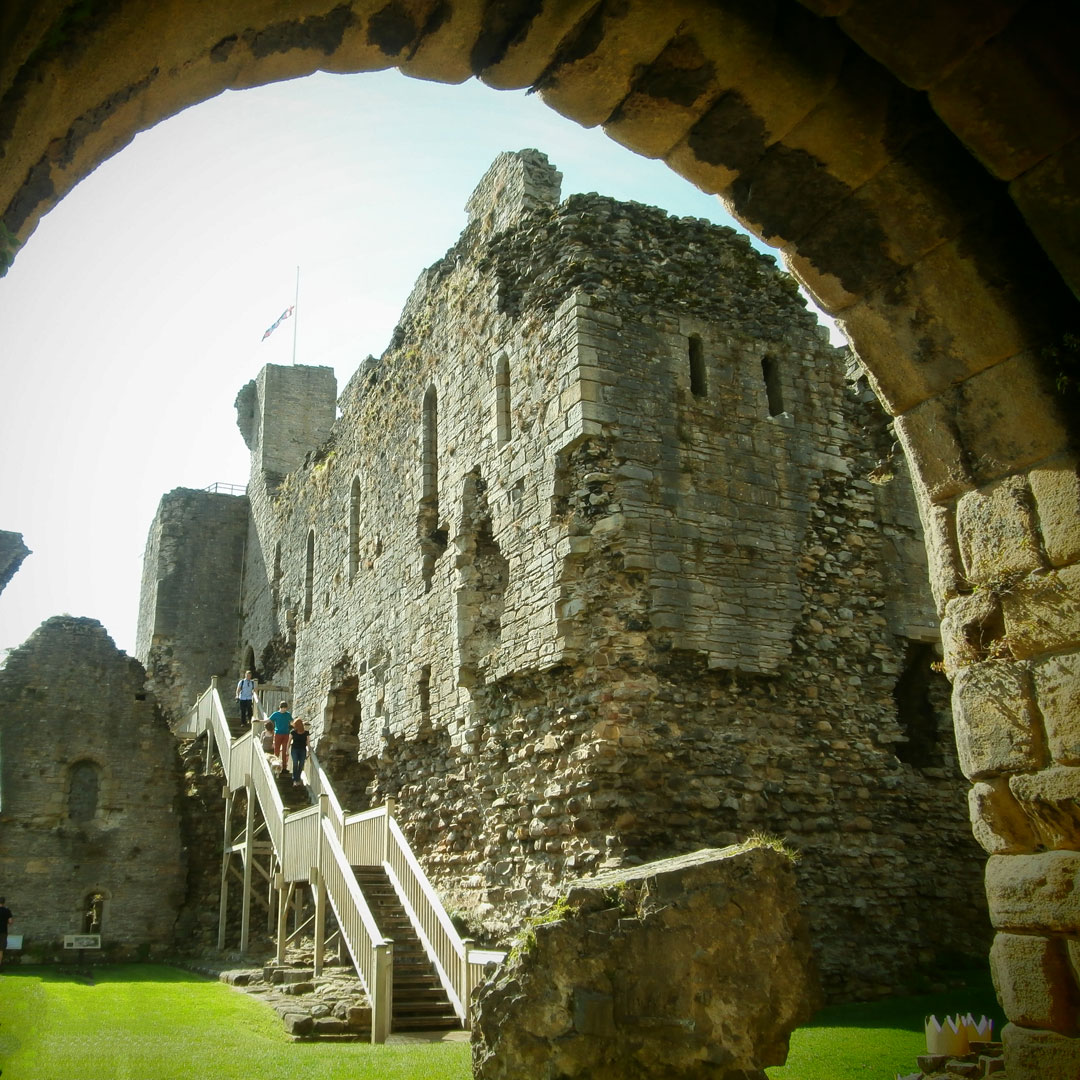
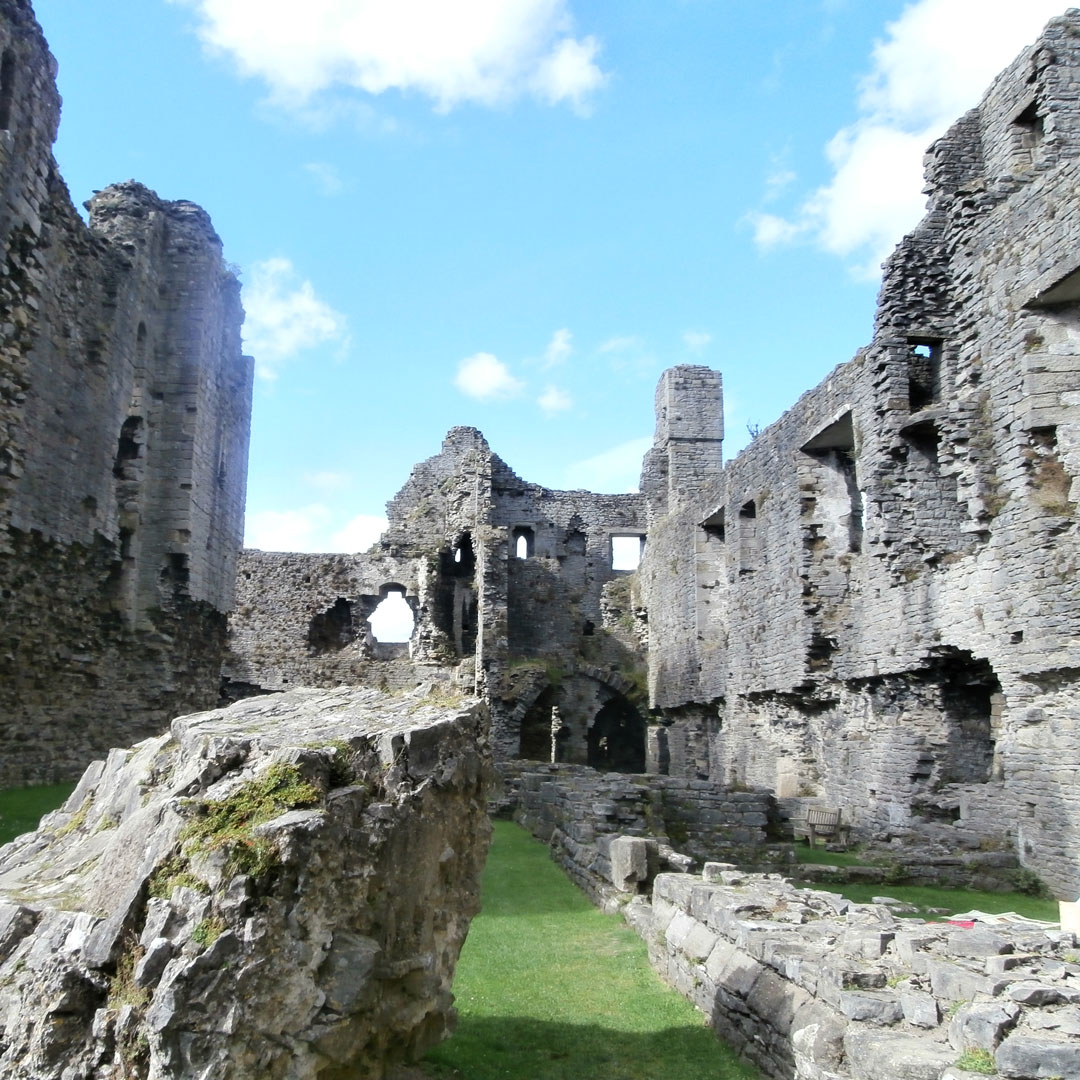
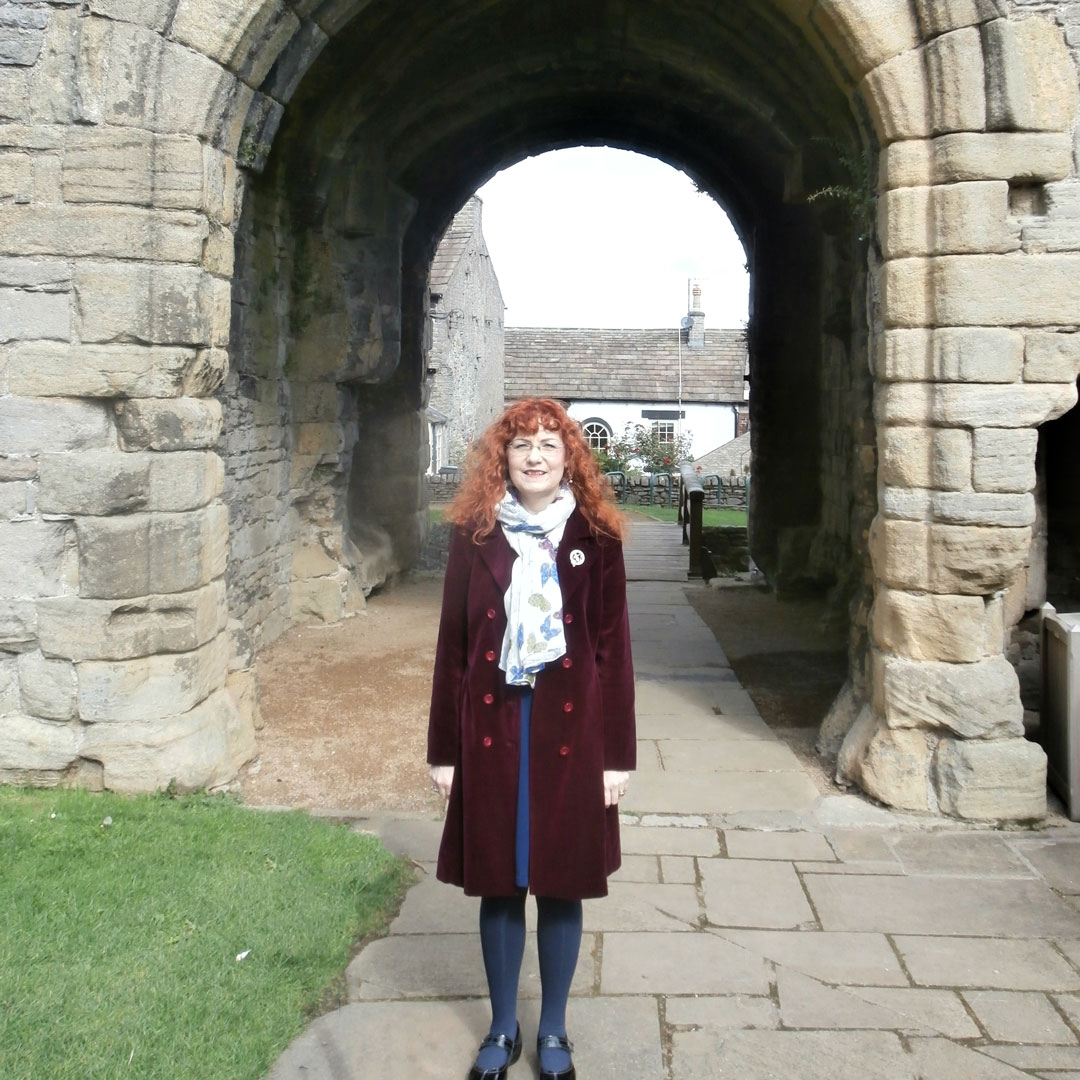
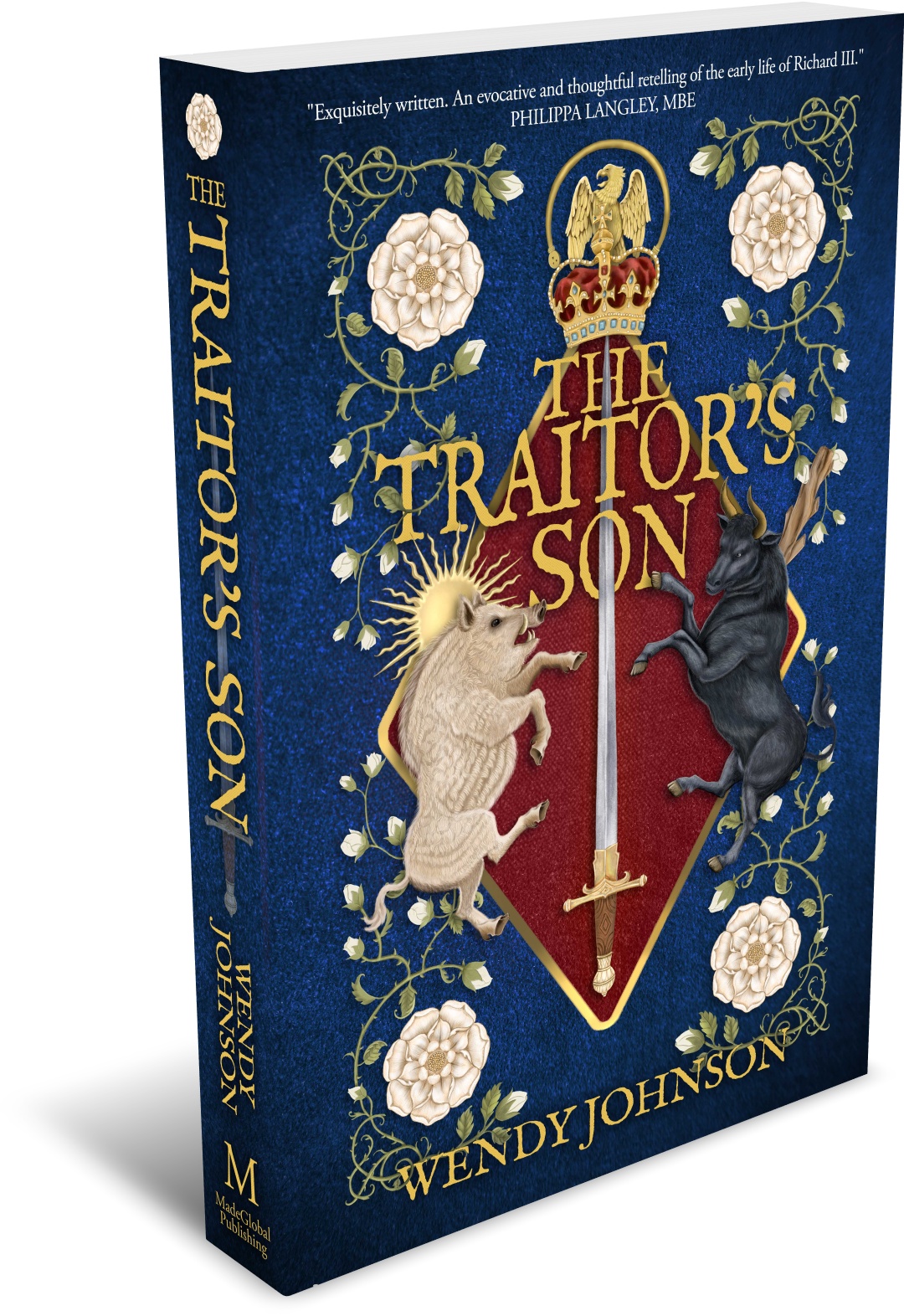


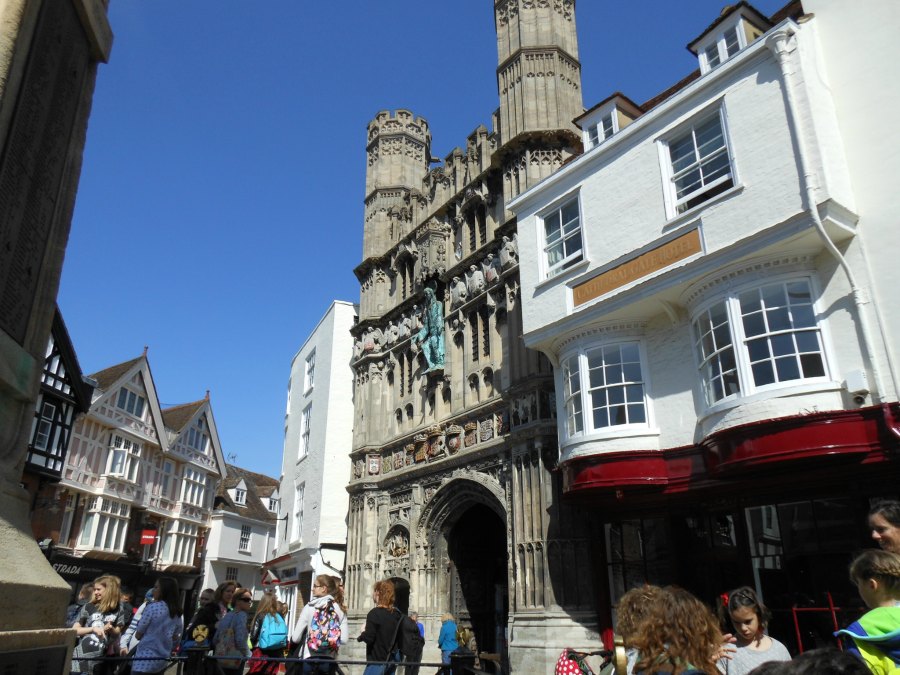
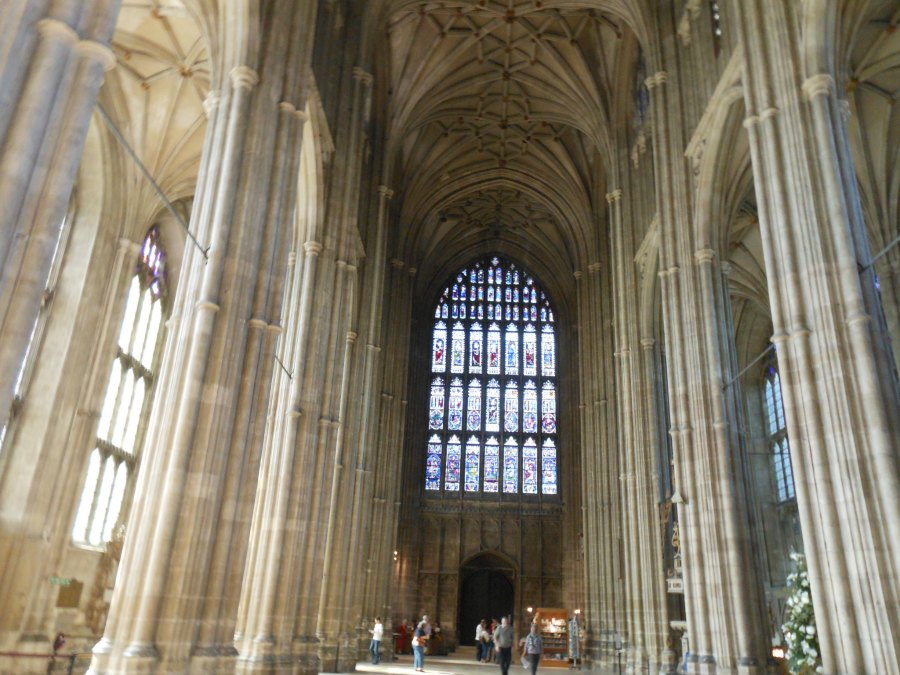

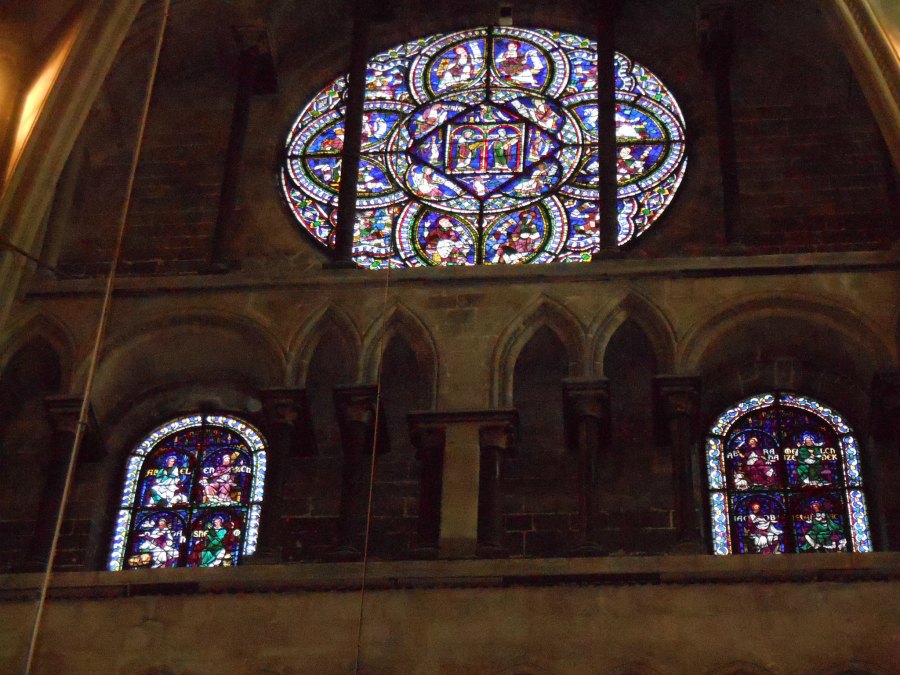
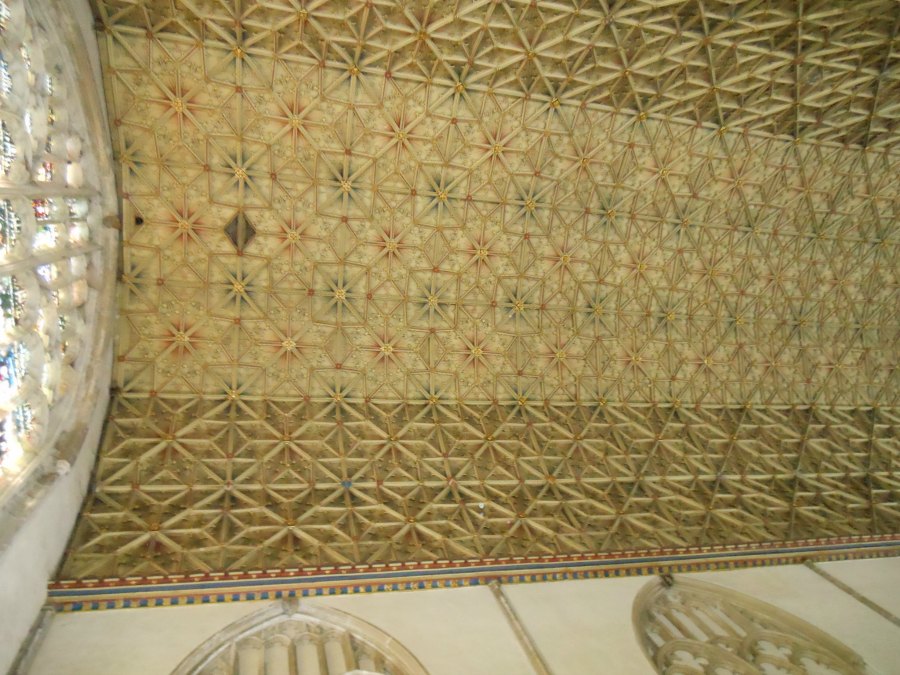
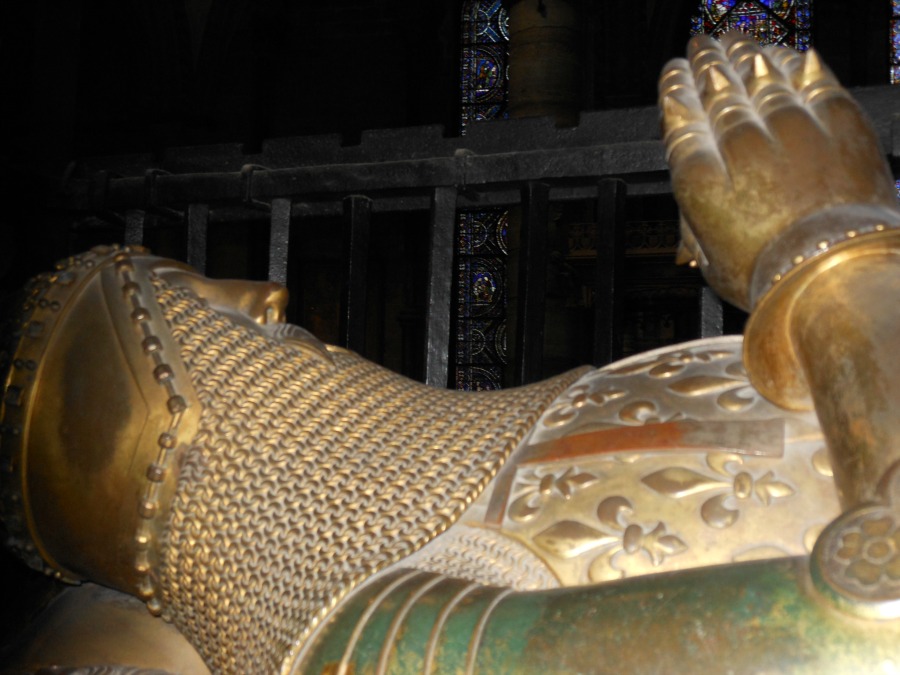

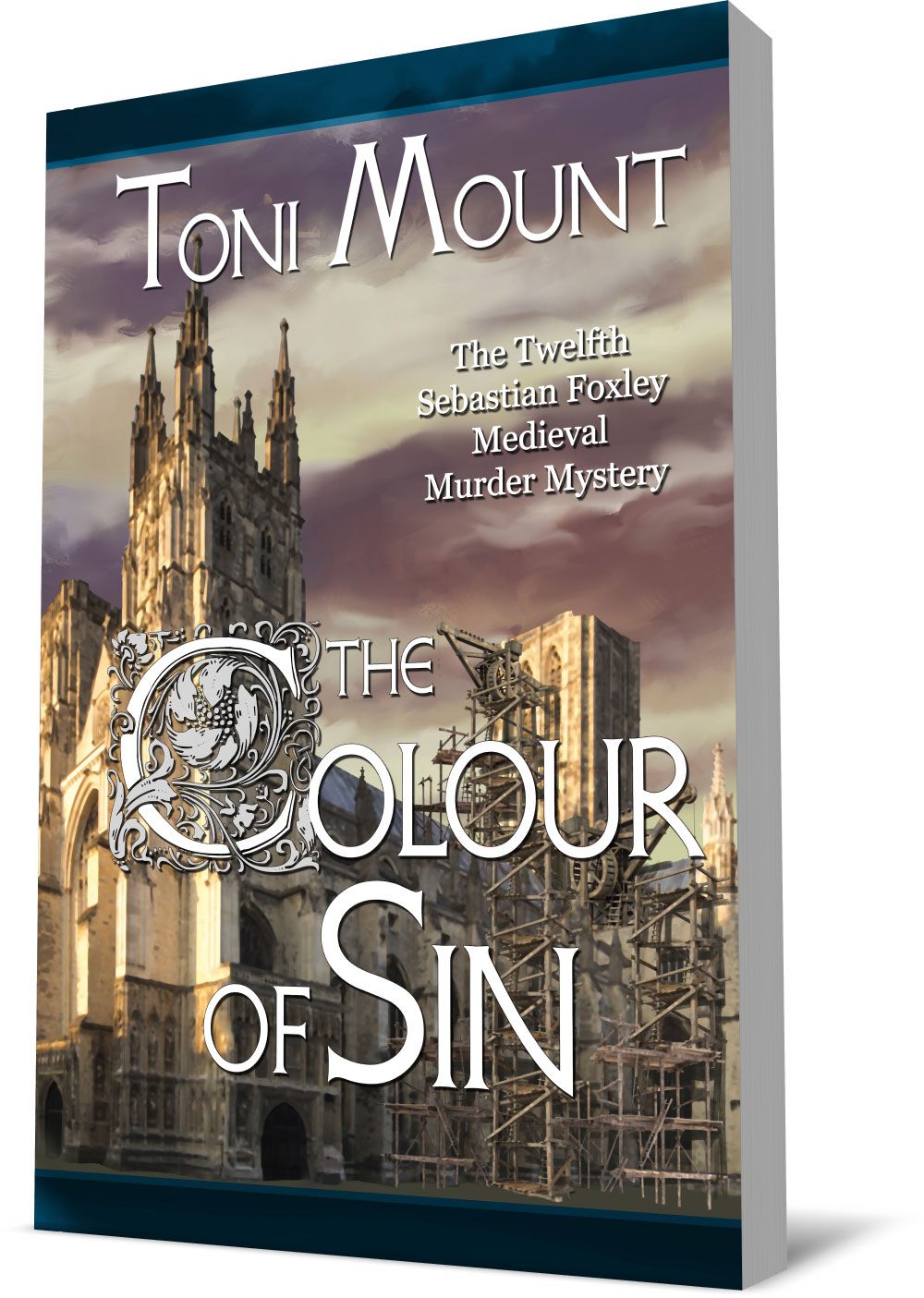
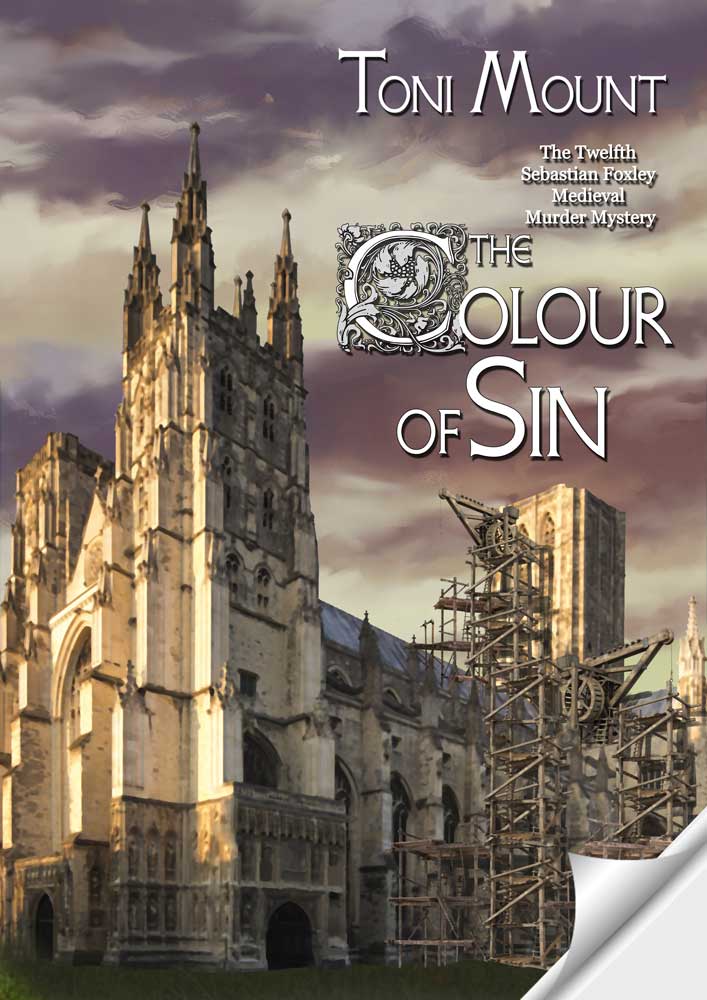



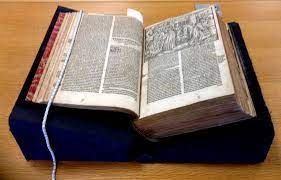
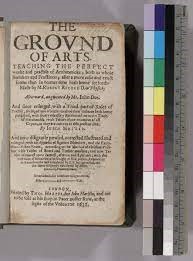
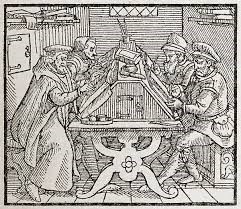









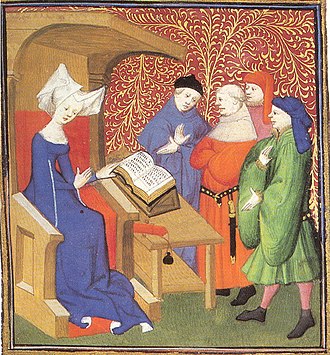
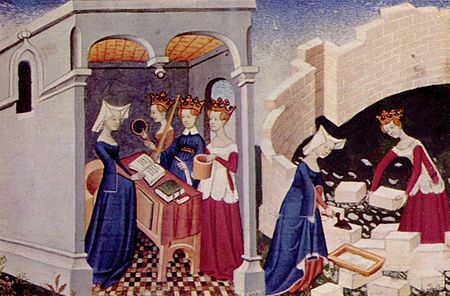
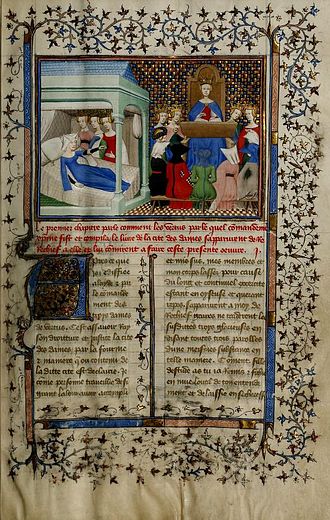
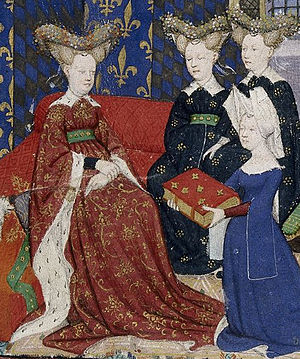
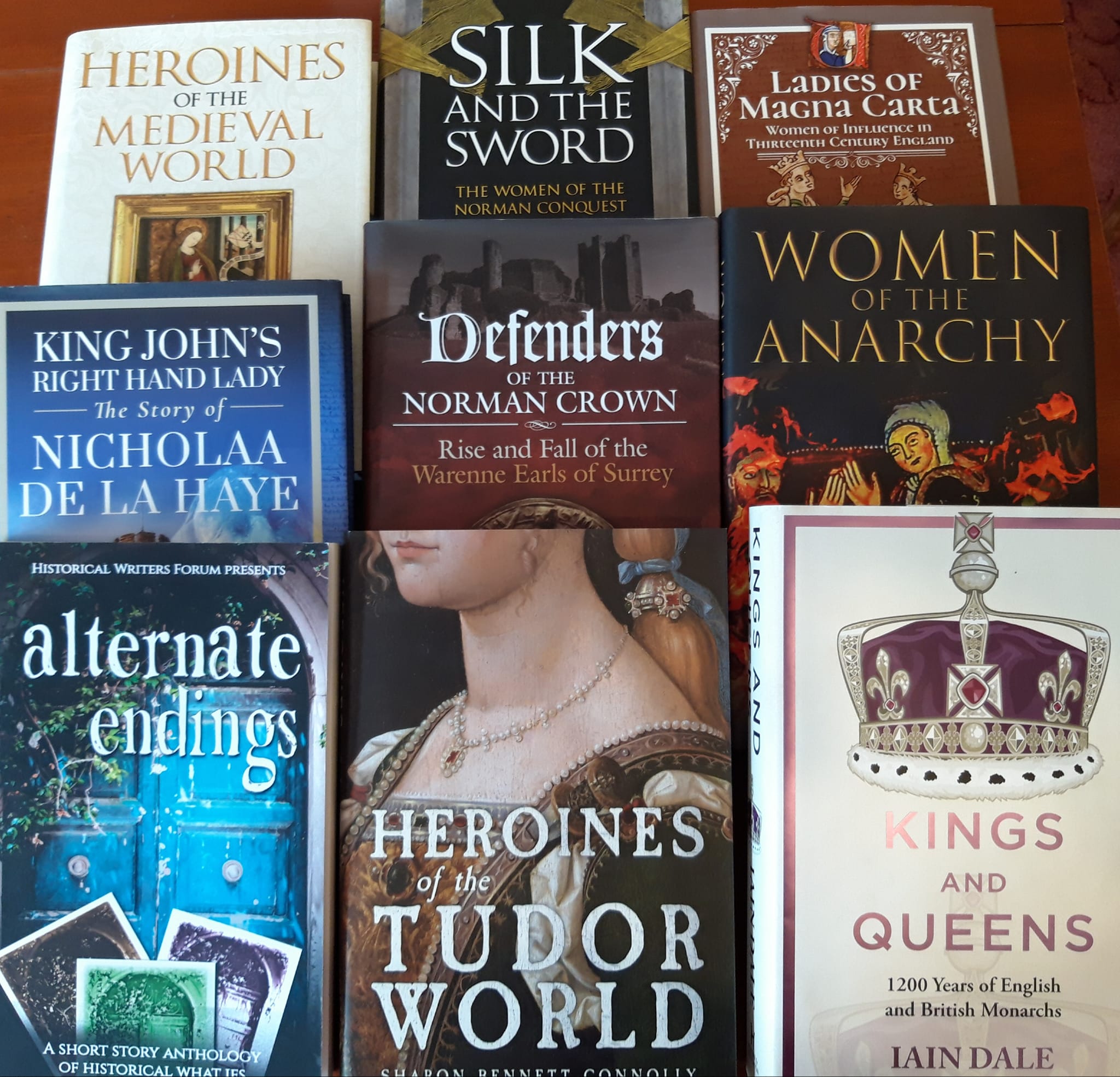

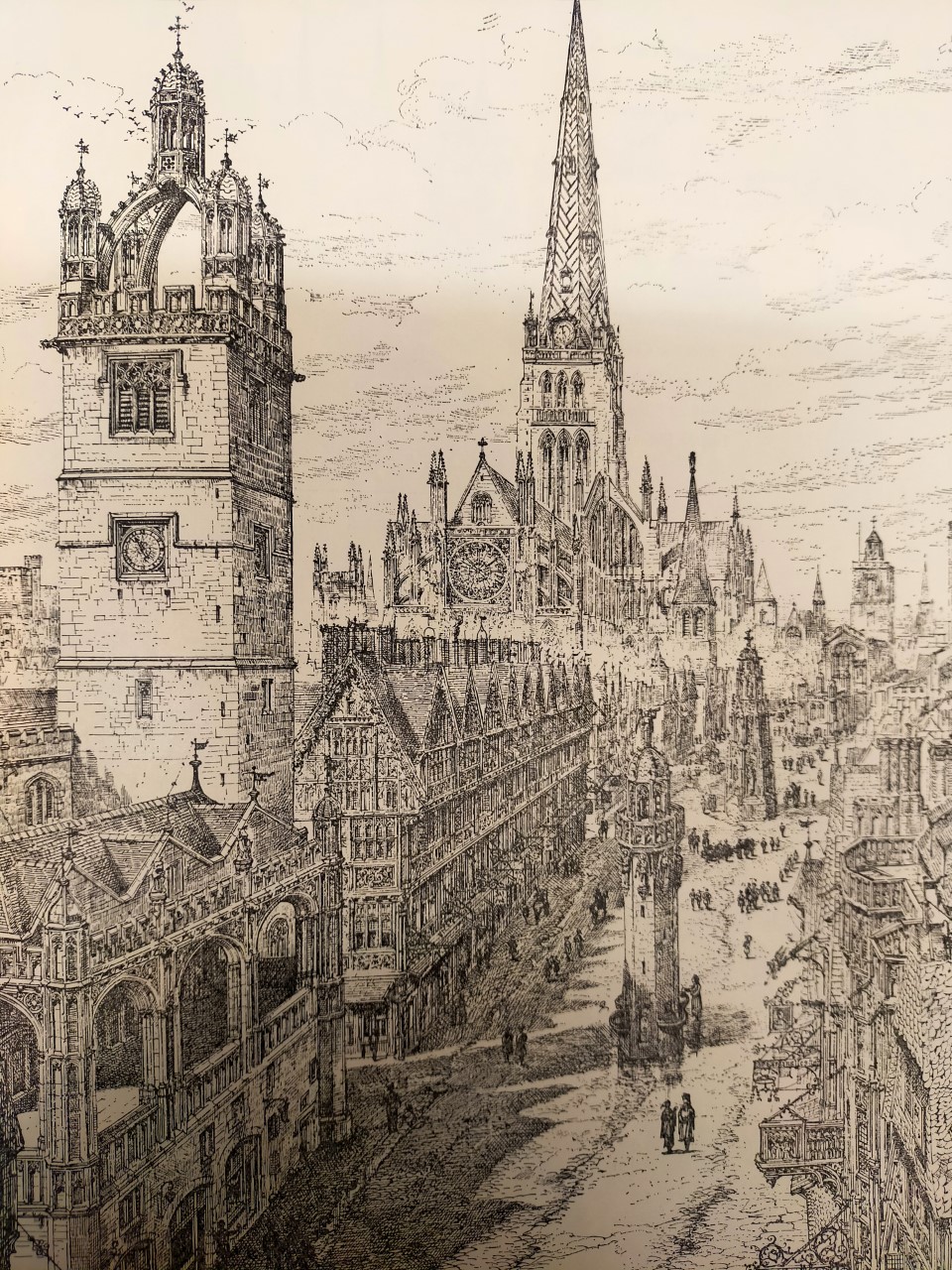

 History... the interesting bits!