We have a wonderful guest on History… the Interesting Bits today. To celebrate the paperback release of her wonderful dual biography of Philippa of Hainault and Alice Perrers, The Queen and the Mistress, Gemma Hollman is here to tell us about one of the primary duties of a queen.
Philippa of Hainault and the Power of Pregnant Queens
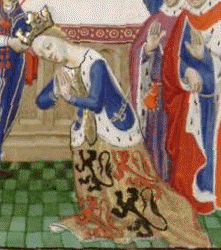
Medieval queens had many duties in life. They were to act as symbols of peace, their choice of spouse often made to end wars or confirm alliances; they were to intercede for the needy, obtaining pardons for criminals; they were to be charitable to the poor; patrons of artists, writers, and architects; and support their husbands in their difficult task as ruler. But, most importantly of all, they were to produce heirs.
This last role is most notable to us peering back through the actions of Henry VIII, whose quest for a male heir was part of his motivation in cycling through an unprecedented number of English queens. Medieval monarchs did not generally go to such extremes, and childless queens could and did exist – and could still wield significant power. But for those who did succeed, they could find a new level of status and influence unlocked for them.
Philippa of Hainault was the daughter of the Count and Countess of Hainault, Holland and Zeeland, a collection of territories in the Low Countries. Her homeland was wealthy from trade, and positioned to require careful political manoeuvring between the kingdoms of England and France. When the queen of England, Isabella of France, approached the Count and Countess for a marriage alliance between her son Edward and their daughter Philippa, they leapt at the chance to know their daughter would one day become a queen.
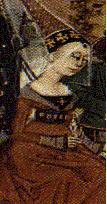
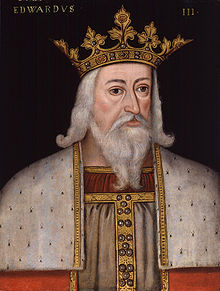
The couple were teenagers, and the first few years of their marriage were hardly auspicious. Isabella of France had overthrown her husband, Edward II, and had her son made Edward III in his place. But though Philippa had thus become a queen far earlier than anticipated, she and her husband were kept under Isabella’s thumb. She did not want to give up her position at the top of the ladder. This was where Philippa would first discover the power of pregnancy for a queen.
Philippa fell pregnant around aged 15, and this was to change the course of her and her husband’s lives. Firstly, Philippa had never had a coronation, Isabella not wanting to have a rival as a consecrated consort. But now that Philippa would be giving birth to the new heir to the throne, it was unthinkable that she would remain uncrowned to do so. Whilst five months pregnant, she proceeded through London to receive her crown, the coronation sermons which reminded the queen of her duty to produce children seeming both poignant and redundant. Becoming pregnant had given Philippa her first taste of power.
That summer, Philippa gave birth to a healthy baby boy, and the English throne could breathe a sigh of relief that the succession was, for now, secured. The advent of a son also gave Edward III the push he needed to finally claim power for himself, overthrowing the rule of his mother and her lover. Philippa’s pregnancy had thus benefitted her husband, too.
Across the course of their marriage, Philippa was to give birth to twelve children, although sadly many did not outlive her. But each of these children bolstered Edward’s power, giving him bargaining chips to expand his empire through marriage alliances – or the promises of them. In turn, they provided status for Philippa, who was seen to have amply fulfilled the most important of queenly duties. They also gave her much comfort on a personal level, the queen being noted for keeping her children within her own household, rather than sending them away as was not uncommon.
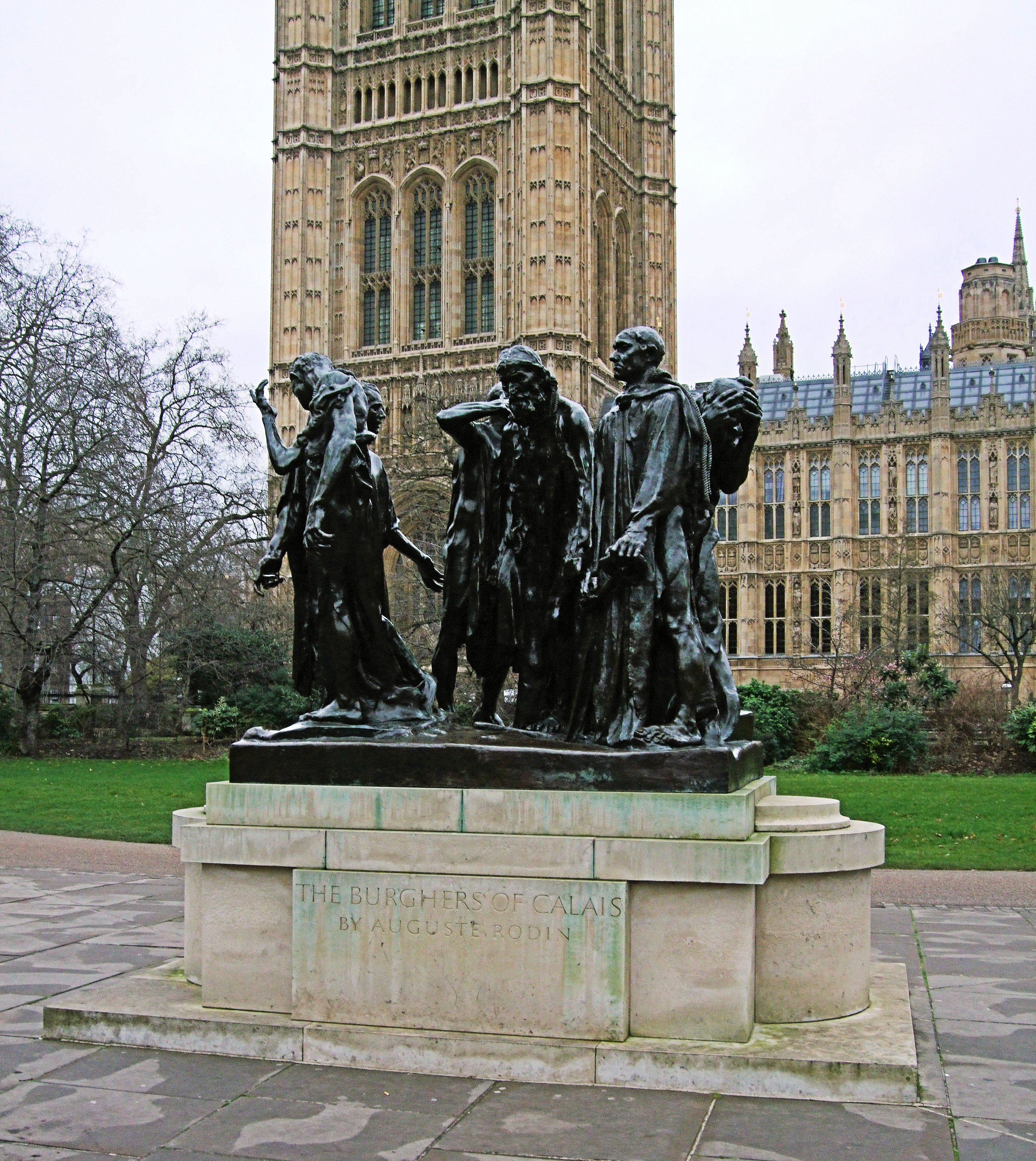
Pregnancy also became a powerful mythmaking tool for Philippa. In the 1340s, Edward III spent the best part of a year besieging the key French port city of Calais. If he could capture Calais, then he would show his might to the French kingdom, and have a huge victory on his road to attempting to claim the French throne for himself. Philippa, as a loyal and loving wife, spent many months outside the walls with her husband, keeping him company during the siege and providing morale to the soldiers. Finally, the city surrendered. Edward had his day of glory.
However, the citizens of Calais were mournful of their fate. Many of them had died of starvation and disease, and those who had survived now had to leave their homes and belongings behind, all of which were now property of the English king. More importantly, the most prominent men of the city, known as burghers, knew that their lives were forfeit. In the face of such a lengthy siege, the leaders were often executed. The men came out of the city with nooses around their neck and surrendered themselves into Edward’s hands.
According to legend, Edward wished to go ahead with this punishment, and would not listen to any of his lords who pled for mercy. Suddenly, Queen Philippa of Hainault, who was exceedingly heavy with child, fell to her husband’s feet, weeping and begging him to spare the men. Overcome with emotion at seeing his dear, pregnant wife in such a state, Edward agreed to pardon the men, and handed them into Philippa’s custody.
In reality, we know from records of Philippa’s other births that she could not have been pregnant at this time. The image of a pregnant queen was so powerful to medieval minds, that storytellers and chroniclers often leveraged it to make their story more meaningful. Philippa may well have interceded for the burghers, but she did not do so pregnant.
Philippa died in 1369 aged around 55, and she was surrounded by her husband and several of her surviving children. Asking Edward that he would be buried beside her when he died, so they could rest together forever, the king agreed; their tombs still stand in Westminster Abbey today. The country mourned the death of their great queen, who had been a steadying presence for four decades. Her many children and their spouses were represented on her tomb as little statues around the sides, reminding everyone even in death of the power of her pregnancies.
About the Book:
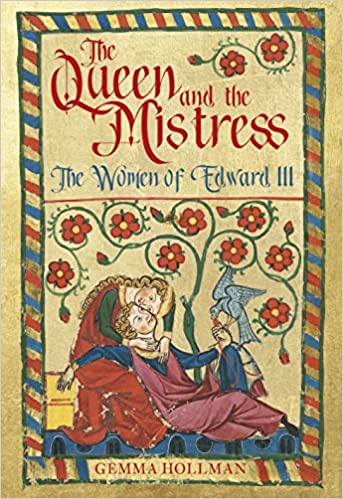
IN A WORLD WHERE MAN IS KING, CAN WOMEN REALLY HAVE IT ALL – AND KEEP IT?
Philippa of Hainault was Queen of England for forty-one years. Her marriage to Edward III, when they were both teenagers, was more political transaction than romantic wedding, but it would turn into a partnership of deep affection. The mother of twelve children, she was the perfect medieval queen: pious, unpolitical and fiercely loyal to both her king and adopted country.
Alice Perrers entered court as a young widow and would soon catch the eye of an ageing king whose wife was dying. Born to a family of London goldsmiths, this charismatic and highly intelligent woman would use her position as the king’s favourite to build up her own portfolio of land, wealth and prestige, only to see it all come crashing down as Edward himself neared death.
The Queen and the Mistress is a story of female power and passion, and how two very different women used their skills and charms to navigate a tumultuous royal court – and win the heart of the same man.
To buy the book: Amazon
About the author:
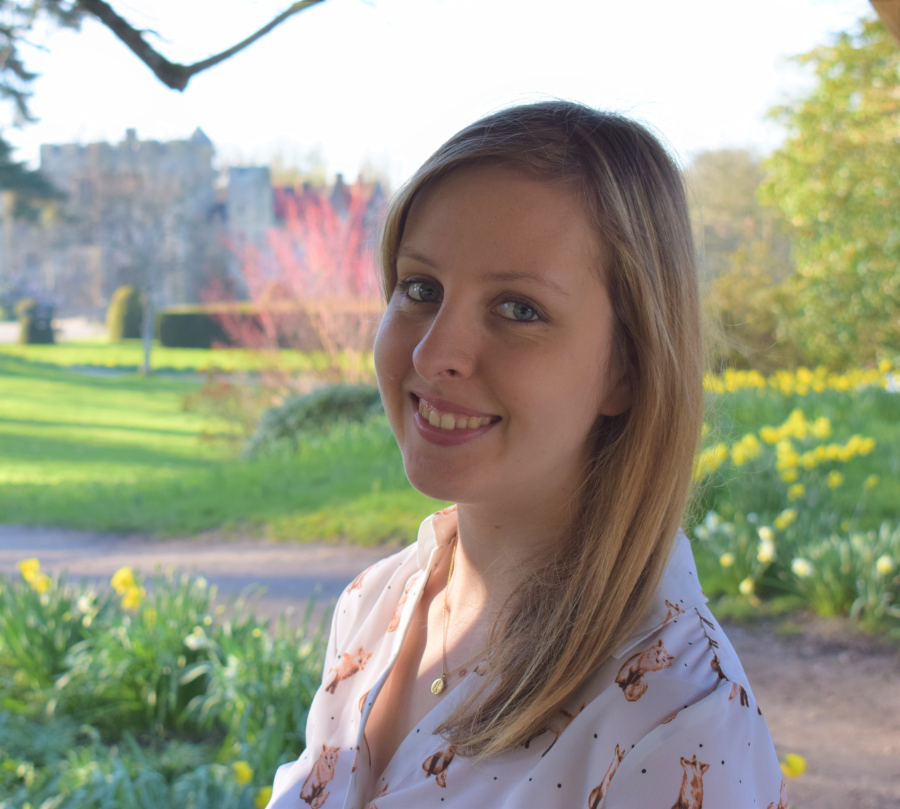
Author bio: Gemma Hollman is a historian and author who specialises in late medieval English history. A Fellow of the Royal Historical Society, she has a particular interest in the plethora of strong, intriguing and complicated women from the medieval period, a time she had always been taught was dominated by men. Gemma also works full-time in the heritage industry whilst running her historical blog, Just History Posts, which explores all periods of history in more depth. Gemma’s first book, Royal Witches, was a bestseller, and two more books have since followed: The Queen and the Mistress, and Women in the Middle Ages.
Where to find Gemma:
Website: https://justhistoryposts.com/; Link for books: https://lnk.bio/GemmaHAuthor; Social media: Bluesky https://bsky.app/profile/gemmahauthor.bsky.social.
*
My Books:
Signed, dedicated copies of all my books are available through my online bookshop. or by contacting me.
Out Now: Princesses of the Early Middle Ages
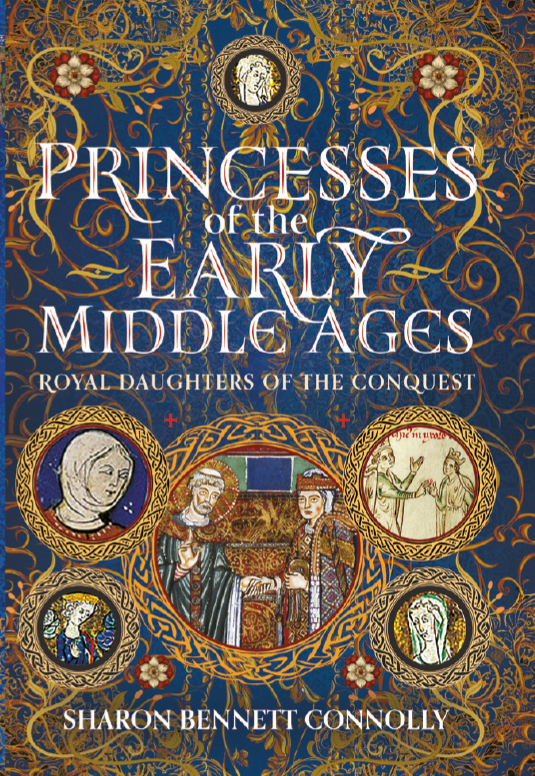
Daughters of kings were often used to seal treaty alliances and forge peace with England’s enemies. Princesses of the Early Middle Ages: Royal Daughters of the Conquest explores the lives of these young women, how they followed the stereotype, and how they sometimes managed to escape it. It will look at the world they lived in, and how their lives and marriages were affected by political necessity and the events of the time. Princesses of the Early Middle Ages will also examine how these girls, who were often political pawns, were able to control their own lives and fates. Whilst they were expected to obey their parents in their marriage choices, several princesses were able to exert their own influence on these choices, with some outright refusing the husbands offered to them.
Their stories are touching, inspiring and, at times, heartbreaking.
Princesses of the Early Middle Ages: Royal Daughters of the Conquest is now available from Pen & Sword and Amazon.
Sharon is the author of:

Heroines of the Medieval World; Silk and the Sword: The Women of the Norman Conquest; Ladies of Magna Carta: Women of Influence in Thirteenth Century England; Defenders of the Norman Crown: Rise and Fall of the Warenne Earls of Surrey; King John’s Right Hand Lady: The Story of Nicholaa de la Haye; Women of the Anarchy; Heroines of the Tudor World; Scotland’s Medieval Queens: From St Margaret to Margaret of Denmark; Princesses of the Early Middle Ages: Royal Daughters of the Conquest (March 2026); Princesses of the Later Middle Ages; Royal Daughters of the Plantagenets (August 2026)
All my books on Amazon, Bookshop.org . You can also order direct from my publishers, Pen and Sword Books and Amberley Publishing.
Podcast:
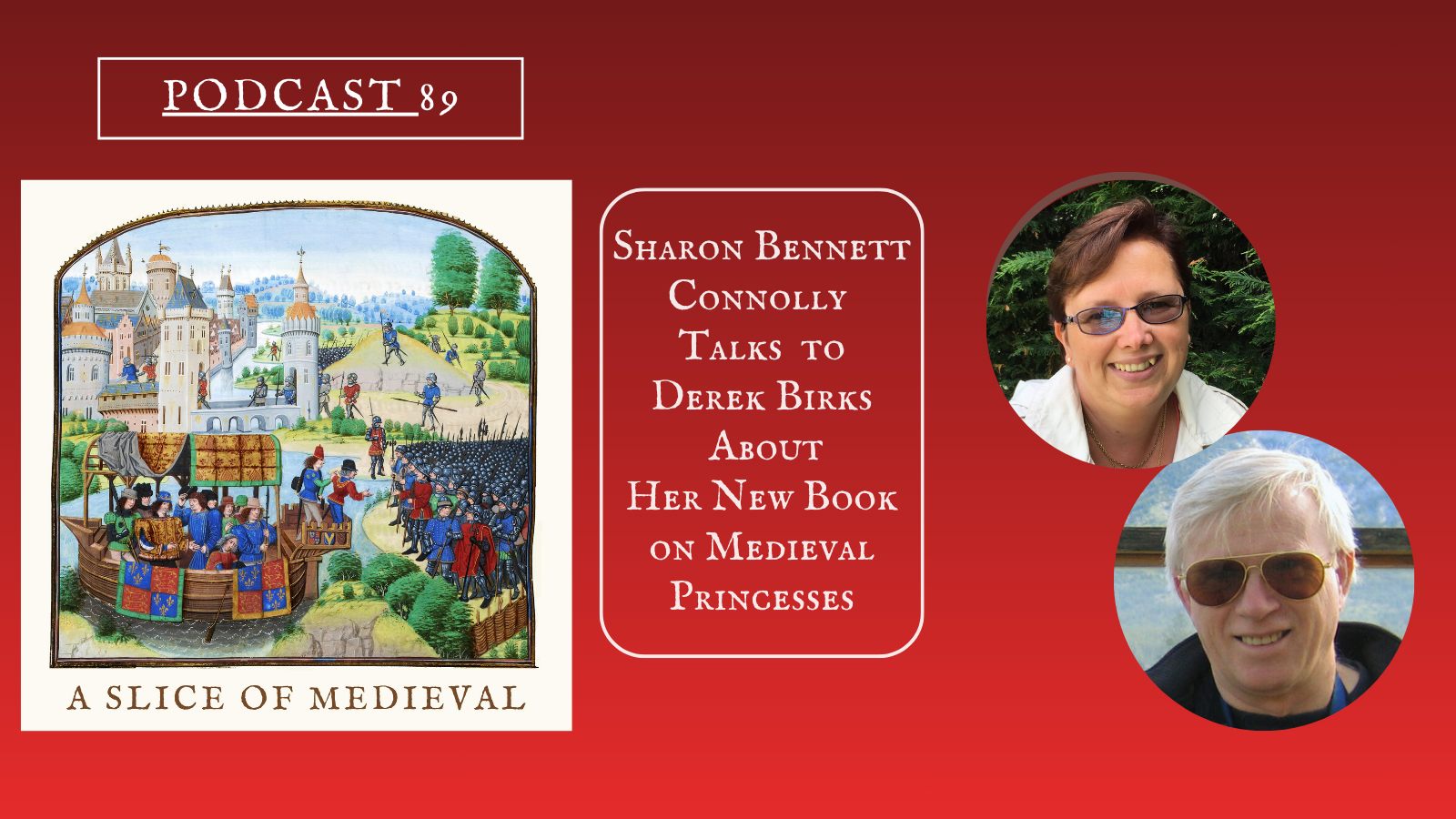
Have a listen to the A Slice of Medieval podcast, which I co-host with Historical fiction novelist Derek Birks. Derek and I welcome guests, such as Ian Mortimer, Bernard Cornwell, Elizabeth Chadwick and Scott Mariani, and discuss a wide range of topics in medieval history, from significant events to the personalities involved.
Every episode is also now available on YouTube.
*
Don’t forget! Signed and dedicated copies of all my books are available through my online bookshop.
For forthcoming online and in-person talks, please check out my Events Page.
You can be the first to read new articles by clicking the ‘Follow’ button, liking our Facebook page or joining me on Twitter and Instagram.
©2026 Sharon Bennett Connolly FRHistS and Gemma Hollman FRHistS
 History... the interesting bits!
Thank you.
Sent from Yahoo Mail for iPhone
LikeLike