Guest Post: The Boy Who Would be King by Mark Turnbull

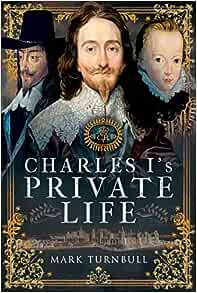
I am currently reading a fabulous, very personal biography of King Charles I, by Mark Turnbull. Charles I’s Private Life concentrates on the personal, rather than political, life of one of England’s most controversial kings – the only one to be convicted of treason and publicly executed. It is a fascinating, intimate, biography. And Mark has very kindly joined me today with a taster of what you can expect from the book.

The Boy who Would be King
The past is full of anchor points and legendary facts. Henry VIII’s marital record, for example, snags many history enthusiasts, helping the 118-year Tudor rule flourish in books, films, and television. By comparison, at 111 years, the Stuart era often flounders because this stormy period has so many complicated threads – most especially the Wars of the Three Kingdoms.

The monarch during the civil wars was King Charles I. His death is probably the most well-known fact about him that sticks in our minds. On a cold January afternoon, wearing two shirts lest shivering give the appearance of fear, he was executed outside his palace. In the aftermath of his death, his enemies were keen to portray him as a tyrant responsible for the deaths and atrocities. King Henry’s divorce had given birth to the Church of England, but it was Charles’s defence of it that led to his veneration as a martyr when the monarchy was eventually restored. Over the centuries he has increasingly become a two-dimensional martyr or murderer; an anachronism to many today. History has almost severed his personal character, life, and loves.

Charles I’s Private Life digs deep into the man behind the crown, to better understand him, and in turn, the wars that dominated his reign. With emphasis on his personal relationships, I have aimed to produce a most intimate biography. One of the fresh aspects is closer examination of his overlooked childhood – years that formed his character and beliefs.

Charles as a child with his parents, James VI and I and Anne of Denmar

Born in 1600, the second son of King James VI of Scotland had a sickly start. In 1603, when James acceded to the English throne, the royal family hurriedly crossed the border. Charles was not deemed to be up to the journey for another year. He initially struggled to walk and talk but fought and overcame this restrictive existence.

After the 1605 Gunpowder Treason broke, he would have known that his own death had been part of the plot. Aged five, whilst traversing Whitehall Palace, the hub of Stuart government, he was no stranger to gossip and fear. On one occasion, he wandered into one of his father’s meetings, only for James to hold him aloft in jubilant relief at their survival. While plague had wiped out many, it helped save the Stuarts. The opening of Parliament had been postponed on account of it, causing delays that saw the plot unravel. Pestilence also helped foster a strong bond between Charles and his elder brother, Henry, when the pair were packed off to the country to escape it.

Charles hero-worshipped his brother. When Henry was absent on progresses, a pining Charles would visit his brother’s stables and ride his horses. He offered to give “anie thing that I have” to his eldest sibling, whether it be horses, crossbows or books. One particular gem of research was a short poem Charles penned in 1608, aged seven, whilst preparing for a jaunt on Henry’s miniature vessel, named Disdain. There is a timeless innocence and excitement in the simplicity of the request for gunpowder for the cannons:

“Saterday is the day

let 4 great barrels of pouder cume away”

Many suggest Charles was overshadowed by Henry. The latter’s numerous talents, which he had no qualms of showing off, certainly made him a legendary figure. Athletic and good looking, he was paraded as the embodiment of honour, courage and princely virtue. The hopes of vast swathes of people were placed in him and as a result it is easy to write Charles off as irrelevant.
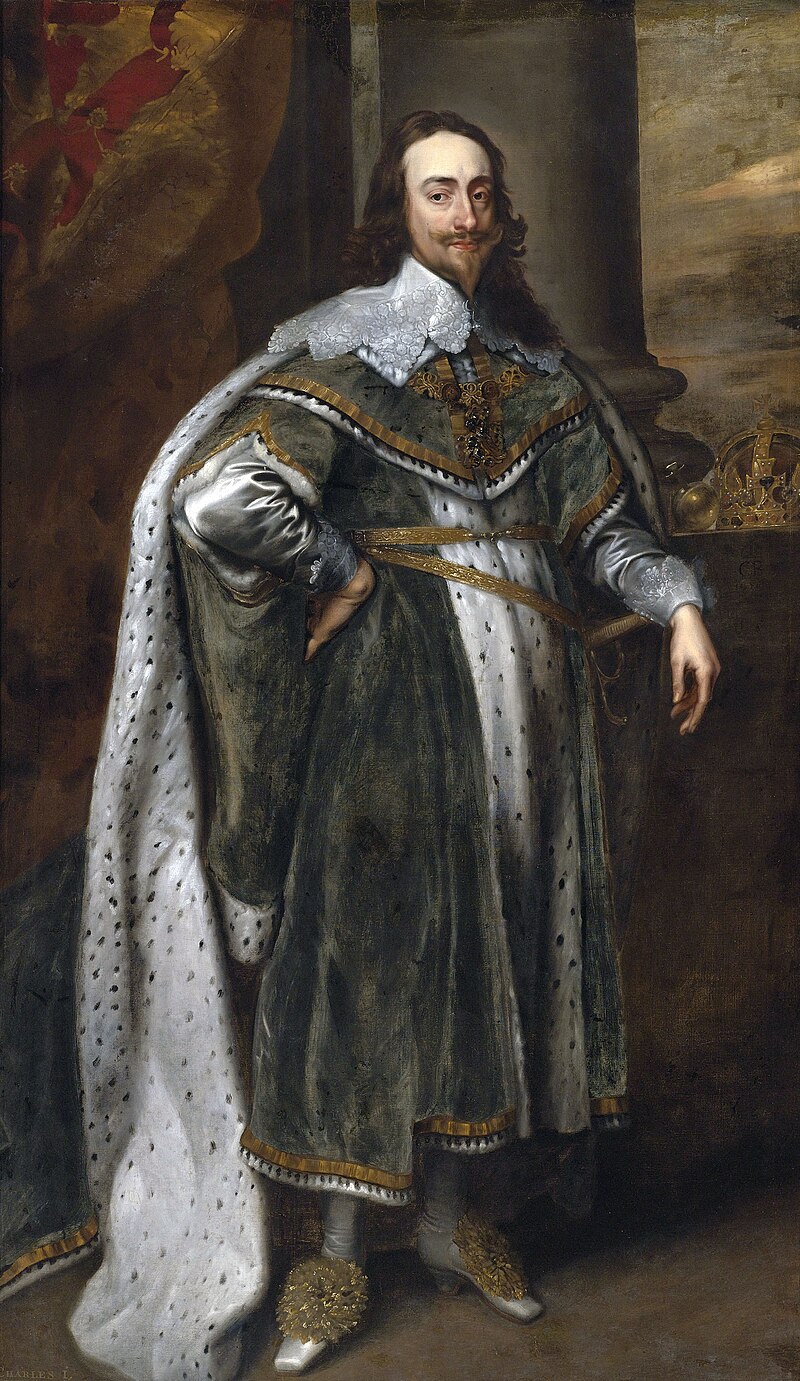
King Charles I

The elder, however, was not a good scholar and Charles was held up as an example to follow. Indeed, King James once threatened to leave the crown to Charles who was “far quicker at learning”. Despite his slim physique, Charles proved himself adept at running at the ring, handling a pike, hunting and riding. His future had seemed mapped out from a young age. Many references pointed, surprisingly, to a military career. It was one that Charles seemed to relish, and on one occasion the 6-year-old marched up to the Venetian Ambassador with a ‘harquebus’ on his shoulder to declare he was thus armed for the Republic’s service.

Though numerous siblings followed Charles (Robert, Mary and Sophia) they all perished at tragically young ages. As a result, Charles’s father called him ‘Baby Charles’ well into manhood. Apart from being embarrassing, the sobriquet must have been a constantly reminder of royal mortality. Considering Charles’s rushed christening and fragile early years, it seemed as though God had preserved him. But for what?

The sudden death of Prince Henry at the age of 18 was a momentous turning-point that shocked the three kingdoms. King James retreated to the country, while Queen Anna shut herself away and refused to eat. Princess Elizabeth was also inconsolable. The twelve-year-old Charles was left to lead the nation, whilst shouldering an impossible burden of expectation. I was struck by the similarities between Henry’s funeral in 1612 and that of Diana, Princess of Wales, in 1997. For Charles, who led the former through central London, it must have been traumatic to say the least.

A teenage sonnet Charles penned to his mother between the years 1613 and 1619 hints at innermost thoughts over the way his life and character changed forever. He wrote the sonnet to help explain their construction, but the contents are extremely poignant. The daily ‘fascherie’ [troubles] had, he wrote, quenched the heavenly furious fire that once burned inside him.

“In place whereof came sad & thorny cares

Which restlesly no time nor season spares”

From that moment on, Charles pretty much had to take on the guise of his dead brother. His own personality was often suppressed and stifled. Peeling back the layers of propaganda (that of his own and his enemies) reveals a man with faults and foibles, courage and charisma. New evidence in the biography also sheds light on key events such as the start of civil war in England and Charles’s death upon the scaffold.

This article was first published in Historia Magazine (Historical Writers Association)

About the Author:

After a visit to Helmsley Castle at the age of 10, Mark bought a pack of ‘top trump’ cards featuring the monarchs of England. The card portraying King Charles I fascinated him. Van Dyck’s regal portrait of the King and the fact that he was executed by his own people were the beginnings of a passionate interest in the Civil Wars that has lasted ever since.

Mark also produces a podcast called Cavalier Cast – The Civil War in Words. This was the first podcast solely dedicated to the Wars of the Three Kingdoms and explores a variety of topics with leading historians, archaeologists, and re-enactors. Mark lives in County Durham with his wife and two children. http://www.1642author.com

To Buy the Book:

Charles I’s Private Life by Mark Turnbull is now available from Amazon.

*

My Books

Signed, dedicated copies of all my books are available through my online store.

Out nowKing John’s Right-Hand Lady: The Story of Nicholaa de la Haye
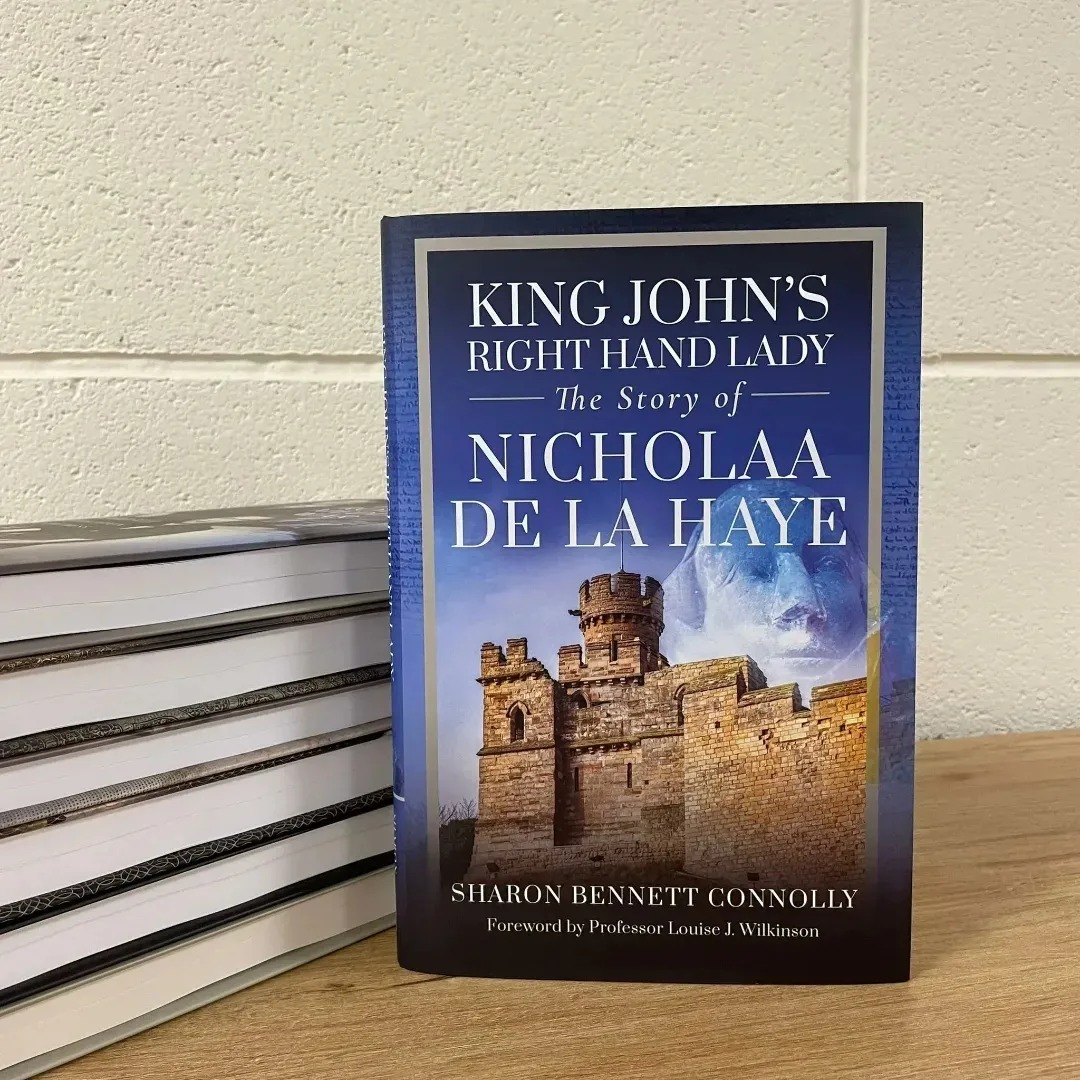
In a time when men fought and women stayed home, Nicholaa de la Haye held Lincoln Castle against all-comers, gaining prominence in the First Baron’s War, the civil war that followed the sealing of Magna Carta in 1215. A truly remarkable lady, Nicholaa was the first woman to be appointed sheriff in her own right. Her strength and tenacity saved England at one of the lowest points in its history. Nicholaa de la Haye is one woman in English history whose story needs to be told…

King John’s Right-Hand Lady: The Story of Nicholaa de la Haye is now available from Pen & Sword Booksbookshop.org and Amazon.

Coming 15 January 2024: Women of the Anarchy

On the one side is Empress Matilda, or Maud. The sole surviving legitimate child of Henry I, she is fighting for her birthright and that of her children. On the other side is her cousin, Queen Matilda, supporting her husband, King Stephen, and fighting to see her own son inherit the English crown. Both women are granddaughters of St Margaret, Queen of Scotland and descendants of Alfred the Great of Wessex. Women of the Anarchy demonstrates how these women, unable to wield a sword, were prime movers in this time of conflict and lawlessness. It show how their strengths, weaknesses, and personal ambitions swung the fortunes of war one way – and then the other.

Available for pre-order from Amberley Publishing and Amazon UK.

Also by Sharon Bennett Connolly:

Defenders of the Norman Crown: The Rise and Fall of the Warenne Earls of Surrey tells the fascinating story of the Warenne dynasty, of the successes and failures of one of the most powerful families in England, from its origins in Normandy, through the Conquest, Magna Carta, the wars and marriages that led to its ultimate demise in the reign of Edward III. Defenders of the Norman Crown: Rise and Fall of the Warenne Earls of Surrey is now available from Pen & Sword BooksAmazon in the UK and US, and  Bookshop.org.

Ladies of Magna Carta: Women of Influence in Thirteenth Century England looks into the relationships of the various noble families of the 13th century, and how they were affected by the Barons’ Wars, Magna Carta and its aftermath; the bonds that were formed and those that were broken. It is now available in paperback and hardback from Pen & Sword,  Amazon, and Bookshop.org.

Heroines of the Medieval World tells the stories of some of the most remarkable women from Medieval history, from Eleanor of Aquitaine to Julian of Norwich. Available now from Amberley Publishing and Amazon, and Bookshop.org.

Silk and the Sword: The Women of the Norman Conquest traces the fortunes of the women who had a significant role to play in the momentous events of 1066. Available now from Amazon,  Amberley Publishing, and Bookshop.org.

Alternate Endings: An anthology of historical fiction short stories including Long Live the King… which is my take what might have happened had King John not died in October 1216. Available in paperback and kindle from Amazon.

Podcast:

Have a listen to the A Slice of Medieval podcast, which I co-host with Historical fiction novelist Derek Birks. Derek and I welcome guests, such as Bernard Cornwell, and discuss a wide range of topics in medieval history, from significant events to the personalities involved.

*

Don’t forget! Signed and dedicated copies of all my books are available through my online store.

For forthcoming online and in-person talks, please check out my Events Page.

You can be the first to read new articles by clicking the ‘Follow’ button, liking our Facebook page or joining me on Twitter and Instagram.

©2023 Sharon Bennett Connolly FRHistS and Mark Turnbull

The Women Behind Magna Carta

Magna Carta

Throughout my research into medieval women, two ladies in particular have popped up a number of times: Nicholaa de la Haye and Matilda de Braose. Their unique stories drew me into their world, and the turbulent times of King John. They were the spark that led me to look into the story of Magna Carta; how its clauses were influenced by women and how women used it to protect their own rights. Magna Carta was, perhaps, the first step on the long road to democracy in England, and many women played key roles in its creation and development.

The Magna Carta of 1215 reflects the needs and events of the time in which it was issued; an England on the brink of civil war, disaffected barons demanding redress, the Church and cities such as London looking for protection. It was drawn up by barons looking for redress and legal protection from a king whose word could no longer be trusted, who meted out arbitrary punishments and heavy taxes. It was not a charter that was intended to form the protection and legal rights of every man, woman and child in the land; though it has come to be seen as just that in subsequent centuries. Indeed, the common man does not get a mention, and of the sixty-three clauses, only eight of them mention women as a gender.

The significance of women in the Magna Carta story is not just their limited inclusion in the charter itself, but also in their experiences of the unsettled times in which they lived, in their influence on the charter itself and in their use of its clauses to exact redress for injustices they had experienced. The political crisis which saw the issuing of Magna Carta, and the civil war which followed, was not just significant to the barons involved, but to their wives and families, tenants and retainers. The conflict tore families apart as they took sides in the struggle and saw more than one baron change sides mid-crisis. Wives and daughters were caught in the middle, often torn by divided loyalties; between their birth family and the family into which they had married; between their fathers and their husbands. For instance, Matilda Marshal was the eldest daughter of William Marshal, a man known for his staunch loyalty to the crown, but she was married to Hugh Bigod, son of Roger, second Earl of Norfolk, one of the leaders of baronial opposition.

Tomb of Nicholaa de la Haye, St Michael’s Church, Swaton

Although they had very different experiences, they shared a number of similarities. Probably born within a few years of each other, they were contemporaries and both were key figures in the reign of King John, though for very different reasons. While Nicholaa de la Haye was a staunch supporter of the man who is, arguably, England’s most despised king in history, Matilda de Braose was one of his most female victims. Matilda’s family were harassed to Ireland and back by John, before she and her eldest son were left in a prison cell to starve to death; they were found after 11 days, Matilda’s head resting on her son’s chest, her son’s cheeks bearing the bite marks as evidence of lengths Matilda went to in her desperation to stay alive. It was Matilda’s experiences at the hands of King John that inspired clause 39 of Magna Carta, that clause that is still the cornerstone of British justice to this day:

‘No man shall be taken, imprisoned, outlawed, banished or in any way destroyed, nor will we proceed against or prosecute him, except by the lawful judgement of his peers or by the law of the land’

Nicholaa de la Haye, on the other hand, had been a long-time supporter of King John. She first successfully defended Lincoln Castle, in support of John, in the siege of 1191; the siege lasted 40 days before William Longchamp, the hated justiciar, gave up and went home. In 1216, Nicholaa successfully defended it again, this time paying off the rebel barons so that they would lift the siege. In the aftermath, John came north and ravaged the Isle of Axholme, where the barons had retreated to, with ‘fire and sword’. It was after this even that Nicholaa, now in her 60s and recently widowed, offered to relinquish custody of the castle. John refused to accept her resignation and in October, hours before his death, appointed Nicholaa Sheriff of Lincolnshire: she was the first ever female sheriff in England.

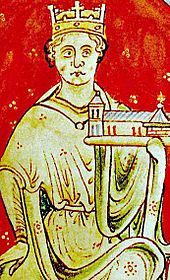
King John

Although Nicholaa de la Haye and Matilda de Braose were the major influences behind my book, Ladies of Magna Carta, they were not the only women to make an impression on the Magna Carta story. The deeper I dug, the more stories I uncovered that deserved to be told. Matilda’s own daughter, Loretta de Braose, was one such. Recently widowed following the death of her husband, Robert de Breteuil, Earl of Leicester, Loretta had been forced by John to relinquish her dower rights; Magna Carta clauses 7 and 8 of Magna Carta, protecting widows’ rights:

Clause 7:

After her husband’s death, a widow shall have her marriage portion and her inheritance at once and without any hindrance; nor shall she pay anything for her dower, her marriage portion, or her inheritance which she and her husband held on the day of her husband’s death; and she may stay in her husband’s house for 40 days after his death, within which period her dower shall be assigned to her.

Clause 8:

No widow shall be compelled to marry so long as she wishes to live without a husband, provided that she gives security that she will not marry without our consent if she holds of us, or without the consent of the lord of whom she holds, if she holds of another.

Furthermore, there are two women who can be clearly identified in Magna Carta itself, though they are not named, they are two Scottish princesses. The sisters of King Alexander II had been held hostage in England since 1209, when John forced the humiliating Treaty of Norham on their ailing father, King William the Lion. Clause 59 promised:

‘We will treat Alexander, king of Scots, concerning the return of his sisters and hostages and his liberties and rights in the same manner in which we will act towards our other barons of England, unless it ought to be otherwise because of the charters which we have from William his father, formerly king of Scots; and this shall be determined by the judgement of his peers in our court.

Women not only influenced the clauses of Magna Carta, however, they also used Magna Carta to assert and protect their own rights. Women such as Ela of Salisbury, who used the promises of Magna Carta to avoid an unwelcome marriage proposal when her husband, William Longspée was missing and feared dead. Or Isabel d’Aubigny, Countess of Arundel, who proclaimed ‘Where are the liberties of England, so often recorded, so often granted and so often ransomed’, when King Henry III foolishly attempted to steal land that was rightfully hers. She must have been a fearsome opponent, as Henry responded to one of her petitions, saying that he would grant her leniency ‘so long as she says nothing opprobrious to us as she did when we were at Westminster!’

Eleanor de Montfort

And then there were the women for whom Magna Carta offered no protection or respite. Women such as Eleanor of Brittany, for whom even clause 39 could be of no help. Their royal blood and ability to be a focus for opposition to the crown meant that successive kings would keep them imprisoned, either in castles, as with Eleanor, or in a rural convent, as with Gwenllian of Wales, orphan daughter of Llywelyn, Prince of Wales and his wife, Eleanor de Montfort, who was herself a granddaughter of King John.

It was Eleanor’s mother, also Eleanor, the youngest daughter of King John and not a year old at her father’s death, who, as the wife of Simon de Montfort, Earl of Leicester, would continue the struggle to curb the powers of the crown in the Second Barons’ War. She herself was defending Dover Castle when her husband was killed at the Battle of Evesham. She spent her final years in French exile. Her struggles to obtain her dower lands from the powerful Marshal family, guaranteed in Magna Carta, were a major component of Eleanor’s own dissatisfaction with her brother, Henry III.

It is through the stories of these remarkable women and the relationships of the various noble families of the 13th century, that I wanted to examine how they were affected by the First Barons’ Wars, Magna Carta and its aftermath. It is a study of the bonds that were formed and those that were broken among the women of the great families of 13th century England, including the royal families of England and Scotland, the Marshals, the Bigods, the Salisburys, Braoses and Warennes.

Their stories are inspirational, if heartbreaking at times.

Images:

Courtesy of Wikipedia except Nicholaa de la Haye which is ©2023 Sharon Bennett Connolly FRHistS

Sources:

Richard of Devizes, The Chronicle of Richard of Devizes; Roger of Howden (Hoveden), The Annals of Roger of HowdenThe Plantagenet Chronicles edited by Elizabeth Hallam; Brassey’s Battles by John Laffin; 1215 The Year of Magna Carta by Danny Danziger & John Gillingham; The Life and times of King John by Maurice Ashley; The Plantagenets, the Kings Who Made England by Dan Jones; England Under the Norman and Angevin Kings  by Robert Bartlett; lincolnshirelife.co.uk; catherinehanley.co.uk; magnacarta800th.com; lothene.org; lincolncastle.com; The Sheriff: The Man and His Office by Irene Gladwin; Louise Wilkinson, Women in Thirteenth Century Lincolnshire; Richard Huscraft, Tales from the Long Twelfth Century; J.W.F. Hill, Medieval Lincoln; swaton.org.uk; oxforddnb.com; Stephen Church, King John: England, Magna Carta and the Making of a Tyrant; Marc Morris, King John; Pipe Rolls; Red Book of the Exchequer

My Books

Signed, dedicated copies of all my books are available through my online store.

Out nowKing John’s Right-Hand Lady: The Story of Nicholaa de la Haye

In a time when men fought and women stayed home, Nicholaa de la Haye held Lincoln Castle against all-comers, gaining prominence in the First Baron’s War, the civil war that followed the sealing of Magna Carta in 1215. A truly remarkable lady, Nicholaa was the first woman to be appointed sheriff in her own right. Her strength and tenacity saved England at one of the lowest points in its history. Nicholaa de la Haye is one woman in English history whose story needs to be told…

King John’s Right-Hand Lady: The Story of Nicholaa de la Haye is now available from Pen & Sword Booksbookshop.org and Amazon.

Coming 15 January 2024: Women of the Anarchy

On the one side is Empress Matilda, or Maud. The sole surviving legitimate child of Henry I, she is fighting for her birthright and that of her children. On the other side is her cousin, Queen Matilda, supporting her husband, King Stephen, and fighting to see her own son inherit the English crown. Both women are granddaughters of St Margaret, Queen of Scotland and descendants of Alfred the Great of Wessex. Women of the Anarchy demonstrates how these women, unable to wield a sword, were prime movers in this time of conflict and lawlessness. It show how their strengths, weaknesses, and personal ambitions swung the fortunes of war one way – and then the other.

Available for pre-order from Amberley Publishing and Amazon UK.

Also by Sharon Bennett Connolly:

Defenders of the Norman Crown: The Rise and Fall of the Warenne Earls of Surrey tells the fascinating story of the Warenne dynasty, of the successes and failures of one of the most powerful families in England, from its origins in Normandy, through the Conquest, Magna Carta, the wars and marriages that led to its ultimate demise in the reign of Edward III. Defenders of the Norman Crown: Rise and Fall of the Warenne Earls of Surrey is now available from Pen & Sword BooksAmazon in the UK and US, and  Bookshop.org.

Ladies of Magna Carta: Women of Influence in Thirteenth Century England looks into the relationships of the various noble families of the 13th century, and how they were affected by the Barons’ Wars, Magna Carta and its aftermath; the bonds that were formed and those that were broken. It is now available in paperback and hardback from Pen & Sword,  Amazon, and Bookshop.org.

Heroines of the Medieval World tells the stories of some of the most remarkable women from Medieval history, from Eleanor of Aquitaine to Julian of Norwich. Available now from Amberley Publishing and Amazon, and Bookshop.org.

Silk and the Sword: The Women of the Norman Conquest traces the fortunes of the women who had a significant role to play in the momentous events of 1066. Available now from Amazon,  Amberley Publishing, and Bookshop.org.

Alternate Endings: An anthology of historical fiction short stories including Long Live the King… which is my take what might have happened had King John not died in October 1216. Available in paperback and kindle from Amazon.

Podcast:

Have a listen to the A Slice of Medieval podcast, which I co-host with Historical fiction novelist Derek Birks. Derek and I welcome guests, such as Bernard Cornwell, and discuss a wide range of topics in medieval history, from significant events to the personalities involved.

*

Signed and dedicated copies of all my books are available through my online store.

For forthcoming online and in-person talks, please check out my Events Page.

You can be the first to read new articles by clicking the ‘Follow’ button, liking our Facebook page or joining me on Twitter and Instagram.

©2023 Sharon Bennett Connolly FRHistS

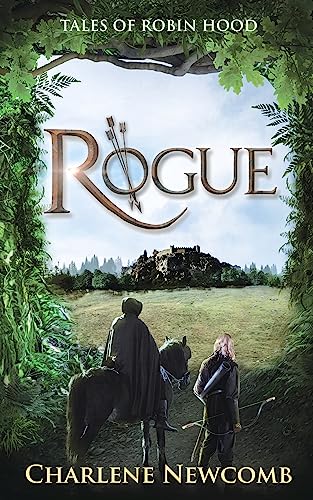
Book Corner: Rogue by Charlene Newcomb

A knight sworn to keep a family secret.
A king who seeks revenge.
A daring plan to save one life…or condemn many.


England 1216AD. Sir Robert Fitzwilliam faithfully serves the English crown, but when the outlaw Allan a Dale, a childhood friend, is captured and thrown in the sheriff’s dungeons beneath Nottingham Castle, trouble is certain to follow.

Allan’s days are numbered. Nothing would please King John more than to see an old nemesis hanged. Nothing except watching Robert’s estranged father, Robin, dangling dead from a rope beside him.

When his father joins forces with the Hood gang to rescue Allan, enlisting the aid of friends and even the girl he loves, Robert must decide where his loyalties lie.

TALES OF ROBIN HOOD

Before there was Robin Hood, there was Allan of the Hood. You know their story – in Sherwood Forest, they rob from the rich and give to the poor. Rogue is a retelling of the origins of the Robin Hood legend set during a time of rebellion and invasion near the end of King John’s reign. It’s a thrilling adventure of loyalty, love, sacrifice, spies, and intrigue.

Anyone who follows me on Twitter or Facebook will know that I have a soft spot for Sherwood Forest and for the legend of Robin Hood. I live just down the road from the Forest and grew up visiting regularly. This year, I have even given two talks there, about Nicholaa de la Haye, who was a friend – or associate – of Philip Marc – the dastardly sheriff of Nottingham of Robin Hood legend. So when I hear of a new Robin Hood novel, I have to have it.

I was not going to pass up the chance of reading Rogue by Charlene Newcomb.

And I was not disappointed. Rogue offers a new take on the Robin Hood legend, with the main protagonist being Robin’s son, Robert, rather than Robin himself. Although it is a standalone novel, many of the characters from Charlene Newcomb’s previous Battle Scars series put in an appearance – it’s a, sort of, spin-off. Set in 1216, in the midst of the First Barons’ War, Rogue follows the adventures and dilemmas of Robert Fitz William, son of Sir Robin of Louviers – Robin Hood – who finds himself as a knight in the household of the Sheriff of Nottingham, and working to support the rule of King John, while his friends are the king’s sworn enemies.

Allan struck the thick mail on Marc’s arm. “Get off that arse and fight fair,”he shouted.

Robert was almost on him. “Hood, stop!”

If Allan heard Robert, he ignored him.

A heartbeat later, Robert reined in hard, severing Allan’s path to the sheriff. Robert didn’t remember grabbing his mace, but the wooden shaft was in his hand, his arm outstretched, the weapon’s spiked head sweeping toward Allan.

Robert aimed for his shoulder.

The sheriff—and King John—wanted Allan alive. Thank God for that. Outlaw or not, Robert could never kill him.

Allan blocked the blow, but the chain locked with Robert’s sword and sent their weapons into the air. Twisting round, Allan stepped on a downed tree and took a flying leap. He slammed into Robert, knocking them both to the ground.

Robert groaned, winded and shaken. Allan sprang to his feet, unfazed by the fall. He circled, but his sword was out of reach. As Robert stood, Allan lunged at Marc again, grabbing his saddle bow. Marc cursed, striking Allan’s head with his gauntlet. He drew his horse’s reins down hard. The animal jinked backwards, dragging Allan with him. Holding tight to the pommel, Allan kept his footing, but a branch cracked beneath his boot. He pitched wildly like a man swinging on a rope.

Clenching his teeth, Robert bulled toward Allan. He seized Allan’s arm and flung him across the road.

Allan collided with the ground, face first. Leaves and dirt flew into the air. Lurching sideways, Allan rolled and caught himself with his hands. He tried to scramble away, but Robert loomed large behind him. Allan’s knees collapsed beneath him, and Robert grabbed him. He whipped Allan to his back.

Robert slammed his fist into Allan’s jaw. Once. “Sorry.”Twice. “You shoulda’run.”

Withdrawing his sword, Robert drove the tip toward Allan’s face.

Allan blinked. “Robin?”

I have to admit, I found Rogue rather refreshing. It is a new take on the Robin Hood legend with the son of Robin taking centre stage and faced with a dilemma – how to serve the wicked King John as a man in the house hold of the sheriff of Nottingham, whilst still aiding his friends in the rescue of Allan a Dale, who has been captured by the sheriffs men and now languished in the dungeons of Nottingham Castle. There is as much action, intrigue and danger as any reader would expect from a Robin Hood story, and not everything goes as planned.

Charlene Newcomb has slipped Robin Hood into the story at a time of national crisis. Magna Carta was issued in 1215 – and revoked. England is in the midst of civil war – the Barons’ War – and the south is occupied by an invading French force under Prince Louis – invited by the revels to take the crown. King John’s situation is dire and the castle at Nottingham is trying to hold firm for the king.

Of course, nothing is ever straight forward! Robert is a complex character with father issues and deep feelings of abandonment from a childhood where Robin was off fighting for King Richard, unaware that he had a son at all. These feelings cause conflict within Robert as he tries to assimilate the absent father that Robin was to him with the noble hero Robin is to people Robert trusts and admires. Though he is not a child – far from it – Robert has to confronted the conflicting images he has of his father, if he is to survive. The contrasting scenes of father and son trying to get to know each other, to understand the other’s motives and find away to work together gives a depth to the story beyond the traditional adventure.

Rogue by Charlene Newcomb is a fabulous read. It is entertaining from start to finish. Replete with action, it will have the reader on the edge of their seat. And Nicholaa de la Haye gets a mention! As Rogue is set in 1216, we know Nicholaa is just a few miles away, defending Lincoln Castle. I can only hope she appears in her full glory in the sequel. (Hint, hint, Char!).

If you are looking for a good, adventurous read with action on every page, Rogue by Charlene Newcomb is perfect!

To Buy the Book:

Rogue is now available on Amazon in the UK and US

About the Author:

Charlene Newcomb, aka Char, writes historical fiction and science fiction. Her award-winning Battle Scars trilogy is set in the 12th century during the reign of Richard the Lionheart. Her writing roots are in the Star Wars Expanded Universe (aka Legends) where she published 10 short stories in the Star Wars Adventure Journal. She published the scifi/space opera Echoes of the Storm in 2020, and returns to medieval times with her latest novel Rogue in 2023.

Librarian (retired).

U.S. Navy veteran.

Mom to 3, grandma to 3.

*

My Books

Signed, dedicated copies of all my books are available through my online store.

Out nowKing John’s Right-Hand Lady: The Story of Nicholaa de la Haye

In a time when men fought and women stayed home, Nicholaa de la Haye held Lincoln Castle against all-comers, gaining prominence in the First Baron’s War, the civil war that followed the sealing of Magna Carta in 1215. A truly remarkable lady, Nicholaa was the first woman to be appointed sheriff in her own right. Her strength and tenacity saved England at one of the lowest points in its history. Nicholaa de la Haye is one woman in English history whose story needs to be told…

King John’s Right-Hand Lady: The Story of Nicholaa de la Haye is now available from Pen & Sword Booksbookshop.org and Amazon.

Coming 15 January 2024: Women of the Anarchy

On the one side is Empress Matilda, or Maud. The sole surviving legitimate child of Henry I, she is fighting for her birthright and that of her children. On the other side is her cousin, Queen Matilda, supporting her husband, King Stephen, and fighting to see her own son inherit the English crown. Both women are granddaughters of St Margaret, Queen of Scotland and descendants of Alfred the Great of Wessex. Women of the Anarchy demonstrates how these women, unable to wield a sword, were prime movers in this time of conflict and lawlessness. It show how their strengths, weaknesses, and personal ambitions swung the fortunes of war one way – and then the other.

Available for pre-order from Amberley Publishing and Amazon UK.

Also by Sharon Bennett Connolly:

Defenders of the Norman Crown: The Rise and Fall of the Warenne Earls of Surrey tells the fascinating story of the Warenne dynasty, of the successes and failures of one of the most powerful families in England, from its origins in Normandy, through the Conquest, Magna Carta, the wars and marriages that led to its ultimate demise in the reign of Edward III. Defenders of the Norman Crown: Rise and Fall of the Warenne Earls of Surrey is now available from Pen & Sword BooksAmazon in the UK and US, and  Bookshop.org.

Ladies of Magna Carta: Women of Influence in Thirteenth Century England looks into the relationships of the various noble families of the 13th century, and how they were affected by the Barons’ Wars, Magna Carta and its aftermath; the bonds that were formed and those that were broken. It is now available in paperback and hardback from Pen & Sword,  Amazon, and Bookshop.org.

Heroines of the Medieval World tells the stories of some of the most remarkable women from Medieval history, from Eleanor of Aquitaine to Julian of Norwich. Available now from Amberley Publishing and Amazon, and Bookshop.org.

Silk and the Sword: The Women of the Norman Conquest traces the fortunes of the women who had a significant role to play in the momentous events of 1066. Available now from Amazon,  Amberley Publishing, and Bookshop.org.

Alternate Endings: An anthology of historical fiction short stories including Long Live the King… which is my take what might have happened had King John not died in October 1216. Available in paperback and kindle from Amazon.

Podcast:

Have a listen to the A Slice of Medieval podcast, which I co-host with Historical fiction novelist Derek Birks. Derek and I welcome guests, such as Bernard Cornwell, and discuss a wide range of topics in medieval history, from significant events to the personalities involved.

*

Don’t forget! Signed and dedicated copies of all my books are available through my online store.

For forthcoming online and in-person talks, please check out my Events Page.

You can be the first to read new articles by clicking the ‘Follow’ button, liking our Facebook page or joining me on Twitter and Instagram.

©2023 Sharon Bennett Connolly FRHistS