New Week!

Hi all, I have a few snippets of news to share, so thought I would write a short post to make sure you are all caught up.

Book News:
Books by Sharon Bennett Connolly

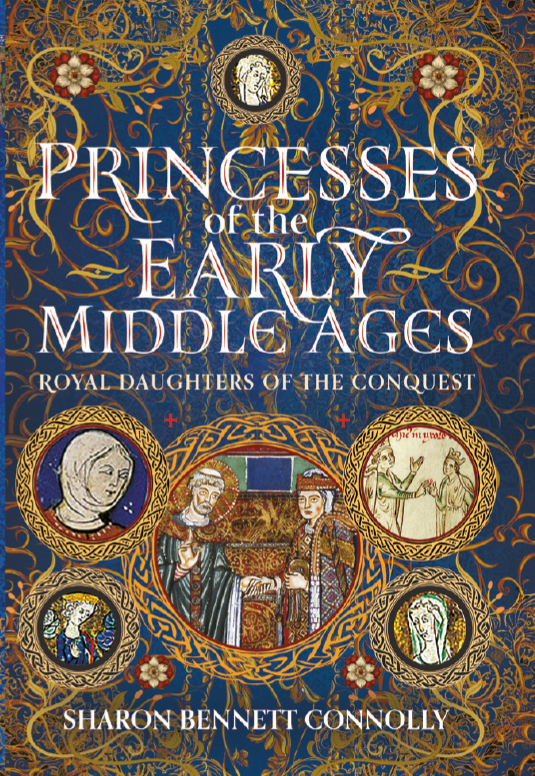
Firstly, as you know, my next book, Princesses of the Early Middle Ages: Royal Daughters of the Conquest is going through the editing process and already has a gorgeous cover. I now have a release date – 30 March 2026 in the UK. I am still waiting for a date for the US release, but it is usually2 or 3 months after the UK. And it is now available for pre-order on Amazon. Here’s the blurb:

Daughters of kings were often used to seal treaty alliances and forge peace with England’s enemies. Princesses of the Early Middle Ages: Royal Daughters from the Conquest will explore the lives of these young women, how they followed the stereotype, and how they sometimes managed to escape it. It will look at the world they lived in, and how their lives and marriages were affected by political necessity and the events of the time. Almost as interesting as the marriages these girls made are the ones that were never realised. Many English princesses were betrothed, or proposed as brides, three or more times before they were married. Their failed marriage proposals demonstrated their influence and worth on the international royal marriage market, as well as the changing allegiances between countries and the making and breaking of international friendships. Princesses of the Early Middle Ages will also examine how these girls, who were often political pawns, were able to control their own lives and fates. Whilst they were expected to obey their parents in their marriage choices, several princesses were able to exert their own influence on these choices, with someAboutme: outright refusing the husbands offered to them. Their stories are touching, inspiring and, at times, heartbreaking.

Pre-order today: Princesses of the Early Middle Ages: Royal Daughters of the Conquest.

I am still working on the second book Princesses of the Later Middle Ages: Royal Daughters of the Plantagenets, which will be winging its way to my editor by the end of August.

Talks news:

I have some talks coming up over the summer and I would love to see you there and say ‘hello’ if you are in the area.

Conisbrough Castle
Books by Sharon Bennett Connolly

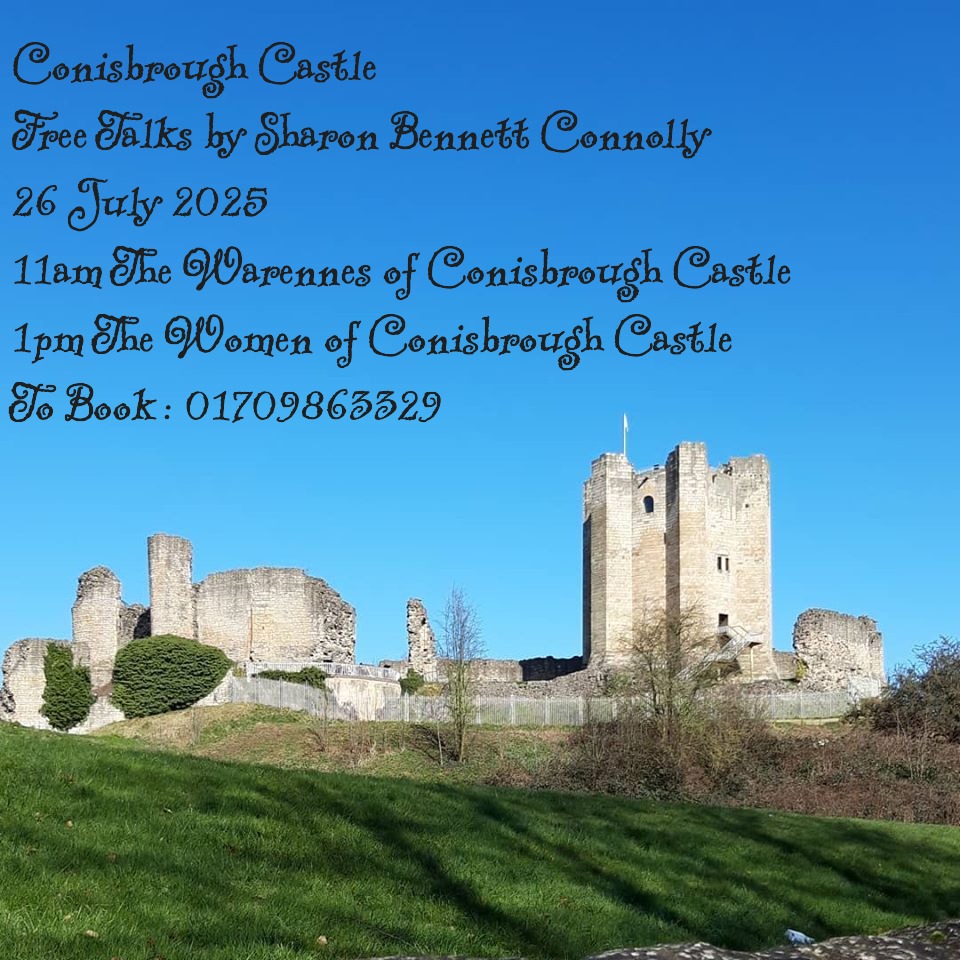
Saturday 26 July 2025 and Saturday 23 August 2025, I will be back at ‘my local’ with two talks and a book signing.

The talks are:

11am The Warennes of Conisbrough Castle

The subject of my book, Defenders of the Norman Crown: Rise and Fall of the Warenne Earls of Surrey, the Warennes held the Honour and castle of Conisbrough from the time of the Norman Conquest of 1066 until the death of the 7th and last earl in 1347. A noble family at the heart of English government, the Warennes were closely related to the Plantagenet royal house and played leading roles in the government of the realm. They held lands stretching from Lewes in the south, through Castle Acre in Norfolk, to Sandal Castle in Wakefield.

1pm The Women of Conisbrough Castle

From Gundrada de Warenne to Maud Clifford, widow of Richard of Conisbrough, some remarkable women have called Consibrough Castle home. From heiresses to abandoned wives and duchesses accused of infidelity, their stories unfolded within the castle’s stout walls.

Tickets are free, but places are limited.

To reserve your place contact Conisbrough Castle:

Tel: 01709 863329

Email: conisbroughcastle@english-heritage.org.uk

Worcester Medieval Fest
Books by Sharon Bennett Connolly

Worcester Cathedral have put on a wonderful series of events in August to celebrate all-things medieval with a particular focus on King John. From Disney’s Robin Hood, to little old me. With a medieval market, crafts and talks, there’s something for everyone.

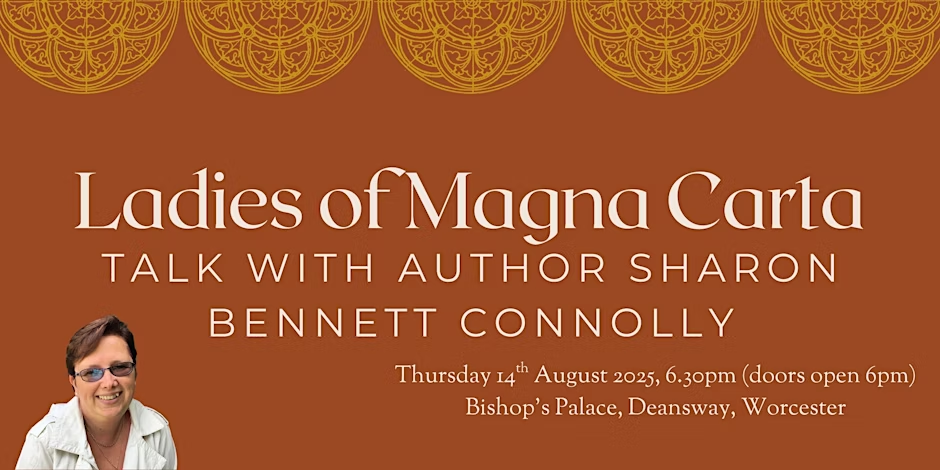
Thursday, August 14 · 6:30 – 8pm Ladies of Magna Carta

Tickets are £10 each.

Learn about the lives of the women of Magna Carta, including , Matilda de Braose, Nicholaa de la Haye and Isabel d’Aubigny.

Women from many of the great families of England were affected by the far-reaching legacy of Magna Carta, from their experiences in the civil war and as hostages, to calling on its use to protect their property and rights as widows. Among them, Matilda de Braose, Nicholaa de la Haye and Isabel d’Aubigny each played a part in the Magna Carta story.

Click here To Book your place.

Gainsborough Old Hall
Books by Sharon Bennett Connolly

Save the date: Tuesday 7 September 2025, 7.30pm

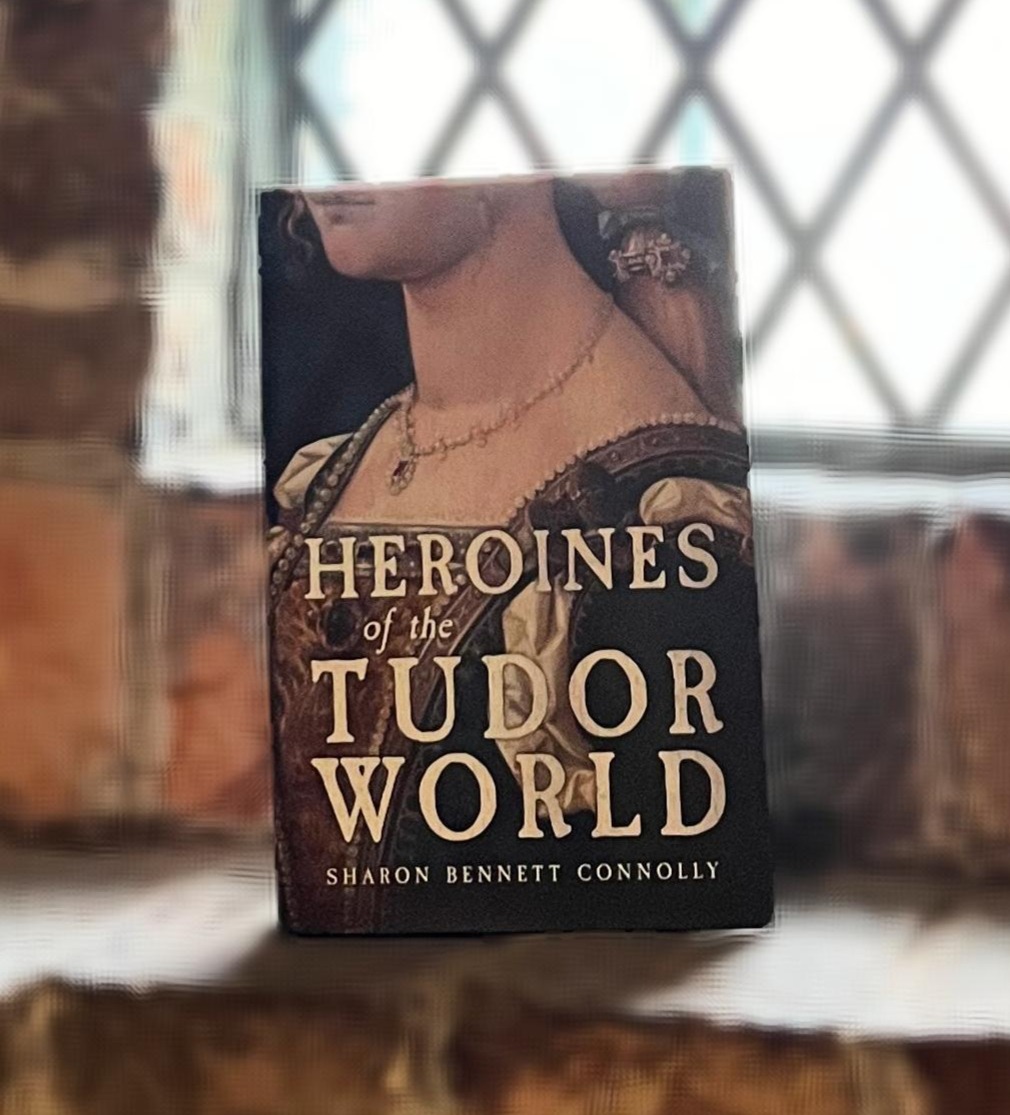
Heroines of Tudor Lincolnshire

I am so excited to be talking about some of my favourite Tudor women in one of the greatest Tudor manor houses in England – Gainsborough Old Hall – a building which some of the women called home. Highlighting the lives of Bessie Blount, Anne Askew, Katherine Willoughby, Katherine Parr and Rose Hickman.

More details to come…

Podcast:

A Slice of Medieval

If you haven’t yet, do have a listen to the A Slice of Medieval podcast, which I co-host with Historical fiction novelist Derek Birks. Derek and I welcome guests, such as Bernard Cornwell and discuss a wide range of topics in medieval history, from significant events to the personalities involved. Our most recent episode was a fascinating discussion with historian Helen Castor on Henry IV. And coming soon, we have bestselling thriller writer Scott Mariani talking about his new series set in the Third Crusade.

Every episode is also now available on YouTube.

*

About me:

Books by Sharon Bennett Connolly

Sharon Bennett Connolly is the bestselling author of several non-fiction history books. A Fellow of the Royal Historical Society, Sharon has studied history academically and just for fun – and has even worked as a tour guide at a castle. She also writes the popular history blog, http://www.historytheinterestingbits.com and co-hosts the podcast A Slice of Medieval, alongside historical novelist Derek Birks. Sharon regularly gives talks on women’s history, for historical groups, festivals and in schools; her book Silk and the Sword: The Women of the Norman Conquest is a recommended text for teaching the Norman Conquest in the National Curriculum. She is a feature writer for All About History, Tudor Places and Living Medieval magazines and her TV work includes Australian Television’s Who Do You Think You Are?

Books by Sharon Bennett Connolly

Her previous books includeHeroines of the Medieval World, Silk and the Sword: The Women of the Norman Conquest, Ladies of Magna Carta: Women of Influence in Thirteenth-Century England, Defenders of the Norman Crown: Rise and Fall of the Warenne Earls of Surrey, King John’s Right-Hand Lady: The Story of Nicholaa de la Haye, Women of the Anarchy, Heroines of the Tudor World and Scotland’s Medieval Queens: From St Margaret to Margaret of Denmark.

©2025 Sharon Bennett Connolly, FRHistS.
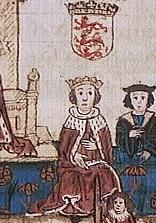
Eleanor de Montfort, the First Princess of Wales

Eleanor_de_Montford
Eleanor de Montfort

Born in 1258, probably at Kenilworth Castle, Eleanor de Montfort was the only daughter and sixth child of Eleanor of England. Her mother was the fifth and youngest child of King John and Isabella of Angouleme, and sister of Henry III. Her father was Simon de Montfort, Earl of Leicester, leader of the rebels in the Second Barons’ War.

Eleanor had 5 older brothers; Henry, Simon, Amaury, Guy and Richard.

Her father, Simon de Montfort, is remembered as one of the founders of representative government. He was a leading figure of the Second Barons’ War. He and his eldest son, Henry, were killed at the Battle of Evesham on 4th August 1265. On her father’s death, Eleanor fled to exile in France with her mother and brother, Amuary. The women settled at the Abbey at Montargis until Eleanor of England’s death there in 1275.

llywel2
Llewelyn ap Gruffydd, Prince of Wales

In 1265, in return for Welsh support, Simon de Montfort had agreed to the marriage of his daughter, Eleanor, to Llewelyn ap Gruffydd, Prince of Wales. De Montfort’s downfall had postponed the marriage, but in 1275, in a move guaranteed to rile Edward I, King of England, Llewelyn reprised his marriage plans and the couple were married by proxy whilst Eleanor was still in France.

Shortly afterwards, Eleanor set sail for Wales, accompanied by her brother, Amaury, who was now a Papal Chaplain and Canon of York. Believing the marriage would ‘scatter the seeds which had grown from the malice her father had sown’, Edward arranged for Eleanor to be captured at sea. When Eleanor’s ship was taken in the Bristol Channel, the de Montfort arms and banner were found beneath the ship’s boards.

Eleanor was taken to close, but comfortable, captivity at Windsor; whilst her brother Amaury was imprisoned at Corfe Castle for 6 years.

In 1276 Llewelyn having refused to pay homage to Edward I, he was declared a rebel. Faced with Edward’s overwhelming forces, and support slipping away, Llewelyn was forced to submit within a year. The Treaty of Aberconwy reduced his lands to Gwynedd, but paved the way for his marriage to Eleanor, at last; it’s possible that the marriage was one of the conditions of Llewelyn’s submission.

edward03
Edward I, with Alexander III, King of Scots on his right, and Llewelyn, Prince of Wales on his left

The wedding celebrations of Eleanor de Montfort and Llewelyn ap Gruffydd were an extravagant affair, celebrated at Worcester Cathedral on the Feast of St Edward, 13th October 1278. The illustrious guest list included Edward I and Alexander III, King of Scots. Edward and his brother, Edmund of Lancaster gave Eleanor away at the church door, and Edward paid for the lavish wedding feast.

While the marriage did not prevent further struggles between the Welsh and the English king, there was relative peace for a short time and Eleanor may have encouraged her husband to seek political solutions. She is known to have visited the English court when Princess of Wales; and was at Windsor on such a visit in January 1281. Eleanor herself wrote to Edward on 8 July 1279, not only to assure him of her ‘sincere affection’ and loyalty, but also to warn him against listening to reports unfavourable to Wales from his advisers:

Although as we have heard, the contrary hereto hath been reported of us to your excellency by some; and we believe, notwithstanding, that you in no wise give credit to any who report unfavourably concerning our lord and ourself until you learn from ourselves if such speeches contain truth: because you showed, of your grace, so much honour and so much friendliness to our lord and yourself, when you were at the last time at Worcester.

Anne Crawford, Letters of Medieval Women

As a testament to her diplomatic skills, Eleanor uses words of affection and flattery whilst clearly getting her point across, a technique her predecessor Joan, Lady of Wales, had used to good effect with Henry III. As it had been with Joan, Eleanor, too, was not beyond humbling herself to King Edward in order to achieve her objectives and wrote to him again in October 1280, this time regarding her brother, Amaury, who was still in the king’s custody. She wrote to the king,

with clasped hands, and with bended knees and tearful groanings, we supplicate your highness that, reverencing from your inmost soul the Divine mercy (which holds out the hand of pity to all, especially those who seek Him with their whole heart), you would deign mercifully to take again to your grace and favour our aforesaid brother and your kinsman, who humbly craves, as we understand, your kindness. For if your excellency, as we have often known, mercifully condescends to strangers, with much reason, as we think, ought you to hold out the hand of pity to one so near to you by the ties of nature.

Anne Crawford, Letters of Medieval Women

Amaury was released shortly afterwards.

However, on 22nd March, 1282, Llewelyn’s younger brother, Dafydd, attacked the Clifford stronghold of Hawarden Castle and Llewelyn found himself in rebellion against Edward I yet again. At the same time, Eleanor was in the final few months of her pregnancy and Llewelyn held off taking the field until the birth of his much hoped for heir.

Eleanor and Llewelyn’s only child, a daughter, Gwenllian, was born on 19th June 1282; Eleanor died the same day.

250px-Gwenllian_memorial_Sempringham
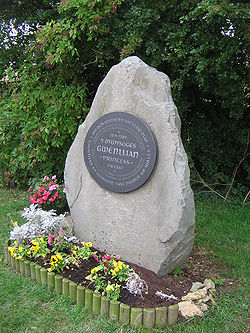
Memorial stone for Princess Gwenllian, Sempringham

Llewelyn himself was killed in an ambush on 11 December of the same year, at Builth, earning himself the name of Llewelyn the Last – the last native Prince of Wales.

Their daughter, Gwenllian was given into the guardianship of her uncle, Dafydd ap Gruffydd, but was taken into Edward I’s custody when David was defeated and captured by the English. She was sent to be raised at the Gilbertine convent at Sempringham, where she eventually became a nun. She died there on 7th June 1337, the last of her father’s line. It is said that she was never allowed to speak, hear or learn her native language. It has been assumed that she was not aware of her heritage, although she was once visited by her cousin, Edward III, who paid £20 annually for her food and clothing. However, as David Pilling has pointed out, she does in fact call herself ‘Princess of Wales, daughter of Llywelyn ap Gruffudd’ in a petition inside the volume of petitions from Wales edited by William Rees.

Eleanor de Montfort was the first woman known to have used the title Princess of Wales. She was buried alongside her aunt Joan, illegitimate daughter of King John and wife of Llewelyn the Great, at Llanfaes on the Isle of Anglesey.

*

Sources: castlewales.com; snowdoniaheritage.info; Marc Morris A Great and Terrible King; David Williamson Brewer’s British royalty; Mike Ashley The Mammoth Book of British kings & Queens; Alison Weir Britain’s Royal Families; Roy Strong The Story of Britain; Dan Jones The Plantagenets; the Kings who Made England; Chronicles of the Age of Chivalry Edited by Elizabeth Hallam; The Oxford Companion to British History; The History Today Companion to British History; Derek Wilson The Plantagenets; Anne Crawford, Letters of Medieval Women; author David Pilling.

Pictures taken from Wikipedia, except that of Edward I, Alexander III and Llewelyn, which was taken from castlewales.com.

*

My Books:

Signed, dedicated copies of all my books are available through my online bookshop.

Out Now! Scotland’s Medieval Queens

Books by Sharon Bennett Connolly

Scotland’s history is dramatic, violent and bloody. Being England’s northern neighbour has never been easy. Scotland’s queens have had to deal with war, murder, imprisonment, political rivalries and open betrayal. They have loved and lost, raised kings and queens, ruled and died for Scotland. From St Margaret, who became one of the patron saints of Scotland, to Elizabeth de Burgh and the dramatic story of the Scottish Wars of Independence, to the love story and tragedy of Joan Beaufort, to Margaret of Denmark and the dawn of the Renaissance, Scotland’s Medieval Queens have seen it all. This is the story of Scotland through their eyes.

Scotland’s Medieval Queens gives a thorough grounding in the history of the women who ruled Scotland at the side of its kings, often in the shadows, but just as interesting in their lives beyond the spotlight. It’s not a subject that has been widely covered, and Sharon is a pioneer in bringing that information into accessible history.’ Elizabeth Chadwick (New York Times bestselling author)

Available now from Amazon and Pen and Sword Books

Also by Sharon Bennett Connolly:

Books by Sharon Bennett Connolly

Heroines of the Tudor World tells the stories of the most remarkable women from European history in the time of the Tudor dynasty, 1485-1603. These are the women who ruled, the women who founded dynasties, the women who fought for religious freedom, their families and love. Heroines of the Tudor World is now available for pre-order from Amberley Publishing and Amazon UK. Women of the Anarchy demonstrates how Empress Matilda and Matilda of Boulogne, unable to wield a sword themselves, were prime movers in this time of conflict and lawlessness. It shows how their strengths, weaknesses, and personal ambitions swung the fortunes of war one way – and then the other. Available from Bookshop.orgAmberley Publishing and Amazon UKKing John’s Right-Hand Lady: The Story of Nicholaa de la Haye is the story of a truly remarkable lady, the hereditary constable of Lincoln Castle and the first woman in England to be appointed sheriff in her own right. Available from all good bookshops Pen & Sword Booksbookshop.org and Amazon

Royal Historical Society

Defenders of the Norman Crown: The Rise and Fall of the Warenne Earls of Surrey tells the fascinating story of the Warenne dynasty, from its origins in Normandy, through the Conquest, Magna Carta, the wars and marriages that led to its ultimate demise in the reign of Edward III. Available from Pen & Sword BooksAmazon in the UK and US, and Bookshop.orgLadies of Magna Carta: Women of Influence in Thirteenth Century England looks into the relationships of the various noble families of the 13th century, and how they were affected by the Barons’ Wars, Magna Carta and its aftermath; the bonds that were formed and those that were broken. It is now available in paperback and hardback from Pen & SwordAmazon, and Bookshop.orgHeroines of the Medieval World tells the stories of some of the most remarkable women from Medieval history, from Eleanor of Aquitaine to Julian of Norwich. Available now from Amberley Publishing and Amazon, and Bookshop.orgSilk and the Sword: The Women of the Norman Conquest traces the fortunes of the women who had a significant role to play in the momentous events of 1066. Available now from Amazon,  Amberley Publishing, and Bookshop.org.

Alternate Endings: An anthology of historical fiction short stories including Long Live the King… which is my take what might have happened had King John not died in October 1216. Available in paperback and kindle from Amazon.

Podcast:

A Slice of Medieval

Have a listen to the A Slice of Medieval podcast, which I co-host with Historical fiction novelist Derek Birks. Derek and I welcome guests, such as Bernard Cornwell and Michael Jecks, and discuss a wide range of topics in medieval history, from significant events to the personalities involved. 

Every episode is also now available on YouTube.

*

Don’t forget! Signed and dedicated copies of all my books are available through my online store.

For forthcoming online and in-person talks, please check out my Events Page.

You can be the first to read new articles by clicking the ‘Follow’ button, liking our Facebook page or joining me on TwitterThreadsBluesky and Instagram.

*

©2015 Sharon Bennett Connolly FRHistS