The Coronation of King Stephen

King Stephen

In December 1135, leaving his wife and children in the relative safety of Boulogne, Stephen of Blois took what must have been the biggest gamble of his life. After landing in England, he made his way to the capital, where he was met ‘with acclamation’ as London, though ‘mourning the grievous loss of its protector Henry, it revelled in exultant joy as though it had recovered him in Stephen’. According to the Gesta Stephani, a counsel was summoned to choose Henry’s successor and ‘on their own initiative, they agreed unanimously to choose a king’. The Anglo-Saxon Chronicle concurs, stating that ‘Stephen of Blois had come to England, and came to London, and the London people received him and sent for the archbishop William Corbeil and consecrated him as king on midwinter’s day’.

Henry of Huntingdon was far more critical of the accession of Stephen than the Gesta Stephani, for, although Stephen was ‘a man of great valour and boldness’, as he had ‘sworn the English realm’s oath of fealty to the daughter of King Henry, he tried God’s patience by seizing the crown of the kingdom’. Huntingdon was highly disapproving of the ease with which the leaders of the English church broke their oaths to Matilda in order to crown Stephen:

‘Roger, the great Bishop of Salisbury, who had been the second to take the oath, and had urged everyone else to do so, brought the royal crown to Stephen, as well as the strength of his support. For this reason, by the just judgement of God, he was later arrested and tormented by the very man he had made king, and pitiful ruin became his lot. In short, all those who had sworn the oath – whether bishops, earls or magnates – gave their approval to Stephen and paid homage to him. It was a bad sign that all England was subjected to him so speedily, without hindrance or difficulty, as ‘in the twinkling of an eye’.

Henry of Huntingdon: The History of the English People 1000-1154

It is, of course, the Anglo-Saxon Chronicle that made the most famous assessment of the years following Stephen’s seizure of the throne:

‘Wherever men tilled, the earth bore no corn because the land was all done for by such doings; and they said openly that Christ and His saints slept. Such things, and more than we know how to tell, we suffered nineteen years for our sins.’

The destruction was perhaps not as widespread as has been thought previously, however, and there is currently a reappraisal of the devastation wrought during the Anarchy. Even so, the chronicles of the time show that it was horrendous for the people living through it. The Anglo-Saxon Chronicle goes into great detail, denouncing the period as ‘this evil time’ and lamenting,

‘They did not spare the land of bishops nor of abbots nor of priests, but robbed monks and clerks; and every man who was stronger [robbed] another. If two or three men came riding to a village, all the villagers fled because of them – imagined that they were robbers. The bishops and the clergy always cursed them but that was nothing to them, because they were all accursed and forsworn and lost.’
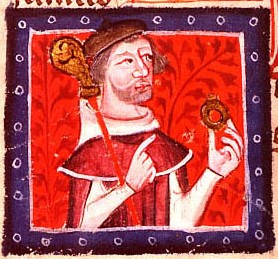
Henry of Blois, Bishop of Winchester

Such desolation was in the future. In December 1135, Stephen, with the backing of so many, may have thought the future was bright with possibilities. After receiving the support and acclamation of the Londoners, he hastened to Winchester to secure the royal treasury where he was reunited with his younger brother Henry, Bishop of Winchester, ‘on whom his enterprise entirely depended’. Bishop Henry, ‘overjoyed at his brother’s success, came to meet him with the Winchester citizens’. William de Pont de l’Arche, the royal treasurer, ‘on learning that the king had arrived, whether influenced by fear of him or affection for him, he came to meet him cordially, and delivered over to his disposal, together with the castle, King Henry’s very rich treasury, which the whole of England had abundantly filled from the time of the most ancient kings’.

It was the support of Pont de l’Arche that ensured Stephen’s success, along with the help of Roger, Bishop of Salisbury, Henry I’s Lord Chancellor and, after the king, the most powerful man in the kingdom. The role of Stephen’s brother, Bishop Henry of Winchester, was also seen as critical, especially by the Gesta Stephani. Stephen was then crowned at Westminster Abbey by Archbishop William Corbeil on 22 December 1135, according to the same rites used in the coronation of Henry I, providing a sense of continuity in the monarchy. Before the coronation, Stephen made promises to ensure that he would be accepted by the lay and clerical magnates alike. To the church, he agreed to follow what it defined as best practice in church–state relations, including the guarantee of canonical election to senior church offices. The compromises made to the lay barons were not as significant, but Stephen did make a limited concession on the extent of the royal forest (lands over which the king held exclusive hunting rights), and was reported to have promised wider reforms, including the abolition of geld.

The coronation was a religious ceremony, giving the king power and sacramental authority for the rest of his life. During the proceedings, Stephen promised to maintain ‘all the liberties and good laws of King Henry’. Following this, those present, standing for the community of the realm, accepted Stephen as their king. There then came the ceremonial anointing and investing with the symbols of royal power. He was then crowned by the Archbishop of Canterbury, followed by High mass and the kiss of peace. News of Stephen’s coronation spread throughout the kingdom and, according to the Gesta Stephani,

‘When at last these things were known and spread over England freely by word of mouth almost all the chief men of the kingdom accepted him gladly and respectfully, and having received very many gifts from him and likewise enlargement of their lands they devoted themselves wholly to his service by a voluntary oath, after paying homage.’

Gesta Stephani
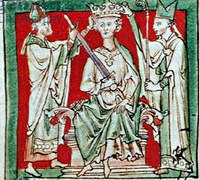
The coronation of King Stephen, as depicted by Matthew Paris, 13th century

After the coronation, the king had to get down to the actual business of ruling and establishing his authority over his dominions. The first document issued by the chancery was a charter in which Stephen granted ‘to all his barons and men of England’ all the liberties and good laws of his uncle, King Henry, along with ‘the laws of Edward the Confessor’. The Liber Eliensis at Ely recorded a version of Stephen’s accession in which he was supported by King Henry I. Though the provenance of the information within it has been lost, it seems entirely possible that it is copied from an official narrative sent out by Stephen’s administration:

‘While King Henry sickened unto death, a great number of powerful and noble men gathered about him, sorrowfully contemplating the last hours of their lord, and increasingly concerned about what dispositions he would make about himself and the kingdom. To them at the last he indicated what ought to happen. ‘To you,’ he said, ‘great and wise men, I give as king the worthy knight Stephen, my count, my most dear kinsman, a virtuous nobleman, yet firm in his faith in the Lord, for you to receive from me by right of inheritance, and you are all to be witness of this.’ Immediately thereafter the king breathed his last. The count took up his commission, and having gathered a large body of knights, he hastened to England and came before the Londoners. Since he was a renowned count and valiant knight, of proven integrity and greatly loved, and was descended from the stock of kings, and with the great men and the citizens won over by rewards and promises and the clergy fearing great disorder should he be turned away, he was received by the English as king of England. It greatly aided him in achieving this outcome that, just as the king his uncle had ordered, Hugh Bigod swore on the holy gospels before the clergy and people that he had been present at the king’s deathbed, and had heard him conceding the kingdom to Stephen his nephew, and had been sent by him to witness this within England.’

Liber Eliensis

Hugh Bigod’s claim that Henry had changed his mind at the last, and left the throne to Stephen, was enough to satisfy those who had sworn the oath to Matilda but were afraid of a future ruled by a woman. No one seems to have looked deeply into the suggestion that, after all Henry had done to secure his daughter’s accession, the wars he had fought and oaths he had extracted, he would just pass her – and his grandson, little Henry of Anjou – over at the last moment and leave everything to his favourite nephew. It seems more likely that it was not that Bigod’s statement was believed to be true but that it was hoped that it was – that was all the barons needed to turn their backs on their oaths to Matilda.

Henry II and his mother, Empress Matilda, from a 12th century manuscript

Stephen’s coronation was immediately followed by his Christmas court, which was held in London. One of his first acts in the New Year was to attend the funeral of his predecessor, Henry I, who was laid to rest at his own foundation of Reading Abbey on 5 January 1136. According to Henry of Huntingdon,

‘King Stephen came there from his court, which he had held in London at Christmas itself, to meet his uncle’s body, together with William, Archbishop of Canterbury, and many bishops and nobles, and they buried King Henry with the respect due to so great a man.’

It was the beginning of a period of great instability for England. Richard of Hexham gives a clear impression of the unrest and uncertainty that Stephen’s accession caused, and the challenges it presented:

‘The beginning and course of his reign was overwhelmed by so many and such violent commotions, that how to describe them, or how they may be concluded, no one yet knows.’

Stephen had stolen the march on his cousin, Empress Matilda, but she was not going to simply accept that he had won…

*

Sources:

Donald Matthew, King Stephen; Robert Bartlett, England Under the Norman and Angevin Kings; David Williamson, Brewer’s British Royalty; the History Today Companion to British History; Dan Jones, the Plantagenets; englishmonarchs.co.uk; The Oxford Companion to British History; Mike Ashley, The Mammoth Book of British Kings & Queens; Alison Weir, Britain’s Royal Families, the Complete Genealogy; S.P. Thompson, Oxforddnb.com, Mary [Mary of Blois], suo jure countess of Boulogne (d. 1182), princess and abbess of Romsey; Anglo_Saxon Chronicles, edited by Michael Swanton; Gesta Stephani; Liber Eliensis; Henry of Huntingdon: The History of the English People 1000-1154; William of Malmesbury, Chronicles of the Kings of England, From the Earliest Period to the Reign of King Stephen c. 1090-1143; The Ecclesiastical History of England and Normandy by Ordericus Vitalis.

Images:

Courtesy of Wikipedia

*

My Books

Signed, dedicated copies of all my books are available through my online bookshop.

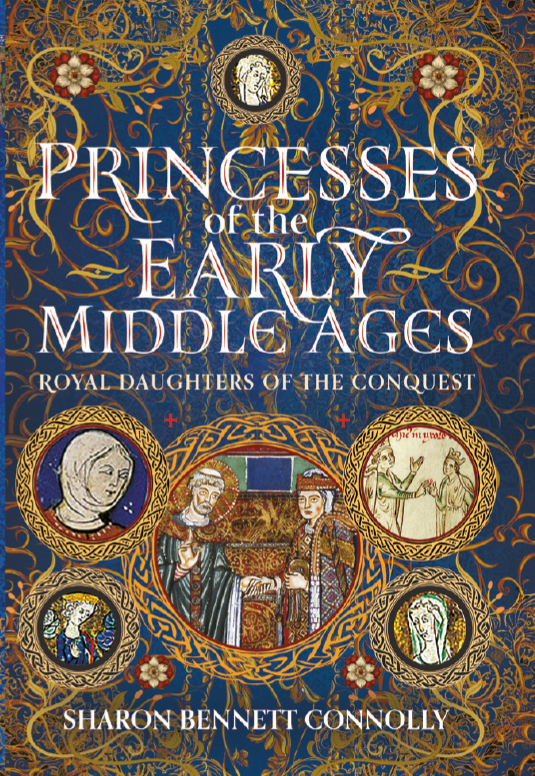
Out Now! Women of the Anarchy

On the one side is Empress Matilda, or Maud. The sole surviving legitimate child of Henry I, she is fighting for her birthright and that of her children. On the other side is her cousin, Queen Matilda, supporting her husband, King Stephen, and fighting to see her own son inherit the English crown. Both women are granddaughters of St Margaret, Queen of Scotland and descendants of Alfred the Great of Wessex. Women of the Anarchy demonstrates how these women, unable to wield a sword, were prime movers in this time of conflict and lawlessness. It show how their strengths, weaknesses, and personal ambitions swung the fortunes of war one way – and then the other.

Available from Amberley Publishing and Amazon UK.

Coming 30 January 2025: Scotland’s Medieval Queens

Scotland’s history is dramatic, violent and bloody. Being England’s northern neighbour has never been easy. Scotland’s queens have had to deal with war, murder, imprisonment, political rivalries and open betrayal. They have loved and lost, raised kings and queens, ruled and died for Scotland. From St Margaret, who became one of the patron saints of Scotland, to Elizabeth de Burgh and the dramatic story of the Scottish Wars of Independence, to the love story and tragedy of Joan Beaufort, to Margaret of Denmark and the dawn of the Renaissance, Scotland’s Medieval Queens have seen it all. This is the story of Scotland through their eyes.

Available for pre-order now.

Also by Sharon Bennett Connolly:

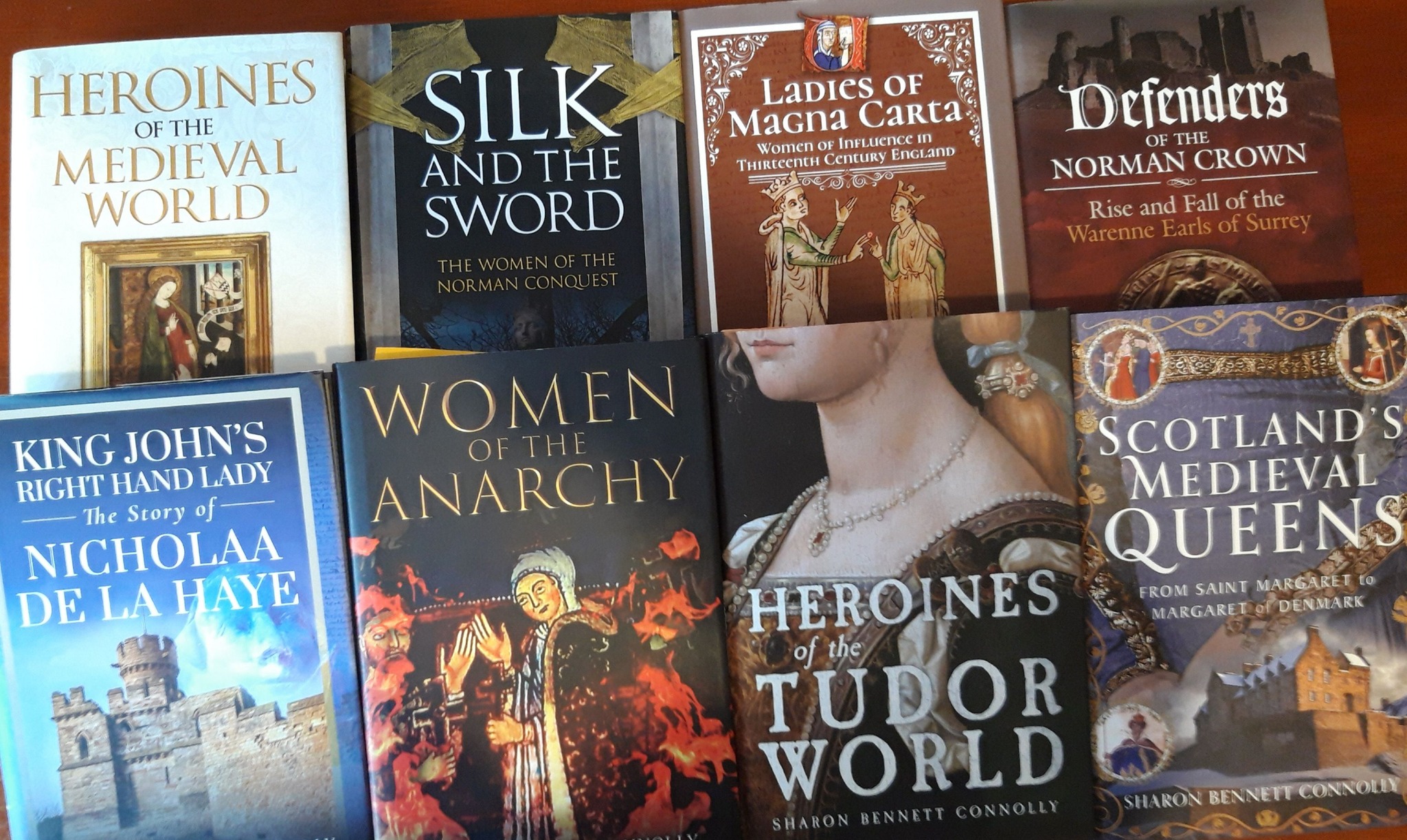
Heroines of the Tudor World tells the stories of the most remarkable women from European history in the time of the Tudor dynasty, 1485-1603. These are the women who ruled, the women who founded dynasties, the women who fought for religious freedom, their families and love. Heroines of the Tudor World is now available for pre-order from Amberley Publishing and Amazon UK.  King John’s Right-Hand Lady: The Story of Nicholaa de la Haye is the story of a truly remarkable lady, the hereditary constable of Lincoln Castle and the first woman in England to be appointed sheriff in her own right. Available from all good bookshops Pen & Sword Booksbookshop.org and Amazon

Defenders of the Norman Crown: The Rise and Fall of the Warenne Earls of Surrey tells the fascinating story of the Warenne dynasty, from its origins in Normandy, through the Conquest, Magna Carta, the wars and marriages that led to its ultimate demise in the reign of Edward III. Available from Pen & Sword BooksAmazon in the UK and US, and Bookshop.orgLadies of Magna Carta: Women of Influence in Thirteenth Century England looks into the relationships of the various noble families of the 13th century, and how they were affected by the Barons’ Wars, Magna Carta and its aftermath; the bonds that were formed and those that were broken. It is now available in paperback and hardback from Pen & SwordAmazon, and Bookshop.orgHeroines of the Medieval World tells the stories of some of the most remarkable women from Medieval history, from Eleanor of Aquitaine to Julian of Norwich. Available now from Amberley Publishing and Amazon, and Bookshop.orgSilk and the Sword: The Women of the Norman Conquest traces the fortunes of the women who had a significant role to play in the momentous events of 1066. Available now from Amazon,  Amberley Publishing, and Bookshop.org.

Alternate Endings: An anthology of historical fiction short stories including Long Live the King… which is my take what might have happened had King John not died in October 1216. Available in paperback and kindle from Amazon.

Podcast:

Have a listen to the A Slice of Medieval podcast, which I co-host with Historical fiction novelist Derek Birks. Derek and I welcome guests, such as Bernard Cornwell and Elizabeth Chadwick, and discuss a wide range of topics in medieval history, from significant events to the personalities involved. Episode 1 looked into the characters involved in The Anarchy.

*

Don’t forget! Signed and dedicated copies of all my books are available through my online bookshop.

For forthcoming online and in-person talks, please check out my Events Page.

You can be the first to read new articles by clicking the ‘Follow’ button, liking our Facebook page or joining me on TwitterThreadsBluesky and Instagram.

©2023 Sharon Bennett Connolly FRHistS
The Lost Prince – John of Eltham

220px-Eltham_Palace_-_geograph.org.uk_-_19354
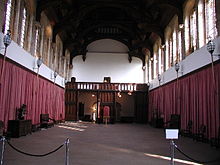
The Great Hall of Eltham Palace

John of Eltham was the second child and youngest son of Edward II of England and Isabella of France. He was born on 15th August 1316 at Eltham palace in Kent. Edward II had given Eltham to his queen, as a gift and she stayed there often.

John’s birth was a reassurance of the continuation of his father’s dynasty; his elder brother Edward of Windsor – the future Edward III – had been born in 1312. Although he had lost Scotland after the Battle of Bannockburn two years earlier, Edward’s throne was relatively secure when John was born. Edward II himself was not personally under pressure; as he had been when his eldest son was born.

The St Albans Chronicler reported how happy the king was, with the birth of his new son. Eubolo de Montibus was rewarded £100 for bringing the news of the birth to the king in York on 24th August. On the same day Edward II himself wrote to the Dominican friars, asking them to pray for the king, the queen, Edward of Windsor and John of Eltham, ‘especially on account of John’ who was not yet 10 days old.

Although miles away in York, Edward arranged for coverings of cloth-of-gold to be delivered for the font in Eltham’s chapel, to be used during John’s baptism. He also ordered a robe of white velvet to be made for Isabella’s churching ceremony.

Edward II also saw to the practicalities of his new son’s finances, ordering Edward of Windsor’s Justiciar in Chester, Sir Hugh Audley the Elder, to pay the rents, from the manor of Macclesfield, to the queen to cover John’s expenses. When a daughter, Eleanor of Woodstock, was  born in 1318, all three children were housed together at Wallingford Castle, near Oxford.

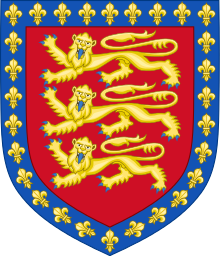
220px-Arms_of_John_of_Eltham,_Earl_of_Cornwall.svg
Coat of arms of John of Eltham, Earl of Cornwall

In 1320, however, their household was rearranged again and John and Eleanor went to live with their mother, Queen Isabella, while 8-year-old Edward joined the king’s household. At the age of 6, in August 1322, John was given the Lancastrian castle of Tutbury.

Edward and Isabella’s relationship seems to have been cordial, at least, until after the birth of their last daughter, Joan of the Tower, in 1321.

Edward’s defeat of his cousin, Thomas of Lancaster, and rebel barons at the Battle of Boroughbridge in 1322 seems to have precipitated the final breakdown of the marriage. With the defeat of the rebels, Edward was able to lavish power on his favourite Hugh le Despenser the Younger.

As Despenser’s authority and influence over the king grew, Isabella’s waned. She had to turn to Hugh’s wife Eleanor, the king’s niece, as intermediary to get the king’s approval of her requests.

In 1323 and 1324 Isabella spent a lot of time in London, seeing a great deal of her children, including John. In September 1324 John and his sister, Eleanor, were placed in the care of Eleanor Despenser.

Prince John of Eltham

In 1325 Queen Isabella was sent to France to negotiate peace with her brother, King Charles IV. John and his sisters remained in England, but Isabella managed to persuade Edward II to send his son Edward of Windsor, newly created Duke of Gascony, to France to do homage for his French lands. With the heir in her custody Isabella and her ally, Roger Mortimer, planned their return to England.

On Mortimer’s invasion in 1326 there was anarchy in London. The mob broke into the Tower of London, intending to set up 9-year-old John of Eltham as ruler of the city. However, Edward II was soon captured and in January 1327 he was forced to abdicate in favour of his eldest son, 14-year-old Edward III.

Edward II was probably murdered at Berkeley castle in September 1327, although some historians now argue he escaped and lived on the Continent as a hermit, under papal protection.

Although Edward was now king, Roger Mortimer was de facto ruler of England. John was a natural ally to his brother against the growing oppression of Mortimer. When Mortimer demanded he receive the Earldom of March at the forthcoming Salisbury Parliament, Edward countered by insisting his brother be given a rich earldom. And in October 1328, on the last day of parliament, John was created Earl of Cornwall.

From May to June of 1329 John was appointed Guardian of the Realm while Edward III travelled to France to pay homage for his French possessions; he was briefly appointed Guardian again in April 1331 when Edward went on pilgrimage to northern France.

300px-Halidon_Hill
Halidon Hill memorial

Married to Philippa of Hainault, with a son, Edward, in the cradle; in October 1330 Edward III had managed to overthrow the hated Mortimer and began his personal rule. In the lead up to the coup John must have been with his brother almost constantly; he witnessed 66 charters between January and October 1330, 10 more than Mortimer himself.

Edward was very fond of his brother. They had shared the terror of Mortimer’s dictatorship. John had benefited from the flood of estates and rewards following Mortimer’s downfall; Edward had been too cautious to distribute such largesse to his non-royal friends.

While their sisters married – Joan to David of Scotland and Eleanor to the Count of Guelders – John remained very much a stalwart of Edward’s lavish court. A writ in March 1334, for clothing for the court, has John sharing the costs of pearls used to decorate seven hoods; while Edward footed the bill for two of the hoods, John financed five of them.

Several brides were proposed for him; Jeanne, a daughter of the Count of Eu, Mary of Blois and Mary of Coucy among them. In October 1334 John received a papal dispensation to marry Maria, a daughter of Fernando IV, king of Castile and Leon. However, the marriage never took place.

When Edward turned his attentions to Scotland, John was with him. Edward III supported the claims of Edward Balliol, against David II Bruce, his sister’s husband, for the Scots crown. David’s forces were defeated at the Battle of Halidon Hill. While Edward III commanded the central division the king’s uncle, the Earl of Norfolk, led the right with Prince john by his side. Hand-to-hand combat followed a terrifying onslaught of arrows, and the Scots were routed.

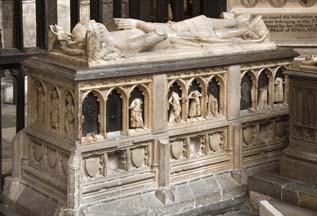
Tomb of John of Eltham, Westminster Abbey.
Tomb of John of Eltham, Westminster Abbey

John was also by his brother’s side during the 1335 and 1336 campaigns in Scotland. In June 1335 John joined the muster at Newcastle. The 1335 war was without compromise: the army undertook a campaign of looting, raping, killing and burning.

John appears to have been a competent and ruthless commander. Trusted by his brother he commanded a force in southern Scotland, putting down opposition to Edward Balliol. It is said that Joh burned down Lesmahagow Abbey when it was filled with people who had sought sanctuary from the English troops.

In 1336 John led a great council in Northampton while his brother was still in Scotland. The council decided to send an embassy to France to seek a compromise over the developing hostilities (France were promising to aid the Scots). John was soon back with Edward III in Perth where he died on 13th September 1336, just a month after his 20th birthday.

A.1916-307
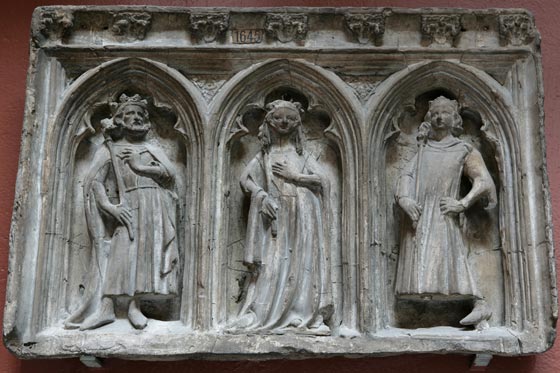
Weepers on the tomb of John of Eltham

Thomas Gray, writing in 1355, said John died a ‘good death’, it is thought he died of a fever, brought on by his military exertions. There were, however, rumours of foul play and the Scots even suggested John was stabbed by an enraged Edward at the altar of the Church of St John, angry at his brother’s ruthlessness against the Scots.

Edward III was very upset by John’s death. He ordered 900 masses to be said for his brother’s soul, and even a year later his accountant noted extra alms-giving by the king in john’s memory.

John was buried in Westminster Abbey on 13th January 1337 and Edward III had an alabaster monument erected in St Edmund’s Chapel. The effigy has a moustache and is wearing a mixture of mail and plate armour, with John’s coat of arms on the shield. The Weepers surround the base of the tomb and could be representative of John’s family members.

*

Photographs: The Weepers © the V&A Museum, London; Tomb of Prince John of Eltham © Westminster Abbey; all other pictures courtesy of Wikipedia

*

Sources: The Perfect King, the Life of Edward III by Ian Mortimer; The Life and Time of Edward III by Paul Johnson; The Reign of Edward III  by WM Ormrod; The Mammoth Book of British kings & Queens by Mike Ashley; Britain’s’ Royal Families, the Complete Genealogy by Alison Weir; Brewer’s British Royalty by David Williamson; The Plantagenets, the Kings Who Made Britain by Dan Jones; edwardthesecond.blogspot.co.uk; westminster-abbey.org.

*

My books

Signed, dedicated copies of all my books are available through my online store.

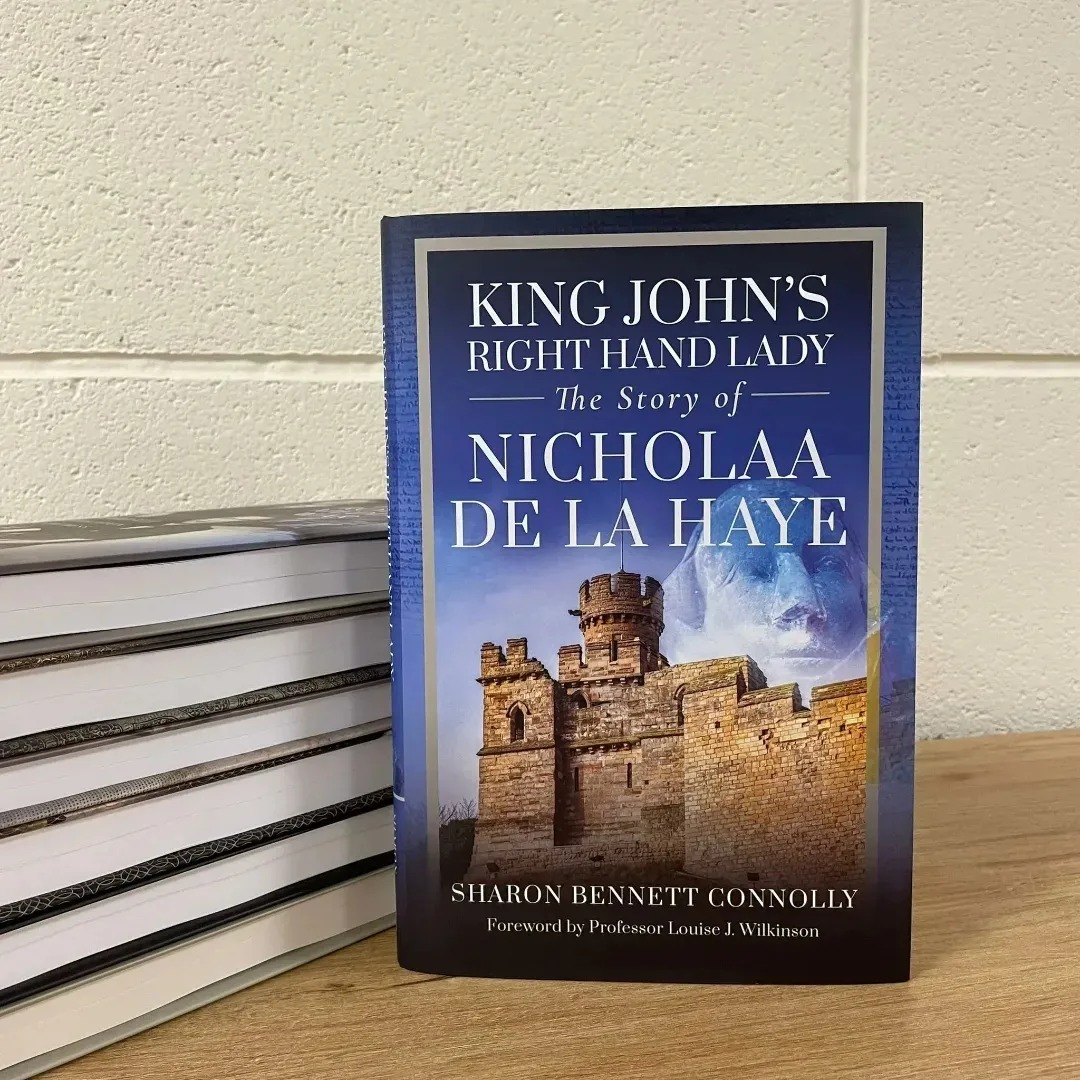
Out nowKing John’s Right-Hand Lady: The Story of Nicholaa de la Haye

In a time when men fought and women stayed home, Nicholaa de la Haye held Lincoln Castle against all-comers, gaining prominence in the First Baron’s War, the civil war that followed the sealing of Magna Carta in 1215. A truly remarkable lady, Nicholaa was the first woman to be appointed sheriff in her own right. Her strength and tenacity saved England at one of the lowest points in its history. Nicholaa de la Haye is one woman in English history whose story needs to be told…

King John’s Right-Hand Lady: The Story of Nicholaa de la Haye is now available from Pen & Sword Booksbookshop.org and Amazon.

Coming 15 January 2024: Women of the Anarchy

On the one side is Empress Matilda, or Maud. The sole surviving legitimate child of Henry I, she is fighting for her birthright and that of her children. On the other side is her cousin, Queen Matilda, supporting her husband, King Stephen, and fighting to see her own son inherit the English crown. Both women are granddaughters of St Margaret, Queen of Scotland and descendants of Alfred the Great of Wessex. Women of the Anarchy demonstrates how these women, unable to wield a sword, were prime movers in this time of conflict and lawlessness. It show how their strengths, weaknesses, and personal ambitions swung the fortunes of war one way – and then the other.

Available for pre-order from Amberley Publishing and Amazon UK.

Also by Sharon Bennett Connolly:

Defenders of the Norman Crown: The Rise and Fall of the Warenne Earls of Surrey tells the fascinating story of the Warenne dynasty, of the successes and failures of one of the most powerful families in England, from its origins in Normandy, through the Conquest, Magna Carta, the wars and marriages that led to its ultimate demise in the reign of Edward III. Defenders of the Norman Crown: Rise and Fall of the Warenne Earls of Surrey is now available from Pen & Sword BooksAmazon in the UK and US, and  Bookshop.org.

Ladies of Magna Carta: Women of Influence in Thirteenth Century England looks into the relationships of the various noble families of the 13th century, and how they were affected by the Barons’ Wars, Magna Carta and its aftermath; the bonds that were formed and those that were broken. It is now available in paperback and hardback from Pen & Sword,  Amazon, and Bookshop.org.

Heroines of the Medieval World tells the stories of some of the most remarkable women from Medieval history, from Eleanor of Aquitaine to Julian of Norwich. Available now from Amberley Publishing and Amazon, and Bookshop.org.

Silk and the Sword: The Women of the Norman Conquest traces the fortunes of the women who had a significant role to play in the momentous events of 1066. Available now from Amazon,  Amberley Publishing, and Bookshop.org.

Alternate Endings: An anthology of historical fiction short stories including Long Live the King… which is my take what might have happened had King John not died in October 1216. Available in paperback and kindle from Amazon.

Podcast:

Have a listen to the A Slice of Medieval podcast, which I co-host with Historical fiction novelist Derek Birks. Derek and I welcome guests, such as Bernard Cornwell, and discuss a wide range of topics in medieval history, from significant events to the personalities involved.

*

Signed and dedicated copies of all my books are available through my online store.

For forthcoming online and in-person talks, please check out my Events Page.

You can be the first to read new articles by clicking the ‘Follow’ button, liking our Facebook page or joining me on Twitter and Instagram.

*

©2015 Sharon Bennett Connolly FRHistS

Edmund Crouchback, Edward I’s Loyal Brother

arms_of_edmund_crouchback_earl_of_leicester_and_lancaster-svg
Arms of Edmund Crouchback

The fourth child and second son of Henry III and his Queen, Eleanor of Provence,  and named to honour the Old English royal saint, Edmund was born in London on 16th January 1245.

From an early age, Edmund was involved in his father’s schemes to extend Angevin influence across Europe; in 1254 Henry accepted the crown of Sicily from the Pope for the 9-year-old Edmund, but this came to naught and he was to be officially deprived of the kingdom in 1266, when the Pope handed Sicily to Henry’s brother-in-law, Charles of Anjou.

Henry and Eleanor are known to have been devoted parents and had a very close relationship with all their children. However, Edmund grew up in a time of great upheaval in the kingdom. Henry was locked in a power struggle with his barons, led by his brother-in-law, Simon de Montfort, Earl of Leicester. The barons were against expensive entanglements in Europe – such as Edmund’s claim to the Sicilian crown – and what they saw as Henry’s inept and ineffective rule in general.

BodleianDouce231Fol1rEdCrouchbackAndStGeorge
Miniature of Edmund with Saint George

The conflict known as the Barons’ War would lead to what is now seen as the first recognisable English parliament, and to the eventual defeat and destruction of Simon de Montfort at the Battle of Evesham in 1265.

Although Edmund’s youth during the war years meant he took no major part in the conflict, following de Montfort’s death, in October 1265 Edmund was given his lands and titles, including the castle at Kenilworth, which was still holding out against the king. Edmund commanded the Siege of Kenilworth, which held out for 6 months, until starvation forced the garrison’s capitulation. He would also receive the earldom of Lancaster, which was created for him in 1267 by Henry III.

A less-than-chivalric move in 1269 saw Edmund and his older brother, Edward, conspiring against Robert de Ferrers, Earl of Derby, a former Montfort supporter, depriving him of his titles and lands – all of which were passed to Edmund.

In April of the same year, Edmund married Avelina de Forz, daughter of the Earl of Devon and Aumale. The marriage produced no children and Avelina died in 1274.

In 1268 Edward and Edmund had both taken the cross, promising to take part in Crusade to the Holy Land. Although logistics meant they didn’t leave immediately, the brothers travelled separately and Edmund arrived in the Holy Land in September 1271. It is likely that his soubriquet of ‘Crouchback’ comes from him wearing a cross on his back during the Crusades, as there is no evidence of any physical deformity.

After some minor victories, but realising their force wasn’t big enough to retake the Holy Land, and reinforcements from Europe were not forthcoming, Edward signed a 10 year truce with the Muslim leader, Baibars. The following month, May 1272, Edmund sailed for home.

150px-BlancheArtois
Seal of Blanche of Artois

Henry III died in November 1272 and Edmund’s older brother ascended the throne as Edward I. Edmund was loyal to his brother, throughout his reign, playing a supporting role, both militarily and diplomatically. In 1276, Edmund married again; to Blanche of Artois, the widowed Countess of Champagne, whose daughter, Jeanne of Navarre, would marry Philip IV of France in 1284, making Edmund step-father to the French Queen.

Blanche would outlive Edmund, dying in Paris in 1302. They had 4 children together. Thomas was born before 1280 and was executed on the orders of Edward II, following a failed rebellion and his defeat at the Battle of Boroughbridge. Their second son, Henry would eventually succeed to his brother’s titles of Earl of Lancaster, Lincoln, Salisbury, Derby and Leicester. Born around 1281, he married Matilda, daughter of Sir Patrick de Chaworth, and they had 7 children together; their eldest son being Henry of Grosmont, 1st Duke of Lancaster and father of Blanche of Lancaster. A third son, John, Lord of Beaufort and Nogent, was born before May 1286 and died around 1317, leaving no children. Their only daughter, Mary, died young in France.

In Edward’s 1277 Welsh campaign Edmund, the biggest landowner in south Wales, was given the command of the southern army. This second, smaller contingent of the invasion of Wales provided support to Edward’s main army. Having set out shortly after 10th July, Edmund’s force drove deep into Wales, facing little opposition compared to Edward’s army. The main landholders of the south had already capitulated, or had fled to join the Welsh prince, Llewellyn, in the north. Edmund’s army had reached their objective of Aberystwyth by 25th July and, at the start of August, began the construction of the castle there. By September the war was over, Edmund disbanded his army on the 20th – leaving a small contingent to garrison the castle – and returned to England.

As a loyal and loving brother, in 1290 Edmund was involved in organising the funeral arrangements for his sister-in-law, Eleanor of Castile. Historian Dean Irwin has told me of a letter which includes many current events and explains that Edmund had had to cancel a planned trip to Canterbury in order to help with the late queen’s funeral.

Edmond1
Edmund’s seal

In 1294 Edmund used his familial connections with the French crown to broker a peace deal with France; an agreement intended to foster a long-lasting peace and to see his widowed brother Edward married to Margaret, Philip IV’s sister. Edmund agreed to hand over several cities, including Bordeaux, in Gascony, on the understanding they would be returned to Edward on his marriage.

The French had no intention of returning the Gascon lands, and in April 1294, Edmund realised he had been duped; the French ejected the English Seneschal of Gascony and Edward prepared an invasion force, ordered to muster on 1st September.

However, rebellion in Wales meant the postponement of the Gascon expedition and Edmund and his forces were ordered to Worcester. The Welsh having been subdued and Edmund having recovered from unspeicifed illness that struck him at the end of 1295, Edmund and his army finally set sail for Gascony in January 1296.

It was to be Edmund’s last campaign. The French were well entrenched and the English failed to retake Bordeaux, or any of the towns along the Garonne. His money running out, Edmund was forced to retire to Bayonne, where he fell sick, dying there on 5th June 1296.

A devastated Edward I called on his churchmen to pray for ‘our dearest and only brother, who was always devoted and faithful to us…and in whom valour and many gifts of grace shone forth’.

He was buried in Westminster Abbey, recently completed by his father, Henry III.

*

Pictures of Edmund’s coat of arms, seal and Edmund with St George, and of Blanche of Artois, courtesy of Wikipedia.

Further reading: Marc Morris A Great and terrible King; Sara Cockerill Eleanor of Castile: Shadow Queen; Roy Strong The Story of Britain; Mike Ashley The Mammoth Book of British Kings & Queens; Derek Wilson The Plantagenets; Alison Weir Britain’s Royal Families; Dean Irwin.

*

My Books

Signed, dedicated copies of all my books are available through my online store.

Out now: Scotland’s Medieval Queens

Books by Sharon Bennett Connolly

Scotland’s history is dramatic, violent and bloody. Being England’s northern neighbour has never been easy. Scotland’s queens have had to deal with war, murder, imprisonment, political rivalries and open betrayal. They have loved and lost, raised kings and queens, ruled and died for Scotland. From St Margaret, who became one of the patron saints of Scotland, to Elizabeth de Burgh and the dramatic story of the Scottish Wars of Independence, to the love story and tragedy of Joan Beaufort, to Margaret of Denmark and the dawn of the Renaissance, Scotland’s Medieval Queens have seen it all. This is the story of Scotland through their eyes.

Scotland’s Medieval Queens gives a thorough grounding in the history of the women who ruled Scotland at the side of its kings, often in the shadows, but just as interesting in their lives beyond the spotlight. It’s not a subject that has been widely covered, and Sharon is a pioneer in bringing that information into accessible history.’ Elizabeth Chadwick (New York Times bestselling author)

Available now from Amazon and Pen and Sword Books

Also by Sharon Bennett Connolly:

Books by Sharon Bennett Connolly

Heroines of the Tudor World tells the stories of the most remarkable women from European history in the time of the Tudor dynasty, 1485-1603. These are the women who ruled, the women who founded dynasties, the women who fought for religious freedom, their families and love. Heroines of the Tudor World is now available from Amberley Publishing and Amazon UK. Women of the Anarchy demonstrates how Empress Matilda and Matilda of Boulogne, unable to wield a sword themselves, were prime movers in this time of conflict and lawlessness. It shows how their strengths, weaknesses, and personal ambitions swung the fortunes of war one way – and then the other. Available from Bookshop.orgAmberley Publishing and Amazon UKKing John’s Right-Hand Lady: The Story of Nicholaa de la Haye is the story of a truly remarkable lady, the hereditary constable of Lincoln Castle and the first woman in England to be appointed sheriff in her own right. Available from all good bookshops Pen & Sword Booksbookshop.org and Amazon

Defenders of the Norman Crown: The Rise and Fall of the Warenne Earls of Surrey tells the fascinating story of the Warenne dynasty, from its origins in Normandy, through the Conquest, Magna Carta, the wars and marriages that led to its ultimate demise in the reign of Edward III. Available from Pen & Sword BooksAmazon in the UK and US, and Bookshop.orgLadies of Magna Carta: Women of Influence in Thirteenth Century England looks into the relationships of the various noble families of the 13th century, and how they were affected by the Barons’ Wars, Magna Carta and its aftermath; the bonds that were formed and those that were broken. It is now available in paperback and hardback from Pen & SwordAmazon, and Bookshop.orgHeroines of the Medieval World tells the stories of some of the most remarkable women from Medieval history, from Eleanor of Aquitaine to Julian of Norwich. Available now from Amberley Publishing and Amazon, and Bookshop.orgSilk and the Sword: The Women of the Norman Conquest traces the fortunes of the women who had a significant role to play in the momentous events of 1066. Available now from Amazon,  Amberley Publishing, and Bookshop.org.

Alternate Endings: An anthology of historical fiction short stories including Long Live the King… which is my take what might have happened had King John not died in October 1216. Available in paperback and kindle from Amazon.

Podcast:

A Slice of Medieval

Have a listen to the A Slice of Medieval podcast, which I co-host with Historical fiction novelist Derek Birks. Derek and I welcome guests, such as Bernard Cornwell and Michael Jecks, and discuss a wide range of topics in medieval history, from significant events to the personalities involved. Every episode is also now available on YouTube.

*

Don’t forget! Signed and dedicated copies of all my books are available through my online store.

For forthcoming online and in-person talks, please check out my Events Page.

You can be the first to read new articles by clicking the ‘Follow’ button, liking our Facebook page or joining me on TwitterThreadsBluesky and Instagram.

*

©2015  Sharon Bennett Connolly FRHistS