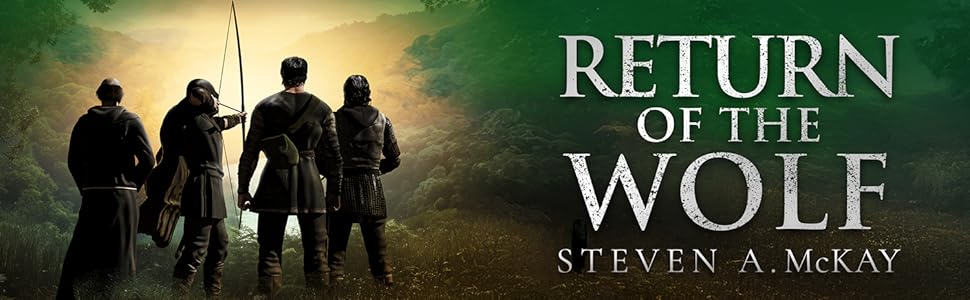
Book Corner: Return of the Wolf by Steven A. McKay

History... the Interesting Bits

England’s greatest ever hero is back, but for how long?

AD 1331 – Wakefield, England
It’s been five long years since Robin Hood’s heart-breaking funeral. Since then, his friends have moved on with their lives, having adventures of their own, and becoming respected figures in the local community. But, as Christmas bells rang out last December, to everyone’s shock, Robin returned home to Wakefield, alive and well.

He believes all his old enemies are dead and gone, and is looking forward to living a peaceful life with his wife and young children. Things rarely work out as we plan them though, and it’s not long before a deadly new threat raises its head.

The Coterel gang are notorious throughout England, committing all kinds of heinous crimes including extortion, prostitution, kidnapping, and even murder. They appear untouchable, with noblemen and even Members of Parliament amongst their members. When Robin and his friends attack a cruel extortionist in nearby Notton they find themselves on the wrong side of the Coterels, and it seems Robin will be forced to live either as an outlaw again, or be viciously hunted down like an animal.

Although his choices are limited, one – seemingly mad – option presents itself and, before long Robin takes sail for the first time ever, on the trail of the legendary lost treasure of King John.
With John Little, Will Scaflock, Friar Tuck, and two loyal Hospitallers in tow, Robin travels across Europe to Flanders, Aachen, and finally the mythical, legend-haunted mountain known as the Untersberg. Will he find England’s lost crown jewels there, or will he find only danger and death?

I do love a good legend!

Anyone who knows me knows that I have a soft spot for the legendary hero, Robin Hood. Living just a half hour drive from Sherwood Forest, how could I not? When my son was about 6, I once almost told one of his school friends that Santa didn’t exist – because she had had the audacity to tell Lewis that Robin Hood wasn’t real!

I am having a very Robin Hood-y day!

Only this morning, I was at the Sherwood Forest Moot – the first one in over 100 years, to start planning the new, annual Sherwood Forest day. The first one will be 20 February 2026. Exciting!

Anyway, back to Robin Hood!

So, when Steven A. McKay said he was writing another Robin Hood story, I was sooooo excited! Last year, after five years of ‘playing dead’, Robin Hood reappeared at the end of the short story, The Heretic of Haltemprice Priory.

But Robin has a big problem; he is still, technically, an outlaw – a Wolf’s Head.

And I started Return of the Wolf on the 809th anniversary of the events in the prologue, on 12 October 1216. This was the day King John’s baggage train got caught by a high tide in the Wash, as they were crossing from Norfolk to Lincolnshire, and the royal treasure was lost, never to be seen again.

One hundred years later, in Return of the Wolf, Robin Hood and his loyal friends, Friar Tuck, Little John and Will Scarlet, embark on a treasure hunt, in search of some remnants of John’s baggage train that may have survived. It leads to a fascinating adventure that takes Robin and his friends on a journey beyond England’s shores, through Belgium and into Germany.

In search of a great treasure.

And maybe, just maybe, a pardon for Robin.

“Christs’ bones, it stinks in here!” John had led the way into the tannery but he pulled up, almost gagging as the fumes accosted them.

“Pull up your tunic,” Robin advised. “Come on.” He drew his sword for it was clear the tanner had no intentions of co-operating without a fight, and moved past the bailiff, eyes scanning the gloomy interior of the room.

The shouting had intensified when they first stormed into the building, but it had died away and now a sinister, forbidding silence fell across the place. Robin had instinctively taken charge, and John did not complain. As the pair moved forward, past more wooden frames and towards the back of the chamber, the years seemed to fall away and the near-telepathy they had once shared as outlaws returned.

A scream of rage suddenly split the air and a dark figure appeared from behind one of the wooden frames. Robin saw a knife, designed for scraping animal hides but just as useful as a weapon, scything through the gloom towards Little John’s back. In one fluid motion Robin’s sword flashed out, parrying the tanning knife, and then he brutally kicked the attacker in the side. There was a grunt of pain as the man slammed into a barrel with vile smelling liquid, and then Robin’s right fist hammered into his jaw and he slumped to the ground.

Little John had a second enemy to deal with, a rat-faced, slim man with a wispy beard and barely a tooth in the mouth that opened to issue a war cry as he swung at the bailiff with his tanning knife. The tool had two handles, one at either end, so – lacking a point – it was no use as a thrusting weapon, but the blade itself was sharp and heavy enough that it could likely sever a limb and John dodged away from it desperately.

The attacker stumbled forward and John brought up his staff, catching the man beneath the chin. It was a lucky strike but it smashed the enemy’s mouth shut and he reeled back, grasping his jaw, eye screwed shut in pain. They did not open again, as John’s staff came around once more, this time cracking against the thin man’s head.

“That the lot?” Robin wondered.

“Can’t be,” John said, eyeing the unconscious tanners. “Neither of these two are the one we met outside. He’s still around somewhere.”

I have to say, Steven A. McKay’s Return of the Wolf is definitely up to his usual standard. This may be his best Robin Hood book yet. He weaves a wonderful story incorporating the legend of Robin Hood, with the mysteries of lost treasure, and a road trip with friends. Of course, there are dangers along the way, pirates, duplicitous noblemen, a vicious gang of thugs, and the elements themselves.

Travelling amidst a heatwave, the thunder storms are legendary – so much louder on the continent than we are used to in England (when I was working at Disneyland, Paris, there was a thunderstorm so loud that I thought someone had blown up the park!)

Return of the Wolf takes you back to the 14th century. You are immersed in the sights, sounds and smells of the era: from the loud and rowdy taverns, to the peace of a Hospitaller commandery, from the swell of the open sea, to the dark of the forests. I can even forgive Steven A. McKay for setting Robin Hood in Barnsdale Forest and Wakefield, rather than Sherwood and Nottingham (but don’t tell Steven!)

Success or failure – and Robin’s very freedom – depends on the survival skills of Robin and his friends. It is a tense, sometimes frightening, adventure. The fight scenes are frantic, failure is only one misstep away and enemies are stalking them in the dark.

What a fabulous story!

And, hopefully, the first of many more!
Buy Return of the Wolf

About the author:

History... the Interesting Bits

Steven A. McKay was born in Scotland in 1977 and always enjoyed studying history. He decided to write his Forest Lord novels after seeing a house called “Sherwood” when he was out at work one day. Since then he’s started a new series, the Warrior Druid of Britain Chronicles, and just completed a trilogy about Alfred the Great.

In 2021 the Xbox game HOOD: Outlaws and Legends was released, featuring Steven’s writing.

He used to be in a heavy metal band although he tends to just play guitar in his study these days. He did use those guitars to write the theme song for the podcast he co-hosted, Rock, Paper, Swords! with Matthew Harffy, though. Give it a listen, they’ve interviewed great guests like Diana Gabaldon, Simon Scarrow, Bernard Cornwell, Dan Jones and more!

*

My books

Signed, dedicated copies of all my books are available through my online store.

Out now: Scotland’s Medieval Queens

Books by Sharon Bennett Connolly

Scotland’s history is dramatic, violent and bloody. Being England’s northern neighbour has never been easy. Scotland’s queens have had to deal with war, murder, imprisonment, political rivalries and open betrayal. They have loved and lost, raised kings and queens, ruled and died for Scotland. From St Margaret, who became one of the patron saints of Scotland, to Elizabeth de Burgh and the dramatic story of the Scottish Wars of Independence, to the love story and tragedy of Joan Beaufort, to Margaret of Denmark and the dawn of the Renaissance, Scotland’s Medieval Queens have seen it all. This is the story of Scotland through their eyes.

Scotland’s Medieval Queens gives a thorough grounding in the history of the women who ruled Scotland at the side of its kings, often in the shadows, but just as interesting in their lives beyond the spotlight. It’s not a subject that has been widely covered, and Sharon is a pioneer in bringing that information into accessible history.’ Elizabeth Chadwick (New York Times bestselling author)

Available now from Amazon and Pen and Sword Books

Also by Sharon Bennett Connolly:

Books by Sharon Bennett Connolly

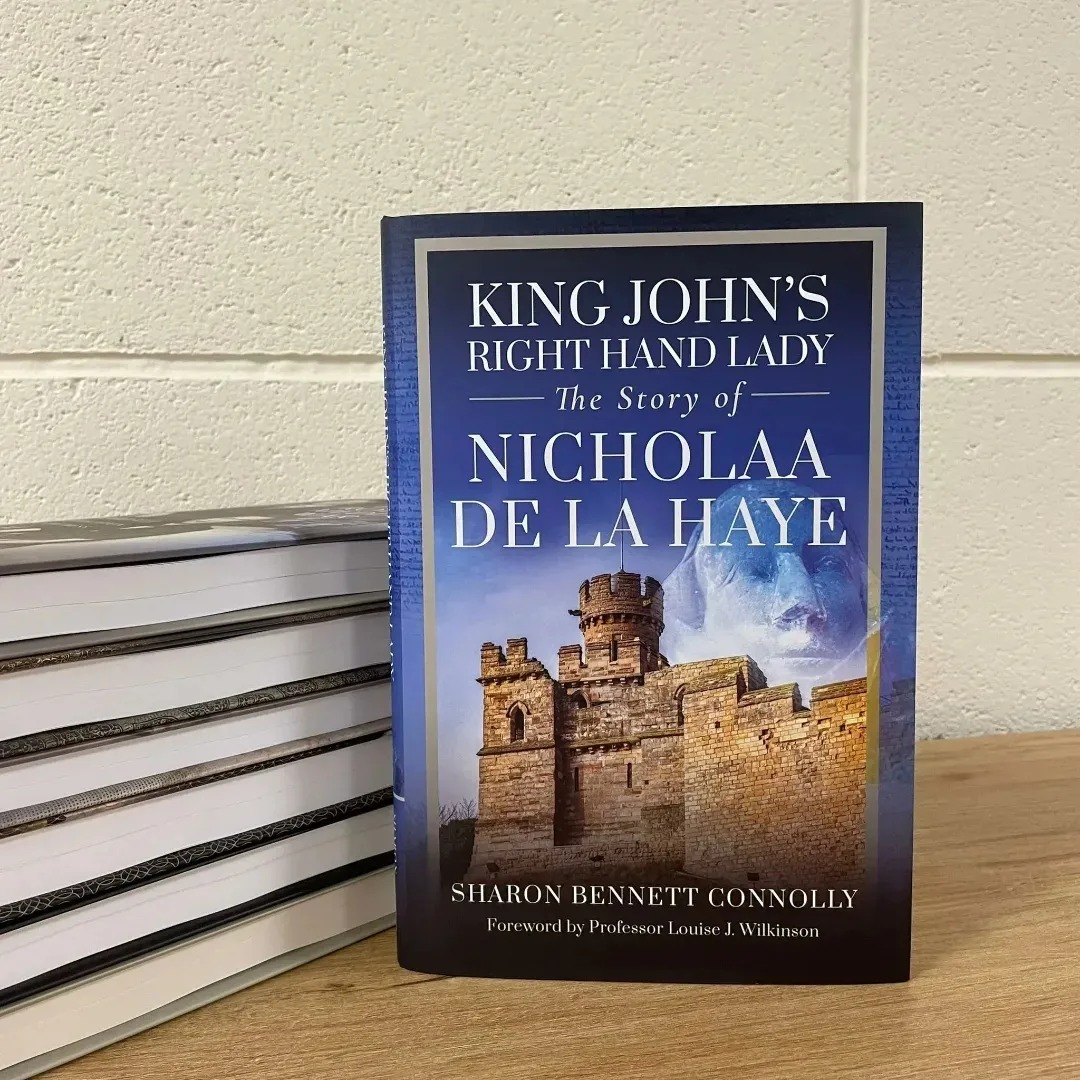
Heroines of the Tudor World tells the stories of the most remarkable women from European history in the time of the Tudor dynasty, 1485-1603. These are the women who ruled, the women who founded dynasties, the women who fought for religious freedom, their families and love. Heroines of the Tudor World is now available from Amberley Publishing and Amazon UK. Women of the Anarchy demonstrates how Empress Matilda and Matilda of Boulogne, unable to wield a sword themselves, were prime movers in this time of conflict and lawlessness. It shows how their strengths, weaknesses, and personal ambitions swung the fortunes of war one way – and then the other. Available from Bookshop.orgAmberley Publishing and Amazon UKKing John’s Right-Hand Lady: The Story of Nicholaa de la Haye is the story of a truly remarkable lady, the hereditary constable of Lincoln Castle and the first woman in England to be appointed sheriff in her own right. Available from all good bookshops Pen & Sword Booksbookshop.org and Amazon

Royal Historical Society

Defenders of the Norman Crown: The Rise and Fall of the Warenne Earls of Surrey tells the fascinating story of the Warenne dynasty, from its origins in Normandy, through the Conquest, Magna Carta, the wars and marriages that led to its ultimate demise in the reign of Edward III. Available from Pen & Sword BooksAmazon in the UK and US, and Bookshop.orgLadies of Magna Carta: Women of Influence in Thirteenth Century England looks into the relationships of the various noble families of the 13th century, and how they were affected by the Barons’ Wars, Magna Carta and its aftermath; the bonds that were formed and those that were broken. It is now available in paperback and hardback from Pen & SwordAmazon, and Bookshop.orgHeroines of the Medieval World tells the stories of some of the most remarkable women from Medieval history, from Eleanor of Aquitaine to Julian of Norwich. Available now from Amberley Publishing and Amazon, and Bookshop.orgSilk and the Sword: The Women of the Norman Conquest traces the fortunes of the women who had a significant role to play in the momentous events of 1066. Available now from Amazon,  Amberley Publishing, and Bookshop.org.

Alternate Endings: An anthology of historical fiction short stories including Long Live the King… which is my take what might have happened had King John not died in October 1216. Available in paperback and kindle from Amazon.

Podcast:

A Slice of Medieval

Have a listen to the A Slice of Medieval podcast, which I co-host with Historical fiction novelist Derek Birks. Derek and I welcome guests, such as Bernard Cornwell and Michael Jecks, and discuss a wide range of topics in medieval history, from significant events to the personalities involved. There’s even an episode where we chat with Steven A. McKay about Robin Hood!

There are now over 75 episodes to listen to!

Every episode is also now available on YouTube.

*

Don’t forget! Signed and dedicated copies of all my books are available through my online store.

For forthcoming online and in-person talks, please check out my Events Page.

You can be the first to read new articles by clicking the ‘Follow’ button, liking our Facebook page or joining me on TwitterThreadsBluesky and Instagram.

*

©2025 Sharon Bennett Connolly
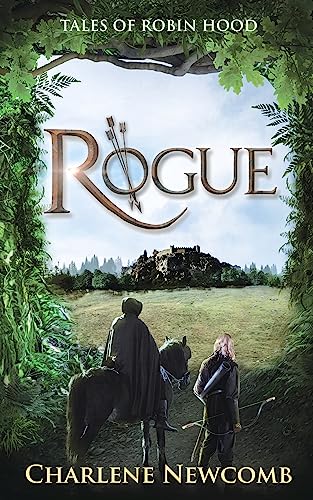
Book Corner: Rogue by Charlene Newcomb

A knight sworn to keep a family secret.
A king who seeks revenge.
A daring plan to save one life…or condemn many.


England 1216AD. Sir Robert Fitzwilliam faithfully serves the English crown, but when the outlaw Allan a Dale, a childhood friend, is captured and thrown in the sheriff’s dungeons beneath Nottingham Castle, trouble is certain to follow.

Allan’s days are numbered. Nothing would please King John more than to see an old nemesis hanged. Nothing except watching Robert’s estranged father, Robin, dangling dead from a rope beside him.

When his father joins forces with the Hood gang to rescue Allan, enlisting the aid of friends and even the girl he loves, Robert must decide where his loyalties lie.

TALES OF ROBIN HOOD

Before there was Robin Hood, there was Allan of the Hood. You know their story – in Sherwood Forest, they rob from the rich and give to the poor. Rogue is a retelling of the origins of the Robin Hood legend set during a time of rebellion and invasion near the end of King John’s reign. It’s a thrilling adventure of loyalty, love, sacrifice, spies, and intrigue.

Anyone who follows me on Twitter or Facebook will know that I have a soft spot for Sherwood Forest and for the legend of Robin Hood. I live just down the road from the Forest and grew up visiting regularly. This year, I have even given two talks there, about Nicholaa de la Haye, who was a friend – or associate – of Philip Marc – the dastardly sheriff of Nottingham of Robin Hood legend. So when I hear of a new Robin Hood novel, I have to have it.

I was not going to pass up the chance of reading Rogue by Charlene Newcomb.

And I was not disappointed. Rogue offers a new take on the Robin Hood legend, with the main protagonist being Robin’s son, Robert, rather than Robin himself. Although it is a standalone novel, many of the characters from Charlene Newcomb’s previous Battle Scars series put in an appearance – it’s a, sort of, spin-off. Set in 1216, in the midst of the First Barons’ War, Rogue follows the adventures and dilemmas of Robert Fitz William, son of Sir Robin of Louviers – Robin Hood – who finds himself as a knight in the household of the Sheriff of Nottingham, and working to support the rule of King John, while his friends are the king’s sworn enemies.

Allan struck the thick mail on Marc’s arm. “Get off that arse and fight fair,”he shouted.

Robert was almost on him. “Hood, stop!”

If Allan heard Robert, he ignored him.

A heartbeat later, Robert reined in hard, severing Allan’s path to the sheriff. Robert didn’t remember grabbing his mace, but the wooden shaft was in his hand, his arm outstretched, the weapon’s spiked head sweeping toward Allan.

Robert aimed for his shoulder.

The sheriff—and King John—wanted Allan alive. Thank God for that. Outlaw or not, Robert could never kill him.

Allan blocked the blow, but the chain locked with Robert’s sword and sent their weapons into the air. Twisting round, Allan stepped on a downed tree and took a flying leap. He slammed into Robert, knocking them both to the ground.

Robert groaned, winded and shaken. Allan sprang to his feet, unfazed by the fall. He circled, but his sword was out of reach. As Robert stood, Allan lunged at Marc again, grabbing his saddle bow. Marc cursed, striking Allan’s head with his gauntlet. He drew his horse’s reins down hard. The animal jinked backwards, dragging Allan with him. Holding tight to the pommel, Allan kept his footing, but a branch cracked beneath his boot. He pitched wildly like a man swinging on a rope.

Clenching his teeth, Robert bulled toward Allan. He seized Allan’s arm and flung him across the road.

Allan collided with the ground, face first. Leaves and dirt flew into the air. Lurching sideways, Allan rolled and caught himself with his hands. He tried to scramble away, but Robert loomed large behind him. Allan’s knees collapsed beneath him, and Robert grabbed him. He whipped Allan to his back.

Robert slammed his fist into Allan’s jaw. Once. “Sorry.”Twice. “You shoulda’run.”

Withdrawing his sword, Robert drove the tip toward Allan’s face.

Allan blinked. “Robin?”

I have to admit, I found Rogue rather refreshing. It is a new take on the Robin Hood legend with the son of Robin taking centre stage and faced with a dilemma – how to serve the wicked King John as a man in the house hold of the sheriff of Nottingham, whilst still aiding his friends in the rescue of Allan a Dale, who has been captured by the sheriffs men and now languished in the dungeons of Nottingham Castle. There is as much action, intrigue and danger as any reader would expect from a Robin Hood story, and not everything goes as planned.

Charlene Newcomb has slipped Robin Hood into the story at a time of national crisis. Magna Carta was issued in 1215 – and revoked. England is in the midst of civil war – the Barons’ War – and the south is occupied by an invading French force under Prince Louis – invited by the revels to take the crown. King John’s situation is dire and the castle at Nottingham is trying to hold firm for the king.

Of course, nothing is ever straight forward! Robert is a complex character with father issues and deep feelings of abandonment from a childhood where Robin was off fighting for King Richard, unaware that he had a son at all. These feelings cause conflict within Robert as he tries to assimilate the absent father that Robin was to him with the noble hero Robin is to people Robert trusts and admires. Though he is not a child – far from it – Robert has to confronted the conflicting images he has of his father, if he is to survive. The contrasting scenes of father and son trying to get to know each other, to understand the other’s motives and find away to work together gives a depth to the story beyond the traditional adventure.

Rogue by Charlene Newcomb is a fabulous read. It is entertaining from start to finish. Replete with action, it will have the reader on the edge of their seat. And Nicholaa de la Haye gets a mention! As Rogue is set in 1216, we know Nicholaa is just a few miles away, defending Lincoln Castle. I can only hope she appears in her full glory in the sequel. (Hint, hint, Char!).

If you are looking for a good, adventurous read with action on every page, Rogue by Charlene Newcomb is perfect!

To Buy the Book:

Rogue is now available on Amazon in the UK and US

About the Author:

Charlene Newcomb, aka Char, writes historical fiction and science fiction. Her award-winning Battle Scars trilogy is set in the 12th century during the reign of Richard the Lionheart. Her writing roots are in the Star Wars Expanded Universe (aka Legends) where she published 10 short stories in the Star Wars Adventure Journal. She published the scifi/space opera Echoes of the Storm in 2020, and returns to medieval times with her latest novel Rogue in 2023.

Librarian (retired).

U.S. Navy veteran.

Mom to 3, grandma to 3.

*

My Books

Signed, dedicated copies of all my books are available through my online store.

Out nowKing John’s Right-Hand Lady: The Story of Nicholaa de la Haye

In a time when men fought and women stayed home, Nicholaa de la Haye held Lincoln Castle against all-comers, gaining prominence in the First Baron’s War, the civil war that followed the sealing of Magna Carta in 1215. A truly remarkable lady, Nicholaa was the first woman to be appointed sheriff in her own right. Her strength and tenacity saved England at one of the lowest points in its history. Nicholaa de la Haye is one woman in English history whose story needs to be told…

King John’s Right-Hand Lady: The Story of Nicholaa de la Haye is now available from Pen & Sword Booksbookshop.org and Amazon.

Coming 15 January 2024: Women of the Anarchy

On the one side is Empress Matilda, or Maud. The sole surviving legitimate child of Henry I, she is fighting for her birthright and that of her children. On the other side is her cousin, Queen Matilda, supporting her husband, King Stephen, and fighting to see her own son inherit the English crown. Both women are granddaughters of St Margaret, Queen of Scotland and descendants of Alfred the Great of Wessex. Women of the Anarchy demonstrates how these women, unable to wield a sword, were prime movers in this time of conflict and lawlessness. It show how their strengths, weaknesses, and personal ambitions swung the fortunes of war one way – and then the other.

Available for pre-order from Amberley Publishing and Amazon UK.

Also by Sharon Bennett Connolly:

Defenders of the Norman Crown: The Rise and Fall of the Warenne Earls of Surrey tells the fascinating story of the Warenne dynasty, of the successes and failures of one of the most powerful families in England, from its origins in Normandy, through the Conquest, Magna Carta, the wars and marriages that led to its ultimate demise in the reign of Edward III. Defenders of the Norman Crown: Rise and Fall of the Warenne Earls of Surrey is now available from Pen & Sword BooksAmazon in the UK and US, and  Bookshop.org.

Ladies of Magna Carta: Women of Influence in Thirteenth Century England looks into the relationships of the various noble families of the 13th century, and how they were affected by the Barons’ Wars, Magna Carta and its aftermath; the bonds that were formed and those that were broken. It is now available in paperback and hardback from Pen & Sword,  Amazon, and Bookshop.org.

Heroines of the Medieval World tells the stories of some of the most remarkable women from Medieval history, from Eleanor of Aquitaine to Julian of Norwich. Available now from Amberley Publishing and Amazon, and Bookshop.org.

Silk and the Sword: The Women of the Norman Conquest traces the fortunes of the women who had a significant role to play in the momentous events of 1066. Available now from Amazon,  Amberley Publishing, and Bookshop.org.

Alternate Endings: An anthology of historical fiction short stories including Long Live the King… which is my take what might have happened had King John not died in October 1216. Available in paperback and kindle from Amazon.

Podcast:

Have a listen to the A Slice of Medieval podcast, which I co-host with Historical fiction novelist Derek Birks. Derek and I welcome guests, such as Bernard Cornwell, and discuss a wide range of topics in medieval history, from significant events to the personalities involved.

*

Don’t forget! Signed and dedicated copies of all my books are available through my online store.

For forthcoming online and in-person talks, please check out my Events Page.

You can be the first to read new articles by clicking the ‘Follow’ button, liking our Facebook page or joining me on Twitter and Instagram.

©2023 Sharon Bennett Connolly FRHistS

Book Corner: A Palace for Our Kings by James Wright

book_front_cover_hi_resIn the heart of Sherwood Forest lies the picturesque, yet unassuming, village of King’s Clipstone. Between the twelfth and fifteenth centuries one of the very largest royal palaces ever to have graced the Mediaeval landscape stood there.

The palace was visited by eight kings who held parliament, Christmas feasts and tournaments; were visited by the king of Scotland, a papal envoy and traitorous barons; built a fortification, great hall and a stable for two hundred horses; went hunting, drank wine and conceived a prince; listened to storytellers, poets and singers.

This is the history of one of the great lost buildings of Britain and of the individuals that built, worked and lived there. Above all this is story of the people whose lives have been shaped for centuries by an extraordinary structure standing in a remarkable landscape.

A Palace For Our Kings: The history and archaeology of a Mediaeval royal palace in the heart of Sherwood Forest by archaeologist James Wright is a wonderful study of a little known piece of English history. It tells the story of a palace located in the heart of Sherwood Forest. James Wright is an archaeologist who has been involved with King’s Clipstone for many years and his love and enthusiasm for the project shine through on every page of this marvellous book.

The King’s Houses at Clipstone in Nottinghamshire has an incredibly unique and fascinating story to tell. The book traces the history of the village of King’s Clipstone – and it’s palace – from Roman times to the 21st century. It tells not only the archaeological story, but also the life and history of the palace and its people.

James Wright has used the medieval chronicles to explain and support his archaeological discoveries and theories. They also serve to illustrate the varying uses of the palace throughout the years, and demonstrate how national and international events influenced the history of the King’s Houses. The chronicles are drawn on to explain building practices and alterations;

The king’s chamber was whitewashed, quite a job as the space was big enough to warrant two chimneys with a window between them. This window was subsequently blocked up and the remaining windows in Henry’s chamber were installed with protective iron bars, a legacy of the attempt on his life at Woodstock thirteen years previously.

The palace’s story is amply illustrated with the help of photographic evidence, floor plans and maps throughout this highly detailed and fascinating study. The author has also drawn from the memoirs and accounts of antiquarians throughout the generations in order to tell the comprehensive story of the King’s Houses st Clipstone The book contains so much detail that it is impossible not to find something of interest. I have lived half an hour from Sherwood Forest for most of my life, but this book has given me a whole new perspective on the Forest and the people who lived within and around it; giving the Forest and its palace a whole new significance – to me and to history in particular.

Pos:167,Tm:584_AT,Cst:0,Gm:B,Fv:0,Stb:69
The King’s Houses, Clipstone

James Wright has managed to write an archaeological study which is riveting to the historian or general reader alike. He explains everything clearly, with the minimum of technical language.  The archaeological discoveries are discussed in the context of architectural, royal and social history, explaining how the palace developed over the years, as royal requirements and – even – the appearance of royal dignity changed through the centuries.

Pottery was often preferred for serving up victuals as, unlike silver or pewter, it did not taint the taste of food; although in the later Mediaeval period communal serving platters were used less as private dining became preferable. In this was food and dining became yet another method of social exclusion through the refinement of the palate.

A Palace For Our Kings: The history and archaeology of a Mediaeval royal palace in the heart of Sherwood Forest also places Clipstone and the King’s Houses in a regional context; discussing its purpose as a hunting lodge, as a stopover point between London and the North, and as a royal residence. The influences of the larger region – such as York, Nottingham and Lincoln – are considered, not only on the people but also the architecture of the palace.

The author draws on more famous locations, such as Clarendon and Woodstock, to explain and compare the development of king’s Clipstone and the demonstrate how improvements to other royal residences influenced the development of the King’s Houses through the centuries.

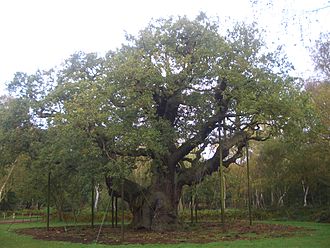
330px-Major_Oak
The Major Oak, Sherwood Forest

Moreover, the book provides a fascinating insight into how the palace affected the lives of the common people in the area. From the scales of justice to the enclosure of local pastureland; the palace was intrinsically intertwined with the lives of the local populace. The book highlights how the actions of the kings who used the palace played a part not only in the livelihoods of the local community but also in their standard of living and, indeed, life itself.

From the stories of kings, through witchcraft, war and religion to the individual lives of the families who lived and worked there, this book tells the remarkable history of the palace and its people; and of its rediscovery and significance to the history of England. This book is a marvel to read; it is a fabulous story of how 1,500 years of history have affected one small area of England – and how that little village played its part in English history.

I cannot recommend it highly enough, it is written in a wonderful, conversational manner which makes it accessible to all, and tells a truly fascinating story which made it a pleasure, and a privilege, to read.

A Palace For Our Kings: The history and archaeology of a Mediaeval royal palace in the heart of Sherwood Forest by James Wright is out now as a limited edition paperback and e-book via Triskele Publishing. More information on the book and the King’s Houses at Clipstone can be found on social media: Facebook  and Twitter.

©2016 Sharon Bennett Connolly.

*

My book, Heroines of the Medieval World,  is now available in hardback in the UK from both Amberley Publishing and Amazon UK and worldwide from Book Depository. It is also available on Kindle in both the UK and USA and will be available in Hardback from Amazon US from 1 May 2018.

Be the first to read new articles by clicking the ‘Follow’ button, liking our Facebook page or joining me on Twitter.

*

‘The Major Oak’ taken from Wikipedia. ‘The King’s Houses’ photo ©James Wright.