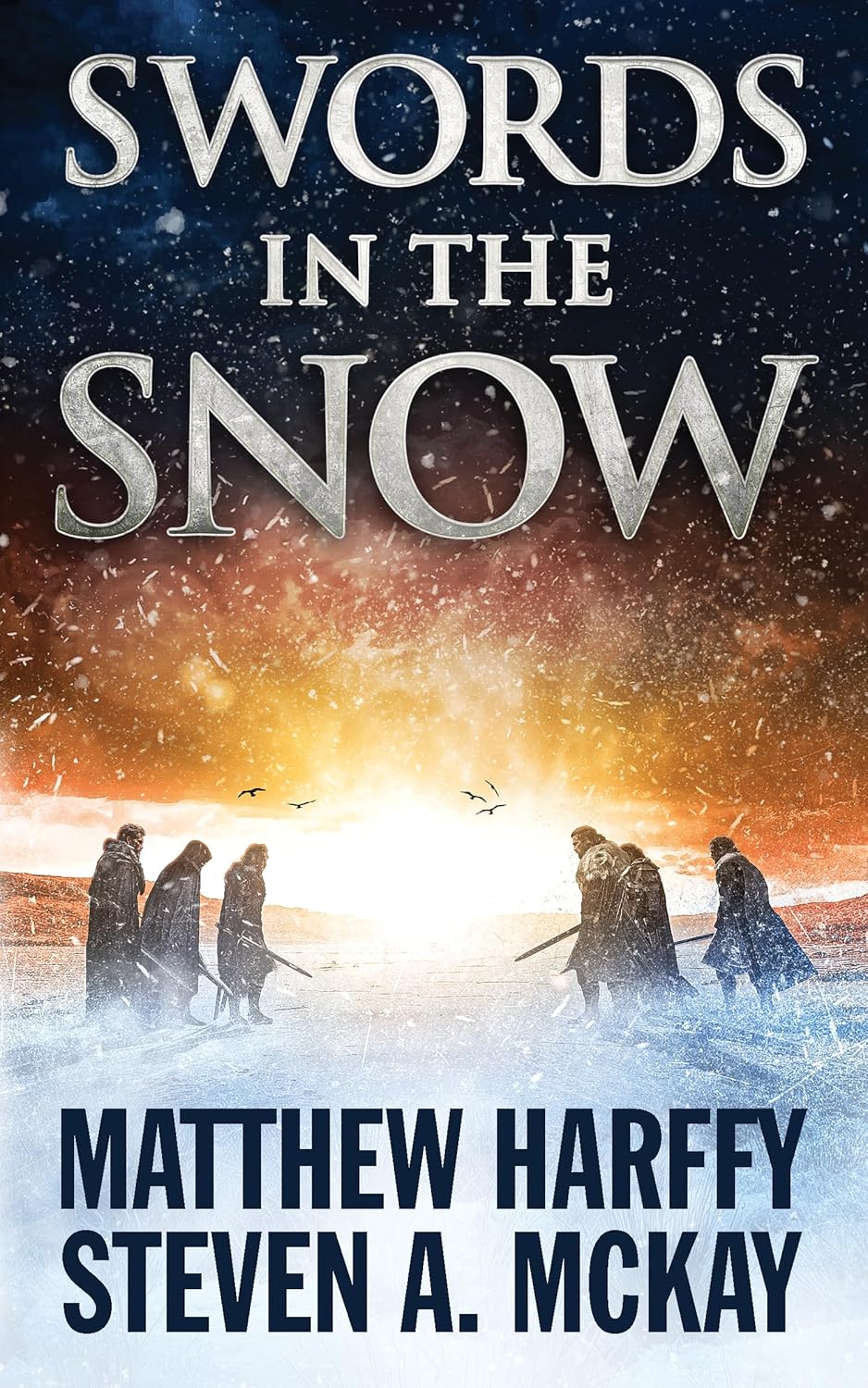
Book Corner: Swords in the Snow by Matthew Harffy and Steven A. McKay

A stolen relic. A dying child. A desperate chase.

December, c. AD 1330.

When thieves snatch a priceless holy relic from a Pontefract church, Friar Tuck and the bailiff, John Little, set out through snowbound Yorkshire to recover it. The relic is the only hope for a gravely ill girl—but the hunt soon turns bloody.

From frozen dales to the mud-slick streets of York, John and Tuck pursue ruthless crime lord William Wake and his brutal enforcers: the battle-hardened Henry Tanner and the murderous giant Grimbald de Pendok.

When they finally face each other with swords in the snow, will Little John and Friar Tuck find they have met their match at last, or will there be a Christmas miracle?

It has fast become a tradition for me, as the night’s are drawing in and it is frosty outside, to read a novella written by Steven A. McKay. The author of the Forest Lord series, Steven has now written a whole host of Christmas mysteries which draw Robin Hood’s companions, Little John, Will Scarlet and Friar Tuck, into a life-or-death adventure, when all they want to do is sit around a warm fire, eating and drinking and telling stories of adventures past.

But no.

Steven A. McKay insists on sending them out into the freezing winds and deep snow drifts to entertain us. I feel sorry for the Merry Men (or not so ‘merry’ when they’re cold, wet and fighting for their lives), I do. But I do love these medieval mysteries.

This year is no exception, but with a twist and a treat. And this time, with Swords in the Snow, Steven A. McKay has enlisted the help of his fellow novelist and friend, Matthew Harffy, the creator of the Bernicia Chronicles, to act -or, rather, write – as the ‘bad guys’. And so, Little John and Friar Tuck are once again trudging through snow and mud, in search of thieves and murderers, and a Christmas miracle. At least there are no ghosts this time.

“Tuck!” The shout rang out, loud in the still winter air, and John, recognising a distinct note of alarm in it, spun around, staff held defensively before him. At his side, Tuck was in a similar posture, ready for whatever an enemy might throw at them, but the cry came again and the bailiff realised it had come from someone standing at the entrance to All Saints’ Church.

“Is that Bishop Wulstan?”

John squinted as the clergyman stepped out from the doorway and the pale December day lit his features. “Aye, it is,” the bailiff nodded. “Something’s upset him too.”

“Come over, Tuck,” the bishop called almost frantically. “And you too, John.”

With a last, longing look at the baker’s, both men sighed and walked across to the church. It was not a particularly large building, but it was impressive nonetheless, having been built quite recently.

Bishop Wulstan Barnsford had met John and Tuck before, when they’d investigated a strange, and ultimately murderous, religious sect. The bishop had led the trial against the leader of the cult, Lady Alice de Staynton, whose punishment was excommunication and banishment. He was a competent, clever man who did not seem the type to be easily upset, so John was surprised to note how pale the bishop’s complexion was. He was wringing his hands as the former outlaws strode across the road and, as they reached him, he let out a long sigh that conveyed great relief, as if he was glad to meet someone who could take the weight from his shoulders.

“What’s happened, your grace?” Tuck asked, reading the signs as John had done.

In reply, Bishop Wulstan turned, beckoning for them to follow as he went into All Saints’.

The pair did as they were bidden and walked inside, both tugging their collars up for it was even colder in the church than it was outside, their breath steaming in the frigid, incense-tinged air as they walked.

“In the name of God!” Tuck cried, hurrying ahead as they saw a priest lying on his side on the floor, eyes open but clearly in great pain and distress. “Stand back,” the friar commanded and the two men who were kneeling beside the priest hastily moved aside to let him through. They might have no idea who the burly newcomer was, but his tone brooked no argument.

John looked on, bemused, as Tuck, a man of learning who’d often acted as healer or surgeon for Robin Hood’s outlaw gang, tended to the injured priest who had, at least, been covered with a blanket.

“What happened here?” the friar asked.

“Thieves,” said the fallen clergyman, grunting in pain as Tuck checked him for broken bones. “They came in the night. I tried to stop them, but there was a giant with them and he—” His eyes fell on Little John and he visibly shrank into himself, terror written across his bruised face.

In Swords in the Snow Steven A. McKay and Matthew Harffy complement each other’s writing wonderfully, making for an engaging, entertaining and, quite frankly, thrilling story. And while Steven A. McKay takes Little John and Friar Tuck on a chilly ride through Yorkshire, hunting for the fiends who stole a holy relic from Pontefract, Matthew Harffy directs those said villains through their escapades.

It makes for some surprising twists and turns.

The two writing styles truly complement each other and create an exciting, gripping story.

Swords in the Snow is about half the length of a full novel, which means the authors have kept the story tight and focused, and you can tell they enjoyed working on the project. Here’s hoping it leads to even more collaborative work; perhaps Steven A. McKay will visit Bernicia and Beobrand next Christmas (hint, hint, fellas!)

In short, Swords in the Snow is a jolly good read, especially on a cold winter night when you are tucked up warm in front of a blazing fire!

To Buy the book:

Swords in the Snow is available now from Amazon.

About the authors:

Steven A. McKay was born in Scotland in 1977 and always enjoyed studying history. He decided to write his Forest Lord novels after seeing a house called “Sherwood” when he was out at work one day. Since then he’s started a new series, the Warrior Druid of Britain Chronicles, and just completed a trilogy about Alfred the Great.

In 2021 the Xbox game HOOD: Outlaws and Legends was released, featuring Steven’s writing.

Steven wrote the theme song for the podcast he co-hosted, Rock, Paper, Swords! with Matthew Harffy.

Matthew Harffy lived in Northumberland as a child and the area had a great impact on him. The rugged terrain, ruined castles and rocky coastline made it easy to imagine the past. Decades later, a documentary about Northumbria’s Golden Age sowed the kernel of an idea for a series of historical fiction novels. The first of them is the action-packed tale of vengeance and coming of age, The Serpent Sword.

Matthew has worked in the IT industry, where he spent all day writing and editing, just not the words that most interested him. Prior to that he worked in Spain as an English teacher and translator. Matthew lives in Wiltshire, England, with his wife and their two daughters.

For all the latest news and exclusive competitions, join Matthew online: http://www.matthewharffy.com; twitter.com/@MatthewHarffy; http://www.facebook.com/MatthewHarffyAuthor

*

My Books

Signed, dedicated copies of all my books are available through my online bookshop.

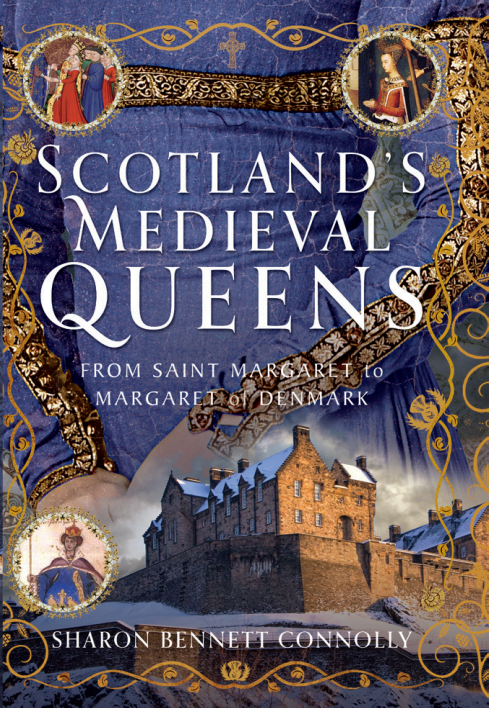
Out now: Scotland’s Medieval Queens

Books by Sharon Bennett Connolly

Scotland’s history is dramatic, violent and bloody. Being England’s northern neighbour has never been easy. Scotland’s queens have had to deal with war, murder, imprisonment, political rivalries and open betrayal. They have loved and lost, raised kings and queens, ruled and died for Scotland. From St Margaret, who became one of the patron saints of Scotland, to Elizabeth de Burgh and the dramatic story of the Scottish Wars of Independence, to the love story and tragedy of Joan Beaufort, to Margaret of Denmark and the dawn of the Renaissance, Scotland’s Medieval Queens have seen it all. This is the story of Scotland through their eyes.

Scotland’s Medieval Queens gives a thorough grounding in the history of the women who ruled Scotland at the side of its kings, often in the shadows, but just as interesting in their lives beyond the spotlight. It’s not a subject that has been widely covered, and Sharon is a pioneer in bringing that information into accessible history.’ Elizabeth Chadwick (New York Times bestselling author)

Available now from Amazon and Pen and Sword Books

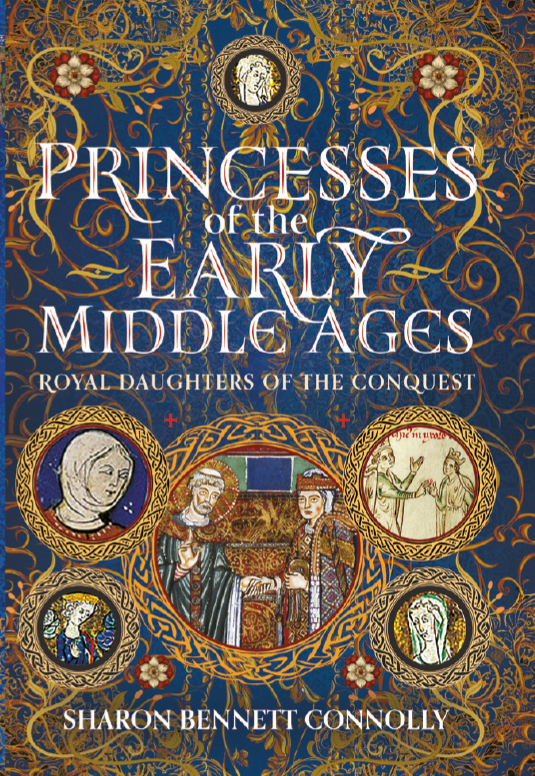
Coming 30 March 2026: Princesses of the Early Middle Ages

Books by Sharon Bennett Connolly

Daughters of kings were often used to seal treaty alliances and forge peace with England’s enemies. Princesses of the Early Middle Ages: Royal Daughters of the Conquest explores the lives of these young women, how they followed the stereotype, and how they sometimes managed to escape it. It will look at the world they lived in, and how their lives and marriages were affected by political necessity and the events of the time. Princesses of the Early Middle Ages will also examine how these girls, who were often political pawns, were able to control their own lives and fates. Whilst they were expected to obey their parents in their marriage choices, several princesses were able to exert their own influence on these choices, with some outright refusing the husbands offered to them.

Their stories are touching, inspiring and, at times, heartbreaking.

Princesses of the Early Middle Ages: Royal Daughters of the Conquest is now available for pre-order.

Also by Sharon Bennett Connolly:

Books by Sharon Bennett Connolly

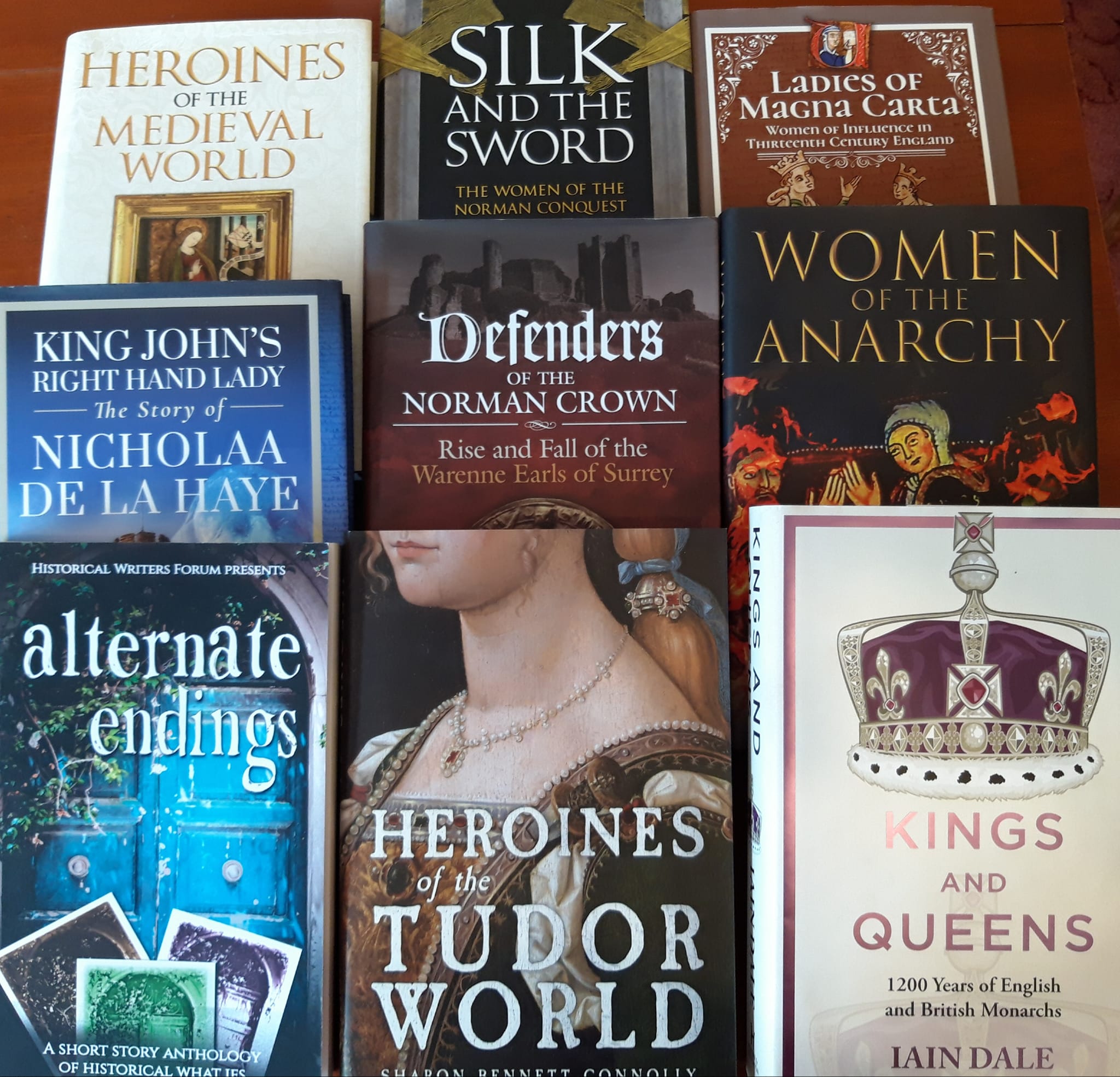
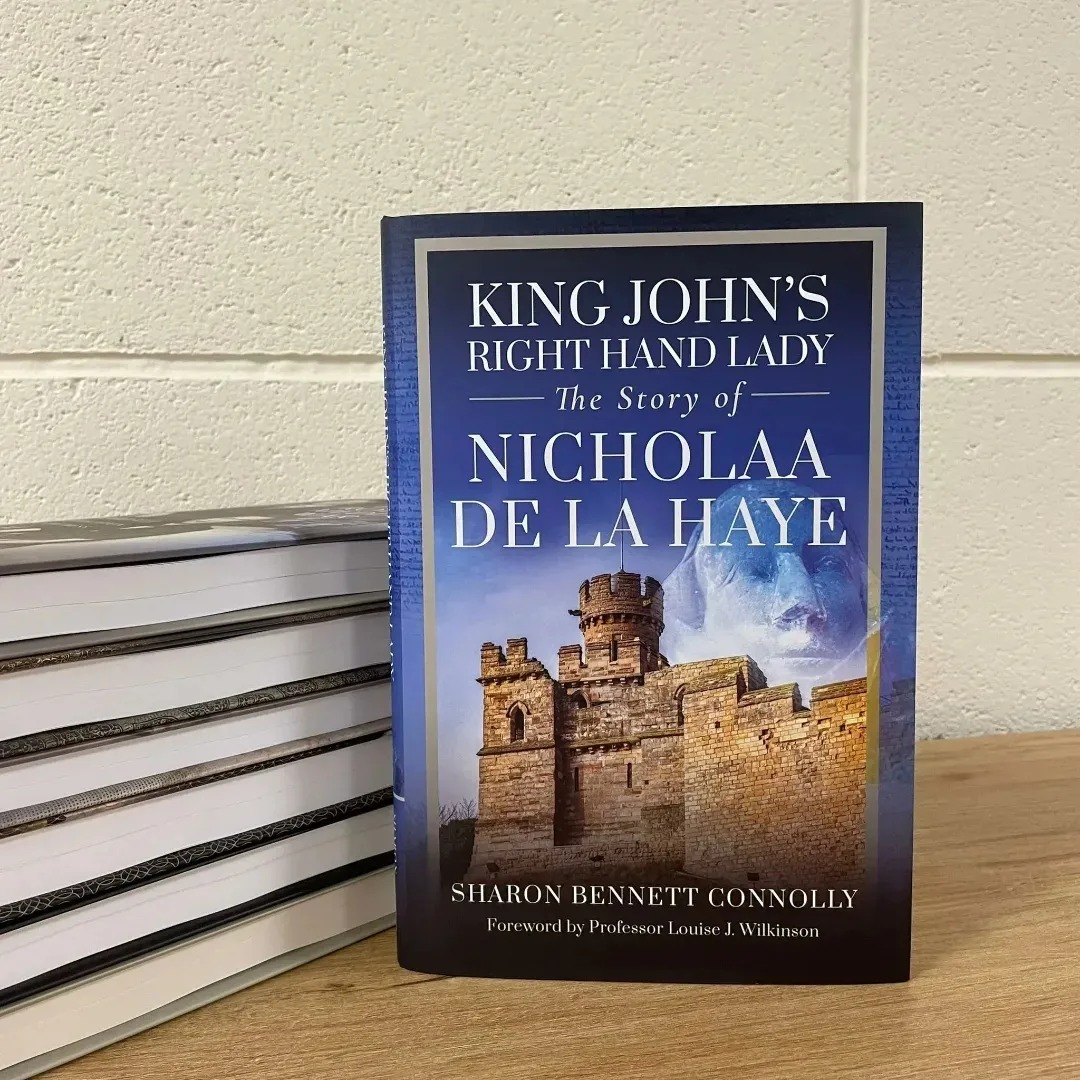
Heroines of the Tudor World tells the stories of the most remarkable women from European history in the time of the Tudor dynasty, 1485-1603. These are the women who ruled, the women who founded dynasties, the women who fought for religious freedom, their families and love. Heroines of the Tudor World is now available from Amberley Publishing and Amazon UK. Women of the Anarchy demonstrates how Empress Matilda and Matilda of Boulogne, unable to wield a sword themselves, were prime movers in this time of conflict and lawlessness. It shows how their strengths, weaknesses, and personal ambitions swung the fortunes of war one way – and then the other. Available from Bookshop.orgAmberley Publishing and Amazon UKKing John’s Right-Hand Lady: The Story of Nicholaa de la Haye is the story of a truly remarkable lady, the hereditary constable of Lincoln Castle and the first woman in England to be appointed sheriff in her own right. Available from all good bookshops Pen & Sword Booksbookshop.org and Amazon

Royal Historical Society

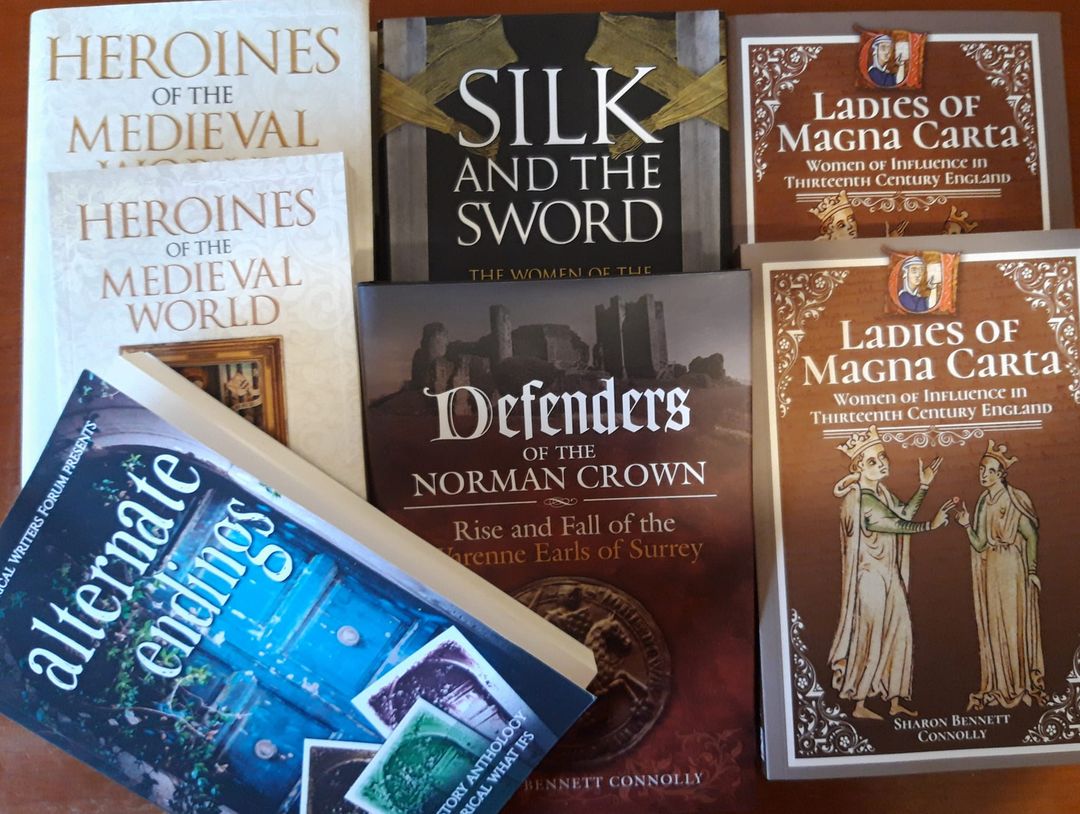
Defenders of the Norman Crown: The Rise and Fall of the Warenne Earls of Surrey tells the fascinating story of the Warenne dynasty, from its origins in Normandy, through the Conquest, Magna Carta, the wars and marriages that led to its ultimate demise in the reign of Edward III. Available from Pen & Sword BooksAmazon in the UK and US, and Bookshop.orgLadies of Magna Carta: Women of Influence in Thirteenth Century England looks into the relationships of the various noble families of the 13th century, and how they were affected by the Barons’ Wars, Magna Carta and its aftermath; the bonds that were formed and those that were broken. It is now available in paperback and hardback from Pen & SwordAmazon, and Bookshop.orgHeroines of the Medieval World tells the stories of some of the most remarkable women from Medieval history, from Eleanor of Aquitaine to Julian of Norwich. Available now from Amberley Publishing and Amazon, and Bookshop.orgSilk and the Sword: The Women of the Norman Conquest traces the fortunes of the women who had a significant role to play in the momentous events of 1066. Available now from Amazon,  Amberley Publishing, and Bookshop.org.

Alternate Endings: An anthology of historical fiction short stories including Long Live the King… which is my take what might have happened had King John not died in October 1216. Available in paperback and kindle from Amazon.

Podcast:
A Slice of Medieval

Have a listen to the A Slice of Medieval podcast, which I co-host with Historical fiction novelist Derek Birks. Derek and I welcome guests, such as Ian Mortimer, Bernard Cornwell, Elizabeth Chadwick and Scott Mariani, and discuss a wide range of topics in medieval history, from significant events to the personalities involved. 

There are now over 80 episodes to listen to!

Every episode is also now available on YouTube.

*

Don’t forget! Signed and dedicated copies of all my books are available through my online bookshop.

For forthcoming online and in-person talks, please check out my Events Page.

You can be the first to read new articles by clicking the ‘Follow’ button, liking our Facebook page or joining me on TwitterThreadsBluesky and Instagram.

*

©2025 Sharon Bennett Connolly FRHistS

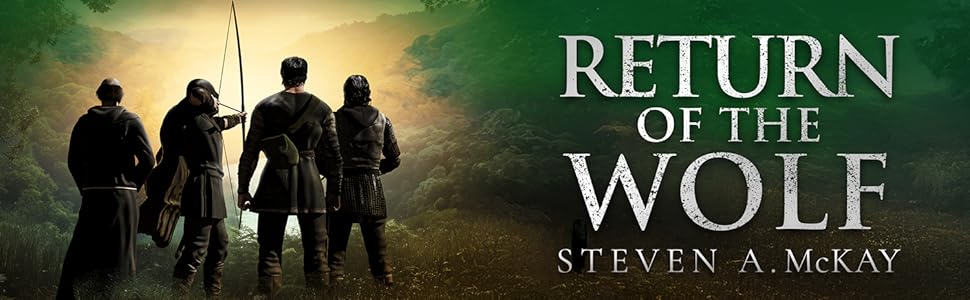
Book Corner: Return of the Wolf by Steven A. McKay

History... the Interesting Bits

England’s greatest ever hero is back, but for how long?

AD 1331 – Wakefield, England
It’s been five long years since Robin Hood’s heart-breaking funeral. Since then, his friends have moved on with their lives, having adventures of their own, and becoming respected figures in the local community. But, as Christmas bells rang out last December, to everyone’s shock, Robin returned home to Wakefield, alive and well.

He believes all his old enemies are dead and gone, and is looking forward to living a peaceful life with his wife and young children. Things rarely work out as we plan them though, and it’s not long before a deadly new threat raises its head.

The Coterel gang are notorious throughout England, committing all kinds of heinous crimes including extortion, prostitution, kidnapping, and even murder. They appear untouchable, with noblemen and even Members of Parliament amongst their members. When Robin and his friends attack a cruel extortionist in nearby Notton they find themselves on the wrong side of the Coterels, and it seems Robin will be forced to live either as an outlaw again, or be viciously hunted down like an animal.

Although his choices are limited, one – seemingly mad – option presents itself and, before long Robin takes sail for the first time ever, on the trail of the legendary lost treasure of King John.
With John Little, Will Scaflock, Friar Tuck, and two loyal Hospitallers in tow, Robin travels across Europe to Flanders, Aachen, and finally the mythical, legend-haunted mountain known as the Untersberg. Will he find England’s lost crown jewels there, or will he find only danger and death?

I do love a good legend!

Anyone who knows me knows that I have a soft spot for the legendary hero, Robin Hood. Living just a half hour drive from Sherwood Forest, how could I not? When my son was about 6, I once almost told one of his school friends that Santa didn’t exist – because she had had the audacity to tell Lewis that Robin Hood wasn’t real!

I am having a very Robin Hood-y day!

Only this morning, I was at the Sherwood Forest Moot – the first one in over 100 years, to start planning the new, annual Sherwood Forest day. The first one will be 20 February 2026. Exciting!

Anyway, back to Robin Hood!

So, when Steven A. McKay said he was writing another Robin Hood story, I was sooooo excited! Last year, after five years of ‘playing dead’, Robin Hood reappeared at the end of the short story, The Heretic of Haltemprice Priory.

But Robin has a big problem; he is still, technically, an outlaw – a Wolf’s Head.

And I started Return of the Wolf on the 809th anniversary of the events in the prologue, on 12 October 1216. This was the day King John’s baggage train got caught by a high tide in the Wash, as they were crossing from Norfolk to Lincolnshire, and the royal treasure was lost, never to be seen again.

One hundred years later, in Return of the Wolf, Robin Hood and his loyal friends, Friar Tuck, Little John and Will Scarlet, embark on a treasure hunt, in search of some remnants of John’s baggage train that may have survived. It leads to a fascinating adventure that takes Robin and his friends on a journey beyond England’s shores, through Belgium and into Germany.

In search of a great treasure.

And maybe, just maybe, a pardon for Robin.

“Christs’ bones, it stinks in here!” John had led the way into the tannery but he pulled up, almost gagging as the fumes accosted them.

“Pull up your tunic,” Robin advised. “Come on.” He drew his sword for it was clear the tanner had no intentions of co-operating without a fight, and moved past the bailiff, eyes scanning the gloomy interior of the room.

The shouting had intensified when they first stormed into the building, but it had died away and now a sinister, forbidding silence fell across the place. Robin had instinctively taken charge, and John did not complain. As the pair moved forward, past more wooden frames and towards the back of the chamber, the years seemed to fall away and the near-telepathy they had once shared as outlaws returned.

A scream of rage suddenly split the air and a dark figure appeared from behind one of the wooden frames. Robin saw a knife, designed for scraping animal hides but just as useful as a weapon, scything through the gloom towards Little John’s back. In one fluid motion Robin’s sword flashed out, parrying the tanning knife, and then he brutally kicked the attacker in the side. There was a grunt of pain as the man slammed into a barrel with vile smelling liquid, and then Robin’s right fist hammered into his jaw and he slumped to the ground.

Little John had a second enemy to deal with, a rat-faced, slim man with a wispy beard and barely a tooth in the mouth that opened to issue a war cry as he swung at the bailiff with his tanning knife. The tool had two handles, one at either end, so – lacking a point – it was no use as a thrusting weapon, but the blade itself was sharp and heavy enough that it could likely sever a limb and John dodged away from it desperately.

The attacker stumbled forward and John brought up his staff, catching the man beneath the chin. It was a lucky strike but it smashed the enemy’s mouth shut and he reeled back, grasping his jaw, eye screwed shut in pain. They did not open again, as John’s staff came around once more, this time cracking against the thin man’s head.

“That the lot?” Robin wondered.

“Can’t be,” John said, eyeing the unconscious tanners. “Neither of these two are the one we met outside. He’s still around somewhere.”

I have to say, Steven A. McKay’s Return of the Wolf is definitely up to his usual standard. This may be his best Robin Hood book yet. He weaves a wonderful story incorporating the legend of Robin Hood, with the mysteries of lost treasure, and a road trip with friends. Of course, there are dangers along the way, pirates, duplicitous noblemen, a vicious gang of thugs, and the elements themselves.

Travelling amidst a heatwave, the thunder storms are legendary – so much louder on the continent than we are used to in England (when I was working at Disneyland, Paris, there was a thunderstorm so loud that I thought someone had blown up the park!)

Return of the Wolf takes you back to the 14th century. You are immersed in the sights, sounds and smells of the era: from the loud and rowdy taverns, to the peace of a Hospitaller commandery, from the swell of the open sea, to the dark of the forests. I can even forgive Steven A. McKay for setting Robin Hood in Barnsdale Forest and Wakefield, rather than Sherwood and Nottingham (but don’t tell Steven!)

Success or failure – and Robin’s very freedom – depends on the survival skills of Robin and his friends. It is a tense, sometimes frightening, adventure. The fight scenes are frantic, failure is only one misstep away and enemies are stalking them in the dark.

What a fabulous story!

And, hopefully, the first of many more!

Buy Return of the Wolf

About the author:

History... the Interesting Bits

Steven A. McKay was born in Scotland in 1977 and always enjoyed studying history. He decided to write his Forest Lord novels after seeing a house called “Sherwood” when he was out at work one day. Since then he’s started a new series, the Warrior Druid of Britain Chronicles, and just completed a trilogy about Alfred the Great.

In 2021 the Xbox game HOOD: Outlaws and Legends was released, featuring Steven’s writing.

He used to be in a heavy metal band although he tends to just play guitar in his study these days. He did use those guitars to write the theme song for the podcast he co-hosted, Rock, Paper, Swords! with Matthew Harffy, though. Give it a listen, they’ve interviewed great guests like Diana Gabaldon, Simon Scarrow, Bernard Cornwell, Dan Jones and more!

*

My books

Signed, dedicated copies of all my books are available through my online store.

Out now: Scotland’s Medieval Queens

Books by Sharon Bennett Connolly

Scotland’s history is dramatic, violent and bloody. Being England’s northern neighbour has never been easy. Scotland’s queens have had to deal with war, murder, imprisonment, political rivalries and open betrayal. They have loved and lost, raised kings and queens, ruled and died for Scotland. From St Margaret, who became one of the patron saints of Scotland, to Elizabeth de Burgh and the dramatic story of the Scottish Wars of Independence, to the love story and tragedy of Joan Beaufort, to Margaret of Denmark and the dawn of the Renaissance, Scotland’s Medieval Queens have seen it all. This is the story of Scotland through their eyes.

Scotland’s Medieval Queens gives a thorough grounding in the history of the women who ruled Scotland at the side of its kings, often in the shadows, but just as interesting in their lives beyond the spotlight. It’s not a subject that has been widely covered, and Sharon is a pioneer in bringing that information into accessible history.’ Elizabeth Chadwick (New York Times bestselling author)

Available now from Amazon and Pen and Sword Books

Also by Sharon Bennett Connolly:

Books by Sharon Bennett Connolly

Heroines of the Tudor World tells the stories of the most remarkable women from European history in the time of the Tudor dynasty, 1485-1603. These are the women who ruled, the women who founded dynasties, the women who fought for religious freedom, their families and love. Heroines of the Tudor World is now available from Amberley Publishing and Amazon UK. Women of the Anarchy demonstrates how Empress Matilda and Matilda of Boulogne, unable to wield a sword themselves, were prime movers in this time of conflict and lawlessness. It shows how their strengths, weaknesses, and personal ambitions swung the fortunes of war one way – and then the other. Available from Bookshop.orgAmberley Publishing and Amazon UKKing John’s Right-Hand Lady: The Story of Nicholaa de la Haye is the story of a truly remarkable lady, the hereditary constable of Lincoln Castle and the first woman in England to be appointed sheriff in her own right. Available from all good bookshops Pen & Sword Booksbookshop.org and Amazon

Royal Historical Society

Defenders of the Norman Crown: The Rise and Fall of the Warenne Earls of Surrey tells the fascinating story of the Warenne dynasty, from its origins in Normandy, through the Conquest, Magna Carta, the wars and marriages that led to its ultimate demise in the reign of Edward III. Available from Pen & Sword BooksAmazon in the UK and US, and Bookshop.orgLadies of Magna Carta: Women of Influence in Thirteenth Century England looks into the relationships of the various noble families of the 13th century, and how they were affected by the Barons’ Wars, Magna Carta and its aftermath; the bonds that were formed and those that were broken. It is now available in paperback and hardback from Pen & SwordAmazon, and Bookshop.orgHeroines of the Medieval World tells the stories of some of the most remarkable women from Medieval history, from Eleanor of Aquitaine to Julian of Norwich. Available now from Amberley Publishing and Amazon, and Bookshop.orgSilk and the Sword: The Women of the Norman Conquest traces the fortunes of the women who had a significant role to play in the momentous events of 1066. Available now from Amazon,  Amberley Publishing, and Bookshop.org.

Alternate Endings: An anthology of historical fiction short stories including Long Live the King… which is my take what might have happened had King John not died in October 1216. Available in paperback and kindle from Amazon.

Podcast:

A Slice of Medieval

Have a listen to the A Slice of Medieval podcast, which I co-host with Historical fiction novelist Derek Birks. Derek and I welcome guests, such as Bernard Cornwell and Michael Jecks, and discuss a wide range of topics in medieval history, from significant events to the personalities involved. There’s even an episode where we chat with Steven A. McKay about Robin Hood!

There are now over 75 episodes to listen to!

Every episode is also now available on YouTube.

*

Don’t forget! Signed and dedicated copies of all my books are available through my online store.

For forthcoming online and in-person talks, please check out my Events Page.

You can be the first to read new articles by clicking the ‘Follow’ button, liking our Facebook page or joining me on TwitterThreadsBluesky and Instagram.

*

©2025 Sharon Bennett Connolly

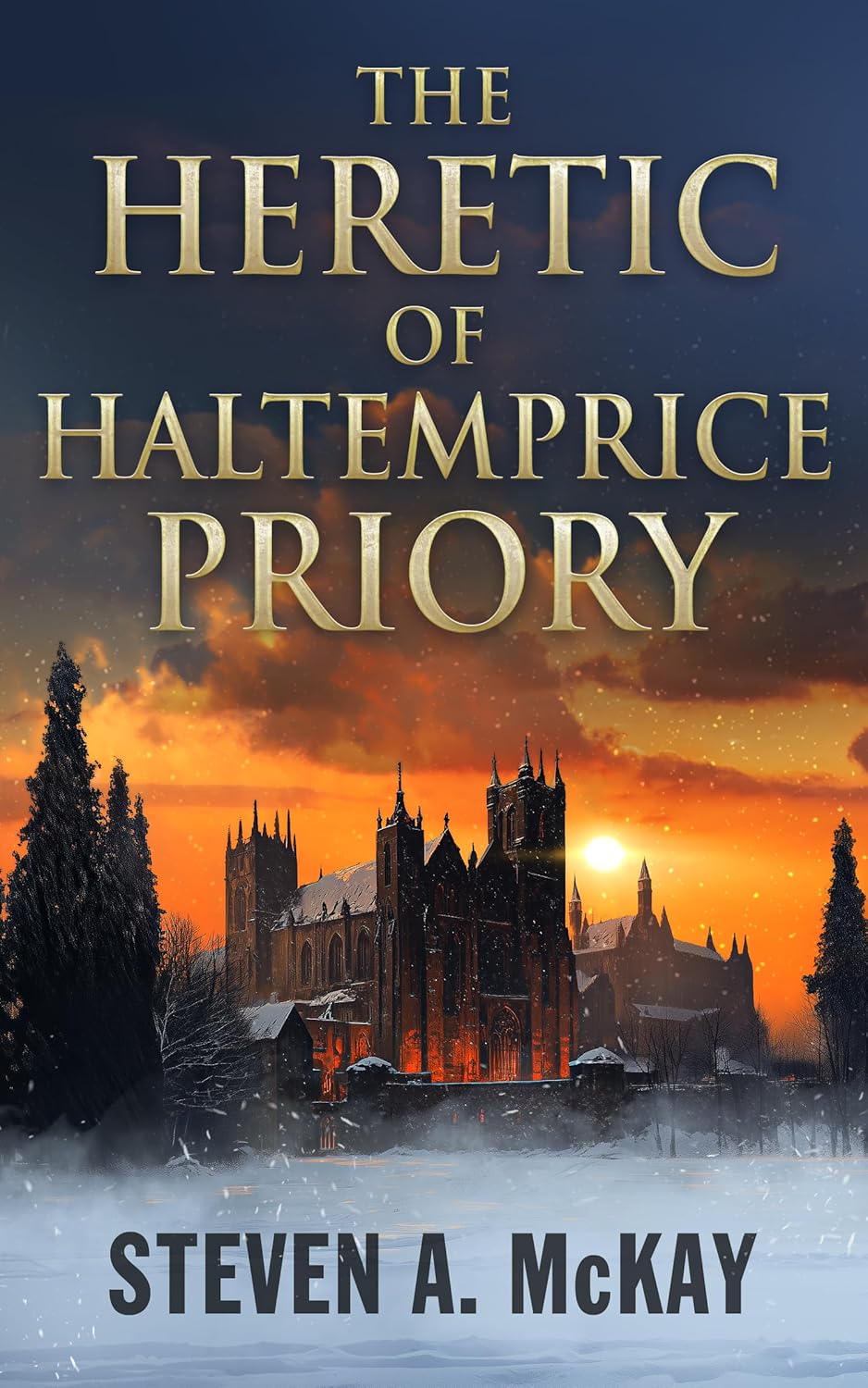
Book Corner: The Heretic of Haltemprice Priory by Steven A. McKay

England, c. AD 1330
Winter fast approaches in East Yorkshire and the dark, cold nights have brought more than just frost to the newly founded Haltemprice Priory. An oppressive pall hangs over the area like a smothering blanket, prompting one of the anxious monks to seek help from an old friend.
Robert Stafford, a friar from nearby Wakefield, has some experience in dealing with strange mysteries, having helped solve a number over the past few years. As he settles into Haltemprice however, things begin to escalate and the friar fears he might have bitten off far more than he can chew this time. Calling on his friends Will Scaflock and the bailiff John Little to work with him it seems they may face more than just earthly enemies as they battle the gloom crushing the spirit, and perhaps the very life, from the inhabitants of the priory.
One monk with a library of eldritch books seems to know much about the progressively more deadly troubles afflicting windswept, frostbitten Haltemprice, but is he a lunatic, a heretic, a murderer, or perhaps something even more terrifying?

Steven A. McKay’s idea of a “novella” stretches the truth a tad with The Heretic of Haltemprice Priory. It must be close to 50,000 words!

But who’s complaining?

Certainly not me!

I have been saying for years that Steven should do a full-length detective/mystery novel featuring Friar Tuck, Little John and Will Scarlet. And I suspect, this is as close as I’m going to get to one.

In The Heretic of Haltemprice Priory, Friar Tuck is called in by an old friend to discover the malaise that afflicts his priory. It is hard to pin down, but a sense of doom and gloom appears to infect not only the monks, but everyone within the priory’s walls. When Tuck realises the depths of the mystery, and the strange happenings that border on the occult, he calls for his old friends, Will and John, to help him solve the mystery.

“This is a very impressive priory,” he said, peering up and gesturing vaguely around, his hand casting long shadows in the candlelight. “I’d have thought the brothers and lay people living here would be happy with their new surroundings.”

“And yet…” Simon de Poher breathed, chewing his lip.

“And yet.” Tuck nodded. “I’ve hardly seen anyone so far, as if everyone is hiding, and those I have met seem nervous about something. Frightened even.”

The door to the cloister rattled at his words, pushed against the latch by the gusting wind outside.

De Poher swallowed again and looked up at the ceiling, as if he were begging God for guidance.

Tuck stood and walked to the nearest bookcase. He knew some of the library’s collection was valuable as some of the books were actually chained to the shelves so that they could not be lost or stolen. The shelves themselves were Brand new and had clearly been made by skilled carpenters, but many of the books on show were very old and Tuck hesitated to draw any out in case he damaged them.

“You’re right,” de Poher said behind him. “Everyone in Haltemprice seems to be anxious, including me.”

“Why?” Tuck asked, turning back to face him.

“Well, that’s the thing,” the cantor chuckled bleakly. “I have no idea.”

Tuck’s brow lifted and he leaned back thoughtfully. “You must have some clue, ” he stated.

“No,” the cantor said, shaking his head. Nothing has happened as far as I’m aware. No one has died violently, or threatened us, or, well, anything like that at all in the time we’ve been here. This place…” He trailed off, casting wary glances into the dark corners and atone particular section of books. “This place just seems to crush the spirit, which is unfathomable given it’s a house of God!” He cringed as he said the last few words, as if fearing he’s be struck down by a divine bolt of lightning or, perhaps, something less holy…

It is a strange tale.

But it is one that grabs you.

Steven A. McKay’s wonderful characters certainly keep you entertained. The strange goings-on are freaky, from sacrificed pigs to disturbed ancient graves. And books that border on the heretical. The reader will be as discomfited as the heroes themselves. And as determined to uncover the truth behind the priory’s place at the centre of events. Full of dark imagery and breathless suspense, The Heretic of Haltemprice Priory will keep you on the edge of your seat (and possibly behind it!).

Ok, I’m exaggerating a little. It is not too scary, rather it allows the reader to let his or her imagination wander into the dark corners of a monk’s cell – and mind. The supernatural elements leave the reader wondering if the mystery will ever – can ever – be solved. It also leaves the reader wanting more from Tuck, Scarlet and Little John. And with the arrival of a mysterious tinker at the end of the book, the hope is that we are going to get it!

The Heretic of Haltemprice Priory is perfect reading for a cold winter night by an open fire. But with all the lights on, just in case!

To Buy the Book:

The Heretic of Haltemprice Priory is now available from Amazon on Kindle and in paperback.

About the author:

Steven A McKay was born in Scotland in 1977 and always enjoyed studying history. He decided to write his Forest Lord novels after seeing a house called “Sherwood” when out at work one day. Since then he’s started a new series, the Warrior Druid of Britain Chronicles, and just completed a trilogy about Alfred the Great.

Steven used to be in a heavy metal band although he tend to just play guitar in his study these days. He did use those guitars to write the theme song for the podcast he co-hosts, Rock, Paper, Swords! with Matthew Harffy, though. Give it a listen, they’ve interviewed great guests like Diana Gabaldon, Simon Scarrow, Bernard Cornwell, Dan Jones and more.

*

My Books:

Signed, dedicated copies of all my books are available through my online bookshop.

Coming 30 January 2025: Scotland’s Medieval Queens

Scotland’s history is dramatic, violent and bloody. Being England’s northern neighbour has never been easy. Scotland’s queens have had to deal with war, murder, imprisonment, political rivalries and open betrayal. They have loved and lost, raised kings and queens, ruled and died for Scotland. From St Margaret, who became one of the patron saints of Scotland, to Elizabeth de Burgh and the dramatic story of the Scottish Wars of Independence, to the love story and tragedy of Joan Beaufort, to Margaret of Denmark and the dawn of the Renaissance, Scotland’s Medieval Queens have seen it all. This is the story of Scotland through their eyes.

Available for pre-order now.

Also by Sharon Bennett Connolly:

Heroines of the Tudor World tells the stories of the most remarkable women from European history in the time of the Tudor dynasty, 1485-1603. These are the women who ruled, the women who founded dynasties, the women who fought for religious freedom, their families and love. Heroines of the Tudor World is now available for pre-order from Amberley Publishing and Amazon UK. Women of the Anarchy demonstrates how Empress Matilda and Matilda of Boulogne, unable to wield a sword themselves, were prime movers in this time of conflict and lawlessness. It shows how their strengths, weaknesses, and personal ambitions swung the fortunes of war one way – and then the other. Available from Bookshop.orgAmberley Publishing and Amazon UKKing John’s Right-Hand Lady: The Story of Nicholaa de la Haye is the story of a truly remarkable lady, the hereditary constable of Lincoln Castle and the first woman in England to be appointed sheriff in her own right. Available from all good bookshops Pen & Sword Booksbookshop.org and Amazon

Defenders of the Norman Crown: The Rise and Fall of the Warenne Earls of Surrey tells the fascinating story of the Warenne dynasty, from its origins in Normandy, through the Conquest, Magna Carta, the wars and marriages that led to its ultimate demise in the reign of Edward III. Available from Pen & Sword BooksAmazon in the UK and US, and Bookshop.orgLadies of Magna Carta: Women of Influence in Thirteenth Century England looks into the relationships of the various noble families of the 13th century, and how they were affected by the Barons’ Wars, Magna Carta and its aftermath; the bonds that were formed and those that were broken. It is now available in paperback and hardback from Pen & SwordAmazon, and Bookshop.orgHeroines of the Medieval World tells the stories of some of the most remarkable women from Medieval history, from Eleanor of Aquitaine to Julian of Norwich. Available now from Amberley Publishing and Amazon, and Bookshop.orgSilk and the Sword: The Women of the Norman Conquest traces the fortunes of the women who had a significant role to play in the momentous events of 1066. Available now from Amazon,  Amberley Publishing, and Bookshop.org.

Alternate Endings: An anthology of historical fiction short stories including Long Live the King… which is my take what might have happened had King John not died in October 1216. Available in paperback and kindle from Amazon.

Podcast:

Have a listen to the A Slice of Medieval podcast, which I co-host with Historical fiction novelist Derek Birks. Now at over 50 episodes, Derek and I welcome guests, such as Bernard Cornwell, and discuss a wide range of topics in medieval history, from significant events to the personalities involved. In episode 18, Steven A. McKay joined us to discuss his Forest Lord series, and the legend of Robin Hood.

*

Don’t forget! Signed and dedicated copies of all my books are available through my online bookshop.

For forthcoming online and in-person talks, please check out my Events Page.

You can be the first to read new articles by clicking the ‘Follow’ button, liking our Facebook page or joining me on TwitterThreadsBluesky and Instagram.

©2024 Sharon Bennett Connolly FRHistS

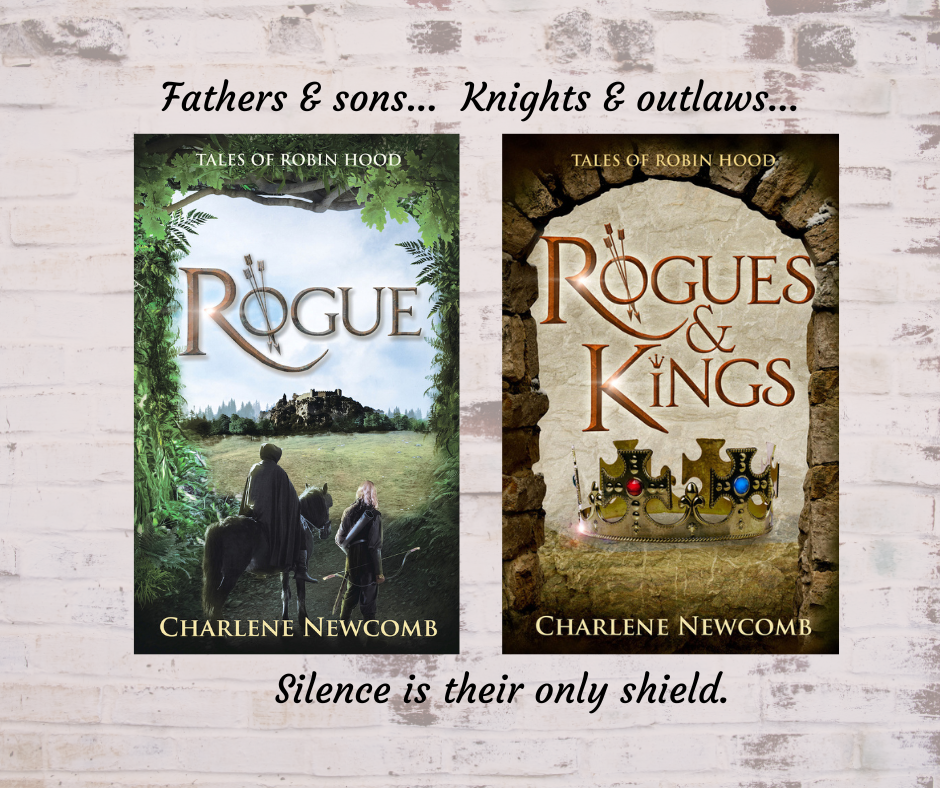
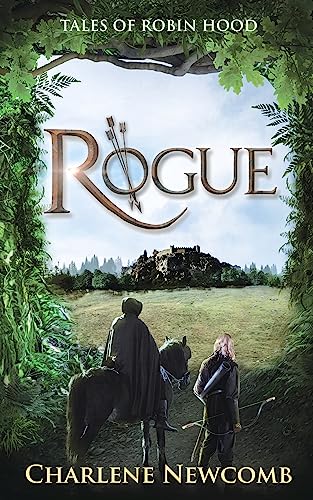
Book Corner: Rogue by Charlene Newcomb

A knight sworn to keep a family secret.
A king who seeks revenge.
A daring plan to save one life…or condemn many.


England 1216AD. Sir Robert Fitzwilliam faithfully serves the English crown, but when the outlaw Allan a Dale, a childhood friend, is captured and thrown in the sheriff’s dungeons beneath Nottingham Castle, trouble is certain to follow.

Allan’s days are numbered. Nothing would please King John more than to see an old nemesis hanged. Nothing except watching Robert’s estranged father, Robin, dangling dead from a rope beside him.

When his father joins forces with the Hood gang to rescue Allan, enlisting the aid of friends and even the girl he loves, Robert must decide where his loyalties lie.

TALES OF ROBIN HOOD

Before there was Robin Hood, there was Allan of the Hood. You know their story – in Sherwood Forest, they rob from the rich and give to the poor. Rogue is a retelling of the origins of the Robin Hood legend set during a time of rebellion and invasion near the end of King John’s reign. It’s a thrilling adventure of loyalty, love, sacrifice, spies, and intrigue.

Anyone who follows me on Twitter or Facebook will know that I have a soft spot for Sherwood Forest and for the legend of Robin Hood. I live just down the road from the Forest and grew up visiting regularly. This year, I have even given two talks there, about Nicholaa de la Haye, who was a friend – or associate – of Philip Marc – the dastardly sheriff of Nottingham of Robin Hood legend. So when I hear of a new Robin Hood novel, I have to have it.

I was not going to pass up the chance of reading Rogue by Charlene Newcomb.

And I was not disappointed. Rogue offers a new take on the Robin Hood legend, with the main protagonist being Robin’s son, Robert, rather than Robin himself. Although it is a standalone novel, many of the characters from Charlene Newcomb’s previous Battle Scars series put in an appearance – it’s a, sort of, spin-off. Set in 1216, in the midst of the First Barons’ War, Rogue follows the adventures and dilemmas of Robert Fitz William, son of Sir Robin of Louviers – Robin Hood – who finds himself as a knight in the household of the Sheriff of Nottingham, and working to support the rule of King John, while his friends are the king’s sworn enemies.

Allan struck the thick mail on Marc’s arm. “Get off that arse and fight fair,”he shouted.

Robert was almost on him. “Hood, stop!”

If Allan heard Robert, he ignored him.

A heartbeat later, Robert reined in hard, severing Allan’s path to the sheriff. Robert didn’t remember grabbing his mace, but the wooden shaft was in his hand, his arm outstretched, the weapon’s spiked head sweeping toward Allan.

Robert aimed for his shoulder.

The sheriff—and King John—wanted Allan alive. Thank God for that. Outlaw or not, Robert could never kill him.

Allan blocked the blow, but the chain locked with Robert’s sword and sent their weapons into the air. Twisting round, Allan stepped on a downed tree and took a flying leap. He slammed into Robert, knocking them both to the ground.

Robert groaned, winded and shaken. Allan sprang to his feet, unfazed by the fall. He circled, but his sword was out of reach. As Robert stood, Allan lunged at Marc again, grabbing his saddle bow. Marc cursed, striking Allan’s head with his gauntlet. He drew his horse’s reins down hard. The animal jinked backwards, dragging Allan with him. Holding tight to the pommel, Allan kept his footing, but a branch cracked beneath his boot. He pitched wildly like a man swinging on a rope.

Clenching his teeth, Robert bulled toward Allan. He seized Allan’s arm and flung him across the road.

Allan collided with the ground, face first. Leaves and dirt flew into the air. Lurching sideways, Allan rolled and caught himself with his hands. He tried to scramble away, but Robert loomed large behind him. Allan’s knees collapsed beneath him, and Robert grabbed him. He whipped Allan to his back.

Robert slammed his fist into Allan’s jaw. Once. “Sorry.”Twice. “You shoulda’run.”

Withdrawing his sword, Robert drove the tip toward Allan’s face.

Allan blinked. “Robin?”

I have to admit, I found Rogue rather refreshing. It is a new take on the Robin Hood legend with the son of Robin taking centre stage and faced with a dilemma – how to serve the wicked King John as a man in the house hold of the sheriff of Nottingham, whilst still aiding his friends in the rescue of Allan a Dale, who has been captured by the sheriffs men and now languished in the dungeons of Nottingham Castle. There is as much action, intrigue and danger as any reader would expect from a Robin Hood story, and not everything goes as planned.

Charlene Newcomb has slipped Robin Hood into the story at a time of national crisis. Magna Carta was issued in 1215 – and revoked. England is in the midst of civil war – the Barons’ War – and the south is occupied by an invading French force under Prince Louis – invited by the revels to take the crown. King John’s situation is dire and the castle at Nottingham is trying to hold firm for the king.

Of course, nothing is ever straight forward! Robert is a complex character with father issues and deep feelings of abandonment from a childhood where Robin was off fighting for King Richard, unaware that he had a son at all. These feelings cause conflict within Robert as he tries to assimilate the absent father that Robin was to him with the noble hero Robin is to people Robert trusts and admires. Though he is not a child – far from it – Robert has to confronted the conflicting images he has of his father, if he is to survive. The contrasting scenes of father and son trying to get to know each other, to understand the other’s motives and find away to work together gives a depth to the story beyond the traditional adventure.

Rogue by Charlene Newcomb is a fabulous read. It is entertaining from start to finish. Replete with action, it will have the reader on the edge of their seat. And Nicholaa de la Haye gets a mention! As Rogue is set in 1216, we know Nicholaa is just a few miles away, defending Lincoln Castle. I can only hope she appears in her full glory in the sequel. (Hint, hint, Char!).

If you are looking for a good, adventurous read with action on every page, Rogue by Charlene Newcomb is perfect!

To Buy the Book:

Rogue is now available on Amazon in the UK and US

About the Author:

Charlene Newcomb, aka Char, writes historical fiction and science fiction. Her award-winning Battle Scars trilogy is set in the 12th century during the reign of Richard the Lionheart. Her writing roots are in the Star Wars Expanded Universe (aka Legends) where she published 10 short stories in the Star Wars Adventure Journal. She published the scifi/space opera Echoes of the Storm in 2020, and returns to medieval times with her latest novel Rogue in 2023.

Librarian (retired).

U.S. Navy veteran.

Mom to 3, grandma to 3.

*

My Books

Signed, dedicated copies of all my books are available through my online store.

Out nowKing John’s Right-Hand Lady: The Story of Nicholaa de la Haye

In a time when men fought and women stayed home, Nicholaa de la Haye held Lincoln Castle against all-comers, gaining prominence in the First Baron’s War, the civil war that followed the sealing of Magna Carta in 1215. A truly remarkable lady, Nicholaa was the first woman to be appointed sheriff in her own right. Her strength and tenacity saved England at one of the lowest points in its history. Nicholaa de la Haye is one woman in English history whose story needs to be told…

King John’s Right-Hand Lady: The Story of Nicholaa de la Haye is now available from Pen & Sword Booksbookshop.org and Amazon.

Coming 15 January 2024: Women of the Anarchy

On the one side is Empress Matilda, or Maud. The sole surviving legitimate child of Henry I, she is fighting for her birthright and that of her children. On the other side is her cousin, Queen Matilda, supporting her husband, King Stephen, and fighting to see her own son inherit the English crown. Both women are granddaughters of St Margaret, Queen of Scotland and descendants of Alfred the Great of Wessex. Women of the Anarchy demonstrates how these women, unable to wield a sword, were prime movers in this time of conflict and lawlessness. It show how their strengths, weaknesses, and personal ambitions swung the fortunes of war one way – and then the other.

Available for pre-order from Amberley Publishing and Amazon UK.

Also by Sharon Bennett Connolly:

Defenders of the Norman Crown: The Rise and Fall of the Warenne Earls of Surrey tells the fascinating story of the Warenne dynasty, of the successes and failures of one of the most powerful families in England, from its origins in Normandy, through the Conquest, Magna Carta, the wars and marriages that led to its ultimate demise in the reign of Edward III. Defenders of the Norman Crown: Rise and Fall of the Warenne Earls of Surrey is now available from Pen & Sword BooksAmazon in the UK and US, and  Bookshop.org.

Ladies of Magna Carta: Women of Influence in Thirteenth Century England looks into the relationships of the various noble families of the 13th century, and how they were affected by the Barons’ Wars, Magna Carta and its aftermath; the bonds that were formed and those that were broken. It is now available in paperback and hardback from Pen & Sword,  Amazon, and Bookshop.org.

Heroines of the Medieval World tells the stories of some of the most remarkable women from Medieval history, from Eleanor of Aquitaine to Julian of Norwich. Available now from Amberley Publishing and Amazon, and Bookshop.org.

Silk and the Sword: The Women of the Norman Conquest traces the fortunes of the women who had a significant role to play in the momentous events of 1066. Available now from Amazon,  Amberley Publishing, and Bookshop.org.

Alternate Endings: An anthology of historical fiction short stories including Long Live the King… which is my take what might have happened had King John not died in October 1216. Available in paperback and kindle from Amazon.

Podcast:

Have a listen to the A Slice of Medieval podcast, which I co-host with Historical fiction novelist Derek Birks. Derek and I welcome guests, such as Bernard Cornwell, and discuss a wide range of topics in medieval history, from significant events to the personalities involved.

*

Don’t forget! Signed and dedicated copies of all my books are available through my online store.

For forthcoming online and in-person talks, please check out my Events Page.

You can be the first to read new articles by clicking the ‘Follow’ button, liking our Facebook page or joining me on Twitter and Instagram.

©2023 Sharon Bennett Connolly FRHistS

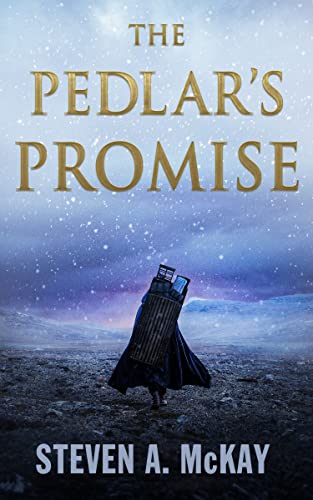
Book Corner: The Pedlar’s Promise by Steven A. McKay

Medieval England, December

A pedlar has been sent to Wakefield with an unexpected and apparently quite valuable Christmas gift for John Little and his friend Will Scaflock. Unfortunately, the pedlar likes his ale a little too much and somehow gets lost and ends up in the wrong town. With no other work to do, or any strange mysteries to solve for a change, the pair of bored former outlaws decide to ride out and track down their gift. Of course, things don’t quite go as smoothly as hoped and they experience a series of hair-raising adventures on the snowy roads and villages of Yorkshire before their quest finally ends with a surprise…

Will our heroes ever find their quarry? What is the mysterious gift their friend Robert Stafford has sent to them from Brandesburton? And who the hell thought it was a good idea to go riding around northern England in the depths of winter searching for a drunk old pedlar?
Pour yourself a warm glass of wassail and settle in beside the fire to find out!

The Pedlar’s Promise continues the series of short winter stories including Friar Tuck and the Christmas Devil, Faces of Darkness, The House in the Marsh, and Sworn To God, and brings some much-needed cheer to the gloomy winter months.

It must be nearly Christmas because there’s a new novella out featuring Little John, Will Scarlet and Friar Tuck.

Steven A. McKay is becoming a master of the mystery thriller. The Pedlar’s Promise is yet another intriguing adventure involving the former outlaws Little John and Will Scarlet takes the reader on an entertaining, muddy journey through Yorkshire.

These novellas follow on from Steven’s The Forest Lord series, telling the story of Robin Hood. They provide a little insight into the adventures of Robin’s leading men – Little John, Tuck and Will – after their lives as outlaws come to an end. The three remain firm friends, reminisce about their time with Robin, and get into some interesting scrapes. The Pedlar’s Promise is one such mini-adventure, when Will and John go in search of an errant pedlar in the depths of winter.

Suddenly the door burst open, snow whirling into the room as a dark, hooded figure forced his way through the icy gale and into the ale house. Muttering, the newcomer shut out the gale, making sure the latch was firmly in place before stamping towards Alexander Gilbert, the purple-nosed owner of the alehouse, and demanding a drink.

Once furnished with an ale the stocky figure turned towards the hearth and grinned, seeing the two men framed by the flickering orange flames.

“Tuck!” John cried, and Will Scaflock laughed, gesturing for the friar to come and join them at their small circular table.

“God’s blood,” Tuck growled as he planted his hefty behind on the stool next to Little John. “It’s freezing out there.”

“Maybe,” the bailiff conceded. “But that just makes it all the more enjoyable to drink an ale or three in here, beside the fire and in the company of good friends, eh, Will?”

Scaflock hoisted his mug aloft, smiling, but Tuck just rolled his eyes and pulled the collar of his brown cassock tighter around his neck.

“Cheer up.” John laughed. “You’re just hungry.”

“How d’you know that?” Tuck demanded, wiping foam from his upper lip and eyeing the bailiff suspiciously.

“You’re always hungry,” John replied sardonically, gesturing for Alexander to bring them some of his fabled broth. That was always a favourite on a night such as this, even if the amount of actual meat and other ingredients in it varied depending on the year’s harvest. Providing ale and warm food was a sure way to cheer Friar Tuck, and the bailiff knew it.

The innkeeper soon bustled over, placing a bowl and some bread in front of Tuck, who happily accepted. “Thank you, Alexander,” he said, lifting the bread and dipping it into the thick, steaming liquid. “Did you get the gift I sent you from Brandesburton?” he asked, turning his attention back to his friends.

“What gift?” John asked with a frown.

As I say with every one of Steven A. McKay’s novellas, this book was too short. It’s not that the story was rushed or shallow. It’s just that, the story ends way too soon. I really do think Steven should write a full-length mystery with Will Scarlet and Little John. These novellas are tantalising but they always leave me wanting much, much more. (Are you listening Steven?)

Having said that, The Pedlar’s Promise is a perfect little read that you can get through in one or two sittings. The story is fast-flowing and draws the reader in from the very beginning, as I have come to expect from Steven A. McKay. His characters are consistent in their actions and it is like reading about the adventures of old friends. Where the previous two novellas, The House in the Marsh and Faces of Darkness were quite dark and broody, and had me hiding under the covers at various points, The Pedlar’s Promise has a different tone and can be quite light-hearted in places. And has a brilliant twist at the end!

I don’t want to tell you too much and ruin the experience, but The Pedlar’s Promise by Steven A. McKay is well worth a read!

I cannot recommend it highly enough!

To Buy the Book:

The Pedlar’s Promise is now available from Amazon.

From Steven A. McKay:

I was born in Scotland in 1977 and always enjoyed studying history – well, the interesting bits, not so much what they taught us in school. I decided to write my Forest Lord series after seeing a house called “Sherwood” when I was out at work one day. I’d been thinking about maybe writing a novel but couldn’t come up with a subject or a hero so, to see that house, well…It felt like a message from the gods and my rebooted Robin Hood was born.

My current Warrior Druid of Britain series was similarly inspired, although this time it was the 80’s TV show “Knightmare”, and their version of Merlin that got my ideas flowing. Of course, the bearded old wizard had been done to death in fiction, so I decided to make my hero a giant young warrior-druid living in post-Roman Britain and he’s been a great character to write.

In 2021 the Xbox/Playstation/PC game HOOD: Outlaws and Legends was released, featuring my writing. I did the character backstories and the lore for the maps and collectables and it was such a fantastic experience!

I was once in a heavy metal band although I tend to just play guitar in my study these days. I’m sure the neighbours absolutely love me.

Check out my website at stevenamckay.com and sign up for the email list – in return I’ll send you a FREE short story, as well as offering chances to win signed books, free audiobooks and other quite good things!

*

My Books:

Signed, dedicated copies of all my books are available, please get in touch by completing the contact me form.

Defenders of the Norman Crown: The Rise and Fall of the Warenne Earls of Surrey tells the fascinating story of the Warenne dynasty, of the successes and failures of one of the most powerful families in England, from its origins in Normandy, through the Conquest, Magna Carta, the wars and marriages that led to its ultimate demise in the reign of Edward III. Defenders of the Norman Crown: Rise and Fall of the Warenne Earls of Surrey is now available from Pen & Sword BooksAmazon in the UK and US, Bookshop.org and Book Depository.

1 family. 8 earls. 300 years of English history!

Also by Sharon Bennett Connolly:

Ladies of Magna Carta: Women of Influence in Thirteenth Century England looks into the relationships of the various noble families of the 13th century, and how they were affected by the Barons’ Wars, Magna Carta and its aftermath; the bonds that were formed and those that were broken. It is now available in paperback and hardback from Pen & Sword, AmazonBookshop.org and from Book Depository worldwide.

Heroines of the Medieval World tells the stories of some of the most remarkable women from Medieval history, from Eleanor of Aquitaine to Julian of Norwich. Available now from Amberley Publishing and Amazon, Bookshop.org and Book Depository.

Silk and the Sword: The Women of the Norman Conquest traces the fortunes of the women who had a significant role to play in the momentous events of 1066.  Available now from Amazon,  Amberley Publishing, Bookshop.org and Book Depository.

Alternate Endings: An anthology of historical fiction short stories including Long Live the King… which is my take what might have happened had King John not died in October 1216. Available in paperback and kindle from Amazon.

*

You can be the first to read new articles by clicking the ‘Follow’ button, liking our Facebook page or joining me on Twitter and Instagram.

©2020 Sharon Bennett Connolly FRHistS
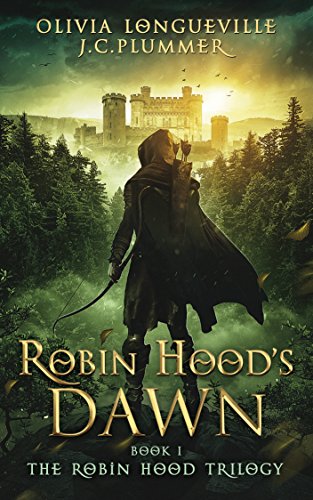
Book Corner: The Robin Hood Trilogy by Olivia Longueville and J.C. Plummer

England, 1154-1194:

A kingdom under assault.

A conspiracy born of anarchy.

A hero standing against tyranny.

Falsely convicted of a shocking crime, Robin Fitzooth, the Earl of Huntingdon, finds refuge in Sherwood Forest and becomes Robin Hood.

Leading a band of men against the injustices of a malevolent sheriff and his henchmen, Robin begins to unravel a web of treachery threatening the English royal family.

As shadowy forces gather to destroy the future of a nation, Robin faces deceit, betrayal, and the ravages of war as he defends his king, his country, his people, and the woman he loves from a conspiracy so diabolical, so unexpected, that the course of history hangs in the balance.

From the mists of an ancient woodland, to lavish royal courts teeming with intrigue, to the exotic shores of the Holy Land – Robin Hood leads the fight in a battle between good and evil, justice and tyranny, the future and the past.

Part one of an exciting three-part retelling of the Robin Hood legend!
Also Available:
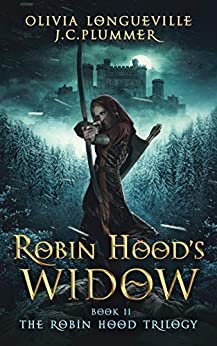
Book 2, Robin Hood’s Widow
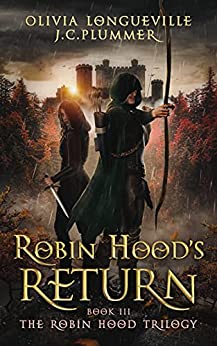
Book 3, Robin Hood’s Return

I have to admit that I am a sucker for a good Robin Hood story. However, having grown up close to Sherwood Forest and played around the Major Oak as a child, I have to admit that I can be quite picky when it comes to Robin Hood. It has to be a good story, or I will not read it. I have had The Robin Hood Trilogy on my kindle for a while, but only actually picked up the first book 3 weeks ago. I was suffering from a heavy cold and wanted some comfort reading. And what a choice for comfort reading. I read all 3 books, one after the other, in a week. I couldn’t get enough of them!

The story opens in 1154 with the death of King Stephen and a betrayal by certain nobles who had promised to put Stephen’s son, William of Blois, Earl of Warenne and Surrey, on the throne. As a regular reader of this blog will understand, my interest was most certainly piqued. So, now we have a novel series with 2 of my favourite topics; Robin Hood and the Warennes. And I got worried. What if I don’t like the way this book goes with the Warennes? I do have quite a soft spot for them, after all.

I need not have been concerned. This Robin Hood trilogy is a fabulous adventure, with well developed characters, a story thread that will keep you gripped to the very end – and some marvellous twists in the tale.

They had left Sherwood Forest and were now traversing rolling hills and pastures, but Marian could not appreciate the lovely scenery. The closer they were to Conisbrough, the more nervous she felt.

She was riding next to Constance, and they were protected by an escort of twenty of Earl de Warenne’s mounted men-at-arms. At the front, Robin rode with Lionel and the earl’s son, Guillaume. All three were the same age, and Marian observed them as they enjoyed a friendly, animated conversation.

Robbie, as usual, was riding with his father.

Although Marian was apprehensive about staying at Conisbrough, Constance was elated. She was enthusiastically telling Marian what she knew about the de Warenne family.

Once again, Marian was lamenting her lack of interest in politics during her youth. She had never paid much attention to stories about the royal family or the elaborate familial web of royals, near royals, and distant relations to the king’s family.

In contrast, Constance was very knowledgeable. Marian knew her friend had traveled to London with her father and brother every year to attend court and celebrate Midsummer.

Marian’s father had never taken her to court, or even to London. Perhaps it was his own aversion to politics and big cities. And it’s likely that he considered it unnecessary, since it was always understood that Marian would wed Robin, so there had been no need to search for a suitable husband among the nobility of England.

“Constance, I’m confused,” she reluctantly confessed.

“About what?”

“Didn’t you say that Earl Hamelin was illegitimate? How did he inherit his title/”

Constance smiled indulgently. “Every time I’ve tried to explain this, I can see your mind wandering. Please concentrate on what I’m saying.”

“My mind is wandering because so much of this seems like pointless court intrigue. I just want to go back home and stay there.”

“You’re the wife of an earl. I think you can learn a lot by spending time with Countess de Warenne. You can’t hide at Locksley and Lenton. You have duties to perform at Huntingdon.”

Marian released a noisy sigh of defeat. “Tell me again.”

“Hamelin is the illegitimate son of Geoffrey, Count of Anjou. He’s the older half-brother of the late King Henry, God-rest-his-soul, and he’s King Richard’s uncle. Of course, he’s Prince John’s uncle, too.”

“But instead of Count of Anjou, he’s the Earl of Surrey?”

“Now I’m certain that you weren’t listening,” Constance chided. “He married Isabel de Warenne, the Countess of Surrey, who was the only child of her father. So, she inherited the earldom. When Hamelin married her, he took her family name and became earl by right of his wife.”

Robin Hood’s Dawn sets the scene beautifully, charting a youthful Robin’s journey into becoming an outlaw in Sherwood Forest, and his realisation that not everyone is honourable. His arrogance and connections get him into more trouble than he realises, almost losing the woman he loves – Marian. In Robin Hood’s Widow, we discover that Marian herself is more than capable of holding her own under the canopy of Sherwood Forest. Which makes for a fantastic finale in Robin Hood’s Return, where Robin and Marian, united in their common goals, must unite to fight their enemies and find a way to accept each other’s abilities and weaknesses.

My personal favourite of the 3 books is Robin Hood’s Return, but that may be because both Hamelin and Isabel de Warenne both play prominent roles – as does my ‘local’, Conisbrough Castle. Olivia Longueville and J.C. Plummer did their research and have done an amazing job of recreating the castle and the Warenne family dynamic. Their depictions, I believe, are spot on! And it was so nice to see the people I have spent so long researching brought to life on the page.

As to the other characters, Robin Hood, Little John, the sheriff of Nottingham, Guy of Gisborne are all there – though some not as you would ordinarily recognise them. I love the way the authors of the Robin Hood trilogy have taken the legend and made it their own, weaving an incredible story of betrayal and king-making into the existing legend, so that you are at once familiar with the characters, and yet discovering new dimensions along the way.

The Robin Hood Trilogy is a fabulous, engrossing read that you will never want to end – and yet can’t wait for it to finish.

What a fabulous adventure! I cannot recommend the series highly enough.

Robin Hood’s Dawn, Robin Hood’s Widow and Robin Hood’s Return are available from Amazon.

About the authors:

Olivia Longueville is a European author whose first book was Between Two Kings, a story set in Tudor England. J.C. Plummer is an American author and historian living in Texas. They are long distance friends who share a passion for writing and history, and this is their first collaboration. Learn more at their website: http://www.AngevinWorld.com

My Books

Signed, dedicated copies of all my books are available, please get in touch by completing the contact me form.

Defenders of the Norman Crown: The Rise and Fall of the Warenne Earls of Surrey tells the fascinating story of the Warenne dynasty, of the successes and failures of one of the most powerful families in England, from its origins in Normandy, through the Conquest, Magna Carta, the wars and marriages that led to its ultimate demise in the reign of Edward III. Defenders of the Norman Crown: Rise and Fall of the Warenne Earls of Surrey is now available from Pen & Sword BooksAmazon in the UK and US, Bookshop.org and Book Depository.

1 family. 8 earls. 300 years of English history!

Also by Sharon Bennett Connolly:

Ladies of Magna Carta: Women of Influence in Thirteenth Century England looks into the relationships of the various noble families of the 13th century, and how they were affected by the Barons’ Wars, Magna Carta and its aftermath; the bonds that were formed and those that were broken. It is now available in paperback and hardback from Pen & Sword,  AmazonBookshop.org and from Book Depository worldwide.

Heroines of the Medieval World tells the stories of some of the most remarkable women from Medieval history, from Eleanor of Aquitaine to Julian of Norwich. Available now from Amberley Publishing and Amazon, Bookshop.org and Book Depository.

Silk and the Sword: The Women of the Norman Conquest traces the fortunes of the women who had a significant role to play in the momentous events of 1066.  Available now from Amazon,  Amberley Publishing, Bookshop.org and Book Depository.

*

You can be the first to read new articles by clicking the ‘Follow’ button, liking our Facebook page or joining me on Twitter and Instagram.

©2022 Sharon Bennett Connolly

Book Corner: The House in the Marsh by Steven A. McKay

For generations, stories have been told about the ruined old house in the marsh outside Wakefield. Stories of hidden treasure, sinister night-time cries, and ghostly figures doomed to haunt the lonely estate for all eternity as punishment for some terrible crime.
This winter, it seems the old tales might just turn out to be true…

England, AD 1330
John Little, a bailiff living in Yorkshire, has little interest in ghost stories, having seen enough horrors among the living to bother much about the dead. The strange accounts from his fellow villagers have everyone talking though, and it’s not long before he’s asked to accompany a group of curious locals on nocturnal visits to the house in the marsh.
There are more worrying concerns in northern England however, as autumn gives way to winter and rumours of rogue bailiffs attacking, and even murdering people in their own homes, begin to circulate.
Along with his friends – ill-tempered Will Scaflock and the renowned friar, Robert Stafford – John is drawn inexorably into a dangerous adventure that will leave yet more people dead and only add to the eerie legends which will pass into English folklore for centuries to come.
Can John and his companions uncover the truth about the house in the marsh and its terrible secrets? And will they be able to forever exorcise the ghost haunting Wakefield, or will this Christmas be anything but merry?

The House in the Marsh by Steven A. McKay is another novella chronicling the investigative adventures of 3 of Robin Hood’s Merry Men; Little John, Friar Tuck and Will Scarlet. In this outing of the intrepid ex-outlaws-turned-investigators the trio are investigating the spooky goings-on of an abandoned manor house and a pair of murderers who are impersonating bailiffs. That one of the miscreants is taken to be Little John makes identifying the killers all the more urgent.

The House in the Marsh by Steven A. McKay is a wonderful, creepy novella, combining a detective story with the ghostly and mysterious events that always seem to accompany abandoned, half-derelict buildings. Little John, Friar Tuck and Will Scarlet have to look to their own safety whilst calming the fears of villagers – both of the haunted house and the ruthless fake bailiffs. It makes for a story full of suspense, adventure and the threat of sudden, unrestrained violence.

The ex-outlaws, it seems have the skills, courage and intelligence between them to face down both the fear and the violence. The many twists and turns in the book leave the reader on the edge of their seat throughout.

Little John might be a lawman, but he was capable of extreme, deadly violence. There were enough stories and songs about him to back that up.

Desperation could make a man more dangerous, however, and, somehow – perhaps John was distracted by a movement in the crowd beside him – the butcher’s cleaver caught the bailiff’s arm. A bright-red, bloody line appeared on the white skin and John roared in pain.

Before Simon could decide what to do next, press his attack or, more probable, run for his life, John stepped forward and smashed the pommel of his sword into the butcher’s mouth.

Simon staggered back almost comically, spitting out bloody teeth, and then he fell onto his knees and pitched forward onto the ground. He didn’t move after that, and, for what felt like a long time, everyone just stared, from the butcher’s prone form to that of the grimacing bailiff whose arm was bleeding heavily.

“Fetch clean water,” a woman said to her son. “And linen.” He ran off towards their house which wasn’t far off, and she hurried to John’s side. “That’s a nasty wound,” she said, examining it expertly. “But you already know that, I’m sure. Sit down, before you fall down like that idiot.”

Despite his injury, John laughed and the sound seemed to take all the fear and alarm from the atmosphere. Others laughed, and chattered excitedly about what had just happened, while the lady knelt beside the bailiff and pushed aside his sleeve.

Her son returned quickly, and, when she used the water he’d brought to wash John’s cut she nodded in satisfaction. “It’s not as deep as I’d feared,” she said.

“I had a feeling he might want a fight,” John said. “So I wore leather bracers.” He shook his sleeve and the leather armour fell out onto the ground, sliced cleanly in half. There were whistles and gasps from teh crowd as they realised what would have happened had he not been wearing bracers.

“That probably saved your life,” said the woman, still washing away the blood before taking the linen her son handed her and using it to tightly bandage the wound. “Or at least your arm.”

The plot of The House in the Marsh by Steven A. McKay is perfectly crafted, with a number of twists and turns throwing the reader off the trail as the story unfolds. As ever, Steven A. McKays’ storytelling skills are first class as he draws the reader through the story. His impeccable research means that he recreates a highly plausible 14th century Yorkshire – you wouldn’t believe he doesn’t live near Wakefield himself!

Growing up in South Yorkshire myself, I have always had a soft spot for the Robin Hood legend. Of Course, Steven A. McKay sets it in Barnsdale Forest in Wakefield, instead of Sherwood, but he can be forgiven for that as his stories are such wonderful adventures. And his characters are much as I have always imagined them, loyal friends who rib each other but are there for each other when needed.

My only problem with The House in the Marsh by Steven A. McKay is that I wish it was longer. Steven A. McKay has created a wonderful side job for these three Merry Men and I do wish he would give them a full length story to get their teeth into.

For now, though, The House in the Marsh by Steven A. McKay is a perfect read for these cold, dark, winter nights.

To buy the book:

The House in the Marsh by Steven A. McKay is available in ebook and paperback on Amazon.

From the author:

I was born in Scotland in 1977 and always enjoyed studying history – well, the interesting bits, not so much what they taught us in school. I decided to write my Forest Lord series after seeing a house called “Sherwood” when I was out at work one day. I’d been thinking about maybe writing a novel but couldn’t come up with a subject or a hero so, to see that house, well…It felt like a message from the gods and my rebooted Robin Hood was born.

My current Warrior Druid of Britain series was similarly inspired, although this time it was the 80’s TV show “Knightmare”, and their version of Merlin that got my ideas flowing. Of course, the bearded old wizard had been done to death in fiction, so I decided to make my hero a giant young warrior-druid living in post-Roman Britain and he’s been a great character to write.

I was once in a heavy metal band although I tend to just play guitar in my study these days. I’m sure the neighbours absolutely love me.

Check out my website at stevenamckay.com and sign up for the email list – in return I’ll send you a FREE short story, as well as offering chances to win signed books, free audiobooks and other quite good things!

*

My Books

Signed, dedicated copies of all my books are available, please get in touch by completing the contact me form.

Defenders of the Norman Crown: The Rise and Fall of the Warenne Earls of Surrey tells the fascinating story of the Warenne dynasty, of the successes and failures of one of the most powerful families in England, from its origins in Normandy, through the Conquest, Magna Carta, the wars and marriages that led to its ultimate demise in the reign of Edward III. Defenders of the Norman Crown: Rise and Fall of the Warenne Earls of Surrey is now available from Pen & Sword BooksAmazon in the UK and US, Bookshop.org and Book Depository.

1 family. 8 earls. 300 years of English history!

Also by Sharon Bennett Connolly:

Ladies of Magna Carta: Women of Influence in Thirteenth Century England looks into the relationships of the various noble families of the 13th century, and how they were affected by the Barons’ Wars, Magna Carta and its aftermath; the bonds that were formed and those that were broken. It is now available in paperback and hardback from Pen & Sword,  AmazonBookshop.org and from Book Depository worldwide.

Heroines of the Medieval World tells the stories of some of the most remarkable women from Medieval history, from Eleanor of Aquitaine to Julian of Norwich. Available now from Amberley Publishing and Amazon, Bookshop.org and Book Depository.

Silk and the Sword: The Women of the Norman Conquest traces the fortunes of the women who had a significant role to play in the momentous events of 1066.  Available now from Amazon,  Amberley Publishing, Bookshop.org and Book Depository.

*

You can be the first to read new articles by clicking the ‘Follow’ button, liking our Facebook page or joining me on Twitter and Instagram.

©2021 Sharon Bennett Connolly

Book Corner: Sworn to God by Steven A. McKay

Yorkshire, AD 1329
A new religious group moves into an abandoned church just north of the village of Altofts, but when men start dying under strange and suspicious circumstances the local bailiff decides to investigate.

The Disciples of God and their charismatic leader, Lady Alice de Staynton, appear truly holy, but something sinister seems to be going on within the walls of the newly refurbished St Joseph’s. Certainly the bailiff, John Little, has his suspicions about some of the warrior-like male acolytes, but are his fears justified? Infiltrating the group seems to be the best course of action, although the volatile Will Scaflock is none too happy about being nominated for the job by Friar Tuck…
Following on from 2019’s Faces of Darkness, this standalone new story sees three legendary heroes battling invisible ‘Black Lords’ and far more dangerous earthly foes, but can they figure out what’s really going on in St Joseph’s before anyone else dies?
With twists and turns aplenty, and based on real events, historical fiction fans are sure to enjoy this action packed thriller as much as they did the author’s previous bestsellers The DruidLucia and Wolf’s Head.

Oooh goody, Steven A. McKay has a new novella out!

Actually, Sworn to God is more a short novel, than a novella. Not that that would ever be a problem. I seem to remember saying, after reviewing Faces of Darkness, that McKay really should think about doing a full-length detective series based on the exploits of Little John and Friar Tuck. These novellas are a delight to read, but they are not enough! They always leave you wanting more. And Sworn to God, despite its extra length, is no exception.

Sworn to God is a riveting detective story, looking into a mysterious cult in 14th century Yorkshire. Three former members of Robin Hood’s gang – Little John, Friar Tuck and Will Scarlet – are drawn to the mysterious Disciples of God after the suicide of one of the group’s members raises eyebrows. Tuck, Scarlet and Little John know that something is not quite right, but can’t put their finger on what – exactly – is wrong with the strange cult and its charismatic leader, Alice de Staynton, who is revered as Holy Mother by her disciples.

With his Robin Hood and Warrior Druid of Britain books, Steven A. McKay has gained a reputation as a writer of action and adventure in historical fiction. His novel of a slave in Roman Britain, Lucia, is my book of 2020 and demonstrated McKay’s depth as an author, and an incredible ability to get into the heads of his characters and human behaviour in the most trying times. With these novellas, he is also gaining a reputation as a writer of exceptional medieval mysteries. Sworn to God goes through a number of twists and turns that keep the reader entranced to the very end.

John let go of the acolyte, whose face was scarlet from lack of air and embarrassment. Before he could say anything though, Tuck was past him and John hurriedly followed.

A man lay slumped over the candlelit desk in the corner. He had a ring of straggly greying hair beneath a bald pate, looked about forty-five, and was very clearly deceased.

“Damn it!” John shouted. “If there was any hope of helping him, that idiot at the door -“

“Forget it,” Tuck said, patting the bailiff’s arm as if he was soothing a dog with its hackles up. “This fellow’s been dead for a while. Look at the colour of his skin.”

They could hear the Holy Mother ordering Colwin and David to marshal the villagers out of the church and on their way home. She was telling the people to take some food with them, to offset any irritation they might have felt at not being allowed to see the dead man – and exciting event at any time after all, never mind during a Christmas feast within the home of a strange new religious sect.

“Any evidence of violence?” Tuck muttered as he and John examined the corpse and the room about them in the wan, flickering light from the single candle on the desk.

“Doesn’t seem to be. No signs of a struggle, no apparent wounds or injuries on him, no discarded weapons …”

“What’s killed him then?” The friar eyed the dead man curiously. “He looks far too young to have died from old age as he sat here.”

The Holy Mother came into the room and exclaimed in shock at the sight before her. “Brother Morris,” she whispered from behind the hand that sought to mask her grief. “How?”

Little John, Friar Tuck and Will Scarlet are the unassuming heroes of Sworn to God. Drawn to the mystery surrounding the Disciples of God, they have a penchant for solving problems that few others can see. Steven A McKay has developed these wonderful characters through his original Forest Lord series, but now has developed them even further, giving them an inquisitiveness that has given them a new sense of purpose after their years as famous outlaws have come to an end.

For a Scot, Steven A. McKay demonstrates a deep understanding of the Yorkshire landscape and the mindset of Yorkshire people, which he uses to full effect in these wonderful novellas. His passion for the legend of Robin Hood, for medieval history and for storytelling, in particular, shines through on every page. He draws the reader into the story and takes them on a wonderful journey of mystery and discovery. Moreover, Sworn to God is developed from stories of real life religious cults, showing how a charismatic leader can evince the loyalty of their followers, and get people to do things they would never normally do. In this way, Sworn to God is not just a medieval mystery, but also a study of human nature and how these cults can develop, even today. The human need to belong drawing the lost and lonely into the fold.

As an author, Steven A. Mckay seems to be able to go from strength to strength. Sworn to God is a marvellous, entertaining and engaging read. It provides a wonderful diversion in these trying times – escapism at its best. If you have never read a Steven A. McKay novel, you are missing out on an incredible author and storytelling at its best. I cannot recommend Sworn to God highly enough. I loved it!

To buy the book: Amazon

About the author:

From Steven A. McKay: I was born in Scotland in 1977 and always enjoyed studying history – well, the interesting bits, not so much what they taught us in school. I decided to write my Forest Lord series after seeing a house called “Sherwood” when I was out at work one day. I’d been thinking about maybe writing a novel but couldn’t come up with a subject or a hero so, to see that house, well…It felt like a message from the gods and my rebooted Robin Hood was born.
My current Warrior Druid of Britain series was similarly inspired, although this time it was the 80’s TV show “Knightmare”, and their version of Merlin that got my ideas flowing. Of course, the bearded old wizard had been done to death in fiction, so I decided to make my hero a giant young warrior-druid living in post-Roman Britain and he’s been a great character to write.
I was once in a heavy metal band although I tend to just play guitar in my study these days. I’m sure the neighbours absolutely love me.
Check out my website at stevenamckay.com and sign up for the email list – in return I’ll send you a FREE short story, as well as offering chances to win signed books, free audiobooks and other quite good things!

My Books

Ladies of Magna Carta: Women of Influence in Thirteenth Century England  looks into the relationships of the various noble families of the 13th century, and how they were affected by the Barons’ Wars, Magna Carta and its aftermath; the bonds that were formed and those that were broken. It is now available from Pen & SwordAmazon and from Book Depository worldwide.

Also by Sharon Bennett Connolly:

Silk and the Sword: The Women of the Norman Conquest traces the fortunes of the women who had a significant role to play in the momentous events of 1066.  Available now from Amazon,  Amberley Publishing, Book Depository.

Heroines of the Medieval World tells the stories of some of the most remarkable women from Medieval history, from Eleanor of Aquitaine to Julian of Norwich. Available now from Amberley Publishing and Amazon and Book Depository.

*

You can be the first to read new articles by clicking the ‘Follow’ button, liking our Facebook page or joining me on Twitter and Instagram.

©2020 Sharon Bennett Connolly 

Book Corner: Lucia by Steven A. McKay

What makes life worth living for a slave of Rome?

The promise of vengeance no matter how long it takes.

At eight years old, Lucia is torn from the life she knew. Her village burned to the ground and parents murdered by Romans, she is kidnapped, sold and shipped abroad to the Villa Tempestatis in Britannia to serve the young Roman army officer Castus.

Faced with a bleak future of decades of servitude to her master, as well as sadistic brutality at the hands of his manageress, Paltucca, she finds herself fixated by one thought alone: vengeance.

Yet Villa Tempestatis, with its picturesque surroundings in Britannia’s green countryside, offers a life that’s a little easier than elsewhere in the Roman empire. The slaves form strong bonds of love and friendship, enjoy feasts and holiday celebrations together, and are even allowed, sometimes, to start a family. Many of them are happy enough with their lot.

Despite that, every moment of Lucia’s life is blighted by her hatred for Castus and Paltucca, and only seeing them both destroyed will bring her a measure of peace, even if it takes decades of work and planning…

From the moment you read the dedication in the front of Lucia, you will know you are in for an emotional rollercoaster:

Dedicated to all the men, women and children forced into slavery and forgotten by history.

And you would be right!

Lucia is one of those novels that will stay with you long, long … long after you have read the final page and closed the book (probably with a tear on your cheek). To say it is thought-provoking would be an understatement. This is one of those stories that will really get under your skin.

I have read everything Steven A. McKay has written, from his unique take on the Robin Hood stories to his wonderfully atmospheric Warrior Druid of Britain series, but Lucia is on another level. It is probably his best writing yet. It is a story that is at once desperate and uplifting, a story that touches you deep in your soul.

Set in a splendid villa in Roman Britain, Lucia captures perfectly a life of slavery. The brutality, the feeling of helplessness, the inhumanity is contrasted with the compassion, the humanity and the sense of family and comradeship with fellow slaves. Steve A. McKay clearly and cleverly depicts the blurred lines of the master and slave relationship and the slaves serve the Roman family, being detached from it and at the same time an integral part of the family life.

The villa was a wonderful sight on a July day like this, with its white plastered walls and red-tiled roofs seeming to glow in the sunshine, while its position on the hill afforded superb views of the land around: well-tended fields of corn and grain; groves of trees once sacred to the native Britons; and the sparkling waters of the narrow river that flowed past the western wing, providing their water for drinking, cleaning, cooking and, of course, bathing.

Sometimes, on particular beautiful days, Lucia forgot about her previous life, as the daughter of a warlord in Germania. Forgot about her previous existence before she was captured by the Romans who had destroyed her village, slaughtered her people and sold her at the market to her master.

It had been a year already since Publius Licinius Castus, a young Roman officer himself, had bought her from that terrible slave-market and shipped her here, to his lavish country villa in this damp land.

Villa Tempestatis

A lump came to her throat as an image of her parents – happy, smiling down with pride on their beloved daughter – came to her, and she angrily brushed away the tears forming in her eyes before they had a chance to streak her grimy cheeks.

Yes, sometimes she was able to forget her previous, free life in Germania, but it was never long before reality returned and she felt her spirit crushed so hard that it almost stopped her heart from beating.

The beauty of the villa and its surroundings hid the pain of dozens of slaves who had lived here over generations, young and old. Some of them, like Paltucca, were able to adapt and even thrive in such conditions, while others wilted and eventually, under the weight of what they’d lost, rendered themselves useless to the master. Those unfortunates soon disappeared, never to be heard of again.

Lucia wondered if she would end up like that one day, sold to be worked to death in a mine perhaps, when the stolen memory of the joy of her childhood became too much to bear.

Lucia explores the life of a girl forced into slavery by the Romans at the age of 8, and her relationship with her master and her fellow slaves. The book does a wonderful job of depicting not only the life of a slave but also their emotions, the fact that they do live their lives despite a lack of freedom, that they lived, loved, even raised families. It clearly demonstrates the contrast between the acceptance and cooperation that you still have to live, despite not being free, and that deep, constant yearning for freedom.

Lucia is one of those books for which you can write an awesome review – and yet, still know that your review will never do the book justice. It is, beyond doubt, the best thing Steven A. McKay has ever written, simply because it makes the reader re-evaluate the way they think and feel – and takes them to a depth of their soul they probably have never visited before.

Touching a topic that has affected lives throughout history, and yet seems just as relevant today; slavery. Lucia plays on all your emotions: anger, pity, empathy, love and hate. At times, Lucia is a hard book to read, but is essential reading on so many levels. Steven A McKay has written a truly riveting depiction of the life of a slave.

This is how books should be written, with passion and compassion. If you only read one more book this year, it should be Lucia.

Lucia is now available from Amazon

*

About the author:

Steven McKay was born in 1977 near Glasgow in Scotland. He live in Old Kilpatrick with his wife and two young children. After obtaining his Bachelor of Arts degree with the Open University he decided to follow his life-long ambition and write a historical novel.

He plays guitar and sings in a heavy metal band when they can find the time to meet up.

You can check out his website here. Steven also has an Amazon Author page and can be found on Twitter and Facebook.

*

My Books

Ladies of Magna Carta: Women of Influence in Thirteenth Century England  looks into the relationships of the various noble families of the 13th century, and how they were affected by the Barons’ Wars, Magna Carta and its aftermath; the bonds that were formed and those that were broken. It is now available from Pen & SwordAmazon and from Book Depository worldwide.

Also by Sharon Bennett Connolly:

Silk and the Sword: The Women of the Norman Conquest traces the fortunes of the women who had a significant role to play in the momentous events of 1066.  Available now from Amazon,  Amberley Publishing, Book Depository.

Heroines of the Medieval World tells the stories of some of the most remarkable women from Medieval history, from Eleanor of Aquitaine to Julian of Norwich. Available now from Amberley Publishing and Amazon and Book Depository.

*

You can be the first to read new articles by clicking the ‘Follow’ button, liking our Facebook page or joining me on Twitter and Instagram.

©2020 Sharon Bennett Connolly

Guest Post: Prince John’s Gambit: The Throne at any Cost

Prince John’s Gambit: The Throne at any Cost

John, Count of Mortain, Lord of Ireland, and youngest son of Henry II and Eleanor of Aquitaine knew that the stars were finally aligning in his favor, and the impossible dreams of his youth were now within his grasp. Bold action was required, and he was confident in his ability to seize this auspicious opportunity.

It was early January 1193 when John received a letter from King Philip II of France informing him that his brother, King Richard the Lionheart, was being held captive by the Duke of Austria and his liege lord, Holy Roman Emperor Henry VI.

John immediately traveled to the nearest port and secretly crossed the Channel into Normandy. He might have already been imagining his future as King of England, Duke of Normandy and Aquitaine, and ruler over the Angevin lands lying between those valuable duchies. No one would ever call him “Lackland” again.

It’s likely that John’s ambitions were buoyed by his knowledge of family history. His great-grandfather, Henry I, was the youngest son of William the Conqueror. Upon William’s death, his lands were divided between his two oldest surviving sons: William Rufus, who became King of England and Robert Curthose, who became Duke of Normandy. Henry Beauclerc, as Henry I was known before his ascension, was the original “Lackland” as the only inheritance he received was money.

Yet, only 13 years after William the Conqueror’s death, this youngest son had seized the throne of England after the sudden death of William Rufus in 1100. Six years later, Henry defeated

Robert Curthose at the Battle of Tinchebray and became Duke of Normandy. Robert Curthose would spend the rest of his life in captivity.

Did visions of Richard, his formidable older brother, imprisoned for the rest of his natural life inspire John as he rode across Normandy that cold January?

John’s story during Richard’s captivity stretches from January 1193 to the brothers’ reconciliation in May 1194. It’s a tale of persistence, audacious risk-taking, and a single-minded resolve to achieve power at any cost.

If John had succeeded, perhaps we would admire him just as Henry I is admired for his unexpected rise to power. But John’s failures and reckless schemes during these 17 months would not only determine the course of Richard’s remaining years as king, they would also play an important role in establishing John’s reputation as a deceitful, untrustworthy, and avaricious man.

When John met with the Norman barons at Alençon in January 1193, he announced that Richard would not return, and that he was likely dead. John proclaimed that he was ready to assume control of Normandy and help the barons defend against potential attacks from King Philip. These loyal liegemen of Richard flatly refused to accept John as their new lord. As long as Richard lived, they would honor their oaths of fealty to him. Undeterred, John left them and went to Paris.

King Philip had spent his reign cleverly pitting one Plantagenet against another, and he was delighted to receive John at his court. In return for Philip’s support, John vowed to annul his marriage and marry Philip’s sister. He then paid homage to Philip for Normandy and the Angevin lands, and he promised to give Philip the strategic fortress of Gisors and the Norman Vexin.

This was a stunning betrayal of his brother, and as news of John’s actions in Paris made its way back to England, many of those who might have otherwise supported John as heir were outraged.

In February, John returned to England where he captured and garrisoned the castles of Windsor and Wallingford. He then entered London and declared that Richard would never return; he even insisted that Richard was dead. John demanded the Great Council recognize him as king.

His mother, the indomitable Eleanor of Aquitaine, and the Great Council were now ruling England. They had not yet received word of Richard’s location or condition, and it was a precarious time. Since Richard had no legitimate children, only John and a nephew, Arthur of Brittany, were potential successors. Arthur’s father, Geoffrey, had been born before John, but Arthur’s youth and Breton upbringing worked against him. Eleanor preferred that John ascend to the throne should Richard die.

By early March, John’s castles at Windsor and Tickhill were under siege. It was an awkward moment for the men leading these sieges. If they pursued victory too vigorously, they might make an enemy of the future king.

On April 20, Eleanor and the Great Council began receiving dispatches from Richard, who outlined the terms of his release and offered recommendations for raising the staggering king’s ransom required for his freedom. The government could not simultaneously conduct sieges against John’s castles and raise the ransom.

Even though Windsor and Tickhill were on the verge of surrender, a six-month truce was negotiated. Eleanor took control of Windsor and Wallingford, while John kept Tickhill and Nottingham. Along with other stipulations, John was expected to help raise the ransom, and he was required to stay in England.

After this setback, John spent May and June in Dorset, pouting and plotting his next move. Historians differ on how much effort he put into raising the ransom.

In early July, news reached both England and France that the terms of Richard’s release had been renegotiated and finalized. Although Richard knew that his release was still months away, Philip believed the Lionheart could be freed at any time.

In response, a frantic King Philip sent his famous message to John: “Look to yourself, the Devil is loosed!”

Despite his pledge to remain in England, a terrified John fled across the Channel to Paris. Because he had broken the truce, John’s estates were confiscated.

John was at Philip’s side when emissaries from the Lionheart arrived, proposing a treaty with the French king. The Treaty of Mantes was signed on July 9, 1193, and it was a generous settlement intended to stop Philip from further incursions into Normandy and to avoid a possible French invasion of England.

Richard’s secondary goal was to separate Philip and John. If John renewed his oath of loyalty to his brother, his titles and lands on both sides of the Channel would be restored, and a series of castles in Normandy would be awarded to him. John promptly pledged his allegiance to Richard and set off to claim his castles. However, he was so distrusted that the castellans refused to relinquish control to John. A furious John returned to Paris, and Richard’s scheme to remove John from Philip’s influence failed.

The emperor’s December announcement that Richard would be released in January resulted in another panicked response from Philip and John. They sent a letter to Henry offering either monthly payments to keep Richard imprisoned until autumn or a lump sum matching the ransom raised by Eleanor, as long as Henry transferred custody of his prisoner to Philip.

By January 1194, John was desperate, but he was not ready to admit defeat. He made one last treaty with Philip, and its extraordinary terms must have astounded the French king. John surrendered the whole of Normandy east of the Seine except for the city of Rouen. He gave key castles in Maine, Anjou, Touraine, and Aquitaine to Philip. And perhaps the most shocking concession was his agreement to hold the remaining continental lands as a baron of the French court. This would end the long-standing tradition of the Duke of Normandy meeting the King of France as an equal.

The January treaty was so astonishing that it only raised Philip’s suspicions. Although Philip signed the treaty, the shrewd French king probably doubted that John would abide by it.

Philip and John’s offer tempted Henry VI, and he showed their letter to Richard. Although he could not renege on his promises, Henry delayed Richard’s release until February 4, 1194.

Eleanor and Richard immediately left the German court, and they landed in England on March 13. Richard soon subdued John’s remaining supporters, and John’s titles and lands were again confiscated.

On May 13, Richard and Eleanor disembarked in Normandy. By May 19, they were in Lisieux at the home of John of Alençon. It is here that a shaken and contrite John arrived, falling at his brother’s feet, shedding the required tears, and begging for mercy. Richard forgave him, but his words were casual and full of contempt. He called the 27-year-old John a “child” who had been led astray by evil advisors.

Eleanor and Richard had already determined that it was more important to separate John from Philip and bring him back into the family fold than to impose the punishment he deserved for his treason.

The following day, John returned to Evreux, a strategic castle he had been holding for Philip since January. He then demonstrated why he could not be trusted. He invited the town’s French officials to meet with him, perhaps for dinner, and he announced to them that he now held the town for Richard before ordering their slaughter.

Twelve months later, in May 1195, Richard restored the counties of Mortain and Gloucester to John, although not the castles. In September 1197, Richard formally named John as his heir. John did not return to England until after Richard’s death in 1199.

The story of John’s 17 month quest for power during Richard’s captivity shows a man willing to promise anything and risk everything, regardless of whether he could deliver. Yet, he never suffered the consequences he deserved for his actions, mostly because he was the favored choice to succeed Richard, as long as the Lionheart remained childless.

Consider these examples:

· During his initial bid to take the crown, when his castles were on the verge of surrender, he was offered a generous truce.

· He lost his titles and lands when he fled to Paris in July 1193, but the Treaty of Mantes restored them to him.

· He ceded valuable strategic castles to Philip, and Richard would spend the remainder of his life fighting to recover them. John’s penalty was to lose his lands and titles for a time, but they were eventually returned to him.

This raises the question of whether John learned any lessons from his disastrous attempt to take the throne from Richard, and how that lack of meaningful consequences for his reckless and risky gambles might have impacted his reign, particularly when dealing with a cunning foe like King Philip and aggrieved barons looking for a measure of justice.

About the authors:

J. C. Plummer graduated Summa Cum Laude from Washburn University with a Bachelor of Arts degree in History and Anthropology. She later earned a Master of Science degree in Computer Information Science from Dartmouth College.

As an author and historian, J.C.’s goal is to provide thoughtful and entertaining storytelling that honors the past, is mindful of the present, and is optimistic for the future.

She has joined with author Olivia Longueville to co-author The Robin Hood Trilogy.

About Olivia Longueville: Olivia has always loved literature and fiction, and she is passionate about historical research, genealogy, and the arts. She has several degrees in finance & general management from London Business School (LBS) and other universities. At present, she helps her father run the family business.

Olivia’s first book was Between Two Kings, a novel set in Tudor England, which will be re-published by Penmore Press later this year.

J.C.’s social media profiles:

Website: http://www.angevinworld.com/

Twitter: @JC_Plummer Facebook: http://www.facebook.com/jennie.newbrand/

Olivia’s social media profiles:

Website: http://www.olivialongueville.com/

Twitter: @O_Longueville

Facebook: http://www.facebook.com/OliviaLongueville/

The Robin Hood Trilogy:

Set in late 12th century England, France, and Outremer, this re-imagining of the Robin Hood story closely follows history while incorporating popular aspects of the Robin Hood legends.

From the mists of an ancient woodland, to lavish royal courts teeming with intrigue, to the exotic shores of the Holy Land—Robin Hood leads the fight in a battle between good and evil, justice and tyranny, the future and the past.

Historical figures such as King Philip II of France, Richard the Lionheart, Prince John, and Eleanor of Aquitaine are featured in the trilogy.

Book 1: Robin Hood’s Dawn Amazon buy links. https://bit.ly/1-RHDawn https://bit.ly/RHDawn-UK

Book 2: Robin Hood’s Widow NOW AVAILABLE! Amazon buy links. https://bit.ly/RHWidow https://bit.ly/RHWidow-UK

Book 3: Robin Hood’s Return Coming soon!

*

My Books

Out Now!

Ladies of Magna Carta: Women of Influence in Thirteenth Century England  looks into the relationships of the various noble families of the 13th century, and how they were affected by the Barons’ Wars, Magna Carta and its aftermath; the bonds that were formed and those that were broken. It is now available from Pen & SwordAmazon and from Book Depository worldwide.

Also by Sharon Bennett Connolly:

Silk and the Sword: The Women of the Norman Conquest traces the fortunes of the women who had a significant role to play in the momentous events of 1066.  Available now from Amazon,  Amberley Publishing, Book Depository.

Heroines of the Medieval World tells the stories of some of the most remarkable women from Medieval history, from Eleanor of Aquitaine to Julian of Norwich. Available now from Amberley Publishing and Amazon and Book Depository.

*

You can be the first to read new articles by clicking the ‘Follow’ button, liking our Facebook page or joining me on Twitter and Instagram.

©2020 Sharon Bennett Connolly, Olivia Longueville and J.C. Plummer