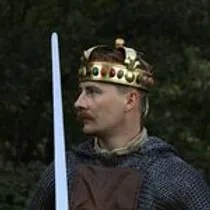
Wordly Women: Paula Lofting

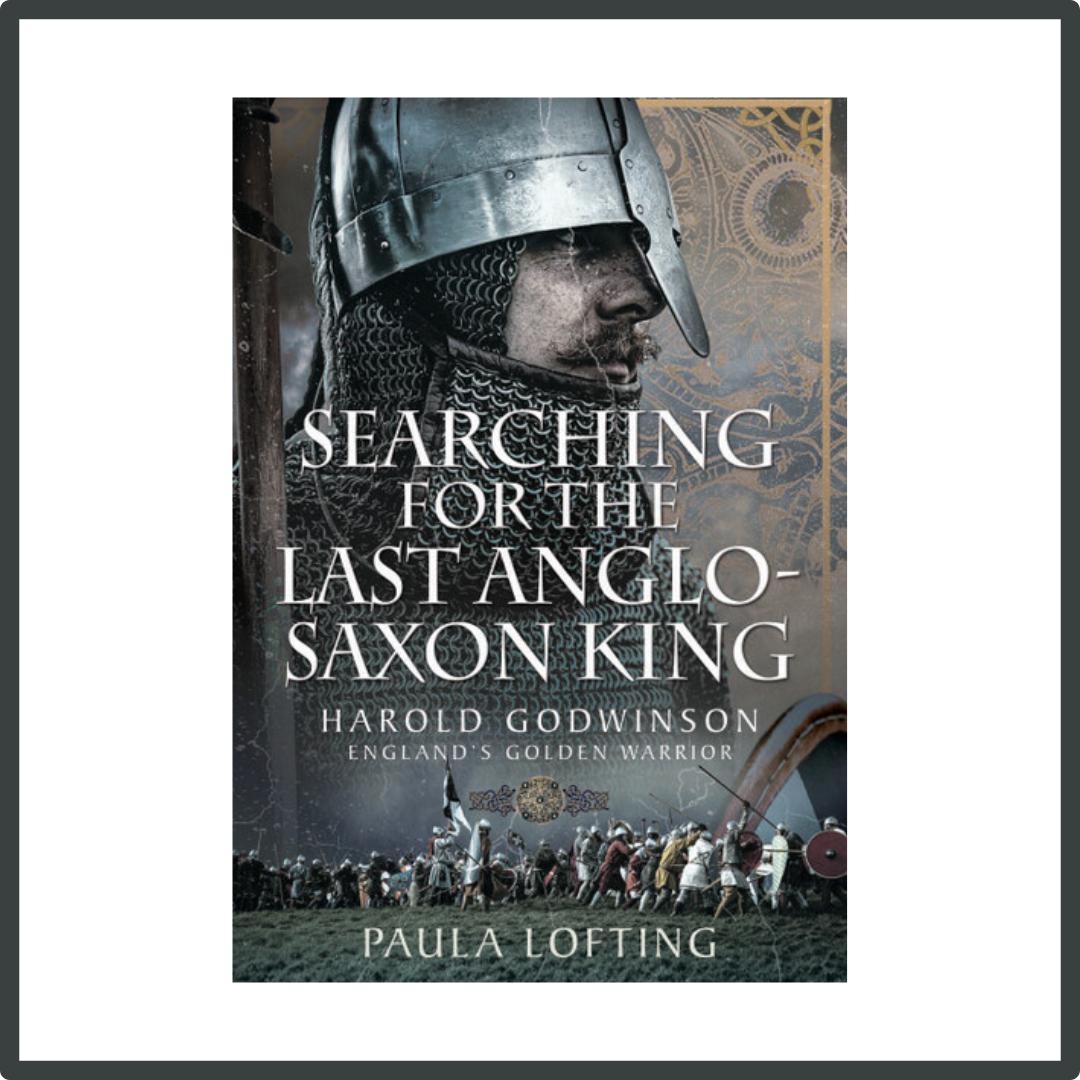
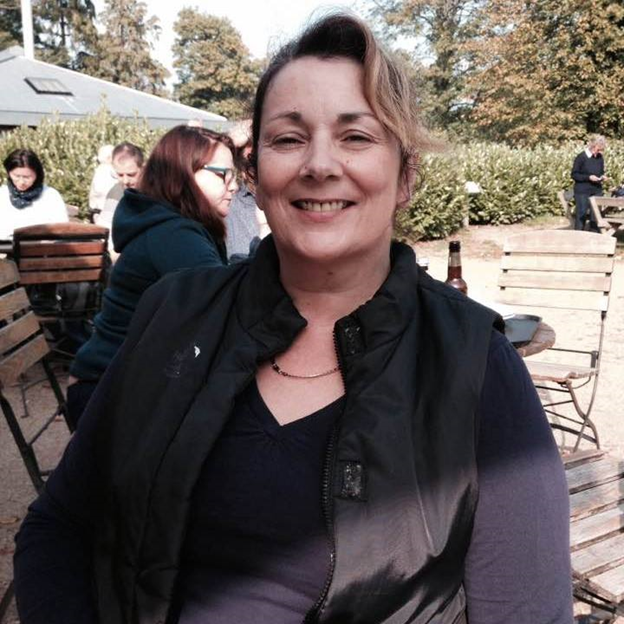
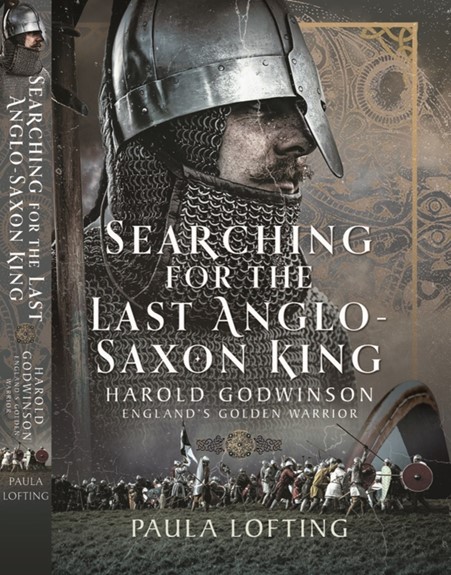
In the third episode of my Wordly Women interviews, I welcome Paula Lofting to History…the Interesting Bits to talk about her writing journey. Paula is the author of the Sons of the Wolf series of novels and has recently published her first none fiction work Searching for the Last Anglo-Saxon King: Harold Godwinson, England’s Golden Warrior.

Welcome Paula….

Sharon: What got you into writing? 

Paula: When I was a little girl as soon as I could write straight, I used to come home from school sit at the coffee table in our lounge on my feet and write stories. I was particularly fond of ‘composition’ class at school where the teacher would put several titles up for us to choose from to write about. I often had my stories read out to class. 
I guess it was something I always wanted to do. I remember in my teens, writing an epic historical fiction based on the years after the Romans left Britain, but I hand wrote it because I hadn’t learned to type and the typewriter, I had was useless. I thought I was never going to submit because it never occurred to me to just type with one finger! So, I gave up on that idea. I’d written plays, poems, and all sorts of stuff, but I was also in a bad relationship with a man who didn’t want to share me with a pen, so it was difficult until the relationship ended, and I had moved on. It was when the advent of personal computers came along when I realised that I could actually achieve my dream if I wanted to. 

    Sharon: Tell us about your books. 

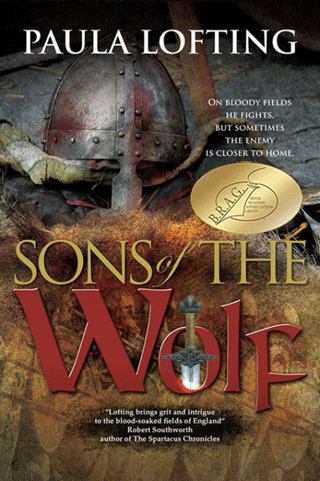
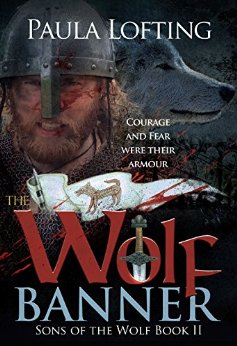
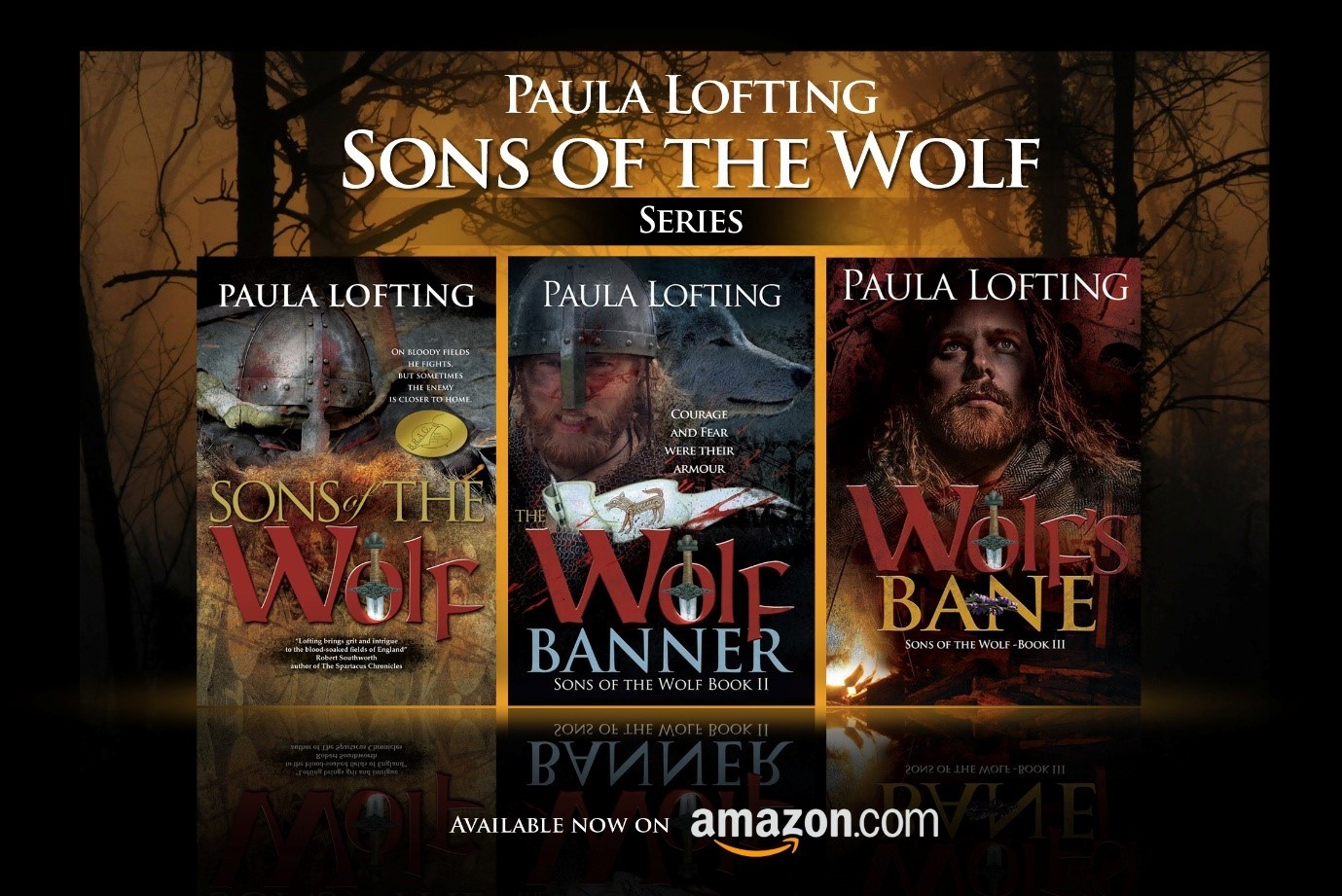
    Paula: I have been writing a series set in the years leading up to the Norman Invasion of 1066. There are currently two books I have published in the series, and of course a nearly finished 3rd WIP. The series is called Sons of the Wolf, which is the name of book 1 and book 2 is The Wolf Banner, and 3 which I am working on is called Wolf’s Bane. As you can see there is a recurring theme. The theme is not something to do with real wolves but has its origins in my hero’s family history whose ancestors believed that they were descended from wolves. 

    The books tell the story of Wulfhere, a Sussex thegn, and follows the fortunes of his family in the years before the Battle of Hastings took place. It explores the lives of the ordinary people who lived against the backdrop of the political landscape of the time. 

    The series is a chronological account of events that are woven into the tapestry of the family’s lives and also tells the story of the main historical players of the time, such as Harold Godwinson and his clan. The two men’s lives run parallel alongside each other, and their contrasting stories are intricately woven together as is their fate.  

    The books all run consecutively, and you will find there are no gaps in the saga, so where one book ends, the new book starts. I have plans to continue after the catastrophic events of 1066 into the rebellion years. 

    Sharon: What attracts you to the 11th century? 

    Paula: I think that there is a lot of romance around the whole story of two men who fought over their claims to be king of England which people are drawn to. There is the tragedy of the last ‘Anglo-Saxon king’ who is butchered to death on the battlefield: the tall, handsome, charismatic, affable, warrior who fights for his people and his country. There is the underdog and the overdog theme which comes after the conquest and lasts for some time before England begins to melt as though seamlessly into the new regime.  

    Then you have the original Robin Hood type story of Hereward who sort of appears from nowhere to fight the good fight against the baddies after coming back to England from abroad to find a lot of things have changed and his ancestral lands commandeered by invaders. There is so much to play with there, a passionate conglomerate of rich history that evokes and inspires in the most amazing manner. It is an era that sets itself apart from what happens later – the cusp of change from the old world to the new. 

    I find it fascinating. Love… Betrayal… Battles… Bloodfeud. 

    What’s not to love! 

    I have also written a book about Harold Godwinson which is due for release any day now with Pen and Sword. 

    Sharon: Who is your favourite Anglo-Saxon and why? 
    Paula: There were so many extraordinary characters, and a lot I could choose from. For now, I have to go with Harold Godwinson, simply because, although we will never know what his true nature was for certain, what is written in the sources is constant and conjures up a vision of a man who loved his wife, his family, and his country. A man who avoided internal conflict, forced to navigate intrigue, family skirmishes, and the jealousy of the other aristocracy. He was not a perfect man, but in comparison to many rulers and sub rulers in medieval times, there were a lot more who were far more undesirable. During his early tenure as king, knowing that his country was in danger on many fronts, he acted swiftly to gather his armies together and deploy them to defend the shores. He even found time to see to some of his admin duties, all this in the early weeks of his reign. Who knows what he might have achieved if his life had not been so cruelly taken from him so early into his reign. 

    Sharon: Who is your least favourite Anglo-Saxon – or Viking – and why? 

    Paula: Ooo – Can I have one of each?  

    In that case I have to say, the Anglo-Saxon Ealdorman Eadric Streona whose betrayal of King Edmund lost him the battle of Assandun.  

    My least favourite Viking would have been Sweyn Forkbeard who was invading England from the 990s up until 1013. He became king for about 6 weeks before he died in February 1014. His pillaging and burning of England really stank. 

    Sharon: How do you approach researching your topic? 

    Paula: Well, currently I am taking notes from the two major annals, the Anglo-Saxon Chronicles and the Chronicon ex Chronicis which was the work of the monk, John of Worcester and also in part, someone called Florence. I plan to augment them with other sources that I read, both primary and secondary, to try and find sources that correlate and contradict each other so I can make sure I have all the facts in one place when I come to write the narrative. I am always very grateful to those historians who came before me for having done the hard part of digging through the foundations of the information available to me and try to see the original sources for myself. Its helpful that these authors give guidance in their own work for us new historians to build upon and come up with new ideas. 

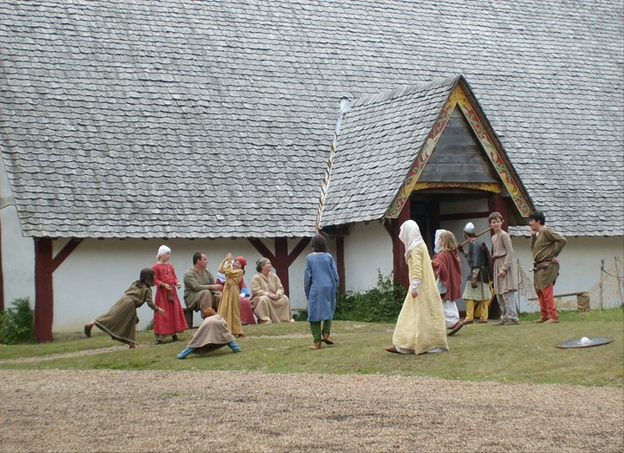
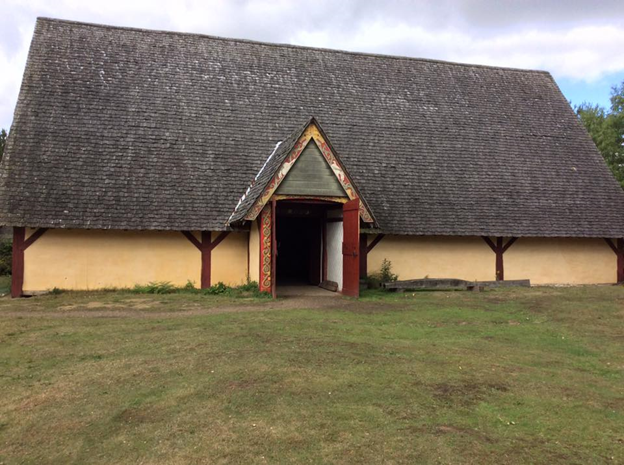
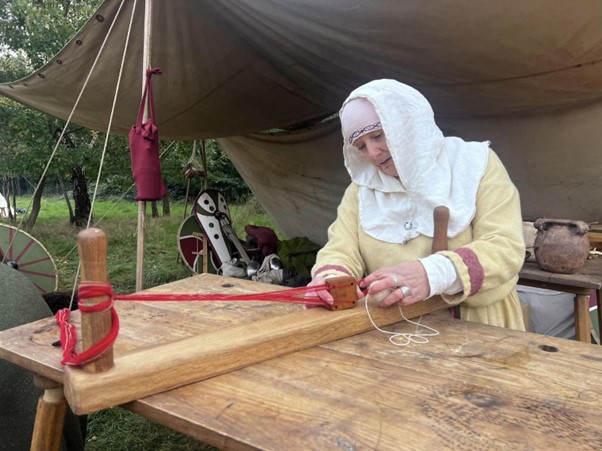
    For Historical fiction I have the privilege of being a reenactor and learning the everyday tasks and the little detailed things that experimental archaeology gives us like clothing, food, buildings and battle strategies that often history texts can’t give us. This helps me to build my world as authentically as I possibly can.  

    Sharon: Tell us your ‘favourite’ Anglo-Saxon story you have come across in your research? 
    Paula: Oo I love this question! 

      I have a few, actually: The research carried by Dan Armstrong regarding the Papal Banner. It seems there is little evidence for it in 1066. Readers will need to read the book to find out more about what Armstrong uncovered. 

      Another is the version of Harold’s trip to Normandy that the English chronicler, Eadmer of Canterbury writes in his History of Recent Events in England, a story that makes far more sense, even though it is the only version of this you can find. And considering that Eadmer was not particularly pro Harold, I think it is far more reliable than the Norman sources. 

      I also love the anecdotal tale of Bishop Wulfstan who carried a pair of snips with him to cut the hair long hair of the young men who came before him. He didn’t approve of men with long hair, obviously. Can you imagine, you’re an elite, well-respected member of the elite huscarls kneeling before him as you get to the front to receive holy communion and he reaches over your head and grips your neatly combed and beautifully tied back pony-tail and with one snip, you lose it! And there was nothing you could do about it!  

      Sharon: Tell us your least ‘favourite’ Anglo-Saxon story you have come across in your research?  

      Paula: Oh gosh, I can name lots, but probably the worst, I have to say, is the cruel propaganda used by the Norman scribes such as Poitiers, who was the first one to mention the Papal Banner, and the way they defiled Harold’s character to detract from William’s regicide of an anointed king and make him seem like a saint! 

        Sharon: Are there any other eras you would like to write about? 

        Paula: Yes indeed, but I’m probably never going to achieve them all, here are just a few: 

          Staying in the so-called dark ages, I once started to write an epic about the post Roman Britain era, centring on Ambrosius Aurelianus. It never came to anything because my circumstances were not right at the time, but I would love to give it ago one day.  

          Another is Macbeth, and coming right out of my comfort zone, a story about a highway man. 

          Sharon: What are you working on now? 

          Paula: Edmund Ironside is my new project for Pen and Sword – a non-fiction book, and fiction wise, I am working on finishing the third novel in my series, Wolf’s Bane 

            Sharon: And finally, what is the best thing about being a writer? 

            Paula: Escaping into other times, other places, and building a different world. It gives me a sense of release and I enjoy creating characters I love. 

            It has never really been my aim to sell loads of books and earn loads of money from writing because its not going to be achievable in this day and age. Its more of a hobby really, but if people read my work, then I am very happy, especially if they enjoy it. That’s the most important part to me.  

            About the author:
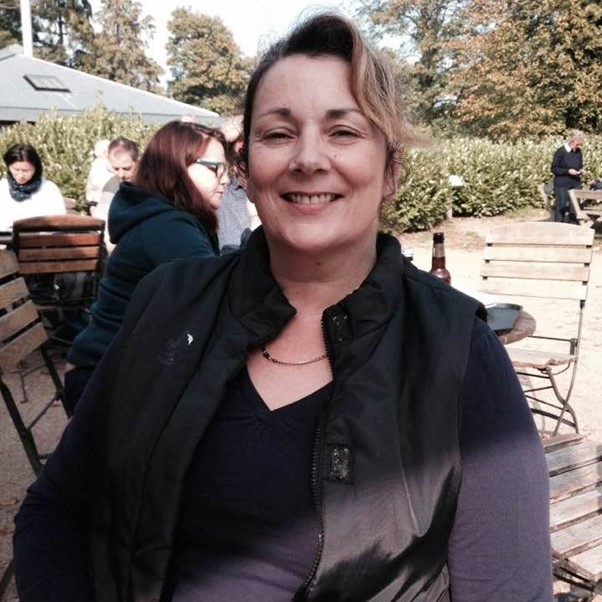
            Paula was born in the ancient Saxon county of Middlesex in 1961. She grew up in Australia hearing stories from her dad of her homeland and its history. As a youngster she read books by Rosemary Sutcliff and Leon Garfield and her love of English history grew. At 16 her family decided to travel back to England and resettle. She was able to visit the places she’d dreamt about as a child, bringing the stories of her childhood to life. It wasn’t until later in life that Paula realised her dream to write and publish her own books. Her debut historical novel Sons of the Wolf, was first published in 2012 and then revised and republished in 2016 along with the sequel, The Wolf Banner, in 2017. The third in the series, Wolf’s Bane, will be ready for publishing later this year.   

            In this midst of all this, Paula has acquired contracts for nonfiction books with the prestigious Pen & Sword publishers. Searching for the Last Anglo-Saxon King, Harold Godwinson, England’s golden Warrior is due to be published at the end of February, and a biographic of King Edmund Ironside is also in the pipeline. She has also written a short essay about Edmund for Iain Dale’s Kings and Queens, articles for historical magazines. When she is not writing, she is a psychiatric nurse, mother of three grown up kids and grandmother of two and also re-enacts the Anglo-Saxon/Viking period with the awesome Regia Anglorum. 

            Social Media:

            Website: www.threadstothepast.com, Facebook: https://www.facebook.com/Wulfsuna?locale=en_GB, Instagram: https://www.instagram.com/paulaloftingwilcox/, x: https://x.com/longshippub, Threads: www.threadstothepast.com, Blue Sky: @paulaloftingauthor.bsky.social 

            Book Links: Sons of the Wolf; Wolf’s Bane; Searching for the Last Anglo-Saxon King: Harold Godwinson, England’s Golden Warrior.

            *

            My books

            Signed, dedicated copies of all my books are available through my online store.

            Out now: Scotland’s Medieval Queens

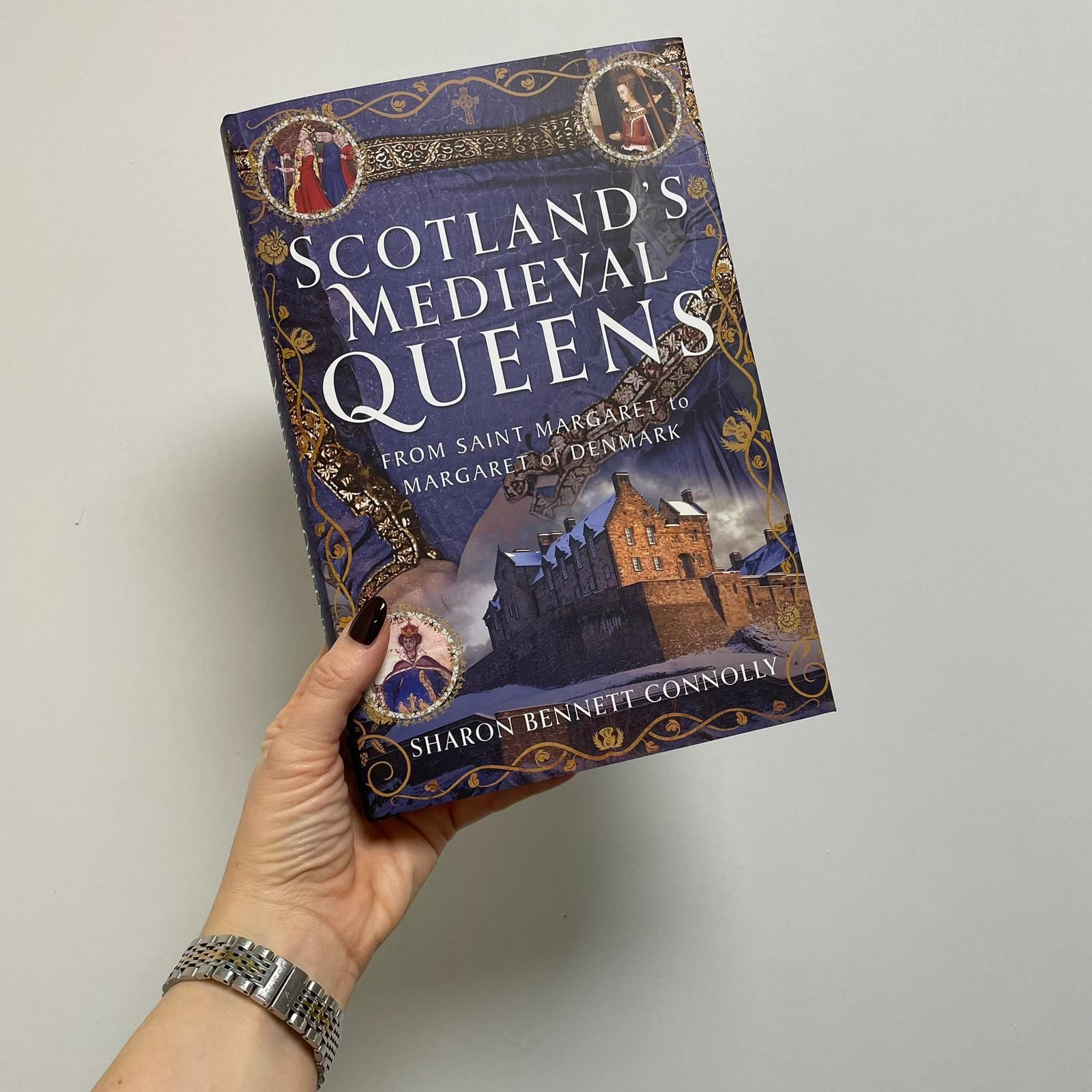
            Scotland’s history is dramatic, violent and bloody. Being England’s northern neighbour has never been easy. Scotland’s queens have had to deal with war, murder, imprisonment, political rivalries and open betrayal. They have loved and lost, raised kings and queens, ruled and died for Scotland. From St Margaret, who became one of the patron saints of Scotland, to Elizabeth de Burgh and the dramatic story of the Scottish Wars of Independence, to the love story and tragedy of Joan Beaufort, to Margaret of Denmark and the dawn of the Renaissance, Scotland’s Medieval Queens have seen it all. This is the story of Scotland through their eyes.

            Available now from Amazon and Pen and Sword Books

            Also by Sharon Bennett Connolly:
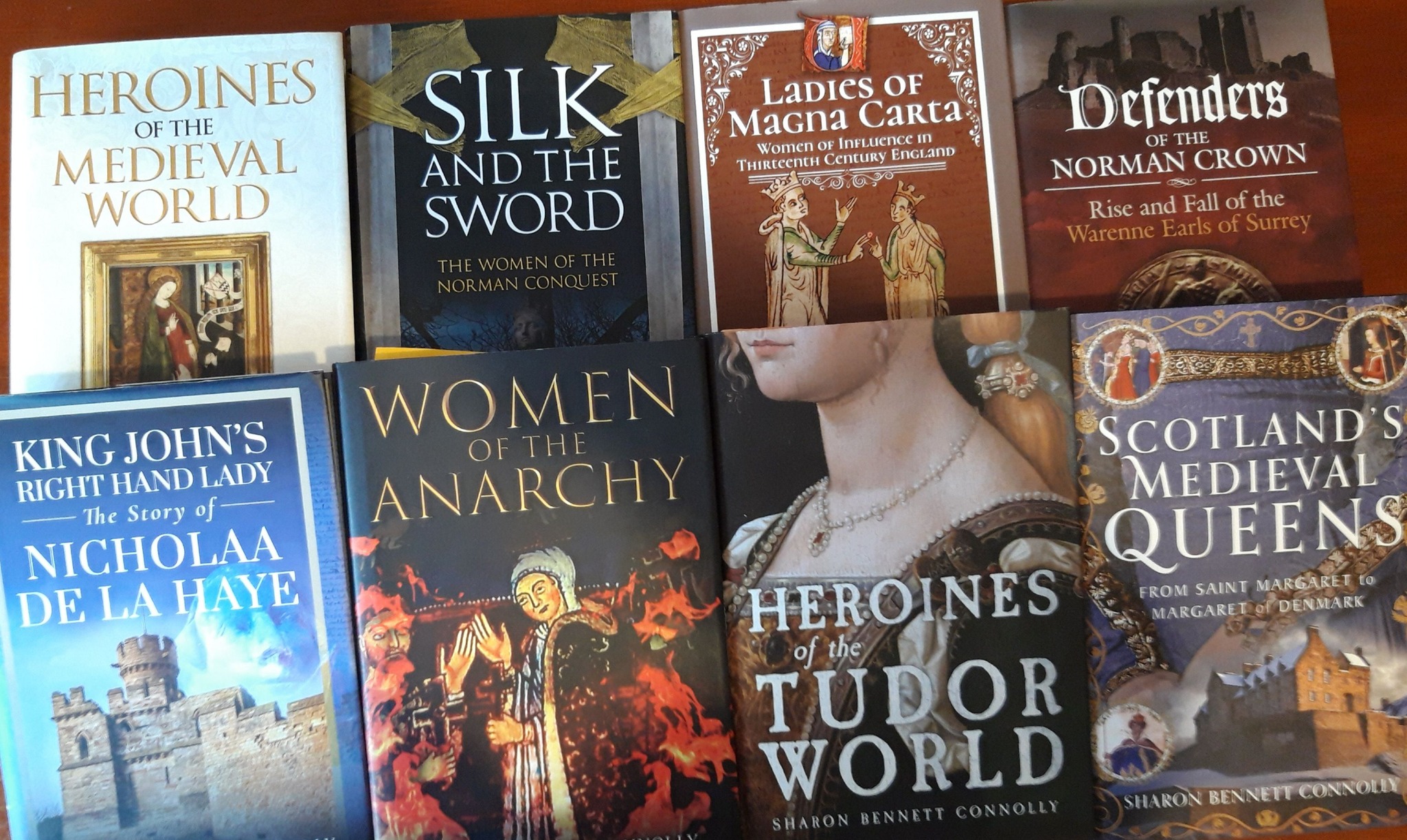
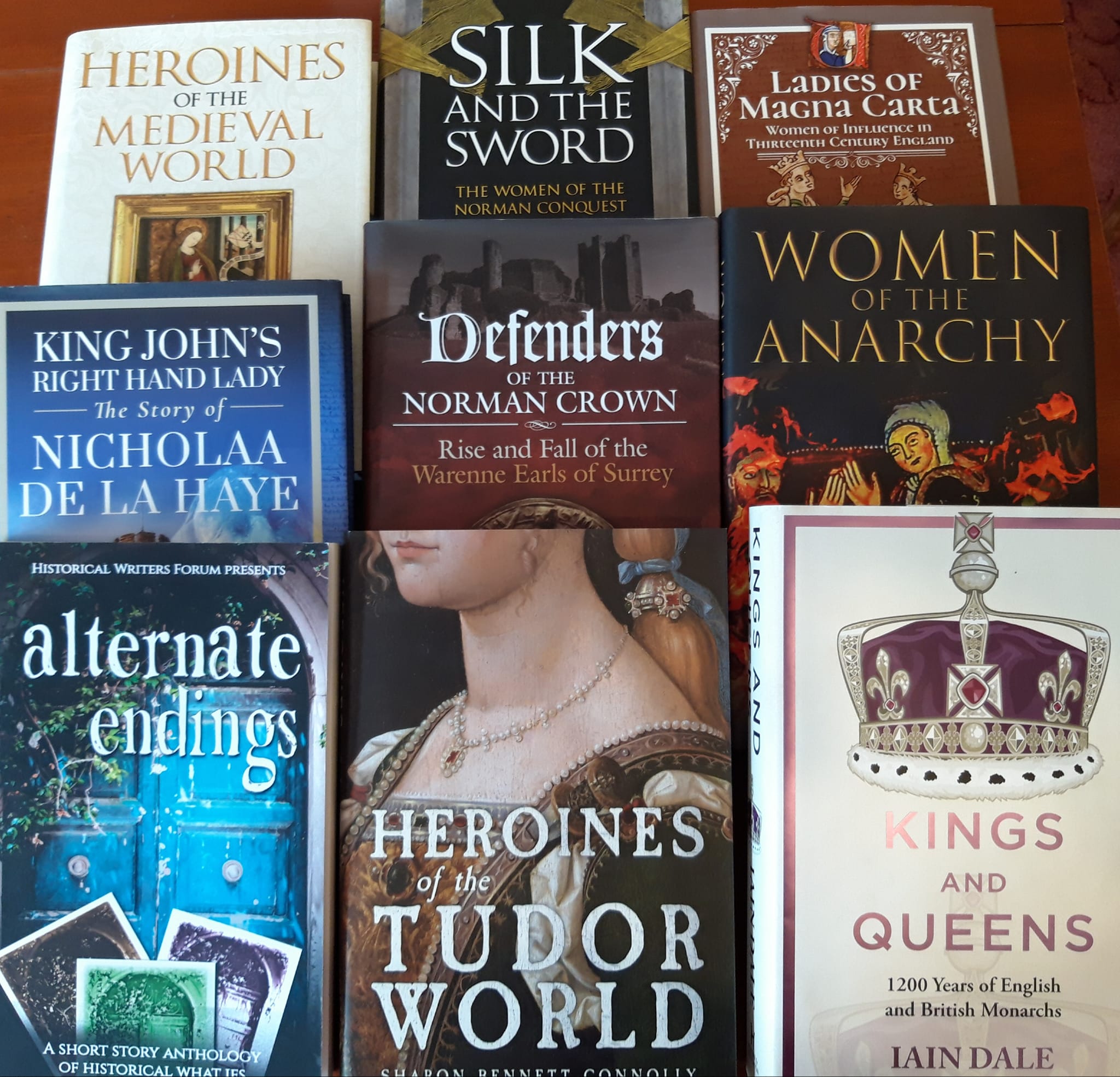
            Heroines of the Tudor World tells the stories of the most remarkable women from European history in the time of the Tudor dynasty, 1485-1603. These are the women who ruled, the women who founded dynasties, the women who fought for religious freedom, their families and love. Heroines of the Tudor World is now available for pre-order from Amberley Publishing and Amazon UK. Women of the Anarchy demonstrates how Empress Matilda and Matilda of Boulogne, unable to wield a sword themselves, were prime movers in this time of conflict and lawlessness. It shows how their strengths, weaknesses, and personal ambitions swung the fortunes of war one way – and then the other. Available from Bookshop.orgAmberley Publishing and Amazon UKKing John’s Right-Hand Lady: The Story of Nicholaa de la Haye is the story of a truly remarkable lady, the hereditary constable of Lincoln Castle and the first woman in England to be appointed sheriff in her own right. Available from all good bookshops Pen & Sword Booksbookshop.org and Amazon

            Defenders of the Norman Crown: The Rise and Fall of the Warenne Earls of Surrey tells the fascinating story of the Warenne dynasty, from its origins in Normandy, through the Conquest, Magna Carta, the wars and marriages that led to its ultimate demise in the reign of Edward III. Available from Pen & Sword BooksAmazon in the UK and US, and Bookshop.orgLadies of Magna Carta: Women of Influence in Thirteenth Century England looks into the relationships of the various noble families of the 13th century, and how they were affected by the Barons’ Wars, Magna Carta and its aftermath; the bonds that were formed and those that were broken. It is now available in paperback and hardback from Pen & SwordAmazon, and Bookshop.orgHeroines of the Medieval World tells the stories of some of the most remarkable women from Medieval history, from Eleanor of Aquitaine to Julian of Norwich. Available now from Amberley Publishing and Amazon, and Bookshop.orgSilk and the Sword: The Women of the Norman Conquest traces the fortunes of the women who had a significant role to play in the momentous events of 1066. Available now from Amazon,  Amberley Publishing, and Bookshop.org.

            Alternate Endings: An anthology of historical fiction short stories including Long Live the King… which is my take what might have happened had King John not died in October 1216. Available in paperback and kindle from Amazon.

            Podcast:

            Have a listen to the A Slice of Medieval podcast, which I co-host with Historical fiction novelist Derek Birks. Derek and I welcome guests, such as Bernard Cornwell and Michael Jecks, and discuss a wide range of topics in medieval history, from significant events to the personalities involved. Every episode is also now available on YouTube.

            *

            Don’t forget! Signed and dedicated copies of all my books are available through my online store.

            For forthcoming online and in-person talks, please check out my Events Page.

            You can be the first to read new articles by clicking the ‘Follow’ button, liking our Facebook page or joining me on TwitterThreadsBluesky and Instagram.

            *

            ©2025 Sharon Bennett Connolly, FRHistS and Paula Lofting
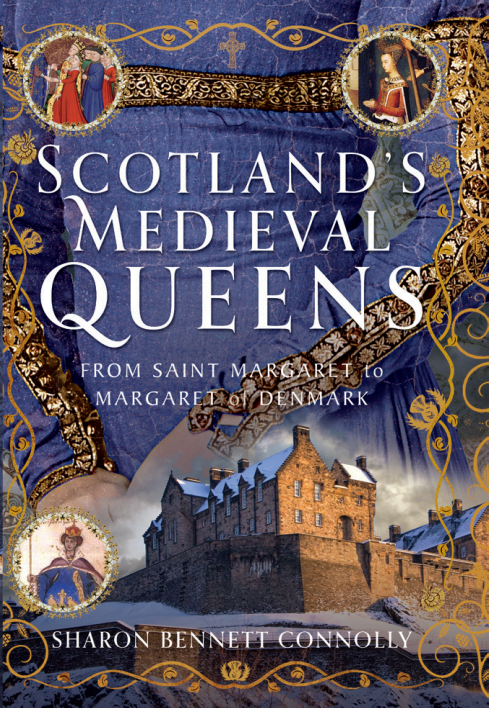
            Book Launch: Scotland’s Medieval Queens

            It is hard to believe – for me, anyway – that I have now published 8 books. 8! I am still waiting for my author copies of Scotland’s Medieval Queens: From Saint Margaret to Margaret of Denmark, to arrive. But she is out in the world. And I am so proud of this book, not least because it was inspired by my wonderful, history-loving son, Lewis, who instructed me to ‘set the record straight’ for Lady Macbeth. With a prologue dedicated to this maligned woman, labeled a murderer and a madwoman by William Shakespeare, I hope I have done just that. And then there are all the other incredible queens that have sat on Scotland’s throne. Women who have defended the realm, acted as peace weavers, governed for their sons and stood as stalwart supporters of their husbands.

            I hope I have done their stories justice.

            Zoom Book Launch Party

            This is your personal invite to join the celebrations!

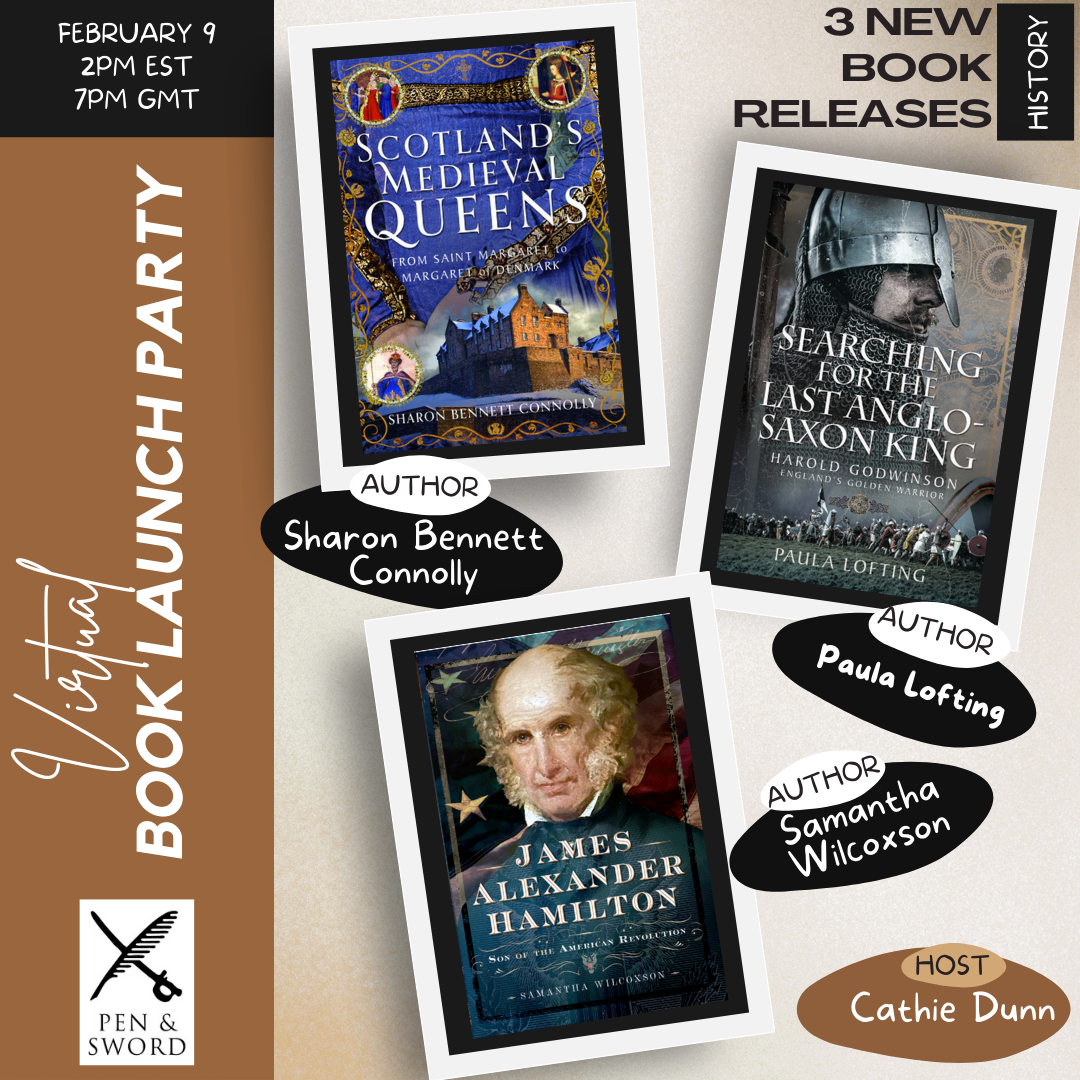
            So, why not join me to celebrate the release of Scotland’s Medieval Queens by coming to the Zoom Book Launch Party, held alongside my friends Samantha Wilcoxson and Paula Lofting, who also have books out this week. Hosted by Cathie Dunn, we will each tell you a little about our books, answer questions and generally party!

            This Sunday – 9 February 2025 at 7pm UK time.

            It is free, you just need to reserve a spot.

            Follow the Blog Tour:

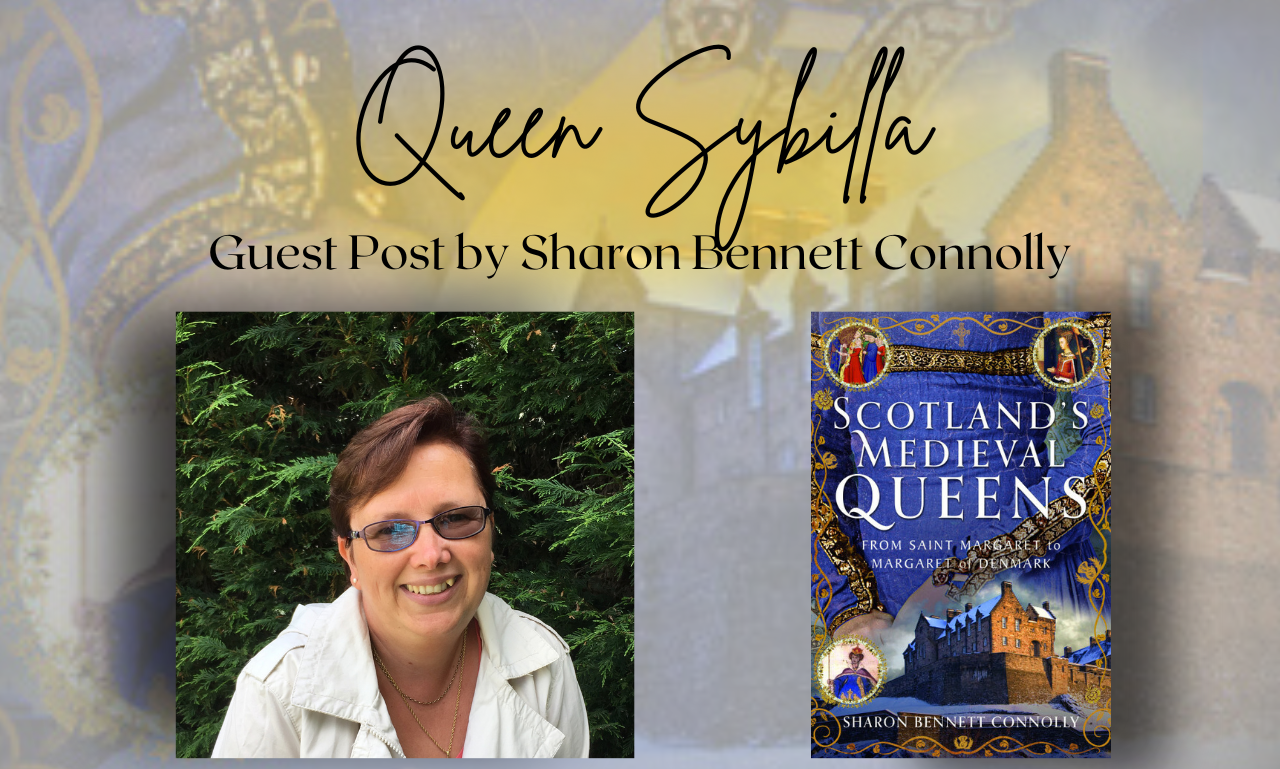
            Paula, Samantha and I are also taking part in a joint mini blog tour, with 6 days of articles and interviews. I kicked us off on Saturday with an article from Paula Lofting looking into King Harold’s Royal Lineage. Samantha was then interviewed on Paula Lofting’s Threads to the Past. And today, I am talking about one of the less well known queens of Scotland, Sybilla of Normandy with Samantha.

            There are 3 more stops on the tour, with Samantha visiting History…the Interesting Bits on 5 February, Paula interviewing me on 6 February and Samantha interviewing Paula on 7 February.

            Then party time on 9 February!

            Podcast:

            Have a listen to the latest episode of A Slice of Medieval podcast. In our Book Launch Special my co-host Derek Birks and I celebrate the launch of both our books. Scotland’s Medieval Queens meets A Guide to the Wars of the Roses. Every episode is also now available on YouTube.

            About Scotland’s Medieval Queens: From Saint Margaret to Margaret of Denmark:

            Scotland’s history is dramatic, violent and bloody. Being England’s northern neighbour has never been easy. Scotland’s queens have had to deal with war, murder, imprisonment, political rivalries and open betrayal. They have loved and lost, raised kings and queens, ruled and died for Scotland. From St Margaret, who became one of the patron saints of Scotland, to Elizabeth de Burgh and the dramatic story of the Scottish Wars of Independence, to the love story and tragedy of Joan Beaufort, to Margaret of Denmark and the dawn of the Renaissance, Scotland’s Medieval Queens have seen it all. This is the story of Scotland through their eyes.

            Available now from Amazon and Pen and Sword Books

            ©2025 Sharon Bennett Connolly FRHistS 

            Guest Post: Was Harold of Royal Lineage? by Paula Lofting

            What do you do when 3 friends have books coming out all on the same day? You arrange a mini blog tour, of course. Myself, Paula Lofting and Samantha Wilcoxson all have new non-fiction books published this week, with Pen & Sword Books, so the 3 of us are hosting each other across our blogs, with an article and an interview from each. And I’m kicking us off today.

            It is a pleasure to welcome Paula Lofting to History…the Interesting Bits with an article on Harold Godwinson – King Harold II. Paula’s first foray into the realm of non-fiction, Searching for the Last Anglo-Saxon King, is now available.

            Was Harold Godwinson of Royal Lineage

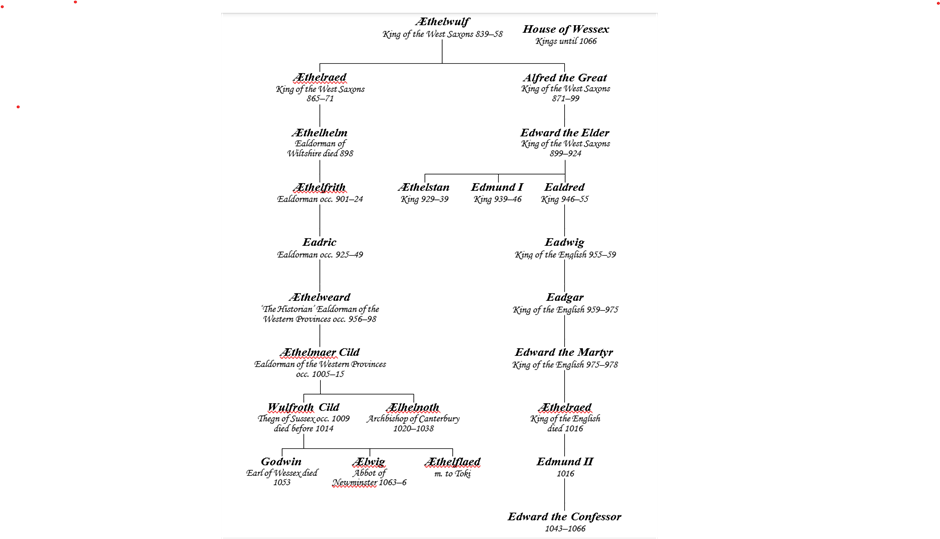
            Some enthusiasts of the period have been quite taken with the idea that Harold Godwinson was able to trace his ancestry back to Æthelwulf, King of the West Saxons. The original idea came from historian, Alfred Anscombe, and later, genealogist, Lundie W. Barlow. It was taken up as authentic by author Frank Barlow, who has written many works on the period. From his book The House of Godwin, we can read his take on this. Through the will of Prince Æthelstan, son and heir of Æthelred the Unready, we are able pinpoint the man referred to as ‘Godwin, son of Wulfnoth’ being the father of Godwin. According to Frank Barlow, Lundie Barlow (no relation) studied the descent of some of the estates that Wulfnoth held. By treating Wulfnoth, as the son of Æthelmӕr Cild, ealdorman of the western provinces, Anscombe and Lundie believed that the Sussex thegn inherited Compton from his mother, suggesting that the royal blood was passed on through her.

            But there is an issue with this theory. To make sense of the concept that Harold was descended from the royal House of Wessex, it was pertinent to explore theories that concern two males named Æthelmær. Both could be said to be candidates for Harold’s great-grandfather. The first Æthelmӕr listed in Anscombe and Lundie’s family tree we shall refer to as Cild. This chap was the son of Æthelweard the historian shown on the modified Anscombe/Barlow family tree.

            This theory can be easily dispelled, for Æthelmær Cild was alive and active in the same generation as Wulfnoth himself, making him too young to have fathered Wulfnoth. Secondly, the interests of Æthelweard and Æthelmӕr Cild were concentrated in the areas west of Wessex, whilst Wulfnoth is specifically noted in the Anglo-Saxon Chronicle as a ‘Sussex thegn’.

            The other Æthelmær, whom we shall refer to as Æthelmær Two, was one of several brothers of the infamous ealdorman, Eadric Sreona. Now their father was a man called Æthelric. The theory that this particular Æthelmær was the father of Wulfnoth Cild, originated with John of Worcester, which seems to have caused the confusion that led to Anscombe, then Lundie, being convinced that he was the father of Wulfnoth.

            There is also a problem with this Æthelmær, as we shall see. Eadric and his brothers were the sons of a man called Æthelric and not Æthelweard the Historian, said to be the patriarch of the previous Æthelmær Cild, whose pedigree can be traced back to former kings of Wessex. Confused? Yes, so was I. But there is more.

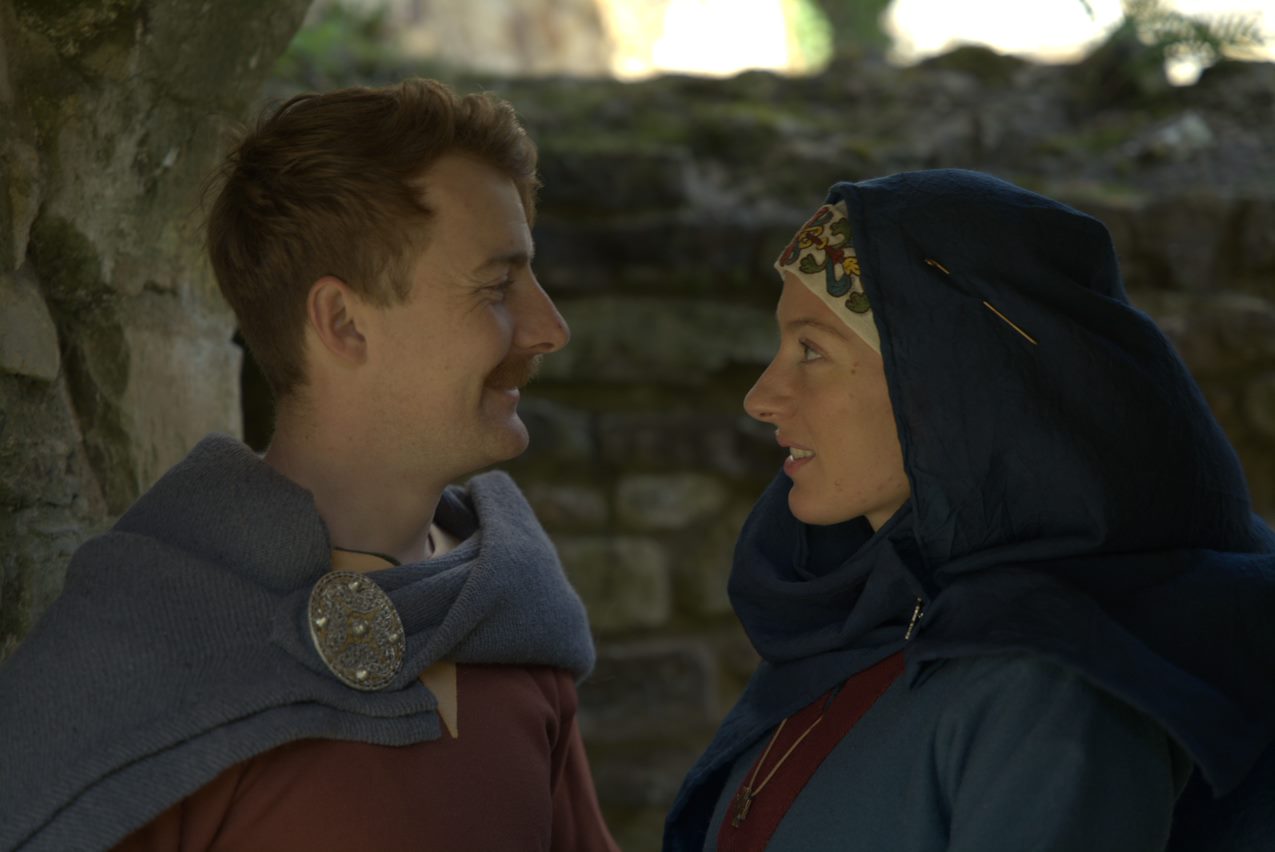
            ‘Gytha and Godwin’ portrayed by me and Jeppe Christensen

            Through the will left by Æthelstan, we have identified that Earl Godwin, (d. 1053) was the son of Wulfnoth Cild and Harold Godwinson’s father. Nothing is known of Godwin’s mother, but he has been cautiously accredited with possible siblings. One such sibling being the lady Æthelflӕd, named in the family tree that Barlow cites in his book. This woman was the owner of land in Buckinghamshire and was married to a man called Toki. The estate was gifted to his wife by her father, a man called Wulfnoth, who was connected to Godwin’s son, Leofwin, who held the estate thirty years later. This does not confirm, however, that this particular Wulfnoth was the chap who fathered Godwin. According to the Prosopography of Anglo-Saxon England data base, there were sixty-nine individuals with the name Wulfnoth. Most of them were in the money minting business, so it is somewhat difficult to identify the right man however the link to Godwin’s son owning the lands of Toki and Æthelflӕd is intriguing.

            It has been mentioned that Godwin had a brother, Ælfwig, abbot of New Minster in Winchester. He is said to have died at Hastings and is referred to as an uncle of King Harold’s. If true, he would have been an old man to have fought in the battle, so it is unlikely he was the brother of Godwin.

            As it stands it is difficult to find any solid ground for believing that the Godwinsons were of royal pedigree despite the evidence produced by A. Anscombe/L. Barlow, and Frank Barlow, and it is unrealistic to assume that the family would not have known and used it to their advantage, especially against King William the Conqueror (r. 1066‒1087). We could say it is not impossible that Harold did, and it was suppressed by the Normans, but there is no supporting evidence, which makes it doubtful. It also seems unlikely that either of the two Æthelmӕrs had fathered Wulfnoth. As Ann Williams confirms, Æthelmӕr Cild, who appears in the royal family’s tree, was of the same generation as Wulfnoth. Furthermore, he was from Devonshire. Wulfnoth was referred to as a Sussex thegn by the E version of the Anglo- Saxon Chronicle (ASC).

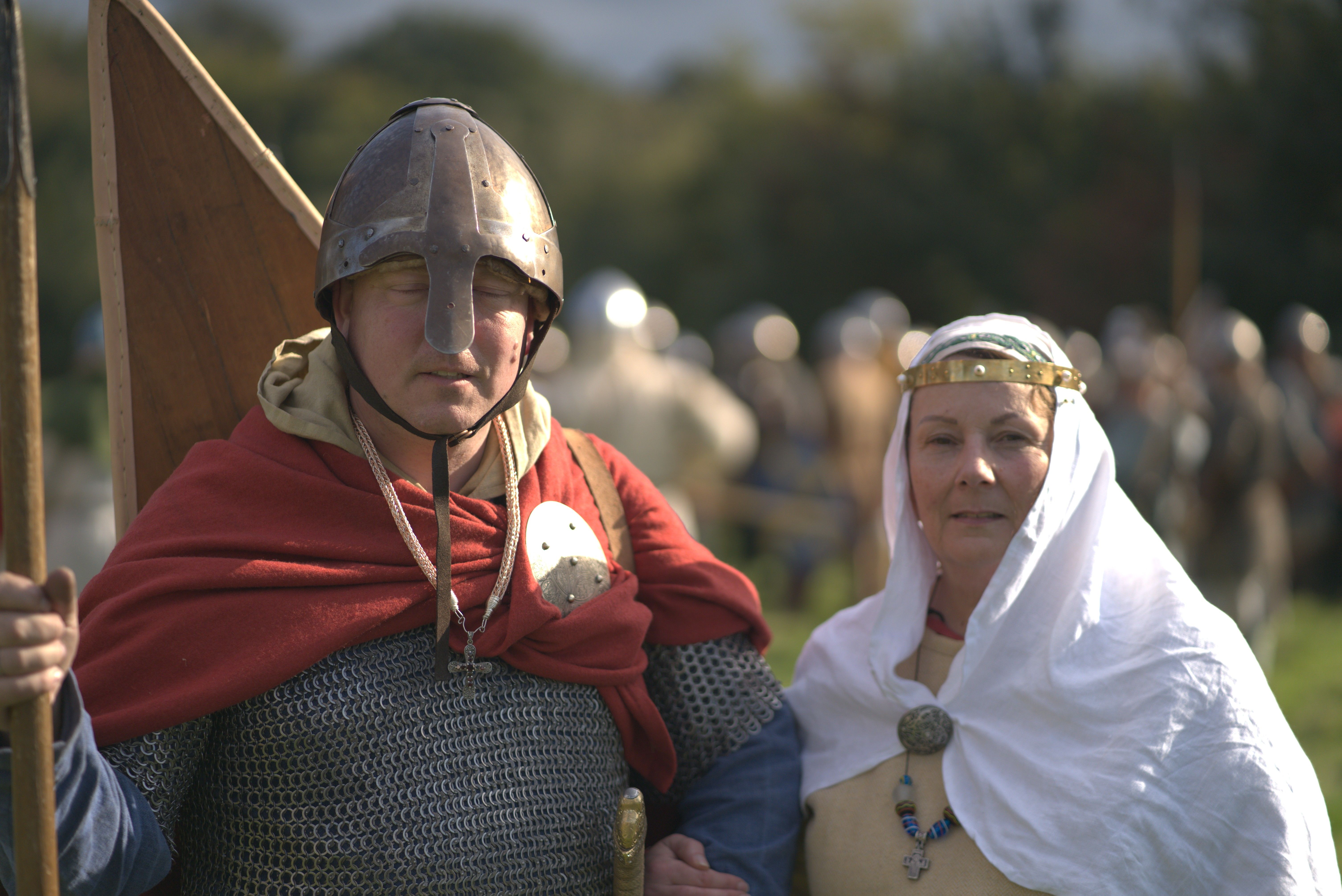
            Harold and Eadith

            Æthelmӕr number two, can also be discounted because the father of this Æthelmӕr was called Æthelric and Æthelmӕr Cild’s father was known as Æthelweard. Also, number two does not appear in the royal family tree of Wessex, suggesting that he had no royal heritage at all. He was also of the same generation as Wulfnoth. As we see, there is nothing to connect either Æthelmӕr with Wulfnoth, apart from an error made by John of Worcester, which many historians confuse as the same Æthelmӕr.

            In contrast to efforts made to prove Anscombe’s and (Lundie) Barlow’s theory correct, Peter Rex, in his book on Harold’s life, refers to the Hyde Chronicle which describes Godwin as a man of low birth. This is not a contemporary source and was written in the thirteenth century for the de Warennes, whose dislike of Godwin is evident. Alternative stories of a ‘lowly’ Godwin’s rise to fame speak of him as a farmer’s boy, who, whilst cow–herding, came across a Dane called Ulf, lost and detached from his men after the Battle of Sherston. Godwin offered to help him, and a grateful Ulf took him into his service. These tales have more to do with myth than anything based in reality and do not account for Godwin being left land in Æthelstan’s will which is a whole other story for another time.

            You might say that not having English royal pedigree should have dismissed Harold from any right the throne. He was not the son of a king, and therefore this lack of royal blood would have discounted him. In fact, Harold was descended from royal stock. It was just not the right one. His mother, Gytha, was the daughter of the fascinatingly named Thorgils Sprakaleggr (strut leg) who was the grandson of Harold Bluetooth making Gytha the great granddaughter of a King of Denmark and Norway and a second cousin of King Cnut the Great. So, although Harold was of royal lineage, it wasn’t the right one. Therefore, we could give the same consideration to Duke William of Normandy, who fought against King Harold and claimed victory over him on the 14 October 1066. But William had no connection to England, or the lands or the language. The boy Edgar Ætheling, who had been proclaimed as Edward’s heir was too young to face the invasions threatening Anglo-Saxon England. A strong leader was what was needed at the time, and royal blood or not, Harold was that man.

            Do look out for the continuation of the blog tour tomorrow on Threads to the Past

            *

            About the book:

            Harold Godwinson occupied his place in the chronicles for more than twenty years after bursting onto the political sphere when he was barely out of his teens. His role in English history has always been overshadowed by his failure to defend his crown and country against the might of William the Conqueror and his invaders. His demise at the hands of a Franco-Norman hit squad wrought the death knell of Anglo-Saxon rule. Reigning for just ten months, Harold’s accomplishments as dux Anglorum, and later king of England, were undermined by the Norman propaganda that was waged against his memory, long after his grisly end in 1066.

            But just who was this man, who some historians recall as one of England’s greatest rulers? What were his origins? Is there any truth that he could trace his ancestry to the House of Wessex, and did he really usurp the throne from Duke William, the Bastard of Normandy? In this re-examining of this great historical figure of the eleventh century, we glean new theories and ideas not only about Harold’s life, but also questions historians have pondered upon for years. Did Edward really offer the throne to William? And how much of William’s claim was truth or fiction?

            Paula Lofting presents a thoughtful and careful critique of the previous research. Examining his life through a telescopic view of the primary sources, she offers the reader a more accurate evaluation of who he was, how he died, and what happened to his remains after his death on a field near Hastings on October 1066.

            About the author:

            Paula Lofting is the author of an eleventh-century saga, Sons of the Wolf, and is working on book three in the series. She has also written articles for magazines like Historical Times and contributed to Iain Dale’s recent Kings and Queens with an essay on Edmund Ironside. Lofting’s love for Anglo-Saxon/Viking/Norman re-enactment with Regia Anglorum is a great tool for her writing. She is also a psychiatric nurse with nineteen years’ experience and enjoys spending time with her family, three grown-up children and two grandchildren. This is Lofting’s first foray into the realms of historical non-fiction, and she hopes it will not be her last. She also has been commissioned to write a biography on Edmund Ironside with Pen & Sword which is currently in progress.

            Website : www.threadstothepast.com, Fb: https://www.facebook.com/Wulfsuna?locale=en_GB, Instagram: https://www.instagram.com/paulaloftingwilcox/, x: https://x.com/longshippub, mybook.to/Haroldpreorder

            *

            My Books

            Signed, dedicated copies of all my books are available through my online store.

            Out now: Scotland’s Medieval Queens

            Scotland’s history is dramatic, violent and bloody. Being England’s northern neighbour has never been easy. Scotland’s queens have had to deal with war, murder, imprisonment, political rivalries and open betrayal. They have loved and lost, raised kings and queens, ruled and died for Scotland. From St Margaret, who became one of the patron saints of Scotland, to Elizabeth de Burgh and the dramatic story of the Scottish Wars of Independence, to the love story and tragedy of Joan Beaufort, to Margaret of Denmark and the dawn of the Renaissance, Scotland’s Medieval Queens have seen it all. This is the story of Scotland through their eyes.

            Available now from Amazon and Pen and Sword Books

            Also by Sharon Bennett Connolly:

            Heroines of the Tudor World tells the stories of the most remarkable women from European history in the time of the Tudor dynasty, 1485-1603. These are the women who ruled, the women who founded dynasties, the women who fought for religious freedom, their families and love. Heroines of the Tudor World is now available for pre-order from Amberley Publishing and Amazon UK. Women of the Anarchy demonstrates how Empress Matilda and Matilda of Boulogne, unable to wield a sword themselves, were prime movers in this time of conflict and lawlessness. It shows how their strengths, weaknesses, and personal ambitions swung the fortunes of war one way – and then the other. Available from Bookshop.orgAmberley Publishing and Amazon UKKing John’s Right-Hand Lady: The Story of Nicholaa de la Haye is the story of a truly remarkable lady, the hereditary constable of Lincoln Castle and the first woman in England to be appointed sheriff in her own right. Available from all good bookshops Pen & Sword Booksbookshop.org and Amazon

            Defenders of the Norman Crown: The Rise and Fall of the Warenne Earls of Surrey tells the fascinating story of the Warenne dynasty, from its origins in Normandy, through the Conquest, Magna Carta, the wars and marriages that led to its ultimate demise in the reign of Edward III. Available from Pen & Sword BooksAmazon in the UK and US, and Bookshop.orgLadies of Magna Carta: Women of Influence in Thirteenth Century England looks into the relationships of the various noble families of the 13th century, and how they were affected by the Barons’ Wars, Magna Carta and its aftermath; the bonds that were formed and those that were broken. It is now available in paperback and hardback from Pen & SwordAmazon, and Bookshop.orgHeroines of the Medieval World tells the stories of some of the most remarkable women from Medieval history, from Eleanor of Aquitaine to Julian of Norwich. Available now from Amberley Publishing and Amazon, and Bookshop.orgSilk and the Sword: The Women of the Norman Conquest traces the fortunes of the women who had a significant role to play in the momentous events of 1066. Available now from Amazon,  Amberley Publishing, and Bookshop.org.

            Alternate Endings: An anthology of historical fiction short stories including Long Live the King… which is my take what might have happened had King John not died in October 1216. Available in paperback and kindle from Amazon.

            Podcast:

            Have a listen to the A Slice of Medieval podcast, which I co-host with Historical fiction novelist Derek Birks. Derek and I welcome guests, such as Bernard Cornwell, and discuss a wide range of topics in medieval history, from significant events to the personalities involved. Every episode is also now available on YouTube.

            *

            Don’t forget! Signed and dedicated copies of all my books are available through my online store.

            For forthcoming online and in-person talks, please check out my Events Page.

            You can be the first to read new articles by clicking the ‘Follow’ button, liking our Facebook page or joining me on TwitterThreadsBluesky and Instagram.

            *

            ©2025 Sharon Bennett Connolly FRHistS and Paula Lofting

            Book Corner: Inspiration for Hauntings by Samantha Wilcoxson

            Inspiration for Among the Lost

            By Samantha Wilcoxson

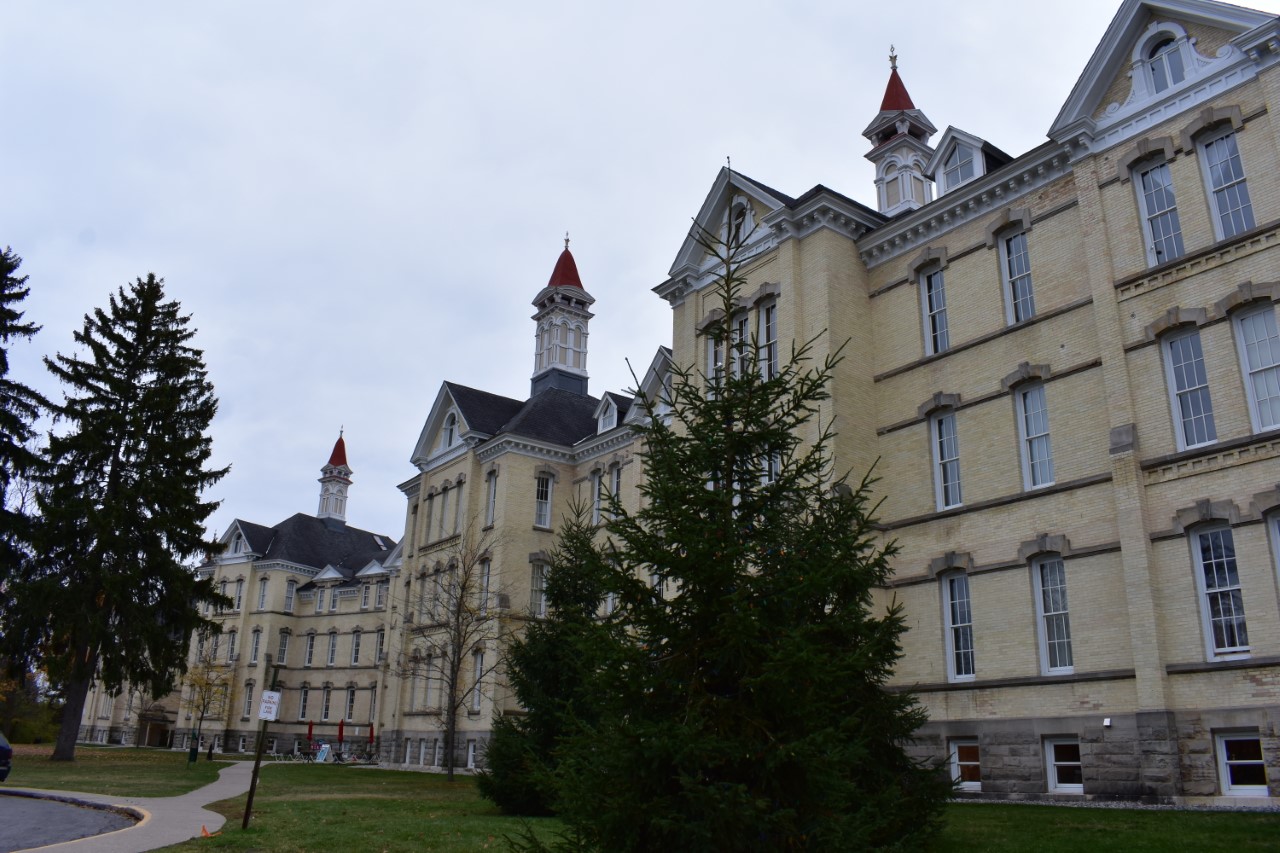
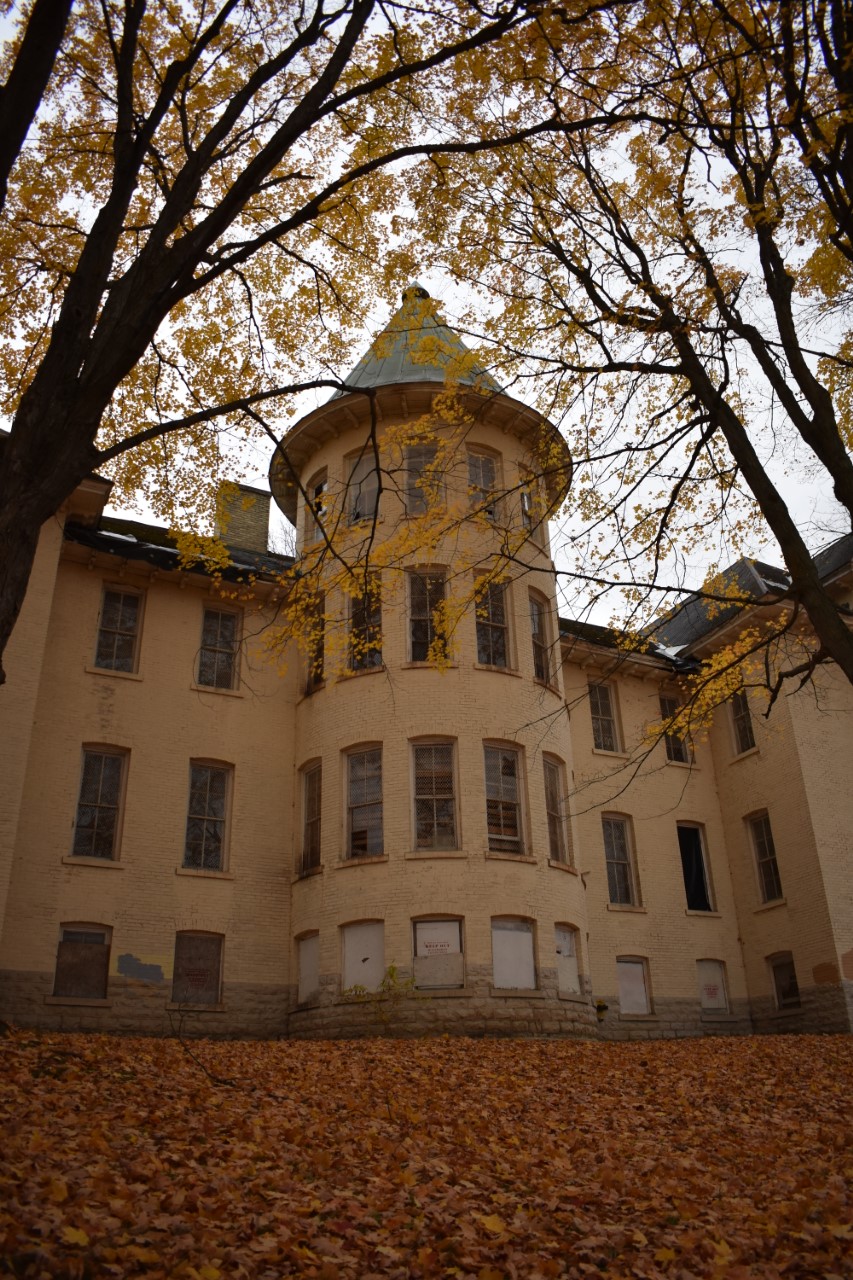
            My family and I took a trip to Traverse City, Michigan last autumn. While this trip had nothing to do with anything I was writing, my youngest son would be quick to tell you that I always find some sort of historic site to visit anywhere we go. In Traverse City, that place ended up being the former Northern Michigan Asylum, now reinvented as The Village at Grand Traverse Commons.

            The Northern Michigan Asylum was built in 1883-1885, including Building 50, the main structure which is almost a quarter of a mile long. More buildings were added over the years to serve patients that were sent from around the state of Michigan. Men, women, and children were segregated in addition to patients being separated according to condition. ‘Beauty is therapy’ was a famous slogan, referring to founding Medical Superintendent Dr James Munson’s belief that the gorgeous natural surroundings of the area would help the patients heal.

            Traverse City is gorgeous with the beautiful blue waters of the bay in the summer and an extraordinary kaleidoscope of trees in the autumn. Certainly, some did find healing in the natural surroundings. The buildings of the asylum were carefully crafted with high ceilings, transom windows, and rounded corners to create a bright, safe atmosphere. The grounds include a grove of trees where no two are alike. The variety was collected by Dr James Munson during his travels. One can envision what the place was like when it was new and filled with hopeful nurses and their charges.

            However, as we toured the abandoned, dilapidated structures, it was just as easy to imagine that darker things had taken place as well. Old lead paint is peeling from the walls, and the lack of electricity forced us to light our way with flashlights. Shattered windows and graffiti brought to mind broken souls and nefarious deeds that might have taken place within those walls.

            I had not planned on writing anything about the asylum, but when the suggestion of an anthology of historical ghost stories was put forward, I knew just where mine would take place. The mysterious steam tunnels and creamy stone structures topped by red spires suddenly seemed the perfect setting for a young nurse to encounter strange happenings. A ghost may not be the worst being she discovers.

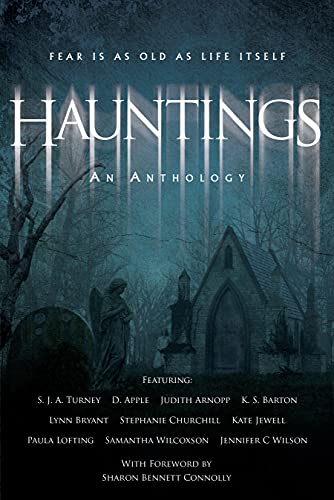
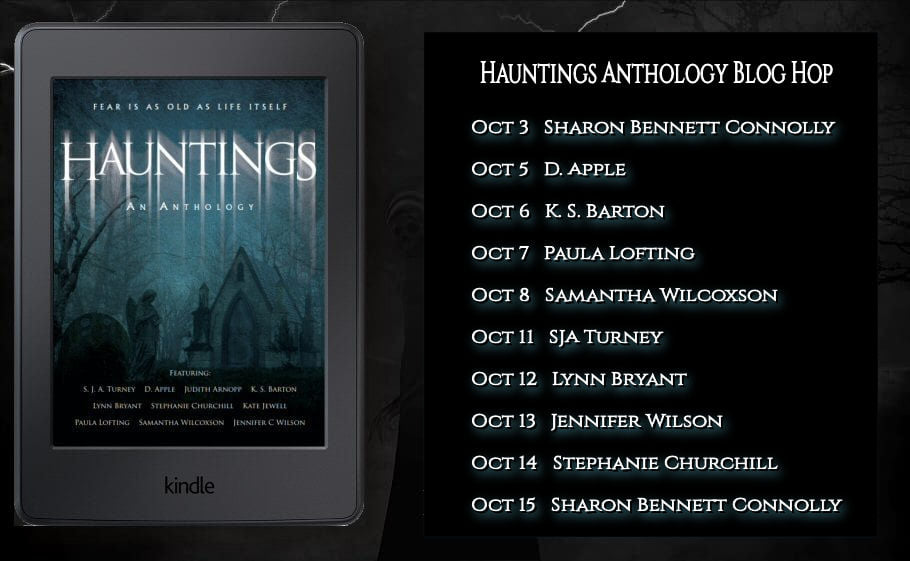
            Hauntings

            FEAR IS AS OLD AS TIME ITSELF
            Chilling Tales that will take you through a labyrinth of historical horror.
            You will encounter a tormented Roman general.
            A Norse woman who must confront her terrifying destiny.
            Meet a troubled Saxon brother, searching for his twin’s murderer.
            A young nurse tries to solve the mysteries of an asylum for the insane.Down the passages of time, Henry VIII and Anne Boleyn wander through a haunted garden and elsewhere,
            a lost slave girl is the soul survivor of a mass slaughter.

            These are just a few of the eerie tales which ensure that Hauntings is not for the faint-hearted.

            Hauntings is an anthology of stories that span 2,000 years of history. Featuring short stories by S.J.A. Turney, D. Apple, Judith Arnopp, K.S. Barton, Lynn Bryant, Paula Lofting, Stephanie Churchill, Samantha Wilcoxson, Jennifer C. Wilson and Kate Jewell, and with a foreword by yours truly!

            now available as an ebook from Amazon in the UK and the US and will be available in paperback shortly.

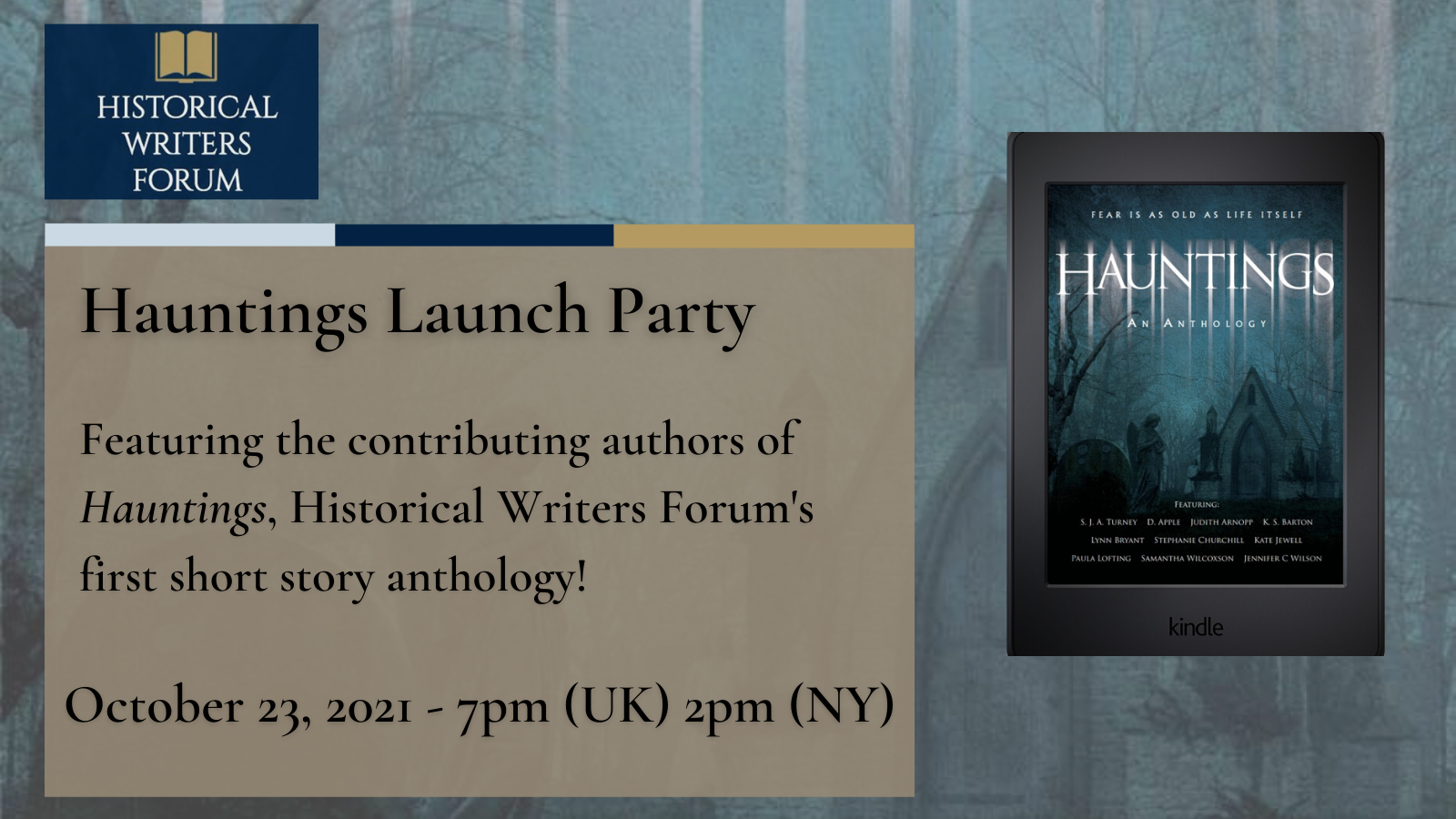
            Hauntings Launch Party!

            And we’re having a launch party over Zoom.

            Meet the authors and hear the stories behind the stories. It’s free. Come and join us!

            It’s on Saturday 23 October at 7pm (UK time) – 2 pm if you’re in New York! Book here!

            My Books

            Signed, dedicated copies of all my books are available, please get in touch by completing the contact me form.

            Defenders of the Norman Crown: The Rise and Fall of the Warenne Earls of Surrey tells the fascinating story of the Warenne dynasty, of the successes and failures of one of the most powerful families in England, from its origins in Normandy, through the Conquest, Magna Carta, the wars and marriages that led to its ultimate demise in the reign of Edward III. Defenders of the Norman Crown: Rise and Fall of the Warenne Earls of Surrey is now available from Pen & Sword BooksAmazon in the UK and US and Book Depository.

            1 family. 8 earls. 300 years of English history!

            Also by Sharon Bennett Connolly:

            Ladies of Magna Carta: Women of Influence in Thirteenth Century England looks into the relationships of the various noble families of the 13th century, and how they were affected by the Barons’ Wars, Magna Carta and its aftermath; the bonds that were formed and those that were broken. It is now available in paperback and hardback from Pen & Sword,  Amazon and from Book Depository worldwide.

            Heroines of the Medieval World tells the stories of some of the most remarkable women from Medieval history, from Eleanor of Aquitaine to Julian of Norwich. Available now from Amberley Publishing and Amazon and Book Depository.

            Silk and the Sword: The Women of the Norman Conquest traces the fortunes of the women who had a significant role to play in the momentous events of 1066.  Available now from Amazon,  Amberley Publishing, Book Depository.

            *

            You can be the first to read new articles by clicking the ‘Follow’ button, liking our Facebook page or joining me on Twitter and Instagram.

            ©2021 Sharon Bennett Connolly

            Book Launch: Hauntings, An Anthology

            FEAR IS AS OLD AS TIME ITSELF
            Chilling Tales that will take you through a labyrinth of historical horror.
            You will encounter a tormented Roman general.
            A Norse woman who must confront her terrifying destiny.
            Meet a troubled Saxon brother, searching for his twin’s murderer.
            A young nurse tries to solve the mysteries of an asylum for the insane.

            Down the passages of time, Henry VIII and Anne Boleyn wander through a haunted garden and elsewhere,
            a lost slave girl is the soul survivor of a mass slaughter.

            These are just a few of the eerie tales which ensure that Hauntings is not for the faint-hearted.

            Hauntings, an Anthology

            Since time immemorial, people have sat around the hearth, in the dark of night with storms raging outside, telling each other ghost stories. Even the fairy tales told to children over the centuries have bordered on horror stories, with a wicked stepmother here, an evil witch there and the candy-selling man who turned out to be a child-catcher; all just waiting to scare and horrify the unsuspecting. Many were moralising tales, told to scare children into being good. But the effects linger. As children become teenagers, they tell scarier stories, staying up late into the night on sleepovers and camping expeditions. The aim has always been to frighten and entertain with ever greater levels of horror, often shining torches into their faces at odd angles to create special effects.

            The enduring need to push our fear to the limits has been with us since childhood.

            Such camp-fire tales belie the fact that horror and ghost stories have a place deep in the culture of society. They have always been a way to explain the unexplainable.

            We have all had that moment, that sense of being watched. But when we turn around, there is no one there…

            Or seen that movement out of the corner of our eye…

            The room suddenly turning cold for no reason…

            The most famous incident of this kind gave birth to not only the vampire but also what is probably the most famous horror story of all time. And it started, as it always does, with a gathering of friends, in their late teens and early 20s, trying to shock and scare each other as a storm raged outside.

            Europe had just emerged from its own horror story. Over twenty-five years of warfare had ignited with the French Revolution in 1789 and ended on the battlefield of Waterloo in June 1815, raging across Europe, from the Iberian Peninsula to frozen Russia and even venturing into Africa. A generation had grown up with the shadow of war looming over them. This man-made tragedy had been exacerbated by volcanic eruptions, famine and epidemics; the volcanic ash would cause 3 years of darkness, crop failure and cholera outbreaks. It was a time ripe for dark and desperate literary endeavours.

            In the aftermath of Waterloo, a young couple, Mary Wollstonecraft Godwin, her lover Percy Bysshe Shelley, travelled to Lake Geneva in May 1816, ostensibly looking for rest and relaxation. Their party included their four-month-old baby and Mary’s stepsister, Claire Clairmont. At the time, Claire was pregnant with a child by Lord Byron, the ground-breaking poet whose personal affairs and love life had proved too scandalous for England. Most recently he had divorced his wife, abandoning his young daughter, Ada Lovelace, and, so rumour had it, pursued an affair with his own half-sister. Plagued by gossip and debt, he had left England for Europe. Claire, it seems, had decided to surprise her lover by following him.

            Mary had fallen in love with Percy in 1814; the couple had run away together, despite Percy already being married, and travelled around Europe for the next 2 years. After Byron left England, a distraught Claire convinced Mary and Percy to travel to Geneva with her. A few days later, Byron—clearly unaware that Claire would be there—arrived in town. Mary, whose own love life not without controversy, sympathized with the scandalous poet.

            With Percy and Lord Byron soon forming an intense friendship, the small party abandoned their various travel plans and rented properties close to each other along Lake Geneva. They would gather together in the long, dark, cold evening at the Villa Diodati, the stately mansion Byron had rented for his stay along with John Polidori, his doctor. They read poetry, argued, and talked late into the night. After three nights of the party being trapped inside by the raging storm, tensions were running high. Byron was annoyed by Claire’s obsessive attentions, Mary likewise had to fend off the unwanted attentions of the equally obsessive Doctor Polidori.

            They spent their evenings reading horror stories and ghostly poems to each other until one night, they were given a challenge. Byron proposed they each write a ghost story that was better than the ones they had just read. Inspired by a tale of Byron’s, Polidori produced his novella “The Vampyre,” which would be published in 1819. It is the first work of fiction to include a blood-sucking hero—which may have been modelled on Byron himself. Mary took a little longer to settle on the subject of her story but after a long, sleepless night she produced her offering, Frankenstein, or the Modern Prometheus. Considering what happens when men play gods, and perhaps with the upheaval of the last three decades in her mind, she would later call the story her “hideous progeny”.

            Frankenstein would be Mary Shelley’s enduring legacy and the inspiration for so many hopeful writers.

            Fast forward a little over 200 hundred years. The year was 2020, the world was in the midst of a pandemic of horrifying proportions. Travel to the neighbouring town was frowned upon, you were allowed out for exercise once a day, families were forced apart, the schools closed and writers the world over were sat in their studies, or at their kitchen tables, tapping away on keyboards, alone, solitary…

            Well, not quite…

            We now have the internet, so when you are alone, you are still not totally alone. Once again, with the storm raging outside, a group of writers have come together, not in a luxury Swiss mansion, but via the miracle that is the internet. Despite the miles and oceans apart, and across the continents, these ten historical fiction authors were given a challenge: to write a ghost story, to regale each other with terrifying stories of ghosts and ghoulies. Through history and legend, from the legions of Rome to a spooky hotel, from Tudor England to an asylum for the insane, those who have suffered injustice may finally be laid to rest, those who have sought loved ones across the centuries may finally be reunited and those who have borne nightmares for past deeds may finally find peace.

            A year after the idea first formed, those stories are set to be unleashed on the world.

            Dare you read them?

            Hauntings, an Anthology is dedicated to the memory of Sharon Penman, an amazing historical fiction writer, author of The Sunne in Splendour, who inspired so many of us to become writers ourselves.

            Hauntings, an Anthology is an anthology of stories that span 2,000 years of history. Featuring short stories by S.J.A. Turney, D. Apple, Judith Arnopp, K.S. Barton, Lynn Bryant, Paula Lofting, Stephanie Churchill, Samantha Wilcoxson, Jennifer C. Wilson and Kate Jewell, and with a foreword by yours truly!

            Hauntings, an Anthology is now available as an ebook from Amazon in the UK and the US and will be available in paperback shortly.

            Hauntings Launch Party

            And we’re having a launch party over Zoom.

            Meet the authors and hear the stories behind the stories. It’s free. Come and join us!

            It’s on Saturday 23 October at 7pm (UK time) – 2 pm if you’re in New York! Book here!

            *

            My Books

            Signed, dedicated copies of all my books are available, please get in touch by completing the contact me form.

            Defenders of the Norman Crown: The Rise and Fall of the Warenne Earls of Surrey tells the fascinating story of the Warenne dynasty, of the successes and failures of one of the most powerful families in England, from its origins in Normandy, through the Conquest, Magna Carta, the wars and marriages that led to its ultimate demise in the reign of Edward III. Defenders of the Norman Crown: Rise and Fall of the Warenne Earls of Surrey is now available from Pen & Sword BooksAmazon in the UK and US and Book Depository.

            1 family. 8 earls. 300 years of English history!

            Also by Sharon Bennett Connolly:

            Ladies of Magna Carta: Women of Influence in Thirteenth Century England looks into the relationships of the various noble families of the 13th century, and how they were affected by the Barons’ Wars, Magna Carta and its aftermath; the bonds that were formed and those that were broken. It is now available in paperback and hardback from Pen & Sword,  Amazon and from Book Depository worldwide.

            Heroines of the Medieval World tells the stories of some of the most remarkable women from Medieval history, from Eleanor of Aquitaine to Julian of Norwich. Available now from Amberley Publishing and Amazon and Book Depository.

            Silk and the Sword: The Women of the Norman Conquest traces the fortunes of the women who had a significant role to play in the momentous events of 1066.  Available now from Amazon,  Amberley Publishing, Book Depository.

            *

            You can be the first to read new articles by clicking the ‘Follow’ button, liking our Facebook page or joining me on Twitter and Instagram.

            ©2021 Sharon Bennett Connolly

            Interview with an 11th Century Teenager

            Tovi

            We have something different on the blog today, an interview with Tovi Wulhereson, and 11th century teenager who is a beloved character in Paula Lofting’s Sons of the Wolf series of novels. A typical teenager in may ways, Tovi steals the scene every time. So I got the chance to talk to him and find out a little about his personality, hopes and dreams.

            Hi Tovi, thank you so much for taking the time to speak to me. I have read all your adventures so far and I am really looking forward to the next one.

            So, to the questions.

            Tell my readers a little about yourself; how old are you, where do you come from? That sort of thing…

            I was born somewhere in the warmth of the summer months, in the place that we called Horstede because my family had always owned horses. My father is a thegn, which means he owns 5 hides of land, a church with a belfry, and a gate tower.
            The estate we live on is in the heart of Sussex surrounded by forest on one side and open farmland on the other.

            What is your favourite thing to do in your free time?

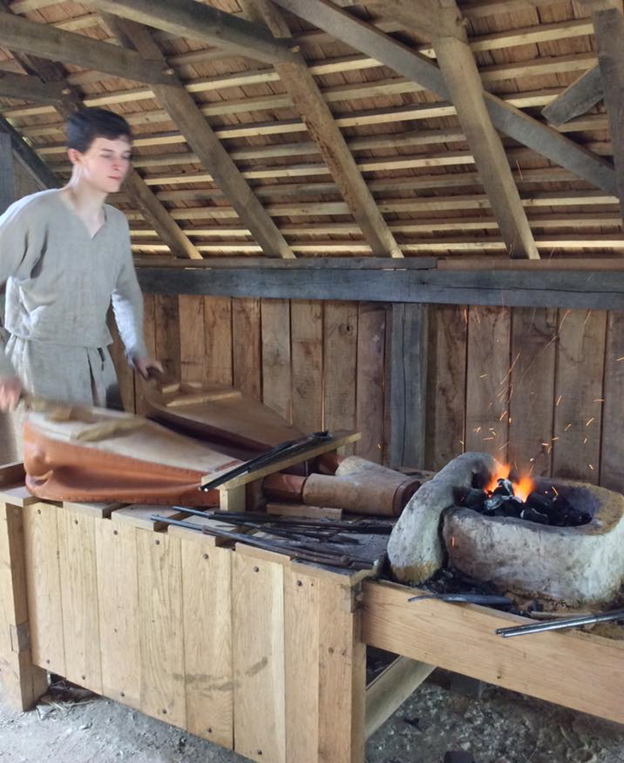
            The forge

            When I was much younger, my brothers and sisters used to play in the woods. We had a rope swing that was tied to an old oak tree by the side of a mill pond that we used to swing on and jump into the water. One day the Earl of Wessex and his family came to stay, and my sister and I were charged with looking after them so we took them down to the swing and the earl’s daughter, Gytha, nearly drowned. I had to jump in the water and keep her afloat until help came.

            The Earl rewarded me with my very own beautiful seax in a wonderful leather case. I was rather embarrassed by all the attention!

            But that was when I was only ten summers old. Now I am almost fifteen, a man now. When I was at school at Waltham for almost three years rarely had time to enjoy ourselves, but now I like to practice weapons, wrestle, and go swimming.

            What do you want to be when you grow up?

            Strictly speaking, I am grown up, according to the law. At fifteen I can take charge of my own land, if I had any, and allowed to fight in the shieldwall, but I have yet to even start my training, because I was studying for the priesthood, but it seems I am not suitable for that life and now I have been offered a place in my Lord Harold’s household. It was what I always wanted, to be a warrior. I must soon begin my training.

            Tell me about your heroes.

            Children outside the hall

            My Father has always been my hero. I used to love sitting around the hearth listening to stories of his prowess in battle. I remember when he came back from a war in the north, The Battle of the Seven Sleepers, they called it, in a place called Alba – which I believe is now known as Scotland. He took a blow to his head and was knocked unconscious. His fyrdsman, Esegar, pulled him out of the battle and saved his life.  He was also very skilled at one-on-one fighting and was known to be hard to beat. Last year he fought a champion fight before a battle and won then went on to fight against the Wícinga. He was badly injured, but I am told he fought like an enraged bear. But he is not the same anymore. They say that war has scarred him not only on his body, but in his mind, too.

            I have also always been in awe of Lord Harold since the day he gave me his seax as a reward for saving his daughter’s life. He has a presence that makes you want to be like him. Generous and kind, he is also disciplined and knows how to command men. These are the qualities I like in him.

            Who is your best friend?

            Tovi and Winflaed

            My youngest sister Winflaed and I used to be very close. Then I went to school in Waltham and my only friend there was a boy called Patric. His father was the childemaester.  Now I am home in Horstede again and Winflaed is gone, I miss Patric. I have my brother, Wulfric, but we do not always get on very well.

            What sort of lessons do you have?

            I was taught to read and write by Father Paul, our village priest. Then I went to Waltham and learned Latin, Greek, and French. I also learned Arithmetic, Astronomy, and religious studies. The hardest lessons I’ve ever had are the ones that involve a beating, which I was frequently given at Waltham for various misdeanours!

            What is your greatest ability/skill?

            I would like to be a great warrior, like my father, but I have a lot to learn.

            What are you not very good at?

            Sometimes I feel a little awkward around people. My childhood experiences have affected me in such a way I that I find it hard to trust anyone. I think they are always going to let me down or betray me.

            What is your favourite legend or story?

            Wychurst

            Ah, I love Beowulf. I often imagine those I don’t like as Grendel the monster and that I am Beowulf, killing them.

            Do you have a girlfriend?

            There is a girl I like in Waltham. But I can’t tell you just now, because if her father finds out he will most likely cut off my balls.

            Thank you so much for answering my questions Tovi. And good luck with your future.

            Thank you for allowing me to tell you about my life!

            *

            About the author:

            Paula Lofting has always wanted to write since she was a little girl, coming home from school to sit at the table with her notebook and write stories that buzzed around in her head. A prolific reader, she loved nothing better than to spend weekends with a book in her hand. Earliest influences such as Rosemary Sutcliffe, Leon Garfield, Charles Dickens, C.S.Lewis, inspired an interest in history. It became her lifelong wish to one day write and publish a book, but not being able to type, and having no funds for a typewriter to learn on, this ambition was reluctantly put on hold.

            With the advent of PC’s and a need to retrain and use a computer, this old ambition was stirred and she decided to rekindle her love of books and writing at the grand old age of 42. at this point, she had reached a turning point in her life and studied nursing, and also decided to write the book she had promised herself one day she would write.

            Her début novel, ‘Sons of the Wolf’ was first published with the assistance of SilverWood Books in 2012. More recently she has republished it with her new publishing company Longship Books. It is a story set in the years leading up to the Norman Conquest of England and the first in the Sons of the Wolf series, about this amazing time in English history. Her second novel, the wolf Banner, has also been published in paperback and kindle and the third is a WIP and will be published later this year in 2021.

            She has always admired the works of Sharon Penman and Bernard Cornwell, Edith Pargetter and Mary Stewart, amongst many others. History is a great love of hers and her interest in the subject goes beyond that of the keyboard. She also enjoys Anglo-Saxon re-enactment with Regia Anglorum, also a great source of research for my writing.Paula says:
            “Write for enjoyment, write for yourself, regardless of what others say you should; for if you don’t write what you love, then how can you expect others to love what you write.”

            Book links:

            myBook.to/Sonslive

            my Book.to/WolfB

            twitter – @paulalofting

            Blog – https://paulaloftinghistoricalnovelist.wordpress.com

            Facebook page Paula Lofting Author Page | Facebook

            Tovi on Facebook – Tovi Wulfhereson | Facebook

            *

            My Books

            Defenders of the Norman Crown: The Rise and Fall of the Warenne Earls of Surrey tells the fascinating story of the Warenne dynasty, of the successes and failures of one of the most powerful families in England, from its origins in Normandy, through the Conquest, Magna Carta, the wars and marriages that led to its ultimate demise in the reign of Edward III.

            1 family. 8 earls. 300 years of English history!

            Defenders of the Norman Crown: Rise and Fall of the Warenne Earls of Surrey is now available from Pen & Sword BooksAmazon in the UK and US and Book Depository.

            Also by Sharon Bennett Connolly:

            Ladies of Magna Carta: Women of Influence in Thirteenth Century England looks into the relationships of the various noble families of the 13th century, and how they were affected by the Barons’ Wars, Magna Carta and its aftermath; the bonds that were formed and those that were broken. It is now available from Pen & Sword,  Amazon and from Book Depository worldwide.

            Heroines of the Medieval World tells the stories of some of the most remarkable women from Medieval history, from Eleanor of Aquitaine to Julian of Norwich. Available now from Amberley Publishing and Amazon and Book Depository.

            Silk and the Sword: The Women of the Norman Conquest traces the fortunes of the women who had a significant role to play in the momentous events of 1066.  Available now from Amazon,  Amberley Publishing, Book Depository.

            *

            You can be the first to read new articles by clicking the ‘Follow’ button, liking our Facebook page or joining me on Twitter and Instagram.

            ©2021 Sharon Bennett Connolly and Paula Lofting
            Book Corner: Paula Lofting’s The Wolf Banner

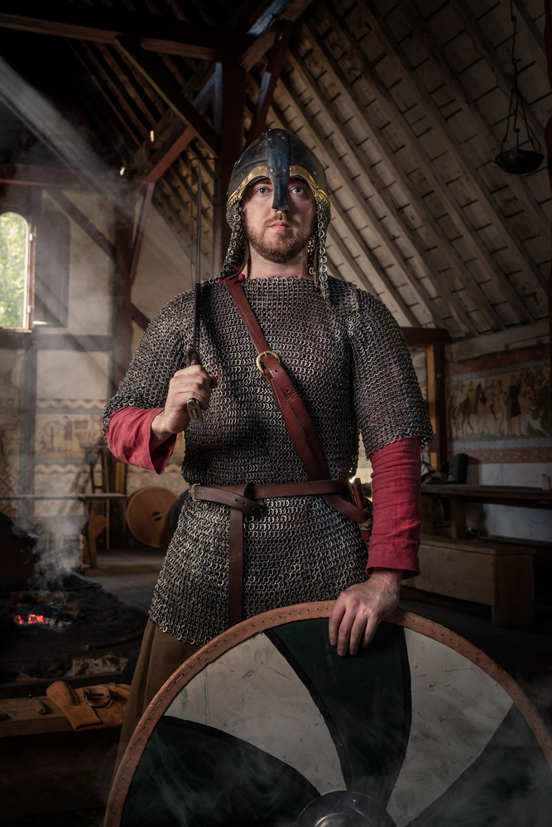
            51BZa0o3x+L._SY346_My latest book review, of Paula Lofting’s amazing pre-Conquest novel, The Wolf Banner has gone live over at The Review today!

            WAR AND BLOODFEUD
            1056…England lurches towards war as the rebellious Lord Alfgar plots against the indolent King Edward. Sussex thegn, Wulfhere, must defy both his lord, Harold Godwinson, and his bitter enemy, Helghi, to protect his beloved daughter.
            As the shadow of war stretches across the land, a more personal battle rages at home, and when it follows him into battle, he knows he must keep his wits about him more than ever, and COURAGE AND FEAR MUST BECOME HIS ARMOUR…

            The Wolf Banner is the second book in Paula Lofting’s marvellous Sons of the Wolf series which tells the story of Saxon England in the years preceding the Norman Conquest. It follows the trials and tribulations of one family; Wulfhere, his wife and children. A thegn sworn to Harold Godwinson, Wulfhere has responsibilities to his king, his lord and his family, while trying to overcome his own fears, temptations and one big problem; his neighbour and sworn enemy, Helghi.
            The Wolf Banner builds on the first book, to draw the reader further into Wulfhere’s life, the highs and lows, into battles with swords and words. It is a fabulous adventure, full of family heartache, compromise and love, while never losing sight of the bigger picture; of England and the struggles of Harold Godwinson, Earl of Wessex, both against his enemies and his king….
            To read the full review of this fantastic novel – and to enter the prize draw and be in with a chance of winning one of two e-books in the giveaway, plus a copy of the first book in the series, Sons of the Wolf, simply visit The Review and leave a comment. Good luck!
            *
            My book, Heroines of the Medieval World,  is now available in hardback in the UK from both Amberley Publishing and Amazon UK and worldwide from Book Depository. It is also available on Kindle in both the UK and USA and will be available in Hardback from Amazon US from 1 May 2018.

            Be the first to read new articles by clicking the ‘Follow’ button, liking our Facebook page or joining me on Twitter.

            *

            ©Sharon Bennett Connolly 2016