The Battle of the Standard

History ... the Interesting Bits
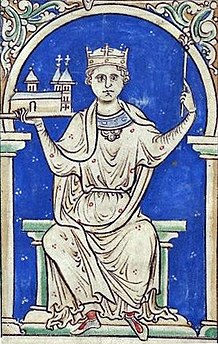
King Stephen

22 August is a famous date in history. The Battle of Bosworth, on 22 August 1485 is often seen as the end of one era and the beginning of another: the end of the medieval age and the beginning of the early modern. It was the end of the royal line of the Plantagenets, begun under Henry II in 1154 and ended with the death of Richard III on that fateful August day. It was the advent of, arguably, the most famous royal house in history: the house of Tudor, which ruled England from 1485 to 1603.

But Bosworth was not the only battle fought on English soil on 22 August. 347 years before, during the period known to history as the Anarchy, when King Stephen stole the English throne from his cousin Empress Matilda. At Northallerton in North Yorkshire, an English army faced a Scots army in what would come to be known as the Battle of the Standard; between the forces of King Stephen and those of his wife’s uncle – and also the uncle of Empress Matilda – David I, King of Scots.

On his marriage to Matilda de Senlis, arranged by his brother-in-law King Henry, David acquired lands in Northampton, Bedford, Cambridge and Huntingdon, as well as lands stretching from South Yorkshire to Middlesbrough, which would become known as the ‘honour of Huntingdon’. By the first Treaty of Durham, agreed in February 1136, at which David had refused to do homage to Stephen but allowed his son to do so, young Henry was given Doncaster and the lordship of Carlisle. He also received his mother’s inheritance, the honour and earldom of Huntingdon, paying homage for these lands to King Stephen at York. At Stephen’s Easter court that same year, Henry sat at the king’s right hand, his royal birth giving him precedence ahead of the English earls. This infuriated Earl Ranulf of Chester, who had wanted Carlisle for himself, and Simon (II) de Senlis, Henry’s older half-brother, who maintained a rival claim to the Huntingdon lands.
History ... the Interesting Bits
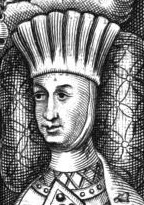
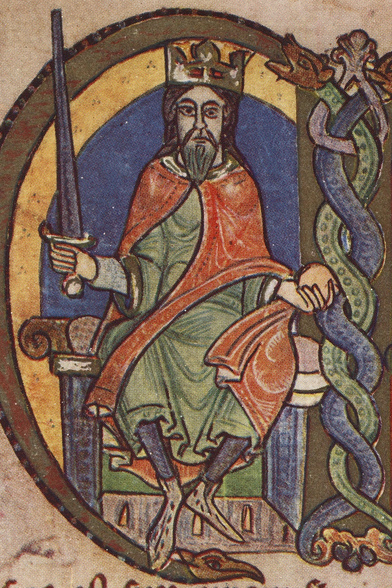
David I King of Scots

The two barons withdrew from the court in disgust. As the grandson of Earl Waltheof, Henry also demanded the earldom of Northumberland. When Stephen refused to relinquish it, Scottish raids into Northumberland were renewed. David was ostensibly arguing that he was supporting his niece, Empress Matilda, in her struggle with Stephen over the English crown, though his actual motives were far from selfless. The Gesta Stephani was generous in assessing the Scots king’s dilemma:

In Scotland, which borders on England, with a river fixing the boundary between the two kingdoms, there was a king of a gentle heart, born of religious parents and equal to them in his just way of living. Since he had in the presence of King Henry, together with the other magnates of the kingdom, or rather first of all of them, bound himself with an oath that on King Henry’s death he would recognise no-one as his successor except his daughter or her heir, he was greatly vexed that Stephen had come to take the tiller of the kingdom of the English. But because it had been planned and carried out by the barons themselves without consulting him he wisely pondered the ultimate result and waited quietly for some time to see what end the enterprise would come.1

In the early months of 1138, David had exploited Stephen’s preoccupation with the siege of Bedford Castle to lead a foray into Northumberland. The Scots king was apparently spurred on by a letter from Empress Matilda ‘stating that she had been disinherited and deprived of the kingdom promised to her on oath, that the laws had been made of no account, justice trampled under foot, the fealty of the barons of England and the compact to which they had sworn broken and utterly disregarded, and therefore she humbly and mournfully besought him to aid her as a relation, since she was abandoned, and assist her as one bound to her by oath, since she was in distress’.2
History ... the Interesting Bits
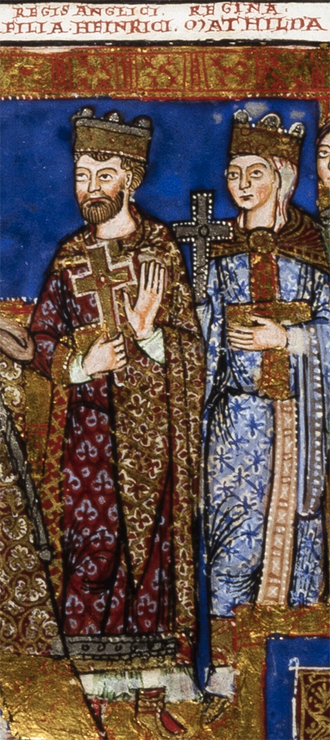
Empress Matilda depicted in an image from the Gospels of Henry the Lion.

Whether acting in response to his niece’s pleas or to pursue his own interests, David had moved south in January 1138. He had besieged Wark Castle and led a chevauchée further south. However, he had retreated into the Scottish borders when Stephen brought a substantial force against him. From Roxburgh, David awaited the departure of the English army before renewing his campaign. The Scots ventured across the border, once again, on 8 April, this time targeting the coastal regions of Northumberland and County Durham in a campaign of plunder and waste. Stephen was now tied up in the south in campaigns against various rebel barons, including William Fitz Alan, who was married to a niece of Robert, Earl of Gloucester, and Arnulf of Hesdin, who held Shrewsbury Castle against the king.

Robert of Gloucester, Empress Matilda’s illegitimate half-brother, had finally made a move in favour of his sister, issuing Stephen with a diffidatio, a chivalric device which was a formal statement of renunciation of allegiance and homage. According to William of Malmesbury, Robert ‘sent representatives and abandoned friendship and faith with the king in the traditional way, also renouncing homage, giving as the reason that his action was just, because the king had both unlawfully claimed the throne and disregarded, not to say betrayed, all the faith he had sworn to him’.3

David took advantage of these distractions and again crossed the River Tees with a Scottish army in July. He sent two Scottish barons to lay siege to Wark Castle while he headed further south. Eustace fitz John, deprived of Bamburgh Castle by King Stephen but still in control of Alnwick, chose to add his own forces to those of King David. The army marched past Bamburgh until the garrison, believing themselves impregnable, taunted the Scots from the safety of the castle’s formidable walls. The Scots promptly attacked, breaking down the barricades and killing everyone in the castle. Bernard de Baliol was then sent north by King Stephen and he and Robert de Bruce were tasked with discussing terms with the Scots. The proposal was that if the Scots went home, Prince Henry would be given the earldom of Northumberland. David rejected the offer.

Stephen, it seems, was beset on all sides, with invaders on his northern borders, rebellion within his kingdom and trouble across the Channel in Normandy. He employed all his senior commanders in putting out the fires – including his wife, Queen Matilda. In the late summer of 1138, following the capitulation of Shrewsbury, Stephen had hanged that town’s entire garrison, learning from his leniency at Exeter. He then ‘besieged Dover with a strong force on the landward side, and sent word to [Queen Matilda’s] friends and kinsmen and dependents in Boulogne to blockade the force by sea. The people of Boulogne proved obedient, gladly carried out their lady’s commands and, with a great fleet of ships, closed the narrow strait to prevent the garrison receiving any supplies.’4 This military pressure, combined with the persuasive power of Robert de Ferrers, father-in-law of the rebel garrison’s commander, Walchelin Maminot, caused Walchelin to surrender to the queen, in late August or early September. The retribution meted out to the Shrewsbury garrison was probably another persuasive argument to the recalcitrant defenders.

History ... the Interesting Bits
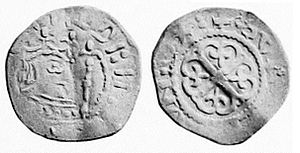
Coin of Prince Henry of Scotland

David had overplayed his hand by allowing his troops from Galloway to plunder the countryside, thus uniting the northern barons in their determination to put an end to these all-too-frequent Scottish forays into England. With Stephen, his loyal generals and his wife occupied with rebels in the south of England, the defence of the north fell to Thurstan, Archbishop of York since 1115 and nearing his seventieth year. Placing the archbishop in command was a move which would prevent baronial squabbling over seniority. Thurstan called for a crusade against the Scots and mustered his army at York. The Scots refused all offers of negotiations, so the archbishop marched his force to Northallerton in Yorkshire, just 30 miles north-west of York. Calling upon holy favour, the army was preceded by the banners of St Peter, St John of Beverly and St Wilfrid of Ripon, flying on a mast which itself was mounted on a carriage.

On 22 August 1138, with the carriage supporting the standards placed on the summit of the southernmost of two hillocks next to the Darlington road, the troops were arrayed to the front of their standards. Above the emblems of the saints a banner read, ‘Body of the Lord, to be their standard-bearer and the leader of their battle.’5 It is from this pious display that the ensuing clash, the Battle of the Standard, would get its name. The English forces were formed in three groups, with dismounted men-at-arms in the front rank, a body of knights around the standards and the shire levies deployed at the rear and on both flanks. The Scots were drawn up on the northern hillock, with men-at-arms and archers in the front and the poorly equipped men from Galloway and the Highlanders in the rear. The unarmoured men from Galloway complained bitterly about being placed in the rear and demanded the rightful place of honour in the front of the battleline, to the extent that King David, against his better judgement, granted them their wish to spearhead the attack. Prince Henry took command of the right flank, comprising the troops from Strathclyde and the eastern Lowlands and a body of mounted knights. The left was formed of men from the western Highlands. The king led the small reserve, made up of the men from Moray and the eastern Highlands.

The presence of the apostle and two Yorkshire saints in their force, arrayed against a foe containing a contingent of Picts, led to a sense among the English that they were on a noble crusade. According to Henry of Huntingdon, the Bishop of Durham then gave a stirring speech before the bishops and priests retreated from the field:

History ... the Interesting Bits
Memorial to the Battle of the Standard, Northallerton

… Rouse yourselves, then, gallant soldiers, and bear down on an accursed enemy with the courage of your race and in the presence of God. Let not their impetuosity shake you, since the many tokens of our valour do not deter them. They do not cover themselves with armour in war; you are in the constant practice of arms in time of peace, that you may be at no loss in the chances at the day of battle. Your head is covered with the helmet, your breast with a coat of mail, your legs with greaves and your whole body with shield. Where can the enemy strike you when he finds you sheathed in steel … It is not so much the multitude of a host, as the valour of a few which is decisive. Numbers, without discipline, are a hindrance to success in the attack and to retreat in defeat. Your ancestors were often victorious when they were but a few against many…6

As the English soldiers shouted out ‘Amen! Amen!’ in response to the bishop’s speech, the Scottish army advanced with their own battle cry of ‘Alban! Alban!’ on their lips. The men of Galloway launched the initial attack and ‘bore down on the English mailed knights with a cloud of darts and their long spears’.7 The unclothed Galwegians had no protection against the hail of arrows and English swords, though their sheer ferocity saw them temporarily breach the English front rank. Even so, they could get no further: ‘The whole army of English and Normans stood fast around the Standard in one solid body.’8 It was a stalemate that Prince Henry attempted to break by leading a mounted charge against the English forces. Although he sustained heavy losses, the prince broke through the English ranks and continued towards the enemy’s rear, reaching the horse lines. The English closed ranks before the Scots foot soldiers could take advantage of the gap created by the prince’s charge.

Henry of Huntingdon reserves praise for the prince: ‘[David’s] brave son, heedless of what his countrymen were doing, and inspired only by his ardour for the fight and for glory, made a fierce attack, with the remnant of the fugitives on the enemy’s ranks … But this body of cavalry could by no means make any impression against men sheathed in armour, and fighting on foot in a close column; so that they were compelled to retire with wounded horses and shattered lances, after a brilliant but unsuccessful attack.’9 Finding himself marooned behind enemy lines, the prince ordered his men to discard any identifying badges and mingle with the English forces until they could escape. The ruse worked and the prince was able to make his way back to Carlisle.

According to Huntingdon, the men of Galloway were put to flight when their chief fell, pierced by an arrow. Fighting along the line, and having seen what befell the Galwegians, the remainder of the Scots army began to falter. Seeing that the battle was lost, men began to flee. It began as a trickle, but soon the greater part of the army was in retreat. King David had chosen the greatest of the Scottish knights as his personal guard, and they remained steadfast almost to the last. Once they saw the battle was lost, they persuaded the king to call for his horse and retreat rather than risk death or capture. Henry of Huntingdon reports 11,000 Scottish dead against few English casualties, with Gilbert de Lacy’s brother the only English knight to fall on the field of battle.

The English, however, failed to pursue the fleeing Scots. David was therefore able to march his surviving army north to join the forces that had been besieging Wark Castle since June. Satisfied that they had seen off the Scottish threat, the English had withdrawn, leaving only a small contingent in the field to reduce Eustace fitz John’s castle at Malton. Negotiations for peace could then begin:

History ... the Interesting Bits
Durham Cathedral

After the war between the two kings had lasted for a long time, created terrible disorder, and brought widespread calamity, a peace mission was sent out by God’s will; travelling to and fro between the two kings, who were exhausted by the slaughter, destruction, ceaseless anxieties, and hardships, the envoys succeeded in restoring harmony between them.10

A truce was arranged at Carlisle at the end of September 1138 and negotiations for a lasting peace began in earnest. On 9 April 1139, the Treaty of Durham was concluded between King Stephen and David of Scotland. As part of the treaty, Henry of Scotland would marry Ada de Warenne, daughter of William de Warenne, 2nd Earl of Warenne and Surrey. Not that peace would prevent King David from continuing to aid his niece, Empress Matilda, in her struggles against King Stephen, but that is another story.

Notes:

1. K. R. Potter (trans.), Gesta Stephani; 2. ibid; 3. William of Malmesbury quoted in Matthew Lewis, Stephen and Matilda’s Civil War: Cousins of Anarchy; 4. John of Worcester quoted in Patricia A. Dark, The Career of Matilda of Boulogne as Countess and Queen in England, 1135-1152; 5. Matthew Lewis, Stephen and Matilda’s Civil War; 6. Thomas Forester (trans. and ed.), The Chronicle of Henry of Huntingdon. Comprising the history of England, from the invasion of Julius Caesar to the accession of Henry II. Also,the Acts of Stephen, King of England and Duke of Normandy; 7. ibid; 8. ibid; 9. ibid; 10. Ordericus Vitalis, The Ecclesiastical History of Orderic Vitalis, 1075-1143, book XIII.

Images:

King David, King Stephen, Empress Matilda and the coin of Prince Henry of Scotland are courtesy of Wikipedia. All photos are ©2024 Sharon Bennett Connolly FRHistS

Sources:

Potter, K. R. (trans.), Gesta Stephani; Matthew Lewis, Stephen and Matilda’s Civil War: Cousins of Anarchy; Patricia A. Dark, The Career of Matilda of Boulogne as Countess and Queen in England, 1135-1152; Thomas Forester (trans. and ed.), The Chronicle of Henry of Huntingdon. Comprising the history of England, from the invasion of Julius Caesar to the accession of Henry II. Also, the Acts of Stephen, King of England and Duke of Normandy; David Smurthwaite, The Complete Guide to the Battlefields of Britain; David Crouch, The Reign of King Stephen; Keith Stringer, ‘Henry, Earl of Northumberland (c. 1115-1152)’, Oxforddnb.com; G.W.S. Barrow, ‘David I (c. 1185-1153)’, Oxforddnb.com; Keith Stringer, ‘Ada [née Ada de Warenne], countess of Northumberland (c. 1123-1178)’, Oxforddnb.com; Victoria Chandler, ‘Ada de Warenne, Queen Mother of Scotland (c. 1123-1178)’, The Scottish Historical Review, Vol. 60, no. 170; Farrer, W. and C. T. Clay (eds), Early Yorkshire Charters, Volume 8: The Honour of Warenne; Henry of Huntingdon, The History of the English People 1000–1154; Catherine Hanley, Matilda: Empress, Queen, Warrior; Marjorie Chibnall, The Empress Matilda: Queen Consort, Queen Mother and Lady of the English; Edmund King, King Stephen.

*

My Books

Signed, dedicated copies of all my books are available through my online store.

Out now: Scotland’s Medieval Queens

Books by Sharon Bennett Connolly

Scotland’s history is dramatic, violent and bloody. Being England’s northern neighbour has never been easy. Scotland’s queens have had to deal with war, murder, imprisonment, political rivalries and open betrayal. They have loved and lost, raised kings and queens, ruled and died for Scotland. From St Margaret, who became one of the patron saints of Scotland, to Elizabeth de Burgh and the dramatic story of the Scottish Wars of Independence, to the love story and tragedy of Joan Beaufort, to Margaret of Denmark and the dawn of the Renaissance, Scotland’s Medieval Queens have seen it all. This is the story of Scotland through their eyes.

Scotland’s Medieval Queens gives a thorough grounding in the history of the women who ruled Scotland at the side of its kings, often in the shadows, but just as interesting in their lives beyond the spotlight. It’s not a subject that has been widely covered, and Sharon is a pioneer in bringing that information into accessible history.’ Elizabeth Chadwick (New York Times bestselling author)

Available now from Amazon and Pen and Sword Books

Also by Sharon Bennett Connolly:

Books by Sharon Bennett Connolly

Heroines of the Tudor World tells the stories of the most remarkable women from European history in the time of the Tudor dynasty, 1485-1603. These are the women who ruled, the women who founded dynasties, the women who fought for religious freedom, their families and love. Heroines of the Tudor World is now available from Amberley Publishing and Amazon UK. Women of the Anarchy demonstrates how Empress Matilda and Matilda of Boulogne, unable to wield a sword themselves, were prime movers in this time of conflict and lawlessness. It shows how their strengths, weaknesses, and personal ambitions swung the fortunes of war one way – and then the other. Available from Bookshop.orgAmberley Publishing and Amazon UKKing John’s Right-Hand Lady: The Story of Nicholaa de la Haye is the story of a truly remarkable lady, the hereditary constable of Lincoln Castle and the first woman in England to be appointed sheriff in her own right. Available from all good bookshops Pen & Sword Booksbookshop.org and Amazon

Defenders of the Norman Crown: The Rise and Fall of the Warenne Earls of Surrey tells the fascinating story of the Warenne dynasty, from its origins in Normandy, through the Conquest, Magna Carta, the wars and marriages that led to its ultimate demise in the reign of Edward III. Available from Pen & Sword BooksAmazon in the UK and US, and Bookshop.orgLadies of Magna Carta: Women of Influence in Thirteenth Century England looks into the relationships of the various noble families of the 13th century, and how they were affected by the Barons’ Wars, Magna Carta and its aftermath; the bonds that were formed and those that were broken. It is now available in paperback and hardback from Pen & SwordAmazon, and Bookshop.orgHeroines of the Medieval World tells the stories of some of the most remarkable women from Medieval history, from Eleanor of Aquitaine to Julian of Norwich. Available now from Amberley Publishing and Amazon, and Bookshop.orgSilk and the Sword: The Women of the Norman Conquest traces the fortunes of the women who had a significant role to play in the momentous events of 1066. Available now from Amazon,  Amberley Publishing, and Bookshop.org.

Alternate Endings: An anthology of historical fiction short stories including Long Live the King… which is my take what might have happened had King John not died in October 1216. Available in paperback and kindle from Amazon.

Podcast:

Have a listen to the A Slice of Medieval podcast, which I co-host with Historical fiction novelist Derek Birks. Derek and I welcome guests, such as Bernard Cornwell and discuss a wide range of topics in medieval history, from significant events to the personalities involved. There are now over 70 episodes to listen to!

Every episode is also now available on YouTube.

*

Don’t forget! Signed and dedicated copies of all my books are available through my online bookshop.

For forthcoming online and in-person talks, please check out my Events Page.

You can be the first to read new articles by clicking the ‘Follow’ button, liking our Facebook page or joining me on TwitterThreadsLinkedIn, Bluesky and Instagram.

©2024 Sharon Bennett Connolly FRHistS
1141: The War of the Two Matildas

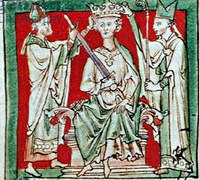
The coronation of King Stephen

Few periods in history have brought women to the fore, to the centre of events, as the Anarchy did in England. From 1135 to 1154, conflict raged when Stephen of Blois usurped the throne that rightfully belonged to his cousin Empress Matilda. During the lifetime of Henry I – Matilda’s father and Stephen’s uncle – Stephen had twice sworn oaths to guarantee the succession for Matilda. But when the time came, when Henry died on 1 December 1135, Stephen broke those oaths, and had himself crowned king in Westminster Abbey just 3 weeks after his uncle’s death.

If he thought Matilda would just accept losing her crown and stay at home with the children, Stephen was sorely mistaken. Pregnant with her third child at the time of her father’s death, Matilda had to bide her time, for a little while. And, as her husband Geoffrey of Anjou campaigned on her behalf in Normandy, Matilda landed in England on 30 September 1139 and her own campaign to claim the crown began.

And she nearly won.

The First Battle of Lincoln

Lincoln Castle

Early in 1141, news reached King Stephen that Ranulf de Gernons, the disgruntled Earl of Chester, had captured Lincoln Castle. Disappointed in his aspirations to Carlisle and Cumberland after they were given to Prince Henry of Scotland, Ranulf had turned his sights on Lincoln Castle, which had once been held by his mother, Lucy of Bolingbroke, Countess of Chester. Countess Lucy had died around 1138, leaving her Lincolnshire lands to her son by her second marriage, William de Roumare, Ranulf’s half-brother. Her lands elsewhere had been left to Ranulf de Gernons, who was the son of her third marriage, to Ranulf le Meschin, Earl of Chester.

It seems that in late 1140 Ranulf and his brother had contrived to gain possession of Lincoln Castle by subterfuge. As the story goes, the two brothers waited until the castle garrison had gone hunting before sending their wives to visit the castellan’s wife.  A short while after, Earl Ranulf appeared at the castle gates, wearing no armour and with only three attendants, supposedly to collect his wife and sister-in-law. Once allowed inside, he and his men overpowered the small number of men-at-arms left to guard the castle and opened the gates to his brother. The half-brothers took control of the castle and, with it, the city of Lincoln.

The citizens of Lincoln appealed to the king, who had promptly arrived outside the castle walls by 6 January 1141 and began his siege. Earl Ranulf somehow escaped from the castle and returned to his lands in Chester in order to raise more troops. He also took the opportunity to appeal to his father-in-law for aid. Ranulf’s father-in-law was, Robert, Earl of Gloucester, the illegitimate son of Henry I and brother of Empress Matilda. A very capable soldier, Earl Robert commanded Matilda’s military forces and his daughter, Maud of Gloucester – Ranulf’s wife – was still trapped inside Lincoln Castle. If the need to rescue his daughter was not enough motivation to persuade Robert to intercede at Lincoln, Ranulf also promised to switch his allegiance, and his considerable resources, to Empress Matilda. Robert marched to Lincoln, meeting up with his son-in-law along the way. The earls’ forces arrived on the outskirts of Lincoln on 1 February, crossed the Fossdyke and the River Witham and arrayed for battle.  Their rapid approach caught Stephen unawares. Outnumbered, Stephen was advised to withdraw his forces, until he could muster enough men to make an even fight of it.

Stephen, perhaps remembering the destruction of his father’s reputation after his flight from Antioch, refused to withdraw. He would stand and fight. The next morning, 2 February 1141, before battle was joined, King Stephen attended a solemn mass in the cathedral; according to Henry of Huntingdon, who claimed Bishop Alexander of Lincoln as his patron and may well have been present, the service was replete with ill omens:

‘But when, following custom, he offered a candle fit for a king and was putting it into Bishop Alexander’s hands, it broke into pieces. This was a warning to the king that he would be crushed. In the bishop’s presence, too, the pyx above the altar, which contained the Lord’s Body, fell, its chain having snapped off. This was a sign of the king’s downfall.’

Henry of Huntingdon, The History of the English People 1000-1154

After mass, the king led his forces through Lincoln’s West Gate, deploying them either on the slope leading down to the Fossdyke or possibly at the bottom of the slope, on Carrholme. King Stephen formed his army into three divisions, with mounted troops on each flank and the infantry in the centre. On the right flank were the forces of Waleran de Meulan, William de Warenne, Simon de Senlis, Gilbert of Hertford, Alan of Richmond and Hugh Bigod, Earl of Norfolk. The left was commanded by William of Aumale and William of Ypres, Stephen’s trusted mercenary captain, who led a force of Flemish and Breton troops. The centre comprised the shire levy, which included citizens of Lincoln, and Stephen’s own men-at-arms, fighting on foot around the royal standard.

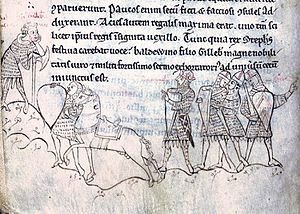
1141 Battle of Lincoln from Historia Anglorum

The opposing army also deployed in three divisions, with ‘the disinherited’, those deprived of their lands by King Stephen, on the left. The infantry, comprising of Earl Ranulf’s Cheshire tenants and other levies, and dismounted knights were in the centre under Earl Ranulf himself. The cavalry, under the command of Earl Robert of Gloucester formed the right flank. The Welsh mercenaries, ‘ill armed but full of spirits’ were arrayed on the wings of the army. Before the battle, Henry of Huntingdon reports, speeches  were heard from both sides, exhorting the men to battle and insulting the opposing commanders.

Baldwin fitz Gilbert spoke for King Stephen, whose voice did not carry well. According to Henry of Huntingdon, the armies were mobilising before his speech ended. The rebels were the first to advance, ‘the shouts of the advancing enemy were heard, mingled with the blasts of their trumpets, and the trampling of the horses, making the ground to quake.’ The ranks of the ‘disinherited’ moved forward with swords drawn, rather than lowered lances, intent on close quarter combat. This left flank of the rebel army fell upon Stephen’s right flank, ‘in which were Earl Alan, the Earl of Mellent [Meulan], with Hugh, the Earl of East Anglia [Norfolk], and Earl Symon, and the Earl of Warenne, with so much impetuosity that it was routed in the twinkling of an eye, one part being slain, another taken prisoner and the third put to flight.’ Faced with the ferocity of the assault and the very real prospect of death, rather than being taken prisoner and held for ransom, the earls fled the field with the remnants of their men. It was every man for himself as Stephen’s right wing disintegrated in panic.2

The left wing of the royal army appeared to have greater success, at least initially. The men of William of Aumale, Earl of York and Stephen’s mercenary captain, William of Ypres, rode down the Earl of Chester’s Welsh mercenaries and sent them running, but ‘the followers of the Earl of Chester attacked this body of horse, and it was scattered in a moment like the rest.’3 Other sources suggest that William of Ypres and William of Aumale fled before coming to close quarters with the enemy.4 Either way, William of Ypres’ men were routed and he was in no position to support the king and so fled the field, no doubt aware that he would not be well-treated were he to be captured.

Stephen’s centre, the infantry, including the Lincolnshire levies and the king’s own men-at-arms, were left isolated and surrounded, but continued to fight. Stephen himself was prominent in the vicious hand-to-hand fighting that followed. Henry of Huntingdon vividly describes the desperate scene as ‘the battle raged terribly round this circle; helmets and swords gleamed as they clashed, and the fearful screams and shouts re-echoed from the neighbouring hill and city walls.’5 The rebel cavalry charged into the royal forces killing many, trampling others and capturing some. King Stephen was deep in the midst of the fighting:

‘No respite, no breathing time was allowed, except in the quarter in which the king himself had taken his stand, where the assailants recoiled from the unmatched force of his terrible arm. The Earl of Chester seeing this, and envious of the glory the king was gaining, threw himself upon him with the whole weight of his men-at-arms. Even then the king’s courage did not fail, but his heavy battle-axe gleamed like lightning, striking down some, bearing back others. At length it was shattered by repeated blows, then he drew his well-tried sword, with which he wrought wonders until that, too, was broken.’

Henry of Huntingdon, The History of the English People 1000-1154;

According to Orderic Vitalis and the Gesta Stephani, it was the king’s sword that broke first, before he was passed a battle-axe by one of the fighting citizens of Lincoln, in order to continue the fight. Whatever the order, the king’s weapons were now useless and the king ‘fell to the ground by a blow from a stone.’6 Stephen was stunned and a soldier named William de Cahaignes then rushed at him, seized him by his helmet and shouted, ‘Here! Here! I have taken the king!’

The king’s forces being completely surrounded, flight was impossible. All were killed or taken prisoner, including Baldwin fitz Gilbert, the man who had given the rousing pre-battle speech to the men. In the immediate aftermath of the fighting, Lincoln was sacked, buildings set alight, valuables pillaged, and its citizens slaughtered by the victorious rebels.

Lady of the English

Empress Matilda depicted in an image from the Gospels of Henry the Lion.

Defeated, Stephen was first taken to Empress Matilda and then to imprisonment at Bristol Castle. A victorious Matilda was recognised as sovereign by the English people.

As for Matilda, ‘the lady empress-queen, Henry’s daughter, who was staying at Gloucester, was overjoyed at this event, having now, as it appeared to her, got possession of the kingdom for which fealty had been sworn to her’. As the Gesta Stephani, always insistent on naming Matilda countess rather than empress,relates, ‘the greater part of the kingdom at once submitted to the countess and her adherents and some of the king’s men, involved in sudden disasters, were being either captured or forcibly expelled from their possessions; others, very quickly foreswearing the faith they owed to the king, were voluntarily surrendering themselves and what was theirs to the countess’.

A victorious Matilda was recognised as sovereign by the English people, being named Lady of the English as Winchester in March.

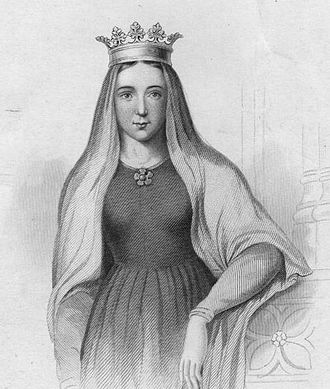
Queen Matilda

Matilda of Boulogne, Queen of England

And Stephen’s greatest asset now showed her mettle.

In April, Stephen’s wife, Queen Matilda, sent a letter that was read out at the Legatine Council in Winchester, presided over by Henry of Blois, papal legate and Bishop of Winchester – and brother of King Stephen. The queen pleaded with the clergy to release the king from his imprisonment and restore him to the throne. As may have been expected, Bishop Henry refused to give in to the queen’s request, but her pleas may have affected a delegation of Londoners, also present, who were still openly loyal to Stephen and would see Queen Matilda’s letter as encouragement for them to maintain their position in the face of the bishop’s persuasion. Clearly the empress had a long way to go before the Londoners would admit her into the capital for her coronation at Westminster Abbey.

However, by mid-June, the empress was at Westminster, outside the city walls of London.

Empress Matilda was now at the height of her success. Her rival was in her custody, the church was on her side, she had the keys to the royal treasury and was about to make a ceremonial entry into London, her capital: ‘The empress, as we have already said, having treated with the Londoners, lost no time in entering the city with a great attendance of bishops and nobles: and being received at Westminster with a magnificent procession, took up her abode there for some days to set in order the affairs of the kingdom.’ Her uncle David, King of Scots and her half-brothers Robert of Gloucester and Reginald de Dunstanville, now Earl of Cornwall, were by her side.

Empress versus Queen

Oxford Castle

With her husband held in chains in Bristol castle, Matilda of Boulogne, Queen of England, wife of King Stephen and cousin of Empress Matilda, stepped into the fight. She first tried to negotiate, offering to take Stephen into exile if Matilda would at least guarantee their son’s inheritance of their ancestral lands. The empress refused, perhaps remembering that no such guarantee was ever made to her son, Henry, dispossessed of his inheritance by Stephen’s usurpation of the crown. Undeterred, Queen Matilda established a secure base in Kent, from where she raised an army to march on London, burning and ravaging the countryside surrounding the capital. It was becoming apparent that the struggle was far from over. A final masterstroke was when she moved up William of Ypres and his Flemish mercenaries, to threaten London, thus inducing the Londoners to turn against the empress.

Henry, Bishop of Winchester, deserted the empress and joined the queen, promising to expend his efforts on obtaining the release of the king, his brother.

The empress’s success was turning sour.

On the eve of the empress’s ceremonial entrance into the capital, the city’s church bells rang out, a prearranged signal for the citizens to rise against the empress and open the gates to the queen’s approaching army. Empress Matilda was still at Westminster, ‘reclining at a well-cooked feast’. Westminster was an unfortified palace that was not easily defensible and ‘being, however, forewarned by some of them, she fled shamefully with her retinue, leaving all her own and their apparel behind’.

The empress had no choice. She and her supporters rode for Oxford. Although things appeared precarious, all was not lost. Queen Matilda now held London, but the empress still had Stephen in her custody and room for manoeuvre. By the end of July, the empress and her army were riding south. As she approached Winchester, the empress sent a request to Bishop Henry to meet her outside the city, at which point he promptly fled to join Queen Matilda at Guildford.

The Rout of Winchester

Robert of Gloucester and his wife, Mabel

Winchester had two castles: the royal castle, which held for the empress, and Wolvesey, a palatial castle in the south-eastern corner of the city that was the residence of Bishop Henry of Winchester, though he was not at home at the time. Empress Matilda arrived at the royal castle of Winchester on 31 July and began the siege of Wolvesey on 1 August 1141.

In defiance, the garrison of the bishop’s castle threw burning material from the ramparts which, in the summer heat, quickly set the whole city ablaze. The stone cathedral survived, but much of the town, built in wood with thatched roofs, was lost. The devastation meant the city’s population had lost their homes and livelihoods, and the empress’s army were deprived of shelter and provisions. Worse, Queen Matilda was now approaching with an army of her own and, in turn, besieged the empress.

The empress’s army was trapped.

Surrounded, with the city in flames and supplies running short, the empress was forced to flee for her life. In the retreat, her half-brother and leading general, Robert, Earl of Gloucester, was captured.

Queen Matilda now had her own bargaining chip. As much as she needed her husband returned to her, the empress needed her brother.

Prisoner Exchange

Henry II

The practical arrangements for the exchange were rather complicated, with neither side trusting the other to hold to the bargain. On 1 November 1141, Queen Matilda surrendered at Bristol Castle, with one of her sons and two unidentified magnates, so that Stephen could be set at liberty. The king then rode to Winchester, where Earl Robert had been taken under guard, and on his arrival on 3 November the earl was freed, leaving his eldest son and heir, William of Gloucester, as surety. When the earl reached Bristol, the queen, her son and the two unnamed magnates were set at liberty and returned to Winchester. At that point, William of Gloucester was freed as well. After nine months of harsh imprisonment, Stephen was free at last.

By Christmas 1141, having endured nine months of incarceration, Stephen was back on his throne and celebrating the festive season at Canterbury, where he was symbolically re-crowned by the archbishop  of Canterbury, with his queen by his side.

The empress was faced with the realisation of how close she had come to winning it all.

But lost.

At least she had her brother back and the fight was far from over.

The war would drag on until Stephen’s death in 1154, but the empress never came as close again to winning the crown. She eventually passed the baton to her son, Henry FitzEmpress, who would reign as Henry II. It was a kind of victory: it was her son who succeeded King Stephen rather than his own. Empress Matilda could ultimately claim victory as the crown returned to her line and that of her father, Henry I.

*

Images:

Courtesy of Wikipedia except Lincoln Castle and Oxford Castle which are ©SharonBennettConnolly FRHistS 

Selected bibliography:

Gesta Stephani, translated by K. R. Potter; Henry of Huntingdon, The History of the English People 1000-1154; Marjorie Chibnall, The Empress Matilda: Queen Consort, Queen Mother and Lady of the English; Teresa Cole, The Anarchy: The Darkest Days of Medieval England; Catherine Hanley, Matilda: Empress, Queen, Warrior; Helen Castor, She-Wolves: The Women who Ruled England before Elizabeth; Robert Bartlett, England Under the Norman and Angevin Kings; J. Sharpe (trans.), The History of the Kings of England and of his Own Times by William Malmesbury; Orderici Vitalis, Historiae ecclesiasticae libri tredecem, translated by Auguste Le Prévost; Chronicles of the Reigns of Stephen, Henry II and Richard I; Edmund King, King Stephen; Donald Matthew, King Stephen; Matthew Lewis, Stephen and Matilda’s Civil War: Cousins of Anarchy.

*

My Books:

Signed, dedicated copies of all my books are available through my online bookshop.

Out Now! Women of the Anarchy

Two cousins. On the one side is Empress Matilda, or Maud. The sole surviving legitimate child of Henry I, she is fighting for her birthright and that of her children. On the other side is her cousin, Queen Matilda, supporting her husband, King Stephen, and fighting to see her own son inherit the English crown. Women of the Anarchy demonstrates how these women, unable to wield a sword, were prime movers in this time of conflict and lawlessness. It show how their strengths, weaknesses, and personal ambitions swung the fortunes of war one way – and then the other.

Available from Bookshop.orgAmberley Publishing and Amazon UK.

Coming on 15 June 2024: Heroines of the Tudor World

Heroines of the Tudor World tells the stories of the most remarkable women from European history in the time of the Tudor dynasty, 1485-1603. These are the women who ruled, the women who founded dynasties, the women who fought for religious freedom, their families and love. These are the women who made a difference, who influenced countries, kings and the Reformation. In the era dominated by the Renaissance and Reformation, Heroines of the Tudor World examines the threats and challenges faced by the women of the era, and how they overcame them. From writers to regents, from nuns to queens, Heroines of the Tudor World shines the spotlight on the women helped to shape Early Modern Europe.

Heroines of the Tudor World is now available for pre-order from Amberley Publishing and Amazon UK.

Also by Sharon Bennett Connolly:

King John’s Right-Hand Lady: The Story of Nicholaa de la Haye is the story of a truly remarkable lady, the hereditary constable of Lincoln Castle and the first woman in England to be appointed sheriff in her own right. Available from all good bookshops or direct from Pen & Sword Booksbookshop.org and AmazonDefenders of the Norman Crown: The Rise and Fall of the Warenne Earls of Surrey tells the fascinating story of the Warenne dynasty, from its origins in Normandy, through the Conquest, Magna Carta, the wars and marriages that led to its ultimate demise in the reign of Edward III. Available from Pen & Sword BooksAmazon in the UK and US, and Bookshop.org

Ladies of Magna Carta: Women of Influence in Thirteenth Century England looks into the relationships of the various noble families of the 13th century, and how they were affected by the Barons’ Wars, Magna Carta and its aftermath; the bonds that were formed and those that were broken. It is now available in paperback and hardback from Pen & Sword,  Amazon, and Bookshop.orgHeroines of the Medieval World tells the stories of some of the most remarkable women from Medieval history, from Eleanor of Aquitaine to Julian of Norwich. Available now from Amberley Publishing and Amazon, and Bookshop.orgSilk and the Sword: The Women of the Norman Conquest traces the fortunes of the women who had a significant role to play in the momentous events of 1066. Available now from Amazon,  Amberley Publishing, and Bookshop.org.

Alternate Endings: An anthology of historical fiction short stories including Long Live the King… which is my take what might have happened had King John not died in October 1216. Available in paperback and kindle from Amazon.

Podcast:

Have a listen to the A Slice of Medieval podcast, which I co-host with Historical fiction novelist Derek Birks. Derek and I welcome guests, such as Bernard Cornwell and Elizabeth Chadwick, and discuss a wide range of topics in medieval history, from significant events to the personalities involved.

*

Don’t forget! Signed and dedicated copies of all my books are available through my online bookshop.

For forthcoming online and in-person talks, please check out my Events Page.

You can be the first to read new articles by clicking the ‘Follow’ button, liking our Facebook page or joining me on Twitter and Instagram.

*

©2024 Sharon Bennett Connolly FRHistS 

Matilda of Boulogne: From Countess to Queen

Matilda of Boulogne, Queen of England

King Stephen’s wife, Matilda of Boulogne, was a stalwart supporter of her husband. She was arguably more capable than Stephen and often took the initiative in diplomatic negotiations. Acting as Stephen’s wife, she offered a stark contrast to the independence and authority of Empress Matilda that so infuriated the barons. Matilda of Boulogne was a little more subtle than her imperious counterpart, only ever acting in her husband’s name, not her own. Even later, when she held the command of Stephen’s forces during his captivity in 1141, she claimed to act only on behalf of her husband and sons.

Matilda of Boulogne was an example of how a woman was expected to act and comport herself: strong and confident, but subject to her husband’s will. On this last, Empress Matilda failed in the eyes of the barons; she was acting for herself. In the event, the barons of England and Normandy despised her second husband, Geoffrey of Anjou, so they would have been even less receptive to Matilda had her husband tried to assert his authority. It was a conundrum that Matilda was never able to resolve, though she would not give up trying.

According to the Gesta Stephani (The Deeds of Stephen), Stephen of Blois was ‘by far the dearest of all his nephews to King Henry the peacemaker, not only because of the close family relationship, but also because he was peculiarly eminent for many conspicuous virtues’. Born at Blois in or around 1096, Stephen was the third son of Adela and her husband, Stephen, Count of Blois and Chartres. His father was one of the leaders of the First Crusade and may well have departed for the Holy Land before – or shortly after – the younger Stephen’s birth. It is likely that young Stephen had little contact with his father; the count returned from crusade in 1198, only to depart again in 1201.

In 1125, it was King Henry who arranged for Stephen’s marriage to the daughter and sole heiress of the Count of Boulogne, Matilda. Matilda’s mother was Mary of Scotland, sister of Henry I’s first wife, Matilda of Scotland; the younger Matilda was therefore first cousin to Henry I’s daughter, Empress Matilda. The daughter of King Malcolm III Canmore and his queen Margaret of Wessex, Mary of Scotland could trace her illustrious heritage all the way back to Alfred the Great; she had been educated in England alongside her sister. Mary was married to Eustace III, Count of Boulogne, and their only child, Matilda, was probably born the following year, in 1105. The baby’s maternal aunt, Matilda of Scotland, stood as godmother. It is possible that, like her mother and aunt, young Matilda was educated at the convents of Wilton and Romsey. She was certainly a well-educated and capable woman. As we shall see, as an adult, she seems as erudite and well versed in politics as her husband, perhaps with an even better capacity for diplomacy.

Henry I, King of England

Mary of Scotland died when her daughter was around ten or eleven years old, on 31 May 1116. She was buried in the wealthy Cluniac house of Bermondsey Abbey in England.

The county of Boulogne lay within the greater county of Flanders. Nominally owing fealty to France, it was largely autonomous and held extensive interests in England, particularly in Essex and the south-east. The county also controlled one of the most important Channel crossings to England at Wissant. Keeping the county onside by marrying a reliable magnate to the heir to Boulogne was of great interest to Henry. As its heiress, Matilda of Boulogne was a figure of major political significance, her marriage deserving of careful consideration. Given that she was still unmarried at the age of twenty, with such a rich inheritance, it is possible that previous but unrecorded marital arrangements had fallen through, or that her father and uncle had taken extra care in ensuring that Matilda’s hand in marriage went to the right person.

By 1125, King Henry had been married to Adeliza of Louvain for four years, but no children had been born of the union. Likewise, Henry’s daughter, Empress Matilda, had yet to produce a living child and was at this stage more likely to be envisioning a future within the empire rather than as her father’s successor. King Henry may have been looking elsewhere for an heir to his throne; his Blois nephews, Theobald and Stephen, were the obvious candidates. As a bride to Stephen, Matilda of Boulogne would strengthen his claim to the throne, both by her Saxon royal blood and by the financial backing of the county of Boulogne.

Matilda of Boulogne and Stephen were married early in 1125, though the exact date is not recorded. Shortly after the marriage, Matilda’s father, Eustace, a former crusader, abdicated in favour of his son-in-law. Eustace retired to the Cluniac priory at Romilly, taking leave of his daughter and son-in-law in a public ceremony, probably followed by a private farewell, at the priory where he died a short time later, aged about seventy-five. As Count of Boulogne and Mortain, Stephen was now a man to be reckoned with, with considerable resources on both sides of the English Channel; he was the greatest landowner in Suffolk, Essex and the north-west of England.

Rule over the strategically important county of Boulogne would be a suitable training ground for Stephen to get used to exercising significant power in his own right. Through certain charters in the latter half of the 1120s, we can see Stephen administering his cross-Channel lordship. In 1127 he founded Furness Abbey in his lordship of Lancaster. The abbey’s mother house was located at Savigny, in Stephen’s county of Mortain. In the same year, Stephen granted the monks of Canterbury Cathedral priory an exemption from tolls at Wissant, the port through which they shipped their wine.

Empress Matilda depicted at the coronation of her granddaughter, Matilda of England, as Duchess of Saxony, in an image from the Gospels of Henry the Lion.

In marrying into the county of Boulogne, Stephen had joined a family well versed in commerce. He was heavily involved in the county’s business proceedings, usually mentioned alongside his wife, Matilda of Boulogne, who appears to have been the one in charge of the day-to-day management of the county. The Essex town of Colchester was the centre of administration for Boulogne’s interests in England. In the early years of Henry I’s reign the lands in Colchester had been identified as ‘the lands of Count Eustace,’ and were built up with the addition of lands that had belonged to Eudo Dapifer, also known as Iwun al Capel, brother-in-law of William the Conqueror and a member of the de la Haye family, until his death in 1120.

Stephen and Matilda were at Canterbury in person to confirm a charter to the monks of Christ Church, which gave the monks freedom from customs duties for the port of Wissant, granted by Count Eustace. The count and countess placed their sealed charter on the high altar of the abbey church; it is still held in the abbey archives. The ceremony was presided over by the Archbishop of Canterbury himself, William Corbeil. In 1131, the couple wrote to the archbishop and the Bishop of Ely to notify them that they had transferred the secular rights of the church at Gamlingay in Cambridgeshire to the Augustinian canons of Colchester, ‘for the remission of our sins and those of our ancestors and for the safe preservation of our son, Eustace, and our other offspring and for our temporal well-being.’ This is the first mention of Eustace and dates his birth to no later than August 1131, when Hervey, Bishop of Ely, died.

The fact these charters were jointly granted by both Stephen and Matilda serve to demonstrate how closely involved Matilda was in the management of the county, and how closely Stephen and Matilda worked together as a couple. The trust they developed in each other would stand them in good stead in the years to come.

In the early 1130s Matilda of Boulogne, like her counterpart Empress Matilda in Anjou, would have been occupied with a number of pregnancies. The couple’s first child, a son named Eustace, was born no later than 1131 and at least two further children, Baldwin and Matilda, were born before Stephen became king in 1135. Little Baldwin died before his father even came to the throne; he was buried beside the altar at Holy Trinity, Aldgate, the abbey founded by the countess’s aunt Matilda of Scotland, Henry I’s first queen. That Baldwin was buried in London suggests that Matilda spent time in England as well as Boulogne during this period. Two more children, William and Mary (or Marie), were probably born after Stephen seized the crown. The three older children were given names that called to mind the county of Boulogne, with both Eustace and Baldwin being the names of several former counts. William, on the other hand, was a reference to Stephen’s grandfather, William the Conqueror, King of England.

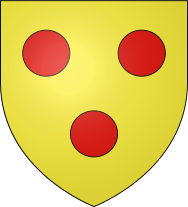
Arms of the county of Boulogne

Despite henry I having his barons swear – twice – to uphold the claims of his daughter to the throne of England, Henry I left no written instruction as to the disposition of his throne and lands, which led to the chroniclers disputing exactly what the king had intended. What is certain is that in his final days, Henry did not name his heir. Unfortunately, the lack of this definitive designation at the last meant that there was enough ambiguity for Stephen to seize the initiative.

What the chronicles do agree on is that Henry’s death caused a great deal of unrest on both sides of the Channel. According to Orderic Vitalis, ‘on the very same day that the Normans heard that their firm ruler had died in the first week of Advent they rushed out hungrily like ravening wolves to plunder and ravage mercilessly’. On the other side of the Channel, the Anglo-Saxon Chronicle made a similar report: ‘Then his land immediately grew dark because every man who could immediately robbed another.’

At Henry I’s death in December 1135, the major players in the drama that was about to unfold were scattered throughout the Anglo-Norman realm. Robert, Earl of Gloucester was at his father’s side; Queen Adeliza was in England; Empress Matilda was in Anjou with her husband, Geoffrey, and in the early stages of her third pregnancy; and Stephen of Blois was in Boulogne with his wife, Matilda. In the days after the king’s death, the lack of a designated heir was evident, and the barons moved to maintain peace in Normandy.

Stephen, King of England

Stephen had decided his own priorities, possibly well in advance of the king’s death and perhaps in collusion with his brother, Theobald. Whether Empress Matilda had an inkling of what Stephen was planning we do not know, though it seems unlikely given her own move into Normandy and no further. Stephen was not with the king when he died. Although he had been with Henry at Rouen earlier in the year, by late November 1135 he was in his county of Boulogne and it was there that the news of the king’s demise reached him, probably two or three days later. The speed of Stephen’s response, and its organisation, shows that he had been contemplating his plan of action for some time.

It is not hard to imagine him sitting in Boulogne, surrounded by his wife and family, watching and waiting for the arrival of the news that would set his plans in motion. According to the Gesta Stephani, ‘as soon as he heard by report that King Henry had breathed his last, forming a mighty design like the famous Saul, [Stephen] made for the coast, since he was the other side of the Channel, and happening to gain a favourable wind turned his mind and his ship towards England’.

Leaving his wife and children in the relative safety of Boulogne, Stephen took what must have been the biggest gamble of his life.

*

Further reading:

Donald Matthew, King Stephen; Robert Bartlett, England Under the Norman and Angevin Kings; David Williamson, Brewer’s British Royalty; the History Today Companion to British History; Dan Jones, the Plantagenets; englishmonarchs.co.uk; The Oxford Companion to British History; Mike Ashley, The Mammoth Book of British kings & Queens; Alison Weir, Britain’s Royal Families, the Complete Genealogy; Farrer, William and Charles Travis Clay, editors, Early Yorkshire Charters, Volume 8: The Honour of WarenneGesta Stephani; Henry of Huntingdon, The History of the English People 1000-1154; J. Sharpe (trans.), The History of the Kings of England and of his Own Times by William Malmesbury; Catherine Hanley, Matilda: Empress, Queen, Warrior; Orderici Vitalis, Historiae ecclesiasticae libri tredecem, translated by Auguste Le Prévost; Chronicles of the Reigns of Stephen, Henry II and Richard I; Edmund King, King Stephen; Donald Matthew, King Stephen; Teresa Cole, the Anarchy: The Darkest Days of Medieval England;  Matthew Lewis, Stephen and Matilda’s Civil War: Cousins of Anarchy.

*

My Books:

Signed, dedicated copies of all my books are available through my online bookshop.

Out Now! Women of the Anarchy

Two cousins. On the one side is Empress Matilda, or Maud. The sole surviving legitimate child of Henry I, she is fighting for her birthright and that of her children. On the other side is her cousin, Queen Matilda, supporting her husband, King Stephen, and fighting to see her own son inherit the English crown. Women of the Anarchy demonstrates how these women, unable to wield a sword, were prime movers in this time of conflict and lawlessness. It show how their strengths, weaknesses, and personal ambitions swung the fortunes of war one way – and then the other.

Available from Bookshop.orgAmberley Publishing and Amazon UK.

Coming on 15 June 2024: Heroines of the Tudor World

Heroines of the Tudor World tells the stories of the most remarkable women from European history in the time of the Tudor dynasty, 1485-1603. These are the women who ruled, the women who founded dynasties, the women who fought for religious freedom, their families and love. These are the women who made a difference, who influenced countries, kings and the Reformation. In the era dominated by the Renaissance and Reformation, Heroines of the Tudor World examines the threats and challenges faced by the women of the era, and how they overcame them. From writers to regents, from nuns to queens, Heroines of the Tudor World shines the spotlight on the women helped to shape Early Modern Europe.

Heroines of the Tudor World is now available for pre-order from Amberley Publishing and Amazon UK.

Also by Sharon Bennett Connolly:

King John’s Right-Hand Lady: The Story of Nicholaa de la Haye is the story of a truly remarkable lady, the hereditary constable of Lincoln Castle and the first woman in England to be appointed sheriff in her own right. Available from all good bookshops or direct from Pen & Sword Booksbookshop.org and AmazonDefenders of the Norman Crown: The Rise and Fall of the Warenne Earls of Surrey tells the fascinating story of the Warenne dynasty, from its origins in Normandy, through the Conquest, Magna Carta, the wars and marriages that led to its ultimate demise in the reign of Edward III. Available from Pen & Sword BooksAmazon in the UK and US, and Bookshop.org

Ladies of Magna Carta: Women of Influence in Thirteenth Century England looks into the relationships of the various noble families of the 13th century, and how they were affected by the Barons’ Wars, Magna Carta and its aftermath; the bonds that were formed and those that were broken. It is now available in paperback and hardback from Pen & Sword,  Amazon, and Bookshop.orgHeroines of the Medieval World tells the stories of some of the most remarkable women from Medieval history, from Eleanor of Aquitaine to Julian of Norwich. Available now from Amberley Publishing and Amazon, and Bookshop.orgSilk and the Sword: The Women of the Norman Conquest traces the fortunes of the women who had a significant role to play in the momentous events of 1066. Available now from Amazon,  Amberley Publishing, and Bookshop.org.

Alternate Endings: An anthology of historical fiction short stories including Long Live the King… which is my take what might have happened had King John not died in October 1216. Available in paperback and kindle from Amazon.

Podcast:

Have a listen to the A Slice of Medieval podcast, which I co-host with Historical fiction novelist Derek Birks. Derek and I welcome guests, such as Bernard Cornwell and Elizabeth Chadwick, and discuss a wide range of topics in medieval history, from significant events to the personalities involved.

*

Don’t forget! Signed and dedicated copies of all my books are available through my online bookshop.

For forthcoming online and in-person talks, please check out my Events Page.

You can be the first to read new articles by clicking the ‘Follow’ button, liking our Facebook page or joining me on Twitter and Instagram.

*

©2024 Sharon Bennett Connolly FRHistS.

Publication Day: Women of the Anarchy

I am so happy and proud to announce that Women of the Anarchy is finally out in the world – well, in the UK, anyway. It will be released in the US, Canada and Australia in April. It has been quite a journey. Thanks to the pandemic and a backlog at the publishers, Women of the Anarchy has taken a little longer to see daylight than my other books.

I hope it was worth the wait.

About Women of the Anarchy:

In 1135, Stephen of Blois usurped the throne, stealing it from his cousin Empress Matilda and sparking a nineteen-year civil war that would become known as the Anarchy, one of the bloodiest periods in English history.

On the one side is Empress Matilda. The sole surviving legitimate child of Henry I, she is fighting for her birthright and that of her children.

On the other side is her cousin, Queen Matilda, supporting her husband, Stephen, and fighting to see her own son inherit the English crown.

Both women are granddaughters of St Margaret, Queen of Scotland, and descendants of Alfred the Great of Wessex. Empress Matilda was the first woman to claim the throne of England in her own right, but did not gain the support of the barons. When Queen Matilda’s husband King Stephen was captured by the Empress’s forces, it was down to her to keep the fight going, and to negotiate for her husband’s release.

Women of the Anarchy demonstrates how these women, unable to wield a sword, were prime movers in this time of conflict and lawlessness. It shows how their strengths, weaknesses and personal ambitions swung the fortunes of war one way – and then the other.

Reviews:

Early reviews have been amazing:

In Women of the Anarchy, Sharon Bennett Connolly tells the parallel stories of two cousins named Matilda, The first, Empress Matilda, saw her throne usurped by Stephen of Blois in 1135, an act that launched a bloody 19-year civil war known the history as the Anarchy. As she fought for the crown that was her birthright, she found herself pitted against another Matilda: this one the wife of King Stephen.

As granddaughters of a queen and descendants of Alfred the Great, the two women at the centre of this story both believed that it was the right of their own blood to rule, and both were determined to prevail. With Stephen of Blois captured by the forces of Empress Matilda, it was up to his queen to carry on the war and, she hoped, secure his eventual release. Neither of the women would ever see battle, but they made their mark in other ways. From strategy to negotiation to making the sorts of decisions that the powerful barons believed were the province of men alone, the two women altered the course of the war and also the path of history itself.

Women of the Anarchy is particularly notable for the story of Matilda of Boulogne, the queen who has often been a supporting player in her husband’s story. It’s also a reminder of the challenges unique to royal women, both at home and in the wider world. This is a fascinating story that will appeal to anyone with an interest in the power plays of the medieval world.

All About History magazine issue 138

And from Annie Whitehead, a fellow historian of medieval women:

Well now there’s a lovely new nonfiction book which covers this period, but does do by focusing on the women who played pivotal roles. And there’s none better to write such a book than Sharon Bennett Connolly, who has made it a bit of a stock-in-trade to bring medieval women out of the shadows and plonk them firmly in the limelight….

I thoroughly enjoyed this book. It gives an in depth account of The Anarchy…

all in all this is a rounded study of the period, but always the emphasis is on the women and the parts they played. Couple this with the author’s readable style, and it’s a book which informs and entertains.

Annie Whitehead

Read the full review here

And one more amazing review, from the Lincolnshire Family History Society:

The author examines this period in minute detail, whilst she leads the reader through this fascinating, but convoluted series of events, through the experiences of relatively unknown women. She describes fully each participant. Her pen pictures make them more than mere names, giving them character and life, illuminated by quotations and extracts from chronicles of the time.

Like an exciting detective story, each chapter leads the reader further into the turmoil, explaining the situation from a different viewpoint. The anticipation builds as the reader follows the chapters. The deeper I got into the book, the less I wanted to put it down as it moved towards the final chapters.

Historical Books can be difficult reading by their very intensity. However, once again, Sharon Bennett Connolly excels in her presentation, choosing carefully from a maelstrom of sources, to give her reader an unusual and illuminating path through those times

Lincolnshire Family History Society

More reviews:

Women of the Anarchy is therefore a compelling read that sheds light on the overlooked yet influential women of 12th century England. It provides a fresh and gripping perspective on the part these women played in dictating the course of the Anarchy and is highly recommended.

https://www.livingmedieval.com/features/women-of-the-anarchy

Sharon Bennett Connolly avoids portraying these women as pawns or victims, but reveals complex characters, driven by ambition, love, faith, and an inspiring determination to take control of their own destinies. We see their vulnerabilities and triumphs, their moments of weakness and resilience, creating a deeply human and relatable portrait of these women’s lives.

https://tonyriches.blogspot.com/2024/02/book-review-women-of-anarchy-by-sharon.html?spref=tw

What makes Women of the Anarchy stand out is its focus on the broader spectrum of royal women impacted by the conflict. Connolly weaves a rich tapestry of characters, including grandmothers and mothers such as Matilda of Flanders, Saint Margaret of Scotland, Matilda of Scotland, and Adeliza of Louvain. These influential women served as role models, imparting invaluable lessons to the two Matildas on how to balance their roles as queens while preserving their individual identities.

https://www.medievallatin.com/post/matildas-and-matriarchs-in-england-s-epic-strife-women-of-the-anarchy-book-review

Podcast:

Have a listen to the Anarchy episode of A Slice of Medieval podcast, which I co-host with Historical fiction novelist Derek Birks, in which we discuss the empress, the queen and the wider war.

To buy Women of the Anarchy

You can order signed, dedicated copies of Women of the Anarchy through my online bookshop. Women of the Anarchy is also available in bookshops or online from Amberley Publishingbookshop.org, and Amazon UK. 

Also by Sharon Bennett Connolly:

King John’s Right-Hand Lady: The Story of Nicholaa de la Haye is the story of a truly remarkable lady, the hereditary constable of Lincoln Castle and the first woman in England to be appointed sheriff in her own right. It is is available from Pen & Sword Booksbookshop.org and AmazonDefenders of the Norman Crown: The Rise and Fall of the Warenne Earls of Surrey tells the fascinating story of the Warenne dynasty, from its origins in Normandy, through the Conquest, Magna Carta, the wars and marriages that led to its ultimate demise in the reign of Edward III. Available from Pen & Sword BooksAmazon in the UK and US, and Bookshop.org.

Ladies of Magna Carta: Women of Influence in Thirteenth Century England looks into the relationships of the various noble families of the 13th century, and how they were affected by the Barons’ Wars, Magna Carta and its aftermath; the bonds that were formed and those that were broken. It is now available in paperback and hardback from Pen & Sword,  Amazon, and Bookshop.orgHeroines of the Medieval World tells the stories of some of the most remarkable women from Medieval history, from Eleanor of Aquitaine to Julian of Norwich. Available now from Amberley Publishing and Amazon, and Bookshop.orgSilk and the Sword: The Women of the Norman Conquest traces the fortunes of the women who had a significant role to play in the momentous events of 1066. Available now from Amazon,  Amberley Publishing, and Bookshop.org.

Alternate Endings: An anthology of historical fiction short stories including Long Live the King… which is my take what might have happened had King John not died in October 1216. Available in paperback and kindle from Amazon.

*

Don’t forget! Signed and dedicated copies of all my books are available through my online bookshop.

For forthcoming online and in-person talks, please check out my Events Page.

*You can be the first to read new articles by clicking the ‘Follow’ button, liking our Facebook page or joining me on Twitter and Instagram.

Article: 2024 © Sharon Bennett Connolly FRHistS

Empress Matilda’s Escape in a Snow Storm

History...the Interesting Bits
Empress Matilda depicted at the coronation of her granddaughter, Matilda of England, as Duchess of Saxony, in an image from the Gospels of Henry the Lion.

In the mid-12th century, England was riven by civil war as King Stephen and Empress Matilda fought for a crown that was rightfully hers. In 1141, the empress came close to realising her ambition: Stephen had been captured and she was proclaimed ‘Lady of the English’, but the crown itself eluded her. Stephen’s wife, Queen Matilda, had fought back, captured the empress’s illegitimate half-brother, Earl Robert of Gloucester and negotiated a prisoner swap.

By January 1142, everyone was back where they started, with Stephen on the throne and Empress Matilda still fighting to wrest it from his grasp. In the early months of the year, both sides spent time consolidating their resources and manoeuvring for position rather than forcing a confrontation.

Except, things were a little more desperate. Her stocks were severely depleted and only her staunchest supporters remained with her; worse still, Stephen was now free to act on his own behalf. With the defection of Henry of Blois, Bishop of Winchester, back to his brother’s side, the church was against her as well.

The empress needed reinforcements. Her husband, Geoffrey of Anjou, implied that he would help, but only if her brother, Earl Robert, would come to him and ask in person. The empress was against the idea and Earl Robert was reluctant to leave his sister, not that Stephen was free again. But the king was lying ill at Nottingham, with rumours circulating that he was close to death. Robert decided it would be safe enough to leave for Normandy, though not without reservations.

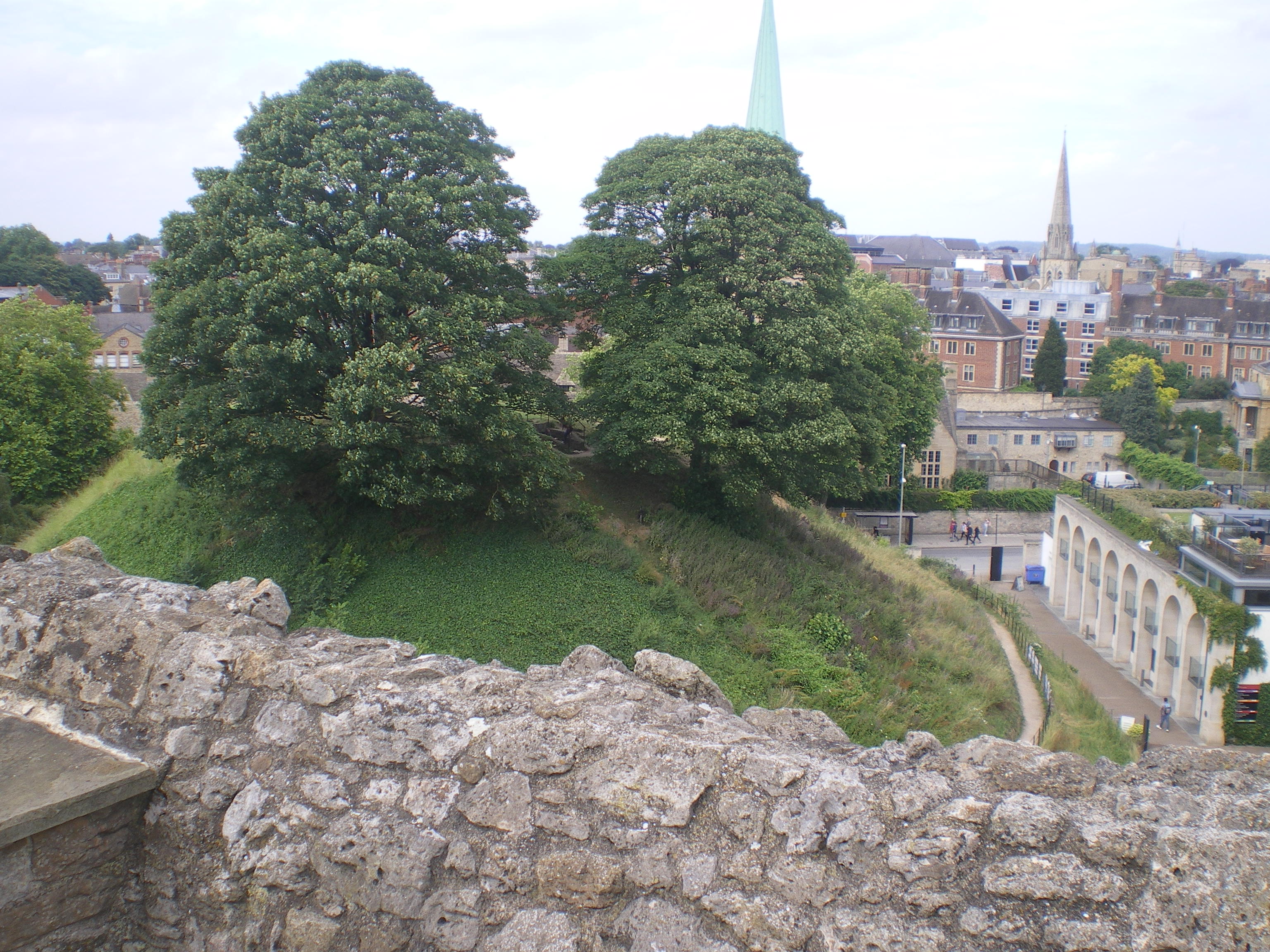
Empress Matilda moved to Oxford to await her brother’s return. Although Oxford was not the most secure residence. It may have strong, high walls, but it was close to enemy territory. It was close to London. Her presence there would mean that the empress could act quickly, were Stephen to die.

But then, the king unexpectedly recovered.

History...the Interesting Bits
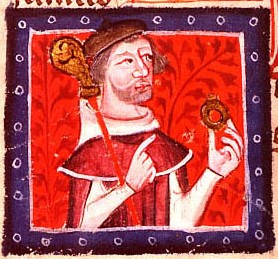
King Stephen

And went on the offensive, taking Wareham, held by Earl Robert’s eldest son, William of Gloucester. It was the castle guarding that would have been the earl’s landing place on his return from Normandy. Stephen then marched to Cirencester, the castle was abandoned by the garrison on his approach. He burned it to the ground before moving on to Bampton and Radcot, both garrisoned by the empress’s forces; one was taken by storm while the other surrendered.

By taking the nearby castles, Stephen was isolating the empress at Oxford, cutting off any possible aid. And it was only when this was done that Stephen turned his sights on the empress.

Oxford was a city protected by the surrounding Thames, guarded by a palisade on one side while the formidable castle, with its high donjon, stood sentinel on the other side. According to the Gesta Stephani, the king managed to find a deep ford by which he led his men across the river, ‘swimming rather than wading’, and launched an attack on the city’s defenders. When the defenders pulled back into the city, hoping to close the gates, the king’s forces mingled with them and made their way inside, burning buildings, killing those who resisted and capturing those who could offer a ransom. Others were ejected from the town, left to their own devices in the neighbouring countryside. While others were forced to seek shelter in the castle, with the empress.

The king encircled the castle, ordering that it be closely watched, day and night. The empress was not going to escape him again. There was slim chance of reinforcements coming to her aid. Her uncle David, King of Scots was back in Scotland, her loyal servant Miles of Gloucester, now Earl of Hereford, did not have enough men, and Brian FitzCount had to look to the defence of his own castle at Wallingford. And Earl Robert was still far away in Normandy, campaigning with Count Geoffrey while the latter made up his mind about sending reinforcements to aid his wife: over the summer and autumn of 1142, the two of them captured ten Norman castles.

On hearing of the empress’s predicament, Robert abandoned his quest for more troops and returned to England, forcing a landing at Wareham. With fifty-two ships and a force of between 300 and 400 knights in addition to foot soldiers, the earl managed to force Wareham’s surrender after a three-week siege. He then ordered a full muster of the empress’s forces at Cirencester before marching on Oxford to rescue his sister.

History...the Interesting Bits
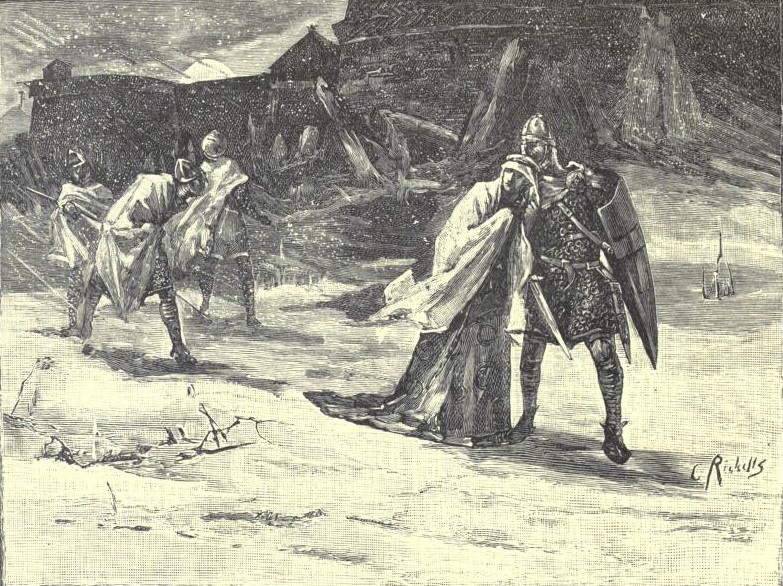
Charles Ricketts, ‘The Flight of Matilda from Oxford’

Shut up in the castle, with winter upon them, the empress and her forces were cold, hungry and desperate. Entirely cut off from the outside world, neither supplies nor news had been able to get past the king’s blockade since September. In the middle of December, with the ground white with snow and the river frozen, the empress made a desperate gamble.

‘Very hard pressed as she was and altogether hopeless that help would come she left the castle by night with three knights of ripe judgement to accompany her.’

Gesta Stephani

In the dark of the night, presumably dressed in white to camouflage against the blanket of snow, accompanied by just 3 men, she slipped out of a postern gate, and ‘in wondrous fashion she escaped unharmed through so many enemies, so many watchers in the silence of the night, whom the king had heedfully posted on every side of the castle.’ The empress walked 6 miles, crossing the frozen river and traversing the enemy’s pickets, to reach Wallingford Castle. The Gesta Stephani remarked that never had he ‘read of another woman so luckily rescued from so many mortal foes and from the threat of dangers so great’.

History...the Interesting Bits
Oxford Castle

The Anglo-Saxon Chronicle tells the story slightly differently, saying that ‘in the night she was let down from the tower with ropes and stole out, and she fled and went on foot to Wallingford’.

Henry of Huntingdon added the detail that the empress was dressed in white, as camouflage: ‘Not long before Christmas, the empress fled across the frozen Thames, clothed in white garments, which reflected and resembled the snow, deceiving the eyes of the besiegers.’

Though they all tell the story slightly differently, every chronicler eagerly tells of the empress’s daring escape from Oxford Castle.

With the empress safely ensconced at Wallingford with Brian FitzCount, the garrison at Oxford could surrender. The king, deprived of his quarry, agreed easy terms with the remaining defenders.

Earl Robert, on hearing of his sister’s escape, stopped his advance on Oxford and instead made for Devizes, where brother and sister were reunited. The earl had brought a surprise for his sister. After 3 years apart, she was reunited with her eldest son, Henry of Anjou. Henry’s presence served to show England that Henry I’s heir was Empress Matilda’s nine-year-old son, Henry, rather than Stephen’s twelve-year-old son, Eustace.

History...the Interesting Bits
Henry II

Henry was placed in the household of his uncle, Earl Robert, and sent to Bristol to continue his education, alongside his cousin Roger, the earl’s younger son, who would later become Bishop of Worcester. Henry remained at Bristol until March 1144 and soon began to receive homage from his English vassals in person.

The war changed shaped at this time, with empress and earl consolidating their position in their own lands but biding their time, waiting for Henry to grow old enough to take over the reins of the struggle.

Henry’s presence changed the focus of Matilda’s campaign. She now realised that she would never sit on her father’s throne. But there was a new generation to fight for. The empress’s purpose was now to secure the throne for Henry in the next reign rather than to displace Stephen in this one.

*

An earlier version of this article appeared in the 4th edition of Living Medieval Magazine.

Sources:

The Anglo-Saxon Chronicles, edited and translated by Michael Swanton; Gesta Stephani, translated by K. R. Potter; Henry of Huntingdon, The History of the English People 1000-1154, translated by Diana Greenway; Henry of Huntingdon, The Chronicle of Henry of Huntingdon; Ordericus Vitalis, The Ecclesiastical History of England and Normandy; Matthew Lewis, Stephen and Matilda’s Civil War: Cousins of Anarchy; Catherine Hanely, Matilda: Empress, Queen, Warrior; Edmund King, King Stephen.

Images:

Courtesy of Wikipedia, except Oxford Castle which is used with the kind permission of Jayne Smith

*

My Books

Signed, dedicated copies of all my books are available through my online bookshop.

Out now: Scotland’s Medieval Queens

Books by Sharon Bennett Connolly

Scotland’s history is dramatic, violent and bloody. Being England’s northern neighbour has never been easy. Scotland’s queens have had to deal with war, murder, imprisonment, political rivalries and open betrayal. They have loved and lost, raised kings and queens, ruled and died for Scotland. From St Margaret, who became one of the patron saints of Scotland, to Elizabeth de Burgh and the dramatic story of the Scottish Wars of Independence, to the love story and tragedy of Joan Beaufort, to Margaret of Denmark and the dawn of the Renaissance, Scotland’s Medieval Queens have seen it all. This is the story of Scotland through their eyes.

Scotland’s Medieval Queens gives a thorough grounding in the history of the women who ruled Scotland at the side of its kings, often in the shadows, but just as interesting in their lives beyond the spotlight. It’s not a subject that has been widely covered, and Sharon is a pioneer in bringing that information into accessible history.’ Elizabeth Chadwick (New York Times bestselling author)

Available now from Amazon and Pen and Sword Books

Also by Sharon Bennett Connolly:

Books by Sharon Bennett Connolly

Heroines of the Tudor World tells the stories of the most remarkable women from European history in the time of the Tudor dynasty, 1485-1603. These are the women who ruled, the women who founded dynasties, the women who fought for religious freedom, their families and love. Heroines of the Tudor World is now available for pre-order from Amberley Publishing and Amazon UK. Women of the Anarchy demonstrates how Empress Matilda and Matilda of Boulogne, unable to wield a sword themselves, were prime movers in this time of conflict and lawlessness. It shows how their strengths, weaknesses, and personal ambitions swung the fortunes of war one way – and then the other. Available from Bookshop.orgAmberley Publishing and Amazon UKKing John’s Right-Hand Lady: The Story of Nicholaa de la Haye is the story of a truly remarkable lady, the hereditary constable of Lincoln Castle and the first woman in England to be appointed sheriff in her own right. Available from all good bookshops Pen & Sword Booksbookshop.org and Amazon

Defenders of the Norman Crown: The Rise and Fall of the Warenne Earls of Surrey tells the fascinating story of the Warenne dynasty, from its origins in Normandy, through the Conquest, Magna Carta, the wars and marriages that led to its ultimate demise in the reign of Edward III. Available from Pen & Sword BooksAmazon in the UK and US, and Bookshop.orgLadies of Magna Carta: Women of Influence in Thirteenth Century England looks into the relationships of the various noble families of the 13th century, and how they were affected by the Barons’ Wars, Magna Carta and its aftermath; the bonds that were formed and those that were broken. It is now available in paperback and hardback from Pen & SwordAmazon, and Bookshop.orgHeroines of the Medieval World tells the stories of some of the most remarkable women from Medieval history, from Eleanor of Aquitaine to Julian of Norwich. Available now from Amberley Publishing and Amazon, and Bookshop.orgSilk and the Sword: The Women of the Norman Conquest traces the fortunes of the women who had a significant role to play in the momentous events of 1066. Available now from Amazon,  Amberley Publishing, and Bookshop.org.

Alternate Endings: An anthology of historical fiction short stories including Long Live the King… which is my take what might have happened had King John not died in October 1216. Available in paperback and kindle from Amazon.

Podcast:

Have a listen to the A Slice of Medieval podcast, which I co-host with Historical fiction novelist Derek Birks. Derek and I welcome guests, such as Bernard Cornwell and Elizabeth Chadwick, and discuss a wide range of topics in medieval history, from significant events to the personalities involved. Our first ever episode was on The Anarchy!

Every episode is also now available on YouTube.

*

Don’t forget! Signed and dedicated copies of all my books are available through my online bookshop.

For forthcoming online and in-person talks, please check out my Events Page.

You can be the first to read new articles by clicking the ‘Follow’ button, liking our Facebook page or joining me on TwitterThreadsBluesky and Instagram.

Article: 2024 © Sharon Bennett Connolly FRHistS
The Coronation of King Stephen

King Stephen

In December 1135, leaving his wife and children in the relative safety of Boulogne, Stephen of Blois took what must have been the biggest gamble of his life. After landing in England, he made his way to the capital, where he was met ‘with acclamation’ as London, though ‘mourning the grievous loss of its protector Henry, it revelled in exultant joy as though it had recovered him in Stephen’. According to the Gesta Stephani, a counsel was summoned to choose Henry’s successor and ‘on their own initiative, they agreed unanimously to choose a king’. The Anglo-Saxon Chronicle concurs, stating that ‘Stephen of Blois had come to England, and came to London, and the London people received him and sent for the archbishop William Corbeil and consecrated him as king on midwinter’s day’.

Henry of Huntingdon was far more critical of the accession of Stephen than the Gesta Stephani, for, although Stephen was ‘a man of great valour and boldness’, as he had ‘sworn the English realm’s oath of fealty to the daughter of King Henry, he tried God’s patience by seizing the crown of the kingdom’. Huntingdon was highly disapproving of the ease with which the leaders of the English church broke their oaths to Matilda in order to crown Stephen:

‘Roger, the great Bishop of Salisbury, who had been the second to take the oath, and had urged everyone else to do so, brought the royal crown to Stephen, as well as the strength of his support. For this reason, by the just judgement of God, he was later arrested and tormented by the very man he had made king, and pitiful ruin became his lot. In short, all those who had sworn the oath – whether bishops, earls or magnates – gave their approval to Stephen and paid homage to him. It was a bad sign that all England was subjected to him so speedily, without hindrance or difficulty, as ‘in the twinkling of an eye’.

Henry of Huntingdon: The History of the English People 1000-1154

It is, of course, the Anglo-Saxon Chronicle that made the most famous assessment of the years following Stephen’s seizure of the throne:

‘Wherever men tilled, the earth bore no corn because the land was all done for by such doings; and they said openly that Christ and His saints slept. Such things, and more than we know how to tell, we suffered nineteen years for our sins.’

The destruction was perhaps not as widespread as has been thought previously, however, and there is currently a reappraisal of the devastation wrought during the Anarchy. Even so, the chronicles of the time show that it was horrendous for the people living through it. The Anglo-Saxon Chronicle goes into great detail, denouncing the period as ‘this evil time’ and lamenting,

‘They did not spare the land of bishops nor of abbots nor of priests, but robbed monks and clerks; and every man who was stronger [robbed] another. If two or three men came riding to a village, all the villagers fled because of them – imagined that they were robbers. The bishops and the clergy always cursed them but that was nothing to them, because they were all accursed and forsworn and lost.’

Henry of Blois, Bishop of Winchester

Such desolation was in the future. In December 1135, Stephen, with the backing of so many, may have thought the future was bright with possibilities. After receiving the support and acclamation of the Londoners, he hastened to Winchester to secure the royal treasury where he was reunited with his younger brother Henry, Bishop of Winchester, ‘on whom his enterprise entirely depended’. Bishop Henry, ‘overjoyed at his brother’s success, came to meet him with the Winchester citizens’. William de Pont de l’Arche, the royal treasurer, ‘on learning that the king had arrived, whether influenced by fear of him or affection for him, he came to meet him cordially, and delivered over to his disposal, together with the castle, King Henry’s very rich treasury, which the whole of England had abundantly filled from the time of the most ancient kings’.

It was the support of Pont de l’Arche that ensured Stephen’s success, along with the help of Roger, Bishop of Salisbury, Henry I’s Lord Chancellor and, after the king, the most powerful man in the kingdom. The role of Stephen’s brother, Bishop Henry of Winchester, was also seen as critical, especially by the Gesta Stephani. Stephen was then crowned at Westminster Abbey by Archbishop William Corbeil on 22 December 1135, according to the same rites used in the coronation of Henry I, providing a sense of continuity in the monarchy. Before the coronation, Stephen made promises to ensure that he would be accepted by the lay and clerical magnates alike. To the church, he agreed to follow what it defined as best practice in church–state relations, including the guarantee of canonical election to senior church offices. The compromises made to the lay barons were not as significant, but Stephen did make a limited concession on the extent of the royal forest (lands over which the king held exclusive hunting rights), and was reported to have promised wider reforms, including the abolition of geld.

The coronation was a religious ceremony, giving the king power and sacramental authority for the rest of his life. During the proceedings, Stephen promised to maintain ‘all the liberties and good laws of King Henry’. Following this, those present, standing for the community of the realm, accepted Stephen as their king. There then came the ceremonial anointing and investing with the symbols of royal power. He was then crowned by the Archbishop of Canterbury, followed by High mass and the kiss of peace. News of Stephen’s coronation spread throughout the kingdom and, according to the Gesta Stephani,

‘When at last these things were known and spread over England freely by word of mouth almost all the chief men of the kingdom accepted him gladly and respectfully, and having received very many gifts from him and likewise enlargement of their lands they devoted themselves wholly to his service by a voluntary oath, after paying homage.’

Gesta Stephani
The coronation of King Stephen, as depicted by Matthew Paris, 13th century

After the coronation, the king had to get down to the actual business of ruling and establishing his authority over his dominions. The first document issued by the chancery was a charter in which Stephen granted ‘to all his barons and men of England’ all the liberties and good laws of his uncle, King Henry, along with ‘the laws of Edward the Confessor’. The Liber Eliensis at Ely recorded a version of Stephen’s accession in which he was supported by King Henry I. Though the provenance of the information within it has been lost, it seems entirely possible that it is copied from an official narrative sent out by Stephen’s administration:

‘While King Henry sickened unto death, a great number of powerful and noble men gathered about him, sorrowfully contemplating the last hours of their lord, and increasingly concerned about what dispositions he would make about himself and the kingdom. To them at the last he indicated what ought to happen. ‘To you,’ he said, ‘great and wise men, I give as king the worthy knight Stephen, my count, my most dear kinsman, a virtuous nobleman, yet firm in his faith in the Lord, for you to receive from me by right of inheritance, and you are all to be witness of this.’ Immediately thereafter the king breathed his last. The count took up his commission, and having gathered a large body of knights, he hastened to England and came before the Londoners. Since he was a renowned count and valiant knight, of proven integrity and greatly loved, and was descended from the stock of kings, and with the great men and the citizens won over by rewards and promises and the clergy fearing great disorder should he be turned away, he was received by the English as king of England. It greatly aided him in achieving this outcome that, just as the king his uncle had ordered, Hugh Bigod swore on the holy gospels before the clergy and people that he had been present at the king’s deathbed, and had heard him conceding the kingdom to Stephen his nephew, and had been sent by him to witness this within England.’

Liber Eliensis

Hugh Bigod’s claim that Henry had changed his mind at the last, and left the throne to Stephen, was enough to satisfy those who had sworn the oath to Matilda but were afraid of a future ruled by a woman. No one seems to have looked deeply into the suggestion that, after all Henry had done to secure his daughter’s accession, the wars he had fought and oaths he had extracted, he would just pass her – and his grandson, little Henry of Anjou – over at the last moment and leave everything to his favourite nephew. It seems more likely that it was not that Bigod’s statement was believed to be true but that it was hoped that it was – that was all the barons needed to turn their backs on their oaths to Matilda.

Henry II and his mother, Empress Matilda, from a 12th century manuscript

Stephen’s coronation was immediately followed by his Christmas court, which was held in London. One of his first acts in the New Year was to attend the funeral of his predecessor, Henry I, who was laid to rest at his own foundation of Reading Abbey on 5 January 1136. According to Henry of Huntingdon,

‘King Stephen came there from his court, which he had held in London at Christmas itself, to meet his uncle’s body, together with William, Archbishop of Canterbury, and many bishops and nobles, and they buried King Henry with the respect due to so great a man.’

It was the beginning of a period of great instability for England. Richard of Hexham gives a clear impression of the unrest and uncertainty that Stephen’s accession caused, and the challenges it presented:

‘The beginning and course of his reign was overwhelmed by so many and such violent commotions, that how to describe them, or how they may be concluded, no one yet knows.’

Stephen had stolen the march on his cousin, Empress Matilda, but she was not going to simply accept that he had won…

*

Sources:

Donald Matthew, King Stephen; Robert Bartlett, England Under the Norman and Angevin Kings; David Williamson, Brewer’s British Royalty; the History Today Companion to British History; Dan Jones, the Plantagenets; englishmonarchs.co.uk; The Oxford Companion to British History; Mike Ashley, The Mammoth Book of British Kings & Queens; Alison Weir, Britain’s Royal Families, the Complete Genealogy; S.P. Thompson, Oxforddnb.com, Mary [Mary of Blois], suo jure countess of Boulogne (d. 1182), princess and abbess of Romsey; Anglo_Saxon Chronicles, edited by Michael Swanton; Gesta Stephani; Liber Eliensis; Henry of Huntingdon: The History of the English People 1000-1154; William of Malmesbury, Chronicles of the Kings of England, From the Earliest Period to the Reign of King Stephen c. 1090-1143; The Ecclesiastical History of England and Normandy by Ordericus Vitalis.

Images:

Courtesy of Wikipedia

*

My Books

Signed, dedicated copies of all my books are available through my online bookshop.

Out Now! Women of the Anarchy

On the one side is Empress Matilda, or Maud. The sole surviving legitimate child of Henry I, she is fighting for her birthright and that of her children. On the other side is her cousin, Queen Matilda, supporting her husband, King Stephen, and fighting to see her own son inherit the English crown. Both women are granddaughters of St Margaret, Queen of Scotland and descendants of Alfred the Great of Wessex. Women of the Anarchy demonstrates how these women, unable to wield a sword, were prime movers in this time of conflict and lawlessness. It show how their strengths, weaknesses, and personal ambitions swung the fortunes of war one way – and then the other.

Available from Amberley Publishing and Amazon UK.

Coming 30 January 2025: Scotland’s Medieval Queens

Scotland’s history is dramatic, violent and bloody. Being England’s northern neighbour has never been easy. Scotland’s queens have had to deal with war, murder, imprisonment, political rivalries and open betrayal. They have loved and lost, raised kings and queens, ruled and died for Scotland. From St Margaret, who became one of the patron saints of Scotland, to Elizabeth de Burgh and the dramatic story of the Scottish Wars of Independence, to the love story and tragedy of Joan Beaufort, to Margaret of Denmark and the dawn of the Renaissance, Scotland’s Medieval Queens have seen it all. This is the story of Scotland through their eyes.

Available for pre-order now.

Also by Sharon Bennett Connolly:

Heroines of the Tudor World tells the stories of the most remarkable women from European history in the time of the Tudor dynasty, 1485-1603. These are the women who ruled, the women who founded dynasties, the women who fought for religious freedom, their families and love. Heroines of the Tudor World is now available for pre-order from Amberley Publishing and Amazon UK.  King John’s Right-Hand Lady: The Story of Nicholaa de la Haye is the story of a truly remarkable lady, the hereditary constable of Lincoln Castle and the first woman in England to be appointed sheriff in her own right. Available from all good bookshops Pen & Sword Booksbookshop.org and Amazon

Defenders of the Norman Crown: The Rise and Fall of the Warenne Earls of Surrey tells the fascinating story of the Warenne dynasty, from its origins in Normandy, through the Conquest, Magna Carta, the wars and marriages that led to its ultimate demise in the reign of Edward III. Available from Pen & Sword BooksAmazon in the UK and US, and Bookshop.orgLadies of Magna Carta: Women of Influence in Thirteenth Century England looks into the relationships of the various noble families of the 13th century, and how they were affected by the Barons’ Wars, Magna Carta and its aftermath; the bonds that were formed and those that were broken. It is now available in paperback and hardback from Pen & SwordAmazon, and Bookshop.orgHeroines of the Medieval World tells the stories of some of the most remarkable women from Medieval history, from Eleanor of Aquitaine to Julian of Norwich. Available now from Amberley Publishing and Amazon, and Bookshop.orgSilk and the Sword: The Women of the Norman Conquest traces the fortunes of the women who had a significant role to play in the momentous events of 1066. Available now from Amazon,  Amberley Publishing, and Bookshop.org.

Alternate Endings: An anthology of historical fiction short stories including Long Live the King… which is my take what might have happened had King John not died in October 1216. Available in paperback and kindle from Amazon.

Podcast:

Have a listen to the A Slice of Medieval podcast, which I co-host with Historical fiction novelist Derek Birks. Derek and I welcome guests, such as Bernard Cornwell and Elizabeth Chadwick, and discuss a wide range of topics in medieval history, from significant events to the personalities involved. Episode 1 looked into the characters involved in The Anarchy.

*

Don’t forget! Signed and dedicated copies of all my books are available through my online bookshop.

For forthcoming online and in-person talks, please check out my Events Page.

You can be the first to read new articles by clicking the ‘Follow’ button, liking our Facebook page or joining me on TwitterThreadsBluesky and Instagram.

©2023 Sharon Bennett Connolly FRHistS
Mary, Reluctant Countess of Boulogne

History ... the Interesting Bits
Mary’s mother, Matilda of Boulogne

Mary of Blois was the youngest daughter of Stephen of Blois and his wife, Matilda of Boulogne, herself the granddaughter of St Margaret, queen of Scotland. Mary was born in Blois, France around 1136. She was destined for the cloister from an early age and, while still a young girl, was placed in a convent at St Sulpice in Rennes.

Mary’s lineage and the quirks of fate, however, meant that Mary’s peaceful convent life would be violently cut short.

Mary’s father Stephen was the nephew of Henry I, and his closest, legitimate, male relatives. Following the death of his only legitimate son, William Adelin, in the White Ship disaster of 1120, and with his only other legitimate child, Empress Matilda, living in Germany, it seems that Henry looked at Stephen as a possible successor. However, when Matilda’s husband died in 1125 and the empress returned to her father’s court, Stephen’s position was left undetermined. Stephen remained prominent at the English court, always present as a viable alternative to the succession of a woman – Empress Matilda.

In the confusion following Henry’s death in December 1135, it was Stephen who acted quickly and decisively. As he claimed the crown in England and his adherents secured Normandy in Stephen’s name, Empress Matilda was home in Anjou with her husband Geoffrey, Count of Anjou and two young sons, Henry and Geoffrey. She was pregnant with her third and youngest son, William.

What followed was a period known as the Anarchy, almost 20 years of conflict and bloodshed as Stephen and the Empress Matilda battled for supremacy of England and Normandy. Ultimately, Stephen managed to retain control of England but lost Normandy to Count Geoffrey, who passed it on to his and Matilda’s eldest son, Henry FitzEmpress. Henry, was eager to win back his birthright and following several incursions by Henry – whilst still in his teens – he and Stephen came to an agreement.

History ... the Interesting Bits
King Stephen

Stephen and his wife Matilda had five children in total, but only three, including Mary, who survived infancy. Of Stephen and Matilda’s three children, Eustace IV, Count of Boulogne, was the eldest to survive into adulthood, and was groomed as his father’s heir. He was married to Constance of France, daughter of King Louis VI and sister of Louis VII, in 1140 and knighted in 1147. He died in August 1153, after suffering some form of seizure. The Anglo-Saxon Chronicle said of him

‘he had little success, and with just cause, because he was an evil man, because wheresoever he came he did more evil than good; he robbed the lands and laid great taxes on them.’

Anglo_Saxon Chronicles, edited by Michael Swanton

The Gesta Stephani, however, paints a picture of

‘a young man of high character … his manners were grave; he excelled in warlike exercises and had great natural courage … he was courteous and affable … and possessed much of his father’s spirit … ever ready to draw close the bands of peace’ but ‘never shrank from presenting a resolute and indomitable front to his enemies.’

Gesta Stephani

Stephen’s youngest son was William, who was born around 1134/5. In 1149 he married Isabel de Warenne, sole heiress to William de Warenne, third earl of Surrey, in order to bring the vast Warenne lands within the influence of the crown. William would succeed to the County of Boulogne in 1153, on the death of Eustace. Shortly after his brother’s death, and with the help of the clergy, William made an agreement with Henry of Anjou, whereby he waived his own rights to the crown in return for assurances explicitly recognising his rights to his lands, as Count of Boulogne and Mortain and Earl of Surrey.

History ... the Interesting Bits
Romsey Abbey

Mary, who had been in the convent at St Sulpice in Rennes, was moved around 1150-52, apparently after some discord with the nunnery. Her parents founded a new convent for her at Lillechurch (Higham) in Kent, making it a sister convent with Rennes’ St Sulpice. Mary does not appear to have been given the title of prioress. However, a charter of Henry II, dated around 1155-58, confirmed Lillechurch to Mary and her nuns, suggesting she held some position of authority. Before 1160, however, Mary had become abbess of the great abbey at Romsey, an older and more prestigious institution than her little foundation at Lillechurch.

Mary’s brother William died without issue in 1159 during the Siege of Toulouse. Though a nun, Mary succeeded him in the County of Boulogne. As a consequence, in 1160 Mary’s life was turned upside down. She was suddenly a great heiress, countess of Boulogne in her own right and too great a marriage prize to be allowed to remain secluded in the cloisters. She was abducted from Romsey Abbey by Matthew of Alsace, second son of the Count of Flanders, and forced to marry him. This may well have been a political move; although there does not appear to be any proof that Henry II sanctioned it, most sources imply that the marriage was forced on her by the king and he certainly benefited from Mary being safely married to a loyal vassal. She was, after all, not only a great heiress but, through her father, she had a strong, rival claim to the throne of England.

History ... the Interesting Bits
Henry II and his mother, Empress Matilda, from a 12th century manuscript

There was great outrage among the clergy; marriage with a nun was a breach against canon law and opposed by the leading ecclesiastical figures of the day. One source suggested the pope had granted a dispensation for the marriage. However, given that Pope Alexander III expressed great disapproval in a letter to the archbishop of Rheims, his consent seems highly unlikely. The pope imposed an interdict on Matthew of Alsace and pressed the claims of the wife of Mary’s brother, Eustace, to the Boulogne estates; even though Constance had died some fourteen years before. The furore seems to have died down eventually, and the marriage was allowed to stand.

Unfortunately for Henry II, Matthew turned out to be a not-so-loyal vassal and rebelled at least twice. The first occasion arose when Matthew tried to press his claims to Mortain, land that should have been part of Mary’s inheritance but was now held by Henry II. The king was not too accommodating. An agreement was eventually reached whereby, in return for £1,000, Matthew would renounce all claims to those parts of his wife’s estates that were still in royal hands.

Mary seems to have had little love for Henry II, possibly due to his involvement in her abduction and marriage, or simply because of the fact their respective families had spent many years at war. With so much bad history, you wouldn’t expect them to have an affectionate relationship, but Mary appears to have actively worked against Henry. Following a meeting with the ambassadors of the emperor, Frederick Barbarossa, she wrote to King Louis of France. In the document, she describes Henry II as ‘the fraudulent king’, while informing Louis of Henry’s manoeuvring against him.

Mary and Matthew had two children, daughters Ida and Mathilde; and it was after the birth of Mathilde that the couple were divorced, in 1170. There is some suggestion that Matthew was pressured to agree to the divorce by his dying father and the emperor, Frederick Barbarossa, probably in the hope of having the interdict – placed on Matthew on his marriage to Mary – lifted. After the divorce, Matthew would continue to rule Boulogne and was succeeded by Ida on his death in 1173.

History ... the Interesting Bits
Mary’s younger daughter Mathilde, Duchess of Brabant

Ida (b. c1160) married three times; her first husband, Gerard III, count of Gueldres, who died in 1183. Her short marriage to her second husband, Berthold IV, Duke of Zehringen, ended in his death in 1186. Ida’s last marriage was to Reginald, or Renaud, de Tree, Count of Dammartin, who was a childhood friend of France’s king, Philip Augustus. It seems Renaud abducted Ida and forced her into marriage. He died in 1227, outliving Ida, who died in 1216, by eleven years. It was Matilda, the daughter of Ida and Renaud, who inherited Boulogne from Ida, and would also become Queen of Portugal through her marriage to Alfonso III of Portugal.

Born in 1170 Ida’s younger sister, Mathilde, married Henry I, duke of Louvain and Brabant, when she was nine-years-old. She would have seven children before her death sometime in 1210 or 1211; she was buried in St Peter’s Church, Leuven.

The interdict, which had been placed on Matthew on his marriage to Mary, was finally lifted when she returned to the convent life in 1169-70, becoming a simple Benedictine nun at St Austrebert, Montreuil. Mary died there in July 1182, possibly on the 25th, aged about forty-six, and was buried within the convent that had been her home for over ten years. A woman who obviously believed that her life should be devoted to God, she is remarkable in that she managed to fulfil her dynastic duties in a forced marriage, and yet asserted herself so that she was able to return to the secluded life she so obviously craved.

*

Sources:

Donald Matthew, King Stephen; Robert Bartlett, England Under the Norman and Angevin Kings; David Williamson, Brewer’s British Royalty; the History Today Companion to British History; Dan Jones, the Plantagenets; englishmonarchs.co.uk; The Oxford Companion to British History; Mike Ashley, The Mammoth Book of British Kings & Queens; Alison Weir, Britain’s Royal Families, the Complete Genealogy; S.P. Thompson, Oxforddnb.com, Mary [Mary of Blois], suo jure countess of Boulogne (d. 1182), princess and abbess of Romsey; Anglo_Saxon Chronicles, edited by Michael Swanton; Gesta Stephani.

*

My Books

Signed, dedicated copies of all my books are available through my online bookshop.

Out now: Scotland’s Medieval Queens

Books by Sharon Bennett Connolly

Scotland’s history is dramatic, violent and bloody. Being England’s northern neighbour has never been easy. Scotland’s queens have had to deal with war, murder, imprisonment, political rivalries and open betrayal. They have loved and lost, raised kings and queens, ruled and died for Scotland. From St Margaret, who became one of the patron saints of Scotland, to Elizabeth de Burgh and the dramatic story of the Scottish Wars of Independence, to the love story and tragedy of Joan Beaufort, to Margaret of Denmark and the dawn of the Renaissance, Scotland’s Medieval Queens have seen it all. This is the story of Scotland through their eyes.

Scotland’s Medieval Queens gives a thorough grounding in the history of the women who ruled Scotland at the side of its kings, often in the shadows, but just as interesting in their lives beyond the spotlight. It’s not a subject that has been widely covered, and Sharon is a pioneer in bringing that information into accessible history.’ Elizabeth Chadwick (New York Times bestselling author)

Available now from Amazon and Pen and Sword Books

Also by Sharon Bennett Connolly:

Books by Sharon Bennett Connolly

Heroines of the Tudor World tells the stories of the most remarkable women from European history in the time of the Tudor dynasty, 1485-1603. These are the women who ruled, the women who founded dynasties, the women who fought for religious freedom, their families and love. Heroines of the Tudor World is now available for pre-order from Amberley Publishing and Amazon UK. Women of the Anarchy demonstrates how Empress Matilda and Matilda of Boulogne, unable to wield a sword themselves, were prime movers in this time of conflict and lawlessness. It shows how their strengths, weaknesses, and personal ambitions swung the fortunes of war one way – and then the other. Available from Bookshop.orgAmberley Publishing and Amazon UKKing John’s Right-Hand Lady: The Story of Nicholaa de la Haye is the story of a truly remarkable lady, the hereditary constable of Lincoln Castle and the first woman in England to be appointed sheriff in her own right. Available from all good bookshops Pen & Sword Booksbookshop.org and Amazon

Books by Sharon Bennett Connolly

Defenders of the Norman Crown: The Rise and Fall of the Warenne Earls of Surrey tells the fascinating story of the Warenne dynasty, from its origins in Normandy, through the Conquest, Magna Carta, the wars and marriages that led to its ultimate demise in the reign of Edward III. Available from Pen & Sword BooksAmazon in the UK and US, and Bookshop.orgLadies of Magna Carta: Women of Influence in Thirteenth Century England looks into the relationships of the various noble families of the 13th century, and how they were affected by the Barons’ Wars, Magna Carta and its aftermath; the bonds that were formed and those that were broken. It is now available in paperback and hardback from Pen & SwordAmazon, and Bookshop.orgHeroines of the Medieval World tells the stories of some of the most remarkable women from Medieval history, from Eleanor of Aquitaine to Julian of Norwich. Available now from Amberley Publishing and Amazon, and Bookshop.orgSilk and the Sword: The Women of the Norman Conquest traces the fortunes of the women who had a significant role to play in the momentous events of 1066. Available now from Amazon,  Amberley Publishing, and Bookshop.org.

Alternate Endings: An anthology of historical fiction short stories including Long Live the King… which is my take what might have happened had King John not died in October 1216. Available in paperback and kindle from Amazon.

Podcast:

A Slice of Medieval

Have a listen to the A Slice of Medieval podcast, which I co-host with Historical fiction novelist Derek Birks. Derek and I welcome guests, such as Bernard Cornwell and discuss a wide range of topics in medieval history, from significant events to the personalities involved.

Every episode is also now available on YouTube.

*

Don’t forget! Signed and dedicated copies of all my books are available through my online bookshop.

For forthcoming online and in-person talks, please check out my Events Page.

You can be the first to read new articles by clicking the ‘Follow’ button, liking our Facebook page or joining me on TwitterThreadsBluesky and Instagram.

©2020 Sharon Bennett Connolly FRHistS

The Children of King Stephen

King Stephen

I have always been fascinated by the story of The Anarchy, that period of civil war in 12th century England. Empress Matilda fought her cousin, King Stephen, for the crown of England and the Anglo-Saxon Chronicle famously reported:

… they said openly that Christ and His saints slept. Such things, and more than we know how to tell, we suffered nineteen years for our sins.

The Anglo-Saxon Chronicles, edited and translated by Michael Swanton, p.265

King Stephen of England and his wife, Matilda of Boulogne, had three children who survived infancy, and yet – on his death – Stephen disinherited his surviving son, William, to leave his throne to Henry, Count of Anjou and Duke of Normandy. Henry was the son of Stephen’s bitter enemy, Empress Matilda.

Matilda of Boulogne, herself, was a cousin of Empress Matilda through her mother, Mary of Scotland, sister to the empress’s mother, Matilda of Scotland. Matilda of Boulogne and Empress Matilda were both granddaughters of Malcolm III of Scotland and his saintly wife, Margaret of Wessex; they were nieces of King David I of Scotland.

The Empress was was the only surviving legitimate child of Henry I (reigned 1100-1135), and his designated heir – but she was a woman and England’s nobles were reluctant to be ruled by a woman. This reluctance to allow Matilda to take the throne was heightened by their dislike and distrust of Matilda’s husband, Geoffrey, Count of Anjou. Stephen of Blois was Henry I’s nephew and the son of Henry’s favourite sister, Adela of Normandy. He was one of the old king’s closest male relatives and in the confusion following Henry’s death it was Stephen who took the initiative, acting quickly and decisively, and taking the kingdom of England and the duchy of Normandy for himself.

Silver penny of Empress Matilda, from the Oxford mint

What followed was a period known as the Anarchy, almost twenty years of conflict and bloodshed as Stephen and Matilda battled for supremacy. Ultimately, Stephen managed to retain control of England but Matilda’s eldest son, Henry, was eager to win back his birthright.

Following several incursions by Henry – whilst still in his teens – he and Stephen came to an agreement: Stephen would hold the throne until his death, but Henry would succeed him.

So, what happened to Stephen’s children?

Stephen and Matilda had two children, Baldwin and Matilda, who did not survive to adulthood. Matilda was married in 1136, as an infant, to Waleran de Beaumont, eldest twin son of Robert de Beaumont, 1st Earl of Leicester, and Isabel de Vermandois. The poor little girl died the following year, aged only 4.

Eustace IV, Count of Boulogne

The eldest surviving son of Stephen and Matilda was Eustace IV, Count of Boulogne. Eustace was an unpleasant character, by most accounts. The Anglo-Saxon Chronicle called him ‘an evil man’ who ‘robbed the lands and laid heavy taxes upon them’. Henry of Huntingdon’s appraisal of Eustace was almost as damning:

… he was a man proven in military skill, but obdurate against the things of God, very harsh towards the incumbents of churches, very loyal towards those who persecute the Church.

The History of the English People 1000-1154 by Henry of Huntingdon

Eustace was married in Paris, in 1140, to Constance, the only daughter of Louis VI of France and his second wife, Adelaide of Savoy. She was the sister of King Louis VII, the first husband of Eleanor of Aquitaine. Constance ‘was a good woman but enjoyed little happiness with him’. According to the Anglo-Saxon Chronicle:

1140. Then Eustace the king’s son travelled to France and took to wife the sister of the king of France and thought to get Normandy through that, but he had little success, and with just cause, because he was an evil man, because wheresoever he came he did more evil than good; he robbed the lands and laid great taxes on them. He brought his wife to England and put her in the castle at Canterbury. She was a good woman but she had little happiness with him, and Christ did not wish that he should rule long, and he [1153] and his mother [1152] both died.

The Anglo-Saxon Chronicles, edited and translated by Michael Swanton, p.267
330px-matilda_of_boulogne
Matilda of Boulogne

Stephen made attempts to have Eustace crowned, in his own lifetime, as heir-designate, in order to guarantee his succession. This was blocked by the Papacy; though they supported Stephen as king, over Matilda, they were keen to see the throne return to the senior legitimate line of Henry I through Matilda’s son, Henry.

The young prince had retired from court after a thawing of relations between Stephen and Henry. He was;

‘greatly vexed and angry because the war, in his opinion, had reached no proper conclusion’.

Gesta Stephani

Although Eustace had been recognised, as Stephen’s heir, by the secular baronage, I can’t help thinking that it was a real stroke of luck for England when Eustace died of a seizure or ‘in a fit of madness’ in August 1153. He had recently laid waste to the lands of the abbey of Bury St Edmunds and so some said the revered saint had exacted his revenge. Another theory was that he choked to death and, of course, rumours of poisoning are not surprising. Eustace’s death paved the way for an ‘understanding’, over the succession, between Stephen and Henry of Anjou, in the form of the Treaty of Winchester (or Wallingford, as it is also known). In it, it was agreed that Stephen would remain king for the rest of his life, but would ‘adopt’ seventeen-year-old Henry and recognise him as his heir.

William, Earl of Surrey

Stephen’s youngest son was William, who was born sometime in the mid-1130s. It is thought William was born following Stephen’s accession to the English throne in 1135, as he was named after his great-grandfather, William the Conqueror, King of England and Duke of Normandy, rather than with a name associated with the County of Boulogne, as had his older brothers, Eustace and Baldwin.

Seal of Isabel de Warenne, 4th Countess of Surrey

In 1148 he was married to Isabel de Warenne, sole heiress to William de Warenne, 3rd Earl of Surrey, in order to bring the vast Warenne lands within the influence of the crown. Isabel’s father had departed on the Second Crusade in 1147 and would not return, being killed at the Battle of Mount Cadmus, in Laodicea, in January 1148. Young William was being addressed as an earl even before his father-in-law’s death.1 He would succeed to the County of Boulogne in 1153, on the death of Eustace and the county of Mortain on the death of his father in 1154.

Shortly after his brother’s death, and with the help of the clergy, William made an agreement with Henry of Anjou, whereby he waived his own rights to the crown in return for assurances explicitly recognising his rights to his lands, as Count of Boulogne and Earl of Surrey. Although, it is not known whether he did this willingly, or was persuaded by others, the agreement was an essential tool for the peaceful accession of Henry.

In spite of this agreement, William was implicated in a plot against Henry in early 1154 – or he at least knew about it – in which some Flemish mercenaries planned, but failed, to ambush Henry on the road near Canterbury. There may have been a tit-for-tat retaliation as William’s leg was broken in an ‘accident’ at about the same time.

However, when King Stephen died, William made no attempt to oppose Henry’s accession. In the early years of his reign, Henry acted to curb some of the power and influence William may have wielded by confiscating some of the lands and castles from his patrimony of Mortain, but allowing him to retain the earldom of Surrey, for the most part. William was even knighted by Henry II, after he joined the new king on his campaign against Toulouse.

William died in France, without issue, in 1159, after falling ill at the Siege of Toulouse and was buried in the Hospital of Montmorillon in Poitou, France. He was in his early 20s and left his young wife, Isabel, about the same age, a widow.

Mary of Boulogne

188px-blason_courtenay-svg
Arms of the county of Boulogne

William was succeeded in the County of Boulogne by his sister, Mary, the third surviving child of Stephen and Matilda. Mary was born around 1136 and placed in a convent at an early age. Although it has long been believed that Mary was placed in a convent in England, it now seems likely that she was placed at St Sulpice in Rouen before moving to England in the early 1150s.2 She moved first to the Priory of Lillechurch, Kent, and then to Romsey Abbey, where she was elected Abbess sometime before 1155.

Five years later – shortly after William’s death – Mary was abducted by Matthew of Alsace, second son of the Count of Flanders, and forced to marry him. There was outrage among the clergy – the incident was even discussed by the Pope – but the marriage was allowed to stand, at least until Mary produced an heir to the county of Boulogne. Mary and Matthew had two children – Ida and Mathilde – and it was after the birth of Mathilde that the couple was divorced, in 1170.

Matthew would continue to rule Boulogne and would eventually be succeeded by Ida, his eldest daughter by Mary, on his death in 1173. Mary was allowed to return to the convent life, becoming a Benedictine nun at St Austrebert, Montreuil. She died there in July 1182, aged about 46.

The abduction and forced marriage of Mary may well have been a political move. Although there does not appear to be any proof that Henry II sanctioned it, he certainly benefited from Mary being safely married to a loyal vassal. She was, after all a great heiress and – through her father – a rival claimant to the throne of England.

It is, perhaps, a sad legacy for King Stephen that, after almost 20 years of warfare in order to hold onto his throne, the king was not able to pass it on to any of his children. His sons dying without issue meant that his bloodline continued only through his daughter, Mary, and the County of Boulogne, which Stephen had inherited through his marriage to Matilda.

*

Footnotes: 1 Farrer, William and Charles Travis Clay, editors, Early Yorkshire Charters, Volume 8: The Honour of Warenne; 2 with thanks to historian Sharan Newman

Further reading:

Donald Matthew, King Stephen; Robert Bartlett, England Under the Norman and Angevin Kings; David Williamson, Brewer’s British Royalty; the History Today Companion to British History; Dan Jones, the Plantagenets; englishmonarchs.co.uk; The Oxford Companion to British History; Mike Ashley, The Mammoth Book of British kings & Queens; Alison Weir, Britain’s Royal Families, the Complete Genealogy; Farrer, William and Charles Travis Clay, editors, Early Yorkshire Charters, Volume 8: The Honour of Warenne; Gesta Stephani; Henry of Huntingdon, The History of the English People 1000-1154; J. Sharpe (trans.), The History of the Kings of England and of his Own Times by William Malmesbury; Catherine Hanley, Matilda: Empress, Queen, Warrior; Orderici Vitalis, Historiae ecclesiasticae libri tredecem, translated by Auguste Le Prévost; Chronicles of the Reigns of Stephen, Henry II and Richard I; Edmund King, King Stephen; Donald Matthew, King Stephen; Teresa Cole, the Anarchy: The Darkest Days of Medieval England;  Matthew Lewis, Stephen and Matilda’s Civil War: Cousins of Anarchy.

Pictures courtesy of Wikipedia

*

My Books

Signed, dedicated copies of all my books are available through my online bookshop.

Coming 15 January 2024: Women of the Anarchy

On the one side is Empress Matilda, or Maud. The sole surviving legitimate child of Henry I, she is fighting for her birthright and that of her children. On the other side is her cousin, Queen Matilda, supporting her husband, King Stephen, and fighting to see her own son inherit the English crown. Both women are granddaughters of St Margaret, Queen of Scotland and descendants of Alfred the Great of Wessex. Women of the Anarchy demonstrates how these women, unable to wield a sword, were prime movers in this time of conflict and lawlessness. It show how their strengths, weaknesses, and personal ambitions swung the fortunes of war one way – and then the other.

Available for pre-order from Amberley Publishing and Amazon UK.

Coming on 15 June 2024: Heroines of the Tudor World

Heroines of the Tudor World tells the stories of the most remarkable women from European history in the time of the Tudor dynasty, 1485-1603. These are the women who ruled, the women who founded dynasties, the women who fought for religious freedom, their families and love. These are the women who made a difference, who influenced countries, kings and the Reformation. In the era dominated by the Renaissance and Reformation, Heroines of the Tudor World examines the threats and challenges faced by the women of the era, and how they overcame them. Some famous, some infamous, some less well known, including Anne Boleyn, Elizabeth Barton, Catherine de Medici, Bess of Hardwick and Elizabeth I. From writers to regents, from nuns to queens, Heroines of the Tudor World shines the spotlight on the women helped to shape Early Modern Europe.

Heroines of the Tudor World is now available for pre-order from Amberley Publishing and Amazon UK.

Also by Sharon Bennett Connolly:

King John’s Right-Hand Lady: The Story of Nicholaa de la Haye is the story of a truly remarkable lady. Nicholaa de la Haye was the hereditary constable of Lincoln Castle and the first woman in England to be appointed sheriff in her own right. Her strength and tenacity saved England at one of the lowest points in its history. Nicholaa de la Haye is one woman in English history whose story needs to be told… King John’s Right-Hand Lady: The Story of Nicholaa de la Haye is now available from Pen & Sword Booksbookshop.org and Amazon.

Defenders of the Norman Crown: The Rise and Fall of the Warenne Earls of Surrey tells the fascinating story of the Warenne dynasty, of the successes and failures of one of the most powerful families in England, from its origins in Normandy, through the Conquest, Magna Carta, the wars and marriages that led to its ultimate demise in the reign of Edward III. Defenders of the Norman Crown: Rise and Fall of the Warenne Earls of Surrey is now available from Pen & Sword BooksAmazon in the UK and US, and Bookshop.org.

Ladies of Magna Carta: Women of Influence in Thirteenth Century England looks into the relationships of the various noble families of the 13th century, and how they were affected by the Barons’ Wars, Magna Carta and its aftermath; the bonds that were formed and those that were broken. It is now available in paperback and hardback from Pen & Sword,  Amazon, and Bookshop.org.

Heroines of the Medieval World tells the stories of some of the most remarkable women from Medieval history, from Eleanor of Aquitaine to Julian of Norwich. Available now from Amberley Publishing and Amazon, and Bookshop.org.

Silk and the Sword: The Women of the Norman Conquest traces the fortunes of the women who had a significant role to play in the momentous events of 1066. Available now from Amazon,  Amberley Publishing, and Bookshop.org.

Alternate Endings: An anthology of historical fiction short stories including Long Live the King… which is my take what might have happened had King John not died in October 1216. Available in paperback and kindle from Amazon.

Podcast:

Have a listen to the A Slice of Medieval podcast, which I co-host with Historical fiction novelist Derek Birks. Derek and I welcome guests, such as Bernard Cornwell, and discuss a wide range of topics in medieval history, from significant events to the personalities involved.

*

Don’t forget! Signed and dedicated copies of all my books are available through my online bookshop.

For forthcoming online and in-person talks, please check out my Events Page.

You can be the first to read new articles by clicking the ‘Follow’ button, liking our Facebook page or joining me on Twitter and Instagram.

*

©2020 Sharon Bennett Connolly FRHistS