Guest Post: Catherine Carey by Wendy J. Dunn

Today it is an absolute pleasure to welcome author Wendy J. Dunn to History…the Interesting Bits, to talk about her latest book, Henry VIII’s True Daughter: Catherine Carey, A Tudor Life. Wendy is an award-winning historical novelist but Henry VIII’s True Daughter: Catherine Carey, A Tudor Life is her first foray into historical non-fiction. It is a fascinating investigation into the life and paternity of Catherine Carey, daughter of Mary Boleyn and … well, that’s the question!

Over to Wendy…

Catherine Carey

There’s a question I am answering a lot since the publication of Henry VIII’s True Daughter: Catherine Carey, A Tudor Life.

Why did I decide to write a nonfiction book about Catherine Carey?

Well, the answer is a story in itself, and it all began when a commissioning editor for Pen & Sword Books approached me on twitter and asked me if I would be interested in writing a book for them. After spending some time googling her and establishing she was, in fact, who she claimed to be, I asked her to tell me more, and she offered me three projects to select from. One project was about the life and times of Catherine Carey. The teenage Catherine was my point of view character in The Light in the Labyrinth, my second Anne Boleyn novel —so I was well and truly already fascinated by Catherine’s story that pointed to her being the unrecognised daughter of Henry VIII. The opportunity to discover more about her and life was too tempting and too good an opportunity to pass up.

What makes her fascinating?

For me, it is because she is yet another important Tudor woman whose life story should be better known. The fact we know so little about her – even the year of her birth is a mystery —intrigued me.

 Catherine was the daughter of Mary Boleyn, the sister of Anne Boleyn, Henry VIII’s second queen. She was born during Mary Boleyn’s marriage to William Carey — a man of good birth but not high in the Tudor hierarchy who closely served Henry VIII in his private chambers. The years put forward for Catherine’s birth are also years when Mary was sexually involved with Henry VIII. 

Henry Carey, Catherine’s brother

We don’t know when or where Catherine was born. A strong possibility is for her birthplace is Chilton Folist, Wiltshire, the place where William Carey was born. Hever Castle is also a possibility, when you consider it was usual for Tudor women to give birth to their children supported by their close women kin, and Mary’s mother and grandmother lived at Hever Castle. As for her birthyear, what little information history provides for us seems to point to early 1524.

William Carey died early in Catherine’s life. Mary Boleyn returned to Hever Castle at this time — and I believe she returned with both her children. Henry, her son, soon left her care as six-year-old and her sister Anne Boleyn took over as his guardian.

As a well born Tudor girl, Catherine would have received her first training from the adult women in her family. Catherine belonged to the Boleyn family — a family that believed in educating their daughters – and that points to Catherine receiving a good education. We also have Elizabeth’s heartfelt ‘Cor Rotto’ letter to her cousin Catherine (and, I believe, also her half-sister) in 1553 that supports this. Elizabeth is writing to someone with intelligence, someone who understood Latin and also mythology.

When Catherine was eight or perhaps ten, Mary married William Stafford for love and ended up in her family’s bad books and cut off financially. A big question lingers over where Mary and William lived after their marriage, but Catherine had reached the age to be ‘put out’ to another household by this stage. I suspect the Boleyn family placed her either in the household of Anne Boleyn, or her Uncle George Boleyn. Anne was already looking after Mary’s son, Henry, so why not her daughter too? That there are many gaps in the household records of this time could explain the non-mention of Catherine’s name as part of either her aunt or uncle’s household.

 There’s no doubt in my mind that Henry VIII sired Catherine. Writing True Daughter has now made me believe the king also was the father of Henry Carey. What evidence do I have to support this? I will share some of what other historians have put forward — as for the evidence I have put forward in True Daughter— well, I am hoping people will buy my book to find out.

First and most powerful bit of evidence is that Mary Boleyn was in a sexual relationship with Henry VIII – something that Henry admitted and also used to annul his marriage with Anne Boleyn just days before her execution. Henry VIII’s involvement with Mary lasted for years – and throughout the years put forward as possible birth years for Catherine Carey.

Even before Catherine’s birth, we are provided with smoke about the possibility of Mary’s pregnancy when the king named one of his ships in Mary’s honour. After Catherine’s birth, William Carey received several grants from Henry VIII – and the money provided from at least one of these grants continued to go to Mary Boleyn after his death.

While Henry VIII lived, it appears he was more than simply an interested bystander in Catherine’s life. Before her marriage, Catherine gained a very sought for position as one of Anne of Cleves’ ‘Maid of honours, despite the fact she was the niece of Anne Boleyn. The Boleyns, by this time, were a family no longer favoured by Henry VIII. When Catherine Carey married Francis Knollys, the king granted them ownership of property in both their names.

What to know more about Catherine’s story?

For that, you need to read ‘Henry VIII’s True Daughter: Catherine Carey, A Tudor Life’.

About the author:

Wendy J. Dunn is an award-winning Australian writer fascinated by Tudor history – so much so she was not surprised to discover a family connection to the Tudors, not long after the publication of her first Anne Boleyn novel, which narrated the Anne Boleyn story through the eyes of Sir Thomas Wyatt, the elder. Her family tree reveals the intriguing fact that one of her ancestral families – possibly over three generations – had purchased land from both the Boleyn and Wyatt families to build up their own holdings. It seems very likely Wendy’s ancestors knew the Wyatts and Boleyns personally. Wendy is married, the mother of three sons and one daughter—named after a certain Tudor queen, surprisingly, not Anne. She is also the grandmother of two amazing small boys. She gained her PhD in 2014 and loves walking in the footsteps of the historical people she gives voice to in her novels. Wendy also tutors at Swinburne University of Technology, Australia.

*

My Books:

Signed, dedicated copies of all my books are available through my online bookshop.

Out Now! Women of the Anarchy
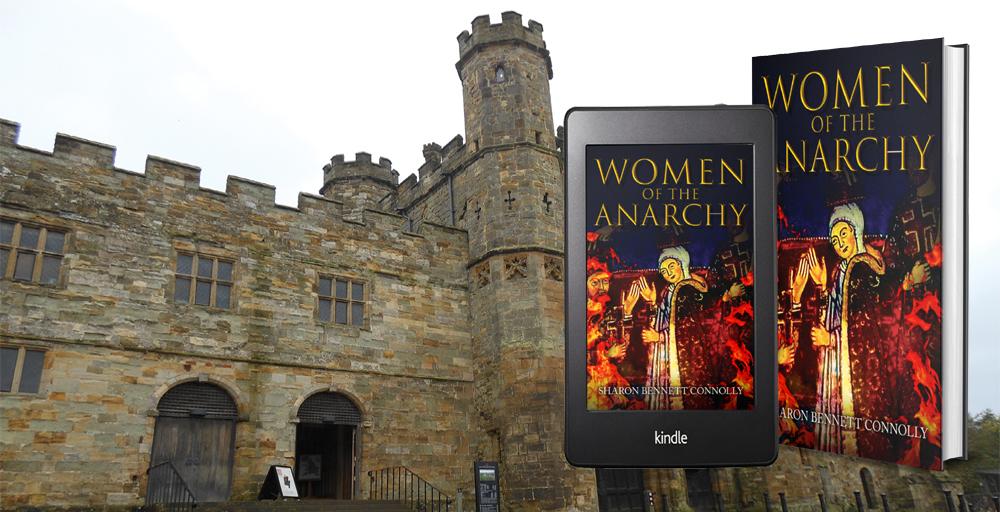
Two cousins. On the one side is Empress Matilda, or Maud. The sole surviving legitimate child of Henry I, she is fighting for her birthright and that of her children. On the other side is her cousin, Queen Matilda, supporting her husband, King Stephen, and fighting to see her own son inherit the English crown. Women of the Anarchy demonstrates how these women, unable to wield a sword, were prime movers in this time of conflict and lawlessness. It show how their strengths, weaknesses, and personal ambitions swung the fortunes of war one way – and then the other.

Available from Bookshop.orgAmberley Publishing and Amazon UK.

Coming on 15 June 2024: Heroines of the Tudor World
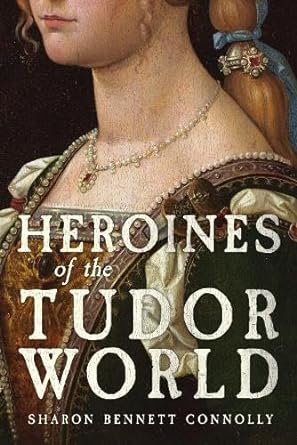
Heroines of the Tudor World tells the stories of the most remarkable women from European history in the time of the Tudor dynasty, 1485-1603. These are the women who ruled, the women who founded dynasties, the women who fought for religious freedom, their families and love. These are the women who made a difference, who influenced countries, kings and the Reformation. In the era dominated by the Renaissance and Reformation, Heroines of the Tudor World examines the threats and challenges faced by the women of the era, and how they overcame them. From writers to regents, from nuns to queens, Heroines of the Tudor World shines the spotlight on the women helped to shape Early Modern Europe.

Heroines of the Tudor World is now available for pre-order from Amberley Publishing and Amazon UK.

Also by Sharon Bennett Connolly:

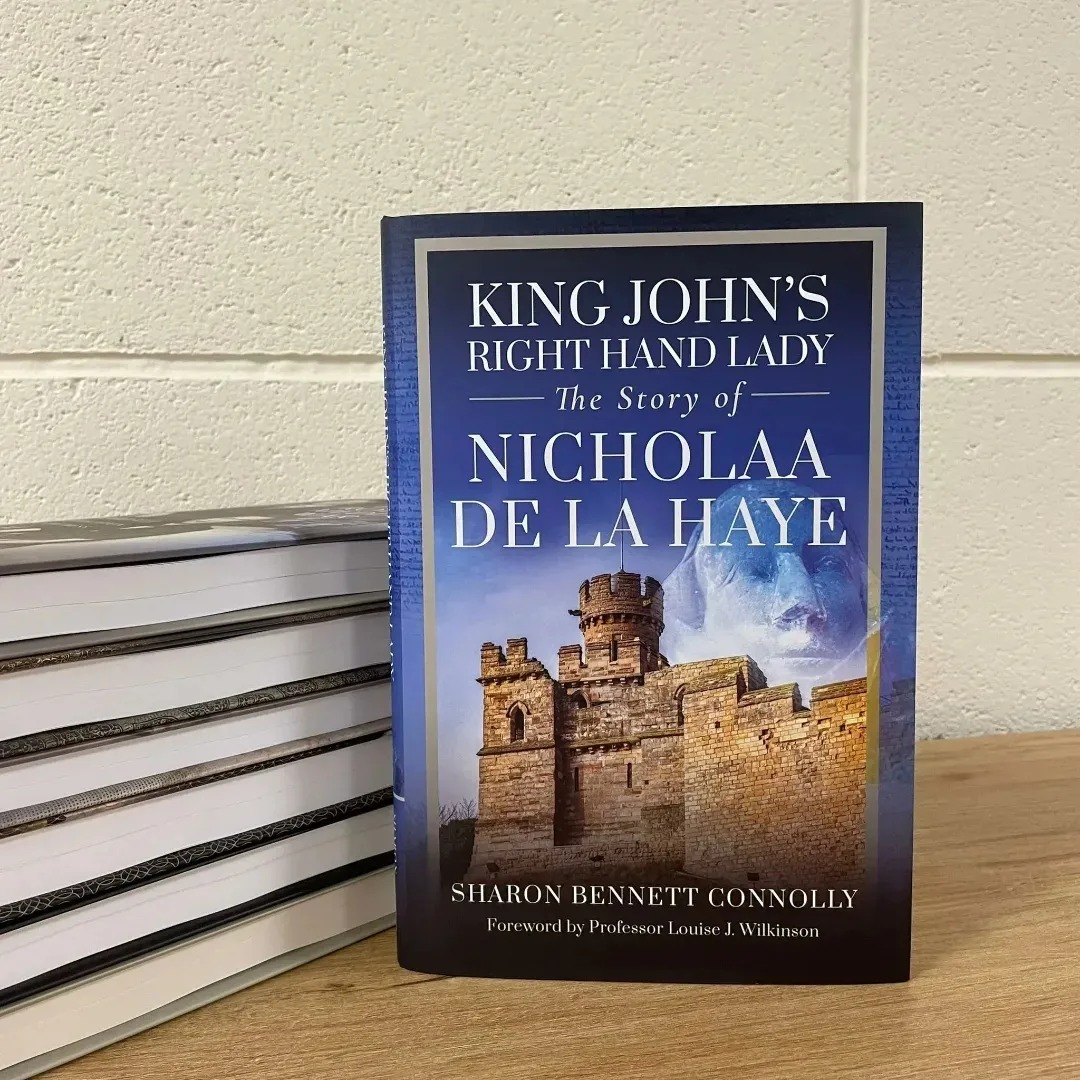
King John’s Right-Hand Lady: The Story of Nicholaa de la Haye is the story of a truly remarkable lady, the hereditary constable of Lincoln Castle and the first woman in England to be appointed sheriff in her own right. Available from all good bookshops or direct from Pen & Sword Booksbookshop.org and AmazonDefenders of the Norman Crown: The Rise and Fall of the Warenne Earls of Surrey tells the fascinating story of the Warenne dynasty, from its origins in Normandy, through the Conquest, Magna Carta, the wars and marriages that led to its ultimate demise in the reign of Edward III. Available from Pen & Sword BooksAmazon in the UK and US, and Bookshop.org

Ladies of Magna Carta: Women of Influence in Thirteenth Century England looks into the relationships of the various noble families of the 13th century, and how they were affected by the Barons’ Wars, Magna Carta and its aftermath; the bonds that were formed and those that were broken. It is now available in paperback and hardback from Pen & Sword,  Amazon, and Bookshop.orgHeroines of the Medieval World tells the stories of some of the most remarkable women from Medieval history, from Eleanor of Aquitaine to Julian of Norwich. Available now from Amberley Publishing and Amazon, and Bookshop.orgSilk and the Sword: The Women of the Norman Conquest traces the fortunes of the women who had a significant role to play in the momentous events of 1066. Available now from Amazon,  Amberley Publishing, and Bookshop.org.

Alternate Endings: An anthology of historical fiction short stories including Long Live the King… which is my take what might have happened had King John not died in October 1216. Available in paperback and kindle from Amazon.

Podcast:

Have a listen to the A Slice of Medieval podcast, which I co-host with Historical fiction novelist Derek Birks. Derek and I welcome guests, such as Bernard Cornwell and Elizabeth Chadwick, and discuss a wide range of topics in medieval history, from significant events to the personalities involved.

*

Don’t forget! Signed and dedicated copies of all my books are available through my online bookshop.

For forthcoming online and in-person talks, please check out my Events Page.

You can be the first to read new articles by clicking the ‘Follow’ button, liking our Facebook page or joining me on Twitter and Instagram.

*

©2024 Wendy J. Dunn and Sharon Bennett Connolly FRHistS.

Guest Post: Researching the Elizabethan Court, by Tony Riches

Today, it is an absolute pleasure to welcome my friend and fellow author Tony Riches to History…the Interesting Bits to talk about the research behind his latest book Penelope – Tudor Baroness, the fourth book in his Elizabethan series.

Researching the Elizabethan Court, by Tony Riches

I’ve spent the past five years immersed in the strange world of the court of Queen Elizabeth I researching my Elizabethan series. I wanted to keep the books as historically accurate and consistent as possible. My favourite source is Marion E. Colthorpe’s fascinating website, ‘The Elizabethan Court Day by Day’. This is the result of her decades of research, and includes details of other useful sources.

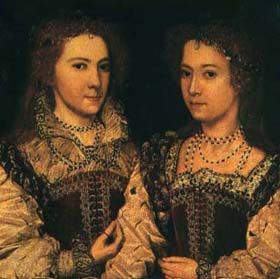
Penelope and her sister Dorothy (Wikimedia Commons)

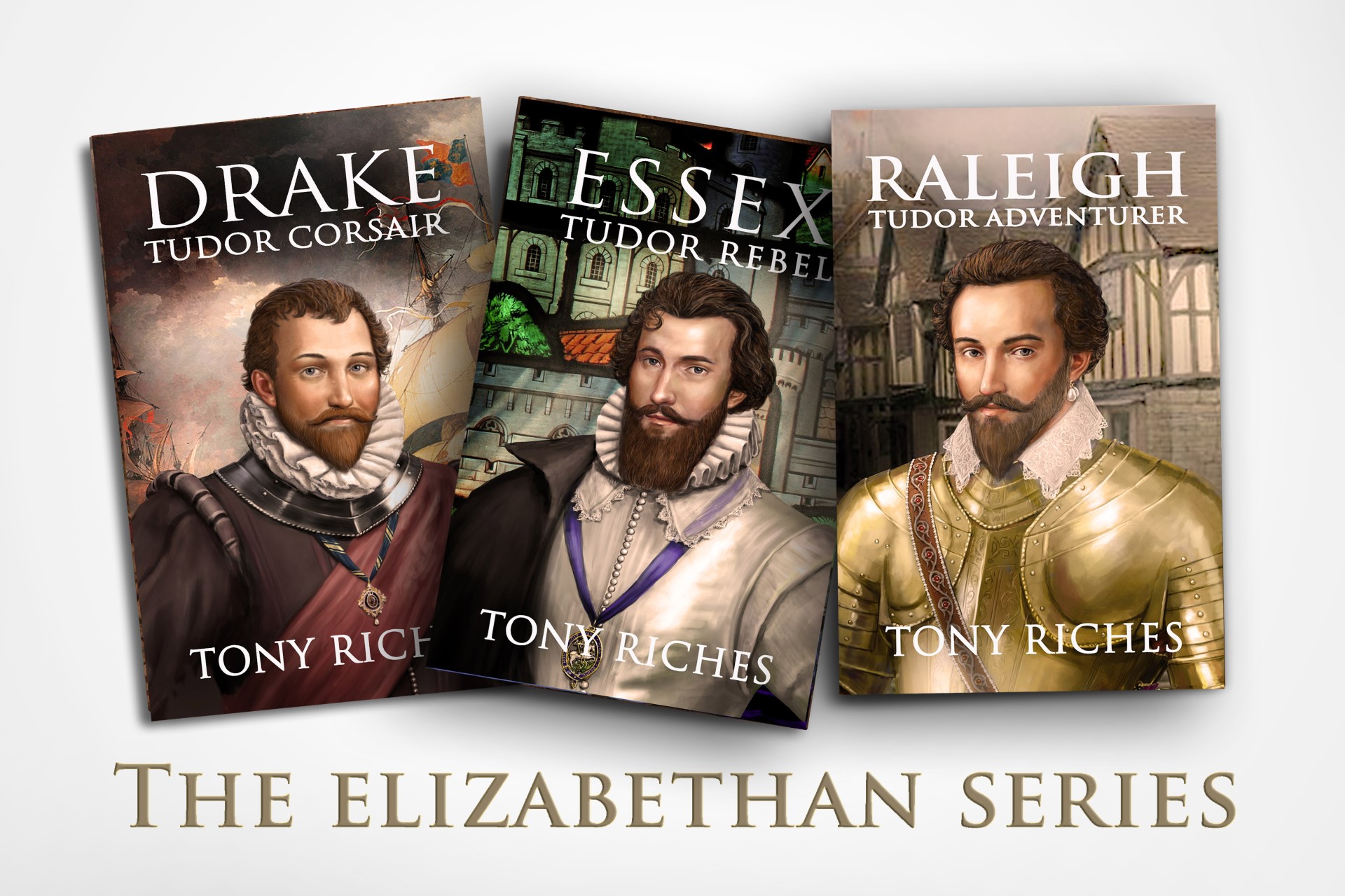
To show the many complex facets of the last Tudor queen, I decided the first three books of the series would see her through the eyes of three of her favourites, Drake, Essex, and Raleigh – each of whom knew a different side of their queen. Drake was in awe of her, and showered her with (looted) jewels, Essex was like the son she never had, and Raleigh was the captain of her guard.

These are to be followed by books about three of Queen Elizabeth’s ladies. Less well known, they all had close contact with her, a certain amount of influence with her advisors, and the opportunity to see behind the queen’s carefully contrived façade.

I chose the life of Lady Penelope Devereux as the fourth book in Elizabethan series. Penelope’s great-grandmother was Queen Elizabeth I’s aunt, Mary Boleyn. Her father was Sir Walter Devereux, 1st Earl of Essex, and her mother was Lady Lettice Knollys, banished from court for her secret marriage to the queen’s great favourite, Sir Robert Dudley.

A famous beauty, Penelope was well educated, an accomplished dancer and musician. Fluent in Italian, French and Spanish. Penelope became a prominent figure in the courts of Queen Elizabeth I and King James I. She was also involved in political intrigue, influencing the succession and her brother’s ill-fated Essex rebellion.

A measure of the challenges in researching Elizabethan ladies is the range and number of primary sources, such as letters. When I researched Penelope’s brother Robert for my book Essex – Tudor Rebel, I had Walter Bourchier Devereux’s ‘Lives and Letters of the Devereux, Earls of Essex’ – a two volume collection of his letters and papers, complete with detailed analysis and context.

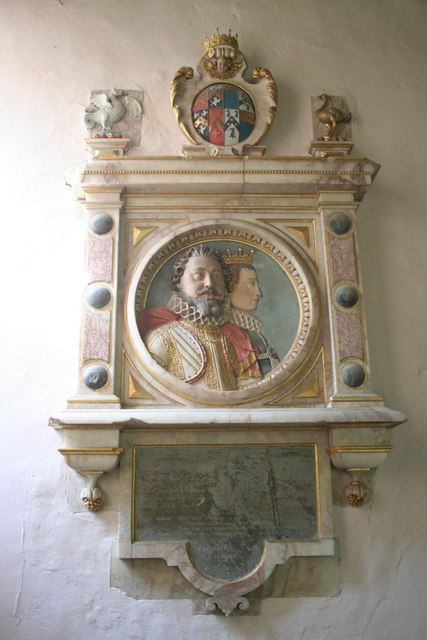
Baron Robert Rich (Wikimedia Commons)

In Penelope’s case, I managed to track down only twenty-seven letters in English, six in French and seven letters in Spanish. Interestingly, many use code words or are deliberately obscure, although analysis of them all reveal an invaluable sense of Penelope’s character, and how she related to others.

I began my research expecting Penelope to have been greatly disadvantaged by her mother’s banishment from court, yet she became a Maid of Honour to Queen Elizabeth until her stepfather, Sir Robert Dudley arranged her marriage to Baron Rich. (An unlikely choice of husband for her, he was the grandson of Richard Rich, Thomas Cromwell’s right hand man in the Dissolution of the monasteries.)

Another surprise was the inconsistent records of Penelope’s many children. Some biographers have them in the wrong order and others omit some entirely. The situation is not helped by the question of who their fathers were, and several premature or stillbirths with no baptism. My solution was to create my own list from the best information I could find, (and I updated her Wikipedia page accordingly.)

To avoid too many spoilers, I shall not say here what I made of her brother accusing Penelope of encouraging his rebellion, or her relationship with Queen Elizabeth after he was executed for treason. Her story does take readers past the end of the Tudors with the death of Elizabeth, and how she became a lady of the bedchamber to Queen Anne.

Lord Byron’s saying ‘Tis strange — but true; for truth is always strange; Stranger than fiction; if it could be told.’ is proven right by my research. Although historical fiction, I have only had to ‘fill in the gaps’, and believe my new book is therefore one of the most comprehensive accounts of Penelope’s amazing story.

Tony Riches

About the book:

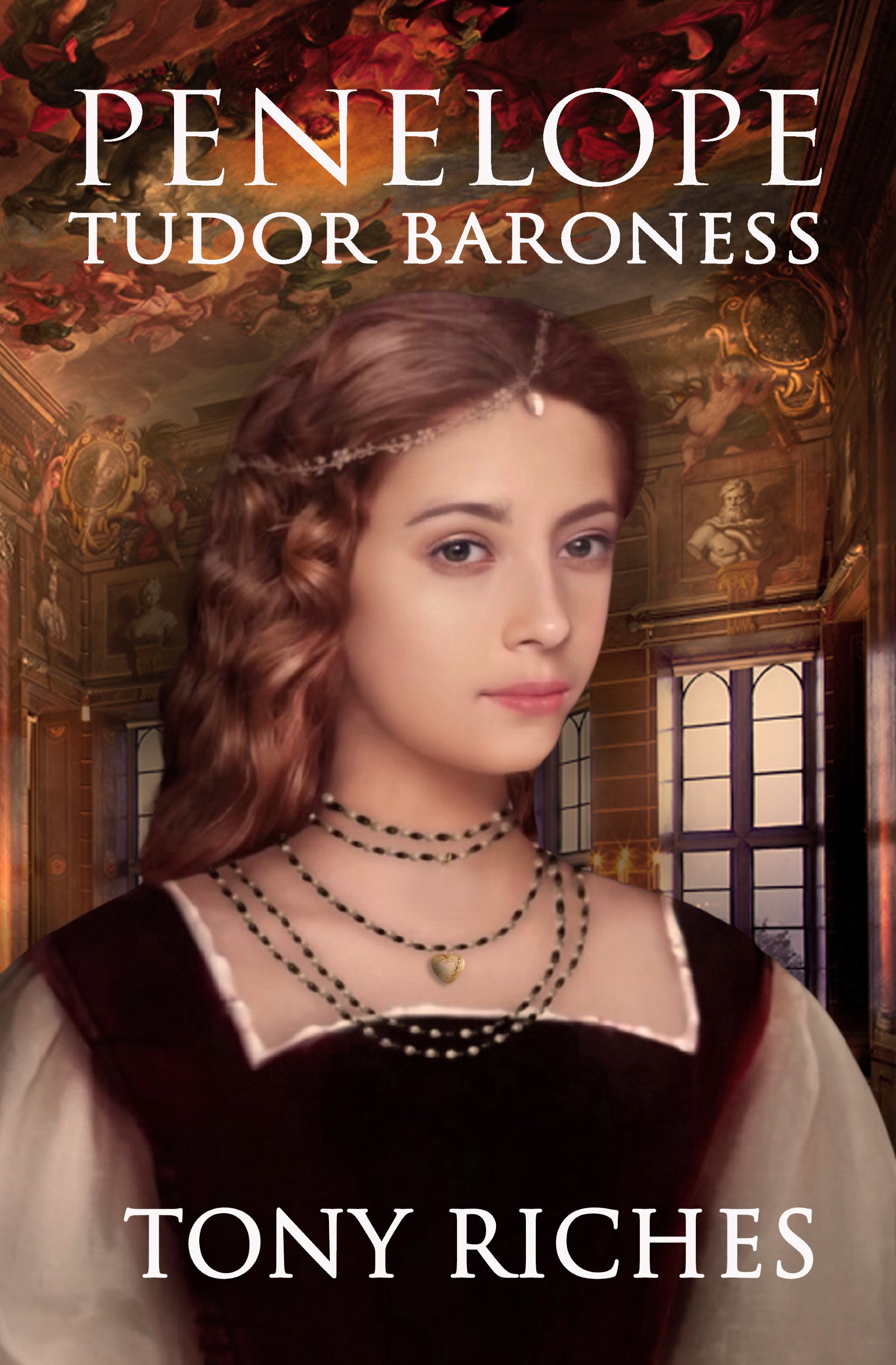
Penelope – Tudor Baroness (Book Four of The Elizabethan Series)

Penelope’s life is full of love and scandal. The inspiration for Sir Philip Sidney’s sonnet Astrophel and Stella, she is inevitably caught up in her brother Robert’s fateful rebellion.

A complex and fascinating woman, her life is a story of love, betrayal, and tragedy. Discover how Penelope charms her way out of serious charges of treason, adultery, and forgery, and becomes one of the last truly great ladies of the Tudor court.

A maid of honour to Queen Elizabeth, Penelope outlives the end of the Tudors with the death of the old queen and the arrival of King James, becoming a favourite lady-in-waiting to the new queen, Anne of Denmark.

“This is the story of a woman who lived life on her own terms, and one that will stay with you long after you finish reading it.”

To Buy the Book:

Amazon US: https://www.amazon.com/dp/B0C78KDRK3

Amazon UK: https://www.amazon.co.uk/dp/B0C78KDRK3

Amazon CA: https://www.amazon.ca/dp/B0C78KDRK3

Amazon AU: https://www.amazon.com.au/dp/B0C78KDRK3

About the Author:

Tony Riches is a full-time UK author of Tudor historical fiction. He lives with his wife in Pembrokeshire, West Wales and is a specialist in the lives of the early Tudors. As well as his new Elizabethan series, Tony’s historical fiction novels include the best-selling Tudor trilogy and his Brandon trilogy, (about Charles Brandon and his wives). For more information about Tony’s books please visit his website tonyriches.com and his blog, The Writing Desk and find him on Facebook and Twitter @tonyriches.

Find Tony at: Amazon UK: https://www.amazon.co.uk/Tony-Riches/e/B006UZWOXA Amazon US: https://www.amazon.com/Tony-Riches/e/B006UZWOXA Website: https://www.tonyriches.com/ Writing blog: https://tonyriches.blogspot.com/ Twitter: https://twitter.com/tonyriches Facebook: https://www.facebook.com/tonyriches.author Instagram: https://www.instagram.com/tonyriches.author/ TikTok: https://www.tiktok.com/@tonyriches.author Podcasts: https://tonyriches.podbean.com/ Goodreads: https://www.goodreads.com/author/show/5604088.Tony_Riches

*

My Books:

Signed, dedicated copies of all my books are available, please get in touch by completing the contact me form.

King John’s Right-Hand Lady: The Story of Nicholaa de la Haye is now available for pre-order from Pen & Sword Booksbookshop.org and Amazon UK. (I will hopefully have a US release date shortly)

In a time when men fought and women stayed home, Nicholaa de la Haye held Lincoln Castle against all-comers. Not once, but three times, earning herself the ironic praise that she acted ‘manfully.’ Nicholaa gained prominence in the First Baron’s War, the civil war that followed the sealing of Magna Carta in 1215.

A truly remarkable lady, Nicholaa was the first woman to be appointed sheriff in her own right. Her strength and tenacity saved England at one of the lowest points in its history. Nicholaa de la Haye is one woman in English history whose story needs to be told…

Also by me:

Defenders of the Norman Crown: The Rise and Fall of the Warenne Earls of Surrey tells the fascinating story of the Warenne dynasty, of the successes and failures of one of the most powerful families in England, from its origins in Normandy, through the Conquest, Magna Carta, the wars and marriages that led to its ultimate demise in the reign of Edward III. Defenders of the Norman Crown: Rise and Fall of the Warenne Earls of Surrey is now available from Pen & Sword BooksAmazon in the UK and US, and  Bookshop.org.
Ladies of Magna Carta: Women of Influence in Thirteenth Century England looks into the relationships of the various noble families of the 13th century, and how they were affected by the Barons’ Wars, Magna Carta and its aftermath; the bonds that were formed and those that were broken. It is now available in paperback and hardback from Pen & Sword,  Amazon, and Bookshop.org.

Heroines of the Medieval World tells the stories of some of the most remarkable women from Medieval history, from Eleanor of Aquitaine to Julian of Norwich. Available now from Amberley Publishing and Amazon, and Bookshop.org.

Silk and the Sword: The Women of the Norman Conquest traces the fortunes of the women who had a significant role to play in the momentous events of 1066. Available now from Amazon,  Amberley Publishing, and Bookshop.org.

Alternate Endings: An anthology of historical fiction short stories including Long Live the King… which is my take what might have happened had King John not died in October 1216. Available in paperback and kindle from Amazon.

*

Podcast:

Have a listen to my A Slice of Medieval podcast

For forthcoming online and in-person talks, please check out my Events Page.

You can be the first to read new articles by clicking the ‘Follow’ button, liking our Facebook page or joining me on Twitter and Instagram.

*

©2023 Tony Riches and Sharon Bennett Connolly FRHistS

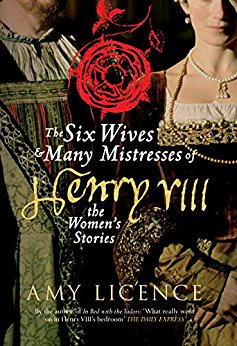
Book Corner: The Six Wives and Many Mistresses of Henry VIII by Amy Licence

For a King renowned for his love life, Henry VIII has traditionally been depicted as something of a prude, but the story may have been different for the women who shared his bed. How did they take the leap from courtier to lover, to wife? What was Henry really like as a lover? Henry’s women were uniquely placed to experience the tension between his chivalric ideals and the lusts of the handsome, tall, athletic king; his first marriage, to Catherine of Aragon, was on one level a fairy-tale romance, but his affairs with Anne Stafford, Elizabeth Carew and Jane Popincourt undermined it early on. Later, his more established mistresses, Bessie Blount and Mary Boleyn, risked their good names by bearing him illegitimate children. Typical of his time, Henry did not see that casual liaisons might threaten his marriage, until he met the one woman who held him at arm’s length. The arrival of Anne Boleyn changed everything. Her seductive eyes helped rewrite history. After their passionate marriage turned sour, the king rapidly remarried to Jane Seymour. Henry was a man of great appetites, ready to move heaven and earth for a woman he desired; Licence readdresses the experiences of his wives and mistresses in this frank, modern take on the affairs of his heart. What was it really like to be Mrs Henry VIII?

I love the writing style of Amy Licence, she makes history enjoyable and accessible; so much so that when The Six Wives and Many Mistresses of Henry VIII dropped on my doormat I put down what I was reading and jump straight in. And I was not disappointed. A thoroughly fun and entertaining read, this is a book that examines every aspect of Henry VIII’s love life, with particular focus on the women, rather than the king.

No stone remains unturned in Amy Licence’s hunt for the women in Henry’s life. Each rumour is examined in great detail, with comprehensive arguments for or against their actual relationship with Henry. As you would expect, Anne Boleyn and Catherine of Aragon, and the other 4 wives, all find their place within the pages of this book. Bessie Blount and Mary  Boleyn are also discussed in detail. Amy Licence does not judge, she tells their stories, the highs and lows, with great sympathy and compassion. The Six Wives and Many Mistresses of Henry VIII also brings to the fore the less well-known women who have been linked to this most controversial of kings. Etiennette de la Baume, Jane Popincourt and several other, even more obscure, women have their relationships with Henry examined.

Investigations are also made into the claims of the illegitimate children, not only those of the children of Mary Boleyn, but also those less well-known, such as Thomas Stukley and John Perrot. Amy Licence expertly investigates their claims and convincingly argues the truth – or not – of their parentage.

Workshop_of_Hans_Holbein_the_Younger_-_Portrait_of_Henry_VIII_-_Google_Art_Project

The watchwords for Mary’s relationship with the king were secrecy and discretion. Yet history has tarnished her with scandal and rumour, insults and aspersions, leaving her with a reputation worthiest of the greatest whore at Henry’s court. Just like so many of the facts of Mary’s life, her real personality and appearance elude us. Historians and novelists have deduced various things from the known dates of her service in France, particularly her comparative lack of education and the circumstances of her marriage, yet these have often raised more questions than they have answered. Mary is illuminated in history by the light that fell upon her sister and she has suffered from the comparison ever since. Sadly her light will always be dimmer, her biography more nebulous.

Amy Licence has a reputation as an excellent researcher and writer, she shines a light into the deepest, darkest corners of the Tudors and, indeed, history itself. In  The Six Wives and Many Mistresses of Henry VIII she brings women into the limelight whose fifteen minutes of fame have long since been extinguished. And that is what is truly amazing about this book, not only are the famous and infamous discussed, but the author also highlights those women who have become footnotes in Henry’s life. Every woman who has been linked to Henry, before and after his death, is examined, as is the veracity of their interractions with the king. She tells their stories, examines their relationship with Henry, the rumours and the truth to them.

Through looking into the women involved, Amy Licence also paints a picture of Henry that is rarely seen; Henry the man and lover, rather than Henry the king. Her diligent research and well-thought out arguments demonstrate Henry’s continual search, not only  for an heir, but for love itself. We discover a complex man, a king who can have whatever he wants in material possessions, but who is continually searching for the immaterial, a son and true love.

The text is supported by over 30 gorgeous, colourful images, photographs and reproductions of paintings which help give the reader an impression of the life and times in which Henry VIII, and the women associated with him, lived. Written in a relaxed narrative, the book is as easy to read as any novel, and as exciting as enjoyable as the best of them. Accessible, engaging and brimming with original research, it would be difficult for anyone to not learn something new when reading this wonderful book.

The Six Wives and Many Mistresses of Henry VIII is a wonderful, exquisitely written investigation into the lives of the women in Henry VIII’s life.

*

Amy Licence has been a teacher for over a decade. She has an MA in Medieval and Tudor Studies and has published several scholarly articles on the Tudors. She is an author and historian of women’s lives in the medieval and Tudor period.

The Six Wives and Many Mistresses of Henry VIII is available on Amazon in the UK and in the US.

*

My book, Heroines of the Medieval World,  is now available in hardback in the UK from both Amberley Publishing and Amazon UK and worldwide from Book Depository. It is also available on Kindle in both the UK and USA and will be available in Hardback from Amazon US from 1 May 2018.

You can be the first to read new articles by clicking the ‘Follow’ button, liking our Facebook page or joining me on Twitter.

*

©2017 Sharon Bennett Connolly