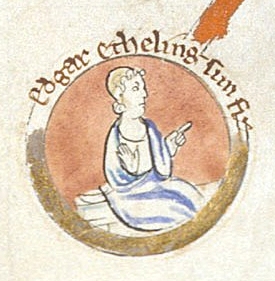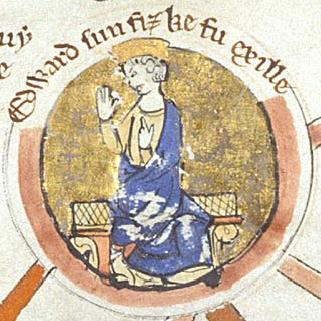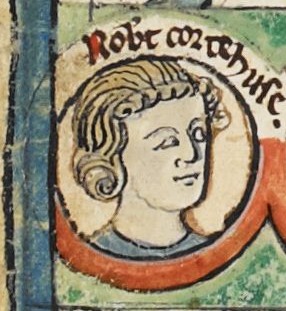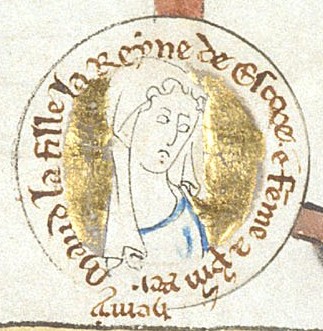
Sybilla of Normandy, Queen of Scots

History ... the Interesting Bits
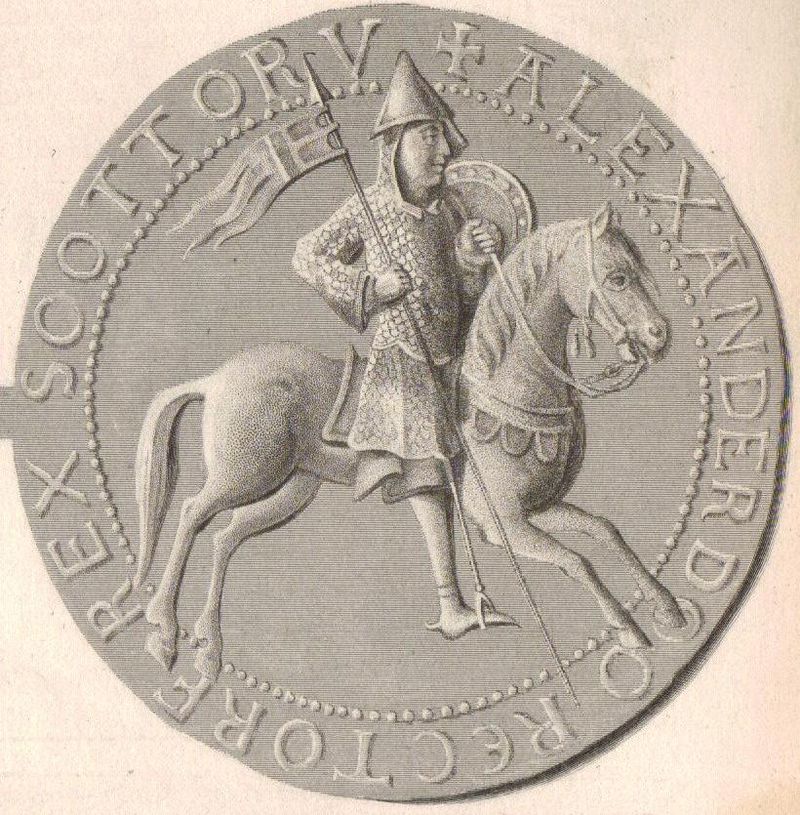
Alexander I, King of Scots

Alexander I was the second-to-youngest son of Malcolm III Canmore and his sainted wife Margaret of Wessex. Born around 1077 or 1078, he was thirty-or-so when he ascended the throne in 1107, ‘as the King Henry granted him.’1 Like his brother Edgar before him, Alexander succeeded to the throne as a vassal of the English crown. He had probably spent the years between his father’s death and Edgar’s accession in exile in England, with Edgar and their younger brother, David. John of Fordun provides a largely flattering assessment of Alexander I as king:

‘Now the king was a lettered and godly man ; very humble and amiable towards the clerics and regulars, but terrible beyond measure to the rest of his subjects; a man of large heart, exerting himself in all things beyond his strength. He was most zealous in building churches, in searching for relics of saints, in providing and arranging priestly vestments and sacred books; most open-handed, even beyond his means, to all newcomers; and so devoted to the poor, that he seemed to delight in nothing so much as in supporting them, washing, nourishing, and clothing them.’2

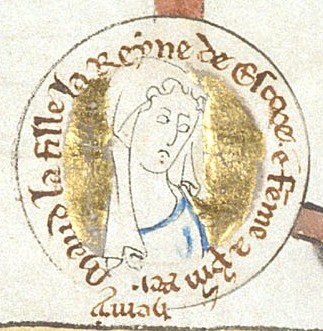
One of the primary duties of a king is to marry and produce heirs; at least one son, preferably two – the heir and the spare. This guarantees the succession and offers stability to a country. Even daughters were useful to a king, their marriages cementing alliances with friends and enemies alike. Alexander I was married shortly after his accession to the throne. His bride was offered to him by his brother-in-law, King Henry I of England. She was Sybilla, also known as Sybilla of Normandy, one of the King of England’s many illegitimate offspring.
History ... the Interesting Bits
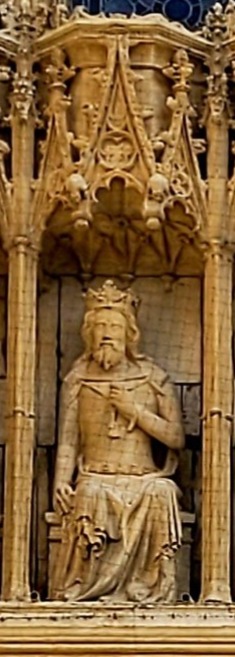
Henry I, Lincoln Cathedral

King Henry had more than twenty illegitimate children and as many as five were by the same mother, his mistress, or concubine, Sybilla Corbet. Orderic Vitalis refers to Sybilla of Normandy as ‘the daughter of King Henry by a concubine’.3 It is highly likely that Sybilla Corbet was Sybilla’s mother, one indication being their shared Christian name. She was the daughter of a Shropshire landowner named Robert Corbet. Her children with the king included Reginald, Earl of Cornwall, and a young man named William, who was described as the queen’s brother when he accompanied the younger Sybilla to Scotland. Sybilla Corbet is also reputed to have been the mother of Robert, Earl of Gloucester, Henry I’s oldest son and the stalwart supporter of his legitimate sister, Empress Matilda, during the Anarchy. After the end of her relationship with the king, Sybilla Corbet would go on to marry Herbert FitzHerbert, who held lands in Yorkshire and Gloucestershire, and have a further five children.

The date of Alexander’s marriage to Sybilla is unknown, though it is thought to have been shortly after his accession to the throne, possibly in 1107 or 1108, and before his involvement in the English campaign in Wales in 1114. It was in a charter dated to 1114 or 1115 that Alexander and Sybilla jointly refounded Scone Abbey, whereby they are referred to as ‘Alexander … King of Scots, son of King Malcolm and Queen Margaret and … Sybilla, Queen of Scots, daughter of King Henry of England.’4

Another unknown is Sybilla’s age at the time of her marriage as her birth was unrecorded. Alexander was in his 30s, while most historians agree that it is likely that Sybilla was born in the mid-to-late 1090s and probably in her mid-teens. Although born out of wedlock, as the acknowledged daughter of King Henry I of England, Sybilla was considered a suitable wife for King Alexander. Henry I’s illegitimate daughters played an important role in his foreign and domestic policies; no fewer than ten of them were married into the upper classes of the Norman-French nobility to cement political alliances. Sybilla’s illegitimate status was of less significance than the fact her father was the King of England.
History ... the Interesting Bits
Matilda of Scotland, Queen of England

The marriage was intended to bind Alexander even closer to England and to King Henry personally, who was already his brother-in-law, having married Alexander’s sister, Matilda of Scotland, shortly after becoming king. The union was also aimed at securing peace along the Anglo-Scottish border. In his chronicle, William of Malmesbury recorded the marriage, though did not name Sybilla and added ‘there was … some defect about the lady either in correctness of manners or elegance of person.’5 Malmesbury stated that Alexander ‘did not sigh much when she died before him, for the woman lacked, as is said, what was desired, either in modest manners, or in elegant body’.6 Unfortunately, William of Malmesbury does not elaborate further on this defect, nor on the reasons behind such an unflattering description of the Scottish queen. No other chronicler mentions any flaws in the queen. It is possible that Malmesbury was playing down the queen’s attributes, and the impact of her death on the king, in order to find favour with her brother-in-law David, Alexander I’s younger brother and heir.

Some historians have interpreted the childless marriage as also being loveless, perhaps drawing on Malmesbury’s depiction of Sybilla, most actually agree that, although there were no children, it was a happy and loving marriage. With this distance of time, it would be difficult to be certain either way. However, despite the lack of an heir, Alexander did not repudiate his wife, though that could always be as a result of who her father was. Rosalind Marshal suggests that Alexander loved Sybilla, and mourned her deeply when she died, founding a church in her memory.
History ... the Interesting Bits
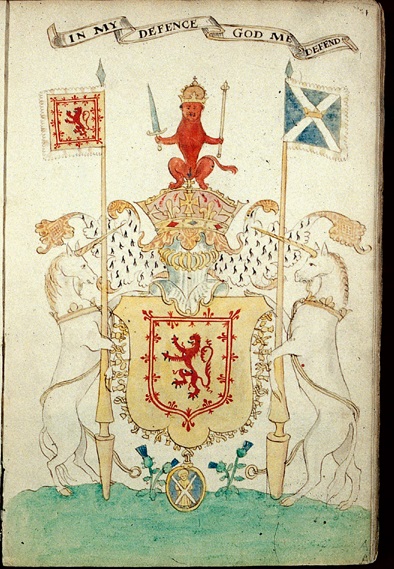
Arms of Scotland

Alexander and Sybilla’s court is said to have been one of splendour, with reference to Arab stallions and Turkish men-at-arms. They issued a number of charters together, including the one founding Scone Abbey, mentioned above. Scone was the ancient site for the installation and crowning of Scotland’s kings, it was the centre of royal power in Scotland. Sybilla’s inclusion in the foundation of the Augustinian priory there demonstrates how she had become an integral part of the Scottish ruling dynasty. She and Alexander also made a joint offering to the cathedral church of St Andrews.

Sybilla also made grants, as an ecclesiastical patron, in her own right. She granted the manor of Beath in Fife to Dunfermline Abbey, the monastery founded by her husband’s parents, Malcolm III and Queen Margaret, their final resting place. Sybilla attested one of the four surviving charters from Alexander I’s reign, demonstrating her presence at court and involvement in the affairs of state. Significantly, it may have been Sybilla who acted as peacemaker between the king and Eadmer, when he became Bishop of St Andrews. Due to the investiture controversy that was causing issues throughout Europe, with kings and bishops in disagreement over the validity of lay investiture, Eadmer accepted the ring of office from King Alexander, but not the staff. The staff had been placed on the altar at the cathedral of St Andrews and it seems likely that Sybilla was the one who broached the compromise whereby Eadmer would take the episcopal ring from the king, but the pastoral staff from the altar. When Eadmer arrived at the cathedral church of St Andrews to take up the pastoral staff, Queen Sybilla was there to greet him.
History ... the Interesting Bits
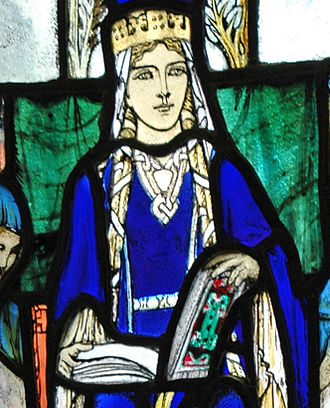
Saint Margaret, Queen of Scots

Queen Sybilla died suddenly on the Island of the Women at ‘Loch Tay, the cell of the canons of Scone’ on 12 or 13 July 1122 and was buried at Dunfermline Abbey. Afterwards, the king granted the island on Loch Tay, and its surrounding lands, to the canons at Scone, to pray for the soul of Queen Sybilla, and himself. Alexander did not remarry after Sybilla’s death, leaving the crown to his brother, David, on his own death in 1124.

Queen Sybilla has left little imprint on history, beyond her name as a witness on a surviving charter and the founding of Scone Abbey. That she did not bear children, and therefore an heir for Alexander I, means that she did not have living descendants to keep her memory alive and memorialise her life and deeds, as Queen Margaret had. Her significance is, perhaps, not in her impact on Scotland but rather the physical link that she represented between the kingdoms and dynasties of England and Scotland, and thus demonstrating Scottish acceptance of Norman rule in England.

***

Notes:

1. Manuscript E, The Anglo-Saxon Chronicles, edited and translated by Michael Swanton, p. 241; 2. John of Fordun’s Chronicle of the Scottish nation, pp. 217-218; 3. ‘filiam Henrici regis Anglorun ex concubine’ Orderic Vitalis cited in Danna Messer, Medieval Monarchs, Female Illegitimacy and Modern Genealogical Matters: Part 1: Sybilla, Queen of Scotland, c. 1090-1122, fmg.ac; 4. ‘Alexander…rex Scottorum filius regis Malcolmi et regine Margerete et…Sibilla regina Scottorum filia Henrici regis Anglie’ Scone, 1, p. 1.  Quoted in fmg.ac/Projects/MedLands/SCOTLAND; 5. William of Malmesbury, 400, p. 349, quoted in fmg.ac/Projects/MedLands/SCOTLAND; 6. William of Malmesbury, quoted in Messer, Medieval Monarchs, Female Illegitimacy and Modern Genealogical Matters: Part 1: Sybilla, Queen of Scotland, c. 1090-1122

Images:

Courtesy of Wikipedia except Henry I which is ©2025 Sharon Bennett Connolly

Sources:

The Anglo-Saxon Chronicles, edited and translated by Michael Swanton; John of Fordun’s Chronicle of the Scottish nation; Danna Messer, Medieval Monarchs, Female Illegitimacy and Modern Genealogical Matters: Part 1: Sybilla, Queen of Scotland, c. 1090-1122; fmg.ac/Projects/MedLands/SCOTLAND; Jessica Nelson, Sybilla (d. 1122), queen of Scots and consort of Alexander I, Oxforddnb.com; Walter Bower, Scotichronicon; A.A.M. Duncan, Alexander I, Oxforddnb.com; Forester, The Chronicle of John Florence of Worcester with the two continuations; David Ross, Scotland, History of a Nation; Rosalind K. Marshall, Scottish Queens 1034-1714; Mike Ashley, A Brief History of British Kings & Queens; Richard Oram, editor, The Kings & Queens of Scotland

*

My books

Signed, dedicated copies of all my books are available through my online store.

Out now: Scotland’s Medieval Queens

Books by Sharon Bennett Connolly

Scotland’s history is dramatic, violent and bloody. Being England’s northern neighbour has never been easy. Scotland’s queens have had to deal with war, murder, imprisonment, political rivalries and open betrayal. They have loved and lost, raised kings and queens, ruled and died for Scotland. From St Margaret, who became one of the patron saints of Scotland, to Elizabeth de Burgh and the dramatic story of the Scottish Wars of Independence, to the love story and tragedy of Joan Beaufort, to Margaret of Denmark and the dawn of the Renaissance, Scotland’s Medieval Queens have seen it all. This is the story of Scotland through their eyes.

Scotland’s Medieval Queens gives a thorough grounding in the history of the women who ruled Scotland at the side of its kings, often in the shadows, but just as interesting in their lives beyond the spotlight. It’s not a subject that has been widely covered, and Sharon is a pioneer in bringing that information into accessible history.’ Elizabeth Chadwick (New York Times bestselling author)

Available now from Amazon and Pen and Sword Books

Also by Sharon Bennett Connolly:

Books by Sharon Bennett Connolly

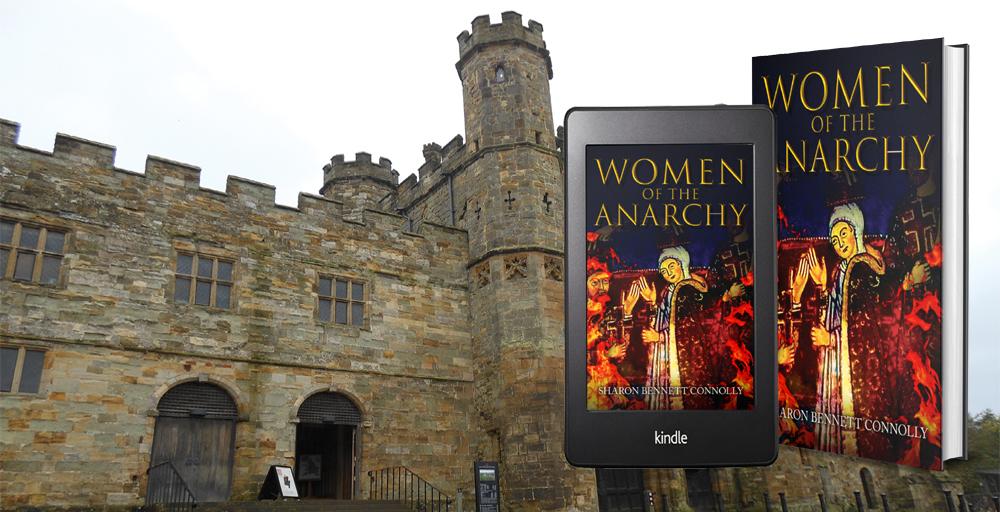
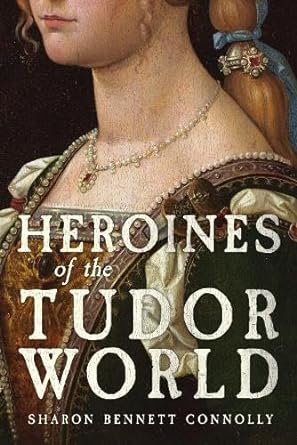
Heroines of the Tudor World tells the stories of the most remarkable women from European history in the time of the Tudor dynasty, 1485-1603. These are the women who ruled, the women who founded dynasties, the women who fought for religious freedom, their families and love. Heroines of the Tudor World is now available from Amberley Publishing and Amazon UK. Women of the Anarchy demonstrates how Empress Matilda and Matilda of Boulogne, unable to wield a sword themselves, were prime movers in this time of conflict and lawlessness. It shows how their strengths, weaknesses, and personal ambitions swung the fortunes of war one way – and then the other. Available from Bookshop.orgAmberley Publishing and Amazon UKKing John’s Right-Hand Lady: The Story of Nicholaa de la Haye is the story of a truly remarkable lady, the hereditary constable of Lincoln Castle and the first woman in England to be appointed sheriff in her own right. Available from all good bookshops Pen & Sword Booksbookshop.org and Amazon

Royal Historical Society

Defenders of the Norman Crown: The Rise and Fall of the Warenne Earls of Surrey tells the fascinating story of the Warenne dynasty, from its origins in Normandy, through the Conquest, Magna Carta, the wars and marriages that led to its ultimate demise in the reign of Edward III. Available from Pen & Sword BooksAmazon in the UK and US, and Bookshop.orgLadies of Magna Carta: Women of Influence in Thirteenth Century England looks into the relationships of the various noble families of the 13th century, and how they were affected by the Barons’ Wars, Magna Carta and its aftermath; the bonds that were formed and those that were broken. It is now available in paperback and hardback from Pen & SwordAmazon, and Bookshop.orgHeroines of the Medieval World tells the stories of some of the most remarkable women from Medieval history, from Eleanor of Aquitaine to Julian of Norwich. Available now from Amberley Publishing and Amazon, and Bookshop.orgSilk and the Sword: The Women of the Norman Conquest traces the fortunes of the women who had a significant role to play in the momentous events of 1066. Available now from Amazon,  Amberley Publishing, and Bookshop.org.

Alternate Endings: An anthology of historical fiction short stories including Long Live the King… which is my take what might have happened had King John not died in October 1216. Available in paperback and kindle from Amazon.

Podcast:

A Slice of Medieval

Have a listen to the A Slice of Medieval podcast, which I co-host with Historical fiction novelist Derek Birks. Derek and I welcome guests, such as Bernard Cornwell and Michael Jecks, and discuss a wide range of topics in medieval history, from significant events to the personalities involved. 

Every episode is also now available on YouTube.

*

Don’t forget! Signed and dedicated copies of all my books are available through my online store.

For forthcoming online and in-person talks, please check out my Events Page.

You can be the first to read new articles by clicking the ‘Follow’ button, liking our Facebook page or joining me on TwitterThreadsBluesky and Instagram.

*

©2025 Sharon Bennett Connolly

Yorkshire’s Little Prince

Æthelread II (known to history as the Æthelread Unready)

It may come as no surprise that very few royals have been born in Yorkshire over the years. There was Ӕlfgifu of York, the first wife of Ӕthelred II (known to history as Ӕthelred the Unready). Ӕlfgifu was the daughter of the earl of Northumbria and the marriage was intended to strengthen the links between the north and south of England. Ӕlfgifu was the mother of, among others, Edmund II Ironside, and therefore the great-grandmother of Margaret of Wessex, (St Margaret) Queen of Scots as the wife of Malcolm III Canmor. Ӕlfgifu died before April 1002 when Ӕthelred II married his second wife, Emma of Normandy.

Another royal with links to Yorkshire was Henry I. The youngest son of William the Conqueror and Matilda of Flanders, Henry was the only king of England born in Yorkshire. Henry was born in Selby in the summer of 1068, whilst his father was in the county, stamping out rebellion and pursuing his Harrying of the North. He would seize the throne in 1100 following the death of his older brother, William II Rufus, in a hunting accident in the New Forest. In the same year, Henry would marry Edith of Scotland, who changed her name to Matilda on her marriage. As the daughter of Malcolm III and St Margaret, Edith/Matilda was herself a descendant of Ӕthelred II and Ӕlfgifu of York.

There is also, of course, Edward of Middleham, the son of Richard III, who spent his short life, of no more than 10 years, living in Yorkshire. He was created Prince of Wales in a ceremony in York Minster in a lavish ceremony in September 1483. Edward died on 9 April 1484, a year to the day after the unexpected death of his uncle, Edward IV.

One other medieval royal born in Yorkshire, a little prince who spent his entire – though tragically short – life in our great county. William of Hatfield.

I read a book recently that mistakenly said William of Hatfield was born in Hatfield, Hertfordshire. I was amazed that the author wasn’t aware that he was actually born at the royal hunting lodge of Hatfield, near Doncaster. I thought everyone knew this! Then I realised that most people, when talking about royals and Hatfield, would automatically think of the Hertfordshire Hatfield. It was, after all, where Queen Elizabeth I was living when she was told that she was queen of England. It makes sense that most people would think of that Hatfield first.

But I’m a Yorkshire lass and, as I say, we don’t get many royals born up our way. So, I suppose, when we do, we know about them.

Monument to William of Hatfield, York Minster

William of Hatfield was the fourth child and second son of Edward III and Philippa of Hainault. The king and queen were keeping Christmas at the manor of Hatfield, in the old West Riding of Yorkshire, in 1336, when Prince William was born. Hatfield was situated in the midst of the royal hunting grounds of Hatfield Chase and was close to the Earl Warenne’s hunting lodge of Peel Castle, Thorne. The young prince was baptised by William Melton, Archbishop of York, but died soon afterwards. After his death, the little prince’s body was transported a little further north, to York. On 10 February 1337, William was buried in York Minster, the church in which his parents had been married in January 1328. His short life memorialised by an elaborate tomb surmounted with his effigy and located in the north quire aisle of the Minster, though the site of his grave is now lost.

In 1345, the tragic little prince’s story was caught up in the marital affairs of John de Warenne, 7th and last earl of Warenne and Surrey. John had been married to a granddaughter of King Edward I, Joan of Bar, in 1306, when John was 20 years old and Joan a girl of 10. The marriage was a disaster, with John having a number of affairs and spending many years trying to obtain a divorce. In pursuit of this divorce, and in the hope of finally being able to marry his mistress of the time, Isabella Holland, John claimed that he had had an affair before marrying Joan, with his wife’s maternal aunt Mary of Woodstock, when he was 19 and Mary 27 years of age. This was indeed a drastic claim, as Mary had been a nun since she was about 7 years old, and it was probably born out of desperation; John was becoming increasingly infirm and still had no heir to succeed him. It was a last-ditch attempt to marry Isabella and have legitimate children. It failed, though the earl’s confession was presented to Pope Clement VI who,

on 15 May, 1345, issued a mandate to the Bishop of S. Asaph to absolve John de Warenne, Earl of Surrey and Stratherne, Lord of Bromfeld and Yale, from excommunication, which he has incurred by inter-marrying with Joan, daughter of Henry, Count de Barre, whose mother’s sister, Mary, he had carnally known. A penance is to be enjoined; and as to the marriage, canonical action is to be taken.

Calendar of Papal Registers, Papal Letters (p. 116) quoted in Fairbank, ‘The Last Earl of Warenne and Surrey’, p. 245
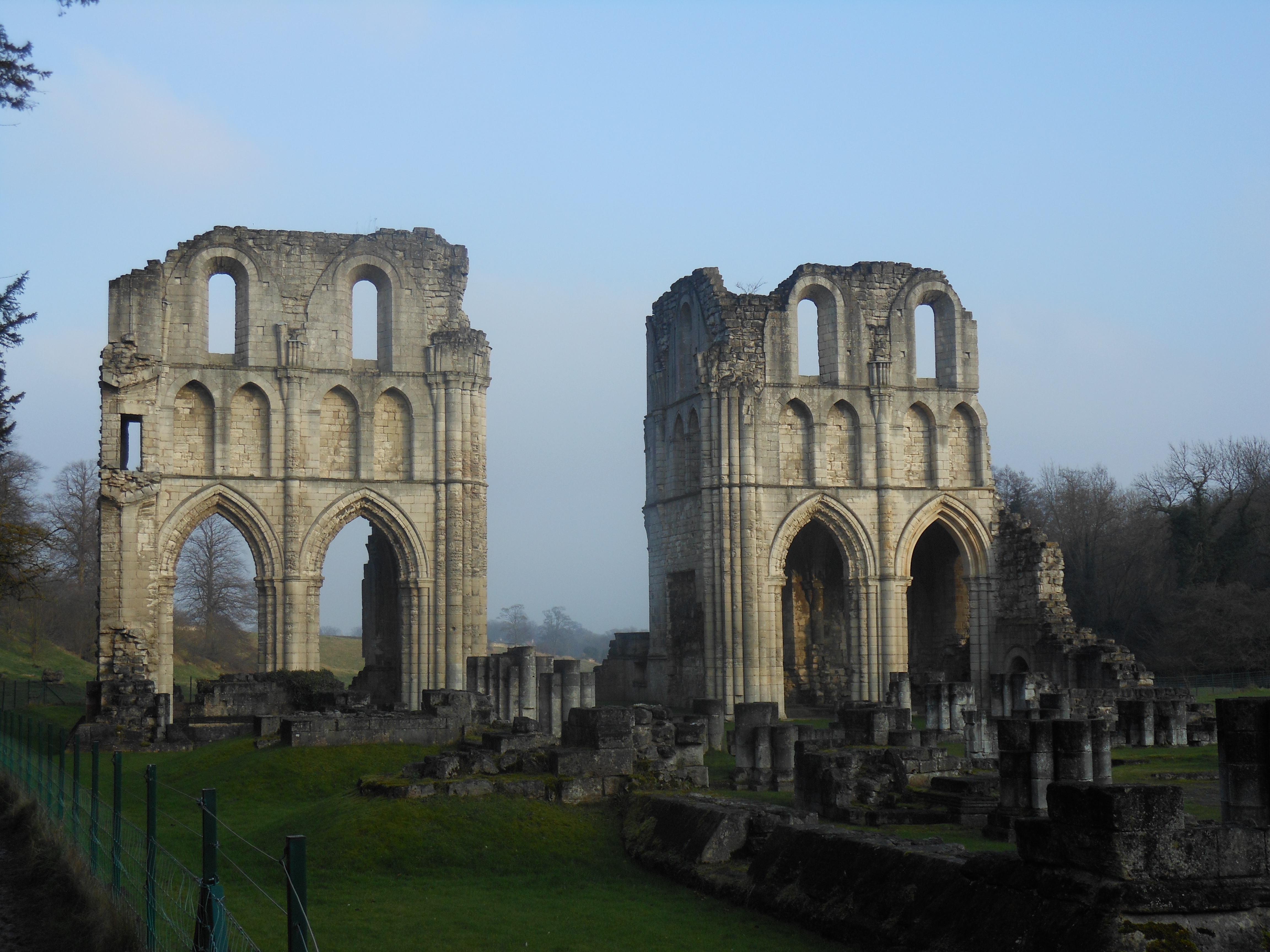
Roche Abbey, South Yorkshire

No further action seems to have been taken with regards to the marriage. John and Joan would remain husband and wife until John’s death at Conisbrough Castle at the end of June, 1347. John’s penance, however, appears to have been the generous donation of the manor of Hatfield to Roche Abbey:

1345. November 22. Westminster. Whereas the King’s kinsman, John de Warenna, Earl of Surrey, holds the manor of Haytfield for life of the grant of Edward II, with successive remainders to Maud de Neyrford for life, to John de Warenna her son, in tail male, to Thomas his brother, in tail male, and to the heirs of the body of the said earl, and reversion to the said King and his heirs, as in the letters patent is more fully contained; the earl has now made petition that – Whereas the said Maud is dead, and John son of Maud and Thomas have taken the religious habit in the Order of the Brethren of the Hospital of S. John of Jerusalem in England, at Clerkenwell, he may have licence to grant for his life to the abbot and convent of Roche, the advowson of the church of Haytfield, held in chief, which church is extended, of the value of 70 marks yearly; and the King has assented to his petition. Also, as a further grace, the King has granted that the abbot and convent shall retain in frankalmoign the said advowson, which should revert to him on the death of the earl; and may appropriate the church whenever they deem it expedient to do so, to find thirteen monks as chaplains to celebrate divine service daily for ever in the abbey for the King, Queen Philippa, and their children, and for the earl; also for the soul of William, the King’s son, who lately died in the said manor; also the souls of the progenitors of the King and of the earl.

Calendar of Papal Registers, Papal Letters (p. 116) quoted in Fairbank, ‘The Last Earl of Warenne and Surrey’, p. 246

It is touching that John’s penance also served as a means for the king and queen to remember their infant son, William, who had been born in late 1336 at the manor of Hatfield, Doncaster, and died there in early 1337.

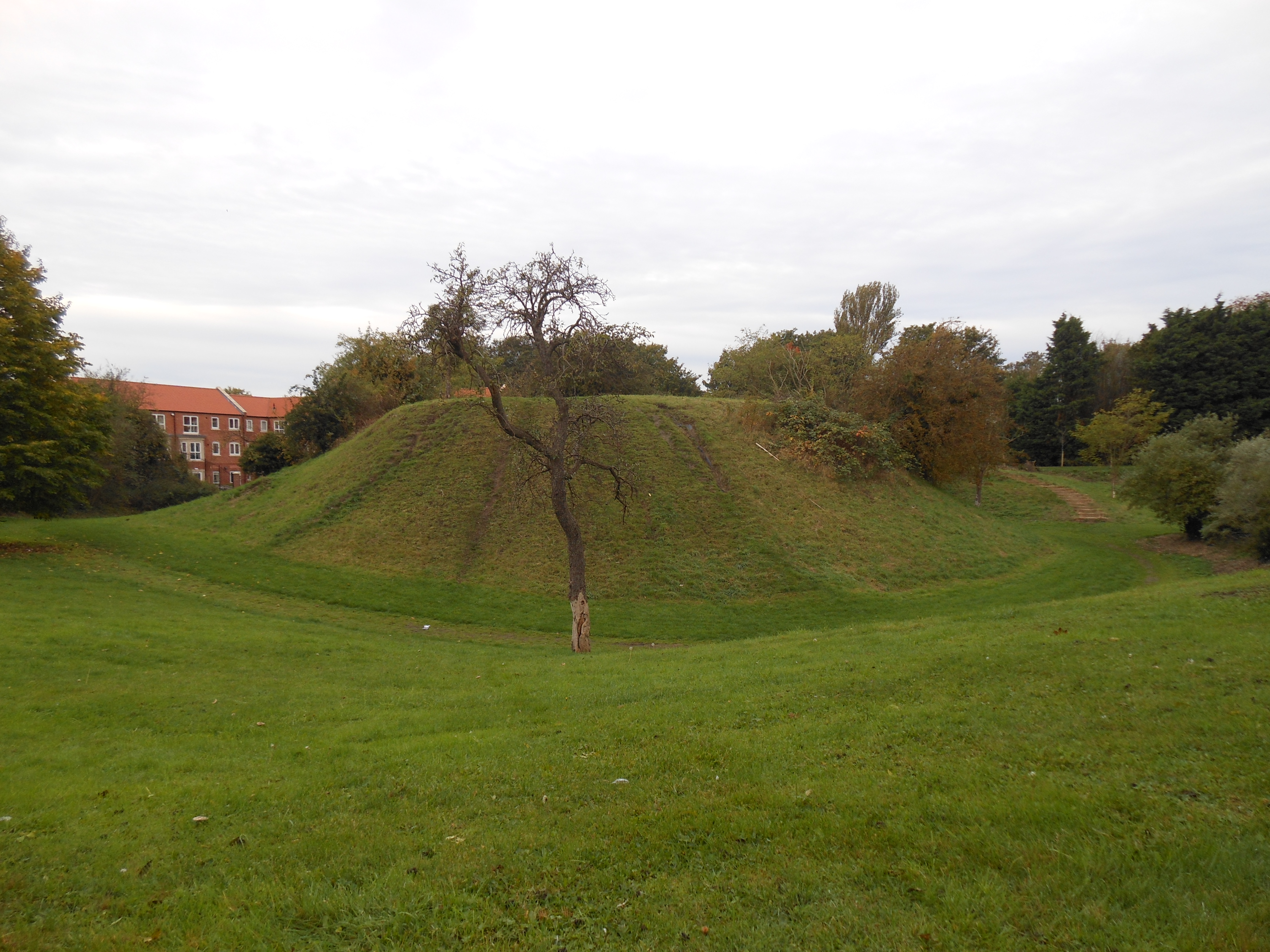
The motte of Peel Castle, Thorne, near Doncaster

William had been born six years after his older brother Edward, known to history as the Black Prince, who was their father Edward III’s heir, until his death in 1376, a year before the king. As a consequence, Edward III was succeeded by the Black Prince’s only surviving son by his wife, Joan of Kent, Richard II. It was the usurpation of Henry IV, who seized the crown from King Richard in 1399, that caused the fatal rivalry of the royal houses of Lancaster and York. Had William survived to adulthood, the story of England in the 15th century could have been very different; the rival houses of Lancaster and York were both descended from sons of Edward III who were younger than William.

Had he lived, the Wars of the Roses may never have happened….

*

Images:

Courtesy of Wikipedia, except Peel Castle and Roche Abbey, which are © Sharon Bennett Connolly

Sources: 

The Oxford Companion to British History Edited by John Cannon; The Plantagenets, the Kings who Made England by Dan Jones; History Today Companion to British History Edited by Juliet Gardiner and Neil Wenborn;  Brewer’s British Royalty by David Williamson; Britain’s Royal Families, the Complete Genealogy by Alison Weir; Early Yorkshire Charters Volume 8, Edited by William Farrer and Charles Travis Clay; Conisbrough Castle by Steven Brindle and Agnieszka Sadraei; The Mammoth Book of British Kings and Queens by Mike Ashley; The Plantagenets, the Kings that made Britain by Derek Wilson; oxforddnb.com; royaldescent.net; Fairbank, F. Royston, ‘The Last Earl of Warenne and Surrey, and the Distribution of hisPossessions’, The Yorkshire Archaeological Journal, vol. XIX, (1907), pp. 193–266; Historic England, ‘Peel Hill Motte and Bailey Castle, Thorne’, historicengland.org.uk; ‘Peel Hill Motte’, http://historyofthorne.com/peel_hill.html

*

My Books:

Signed, dedicated copies of all my books are available through my online bookshop.

Out Now! Women of the Anarchy

Two cousins. On the one side is Empress Matilda, or Maud. The sole surviving legitimate child of Henry I, she is fighting for her birthright and that of her children. On the other side is her cousin, Queen Matilda, supporting her husband, King Stephen, and fighting to see her own son inherit the English crown. Women of the Anarchy demonstrates how these women, unable to wield a sword, were prime movers in this time of conflict and lawlessness. It show how their strengths, weaknesses, and personal ambitions swung the fortunes of war one way – and then the other.

Available from Bookshop.orgAmberley Publishing and Amazon UK.

Coming on 15 June 2024: Heroines of the Tudor World

Heroines of the Tudor World tells the stories of the most remarkable women from European history in the time of the Tudor dynasty, 1485-1603. These are the women who ruled, the women who founded dynasties, the women who fought for religious freedom, their families and love. These are the women who made a difference, who influenced countries, kings and the Reformation. In the era dominated by the Renaissance and Reformation, Heroines of the Tudor World examines the threats and challenges faced by the women of the era, and how they overcame them. From writers to regents, from nuns to queens, Heroines of the Tudor World shines the spotlight on the women helped to shape Early Modern Europe.

Heroines of the Tudor World is now available for pre-order from Amberley Publishing and Amazon UK.

Also by Sharon Bennett Connolly:

King John’s Right-Hand Lady: The Story of Nicholaa de la Haye is the story of a truly remarkable lady, the hereditary constable of Lincoln Castle and the first woman in England to be appointed sheriff in her own right. It is is available from King John’s Right-Hand Lady: The Story of Nicholaa de la Haye is the story of a truly remarkable lady, the hereditary constable of Lincoln Castle and the first woman in England to be appointed sheriff in her own right. Available from all good bookshops or direct from Pen & Sword Booksbookshop.org and AmazonDefenders of the Norman Crown: The Rise and Fall of the Warenne Earls of Surrey tells the fascinating story of the Warenne dynasty, from its origins in Normandy, through the Conquest, Magna Carta, the wars and marriages that led to its ultimate demise in the reign of Edward III. Available from Pen & Sword BooksAmazon in the UK and US, and Bookshop.org

Ladies of Magna Carta: Women of Influence in Thirteenth Century England looks into the relationships of the various noble families of the 13th century, and how they were affected by the Barons’ Wars, Magna Carta and its aftermath; the bonds that were formed and those that were broken. It is now available in paperback and hardback from Pen & Sword,  Amazon, and Bookshop.orgHeroines of the Medieval World tells the stories of some of the most remarkable women from Medieval history, from Eleanor of Aquitaine to Julian of Norwich. Available now from Amberley Publishing and Amazon, and Bookshop.orgSilk and the Sword: The Women of the Norman Conquest traces the fortunes of the women who had a significant role to play in the momentous events of 1066. Available now from Amazon,  Amberley Publishing, and Bookshop.org.

Alternate Endings: An anthology of historical fiction short stories including Long Live the King… which is my take what might have happened had King John not died in October 1216. Available in paperback and kindle from Amazon.

Podcast:

Have a listen to the A Slice of Medieval podcast, which I co-host with Historical fiction novelist Derek Birks. Derek and I welcome guests, such as Bernard Cornwell and Elizabeth Chadwick, and discuss a wide range of topics in medieval history, from significant events to the personalities involved.

*

Don’t forget! Signed and dedicated copies of all my books are available through my online bookshop.

For forthcoming online and in-person talks, please check out my Events Page.

You can be the first to read new articles by clicking the ‘Follow’ button, liking our Facebook page or joining me on Twitter and Instagram.

*

©2021 Sharon Bennett Connolly, FRHistS

Edgar – The Boy Who Wouldn’t Be King

edgar_the_aetheling
Edgar the Aetheling

Edgar the Ætheling was the only son of Edward the Exile and his wife, Agatha. His father was the son of Edmund II Ironside, king of England in 1016; Edward’s grandfather was, therefore, Ӕthelred II (the Unready) and his uncle was Edward the Confessor, England’s king from 1042 until 1066. When his father was murdered in 1016 Edward and his younger brother, Edmund, were sent into exile of the continent by England’s new king, Cnut.

It is thought that Cnut intended that they would be killed, but the boys were protected by the king of Sweden and sent on to safety in Kiev, at the court of its prince, Jaroslav. Around 1043 Edward married Agatha, probably the daughter Liudolf, margrave of West Friesland and a relative of Emperor Heinrich III. Margaret, the oldest of three children, was born in either 1045 or 1046; her sister, Christina was born around 1050 and her brother Edgar, the Ӕtheling was born sometime between 1052 and 1056.

The family may have spent their whole lives in European exile, were it not for Edward the Confessor lacking an heir to the English throne; although Edward was married to Edith Godwinson, the couple remained childless. Sometime in 1054 Edward sent an embassy to Edward the Exile, to bring him back to England as ӕtheling, heir to the throne. The family could not travel immediately, possibly because Agatha was pregnant with Edgar, and only arrived in England in 1057, having journeyed by ship, provided by Emperor Heinrich III.

Just days after their return Edward the Exile was dead, whether by nefarious means or simply a twist of fate is uncertain. The suspicion has been raised that Edward’s rival for the throne, Harold Godwinson – the future Harold II – may have taken the opportunity to remove his rival; although it was Harold who brought Edward back to England, so surely, had he intended murder, he would have done it sooner?

Whatever the circumstances, the death of Edward the Exile was a blow for Edward the Confessor’s dynastic hopes. Little Edgar, now the ӕtheling was much too young to assume a political role. He and his sisters, along with their mother, were now in the protection of King Edward. They continued to live at court and by January 1066, when Edward the Confessor died, Margaret was approaching her twentieth birthday, while Edgar could have been as young as ten and was probably no older than fourteen. Due to his tender years, and lack of powerful allies, Edgar was passed over as a candidate for the throne in preference for the older and more experienced Harold Godwinson; who was crowned as Harold II.

edward_the_exile
Edward the Exile. Edgar’s father

Following Harold’s death at the Battle of Hastings in October 1066, Edgar was proclaimed king in London by some of his supporters, led by Archbishop Ealdred of York, ‘as was his proper due by birth’¹; he was also promised backing by the earls Edwin and Morcar, brothers-in-law of Harold II but their support did not materialise, and without it Edgar’s cause was hopeless.  He submitted to William of Normandy, at Berkamsted, in early December. William treated Edgar honourably, allowing him his life and freedom, and giving him land.

However, by 1068 Edgar the Ӕtheling had become involved in the opposition to Norman rule, which had been festering in northern England. When events turned against him he fled to Scotland taking his mother and sisters along with him. The family was warmly received at Dunfermline by Scotland’s king, Malcolm III Canmore. At the time, Malcolm was married to Ingebiorg and the father of two sons, Duncan and Donald. Whether Ingebiorg died or was put aside, seems uncertain; her sons were exiled from court, although Duncan would eventually reign as Duncan II he was killed at the Battle of Monthechin in 1094.

Although we do not know Ingebiorg’s fate, we do know that in 1069 Malcolm asked Edgar and his mother for Margaret’s hand in marriage. Margaret was reluctant to agree to the marriage, she was more inclined to a religious life and had hoped to become a nun. Nonetheless, with pressure from Malcolm and, possibly, her own sense of obligation to the king who was sheltering her family, she eventually accepted his proposal. They were married at Dunfermline sometime in 1069 or 1070 and, by all accounts, it seems to have been a happy and successful marriage.

330px-stmargareth_edinburgh_castle2
St Margaret, queen of Scotland

In 1069, Edgar was back in northern England, at the head of the Northumbrian rebels who entered York. After defeat at York, he fled again to Scotland, but returned to lead the Northumbrian army when a Danish fleet arrived in the Humber. The army captured the Norman castle at York and killed its garrison. During the winter, Edgar narrowly evaded capture when he raided into Lincolnshire with a ship from the Danish fleet. Although he was part of the rebellion, there does not appear to have been any specific plans to make Edgar king and in 1070 William brought the full force of his wrath down on the north, systematically and brutally crushing the rebellion.

Edgar fled again to Scotland, and played no part in the 1071-2 rebellion at Ely. By 1074 he was in exile in Flanders. He was shipwrecked in the same year, while on the way to take control of the castle of Montreuil, offered to him by the French as a base from which he could torment King William. Having returned to Scotland, and on the advice of his brother-in-law, Malcolm III, Edgar submitted to William I and was established at his court. According to William of Malmesbury he remained ‘at court for many years, silently sunk into contempt through his indolence, or more mildly speaking, his simplicity’².

According to the Domesday Book, Edgar held 2 estates in Hertfordshire in 1086; Barkway and Hormead. He became close friends with 2 of the Conqueror’s sons; Robert Curthose and William Rufus. In 1086, he was sent to Apulia, another land under Norman rule, with a force of 200 knights, although the nature of his mission is unknown, the mission itself is testament to the high regard the Normans held him in. Edgar then joined Robert Curthose, duke since his father’s death in 1087, in Normandy, but was expelled from there in 1091, following a treaty between Robert and his brother, William II of England.

robert_curthose_-_ms_royal_14_b_vi
Robert Curthose, duke of Normandy

As a result, Edgar went to Scotland and encouraged Malcolm III to invade England. Peace was eventually restored and in 1093 Edgar was employed by William to escort King Malcolm to the English court. Both Malcolm and Margaret died within a few days of each other, in November 1093. In 1095 Edgar campaigned with William against the rebellious earl of Northumbria, Robert de Mowbray and by 1097 as guardian for his nephew, Edgar, in Scotland, he ‘went with an army, with the king’s support, into Scotland, and conquered the country in a severe battle’³ making his nephew and namesake king of Scotland.

According to Orderic Vitalis, in 1098 Edgar joined the First Crusade, arriving at Latakia in the Levant in June; having taken the area under his protection he then transferred it to Robert Curthose, also a Crusader. However, Orderic is the only source for Edgar’s participation and another possibility is that his journey to the Holy Land was later, in 1102 – or maybe he made 2 journeys?

Edgar returned to England in the early 1100s and fought his last action, for Robert Curthose, at the Battle of Tinchebrai in 1106. Robert was defeated by his younger brother, Henry I of England, and was imprisoned until his death in 1134. Edgar, however, was incarcerated for only a short while and was soon released;his Anglo-Saxon royal descent was no longer an issue of contention, since Henry had married Edgar’s niece, Matilda, soon after taking the crown in 1100.

matylda_zena
Matilda, Edgar’s niece and queen of England

Edgar seems to have been only a minor player in the politics and upheaval following the Norman Conquest. His political isolation meant that few took his claim to the English crown seriously. While his participation in military actions, and in relations with Scotland are mentioned in various documents, his death passed without notice – or remark. William of Malmesbury wrote of him in 1125, that ‘he now grows old in the country in privacy and quiet’². Nothing is mentioned of him thereafter; neither is it ever remarked that he had a wife of children.

If he had only been a few years older in that crucial year of 1066, his story could have been very different. instead, he simply slips from the pages of history, remembered only as England’s lost king.

*

Footnotes: ¹Anglo-Saxon Chronicle, 1066, Text D; ² William of Malmesbury, De gestis regum; ³Anglo-Saxon Chronicle, 1097, Text E.

*

Sources: Anglo-Saxon Chronicle; William of Malmesbury, De gestis regum; Oxforddnb.com; The History Today Companion to British History, Edited by juliet Gardner and Neil Wenborn; The Battle of Hastings, 1066 by m.K. Lawson; The Oxford Companion to British History edited by John Cannon; Britain’s Royal Families, the Complete Genealogy by Alison Weir; Edward the Confessor, King of England by Peter Rex; The Mammoth Book of British Kings & Queens by Mike Ashley; Brewer’s British Royalty by David Williamson; The Norman Conquest by Teresa Cole

*

Pictures courtesy of Wikipedia

*

My Books:

Signed, dedicated copies of all my books are available through my online bookshop.

OUT NOW: Scotland’s Medieval Queens

Books by Sharon Bennett Connolly

Scotland’s history is dramatic, violent and bloody. Being England’s northern neighbour has never been easy. Scotland’s queens have had to deal with war, murder, imprisonment, political rivalries and open betrayal. They have loved and lost, raised kings and queens, ruled and died for Scotland. From St Margaret, who became one of the patron saints of Scotland, to Elizabeth de Burgh and the dramatic story of the Scottish Wars of Independence, to the love story and tragedy of Joan Beaufort, to Margaret of Denmark and the dawn of the Renaissance, Scotland’s Medieval Queens have seen it all. This is the story of Scotland through their eyes.

Scotland’s Medieval Queens gives a thorough grounding in the history of the women who ruled Scotland at the side of its kings, often in the shadows, but just as interesting in their lives beyond the spotlight. It’s not a subject that has been widely covered, and Sharon is a pioneer in bringing that information into accessible history.’ Elizabeth Chadwick (New York Times bestselling author)

Available now from Amazon and Pen and Sword Books

Also by Sharon Bennett Connolly:

Books by Sharon Bennett Connolly

Heroines of the Tudor World tells the stories of the most remarkable women from European history in the time of the Tudor dynasty, 1485-1603. These are the women who ruled, the women who founded dynasties, the women who fought for religious freedom, their families and love. Heroines of the Tudor World is now available for pre-order from Amberley Publishing and Amazon UK. Women of the Anarchy demonstrates how Empress Matilda and Matilda of Boulogne, unable to wield a sword themselves, were prime movers in this time of conflict and lawlessness. It shows how their strengths, weaknesses, and personal ambitions swung the fortunes of war one way – and then the other. Available from Bookshop.orgAmberley Publishing and Amazon UKKing John’s Right-Hand Lady: The Story of Nicholaa de la Haye is the story of a truly remarkable lady, the hereditary constable of Lincoln Castle and the first woman in England to be appointed sheriff in her own right. Available from all good bookshops Pen & Sword Booksbookshop.org and Amazon

Books by Sharon Bennett Connolly

Defenders of the Norman Crown: The Rise and Fall of the Warenne Earls of Surrey tells the fascinating story of the Warenne dynasty, from its origins in Normandy, through the Conquest, Magna Carta, the wars and marriages that led to its ultimate demise in the reign of Edward III. Available from Pen & Sword BooksAmazon in the UK and US, and Bookshop.orgLadies of Magna Carta: Women of Influence in Thirteenth Century England looks into the relationships of the various noble families of the 13th century, and how they were affected by the Barons’ Wars, Magna Carta and its aftermath; the bonds that were formed and those that were broken. It is now available in paperback and hardback from Pen & SwordAmazon, and Bookshop.orgHeroines of the Medieval World tells the stories of some of the most remarkable women from Medieval history, from Eleanor of Aquitaine to Julian of Norwich. Available now from Amberley Publishing and Amazon, and Bookshop.orgSilk and the Sword: The Women of the Norman Conquest traces the fortunes of the women who had a significant role to play in the momentous events of 1066. Available now from Amazon,  Amberley Publishing, and Bookshop.org.

Alternate Endings: An anthology of historical fiction short stories including Long Live the King… which is my take what might have happened had King John not died in October 1216. Available in paperback and kindle from Amazon.

Podcast:

A Slice of Medieval

Have a listen to the A Slice of Medieval podcast, which I co-host with Historical fiction novelist Derek Birks. Derek and I welcome guests, such as Bernard Cornwell, and discuss a wide range of topics in medieval history, from significant events to the personalities involved. Definitely worth a listen!

Every episode is also now available on YouTube.

*

Don’t forget! Signed and dedicated copies of all my books are available through my online bookshop.

For forthcoming online and in-person talks, please check out my Events Page.

You can be the first to read new articles by clicking the ‘Follow’ button, liking our Facebook page or joining me on TwitterThreadsBluesky and Instagram.

©2016 Sharon Bennett Connolly FRHistS