Elizabeth Mure, Robert II and a Question of Legitimacy

Books by Sharon Bennett Connolly
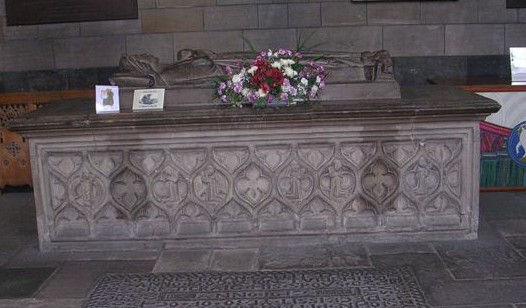
Tomb of Marjorie Bruce, Paisley Abbey

Robert II, King of Scots, had been born on 2 March 1316, as the grandson and heir of Robert the Bruce. His mother. Marjorie Bruce, had died at the time of his birth, or shortly after. He had been supplanted as his grandfather’s heir when Bruce’s queen, Elizabeth de Burgh, gave birth to a son, David Bruce, in 1324. David was crowned as King David II on his father’s death in 1329. Although only 5-years-old, David was already a married ‘man’, having wed Edward III’s 7-year-old sister, Joan of the Tower, in July 1328.

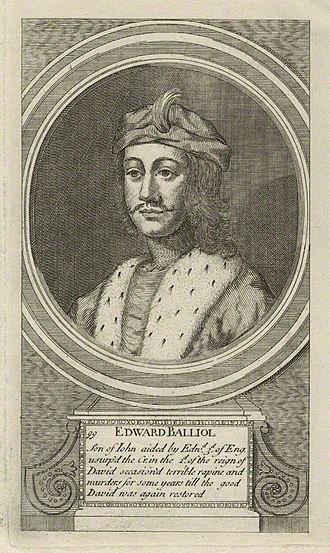
Edward III saw an opportunity in Scotland having a child-king and, notwithstanding the headache he was causing his own sister, he decided to support the claims, to the Scottish crown, of Edward Balliol, son of the deposed king, John Balliol, and his wife, Isabella de Warenne. Edward III invaded Scotland. King David and his young wife were sent to France for their safety, while the Scots fought for the kingdom. One of those leading the fight was Robert Stewart, David’s nephew – Robert the Bruce’s grandson. He had become High Steward of Scotland on his father’s death in 1327. He was made guardian of Scotland whilst still in his late teens and fought in the defeat of the Scots at Halidon Hill in July 1333, when he was still only 17.

Robert was David II’s heir – until the latter produced a son and heir of his own, at least. Uncle and nephew had a fractious relationship, even after David returned from French exile. David may have resented the reputation Robert had gained in fighting for Scottish independence, and he was certainly wary of Robert’s powerful position, as High Steward, guardian and – of course – as heir presumptive to the crown.
Books by Sharon Bennett Connolly
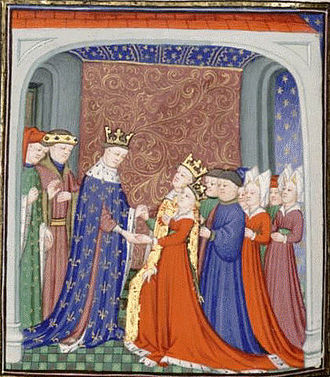
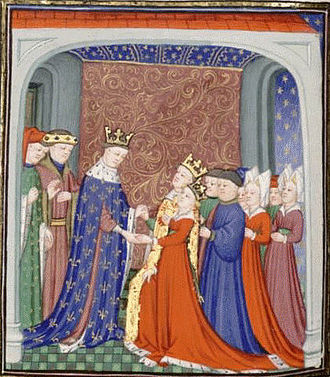
David II and Joan being greeted by Philip VI of France

Robert’s strength, however, lay not only in his proximity to the throne, but also in the fact he had managed to do what David had not, produce an heir. Six, in fact. Robert’s rather unusual marital situation, and perhaps the growing awareness, as the years went on, that there was less and less likelihood of David producing an heir, saw him apply for a papal dispensation to marry Elizabeth Mure, which was supported by King David, King Philip VI of France, the seven Scottish bishops and parliament. It was granted on 22 November 1347, at least ten years after the start of their relationship. The dispensation allowed for the retrospective legitimisation of their children:

This Robert took to his bed one of the daughters of Adam More, knight; and of her he begat sons and daughters, out of wedlock. But he afterwards – in the year 1349, to wit – bespoke and got the dispensation of the Apostolic See, and espoused her regularly, according to the forms of the Church.1

An earlier dispensation, issued in 1345, had annulled Elizabeth’s betrothal to Hugh Giffard. Elizabeth was the daughter of Adam Mure of Rowallon, Ayrshire. Though whether her mother was his first wife, Joan Cunnigham, or his second wife, Janet, is undetermined. The unusual nature of their relationship and marital situation has given rise to questions over the legitimacy of their children. According to John Riddell, the facts of the relationship are that:

Robert II, when related to Elizabeth Mure, in the third and fourth forbidden degrees of affinity, and the fourth forbidden degree of consanguinity, lived for a long space in concubinage with her, during which ‘prolis utriusque sexus multitudinem procrearunf’ – during that unhallowed, and in law, incestuous connection; till at last, resolving to marry, but discovering the double relationship between them, which was a bar to their marriage at common (Ecclesiastical) law, they then obtained a dispensation from Clement VI, in 1347, for the purpose, in ordinary form. After which it is in proof, that they did marry under authority of the dispensation, – Robert founding in 1364, in compliance with an injunction there, a Chaplainry, in expiation of his former offence, which was, by received doctrine at the time, deemed an aggravated one.2
Books by Sharon Bennett Connolly
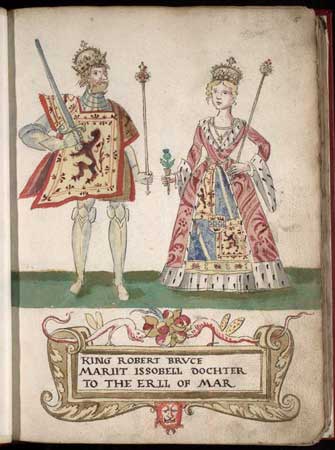
Robert II’s maternal grandparents, Robert the Bruce and his first wife, Isabella of Mar

It has been argued that the children of Robert and Elizabeth were not only born outside of marriage, but also that their parents were related within the limited degrees, and therefore the relationship was incestuous without a papal dispensation. This, however, ignores the possibility that Robert and Elizabeth did go through a form of marriage in the 1330s, when Scotland was deeply involved in its war with England and, with David II sent to France for his safety and Robert was the senior representative of the Bruce family in Scotland. Moreover, it may have been thought prudent that Robert should marry sooner, rather than later, for dynastic considerations. With Edward Balliol unmarried and with no heir, the fact that the king’s heir was married with children was significant, a sign that the Bruce–Stewart dynasty was secure, at least.

That the marriage was not regularised until the war was over could be excused by the fact there were more urgent matters to attend to and the financial and legal obligations of obtaining a dispensation could wait. This would certainly explain the papacy’s willingness to regulate the marriage by issuing a retroactive dispensation. Alternatively, they may have only recently discovered a familial relationship within the prohibited degrees, and therefore applied for a dispensation. Elizabeth and Robert then underwent a second, formal, marriage ceremony in 1349.

Their first child, John, had been born in about 1337 and was created Earl of Carrick in 1369, the title held by his great-grandfather, Robert the Bruce, before he became king. He would ascend the throne as Robert III on his father’s death in 1390. Although the birth order could be slightly different, it seems likely that John was followed by a sister, Margaret, who was married to John MacDonald, Lord of the Isles, as his second wife, for which a papal dispensation was issued on 14 June 1350. The couple were granted the island of Colowsay by Margaret’s father in a charter dated to July 1376. Three more sons followed, Walter, Robert and Alexander. Walter was married to Isabel, Countess of Fife, in April 1360 or 1361. He died sometime after 14 August 1362 but before the end of the year, as his widow married again, to Thomas Bisset of Upsetlington on 10 January 1363. She resigned the earldom of Fife to Walter’s brother, Robert Stewart, Earl of Menteith, on 30 March 1371.

Robert Stewart is identified as the ‘second born of the king’ in the Liber Pluscardensis. Robert was Earl of Menteith by right of his wife, Margaret Graham, a title she herself had inherited from her mother, Mary. Margaret had been married three times before; her first husband, Sir John Moray, was the son of Christian Bruce, King Robert I’s sister, by her last husband, Sir Andrew Murray. Robert was later created Duke of Albany and acted as regent during his brother’s reign.
Books by Sharon Bennett Connolly
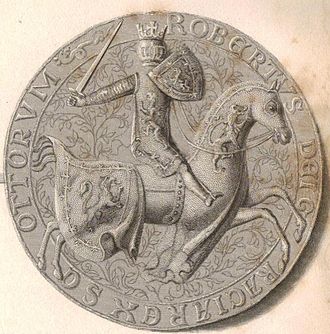
The reverse side of Robert II’s Great Seal

The third son, Alexander, has a significant reputation as a cruel and rapacious character, earning him the nickname, the Wolf of Badenoch. He married Euphemia, Countess of Ross and was Earl of Ross in her name. Euphemia resigned her share of Buchan to the king, who regranted it to Alexander and Euphemia, in July 1382, so that they were Earl and Countess of Ross and Buchan. The marriage had its difficulties and Alexander left his wife, for ‘Mariota’s daughter Athyn’ but was ordered to return to her, in a charter dated 2 November 1389, by the Bishop of Moray and Ross. Apparently, the breach was irretrievable, as Pope Clement VII ‘issued a commission to dissolve her marriage’ on 9 June 1392, and in December 1392 Euphemia was granted a divorce ‘from bed and board’.3 Although Alexander had seven illegitimate children, he and Euphemia had remained childless.

Robert II and Elizabeth Mure also had four more daughters, although their order of birth is unknown. Marjory married John Dunbar, the son of Patrick Dunbar and Isabel Randolph of Moray. He was created Earl of Moray by his father-in-law in March 1372. Marjory’s second husband was Alexander Keith of Grandown.

Jean, or Joan, Stewart was married three times, firstly to John Keith, son of William de Keith, the Marischal, in January 1374. John died just fourteen months later. A year after that, in either June or October 1376, Jean married Sir John Lyon of Glamis. On 4 October 1376, King Robert II granted land, the thanedom of Tannadyce in Forfar, possibly a wedding gift, ‘to his dearest son John Lyon and Johanna his wife, the King’s beloved daughter’.4 The marriage was initially kept secret and only publicly acknowledged on 10 May 1378 when the king, with the consent of his surviving sons, ‘granted to the spouses letters of acknowledgement and remission for any clandestine marriage formerly contracted by them, in regard a marriage had been solemnly celebrated between them in face of the Church, in presence of the King and his sons and other friends and relatives.’5 Further grants followed, but Sir John was killed, apparently murdered by Sir James Lindsay on 4 November 1382. According to the Liber Pluscardensis, the deed was done at night when the ‘victim was in bed and unsuspecting’.6 Their only child was John’s son and successor, also called John Lyon. On 20 November 1384, Jean married for a third and final time, to Sir James Sandilands of Calder. Ahead of the marriage, Sir James was granted the baronies of Dalzell, Motherwell and Wiston, to be held by Sir James and Jean, the king’s daughter, ‘whom God willing he is about to take to wife’.7 The princess is last mentioned in 1404, as ‘Lady Johanna of Glammys’. She was buried beside her second husband, Sir John Lyon, at Scone Abbey.

Another daughter, Elizabeth Stewart, married Thomas Hay, Baron of Erroll and Constable of Scotland. A charter issued by King Robert II granted an annuity to ‘Thomas Hay and Elizabeth the king’s daughter, and the children born and to be born of them’ dated 7 September 1372, the day of their marriage.8

Isabel Stewart was married twice, firstly to James Douglas, son of William Douglas, Earl of Douglas, and his wife, Margaret, Countess of Mar. A papal dispensation was issued for the marriage in September 1371 and James succeeded his father as Earl Douglas in 1384. Sir James died in 1388 and sometime in the next two years, Isabel married John Edmonstone of Duntreath. Isabel most likely died before 22 July 1410, when accounts record payments to ‘John Edmonstone … for the reason that he was once married to the Countess of Douglas’.9

Through the marriages of his sons and daughters, Robert Stewart created a familial network that extended his influence over the greater part of central, western and north-eastern Scotland. He formed unions with eight of the country’s fifteen existing earldoms as well as gaining other lordships, royal castles and offices north of the Forth-Clyde line. However, the unusual nature of the marriage of Robert and Elizabeth would always leave a question mark hanging over the legitimacy of their children, an uncertainty that the children of Robert’s second marriage would highlight and try to exploit.
Books by Sharon Bennett Connolly
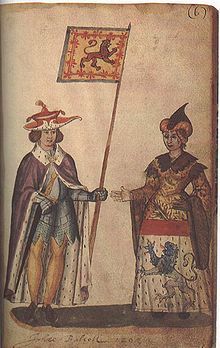
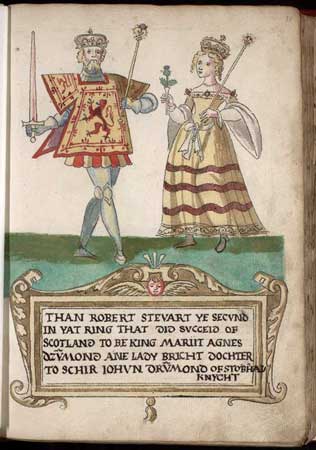
Robert III and his queen, Annabella Drummond

But it was Elizabeth’s eldest son, John, Earl of Carrick, who would succeed his father as King Robert III. Elizabeth herself, though married to David II’s heir, was never to become queen. She died sometime before 1355, possibly in childbirth as she would have been no more than in her late 30s, or perhaps from complications arising from having borne at least nine children, and possibly as many as thirteen. We have so little information about her that her place of burial is also unknown, though Paisley Abbey or Scone Abbey are possibilities. We only know that poor Elizabeth was dead by 1355 because 2 May of that year is the date of the papal dispensation for Robert Stewart’s second marriage, to Euphemia Ross.

Whatever the nature of their marriage, and the reason for the dispensation, it was not an arranged marriage for dynastic purposes. Robert and Elizabeth appear to have chosen each other. The number of children born, even during times of war, suggests that Robert and Elizabeth had a close and loving relationship. This did not, however, preclude Robert from marrying again, possibly only a short time after Elizabeth’s death. Walter Bower suggests that, although Robert’s relationship with Elizabeth Mure was earlier, the marriage only occurred after Queen Euphemia’s death:

It is noteworthy that the said King Robert fathered three sons by the Lady Elizabeth daughter of Sir Adam More, namely John who was later king, and Robert duke of Albany, and the said Alexander earl of Buchan, who was commonly called ‘The Wolf of Badenoch’. Later he married the Lady Euphemia daughter of Hugh earl of Ross, by whom he fathered Walter earl of Athol and lord of Brechin, and David earl of Strathearn. But on the death of Queen Euphemia he married the said Lady Elizabeth, and so by virtue of subsequent marriage, a second marriage ceremony, the said brothers John, Robert and Alexander were legitimated, for according to canon law a subsequent marriage legitimates sons born before the marriage.10
Books by Sharon Bennett Connolly
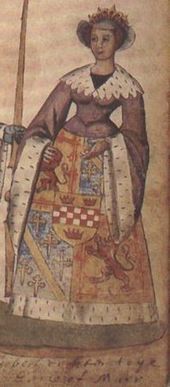
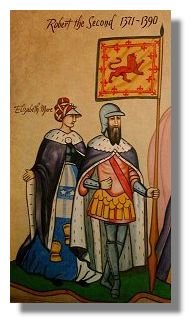
Robert II and Elizabeth Mure

This timeline, of course, does not work, as the papal dispensation, legitimising the children, was issued in 1347 and there is every indication that Elizabeth was dead before 1355.

King Robert II died at Dundonald Castle on 19 April 1390 and was buried at Scone Abbey. He had spent almost his entire life as heir presumptive to the Scottish throne, always waiting on the sidelines. It is a sad fact of history that we have very little insight into the personalities and appearances of Robert’s wives. We do not know, for instance, what either wife thought of his various mistresses, nor his illegitimate children. They cannot have been happy about his philandering but may have accepted it, reluctantly. It was certainly not an unusual trait in the men of the family, as both Robert the Bruce and David II had had a string of mistresses.

Robert’s first wife, Elizabeth Mure, never got to wear the crown, though her influence, through her children, would set the tone for the Scottish royal house of Stewart into the next century.

We shall leave the story Robert’s second wife, Queen Euphemia, for another day.

*

Images: courtesy of Wikipedia

Notes:

1. John of Fordun’s Chronicle of the Scottish Nation; 2. John Riddell, Stewartiana, containing the case of Robert II and Elizabeth Mure; 3. Sir James Balfour Paul, editor, The Scots Peerage, Vol. VII; 4. ibid, Vol VIII; 5. ibid; 6. ibid; 7. ibid; 8. Burnett (1880) Exchequer Rolls, Vol. IV; 9. ibid; 10. Bower, Scotichronicon, V 7.

Sources:

John of Fordun’s Chronicle of the Scottish Nation, edited by W. F. Skene; Walter Bower, Scotichronicon; John Riddell, Stewartiana, containing the case of Robert II and Elizabeth Mure; Sir James Balfour Paul, editor, The Scots Peerage; fmg.ac/Projects/MedLands/SCOTLAND; Susan Abernethy, The Two Wives of Robert II, King of Scots – Elizabeth Mure and Euphemia Ross; G. Barrow, G. (1978), The Aftermath of War: Scotland and England in the late Thirteenth and early Fourteenth Centuries; Rosalind K. Marshall, Scottish Queens 1034–1714; Nigel Tranter, The Story of Scotland; Richard Oram, editor, The Kings and Queens of Scotland; David Ross, Scotland, History of a NationLiber pluscardensis, edited by Felix James Henry Skene.

*

My Books

Signed, dedicated copies of all my books are available through my online bookshop.

Out now: Scotland’s Medieval Queens

Books by Sharon Bennett Connolly

Scotland’s history is dramatic, violent and bloody. Being England’s northern neighbour has never been easy. Scotland’s queens have had to deal with war, murder, imprisonment, political rivalries and open betrayal. They have loved and lost, raised kings and queens, ruled and died for Scotland. From St Margaret, who became one of the patron saints of Scotland, to Elizabeth de Burgh and the dramatic story of the Scottish Wars of Independence, to the love story and tragedy of Joan Beaufort, to Margaret of Denmark and the dawn of the Renaissance, Scotland’s Medieval Queens have seen it all. This is the story of Scotland through their eyes.

Scotland’s Medieval Queens gives a thorough grounding in the history of the women who ruled Scotland at the side of its kings, often in the shadows, but just as interesting in their lives beyond the spotlight. It’s not a subject that has been widely covered, and Sharon is a pioneer in bringing that information into accessible history.’ Elizabeth Chadwick (New York Times bestselling author)

Available now from Amazon and Pen and Sword Books

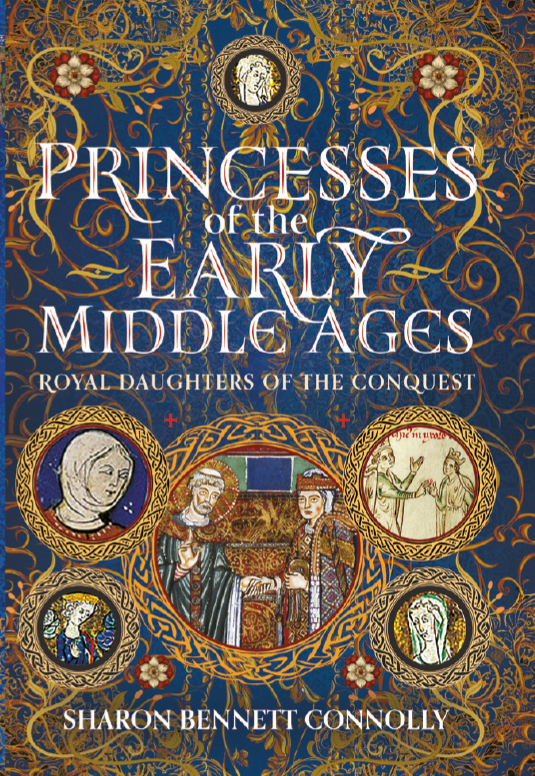
Coming 30 March 2026: Princesses of the Early Middle Ages
Books by Sharon Bennett Connolly

Daughters of kings were often used to seal treaty alliances and forge peace with England’s enemies. Princesses of the Early Middle Ages: Royal Daughters of the Conquest explores the lives of these young women, how they followed the stereotype, and how they sometimes managed to escape it. It will look at the world they lived in, and how their lives and marriages were affected by political necessity and the events of the time. Princesses of the Early Middle Ages will also examine how these girls, who were often political pawns, were able to control their own lives and fates. Whilst they were expected to obey their parents in their marriage choices, several princesses were able to exert their own influence on these choices, with some outright refusing the husbands offered to them.

Their stories are touching, inspiring and, at times, heartbreaking.

Princesses of the Early Middle Ages: Royal Daughters of the Conquest is now available for pre-order.

Also by Sharon Bennett Connolly:

Books by Sharon Bennett Connolly

Heroines of the Tudor World tells the stories of the most remarkable women from European history in the time of the Tudor dynasty, 1485-1603. These are the women who ruled, the women who founded dynasties, the women who fought for religious freedom, their families and love. Heroines of the Tudor World is now available from Amberley Publishing and Amazon UK. Women of the Anarchy demonstrates how Empress Matilda and Matilda of Boulogne, unable to wield a sword themselves, were prime movers in this time of conflict and lawlessness. It shows how their strengths, weaknesses, and personal ambitions swung the fortunes of war one way – and then the other. Available from Bookshop.orgAmberley Publishing and Amazon UKKing John’s Right-Hand Lady: The Story of Nicholaa de la Haye is the story of a truly remarkable lady, the hereditary constable of Lincoln Castle and the first woman in England to be appointed sheriff in her own right. Available from all good bookshops Pen & Sword Booksbookshop.org and Amazon

Royal Historical Society

Defenders of the Norman Crown: The Rise and Fall of the Warenne Earls of Surrey tells the fascinating story of the Warenne dynasty, from its origins in Normandy, through the Conquest, Magna Carta, the wars and marriages that led to its ultimate demise in the reign of Edward III. Available from Pen & Sword BooksAmazon in the UK and US, and Bookshop.orgLadies of Magna Carta: Women of Influence in Thirteenth Century England looks into the relationships of the various noble families of the 13th century, and how they were affected by the Barons’ Wars, Magna Carta and its aftermath; the bonds that were formed and those that were broken. It is now available in paperback and hardback from Pen & SwordAmazon, and Bookshop.orgHeroines of the Medieval World tells the stories of some of the most remarkable women from Medieval history, from Eleanor of Aquitaine to Julian of Norwich. Available now from Amberley Publishing and Amazon, and Bookshop.orgSilk and the Sword: The Women of the Norman Conquest traces the fortunes of the women who had a significant role to play in the momentous events of 1066. Available now from Amazon,  Amberley Publishing, and Bookshop.org.

Alternate Endings: An anthology of historical fiction short stories including Long Live the King… which is my take what might have happened had King John not died in October 1216. Available in paperback and kindle from Amazon.

Podcast:

A Slice of Medieval

Have a listen to the A Slice of Medieval podcast, which I co-host with Historical fiction novelist Derek Birks. Derek and I welcome guests, such as Ian Mortimer, Bernard Cornwell, Elizabeth Chadwick and Scott Mariani, and discuss a wide range of topics in medieval history, from significant events to the personalities involved. 

There are now over 80 episodes to listen to!

Every episode is also now available on YouTube.

*

Don’t forget! Signed and dedicated copies of all my books are available through my online bookshop.

For forthcoming online and in-person talks, please check out my Events Page.

You can be the first to read new articles by clicking the ‘Follow’ button, liking our Facebook page or joining me on TwitterThreadsBluesky and Instagram.

*

©2025 Sharon Bennett Connolly FRHistS

The Mysterious Knight in the Graveyard

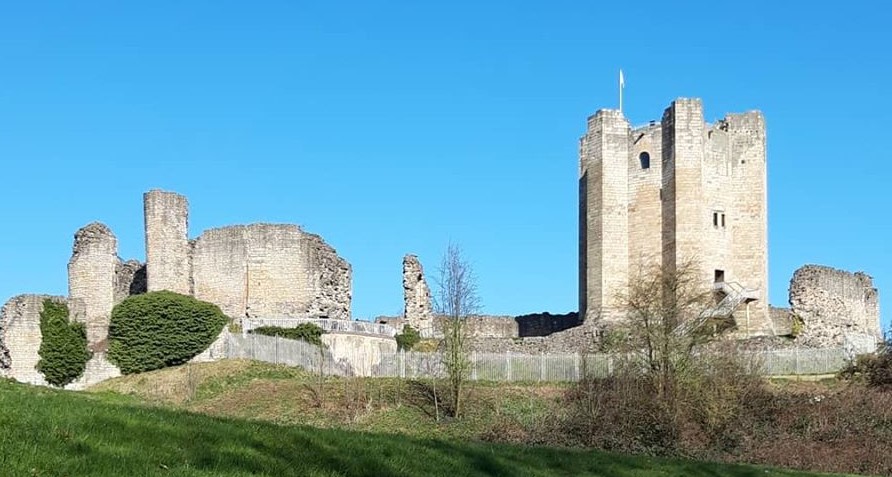
The imposing keep of Conisbrough Castle

Whilst I was researching the Warenne earls of Surrey my cousin, who lives in Conisbrough, passed on to me a story of the accidental discovery of a long-dead knight during road-widening work in the village. Whether he has any relation to the Warenne family is open to conjecture, of course, although it is entirely possible. His identity is a mystery…

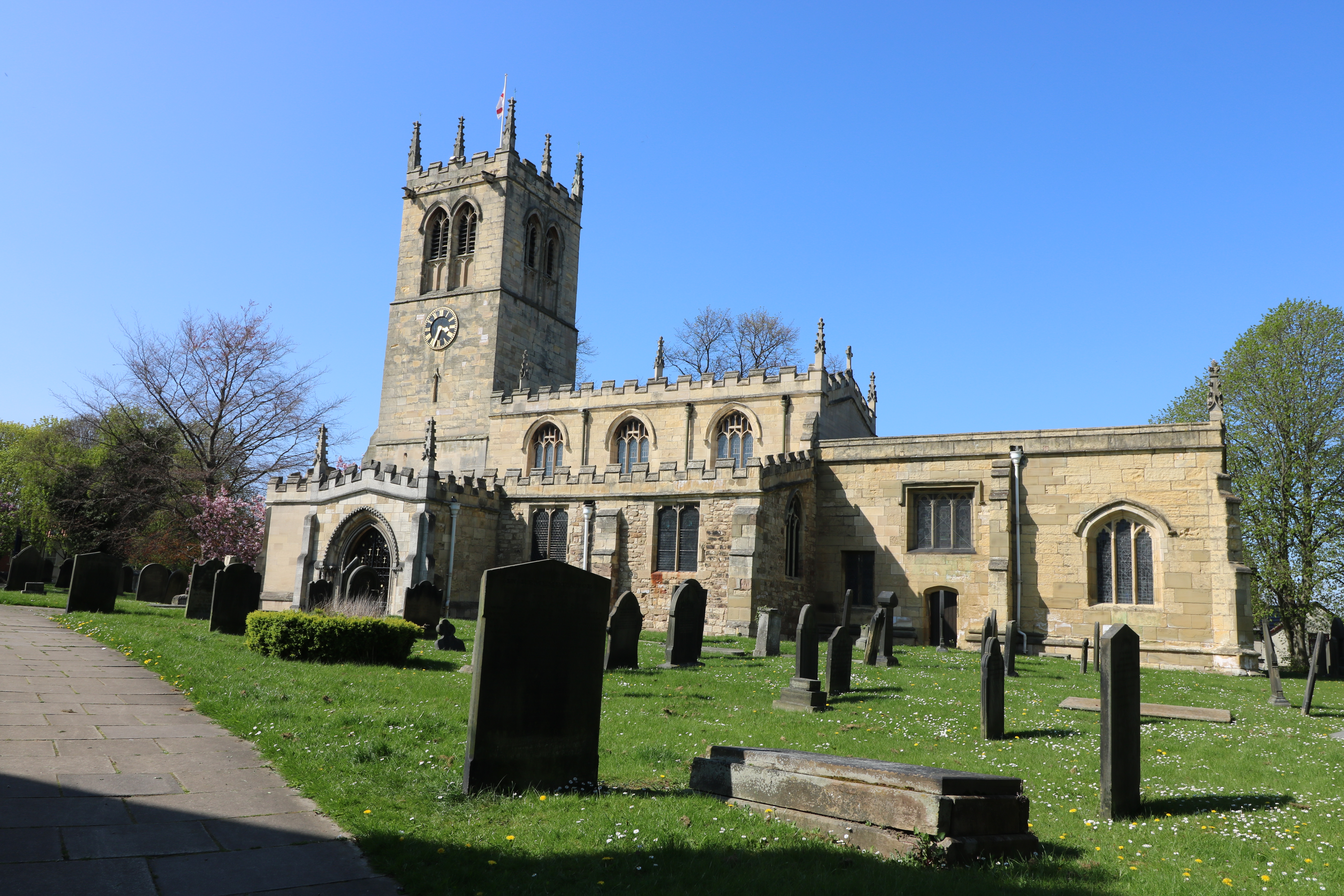
The story starts in 1955, with a road widening programme that was carried out along Church Street in Conisbrough. Conisbrough was a tightly packed village, with the road so narrow in places that cars had to mount the pavement if they met oncoming traffic. The ‘pinch’ was outside the parish church of St Peter’s. As a consequence, Conisbrough Urban District Council set to work to widen the road where Church Street meets Church Yard. As this was church property, and graves would have to be disturbed, strict rules were put in place to allow the work to proceed. The then vicar, Rev. G.F. Braithwaite allowed that the boundary wall could be removed and rebuilt a metre further into the churchyard. It was stipulated, however, that no photographs or archaeological examinations could be undertaken during the works. They expected to find twelve lots of human remains in the area to be excavated, and these were to be removed and reinterred speedily, and with reverence and solemn prayer, elsewhere within the churchyard.

When the boundary wall was removed, the stones were carefully stacked for reuse. One stone proved particularly interesting. It was a large stone which had been situated close to the base of the wall, was about a metre long and half a metre wide, with the image of a sword blade carved into the façade; the part of the stone which would have shown the hilt was missing. Work then began on excavating that area of the church yard that was to make way for the widened road. It was expected that twelve graves, dating from Victorian times, would need to be removed. The remains were removed only a short distance and reinterred in an area which is now the memorial garden. As work continued, however, the number of graves had been sorely underestimated, and several dozen graves were uncovered. It was discovered that graves had been stacked, one on top of another, going back through the years.

The Warenne coat of arms

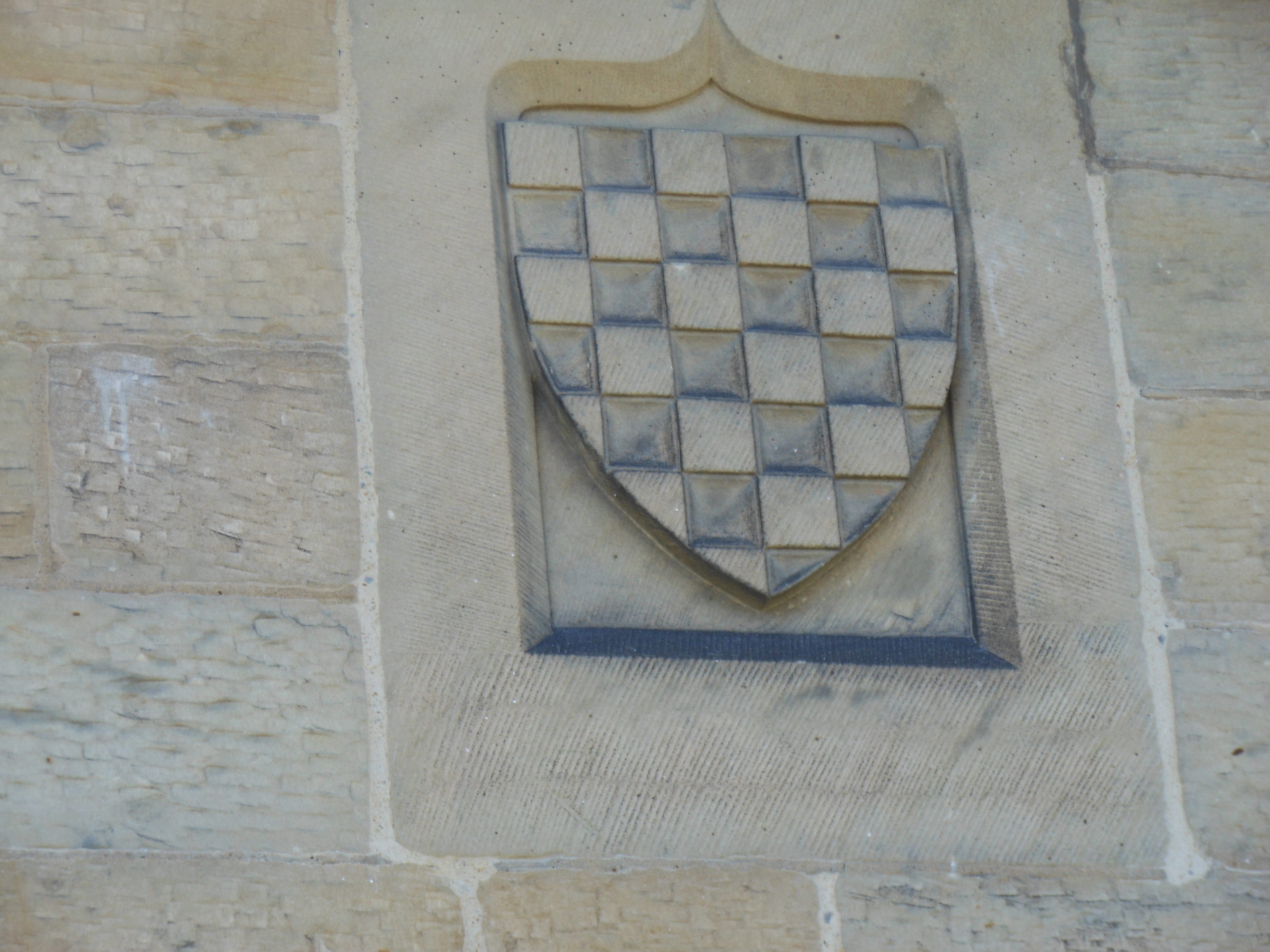
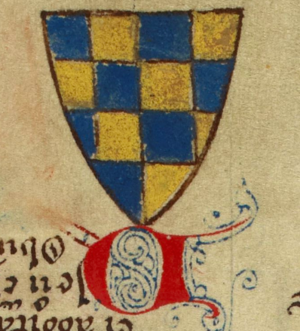
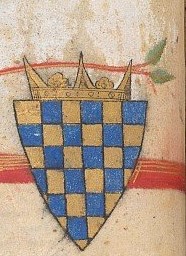
Among the remains found was one who had been buried with a small shield. The shield was about 60cm long and 50cm wide, decorated with a lion rampant (where the lion is stood on his two back legs). It was, therefore, assumed that the remains were that of a knight; although the stipulation that there could be no archaeological investigation, nor photographs taken, means that we know nothing beyond this. We do know that the knight did not belong to the household of the Warenne earls, who had owned Conisbrough and its castle since the time of the Normans; their coat of arms was a shield of blue and gold checks, adopted by the second earl in the first half of the twelfth century.

Although the colour of the lion on the shield was black, this is unlikely to have been the original colour; several hundred years in the ground had erased any indication of the colours of the lion or the background of the shield, thus making it impossible to identify the coat of arms. The remains were reinterred along with the others, according to the conditions imposed for the road widening scheme. The work was then continued, the road widened and a new boundary wall built, with steps into the church yard and a memorial park marking where the disturbed remains had been reburied.

St Peter’s Church, Conisbrough

The incident was then forgotten about with the passage of time. Indeed, when I came to look into it, few had heard of the mysterious knight buried in Conisbrough church yard. Internet searches brought up nothing. The story re-emerged in 1990, when Conisbrough Castle installed new floodlights and hosted a grand ‘switch on’ ceremony for the residents of Conisbrough. An article sent to me by a Conisbrough resident talks of meeting re-enactors at the ceremony, who were dressed as knights of the Earl of Norfolk, with a lion rampant on their shields.

It was then suggested that Earl Hamelin’s daughter Isabel had married Roger Bigod, the first Earl of Norfolk, who died in 1221. Unfortunately, this relationship is not supported by history; Earl Roger was, in fact, the second earl of Norfolk and married to Ida de Tosny, former mistress of Henry II. However, Earl Roger’s son, Hugh, who died in 1225, was married to Matilda Marshal, the eldest daughter of William Marshal, Earl of Pembroke and regent for Henry III. On Hugh’s death, Matilda had married William de Warenne, Earl Hamelin’s son and fifth Earl of Warenne and Surrey. It is entirely possible that Matilda was accompanied by knights of her first husband when she visited Conisbrough, or was visited there by a Norfolk knight who then perished and was buried in the church yard of St Peter’s at Conisbrough. However, the emblem of the earls of Norfolk, in Matilda’s time, was a red cross on a yellow background. The red lion rampant, on a field of gold and green, was only adopted until 1269, when Roger Bigod, fifth earl of Norfolk and Matilda Marshal’s grandson, inherited the title of Marshal of England, which had passed to the family through his grandmother. This also means that it is just as likely, or even more so, that the shield belonged to a Marshal retainer who was visiting Matilda, or in Matilda’s employ.

The coat of arms of William Marshal, Earl of Pembroke

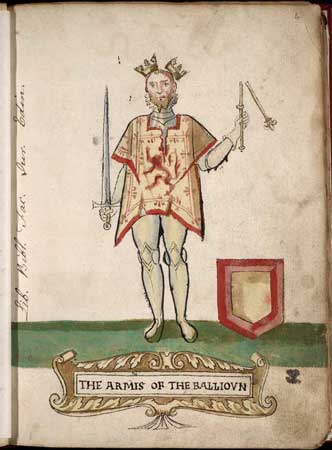
There are several other possibilities for a Warenne connection to the knight in the churchyard. The emblem of the lion rampant was not an uncommon feature among medieval heraldry in England and Scotland. The royal arms of Scotland, for example, are of a red lion rampant on a yellow field. Edward Balliol, King of Scotland at various points in the 1330s, was a grandson of John de Warenne, sixth Earl of Warenne and Surrey, through his mother, Isabella de Warenne. Edward did not officially relinquish his claim to the Scottish throne until 1356 and died near Doncaster in around 1367. The mysterious knight may have been one of his household retainers. Another daughter of the sixth earl, Eleanor, married Henry Percy, the son of a cadet branch of the earls of Northumberland. The Percy family arms are a blue lion rampant on a yellow field. Other families associated with the Warennes also used the lion rampant on their shields, not least being the d’Aubigny earls of Arundel, whose arms were a yellow lion rampant on a red field; Isabel, daughter of William, the fifth Earl of Warenne and Surrey, married Hugh d’Aubigny, the fifth Earl of Arundel.

One final possibility is that the knight was a natural son of the last earl. John de Warenne, seventh Earl of Warenne and Surrey, had no legitimate children with his wife Joan of Bar, a granddaughter of Edward I but fathered a number of illegitimate children by his mistress, Maud Nerford. Maud was from a knightly family in Norfolk; their coat of arms was a lion rampant. It is known that at least one of their sons used the Nerford arms as his own. Further, the arms of John’s last mistress, Isabella Holland, who he called ‘ma compaigne’ in his will, was a white lion rampant of a blue field, surrounded by white fleur de lys.1

As to the stone, mentioned earlier, with the carving of a sword blade upon it, it was suggested that this stone was previously a grave marker for the mysterious knight and was found lying in the church grounds sometime in the early 1800s. There was extensive building going on in Conisbrough between 1800 and 1810 and it is assumed that stone was used to rebuild the boundary wall of the churchyard. The fact that the two were found in the vicinity of each other is no suggestion of a link. As archaeologist James Wright explained to me, such stones were often used to decorate churches, castles and important buildings, then repurposed elsewhere once those buildings fell into disuse. The stone could have come from anywhere, and not necessarily a grave marker at all. The stone in question can still be seen at St Peter’s church, to the side of the church porch.

Scotland’s King John Balliol with the arms of a red lion rampant on his surcoat

Although we have no definitive answers as to the identity of the mysterious knight who rests in the grounds of St Peter’s Church, Conisbrough, there are many possibilities that suggest a familial link with the Warenne family. As we have no archaeological survey or photographs to aid the investigation, definitive identification is impossible. Indeed, we do not even have any useful dates through which we can narrow down the possibilities. Although the last earl of Warenne and Surrey died in 1347, it seems unlikely that the knight is from a later period and had no relationship whatsoever with the Warenne earls. Conisbrough Castle passed into royal hands after the earl’s death and was given to Edward III’s fourth surviving son, Edmund of Langley, Duke of York; although the arms of Edmund and his sons were derived from the royal arms of England, which are three lions passant quartered with the fleur de lys of France.

It seems likely, therefore, that although we do not know the identity of century of the knight, he died sometime during the 300 years that the Warenne family held the castle and honour of Conisbrough; and there are several possible explanations for his association with the family, through their many and varied prestigious marriage alliances. There is also a chance that the knight was a Warenne himself, as the illegitimate son of the seventh and final earl, John de Warenne, and his mistress, Maud de Nerford.

The possibilities may not be endless, but they are numerous; without further information, however, it is impossible to narrow it down.

Footnotes:

1 Warner, Kathryn, Philippa of Hainault: Mother of the English Nation

Images:

Conisbrough Castle and Warenne coat of arms by © Sharon Bennett Connolly, St Peter’s Church, Conisbrough by © Andrea Mason, John Balliol and Marshal arms courtesy of Wikipedia

Sources:

Early Yorkshire Charters Volume 8 Edited by William Farrer and Charles Travis Clay; Rev. John Watson, Memoirs of the Ancient Earls of Warren and Surrey, and Their Descendants to the Present Time, Volume I; Alfred S. Ellis, Biographical Notes on the Yorkshire Tenants Named in Domesday Book (article); The Plantagenets, the Kings who Made England by Dan Jones; History Today Companion to British History Edited by Juliet Gardiner and Neil Wenborn;  Brewer’s British Royalty by David Williamson; Conisbrough Castle Giudebook by Steven Brindle and Agnieszka Sadraei; F. Royston Fairbank, ‘The Last Earl of Warenne and Surrey, and the Distribution of his Possessions’, The Yorkshire Archaeological Journal, vol. XIX; Scott L. Waugh, ‘Warenne, John de, seventh earl of Surrey earl of Surrey and Sussex, Earl Warenne’, ODNB; Kelcey Wilson-Lee, Daughters of Chivalry: The Forgotten Children of Edward I; Kathryn Warner, Philippa of Hainault: Mother of the English Nation; Vincent, Nicholas, ‘William de Warenne, fifth earl of Surrey [Earl Warenne] (d. 1240)’, Oxforddnb.com; Marc Morris, King John; David Crouch, William Marshal; Crouch and Holden, History of William Marshal; Crouch, David, ‘William Marshal [called the Marshal], fourth earl of Pembroke (c. 1146–1219)’, Oxforddnb.com; Flanagan, M.T., ‘Isabel de Clare, suo jure countess of Pembroke (1171×6–1220)’, Oxforddnb.com; Thomas Asbridge, The Greatest Knight; Chadwick, Elizabeth, ‘Clothing the Bones: Finding Mahelt Marshal’, livingthehistoryelizabethchadwick.blogspot.com; Stacey, Robert C., ‘Roger Bigod, fourth earl of Norfolk (c. 1212-1270)’, Oxforddnb.com; finerollshenry3.org.uk.

*

My Books

Signed, dedicated copies of all my books are available through my online bookshop.

Coming 15 January 2024: Women of the Anarchy

On the one side is Empress Matilda, or Maud. The sole surviving legitimate child of Henry I, she is fighting for her birthright and that of her children. On the other side is her cousin, Queen Matilda, supporting her husband, King Stephen, and fighting to see her own son inherit the English crown. Both women are granddaughters of St Margaret, Queen of Scotland and descendants of Alfred the Great of Wessex. Women of the Anarchy demonstrates how these women, unable to wield a sword, were prime movers in this time of conflict and lawlessness. It show how their strengths, weaknesses, and personal ambitions swung the fortunes of war one way – and then the other.

Available for pre-order from Amberley Publishing and Amazon UK.

Coming on 15 June 2024: Heroines of the Tudor World

Heroines of the Tudor World tells the stories of the most remarkable women from European history in the time of the Tudor dynasty, 1485-1603. These are the women who ruled, the women who founded dynasties, the women who fought for religious freedom, their families and love. These are the women who made a difference, who influenced countries, kings and the Reformation. In the era dominated by the Renaissance and Reformation, Heroines of the Tudor World examines the threats and challenges faced by the women of the era, and how they overcame them. Some famous, some infamous, some less well known, including Anne Boleyn, Elizabeth Barton, Catherine de Medici, Bess of Hardwick and Elizabeth I. From writers to regents, from nuns to queens, Heroines of the Tudor World shines the spotlight on the women helped to shape Early Modern Europe.

Heroines of the Tudor World is now available for pre-order from Amberley Publishing and Amazon UK.

Also by Sharon Bennett Connolly:

King John’s Right-Hand Lady: The Story of Nicholaa de la Haye is the story of a truly remarkable lady. Nicholaa de la Haye was the hereditary constable of Lincoln Castle and the first woman in England to be appointed sheriff in her own right. Her strength and tenacity saved England at one of the lowest points in its history. Nicholaa de la Haye is one woman in English history whose story needs to be told… King John’s Right-Hand Lady: The Story of Nicholaa de la Haye is now available from Pen & Sword Booksbookshop.org and Amazon.

Defenders of the Norman Crown: The Rise and Fall of the Warenne Earls of Surrey tells the fascinating story of the Warenne dynasty, of the successes and failures of one of the most powerful families in England, from its origins in Normandy, through the Conquest, Magna Carta, the wars and marriages that led to its ultimate demise in the reign of Edward III. Defenders of the Norman Crown: Rise and Fall of the Warenne Earls of Surrey is now available from Pen & Sword BooksAmazon in the UK and US, and Bookshop.org.

Ladies of Magna Carta: Women of Influence in Thirteenth Century England looks into the relationships of the various noble families of the 13th century, and how they were affected by the Barons’ Wars, Magna Carta and its aftermath; the bonds that were formed and those that were broken. It is now available in paperback and hardback from Pen & Sword,  Amazon, and Bookshop.org.

Heroines of the Medieval World tells the stories of some of the most remarkable women from Medieval history, from Eleanor of Aquitaine to Julian of Norwich. Available now from Amberley Publishing and Amazon, and Bookshop.org.

Silk and the Sword: The Women of the Norman Conquest traces the fortunes of the women who had a significant role to play in the momentous events of 1066. Available now from Amazon,  Amberley Publishing, and Bookshop.org.

Alternate Endings: An anthology of historical fiction short stories including Long Live the King… which is my take what might have happened had King John not died in October 1216. Available in paperback and kindle from Amazon.

Podcast:

Have a listen to the A Slice of Medieval podcast, which I co-host with Historical fiction novelist Derek Birks. Derek and I welcome guests, such as Bernard Cornwell and Elizabeth Chadwick, and discuss a wide range of topics in medieval history, from significant events to the personalities involved.

*

Don’t forget! Signed and dedicated copies of all my books are available through my online bookshop.

For forthcoming online and in-person talks, please check out my Events Page.

You can be the first to read new articles by clicking the ‘Follow’ button, liking our Facebook page or joining me on Twitter and Instagram.

©2022 Sharon Bennett Connolly

The Early Years of the Last Earl Warenne

Books by Sharon Bennett Connolly
Arms of the Earls of Warenne and Surrey

John de Warenne, 7th and last Earl of Warenne and Surrey (Earl Warenne), was the only son of William de Warenne, who in turn was the only son of the colourful and rather legendary John de Warenne, 6th Earl Warenne. The 6th earl had been married in 1247 to Alice de Lusignan, half-sister of King Henry III as the second eldest daughter of Isabelle d’Angoulême, Queen of England as the wife of King John, and her second husband, Hugh X de Lusignan, Count of La Marche and Lord of Lusignan and Valence.

Born in around 1224, Alice was seven years older than her 16-year-old husband. The marriage had formed part of King Henry’s much-despised policy of patronising his Lusignan siblings and thus was condemned by Matthew Paris. Rather harshly, Paris claimed that the marriage was ‘beyond the bride’s station.’1 Given that Alice was half-sister of the king of England, this assessment seems a tad unfair. For John’s son and grandson, it would provide them with powerful royal relations in the future; William de Warenne was a first cousin of Edward I and the younger John de Warenne was a second cousin to Edward II.

Alice de Lusignan, Countess of Warenne and Surrey, died on 9 February 1256, just hours or days after William’s birth. She was ‘placed in the earth before the great altar [Lewes priory] in the presence of her brother Adelmar [Aymer], [bishop] elect of Winchester.’2 Despite being one of the wealthiest and most powerful earls in the country, and with only one legitimate son to succeed him, John de Warenne would never remarry, perhaps an indication of the deep affection that he held for his semi-royal wife.

In his late twenties, William de Warenne was married to Joan, daughter of Richard de Vere, Earl of Oxford, sometime in 1284: ‘Also William de Warenne married the daughter of the Earl of Oxford.’3 Through his mother, William was the nephew of Henry III and first cousin to Edward I. Through his father, William was descended from, among others, William Marshal, Geoffrey of Anjou and six Warenne earls of Surrey. However, William was destined never to succeed to the expansive earldom of Surrey. He was killed in a tournament at Croydon in December 1286, just six months after the birth of his only son and heir, John. The Annals of Lewes Priory recorded the events of 1286:

This year, on June 30, was born the first-begotten son of Sir William de Warenn, by his wife, daughter of the Earl of Oxford, whom he had married, as appears above. He was baptised and called by the name of John, on the 7th of November, with immense rejoicing; but alas! As the prophet testifies, ‘our joys are extinguished, but lamentation possesses us;’ for in the same year, on the first Sunday before the feast of Thomas the Apostle, which was on December 15, the father of the aforesaid youth [Sir William, killed in a tournament at Croydon], concerning whom our gladness had been, expired, and, oh sadness! He in whom flourished entire nobility, generosity and honesty, and the beginning of the glory of all knighthood, now lies buried and covered with stones. But there was present at the entombment of this so noble a man, the lord of Canterbury, who buried him before the high altar, on the left side, near his mother, with the greatest devotion of respect, as was fitting, many nobles of the land being present. The earl marshal [Roger Bigod, Earl of Norfolk], the Earl of Oxford and several barons … were anxiously afflicted.4

Books by Sharon Bennett Connolly
St Pancras priory, Lewes, the Warenne family mausoleum

Some sources suggest that John was the posthumous son of William, stating that William was killed in January 1286; however, this entry in the Annals of Lewes Priory makes it clear that John was born almost six months before his father was killed. John’s sister, Alice, on the other hand, may well have been born the year after her father’s death, in June 1287; hence John being referred to as the ‘first-begotten son’ despite being the only son. Joan was pregnant with Alice and no one yet knew if the child would be a boy or a girl.

Given the chronicle was written by a monk at Lewes, a priory patronised by the Warenne family, the laments and praise of William may be slightly exaggerated. However, that the archbishop of Canterbury conducted the funeral rites, and the presence of many senior nobles, suggests that William was, indeed, well thought of. This fact may give the lie to the rumours of murder that inevitably accompany a medieval death from unnatural causes. Rumours that William’s enemies had taken the opportunity of the tournament to despatch the young lord appear to be without foundation.

Young John suffered a further bereavement on 1293, when his mother, Joan died. Aged only 7, it seems arrangements had already been made should John still be a minor when his parents died. It had been agreed that the custody of John and his lands should go to Joan’s parents, Robert de Vere and his wife, Alice de Sanford. However, Earl Robert died in 1296 and it is not known where 10-year-old John spent the remainder of his childhood. It seems likely that John was raised by his Warenne grandfather, until the 6th Earl’s death in 1304.

At the age of 18, John succeeded to the earldom of his grandfather as the 7th earl of Warenne, Surrey and Sussex. His vast holdings comprised of lands and manors in numerous counties, including Sussex, Surrey, Lincolnshire, Yorkshire, Wiltshire and Norfolk. John, Earl Warenne, was still a minor and would be for another three years; as a consequence, he was made a royal ward, his lands taken into the custody of the Crown. Although he and his lands were in royal custody, and managed by custodians, John lived on his own estates and in 1305 the king commanded John to provide him with forty dried and salted barrels of deer.5 In the same year, he was sent to attend a tournament at Guildford, part of John’s estates, by Edward I, who provided the young lord with considerable funds for his maintenance.6

On 7 April 1306, in spite of the fact he had not yet performed homage to the king, still only 19 years old, Edward granted John his grandfather’s lands. It may well have been at this time that Edward Balliol was placed in John’s custody. The son of John’s aunt, Isabella, and King John Balliol of Scotland, the younger Balliol had been in the custody of his grandfather, the sixth Earl Warenne, from 1299 until the old earl’s death in 1304.

Books by Sharon Bennett Connolly
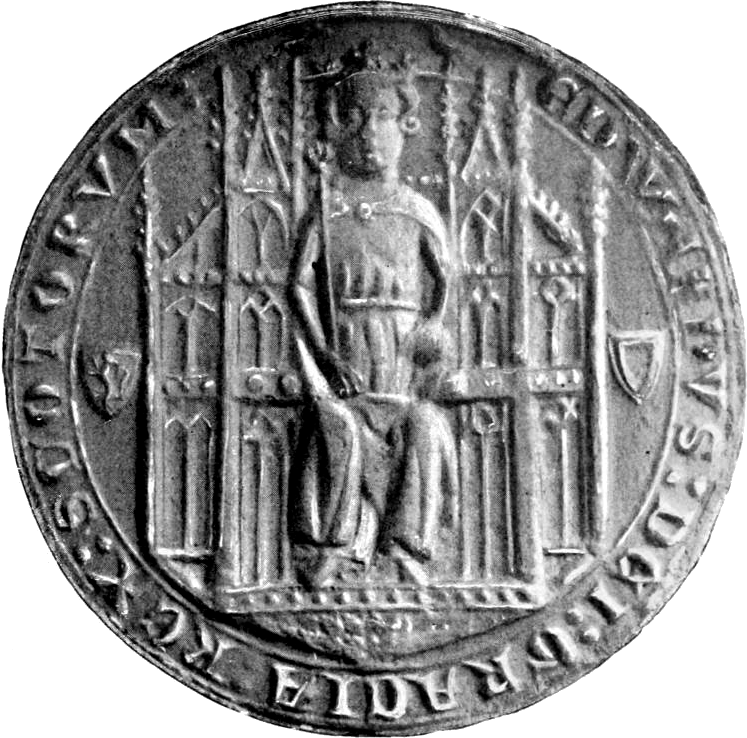
Seal of Edward Balliol as King of Scots

Given that it is likely his mother was no longer living when John Balliol became king in 1292, and that the couple had been married sometime before 7th February 1281, it seems probable that Edward was born sometime in the 1280s, making him of a similar age to his cousin, John de Warenne. Indeed, the two young men may well have spent their teenage years together in their grandfather’s household, training for knighthood. John was Balliol’s guardian for about 4 years, until it was ordered that he be delivered into royal custody in 1310, by Edward II. Edward Balliol had a strong claim to the Scottish throne, one that he would later be encouraged to pursue by Edward III in the 1330s. In May 1306, John de Warenne attended his first parliament at Westminster, an event which marked his coming of age, although he was not yet 21; in fact, he was still a month shy of his twentieth birthday.

John’s early coming of age appears to have been a part of larger scheme by King Edward, as during the parliamentary session, John was brought before the king and offered Edward’s granddaughter in marriage; the young earl readily agreed to the marriage, even though his bride was only 10 years old. The proposed bride was Joan, or Jeanne of Bar, Edward’s granddaughter by his eldest daughter, Eleanor and her husband Henry, Count of Bar. In the week following the betrothal of John and Joan, and in anticipation of a new expedition against Scotland, on 22 May 1306, Edward I held a magnificent ceremony for the knighting of his eldest son, Edward; the king knighted the prince, who then went on to knight the other candidates, in the glorious setting of Westminster Abbey.

In anticipation of the prince’s knighting, and in order to gather a body of knights who would be loyal to his son, the king proclaimed that all young men of sufficient age and income should travel to Westminster, to be knighted at royal expense alongside their future king, Prince Edward. The ceremony was also to bestow knighthoods on almost 300 men, John de Warenne included: ‘The yong Erle of Warenne with grete nobley was thare / A wif thei him bikenne, the erles douhter of Bare.’7

There were so many young men to be knighted, that it was impossible to find accommodation for all, and apple trees had to be chopped down in the gardens of the New Temple to make room. The prince and his closest companions kept their vigil, the night before the ceremony, watching their arms, in the abbey church at Westminster. Matthew of Westminster records that:

there was such a noise of trumpets and pipes, and such a clamour of voices, that one side of the choir could not hear the other. The others kept their vigil at the New Temple. The King provided them the necessary scarlet cloths, fine linen and belts for their use from his own wardrobe. 8

Books by Sharon Bennett Connolly
Arms of the House of Bar

The following morning, the king knighted his son in the palace of Westminster, investing him with his knight’s belt and spurs. The prince then crossed to Westminster Abbey, to invest the others; ‘The crowd was enormous, so great indeed, that two knights were killed. Each candidate was attended by three knights, who saw and assisted him through the ceremony.’9 The prince knighted sixty of the candidates himself, with other knights assisting with the rest. A lavish banquet – which later became known as the Feast of the Swans – followed the proceedings:

when two swans were brought in ornamented with gold network, emblematical of constancy and truth. When they were placed upon the table the King rose and made a vow to God and to the swans, that he would set out for Scotland and avenge the death of Comyn, and punish the treachery of the Scots … It was under these exceptionally interesting circumstances that Warenne received his knighthood.10

The murder of John Comyn, at the hands of Robert the Bruce in the church of the Greyfriars in Dumfries, on 10 February 1306, following an argument, had sent shockwaves through Christendom. Bruce had then raced to Scone where he was crowned King Robert I of Scots. As the celebrations continued a number of weddings also took place, involving several barons and nobles. John’s sister, Alice, married Edmund FitzAlan, 9th Earl of Arundel. Edmund had been a ward of John’s grandfather. The two young men were very close in age and were political allies and friends.

John de Warenne and Joan of Bar were married on 25 May, ‘before an altar spread with glittering cloths-of-gold.’11 Barely 10 years old, Joan was escorted to the palace at Westminster with great pomp and she and John were married in the presence of the ageing king. The Wardrobe Accounts bear witness to the extravagance of the ceremony and celebrations:

‘1306. May 25. In money lent and dispersed in the presence of the King, at the nuptials celebrated in the King’s chapel at Westminster, between John, Earl de Warenne, and the Lady Joanna, daughter of the Count de Barr, xls [40s].’ Other money was paid out ‘for diverse minstrels’, and ‘for letting fly the king’s gyrfalcon.’ More extravagance was expended to Thomas the coachbuilder, ‘advanced on making a chariot for the Earl de Warenne, June 28, lxs [60s],’ and to Walter de Bardeney, ‘advanced on harness being made for the said Earl, on the same day, cs [100s].’ While Walter de Bedewynde was commissioned ‘for a new carriage for the use of the Countess de Warenne, by order of the Treasurer.’12

Books by Sharon Bennett Connolly
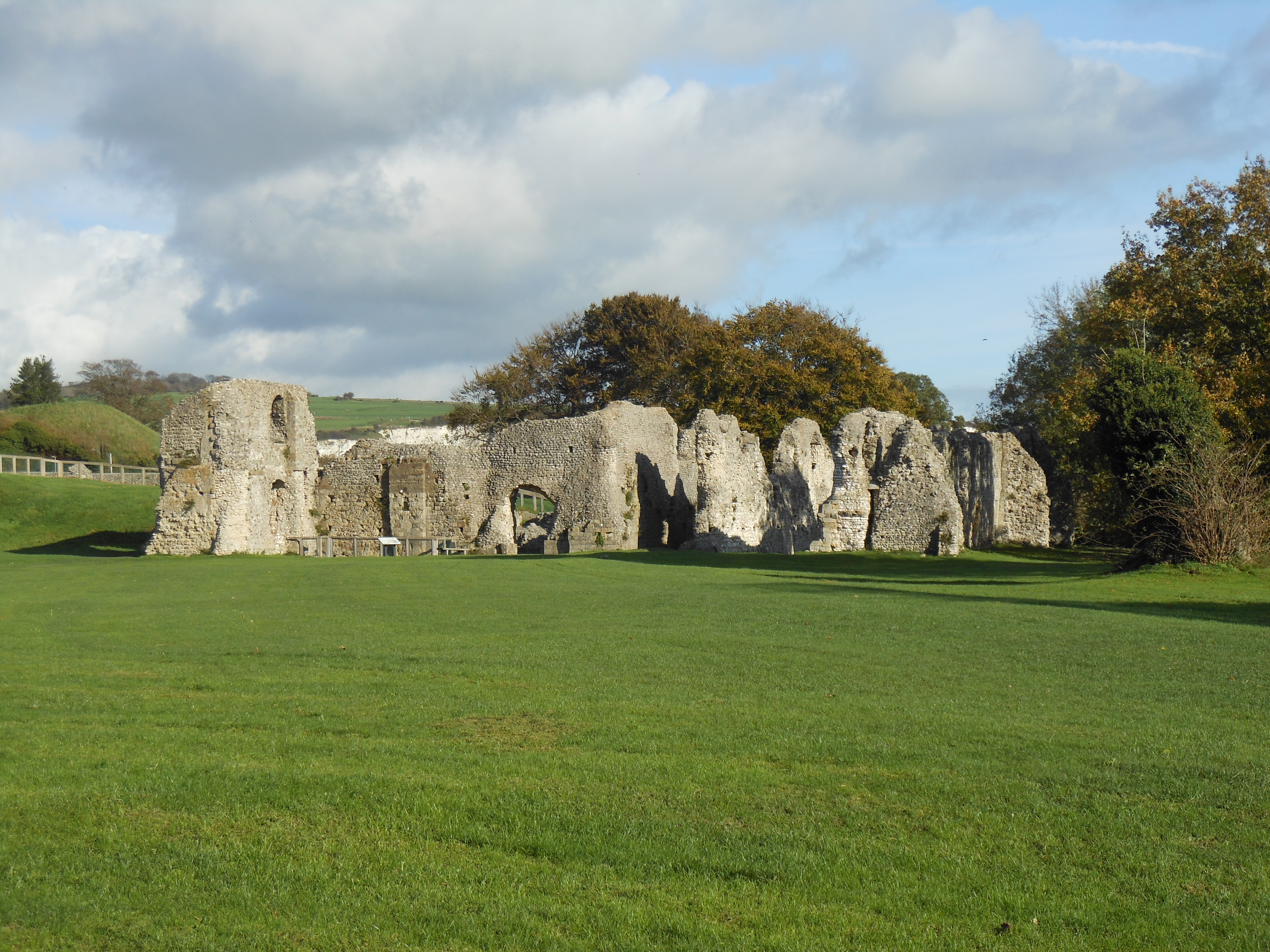
Conisbrough Castle, South Yorkshire, where John de Warenne, the last Earl of Warenne and Surrey, died in 1347

The marriage would prove to be a disaster, with John spending most of his adult life trying to obtain a divorce from Joan in order to marry his mistress, Maud de Nerford, and thus legitimise his children by her. Although the relationship with Maud eventually broke down, possibly due to the considerable pressure they couple must have been under with the almost-constant court cases, John was still trying to obtain a divorce from Joan to his dying day. In his latter years, in a last desperate attempt to produce a legitimate heir, he hoped to marry his mistress at that time, Isabella Holland, who his described as ‘ma compaigne’ in his will.13

John de Warenne, seventh and last Earl of Warenne, Surrey, Sussex and Strathearn died at Conisbrough Castle between 28 and 30 June 1347, possibly even on his sixty-first birthday (30 June). He asked to be buried at St Pancras Priory, Lewes, in an arch near the high altar. His will, dated 24 June 1347, left various gifts to his illegitimate children and to Isabella, to whom he left plate, jewels, cows, horses and other beasts, ‘and after that my debts and devises be made, I give to my said “compaigne” all the residue of all my goods and chattels, and whatsoever things they find.’14 To Joan, his wife of forty years, he left nothing.

*

Footnotes:

1. Scott L. Waugh, ‘Warenne, John de, seventh earl of Surrey earl of Surrey and Sussex, Earl Warenne’, ODNB; 2. ‘Annals written by a certain monk of Lewes, from the birth of Christ to the year 1312’ quoted in Blaauw, On the Early History of Lewes Priory; 3. ibid; 4. ibid; 5. Scott L. Waugh, ‘Warenne, John de, seventh earl of Surrey earl of Surrey and Sussex, Earl Warenne’, ODNB; 6. ibid; 7. F. Royston Fairbank, ‘The Last Earl of Warenne and Surrey, and the Distribution of his Possessions’, The Yorkshire Archaeological Journal, vol. XIX; 8. ibid; 9. ibid; 10. ibid; 11. Kelcey Wilson-Lee, Daughters of Chivalry: The Forgotten Children of Edward I; 12. Wardrobe Accounts quoted in F. Royston Fairbank, ‘The Last Earl of Warenne and Surrey, and the Distribution of his Possessions’, The Yorkshire Archaeological Journal, vol. XIX; 13. Katheryn Warner, Philippa of Hainault: Mother of the English Nation; 14. Calendar of Papal Registers, Papal Letters quoted in F. Royston Fairbank, ‘The Last Earl of Warenne and Surrey, and the Distribution of his Possessions’, The Yorkshire Archaeological Journal, vol. XIX

Images:

Courtesy of Wikipedia except Conisbrough Castle and Lewes Priory which are ©2021 Sharon Bennett Connolly

Sources:

The Oxford Companion to British History Edited by John Cannon; The Plantagenets, the Kings who Made England by Dan Jones; History Today Companion to British History Edited by Juliet Gardiner and Neil Wenborn;  Brewer’s British Royalty by David Williamson; Britain’s Royal Families, the Complete Genealogy by Alison Weir; Early Yorkshire Charters Volume 8, Edited by William Farrer and Charles Travis Clay; Conisbrough Castle by Steven Brindle and Agnieszka Sadraei; The Mammoth Book of British Kings and Queens by Mike Ashley; The Plantagenets, the Kings that made Britain by Derek Wilson; oxforddnb.com; royaldescent.net; F. Royston Fairbank, ‘The Last Earl of Warenne and Surrey, and the Distribution of his Possessions’, The Yorkshire Archaeological Journal, vol. XIX; Scott L. Waugh, ‘Warenne, John de, seventh earl of Surrey earl of Surrey and Sussex, Earl Warenne’, ODNB; ‘Annals written by a certain monk of Lewes, from the birth of Christ to the year 1312’ quoted in Blaauw, On the Early History of Lewes Priory; Kelcey Wilson-Lee, Daughters of Chivalry: The Forgotten Children of Edward I; Katheryn Warner, Philippa of Hainault: Mother of the English Nation

My Books

Signed, dedicated copies of all my books are available through my online store.

Out now: Scotland’s Medieval Queens

Books by Sharon Bennett Connolly

Scotland’s history is dramatic, violent and bloody. Being England’s northern neighbour has never been easy. Scotland’s queens have had to deal with war, murder, imprisonment, political rivalries and open betrayal. They have loved and lost, raised kings and queens, ruled and died for Scotland. From St Margaret, who became one of the patron saints of Scotland, to Elizabeth de Burgh and the dramatic story of the Scottish Wars of Independence, to the love story and tragedy of Joan Beaufort, to Margaret of Denmark and the dawn of the Renaissance, Scotland’s Medieval Queens have seen it all. This is the story of Scotland through their eyes.

Scotland’s Medieval Queens gives a thorough grounding in the history of the women who ruled Scotland at the side of its kings, often in the shadows, but just as interesting in their lives beyond the spotlight. It’s not a subject that has been widely covered, and Sharon is a pioneer in bringing that information into accessible history.’ Elizabeth Chadwick (New York Times bestselling author)

Available now from Amazon and Pen and Sword Books

Heroines of the Tudor World is now available for pre-order from Amberley Publishing and Amazon UK.

Also by Sharon Bennett Connolly:

Books by Sharon Bennett Connolly

Heroines of the Tudor World tells the stories of the most remarkable women from European history in the time of the Tudor dynasty, 1485-1603. These are the women who ruled, the women who founded dynasties, the women who fought for religious freedom, their families and love. Heroines of the Tudor World is now available from Amberley Publishing and Amazon UK. Women of the Anarchy demonstrates how Empress Matilda and Matilda of Boulogne, unable to wield a sword themselves, were prime movers in this time of conflict and lawlessness. It shows how their strengths, weaknesses, and personal ambitions swung the fortunes of war one way – and then the other. Available from Bookshop.orgAmberley Publishing and Amazon UKKing John’s Right-Hand Lady: The Story of Nicholaa de la Haye is the story of a truly remarkable lady, the hereditary constable of Lincoln Castle and the first woman in England to be appointed sheriff in her own right. Available from all good bookshops Pen & Sword Booksbookshop.org and Amazon

Royal Historical Society

Defenders of the Norman Crown: The Rise and Fall of the Warenne Earls of Surrey tells the fascinating story of the Warenne dynasty, from its origins in Normandy, through the Conquest, Magna Carta, the wars and marriages that led to its ultimate demise in the reign of Edward III. Available from Pen & Sword BooksAmazon in the UK and US, and Bookshop.orgLadies of Magna Carta: Women of Influence in Thirteenth Century England looks into the relationships of the various noble families of the 13th century, and how they were affected by the Barons’ Wars, Magna Carta and its aftermath; the bonds that were formed and those that were broken. It is now available in paperback and hardback from Pen & SwordAmazon, and Bookshop.orgHeroines of the Medieval World tells the stories of some of the most remarkable women from Medieval history, from Eleanor of Aquitaine to Julian of Norwich. Available now from Amberley Publishing and Amazon, and Bookshop.orgSilk and the Sword: The Women of the Norman Conquest traces the fortunes of the women who had a significant role to play in the momentous events of 1066. Available now from Amazon,  Amberley Publishing, and Bookshop.org.

Alternate Endings: An anthology of historical fiction short stories including Long Live the King… which is my take what might have happened had King John not died in October 1216. Available in paperback and kindle from Amazon.

Podcast:

A Slice of Medieval

Have a listen to the A Slice of Medieval podcast, which I co-host with Historical fiction novelist Derek Birks. Derek and I welcome guests, such as Bernard Cornwell and discuss a wide range of topics in medieval history, from significant events to the personalities involved.

Every episode is also now available on YouTube.

*

Don’t forget! Signed and dedicated copies of all my books are available through my online bookshop.

For forthcoming online and in-person talks, please check out my Events Page.

You can be the first to read new articles by clicking the ‘Follow’ button, liking our Facebook page or joining me on Twitter and Instagram.

©2021 Sharon Bennett Connolly FRHistS

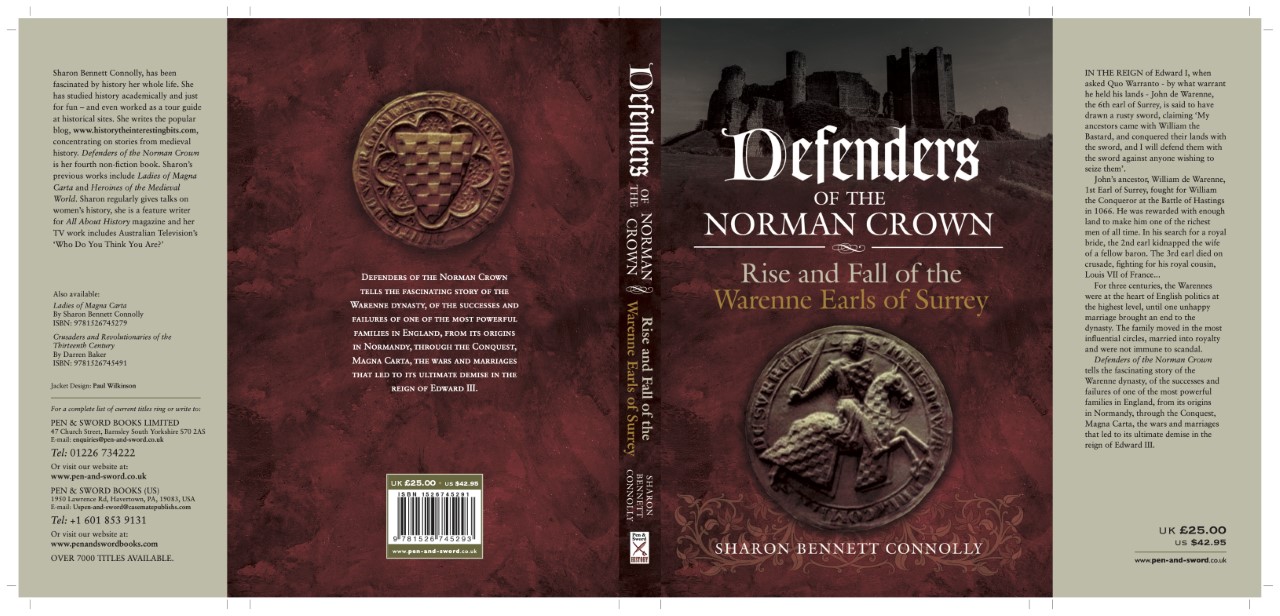
Cover and Title reveal – Defenders of the Norman Crown

Here it is!

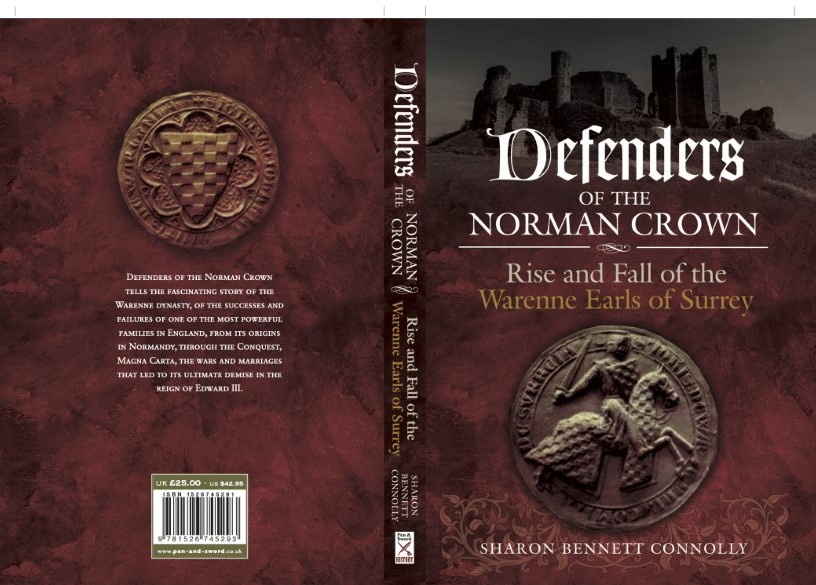
The finalised cover for Defenders of the Norman Crown: Rise and Fall of the Warenne Earls of Surrey, coming out next year.

Huge thanks to designer Paul Wilkinson at Pen & Sword for making my book look sooo good!

Defenders of the Norman Crown: Rise and Fall of the Warenne Earls of Surrey

In the reign of Edward I, when asked Quo Warranto? – by what warrant he held his lands – John de Warenne, the 6th earl of Warenne and Surrey, is said to have drawn a rusty sword, claiming ‘My ancestors came with William the Bastard, and conquered their lands with the sword, and I will defend them with the sword against anyone wishing to seize them.’

John’s ancestor, William de Warenne, 1st Earl of Surrey, fought for William the Conqueror at the Battle of Hastings in 1066. He was rewarded with enough land to make him one of the richest men of all time. In his search for a royal bride, the 2nd earl kidnapped the wife of a fellow baron. The 3rd earl died on crusade, fighting for his royal cousin, Louis VII of France…

For three centuries, the Warennes were at the heart of English politics at the highest level, until one unhappy marriage brought an end to the dynasty. The family moved in the most influential circles, married into royalty and were not immune to scandal.

Defenders of the Norman Crown tells the fascinating story of the Warenne dynasty, of the successes and failures of one of the most powerful families in England, from its origins in Normandy, through the Conquest, Magna Carta, the wars and marriages that led to its ultimate demise in the reign of Edward III.

Warenne arms

If you have been following this blog for any length of time, you will have noticed that I have a fondness for the Warennes. The family were earls of Surrey from 1088 until the death of the last Warenne earl in 1347. They possessed lands throughout England, stretching from Lewes in Sussex to Castle Rising in Norfolk and on to Conisbrough and Sandal Castles in Yorkshire.

Growing up close to the Warenne castle at Conisbrough in South Yorkshire, I developed a fascination for the castle’s history, for its connections to royalty, and for the family which built this amazing stronghold – the Warennes. As a student, I worked at the castle as a volunteer tour guide and started researching the story of the family. Many, many years later, when Pen & Sword asked me for some book ideas, I suggested writing a biography of the family, not really expecting them to say ‘yes’ – but they did. Defenders of the Norman Crown: Rise and Fall of the Warenne Earls of Surrey is a book I have always wanted to write, but never expected I would get the chance.

From the time of the Norman Conquest to the death of the seventh and last earl, the Warenne family was at the heart of English politics and the establishment, providing military and administrative support to the Crown. In the years following 1066 William I de Warenne, who became the first Earl of Surrey in 1088, was the fourth richest man in England and the richest not related to the royal family – he ranks at number 18 in MSN.com’s Top 20 Richest People of All Time.

Conisbrough Castle

The earls of Surrey were at the centre of the major crises of medieval England, from the Norman Conquest itself to the deposition of Edward II and accession of Edward III. Strategic marriages forged links with the leading noble houses in England and Scotland, from the Marshals, the FitzAlans, the d’Aubignys and Percys to the Scottish and English royal families themselves. Indeed, it is from Ada de Warenne, daughter of the second earl, married to the oldest son of the king of Scots, that all the leading competitors for the Scottish throne, after the death of Margaret, Maid of Norway in 1286, are descended. Queen Elizabeth II, herself, can trace her own lineage back to Ada and, through Ada, to the second earl of Warenne and Surrey.

In the 14th century, one unhappy marriage brought the dynasty to an end, the family’s influence and achievements almost forgotten…

Writing Defenders of the Norman Crown: Rise and Fall of the Warenne Earls of Surrey and researching this incredible family has been an amazing experience – a dream come true – and I will be eternally grateful to Pen & Sword for allowing me to tell their story.

Defenders of the Norman Crown: Rise and Fall of the Warenne Earls of Surrey tells the story of this remarkable dynasty. It is a story of power, ambition, loyalty and – above all – family!

Defenders of the Norman Crown: The Rise and Fall of the Warenne Earls of Surrey will be released in the UK on 31 May and is now available for pre-order from Pen & Sword Books.

*

My Books

Ladies of Magna Carta: Women of Influence in Thirteenth Century England  looks into the relationships of the various noble families of the 13th century, and how they were affected by the Barons’ Wars, Magna Carta and its aftermath; the bonds that were formed and those that were broken. It is now available from Pen & SwordAmazon and from Book Depository worldwide.

Also by Sharon Bennett Connolly:

Silk and the Sword: The Women of the Norman Conquest traces the fortunes of the women who had a significant role to play in the momentous events of 1066.  Available now from Amazon,  Amberley Publishing, Book Depository.

Heroines of the Medieval World tells the stories of some of the most remarkable women from Medieval history, from Eleanor of Aquitaine to Julian of Norwich. Available now from Amberley Publishing and Amazon and Book Depository.

*

You can be the first to read new articles by clicking the ‘Follow’ button, liking our Facebook page or joining me on Twitter and Instagram.

©2020 Sharon Bennett Connolly 

Joan Makepeace, Scotland’s Lonely Queen

joan_queen_of_scotland1
Joan of the Tower, Queen of Scotland

In my research I frequently discover instances of happy medieval marriages – and even if a marriage was not based on love, it did not mean that it would not be successful. Indeed, in many such instances the young woman concerned found her own way of succeeding, whether it was through her children or the management of estates – or the fact that a lasting peace was achieved between her 2 countries.

Unfortunately for Joan of the Tower, later to be known as Joan Makepeace, her marriage achieved none of these things.

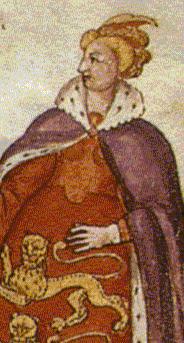
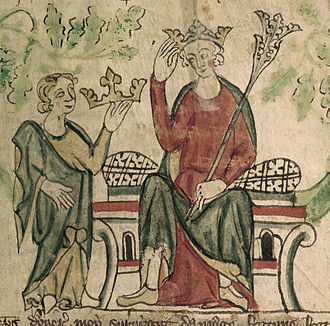
Joan was born in the Tower of London on 5 July, 1321; hence her rather dramatic name. She was the youngest of the 4 children of Edward II and his queen, Isabella of France, and had 2 older brothers and 1 sister. Her eldest brother, Edward, who was 9 years older than Joan, succeed his father as King Edward III in 1327, following Edward II’s deposition. While her 2nd brother, John of Eltham, was born in 1316 and died shortly after his 20th birthday, while campaigning against the Scots. Joan’s only sister, Eleanor of Woodstock, born in 1318, was only 3 years older than her baby sister and would go on to marry Reginald II, Count of Guelders.

Joan also had an illegitimate brother, Adam FitzRoy, a son of Edward II by an unknown woman. He was born in the early 1300s, but died whilst campaigning in Scotland with his father, in 1322.

Little Joan was named after her maternal grandmother, Queen Joan I of Navarre, wife of Philip IV of France. The king, also in London at the time of Joan’s birth, but not at the  Tower, granted an £80 respite on a £180 loan to Robert Staunton, the man who brought him news of the birth.¹ By 8th July Edward was visiting his wife and baby daughter at the Tower of London and stayed with them for several days.

Joan’s father, Edward II

As the last of the children of Edward II and Isabella, it seems likely that the royal couple’s relationship changed shortly after her birth, their marriage heading for an irretrievable breakdown that would see the king deposed in favour of his son. Edward II was well known for having favourites; the first, Sir Piers Gaveston, met a sticky end in 1312, when he was murdered by barons angry at the influence he held over the king. Isabella’s estrangement with her husband followed the rise of a new favourite, Sir Hugh le Despenser, and, by the time of Joan’s birth, his influence on the king was gaining strength and alienating powerful barons at court. In March 1322 those barons were defeated at the Battle of Boroughbridge, Yorkshire, with many prominent barons killed, including the king’s erstwhile brother-in-law Humphrey de Bohun, earl of Hereford. The leader of the insurrection, the king’s cousin Thomas, earl of Lancaster, was executed 6 days later at Pontefract Castle.

Joan was, therefore, growing up amid a period of great turmoil, not only within England, but within her own family. It is doubtful that, as she grew, she was unaware of the atmosphere, but  Isabella and Edward were both loving parents and probably tried to shield their children as much as they could, ensuring stability in their everyday lives. Joan was soon placed  in the household of her older siblings, and put into the care of Matilda Pyrie,  who had once been nurse to her older brother, John of Eltham.

Sometime before February 1325, Joan and her sister were established in their own household, under the supervision of Isabel, Lady Hastings and her husband, Ralph Monthermer. Isabel was the younger sister of Edward II’s close companion, Hugh Despenser the Younger, and this act has often been seen by historians as the king removing the children from the queen’s custody. Although it could have been a malicious act it must be remembered, however, that Ralph Monthermer was the girls’ uncle-by-marriage through his first wife, Joan of Acre, Edward II’s sister, and it was a custom of the time that aristocratic children were fostered among the wider family.

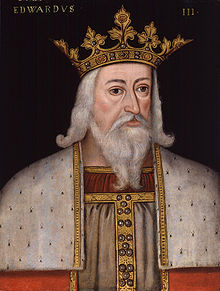
Joan’s brother Edward III

Joan and her elder sister, Eleanor, remained with Isabel even after Ralph’s death in the summer of 1325; however, the following year, they were given into the custody of Joan Jermy, sister-in-law of the king’s younger half-brother Thomas, Earl of Norfolk. Joan was the sister of Thomas’s wife, Alice Hales, and took charge of the girls’ household in January 1326, living alternately at Pleshey in Essex and Marlborough in Wiltshire.

As with all her siblings, Joan played a part in her father’s diplomatic plans; an attempt to form an alliance against France, Edward sought marriages in Spain for 3 of his 4 children. While Eleanor was to marry Alfonso XI of Castile, little Joan was proposed as the bride for the grandson of Jaime II of Aragon – the future Pedro IV – but this would come to nought.

By this time their mother, Isabella, was living at the French court, along with her eldest son, Edward, refusing to return to her husband whilst he still welcomed Hugh Despenser at his court. Within months Isabella and her companion (possibly her lover), Roger Mortimer, were to invade England and drive Edward II from his throne, putting an end to the proposed Spanish marriages. He was captured and imprisoned in Berkley Castle, forced to abdicate in favour of his eldest son, who was proclaimed King Edward III in 1327.

With her father exiled or murdered (his fate remains a bone of contention to this day), Joan became the central part of another plan – that of peace with Scotland. Isabella and her chief ally, Roger Mortimer, were now effectively ruling the kingdom for the young Edward III – still only in  his mid-teens. With the kingdom in disarray Isabella sought to end the interminable wars with Scotland, much to the young king’s disgust. Joan was offered as a bride for David, Robert the Bruce’s only son and heir, by his second wife, Elizabeth de Burgh.

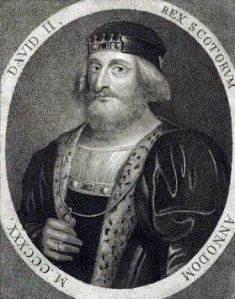
David II

The 1328 Treaty of Northampton was seen as a major humiliation by Edward III – and the 16-year-old king made sure his displeasure was known. However, he was forced to sign it, agreeing to Scotland’s recognition as an independent kingdom, the return of both the Ragman Roll (a document showing the individual acts of homage by the Scottish nobility) and the Stone of Scone (the traditional stone on which Scotland’s kings were crowned and which had sat in Westminster Abbey since being brought south by Edward I) and the marriage of Bruce’s 4-year-old son, David, to his 7-year-old sister, Joan.

Although the Stone of Scone and Ragman Roll were never returned to Scotland, the marriage between Joan and David did go ahead, although with a proviso that, should the marriage not be completed within 2 months of David reaching his 14th birthday, the treaty would be declared invalid. With neither king present – with Edward III refusing to attend, Robert the Bruce did likewise, claiming illness – the children were married at Berwick-on-Tweed on 17 July 1328, in the presence of Queen Isabella. The wedding was a lavish occasion, costing the Scots king over £2500.²

Following the wedding, and nicknamed Joan Makepeace by the Scots, Joan remained in Scotland with her child-groom. With Robert the Bruce’s death the following year, and David’s accession to the throne as David II, Joan and David attained the dubious record of being the youngest married monarchs in British history. They were crowned, jointly, at Scone Abbey in Perthshire, on 24th November 1331. It was the 1st time a Scottish Queen Consort was crowned.

Virtually nothing is known of Joan’s early years in Scotland. We can, I’m sure, assume she continued her education and maybe spent some time getting to know her husband. Scotland, however, was in turmoil and Edward III was not about to let his sister’s marriage get in the way of his own ambitions for the country. Unfortunately for Joan, Edward Balliol, son of the erstwhile king, John Balliol, and Isabella de Warenne, had a strong claim to the crown and was, as opposed to her young husband, a grown man with the backing of Edward III. What followed was a tug-of-war for Scotland’s crown, lasting many years.

David II and Joan being greeted by Philip VI of France

David’s supporters suffered a heavy defeat at Halidon Hill in July 1333 and shortly after Joan, who was residing at Dumbarton at the time, and David were sent to France for their safety, where they spent the next 7 years. An ally of Scotland and first cousin of Joan’s mother, Philip VI of France gave the king and queen, and their Scottish attendants, accommodation in the famous Château Gaillard in Normandy.

Their return to Scotland, on 2nd June 1341, was greeted with widespread rejoicing that proved to be short-lived. When the French asked for help in their conflict with the English, David led his forces south. He fought valiantly in the disastrous battle at Neville’s Cross on 17th October 1346, but was captured by the English; he was escorted to a captivity in England that would last for the next 11 years, save for a short return to Scotland in 1351-52.

Joan and David’s marriage had proved to be an unhappy, loveless and childless union and, while a safe conduct was issued for Joan to visit her husband at Windsor for the St George’s Day celebrations of 1348, there is no evidence she took advantage of it. Although we know little of Joan’s movements, it seems she remained in Scotland at least some of the time, possibly held as a hostage to David’s safety by his Scottish allies. She may also have visited David in his captivity, taking it as an opportunity to visit with her own family, including her mother; Queen Isabella is said to have supported Joan financially while her husband was imprisoned, feeding and clothing her. Joan does not appear to have taken an active role in negotiations for David’s release, despite her close familial ties to the English court.

When David returned to Scotland he brought his lover, Katherine Mortimer, with him. They had met in England and it was said “The king loved her more than all other women, and on her account his queen was entirely neglected while he embraced his mistress.”³ Katherine met a grisly fate and was stabbed to death by the Earl of Atholl.

At Christmas 1357 Joan was issued with a safe conduct from Edward III “on business touching us and David” and again in May 1358 “by our licence for certain causes”.² Although the licences are understandably vague on the matter, Joan had, in fact, left David and Scotland.

All that remains of Joan’s burial place

Joan spent the rest of her life in England, living on a pension of £200 a year provided by her brother, Edward III. She renewed family connections and was able to visit her mother before Isabella’s death in August 1358. As Queen of Scotland, she occasionally acted on her husband’s behalf. In February 1359 David acknowledge her assistance in the respite of ransom payments granted by Edward III saying it was “at the great and diligent request and instance of our dear companion the Lady Joan his sister.”²

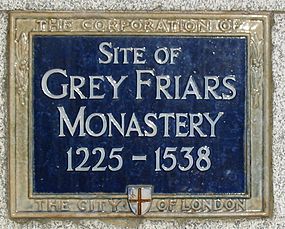
Little is known of Joan’s appearance or personality. Several years after her death she was described as “sweet, debonair, courteous, homely, pleasant and fair” by the chronicler Andrew of Wyntoun.² Having led an adventurous life, through no choice of her own, if unhappy in love, Joan of the Tower, Queen of Scotland, died at the age of 41 on 7th September 1362, and was buried in the Church of the Greyfriars, Newgate, in London, where her mother had been laid to rest just 4 years earlier.

Following his wife’s death David II married his lover, Margaret Drummond, the widow of Sir John Logie, but divorced her on 20th March 1370. He died, childless, at Edinburgh Castle in February 1371, aged 47, and was succeeded by the first of the Stewart kings, his nephew, Robert II, son of Robert the Bruce’s eldest daughter, Marjorie.

*

Footnotes: ¹Isabella of France: The Rebel Queen by Kathryn Warner; ² Oxforddnb.com; ³Walter Bower quoted in Oxforddnb.com

Sources: The Story of Scotland by Nigel Tranter; Brewer’s British Royalty by David Williamson; Kings & Queens of Britain by Joyce Marlow; Mammoth Book of British Kings & Queens by Mike Ashley; Oxford Companion to British History Edited by John Cannon; Britain’s Royal Families by Alison Weir; educationscotland.gov.uk/scotlandhistory; englishmonarchs.co.uk; berkshirehistory.com; thefreelancehistorywriter.com; The Perfect King by Ian Mortimer; Scotland, History of a Nation by David Ross; The Life & Times of Edward III by Paul Johnson; The Reign of Edward III by W.M. Ormrod; Isabella of France: The Rebel Queen by Kathryn Warner; Isabella and the Strange Death of Edward II by Paul Doherty; Edward II: The Unconventional King by Kathryn Warner; Oxforddnb.com.

*

My Books

Signed, dedicated copies of all my books are available through my online bookshop.

Out now: Scotland’s Medieval Queens

Scotland’s history is dramatic, violent and bloody. Being England’s northern neighbour has never been easy. Scotland’s queens have had to deal with war, murder, imprisonment, political rivalries and open betrayal. They have loved and lost, raised kings and queens, ruled and died for Scotland. From St Margaret, who became one of the patron saints of Scotland, to Elizabeth de Burgh and the dramatic story of the Scottish Wars of Independence, to the love story and tragedy of Joan Beaufort, to Margaret of Denmark and the dawn of the Renaissance, Scotland’s Medieval Queens have seen it all. This is the story of Scotland through their eyes.

Available now from Amazon and Pen and Sword Books

Also by Sharon Bennett Connolly:

Heroines of the Tudor World tells the stories of the most remarkable women from European history in the time of the Tudor dynasty, 1485-1603. These are the women who ruled, the women who founded dynasties, the women who fought for religious freedom, their families and love. Heroines of the Tudor World is now available for pre-order from Amberley Publishing and Amazon UK. Women of the Anarchy demonstrates how Empress Matilda and Matilda of Boulogne, unable to wield a sword themselves, were prime movers in this time of conflict and lawlessness. It shows how their strengths, weaknesses, and personal ambitions swung the fortunes of war one way – and then the other. Available from Bookshop.orgAmberley Publishing and Amazon UKKing John’s Right-Hand Lady: The Story of Nicholaa de la Haye is the story of a truly remarkable lady, the hereditary constable of Lincoln Castle and the first woman in England to be appointed sheriff in her own right. Available from all good bookshops Pen & Sword Booksbookshop.org and Amazon

Defenders of the Norman Crown: The Rise and Fall of the Warenne Earls of Surrey tells the fascinating story of the Warenne dynasty, from its origins in Normandy, through the Conquest, Magna Carta, the wars and marriages that led to its ultimate demise in the reign of Edward III. Available from Pen & Sword BooksAmazon in the UK and US, and Bookshop.orgLadies of Magna Carta: Women of Influence in Thirteenth Century England looks into the relationships of the various noble families of the 13th century, and how they were affected by the Barons’ Wars, Magna Carta and its aftermath; the bonds that were formed and those that were broken. It is now available in paperback and hardback from Pen & SwordAmazon, and Bookshop.orgHeroines of the Medieval World tells the stories of some of the most remarkable women from Medieval history, from Eleanor of Aquitaine to Julian of Norwich. Available now from Amberley Publishing and Amazon, and Bookshop.orgSilk and the Sword: The Women of the Norman Conquest traces the fortunes of the women who had a significant role to play in the momentous events of 1066. Available now from Amazon,  Amberley Publishing, and Bookshop.org.

Alternate Endings: An anthology of historical fiction short stories including Long Live the King… which is my take what might have happened had King John not died in October 1216. Available in paperback and kindle from Amazon.

Podcast:

Have a listen to the A Slice of Medieval podcast, which I co-host with Historical fiction novelist Derek Birks. Derek and I welcome guests, such as Bernard Cornwell and discuss a wide range of topics in medieval history, from significant events to the personalities involved. Every episode is also now available on YouTube.

*

Don’t forget! Signed and dedicated copies of all my books are available through my online bookshop.

For forthcoming online and in-person talks, please check out my Events Page.

You can be the first to read new articles by clicking the ‘Follow’ button, liking our Facebook page or joining me on Twitter and Instagram.

©2017 Sharon Bennett Connolly FRHistS

The Maid of Norway – The Tragic Story of Scotland’s First Queen Regnant

800px-Kongevåpen_1905
The coat of arms of Norway

The story of Margaret, the Maid of Norway, is short and sad. The little girl died before her 8th birthday, and before she ever set foot in the country of which she was Queen. And her death set into a motion a chain of events that would see Scotland torn apart by war for years to come.

Margaret’s claim to the Scottish throne came from her grandfather, Alexander III. Alexander had come to the throne at the age of 8 and had proved to be a very capable and strong monarch. He had married, on 26th December 1251, Margaret, the daughter of Henry III of England and Eleanor of Provence.

Margaret and Alexander had 3 children together. Their eldest daughter, Margaret, was born in February 1261 at Windsor Castle. And of their 2 sons; Alexander was born in 1264 at Jedburgh and David who was born in March 1273. However, their family was soon to face a succession of tragedies. Queen Margaret died in February 1275 at Cupar Castle. And 8-year-old David died in June 1281 at Stirling Castle.

220px-Margaret_Plantagenet,_Queen_of_Scotland
Margaret of England, Queen of Scotland

One happy event in the midst of the tragedy, was the marriage of 20-year-old Margaret of Scotland to 13-year-old Erik Magnusson around the 31st August 1281. Erik had become King Erik II of Norway the year before, with a royal council ruling for the under-age king.

Eric came of age in 1282 and the following year, on the 9th April 1283, Margaret gave birth to a daughter, another Margaret. The queen died giving birth to Margaret; at Tonsberg, Norway, and was buried in Christ’s Kirk, Bergen.

For Alexander III, even more tragedy was to follow in January 1284 when his son and heir, Alexander, died aged just 20. Alexander’s death sparked a succession crisis for Scotland’s king. He had no brothers or uncles to succeed him; his only heir was his 8-month-old granddaughter, Margaret, in Norway. In the same year Alexander obtained, from his nobles, a recognition of Margaret’s right to succeed to the throne, should he fail to produce any further heirs.

220px-Alexander_III_and_Ollamh_Rígh
The coronation of Alexander III

However, the death of his last surviving child also prompted Alexander III to look for a new wife. And on 1st November 1285, at Jedburgh Abbey, Alexander married Yolande de Dreux, daughter of Robert IV, Count of Dreux, in the hope of producing an heir.

Shortly after the marriage, on 18/19 March 1286, Alexander was on his way to visit his new bride, one night, when he got separated from his escort during a violent storm; his horse appears to have lost its footing and fallen down an embankment. The king’s body, with his neck broken, was found on the beach the next day, just a mile from where his wife was staying, at Kinghorn in Fife.

With the new queen pregnant 6 Guardians were appointed to rule the kingdom until the arrival of Alexander’s posthumous heir. However, Yolande either miscarried, or the baby was still-born and by the end of the year it was clear that Scotland had to look elsewhere for a ruler. Alexander’s only surviving heir was now 3-year-old Margaret of Norway.

Within weeks of Alexanders death Robert Bruce and John Balliol had both made attempts on the crown and the south-west was raised in rebellion. However the majority of Scots, represented by the 6 Guardians, gave their backing to Margaret, the Maid of Norway and Bruce and Balliol were forcibly held in check.

Eirik_Magnusson_(Stavanger_cathedral)
Erik II Magnusson

As early as 1284 Alexander III had, following the death of his last son, floated the idea that England and Scotland might unite through marriage. In response to a letter of condolence from his brother-in-law, Edward I, Alexander had suggested that, through his tiny granddaughter, ‘much may yet come to pass’.

The prospect at the time had not been without risk, however; should Alexander have more children, England would have been committed to a disadvantageous marriage with a Norwegian princess. But with Alexander’s death, and the queen’s child dead, Margaret’s accession seemed certain.

With the Guardians maintaining an uneasy peace between the competing claims of Margaret, Robert Bruce and John Balliol, Erik II of Norway sought the help of Edward I of England. Messengers were sent between the English and Norwegian courts and in Spring 1289 serious negotiations began.

On 6th November 1289 an international summit was held at Salisbury. The Norwegian ambassadors met with Edward and his advisers. It’s possible the Scottish Guardians had also sent representatives, but some sources say the Scots were excluded from these initial talks. The summit proved successful and it was agreed that Margaret would marry Edward of Caernarfon, Edward I’s son and heir, within the next 12 months.

For the Scottish, the marriage alliance promised an end to the years of uncertainty and to the latent threats they had been facing since 1286. For Margaret, a marriage alliance with England gave the Maid a powerful protector.

edward03
Alexander III of Scotland (left) with Edward I of England (centre) and Llewelyn, prince of Wales (right)

In March 1290 the community of Scotland, comprising over 100 Scotsmen of substance, met to ratify the marriage agreement. They wrote to Edward expressing their will to proceed with the wedding. The Guardians of Scotland, however, had sworn an oath to preserve Alexander III’s kingdom intact and undiminished for his eventual heirs, and their overriding concern now was to safeguard Scotland’s future independence.

It was agreed at Brigham that, although Edward and Margaret were not yet of marriageable age, the would be regarded as married on Margaret’s arrival from Norway – and Edward of Caernarfon would be King of Scotland from that moment. The business of Scottish government and law was to remain in Scotland and be run by a resident Viceroy or lieutenant.

There was no common ground, however, on the issue of royal fortresses: Edward I wanted to appoint all custodians as a guarantee of security but the Scots saw this as a demand for the surrender of sovereignty. In the final agreement, ratified at Northampton, the point is glossed over with an agreement that keepers would be appointed by the ‘common advice of the Scots and the English king’.

The reason Edward acquiesced on – or, rather, failed to push – the castles issue was the news that Margaret had already left Norway. Edward wanted the deal signed and sealed before the Scots’ hand was strengthened by the physical possession of their queen.

Edward_II_-_British_Library_Royal_20_A_ii_f10_(detail)
Edward of Carnarvon

In the final agreement, the Scots got a clear statement safeguarding their independence. Edward promised that Scotland should remain ‘free in itself, and without subjection from the kingdom of England’.

Margaret set sail in September 1290; accompanied by Bishop Narve of Bergen, she was bound for Leith. In preparation for the Maid’s arrival, Edward I sent gifts for his future daughter-in-law; and the magnates of Scotland began to assemble at Scone Abbey, Perth, in anticipation of the enthronement of their new queen.

However, storms drove the Maid’s ship off course and she landed at St Margaret’s Hope, South Ronaldsay, on Orkney. Scottish and English representatives rode north to Orkney to meet her. Sometime between 26 and 29 September 1290, Margaret died at Orkney, in the arms of the Bishop, supposedly from the effects of a severe bout of seasickness. She was 7 years old.

As the Scottish and English messengers returned south with news of the Maid’s death, Margaret’s body was returned to Norway. She was buried beside her mother, in the north aisle of Christ’s Kirk, in Bergen.

220px-Margaret,_Maid_of_Norway
Margaret, Maid of Norway, Queen of Scotland

Her father confirmed the identity of the body before her burial, an act that proved significant in 1300, a year after Erik’s death, when a woman turned up in Bergen. claiming to be Margaret. Reports say the woman appeared to be 40 years old, when Margaret would have only been 17, and she gained popular support, despite the king’s identification Margaret’s body, before finally being convicted as ‘the False Margareth’; she was burned at the stake in 1301.

The tragedy of Margaret’s death brought an end to the rule of the House of Dunkeld, begun with Malcolm III Canmore in 1058, and plunged Scotland into crisis. Edward I’s intervention with his judgement of the 13 Competitors for the crown, and his backing of John Balliol as the next King, saw the beginning of Scotland’s Wars of Independence. Marred not only be English invasion, but also the in-fighting among the Scottish nobles, it was not until Robert the Bruce emerged victorious that Scotland found her feet again.

*

Pictures taken from Wikipedia, except that of Edward I, Alexander III and Llewelyn, which was taken from castlewales.com

*

Sources: castlewales.com; Marc Morris Edward I: A Great and Terrible King; David Williamson Brewer’s British royalty; Mike Ashley The Mammoth Book of British kings & Queens; Alison Weir Britain’s Royal Families; Roy Strong The Story of Britain; Dan Jones The Plantagenets; the Kings who Made England; Chronicles of the Age of Chivalry Edited by Elizabeth Hallam; The Oxford Companion to British History edited by John Cannon; The History Today Companion to British History Edited by Juliet Gardiner and Neil Wenborn; The Plantagenets by Derek Wilson; The Story of Scotland by Nigel Tranter; royal.gov.uk; britroyals.com; undiscoveredscotland.co.uk; englishmonarchs.co.uk; educationscotland.gov.uk.

*

My Books

Signed, dedicated copies of all my books are available through my online store.

OUT NOW! Heroines of the Tudor World

Heroines of the Tudor World tells the stories of the most remarkable women from European history in the time of the Tudor dynasty, 1485-1603. These are the women who ruled, the women who founded dynasties, the women who fought for religious freedom, their families and love. These are the women who made a difference, who influenced countries, kings and the Reformation. In the era dominated by the Renaissance and Reformation, Heroines of the Tudor World examines the threats and challenges faced by the women of the era, and how they overcame them. From writers to regents, from nuns to queens, Heroines of the Tudor World shines the spotlight on the women helped to shape Early Modern Europe.

Heroines of the Tudor World is now available for pre-order from Amberley Publishing and Amazon UK.

Coming 30 January 2025: Scotland’s Medieval Queens

Scotland’s history is dramatic, violent and bloody. Being England’s northern neighbour has never been easy. Scotland’s queens have had to deal with war, murder, imprisonment, political rivalries and open betrayal. They have loved and lost, raised kings and queens, ruled and died for Scotland. From St Margaret, who became one of the patron saints of Scotland, to Elizabeth de Burgh and the dramatic story of the Scottish Wars of Independence, to the love story and tragedy of Joan Beaufort, to Margaret of Denmark and the dawn of the Renaissance, Scotland’s Medieval Queens have seen it all. This is the story of Scotland through their eyes.

Available for pre-order now.

Also by Sharon Bennett Connolly:

Women of the Anarchy demonstrates how Empress Matilda and Matilda of Boulogne, unable to wield a sword themselves, were prime movers in this time of conflict and lawlessness. It shows how their strengths, weaknesses, and personal ambitions swung the fortunes of war one way – and then the other. Available from Bookshop.orgAmberley Publishing and Amazon UKKing John’s Right-Hand Lady: The Story of Nicholaa de la Haye is the story of a truly remarkable lady, the hereditary constable of Lincoln Castle and the first woman in England to be appointed sheriff in her own right. Available from all good bookshops Pen & Sword Booksbookshop.org and AmazonDefenders of the Norman Crown: The Rise and Fall of the Warenne Earls of Surrey tells the fascinating story of the Warenne dynasty, from its origins in Normandy, through the Conquest, Magna Carta, the wars and marriages that led to its ultimate demise in the reign of Edward III. Available from Pen & Sword BooksAmazon in the UK and US, and Bookshop.org

Ladies of Magna Carta: Women of Influence in Thirteenth Century England looks into the relationships of the various noble families of the 13th century, and how they were affected by the Barons’ Wars, Magna Carta and its aftermath; the bonds that were formed and those that were broken. It is now available in paperback and hardback from Pen & Sword,  Amazon, and Bookshop.orgHeroines of the Medieval World tells the stories of some of the most remarkable women from Medieval history, from Eleanor of Aquitaine to Julian of Norwich. Available now from Amberley Publishing and Amazon, and Bookshop.orgSilk and the Sword: The Women of the Norman Conquest traces the fortunes of the women who had a significant role to play in the momentous events of 1066. Available now from Amazon,  Amberley Publishing, and Bookshop.org.

Alternate Endings: An anthology of historical fiction short stories including Long Live the King… which is my take what might have happened had King John not died in October 1216. Available in paperback and kindle from Amazon.

Podcast:

Have a listen to the A Slice of Medieval podcast, which I co-host with Historical fiction novelist Derek Birks. Derek and I welcome guests, such as Bernard Cornwell, and discuss a wide range of topics in medieval history, from significant events to the personalities involved.

*

Don’t forget! Signed and dedicated copies of all my books are available through my online bookshop.

For forthcoming online and in-person talks, please check out my Events Page.

You can be the first to read new articles by clicking the ‘Follow’ button, liking our Facebook page or joining me on TwitterThreads and Instagram.

©2015 Sharon Bennett Connolly FRHistS
Isabella de Warenne, Queen of Scotland?

John Balliol and Isabella de Warenne

Whilst researching for my article on Ada de Warenne I discovered that a hundred years later, a kinswoman of hers also, briefly, made an appearance on the stage of Scottish history. I looked at both women, again in my latest book, Scotland’s Medieval Queens, a project I am immensely excited about. I love Scottish history!

Isabella de Warenne was the daughter of John de Warenne, 6th Earl of Surrey, and Alice de Lusignan. As such, Isabella had connections, both to royalty and the highest ranks of the English nobility. Her mother, Alice, was the daughter of King John of England’s widow, Isabella of Angouleme, and Hugh X de Lusignan and half-sister to Henry III of England. Isabella was, therefore, Henry’s niece and a 1st cousin of King Edward I. Through her paternal grandmother, Matilda Marshal, Isabella was also a great-granddaughter of the ‘Greatest Knight’ William Marshal, Earl of Pembroke and Regent of England in the early years of Henry III’s reign.

Isabella was one of three children; her elder sister, Eleanor, married Henry Percy and was the mother of Henry de Percy, 1st Baron Percy. Isabella’s younger brother, William de Warenne, married Joan de Vere, daughter of the 5th Earl of Oxford, and was father to two children, a son and a daughter; John and Alice. Isabella’s nephew, John de Warenne, was the last Earl of Warenne and Surrey, whose marital and extra-marital situation led to the extinction of the senior Warenne line. It was through John’s sister, Alice de Warenne, that the title earl of Surrey would eventually pass to her son Richard Fitzalan, 10th Earl of Arundel.

John Balliol, King of Scots

Alice de Lusignan died in 1256, shortly after giving birth to her youngest child, William, leaving the 25-year-old Earl Warenne to raise three young children alone. Alice de Lusignan was buried at Lewes Priory, the Warenne family mausoleum, she was ‘placed in the earth before the great altar in the presence of her brother Adelmar [Aymer de Valence], [bishop] elect of Winchester.’1 Isabella was probably born around 1253, although some genealogical sources claim she was younger and the daughter of a second, unknown wife of John de Warenne.

Isabella was married to John Balliol, Lord of Bywell, sometime before 7 February 1281. The confusion over her age is probably based on the writings of chronicler Thomas Wykes, who, in trying to explain why John Balliol did not succeed to the Balliol lands until a year after his brother’s death, suggested that the lands were in wardship to Edward I due to John Balliol’s youth. According to Wykes, Balliol needed Edward’s consent for his proposed marriage to Isabella, describing John as a youth, adolescens, and Isabella, a young girl, adolescentula. In fact, at the date of their marriage, John was about thirty years of age and Isabel was at least in her mid-twenties. Clearly, Edward could not have been exercising rights of wardship in a minority but the true reasons for his heavy-handed intervention are not clear.

Furthermore, there is no evidence that John ever remarried after Alice’s death, so this theory seems unlikely. It is just as likely – or more likely, in fact – that Isabella married late because previous marriage proposals or arrangements had failed, either due to failed negotiations or the death of the proposed groom. Such instances often went unrecorded, and are much more feasible than the suggestion that the earl had remarried but not one of the chroniclers of the time had mentioned it.

In the early 1290s, John Balliol was one of the 13 Competitors for the Scottish throne. He was the great-grandson of Ada de Warenne’s youngest son, David, Earl of Huntingdon, by David’s daughter, Margaret. John and Isabella were, therefore, 4th cousins, both being descended from William de Warenne, 2nd Earl of Surrey, and his wife, Isabel de Vermandois.

Balliol’s claim lay through seniority, he was grandson of Margaret, the eldest daughter of David of Huntingdon. The other leading Competitor was Robert de Brus, grandfather of the future King Robert (I) the Bruce. Robert de Brus’s claim lay in the fact he was closer in degree to the same David, being the son of David’s youngest daughter, Isobel. John Balliol was therefore David’s great-grandson, whereas Robert de Brus was his grandson, though by a younger daughter.

With 13 claimants to the Scottish throne it was Edward I of England who was given the duty of selecting Scotland’s next king. Isabella’s close family links to the English crown may have helped Edward decide in John’s favour and he was installed as King of Scotland in November 1292.

John and Isabella may have had at least three, but possibly four, children together.

A daughter, Margaret, died unmarried. There is mention of another daughter, Anne; but there is  doubt as to whether she ever existed.

Their eldest son, Edward, was born around 1283. Following the deposition of his father, in November 1299 Isabella and John’s oldest son, Edward, was entrusted to the custody of his Earl Warenne, who was then approaching his 70th year. After his grandfather’s death in 1304, Edward was transferred to the custody of his cousin John, the 7th Earl Warenne, until he was delivered into royal custody in 1310.

By the 1330s Edward’s prospects had improved. He was seen as a useful political tool, a rival claimant to the Scottish crown. With English support, Edward made his own bid for the throne, and was crowned king following his defeat of 8-year-old David II‘s forces at the Battle of Dupplin Moor in 1332. David’s supporters and Edward struggled against each other, until they eventually triumphed over Edward and he was deposed in 1336.

Isabella’s son, Edward Balliol, King of Scots

Edward finally surrendered his claim to the Scottish throne in 1356 whilst living in English exile; he died in Wheatley, Doncaster, probably in 1363 or 1364. Although his final resting place has recently been claimed to be under Doncaster Post Office, the former site of Doncaster Priory, it remains elusive.

John and Isabella’s possible younger son, Henry, was killed on 16th December 1332 at the Battle of Annan, a resounding victory for supporters of David II against Henry’s brother, Edward.

Although Edward was briefly married to Margaret of Taranto, the marriage was annulled. Neither Edward nor Henry had any children.

Very little is known of John and Isabella’s life together. Her death date and final resting place are both unknown. It is by no means certain that Isabella was still alive when John became king, so may have died before 1292, when John succeeded to the Scottish throne. She was no longer living, however, when her own father defeated John and the Scottish army at the Battle of Dunbar in April 1296; John abdicated in July of the same year and died in French exile in 1314.

John’s claim to the Scottish throne was supported by the Comyns, which led to the murder of John Comyn, in the church at Dumfries in 1306, by Robert the Bruce, who had succeeded his grandfather as the other leading Competitor to the throne. Shortly after the murder, he was crowned King Robert I at Scone but was only able to consolidate his rule after winning a resounding victory over the English at Bannockburn in 1314.

*

Footnotes:

1‘Annals written by a certain monk of Lewes, from the birth of Christ to the year 1312’ quoted in W.H. Blaauw, On the Early History of Lewes Priory, and its Seals, with extracts from a MS. Chronicle

Picture:

John Balliol and Isabella de Warenne from britroyals.com; Edward Balliol courtesy of Wikipedia

Further reading:

W.H. Blaauw, On the Early History of Lewes Priory, and its Seals, with extracts from a MS. Chronicle; William Farrer and Charles Travis Clay, editors, Early Yorkshire Charters, Volume 8: The Honour of Warenne; Nigel Tranter, The Story of Scotland; britroyals.com; Rev. John Watson, Memoirs of the Ancient Earls of Warren and Surrey, and Their Descendants to the Present Time, Volume I; G.P. Stell, John [John de Balliol] (c. 1248×50-1314) (article), Oxforddnb.com; Susan M. Johns, ‘Alice de Lusignan, suo jure countess of Eu’, Oxforddnb.com; Scott L. Waugh, Warenne, John de, sixth earl of Surrey [earl of Surrey and Sussex, Earl Warenne] (1231-1304) Oxforddnb.com; royal.gov.uk/HistoryoftheMonarchy/ScottishMonarchs; Alison Weir, Britain’s Royal Families; David Williamson, Brewer’s British Royalty; Mike Ashley, The Mammoth Book of British Kings and Queens; englishmonarchs.co.uk.

*

My Books

Signed, dedicated copies of all my books are available through my online bookshop.

Coming 30 January 2025: Scotland’s Medieval Queens

Scotland’s history is dramatic, violent and bloody. Being England’s northern neighbour has never been easy. Scotland’s queens have had to deal with war, murder, imprisonment, political rivalries and open betrayal. They have loved and lost, raised kings and queens, ruled and died for Scotland. From St Margaret, who became one of the patron saints of Scotland, to Elizabeth de Burgh and the dramatic story of the Scottish Wars of Independence, to the love story and tragedy of Joan Beaufort, to Margaret of Denmark and the dawn of the Renaissance, Scotland’s Medieval Queens have seen it all. This is the story of Scotland through their eyes.

Available for pre-order now.

Also by Sharon Bennett Connolly:

Defenders of the Norman Crown: The Rise and Fall of the Heroines of the Tudor World tells the stories of the most remarkable women from European history in the time of the Tudor dynasty, 1485-1603. These are the women who ruled, the women who founded dynasties, the women who fought for religious freedom, their families and love. Heroines of the Tudor World is now available for pre-order from Amberley Publishing and Amazon UK. Women of the Anarchy demonstrates how Empress Matilda and Matilda of Boulogne, unable to wield a sword themselves, were prime movers in this time of conflict and lawlessness. It shows how their strengths, weaknesses, and personal ambitions swung the fortunes of war one way – and then the other. Available from Bookshop.orgAmberley Publishing and Amazon UKKing John’s Right-Hand Lady: The Story of Nicholaa de la Haye is the story of a truly remarkable lady, the hereditary constable of Lincoln Castle and the first woman in England to be appointed sheriff in her own right. Available from all good bookshops Pen & Sword Booksbookshop.org and Amazon

Defenders of the Norman Crown: The Rise and Fall of the Warenne Earls of Surrey tells the fascinating story of the Warenne dynasty, from its origins in Normandy, through the Conquest, Magna Carta, the wars and marriages that led to its ultimate demise in the reign of Edward III. Available from Pen & Sword BooksAmazon in the UK and US, and Bookshop.orgLadies of Magna Carta: Women of Influence in Thirteenth Century England looks into the relationships of the various noble families of the 13th century, and how they were affected by the Barons’ Wars, Magna Carta and its aftermath; the bonds that were formed and those that were broken. It is now available in paperback and hardback from Pen & SwordAmazon, and Bookshop.orgHeroines of the Medieval World tells the stories of some of the most remarkable women from Medieval history, from Eleanor of Aquitaine to Julian of Norwich. Available now from Amberley Publishing and Amazon, and Bookshop.orgSilk and the Sword: The Women of the Norman Conquest traces the fortunes of the women who had a significant role to play in the momentous events of 1066. Available now from Amazon,  Amberley Publishing, and Bookshop.org.

Alternate Endings: An anthology of historical fiction short stories including Long Live the King… which is my take what might have happened had King John not died in October 1216. Available in paperback and kindle from Amazon.

Podcast:

Have a listen to the A Slice of Medieval podcast, which I co-host with Historical fiction novelist Derek Birks. Derek and I welcome guests, such as Bernard Cornwell, and discuss a wide range of topics in medieval history, from significant events to the personalities involved.

*

Don’t forget! Signed and dedicated copies of all my books are available through my online bookshop.

For forthcoming online and in-person talks, please check out my Events Page.

You can be the first to read new articles by clicking the ‘Follow’ button, liking our Facebook page or joining me on TwitterThreadsBluesky and Instagram.

*

©2015 Sharon Bennett Connolly FRHistS