Guest Post: Nameless Not Faceless by Virginia Crow

Today, it is a pleasure to welcome my friend and colleague at Historical Writers Forum, Virginia Crow, to History…the Interesting Bits to talk about her contribution to the latest Historical Writers Forum Anthology, To Wear A Heart So White: An Anthology of Historical Short Stories About Crime and Punishment.

Nameless Not Faceless: The Possible Lives of the Bocksten Man
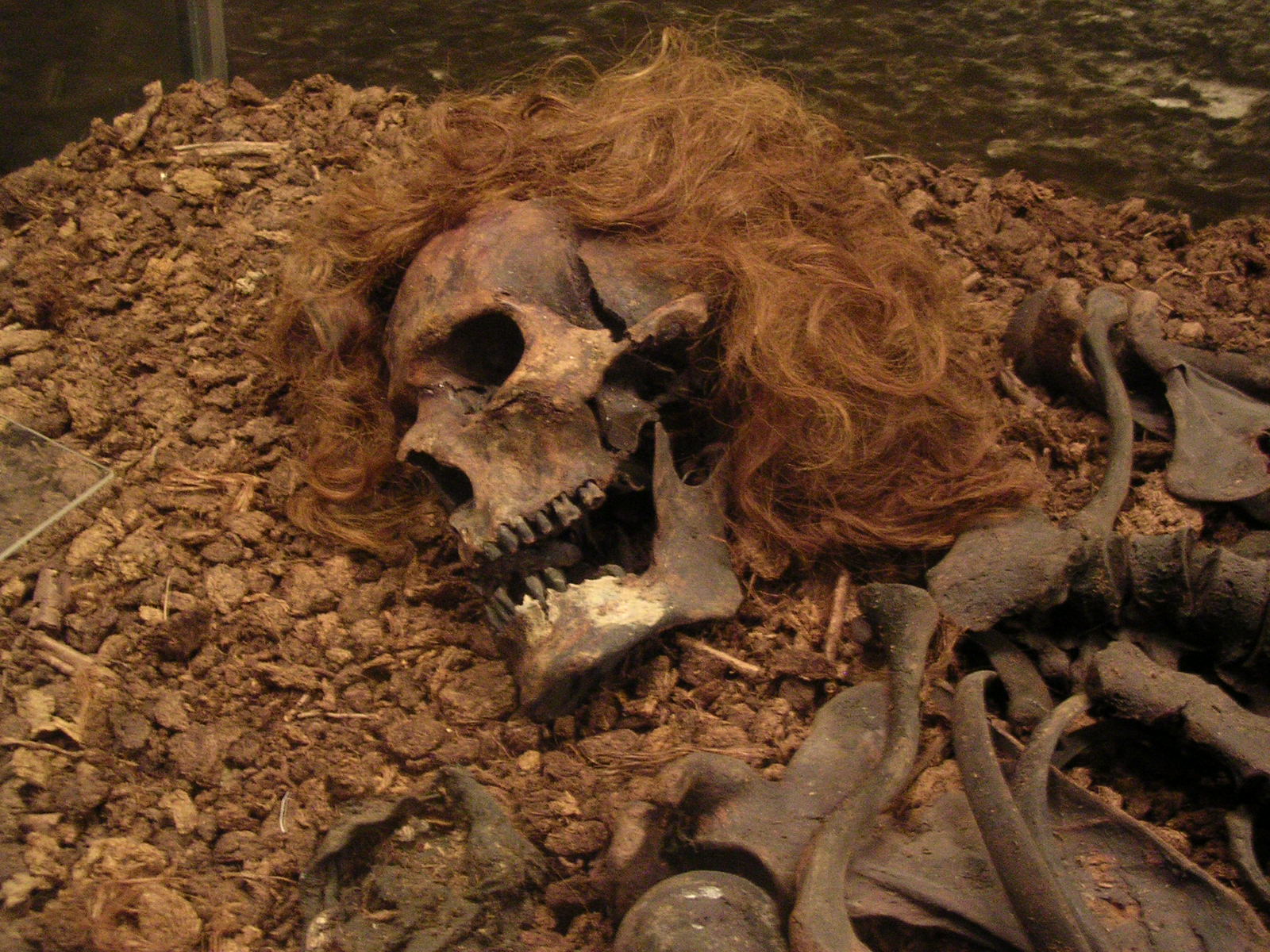
The remains of the Bocksten Man

I love a mystery. Right from childhood, I’ve been fascinated by the things we do not – and cannot – know. The quest for knowledge is human nature, but it can only be maintained so long as the unknown exists. Sometimes, this is frustrating, other times it is tantalising.

Cue: one such example…

Usually in history we know the names of people whose appearances we are left to imagine based on contemporaneous portraits or remarks made about them. But, when I discovered the story of The Bocksten Man, this was turned on its head. Here was a man who – through the wonders of forensic archaeology – we knew almost exactly what he looked like, and yet we have no idea what his name was.

My imagination was piqued!

Aside from his appearance, the one thing we do know for certain is that someone – or most likely more than one person – really didn’t like him. Aside from the blow to his head, which almost certainly killed him, he was pegged down at the bottom of the lake by two shafts, including one through the heart. It is this act which led this nameless man to become something of a celebrity 700 years later.

There are as many theories as there are theorists about who he was and why he was executed in such a way. Many of these ideas have him being a criminal, no doubt seeing it as easier to accept that he merited such an end, or as a sorcerer on a charge of witchcraft. Both these seem unlikely to me, as he was clearly well-cared for and appears to have had all the benefits of a backing from the Roman Catholic church. The only theory which stars him as an antagonist which I deem likely (just playing a game of probability, here!) is that he was discovered to be a charlatan, concealing himself behind stolen or falsely-gained clothing and belongings.
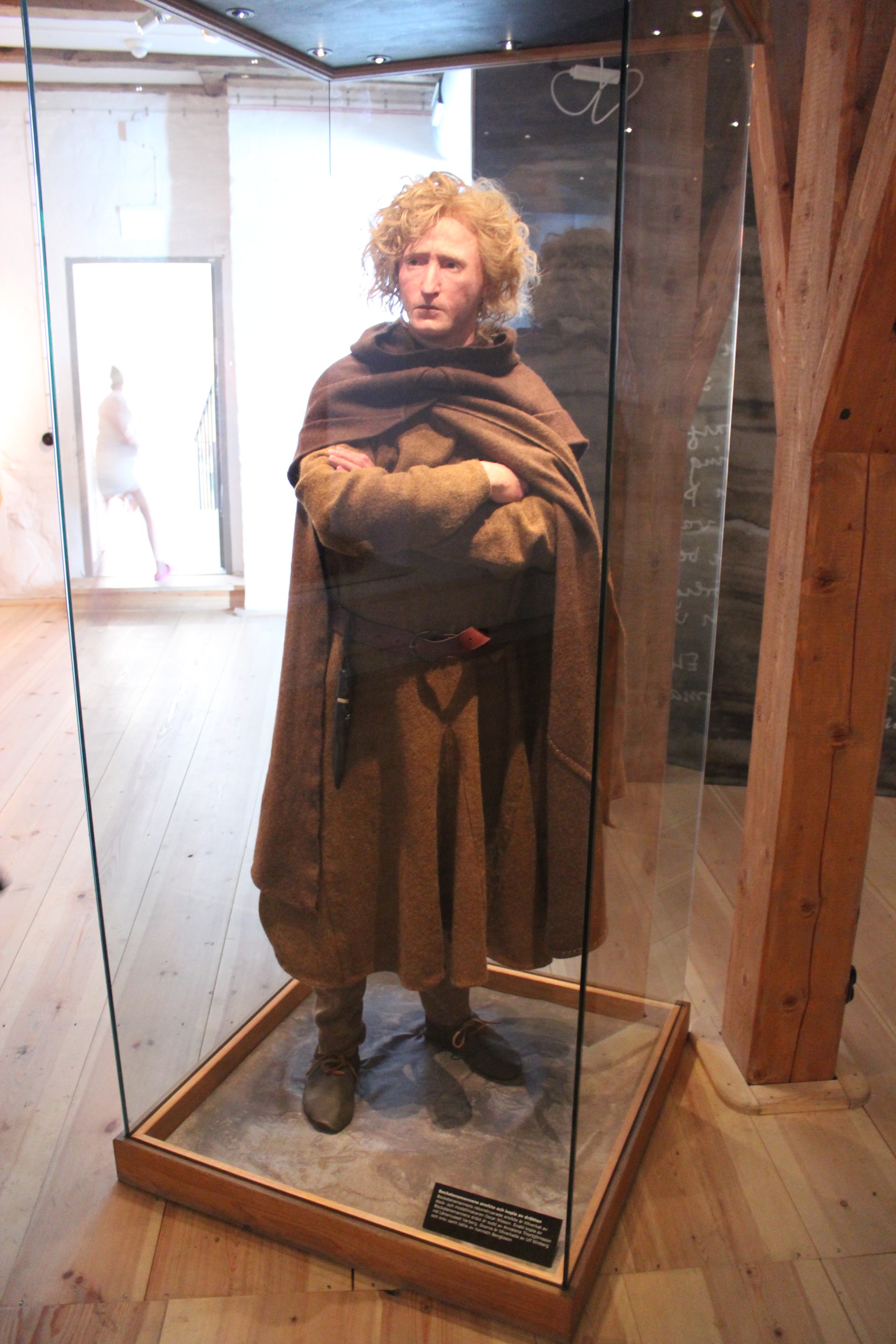
The reconstruction of the Bocksten Man

But I did not like the thought of him going to this watery grave without having someone to speak for him, albeit a few centuries too late. I’m a sucker for an underdog, and it was time to help him emerge from the shame of some of these theories. This is where his nameless status became a very handy tool. Usually I dislike writing real historical figures as so many people have preconceived ideas about them, so I have to invent my own characters to brush shoulders with the greats of history, tucking them in to various mysteries throughout the ages. But The Bocksten Man was the perfect balance between reality and possibility. How could any writer resist?

I’m not going to tell you the story I created for him – you’ll have to read it in the anthology! – but I would love to know your theories about him. Better still, write him as you think he would have been. Whoever he was, he had an adventure, and isn’t that what we all look for in our stories? A fellow author wrote to me and said: you’ve got to love a bog body, and he was absolutely right!

You can find out all about The Bocksten Man through the Halland Kulturhistoriska Museum: https://museumhalland.se/en/the-bocksten-man/

Images:

The Remains of The Bocksten Man (Peter Lindberg, https://creativecommons.org/licenses/by/2.0, via Wikimedia Commons); The Reconstruction of The Bocksten Man (Toxophilus, https://creativecommons.org/licenses/by-sa/4.0, via Wikimedia Commons)

About the book:
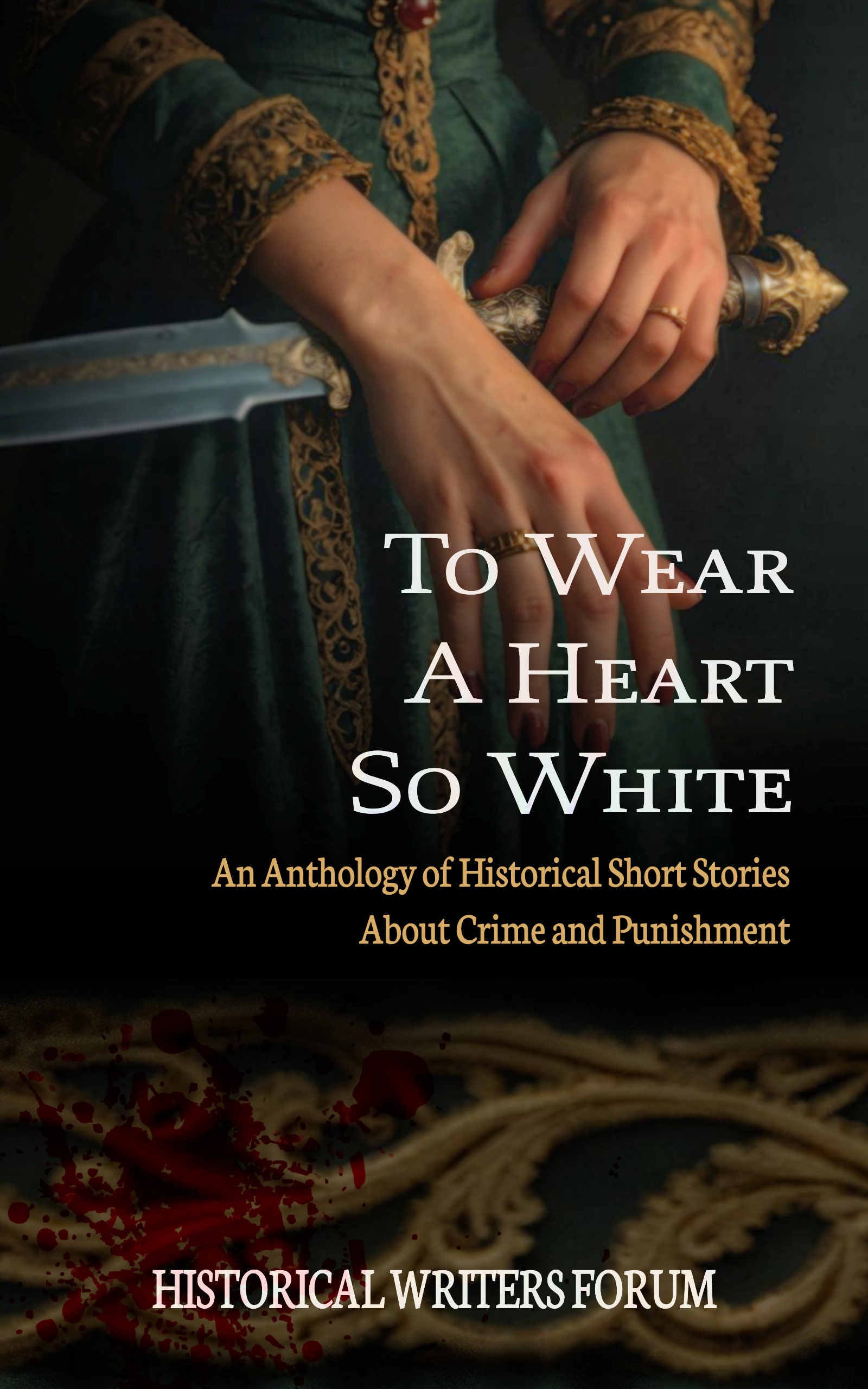
To Wear A Heart So White: An Anthology of Historical Short Stories About Crime and Punishment

A cost for every action, and a price for every deed.

The Historical Writers’ Forum proudly presents seven stories of Crime and Punishment, from across the ages. From an anchoress to a war hero; from Italy to Missouri; this anthology has a story for everyone.

Included stories are:

The Ignoble Defence – Virginia Crow

Agatha’s Eyes – Rachel Aanstad

A Pact Fulfilled – Eleanor Swift-Hook

Carte de Viste – Ronan Beckman

A Dish Served Cold – Brenda W. Clough

Shadows of the Adriatic – Tessa Floreano

A Dangerous Road – D. Apple

Click here to Buy the book: To Wear A Heart So White: An Anthology of Historical Short Stories About Crime and Punishment
About the Author:
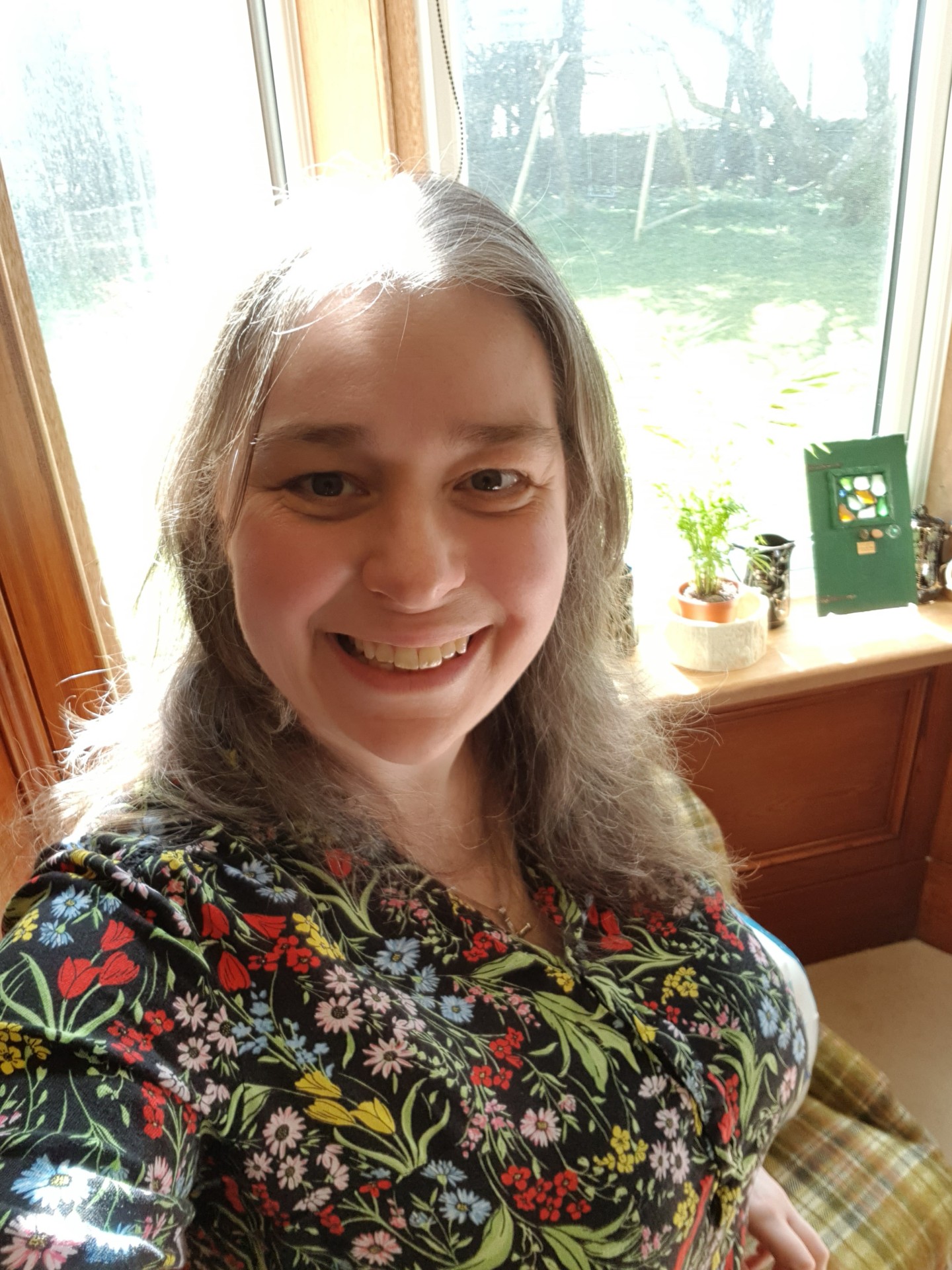
Virginia Crow is an award-winning author of historical fiction. Her writing borders on the edge of reality, challenging the beliefs and superstitions of bygone days.

She lives in Caithness, where her life is dictated by Orlando and Jess, her two spaniels.

*

My Books:

Signed, dedicated copies of all my books are available through my online bookshop.

Coming 30 January 2025: Scotland’s Medieval Queens
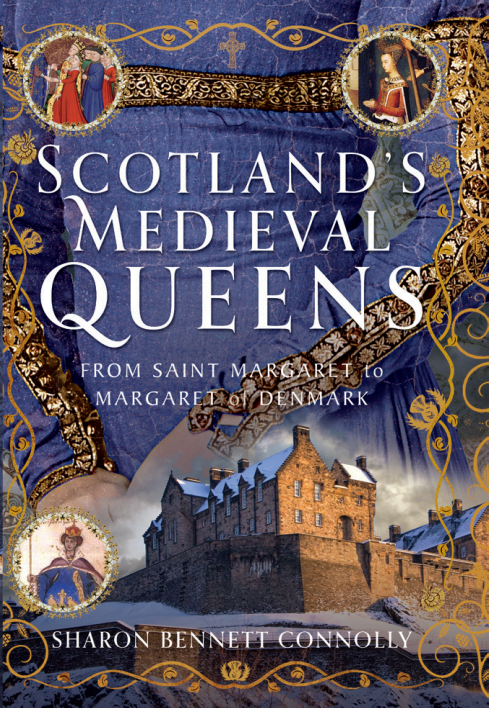
Scotland’s history is dramatic, violent and bloody. Being England’s northern neighbour has never been easy. Scotland’s queens have had to deal with war, murder, imprisonment, political rivalries and open betrayal. They have loved and lost, raised kings and queens, ruled and died for Scotland. From St Margaret, who became one of the patron saints of Scotland, to Elizabeth de Burgh and the dramatic story of the Scottish Wars of Independence, to the love story and tragedy of Joan Beaufort, to Margaret of Denmark and the dawn of the Renaissance, Scotland’s Medieval Queens have seen it all. This is the story of Scotland through their eyes.

Available for pre-order now.

Also by Sharon Bennett Connolly:
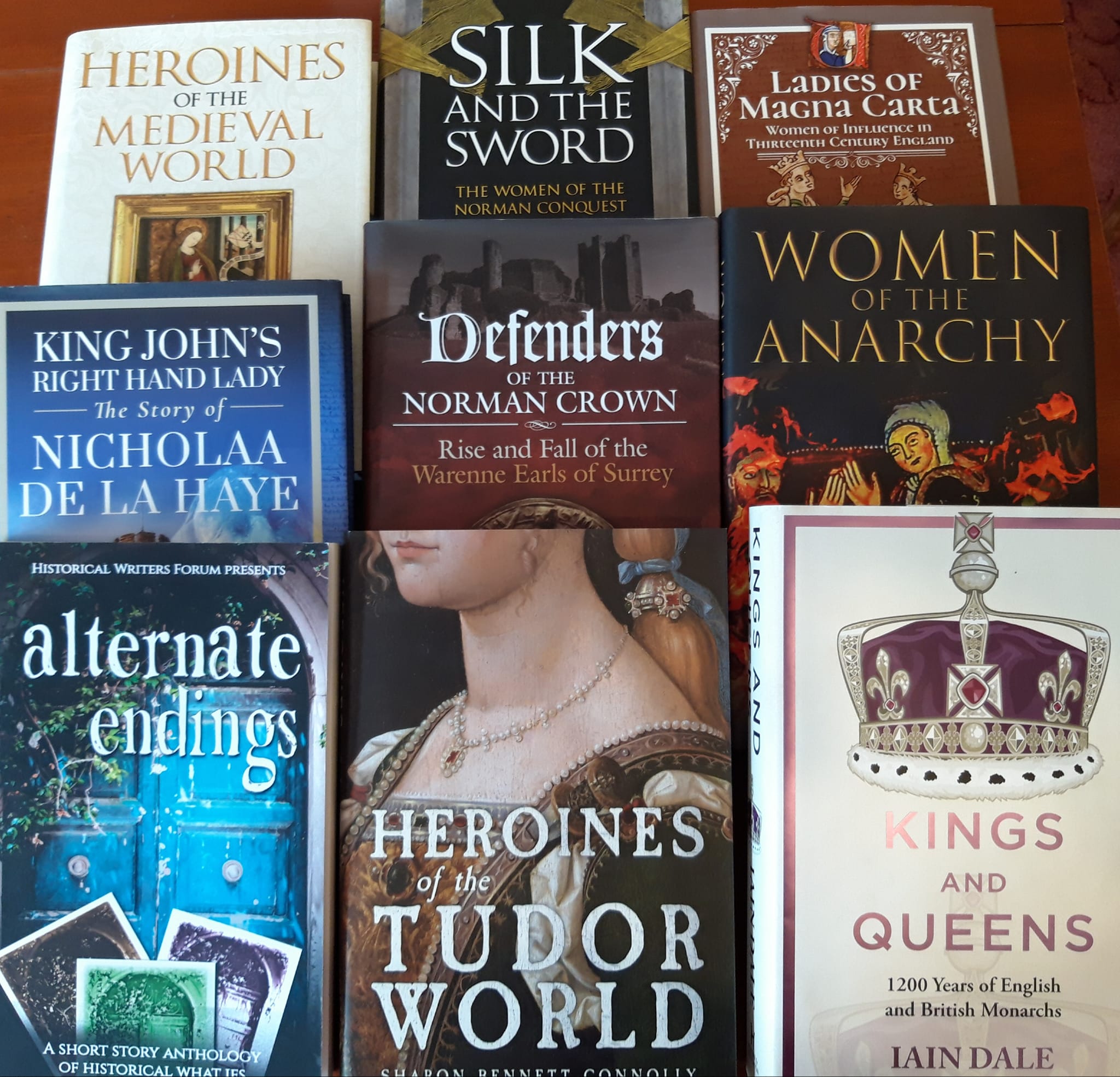
Heroines of the Tudor World tells the stories of the most remarkable women from European history in the time of the Tudor dynasty, 1485-1603. These are the women who ruled, the women who founded dynasties, the women who fought for religious freedom, their families and love. Heroines of the Tudor World is now available for pre-order from Amberley Publishing and Amazon UK. Women of the Anarchy demonstrates how Empress Matilda and Matilda of Boulogne, unable to wield a sword themselves, were prime movers in this time of conflict and lawlessness. It shows how their strengths, weaknesses, and personal ambitions swung the fortunes of war one way – and then the other. Available from Bookshop.orgAmberley Publishing and Amazon UKKing John’s Right-Hand Lady: The Story of Nicholaa de la Haye is the story of a truly remarkable lady, the hereditary constable of Lincoln Castle and the first woman in England to be appointed sheriff in her own right. Available from all good bookshops Pen & Sword Booksbookshop.org and Amazon

Defenders of the Norman Crown: The Rise and Fall of the Warenne Earls of Surrey tells the fascinating story of the Warenne dynasty, from its origins in Normandy, through the Conquest, Magna Carta, the wars and marriages that led to its ultimate demise in the reign of Edward III. Available from Pen & Sword BooksAmazon in the UK and US, and Bookshop.orgLadies of Magna Carta: Women of Influence in Thirteenth Century England looks into the relationships of the various noble families of the 13th century, and how they were affected by the Barons’ Wars, Magna Carta and its aftermath; the bonds that were formed and those that were broken. It is now available in paperback and hardback from Pen & SwordAmazon, and Bookshop.orgHeroines of the Medieval World tells the stories of some of the most remarkable women from Medieval history, from Eleanor of Aquitaine to Julian of Norwich. Available now from Amberley Publishing and Amazon, and Bookshop.orgSilk and the Sword: The Women of the Norman Conquest traces the fortunes of the women who had a significant role to play in the momentous events of 1066. Available now from Amazon,  Amberley Publishing, and Bookshop.org.

Alternate Endings: An anthology of historical fiction short stories including Long Live the King… which is my take what might have happened had King John not died in October 1216. Available in paperback and kindle from Amazon.

Podcast:
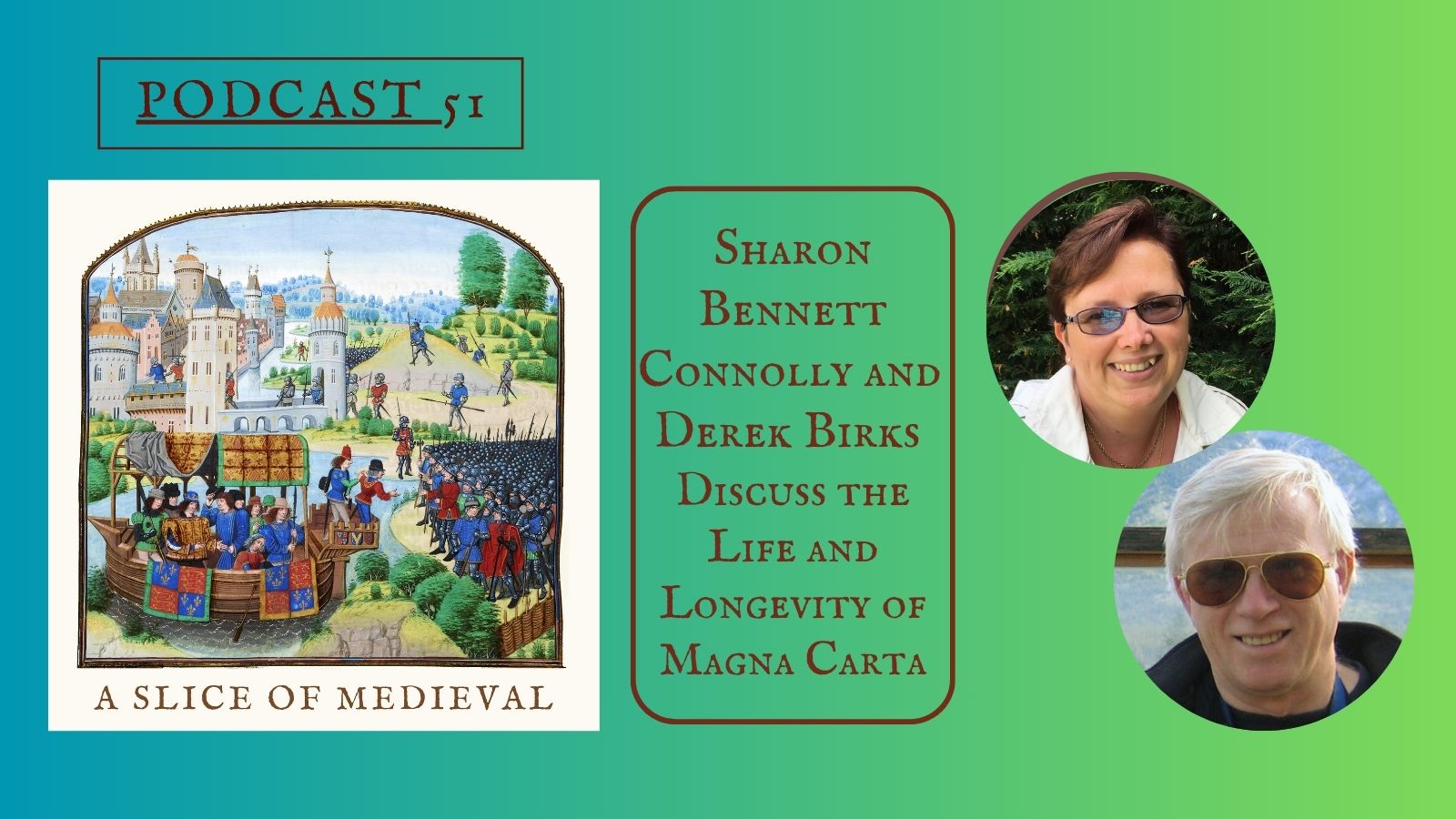
Have a listen to the A Slice of Medieval podcast, which I co-host with Historical fiction novelist Derek Birks. Derek and I welcome guests, such as Bernard Cornwell, and discuss a wide range of topics in medieval history, from significant events to the personalities involved.

*

Don’t forget! Signed and dedicated copies of all my books are available through my online bookshop.

For forthcoming online and in-person talks, please check out my Events Page.

You can be the first to read new articles by clicking the ‘Follow’ button, liking our Facebook page or joining me on TwitterThreadsBluesky and Instagram.

©2024 Sharon Bennett Connolly FRHistS and Virginia Crow

Guest Post: The Ambassadress by Ronan Beckman

The Historical Writers Forum have released a new Anthology of short stories. You may remember that last year’s Anthology, Alternate Endings, included a short story about the final days of King John, by me! This year’s Anthology, Masterworks: Historical Fiction Inspired by Works of Art, will make you look at some famous artworks a little differently…

Today, I am joined by one of the contributors, Ronan Beckman, whose story is inspired by Emma Hamilton. Over to Ronan…

Do you remember what got you hooked onto a specific time period or aspect of history? I had just finished reading Amanda Foreman’s excellent biography Georgiana, The Duchess of Devonshire , which resulted in my addiction to everything about the Georgian-era but especially to women’s history in that time. Often relegated to the sidelines of history, Georgian times allowed women to begin to step into the spotlight – albeit in very slow, tiny steps. I began to voraciously read biographies of prominent ladies of that time. And one story that truly stood out for me was the life of a blacksmith’s daughter from Cheshire born as Amy Lyon. But the world knows her better as Emma, Lady Hamilton; lover of Admiral Nelson. Flora Fraser’s Beloved Emma laid out the incredible story of the amazing transformation of this pretty young woman into one of the most talked about celebrities of her age.

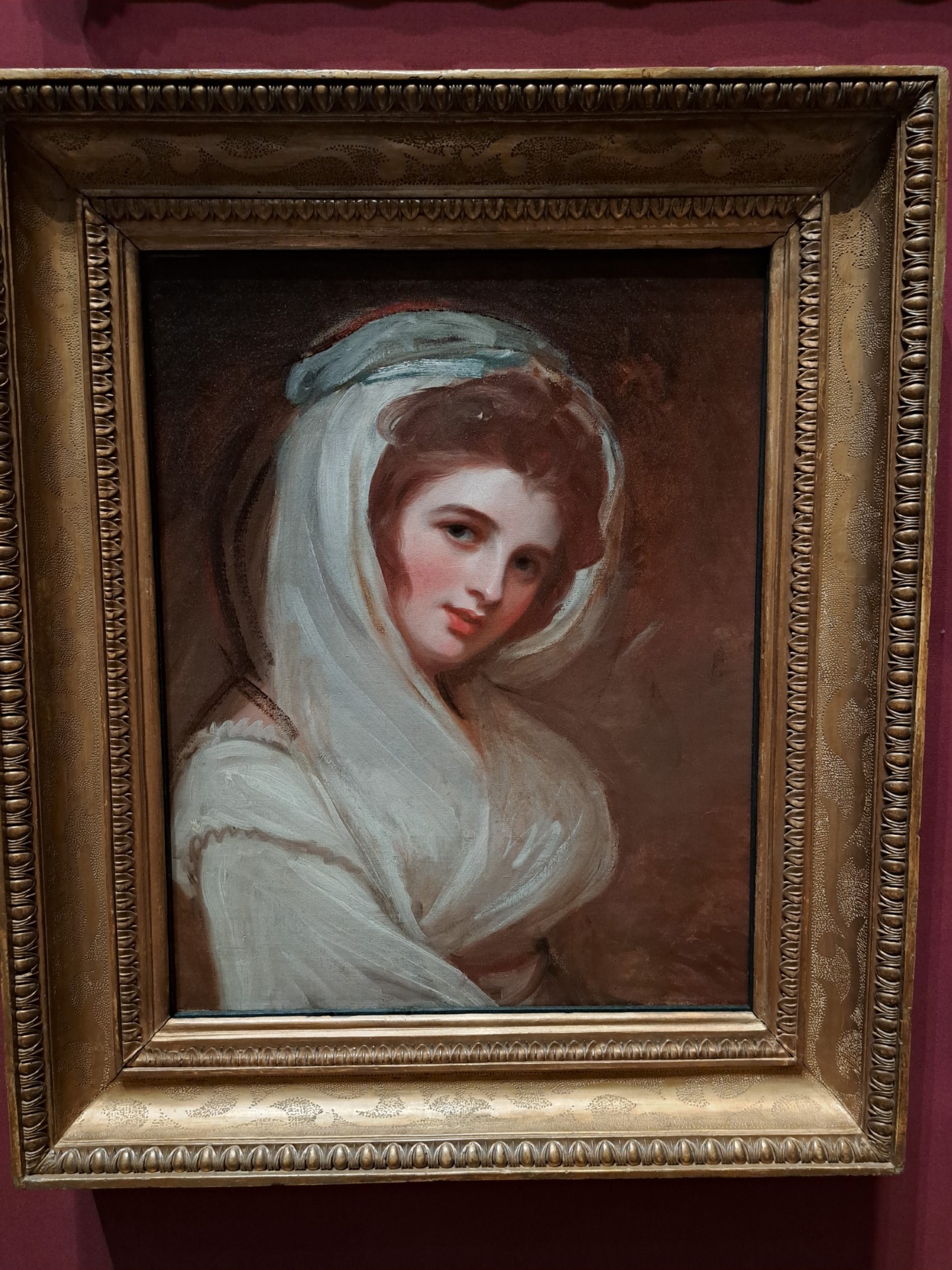
Portrait of Emma Hamilton by George Romney

Several years later, The National Maritime Museum in London put together a fabulous exhibition entitled Seduction & Celebrity that explored Emma Hamilton’s rise and fall, from beginning to end. One of the most noticeable aspects of the show was that there was ample material to display, primarily from one particular artist. George Romney was one of the most prominent society portrait painters of the late Georgian period. Although his talent was comparable to his well-respected contemporaries, such as Joshua Reynolds, Thomas Gainsborough and John Hoppner; he refused to participate in the antics associated with the Royal Academy of Arts and their annual exhibitions. Artists would become fiercely competitive as they all vied for the most prominent places within the show, hoping that their works would stand out from the rest. Romney wanted no part of this circus, and relied on his talent and reputation to gain custom amongst his wealthy clients. This worked out well for him, and he had no shortage of sitters. However, the tedium of producing staid portraiture of the elite classes began to prove tiresome.

How fortunate for Romney then that a customer, Sir Charles Greville, brought in a secret mistress that he had ensconced away in a humble, rural cottage in nearby Edgeware. The 16 year-old Amy Lyon had already experienced several tragedies in her young life; having found herself pregnant by another aristocratic man, Sir Henry Fetherstonhaugh, who promptly abandoned her. Greville came to the rescue, but on the proviso that she gave her baby away, living a life of thrift and economy whilst being at his beck and call. She had no room to negotiate and was grateful for this second chance. Greville sought to have her beauty be captured and admired on canvas, for him to be able to display to his friends. In effect, he wanted to boast “This heavenly goddess is mine, and you cannot even see her in the flesh. Don’t you envy me?”

Emma Hart by Romney

Romney was immediately enchanted by the charisma and stunning beauty of the newly renamed Emma Hart. Her presence reinvigorated his artwork. They embarked on a creative partnership that resulted in Romney’s finest and most creative output. In return, Emma was portrayed in various guises for posterity. She had to reinvent herself for each sitting, becoming a mythological creature or some historic character from long ago. Emma sat for dozens of paintings by Romney. She was his muse, allowing him to explore his craft beyond the confines of standard portraiture. Greville was happy to loan her modelling services to Romney, for it was increasing the value of his ‘ward’ that he had saved from a certain life of penury. Engravings had been made of some of Romney’s paintings, affording a glimpse of her allure to a wider audience. As her image was circulated, there was an increasing curiosity aroused throughout the capital city. Who was this charming being?

The drip-feed of artistic content provided opportunities for both Romney and Emma. Romney’s reputation and name was further advanced as well as inspiring his art to reach new levels of creativity. Emma became what may well be the very first Supermodel – a celebrity whose fame and notoriety was constantly on an upward trajectory. It seems apparent that Romney became infatuated with Emma. And perhaps Emma appreciated the advice and friendship of a man outside of the realm of the Ton, but who knew of the inner workings and mindset of the Upper Class who made up his clientele.

But this fame and notoriety was not appealing to Sir Charles Greville, who was seeking a wealthy heiress to supplement his dwindling finances. Being saddled with an infamous beauty as a mistress would not make him very appealing as a suitor to the respectable ladies that he wanted to pursue. Therefore, he duped Emma into travelling to Naples, to visit his uncle who was the serving British ambassador there. He had offered her to his uncle as a mistress, without her consent or knowledge. This separation severed the symbiotic artistic relationship between Emma and Romney for several years. Romney, who was prone to depression, was affected by her absence deeply. Although furious with Greville for abandoning her, Emma did make the best of her situation – enjoying her time in the royal court of Naples and eventually becoming quite fond of her ambassador.

In the summer of 1791, Emma returned to England to marry Sir William Hamilton and return to Naples as a respectable wife of the ambassador. During these brief few weeks, Emma reunited with her favourite artist, kick-starting a frenetic pace of artistic output as the painter and his muse were working together again. This brief slice in time intrigued me and I wanted to explore it further. I am fortunate enough to have seen many examples of Romney’s work with Emma as the model. You can feel the creative frisson embedded in these artworks. Romney’s paintings of Emma are seared with an energy that simply does not exist in his other portraits. There was something electric between these two individuals. Was it romantic? There is a feeling of magnetic attraction when one looks through Romney’s gaze in his portraits of Emma. I must say that even though Emma modelled for other great artists (Joshua Reynolds, Thomas Lawrence, Élisabeth Louise Vigée Le Brun, among many others), that spark of something special and extraordinary is just not there.

Romney self-portrait

The last painting that Romney painted of Emma was actually painted on her wedding day. Entitled The Ambassadress, the viewer is a witness to the complete transformation of Emma Hart into Lady Hamilton. As Vesuvius erupts in the dark background, one can imagine the well of emotions bursting forth from Romney’s paintbrush – being well aware that this was the last time that he would lay eyes upon the divine Emma he so cherished. Emma looks back at him, slightly pensive but very refined as she knows she is about to embark on a life of newfound respectability. There is so much wistful emotion silently conveyed in this moving portrait. What were those last moments like in Romney’s studio, as they parted ways for the final time?

The Ambassadress was the inspiration for my short story of the same name. It is one of eleven short stories in the Historical Writer Forum’s anthology entitled Masterworks. Eleven authors have written stories that have been influenced by a particular work of art. The result is a series of stories that takes the reader through time and place, from ancient Sumerian kingdoms to present day London. Available now through Amazon.

About the author:

Ronan Beckman is an American educator who has lived in the UK for over 30 years. His interest in history and genealogy helped to spark an interest in further developing the stories of some of the family he researched – resulting in his debut novel ‘An Actress of Repute’. Subsequently, he has become a bit obsessed with all things Georgian and Regency related. Further adventures are in the works for the character of Elizabeth Searle and her fellow actor friends. His latest project has been editing a transcript of a rare, out-of-print book by a Lancashire coal miner who became secretary of the TUC and a Member of Parliament. The new annotated version of Samuel Woods’ ‘Visions of the Mine’ contains biographical notes and historical images. Visit his blog at http://www.ronanbeckman.com.

*

My Books

Christmas is coming!

Signed, dedicated copies of all my books are available through my online bookshop.

Coming 15 January 2024: Women of the Anarchy

On the one side is Empress Matilda, or Maud. The sole surviving legitimate child of Henry I, she is fighting for her birthright and that of her children. On the other side is her cousin, Queen Matilda, supporting her husband, King Stephen, and fighting to see her own son inherit the English crown. Both women are granddaughters of St Margaret, Queen of Scotland and descendants of Alfred the Great of Wessex. Women of the Anarchy demonstrates how these women, unable to wield a sword, were prime movers in this time of conflict and lawlessness. It show how their strengths, weaknesses, and personal ambitions swung the fortunes of war one way – and then the other.

Available for pre-order from Amberley Publishing and Amazon UK.

Also by Sharon Bennett Connolly:

Out nowKing John’s Right-Hand Lady: The Story of Nicholaa de la Haye is the story of a truly remarkable lady. Nicholaa de la Haye was the hereditary constable of Lincoln Castle and the first woman in England to be appointed sheriff in her own right. Her strength and tenacity saved England at one of the lowest points in its history. Nicholaa de la Haye is one woman in English history whose story needs to be told…

King John’s Right-Hand Lady: The Story of Nicholaa de la Haye is now available from Pen & Sword Booksbookshop.org and Amazon.

Defenders of the Norman Crown: The Rise and Fall of the Warenne Earls of Surrey tells the fascinating story of the Warenne dynasty, of the successes and failures of one of the most powerful families in England, from its origins in Normandy, through the Conquest, Magna Carta, the wars and marriages that led to its ultimate demise in the reign of Edward III. Defenders of the Norman Crown: Rise and Fall of the Warenne Earls of Surrey is now available from Pen & Sword BooksAmazon in the UK and US, and Bookshop.org.

Ladies of Magna Carta: Women of Influence in Thirteenth Century England looks into the relationships of the various noble families of the 13th century, and how they were affected by the Barons’ Wars, Magna Carta and its aftermath; the bonds that were formed and those that were broken. It is now available in paperback and hardback from Pen & Sword,  Amazon, and Bookshop.org.

Heroines of the Medieval World tells the stories of some of the most remarkable women from Medieval history, from Eleanor of Aquitaine to Julian of Norwich. Available now from Amberley Publishing and Amazon, and Bookshop.org.

Silk and the Sword: The Women of the Norman Conquest traces the fortunes of the women who had a significant role to play in the momentous events of 1066. Available now from Amazon,  Amberley Publishing, and Bookshop.org.

Alternate Endings: An anthology of historical fiction short stories including Long Live the King… which is my take what might have happened had King John not died in October 1216. Available in paperback and kindle from Amazon.

Podcast:

Have a listen to the A Slice of Medieval podcast, which I co-host with Historical fiction novelist Derek Birks. Derek and I welcome guests, such as Bernard Cornwell, and discuss a wide range of topics in medieval history, from significant events to the personalities involved.

*

Don’t forget! Signed and dedicated copies of all my books are available through my online bookshop.

For forthcoming online and in-person talks, please check out my Events Page.

You can be the first to read new articles by clicking the ‘Follow’ button, liking our Facebook page or joining me on Twitter and Instagram.

*

©2023 Ronan Beckman and Sharon Bennett Connolly FRHistS

A Little Update

Hi all! I hope your 2022 is going well? Or as well as it can be, anyway. I though I would give you a little update on what I’ve been up to – and will be up to in the near future.

Historical Writers Forum Zoom talks programme

As you may know, I am admin for a writers’ group on Facebook, Historical Writers Forum, and last year we launched a series of history-related talks featuring both fiction and non-fiction historical authors. So far, there are 4 talks in the series and we opened with an amazing discussion between myself, Elizabeth Chadwick, Carol McGrath and Samantha Wilcoxson, entitled Writing History in Fiction: Getting the Balance Right. This was followed by A Good Fight: Writing Battles in Historical Fiction, featuring authors SJA Turney, Derek Birks, Lynn Bryant and Paula Lofting. And then we hosted a book launch for Historical Writers’ Forums new anthology of short stories, Hauntings: an Anthology, which includes works from SJA Turney, Samantha Wilcoxson, Paula Lofting, Kate Jewell, KS Barton, Lynn Bryant, Jennifer C. Wilson and introducing Danielle Apple. There’s also a foreword by myself. The Hauntings Book Launch brought all the authors face to face for the first time, if virtually, and gave them the opportunity to discuss the inspirations behind their stories. If you haven’t read the book yet, I recommend you do – it is replete with thoughtful, intelligent historical fiction stories that stretch out the suspense.

Kicking off our 2022 Zoom Talks series was Aelfgyva: the Mysterious Woman in the Bayeux Tapestry. Hosted by Samantha Wilcoxson, authors Patricia Bracewell, myself, Paula Lofting and Carol McGrath will debated the various candidates for the identity of Aelfgyva: Was she the ravaged nun? The sister of a Norman duke? Daughter of a powerful English earl? Concubine of King Cnut? Or the twice-crowned English queen? And what fun it was! A fabulous, energetic discussion about the possibilities – please do take a look.

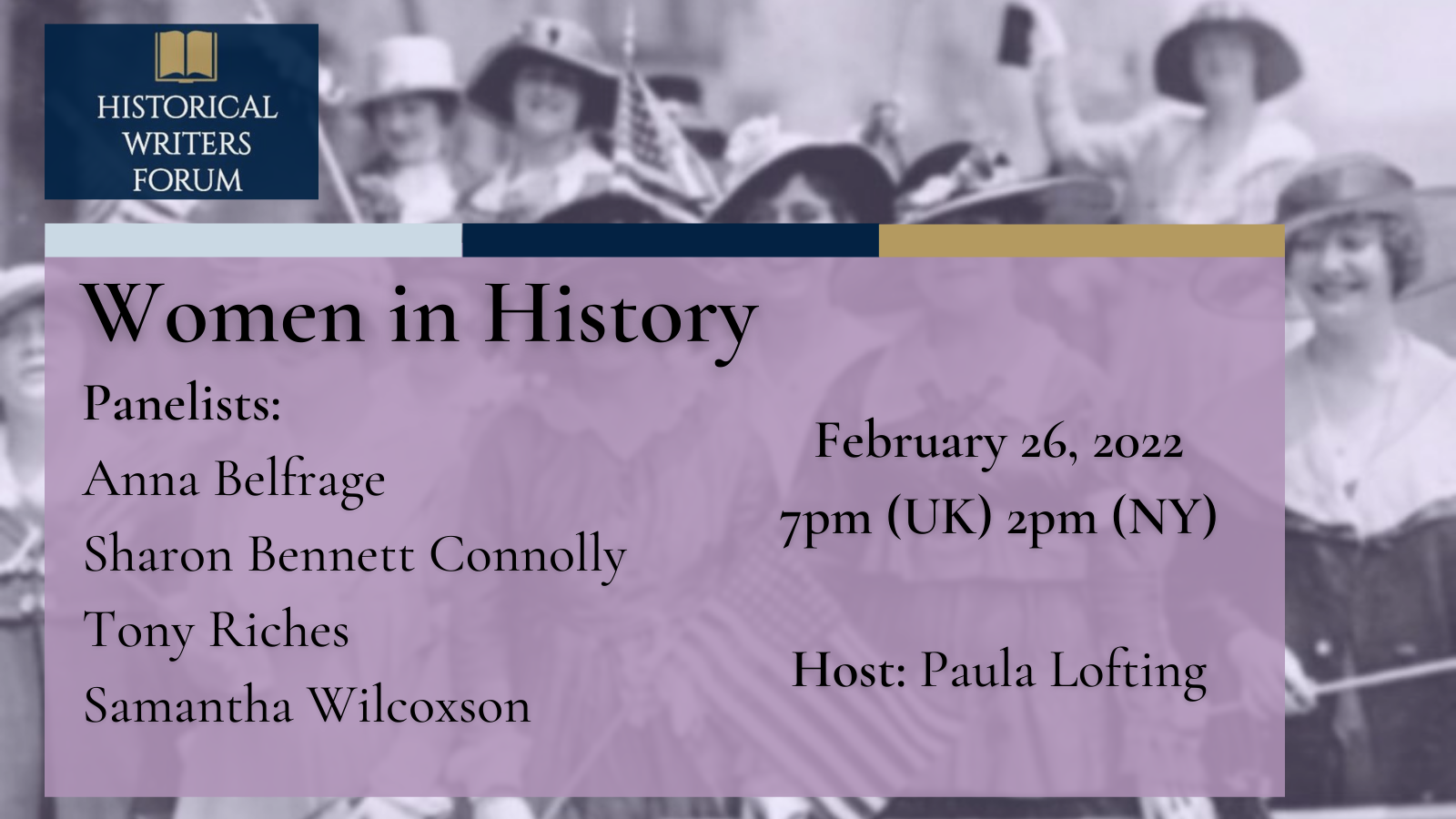
Historical Writers Forum continues its programme of talks this year, with one for Women’s History Month on 26 February 2022 at 7pm (UK time). Hosted by Paula Lofting, authors Tony Riches, Sharon Bennett Connolly, Samantha Wilcoxson and Anna Belfrage will discuss Women in History: a lively discussion, followed by an audience Q & A, on researching and writing about Women in History. Tickets are free and available through Eventbrite, so do come along if you can! If you can’t make it on the evening, don’t worry, the discussion will be uploaded to our YouTube Channel by 28 February (I hope!).

Podcasts

In 2021 I also made my first forays into podcasts, talking to Khaki Malarkey about the Ladies of Magna Carta: Women of Influence in Thirteenth Century England in March and in December I spoke to the Tudors Dynasty podcast about the life of Katherine Willoughby, Duchess of Suffolk, the Tudor heiress who was the fourth and last wife of Henry VIII’s best friend, Charles Brandon. In January, I giggled my way through a chat with Zack White and Alexandra Churchill from History Hack about the Ladies of Magna Carta. We somehow managed to compare King John to Napoleon – or Napoleon to King John – and decided Ela of Salisbury was awesome! Listen here!

My latest podcast has gone live today, with me chatting with Matthew Lewis over at Gone Medieval, discussing my favourite medieval family – the Warenne Earls of Surrey. We talk about my fascination for the Warennes, the events they were involved in, their remarkable strength as a family and how one disastrous marriage caused their demise. Listen here!

Women’s History Month Talks

To celebrate Women’s History Month this March, I will be presenting two online talks for Heritage Lincolnshire via Zoom.

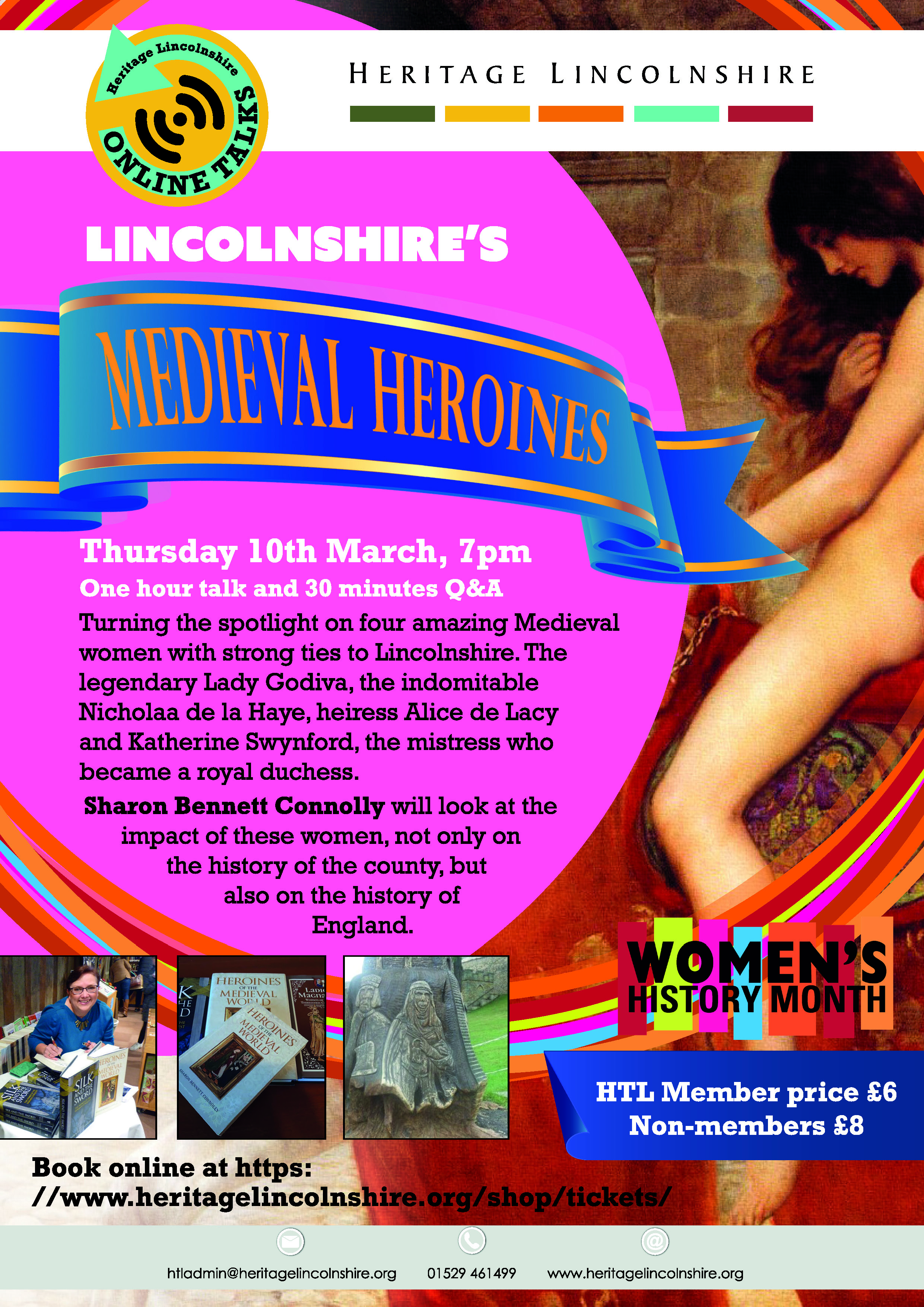
I can tell you about the 2 online talks I will be doing for Heritage Lincolnshire in March, to celebrate Women’s History Month. The first, Lincolnshire’s Medieval Heroines, will include the legendary Lady Godiva, the indomitable Nicholaa de la Haye, heiress Alice de Lacy and Katherine Swynford, the mistress who became a royal duchess. It will be a Zoom talk on 10 March at 7pm.

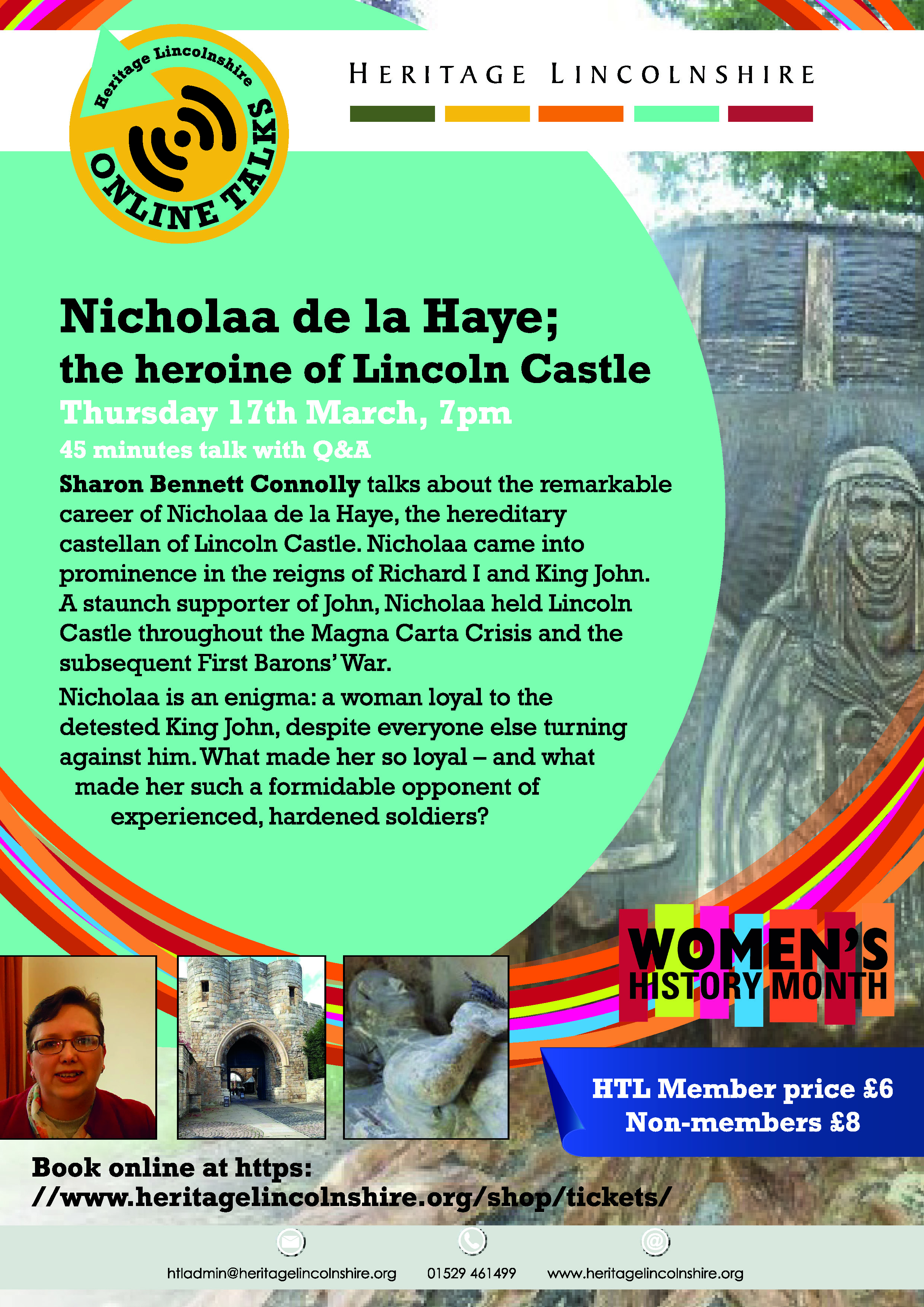
The second talk is, as you may have guessed, on my favourite subject, Nicholaa de la Haye, the Heroine of Lincoln Castle and will by via Zoom on 17 March at 7pm. The remarkable Nicholaa de la Haye held Lincoln Castle in no less than 3 sieges during the reigns of Richard I and King John – the last was a 6-week siege, ended by the 1217 Battle of Lincoln when Nicholaa was in her 60s. She was the first woman to be appointed sheriff in her own right.

Tickets for both are available now and are £6 for members and £8 for non-members.

Unfortunately, these talk will not be recorded for later viewing, so please do come along on the night if you can. It would be great to see you! To reserve a place, book here!

*

My Books

Signed, dedicated copies of all my books are available, please get in touch by completing the contact me form.

Defenders of the Norman Crown: The Rise and Fall of the Warenne Earls of Surrey tells the fascinating story of the Warenne dynasty, of the successes and failures of one of the most powerful families in England, from its origins in Normandy, through the Conquest, Magna Carta, the wars and marriages that led to its ultimate demise in the reign of Edward III. Defenders of the Norman Crown: Rise and Fall of the Warenne Earls of Surrey is now available from Pen & Sword BooksAmazon in the UK and US, Bookshop.org and Book Depository.

1 family. 8 earls. 300 years of English history!

Also by Sharon Bennett Connolly:

Ladies of Magna Carta: Women of Influence in Thirteenth Century England looks into the relationships of the various noble families of the 13th century, and how they were affected by the Barons’ Wars, Magna Carta and its aftermath; the bonds that were formed and those that were broken. It is now available in paperback and hardback from Pen & Sword,  AmazonBookshop.org and from Book Depository worldwide.

Heroines of the Medieval World tells the stories of some of the most remarkable women from Medieval history, from Eleanor of Aquitaine to Julian of Norwich. Available now from Amberley Publishing and Amazon, Bookshop.org and Book Depository.

Silk and the Sword: The Women of the Norman Conquest traces the fortunes of the women who had a significant role to play in the momentous events of 1066.  Available now from Amazon,  Amberley Publishing, Bookshop.org and Book Depository.

*

You can be the first to read new articles by clicking the ‘Follow’ button, liking our Facebook page or joining me on Twitter and Instagram.

©2022 Sharon Bennett Connolly

Jolabokaflod – the Christmas Giveaway

Competition Closed

And the winner is …. Sue Barnard.

Thank you to everyone who entered. If you do get a copy of any of my books, either for yourself or others, please get in touch via the ‘contact me’ page and I will send you out a signed book plate to pop in the front.

My very best wishes for a wonderful Christmas and amazing New Year!

It is my pleasure to be the one to kick of the Historical Writers’ Forum Christmas Advent Blog Hop. And what better way to celebrate the end of 2020 with a book giveaway or special offer for practically every day of advent – so be sure to follow the blog hop through our Facebook page.

You could be a winner!

This year we are celebrating with Jolabokaflod as our Christmas blog hop theme! If you are not familiar with Jolabokaflod, it is the wonderful Icelandic tradition of giving books as gifts on Christmas Eve – except we are doing it for Advent.

And my contribution to Jolabokaflod is a signed paperback copy of my first book, Heroines of the Medieval World – either for yourself or as a gift for a friend or loved one – the dedication is entirely up to you!

Heroines of the Medieval World Giveaway!

Heroines of the Medieval World looks at the lives of the women who broke the mould: those who defied social norms and made their own future, consequently changing lives, society and even the course of history. Some of the women are famous, such as Eleanor of Aquitaine, who was not only a duchess in her own right but also Queen Consort of France through her first marriage and Queen Consort of England through her second, in addition to being a crusader and a rebel. Then there are the more obscure but no less remarkable figures such as Nicholaa de la Haye, who defended Lincoln Castle in the name of King John, and Maud de Braose, who spoke out against the same king’s excesses and whose death (or murder) was the inspiration for a clause in Magna Carta. Women had to walk a fine line in the Middle Ages, but many learned to survive – even flourish – in this male-dominated world. Some led armies, while others made their influence felt in more subtle ways, but all made a contribution to their era and should be remembered for daring to defy and lead in a world that demanded they obey and follow.

The Jolabokaflod Giveaway!

The giveaway is a signed and dedicated – for you or someone you love – paperback copy of my first book, Heroines of the Medieval World. The giveaway is open worldwide – and I will do my best to get the book to you in time for the big day, wherever you are.

Here is a taster:

From Chapter 3: Medieval Mistresses

The most successful of mistresses must be Katherine Swynford, the one mistress who defied the odds and eventually married her man, thus spawning a multitude of novels and love stories. Katherine was born around 1350; she was the younger daughter of Sir Payn Roelt, a Hainault knight in the service of Edward III’s queen, Philippa of Hainault, who eventually rose to be Guyenne King of Arms. Unfortunately, the identity of her mother has never been established, not an unusual situation when you think Katherine was born to an obscure knight and her significance only became evident later in life. Katherine and her older sister, Philippa,
appear to have been spent their early years in Queen Philippa’s household. Philippa de Roelt (or Rouet) joined the household of Elizabeth de Burgh, wife of Lionel of Antwerp, where she met her future husband, the literary giant of his age, Geoffrey Chaucer.

By 1365 Katherine was serving Blanche, Duchess of Lancaster, the first wife of John of Gaunt. John was the third surviving son of Edward III and Queen Philippa, and had married Blanche, co-heiress of Henry of Grosmont, Duke of Lancaster, in 1359. Soon after joining Blanche’s household, Katherine was married to Sir Hugh Swynford of Coleby and Kettlethorpe, Lincolnshire. Sir Hugh was a knight and tenant of John of Gaunt, who would serve with his lord on campaigns in 1366 and 1370. The couple had two children, Thomas and Blanche, who was named after the duchess. John of Gaunt stood as little Blanche’s godfather and she was raised alongside his own daughters by Duchess Blanche. Following the duchess’s death in September 1368, Katherine became governess to the duke’s three children: Elizabeth, Philippa and Henry. Three years after the death of Blanche, in September 1371, John married again, this time to a Spanish princess, Constance of Castile, the daughter of Pedro the Cruel, King of Castile, and Maria de Padilla, the king’s concubine-turned-wife. The marriage was a dynastic move, with Constance being heiress to the kingdom of Castile there was a distinct chance of John becoming King of Castile, if only John could wrest it from her father’s killer and illegitimate brother, Henry of Trastámara. From January 1372, he assumed the title of King of Castile and Leon, though in name only as he was never able
to consolidate his position.

Shortly after the marriage of John and Constance, in November 1371, Sir Hugh Swynford died while serving overseas, leaving Katherine a widow with two very young children; the youngest was probably less than two years old. It was not long after Sir Hugh’s death that Katherine became John of Gaunt’s mistress; although some sources suggest the couple were lovers even before Sir Hugh’s death, which has brought into question the paternity of Katherine’s eldest son by John of Gaunt. However, the majority of historians agree the relationship between John and Katherine started in late 1371 or early 1372 and was developing well in the spring of that year, when Katherine received rewards and a significant increase in her status within Gaunt’s household….

It’s easy to enter!

The competition is open to everyone, wherever you are in the world. To win a signed and dedicated copy of Heroines of the Medieval World, simply leave a comment below, on the Historical Writers Forum Blog Hop Facebook Page or on my own Facebook page and I will include you in the prize draw.

The draw will be made on Sunday 6 December 2020.

Good Luck!

And don’t forget to follow the rest of the blog hop!

Dec 4th Alex Marchant; Dec 5th Cathie Dunn; Dec 6th Jennifer C Wilson; Dec 8th Danielle Apple; Dec 9th Angela Rigley; Dec 10th Christine Hancock; Dec 12th Janet Wertman; Dec 13th Vanessa Couchman; Dec 14th Sue Barnard; Dec 15th Wendy J Dunn; Dec 16th Margaret Skea; Dec 17th Nancy Jardine; Dec 18th Tim Hodkinson; Dec 19th Salina Baker; Dec 20th Paula Lofting; Dec 21st Nicky Moxey; Dec 22nd Samantha Wilcoxson; Dec 23rd Jen Black; 24th Lynn Bryant

*

My Books

Ladies of Magna Carta: Women of Influence in Thirteenth Century England  looks into the relationships of the various noble families of the 13th century, and how they were affected by the Barons’ Wars, Magna Carta and its aftermath; the bonds that were formed and those that were broken. It is now available from Pen & SwordAmazon and from Book Depository worldwide.

Also by Sharon Bennett Connolly:

Silk and the Sword: The Women of the Norman Conquest traces the fortunes of the women who had a significant role to play in the momentous events of 1066.  Available now from Amazon,  Amberley Publishing, Book Depository.

Heroines of the Medieval World tells the stories of some of the most remarkable women from Medieval history, from Eleanor of Aquitaine to Julian of Norwich. Available now from Amberley Publishing and Amazon and Book Depository.

*

You can be the first to read new articles by clicking the ‘Follow’ button, liking our Facebook page or joining me on Twitter and Instagram.

©2020 Sharon Bennett Connolly