Guest Post: Othon and the Templars by John Marshall

Today, it is a pleasure to welcome John Marshall to History…the Interesting Bits with an article about a very intriguing chap, Othon de Grandson. Othon was a very good friend of Edward I and one who could arguably challenge William Marshal for the title, Greatest Knight. John’s new book is a biography of this remarkable man.

So, over to John…

Othon and the Templars
History  the Interesting Bits
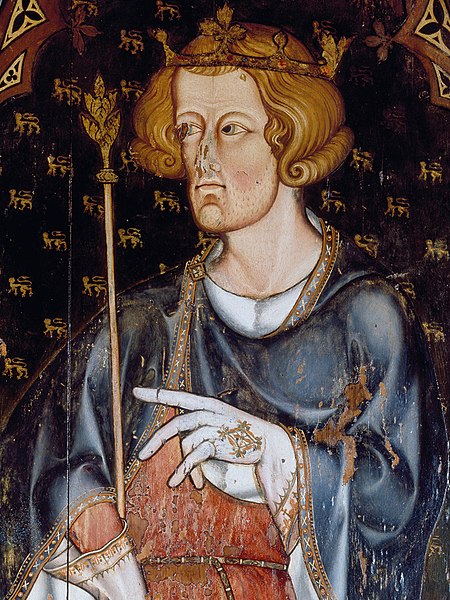
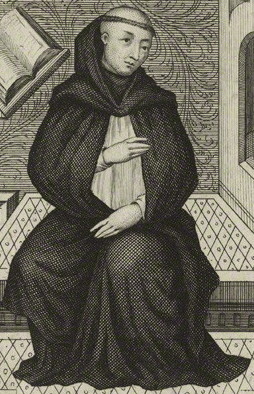
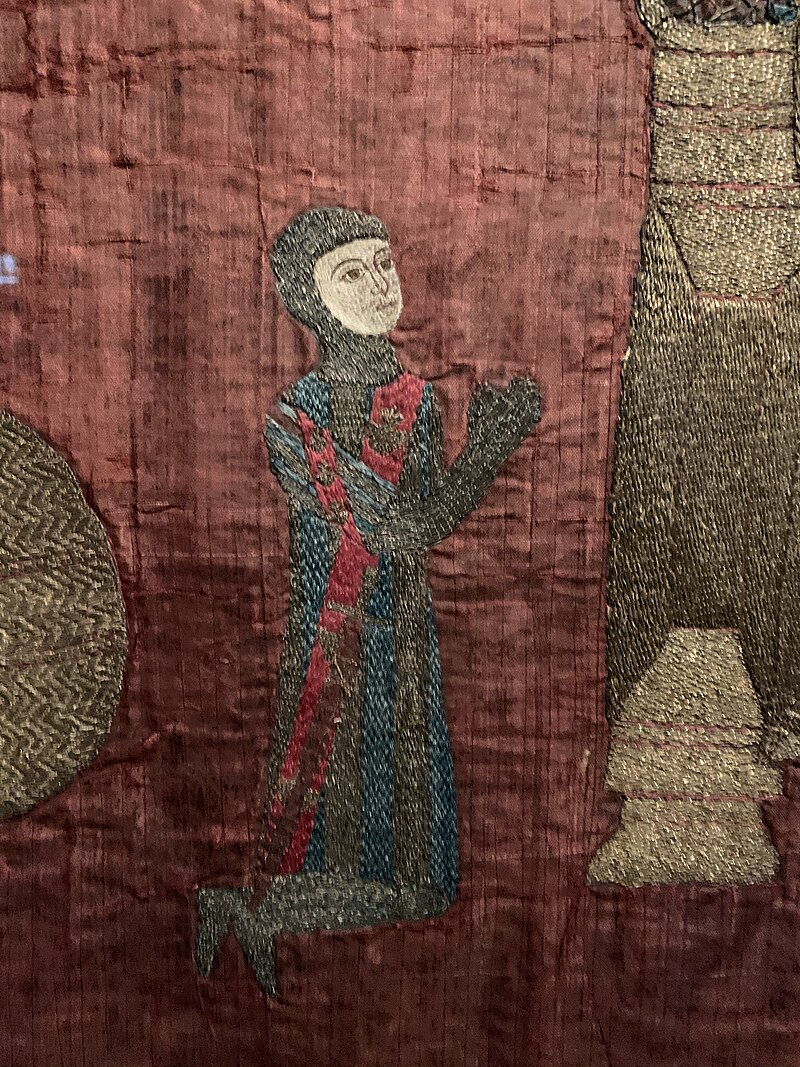
Othon de Grandson from an altar screen from the Cathedral in Lausanne now displayed in the Bern Historic Museum.

A question I asked myself in writing Othon de Grandson: Edward I’s Loyal Knight of Renown was exactly what was the Savoyard knight’s relationship with the Knights Templar? The relationship of Edward’s friend and envoy with the Poor Fellow Soldiers of Christ and of the Temple of Solomon is a long one and indeed began over a century before he was born.

Othon’s ancestor Barthélémy de Jura, treasurer of Reims, then Bishop of Laon in Picardy, was there at the very beginning of the crusader order. Barthélémy was at the 1128 Council of Troyes, chaired by Bernard of Clairvaulx which ratified the rule of the the Templars. He was a kinsman, through his mother, of Bernard of Clairvaulx, and would later retire as a monk to the Cistercian abbey he helped found at Foigny. Another ancestor was another Barthélémy who took up the cross and joined the Second Crusade. He is reported to have departed this life in Jerusalem in 1158.

So, when Othon de Grandson accompanied his liege the Lord Edward on the ninth crusade in 1271 his family was no stranger to crusading.

But the story of Othon de Grandson’s close association with the Templars begins in earnest with his flight from Acre accompanying Templar knight Jacques de Molay in 1291. Grandson had likely been sent to Acre in 1290 as preparation for a crusade by King Edward I that never came to pass. They were all overtaken by Al Ashraf Khalil, the sultan of Egypt who successfully led a Mamluk assault on the last crusader outpost in Outremer. King Henry II of Cyprus, the gravely wounded Master of the Hospitallers Jean de Villiers, the soon-to-be Master of the Templars, Jacques de Molay and Othon de Grandson washed up on the shore of Cyprus as refugees from Acre. The Templars were in need of a new Grand Master, and it is said that Othon de Grandson was “involved” in the election of Jacques de Molay.
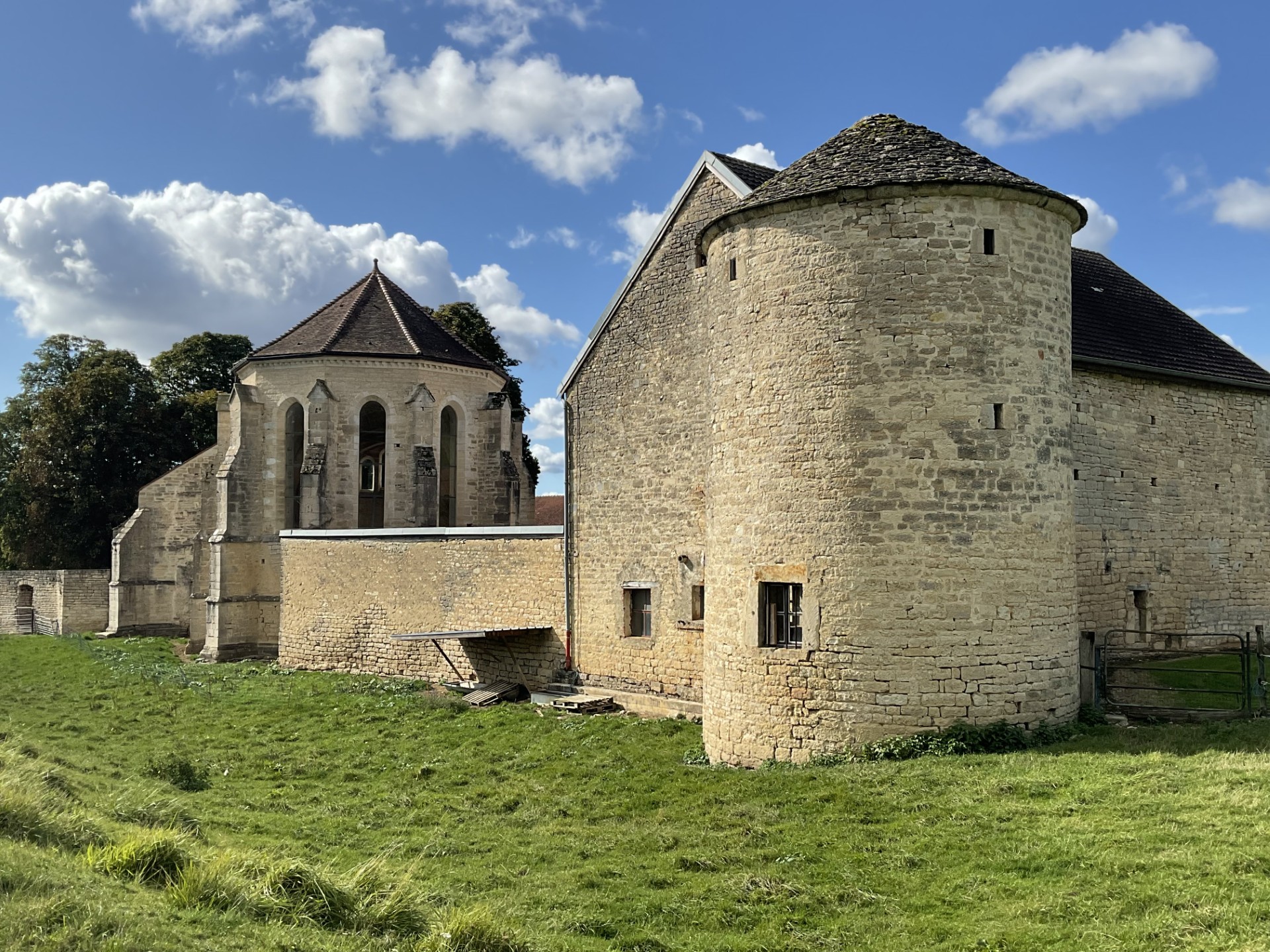
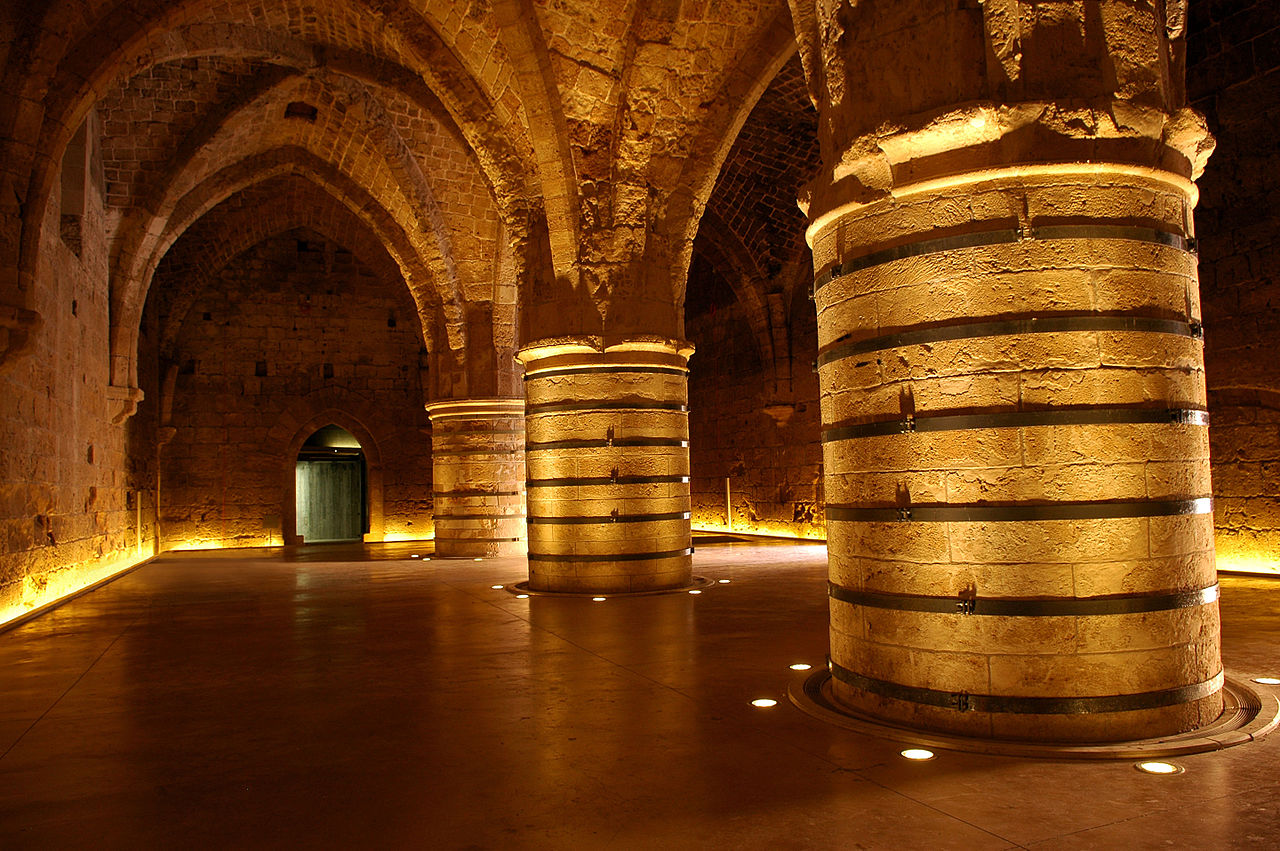
The former Templar Commanderie at Épailly in Burgundy which passed to Othon on the Templars suppression.

The idea of being ‘involved’ came from a declaration given later during the suppression of the order; a Templar, Hugh de Fauro, gave testimony that Jacques de Molay had sworn before the Master of the Hospital and ‘coram domino Odone de Grandisono milite’ that is ‘before the knight Sir Othon de Grandson.’ We then hear from Hethum of Corycus that Grandson and Jacques de Molay, had had a hand in affairs and the better reordering of the kingdom of Cillician Armenia to meet the Mamluk threat and preserve it as a base for ongoing crusading ventures. Grandson’s relationship with Molay and the Templars does seem to stem from this time at Acre, on Cyprus and in Armenian Cilicia between 1291 and 1294.

We then meet the financial entanglement of grandson with the Templars. Evidence of this comes not only from payments from the Templars to Grandson but also grants in the other direction. When both Molay and Grandson were back in the west, on 14 July 1296, Othon would grant the Templars 200 Livres from his salt revenues at Salins-les-Bains in the Franche Comté, a source of revenue he had used to similarly grant the monks of Saint-Jean Baptiste in Grandson before he had left for the

Holy Land. The first grant was in essence for prayers of safe return; the second grant looks like thanks for a safe return. The great salt works of Salins belonged to the Count of Burgundy; they were also known as the Seigneurs de Salins, and the works and its grander enlightenment era equivalent today enjoy UNESCO-listed status. The grant to the Templars was in consideration of the great help Othon had received from ‘mes chiers amis en dieu freres Jaques de Molai’, that is, ‘my dear friend in God brother Jacques de Molay’ and he referred to the help which ‘li freres du celle meismes Relegion ont fait a mes accessors, e a moi deca mer et de la mer en la sainte terre e ne cesse encore de faire’ or ‘the brethren of that same order have given to my ancestors and to myself in the West and in the East in the Holy Land, and still continue to give’. His reference to his anccessurs is likely to mean Barthélémy de Grandson who had, as we saw, died in 1158 in Jerusalem.
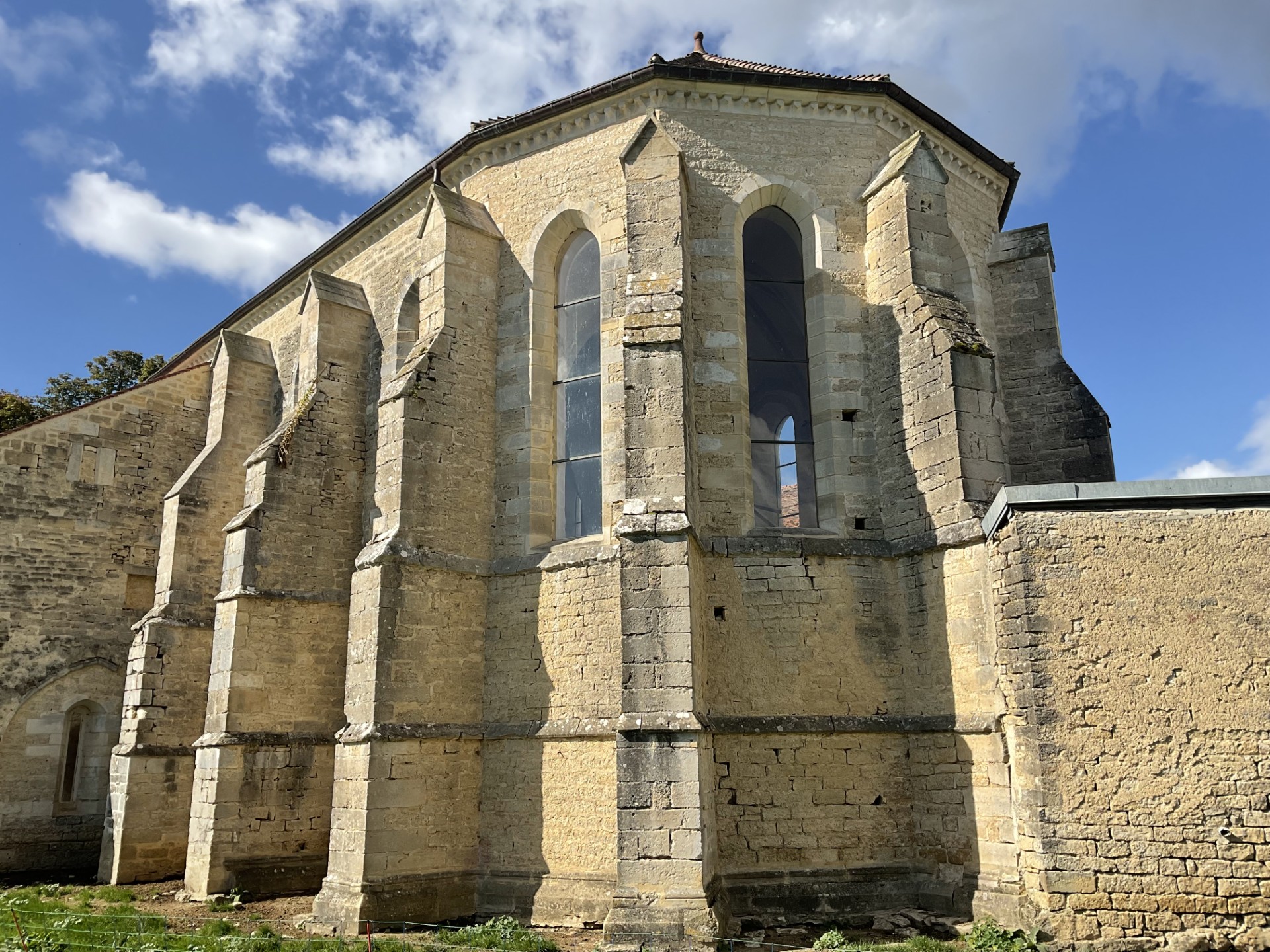
History the Interesting Bits
Templar Commanderie at Épailly in Burgundy

The reverse Templar ongoing and enormous financial commitment to Grandson is confirmed to us in a papal confirmation of 17 August 1308 by Pope Clement V. Upon suppression of the order Grandson was keen, obviously, that Templar payments continue, since they were the tremendous annual sum of 2,000 Livres Tournois, equating to £500 at the time, and over £350,000 in today’s money. The pension arrangement was made by a Grand Master, named as Jacques de Molay, and variously dated to 1277, 1287 or 1296–97. French Templar historian Alain Demurger wrote: ‘Fault lay with the editor of Clement V’s records … The editor put the date 1277, while M. L. Bulst-Thiele transcribed it as 1297, whereas the original, very clearly and without abbreviations or deletions says 1287.’ In his notes to this assertion, he cites the Vatican Archives date as ‘Anno millesimo duecentesimo octuagesimo septimo’ or ‘In the year one thousand two hundred and eighty-seven.’

Now of course Molay did not succeed Beaujeu until 1292, which renders the dating of the award problematic. Demurger suggested that it was not Molay who made the award despite specific reference to him ‘Jacobus de Mollay’, but his predecessor Beaujeu – in short, that the date was correct but the master’s name incorrect. Alan Forey argued the contrary, writing that it was: ‘more likely that the grant was made by James of Molay and that the date was wrongly copied’. Given, Molay’s 1292 election as Grand Master this would suggest 1296–97 – in short, the date was incorrect, but the master’s name correct. Demurger acknowledged in his notes that ‘a new problem arose … Grandson and the Temple were already connected in 1287: where, how and for what reason?’ Indeed, Demurger’s dating would create such questions, while Forey’s dating would place them squarely in the context of the Fall of Acre and his time in the east with Molay. This ‘compensare’ was given by the The Templars for ‘operibus virtuosis’ or ‘virtuous actions’ rendered by Othon in support of the order, but surely more likely post-Fall of Acre than before.
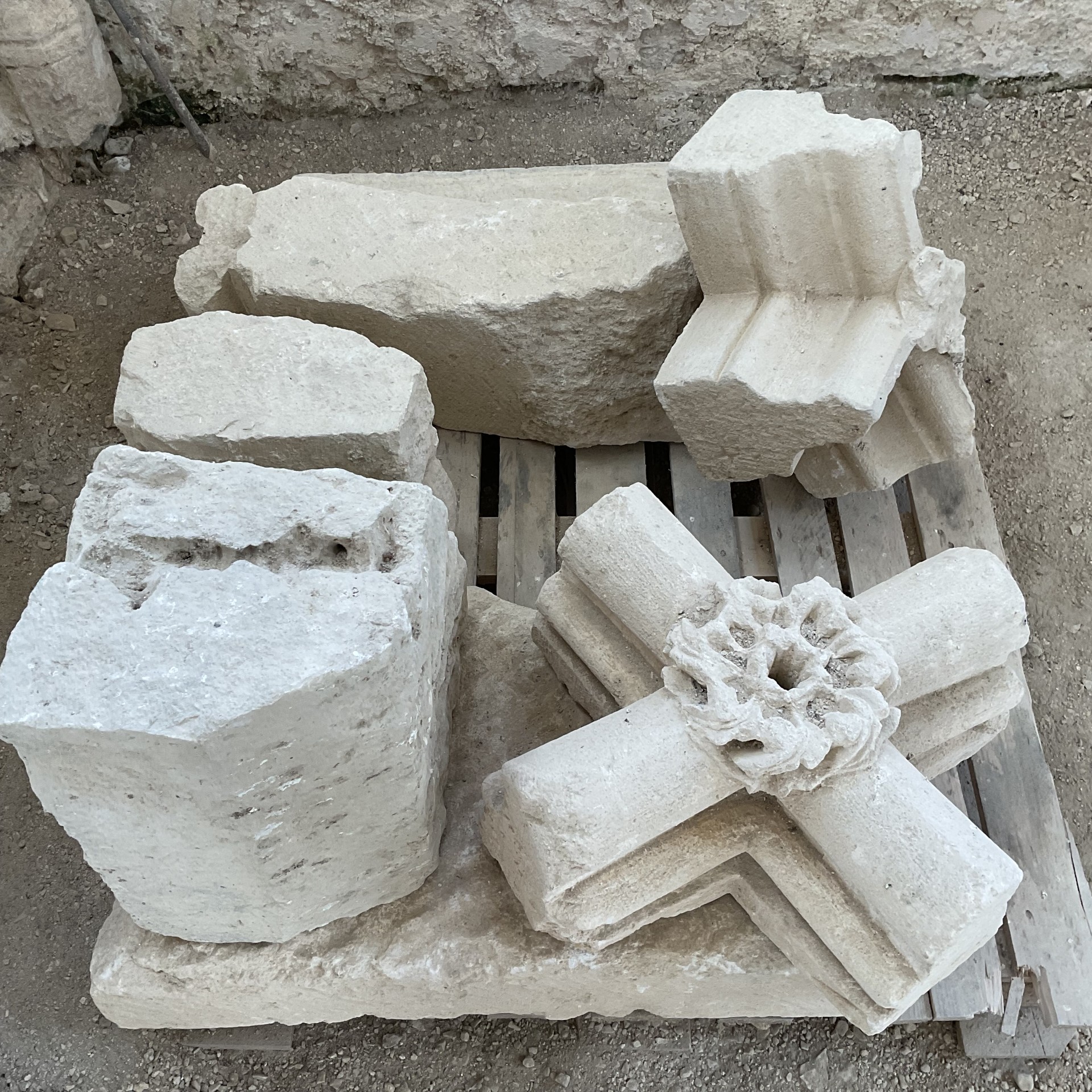
Templar Commanderie at Épailly in Burgundy

In confirmation of the pension, Clement V granted Othon three former Templar houses in France as a part of the continuing settlement, those at Thors, Épailly and Coulours, an act unlikely to have been undertaken at the time in favour of a knight of the order. And so, the ‘virtuous works’ referred to by Pope Clement would appear to date from Grandson’s time in Acre in 1291. So, the date of 1277 attached to the payments by the transcription of them is certainly mistaken, and for the 1287 dating of the original 1308 manuscript we should read 1296–97. Demurger gives 1296 clearly as the date for Molay meeting with Grandson in Paris and the Salins grant. Othon de Grandson’s intimate links with the Templars continue to intrigue, but in Cyprus and Armenia 1292-4, as at Acre in 1291, and here with his pension payments they point to a significant and close ally in matters Outremer rather than a member of the order itself, of which there is no mention.

Grandson, was a close friend of the Templars, having fought alongside them at Acre in 1291, been there in Cyprus as a part of Molay’s election as Grand Master, and in receipt of a handsome annual pension from the order. So, at Philippe ke Bel’s suppression of the order and Molay’s arrest and the rumours swirling around France, the scandal would have touched directly upon him. But at no point can we find Grandson implicated in events, other than petitioning Pope Clement for the maintenance of his pension. But nowhere too can we find him leaping to the defence of Molay, his former friend and ally, at least not in a way that has left any trace. As Demurger said in conversation with the author of this book, Grandson did not try to defend Molay. A character flaw? Demurger went to affirm that one cannot speculate about possible motives, Grandson was by now seventy years of age, had discretion become the greater part of valour?
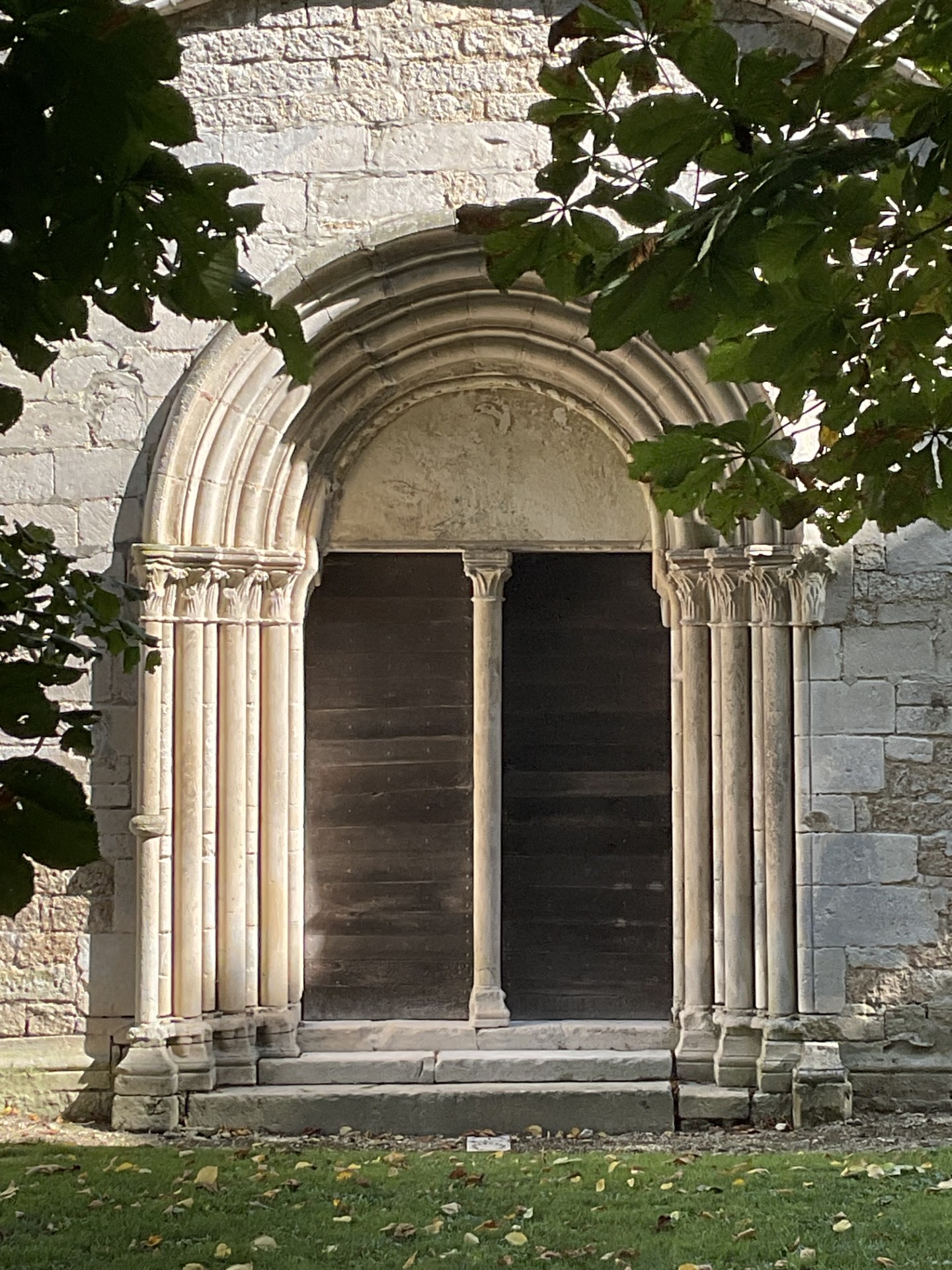
History the Interesting Bits
Templar Commanderie at Épailly in Burgundy

It is because of his avoidance of implication in the suppression of the Templars, that despite his Templar connections, we can be as certain as certain can be that Othon de Grandson was a friend, ally, indeed fellow traveller of the Templars, but not actually a member of the doomed order, As Alain Demurger said unequivocally to the question, was Grandson a Templar? – Non. What were the enormous payments from the Templars to Othon de Grandson for? What were the “operibus virtuosis”? It’s only speculation but what did Grandson have that might be valuable to the Order? – access better than anyone to Edward I’s ear and access to the English court.

*

About the Book:
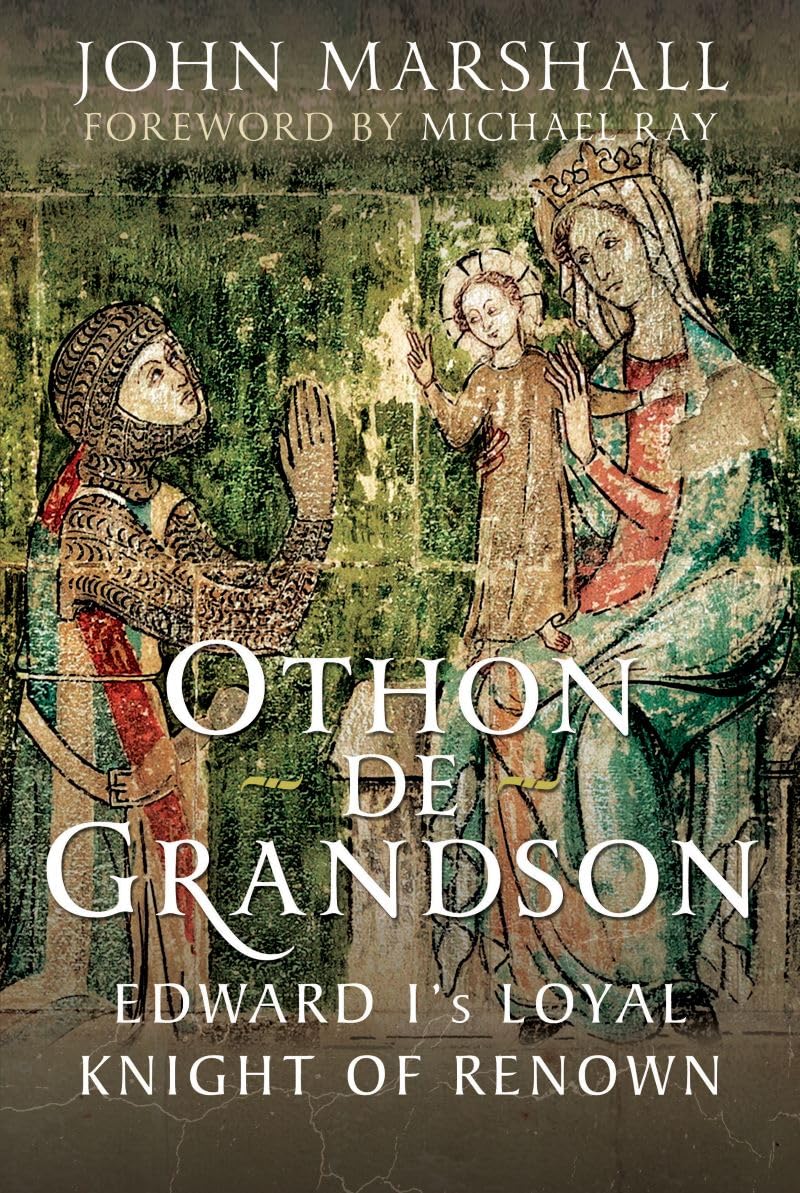
History  the Interesting Bits

There were once two little boys – they met when they were both quite young; one was born in what’s now Switzerland, by Lake de Neuchâtel, his name Othon de Grandson, and the other was born in London, his name Prince Edward, son of King Henry the third of that name. Othon was probably born in 1238, and Edward, we know, in June 1239. These two little boys grew up and had adventures together. They took the cross together, the ninth crusade in 1271 and 1272. Othon reputedly sucking poison from Edward when the latter was attacked by an assassin. In 1277 and 1278, they fought the First Welsh War against the House of Gwynedd, Othon doing much to negotiate the Treaty of Aberconwy in 1278, which ended hostilities. When war broke out again in 1282 they fought the Second Welsh War together. Othon led Edward’s army across the Bridge of Boats from Anglesey and was the first to sight the future sites of castles at Caernarfon and Harlech. Edward made his friend the first Justiciar (Viceroy) of North Wales. When Edward and Othon went to Gascony in 1287, Othon stayed in Zaragoza as a hostage for Edward’s good intentions between Gascony and Castille.  Later, in 1291, when Acre was threatened by the Mamluks, Edward sent Othon as head of the English delegation of knights. When Acre finally fell to the Mamluks bringing the Crusades to a close, who was the last knight onto the boats? Othon de Grandson, helping his old friend, the wounded Jean de Grailly onto the boat. When Othon returned from the East, he found England at war with Scotland and France; he would spend his last years in Edward’s service building alliances and negotiating peace before retiring to his home in what is now Switzerland after the king’s death in 1307. Grandson lived in the time of Marco Polo, Giotto, Dante, Robert the Bruce, and the last Templars. He was right there at the centre of the action in two crusades: war with Wales, Scotland, and France, the Sicilian Vespers, and suppression of the Templars; he walked with a succession of kings and popes, a knight of great renown. This is his story.

Othon de Grandson: Edward I’s Loyal Knight of Renown is available now from Amazon.

About the Author:

History  the Interesting Bits

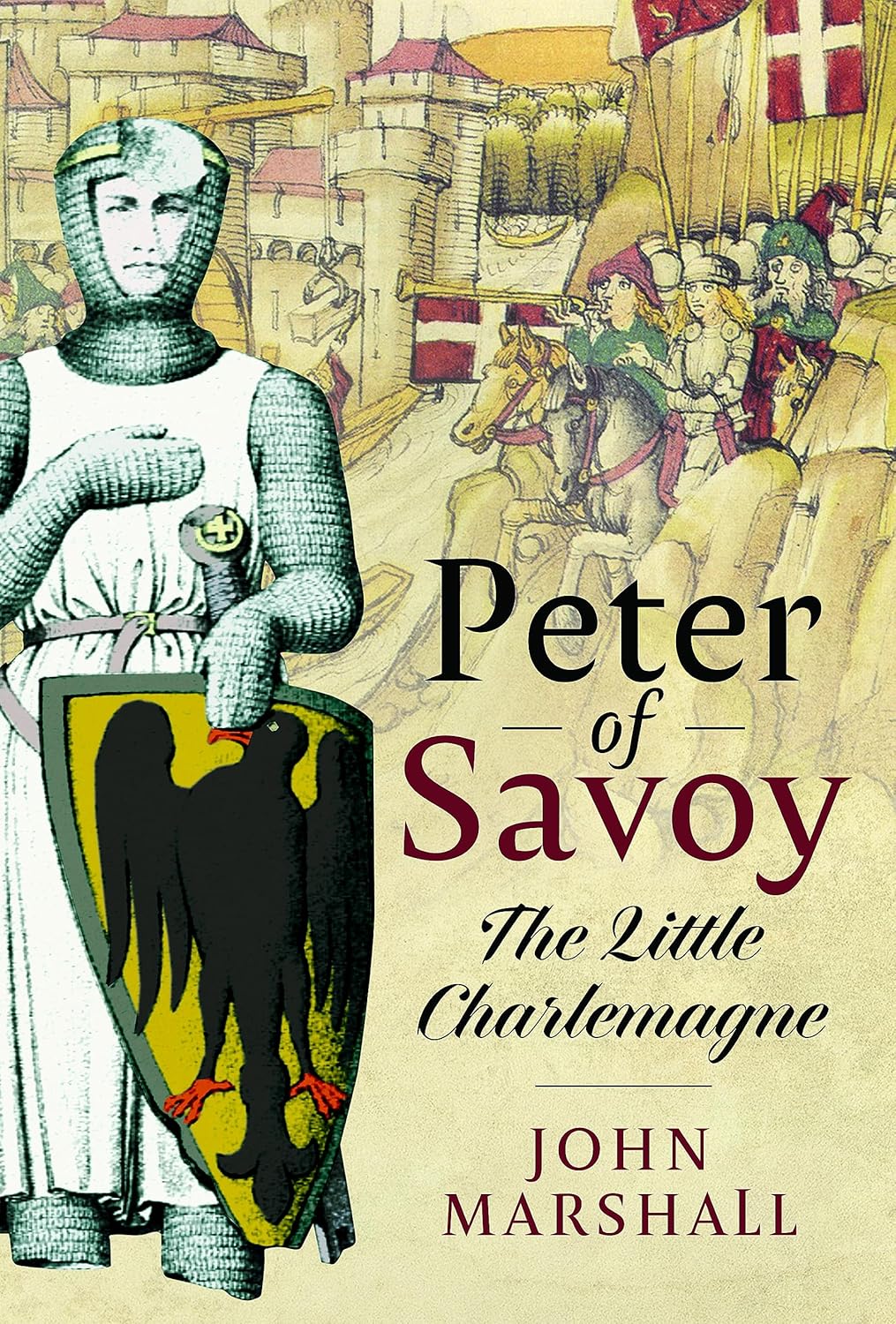
Having moved to Switzerland, and qualified as a historian (Masters, Northumbria University, 2016), the author came across the story of the Savoyards in England and engaged in this important history research project. He founded the Association pour l’histoire médiévale Anglo Savoyards. Writer of Welsh Castle Builders: The Savoyard Style and Peter of Savoy: The Little Charlemagne both available from Pen and Sword Books Ltd. Member of the Henry III Roundtable with Darren Baker, Huw Ridgeway and Michael Ray.

*

My Books

Signed, dedicated copies of all my books are available through my online bookshop.

Out now: Scotland’s Medieval Queens

Books by Sharon Bennett Connolly

Scotland’s history is dramatic, violent and bloody. Being England’s northern neighbour has never been easy. Scotland’s queens have had to deal with war, murder, imprisonment, political rivalries and open betrayal. They have loved and lost, raised kings and queens, ruled and died for Scotland. From St Margaret, who became one of the patron saints of Scotland, to Elizabeth de Burgh and the dramatic story of the Scottish Wars of Independence, to the love story and tragedy of Joan Beaufort, to Margaret of Denmark and the dawn of the Renaissance, Scotland’s Medieval Queens have seen it all. This is the story of Scotland through their eyes.

Scotland’s Medieval Queens gives a thorough grounding in the history of the women who ruled Scotland at the side of its kings, often in the shadows, but just as interesting in their lives beyond the spotlight. It’s not a subject that has been widely covered, and Sharon is a pioneer in bringing that information into accessible history.’ Elizabeth Chadwick (New York Times bestselling author)

Available now from Amazon and Pen and Sword Books

Also by Sharon Bennett Connolly:

Books by Sharon Bennett Connolly

Heroines of the Tudor World tells the stories of the most remarkable women from European history in the time of the Tudor dynasty, 1485-1603. These are the women who ruled, the women who founded dynasties, the women who fought for religious freedom, their families and love. Heroines of the Tudor World is now available for pre-order from Amberley Publishing and Amazon UK. Women of the Anarchy demonstrates how Empress Matilda and Matilda of Boulogne, unable to wield a sword themselves, were prime movers in this time of conflict and lawlessness. It shows how their strengths, weaknesses, and personal ambitions swung the fortunes of war one way – and then the other. Available from Bookshop.orgAmberley Publishing and Amazon UKKing John’s Right-Hand Lady: The Story of Nicholaa de la Haye is the story of a truly remarkable lady, the hereditary constable of Lincoln Castle and the first woman in England to be appointed sheriff in her own right. Available from all good bookshops Pen & Sword Booksbookshop.org and Amazon

Royal Historical Society

Defenders of the Norman Crown: The Rise and Fall of the Warenne Earls of Surrey tells the fascinating story of the Warenne dynasty, from its origins in Normandy, through the Conquest, Magna Carta, the wars and marriages that led to its ultimate demise in the reign of Edward III. Available from Pen & Sword BooksAmazon in the UK and US, and Bookshop.orgLadies of Magna Carta: Women of Influence in Thirteenth Century England looks into the relationships of the various noble families of the 13th century, and how they were affected by the Barons’ Wars, Magna Carta and its aftermath; the bonds that were formed and those that were broken. It is now available in paperback and hardback from Pen & SwordAmazon, and Bookshop.orgHeroines of the Medieval World tells the stories of some of the most remarkable women from Medieval history, from Eleanor of Aquitaine to Julian of Norwich. Available now from Amberley Publishing and Amazon, and Bookshop.orgSilk and the Sword: The Women of the Norman Conquest traces the fortunes of the women who had a significant role to play in the momentous events of 1066. Available now from Amazon,  Amberley Publishing, and Bookshop.org.

Alternate Endings: An anthology of historical fiction short stories including Long Live the King… which is my take what might have happened had King John not died in October 1216. Available in paperback and kindle from Amazon.

Podcast:

A Slice of Medieval

Have a listen to the A Slice of Medieval podcast, which I co-host with Historical fiction novelist Derek Birks. Derek and I welcome guests, such as Bernard Cornwell and discuss a wide range of topics in medieval history, from significant events to the personalities involved.

Every episode is also now available on YouTube.

*

Don’t forget! Signed and dedicated copies of all my books are available through my online bookshop.

For forthcoming online and in-person talks, please check out my Events Page.

You can be the first to read new articles by clicking the ‘Follow’ button, liking our Facebook page or joining me on TwitterThreadsBluesky and Instagram.

*

©2025 Sharon Bennett Connolly, FRHistS and John Marshall
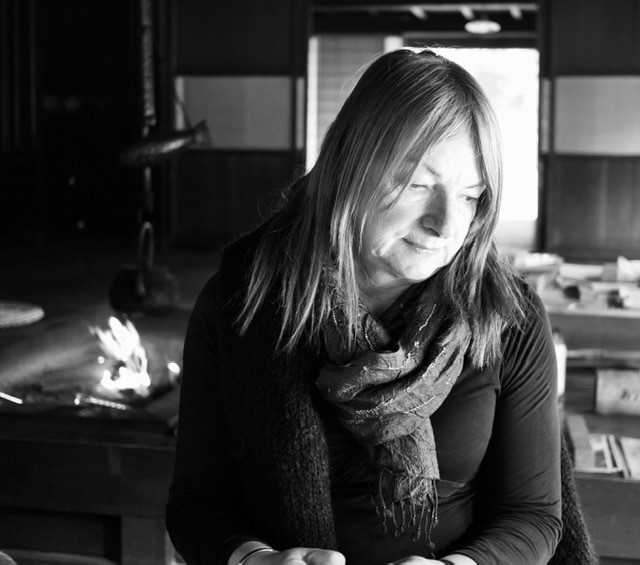
Author Spotlight: John Marshall

History...the Interesting Bits
Othon de Grandson

Today, it is a pleasure to welcome historian John Marshall to History…the Interesting Bits to chat about his writing and what attracts him to History. John’s third book, Othon de Grandson: Edward I’s Loyal Knight of Renown, has just hit the shops. A close rival to William Marshal for the Greatest Knight accolade, I’m looking forward to reading Othon’s story. But first, a chat with John about what inspires his writing…

Sharon: How did you start your writing career?

John: A midlife career change, some would say a midlife crisis, but an increasing dissatisfaction and boredom surrounding my career of thirty years within the corporate travel business. In short it was not fun anymore, nor was it in anyway stimulating intellectually. I had had a lifelong interest in history, so the first step was a master’s in history. More than anything, this taught me how to organise my thoughts and conduct research professionally, especially that in reading the most interesting stuff was usually in the footnotes. A relocation for personal reasons brought a move from England to Switzerland. There, I kind of fell down the rabbit hole of the relations between Savoy and England in the thirteenth century, I was looking for a writing project as a historian and within a week of arriving in Switzerland my partner and I visited the castle at Yverdon in the Canton of Vaud. Hidden away in the small print of a panel was the throw away line that the castle had been built by Maître Jacques de Saint George. I had recently visited Conwy castle before leaving the UK and for some reason the name immediately registered as the man who had built Conwy. “Do you know who this is?” I asked my partner, receiving a puzzled look. I then emailed the castle to be given an erroneous answer. I then discovered the works of the late Arnold Taylor, and the more recent criticism which I thought unfair. So, the research for my first book, Welsh Castle Builders began.

Sharon: What is the best thing about being a writer?

John: We all write to understand something better, we all read for the same reason. We also, as was the case with me, write a book we would have wanted to read ourselves. In beginning the research for Welsh Castle Builders I was frustrated that the available evidence, the story, did not seem to be in one place. I also felt that the people I wanted to write about in the distant past had not had their story told well enough. So, the best thing about being a writer is being able to write books you would want to read yourself and to tell the stories of forgotten people.

Sharon: What is the worst thing about being a writer?

History...the Interesting Bits

John: For a history writer the worst thing is the sheer volume of detail, and the ease with which you can make mistakes by saying castle x is in county y when it’s now in county z. My previous career had involved a whole lot of data analysis, so this helped, but the sheer volume of detail can be daunting. I would also add that the hours involved in research can also be daunting.

Sharon: What got you into history?

John: My dad was the one who got me into history, it was very much a father and son thing. He had a real passion for history; we covered many miles visiting castles and battlefields. Indeed, my earliest childhood memory is a vague one of walking by an enormous castle by a river and wondering who built that. As a five-year-old boy a medieval castle had a “wow” response that never left me. We were on holiday in Rhyl, I now know the castle has a name, Rhuddlan Castle.

Sharon: What drew you to Othon de Grandson’s story?

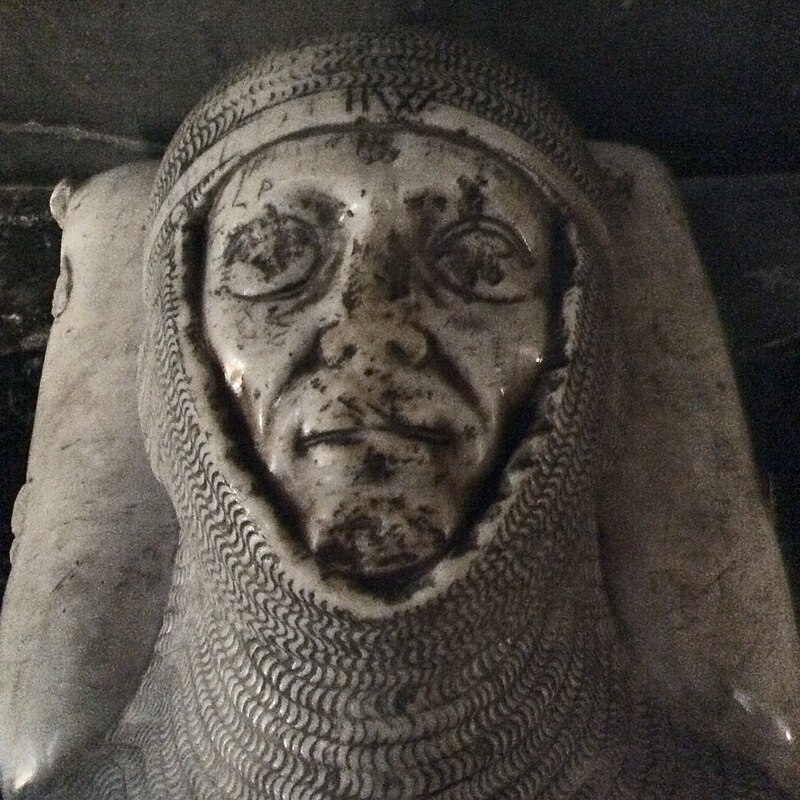
John: Days after visiting the castle at Yverdon my partner and I visited the cathedral at Lausanne. My partner is from Lausanne, and she was and is very proud of the cathedral. Just by the altar is the tomb of a knight, with no reference to who the knight is. Asking my partner she replied, “Oh that’s Othon de Grandson” But she was not able to add much more. Reading Arnold Taylor, in connection to the Yverdon visit the name Othon de Grandson kept coming up time and time again. So, I began to learn Othon’s story and realised quickly that without Othon there would have been no Maître Jacques de Saint George in Britain. More research told the story of a boy who came to England, a crusading knight, a top-level diplomat, someone at the very heart of European affairs. Perhaps it was the little boy in me, but this had all the hallmarks of a Boy’s Own adventure story. So, once I had done with Maître Jacques and Pierre de Savoie, Othon’s story had to be told. There was an excellent book written in the sixties, but this story needed to be told again, maybe one day the Swiss will even put a marker on the tomb to say who it is.

Sharon: How influential was Othon to Edward I’s reign?

History...the Interesting Bits
Othon de Grandson from an altar screen from the Cathedral in Lausanne now displayed in the Bern Historic Museum.

John: I think it comes down to one word – loyalty. The book is called Othon de Grandson: Edward I’s Loyal Knight of Renown. Edward I could inspire incredible lifelong loyalty in those around him. It is remarkable to see how loyal these band of brothers; Edward, Edmund, Othon de Grandson, Henry de Lacy, Jean de Vesci et al were to one another. The epithet that seems to come up time after time in their regard is loyalty. Edward in March 1278 described Othon as someone who could ‘do his will … better and more advantageously’ than ‘others about him’, as well as ‘if he himself were to attend to the matters in person’. Delegation, even in our own day is an art, and Edward chose wisely those around him. Being a monarch in the Middle Ages was no easy task, and having people you could trust to do something exactly as you would do it yourself was like gold dust. Loyalty was foundational to medieval ideas of knighthood. It was not just important it was central to their identity, purpose, and honour. What stands out about these band of brothers is that their bonds were formed through shared hardships: crusades, rebellion, foreign war, and dynastic tension. Loyalty was more than service—it was a mark of faith, honour, brotherhood, and identity. French historian Charles-Victor Langlois wrote of Edward:

“We cannot admire the activity of the English king too much; he was both in the breach on the side of the Rhône valley and of Wales; the threads of all European intrigues, in Castile, in Aragon, in Italy, were connected in his hands; and he still found the leisure to watch over his interests on the continent as Duke of Aquitaine.”

How could Edward do this? He had an Othon.

Sharon: How do you conduct your research?

History...the Interesting Bits
The former Templar Commanderie at Épailly in Burgundy which passed to Othon on the Templars suppression.

John: The answer is reading, reading, and reading. But more than that paying especial attention to primary sources and more that that especial attention to sources in other countries. The subjects of these histories, especially Othon de Grandson, lived their lives across the whole of the European theatre, and so their story is to be found everywhere. But I would sound a note of caution, to be careful in handling medieval chroniclers, like writers today they usually politically span stories, omitted things they didn’t like, only including things they liked. We should use medieval chronicles very carefully. A good case in point is the conduct of Othon de Grandson’s conduct in the Fall of Acre in 1292. Some chroniclers praise him, others are very critical, some even accuse him of cowardice. But by giving greater weight to eyewitness accounts and especially those like the Templar of Tyre who seems to have been with the English knights at the end, we can arrive at the truest picture. Spoiler alert, he was not a coward.

I would also add that it is vital to get out from a book and walk in the steps of those you are writing about. To this end my partner and son have spent many hours under a hot sun in the deep undergrowth of the French countryside looking for castles that are today nothing more than a few stones on top of a steep hill. But it is crucial in understanding the people of the past to visualise the landscape in which they moved.

Sharon: What attracts you to the thirteenth century?

John: The thirteenth century is foundational in many ways to the world we know today. In Othon’s time we see the beginnings of the clashes between church and state. We also see knights like Othon who were of their day, the feudal system, that is loyalty to a suzerain not a nation state. Whereas we see at the French court of Philippe le Bel the likes of Nogaret who are outlining nascent ideas of nation as primary identity. It is the century where we begin to move from the Middle Ages to the modern. In Britain, the relationships between England, Scotland, and Wales are beginning to be set. Indeed, why Wales employs the English legal system and Scotland does not are founded in the thirteenth-century. We also saw in my previous book to this, Pierre de Savoie, the beginnings of our parliamentary system and sadly xenophobia too.

Sharon: The 13th century is just the best! But,are there any other eras you would like to write about?

John: I became a medieval historian on my arrival in Switzerland, but prior to that my university concentration and dissertation was the American colonial period. I might return to that at some point, but I may by typecast.

Sharon: What comes next? Are you working on a new book?

History...the Interesting Bits

John: My fourth book, the story of Edmund, 1st Earl of Lancaster has just been written, the task of editing, especially on the part of my long-suffering partner, now begins. There has been a journal article written of Edmund, but it was written a century ago. During 2026 we plan to return from Switzerland to England, and in particular my hometown of Lancaster, so the subject of Edmund appeared like a bridge back to Lancaster – although he seems to almost never to have been there. The story of Edmund in many ways parallels that of Othon de Grandson. But Edmund’s story is one that fits into a brief period when it was not considered unusual for a Plantagenet prince to marry a Capetian queen and to rule French counties ((Champagne and Brie) that were so close to Paris. Edmund is the ancestor of our royalty today, both through his stepdaughter Jeanne I de Navarre but also in bloodline through his second son Henry. Edmund of Lancaster emerges as a very Anglo-French character, one that could only have existed in the rapprochement between the 1259 Treaty of Paris and the 1294 Gascon War. He is in many ways a model of a future that was not to be, where Plantagenets and Capetians happily coexisted, the road not traveled.

Sharon: Ooh, I like the idea of a book on Edmund. Good luck with that John and thank you so much for speaking with me today.

About the book:

History...the Interesting Bits

There were once two little boys – they met when they were both quite young; one was born in what’s now Switzerland, by Lake de Neuchâtel, his name Othon de Grandson, and the other was born in London, his name Prince Edward, son of King Henry the third of that name. Othon was probably born in 1238, and Edward, we know, in June 1239. These two little boys grew up and had adventures together. They took the cross together, the ninth crusade in 1271 and 1272. Othon reputedly sucking poison from Edward when the latter was attacked by an assassin. In 1277 and 1278, they fought the First Welsh War against the House of Gwynedd, Othon doing much to negotiate the Treaty of Aberconwy in 1278, which ended hostilities. When war broke out again in 1282 they fought the Second Welsh War together. Othon led Edward’s army across the Bridge of Boats from Anglesey and was the first to sight the future sites of castles at Caernarfon and Harlech. Edward made his friend the first Justiciar (Viceroy) of North Wales. When Edward and Othon went to Gascony in 1287, Othon stayed in Zaragoza as a hostage for Edward’s good intentions between Gascony and Castille.  Later, in 1291, when Acre was threatened by the Mamluks, Edward sent Othon as head of the English delegation of knights. When Acre finally fell to the Mamluks bringing the Crusades to a close, who was the last knight onto the boats? Othon de Grandson, helping his old friend, the wounded Jean de Grailly onto the boat. When Othon returned from the East, he found England at war with Scotland and France; he would spend his last years in Edward’s service building alliances and negotiating peace before retiring to his home in what is now Switzerland after the king’s death in 1307. Grandson lived in the time of Marco Polo, Giotto, Dante, Robert the Bruce, and the last Templars. He was right there at the centre of the action in two crusades: war with Wales, Scotland, and France, the Sicilian Vespers, and suppression of the Templars; he walked with a succession of kings and popes, a knight of great renown. This is his story.

Othon de Grandson: Edward I’s Loyal Knight of Renown is available now from Amazon.

About the Author:

History...the Interesting Bits

Having moved to Switzerland, and qualified as a historian (Masters, Northumbria University, 2016), the author came across the story of the Savoyards in England and engaged in this important history research project. He founded the Association pour l’histoire médiévale Anglo Savoyards. Writer of Welsh Castle Builders: The Savoyard Style and Peter of Savoy: The Little Charlemagne both available from Pen and Sword Books Ltd. Member of the Henry III Roundtable with Darren Baker, Huw Ridgeway and Michael Ray.

*

My Books

Signed, dedicated copies of all my books are available through my online bookshop.

Out now: Scotland’s Medieval Queens

Books by Sharon Bennett Connolly

Scotland’s history is dramatic, violent and bloody. Being England’s northern neighbour has never been easy. Scotland’s queens have had to deal with war, murder, imprisonment, political rivalries and open betrayal. They have loved and lost, raised kings and queens, ruled and died for Scotland. From St Margaret, who became one of the patron saints of Scotland, to Elizabeth de Burgh and the dramatic story of the Scottish Wars of Independence, to the love story and tragedy of Joan Beaufort, to Margaret of Denmark and the dawn of the Renaissance, Scotland’s Medieval Queens have seen it all. This is the story of Scotland through their eyes.

Scotland’s Medieval Queens gives a thorough grounding in the history of the women who ruled Scotland at the side of its kings, often in the shadows, but just as interesting in their lives beyond the spotlight. It’s not a subject that has been widely covered, and Sharon is a pioneer in bringing that information into accessible history.’ Elizabeth Chadwick (New York Times bestselling author)

Available now from Amazon and Pen and Sword Books

Also by Sharon Bennett Connolly:

Books by Sharon Bennett Connolly

Heroines of the Tudor World tells the stories of the most remarkable women from European history in the time of the Tudor dynasty, 1485-1603. These are the women who ruled, the women who founded dynasties, the women who fought for religious freedom, their families and love. Heroines of the Tudor World is now available for pre-order from Amberley Publishing and Amazon UK. Women of the Anarchy demonstrates how Empress Matilda and Matilda of Boulogne, unable to wield a sword themselves, were prime movers in this time of conflict and lawlessness. It shows how their strengths, weaknesses, and personal ambitions swung the fortunes of war one way – and then the other. Available from Bookshop.orgAmberley Publishing and Amazon UKKing John’s Right-Hand Lady: The Story of Nicholaa de la Haye is the story of a truly remarkable lady, the hereditary constable of Lincoln Castle and the first woman in England to be appointed sheriff in her own right. Available from all good bookshops Pen & Sword Booksbookshop.org and Amazon

Royal Historical Society

Defenders of the Norman Crown: The Rise and Fall of the Warenne Earls of Surrey tells the fascinating story of the Warenne dynasty, from its origins in Normandy, through the Conquest, Magna Carta, the wars and marriages that led to its ultimate demise in the reign of Edward III. Available from Pen & Sword BooksAmazon in the UK and US, and Bookshop.orgLadies of Magna Carta: Women of Influence in Thirteenth Century England looks into the relationships of the various noble families of the 13th century, and how they were affected by the Barons’ Wars, Magna Carta and its aftermath; the bonds that were formed and those that were broken. It is now available in paperback and hardback from Pen & SwordAmazon, and Bookshop.orgHeroines of the Medieval World tells the stories of some of the most remarkable women from Medieval history, from Eleanor of Aquitaine to Julian of Norwich. Available now from Amberley Publishing and Amazon, and Bookshop.orgSilk and the Sword: The Women of the Norman Conquest traces the fortunes of the women who had a significant role to play in the momentous events of 1066. Available now from Amazon,  Amberley Publishing, and Bookshop.org.

Alternate Endings: An anthology of historical fiction short stories including Long Live the King… which is my take what might have happened had King John not died in October 1216. Available in paperback and kindle from Amazon.

Podcast:

A Slice of Medieval

Have a listen to the A Slice of Medieval podcast, which I co-host with Historical fiction novelist Derek Birks. Derek and I welcome guests, such as Bernard Cornwell and discuss a wide range of topics in medieval history, from significant events to the personalities involved. Our first ever episode was a discussion on The Anarchy Every episode is also now available on YouTube.

*

Don’t forget! Signed and dedicated copies of all my books are available through my online bookshop.

For forthcoming online and in-person talks, please check out my Events Page.

You can be the first to read new articles by clicking the ‘Follow’ button, liking our Facebook page or joining me on TwitterThreadsBluesky and Instagram.

*

©2025 Sharon Bennett Connolly, FRHistS and John Marshall
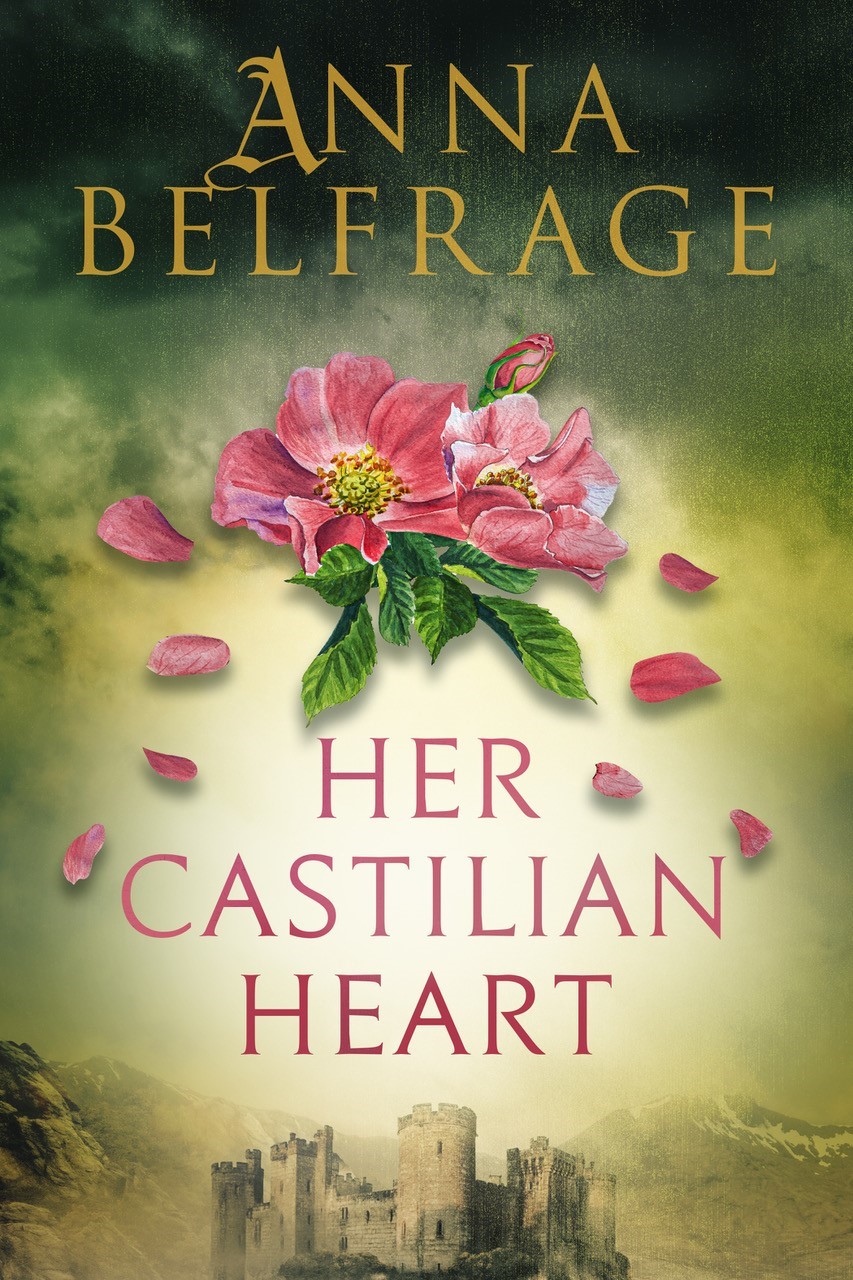
Book Corner: Her Castilian Heart by Anna Belfrage

Blood is not always thicker than water…

At times a common bloodline is something of a curse—or so Robert FitzStephan discovers when he realises his half-brother, Eustace de Lamont, wants to kill him.  

A murderous and greedy brother isn’t Robert’s only challenge.  He and his wife, Noor, also have to handle their infected relationship with a mightily displeased Queen Eleanor—all because of their mysterious little foundling whom they refuse to abandon or allow the queen to lock away.

Eustace is persistent. When Robert’s life hangs in the balance, it falls to Noor to do whatever it takes to rip them free from the toothy jaws of fate. Noor may be a woman, but weak she is not, and in her chest beats a heart as brave and ferocious as that of a lioness. But will her courage be enough to see them safe?

Her Castilian Heart by Anna Belfrage is yet another fast-paced adventure that is impossible to put down. I read it in 3 days!

Her Castilian Heart is the third in the series, set in the reign of Edward I, which follows Robert FitzStephan, an illegitimate son of a lord who has risen on his own merit to become a knight and landowner. He is married to the incomparable Noor, a relative of the queen, Eleanor of Castile. After being exiled to Spain for a short period, Noor and Robert are back in England, facing the anger and suspicions of the queen, and the jealousy of Robert’s brother.

As ever, Anna Belfrage has woven a tale of love, betrayal and intrigue that will leave the reader absorbed from beginning to end. Set with the backdrop of border skirmishes with Wales and the queen’s failing health, Noor and Robert are once again forced to negotiate the English court and its rivalries, intrigues and jealousies.

At present, she did not look much like a mother or wife: her hair had escaped its braid and the confines of the veil, long dark locks floating round her face. There was a smudge of something on her nose – ointment, he’s hazard, given the fragrance – and her brown skirts were covered with straw. He reached over and stroked her cheek with his maimed hand. She leaned into his touch, half closing her eyes.

‘Why is he here?’ she asked, moving close enough that she could stand on her toes and kiss his cheek.

‘Why?’ To drag me along to Wales.’

‘Now?’ She frowned. ‘This time of the year?’

‘I’ve campaigned during the winter before.’ He tapped her nose. ‘I’ll survive.’

She paled, and he regretted his choice of words.

‘It is a scouting expedition.’ he said. ‘We will keep to the shadows.’ He did not quite believe that. The moment Rhys of Maredudd had decided to raise the banners of rebellion yet again instead of disappearing into a hole somewhere, he’d effectively unleashed the vindictive rage of the English king. There’d be little scouting, more killing, as they encircled the rebel.

She snorted. ‘Mortimer is about as adept at staying in the shadows as I am at swimming.’

As his wife did not know how to swim, that was not an accolade. But it made him smile. He shook his head at her. ‘Roger is quite skilled at melting into the background when it suits him.’

‘Hmph! Then he can go himself.’

‘The king requires I accompany him.’ And as the king’s knight, Robert could not deny him.

‘The king is here? In England?’

He heard the quaver in her voice. Once the king and queen were back, there would be no putting off the audience with the queen, and they both feared Queen Eleanor’s reaction to the fact that they’d returned without that jewel she so desired. Or abandoning their foster son in foreign lands as instructed, but hopefully she’d never find that out. Upon returning home, Robert had sent an extensive account of their time abroad to the king, and despite being home for a year, he’d not heard from his liege until now, and then only indirectly via Roger Mortimer.

‘He remains in Gascony.’

Anna Belfrage’s storytelling is second-to-none and her research impeccable. She transports the reader to the court of Edward I, to the Europe of the 13th century. Meticulously recreating the sights, sounds and smells of the era, Anna rebuilds a lost world and immerses the reader entirely within its confines.

Her characters are full of life and vigour, having an energy of their own. They are not untouched by events, and grow and mature through their experiences. Neither Noor nor Robert forget the past and this informs their future. Anna Belfrage has created a hero and heroine that the reader can relate to, and empathise with.

Her Castilian Heart by Anna Belfrage will leave the reader breathless!

Anna Belfrage is a wonderful storyteller. She draws you into the book from the very first page, takes hold of your emotions, twists them around, puts them through the ringer and then – maybe – gives them back to you, battered, bruised and in tears. And you’ll want to go back for more! What an incredible experience!

*

To buy the book:

Her Castilian Heart is available now from: http://myBook.to/HEART

About the author:

Had Anna been allowed to choose, she’d have become a professional time-traveller. No luck there, so instead she became a financial professional with two absorbing interests; history and writing. These days, Anna combines an exciting day-job with a large family and her writing endeavours. Plus she always finds the time to try out new recipes, chase down obscure rose bushes and initiate a home renovation scheme or two.

Anna has authored the acclaimed time travelling series The Graham Saga , set in 17th century Scotland and Maryland, as well as the equally acclaimed medieval series The King’s Greatest Enemy.

Anna has also published The Wanderer, a fast-paced contemporary romantic suspense trilogy with paranormal and time-slip ingredients. Her September 2020 release, His Castilian Hawk is a story of loyalty and love set against the complications of Edward I’s invasion of Wales in the late 13th century.

Her most recent release, The Whirlpools of Time , is a time travel romance set against the backdrop of brewing rebellion in the Scottish highlands.

All of Anna’s books have been awarded the IndieBRAG Medallion, she has several Historical Novel Society Editor’s Choices, and one of her books won the HNS Indie Award in 2015. She is also the proud recipient of several Reader’s Favorite medals as well as having won various Gold, Silver and Bronze Coffee Pot Book Club awards.

Find out more about Anna, her books and enjoy her eclectic historical blog on her website, www.annabelfrage.com 

Social Media Links:

Website: www.annabelfrage.com; Amazon Author Page: http://Author.to/ABG; Twitter: https://twitter.com/abelfrageauthor; Book Bub: https://www.bookbub.com/profile/anna-belfrage; Instagram: https://instagram.com/annabelfrageauthor; Facebook: https://www.facebook.com/annabelfrageauthor; Goodreads: https://www.goodreads.com/author/show/6449528.Anna_Belfrage

*

My Books:

Signed, dedicated copies of all my books are available, please get in touch by completing the contact me form.

Defenders of the Norman Crown: The Rise and Fall of the Warenne Earls of Surrey tells the fascinating story of the Warenne dynasty, of the successes and failures of one of the most powerful families in England, from its origins in Normandy, through the Conquest, Magna Carta, the wars and marriages that led to its ultimate demise in the reign of Edward III. Defenders of the Norman Crown: Rise and Fall of the Warenne Earls of Surrey is now available from Pen & Sword BooksAmazon in the UK and US, Bookshop.org and Book Depository.

1 family. 8 earls. 300 years of English history!

Also by Sharon Bennett Connolly:

Ladies of Magna Carta: Women of Influence in Thirteenth Century England looks into the relationships of the various noble families of the 13th century, and how they were affected by the Barons’ Wars, Magna Carta and its aftermath; the bonds that were formed and those that were broken. It is now available in paperback and hardback from Pen & Sword,  AmazonBookshop.org and from Book Depository worldwide.

Heroines of the Medieval World tells the stories of some of the most remarkable women from Medieval history, from Eleanor of Aquitaine to Julian of Norwich. Available now from Amberley Publishing and Amazon, Bookshop.org and Book Depository.

Silk and the Sword: The Women of the Norman Conquest traces the fortunes of the women who had a significant role to play in the momentous events of 1066.  Available now from Amazon,  Amberley Publishing, Bookshop.org and Book Depository.

Alternate Endings: An anthology of historical fiction short stories including Long Live the King… which is my take what might have happened had King John not died in October 1216. Available in paperback and kindle from Amazon.

*

You can be the first to read new articles by clicking the ‘Follow’ button, liking our Facebook page or joining me on Twitter and Instagram.

*

©2022 Sharon Bennett Connolly, FRHistS

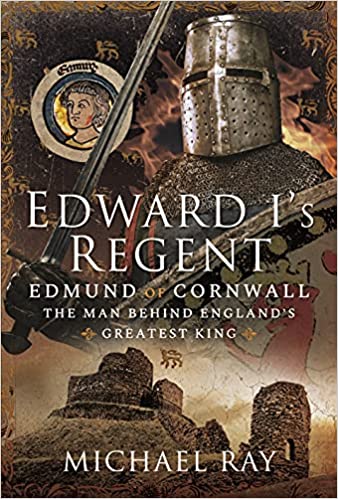
Book Corner: Edward I’s Regent by Michael Ray

Born at Christmas 1249 to Richard, Edmund of Cornwall was nephew to Henry III and cousin to Edward I. His eventful childhood took him to Germany when his father was elected king there. He was captured at the battle of Lewes and imprisoned for more than a year. Returning from crusade, he witnessed the brutal murder of his half-brother, which left him as heir to his father, the richest man in the kingdom. Throughout his life, Edmund played a crucial role in medieval England. As Regent of England, Earl of Cornwall and the richest man in the land, he was a leading force of the late-thirteenth century. This book considers Edmund’s life, his use of his wealth to lend to the king and others and to be a major benefactor of religious houses. His piety saw him found two new religious houses, rebuild another and bring the Holy Blood relic from Germany to Hailes abbey. His record as Regent of England for three years is assessed. The wide spread of his lands, which included 13castles and more than 800 places in 27 counties, and his tenants are set out as is his place in the local community. The basis of his wealth and its sources, including money from his lands but also from tin mining and marine dues in Cornwall, is explored and his knightly affinity and his close associates and officials are considered. On a personal level, the book examines his unsuccessful, childless marriage with the sister of the Earl of Gloucester. Edmund was a key figure throughout Edward I’s rein and the late-thirteenth century. In this insightful account, the man behind England’s ‘greatest king’ is at long last brought to the fore.

Edward I’s Regent: Edmund of Cornwall, The Man Behind England’s Greatest King by Michael Ray is a fascinating study of a little-known but highly significant noble of the reign of Edward I. Edmund of Cornwall was the son of Richard, Earl of Cornwall. Richard was the younger son of King John and Isabelle d’Angoulême, and brother to King Henry III. The second son of Richard of Cornwall, Edmund’s mother was Sanchia of Provence, younger sister of Henry III’s queen, Eleanor of Provence. Edmund may ever have become Earl of Cornwall, had his older brother, Henry of Almain, not been murdered by Guy de Montfort, son of the famous Simon de Montfort, in a church in Viterbo, Italy, in 1271.

With such a dramatic inheritance, it is no surprise that Edmund’s life and deeds were no less dramatic.

I do like this new tendency to look away from England’s monarchs and turn the spotlight on those who served them. It gives a more rounded approach to history and historical biography and greatly illuminates the reigns of the kings who are served. It also demonstrates how much is still left to study in history and how wide and deep historians can go in order to gain a greater understanding of the rule of medieval kings. The relationship between baron and king was, more often than not, one of mutual trust and reliance. Edward I’s Regent: Edmund of Cornwall, The Man Behind England’s Greatest King by Michael Ray serves to demonstrate just how deep and essential this relationship was.

On 29 November and December 1272, Edmund and Bishop Giffard sent letters requiring Llywelyn to come to the Ford of Montgomery, the traditional place for meetings between the English and Welsh rulers, to render his homage to the new monarch and to send the 3,000 marks he owed to the King by Christmas at the latest. The King needed the money for his crusade. Llywelyn neither came nor paid and the impasse continued until well after the new King’s return.

Meanwhile neither Edmund, or his officials, were not always well-behaved in the land of the absentee King. In January 1273, Edmund’s men were accused of occupying lands belonging to Peter de la Mare which led to the Chancellor, Walter de Merton, ordering the escheator to remedy the position. Despite this, in June, Edmund was still being obstructive. A long-running dispute with the Bishop of Exeter led to a threat of excommunication. Even though Edmund was at the heart of government, he was pursued by the Exchequer over his father’s debts. However, this did not prevent Edmund from being amongst those ready to go to France to meet and welcome back Edward I. Edmund was granted protection until August 1273 but he was still in Paris in December when he received 2,000 marks from the King. Whilst Edward I did not finally arrive back in England until 2 August 1274, it seems likely that Edmund had already returned as he asked Robert Burnell to summon a council in March. Edmund was present at the King’s coronation on 19 August 1274.

From the start of the reign, tasks were entrusted to Edmund by the King. At the beginning of 1275 Edmund was ready to resolve a dispute with Flemish merchants but was unable to act as the Count of Flanders had not sent a representative. In March, the King stayed at two of Edmund’s manors, Cippenham and Risborough in Buckinghamshire, and it can be assumed that Edmund was present. The first of many royal charters to be witnessed by Edmund was attested at Westminster on 22 October 1274.

Edward I’s Regent: Edmund of Cornwall, The Man Behind England’s Greatest King by Michael Ray is an in-depth study of a man who was an integral part of Edward I’s government, but whose life and career has often been overlooked. Michael Ray expertly examines every aspect of Edmund’s life and career in great detail. With the use of chronicles and charter evidence, the author demonstrates the extent to which Edmund of Cornwall was an integral part of Edward I’s administration and court,, both as a cousin to the king, an administrator and a soldier.

Thoroughly researched and with extensive footnotes and bibliography, this is an excellent book in every way. t is a pleasure to read.

Edward I’s Regent: Edmund of Cornwall, The Man Behind England’s Greatest King by Michael Ray is an eminently readable book that could only be an asset to the study of medieval history and the reign of Edward I in particular. Whether you are studying medieval history for academia or simply as a hobby, this is a book which is not to be missed. I can highly recommend it.

To buy the book:

Edward I’s Regent: Edmund of Cornwall, The Man Behind England’s Greatest King by Michael Ray is available in hardback and Kindle from Pen & Sword Books and Amazon.

About the author:

After school in Shropshire, Michael Ray read geography and town planning at King’s and University Colleges, London. Retiring early from a planning career, he returned to KCL and obtained a PhD after a study of aliens in thirteenth-century England. He has since been published in books, journals and on websites including Academia.

My Books:

Signed, dedicated copies of all my books are available, please get in touch by completing the contact me form.

Defenders of the Norman Crown: The Rise and Fall of the Warenne Earls of Surrey tells the fascinating story of the Warenne dynasty, of the successes and failures of one of the most powerful families in England, from its origins in Normandy, through the Conquest, Magna Carta, the wars and marriages that led to its ultimate demise in the reign of Edward III. Defenders of the Norman Crown: Rise and Fall of the Warenne Earls of Surrey is now available from Pen & Sword BooksAmazon in the UK and US, Bookshop.org and Book Depository.

1 family. 8 earls. 300 years of English history!

Also by Sharon Bennett Connolly:

Ladies of Magna Carta: Women of Influence in Thirteenth Century England looks into the relationships of the various noble families of the 13th century, and how they were affected by the Barons’ Wars, Magna Carta and its aftermath; the bonds that were formed and those that were broken. It is now available in paperback and hardback from Pen & Sword,  AmazonBookshop.org and from Book Depository worldwide.

Heroines of the Medieval World tells the stories of some of the most remarkable women from Medieval history, from Eleanor of Aquitaine to Julian of Norwich. Available now from Amberley Publishing and Amazon, Bookshop.org and Book Depository.

Silk and the Sword: The Women of the Norman Conquest traces the fortunes of the women who had a significant role to play in the momentous events of 1066.  Available now from Amazon,  Amberley Publishing, Bookshop.org and Book Depository.

Alternate endings: An anthology of historical fiction short stories including Long Live the King… which is my stake what might have happened had King John not died in October 1216. Available in paperback and kindle from Amazon.

*

You can be the first to read new articles by clicking the ‘Follow’ button, liking our Facebook page or joining me on Twitter and Instagram.

*

©2022 Sharon Bennett Connolly FRHistS.

Guest Post: First Impressions and their Consequences by Anna Belfrage

It is always a pleasure to welcome my good friend and fellow author, Anna Belfrage, to History…the Interesting Bits. Anna’s fabulous new Castilian Saga is a pleasure to read – and I will be posting a review of the latest instalment, Her Castilian Heart, shortly. But, for now, Anna is here to tell us about how she met the hero and the story that developed…

First impressions and their consequences.

The first time I met Robert FitzStephan, he had his arms full of apple blossom.

“Sorry,” he said, squeezing by me on the narrow stairs, “I have a wife to make amends to.” And off he went, leaving me in the damp gloom with a flaring torch the only source of light. I suppose this is when I should clarify that this was not an IRL (in real life) meeting: no, all of this happened in my roomy brain, an ever-expanding universe in which my characters pop up out of nowhere, demanding I tell their stories.

Robert FitzStepahn left an impression of light eyes and a HUGE nose and. . .

“Not that huge,” he protests, setting a finger to the rather impressive protuberance.

“No, it isn’t,” his wife, Noor says (apparently, the apple blossom did the trick) She gives me a severe look. “And one should not make fun of people because of their looks.”

“I wasn’t,” I try. After all, Robert is tall and broad and strong and. . .

Noor gives me another glare. “He’s mine!”

Of course. I don’t want a medieval man—I don’t live in that era, no matter that I write about it.

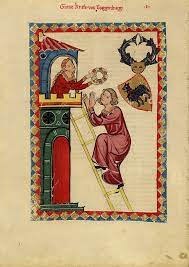
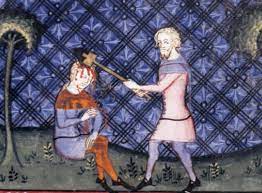
A Courting Man, Codex Manesse

Now, aside from being tall and all that, Robert is a self-made man, a man whose years of loyal service to his king, Edward I, were rewarded when the king gave him Noor—Eleanor d’Outremer—in marriage. With Noor came a fortified manor and some lands—and an indirect blood-tie to Queen Eleanor. Not that being related to the queen is necessarily a boon.

Initially, the Robert and Noor marriage had its bumps—as described in His Castilian Hawk. Like when Robert realised Noor was related to the princes of Gwynedd and that the orphan she’d taken in was the unknown son of the rebellious Dafydd ap Gruffyd, former prince whose head now adorned London Bridge. Should the king find out about the child, he’d lock the toddler up with the child’s unfortunate brothers in Bristol Castle and potentially sever Robert’s head for harbouring him. Our hero was somewhat torn between his loyalties to his liege and those to his wife. . .

“Never,” Robert says. “I am the king’s man, but my wife comes first.”  

Aww. . . Such a nice quality in a man!

Noor’s decision to take in the orphan was to have consequences, especially once Queen Eleanor began suspecting who the child was. Which was how Robert and Noor found themselves unofficially exiled to Aragon and Castile—arriving just in time for Robert to participate in the battle of Col de Panissars, where the king of Aragon defeated the French who’d attempted to invade his country under the of a crusade. Their sojourn on the Iberian Peninsula was fraught with adventure and danger, as described in The Castilian Pomegranate.

In Her Castilian Heart, Robert and Noor are safely back in England. Well, safely may not be the right word, what with Robert’s half-brother wanting to murder him, but still. Plus, the queen remains suspicious of their foundling, and God alone knows what an irate queen may do. This time, the events are woven round King Edward’s attempts to broker peace between the pope, the king of France and the king of Aragon—that failed French effort to invade Aragon, a.k.a. the Aragonese Crusade, has caused quite a political mess.

King Edward’s reasons for involving himself are to some extent personal: one of his daughters is contracted to marry King Alfonso of Aragon, but the pope has threatened him with brimstone and sulphur if he allows his daughter to do so without the pope’s explicit permission. Which isn’t forthcoming, as the pope is seriously ticked off about the fact that Aragon has taken Sicily back from Charles d’Anjou. The pope has a much better relationship with the Angevin than with the king of Aragon—maybe because he excommunicated Alfonso’s father for having supported the Sicilians when they rebelled against years of Angevin oppression (and then consolidated Sicily as part of his kingdom)

Philippe of France wants restitution for the loss of the crown of Aragon—which is rather odd, seeing as Aragon wasn’t his to begin with, but the young French king has not lived down the humiliation of losing to Aragon. Young Alfonso wants peace—but not at the expense of relinquishing Sicily, and no way is he going to compensate the French for invading his kingdom! In fact, they should compensate him!

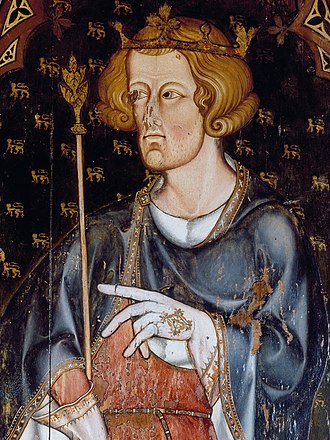
King Edward I

King Edward is faced with quite the balancing act: how is he to placate the pope, somehow knock some sense into the young hot-headed kings and deliver a treaty that will hold? And on top of all this, King Edward has an ailing wife and the rebellious Welsh to handle! Not that he involves himself in the actual fighting win Wales—he leaves the rekindled Welsh uprising to Robert to handle together with Roger Mortimer.

Her Castilian Heart was originally supposed to be the final book in this series, but as Robert has as yet not shared the reason for having to placate his wife with apple blossom, I still have more stories to tell about Robert, Noor, their foundling Lionel—and the brave and rebellious Welsh. King Edward may think he has the Welsh dragon tamed, but he is wrong—oh, so wrong!

About Her Castilian Heart:

Blood is not always thicker than water…

At times a common bloodline is something of a curse—or so Robert FitzStephan discovers when he realises his half-brother, Eustace de Lamont, wants to kill him.  

A murderous and greedy brother isn’t Robert’s only challenge.  He and his wife, Noor, also have to handle their infected relationship with a mightily displeased Queen Eleanor—all because of their mysterious little foundling whom they refuse to abandon or allow the queen to lock away.

Eustace is persistent. When Robert’s life hangs in the balance, it falls to Noor to do whatever it takes to rip them free from the toothy jaws of fate. Noor may be a woman, but weak she is not, and in her chest beats a heart as brave and ferocious as that of a lioness. But will her courage be enough to see them safe?

To buy the book:

Her Castilian Heart is available now from: http://myBook.to/HEART

About the author:

Had Anna been allowed to choose, she’d have become a professional time-traveller. No luck there, so instead she became a financial professional with two absorbing interests; history and writing. These days, Anna combines an exciting day-job with a large family and her writing endeavours. Plus she always finds the time to try out new recipes, chase down obscure rose bushes and initiate a home renovation scheme or two.

Anna has authored the acclaimed time travelling series The Graham Saga , set in 17th century Scotland and Maryland, as well as the equally acclaimed medieval series The King’s Greatest Enemy.

Anna has also published The Wanderer, a fast-paced contemporary romantic suspense trilogy with paranormal and time-slip ingredients. Her September 2020 release, His Castilian Hawk is a story of loyalty and love set against the complications of Edward I’s invasion of Wales in the late 13th century.

Her most recent release, The Whirlpools of Time , is a time travel romance set against the backdrop of brewing rebellion in the Scottish highlands.

All of Anna’s books have been awarded the IndieBRAG Medallion, she has several Historical Novel Society Editor’s Choices, and one of her books won the HNS Indie Award in 2015. She is also the proud recipient of several Reader’s Favorite medals as well as having won various Gold, Silver and Bronze Coffee Pot Book Club awards.

Find out more about Anna, her books and enjoy her eclectic historical blog on her website, www.annabelfrage.com 

Social Media Links:

Website: www.annabelfrage.com; Twitter: https://twitter.com/abelfrageauthor; Facebook: https://www.facebook.com/annabelfrageauthor; Instagram: https://instagram.com/annabelfrageauthor; Book Bub: https://www.bookbub.com/profile/anna-belfrage; Amazon Author Page: http://Author.to/ABG; Goodreads: https://www.goodreads.com/author/show/6449528.Anna_Belfrage

*

My Books:

Signed, dedicated copies of all my books are available, please get in touch by completing the contact me form.

Defenders of the Norman Crown: The Rise and Fall of the Warenne Earls of Surrey tells the fascinating story of the Warenne dynasty, of the successes and failures of one of the most powerful families in England, from its origins in Normandy, through the Conquest, Magna Carta, the wars and marriages that led to its ultimate demise in the reign of Edward III. Defenders of the Norman Crown: Rise and Fall of the Warenne Earls of Surrey is now available from Pen & Sword BooksAmazon in the UK and US, Bookshop.org and Book Depository.

1 family. 8 earls. 300 years of English history!

Also by Sharon Bennett Connolly:

Ladies of Magna Carta: Women of Influence in Thirteenth Century England looks into the relationships of the various noble families of the 13th century, and how they were affected by the Barons’ Wars, Magna Carta and its aftermath; the bonds that were formed and those that were broken. It is now available in paperback and hardback from Pen & Sword,  AmazonBookshop.org and from Book Depository worldwide.

Heroines of the Medieval World tells the stories of some of the most remarkable women from Medieval history, from Eleanor of Aquitaine to Julian of Norwich. Available now from Amberley Publishing and Amazon, Bookshop.org and Book Depository.

Silk and the Sword: The Women of the Norman Conquest traces the fortunes of the women who had a significant role to play in the momentous events of 1066.  Available now from Amazon,  Amberley Publishing, Bookshop.org and Book Depository.

*

You can be the first to read new articles by clicking the ‘Follow’ button, liking our Facebook page or joining me on Twitter and Instagram.

*

©2022 Sharon Bennett Connolly.

Book Corner: A Marriage of Lions by Elizabeth Chadwick

England, 1238

Raised at the court of King Henry III as a chamber lady to the queen, young Joanna of Swanscombe’s life changes forever when she comes into an inheritance far above all expectations, including her own.

Now a wealthy heiress, Joanna’s arranged marriage to the King’s charming, tournament-loving half-brother William de Valence immediately stokes the flames of political unrest as more established courtiers object to the privileges bestowed on newcomers.

As Joanna and William strive to build a life together, England descends into a bitter civil war. In mortal danger, William is forced to run for his life, and Joanna is left with only her wit and courage to outfox their enemies and prevent them from destroying her husband, her family, and their fortunes.

What a marvellous adventure!

A Marriage of Lions is another fabulous, character-driven historical novel from Elizabeth Chadwick. An enjoyable and entertaining read, it will take you through the full range of emotions; it will have you in tears in one moment and shouting at the characters in the book the next. Beautifully written, it is a wonderful reading experience.

As I have come to expect with Elizabeth Chadwick, A Marriage of Lions transports you back through the centuries, so expertly that you can almost imagine yourself in the midst of Henry III’s court and the battle of wills between Henry and Simon de Montfort. In a change of focus to most books of the time, Elizabeth foregoes telling de Montfort’s story to concentrate on the remarkable relationship of William de Valence and his wife, Joanna de Munchesny, granddaughter of the great William Marshal.

Having just written a biography of the Warenne family, who were the earls of Surrey from the time of the Norman Conquest to the death of the 7th and last earl in 1347, I took particular interest in Elizabeth’s portrayal of John de Warenne, 6th Earl of Surrey, who was brother-in-law to both King Henry III and William de Valence. He was also a cousin to William’s wife, Joanna, through their Marshal mothers. And I have to say, I think Elizabeth got John spot on. He was a loyal, noble character with his friends and family – a trait that ran through his family. Though he could be ruthless to his enemies and was not a benevolent lord to his tenants. 

A Marriage of Lions is not just a fascinating read, it is an experience not to be missed, shining a light on the 13th century, on not only the complex political manoeuvring, but also on the family dynamics that coloured the politics of all those involved, from inheritance disputes to political reform and financial management. Elizabeth manages to weave all these different threads into one fabulous, addictive story.

Elizabeth Chadwick seamlessly combines the history with the fiction.

‘Did you know my mother well?’ Joanna ventured, hoping for crumbs.

Her aunt held out her empty cup to a passing servant to be refilled. ‘I was married with a child before she was born, but I saw her sometimes and I grew to know her better when our father was dying. We sang to him, your mother and me. She was young and shy, but he took great delight in it and it was a moment of light and blessing amid his pain.’ a shadow crossed her face. ‘Our mother died less than a year later and I cared for your mother until she came to be wed. That is why I say you are like her for I knew her well when she was your age. I miss her. I miss all of my sisters. I am the last one. None have made old bones.’

‘I am sorry, madam,’ Joanna said. Her aunt Isabelle, Mahelt’s sister, had died bearing the child she had been carrying at the Queen’s churching – a stillborn son. Her husband, the King’s brother, Richard, had since departed on crusade with Simon de Montfort who was making good use of his exile. ‘I am sorry for the loss of your husband too.’

‘Him I do not miss,’ her aunt said brusquely. ‘Marriage is a bargain and you make the best of your circumstances. If you are fortunate you will bear sons and daughters to nurture and shape, who will be your consolation and make you proud.’

She beckoned to a junior squire who had been attending on the newly knighted Peter of Savoy.

The boy joined them and bowed. Joanna eyed him curiously. He had glossy crow’s wing hair and dark-brown eyes set under slanted brows. He was of about her own age and she recognised his guarded expression from her own repertoire. Her aunt introduced him as her son, John de Warenne, who was entering the household of the newly knighted Peter of Savoy as his squire and ward, where he would be trained to knighthood.

The boy bowed again and gave Joanna an evaluating, slightly wary look. She could almost see prickles bristling on him like a defensive hedgehog. She understood his tension for she had reacted in the same way when she first arrived at court.

‘I will be glad to have another cousin to talk to,’ she said.

Elizabeth Chadwick demonstrates a deep understanding of the politics and nuances of the royal court of Henry III, showing how factionalism and court favourites led to the Second Barons’ War and how it was Henry’s Lusignan siblings suffered from the fallout of Henry’s mounting disagreements with Simon de Montfort. A Marriage of Lions also shows readers how women, despite their inability to take to the field of battle, could use their own skills and abilities to not only protect their family, but also further the interests of their husbands and children. Through Joanna de Munchesny, Elizabeth Chadwick emphasises that medieval women were no more meek and defenceless in the 13th century than they are today. Joanna was intelligent and resourceful – and a force to be reckoned with! She is a character than any reader can admire and get behind.

I have written about many of the historical personages in A Marriage of Lions, either as research subjects or peripheral subjects of my books and I found myself nodding along to Elizabeth Chadwick’s own assessments of these characters, from Simon de Montfort to John de Warenne, from Matilda Marshal to de Montfort’s wife, Eleanor of England – I think Elizabeth and I must read many of the same books for research. This also serves to demonstrate how much knowledge and research the author has accumulated over the years, and how deeply she comes to understand her characters. While this isn’t essential in a historical fiction book, it does help to add authenticity to a novel, and draws the reader in deeper, so that they become totally immersed in the story and its characters.

While I have enjoyed many an Elizabeth Chadwick novel, A Marriage of Lions stands on a level with The Greatest Knight as one of her very best. If you are an Elizabeth Chadwick fan, this is a must read. If you have never read Elizabeth, then I suggest you start with this one – you will definitely want to read the rest afterwards. It is one of the best historical fiction novels that I have read this year. I did not want it to finish and yet – at the same time – could not wait to get to the end!

Elizabeth Chadwick has a knack of getting into the heads and hearts of her characters, so that they jump off the page and insinuate themselves into the thought of the reader. The book is impossible to put down – until the very last page. And finishing the book – especially this book – leaves the reader bereft.

To buy the book: Amazon

About the author:

New York Times bestselling author Elizabeth Chadwick lives in a cottage in the Vale of Belvoir in Nottinghamshire with her husband and their 3 dogs. Her first novel, The Wild Hunt, won a Betty Trask Award and To Defy a King won the RNA’s 2011 Historical Novel Prize. She was also shortlisted for the Romantic Novelists’ Award in 1998 for The Champion, in 2001 for Lords of the White Castle, in 2002 for The Winter Mantle and in 2003 for The Falcons of Montabard. Her sixteenth novel, The Scarlet Lion, was nominated by Richard Lee, founder of the Historical Novel Society, as one of the top ten historical novels of the last decade. She often lectures at conferences and historical venues, has been consulted for television documentaries and is a member of the Royal Historical Society.

For more details on Elizabeth Chadwick and her books, visit http://www.elizabethchadwick.com, follow her on Twitter, read her blogs or chat to her on Facebook.

*

My Books

Signed, dedicated copies of all my books are available, please get in touch by completing the contact me form.

Defenders of the Norman Crown: The Rise and Fall of the Warenne Earls of Surrey tells the fascinating story of the Warenne dynasty, of the successes and failures of one of the most powerful families in England, from its origins in Normandy, through the Conquest, Magna Carta, the wars and marriages that led to its ultimate demise in the reign of Edward III. Defenders of the Norman Crown: Rise and Fall of the Warenne Earls of Surrey is now available from Pen & Sword BooksAmazon in the UK and US and Book Depository.

1 family. 8 earls. 300 years of English history!

Also by Sharon Bennett Connolly:

Ladies of Magna Carta: Women of Influence in Thirteenth Century England looks into the relationships of the various noble families of the 13th century, and how they were affected by the Barons’ Wars, Magna Carta and its aftermath; the bonds that were formed and those that were broken. It is now available from Pen & Sword,  Amazon and from Book Depository worldwide.

Heroines of the Medieval World tells the stories of some of the most remarkable women from Medieval history, from Eleanor of Aquitaine to Julian of Norwich. Available now from Amberley Publishing and Amazon and Book Depository.

Silk and the Sword: The Women of the Norman Conquest traces the fortunes of the women who had a significant role to play in the momentous events of 1066.  Available now from Amazon,  Amberley Publishing, Book Depository.

*

You can be the first to read new articles by clicking the ‘Follow’ button, liking our Facebook page or joining me on Twitter and Instagram.

©2021 Sharon Bennett Connolly

The Early Years of the Last Earl Warenne

Books by Sharon Bennett Connolly
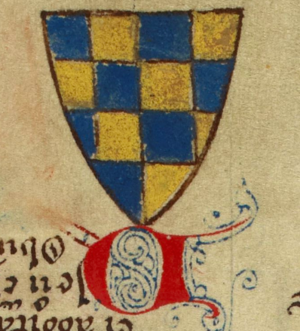
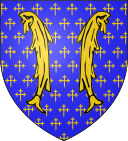
Arms of the Earls of Warenne and Surrey

John de Warenne, 7th and last Earl of Warenne and Surrey (Earl Warenne), was the only son of William de Warenne, who in turn was the only son of the colourful and rather legendary John de Warenne, 6th Earl Warenne. The 6th earl had been married in 1247 to Alice de Lusignan, half-sister of King Henry III as the second eldest daughter of Isabelle d’Angoulême, Queen of England as the wife of King John, and her second husband, Hugh X de Lusignan, Count of La Marche and Lord of Lusignan and Valence.

Born in around 1224, Alice was seven years older than her 16-year-old husband. The marriage had formed part of King Henry’s much-despised policy of patronising his Lusignan siblings and thus was condemned by Matthew Paris. Rather harshly, Paris claimed that the marriage was ‘beyond the bride’s station.’1 Given that Alice was half-sister of the king of England, this assessment seems a tad unfair. For John’s son and grandson, it would provide them with powerful royal relations in the future; William de Warenne was a first cousin of Edward I and the younger John de Warenne was a second cousin to Edward II.

Alice de Lusignan, Countess of Warenne and Surrey, died on 9 February 1256, just hours or days after William’s birth. She was ‘placed in the earth before the great altar [Lewes priory] in the presence of her brother Adelmar [Aymer], [bishop] elect of Winchester.’2 Despite being one of the wealthiest and most powerful earls in the country, and with only one legitimate son to succeed him, John de Warenne would never remarry, perhaps an indication of the deep affection that he held for his semi-royal wife.

In his late twenties, William de Warenne was married to Joan, daughter of Richard de Vere, Earl of Oxford, sometime in 1284: ‘Also William de Warenne married the daughter of the Earl of Oxford.’3 Through his mother, William was the nephew of Henry III and first cousin to Edward I. Through his father, William was descended from, among others, William Marshal, Geoffrey of Anjou and six Warenne earls of Surrey. However, William was destined never to succeed to the expansive earldom of Surrey. He was killed in a tournament at Croydon in December 1286, just six months after the birth of his only son and heir, John. The Annals of Lewes Priory recorded the events of 1286:

This year, on June 30, was born the first-begotten son of Sir William de Warenn, by his wife, daughter of the Earl of Oxford, whom he had married, as appears above. He was baptised and called by the name of John, on the 7th of November, with immense rejoicing; but alas! As the prophet testifies, ‘our joys are extinguished, but lamentation possesses us;’ for in the same year, on the first Sunday before the feast of Thomas the Apostle, which was on December 15, the father of the aforesaid youth [Sir William, killed in a tournament at Croydon], concerning whom our gladness had been, expired, and, oh sadness! He in whom flourished entire nobility, generosity and honesty, and the beginning of the glory of all knighthood, now lies buried and covered with stones. But there was present at the entombment of this so noble a man, the lord of Canterbury, who buried him before the high altar, on the left side, near his mother, with the greatest devotion of respect, as was fitting, many nobles of the land being present. The earl marshal [Roger Bigod, Earl of Norfolk], the Earl of Oxford and several barons … were anxiously afflicted.4

Books by Sharon Bennett Connolly
St Pancras priory, Lewes, the Warenne family mausoleum

Some sources suggest that John was the posthumous son of William, stating that William was killed in January 1286; however, this entry in the Annals of Lewes Priory makes it clear that John was born almost six months before his father was killed. John’s sister, Alice, on the other hand, may well have been born the year after her father’s death, in June 1287; hence John being referred to as the ‘first-begotten son’ despite being the only son. Joan was pregnant with Alice and no one yet knew if the child would be a boy or a girl.

Given the chronicle was written by a monk at Lewes, a priory patronised by the Warenne family, the laments and praise of William may be slightly exaggerated. However, that the archbishop of Canterbury conducted the funeral rites, and the presence of many senior nobles, suggests that William was, indeed, well thought of. This fact may give the lie to the rumours of murder that inevitably accompany a medieval death from unnatural causes. Rumours that William’s enemies had taken the opportunity of the tournament to despatch the young lord appear to be without foundation.

Young John suffered a further bereavement on 1293, when his mother, Joan died. Aged only 7, it seems arrangements had already been made should John still be a minor when his parents died. It had been agreed that the custody of John and his lands should go to Joan’s parents, Robert de Vere and his wife, Alice de Sanford. However, Earl Robert died in 1296 and it is not known where 10-year-old John spent the remainder of his childhood. It seems likely that John was raised by his Warenne grandfather, until the 6th Earl’s death in 1304.

At the age of 18, John succeeded to the earldom of his grandfather as the 7th earl of Warenne, Surrey and Sussex. His vast holdings comprised of lands and manors in numerous counties, including Sussex, Surrey, Lincolnshire, Yorkshire, Wiltshire and Norfolk. John, Earl Warenne, was still a minor and would be for another three years; as a consequence, he was made a royal ward, his lands taken into the custody of the Crown. Although he and his lands were in royal custody, and managed by custodians, John lived on his own estates and in 1305 the king commanded John to provide him with forty dried and salted barrels of deer.5 In the same year, he was sent to attend a tournament at Guildford, part of John’s estates, by Edward I, who provided the young lord with considerable funds for his maintenance.6

On 7 April 1306, in spite of the fact he had not yet performed homage to the king, still only 19 years old, Edward granted John his grandfather’s lands. It may well have been at this time that Edward Balliol was placed in John’s custody. The son of John’s aunt, Isabella, and King John Balliol of Scotland, the younger Balliol had been in the custody of his grandfather, the sixth Earl Warenne, from 1299 until the old earl’s death in 1304.

Books by Sharon Bennett Connolly
Seal of Edward Balliol as King of Scots

Given that it is likely his mother was no longer living when John Balliol became king in 1292, and that the couple had been married sometime before 7th February 1281, it seems probable that Edward was born sometime in the 1280s, making him of a similar age to his cousin, John de Warenne. Indeed, the two young men may well have spent their teenage years together in their grandfather’s household, training for knighthood. John was Balliol’s guardian for about 4 years, until it was ordered that he be delivered into royal custody in 1310, by Edward II. Edward Balliol had a strong claim to the Scottish throne, one that he would later be encouraged to pursue by Edward III in the 1330s. In May 1306, John de Warenne attended his first parliament at Westminster, an event which marked his coming of age, although he was not yet 21; in fact, he was still a month shy of his twentieth birthday.

John’s early coming of age appears to have been a part of larger scheme by King Edward, as during the parliamentary session, John was brought before the king and offered Edward’s granddaughter in marriage; the young earl readily agreed to the marriage, even though his bride was only 10 years old. The proposed bride was Joan, or Jeanne of Bar, Edward’s granddaughter by his eldest daughter, Eleanor and her husband Henry, Count of Bar. In the week following the betrothal of John and Joan, and in anticipation of a new expedition against Scotland, on 22 May 1306, Edward I held a magnificent ceremony for the knighting of his eldest son, Edward; the king knighted the prince, who then went on to knight the other candidates, in the glorious setting of Westminster Abbey.

In anticipation of the prince’s knighting, and in order to gather a body of knights who would be loyal to his son, the king proclaimed that all young men of sufficient age and income should travel to Westminster, to be knighted at royal expense alongside their future king, Prince Edward. The ceremony was also to bestow knighthoods on almost 300 men, John de Warenne included: ‘The yong Erle of Warenne with grete nobley was thare / A wif thei him bikenne, the erles douhter of Bare.’7

There were so many young men to be knighted, that it was impossible to find accommodation for all, and apple trees had to be chopped down in the gardens of the New Temple to make room. The prince and his closest companions kept their vigil, the night before the ceremony, watching their arms, in the abbey church at Westminster. Matthew of Westminster records that:

there was such a noise of trumpets and pipes, and such a clamour of voices, that one side of the choir could not hear the other. The others kept their vigil at the New Temple. The King provided them the necessary scarlet cloths, fine linen and belts for their use from his own wardrobe. 8

Books by Sharon Bennett Connolly
Arms of the House of Bar

The following morning, the king knighted his son in the palace of Westminster, investing him with his knight’s belt and spurs. The prince then crossed to Westminster Abbey, to invest the others; ‘The crowd was enormous, so great indeed, that two knights were killed. Each candidate was attended by three knights, who saw and assisted him through the ceremony.’9 The prince knighted sixty of the candidates himself, with other knights assisting with the rest. A lavish banquet – which later became known as the Feast of the Swans – followed the proceedings:

when two swans were brought in ornamented with gold network, emblematical of constancy and truth. When they were placed upon the table the King rose and made a vow to God and to the swans, that he would set out for Scotland and avenge the death of Comyn, and punish the treachery of the Scots … It was under these exceptionally interesting circumstances that Warenne received his knighthood.10

The murder of John Comyn, at the hands of Robert the Bruce in the church of the Greyfriars in Dumfries, on 10 February 1306, following an argument, had sent shockwaves through Christendom. Bruce had then raced to Scone where he was crowned King Robert I of Scots. As the celebrations continued a number of weddings also took place, involving several barons and nobles. John’s sister, Alice, married Edmund FitzAlan, 9th Earl of Arundel. Edmund had been a ward of John’s grandfather. The two young men were very close in age and were political allies and friends.

John de Warenne and Joan of Bar were married on 25 May, ‘before an altar spread with glittering cloths-of-gold.’11 Barely 10 years old, Joan was escorted to the palace at Westminster with great pomp and she and John were married in the presence of the ageing king. The Wardrobe Accounts bear witness to the extravagance of the ceremony and celebrations:

‘1306. May 25. In money lent and dispersed in the presence of the King, at the nuptials celebrated in the King’s chapel at Westminster, between John, Earl de Warenne, and the Lady Joanna, daughter of the Count de Barr, xls [40s].’ Other money was paid out ‘for diverse minstrels’, and ‘for letting fly the king’s gyrfalcon.’ More extravagance was expended to Thomas the coachbuilder, ‘advanced on making a chariot for the Earl de Warenne, June 28, lxs [60s],’ and to Walter de Bardeney, ‘advanced on harness being made for the said Earl, on the same day, cs [100s].’ While Walter de Bedewynde was commissioned ‘for a new carriage for the use of the Countess de Warenne, by order of the Treasurer.’12

Books by Sharon Bennett Connolly
Conisbrough Castle, South Yorkshire, where John de Warenne, the last Earl of Warenne and Surrey, died in 1347

The marriage would prove to be a disaster, with John spending most of his adult life trying to obtain a divorce from Joan in order to marry his mistress, Maud de Nerford, and thus legitimise his children by her. Although the relationship with Maud eventually broke down, possibly due to the considerable pressure they couple must have been under with the almost-constant court cases, John was still trying to obtain a divorce from Joan to his dying day. In his latter years, in a last desperate attempt to produce a legitimate heir, he hoped to marry his mistress at that time, Isabella Holland, who his described as ‘ma compaigne’ in his will.13

John de Warenne, seventh and last Earl of Warenne, Surrey, Sussex and Strathearn died at Conisbrough Castle between 28 and 30 June 1347, possibly even on his sixty-first birthday (30 June). He asked to be buried at St Pancras Priory, Lewes, in an arch near the high altar. His will, dated 24 June 1347, left various gifts to his illegitimate children and to Isabella, to whom he left plate, jewels, cows, horses and other beasts, ‘and after that my debts and devises be made, I give to my said “compaigne” all the residue of all my goods and chattels, and whatsoever things they find.’14 To Joan, his wife of forty years, he left nothing.

*

Footnotes:

1. Scott L. Waugh, ‘Warenne, John de, seventh earl of Surrey earl of Surrey and Sussex, Earl Warenne’, ODNB; 2. ‘Annals written by a certain monk of Lewes, from the birth of Christ to the year 1312’ quoted in Blaauw, On the Early History of Lewes Priory; 3. ibid; 4. ibid; 5. Scott L. Waugh, ‘Warenne, John de, seventh earl of Surrey earl of Surrey and Sussex, Earl Warenne’, ODNB; 6. ibid; 7. F. Royston Fairbank, ‘The Last Earl of Warenne and Surrey, and the Distribution of his Possessions’, The Yorkshire Archaeological Journal, vol. XIX; 8. ibid; 9. ibid; 10. ibid; 11. Kelcey Wilson-Lee, Daughters of Chivalry: The Forgotten Children of Edward I; 12. Wardrobe Accounts quoted in F. Royston Fairbank, ‘The Last Earl of Warenne and Surrey, and the Distribution of his Possessions’, The Yorkshire Archaeological Journal, vol. XIX; 13. Katheryn Warner, Philippa of Hainault: Mother of the English Nation; 14. Calendar of Papal Registers, Papal Letters quoted in F. Royston Fairbank, ‘The Last Earl of Warenne and Surrey, and the Distribution of his Possessions’, The Yorkshire Archaeological Journal, vol. XIX

Images:

Courtesy of Wikipedia except Conisbrough Castle and Lewes Priory which are ©2021 Sharon Bennett Connolly

Sources:

The Oxford Companion to British History Edited by John Cannon; The Plantagenets, the Kings who Made England by Dan Jones; History Today Companion to British History Edited by Juliet Gardiner and Neil Wenborn;  Brewer’s British Royalty by David Williamson; Britain’s Royal Families, the Complete Genealogy by Alison Weir; Early Yorkshire Charters Volume 8, Edited by William Farrer and Charles Travis Clay; Conisbrough Castle by Steven Brindle and Agnieszka Sadraei; The Mammoth Book of British Kings and Queens by Mike Ashley; The Plantagenets, the Kings that made Britain by Derek Wilson; oxforddnb.com; royaldescent.net; F. Royston Fairbank, ‘The Last Earl of Warenne and Surrey, and the Distribution of his Possessions’, The Yorkshire Archaeological Journal, vol. XIX; Scott L. Waugh, ‘Warenne, John de, seventh earl of Surrey earl of Surrey and Sussex, Earl Warenne’, ODNB; ‘Annals written by a certain monk of Lewes, from the birth of Christ to the year 1312’ quoted in Blaauw, On the Early History of Lewes Priory; Kelcey Wilson-Lee, Daughters of Chivalry: The Forgotten Children of Edward I; Katheryn Warner, Philippa of Hainault: Mother of the English Nation

My Books

Signed, dedicated copies of all my books are available through my online store.

Out now: Scotland’s Medieval Queens

Books by Sharon Bennett Connolly

Scotland’s history is dramatic, violent and bloody. Being England’s northern neighbour has never been easy. Scotland’s queens have had to deal with war, murder, imprisonment, political rivalries and open betrayal. They have loved and lost, raised kings and queens, ruled and died for Scotland. From St Margaret, who became one of the patron saints of Scotland, to Elizabeth de Burgh and the dramatic story of the Scottish Wars of Independence, to the love story and tragedy of Joan Beaufort, to Margaret of Denmark and the dawn of the Renaissance, Scotland’s Medieval Queens have seen it all. This is the story of Scotland through their eyes.

Scotland’s Medieval Queens gives a thorough grounding in the history of the women who ruled Scotland at the side of its kings, often in the shadows, but just as interesting in their lives beyond the spotlight. It’s not a subject that has been widely covered, and Sharon is a pioneer in bringing that information into accessible history.’ Elizabeth Chadwick (New York Times bestselling author)

Available now from Amazon and Pen and Sword Books

Heroines of the Tudor World is now available for pre-order from Amberley Publishing and Amazon UK.

Also by Sharon Bennett Connolly:

Books by Sharon Bennett Connolly

Heroines of the Tudor World tells the stories of the most remarkable women from European history in the time of the Tudor dynasty, 1485-1603. These are the women who ruled, the women who founded dynasties, the women who fought for religious freedom, their families and love. Heroines of the Tudor World is now available from Amberley Publishing and Amazon UK. Women of the Anarchy demonstrates how Empress Matilda and Matilda of Boulogne, unable to wield a sword themselves, were prime movers in this time of conflict and lawlessness. It shows how their strengths, weaknesses, and personal ambitions swung the fortunes of war one way – and then the other. Available from Bookshop.orgAmberley Publishing and Amazon UKKing John’s Right-Hand Lady: The Story of Nicholaa de la Haye is the story of a truly remarkable lady, the hereditary constable of Lincoln Castle and the first woman in England to be appointed sheriff in her own right. Available from all good bookshops Pen & Sword Booksbookshop.org and Amazon

Royal Historical Society

Defenders of the Norman Crown: The Rise and Fall of the Warenne Earls of Surrey tells the fascinating story of the Warenne dynasty, from its origins in Normandy, through the Conquest, Magna Carta, the wars and marriages that led to its ultimate demise in the reign of Edward III. Available from Pen & Sword BooksAmazon in the UK and US, and Bookshop.orgLadies of Magna Carta: Women of Influence in Thirteenth Century England looks into the relationships of the various noble families of the 13th century, and how they were affected by the Barons’ Wars, Magna Carta and its aftermath; the bonds that were formed and those that were broken. It is now available in paperback and hardback from Pen & SwordAmazon, and Bookshop.orgHeroines of the Medieval World tells the stories of some of the most remarkable women from Medieval history, from Eleanor of Aquitaine to Julian of Norwich. Available now from Amberley Publishing and Amazon, and Bookshop.orgSilk and the Sword: The Women of the Norman Conquest traces the fortunes of the women who had a significant role to play in the momentous events of 1066. Available now from Amazon,  Amberley Publishing, and Bookshop.org.

Alternate Endings: An anthology of historical fiction short stories including Long Live the King… which is my take what might have happened had King John not died in October 1216. Available in paperback and kindle from Amazon.

Podcast:

A Slice of Medieval

Have a listen to the A Slice of Medieval podcast, which I co-host with Historical fiction novelist Derek Birks. Derek and I welcome guests, such as Bernard Cornwell and discuss a wide range of topics in medieval history, from significant events to the personalities involved.

Every episode is also now available on YouTube.

*

Don’t forget! Signed and dedicated copies of all my books are available through my online bookshop.

For forthcoming online and in-person talks, please check out my Events Page.

You can be the first to read new articles by clicking the ‘Follow’ button, liking our Facebook page or joining me on Twitter and Instagram.

©2021 Sharon Bennett Connolly FRHistS

Guest Post: Female Crusaders by Carol McGrath

It is a pleasure to welcome to History…the Interesting Bits, author Carol McGrath. Carol’s latest novel, The Damask Rose, is out this month and tells the story of Eleanor of Castile and her devoted husband, King Edward I. Eleanor of Castile led an adventurous life, to say the least, even accompanying her husband on Crusade to the Holy Land.

Carol McGrath tells us more…

Female Crusaders

Eleanor of Castile (1241-1290) is placed at the centre of my new publication The Damask Rose. She was married to Edward I at only twelve years old when he was fifteen and was his father Henry III’s heir. It is always thought that, throughout her life, Eleanor was devoted to Edward and him to her. They certainly supported each other throughout her life, almost always together. They even journeyed on Crusade together. She was not the first royal spouse to Crusade. Eleanor of Aquitaine and Marguerite of France had crusaded before her.

Sugar Storage Jar

In 1270 they set off on Crusade but they never reached Jerusalem. Acre was the royal couple’s home for more than a year. Edward was an able and courageous leader but the Crusade was militarily unsuccessful. They established their crusading court in Acre after the death of the original Crusade leader, the saintly Louis IX, at Carthage, and Edward became the eighth Crusade’s figure head. A legend says that Eleanor was so dutiful and committed to Edward, her only love, she saved his life in June 1272 when an assassin struck Edward down with a poisoned dagger. Edward apparently wrestled the knife from his assailant and killed him but not before he took injury to his arm.

The story relates that Eleanor sucked out the poison. This is not entirely true. Bartolemo Fiadoni known as the Ptolemy of Lucca is responsible for the popular tradition that Eleanor ‘showed great faithfulness; for with her tongue she licked his open wounds all the day, and sucked out the humour, and thus by her virtue drew out all the poisonous material.’ It is a story from the period’s High Romantic Tradition thus expressing Eleanor’s heroism. Read The Damask Rose to discover what most likely really did happen and how Edward survived the attack.

The story illustrates how the Crusades claimed both ecclesiastical and chivalric ideas linking Church and Court, how at the time, the Crusades became romanticised. Courtly literature was linked to women in Historical Romances, many of which were associated with crusading and the Holy Grail. In fact, many ordinary women went on Crusade as well as queens and noble women. These ordinary women were almost always described in sources in relation to men as daughters, wives, mothers, aunts, sisters and even more distant kin. However, sometimes we find widows or women, well past child bearing age and referred to as ‘in old age’, on Crusade.

Toilets in Acre

Individual female crusaders mentioned in sources were predominantly well to do. Even so, others exist such as the woman who followed a goose on Crusade because she believed it was filled with the Holy Spirit. Women generally were accompanied male relatives but some, like the goose lady, travelled without a guardian. A passenger list surviving from the Saint Viktor, a Crusade ship of 1250 records forty two of the 342 common people travelling to the Holy Land were women. Twenty-two of these women had no male chaperone. Securing a suitable male escort was apparently a huge problem. Large groups of widows might travel together as pilgrims. Pilgrims were not supposed to carry arms and even if women had travelled with pilgrim guards, they were still vulnerable. Women Crusaders were utterly courageous and determined. For example, in her mid-sixties, Ermeongarde, Countess of Brittany, who had taken the veil in Dijon in 1130, visited her half-brother, King Fulke of Jerusalem, and passed some years in the nunnery of St Anne in the Holy City. She safely return to Brittany in 1135 to tell her tale.

 The Dining Hall, Hospitaller Palace, Acre

Piety was the main reason for taking the cross. Women sometimes took the cross in public ceremonies alongside men. Jerusalem was naturally the goal. The two fold nature of armed pilgrimage to rescue the Holy Land by force and to pray at shrines gave women a ‘canonical loophole’ to participate. Also, Crusading affected women’s lives whether they stayed in Europe, took the cross or lived abroad in settler territories. Although women are recorded as present since the First Crusade, it was only during the thirteenth century that they were granted legal status as crucesignatae. Spiritual rewards such as the remittance of sins were indeed as attractive to women as men.

Women fulfilled practical functions during siege warfare on Crusade often undertaking jobs such as clearing rubble and filling ditches. They are recorded as bringing refreshments to the first Crusaders at the Battle of Dorylaeum. They are known to have transported materials to weave the panels in a siege engine in 1099 at the Siege of Jerusalem. This I found fascinating. They washed clothing and picked lice out of body linen. By the fourth Crusade, women were entitled to a share of the booty. They ground corn and maintained markets. They tended to the wounded and the sick.

A Parisian woman called Hosenda tended Louis IX when he was ill from dysentery in 1250. It was dangerous too. If a woman was captured her captivity held a sexual slur which devalued them regarding ransom. A woman was valued at a third the price of a man. Power in the settlements was, however, often transferred through widows and heiresses. Aristocratic marriages were extremely important to Crusader settler society. They cemented political alliances between Latins from the West, the Levant, Greeks, Armenians and Syrians. Some women even became feudal lords thus contributing to the defence of the Holy Land and women who stayed behind acted as regents and organised financing the Crusaders.

The Hospitaller Palace Acre

As for Eleanor of Castile, nothing quite so amazing. She was a child bearer during her Crusade experience, pregnant for most of the campaign. It is thought she suffered a still birth early on; her daughter, Joan of Acre, was born on Crusade; her son Alfonso was born on the long journey home. It is unlikely Eleanor actually saw much of Acre where prostitution was rife, a city called ‘a sinful city and one filled with all uncleanness’ by Oliver of Poderborn. It is likely that after the excitement of their arrival, Acre soon palled on her accompanying noble women and their ladies. At least, Eleanor, a true blue-stocking, could find escape in her beautiful books and the lovely gardens of the Citadel of the Knights Hospitaller, a substantial building complex of five thousand square miles, three times that of the Tower of London, her home for the duration. To discover more do read my new novel The Damask Rose.

Many thanks to Carol McGrath for her wonderful insight and research into female crusaders.

To buy The Damask Rose: tinyurl.com/dk2att32

Look out for my review of The Damask Rose, which will go live in a few days…

Catch up on Carol’s blog tour so far – and follow the last few stops with the bloggers.

About the author:

Carol McGrath is the author of the acclaimed She-Wolves Trilogy, which began with the hugely successful The Silken Rose and continues with the brand new The Damask Rose. Born in Northern Ireland, she fell in love with historical fiction at a young age, when exploring local castles, such as Carrickfergus, and nearby archaeological digs – and discovering some ancient bones herself. While completing a degree in history, she became fascinated by the strong women who were silenced in record, and was inspired to start exploring their lives. Her first novel, The Handfasted Wife, was shortlisted for the Romantic Novelists’ Association Awards, and Mistress Cromwell was widely praised as a timely feminist retelling of Tudor court life. Her novels are known for their intricacy, depth of research and powerful stories.

For more news, exclusive content and competitions, sign up to Carol’s newsletter at: http://www.carolcmcgrath.co.uk

Follow her on Facebook: /CarolMcGrathAuthor1

And Twitter: @CarolMcGrath

*

My books

Coming 31st May:

Defenders of the Norman Crown: The Rise and Fall of the Warenne Earls of Surrey tells the fascinating story of the Warenne dynasty, of the successes and failures of one of the most powerful families in England, from its origins in Normandy, through the Conquest, Magna Carta, the wars and marriages that led to its ultimate demise in the reign of Edward III.

Defenders of the Norman Crown: Rise and Fall of the Warenne Earls of Surrey will be released in the UK on 31 May and in the US on 6 August. And it is now available for pre-order from Pen & Sword BooksAmazon in the UK and US and Book Depository.

Also by Sharon Bennett Connolly:

Ladies of Magna Carta: Women of Influence in Thirteenth Century England looks into the relationships of the various noble families of the 13th century, and how they were affected by the Barons’ Wars, Magna Carta and its aftermath; the bonds that were formed and those that were broken. It is now available from Pen & Sword,  Amazon and from Book Depository worldwide.

Heroines of the Medieval World tells the stories of some of the most remarkable women from Medieval history, from Eleanor of Aquitaine to Julian of Norwich. Available now from Amberley Publishing and Amazon and Book Depository.

Silk and the Sword: The Women of the Norman Conquest traces the fortunes of the women who had a significant role to play in the momentous events of 1066.  Available now from Amazon,  Amberley Publishing, Book Depository.

You can be the first to read new articles by clicking the ‘Follow’ button, liking our Facebook page or joining me on Twitter and Instagram.

©2021 Sharon Bennett Connolly 

Defenders of the Norman Crown

Defenders of the Norman Crown: Rise and Fall of the Warenne Earls of Surrey is now available for pre-order.

In the reign of Edward I, when asked Quo Warranto? – by what warrant he held his lands – John de Warenne, the 6th earl of Warenne and Surrey, is said to have drawn a rusty sword, claiming ‘My ancestors came with William the Bastard, and conquered their lands with the sword, and I will defend them with the sword against anyone wishing to seize them.’

John’s ancestor, William de Warenne, 1st Earl of Surrey, fought for William the Conqueror at the Battle of Hastings in 1066. He was rewarded with enough land to make him one of the richest men of all time. In his search for a royal bride, the 2nd earl kidnapped the wife of a fellow baron. The 3rd earl died on crusade, fighting for his royal cousin, Louis VII of France…

For three centuries, the Warennes were at the heart of English politics at the highest level, until one unhappy marriage brought an end to the dynasty. The family moved in the most influential circles, married into royalty and were not immune to scandal.

Defenders of the Norman Crown tells the fascinating story of the Warenne dynasty, of the successes and failures of one of the most powerful families in England, from its origins in Normandy, through the Conquest, Magna Carta, the wars and marriages that led to its ultimate demise in the reign of Edward III.

As a child, I regularly visited Conisbrough Castle. I have fond memories of summer picnics in the outer bailey, rolling down the hills and sneaking past the man in his little hut to get into the inner bailey without paying (sorry about that).

Conisbrough Castle

In those days the history of the castle mainly focused on the fact it was the inspiration for the Saxon stronghold of the eponymous hero’s father in Sir Walter Scott’s novel, Ivanhoe. Scott is said to have been driving by in a carriage, on his way to Scotland, when he saw the castle and decided it was the perfect setting for a Saxon lord’s home – quite ironic, considering the fact it had been a Norman stronghold since the Conquest, although it had previously belonged to the unfortunate King Harold II, defeated and killed at the Battle of Hastings.

As a tour guide at the castle in the 1990s, I developed a fascination for the family that had once owned Conisbrough Castle and built the magnificent hexagonal keep: the Warenne earls of Surrey. The last Warenne earl died 674 years ago and the castle became a royal castle shortly after. However, for almost 300 years, from the Norman Conquest to 1347, Conisbrough Castle was part of the vast Warenne demesne. The extensive Warenne lands spanned the country from Lewes on the south coast to their castles of Conisbrough and Sandal in Yorkshire, with their family powerbase in East Anglia, where they built a magnificent priory, castle and medieval village at Castle Acre. The family mausoleum was at St Pancras Priory in Lewes, founded by the first earl and his wife, Gundrada, burial place of all but two subsequent earls and numerous other family members.

St Pancras Priory, Lewes

The Warennes were at the heart of English history and politics from the time of the Conquest to their demise. The Warenne story is one of drama, tragedy, glory and ambition that was consigned to history with the death of John II de Warenne, the seventh and last Earl of Warenne, Surrey, Sussex and Strathearn. The dynasty founded by William and Gundrada in the turmoil of the Norman Conquest, would continue to serve the Crown until John’s death in 1347.

To tell the Warenne story has been a personal ambition for a long time; I cannot wait for you to read the story of this incredible family.

Defenders of the Norman Crown: Rise and Fall of the Warenne Earls of Surrey

Defenders of the Norman Crown: Rise and Fall of the Warenne Earls of Surrey will be released in the UK on 31 May and in the US on 6 August. And it is now available for pre-order from Pen & Sword Books, Amazon in the UK and US and Book Depository.

*

Also by Sharon Bennett Connolly:

Ladies of Magna Carta: Women of Influence in Thirteenth Century England looks into the relationships of the various noble families of the 13th century, and how they were affected by the Barons’ Wars, Magna Carta and its aftermath; the bonds that were formed and those that were broken. It is now available from Pen & Sword,  Amazon and from Book Depository worldwide.

Heroines of the Medieval World tells the stories of some of the most remarkable women from Medieval history, from Eleanor of Aquitaine to Julian of Norwich. Available now from Amberley Publishing and Amazon and Book Depository.

Silk and the Sword: The Women of the Norman Conquest traces the fortunes of the women who had a significant role to play in the momentous events of 1066.  Available now from Amazon,  Amberley Publishing, Book Depository.

*

You can be the first to read new articles by clicking the ‘Follow’ button, liking our Facebook page or joining me on Twitter and Instagram.

©2021 Sharon Bennett Connolly.

Mary of Woodstock, Royal Nun

Mary of Woodstock

To many noble women, the religious life was a career that had been decided for them by their parents when they were still children, as with Mary of Blois. However, for some, this did not necessarily mean they spent their entire lives in the seclusion of the convent. This was the certainly case with Princess Mary, daughter of Edward I and Eleanor of Castile.

Mary of Woodstock was born on 11 or 12 March 1279, the 6th daughter of King Edward and Queen Eleanor. Edward and Eleanor were quite a nomadic couple, travelling among their domains, so their children were raised in the royal nursery, based largely at the royal palaces of Woodstock and Windsor; visits from their parents were quite infrequent and from Edward, their father, even less so.

Eleanor of Castile endured a remarkable number of pregnancies, the first was when she was about 13 or 14, resulting in a child who was stillborn or died shortly after birth. The fact that several children died before they reached adulthood has been suggested as a reason for her keeping her distance from her children when they were young; however, it is just as likely that the simple fact Edward and Eleanor ruled a vast kingdom, including their lands in France, meant their responsibilities necessitated long absences.

Eleanor’s almost-constant pregnancies, resulting in a total of sixteen children, meant there were regular additions to the nursery, which also housed a number of children from noble families, sent to be raised alongside the king’s children. Mary would have had many companions, including her brother Alphonso, who was heir to the throne and 5 years her senior, and her sister Margaret, who was 4 years older than Mary. She would be joined by another sister, Elizabeth of Rhuddlan, 3 years later.

Edward I and Eleanor of Castile, Lincoln Cathedral

In 1285, a year after the death of Prince Alphonso, the king took his family on a progress into Kent. Edward went on pilgrimage to the shrine of St Thomas Becket, at Canterbury, before spending a week at Leeds Castle with his family, followed by some hunting in Hampshire. It was at the end of this family holiday that they arrived at Amesbury priory in Wiltshire, where little Mary, still only 6 years old, was veiled as a nun; much to the delight of her grandmother, Eleanor of Provence, but to the consternation of her mother, the queen. Indeed, the Chronicle of Nicholas Trivet emphasises that Mary’s veiling was done by her father, at the request of her grandmother, but only with the ‘assent’ of her mother.1

It may well be that Eleanor had reservations about her daughter’s vocation being decided at such a young age, or that she feared it was only being done so Mary’s grandmother, Eleanor of Provence, would have a companion in the abbey. After a long and eventful life, and with her health failing, the dowager queen took her own vows at around the same time and retired to Amesbury Priory for her final years, dying there in June 1291. Mary’s veiling had been in the planning for some years; Edward I had been in correspondence with the abbey at Fontevrault, the mother house of Amesbury, since 1282, when the little princess was barely 3 years old.

Eleanor’s reluctance, therefore, was probably more to do with when Mary was to become a nun, rather than the vocation itself; after all, the conventual life was considered a good career for a noble lady. The timing of her veiling may have been advanced not only by the failing health of Eleanor of Provence, but also by the imminent departure of Mary’s parents. Edward and Eleanor were about to embark for the Continent and were expecting to be in France for a considerable time, years rather than months.

The Priory Church, now the parish church, Amesbury

The actual veiling ceremony must have been very moving. It took place at Amesbury Abbey on 15 August 1285, where Mary was one of 14 high-born girls who took their vows together. It may well be that her cousin, Eleanor of Brittany – another granddaughter of Eleanor of Provence – took her vows at the same time; Eleanor would later demonstrate a great dedication to the religious life and, eventually, become Abbess of Fontevrault.

Mary’s life at the abbey was probably a very comfortable existence; in the year she was veiled, Mary was awarded an annual income of £100, rising to £200 a year in 1292, following the death of Eleanor of Provence. As she was still only a child, the nuns at Amesbury would have been responsible not only for Mary’s spiritual life, but also for her education. However, the cloistered life by no means meant that Mary was confined and separated from her family for any length of time. She made frequent visits to court throughout her life, and was present for most family occasions.

Having taken the veil in August 1285, Mary returned to be with her family in the autumn, to see the unveiling of the newly created Winchester Round Table and the creation of 44 new knights by her father, the king. She visited her family again in March and May of 1286, each visit lasting about a month. These visits also meant Mary had the chance to bid farewell to her parents, who departed for an extended stay in France in 1286. On 13 August 1289, Mary, her 4 sisters and little brother Edward were at Dover to welcome their parents home, after a 3-year absence.

King Edward I

Mary visited court again in 1290 and stayed for the wedding of her older sister, Joan of Acre, to Gilbert de Clare, Earl of Gloucester and Hertford; Joan and Gilbert were married in a private ceremony at Westminster on 30 April. It is likely that she was back at court later in the year for another wedding, this one at Westminster Abbey in July when her sister, Margaret, married John, the future Duke of Brabant.

Mary would have seen quite a lot of her parents in the spring of 1290 as her father chose Amesbury as the location for a special meeting, convened to settle the arrangements for the English succession. Edward may have chosen the abbey so that his ailing mother could be present for the discussions. The Archbishop of Canterbury and 5 other bishops, in addition to Edward, Eleanor of Castile and Eleanor of Provence, were all present to formalise the settling of the succession on Edward’s only surviving son, 6-year-old Edward of Caernarvon. Should Edward of Caernarvon die without heirs, it was decided that the succession would then pass to Edward I’s eldest daughter, the newly married Countess of Gloucester and Hereford, Joan of Acre.

Eleanor of Castile was a distant mother when her children were young, but she seems to have developed closer relationships as they grew older, so it is not hard to imagine her taking the opportunity to spend time with 12-year-old Mary while they were staying at the abbey. It was probably one of the last times that Mary spent any real time with her mother, who died at Harby, near Lincoln, on 28 November 1290.

The viscera tomb of Eleanor of Castile, Lincoln cathedral

Indeed, it may well have been one of the last times they saw each other; Eleanor was at the king’s palace of Clipstone in Nottinghamshire when it was realised that her illness was probably fatal. Some of her children, Joan, Edward and Elizabeth, were summoned to the queen’s bedside; although Mary is not mentioned, it does not mean that she did not visit her mother one last time.2 Mary’s deep affection for her mother was demonstrated in 1297 when she and her younger sister, Elizabeth, jointly paid for a special Mass in their mother’s honour.

Mary’s career in the Church was far from spectacular; although her high birth gave her some influence, she never made high office and was never given a priory or abbey of her own. However, she was given custody of several aristocratic nuns at Amesbury, trusted to oversee their education and spiritual training. Convent life seems to have held few restrictions for her. Mary was regularly away from the cloister. She was frequently at court, or with various members of her family. In 1293 Mary spent time with her brother, Edward, and in 1297 she spent 5 weeks at court, taking the opportunity to spend some time with her sister, Elizabeth, who had been recently married to John, Count of Holland, and was preparing to join him there. In the event, news of John’s death arrived before her departure and Elizabeth never left England.

Nicholas Trivet

Mary had many cultural interests and was a patron of Nicholas Trivet, who dedicated his chronicle, Annales Sex Regum Angliae, to her. Mary was probably Trivet’s source for many of the details of Edward I’s family and the inclusion of several anecdotes that demonstrated Edward’s luck, such as the story of the king’s miraculous escape from a falling stone while sitting and playing chess. He had stood up to stretch his legs when the stone from the vaulted ceiling landed on the chair he had just vacated.3 The stories that Mary passed on to Trivet also serve to demonstrate that she was at court on a regular basis. The financial provisions settled on her by Edward I meant that Mary did not have to suffer from her vows of poverty.

In addition to the £200 a year she received from 1292, Mary was also granted 40 cocks a year from the royal forests and 20 tuns of wine from Southampton. In 1302, the provision was changed and she was given a number of manors and the borough of Wilton in lieu of the £200, but only for as long as she remained in England. Given that a proposed move to Fontevrault had been dropped shortly after the death of Eleanor of Provence, the likelihood of Mary leaving England seems to have been only a remote possibility.

Mary had a penchant for high living; she travelled to court with an entourage big enough to require 24 horses. By 1305, despite her income, she was substantially in debt, with the escheator south of the Trent being ordered to provide her with £200 in order to satisfy her creditors. Mary also had a taste for gambling, mainly at dice, and her father is known to have paid off at least one gambling debt.4 Following her father’s death in 1307, her younger brother, now King Edward II, continued to support Mary financially and she continued to make regular visits to court.

Mary died sometime around 1322 and was buried where she had lived, at Amesbury Priory. She was a princess whose future was decided for her at a very young age. She doesn’t seem to have excelled at the religious life, in that she never achieved significant office, but she did make the most of the life chosen for her, making frequent pilgrimages and taking charge of the young, aristocratic ladies who joined the convent. Despite her dedication to the Church, she found her own path within it and seems to have achieved a healthy (for her) balance between the cloister and the court.

The Warenne coat of arms

There was, however, one moment of scandal; although it did not arise until more than 20 years after Mary’s death. In 1345, in a final, desperate attempt to escape an unhappy marriage John de Warenne, Earl of Surrey, claimed that he had had an affair with Mary and that, therefore, his marriage to her niece, Joan of Bar, was invalid due to the close blood relationship of the 2 women. Although it is highly unlikely that the claim was anything more than Surrey’s desperate attempt to find a way out of his marriage, it cannot be ignored that Mary was frequently at court and such an opportunity may have arisen; Mary was only a few years older than John de Warenne. The ecclesiastical court, however, refused to believe the earl’s claims and Mary’s reputation remains – largely – intact.

*

Footnotes:

1 Eleanor of Castile: The Shadow Queen by Sara Cockerill; 2 A Palace for Our Kings by James Wright; 3 Annales Sex Regum Angliae by Nicholas Trivet; 4 Eleanor of Castile: The Shadow Queen by Sara Cockerill

Images

Courtesy of Wikipedia except the statues of Edward I and Eleanor of Castile and Eleanor’s viscera tomb at Lincoln Cathedral, which are ©2020 Sharon Bennett Connolly.

Sources:

Edward I A Great and Terrible King by Marc Morris; Brewer’s British Royalty by David Williamson; Britain’s Royal Families by Alison Weir; The Mammoth Book of British Kings & Queens by Mike Ashley; The Plantagenets, The Kings Who Made England by Dan Jones; OxfordDNB.com; findagrave.com; susanhigginbotham.com; womenshistory.about.com; Daughters of Chivalry by Kelcey Wilson-Lee; Nobility and Kingship in Medieval England by Andrew M. Spencer; Memoirs of the Ancient Earls of Warren and Surrey, and Their Descendants to the Present Time, Volumes I and II by Rev. John Watson; Eleanor of Castile: The Shadow Queen by Sara Cockerill; A Palace for Our Kings: The History and Archaeology of a Medieval Royal Palace in the Heart of Sherwood Forest by James Wright

My Books

Signed, dedicated copies of all my books are available through my online store.

Out now: Scotland’s Medieval Queens

Scotland’s history is dramatic, violent and bloody. Being England’s northern neighbour has never been easy. Scotland’s queens have had to deal with war, murder, imprisonment, political rivalries and open betrayal. They have loved and lost, raised kings and queens, ruled and died for Scotland. From St Margaret, who became one of the patron saints of Scotland, to Elizabeth de Burgh and the dramatic story of the Scottish Wars of Independence, to the love story and tragedy of Joan Beaufort, to Margaret of Denmark and the dawn of the Renaissance, Scotland’s Medieval Queens have seen it all. This is the story of Scotland through their eyes.

Available now from Amazon and Pen and Sword Books

Also by Sharon Bennett Connolly:

Heroines of the Tudor World tells the stories of the most remarkable women from European history in the time of the Tudor dynasty, 1485-1603. These are the women who ruled, the women who founded dynasties, the women who fought for religious freedom, their families and love. Heroines of the Tudor World is now available for pre-order from Amberley Publishing and Amazon UK. Women of the Anarchy demonstrates how Empress Matilda and Matilda of Boulogne, unable to wield a sword themselves, were prime movers in this time of conflict and lawlessness. It shows how their strengths, weaknesses, and personal ambitions swung the fortunes of war one way – and then the other. Available from Bookshop.orgAmberley Publishing and Amazon UKKing John’s Right-Hand Lady: The Story of Nicholaa de la Haye is the story of a truly remarkable lady, the hereditary constable of Lincoln Castle and the first woman in England to be appointed sheriff in her own right. Available from all good bookshops Pen & Sword Booksbookshop.org and Amazon

Defenders of the Norman Crown: The Rise and Fall of the Warenne Earls of Surrey tells the fascinating story of the Warenne dynasty, from its origins in Normandy, through the Conquest, Magna Carta, the wars and marriages that led to its ultimate demise in the reign of Edward III. Available from Pen & Sword BooksAmazon in the UK and US, and Bookshop.orgLadies of Magna Carta: Women of Influence in Thirteenth Century England looks into the relationships of the various noble families of the 13th century, and how they were affected by the Barons’ Wars, Magna Carta and its aftermath; the bonds that were formed and those that were broken. It is now available in paperback and hardback from Pen & SwordAmazon, and Bookshop.orgHeroines of the Medieval World tells the stories of some of the most remarkable women from Medieval history, from Eleanor of Aquitaine to Julian of Norwich. Available now from Amberley Publishing and Amazon, and Bookshop.orgSilk and the Sword: The Women of the Norman Conquest traces the fortunes of the women who had a significant role to play in the momentous events of 1066. Available now from Amazon,  Amberley Publishing, and Bookshop.org.

Alternate Endings: An anthology of historical fiction short stories including Long Live the King… which is my take what might have happened had King John not died in October 1216. Available in paperback and kindle from Amazon.

Podcast:

Have a listen to the A Slice of Medieval podcast, which I co-host with Historical fiction novelist Derek Birks. Derek and I welcome guests, such as Bernard Cornwell and Michael Jecks, and discuss a wide range of topics in medieval history, from significant events to the personalities involved. Every episode is also now available on YouTube.

*

Don’t forget! Signed and dedicated copies of all my books are available through my online store.

For forthcoming online and in-person talks, please check out my Events Page.

You can be the first to read new articles by clicking the ‘Follow’ button, liking our Facebook page or joining me on TwitterThreadsBluesky and Instagram.

©2020 Sharon Bennett Connolly, FRHistS