HAPPY NEW YEAR!

I hope you have all had a wonderful Christmas and enjoyed the New Year celebrations. Thankfully, my Wordly Women series is still going strong. I wonder if I can keep it going the whole year? We’ll see. I have at least 2 more interviews lined up, so we are starting the year strong!
My first guest of the year is a lady I have never met in person, but who feels like an old friend. I regularly chat with Carol Ann Lloyd on her podcast, Royals, Rebels and Romantics, when we have a lot of fun and ALWAYS go over time. Once we get talking, it is hard to stop us!
So, welcome to Carol Ann!
Sharon: Carol Ann, can I ask, what got you into writing?
Carol Ann: I have always really enjoyed writing. In fact, my mom kept a very silly story I wrote as a young school child called “Sam the Clam.” I illustrated it myself. It was pretty terrible, about a clam who of course spoke and moved around. It all rhymed. What I remember, though, it how much fun it was to create a little world.
Sharon: Tell us about your books.
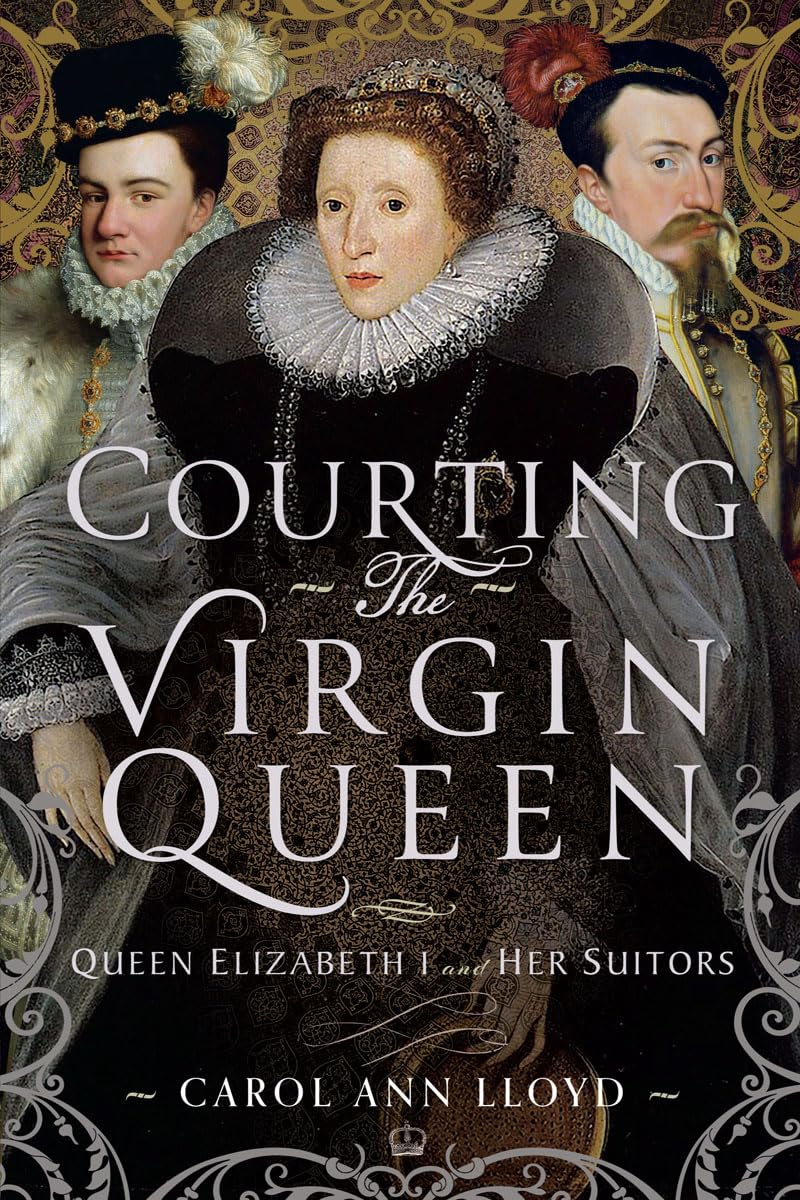
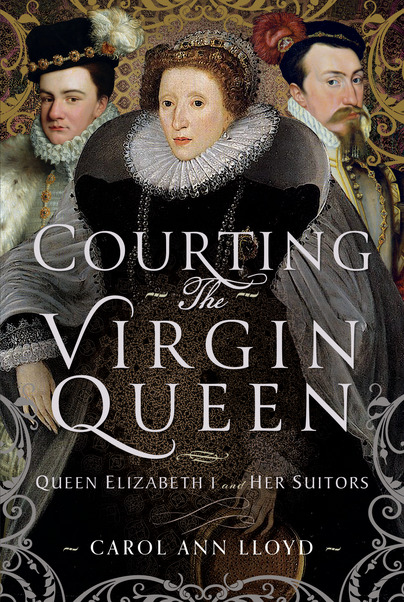
Carol Ann: I’ve published two books about Tudor history: The Tudors by Numbers and Courting the Virgin Queen.
I got the idea for The Tudors by Numbers when I was working on something about the coronations of Mary I and Elizabeth I. We usually think of the two half-sisters as opposing each other: Catholic and Protestant, daughter of Katherine of Aragon and daughter of Anne Boleyn, etc. But I started thinking of them as two succeeding Queens Regnant. When we put them together, the ruled for 50 years, which is a total of 42 percent of the Tudor dynasty. Those are important numbers, and I don’t think we usually consider the Tudor dynasty as having such a high percentage of female rule. Then, if you consider Jane Grey a Queen (which I do), there are three Tudor kings and three Tudor queens: 50 percent each. So I know the number six is the most famous, but I think there are other Tudor numbers that are equally important.
For Courting the Virgin Queen, I was asked to explore Elizabeth’s suitors. That was really interesting for me to take on. We know she never married, but why? I was struck by one of the first diplomatic comments about her reign, when the Count of Feria, the Spanish ambassador, wrote to Philip that “everything depends upon the husband this woman may take.” EVERYTHING. That got me thinking. He was right is so many ways. The foreign policy, the religious policy, trade partners and trade routes, future alliances, standing in Europe and around the world, the future of England—all that depended on the man Elizabeth chose as her husband. And, of course, there were no really good options. Elizabeth saw first-hand the problems with Mary’s Spanish marriage. And she saw all around her how women lost so much by marrying. She may have loved Robert Dudley, but she would have lost enormous credibility in England and abroad by marrying a subject. A foreign alliance might have proven handy at some points, but she would have linked her kingdom to another with no way out. There were no good options. Even though it infuriated her own council and dismayed the foreign picture, remaining the Virgin Queen was her best option.
Sharon: What attracts you to the Tudor period?
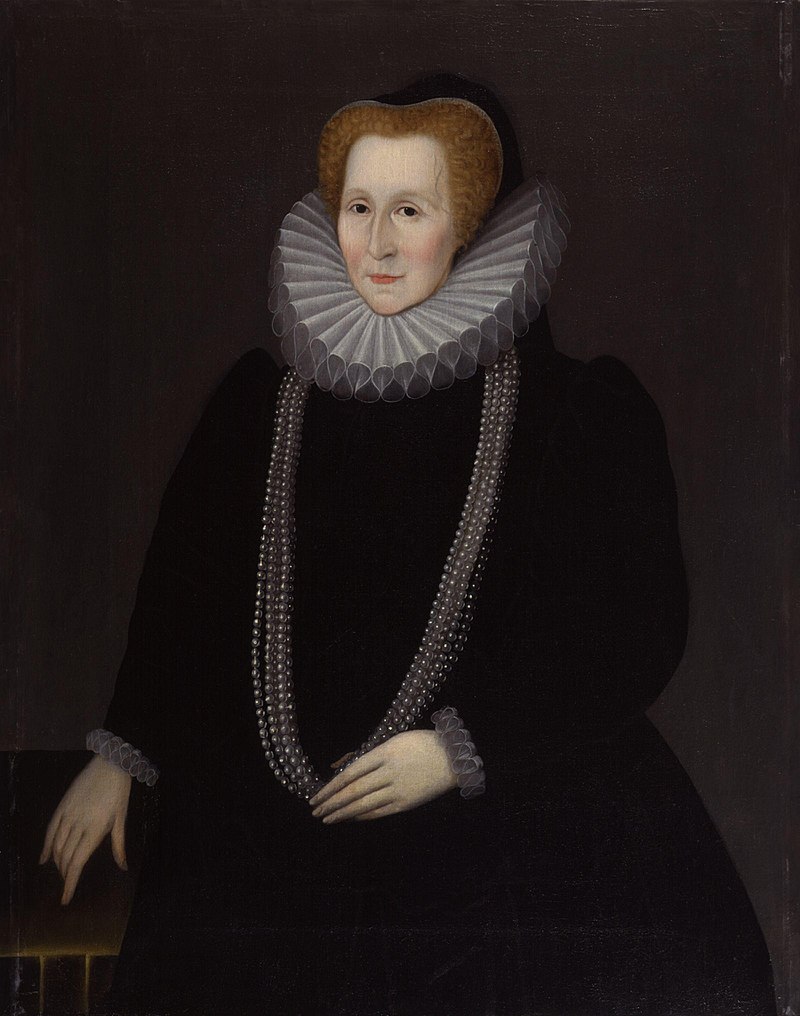
Carol Ann: The women! (Sharon: Yes! This is why we get along so well!) I love Tudor women. Of course, the Queens and the Queen Consorts are terrific. But so many other women are fascinating. Right now, I’m digging into Bess of Hardwick. She blows my mind. She was born around 1520 to a small landowner in Hardwick. The family had some standing, but when Bess’s father John. Hardwick died, the King took control of the lands because the John’s oldest son was just two years old. Bess was around 15 when she married the first time, but Robert Barlow died about 18 months later and she was a widow. She then married Sir William Cavendish of Chatsworth, gaining land and money. Bess and Cavendish had several children, and Bess enjoyed supervising the building works. But Sir William was accused of embezzlement and went into debt, and his death brought her into debt. She became a lady-in-waiting to Elizabeth I and met Sir William St Loe, who became her third husband. She was able to indulge in her passion for building, and the couple seem to have been genuinely in love (if their letters are to be believed).
When St Loe died, his daughters from his first wife had been excluded from his will. Bess’s reputation was tarnished. Still, she was very well off and returned to her home at Chatsworth. When she returned to court in 1566, she met and charmed the very wealthy George Talbot, marrying him in 1567 and becoming the Countess of Shrewsbury. This final marriage was a stormy one, not all that surprising as the couple had to play host to Mary, Queen of Scots. Although Bess and Mary seemed to get along well initially, working on embroidery together, as time went on the relationship soured. Bess also fell out of favour with Queen Elizabeth, although she tried to present herself as one of the Queen’s “most true and faith servants”. It was not entirely successful. Bess hoped her granddaughter Arbella, whom she helped raise, would become Queen after Elizabeth’s death. Her rocky marriage with Shrewsbury ended with his death in 1590. Bess moved back to Hardwick, where she built the new Hardwick Hall (known for being “more glass than wall”). She outlived Elizabeth I and saw James VI of Scotland succeed the English Queen. Bess of Hardwick died in 13 February, around 87 years old. She outlived four husbands and several monarchs (Henry VIII, Edward VI, Jane, Mary I, and Elizabeth I). What an inspiration for making the most of every opportunity!
Sharon: Who is your favourite Tudor and why?
Carol Ann: Anne Boleyn. I know it’s a cliché, but I can’t help it. She caught my eye when I was just a kid, watching the PBS (originally BBC) production of The Six Wives of Henry VIII. I saw how she was standing up to the men around her, and I was hooked. She is complicated, both generous and selfish, intelligent and foolish, ambitious and over-reaching. Everything about her intrigues me.
Sharon: Who is your least favourite Tudor and why?
Carol Ann: I’m not crazy about either of Jane Seymour’s brothers. I think they are self-absorbed and ruthless, with little or no thought to the people around them.
Sharon: How do you approach researching your topic?
Carol Ann: I love reading. I can start reading one article, find a reference to something that sounds interesting, and then I’m off down that rabbit hole. More often than not, that new area leads me into several more. There is nothing more fun for me than just losing myself in the little details and wonderful stories of history! I know I should be much more organized, so I’m afraid my approach also includes a lot of “where did I write that down?” searches through piles of paper as well.
Sharon: Tell us your ‘favourite’ true historical story you have come across in your research.
Carol Ann: Anne Boleyn and the Thomas Wyatt versus Henry VIII game of bowls story. Which might or might not be “true”, but it’s in some accounts.
Sharon: Tell us your least ‘favourite’ true historical story you have come across in your research.
Carol Ann: Katherine Parr helping Thomas Seymour hold Elizabeth down while he cut her dress to shreds. I hope against hope she was doing so because her presence there was the only way she could limit how far he would go. But it’s a tough story to read.
Sharon: Are there any other eras you would like to write about?
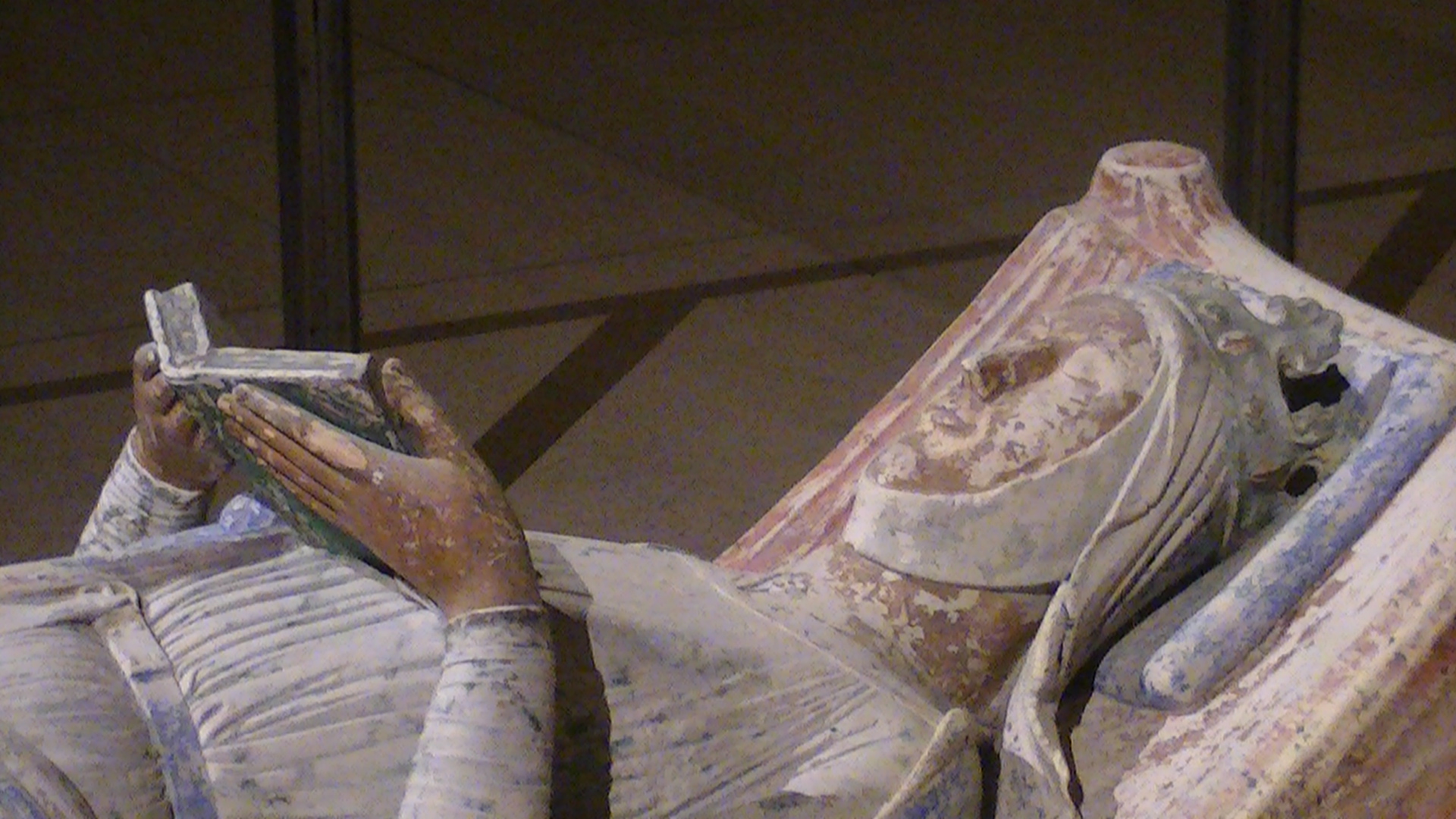
Carol Ann: I’m working on a book now that starts in early times with the story of King Arthur and then highlights the time of Eleanor of Aquitaine. I am crazy about her, and it’s been great to explore her through this book. I would love to spend more time there. (Sharon: Oooooh, that sounds amazing. Can’t wait!)
Sharon: What are you working on now?
Carol Ann: I’m working on a book about the history of courtly love (and a bit about chivalry as well), looking closely at two of my favorite historical women: Eleanor of Aquitaine and Anne Boleyn. Two queen consorts who completely rewrote the book and who played courtly love at the highest levels.
Sharon: And finally, what is the best thing about being a writer?
Carol Ann: I love research! (Sharon: oh, me too!) I love traveling to England and heading to the National Archives at Kew and the British Library. I remember holding a seal of Henry VIII and one of Elizabeth I in my hands. In MY hands. It was amazing. I also was able to see the letters patent creating Anne Boleyn as Marchioness of Pembroke at the British Library. The falcon emblem was blazing with gold leaf and nearly as large as my hand. I couldn’t believe I was not dreaming. I also love researching closer to home at Folger Shakespeare Library. Again, I can’t believe I’m holding a document signed by Elizabeth I. I even have been in the room with her red velvet Bible. How can anything match that?!
About the author:
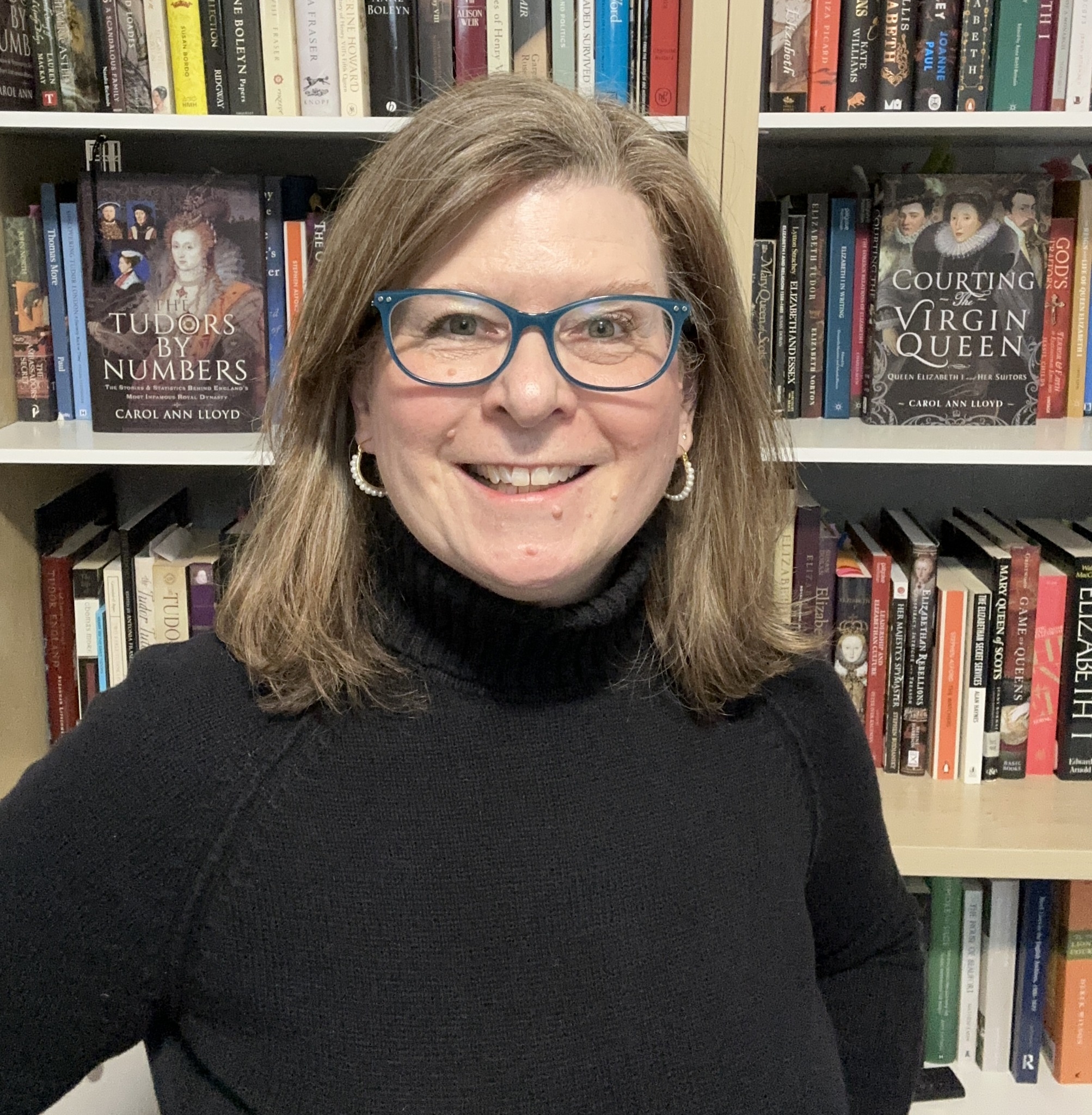
Carol Ann Lloyd turned an obsession with the Tudors into a speaking and writing career. She shares her love of history with Smithsonian Associates, Royal Oak Foundation, Agecroft Hall, Folger Shakespeare Library and other organizations. She holds degrees in Literature and Education and hosts a popular podcast, _British History: Royals, Rebels, and Romantics_. She also offers workshops about using Shakespeare strategies to improve communication skills and is a member of National Speakers Association.
Where to find Carol Ann:
Website: www.carolannlloyd.com; Twitter/X: @shakeuphistory; Podcast: BRITISH HISTORY-Royals, Rebels, Romantics; Books: The Tudors by Numbers (2023)and Courting the Virgin Queen (2024)
*
My Books
Signed, dedicated copies of all my books are available through my online bookshop. or by contacting me.
Coming 30 March 2026: Princesses of the Early Middle Ages
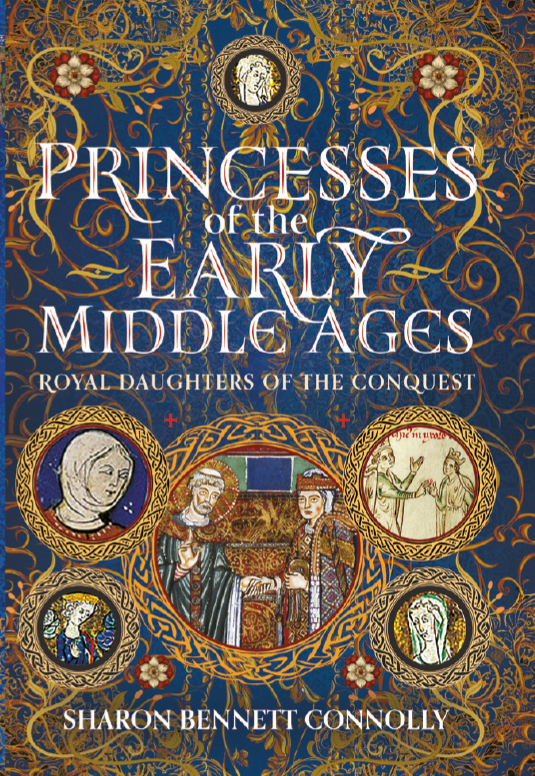
Daughters of kings were often used to seal treaty alliances and forge peace with England’s enemies. Princesses of the Early Middle Ages: Royal Daughters of the Conquest explores the lives of these young women, how they followed the stereotype, and how they sometimes managed to escape it. It will look at the world they lived in, and how their lives and marriages were affected by political necessity and the events of the time. Princesses of the Early Middle Ages will also examine how these girls, who were often political pawns, were able to control their own lives and fates. Whilst they were expected to obey their parents in their marriage choices, several princesses were able to exert their own influence on these choices, with some outright refusing the husbands offered to them.
Their stories are touching, inspiring and, at times, heartbreaking.
Princesses of the Early Middle Ages: Royal Daughters of the Conquest is now available for pre-order from Pen & Sword and Amazon.
Also by Sharon Bennett Connolly:

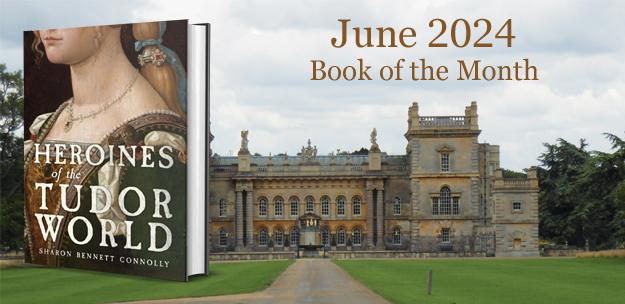
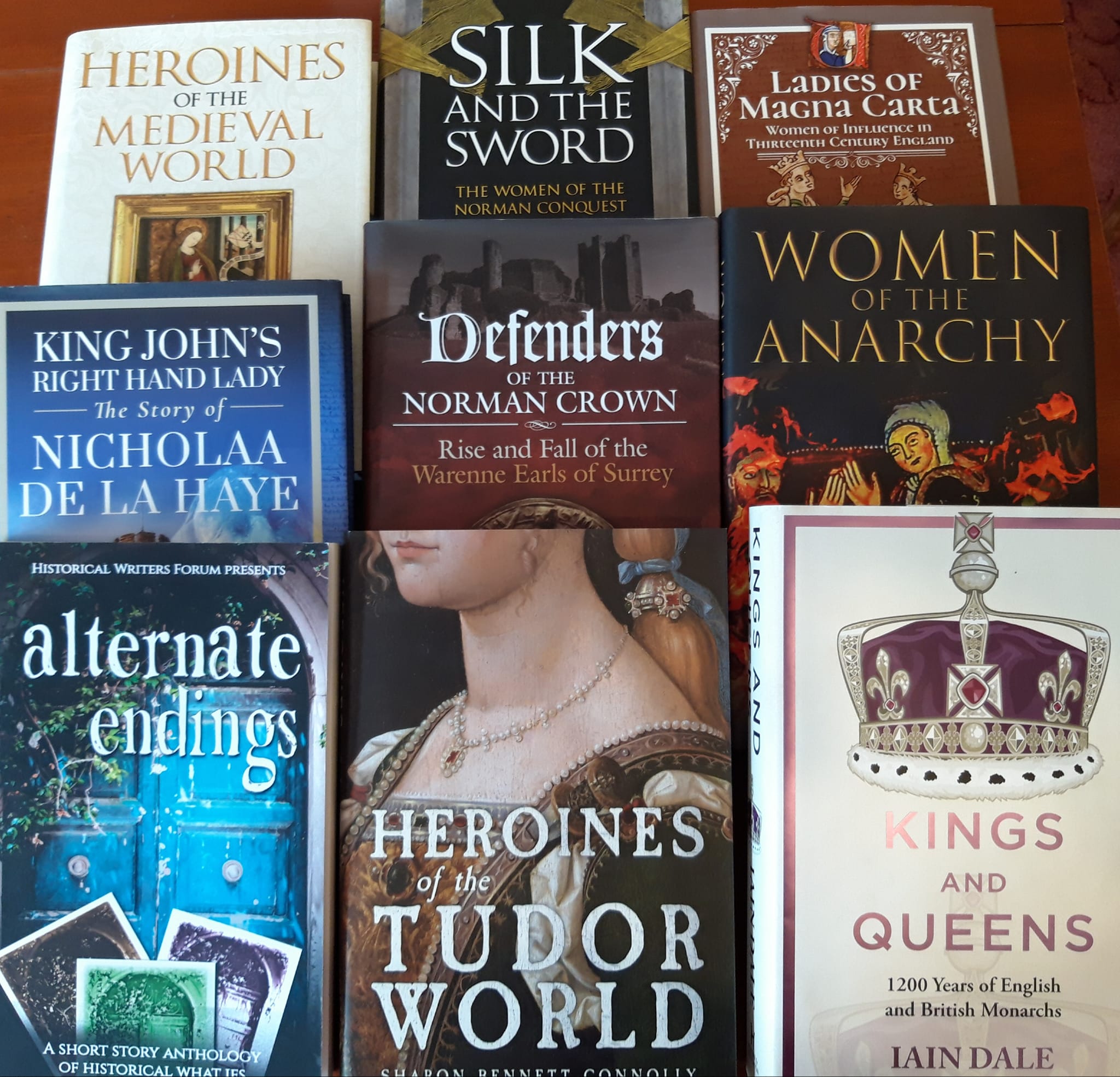
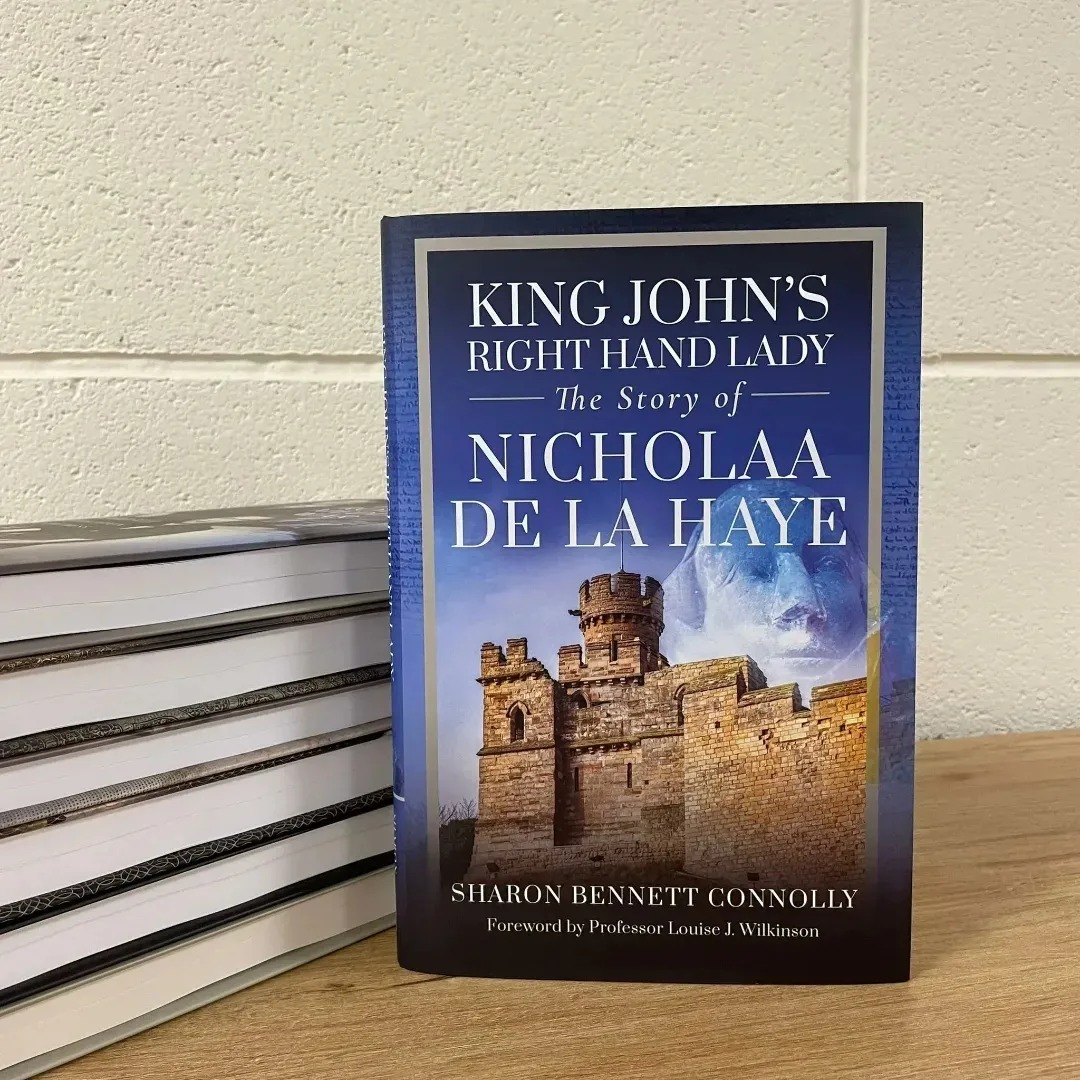
Scotland’s history is dramatic, violent and bloody and Scotland’s Medieval Queens have seen it all. This is the story of Scotland through their eyes. Available now from Amazon and Pen and Sword Books. Heroines of the Tudor World tells the stories of the most remarkable women from European history in the time of the Tudor dynasty, 1485-1603. These are the women who ruled, the women who founded dynasties, the women who fought for religious freedom, their families and love. Heroines of the Tudor World is now available from Amberley Publishing and Amazon UK. Women of the Anarchy demonstrates how Empress Matilda and Matilda of Boulogne, unable to wield a sword themselves, were prime movers in this time of conflict and lawlessness. It shows how their strengths, weaknesses, and personal ambitions swung the fortunes of war one way – and then the other. Available from Bookshop.org, Amberley Publishing and Amazon UK. King John’s Right-Hand Lady: The Story of Nicholaa de la Haye is the story of a truly remarkable lady, the hereditary constable of Lincoln Castle and the first woman in England to be appointed sheriff in her own right. Available from all good bookshops Pen & Sword Books, bookshop.org and Amazon.
Defenders of the Norman Crown: The Rise and Fall of the Warenne Earls of Surrey tells the fascinating story of the Warenne dynasty, from its origins in Normandy, through the Conquest, Magna Carta, the wars and marriages that led to its ultimate demise in the reign of Edward III. Available from Pen & Sword Books, Amazon in the UK and US, and Bookshop.org. Ladies of Magna Carta: Women of Influence in Thirteenth Century England looks into the relationships of the various noble families of the 13th century, and how they were affected by the Barons’ Wars, Magna Carta and its aftermath; the bonds that were formed and those that were broken. It is now available in paperback and hardback from Pen & Sword, Amazon, and Bookshop.org. Heroines of the Medieval World tells the stories of some of the most remarkable women from Medieval history, from Eleanor of Aquitaine to Julian of Norwich. Available now from Amberley Publishing and Amazon, and Bookshop.org. Silk and the Sword: The Women of the Norman Conquest traces the fortunes of the women who had a significant role to play in the momentous events of 1066. Available now from Amazon, Amberley Publishing, and Bookshop.org.
Alternate Endings: An anthology of historical fiction short stories including Long Live the King… which is my take what might have happened had King John not died in October 1216. Available in paperback and kindle from Amazon.
Podcast:

Have a listen to the A Slice of Medieval podcast, which I co-host with Historical fiction novelist Derek Birks. Derek and I welcome guests, such as Ian Mortimer, Bernard Cornwell, Elizabeth Chadwick and Scott Mariani, and discuss a wide range of topics in medieval history, from significant events to the personalities involved.
Every episode is also now available on YouTube.
*
Don’t forget! Signed and dedicated copies of all my books are available through my online bookshop.
For forthcoming online and in-person talks, please check out my Events Page.
You can be the first to read new articles by clicking the ‘Follow’ button, liking our Facebook page or joining me on Twitter, Threads, Bluesky and Instagram.
*
©2025 Sharon Bennett Connolly FRHistS and Carol Ann Lloyd





 History... the interesting bits!