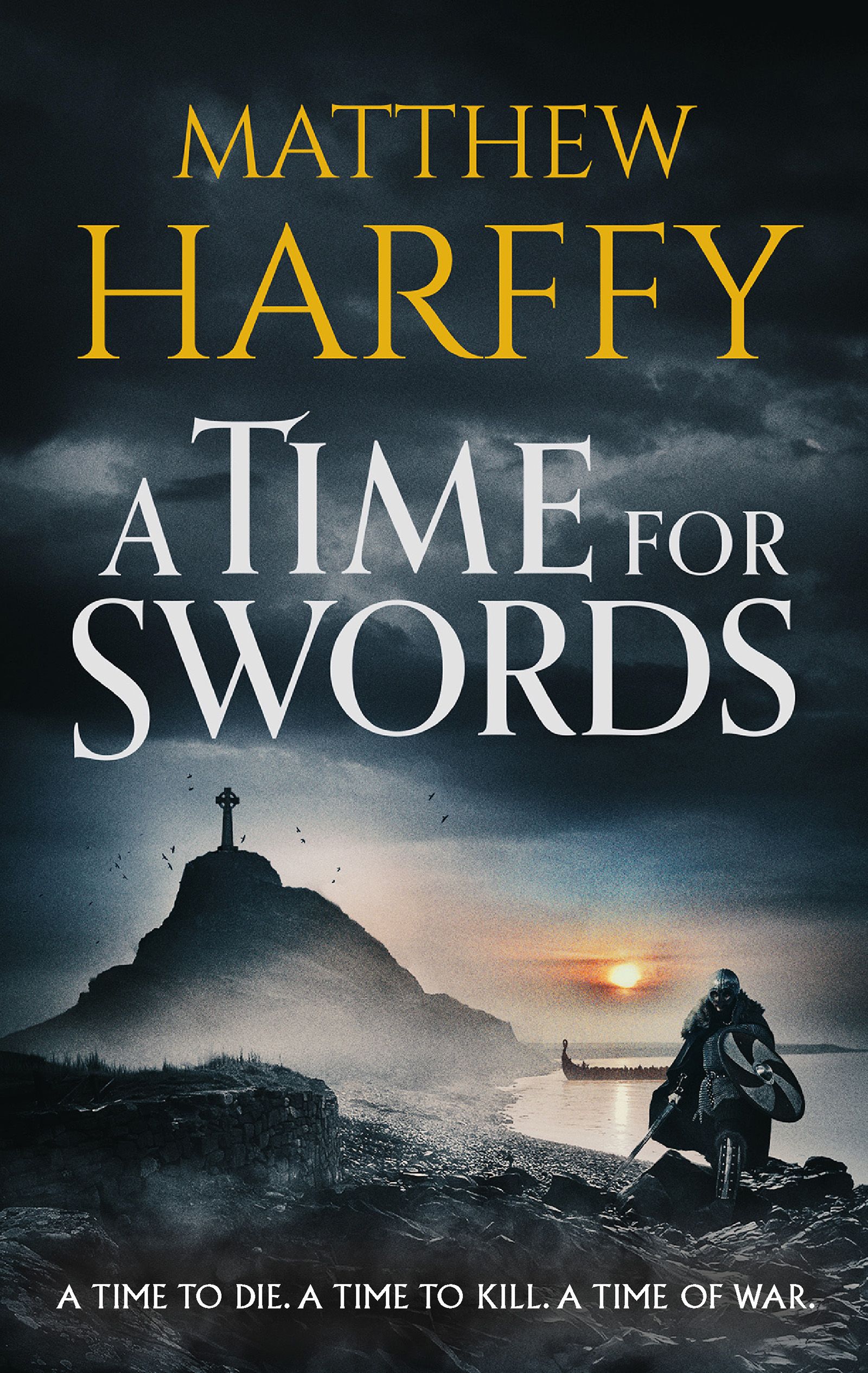
Book Corner: A Time for Swords by Matthew Harffy

When the Vikings attack, a novice monk’s life is changed forever in Matthew Harffy’s new historical adventure.

Lindisfarne, AD793.

There had been portents – famine, whirlwinds, lightning from clear skies, serpents seen flying through the air. But when the raiders came, no one was prepared.

They came from the North, their dragon-prowed longships gliding out of the dawn mist as they descended on the kingdom’s most sacred site.

It is 8th June AD793, and with the pillage of the monastery on Lindisfarne, the Viking Age has begun.

While his fellow monks flee before the Norse onslaught, one young novice stands his ground. He has been taught to turn the other cheek, but faced with the slaughter of his brothers and the pagan desecration of his church, forgiveness is impossible.

Hunlaf soon learns that there is a time for faith and prayer . . . and there is a time for swords.

It is my pleasure to be a part of Matthew Harffy’s blog tour for the release of the first book in what will be a new series, A Time for Swords.

It is always a worry when one of your favourite authors starts a new series – for author and reader, alike – that you may not like it, that the new hero doesn’t live up to the promise of the last hero – or even that the new hero is too similar to the last and the book appears formulaic.

Well, with Matthew Harffy, you needn’t worry about that. He seems to be able to create distinct characters and storylines at the drop of a hat. To be fair to Matthew, I am sure that it is not that easy – though he does make it look so! With Wolf of Wessex, his first foray away from the heroic Beobrand, Matthew Harffy proved his ability at storytelling did not just lay in one direction, and that he did have so much more in his repertoire.

With A Time for Swords, he has done it again!

Recreating the world of 8th century Northumbria, Matthew Harffy has left the 7th century behind to document the arrival of the Vikings on Britain’s shores, with the raid on Lindisfarne – Holy Island. A Time for Swords takes this raid as its starting point and pursues the likely reactions on the people of Northumbria following this unexpected explosion of violence on the peaceful island monastery. As we have come to expect from Matthew Harffy, the action starts on the very first page and doesn’t let the reader stop for breath until the very last.

My feet pounded the soft earth as I sped back towards the dwellings of the ceorls. A green plover, startled by my passing, burst from the long grass that brushed against my bare legs as I ran. I stumbled in shock and surprise at the bird’s screeching call, so like that of the screams of the people dying in the minster and the huts of the villagers. I rushed on, my lungs burning and the thickening smoke stinging my eyes.

I came up over the low rise from the beach to a scene of chaos. When I had left the minster at dawn, its buildings had rested peacefully, close to the natural harbour and overlooked by the mound of rock at the island’s tip. A few small fishing boats had been canted in the shallows of low tide, and teh morning had been still and quiet. Now the brightening day was filled with noise, fire and smoke.

And death.

In the harbour were three huge ships, sleek and menacing with terrifying carven serpent head prows. Around the ships were congregated several men. The land all around was full of movement. Dozens of armed warriors had poured from the ships and had made their way into the grounds of the minster. Three of the monastery buildings were burning, great pillars of flame and smoke smudging the sky. My heart lurched as I realised one of the fires was the scriptorium. I imagined the gold cover of The Treasure of Life melting, the parchment leaves curling, smouldering and then bursting into flames. Leofstan and I would never unpick the secrets within its pages now. I felt tears prickle my eyes as I thought of so many books being consumed, just like in my nightmare of Alexandria. Countless days of painstaking work and skill gone in an instant. So much knowledge snuffed out and lost. I was a long way off, but as I crested the rise I could feel the heat from the fires on my face.

The lead character, Hunlaf, is a monk who has discovered a skill with the sword, and who wants nothing more than to protect his brethren at the monastery at Werceworthe (Warkworth) from the attack that he knows is coming. The intrepid warrior monk manages to attract a small but fierce group of fighters to his cause, including Runolf, a Viking left behind in the raid on Lindisfarne, who has his own motives for confronting the Norse raiders.

Hunlaf is a likeable character, torn between his love of the church and the draw of the sword and the comradeship of warriors. He is a young, gifted fighter with an eagerness to learn and a desire to protect that means he will find it hard to back down from a fight. Each of the characters surrounding Hunlaf have their own stories and reasons for joining the fight, from the monk, Leofstan, with a warrior past of his own, to Runolf the Norseman fighting his own kind, to a Welshman always in need of proving himself and a young, fiery Irishman, Cormac, seeking vengeance for the fate of his family.

The storyline of A Time for Swords draws the reader in from the outset, taking you on a journey from the ruined Lindisfarne to York and on to the monastery at Warkworth. Matthew Harffy demonstrates his knowledge of the area, the people and the landscape, in Hunlaf’s travels. Harffy skillfully combines impeccable historical research with his wonderful storytelling, to create a novel that has a sense of authenticity about it. While the raid on Lindisfarne is historical fact, the subsequent events that young Hunlaf gets involved in are a creation of the author. However, Matthew Harffy supplements the fictional fighting by using the original landscape, the weapons used, fighting tactics and the very real threat of the Viking raiders, to add a sense of realism,

As you may have come to expect with Matthew Harffy, the fight scenes are where he is in his element. Beautifully choreographed, they are frenetic and vividly described with a passion unique to the author. and there is no guarantee that your favourite character will survive…

In short, A Time for Swords is one of those books which is not to be missed. Entertaining, exciting and totally gripping, the novel reaffirms, once more – if more affirmation is needed – Matthew Harffy’s status as one of the best authors of historical fiction around.

Read it – I promise, you will not be disappointed!

About the Author:

Matthew Harffy grew up in Northumberland where the rugged terrain, ruined castles and rocky coastline had a huge impact on him. He now lives in Wiltshire, England, with his wife and their two daughters.

Pre-order links:

Amazon UK: https://amzn.to/39T3MqJ

Follow Matthew:

Twitter: @MatthewHarffy

Website: www.matthewharffy.com

Follow Aries:

Twitter: @AriesFiction

Facebook: Aries Fiction

Website: http://www.headofzeus.com

*

My Books

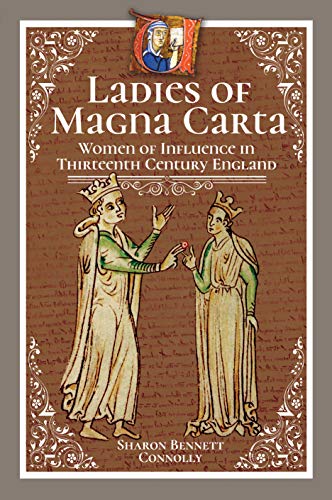
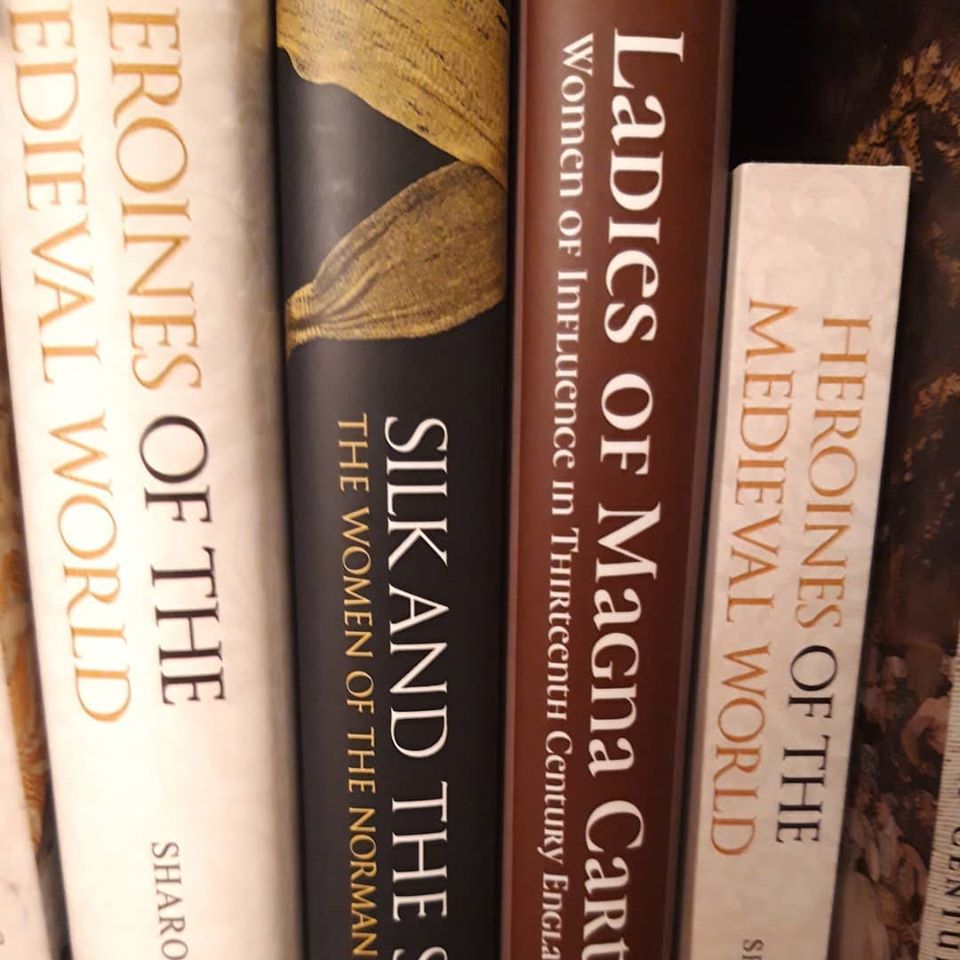
Ladies of Magna Carta: Women of Influence in Thirteenth Century England looks into the relationships of the various noble families of the 13th century, and how they were affected by the Barons’ Wars, Magna Carta and its aftermath; the bonds that were formed and those that were broken. It is now available from Pen & Sword,  Amazon and from Book Depository worldwide.

Also by Sharon Bennett Connolly:

Silk and the Sword: The Women of the Norman Conquest traces the fortunes of the women who had a significant role to play in the momentous events of 1066.  Available now from Amazon,  Amberley Publishing, Book Depository.

Heroines of the Medieval World tells the stories of some of the most remarkable women from Medieval history, from Eleanor of Aquitaine to Julian of Norwich. Available now from Amberley Publishing and Amazon and Book Depository.

*

You can be the first to read new articles by clicking the ‘Follow’ button, liking our Facebook page or joining me on Twitter and Instagram.

©2020 Sharon Bennett Connolly

Book Corner: The Castle in the Wars of the Roses by Dan Spencer

The Wars of the Roses is one of the most dramatic and fascinating periods in medieval history. Much has been written about the leading personalities, bitter dynastic rivalries, political intrigues, and the rapid change of fortune on the battlefields of England and Wales. However, there is one aspect that has been often overlooked, the role of castles in the conflict.

Dan Spencer’s original study traces their use from the outbreak of civil war in the reign of Henry VI in the 1450s to the triumph of Henry VII some thirty years later. Using a wide range of narrative, architectural, financial and administrative sources, he sheds new light on the place of castles within the conflict, demonstrating their importance as strategic and logistical centres, bases for marshalling troops, and as fortresses

Dan Spencer’s book provides a fascinating contribution to the literature on the Wars of the Roses and to the study of siege warfare in the Middle Ages.

The Castle in the Wars of the Roses by Dan Spencer provides a unique perspective on that most famous of civil wars in England. Dr Spencer combines the story of the Wars of the Roses with the varied uses of the castle during the period, as defensive structures, administrative centres and homes for the nobility. Dan Spencer establishes that the castle as a military structure was still an important asset to any army and served to guard the marches of Wales and Scotland and to act as muster points for gathering armies. Castles were strong defensive structures that could be garrisoned whenever the war came too close, though as Dr Spencer highlights, permanent garrisons were rare by this time, they could provide effective defence and intimidation when needed.

I was aware of a number of sieges during the Wars of the Roses, mainly those at Dunstanburgh and Bamburgh. However, I was not aware that that was just the tip of the iceberg. According to Dan Spencer, there were 36 definite sieges and several more possible sieges – for which there is little contemporary information, so we can’t say for certain. These possible sieges include where there are written orders for a castle to be invested, but no further report of whether the siege was undertaken or the castle surrendered without a fight.

In The Castle in the Wars of the Roses, Dan Spencer argues that while the use of the castle was declining, it still played an important role in the conflict. The book is written in a narrative, chronological style, whereby Dr Spencer tells the whole story of the Wars of the Roses, but with particular focus on the siege warfare and the use and provision of castles. It is an excellent read.

The fall of Bamburgh marked the end of a four-year-long struggle for control of Northumberland. This was part of a wider dynastic conflict between the Yorkist and Lancastrian factions for control of the kingdom of England. For much of the second half of the fifteenth century these two rival houses fought a series of wars to win the English throne, which since the nineteenth century has been commonly called the Wars of the Roses. This era is without a doubt one of the most popular topics in medieval English history. Numerous books, articles, plays and films have been produced over the centuries. Looking at all sorts of aspects ranging from the dynamic personalities of key figures, such as Richard III, the causes of the conflict, its long-term legacy and the military campaigns, particularly the major battles. Given this vast output on the subject, it may be pertinent to ask why it is necessary for yet another book to be written. The answer is that one important area has been almost wholly neglected: the role of the castle in the Wars of the Roses.

Why has this been the case? One explanation is the perception that the campaigns of the Wars of the Roses were dominated by decisive battles, in which castles played a very minor role. This argument does have some substance. The era was unusual for the frequency with which significant battles took place. Nevertheless, this does not tell the whole story. As we will see, there were many campaigns in which castles were used in a significant way. Similarly, the late Middle Ages has been characterised as a period in which castles were in a state of transition and decline, in which their traditional role as fortresses was increasingly no longer necessary due to changes in warfare and society.

While there are many books on the Wars of the Roses, none have looked at the conflict in quite this way before. Dan Spencer covers every aspect of the conflict and the actions of the leading players involved, including Henry VI, Edward IV, Warwick the Kingmaker, Richard III, etc. While the major battles are also covered, the spotlight is on the castles, their role in the conflict ad the tactics used to successfully prosecute a siege. Dan Spencer’s impeccable research means that he can build a deep understanding of the layout of each castle, the provisions it stored and the garrison that manned it.

The Castle in the Wars of the Roses analyses not only the strength of a castle, but the prosecution of these sieges and the reasons for their success or failures. Using primary sources, archaeological evidence and his own extensive experience of castles, Dan Spencer has produced a fascinating book that can only add to our knowledge of the Wars of the Roses. The text is supported by wonderful colour images of the castles mentioned, and detailed floor plans. It is whole knew way of looking at the conflict, providing a freesh perspective.

Well written in an engaging narrative, The Castle in the Wars of the Roses is a fascinating, addictive read. And a perfect Christmas present!

The Castle in the Wars of the Roses is available from Amazon or direct from Pen & Sword Books (with 30% off in December!)

About the author:

Dr Dan Spencer has made a special study of late medieval warfare, focusing in particular on gunpowder artillery and castles. Recent publications include The Castle at War in Medieval England and Wales and Royal and Urban Gunpowder Weapons in Late Medieval England. To find out more visit danspencer.info or follow him on Twitter and Instagram @Gunpowderdan.

*

My Books

Ladies of Magna Carta: Women of Influence in Thirteenth Century England  looks into the relationships of the various noble families of the 13th century, and how they were affected by the Barons’ Wars, Magna Carta and its aftermath; the bonds that were formed and those that were broken. It is now available from Pen & SwordAmazon and from Book Depository worldwide.

Also by Sharon Bennett Connolly:

Silk and the Sword: The Women of the Norman Conquest traces the fortunes of the women who had a significant role to play in the momentous events of 1066.  Available now from Amazon,  Amberley Publishing, Book Depository.

Heroines of the Medieval World tells the stories of some of the most remarkable women from Medieval history, from Eleanor of Aquitaine to Julian of Norwich. Available now from Amberley Publishing and Amazon and Book Depository.

*

You can be the first to read new articles by clicking the ‘Follow’ button, liking our Facebook page or joining me on Twitter and Instagram.

©2020 Sharon Bennett Connolly 

Book Corner: Cesare and Lucrezia Borgia by Samantha Morris

Myths and rumour have shrouded the Borgia family for centuries – tales of incest, intrigue and murder have been told of them since they themselves walked the hallways of the Apostolic Palace. In particular, vicious rumour and slanderous tales have stuck to the names of two members of the infamous Borgia family – Cesare and Lucrezia, brother and sister of history’s most notorious family. But how much of it is true, and how much of it is simply rumour aimed to blacken the name of the Borgia family? In the first ever biography solely on the Borgia siblings, Samantha Morris tells the true story of these two fascinating individuals from their early lives, through their years living amongst the halls of the Vatican in Rome until their ultimate untimely deaths. Cesare and Lucrezia Borgia begins in the bustling metropolis of Rome with the siblings ultimately being used in the dynastic plans of their father, a man who would become Pope, and takes the reader through the separate, yet fascinatingly intertwined, lives of the notorious siblings. One tale, that of Cesare, ends on the battlefield of Navarre, whilst the other ends in the ducal court of Ferrara. Both Cesare and Lucrezia led lives full of intrigue and danger, lives which would attract the worst sort of rumour begun by their enemies. Drawing on both primary and secondary sources Morris brings the true story of the Borgia siblings, so often made out to be evil incarnate in other forms of media, to audiences both new to the history of the Italian Renaissance and old.

Cesare and Lucrezia Borgia: Brother and Sister of History’s Most Vilified Family by Samantha Morris is a fascinating look at two of the most famous villains in history; a brother and sister renowned for murder, intrigue and incest. Or are they? Samantha Morris’s beautifully written dual biography of these siblings aims to peal away the centuries of rumour and accusations and find the real people beneath the legend.

Samantha Morris combines a lively, engaging narrative with keen historical analysis, uncovering the facts embedded in the legends, rumours and scandals. She demonstrates a deep understanding not only of her subjects and their motivations but of the political theatre of Italy, the papacy and Europe in general at that time.

In Cesare and Lucrezia Borgia: Brother and Sister of History’s Most Vilified Family, Samantha Morris expertly separates rumour from fact to provide a balanced appraisal of these famous siblings; their strengths and weakness. Using creditable sources, papal records and even family letters, she clearly establishes the facts behind the lies of the incest accusation, whilst demonstrating how such accusations came about and the various efforts to sully the name of the Borgia family.

The careers of the Borgia children were decided and laid out before them before they could even waalk. Juan was chosen as the son who would be the military leader, the great Duke who would go on to continue the Borgia line; Cesare was destined for a life in the Church; Lucrezia would be forced into diplomatic marriages and Gioffre would do the same. The children were their father’s pawns, important chess pieces but Cesare in particular did not like the career path that was chosen for him.

When Cesare was just six years old, the Pope granted a dispensation that allowed him to hold Church benefices despite his illegitimacy and the following year, 1482, King Ferdinand of Aragon exempted him from a law that would stop him from holding lordships in Spain due to his illegitimacy. Being bastard born would not get in the way of raising Cesare Borgia to the heights that his father so wanted for him.

By the age of just fifteen, Cesare had already been given a vast number of Church benefices including the Bishopric of Pamplona, the ancient capital of Navarre. This caused particular outrage as the young man had not yet taken his holy orders and Cardinal Rodrigo Borgia did his best to calm down the populace, telling them that Cesare’s elevation was simply down to his merits and hard work. Cesare, on a break from the University of Perugia and busy on a hunting trip, found himself having to write a letter to the people of Navarre to try and soothe their anger. But it didn’t work and the Pope had to intervene to halt the rebellion.

From tracing their origins in Spain, to the spectacular heights to which the family rose, to the politics that brought about the demise of Cesare and meant the family were embroiled in constant struggles for land and power, Samantha Morris charts the successes and failures – and underhand dealings of the infamous family. The siblings’ father and family patriarch, Rodrigo Borgia, Pope Alexander VI is depicted as a scheming but capable man and pope who loved his children dearly. He sought to establish his illegitimate children in lives and careers appropriate to their rank as the children of a reigning pope.

Lucrezia Borgia comes across as an intelligent, passionate woman, far removed from , the poisoner of legend conducting a love affair with her own brother. She proved herself capable of ruling and was loving and loyal to her family. She pursued an active political career despite her almost constant pregnancies, and suffered incalculable griefs and family loss. Lucrezia, however, is not depicted as a pure, innocent virgin, but a well educated, politically astute woman who may also have conducted certain indiscretions, or at least platonic love affairs, during her lifetime. She is a woman who made the best of the life that was mapped out for her.

Cesare, on the other hand, is a ruthless man not cut out for the career in the church to which he appeared destined. The untimely murder of his older brother meant he went from cardinal to soldier, a job to which he was much better suited and a thousand times more capable and dedicated. Cesare is a complex character; accused of numerous murders, including those of his own brother and Lucrezia’s second husband, he is remembered to history as a ruthless, scheming murderer and seducer of his own sister. While he may have been ruthless and scheming – and a murderer to some extent, Samantha Morris goes on to prove that not all the murders laid at Cesare’s door were his responsibility.

As an aside, the reader cannot fail to notice the prevalence of syphillis in Italy at the time. A countless number of the protagonists in the story suffered from this disfiguring disease, Cesare Borgia among them. The French, attempting to conquer Italy at the time, called it ‘the Italian disease’, though in England it was known as ‘the French disease’ – those same invading French soldiers took the dreadful disease with them when they returned home.

Cesare and Lucrezia Borgia: Brother and Sister of History’s Most Vilified Family is an engaging narrative of the history of not only these most famous Italian siblings, but also Italy, the papacy and wider European politics at the time when the world was moving from the Medieval era into the Early Modern, when the Renaissance was in full swing and the Reformation was just around the corner. Samantha Morris demonstrates the power of the papacy, of Pope Alexander VI in particular, and how papal factions caused the rise – and fall – of the Borgia family.

Cesare and Lucrezia Borgia: Brother and Sister of History’s Most Vilified Family is an entertaining and enthralling read – one not to be missed!

Cesare and Lucrezia Borgia: Brother and Sister of History’s Most Vilified Family by Samantha Morris is available from Pen & Sword Books and Amazon.

About the author:

Samantha Morris studied archaeology at the University of Winchester and it was there, whilst working on a dissertation about the battlefield archaeology of the English Civil War that her interest in the Italian Renaissance began. Her main area of interest is the history of the Borgia family and the papacy of Pope Alexander VI, however she also has a keen interest in the history of other Renaissance families. Samantha has previously written on the Borgia family and runs a successful blog based mainly on the history of the Italian Renaissance, but with snippets of other eras thrown in too.

*

My Books

Ladies of Magna Carta: Women of Influence in Thirteenth Century England  looks into the relationships of the various noble families of the 13th century, and how they were affected by the Barons’ Wars, Magna Carta and its aftermath; the bonds that were formed and those that were broken. It is now available from Pen & SwordAmazon and from Book Depository worldwide.

Also by Sharon Bennett Connolly:

Silk and the Sword: The Women of the Norman Conquest traces the fortunes of the women who had a significant role to play in the momentous events of 1066.  Available now from Amazon,  Amberley Publishing, Book Depository.

Heroines of the Medieval World tells the stories of some of the most remarkable women from Medieval history, from Eleanor of Aquitaine to Julian of Norwich. Available now from Amberley Publishing and Amazon and Book Depository.

*

You can be the first to read new articles by clicking the ‘Follow’ button, liking our Facebook page or joining me on Twitter and Instagram.

©2020 Sharon Bennett Connolly 

Book Corner: The Errant Hours by Kate Innes

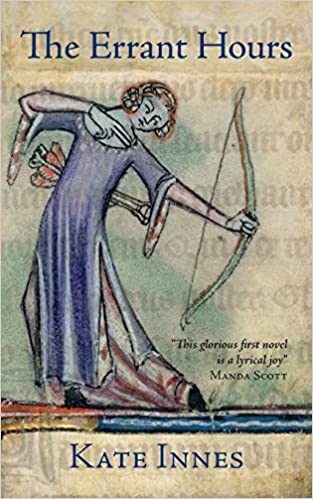
A headlong journey through the physical and spiritual dangers of Plantagenet Britain, in all its savage pageantry. Welsh Marches, July 1284 – the uprising in Wales is over, the leader gruesomely executed, the dead are buried. But for Illesa Arrowsmith, the war’s aftermath is just as brutal. When her brother is thrown into the Forester’s prison on false charges, she is left impoverished and alone. All Illesa has left is the secret manuscript entrusted to her – a book so powerful it can save lives, a book so valuable that its discovery could lead to her death. When the bailiff’s daughter finds it, Illesa decides to run, and break her brother out of jail by whatever means. But the powerful Forester tracks them down, and Illesa must put herself and the book at the mercy of an unscrupulous knight who threatens to reveal all their secrets, one by one. Inspired by the seductive art of illuminated manuscripts, The Errant Hours draws from the deep well of medieval legend to weave a story of survival and courage, trickery and love.

Every now and again you come across a book that draws you in and makes you lose entire days to reading. For me, The Errant Hours by Kate Innes was one of those books: I lost the whole of last weekend to reading the final 200 pages because I HAD to get to the end. Of course, I now wish I’d taken a little longer over it, but this was a book I needed to devour. With just short of 400 pages of beautiful prose, a unique storyline and the perfect combination of intrigue, betrayal and love, The Errant Hours is a perfect book for lockdown or those long, dark, winter nights.

A brother-sister relationship most of us can relate to, family secrets and mysteries and a beautiful, valuable book all come together to create The Errant Hours by Kate Innes. Illesa Arrowsmith losing her home to her creditors and helping her reckless brother escape the Forester’s prison is only the start of her adventures; adventures that will lead her to the heart of the court of Edward I and into the political turmoil of the English conquest of Wales. While the national political climate contrasts perfectly with the turmoil in Illesa’s own life as she attempts to uncover her own origins and her feelings for Sir Richard Burnel, the knight who could be both protector and her accuser.

‘Illesa!’

She ignored the angry whisper and went back towards the torchlight. The guard’s head had changed position. She stood still, watching him. A thin stream of saliva came from the corner of his open mouth. His jerkin was unbuttoned. The iron chain was wound around his belt and the end hung down behind the bench.

Illesa slowly undid the buckle and loosened the chain, pulling it, link by link, off the leather belt. Gathering the chain in her hand, she pulled it up. There was a dull clang. The guard grunted and shifted on the bench, but his eyes remained closed. The ring holding the keys was caught between the wall and the bench. Illesa held the chain in her left hand and knelt down. She reached under the bench, her arms stretched around the guard, straining not to touch him. Her fingers brushed against the keys, and she let them rest on her palm. Illesa let the chain slip slowly out of her left hand until she held it, and the keys, in her right hand. She got shakily to her feet and ran to the cell door.

‘Where is the lock?’ she whispered.

‘Here, follow my hand.’Illesa saw the vague whiteness of Kit’s fingers; she put her own on top of them, feeling for the keyhole with her thumb.

‘Got it,’ she said, fumbling with the larger key.

It slid easily into the hole, but as she turned it there was a terrible screeching sound of metal against metal. Something hit the floor with a loud thump and a gasp of pain.

Kit pushed the door, nearly knocking Illesa over as he ran out of the cell.

‘Follow me!’

Kate Innes must have done a remarkable amount of research to produce such a historically accurate work of historical fiction. Although her leading characters are fictional, the supporting characters are very much historical fact, with Edward I, Eleanor of Castile, young Prince Alphonso and John, 6th Earl Warenne all making an appearance. I didn’t know one of the Warennes would be making an appearance in the story – it was such a lovely surprise!

I particularly liked Kate Innes’ portrayal of Earl Warenne as a brutal, brash lord who spares little thought for the niceties – he certainly comes across as that in my research for my own forthcoming book on the Warennes, Defenders of the Norman Crown: Rise and Fall of the Warenne Earls of Surrey. In fact, I think Kate Innes was a little more generous with Warenne’s personality than some chroniclers were!

The fictional characters, Illesa, her brother Kit and the knight, Richard Burnel, are the central actors in the story. Their personalities, appearance and relationships are wonderfully ‘fleshed’ out. Illesa is a strong female character, but one that is not out of place in 13th century England. A young woman with determination and capability, she is also all-too-aware of the limitations forced on her by her sex.

A beautifully crafted tome, The Errant Hours by Kate Innes is a unique insight into 13th century England. The narrative flows freely and Illesa’s story will keep the reader entranced from the first page to the last. I cannot recommend it highly enough and have already put book 2, All the Winding World, on my Christmas list.

The Errant Hours by Kate Innes is available from Amazon.

About the author:

Kate Innes was born in London and lived and worked in America and Zimbabwe. She is now based in Shropshire, and it is the history and natural beauty of this area that provides inspiration for both her fiction and poetry.

She originally trained as an archaeologist and a teacher, and then worked as a Museum Education Officer around the Midlands, writing poetry in her spare time. After the arrival of her children, Kate began work on her medieval novel ‘The Errant Hours’ which was published in 2015.

The Historical Novel Society selected ‘The Errant Hours’ as an ‘Editor’s Choice’, and it was added to the reading list of the Medieval Studies Department at Bangor University. It is one of Book Riot’s ‘One Hundred Must Read Medieval Novels’.

Her second novel, ‘All the Winding World’ is a sequel to ‘The Errant Hours’, set ten years later. It is due to be published on the 22 June 2018.

Kate has been writing and performing poetry for many years, usually with a particular focus on animals, art and the natural world. Her poem ‘Flocks of Words’ won first prize in the ‘Imagined Worlds’ Competition held by the Friends of Samuel Taylor Coleridge. Her first collection, also called ‘Flocks of Words’, was published in Spring 2017 and many of these poems form part of a performance with the acoustic music group ‘Whalebone’.

Kate runs writing workshops, gives illustrated talks, works collaboratively with communities and undertakes commissions and residencies.

http://www.kateinneswriter.com

*

My Books

Ladies of Magna Carta: Women of Influence in Thirteenth Century England  looks into the relationships of the various noble families of the 13th century, and how they were affected by the Barons’ Wars, Magna Carta and its aftermath; the bonds that were formed and those that were broken. It is now available from Pen & SwordAmazon and from Book Depository worldwide.

Also by Sharon Bennett Connolly:

Silk and the Sword: The Women of the Norman Conquest traces the fortunes of the women who had a significant role to play in the momentous events of 1066.  Available now from Amazon,  Amberley Publishing, Book Depository.

Heroines of the Medieval World tells the stories of some of the most remarkable women from Medieval history, from Eleanor of Aquitaine to Julian of Norwich. Available now from Amberley Publishing and Amazon and Book Depository.

*

You can be the first to read new articles by clicking the ‘Follow’ button, liking our Facebook page or joining me on Twitter and Instagram.

©2020 Sharon Bennett Connolly 

Book Corner: Fugitive by Paul Fraser Collard

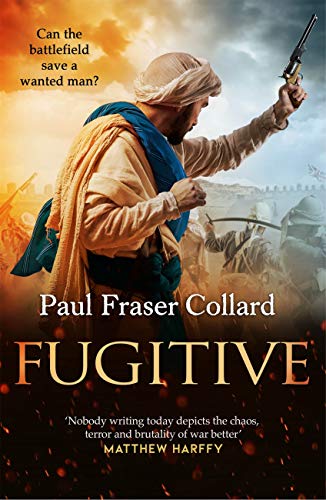
Roguish hero Jack Lark – soldier, leader, imposter – crosses borders once more as he pursues a brand-new adventure in Africa.

London, 1868. Jack has traded the battlefield for business, running a thriving club in the backstreets of Whitechapel. But this underworld has rules and when Jack refuses to comply, he finds himself up against the East End’s most formidable criminal – with devastating consequences.

A wanted man, Jack turns to his friend Macgregor, an ex-officer, treasure hunter and his ticket out of England. Together they join the British army on campaign across the tablelands of Abyssinia to the fortress of Magdala, a high-stakes mission to free British prisoners captured by the notorious Emperor Tewodros.

But life on the run can turn dangerous, especially in a land ravaged by war . . .

Stupendous!

That is the first word that came to my mind when I was asked what I thought of Fugitive by Paul Fraser Collard. Fugitive is book no. 9 in the adventures of Victorian rogue, Jack Lark. Over the last few years, the release of the latest of Jack Lark’s adventures has become one of the highlights of my summer. Last year’s holiday reading was The Lost Outlaw, and the year before that it was The Rebel Killer. And after such amazing books in recent years, Fugitive had a lot to live up to.

In many of the previous books, Jack has taken on the persona of others, officers and soldiers all. He has travelled the globe, fighting in hotspots from the Crimea to America, more often than not concealing his own identity. In Fugitive, Jack Lark is finally himself, though whether that it a good thing or not is open to discussion.

Jack Lark is a bit of a rascal, taking opportunities where he finds them and running with it. He has fought on both sides of the American Civil War, had a stint in the French Foreign Legion and is now going in search of a fortune – and adventure – in Africa as the British Empire’s inexorable expansion opens more opportunities for those willing to take the risk. And, of course, as with any Jack Lark adventure, things get complicated and he is followed by the trouble he hoped to leave behind in London…

‘Do you think -‘ Bertie started.

‘Hush now.’ Cooper was quick to interrupt. ‘He’s coming.’

The three men looked down the alley as one. Sure enough, a figure was approaching. The fog wrapped around him like a ghostly shawl, so that he was little more than an apparition, a dark shadow shrouded in mist.

‘Is that him?’ Bertie whispered.

‘That’s the captain all right,’ Cooper answered softly, the words barely audible.

The figure came closer. It did not hurry. It did not swagger or strut. It simply moved with purpose.

‘Have you got the rhino?’ There was no greeting. Just five short words, delivered staccato. Little could be seen of the captain’s face beneath a dark-coloured pork pie hat pulled down low. He was tall, just a shade under six foot, and was wearing a tightly buttoned overcoat.

‘Are you truly the captain?’ Oddly, it was Bertie who spoke for the three. He stared at the man, his eyes as wide as those of a child seeing a bear for the first time.

‘I’m the captain.’ The words were spoken softly, but every man heard them. ‘Now have you got the rhino?’

He lifted his chin as he repeated the question. For the first time, the three gentlemen got a good glimpse of his face. A scar ran down the left-hand side, the lower half disappearing into a heavy beard. But it was not that that drew their attention; it was the hard grey eyes that stared back at them as if the captain could see right down to their very souls.

The confirmation of identity was enough. Charles fished into his overcoat and pulled out a thick wedge of banknotes, which he held out in front of him.

The captain took the bundle swiftly. He did not check it. Instead, he carefully unbuttoned his coat and tucked the notes deep into an inside pocket. It was artfully done, every gesture sharp and controlled, the coat pulled open just long enough to give the three men a glimpse of the stout oak cudgel hooked into the captain’s belt.

‘Follow me.’ The captain turned on his heel and walked back down the alley, setting a rapid pace. He did not bother to see if they followed.

Just as his character is an expert at impersonation, Paul Fraser Collard has become a master at drawing out the drama and raising the tension to the very last pages of the book. His writing draws the reader in from the very first page and forces you to stay up late and get up early, just to get one more chapter in before work!

The research is, as always, impeccable, and the author takes the reader from the seedier areas of nighttime London to the fortress of Magdala, in the heart of Abyssinia, on a journey across seas, through the stifling heat of the desert and into the fortress itself, with danger and action following every step of the way. From fights in the backstreets of London to the pitched battles of the Victorian Imperial army against the poorly armed Abyssinian massed army, the reader is drawn into a world full of excitement, danger … and possibilities.

I love that Jack Lark is not a man who goes looking for trouble – he tends to fall into it. However, once trouble finds him, he doesn’t shirk from the challenge and faces whatever is set before him. The character development of Jack Lark himself, throughout all 9 books, is fascinating, and probably the best I’ve ever read. He grows and learns from each adventure and is more self-aware in Fugitive of his own abilities – and his failings. He finds out exactly who he is, discovering himself just as the reader does; accepting his flaws.

As the books are set half a century after the Peninsular War, Jack Lark’s adventure are often compare to those of Bernard Cornwell’s Richard Sharpe; with the comparison extending to the two authors. I am not sure Lark and Sharpe are too much alike, beyond the fact they each have a scar on their faces and are ferocious fighters. Sharpe fights within the British army system, whereas Lark is very much an outsider. However, they bot come from similar backgrounds and I can’t help but think that, had they met, they would have got on like a house on fire – or killed each other.

With that in mind, any fan of Bernard Cornwell would not be disappointed if they picked up a Jack Lark book to try. The wonderfully vivid and lively characters Paul Fraser Collard has created – and the very unlikely hero – are a treat for any lover of action and adventure in their historical fiction

*

About the author:

Paul Fraser Collard’s love of military history started at an early age. A childhood spent watching films like Waterloo and Zulu whilst reading Sharpe, Flashman and the occasional Commando comic, gave him a desire to know more of the men who fought in the great wars of the Nineteenth and Twentieth Centuries. This fascination led to a desire to write and his series of novels featuring the brutally courageous Victorian rogue and imposter Jack Lark burst into life in 2013. Since then Paul has continued to write, developing the Jack Lark series to great acclaim. To find out more about Paul and his novels visit www.paulfrasercollard.com or find him on twitter @pfcollard.

To buy the book: Amazon UKAmazon US.

*

My Books

Ladies of Magna Carta: Women of Influence in Thirteenth Century England  looks into the relationships of the various noble families of the 13th century, and how they were affected by the Barons’ Wars, Magna Carta and its aftermath; the bonds that were formed and those that were broken. It is now available from Pen & SwordAmazon and from Book Depository worldwide.

Also by Sharon Bennett Connolly:

Silk and the Sword: The Women of the Norman Conquest traces the fortunes of the women who had a significant role to play in the momentous events of 1066.  Available now from Amazon,  Amberley Publishing, Book Depository.

Heroines of the Medieval World tells the stories of some of the most remarkable women from Medieval history, from Eleanor of Aquitaine to Julian of Norwich. Available now from Amberley Publishing and Amazon and Book Depository.

*

You can be the first to read new articles by clicking the ‘Follow’ button, liking our Facebook page or joining me on Twitter and Instagram.

©2020 Sharon Bennett Connolly

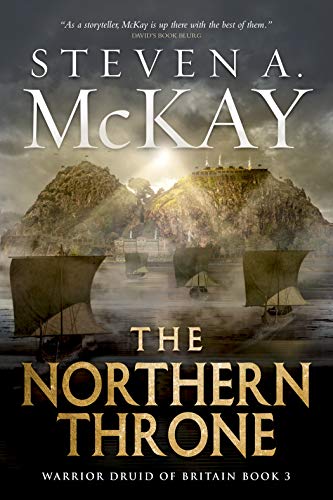
Book Corner: The Northern Throne by Steven A. McKay

Bellicus the Druid and his friend Duro, a former Roman centurion, have already suffered a great deal in recent years but, for them, things are about to get even worse.
Britain is changing. The Romans have gone and warriors from many different places seek to fill the void the legions left behind. In the south, the Saxons’ expansion seems unstoppable despite the efforts of the warlord Arthur, while north of Hadrian’s Wall various kings and chieftains are always looking to extend their borders.

In Dun Breatann, Bellicus believes the disparate northern tribes must put aside their differences, become allies, and face the Saxon threat together, under one High King.

Or High Queen…

Small-minded men don’t always look at the bigger picture though, and, when Bellicus and Duro seek to form a pact with an old enemy, events take a shocking and terrible turn that will leave the companions changed forever.

This third volume in the Warrior Druid of Britain Chronicles is packed with adventure, battles, triumph, and tears, and at the end of it a new course will be set for Bellicus.

But at what cost?

One of the highlights of my reading year is when Steven A. McKay publishes a book, This year I have had the pleasure to read two! Steven has a book, Lucia: A Roman Slave’s Tale, coming out in October, which is incredibly thought-provoking – but more of that one nearer the time…

This summer the 3rd book in the Warrior Druid of Britain series was finally published. It seems like it has been a long wait since book 2, Song of the Centurion came out, but it has been well worth it! Steven A. McKay takes us on another, suspense-filled adventure with Bellicus the Druid and his Roman friend, Duro.

Bellicus’ story started with The Druid and a rescue mission into the heart of Anglo-Saxon England to recover young princess Catia. It continued in Song of the Centurion where Bellicus and his friend Duro, the former Roman centurion, fought to save Alt Clota from the machinations of its enemies and the growing paranoia of its king, Coroticus. Each story has led us to The Northern Throne, an adventure that proves more perilous and personal for Bellicus and Duro.

Set in the time of King Arthur and the Saxon invasion of Britain, the story takes us north of Hadrian’s Wall and into the lands of the Scots and Picts. As with the previous novels, Arthur is a supporting character, making a handful of cameo appearances, though I suspect his time will come, when he and Bellicus team up to fight the Saxon threat.

“Nicely done, lads,” Gerallt said approvingly. “With the Votadini taken care of, and the Dalriadans in disarray, all we have left to deal with are the Picts.”

Bellicus bodded. If they could defeat Drest it would put Narina in a very strong position. Ultimately, the druid would like to see her crowned High Queen of all the northern lands, and it seemed that day might be close. A Damnonii High Queen would nullify the growing threat the Christians’ posed to the old ways, while allowing the united tribes to face the Saxon threat at the side of Arthur and Merlin. The druid just had to find a way to steer events towards such a favourable outcome.

“How long have we got before Drest arrives in Alt Clota?” Gerallt asked the messenger, disturbing Bellicus from his reverie.

“At the speed they were marching when I observed them,” the messenger reported, “I’d say about 3 or 4 days, my lord.”
“That should be more than enough,” Duro said, resting his left hand on the pommel of his spatha. “If we leave here tomorrow at sun-up, we’ll be able to head them off on the road before they get anywhere hear Dun Breatann.”

“And we’re thirty men stronger now, too,” Gerallt said, smiling grimly. “We’ll be able top ambush the Pictish bastards just like we did the Votadini.”

“Hopefully you’re right, and we do surprise them,” Bellicus muttered, gazing hopefully into his half-empty cup. “Because if Cefin’s numbers are accurate, Drest’s army still outnumbers us.”

The triumph of these books is in Steven A. McKay’s portrayal of Bellicus the Druid. An author could easily fall into the realm of fantasy and explain the druidic rituals as magic. That is not the case with the Warrior Druid of Britain books. Bellicus is a clever, educated man who has studied the nature of humanity. Insightful and intelligent, he knows how to read people, their actions and expressions, and how to interpret their intentions.

His years of training have made him a well-respected, authoritative character and he uses his skills to great advantage. There is an air of mystery about him, but he is also portrayed as a man who is all-too-human, and whose flaws and pride can sometimes lead him into trouble of his own making.

And that is what makes these books so special!

The characters in The Northern Throne are wonderful creations, each one vivid and individual, from the heroes such as Duro and Bellicus, to the villains such as Drest and down to little Catia, the princess who is growing up and trying to find her role in the world, who is learning to fight, to command and to judge people for herself.

Steven A. McKay skillfully recreates the landscape, people and legends of 5th century Scotland. His knowledge of the area, and its traditions, shines through on every page, transporting the reader to the stark fortresses, wooded valleys and fast-flowing rivers; taking you on an astonishing adventure without leaving your seat. He brings all this together in a rich tapestry that forms the backdrop of these incredible stories.

The tension is high throughout The Northern Throne. One crisis leads to another, loyalties and friendships pushed are to the limits; and love and betrayal are two very fine lines. This combination makes for a thoroughly absorbing tale which entwines history, legend and myth and takes the reader along on Bellicus’ heroic journey.

In short, The Northern Throne is a wonderful, engaging adventure that, once again, leaves the reader desperate for the next instalment.

The Northern Throne is available now from Amazon UK.

About the Author:

Steven McKay was born in 1977 near Glasgow in Scotland. He live in Old Kilpatrick with his wife and two young children. After obtaining his Bachelor of Arts degree with the Open University he decided to follow his life-long ambition and write a historical novel.

He plays guitar and sings in a heavy metal band when they can find the time to meet up.

You can check out his website here. Steven also has an Amazon Author page and can be found on Twitter and Facebook.

*

My Books

Ladies of Magna Carta: Women of Influence in Thirteenth Century England  looks into the relationships of the various noble families of the 13th century, and how they were affected by the Barons’ Wars, Magna Carta and its aftermath; the bonds that were formed and those that were broken. It is now available from Pen & SwordAmazon and from Book Depository worldwide.

Also by Sharon Bennett Connolly:

Silk and the Sword: The Women of the Norman Conquest traces the fortunes of the women who had a significant role to play in the momentous events of 1066.  Available now from Amazon,  Amberley Publishing, Book Depository.

Heroines of the Medieval World tells the stories of some of the most remarkable women from Medieval history, from Eleanor of Aquitaine to Julian of Norwich. Available now from Amberley Publishing and Amazon and Book Depository.

*

You can be the first to read new articles by clicking the ‘Follow’ button, liking our Facebook page or joining me on Twitter and Instagram.

©2020 Sharon Bennett Connolly

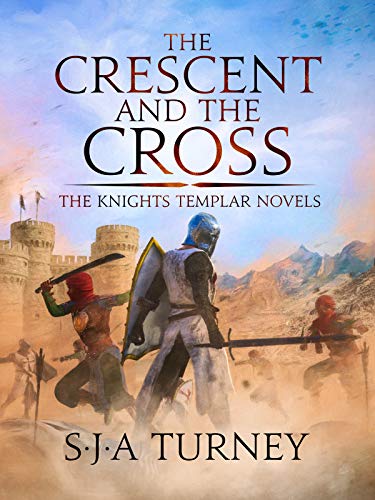
Book Corner: The Crescent and the Cross by SJA Turney

An epic battle of the Reconquista; a personal struggle to survive; a fight for glory.

War is brewing, and the Pope has summoned a crusade. The nations of Christendom are rallying to fight the Almohad caliphate, but they are a formidable foe.

Meanwhile, behind Moorish lines, a fortress held by Castile is under siege. As the siege falls, a knight is lost. Arnau leaves on a dangerous, near-suicidal quest to save him, a new squire in tow.

In the heat of the sierras though, things are not as they seem. War is coming to Iberia and all will be tested. Arnau’s sword arm will need practice, as will his mind.

A riveting and brutal historical adventure, the latest instalment of S.J.A Turney’s Knights Templar series, perfect for fans of Bernard Cornwell and Conn Iggulden.

The Crescent and the Cross is book number 5 in SJA Turney’s wonderful Knights Templar series and is as good as, if not better than the rest. Unlike the usual Templar novels Turney has chosen to set his stories against the backdrop of the Muslim invasion of Spain, rather than the Holy Land. What may be seen as an intriguing move has proved to be a hit with me. Having studied the Crusades at university, and read up as much as I could find on the foundation of the Templar order, for some reason, I have always associated the Templars with the Holy Land. The reconquest of Spain is unfamiliar territory, and absolutely fascinating.

You could write in just a few words the amount I know about the Reconquista; basically, that Jamie Douglas took Robert the Bruce’s heart to Spain and threw it into the heat of the battle against the Muslim ruler of Grenada. Douglas was killed in the action; his body and King Robert’s heart were both retrieved and returned to Scotland. The story of the Reconquista is also that of El Cid, and of Ferdinand and Isabella, the parents of Henry VIII’s first wife, Katherine of Aragon.

But it is also the story of the Knights Templar, who fought alongside other knightly orders, such as the knights of Calatrava, to recover Spain from the Muslims. SJA Turney therefore has an area of history that has been virtually ignored by novelists before, and it is such a fertile area of untapped and undiscovered stories which keep the reader gripped to the very end.

At a gesture from the preceptrix, Balthesar closed the door behind them, deepening the gloom further. The three knights walked halfway across the room and then fell into line, standing before the preceptrix like a white-clad parody of the three magi. ‘You sent for us, Mother Superior?’

The silence that filled the room as Balthesar’s words died away was tense, uncomfortable.

‘I did. I am faced with a problem, Brothers, and I fear there is little time in current circumstances to convene a full convent or to send for instructions from the mother house. I need the advice of my knights. This man is Amal.’ Her hand reached out, indicating the Moor. ‘Amal has come to us from within the lands of our great enemy bearing a letter, at great personal risk.

‘A letter, mother Superior?’

‘A personal missive. It would appear that out dear sister Joana’s former suitor, the knight Martin Calderon, is not dead as was believed.’

Arnau frowned. ‘I am unfamiliar with his story, Mother. He was presumed dead?’

The preceptrix nodded, her gaze slipping sideways towards the puffy-eyed Joana. ‘The reason for Joana’s predicament has been somewhat difficult and beyond our moral judgement, despite the damage done to our sister. Sir Calderon heard the calling of the Lord and regretfully parted from our sister, taking his vows with the Order of the knights of Calatrava. While Joana has heard nothing from her former betrothed since the day of their departure, however, I have sufficient contacts in that Order and took it upon myself to remain informed as to Brother Calderon’s activities. Last autumn, he was one of the knights who carried out the heroic defence of Salvatierra against the caliph’s army. While the bulk of the defenders were given safe passage to Aragon upon their surrender, Calderon’s name appears on the roster of the fallen.’

That rather explained the state of poor sister Joana, Arnau realised. His gaze flicked once more to the Moor. Calderon was apparently not dead, though.

Balthesar frowned. ‘Respectfully, Mother Superior, why would you concern yourself woth the an? Quite apart from his treatment of Sister Joana and the gulf now between them, of what interest might such a man be when we have the crusade looming?’

Every writer has his or her own strengths, for SJA Turney, it is that he can write and entire series of books – this is the 5th and there is at least one more to come – where every story in the series is not only a standalone, but is a unique intriguing story that takes the reader – and the protagonist – in a different direction every time. The first book in the series, Daughter of War, told the unlikely – but true – story of a woman in charge of the Templar preceptory at Rourell. Book 2, The Last Emir, took two of the Rourell knights on a quest to Majorca in search of a holy relic, while book 3, City of God saw the series’ hero, Arnau de Vallbona, caught up in the epic siege of Constantinople and book 4, The Winter Knight, was an intriguing murder mystery set in a German castle!

Each story has proved to be unique, edge of the seat action and The Crescent and the Cross is no different. Set in the heart of Spain, Arnau is given the task of recovering a knight held captive by the Almohad caliphate, only to find all is not as it seems. SJA Turney expertly recreates the Iberian landscape; the scorching heat, soaring mountains and vast plains. He builds the Christian army just as the leaders must have done at the time, introducing the alliance of kings, church leaders and knightly orders who have to face their enemies on the Spanish plains.

The Crescent and the Cross is a marvellous story, wonderfully told and gripping to the very end. I can’t wait for the next book! SJA Turney is a first class storyteller who draws the reader in from the very first page, the action frenetic from the first page to the last. The Crescent and the Cross is a truly excellent read, with a wonderful author note at the end, giving the reader a comprehensive background to the fight to reconquer Spain that lasted 9 centuries.

The Crescent and the Cross is available from Amazon UK.

About the author:

Simon lives with his wife, children, rabbits and dog in rural North Yorkshire. Having spent much of his childhood visiting historic sites with his grandfather, a local photographer, Simon fell in love with the Roman heritage of the region, beginning with the world famous Hadrian’s Wall. His fascination with the ancient world snowballed from there with great interest in Egypt, Greece and Byzantium, though his focus has always been Rome. A born and bred Yorkshireman with a love of country, history and architecture, Simon spends most of his rare free time travelling the world visiting historic sites, writing, researching the ancient world and reading voraciously.

Simon’s early career meandered along an arcane and eclectic path of everything from the Ministry of Agriculture to computer network management before finally settling back into the ancient world. During those varied years, Simon returned to university study to complete an honours degree in classical history through the Open University. With what spare time he had available and a rekindled love of all things Roman, he set off on an epic journey to turn Caesar’s Gallic War diaries into a novel accessible to all. The first volume of Marius’ Mules was completed in 2003 and has garnered international success, bestseller status and rave reviews, spawning numerous sequels. Marius’ Mules is still one of Simon’s core series and although Roman fiction features highly he now has Byzantine, Fantasy and Medieval series, too, as well as several collaborations and short stories in other genres.

Now with in excess of 30 novels available and, Simon is a prolific writer, spanning genres and eras and releasing novels both independently and through renowned publishers including Canelo and Orion. Simon writes full time and is represented by MMB Creative literary agents.

Look out for Roman military novels featuring Caesar’s Gallic Wars in the form of the bestselling Marius’ Mules series, Roman thrillers in the Praetorian series, set during the troubled reign of Commodus, epics of the Knights Templar, adventures around the 15th century Mediterranean world in the Ottoman Cycle, and a series of Historical Fantasy novels with a Roman flavour called the Tales of the Empire.

*

My Books

Ladies of Magna Carta: Women of Influence in Thirteenth Century England  looks into the relationships of the various noble families of the 13th century, and how they were affected by the Barons’ Wars, Magna Carta and its aftermath; the bonds that were formed and those that were broken. It is now available from Pen & SwordAmazon and from Book Depository worldwide.

Also by Sharon Bennett Connolly:

Silk and the Sword: The Women of the Norman Conquest traces the fortunes of the women who had a significant role to play in the momentous events of 1066.  Available now from Amazon,  Amberley Publishing, Book Depository.

Heroines of the Medieval World tells the stories of some of the most remarkable women from Medieval history, from Eleanor of Aquitaine to Julian of Norwich. Available now from Amberley Publishing and Amazon and Book Depository.

*

You can be the first to read new articles by clicking the ‘Follow’ button, liking our Facebook page or joining me on Twitter and Instagram.

©2020 Sharon Bennett Connolly
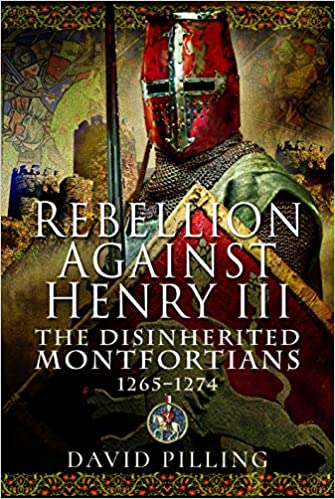
Book Corner: Rebellion Against Henry III by David Pilling

The ‘Montfortian’ civil wars in England lasted from 1259-67, though the death of Simon de Montfort and so many of his followers at the battle of Evesham in 1265 ought to have ended the conflict. In the aftermath of the battle, Henry III’s decision to disinherit all the surviving Montfortians served to prolong the war for another two years. Hundreds of landless men took up arms again to defend their land and property: the redistribution of estates in the wake of Evesham occurred on a massive scale, as lands were either granted away by the king or simply taken by his supporters. The Disinherited, as they were known, defied the might of the Crown longer than anyone could have reasonably expected. They were scattered, outnumbered and out-resourced, with no real unifying figure after the death of Earl Simon, and suffered a number of heavy defeats. Despite all their problems and setbacks, they succeeded in forcing the king into a compromise. The Dictum of Kenilworth, published in 1266, acknowledged that Henry could not hope to defeat the Disinherited via military force alone. The purely military aspects of the revolt, including effective use of guerilla-type warfare and major actions such as the battle of Chesterfield, the siege of Kenilworth and the capture of London, will all be featured. Charismatic rebel leaders such as Robert de Ferrers, the ‘wild and flighty’ Earl of Derby, Sir John de Eyvill, ‘the bold D’Eyvill’ and others such as Sir Adam de Gurdon, David of Uffington and Baldwin Wake all receive a proper appraisal.

Rebellion Against Henry III: The Disinherited Montfortians 1265-1274 by David Pilling covers an often overlooked period of history. It follows the mixed fortunes, of those who had supported Simon de Montfort during the Second Barons’ War, following Simon’s defeat and death at the Battle of Evesham. It is a book I never realised needed to be written, until I read it!

Over the years, reams and reams of paper have been dedicated to the conflict between King Henry III and Simon de Montfort, but this is the first book that looks at the aftermath, at what happened to those who survived the war and the dreadful, final Battle of Evesham, but found themselves on the losing side. Rebellion Against Henry III: The Disinherited Montfortians 1265-1274 is an engaging study of these noblemen, minor barons and knights, known collectively as the Disinherited.

I have touched on many events in Rebellion Against Henry III: The Disinherited Montfortians 1265-1274 for my own books, the recently published Ladies of Magna Carta and my next book about the Warenne Earls of Surrey. As a consequence, I was familiar with much of the main story, but was surprised at the level of continuing resistance that occurred after the defeat at Evesham. Interestingly, the hotspots of resistance had not changed since past rebellions; many of the Disinherited retreated to the wilds of the Isles of Axholme in Lincolnshire and Ely in Cambridgeshire; the former was associated with rebellion against King John, while the latter was the focus of resistance against William the Conqueror. Indeed, many of the names are familiar to students of the First Barons’ War that followed John’s rejection of Magna Carta.

The traumatic news of Evesham ripped the heart out of the baronial resistance in England. Earl Simon’s death or capture of most of the leading Montfortians in one fell swoop, demoralised rebel garrisons up and down the country. In the weeks after the battle one castle after another surrendered to the triumphant royalists. Wallingford and Berkhampstead submitted on 7 August, just three days after the slaughter, while Edward’s first move was to race north to secure his earldom of Chester. In the south, Windsor and the Tower quickly fell to the king, and Odiham and Rochester were in royal hands by the 14th. The castle of the Peak in Derbyshire held out a while longer, but submitted before January 1266.

This mass surrender left just two bastions of resistance in England. One was the mighty fortress of Kenilworth in Warwickshire, where Simon the Younger had retreated to grieve after his father’s death. The other was Dover Castle and the Cinque Ports in southeast England. Countess Eleanor, Simon’s widow, was holed up at Dover, and pirates from the rebel-held Cinque Ports still harassed shipping in the Channel.

At first there were hopes of a peaceful settlement to the war. While at Chester, Edward ordered letters to be drafted inviting the garrison at Kenilworth to surrender, on pain of disinheritance and loss of life. Simon the Younger, for his part, resisted the temptation to avenge himself on Richard of Almaine, Edward’s uncle, who was held prisoner at Kenilworth. Instead he released Almaine on 6 September, who in turn promised he would mediate with King Henry on Simon’s behalf.

Later that month, at Winchester, Edward ordered the chancellor Walter Giffard to make out letters of protection for four rebel knights. The persons and goods of these men – Richard de Havering, John de Havering, Simon de Stoke and William de Turevil – were not to be molested in any way, and they would be allowed to continue to hold their lands freely. They had sought Edward’s ‘goodwill’ on 7 August, the same day as the fall of Wallingford and Berkhampsted. and were responsible for restoring those castle to royal custody. In return Edward promised they would be safe from disinheritance and asked Giffard to provide some surety for his promise. Richard de Havering had served as the late Earl Simon’s estates steward, while John was his son and would later serve Edward as deputy justiciar of Noth Wales and seneschal of Gascony. Edward’s willingness to protect these men may have been driven by his desire to reconcile the Montfort clan after the butchery of Evesham.

Such efforts at rapprochement were shattered at Winchester parliament, which opened on 11 September….

Written in more than 20 short, punchy, chapters, the book looks at the leading figures among the Disinherited, the most notable Robert de Ferrers, Earl of Derby, John D’Eyville and many others. There is a fascinating case study at the back that almost – almost – convinces me that the legendary Robin Hood was among ranks of the Disinherited. David Pilling provides a pretty convincing argument, but I guess we’ll never know.

The author looks at the events from all sides, telling the story of the fight both from the point of view of the rebels and the royalists. Neither are the royalists always seen in a good light. David Pilling does highlight when such as John de Warenne, 6th Earl of Warenne and Surrey, and one of the more brutal men of the time, took advantage of the disorder in order to further their own ends. He also highlights the future Edward I’s impressive carrot-and-stick approach to dealing with the rebels, offering pardons where it was beneficial to the crown. The crown also were keen to ensure sentences of disinheritance were enforced if it meant the confiscated lands fell into the hands of royalists or their supporters.

Rebellion Against Henry III: The Disinherited Montfortians 1265-1274 is engagingly written and well referenced with an impressive bibliography. The only negative I can say about the book is that it lacks an index, which will cause problems for anyone wanting to use this book for research. And it would be a wonderful research tool, if it had an index. I’m hoping this omission will be rectified for the paperback version.

Despite that, Rebellion Against Henry III: The Disinherited Montfortians 1265-1274 by David Pilling was a thoroughly absorbing book. A very interesting read that highlights a 10-year period that is often overlooked after the momentous events of the previous decade. I have no hesitation in recommending it.

Rebellion Against Henry III: The Disinherited Montfortians 1265-1274 is available now in hardback and ebook from Amazon UK and Pen & Sword Books.

From the author:

I’m a writer and researcher, addicted to history for as long as I can remember. The medieval era has always held a fascination for me, perhaps because I spent much of my childhood exploring the misted ruins of castles in Wales. I also have an interest in the Byzantine Empire, the post-Roman period in Britain and the British & Irish Civil Wars.

I am a prolific author and have written and published a number of series and stand-alone tales. These include my first published novel, Folville’s Law, which chronicled the adventures of Sir John Swale in the last days of the reign of Edward II of England. This was followed by The White Hawk series, set during the Wars of the Roses, a six-part Arthurian series, and many more. I have also co-written two high fantasy novels with my good friend, Martin Bolton.

I am currently working on a book about the Montfortian civil wars in England in the late 13th century, and hope to produce more nonfiction works in the future, as well as continuing to work on fiction.

Most of my books are available as ebooks and paperbacks, and many are in the process of being converted to audio.

Enjoy!

https://www.goodreads.com/author/show/4979181.David_Pilling

http://pillingswritingcorner.blogspot.com/

*

My Books

Ladies of Magna Carta: Women of Influence in Thirteenth Century England  looks into the relationships of the various noble families of the 13th century, and how they were affected by the Barons’ Wars, Magna Carta and its aftermath; the bonds that were formed and those that were broken. It is now available from Pen & SwordAmazon and from Book Depository worldwide.

Also by Sharon Bennett Connolly:

Silk and the Sword: The Women of the Norman Conquest traces the fortunes of the women who had a significant role to play in the momentous events of 1066.  Available now from Amazon,  Amberley Publishing, Book Depository.

Heroines of the Medieval World tells the stories of some of the most remarkable women from Medieval history, from Eleanor of Aquitaine to Julian of Norwich. Available now from Amberley Publishing and Amazon and Book Depository.

*

You can be the first to read new articles by clicking the ‘Follow’ button, liking our Facebook page or joining me on Twitter and Instagram.

©2020 Sharon Bennett Connolly
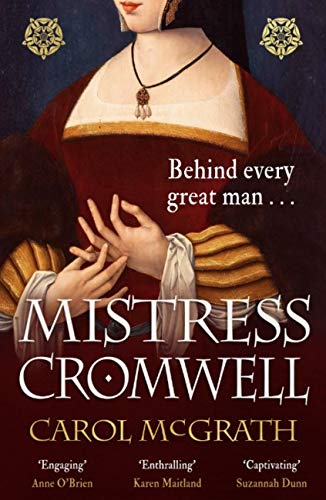
Book Corner: Mistress Cromwell by Carol McGrath

MISTRESS CROMWELL presents the rise of Tudor England’s most powerful courtier, Thomas Cromwell, through the eyes of the most important – and little known – woman in his life . . .

When beautiful cloth merchant’s daughter Elizabeth Williams is widowed at the age of twenty-two, she is determined to make a success of the business she inherited from her father. But there are those who oppose a woman making her own way in the world, and soon Elizabeth realises she may have some powerful enemies – enemies who know the dark truth about her dead husband.

Happiness arrives when Elizabeth meets ambitious young lawyer, Thomas Cromwell. Their marriage begins in mutual love and respect – but it isn’t always easy being the wife of an independent, headstrong man in Henry VIII’s London. The city is both merciless and filled with temptation, and Elizabeth soon realises she must take care in the life she has chosen . . . or risk losing everything.

Mistress Cromwell was first published as The Woman in the Shadows. What a treat of a book it is! Mistress Cromwell is a fabulous fictional account of the life and times of Elizabeth Cromwell, wife of Henry VIII’s famous – some would say notorious – adviser.  It is an enjoyable, thoughtful story which gives the reader an insight into life in Tudor London, in general, and in a Tudor household in particular. Following Elizabeth from the funeral of her first husband, through her widowhood and new love and marriage with Thomas Cromwell, this is not the story of Henry VIII and the Tudor court, but of the ‘ordinary’ people without whom the Tudors would not have been able to sustain their glamorous court.

Written in colourful, vivid language that draws you in from the first page, Mistress Cromwell is a wonderful novel, full of life and imagery. And, of course, the fact I could find no picture of Elizabeth Cromwell – only ones of Thomas – serves to highlight how little information we have about the ordinary Tudor woman. Carol McGrath’s novel gives us a rarely seen insight into everyday life of the non-aristocratic family in Tudor London. However, if you were expecting melodrama, this book is not it; adventure and mystery are given equal billing, with murder, arson and secrets, ambushes in dark corners and some strange, scary personalities making this an exciting story which is not to be missed.

Cromwell’s rise to power at the Tudor court runs parallel with his family concerns, with the arrival of children and Elizabeth’s own business adventures. His mysterious past – as a soldier and adventurer in Italy – is alluded to and even comes in useful. Carol McGrath does an excellent job of portraying the enigma that is Thomas Cromwell; the courtier, soldier and statesman who is also merchant, husband and father. The characters are brought to life in vivid, vibrant detail, creating a tableau that is hard to forget even once the last page has been read.

For several hours, I spoke little and ate sparingly. Father went about the hall speaking with merchants. I wondered how I would manage but knew I must and would. A chair scraped beside me, jolting me out of my thoughts. I felt a light touch on my elbow and glanced up. The feast was ending. My merchant had left his place. Gone to the privy, no doubt. Instead, Father stood by my chair, with Master Cromwell by his side.

‘Lizzy, Master Cromwell is my new cloth middle-man. He would like you to show him your bombazine cloth. He has admired your mourning gown.’

I started. This was nothing new. Father always employed different cloth middlemen to sell his fabrics to Flanders, thinking each one better than the last but today, at my husband’s funeral it was not seemly. Master Cromwell was watching me through eyes of an unusual shade, not quite blue or grey.

He bowed and said, ‘Forgive me for staring, Mistress Williams, but you see I knew you as a child. Your father used our fulling mill in Putney.’ He smiled at Father.

That was why he was familiar. I stared back, and in a moment or two I had recollected a tough, wicked little boy, some years older than I, who taught me to fish in the river with a string and a hook with a wriggling worm at the end of it.

‘I do recollect you, Master Cromwell. We played together as children,’ I said, feeling my mouth widen into a smile. ‘Father sent your father our cloth to be washed, beaten, prepared and softened for sale. I remember climbing trees and stealing apples. You led me astray.’

Elizabeth Cromwell herself is a wonderful, strong character, facing the prejudices of the merchant class and her own family in order to take some control over her life. And Mistress Cromwell will make you want to know more Although a history buff would know what is to become of Cromwell and Elizabeth, the author cleverly manages to avoid inserting any hindsight into the story. If you don’t know what becomes of the characters, you will soon be scouring the history books for the true story.

Carol McGrath’s wonderful novel transports you through time and space to the streets of London and Northampton at the height of Henry VIII’s magnificent reign. With colourful, vivid imagery she recreates a world and its people which has been otherwise lost through the centuries. The city, the characters and the lifestyle have been brought back to life, recreating the vibrant world in which Thomas Cromwell would eventually rise to be the king’s chief statesman. The story follows Elizabeth’s life; her family, her business and her husband, cleverly demonstrating how these are affected and changed by her husband’s inexorable rise to power.

The attention to detail is phenomenal, showing many of the social conventions of the time, while not detracting from the story, nor making the reader feel like they’re in a lecture on social history. It paints a fascinating tableau of merchant life in Tudor London, portraying the struggles and successes facing a widow trying to keep her business going in a man’s world. Rich in detail in every aspect, Carol McGrath’s meticulous research has produced a novel which plunges the reader into the middle of Elizabeth’s household in Tudor London. From funeral and marriage arrangements, births and christenings, to the contents of a Tudor garden and the conduct of the cloth trade, Mistress Cromwell acts as a window into Tudor merchant society.

If you liked Hilary Mantel’s Wolf Hall you will love Mistress Cromwell by Carol McGrath. It shows the human side of the Cromwell family and is a treat for any lover of historical fiction, and especially for a fan of Tudor history. It is a novel not to be missed, and which must be devoured for both the meticulous detail and the wonderful story – especially the story.

This review first appeared on The Review.

About the author:

Based in England, Carol McGrath writes Historical Fiction and Non-Fiction. She studied History at Queens University Belfast, has an MA in Creative Writing from the Seamus Heaney Centre, Queens University Belfast and an English MPhil from Royal Holloway, University of London. The Handfasted Wife, first in a trilogy about the royal women of 1066 was shortlisted for the RoNAS in 2014. The Swan-Daughter and The Betrothed Sister complete this highly acclaimed trilogy. Mistress Cromwell, a best-selling historical novel about Elizabeth Cromwell, wife of Henry VIII’s statesman, Thomas Cromwell, is republished by Headline. The Silken Rose, first in a Medieval She-Wolf Queens Trilogy, featuring Ailenor of Provence, was published 2nd April 2020 and comes out 23rd July 2020 as a PB. also published by the Headline Group. Tudor Sex & Sexuality will be published in 2022. Carol speaks at events and conferences. She was the co-ordinator of the Historical Novels’ Society Conference, Oxford in September 2016 and is an avid reader and reviewer, in particular, for the Historical Novel Society. She is a member of the Romantic Novelists’ Association and Historical Writers Association. Carol lives in Oxfordshire with her husband. Website: http://www.carolcmcgrath.co.uk. Newsletter: bit.ly/39eUgKl for the signup page. Amazon.

*

My Books

Out Now!

Ladies of Magna Carta: Women of Influence in Thirteenth Century England  looks into the relationships of the various noble families of the 13th century, and how they were affected by the Barons’ Wars, Magna Carta and its aftermath; the bonds that were formed and those that were broken. It is now available from Pen & SwordAmazon and from Book Depository worldwide.

Also by Sharon Bennett Connolly:

Silk and the Sword: The Women of the Norman Conquest traces the fortunes of the women who had a significant role to play in the momentous events of 1066.  Available now from Amazon,  Amberley Publishing, Book Depository.

Heroines of the Medieval World tells the stories of some of the most remarkable women from Medieval history, from Eleanor of Aquitaine to Julian of Norwich. Available now from Amberley Publishing and Amazon and Book Depository.

*

You can be the first to read new articles by clicking the ‘Follow’ button, liking our Facebook page or joining me on Twitter and Instagram.

©2020 Sharon Bennett Connolly

Ladies of Magna Carta: Women of Influence in Thirteenth Century Europe

Ladies of Magna Carta: Women of Influence in Thirteenth Century Europe hits the bookshops today. Inspired by the lives of Matilda de Braose and Nichoaa de la Haye, My third book looks at the events surrounding the issuing of Magna Carta with a view to how it affected the women.

Magna Carta clause 39: No man shall be taken, imprisoned, outlawed, banished or in any way destroyed, nor will we proceed against or prosecute him, except by the lawful judgement of his peers or by the law of the land.

This clause in Magna Carta was in response to the appalling imprisonment and starvation of Matilda de Braose, the wife of one of King John’s barons. Matilda was not the only woman who influenced, or was influenced by, the 1215 Charter of Liberties, now known as Magna Carta. Women from many of the great families of England were affected by the far-reaching legacy of Magna Carta, from their experiences in the civil war and as hostages, to calling on its use to protect their property and rights as widows.

Ladies of Magna Carta looks into the relationships – through marriage and blood – of the various noble families and how they were affected by the Barons’ Wars, Magna Carta and its aftermath; the bonds that were formed and those that were broken. Including the royal families of England and Scotland, the Marshals, the Warennes, the Braoses and more, Ladies of Magna Carta_focuses on the roles played by the women of the great families whose influences and experiences have reached far beyond the thirteenth century.

Ladies of Magna Carta: Women of Influence in Thirteenth Century England was such an amazing story to write. There were so many women who influenced the clauses of Magna Carta and the civil war which surrounded its creation. And there were even more women who were able to use Magna Carta to protect their own rights. And there were some for whom Magna Carta did nothing too assuage their suffering…..

It was an honour and a privilege to tell their stories.

Here’s what the reviewers are saying:

“Sharon Bennett Connolly throws much needed light on the lives of the high-born women of thirteenth-century England…Connolly’s version of the first Plantagenets is superbly concise. No distractions or detours, hitting all the right nails on the head…Connolly’s book is an informative and delightful read about women aspiring to control their destiny against this backdrop, but their success or failure had less to do with Magna Carta than with the timeless principles of resourcefulness, determination and knowing how to skilfully handle the big guy. It’s these qualities that make their stories inspiring.”

Darren Baker, author of The Two Eleanors

“A well-researched and comprehensive study of the women who lived through, and were affected by, the Barons’ Revolt and the sealing of the Magna Carta. Ms Bennett Connolly has skilfully brought to the fore the lives of the women who have hitherto been hidden in the background. A must-read for anyone interested in this pivotal moment in English and Scottish history.”
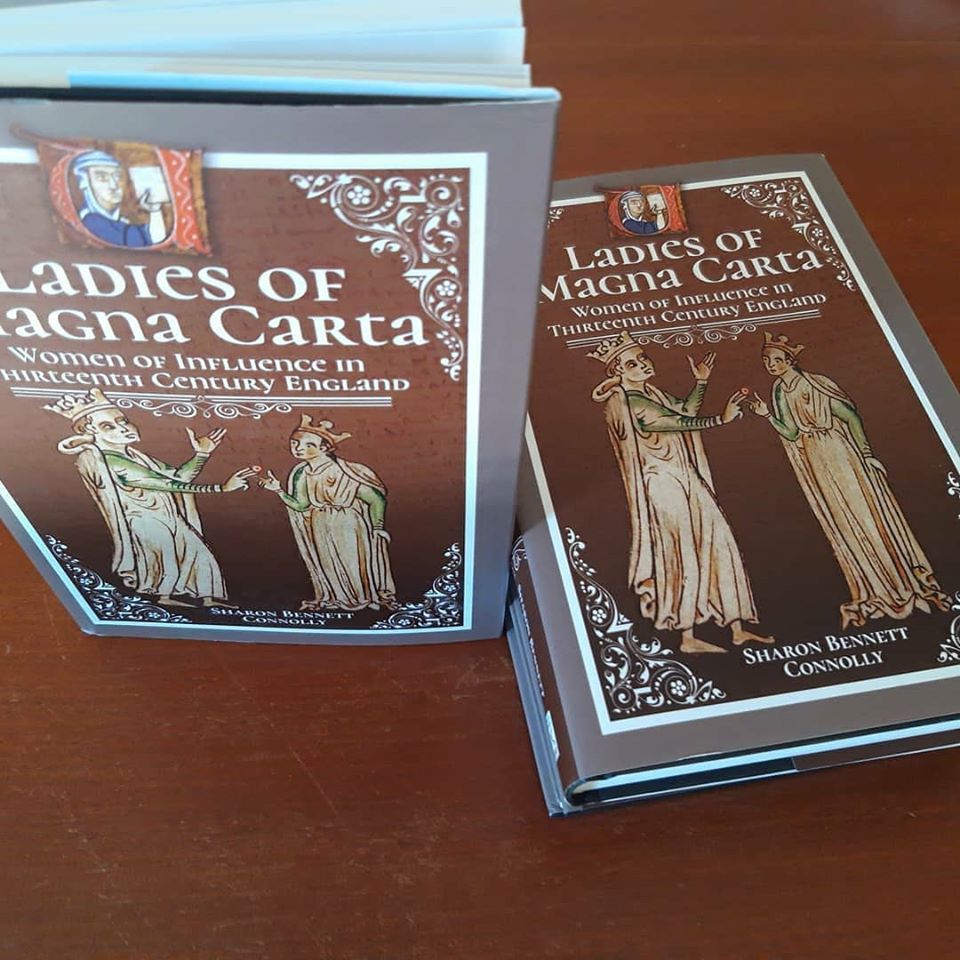
Annie Whitehead, author of Women of Power in Anglo-Saxon England

The history of women isn’t written about enough. I requested this one because it sounded like it would be a very interesting read about contemporary women. It focuses, of course, more on women who were royal or connected with the nobility, but it was still fascinating. Each chapter goes over different families or women. It was very easy to read and get into. When this gets published, I’m going to see if I can snag a copy because I’d want to own and reread this one!

Caidyn, goodreads reviewer

“Fascinating book! It was interesting to read about women living at the time of the issuing of the Magna Carta and to learn about what chapters were addressed to them and in what respects…Much on the book is about the families of women, that is to say the male part. I found nevertheless interesting to read about differences in those various families in their relationship with their daughters and wives. A few of these medieval women did have a louder voice than was usually expected: 2 became Sheriffs, for instance.”

Christine, goodreads reviewer

Absolutely loved this book. It brought out the roles of women in the formation and assertion of the Magna Carta, something we don’t hear very much about in general. There were some formidable women mentioned and I learned so much about their struggles and stories – some of them very tragic – and whether or not John was able to implement the Magna Carta to help them. In some cases, it was argued, women helped form the structure of some of the Magna Carta. A great read!

Jo Romero, NetGalley reviewer

Absolutely amazing book! Could not stop reading it. Very informative and interesting. The author has an amazing ability to ferret out information on people we have always thought of as “lost”. This is the third book I have read from this author and again I am blown away with her ability to make a very confusing time in English history interesting and, even more importantly, tell it from the perspective of a set of people often forgot about…women.

Janette Recore, NetGalley reviewer

Reviews:

You can find a wonderful full review of Ladies of Magna Carta: Women of Influence in Thirteenth Century Europe over on the Love British History blog.

Here’s the full review from historian Darren Baker.

Guest blog posts:

I visited Annie Whitehead to talk about writing Ladies of Magna Carta and some of my past and future projects.

You can find me over on Tony Riches’ blog, The Writing Desk, talking about Matilda de Braose, her family and their influence on the Magna Carta story.

And you can find me over at Just History Posts, talking about Ladies of Magna Carta and writing in general.

Over on The Coffee Pot Book Club, you can find an extract on Margaret of Scotland, from the chapter on Scottish Princesses.

Out Now!

Ladies of Magna Carta: Women of Influence in Thirteenth Century England will be released in the UK on 30 May 2020 and is now available for pre-order from Pen & SwordAmazon UK and from Book Depository worldwide. It will be released in the US on 2 September and is available for pre-order from Amazon US.

Also by Sharon Bennett Connolly:

Silk and the Sword: The Women of the Norman Conquest traces the fortunes of the women who had a significant role to play in the momentous events of 1066.  Available now from Amazon UK,  Amberley Publishing, Book Depository and Amazon US.

Heroines of the Medieval World tells the stories of some of the most remarkable women from Medieval history, from Eleanor of Aquitaine to Julian of Norwich. Available now from Amberley Publishing and Amazon UK, Amazon US and Book Depository.

*

You can be the first to read new articles by clicking the ‘Follow’ button, liking our Facebook page or joining me on Twitter and Instagram.

©2020 Sharon Bennett Connolly