Book Corner: Arthur by Giles Kristian

Years have passed since the clash of shieldwalls echoed across the land. The Saxons are now the lords of Britain. And yet the bards still sing of Arthur – ‘In our darkest time, when we need him most, shall he come again.’

Yet old Beran has no love of bards’ songs. Nor of people, unless they are paying him to steal or kill. He is a mercenary, in the employ of the cutthroat Nabor ap Nabor, and he has been ordered to murder a boy fleeing a burning city. No ordinary boy either. No, this boy is the son of King Constantine and the grandson of High King Ambrosius. And he could be the hope of Britain…if he lives.

Betraying his companions and returning to a world he thought he had left forever, Beran gives his word that he will take the boy to the one place that still holds out against the Saxons: Camelot.

Crossing a hostile land, they will meet the runaway lovers, Tristan and Isolde. They will seek the help of Guivret, called the Little King, and the Saracen, Palamedes, who once rode beneath Arthur’s banner.

Hunted by Saxons, Nabor ap Nabor, and Queen Morgana, this unlikely band must fight for their lives and for each other. For if there’s to be any hope for Britain, Beran must deliver the boy to Camelot. But to do that, he must also face his own past…

Wow!

Every now and then, a book comes along that stands head and shoulders above the rest. It draws you in. You cannot wait to finish it.

And yet…

Finishing it leaves you bereft.

That is Giles Kristian’s Arthur.

It is the third book in a series that was only meant to be a duology. After Lancelot and Camelot came out, I asked Giles if there would be an Arthur and he said, probably not – that he had covered Arthur’s story in the other two. He wasn’t sure there was anything more to add. And how could he do it? He would have to go back a rewrite Lancelot, but with Arthur as the focus. I understood his dilemma but it was disappointing that there would be no book dedicated to Arthur.

But then, he must have found inspiration from somewhere, because we now have Arthur. Lancelot was fabulous. Camelot was gripping. Arthur is on a whole other level. The premise of the novel is inspired. Continuing the story into the next generation, with flashbacks to Arthur’s early life and career. The new story is cleverly woven into the old legends. Morgana is a villain trying to get her hands on the heir to the throne. The tragic love story of Tristan and Isolde is woven into the narrative, as are other parts of the Arthurian legend. And Beran, the old soldier, is the reluctant hero, who reluctantly finds himself in the role of Prince Erbin’s protector.

‘I’m hungry,’ the boy said.

‘I told you, I don’t have any food,’ Beran replied, looking for the stars to make sure they were still walking west. Two bats tumbled and flitted above, across a patch of dark sky.

‘But I’m hungry,’ the boy insisted.

‘What do you expect me to do about it?’ Beran growled.

The boy’s face clenched in thought. ‘You must be good at setting traps,’ he said. ‘You outlaws live here in the forest, don’t you?’

‘I can feed myself. Didn’t ask for another mouth to feed.’

‘I’m a prince.’

‘A mouth’s a mouth.’

Beran could almost feel the boy frowning in the dark from two feet away. ‘We could set a snare like my father’s hunters do. They catch hares and polecats and pine martens that way.’

‘Not any more they don’t,’ Beran said. ‘Look, boy, if we stop to set traps, we’re more likely to catch one of the bastards who’s after us. Or a Saxon. Or one of Queen Morgana’s spearmen. We’ve got to keep moving.’

‘So, we’re going to Camelot?’ the boy asked.

The name struck Beran like a blow to the chest. He stopped and the boy stopped with him. ‘Why in Ban’s name would we go to Camelot?’ he asked.

‘Because that’s where Mother was taking me,’ the boy said, looking up at him, and Beran realized he had not even considered where the fugitives from Caer Colun had been bound with their treasures and this heir to the kingdom. It made sense, of course, for where else was safe in Britain for the son of Constantine the Battle King? The man who had modelled himself on the Roman generals who once ruled in the Dark Isles, and who had waged war against the Saxons for the last sixty years.

‘Lady Iselle wrote to my mother many times since my fatehr died, begging her to go to Camelot where we would be safe.’

Another name, another blow. ‘So why didn’t you?’ Beran asked. Your mother must’ve known Caer Colun could not hold out for ever. Even if the great Constantine had still been alive.’

‘Mother said we would never abandon the people. Lady Iselle could not take all of them to live within Camelot’s walls.’

‘Well, your mother’s people are slaves now, or dead. Or living beneath the sky like us,’ Beran said.

‘How long will it take to get to Camelot?’ the boy asked.

‘We’re not going to Camelot.’

Giles Kristian’s Arthur is a beautifully crafted story from start to finish, with twists and turns that will keep the reader on the edge of their seat and reading late into the night. And so you should. With enemies old and new, Beran has to avoid his former gang, stay clear of marauding Saxons and protect his charge from Queen Morgana’s men, who are hunting them relentlessly,

I do not want to ruin the reading experience with spoilers, I promise, but I will say endings are often not as good as you want them to be. They fail to live up to the promise.

That is not the case with Arthur.

The ending is spectacular.

They are everything you would expect of the legendary Arthur.

You ride with him.

You fight with him.

You are screaming his name as you charge the enemy.

It is perfection.

If there is only one book you read this year, make sure it is Arthur by Giles Kristian.

To buy Arthur on Amazon, click here.

About the author:

Family history (he is half Norwegian) and a passion for the fiction of Bernard Cornwell inspired GILES KRISTIAN to write. Set in the Viking world, his bestselling ‘Raven’ and ‘The Rise of Sigurd’ trilogies have been acclaimed by his peers, reviewers and readers alike. In The Bleeding Land and Brothers’ Fury, he tells the story of a family torn apart by the English Civil War. He also co-wrote Wilbur Smith’s No.1 bestseller, Golden Lion. His contemporary survival thriller, Where Blood Runs Cold, won the Wilbur Smith Adventure Writing Prize. With his SundaTimes bestseller Lancelot, Giles plunged into the rich waters of the Arthurian legend. His epic reimagining of our greatest island ‘history’ continued in Camelot and draws to a breath-taking close with Arthur.
Giles Kristian lives in Leicestershire.
To find out more, visit http://www.glieskristian.com. You can follow him on X @GilesKristian and Facebook/Giles Kristian

*

My Books

Signed, dedicated copies of all my books are available through my online bookshop.

Coming on 15 June 2024: Heroines of the Tudor World

Heroines of the Tudor World tells the stories of the most remarkable women from European history in the time of the Tudor dynasty, 1485-1603. These are the women who ruled, the women who founded dynasties, the women who fought for religious freedom, their families and love. These are the women who made a difference, who influenced countries, kings and the Reformation. In the era dominated by the Renaissance and Reformation, Heroines of the Tudor World examines the threats and challenges faced by the women of the era, and how they overcame them. From writers to regents, from nuns to queens, Heroines of the Tudor World shines the spotlight on the women helped to shape Early Modern Europe.

Heroines of the Tudor World is now available for pre-order from Amberley Publishing and Amazon UK.

Out Now! Women of the Anarchy
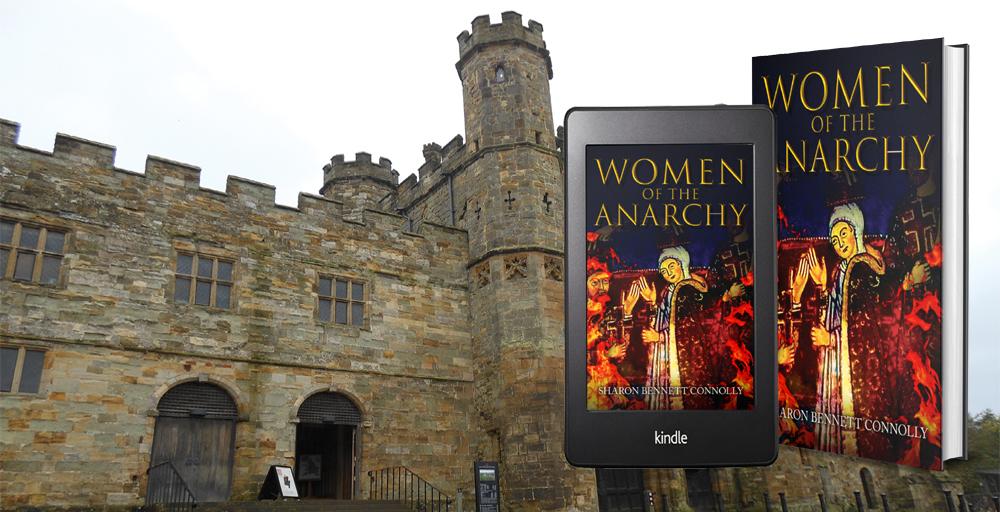
Two cousins. On the one side is Empress Matilda, or Maud. The sole surviving legitimate child of Henry I, she is fighting for her birthright and that of her children. On the other side is her cousin, Queen Matilda, supporting her husband, King Stephen, and fighting to see her own son inherit the English crown. Women of the Anarchy demonstrates how these women, unable to wield a sword, were prime movers in this time of conflict and lawlessness. It show how their strengths, weaknesses, and personal ambitions swung the fortunes of war one way – and then the other.

Available from Bookshop.orgAmberley Publishing and Amazon UK.

Also by Sharon Bennett Connolly:
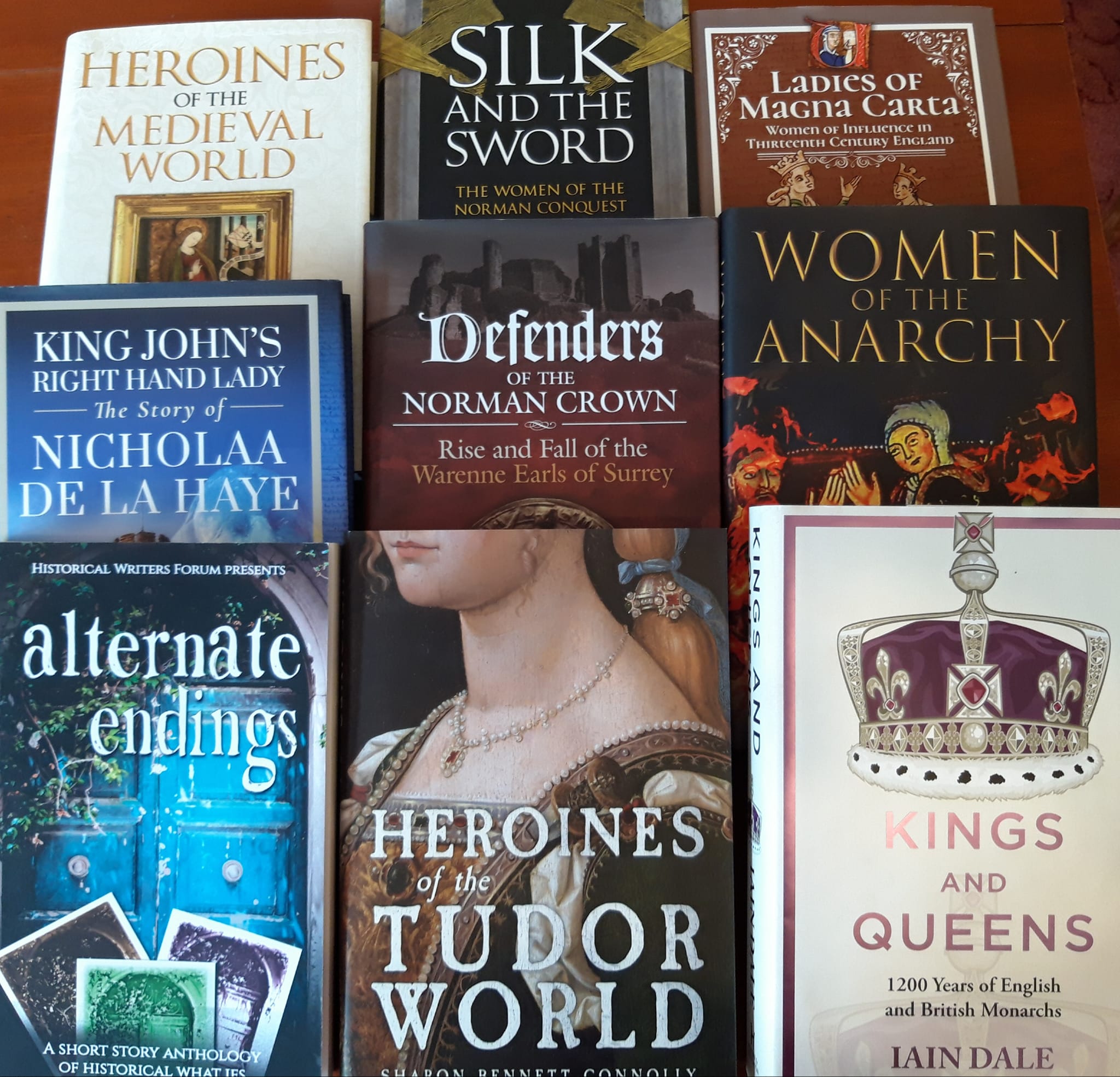
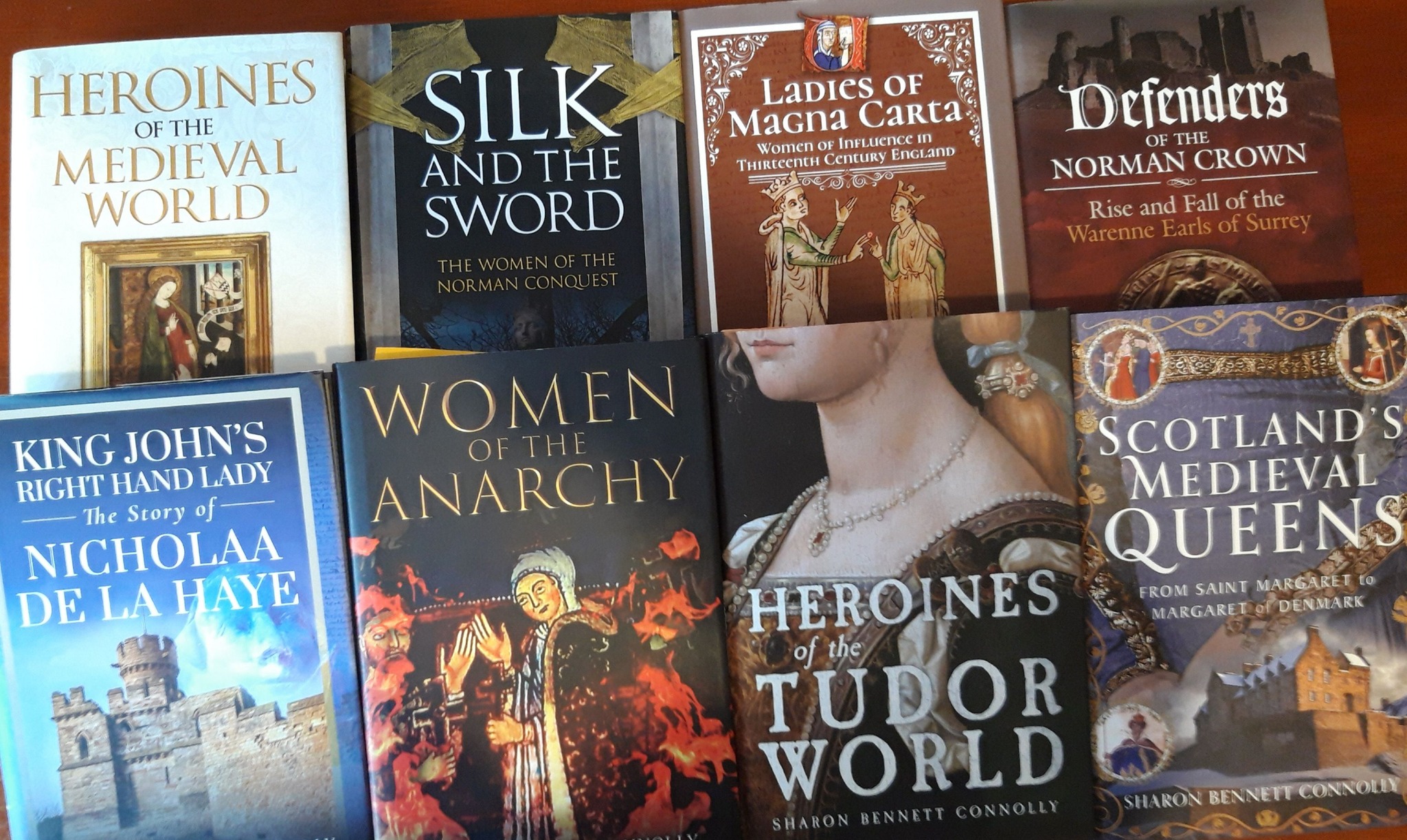
King John’s Right-Hand Lady: The Story of Nicholaa de la Haye is the story of a truly remarkable lady, the hereditary constable of Lincoln Castle and the first woman in England to be appointed sheriff in her own right. Available from all good bookshops or direct from Pen & Sword Booksbookshop.org and AmazonDefenders of the Norman Crown: The Rise and Fall of the Warenne Earls of Surrey tells the fascinating story of the Warenne dynasty, from its origins in Normandy, through the Conquest, Magna Carta, the wars and marriages that led to its ultimate demise in the reign of Edward III. Available from Pen & Sword BooksAmazon in the UK and US, and Bookshop.org

Ladies of Magna Carta: Women of Influence in Thirteenth Century England looks into the relationships of the various noble families of the 13th century, and how they were affected by the Barons’ Wars, Magna Carta and its aftermath; the bonds that were formed and those that were broken. It is now available in paperback and hardback from Pen & Sword,  Amazon, and Bookshop.orgHeroines of the Medieval World tells the stories of some of the most remarkable women from Medieval history, from Eleanor of Aquitaine to Julian of Norwich. Available now from Amberley Publishing and Amazon, and Bookshop.orgSilk and the Sword: The Women of the Norman Conquest traces the fortunes of the women who had a significant role to play in the momentous events of 1066. Available now from Amazon,  Amberley Publishing, and Bookshop.org.

Alternate Endings: An anthology of historical fiction short stories including Long Live the King… which is my take what might have happened had King John not died in October 1216. Available in paperback and kindle from Amazon.

Podcast:

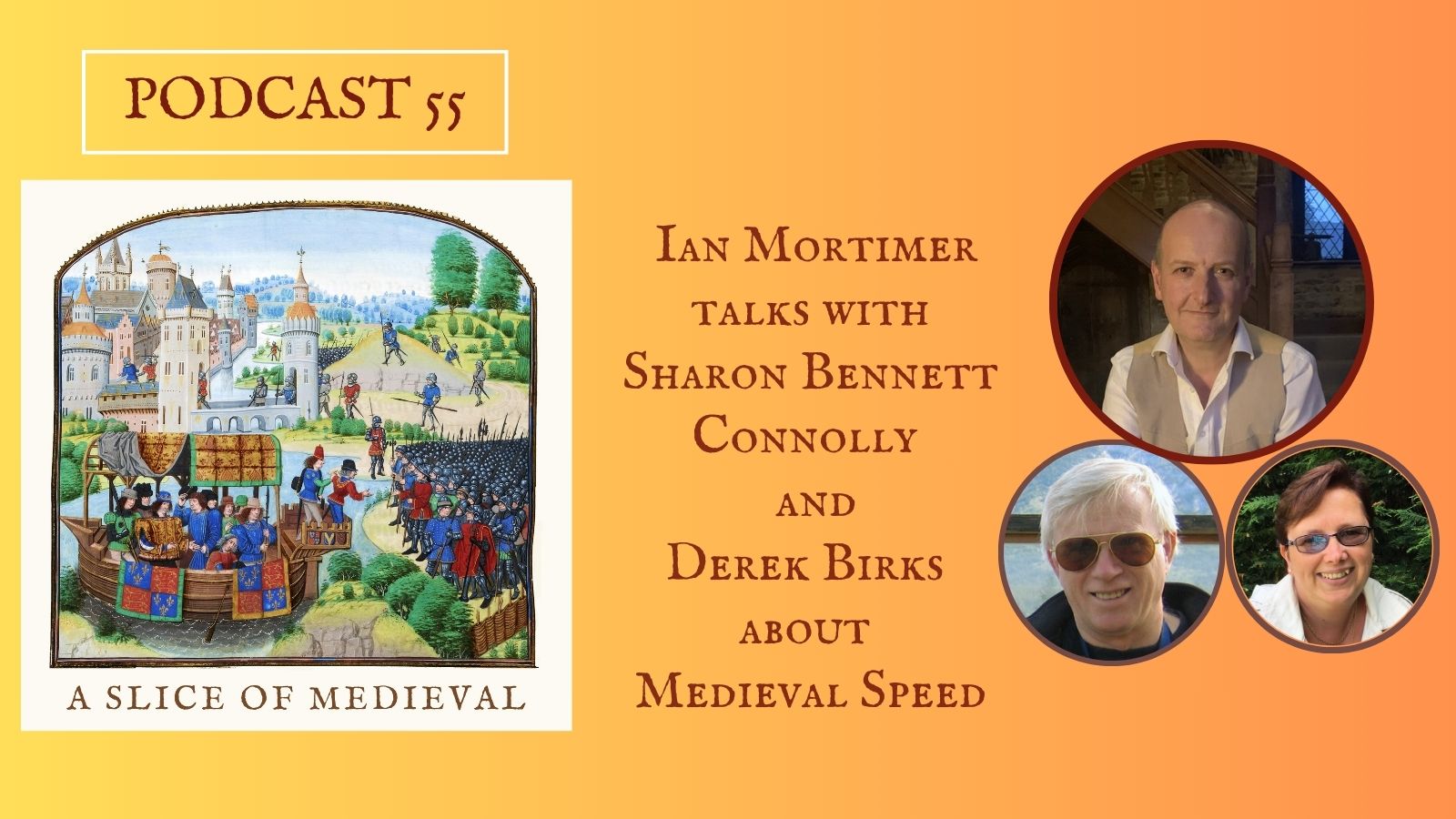
Have a listen to the A Slice of Medieval podcast, which I co-host with Historical fiction novelist Derek Birks. Derek and I welcome guests, such as Bernard Cornwell and discuss a wide range of topics in medieval history, from significant events to the personalities involved.

*

Don’t forget! Signed and dedicated copies of all my books are available through my online bookshop.

For forthcoming online and in-person talks, please check out my Events Page.

You can be the first to read new articles by clicking the ‘Follow’ button, liking our Facebook page or joining me on Twitter and Instagram.

*

©2024 Sharon Bennett Connolly FRHistS.
Ada de Warenne, Queen Mother of Scotland

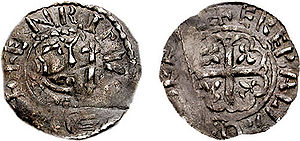
300px-Prince_Henry_of_Scotland_1139_692124
Coin of Prince Henry of Scotland

Ada de Warenne was born around 1120, daughter of William de Warenne 2nd Earl of Surrey and Isabel de Vermandois. Through her mother, she was a great-granddaughter of Henry I of France and half-sister to twins Waleran and Robert de Beaumont, Count of Meulan and 2nd Earl of Leicester, respectively, and Hugh de Beaumont, 1st Earl of Bedford. Her niece, Isabel de Warenne, would marry William of Blois, the younger son of King Stephen and, following his death, Hamelin, half-brother of Henry II of England. Ada’s family connections were of the highest quality in the Anglo-Norman world.

As a consequence, Ada’s future marriage became an international concern. On 9 April 1139, following the defeat of the Scottish army at the Battle of the Standard, the Treaty of Durham was concluded between King Stephen of England and King David I of Scots. Primarily negotiated by Stephen’s wife, Queen Matilda – King David’s own niece – the terms were extremely favourable to the defeated Scots. All the lands that Prince Henry of Scotland, King David’s son and heir, had held in 1138 were returned to him, save for the castles at Bamburgh and Newcastle, for which he was recompensed with two towns of equal value in the south. Furthermore, Henry was confirmed as earl of Huntingdon and created earl of Northumbria, a title which encompassed Northumberland, Durham, Cumberland, Westmoreland and the parts of Lancashire north of the Ribble.

Malcolm IV, King of Scots

It was agreed that English law would remain in force in these regions, but that the barons within the earldom were permitted to do homage to Prince Henry, saving only their allegiance to King Stephen. In return, King David and his son promised a permanent peace and provided four hostages. Although the text of the treaty is now lost, it seems likely that the prince’s marriage to Ada de Warenne, sister of the third Earl Warenne and half-sister of the Beaumont twins, was included in the terms of the Treaty of Durham.

Shortly after the treaty was signed, Prince Henry joined King Stephen’s court for a time, accompanying Stephen on campaign, which came not without a little risk. While Stephen’s forces besieged Ludlow, Henry was dragged from his horse by an iron hook, and nearly taken prisoner, but he was gallantly rescued from the enemy by the King himself.

It was probably during his stay with Stephen’s court that Henry married his bride. Orderic Vitalis claims that the marriage was a love match. However, the timing clearly suggests that the union was a consequence of the 1139 treaty of Durham, perhaps with the intention of drawing Henry into Stephen’s corner by allying him in marriage to his staunchest supporters, the Beaumont twins; although it is not inconceivable that affection grew between the couple during Henry’s stay at Stephen’s court. On her marriage, which took place sometime between the conclusion of the treaty of Durham and Henry’s return to Scotland, Ada became Countess of Huntingdon and Northumbria and Lady of Haddington and Crail.

Henry was the only surviving son of King David I of Scotland and his queen, Matilda (or Maud), widow of Simon (I) de Senlis, who had died in 1113. Henry’s mother, Matilda, was the daughter of Waltheof, Earl of Northumbria, and Judith of Lens, a niece of William the Conqueror. Henry’s older brother, Malcolm, was tragically killed when a toddler; he was reportedly murdered by a Scandinavian monk in his father’s service, who is said to have savagely attacked the child with his artificial iron hand. Needless to say, the murderous monk was executed: David ordered that he be torn apart by wild horses.

The marriage of Ada and Henry produced three sons and three daughters.

William the Lion, King of Scots

Ada never became Queen of Scots as Henry of Scotland died in 1152, a year before the death of David I. On his son’s death, David recognised his grandson and Ada’s eldest son, Malcolm, as his heir. During her son’s reign, Ada became known as the Queen Mother of Scotland. At this time, in her charters, she is most frequently styled ‘Ada comitissa regis Scottorum.’

Born in 1142, Malcolm succeeded to the crown at the age of 11 as Malcolm IV. Also known as Malcolm the Maiden, he died, unmarried, at Jedburgh in December 1165. Ada had been trying to arrange a suitable bride for him when he died.

He was succeeded by Ada’s second son, William I the Lion. William was one of the longest reigning kings of Scots in history, ruling for 49 years. He married Ermengarde de Beaumont, a granddaughter of Henry I of England by his illegitimate daughter, Constance. William and Ermengarde had three daughters and a son, who succeeded his father as Alexander II in 1214. Their two eldest daughters, Margaret and Isabella, are mentioned in a clause of Magna Carta. They became hostages of King John following the treaty of Norham in 1209; the English king had promised to marry at least one of them to his son, the future King Henry III, and to find a suitable husband for the other. Both girls married English nobles – eventually. Their brother, Alexander II, married Henry III’s sister, Joan, but the marriage was childless.

Ada and Henry’s third son, David, Earl of Huntingdon, married Matilda of Chester and it is through the daughters of David that Robert the Bruce and John Balliol both based their claims as Competitors to the Scots crown in the 1290s.

Of the three daughters, Matilda died young, in 1152, the same year as her father, meaning poor Ada faced a double grief, of losing a husband and a daughter in one year. Ada’s namesake, Ada of Huntingdon married Floris III, Count of Holland, in 1161. She had four sons and four daughters before the count died at Antioch while on the Third Crusade, in 1190. The younger Ada’s great-great-grandson, Floris V, Count of Holland, was one of the Thirteen Competitors for the Scots crown in 1291. Lastly, Margaret married Conan IV, Duke of Brittany and Earl of Richmond in 1160. She was the mother of Constance, Duchess of Brittany, wife of Henry II’s son Geoffrey and mother of the tragic Arthur of Brittany who was murdered by King John, and Eleanor, the Pearl of Brittany who spent all her adult life in ‘honourable imprisonment’ in England.

220px-St_Martin's_Kirk,_Haddington_03
St Martin’s Kirk, Haddington

Following her husband’s death Ada played little part in the politics of Scotland. She did, however, take great interest in the futures of her children, arranging the marriages of her daughters and seeking a bride for her son, King Malcolm IV. She later retired to her dower lands at Haddington in East Lothian, given to her by David I. It was possibly the first Royal Burgh in Scotland.

A generous patroness of the Church, Ada de Warenne died in 1178, shortly after founding the nunnery at Haddington. She is believed to be buried in the Haddington area, possibly in St Mary’s Church, although the exact location of her grave is lost to history. In 1198 her grandson, the future Alexander II, would be born in her old palace at Haddington, after her dower-lands were passed on to her daughter-in-law, Queen Ermengarde.

*

Images from Wikipedia.

Further Reading: G.W.S. Barrow, David I (c. 1185-1153) (article), Oxforddnb.com; Keith Stringer, Ada [née Ada de Warenne], countess of Northumberland (c. 1123-1178), Oxforddnb.com; Keith Stringer, Henry, earl of Northumberland (c. 1115-1152) (article), Oxforddnb.com; The Chronicle of Henry of Huntingdon; W.W. Scott, Malcolm IV (c. 1141–1165) (article), (article), Oxforddnb.com; Comprising the history of England, from the invasion of Julius Caesar to the accession of Henry II. Also, the Acts of Stephen, King of England and duke of Normandy Translated and edited by Thomas Forester; Early Yorkshire Charters Volume 8: The Honour of Warenne, Edited by William Farrer and Charles Travis Clay; Brewer’s British Royalty by David Williamson; The Mammoth Book of British Kings and Queens by Mike Ashley; The Story of Scotland by Nigel Tranter; Ada, Queen Mother of Scotland (article) by Victoria Chandler; David Ross, Scotland: History of a Nation; Matthew Lewis, Stephen and Matilda’s Civil War: Cousins of Anarchy; Stephen Spinks, Robert the Bruce: Champion of a Nation.

*

My Books:

Signed, dedicated copies of all my books are available through my online bookshop.

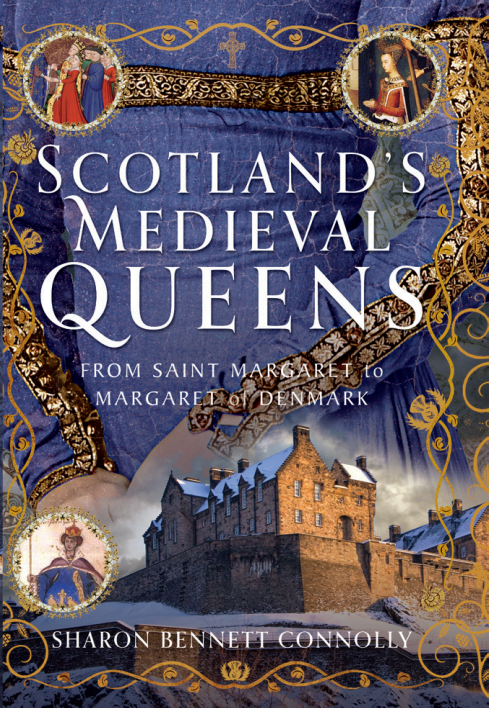
Coming 30 January 2025: Scotland’s Medieval Queens

Scotland’s history is dramatic, violent and bloody. Being England’s northern neighbour has never been easy. Scotland’s queens have had to deal with war, murder, imprisonment, political rivalries and open betrayal. They have loved and lost, raised kings and queens, ruled and died for Scotland. From St Margaret, who became one of the patron saints of Scotland, to Elizabeth de Burgh and the dramatic story of the Scottish Wars of Independence, to the love story and tragedy of Joan Beaufort, to Margaret of Denmark and the dawn of the Renaissance, Scotland’s Medieval Queens have seen it all. This is the story of Scotland through their eyes.

Available for pre-order now.

Also by Sharon Bennett Connolly:

Heroines of the Tudor World tells the stories of the most remarkable women from European history in the time of the Tudor dynasty, 1485-1603. These are the women who ruled, the women who founded dynasties, the women who fought for religious freedom, their families and love. Heroines of the Tudor World is now available for pre-order from Amberley Publishing and Amazon UK. Women of the Anarchy demonstrates how Empress Matilda and Matilda of Boulogne, unable to wield a sword themselves, were prime movers in this time of conflict and lawlessness. It shows how their strengths, weaknesses, and personal ambitions swung the fortunes of war one way – and then the other. Available from Bookshop.orgAmberley Publishing and Amazon UKKing John’s Right-Hand Lady: The Story of Nicholaa de la Haye is the story of a truly remarkable lady, the hereditary constable of Lincoln Castle and the first woman in England to be appointed sheriff in her own right. Available from all good bookshops Pen & Sword Booksbookshop.org and Amazon

Defenders of the Norman Crown: The Rise and Fall of the Warenne Earls of Surrey tells the fascinating story of the Warenne dynasty, from its origins in Normandy, through the Conquest, Magna Carta, the wars and marriages that led to its ultimate demise in the reign of Edward III. Available from Pen & Sword BooksAmazon in the UK and US, and Bookshop.orgLadies of Magna Carta: Women of Influence in Thirteenth Century England looks into the relationships of the various noble families of the 13th century, and how they were affected by the Barons’ Wars, Magna Carta and its aftermath; the bonds that were formed and those that were broken. It is now available in paperback and hardback from Pen & SwordAmazon, and Bookshop.orgHeroines of the Medieval World tells the stories of some of the most remarkable women from Medieval history, from Eleanor of Aquitaine to Julian of Norwich. Available now from Amberley Publishing and Amazon, and Bookshop.orgSilk and the Sword: The Women of the Norman Conquest traces the fortunes of the women who had a significant role to play in the momentous events of 1066. Available now from Amazon,  Amberley Publishing, and Bookshop.org.

Alternate Endings: An anthology of historical fiction short stories including Long Live the King… which is my take what might have happened had King John not died in October 1216. Available in paperback and kindle from Amazon.

Podcast:

Have a listen to the A Slice of Medieval podcast, which I co-host with Historical fiction novelist Derek Birks. Derek and I welcome guests, such as Bernard Cornwell and Elizabeth Chadwick, and discuss a wide range of topics in medieval history, from significant events to the personalities involved.

*

Don’t forget! Signed and dedicated copies of all my books are available through my online bookshop.

For forthcoming online and in-person talks, please check out my Events Page.

You can be the first to read new articles by clicking the ‘Follow’ button, liking our Facebook page or joining me on TwitterThreadsBluesky and Instagram.

©2020 Sharon Bennett Connolly FRHistS

Matilda de Braose, the King’s Enemy

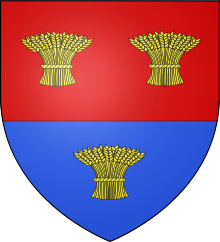
220px-William_de_Braose,_4th_Lord_Bramber.svg
Arms of William de Braose

Matilda de Braose was probably born in the early 1150s in Saint-Valery-en-Caux, France, to Bernard IV, Seigneur de Saint-Valery and his wife, Matilda. Contemporary records describe her as tall and beautiful, wise and vigorous.

Matilda’s story was made famous by the de Braose’s spectacular falling-out with King John – and the manner of her death. Very little is known of Matilda’s early years; though she probably spent time at her family’s manor of Hinton Waldrist in Berkshire. Sometime around 1166 she married William de Braose, 4th Lord of Bramber, a Norman lord with land on the Welsh Marches. William was highly favoured by both Richard I and, later his brother King John.

Whilst William was away campaigning in Normandy, Matilda would be left to manage their estates in Wales. In 1198, Matilda defended Painscastle in Elfael against a massive Welsh attack by Gwenwynyn, Prince of Powys. She held out for 3 weeks until English reinforcements arrived, earning the castle its nickname of Matilda’s Castle.

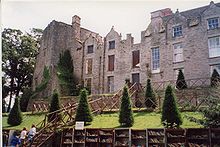
220px-Hay_Castle_-_geograph.org.uk_-_61858
Hay Castle

Matilda’s exploits were legendary. One of her titles was the Lady of Hay and Welsh folklore has her building the Castle of Hay in one night, single-handed, carrying the stones in her skirts.

The couple had around 16 children together, who married into some of the most powerful families of the time. Their eldest son, William, married Maud de Clare, daughter of the Earl of Hertford. Another son, Giles, became Bishop of Hereford. Of their daughters Loretta, married Robert de Breteuil, 4th Earl of Leicester and another, Margaret, married Walter de Lacy, Lord of Meath in Ireland.

A third son, Reginald, married, as his second wife, Gwladus Ddu, daughter of Llewelyn the Great, Prince of Wales. Reginald’s son by his first wife, William, was married Eva Marshal, daughter of the great knight, William Marshal, Earl of Pembroke and regent for King Henry III. It was this William de Braose who was ignominiously hanged by Llewelyn the Great, after being found in the bedchamber of Llewelyn’s wife Joan, the Lady of Wales and natural daughter of King John. William had been at the Welsh court to arrange the marriage of his daughter, Isabel, to Llewelyn and Joan’s son, David. Interestingly, the marriage still went ahead, although it was to be childless.

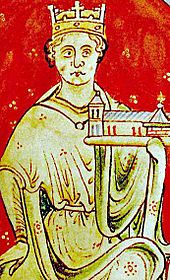
170px-John_of_England_(John_Lackland)
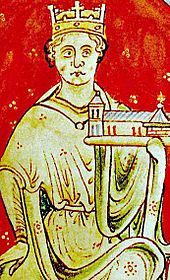
King John

William de Braose was greatly favoured by King John in the early part of his reign. He was given  Limerick in Ireland for 5,000 marks and also received the castle at Glamorgan and the lordship of Gower. William de Braose was the knight who captured the rival to John’s throne, Arthur of Brittany, at the Siege of Mirebeau in 1202 and possibly witnessed Arthur’s murder at Rouen at Easter 1203.

It was following Arthur’s murder that things started to go wrong for the Lord and Lady of Bramber. John became increasingly suspicious of de Braose’s loyalty and turned against him. This could have been for several reasons, not least being de Braose’s knowledge of Arthur’s fate.

Elsewhere, de Braose had fallen behind in his payments to the Exchequer for the honour of Limerick, but he had also sided with his friend William Marshal in his disagreements with the king. In addition, de Braose’s son, Giles had been one of the bishops to approve an Interdict against John; Giles fled into exile in France to escape the king’s reprisals.

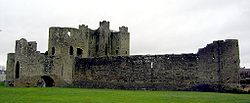
250px-TrimCastle
Trim Castle, Meath

Whatever the reason, in 1207 King John moved to make a public example of one of his most powerful barons, and punish him for his debts to the Exchequer. John demanded William and Matilda give up their sons as hostages.

Matilda refused and Roger of Wendover recorded her response to the soldiers sent to collect the boys, as;

“I will not deliver my sons to your lord, King John, for he foully murdered his nephew Arthur, whom he should have cared for honourably.”

Roger of Wendover

William is said to have admonished his wife for speaking so harshly of the king; but what mother wouldn’t react rashly when in fear for her children’s lives? William and Matilda realised she had gone too far, and tried to placate John with gifts. Matilda sent a herd of cows and a prized whit bull to John’s queen, Isabella of Angouleme.

But it was too late.

John took possession of de Braose’s castles and moved to arrest William. Forewarned, the couple fled to Ireland with 2 of their sons, where they took refuge with Walter de Lacy, their son-in-law and Lord of Meath. John followed after them, mounting an invasion of Ireland and bringing other recalcitrant barons to heal along the way. While William de Braose tried to come to terms with the king, Matilda and their eldest son, William, escaped by taking ship for Scotland.

However, Matilda and her son were captured in Galloway by Duncan of Carrick, and, having been returned to England in chains, they were imprisoned in Bristol Castle. King John made an agreement with both William and Matilda; freedom for her and a pardon for William in return for 40,000 marks.

220px-Outer_bailey_wall_west_of_the_outer_gatehouse_corfe_castle
Corfe Castle

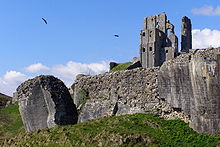
However, being either unwilling or unable to pay, Matilda and her son remained in prison – either at Windsor or Corfe Castle – and William was outlawed, eventually escaping into exile in France, disguised as a beggar, where he died in 1211.

Matilda’s fate was more gruesome; she and her son were left to starve to death in John’s dungeons (though whether this was at Corfe or Windsor is unclear). Tradition has it, that when their bodies were found, William’s cheeks bore his mother’s bite marks, where she had tried to stay alive following his death:

‘On the eleventh day the mother was found dead between her son’s legs, still upright but leaning back against her son’s chest as a dead woman. The son, who was also dead, sat upright, leaning against the wall as a dead man. So desperate was the mother that she had eaten her son’s cheeks. When William de Braose, who was in Paris, heard this news, he died soon afterwards, many asserting that it was through grief.’

Anonymous of Bethune
Magna_Carta_(British_Library_Cotton_MS_Augustus_II.106)
Magna Carta

In another version,

‘When the King returned to England he imprisoned Matilda de Braose and her son William in the castle of Corfe; they were given a sheaf of oats and a flitch of raw bacon ; this was all the meat they were allowed. On the eleventh day the mother was found dead between the knees of her son, sitting upright except that she leaned back against her son like a dead woman. The son was dead in like manner, except that he was leaning back against the wall; and his cheeks had been gnawed by his mother in her anguish.’ (Histoire des ducs de Normandie)

John’s treatment of the de Braose family did not lead to the submission of his barons, as John had intended, and the remainder of his reign was marred by civil war.

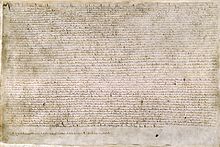
However when Magna Carta was written in 1215, Clause 39 may well have been included  with Matilda and her family in mind:

“No man shall be taken, imprisoned, outlawed, banished or in any way destroyed, nor will we proceed against or prosecute him, except by the lawful judgement of his peers or by the law of the land.”

Magna Carta 1215

In his final days John may have felt some remorse at his relentless pursuit of the destruction of Matilda and her family, as shortly after the onset of his final, fatal illness, on 10 October 1216, the king gave permission to Matilda’s daughter, Margaret, to found a religious house in Herefordshire in memory of her father, mother and brother William. John died at Newark on the night of 18/19 October 1216.

*

The story of Matilda and her family features in my book, Ladies of Magna Carta; Women of Influence in Thirteenth Century England, which was released in the UK in May 2020.

*

Sources: sussexcastles.com; genie.com; steyningmuseum.org.uk; berkshirehistory.com; England Under the Norman and Angevin Kings 1075-1225 by Robert Bartlett; Oxford Companion to British History Edited by John Cannon; The Story of Britain by Roy Strong; The Plantagenets; the Kings who Made England by Dan Jones; The Life and Times of King John by Maurice Ashley; The Plantagenet Chronicles Edited by Elizabeth Hallam.

Pictures courtesy of Wikipedia

*

My Books:

Signed, dedicated copies of all my books are available through my online store.

Out now: Scotland’s Medieval Queens

Books by Sharon Bennett Connolly

Scotland’s history is dramatic, violent and bloody. Being England’s northern neighbour has never been easy. Scotland’s queens have had to deal with war, murder, imprisonment, political rivalries and open betrayal. They have loved and lost, raised kings and queens, ruled and died for Scotland. From St Margaret, who became one of the patron saints of Scotland, to Elizabeth de Burgh and the dramatic story of the Scottish Wars of Independence, to the love story and tragedy of Joan Beaufort, to Margaret of Denmark and the dawn of the Renaissance, Scotland’s Medieval Queens have seen it all. This is the story of Scotland through their eyes.

Scotland’s Medieval Queens gives a thorough grounding in the history of the women who ruled Scotland at the side of its kings, often in the shadows, but just as interesting in their lives beyond the spotlight. It’s not a subject that has been widely covered, and Sharon is a pioneer in bringing that information into accessible history.’ Elizabeth Chadwick (New York Times bestselling author)

Available now from Amazon and Pen and Sword Books

Also by Sharon Bennett Connolly:

Books by Sharon Bennett Connolly

Heroines of the Tudor World tells the stories of the most remarkable women from European history in the time of the Tudor dynasty, 1485-1603. These are the women who ruled, the women who founded dynasties, the women who fought for religious freedom, their families and love. Heroines of the Tudor World is now available from Amberley Publishing and Amazon UK. Women of the Anarchy demonstrates how Empress Matilda and Matilda of Boulogne, unable to wield a sword themselves, were prime movers in this time of conflict and lawlessness. It shows how their strengths, weaknesses, and personal ambitions swung the fortunes of war one way – and then the other. Available from Bookshop.orgAmberley Publishing and Amazon UKKing John’s Right-Hand Lady: The Story of Nicholaa de la Haye is the story of a truly remarkable lady, the hereditary constable of Lincoln Castle and the first woman in England to be appointed sheriff in her own right. Available from all good bookshops Pen & Sword Booksbookshop.org and Amazon

Defenders of the Norman Crown: The Rise and Fall of the Warenne Earls of Surrey tells the fascinating story of the Warenne dynasty, from its origins in Normandy, through the Conquest, Magna Carta, the wars and marriages that led to its ultimate demise in the reign of Edward III. Available from Pen & Sword BooksAmazon in the UK and US, and Bookshop.orgLadies of Magna Carta: Women of Influence in Thirteenth Century England looks into the relationships of the various noble families of the 13th century, and how they were affected by the Barons’ Wars, Magna Carta and its aftermath; the bonds that were formed and those that were broken. It is now available in paperback and hardback from Pen & SwordAmazon, and Bookshop.orgHeroines of the Medieval World tells the stories of some of the most remarkable women from Medieval history, from Eleanor of Aquitaine to Julian of Norwich. Available now from Amberley Publishing and Amazon, and Bookshop.orgSilk and the Sword: The Women of the Norman Conquest traces the fortunes of the women who had a significant role to play in the momentous events of 1066. Available now from Amazon,  Amberley Publishing, and Bookshop.org.

Alternate Endings: An anthology of historical fiction short stories including Long Live the King… which is my take what might have happened had King John not died in October 1216. Available in paperback and kindle from Amazon.

Podcast

A Slice of Medieval

Have a listen to the A Slice of Medieval podcast, which I co-host with Historical fiction novelist Derek Birks. Derek and I welcome guests, such as Bernard Cornwell and Michael Jecks, and discuss a wide range of topics in medieval history, from significant events to the personalities involved. 

Every episode is also now available on YouTube.

*

Don’t forget! Signed and dedicated copies of all my books are available through my online store.

For forthcoming online and in-person talks, please check out my Events Page.

You can be the first to read new articles by clicking the ‘Follow’ button, liking our Facebook page or joining me on TwitterThreadsBluesky and Instagram.

*

©2015 Sharon Bennett Connolly FRHistS

Arthur: England’s Lost Prince

Artur_of_Brittany
Arthur of Brittany

A Plantagenet prince, Arthur of Brittany‘s story is one of the most tragic of the Medieval period. The posthumous son of Geoffrey, 4th son of Henry II of England and Eleanor of Aquitaine, and Constance of Brittany, he was Duke of Brittany from the moment of his birth.

Constance and Geoffrey had married in 1181; their daughter, Eleanor, was born in 1184. It was during an estrangement from his father Geoffrey that was trampled to death while competing at a tournament in Paris, in August 1186.

Arthur was born several months later, in March or April 1187. In 1190 the two-year-old Arthur was named as heir presumptive to his uncle Richard I, king of England; Richard even arranged a betrothal for young Arthur, to a daughter of Tancred of Sicily. However, the Emperor Henry VI conquered Sicily in 1194 and the betrothal came to nothing.

Arthur was a valuable pawn for both the kings of France and England; when Richard tried to take him into his household, in 1196, his mother sent him to the French court, where he spent several months. On his return to Brittany, Constance started involving him in the government of the duchy.

On Richard’s death in 1199, the great William Marshal and Hubert Walter, Archbishop of Canterbury and Justiciar of England, were instrumental in persuading the English barons to accept the king’s youngest brother John as King. They reasoned that John knew more of England – and was more experienced – than young Arthur. And that John was not as friendly with the king of France, Philip II Augustus, who supported Arthur’s claim to the English crown.

In August 1199, Philip complained that John had not paid him homage for the French lands held by the English king. He demanded the Vexin and that John relinquish Anjou, Maine and Touraine, the Angevin ancestral lands, to Arthur. According to Gervase of Canterbury John ‘made up his mind to resist the French king like a man, and to fight manfully for the peace of his country.’

By September, John was winning the war. William des Roches, Arthur’s seneschal in Anjou, offered to defect to John. He was bitter that Philip Augustus had destroyed the Angevin fortress of Ballon after capturing it from John, rather than handing it to Arthur. This high-profile defection was followed by the submission of Arthur himself, he and his mother met John at Le Mans. However, they received a warning that the king was planning to arrest and imprison them, and fled Le Mans in the dead of night, making their way to the French court. Whether the intelligence was true or not, John’s past record of betrayal was obviously enough to sow distrust in the minds of Arthur and his mother and make the threat credible.

A temporary truce followed, which was made more permanent in January 1200, before John and Philip II came to terms at Le Goulet on 18 May 1200. Philip agreed to withdraw his support of Arthur in return for John paying homage to Philip for his French possessions. In addition, Arthur performed homage to John for Brittany. Arthur’s claim was revived, however, when King Philip confiscated John’s possessions in Northern France for refusing to acknowledge Philip as his overlord. Philip recognised Arthur as the rightful heir to Normandy and Anjou. Tensions were then exacerbated when Philip declared all of John’s continental possessions forfeit as a result of his refusal to deal justly with Hugh IX de Lusignan, who had rebelled following John’s marriage to Hugh’s betrothed, Isabelle d’Angoulême.

300px-Philippe2+Arthur
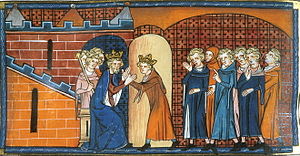
Arthur  of Brittany paying homage to Philip II of France

War followed.

In July 1202 Arthur, newly knighted and betrothed to King Philip’s infant daughter, took a force of knights, including the de Lusignans, into Aquitaine, to make war on John. having received intelligence that his grandmother, Eleanor of Aquitaine, was travelling to Poitiers, he set a course to intercept her at Mirebeau. The ageing queen sought refuge in the castle and sent word to her son, King John, asking for assistance. Having become aware of Arthur’s move against Aquitaine, John had already set out with his army and was at Le Mans when he received his mother’s message. Taking a small force so he could move quickly, John made a forced march to the rescue of his mother, covering 100 miles in less than two days and surprising Arthur and his allies while they were still at breakfast, on the morning of 1 August. After some fierce fighting through the streets, the enemy commanders were all captured. One of John’s barons, William de Braose, captured Arthur and handed him over to the King, who imprisoned him at Falaise.

His captivity was probably less than comfortable, despite his rank and familial relationship. According to William Marshal, John ‘kept his prisoners in such a horrible manner and such abject confinement that it seemed an indignity and disgrace to all those with him who witnessed his cruelty.’

Whilst imprisoned at Falaise, John ordered that Arthur should be blinded and castrated. Two of the three messengers dispatched to carry the order fled the king’s court, to avoid the distasteful duty, but one reached Falaise. However, Arthur’s jailer Hubert de Burgh, balked at mutilating a 15-year-old boy, saying that John would regret the order, and John ‘was not displeased for the moment that his order had not been carried out.’ Though word was put out that the deed had been done, in the hope that the news would quell insurrection in Brittany. The Bretons were so enraged that the revolt rose to a new level of ferocity and the rebels were only pacified when it was announced that Arthur was, in fact, alive and well.

Arthur was later removed to confinement in Rouen.

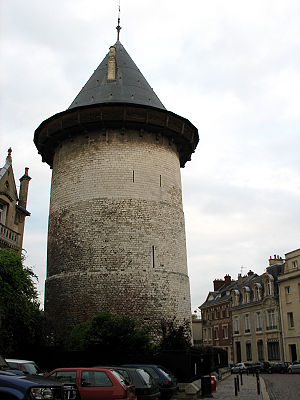
King Philip and the nobility of Brittany continued to press for the release of the young duke, but John had other ideas. It was in Rouen, at Easter 1203, most likely on 3rd or 4th April, that Arthur was put to death. He was 16 years old. A chronicler of the Cistercian monastery of Margam, Glamorgan, described the murder:

“The King of the French took the castle of Chinon, and afterwards all the garrisons of Normandy, Anjou, and the city of Poitiers, with other castles, fortified towns and cities, as he so willed it – for this reason; when king John had captured Arthur, he had him kept alive in prison for some time, but finally, in the great tower at Rouen, on the Thursday before Easter, after his dinner and when drunk and possessed by the devil, he killed him by his own hand, and, after a large stone had been tied to the body, threw it in the Seine. It was discovered by a fisherman in his net and recognised when it was brought to the riverbank, and, for fear of the tyrant, secretly buried at the priory of Bec, which is called Notre Dame des Pres.

When the aforesaid king of the French heard the news of this and knew for certain that Arthur had been killed, he had his killer John summoned to the court of France, as was customary with dukes of Normandy, to answer for the murder of such a great man and to defend himself if he could; of such a great man, say I, for he was the legitimate heir of England, the count of Brittany, and the son-in-law of the king of France. John, fully aware of his evil deed, never dared to appear before the court, but fled to England and exercised a most cruel tyranny over his people until he died. When he never came to answer for the death of Arthur or to defend himself, judgement was given against him by the king’s court, and he was deprived of all his titles, in all the lands and honours which he held of the French crown; this was an incontrovertible and just sentence.”

King John

Whether John committed the deed himself, or merely ordered it done, will probably never be known; of the fact he was present there seems to be little doubt. Whatever his part, however, it was an act that would be held against John, not only during his lifetime, but for centuries to come. In 1204 King Philip, most likely knowing – or at least suspecting – that Arthur was dead, made the young duke of Brittany’s release a condition of any peace settlement.

On Arthur’s death the duchy should have passed to his older sister, Eleanor; but she was also a prisoner of King John and would be held in confinement in England for the rest of her life. So it passed to his two-year-old half-sister, Alix of Thouars, daughter of Constance and her third husband, Guy of Thouars.

*

Sources: Dan Jones, The Plantagenets: The Kings Who Made England; Robert Bartlett, England Under the Norman and Angevin Kings 1075-1225; Maurice Ashley, The Life and Times of King John; H.G. Koenigsberger, Medieval Europe 400-1500; History Today Companion to British History; Charles Phillips, Illustrated Encyclopedia of the Kings & Queens of Britain; Oxford Companion to British History; Mike Ashley, The Mammoth Book of British Kings & Queens; Douglas Boyd, Eleanor: April Queen of Aquitaine

Pictures courtesy of Wikipedia

*

My Books:

Signed, dedicated copies of all my books are available through my online store.

Out now: Scotland’s Medieval Queens

Scotland’s history is dramatic, violent and bloody. Being England’s northern neighbour has never been easy. Scotland’s queens have had to deal with war, murder, imprisonment, political rivalries and open betrayal. They have loved and lost, raised kings and queens, ruled and died for Scotland. From St Margaret, who became one of the patron saints of Scotland, to Elizabeth de Burgh and the dramatic story of the Scottish Wars of Independence, to the love story and tragedy of Joan Beaufort, to Margaret of Denmark and the dawn of the Renaissance, Scotland’s Medieval Queens have seen it all. This is the story of Scotland through their eyes.

Available now from Amazon and Pen and Sword Books

Also by Sharon Bennett Connolly:

Heroines of the Tudor World tells the stories of the most remarkable women from European history in the time of the Tudor dynasty, 1485-1603. These are the women who ruled, the women who founded dynasties, the women who fought for religious freedom, their families and love. Heroines of the Tudor World is now available for pre-order from Amberley Publishing and Amazon UK. Women of the Anarchy demonstrates how Empress Matilda and Matilda of Boulogne, unable to wield a sword themselves, were prime movers in this time of conflict and lawlessness. It shows how their strengths, weaknesses, and personal ambitions swung the fortunes of war one way – and then the other. Available from Bookshop.orgAmberley Publishing and Amazon UKKing John’s Right-Hand Lady: The Story of Nicholaa de la Haye is the story of a truly remarkable lady, the hereditary constable of Lincoln Castle and the first woman in England to be appointed sheriff in her own right. Available from all good bookshops Pen & Sword Booksbookshop.org and Amazon

Defenders of the Norman Crown: The Rise and Fall of the Warenne Earls of Surrey tells the fascinating story of the Warenne dynasty, from its origins in Normandy, through the Conquest, Magna Carta, the wars and marriages that led to its ultimate demise in the reign of Edward III. Available from Pen & Sword BooksAmazon in the UK and US, and Bookshop.orgLadies of Magna Carta: Women of Influence in Thirteenth Century England looks into the relationships of the various noble families of the 13th century, and how they were affected by the Barons’ Wars, Magna Carta and its aftermath; the bonds that were formed and those that were broken. It is now available in paperback and hardback from Pen & SwordAmazon, and Bookshop.orgHeroines of the Medieval World tells the stories of some of the most remarkable women from Medieval history, from Eleanor of Aquitaine to Julian of Norwich. Available now from Amberley Publishing and Amazon, and Bookshop.orgSilk and the Sword: The Women of the Norman Conquest traces the fortunes of the women who had a significant role to play in the momentous events of 1066. Available now from Amazon,  Amberley Publishing, and Bookshop.org.

Alternate Endings: An anthology of historical fiction short stories including Long Live the King… which is my take what might have happened had King John not died in October 1216. Available in paperback and kindle from Amazon.

Podcast:

Have a listen to the A Slice of Medieval podcast, which I co-host with Historical fiction novelist Derek Birks. Derek and I welcome guests, such as Bernard Cornwell and Michael Jecks, and discuss a wide range of topics in medieval history, from significant events to the personalities involved. Every episode is also now available on YouTube.

*

Don’t forget! Signed and dedicated copies of all my books are available through my online bookshop.

For forthcoming online and in-person talks, please check out my Events Page.

You can be the first to read new articles by clicking the ‘Follow’ button, liking our Facebook page or joining me on TwitterThreadsBluesky and Instagram.

*

©2015 Sharon Bennett Connolly FRHistS