Æthelflæd, Lady of the Mercians

Books by Sharon Bennett Connolly
Æthelflæd (from The Cartulary and Customs of Abingdon Abbey, c. 1220)

12th June 2018 marked the 1100th anniversary of one of England’s greatest ever women. The daughter of Alfred the Great, Æthelflæd, Lady of the Mercians, led the resistance against Danish invasion, alongside her brother, Edward the Elder. And yet, she is virtually unknown to the people of today.

Æthelflæd was born about 870, the eldest child of King Alfred and his wife, Ealhswith. Alfred’s biographer, Asser, says Ealhswith was a member of the Mercian royal house through her mother, Eadburh. Around 886 Æthelflæd was married to Æthelred, ealdorman of Mercia and a trusted lieutenant of her father. Æthelred ruled over the English half of the Mercian kingdom, which had been dissected by the Vikings, but submitted to King Alfred’s overlordship. The marriage was a political alliance, intended to strengthen Saxon resistance to the Danes, who were now occupying Northumbria, Yorkshire and East Anglia. The resulting close relationship of Mercia and Wessex was only further strengthened by the renewed Viking attacks of the 890s.

During the early years of their marriage the young couple appear to have settled in London, the city that had been entrusted to Æthelred’s care by Alfred. Æthelflæd seems to have taken after her father – she was a strong, brave woman and is often regarded more as a partner to Æthelred than a meek, obedient wife. The couple jointly presided over provincial courts. The ‘Mercian Register’, a fragment of a Mercian chronicle, included in some versions of the Anglo-Saxon Chronicle, records that Æthelflæd was exercising regal powers in the region even before her husband’s death. In his final years Æthelred increasingly suffered from illness, during which time Æthelflæd assumed greater authority. The couple had only one child, a daughter, Ælfwynn. Writing 2 centuries later William of Malmesbury claimed the lack of more children was due to Æthelflæd’s avoidance of marital relations, possibly due to a fear of dying in childbirth. Malmesbury quotes her as saying it was ‘unbecoming a daughter of a king to give way to a delight, which after a time produced such painful consequences’. Æthelred died in 911, though whether this was from wounds received in battle or from illness remains unclear. He was buried at Gloucester.

Books by Sharon Bennett Connolly
Charter S 221 dated 901 of Æthelred and Ætheflæd donating land and a golden chalice to Much Wenlock Church

Wessex had already adjusted to a change in ruler when Æthelflæd’s father had died in 899 and had been succeeded by her younger brother, Edward ‘the Elder’. When Æthelred died, Edward was happy to support his sister as sole ruler of Mercia, but he took personal control of the cities of London and Oxford, cities that could be used as bases from which Edward would be able to launch campaigns against the Danes of the Midlands. The siblings seem to have had a trusting relationship for many years; Edward had entrusted his son Æthelstan, often viewed as the first king of England, to Æthelflæd and her husband, to be educated at the Mercian court.

The first woman to rule an Anglo-Saxon kingdom  – albeit as a client of her brother’s more powerful kingdom of Wessex, Æthelflæd was accorded the title the Lady of the Mercians. She proved to be a vital ally to her brother and the siblings worked together to combat the threats of the Danes. In 909, according to the Anglo-Saxon Chronicle, Edward sent an army, made up of West Saxons and Mercians, into Danish territory in the north. It was probably this army that brought back to Mercia the relics of St Oswald, the 7th century Northumbrian saint. They had been taken from Bardney in Lincolnshire and Æthelflæd had them translated to the new minster at Gloucester, which was renamed St Oswald in his honour.

Æthelflæd continued the policy, started by her father, of building burhs and established a ring of fortified centres around western Mercia. The burhs not only provided protection against the Danes, but served as bases from which to launch attacks on Danish occupied regions. Each burh could provide a refuge for all villagers within a 20-mile radius; it would have a large garrison, depot and its own water supply. During Æthelred’s lifetime, burhs had been established at ‘Bremesburh’, Worcester (between 887 and 899) and Chester (907). Later, on Æthelflæd’s orders, in 913, fortresses were built at several further sites, including Bridgnorth, Tamworth and Stafford, in response to Viking raids into Edward’s territories.

Edward built two further burhs at Buckingham in 914, plugging a defensive gap between Tamworth and Hertford. At the same time, Æthelflæd built one at Warwick and another at Eddisbury; this latter, with a new burh at Runcorn in 915, helped to strengthen her northern defences. While the Danes appeared to be the greatest risk, Æthelflæd did not neglect her defences along the Welsh border, building a burh at Chirbury and one at the now-lost location of ‘Wearburh’. In the same year, Edward fortified Bedford and in 916 he built a burh at Maldon to fortify Essex against seaborne raiding. While this building programme was going on, it also seems highly likely that Æthelflæd rebuilt and strengthened the defences of Gloucester and Hereford.
Books by Sharon Bennett Connolly
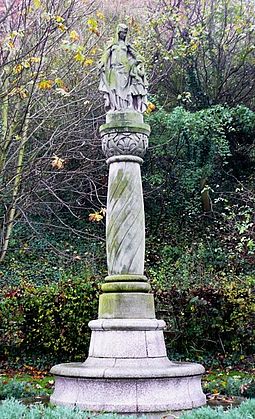
Statue of Æthelflæd and her nephew, Athelstan, Tamworth

Æthelflæd was no silent partner in Edward’s reconquest of England. Most remarkably, she personally led successful military campaigns against the Welsh, the Norse and the Danes of York. The Anglo-Saxon Chronicle relates that on the feast of St Cyriac the Martyr, 16 June 916, the abbot Egbert and his retainers, were murdered for no known reason. The Mercian abbot had been travelling in the Welsh mountain kingdom of Brycheiniog when he was attacked. Æthelflæd seems to have taken the murder as a personal affront; the abbot was, after all, under her protection. Three days later she invaded Wales; her army ravaged Brycheiniog, burning the little kingdom. Although King Tewdr escaped, Æthelflæd took his wife, Queen Angharad, as a hostage, with 33 others, many of whom were relatives of the Welsh king. Eventually, the king submitted to Æthelflæd, promising to serve her faithfully and to pay compensation. The incident not only demonstrates Æthelflæd’s commitment to her people, but also shows her strength and determination, attributes she was to put to good use against the Danes.

In 917 Æthelflæd turned her attention to those Danes. Danish forces had taken the offensive, raiding English territories. By the end of the year Edward had subdued East Anglia, with all the Scandinavian armies of the region submitting to him. While her brother was raiding in  the East Midlands, Æthelflæd led her forces across the West Midlands. She marched on the Viking stronghold of Derby, personally leading the army on campaign. It would be the first of the Danes’ ‘Five Boroughs’, which made up the Danelaw, to fall. Although she managed to successfully storm the fort, her army suffered heavy casualties, including four of her most trusted and senior thegns (thegns were the army’s commanders and officers). The Anglo-Saxon Chronicle reported; ‘With God’s help Ethelfleda, lady of Mercia, captured the fortress known as Derby with all its assets. Four of her favoured ministers were slain inside the gates’.¹

The Saxon victory was a great shock to the Danes. Their Viking myths told of an invincible woman who would appear at Ragnarok, the Norse apocalypse, and make brave warriors cower before her. Æthelflæd was relentless  – in early 918 she and her army moved on to Leicester, while Edward headed for Stamford. Leicester was the centre of a heavily settled Danish colony, and Æthelflæd ravaged the countryside around the settlement. The Danes had no choice but to surrender in the face of her indefatigable forces. However, she was magnanimous in victory, displaying mercy and charity by distributing alms as she progressed into town.

Books by Sharon Bennett Connolly
Æthelflæd in the thirteenth century Genealogical Chronicle of the English Kings

The inexorable advance of Æthelflæd’s army combined with her compassion for the defeated was to prove to be a clever strategy, demonstrating to those regions still controlled by the Danes that she was prepared to offer compromise if they would only submit to her. The Danes of York, the Viking capital, in particular, began to look at submitting to Æthelflæd as a serious option to avoid continued conflict. Their new king was Ragnall, a Viking pirate from Dublin, who had taken the throne by force; but the Danes knew that Edward and Æthelflæd would never make peace with him. In the summer of 918 the noblemen and magnates of York sent emissaries to Æthelflæd, promising that they would surrender to her.

In May, King Edward had marched his army to Stamford, building a new fort south of the river and accepting the surrender of the local Danes, who submitted to him as their new ruler. It was while he was still at Stamford that Edward received word of his sister, The Anglo-Saxon Chronicle made a cold, clinical report:

918 While he was there his sister Æthelflæd died at Tamworth two weeks before midsummer. The king took possession of Tamworth and the whole province of Mercia which she had governed.²

Æthelflæd died suddenly at Tamworth on 12 June 918. She was buried beside her husband, in the east chapel of the cathedral she had founded, St Oswald’s Minister, Gloucester. Although she did not live long enough to see the successful conclusion to the work she and her brother had carried out, her achievements cannot be lightly brushed off. Between 910 and 920 all Danish territories south of Yorkshire had been conquered. Her nephew Athelstan consolidated the kingdom that had been created by the efforts of Edward and Æthelflæd. If Æthelflæd did not live to see the extent of her success, neither did she live to see her daughter, Ælfwynn, nearly thirty and still unmarried, briefly become the nominal ruler of Mercia; only to be ‘deprived of all authority’ six months later and taken to Wessex, from where nothing more is heard of her.

Books by Sharon Bennett Connolly
St Oswald’s Priory, Gloucester, where Æthelflæd and her husband are buried

The story of Æthelflæd mainly comes from the Mercian Register, embedded largely in the B, C and D texts of the Anglo-Saxon Chronicle. She appears only rarely in the primary text, text A, which focuses on Edward and Wessex. Text A tries to minimise Æthelflæd’s significance, but could not wholly obscure her achievements. She was, after all, the daughter of Alfred the Great, the wife of the ealdorman of Mercia and a prominent woman in her own right, in an era when this was an incredible rarity. It is thought that it was Æthelflæd, the Lady of the Mercians, who inspired the 10th century poem, ‘Judith’ who is ‘white and shining’, ‘noble and courageous’. In the poem, Æthelflæd is depicted as the ‘valorous virgin’ who struck off the head of the hostile foe with her gleaming sword and ‘ascribed the glory of all that to the Lord of Hosts’. Recognising her vital role in the creation of England, the 12th century Henry of Huntingdon declared Æthelflæd ‘to have been so powerful that in praise and exaltation of her wonderful gifts, some call her not only lady, but even king’. In a poem he described her as ‘worthy of a man’s name’ and ‘more illustrious than Caesar’, apparently high praise indeed – for a woman.

In the 21st century Æthelflæd’s story is becoming more widely known than it has ever been. She is one of the major influences of my book, Heroines of the Medieval World and appears, appropriately, in the chapter on Warrior Heroines. Joanna Arman’s non-fiction book The Warrior Queen: the Life and Legend of Æthelflæd, Daughter of Alfred the Great is well worth a perusalIn addition, with her appearance in Bernard Cornwell’s wonderful The Last Kingdom books and television series, and Annie Whitehead’s non-fiction book, Mercia: the rise and Fall of a Kingdom, as well as her novel, To Be A Queen, Æthelflæd’s story is finally being brought into the light. On the 1100th anniversary of her death, her incredible achievements were being celebrated in the heart of Mercia, in Gloucester and Tamworth. And not before time; Æthelflæd should be the inspiration for future generations of strong, influential women and stand out as an example of what can be achieved if you are determined enough.

*

Footnotes: ¹ The Anglo-Saxon Chronicles by Michael Swanton; ² ibid.

Pictures courtesy of Wikipedia

Further Reading: The Anglo-Saxon Chronicles by Michael Swanton; The Anglo-Saxon Chronicle by James Ingram; Chronicles of the Kings of England, From the Earliest Period to the Reign of King Stephen, c. 1090–1143 by William of Malmesbury; The Chronicle of Henry of Huntingdon by Thomas Forester; Alfred the Great by David Sturdy; Brewer’s British Royalty by David Williamson;  History Today Companion to British History Edited by Juliet Gardiner & Neil Wenborn; The mammoth Book of British kings & Queen by Mike Ashley; Britain’s Royal Families, the Complete Genealogy by Alison Weir; The Wordsworth Dictionary of British History by JP Kenyon; The Anglo-Saxons in 100 Facts by Martin Wall; Kings, Queens, Bones and Bastards by David Hilliam; The Oxford Companion to British History Edited by John Cannon; oxforddnb.com.

*

My Books

Signed, dedicated copies of all my books are available through my online bookshop.

Out now: Scotland’s Medieval Queens

Books by Sharon Bennett Connolly

Scotland’s history is dramatic, violent and bloody. Being England’s northern neighbour has never been easy. Scotland’s queens have had to deal with war, murder, imprisonment, political rivalries and open betrayal. They have loved and lost, raised kings and queens, ruled and died for Scotland. From St Margaret, who became one of the patron saints of Scotland, to Elizabeth de Burgh and the dramatic story of the Scottish Wars of Independence, to the love story and tragedy of Joan Beaufort, to Margaret of Denmark and the dawn of the Renaissance, Scotland’s Medieval Queens have seen it all. This is the story of Scotland through their eyes.

Scotland’s Medieval Queens gives a thorough grounding in the history of the women who ruled Scotland at the side of its kings, often in the shadows, but just as interesting in their lives beyond the spotlight. It’s not a subject that has been widely covered, and Sharon is a pioneer in bringing that information into accessible history.’ Elizabeth Chadwick (New York Times bestselling author)

Available now from Amazon and Pen and Sword Books

Also by Sharon Bennett Connolly:

Books by Sharon Bennett Connolly

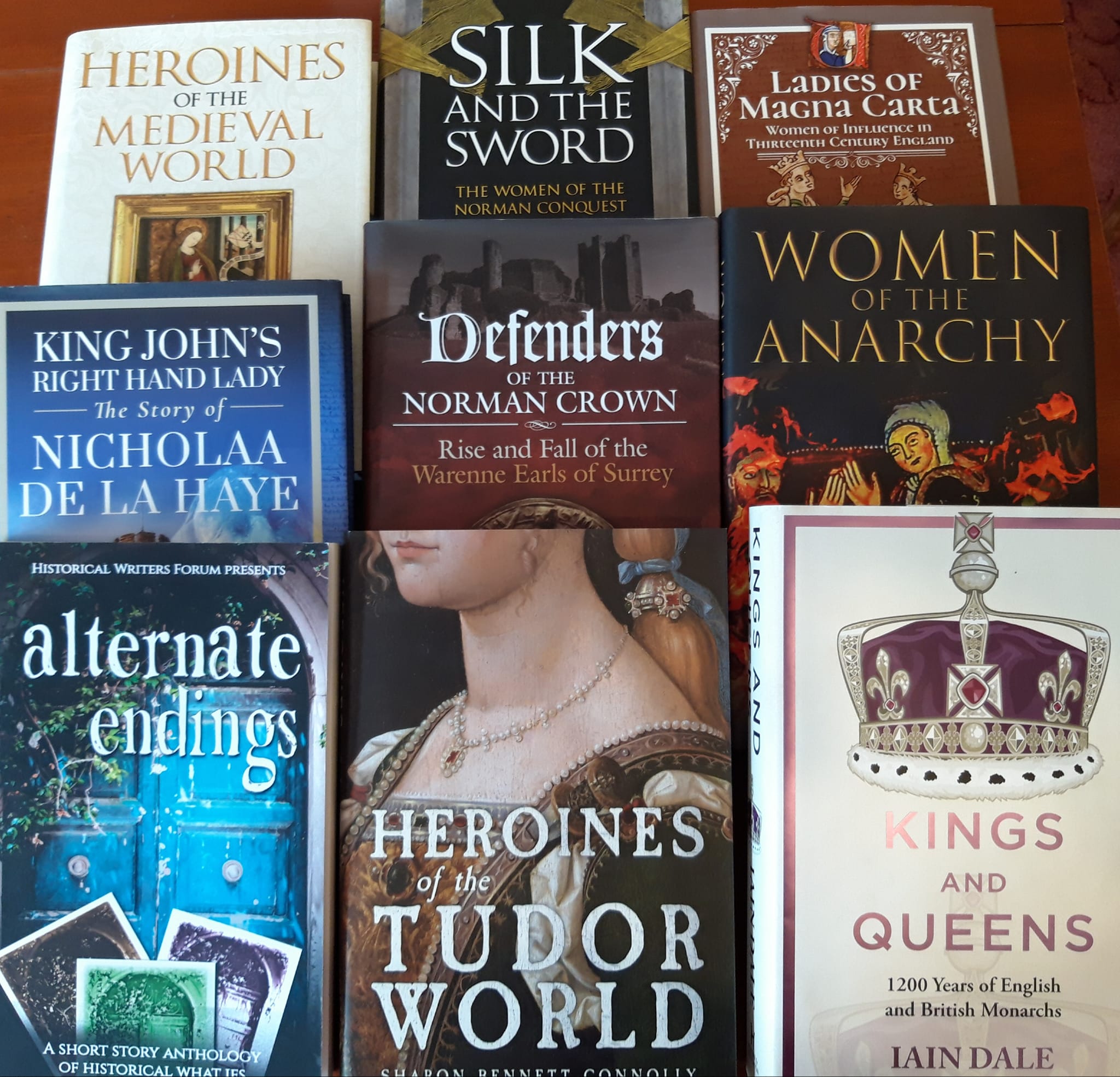
Heroines of the Tudor World tells the stories of the most remarkable women from European history in the time of the Tudor dynasty, 1485-1603. These are the women who ruled, the women who founded dynasties, the women who fought for religious freedom, their families and love. Heroines of the Tudor World is now available from Amberley Publishing and Amazon UK. Women of the Anarchy demonstrates how Empress Matilda and Matilda of Boulogne, unable to wield a sword themselves, were prime movers in this time of conflict and lawlessness. It shows how their strengths, weaknesses, and personal ambitions swung the fortunes of war one way – and then the other. Available from Bookshop.orgAmberley Publishing and Amazon UKKing John’s Right-Hand Lady: The Story of Nicholaa de la Haye is the story of a truly remarkable lady, the hereditary constable of Lincoln Castle and the first woman in England to be appointed sheriff in her own right. Available from all good bookshops Pen & Sword Booksbookshop.org and Amazon

Books by Sharon Bennett Connolly

Defenders of the Norman Crown: The Rise and Fall of the Warenne Earls of Surrey tells the fascinating story of the Warenne dynasty, from its origins in Normandy, through the Conquest, Magna Carta, the wars and marriages that led to its ultimate demise in the reign of Edward III. Available from Pen & Sword BooksAmazon in the UK and US, and Bookshop.orgLadies of Magna Carta: Women of Influence in Thirteenth Century England looks into the relationships of the various noble families of the 13th century, and how they were affected by the Barons’ Wars, Magna Carta and its aftermath; the bonds that were formed and those that were broken. It is now available in paperback and hardback from Pen & SwordAmazon, and Bookshop.orgHeroines of the Medieval World tells the stories of some of the most remarkable women from Medieval history, from Eleanor of Aquitaine to Julian of Norwich. Available now from Amberley Publishing and Amazon, and Bookshop.orgSilk and the Sword: The Women of the Norman Conquest traces the fortunes of the women who had a significant role to play in the momentous events of 1066. Available now from Amazon,  Amberley Publishing, and Bookshop.org.

Alternate Endings: An anthology of historical fiction short stories including Long Live the King… which is my take what might have happened had King John not died in October 1216. Available in paperback and kindle from Amazon.

Podcast:

A Slice of Medieval

Have a listen to the A Slice of Medieval podcast, which I co-host with Historical fiction novelist Derek Birks. Derek and I welcome guests, such as Bernard Cornwell and discuss a wide range of topics in medieval history, from significant events to the personalities involved.

Every episode is also now available on YouTube.

*

Don’t forget! Signed and dedicated copies of all my books are available through my online bookshop.

For forthcoming online and in-person talks, please check out my Events Page.

You can be the first to read new articles by clicking the ‘Follow’ button, liking our Facebook page or joining me on TwitterThreadsBluesky and Instagram.

*

©2018 Sharon Bennett Connolly FRHistS

The First Marriage of Kateryn Parr

Katherine Parr

We often hear the story that Kateryn – or Katherine – Parr was used to marriage to older men when she accepted the proposal of Henry VIII in 1543. Her second husband, Lord Latimer, was a widower with young children and twenty years older than his bride. And her first husband, it has often been said was a man much older in years. However, this story has arisen from a case of mistaken identity, between a grandfather and grandson of the same name, Edward Burgh.

Kateryn Parr’s first husband was Edward Burgh (pronounced Borough) of Gainsborough in Lincolnshire. And Kateryn’s early biographers appear to have assumed that this was Edward Burgh senior, Lord Burgh from 1496 to his death in 1528.

The Burgh family were descended from Hubert de Burgh, 1st Earl of Kent and Justiciar for King John and Henry III. Hubert had even been married, briefly, to King John’s first, discarded wife, Isabel of Gloucester. The first Thomas Burgh had fought at Agincourt and married Elizabeth Percy, a co-heiress of a junior branch of the mighty Percy family, the Earls of Northumberland. It was through Elizabeth Percy that the manor house at Gainsborough came into the Burgh family, inherited from her father; she then left the estate to her son Thomas (II) Burgh, Baron  Gainsborough, on her death in 1455.

Thomas (II) Burgh was a trusted Yorkist, named sheriff of Lincoln in 1460 and, later, an Esquire of the Body for King Edward IV. By the end of 1462 he had been knighted and was a member of the Privy Council. By 1464 he had married a wealthy widow Margaret, dowager Lady Botreaux and daughter of Lord Thomas Ros. It was Sir Thomas Burgh who, along with Thomas Stanley, rescued Edward IV from his imprisonment in Middleham Castle by the Earl of Warwick.

The sacking of Burgh’s manor house at Gainsborough was the opening move of the rebellion of Richard, Lord Welles, in 1470, which eventually saw Edward IV escaping to Flanders and the brief readeption of Henry VI; Edward IV recovered his kingdom in 1471, with the Battle of Tewkesbury, and Henry VI’s mysterious death in the Tower of London just days later, putting an end to Lancastrian hopes. On Edward IV’s death, Sir Thomas had initially supported the succession of his brother, Richard III, but switched his allegiance to Henry Tudor shortly after King Richard visited the Sir Thomas’s Hall at Gainsborough. What had been said to make this staunch Yorkist transfer his support to a Lancastrian pretender, we can only guess….

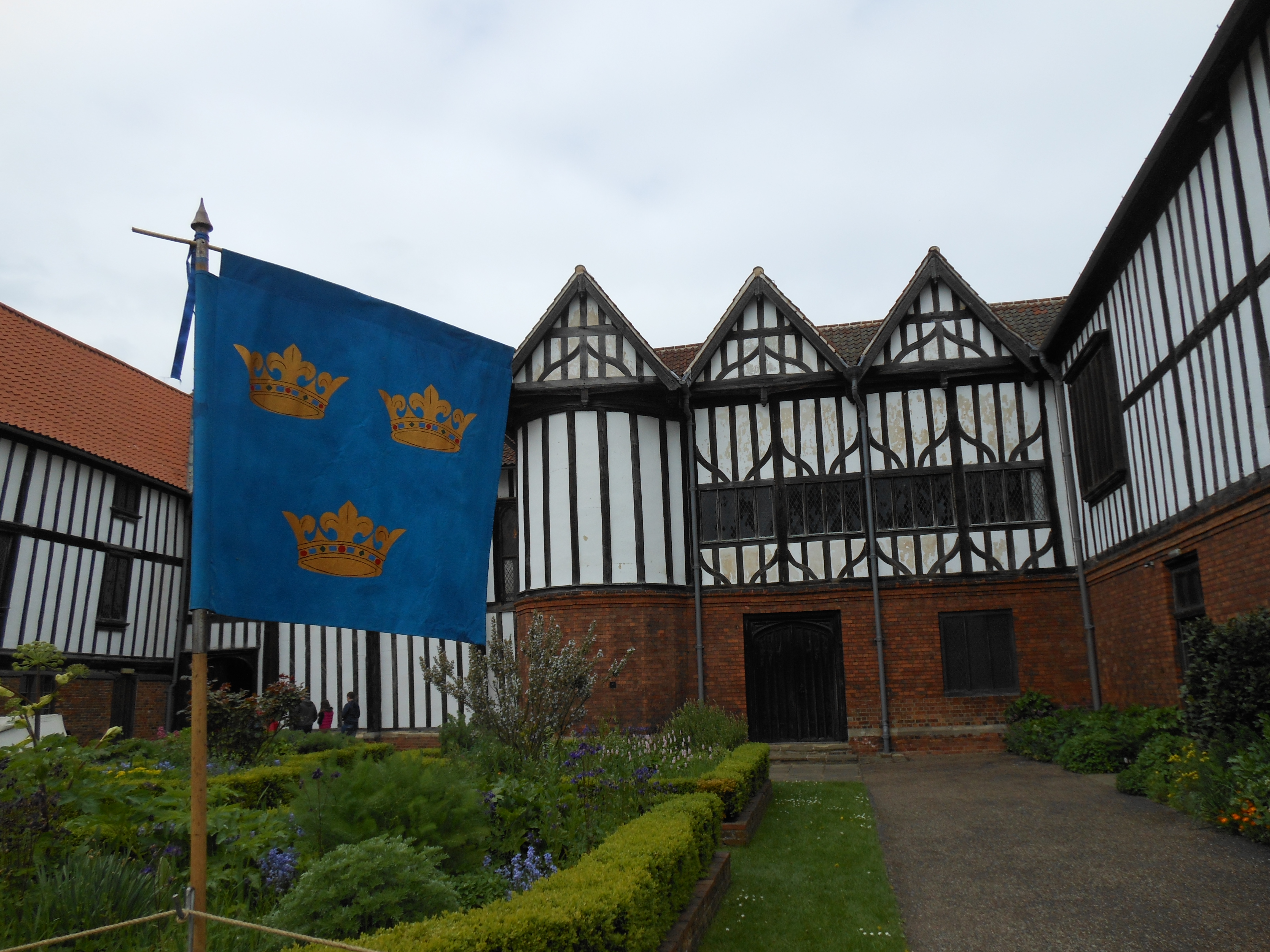
Gainsborough Old Hall

In 1496, Thomas was succeeded as Baron Gainsborough by his son, Edward Burgh, who married Anne Cobham, daughter of Sir Thomas, 5th Baron Cobham of Starborough, when he was 13 and she was just 9 years old. It was from this marriage that the Burgh’s would inherit Starborough Castle.

Although he won his knighthood on the battlefield at Stoke in 1487, and was a Member of Parliament for Lincoln in 1492, Edward appears to have been less politically capable than his father. He soon fell foul of King Henry VII, whether it was because of the fact he associated with those the king distrusted, or due to early signs of mental illness, in December 1496, Edward was forced into a legal bond where he was obliged to present himself to the king wherever and whenever it was demanded, and to vow to do his subjects no harm.¹ He was even remanded to the custody of the Lord Chamberlain and had to seek royal permission if he wanted to leave court for any reason. For a time, he was incarcerated in the Fleet Prison, but managed to escape, despite his promise and financial guarantee not to; an action which put him in thousands of pounds of debt to the king.

From his mother, Margaret de Ros, it seems Edward had inherited a mental illness, one which also affected his Ros cousins, Sir George Tailboys and Lord Ros of Hamlake. As a result, in 1509, ‘distracted of memorie’, he was declared a lunatic.² His wife died in 1526 and he died in 1528, never quite recovering his wits. He was succeeded as Baron Burgh of Gainsborough by his son, Thomas (III).

In 1496, aged just 8-years-old, Thomas (III) had married Agnes Tyrwhitt. The marriage had been arranged by his grandfather, Thomas (II) and gave the younger Thomas useful contacts within Yorkshire and Lincolnshire, contacts he would need to counteract the damaging effects of his father’s mental illness and royal disfavour. Thomas (III) pursued a dual career, combining service as a justice of the peace in Lindsey with his service at court. In 1513 he was knighted on the battlefield of Flodden, the same field on which James IV of Scotland met his death. He was Sheriff of Lincoln in 1518-19 and 1524-25. He was appointed Anne Boelyn’s Lord Chamberlain in May 1533, and held the middle of the queen’s train at her coronation. He was also one of the twenty-six peers who sat at Anne’s trial in 1536.

Thomas (III) and his wife had as many as 12 children. The eldest of which was Edward, who died in 1533. It was this Edward who was the 1st husband of Kateryn Parr, a marriage that had been arranged in 1529 by Sir Thomas and Kateryn’s widowed mother, Maud Parr; her husband, Thomas Parr of Kendal, had died in 1517. Maud had taken it upon herself to arrange her daughter’s future. After a failed proposal to marry Katherine to Henry Scrope, the son of Lord Scrope of Bolton, due to the prospective groom’s lack of enthusiasm, Maud turned to another of her late husband’s relatives and arranged for Katherine to marry Edward.

Young Edward was of a similar age to his wife, not the old man as was stated in Katherine’s early biographies, when he was mistaken for his grandfather. Kateryn was 17 at the time of the marriage, with Edward in his early twenties. It is impossible not to muse on how life could have been so different for Kateryn, had this first marriage proved longer-lasting.

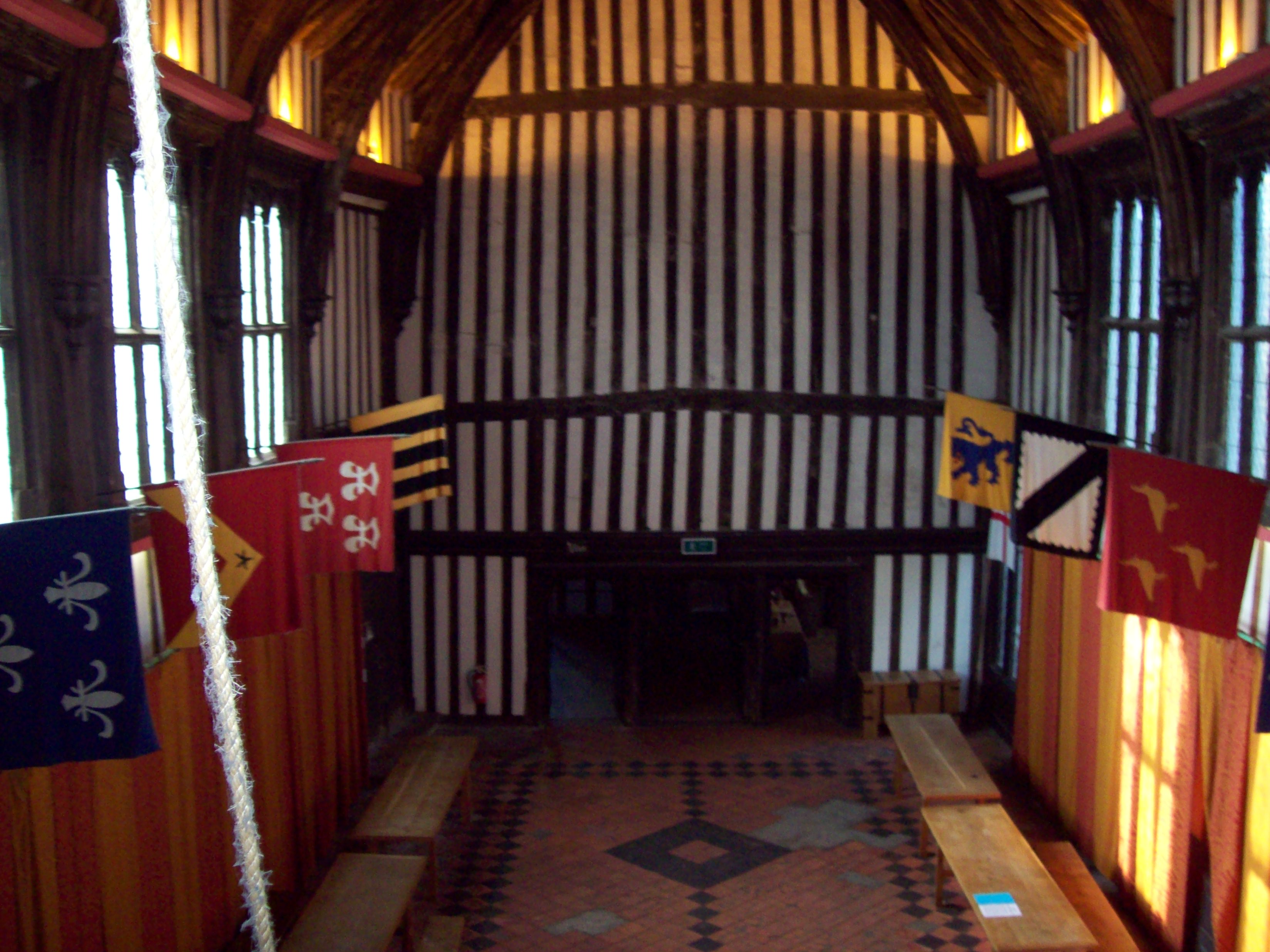
The great hall of Gainsborough Old Hall viewed from the solar

Sir Thomas, however, was renowned for his violent outbursts and wild rages (possibly due to the inherited mental instability in the family) and had a tyrannical control over his family. The first two years of the marriage, spent at Sir Thomas’s Hall at Gainsborough, was a miserable time for Kateryn. She wrote, regularly, to her mother of her unhappiness and it seems the situation was only resolved following a visit by Maud Parr, who persuaded Sir Thomas to allow Edward and Kateryn to move to their own, smaller, house at Kirton-in-Lindsey.

We don’t know whether Edward was a sickly individual (he may have inherited his grandfather’s mental illness), or whether or not he succumbed to a sudden illness, but their happiness was short-lived, as he died in the spring of 1533. Having no children, Kateryn was left with little from the marriage, and, with her mother having died the previous year, and with her siblings in no position to assist her, she was virtually alone in the world. It was possibly as a remedy to her isolation that Kateryn married her second husband, John Neville, 3rd Baron Latimer, who was twenty years her senior, in 1534. There is no record that Kateryn served any of Henry VIII’s queens. Her first appearance at court seems to be in 1542, when she became a lady-in-waiting in Mary Tudor’s household, before she caught the King’s eye.

Kateryn had not forgotten her time with the Burgh family, however, and when she became queen Katerynpaid a pension from her own purse to her former sister-in-law, Elizabeth Owen, widow of her husband’s younger brother, Thomas. Poor Elizabeth had been accused of adultery, during her husband’s lifetime, by her domineering father-in-law, Sir Thomas, and her children were declared illegitimate by a private Act of Parliament in 1542. Although, it does appear that Thomas had a partial change of heart before his death in 1550, as his will included a bequest for ‘700 marks towards the preferment and marriage of Margaret, daughter of Dame Elizabeth Burgh, late wife to Sir Thomas my son, deceased …’ ³

Gainsborough Old Hall

Sir Thomas, Baron Burgh of Gainsborough, was eventually succeeded by his third surviving son, William, born in the early 1520s. He married Katherine Fiennes de Clinton, daughter of Edward Fiennes de Clinton – the future Earl of Lincoln – and Elizabeth (Bessie) Blount, a former mistress of Henry VIII and mother of the king’s illegitimate son, Henry Fitzroy, Duke of Richmond and Somerset.

Lord Latimer died on 2 March 1543 and Kateryn became Queen of England when she married Henry VIII on 12 July the same year. Her marriage to the king would last less than 4 years and ended with Henry’s death on 28 January 1547. In May 1547 Kateryn secretly married her 4th and final husband, Sir Thomas Seymour, brother of her predecessor as queen, Jane Seymour, and uncle of King Edward VI. She died at Sudeley Castle on 5 September 1548, having given birth to a daughter, Mary, 6 days earlier. She was buried in the chapel at Sudeley on the same day. Her daughter was given into the custody of Katherine Willoughby, Duchess of Suffolk, but disappeared from history whilst still a toddler.

*

Footnotes: ¹ ² & ³ Gainsborough Old Hall, Extended Guide Book by Sue Allen

Sources: Gainsborough Old Hall, Extended Guide Book by Sue Allen; In Bed with the Tudors by Amy Licence; oxforddnb.com; The Life and Times of Henry VIII by Robert Lacey; England Under the Tudors by Arthur D Innes; The Earlier Tudors 185-1558 by JD Mackie; Elizabeth’s Women by Tracy Borman; Henry VIII: King and Court by Alison Weir; In the Footsteps of the Six Wives of Henry VIII by Sarah Morris and Natalie Grueninger; Ladies-in-Waiting: Women who Served at the Tudor Court by Victoria Sylvia Evans; The Life and Times of Henry VII by Neville Williams; The Six Wives and Many Mistresses of Henry VIII: The Women’s Stories by Amy Licence; Tudorplace.com; John Leland Leland’s itinerary in England and Wales 1535-43 edited by L Toulmin Smith (1906-10); Letters and Papers, Foreign and Domestic, of the Reign of Henry VIII 1509-47 edited by JS Brewer, James Gairdner and RH Brodie, HMSO London 1862-1932; Privy Purse Expenses of King Henry VIII from November MDXIX to December MDXXXII edited by Sir Nicholas Harris Nicolas 1827.

*

My Books

Signed, dedicated copies of all my books are available through my online bookshop.

OUT NOW! Heroines of the Tudor World

Heroines of the Tudor World tells the stories of the most remarkable women from European history in the time of the Tudor dynasty, 1485-1603. These are the women who ruled, the women who founded dynasties, the women who fought for religious freedom, their families and love. These are the women who made a difference, who influenced countries, kings and the Reformation. In the era dominated by the Renaissance and Reformation, Heroines of the Tudor World examines the threats and challenges faced by the women of the era, and how they overcame them. From writers to regents, from nuns to queens, Heroines of the Tudor World shines the spotlight on the women helped to shape Early Modern Europe.

Heroines of the Tudor World is now available for pre-order from Amberley Publishing and Amazon UK.

Also by Sharon Bennett Connolly:

Women of the Anarchy demonstrates how Empress Matilda and Matilda of Boulogne, unable to wield a sword themselves, were prime movers in this time of conflict and lawlessness. It shows how their strengths, weaknesses, and personal ambitions swung the fortunes of war one way – and then the other. Available from Bookshop.orgAmberley Publishing and Amazon UKKing John’s Right-Hand Lady: The Story of Nicholaa de la Haye is the story of a truly remarkable lady, the hereditary constable of Lincoln Castle and the first woman in England to be appointed sheriff in her own right. Available from all good bookshops Pen & Sword Booksbookshop.org and AmazonDefenders of the Norman Crown: The Rise and Fall of the Warenne Earls of Surrey tells the fascinating story of the Warenne dynasty, from its origins in Normandy, through the Conquest, Magna Carta, the wars and marriages that led to its ultimate demise in the reign of Edward III. Available from Pen & Sword BooksAmazon in the UK and US, and Bookshop.org

Ladies of Magna Carta: Women of Influence in Thirteenth Century England looks into the relationships of the various noble families of the 13th century, and how they were affected by the Barons’ Wars, Magna Carta and its aftermath; the bonds that were formed and those that were broken. It is now available in paperback and hardback from Pen & Sword,  Amazon, and Bookshop.orgHeroines of the Medieval World tells the stories of some of the most remarkable women from Medieval history, from Eleanor of Aquitaine to Julian of Norwich. Available now from Amberley Publishing and Amazon, and Bookshop.orgSilk and the Sword: The Women of the Norman Conquest traces the fortunes of the women who had a significant role to play in the momentous events of 1066. Available now from Amazon,  Amberley Publishing, and Bookshop.org.

Alternate Endings: An anthology of historical fiction short stories including Long Live the King… which is my take what might have happened had King John not died in October 1216. Available in paperback and kindle from Amazon.

Podcast:

Have a listen to the A Slice of Medieval podcast, which I co-host with Historical fiction novelist Derek Birks. Derek and I welcome guests, such as Bernard Cornwell and discuss a wide range of topics in medieval history, from significant events to the personalities involved.

*

Don’t forget! Signed and dedicated copies of all my books are available through my online bookshop.

For forthcoming online and in-person talks, please check out my Events Page.

You can be the first to read new articles by clicking the ‘Follow’ button, liking our Facebook page or joining me on Twitter and Instagram.

©2018 Sharon Bennett Connolly FRHistS
My News

Hi all. I know I have been quiet recently, so I thought I would write a post with all my latest news.

Book News

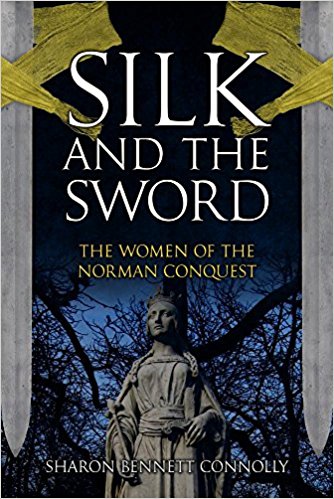
Silk and the Sword: the Women of the Norman Conquest

I have been working hard to finish my latest book, Silk and the Sword: The Women of the Norman Conquest, which went off to the publishers yesterday. I have thoroughly enjoyed delving into the lives of the women of the 11th century and looking at the events of 1066 through their eyes.

Here’s the synopsis:

Everyone knows about the events of 1066; the story of invasion and conquest.

But what of the women?

Harold II of England had been with Edith Swan-neck for twenty years but in 1066, in order to strengthen his hold on the throne, he married Ealdgyth, sister of two earls. William of Normandy’s duchess, Matilda of Flanders had, supposedly, only agreed to marry the Duke after he’d pulled her pigtails and thrown her in the mud. Harald Hardrada had two wives – apparently at the same time.
So, who were these women? What was their real story? And what happened to them after 1066?

From Emma of Normandy, wife of both King Cnut and Æ II to Saint Margaret, a descendant of Alfred the Great himself, ‘Silk and the Sword’ traces the fortunes of the women who had a significant role to play in the momentous events of 1066.


Silk and the Sword: The Women of the Norman Conquest is due for release in the UK on 15 November 2018 and is available for pre-order on Amazon UK, Amberley Publishing and Book Depository. I have no date for the US release, but will keep you posted.

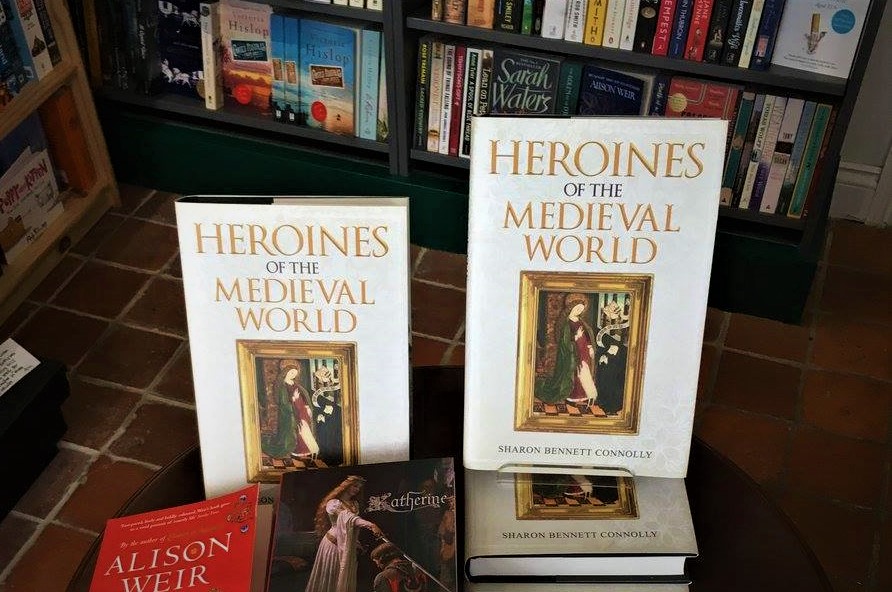
Heroines of the Medieval World

In other exciting news, Heroines of the Medieval World is released today in hardback the US and Canada, and is available from Amazon US.

These are the stories of women, famous, infamous and unknown, who shaped the course of medieval history.

Today, it is easy to think that all women from this era were downtrodden, retiring and obedient housewives, whose sole purpose was to give birth to children (preferably boys) and serve their husbands. Heroines of the Medieval World looks at the lives of the women who broke the mould: those who defied social norms and made their own future, consequently changing lives, society and even the course of history.

Some of the women are famous, such as Eleanor of Aquitaine, who was not only a duchess in her own right but also Queen Consort of France through her first marriage and Queen Consort of England through her second, in addition to being a crusader and a rebel.

Then there are the more obscure but no less remarkable figures such as Nicholaa de la Haye, who defended Lincoln Castle in the name of King John, and Maud de Braose, who spoke out against the same king’s excesses and whose death (or murder) was the inspiration for a clause in Magna Carta.

Women had to walk a fine line in the Middle Ages, but many learned to survive – even flourish – in this male-dominated world. Some led armies, while others made their influence felt in more subtle ways, but all made a contribution to their era and should be remembered for daring to defy and lead in a world that demanded they obey and follow.


Other News

I have recently confirmed two new projects that I will be working on over the next couple of years.

Ladies of the Magna Carta

Ladies of the Magna Carta will look at the wives and families of the barons who were involved in the creation and implementation of the 1215 Magna Carta, and will be published by Pen & Sword Books in 2020.

The De Warenne Earls of Surrey: From the Conquest to the Reign of Edward III

The De Warenne Earls of Surrey: From the Conquest to the Reign of Edward III is a biography of the De Warenne family, from the first Earl, William de Warenne, who fought for William the Conqueror at the Battle of Hastings, to the seventh and last earl, John de Warenne and his unfortunate wife, Joan of Bar.

Newark Book Festival

On Sunday 15 July, 2018, I will be appearing at the Newark Book Festival, Nottinghamshire, UK. I will be talking on a Historical Fiction panel with the wonderful Elizabeth Chadwick and hosted by Nick Quantrill.

It would be great to see you there.

Here’s the details::

Historical Fiction Panel
Elzabeth Chadwick & Sharon Bennett Connolly
Newark Town Hall
Sunday 15th July
3.15pm – 4.30pm
£5/£4 FESTIVAL FRIENDS
Festival Box Office: 01636 655755 palacenewark.com


*

My books

Heroines of the Medieval World,  is now available in hardback in the UK from both Amberley Publishing and Amazon UK. It is now available in Hardback from Amazon US  and worldwide from Book Depository.

Silk and the Sword: the Women of the Norman Conquest will be released in the UK on 15 November 2018 and is available for pre-order on Amazon UK, Amberley Publishing and Book Depository.

51PUe8rZWgL._SX332_BO1,204,203,200_


You can be the first to read new articles by clicking the ‘Follow’ button, liking our Facebook page or joining me on Twitter.

*

©2018 Sharon Bennett Connolly


Book Corner: Daughter of War by S.J.A. Turney

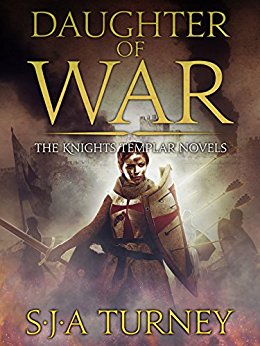
Today it is my pleasure to be a part of S.J.A. Turney’s Blog Blitz  with a review of his latest novel, Daughter of War.

An extraordinary story of the Knights Templar, seen from the bloody inside

Europe is aflame. On the Iberian Peninsula the wars of the Reconquista rage across Aragon and Castile. Once again, the Moors are gaining the upper hand. Christendom is divided.
Amidst the chaos comes a young knight: Arnau of Valbona. After his Lord is killed in an act of treachery, Arnau pledges to look after his daughter, whose life is now at risk. But in protecting her Arnau will face terrible challenges, and enter a world of Templars, steely knights and visceral combat he could never have imagined.
She in turn will find a new destiny with the Knights as a daughter of war… Can she survive? And can Arnau find his destiny?
An explosive novel of greed and lust, God and blood, Daughter of War marks the beginning of an epic new series from bestseller S.J.A. Turney. Perfect for fans of Bernard Cornwell, Conn Iggulden and Matthew Harffy.
I had been looking forward to reading Daughter of War by S.J.A. Turney ever since i heard about the book. And I was not disappointed. Daughter of War is like no other Templar story I have read. The story is set in Spain, rather than the Holy Land, during the Reconquista. And has none of the mysticism that many Templar novels revolve around.
Rather than making the book unreadable, however, this makes the story all-the-more fascinating. the author concentrates on the fighting, monastic and community elements of the Templar order and, as a result, has managed to create a story that is both unique and refreshing. This is a must-read for any fan of the real Knights Templar.
What did I love about this book? Everything. The story revolves around a small Templar preceptory in rural Spain, which has attracted the attention and ire of an unscrupulous and greedy Spanish noble. The preceptory is run by Ermengarda d’Oluja – a woman – but a formidable, commanding woman who has become one of my favourite characters. If ever I write a Heroines of the Medieval World 2, Ermengarda will be in there! And that’s the amazing thing, Ermengarda is a real historical character who did run a Templar preceptory – I didn’t even know they had women in the Templars.
 
But if you think that because there is a female Templar, that this book would be any less gritty or warlike than any other Templar story, you’d be mistaken. Ermengarda is a woman of steel and an incredible character. S.J.A. Turney, however, has made sure to keep her within the male-orientated realm in which she lived. She extends the limits of female convention if the twelfth century, but never quite breaks them.
The story also deals with the powerlessness of women in the medieval era and the fact that they did not have the right to decide their own fate when it came to marriage. That they could be forced to marry wherever their family and betters decided. And this is what causes the conflict in Daughter of War.
… There, in an antechamber of ancient stone, beneath an elegantly vaulted ceiling, stood Titborga Cervelló de Santa Coloma in her mourning dress of pure white. The sound of loud conversation emerged from the great hall beyond the thick, heavy wooden doors and, though the details of the discussion could not quite be made out, they sounded purposeful and combative.
Arnau dropped to a knee and bowed his head in respect.
‘My lady.’
‘Rise, Señor de Vallbona,’ she said in an odd, worried tone.
‘How may I be of service?’ he asked, climbing to his feet once more and adjusting his grey bliaut swiftly.
Something about the way the lady’s eyes scoured the dim surroundings put him on edge, and when she spoke, her voice was quiet and suspicious. ‘You are one of Santa Coloma’a most trusted men, Arnau de Vallbona.’
‘I have striven in my time to serve your father appropriately,’ he replied, brow creased more than ever.
‘My father spoke of you often, and well. I have seen you with him. He held you in esteem, perhaps more than one might expect for your somewhat minor rank.’
Arnau stifled the disappointment and irritation he felt at the rather blunt remark. Keeping his expression carefully neutral, he nodded. ‘Your father was a great man. I looked up to him. Even at the end, I -‘
‘I need your help. Your oath, Señor de Vallbona.’
Now Arnau felt alarm. These were careful words spoken in a dangerous tone. What was happening? …
Arnau and Titborga are wonderful characters, each joining the Templar order for their own reasons, and each looking for their own purpose in life. Each character – indeed, every character in the book – is unique, with their own hopes and dreams – and challenges. The book takes care not to stereotype the Templars into over zealous religious fanatics, but gives each their individual stories.
Care is taken to enthuse the book with historical accuracy, be it of the region in which the story is based, of the Templar order in general and of the preceptory in particular. The level of research that has gone into this book is astounding and impressive and has helped to create the world of 12th century Spain, torn between Christian and Muslim inhabitants.
As a story, the pace is incredible and barely gives the reader any time to stop and think as the Templars deal with the growing crisis. The attention to detail of S.J.A. Turney means that the fight scenes, in particular, are incredible scenes that draw the reader in, until they’re cowering behind their sofa to hide from the swinging swords and flying crossbow bolts. The author is a true wordsmith and recreates the medieval world and people with a skill level that is rarely achieved and maintained.
Daughter of War has an air of authenticity that is rarely achieved by an author, you can feel the heat of medieval Spain, the desperation of people in a fight they are not sure they can win, and the determination of those who know they are in the right. However, above all, Daughter of War is one thing; it is a fabulously entertaining story, and I cannot recommend it highly enough.
About the author:
S.J.A. Turney is an author of Roman and medieval historical fiction, gritty historical fantasy and rollicking Roman children’s books. He lives with his family and extended menagerie of pets in rural North Yorkshire.
To buy Daughter of War by S.J.A. Turney:

Amazon (UK); Kobo (UK);  Google Books (UK); Apple Books (UK)

Author Social Media Links

Twitter: @SJATurney

*

My book

Heroines of the Medieval World,  is now available in hardback in the UK from both Amberley Publishing and Amazon UK and worldwide from Book Depository. It is also available on Kindle in both the UK and USA and will be available in Hardback from Amazon US from 1 May 2018.

You can be the first to read new articles by clicking the ‘Follow’ button, liking our Facebook page or joining me on Twitter.

*

©2018 Sharon Bennett Connolly

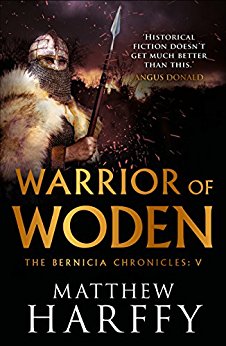
Book Corner: Warrior of Woden by Matthew Harffy

AD 642. Anglo-Saxon Britain. A gripping, action-packed historical thriller and the fifth instalment in the Bernicia Chronicles. Perfect for fans of Bernard Cornwell.

Oswald has reigned over Northumbria for eight years and Beobrand has led the king to ever greater victories. Rewarded for his fealty and prowess in battle, Beobrand is now a wealthy warlord, with a sizable warband. Tales of Beobrand’s fearsome black-shielded warriors and the great treasure he has amassed are told throughout the halls of the land.

Many are the kings who bow to Oswald. And yet there are those who look upon his realm with a covetous eye. And there is one ruler who will never kneel before him.

When Penda of Mercia, the great killer of kings, invades Northumbria, Beobrand is once more called upon to stand in an epic battle where the blood of many will be shed in defence of the kingdom.

But in this climactic clash between the pagan Penda and the Christian Oswald there is much more at stake than sovereignty. This is a battle for the very souls of the people of Albion.

I have had the good fortune of reading each book in Matthew Harffy’s series as soon as it has been released (and often before) and have been amazed and  impressed with each one. And Warrior of Woden is no exception. This has to be Matthew Harffy’s best book yet!

The Bernicia Chronicles are set in seventh century Northumbria and follow the exploits of Beobrand, a warlord from Kent who has made his home in Northumbria. In the series so far, we have watched him grow from a young fighter to one of the most feared warriors in Britain. He is loyal to his family, his followers and his king, he has loved, lost, fought and killed. Beobrand as a character is all-too human, however, every loss affects him and helps him develop not only as a leader in his world, but as a character in the book.

Beobrand slapped the shoulder of the stocky man to his right.

“Acennan, take command of the men.” Acennan did not speak, but nodded his understanding.

“Cynan, with me,” Beobrand said, his tone a sharp bark of command.

Trusting that the younger warrior would obey, Beobrand left his position in the Northumbrian shieldwall and rushed along the lines, elbowing and pushing men aside with his bulk.

“See that cross is held aloft,” Beobrand hissed. “Whatever happens, do not let that rood fall. And Cynan,” he gripped Cynan’s shoulder tightly, halting his onward rush, “the king has not fallen. Do you hear me?”

Cynan stared wide-eyed at him for a moment before nodding. Beobrand left the Waelisc warrior to his task and pushed forward towards the king. His stomach roiled but he took some comfort when, from the corner of his eye, he noted that the carved wood cross rose once more into the sky, casting its long shadow over the icy ground and the fyrd-men gathered there. He knew he could rely on Cynan. The erstwhile thrall had proven his worth many times over since he had joined Beobrand’s warband three years before.

The shieldwall was closing ranks, regaining some order at the bellowed commands of Derian, Oswald’s battle-leader. Beobrand thanked the gods for the man. The bearded thegn knew his work. There was no warrior more doughty; none more steadfast. The shieldwall would not be allowed to break while Derian yet breathed.

Two men were half-dragging Oswald back from the front of the line.

“I must stand,” Oswald protested, his voice muffled by the ornate faceplate of his grimhelm. “I will not retreat from this rabble. In God’s name, I must fight. Unhand me! I command it.”

The warriors, who had been pulling the king backward, paused, unsure of themselves. They relaxed their grip on Oswald. His legs buckled and he almost fell to the cold earth. Beobrand leapt forward and caught him. Around them, men shuffled back to make room for their king.


After years of warfare, Beobrand has seen almost everything, but the world still has a few surprises for him and in Warrior of Woden, he sees some of the worst humanity can do. Matthew Harffy does a remarkable job of seamlessly fitting Beobrand into the timeline of actual events, whilst giving him a story that is entirely his own, so that the reader cannot discern where history ends and fiction begins. Each character has their own distinguished style, in language, fighting and his relationship with Beobrand. Beobrand’s enemies are as individual as his friends; each relationship is well thought through and unique. You find yourself thinking ‘I knew Beobrand would react like that’.

As the chief protagonist, Beobrand is a hero we can all relate too. He is a strong, confident leader in battle, trusted by his men to not throw their lives away needlessly. He leads his men to victory but worries that he it’s not a good father and knows he could be a better boyfriend. Some things have never changed down the centuries! He has his foibles, which is want makes him believable and likeable as a hero.

Warrior of Woden is that it immerses the reader in the era. The language the author uses invokes the time period without being archaic, leaving the reader with a deep sense that they have been transported to the seventh century. You can almost hear the clash of swords, shields and axes, smell that tang of blood in your nose. The fighting is vicious and brutal, but the relationships between Beobrand and his men, and Beobrand and his family, create a dual story of men at war and men at home.

This book has that ‘je ne sais quoi’ which makes it impossible to put down. From the first page, the action is non-stop, the intrigue and action keep you hooked to the very end. To put it simply, The Bernicia Chronicles get better and better with every instalment – and I am desperate to read the next.

*

About the author: Matthew Harffy grew up in Northumberland where the rugged terrain, ruined castles and rocky coastline had a huge impact on him He now lives in Wiltshire, England, with his wife and their two daughters.

Books in the series: Serpent Sword; The Cross and The Curse; Blood and Blade; Killer of Kings and the short story, Kin of Cain.

Warrior of Woden, Book 5 in the Bernicia Chronicles, is  available from 1st April 2018, on Amazon.

*

My Book:

Heroines of the Medieval World,  is now available in hardback in the UK from both Amberley Publishing and Amazon UK. It is also available on Kindle in both the UK and USA and will be available in Hardback from Amazon US from 1 May 2018. It can also be ordered worldwide from Book Depository.

You can be the first to read new articles by clicking the ‘Follow’ button, liking our Facebook page or joining me on Twitter.

*

©2018 Sharon Bennett Connolly

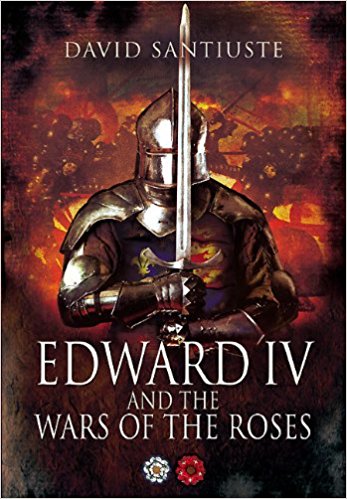
Book Corner: Edward IV by David Santiuste

Indisputably the most effective general of the Wars of the Roses, Edward IV died in his bed, undefeated in battle. Yet Edward has not achieved the martial reputation of other warrior kings such as Henry V – perhaps because he fought battles against his own people in a civil war. It has also been suggested that he lacked the personal discipline expected of a truly great commander. But, as David Santiuste shows in this perceptive and highly readable new study, Edward was a formidable military leader whose strengths and subtlety have not been fully recognized. This reassessment of Edward’s military role, and of the Wars of the Roses in which he played such a vital part, gives a fascinating insight into Edward the man and into the politics and the fighting. Based on contemporary sources and the latest scholarly research, Edward IV and the Wars of the Roses brings to life an extraordinary period of English history.

I was very happy to be asked to review Edward IV and the Wars of the Roses by historian David Santiuste. I had dipped in and out of it for my research of various characters of the period, but never had the time to sit down and read it from cover to cover. To read it with a view to review was a prime opportunity. Now, I don’t review books that I didn’t enjoy, so I do only give positive reviews.. However, if a book gets reviewed by me, it means it’s good. And Edward IV and the Wars of the Roses was brilliant. It is a fabulous, in-depth analysis of one of England’s most underrated kings.

Dealing predominantly with the first  part of Edward’s life and reign the book concentrates on his political and military skills. It analyses his personal qualities and skills as a leader and politician, while also looking at the bigger stage of the conflict that became known as the Wars of the Roses. This is not an ‘I love Edward IV’ book, but rather a balanced portrayal of the strengths and weaknesses of the charismatic king, and of the people around him.

… Perhaps surviving portraits do not do Edward justice, although observers were often impressed by his physique as much as his face. When Edward’s coffin was opened in the eighteenth century his skeleton was measured at 6 feet 3½ inches and it was broadly proportioned. Edward had a tremendous presence, of which he was keenly aware. Even later in life, when his looks had faded and he had put on weight, the Italian observer Mancini reports that Edward ‘was wont to show himself to those who wished to watch him, and seized any opportunity occasion offered of revealing his fine stature more protractedly and more evidently to onlookers.’ In 1459 Edward was still untested, but his potential was clear: Yorkist verses from the following year were to describe him as ‘Edward, Earl of March, whose fame the earth shall spread’.

Where this book shines is in the author’s portrayal of the relationship between Edward IV and Richard, Earl of Warwick. David Santiuste makes it clear that the relationship was complex and far from dominated by Warwick. He shows how Edward was able to be his own man and explains clearly how the relationship broke down, with blame on both sides, and how this relationship affected both Edward and his kingship.

Making good use of primary sources and his own vast knowledge of the era, David Santiuste presents his arguments in a clear, concise manner, stating his own opinion and discussing where facts and historians differ in a respectful, engaging style. He handles the significant moments of Edward IV’s career with great empathy and understanding, demonstrating how the king’s life, future and country were changed by his ability to make the most of events – and heavenly phenomena – thrown at him.

The Illustrated Life of Edward IV presents Edward, at the moment the parhelia appear, appealing to God for guidance, just like Paul at Damascus: ‘Lord, what will you have me do?’ Coppini had described Edward as ‘prudent and magnanimous’, but we should remember that Edward was still eighteen years old, The loss of his father and brother must have shaken him to the core. For Edward, then, this was a moment of great personal significance…..

David Santiuste displays an impressive level of understanding of fifteenth century warfare and generalship, and of the political atmosphere of the time. Every page of the book demonstrates the author’s enthusiasm for his subject and for history in general. Easily readable, enjoyable and engaging, the author avoids technical speak and draws the reader in.

This is a must-read for any fan of the Wars of the Roses, or any student of kingship and medieval history. Enjoyable and engaging, it takes the reader to the heart of the civil war which raged across England in the second half of the fifteenth century.


About the author:

David Santiuste teaches history at the Centre for Open Learning, University of Edinburgh. His most recent book is The Hammer of the Scots. His other publications include Edward IV and the Wars of the Roses, as well as various articles.

David’s website can be found at davidsantiuste.com, where he writes an occasional blog. You can follow him on Facebook at David Santiuste Historian or on Twitter @dbsantiuste.

Edward IV and the Wars of the Roses is available from Amazon.

*

My Book:

Heroines of the Medieval World,  is now available in hardback in the UK from both Amberley Publishing and Amazon UK. It is also available on Kindle in both the UK and USA and will be available in Hardback from Amazon US from 1 May 2018. It can also be ordered worldwide from Book Depository.

You can be the first to read new articles by clicking the ‘Follow’ button, liking our Facebook page or joining me on Twitter.

*

©2018 Sharon Bennett Connolly

Mother’s Day Treat

Sunday 11th March 2018 is Mother’s Day in the UK this year

Mum is everyone’s favourite Heroine, in whatever era, and I could not think of a better way to celebrate Mother’s Day than with a giveaway of a hardback copy of Heroines of the Medieval World.

About Heroines of the Medieval World

Heroines come in many different forms, and it is no less true for medieval heroines. They can be found in all areas of medieval life; from the dutiful wife and daughter to religious devotees, warriors and rulers. What makes them different compared to those of today are the limitations placed on them by those who directed their lives – their fathers, husbands, priests and kings. Women have always been an integral part of history, although when reading through the chronicles of the medieval world, you would be forgiven if you did not know it. We find that the vast majority of written references are focussed on men. The chronicles were written by men and, more often than not, written for men. It was men who ruled countries, fought wars, made laws and treaties, dominated religion and guaranteed – or tried to guarantee – the continued survival of their world. It was usually the men, but not all of them, who could read, who were trained to rule and who were expected to fight, to defend their people and their country…


If you would like to win a signed copy of Heroines of the Medieval World to give to your mum on Mother’s Day, or someone else’s mum – or even as a gift to yourself, simply leave a comment below or on my Facebook page and I will include you in the prize draw.

The draw will be made on Wednesday 7th March, so you should get the book in time for the day.

*

The winner is ….. Janet Carter.

The draw is now closed and I would like to thank everyone for taking part.

*

Heroines of the Medieval World,  is now available in hardback in the UK from both Amberley Publishing and Amazon UK and worldwide from Book Depository. It is also available on Kindle in both the UK and USA and will be available in Hardback from Amazon US from 1 May 2018.

You can be the first to read new articles by clicking the ‘Follow’ button, liking our Facebook page or joining me on Twitter.

*

©2018 Sharon Bennett Connolly

Guest Post: George, Duke of Clarence and the infamous ‘butt of Malmsey wine’ by Toni Mount

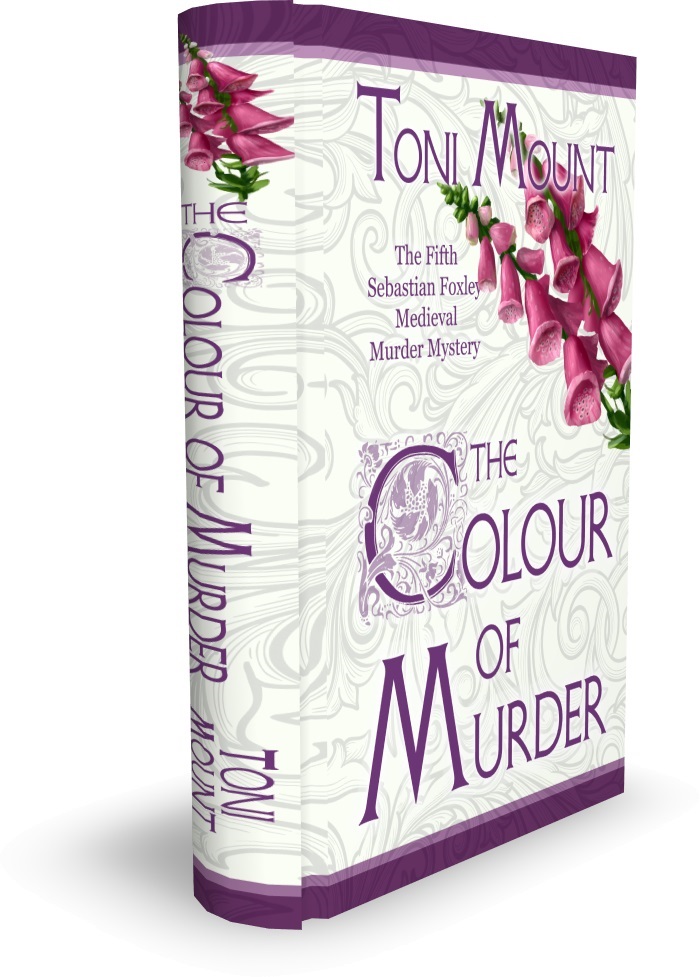
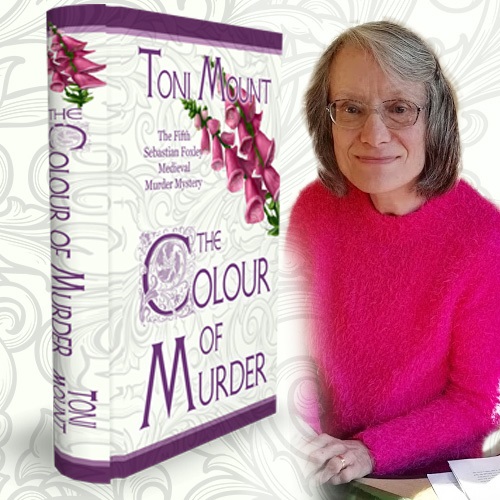
It is a pleasure to welcome Toni Mount to the blog, for Day 5 of her Blog Tour for the launch of The Colour of Murder this month.

The Colour of Murder is the latest whodunit in the popular ‘Sebastian Foxley’ series of medieval murder mysteries by author and historian Toni Mount.

George, Duke of Clarence and the infamous ‘butt of Malmsey wine’.

540 years ago, on the 18th February 1478 the Duke of Clarence was, famously, drowned in a butt of malmsey wine. Did he jump or was he pushed? The question has never been answered, so this was an opportunity for the intrepid investigator Seb Foxley – to finally solve the mystery.

On this day, 18th February 1478, news was leaked that the brother of King Edward IV, George, Duke of Clarence, had somehow managed to drown in a butt of malmsey wine. Did he fall or was he pushed? A contemporary chronicler, who otherwise seems very well informed, could only write: ‘… a few days after the execution, whatever its nature may have been, took place … in the Tower of London…’

From the Croyland Chronicle, c. 1486, pp.479-80:

George of Clarence had never been very reliable nor faithful to King Edward, his elder brother. When his beloved wife, Isabella Neville, died soon after giving birth, probably of childbed fever, George was convinced that a lady-in-waiting, Ankarette Twynyho, had poisoned her. He tried Ankarette in a rigged court and arranged her execution. King Edward decided George had gone too far this time, taking the law into his own hands. Then George became involved in a further plot to dethrone Edward. Matters deteriorated when he accused the Edward’s queen, Elizabeth Woodville, of witchcraft, saying she was behind the death of his wife. Finally, the king lost patience and George was imprisoned in the Tower of London in the summer of 1477.

Brought to trial before Parliament, only the king gave evidence against George, listing all his earlier mercies to him, how he had pardoned him for previous acts of treachery and showered titles and riches on him, only to receive ingratitude and further treachery in return. Meanwhile George had spread rumours that the king was a bastard with no right to wear the crown, practising necromancy and poisoning those who displeased him.

Parliament sat in embarrassed silence as the king and his brother accused each other, shouting and arguing in a most unseemly and vulgar display. But the eventual outcome was never going to be in doubt: Parliament found in the king’s favour, George was guilty of high treason and sentenced to death. He was returned to the Tower of London while the king wrestled with his conscience over signing his brother’s death warrant until the Speaker of the House intervened, demanding that sentence be carried out. George, Duke of Clarence, was executed privately in the Tower of London, spared the ignominy of a public beheading.

However, an execution behind closed doors soon caused rumours to spread that Clarence had been drowned in a butt of malmsey wine. A butt is a large barrel and an imperial measure of one hundred gallons – more than enough to drown in, but the story is almost certainly a later invention. Perhaps George was partial to the sweet white wine, so the tale was an ironic joke. It has been suggested, perhaps not seriously, that George was allowed to choose his manner of death, or even that a ‘well-wisher’, wanting to spare the king the grief of committing fratricide, sent Clarence a gift of wine, laced with poison. We will probably never know the truth.

About  the author

Toni Mount is a popular writer and historian; she is the author of Everyday Life in Medieval London and A Year in the Life of Medieval England (pub Amberley Publishing) and several of the online courses for http://www.medievalCourses.com

Her successful ‘Sebastian Foxley’ series of medieval whodunits is published by MadeGlobal.com and the latest book in this series The Colour of Murder is now available as a paperback or on Kindle. http://getbook.at/colour_of_murder

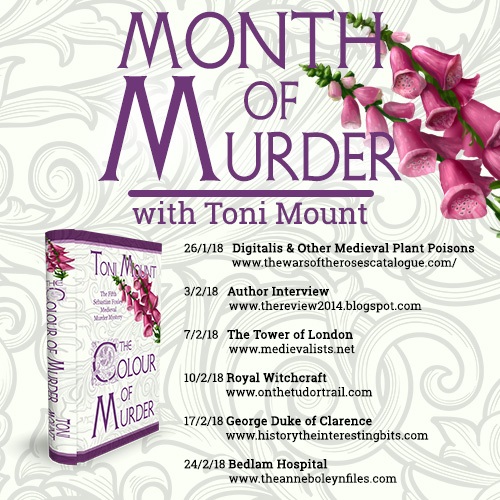
If you would like to follow the rest of Toni’s blog tour, just click on the links below:

26/1/18 – Digitalis & Other Plant Poisons in Medieval Times – www.thewarsoftherosescatalogue.com/  c/o Debra Bayani

3/2/18 Author Interview – The Review – www.thereview2014.blogspot.com c/o Diana Milne

10/2/18 Royal Witchcraft – www.onthetudortrail.com c/o Natalie Grueninger –

17/2/18 George Duke of Clarence – www.historytheinterestingbits.com  c/o Sharon Bennett Connolly

24/2/18 Bedlam Hospital www.theanneboleynfiles.com c/o Claire Ridgeway

*

My Book:

Heroines of the Medieval World,  is now available in hardback in the UK from both Amberley Publishing and Amazon UK and worldwide from Book Depository. It is also available on Kindle in both the UK and USA and will be available in Hardback from Amazon US from 1 May 2018.

You can be the first to read new articles by clicking the ‘Follow’ button, liking our Facebook page or joining me on Twitter.

*

©2018 Sharon Bennett Connolly

Book Corner: The Cold Light of Dawn by Anna Belfrage

Giveaway!

Today I have a special treat for readers. Not only is there a review of a fantastic novel, but there is – for the fist time, ever, on the blog – a giveaway as well! Anna Belfrage has kindly offered an ebook of this fabulous, not-to-be-missed novel to accompany my review.

After Henry of Lancaster’s rebellion has been crushed early in 1329, a restless peace settles over England. However, the young Edward III is no longer content with being his regents’ puppet, no matter that neither Queen Isabella nor Roger Mortimer show any inclination to give up their power. Caught in between is Adam de Guirande, torn between his loyalty to the young king and that to his former lord, Roger Mortimer.

Edward III is growing up fast. No longer a boy to be manipulated, he resents the power of his mother, Queen Isabella, and Mortimer. His regents show little inclination of handing over their power to him, the rightful king, and Edward suspects they never will unless he forces their hand.

Adam de Guirande is first and foremost Edward’s man, and he too is of the opinion that the young king is capable of ruling on his own. But for Adam siding with his king causes heartache, as he still loves Roger Mortimer, the man who shaped him into who he is.

Inevitably, Edward and his regents march towards a final confrontation. And there is nothing Adam can do but pray and hope that somehow things will work out. Unfortunately, prayers don’t always help.

The Cold Light of Dawn  by Anna Belfrage is the 4th book in ‘The King’s Greatest Enemy series, spanning the final years of the reign of Edward II and the early years of the reign of Edward III. The story of Kit and Adam de Guirande started with Adam serving Roger Mortimer in In the Shadow of the Storm and has followed the young couple through thick and thin in Days of Sun and Glory and danger and adventure, and the fall of a king in Under the Approaching Dark. The series has been stunning from the very beginning, combining suspense, adventure, political intrigue and an old-fashioned love story to draw the reader into the heart of the 14th century.

It will be hard to justice to this fantastic novel in a review. The book not only tells you a story, but awakens your feelings and takes you on an emotional journey as well as a literary one. I enjoy reading – I always have – but I rarely come across a book, or series of books, that bring out all the emotions and will have me laughing and smiling in places, heart in my mouth in other places and leave me with tears streaming down my face at times. The action and excitement are constant, the dangers ever-present.

“What’s she doing here?” she whispered.

Beside her Meg gasped in admiration, eyes riveted to the figure clad in green and blue, the hood of her mantle thrown back to reveal a veil in the sheerest of linen.

“I am sure we will find out.” William set a hand to her back, sufficient support for Kit to stiffen her spine.

“Sister,” Kit offered reluctantly when the neat little mare came to a halt in front of her. Alicia Luytens and she shared a father, but where Alicia had been born in wedlock, Kit was the child of an illicit union, the damage further compounded – at least in Alicia’s eyes – by the fact that Kit’s mother was a salter’s daughter.

Alicia did not reply, narrow face set in an unreadable expression as she gazed at her surroundings. “My father was born here,” she said to her male companion as she dismounted. “Imagine that! Such humble beginnings.” She landed lightly on her feet, made as if to enter the manor house, but Kit blocked her way.

“I do not recall  inviting you,” Kit said

So what is it about Anna Belfrage’s writing that makes her stories so special? I wish I knew! I wish I could bottle it! She is the consummate story teller. She breathes life into her characters, brings the past right to you, and takes you back in time so the 21st century is a distant memory.  In The Cold Light of Dawn the author draws on her vast knowledge of the 14th century in order to transport the reader to the early reign of Edward III.

It is her knowledge and understanding of her characters, both historical and invented, that bring the era to vivid life. Edward III is the teenage king, trying to break the shackles of his mother and her lover, Isabella and Roger Mortimer. Edward and his young wife, Philippa, are depicted as both teenagers and royals – young people, at times, with a power they are unsure how to wield, while at other times chafing under the control of their elders. And they control the lives of Adam and Kit. Adam is the captain of Edward’s guard, while Kit is one of Philippa’s ladies. Both benefit and suffer from the pleasures  of the master and mistress.

Roger Mortimer is a wonderful character; I had never felt sorry for him and the road his life took him, until reading this series. Roger is a larger-than-life character, much as he must have been at the time, knowing the dangers he risks, but acting with a certainty that he is doing his duty, however misguided some of his actions appear to be. And even the minor characters are well researched, including one of my own Heroines, Alice de Lacey, who is sympathetically portrayed, despite the fact she has little more than a walk-on part.

The Cold Light of Dawn takes the story of Adam and Kit through personal challenges and national intrigues, their duties placing them at the heart of matters they don’t always want to have anything to do with, dividing their loyalties and endangering their lives. A fast-paced and thoroughly engrossing read, this is a book that is impossible to put down, continuing a series that has got stronger with every new story.

Giveaway!

If you would like to be in with a chance of winning an ebook copy of The Cold Light of Dawn, simply leave a comment below, or on the post on my Facebook page. The winner will be drawn on Friday 23rd February. Good Luck!

About the Author

Had Anna been allowed to choose, she’d have become a time-traveller. As this was impossible, she became a financial professional with two absorbing interests: history and writing. Anna has authored the acclaimed time-slip series The Graham Saga, winner of multiple awards, including the HNS Indie Award 2015. Her ongoing series is set in the 1320s and features Adam de Guirande, his wife Kit, and their adventures during Roger Mortimer’s rise to power.

If you would like to find out more about Anna and her books, visit her blog.

The Cold Light of Dawn is available from today in paperback or ebook from Amazon in the UK and US.

*

My Book:

Heroines of the Medieval World,  is now available in hardback in the UK from both Amberley Publishing and Amazon UK. It is also available on Kindle in both the UK and USA and will be available in Hardback from Amazon US from 1 May 2018. It can also be ordered worldwide from Book Depository.

You can be the first to read new articles by clicking the ‘Follow’ button, liking our Facebook page or joining me on Twitter.

*

©2018 Sharon Bennett Connolly

Book Corner: Edward II the Man, A Doomed Inheritance by Stephen Spinks

Edward II is one of the most controversial kings of English history. On numerous occasions he brought England to the brink of civil war.

Author Stephen Spinks argues that Edward and the later murdered Piers Gaveston were lovers, not merely ‘brothers-in-arms’. Influenced by successive royal favourites and with a desire for personal vengeance, his rule became highly polarised and unstable. His own wife took a lover and invaded his kingdom resulting in his forced abdication; the first in British history. Edward’s prevailing legacy remains the warning that all kings can fall from power.

And yet … war, debt and baronial oppression before 1307 ensured that Edward II inherited a toxic legacy that any successor would have found almost impossible to wrestle with. Stephen Spinks explores that legacy using contemporary and later sources. By focusing on Edward’s early years as much as on his reign, and exploring the conflicting influences of those around him, Stephen shows the human side of this tale against a backdrop of political intrigues and betrayals. He peels back the layers to reveal the man who wore the crown. Edward’s belief in his unchallengable right to rule, increasingly at odds with those at his court, and his undeniable thirst for revenge, creates a fourteenth-century tragedy on a grand scale.

I have to say, I had been looking forward to the release of Edward II the Man: A Doomed Inheritance by Stephen Spinks for sometime. It sounded like such an interesting premise for a book, looking at the human side of one of England’s most ineffective kings. And I wasn’t disappointed. This book is a wonderful read, enjoyable from beginning to end.

Meticulously researched and eloquently argued, this book presents Edward II as a man, a king, a friend and a lover. Stephen Spinks uses all the sources available to examine every aspect of Edward’s life – the public and the private – giving us a deep insight into the character of the man and the king. Stephen Spinks presents Edward in all his facets, as a king, father, friend and enemy. He examines those who surround Edward at different stages in his life, discussing how they variously influence or infuriate him.

Entertaining anecdotes help to decipher the character of a king who often made the wrong choice when faced with a decision.

While Edward was working with those around him to seek a political compromise, he heard in late June that the son of a tanner, John Powderham, had arrived in Oxford declaring himself to be the one true king of England. He alleged that he and Edward had been switched at birth. Two days later the arrested Powderham found himself in the presence of the king, who with his characteristic humour, greeted the imposter as ‘brother’. When Edward asked him if such claims were true, not remotely intimidated by his royal audience, simply repeated his claim. What happened next says something about Edward’s character. Whereas most kings would have been apoplectic with rage, the king, still in a playful mood, laughed and suggested John be given a ‘bauble’ and allowed to go around the country as a fool…. Isabella was angry over the whole affair; she rightly saw such claims as a dangerous affront to Edward’s dignity. Powderham was hanged on 23 July…


Written in chronological order, Edward II the Man: A Doomed Inheritance discusses the influences that shaped Edward’s character and kingship, highlighting his personal bravery, political judgements and misjudgments, and the way he was influenced by personal favourites, including Piers Gaveston and Hugh Despenser the Younger. Analysing all the major events of Edward’s reign, such as Bannockburn, the death of Gaveston and Isabella’s betrayal, Stephen Spinks manages to bring to life this complex enigma of a medieval king.

As you would expect with any biography of Edward II, the king’s mysterious death is covered in detail, presenting the facts and offering credible theories. The author also makes an eloquent, persuasive, argument for the survival of Edward II after 1327, building a believable timetable of events from the sources available. Although I am still not totally convinced….

Edward II the Man: A Doomed Inheritance is a colourful, full-of-life biography of the controversial king. It is a fabulous book if you want to learn about Edward II, or examine deeper the events and influences on his life. Enjoyable, entertaining and informative, it is a pleasure to read and easy to devour.


About the Author

Stephen Spinks wrote his dissertation on Edward II while studying at King’s College, London. He works for the National Trust and manages three Medieval heritage sites with 900 volunteers and 150 staff. He is a columnist for ‘Midlands Zone’ magazine, in which he writes a very well received exploration of life as a gay man today, partly political, partly personal. He has given many interviews on radio and in his capacity at the National Trust, to ‘BBC’s Escape to the Country’ and the ‘Antiques Road Show’. He has been studying the primary sources (and locations) for this book over the past 15 years.

Edward II the Man: A Doomed Inheritance is available from Amazon and Amberley Publishing.

*

My Book:

Heroines of the Medieval World,  is now available in hardback in the UK from both Amberley Publishing and Amazon UK. It is also available on Kindle in both the UK and USA and will be available in Hardback from Amazon US from 1 May 2018. It can also be ordered worldwide from Book Depository.

You can be the first to read new articles by clicking the ‘Follow’ button, liking our Facebook page or joining me on Twitter.

*

©2018 Sharon Bennett Connolly