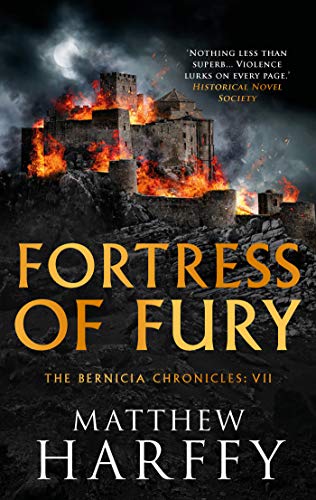
Book Corner: Fortress of Fury by Matthew Harffy

Beobrand is besieged in the action-packed instalment in the Bernicia Chronicles set in AD 647 Anglo-Saxon Britain.

War hangs heavy in the hot summer air as Penda of Mercia and his allies march into the north. Caught unawares, the Bernician forces are besieged within the great fortress of Bebbanburg.

It falls to Beobrand to mount the defence of the stronghold, but even while the battle rages, old and powerful enemies have mobilised against him, seeking vengeance for past events.

As the Mercian forces tighten their grip and unknown killers close in, Beobrand finds himself in a struggle with conflicting oaths and the dreadful pull of a forbidden love that threatens to destroy everything he holds dear.

With the future of Northumbria in jeopardy, will Beobrand be able to withstand the powers that beset him and find a path to victory against all the odds?

In recent years, the Matthew Harffy new book release has become one of the highlights of my year, and 2020 is no exception. Fortress of Fury is the 7th book in his wonderful series, The Bernicia Chronicles. And it is probably the best so far! Beobrand has returned home after his recent journey to France in Storm of Steel, and now must defend the kingdom of Bernicia (now known as Northumbria) – and Bebbanburgh itself – from Welsh and Mercian invaders.

Fast paced, full of suspense and action, it is a non-stop rollercoaster ride of action and emotion for the reader. Matthew Harffy expertly combines the story with the known history and recreates 7th century Northumbria perfectly, giving the reader vivid descriptions of the landscape, the harsh reality of life in a kingdom suffering from invasion and fight scenes to die for – literally!

The fears of the characters are palpable.

Matthew Harffy’s storytelling abilities are second-to-none, he pulls you into the story from the very first, action-packed pages, and keeps you constantly gripped to the very last. And he always leaves you wanting more. Fortress of Fury is no exception! Waiting for book no. 8 is going to really test my patience!

They chased the raiders westward as the sun slid down through a crimson sky towards the desolate hills and moors of western Bernicia. Far beyond the horizon, before the land dipped into the sea that separated Albion from Hibernnia, Beobrand knew there rose great snowcapped mountains. But that land was days’s ride away and they would run their quarry to ground long before they saw the craggy bluffs and peaks of Rheged. He glanced over his shoulder at the score of warriors that rode hard behind him. Given their pace and the freshness of their steeds, they might well catch the men they pursued before sunset. He hoped so. He did not wish to lose them in the night. They had burnt a steading, killing folk whom Beobrand had sword to defend. And they had injured one of Beobrand’s gesithas. These Mercians must pay.

Beobrand squinted into the lowering sun. He could make out no details in the glare. A prickle of unease scratched the nape of his neck. Could they be riding into an ambush? With a twitch of the reins, he slowed his black stallion, Sceadugenga, almost imperceptibly. Beside him, Cynan shot him a glance and guided his mount closer.

“What is it?” asked the Waelisc warrior. He rode his bay mare effortlessly, and as always, when Beobrand watched the man ride, he marvelled at how one who had been so unsuited to horseback at first had gone on to become the nest horseman of his warband, and arguably in the kingdom.

Beobrand was no great rider, but he had the finest of horses. Sceadugenga was no longer young, but the horse was still hale and strong and there was a deep understanding between horse and rider. Beobrand knew it was foolish to care for a beast, but the bond he shared with Sceadugenga was unlike anything he had felt with other animals. The stallion and he had been through much together and it often seemed to him that the animal knew what he was going to command before he even knew himself.

“Something is not right,” Beobrand said, raising his voice over the thunder of the horses’ hooves on the summer-dry ground.

“You think it a trap?” said Cynan

There is not just one aspect of this book you can look at and point to and say ‘that’s what makes this a good book’; it is the combination of history, atmosphere, action, characters and storytelling that makes Fortress of Fury the perfect novel. Matthew Harffy uses the background of real events behind the invasion of Bernicia, and weaves it seamlessly into the lives of his characters. Beobrand, now the most feared and renowned warrior in Bernicia, is tasked with defending the great fortress of Bebbanburgh.

Fortress of Fury feels like it is a seminal book in the series, a turning point for Beobrand, as he matures into a great leader of men, whose own men are now becoming leaders. The decision he takes in this book will decide his future. I have yet to see if I’m right – I will have to wait for book no. 8 – but this feels like a momentous book for its hero. The events of Fortress of Fury will have a major influence on where Beobrand goes next – I can feel it!

I still haven’t worked out if ‘unputdownable’ is a word, but it is the best way to describe Fortress of Fury. I lost two afternoons of work because I couldn’t leave the book at crucial moments in the story, then stayed up til midnight, just so I could finish the last 50 pages.

I have long thought that the books of the Bernicia Chronicles are addictive and Fortress of Fury is no exception.

Simply put, Fortress of Fury by Matthew Harffy is a fabulous feat of storytelling.

It is available from 6 August. Buy link: Amazon UK

About the author:
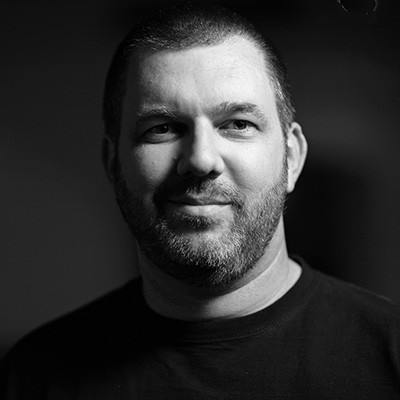
Matthew grew up in Northumberland where the rugged terrain, ruined castles and rocky coastline had a huge impact on him. He now lives in Wiltshire, England, with his wife and their two daughters.

 Follow Matthew Harffy:    

Twitter: @MatthewHarffy, Facebook: @MatthewHarffyAuthor, Website: http://www.matthewharffy.com/

Buy link: Amazon UK

My Books

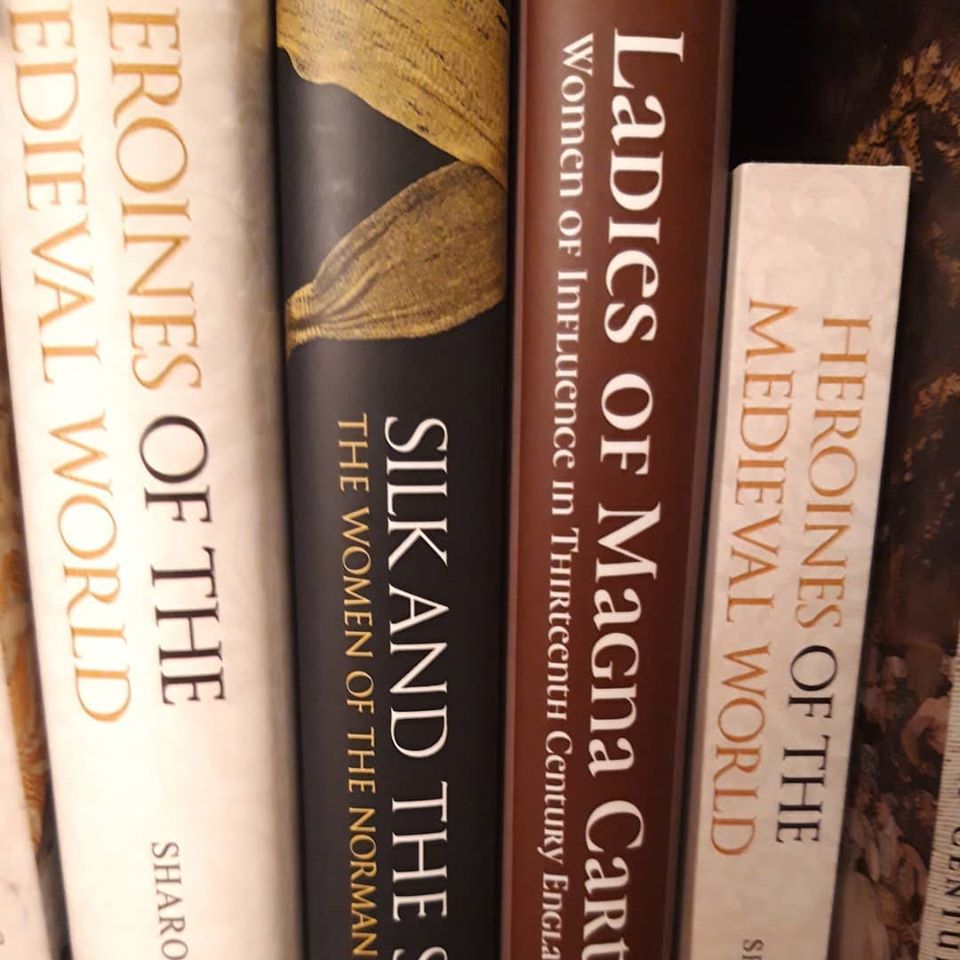
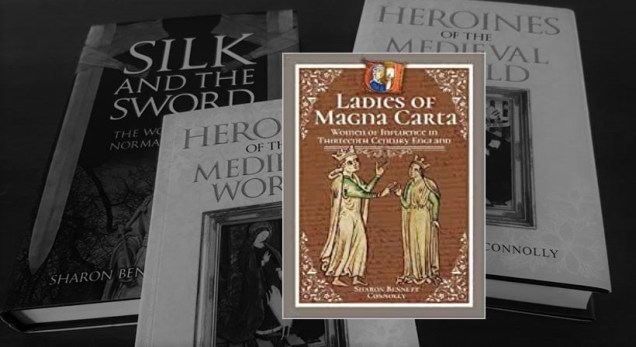
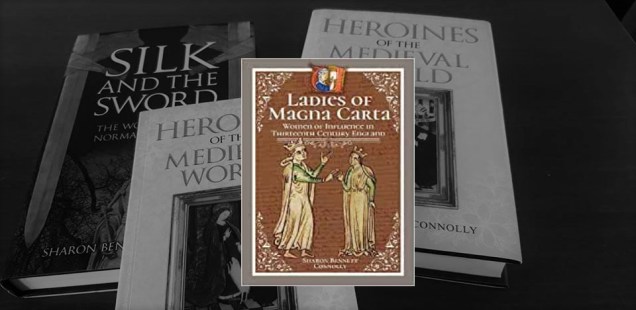
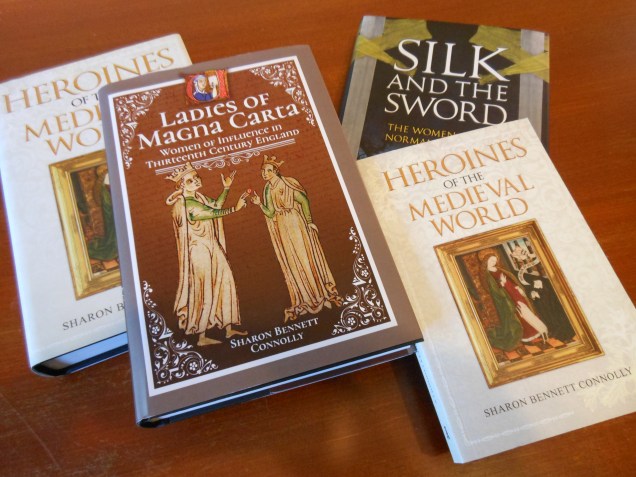
Ladies of Magna Carta: Women of Influence in Thirteenth Century England  looks into the relationships of the various noble families of the 13th century, and how they were affected by the Barons’ Wars, Magna Carta and its aftermath; the bonds that were formed and those that were broken. It is now available from Pen & SwordAmazon and from Book Depository worldwide.
Also by Sharon Bennett Connolly:

Silk and the Sword: The Women of the Norman Conquest traces the fortunes of the women who had a significant role to play in the momentous events of 1066.  Available now from Amazon,  Amberley Publishing, Book Depository.

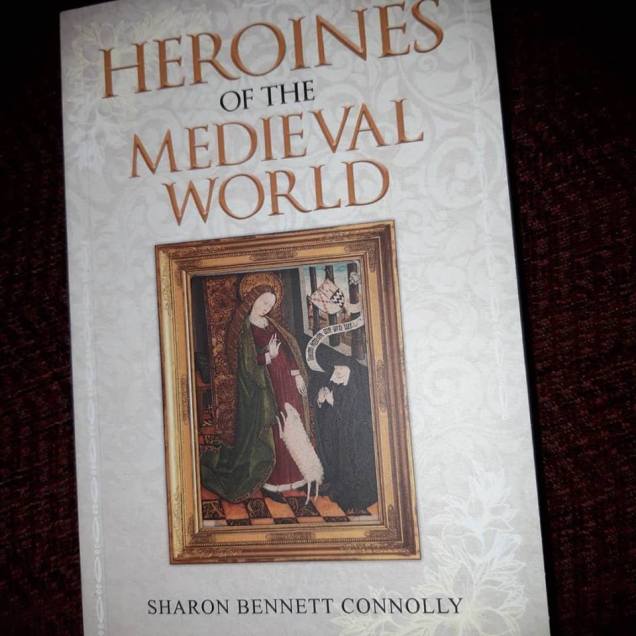
Heroines of the Medieval World tells the stories of some of the most remarkable women from Medieval history, from Eleanor of Aquitaine to Julian of Norwich. Available now from Amberley Publishing and Amazon and Book Depository.

*

You can be the first to read new articles by clicking the ‘Follow’ button, liking our Facebook page or joining me on Twitter and Instagram.

©2020 Sharon Bennett Connolly
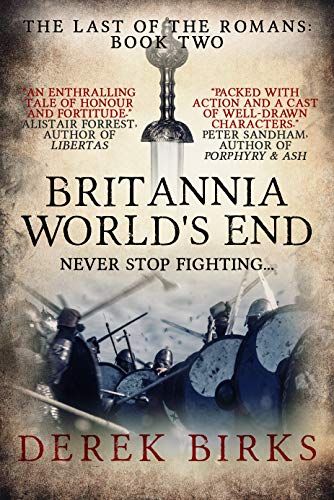
Book Corner: Britannia: World’s End by Derek Birks

454 AD.
Even after years of Roman rule, Britannia is a conflicted and largely untamed land.
Disgraced Imperial Officer, Dux Ambrosius Aurelianus, flees to its shores seeking sanctuary in the land of his deceased mother. His years of loyal service to the emperor count for nothing now. He must carve out a new life beyond the empire.
Accompanying Ambrosius is a disparate group of fellow refugees: Inga, a freed Saxon slave, his bucellarii – warriors sworn to him – and the surviving members of his estranged family.
The burden of command weighs heavy on his shoulders, for when he lands in the country, winter is fast approaching.
But the weather is not the only thing inhospitable towards the newcomers.
Plagued by troubles, Ambrosius faces opponents among both the native Britons and Saxon settlers. He discovers that no-one in Britannia – least of all, the High King, Vortigern – still fears the soldiers of the decaying empire.
When those he loves are savagely abducted and betrayal divides his company, Ambrosius is left with only a handful of his bucellarii. Though heavily outnumbered and unfamiliar with the land, Ambrosius remains undaunted.
Pitted against powerful opponents, the Roman will need new allies if he is to free the hostages and make Britannia his home.
There will be blood.

Derek Birks has fast become one of my favourite authors. His first novel, Feud, is still one of my personal favourites. He has a knack for fast-paced action woven into a wonderful story that keeps the reader hooked from the first page to the last. This latest offering is no different. Trouble arrives almost at the very first page and leaves the reader on the edge of their seat to the very end. Survival is far from certain and each character has their own battle to fight – and their own demons to face – within the larger story.

Britannia: World’s End is the second book in Derek Birks’ new series based in the twilight of the Roman era, which follows the exploits of Ambrosius Aurelianus and his small band of loyal warriors, and a disparate group of waifs and strays that he has picked up since being chased out of the Roman Empire. Ambrosius leads his people to the island of Britain, in the hope of finding a new home, but only finds more problems and more enemies to fight.

Set in the age of King Arthur, there are suggestions of the famous Arthurian legends, and the links to Ambrosius Aurelianus, though the story is firmly set in the history and reality of Britain at the waning of the Roman Empire, where land and people were open to exploitation and manipulation.

With a final scowl at Remigius, Ambrosius leapt from the boat onto the stony shore where dog-tired men were cheering and clapping each other on the back. They deserved to celebrate, he thought, for though they were some yards east of the camp now, at least they had salvaged the boat. By the time he heard the hooves, it was too late and he could only stare, helpless, as a dozen horsemen cantered through his camp.

By the time he roared: “To arms!”, women were already scattering in fear. Obliged to retrieve their scattered weapons from all along the beach, Ambrosius and his bucellarii were slow to return to the camp. Ambrosius was still trying to disentangle his spatha from his belt when he heard Inga’s voice, heaping Saxon abuse at her assailants.

“I’m here, Inga!” he cried, as he watched her trying to fend off one of the riders with her knife. “Run – this way! Run to us!”

Defiant as ever, she retorted: “I have Ferox with me!”

Thank God for Ferox, thought Ambrosius, as he stumbled towards her. Of course, the damned dog had not been warning him about the boat at all, for how would a dog know the boat was drifting out to sea? No, Ferox had caught the scent of strangers and their horses, but Ambrosius, like some green recruit, had ignored the animal’s alert and allowed himself to be drawn away from camp.

Though he had told Inga to run, of course, she had not. Armed only with her long blade, she stood her ground, flailing at her mounted assailants. Ambrosius cursed under his breath as he ran, for had he not told her how brave she was – as brave as any one of his bucellarii? And because he encouraged her, she fought, when she should have run. One moment Ambrosius glimpsed her, slashing out in vain, the next she was grappling with her captor. Racing to her side, spatha in hand and ready to dispense death to the villains who had dared to assault his camp, he was relieved to see that she had broken free.

“Stay behind me!” he ordered, but Inga’s blood was up and she took a snarling pace towards one of the horsemen. Thrusting out an arm to pull her back, Ambrosius’ fingertips scarcely brushed hers, as she was lifted clean off her feet and borne away.

Derek Birks has several great strengths as a writer. He is a natural storyteller and has a knack for knowing how to draw a reader in and holding their attention, so that you’re always promising yourself ‘just one more page’ or ‘just one more chapter’. His actions scenes are second-to-none and help to keep the tension high throughout the book.

His greatest skill, however, is in his characters. Despite a large number of supporting characters, Derek Birks has the ability to make each and everyone of them an individual. Not just in their appearance, but in their actions and in their individual stories. Each character has a legend that is his or her own; this means that each character has their own motivations and their own set of rules.

The author is also known for creating strong, independent female characters, such as the great Eleanor Elder in his two series set in the Wars of the Roses. In The Last of the Romans, it is Inga, a former sex slave, who steals the show with her strength and quiet determination. And then there is the dog, Ferox, a ferocious war dog with a soft spot for Inga, and a scene stealer in every chapter in which he appears. He is such a unique character!

There is one other thing Derek Birks has become renowned for in his books;; no character is so precious that he cannot be killed off, if the story asks for it. Not even the hero of the book is safe. And this brings an added tension to the book; the reader does not know who will make it out alive!

These 3 great strengths in the author are a fantastic combination that leads to another amazing novel. I have never had any qualms about recommending Derek Birks’ books to any fan of action-packed historical fiction, and Britannia: World’s End is no exception.

It is an awesome book!

*

About the author:

Derek was born in Hampshire in England but spent his teenage years in Auckland, New Zealand, where he still has strong family ties. 

On his return to England, he read history at Reading University and for many years he taught history in a secondary school. Whilst he enjoyed his teaching career and it paid the bills, he found a creative outlet in theatrical activities, stage-managing many plays and outdoor Shakespeare performances.

Derek always wanted to write and began, aged 17, writing stories, songs and poetry – in fact virtually anything. Inevitably, work and family life took precedence for a long period of time but in 2010 Derek took early retirement to indulge his passion for history and concentrate on his writing. He is interested in a wide range of historical themes but his particular favourite is the late medieval period. 

Derek writes action-packed fiction which is rooted in accurate history. He also produces podcasts on the Wars of the Roses for those interested in the real historical background to his books. Check them out on his website at: https://www.derekbirks.com/history-podcasts/

His historical fiction works include: 
Rebels & Brothers – a 4-book series set during the fifteenth century, which follows a fictional family, the Elders, through their struggle to survive the Wars of the Roses up to 1471.  The Craft of Kings – a sequel series which finds the Elder family ten years later in 1481. The latest book in this series is book 3, Echoes of Treason, which is set during the short and turbulent reign of Richard III.

He has recently embarked upon a new Post-Roman series and the first book is out now: The Last of the Romans

Apart from his writing, he enjoys travelling – sometimes, but not always, to carry out research for his books. He also spends his time walking, swimming and taking part in archaeological digs.

He was a regular presence at the Harrogate History Festival, is an active member of the Historical Novel Society and you will also find him each summer signing books – and selling them – at the Chalke Valley History Festival outside Salisbury in Wiltshire.

His books are available on Amazon in the UK and US.
You can find Derek at: Amazon; Blog; Facebook; Twitter 

*

My Books

Out Now!

Ladies of Magna Carta: Women of Influence in Thirteenth Century England  looks into the relationships of the various noble families of the 13th century, and how they were affected by the Barons’ Wars, Magna Carta and its aftermath; the bonds that were formed and those that were broken. It is now available from Pen & SwordAmazon and from Book Depository worldwide.

Also by Sharon Bennett Connolly:

Silk and the Sword: The Women of the Norman Conquest traces the fortunes of the women who had a significant role to play in the momentous events of 1066.  Available now from Amazon,  Amberley Publishing, Book Depository.

Heroines of the Medieval World tells the stories of some of the most remarkable women from Medieval history, from Eleanor of Aquitaine to Julian of Norwich. Available now from Amberley Publishing and Amazon and Book Depository.

*

You can be the first to read new articles by clicking the ‘Follow’ button, liking our Facebook page or joining me on Twitter and Instagram.

©2020 Sharon Bennett Connolly

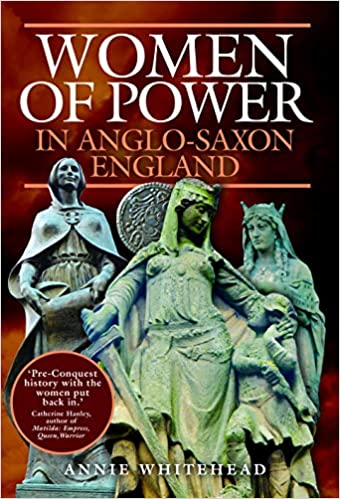
Book Corner: Women of Power in Anglo-Saxon England by Annie Whitehead

Many Anglo-Saxon kings are familiar. Æthelred the Unready is one, yet less is written of his wife, who was consort of two kings and championed one of her sons over the others, or his mother who was an anointed queen and powerful regent, but was also accused of witchcraft and regicide. A royal abbess educated five bishops and was instrumental in deciding the date of Easter; another took on the might of Canterbury and Rome and was accused by the monks of fratricide.

Anglo-Saxon women were prized for their bloodlines – one had such rich blood that it sparked a war – and one was appointed regent of a foreign country. Royal mothers wielded power; Eadgifu, wife of Edward the Elder, maintained a position of authority during the reigns of both her sons.

Æthelflaed, Lady of the Mercians, was a queen in all but name, while few have heard of Queen Seaxburh, who ruled Wessex, or Queen Cynethryth, who issued her own coinage. She, too, was accused of murder, but was also, like many of the royal women, literate and highly-educated.

From seventh-century Northumbria to eleventh-century Wessex and making extensive use of primary sources, Women of Power in Anglo-Saxon England examines the lives of individual women in a way that has often been done for the Anglo-Saxon men but not for their wives, sisters, mothers and daughters. It tells their stories: those who ruled and schemed, the peace-weavers and the warrior women, the saints and the sinners. It explores, and restores, their reputations.

I was very lucky to receive an advance copy of Annie Whitehead’s wonderful new book, Women of Power in Anglo-Saxon England. Beautifully written and thoroughly researched, this book brings to life the women on England from before the Norman Conquest.

Women of Power in Anglo-Saxon England is a wonderful study of the influential royal and noble women of pre-Conquest England, whether they were queens, princesses, abbesses or countesses. Annie Whitehead tells their stories in wonderful, vivid detail, beautifully weaving the historical implications off their lives with their larger-than-life stories.

Though they have been dead a thousand years and more, and while written evidence on these women may be scarce, the author has managed to squeeze every bit of information from the available chronicles, charters and saints’ lives. She has given the reader every possible snippet of information on their lives, presenting and analysing the sources in an accessible, engaging and thoroughly enjoyable reading experience.

The stories of these women is told with a passion and eloquence which makes every chapter a pleasure to read. The more familiar stories of Æthelflæd, Lady Godiva and St Hilda of Whitby are given excellent new interpretations, while the reader may be meeting the less familiar women, such as Æthelfrith of Bernicia, Eadburh and Alfred the Great’s sister, Æthelswith, for the first time.

Ælfgifu appears not to have been married for long. Her son Eadwig was probably born around 940, and his younger brother Edgar around 943. King Edmund himself died in 946 – the victim of a brawl, or perhaps a political assassination – having married again, so his first marriage must have ended not long after Edgar’s birth. The younger of the royal orphans, Edgar, was fostered by a noblewoman, the wife of the ealdorman of East Anglia, whom we shall meet in Part VI.

Ælfgifu is known as Ælfgifu of Shaftesbury, and William of Malmesbury in particular had a lot to say about her. He said that it was she who built the nunnery there and that her bodily remains were placed there. She was ‘so pious and loving that she would even secretly release criminals who had been openly condemned by the gloomy verdict of a jury.’ She would also give away her expensive clothes to the needy and she was a beautiful woman who was remembered for the miracles associated with her; the blind, the deaf and the lame were cured after visiting Shaftesbury.

It would be easy to assume that she retired to Shaftesbury in the manner of a number of previous queens, but the short-lived nature of her marriage and the young age of her children suggest another scenario. It is plausible that she died in childbirth, either in labour with Edgar or with a subsequent pregnancy in which both mother and child died. If she did indeed die in childbirth then she cannot have been a nun at Shaftesbury, but merely its benefactress.

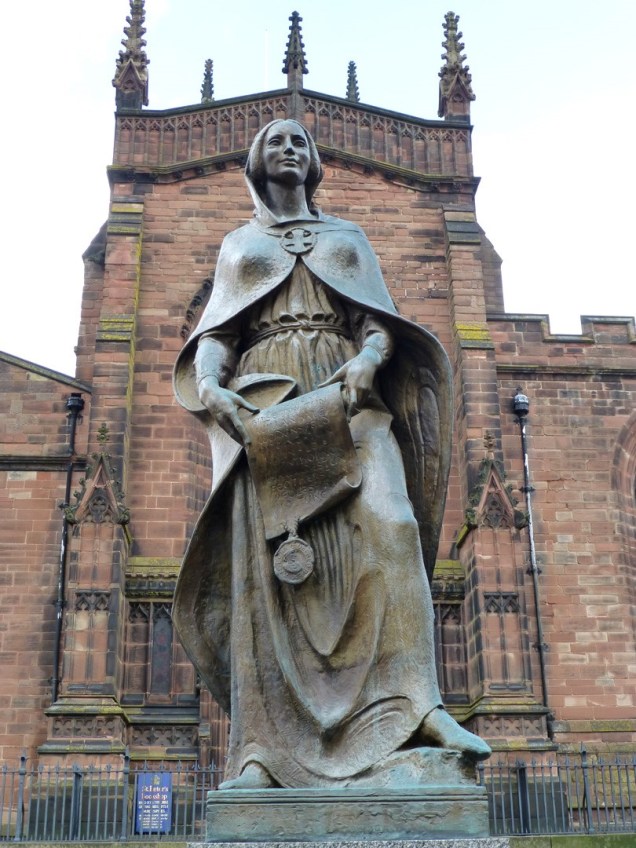
Æthelflæd with her nephew Æthelstan

of these women were not easy to find, and the detective work involved in researching Women of Power in Anglo-Saxon England is both entertaining and fascinating. In recreating and retelling the lives of these remarkable women, Annie Whitehead has given us a window into a distant past. We have the chance to observe the lives, loves, hopes and dreams of these remarkable women; women who helped shape their present and futures, and thus the world in which we now live.

The author also helps to dispel some of the myths that have arisen about these women, whether by historical fiction writers or the over-active imaginations of the chroniclers of the past. The true stories of Æthelflæd and Godiva, and others, are revealed, the myths surrounding them examined and explained. This is a wonderful book, filled with stories of love, intrigue and murder, of the power struggles and betrayals of Anglo-Saxon England, of strong and influential women who made an impression, not only on their own times, but on the generations who came after.

Women of Power in Anglo-Saxon England brings to life the women of the Anglo-Saxon period with vivid clarity. It is a remarkable study of the lives of women of the period – known and unknown – and their impact on history. Saints, princesses and queens; wives, daughters and mothers, Annie Whitehead demonstrates the strengths, weaknesses and challenges these incredible women faced in order to exert their influence on their corner of the world. The author’s meticulous research, beautiful writing and natural storytelling ability make this book a pleasure to read from beginning to end.

To Buy the Book:

Bookhttp://mybook.to/WomeninPower Amazonhttp://viewauthor.at/Annie-Whitehead

About the author:

Annie Whitehead graduated in history having specialised in the ‘Dark Ages’ and is a member of the Royal Historical Society. She’s written three books about early medieval Mercia, the ancient Anglo-Saxon kingdom of the Midlands. The first, To Be a Queen, tells the story of Alfred the Great’s daughter, and was long-listed for the Historical Novelist Society’s Indie Book of the Year 2016, and was an IAN (Independent Author Network) Finalist in 2017, while the second, Alvar the Kingmaker, is the story of Aelfhere, Earl of Mercia in the 10th century. The third, Cometh the Hour, is the first of two volumes set in seventh-century Mercia. She was a contributor to the anthology 1066 Turned Upside Down, a collection of alternative short stories. She writes magazine articles and has had pieces printed in diverse publications, including Cumbria Magazine and This England. She has twice been a prize winner in the Mail on Sunday Novel Writing Competition, and won First Prize in the 2012 New Writer Magazine’s Prose and Poetry Competition. She was a finalist in the 2015 Tom Howard Prize for nonfiction, and is also a contributor and editor for the English Historical Fiction Authors blog, as well as blogging for her own site – Casting Light upon the Shadow. In 2017 she won the inaugural HWA/Dorothy Dunnett Society Short Story Prize. Her first full-length nonfiction book, Mercia: The Rise and Fall of a Kingdom, is published by Amberley. Her latest nonfiction, Women of Power in Anglo-Saxon England, is published by Pen & Sword Books.

Social Media links: Blog; Twitter; Website; Facebook

*

My Books

Out Now!

Ladies of Magna Carta: Women of Influence in Thirteenth Century England  looks into the relationships of the various noble families of the 13th century, and how they were affected by the Barons’ Wars, Magna Carta and its aftermath; the bonds that were formed and those that were broken. It is now available from Pen & SwordAmazon and from Book Depository worldwide.

Also by Sharon Bennett Connolly:

Silk and the Sword: The Women of the Norman Conquest traces the fortunes of the women who had a significant role to play in the momentous events of 1066.  Available now from Amazon,  Amberley Publishing, Book Depository.

Heroines of the Medieval World tells the stories of some of the most remarkable women from Medieval history, from Eleanor of Aquitaine to Julian of Norwich. Available now from Amberley Publishing and Amazon and Book Depository.

*

You can be the first to read new articles by clicking the ‘Follow’ button, liking our Facebook page or joining me on Twitter and Instagram.

©2020 Sharon Bennett Connolly
Guest Post: Prince John’s Gambit: The Throne at any Cost

Prince John’s Gambit: The Throne at any Cost

John, Count of Mortain, Lord of Ireland, and youngest son of Henry II and Eleanor of Aquitaine knew that the stars were finally aligning in his favor, and the impossible dreams of his youth were now within his grasp. Bold action was required, and he was confident in his ability to seize this auspicious opportunity.

It was early January 1193 when John received a letter from King Philip II of France informing him that his brother, King Richard the Lionheart, was being held captive by the Duke of Austria and his liege lord, Holy Roman Emperor Henry VI.

John immediately traveled to the nearest port and secretly crossed the Channel into Normandy. He might have already been imagining his future as King of England, Duke of Normandy and Aquitaine, and ruler over the Angevin lands lying between those valuable duchies. No one would ever call him “Lackland” again.

It’s likely that John’s ambitions were buoyed by his knowledge of family history. His great-grandfather, Henry I, was the youngest son of William the Conqueror. Upon William’s death, his lands were divided between his two oldest surviving sons: William Rufus, who became King of England and Robert Curthose, who became Duke of Normandy. Henry Beauclerc, as Henry I was known before his ascension, was the original “Lackland” as the only inheritance he received was money.

Yet, only 13 years after William the Conqueror’s death, this youngest son had seized the throne of England after the sudden death of William Rufus in 1100. Six years later, Henry defeated

Robert Curthose at the Battle of Tinchebray and became Duke of Normandy. Robert Curthose would spend the rest of his life in captivity.

Did visions of Richard, his formidable older brother, imprisoned for the rest of his natural life inspire John as he rode across Normandy that cold January?

John’s story during Richard’s captivity stretches from January 1193 to the brothers’ reconciliation in May 1194. It’s a tale of persistence, audacious risk-taking, and a single-minded resolve to achieve power at any cost.

If John had succeeded, perhaps we would admire him just as Henry I is admired for his unexpected rise to power. But John’s failures and reckless schemes during these 17 months would not only determine the course of Richard’s remaining years as king, they would also play an important role in establishing John’s reputation as a deceitful, untrustworthy, and avaricious man.

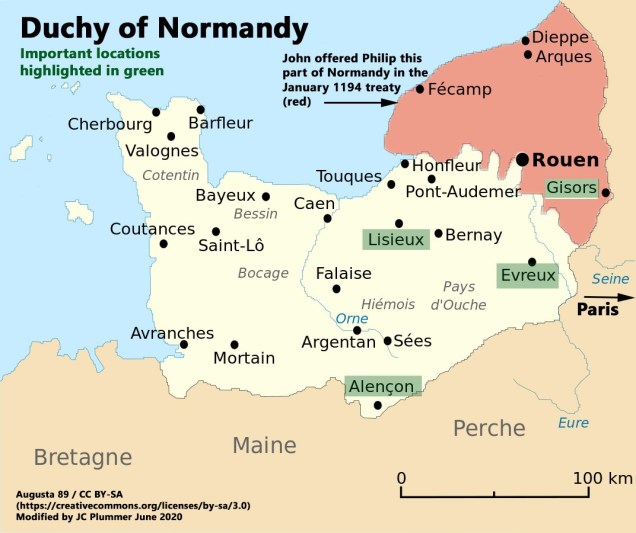
When John met with the Norman barons at Alençon in January 1193, he announced that Richard would not return, and that he was likely dead. John proclaimed that he was ready to assume control of Normandy and help the barons defend against potential attacks from King Philip. These loyal liegemen of Richard flatly refused to accept John as their new lord. As long as Richard lived, they would honor their oaths of fealty to him. Undeterred, John left them and went to Paris.

King Philip had spent his reign cleverly pitting one Plantagenet against another, and he was delighted to receive John at his court. In return for Philip’s support, John vowed to annul his marriage and marry Philip’s sister. He then paid homage to Philip for Normandy and the Angevin lands, and he promised to give Philip the strategic fortress of Gisors and the Norman Vexin.

This was a stunning betrayal of his brother, and as news of John’s actions in Paris made its way back to England, many of those who might have otherwise supported John as heir were outraged.

In February, John returned to England where he captured and garrisoned the castles of Windsor and Wallingford. He then entered London and declared that Richard would never return; he even insisted that Richard was dead. John demanded the Great Council recognize him as king.

His mother, the indomitable Eleanor of Aquitaine, and the Great Council were now ruling England. They had not yet received word of Richard’s location or condition, and it was a precarious time. Since Richard had no legitimate children, only John and a nephew, Arthur of Brittany, were potential successors. Arthur’s father, Geoffrey, had been born before John, but Arthur’s youth and Breton upbringing worked against him. Eleanor preferred that John ascend to the throne should Richard die.

By early March, John’s castles at Windsor and Tickhill were under siege. It was an awkward moment for the men leading these sieges. If they pursued victory too vigorously, they might make an enemy of the future king.

On April 20, Eleanor and the Great Council began receiving dispatches from Richard, who outlined the terms of his release and offered recommendations for raising the staggering king’s ransom required for his freedom. The government could not simultaneously conduct sieges against John’s castles and raise the ransom.

Even though Windsor and Tickhill were on the verge of surrender, a six-month truce was negotiated. Eleanor took control of Windsor and Wallingford, while John kept Tickhill and Nottingham. Along with other stipulations, John was expected to help raise the ransom, and he was required to stay in England.

After this setback, John spent May and June in Dorset, pouting and plotting his next move. Historians differ on how much effort he put into raising the ransom.

In early July, news reached both England and France that the terms of Richard’s release had been renegotiated and finalized. Although Richard knew that his release was still months away, Philip believed the Lionheart could be freed at any time.

In response, a frantic King Philip sent his famous message to John: “Look to yourself, the Devil is loosed!”

Despite his pledge to remain in England, a terrified John fled across the Channel to Paris. Because he had broken the truce, John’s estates were confiscated.

John was at Philip’s side when emissaries from the Lionheart arrived, proposing a treaty with the French king. The Treaty of Mantes was signed on July 9, 1193, and it was a generous settlement intended to stop Philip from further incursions into Normandy and to avoid a possible French invasion of England.

Richard’s secondary goal was to separate Philip and John. If John renewed his oath of loyalty to his brother, his titles and lands on both sides of the Channel would be restored, and a series of castles in Normandy would be awarded to him. John promptly pledged his allegiance to Richard and set off to claim his castles. However, he was so distrusted that the castellans refused to relinquish control to John. A furious John returned to Paris, and Richard’s scheme to remove John from Philip’s influence failed.

The emperor’s December announcement that Richard would be released in January resulted in another panicked response from Philip and John. They sent a letter to Henry offering either monthly payments to keep Richard imprisoned until autumn or a lump sum matching the ransom raised by Eleanor, as long as Henry transferred custody of his prisoner to Philip.

By January 1194, John was desperate, but he was not ready to admit defeat. He made one last treaty with Philip, and its extraordinary terms must have astounded the French king. John surrendered the whole of Normandy east of the Seine except for the city of Rouen. He gave key castles in Maine, Anjou, Touraine, and Aquitaine to Philip. And perhaps the most shocking concession was his agreement to hold the remaining continental lands as a baron of the French court. This would end the long-standing tradition of the Duke of Normandy meeting the King of France as an equal.

The January treaty was so astonishing that it only raised Philip’s suspicions. Although Philip signed the treaty, the shrewd French king probably doubted that John would abide by it.

Philip and John’s offer tempted Henry VI, and he showed their letter to Richard. Although he could not renege on his promises, Henry delayed Richard’s release until February 4, 1194.

Eleanor and Richard immediately left the German court, and they landed in England on March 13. Richard soon subdued John’s remaining supporters, and John’s titles and lands were again confiscated.

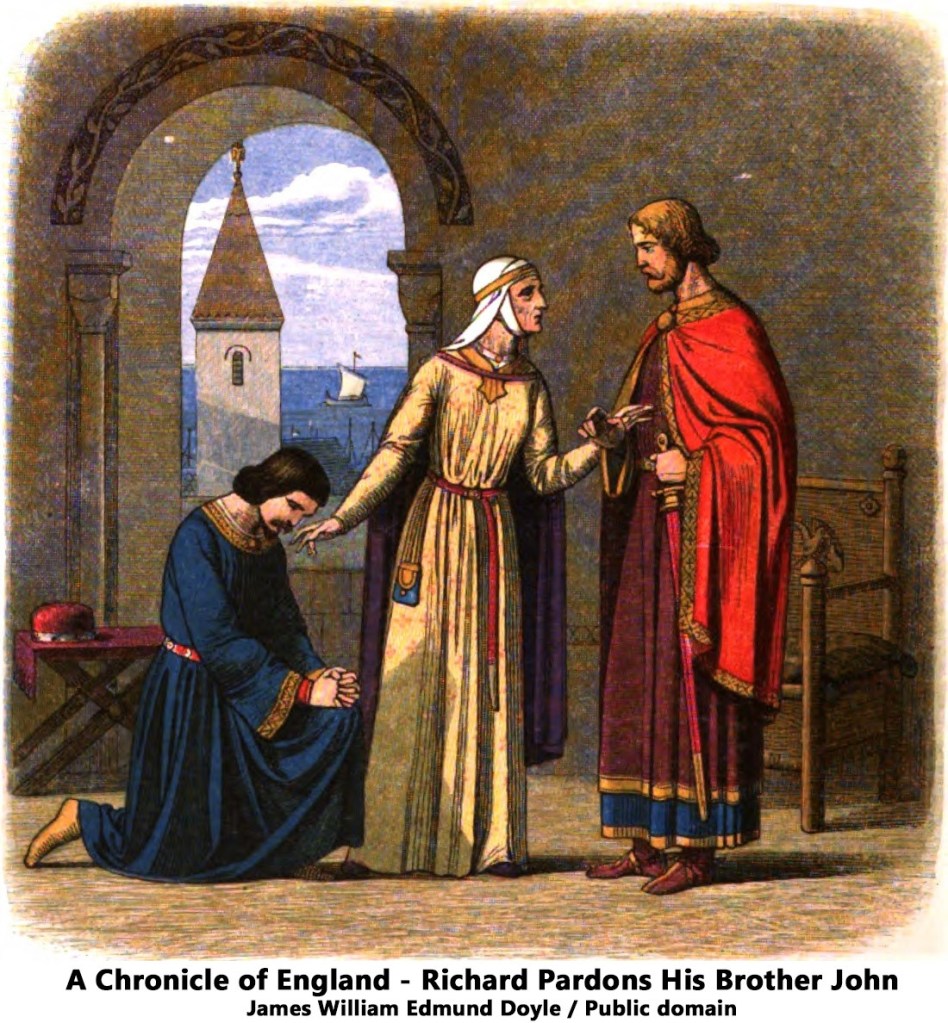
On May 13, Richard and Eleanor disembarked in Normandy. By May 19, they were in Lisieux at the home of John of Alençon. It is here that a shaken and contrite John arrived, falling at his brother’s feet, shedding the required tears, and begging for mercy. Richard forgave him, but his words were casual and full of contempt. He called the 27-year-old John a “child” who had been led astray by evil advisors.

Eleanor and Richard had already determined that it was more important to separate John from Philip and bring him back into the family fold than to impose the punishment he deserved for his treason.

The following day, John returned to Evreux, a strategic castle he had been holding for Philip since January. He then demonstrated why he could not be trusted. He invited the town’s French officials to meet with him, perhaps for dinner, and he announced to them that he now held the town for Richard before ordering their slaughter.

Twelve months later, in May 1195, Richard restored the counties of Mortain and Gloucester to John, although not the castles. In September 1197, Richard formally named John as his heir. John did not return to England until after Richard’s death in 1199.

The story of John’s 17 month quest for power during Richard’s captivity shows a man willing to promise anything and risk everything, regardless of whether he could deliver. Yet, he never suffered the consequences he deserved for his actions, mostly because he was the favored choice to succeed Richard, as long as the Lionheart remained childless.

Consider these examples:

· During his initial bid to take the crown, when his castles were on the verge of surrender, he was offered a generous truce.

· He lost his titles and lands when he fled to Paris in July 1193, but the Treaty of Mantes restored them to him.

· He ceded valuable strategic castles to Philip, and Richard would spend the remainder of his life fighting to recover them. John’s penalty was to lose his lands and titles for a time, but they were eventually returned to him.

This raises the question of whether John learned any lessons from his disastrous attempt to take the throne from Richard, and how that lack of meaningful consequences for his reckless and risky gambles might have impacted his reign, particularly when dealing with a cunning foe like King Philip and aggrieved barons looking for a measure of justice.

About the authors:

J. C. Plummer graduated Summa Cum Laude from Washburn University with a Bachelor of Arts degree in History and Anthropology. She later earned a Master of Science degree in Computer Information Science from Dartmouth College.

As an author and historian, J.C.’s goal is to provide thoughtful and entertaining storytelling that honors the past, is mindful of the present, and is optimistic for the future.

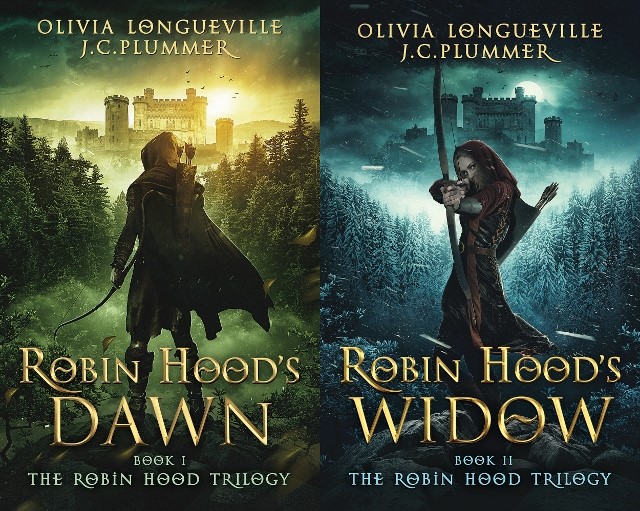
She has joined with author Olivia Longueville to co-author The Robin Hood Trilogy.

About Olivia Longueville: Olivia has always loved literature and fiction, and she is passionate about historical research, genealogy, and the arts. She has several degrees in finance & general management from London Business School (LBS) and other universities. At present, she helps her father run the family business.

Olivia’s first book was Between Two Kings, a novel set in Tudor England, which will be re-published by Penmore Press later this year.

J.C.’s social media profiles:

Website: http://www.angevinworld.com/

Twitter: @JC_Plummer Facebook: http://www.facebook.com/jennie.newbrand/

Olivia’s social media profiles:

Website: http://www.olivialongueville.com/

Twitter: @O_Longueville

Facebook: http://www.facebook.com/OliviaLongueville/

The Robin Hood Trilogy:

Set in late 12th century England, France, and Outremer, this re-imagining of the Robin Hood story closely follows history while incorporating popular aspects of the Robin Hood legends.

From the mists of an ancient woodland, to lavish royal courts teeming with intrigue, to the exotic shores of the Holy Land—Robin Hood leads the fight in a battle between good and evil, justice and tyranny, the future and the past.

Historical figures such as King Philip II of France, Richard the Lionheart, Prince John, and Eleanor of Aquitaine are featured in the trilogy.

Book 1: Robin Hood’s Dawn Amazon buy links. https://bit.ly/1-RHDawn https://bit.ly/RHDawn-UK

Book 2: Robin Hood’s Widow NOW AVAILABLE! Amazon buy links. https://bit.ly/RHWidow https://bit.ly/RHWidow-UK

Book 3: Robin Hood’s Return Coming soon!

*

My Books

Out Now!

Ladies of Magna Carta: Women of Influence in Thirteenth Century England  looks into the relationships of the various noble families of the 13th century, and how they were affected by the Barons’ Wars, Magna Carta and its aftermath; the bonds that were formed and those that were broken. It is now available from Pen & SwordAmazon and from Book Depository worldwide.

Also by Sharon Bennett Connolly:

Silk and the Sword: The Women of the Norman Conquest traces the fortunes of the women who had a significant role to play in the momentous events of 1066.  Available now from Amazon,  Amberley Publishing, Book Depository.

Heroines of the Medieval World tells the stories of some of the most remarkable women from Medieval history, from Eleanor of Aquitaine to Julian of Norwich. Available now from Amberley Publishing and Amazon and Book Depository.

*

You can be the first to read new articles by clicking the ‘Follow’ button, liking our Facebook page or joining me on Twitter and Instagram.

©2020 Sharon Bennett Connolly, Olivia Longueville and J.C. Plummer

Book Corner: Interview with Annie Whitehead

Today it is a pleasure to welcome Annie Whitehead to the blog. Annie’s latest book, Women of Power in Anglo-Saxon England, was also released yesterday.

Our books are twins!

Both books were commissioned, written and submitted at within days of each other. It has been a bit of a roller coaster experience, with the advent of the Corona virus. In order to get the books published on time, it was decided that they would be released in paperback first. But at the last minute, Pen & Sword changed their minds and went for the hardback release. As a result, the books look fabulous!

For me, it has been that bit more special, having Annie and her book taking the journey with us – having someone to talk to, who was going through the same experience – has made all the difference.

Annie and I have done an interview swap where we each answer the same questions, just to give you an idea of who we are and what we write.

You can find my interview over on Annie’s blog.

What motivated you to write the book?

I’d already written about a few of these women both in fiction and nonfiction. My first novel, To Be A Queen, tells the life story of Æthelflæd, Lady of the Mercians and my second, Alvar the Kingmaker, features Queen Ælfthryth, said to be the first crowned consort of an English king, and Queen Ælfgifu, who was accused of getting into bed, quite literally, with her husband and her mother. My third novel, Cometh the Hour, also has some strong, influential women in it, from King Penda’s wife, who was left in charge of a kingdom, to various queens and abbesses who made important policy decisions and had direct influence on the men in charge; women like St Hild, for example, founder of Whitby Abbey. My first nonfiction book, Mercia: The Rise and Fall of a Kingdom, featured some equally powerful and notorious women, so I suppose this new book was inevitable.

The idea was to tell the stories of these women, with minimal reference to the men, and discover all I could about them. There are over 130 named women in the book, most of them royal wives, sisters and daughters, and some of them women who are familiar to us – Lady Godiva, for example – who weren’t royal but still left their mark on history.

What were the research challenges?

Tracking them down! The Anglo-Saxon Chronicle sometimes mentions them but, up to the arrival on the shores of Emma of Normandy in the 11th Century, there are fewer than 20 instances in that chronicle where the women are named. However, a lot can sometimes be deduced: Wulfrun is named as a hostage taken by the ‘Vikings’ and from this it’s clear that she was high status. Luckily we don’t have to rely on the Anglo-Saxon Chronicle, and through other sources we discover that she was the lady after whom Wolverhampton was named and that her son was known as Wulfrun’s son, rather than his father’s. So there’s a whole other story; was his father somehow disgraced? Of lesser status than Wulfrun? When doing this kind of research it’s as well to be prepared to drop down plenty of ‘rabbit holes’!

The other challenge is keeping pace with the archaeological discoveries, of which there were more than a few while I was writing the book. Often I had to add details to footnotes, because the editing process was too far advanced to allow me to alter the main text. All were truly exciting discoveries, including the siting of the original Anglo-Saxon abbeys at Coldingham, and at Lyminge in Kent, the possible identification of Queen Emma’s bones in Winchester and the fascinating tale of the blue-toothed nun, who, it’s believed, stained her teeth by licking her paintbrush whilst working on illuminated manuscripts. Here was yet more evidence that women worked as scribes.

Do you have a particular favourite amongst the women you’ve written about?

Too many to choose, really. Because I’ve written so much about her already, I suppose most people might expect me to say Æthelflæd, Lady of the Mercians, but there are some others whom I grew to like and/or admire. Among them would be Eanflæd, Queen of Northumbria, for sheer determination and overcoming personal loss. She travelled north from Kent, no small undertaking, to marry a man who murdered one of her kinsman. She demanded, and received, recompense for that. She outlived most of her children, which must have been heart-breaking (although mercifully she had died by the time her adult daughter was murdered) and most likely had to tolerate her husband’s infidelity and fathering of at least one illegitimate child. She sponsored the career of St Wilfrid and it’s clear that she ran her own, separate, and highly influential household.

Other women brought a wry smile to my face, such as Queen Æthelburh who arranged for her servants deliberately to trash the royal residence while she and the king were out one day, so that she could demonstrate to him the transience of earthly pleasures. She gets the briefest of mentions in the Anglo-Saxon Chronicle, but what a mention – she razed a town to the ground. We’re not told the circumstances, but I think it’s fair to assume she was a woman with a lot of personality and fortitude!

Another lady who intrigued me was Siflæd. We know about some noblewomen because their wills are extant. Siflæd is unusual because she left not one, but two wills. It seems as if one was made before she went off on her travels ‘across the sea’. I’d love to know where she went, and what sort of adventures she had. I think of her as the original ‘merry widow’, setting her affairs in order at home before going off gallivanting.

Can you tell us briefly about your other books?

As well as the novels and the nonfiction book I mentioned earlier, I contributed to 1066 Turned Upside Down, in which nine authors re-imagined the events of 1066. Lady Godiva featured in my story, as the elderly matriarch of a powerful Mercian family. She’s often thought of as a young woman – erroneously in my view – riding naked through Coventry but she lived to a ripe old age and was a witness to many extraordinary events.

What’s next?

I’ve just finished a collection of short stories about women in history, and am part of the Historical Fictioneers Co-operative who will be producing an anthology of stories centred on the theme of betrayal, for which I’m contributing a tale of scandal from the tenth century. I’ll also be writing the follow-up to Cometh the Hour, which will feature the sons and daughters of King Penda of Mercia and his nemesis, King Oswiu of Northumbria.

Finally, where can people find you on Social Media and where can they buy your books?

Book http://mybook.to/WomeninPower

Amazon http://viewauthor.at/Annie-Whitehead

Blog https://anniewhitehead2.blogspot.com/ 

Twitter https://twitter.com/AnnieWHistory

Website https://anniewhiteheadauthor.co.uk/

Facebook https://www.facebook.com/anniewhiteheadauthor/

I would like to say a huge ‘thank you’ to Annie for taking the time to give such wonderful answers and wish her every success with Women of Power in Anglo-Saxon England. Look for my review of this wonderful book, coming in the next few days.

*

My Books

Out Now!

Ladies of Magna Carta: Women of Influence in Thirteenth Century England will be released in the UK on 30 May 2020 and is now available for pre-order from Pen & SwordAmazon UK and from Book Depository worldwide. It will be released in the US on 2 September and is available for pre-order from Amazon US.

Also by Sharon Bennett Connolly:

Silk and the Sword: The Women of the Norman Conquest traces the fortunes of the women who had a significant role to play in the momentous events of 1066.  Available now from Amazon UK,  Amberley Publishing, Book Depository and Amazon US.

Heroines of the Medieval World tells the stories of some of the most remarkable women from Medieval history, from Eleanor of Aquitaine to Julian of Norwich. Available now from Amberley Publishing and Amazon UK, Amazon US and Book Depository.

*

You can be the first to read new articles by clicking the ‘Follow’ button, liking our Facebook page or joining me on Twitter and Instagram.

©2020 Sharon Bennett Connolly and Annie Whitehead
David Hey Memorial Lecture

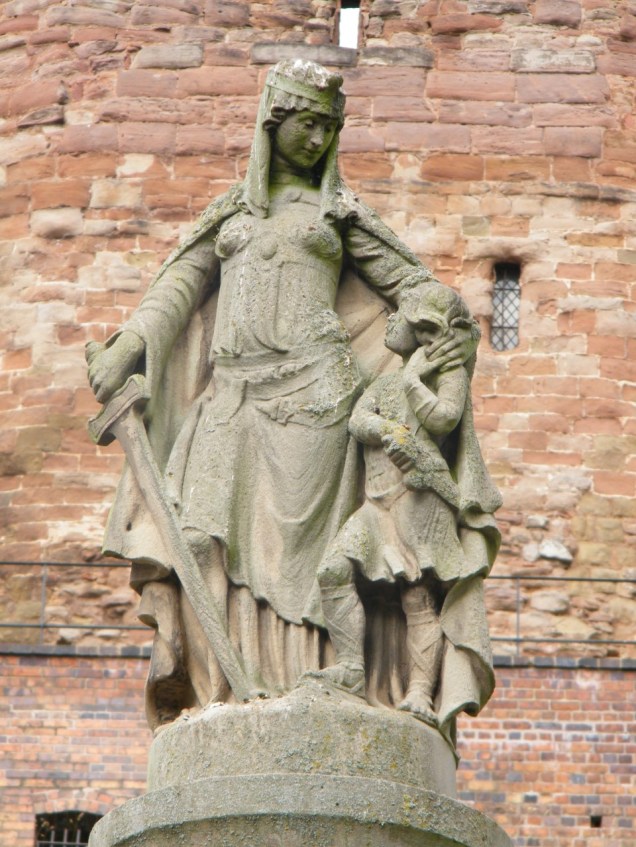
It was an honour and a privilege to be asked to present the David Hey Memorial Lecture for the Doncaster Local Heritage Festival 2020. Due to the current Coronavirus outbreak, the lecture was moved online and broadcast via You Tube.

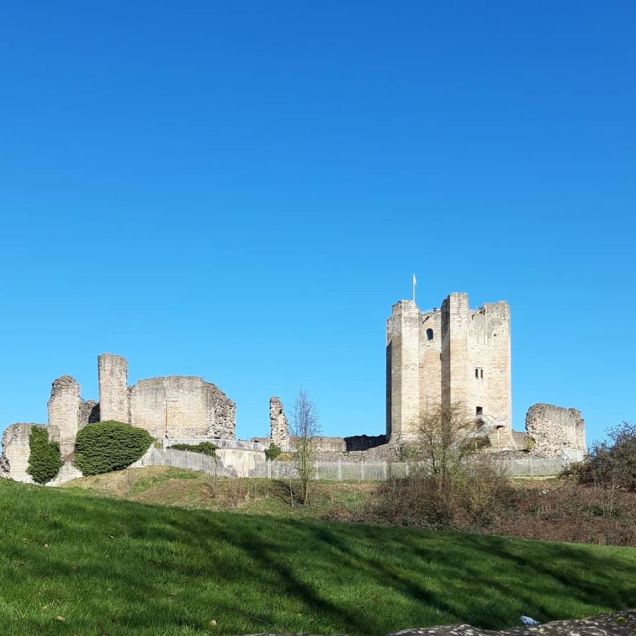
Conisbrough Castle

To keep it relevant with Doncaster and South Yorkshire, I decided to talk about one of my favourite subjects, and my current research project; the Warennes, the earls of Surrey who held Conisbrough from the Norman Conquest until the death of the last earl in 1347.

A family at the centre of English history for almost 300 years. It is a story of strong family loyalties, national and international rivalries, rebellion and civil wars, lost loves and royal connections. It’s also the story of Conisbrough’s iconic castle!

This talk is dedicated to David Hey. In the 1970s he was one of few professional historians to respond in a positive way to the growing interest in family and local history. David was a highly regarded and pioneering figure in this field.He held posts of importance such as being Professor of Local and Family History at the University of Sheffield and President of the British Association of Local History. But he was first and foremost a Yorkshireman at heart and never forgot his roots. He was the Patron of the Doncaster and District Heritage Association and gave a talk at the 2013 Heritage Festival.

So, here it is:

I hope you enjoyed it!

I would like to express my immense gratitude to the Doncaster Local Heritage Festival for inviting me to present such a prestigious lecture. I truly hope I did justice to the memory of David Hey.

*

My Books

Coming soon! 

Ladies of Magna Carta: Women of Influence in Thirteenth Century England will be released in the UK on 30 May 2020 and is now available for pre-order from Pen & SwordAmazon UK and from Book Depository worldwide. It will be released in the US on 2 September and is available for pre-order from Amazon US.

Also by Sharon Bennett Connolly:

Silk and the Sword: The Women of the Norman Conquest traces the fortunes of the women who had a significant role to play in the momentous events of 1066.  Available now from Amazon UK,  Amberley Publishing, Book Depository and Amazon US.

Heroines of the Medieval World tells the stories of some of the most remarkable women from Medieval history, from Eleanor of Aquitaine to Julian of Norwich. Available now from Amberley Publishing and Amazon UK, Amazon US and Book Depository.

*

You can be the first to read new articles by clicking the ‘Follow’ button, liking our Facebook page or joining me on Twitter and Instagram.

©2020 Sharon Bennett Connolly 

Guest Post: David and Goliath

Today it is a pleasure to welcome Alistair Forrest to History…the Interesting Bits, with an article about the history behind the biblical story of David and Goliath.

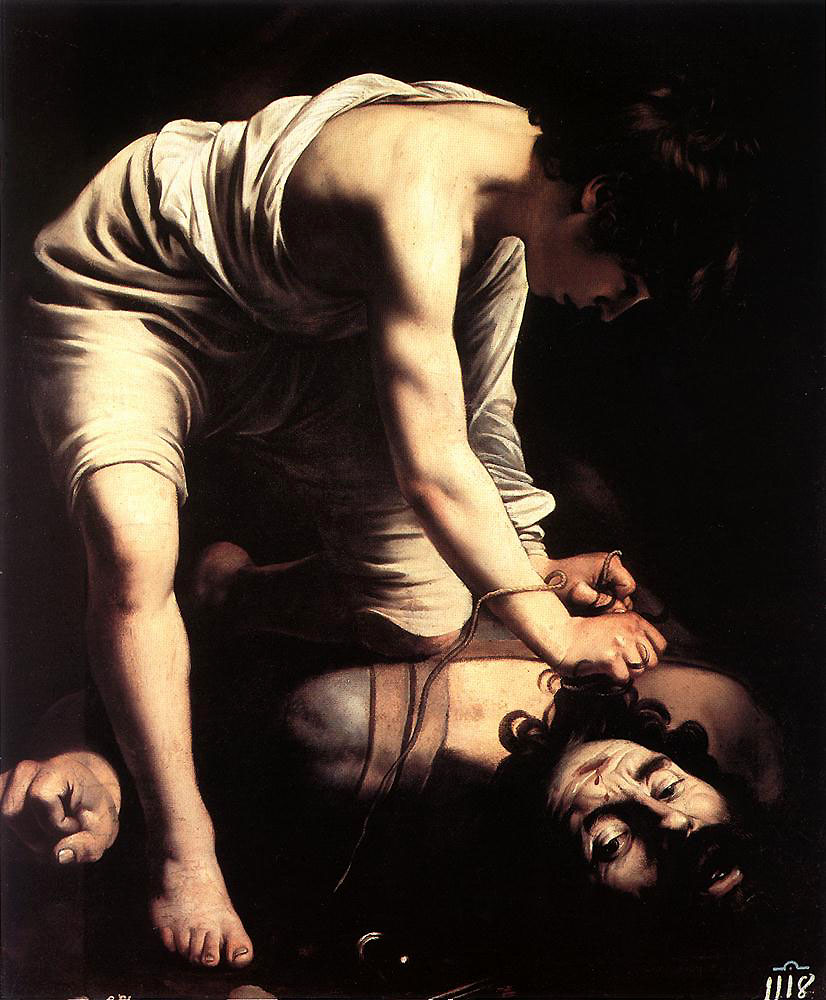
David and Goliath by Caravaggio

David & Goliath

Making the facts fit the story!

ALISTAIR FORREST draws on an upbringing in the Middle East and a love of ancient history to explore fact and fiction surrounding a famous Bible story

I’m an author of fiction, not a historian. So I can assure you that some historians reading Line in the Sand, my account of the David & Goliath story, might get very hot under their academic collars.

I hope lovers of historical fiction will take a different view and accept that I have filled in some gaps that the ancient scribes left in their telling. We know there are inconsistencies and contradictions across the several Biblical books that report the story of King David, leaving many questions unanswered.

So, following my journalist’s mantra, ‘Never let the facts get in the way of a good story’, I have drawn on my studies of the ancient Near East and Old Testament history – let’s call these ‘the facts’ – and unleashed my imagination and love of ‘a good yarn’.

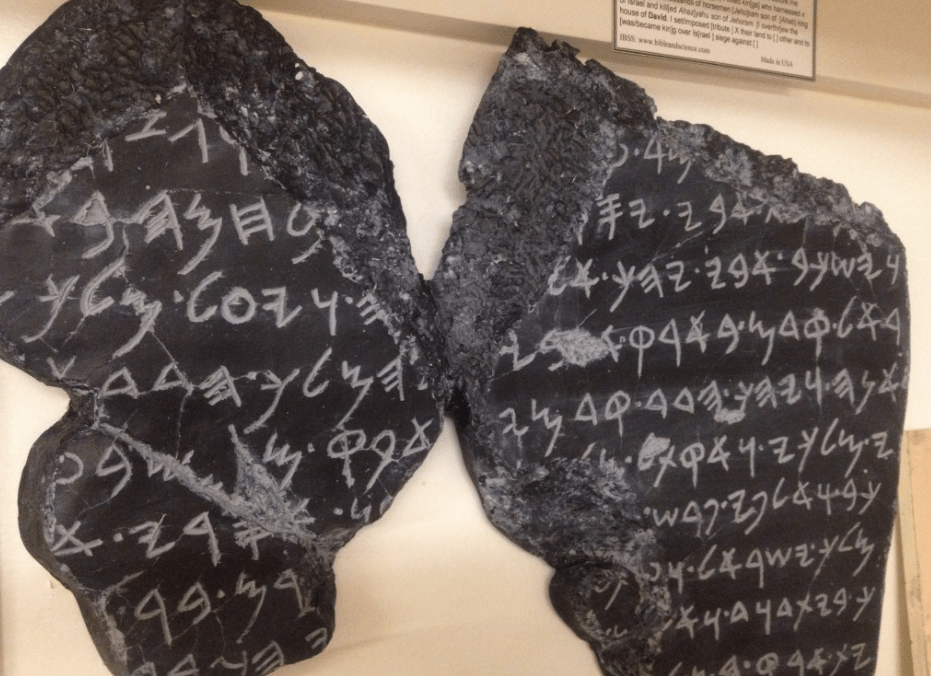
In reality, there are very few facts. The only archaeological reference to King David would appear to be a reference to the House of David on a ninth century stela found at Tel Dan in northern Israel in 1993. Most of the Biblical texts were written down long after the events surrounding David’s rise to power, with the two books of Samuel the earliest account.

Tel Dan Stela House of David

Fair game, then? I decided that this bullied young shepherd should become a spy, find himself betrayed in the Philistine city where giants lived, be tortured and face branding as a slave, fight a giant called Golyat (Goliath) in a gladiatorial arena, rescue a Philistine princess and ultimately escape to warn the Israelites of pending doom.

You might think you know what happens next. I couldn’t possibly comment. But then, I have tried to anchor the story in certain Biblical facts, such as the tensions between the agricultural kingdom of Judah and the five Philistine city states, and the settling of scores in single combat (and who wouldn’t nominate a nine-foot warrior as champion?).

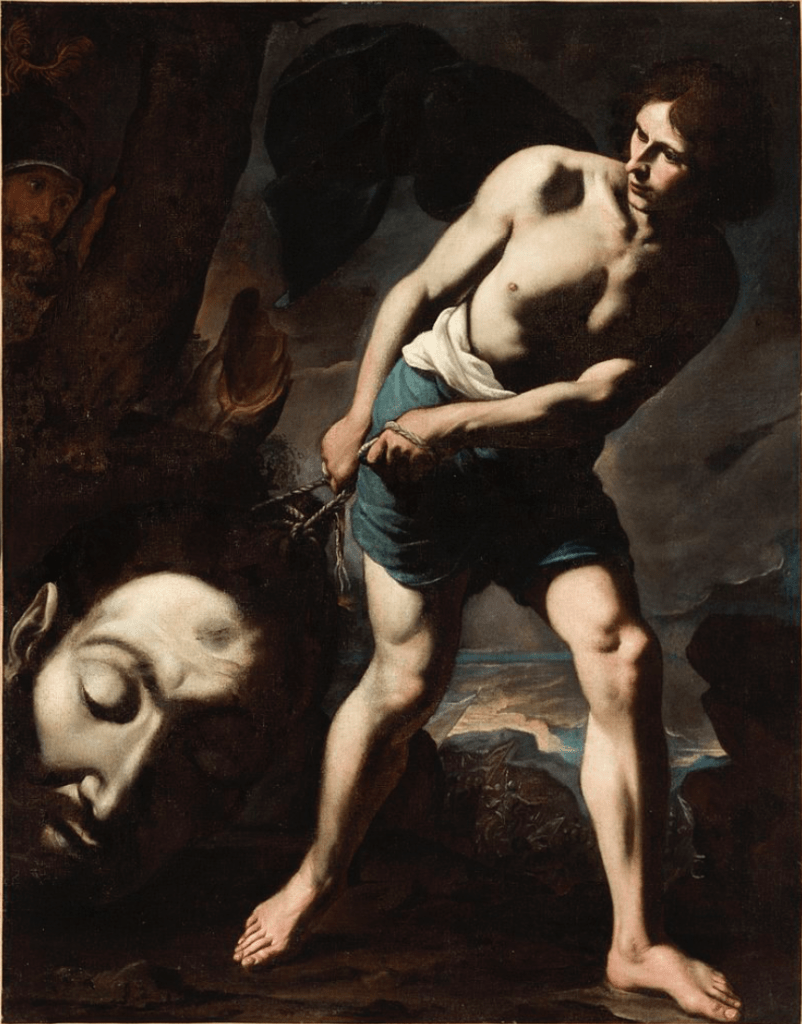
David and Goliath, Andrea Vaccaro

Which brings us to Goliath, or more accurately, ‘Golyat’.

At the outset of writing Line in the Sand, I listened to a very convincing lecture by Professor Jeffrey R. Zorn of Cornell University, entitled Who Was Goliath?, in which he suggests that the Philistine giant was an elite chariot warrior. Most modern depictions of Goliath are as a very large foot-soldier, but Zorn points out his armour and weapons as detailed in 1 Samuel 17: 4-7 would indicate an Aegean/Levantine chariot warrior who was probably transported to the ideal position in a battle to wreak the most havoc.

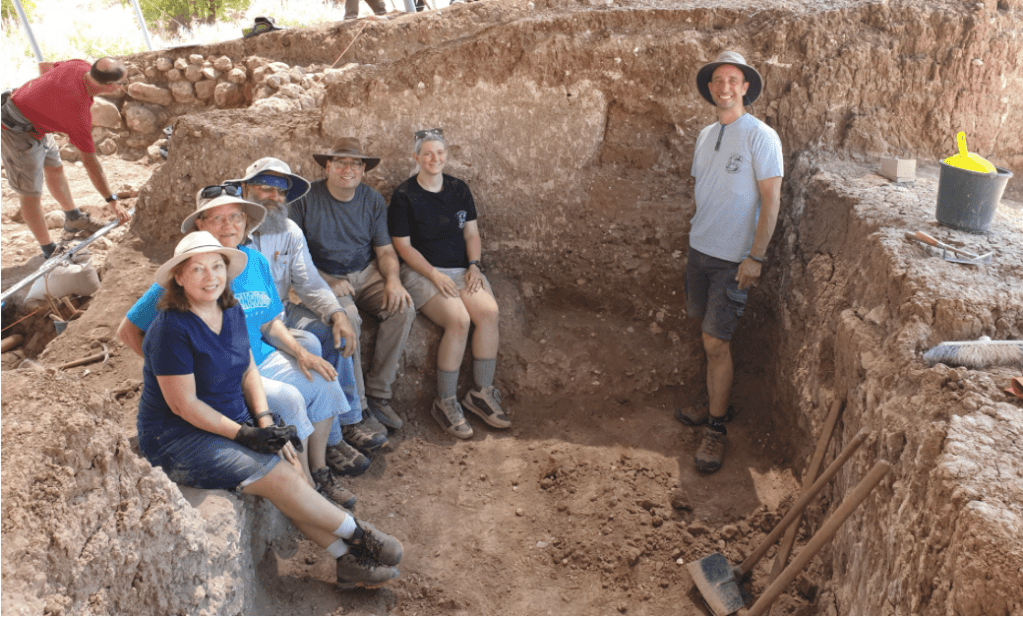
While researching for the book, I was in touch with Professor Aren Maier, director of the Tel es-Safi excavations that have uncovered so much about ancient Gath, whence the giant came, including an inscription thought to include his name or at least something similar.

Excavating Goliath’s Gath

I am also indebted to the British Egyptologist and author David Rohl, not least for succinct explanations of his New Chronology theories, specifically his interpretation of the Amarna letters and probable references to King Saul.

Books that have helped me include the Bible of course, The King David Report by Stefan Heym; The Source by James A. Michener; David’s Secret Demons by Baruch Halpern, and various books published by Osprey about warfare in the ancient Middle East.

I have read many books about ancient Israel both on-line and in my studies, too numerous to mention, all influential in their way. But somehow I still feel as though I know nothing when compared with the likes of Maier, Zorn and Rohl. I hope these knowledgeable historians will forgive my diversion from ‘what is known’ to ‘what might have been’.

What next? I count myself lucky to have spent my childhood and early teens in three Middle Eastern countries and subsequently to have travelled widely as a journalist, always delving into the history that made each place what it is today. A burning passion to write historical fiction fuelled by two years studying theology straddled by my early years as a newspaper reporter.

Although currently focusing on post-Republic Roman themes at the behest of my publisher Sharpe Books, especially the upheaval following the assassination of Julius Caesar (Libertas, Nest of Vipers), I hope one day to return to my formative years in the Middle East and extensive studies of ancient Mesopotamia, including the amazing stories waiting to be reimagined of Assyrians, Israelites, Phoenicians and Philistines.

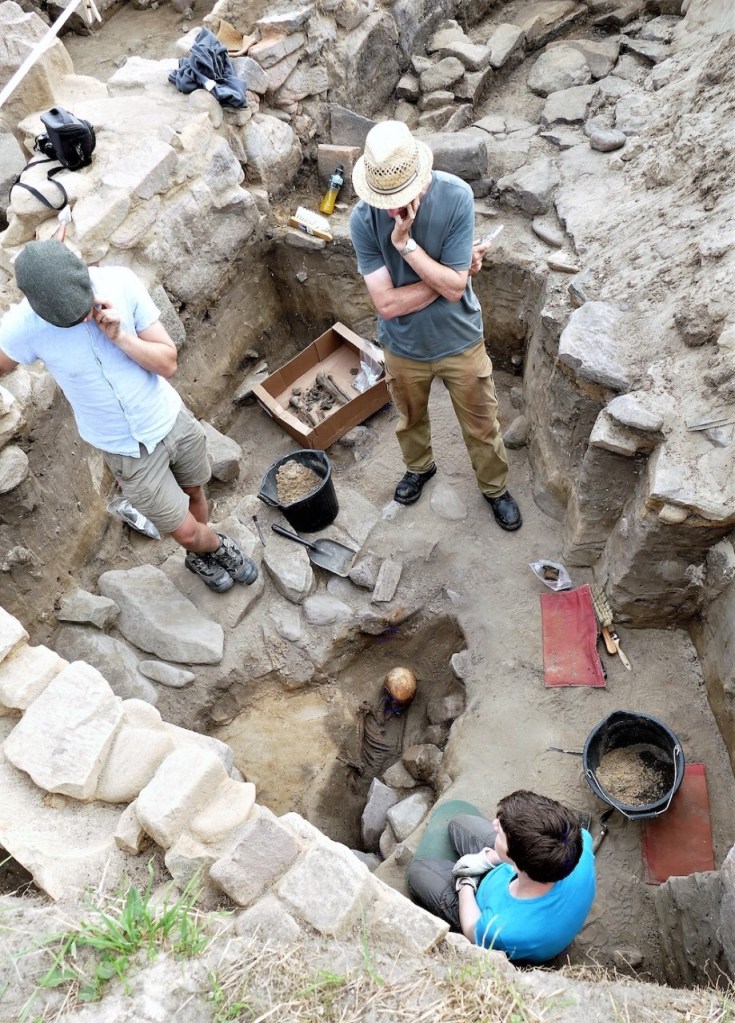
An Iron Age skeleton is discovered beneath a Roman floor at Longis, Alderney. Photo: David Nash

And while there’s ink my pen, I must surely make the most of the archaeological dig just a few yards from my home in Alderney (Channel Islands) where archaeologists Jason Monaghan and Phil de Jersey have uncovered well-preserved remains of Roman and Iron Age settlements. The historian Dan Snow is keenly interested in the site. But that’s yet another story…

I would like say a huge thank you to Alistair for such a fascinating article and wish him all the best with his latest book.

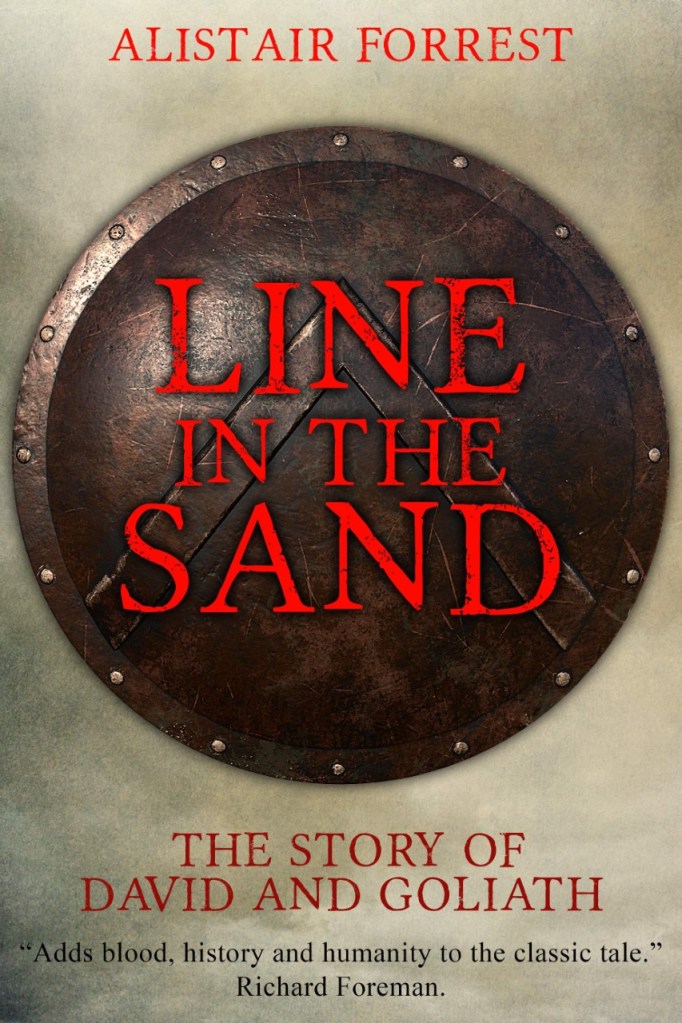
Line in the Sand

(Sharpe Books 2020)

1000 BC 

His mother is reviled as a whore and his half-brothers despise him. 

The best Dhavit of Beth Lechem can do is escape. But just as life couldn’t get much lower for the youth they call Leper, he is recruited as a spy. His mission – to find out about the superior weapons and invasion plans of the warlike Philistines. 

When he is betrayed, Dhavit is thrown into an arena with two other misfortunates to fight a pair seemingly invincible warriors. Only speed and quick wits can save him. 

Dhavit believes he is chosen by the gods and finds himself revered in the Philistine court, whose rulers want to declare war on his people. 

At the head of the Philistine forces is the famed Golyat, a man bred for war and destruction. 

A vicious conflict for supremacy is sure to follow.

Two armies will go to war. But also two soldiers – Dhavit and Golyat.

A king and country will rise.

To buy the book:

Amazon UK Amazon US

About the author:

Alistair Forrest is a journalist, editor and author of historical fiction. He has worked for several UK newspapers, edited magazines in the travel, photographic and natural products sectors, and owned a PR company.

He lives in the Channel Islands with his wife Lynda. They have five children, two Maremma dogs and a Spanish cat, Achilles. His books are published by Sharpe Books of London. Alistair loves to hear from readers.

Alistair Forrest is the author of Libertas and Nest of Vipers.

You can find Alistair Forrest:

Twitter Handle: @alistairforrest

Website: https://www.alistairforrest.com

*

My Books

Coming soon! 

Ladies of Magna Carta: Women of Influence in Thirteenth Century England will be released in the UK on 30 May 2020 and is now available for pre-order from Pen & SwordAmazon UK and from Book Depository worldwide. It will be released in the US on 2 September and is available for pre-order from Amazon US.

Also by Sharon Bennett Connolly:

Silk and the Sword: The Women of the Norman Conquest traces the fortunes of the women who had a significant role to play in the momentous events of 1066.  Available now from Amazon UK,  Amberley Publishing, Book Depository and Amazon US.

Heroines of the Medieval World tells the stories of some of the most remarkable women from Medieval history, from Eleanor of Aquitaine to Julian of Norwich. Available now from Amberley Publishing and Amazon UK, Amazon US and Book Depository.

*

You can be the first to read new articles by clicking the ‘Follow’ button, liking our Facebook page or joining me on Twitter and Instagram.

©2020 Sharon Bennett Connolly  and Alistair Forrest

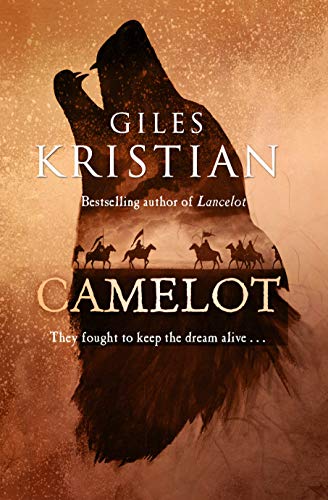
Book Corner: Camelot by Giles Kristian

Britain is a land riven by anarchy, slaughter, famine, filth and darkness. Its armies are destroyed, its heroes dead, or missing. Arthur and Lancelot fell in the last great battle and Merlin has not been seen these past ten years. Now, the Saxons are gathering again, their warbands stalk the land, their king seeks dominion. As for the lords and kings of Britain, they look only to their own survival and will not unite as they once did under Arthur and his legendary sword Excalibur.

But in an isolated monastery in the marshes of Avalon, a novice of the order is preparing to take his vows when the life he has known is suddenly turned upside down in a welter of blood. Two strangers – the wild-spirited, Saxon-killing Iselle and the ageing warrior Gawain – will pluck the young man from the wreckage of his simple existence. Together, they will seek the last druid and the cauldron of a god. And the young man must come to terms with his legacy and fate as the son of the most celebrated yet most infamous of Arthur’s warriors: Lancelot.

For this is the story of Galahad, Lancelot’s son – the reluctant warrior who dared to keep the dream of Camelot alive . . .

A couple of years ago, I read Lancelot by Giles Kristian, not really expecting to like it. After all, Lancelot was the villain of the King Arthur story and lover of Guinevere; he caused the downfall of Camelot. However, Kristian skillfully put a different spin on the story, presenting Lancelot as a flawed but talented knight, torn between the love for his lord, Arthur, and that for for his true love, Guinevere. Lancelot became a tragic hero and the cause of his own downfall. Lancelot was a story of complex loyalties, tested to the limit by war and circumstance beyond the control of the leading protagonists. In short, it was an incredible piece of storytelling that totally changed my view of Lancelot and the Arthurian legend.

This new book, Camelot, had a lot to live up to!

And, of course, it did not disappoint. In fact, I think Camelot surpasses Lancelot in so many ways. The story follows Galahad, Lancelot’s son in the attempts of the British tribes to form one last alliance that will see them fighting off the Saxon advance. The old heroes – Gawain, Arthur and, of course, Merlin – are there to help the new generation find their way. And the love interest is no defenceless little girl in need of saving – she’s a strong, independent character you will not fail to love, with a story all her own. There is humour, sadness, action and adventure. Giles Kristian cleverly weaves his own story into the existing legend, recreating a world lovers of all thing Arthurian cannot fail to appreciate.

‘You must leave this place and you must do it without delay,’ Gawain said, not looking up from his bowl. He fished out a scrap of meat and blew on it as it steamed between his finger and thumb. Then he thrust the scrap into his mouth and closed his eyes for a moment as if seeking to commit the taste and pleasure of the food to memory.

Father Brice and Father Judoc, standing across from Gawain on the other side of the hearth, looked at each other. ‘We cannot leave Ynys Wydryn,’ Father Brice said.

‘Why would we?’ Father Judoc asked. ‘We are safe here. Hidden.’

‘We found you,’ Gawain said, chewing, juices running into his beard.

‘The Saxons do not know we are here,’ Brice said. ‘The ones who attacked Galahad -‘

‘If they were Saxons,’ Judoc interrupted.

‘- They must have wandered in search of plunder, straying far from King Cerdic’s army,’ Brice went on, ‘which I believe is some miles east of Camelot and -‘

‘The Saxons are already here,’ Gawain cut him off, looking up now, holding Brice’s gaze. There were rumours and rumbles around the fire then.

‘We had to slip past them to get across the White Lake,’ Gediens said, thumbing at the east wall. He was the youngest of the four men, though he could not have been less than forty years old. ‘And not just a few scouts and foragers but war bands. Spearmen by the score. Saw their fires on Pennard Hill. Too many to count.’

Camelot by Giles Kristian is a wonderful crafted novel that leads the reader on a winding tale through Arthurian Britain. It takes you on a legendary quest, to the wondrous castles of Tintagel and Camelot, to the wilds of Anglesey and the Isle of Man and through various skirmishes, political intrigues, disappointments and love – with many twists and turns along the way. While you are desperate to read on through the next chapter, you simultaneously, never want the book to end.

I truly believe that the sign of a good book, is one that will take you through a range of emotions, from laughter to tears, and that will – when you get to the final page – leave you bereft that there is no more to read, and disappointed that you know will not read anything so good any time soon. Camelot fills all this criteria. It surprises you at every turn. It is probably the best book I will read this year – and its only April! This book is a keeper, and one I’ll be getting my dad for Father’s Day, that’s for sure!

Camelot is one of those rare books that will remain with you for days to come, musing over why Arthur acted the way he did, how Galahad managed to achieve what he did, how Gawain’s loyalty and perseverance saved the heroes on more than one occasion and how Merlin managed to weave his magic through the whole story, all the way to the final, climactic battle.

Camelot by Giles Kristian is due for release in the UK on 14 May 2020 and is available for pre-order from Amazon.

About the author:

Family history (he is half Norwegian) and a passion for the fiction of Bernard Cornwell inspired GILES KRISTIAN to write. Set in the Viking world, his bestselling ‘Raven’ and ‘The Rise of Sigurd’ trilogies have been acclaimed by his peers, reviewers and readers alike. In The Bleeding Land and Brothers’ Fury, he tells the story of a family torn apart by the English Civil War. He also co-wrote Wilbur Smith’s No.1 bestseller, Golden Lion. In his most recent novel, the SundaTimes bestseller Lancelot, Giles plunged into the rich waters of the Arthurian legend. For his next book, he continues his epic reimagining of our greatest island ‘history’.
Giles Kristian lives in Leicestershire.

*

My Books

Coming soon! 

Ladies of Magna Carta: Women of Influence in Thirteenth Century England will be released in the UK on 30 May 2020 and is now available for pre-order from Pen & SwordAmazon UK and from Book Depository worldwide. It will be released in the US on 2 September and is available for pre-order from Amazon US.

Also by Sharon Bennett Connolly:

Silk and the Sword: The Women of the Norman Conquest traces the fortunes of the women who had a significant role to play in the momentous events of 1066.  Available now from Amazon UK,  Amberley Publishing, Book Depository and Amazon US.

Heroines of the Medieval World tells the stories of some of the most remarkable women from Medieval history, from Eleanor of Aquitaine to Julian of Norwich. Available now from Amberley Publishing and Amazon UK, Amazon US and Book Depository.

*

You can be the first to read new articles by clicking the ‘Follow’ button, liking our Facebook page or joining me on Twitter and Instagram.

©2020 Sharon Bennett Connolly 
Mother’s Day Giveaway

Competition Closed: And the winner is Carolyn Hester

Sunday 22nd March 2020 is Mother’s Day in the UK this year and what better way to celebrate the 1st birthday of the paperback of Heroines of the Medieval World, than a giveaway for everyone’s favourite Heroine – MUM?!?!

“As Connolly ably demonstrates, knowing about these fascinating women is essential to filly understanding medieval Europe.” (Publishers Weekly)

About Heroines of the Medieval World

Heroines come in many different forms, and it is no less true for medieval heroines. They can be found in all areas of medieval life; from the dutiful wife and daughter to religious devotees, warriors and rulers. What makes them different compared to those of today are the limitations placed on them by those who directed their lives – their fathers, husbands, priests and kings. Women have always been an integral part of history, although when reading through the chronicles of the medieval world, you would be forgiven if you did not know it. We find that the vast majority of written references are focussed on men. The chronicles were written by men and, more often than not, written for men. It was men who ruled countries, fought wars, made laws and treaties, dominated religion and guaranteed – or tried to guarantee – the continued survival of their world. It was usually the men, but not all of them, who could read, who were trained to rule and who were expected to fight, to defend their people and their country…

And don’t worry, the offer is open worldwide – even if it isn’t Mother’s Day for you just yet.

It’s easy to enter!

To win a signed copy of Heroines of the Medieval World dedicated to a heroine of your choice – your mum, aunt, sister, grandmother, daughter or yourself (I won’t judge!), or someone else’s mum – for Mother’s Day, simply leave a comment below or on my Facebook page and I will include you in the prize draw.

The draw will be made on Wednesday 18th March, so you should get the book in time for the big day.

Good luck!

*

My Books

Coming soon! 

Ladies of Magna Carta: Women of Influence in Thirteenth Century England will be released in the UK on 30 May 2020 and is now available for pre-order from Pen & SwordAmazon UK and from Book Depository worldwide. It will be released in the US on 2 September and is available for pre-order from Amazon US.

Also by Sharon Bennett Connolly:

Silk and the Sword: The Women of the Norman Conquest traces the fortunes of the women who had a significant role to play in the momentous events of 1066.  Available now from Amazon UK,  Amberley Publishing, Book Depository and Amazon US.

Heroines of the Medieval World tells the stories of some of the most remarkable women from Medieval history, from Eleanor of Aquitaine to Julian of Norwich. Available now from Amberley Publishing and Amazon UK, Amazon US and Book Depository.

*

You can be the first to read new articles by clicking the ‘Follow’ button, liking our Facebook page or joining me on Twitter and Instagram.

©2020 Sharon Bennett Connolly 
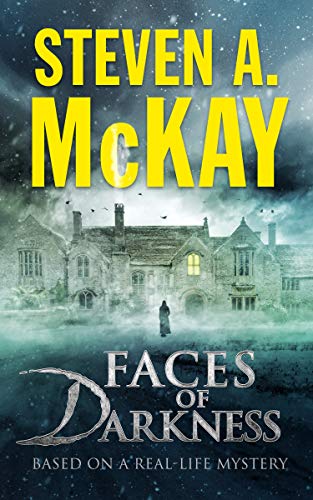
Book Corner: Faces of Darkness by Steven A. McKay

CROFTUN, ENGLAND AD 1328
Lady Isabella de Courcy is found alone in a room bolted from the inside, unconscious, and with a dagger brutally forced through her hand into the floorboards beneath, but this is just the latest in a line of similar, terrifying incidents. For months now she’s been stalked by some shadowy tormentor who leaves no trace of his movements and has never been clearly seen by anyone, even Lady Isabella.

Can the bailiff, John Little, along with his friend – the legendary friar, Robert Stafford – uncover the truth and, more importantly, will they be able to save the troubled victim before she ends up dead?

This new standalone tale from the author of The Druid sees the return of two much-loved characters from the Forest Lord series and is based on a shocking real-life case which remains, to this day, unsolved.

I have been a fan of Steven A McKay‘s writing for several years now. His Forest Lord series, retelling the story of Robin Hood in Barnsdale Forest, rather than Sherwood, was a refreshing new take on the outlaw’s legend. And the 2 books in his new series, Warrior Druid of Britain, the Druid and Song of the Centurion are among the finest books I have read in recent years. So Faces of Darkness had quite a lot to live up to.

And it did not disappoint.

Faces of Darkness is a novella featuring two of Robin Hood’s best friends, Friar Tuck and Little John, and is a detective novel-cum-psychological thriller of impressive quality. The story revolves around Lady Isabella de Courcy, who is being tormented by a mysterious stalker no one has seen. Friar Tuck and Little John are brought int o investigate the matter.

“Did you see him, Isabella?” the nobleman was demanding, in a hard tone of voice which Tuck felt inappropriate given the young woman’s ordeal. It wasn’t his place to interfere in the dynamic of their relationship though, and unbidden, he began to inspect the rooms for signs of what had taken place.

“No,” the lady sobbed. “Please, Adam, my hand is really hurting. Can you fetch me something for it?”

“Anne,” de Courcy said irritably. “Go and fetch some wine for the lady, hurry.”

“No,” broke in Isabella, eyes wide. “I can’t stay in this room another moment.” Tuck turned to look at her and realised there was a length of fabric tied around her neck, which also bore tell-tale red bruising. Clearly, she had suffered a most violent assault – no wonder she wanted away from the scene of the crime.

“John,” he said. “Could you help Lady Isabella to the room we came from? Would that be acceptable, Sir Adam? Aye? Good. Anne will make the place comfortable, with some unwatered wine to numb the pain a little and …” he stood next to the bed as the injured woman rose to her feet. “Fear nothing, my lady. If the person who did this to you is still around, Little John will deal with them.”

“You can be sure of that,” rumbled John who, at over six-and-a-half feet, had to stoop to avoid hitting his head on the doorframe. “You’re safe with me, my lady.”

Faces of Darkness is quite a departure for Steven A. McKay. A psychological thriller, it could be set in any era, but he has ingeniously set it in the world of his Forest Lord series, so that the astute Friar Tuck and redoubtable Little John can take the lead in solving the mystery, giving the reader the comfort of familiar characters in a story that is both emotional and evocative.

The novella keeps you guessing the true cause of Lady Isabella’s misery to the climactic end. There were several points where I thought I had solved the mystery, only to be disabused of my theory a few pages later, which, of course, makes the book even more riveting!

This is fabulous story that has only one downside – it is too short. I would have loved the book to be a full-length historical novel. It was enthralling! Here’s hoping that Faces of Darkness sparks a new career for Friar Tuck and Little John, solving medieval mysteries.

*

About the author:

Steven McKay was born in 1977 near Glasgow in Scotland. He live in Old Kilpatrick with his wife and two young children. After obtaining his Bachelor of Arts degree with the Open University he decided to follow his life-long ambition and write a historical novel.

He plays guitar and sings in a heavy metal band when they can find the time to meet up.

You can check out his website here. Steven also has an Amazon Author page and can be found on Twitter and Facebook.

*

My Books

Coming soon! 

Ladies of Magna Carta: Women of Influence in Thirteenth Century England will be released in the UK on 30 May 2020 and is now available for pre-order from Amazon UK and from Book Depository worldwide.

Also by Sharon Bennett Connolly:

Silk and the Sword: The Women of the Norman Conquest traces the fortunes of the women who had a significant role to play in the momentous events of 1066.  Available now from Amazon UK,  Amberley Publishing, Book Depository and Amazon US.

Heroines of the Medieval World tells the stories of some of the most remarkable women from Medieval history, from Eleanor of Aquitaine to Julian of Norwich. Available now from Amberley Publishing and Amazon UK, Amazon US and Book Depository.

*

You can be the first to read new articles by clicking the ‘Follow’ button, liking our Facebook page or joining me on Twitter and Instagram.

©2020 Sharon Bennett Connolly