Wordly Women: Cathie Dunn

History...the Interesting Bits

Time for another edition of Wordly Women! It has been great fun, meeting all these amazing authors. I do hope everyone is enjoying it as much as I am. Today, I want to introduce you to a very dear friend, historical novelist Cathie Dunn. Cathie and I have known each other a good few years on Facebook, so much so that the first time we met in real life, there was no awkwardness. I love that about social media!

So, let me introduce you to Cathie!

Sharon: Hi, Cathie, first things first, what got you into writing?

Cathie: Ooh, that takes me back decades! It was the romantic historical novels by the likes of M.M. Kaye, Victoria Holt / Philippa Carr (Eleanor Burford’s pseudonyms), in my late teens that got me hooked. I loved Ms Holt’s gothic romance novels in particular, at the time. They were so atmospheric, and – growing up in Germany – I loved the vision of historic and haunted English manors. During the late 1990s and 2000s, after my move to the UK, I learnt a lot about how to create a compelling plot, within a realistic historical setting, by devouring novels by Helen Hollick, Elizabeth Chadwick, and Barbara Wood, amongst others. It was enough to make me embark on HE Certificate in Creative Writing (online) at Lancaster University (though at the time, I was the only one on the course who wrote historical fiction). But at least, it provided me with deeper insights into the writing craft.

Sharon: Tell us about your books.

Cathie: I started off with a project which went from romance to murder mystery to spy novel to (supposedly) a series of events set during the Anarchy – one of my favourite eras. To date, Dark Deceit is an undefined mix, which I’ll need to untangle at some point in time.

Sharon: Yes please! I want to read it!

Cathie: In 2009, I took part in NaNoWriMo, working on a Scottish romance set after the 1715 Jacobite rebellion. I used real locations and studied the background history in depth – too much for traditional romance publishers, who duly rejected it. Fortunately, Highland Arms was picked up by a fabulous US indie press, and my path was clear! I later wrote a second Scottish romance, A Highland Captive, set during the Wars of Independence.

After my move from Scotland to France, my focus changed to medieval French history, with a dual-timeline mystery inspired by my surroundings. Love Lost in Time delves into the distant past of the county of Carcassonne. And the novel immortalised a young cat I lost too soon, Shadow.

Next, I wrote a novel set at the court of Louis XIV. The Shadows of Versailles deals with a dark side of the otherwise glittering court: the Affair of the Poisons. It may be too dark for some readers, as it contains disturbing scenes of child abductions and black masses. Tragically, it’s all based on real, credible accounts of the time. Researching history can be revolting, at times.

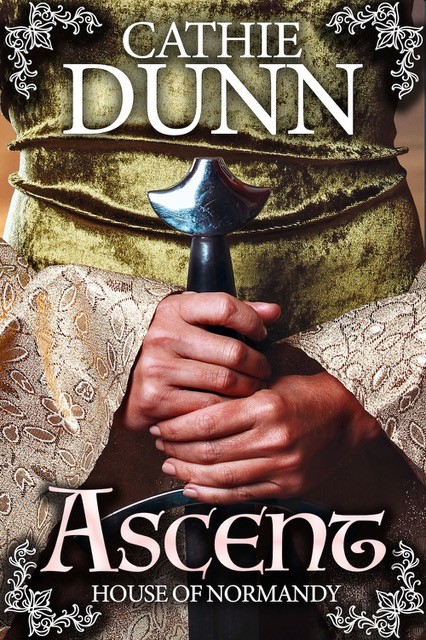
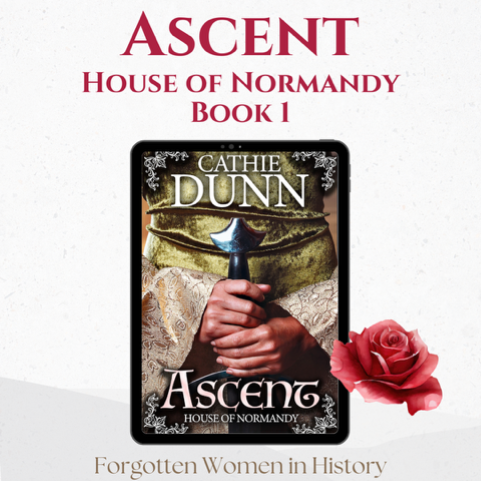
After that serious topic, I needed a more positive distraction, and I promptly delved into the foundation years of Normandy, a county I love. Ascent tells the forgotten story of Poppa of Bayeux. Everyone with a TV now knows her more danico husband – Rollo – but who was the mother of his children? Sadly, she was overlooked in the recent series, Vikings. Ascent tells her (fictionalised) story.

Sharon: What attracts you to the early medieval period?

Cathie: It was an era of great change, all across the British Isles and the European continent. The old ways and beliefs had been discarded, to make way for a Church growing in political influence, and it all makes for fascinating research. New hierarchies were formed amidst a continuing power struggle between different families. As the appointments of ‘nobility’ grew into fashion, so did the influence of favourites and allies on rulers. It was a fascinating time.

Sharon: Who is your favourite early medieval character and why?

History...the Interesting Bits
Image of the statue of Poppa of Bayeux, Bayeux – Photochrom Print Collection

Cathie: Ooh, that’s a tricky one. There are so many real people we know little about, especially women.

(So, a big *Thank You* to you for shining a light on them with your brilliant books!)

I do think Poppa of Bayeux deserves a lot more credit. She had to deal with so many challenges – married to a marauding stranger who was likely a decade or two older, and a Pagan; bearing his children; fleeing with him to Anglia; returning to see his power increase, while she is quietly forgotten. I quite like her to be my favourite early medieval character.

Charles Martel is another. He was a fascinating man, paving the way for a greater Frankish kingdom with his conquests across what is now France. Whilst most people know his grandson, Charlemagne, without Charles, Charlemagne’s ascent in the political sphere of central Europe would not have been possible. Was Charles likeable? Hm, I’m not sure. We know he was ruthless, efficient, and a capable leader of men. Did he have time to be nice? Perhaps that’s a question for another writing project…

Sharon: Who is your least favourite early medieval character and why?

Cathie: That would probably be Charles the Fat, Carolingian King of the Franks and Holy Roman Emperor for a few years in the 880s. He was ineffective, and hopeless at controlling different sections of his empire. He was deposed and died in early 888, and the crown went to Odo of Paris. The Carolingian dynasty was restored after Odo’s reign, though the crown of Frankia went back and forth for a while. This is the era Ascent is set in, and it made for intriguing research.

The real Rollo surely had his work cut out, having to deal with all these changing rulers and their agendas.

Sharon: How do you approach researching your topic?
Cathie: I love history books. I think by now I own more history books than novels! Usually, I start with checking online resources. Jstor is a useful site, where you can read a number of articles for free each month; Medievalists.net is another helpful resource.

But most online sites just give you only an overview, so you need to check books that focus on the relevant era. I have an array of history books on early, high & late medieval England, Tudor England, and medieval & Jacobite Scotland on my shelves. For my France-based novels, I consult non-fiction books in French, many of which I find (handily!) in second-hand bookshops. I also use German resources, where needed.

I find that having a range of resources from different countries to consult is the best way to get a fair overview of historic events. We know that original sources were often (though not always) based on what rulers wanted the rest of the world to know – that being not necessarily the full truth. The winner records history in his favour. So, drawing from sources in different languages adds to the experience in discovering the past.

Sharon: That is so true!

Sharon: Tell us your ‘favourite’ medieval story you have come across in your research.
History... the Interesting Bits
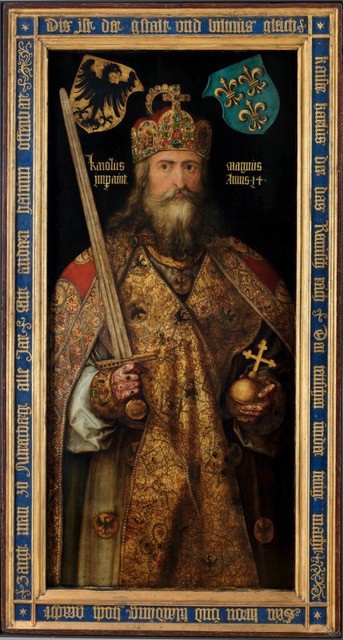
Image of Albrecht Dürer’s painting of Charlemagne

Cathie: Unfortunately, it is difficult to find credible stories about early medieval characters, unless they were major players like Charlemagne, due to the loss (or deliberate omission) of references for lesser-known individuals.

Therefore, I’ve chosen Charlemagne’s wives and concubines as a story I find entertaining, and enlightening! I mean – how on earth did the man have the time to marry four times, have several concubines after the death of his last wife (and possibly before) – and father an estimated twenty (20!) children? His court was always travelling across his ever-expanding realm (and later, his empire), though it is said that his main seat at Aachen (Aix-la-Chapelle) became his favourite.

He insisted his illegitimate children were raised alongside his legitimate offspring, ensuring they all received an education deserving of their Royal bloodline. After his son Pepin’s untimely death, he even took his grandchildren in to be educated with the others.

This is a fact I recently discovered, and now I’m curious to find out more! With daughters, and especially illegitimate ones, usually being swept off into marriage or convents, his insistence that they are all educated is telling. Clearly, here was a man who valued learning – be that in practical skills or reading and writing.

For a man who ruthlessly expanded his territories, responsible for subjugation of peoples and a great number of deaths ranging from Germanic Saxony to the Iberian Peninsula, this shows an entirely different side of the ‘great Charles’.

Sharon: Tell us your least ‘favourite’ medieval story you have come across in your research.

Cathie: That has to be Charlemagne’s darkest episode – the subjugation of Germanic Pagan tribes in Saxony. The wars lasted – on and off – for three decades, and they were brutal. The Saxons did not give in easily, much to Charlemagne’s frustration, and their conversion to Christianity was slow. Their skirmishes into his territory vexed him immensely.

Eventually, according to the Royal Frankish Annals, the infamous ‘Blood Court’ massacre at Verden, in October 882, saw the execution of approx. 4,500 Saxon ‘rebels’ captured after recent battles. Their leader, Widukind, had managed to flee north.

Although later historians disputed the figure quoted in the annals, with several trying to make ridiculous excuses for Charlemagne’s actions, there seems to have been a great slaughter of thousands of prisoners, regardless. Charlemagne wanted to set an example, an effective deterrent.

Warfare continued for three more years, then it was all over for the Saxons, especially after Widukind converted to Christianity. But it was the massacre at Verden that remained like a blood stain on his otherwise pristine reputation.

Sharon: Are there any other eras you would like to write about?

Cathie: I do love different eras, as you know. The Anarchy is definitely high on my list, and I’ll have to revisit Dark Deceit to see where it takes me. (Sharon: Do it! Please!)

But I also love the court of Louis XIV of France, with all its superficial splendour and dark secret plots. The Affair of the Poisons is such an intriguing event, with many prolific nobles implicated in trying to influence the king’s opinion through nefarious deeds. Deeply disturbing, and utterly fascinating.

And then, of course, is the time of the Scottish Wars of Independence. It wasn’t easy to mess with a remarkable, power-hungry king like Edward I! (Sharon: Ooh, yes!)

But, ultimately, it’s the late Dark Ages (do we still call it that, as they weren’t really that dark?) and early Middle Ages that keep me hooked. Oh, to travel to Frankia for one day only…

Sharon: What are you working on now?
Cathie: My current WIP is called Treachery, and it’s the story of Sprota the Breton, handfasted wife of William Longsword – Poppa’s and Rollo’s son. Like his father and his two wives, William married Sprota in more danico (in the Danish custom), and Luitgarde of Vermandois in a proper Church blessing, for political reasons.

Even less is known of Sprota than of Poppa; mainly that she was mother to William’s only son, Richard, likely the first Duke of Normandy. (Rollo and William never were dukes.) I introduced her towards the end of Ascent, when she had to flee to Bayeux as William’s enemies closed in on him at his fortress in Fécamp. Following William’s assassination by Count Arnulf of Flanders in 842, Sprota had to remarry to keep her young son’s inheritance secure. And to ensure his safety!

Her responsibility as the mother of William’s heir, and her struggles for them to survive, make for an intriguing story. So many powerful men had set their sights on Normandy, wanting Richard out of the way. I hope to do Sprota justice, as, again, she has been forgotten in time.

The third and final instalment of my House of Normandy trilogy about the early ladies of Normandy will conclude in Reign, about Richard’s second wife (and previous lover), Gunnora.

Then there’s Poppa’s daughter Adela, married to the Count of Poitou. Perhaps a companion novel? 😉 Sigh…

Sharon: And finally, what is the best thing about being a writer?

Cathie: Exploring past histories is utterly fascinating, and I can only recommend it. That goes for the good and the bad we discover in our research.

Reliving the distant past is fun, but also a great responsibility, as we should stay as close to the few known facts as possible. An ogre can’t just turn into a Prince Charming, although looking at Charlemagne, he definitely had two sides to his character – the caring father interested in learning and culture, and ruthless ruler chopping off heads of his prisoners. A man of his times. But what about his women? (Cathie, behave! One novel at a time…)

And though my earlier works focused more on events and fictional characters, I now find it far more rewarding to bring forgotten women from the distant past back to life, even ‘just’ in fictionalised format. Their stories must be told.

Thank you again for letting me ramble on about my research and writing. It’s been fabulous revisiting my stories, and the real characters involved in them, and I hope your readers enjoy my interview.

Sharon: Cathie, thank you so much! It has been a pleasure! No wonder you and I get on so well!

About the Author:

Cathie Dunn is an Amazon-bestselling author of historical fiction, dual-timeline, mystery, and romance. She loves to infuse her stories with a strong sense of place and time, combined with a dark secret or mystery – and a touch of romance. Often, you can find her deep down the rabbit hole of historical research…

In addition, she is also a historical fiction book promoter with The Coffee Pot Book Club, a novel-writing tutor, and a keen book reviewer on her blog, Ruins & Reading.

After having lived in Scotland for almost two decades, Cathie is now enjoying the sunshine in the south of France with her husband, and her rescued pets, Ellie Dog & Charlie Cat.

She is a member of the Historical Novel Society, the Richard III Society, the Alliance of Independent Authors, and the Romantic Novelists’ Association.

Where to find Cathie:

Website: Amazon; Facebook Author Page; Twitter / X; Bluesky.

To Buy Cathie’s books: Ascent: Love Lost in Time

*

My Books:

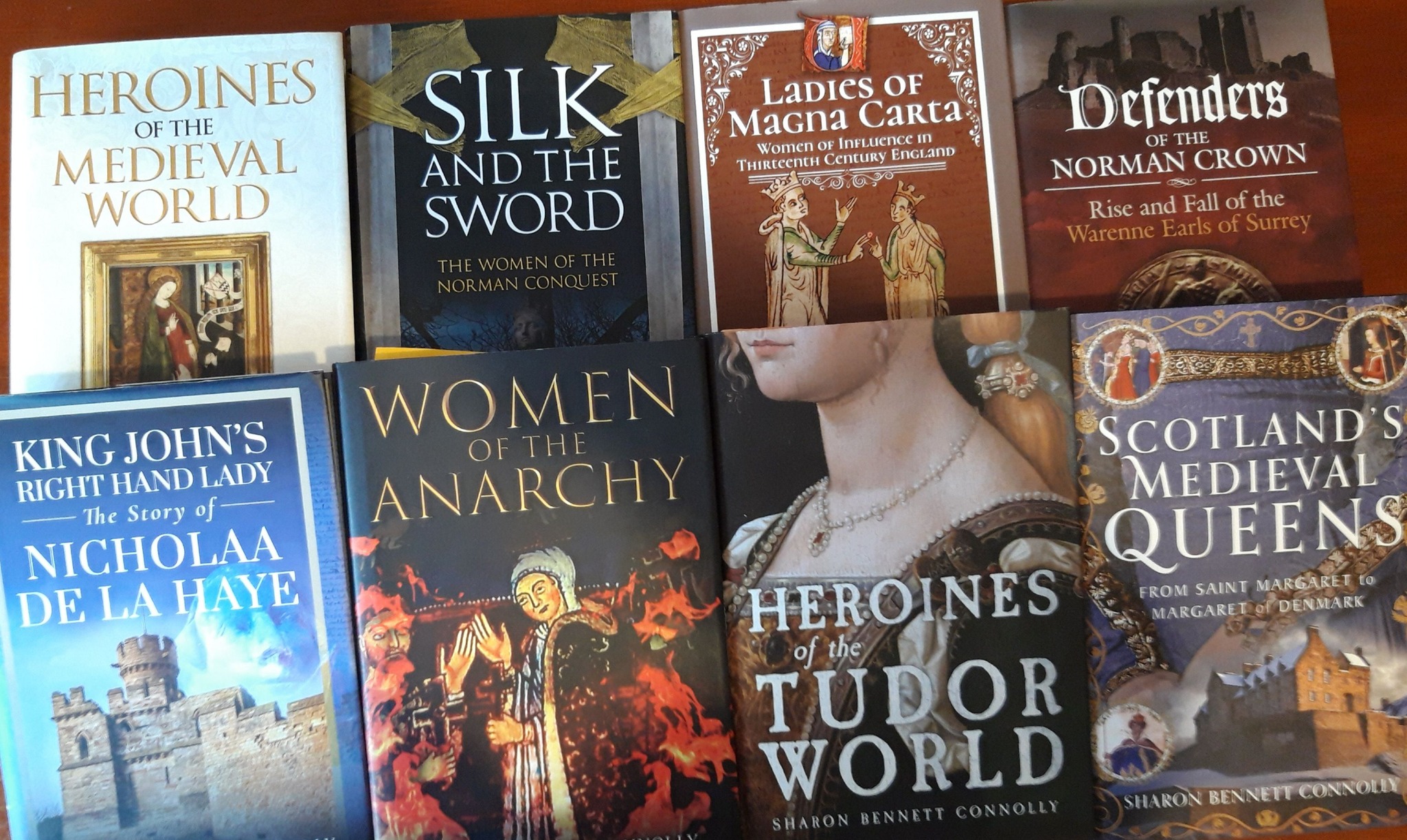
Signed, dedicated copies of all my books are available through my online bookshop.

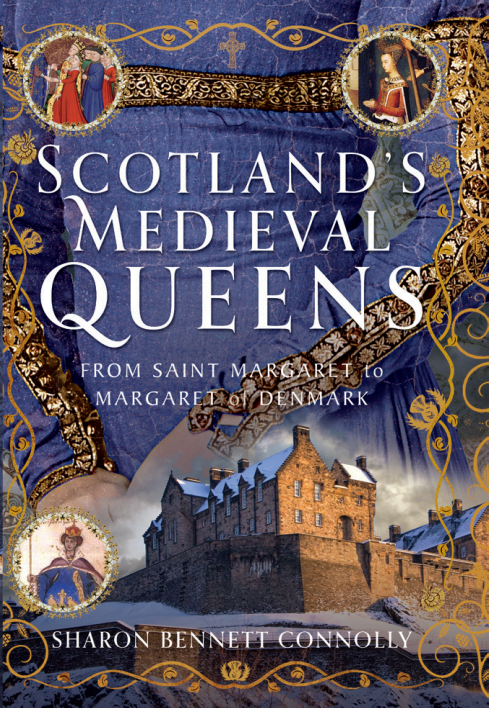
Out now: Scotland’s Medieval Queens

Books by Sharon Bennett Connolly

Scotland’s history is dramatic, violent and bloody. Being England’s northern neighbour has never been easy. Scotland’s queens have had to deal with war, murder, imprisonment, political rivalries and open betrayal. They have loved and lost, raised kings and queens, ruled and died for Scotland. From St Margaret, who became one of the patron saints of Scotland, to Elizabeth de Burgh and the dramatic story of the Scottish Wars of Independence, to the love story and tragedy of Joan Beaufort, to Margaret of Denmark and the dawn of the Renaissance, Scotland’s Medieval Queens have seen it all. This is the story of Scotland through their eyes.

Scotland’s Medieval Queens gives a thorough grounding in the history of the women who ruled Scotland at the side of its kings, often in the shadows, but just as interesting in their lives beyond the spotlight. It’s not a subject that has been widely covered, and Sharon is a pioneer in bringing that information into accessible history.’ Elizabeth Chadwick (New York Times bestselling author)

Available now from Amazon and Pen and Sword Books

Also by Sharon Bennett Connolly:

Books by Sharon Bennett Connolly

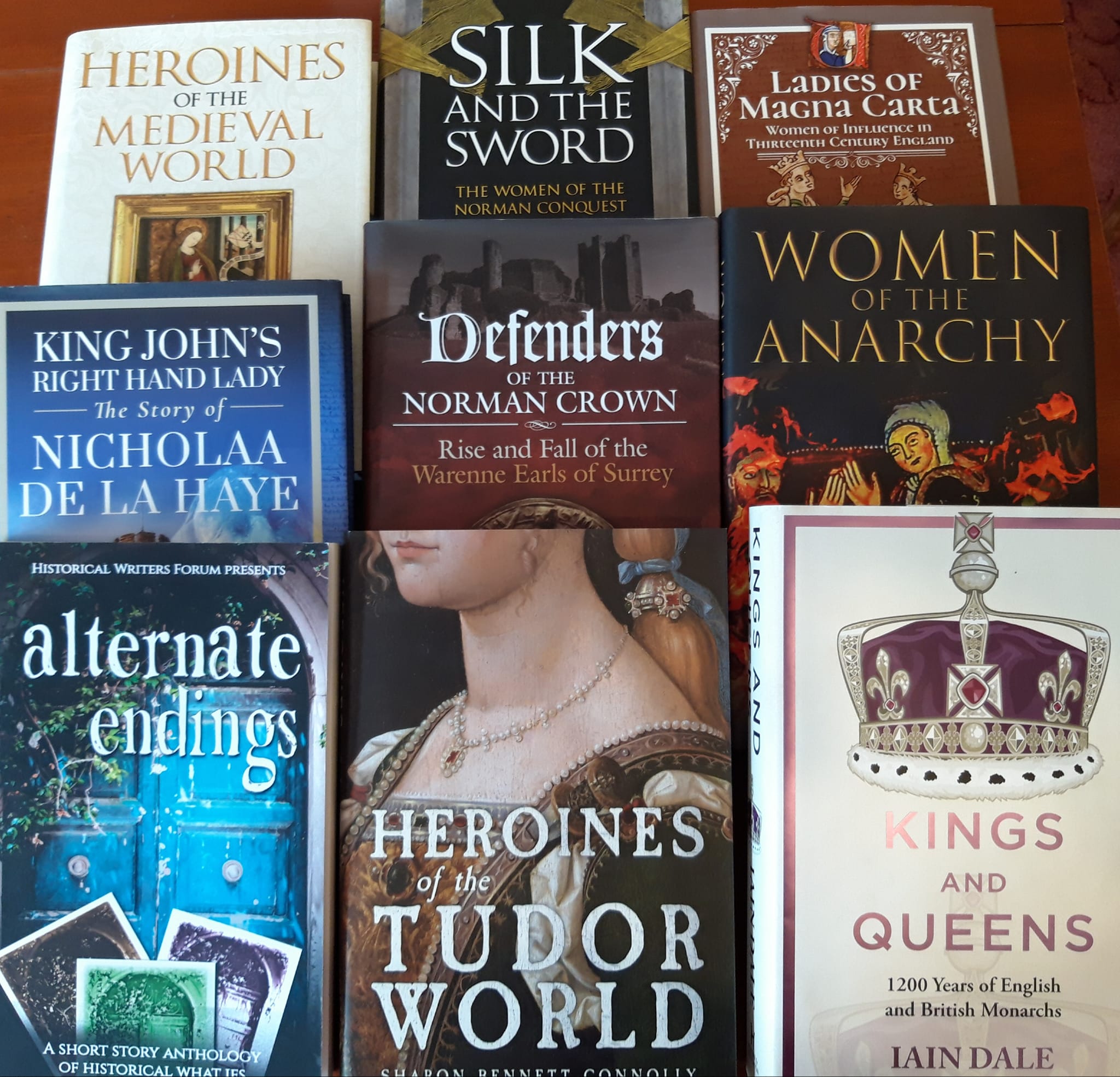
Heroines of the Tudor World tells the stories of the most remarkable women from European history in the time of the Tudor dynasty, 1485-1603. These are the women who ruled, the women who founded dynasties, the women who fought for religious freedom, their families and love. Heroines of the Tudor World is now available for pre-order from Amberley Publishing and Amazon UK. Women of the Anarchy demonstrates how Empress Matilda and Matilda of Boulogne, unable to wield a sword themselves, were prime movers in this time of conflict and lawlessness. It shows how their strengths, weaknesses, and personal ambitions swung the fortunes of war one way – and then the other. Available from Bookshop.orgAmberley Publishing and Amazon UKKing John’s Right-Hand Lady: The Story of Nicholaa de la Haye is the story of a truly remarkable lady, the hereditary constable of Lincoln Castle and the first woman in England to be appointed sheriff in her own right. Available from all good bookshops Pen & Sword Booksbookshop.org and Amazon

Royal Historical Society

Defenders of the Norman Crown: The Rise and Fall of the Warenne Earls of Surrey tells the fascinating story of the Warenne dynasty, from its origins in Normandy, through the Conquest, Magna Carta, the wars and marriages that led to its ultimate demise in the reign of Edward III. Available from Pen & Sword BooksAmazon in the UK and US, and Bookshop.orgLadies of Magna Carta: Women of Influence in Thirteenth Century England looks into the relationships of the various noble families of the 13th century, and how they were affected by the Barons’ Wars, Magna Carta and its aftermath; the bonds that were formed and those that were broken. It is now available in paperback and hardback from Pen & SwordAmazon, and Bookshop.orgHeroines of the Medieval World tells the stories of some of the most remarkable women from Medieval history, from Eleanor of Aquitaine to Julian of Norwich. Available now from Amberley Publishing and Amazon, and Bookshop.orgSilk and the Sword: The Women of the Norman Conquest traces the fortunes of the women who had a significant role to play in the momentous events of 1066. Available now from Amazon,  Amberley Publishing, and Bookshop.org.

Alternate Endings: An anthology of historical fiction short stories including Long Live the King… which is my take what might have happened had King John not died in October 1216. Available in paperback and kindle from Amazon.

Podcast:

A Slice of Medieval

Have a listen to the A Slice of Medieval podcast, which I co-host with Historical fiction novelist Derek Birks. Derek and I welcome guests, such as Bernard Cornwell and Elizabeth Chadwick, and discuss a wide range of topics in medieval history, from significant events to the personalities involved.

Every episode is also now available on YouTube.

*

Don’t forget! Signed and dedicated copies of all my books are available through my online bookshop.

For forthcoming online and in-person talks, please check out my Events Page.

You can be the first to read new articles by clicking the ‘Follow’ button, liking our Facebook page or joining me on TwitterThreadsBluesky and Instagram.

*

©2025 Sharon Bennett Connolly FRHistS and Cathie Dunn

Anna of Kyiv, Queen of France

History ... the Interesting Bits
Anna of Kyiv

Few women in the medieval era were able to take the reins of government. Their role was primarily confined to the domestic sphere, with men taking on the job of governance – whether of lands, as a count or duke, or of a country, as king – because that was seen as their domain. Some women, however, did manage to rule, and to rule efficiently, although not without opposition. Most examples of women who took the reins of power follow the early deaths of their husbands, when they were called upon to rule as regents until their sons were old enough to rule alone.

One such woman was Anna of Kyiv, sometimes called Agnes. Born some time between 1024 and 1036, Anna was the daughter of Yaroslav the Wise, Grand-Duke of Kyiv, and Ingegerd of Sweden. Yaroslav and Ingegerd had nine children, several of whom had made royal marriages. Of their daughters, Anastasia had married Andrew I of Hungary, and Elizabeth (Elisiv) was the wife of Harold (Hardrada) of Norway. One son, Isiaslav, was married to the sister of the king of Poland, while another son, Vsevolod, married a daughter of the Byzantine emperor.

In 1051, Anna was to make the most prestigious marriage of all, when she became the second wife of Henry I, King of France. Following the death of his first wife, Matilda of Frisia, during childbirth, and in an attempt to find a wife who was not related to him within the Church’s prohibited degrees of kinship, Henry had sent an ambassador to Kyiv, laden with gifts, in search of a bride. Anna is said to have been renowned throughout Europe for her ‘exquisite beauty, literacy and wisdom’.1 Anna and Henry were married at the Cathedral of Reims on 19 May 1051; Anna was probably around twenty years old, while Henry was around forty-three.

History ... the Interesting Bits
 Fresco at Saint Sophia’s Cathedral, Kyiv, Anna may be the one on the far left

As a demonstration of her superior level of education, Anna signed the marriage contract in her own hand, using her full name, whereas Henry could only manage a cross. At her coronation at Reims, Anna used a Slavic gospel to say her vows, which she had brought with her from Kyiv, rather than the traditional Latin Bible. Anne brought no land with her marriage dowry, but she did bring connections and wealth. The jewels she brought with her probably included a jacinth, which Abbot Suger later mounted in a reliquary of St Denis.2

Although it lasted only nine years, Anna and Henry’s marriage appears to have been a great success. The couple had three sons, of whom the oldest, Philip, born in 1052, succeeded his father as Philip I. He was known as Philip ‘the Amorous’ and reigned for forty-eight years, marrying twice; firstly to Bertha of Holland and secondly to Bertrade de Montfort, having three children – two sons and a daughter – with each wife. Anne and Henry’s second son, Robert, born in 1054/5, died young and the youngest, Hugh, born in 1057, became Count of Vermandois on his marriage to Adelaide, Countess of Vermandois. Hugh was vilified for failing to fulfil his Crusader vows by returning home early from the First Crusade, he died, in 1101, of wounds received in battle with the Turks after returning to the Holy Land. One of Hugh’s nine children, his daughter, Isabel de Vermandois, was married to Robert de Beaumont, Earl of Leicester, before her father departed on crusade, even though she was only aged 10 or 11 at the time. Isabel would marry, as her second husband, William de Warenne, 2nd Earl of Warenne and Surrey.

History ... the Interesting Bits
Seal of Henry I

Anna appears to have thought of France as provincial compared to her homeland of Kyiv; she is said to have written to her father in 1050 saying, ‘What a barbarous country you sent me to – the dwellings are sombre, the churches horrendous and the morals – terrible’.3 Anna, however, appears to have made an effort to settle into her adopted country, she learned the language and participated, to some extent, in government; she and Henry worked in partnership as king and queen. Several decrees include the phrase ‘With the consent of my wife Anna’ or ‘In the presence of Queen Anna’.4

Towards the end of Henry’s reign, Anna was counter-signatory to at least four charters, including a 1058 charter of concession to the monastery of St Maur-les-Fosses, signed ‘including my wife Anna and sons Philip, Robert and Hugh’ and a donation to the monastery at Hasnon, which was signed by King Henry, Prince Philip and Queen Anna.5

History ... the Interesting Bits
Charter issued jointly by Anna and her son, Philip I of France

The situation changed in 1060 when King Henry died. With Anna’s son Philip then only seven years old, a regency was set up with Baldwin V of Flanders as regent. He was the husband of King Henry’s sister Adele, and father of Matilda of Flanders, Queen of England. However, at the time, the Bishop of Chartres described Philip and his mother Anna as his sovereigns; moreover, Philip himself declared that, as a child, he ruled the kingdom jointly with his mother. The young king valued his mother’s advice and Anna signed numerous royal acts during her son’s reign; her signature was always either the first signature on the document or the second after that of King Philip. The acts included donations to monasteries, the renunciation of customs grants of exemptions and a charter to the Abbot of Marmoutier to build a church. In all, there are at least twenty-three acts that mentioned Anna, or carried her signature, between 1060 and 1075.6

Anna was held in high regard by many. Among her admirers was Pope Nicholas II himself, who wrote to her with high praise;

Nicholas, Bishop, servant of the servants of God, to the glorious queen, greeting and apostolic benediction. We give proper thanks to almighty God, the author of good will, because we have heard that the virile strength of virtues lives in a womanly breast. Indeed it has come to our ears, most distinguished daughter, that your serenity overflows with the munificence of pious generosity for the poor, sweats forth with the zeal of most devoted prayer, administers the force of punishment on behalf of those who are violently oppressed, and fulfills with other good works, insofar as it belongs to you, the office of royal dignity…7

History ... the Interesting Bits
Tomb of Ralph IV in the church of Saint-Pierre in Montdidier.

In 1061 Anna was involved in a scandal in France when she married Raoul, Count of Crepy and Valois, in what appears to have been a love-match. Raoul was an ally of the young king, but was already married to Eleanor. Eleanor’s family name is identified as “Haquenez” in two primary sources, but her origins are obscure. The count had repudiated Eleanor, on the grounds of adultery, in order to marry Queen Anna. However, Eleanor appealed to the pope, Alexander II, who ordered the Archbishop of Reims to investigate the matter.

Raoul was ordered to take Eleanor back, and was excommunicated when he refused; he and Anna left court as a result of the furore. However, Raoul and Anna were both important allies of the king, and continued advising Philip and acting as signatories to his royal acts, despite being exiled from the court. The king eventually forgave his mother and she was welcomed back to court following Raoul’s death in 1074. Her return to her family was probably short-lived, however, as it seems likely that Anna died in 1075, although the exact date of her death, and her final resting place, are lost to the thousand years that have passed since then.

History ... the Interesting Bits
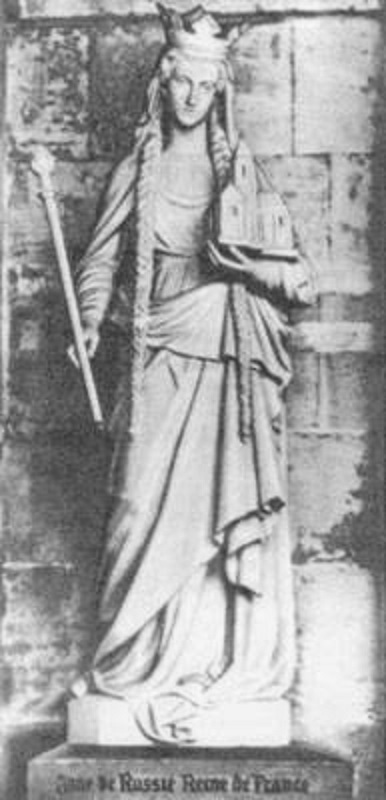
Statue of Anne at the Abbey of Saint-Vincent

Anna of Kyiv left a mark on history in the remarkably high regard in which both her husband, Henry I, and her son Philip held her. She was a well-educated, pious woman whose advice and opinions were respected, not only within her family, but by such exalted persons as the pope and French bishops.

She proved that a woman could act wisely, at least in politics, if not in her second marriage, at a time when women were not expected, or allowed, to rule. The nature of her rule appears to have been a gentle hand on the shoulder of her son, whereas other women were more forceful as rulers – such as Adela of Normandy, Countess of Blois, the daughter of William the Conqueror, King of England, and Matilda of Flanders.

*

Images:

Courtesy of Wikipedia

Notes:

1. Prominent Russians: Anna Yaroslavna (article), russiapedia.rt.com/prominent-russians/the-ryurikovich-dynasty/anna-yaroslavna; 2. epistolae.ccnmtl.columbia.edu, Anne of Kiev (Anna Yaroslavna) (article). Quoted from Bauthier, 550; Hallu, 168, citing Comptes de Suger; 3. Prominent Russians: Anna Yaroslavna; 4. Moniek Bloks, Anne of Kiev, the First Female Regent of France; 5. epistolae.ccnmtl.columbia.edu, Anne of Kiev (Anna Yaroslavna) (article). The St Maur-les-Fosses charter reads ‘annuente mea conjuge Anna et prole Philippo, Roberto ac Hugone’; 6. epistolae.ccnmtl.columbia.edu, Anne of Kiev (Anna Yaroslavna) (article); 7. Letter from Pope Nicholas II to Anne of Kiev, October 1059, epistolae.ccnmtl.columbia.edu/letter/1190, translated by Ashleigh Imus.

Sources:

Prominent Russians: Anna Yaroslavna (article), russiapedia.rt.com/prominent-russians/the-ryurikovich-dynasty/anna-yaroslavna; epistolae.ccnmtl.columbia.edu, Anne of Kiev (Anna Yaroslavna) (article); Moniek Bloks, Anne of Kiev, the First Female Regent of France; Heroines of the Medieval World by Sharon Bennett Connolly; Silk and the Sword: The Women of the Norman Conquest by Sharon Bennett Connolly; Matilda by Tracy Borman; The Norman Conquest by Marc Morris; Elisabeth M.C. Van Houts and Rosalind C. Love (eds and trans), The Warenne (Hyde) Chronicle; W.S. Davis, A History of France from the Earliest Times to the Treaty of Versailles; Emily Joan Ward, Anne of Kiev (c.1024–c.1075) and a reassessment of maternal power in the minority kingship of Philip I of France (article); Charlotte M. Yonge, History of France; Pierre Goubert, The Course of French History

*

My Books

Signed, dedicated copies of all my books are available through my online store.

Out now: Scotland’s Medieval Queens

Books by Sharon Bennett Connolly

Scotland’s history is dramatic, violent and bloody. Being England’s northern neighbour has never been easy. Scotland’s queens have had to deal with war, murder, imprisonment, political rivalries and open betrayal. They have loved and lost, raised kings and queens, ruled and died for Scotland. From St Margaret, who became one of the patron saints of Scotland, to Elizabeth de Burgh and the dramatic story of the Scottish Wars of Independence, to the love story and tragedy of Joan Beaufort, to Margaret of Denmark and the dawn of the Renaissance, Scotland’s Medieval Queens have seen it all. This is the story of Scotland through their eyes.

Scotland’s Medieval Queens gives a thorough grounding in the history of the women who ruled Scotland at the side of its kings, often in the shadows, but just as interesting in their lives beyond the spotlight. It’s not a subject that has been widely covered, and Sharon is a pioneer in bringing that information into accessible history.’ Elizabeth Chadwick (New York Times bestselling author)

Available now from Amazon and Pen and Sword Books

Also by Sharon Bennett Connolly:

Books by Sharon Bennett Connolly

Heroines of the Tudor World tells the stories of the most remarkable women from European history in the time of the Tudor dynasty, 1485-1603. These are the women who ruled, the women who founded dynasties, the women who fought for religious freedom, their families and love. Heroines of the Tudor World is now available for pre-order from Amberley Publishing and Amazon UK. Women of the Anarchy demonstrates how Empress Matilda and Matilda of Boulogne, unable to wield a sword themselves, were prime movers in this time of conflict and lawlessness. It shows how their strengths, weaknesses, and personal ambitions swung the fortunes of war one way – and then the other. Available from Bookshop.orgAmberley Publishing and Amazon UKKing John’s Right-Hand Lady: The Story of Nicholaa de la Haye is the story of a truly remarkable lady, the hereditary constable of Lincoln Castle and the first woman in England to be appointed sheriff in her own right. Available from all good bookshops Pen & Sword Booksbookshop.org and Amazon

Royal Historical Society

Defenders of the Norman Crown: The Rise and Fall of the Warenne Earls of Surrey tells the fascinating story of the Warenne dynasty, from its origins in Normandy, through the Conquest, Magna Carta, the wars and marriages that led to its ultimate demise in the reign of Edward III. Available from Pen & Sword BooksAmazon in the UK and US, and Bookshop.orgLadies of Magna Carta: Women of Influence in Thirteenth Century England looks into the relationships of the various noble families of the 13th century, and how they were affected by the Barons’ Wars, Magna Carta and its aftermath; the bonds that were formed and those that were broken. It is now available in paperback and hardback from Pen & SwordAmazon, and Bookshop.orgHeroines of the Medieval World tells the stories of some of the most remarkable women from Medieval history, from Eleanor of Aquitaine to Julian of Norwich. Available now from Amberley Publishing and Amazon, and Bookshop.orgSilk and the Sword: The Women of the Norman Conquest traces the fortunes of the women who had a significant role to play in the momentous events of 1066. Available now from Amazon,  Amberley Publishing, and Bookshop.org.

Alternate Endings: An anthology of historical fiction short stories including Long Live the King… which is my take what might have happened had King John not died in October 1216. Available in paperback and kindle from Amazon.

Podcast:

A Slice of Medieval

Have a listen to the A Slice of Medieval podcast, which I co-host with Historical fiction novelist Derek Birks. Derek and I welcome guests, such as Bernard Cornwell, Helen Castor and Michael Jecks, and discuss a wide range of topics in medieval history, from significant events to the personalities involved. 

Every episode is also now available on YouTube.

*

Don’t forget! Signed and dedicated copies of all my books are available through my online store.

For forthcoming online and in-person talks, please check out my Events Page.

You can be the first to read new articles by clicking the ‘Follow’ button, liking our Facebook page or joining me on TwitterThreadsBluesky and Instagram.

*

©2025 Sharon Bennett Connolly FRHistS

Anne de Beaujeu, ‘the least foolish woman in France’

History ... the Interesting Bits
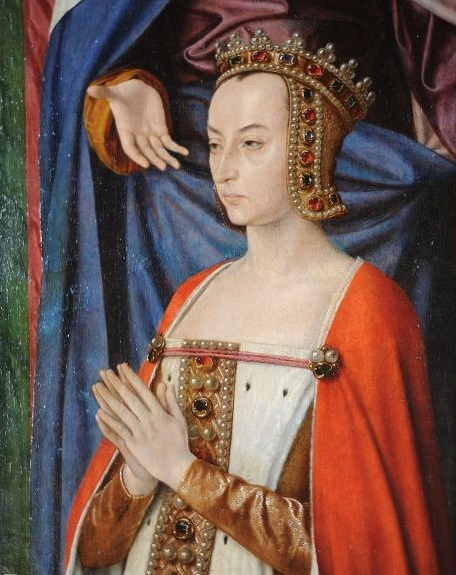
Anne de Beaujeu

Anne de France, also known as Anne de Beaujeu, crosses the invisible divide between the medieval and Tudor eras. As with many rulers from medieval times, Anne was called upon to act as regent for an underage king. She was regent of France during the minority of her younger brother, Charles VIII. Anne was the third child born to Louis XI of France and his second wife, Charlotte of Savoy, but she was the first to survive infancy. Louis’ first wife, Margaret of Scotland, was a daughter of James I and Joan Beaufort and had died in August1445, aged 20.

Anne was born at Genappe, near Brussels, in April 1461. At the time of her birth her father was still dauphin of France. However, just a few months later, Anne’s grandfather, Charles VII, the man who had attained the crown thanks to the efforts of Joan of Arc, died.

The unfortunate king had had a fractious relationship with his son and heir, Louis; they did not see each other for the last fifteen years of Charles VII’s life. Louis plotted intrigue with his neighbours and had even raised an army against his father in 1455, following arguments over Louis’ marriage to Charlotte. He eventually fled to Burgundy with his wife after his father threatened to invade his lands in the Dauphiné. He refused to return to France, despite being told that his father was dying; Louis waited at the French border for news that he was king. Charles VII died of starvation on 22 July 1461, after a tumour in his jaw prevented him from eating, and Louis immediately returned to France for his coronation.

History ... the Interesting Bits
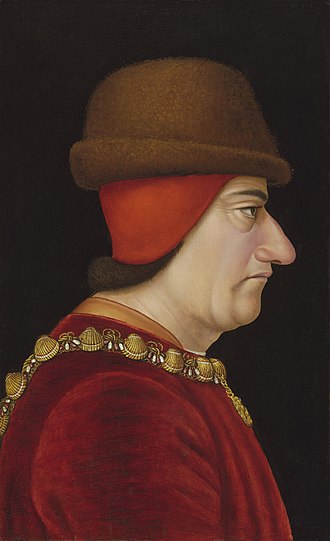
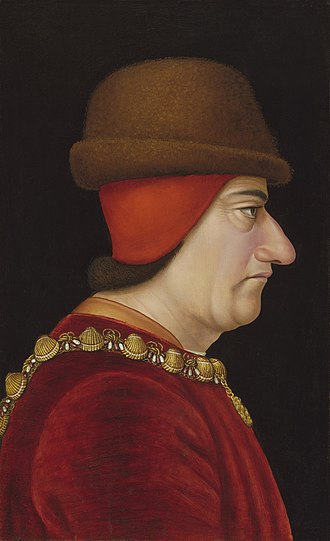
Louis XI, known as the Universal Spider

Louis XI was thirty-eight years old when he became king. He was not a likable man. He possessed a keen intelligence and few scruples. His main political aim was to expand his kingdom, using whatever methods would achieve this. He was pious and cultivated, in contrast to the ostentation and debauchery of his predecessors. His web of political intrigues often got him into international hot water, such as the adventure of Péronnne in 1468, when Louis incited the people of Liège to revolt against the Duke of Burgundy. Under the pretext of negotiation, Louis was arrested by the Duke and forced to offer him financial aid. However, these initial setbacks did not last. Louis was a wily diplomat, at home and abroad, earning him the nickname ‘the universal spider’. He managed to extend French territory by acquiring the French duchy of Burgundy, Picardy, Anjou, Maine and Provence. Louis relied on men of modest means to run his administration, rightfully anticipating that they would be more dependent on him and his goodwill than wealthy nobles. He encouraged the bourgeoisie and initiated the Grand Conseil. He also increased the number of military companies who came directly under the command of the king rather than his nobles.

On his accession, Louis’ daughter, Anne, was installed in the Chateau at Amboise, away from the court, with her mother Charlotte of Savoy and paternal grandmother, Marie of Anjou. Anne was given her own attendants, including chambermaids, nurses and a cradle-rocker. Her mother was in charge of Anne’s education. The queen had an extensive library, including classical works by authors such as Cicero, romances, psalters, histories and books on government. Anne inherited the books on her mother’s death; they were still in her library at Moulins when she herself died.

History ... the Interesting Bits
Charlotte of Savoy

While still in the cradle, in fact as soon as her father was on the throne, Anne was the most eligible princess in Europe. Combined with great energy; many thought her the mirror image of her father in her keen political mind, although not in other ways. She was considered as a bride for Edward IV in England, Duke Francis II of Brittany and even her uncle Charles, Duke of Berry. Any age difference did not matter to her father, who offered the four-year-old princess to the thirty-two-year-old Count of Charolais– Charles the Bold, the future Duke of Burgundy. A betrothal to Nicholas, Duke of Lorraine, came to nothing when the duke broke it off to pursue Mary, Duchess of Burgundy. When she was twelve, almost thirteen, Anne’s future was decided when she married Pierre de Bourbon on 3 November 1473. At thirty-four, Pierre was twenty-one years her senior.

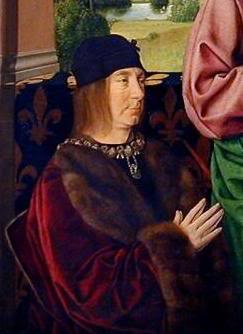
Pierre’s brother, the Duke of Bourbon, allowed him to use the courtesy title of Lord of Beaujeu and gave him rule of the Beaujolais. However, the newly married couple resided in the king’s court at Plessis-lès-Tours. For Anne, the next ten years were spent at the court and, particularly, with her father– during which time Louis XI said Anne was ‘the least foolish woman in France, but a wise one there was not’ (‘Elle était la moins folle femme de France, car de sage il n’en était point’). Anne, who would be called ‘Madame La Grande’ had a sharp political intelligence. She had a handsome face but was not considered beautiful. She fell pregnant in 1476, but little is known of the outcome of the pregnancy, it is possible that she had a short-lived son, Charles, Count of Clermont, but the details are sketchy. In 1481, Anne was given the County of Gien by her father to allow her to finance her own household. In April 1483 she was despatched to Hesdin to bring her little brother’s bride, three-year-old Margaret of Austria, to France. The little princess was to be brought up at the French court until she was old enough to marry the thirteen-year-old dauphin, Charles.

History ... the Interesting Bits
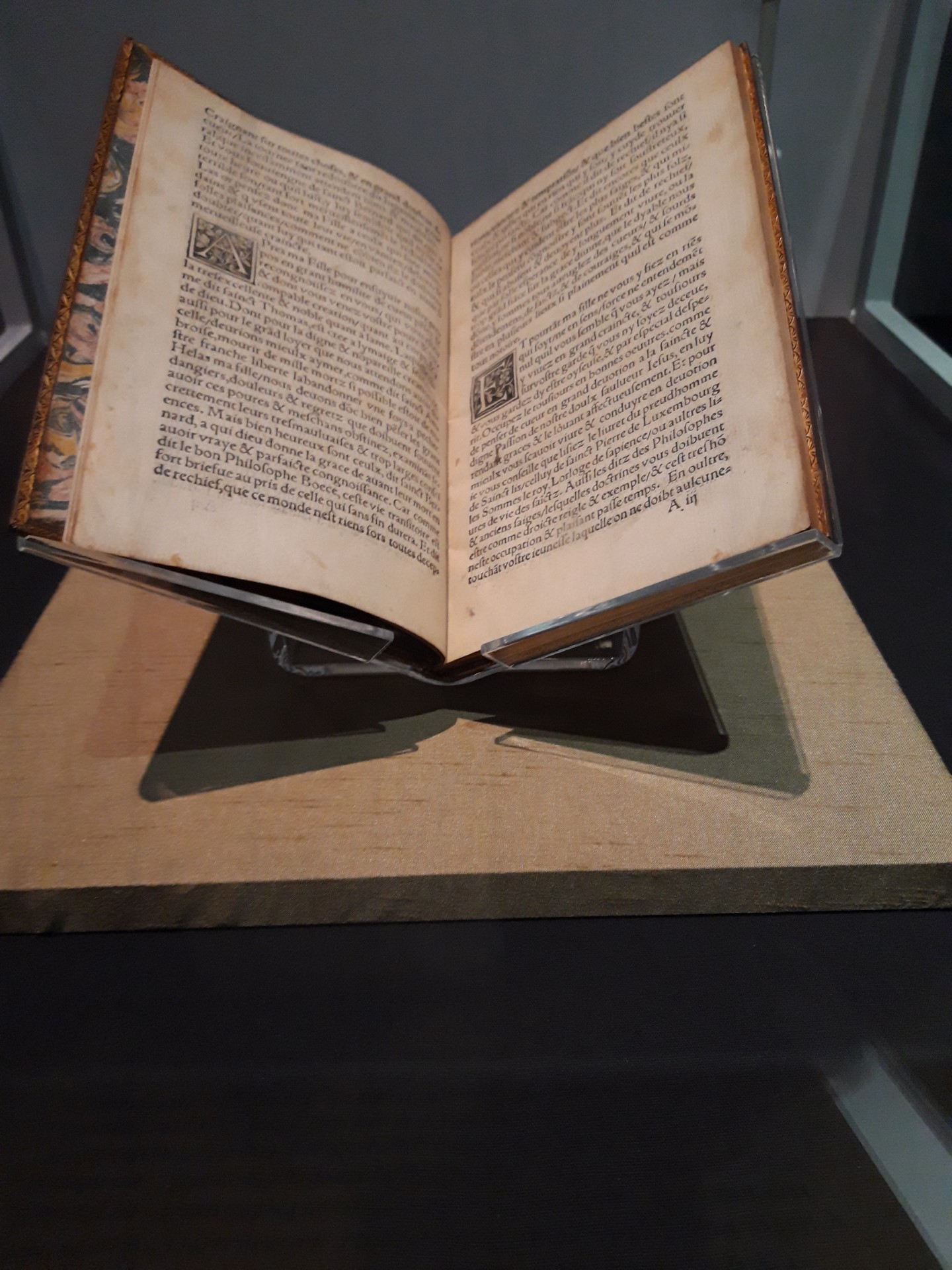
Les Enseignements d’Anne de France, Duchesse de Bourbonnais et d’Auvergne, à sa fille Suzanne de Bourbon

Anne was twenty-two years old when Louis XI died aged sixty on 30 August 1483, at Plessis-lès-Tours in the Loire Valley. He was succeeded by his son, Charles VIII, who was thirteen years old. Louis had not provided for a regency – young Charles was ten months short of his majority – although he had intended to set up a regency council, which would include the young king’s mother, Charlotte of Savoy, and Louis, Duke of Orléans. Louis was a great-grandson of Charles V and brother-in-law to the king and his sister, Anne de Beaujeu, being married to Jeanne de France; he was also Charles VIII’s heir until he produced a son of his own.

Anne’s husband Pierre, Lord of Beaujeu, was to be appointed the council’s president. However, Anne and her husband had also been appointed Charles’s guardians and it seemed a natural progression for them to take over the government of the realm. Charles was crowned on 30 May 1484 and, in the same year, to appease the populace, an Estates General was called. The body which brought together representatives from the Three Estates (nobility, clergy and commons) had last met in 1439. Their grievances, such as requests for reductions in the tailles and no taxation without the consent of the Estates, were heard and promises made; and the representatives went home content they had been listened to, even though their demands were not entirely met.

History ... the Interesting Bits
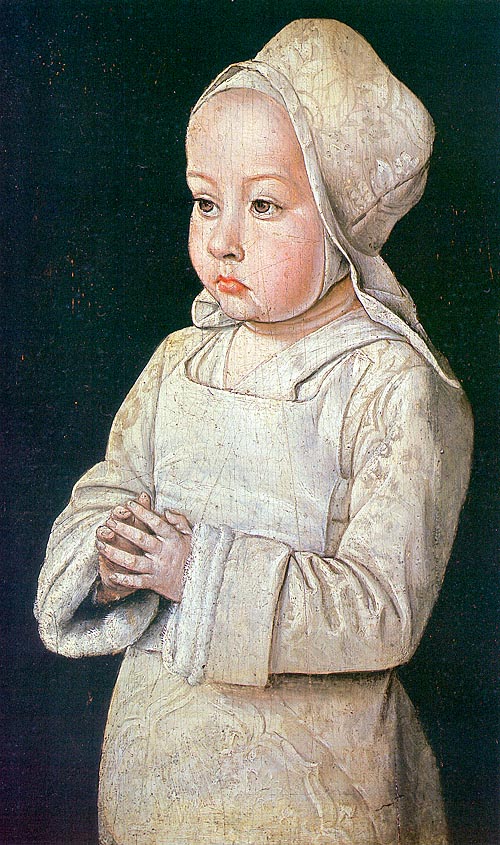
Suzanne de Bourbon

The nobility, who had control of the army, and Louis d’Orléans in particular, were not happy with the arrangements. Encouraged by Archduke Maximilian of Austria and Duke Francis of Brittany, Louis and his supporters took up arms in what became known as ‘the mad war’ or ‘the silly war’. They were soundly defeated, their army crushed at Saint-Aubin-du-Cormier in July 1488, and the Duke of Orléans taken prisoner.

Anne’s greatest success was in Brittany, a semi-autonomous duchy within France. The Duke of Brittany, Francis, died in 1488 leaving his thirteen-year-old daughter Anne as his sole heir. Before his death, in an attempt to keep Brittany from being swallowed up by the French crown, the Duke offered his daughter’s hand in marriage to Maximilian of Austria. However, Maximilian was too far away to protect the duchy when the French army invaded. Anne of Brittany was forced to agree to marry Charles VIII, although Brittany would remain in Anne’s hands. This move eventually led to the annexation of Brittany by the crown. No longer needed as a bride, little Margaret of Austria was sent home and Charles VIII married Anne of Brittany on 6 December 1491. The marriage treaty had one unusual clause in that should Charles die before they had children, Anne was to marry Charles’s heir, the next king of France.

History ... the Interesting Bits
Pierre de Bourbon

This diplomatic coup was one of the last of the Beaujeu regency as Charles VIII was now twenty and of an age and desire to rule. In 1488, Anne de Beaujeu had become Duchess of Bourbon following the death of Pierre’s older brother, John; the title had initially passed to another older brother, Charles, an Archbishop, who was persuaded to relinquish it after holding it for just two weeks, following Pierre’s invasion of the duchy. Anne and Pierre, now the Duke and Duchess of Bourbon, had become the richest, most powerful nobles in the realm. Although she still acted as an advisor to her young brother, Anne de Beaujeu now turned her attention to her new duchy, familiarising herself with her lands and its administration. She started a building programme, which included the rebuilding of the ducal castle at Gien, and the palace at Moulins. She also reorganised the duchy’s administration, codified its laws and raised taxes. Theirs was the epitome of a Renaissance court, the couple being patrons of the arts and literature. Anne particularly loved paintings, tapestries and books.

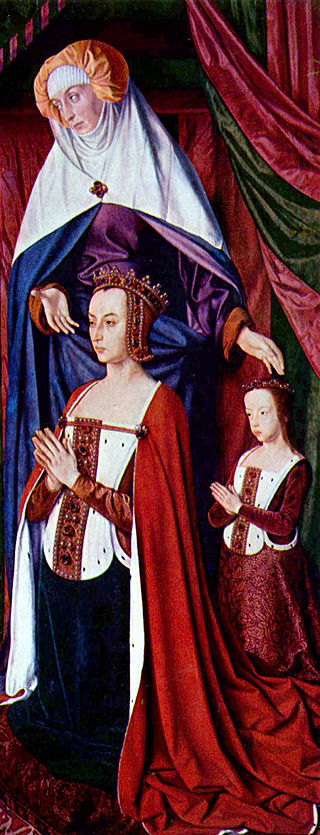
Anne finally gave birth to a surviving child, a daughter, on 10 May 1491, who was named Suzanne. Suzanne was carefully educated by her mother, who wrote a book, Les Enseignements d’Anne de France, Duchesse de Bourbonnais et d’Auvergne, à sa fille Suzanne de Bourbon, giving advice to her daughter on the proper behaviour expected of a noblewoman. Anne de Beaujeu was made regent again in 1494, when her brother Charles VIII led his army into Italy. She financially supported the king’s campaign by loaning him 10,000 livres; she made him pay it back in instalments and had recovered the full amount within a year. Charles died in 1498 after striking his head on a door lintel, leaving no direct heir. His distant cousin Louis, Duke of Orléans, succeeded him as King Louis XII. He immediately applied to the papacy for an annulment of his marriage to Anne de Beaujeu’s sister, Jeanne, in order to marry the dowager queen, Anne of Brittany, as the terms of her original marriage contract dictated. In return for Anne de Beaujeu’s support of his accession and repudiation of her sister, Louis agreed to waive royal rights to the duchy of Bourbon and the Auvergne and to allow these rights to pass to Suzanne, should Anne produce no male heir.

History ... the Interesting Bits
Anne with her daughter Suzanne

In 1503, Pierre de Beaujeu, Duke of Bourbon, fell ill while returning home to Moulins from the French court. He succumbed to a fever, which attacked his body for two months before he died on 10 October. Pierre arranged for Suzanne to marry a prince of royal blood, Charles d’Alençon, and called him to Moulins so the wedding could take place before his death. However, Charles arrived too late and could only act as chief mourner at Pierre’s funeral, rather than as bridegroom to Suzanne. Suzanne’s mother then broke the marriage contract and Suzanne would marry her cousin, Charles III of Bourbon Montpensier, Constable of France, but she died in 1521, childless.

Anne de Beaujeu, Duchess of Bourbon, died on 14 November 1522 at the Château of Chandelle, Coulandon. She was buried alongside her husband and daughter in the abbey at Sauvigny. Her lands and personal title, at her own request, passed to her son-in-law, Charles of Bourbon-Montpensier.

Anne de Beaujeu was regent of France at a time when the country was transitioning from the medieval to the early modern era. She successfully steered the country through civil unrest and initiated the merging of Brittany into the French crown, which would be definitively sealed in 1532.

*

Images:

Courtesy of Wikipedia except the ‘Les Enseignements‘ which is ©2025 Sharon Bennett Connolly

Sources:

Pierre Goubert, The Course of French History; Les Enseignements d’Anne de France, Duchesse de Bourbonnais et d’Auvergene, à sa fille Suzanne de Bourbon (‘The lessons of Anne of France, Duchess of Bourbon and Auvergne, to her daughter Suzanne of Bourbon’); Abernethy, Susan, ‘Anne de Beaujeu, Duchess of Bourbon and Regent of France’ (article);

*

My Books:

Signed, dedicated copies of all my books are available through my online store.

Out now: Scotland’s Medieval Queens

Books by Sharon Bennett Connolly

Scotland’s history is dramatic, violent and bloody. Being England’s northern neighbour has never been easy. Scotland’s queens have had to deal with war, murder, imprisonment, political rivalries and open betrayal. They have loved and lost, raised kings and queens, ruled and died for Scotland. From St Margaret, who became one of the patron saints of Scotland, to Elizabeth de Burgh and the dramatic story of the Scottish Wars of Independence, to the love story and tragedy of Joan Beaufort, to Margaret of Denmark and the dawn of the Renaissance, Scotland’s Medieval Queens have seen it all. This is the story of Scotland through their eyes.

Scotland’s Medieval Queens gives a thorough grounding in the history of the women who ruled Scotland at the side of its kings, often in the shadows, but just as interesting in their lives beyond the spotlight. It’s not a subject that has been widely covered, and Sharon is a pioneer in bringing that information into accessible history.’ Elizabeth Chadwick (New York Times bestselling author)

Available now from Amazon and Pen and Sword Books

Also by Sharon Bennett Connolly:

Books by Sharon Bennett Connolly

Heroines of the Tudor World tells the stories of the most remarkable women from European history in the time of the Tudor dynasty, 1485-1603. These are the women who ruled, the women who founded dynasties, the women who fought for religious freedom, their families and love. Heroines of the Tudor World is now available from Amberley Publishing and Amazon UK. Women of the Anarchy demonstrates how Empress Matilda and Matilda of Boulogne, unable to wield a sword themselves, were prime movers in this time of conflict and lawlessness. It shows how their strengths, weaknesses, and personal ambitions swung the fortunes of war one way – and then the other. Available from Bookshop.orgAmberley Publishing and Amazon UKKing John’s Right-Hand Lady: The Story of Nicholaa de la Haye is the story of a truly remarkable lady, the hereditary constable of Lincoln Castle and the first woman in England to be appointed sheriff in her own right. Available from all good bookshops Pen & Sword Booksbookshop.org and Amazon

Royal Historical Society

Defenders of the Norman Crown: The Rise and Fall of the Warenne Earls of Surrey tells the fascinating story of the Warenne dynasty, from its origins in Normandy, through the Conquest, Magna Carta, the wars and marriages that led to its ultimate demise in the reign of Edward III. Available from Pen & Sword BooksAmazon in the UK and US, and Bookshop.orgLadies of Magna Carta: Women of Influence in Thirteenth Century England looks into the relationships of the various noble families of the 13th century, and how they were affected by the Barons’ Wars, Magna Carta and its aftermath; the bonds that were formed and those that were broken. It is now available in paperback and hardback from Pen & SwordAmazon, and Bookshop.orgHeroines of the Medieval World tells the stories of some of the most remarkable women from Medieval history, from Eleanor of Aquitaine to Julian of Norwich. Available now from Amberley Publishing and Amazon, and Bookshop.orgSilk and the Sword: The Women of the Norman Conquest traces the fortunes of the women who had a significant role to play in the momentous events of 1066. Available now from Amazon,  Amberley Publishing, and Bookshop.org.

Alternate Endings: An anthology of historical fiction short stories including Long Live the King… which is my take what might have happened had King John not died in October 1216. Available in paperback and kindle from Amazon.

Podcast:

A Slice of Medieval

Have a listen to the A Slice of Medieval podcast, which I co-host with Historical fiction novelist Derek Birks. Derek and I welcome guests, such as Bernard Cornwell and Michael Jecks, and discuss a wide range of topics in medieval history, from significant events to the personalities involved. 

Every episode is also now available on YouTube.

*

Don’t forget! Signed and dedicated copies of all my books are available through my online store.

For forthcoming online and in-person talks, please check out my Events Page.

You can be the first to read new articles by clicking the ‘Follow’ button, liking our Facebook page or joining me on TwitterThreadsBluesky and Instagram.

*

©2025 Sharon Bennett Connolly FRHistS

The Poetic Life of Margaret of Scotland, Dauphine of France

Margaret Stewart, Dauphine of France

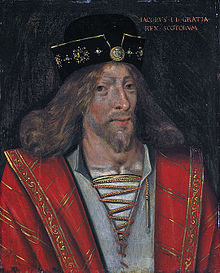
Margaret of Scotland was the eldest daughter of James I, King of Scots, and his wife, Joan Beaufort. James had been king since the age of 12, though the first 18 years of his reign had been spent in English captivity, where he had fallen in love with Joan, the granddaughter of John of Gaunt and Katherine Swynford. James’s release had been successfully negotiated in 1423 and the marriage was politically favourable to the English, who saw it as an opportunity to improve relations with Scotland while, at the same time, drawing Scotland away from France, their traditional ally.

James I returned to Scotland in April 1424, with his new bride – and queen– at his side. Margaret was born in the royal apartments at the Dominican Friary in Perth, on Christmas Day in 1424. She was joined in the nursery by five sisters during the next ten years, Isabella, Eleanor, Joan, Mary and Annabella. Twin brothers were born in 1430, Alexander and James, but only James survived past the first few months.

In 1425, an embassy arrived from France, seeking little Margaret’s hand in marriage for Louis, son and heir of Charles VII:

Margaret’s mother, Joan Beaufort

The king [of Scots] was pleased to respond favourably to so distinguished an embassy, and forthwith sent as a solemn embassy to the king of France with a specific brief and commission the venerable men sir Henry Lychton bishop of Aberdeen, sir Edward Lauder archdeacon of Lothian, and Sir Patrick Ogilvie knight (the sheriff of Angus and justiciar of Scotland). Whereupon there was an agreement on both sides; and five years later, when each was of marriageable age, there came as envoys from the king of France La Hire the king’s maitre d’hôtel along with the distinguished cleric Master Aymer; and in terms of their commission they arranged the betrothal of the said eldest daughter of the king. The girl was sent to France by her father a little later, namely 1436, surrounded by a distinguished following of attendants, and in the following year she was married.1

The marriage proposal was to accompany the renewal the Franco-Scottish alliance. France’s king, Charles VII had given his ambassadors the task of asking for Margaret’s hand in marriage for his son, Louis, the dauphin. Born in July 1423, Louis was just 18 months older than his future bride. However, James I hesitated, reluctant to give the French the army of 6,000 men that they wanted as part of the alliance. Charles VII was in a precarious position in France at the time. The Hundred Years War was raging and, despite the fact his father had died in 1422, he would not actually be crowned king until July 1429. In fact, Henry VI of England had already been crowned King of France and it was only due to the efforts of Joan of Arc that Charles VII’s fortunes would change. James, therefore, held off from agreeing to the alliance, and used it to strengthen his position in negotiations with the English.

Margaret arrives in Tours for her wedding, from a 15th-century work by Jean Chartier.

In 1435, the marriage of Margaret and the dauphin was finally agreed and the young bride, still only eleven years old, set out for France the following year. The princess only narrowly escaped her father’s fate when the English fleet attempted to capture her en route:

the dauphiness luckily made her escape and landed at La Rochelle. She rested at Nieul Priory which is two leagues from La Rochelle without notice being taken of her until such time as the [arch-] bishop of Rheims, with the bishops of Poitiers and Saintes and the worthy sires de Graville, Gaucourt and ‘Pontissey’ welcomed her and lodged her honourably in a splendid place for more than two months until the marriage was celebrated at Tours in Touraine. This was performed there by the archbishop of Rheims with the greatest possible ceremony, in the presence of the king and queen and also of the queen of Sicily (the mother of the queen of France). Once the wedding had been formally celebrated, the Scots (except the few who remained with the dauphiness) were much gratified with various presents and after a safe voyage arrived home.2

She left by ship from Dumbarton in March 1436, with an entourage worthy of a princess; she was escorted by several of the leading lords of the realm, a household of 140 persons in royal livery and more than 1,000 troops. The French fleet in which she sailed landed on the Île de Ré, near La Rochelle, on 17 April and made a formal progress to Tours. On 24 June she met her future husband for the first time, in the great hall of the castle at Tours, and the young couple embraced formally. They were married the next day, in the castle’s chapel.

Margaret’s father, James I, King of Scots

Celebrated by the Archbishop of Reims, it was a rather subdued affair, for a royal wedding. The continuing state of warfare with England had stretched the French royal finances to the limit. The reception was not as lavish as the Scottish guests might have expected and was cut short to preserve funds, the scandalised Scots being quickly ushered out. And almost immediately after the wedding celebrations, most of Margaret’s Scottish household was sent home, with just a handful of her native attendants allowed to stay with the new dauphine. Owing to the tender age of the young couple, they were not expected to consummate the marriage for another few years, so Margaret was given into the guardianship of Queen Marie, Charles VII’s wife, and continued her education under the queen’s supervision. Petite, pretty and delicate, Margaret soon became the darling of the French King and Queen.

Louis, on the other hand, had a strained relationship with his father, one that would eventually be expressed in open rebellion; as a result, he was rarely at court. When Louis asked the king for an allowance with which to set up a household for himself and his young wife, his father refused, despite being happy to give Margaret money to indulge herself. At one time, Charles VII gave Margaret 2,000 livres to buy herself furs and silks, and yet he refused to pay off Louis’ debts. Margaret also received grants directly from the king, rather than her husband, as might have been expected.

Margaret’s husband, the future King Louis XI

In 1437 the marriage was consummated and Margaret, now approaching her thirteenth birthday, was given her own household. Relations between the dauphin and dauphine were not helped by Louis’ strained relationship with his father and it seems that comparisons were made between Louis’ unimpressive looks and Margaret’s beauty – although malicious English chroniclers would insist that Louis was repelled by Margaret’s ‘evil soured breath’.

Margaret was allowed no part in court politics. The dauphine’s role in France was limited to formal occasions and court ceremonials, such as the celebrations for the marriage of the king’s niece, Margaret of Anjou, to Henry VI of England, which Margaret attended in 1445. As with her father before her, Margaret had a passion and talent for writing poetry and, although she enjoyed court life, she became increasingly bored with it. She retreated more and more to her own chambers with her ladies and spent her days and evenings writing and reading poetry. Her evenings were so taken up in this style, that she often retired to bed long after Louis had fallen asleep.

Margaret was also renowned as a patroness of literature. She had several poets in her household, including Jehanne Filleul, whose works have survived to this day, and the Viscount de Blosseville. De Blosseville wrote one of the three laments to the dauphine, written before her death. Another such lament was possibly written by her sister Isabella, it was certainly in her possession.

As the years passed and the couple remained childless, Margaret’s lifestyle caused further discontent within the marriage, and more unhappiness for the young princess as her husband expressed his displeasure. There is some suggestion that Margaret deliberately prevented herself from falling pregnant by drinking vinegar, and by tightly lacing her bodices – although this may also have been for vanity, and to keep her svelte figure. There were also followed accusations of impropriety within Margaret’s rooms when, at Christmas 1444, Jamet de Tillay, a member of the king’s household, entered her chamber during one of her private poetry evenings and subsequently spread rumours about ‘wanton princesses’.

Margaret perceived it as a personal attack and became increasingly distressed, complaining that Jamet had turned the king and dauphin against her. Although Jamet tried to apologise, Margaret would not hear of it. By the summer of 1445 the dauphine was very ill.

Tomb of Margaret Stewart in the Saint-Laon Church, Thouars

Having accompanied the court on pilgrimage she fell ill on 7 August and by the next day she was feverish and suffering from fits of coughing. Her doctors diagnosed an inflammation of the lungs. In her delirium, she blamed Jamet de Tillay for her impending demise and swore she had never done Louis any wrong. As she approached death, Margaret calmed down and forgave Jamet, on her ladies’ instigation. Having received the last rites, Margaret died on 16 August 1445, at Châlons-sur-Marne; she was just twenty years old. The dauphine was laid to rest in the Cathedral of St Étienne in Châlons; in 1479 her body was moved by her husband, now Louis XI, to the chapel of the Holy Sepulchre in the Abbey Church of Saint-Laon in Thouars, where Margaret had founded a chaplaincy.

Following her death, Louis destroyed every piece of poetry and writing that Margaret had ever produced. None of her work survived her husband’s purge. However, her patronage of poets has at least ensured she had a worthy legacy. Louis went on to marry Charlotte of Savoy and was the father of Anne de Beaujeu, regent of France for her brother King Charles VIII.

Notes:

1. Bower, Scotichronicon, V 8, p. 249; 2. ibid, p. 251

Sources:

Calendar of documents relating to Scotland, Vol. 4; M. H. Brown, ‘Joan [née Joan Beaufort]’, oxforddnb.com; Amy Licence, Red Roses: Blanche of Gaunt to Margaret Beaufort; Nigel Tranter, The Story of Scotland; John of Fordun’s Chronicle of the Scottish Nation; Walter Bower, Scotichronicon; Andrew Wyntoun, The orygynale cronykil of Scotland; Richard Oram, editor, The Kings and Queens of Scotland; Rosalind K. Marshall, Scottish Queens 1034–1714; Nigel Tranter, The Story of Scotland; David Ross Scotland, History of a NationLiber pluscardensis, edited by Felix James Henry Skene; James I, King of Scots, The Kingis Quair, edited by James, William MacKean, Walter W. Skeat, Alexander Gardner

Images:

Courtesy of Wikipedia

*

My books

Signed, dedicated copies of all my books are available through my online store.

Out now: Scotland’s Medieval Queens

Scotland’s history is dramatic, violent and bloody. Being England’s northern neighbour has never been easy. Scotland’s queens have had to deal with war, murder, imprisonment, political rivalries and open betrayal. They have loved and lost, raised kings and queens, ruled and died for Scotland. From St Margaret, who became one of the patron saints of Scotland, to Elizabeth de Burgh and the dramatic story of the Scottish Wars of Independence, to the love story and tragedy of Joan Beaufort, to Margaret of Denmark and the dawn of the Renaissance, Scotland’s Medieval Queens have seen it all. This is the story of Scotland through their eyes.

Scotland’s Medieval Queens gives a thorough grounding in the history of the women who ruled Scotland at the side of its kings, often in the shadows, but just as interesting in their lives beyond the spotlight. It’s not a subject that has been widely covered, and Sharon is a pioneer in bringing that information into accessible history.’ Elizabeth Chadwick (New York Times bestselling author)

Available now from Amazon and Pen and Sword Books

Also by Sharon Bennett Connolly:

Heroines of the Tudor World tells the stories of the most remarkable women from European history in the time of the Tudor dynasty, 1485-1603. These are the women who ruled, the women who founded dynasties, the women who fought for religious freedom, their families and love. Heroines of the Tudor World is now available from Amberley Publishing and Amazon UK. Women of the Anarchy demonstrates how Empress Matilda and Matilda of Boulogne, unable to wield a sword themselves, were prime movers in this time of conflict and lawlessness. It shows how their strengths, weaknesses, and personal ambitions swung the fortunes of war one way – and then the other. Available from Bookshop.orgAmberley Publishing and Amazon UKKing John’s Right-Hand Lady: The Story of Nicholaa de la Haye is the story of a truly remarkable lady, the hereditary constable of Lincoln Castle and the first woman in England to be appointed sheriff in her own right. Available from all good bookshops Pen & Sword Booksbookshop.org and Amazon

Defenders of the Norman Crown: The Rise and Fall of the Warenne Earls of Surrey tells the fascinating story of the Warenne dynasty, from its origins in Normandy, through the Conquest, Magna Carta, the wars and marriages that led to its ultimate demise in the reign of Edward III. Available from Pen & Sword BooksAmazon in the UK and US, and Bookshop.orgLadies of Magna Carta: Women of Influence in Thirteenth Century England looks into the relationships of the various noble families of the 13th century, and how they were affected by the Barons’ Wars, Magna Carta and its aftermath; the bonds that were formed and those that were broken. It is now available in paperback and hardback from Pen & SwordAmazon, and Bookshop.orgHeroines of the Medieval World tells the stories of some of the most remarkable women from Medieval history, from Eleanor of Aquitaine to Julian of Norwich. Available now from Amberley Publishing and Amazon, and Bookshop.orgSilk and the Sword: The Women of the Norman Conquest traces the fortunes of the women who had a significant role to play in the momentous events of 1066. Available now from Amazon,  Amberley Publishing, and Bookshop.org.

Alternate Endings: An anthology of historical fiction short stories including Long Live the King… which is my take what might have happened had King John not died in October 1216. Available in paperback and kindle from Amazon.

Podcast:

Have a listen to the A Slice of Medieval podcast, which I co-host with Historical fiction novelist Derek Birks. Derek and I welcome guests, such as Bernard Cornwell and Michael Jecks, and discuss a wide range of topics in medieval history, from significant events to the personalities involved. Every episode is also now available on YouTube.

*

Don’t forget! Signed and dedicated copies of all my books are available through my online store.

For forthcoming online and in-person talks, please check out my Events Page.

You can be the first to read new articles by clicking the ‘Follow’ button, liking our Facebook page or joining me on TwitterThreadsBluesky and Instagram.

*

©2025 Sharon Bennett Connolly, FRHistS

Wordly Women: Catherine Hanley

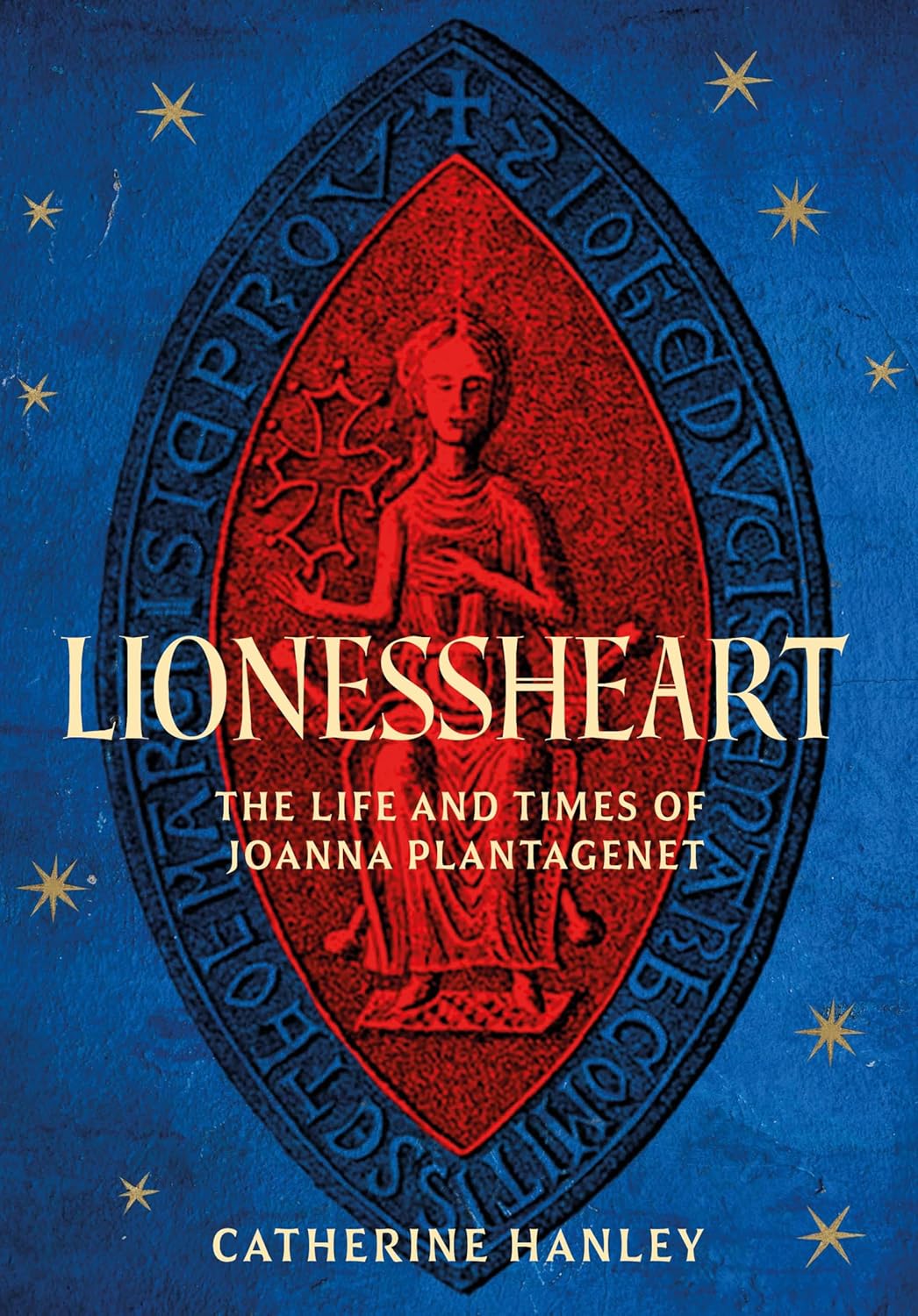
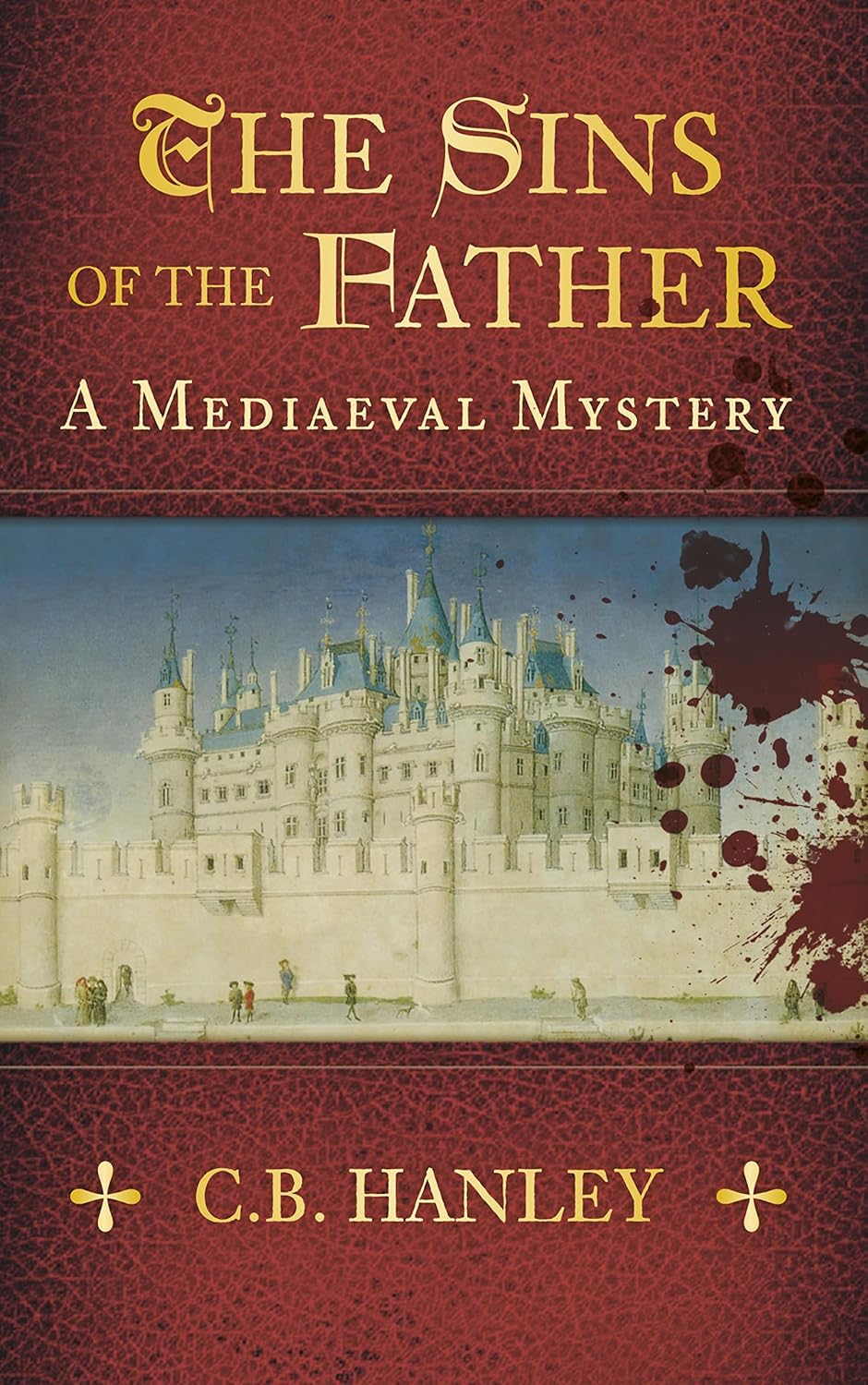
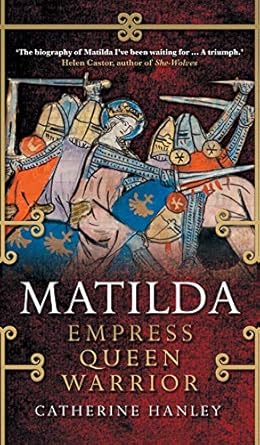
I am very happy today to welcome historian Catherine Hanley to History…the Interesting Bits in a new instalment of my Author Spotlight series, Wordly Women. Catherine is the author of Matilda, 1217 and her latest book, Lionessheart, about Joanna, the sister of Richard the Lionheart. Catherine also writes a historical fiction A Medieval Mystery series under the name C.B. Hanley, following the adventures of Edwin Weaver, bailiff of Conisbrough Castle and its lord, William de Warenne, 5th Earl of Warenne and Surrey. It is a fabulous series that I can highly recommend!

Sharon: So, Catherine, what got you into writing?

Catherine: Oddly, that question is kind of the wrong way round for me. When I did my PhD I was reading and writing all day every day for years; after it was finished and I got a full-time job that didn’t involve writing, I missed it so much that I just had to take it up on top of work. As the cliché goes, I write because I simply can’t *not* write. Eventually, over the years, it came to replace the day job rather than being an add-on.

Sharon: You write both fiction and non-fiction – is one harder than the other?

Catherine: On a day when I’m writing fiction, I’d say non-fiction was easier, and vice versa …

Sharon: Tell us about your books.

Catherine: My non-fiction mainly explores different facets of war and politics in the twelfth and thirteenth centuries – sometimes via biographies of individuals, and sometimes in the form of more wide-ranging surveys.

My fiction is a series of murder mysteries set during the early thirteenth century, during and just after the French invasion that followed the Magna Carta wars. My main characters are fictional, but the stories are set against a factual backdrop, with some real people in the background. It all started because, during some academic research, I discovered that a certain high-profile individual had changed sides twice during that war, but nobody knew why. So I decided to make up a (plausible!) story about why this had happened, and then once I’d started I just kept going.

Sharon: What attracts you to the 13th century?

Catherine: It is the best century, and I will be taking no further questions and entering into no arguments on this subject. (Sharon: no argument from me! I totally agree with this analysis!)

Sharon: Who is your favourite 13th century personality and why?

Catherine: OK, so this is very niche, but it’s Philip of Dreux, a member of a cadet branch of the Capetian royal house, who was the bishop of Beauvais in France. He was a younger son, so he’d been ‘donated’ to the Church by his family early in life. Unfortunately for him this had been done purely on the basis of birth order rather than aptitude or inclination, and he was one of the most bellicose men you could imagine. He fought in the Third Crusade, during which he travelled to Cyprus to tell Richard the Lionheart to his face that he should stop ‘arrogantly persecuting innocent Christians when close by there were still so many thousands of Saracens whom he should be attacking’, which went down about as well as you might expect. He was still going decades later, and fought in battle of Bouvines when aged in his sixties; there he battered the much younger earl of Salisbury to the ground with a mace ‘that he happened to have in his hand’, which is one of the best primary-source lines you’ll ever read.

If I ever decide to write a new series of novels when my current one is finished, the bishop of Beauvais and his mace are going to have starring roles …

Sharon: Who is your least favourite 13th century personality and why?

Catherine: It’s unfortunate for the purposes of this question that Richard the Lionheart died in 1199, thus making him a personality of the twelfth century, so I can’t nominate him! I also think that William Marshal has been vastly overrated.

Sharon: How do you approach researching your topic?

Catherine: I read A LOT, making sure that I’m consulting a wide range of primary sources rather than merely relying on what other people have said in secondary sources.

Sharon: Tell us your ‘favourite’ medieval story you have come across in your research.

Catherine: Basically the entire career of Philip Augustus of France, but I can’t give you too many spoilers on that just now …

Sharon: Tell us your least ‘favourite’ medieval story you have come across in your research.

Catherine: It’s always difficult reading about the many atrocities that took place in the past. One that got to me quite recently was the sad tale of Owain ap Dafydd, the son of Welsh prince Dafydd ap Gruffudd. Dafydd was captured by Edward I and then hanged, drawn and quartered, and his two sons were sentenced to harsh imprisonment. The elder of them died not long afterwards, but Owain, who was 7 when he was incarcerated, lived on for more than 40 years. He was kept in solitary confinement (and, as an adult, actually in a cage), and this stunted his mental as well as his physical development. A sad letter was later sent on his behalf asking if he could please have more adequate food and clothing, and whether he might be allowed out of his cell occasionally ‘to play’. He was at that point 37.

Sharon: Are there any other eras you would like to write about?

Catherine: Not really. There’s still so much to be discovered and said about the twelfth and thirteenth centuries that I can happily spend the rest of my career there, although I do venture occasionally into the fourteenth. The thought of writing about anything post-medieval gives me a nosebleed.

Sharon: What are you working on now?

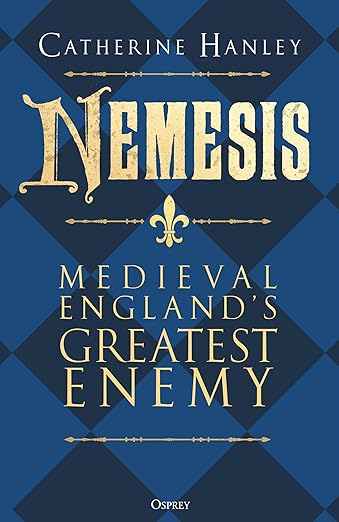
Catherine: *Takes a deep breath* As ever, I have several projects on the go, all at different stages. In non-fiction, I’m at page-proof stage for Nemesis: Medieval England’s Greatest Enemy (about the French king Philip Augustus), for publication in September 2025; almost at manuscript delivery stage for Women in Medieval Families (for 2026 publication) and in the early stages of a whopping volume called The English at War in the Middle Ages for 2027.

In fiction, A Pale Horse, number 9 in my series of medieval mysteries, is due out in June 2025, and I’m having some initial thoughts about book 10.

That’s probably enough to be getting on with!

Sharon: And finally, what is the best thing about being a writer?

Catherine: Being able to sit in a roomful of books by myself all day and lose myself in the Middle Ages. It’s such a privilege that I can still hardly believe it’s happening.

About the Author:

Dr Catherine Hanley holds a PhD in Medieval Studies and is a Fellow of the Royal Historical Society. After producing several scholarly publications she decided to write something more interesting, and she now splits her time between writing popular history and historical fiction.

Catherine: I have no social media (anyone who wants to contact me may do so by writing in ink on parchment and then sending it via a messenger on a fast horse).

Bookshop link: https://uk.bookshop.org/shop/catherinehanley

*

My books

Signed, dedicated copies of all my books are available through my online store.

Out now: Scotland’s Medieval Queens

Scotland’s history is dramatic, violent and bloody. Being England’s northern neighbour has never been easy. Scotland’s queens have had to deal with war, murder, imprisonment, political rivalries and open betrayal. They have loved and lost, raised kings and queens, ruled and died for Scotland. From St Margaret, who became one of the patron saints of Scotland, to Elizabeth de Burgh and the dramatic story of the Scottish Wars of Independence, to the love story and tragedy of Joan Beaufort, to Margaret of Denmark and the dawn of the Renaissance, Scotland’s Medieval Queens have seen it all. This is the story of Scotland through their eyes.

Scotland’s Medieval Queens gives a thorough grounding in the history of the women who ruled Scotland at the side of its kings, often in the shadows, but just as interesting in their lives beyond the spotlight. It’s not a subject that has been widely covered, and Sharon is a pioneer in bringing that information into accessible history.’ Elizabeth Chadwick (New York Times bestselling author)

Available now from Amazon and Pen and Sword Books

Also by Sharon Bennett Connolly:

Heroines of the Tudor World tells the stories of the most remarkable women from European history in the time of the Tudor dynasty, 1485-1603. These are the women who ruled, the women who founded dynasties, the women who fought for religious freedom, their families and love. Heroines of the Tudor World is now available for pre-order from Amberley Publishing and Amazon UK. Women of the Anarchy demonstrates how Empress Matilda and Matilda of Boulogne, unable to wield a sword themselves, were prime movers in this time of conflict and lawlessness. It shows how their strengths, weaknesses, and personal ambitions swung the fortunes of war one way – and then the other. Available from Bookshop.orgAmberley Publishing and Amazon UKKing John’s Right-Hand Lady: The Story of Nicholaa de la Haye is the story of a truly remarkable lady, the hereditary constable of Lincoln Castle and the first woman in England to be appointed sheriff in her own right. Available from all good bookshops Pen & Sword Booksbookshop.org and Amazon

Defenders of the Norman Crown: The Rise and Fall of the Warenne Earls of Surrey tells the fascinating story of the Warenne dynasty, from its origins in Normandy, through the Conquest, Magna Carta, the wars and marriages that led to its ultimate demise in the reign of Edward III. Available from Pen & Sword BooksAmazon in the UK and US, and Bookshop.orgLadies of Magna Carta: Women of Influence in Thirteenth Century England looks into the relationships of the various noble families of the 13th century, and how they were affected by the Barons’ Wars, Magna Carta and its aftermath; the bonds that were formed and those that were broken. It is now available in paperback and hardback from Pen & SwordAmazon, and Bookshop.orgHeroines of the Medieval World tells the stories of some of the most remarkable women from Medieval history, from Eleanor of Aquitaine to Julian of Norwich. Available now from Amberley Publishing and Amazon, and Bookshop.orgSilk and the Sword: The Women of the Norman Conquest traces the fortunes of the women who had a significant role to play in the momentous events of 1066. Available now from Amazon,  Amberley Publishing, and Bookshop.org.

Alternate Endings: An anthology of historical fiction short stories including Long Live the King… which is my take what might have happened had King John not died in October 1216. Available in paperback and kindle from Amazon.

Podcast:

Have a listen to the A Slice of Medieval podcast, which I co-host with Historical fiction novelist Derek Birks. Derek and I welcome guests, such as Bernard Cornwell and Michael Jecks, and discuss a wide range of topics in medieval history, from significant events to the personalities involved. Every episode is also now available on YouTube.

And we will be chatting with Catherine Hanley about Joanna Plantagenet, Lionessheart, in a couple of months!

*

Don’t forget! Signed and dedicated copies of all my books are available through my online store.

For forthcoming online and in-person talks, please check out my Events Page.

You can be the first to read new articles by clicking the ‘Follow’ button, liking our Facebook page or joining me on TwitterThreadsBluesky and Instagram.

*

©2025 Sharon Bennett Connolly, FRHistS and Dr Catherine Hanley, FRHistS

Diane de Poitiers: Maitresse en Titre

Diane de Poitiers by Jean Clouet

Born in 1499, Diane de Poitiers was the widow of Louis de Brézé, Grand-Sénéschal of Normandy, 39 years her senior and a grandson of King Charles VII by his mistress, Agnes Sorèl; he was also reputedly the ugliest man in France. Diane de Poitiers had joined the court at the age of 14 and had married to Louis de Brézé, a rich and powerful widower, the following year. An attractive young woman, Diane had a natural elegance and was careful of her looks. She never used make-up to enhance her appearance, using only cold water on her face and body; she went to bed early and took regular outdoor exercise, avoiding excesses of any sort. When she came to court, Diane was a lady-in-waiting to Queen Claude of France. When Claude died, she served Francis I’s mother, Louise de Savoie and the Queen Eleanor of Austria, King Francis’ second wife. Widowed in 1531, Diane wore black and white – the colour of mourning – for the rest of her life, and she retained control of her husband’s finances, the king allowing her to manage all her inherited estates without the supervision of a male guardian or relative, thus allowing Diane to be financially independent.

The younger son of Francis I and Queen Claude, Henri had spent 4 years in captivity in Spain from the age of 7. Following Francis I’s defeat at the Battle of Pavia in 1525, in order to obtain his own freedom, the French king had agreed to give up his 2 sons, Henri and his older brother, Francis, as hostages and had them despatched to captivity in Madrid. It was, perhaps, not surprising that Henri had returned from his four years in Spain at the age of eleven ‘an unpolished and silent boy.’1 The king asked Diane de Poitiers to become his son’s tutor. She and the prince developed a strong bond which would eventually develop into a romantic relationship, despite the fact she was 19 years older than Henri.

In 1533, Henri was married to Catherine de Medici and a year later, Diane became one of his mistresses. And in 1536, at the age of 18, Henri’s older brother, Francis, died suddenly, making the young prince dauphin of France. Two years later, Henri fathered a daughter on another mistress, Filipa Duci, who was the sister of one of his Piedmontese grooms. The baby girl was named Diane de France, in tribute to Henri’s favourite mistress. With his marriage to Catherine de Medici still childless, the birth of an illegitimate daughter was proof, as far as Henri was concerned, that the fault did not lay with him. It was, however, a humiliation for Catherine.

Henri II, King of France

Once Henri became dauphin, the apparent barrenness of the prince and his wife became a serious concern. Talk at court began to centre around the possible repudiation of Catherine. Diane and Catherine, mistress and wife, formed a truce in order to ward off any attempts to force Henri and Catherine to divorce; concerned that Catherine was failing in her duty to produce an heir and that, although Henri liked Catherine well enough, he was not passionate with her. Aware that her own position would be threatened by the arrival of a new bride for Henri, Diane determined to help Catherine. To resolve the situation, Diane offered the dauphine advice on Henri’s preferred sexual positions and how to arouse the prince’s passion. Awkward! When this did not work, Catherine had spy holes made in her chamber floor so that she could watch Henri, in the chamber below, with Diane. Historian Estelle Paranque explains that; ‘the sight of their intimate encounter only succeeded in deeply hurting the dauphine, however, who realised that Henri did not perform the sexual act the same way with her as he did with his mistress.’2

Diane continued to offer advice to Catherine, before eventually offering to stimulate the prince before sending him to his wife’s bedchamber. However awkward this must have been for both women, it apparently worked, with Catherine herself admitting to Henri showing more passion in their lovemaking. And by June 1543, Catherine was pregnant. A baby boy arrived on 19 January 1544, named Francis after his grandfather. And a year later, a baby girl named Elisabeth joined the little prince in the nursery. Catherine was finally able to feel safe from being discarded and abandoned. Ten children eventually filled the royal nursery, seven of whom reached adulthood.

In the autumn of 1544, probably somewhat to Catherine’s satisfaction, King Francis’ mistress, the duchesse d’Étampes, with whom Diane had a bitter rivalry, succeeded in arranging her banishment from court, after Henri had replaced one of the duchess’s protégés while campaigning against the English in Picardy. Diane retreated to her château at Anet, closely followed by a sulking Henri. She received permission to return to court the following year.

Catherine de Medicis, Queen of France

In spite of this, Catherine would remain in the shadow of Henri and Diane’s love throughout their marriage, with Henri continuing to shower his favourite mistress with patronage. He even had a monogram designed, interlacing the H and D of their names, and placed them everywhere he could. King Francis I died in 1547, and Henri was now King Henri II of France. But, while Catherine was now queen of France, she wielded little political influence and it was Diane’s star that rose still higher. She was made maitresse en titre and a permanent member of Henri’s privy council. She was showered with jewels and offices, as well as estates and other honours. The Venetian ambassador, Marino Cavalli noted Diane’s influence over the new king, stating that ‘this lady has made sure to indoctrinate, to correct, and counsel’ Henri.3 Wherever the king and queen were found, so too was Diane de Poitiers, walking right behind Catherine. In Paris, Diane was named in the same rank as the princesses of France, while in Rouen the aldermen brought her jewels and gifts made of gold and laid them at her feet. King Henri gave her the royal Château of Chenonceau, despite the protestations of Catherine, who thought it should be hers. Henri ignored Catherine’s pleas. Yet another slight the young queen had to endure due to her husband’s infatuation with Diane de Poitiers.

And it was to Diane that the responsibility of impressing foreign ambassadors fell. In 1550 the English ambassador, William Pickering, was staying at the French court, at that time at Diane’s Château of Anet. After his audience with the king, Diane entertained the ambassador, showing him the magnificence of her château. And in 1552, Venetian ambassador Lorenzo Contarini remarked on Diane’s influence at court; ‘she knows about everything and every single day, after dinner, the king looks for her and spends an hour and a half with her to discuss everything that has happened.’4 At tournaments, it was Diane’s colours that the king displayed, not those of his queen. Created Duchess of Valentinois by Henri II, she was, quite literally, the love of his life. Although the king never had children with his maitresse en titre, he did have children with other mistresses and, of course, his wife.

As Henri’s reign progressed, he began to show greater confidence in his queen, but Diane still managed to thwart the Catherine achieving significant power. In 1548 and in 1552, when Henri was out of the country on campaign, he entrusted Catherine with the regency of France. However, in 1548 Diane managed to persuade Henri to appoint Anne de Montmorency (a man) as co-regent and in 1552, she had Chancellor Bertrandi named as co-regent, effectively forcing Catherine to answer to him.

Château of Chenonceau, France

Catherine would, eventually get the upper hand.

The rivalry between Catherine de Medici and Diane de Poitiers would come to an abrupt end in the summer of 1559. In the March of that year, Henri had turned 40. He had spent the last 26 years of his life married to Catherine de Medici; for 25 of those years, he had been in love with Diane de Poitiers. On 22 June, Catherine and Henri’s daughter, Elisabeth, was married to Philip II, King of Spain, by proxy in Notre Dame Cathedral in Paris. The wedding was followed by a series of celebratory tournaments. In 1552, Catherine had been warned by Simeoni, the famous astrologer, that Henri would die in a duel in his 40th year, and that the wound would first blind him. This knowledge made a superstitious Catherine quite anxious as the jousts started. However, the king was always eager to impress his mistress with his prowess in the lists, wearing her colours of black and white. The king performed admirably against his first opponent, winning when he hit his brother-in-law, the duke of Savoy, in the chest and unhorsed him. The second bout was a draw, and it was after this that Catherine asked him to retire, but Diane de Poitiers encouraged the king to continue and in the next joust, though unhurt, Henri fell off his horse. The king insisted on going again, against the same opponent, Gabriel de Montgomery, and it was at this moment that King Henri II’s luck ran out.

Montgomery’s lance struck the king’s helmet, a fragment of the splintered lance having pierced Henri’s eye. Henri had fallen from his horse, and as his squires removed his helmet they revealed a face covered in blood. The mortally wounded king was carried to his chambers and placed in his bed, joined by Diane and Catherine, one at either side, both sobbing. Catherine called the renowned surgeon Ambroise Paré to attend the king, but after practicing the required surgery on executed prisoners, Paré had to tell the queen that the king could not be saved. Henri II lingered for 10 days, in agonising pain, before dying on 10 July 1559. He had been attended throughout by his queen. Henri is said to have called out for Diane, but she was not allowed to see him, nor attend the funeral. Diane was banished from court. Her influence ended with the king’s death and power now rested firmly in the hands of Queen Catherine, mother and regent to the new king, Francis II.

Diane’s tomb in the chapel at the Château d’Anet

On hearing of Henri’s death, Diane wrote to Catherine asking for ‘pardon for my past offences against your person’ and signing the letter ‘your most obedient and loyal subject.’5 Diane sent back some crown jewels, items that had been gifted to her by Henri, in the hope that the queen would be compassionate. Diane de Poitiers knew that without the king’s protection, she was vulnerable to Catherine’s malice. The queen was not spiteful, however, and allowed Diane to keep all that she had acquired in her years at court. Except for the Château of Chenonceau. Diane retreated to her château at Anet, where she had once entertained ambassadors and lived there, a virtual exile. She would die there in 1566, following a fall from her horse the year before. For a quarter of a century, Diane de Poitiers had enjoyed more influence as the king’s mistress than any other woman in France, including the queen. Henri II had showered affection, riches and power on the woman  who had held his heart, choosing to ignore the humiliations that he was heaping upon his wife.

The scandalous ménage-a-trois only ended with the king’s death.

*

Images:

Courtesy of Wikipedia

Notes:

1. Leonie Frieda, Catherine de Medici; 2. Estelle Paranque, Blood, Fire & Gold; 3. ibid; 4. ibid; 5. ibid

Select Bibliography:

Leonie Frieda, Catherine de Medici: A Biography; Estelle Paranque, Blood, Fire & Gold: The Story of Elizabeth I and Catherine de Medici; Jill Armitage, Four Queens and a Countess: Mary Queen of Scots, Elizabeth I, Mary I, Lady Jane Grey and Bess of Hardwick; Amy Licence, In Bed with the Tudors; Amy Licence, The Sixteenth Century in 100 Women; Erin Lawless, Forgotten Royal Women: The King and I; Estelle Paranque, ‘The French Royal Mistresses who made it about more than sex’, historyextra.com; Susan Abernethy, ‘Claude de Valois, Queen of France,’ thefreelancehistorywriter.com; ‘Queen Claude of France’ Royal Armouries.org; Sylvia Barbara Soberton, ‘Claude de France: Anne Boleyn’s Mistress,’ onthetudortrail.com; Goldstone, Nancy, The Rival Queens: Catherine de Medici, Her Daughter Marguerite de Valois and the Betrayal that Ignited a Kingdom

*

My Books

Signed, dedicated copies of all my books are available through my online bookshop.

OUT NOW! Heroines of the Tudor World

Heroines of the Tudor World tells the stories of the most remarkable women from European history in the time of the Tudor dynasty, 1485-1603. These are the women who ruled, the women who founded dynasties, the women who fought for religious freedom, their families and love. These are the women who made a difference, who influenced countries, kings and the Reformation. In the era dominated by the Renaissance and Reformation, Heroines of the Tudor World examines the threats and challenges faced by the women of the era, and how they overcame them. From writers to regents, from nuns to queens, Heroines of the Tudor World shines the spotlight on the women helped to shape Early Modern Europe.

Heroines of the Tudor World is now available for pre-order from Amberley Publishing and Amazon UK.

Also by Sharon Bennett Connolly:

Women of the Anarchy demonstrates how Empress Matilda and Matilda of Boulogne, unable to wield a sword themselves, were prime movers in this time of conflict and lawlessness. It shows how their strengths, weaknesses, and personal ambitions swung the fortunes of war one way – and then the other. Available from Bookshop.orgAmberley Publishing and Amazon UKKing John’s Right-Hand Lady: The Story of Nicholaa de la Haye is the story of a truly remarkable lady, the hereditary constable of Lincoln Castle and the first woman in England to be appointed sheriff in her own right. Available from all good bookshops Pen & Sword Booksbookshop.org and AmazonDefenders of the Norman Crown: The Rise and Fall of the Warenne Earls of Surrey tells the fascinating story of the Warenne dynasty, from its origins in Normandy, through the Conquest, Magna Carta, the wars and marriages that led to its ultimate demise in the reign of Edward III. Available from Pen & Sword BooksAmazon in the UK and US, and Bookshop.org

Ladies of Magna Carta: Women of Influence in Thirteenth Century England looks into the relationships of the various noble families of the 13th century, and how they were affected by the Barons’ Wars, Magna Carta and its aftermath; the bonds that were formed and those that were broken. It is now available in paperback and hardback from Pen & Sword,  Amazon, and Bookshop.orgHeroines of the Medieval World tells the stories of some of the most remarkable women from Medieval history, from Eleanor of Aquitaine to Julian of Norwich. Available now from Amberley Publishing and Amazon, and Bookshop.orgSilk and the Sword: The Women of the Norman Conquest traces the fortunes of the women who had a significant role to play in the momentous events of 1066. Available now from Amazon,  Amberley Publishing, and Bookshop.org.

Alternate Endings: An anthology of historical fiction short stories including Long Live the King… which is my take what might have happened had King John not died in October 1216. Available in paperback and kindle from Amazon.

Podcast:

Have a listen to the A Slice of Medieval podcast, which I co-host with Historical fiction novelist Derek Birks. Derek and I welcome guests, such as Bernard Cornwell and discuss a wide range of topics in medieval history, from significant events to the personalities involved. There are now over 40 episodes to listen to!

*

Don’t forget! Signed and dedicated copies of all my books are available through my online bookshop.

For forthcoming online and in-person talks, please check out my Events Page.

You can be the first to read new articles by clicking the ‘Follow’ button, liking our Facebook page or joining me on Twitter and Instagram.

©2024 Sharon Bennett Connolly FRHistS

    Publication Day: Heroines of the Tudor World

    In 2017, when I published Heroines of the Medieval World, it was a dream come true – to actually write and publish a book! I never imagined, then, that I would still be writing books 7 years later, nor that I would get the opportunity to write a sequel!

    But here it is!

    Continue reading for a chance to win a signed copy of Heroines of the Tudor World in my Publication Day GIVEAWAY!

    Heroines of the Tudor World tells the stories of the most remarkable women from European history in the time of the Tudor dynasty, 1485-1603.

    These are the women who ruled, the women who founded dynasties, the women who fought for religious freedom, their families and love.

    These are the women who made a difference, who influenced countries, kings and the Reformation. In the era dominated by the Renaissance and Reformation, Heroines of the Tudor World examines the threats and challenges faced by the women of the era, and how they overcame them. Some famous, some infamous, some less well known, including Anne Boleyn, Elizabeth Barton, Catherine de Medici, Bess of Hardwick and Elizabeth I.

    From writers to regents, from nuns to queens, Heroines of the Tudor World shines the spotlight on the women helped to shape Early Modern Europe.

    I am so excited to be able to announce that Heroines of the Tudor World is now available from – everywhere! Including Amberley Publishing, Bookshop.org and Amazon UK.

    Publication Day GIVEAWAY!

    For the chance to win a signed copy of Heroines of the Tudor World simply leave a comment below.

    The draw fro the winner will be made at noon Friday 21 June 2024.

    Competition Closed: and the winner is Andria van Buskirk!

    Book Launch

    Do join me for the Heroines of the Tudor World book launch, including a talk and book signing will be held at the gorgeous historic venue, The Lincoln County Assembly Rooms, Monday 24 June, 2024, at 7pm.

    Tickets in-store or online from £7 – ticket with book deals available.

    To reserve your ticket, call in at Lindum Books on Bailgate, Lincoln, or click here!

    Reviews:

    And the first reviews are in – and amazing!

    Tony Riches was the first to give his views: ⭐️⭐️⭐️⭐️⭐️

    Heroines of the Tudor World is “is perfect for ‘dipping in’ at a random page or section – where you can be sure of discovering something interesting. I also liked the way some Tudor women pop up in several categories, highlighting the complexity of their lives.  As with her medieval heroines, some of the categories are thought provoking, such as the idea of heroic mistresses and scandalous heroines, but this makes for a lively and engaging read.” Read the whole 5* review over at The Writing Desk.

    And Medieval Madame, on Instagram, also gave Heroines of the Tudor World 5 stars: ⭐️⭐️⭐️⭐️⭐️

    “Automatically, when we think of the Tudor woman we tend to think of King Henry VIII’s wives, ladies in waiting or mistresses like Lady Jane Parker and Mary Boleyn. Yet so many women played a vital role, and they are lesser known but those who are more widely known don’t get enough recognition. Women, the weaker, frailer, gentler sex who should have a purpose: ‘stay at home, do embroidery, bear children – hope to survive!’ Not forgetting obey your Husband!

    This book centres around women who, either by chance or decision, step out of the mould society cast upon them, even if it meant death. Remember, the Tudor World was one of the most vicious times in English history.

    In this 12 chapter book, Sharon Bennett Connolly looks at many women from different backgrounds, and placed into chapters that’s what made their names live on. Take for example chapter 11 we see, “Literary Heroines,” here you can read about Margaret Roper, daughter of Sir Thomas More. Religious reformist, published, Queen Katherine Parr. Then French royalty who could well handle a quill!

    Other heroines include: Caterina Sforza, Elizabeth Barton, Katherine Willoughby, Mary Queen of Scots, Anne de Vere and so many more – the list is vast! That is what makes an interesting read. Whether by religion, royalty, nobility or scandal.

    Sharon has achieved another piece of thought provoking literature by shining a light on this enjoyable and contemporary read. As a sequel to her “Heroines of the Medieval World,” this certainly does not disappoint, and I enjoyed it equally.

    For an in-depth view on many resilient, defiant and warrior women, who could very well be the first step to what we know in modern times as feminism. This is it! This is an excellent read, most certainly in the top three reads of the year. Sharon has crafted her creative writing once more for our educational enjoyment.

    [Gifted] To Be Released 15 June 2024″

    All About History ⭐️⭐️⭐️⭐️

    All About History magazine gave Heroines of the Tudor World 4 stars, highlighting that the book ‘reminds readers that the lot of women in this era was not an easy one, but in these fascinating stories she reminds us too that there have always been women who dared to challenge the status quo. Whether standing up for country, crown, family or love, the women who spring to life in these pages are richly deserving of their place in history.’

    The first review on Amazon was ⭐️⭐️⭐️⭐️⭐️ from Helen Musson. It was short but oh so very, very sweet:

    Brilliant!

    And what an incredible review of Heroines of the Tudor World from Heidi Malagisi at Adventures of a Tudor Nerd:

    “Connolly gave her readers a thrilling look into the 16th century….my only complaint is that it was not a longer book…”If you have enjoyed Sharon Bennett Connolly’s previous books and you are a Tudor nerd, I highly suggest you read, ‘Heroines of the Tudor World.'”

    Interviews, podcasts and YouTube

    You can find me talking about my choice of Heroines of the Tudor World on some of the best Tudor podcasts:

    On Tudors Dynasty I may have mentioned to Rebecca Larsen that I don’t think much of Henry VIII. And I had a fabulous time, chatting with Natalie Grueninger over at On the Tudor Trail.

    And I am on Books & Brews, over on You Tube, talking about my favourite Heroines of the Past. You can even watch the outtakes!

    To Buy Heroines of the Tudor World

    You can order signed, dedicated copies of Women of the Anarchy through my online bookshop. Heroines of the Tudor World is now available from – everywhere! Including Amberley Publishing, Bookshop.org and Amazon UK.

    *

    Also by Sharon Bennett Connolly:

    Women of the Anarchy demonstrates how Empress Matilda and Matilda of Boulogne, unable to wield a sword, were prime movers in this time of conflict and lawlessness. It show how their strengths, weaknesses, and personal ambitions swung the fortunes of war one way – and then the other. Available from Bookshop.orgAmberley Publishing and Amazon UK. King John’s Right-Hand Lady: The Story of Nicholaa de la Haye is the story of a truly remarkable lady, the hereditary constable of Lincoln Castle and the first woman in England to be appointed sheriff in her own right. It is is available from Pen & Sword Booksbookshop.org and AmazonDefenders of the Norman Crown: The Rise and Fall of the Warenne Earls of Surrey tells the fascinating story of the Warenne dynasty, from its origins in Normandy, through the Conquest, Magna Carta, the wars and marriages that led to its ultimate demise in the reign of Edward III. Available from Pen & Sword BooksAmazon in the UK and US, and Bookshop.org.

    Ladies of Magna Carta: Women of Influence in Thirteenth Century England looks into the relationships of the various noble families of the 13th century, and how they were affected by the Barons’ Wars, Magna Carta and its aftermath; the bonds that were formed and those that were broken. It is now available in paperback and hardback from Pen & Sword,  Amazon, and Bookshop.orgHeroines of the Medieval World tells the stories of some of the most remarkable women from Medieval history, from Eleanor of Aquitaine to Julian of Norwich. Available now from Amberley Publishing and Amazon, and Bookshop.orgSilk and the Sword: The Women of the Norman Conquest traces the fortunes of the women who had a significant role to play in the momentous events of 1066. Available now from Amazon,  Amberley Publishing, and Bookshop.org.

    Alternate Endings: An anthology of historical fiction short stories including Long Live the King… which is my take what might have happened had King John not died in October 1216. Available in paperback and kindle from Amazon.

    Podcast:

    Have a listen to the A Slice of Medieval podcast, which I co-host with Historical fiction novelist Derek Birks. Derek and I welcome guests, such as Bernard Cornwell and discuss a wide range of topics in medieval history, from significant events to the personalities involved.

    *

    Don’t forget! Signed and dedicated copies of all my books are available through my online bookshop.

    For forthcoming online and in-person talks, please check out my Events Page.

    *You can be the first to read new articles by clicking the ‘Follow’ button, liking our Facebook page or joining me on Twitter and Instagram.

    *

    Article: 2024 © Sharon Bennett Connolly FRHistS

    La Reine Margot

    Marguerite de Valois by François Clouet

    As many of my readers will know, one of my favourite all-time writers is the brilliant Alexandre Dumas, the author of The Three Musketeers. Dumas also wrote of Marguerite de Valois, La Reine Margot, who appears in my latest book, Heroines of the Tudor World.

    Marguerite was the youngest surviving daughter of King Henri II of France and his queen, Catherine de Medici. She was born at the Château of St Germaine-en-Laye on 14 May 1553. She was her parents’ seventh child; their third daughter. She was raised alongside her two older sisters, Elisabeth (born in 1545) and Claude (born in 1547). Her brothers closest in age to her were Charles (born in 1550), Henri (born in 1551) and her younger brother Hercules (born in 1555), who would change his name to François when he was confirmed. Her brother, Henri, only two years older than her, was Marguerite’s closest family friendship as a child, though this did not last into adulthood. Henri would eventually rule France as King Henri III, succeeding to the throne on the death of his older brother Charles IX. Marguerite’s oldest brother was Francis – the future Francis II – who was born in 1544 and would go on to marry Mary, Queen of Scots. Another brother, Louis, died in 1550 at the age of just eighteen months.

    Marguerite experienced tragedy at an early age, when her father, Henri II, died in July 1559, ten days after a jousting accident in which a lance had pierced his eye. Marguerite was only six years old. The princess was well educated and studied literature, classics, history, and a number of ancient and contemporary languages.  She was also taught the complexities and dangers of sixteenth century politics and saw her mother acting as regent for her brother, Charles IX, becoming the most powerful person in France and a woman of international importance.

    As a teenager, Marguerite fell in love with Henry of Guise. He was a duke from a prominent family, but when they were found out, Henry was exiled from court and Marguerite was beaten so badly by her mother and brother, Charles IX, that her clothes were torn and ruined. The Guises might be a powerful family, and the most powerful Catholic faction at court, but their influence and popularity were a threat to the government of Catherine de Medici and the queen was not about to increase their prestige further by allowing the duke to marry her daughter.

    Marguerite was a princess of France and not free to follow her heart.

    Catherine de Medici with her children in 1561: 
    Francis, Charles IX, Margaret and Henry III

    The family had other plans for her marriage. Queen Catherine arranged with Jeanne d’Albret, Queen of Navarre, that Marguerite would marry her son, the Huguenot prince, Henri of Navarre. Although he had grown up at the French court, Henri’s mother had insisted that he be raised a Protestant. Henri was from the Bourbon branch of the French royal family and was the closest male relative to the throne after Marguerite’s brothers, he was the ‘First Prince of the Blood.’ Should her brothers die without producing heirs of their own, Henri of Navarre, though a Protestant, would be next in line to the throne. In 1572, when Marguerite and Henri married, Henri’s succession would have been only a distant possibility, with the twenty-two-year-old king, Charles IX, recently married himself and hoping for an heir; and two younger brothers to follow him should he not provide a son of his own.

    The marriage of Henri and Marguerite was intended to rebuild family ties and broker peace between the French Catholics and the Huguenots, the French Protestants. Since 1560, France had been riven by factions, with the powerful Guise family championing the prospect of eradicating Protestantism within France, backed by Spain and the papacy. The Bourbons, led by Henri of Navarre’s mother, Jeanne d’Albret, led the Huguenots, French Calvinists. As queen, Catherine de Medici tried for compromise, wanting France to be independent of foreign powers, such as Spain and the papacy. Tens of thousands of French had died in the religious wars, despite the signing of a number a peace treaties, which never held. The 1572 Peace of St Germain-en-Laye was to seal the treaty with a wedding.

    Of Marguerite, her future daughter-in-law, Jeanne d’Albret wrote:

    ‘As for her beauty, I agree she has a good figure but she holds herself in too much. As for her face, she uses so much help, it does irritate me, because she will ruin herself. But in this court make-up is normal just like in Spain.’1

    Henry of Navarre and Margaret of Valois

    Marguerite was a pawn in the midst of this political dispute. Born in December 1553, Henri was seven months younger than his bride. He and Marguerite were second cousins, both being the great-grandchildren of Charles, Count of Angoulême and his wife, Louise de Savoie. Marguerite descended from their son, Francis I, King of France, while Henri was descended from Francis’s sister, Marguerite d’Angoulême, Queen of Navarre. The young couple was betrothed in April 1572 and appeared to like each other at first, though it soon became evident that there was no chemistry between them, no physical attraction. It would be the first royal marriage between a Catholic and a Protestant. Henri’s mother, Jeanne d’Albret died before the wedding could take place, in June 1572, making Henri the new king of Navarre.

    The wedding ceremony took place at the cathedral of Notre-Dame in Paris, atop a platform that had been erected on the western façade of the church and hung with cloth of gold, so that everyone could watch; Protestant Henri refused to be married within the Catholic cathedral and so the wedding would be conducted outside. At three o’clock in the afternoon, the king of Navarre and his entourage made a stately procession to the church. Henri was dressed in a doublet and cape of rich yellow satin, embroidered with diamonds and pearls. He was escorted by two of the bride’s brothers, the dukes of Anjou and Alençon.

    The vast crowds were there to see Marguerite, described as ‘the greatest beauty in the world’ by a Neapolitan ambassador. She was led from the archbishop’s palace, close to the cathedral, by her brother, King Charles IX. The princess was wearing an ermine-trimmed gown of royal blue silk. Her fifteen-foot train was carried by three ladies-in-waiting. The ceremony was officiated by the Cardinal de Bourbon and when he asked Marguerite if she would take Henri as her husband, she refused to answer; her brother pushed her head so that she appeared to nod, and the cardinal took this to be her assent. The vows concluded, Marguerite and her party went inside the church to hear Mass, while Henri and his entourage waited outside.

    Henri III, King of Navarre, later to become King Henri IV of France

    There were three days of feasting to celebrate the marriage of Henri and Marguerite, the King and Queen of Navarre, before the peace was shattered by an assassination attempt on the Huguenot leader Gaspard de Coligny. Coligny was shot in the shoulder by the Sieur de Marevert. Firing from a house belonging to the duke de Guise, he had been aiming to kill. Coligny survived and was taken back to his lodgings, where the bullet was removed, the king sending his own physician to assist in Coligny’s treatment. Tensions were running high and Henri of Navarre and his attendants, staying at the Hôtel de Navarre, were nervous. On the morning of 24 August, Marguerite was woken by banging on her door, at which a blood-stained soldier staggered in, shouting ‘Navarre! Navarre!,’ pursued by two more men, armed with bows and arrows.

    The St Bartholomew’s Day Massacre was proceeding through the streets of Paris. Maurevert’s attempted assassination of Coligny, probably at the orders of Henry of Guise, had caused the King and his mother to fear that they would be blamed. In order to prevent reprisals, they chose to strike first, sending their soldiers against the Huguenot leadership. Coligny was among those killed, his body thrown out of the window of his lodgings and burned by the crowd. As other Huguenots were cut down, the Catholic Parisians joined in the bloodbath, slaughtering their Huguenot neighbours. Marguerite and her husband both made it to safety at the Louvre Palace, where they were protected by royal troops. Henri’s friends and attendants were not so lucky and were butchered within earshot of the newlyweds. As the violence spread to more cities in the following days and weeks, over 5,000 were killed.

    The leadership of the Huguenot faction had been dealt a serious blow. The older leaders were dead, murdered, and the younger leaders, Henri of Navarre and his cousin, Henri de Condé, were virtual prisoners, confined to the royal court and on 26 September 1572, Henri of Navarre renounced Protestantism. Four years later, he finally managed to flee the court, leaving his wife behind. Returning to the Protestant faith, he was now twenty-two and assumed the leadership of the Huguenots. Marguerite had remained at the French court following her husband’s flight. There’s was a rather liberal marriage, with neither one concerned if the other took lovers. Politically though, Marguerite worked in support of her husband, despite him being a Protestant and she being Catholic.

    The St Bartholomew’s Day massacre painted by  François Dubois, a Huguenot painter

    In 1578, Marguerite and her mother made a journey south, with Catherine de Medici hoping to build some bridges with the king of Navarre by delivering his wife to him. For the next five years, until 1583, Marguerite and Henri lived as husband and wife at Nérac, 100km south-east of Bordeaux. Initially, the marriage appeared to be experiencing a revival, but then Henri had an affair with on of Marguerite’s ladies, known as La Fosseuse, before moving onto a more serious relationship with Corisande de’Andouins, Countess of Guiche. In 1582 Henri III, King of France, summoned Marguerite back to court, with the hope that her husband would follow. Marguerite came but Henri did not.

    While back at the French court, Marguerite had an affair with Jacques de Harlay, Sieur de Champvallon, and there were rumours that she was pregnant by him. Marguerite was ordered to leave court by her brother and left Paris on 8 August. As she travelled south, her party was stopped by a troop of royal archers, who insulted Marguerite and arrested two of her ladies. They were questioned about Marguerite’s baby, if there was one. All trace of the child, whether she was pregnant or not, had disappeared. On 13 April, Marguerite was reunited with her husband at Port St Marie, just north of Nérac. Just two months later, they heard of the death of Marguerite’s youngest brother, Francis, Duke of Anjou, who was a close ally of Henri of Navarre.

    Francis’s death was a pivotal moment for the king of Navarre. He had been the heir of his brother Henri III and now, the heir was Henri of Navarre himself, at least until Henri III were to have a son of his own. The Holy Catholic League, however, funded by the king of Spain and the papacy, recognised the ageing and childless Cardinal de Bourbon as the heir to the throne. On 31 March 1585, the cardinal issued a proclamation promising to restore France to Catholicism and declaring that ‘subjects are not required to recognise or sustain the domination of a prince who has parted from the Catholic faith…’ On 9 September 1585 Pope Sixtus V excommunicated both Henri of Navarre and his cousin Condé – even though they were Protestants – and deprived them of their hereditary rights. He even declared that Henri had no right to the kingdom of Navarre. Henry of Guise was manoeuvring to promote his own candidacy for the throne of France by excluding Henri of Navarre.

    Marguerite de Valois painted by Nicholas Hilliard

    After the death of his brother Francis, Henri III was forced to make war on Navarre by Henry of Guise, thus starting the War of the Three Henries. It was at this point that Marguerite took her life and future into her own hands. Having realised that she could not be content living with Henri, she left his court and moved to Agen, claiming she wanted to devote herself to the celebration of Easter. She joined the Holy Catholic League and with 2,000 soldiers she took Agen and held it in the name of the League. But after a bout of plague was seen as the punishment of God for Marguerite rebelling against her husband and brother, and the destruction of the garrison gunpowder left the city indefensible, she was forced to abandon Agen and moved further inland to another of her fortresses at Carlat.

    As she left for Carlat, Marguerite was arrested by her brother’s forces under the command of the Marquis de Canillac, who escorted her to the great fortress at Usson. Marguerite charmed Canillac and within a year she was no longer a prisoner, but the sovereign lady of the territory, in the heart of the Auvergne. Marguerite spent the next 19 years living in Usson, as the Wars of Religion ground to their conclusion with a succession of deaths. The duke of Guise died in 1588, killed on the king’s orders. Catherine de Medici died in January 1589, just a few months before her 70th birthday. And in August 1589, King Henri III was assassinated by a Catholic enthusiast.

    This left Henri of Navarre as the victor, though the war continued for 4 more years, as the Catholic League refused to accept a Protestant king. In 1593 Henri’s conversion to Catholicism, supposedly with the words ‘Paris is worth a Mass,’ Henri of Navarre became King Henri IV of France, his coronation taking place in Chartres Cathedral in February 1594. The Edict of Nantes finally ended the Wars of Religion in 1598, establishing Catholicism as the state religion in France, but allowing Huguenots to worship freely in many parts of France (excluding Paris). Though she was no longer living with Henri, Marguerite, the last surviving child of Henri II and Catherine de Medici, was now Queen of France and Navarre, and she and Henri were back on good terms. She established her court at Usson, writing her memoirs and poetry and building a library.

    Henri IV, King of France and Navarre

    In 1593 Marguerite made an agreement with Henri whereby he would give her 50,000 francs a year and pay her debts of 200,000 écus in return for her applying for the annulment of their marriage; she cited her barrenness, consanguinity and that she was forced to marry against her will as grounds for the annulment. Though the annulment was not granted by the pope until 1599, it did eventually leave Henri free to marry again, to Marie de Medici, and produce the all-important heir – the future King Louis XIII. Although she had been a pawn to the political manoeuvrings of her mother on her marriage to Henri of Navarre, Marguerite had, to all intents and purposes, managed to forge her own path in her later years. Her agreement to the annulment of her marriage meant the continuation of the line of Henri IV and secured the future of France. Marguerite returned to Paris in 1605 and lived there until her death in 1615.

    Footnotes:

    1. Dominic Pierce, ‘The Unique Career of Marguerite de Valois, Queen of Navarre’, tudortimes.co.uk

    Images:

    Courtesy of Wikipedia

    Sources:

    Dominic Pierce, ‘The Unique Career of Marguerite de Valois, Queen of Navarre’, tudortimes.co.uk; Nancy Goldstone, The Rival Queens: Catherine de Medici, Her Daughter Marguerite de Valois and the Betrayal that Ignited a Kingdom; Frieda Leonie, Catherine de Medici: A Biography; Pierre Groubert, The Course of French History; Estelle Paranque, Blood, Fire & Gold: The Story of Elizabeth I and Catherine de Medici; Amanda Prahl, ‘Biography of Margaret of Valois, France’s Slandered Queen’, thoughtco.com; François Bayrou, Henri IV: Le Roi Libre; Alexandre Dumas, La Reine Margot.

    *

    My Books

    Signed, dedicated copies of all my books are available through my online bookshop.

    Coming on 15 June 2024: Heroines of the Tudor World

    Heroines of the Tudor World tells the stories of the most remarkable women from European history in the time of the Tudor dynasty, 1485-1603. These are the women who ruled, the women who founded dynasties, the women who fought for religious freedom, their families and love. These are the women who made a difference, who influenced countries, kings and the Reformation. In the era dominated by the Renaissance and Reformation, Heroines of the Tudor World examines the threats and challenges faced by the women of the era, and how they overcame them. From writers to regents, from nuns to queens, Heroines of the Tudor World shines the spotlight on the women helped to shape Early Modern Europe.

    Heroines of the Tudor World is now available for pre-order from Amberley Publishing and Amazon UK.

    Out Now! Women of the Anarchy

    Two cousins. On the one side is Empress Matilda, or Maud. The sole surviving legitimate child of Henry I, she is fighting for her birthright and that of her children. On the other side is her cousin, Queen Matilda, supporting her husband, King Stephen, and fighting to see her own son inherit the English crown. Women of the Anarchy demonstrates how these women, unable to wield a sword, were prime movers in this time of conflict and lawlessness. It show how their strengths, weaknesses, and personal ambitions swung the fortunes of war one way – and then the other.

    Available from Bookshop.orgAmberley Publishing and Amazon UK.

    Also by Sharon Bennett Connolly:

    King John’s Right-Hand Lady: The Story of Nicholaa de la Haye is the story of a truly remarkable lady, the hereditary constable of Lincoln Castle and the first woman in England to be appointed sheriff in her own right. Available from all good bookshops or direct from Pen & Sword Booksbookshop.org and AmazonDefenders of the Norman Crown: The Rise and Fall of the Warenne Earls of Surrey tells the fascinating story of the Warenne dynasty, from its origins in Normandy, through the Conquest, Magna Carta, the wars and marriages that led to its ultimate demise in the reign of Edward III. Available from Pen & Sword BooksAmazon in the UK and US, and Bookshop.org

    Ladies of Magna Carta: Women of Influence in Thirteenth Century England looks into the relationships of the various noble families of the 13th century, and how they were affected by the Barons’ Wars, Magna Carta and its aftermath; the bonds that were formed and those that were broken. It is now available in paperback and hardback from Pen & Sword,  Amazon, and Bookshop.orgHeroines of the Medieval World tells the stories of some of the most remarkable women from Medieval history, from Eleanor of Aquitaine to Julian of Norwich. Available now from Amberley Publishing and Amazon, and Bookshop.orgSilk and the Sword: The Women of the Norman Conquest traces the fortunes of the women who had a significant role to play in the momentous events of 1066. Available now from Amazon,  Amberley Publishing, and Bookshop.org.

    Alternate Endings: An anthology of historical fiction short stories including Long Live the King… which is my take what might have happened had King John not died in October 1216. Available in paperback and kindle from Amazon.

    Podcast:

    Have a listen to the A Slice of Medieval podcast, which I co-host with Historical fiction novelist Derek Birks. Derek and I welcome guests, such as Bernard Cornwell and discuss a wide range of topics in medieval history, from significant events to the personalities involved.

    *

    Don’t forget! Signed and dedicated copies of all my books are available through my online bookshop.

    For forthcoming online and in-person talks, please check out my Events Page.

    You can be the first to read new articles by clicking the ‘Follow’ button, liking our Facebook page or joining me on Twitter and Instagram.

    *

    ©2024 Sharon Bennett Connolly FRHistS.

    Guest Post: Margaret of Austria by Rozsa Gaston

    For Women’s History Month it is my pleasure to welcome Rozsa Gaston to History…the Interesting Bits, with an article on Margaret of Austria. Rozsa is here to share with you why Margaret is important to history as a founding figure of European coalition politics.  

    Over to Rozsa….

    Margaret knew, or was related to, most of early 16th century Europe’s rulers. 

    Her action-packed childhood prepared her for a lifetime of leadership as ruler of the Burgundian-Habsburg Netherlands, and as one of the most important treaty negotiators of her era. 

    Let’s look at the players in Margaret of Austria’s life:  

    Maximilian I, archduke of Austria and the future Holy Roman Emperor – was Margaret’s father.  

    Charles V –future King of Spain and Holy Roman Emperor, is her nephew and ward.  Margaret was Charles V’s legal guardian until he was 15 years old. 

    Henry VIII of England –Margaret’s trade partner. English sheep provided the wool for Flanders’ cloth industry. Flanders, in the Low Countries, was world renown from the 12th century on for its fine cloth textiles and its tapestries, which were sought after the world over as a display of wealth and power.  

    Catherine of Aragon, Henry VIII’s queen – was Margaret’s former sister-in-law.  

    Anne Boleyn, Henry VIII’s 2nd queen  -maid-of-honor at Margaret’s Court of Savoy in Mechelen (Malines) in the Burgundian-Habsburg Low Countries (now Belgium).  

    Philip the Handsome, Duke of Burgundywas Margaret’s brother.  

    Juana the Mad – the daughter of Isabella and Ferdinand of Spain was Philip’s wife and Margaret’s sister-in-law.  

    Isabella and Ferdinand of Spain – Margaret’s former in-laws. 

    Louise of Savoy – former sister-in-law & the mother of Francis the First, King of France, Louise was the power behind the throne during her son’s reign. 

    Margaret of Austria was born in 1480 in Brussels, the only daughter of the heads of two of Europe’s top dynastic houses: the House of Burgundy and the House of Habsburg. Her mother, Mary of Burgundy, was ruler of Burgundy, the only child of Burgundy’s last duke. She was known throughout Europe as Mary the Rich.   

    Margaret’s father was Maximilian the First of Austria, head of the House of Habsburg and later to become Holy Roman Emperor. Mary and Maximilian’s dramatic love story is told in the 2017 Starz Mini Series Maximilian. Well worth viewing.  

    Margaret lost her mother in a riding accident at age two. One year later her father contracted with the French king, Louis the Eleventh, known as the Spider King, to marry Margaret to Louis’ son and heir, the future Charles VIII of France. Margaret was sent to France at age 3 to be raised at the French court to prepare her to become Queen of France one day. 

    Margaret’s statue towers over the main market square of Mechelen  (pronounced “Meh ku luhn”) Belgium, 18 miles, or 29 kilometers, north of Brussels. Erected in 1849, it was made by sculptor Joseph Tuerlinckx. 

    Her palace in Mechelen is called the Court of Savoy. It was the first Renaissance palace built in the Low Countries and is a main tourist destination. The Low Countries are now known as the Benelux countries: Belgium, the Netherlands and Luxembourg. 

    Margaret held one of Europe’s most important Renaissance courts at her Court of Savoy for the duration of her career from 1507-1530 as ruler of the Burgundian-Habsburg Netherlands. 

    Here is Margaret’s palace, the Court of Savoy, in Mechelen, Belgium. Despite her title, Margaret of Austria hailed from what is now called Belgium, a country that was created in 1830, 300 years after she died.  

    In the 16th century the northern part of Belgium was known as Flanders, a Low Countries province within the realm of Burgundy. Everything in orange on this map is Burgundy. Burgundy now no longer exists, but it was the wealthiest realm in Europe in the 14th to late 15th centuries.

    Margaret’s native tongue was French. She ruled the Burgundian-Habsburg Netherlands for 23 years, with the exception of two years, from 1515-1517. During those two years, her nephew and ward, Charles the Fifth, came of age, and typical of a teenage boy, he wanted to take control of his realm for himself.  

    But after two years of seeing how difficult it was to manage the Netherlands’ 17 different provinces all with conflicting economic interests, he handed back control to his aunt Margaret, who was a master at negotiating trade agreements and at putting together coalitions for the greater good of the Netherlands’ economic prosperity.  

    Margaret was confident, self-possessed, well-organized, and enjoyed being in charge. She did not show her hand. An excellent bluffer at both diplomatic negotiations and the gaming table, she played cards and gambled with heads of state and diplomats to the Low Countries who were sent to her Court of Savoy in Mechelen. 

    Margaret’s travels by the age of twenty-seven made her one of Europe’s most cosmopolitan princesses. 

    Jan. 10, 1480 – Margaret of Austria is born in Brussels. 
     
    Age 3 – She’s sent to France to be raised under Anne of France or Anne de Beaujeu to become its queen one day. 
     
    Age 11 –Margaret is jilted by Charles VIII of France, who marries Anne of Brittany instead. 

    Age 13- Margaret returns to Flanders in the Low Countries and waits for her father to make another match for her. 
     
    Age 17 – Margaret goes to Spain to marry Isabella and Ferdinand’s son Juan, heir to the Spanish throne.  But – he dies six months after they marry.    

    Ages 19-21 – Back in Flanders in the Low Countries, Margaret awaits her father’s next marriage choice for her. 

    Age 21 – Margaret moves to Savoy when luck arrives with her marriage to Philibert, Duke of Savoy, a childhood friend who becomes the love of her life.  

    Age 24 – Luck departs when Philibert dies. 
     
    Age 26 – Margaret’s life changes completely when her brother, Philip the Handsome, Duke of Burgundy, dies in Spain, possibly of poisoning, and Margaret takes over rulership of the Burgundian-Habsburg Netherlands. She also takes over guardianship of Philip’s children, the future Charles the Fifth and his three sisters, all Habsburg royals who live in Brussels, and are now functionally orphaned, as their father has died and their mother, Juana of Castile, has gone insane and remains in Spain. 

    Ages 27-50 – Margaret lives in Mechelen where she rules the Netherlands and conducts her government from her palace, the Court of Savoy. 

    Age 50 – Margaret dies. Two years later her body is transported to Brou, France, where she is buried next to her beloved 2nd husband Philibert of Savoy. Savoy was a region between France, Switzerland and the duchy of Milan, which was very strategic in the 16th century because it controlled the pass through the Alps for French soldiers to march to Milan. At that time in history all the great European powers were interested in gaining a piece of Italy. 

    Margaret lived just at the moment that the feudal age gave way to the Renaissance.  

    Stuck at the French court for two years after being jilted by the French king, an unexpected friendship formed between Margaret and Anne of Brittany, who was three years older and who took her place as Queen of France.  

    Instead of hating each other, Margaret and Anne were both politically astute enough to recognize that they were pawns in the hands of the French. They became lifelong friends and wrote to each other until Anne of Brittany’s death. They sent scholars to serve at each other’s courts and were both instrumental in bringing Renaissance art and humanist learning to their respective courts of Burgundy and France. 

    After returning to the Low Countries from France at age 13, Margaret’s father Maximilian arranges a match for her with Isabella and Ferdinand of Spain’s son and heir, Juan. Maximilian also arranges for Margaret’s older brother Philip, Duke of Burgundy, to marry Juan’s sister, Juana, known to history as Juana the Mad. At age 17 Margaret is on track to become Queen of Spain. But after only 6 months of marriage her 19-year-old husband dies. 6 months later Margaret gives birth to their child, a stillborn daughter. She never has another child.  

    Margaret spends the year after Juan’s death at Isabella and Ferdinand’s Alhambra Palace in Granada, teaching French to their youngest daughter Catherine of Aragon, future  Queen of England. 

    Queen Isabella of Spain is a huge influence on Margaret, who spends two years observing her ruling her kingdom as well as managing her husband Ferdinand, whose kingdom of Aragon is much smaller than Isabella’s kingdom of Castile. 

    Margaret and Catherine of Aragon remained lifelong friends. 

    At age 19 Margaret leaves Spain and returns to the Low Countries to await her father’s next marriage choice for her. Margaret’s 2nd husband, Philibert, Duke of Savoy, was a childhood friend from Amboise, where he also grew up at the French court with his sister Louise of Savoy. The same age as Margaret, he and she fell madly in love.  

    But Philibert was not interested in ruling Savoy and had left it to his illegitimate half brother to manage. Soon after Margaret arrived, she ousted his half brother and took over ruling Savoy herself. Philibert was not a natural-born leader, but an excellent athlete and hunter, very good-looking with a faithful heart. He was happy for Margaret to take the reins and he supported her leadership.  

    But at age 24, Philibert went out hunting on a hot day and developed a lung inflammation after drinking ice cold water from a mountain stream. He died 9 days later. Margaret remained in Savoy as Duchess and ruler for two more years, devoting herself to building a church to honor Philibert, and where she intended to be buried with him.  

    Margaret’s church at Brou is a masterpiece of flamboyant Gothic architecture. It’s a must-see for visitors to the Geneva-Lyon area. Commissioned by her in 1506 it took 26 years to build. Margaret is buried there with her husband Philibert and his mother, Margaret of Bourbon, who was from the same Bourbon or Bourbon dynasty that rules Spain today with King Felipe of Spain at its head. 

    The Church and Royal Monastery at Brou is 69 miles west of Geneva and 50 miles north of Lyon. Author of the foreword to my book on Margaret of Austria, Austrian archduke Géza von Habsburg has visited and says that the restaurant in its town square serves the best coq au vin (or chicken in wine sauce) in all of France.

    These are the tomb effigies of Philibert and Margaret. Someone has placed a rose on Philibert’s chest, undoubtedly because he was so handsome. 

    Margaret designed the placement of Philibert’s effigy so that he appears to be looking at her. 

    The standard Renaissance style of the day was to place the lying-in-state effigy on top and the deathbed effigy on the bottom. Their actual tombs are in the crypt below the church nave. Unusually, they were not desecrated during the French Revolution because Brou was so obscurely located that the revolutionaries couldn’t find it. When Margaret’s tomb was opened in the 19th century, her long dark blonde hair was still intact. 

    Margaret of Austria and her father Maximilian I both hated the French. Why?  

    They had both been jilted by the French, due to the land grab of Charles the Eighth’s powerful older sister, Anne of France, who ruled France as regent while Charles was still a child. 

    In 1490 when Anne of Brittany was 13 and ruling Brittany, she was married by proxy to Margaret’s father Maximilian I. But he failed to come to her rescue when France invaded Brittany the next year. Anne never actually met Maximilian. 

    Charles, the 21-year-old king of France, was betrothed to Margaret, who was only 11 at that time. But in Dec. of 1491 Charles wed Anne of Brittany in order to acquire Brittany for France.  

    Margaret spent the next two years from ages 11-13 in limbo in France, while Charles VIII of France and Maximilian I argued over the return of her dowry.  

    Anne of France was one of Europe’s most politically powerful women of the late 15th century. She escorted Margaret of Austria at age 3 from the Low Countries border to the French court in Amboise where Margaret lived for the next 10 years under her guardianship. 

    Plans to marry Margaret to the French king changed when Anne of France decided Brittany was a bigger plum for France to acquire than Margaret’s dowry lands on the French/Low Countries border. After eight years of overseeing Margaret’s education Anne of France cast Margaret aside overnight and replaced her with Anne of Brittany as Charles’ wife.  

    Margaret never forgave Anne of France or her younger brother Charles for their betrayal. But — the lessons Margaret learned from Anne of France in self-control and political maneuvering honed Margaret’s political skills as governor of the Netherlands and as an important treaty negotiator years later. 

    Game of Queens by well-known British historian and author Sarah Gristwood opens with a chapter on Margaret of Austria. I highly recommend Game of Queens to those interested in women who held political power in 16th century Europe.  

    Margaret not only ruled the Netherlands but negotiated pan-European treaties on behalf of her father Maximilian, the Holy Roman Emperor, her father-in-law Ferdinand of Aragon, and her nephew, Charles V, King of Spain and Holy Roman Emperor.  

    Treaty of Cambrai by Francisco Jover y Casanova, 1871 

    Margaret’s most important treaty was the 1529 Treaty of Cambrai that she negotiated with her sister-in-law Louise of Savoy. Louise of Savoy was the power behind the throne of her son Francis, King of France. The 1529 Treaty of Cambrai took 2 and a half weeks to negotiate and ended the war between the Holy Roman Empire and France. It is known to history as The Ladies’ Peace. 

    Margaret on the left signs on behalf of her nephew, Charles the Fifth, King of Spain and Holy Roman Emperor. 

    Louise of Savoy on the right signs on behalf of her son, Francis I, King of France.  

    In 1529 Charles V and Francis I were Europe’s two most powerful rulers. A close third was Henry VIII of England, but he was still up-and-coming in those days, and England was still a bit of a backwater compared to continental Europe.  

    All three of these men were young and ambitious, all ruled by powers behind the throne: Francis by his mother Louise, Henry by his chancellor Cardinal Wolsey, and Charles V by his aunt Margaret.  

    Charles V’s title of Holy Roman Emperor was an elected position. He ran against Francis I and Henry VIII for that office and won in 1519, due to Margaret’s gifts, visits, trade incentives, and bribes to the seven German Prince-Electors who voted him into office. 

    What was the secret of Margaret’s success? She had strong female mentors. She was mentored by Europe’s most powerful female political leaders of her times, Anne of France, and Isabella of Spain.  

    Secondly, Margaret had a devoted support team. She was supported in her political leadership by both her father, Maximilian of Austria, and her 2nd husband, Philibert of Savoy. She brought a team of six counselors with her to the Low Countries in 1507 from Savoy, including her legal counsel and two private secretaries. These men were devoted to her and served at her court for their entire lives. 

    The Card Players by Lucas van Leyden, c. 1525, Thyssen-Bornemisza Museum, Madrid 

    Another secret to Margaret’s success was that Margaret was a master bluffer both at cards and at the diplomatic negotiating table. She never showed her hand. 

    Henry VIII’s chancellor Cardinal Thomas Wolsey is thought to be on the right. You can see how worried he looks, up against master card shark Margaret.  Margaret got a lot of deals done over the gaming table at her evening parties at the Court of Savoy. She was sociable, vivacious, charming, and careful not to let anyone know what she was really thinking. Her evening entertainments functioned in the same way as present-day CEO’s golf outings do where important decisions are made on the golf course.  

    This is a painting of Margaret of Austria’s nephew Charles V’s palace in Brussels, to give you an idea of the scope of Burgundian splendor. Coudenberg Palace burned down in 1731. You can tour its ruins today on Coudenberg Hill in the Royal Quarter neighborhood of Brussels in Belgium. 

    Without a doubt, I would say that Margaret of Austria was one of the most powerful and influential historical figures of the northern European Renaissance.  

    She set the precedent for successful female rule in the Netherlands, a tradition that continues to this day with unbroken female rulership from 1890 to 2013 thru Queens Wilhelmina, Juliana, and Beatrix.  

    Discover more of Margaret’s story in my 2023 book on her life, Margaret of Austria, with a foreword by noted historian Susan Abernethy of The Freelance Writer’s blog and European Women in History.  

    *

    About the author: 

    Rozsa Gaston is a historical fiction author who writes books on women who reach for what they want out of life.  

    She is the author of Margaret of Austria, 2023 Chaucer Book Awards finalist for Pre-1750s Historical Fiction, the Anne of Brittany Series: Anne and Charles; Anne and Louis, General Fiction Winner of the 2018 Publishers Weekly Booklife Prize; Anne and Louis: Rulers and Lovers; and Anne and Louis Forever Bound, First Place Winner of the 2022 Chaucer Book Award for Pre-1750s Historical Fiction. 

    Other works include Sense of Touch, Marguerite and Gaston, and The Least Foolish Woman in France. 

    Gaston studied European history at Yale and received her master’s degree in international affairs from Columbia. She worked at Institutional Investor magazine, then as a columnist for The Westchester Guardian.  

    She is currently working on a book on Anne Boleyn at Margaret of Austria’s court. She lives in Bronxville, New York with her family. 

    Gaston can be found online on Facebook, or at her website.

    Her motto? History matters. 

    My Books:

    Signed, dedicated copies of all my books are available through my online bookshop.

    Out Now! Women of the Anarchy

    Two cousins. On the one side is Empress Matilda, or Maud. The sole surviving legitimate child of Henry I, she is fighting for her birthright and that of her children. On the other side is her cousin, Queen Matilda, supporting her husband, King Stephen, and fighting to see her own son inherit the English crown. Women of the Anarchy demonstrates how these women, unable to wield a sword, were prime movers in this time of conflict and lawlessness. It show how their strengths, weaknesses, and personal ambitions swung the fortunes of war one way – and then the other.

    Available from Bookshop.orgAmberley Publishing and Amazon UK.

    Coming on 15 June 2024: Heroines of the Tudor World

    Heroines of the Tudor World tells the stories of the most remarkable women from European history in the time of the Tudor dynasty, 1485-1603. These are the women who ruled, the women who founded dynasties, the women who fought for religious freedom, their families and love. These are the women who made a difference, who influenced countries, kings and the Reformation. In the era dominated by the Renaissance and Reformation, Heroines of the Tudor World examines the threats and challenges faced by the women of the era, and how they overcame them. From writers to regents, from nuns to queens, Heroines of the Tudor World shines the spotlight on the women helped to shape Early Modern Europe.

    Heroines of the Tudor World is now available for pre-order from Amberley Publishing and Amazon UK.

    Also by Sharon Bennett Connolly:

    King John’s Right-Hand Lady: The Story of Nicholaa de la Haye is the story of a truly remarkable lady, the hereditary constable of Lincoln Castle and the first woman in England to be appointed sheriff in her own right. Available from all good bookshops or direct from Pen & Sword Booksbookshop.org and AmazonDefenders of the Norman Crown: The Rise and Fall of the Warenne Earls of Surrey tells the fascinating story of the Warenne dynasty, from its origins in Normandy, through the Conquest, Magna Carta, the wars and marriages that led to its ultimate demise in the reign of Edward III. Available from Pen & Sword BooksAmazon in the UK and US, and Bookshop.org

    Ladies of Magna Carta: Women of Influence in Thirteenth Century England looks into the relationships of the various noble families of the 13th century, and how they were affected by the Barons’ Wars, Magna Carta and its aftermath; the bonds that were formed and those that were broken. It is now available in paperback and hardback from Pen & Sword,  Amazon, and Bookshop.orgHeroines of the Medieval World tells the stories of some of the most remarkable women from Medieval history, from Eleanor of Aquitaine to Julian of Norwich. Available now from Amberley Publishing and Amazon, and Bookshop.orgSilk and the Sword: The Women of the Norman Conquest traces the fortunes of the women who had a significant role to play in the momentous events of 1066. Available now from Amazon,  Amberley Publishing, and Bookshop.org.

    Alternate Endings: An anthology of historical fiction short stories including Long Live the King… which is my take what might have happened had King John not died in October 1216. Available in paperback and kindle from Amazon.

    Podcast:

    Have a listen to the A Slice of Medieval podcast, which I co-host with Historical fiction novelist Derek Birks. Derek and I welcome guests, such as Bernard Cornwell and Elizabeth Chadwick, and discuss a wide range of topics in medieval history, from significant events to the personalities involved.

    *

    Don’t forget! Signed and dedicated copies of all my books are available through my online bookshop.

    For forthcoming online and in-person talks, please check out my Events Page.

    You can be the first to read new articles by clicking the ‘Follow’ button, liking our Facebook page or joining me on Twitter and Instagram.

    *

    ©2024 Sharon Bennett Connolly FRHistS and Rozsa Gaston.

    Christine de Pisan, Literary Trailblazer

    Christine de Pisan (sitting) lecturing to a group of men

    Christine de Pisan was the first woman in history to make a living from writing.

    Christine de Pisan was born around 1364 in Venice, Italy; the family was from the village of Pizzano, just outside Bologna. Her father, Tommaso di Benvenuto da Pizzano, was a graduate of the University of Bologna and was a lecturer in astrology at the university, but moved to Venice in 1357. In the late 1360s Tommaso was invited to join both the Hungarian and the French royal courts. He chose France and moved his family, including Christine and her two brothers Paolo and Aghinolfo, to Paris, in December 1368, becoming royal physician and astrologer to Charles V. Christine’s father paid particular attention to his daughter’s education, allowing her to be taught to the same standards as a boy of her age, although her mother disapproved. She was tutored in history, literature, religion and the classical languages.1

    In 1380, at the age of fifteen, Tommaso arranged a marriage for Christine with Etienne de Castel. Ten years older than Christine, Etienne was a graduate of the University of Paris and became a royal secretary in the year they married. The position of royal secretary was a lifetime appointment and only open to the intellectual elite, as they were often involved in diplomatic events. In the same year, on 16 September, Tommaso’s patron Charles V died, leaving the family in a precarious financial position. Christine was further challenged by a series of tragedies toward the end of the decade. Her father, Tommaso, died in 1387, leaving Christine’s mother and niece in his daughter’s care. Around the same time, Christine lost a child, his name unknown; although two children, Marie and Jean, survived infancy. In 1390 her husband Etienne passed away at Beauvais and Christine was left with the responsibility of providing for herself and her young children, as well as her mother and niece.

    Christine explained herself, in her book Mutation of Fortune, how she had to take on the mantle of the man of the house,

    Let me summarise this moment,

    Just who I am, what all this meant.

    How I, a woman, became a man by a flick of Fortune’s hand

    How she changed my body’s form

    To the perfect masculine norm.2

    Illumination from The Book of the City of Ladies

    Etienne had taken care of all the family’s financial dealings and it was a steep learning curve for Christine to learn to manage the accounts and pay off the family’s debts. Shortly after Etienne’s death, Christine found work as a copyist for a number of Parisian manuscript workshops. Eventually, around 1399, she began to compose her own prose and poetry as a means of supporting her family, and it was the grief of losing Etienne that informed Christine’s early works of poetry. Initially, she would send her works to members of the court, who sent her money in gratitude, with patrons eventually including Louis, Duke of Orléans, the Duke de Berry and France’s queen, Isabella of Bavaria. And as Christine’s fame spread beyond France, she could also count Philip II the Bold, Duke of Burgundy, and Thomas Montagu, 4th Earl of Salisbury, among her patrons. Writing in ballads and lais (poetry put to music), Christine could express her love and grief for Etienne and the sense of loss and loneliness she now felt,

    Like the mourning dove I’m now alone,

    And like a shepherdless sheep gone astray,

    For death has long ago taken away

    My loved one whom I constantly mourn…3

    Christine de Pisan’s poems, amounted to ten volumes of verses, including L’Épistre au Dieu d’Amours (Letter to the God of Loves) which was published in 1399. In the early 1400s she also published Letters on the Debate of the Romance of the Rose, a response to Jean de Meun’s Le Roman de la Rose (The Romance of the Rose) attacking the traditional view of women causing the sins of men. Christine is, above all, remembered and revered for her work, Le Livre de la Cité des Dames (The Book of the City of Ladies), published in 1405. Well received in France, even in her own lifetime, it was later translated into Flemish and English. The book tells of the lives of past and present heroines, including pagan, Hebrew and Christian ladies who were renowned for being examples of exemplary womankind, famed for their chastity, loyalty and devotion. It included the lives of female saints who remained steadfast in their devotion to God in the face of martyrdom. City of Ladies was Christine’s response to the misogynistic portrait of womankind that was present in many works of the era, in which women were blamed for the misery in which men found themselves. The book suggests that women were capable of being anything, from warriors to artists and teachers, but stops short of suggesting that her contemporaries should pursue such careers.4

    A page from Christine de Pisan’s The Book of the Three Virtues

    In the same year, 1405, the sequel to City of Ladies, entitled Le Livre des Trois Vertus (The Book of the Three Virtues) was also published. This text was more of an instructional treatise, showing women how they should behave and how they could make a significant contribution to society from their various social spheres. In it Christine recommends that women should be modest and obedient as virgins, tolerant and humble as wives, and courageous and dignified as widows. It is possible that Le Livre des Trois Vertus was written as a book of instruction for eleven-year-old Marguerite de Nevers, the daughter of the Duke of Burgundy and bride of Louis of Guyenne, the heir to the throne of France. Although the book appears to be a contradiction of Christine’s own life, when she was making a name for herself as a writer to support her family, it has to be remembered that Christine was living in a male-dominated era, rather than the 21st century. She has often been advanced as the first feminist, but while she wanted to correct the negative view of women and improve the conditions of women, advancing arguments for better education and a role beyond the home, she was not intending to be revolutionary.

    Christine’s writing proved so successful that she managed to pull herself out of debt and make a living at it; she was the first woman to ever become a professional writer. Her ability to write for varied audiences meant her work was often sought after. She eventually started receiving commissions to write specific items for her noble patrons, including political and moral works. A biography of Charles V, Le Livre des Fais et des Bonnes Meurs du Sage Roy Charles V (The Book of the Deeds and Good Character of the Wise King Charles V), which Christine wrote in 1404, was commissioned by the late king’s brother Philip, Duke of Burgundy. Her other works included The Book of the Body Politic and Feats of Arms and Chivalry. The latter was published anonymously as Christine doubted it would be taking seriously if a woman was identified as the author.

    As Charles VI increasingly slipped into bouts of madness in the early 15th century, and France found itself on the verge of civil war, Christine would write about peace and the necessity of stable government. However, as France was dragged back into the Hundred Years War against England, she became increasingly marginalised. She retired from public life and retreated to the convent at Poissy, where her daughter was a nun. Her last work, in 1429, Le Ditié de Jehanne d’Arc (The Poem of Joan of Arc), extolled the virtues of Joan, the Maid of Orléans, as valiant and brave, chaste and pure; it was the only work written about Joan during her own lifetime. Writing at the height of Joan’s success. It portrayed the Maid, the leader of the revival of French fortunes in the war against the English, as the embodiment of the women Christine had written of in City of Ladies. However, Christine does not appear to have lived long enough to see the final chapters, and the tragedy, of Joan’s life – her imprisonment and death at the hands of the English. Christine probably died in 1430, the year before Joan.

    Christine de Pisan presents her book to Isabeau of Bavaria, Queen of France

    Christine de Pisan was one of the most remarkable women of her age. In her world, women were denied their own voice and independence. There were strictures placed on every aspect of their lives, by tradition and society. And yet she circumvented these strictures, not only by writing, but by writing to make a living, and by giving a voice and identity to women everywhere. She was not a feminist; the notion of feminism simply did not exist. However, she was a forerunner for the feminist movement, and a sign of the independence that women would eventually achieve.

    The poet, political and social observer Christine de Pisan was the culmination of a series of remarkable female trailblazers, including Hildegard of Bingen, Heloise (of Heloise and Abelard fame) and Marie de France. She proved that women were just as capable as men of making successful careers as writers.

    *

    Notes:

    1. The Life and Triumphs of Christine de Pizan (article), faculty.msmc.edu; 2. The Writing of Christine de Pizan translated by Nadia Margolis, edited by Charity Cannon Willard; 3. ibid; 4. The Book of the City of Ladies by Christine de Pisan, translated by Rosalind Brown-Grant

    *

    My Books:

    Signed, dedicated copies of all my books are available through my online bookshop.

    Coming 30 January 2025: Scotland’s Medieval Queens

    Scotland’s history is dramatic, violent and bloody. Being England’s northern neighbour has never been easy. Scotland’s queens have had to deal with war, murder, imprisonment, political rivalries and open betrayal. They have loved and lost, raised kings and queens, ruled and died for Scotland. From St Margaret, who became one of the patron saints of Scotland, to Elizabeth de Burgh and the dramatic story of the Scottish Wars of Independence, to the love story and tragedy of Joan Beaufort, to Margaret of Denmark and the dawn of the Renaissance, Scotland’s Medieval Queens have seen it all. This is the story of Scotland through their eyes.

    Available for pre-order now.

    Also by Sharon Bennett Connolly:

    Heroines of the Tudor World tells the stories of the most remarkable women from European history in the time of the Tudor dynasty, 1485-1603. These are the women who ruled, the women who founded dynasties, the women who fought for religious freedom, their families and love. Heroines of the Tudor World is now available for pre-order from Amberley Publishing and Amazon UK. Women of the Anarchy demonstrates how Empress Matilda and Matilda of Boulogne, unable to wield a sword themselves, were prime movers in this time of conflict and lawlessness. It shows how their strengths, weaknesses, and personal ambitions swung the fortunes of war one way – and then the other. Available from Bookshop.orgAmberley Publishing and Amazon UKKing John’s Right-Hand Lady: The Story of Nicholaa de la Haye is the story of a truly remarkable lady, the hereditary constable of Lincoln Castle and the first woman in England to be appointed sheriff in her own right. Available from all good bookshops Pen & Sword Booksbookshop.org and Amazon

    Defenders of the Norman Crown: The Rise and Fall of the Warenne Earls of Surrey tells the fascinating story of the Warenne dynasty, from its origins in Normandy, through the Conquest, Magna Carta, the wars and marriages that led to its ultimate demise in the reign of Edward III. Available from Pen & Sword BooksAmazon in the UK and US, and Bookshop.orgLadies of Magna Carta: Women of Influence in Thirteenth Century England looks into the relationships of the various noble families of the 13th century, and how they were affected by the Barons’ Wars, Magna Carta and its aftermath; the bonds that were formed and those that were broken. It is now available in paperback and hardback from Pen & SwordAmazon, and Bookshop.orgHeroines of the Medieval World tells the stories of some of the most remarkable women from Medieval history, from Eleanor of Aquitaine to Julian of Norwich. Available now from Amberley Publishing and Amazon, and Bookshop.orgSilk and the Sword: The Women of the Norman Conquest traces the fortunes of the women who had a significant role to play in the momentous events of 1066. Available now from Amazon,  Amberley Publishing, and Bookshop.org.

    Alternate Endings: An anthology of historical fiction short stories including Long Live the King… which is my take what might have happened had King John not died in October 1216. Available in paperback and kindle from Amazon.

    Podcast:

    Have a listen to the A Slice of Medieval podcast, which I co-host with Historical fiction novelist Derek Birks. Derek and I welcome guests, such as Bernard Cornwell and Ian Mortimer, and discuss a wide range of topics in medieval history, from significant events to the personalities involved. 

    *

    Don’t forget! Signed and dedicated copies of all my books are available through my online bookshop.

    For forthcoming online and in-person talks, please check out my Events Page.

    You can be the first to read new articles by clicking the ‘Follow’ button, liking our Facebook page or joining me on TwitterThreadsBluesky and Instagram.

    *

    ©2023 Sharon Bennett Connolly FRHistS