Wordly Women: Susan Abernethy

When I started writing my blog way back in 2015, Susan Abernethy already had a successful website telling the stories from History. Despite that, she never saw me as competition. Susan offered me advice and encouragement. And I will never forget that. So, today, it is so nice to be able to pay a little of that back by welcoming Susan to my author spotlight series, Wordly Women, to tell us a little of her writing journey – and about her two books, the second of which, The Formidable Women who Shaped Medieval Europe: Power and Patronage at the Burgundian Court, hits the shops at the end of October.

Welcome Susan!

Sharon: So, What got you into writing?

Susan: A friend of mine from high school started a women’s history blog in 2012 and put out a call for someone to join her in writing articles. I didn’t even know if I could write but I answered and wrote an article on Queen Emma of Normandy. It got a really good reception, and the writing took off from there. Later, I decided it would be good to write not only about women, but other topics in history and so The Freelance History Writer blog began.

Sharon: Tell us about your books.

History ... the Interesting Bits

Susan: Many years ago, I found the books of Jean Plaidy in the library and read every one I could get my hands on. This included The Merry Monarch’s Wife, about Catherine of Braganza, wife of King Charles II. When I started the blog in 2012, one of my plans was to write an article about every Queen of England. While doing some research on Catherine of Braganza, it seemed like there wasn’t a great deal of information about her available, especially in English. It turned out most of the biographies were old, published in 1915 and in the 1930’s and 40’s.

Also, people, including myself, believed Catherine was miserable and nearly forgotten because of her unfaithful husband and his glamourous mistresses. I wondered if this was true. Having very little knowledge of Portuguese history, I ended up reading dozens of history books about the country and their seaborne empire, which is pretty fascinating stuff. This research was necessary to put Catherine in historical context and to explain why the ports of Tangier and Bombay were included in her dowry.

So the adventure began. Charles II’s Portuguese Queen: The Legacy of Catherine of Braganza is my debut book which was published in April 2025 in the UK and June 2025 in the US.

The second book is called The Formidable Women Who Shaped Medieval Europe: Power and Patronage in the Burgundian Court. This is the result of a mountain of research beginning with an article about Isabel of Portugal. She was the daughter of King John I of Portugal and his wife, Philippa of Lancaster, the daughter of John of Gaunt and Blanche of Lancaster and the only English queen of Portugal.

Isabel, at the age of thirty, married Philip the Good, the third Valois Duke of Burgundy and was the mother of the fourth duke, Charles the Bold. After reading biographies of Isabel and Charles, they seemed to me to be captivating characters, both strong and powerful. Charles also appeared to be a real character and possibly suffering from some kind of mental illness. After writing articles about both of them, I decided to delve further into Burgundian history, which covers the Low Countries, northern France and part of the Holy Roman Empire. Richard Vaughan wrote excellent biographies of all four of the Valois Dukes so that is where the research started.

Philip the Bold, one of the greatest diplomats in his era, began a program of amassing an empire which included the marriages of his daughters, granddaughters, nieces and many others into various houses of Europe. This book is a collection of 31 women related to the Valois dukes by blood and marriage. It includes the wives of kings, dauphins, dukes, counts, and others along with a few queens and a queen regnant, even a saint. In telling their stories, you discover a great variety of history of many principalities of western Europe.

Sharon: Is there a book you’ve read recently that influenced your research?

Susan: A year or so ago, I read Sharon L Jansen’s book The Monstrous Regiment of Women: Female Rulers in Early Modern Europe. Her main point is that historical family trees basically only show the descendants of men. If the women are mentioned at all, it is as the wife or maybe the daughter if she married an important man. She says we need to look at the women and their connections, not just their husbands and children. How did they interact with other women? A total eye-opener for me, now I cannot look at history in any other way. It really guided me in the research and writing of my second book on the Valois royal and aristocratic women. Some of these women lived in luxurious comfort while others had to scrape and fight to keep their patrimonies from being wrested from them by powerful men.

Sharon: This is soooooo true!

Sharon: Who is your favorite historical person and why?

History ... the Interesting Bits

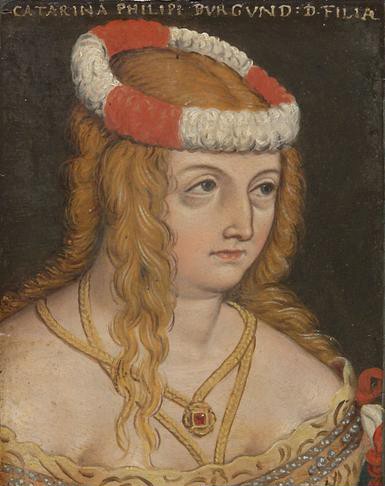
Susan: I have many favorites so it’s hard to choose one. Margaret of Austria, Regent of the Netherlands and Anne de Beaujeu, Duchess of  Bourbon and Regent of France, come to mind, both of whom are in the second book. But while I was researching the formidable women, I came across Catherine of Burgundy, Duchess of Austria and Countess of Ferrette, the daughter of Philp the Bold. Her life really captivated me for several reasons. When her father didn’t pay the balance of her dowry, she convinced her husband to give her the county of Ferrette, not just for the income but to rule on her own.

Catherine took full advantage of this opportunity. She acted as diplomat for her brother, John the Fearless and her nephew Philip the Good. She engaged in feuds and even started a small conflict with the city of Basel. She must have had remarkable charisma and a forceful personality. But the best part is she made a marriage without the permission of her brother. I haven’t come across many women who did such a thing. She may have done it to have an ally for her feuds and to maintain her position as countess. But she also may have been in love with the man. When her nephew Philip forced her to back out of the marriage, she seems to have lost her will to live which is pretty sad. But she’s my current favorite medieval historical person.

Sharon: Who is your least favorite historical person and why?
History ... the Interesting Bits

Susan: At the moment, I’m going to say Ferdinand of Aragon for several reasons. One the one hand, I have to admire his political acumen and diplomatic panache. In the era of Isabella of Castile, King Henry VIII, King Francis I and Holy Roman Emperor Charles V, he held his own. But his treatment of women is abominable.

He appears to have navigated his relationship with Isabella really well. They were on equal footing and managed to share their responsibilities. But once Isabella was gone, he engaged in antics like marrying again to try to have another child to displace his daughter Juana as queen of Aragon, as well as not supporting his younger daughter Katherine of Aragon once her husband Arthur Tudor died. He also is responsible, along with her husband Philip as well as her son HRE Charles V, for spreading terrible rumors about Juana of Castile’s mental health and for her eventual captivity which lasted for 45 years. It’s not a pretty story.

Sharon: How do you approach researching your topic?

Susan: The process of research starts with reading. Lots of reading. After finding as many books as I can on my topic, I start reading and find more resources. This process also involves searches on the internet for sources. Then, I make notes from my reading. I treat each chapter of the book as if it were an extended post for my blog. The notes are combined into a narrative which then becomes a chapter, and the chapters are assimilated into the book.  

Sharon: Tell us your ‘favourite’ story you have come across in your research.

Susan: This is a good one! Many years ago, I read a turn of the century biography of Philippa of Hainault, queen of King Edward III of England. The king and queen arranged a marriage for their eldest daughter Isabella to Louis II, Count of Flanders, also known as Louis of Male. The author relates the story of how Louis jilted Isabella at the altar, fleeing to France to avoid the wedding ceremony. Louis had promised his ally, King Philip VI of France that he would marry Margaret, the middle daughter of the Duke of Brabant and he eventually did.

Now Louis was not a faithful husband to Margaret and had something along the lines of 18 illegitimate children. Margaret was 7 years older than Louis. She gave birth to her daughter Margaret of Male in 1350 who eventually married the first Duke of Burgundy, Philip the Bold in 1369. Two years later, Countess Margaret deserted the court of Flanders to live in the country.

The author of the biography of Philippa of Hainault casually mentions that Margaret, Countess of Flanders, ordered the nose of Louis’ mistress cut off after the mistress gave birth to twins. As a result of her injuries, the mistress died. She insinuates this was the reason for Margaret abandoning the court. This sensational story really piqued my curiosity, and I searched for the truth for a long time.

Why did Margaret desert the Flemish court, something Belgian historians have debated for years? Did Louis abandon her? Did she abandon him? Was she mentally ill? Is there a history of mental illness in the House of Reginar of Brabant?

It seems an unknown chronicler from Bruges, in 1430, is the instigator of the report of Margaret cutting off the nose of Louis’ lover. He wrote this sixty years after the alleged event. It is entirely possible he spoke with someone who knew the truth of the matter from oral tradition. It is also possible he made up the entire scenario. Since then, a chronicler restated the story in 1531, and popular historians have repeated it down through the ages. While there is still the possibility the story is true, it is highly unlikely, and these chroniclers may have had their own agenda in spreading the rumors.

The stories of the jilting of Isabella, the marriage of Margaret of Brabant to Louis, Count of Flanders and her daughter Margaret of Male, wife of Philip the Bold, Duke of Burgundy, are all in the Formidable Women book.

Sharon: Tell us your least ‘favourite’ story you have come across in your research.

Susan: That has to be the story of Blanche II, Titular Queen of Navarre. Her father was King Juan II of Aragon, and her mother was Blanche I, Queen of Navarre. King Juan was crafty and sly and ruled Navarre by right of his wife. But once Blanche I died, a family feud ensued and King Juan did everything in his power to retain the governance of Navarre, even going so far as to ignore the rights of Blanche II and her brother Charles who had both gained the approval of the Cortes of Navarre as the legal heirs of Blanche I.

This state of affairs lasted for years. Blanche II had been married to Enrique IV of Castile, but the marriage was not a happy one and eventually, the union was annulled and Blanche II returned to Aragon. Her father locked her up in prison to prevent her from gaining the throne of Navarre to which she was legally entitled. Blanche remained in prison from 1453 until her death under suspicious circumstances in December 1464.

What makes this story even sadder is the fact that King Juan II of Aragon married again and had a son, Ferdinand of Aragon, who married Isabella of Castile and was the father of Queen Juana of Castile. In an eerie twist of fate, similar to Blanche II of Navarre, Ferdinand managed to declare his daughter Juana mentally unstable and locked her up for 45 years in Tordesillas. History repeats itself.

Sharon: Are there any other eras you would like to write about?
History ... the Interesting Bits

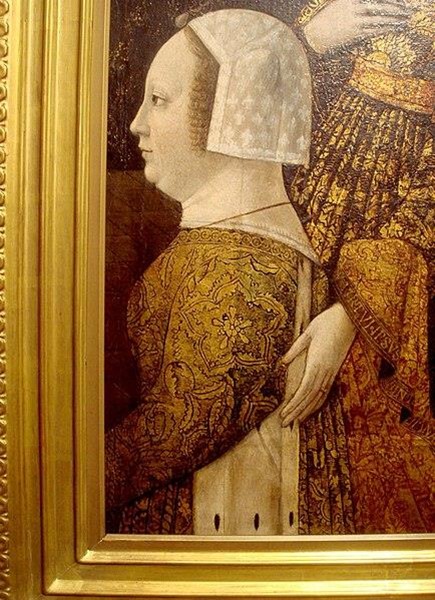
Susan: My interest in the medieval, early modern and Renaissance eras is pretty passionate and I’ve been out of my element by writing about the Stuart era. But the Stuart’s need an update and more scrutiny. If I did look at a different era, it might be Italian medieval and Renaissance history, a subject I’ve tried to avoid for many years because I found it to be meandering and complicated. But recently, I’ve delved into the stories of women such as Bona of Savoy, who features in my second book, as well as Bianca Maria Visconti, mother of Bona’s husband, Galeazzo Maria Sforza, Duke of Milan, and Valentina Visconti, wife of Louis I, Duke of Orleans who was assassinated by John the Fearless, Duke of Burgundy. These are tremendous women’s stories and pique my interest for more.

Sharon: What are you working on now?

Susan: I’m currently in the research stage of writing a biography of Mary Beatrice d’Este, second wife of King James II of England. She was the sister-in-law of Catherine of Braganza and the only Italian Queen of England. This book will be along the same lines as the biography of Catherine.

The research into Mary Beatrice brought up another intriguing subject. Her mother was Laura Martinozzi, Duchess of Modena, one of the many nieces of Cardinal Mazarin, the prime minister of Kings Louis XIII and XIV of France. Seems like another intriguing topic to look into.

Sharon: What is the best thing about being writer?

Susan: Having been an avid reader all my life, being a writer allows me to keep reading and to read about any topic that interests me. I love learning! I probably should have been a history teacher but never pursued it. By writing books and for the blog it allows me to educate people who are interested in the fascinating stories of history. My main goal is to get someone to read a book and hopefully enjoy the history as much as I do.

About the Author:

History ... the Interesting Bits

Susan Abernethy’s passion for history dates back fifty years and led her to study for a Bachelor of Arts degree in history at the University of North Carolina at Charlotte. She is currently a member of the Rocky Mountain Medieval and Renaissance Association, the Society for Renaissance Studies and the Historical Association. Her work has appeared on several historical websites and in magazines and includes guest appearances on historical podcasts. Her blog, The Freelance History Writer, has continuously published over five hundred historical articles since 2012, with an emphasis on European, Tudor, Medieval, Renaissance, Early Modern and women’s history. She is currently working on her third non-fiction book.

Buy the books:

Charles II’s Portuguese Queen: The Legacy of Catherine of Braganza; The Formidable Women Who Shaped Medieval Europe: Power and Patronage in the Burgundian Court

*

My Books:

Signed, dedicated copies of all my books are available through my online bookshop.

Out now: Scotland’s Medieval Queens

Books by Sharon Bennett Connolly

Scotland’s history is dramatic, violent and bloody. Being England’s northern neighbour has never been easy. Scotland’s queens have had to deal with war, murder, imprisonment, political rivalries and open betrayal. They have loved and lost, raised kings and queens, ruled and died for Scotland. From St Margaret, who became one of the patron saints of Scotland, to Elizabeth de Burgh and the dramatic story of the Scottish Wars of Independence, to the love story and tragedy of Joan Beaufort, to Margaret of Denmark and the dawn of the Renaissance, Scotland’s Medieval Queens have seen it all. This is the story of Scotland through their eyes.

Scotland’s Medieval Queens gives a thorough grounding in the history of the women who ruled Scotland at the side of its kings, often in the shadows, but just as interesting in their lives beyond the spotlight. It’s not a subject that has been widely covered, and Sharon is a pioneer in bringing that information into accessible history.’ Elizabeth Chadwick (New York Times bestselling author)

Available now from Amazon and Pen and Sword Books

Also by Sharon Bennett Connolly:

Books by Sharon Bennett Connolly

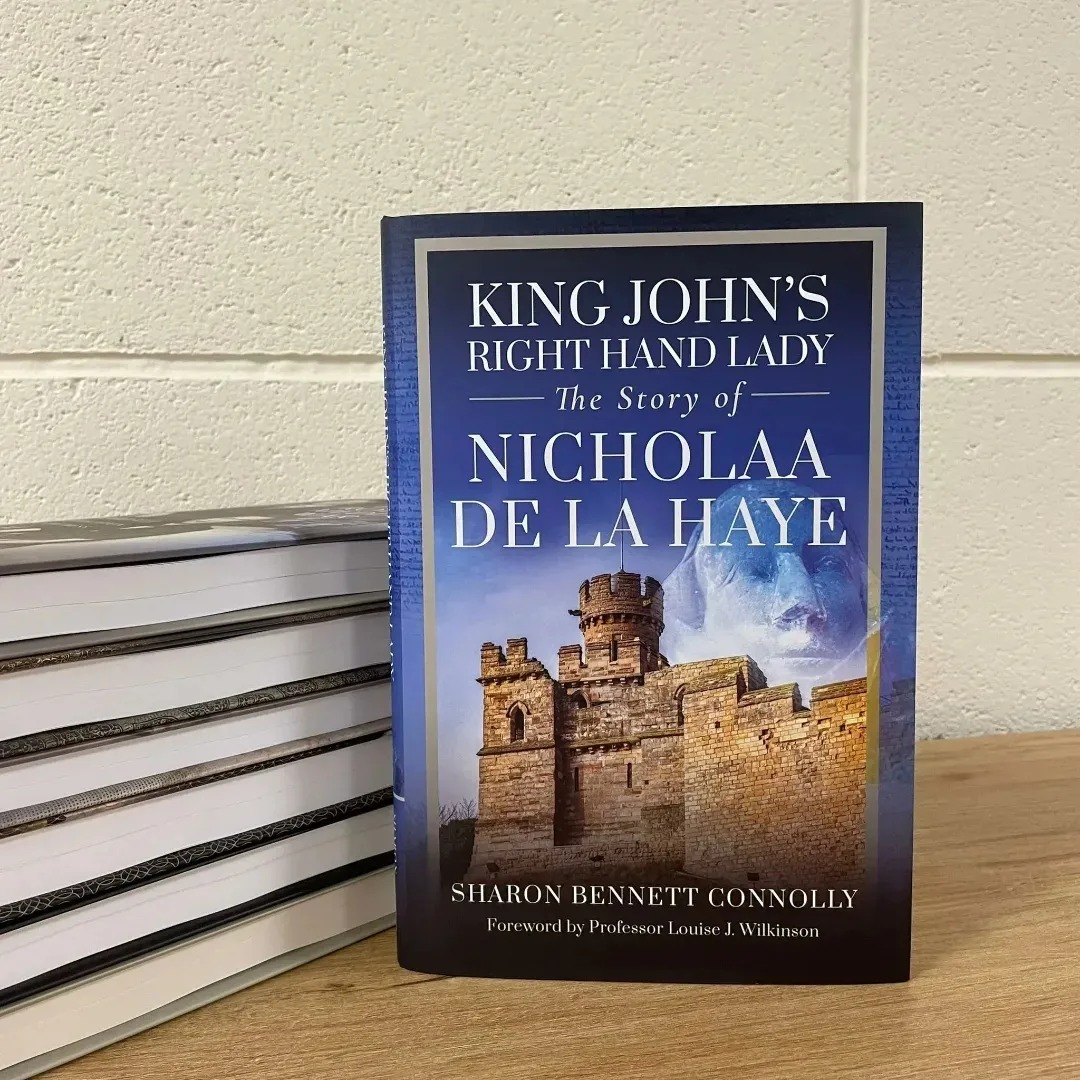
Heroines of the Tudor World tells the stories of the most remarkable women from European history in the time of the Tudor dynasty, 1485-1603. These are the women who ruled, the women who founded dynasties, the women who fought for religious freedom, their families and love. Heroines of the Tudor World is now available for pre-order from Amberley Publishing and Amazon UK. Women of the Anarchy demonstrates how Empress Matilda and Matilda of Boulogne, unable to wield a sword themselves, were prime movers in this time of conflict and lawlessness. It shows how their strengths, weaknesses, and personal ambitions swung the fortunes of war one way – and then the other. Available from Bookshop.orgAmberley Publishing and Amazon UKKing John’s Right-Hand Lady: The Story of Nicholaa de la Haye is the story of a truly remarkable lady, the hereditary constable of Lincoln Castle and the first woman in England to be appointed sheriff in her own right. Available from all good bookshops Pen & Sword Booksbookshop.org and Amazon

Royal Historical Society

Defenders of the Norman Crown: The Rise and Fall of the Warenne Earls of Surrey tells the fascinating story of the Warenne dynasty, from its origins in Normandy, through the Conquest, Magna Carta, the wars and marriages that led to its ultimate demise in the reign of Edward III. Available from Pen & Sword BooksAmazon in the UK and US, and Bookshop.orgLadies of Magna Carta: Women of Influence in Thirteenth Century England looks into the relationships of the various noble families of the 13th century, and how they were affected by the Barons’ Wars, Magna Carta and its aftermath; the bonds that were formed and those that were broken. It is now available in paperback and hardback from Pen & SwordAmazon, and Bookshop.orgHeroines of the Medieval World tells the stories of some of the most remarkable women from Medieval history, from Eleanor of Aquitaine to Julian of Norwich. Available now from Amberley Publishing and Amazon, and Bookshop.orgSilk and the Sword: The Women of the Norman Conquest traces the fortunes of the women who had a significant role to play in the momentous events of 1066. Available now from Amazon,  Amberley Publishing, and Bookshop.org.

Alternate Endings: An anthology of historical fiction short stories including Long Live the King… which is my take what might have happened had King John not died in October 1216. Available in paperback and kindle from Amazon.

Podcast:

A Slice of Medieval

Have a listen to the A Slice of Medieval podcast, which I co-host with Historical fiction novelist Derek Birks. Derek and I welcome guests, such as Bernard Cornwell and Elizabeth Chadwick, and discuss a wide range of topics in medieval history, from significant events to the personalities involved.

Every episode is also now available on YouTube.

*

Don’t forget! Signed and dedicated copies of all my books are available through my online bookshop.

For forthcoming online and in-person talks, please check out my Events Page.

You can be the first to read new articles by clicking the ‘Follow’ button, liking our Facebook page or joining me on TwitterThreadsBluesky and Instagram.

*

©2025 Susan Abernethy and Sharon Bennett Connolly FRHistS.

Wordly Women: Gillian Bagwell

History ... the Interesting Bits: Wordly Women
Near Dunvegan Castle, Isle of Skye

Time for another edition of Wordly Women! I am blown away by how receptive people have been to this little series and I am thoroughly enjoying having the chance to highlight the careers and writing experiences of the best of women writers in both history and and historical fiction. Today is another ‘fan girl’ edition as I get to chat with one of my favourite writers, Gillian Bagwell, who has written a wonderful novel about one of my Tudor Heroines, Bess of Hardwick.

Sharon: Firstly, welcome Gillian, what got you into writing?

Gillian: Both of my parents were writers, among other talents and accomplishments, interests, and they both read to my sisters and me a lot when we were kids, so I guess it seemed natural to write. I think I took my first writing class in junior high school. I’d had the idea for one of my novels (not yet published) long ago, and I recently discovered a story that I’d written based on that idea for that class when I was about thirteen. I’d forgotten about it.

Sharon: Tell us about your books.

Gillian: The three books that I have published are all based on the lives of real English women, two in the seventeenth century and one in the sixteenth century. My first novel, The Darling Strumpet, is based on the life of Nell Gwynn, one of the first English actresses and a longtime mistress of Charles II. She was a poor urchin who got her big break in life when Charles reopened the theatres soon after he was restored to the throne, and she got a job selling oranges. She caught the eye of Charles Hart, one of the leading actors, and he became her lover and mentor, teaching her to act, and they became an enormously popular duo onstage, with many “gay couple” (not as we use that phrase today!) comedies written specifically for them. Her career took place during one of the most amazing and important periods in the history of English theatre, when over the space of about fifteen years, performance practices went from Elizabethan/Jacobean to what remained essentially unchanged until the end of the nineteenth century.

History ... the Interesting Bits: Wordly Women
Experiencing the battlefield of Worcester

I learned about Jane Lane, the heroine of my second novel, when I was researching Nell Gwynn. Her story isn’t much remembered now, but she played a big part in helping Charles escape after the disastrous Battle of Worcester in 1651, saving not only his life but likely the future of the monarchy. She had a pass to travel with a manservant, so he disguised himself and travelled hundreds of miles with her. There were notices all along their way offering a reward of £1000 pounds for information leading to his capture—an enormous amount of money then—and they so narrowly escaped discovery so many times that his six-week odyssey became known as the Royal Miracle. The US title of the book is The September Queen. The UK published it as The King’s Mistress.

My third novel tells the story of Bess of Hardwick, who rose from genteel poverty to become probably the wealthiest and most powerful woman in England after Queen Elizabeth. She’s probably best known for building Hardwick Hall and the original Chatsworth, and for surviving four husbands. I didn’t think I could do justice to her very long and remarkable life in one novel, so Venus in Winter really only covers the first half of it, which included acting as keeper to Mary Queen of Scots for several years, and her granddaughter Arbella nearly succeeding Queen Elizabeth.

My fourth novel, The Tower on the Sea, not yet published, is a Gothic thriller with a heavy dose of romance set mostly on a tiny and remote Scottish island in 1901-1902. I’ve been working on a novel based on the life of Dame Flora MacLeod, who was chief of the Clan MacLeod from 1935 to her death in 1976, but as biographical fiction seems to be hard to sell these days, I’ve set it aside temporarily and am working on something completely different, which I’ll discuss below.

Sharon: What attracts you to the periods in which you write?

History ... the Interesting Bits: Wordly Women
William Shakespeare

Gillian: I became enamoured of Shakespeare very early on, and so was interested in sixteenth-century England. Around the time I turned fourteen, my father was hired as the director of education for the non-profit educational branch of the company that invented and produced the original Renaissance Pleasure Faires, a re-creation of a country fair in Elizabethan England with food, crafts, music, dancing, shows on stage and peformers improvising in the street with each other and the patrons. I know the concept of a Renaissance fair may be unfamiliar to many British people, but that original event inspired hundreds of copycats, mostly in the US but also in other countries. I wrote an article for Smithsonian Magazine about how the first Faire came about: The Surprisingly Radical Roots of the Renaissance Fair.

My whole family became involved and I performed at the Faires from when I was fourteen to when I was twenty—six weekends each at the Renaissance Faires in Southern and Northern California, and six weekends at the Great Dickens Christmas Fair, an indoor recreation of Victorian London at Christmastime. So I spent a lot of time in the sixteenth century and the nineteenth centuries!

Sharon: Who is your favourite Tudor and why?

Gillian: I think that would have to be Elizabeth. She survived an incredibly difficult childhood and youth, with her mother dead and vilified and her own future uncertain, and also managed to come through perilous times as a young woman, especially under the reign of her sister Mary. When she finally became queen, she ushered in a time of great change, mostly in good ways, and I think in general was a great leader—not an easy thing to be, especially for a woman, in those days.

Sharon: Who is your least favourite Tudor and why?

    Gillian: Henry VIII. It may be that he became the erratic tyrant he was especially later in life as the result of the injury to his leg and other medical problems, but it doesn’t erase the harm he caused to the six women who had the misfortune to marry him, his dissolution of the church and destruction not only of so many beautiful buildings but of the lives of so many people, both those who were of the church and those they helped, and much, much more.

    Sharon: How do you approach researching your books?
    Gillian: I read whatever I can find about my heroines, of course, as well as the period they lived in and the events that my books cover. But sometimes there isn’t much information available. The story of Jane Lane, for instance was very well known when Charles II was restored to the throne, but no one’s written a biography of her. There are several biographies of Bess of Hardwick, but they focus on her later life. One of them dispenses with her life up until her second marriage in the first twenty pages. So I have to piece together information, surmise what seems likely, and fill in the gaps with invention—of course mentioning in my author’s notes what historical facts I’ve taken liberty with. I’ve almost always gone to the UK on research trips, too, to find the places my main characters lived and where the action of their stories took place.

    History ... the Interesting Bits: Wordly Women
    Jane Lane

    There’s nothing like it not only for learning new things but getting inspiration. When I was researching The September Queen/The King’s Mistress, a good friend from London joined me on a trip following in the footsteps of Charles II from Worcester to Staffordshire and Shropshire, and then the route that he and Jane Lane took together. I didn’t know it at the time, but the Monarch’s Way is a marked footpath, which the Monarch’s Way Association maintains and has published maps of. When we went to Boscobel, it was near the end of the day and almost no one else was there. I found myself alone in a closet peering down into the priest hole where Charles hid. And at Trent, the lady at Trent Manor showed us around the house, including her bedroom, with the priest hole where Charles hid there. I also visit libraries and archives to use primary sources. I’ve done research at the British Library, the Theatre Museum in Covent Garden, the National Library and the National Records of Scotland, and the office of the Lord Lyon in Edinburgh. For my current work in progress, I recently I spent eight days at the Bodleian Library doing research and spent the rest of my time exploring Oxford, visiting places where the main characters lived and knew well. I even got a private tour of St. Hugh’s College, where each was principal, from the archivist.

    Sharon: Tell us your ‘favourite’ Stuart story you have come across in your research.

    History ... the Interesting Bits: Wordly Women
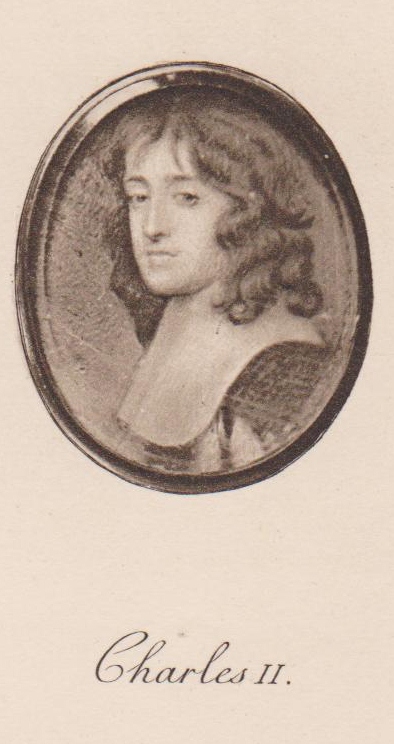
    A young Charles II

    Gillian: I’d say that’s the story of Charles II’s six-week odyssey trying to get out of England after the Battle of Worcester. Many, many common people risked their lives to help him, and it was a formative period in his life. He was only twenty-one at the time. He told the stories of his adventures for the rest of his life. Fortunately, the diarist Samuel Pepys sat him down decades later and over the course of a couple of days, took down the story in his famous shorthand. He then gathered all the accounts people had published of their parts in the story and bound them together. It’s an amazing resource, giving us a day-by-day and sometimes hour-by-hour account of what Charles did, said, wore, and ate. In the run-up to the publication of my book about Jane Lane, I blogged the daily events of those weeks. Here’s a link to the story, beginning with the Battle of Worcester: http://theroyalmiracle.blogspot.com/2011/09/september-3-1651-battle-of-worcester.html.

    Sharon: And do you have a favourite Tudor story?

    Gillian: There are many great stories about the Tudors, of course, but I became fascinated with this nugget mentioned in Robert Hutchinson’s The Last Days of Henry VIII, and have thought of writing a story or play about it. In the bitter cold of early February 1547, the body of Henry VIII lay at Windsor Castle, and amid clouds of incense, requiem masses were being held night and day to waft the soul of the dead tyrant to heaven. Fierce struggles for power raged at court, as the new king, Edward VI, was a child, and who controlled him would effectively rule. Against this backdrop of intrigue, John de Vere, the sixteenth Earl of Oxford, planned a dramatic event of his own: the presentation of a play he had written on the death of the king, to be performed by his own company of players. But as the actors rehearsed for their day in the winter sun, Bishop Gardiner, though recently banned from the Palace of Westminster, intended to claw his way back to power, and he would do whatever he must to prevent Oxford’s play from coming to the stage.

    I find a lot intriguing about this story, not least the fact that John de Vere was the father of Edward DeVere, the seventeenth Earl of Oxford, whom many serious people believe could have been the author of the plays attributed to William Shakespeare. He was almost seven years old at the time of this cancelled performance, and it’s interesting to think that he might have witnessed the drama offstage as well as on. The evidence for the argument for Oxford as the author includes a wealth of similarities in his life and experience and the plays; the fact that he was familiar with theatre from an early age, as his father kept a company of players; and that he was regarded as an accomplished and playwright, though none of his plays survive. Charlton Ogburn’s 600-page tome The Mysterious William Shakespeare is an exhaustive study of the evidence in favor of Oxford.

    Notable authorship skeptics include included Mark Rylance, Derek Jacobi, John Gielgud, Tyrone Guthrie, David McCullough, and Supreme Court Justices Sandra Day O’Connor, John Paul Stevens, Harry A. Blackmun, and Lewis F. Powell (Declaration of Reasonable Doubt, Shakespeare Oxford Fellowship – Famous Authorship Skeptics).

      Sharon: Tell us your least ‘favourite’ Tudor story you have come across in your research.

      Gillian: Many of the Tudors were responsible for a lot of bloodshed and cruelty, of course. I think Henry VIII’s persecution and elimination of the Pole family, who he considered a threat to his keeping the throne, ranks high, especially the murder of Lady Margaret Pole, the Countess of Salisbury, who was sixty-seven and had spent her life serving the Tudors. The executioner botched the job terribly, and it was a gruesome death. Here’s Tracy Borman’s post on the Historic Royal Palaces’ website: The Extraordinary Life and Death of Lady Margaret Pole, Countess of Salisbury.

      History ... the Interesting Bits: Wordly Women

      Sharon: Are there any other eras you would like to write about?

      Gillian: Well, I’ve moved into the early twentieth century with The Tower on the Sea, and both Flora MacLeod’s story and my current work in progress take me further into the 1900s and has a contemporary timeline too. There are other stories I’d love to write about, including from the eighteenth and nineteenth centuries.

      Sharon: What are you working on now?

      Gillian: I’m working on a novel with dual timelines inspired by the true story of Eleanor Jourdain and Charlotte Anne Moberly, two Oxford academics who visited Versailles in 1901, had a very strange experience, encountering people in eighteenth-century dress who behaved oddly, and came to believe they’d walked into the eighteenth century. I learned about this story from Miss Morison’s Ghosts, a British movie made in 1981, and I’ve wanted to write about it ever since. Having gone through the seventeen boxes of their notes, correspondence, drawings, photos, maps, and other documentation of their eight or so years of research about their experience at Versailles, I can say that something extraordinary happened to them, though I don’t know exactly what and neither did they.

      Sharon: And finally, what is the best thing about being a writer?

      Gillian: Exploring the worlds of my characters is endlessly fascinating. I get chills when I experience or discover something that connects me viscerally with the people I’m writing about, for instance holding letters they wrote, or being in the rooms where important things took place. And much as I like adventure and travel, all my life, I’ve been something of a homebody, too, so I love being able to work at home, especially on days when I don’t have to do anything but write.

        About Gillian Bagwell:

        History ... the Interesting Bits: Wordly Women
        Gillian Bagwell

        Gillian Bagwell’s historical novels have been praised for their vivid and lifelike characters and richly textured, compelling evocation of time and place. Her first career was in theatre, as an actress and later as a director and producer, and she founded the Pasadena Shakespeare Company and produced thirty-seven shows over ten years. Gillian has found her acting experience helpful to her writing, and many of the workshops and classes she’s taught at the annual Historical Novel Society Conferences in the US and the UK relate to her life in theatre, including writing effective historical dialogue, using acting tools to bring characters to life on the page, and giving effective public readings. She’s also a professional editor and provides writing coaching and manuscript evaluations. Gillian lives in Berkeley, California in the house where she grew up, her life enlivened by her five rescue cats.

        *

        My Books

        Signed, dedicated copies of all my books are available through my online bookshop.

        Out now: Scotland’s Medieval Queens

        Books by Sharon Bennett Connolly

        Scotland’s history is dramatic, violent and bloody. Being England’s northern neighbour has never been easy. Scotland’s queens have had to deal with war, murder, imprisonment, political rivalries and open betrayal. They have loved and lost, raised kings and queens, ruled and died for Scotland. From St Margaret, who became one of the patron saints of Scotland, to Elizabeth de Burgh and the dramatic story of the Scottish Wars of Independence, to the love story and tragedy of Joan Beaufort, to Margaret of Denmark and the dawn of the Renaissance, Scotland’s Medieval Queens have seen it all. This is the story of Scotland through their eyes.

        Scotland’s Medieval Queens gives a thorough grounding in the history of the women who ruled Scotland at the side of its kings, often in the shadows, but just as interesting in their lives beyond the spotlight. It’s not a subject that has been widely covered, and Sharon is a pioneer in bringing that information into accessible history.’ Elizabeth Chadwick (New York Times bestselling author)

        Available now from Amazon and Pen and Sword Books

        Also by Sharon Bennett Connolly:

        Books by Sharon Bennett Connolly

        Heroines of the Tudor World tells the stories of the most remarkable women from European history in the time of the Tudor dynasty, 1485-1603. These are the women who ruled, the women who founded dynasties, the women who fought for religious freedom, their families and love. Heroines of the Tudor World is now available for pre-order from Amberley Publishing and Amazon UK. Women of the Anarchy demonstrates how Empress Matilda and Matilda of Boulogne, unable to wield a sword themselves, were prime movers in this time of conflict and lawlessness. It shows how their strengths, weaknesses, and personal ambitions swung the fortunes of war one way – and then the other. Available from Bookshop.orgAmberley Publishing and Amazon UKKing John’s Right-Hand Lady: The Story of Nicholaa de la Haye is the story of a truly remarkable lady, the hereditary constable of Lincoln Castle and the first woman in England to be appointed sheriff in her own right. Available from all good bookshops Pen & Sword Booksbookshop.org and Amazon

        Royal Historical Society

        Defenders of the Norman Crown: The Rise and Fall of the Warenne Earls of Surrey tells the fascinating story of the Warenne dynasty, from its origins in Normandy, through the Conquest, Magna Carta, the wars and marriages that led to its ultimate demise in the reign of Edward III. Available from Pen & Sword BooksAmazon in the UK and US, and Bookshop.orgLadies of Magna Carta: Women of Influence in Thirteenth Century England looks into the relationships of the various noble families of the 13th century, and how they were affected by the Barons’ Wars, Magna Carta and its aftermath; the bonds that were formed and those that were broken. It is now available in paperback and hardback from Pen & SwordAmazon, and Bookshop.orgHeroines of the Medieval World tells the stories of some of the most remarkable women from Medieval history, from Eleanor of Aquitaine to Julian of Norwich. Available now from Amberley Publishing and Amazon, and Bookshop.orgSilk and the Sword: The Women of the Norman Conquest traces the fortunes of the women who had a significant role to play in the momentous events of 1066. Available now from Amazon,  Amberley Publishing, and Bookshop.org.

        Alternate Endings: An anthology of historical fiction short stories including Long Live the King… which is my take what might have happened had King John not died in October 1216. Available in paperback and kindle from Amazon.

        Podcast:

        A Slice of Medieval

        Have a listen to the A Slice of Medieval podcast, which I co-host with Historical fiction novelist Derek Birks. Derek and I welcome guests, such as Elizabeth Chadwick, Helen Castor, Ian Mortimer, Scott Mariani and Bernard Cornwell and discuss a wide range of topics in medieval history, from significant events to the personalities involved.

        Every episode is also now available on YouTube.

        *

        Don’t forget! Signed and dedicated copies of all my books are available through my online bookshop.

        For forthcoming online and in-person talks, please check out my Events Page.

        You can be the first to read new articles by clicking the ‘Follow’ button, liking our Facebook page or joining me on TwitterThreadsBluesky and Instagram.

        *

        ©2025 Sharon Bennett Connolly FRHistS

        Guest Post: The Boy Who Would be King by Mark Turnbull

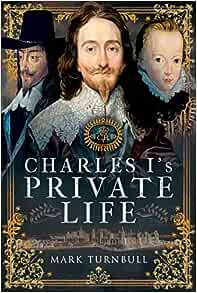
        I am currently reading a fabulous, very personal biography of King Charles I, by Mark Turnbull. Charles I’s Private Life concentrates on the personal, rather than political, life of one of England’s most controversial kings – the only one to be convicted of treason and publicly executed. It is a fascinating, intimate, biography. And Mark has very kindly joined me today with a taster of what you can expect from the book.

        The Boy who Would be King

        The past is full of anchor points and legendary facts. Henry VIII’s marital record, for example, snags many history enthusiasts, helping the 118-year Tudor rule flourish in books, films, and television. By comparison, at 111 years, the Stuart era often flounders because this stormy period has so many complicated threads – most especially the Wars of the Three Kingdoms.

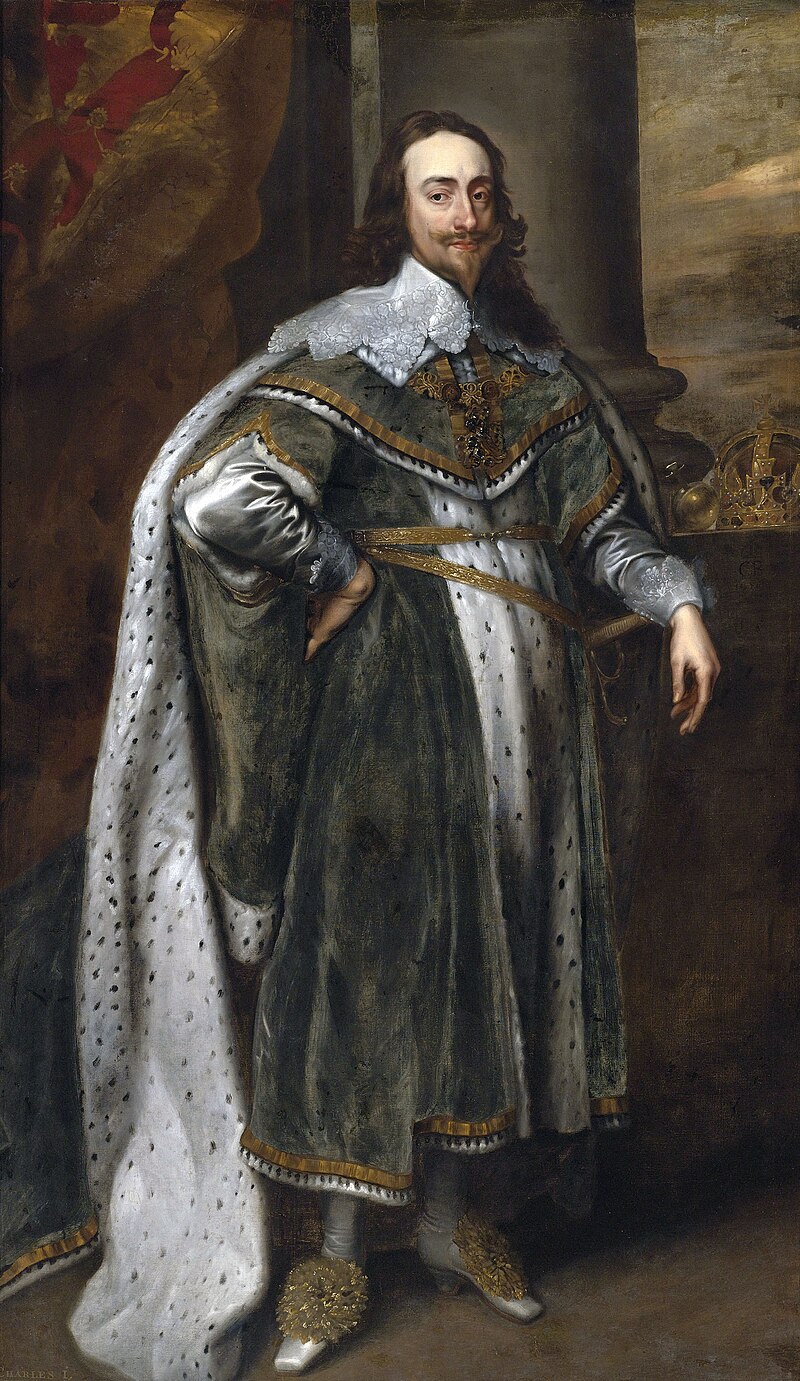
        The monarch during the civil wars was King Charles I. His death is probably the most well-known fact about him that sticks in our minds. On a cold January afternoon, wearing two shirts lest shivering give the appearance of fear, he was executed outside his palace. In the aftermath of his death, his enemies were keen to portray him as a tyrant responsible for the deaths and atrocities. King Henry’s divorce had given birth to the Church of England, but it was Charles’s defence of it that led to his veneration as a martyr when the monarchy was eventually restored. Over the centuries he has increasingly become a two-dimensional martyr or murderer; an anachronism to many today. History has almost severed his personal character, life, and loves.

        Charles I’s Private Life digs deep into the man behind the crown, to better understand him, and in turn, the wars that dominated his reign. With emphasis on his personal relationships, I have aimed to produce a most intimate biography. One of the fresh aspects is closer examination of his overlooked childhood – years that formed his character and beliefs.

        Charles as a child with his parents, James VI and I and Anne of Denmar

        Born in 1600, the second son of King James VI of Scotland had a sickly start. In 1603, when James acceded to the English throne, the royal family hurriedly crossed the border. Charles was not deemed to be up to the journey for another year. He initially struggled to walk and talk but fought and overcame this restrictive existence.

        After the 1605 Gunpowder Treason broke, he would have known that his own death had been part of the plot. Aged five, whilst traversing Whitehall Palace, the hub of Stuart government, he was no stranger to gossip and fear. On one occasion, he wandered into one of his father’s meetings, only for James to hold him aloft in jubilant relief at their survival. While plague had wiped out many, it helped save the Stuarts. The opening of Parliament had been postponed on account of it, causing delays that saw the plot unravel. Pestilence also helped foster a strong bond between Charles and his elder brother, Henry, when the pair were packed off to the country to escape it.

        Charles hero-worshipped his brother. When Henry was absent on progresses, a pining Charles would visit his brother’s stables and ride his horses. He offered to give “anie thing that I have” to his eldest sibling, whether it be horses, crossbows or books. One particular gem of research was a short poem Charles penned in 1608, aged seven, whilst preparing for a jaunt on Henry’s miniature vessel, named Disdain. There is a timeless innocence and excitement in the simplicity of the request for gunpowder for the cannons:

        “Saterday is the day

        let 4 great barrels of pouder cume away”

        Many suggest Charles was overshadowed by Henry. The latter’s numerous talents, which he had no qualms of showing off, certainly made him a legendary figure. Athletic and good looking, he was paraded as the embodiment of honour, courage and princely virtue. The hopes of vast swathes of people were placed in him and as a result it is easy to write Charles off as irrelevant.

        King Charles I

        The elder, however, was not a good scholar and Charles was held up as an example to follow. Indeed, King James once threatened to leave the crown to Charles who was “far quicker at learning”. Despite his slim physique, Charles proved himself adept at running at the ring, handling a pike, hunting and riding. His future had seemed mapped out from a young age. Many references pointed, surprisingly, to a military career. It was one that Charles seemed to relish, and on one occasion the 6-year-old marched up to the Venetian Ambassador with a ‘harquebus’ on his shoulder to declare he was thus armed for the Republic’s service.

        Though numerous siblings followed Charles (Robert, Mary and Sophia) they all perished at tragically young ages. As a result, Charles’s father called him ‘Baby Charles’ well into manhood. Apart from being embarrassing, the sobriquet must have been a constantly reminder of royal mortality. Considering Charles’s rushed christening and fragile early years, it seemed as though God had preserved him. But for what?

        The sudden death of Prince Henry at the age of 18 was a momentous turning-point that shocked the three kingdoms. King James retreated to the country, while Queen Anna shut herself away and refused to eat. Princess Elizabeth was also inconsolable. The twelve-year-old Charles was left to lead the nation, whilst shouldering an impossible burden of expectation. I was struck by the similarities between Henry’s funeral in 1612 and that of Diana, Princess of Wales, in 1997. For Charles, who led the former through central London, it must have been traumatic to say the least.

        A teenage sonnet Charles penned to his mother between the years 1613 and 1619 hints at innermost thoughts over the way his life and character changed forever. He wrote the sonnet to help explain their construction, but the contents are extremely poignant. The daily ‘fascherie’ [troubles] had, he wrote, quenched the heavenly furious fire that once burned inside him.

        “In place whereof came sad & thorny cares

        Which restlesly no time nor season spares”

        From that moment on, Charles pretty much had to take on the guise of his dead brother. His own personality was often suppressed and stifled. Peeling back the layers of propaganda (that of his own and his enemies) reveals a man with faults and foibles, courage and charisma. New evidence in the biography also sheds light on key events such as the start of civil war in England and Charles’s death upon the scaffold.

        This article was first published in Historia Magazine (Historical Writers Association)

        About the Author:

        After a visit to Helmsley Castle at the age of 10, Mark bought a pack of ‘top trump’ cards featuring the monarchs of England. The card portraying King Charles I fascinated him. Van Dyck’s regal portrait of the King and the fact that he was executed by his own people were the beginnings of a passionate interest in the Civil Wars that has lasted ever since.

        Mark also produces a podcast called Cavalier Cast – The Civil War in Words. This was the first podcast solely dedicated to the Wars of the Three Kingdoms and explores a variety of topics with leading historians, archaeologists, and re-enactors. Mark lives in County Durham with his wife and two children. http://www.1642author.com

        To Buy the Book:

        Charles I’s Private Life by Mark Turnbull is now available from Amazon.

        *

        My Books

        Signed, dedicated copies of all my books are available through my online store.

        Out nowKing John’s Right-Hand Lady: The Story of Nicholaa de la Haye

        In a time when men fought and women stayed home, Nicholaa de la Haye held Lincoln Castle against all-comers, gaining prominence in the First Baron’s War, the civil war that followed the sealing of Magna Carta in 1215. A truly remarkable lady, Nicholaa was the first woman to be appointed sheriff in her own right. Her strength and tenacity saved England at one of the lowest points in its history. Nicholaa de la Haye is one woman in English history whose story needs to be told…

        King John’s Right-Hand Lady: The Story of Nicholaa de la Haye is now available from Pen & Sword Booksbookshop.org and Amazon.

        Coming 15 January 2024: Women of the Anarchy

        On the one side is Empress Matilda, or Maud. The sole surviving legitimate child of Henry I, she is fighting for her birthright and that of her children. On the other side is her cousin, Queen Matilda, supporting her husband, King Stephen, and fighting to see her own son inherit the English crown. Both women are granddaughters of St Margaret, Queen of Scotland and descendants of Alfred the Great of Wessex. Women of the Anarchy demonstrates how these women, unable to wield a sword, were prime movers in this time of conflict and lawlessness. It show how their strengths, weaknesses, and personal ambitions swung the fortunes of war one way – and then the other.

        Available for pre-order from Amberley Publishing and Amazon UK.

        Also by Sharon Bennett Connolly:

        Defenders of the Norman Crown: The Rise and Fall of the Warenne Earls of Surrey tells the fascinating story of the Warenne dynasty, of the successes and failures of one of the most powerful families in England, from its origins in Normandy, through the Conquest, Magna Carta, the wars and marriages that led to its ultimate demise in the reign of Edward III. Defenders of the Norman Crown: Rise and Fall of the Warenne Earls of Surrey is now available from Pen & Sword BooksAmazon in the UK and US, and  Bookshop.org.

        Ladies of Magna Carta: Women of Influence in Thirteenth Century England looks into the relationships of the various noble families of the 13th century, and how they were affected by the Barons’ Wars, Magna Carta and its aftermath; the bonds that were formed and those that were broken. It is now available in paperback and hardback from Pen & Sword,  Amazon, and Bookshop.org.

        Heroines of the Medieval World tells the stories of some of the most remarkable women from Medieval history, from Eleanor of Aquitaine to Julian of Norwich. Available now from Amberley Publishing and Amazon, and Bookshop.org.

        Silk and the Sword: The Women of the Norman Conquest traces the fortunes of the women who had a significant role to play in the momentous events of 1066. Available now from Amazon,  Amberley Publishing, and Bookshop.org.

        Alternate Endings: An anthology of historical fiction short stories including Long Live the King… which is my take what might have happened had King John not died in October 1216. Available in paperback and kindle from Amazon.

        Podcast:

        Have a listen to the A Slice of Medieval podcast, which I co-host with Historical fiction novelist Derek Birks. Derek and I welcome guests, such as Bernard Cornwell, and discuss a wide range of topics in medieval history, from significant events to the personalities involved.

        *

        Don’t forget! Signed and dedicated copies of all my books are available through my online store.

        For forthcoming online and in-person talks, please check out my Events Page.

        You can be the first to read new articles by clicking the ‘Follow’ button, liking our Facebook page or joining me on Twitter and Instagram.

        ©2023 Sharon Bennett Connolly FRHistS and Mark Turnbull

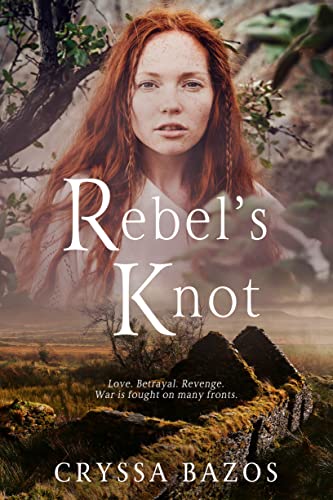
        Book Corner: Rebel’s Knot by Cryssa Bazos

        Ireland 1652: In the desperate, final days of the English invasion . . .

        A fey young woman, Áine Callaghan, is the sole survivor of an attack by English marauders. When Irish soldier Niall O’Coneill discovers his own kin slaughtered in the same massacre, he vows to hunt down the men responsible. He takes Áine under his protection and together they reach the safety of an encampment held by the Irish forces in Tipperary.

        Hardly a safe haven, the camp is rife with danger and intrigue. Áine is a stranger with the old stories stirring on her tongue and rumours follow her everywhere. The English cut off support to the brigade, and a traitor undermines the Irish cause, turning Niall from hunter to hunted.

        When someone from Áine’s past arrives, her secrets boil to the surface—and she must slay her demons once and for all.

        As the web of violence and treachery grows, Áine and Niall find solace in each other’s arms—but can their love survive long-buried secrets and the darkness of vengeance?

        Thank you so much to Cryssa Bazos for disrupting my work this week! Instead of working for 3 hours and then reading for an hour over lunch, I’ve been working for 1 hour and reading for 3! But it’s ok, I’ve finished Rebel’s Knot now so I can get on with my life. What a bloody amazing book – again!

        I do not usually read stories set in the 17th century, they’re a little out of my comfort zone. However, novels by Cryssa Bazos have definitely earned an exemption. This is Cryssa’s third book set in the civil wars that tore Britain apart during the reign of Charles I. The first was set in England whilst the second followed the exploits of those unfortunates who were forced into indentured servitude in the colonies. This third instalment follows the fortunes of the Irish Catholics who continued to hold on to their resistance to Oliver Cromwell an the Parliamentarians.

        Pursuing a form of guerrilla warfare against a much stringer and better equipped English army, the Irish brigades sheltered in Ireland’s forests and depended on the goodwill of the Irish people to survive. Rebel’s Knot tells the story of one such brigade, the harsh conditions they were forced to live under and the political divisions that threatened to destroy their cause.

        Áine still clutched the poker, her back pressed against the stone fireplace. She had never been more alarmed in her life to see a man materialise in her path. From experience, she gave them all distance. Niall O’Coneill had appeared, sprung from legend—a blazing warrior brandishing a gleaming sword, accompanied by a kingly wolfhound. He looked capable of hewing a giant in half. Were it not for his mud-splattered mantle, stubbled beard and dark shadows beneath his eyes, she’d believe him to be a figment of her fanciful imagination.

        And then reality slammed her with the tide of his rage. With a fearsome bellow, he heaved the edge of the worktable, and it crashed onto its side. Áine muffled a scream. Her shoulder scraped against the rough stone—she was pinned between the fireplace and the raging man. The old terror gripped her.

        With his back turned to her, his shoulders rose and fell with each breath. Áine marshalled her scattered wits, determined to fly. Now was her chance, while this man and his wolfhound paid her no attention.

        But then he faced her. Áine sucked in her breath, her stomach knotting. She was ten feet from the door—from safety—but with every heartbeat of hesitation, that distance stretched to impossible.

        He took a step forward, and she flinched, braced for the force of a blow. She squeezed her eyes shut. Please, not fists.

        “I’m sorry.”

        This hadn’t come from Áine, though those same words had been running through her mind—a reflex she thought she had smothered. No, he had spoken those words.

        Áine’s eyes flew open. He stood a few feet away—jaw tense, hands balled into fists. “I’m sorry,”he repeated tersely. “My anger is not with you.”

        She released the breath she had been holding and gave him an answering nod. Few had ever apologised to her. A part of her feared it might be a ruse.

        The man ran a shaky hand through his dark hair and looked around the kitchen, a frown worrying his brow. “Gather what you will, Áine Callaghan. Supplies, any food. Especially food. We leave shortly.”

        “And where are we to be going?” Áine asked sharply.

        “Away from here.” He seemed deep in thought, his mind visibly whirring.

        The heroes of Rebel’s Knot are a young woman, Aine, who has demons in her own past, and Niall, a born soldier who is driven to his limits when his loyalty is questioned. That Aine and Niall come up against a number of enemies, both known and unknown, leaves the reader on the edge of their seats, never quite knowing who is on the heroes’ side – and who isn’t. To prove his own innocence, he must find the real traitor.

        The characters are wonderful, vivid creations who draw you in to their story. Cryssa Bazos recreates rural Ireland in great deal, drawing not only on the landscape, but also on the atmosphere and the beauty that is uniquely Ireland. Allusions to the Irish legends of the past serve to draw the reader in even deeper. What a masterpiece!

        Rebel’s Knot is a wonderfully fast-paced novel that draws you in. Cleverly written, it leaves you guessing, almost to the very last page, as to the outcome of all the various strands and intrigues. The love story of Aine and Niall is offset by the violence engendered by war and the distrust borne out of the presence of a traitor.

        Well, at least now I’ve finished it I can actually get back to work. I love it when a book grabs you like that! If you’re not reading it, you’re thinking about reading it!

        It was a pleasure to read!

        Rebel’s Knot by Cryssa Bazos is now available from Amazon.

        From the author:

        I am a historical fiction writer and 17th Century enthusiast, with a particular interest in the English Civil War (ECW) and romantic fiction. I blog about English history and storytelling at my site, the 17th Century Enthusiast, and I’m involved with the English Historical Fiction Authors blog site and a member of the Romantic Novelist Association (RNA) and the Historical Novel Society (HNS).

        My absolute favourite books are romantic adventures, steeped in history, that take me to another time and place. I hope you enjoy my stories.

        *

        My Books

        Signed, dedicated copies of all my books are available, please get in touch by completing the contact me form.

        Defenders of the Norman Crown: The Rise and Fall of the Warenne Earls of Surrey tells the fascinating story of the Warenne dynasty, of the successes and failures of one of the most powerful families in England, from its origins in Normandy, through the Conquest, Magna Carta, the wars and marriages that led to its ultimate demise in the reign of Edward III. Defenders of the Norman Crown: Rise and Fall of the Warenne Earls of Surrey is now available from Pen & Sword BooksAmazon in the UK and US and Book Depository.

        1 family. 8 earls. 300 years of English history!

        Also by Sharon Bennett Connolly:

        Ladies of Magna Carta: Women of Influence in Thirteenth Century England looks into the relationships of the various noble families of the 13th century, and how they were affected by the Barons’ Wars, Magna Carta and its aftermath; the bonds that were formed and those that were broken. It is now available in paperback and hardback from Pen & Sword,  Amazon and from Book Depository worldwide.

        Heroines of the Medieval World tells the stories of some of the most remarkable women from Medieval history, from Eleanor of Aquitaine to Julian of Norwich. Available now from Amberley Publishing and Amazon and Book Depository.

        Silk and the Sword: The Women of the Norman Conquest traces the fortunes of the women who had a significant role to play in the momentous events of 1066.  Available now from Amazon,  Amberley Publishing, Book Depository.

        *

        You can be the first to read new articles by clicking the ‘Follow’ button, liking our Facebook page or joining me on Twitter and Instagram.

        ©2021 Sharon Bennett Connolly

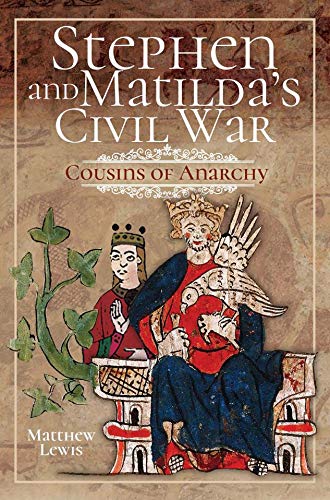
        Book Corner: Stephen and Matilda’s Civil War: Cousins of Anarchy by Matthew Lewis

        The Anarchy was the first civil war in post-Conquest England, enduring throughout the reign of King Stephen between 1135 and 1154. It ultimately brought about the end of the Norman dynasty and the birth of the mighty Plantagenet kings. When Henry I died having lost his only legitimate son in a shipwreck, he had caused all of his barons to swear to recognize his daughter Matilda, widow of the Holy Roman Emperor, as his heir and remarried her to Geoffrey, Count of Anjou. When she was slow to move to England on her father’s death, Henry’s favorite nephew Stephen of Blois rushed to have himself crowned, much as Henry himself had done on the death of his brother William Rufus.

        Supported by his brother Henry, Bishop of Winchester, Stephen made a promising start, but Matilda would not give up her birthright and tried to hold the English barons to their oaths. The result was more than a decade of civil war that saw England split apart. Empress Matilda is often remembered as aloof and high-handed, Stephen as ineffective and indecisive. By following both sides of the dispute and seeking to understand their actions and motivations, Matthew Lewis aims to reach a more rounded understanding of this crucial period of English history and asks to what extent there really was anarchy.

        Stephen and Matilda’s Civil War: Cousins of Anarchy by Matthew Lewis, is a wonderful book looking at the civil war, known as The Anarchy, through the eyes of the two leading protagonists, King Stephen and his cousin, Empress Matilda. A totally absorbing read, this book is enjoyable and informative, analysing the actions of both sides in a critical but sympathetic light.

        Matthew Lewis digs deep into the personalities involved in both sides of the war and puts flesh on the bones of these characters. The result is a fair and balanced appraisal of the conflict between these two cousins, both as rival claimants to the throne and as leaders of their disparate supporters. The story is told in alternate chapters from the views of Stephen and Matilda, helping to keep the analysis and narrative balanced and fresh.

        Matthew Lewis tries to be fair to both sides. You can tell that he feels for Empress Matilda, faced not only with a challenge to her right to the throne, but with the extra challenges that arose out of her being a woman and unable to lead the military aspects of the war. The author highlights Matilda’s failings, but does temper them with an explanation of how her actions would have been received differently, had she only been a man!

        On the other side, King Stephen’s own faults and weaknesses are also singled out, though Matthew Lewis also stresses that where Matilda was hindered by her sex, so was Stephen – by Matilda’s gender, that is. There were limits put on Stephen by the fact he was challenged by a woman; just as Matilda could not lead her troops into battle, neither could Stephen face his challenger in an all-for-nothing trial by combat that could have put an end to the war years later. The result was a long, protracted war during which it was said ‘Christ and his saints slept.’

        Before any move was made, there were probably four prime candidates to succeed Henry. His daughter, Empress Matilda, was perhaps the most obvious, but also in many ways the least attractive. Female rule was still something unheard of, at least in England, a nation that would have no queen regnant for another 400 years. The second possibility was Robert, Earl of Gloucester. Robert was an illegitimate son of Henry I, widely considered his favourite. He had extensive lands and power both in Normandy and England and was well respected. He was, however, illegitimate. That was less of a bar to power in Normandy: the Conqueror himself had been called William the Bastard. In England, it was unheard of. Legitimacy was still an absolute, marking the distinction between a duke and a king. Robert had everything required to follow his father except the right mother.

        The two other contenders came from the House of Blois. They were Henry’s nephews, the sons of his sister Adela and her husband Stephen, Count of Blois. Theobald, Count of Blois and Champagne was the senior male of the house, though his younger brother Stephen, Count of Mortain, had been in England for years and was close to his uncle. They offered the prospect of legitimate, male successors as grandsons of William the Conqueror, albeit in a female line of descent. None of these solutions appeared perfect, and only one could win the throne. As it turned out, only two displayed an interest, and neither would give up during the nineteen years that followed.

        Stephen and Matilda’s Civil War: Cousins of Anarchy by Matthew Lewis is a thoroughly enjoyable read, offering the perfect balance in a non-fiction book; accessible, interesting and informative. It gives a whole new perspective to the Civil War which divided England for the whole of Stephen’s 19-year reign. The book looks into each aspect of the war. The battles, conferences, truces and stalemates, are all analysed through the disparate eyes of those involved; not only looking into how they effected events, but also how events affected them.

        Although it concentrates on the 2 leading protagonists, Stephen and Matilda, the book also gives insight into the lead supporting characters on both sides, giving the reader a comprehensive, panoramic view of the era through the personalities of those involved; from the steadfast and loyal Robert, Earl of Gloucester, to Stephen’s queen, also Matilda and the gruff, fearless John Marshal, father of William Marshal, first Earl of Pembroke and arguable the greatest knight England ever had.

        Although more known for his books on the Wars of the Roses, Matthew Lewis has managed to demonstrate the breadth and depth of his historical knowledge with Stephen and Matilda’s Civil War: Cousins of Anarchy. He had put his usual level of passion and attention to detail into this book and the result is well worth reading. Stephen and Matilda’s Civil War: Cousins of Anarchy by Matthew Lewis is a thoroughly compelling read.

        Stephen and Matilda’s Civil War: Cousins of Anarchy by Matthew Lewis is available from Amazon.

        About the author:

        Matthew Lewis trained in law and is now a full time author of historical fiction and non-fiction. He also blogs on his website, Matt’s History Blog, and can be found on Twitter as @mattlewisauthor. His main interest is medieval history and he has a number of books on that topic, including The Survival of the Princes in the Tower and Richard, Duke of York: King by Right.

        *

        My Books

        Coming soon! 

        Ladies of Magna Carta: Women of Influence in Thirteenth Century England will be released in the UK on 30 May 2020 and is now available for pre-order from Pen & SwordAmazon UK and from Book Depository worldwide. It will be released in the US on 2 September and is available for pre-order from Amazon US.

        Also by Sharon Bennett Connolly:

        Silk and the Sword: The Women of the Norman Conquest traces the fortunes of the women who had a significant role to play in the momentous events of 1066.  Available now from Amazon UK,  Amberley Publishing, Book Depository and Amazon US.

        Heroines of the Medieval World tells the stories of some of the most remarkable women from Medieval history, from Eleanor of Aquitaine to Julian of Norwich. Available now from Amberley Publishing and Amazon UK, Amazon US and Book Depository.

        *

        You can be the first to read new articles by clicking the ‘Follow’ button, liking our Facebook page or joining me on Twitter and Instagram.

        ©2020 Sharon Bennett Connolly 

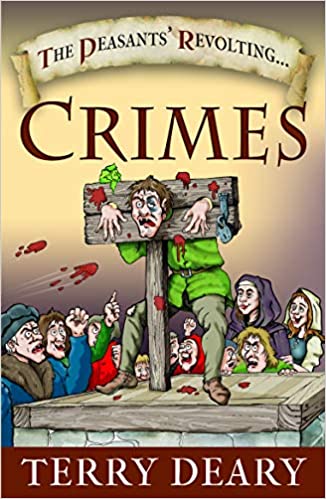
        Book Corner: The Peasants' Revolting Crimes by Terry Deary

        By Lewis Connolly

        Popular history writer Terry Deary takes us on a light-hearted and often humorous romp through the centuries with Mr & Mrs Peasant, recounting foul and dastardly deeds committed by the underclasses, as well as the punishments meted out by those on the right side’ of the law.

        Discover tales of arsonists and axe-wielders, grave robbers and garroters, poisoners and prostitutes. Delve into the dark histories of beggars, swindlers, forgers, sheep rustlers and a whole host of other felons from the lower ranks of society who have veered off the straight and narrow. There are stories of highwaymen and hooligans, violent gangs, clashing clans and the witch trials that shocked a nation. Learn too about the impoverished workers who raised a riot opposing crippling taxes and draconian laws, as well as the strikers and machine-smashers who thumped out their grievances against new technologies that threatened their livelihoods.

        Britain has never been short of those who have been prepared to flout the law of the land for the common good, or for their own despicable purposes. The upper classes have lorded and hoarded their wealth for centuries of British history, often to the disadvantage of the impoverished. Frustration in the face of this has resulted in revolt. Read all about it here!

        This entertaining book is packed full of revolting acts and acts of revolt, revealing how ordinary folk – from nasty Normans to present-day lawbreakers – have left an extraordinary trail of criminality behind them. The often gruesome penalties exacted in retribution reveal a great deal about some of the most fascinating eras of British history.

        It has been a strange week for us all, I’m sure. And on Tuesday evening we got a message from my son’s school saying it was closed until further notice, so Wednesday morning was my first day of home schooling. School have been amazing and set tons of work to keep the child occupied. However, on Wednesday, there was no English so I had to set some myself; which was basically for said child to write a review of Terry Deary’s The Peasants’ Revolting CRIMES. I received this book as a review copy from the publishers, Pen & Sword, but the child got to read it first, and loved it. He’s a die-hard fan of Horrible Histories, so this book was right up his street.

        So, it’s over to Lewis:

        I liked, no I LOVED Terry Deary’s The Peasants’ Revolting CRIMES. I would recommend it for people who are age 13+ (due to minor swearing content) and you will not need to know your history because this book educates you in the revolting and hard life of the peasant.

        Opening with ‘Norman Nastiness’, the book gives you a vivid taste of peasant crimes right up until the ‘Georgian Jokers and Victorian Villains’ and beyond.

        The last witch

        After seeing a smiling ‘medium’ at a psychic fair, a friend of mine punched her. When I asked him why he would do such a thing, he replied, ‘My father always taught me to strike a happy medium’,

        In 1944, Helen Duncan was a Scottish spiritual medium, working in Portsmouth. She began broadcasting information from the port’s gullible sailors wjhho came ot consult her. D-Day was approaching and she was a security risk. She had to be stopped.

        Duncan was originally charged under the Vagrancy Act 1824, relating to fortune telling, astrology and spiritualism. Then there was a change of plan. The paranoid government’s legal experts sent her to be tried by jury at the Old Bailey for contravening section 4 of the Witchcraft Act 1735, which carried the heavier penalty of a prison sentence.

        Winston Churchill even described the whole episode as ‘obsolete tomfoolery’ but Helen went to prison for nine months.

        The 1753 Act was later repealed and replaced with the Fraudulent Mediums Act of 1951.

        So, no more witch trials.

        You could call it hex-it

        In this book, you will explore various ages of history, from the Middle Ages to the Stuarts, to the vicious, unforgiving Victorian era and the modern era. You will hear various quotes from all sorts of people, from William Shakespeare, to Martin Luther King and many, many others as you explore the book.

        I particularly like the funny jokes like “Bring a man a fire and he will be warm for a day. Give a man a fire and he will be warm for the rest of his life” and “Will Shakespeare. Great writer, dodgy historian”. There are various other jokes, which are scattered throughout the book.

        There was nothing to dislike about this book, despite its gory and bloody moments. It will tickle your funny bone for hours on end, so much so you will never put it down!

        In conclusion, this is a great book for children and adults alike. It is not only comedy but it also used 100% historically accurate. You should order it now. What are you waiting for?

        Huge thanks to Lewis for a fabulous, entertaining review!

        The Peasants’ Revolting CRIMES by Terry Deary is available from Pen & Sword and Amazon.

        About the author:

        Terry Deary is the esteemed author of the immensely popular Horrible Histories series. This is his first title for Pen and Sword Books, to be followed next year by The Peasants’ Revolting Lives.

        My Books

        Coming soon! 

        Ladies of Magna Carta: Women of Influence in Thirteenth Century England will be released in the UK on 30 May 2020 and is now available for pre-order from Pen & SwordAmazon UK and from Book Depository worldwide. It will be released in the US on 2 September and is available for pre-order from Amazon US.

        Also by Sharon Bennett Connolly:

        Silk and the Sword: The Women of the Norman Conquest traces the fortunes of the women who had a significant role to play in the momentous events of 1066.  Available now from Amazon UK,  Amberley Publishing, Book Depository and Amazon US.

        Heroines of the Medieval World tells the stories of some of the most remarkable women from Medieval history, from Eleanor of Aquitaine to Julian of Norwich. Available now from Amberley Publishing and Amazon UK, Amazon US and Book Depository.

        *

        You can be the first to read new articles by clicking the ‘Follow’ button, liking our Facebook page or joining me on Twitter and Instagram.

        ©2020 Sharon Bennett Connolly 

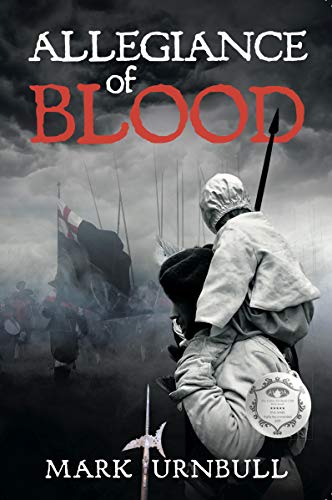
        Book Corner: Allegiance of Blood by Mark Turnbull

        Sir Francis Berkeley strives to protect his wife and family from the brutal effects of the English Civil War. But aside from the struggle between king and parliament, the allegiances of family, friendship and honour entangle him at every turn and prove to be just as bloody.
        As a witness to treason on the field of Edgehill, Francis is drawn into a fast-moving world of espionage and politics. Against a backdrop of some of the major battles and sieges, Francis’s fight to reunite his family opens up very different conflicts with which to contend.
        Everything is at stake when the war comes to a little church one December morning. Can the family survive the parliamentarian onslaught as well as their own feud?

        I have to admit, the English Civil War is not one of my more familiar periods of history. So a book on it – be it fact or fiction – has to be really good to hold my attention. Allegiance of Blood by Mark Turnbull is one such book. It is a wonderful novel based around the struggles between the English Parliament and King Charles I and the divisions this caused with the country – and even within families. It centres on the story of one royalist, Sir Francis Berkeley, and his experiences following the battle of Edgehill on October 1642.

        Allegiance of Blood beautifully weaves together the personal life and tragedies of the hero, Berkeley, with the greater drama that is overtaking England and the embattled King Charles I. Fast-paced and full of action, the story highlights the many conspiracies and conflicted loyalties that plagued the soldiers on both sides of the war; where brothers fought brothers, friends found themselves on opposing sides and families were torn by politics and ideologies.

        The story is augmented by Francis’s proximity to the great and the good. Taken under the wing of Prince Rupert of the Rhine, the dashing cavalier general, and given promotion and responsibility, Francis fights to further the royalist cause, even against his own family and friends.

        “After years of watching others, I see I have been spied upon myself.” Harbottle paled with realisation. “A secret that will die with you.” He squeezed the trigger, only for a flash of yellow and a hiss to taunt him upon its smoking misfire.

        Francis seized his sword and sliced at Harbottle’s leg; a streak of crimson filled the gash. Before the blood had time to soak into his breeches, Francis punched the man in the face and then in the stomach. Harbottle, winded and with a broken nose, careered backwards into a shelf of pewter plates that jangled across the floor around them.

        “You betrayed every man who lost his life that day.” Francis caught his breath and grabbed the remaining letters. “Cowardly son of a whore.” Clutching them in his other fist he held them up in vindication of all the lost souls of Edgehill who’d been sold out by this self-centred dog. It took all of his restraint not to skewer Harbottle on the end of his sword that instant.

        “I’m no such thing.” Harbottle panted, claiming that swimming against the popular tide took much more courage. “My family’s future will not be dictated by attachment to one of two corrupt factions.”

        “Perhaps you’ll soon come to realise the futility of your two-faced strategy.”

        “Your battlefield memories are little more than the ramblings of a lunatic,” Harbottle replied.

        “I suspect these letters contain more than mere ramblings.” Francis warned that Harbottle would soon be swinging from a noose. “A constricted throat will put an end to your betrayal of the King.”

        With the appearance of his subordinates, revealing that the street was rapidly being cleared of rebels, Francis’s prediction took a step closer to reality. Every passing day of peace negotiations had seen royal dominance loosened bit by bit, because every fresh day brought Parliament’s field army closer to London in its bid to defend the city. Brentford’s fall evened out the balance of power, but what remained to be seen was whether Francis could tip the scales against Harbottle and prove the man’s duplicity.

        After a slight tendency to over-description in the early chapters, Allegiance of Blood proves to be a wonderful novel, exciting, entertaining and addictive. It draws you in, taking you through all the motions as you experience love, battle, betrayal and grief. The imagery is sublime.

        The history is impeccable and Mark’s extensive research shines through, but does not overshadow the story. The characters are a wonderful, disparate group, from the Puritan brother-in-law, drunken father-in-law, to a loving wife. And then there’s Francis himself, a loyal royalist who is often caught between his unwavering allegiance to the crown and family and friendship loyalties which serve to test that allegiance.

        Mark Turnbull skilfully brings together all the aspects of war; family and friendships riven apart, betrayal, espionage, sieges and pitched battles – and a family secret! He weaves a wonderful, sweeping story, which draws the reader into the essence of the wars between parliament and king.

        Allegiance of Blood by Mark Turnbull is available in paperback and ebook from Amazon UK.

        About the author:

        After a visit to Helmsley Castle at the age of 10, Mark Turnbull bought a pack of ‘top trump’ cards featuring the monarchs of England. The card portraying King Charles I fascinated him.
        Van Dyck’s regal portrait of the King and the fact that he was executed by his own people were the beginnings of Mark’s passionate interest in the English Civil War that has lasted ever since.
        In the absence of time travel, he thoroughly enjoys bringing this period to life through writing. He has written articles for magazines, local newspapers and online educational sites. He has also re-enacted battles with The Sealed Knot and for several years edited the Historical Novel Society’s online newsletter.

        *

        My Books

        Silk and the Sword: The Women of the Norman Conquest

        From Emma of Normandy, wife of both King Cnut and Æthelred II to Saint Margaret, a descendant of Alfred the Great himself, Silk and the Sword: the Women of the Norman Conquest traces the fortunes of the women who had a significant role to play in the momentous events of 1066.  Available now from Amazon UK,  Amberley Publishing, Book Depository and Amazon US.

        Heroines of the Medieval World

        Telling the stories of some of the most remarkable women from Medieval history, from Eleanor of Aquitaine to Julian of Norwich, Heroines of the Medieval World,  is available now on kindle and in paperback in the UK from from both Amberley Publishing and Amazon, in the US from Amazon and worldwide from Book Depository.

        *

        You can be the first to read new articles by clicking the ‘Follow’ button, liking our Facebook page or joining me on Twitter and Instagram.

        ©2020 Sharon Bennett Connolly 

        Book Corner: Blood’s Campaign by Angus Donald

        ONE OF THE MOST TURBULENT REIGNS IN HISTORY PAVED THE WAY FOR THE FIRST MODERN REVOLUTION.

        AFTER THE TUDORS CAME THE STUARTS . . .

        If you enjoy S. J. Parris and Andrew Taylor, then this is the series you need to read next.

        August 25, 1689

        The English Army is besieging Carrickfergus in Ireland. Brilliant but unusual gunner Holcroft Blood of the Royal Train of Artillery is ready to unleash his cannons on the rebellious forces of deposed Catholic monarch James II. But this is more than war for Captain Blood, a lust for private vengeance burns within him.

        French intelligence agent Henri d’Erloncourt has come across the seas to foment rebellion against William of Orange, the newly installed Dutch ruler of England, Scotland and Ireland. But Henri’s true mission is not to aid the suffering of the Irish but to serve the interests of his master, Louis le Grand.

        Michael ‘Galloping’ Hogan, brigand, boozer and despoiler of Protestant farms, strives to defend his native land – and make a little profit on the side. But when he takes the Frenchman’s gold, he suspects deep in his freedom-loving heart, that he has merely swapped one foreign overlord for another.

        July 1, 1690

        On the banks of the River Boyne, on a fateful, scorching hot day, two armies clash in bloody battle – Protestant against Catholic – in an epic struggle for mastery of Ireland. And, when the slaughter is over and the smoke finally clears, for these three men, nothing will ever be the same again . . .

        The sign of a really good book is always that you find yourself absorbed in it, desperate to finish it but bereft when you do. Blood’s Campaign is a really, really, really good book!

        I was extremely excited to be offered this book to review by NetGalley. The first 2 books in the series, Blood’s Game and Blood’s Revolution, were both fantastic and refreshingly unique stories, introducing a hero who was sympathetic and quirky in a very distinct way.

        Blood’s Campaign, the third in the series following the exploits of Holcroft Blood, it takes us to Ireland and the campaign that led to the Battle of the Boyne and the end of James VII and II’s hopes to regain the throne from his daughter and her husband, the joint monarchs, William III and Mary II. Angus Donald combines the story of the campaign with Blood’s own personal mission to find and destroy the French spy, codenamed Narrey – Holcroft’s one-time friend, Henri d’Erloncourt.

        In today’s society, Holcroft Blood would be on the Autistic Spectrum. In the 17th Century, there was no such diagnosis. He was simply seen as a peculiar character. Holcroft is well aware of his failings, of his inability to understand jokes and to read some people; this, and his black-and-white outlook on life can lead to distractions which in themselves could lead him into trouble, especially with women. He feels more comfortable when order is enforced, which makes the army the ideal home for Holcroft.

        He clambered up the pile of rubble by the corner of the farmhouse and pulled out his telescope. ‘You take over, Enoch,’ he said over his shoulder. ‘Nothing fancy, go for the highest rate of fire. I’ll spot for you from here.’

        He trained the telescope on the roof of Joymount House. The twenty-four-pounders were being moved again. No need to aim at the breach any more. Then to his joy he caught a glimpse of Narrey standing alone by the easel, tapping his chin with the wooden end of the paintbrush, on the right-hand roof before he moved out of sight towards the rear.

        Please, God, let him stay where he is, please, God, let him remain up there.

        He looked behind him to see what stage the reloading process had reached. Nearly there.

        ‘Tend the match,’ Jackson was saying to the matrosse now holding the linstock. ‘Have a care. Give fire! May the Lord guide our efforts.’

        It was a beautiful shot. The mortar coughed, spitting the missile in a high, elegant arc, a parabola, far over the burnt-out farmhouse, soaring over the town walls and dropping down, down until the hollow iron sphere exploded with a colossal bang exactly over the centre of the battery atop Joymount House.

        ‘Dead on, Enoch,’ shouted Holcroft. ‘Full on target. More of that, please.’At that moment, a musket cracked and a ball pinged from a piece of broken rubble beside his cheek, spattering him painfully with grains of brick dust. The Irish musketeers on the walls had, at last, taken notice of the mortar’s position.

        Holcroft Blood’s penchant for mathematics makes him the perfect gunner and he feels at home calculating angles and distances and the flight of a cannonball – the science of gunnery offers him a home in a world that he often finds hard to understand. However, his mathematical mind also means he has a knack for codes – a skill which has drawn him into the world of espionage before, and which he uses again in an attempt to corner his implacable enemy, Narrey.

        Holcroft not only has to negotiate the machinations of his enemies, but the enmity of his commanding officer, and his own feelings, in order to track down his enemy and fulfill his duties within the army. The story of the campaign which led to the Battle of the Boyne and beyond is laid out beautifully by Angus Donald – as is the gorgeous Irish landscape.

        The author’s research is impeccable and thorough, not only with the battle itself, but also with his knowledge of provisions, troop movements, training and 17th century society in both Ireland and England. His knowledge of the campaign, gunnery and the minutiae of army life help to bring to life the Stuart world in vivid and colourful detail.

        Blood’s Campaign is exciting from the first page to the last. A totally absorbing story, it will keep you reading ‘just another chapter’ long into the night. You don’t just read this book – you devour it.

        Blood’s Campaign is definitely in my 10 best books of 2019. It takes you on a wonderful adventure and leaves you wanting more!

        To buy the Book:

        Blood’s Campaign is available from Amazon.

        About the author:

        Angus Donald was educated at Marlborough College and Edinburgh University. He has worked as a fruit-picker in Greece, a waiter in New York and as an anthropologist studying magic and witchcraft in Indonesia. For many years he was a journalist in Hong Kong, India, Afghanistan and London. He is married to Mary, with whom he has two children, and he now writes full time from a medieval farmhouse in Kent.

        He is the author of the bestselling Outlaw Chronicles, a series of eight books set in the 12th/13th centuries and featuring a gangster-ish Robin Hood and his loyal lieutenant Sir Alan Dale. His new Holcroft Blood series stars a mildly autistic artillery officer who was the son of notorious 17th-century Crown Jewel thief Colonel Thomas Blood. The series begins with Blood’s Game, followed by Blood’s Revolution and Blood’s Campaign (out November 2019). The author has also written an epic Asian fantasy novel Gates of Stone under the pseudonym Angus Macallan. He is always happy to chat to readers on Facebook, Twitter and via his website http://www.angusdonaldbooks.com

        *

        My Books

        Silk and the Sword: The Women of the Norman Conquest

        From Emma of Normandy, wife of both King Cnut and Æthelred II to Saint Margaret, a descendant of Alfred the Great himself, Silk and the Sword: the Women of the Norman Conquest traces the fortunes of the women who had a significant role to play in the momentous events of 1066.  Available now from Amazon UK,  Amberley Publishing, Book Depository and Amazon US.

        Heroines of the Medieval World

        Telling the stories of some of the most remarkable women from Medieval history, from Eleanor of Aquitaine to Julian of Norwich, Heroines of the Medieval World,  is available now on kindle and in paperback in the UK from from both Amberley Publishing and Amazon, in the US from Amazon and worldwide from Book Depository.

        *

        You can be the first to read new articles by clicking the ‘Follow’ button, liking our Facebook page or joining me on Twitter and Instagram.

        ©2019 Sharon Bennett Connolly

        Book Corner: Yorkshire: A Story of Invasion, Uprising and Conflict

        This is a story about Yorkshire and its people, from the earliest period up to recent times. Foremost it is a story about invasion. Archaeological finds have shown that Yorkshire was occupied at a time when early hunters from continental Europe were not supposed to have ventured so far north. Growing populations on the European mainland made Yorkshire s fertile land and receding woodland a prime landscape for these first European farmers, and over time they would be followed by waves of invaders intent on pillage and land grabbing. From the north and west came the Picts and the Scots, while the Romans, Angles and Vikings arrived via the River Humber. The Normans would be the last to invade and seek to dominate everything they saw. Each invasion would leave its stamp on Yorkshire s culture and life, while battles would later be fought on Yorkshire soil during both the Wars of the Roses and the English Civil Wars. More than just a romp through the ages, this book reveals the key places where battles were fought and Yorkshire history was made.

        Yorkshire: A Story of Invasion, Uprising and Conflict by Paul C. Levitt is a fabulous, fun and entertaining overview of the history of Yorkshire, from the earliest times to the 20th century. As a Yorkshire lass myself, it was a pleasure to sit back and soak up this history of this unique county. The author obviously enjoys his work, and writes about Yorkshire’s history with an enthusiasm that makes the book impossible to put down.

        The beauty of Yorkshire: A Story of Invasion, Uprising and Conflict is that it tells Yorkshire’s story within the context of England’s wider history. So we see the Norman invasion of 1066 through the very harsh and dramatic effects it had on Yorkshire, with the Harrying of the North. We also Yorkshire’s part in the Anarchy, the almost-20 year civil war between Stephen and Matilda, and in such events as the Wars of the Roses and the English Civil War of the seventeenth century.

        Paul C. Levitt also brings to the fore events particular to Yorkshire, such as the dreadful massacre of the Jews in York, while also explaining the wider context of anti-semitism in England and the time. The author manages to portray Yorkshire’s unique personality and place in history, both of the county and its people and the relationship of the county with the country as a whole.

        Throughout the first millennium, the tribes of Europe were taking part in unprecedented levels of migration. The collapse of the Roman Empire released unbridled waves of Huns, Goths and Vandals who moved across Europe displacing native tribes. On the edge of this disturbance was Scandinavia, from where people would come to British shores from the late eighth century until AD 1100 looking for richer land and more space to live. The question arises, when exactly does a ‘migration’ become and invasion? The Vikings were thought to have left their homelands in Scandinavia initially due to overcrowding and declining resources, but later on their mass migration was equally due to a weakness they perceived in the English. Although they shared similarities and kinship with the Anglo-Saxons, the Vikings viewed them as being weak and cowardly…

        Yorkshire: A Story of Invasion, Uprising and Conflict by Paul C. Levitt is a thoroughly enjoyable read that I’m definitely going to pass on to my dad – as a true Yorkshireman, he will love it! This book will be useful for anyone with an interest in Yorkshire and it history.

        Fun and informative, it clearly demonstrates the reason we Yorkshire folk are said to have ‘grit’. I can highly recommend it!

        To Buy the Book:

        Yorkshire: A Story of Invasion, Uprising and Conflict by Paul C. Levitt is available from Pen & Sword and also from Amazon in the UK and US.

        About the author:

        Born into a military family in the historic market town of Beverley, East Yorkshire, Paul Levitt has always been intrigued by the past. He developed a keen awareness of Yorkshire’s rich heritage as a schoolboy and developed a particular interest in the medieval period. Yorkshire’s unique landscape and especially the North York Moors made a strong impression on him and to this day remains a magical place. He has written professionally on a wide range of subjects for the past 25 years.

        *

        My Books

        Silk and the Sword: The Women of the Norman Conquest

        From Emma of Normandy, wife of both King Cnut and Æthelred II to Saint Margaret, a descendant of Alfred the Great himself, Silk and the Sword: the Women of the Norman Conquest traces the fortunes of the women who had a significant role to play in the momentous events of 1066.  Available now from Amazon UK,  Amberley Publishing, Book Depository and Amazon US.

        Heroines of the Medieval World

        Telling the stories of some of the most remarkable women from Medieval history, from Eleanor of Aquitaine to Julian of Norwich, Heroines of the Medieval World,  is available now on kindle and in paperback in the UK from from both Amberley Publishing and Amazon, in the US from Amazon and worldwide from Book Depository.

        *

        You can be the first to read new articles by clicking the ‘Follow’ button, liking our Facebook page or joining me on Twitter and Instagram.

        ©2019 Sharon Bennett Connolly 

        Guest Post: The Battle of Tippermuir by Mark Turnbull

        Today marks the 375th anniversary of the Battle of Tippermuir and it is a pleasure to welcome author Mark Turnbull to History…the Interesting Bits with an article of the English Civil War battle. Over to Mark….

        British Civil War cavalry (The English Civil War Society) 
        Montrose only had three horses at the Battle of Tippermuir

        Three hundred and seventy-five years ago a son of Scotland secured his first victory in the name of King Charles I. The Battle of Tippermuir produced the famous ‘highland charge’ as well as the legend of the Earl of Montrose, but a matter of days prior, it seemed like none of this could be borne from a few seeds of resistance.

        When three Scotsmen crossed the border in August 1644, they did not look back. Carlisle Castle was barely visible; nothing more than a red-stoned pimple on the top of a hill in the distance. William Rollo was a horseman par-excellence, honed through being entirely lame. Colonel William Sibbald rode alongside Rollo, both ignoring the groom trailing behind and leading a spare horse.

        The trio left an England riven apart by civil war. King Charles I and his Parliament had been battling it out for two years, but eight months ago, Scotland had stepped from the side-lines and thrown their bonnets into the ring with Parliament. Scotland’s army of covenanters had marched into England and just won a stunning victory outside of York. Sibbald and Rollo intended to assist the King by beginning a guerrilla war in their homeland to draw back the covenanter army.

        British Civil War Pikemen. Montrose’s men were poorly armed and he suggested they take stones from the earth and bash the enemies’ brains out.

        Sewn into the saddle of the riderless horse was King Charles’s commission and his royal standard; two instruments essential to the plan. The man entrusted with securing the nation and restoring their Scottish-born King’s authority, was none other than the pretended groom himself; James Graham, Earl of Montrose. One fact remained in keeping with his disguise – Montrose only had one measly horse to lead and just Sibbald and Rollo to assist him. However, Montrose was banking on the Earl of Antrim’s promise to assemble an army of twelve thousand Irishmen to serve the King. But this readymade army was delivered with missing components – it turned out to number only sixteen-hundred. Led by Alasdair MacColla, they landed on the west coast and headed east to Aberdeen, but finding no royalist support there, turned south, meeting Montrose, Sibbald and Rollo in Blair Athol.

        The English Civil War Society. Montrose unfurled the King’s Royal Standard in August 1644 which saw many clans join him.

        On 28 August 1644 Montrose unfurled the King’s standard. In answer, the Scottish Parliament conscripted local Stewarts, Robertsons and Grahams to put the insurgents down. Having discarded his groom’s garb, Montrose emerged from his chrysalis, donned highland dress and broadsword, and encouraged his men to insert strands of oats into their bonnets as a means of signifying their allegiance. Much success was harvested when the clans sent against Montrose actually joined him and boosted his numbers to two thousand. Yet his troops remained untrained, armed only with dirks and swords and with just three horses between them.

        Montrose was well aware that their impetus could be scattered by even so much as a biting highland wind. He had to strike now, before his men melted away, and as such, he marched them to Perth, gathering a few hundred more recruits on the way. On 1 September 1644 at Tippermuir, Montrose met a covenanter army hastily sent by the Scottish Parliament under the command of Lord Elcho.

        The two sides were relatively equal in numbers, but the covenanters possessed cavalry. Montrose placed McColla and his Irishmen in the centre, and promptly took his own position on the right wing, opposite the only experienced officer in the enemy army. Each of his men had ammunition for only a single gunshot, therefore it was imperative that every last one found their marks. Devastating it was then, when the covenanters sent skirmishers forward with the cry ‘Jesus and no quarter,’ to draw and expend royalist firepower. Nevertheless, the covenanter skirmishers were sent packing and pushed back to their own front lines. Montrose had thinned the troops on his army’s left and right to three-deep, and as a result these longer lines prevented any attempts to outflank him.

        Montrose crossed into Scotland in August 1644 disguised as a groom, with only two other men. At one point it’s said that a man bid the groom, “Good Morning, my lord.”

        To his troops, Montrose was characteristically honest, suggesting a novel way to counter their shortage of arms and ammunition; pick stones out of the ground, bash the enemy’s brains out and then seize theirs. Without his charisma, these words would have rung hollow, but his men heeded them like the gospels and he led them against the enemy cavalry throwing missiles, roaring and rampaging down the slope. This tirade of aggression and fervour sent the enemy horsemen fleeing from the field. Not used to such unbridled determination, the covenanters clattered through their own infantry and a rot began which ate through their entire resolve.

        The furious highland charge proved its efficiency long before the days of Culloden, still one hundred years off. Tippermuir was Montrose’s first battle of many. The start of an immense cat and mouse chase with superior covenanter forces that would make him, in the words of The Montrose Society, one of Scotland’s most noble and militarily gifted leaders. Against all odds, this lifelong admirer of Alexander the Great would come tantalisingly close to securing the whole of Scotland for the King.

        *

        More about Mark: I became hooked on the English Civil War at the age of 10. We’d visited Helmsley Castle and my parents bought me a pack of ‘top trump’ cards featuring the monarchs of England. The minute I saw Van Dyck’s portrait of King Charles I at the hunt, I wanted to know more. The painting, costumes and the King’s image were fascinating and then turning over, I read how he was executed. I’d started trying to write stories at a young age (earliest was my own plot for a children’s television show called Thomas the Tank Engine!) so as my interest grew in the English Civil War, my interest in writing automatically seemed to go hand in hand. 

        The first civil war book I bought was Christopher Hibbert’s ‘Cavaliers and Roundheads’ and I decided that I also wanted to keep the history and its characters alive in writing, so eventually I began creating my own historical novel. I’ve made sure I have kept true to historical events and characters and ‘Allegiance of Blood’ is due out later this year. 

        It opens at Edgehill and follows a fictional character, Sir Francis Berkeley, whose life and family are turned upside down by the twists and turns of this momentous period. The story also features many historical characters along the way, allowing the reader a fly-on-the-wall view of the deadly allegiances that threaten Francis.

        I’m also writing articles at the moment about various civil war battles, seeing as there are many 375th anniversaries coming up. 

        I have re-enacted before and would love to again, but at the minute writing takes up my spare time.
        To buy Mark’s books: www.allegianceofblood.com
        Join Mark on his Facebook page: ttps://m.facebook.com/markturnbullauthor

        *

        My books

        Silk and the Sword: The Women of the Norman Conquest

        From Emma of Normandy, wife of both King Cnut and Æthelred II to Saint Margaret, a descendant of Alfred the Great himself, Silk and the Sword: the Women of the Norman Conquest traces the fortunes of the women who had a significant role to play in the momentous events of 1066.  Available now from Amazon UK,  Amberley Publishing, Book Depository and Amazon US.

        Heroines of the Medieval World

        Telling the stories of some of the most remarkable women from Medieval history, from Eleanor of Aquitaine to Julian of Norwich, Heroines of the Medieval World,  is available now on kindle and in paperback in the UK from from both Amberley Publishing and Amazon, in the US from Amazon and worldwide from Book Depository.

        *

        You can be the first to read new articles by clicking the ‘Follow’ button, liking our Facebook page or joining me on Twitter and Instagram.

        ©2019 Sharon Bennett Connolly and Mark Turnbull