Wordly Women: MJ Porter

History... the Interesting Bits

It’s Wordly Women time again!

And today I am joined by an author who I could chat with all day, and never run out of things to talk about, M.J. Porter. MJ writes both fiction and non-fiction and can write a jolly good battle. Last year, MJ joined Derek Birks and I on A Slice of Medieval to chat about Athelstan and the Battle of Brunanburh. And what a fascinating discussion it was.

So, I was really excited to invite MJ Porter to take part in my Wordly Women series.

Sharon: Hi MJ! Firstly, can I ask what got you into writing?

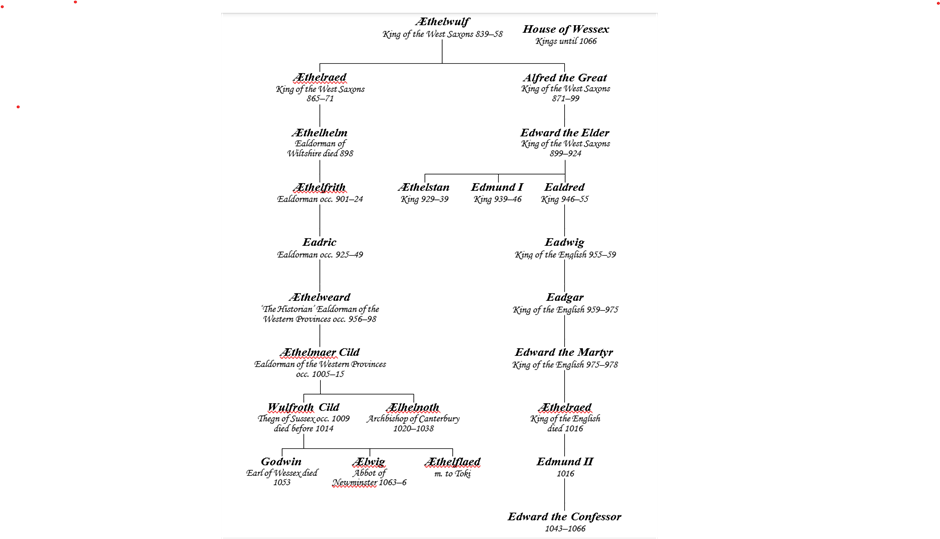
MJ: My big dream was to write historical fantasy based on the Viking Age in Iceland. I know it’s both random and very specific. I only turned to historical fiction when I discovered a character during the research for my Master’s, I realised deserved to have his story told. Ealdorman Leofwine of the Hwicce, alive at the end of the tenth century ( a part of the Saxon Mercian kingdom), and his family were, in my view, far more influential and important than the Godwine family, who everyone knows about. I decided to write the story of the last 100 years of Saxon England through their eyes in the Earls of Mercia series. Not a small endeavour, and one which I’m continuing to pursue (I’ve made it to about AD1050 so everything is about to get quite serious), but since then (back in 2013), I’ve moved backwards through the Saxon era, picking for my subjects and stories those lesser-known characters (men or women) and events to share with my readers. I’m a little bit obsessed with the Saxon kingdom of Mercia.

Sharon: You write both fiction and non-fiction – is one harder than the other?

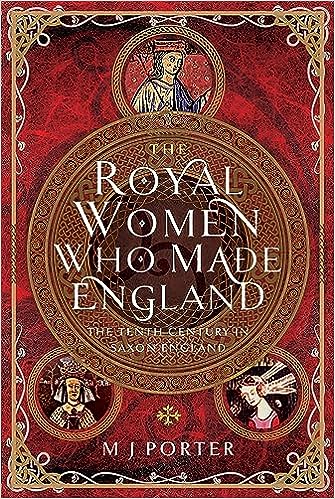
MJ: I’ve written one non-fiction title, The Royal Women of the Tenth Century, and the rest are fiction. What I would say is that non-fiction uses a very different part of my brain from writing fiction. With non-fiction, I struggled to stop each day. I could work on the title for upwards of 12 hours a day without feeling any fatigue. When writing fiction (and I mean writing, not editing), there’s a greater strain as I create as I go. So, my brain gets tired more quickly with fiction writing than non-fiction writing. I imagine that, as I know what’s going to happen with non-fiction, I don’t have that constant pressure when I’m writing. I’m a pantser, so my stories unfold as I write them.

Sharon: Tell us about your books.

History... the Interesting Bits

MJ: I write mostly in the Saxon era, c.540 to 1066. (I do still dabble in fantasy using a pen-name, and I also write quirky 20th-century mysteries). My stories often revolve around either the kingdom of Mercia or the emerging kingdom of England from the tenth century onwards.

I’m attracted to characters and events people don’t know about, or for which evidence is now painting a different picture. However, my stories can range from a blood-and-guts battle fest (with lots of very strong language) to stories about politics. My most recent completed trilogy has been an attempt to recreate events in the true ‘Dark Ages’ in about AD540. It was fascinating but really hard. It was a passion project. I’ve been fascinated by the era for a very long time. My next trilogy will be about the Mercian Civil War of 757, with the future King Offa as the main character. And in the background, I’m continuing my two series set in the ninth century in Mercia, the one following a young Icel as he struggles to become a warrior, not a healer, and the later one, about Mercia’s ‘last king’ King Coelwulf II. The scope for the imagination is immense, and sometimes even I don’t know what form the next story is going to take.

Sharon: What attracts you to the period?

MJ: So, I’m lazy and also, I like to reassess current interpretations, so there are far fewer ‘named’ individuals for me to worry about getting correct in the era, and the scope for reassessing events is immense. We don’t know far more than we know for this period of early English (and wider British) history.

Sharon: Who is your favourite medieval person and why?

MJ: I don’t think I have a favourite. There are too many to pick and choose only one. I do have a very soft spot for William the Marshall, although he’s not in my preferred era.

Sharon: Who is your least favourite medieval person and why?

MJ: Again, I don’t think I have one, but one of my characters, King Coelwulf II of Mercia, really doesn’t like his contemporary, King Alfred of Wessex, and I think he’s probably correct to be suspicious. As historians have commented (to paraphrase), we only know King Alfred was ‘great’ because he made sure to tell us he was (through his Life, written by Asser). That smacks of self-aggrandisement in my books.

Sharon: How do you approach researching your topic?
History... the Interesting Bits

MJ: My process has changed significantly over the years. I began my first historical fiction story by seeing what the Anglo-Saxon Chronicles had to say about events, as well as the surviving charter evidence, but now I tend to start with more general information and then dive deeper. The Anglo-Saxon Chronicle, in all its many forms, is a great place to hunt out stories, but I now consult many more sources, including archaeological finds and the more ‘lived’ experiences. I’ve been studying Saxon England on and off for thirty years, and I suspect I’ve forgotten more than I remember, but I have a general feeling, and I weave the narrative through it, being mindful of what comes before, and what comes after (and also, what I might have written before – which has sometimes caused me more heartache than the alleged historical ‘facts’). I do like to add Easter Eggs through my later stories.

I have a huge collection of reference books these days, and I know where to find information. Additionally, I’m wise enough to realise that sometimes there will be gaps.

I often find that when characters and events are given flesh, they make more sense than in stark non-fiction titles, and this also adds to my confidence in writing stories that counter the current narratives. Some elements simply don’t ‘make sense’ when you add people to them. And others of them suddenly do. The ‘hook’ for my Dark Age trilogy was that after the ‘end’ of Roman Britain, the ability to forge iron from ironstone was lost (although many items were recycled). Abruptly, I realised that when the lost skills were rediscovered, this would have allowed those with sharper blades to dominate those who lacked the ability. I don’t know if that’s true, but it’s a fascinating hypothesis.

Sharon: Tell us your ‘favourite’ true historical story you have come across in your research.

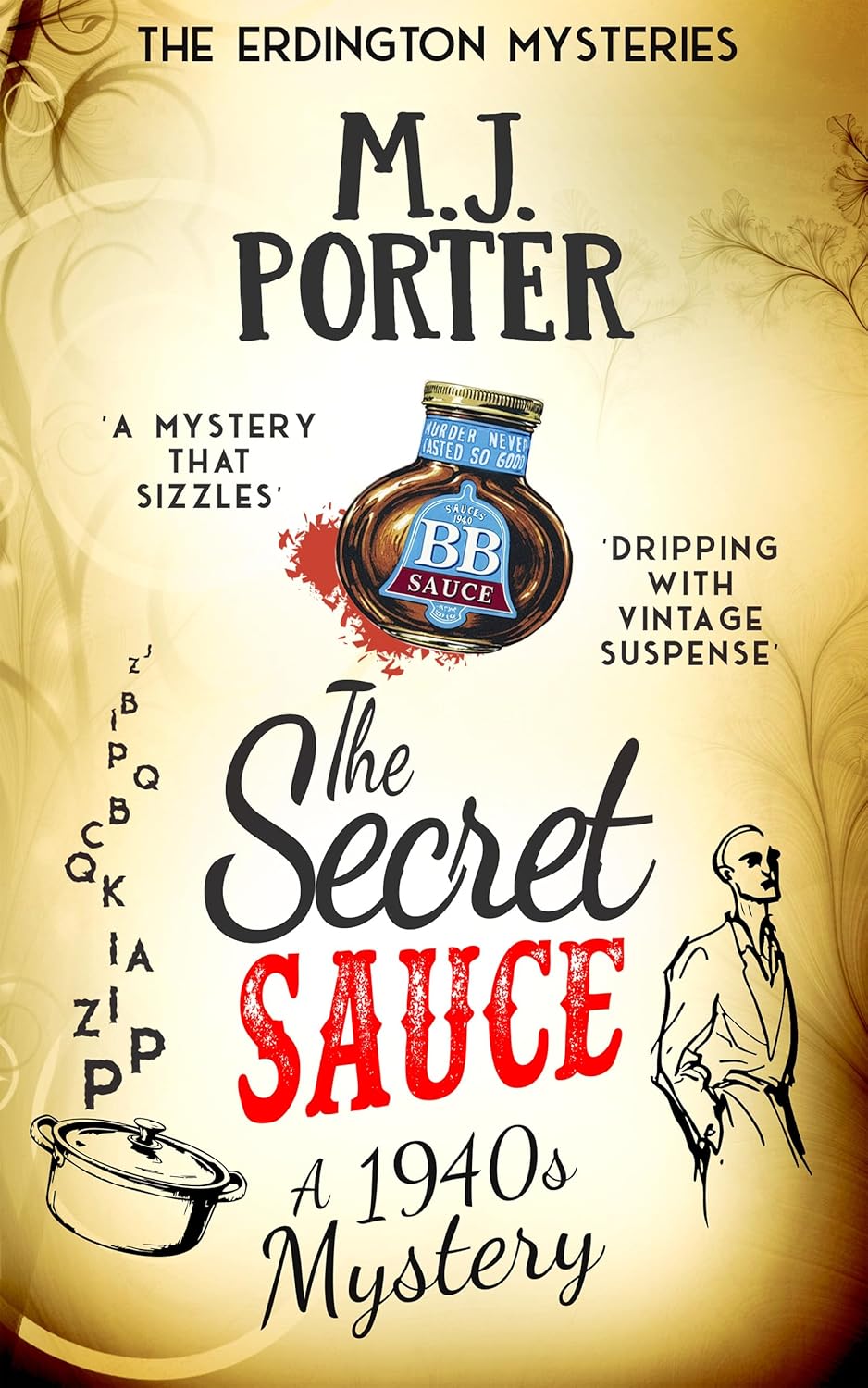
MJ: I don’t know if I have a favourite, but for my last mystery, I discovered something very tragic, regarding a munitions explosion close to RAF Fauld near Burton upon Trent in November 1944. I grew up not far from there, and I’d never heard of it, so I resolved to include it in The Secret Sauce, and now more and more readers are informing me they didn’t know either. I love being able to share these neglected stories with my readers and giving these forgotten individuals some recognition.

Sharon: Tell us your least ‘favourite’ true historical story you have come across in your research.

MJ: I don’t know if I have a least favourite either, but I was devastated when I had to ‘kill off’ my first historical fiction creation, Ealdorman Leofwine, because he disappeared from the historical record. It was so tough. History can be cruel sometimes.

Sharon: Are there any other eras you would like to write about?

MJ: I’ve also written a few 20th-century mysteries, and I’ve dabbled with the Tudors as part of a fantasy trilogy. I might one day be tempted by a little bit of the Roman era as well, but I’m somewhat terrified by how much is known about military units and the way the Romans fought, as my characters are often as disorganised as I am, and I fear I’d offend readers.

Sharon: What are you working on now?
History... the Interesting Bits

MJ: I’m currently writing the first book in The House of Mercia, which will focus on the Civil War in Mercia in 757, with the future King Offa as a main character, while King Æthelbald, his predecessor, is also a character. I’m also in the throes of solving my latest 20th-century mystery, called The Barrage Body. I love the variety, and the convenience of being able to drive and use a telephone as opposed to having a horse and relying on messengers and messages.

Sharon: And finally, what is the best thing about being a writer?

MJ: There’s a lot of freedom to being a writer, once you’ve acknowledged it’s also hard work. I have my processes and routine, but provided I stick to that, I can spend much of my time doing the things I love – writing and researching. I’m very lucky to be able to (just about) earn a living from doing that. I also get to spend my time with characters I either love (or hate), and that is also very freeing.

Books by MJ Porter:

The Secret Sauce; Men of Iron; The House of Mercia; The Earls of Mercia; The Royal Women Who Made England

About the Author:
History... the Interesting Bits

MJ Porter writes: I’m an author of historical fiction (Early English/Saxon, Vikings and the British Isles as a whole before the Norman Conquest, as well as five 20th-century historical mysteries) and fantasy (now published under a different name).

I was born in the old Mercian kingdom at some point since 1066. Raised in the shadow of a strange little building, told from a very young age that it housed the bones of long-dead kings of Mercia and that our garden was littered with old pieces of pottery from a long-ago battle, it’s little wonder that my curiosity in Early England ran riot. I can only blame my parents! I like to write. You’ve been warned!

linktr.ee/MJPorterauthor

*

My books

Signed, dedicated copies of all my books are available through my online store.

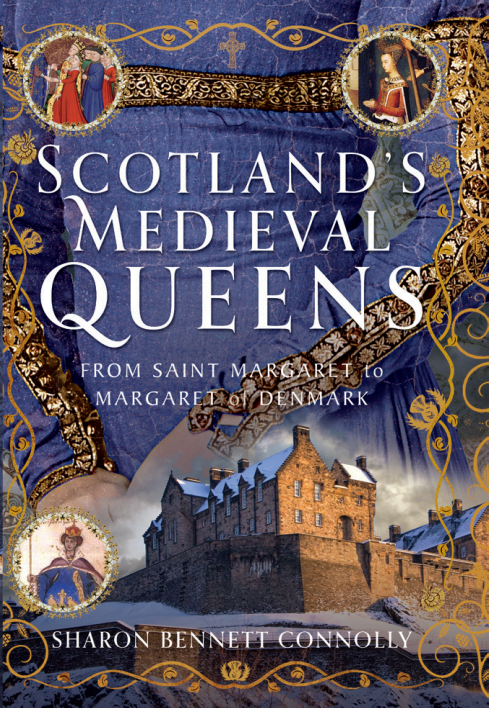
Out now: Scotland’s Medieval Queens

Books by Sharon Bennett Connolly

Scotland’s history is dramatic, violent and bloody. Being England’s northern neighbour has never been easy. Scotland’s queens have had to deal with war, murder, imprisonment, political rivalries and open betrayal. They have loved and lost, raised kings and queens, ruled and died for Scotland. From St Margaret, who became one of the patron saints of Scotland, to Elizabeth de Burgh and the dramatic story of the Scottish Wars of Independence, to the love story and tragedy of Joan Beaufort, to Margaret of Denmark and the dawn of the Renaissance, Scotland’s Medieval Queens have seen it all. This is the story of Scotland through their eyes.

Scotland’s Medieval Queens gives a thorough grounding in the history of the women who ruled Scotland at the side of its kings, often in the shadows, but just as interesting in their lives beyond the spotlight. It’s not a subject that has been widely covered, and Sharon is a pioneer in bringing that information into accessible history.’ Elizabeth Chadwick (New York Times bestselling author)

Available now from Amazon and Pen and Sword Books

Also by Sharon Bennett Connolly:
Books by Sharon Bennett Connolly

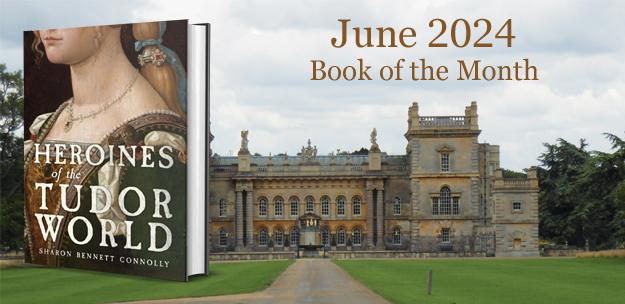
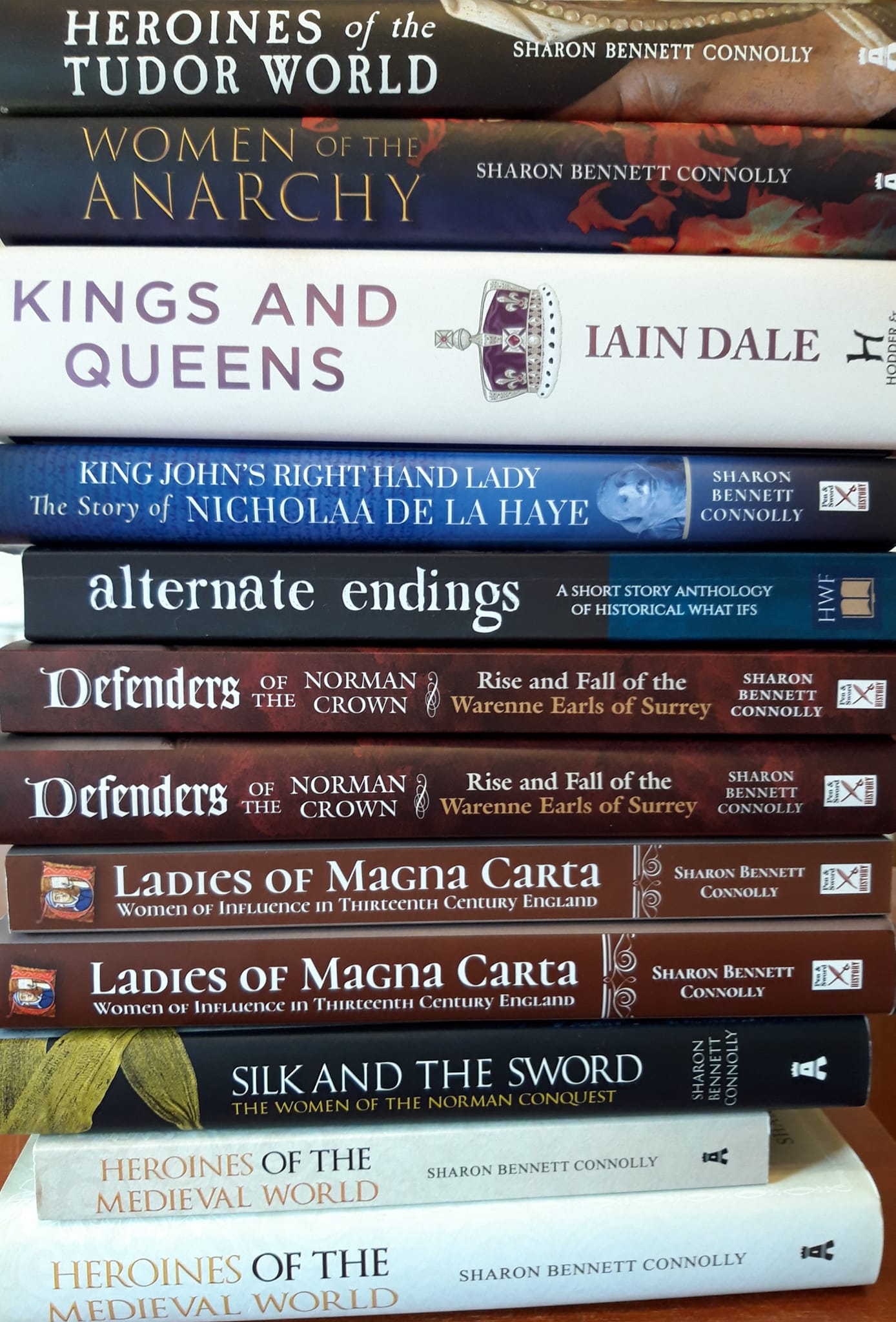
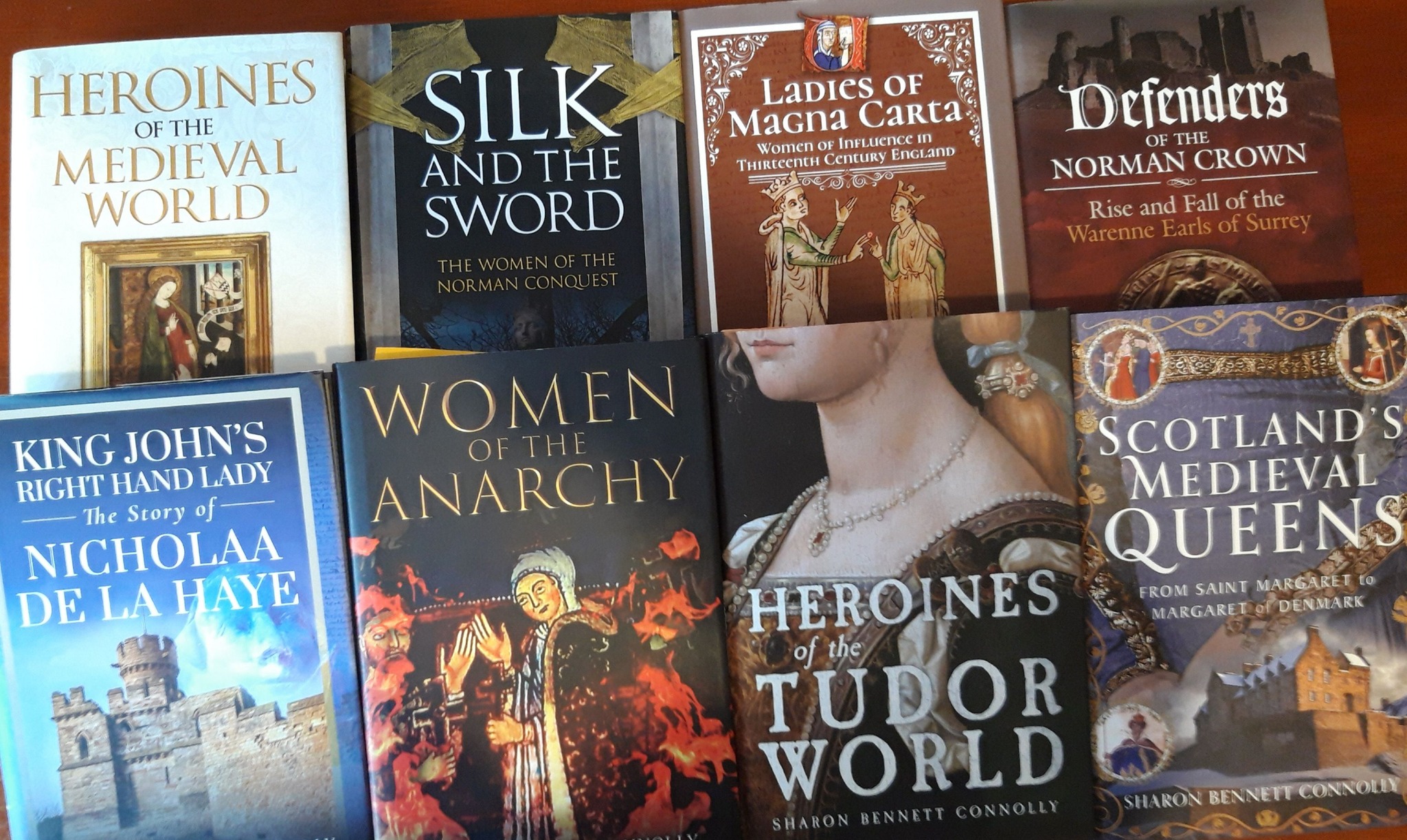
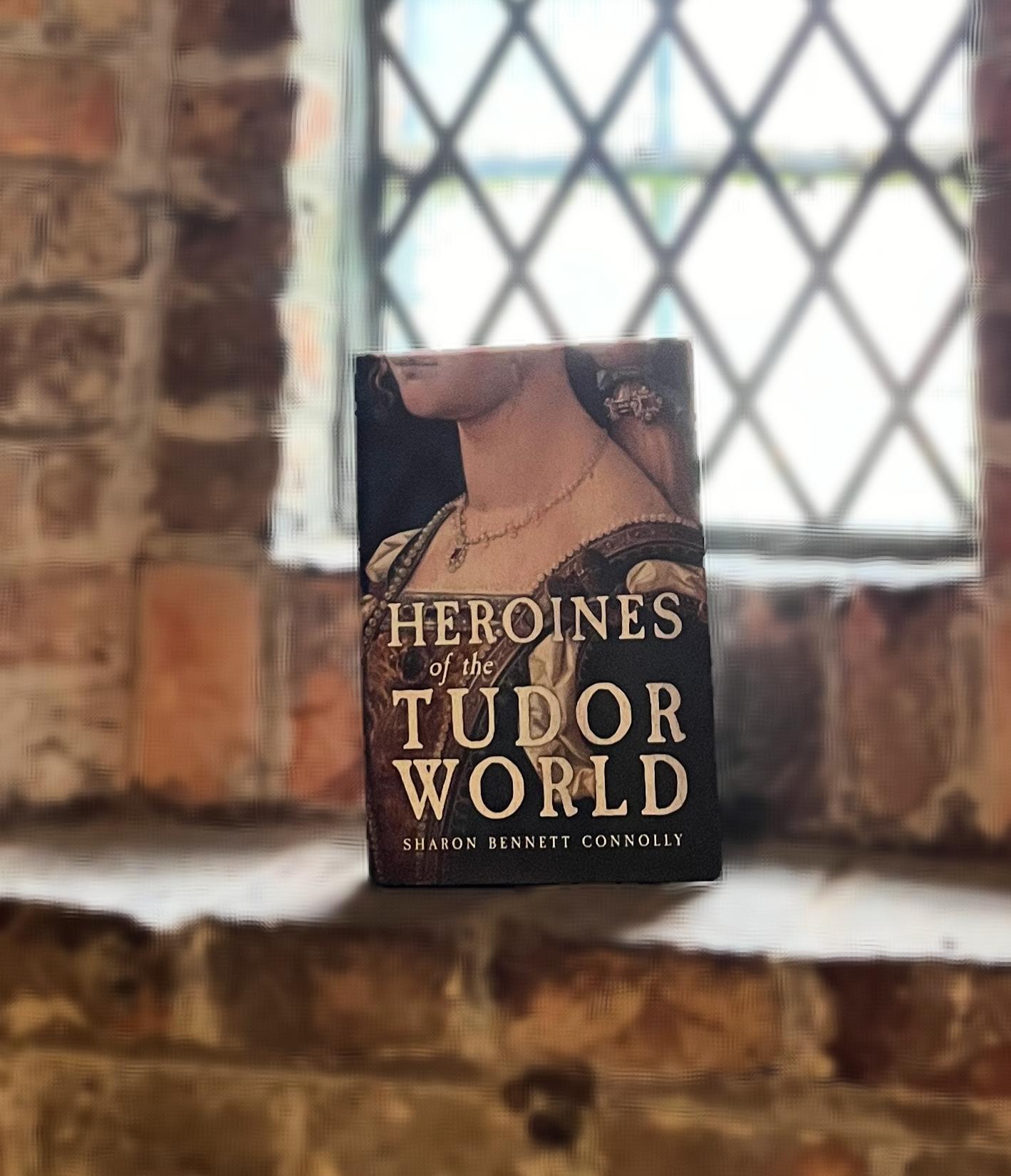
Heroines of the Tudor World tells the stories of the most remarkable women from European history in the time of the Tudor dynasty, 1485-1603. These are the women who ruled, the women who founded dynasties, the women who fought for religious freedom, their families and love. Heroines of the Tudor World is now available from Amberley Publishing and Amazon UK. Women of the Anarchy demonstrates how Empress Matilda and Matilda of Boulogne, unable to wield a sword themselves, were prime movers in this time of conflict and lawlessness. It shows how their strengths, weaknesses, and personal ambitions swung the fortunes of war one way – and then the other. Available from Bookshop.orgAmberley Publishing and Amazon UKKing John’s Right-Hand Lady: The Story of Nicholaa de la Haye is the story of a truly remarkable lady, the hereditary constable of Lincoln Castle and the first woman in England to be appointed sheriff in her own right. Available from all good bookshops Pen & Sword Booksbookshop.org and Amazon

Royal Historical Society

Defenders of the Norman Crown: The Rise and Fall of the Warenne Earls of Surrey tells the fascinating story of the Warenne dynasty, from its origins in Normandy, through the Conquest, Magna Carta, the wars and marriages that led to its ultimate demise in the reign of Edward III. Available from Pen & Sword BooksAmazon in the UK and US, and Bookshop.orgLadies of Magna Carta: Women of Influence in Thirteenth Century England looks into the relationships of the various noble families of the 13th century, and how they were affected by the Barons’ Wars, Magna Carta and its aftermath; the bonds that were formed and those that were broken. It is now available in paperback and hardback from Pen & SwordAmazon, and Bookshop.orgHeroines of the Medieval World tells the stories of some of the most remarkable women from Medieval history, from Eleanor of Aquitaine to Julian of Norwich. Available now from Amberley Publishing and Amazon, and Bookshop.orgSilk and the Sword: The Women of the Norman Conquest traces the fortunes of the women who had a significant role to play in the momentous events of 1066. Available now from Amazon,  Amberley Publishing, and Bookshop.org.

Alternate Endings: An anthology of historical fiction short stories including Long Live the King… which is my take what might have happened had King John not died in October 1216. Available in paperback and kindle from Amazon.

Podcast:

A Slice of Medieval

Have a listen to the A Slice of Medieval podcast, which I co-host with Historical fiction novelist Derek Birks. Derek and I welcome guests, such as Bernard Cornwell and Michael Jecks, and discuss a wide range of topics in medieval history, from significant events to the personalities involved. 

There are now over 75 episodes to listen to!

Every episode is also now available on YouTube.

*

Don’t forget! Signed and dedicated copies of all my books are available through my online store.

For forthcoming online and in-person talks, please check out my Events Page.

You can be the first to read new articles by clicking the ‘Follow’ button, liking our Facebook page or joining me on TwitterThreadsBluesky and Instagram.

*

©2025 Sharon Bennett Connolly and M.J. Porter

Matilda of Scotland, the Good Queen

History... the Interesting Bits
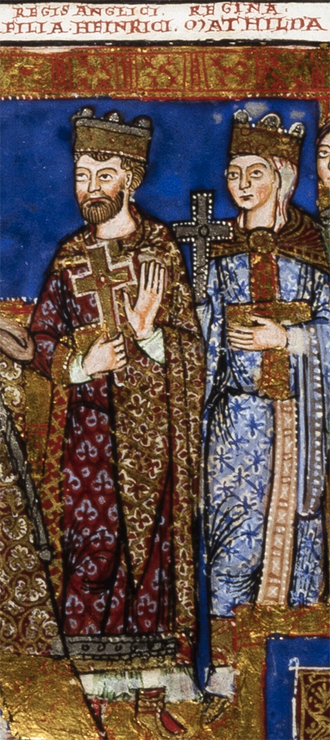
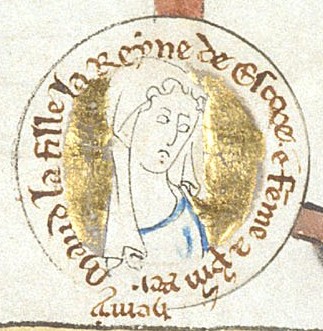
Matilda (Edith) of Scotland, Queen of England

Matilda of Scotland was the daughter of Malcolm III Canmore, King of Scots, and his wife, the saintly Queen Margaret. With Margaret’s descent from Alfred the Great, Matilda not only had the blood of Scottish kings flowing through her veins but also that of England’s Anglo-Saxon rulers. Born in the second half of 1080, Matilda was named Edith at her baptism, her name being changed to Matilda at the time of her marriage, most likely to make it more acceptable to the Norman barons. To avoid confusion, we will call her Matilda for the whole article.

The baby princess’s godfather was none other than Robert Curthose, who was visiting Scotland at the time of her birth. Her godmother was England’s queen, Matilda of Flanders. She and her younger sister, Mary, who was born in 1082, were sent to England to be educated by their maternal aunt Christina, at Romsey Abbey in 1086. A nun who spent time at both Romsey and Wilton abbeys, Christina was said to have treated Matilda harshly, the young princess constantly ‘in fear of the rod of my aunt’.1 Christina’s treatment of Matilda was made public during a church inquiry into whether or not Matilda had, in fact, been professed as a nun, at which point Matilda made her striking references to the ‘rage and hatred … that boiled up in me’.2

Before 1093 the two Scottish princesses, now approaching their teens, had moved on to Wilton Abbey to continue their education, away from the harsh discipline of their aunt. Like Romsey, Wilton was a renowned centre for women’s education and learning. It could accommodate between eighty and ninety women, and was once patronised by Edward the Confessor’s wife, Edith of Wessex. The abbey had a reputation for educating women from the highest echelons of the nobility and the royal family itself; the girls’ mother, Queen Margaret, had also been sent to Wilton to be educated after arriving in England in the late 1050s. The abbey was a popular destination for pilgrims, housing among its relics ‘a nail from the True Cross, a portion of the Venerable Bede and the body of St Edith’.3 Matilda’s first language was English, but she is known to have spoken French at Wilton. She also learned some Latin, read both the old and new testaments of the Bible, ‘the books of the Church fathers and some of the major Latin writers’.4

History... the Interesting Bits
Malcolm IV and St Margaret

By 1093, thoughts were turning to Matilda’s future, but politics intervened. King Malcolm had a disagreement with King William II Rufus after which ‘they parted with great discord, and the king Malcolm returned home to Scotland.’5 On his way home, Malcolm stopped at Wilton to collect his daughters. On his arrival, he found Matilda wearing a veil. The Scots king ripped the offending item from his daughter’s head, tearing it to pieces before trampling the garment into the earth.

Malcolm III insisted that the two girls were not destined for the religious life.

Father and daughters then returned to Scotland, only to find Queen Margaret was ailing, her health had been deteriorating gradually for some time. Despite the queen’s illness, King Malcolm took two of his sons and an army into England, raiding Northumberland. Malcolm and his eldest son, Edward, were killed. Queen Margaret was told the news just a few days later and died shortly after. Having lost both parents in such a short space of time, the two princesses were taken back south by their uncle Edgar the Ӕtheling, though whether they stayed at a convent or resided at court is unclear. Mary would eventually be married to Eustace III, Count of Boulogne, and was the mother of Matilda of Boulogne, wife of King Stephen.

Matilda herself was not short of suitors, who included Alan the Red, Count of Richmond and William de Warenne, Earl of Surrey. Orderic Vitalis explains:

Alain the Red, Count of Brittany, asked William Rufus for permission to marry Matilda, who was first called Edith, but was refused. Afterwards, William de Warenne, Earl of Surrey, asked for this princess; but reserved for another by God’s permission, she made a more illustrious marriage. Henry, having ascended the English throne, married Matilda.6

History... the Interesting Bits
Christina of Wessex

As events unfolded, Matilda was caught up in accusations and scandal surrounding her erstwhile nunnery at Wilton. She refused to return to the convent and insisted that she had never intended to dedicate herself to the church. When Archbishop Anselm ordered Osmund, Bishop of Salisbury to retrieve this ‘prodigal daughter of the king of Scots whom the devil made to cast off the veil’, the princess stood firm and defied him.’7

William II Rufus was famously killed in a hunting accident in the New Forest on 2 August 1100, shot by an arrow loosed by Walter Tirel. William II’s youngest brother, Henry, who was among the hunting party, wasted no time grieving his brother’s death. Leaving the dead king’s body to be looked after by others, he rode fast for Winchester. He seized control of the royal treasury before heading to London and his coronation, which took place on 5 August, just three days after William II’s death. Henry’s surviving older brother, Robert, was still on his way home from the Crusades, unable to take advantage of William’s death to claim the English crown for himself. The newly crowned King Henry I now needed a wife and settled on Matilda of Scotland.

The marriage was not without controversy, however, and before it could take place the church conducted an inquiry into the suggestion that Matilda was a runaway nun. Although Matilda vehemently rejected the claim that she had been professed as a nun, the fact witnesses had seen her wearing a veil on multiple occasions counted against her. Matilda appealed to Archbishop Anselm to look into the matter. The archbishop was appalled at the thought a religious vow may have been broken and declared that he ‘would not be induced by any pleading to take from God his bride and join her to any earthly husband’.8 After meeting with Matilda personally, and hearing her side of the story, the archbishop was persuaded to call an ecclesiastical council to decide the matter. Using Archbishop Lanfranc’s previous ruling that Anglo-Saxon women who had sought refuge in a convent after the Norman Conquest ‘could not be held as sworn nuns when they emerged from hiding’, the council ruled in Matilda’s favour.9 The council determined that ‘under the circumstances of the matter, the girl could not rightly be bound by any decision to prevent her from being free to dispose of her person in whatever way she legally wished’.10

History... the Interesting Bits
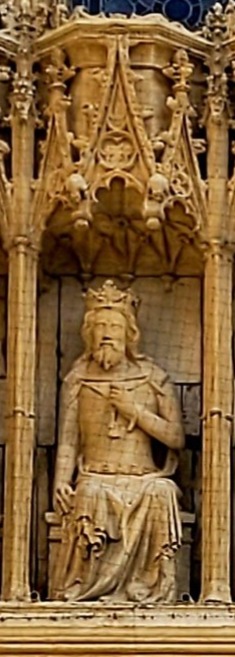
Henry I, King of England in Lincoln Cathedral’s Gallery of Kings

When the wedding finally went ahead, Archbishop Anselm related the controversy over Matilda’s status to the gathered congregation and asked if there were any objections. According to Eadmer, ‘The crowd cried out in one voice that the affair had been rightly decided and that there was no ground on which anyone … could possibly raise any scandal.’11

Henry I married Matilda of Scotland on 11 November 1100, at Westminster Abbey, her name officially and permanently changed from Edith. Marriage between Henry and Matilda represented a continuity of the old Anglo-Saxon royal line; an heir produced by the royal couple would be heir to both the Norman royal house and the ancient royal house of Wessex, creating a genuine unifying force within England. The marriage was also a union between the royal houses of England and Scotland. Offering the promise of peace on England’s troublesome northern border, it would allow Henry to look to his interests on the continent and watch for the return of his older brother, Robert, from crusade.

The honeymoon period for the royal couple was was short-lived and in 1101, Robert had returned and heard of King William’s death and Henry’s seizure of the crown. The duke sent messengers to Henry, asking him to hand over the kingdom. Henry refused. It probably came as no surprise to Henry, then, when Robert invaded England on 20 July 1101. One chronicler claimed that Matilda was in childbed at this time; if she was, the child did not survive. More likely given the timing is that the queen was having a difficult early pregnancy with Matilda, who was born seven months later.

Neither side, however, was keen on all-out war, especially a civil war, and peace talks began almost immediately as the two armies of the royal brothers came face to face at Alton. In the subsequent Treaty of Alton, the duke accepted an annuity of 3,000 marks, drawn from the revenues of England, to abandon his invasion and renounce his claims to the throne. In return, King Henry renounced his lands in Normandy save for Domfront, where he had made a solemn vow to the inhabitants that he would never relinquish control. The brothers agreed to support each other should either be attacked by a third party, and to be each other’s heir if neither sired a son.

History... the Interesting Bits
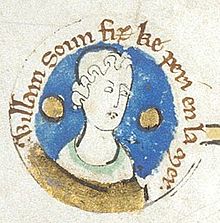
William the Ætheling

Robert returned to Normandy but would soon be pulled back to England by a sense of chivalric duty to his barons. The agreement at Alton between the brothers had left Earl William II de Warenne isolated and at Henry’s mercy. For violating his oath of homage to the king, and for violence perpetrated by his men in Norfolk, Earl Warenne’s English estates were declared forfeit and he was effectively forced to cross the English Channel into exile. Earl William complained to Duke Robert of his sufferings and losses on the duke’s behalf. The duke obviously felt some responsibility, as he set out for England to intercede with his brother on the earl’s behalf. Robert arrived at Henry’s court, uninvited and unwelcome, in 1103. Threatened with imprisonment by an angry brother, he was persuaded by Queen Matilda, to relinquish his annuity of 3,000 marks in return for the reinstatement of Earl William’s English estates and titles.

The primary duty of a queen was to secure the succession by producing an heir as soon as she possibly could. Henry still had his older brother, Robert, to contend with and an heir would certainly strengthen his position. By September 1103, Matilda of Scotland had fulfilled this duty by giving birth to a daughter, Matilda, in February 1102, and the much-desired son and heir, William, known as William Ætheling in an allusion to his descent from the Anglo-Saxon royal line, in September 1103. It is possible third child was either stillborn or short-lived. After the births of the royal children, the king and queen appear to have lived separately, with Queen Matilda establishing herself at Westminster. It was rumoured that the queen had chosen a life of celibacy once her duties of producing an heir had been fulfilled.

History... the Interesting Bits
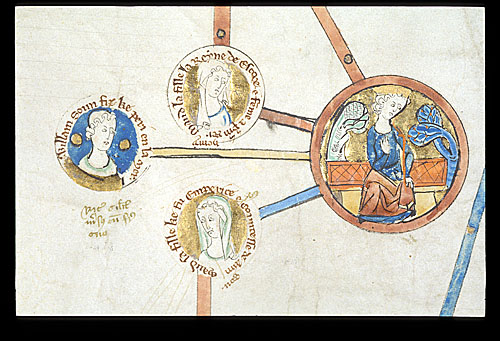
The family of Henry I

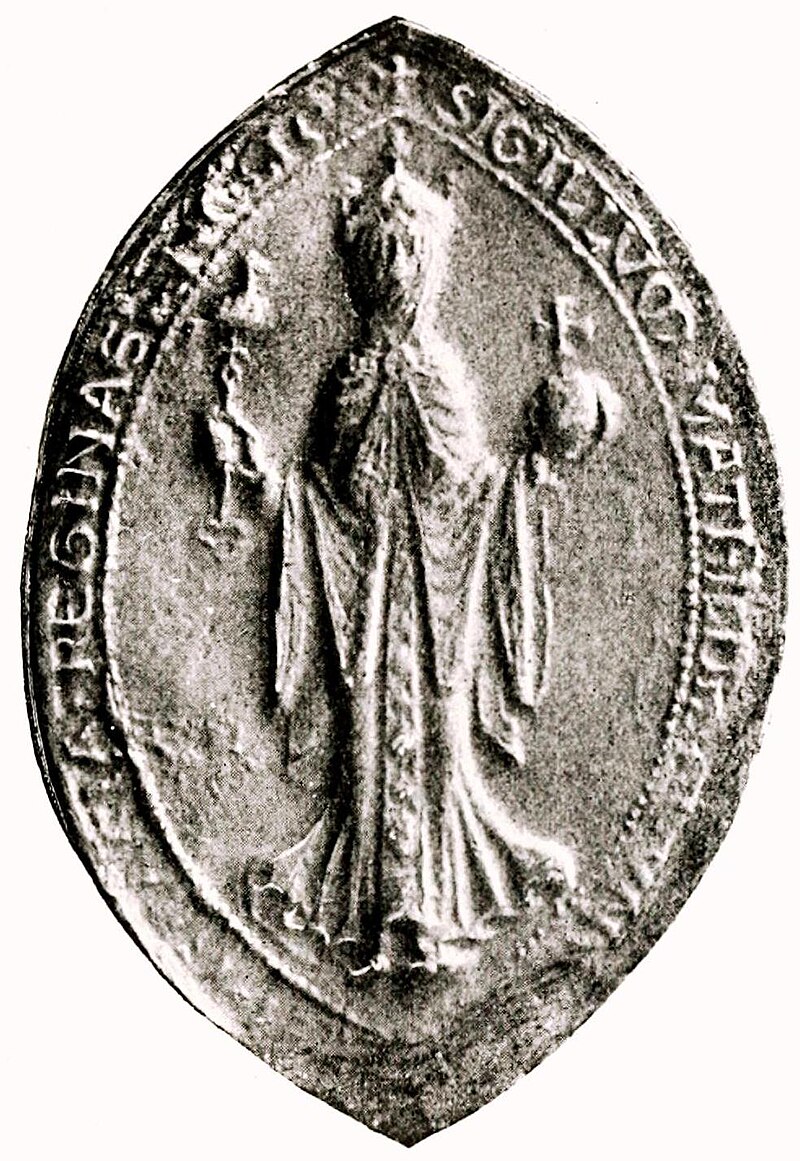
Disputes with Normandy were to be a feature of the first half of Henry’s reign, even after the capture of his brother, Robert at the Battle of Tinchebrai in 1106. Robert would spend the rest of his life imprisoned in England, but his son, William Clito, would later take up the fight. And while Henry subjugated Normandy, Queen Matilda remained in England, often chairing meetings of the king’s council during his absence. The queen had her own seal, which she appended to her charters and which depicted her ‘standing, crowned and wearing a long embroidered robe which falls in folds over her feet. Over this is a seamless mantle which has an embroidered border and is draped over her head. It is fastened at her throat by a brooch, and falls in folds over her arms. In her right hand she holds a sceptre surmounted by a dove, and in her left an orb surmounted by a cross.’.12

As queen, Matilda had received a generous dower settlement, which had been granted from those lands once held by Edith, Edward the Confessor’s queen. Surviving charters issued by Matilda show that she controlled the abbeys of Waltham, Barking and Malmesbury. She held further territory in Rutland and property in London including the wharf later known as Queenhithe, and she also received the tolls of Exeter. Her staff included two clerks who would eventually become bishops. The queen appears to have had a personal interest in managing her estates. In the charter granting Waltham Abbey to his wife, Henry mentions the ‘queen’s court’ held there. Among the queen’s many good works were the building of bridges in Surrey and Essex and the construction of a public bathhouse at Queenhithe. Working with Anselm, Archbishop of Canterbury, Queen Matilda founded a house for the Augustinian canons, Holy Trinity, at Aldgate in London. She also founded a leper hospital at St Giles, funded by sixty shillings a year from dock revenues at her wharf.

Leprosy and the care of lepers was of great concern to the queen. In addition to St Giles, she was the benefactress of a leper hospital at Chichester. Indeed, the queen’s brother David – later David I, King of Scots – told a tale in which he witnessed his sister administering to lepers in her own apartments in Westminster:
History... the Interesting Bits
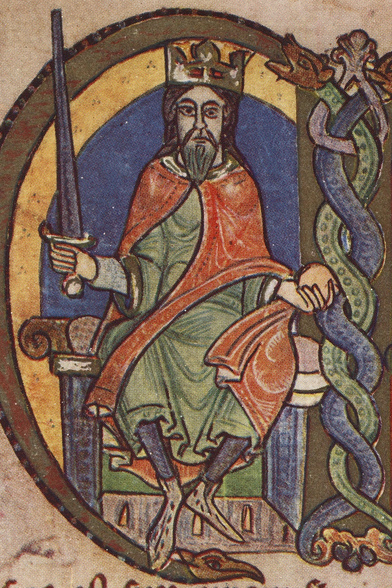
David I, King of Scots

The place was full of lepers and there was the Queen standing in the middle of them. And taking off a linen cloth she had wrapped around her waist, she put it into a water basin and began to wash and dry their feet and kiss them most devotedly while she was bathing them and drying them with her hands. And I said to her ‘My Lady! What are you doing? Surely if the King knew about this he would never deign to kiss you with his lips after you had been polluted by the putrefied feet of lepers!’ Then she, under a smile, said ‘Who does not know that the feet of the Eternal King are to be preferred over the lips of a King who is going to die? Surely for that reason I called you, dearest brother, so that you might learn such works from my example.13

While this story may not be an exact recollection of the siblings’ conversation, it does serve to demonstrate the extent of Matilda’s piety, something she inherited from her sainted mother, Queen Margaret. The queen’s piety and interest in religion are evidenced in her surviving correspondence, which involved not only Archbishop Anselm but also leading church figures such as Pope Paschal II, Hildebert of Lavardin, Archbishop of Tours, Herbert of Losinga, Bishop of Norwich and Ivo, Bishop of Chartres. Though written by a clerk rather than in her own hand, these letters are the earliest surviving examples from an English queen.

Matilda and Anselm appear to have had a good working relationship, which is evidenced by her actions as mediator during the Investiture Controversy, which sought to clarify the rules of investiture within the church. In their correspondence, the archbishop wrote to Matilda as his ‘dearest Lady and daughter Matilda, Queen of the English’.14 Likewise, Matilda witnessed a charter at Rochester, prior to Anselm’s exile, as ‘Matildis reginae et filiae Anselmi archiepiscopi’ (Queen Matilda and daughter of Archbishop Anselm).15 And when Anselm was exiled from England from 1103, Queen Matilda acted as mediator between the archbishop, the king and the pope, Paschal II.

Books by Sharon Bennett Connolly
Empress Matilda depicted in an image from the Gospels of Henry the Lion.

The queen appears to have been well aware of her influence over the king, and its limitations. When Henry appropriated the revenues of Canterbury for himself, claiming it was a vacant see with the archbishop in exile, Matilda persuaded him to set aside a personal allowance for Anselm. However, when she was asked to intervene with the king a few years later, when he was attempting to extract more money from the clergy, Matilda ‘wept and insisted she could do nothing’.16 In 1104, Matilda even approached Pope Paschal II, asking for his intervention in the disagreement between Henry and Anselm.

Henry saw the investiture crisis as an erosion of his royal prerogative, and he was determined to cede no ground. But, with the pope threatening excommunication and Matilda voicing her own pleas to her husband, a compromise was eventually reached by which Henry would relinquish his powers to invest prelates but retain the right to receive homage for ‘temporalities’; this latter concession by the church would augment the secular powers of the crown. When Anselm was finally able to return home to England, in 1106, Matilda was there to personally welcome him back from his three-year exile. She then rode in advance of the archbishop, to ensure accommodation and welcoming ceremonies were in place along his route.

The Investiture Controversy served to demonstrate the extent to which Matilda’s influence could be exerted, not only on the king but internationally, through her correspondence with the church’s most powerful prelates. Matilda also acted as regent for Henry when he was away in Normandy, which was more than half of the time. A woman fulfilling such a role in her lord’s absence was far from unusual and indeed was accepted by the barony of the kingdom; Matilda’s daughter, Empress Matilda, would discover that a woman fulfilling this role on her own behalf faced far more resistance. Queen Matilda acted as regent for months at a time, most notably for ten-month spells from September 1114 and from April 1116. In her final regency Matilda was assisted by her only son, the teenage William Ætheling, who was now earnestly in training for his future role as King of England. He would later join his father in Normandy to continue his apprenticeship, fighting in his first battle there in 1119.

Another notable element of queenship was patronage. Queen Matilda commissioned William of Malmesbury to write the Gesta Regum Anglorum, a genealogical history of the royal house of Wessex which was finished after her death and presented to her daughter, Empress Matilda. She also commissioned a biography of her mother, The Life of St Margaret Queen of Scotland by Turgot, Prior of Durham and later Bishop of St Andrew’s, who had been her mother’s confessor. In 1111 the queen attended the ceremony for the translation of St Æthelwold’s relics at Winchester, and the following year she was in Gloucester to witness the presentation of gifts to the monks there.

History... the Interesting Bits
Seal of Queen Matilda

Matilda was also concerned with justice and in 1116 ordered the release of Bricstan of Chatteris, a prisoner who had apparently been unjustly condemned. Bricstan, who had intended to take holy orders before his arrest – the reason for which is unknown – called upon St Benedict and St Etheldreda for assistance. The two saints are said to have torn his chains from him. The shocked guards immediately turned to Queen Matilda, who ordered an investigation into the events. Satisfied that a miracle had occurred, the queen ordered Bricstans’s immediate release. She also ordered that special masses should be heard, and the bells of London should be rung in celebration.

Matilda of Scotland died on 1 May 1118 at Westminster, at the age of thirty-seven. King Henry was in Normandy at the time and Matilda was acting as regent, which suggests that her death was unexpected, though we do not know the cause. The canons of her foundation of Holy Trinity at Aldgate and the monks at Westminster both claimed the right to bury her. She was buried in Westminster Abbey, much to the chagrin of the monks of Aldgate who lodged a complaint with Henry on his return. Henry compensated the order with a gift of relics from the Byzantine emperor. He also confirmed his queen’s donations to Holy Trinity, Aldgate. The king gave money so that a perpetual light could be maintained at her tomb; this was still being paid in the reign of Henry III, Matilda’s great-great-grandson.

Matilda died a beloved queen, and was remembered as ‘Mold the Good Queen’ or ‘Good Queen Maud’. Praise for the queen is almost universal, although William of Malmesbury criticised her for patronising foreigners and reported that she ‘fell into the error of prodigal givers; bringing many claims to her tenantry, exposing them to injuries and taking away their property, but since she became known as a liberal benefactress, she scarcely regarded their outrage’.17

The Warenne Chronicle recorded her death with a fitting epitaph:

History... the Interesting Bits
Matilda of Scotland

So then, almost all of England’s bishops, magnates, abbots, priors, and indeed the innumerable common masses assembled with great sadness for her crowded funeral, and with many tears they attended her burial … I can sum up her praise in this brief declaration that from the time when England was first subject to kings, of all queens none was found like her, nor will a similar queen be found in coming ages whose memory will be held in praise and whose name will be blessed for centuries. So great was the sorrow at her absence and so great a devotion filled everyone, that several of the noblest clerics, whom she had much esteemed in life, stayed at her tomb for thirty days in vigils, prayers and fasting, and they kept mournful and devoted watch…18

A woman of proven ability in governing the kingdom, Queen Matilda served as an example of what a woman could do, and the power she could wield, albeit in her husband’s name.

*

Notes:

1. Lisa Hilton, Queens Consort: England’s Medieval Queens; 2. Eadmer of Canterbury, Historia Novorum in Anglia; 3. Hilton, Queens Consort; 4. ibid; 5. Michael Swanton (ed.), The Anglo-Saxon Chronicles; 6. Ordericus Vitalis, Histoire de Normandie, quatrième partie (my translation); 7. Anselm, quoted in Hilton, Queens Consort; 8. Eadmer, Historia Novorum in Anglia; 9. Hilton, Queens Consort; 10. Eadmer, Historia Novorum in Anglia; 11. ibid; 12. Susan M. Johns, Noblewomen, Aristocracy and Power in the Twelfth-Century Anglo-Norman Realm; 13. Ailred of Rievaulx, quoted in Hilton, Queens Consort; 14. epistolae.ccnmtl.columbia.edu; 15. Hilton, Queens Consort; 16. ibid; 17. William of Malmesbury, quoted in Hilton, Queens Consort; 18. Van Houts and Love, The Warenne (Hyde) Chronicle

Images:

Courtesy of Wikipedia except Henry I, which is ©2025 Sharon Bennett Connolly FRHistS

Sources:

Lisa Hilton, Queens Consort: England’s Medieval Queens; Eadmer of Canterbury, Historia Novorum in Anglia; Michael Swanton (ed.), The Anglo-Saxon Chronicles; Ordericus Vitalis, Histoire de Normandie; Susan M. Johns, Noblewomen, Aristocracy and Power in the Twelfth-Century Anglo-Norman Realm; epistolae.ccnmtl.columbia.edu; Teresa Cole, After the Conquest: The Divided Realm; Jeffrey James, The Bastard’s Sons: Robert, William and Henry of Normandy; Henry of Huntingdon, The History of the English People 1000-1154; Charles Spencer, The White Ship: Conquest, Anarchy and the Wrecking of Henry I’s Dream; E. Norton, England’s Queens: From Boudicca to Elizabeth of York; Nigel Tranter, The Story of Scotland; Elisabeth Van Houts, and Rosalind C. Love (eds and trans), The Warenne (Hyde) Chronicle; Oxford Dictionary of National Biography; Ordericus Vitalis, The Ecclesiastical History of Orderic Vitalis, 1075-1143; J. F. Andrews, Lost Heirs of the Medieval Crown: The Kings and Queens Who Never Were; Anne Crawford (ed.), Letters of the Queens of England; Elizabeth Norton, England’s Queens: From Boudicca to Elizabeth of York; Lida Sophia Townsley, ‘Twelfth-century English queens: charters and authority’, academia.edu;

*

My Books

Signed, dedicated copies of all my books are available through my online bookshop.

Out now: Scotland’s Medieval Queens

Books by Sharon Bennett Connolly

Scotland’s history is dramatic, violent and bloody. Being England’s northern neighbour has never been easy. Scotland’s queens have had to deal with war, murder, imprisonment, political rivalries and open betrayal. They have loved and lost, raised kings and queens, ruled and died for Scotland. From St Margaret, who became one of the patron saints of Scotland, to Elizabeth de Burgh and the dramatic story of the Scottish Wars of Independence, to the love story and tragedy of Joan Beaufort, to Margaret of Denmark and the dawn of the Renaissance, Scotland’s Medieval Queens have seen it all. This is the story of Scotland through their eyes.

Scotland’s Medieval Queens gives a thorough grounding in the history of the women who ruled Scotland at the side of its kings, often in the shadows, but just as interesting in their lives beyond the spotlight. It’s not a subject that has been widely covered, and Sharon is a pioneer in bringing that information into accessible history.’ Elizabeth Chadwick (New York Times bestselling author)

Available now from Amazon and Pen and Sword Books

Also by Sharon Bennett Connolly:

Books by Sharon Bennett Connolly

Heroines of the Tudor World tells the stories of the most remarkable women from European history in the time of the Tudor dynasty, 1485-1603. These are the women who ruled, the women who founded dynasties, the women who fought for religious freedom, their families and love. Heroines of the Tudor World is now available for pre-order from Amberley Publishing and Amazon UK. Women of the Anarchy demonstrates how Empress Matilda and Matilda of Boulogne, unable to wield a sword themselves, were prime movers in this time of conflict and lawlessness. It shows how their strengths, weaknesses, and personal ambitions swung the fortunes of war one way – and then the other. Available from Bookshop.orgAmberley Publishing and Amazon UKKing John’s Right-Hand Lady: The Story of Nicholaa de la Haye is the story of a truly remarkable lady, the hereditary constable of Lincoln Castle and the first woman in England to be appointed sheriff in her own right. Available from all good bookshops Pen & Sword Booksbookshop.org and Amazon

Royal Historical Society

Defenders of the Norman Crown: The Rise and Fall of the Warenne Earls of Surrey tells the fascinating story of the Warenne dynasty, from its origins in Normandy, through the Conquest, Magna Carta, the wars and marriages that led to its ultimate demise in the reign of Edward III. Available from Pen & Sword BooksAmazon in the UK and US, and Bookshop.orgLadies of Magna Carta: Women of Influence in Thirteenth Century England looks into the relationships of the various noble families of the 13th century, and how they were affected by the Barons’ Wars, Magna Carta and its aftermath; the bonds that were formed and those that were broken. It is now available in paperback and hardback from Pen & SwordAmazon, and Bookshop.orgHeroines of the Medieval World tells the stories of some of the most remarkable women from Medieval history, from Eleanor of Aquitaine to Julian of Norwich. Available now from Amberley Publishing and Amazon, and Bookshop.orgSilk and the Sword: The Women of the Norman Conquest traces the fortunes of the women who had a significant role to play in the momentous events of 1066. Available now from Amazon,  Amberley Publishing, and Bookshop.org.

Alternate Endings: An anthology of historical fiction short stories including Long Live the King… which is my take what might have happened had King John not died in October 1216. Available in paperback and kindle from Amazon.

Podcast:

A Slice of Medieval

Have a listen to the A Slice of Medieval podcast, which I co-host with Historical fiction novelist Derek Birks. Derek and I welcome guests, such as Bernard Cornwell and Elizabeth Chadwick, and discuss a wide range of topics in medieval history, from significant events to the personalities involved.

There are now over 70 episodes to listen to!

Every episode is also now available on YouTube.

*

Don’t forget! Signed and dedicated copies of all my books are available through my online bookshop.

For forthcoming online and in-person talks, please check out my Events Page.

You can be the first to read new articles by clicking the ‘Follow’ button, liking our Facebook page or joining me on TwitterThreadsBluesky and Instagram.

*

©2025 Sharon Bennett Connolly FRHistS

Book Corner: Dominion of Dust by Matthew Harffy

History...the Interesting Bits

Hunlaf risks the wrath of the mighty Byzantine Empire on a dangerous voyage to the Holy Land. A rip-roaring Viking-era adventure from the author of the Bernicia Chronicles.

‘Extremely satisfying and rewarding, Dominion of Dust rampages across the page with slicing action’ LoveReading

AD 797, Cyprus. Warrior-monk Hunlaf and his crew are on a voyage to acquire an important Christian relic before it falls into the hands of Byzantium’s scheming Empress Eirene.

Hunlaf’s crew receive unexpected help as they seek their treasure, but soon find themselves betrayed. About to leave for home empty-handed, the adventurers instead sail further east: to Jerusalem, the Holy Land, abundant in relics.

And dangerous intrigues.

Hunlaf and his friends will face a deadly race against time as they attempt to secure a holy treasure, outwit Byzantium’s zealous agents, and avoid grisly deaths at the hands of the local rulers.

What I like about Matthew Harffy’s books is that you never know what is going to happen. Knowing the hero doesn’t always win means you are kept on the edge of your seat throughout.

Dominion of Dust is a spectacular adventure that pits West against East.

The 4th instalment in Harffy’s A Time of Swords series takes us from the court of Charlemagne, through Cyprus to Jerusalem itself, in the search for Holy relics. And because it is Hunlaf, danger is never far away. From agents of Byzantium, to enemies made along the way, people want Hunlaf and his friends to fail and – preferably – die.

But don’t get too attached to any of the characters – Matthew Harffy is not averse to killing off your favourite. But the, that’s what he does. He makes you, the reader, care about his characters. They jump off the page and play with your emotions. You feel their pain (and they’re warriors, so there’s a lot of pain).

Matthew Harffy’s writing style is engaging from the very beginning, immersing you in the story, the period and the landscape! You can practically feel the sand between your toes.

I pulled my fingers back quickly, frightened at what might be hidden inside the coffer. But there was no movement in the box’s interior, just the dusty, crumbling remains of what looked like a silk-covered pillow. Atop that pillow, dull with the grime of centuries, rested the blade of a spear. The metal was dark and I wondered whether it might be stained with the very blood of Christ. Or perhaps it was simply iron-rot, the red dust of age that smeared and pitted the surface of the relic. Whatever caused the dark hue of the metal, there could be no doubt that this was the item Ahlwin had sent us after.

The others crowded forward, trying to peer into the coffer. But I knew from their positions they would not be able to make out what I was looking at. Mine were the first eyes in generations to contemplate the relic. That sudden realisation made me giddy. I held out my hand above the metal, imagining for a moment that I could feel something akin to heat shimmering from it, a murmuring tremor in the air, testament to its immense power.

Unbreathing, I took hold of the relic, and lifted it up, turning towards the others so that they all might see this thing of wonder.

“Behold,” I said, my voice catching, ” the Spear of Longinus.”

Of course, it was not the spear, merely its metal head, and it measured no more than two hand’s lengths. I had expected it to be hot, or somehow pulsing with its holy power, but it was cool to the touch and I felt no jolt of energy. It was just a piece of old metal.

In Dominion of Dust Matthew Harffy is an equal opportunities author. Two of the villains are particularly despicable – and they’re women! And, of course, Hunlaf has a habit of making enemies, so there’s more than one set of bad guys to contend with. And this is Hunlaf’s story. Headed to the Holy Land in search of the greatest of relics for Charlemagne, Hunlaf hopes to visit the sites associated with Christ himself, and to tread the same streets He did. Though, knowing his luck, you may not be surprised that he has to race through some of those streets to escape pursuers!

Matthew Harffy is the master of adventure storytelling. And with the hunt for relics, Dominion of Dust has the feel of an Indiana Jones movie – only set 1,000 years earlier. Only Hunlaf isn’t crossing swords with Nazis, he’s fighting the agents of Byzantium. The story is woven around the greatest relics of Christendom and the competition between Charlemagne and Empress Irene to take possession of them. Though, fiction, Dominion of Dust has its origins in historical fact; the desire to possess religious relics and the belief in their divine power was a part of medieval life.

And there are some surprises in this one. Matthew Harffy has taken care to include the wildlife. The story of Abul-Abbas, the elephant gifted to Charlemagne, may be fantastical, but it is true. And he has a surprising part in the story. As does a rather vicious, relentless and determined lion, reminding us that not all predators are human!

Dominion of Dust is a wonderful, exciting adventure that any fan of Indiana Jones will want to read. There is action in abundance; treasure maps, despicable enemies and secret passages are all part of one incredible story.

To buy the book: Amazon

About the Author:

History...the Interesting Bits

Matthew Harffy lived in Northumberland as a child and the area had a great impact on him. The rugged terrain, ruined castles and rocky coastline made it easy to imagine the past. Decades later, a documentary about Northumbria’s Golden Age sowed the kernel of an idea for a series of historical fiction novels. The first of them is the action-packed tale of vengeance and coming of age, The Serpent Sword.

Matthew has worked in the IT industry, where he spent all day writing and editing, just not the words that most interested him. Prior to that he worked in Spain as an English teacher and translator. Matthew lives in Wiltshire, England, with his wife and their two daughters.

For all the latest news and exclusive competitions, join Matthew online: http://www.matthewharffy.com; twitter.com/@MatthewHarffy; http://www.facebook.com/MatthewHarffyAuthor

*

My Books

Signed, dedicated copies of all my books are available through my online bookshop.

Out now: Scotland’s Medieval Queens

Books by Sharon Bennett Connolly

Scotland’s history is dramatic, violent and bloody. Being England’s northern neighbour has never been easy. Scotland’s queens have had to deal with war, murder, imprisonment, political rivalries and open betrayal. They have loved and lost, raised kings and queens, ruled and died for Scotland. From St Margaret, who became one of the patron saints of Scotland, to Elizabeth de Burgh and the dramatic story of the Scottish Wars of Independence, to the love story and tragedy of Joan Beaufort, to Margaret of Denmark and the dawn of the Renaissance, Scotland’s Medieval Queens have seen it all. This is the story of Scotland through their eyes.

Scotland’s Medieval Queens gives a thorough grounding in the history of the women who ruled Scotland at the side of its kings, often in the shadows, but just as interesting in their lives beyond the spotlight. It’s not a subject that has been widely covered, and Sharon is a pioneer in bringing that information into accessible history.’ Elizabeth Chadwick (New York Times bestselling author)

Available now from Amazon and Pen and Sword Books

Also by Sharon Bennett Connolly:

Books by Sharon Bennett Connolly

Heroines of the Tudor World tells the stories of the most remarkable women from European history in the time of the Tudor dynasty, 1485-1603. These are the women who ruled, the women who founded dynasties, the women who fought for religious freedom, their families and love. Heroines of the Tudor World is now available for pre-order from Amberley Publishing and Amazon UK. Women of the Anarchy demonstrates how Empress Matilda and Matilda of Boulogne, unable to wield a sword themselves, were prime movers in this time of conflict and lawlessness. It shows how their strengths, weaknesses, and personal ambitions swung the fortunes of war one way – and then the other. Available from Bookshop.orgAmberley Publishing and Amazon UKKing John’s Right-Hand Lady: The Story of Nicholaa de la Haye is the story of a truly remarkable lady, the hereditary constable of Lincoln Castle and the first woman in England to be appointed sheriff in her own right. Available from all good bookshops Pen & Sword Booksbookshop.org and Amazon

Royal Historical Society

Defenders of the Norman Crown: The Rise and Fall of the Warenne Earls of Surrey tells the fascinating story of the Warenne dynasty, from its origins in Normandy, through the Conquest, Magna Carta, the wars and marriages that led to its ultimate demise in the reign of Edward III. Available from Pen & Sword BooksAmazon in the UK and US, and Bookshop.orgLadies of Magna Carta: Women of Influence in Thirteenth Century England looks into the relationships of the various noble families of the 13th century, and how they were affected by the Barons’ Wars, Magna Carta and its aftermath; the bonds that were formed and those that were broken. It is now available in paperback and hardback from Pen & SwordAmazon, and Bookshop.orgHeroines of the Medieval World tells the stories of some of the most remarkable women from Medieval history, from Eleanor of Aquitaine to Julian of Norwich. Available now from Amberley Publishing and Amazon, and Bookshop.orgSilk and the Sword: The Women of the Norman Conquest traces the fortunes of the women who had a significant role to play in the momentous events of 1066. Available now from Amazon,  Amberley Publishing, and Bookshop.org.

Alternate Endings: An anthology of historical fiction short stories including Long Live the King… which is my take what might have happened had King John not died in October 1216. Available in paperback and kindle from Amazon.

Podcast:

A Slice of Medieval

Have a listen to the A Slice of Medieval podcast, which I co-host with Historical fiction novelist Derek Birks. Derek and I welcome guests, such as Elizabeth Chadwick, Helen Castor, Ian Mortimer, Scott Mariani and Bernard Cornwell and discuss a wide range of topics in medieval history, from significant events to the personalities involved. And Matthew Harffy himself will be on a forthcoming episode. An old friend of the podcast, Matthew joined us on one of our very first episodes to talk about the Saxons.

Every episode is also now available on YouTube.

*

Don’t forget! Signed and dedicated copies of all my books are available through my online bookshop.

For forthcoming online and in-person talks, please check out my Events Page.

You can be the first to read new articles by clicking the ‘Follow’ button, liking our Facebook page or joining me on TwitterThreadsBluesky and Instagram.

*

©2025 Sharon Bennett Connolly FRHistS

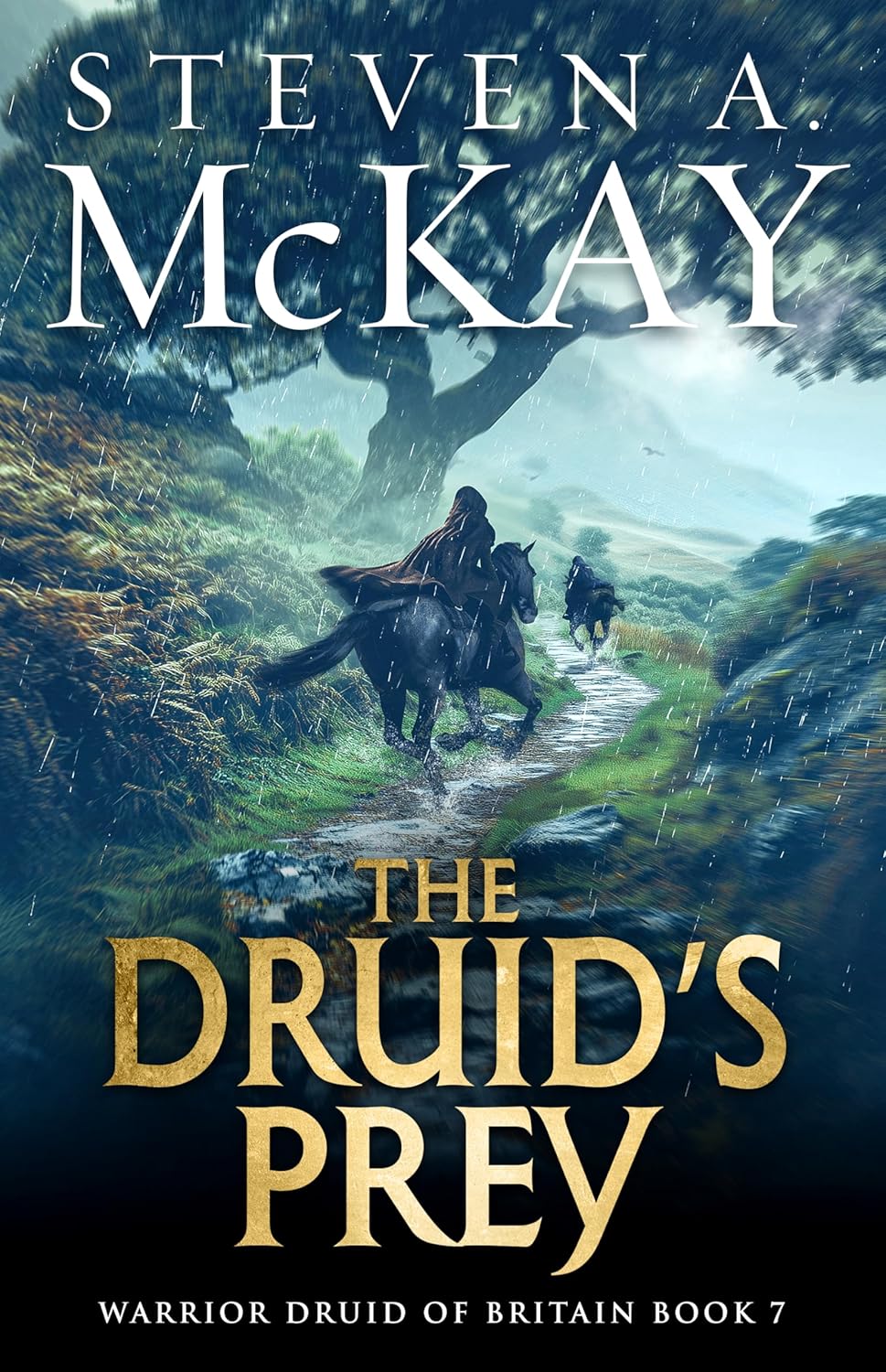
Book Corner: The Druid’s Prey by Steven A. McKay

History...the Interesting Bits

A vicious attack. An enraged warrior-druid. A relentless hunt for vengeance!

Following a cowardly raid on Dun Breatann the Saxon attacker, Saksnot, rides back to rejoin his bretwalda, Hengist, in far-off Garrianum. Bellicus, outraged by the savage attack on his people and his closest friend, follows the perpetrator with just one thing on his mind: bloody justice!
As the towering druid hunts his prey across the summer fields and streams, Arthur, Bear of Britain, seeks to make a lasting peace with the new immigrants from across the sea. Hengist has no such plans however, instead working alongside his terrifying volva, Thorbjorg, to bring only blood, fire, and death to the embattled Britons.

As the brutal struggle for supremacy rages between the two warlords and their armies, Bellicus will find himself drawn into an adventure he could never have foreseen. An adventure that may seal the fate of Britain for generations to come.

Yes! Bellicus is back!

And better than ever! The Druid’s Prey by Steven A. McKay is the seventh book in Steven’s excellent Warrior Druid of Britain Chronicles. As regular readers will know, I have been reading this series since the first book, The Druid. The books follow the adventures of Bellicus the druid, his family and his Roman friend, Duro, as the defend their home, Dun Breatann, and the rest of Britain from the invading Saxons, led by Hengist and Horsa. Well, its just Hengist now, thanks to The Vengeance of Merlin. A sucker for anything Arthurian, Steven A. McKay also draws in the legendary Arthur, Lancelot and his loyal knights. And I love how Arthur is drawn into Bellicus’ story, but never fully takes over.

It’s a perfect combination and partnership.

In The Druid’s Prey, Bellicus is set on revenge, traveling the length of Britain to find the man who had tried to kill him and hurt his friend. Further south, Arthur is trying to take the war to Hengist, to strike a blow that will hurt the Saxon leader’s forces, and to find a friend of his own who has been captured by the enemy. Oh, and while Bellicus is away, his wife and daughter, Narina and Catia, work to strengthen Dun Breatann’s position and stave off the influence of the hated Hengist. Three missions that the reader can’t help but hope they collide…

The bear stopped moving, taking in the sight of the boar which was peering at it in return. And then the bear looked up at Bellicus and their eyes met. The druid swallowed, knowing for certain that he had come across this very animal before – it had attacked them some years prior, not far from where they were now, badly injuring King Coroticus and Gavo and killing one warrior and three dogs. It had eventually decided to give up the fight but only once it had a spear stuck in its back and a number of arrows from the Damnonii hunters’ bows. Bellicus examined its hairy pelt for evidence of those earlier wounds but it seemed to have healed well in the intervening years.

As if it recalled the battle the bear suddenly stood up on its hind legs and let out an enormous roar. Bellicus gazed at it in awe – the animal was not just enormous, it was majestic, and the thought of trying to kill it again was truly terrifying.

It seemed the boar had similar thoughts, for instead of charging at the bear, it turned and hurried off into the trees, the spear that Duro had planted in its side clattering noisily against tree trunks until, at last, it must have snapped off for there was a last, distant squeal and then only the low growling of the bear was left to fill the clearing.

“Mithras protect us, we’re in for it now,” Duro said, doing his best to draw his spatha while still gripping the trunk of his tree for dear life. “At least the boar couldn’t get up here.”

“Don’t do anything,”Bellicus ordered in a low voice. “Do you not recognise it?”

“Aye,” the centurion nodded. “It’s the same bear that almost killed us all before. You told us to let it go back then for some mad reason.”

“The Bear of Britain,” Bellicus said, so softly Duro could not hear him. “That’s what the Merlin had called Arthur.” Memories of the previous encounter with the bear were filling his mind and he remembered being in a shocked stupor as he’d stared at the bear bristling with missiles like a hedgehog. The animal had lost the will to fight that day and Bellicus had commanded those with him to let it go, a decision he’d never really understood himself. For some reason he’d seen the beast as connected to Arthur, or perhaps he just didn’t want any more people – or Cai, for the mastiff had been involved in the fighting too – getting injured or killed.

Whatever his motives had been, the bear stared up at him now, its round, dark eyes fixing on his own. There seemed an intelligence behind that gaze that Bellicus had not expected. Did it recognise him? Did it understand that he’d been the one that called off the attack on it and most likely saved its life after their previous encounter? Maybe. The druid knew that bears had an even more developed sense of smell than dogs, so it was possible the beast, which had dropped back to all fours now, recognised his scent if not his face.

The bear made a strange, ululating, guttural grunting sound and then simply wandered off into the trees, quickly disappearing from sight.

“Is… Is it over?” Duro gasped, sword still glinting in the last of the sunshine as he lowered himself down, hanging from a branch by one arm as he tried to see through the foliage and make sure the bear had really gone.

Hengist is on the road to revenge, taking any opportunity he can to punish his brother’s killers, whilst at the same time increasing his hold on Britain, extending his influence and grabbing more land. He sends an assassin north to Dun Breatann, captures one of Arthur’s leading men and seeks allies among the enemies of Bellicus and Queen Narina. The Druid’s Prey by Steven A. McKay has more than one story within its pages – and more than one hero!

It is a rollercoaster journey through post-Roman Britain as the lead characters fight to hold onto their lands, their friends and their family. Their are more than a few heart-in-the-mouth moments along the way. And, if you are reading at night, beware! “Just one more chapter…” will lead to 3 or 4 more!

As we are at book no. 7 in the Warrior Druid of Britain series, Steven A. McKay’s characters are well developed and very familiar to us. We know how Bellicus will react to his family and friends being attacked. We know that his daughter, Catia, now 12 years old, is not a little girl to whom things happen-she is a pre-teen, trained in warfare, experienced beyond her years but still needing the guidance of parents to keep her out of the worst trouble. And Arthur, everyone’s hero and Bellicus’ friend. Well, his adventures never fail to inspire and entertain. And each of these characters have to make choices and decisions that affect, not only themselves but also their people. Agonising decisions will lead to more danger, adventure and not a little swordplay.

I won’t tell you any more – I do not want to ruin it for anyone.

All I will say is, The Druid’s Prey by Steven A. McKay is the 7th book in a series and yet is as fresh and original as the first. If you have not yet read this excellent series, you are missing a treat – but I envy the fact you have 7 books to read, one after the other. What a treat you have instore.

To Buy the Book: The Druid’s Prey

About the author:

History...the Interesting Bits

Steven A. McKay was born in Scotland in 1977 and always enjoyed studying history. He decided to write his Forest Lord novels after seeing a house called “Sherwood” when he was out at work one day. Since then he’s started a new series, the Warrior Druid of Britain Chronicles, and just completed a trilogy about Alfred the Great.

In 2021 the Xbox game HOOD: Outlaws and Legends was released, featuring Steven’s writing.

He used to be in a heavy metal band although he tends to just play guitar in his study these days. He did use those guitars to write the theme song for the podcast he co-hosted, Rock, Paper, Swords! with Matthew Harffy, though. Give it a listen, they’ve interviewed great guests like Diana Gabaldon, Simon Scarrow, Bernard Cornwell, Dan Jones and more!

*

My books

Signed, dedicated copies of all my books are available through my online store.

Out now: Scotland’s Medieval Queens

Books by Sharon Bennett Connolly

Scotland’s history is dramatic, violent and bloody. Being England’s northern neighbour has never been easy. Scotland’s queens have had to deal with war, murder, imprisonment, political rivalries and open betrayal. They have loved and lost, raised kings and queens, ruled and died for Scotland. From St Margaret, who became one of the patron saints of Scotland, to Elizabeth de Burgh and the dramatic story of the Scottish Wars of Independence, to the love story and tragedy of Joan Beaufort, to Margaret of Denmark and the dawn of the Renaissance, Scotland’s Medieval Queens have seen it all. This is the story of Scotland through their eyes.

Scotland’s Medieval Queens gives a thorough grounding in the history of the women who ruled Scotland at the side of its kings, often in the shadows, but just as interesting in their lives beyond the spotlight. It’s not a subject that has been widely covered, and Sharon is a pioneer in bringing that information into accessible history.’ Elizabeth Chadwick (New York Times bestselling author)

Available now from Amazon and Pen and Sword Books

Also by Sharon Bennett Connolly:

Books by Sharon Bennett Connolly

Heroines of the Tudor World tells the stories of the most remarkable women from European history in the time of the Tudor dynasty, 1485-1603. These are the women who ruled, the women who founded dynasties, the women who fought for religious freedom, their families and love. Heroines of the Tudor World is now available from Amberley Publishing and Amazon UK. Women of the Anarchy demonstrates how Empress Matilda and Matilda of Boulogne, unable to wield a sword themselves, were prime movers in this time of conflict and lawlessness. It shows how their strengths, weaknesses, and personal ambitions swung the fortunes of war one way – and then the other. Available from Bookshop.orgAmberley Publishing and Amazon UKKing John’s Right-Hand Lady: The Story of Nicholaa de la Haye is the story of a truly remarkable lady, the hereditary constable of Lincoln Castle and the first woman in England to be appointed sheriff in her own right. Available from all good bookshops Pen & Sword Booksbookshop.org and Amazon

Royal Historical Society

Defenders of the Norman Crown: The Rise and Fall of the Warenne Earls of Surrey tells the fascinating story of the Warenne dynasty, from its origins in Normandy, through the Conquest, Magna Carta, the wars and marriages that led to its ultimate demise in the reign of Edward III. Available from Pen & Sword BooksAmazon in the UK and US, and Bookshop.orgLadies of Magna Carta: Women of Influence in Thirteenth Century England looks into the relationships of the various noble families of the 13th century, and how they were affected by the Barons’ Wars, Magna Carta and its aftermath; the bonds that were formed and those that were broken. It is now available in paperback and hardback from Pen & SwordAmazon, and Bookshop.orgHeroines of the Medieval World tells the stories of some of the most remarkable women from Medieval history, from Eleanor of Aquitaine to Julian of Norwich. Available now from Amberley Publishing and Amazon, and Bookshop.orgSilk and the Sword: The Women of the Norman Conquest traces the fortunes of the women who had a significant role to play in the momentous events of 1066. Available now from Amazon,  Amberley Publishing, and Bookshop.org.

Alternate Endings: An anthology of historical fiction short stories including Long Live the King… which is my take what might have happened had King John not died in October 1216. Available in paperback and kindle from Amazon.

Podcast:

A Slice of Medieval

Have a listen to the A Slice of Medieval podcast, which I co-host with Historical fiction novelist Derek Birks. Derek and I welcome guests, such as Bernard Cornwell and Michael Jecks, and discuss a wide range of topics in medieval history, from significant events to the personalities involved. 

Every episode is also now available on YouTube.

*

Don’t forget! Signed and dedicated copies of all my books are available through my online store.

For forthcoming online and in-person talks, please check out my Events Page.

You can be the first to read new articles by clicking the ‘Follow’ button, liking our Facebook page or joining me on TwitterThreadsBluesky and Instagram.

*

©2025 Sharon Bennett Connolly

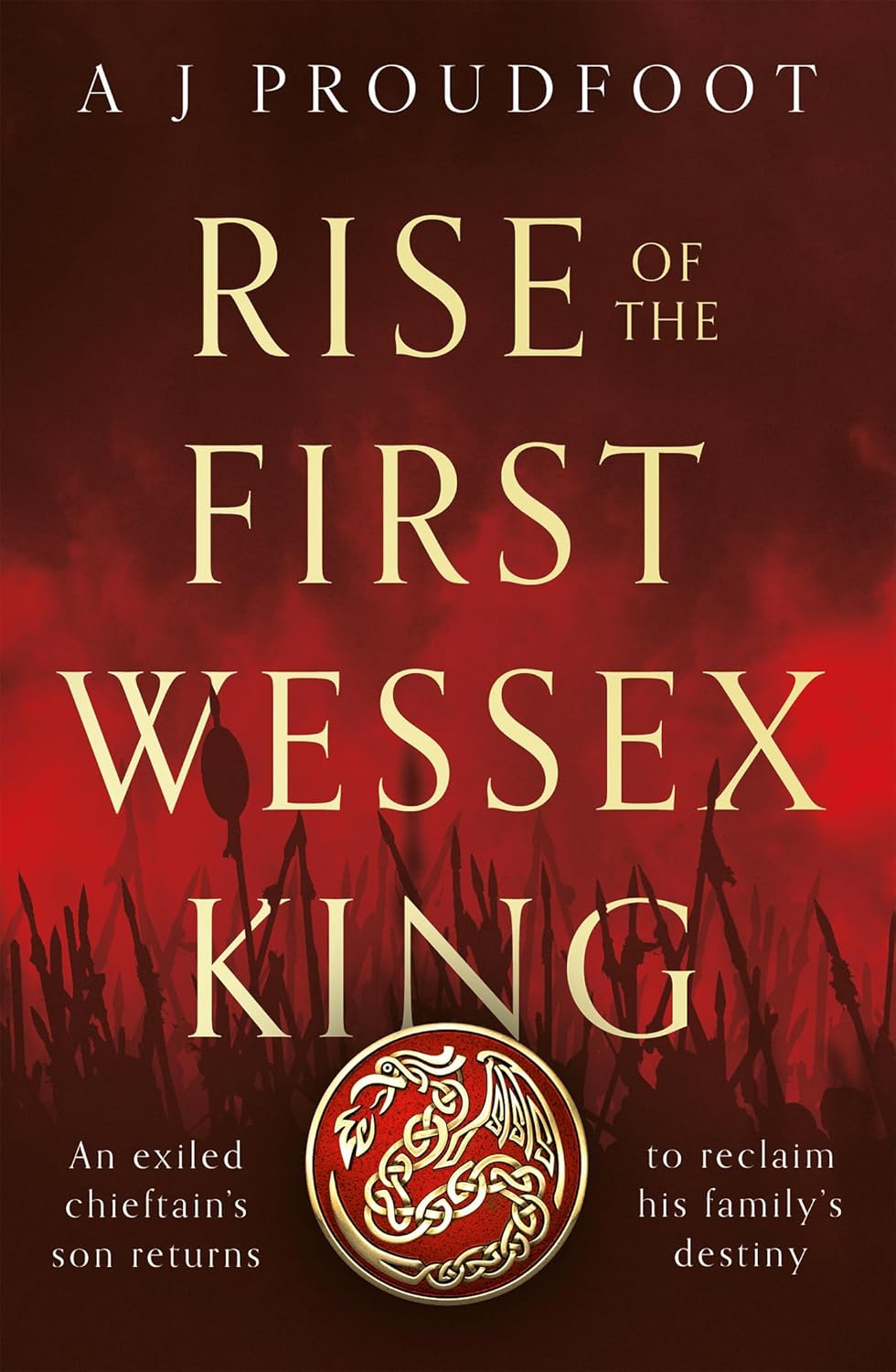
Book Corner: Rise of the First Wessex King by A.J. Proudfoot

A.J. Proudfoot

When the Saxons, invited to settle in Britannia by King Wyrtgeorn, brutally murder the father and brother of Ceredig, the second son of a fifth century Romano-British chieftain, he flees the land of his birth.

While the Saxons expand their control over Britannia, Ceredig grows up in Armorica, learning the ways of the Gewisse, and ultimately taking command of this elite force of warriors, who had remained loyal to his father, Elisedd.

Despite ruling as a chieftain in Armorica, Ceredig remains determined to return to his homeland, avenge his father and brother’s murder, and finally reclaim the lands his father had once ruled in southern Britannia.

After over forty years in exile, Ceredig, his son and a force of Gewisse warriors return to Britannia, joining a large army of Britons who are preparing to take on the Saxons in battle at Badonbyrg.

What happens next will go down in history…

As a debut novel, Rise of the First Wessex King by A.J. Proudfoot is a winner. And as a special treat, alongside my review, I have an interview with the author, who is currently working on book no. 2 in what promises to be a fascinating series. Cerdic, or Ceredig, is the founder of the kingdom of Wessex and a royal house that would reach its zenith under Ceredig’s descendants, King Alfred the Great, Æthelflæd, Lady of the Mercians, her brother Edward the Elder and Edward’s son Athelstan, first king of England.

And it all started with Ceredig.

In Rise of the First Wessex King, A.J. Proudfoot recreates Ceredig’s world, post-Roman Britain, breathing life into this 1,500-year-old story. And what a fascinating story it is. Though our knowledge is limited, Proudfoot fills in the gaps to create a lively and energetic retelling of the foundation of the royal house of Wessex. This is the story of the fight of the native Britons against the invading Saxons, of a war that must have felt never-ending, at times. It is a story of conflict and betrayal, but also of family and comradeship, and of a young man who had to patiently wait for the time to be right to achieve his dream of pushing back the Saxons and going home.

The characters, particularly our hero, are wonderfully vivid. And I love how Proudfoot weaves the legends of Arthur and Hengist and Horsa in to the story, bringing a little-known period of history back to life. Who doesn’t like to see a little bit of King Arthur thrown into the mix? The inclusion of Artorius and Ambrosius made me smile – and want to read more!

This is a debut novel, so Proudfoot sometimes fall into the trap of giving summaries, telling, rather than showing the action and debate, but this does not detract from the pace of the book. Overall, it is a fabulous read, imbued with a sense of adventure. It is a great start to what promises to be an impressive series.

Overall, it is a great story, told well!

If you’re looking for a new author to sink your teeth into, I don’t hesitate to recommend A.J. Proudfoot’s Rise of the First Wessex King.

To Buy the Book:

Books2Read; The Book GuildBookshop.org (UK)

Interview with A.J. Proudfoot

A.J. Proudfoot

Sharon: So, Alex, what got you into writing historical fiction?

Alex: This may come as a surprise, but I didn’t originally set out to become an author and write historical fiction novels. I was simply trying to trace the origins of my unusual Proudfoot surname, and was continuing the research into our Proudfoot family history that my parents and aunt had begun many years before.

After several years’ research, I was amazed to find that I had traced my family ancestry back 1500 years to a mysterious chieftain called Cerdic, at the end of the fifth century, who founded the Anglo-Saxon kingdom of Wessex. There are many interesting ancestors in the Proudfoot family tree, whose lives would make an excellent novel, but when I discovered more about Cerdic’s life, I realised that there was an Arthurian story that was worth writing.

Sharon: What made you want to tell Cerdic’s story?

Alex: I was intrigued why this important figure in early English history has been largely ignored by historical writers, so I undertook my own research into the life of Cerdic, finding crucial inconsistencies in what is written about Cerdic’s Saxon heritage, which I put down to a desire, by early Saxon chroniclers, to establish King Alfred’s Saxon ancestry.

Instead, I found evidence that Cerdic was more likely to be descended from a Romano-British family, who originally hailed from an ancient Welsh kingdom, and was more than likely called Ceredig, given his Brythonic heritage, and to the phonetic similarities. As a result, I felt compelled to use what I had learned to tell the story about my earliest known ancestor and his crucial role in history, based on recorded events in the early Anglo-Saxon era. To paraphrase John Wade, the rest is historical fiction!

Sharon: How do you go about researching a historical character from 1500 years ago?

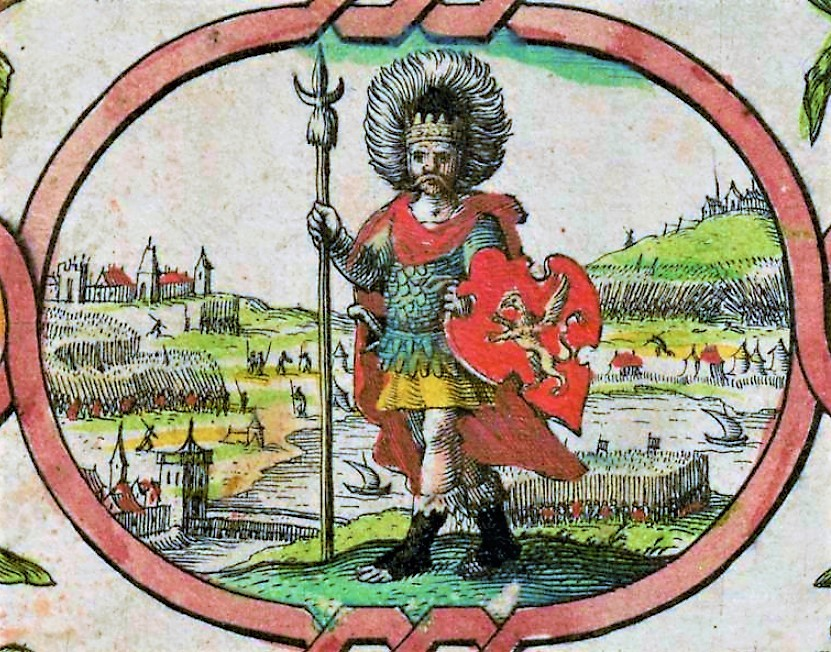
Imaginary depiction from John Speed’s 1611 “Saxon Heptarchy”

Alex: The great difficulty in researching a historical figure from so far back is the lack of contemporary records. My starting point was, naturally, the Anglo-Saxon Chronicle, but it only mentions six events relating to Cerdic’s life, and is written from a Saxon perspective. I read all I could about Cerdic in research papers by modern Anglo-Saxon historians, including JNL Myers and Richard Coates, which is where I found clues to Cerdic’s Romano-British connections. There was also a story about 5th century Bishop Germanus meeting a regional chieftain in southern Britain, called Elasius, whose name is remarkably similar to Elesa, the recorded name of Cerdic’s father in the Anglo-Saxon Chronicle.

Eventually, I had built a picture of the young son of a Romano-British chieftain, ruling and defending the southern coastline of Britain against Saxon invaders, who suddenly disappeared from Britain, returning nearly fifty years later to take control over a region in the Upper Thames Valley, before expanding his lands south before becoming king and ruling a kingdom of the Gewisse that would eventually become known as Wessex, named after the West Saxons.

My research raised more questions than answers, so I used what I had learned about events during that period to write a dramatic reconstruction of Cerdic’s life, and the formation of the Anglo-Saxon kingdom of Wessex. Based on fact, but mostly fiction.

Sharon: What are you working on now?

Alex:I am currently working on a sequel to Rise of the First Wessex King, which will follow the lives of Cunorix and his son, Ceawlin, as they try to build on Ceredig’s legacy in ruling the kingdom of the Gewisse, whilst facing threats from the Saxons in the east, and Britons in the west, as well as challenges they could not anticipate.

Sharon: What is the best – and worse – thing about being a writer?

Alex: Personally, the hardest part about writing my historical fiction novels is that the stories are based in the south of England and I live just outside Edinburgh, in Scotland. This meant that I have had to make several research trips down south, visiting locations featured in my novels. Whilst there is very little evidence to reveal what it would be like when the books are set, I have found this a useful exercise in understanding the topography, as well as encouraging the creative writing juices.

The best part of being a writer is that I love history and solving puzzles. This has been useful in writing about a period in history where facts are limited, so deciphering my characters’ motives behind their decisions has been crucial in building the story of their lives.

About the Author

A J (Alex) Proudfoot lives in Musselburgh, near Edinburgh. He started his career as an accountant, working in the brewing, publishing and financial sectors, before qualifying as a chartered marketer, working at the University of Edinburgh for over twenty years. After retiring early in 2018, he has spent his free time researching his Proudfoot family history, back 1500 years to his earliest known ancestor, which led to the publication of his debut historical fiction novel, Rise of the First Wessex King.

Social media links

Facebook – https://www.facebook.com/ajproudfootwriter

YouTube – https://www.youtube.com/@ajproudfoot

Book trailer – https://www.youtube.com/watch?v=4gpZMOMzwZs&t

*

My books

Signed, dedicated copies of all my books are available through my online store.

Out now: Scotland’s Medieval Queens

Books by Sharon Bennett Connolly

Scotland’s history is dramatic, violent and bloody. Being England’s northern neighbour has never been easy. Scotland’s queens have had to deal with war, murder, imprisonment, political rivalries and open betrayal. They have loved and lost, raised kings and queens, ruled and died for Scotland. From St Margaret, who became one of the patron saints of Scotland, to Elizabeth de Burgh and the dramatic story of the Scottish Wars of Independence, to the love story and tragedy of Joan Beaufort, to Margaret of Denmark and the dawn of the Renaissance, Scotland’s Medieval Queens have seen it all. This is the story of Scotland through their eyes.

Scotland’s Medieval Queens gives a thorough grounding in the history of the women who ruled Scotland at the side of its kings, often in the shadows, but just as interesting in their lives beyond the spotlight. It’s not a subject that has been widely covered, and Sharon is a pioneer in bringing that information into accessible history.’ Elizabeth Chadwick (New York Times bestselling author)

Available now from Amazon and Pen and Sword Books

Also by Sharon Bennett Connolly:

Books by Sharon Bennett Connolly

Heroines of the Tudor World tells the stories of the most remarkable women from European history in the time of the Tudor dynasty, 1485-1603. These are the women who ruled, the women who founded dynasties, the women who fought for religious freedom, their families and love. Heroines of the Tudor World is now available from Amberley Publishing and Amazon UK. Women of the Anarchy demonstrates how Empress Matilda and Matilda of Boulogne, unable to wield a sword themselves, were prime movers in this time of conflict and lawlessness. It shows how their strengths, weaknesses, and personal ambitions swung the fortunes of war one way – and then the other. Available from Bookshop.orgAmberley Publishing and Amazon UKKing John’s Right-Hand Lady: The Story of Nicholaa de la Haye is the story of a truly remarkable lady, the hereditary constable of Lincoln Castle and the first woman in England to be appointed sheriff in her own right. Available from all good bookshops Pen & Sword Booksbookshop.org and Amazon

Royal Historical Society

Defenders of the Norman Crown: The Rise and Fall of the Warenne Earls of Surrey tells the fascinating story of the Warenne dynasty, from its origins in Normandy, through the Conquest, Magna Carta, the wars and marriages that led to its ultimate demise in the reign of Edward III. Available from Pen & Sword BooksAmazon in the UK and US, and Bookshop.orgLadies of Magna Carta: Women of Influence in Thirteenth Century England looks into the relationships of the various noble families of the 13th century, and how they were affected by the Barons’ Wars, Magna Carta and its aftermath; the bonds that were formed and those that were broken. It is now available in paperback and hardback from Pen & SwordAmazon, and Bookshop.orgHeroines of the Medieval World tells the stories of some of the most remarkable women from Medieval history, from Eleanor of Aquitaine to Julian of Norwich. Available now from Amberley Publishing and Amazon, and Bookshop.orgSilk and the Sword: The Women of the Norman Conquest traces the fortunes of the women who had a significant role to play in the momentous events of 1066. Available now from Amazon,  Amberley Publishing, and Bookshop.org.

Alternate Endings: An anthology of historical fiction short stories including Long Live the King… which is my take what might have happened had King John not died in October 1216. Available in paperback and kindle from Amazon.

Podcast:

A Slice of Medieval

Have a listen to the A Slice of Medieval podcast, which I co-host with Historical fiction novelist Derek Birks. Derek and I welcome guests, such as Bernard Cornwell and Michael Jecks, and discuss a wide range of topics in medieval history, from significant events to the personalities involved. 

Every episode is also now available on YouTube.

*

Don’t forget! Signed and dedicated copies of all my books are available through my online store.

For forthcoming online and in-person talks, please check out my Events Page.

You can be the first to read new articles by clicking the ‘Follow’ button, liking our Facebook page or joining me on TwitterThreadsBluesky and Instagram.

*

©2025 Sharon Bennett Connolly, FRHistS

Wordly Women: Annie Whitehead

Joining me today as part of my Wordly Women series is the wonderful Annie Whitehead. Author of both fiction and non-fiction books based in Anglo-Saxon Mercia, Annie’s latest book, Murder in Anglo-Saxon England: Justice, Wergild and Revenge is replete with dastardly murder stories.

Sharon: What got you into writing?

Annie: It was just something I always wanted to do – I remember writing ‘The Adventures of Ferdinand the Hedgehog’ when I was around 7 or 8. I think the desire to write history came later, partly influenced by the sorts of novels I preferred reading, and partly from a growing love of history generally, probably beginning when I lived in York for six months. Living there, even as a child, you can’t not notice the history all around you.

Sharon: You write both fiction and non-fiction – is one harder than the other?

Annie: I think they are both equally hard, but they are different. The research is pretty much the same, although with fiction you need every day details as well as the actual historical events, but where they differ is that in fiction you are free to fill in the gaps in the history (although in a way that fits with your plot and with your characters), but if you take them on a journey you need to give details, whereas in nonfiction you can just say, ‘The king took an army to York.’ On the other hand, with nonfiction, you can’t make stuff up, and if you make any pronouncements you have to back those up.

Sharon: Tell us about your books.

Annie: I’ve written four novels, featuring prominent Mercian characters, including Æthelflæd, Lady of the Mercians, and Penda, the last pagan king. I’ve also written three nonfiction books, one about the history of Mercia, one about Women of the era, and my latest release, Murder in Anglo-Saxon England. I’ve also contributed to two nonfiction anthologies and three and a half fiction collections (the ‘half’ is one that’ll be published later this year).

Sharon: What attracts you to the Anglo-Saxon period?

Annie: I think there’s an element of romanticism, a Tolkien-esque aura if you will. The names are very noble sounding, including one of the main characters of my second novel, Alvar the Kingmaker, whose real name was Ælfhere. I like the characteristics that set the period apart from the rest of the (mainly Norman) Middle Ages and I like, on the whole, their values. Particularly, their treatment of women, which was in many ways better than that of their later medieval counterparts. I also find the personalities interesting and characterful – rich pickings for the novelist.

Sharon: Who is your favourite Anglo-Saxon and why?

King Edgar

Annie: There are so many to choose from! I’ve already mentioned three, but I also find the little-known King Edgar (959-975) fascinating because he breaks the mould. His reign was not especially violent – it was more a time of politics and scheming nobles and there were no ‘Viking’ raids – and Edgar’s love life was, shall we say, interesting. He might have had up to three wives, one of whom was said by some – unreliable – chroniclers to have been a nun!

Sharon: Who is your least favourite Anglo-Saxon and why?

Annie: I’m going to get into a lot of trouble with this, especially from some of my writer friends, but it’s Harold Godwineson. Obviously I’d rather he’d won at Hastings, not William, but I do find his whole family rather unappealing, treacherous and self-entitled. (Sorry, Harold fans!)

Sharon: How do you approach researching your topic?

Annie: I always start with the primary sources, contemporary if possible, looking for any reference to the characters I’m planning to write about. I find out, or remind myself, about the timelines, then I look at the later, usually Anglo-Norman sources, to see where they embellish and flesh out the tales. If I’m writing fiction, I might use some of their more detailed and frankly at times outrageous stories, but if it’s nonfiction, I have to use a lot of scepticism in the pursuit of the truth, or at least getting as close to the truth as I can.

Sharon: Tell us your ‘favourite’ Anglo-Saxon story you have come across in your research.

Annie: I have so many! But one is the tale of King Offa’s daughter, accused of poisoning her husband’s advisor and accidentally poisoning her husband too. He was the king of Wessex. She fled to the Continent where the Emperor Charlemagne set her up in an abbey but she was caught in debauchery there and died in poverty. It’s highly unlikely to be a true story, as we have evidence that her husband probably died in battle and if she fled, she was most likely fleeing the wrath of his successor, who’d been forced into exile by her father and her husband.

Sharon: Tell us your least ‘favourite’ Anglo-Saxon story you have come across in your research.

King Æthelred the Unready

Annie: It has to be the story of the St Brice’s Day Massacre, sanctioned by King Æthelred the Unready, where a number of Danes were chased through Oxford into a church which was then set on fire. It sounds like the scene from a bad Hollywood historical film, but it really happened. We know this a) because we have a charter from the king himself saying that he ordered it and b) charred bones dating to the right time unearthed at the location.

Sharon: Are there any other eras you would like to write about?

Annie: I’ve always been interested in the seventeenth century and the early Stuarts in particular. They are coming out of the shadows a bit more now and there have been some excellent books, both fiction and nonfiction, published recently, but they still take second place to the Tudors, which for me is a shame as it’s such an interesting period of history.

Sharon: What are you working on now?

Annie: I’m working on the novel which I shelved to research and write Murder in Anglo-Saxon England. It’s set in the tenth century and features Mercians, Northumbrians, Vikings and Scots and also has a murder or two thrown in!

Sharon: And finally, what is the best thing about being a writer?

Annie: Something I’ve enjoyed from a very early age is reading – I loved being transported to other times and places, meeting new characters and learning their stories. Writing, for me, is almost the same, and to spend my working days making up similar stories and spending time with those characters is a dream come true. It’s a form of escapism and it’s bliss!

About the Author:

Annie is a Fellow of the Royal Historical Society, and has written four award-winning novels set in ‘Anglo-Saxon’ Mercia. She has contributed to fiction and nonfiction anthologies and written for various magazines. She has twice been a prize winner in the Mail on Sunday Novel Writing Competition, and won First Prize in the 2012 New Writer Magazine’s Prose and Poetry Competition. She has been a finalist in the Tom Howard Prize for nonfiction and was shortlisted for the Exeter Story Prize and Trisha Ashley Award 2021. She was the winner of the inaugural Historical Writers’ Association (HWA)/Dorothy Dunnett Prize 2017 and was subsequently a judge for that same competition. She has also been a judge for the HNS (Historical Novel Society) Short Story Competition, and was a 2024 judge for the HWA Crown Nonfiction Award. Her nonfiction books are Mercia: The Rise and Fall of a Kingdom (published by Amberley books) and Women of Power in Anglo-Saxon England (Pen & Sword Books). In 2023 she contributed to a new history of English monarchs, published by Hodder & Stoughton, and in February 2025 Murder in Anglo-Saxon England was published by Amberley Books.

Find Annie at: Website; Buy Annie’s Books; Blog; Facebook; Twitter/X; Instagram; BlueSky.

*

My books

Signed, dedicated copies of all my books are available through my online store.

Out now: Scotland’s Medieval Queens

Scotland’s history is dramatic, violent and bloody. Being England’s northern neighbour has never been easy. Scotland’s queens have had to deal with war, murder, imprisonment, political rivalries and open betrayal. They have loved and lost, raised kings and queens, ruled and died for Scotland. From St Margaret, who became one of the patron saints of Scotland, to Elizabeth de Burgh and the dramatic story of the Scottish Wars of Independence, to the love story and tragedy of Joan Beaufort, to Margaret of Denmark and the dawn of the Renaissance, Scotland’s Medieval Queens have seen it all. This is the story of Scotland through their eyes.

Available now from Amazon and Pen and Sword Books

Also by Sharon Bennett Connolly:

Heroines of the Tudor World tells the stories of the most remarkable women from European history in the time of the Tudor dynasty, 1485-1603. These are the women who ruled, the women who founded dynasties, the women who fought for religious freedom, their families and love. Heroines of the Tudor World is now available for pre-order from Amberley Publishing and Amazon UK. Women of the Anarchy demonstrates how Empress Matilda and Matilda of Boulogne, unable to wield a sword themselves, were prime movers in this time of conflict and lawlessness. It shows how their strengths, weaknesses, and personal ambitions swung the fortunes of war one way – and then the other. Available from Bookshop.orgAmberley Publishing and Amazon UKKing John’s Right-Hand Lady: The Story of Nicholaa de la Haye is the story of a truly remarkable lady, the hereditary constable of Lincoln Castle and the first woman in England to be appointed sheriff in her own right. Available from all good bookshops Pen & Sword Booksbookshop.org and Amazon

Defenders of the Norman Crown: The Rise and Fall of the Warenne Earls of Surrey tells the fascinating story of the Warenne dynasty, from its origins in Normandy, through the Conquest, Magna Carta, the wars and marriages that led to its ultimate demise in the reign of Edward III. Available from Pen & Sword BooksAmazon in the UK and US, and Bookshop.orgLadies of Magna Carta: Women of Influence in Thirteenth Century England looks into the relationships of the various noble families of the 13th century, and how they were affected by the Barons’ Wars, Magna Carta and its aftermath; the bonds that were formed and those that were broken. It is now available in paperback and hardback from Pen & SwordAmazon, and Bookshop.orgHeroines of the Medieval World tells the stories of some of the most remarkable women from Medieval history, from Eleanor of Aquitaine to Julian of Norwich. Available now from Amberley Publishing and Amazon, and Bookshop.orgSilk and the Sword: The Women of the Norman Conquest traces the fortunes of the women who had a significant role to play in the momentous events of 1066. Available now from Amazon,  Amberley Publishing, and Bookshop.org.

Alternate Endings: An anthology of historical fiction short stories including Long Live the King… which is my take what might have happened had King John not died in October 1216. Available in paperback and kindle from Amazon.

Podcast:

Have a listen to the A Slice of Medieval podcast, which I co-host with Historical fiction novelist Derek Birks. Derek and I welcome guests, such as Bernard Cornwell and Michael Jecks, and discuss a wide range of topics in medieval history, from significant events to the personalities involved. Every episode is also now available on YouTube.

*

Don’t forget! Signed and dedicated copies of all my books are available through my online store.

For forthcoming online and in-person talks, please check out my Events Page.

You can be the first to read new articles by clicking the ‘Follow’ button, liking our Facebook page or joining me on TwitterThreadsBluesky and Instagram.

*

©2025 Sharon Bennett Connolly, FRHistS

Guest Post: Was Harold of Royal Lineage? by Paula Lofting

What do you do when 3 friends have books coming out all on the same day? You arrange a mini blog tour, of course. Myself, Paula Lofting and Samantha Wilcoxson all have new non-fiction books published this week, with Pen & Sword Books, so the 3 of us are hosting each other across our blogs, with an article and an interview from each. And I’m kicking us off today.

It is a pleasure to welcome Paula Lofting to History…the Interesting Bits with an article on Harold Godwinson – King Harold II. Paula’s first foray into the realm of non-fiction, Searching for the Last Anglo-Saxon King, is now available.

Was Harold Godwinson of Royal Lineage

Some enthusiasts of the period have been quite taken with the idea that Harold Godwinson was able to trace his ancestry back to Æthelwulf, King of the West Saxons. The original idea came from historian, Alfred Anscombe, and later, genealogist, Lundie W. Barlow. It was taken up as authentic by author Frank Barlow, who has written many works on the period. From his book The House of Godwin, we can read his take on this. Through the will of Prince Æthelstan, son and heir of Æthelred the Unready, we are able pinpoint the man referred to as ‘Godwin, son of Wulfnoth’ being the father of Godwin. According to Frank Barlow, Lundie Barlow (no relation) studied the descent of some of the estates that Wulfnoth held. By treating Wulfnoth, as the son of Æthelmӕr Cild, ealdorman of the western provinces, Anscombe and Lundie believed that the Sussex thegn inherited Compton from his mother, suggesting that the royal blood was passed on through her.

But there is an issue with this theory. To make sense of the concept that Harold was descended from the royal House of Wessex, it was pertinent to explore theories that concern two males named Æthelmær. Both could be said to be candidates for Harold’s great-grandfather. The first Æthelmӕr listed in Anscombe and Lundie’s family tree we shall refer to as Cild. This chap was the son of Æthelweard the historian shown on the modified Anscombe/Barlow family tree.

This theory can be easily dispelled, for Æthelmær Cild was alive and active in the same generation as Wulfnoth himself, making him too young to have fathered Wulfnoth. Secondly, the interests of Æthelweard and Æthelmӕr Cild were concentrated in the areas west of Wessex, whilst Wulfnoth is specifically noted in the Anglo-Saxon Chronicle as a ‘Sussex thegn’.

The other Æthelmær, whom we shall refer to as Æthelmær Two, was one of several brothers of the infamous ealdorman, Eadric Sreona. Now their father was a man called Æthelric. The theory that this particular Æthelmær was the father of Wulfnoth Cild, originated with John of Worcester, which seems to have caused the confusion that led to Anscombe, then Lundie, being convinced that he was the father of Wulfnoth.

There is also a problem with this Æthelmær, as we shall see. Eadric and his brothers were the sons of a man called Æthelric and not Æthelweard the Historian, said to be the patriarch of the previous Æthelmær Cild, whose pedigree can be traced back to former kings of Wessex. Confused? Yes, so was I. But there is more.

‘Gytha and Godwin’ portrayed by me and Jeppe Christensen

Through the will left by Æthelstan, we have identified that Earl Godwin, (d. 1053) was the son of Wulfnoth Cild and Harold Godwinson’s father. Nothing is known of Godwin’s mother, but he has been cautiously accredited with possible siblings. One such sibling being the lady Æthelflӕd, named in the family tree that Barlow cites in his book. This woman was the owner of land in Buckinghamshire and was married to a man called Toki. The estate was gifted to his wife by her father, a man called Wulfnoth, who was connected to Godwin’s son, Leofwin, who held the estate thirty years later. This does not confirm, however, that this particular Wulfnoth was the chap who fathered Godwin. According to the Prosopography of Anglo-Saxon England data base, there were sixty-nine individuals with the name Wulfnoth. Most of them were in the money minting business, so it is somewhat difficult to identify the right man however the link to Godwin’s son owning the lands of Toki and Æthelflӕd is intriguing.

It has been mentioned that Godwin had a brother, Ælfwig, abbot of New Minster in Winchester. He is said to have died at Hastings and is referred to as an uncle of King Harold’s. If true, he would have been an old man to have fought in the battle, so it is unlikely he was the brother of Godwin.

As it stands it is difficult to find any solid ground for believing that the Godwinsons were of royal pedigree despite the evidence produced by A. Anscombe/L. Barlow, and Frank Barlow, and it is unrealistic to assume that the family would not have known and used it to their advantage, especially against King William the Conqueror (r. 1066‒1087). We could say it is not impossible that Harold did, and it was suppressed by the Normans, but there is no supporting evidence, which makes it doubtful. It also seems unlikely that either of the two Æthelmӕrs had fathered Wulfnoth. As Ann Williams confirms, Æthelmӕr Cild, who appears in the royal family’s tree, was of the same generation as Wulfnoth. Furthermore, he was from Devonshire. Wulfnoth was referred to as a Sussex thegn by the E version of the Anglo- Saxon Chronicle (ASC).

Harold and Eadith

Æthelmӕr number two, can also be discounted because the father of this Æthelmӕr was called Æthelric and Æthelmӕr Cild’s father was known as Æthelweard. Also, number two does not appear in the royal family tree of Wessex, suggesting that he had no royal heritage at all. He was also of the same generation as Wulfnoth. As we see, there is nothing to connect either Æthelmӕr with Wulfnoth, apart from an error made by John of Worcester, which many historians confuse as the same Æthelmӕr.

In contrast to efforts made to prove Anscombe’s and (Lundie) Barlow’s theory correct, Peter Rex, in his book on Harold’s life, refers to the Hyde Chronicle which describes Godwin as a man of low birth. This is not a contemporary source and was written in the thirteenth century for the de Warennes, whose dislike of Godwin is evident. Alternative stories of a ‘lowly’ Godwin’s rise to fame speak of him as a farmer’s boy, who, whilst cow–herding, came across a Dane called Ulf, lost and detached from his men after the Battle of Sherston. Godwin offered to help him, and a grateful Ulf took him into his service. These tales have more to do with myth than anything based in reality and do not account for Godwin being left land in Æthelstan’s will which is a whole other story for another time.

You might say that not having English royal pedigree should have dismissed Harold from any right the throne. He was not the son of a king, and therefore this lack of royal blood would have discounted him. In fact, Harold was descended from royal stock. It was just not the right one. His mother, Gytha, was the daughter of the fascinatingly named Thorgils Sprakaleggr (strut leg) who was the grandson of Harold Bluetooth making Gytha the great granddaughter of a King of Denmark and Norway and a second cousin of King Cnut the Great. So, although Harold was of royal lineage, it wasn’t the right one. Therefore, we could give the same consideration to Duke William of Normandy, who fought against King Harold and claimed victory over him on the 14 October 1066. But William had no connection to England, or the lands or the language. The boy Edgar Ætheling, who had been proclaimed as Edward’s heir was too young to face the invasions threatening Anglo-Saxon England. A strong leader was what was needed at the time, and royal blood or not, Harold was that man.

Do look out for the continuation of the blog tour tomorrow on Threads to the Past

*

About the book:

Harold Godwinson occupied his place in the chronicles for more than twenty years after bursting onto the political sphere when he was barely out of his teens. His role in English history has always been overshadowed by his failure to defend his crown and country against the might of William the Conqueror and his invaders. His demise at the hands of a Franco-Norman hit squad wrought the death knell of Anglo-Saxon rule. Reigning for just ten months, Harold’s accomplishments as dux Anglorum, and later king of England, were undermined by the Norman propaganda that was waged against his memory, long after his grisly end in 1066.

But just who was this man, who some historians recall as one of England’s greatest rulers? What were his origins? Is there any truth that he could trace his ancestry to the House of Wessex, and did he really usurp the throne from Duke William, the Bastard of Normandy? In this re-examining of this great historical figure of the eleventh century, we glean new theories and ideas not only about Harold’s life, but also questions historians have pondered upon for years. Did Edward really offer the throne to William? And how much of William’s claim was truth or fiction?

Paula Lofting presents a thoughtful and careful critique of the previous research. Examining his life through a telescopic view of the primary sources, she offers the reader a more accurate evaluation of who he was, how he died, and what happened to his remains after his death on a field near Hastings on October 1066.

About the author:

Paula Lofting is the author of an eleventh-century saga, Sons of the Wolf, and is working on book three in the series. She has also written articles for magazines like Historical Times and contributed to Iain Dale’s recent Kings and Queens with an essay on Edmund Ironside. Lofting’s love for Anglo-Saxon/Viking/Norman re-enactment with Regia Anglorum is a great tool for her writing. She is also a psychiatric nurse with nineteen years’ experience and enjoys spending time with her family, three grown-up children and two grandchildren. This is Lofting’s first foray into the realms of historical non-fiction, and she hopes it will not be her last. She also has been commissioned to write a biography on Edmund Ironside with Pen & Sword which is currently in progress.

Website : www.threadstothepast.com, Fb: https://www.facebook.com/Wulfsuna?locale=en_GB, Instagram: https://www.instagram.com/paulaloftingwilcox/, x: https://x.com/longshippub, mybook.to/Haroldpreorder

*

My Books

Signed, dedicated copies of all my books are available through my online store.

Out now: Scotland’s Medieval Queens

Scotland’s history is dramatic, violent and bloody. Being England’s northern neighbour has never been easy. Scotland’s queens have had to deal with war, murder, imprisonment, political rivalries and open betrayal. They have loved and lost, raised kings and queens, ruled and died for Scotland. From St Margaret, who became one of the patron saints of Scotland, to Elizabeth de Burgh and the dramatic story of the Scottish Wars of Independence, to the love story and tragedy of Joan Beaufort, to Margaret of Denmark and the dawn of the Renaissance, Scotland’s Medieval Queens have seen it all. This is the story of Scotland through their eyes.

Available now from Amazon and Pen and Sword Books

Also by Sharon Bennett Connolly:

Heroines of the Tudor World tells the stories of the most remarkable women from European history in the time of the Tudor dynasty, 1485-1603. These are the women who ruled, the women who founded dynasties, the women who fought for religious freedom, their families and love. Heroines of the Tudor World is now available for pre-order from Amberley Publishing and Amazon UK. Women of the Anarchy demonstrates how Empress Matilda and Matilda of Boulogne, unable to wield a sword themselves, were prime movers in this time of conflict and lawlessness. It shows how their strengths, weaknesses, and personal ambitions swung the fortunes of war one way – and then the other. Available from Bookshop.orgAmberley Publishing and Amazon UKKing John’s Right-Hand Lady: The Story of Nicholaa de la Haye is the story of a truly remarkable lady, the hereditary constable of Lincoln Castle and the first woman in England to be appointed sheriff in her own right. Available from all good bookshops Pen & Sword Booksbookshop.org and Amazon

Defenders of the Norman Crown: The Rise and Fall of the Warenne Earls of Surrey tells the fascinating story of the Warenne dynasty, from its origins in Normandy, through the Conquest, Magna Carta, the wars and marriages that led to its ultimate demise in the reign of Edward III. Available from Pen & Sword BooksAmazon in the UK and US, and Bookshop.orgLadies of Magna Carta: Women of Influence in Thirteenth Century England looks into the relationships of the various noble families of the 13th century, and how they were affected by the Barons’ Wars, Magna Carta and its aftermath; the bonds that were formed and those that were broken. It is now available in paperback and hardback from Pen & SwordAmazon, and Bookshop.orgHeroines of the Medieval World tells the stories of some of the most remarkable women from Medieval history, from Eleanor of Aquitaine to Julian of Norwich. Available now from Amberley Publishing and Amazon, and Bookshop.orgSilk and the Sword: The Women of the Norman Conquest traces the fortunes of the women who had a significant role to play in the momentous events of 1066. Available now from Amazon,  Amberley Publishing, and Bookshop.org.

Alternate Endings: An anthology of historical fiction short stories including Long Live the King… which is my take what might have happened had King John not died in October 1216. Available in paperback and kindle from Amazon.

Podcast:

Have a listen to the A Slice of Medieval podcast, which I co-host with Historical fiction novelist Derek Birks. Derek and I welcome guests, such as Bernard Cornwell, and discuss a wide range of topics in medieval history, from significant events to the personalities involved. Every episode is also now available on YouTube.

*

Don’t forget! Signed and dedicated copies of all my books are available through my online store.

For forthcoming online and in-person talks, please check out my Events Page.

You can be the first to read new articles by clicking the ‘Follow’ button, liking our Facebook page or joining me on TwitterThreadsBluesky and Instagram.

*

©2025 Sharon Bennett Connolly FRHistS and Paula Lofting

Book Corner: Shadows of the Slain by Matthew Harffy

AD 652. After surviving dark intrigues at the Merovingian court of Frankia, Beobrand is finally able to undertake the mission his queen set him: to escort a party of pilgrims to the holy city of Rome.

But Beobrand’s life is never easy. His party includes a scheming novice churchman whose ambition is boundless, and a mysterious envoy from Frankia.

Entering the lands of the Langobards, Beobrand discovers unexpected similarities to his native Northumbria in their speech and customs… and their willingness to spill blood.

The roads heading south are filled with danger. Meeting other pilgrims who have been attacked and robbed, Beobrand soon finds himself reluctantly responsible for their safety. Confronting brigands and robbers at every turn, they press on towards their goal.

But when Beobrand reaches the snakepit of ruins and relics that is Rome, his difficulties truly begin… and his homeland has never been further away.

In Shadows of the Slain, Matthew Harffy has once again given readers a fabulous adventure to devour in the latest instalment from the Bernicia Chronicles. Beobrand continues his journey to Rome and, as usual, he finds trouble along the way.

It is interesting to see Beobrand out of his comfort zone, in a place where he does not know the language and is relying on others to convey his needs and wishes. What he does discover is that politics and the pursuit of power is the same the world over. Beobrand has to navigate this in Rome – not always successfully. And it is hard to know who to trust when some are pursuing their own agendas and a supposed enemy may be a friend – or may not!

The one thing that you can say about Beobrand is that life is never boring!

“Do you think Wilfrid will cause more trouble?” Beobrand asked after they had ridden on in silence for a short while.

Coenred pondered for a moment.

“I don’t think he will risk Wulfwyn’s ire and public humiliation again.”

“Good,” said Beobrand. “We’ve had more tan enough strife on this trip.”

Coenred shifted in the saddle and looked at Wilfrid who rode apart from the others. After the encounter with the bandits in the mountains he had been persuaded to remove his gold rings and the gaudy chain he liked to wear around his neck, but he still stood out from the others with his bright clothes, a gift from the monarchs of Neustria. Beobrand and the others had also been presented with fine garments of silk and linen, but favoured plain travel garb for the journey.

“I don’t think he will repeat his mistake with Wulfwyn,” said Coenred. “I didn’t say he wouldn’t cause any trouble.”

Beobrand looked askance at him.

“That’s what I’m afraid of. Has this journey not already been punishment enough?”

Coenred knew Beobrand was thinking about his part in the death of Oswine, King of Deira and Queen Eanfled’s cousin. It was clear to any who knew of the events surrounding the king’s death that the queen, who had previously been warmly disposed towards Beobrand, had ordered him to escort Wilfrid to Roma as a form of chastisement. Beobrand had accepted the order without complaint. And Coenred knew that whatever the truth of the matter, Beobrand blamed himself just as much as anyone else for what had happened in Hunwald’s hall.

Coenred looked up at the pale sky. There was not a single cloud to be seen. He groaned as he stretched his back. He ached from so much riding. Perhaps he should walk in the afternoon.

Beobrand and his small band of gesithas, including the loyal Cynan, have been charged with escorting the ambitious monk, Wilfrid, to Rome. Wilfrid seems to be able to smell out power and influence and attach himself to the priests and nobles who can best serve his ambition, regardless of the trouble that causes everyone else. He is little liked among Beobrand’s small warband and even Coenred, the affable monk who is a long-time friend of Beobrand’s, finds Wilfrid hard to work with.

Shadows of the Slain is a wonderful, fast-paced read that keeps the reader engrossed to the very end. The action comes thick and fast. And Matthew very cleverly weaves within the storyline a reference to his other series, involving Hunlaf from his wonderful A Time for Swords series, but I will say no more on that…

In Shadows of the Slain, Matthew Harffy again brings the Dark Ages to life, demonstrating how colourful and diverse the 7th century could be. That Beobrand could even contemplate travelling from Northumberland to Rome is quite a feat; a journey that would have taken months to complete, and for which there would have been few maps.

And once his objective is achieved, he will have to start the return journey, which I am anticipating with great relish!

To Buy the Book:

Shadows of the Slain by Matthew Harffy is now available in Kindle, audio book and hardback.

About the Author:

Matthew Harffy lived in Northumberland as a child and the area had a great impact on him. The rugged terrain, ruined castles and rocky coastline made it easy to imagine the past. Decades later, a documentary about Northumbria’s Golden Age sowed the kernel of an idea for a series of historical fiction novels. The first of them is the action-packed tale of vengeance and coming of age, THE SERPENT SWORD.

Matthew has worked in the IT industry, where he spent all day writing and editing, just not the words that most interested him. Prior to that he worked in Spain as an English teacher and translator. Matthew lives in Wiltshire, England, with his wife and their two daughters.

For all the latest news and exclusive competitions, join Matthew online: http://www.matthewharffy.com; twitter.com/@MatthewHarffy; http://www.facebook.com/MatthewHarffyAuthor

*

My Books:

Signed, dedicated copies of all my books are available through my online bookshop.

Coming 30 January 2025: Scotland’s Medieval Queens

Scotland’s history is dramatic, violent and bloody. Being England’s northern neighbour has never been easy. Scotland’s queens have had to deal with war, murder, imprisonment, political rivalries and open betrayal. They have loved and lost, raised kings and queens, ruled and died for Scotland. From St Margaret, who became one of the patron saints of Scotland, to Elizabeth de Burgh and the dramatic story of the Scottish Wars of Independence, to the love story and tragedy of Joan Beaufort, to Margaret of Denmark and the dawn of the Renaissance, Scotland’s Medieval Queens have seen it all. This is the story of Scotland through their eyes.

Available for pre-order now.

Also by Sharon Bennett Connolly:

Heroines of the Tudor World tells the stories of the most remarkable women from European history in the time of the Tudor dynasty, 1485-1603. These are the women who ruled, the women who founded dynasties, the women who fought for religious freedom, their families and love. Heroines of the Tudor World is now available for pre-order from Amberley Publishing and Amazon UK. Women of the Anarchy demonstrates how Empress Matilda and Matilda of Boulogne, unable to wield a sword themselves, were prime movers in this time of conflict and lawlessness. It shows how their strengths, weaknesses, and personal ambitions swung the fortunes of war one way – and then the other. Available from Bookshop.orgAmberley Publishing and Amazon UKKing John’s Right-Hand Lady: The Story of Nicholaa de la Haye is the story of a truly remarkable lady, the hereditary constable of Lincoln Castle and the first woman in England to be appointed sheriff in her own right. Available from all good bookshops Pen & Sword Booksbookshop.org and Amazon

Defenders of the Norman Crown: The Rise and Fall of the Warenne Earls of Surrey tells the fascinating story of the Warenne dynasty, from its origins in Normandy, through the Conquest, Magna Carta, the wars and marriages that led to its ultimate demise in the reign of Edward III. Available from Pen & Sword BooksAmazon in the UK and US, and Bookshop.orgLadies of Magna Carta: Women of Influence in Thirteenth Century England looks into the relationships of the various noble families of the 13th century, and how they were affected by the Barons’ Wars, Magna Carta and its aftermath; the bonds that were formed and those that were broken. It is now available in paperback and hardback from Pen & SwordAmazon, and Bookshop.orgHeroines of the Medieval World tells the stories of some of the most remarkable women from Medieval history, from Eleanor of Aquitaine to Julian of Norwich. Available now from Amberley Publishing and Amazon, and Bookshop.orgSilk and the Sword: The Women of the Norman Conquest traces the fortunes of the women who had a significant role to play in the momentous events of 1066. Available now from Amazon,  Amberley Publishing, and Bookshop.org.

Alternate Endings: An anthology of historical fiction short stories including Long Live the King… which is my take what might have happened had King John not died in October 1216. Available in paperback and kindle from Amazon.

Podcast:

Have a listen to the A Slice of Medieval podcast, which I co-host with Historical fiction novelist Derek Birks. Derek and I welcome guests, such as Bernard Cornwell, and discuss a wide range of topics in medieval history, from significant events to the personalities involved, including episodes with Matthew Harffy as our guest, discussing the Saxons and as a guest for the 2024 HNS Conference’s Writing Medieval panel, alongside Elizabeth Chadwick and David Gilman

*

Don’t forget! Signed and dedicated copies of all my books are available through my online bookshop.

For forthcoming online and in-person talks, please check out my Events Page.

You can be the first to read new articles by clicking the ‘Follow’ button, liking our Facebook page or joining me on TwitterThreadsBluesky and Instagram.

©2024 Sharon Bennett Connolly FRHistS

Book Corner: The Vengeance of Merlin by Steven A McKay

A heinous crime is perpetrated against the druids of Britain and a grief-stricken Bellicus suddenly finds his world changing in ways he never expected. Before he can begin to make sense of things the terrible news that the Picts have allied with the Saxons and now march on Dun Breatann together spurs the warrior-druid into action, and soon he and his companions are racing homewards. Horsa, fearsome leader of the sea-wolves, promises to use any tactic – including torture and dark magic – against Bellicus’s terrified Damnonii people who are being slaughtered and dragged from their burnt out villages to please the Saxons’ brutal gods.
Bellicus, his friend Duro, and the great war-dog Cai will need all their bravery, experience, and cunning to stand against the insane cruelty of the raiders which even shocks their own allies in the Pictish army.
Many will fall as the fighting rages, but can bonds of loyalty, friendship, and family be enough to save Queen Narina and the people of Dun Breatann from the grim fate their enemies have planned for them?
This new Warrior Druid of Britain adventure is sure to delight lovers of fast-paced historical fiction, especially readers of Peter Gibbons, Griff Hosker, and Bernard Cornwell.

Saxons and Picts come together to conquer Northern Britain, but when the war is over they must face the vengeance of Merlin!

The best Bellicus adventure yet!

Another thrilling adventure!

Vengeance of Merlin by Steven A. McKay is the 6th book in his excellent Warrior Druid of Britain series. The books follow the adventures of Bellicus the druid and his friend Duro, a former Roman soldier. King Arthur, Merlin and Lancelot are all supporting actors. Together they face the Saxon onslaught, headed by the infamous brothers Hengist and Horsa.

While Bellicus is distracted by the Moot – a meeting of all the druids in Britain which comes with its own drama – Hengist joins forces with Dun Breatann’s enemy, Drest, to launch an attack on the stronghold. The uneasy alliance between Drest and Hengist is stretched thin by the unsavoury methods of the Saxon forces. The tension is further exacerbated by the fact Dun Breatann is virtually impregnable and resisting.

With murder, sacrifice and intrigue aplenty, The Vengeance of Merlin has all the ingredients for a fantastic story.

“What’s wrong with these people?” Duro demanded as silence followed them along the town’s main thoroughfare. “Have they never seen a druid before?”

“Be fair,” Bellicus laughed. “Nemias, Qunavo, Ria, Lugotorix – none of them look anything like I do.”

“You’ve got the eagle-topped staff,” Duro groused, throwing a fierce look at a man who scurried off as they went by. “Isn’t that enough?”

“Maybe, on my own,” Bellicus said, still laughing at his friend’s bemusement. “But with you at my side? No wonder the people here think trouble must be brewing. They probably think you’re the ghost of some legionary that was part of the garrison here.”

The centurion opened his mouth to make an angry retort, then he realised he was being made fun off and broke off, shaking his head and sharing in the druid’s amusement.

“Look,” Bellicus said, pointing at an old tombstone that was just lying on the ground, abandoned. “See what I mean?”

The stone had been carved to show a Roman optio, with the inscription beneath naming him as Caecilius Avitus of the Twentieth Legion Valeria Victrix.

Duro paused, reading, and then grunted. “Fifteen years service. Died when he was thirty-four. Mithras protect him.”

A stocky, middle-aged man with sunbrowned skin appeared on the road before them then, and he did not appear frightened by their presence, although he did peer warily at Cai.

“You a druid?” he asked, pointing at Bellicus’s staff, his eyes moving smoothly across Duro and the mastiff before returning to the shaven-headed giant atop the great black horse.

“I am. Bellicus of Dun Breatann. You must be the headman.”

The fellow nodded, his stance and demeanour telling of a history as a soldier, either in the local militia or perhaps even, like Duro, as a legionary.

“Your friends are at the old shrine of Minerva,” the headman informed them, gesturing along the road. “It’s not far along this way. Just keep following the road and you’ll see it to the south, across the bridge.” He paused and it seemed he wanted to ask them more about their business in Caer Legion, but respect for the druid’s office kept him silent and the riders moved on, saluting him and receiving the same gesture in return.

“He looked like he was expecting trouble,” Duro muttered when they were some distance away from the headman, who still stood watching them ride on.

Bellicus snorted with laughter. “Duro,” he said, “you have the exact same look about you. You always do. It’s just something old soldiers have.”

The characters make The Vengeance of Merlin. Princess Catia is maturing into a brave, adventurous leader, though with still that childish curiosity. Aife is divided by her loyalties between her father, her friends and what is right- and knowing that doing the right thing means going against her father. Even Bellicus has a big career decision to make; one that will affect his love life. Every character has their own challenges and issues, struggles they must overcome and decisions that need to be taken.

Steven A. McKay takes the reader back to the time when the Romans had left Britain and the Saxons were just arriving. The vivid landscape, the attitudes of the people and the meeting of history and legend, together with the mystery that surrounds the druids, all serve to transport the reader back to a time when the veil between magic and reality was not so thick and distinct as it is today.

Steven is setting us up for a great war against the Saxons. Hopefully, that means we will not only get to see more of Bellicus and Duro, but also more of Arthur!

The twists and turns in the story makes The Vengeance of Merlin a tense but addictive read. The gripping storyline keeps the reader enthralled to the very last page – even if it does take you until 1 in the morning to get there!

I loved it!

To Buy the book:

Vengeance of Merlin is available in paperback and ebook from Amazon

About the author:

Steven A McKay was born in Scotland in 1977 and always enjoyed studying history. He decided to write his Forest Lord novels after seeing a house called “Sherwood” when out at work one day. Since then he’s started a new series, the Warrior Druid of Britain Chronicles, and just completed a trilogy about Alfred the Great.

Steven used to be in a heavy metal band although he tend to just play guitar in his study these days. He did use those guitars to write the theme song for the podcast he co-hosts, Rock, Paper, Swords! with Matthew Harffy, though. Give it a listen, they’ve interviewed great guests like Diana Gabaldon, Simon Scarrow, Bernard Cornwell, Dan Jones and more.

My Books:

Signed, dedicated copies of all my books are available through my online store.

OUT NOW! Heroines of the Tudor World

Heroines of the Tudor World tells the stories of the most remarkable women from European history in the time of the Tudor dynasty, 1485-1603. These are the women who ruled, the women who founded dynasties, the women who fought for religious freedom, their families and love. These are the women who made a difference, who influenced countries, kings and the Reformation. In the era dominated by the Renaissance and Reformation, Heroines of the Tudor World examines the threats and challenges faced by the women of the era, and how they overcame them. From writers to regents, from nuns to queens, Heroines of the Tudor World shines the spotlight on the women helped to shape Early Modern Europe.

Heroines of the Tudor World is now available for pre-order from Amberley Publishing and Amazon UK.

Coming 30 January 2025: Scotland’s Medieval Queens

Scotland’s history is dramatic, violent and bloody. Being England’s northern neighbour has never been easy. Scotland’s queens have had to deal with war, murder, imprisonment, political rivalries and open betrayal. They have loved and lost, raised kings and queens, ruled and died for Scotland. From St Margaret, who became one of the patron saints of Scotland, to Elizabeth de Burgh and the dramatic story of the Scottish Wars of Independence, to the love story and tragedy of Joan Beaufort, to Margaret of Denmark and the dawn of the Renaissance, Scotland’s Medieval Queens have seen it all. This is the story of Scotland through their eyes.

Available for pre-order now.

Also by Sharon Bennett Connolly:

Women of the Anarchy demonstrates how Empress Matilda and Matilda of Boulogne, unable to wield a sword themselves, were prime movers in this time of conflict and lawlessness. It shows how their strengths, weaknesses, and personal ambitions swung the fortunes of war one way – and then the other. Available from Bookshop.orgAmberley Publishing and Amazon UKKing John’s Right-Hand Lady: The Story of Nicholaa de la Haye is the story of a truly remarkable lady, the hereditary constable of Lincoln Castle and the first woman in England to be appointed sheriff in her own right. Available from all good bookshops Pen & Sword Booksbookshop.org and AmazonDefenders of the Norman Crown: The Rise and Fall of the Warenne Earls of Surrey tells the fascinating story of the Warenne dynasty, from its origins in Normandy, through the Conquest, Magna Carta, the wars and marriages that led to its ultimate demise in the reign of Edward III. Available from Pen & Sword BooksAmazon in the UK and US, and Bookshop.org

Ladies of Magna Carta: Women of Influence in Thirteenth Century England looks into the relationships of the various noble families of the 13th century, and how they were affected by the Barons’ Wars, Magna Carta and its aftermath; the bonds that were formed and those that were broken. It is now available in paperback and hardback from Pen & Sword,  Amazon, and Bookshop.orgHeroines of the Medieval World tells the stories of some of the most remarkable women from Medieval history, from Eleanor of Aquitaine to Julian of Norwich. Available now from Amberley Publishing and Amazon, and Bookshop.orgSilk and the Sword: The Women of the Norman Conquest traces the fortunes of the women who had a significant role to play in the momentous events of 1066. Available now from Amazon,  Amberley Publishing, and Bookshop.org.

Alternate Endings: An anthology of historical fiction short stories including Long Live the King… which is my take what might have happened had King John not died in October 1216. Available in paperback and kindle from Amazon.

Podcast:

Have a listen to the A Slice of Medieval podcast, which I co-host with Historical fiction novelist Derek Birks. Derek and I welcome guests, such as Bernard Cornwell, and discuss a wide range of topics in medieval history, from significant events to the personalities involved.

*

Don’t forget! Signed and dedicated copies of all my books are available through my online store.

For forthcoming online and in-person talks, please check out my Events Page.

You can be the first to read new articles by clicking the ‘Follow’ button, liking our Facebook page or joining me on TwitterThreads and Instagram.

*

©2024 Sharon Bennett Connolly FRHistS.

Book Corner: In the Shadows of Castles by G.K. Holloway

It’s the 1060s, and William of Normandy is establishing a new and brutal regime in England, but there are those who would defy him. As Norman soldiers spread like a plague across the land, resistance builds, but will it be enough to topple William and restore the rightful king to his throne? The English have the courage to fight, but the Normans, already victorious at Hastings, now build castles seeking to secure their tenuous foothold in these lands.

And what of the people caught up in these catastrophic events? Dispossessed but not defeated, their lives ripped apart, the English struggle for freedom from tyranny; amongst them, caught up in the turmoil, are a soldier, a thane and two sisters. As events unfold, their destinies become intertwined, bringing drastic changes that alter their lives forever.

Firmly embedded in the history of the Conquest, ‘In the Shadows of Castles’ is ultimately a story of love, hope and survival in a time of war.

A few years ago I read and reviewed G.K. Holloway’s fabulous novel 1066: What Fates Impose. It was the story of the most fateful year in English history, of Harold II, William the Conqueror and the Norman Conquest of England. The story revolved around the relationship between William and Harold and their ultimate, fatal confrontation at the Battle of Hastings. In the Shadows of Castles opens where 1066: What Fates Impose ended, with the English defeated and William the Conqueror receiving the submission of England’s earls and the atheling Edgar, who had hoped to take the crown himself.

In the Shadows of Castles feels more personal than did 1066: What Fates Impose. It is less concerned with the great events in history and concentrates more on the life and experience of Bondi, a housecarl who had been in the service of King Harold and was now a part of the English ‘resistance’. Bondi’s experiences in trying to halt the wholesale takeover of England contrast with King William’s systematic replacement of English lords with Norman ones and of handing out the lands, of those English killed at Hastings, to hie faithful followers.

In the Shadows of Castles follows the experiences of the English resistance, which culminates in the Harrying of the North over the winter of 1069-1070. The English fight back wherever and whenever they can against the relentless onslaught of the Norman army. Helped – and hindered – by the Danes, Bondi and his friends are forced to become fugitives after being separated from their forces. But there are lighter moments, where Bondi finds friendship and love in those surrounding him. And support from locals who risk everything to help the cause.

By mid-afternoon, everyone in London knew of the housecarls’ fate. People wondered if the future held the same in store for them. One of those unaware of the slaughter was Bondi Wynstanton. At the Blue Anchor, a small group talked animatedly at the bar.

‘The Normans set fire to Berkamsted barracks,’ one man said.

‘What?’

‘They burned down the barracks, and no one’s left alive,’ the man said.

‘Nobody? Are you sure?’

‘I am. I’d make myself scarce,’ the man said, looking at the dragon tattoos on Bondi’s arms. ‘Go to the great hall. Somebody might help you.’

Bondi was still coming to terms with the news as he slinked across London’s back streets. The town seemed divided. One half contained the English, sullen and resentful behind their walls. The other was a Norman city, composed of two motte-and-bailey fortifications. It was as if each part of the city held the other under siege. In this atmosphere, Merleswein called the thanes together in London’s great hall. Bondi arrived just as the meeting started. It was a heated affair, acrimonious and loud.

Merleswein stood up. ‘Thank you all for coming,’ he said. Gradually, the noise abated.

‘You’re all aware of what happened the other night,’ Merleswein said. ‘We need to decide what we are to do next. I, for one, will leave London at the earliest opportunity. If you want to come with me or join me in Lincoln, you’re welcome. If you meet any housecarls, bring them with you.’

‘What of Edgar and the earls? Why aren’t they here?’ an old thane said.

‘William is keeping them close, but don’t concern yourself. They will have word of what’s happening and know they can join us if they escape.’

‘So, they are prisoners, then?’ the old thane said. ‘What are we going to do?’

‘Those who are able should go to Lincoln. William won’t bother us there. He would have to send his entire army to bring us back, and he won’t do that. When we’ve formed up there, we’ll make plans.’

‘What if we can’t get away? Some of us have families and work here,’ someone yelled.

‘All I can do for now is offer hospitality in Lincoln. Everyone is welcome,’ Merleswein said.

There was a general stir as people discussed what to do.

Merleswein took his seat and turned to Waltheof. ‘Do you think many of them will accept my invitation?’ he said.

‘No. Not unless they’ve lost everything. Those who still have a home or a business will stay here, hoping it won’t happen again. It will be those who have nothing to lose who follow you.’

While they were talking, Bondi made his way over to them.

‘Excuse me, my lord.’

Merleswein looked down at him from the dais. ‘Bondi, isn’t it?’

‘That’s right, my lord.’

‘If I were you, I’d get as far away from London as possible.’

‘I’ve considered that, so I’m going to Ireland.’

‘Why Ireland?’ Merleswein said.

‘I was there with King Harold when I was a boy. I heard his mother, Lady Gytha and Edyth, his wife, were going there to join his sons. My guess is they’ll be coming back with an atmy, so I thought I’d join them.’

‘And avenge your fallen comrades?’

G.K. Holloway brilliantly captures the confusion among the English as the implications of their defeat at Hastings dawns upon them. He expertly captures the hope, despair and confusion that must have been rife among the conquered English. He does not shy away from the hard facts and more unpleasant aspects of war, nor of conquest, especially for the women. His knowledge of the history of the period has been used to recreate the world of 1066 and the years following.

Although the Normans are the bad guys in In the Shadows of Castles it was good to see William de Warenne, one of the subjects of my own research, given a prominent role among William the Conqueror‘s retinue. Indeed, G.K. Holloway has ensured that he used historical personages wherever possible and staying true to their story, which adds a sense of authenticity to the novel.

G.K Holloway takes us on a sweeping trek through England and even into Scotland and Denmark, following the story of the conquered English and triumphant Normans. The post-Conquest years were years of struggle and betrayal on both sides and In the Shadows of Castles draws the reader into this amazing story. The characters are authentic, deep and beautifully written. You can almost imagine yourself in the Yorkshire of a thousand years ago!

And entertaining and engaging novel, In the Shadows of Castles is an excellent read and I cannot wait to read the next instalment in the story, Fire in the Fens.

About the Author:

G. K. Holloway did several jobs after leaving school before taking A Levels at his local college and later a degree in History and Politics at Coventry University. Once he had graduated, he spent the next twenty years working in education in and around Bristol. After reading a biography about Harold Godwinson, he studied the late Anglo-Saxon era in detail and discovered a time of papal plots, court intrigues, family feuds, loyalties, betrayals, assassinations and a few battles. When he had enough material to weave together fact and fiction, he produced his award-winning novel, ‘1066: What Fates Impose’, the first in a series about the Norman Conquest. G. K. Holloway lives in Bristol with his wife and two children.

Visit G K Holloway’s website http://www.gkholloway.co.uk

GK Holloway’s books on Amazon

*

My Books

Signed, dedicated copies of all my books are available through my online bookshop.

OUT NOW! Heroines of the Tudor World

Heroines of the Tudor World tells the stories of the most remarkable women from European history in the time of the Tudor dynasty, 1485-1603. These are the women who ruled, the women who founded dynasties, the women who fought for religious freedom, their families and love. These are the women who made a difference, who influenced countries, kings and the Reformation. In the era dominated by the Renaissance and Reformation, Heroines of the Tudor World examines the threats and challenges faced by the women of the era, and how they overcame them. From writers to regents, from nuns to queens, Heroines of the Tudor World shines the spotlight on the women helped to shape Early Modern Europe.

Heroines of the Tudor World is now available for pre-order from Amberley Publishing and Amazon UK.

Also by Sharon Bennett Connolly:

Women of the Anarchy demonstrates how Empress Matilda and Matilda of Boulogne, unable to wield a sword themselves, were prime movers in this time of conflict and lawlessness. It shows how their strengths, weaknesses, and personal ambitions swung the fortunes of war one way – and then the other. Available from Bookshop.orgAmberley Publishing and Amazon UKKing John’s Right-Hand Lady: The Story of Nicholaa de la Haye is the story of a truly remarkable lady, the hereditary constable of Lincoln Castle and the first woman in England to be appointed sheriff in her own right. Available from all good bookshops Pen & Sword Booksbookshop.org and AmazonDefenders of the Norman Crown: The Rise and Fall of the Warenne Earls of Surrey tells the fascinating story of the Warenne dynasty, from its origins in Normandy, through the Conquest, Magna Carta, the wars and marriages that led to its ultimate demise in the reign of Edward III. Available from Pen & Sword BooksAmazon in the UK and US, and Bookshop.org

Ladies of Magna Carta: Women of Influence in Thirteenth Century England looks into the relationships of the various noble families of the 13th century, and how they were affected by the Barons’ Wars, Magna Carta and its aftermath; the bonds that were formed and those that were broken. It is now available in paperback and hardback from Pen & Sword,  Amazon, and Bookshop.orgHeroines of the Medieval World tells the stories of some of the most remarkable women from Medieval history, from Eleanor of Aquitaine to Julian of Norwich. Available now from Amberley Publishing and Amazon, and Bookshop.orgSilk and the Sword: The Women of the Norman Conquest traces the fortunes of the women who had a significant role to play in the momentous events of 1066. Available now from Amazon,  Amberley Publishing, and Bookshop.org.

Alternate Endings: An anthology of historical fiction short stories including Long Live the King… which is my take what might have happened had King John not died in October 1216. Available in paperback and kindle from Amazon.

Podcast:

Have a listen to the A Slice of Medieval podcast, which I co-host with Historical fiction novelist Derek Birks. Derek and I welcome guests, such as Bernard Cornwell and discuss a wide range of topics in medieval history, from significant events to the personalities involved. There’s even an episode on Robin Hood from Steven A. McKay. There are now over 40 episodes to listen to!

*

Don’t forget! Signed and dedicated copies of all my books are available through my online bookshop.

For forthcoming online and in-person talks, please check out my Events Page.

You can be the first to read new articles by clicking the ‘Follow’ button, liking our Facebook page or joining me on Twitter and Instagram.

©2024 Sharon Bennett Connolly FRHistS