The Many Marriages of Bess of Hardwick

Bess of Hardwick

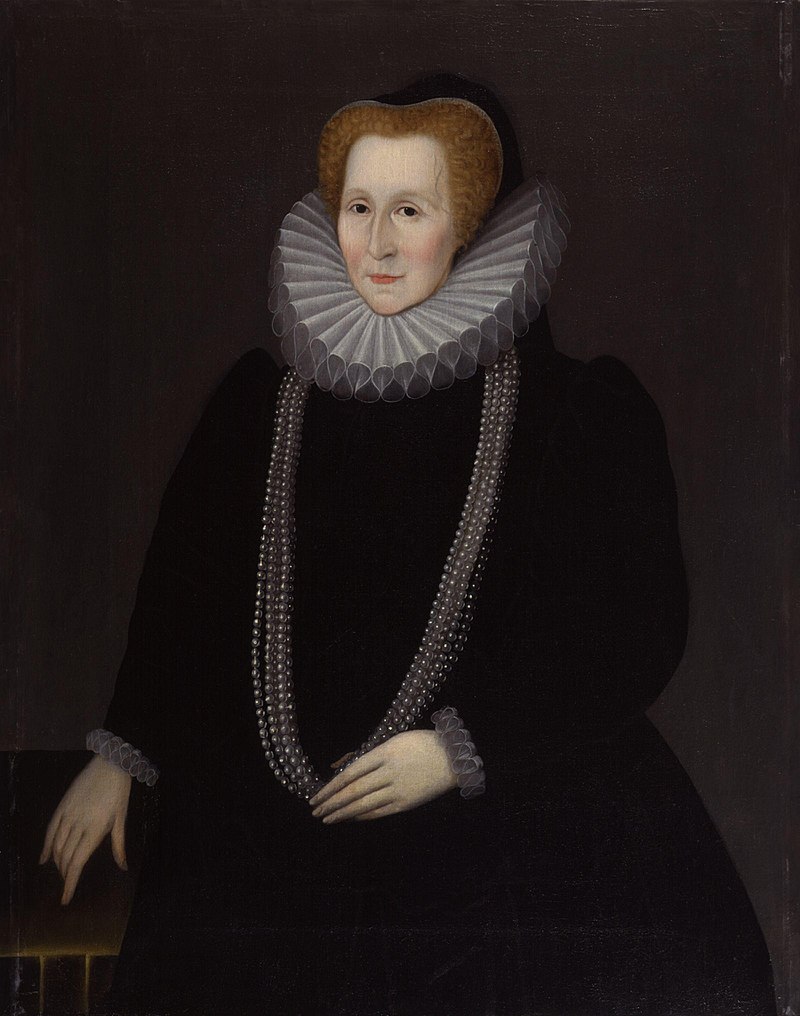
Bess of Hardwick is perhaps the most famous Tudor woman, outside of the extended Tudor royal family. A friend of Queen Elizabeth I, and confidant of Katherine Grey, she was also gaoler to Mary, Queen of Scots. An accomplished needlewoman, she is probably best known having built Chatsworth House and Hardwick Hall in Derbyshire; indeed, Hardwick Hall even bears her initials ES (Elizabeth Shrewsbury) in its external stonework.

Bess’s marital history is just as remarkable.

Bess was born around 1527, one of four daughters and a son born to John Hardwick of Hardwick, Derbyshire. It was a moderately prosperous gentry family. When her father died in 1528, When her father died in 1528, most of the family lands were taken into royal wardship until her brother James came of age. Bess’s mother, Elizabeth Leeke, remarried around 1529, to Ralph Leche of nearby Chatsworth, and had three more children, stretching the family finances even tighter. Leche’s constant problems with money meant that Leche spent the years from 1538 to 1544 in the Fleet Prison for debt and in 1545 he was committed to the debtors’ prison in Derby

With no dowry to attract a husband, 11-year-old Bess was sent into service in the household of Sir George and Lady Anne Zouche of Codnor Castle, a neighbouring family. Lady Zouche was a distant cousin of both of Bess’s parents and a friend and lady-in-waiting to Queen Anne Boleyn; following the queen’s downfall, she served her successor, Jane Seymour. Sir George was a gentleman pensioner to the king. It was in this household that Bess would have learned the ways of the aristocracy, whilst acting as a lady-in-waiting. Bess would have also made connections with various families through the other young people of the household.

Husband no. 1.

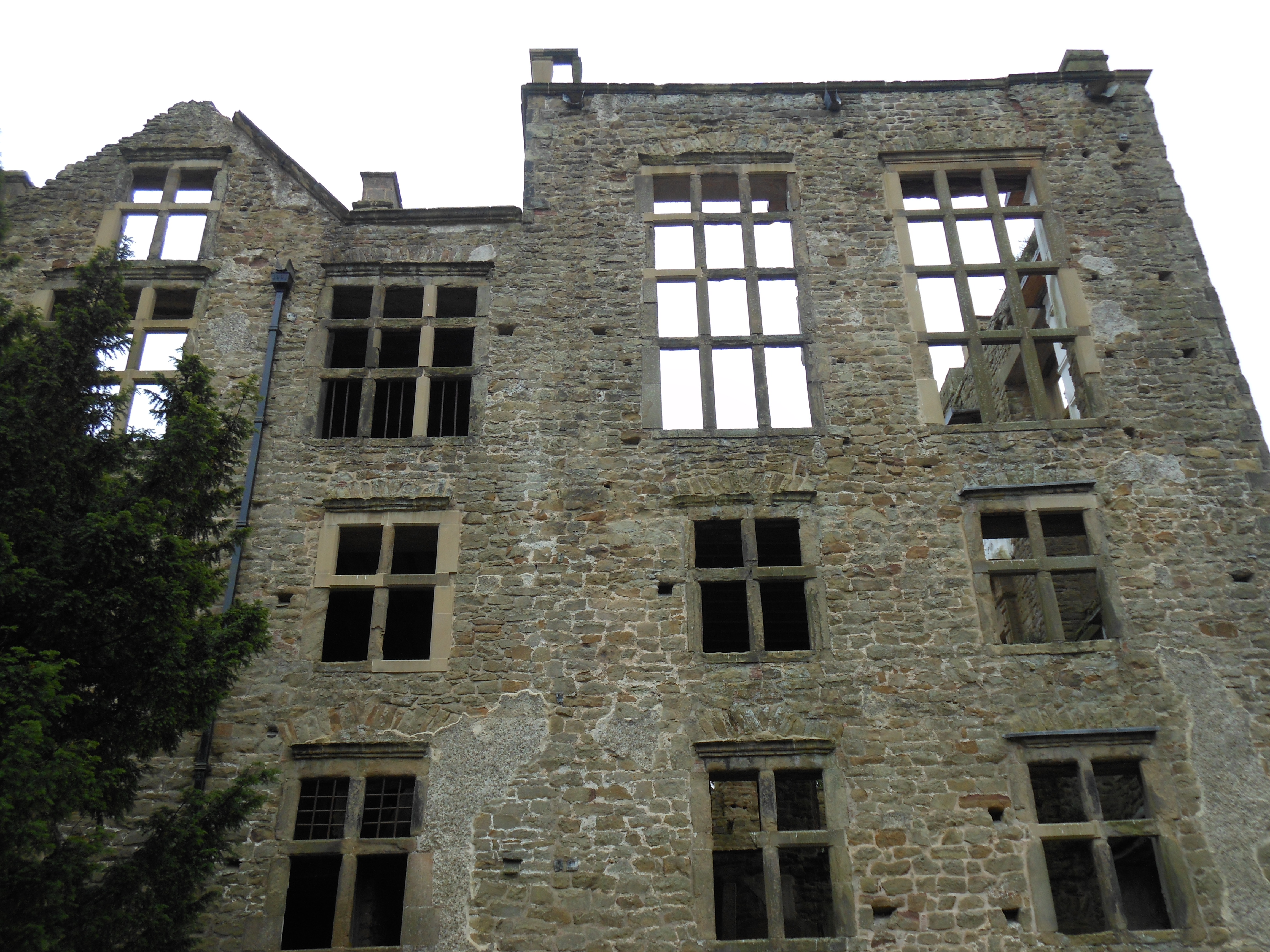
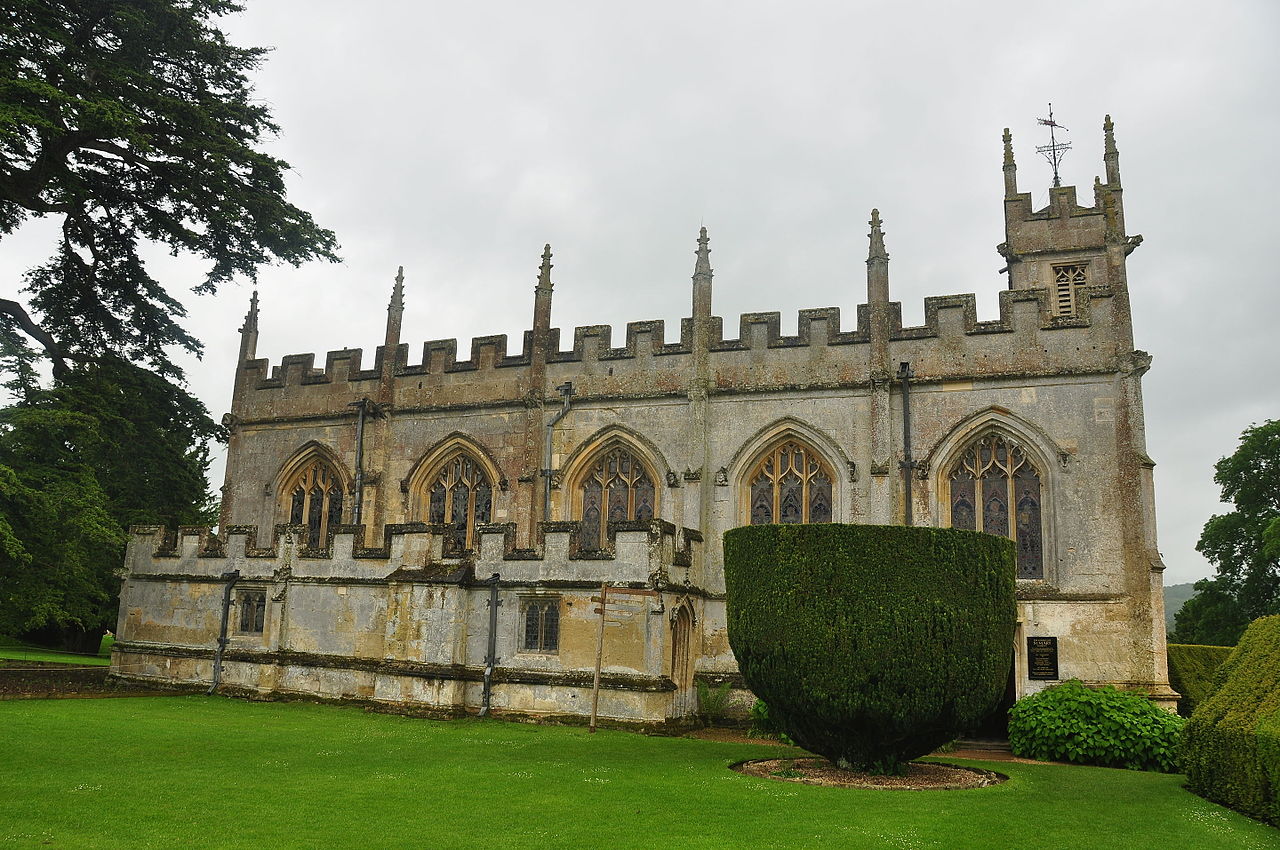
The ‘old’ Hardwick Hall

It was while she was living in the Zouche’s household that Bess met her first husband, Robert Barlow. The Barlows were acquainted with Bess’s stepfather, who was owed money on a land deal by Robert’s father, Arthur Barlow. It may well be that Arthur offered his oldest son and heir in marriage to Bess, with the amount owing from the court case written off in lieu of Bess’s dowry. Bess and Robert were married in the spring of 1543, with Bess being about fifteen and Robert a couple of months short of his fourteenth birthday.

The marriage was short-lived and possibly unconsummated, given their ages. Robert fell ill and died within eighteen months of their wedding day, on Christmas Eve 1544. When Bess applied to the Barlows for her widow’s dower, one-third of the income in rents and revenues from her husband’s estates, she was refused and a lengthy court battle ensued. A settlement was finally in 1546. It did not make her rich, but the annual income of £30 gave Bess a measure of independence when she was only 17 years of age.

Husband no. 2.

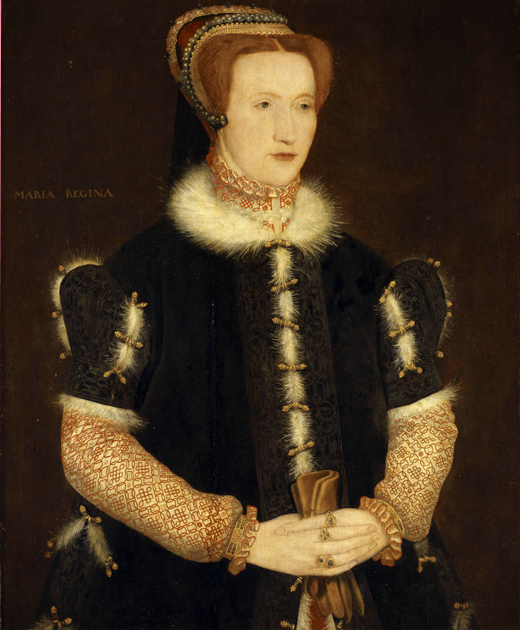
Bess of Hardwick, 1550s

Bess may have met Sir William Cavendish, while staying at Bradgate Park with Lady Frances Brandon, Marchioness of Dorset. Frances was a granddaughter of King Henry VII and the mother of the ill-fated Lady Jane Grey, the Nine Days Queen. Cavendish was twice-widowed, mature and rather rich, with 3 surviving daughters and no male heir. An experienced government official, he had been appointed Treasurer of the King’s Chamber in 1546 and had been knighted by the king on Easter Sunday of the same year. He had a portfolio of properties throughout the Midlands and a fine house in London.

When he met Bess in 1547, she was 19 and he was 40. A strong friendship developed, despite the age gap. They were married in the family chapel at Bradgate Park on 20 August 1547. Bess had a deep interest in astrology and the timing of the wedding, at two in the morning, was calculated as being the most propitious. Cavendish recorded the event in his notebook:

‘Memorandum. That I was married unto Elizabeth Hardwicke my third wife in Leestersheer at Bradgate House, on 20th August in the first year of King Edward’s reign, at two of the clock after midnight.’1

After the wedding, the couple travelled to Sir William’s manor at Northaw in Hertfordshire where Bess probably met her three stepdaughters for the first time, Catherine, Mary and Anne. At twelve, the eldest was only seven years younger than Bess. Though managing a household and acting as stepmother to 3 girls not much younger than herself must have been a daunting prospect, within a year Bess was keeping the books, paying bills and recording rents. The proximity of the manor to London also meant that shortly after the wedding Bess was presented at court to the young king Edward VI.

Bess and Cavendish would have 8 children together, of which 6 would survive childhood, including 3 boys. And it was with Cavendish that Bess acquired the lands of her stepfather at Chatsworth for £600. There was an old manor house on the property that the family lived in until the completion of Chatsworth House. Bess and Sir William continued to buy land in Derbyshire, including 8,000 acres from the earl of Westmorland. All the Derbyshire properties were in both their names, which meant that when Sir William died before his heir came of age, the properties remained in Bess’s hands rather than being taken into wardship. Sir William died in October 1557, leaving Bess in a precarious financial position, owing £5,237 to the crown over funds that had disappeared during his time at the Exchequer, apparently pilfered by an assistant.

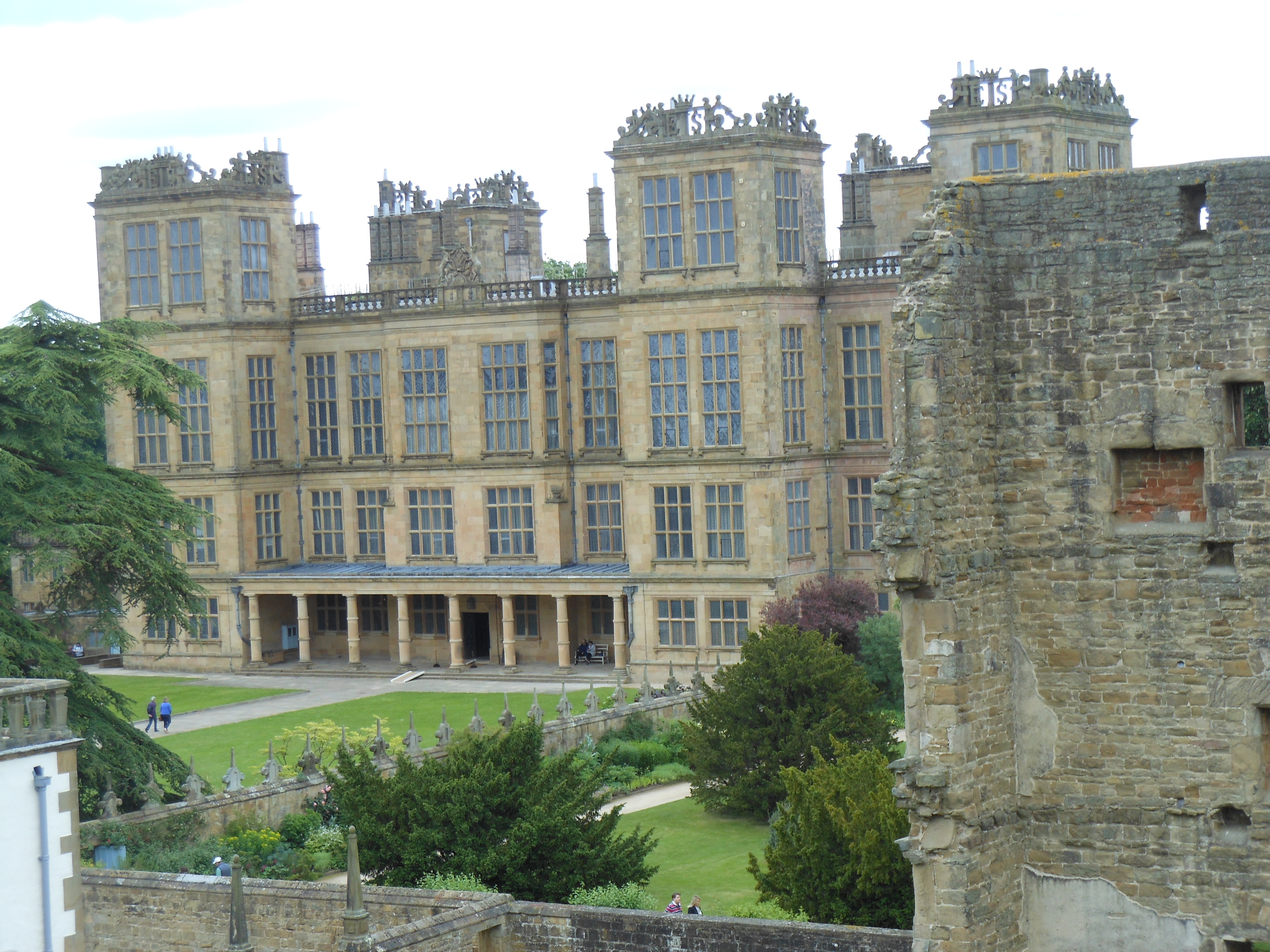
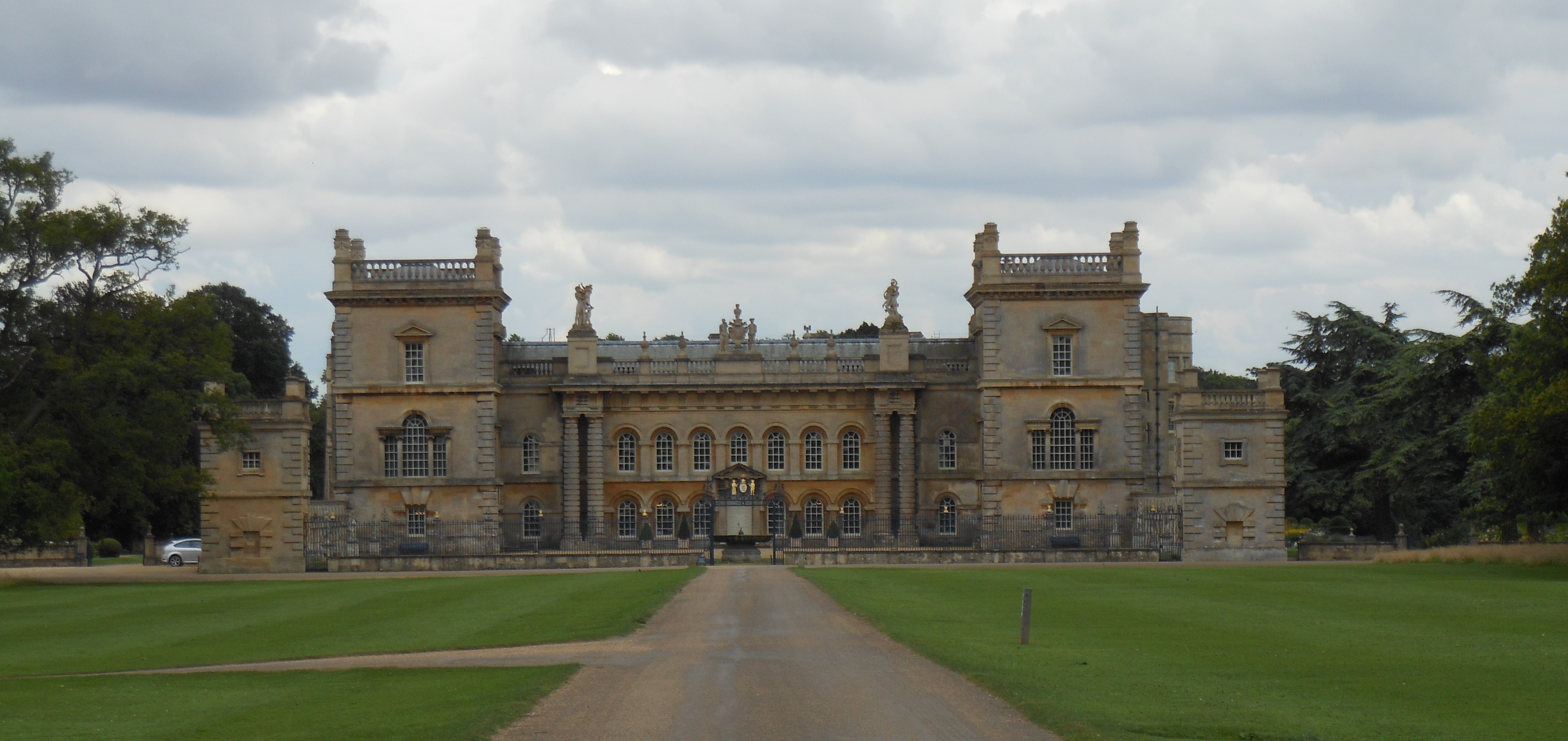
The ‘new’ Hardwick Hall, taken from the old hall

Facing bankruptcy, Bess only avoided the confiscation of her lands by writing to many of her husband’s friends asking for their help and support. These friends voted against the bill when it was presented to Parliament. Her lands were safe, but she still owed the money. Bess made the final entry in Sir William’s notebook:

‘Sir William Cavendish Knight, my most dear and well-loved husband, departed this present life on Monday, being the 25th day of October … on whose soul I most humbly beseech the Lord to have mercy, and to rid me and his poor children of our great misery.’2

Husband no. 3.

In 1559, Bess married her late husband’s friend Sir William St Loe, a widower with 2 surviving daughters, Mary and Margaret. From an ancient and noble family and considerably wealthier than Cavendish had been, St Loe was Captain of Elizabeth I’s Yeoman Guard. St Loe’s father, Sir John St Loe, died and Bess took the opportunity to visit her husband’s old friend and offer her condolences. As the months progressed, so did their relationship. In January 1559, Sir William St Loe played a major role in Queen Elizabeth’s coronation, seeing to her security and, as Chief Butler of England, it was St Loe who ceremonially offered the first cup of wine to the new sovereign.

In July 1559, Sir William St Loe announced his betrothal to Bess and a wedding invitation sent by the groom to Bess’s old friend, Sir John Thynne, still exists:

Saving your promise … and not forgetting your friendship, these lines are to satisfy you that the day of my marriage is by my Mistress appointed upon Sunday this sennight [27 August]. At which time both her ladyship and myself [hope] to see you there. She hath with terrible threatenings commanded me not to forget making of her hearty commendations unto you and to my lady your wife, unto whom I pray you let me also commended … from Somerset this Tuesday 15th August. William Seyntlo.3

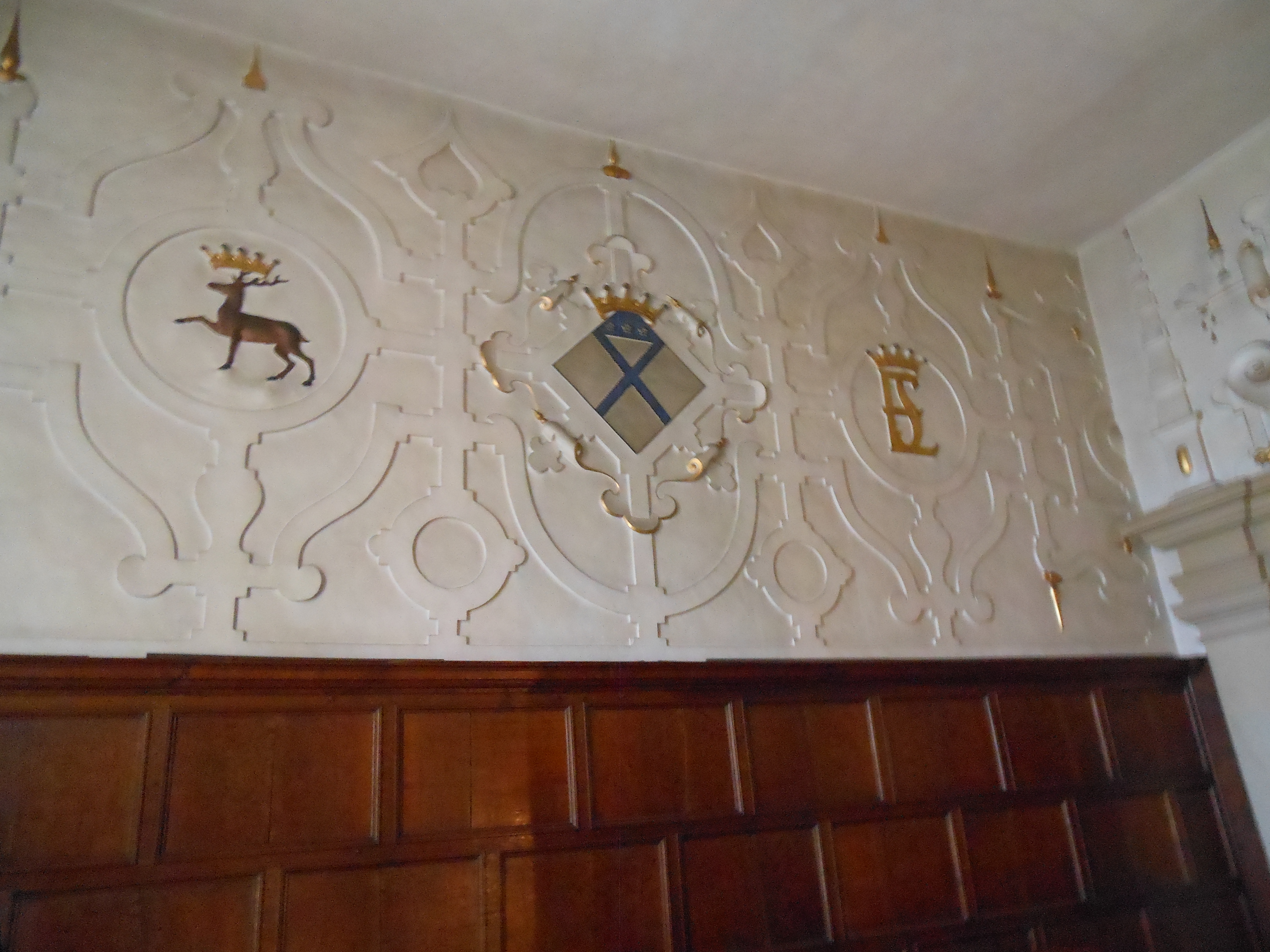
Bess’s initials and the Talbot dog, Hardwick Hall

Once married, St Loe’s duties often separated the couple, until  Bess was appointed a Lady of the Privy Chamber. Due to his relationship with Queen Elizabeth, St Loe was able to reduce the debt Bess owed and paid the £1,000 fine on her behalf. The marriage of Bess and St Loe was a happy one and he treated Bess’s children as his own. However, Sir William and his younger brother, Edward, became involved in a property dispute. Edward visited Sir William and Bess in London to resolve the issue but shortly after the visit, Bess fell ill, poisoned. William St Loe suspected his brother Edward and 3 of Edward’s associates were punished, though Edward was not.

Bess was visiting her family in Derbyshire in 1565 when she received a note from London informing her that St Loe was critically ill. By the time she arrived back in the city, her husband was dead. As his brother Edward had visited recently, poison was suspected but could not be proven. St Loe had left everything to
Bess. His will was unequivocal, though the fact St Loe had left nothing to his daughters meant that it was challenged, and Bess found herself fighting yet another court case for her rights.

Husband no. 4.

Bess of Hardwick’s initials on Hardwick Hall, Derbyshire

On 1 November 1567, Bess married her fourth and final husband, George Talbot, Earl of Shrewsbury. At the same time, four of their children were married, with Bess’s daughter Mary marrying George’s second son, Gilbert, and Henry Cavendish marrying George’s daughter, Grace. A wealthy widow until that point, Bess was well aware that all her lands and property would be controlled by Shrewsbury from the moment of their marriage. However, Bess had a clause written into the marriage contract that in exchange for this, one-third of Shrewsbury’s unsettled income would go to Bess on his death. Arrangements were also made regarding Chatsworth, which would automatically go to Henry Cavendish on Bess’s death.

Bess and Shrewsbury spent the first few months of their married life away from court but sent the queen a gift of venison through Bess’s nephew, Anthony Wingfield. When the young man said he did not know when Bess would be returning to court, the queen said,

‘I am assured that if she have her own will she would not be long before she would see me. I have been glad to see my lady St Loe, but am I now more desirous to see my Lady Shrewsbury. I hope my Lady hath known my good opinion of her… I assure you there is no Lady in this land that I better love and like.’4

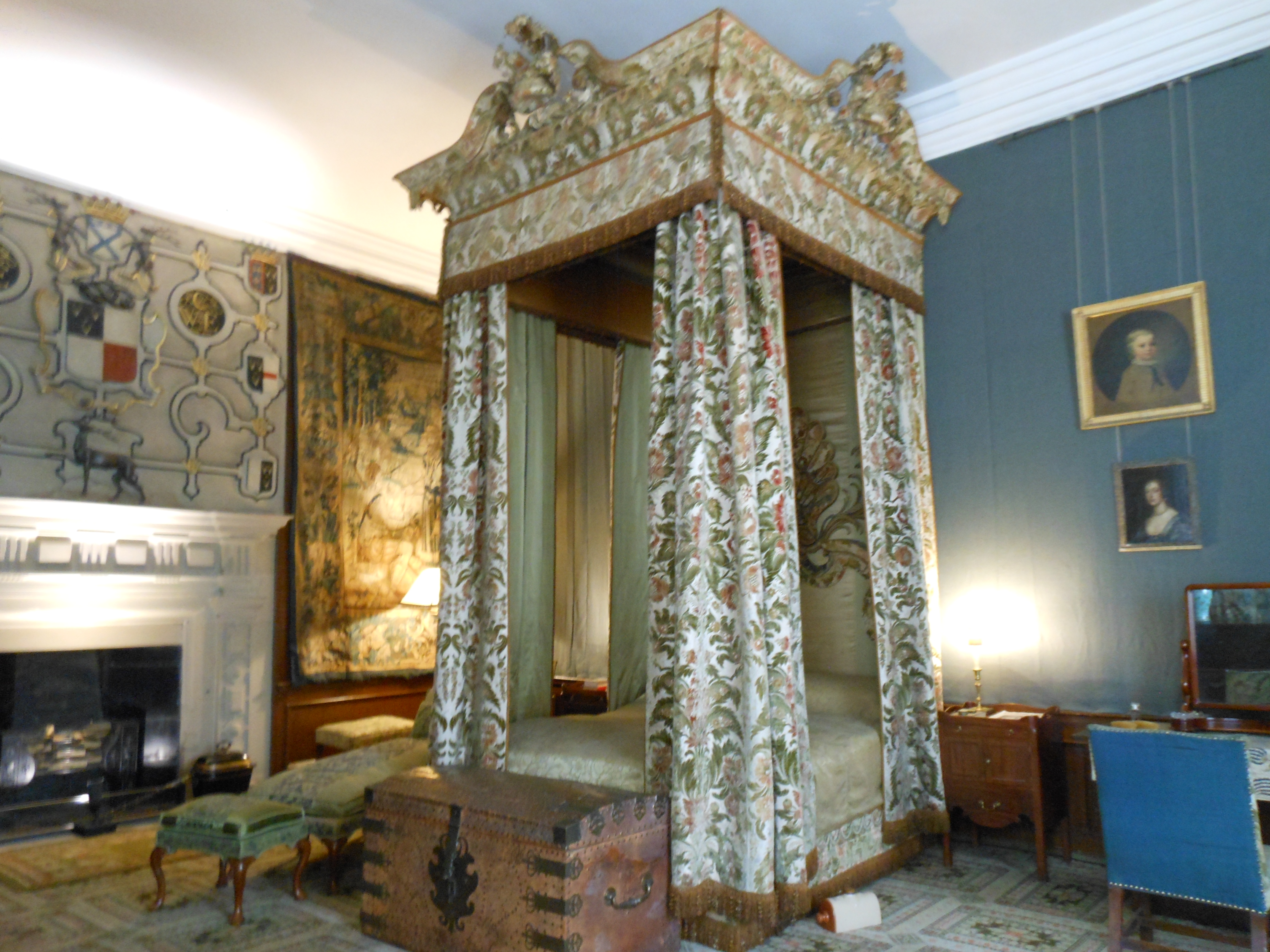
Bess of Hardwick’s bedchamber, Hardwick Hall

In 1568, Shrewsbury and Bess were given the custody of Mary, Queen of Scots, who remained in their charge until 1584. Famed for her needlework, Bess and Queen Mary would work on samples together. It was whilst they had custody of the Scots queen that Bess and Shrewsbury’s relationship began to break down. Bess repeatedly accused the earl of infidelities, including with their queenly prisoner, and Shrewsbury was feeling the strain of acting gaoler, with mounting debts as a result of the expenses incurred. In 1584, Bess separated from Shrewsbury and went to live at Chatsworth. She had to fight yet another legal battle when Shrewsbury claimed Chatsworth was his under the terms of their marriage settlement, but the court found in Bess’s favour, awarding her Chatsworth and a sizeable income from her husband.

By the time of the settlement, however, Bess had already moved on from Chatsworth and started a new building project at Hardwick, rebuilding her family’s old Hall, which was completed by 1591. Her estranged husband, Shrewsbury, died in 1590, leaving Bess with a third of his disposable lands. As a result, as soon as the Old Hall was completed, Bess embarked on a new project, building an entirely new Hardwick Hall right next door. Bess’s final years were occupied with building and furnishing the new hall.

In 1601, she made her will, leaving Hardwick to her second and favourite son, William, while her eldest son Henry was to have Chatsworth. Bess also made provision for her other children and her grandchildren, as well as her servants and the residents of the almshouse that she had founded in Derby. However, she altered the will in March 1603, after quarrelling with both Henry and her granddaughter Arbella, both of whom she now disinherited.

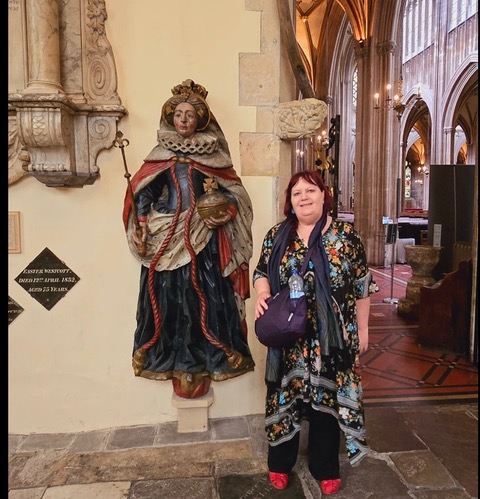
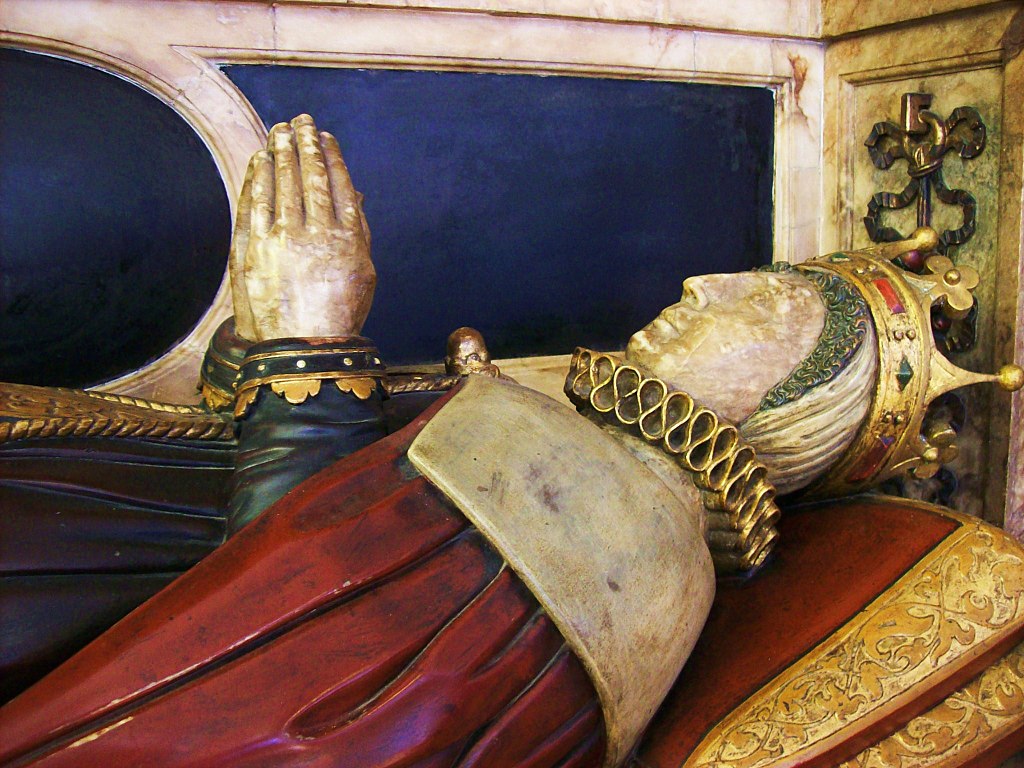
Effigy of Bess of Hardwick wearing a coronet of a countess. Derby Cathedral

At the time of her death, Bess was one of the richest people in England. She had survived childbirth eight times and the rollercoaster that was the English Reformation. She is famed both as the builder of Chatsworth House and Hardwick Hall and as the founder of a great dynasty. Her descendant, Peregrine Cavendish, the twelfth and current duke of Devonshire, still resides at Chatsworth House. Bess is also famed for her needlework, many examples of it still survive in her various properties. She and Mary, Queen of Scots would work on samples together when the Scots queen was in the custody of Bess and her husband.

Having survived all four husbands, various legal challenges, poisoning and scandal, Bess died at Hardwick on 13 February 1610 and was buried at All Hallows, Derby, now Derby Cathedral.

Notes:

1. Collins, Historical Collections of the Noble Families of Cavendish quoted in Mary S. Lovell, Bess of Hardwick, p. 36; 2. Collins, Historical Collections of the Noble Families of Cavendish, quoted in Jill Armitage, Four Queens and a Countess, p. 93; 3. Mary S. Lovell, Bess of Hardwick, p. 147; 4. Jill Armitage, Four Queens and a Countess, p. 125

Sources;

Mary S. Lovell, Bess of Hardwick: First Lady of Chatsworth; Jill Armitage, Four Queens and a Countess: Mary Queen of Scots, Elizabeth I, Mary I, Lady Jane Grey and Bess of Hardwick; Nathaniel Johnson, Lives of the Earls of Shrewsbury; Arthur Barlow’s Inquisition Post Mortem; Calendar of State Papers, Letters and Papers September 1536; Lisa Hilton, Elizabeth I: Renaissance Prince, A Biography; Annie Bullen, Hardwick Hall (guidebook); Tracy Borman, Elizabeth’s Women; Leanda de Lisle, The Sisters Who Would Be Queen: The Tragedy of Mary, Katherine and Jane Grey; Nicola Tallis, Crown of Blood: The Deadly Inheritance of Lady Jane Grey; Alison Weir, Elizabeth the Queen; Elizabeth Norton, The Lives of Tudor Women; Victoria Sylvia Evans, Ladies-in-Waiting: Women who Served at the Tudor Court; Amy Licence, The Sixteenth Century in 100 Women.

Images:

Portraits of Bess and her tomb are courtesy of Wikipedia. All images of Hardwick Hall ©2024 Sharon Bennett Connolly FRHistS

*

My Books

Signed, dedicated copies of all my books are available through my online bookshop.

Coming 30 January 2025: Scotland’s Medieval Queens

Scotland’s history is dramatic, violent and bloody. Being England’s northern neighbour has never been easy. Scotland’s queens have had to deal with war, murder, imprisonment, political rivalries and open betrayal. They have loved and lost, raised kings and queens, ruled and died for Scotland. From St Margaret, who became one of the patron saints of Scotland, to Elizabeth de Burgh and the dramatic story of the Scottish Wars of Independence, to the love story and tragedy of Joan Beaufort, to Margaret of Denmark and the dawn of the Renaissance, Scotland’s Medieval Queens have seen it all. This is the story of Scotland through their eyes.

Available for pre-order now.

Also by Sharon Bennett Connolly:

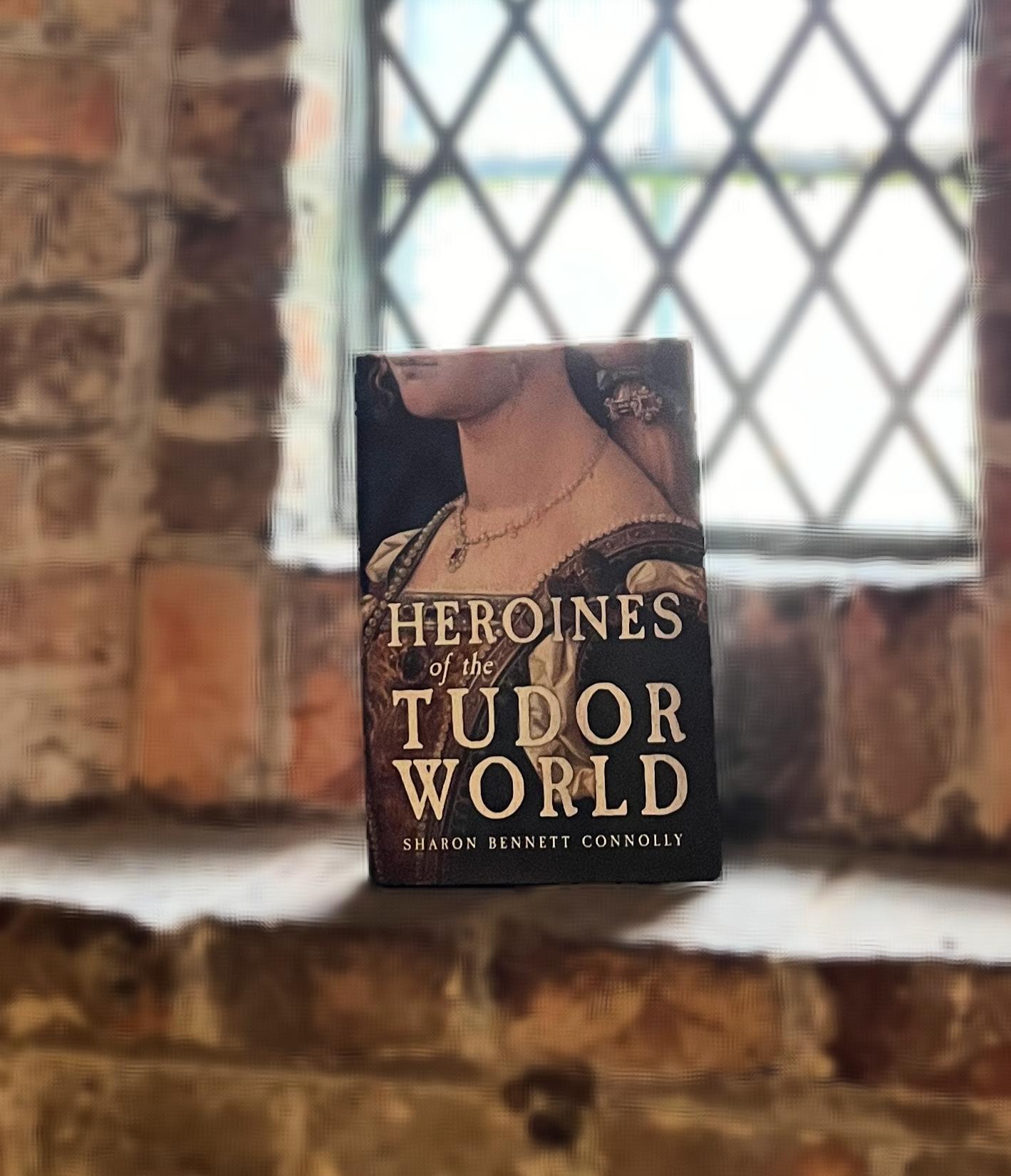
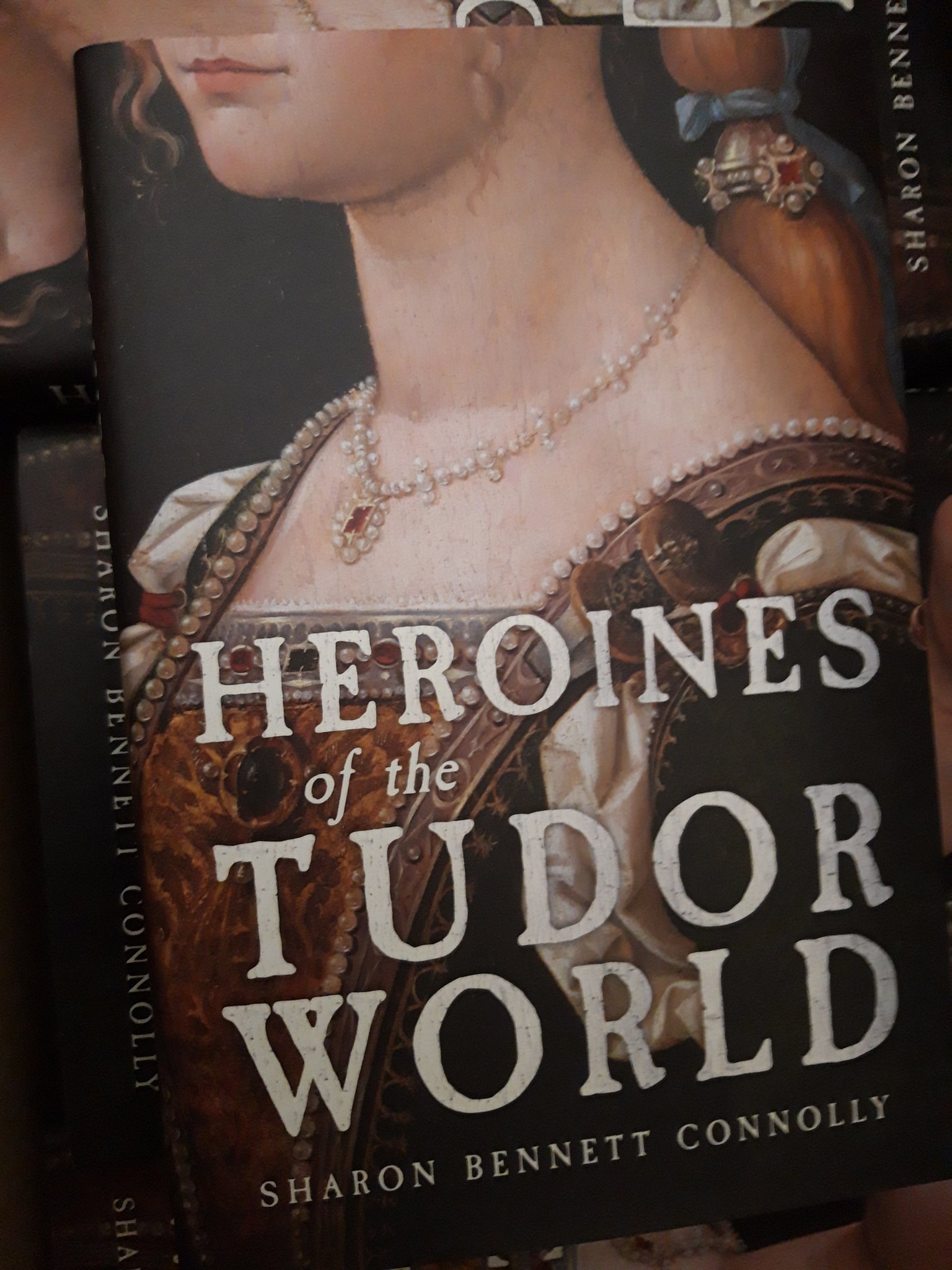
Heroines of the Tudor World tells the stories of the most remarkable women from European history in the time of the Tudor dynasty, 1485-1603. These are the women who ruled, the women who founded dynasties, the women who fought for religious freedom, their families and love. Heroines of the Tudor World is now available for pre-order from Amberley Publishing and Amazon UK. Women of the Anarchy demonstrates how Empress Matilda and Matilda of Boulogne, unable to wield a sword themselves, were prime movers in this time of conflict and lawlessness. It shows how their strengths, weaknesses, and personal ambitions swung the fortunes of war one way – and then the other. Available from Bookshop.orgAmberley Publishing and Amazon UKKing John’s Right-Hand Lady: The Story of Nicholaa de la Haye is the story of a truly remarkable lady, the hereditary constable of Lincoln Castle and the first woman in England to be appointed sheriff in her own right. Available from all good bookshops Pen & Sword Booksbookshop.org and Amazon

Defenders of the Norman Crown: The Rise and Fall of the Warenne Earls of Surrey tells the fascinating story of the Warenne dynasty, from its origins in Normandy, through the Conquest, Magna Carta, the wars and marriages that led to its ultimate demise in the reign of Edward III. Available from Pen & Sword BooksAmazon in the UK and US, and Bookshop.orgLadies of Magna Carta: Women of Influence in Thirteenth Century England looks into the relationships of the various noble families of the 13th century, and how they were affected by the Barons’ Wars, Magna Carta and its aftermath; the bonds that were formed and those that were broken. It is now available in paperback and hardback from Pen & SwordAmazon, and Bookshop.orgHeroines of the Medieval World tells the stories of some of the most remarkable women from Medieval history, from Eleanor of Aquitaine to Julian of Norwich. Available now from Amberley Publishing and Amazon, and Bookshop.orgSilk and the Sword: The Women of the Norman Conquest traces the fortunes of the women who had a significant role to play in the momentous events of 1066. Available now from Amazon,  Amberley Publishing, and Bookshop.org.

Alternate Endings: An anthology of historical fiction short stories including Long Live the King… which is my take what might have happened had King John not died in October 1216. Available in paperback and kindle from Amazon.

Podcast:

Have a listen to the A Slice of Medieval podcast, which I co-host with Historical fiction novelist Derek Birks. Derek and I welcome guests, such as Bernard Cornwell, and discuss a wide range of topics in medieval history, from significant events to the personalities involved. Our latest episode is 2024 Christmas Special with Toni Mount, A Medieval Christmas.

*

Don’t forget! Signed and dedicated copies of all my books are available through my online bookshop.

For forthcoming online and in-person talks, please check out my Events Page.

You can be the first to read new articles by clicking the ‘Follow’ button, liking our Facebook page or joining me on TwitterThreadsBluesky and Instagram.

©2024 Sharon Bennett Connolly FRHistS

Anne de Vere: A Woman Unfortunate in her Husband

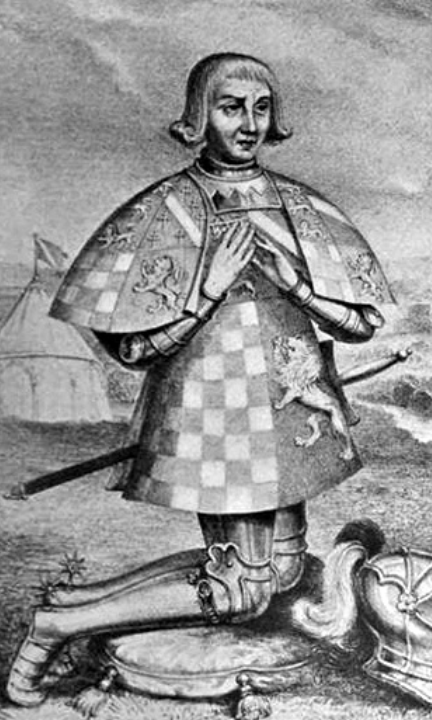
Thomas Howard, 2nd Duke of Norfolk

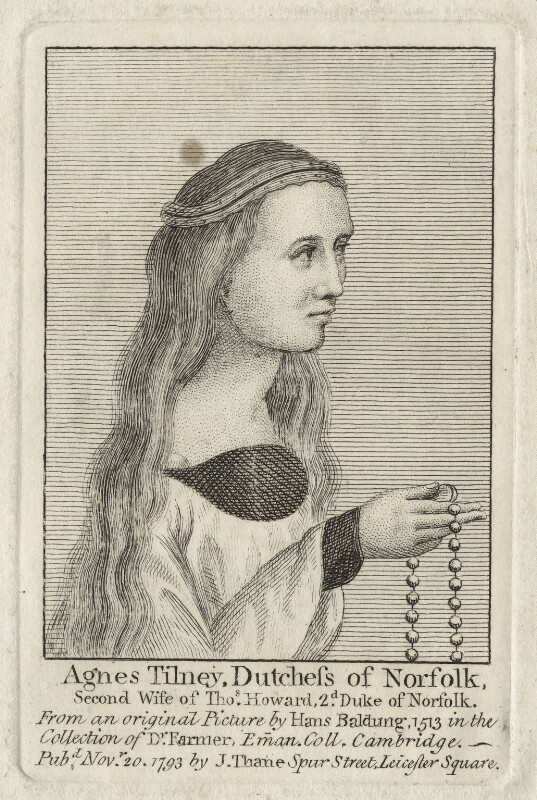
In Tudor times – well, in every era to be honest – not every woman could boast a husband who was capable of greatness. Or even of managing his own finances. Anne de Vere, Countess of Oxford, was one such, a woman who survived the scandals attached to her family only to be faced with a profligate husband who really should have heeded his wife’s advice. Born Anne Howard, daughter of Thomas Howard, 2nd Duke of Norfolk and his second wife, Agnes Tilney, she first appears in the historical record on 16 November 1511, when she is contracted to marry John de Vere, the 12-year-old nephew and heir of John de Vere, 12th Earl of Oxford. John was the only surviving son of George de Vere, who had been intended for the church until his father and oldest brother were both executed in 1462. He then became the heir of his surviving older brother, John de Vere, but died in 1503, leaving his 4-year-old son John as his brother’s heir.

The de Veres were an old, noble family and although the marriage was politically and economically advantageous to both sides, it was even more so to the Howards, whose relatively new nobility would be strengthened by links with the old families. Although the marriage took place in September 1512, the youth of Anne and John meant that the couple lived with Anne’s family, the Howards, and the marriage may not have been consummated for some time. A year later, John inherited his uncle’s earldom of Oxford but as he was a minor, he remained a royal ward, and in 1514 his wardship and lands were granted to his father-in-law, the duke of Norfolk.

Field of the Cloth of Gold, 1520

Anne and John de Vere attended the famous Field of the Cloth of Gold in June 1520 and two months afterwards, the earl attained his majority and was granted livery of his lands. The young couple set up home at Hedingham Castle. The marriage does not appear to have been a happy one and by April 1523, Anne was writing to Cardinal Wolsey, requesting help in managing her husband’s behaviour. Though masked in diplomatic terms, Anne’s letters complained that John was managing his estates badly and acting dishonestly, and he refused to allow her to take on some of the estate management. Anne wrote that ‘yf I shuld medyl in anny off these concerns further than I do I surteyne that I shuld never leue in rest.’1

Anne had taken control of the household finances and asked Wolsey to intervene in the matter of her husband’s debt. She was also worried about the negative influence of her husband’s heir, his second cousin, Sir John de Vere – later the 15th earl of Oxford. With the help of her father, the duke of Norfolk, and half-brother, Thomas Howard, then Earl of Surrey, Anne petitioned Henry VIII and in February 1524 an ordinance was enrolled in the court of Chancery to limit John’s control over his household and finances and to improve his behaviour towards Anne. He was to make no grants or annuities without the advice of Cardinal Wolsey. A noble had a duty to manage his lands sensibly, both to preserve them for future generations and as evidence that he was fit for public life.

John de Vere, Earl of Oxford, was warned against keeping wild and riotous company and drinking to excess. He was to moderate his hunting and be caring and considerate of his wife. He was ordered to return to his father-in-law’s household until further notice, his lands placed in Wolsey’s nominal keeping. However, as early as 16 February, Wolsey wrote:

My lorde, the young countess of Oxford has lately returned to the King and Council, alleging that his lordship still keeps her out of possession, although it was supposed that she had entered by force of the King’s writ. A new commandment is sent out to the justices for removing the said force, and restoring her to her former possession. Informs him of it, that he may suffer her to have her … ‘ordinary course and way, whereby your title, possession, nor entry can not … to abide the same to be done by an extraordinary way … by reason whereof further trouble might ensue … to the hindrance of your matter and you.2

Agnes Tilney, Duchess of Norfolk, Anne’s mother

When Anne’s father died in May 1524, she and John probably moved to the household of her half-brother Thomas, now Duke of Norfolk. When the earl of Oxford’s health began to fail in July 1525, he was induced to sign a jointure by the Howards, which passed the bulk of his lands to his wife. He died the following year on 14 July 1526, at just26 years of age. At the time, Anne was living at Castle Camps in Cambridgeshire. She again wrote to Wolsey, advising him of difficulties with her husband’s executors and again asking for his help:

Since she wrote, the executors of the late earl of Oxford have, with much ado, delivered the stuff and plate bequeathed according to the letter directed to them by [Wolsey], but not the 100 marks. They declare they can do no more, and are displeased with Sir Rob. Drowre for being so ready to grant it to [Wolsey]. ‘They squared with him afore me, and now I find him better than the remnant in divers causes; and I desired them to have their advice in ordering my lord’s house, and in other great causes concerning my lord’s business, and they said they would not meddle,’ although they speak fair before [Wolsey]. Regrets to trouble him on this matter considering his great affairs, but has few powerful friends.3

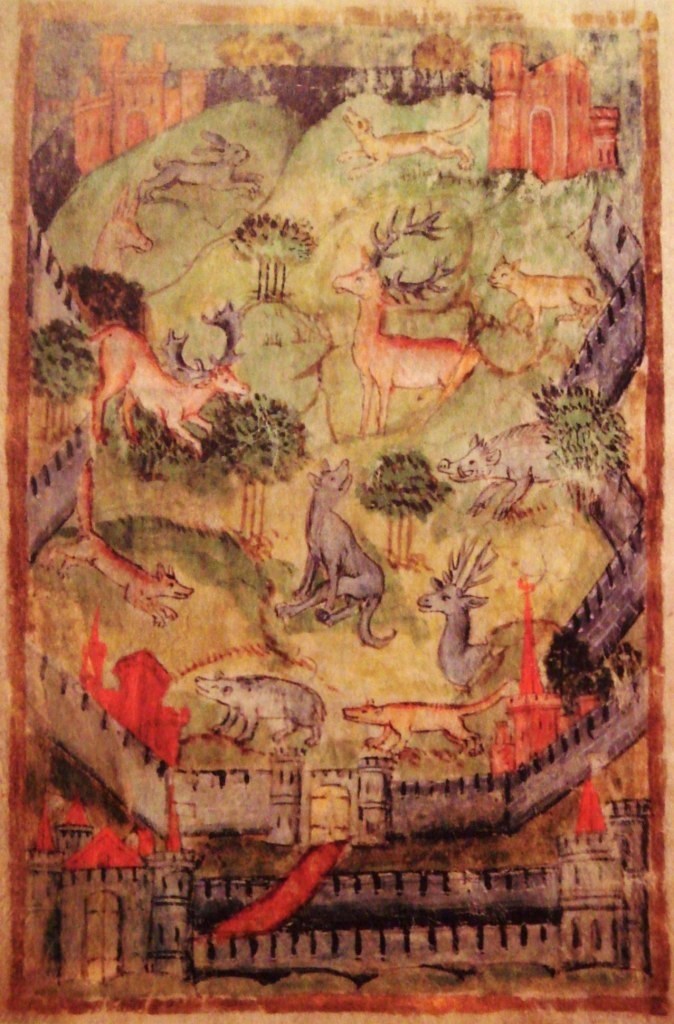
The new earl of Oxford was not happy with the increase to Anne’s jointure, considering the lands that had been passed to her in 1525 to be rightfully his. By 11 August, she was again writing to Wolsey, complaining that the earl had twice broken into her deer park at Lavenham in Suffolk:

Received his letters on Saturday last, when she wrote to inform him of my lord of Oxford’s coming hither. He entered this town about 11 o’clock with 50 horsemen, and Sir John Raynsforthe came the same day with 30 horse. My lord broke open the park, his men entered with their bows ready bent, and killed 17 of her deer. On Tuesday he entered the park with about 500 men, having sent to the neighbouring towns to cause the people to assemble, and they killed 100 deer. The justice of the peace bound him and her to keep the peace, but he has to-day broken open her house at Campys, accompanied with 300 persons, beaten her servants and taken her goods. Asks his and the King’s aid. Lavenham, 11 Aug. Signed: A. Oxynfford.4

Depiction of a medieval hunting park from a 15th-century manuscript version of The Master of Game, MS. Bodley 546 f. 3v

It was probably fortunate for Anne that she was absent from her home when the earl broke in, stole her goods and beat her servants. Had she been present, she may have been the subject of a kidnapping, or worse. Anne was not to give up in the face of such violence, however, and she set the wheels of the law in motion and appealed to her powerful relatives and friends for help. Charles Brandon, Duke of Suffolk, and Henry Courtney, Earl of Devon, were amongst those who appealed to Cardinal Wolsey on Anne’s behalf. She informed Brandon:

The writ she had from Wolsey for Cambridgeshire does not serve her, for the persons at the castle of Campys answered the justices that they would not depart till their master ordered them. The justices did not think they could remove them by their own power, or by raising the country, without greatly disturbing the King’s peace. They have proceeded no further in executing the said writ. Sheannot obtain her possessions without his help and her brother’s (Norfolk). Wyttysforthe, 22 Aug.5

In 1528, the king settled Lavenham on Anne, but the earl immediately invaded the park, stole deer and beat the keeper. Anne joined forces with other de Vere relatives, who stood to be disadvantaged by the earl’s claims. The case was brought to arbitration before peers in 1529 when Anne’s jointure was reduced and most of the disputed lands were granted to the earl. The final remnants of the dispute were settled by March 1532. Anne lived quietly in Cambridgeshire afterwards, occasionally visiting London and the court. She was at the coronation of her half niece Anne Boleyn in 1533 and was one of the mourners at Catherine of Aragon’s funeral in 1536 and at that of Jane Seymour in 1537. In 1541, on the arrest of her mother and her sister Katherine, Countess of Bridgewater, for misprision of treason following the discovery of the adulteries of her niece Katherine Howard, Anne was given custody of her niece Agnes ap Rhys, daughter of her sister Katherine.

Described as a woman of great wit, Anne was faced with a number of lawsuits later in life from servants and tenants. One servant complained that she had taken against him after fourteen years of service, not only dismissing him from her service but also ‘expelling him unlawfully from the land and tenement he was leasing from her, stolen livestock from him, put a new lock on his cottage, and taken a number of loads of hay, and all of the rye that was growing.’6 Unfortunately, we do not have the outcomes of any of the cases brought against Anne, but they do perhaps demonstrate that she was having difficulty managing her estates later in life.

Anne died in early 1559, and although we do not have a will, the diarist Henry Machyn recorded the transport of her hearse to Lambeth and her funeral at the Church of St Mary’s in Lambeth, where she was buried in the Howard family chapel.

A print of St Mary’s church, Lambeth, nin 1851 following its restoration

The xvij day of Feybruary was a herse of wax [erected] gorgyously, with armes, a ix dosen penselles and armes, [for the] old lade contes of Oxford, the syster to the old Thomas [duke of] Norffoke, at Lambeth…
The xxj day of Feybruary my lade was browth in-to Lambethe chyrche for the qwer and dobull reylyd, and hangyd with blake and armes; and she had iiij goodly whyt branchys and ij dosen of grett stayffes torchys, and ij haroldes of armes, master Garter and master Clarenshus, in ther cotte armurs; a-for a grett baner of armes, and iiij baners rolles, and iiij baners of santtes; and then cam the corsse, and after morners; the chyff morner was my lade chamberlen Haward, and dyvers odur of men (and) women; and after durge done to the dukes plasse; and the morow, masse of requiem done, my lade was bered a-for the he awtter.22

Anne de Vere, Countess of Oxford, had proved herself capable of defending her rights and property by using her wit and connections in order to solicit the support she needed to combat her husband’s profligacy. That she did not win out entirely against her husband’s successor is perhaps more a demonstration of the establishment’s desire to preserve earldoms with all their land, rather than of any failing on Anne’s part. Anne did prove that estate management was not the preserve of men!

Images:

Courtesy of Wikipedia

Notes:

1. TNA SP1/27, fols. 154v–155 quoted in Nicola Clark, ‘Vere [née Howard] Anne de, countess of Oxford’; 2. ‘Henry VIII: February 1524, 16-28’, in Letters and Papers, Foreign and Domestic, Henry VIII, Volume 4, 1524-1530, ed. J S Brewer (London, 1875), pp. 41-58. British History Online http://www.british-history.ac.uk/letters-papers-hen8/vol4/pp41-58 [accessed 6 April 2023]; 3. ibid; 4. ibid; 5. ibid; 6. Nicola Clark, ‘Vere [née Howard] Anne de, countess of Oxford’; 7. ‘Diary: 1559 (Jan-Jun)’, in The Diary of Henry Machyn, Citizen and Merchant-Taylor of London, 1550-1563, ed. J G Nichols (London, 1848), pp. 184-201.
British History Online http://www.british-history.ac.uk/camden-record-soc/vol42/pp184-201 [accessed 6 April 2023].

Select Bibliography:

Nicola Clark, ‘Vere [née Howard] Anne de, countess of Oxford’; Letters and Papers, Foreign and Domestic, Henry VIII, Volume 4, 1524-1530, ed. J S Brewer; The Diary of Henry Machyn, Citizen and Merchant-Taylor of London, 1550-1563, ed. J G Nichols; Amy, The Sixteenth Century in 100 Women; David Loades, editor, Chronicles of the Tudor Kings: The Tudor Dynasty from 1485 to 1553: Henry VII, Henry VIII and Edward VI in the Words of their Contemporaries; Elizabeth Norton, The Lives of Tudor Women; Victoria Sylvia Evans, Ladies-in-Waiting: Women who Served at the Tudor Court; Claiden-Yardley, Kirsten, The Man Behind the Tudors: Thomas Howard 2nd Duke of Norfolk; Gareth Russell, Young & Damned & Fair: The Life and Tragedy of Catherine Howard at the Court of Henry VIII; Josephine Wilkinson, Katherine Howard: The Tragic Story of Henry VIII’s Fifth Queen

*

My Books:

Signed, dedicated copies of all my books are available through my online bookshop.

Coming 30 January 2025: Scotland’s Medieval Queens

Scotland’s history is dramatic, violent and bloody. Being England’s northern neighbour has never been easy. Scotland’s queens have had to deal with war, murder, imprisonment, political rivalries and open betrayal. They have loved and lost, raised kings and queens, ruled and died for Scotland. From St Margaret, who became one of the patron saints of Scotland, to Elizabeth de Burgh and the dramatic story of the Scottish Wars of Independence, to the love story and tragedy of Joan Beaufort, to Margaret of Denmark and the dawn of the Renaissance, Scotland’s Medieval Queens have seen it all. This is the story of Scotland through their eyes.

Available for pre-order now.

Also by Sharon Bennett Connolly:

Heroines of the Tudor World tells the stories of the most remarkable women from European history in the time of the Tudor dynasty, 1485-1603. These are the women who ruled, the women who founded dynasties, the women who fought for religious freedom, their families and love. Heroines of the Tudor World is now available for pre-order from Amberley Publishing and Amazon UK. Women of the Anarchy demonstrates how Empress Matilda and Matilda of Boulogne, unable to wield a sword themselves, were prime movers in this time of conflict and lawlessness. It shows how their strengths, weaknesses, and personal ambitions swung the fortunes of war one way – and then the other. Available from Bookshop.orgAmberley Publishing and Amazon UKKing John’s Right-Hand Lady: The Story of Nicholaa de la Haye is the story of a truly remarkable lady, the hereditary constable of Lincoln Castle and the first woman in England to be appointed sheriff in her own right. Available from all good bookshops Pen & Sword Booksbookshop.org and Amazon

Defenders of the Norman Crown: The Rise and Fall of the Warenne Earls of Surrey tells the fascinating story of the Warenne dynasty, from its origins in Normandy, through the Conquest, Magna Carta, the wars and marriages that led to its ultimate demise in the reign of Edward III. Available from Pen & Sword BooksAmazon in the UK and US, and Bookshop.orgLadies of Magna Carta: Women of Influence in Thirteenth Century England looks into the relationships of the various noble families of the 13th century, and how they were affected by the Barons’ Wars, Magna Carta and its aftermath; the bonds that were formed and those that were broken. It is now available in paperback and hardback from Pen & SwordAmazon, and Bookshop.orgHeroines of the Medieval World tells the stories of some of the most remarkable women from Medieval history, from Eleanor of Aquitaine to Julian of Norwich. Available now from Amberley Publishing and Amazon, and Bookshop.orgSilk and the Sword: The Women of the Norman Conquest traces the fortunes of the women who had a significant role to play in the momentous events of 1066. Available now from Amazon,  Amberley Publishing, and Bookshop.org.

Alternate Endings: An anthology of historical fiction short stories including Long Live the King… which is my take what might have happened had King John not died in October 1216. Available in paperback and kindle from Amazon.

Podcast:

Have a listen to the A Slice of Medieval podcast, which I co-host with Historical fiction novelist Derek Birks. Derek and I welcome guests, such as Bernard Cornwell, and discuss a wide range of topics in medieval history, from significant events to the personalities involved. Our latest episode is a fascinating discussion with Dr Ian Mortimer about the speed of travel and communications in medieval times. Definitely worth a listen!

*

Don’t forget! Signed and dedicated copies of all my books are available through my online bookshop.

For forthcoming online and in-person talks, please check out my Events Page.

You can be the first to read new articles by clicking the ‘Follow’ button, liking our Facebook page or joining me on TwitterThreadsBluesky and Instagram.

©2024 Sharon Bennett Connolly FRHistS

Guest Post: Margaret More Roper by Aimee Fleming

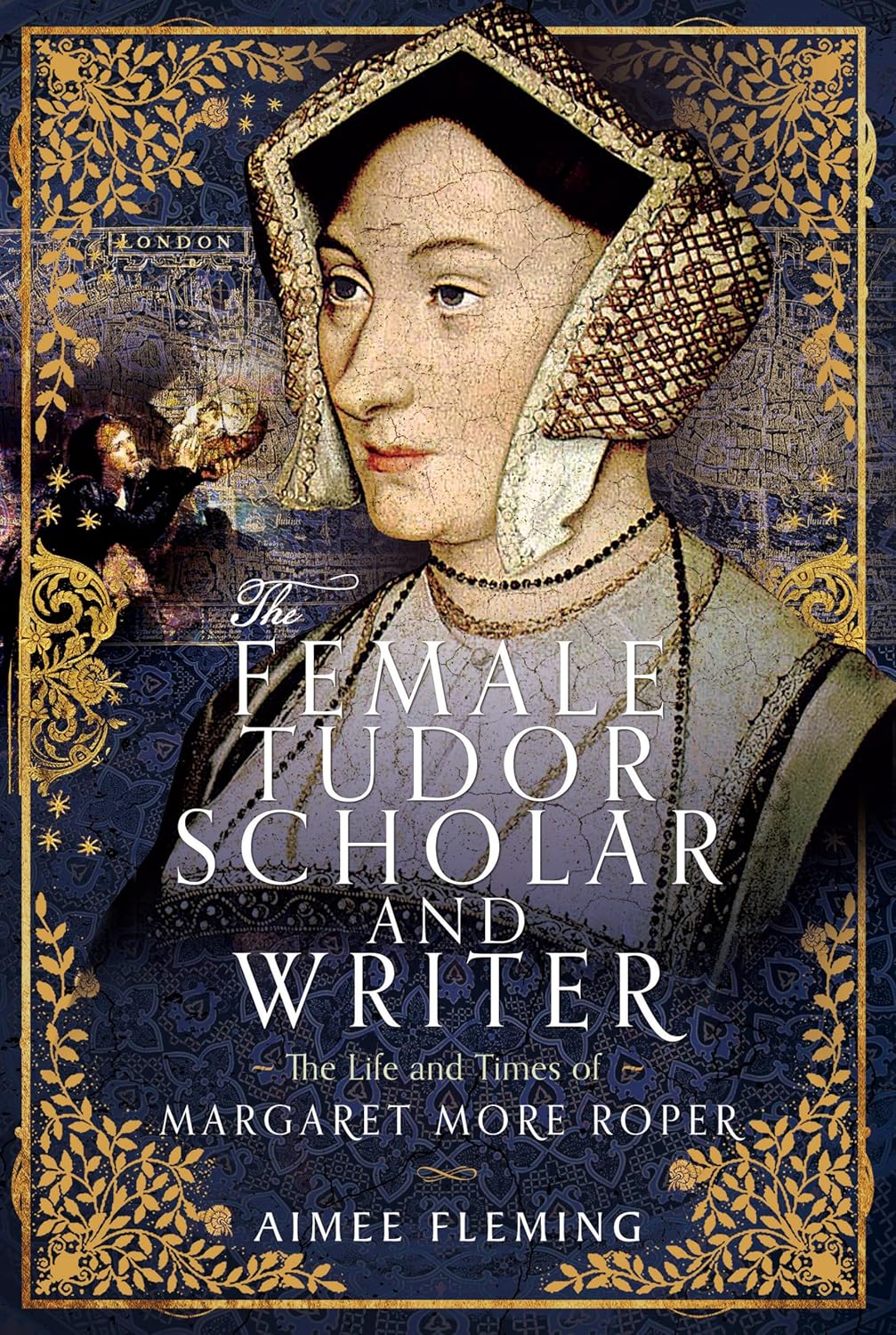
Today, it is a pleasure to welcome Aimee Fleming to History…the Interesting Bits. Aimee’s first book, The Female Tudor Scholar and Writer: The Life and Times of Margaret More Roper came out earlier this year. Now, Margaret Roper, the daughter of Sir Thomas More, did appear in my own Heroines of the Tudor World, as a true Literary Heroine, but Aimee covers her in much greater detail. She is a fascinating character and it is about time that this remarkable woman gets her own biography.

So, I will leave it to Aimee to give you an introduction….

Margaret More Roper

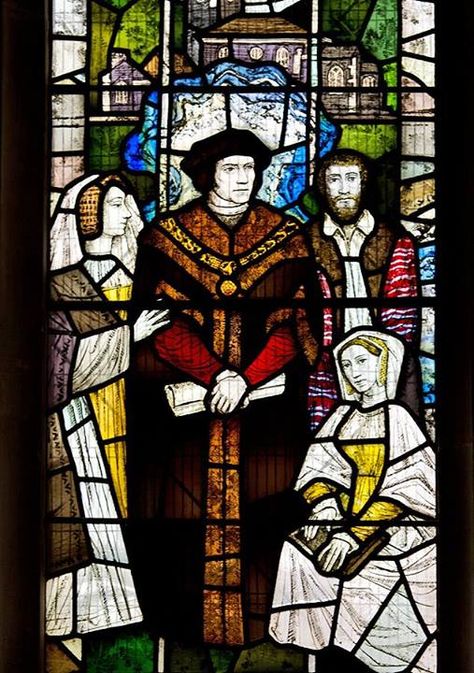
Margaret More Roper is mostly known simply for being the eldest daughter of the stateman Sir Thomas More, and his influence on her is undeniable. However, she, alongside the rest of her extensive family, was important as an individual and for an array of different reasons.  

    Her Education

    Margaret Roper

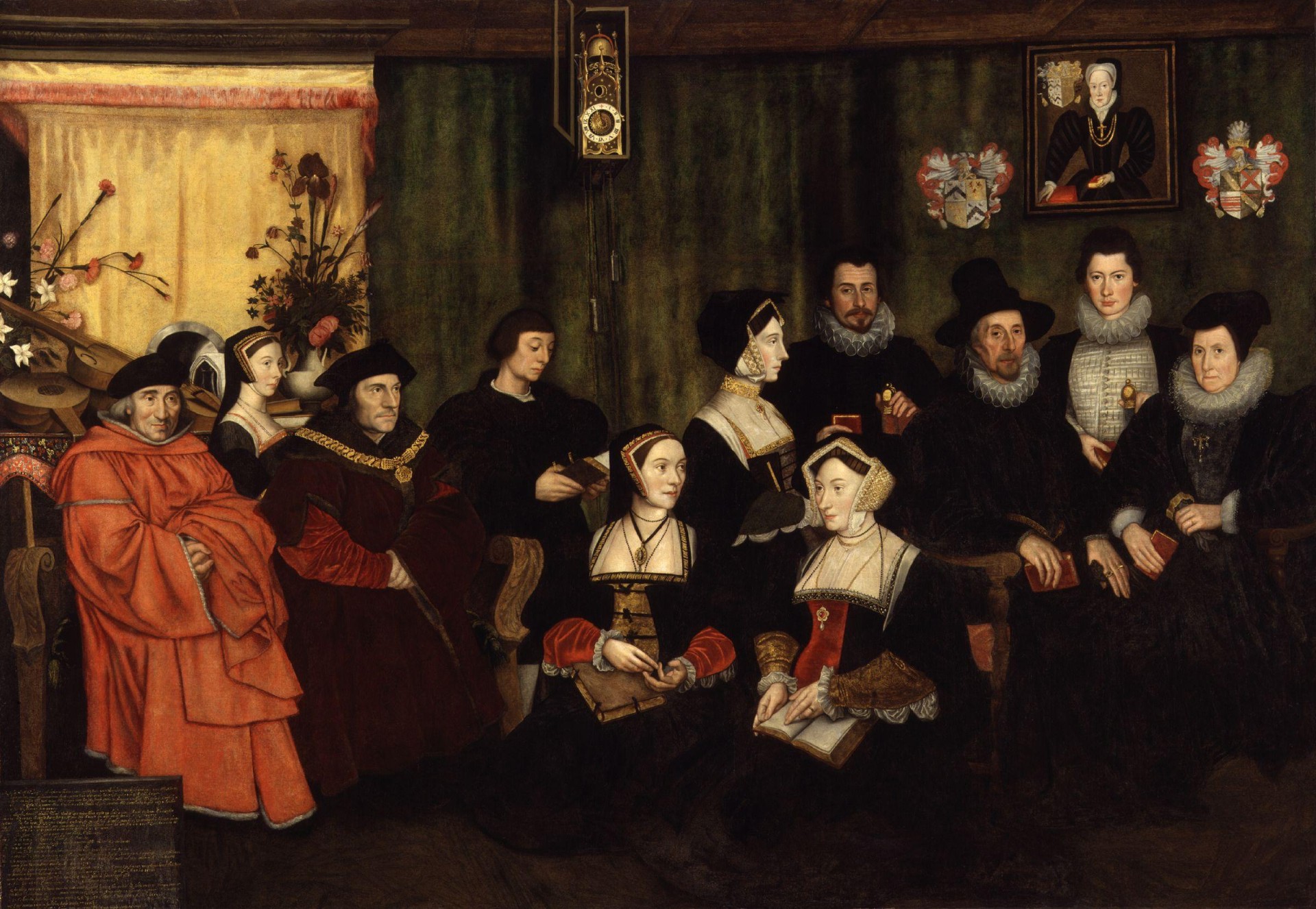
    Thomas More, unusually for the time, insisted that his whole family received an education in a wide range of subjects. The range was far wider that traditionally given, and saw all of the children, including the girls, learn about classics, languages, and other subjects, in what came to be known as ‘The More School’. From the age of six or seven, when it was normal for the children to start their education, Margaret and her siblings were taught by tutors and others who came into the house and it was all overseen and coordinated by Thomas himself.

    Margaret was the eldest, and from an early age she showed an aptitude for learning; for languages and for writing generally. However, all the girls all learned mathematics and there are references to Margaret Giggs, the ward of the More family who grew up alongside Margaret and her sisters, having a ‘algorism stone’ for use in mathematical calculations. Astronomy was a particularly popular subject for the girls and in a letter home, Thomas writes about how they,

    ‘…are so far advances in that science that you can point out the pole-star or the dog star or any of the constellations.’

    The example set by the More school would go on to influence several other families who would loom large in Tudor history. The Grey sisters (one of whom was Queen Jane) and the Cooke sisters, and also Katherine Parr, Henry VIII’s sixth Queen, would all receive a broader education that women had traditionally done beforehand. Even Henry VIII himself was convinced by his friend’s activities and gave Princesses Mary and Elizabeth and education in the same fashion. All of this was influenced by what was seen of the More sisters, particularly Margaret.

    Her Writing

    Sir Thomas More his father his household and his descendants by Rowland Lockey after Hans Holbein the Younger

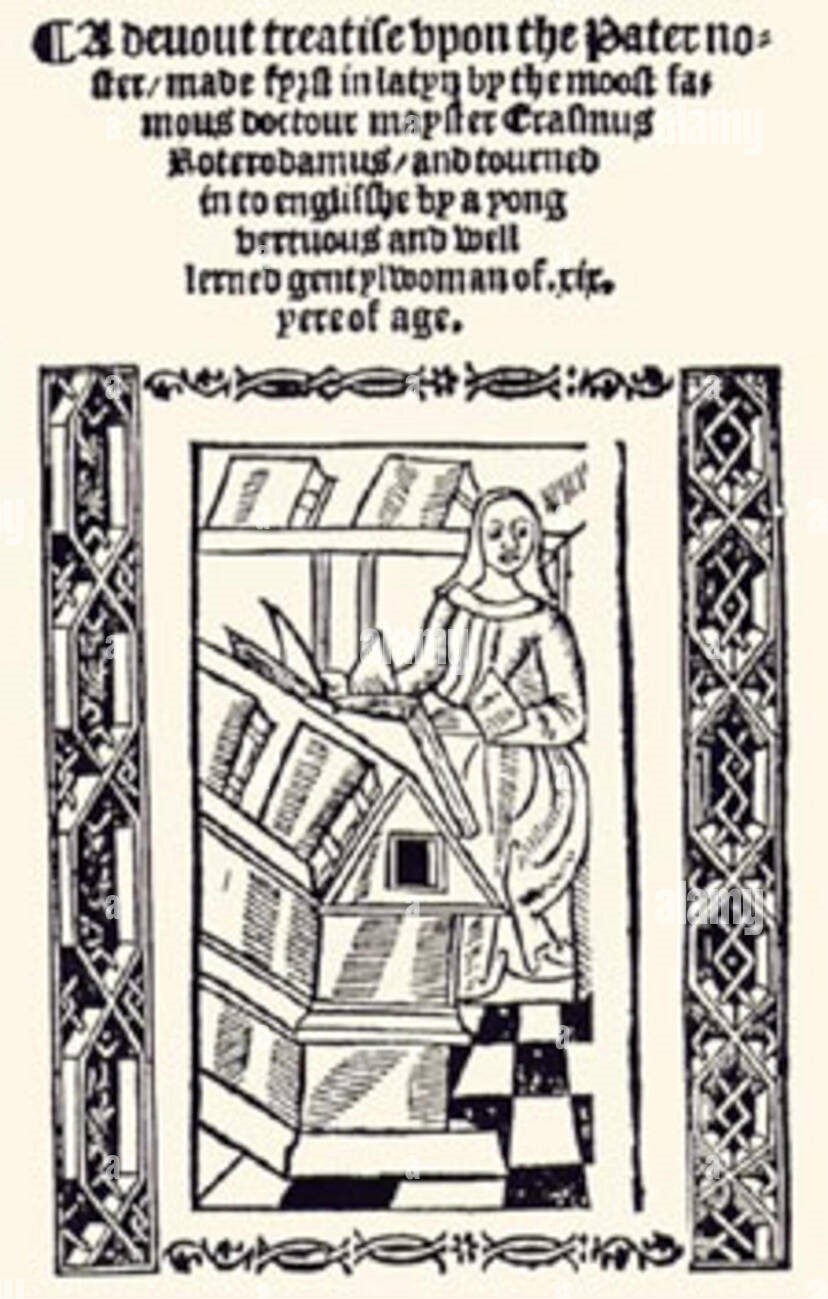
    Margaret’s example particularly came to the fore as she got older and began to build a reputation through her scholarly work. In 1524 she translated and then published her ‘Devout Treatise on the Paternoster’, a translation of Erasmus’s Precatio Domenica, a study of the Lord’s Prayer.

    While Margaret’s name does not appear overtly on the cover her identity was simple to figure out for those who were familiar with Sir Thomas and his family. The cover reads,

    A devout treatise upon the Paternoster made fyrst in latyn by the moost famous doctour mayster Erasmus Roterodamus and tourned into englisshe by a young vertuous and well lerned gentylwoman of nineteen yere of age.’

    The inclusion of details such as her age and other references to her perceived virtuousness, give us an insight into how Margaret was viewed, or wanted to be viewed, for her work. As much as Margaret may have tried to keep her identity away from the work, the Devout Treatise was the first work of this kind published by any woman, and this alone means that Margaret had broken new ground for Tudor women once again.

    Her Loyalty

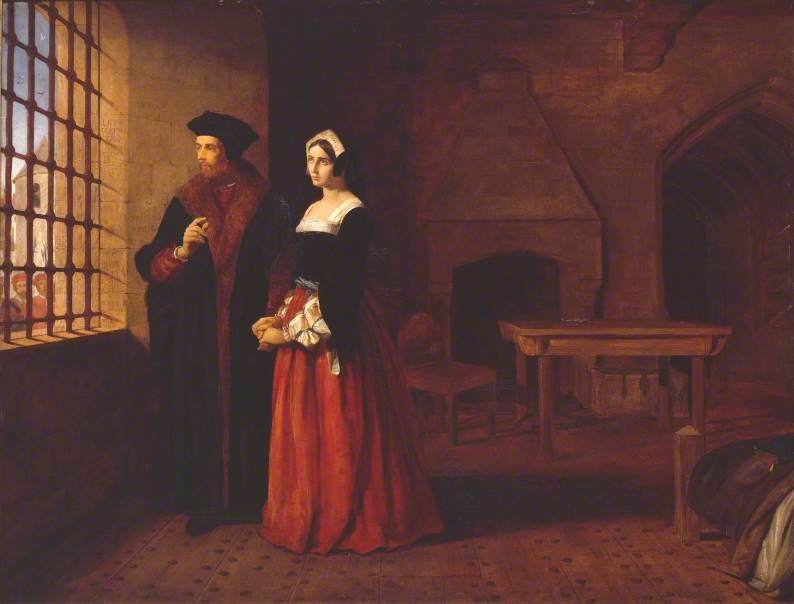
    Sir Thomas More and his Daughter by Herbert John Rogers

    Perhaps though Margaret is best known for her devotion to her father, and his to her. He referred to her as his ‘Meg’ in their letters to one another, and he wrote constantly while he travelled around Europe while working for King Henry VIII, and also while he was imprisoned in the tower.

    While her was in the tower she wrote often to him, but also acted as his advocate, negotiating to make his conditions more comfortable, ensuring he had his books and writing things, as well as better food and access to doctors when he was ill. During his imprisonment it was Margaret who visited him often and helped him to write down his version of events.

    After his death her dedication to him continued when she retrieved his head from it’s spike on London Bridge. This was at great personal risk and when it was discovered that she had done this, she was brought to appear before the king’s council. According to Thomas Stapleton she defended herself by saying that she,

    ‘had saved her father’s head from being devoured by the fishes and with the intention of burying it.’

    When Margaret died the head was to be buried with her, and she eventually was laid to rest, next to her husband William, in the Roper family crypt in St Dunstan’s Church in Canterbury. In this crypt there is also a head, encased in lead, that is believed to be the head of Sir Thomas More.

    Her Legacy

    Sir Thomas More

    Sir Thomas’s head was not the only thing that Margaret preserved, as after his death she worked to collect and save her father’s work, letters and even some of his belongings. After Margaret’s death in 1544, the collections she had managed to bring together was broken up in an attempt to protect her family from persecution, or even prosecution, for having artefacts belonging to Sir Thomas, a traitor.

    However, this collection of work was then used, first by William Roper to write his biography of Sir Thomas More titled ‘A Man of Singular Virtue’. This was the first time Sir Thomas’s life story was written down and in order to write it he referred to the letters, books and documents that his wife had so meticulously curated.

    Historians and writers that have followed since have also relied on the same letters and books in order to write and learn about Sir Thomas and the wider world of the Tudor court. None of this research would have been possible had Margaret not worked so hard to preserve her father’s legacy for the generations to come. Without Margaret’s devotion our knowledge of the Tudor world would be severely diminished.

    While Margaret can often be overshadowed by her father, or portrayed merely as his loyal, devoted daughter, I believe she deserves a great deal more credit and attention. Her abilities, natural intellect, loyalty and bravery should not be underestimated in their important, and certainly not forgotten.

    About the author:

    Aimee Fleming is a historian and author from North Yorkshire. She is happily married, with three growing boys and a whole host of pets. She studied history at the University of Wales, Bangor and then later completed a masters in Early Modern History at the University of York as a mature student. She has a passion for history, particularly the Tudors, and worked for over a decade in the heritage industry in a wide variety of roles and historic places.

    Website: https://historyaimee.wordpress.com/; Social Media – On Threads, Blue Sky and Instagram: @historyaimee.

    Book link: https://mybook.to/FemaleTudorScholar

    *

    My Books:

    Signed, dedicated copies of all my books are available through my online bookshop.

    Coming 30 January 2025: Scotland’s Medieval Queens

    Scotland’s history is dramatic, violent and bloody. Being England’s northern neighbour has never been easy. Scotland’s queens have had to deal with war, murder, imprisonment, political rivalries and open betrayal. They have loved and lost, raised kings and queens, ruled and died for Scotland. From St Margaret, who became one of the patron saints of Scotland, to Elizabeth de Burgh and the dramatic story of the Scottish Wars of Independence, to the love story and tragedy of Joan Beaufort, to Margaret of Denmark and the dawn of the Renaissance, Scotland’s Medieval Queens have seen it all. This is the story of Scotland through their eyes.

    Available for pre-order now.

    Also by Sharon Bennett Connolly:

    Heroines of the Tudor World tells the stories of the most remarkable women from European history in the time of the Tudor dynasty, 1485-1603. These are the women who ruled, the women who founded dynasties, the women who fought for religious freedom, their families and love. Heroines of the Tudor World is now available for pre-order from Amberley Publishing and Amazon UK. Women of the Anarchy demonstrates how Empress Matilda and Matilda of Boulogne, unable to wield a sword themselves, were prime movers in this time of conflict and lawlessness. It shows how their strengths, weaknesses, and personal ambitions swung the fortunes of war one way – and then the other. Available from Bookshop.orgAmberley Publishing and Amazon UKKing John’s Right-Hand Lady: The Story of Nicholaa de la Haye is the story of a truly remarkable lady, the hereditary constable of Lincoln Castle and the first woman in England to be appointed sheriff in her own right. Available from all good bookshops Pen & Sword Booksbookshop.org and Amazon

    Defenders of the Norman Crown: The Rise and Fall of the Warenne Earls of Surrey tells the fascinating story of the Warenne dynasty, from its origins in Normandy, through the Conquest, Magna Carta, the wars and marriages that led to its ultimate demise in the reign of Edward III. Available from Pen & Sword BooksAmazon in the UK and US, and Bookshop.orgLadies of Magna Carta: Women of Influence in Thirteenth Century England looks into the relationships of the various noble families of the 13th century, and how they were affected by the Barons’ Wars, Magna Carta and its aftermath; the bonds that were formed and those that were broken. It is now available in paperback and hardback from Pen & SwordAmazon, and Bookshop.orgHeroines of the Medieval World tells the stories of some of the most remarkable women from Medieval history, from Eleanor of Aquitaine to Julian of Norwich. Available now from Amberley Publishing and Amazon, and Bookshop.orgSilk and the Sword: The Women of the Norman Conquest traces the fortunes of the women who had a significant role to play in the momentous events of 1066. Available now from Amazon,  Amberley Publishing, and Bookshop.org.

    Alternate Endings: An anthology of historical fiction short stories including Long Live the King… which is my take what might have happened had King John not died in October 1216. Available in paperback and kindle from Amazon.

    Podcast:

    Have a listen to the A Slice of Medieval podcast, which I co-host with Historical fiction novelist Derek Birks. Derek and I welcome guests, such as Bernard Cornwell, and discuss a wide range of topics in medieval history, from significant events to the personalities involved. Our latest episode is a fascinating discussion with Dr Ian Mortimer about the speed of travel and communications in medieval times. Definitely worth a listen!

    *

    Don’t forget! Signed and dedicated copies of all my books are available through my online bookshop.

    For forthcoming online and in-person talks, please check out my Events Page.

    You can be the first to read new articles by clicking the ‘Follow’ button, liking our Facebook page or joining me on TwitterThreadsBluesky and Instagram.

    ©2024 Sharon Bennett Connolly FRHistS

    Book Corner: 2 Books About Tudor Heirs

    It is time for me to get back to some serious book reviewing. So, in order to catch up, I thought I’d do two reviews in one post. Both books are from the Tudor period and look into the heirs to the Tudor throne, and the impact of Henry VIII’s actions on those children. Each books provide a fascinating insight into the lives of prominent Tudors and shows a side of Henry VIII that is often overlooked.

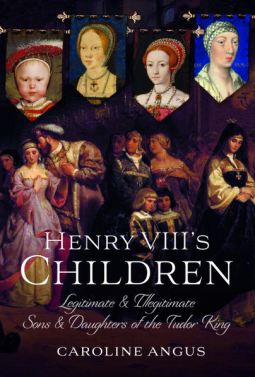
    Henry VIII’s Children by Caroline Angus

    Of the five Tudor monarchs, only one was ever born to rule. While much of King Henry VIII’s reign is centred on his reckless marriage choices, it was the foundations laid by Henry and Queen Katherine of Aragon that shaped the future of the crown. Among the suffering of five lost heirs, the royal couple placed all their hopes in the surviving Princess Mary. Her early life weaves a tale of promise, diplomacy, and pageantry never again seen in King Henry’s life, but a deep-rooted desire for a son, a legacy of his own scattered childhood, pushed Henry VIII to smother Mary’s chance to rule. An affair soon produced an unlikely heir in Henry Fitzroy, and while one child was pure royalty, the other illegitimate, the comparison of their childhoods would show a race to throne closer than many wished to admit.

    King Henry’s cruelty saw his heirs’ fates pivot as wives came and went, and the birth Princess Elizabeth, saw long-term plans upended for short-term desires. With the death of one heir hidden from view, the birth of Prince Edward finally gave the realm an heir born to rule, but King Henry’s personal desires and paranoia left his heirs facing constant uncertainty for another decade until his death. Behind the narrative of Henry VIII’s wives, wars, reformation and ruthlessness, there were children, living lives of education among people who cared for them, surrounded by items in generous locations which symbolised their place in their father’s heart. They faced excitement, struggles, and isolation which would shape their own reigns. From the heights of a surviving princess destined and decreed to influence Europe, to illegitimate children scattered to the winds of fortune, the childhoods of Henry VIII’s heirs is one of ambition, destiny, heartache, and triumph.

    Henry VIII left a long shadow, especially for his children. Caroline Angus looks into the lives and experiences of Henry’s 3 legitimate children, Edward VI, Mary I and Elizabeth I, alongside his only recognised illegitimate child, Henry Fitzroy, Duke of Richmond. And the other possible candidates to be Henry’s offspring, including Catherine Carey.

    Henry VIII’s Children is a very easy and enjoyable read. You get absorbed into Caroline Angus’s love of her subject. Her research is thorough and all her arguments are supported by evidence. Where there is conjecture, the author presents both sides and lets the reader find their own conclusion, while presenting what she thinks most likely. I did not agree with all her conclusions, particularly when it comes to Catherine Carey – I am not convinced she was Henry VIII’s daughter, not that Henry’s relationship with Mary Boleyn lasted as long as some historians suggest. I just don’t think we have enough information. But it was interesting to read Caroline’s thoughts on the subject and see how she came to her conclusions.
    It certainly gave me food for thought!

    The Tudors are always a fascinating subject and Caroline Angus does a wonderful job of igniting the reader’s passion in her subject.

    The strength of Henry VIII’s Children lies in its fascinating investigation into the lives of Henry’s 3 ‘legitimate’ children and how their fates were manipulated and directed by Henry’s obsession for a male heir, and his multiple marriages. Poor Mary I had 5 stepmothers! just imagine how she must have felt, watching her mother shunned and sidelined by the father she adored, not being allowed to visit her on her deathbed, nor being allowed to receive her mother’s comfort when she was ill and scared. The mind games Henry VIII played with his eldest child, in order to get her acquiescence, are something to behold.

    And then there’s poor Elizabeth, her mother executed before her 3rd birthday, and yet she is the one who surpassed all Henry’s dreams for his children. Elizabeth is the one who had a golden age named after her. She is also the one who always lived in the shadow of her mother’s fate. Caroline Angus looks into all aspects of Elizabeth’s life, especially the childhood and adolescence that shaped her future.

    And Edward! the golden boy. The heir who was so desired that his father broke with Rome to get. A boy who was the hope of a nation but died so tragically young.

    Caroline Angus looks at them all with such enthusiasm and animation that they jump off the page.

    An eminently readable nook that I have no hesitation in recommending.

    To Buy Henry VIII’s Children

    About the Author:

    Caroline Angus is a New Zealand-based author raising four sons. Caroline studied history at Universitat de València, Spain, spending ten years dedicated to the Spanish Civil War and the resulting dictatorship. Caroline went on to study with King’s College London, specialising in Shakespeare and British royal history. After a decade of writing fiction, including the Secrets of Spain series, focusing on the lives of Valencian interviewees between 1939 and 1975, and the more recent Queenmaker Trilogy, eleven years of Thomas Cromwell and his fictional attendant Nicòla Frescobaldi, Caroline is now creating non-fiction works on the surviving papers of Thomas Cromwell.

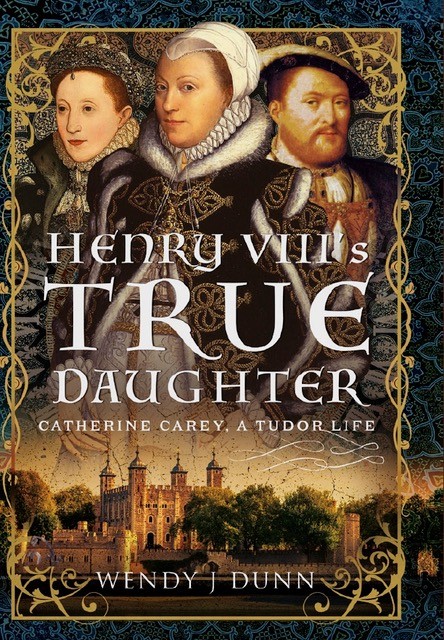
    Henry VIII’s True Daughter by Wendy J Dunn

    The lives of Tudor women often offer faint but fascinating footnotes on the pages of history. The life of Catherine – or Katryn as her husband would one day pen her name – Carey, the daughter of Mary Boleyn and, as the weight of evidence suggests, Henry VIII, is one of those footnotes.

    As the possible daughter of Henry VIII, the niece of Anne Boleyn and the favourite of Elizabeth I, Catherine’s life offers us a unique perspective on the reigns of Henry and his children. In this book, Wendy J. Dunn takes these brief details of Catherine’s life and turns them into a rich account of a woman who deserves her story told. Following the faint trail provided of her life from her earliest years to her death in service to Queen Elizabeth, Dunn examines the evidence of Catherine’s parentage and views her world through the lens of her relationship with the royal family she served.

    This book presents an important story of a woman who saw and experienced much tragedy and political turmoil during the reigns of Henry VIII, Edward VI, and Mary I – all of which prepared her to take on the vital role of one of Elizabeth I closest and most trusted women. It also prepared her to become the wife of one of Elizabeth’s privy councillors – a man also trusted and relied on by the queen. Catherine served Elizabeth during the uncertain and challenging first years of her reign, a time when there was a question mark over whether she would succeed as queen regnant after the failures of England’s first crowned regnant, her sister Mary.

    Through immense research and placing her in the context of her period, HENRY VIII’S TRUE DAUGHTER: CATHERINE CAREY, A TUDOR LIFE draws Catherine out of the shadows of history to take her true place as the daughter of Henry VIII and shows how vital women like Catherine were to Elizabeth and the ultimate victory of her reign.

    Henry VIII’s True Daughter: Catherine Carey, A Tudor Life by Wendy J. Dunn is a perfect accompaniment to Henry VIII’s Children. Focusing on the eldest child of Mary Boleyn and William Carey, Wendy J. Dunn investigates Catherine’s origins and the stories around her conception and birth – in particular, her mother’s relationship with Henry VIII. It has long been thought possible that Catherine was Henry’s daughter and that Mary Boleyn’s marriage to William Carey was arranged to conceal the king’s affair. Henry himself admitted he had slept with Mary Boleyn when he was once accused of sleeping with Anne Boleyn’s mother, replying along the lines of ‘the sister but never the mother.’

    So, we know they had a relationship, but how long it lasted and whether Catherine was the result of that relationship is still uncertain. Wendy attempts to lift away that uncertainty and presents all the evidence and conjecture that has been gather over the years to give us her own conclusions.

    But this book is so much more! Henry VIII’s True Daughter gives us insights into the life of a prominent Tudor woman. Whether or not she was the daughter of Henry VIII, she was still at the heart of the Tudor court, especially in the reign of her sister/cousin, Elizabeth I. Catherine was one of Elizabeth’s favourites and was loyal to the queen to the very end of her life. Wendy gives stunning insight into Catherine’s life and career, as well as her marriage and family.

    Even if I don’t necessarily agree with all its conclusion, Henry VIII’s True Daughter by Wendy J Dunn is a wonderful, engaging book, giving the reader ample food for thought in her theories and explanations of the life and origins of Catherine Carey. It is a must-read for any fan of Tudor history.

    To Buy Henry VIII’s True Daughter

    About the Author:

    Wendy J. Dunn is an award-winning Australian writer fascinated by Tudor history – so much so she was not surprised to discover a family connection to the Tudors, not long after the publication of her first Anne Boleyn novel, which narrated the Anne Boleyn story through the eyes of Sir Thomas Wyatt, the elder. Her family tree reveals the intriguing fact that one of her ancestral families – possibly over three generations – had purchased land from both the Boleyn and Wyatt families to build up their holdings. It seems very likely Wendy’s ancestors knew the Wyatts and Boleyns personally. Wendy is married, the mother of four adult children and the grandmother of two amazing small boys. She gained her PhD in 2014 and loves walking in the footsteps of the historical people she gives voice to in her books. Wendy also tutors writing at Swinburne University of Technology, Australia. HENRY VIII’S TRUE DAUGHTER: CATHERINE CAREY, A TUDOR LIFE is her first full-length nonfiction work.

    *

    My Books:

    Signed, dedicated copies of all my books are available through my online store.

    OUT NOW! Heroines of the Tudor World

    Heroines of the Tudor World tells the stories of the most remarkable women from European history in the time of the Tudor dynasty, 1485-1603. These are the women who ruled, the women who founded dynasties, the women who fought for religious freedom, their families and love. These are the women who made a difference, who influenced countries, kings and the Reformation. In the era dominated by the Renaissance and Reformation, Heroines of the Tudor World examines the threats and challenges faced by the women of the era, and how they overcame them. From writers to regents, from nuns to queens, Heroines of the Tudor World shines the spotlight on the women helped to shape Early Modern Europe.

    Heroines of the Tudor World is now available for pre-order from Amberley Publishing and Amazon UK.

    Coming 30 January 2025: Scotland’s Medieval Queens

    Scotland’s history is dramatic, violent and bloody. Being England’s northern neighbour has never been easy. Scotland’s queens have had to deal with war, murder, imprisonment, political rivalries and open betrayal. They have loved and lost, raised kings and queens, ruled and died for Scotland. From St Margaret, who became one of the patron saints of Scotland, to Elizabeth de Burgh and the dramatic story of the Scottish Wars of Independence, to the love story and tragedy of Joan Beaufort, to Margaret of Denmark and the dawn of the Renaissance, Scotland’s Medieval Queens have seen it all. This is the story of Scotland through their eyes.

    Available for pre-order now.

    Also by Sharon Bennett Connolly:

    Women of the Anarchy demonstrates how Empress Matilda and Matilda of Boulogne, unable to wield a sword themselves, were prime movers in this time of conflict and lawlessness. It shows how their strengths, weaknesses, and personal ambitions swung the fortunes of war one way – and then the other. Available from Bookshop.orgAmberley Publishing and Amazon UKKing John’s Right-Hand Lady: The Story of Nicholaa de la Haye is the story of a truly remarkable lady, the hereditary constable of Lincoln Castle and the first woman in England to be appointed sheriff in her own right. Available from all good bookshops Pen & Sword Booksbookshop.org and AmazonDefenders of the Norman Crown: The Rise and Fall of the Warenne Earls of Surrey tells the fascinating story of the Warenne dynasty, from its origins in Normandy, through the Conquest, Magna Carta, the wars and marriages that led to its ultimate demise in the reign of Edward III. Available from Pen & Sword BooksAmazon in the UK and US, and Bookshop.org

    Ladies of Magna Carta: Women of Influence in Thirteenth Century England looks into the relationships of the various noble families of the 13th century, and how they were affected by the Barons’ Wars, Magna Carta and its aftermath; the bonds that were formed and those that were broken. It is now available in paperback and hardback from Pen & Sword, Amazon, and Bookshop.orgHeroines of the Medieval World tells the stories of some of the most remarkable women from Medieval history, from Eleanor of Aquitaine to Julian of Norwich. Available now from Amberley Publishing and Amazon, and Bookshop.orgSilk and the Sword: The Women of the Norman Conquest traces the fortunes of the women who had a significant role to play in the momentous events of 1066. Available now from Amazon,  Amberley Publishing, and Bookshop.org.

    Alternate Endings: An anthology of historical fiction short stories including Long Live the King… which is my take what might have happened had King John not died in October 1216. Available in paperback and kindle from Amazon.

    Podcast:

    Have a listen to the A Slice of Medieval podcast, which I co-host with Historical fiction novelist Derek Birks. Derek and I welcome guests, such as Bernard Cornwell, and discuss a wide range of topics in medieval history, from significant events to the personalities involved.

    *

    Don’t forget! Signed and dedicated copies of all my books are available through my online store.

    For forthcoming online and in-person talks, please check out my Events Page.

    You can be the first to read new articles by clicking the ‘Follow’ button, liking our Facebook page or joining me on TwitterThreads and Instagram.

    *

    ©2024 Sharon Bennett Connolly FRHistS.

    Lady Mary Seymour, the Queen’s Orphan Daughter

    Katherine Parr by an unknown artist, NPG

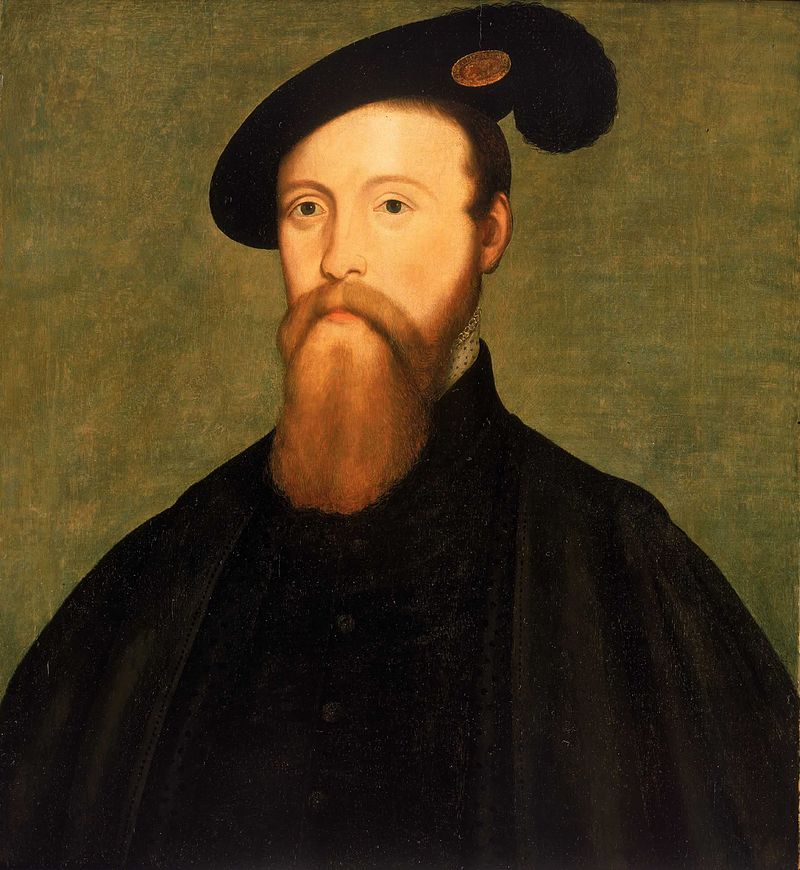
    Little Lady Mary Seymour was the daughter of dowager Queen Kateryn Parr and her fourth, and final, husband, Thomas Seymour, Baron Seymour of Sudeley. Kateryn Parr was widowed for a third time with the death of Henry VIII in January 1547. By May of the same year, Queen Kateryn was married to the new king Edward VI’s uncle, Thomas Seymour, Lord High Admiral of England and Baron Seymour of Sudeley. This was said to be a love match and within months Kateryn found herself pregnant for what may have been the first time in her life. In the months before the birth, the queen had fitted out a nursery for her baby, decorated in Kateryn’s favourite colours of crimson and gold: the nursery had views of the gardens and the castle’s chapel. The queen’s joy was tempered by the scandal that had arisen from her husband’s attentions towards Kateryn’s stepdaughter, Elizabeth.

    She wrote to Thomas Seymour of how active the unborn child was:

    I gave your little knave your blessing, who like an honest man stirred apace after and before. For Mary Odell [one of her ladies] being abed with me had laid her hand upon my belly to feel it stir. It hath stirred these three days every morning and evening so that I trust when you come it will make you some pastime. And thus I end bidding my sweetheart and loving husband better to fare than myself.1

    Kateryn gave birth to her only child, Mary, named after the dowager queen’s stepdaughter, Princess Mary, on 30 August 1548. At the age of 37, Kateryn was old to be having her first child, but both she and the baby had come through the labour safely and there doesn’t appear to have been any disappointment that the child was a girl rather than a boy.

    Thomas Seymour painted by Nicolas Denisot

    Within just a few days of the birth, Kateryn was showing signs of puerperal fever, a bacterial complication of childbirth that was very dangerous in the centuries before antibiotics. As her condition worsened, Kateryn suffered bouts of delirium and moments of calm, when she appeared to rally. In her delirium, Kateryn railed against her husband, saying

    ‘I am not well handled, for those that be about me careth not for me but standith laughing at my grief and the more good I will to them, the less good they will to me.’2

    Strongly denying her accusations, Seymour replied

    ‘Why, sweetheart, I would you no hurt.’3

    Whether Kateryn truly believed Seymour wanted her dead, or was still smarting from how close he had got to the Princess Elizabeth, or the words, reported by Lady Tyrwitt, who was not a friend of Seymour’s, were misinterpreted, we will never know. Her pain, delirium and suspicion of her husband made Kateryn’s last days even more wretched.

    Kateryn Parr died 6 days after little Mary’s birth, on 5 September 1548, at Sudeley Castle. She was laid to rest beneath the floor of St Mary’s Chapel in the castle grounds, with Lady Jane Grey acting as her chief mourner. Despite her fears that her husband had poisoned her, in her will, dictated as she was close to death, she left everything to Seymour, making him a very wealthy man.

    Thomas Seymour was stunned by Kateryn’s death and grieved deeply. He abandoned Sudeley Castle and returned to London, seeking refuge at Syon House, the home of his brother, Edward Seymour, Duke of Somerset and his wife. Little Lady Mary was placed in the care of his mother, Margery Seymour.

    St Mary’s Chapel, Sudeley Castle

    Mary was eventually taken into the care of Edward Seymour and his wife, Duchess Anne. Anne had herself given birth to a little boy shortly before Mary’s birth and had a house full of children, little Mary’s cousins. However, when her father was arrested for treason, having plotted to marry the Princess Elizabeth, and was being held in the Tower awaiting execution, he asked that his daughter should be given into the care of Katherine Willoughby (now Brandon), Duchess of Suffolk. Katherine had been a good friend of Kateryn Parr. She had herself been widowed in 1545 and was the mother of 2 teenage boys, Henry and Charles Brandon.

    Mary could have been given into the care of Kateryn Parr’s brother, William Parr, Marquess of Northampton, but he had recently found himself out of favour with Edward Seymour, the Lord Protector, as he had tried to divorce his wife, Anne Bourchier, in order to marry Elisabeth Brooks, who had served Seymour’s sister Jane when she was queen. This remarriage was considered illegal and outrageous and so, with such a scandal attached to him, Parr was not a suitable guardian to his niece; not that he appears to have paid any attention to Mary, nor expressed any desire to play a part in her life. Neither did Kateryn’s sister, Anne Herbert, Countess of Pembroke, show any interest in taking care of her niece, despite her own children being close in age to Mary.

    With Thomas Seymour’s execution on 20 March 1549, Lady Mary Seymour, at just short of 7 months old, was a dispossessed orphan. Three days before her father’s death, whilst she was still in the custody of her uncle at Syon House, Mary had been granted £500 a year by the Privy Council. The money was for ‘dyettes, wages and lyvereyes of the household of Mistres Mary Seymour for a yere and a half ended at the Feast of the annunciation of Our Lady next cummyng [25 March].’4 However, that income was not transferred to Katherine Willoughby when the baby was moved to her residence at Grimsthorpe Castle in Lincolnshire. This left the duchess short of funds. The daughter of a queen, though not royal, was expected to be maintained to a certain standard. The little orphan arrived at Grimsthorpe Castle with her own household; her full complement of staff included her governess, a nurse and two maids. And it was left to Katherine, Duchess of Suffolk, to pay their wages.

    Katherine Willoughby, Duchess of Suffolk, Mary Seymour’s guardian

    By 24 July 1549, Katherine was writing to William Cecil, a secretary in Edward Seymour’s household at the time, in the hope that he may assist her in recovering payment for her expenses. She wrote:

    ‘It is said that the best means of remedy to the sick is first plainly to confess and disclose the disease, wherefore, both for remedy and again for that my disease is so strong that it will not be hidden. … All the world knoweth … what a very beggar I am.’5

    Katherine said that her finances were worsening for numerous reasons but,

    ‘amongst others … if you will understand, not least the queen’s child hath layen, and still doth lie at my house, with her company about her, wholly at my charges. I have written to my lady of Somerset at large, that there be some pension allotted unto her according to my lord grace’s promise. Now, good Cecil, help at a pinch all that you may help.’6

    The duchess included a list of items that Duchess Anne had promised to send on, including the plate and other items that had been intended for Mary’s nursery at Sudeley Castle. The duchess also complained that the baby’s governess, ‘with the maid’s nurse and others, daily call for their wages, whose voices my ears can hardly bear, but my coffers much worse.’7

    It is saddening to read how little affection is given to this child who was so wanted by her parents. That she went from being the centre of Kateryn Parr’s world to being an unwanted burden on the late queen’s good friend. It seems that Katherine Willoughby’s pleas did eventually have an effect. In January 1550, application was made to the House of Commons for the restitution of Lady Mary Seymour, ‘daughter of Thomas Seymour, knight, late Lord Seymour of Sudeley and late High Admiral of England, begotten of the body of Queen Katherine, late queen of England’.8

    Grimsthorpe Castle, Lincolnshire

    By this act, the little girl, now 16 months old, was permitted to inherit any remaining property that had not been returned to the crown by her father’s attainder. This did not particularly improve Mary’s situation, as most of the property she would be allowed to inherit had already passed into the hands of others. This Act of Parliament is the last mention we have of Lady Mary Seymour in the historical record. The grant was not renewed when it became due in September 1550 and Lady Mary never claimed any of the remaining portion of her father’s estate.

    It seems likely that the little orphan had died at Grimsthorpe Castle before her second birthday, her burial place now unknown. There are traditions that she survived. One such has her raised by her governess, eventually marrying Sir Edward Bushell, while a family in Sussex also claims to be descended from her. While neither of these scenarios are impossible, there is no historical record to substantiate the claims.

    That we cannot say for certain is one more sad note in the life of a little girl whose birth was met with such joy by both her parents, but whose short life was replete with tragedy. She was a little pawn in the machinations of her elders.

    Images:

    Courtesy of Wikipedia except Grimsthorpe Castle which is ©2024 Sharon Bennett Connolly FRHistS

    Notes:

    1. Linda Porter, Katherine the Queen: The Remarkable Life of Katherine Parr, the Last Wife of Henry VIII, p. 318; 2. ibid, p. 322; 3. ibid, p. 323; 4. Rebecca Larson, ‘The Disappearance of Lady Mary Seymour’, tudorsdynasty.com; 5. Linda Porter, Katherine the Queen, p. 341; 6. ibid, pp. 341-342; 7. ibid, p. 342; 8. ibid

    Sources:

    Linda Porter, Katherine the Queen: The Remarkable Life of Katherine Parr, the Last Wife of Henry VIII; Rebecca Larson, ‘The Disappearance of Lady Mary Seymour’, tudorsdynasty.com; Don Matzat, Katherine Parr: Opportunist, Queen, Reformer; Amy Licence, The Sixteenth Century in 100 Women; Anne Crawford, editor, Letters of the Queens of England; Oxforddnb.com; Elizabeth Norton, Catherine Parr; Elizabeth Norton, The Lives of Tudor Women; Sarah Morris and Natalie Grueninger, In the Footsteps of the Six Wives of Henry VIII.

    *

    My Books:

    Signed, dedicated copies of all my books are available through my online store.

    OUT NOW! Heroines of the Tudor World

    Heroines of the Tudor World tells the stories of the most remarkable women from European history in the time of the Tudor dynasty, 1485-1603. These are the women who ruled, the women who founded dynasties, the women who fought for religious freedom, their families and love. These are the women who made a difference, who influenced countries, kings and the Reformation. In the era dominated by the Renaissance and Reformation, Heroines of the Tudor World examines the threats and challenges faced by the women of the era, and how they overcame them. From writers to regents, from nuns to queens, Heroines of the Tudor World shines the spotlight on the women helped to shape Early Modern Europe.

    Heroines of the Tudor World is now available for pre-order from Amberley Publishing and Amazon UK.

    Coming 30 January 2025: Scotland’s Medieval Queens

    Scotland’s history is dramatic, violent and bloody. Being England’s northern neighbour has never been easy. Scotland’s queens have had to deal with war, murder, imprisonment, political rivalries and open betrayal. They have loved and lost, raised kings and queens, ruled and died for Scotland. From St Margaret, who became one of the patron saints of Scotland, to Elizabeth de Burgh and the dramatic story of the Scottish Wars of Independence, to the love story and tragedy of Joan Beaufort, to Margaret of Denmark and the dawn of the Renaissance, Scotland’s Medieval Queens have seen it all. This is the story of Scotland through their eyes.

    Available for pre-order now.

    Also by Sharon Bennett Connolly:

    Women of the Anarchy demonstrates how Empress Matilda and Matilda of Boulogne, unable to wield a sword themselves, were prime movers in this time of conflict and lawlessness. It shows how their strengths, weaknesses, and personal ambitions swung the fortunes of war one way – and then the other. Available from Bookshop.orgAmberley Publishing and Amazon UKKing John’s Right-Hand Lady: The Story of Nicholaa de la Haye is the story of a truly remarkable lady, the hereditary constable of Lincoln Castle and the first woman in England to be appointed sheriff in her own right. Available from all good bookshops Pen & Sword Booksbookshop.org and AmazonDefenders of the Norman Crown: The Rise and Fall of the Warenne Earls of Surrey tells the fascinating story of the Warenne dynasty, from its origins in Normandy, through the Conquest, Magna Carta, the wars and marriages that led to its ultimate demise in the reign of Edward III. Available from Pen & Sword BooksAmazon in the UK and US, and Bookshop.org

    Ladies of Magna Carta: Women of Influence in Thirteenth Century England looks into the relationships of the various noble families of the 13th century, and how they were affected by the Barons’ Wars, Magna Carta and its aftermath; the bonds that were formed and those that were broken. It is now available in paperback and hardback from Pen & Sword,  Amazon, and Bookshop.orgHeroines of the Medieval World tells the stories of some of the most remarkable women from Medieval history, from Eleanor of Aquitaine to Julian of Norwich. Available now from Amberley Publishing and Amazon, and Bookshop.orgSilk and the Sword: The Women of the Norman Conquest traces the fortunes of the women who had a significant role to play in the momentous events of 1066. Available now from Amazon,  Amberley Publishing, and Bookshop.org.

    Alternate Endings: An anthology of historical fiction short stories including Long Live the King… which is my take what might have happened had King John not died in October 1216. Available in paperback and kindle from Amazon.

    Podcast:

    Have a listen to the A Slice of Medieval podcast, which I co-host with Historical fiction novelist Derek Birks. Derek and I welcome guests, such as Bernard Cornwell, and discuss a wide range of topics in medieval history, from significant events to the personalities involved.

    *

    Don’t forget! Signed and dedicated copies of all my books are available through my online store.

    For forthcoming online and in-person talks, please check out my Events Page.

    You can be the first to read new articles by clicking the ‘Follow’ button, liking our Facebook page or joining me on TwitterThreads and Instagram.

    *

    ©2024 Sharon Bennett Connolly FRHistS.

    My Latest News

    Well, it is September and we are already into the last third of the year. Wow! 2024 has gone quickly and I would like to thank all my readers for your continuing support. It has been an amazing and hectic year, so far.

    I even made the national papers in the UK! I was interviewed for an article on the new Amazon Prime tv show, My Lady Jane for The Mirror, separating the facts from the fiction. You can still read the article here.

    Book News

    I don’t think I would ever choose to put 2 books out within 6 months of each other. That was my publisher’s choice and I did manage to roll with it, thankfully. I had a fabulous book launch for Women of the Anarchy at Oxford Castle in February and another amazing launch for Heroines of the Tudor World in Lincoln in June. Both books have been incredibly well received and had some amazing reviews.

    And for those of you in the USA, Canada and Australia, the wait is almost over, Heroines of the Tudor World will be released on 10 September.

    Praise for Heroines of the Tudor World:

    “Bennett Connolly has an easy, conversation style of writing which welcomes you from the opening pages and draws you into her story. This is her seventh book and her craft is polished and professional.”

    “Bennett Connolly’s way with words shows us a picture of that world, colourful, vibrant, and violent.”

    “This book should be a staple for those who wish to understand the changing roles of women in society.”

    “Sharon Bennett Connolly writes engaging history and is obviously passionate about exploring the lives of women from all backgrounds and different periods of history. Her knowledge and expertise in women’s history really shines through, making this book an absolute joy to read.”

    To order Heroines of the Tudor World, click here.

    And I have new book news too!

    Scotland’s Medieval Queens will by my 8th book and will be released in the UK on 30 January 2025. It is now available for pre-order. Here’s what it’s about:

    Scotland’s history is dramatic, violent and bloody. Being England’s northern neighbour has never been easy. Scotland’s queens have had to deal with war, murder, imprisonment, political rivalries and open betrayal. They have loved and lost, raised kings and queens, ruled and died for Scotland. From St Margaret, who became one of the patron saints of Scotland, to Elizabeth de Burgh and the dramatic story of the Scottish Wars of Independence, to the love story and tragedy of Joan Beaufort, to Margaret of Denmark and the dawn of the Renaissance, Scotland’s Medieval Queens have seen it all.

    This is the story of Scotland through their eyes.

    I love Scottish History and am so proud of this book and cannot wait for you all to read it!

    To pre-order Scotland’s Medieval Queens, click here!

    Event News

    September is rather a busy month for me, with 3 events in one week at the end of the month! So, here’s what’s coming up:

    Saturday 7 September:

    I shall be co-hosting a panel with Derek Birks at the Historical Novel Society Conference 2024. Held at Dartington Hall in Devon, a whole host of authors a book lovers will be gathering to talk about books. Derek and I have the pleasure of hosting 3 giants of Historical Fiction, Elizabeth Chadwick, David Gilman and Matthew Harffy, to discuss the highs and lows of Writing Medieval.

    The in-person event is sold out, but there are still online tickets available here.

    Saturday 14 September:

    As part of Heritage Open Days in the UK, I shall be putting my tour guide hat back on and giving guided tours around my local – Conisbrough Castlehome of the Warennes and one of the most stunning medieval keeps in England. The ‘Storming Normans’ event will also include children’s’ activities and a medieval re-enactment from the fabulous team at Sudjorvik. And, as its a Heritage Open Day weekend, entry to the castle and access to the events and guided tours is FREE!

    Doors open at 10am, with my Castle Tours taking place at 11am and 2pm.

    So, do come along if you are in the area.

    Saturday 21 September:

    I will be in Manchester at a conference for History teachers, presenting a talk entitled ‘Where Were the Women,’ focusing on putting the women back into History.

    It is billed as ‘A great day of free History CPD and geekery.’

    Hosted by Teachers Talk History, it takes place at the Friends’ Meeting House, 6 Mount Street Manchester M2 5NS

    If you are a History teacher in the UK, the event is free – you just need to book your place.

    Thursday 26 September:

    I will be in Leicester, presenting the annual Scarborough Lecture for the Leicestershire Archaeological and Historical Society.

    Women and Magna Carta will look at those women who influenced Magna Carta, or lived through it – and those who used it to assert their rights. They include Matilda de Braose, Nicholaa de la Haye, Ela of Salisbury and Isabel d’Aubigny. 

    The LAHS Scarborough Lecture is named after the late John Scarborough, Local Leicester man, who after joining LAHS at the age of 21 became a life-long member and supporter of the Society for over 45 years. He was particularly interested in the High Medieval Period.

    No booking necessary. Entry to the talk is free of charge.

    Doors open from 7.00pm, with tea and coffee available. The lecture will take place at 7.30pm, at the Rattray Lecture Theatre, University of Leicester, University Road, Leicester (LE1 7RH).

    For more information, click here.

    Sunday 29 September:

    I will be back in Lincoln for the 2024 Lincoln Book Festival!

    Presenting a talk, Lincolnshire Women in History, I will be looking at notable women from Lincoln – and Lincolnshire – in the Medieval and Tudor periods. Highlighting women including the formidable Nicholaa de la Haye, castellan of Lincoln Castle and Sheriff of Lincolnshire, Katherine Swynford, grandmother of the Tudor dynasty, Katherine Willoughby a Tudor duchess who encouraged the spread of Puritanism in Lincolnshire and Protestant martyr Anne Askew, one of only two women to be tortured in the Tower of London.

    The talk is at 12 noon and will take place at the Lincoln Arts Centre: University of Lincoln, Brayford Pool Lincoln, LN6 7TS.

    Tickets are £7 or £5 for those with a Live Pass, and can be booked online through the Lincoln Book Festival.

    7 October:

    Looking forward to returning the the Towton Battlefield Society for a talk on my hero, Nicholaa de la Haye. The Society meet at 7pm in Saxton Village Hall. They are very welcoming and only charge a small fee if you are not a member. So, if you want to come along, please do. I thoroughly enjoyed my visit there last year!

    28 November:

    I will be returning to Northampton, for the first time since my graduation there in 1992 and talking about the Women of the Anarchy, focusing on Empress Matilda and her rival, Queen Matilda of Boulogne and highlighting how these two women, unable to wield swords, were still highly influential in the battle for the crown between the Empress and King Stephen.

    Tickets will be available from 1 November 2024 and can be booked online here.

    Starting at7.30pm, the talk will be held at  Delapre Abbey Preservation Trust, Northampton, NN4 8AW.

    And that will be all for my programme of talks in 2024. There will be more to come in 2025, with talks already booked at Wallingford, Dorking and Gainsborough Old Hall, among others. But more of that later!

    Podcast News

    The A Slice of Medieval podcast that I co-host with my friend and fellow author, Derek Birks, is now 2 years old and has gone from strength to strength. We recently recorded our 50th – yes, 50th – episode, which will be out at the end of the month, and just happens to be on one of my favourite topics. If you haven’t tuned in yet, do give us a listen. Derek and I welcome guests, such as Bernard Cornwell and Elizabeth Chadwick or take a deep dive into a wide range of topics in medieval history, from significant events to the personalities involved.

    *

    Have a great September! My very best wishes, Sharon xx

    *

    My Books

    Signed, dedicated copies of all my books are available through my online bookshop.

    OUT NOW! Heroines of the Tudor World

    Heroines of the Tudor World tells the stories of the most remarkable women from European history in the time of the Tudor dynasty, 1485-1603. These are the women who ruled, the women who founded dynasties, the women who fought for religious freedom, their families and love. These are the women who made a difference, who influenced countries, kings and the Reformation. In the era dominated by the Renaissance and Reformation, Heroines of the Tudor World examines the threats and challenges faced by the women of the era, and how they overcame them. From writers to regents, from nuns to queens, Heroines of the Tudor World shines the spotlight on the women helped to shape Early Modern Europe.

    Heroines of the Tudor World is now available for pre-order from Amberley Publishing and Amazon UK.

    Also by Sharon Bennett Connolly:

    Women of the Anarchy demonstrates how Empress Matilda and Matilda of Boulogne, unable to wield a sword themselves, were prime movers in this time of conflict and lawlessness. It shows how their strengths, weaknesses, and personal ambitions swung the fortunes of war one way – and then the other. Available from Bookshop.orgAmberley Publishing and Amazon UKKing John’s Right-Hand Lady: The Story of Nicholaa de la Haye is the story of a truly remarkable lady, the hereditary constable of Lincoln Castle and the first woman in England to be appointed sheriff in her own right. Available from all good bookshops Pen & Sword Booksbookshop.org and AmazonDefenders of the Norman Crown: The Rise and Fall of the Warenne Earls of Surrey tells the fascinating story of the Warenne dynasty, from its origins in Normandy, through the Conquest, Magna Carta, the wars and marriages that led to its ultimate demise in the reign of Edward III. Available from Pen & Sword BooksAmazon in the UK and US, and Bookshop.org

    Ladies of Magna Carta: Women of Influence in Thirteenth Century England looks into the relationships of the various noble families of the 13th century, and how they were affected by the Barons’ Wars, Magna Carta and its aftermath; the bonds that were formed and those that were broken. It is now available in paperback and hardback from Pen & Sword,  Amazon, and Bookshop.orgHeroines of the Medieval World tells the stories of some of the most remarkable women from Medieval history, from Eleanor of Aquitaine to Julian of Norwich. Available now from Amberley Publishing and Amazon, and Bookshop.orgSilk and the Sword: The Women of the Norman Conquest traces the fortunes of the women who had a significant role to play in the momentous events of 1066. Available now from Amazon,  Amberley Publishing, and Bookshop.org.

    Alternate Endings: An anthology of historical fiction short stories including Long Live the King… which is my take what might have happened had King John not died in October 1216. Available in paperback and kindle from Amazon.

    *

    Don’t forget! Signed and dedicated copies of all my books are available through my online bookshop.

    For forthcoming online and in-person talks, please check out my Events Page.

    You can be the first to read new articles by clicking the ‘Follow’ button, liking our Facebook page or joining me on Twitter and Instagram.

    ©2024 Sharon Bennett Connolly FRHistS

    The Remarkable Courage of Anne Askew

    Portrait of Henry VIII after Hans Holbein the Younger

    When Henry VIII decided to break with Rome, he was making that decision not just for himself but for his entire nation. But Henry was still a conservative Catholic and while others embraced the Reformation and the tenets of Calvinism or Lutheranism, Henry remained Catholic to his dying day, just not Roman Catholic. His break with Rome led to the Dissolution of the Monasteries, where monastic institutions and communities were broken up and sold off.

    This, in turn led to the Pilgrimage of Grace, a popular revolt in Yorkshire in October 1536, led by Robert Aske, which spread to other parts of northern England. The rebellion was inspired by the failed Lincolnshire Rising, which had started on 1 October 1536 and it was said 22,000 people followed a monk and shoemaker, the vicar of Louth and Nicholas Melton (known as Captain Cobbler) to protest against the closing of the monasteries and the seizure of church land and plate. The figure was probably much smaller, perhaps some 3,000 rebels. However, by the time they marched on Lincoln and occupied Lincoln Cathedral, some 40,000 rebels were demanding the right to worship as Roman Catholics and protection for the treasures of Lincolnshire’s churches. The Rising was all but over by 4 October, when Henry sent word that the protesters should disperse or face retribution at the hands of Charles Brandon, Duke of Suffolk, who had mobilised his troops to put down the revolt.

    By 14 October, most of the host had returned home. The two ringleaders were hanged at Tyburn, while other leading rebels were executed in the following days. It was against this background and the fear that the Rising must have invoked throughout Lincolnshire, that Anne Askew came to the fore. Anne Askew, also spelt Ayscough or Ainscough, was born around 1521, probably at the family home at Stallingborough, near Grimsby in Lincolnshire. She was the daughter of Sir William Askew and his first wife, Elizabeth Wrottesley.

    Portrait of Anne Askew by Hans Eworth

    Anne was the second oldest of five children, with an older sister Martha, a younger sister Jane, and two younger brothers, Francis and Edward. Her father, a landowner in Lincolnshire and Nottinghamshire, was knighted in 1513. He attended the king at the Field of the Cloth of Gold in France in 1520 and in 1521 he was appointed High Sheriff of Lincolnshire. From 1529, he was a member of Parliament for Grimsby. After the death of Anne’s mother, he married twice more. He married the daughter of a Struxley or Streichley of Nottinghamshire, whose name is sadly now lost to history and married again in 1522 to Elizabeth, the daughter of John Hutton of Tudhoe, Co. Durham and the widow of Sir William Hansard of South Kelsey, Lincolnshire, with whom he had two more sons, Christopher and Thomas.

    By about 1523, the family had moved to South Kelsey, just 20 miles from Lincoln. Anne was well educated, possibly by tutors, though we do not know the specifics of her education. Anne’s writings were published posthumously by reformist scholar John Bale, and it is from these that we get most of her story.

    Anne’s future was decided following the tragic early death of her older sister, Martha. Sir William had arranged for Martha to marry Thomas Kyme of Friskney, the son and heir of a neighbouring landowner. Sadly, Martha died before the wedding could take place. Rather than suffer a financial loss with the failure of the arrangement, Sir William offered 15-year-old Anne as a replacement bride, ‘so that in the ende she was compelled against her will or fre consent to marrye with hym,’ and, as John Bale put it, Anne ‘demeaned her selfe lyke a Christen wife’.1 Anne and Thomas had two children together.

    It was about the time that Anne was preparing for her wedding, in 1536, that the Lincolnshire Rising erupted, starting in Louth and making its way towards Lincoln. Her father Sir William was one of the commissioners for the king’s tax subsidy who were due to sit in Caistor as the rebels arrived in the town. Sir William attempted to ride for home, ahead of the rebellious host. He was soon captured, aware that his own servants who were accompanying him supported the rebels. Anne’s brothers were also arrested by the rebels and their house watched. Sir William was then forced to write to the king to inform him of what had happened, with the complaint that ‘the common voice and fame was that all jewels and goods of the churches of the country should be taken from them and brought to Your Grace’s Council, and also that your said loving and faithful subjects should be put off new enhancements and other importunate charges.’2

    With the failure of the rebellion, Sir William and his sons returned home. One wonders if the treatment of her menfolk, at the hands of those who were defending Roman Catholicism, was not a factor in Anne turning to the reformed faith. However the transformation came about, and in spite of her husband’s devout Catholicism, Anne did become a committed Protestant. She acquired a copy of an English Bible and began reading aloud from it, though her husband and brother had both forbidden her to do so. Anne explained that ‘in processe of tyme by oft reading of the sacred Bible, she fell clerelye from all olde superstycyons of papystrye, to a perfyght believe in Jhesus Christ.’3

    Lincoln Cathedral

    In May 1543, the Act for the Advancement of True Religion was passed, forbidding any woman below the rank of noblewoman or gentlewoman from reading the Bible; and forbidding any woman, of any rank, from reading the Bible aloud. Anne was a gentlewoman and therefore still permitted to read the Bible, but only in private. She wanted to travel to Lincoln to see the cathedral’s Bible, but Kyme forbade it. Anne had been apprised of the hostility this would engender: ‘For my fryndes told me, if I ded come to Lyncolne, the prestes wolde assault me and put me to great trouble, as thereof they had made their boast.’4 Anne did travel to Lincoln and stayed there for about six days, reading her Bible in the cathedral. She said that one man confronted her, but he had said so little of significance that she could not recall his words.

    This incident, and the fact that Anne continued to read aloud to whoever would listen, to such an extent that the local priest complained to her husband, infuriated Thomas Kyme. Angry and embarrassed at his wife’s actions, Kyme drove her from the house, with some violence. Driven from hearth and home – and from her children, Anne resumed her maiden name and sought a divorce. In late 1544 she travelled to London, accompanied by only a maid, in order to obtain a legal separation in the court of chancery. Two of her brothers were already in London. Edward, who had previously been in the service of Archbishop Thomas Cranmer, was cup-bearer to Henry VIII and her half-brother, Christopher, who died around this time, was a Gentleman of the Privy Chamber.

    Her cousin, Christopher Brittayn, was a lawyer at the Temple and Anne’s sister Jane was married to George St Poll, a lawyer in the service of the duke and duchess of Suffolk. Anne lodged in a house close to the Temple, London’s legal centre, and soon met others with like-minded religious views, many with connections. Several gentlewomen gave Anne money, including the countess of Hertford and the wife of Sir Anthony Denny. They both sent messengers to Anne with money.

    Queen Kateryn Parr

    Anne found herself moving in exalted circles, these ladies were close friends of Henry VIII’s new queen, Kateryn Parr, though whether the queen and Anne ever met is uncertain. Anne made other connections in the city, including her religious advisor John Lascels and the chronicler Edward Hall. She was also close to the Kentish Anabaptist Joan Bocher, who would be executed in 1550.

    After preaching publicly in the streets of the capital, Anne came to the attention of the authorities. According to Anne’s nephew, writing after her death, she was arrested following the interception of a letter she was trying to send, while attempting to communicate with the queen. She was detained on 10 March 1545, under the Six Articles Act, which made deviation from the official tenets of the English church a civil offence. Anne was brought before Sir Martin Bowes, Lord Mayor of London, and the bishop of London’s chancellor, and interrogated as to her beliefs. She was told that St Paul forbade women from talking of the word of God, but Anne countered that St Paul only barred women from instructing a congregation.

    Still only 24 years of age, Anne was confident, fearless and bold in dealing with the great men of the city of London. Women were not meant to behave in such a way, they were supposed to be contrite and accept the superior intellect and authority of the men in charge. As a consequence, the Lord Mayor ordered her imprisonment. She spent 12 days in prison, visited daily by a priest sent by Edmund Bonner, Bishop of London. Her cousin, Brittayn, failed in his petition to have her released on bail, but succeeded in having her examined before the bishop himself, on 25 March. She was accused of subscribing to reformist beliefs concerning transubstantiation and the other sacraments and the dominion of the priesthood and asked to sign a declaration of orthodox faith.

    Anne took the paper and wrote ‘I, Anne Askewe do beleve all maner thynges contayned in the faythe of the Catholyck churche.’5 Bishop Bonner flew into a fury, but her cousin, Brittayn, persuaded him that she acted from her ‘weak woman’s wit’ and with the added voices of her friends, Hall, Hugh Weston and Francis Spilman, Anne was returned to prison for one more night before being freed on bail the next day. Whether or not Anne abjured is open to interpretation; the authorities say she did, Anne denied it.

    The torture of Anne Askew

    Once freed, Anne continued to pursue her divorce from Thomas Kyme. The Privy Council became involved and ordered both Anne and Thomas to appear before them within ten days. Anne and Kyme were brought before the Council at Greenwich and were questioned about their relationship. The questioning, under the direction of Stephen Gardiner, Bishop of Winchester, turned to the matter of Anne’s views in the sacrament and after an exchange of words whereby Anne evaded Gardiner’s questions, she was again committed to prison for the night, this time to Newgate, a harrowing place. Kyme returned home. Anne was brought before the Council the next day and questioned further by Bishop Gardiner, who declared that she should be burnt.

    According to Anne herself, they charged her ‘upon my obedience to show them if I knew any man or woman of my sect. Answered that I knew none. Then they asked me of my lady of Suffolk, my lady of Sussex, my lady of Hertford, my lady Denny and my lady Fitzwilliam.’6 These women were close associates of the queen, Kateryn Parr. The queen’s chambers were searched for heretical texts, though none were found.

    On 28 June 1546, Anne Askew was arraigned for heresy at the Guildhall in London, alongside Nicholas Shaxton, former Bishop of Salisbury, and two other men. Shaxton abjured but Anne was condemned ‘without any triall of a jurie’.7

    The next day, Anne was sent to the Tower and subjected to further questioning. It was hoped that this would force Anne to reveal her associates at court and, by extension, their husbands. When she refused to name anyone, her interrogators, Thomas Wriothesley and Richard Rich, took the exceptional step of having her undress to her shift and fastened to the rack. In Anne’s own words:

    Woodcut of the burning of Anne Askew

    Then they put me on the rack because I confessed no ladies or gentlewomen to be of my opinion; and there they kept me a long time, and because I lay still and did not cry, my lord chancellor and Master Rich took pains to rack me with their own hands till I was nigh dead. Then the lieutenant (of the Tower) caused me to be loosed from the rack. Immediately, I swooned away, and then they recovered me again. After that I sat two long hours reasoning with my lord chancellor upon the bare floor.8

    As a woman, gently born and already condemned, Anne should have been exempt from such treatment. Anne was so severely tortured that by the end of it her body was broken, all four limbs were dislocated and she was unable to stand. She was eventually returned to Newgate from where, on 16 July 1546, Anne was carried to the site of her execution at Smithfield, sat on a chair in a cart, every movement causing her more pain. She was tied to another chair at the stake, where she was given one more chance to recant and receive a pardon.

    She refused.

    She died alongside three other Protestants, John Lascels, John Hadlam, who was a tailor, and John Hemley, formerly an Observant friar.

    The Martyrdom of Anne Askew

    Anne Askew holds the terrible distinction of being one of only two women to have ever been tortured in the Tower of London, the other being Margaret Cheyne, who had been involved in the Pilgrimage of Grace and was also burnt for heresy. Anne died bravely, never revealing her connections at court, thus, perhaps, saving a queen of England from the same fate. She was 25 years old.

    On a national level, her death was a consequence of the growing fear that accompanied Henry’s failing health. On a personal level, although Anne’s journey to London had arisen from her marriage troubles, these troubles were always entwined within her own spiritual journey. Anne’s supreme confidence in her faith and her courage under torture deservedly earned her a place in the Protestant martyrology. Her own, first-hand account of her story was edited and published by John Bale and reprinted in John Foxe’s Book of Martyrs, ensuring her legacy would pass down through the generations.

    *

    Notes:

    1. The examinations of Anne Askew, edited by E. V. Beilin, quoted in Diane Watt, ‘Askew [married name Kyme], Anne’, Oxforddnb.com; 2. & P, Vol XI, p. 534, quoted in Elizabeth Norton, The Lives of Tudor Women; 3. The examinations of Anne Askew, edited by E. V. Beilin, quoted in Diane Watt, ‘Askew [married name Kyme], Anne’; 4. ibid; 5. ibid; 6. The examinations of Anne Askew, quoted in Amy Licence, The Sixteenth Century in 100 Women; 7. Thomas Wriothesley quoted in Diane Watt, ‘Askew [married name Kyme], Anne’; 8. Mickey Mayhew, House of Tudor: A Grisly History

    Sources:

    Diane Watt, ‘Askew [married name Kyme], Anne’, Oxforddnb.com; Amy Licence, The Sixteenth Century in 100 Women; The examinations of Anne Askew, edited by E. V. Beilin; Elizabeth Norton, The Lives of Tudor Women; Don Matzat, Katherine Parr: Opportunist, Queen, Reformer; Mickey Mayhew, House of Tudor: A Grisly History; J.D. Mackie, The Earlier Tudors 1485-1558; Arthur D. Innes, A History of England Under the Tudors; Sarah Bryson, The Brandon Men: In the Shadow of Kings; Steven Gunn, Charles Brandon: Henry VIII’s Closest Friend; Sarah Bryson, La Reine Blanche: Mary Tudor, A Life in Letters; John Paul Davis, A Hidden History of the Tower of London: England’s Most; Robert Lacey, The Life and Times of Henry VIII; David Loades, editor, Chronicles of the Tudor Kings: The Tudor Dynasty from 1485 to 1553: Henry VII, Henry VIII and Edward VI in the Words of their Contemporaries.

    Images:

    Courtesy of Wikipedia except Lincoln Cathedral which is ©2024 Sharon Bennett Connolly FRHistS

    *

    My Books

    Signed, dedicated copies of all my books are available through my online bookshop.

    Out now: Scotland’s Medieval Queens

    Books by Sharon Bennett Connolly

    Scotland’s history is dramatic, violent and bloody. Being England’s northern neighbour has never been easy. Scotland’s queens have had to deal with war, murder, imprisonment, political rivalries and open betrayal. They have loved and lost, raised kings and queens, ruled and died for Scotland. From St Margaret, who became one of the patron saints of Scotland, to Elizabeth de Burgh and the dramatic story of the Scottish Wars of Independence, to the love story and tragedy of Joan Beaufort, to Margaret of Denmark and the dawn of the Renaissance, Scotland’s Medieval Queens have seen it all. This is the story of Scotland through their eyes.

    Scotland’s Medieval Queens gives a thorough grounding in the history of the women who ruled Scotland at the side of its kings, often in the shadows, but just as interesting in their lives beyond the spotlight. It’s not a subject that has been widely covered, and Sharon is a pioneer in bringing that information into accessible history.’ Elizabeth Chadwick (New York Times bestselling author)

    Available now from Amazon and Pen and Sword Books

    Also by Sharon Bennett Connolly:
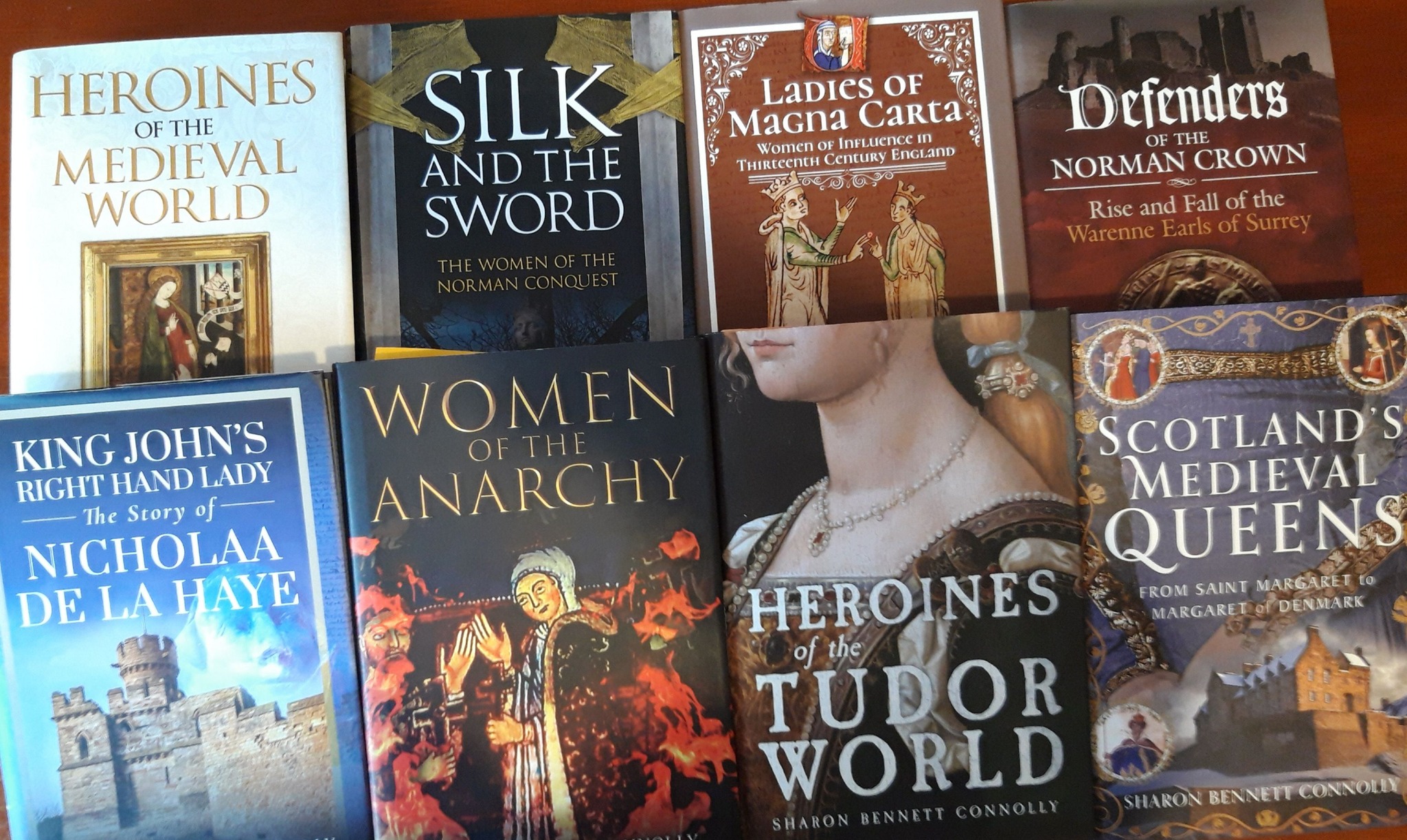
    Books by Sharon Bennett Connolly

    Heroines of the Tudor World tells the stories of the most remarkable women from European history in the time of the Tudor dynasty, 1485-1603. These are the women who ruled, the women who founded dynasties, the women who fought for religious freedom, their families and love. Heroines of the Tudor World is now available for pre-order from Amberley Publishing and Amazon UK. Women of the Anarchy demonstrates how Empress Matilda and Matilda of Boulogne, unable to wield a sword themselves, were prime movers in this time of conflict and lawlessness. It shows how their strengths, weaknesses, and personal ambitions swung the fortunes of war one way – and then the other. Available from Bookshop.orgAmberley Publishing and Amazon UKKing John’s Right-Hand Lady: The Story of Nicholaa de la Haye is the story of a truly remarkable lady, the hereditary constable of Lincoln Castle and the first woman in England to be appointed sheriff in her own right. Available from all good bookshops Pen & Sword Booksbookshop.org and Amazon

    Defenders of the Norman Crown: The Rise and Fall of the Warenne Earls of Surrey tells the fascinating story of the Warenne dynasty, from its origins in Normandy, through the Conquest, Magna Carta, the wars and marriages that led to its ultimate demise in the reign of Edward III. Available from Pen & Sword BooksAmazon in the UK and US, and Bookshop.orgLadies of Magna Carta: Women of Influence in Thirteenth Century England looks into the relationships of the various noble families of the 13th century, and how they were affected by the Barons’ Wars, Magna Carta and its aftermath; the bonds that were formed and those that were broken. It is now available in paperback and hardback from Pen & SwordAmazon, and Bookshop.orgHeroines of the Medieval World tells the stories of some of the most remarkable women from Medieval history, from Eleanor of Aquitaine to Julian of Norwich. Available now from Amberley Publishing and Amazon, and Bookshop.orgSilk and the Sword: The Women of the Norman Conquest traces the fortunes of the women who had a significant role to play in the momentous events of 1066. Available now from Amazon,  Amberley Publishing, and Bookshop.org.

    Alternate Endings: An anthology of historical fiction short stories including Long Live the King… which is my take what might have happened had King John not died in October 1216. Available in paperback and kindle from Amazon.

    Podcast:

    Have a listen to the A Slice of Medieval podcast, which I co-host with Historical fiction novelist Derek Birks. Derek and I welcome guests, such as Bernard Cornwell and Elizabeth Chadwick, and discuss a wide range of topics in medieval history, from significant events to the personalities involved.

    There are now over 70 episodes to listen to!

    Every episode is also now available on YouTube.

    *

    Don’t forget! Signed and dedicated copies of all my books are available through my online bookshop.

    For forthcoming online and in-person talks, please check out my Events Page.

    You can be the first to read new articles by clicking the ‘Follow’ button, liking our Facebook page or joining me on TwitterThreadsBluesky and Instagram.

    ©2024 Sharon Bennett Connolly FRHistS


    Diane de Poitiers: Maitresse en Titre

    Diane de Poitiers by Jean Clouet

    Born in 1499, Diane de Poitiers was the widow of Louis de Brézé, Grand-Sénéschal of Normandy, 39 years her senior and a grandson of King Charles VII by his mistress, Agnes Sorèl; he was also reputedly the ugliest man in France. Diane de Poitiers had joined the court at the age of 14 and had married to Louis de Brézé, a rich and powerful widower, the following year. An attractive young woman, Diane had a natural elegance and was careful of her looks. She never used make-up to enhance her appearance, using only cold water on her face and body; she went to bed early and took regular outdoor exercise, avoiding excesses of any sort. When she came to court, Diane was a lady-in-waiting to Queen Claude of France. When Claude died, she served Francis I’s mother, Louise de Savoie and the Queen Eleanor of Austria, King Francis’ second wife. Widowed in 1531, Diane wore black and white – the colour of mourning – for the rest of her life, and she retained control of her husband’s finances, the king allowing her to manage all her inherited estates without the supervision of a male guardian or relative, thus allowing Diane to be financially independent.

    The younger son of Francis I and Queen Claude, Henri had spent 4 years in captivity in Spain from the age of 7. Following Francis I’s defeat at the Battle of Pavia in 1525, in order to obtain his own freedom, the French king had agreed to give up his 2 sons, Henri and his older brother, Francis, as hostages and had them despatched to captivity in Madrid. It was, perhaps, not surprising that Henri had returned from his four years in Spain at the age of eleven ‘an unpolished and silent boy.’1 The king asked Diane de Poitiers to become his son’s tutor. She and the prince developed a strong bond which would eventually develop into a romantic relationship, despite the fact she was 19 years older than Henri.

    In 1533, Henri was married to Catherine de Medici and a year later, Diane became one of his mistresses. And in 1536, at the age of 18, Henri’s older brother, Francis, died suddenly, making the young prince dauphin of France. Two years later, Henri fathered a daughter on another mistress, Filipa Duci, who was the sister of one of his Piedmontese grooms. The baby girl was named Diane de France, in tribute to Henri’s favourite mistress. With his marriage to Catherine de Medici still childless, the birth of an illegitimate daughter was proof, as far as Henri was concerned, that the fault did not lay with him. It was, however, a humiliation for Catherine.

    Henri II, King of France

    Once Henri became dauphin, the apparent barrenness of the prince and his wife became a serious concern. Talk at court began to centre around the possible repudiation of Catherine. Diane and Catherine, mistress and wife, formed a truce in order to ward off any attempts to force Henri and Catherine to divorce; concerned that Catherine was failing in her duty to produce an heir and that, although Henri liked Catherine well enough, he was not passionate with her. Aware that her own position would be threatened by the arrival of a new bride for Henri, Diane determined to help Catherine. To resolve the situation, Diane offered the dauphine advice on Henri’s preferred sexual positions and how to arouse the prince’s passion. Awkward! When this did not work, Catherine had spy holes made in her chamber floor so that she could watch Henri, in the chamber below, with Diane. Historian Estelle Paranque explains that; ‘the sight of their intimate encounter only succeeded in deeply hurting the dauphine, however, who realised that Henri did not perform the sexual act the same way with her as he did with his mistress.’2

    Diane continued to offer advice to Catherine, before eventually offering to stimulate the prince before sending him to his wife’s bedchamber. However awkward this must have been for both women, it apparently worked, with Catherine herself admitting to Henri showing more passion in their lovemaking. And by June 1543, Catherine was pregnant. A baby boy arrived on 19 January 1544, named Francis after his grandfather. And a year later, a baby girl named Elisabeth joined the little prince in the nursery. Catherine was finally able to feel safe from being discarded and abandoned. Ten children eventually filled the royal nursery, seven of whom reached adulthood.

    In the autumn of 1544, probably somewhat to Catherine’s satisfaction, King Francis’ mistress, the duchesse d’Étampes, with whom Diane had a bitter rivalry, succeeded in arranging her banishment from court, after Henri had replaced one of the duchess’s protégés while campaigning against the English in Picardy. Diane retreated to her château at Anet, closely followed by a sulking Henri. She received permission to return to court the following year.

    Catherine de Medicis, Queen of France

    In spite of this, Catherine would remain in the shadow of Henri and Diane’s love throughout their marriage, with Henri continuing to shower his favourite mistress with patronage. He even had a monogram designed, interlacing the H and D of their names, and placed them everywhere he could. King Francis I died in 1547, and Henri was now King Henri II of France. But, while Catherine was now queen of France, she wielded little political influence and it was Diane’s star that rose still higher. She was made maitresse en titre and a permanent member of Henri’s privy council. She was showered with jewels and offices, as well as estates and other honours. The Venetian ambassador, Marino Cavalli noted Diane’s influence over the new king, stating that ‘this lady has made sure to indoctrinate, to correct, and counsel’ Henri.3 Wherever the king and queen were found, so too was Diane de Poitiers, walking right behind Catherine. In Paris, Diane was named in the same rank as the princesses of France, while in Rouen the aldermen brought her jewels and gifts made of gold and laid them at her feet. King Henri gave her the royal Château of Chenonceau, despite the protestations of Catherine, who thought it should be hers. Henri ignored Catherine’s pleas. Yet another slight the young queen had to endure due to her husband’s infatuation with Diane de Poitiers.

    And it was to Diane that the responsibility of impressing foreign ambassadors fell. In 1550 the English ambassador, William Pickering, was staying at the French court, at that time at Diane’s Château of Anet. After his audience with the king, Diane entertained the ambassador, showing him the magnificence of her château. And in 1552, Venetian ambassador Lorenzo Contarini remarked on Diane’s influence at court; ‘she knows about everything and every single day, after dinner, the king looks for her and spends an hour and a half with her to discuss everything that has happened.’4 At tournaments, it was Diane’s colours that the king displayed, not those of his queen. Created Duchess of Valentinois by Henri II, she was, quite literally, the love of his life. Although the king never had children with his maitresse en titre, he did have children with other mistresses and, of course, his wife.

    As Henri’s reign progressed, he began to show greater confidence in his queen, but Diane still managed to thwart the Catherine achieving significant power. In 1548 and in 1552, when Henri was out of the country on campaign, he entrusted Catherine with the regency of France. However, in 1548 Diane managed to persuade Henri to appoint Anne de Montmorency (a man) as co-regent and in 1552, she had Chancellor Bertrandi named as co-regent, effectively forcing Catherine to answer to him.

    Château of Chenonceau, France

    Catherine would, eventually get the upper hand.

    The rivalry between Catherine de Medici and Diane de Poitiers would come to an abrupt end in the summer of 1559. In the March of that year, Henri had turned 40. He had spent the last 26 years of his life married to Catherine de Medici; for 25 of those years, he had been in love with Diane de Poitiers. On 22 June, Catherine and Henri’s daughter, Elisabeth, was married to Philip II, King of Spain, by proxy in Notre Dame Cathedral in Paris. The wedding was followed by a series of celebratory tournaments. In 1552, Catherine had been warned by Simeoni, the famous astrologer, that Henri would die in a duel in his 40th year, and that the wound would first blind him. This knowledge made a superstitious Catherine quite anxious as the jousts started. However, the king was always eager to impress his mistress with his prowess in the lists, wearing her colours of black and white. The king performed admirably against his first opponent, winning when he hit his brother-in-law, the duke of Savoy, in the chest and unhorsed him. The second bout was a draw, and it was after this that Catherine asked him to retire, but Diane de Poitiers encouraged the king to continue and in the next joust, though unhurt, Henri fell off his horse. The king insisted on going again, against the same opponent, Gabriel de Montgomery, and it was at this moment that King Henri II’s luck ran out.

    Montgomery’s lance struck the king’s helmet, a fragment of the splintered lance having pierced Henri’s eye. Henri had fallen from his horse, and as his squires removed his helmet they revealed a face covered in blood. The mortally wounded king was carried to his chambers and placed in his bed, joined by Diane and Catherine, one at either side, both sobbing. Catherine called the renowned surgeon Ambroise Paré to attend the king, but after practicing the required surgery on executed prisoners, Paré had to tell the queen that the king could not be saved. Henri II lingered for 10 days, in agonising pain, before dying on 10 July 1559. He had been attended throughout by his queen. Henri is said to have called out for Diane, but she was not allowed to see him, nor attend the funeral. Diane was banished from court. Her influence ended with the king’s death and power now rested firmly in the hands of Queen Catherine, mother and regent to the new king, Francis II.

    Diane’s tomb in the chapel at the Château d’Anet

    On hearing of Henri’s death, Diane wrote to Catherine asking for ‘pardon for my past offences against your person’ and signing the letter ‘your most obedient and loyal subject.’5 Diane sent back some crown jewels, items that had been gifted to her by Henri, in the hope that the queen would be compassionate. Diane de Poitiers knew that without the king’s protection, she was vulnerable to Catherine’s malice. The queen was not spiteful, however, and allowed Diane to keep all that she had acquired in her years at court. Except for the Château of Chenonceau. Diane retreated to her château at Anet, where she had once entertained ambassadors and lived there, a virtual exile. She would die there in 1566, following a fall from her horse the year before. For a quarter of a century, Diane de Poitiers had enjoyed more influence as the king’s mistress than any other woman in France, including the queen. Henri II had showered affection, riches and power on the woman  who had held his heart, choosing to ignore the humiliations that he was heaping upon his wife.

    The scandalous ménage-a-trois only ended with the king’s death.

    *

    Images:

    Courtesy of Wikipedia

    Notes:

    1. Leonie Frieda, Catherine de Medici; 2. Estelle Paranque, Blood, Fire & Gold; 3. ibid; 4. ibid; 5. ibid

    Select Bibliography:

    Leonie Frieda, Catherine de Medici: A Biography; Estelle Paranque, Blood, Fire & Gold: The Story of Elizabeth I and Catherine de Medici; Jill Armitage, Four Queens and a Countess: Mary Queen of Scots, Elizabeth I, Mary I, Lady Jane Grey and Bess of Hardwick; Amy Licence, In Bed with the Tudors; Amy Licence, The Sixteenth Century in 100 Women; Erin Lawless, Forgotten Royal Women: The King and I; Estelle Paranque, ‘The French Royal Mistresses who made it about more than sex’, historyextra.com; Susan Abernethy, ‘Claude de Valois, Queen of France,’ thefreelancehistorywriter.com; ‘Queen Claude of France’ Royal Armouries.org; Sylvia Barbara Soberton, ‘Claude de France: Anne Boleyn’s Mistress,’ onthetudortrail.com; Goldstone, Nancy, The Rival Queens: Catherine de Medici, Her Daughter Marguerite de Valois and the Betrayal that Ignited a Kingdom

    *

    My Books

    Signed, dedicated copies of all my books are available through my online bookshop.

    OUT NOW! Heroines of the Tudor World

    Heroines of the Tudor World tells the stories of the most remarkable women from European history in the time of the Tudor dynasty, 1485-1603. These are the women who ruled, the women who founded dynasties, the women who fought for religious freedom, their families and love. These are the women who made a difference, who influenced countries, kings and the Reformation. In the era dominated by the Renaissance and Reformation, Heroines of the Tudor World examines the threats and challenges faced by the women of the era, and how they overcame them. From writers to regents, from nuns to queens, Heroines of the Tudor World shines the spotlight on the women helped to shape Early Modern Europe.

    Heroines of the Tudor World is now available for pre-order from Amberley Publishing and Amazon UK.

    Also by Sharon Bennett Connolly:

    Women of the Anarchy demonstrates how Empress Matilda and Matilda of Boulogne, unable to wield a sword themselves, were prime movers in this time of conflict and lawlessness. It shows how their strengths, weaknesses, and personal ambitions swung the fortunes of war one way – and then the other. Available from Bookshop.orgAmberley Publishing and Amazon UKKing John’s Right-Hand Lady: The Story of Nicholaa de la Haye is the story of a truly remarkable lady, the hereditary constable of Lincoln Castle and the first woman in England to be appointed sheriff in her own right. Available from all good bookshops Pen & Sword Booksbookshop.org and AmazonDefenders of the Norman Crown: The Rise and Fall of the Warenne Earls of Surrey tells the fascinating story of the Warenne dynasty, from its origins in Normandy, through the Conquest, Magna Carta, the wars and marriages that led to its ultimate demise in the reign of Edward III. Available from Pen & Sword BooksAmazon in the UK and US, and Bookshop.org

    Ladies of Magna Carta: Women of Influence in Thirteenth Century England looks into the relationships of the various noble families of the 13th century, and how they were affected by the Barons’ Wars, Magna Carta and its aftermath; the bonds that were formed and those that were broken. It is now available in paperback and hardback from Pen & Sword,  Amazon, and Bookshop.orgHeroines of the Medieval World tells the stories of some of the most remarkable women from Medieval history, from Eleanor of Aquitaine to Julian of Norwich. Available now from Amberley Publishing and Amazon, and Bookshop.orgSilk and the Sword: The Women of the Norman Conquest traces the fortunes of the women who had a significant role to play in the momentous events of 1066. Available now from Amazon,  Amberley Publishing, and Bookshop.org.

    Alternate Endings: An anthology of historical fiction short stories including Long Live the King… which is my take what might have happened had King John not died in October 1216. Available in paperback and kindle from Amazon.

    Podcast:

    Have a listen to the A Slice of Medieval podcast, which I co-host with Historical fiction novelist Derek Birks. Derek and I welcome guests, such as Bernard Cornwell and discuss a wide range of topics in medieval history, from significant events to the personalities involved. There are now over 40 episodes to listen to!

    *

    Don’t forget! Signed and dedicated copies of all my books are available through my online bookshop.

    For forthcoming online and in-person talks, please check out my Events Page.

    You can be the first to read new articles by clicking the ‘Follow’ button, liking our Facebook page or joining me on Twitter and Instagram.

    ©2024 Sharon Bennett Connolly FRHistS

      Guest post: All the Queen’s Men by Carol Ann Lloyd
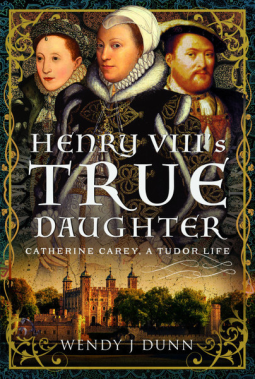
      Today, it is a pleasure to welcome my dear friend, Carol Ann Lloyd, to History… the Interesting Bits, with an article on the love life of Queen Elizabeth I. Carol Ann’s new book Courting the Virgin Queen: Queen Elizabeth I and Her Suitors is due to be released on 30 July by Pen and Sword. If it is anything like her first book, The Tudors By Numbers: The Stories and Statistics Behind England’s Most Infamous Royal Dynasty, it will be a fabulous read!

      “All the Queen’s Men: The Courtships of the Virgin Queen”

      Carol Ann Lloyd

      Elizabeth I, aged 14

      It’s ironic that the child of the most-married English monarch ever is the only English monarch to rule as an adult and never marry! Elizabeth I, daughter of the famous (infamous?) Henry VIII never married. But it was not for lack of options.

      The big question is “Why?” Did Elizabeth really want to marry anyone? What kept her from marrying? Did she ever intend to marry, or was she just keeping all her options open as she navigated the perilous landscape of European politics on her own?

      I think there are many ways on answering this question. Let’s start at the beginning of her reign. Elizabeth was the least likely of Henry VIII’s children to come to the throne, and when she did everyone had the same question on their mind. As the Spanish Ambassador, the Count of Feria, reflected in the early days of the reign, “The more I think over this business the more certain I am that everything depends upon the husband this woman may take.” Elizabeth was questioned about her choice of husband by her council, ambassadors, and parliament. It was considered a public not a private matter, and the queen was repeatedly encouraged and counseled to get married and produce an heir for the good of the kingdom.

      So, if everything depended on the husband her would take, what realistically were her options?

      Some people might be surprised to learn that one of her first suitors was the husband of her recently deceased sister. Philip of Spain had been married to Mary I until her death, and the couple had no children. Still committed to bringing England back into the Catholic fold, Philip believed he could marry and control Elizabeth. I was surprised as I read his correspondence how convinced Philip was that Elizabeth was desperate for a husband and eager for his offer. Many Catholics never accepted the validity of the marriage between Henry VIII and Anne Boleyn, so Elizabeth’s hold on the throne was possibly tenuous. Philip believed he was the answer to Elizabeth’s problem. He thought she would jump at the chance.

      Robert Dudley, Earl of Leicester

      Philip could not have been more wrong. Elizabeth knew very well that Philip would seek to involve England in Spain’s wars, as he had during Mary I’s reign. Using her skills in language, Elizabeth dallied with Feria and postponed giving a firm answer until it suited her. That answer was a definite “no.”

      The offer from Philip was only the beginning. I discovered in my research that Elizabeth used the many marriage possibilities as a way of strengthening her position with the international community. She managed to keep several foreign leaders eager for an alliance with England and a marriage with her. Over the years, the king of Sweden, European dukes and archdukes, and even all three of Catherine de Medici’s sons in France were offered as possible husband. And that doesn’t take into account the Scottish and English nobles who wanted to marry the queen.

      Speaking of men in England, was it really Robert Dudley who kept Elizabeth from marrying? He most likely was the love of her life, perhaps the only man she might have married if she had not been the queen. He was at the center of her life, from the day she learned Mary I had died, and she was queen. He became Elizabeth’s Master of the Horse, which meant he was always with her when she went riding, one of her favorite activities. And he was the only man in the kingdom with permission to touch the queen as he helped her onto and off horse.

      Queen Elizabeth I

      Even with Dudley’s favored position, there were a few problems in the way. For one thing, he was married. And then his wife died in very suspicious circumstances, making a future marriage potentially devastating for Elizabeth’s reputation. Dudley was unpopular among the council. And ultimately, I believe Elizabeth meant what she is reported to have shouted at him in anger: “I will have but one mistress here and no master.”

      So, did everything depend upon the husband Elizabeth took? Yes, it turns out it did. I realized through the research that the one suitor that Elizabeth courted throughout her reign was the husband she had declared herself wed to when she became queen: her country and her people. Early in her reign, Elizabeth had responded to parliament’s request that she marry by responding that she was “already bound unto a husband which is the kingdom of England.” From the time she became queen, Elizabeth wooed her nation and her people, seeking their approval, favor, and love. That was the husband she took, and it meant everything to her.

      About the book:

      The many courtships of the woman who became Elizabeth I began when she was an infant, displayed before foreign ambassadors who considered her as a possible clause of a contract between England and France. From such an unromantic beginning, Elizabeth grew to see her father marry multiple times and experienced frequent changes in stepmothers and status in the family. Eventually, she became the most eligible woman in Europe. From start to finish, her marriage prospects were as much political as they were personal.

      When she came to the throne in 1558, the primary question facing everyone from foreign monarchs to English nobles and ministers was which of her many suitors would finally win her hand. Through the longest Tudor reign, Elizabeth used courtship as a tool to consider foreign alliances, hold ambitious English courtiers in check, and navigate her role as a woman ruler in a world that considered her unnatural without a man at her side.

      Elizabeth was, in fact, always the ‘Virgin Queen’, from the early days as a twenty-five-year-old presenting herself as a potential royal bride to her final years as an ageing and unmarried woman who was destined to end the Tudor dynasty. Ultimately, she became the only monarch in England to rule as an adult and never marry. Through it all, as friends and potential lovers faded away, she clung to the one true love of her life: England.

      Courting the Virgin Queen: Queen Elizabeth I and Her Suitors is available from Pen and Sword and Amazon.

      About the author:

      Carol Ann Lloyd turned an obsession with the Tudors into a speaking and writing career. She shares her love of history with Smithsonian Associates, Royal Oak Foundation, Agecroft Hall, Folger Shakespeare Library and other organizations. She holds degrees in Literature and Education and hosts a popular podcast, _British History: Royals, Rebels, and Romantics_. She also offers workshops about using Shakespeare strategies to improve communication skills and is a member of National Speakers Association.

      *

      My Books

      Signed, dedicated copies of all my books are available through my online bookshop.

      OUT NOW! Heroines of the Tudor World

      Heroines of the Tudor World tells the stories of the most remarkable women from European history in the time of the Tudor dynasty, 1485-1603. These are the women who ruled, the women who founded dynasties, the women who fought for religious freedom, their families and love. These are the women who made a difference, who influenced countries, kings and the Reformation. In the era dominated by the Renaissance and Reformation, Heroines of the Tudor World examines the threats and challenges faced by the women of the era, and how they overcame them. From writers to regents, from nuns to queens, Heroines of the Tudor World shines the spotlight on the women helped to shape Early Modern Europe.

      Heroines of the Tudor World is now available for pre-order from Amberley Publishing and Amazon UK.

      Also by Sharon Bennett Connolly:

      Women of the Anarchy demonstrates how Empress Matilda and Matilda of Boulogne, unable to wield a sword themselves, were prime movers in this time of conflict and lawlessness. It shows how their strengths, weaknesses, and personal ambitions swung the fortunes of war one way – and then the other. Available from Bookshop.orgAmberley Publishing and Amazon UKKing John’s Right-Hand Lady: The Story of Nicholaa de la Haye is the story of a truly remarkable lady, the hereditary constable of Lincoln Castle and the first woman in England to be appointed sheriff in her own right. Available from all good bookshops Pen & Sword Booksbookshop.org and AmazonDefenders of the Norman Crown: The Rise and Fall of the Warenne Earls of Surrey tells the fascinating story of the Warenne dynasty, from its origins in Normandy, through the Conquest, Magna Carta, the wars and marriages that led to its ultimate demise in the reign of Edward III. Available from Pen & Sword BooksAmazon in the UK and US, and Bookshop.org

      Ladies of Magna Carta: Women of Influence in Thirteenth Century England looks into the relationships of the various noble families of the 13th century, and how they were affected by the Barons’ Wars, Magna Carta and its aftermath; the bonds that were formed and those that were broken. It is now available in paperback and hardback from Pen & Sword,  Amazon, and Bookshop.orgHeroines of the Medieval World tells the stories of some of the most remarkable women from Medieval history, from Eleanor of Aquitaine to Julian of Norwich. Available now from Amberley Publishing and Amazon, and Bookshop.orgSilk and the Sword: The Women of the Norman Conquest traces the fortunes of the women who had a significant role to play in the momentous events of 1066. Available now from Amazon,  Amberley Publishing, and Bookshop.org.

      Alternate Endings: An anthology of historical fiction short stories including Long Live the King… which is my take what might have happened had King John not died in October 1216. Available in paperback and kindle from Amazon.

      Podcast:

      Have a listen to the A Slice of Medieval podcast, which I co-host with Historical fiction novelist Derek Birks. Derek and I welcome guests, such as Bernard Cornwell and discuss a wide range of topics in medieval history, from significant events to the personalities involved. There are now over 40 episodes to listen to!

      *

      Don’t forget! Signed and dedicated copies of all my books are available through my online bookshop.

      For forthcoming online and in-person talks, please check out my Events Page.

      You can be the first to read new articles by clicking the ‘Follow’ button, liking our Facebook page or joining me on Twitter and Instagram.

      ©2024 Sharon Bennett Connolly FRHistS

      Lady Jane: The 9 Days’ Queen

      The Streatham Portrait of Jane Grey

      Frances and Henry Grey were married in 1533, at her parent’s residence of Suffolk Place in Southwark. As the eldest surviving child of Mary Tudor, dowager Queen of France and Duchess of Suffolk, Frances was fourth in line to the throne after the children of Henry VIII, Edward, Mary and Elizabeth. When settling the succession, the king had instructed that his younger sister Mary’s line should be preferred over that of his older sister, Margaret. As a consequence, Frances was frequently at court.

      The couple’s first child, a son, died young. They had three surviving daughters. The eldest, Jane, was born in October 1537, about the same time as her cousin Edward, the future King Edward VI; with the birth of the longed-for heir to the throne, Jane’s own birth went almost unnoticed. Jane would have been named after Henry VIII’s tragic queen, Jane Seymour, who died within two weeks of Edward’s birth.

      Jane Grey would be known to history as the Nine Days’ Queen.

       She was raised at the family home of Bradgate Park, near Leicester. Frances and Henry Grey are said to have been very strict parents who were not prone to expressions of love and affection; the children were used to sarcasm, cuffs and criticism. In her teenage years, Jane herself is said to have complained to the visiting scholar Roger Ascham:

      ‘When I am in the presence either of father or mother, whether I speak, keep silence, sit, stand or go, eat, drink, be merry or sad, be sewing, playing, dancing, or doing anything else, I must do it as it were in such weight, measure and number, even so perfectly as God made the world; or else I am so sharply taunted, so cruelly threatened, yea presently sometimes with pinches, nips and bobs and other ways (which I will not name for the honour I bear them) … that I think myself in hell.’1

      Mary Tudor and Charles Brandon, Jane’s maternal grandparents

      Jane enjoyed study and excelled in all fields, including Greek and philosophy. She was afforded a first-class education and from 1545 her tutor was John Aylmer. Aylmer had been sponsored through his studies at Cambridge by Jane’s father, the Marquess of Dorset, and was a brilliant academic. As a future courtier, Jane was given lessons in dance and music; probably including the popular instruments, the lute, spinet and virginal. In religion, Jane and her sisters were raised as ‘evangelicals’, the common word in the first half of the sixteenth century for Protestants. From the age of nine, Jane’s mother would have taken her to court from time to time, to familiarise her daughter with the court and her future duties as a Maid of Honour. Frances was at the time serving as a Lady of the Privy Chamber to the king’s sixth wife, Kateryn Parr, Henry VIII’s 6th and final wife.

      In January 1547, King Henry VIII died and was succeeded by his 9-year-old son, Edward VI. Jane and Edward were first cousins, once removed,and it is entirely possible – even likely – that Frances and Henry harboured hopes that Jane would marry the young king. It was Henry VIII’s will that shaped and dominated Jane’s future. More than ten years before his death, Parliament had granted Henry the right to bequeath the crown where he desired, rather than by strict primogeniture. In his final will, dated 26 December 1546, Henry excluded the Stuart line of his elder sister Margaret and settled the succession, should his children die without heirs, on the descendants of his younger sister, Mary, Duchess of Suffolk. Should Edward, Mary and Elizabeth all die without producing a child of their own, Jane would be queen; although Henry probably still held out hope that Frances would produce a son who could inherit ahead of the sisters.

      Henry Grey, Marquess of Dorset

      The government of England was now in the hands of the boy-king’s uncle Edward Seymour, Earl of Somerset – soon to become duke of Somerset. Somerset and Henry Grey did not get along well and Grey, though he was the only marquess in England he was not appointed to the new king’s privy council. The younger brother of Somerset, Thomas Seymour, the Lord High Admiral of England and first Baron Seymour of Sudeley, having recently – and rather scandalously – married the king’s widow, proposed that he take on the wardship of Lady Jane. Henry Grey was reluctant, given the scandal attached to the hasty marriage of Queen Kateryn and Seymour just four months after the king’s death. However, Princess Elizabeth had already joined the dowager queen’s household and Seymour hinted at arranging a marriage between Jane and the young king when they were old enough, sweetening the deal with the offer of a payment of £2,000 for Jane’s wardship.

      Joining the household of the dowager queen was a great opportunity for Jane, which would provide her with connections that would benefit herself and her family. And so, at ten years-old, Jane was given into the custody of Thomas Seymour and from then on was frequently in the household of Kateryn Parr, at Chelsea and later at Sudeley Castle. This was one of the happiest periods of Jane’s short life.

      During her time in the dowager queen’s household, Jane got to know her cousin, Princess Elizabeth, better, though they never grew close. At thirteen, Elizabeth was too old to pay much attention to ten-year-old Jane. And despite her tender years, Elizabeth was rather self-contained and distant; she had already experienced the highs and lows of royal life, from being lauded as her father’s heir to being declared a bastard and knowing her mother was executed as a traitor. The princess had learned not to trust easily and to keep her own counsel. That Jane was, technically, Elizabeth’s heir, must have made the relationship more fractious in a world where one’s inheritance could be erased by an act of parliament.

      Frances Brandon, Duchess of Suffolk

      Jane must have enjoyed living in a household of well educated, inquisitive women. One wonders, though, if she was aware of other goings-on in the household, as Thomas Seymour paid excessive attention to Princess Elizabeth. This caused tensions within the household, especially after the queen fell pregnant and began to fear that Seymour saw Elizabeth as a suitable replacement should she die in childbirth. Fearful for the princess’s reputation – and of her husband’s intentions – Elizabeth was sent away by Kateryn. Jane was now the most senior lady in the queen dowager’s household. And when Kateryn died a week after giving birth to her only child, Lady Mary Seymour, it was 11-year-old Jane who acted as chief mourner at her funeral, walking behind the queen’s coffin from the house to the chapel at Sudeley.

      After the funeral, the queen’s household was broken up and Jane sent home to her parents. Within a few weeks, however, Thomas Seymour, now over the first stages of grief at losing his wife, given the blow to his finances and status the queen’s death had caused, realised that he could yet regain some standing if he resumed his guardianship of Jane. It took some persuading, but Seymour assured Henry and Frances that Jane would be well cared for and under the supervision of his mother. Although the late dowager queen’s women were still in Seymour’s household, the atmosphere had changed; and as Seymour’s ambitions came under suspicion from the Privy Council, it must have been an uncomfortable place for Jane to be. Amid rumours that Thomas Seymour was intending to marry Princess Elizabeth, he was arrested, as were Elizabeth’s servants. Elizabeth herself continued to insist that she would never agree to marry anyone without the Council’s permission.

      Seymour was condemned for high treason by Act of Attainder and executed on 20 March 1549. On Seymour’s arrest, Jane had returned to Dorset House, her family’s London residence. Henry Grey may have seen his own hopes of advancement and Jane’s marriage to Edward VI disappear at Seymour’s arrest, but he must have been relieved that at least he had survived the affair with his head still on his shoulders. Besides, the wheel of fortune was about to turn his way. People were becoming increasingly disenchanted with Somerset’s rule and in the wake of Kett’s Rebellion in Norfolk, by 14 October it was Edward Seymour, Duke of Somerset, who was lodged in the Tower under arrest. John Dudley, Earl of Warwick and future Duke of Northumberland, took the reins of government. Henry Grey was finally appointed to the Privy Council and received numerous rewards of office and grants of lands and lordships.

      King Edward VI

      Jane’s marriage was never far from the minds of those in power. Edward Seymour, Duke of Somerset had wanted to marry Jane to his oldest son and heir, the earl of Hertford, also called Edward. Nothing had come of this plan by the time of Somerset’s fall. Before that, as early as 1541, the French Ambassador had proposed that she marry Charles, Duke of Orléans, third son of King Francis I, but the boy died in 1545. John Dudley initially favoured a marriage between Jane and the king. The children born of such a marriage would secure the succession and guarantee the continuance of the new religion within England’s borders. It would also resolve the problems associated with the succession of Mary or Elizabeth. Jane and Edward were good friends and corresponded regularly, but neither Jane nor Edward appeared enthusiastic about the suggestion and the idea was dropped, for the time being.

      By February of 1553, the point was moot.

      The young king was ill again, and it was becoming apparent that he was dying. Those around him started looking to the problem of the succession. The next in line was Princess Mary, a committed Catholic who would undo all the work Edward had done in advancing the Reformation. Edward could not pass over Mary’s claim to the crown in favour of Elizabeth, so chose to exclude all females from the succession and his ‘Device’ would leave the crown to ‘the Lady Jane’s heirs male’. As his health failed him, in June King Edward changed the wording of the Device to ‘The Lady Jane and her heirs male.’ Further arguments for excluding Mary and Elizabeth centred on their legitimacy – open to question after Henry VIII had, at various times, declared them both illegitimate – and the fear that they would marry outside of England.

      Jane, on the other hand, was married to Lord Guildford Dudley, the fifteen-year-old son of John Dudley, now Duke of Northumberland and Lord President of the Council. Their parents saw the young couple as an alternative, Protestant king and queen to the Catholic Mary. The wedding had taken place in May 1553 in Dudley’s London home, Durham House. The young couple had been reluctant to marry and were bullied into it by their parents.

      Edward VI’s ‘Devise for the Succession’

      Aged just fifteen, King Edward VI died at Greenwich Palace on 6 July 1553. He was unmarried and left no heir. As the king lay dying Mary was summoned to the council, but instead rode to Kenninghall in Norfolk, with Robert Dudley despatched to intercept her with orders to take the princess to a place of safety. On 8 July, Mary heard the news of the king’s death and the following day proclaimed herself queen, despatching a letter to the Privy Council, ordering them to endorse her claim. She then moved to the formidable fortress of Framlingham Castle, where thousands flocked to her standard. Princess Elizabeth initially stayed away, pleading illness, watching and waiting to see how events played out. On 9 July the Privy Council summoned Lady Jane, recuperating from an illness at Chelsea, to appear before them. Dudley’s daughter, Mary Sidney, was sent to escort Jane by barge to Syon House, where she was greeted by two nobles who knelt before her, kissed her and informed her that Edward had nominated her as his successor. John Dudley, Duke of Northumberland and now father-in-law of the new queen, gave a lengthy speech, informing all present that King Edward’s wish had been for Jane to succeed him. Jane was left trembling and speechless before she fell to the ground, crying and declaring

      I am insufficient to fill the role.2

      Jane’s reaction to the proclamation of her accession to the throne suggests that she was not aware of the plans of Edward, Dudley and her father to make her queen. Though she was a clever girl and may well have suspected what was afoot. The next morning, dressed in the green and white of the Tudors and accompanied by her husband Guildford dressed equally splendidly in white and gold, Jane was escorted to the Tower in a procession of barges. There were no flags being waved, and no crowds lining the river to get a glimpse of their new queen. London was only just learning of the king’s death. Jane was greeted at the Tower by the Marquess of Winchester and Sir John Bridges, Lieutenant of the Tower, and various other civilian and military officials. Winchester knelt before the young queen and presented the keys to the fortress. John Dudley stepped forward and took them. Jane then made her ceremonial entrance into the White Tower and, with flags flying, a fanfare of trumpets and guns firing in salute, was seated under the canopy of state. The crown was brought to her, but she initially refused to wear it, only putting it on when Winchester persuaded her that he wished to see how it suited her.

      Mary I

      On one matter, Jane was adamant. She refused to make Guildford king: ‘If the crown belongs to me, I would be content to make my husband a duke. But I will never consent to make him king.’3 Royal blood flowed through Jane’s veins, not her husband’s. Apparently, Guildford fled the room in tears, but his parents were hopeful that Jane could be persuaded to change her mind. After all, they lived in a patriarchal society and no one expected that a woman could actually rule in her own right.

      The Privy Council and leading judges declared Jane the new Queen of England.

      That Sunday, at St Paul’s Cross, Bishop Ridley preached that as bastards, Mary and Elizabeth were unfit for the crown and that Mary’s Catholicism was a particular threat to the country, exposing it to foreign influence. A devout Protestant, Jane was seen as the symbol of continuity for the Protestant faith, untainted by any previous declarations of illegitimacy. However, there was no rejoicing and only the herald could be heard to shout ‘Long live the Queen!’

      For 9 days, Jane was England’s first female monarch.

      By 12 July, Mary and her supporters had gathered at Framlingham, Suffolk. Within days, the duke of Northumberland rode out of London with 3,000 men, promising to capture or kill Mary. Jane ordered the gates to the Tower be locked and the keys given to her. On 18 July, Jane began raising troops to be led against rebels in Buckinghamshire. But as Northumberland left London, everything began to fall apart. Rumours circulated that Mary had a force of 30,000. Londoners refused to rally to the duke’s army.

      Northumberland’s coup collapsed.

      On 19 July, Henry Grey, Duke of Suffolk, declared in favour of Mary. He entered his daughter’s chamber, where she sat at dinner under a canopy of state, and dramatically tore down the hangings. The next day, the Privy Council proclaimed Mary as Queen of England. And Jane went from being queen to a prisoner in the Tower of London; she was taken from the royal apartments to the Gentleman Gaoler’s lodgings. Her mother and ladies-in-waiting were allowed to return home, which they did without delay.

      Mary was crowned on 1 October 1533, and Jane’s younger sisters Katherine and Mary became maids of honour to the new queen. Frances, too, was welcomed at court. John Dudley, Duke of Northumberland, Jane’s father-in-law, had been tried and convicted of high treason and executed on 22 August 1553. After just a few days in the Tower, Henry Grey, Duke of Suffolk, was pardoned and allowed to go home to his wife.

      As for Jane, in November, she, her husband and two of his brothers were tried and convicted of high treason. Mary was willing to be merciful and spared their lives, for the moment. Jane was kept in comfortable confinement and may have hoped that she would eventually be released, had her father not involved himself in yet another plot…

      Princess Elizabeth, the future Queen Elizabeth I

      Opposed to Mary’s proposed marriage to Philip of Spain, the Wyatt rebellion, led by Sir Thomas Wyatt, the son of the poet who was an admirer of Anne Boleyn, aimed to overthrow Mary. The intent was to marry Princess Elizabeth to Edward Courtney, Earl of Devon and a descendant of Edward IV, and put Elizabeth on the throne. As Wyatt raised an army in Kent, Grey was raising forces in the Midlands. However, Wyatt’s forces were overwhelmed as London closed its gates to them and Grey was arrested at his manor of Astley. He was taken prisoner, arraigned for his treason, condemned, and executed at the Tower on 23 February 1554, less than a month after his brief rebellion began.

      Though she was in no way implicated in the rebellion, her father’s actions had already sealed Jane’s fate; her very existence as a possible figurehead for Protestant discontent made her an unacceptable danger to the state. The queen could no longer afford to be merciful, and Mary signed the death warrant for Jane and Guildford; the sentence for Jane was commuted from burning to beheading. She received a few days’ stay of execution while Mary sent the dean of St Paul’s, John Feckenham, to her to try and persuade Jane to accept the Catholic faith. But Jane remained steadfast, writing ‘Lord, thou God and father of my life, hear me poor and desolute woman, arm me, I beseech thee, with thy armour, that I may stand fast.’4

      The night before her execution, aware that her father, by now also imprisoned in the Tower, was in great distress over her fate, Jane wrote a final letter to him:

      ‘Father, although it pleases God to hasten my death by one by whom my life should rather have been lengthened; yet can I so patiently take it, that I yield God more hearty thanks for shortening my woeful days, than if all the world had been given into my possession, with life lengthened at my own will. And albeit I am assured for your impatient dolours redoubled manifold ways, both in bewailing your own woe, and especially, as I hear, my unfortunate state; yet, dear father (if I may without offence rejoice in my own mishaps), herein I may account myself blessed, that washing my hands with the innocence of my fact, my guiltless blood may cry before the Lord, ‘Mercy to the innocent!’5

      The Execution of Lady Jane Grey by Paul Delaroche

      At ten the next morning Guildford Dudley was taken from the Tower and escorted to Tower Hill for his execution. Jane watched him leave from her window. As Jane walked to her own execution, Guildford’s body was carried into the Tower’s chapel, St Peter Ad Vincula, for burial. Dressed in black, Jane mounted the scaffold by the White Tower. Speaking to the assembled crowd, she performed the traditional admission of guilt, saying that she had acted against the queen’s highness, though qualified it with:

      ‘Touching the procurement and desire thereof by me or on my behalf, I do wash my hands thereof in innocence.’6

      Having said her piece, and her prayers, Jane gave her gloves and handkerchief to Elizabeth Tilney and her prayer book to Thomas Bridges, the brother of the Lieutenant of the Tower. Jane then removed her gown, headdress and neckerchief as the executioner knelt to ask her forgiveness, which Jane gave willingly.

      Jane knelt and, with her handkerchief tied over her eyes, she had to feel for the block and cried out ‘What shall I do? Where is it?’ when she couldn’t find it.7 One of those close by guided her to the block.

      Her final words were ‘Lord, into thy hands I commend my spirit!’8

      She was despatched with one stroke of the axe.

      Notes:

      1 .Lady jane Grey quoted in Jill Armitage, Four Queens and a Countess: Mary Queen of Scots, Elizabeth I, Mary I, Lady Jane Grey and Bess of Hardwick, p. 54; 2. Jill Armitage, Four Queens and a Countess: Mary Queen of Scots, Elizabeth I, Mary I, Lady Jane Grey and Bess of Hardwick, p. 68; 3. ibid; 4. Leanda de Lisle, The Sisters Who Would Be Queen, p. 146; 5. ibid, p. 148; 6. ibid, p. 150; 7. ibid, p. 151; 8. ibid, p. 152

      Images:

      Courtesy of Wikipedia

      Sources:

      Jill Armitage, Four Queens and a Countess: Mary Queen of Scots, Elizabeth I, Mary I, Lady Jane Grey and Bess of Hardwick; Leanda de Lisle, The Sisters Who Would Be Queen; Amy Licence, Tudor Roses; Amy Licence, The Sixteenth Century in 100 Women; Haynes (ed.), State papers, Vol. VI; Amy Licence, In Bed with the Tudors; Erin Lawless, Forgotten Royal Women: The King and I; David Loades, editor, Chronicles of the Tudor Kings: The Tudor Dynasty from 1485 to 1553: Henry VII, Henry VIII and Edward VI in the Words of their Contemporaries;  ODNB.com; Tracy Borman, The Private Lives of the Tudors; Sarah Gristwood, The Tudors in Love: The Courtly Code Behind the Last Medieval Dynasty; John Cannon, editor, The Oxford Companion to British History; Arthur D. Innes, A History of England Under the Tudors; J.D. Mackie, The Earlier Tudors 1485-1558

      *

      My Books

      Signed, dedicated copies of all my books are available through my online bookshop.

      OUT NOW! Heroines of the Tudor World

      Heroines of the Tudor World tells the stories of the most remarkable women from European history in the time of the Tudor dynasty, 1485-1603. These are the women who ruled, the women who founded dynasties, the women who fought for religious freedom, their families and love. These are the women who made a difference, who influenced countries, kings and the Reformation. In the era dominated by the Renaissance and Reformation, Heroines of the Tudor World examines the threats and challenges faced by the women of the era, and how they overcame them. From writers to regents, from nuns to queens, Heroines of the Tudor World shines the spotlight on the women helped to shape Early Modern Europe.

      Heroines of the Tudor World is now available for pre-order from Amberley Publishing and Amazon UK.

      Women of the Anarchy

      Two cousins. On the one side is Empress Matilda, or Maud. The sole surviving legitimate child of Henry I, she is fighting for her birthright and that of her children. On the other side is her cousin, Queen Matilda, supporting her husband, King Stephen, and fighting to see her own son inherit the English crown. Women of the Anarchy demonstrates how these women, unable to wield a sword, were prime movers in this time of conflict and lawlessness. It show how their strengths, weaknesses, and personal ambitions swung the fortunes of war one way – and then the other.

      Available from Bookshop.orgAmberley Publishing and Amazon UK.

      Also by Sharon Bennett Connolly:

      King John’s Right-Hand Lady: The Story of Nicholaa de la Haye is the story of a truly remarkable lady, the hereditary constable of Lincoln Castle and the first woman in England to be appointed sheriff in her own right. Available from all good bookshops Pen & Sword Booksbookshop.org and AmazonDefenders of the Norman Crown: The Rise and Fall of the Warenne Earls of Surrey tells the fascinating story of the Warenne dynasty, from its origins in Normandy, through the Conquest, Magna Carta, the wars and marriages that led to its ultimate demise in the reign of Edward III. Available from Pen & Sword BooksAmazon in the UK and US, and Bookshop.org

      Ladies of Magna Carta: Women of Influence in Thirteenth Century England looks into the relationships of the various noble families of the 13th century, and how they were affected by the Barons’ Wars, Magna Carta and its aftermath; the bonds that were formed and those that were broken. It is now available in paperback and hardback from Pen & Sword,  Amazon, and Bookshop.orgHeroines of the Medieval World tells the stories of some of the most remarkable women from Medieval history, from Eleanor of Aquitaine to Julian of Norwich. Available now from Amberley Publishing and Amazon, and Bookshop.orgSilk and the Sword: The Women of the Norman Conquest traces the fortunes of the women who had a significant role to play in the momentous events of 1066. Available now from Amazon,  Amberley Publishing, and Bookshop.org.

      Alternate Endings: An anthology of historical fiction short stories including Long Live the King… which is my take what might have happened had King John not died in October 1216. Available in paperback and kindle from Amazon.

      Podcast:

      Have a listen to the A Slice of Medieval podcast, which I co-host with Historical fiction novelist Derek Birks. Derek and I welcome guests, such as Bernard Cornwell – and Tony Riches. We discuss a wide range of topics in medieval history, from significant events to the personalities involved.

      *

      Don’t forget! Signed and dedicated copies of all my books are available through my online bookshop.

      For forthcoming online and in-person talks, please check out my Events Page.

      You can be the first to read new articles by clicking the ‘Follow’ button, liking our Facebook page or joining me on Twitter and Instagram.

      *

      ©2024 Sharon Bennett Connolly FRHistS