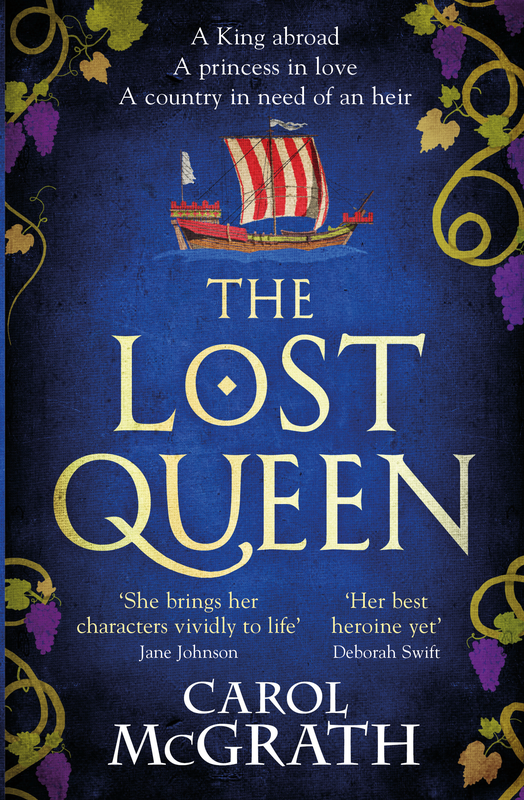
Wordly Women: Samantha Wilcoxson

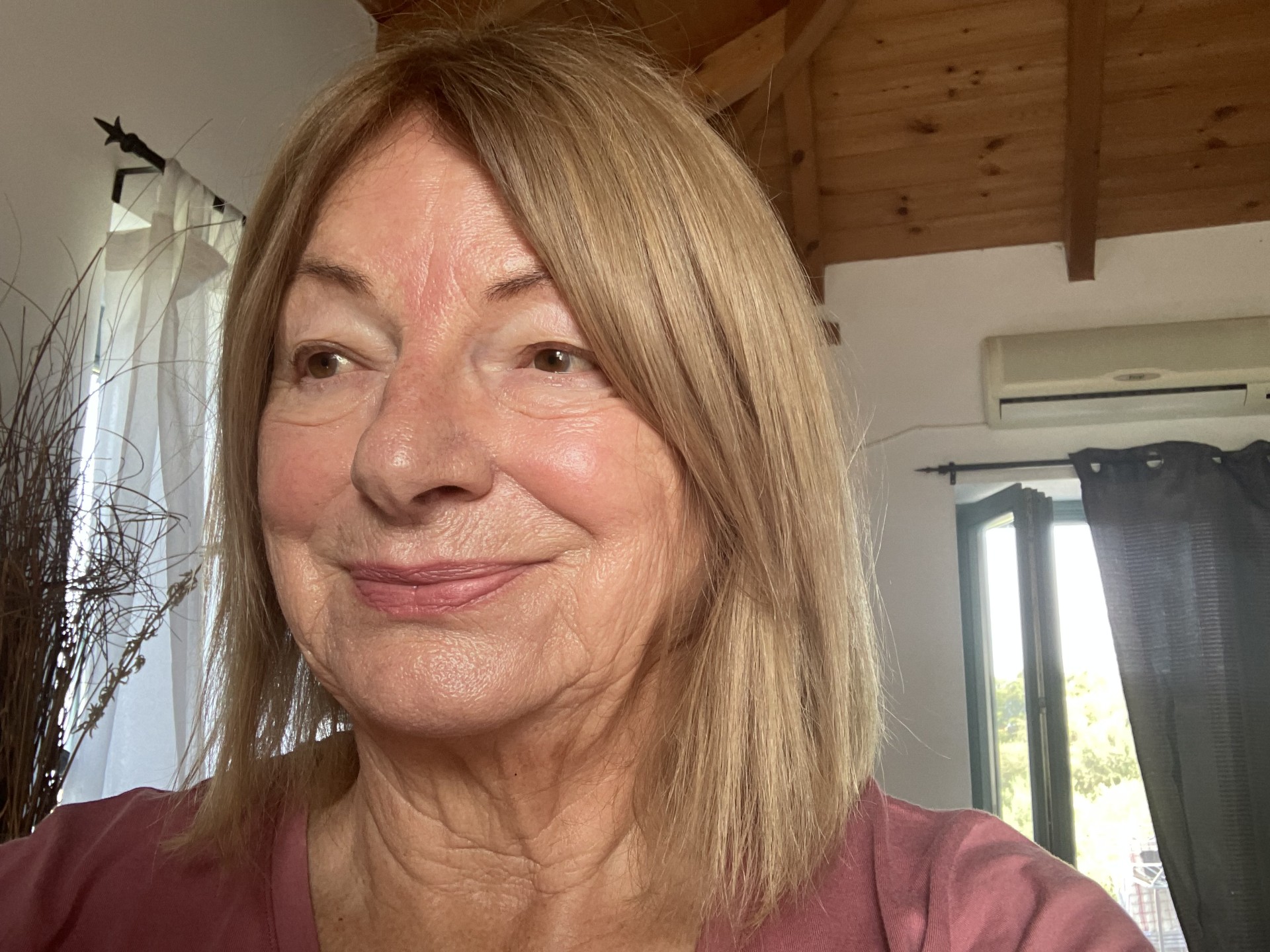
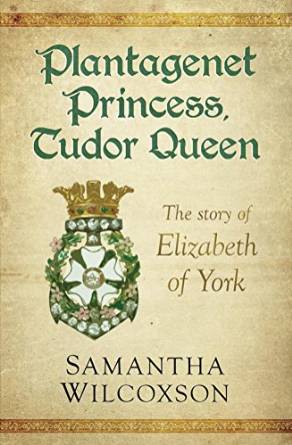
Today we are hopping across the pond for the next chat in my Wordly Women series. Joining me is Samantha Wilcoxson. Author of fiction novels mainly based in the late medieval and Tudor eras and and non-fiction books on the American Revolution, Samantha’s books – literally – span the Atlantic divide. Samantha has a knack for getting into the heads of the people she is writing about. Her book, Plantagenet Princess, Tudor Queen, about Elizabeth of York, is still one of the most insightful novels I have ever read.

Sharon: What got you into writing?

Samantha: What got you into writing? I have always loved reading and used to write dozens of book reviews every year. Many of those books were historical fiction and nonfiction. When I was considering ways to earn money while a stay-at-home mom, my husband suggested I write a book. I had never considered taking this step, so the first obstacle was deciding what I would want to write about. It didn’t take me long to settle on Elizabeth of York, and I quickly became passionate about the project. That novel turned into a series, and I’ve ventured into other historical eras since then.

Sharon: Tell us about your books.

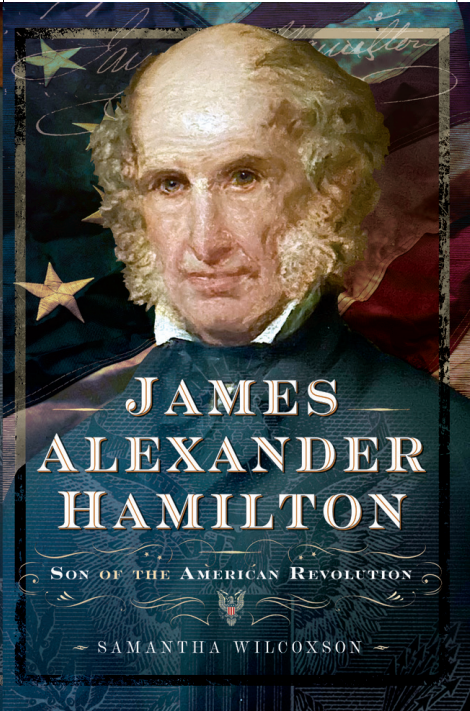
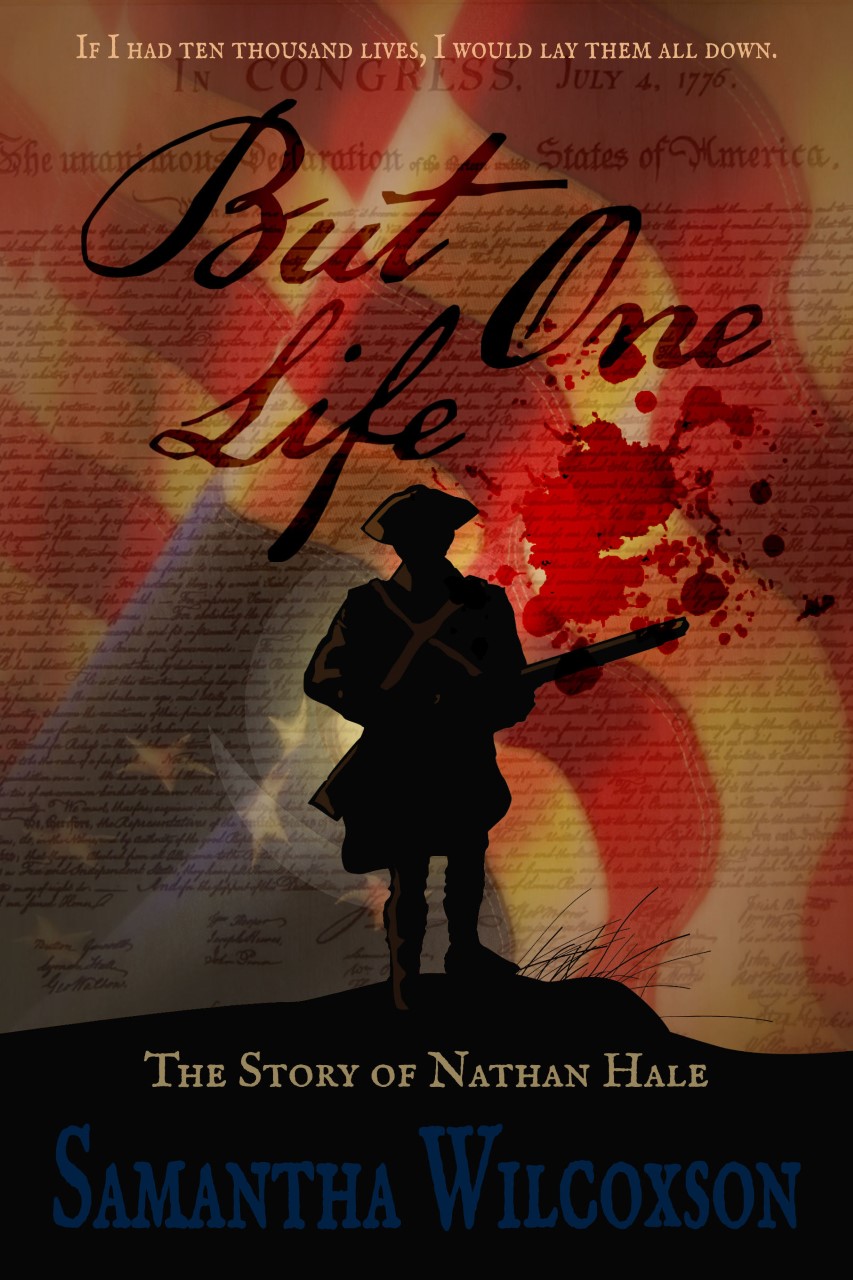
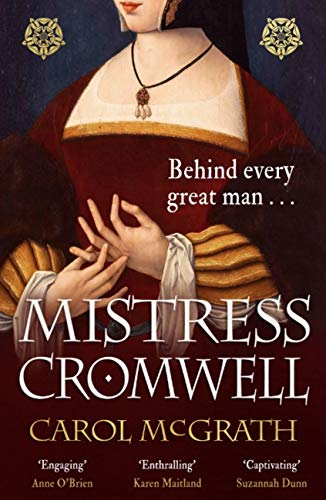
Samantha: Each of my novels explores the life of a real historical figure in a way that helps readers connect with them on a personal level. My Plantagenet Embers series includes three novels featuring Elizabeth of York, Margaret Pole, and Mary I. It also has three novellas that offer new points of view of the same events by focusing on Margaret Beaufort, Elizabeth Woodville, and Reginald Pole. Then I moved into US history with my next two novels. Luminous is biographical fiction of real life radium girl Catherine Wolfe Donohue, and But One Life explores the life of American Revolution soldier Nathan Hale. My nonfiction books are Women of the American Revolution and a newly released biography of James Alexander Hamilton.

Sharon: What attracted you to the Tudors?

Samantha: When I started writing the series that ended up covering the early Tudor era, I was actually obsessed with the Wars of the Roses. I thought Elizabeth of York was an unsung heroine, so I started with her with no real intention of writing about the Tudors! This is actually a great insight into my writing. I never know what is coming next.

Sharon: So, what is coming next?

Samantha: I am currently writing a trilogy set during the Wars of the Roses for Sapere Books. It includes multiple women’s points of view. For example, book one has chapters featuring Marguerite of Anjou, Cecily Neville, and Anne Beauchamp. That one is in editing, and I’m working on book two, which will add the perspective of Elizabeth Woodville and others.

Sharon: How do you approach researching your topic?

Samantha: This depends a lot on whether I’m writing fiction or nonfiction. For novels, I largely depend on biographies already written, but for nonfiction I look for more primary resources like personal letters and diaries. For either, I like to visit locations important to the people I’m writing about so that I can include details about the places they experienced.

Sharon: You also write US history non-fiction.

Samantha: Tell us your ‘favourite’ story you have come across in your research? My research into James Alexander Hamilton uncovered loads of interesting discoveries, partly because nobody else has really written about him. I held letters written between James and Andrew Jackson, Martin Van Buren, John Quincy Adams, and so many others. (Gotta admit, it was tempting to try sneak that JQA letter into my bag!) I think the most fun story I came across, besides John Quincy writing about being too old to stay up all night at a lively Hamilton party, was learning that James was part of the crew of the schooner America for which the America’s Cup is named.

Sharon: Tell us your least ‘favourite’ US history story you have come across in your research?

Samantha: I don’t know if I would call it a least favorite, but I decided to write a novel about Nathan Hale because I often came across quotes attributed to him such as, “I only regret that I have but one life to give for my country” but very little else about who Hale was. What happened in this young man’s life to create such bravery and patriotism? Few references to him offered much, so I decided to dig in and reveal the story of Nathan Hale before his famous execution during the American Revolution.

Sharon: Are there any other eras you would like to write about?
Samantha: I always have a few ideas brewing but am committed to the next couple of books on the Wars of the Roses right now. I have started a bit of research into a historical event that occurred near my home in Michigan in 1847 that I would like to consider for a future project. I’m not one of those writers who has the next five years planned out and I tend to impetuously strike out in new directions, so we’ll see what happens.

Sharon: And finally, what is the best thing about being a writer?

Samantha: Besides spending my day reading, writing, and learning about history, I love the flexibility of being a writer. I began as a stay-at-home mom, and I still appreciate the ability to easily set my work aside for a few days if one of my adult children needs anything. I’ve also made many friends in the writing community who make me feel less alone as a history nerd and have provided amazing support and encouragement for each of my book projects.

About the Author:

Samantha Wilcoxson is an author of emotive biographical fiction and nonfiction featuring history’s unsung heroes. Her novel Luminous has been named Book of the Year by Ruins & Reading and Yarde Book Reviews. Samantha’s most recent work is the first biography of James Alexander Hamilton, published by Pen & Sword History. She is currently writing a Wars of the Roses trilogy for Sapere Books. When not reading or writing, Samantha loves sharing trips to historic places with her family and spending time by the lake with a glass of wine.

Where to find Samantha Wilcoxson:

Website; Instagram; Amazon Author Page; Newsletter Signup; Goodreads; Pinterest; Twitter; Shop Direct; Audible

*

My books

Signed, dedicated copies of all my books are available through my online store.

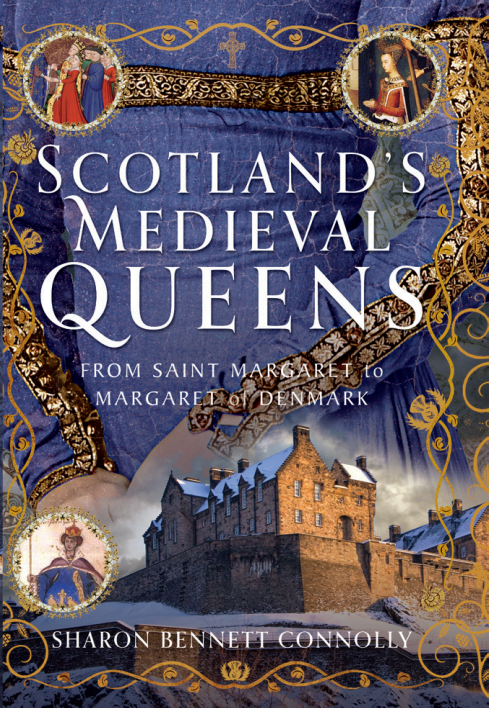
Out now: Scotland’s Medieval Queens

Scotland’s history is dramatic, violent and bloody. Being England’s northern neighbour has never been easy. Scotland’s queens have had to deal with war, murder, imprisonment, political rivalries and open betrayal. They have loved and lost, raised kings and queens, ruled and died for Scotland. From St Margaret, who became one of the patron saints of Scotland, to Elizabeth de Burgh and the dramatic story of the Scottish Wars of Independence, to the love story and tragedy of Joan Beaufort, to Margaret of Denmark and the dawn of the Renaissance, Scotland’s Medieval Queens have seen it all. This is the story of Scotland through their eyes.

Scotland’s Medieval Queens gives a thorough grounding in the history of the women who ruled Scotland at the side of its kings, often in the shadows, but just as interesting in their lives beyond the spotlight. It’s not a subject that has been widely covered, and Sharon is a pioneer in bringing that information into accessible history.’ Elizabeth Chadwick (New York Times bestselling author)

Available now from Amazon and Pen and Sword Books

Also by Sharon Bennett Connolly:

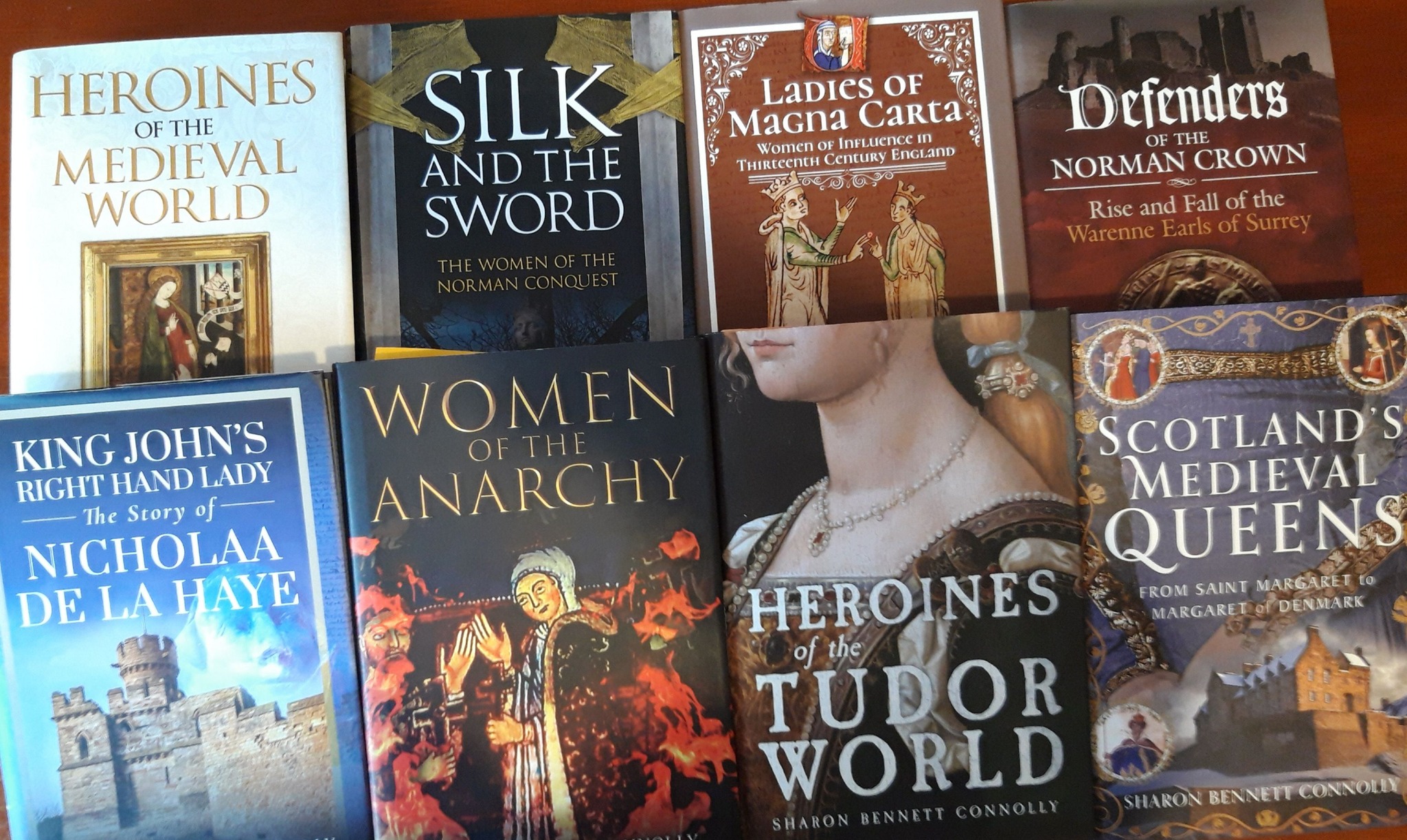
Heroines of the Tudor World tells the stories of the most remarkable women from European history in the time of the Tudor dynasty, 1485-1603. These are the women who ruled, the women who founded dynasties, the women who fought for religious freedom, their families and love. Heroines of the Tudor World is now available from Amberley Publishing and Amazon UK. Women of the Anarchy demonstrates how Empress Matilda and Matilda of Boulogne, unable to wield a sword themselves, were prime movers in this time of conflict and lawlessness. It shows how their strengths, weaknesses, and personal ambitions swung the fortunes of war one way – and then the other. Available from Bookshop.orgAmberley Publishing and Amazon UKKing John’s Right-Hand Lady: The Story of Nicholaa de la Haye is the story of a truly remarkable lady, the hereditary constable of Lincoln Castle and the first woman in England to be appointed sheriff in her own right. Available from all good bookshops Pen & Sword Booksbookshop.org and Amazon

Defenders of the Norman Crown: The Rise and Fall of the Warenne Earls of Surrey tells the fascinating story of the Warenne dynasty, from its origins in Normandy, through the Conquest, Magna Carta, the wars and marriages that led to its ultimate demise in the reign of Edward III. Available from Pen & Sword BooksAmazon in the UK and US, and Bookshop.orgLadies of Magna Carta: Women of Influence in Thirteenth Century England looks into the relationships of the various noble families of the 13th century, and how they were affected by the Barons’ Wars, Magna Carta and its aftermath; the bonds that were formed and those that were broken. It is now available in paperback and hardback from Pen & SwordAmazon, and Bookshop.orgHeroines of the Medieval World tells the stories of some of the most remarkable women from Medieval history, from Eleanor of Aquitaine to Julian of Norwich. Available now from Amberley Publishing and Amazon, and Bookshop.orgSilk and the Sword: The Women of the Norman Conquest traces the fortunes of the women who had a significant role to play in the momentous events of 1066. Available now from Amazon,  Amberley Publishing, and Bookshop.org.

Alternate Endings: An anthology of historical fiction short stories including Long Live the King… which is my take what might have happened had King John not died in October 1216. Available in paperback and kindle from Amazon.

Podcast:
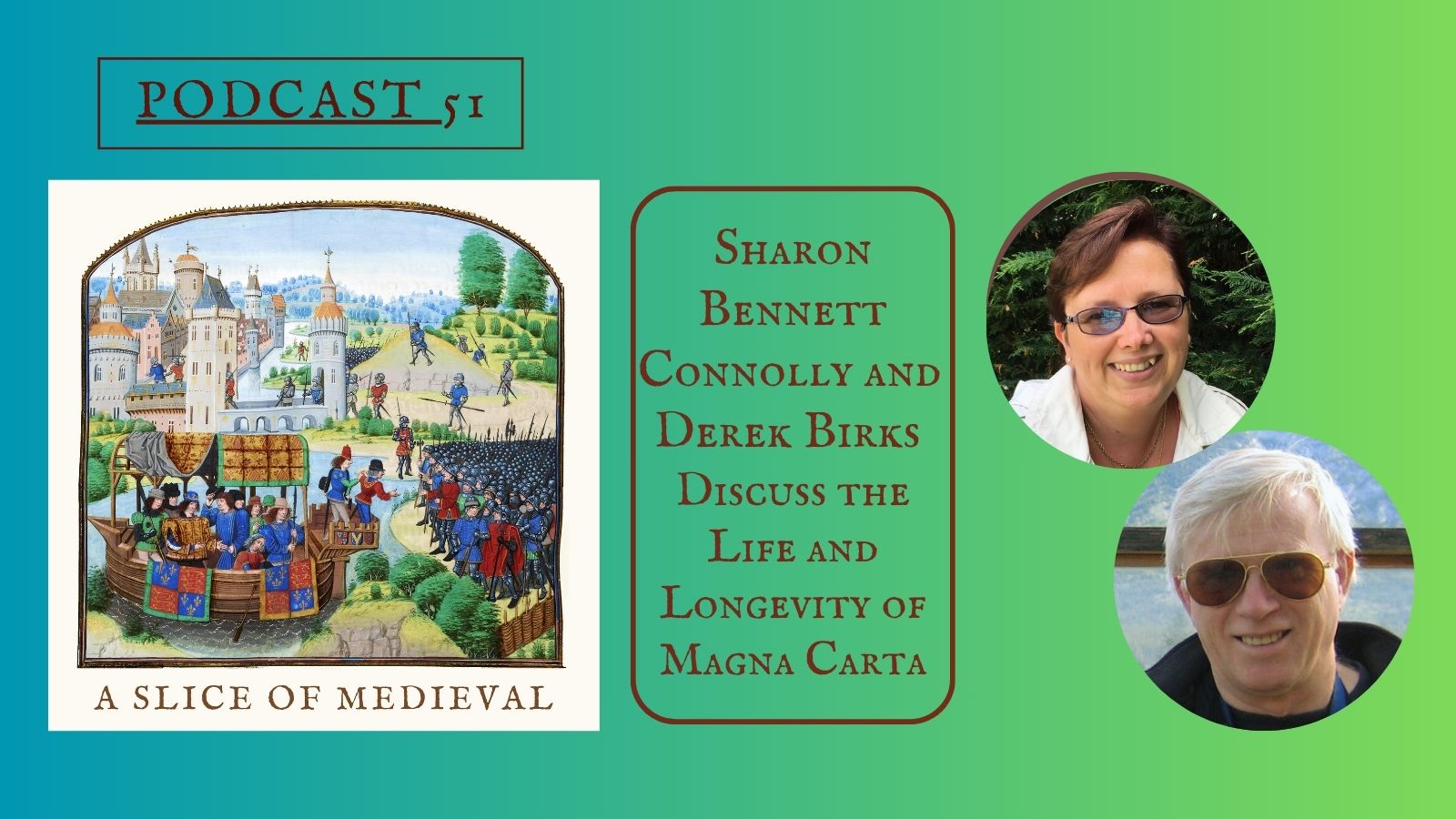
Have a listen to the A Slice of Medieval podcast, which I co-host with Historical fiction novelist Derek Birks. Derek and I welcome guests, such as Bernard Cornwell and Michael Jecks, and discuss a wide range of topics in medieval history, from significant events to the personalities involved. Every episode is also now available on YouTube.

*

Don’t forget! Signed and dedicated copies of all my books are available through my online store.

For forthcoming online and in-person talks, please check out my Events Page.

You can be the first to read new articles by clicking the ‘Follow’ button, liking our Facebook page or joining me on TwitterThreadsBluesky and Instagram.

*

©2025 Sharon Bennett Connolly, FRHistS and Samantha Wilcoxson

The Poetic Life of Margaret of Scotland, Dauphine of France

Margaret Stewart, Dauphine of France

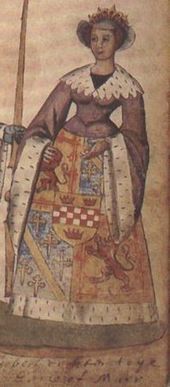
Margaret of Scotland was the eldest daughter of James I, King of Scots, and his wife, Joan Beaufort. James had been king since the age of 12, though the first 18 years of his reign had been spent in English captivity, where he had fallen in love with Joan, the granddaughter of John of Gaunt and Katherine Swynford. James’s release had been successfully negotiated in 1423 and the marriage was politically favourable to the English, who saw it as an opportunity to improve relations with Scotland while, at the same time, drawing Scotland away from France, their traditional ally.

James I returned to Scotland in April 1424, with his new bride – and queen– at his side. Margaret was born in the royal apartments at the Dominican Friary in Perth, on Christmas Day in 1424. She was joined in the nursery by five sisters during the next ten years, Isabella, Eleanor, Joan, Mary and Annabella. Twin brothers were born in 1430, Alexander and James, but only James survived past the first few months.

In 1425, an embassy arrived from France, seeking little Margaret’s hand in marriage for Louis, son and heir of Charles VII:

Margaret’s mother, Joan Beaufort

The king [of Scots] was pleased to respond favourably to so distinguished an embassy, and forthwith sent as a solemn embassy to the king of France with a specific brief and commission the venerable men sir Henry Lychton bishop of Aberdeen, sir Edward Lauder archdeacon of Lothian, and Sir Patrick Ogilvie knight (the sheriff of Angus and justiciar of Scotland). Whereupon there was an agreement on both sides; and five years later, when each was of marriageable age, there came as envoys from the king of France La Hire the king’s maitre d’hôtel along with the distinguished cleric Master Aymer; and in terms of their commission they arranged the betrothal of the said eldest daughter of the king. The girl was sent to France by her father a little later, namely 1436, surrounded by a distinguished following of attendants, and in the following year she was married.1

The marriage proposal was to accompany the renewal the Franco-Scottish alliance. France’s king, Charles VII had given his ambassadors the task of asking for Margaret’s hand in marriage for his son, Louis, the dauphin. Born in July 1423, Louis was just 18 months older than his future bride. However, James I hesitated, reluctant to give the French the army of 6,000 men that they wanted as part of the alliance. Charles VII was in a precarious position in France at the time. The Hundred Years War was raging and, despite the fact his father had died in 1422, he would not actually be crowned king until July 1429. In fact, Henry VI of England had already been crowned King of France and it was only due to the efforts of Joan of Arc that Charles VII’s fortunes would change. James, therefore, held off from agreeing to the alliance, and used it to strengthen his position in negotiations with the English.

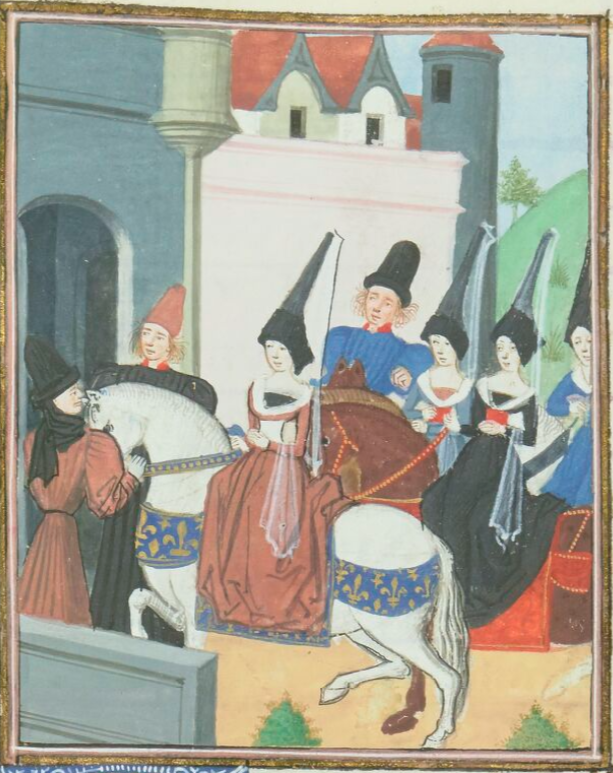
Margaret arrives in Tours for her wedding, from a 15th-century work by Jean Chartier.

In 1435, the marriage of Margaret and the dauphin was finally agreed and the young bride, still only eleven years old, set out for France the following year. The princess only narrowly escaped her father’s fate when the English fleet attempted to capture her en route:

the dauphiness luckily made her escape and landed at La Rochelle. She rested at Nieul Priory which is two leagues from La Rochelle without notice being taken of her until such time as the [arch-] bishop of Rheims, with the bishops of Poitiers and Saintes and the worthy sires de Graville, Gaucourt and ‘Pontissey’ welcomed her and lodged her honourably in a splendid place for more than two months until the marriage was celebrated at Tours in Touraine. This was performed there by the archbishop of Rheims with the greatest possible ceremony, in the presence of the king and queen and also of the queen of Sicily (the mother of the queen of France). Once the wedding had been formally celebrated, the Scots (except the few who remained with the dauphiness) were much gratified with various presents and after a safe voyage arrived home.2

She left by ship from Dumbarton in March 1436, with an entourage worthy of a princess; she was escorted by several of the leading lords of the realm, a household of 140 persons in royal livery and more than 1,000 troops. The French fleet in which she sailed landed on the Île de Ré, near La Rochelle, on 17 April and made a formal progress to Tours. On 24 June she met her future husband for the first time, in the great hall of the castle at Tours, and the young couple embraced formally. They were married the next day, in the castle’s chapel.

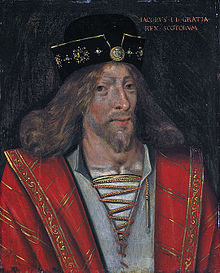
Margaret’s father, James I, King of Scots

Celebrated by the Archbishop of Reims, it was a rather subdued affair, for a royal wedding. The continuing state of warfare with England had stretched the French royal finances to the limit. The reception was not as lavish as the Scottish guests might have expected and was cut short to preserve funds, the scandalised Scots being quickly ushered out. And almost immediately after the wedding celebrations, most of Margaret’s Scottish household was sent home, with just a handful of her native attendants allowed to stay with the new dauphine. Owing to the tender age of the young couple, they were not expected to consummate the marriage for another few years, so Margaret was given into the guardianship of Queen Marie, Charles VII’s wife, and continued her education under the queen’s supervision. Petite, pretty and delicate, Margaret soon became the darling of the French King and Queen.

Louis, on the other hand, had a strained relationship with his father, one that would eventually be expressed in open rebellion; as a result, he was rarely at court. When Louis asked the king for an allowance with which to set up a household for himself and his young wife, his father refused, despite being happy to give Margaret money to indulge herself. At one time, Charles VII gave Margaret 2,000 livres to buy herself furs and silks, and yet he refused to pay off Louis’ debts. Margaret also received grants directly from the king, rather than her husband, as might have been expected.

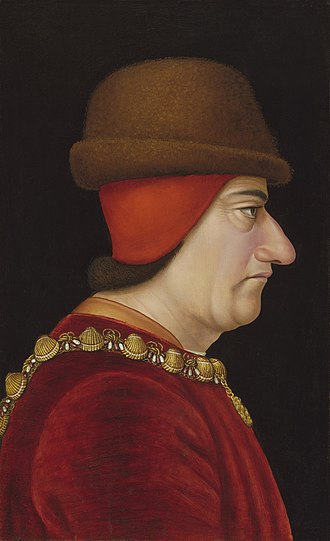
Margaret’s husband, the future King Louis XI

In 1437 the marriage was consummated and Margaret, now approaching her thirteenth birthday, was given her own household. Relations between the dauphin and dauphine were not helped by Louis’ strained relationship with his father and it seems that comparisons were made between Louis’ unimpressive looks and Margaret’s beauty – although malicious English chroniclers would insist that Louis was repelled by Margaret’s ‘evil soured breath’.

Margaret was allowed no part in court politics. The dauphine’s role in France was limited to formal occasions and court ceremonials, such as the celebrations for the marriage of the king’s niece, Margaret of Anjou, to Henry VI of England, which Margaret attended in 1445. As with her father before her, Margaret had a passion and talent for writing poetry and, although she enjoyed court life, she became increasingly bored with it. She retreated more and more to her own chambers with her ladies and spent her days and evenings writing and reading poetry. Her evenings were so taken up in this style, that she often retired to bed long after Louis had fallen asleep.

Margaret was also renowned as a patroness of literature. She had several poets in her household, including Jehanne Filleul, whose works have survived to this day, and the Viscount de Blosseville. De Blosseville wrote one of the three laments to the dauphine, written before her death. Another such lament was possibly written by her sister Isabella, it was certainly in her possession.

As the years passed and the couple remained childless, Margaret’s lifestyle caused further discontent within the marriage, and more unhappiness for the young princess as her husband expressed his displeasure. There is some suggestion that Margaret deliberately prevented herself from falling pregnant by drinking vinegar, and by tightly lacing her bodices – although this may also have been for vanity, and to keep her svelte figure. There were also followed accusations of impropriety within Margaret’s rooms when, at Christmas 1444, Jamet de Tillay, a member of the king’s household, entered her chamber during one of her private poetry evenings and subsequently spread rumours about ‘wanton princesses’.

Margaret perceived it as a personal attack and became increasingly distressed, complaining that Jamet had turned the king and dauphin against her. Although Jamet tried to apologise, Margaret would not hear of it. By the summer of 1445 the dauphine was very ill.

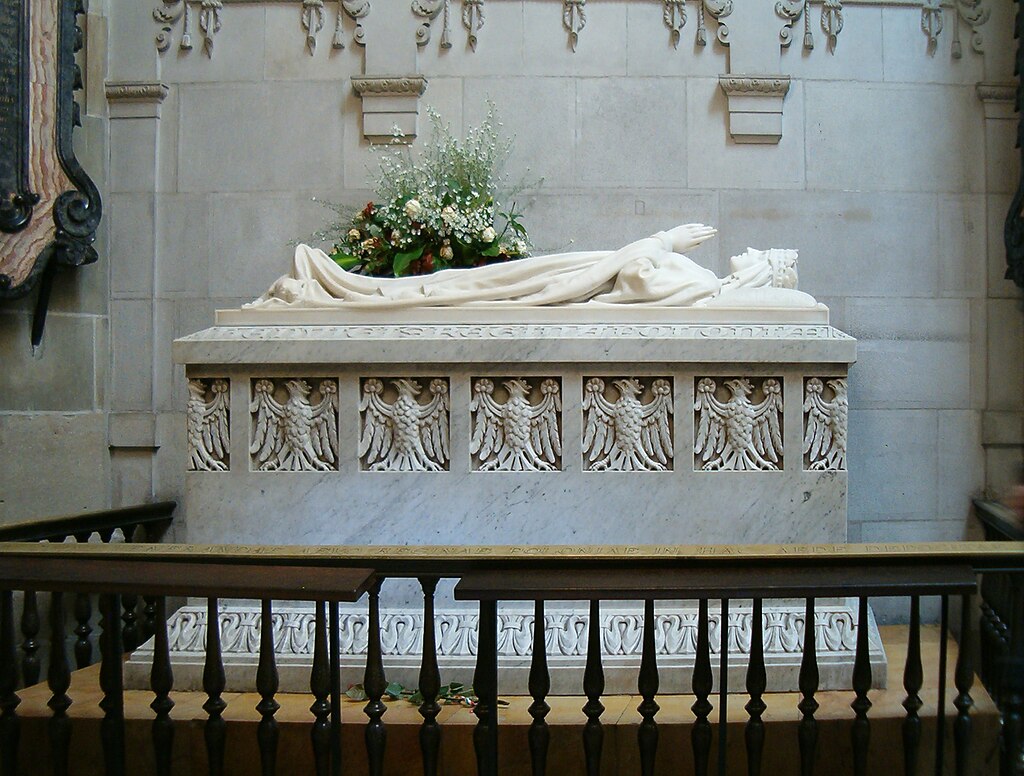
Tomb of Margaret Stewart in the Saint-Laon Church, Thouars

Having accompanied the court on pilgrimage she fell ill on 7 August and by the next day she was feverish and suffering from fits of coughing. Her doctors diagnosed an inflammation of the lungs. In her delirium, she blamed Jamet de Tillay for her impending demise and swore she had never done Louis any wrong. As she approached death, Margaret calmed down and forgave Jamet, on her ladies’ instigation. Having received the last rites, Margaret died on 16 August 1445, at Châlons-sur-Marne; she was just twenty years old. The dauphine was laid to rest in the Cathedral of St Étienne in Châlons; in 1479 her body was moved by her husband, now Louis XI, to the chapel of the Holy Sepulchre in the Abbey Church of Saint-Laon in Thouars, where Margaret had founded a chaplaincy.

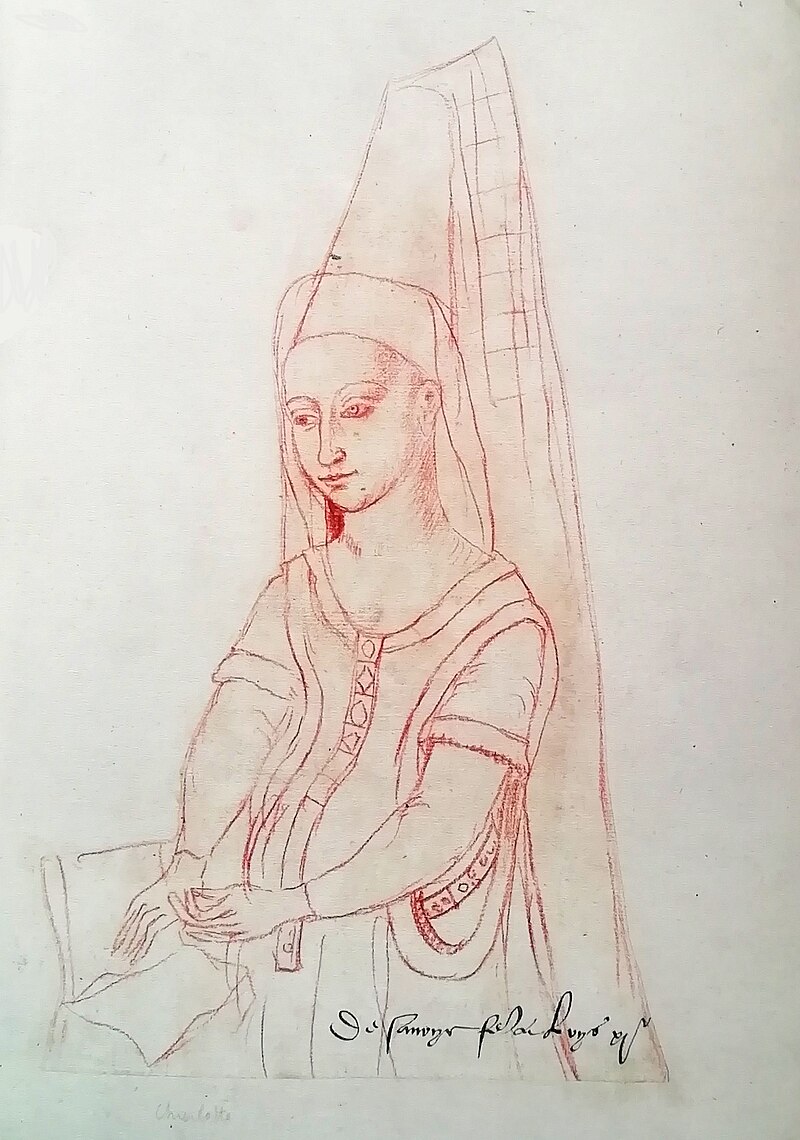
Following her death, Louis destroyed every piece of poetry and writing that Margaret had ever produced. None of her work survived her husband’s purge. However, her patronage of poets has at least ensured she had a worthy legacy. Louis went on to marry Charlotte of Savoy and was the father of Anne de Beaujeu, regent of France for her brother King Charles VIII.

Notes:

1. Bower, Scotichronicon, V 8, p. 249; 2. ibid, p. 251

Sources:

Calendar of documents relating to Scotland, Vol. 4; M. H. Brown, ‘Joan [née Joan Beaufort]’, oxforddnb.com; Amy Licence, Red Roses: Blanche of Gaunt to Margaret Beaufort; Nigel Tranter, The Story of Scotland; John of Fordun’s Chronicle of the Scottish Nation; Walter Bower, Scotichronicon; Andrew Wyntoun, The orygynale cronykil of Scotland; Richard Oram, editor, The Kings and Queens of Scotland; Rosalind K. Marshall, Scottish Queens 1034–1714; Nigel Tranter, The Story of Scotland; David Ross Scotland, History of a NationLiber pluscardensis, edited by Felix James Henry Skene; James I, King of Scots, The Kingis Quair, edited by James, William MacKean, Walter W. Skeat, Alexander Gardner

Images:

Courtesy of Wikipedia

*

My books

Signed, dedicated copies of all my books are available through my online store.

Out now: Scotland’s Medieval Queens

Scotland’s history is dramatic, violent and bloody. Being England’s northern neighbour has never been easy. Scotland’s queens have had to deal with war, murder, imprisonment, political rivalries and open betrayal. They have loved and lost, raised kings and queens, ruled and died for Scotland. From St Margaret, who became one of the patron saints of Scotland, to Elizabeth de Burgh and the dramatic story of the Scottish Wars of Independence, to the love story and tragedy of Joan Beaufort, to Margaret of Denmark and the dawn of the Renaissance, Scotland’s Medieval Queens have seen it all. This is the story of Scotland through their eyes.

Scotland’s Medieval Queens gives a thorough grounding in the history of the women who ruled Scotland at the side of its kings, often in the shadows, but just as interesting in their lives beyond the spotlight. It’s not a subject that has been widely covered, and Sharon is a pioneer in bringing that information into accessible history.’ Elizabeth Chadwick (New York Times bestselling author)

Available now from Amazon and Pen and Sword Books

Also by Sharon Bennett Connolly:

Heroines of the Tudor World tells the stories of the most remarkable women from European history in the time of the Tudor dynasty, 1485-1603. These are the women who ruled, the women who founded dynasties, the women who fought for religious freedom, their families and love. Heroines of the Tudor World is now available from Amberley Publishing and Amazon UK. Women of the Anarchy demonstrates how Empress Matilda and Matilda of Boulogne, unable to wield a sword themselves, were prime movers in this time of conflict and lawlessness. It shows how their strengths, weaknesses, and personal ambitions swung the fortunes of war one way – and then the other. Available from Bookshop.orgAmberley Publishing and Amazon UKKing John’s Right-Hand Lady: The Story of Nicholaa de la Haye is the story of a truly remarkable lady, the hereditary constable of Lincoln Castle and the first woman in England to be appointed sheriff in her own right. Available from all good bookshops Pen & Sword Booksbookshop.org and Amazon

Defenders of the Norman Crown: The Rise and Fall of the Warenne Earls of Surrey tells the fascinating story of the Warenne dynasty, from its origins in Normandy, through the Conquest, Magna Carta, the wars and marriages that led to its ultimate demise in the reign of Edward III. Available from Pen & Sword BooksAmazon in the UK and US, and Bookshop.orgLadies of Magna Carta: Women of Influence in Thirteenth Century England looks into the relationships of the various noble families of the 13th century, and how they were affected by the Barons’ Wars, Magna Carta and its aftermath; the bonds that were formed and those that were broken. It is now available in paperback and hardback from Pen & SwordAmazon, and Bookshop.orgHeroines of the Medieval World tells the stories of some of the most remarkable women from Medieval history, from Eleanor of Aquitaine to Julian of Norwich. Available now from Amberley Publishing and Amazon, and Bookshop.orgSilk and the Sword: The Women of the Norman Conquest traces the fortunes of the women who had a significant role to play in the momentous events of 1066. Available now from Amazon,  Amberley Publishing, and Bookshop.org.

Alternate Endings: An anthology of historical fiction short stories including Long Live the King… which is my take what might have happened had King John not died in October 1216. Available in paperback and kindle from Amazon.

Podcast:

Have a listen to the A Slice of Medieval podcast, which I co-host with Historical fiction novelist Derek Birks. Derek and I welcome guests, such as Bernard Cornwell and Michael Jecks, and discuss a wide range of topics in medieval history, from significant events to the personalities involved. Every episode is also now available on YouTube.

*

Don’t forget! Signed and dedicated copies of all my books are available through my online store.

For forthcoming online and in-person talks, please check out my Events Page.

You can be the first to read new articles by clicking the ‘Follow’ button, liking our Facebook page or joining me on TwitterThreadsBluesky and Instagram.

*

©2025 Sharon Bennett Connolly, FRHistS

Queen of Scots

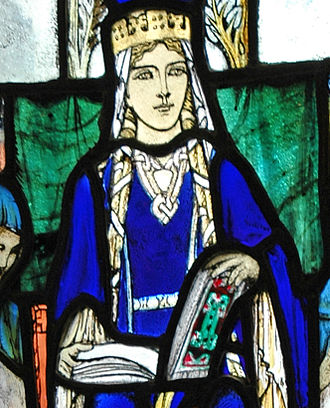
St Margaret, Queen of Scots

The Queens of Scots of the medieval era are a fascinating variety of women and I can only hope that I have done them justice in my latest book, Scotland’s Medieval Queens: From St Margaret to Margaret of Denmark.

Scottish history is fascinating! It is violent, politically charged and passionate. Being inconveniently situated on England’s northern border was never easy for Scotland, but it has made for some great stories over the centuries. Scotland’s story is often that of brother against brother, ambition and family rivalries causing feuds that threatened the stability of the crown itself. Such fissures, of course, grew and ruptured with the aid of English interference and encouragement. The King of England was always happy to play one side off against the other if it weakened Scotland’s position.

And Scotland’s medieval queens, be they Scottish, English, Danish or French, formed a big part of that story.

More often than not, these disputes north and south of the border were resolved in peace treaties, sealed by wedding bells. A number of English princesses and noblewomen found themselves married to Scotland’s kings as a consequence.

Queen Elizabeth de Burgh

For over 400 years, Shakespeare’s version of Lady Macbeth has been the woman most people are familiar with. In the bard’s famous drama, also known as ‘The Scottish Play’, Lady Macbeth is not even given her name. Presented as a scheming, manipulative woman, Shakespeare did as good a hatchet job on Gruoch, a royal princess in her own right, as he had on Richard III. Unfortunately, there is no society established to repair Gruoch’s reputation.

The scheming, ambitious woman who will stop at nothing to put her husband on the Scottish throne – and commit murder to keep him there. But is that the real Lady Macbeth? The story of Queen Gruoch, Lady Macbeth, is one shrouded in mystery, tantalisingly obscure. If only we could know more. The lack of information on Gruoch makes it easy for Shakespeare’s interpretation to be accepted as fact, but it is more than likely an injustice to a woman who survived her first husband’s gruesome death, protected her son and came to an agreement with Macbeth to become his wife, securing her son’s future in the process, and later becoming queen as a consequence.

Queen Gruoch is the first queen of Scots for whom we have a name.

From the highly educated and pious Margaret of Wessex to the glamorous Margaret of Denmark, their lives and experiences tell the story of their nation. Some, such as Matilda de Senlis and Ermengarde de Beaumont, barely make an impression on history, though merely by producing a son, they each guaranteed that Scotland would persevere. And Isabella de Warenne, wife of John Balliol, who is a ghost on the pages of Scotland’s history. And it is not that these made no impression. Their influence was in the domestic sphere, raising children and supporting their husbands, rather than on the political or the international stage. Although Isabella’s story is even more obscure by the fact all mention of the Balliol dynasty was forbidden by the Bruce regime.

Marrying an English princess, for example, did not always guarantee the peace with England that was intended. As the wife of Alexander II, Joan of England did her best to maintain cordial relations with her brother Henry III, often using private letters to broker diplomatic solutions. And Henry III’s own daughter Margaret, in marrying Alexander III, brought Scotland more years of peace with England. As a consequence, Scotland and England enjoyed over 70 years of peaceful relations. These years were shattered dramatically by the deaths of Alexander III, his three children and his little granddaughter, Margaret, the Maid of Norway. Little Margaret’s death left the Scots throne vacant, with thirteen Competitors vying for the crown, staking their claims as Edward I of England acted as adjudicator.
Margaret, Maid of Norway

Edward I took advantage of this to try to assert his overlordship of Scotland, but William Wallace, Robert the Bruce and countless others pushed back, ushering in decades of war with England, the Scottish Wars of Independence.
Edward III’s sister Joan of the Tower was to have no such legacy of peace as the earlier Joan and Queen Margaret could boast. Her brother’s ambition would blight her marriage for years. Edward leant his support to the rival claimant to the Scottish throne, Edward Balliol. If he had not been so keen to exploit Scotland’s dynastic divisions, maybe Joan and David II would have had a happier marriage. We will never know.

One cannot help but feel sympathy for Elizabeth de Burgh, seeing her fortunes rise and fall at the whim of England’s king, Edward I, held captive for eight years when she should have been sitting in splendour on Scotland’s throne.

Or poor Marjorie Bruce, whose childhood was torn from her by that same English king, held far away from everyone she loved, only to be married as she tasted freedom, and dead in childbirth by the age of 19. Passed over for the throne because she was a woman, she still managed to give birth to a dynasty, the Stewarts.

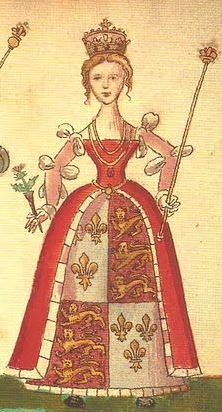
Joan Beaufort, Queen of Scots

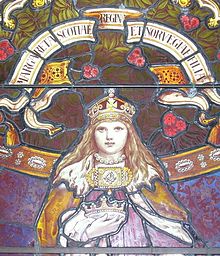
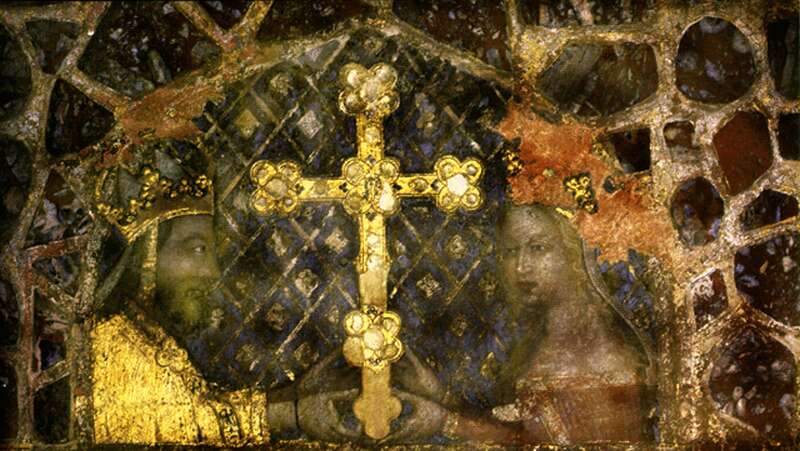
Scotland was the first nation in the British Isles to accept a queen regnant when Margaret, Maid of Norway, was recognised as its queen in 1290. How her queenship would have developed, we have no way of knowing. The poor girl died before she even landed in mainland Scotland. Her significance is in that she was proclaimed queen and the possibilities that heralded, even if it got no further. We can only speculate as to how a successful rule by a queen regnant in the thirteenth century may have changed the lives and experiences of women in subsequent centuries. Her death was a tragedy, not just to her family, but to women’s rights to rule.

But then again, as her father-in-law, it may well be that Edward I would have taken Scotland under his wing … and never let go.

Although we have charters and chronicles, and evidence of religious and charitable donations, most of these women remain elusive. They are enigmas.

We do not – and cannot – know them intimately as the one thing that is missing is their own voice. Their thoughts and personalities are lost to us. Even letters to family members are often formulaic and rarely speak of their true feelings, of their happiness – or not – and their cares and concerns for themselves. We know what they endured for the sake of Scotland, the risk of death in childbirth, the grief of lost children, or the grief of no children. Every woman in medieval Europe was exposed to similar experiences. Scottish queens, however, had to endure imprisonment, scheming noblemen and the early deaths of their husbands more times than they should have had to.

Anabella Drummond, Queen of Scots

But, once in a while, we come across a marriage that is a true partnership. A love story, even. And we discover moments of affection, of amusement, of unity and mutual support. Little moments that remind us that these people are not just stories. They are lives that were lived to the full, however short or long a time they had.

Scotland’s story is often violent and suffered greatly from the machinations if its powerful southern neighbour. However, Scotland did emerge from the Middle Ages as, still, an independent, sovereign nation. And Scotland’s medieval queens had each made their own contribution to the country’s continuing survival and independence. From Saint Margaret – even from Gruoch – to Margaret of Denmark, each queen, to varying degrees of success, made their own indelible imprint on Scotland’s remarkable story.

Images:

Courtesy of Wikipedia

Selected Bibliography:

John of Fordun’s Chronicle of the Scottish Nation; Walter Bower, Scotichronicon; Andrew Wyntoun, The orygynale cronykil of Scotland; Calendar of documents relating to Scotland preserved in Her Majesty’s Public Record Office; Richard Oram, editor, The Kings and Queens of Scotland; Rosalind K. Marshall, Scottish Queens 1034–1714; Nigel Tranter, The Story of Scotland; David Ross Scotland, History of a Nation; Liber pluscardensis, edited by Felix James Henry Skene; Mediaeval chronicles of Scotland: the chronicles of Melrose and Holyrood, translated by Joseph Stephenson; The Chronicle of Lanercost, edited by Sir Herbert Maxwell; The Ecclesiastical History of England and Normandy by Ordericus Vitalis; The historie and cronicles of Scotland … by Robert Lindesay of Pitscottie, 3 volumes, A.J.G. Mackay, editor.

*

My books

Signed, dedicated copies of all my books are available through my online store.

Out now: Scotland’s Medieval Queens

Scotland’s history is dramatic, violent and bloody. Being England’s northern neighbour has never been easy. Scotland’s queens have had to deal with war, murder, imprisonment, political rivalries and open betrayal. They have loved and lost, raised kings and queens, ruled and died for Scotland. From St Margaret, who became one of the patron saints of Scotland, to Elizabeth de Burgh and the dramatic story of the Scottish Wars of Independence, to the love story and tragedy of Joan Beaufort, to Margaret of Denmark and the dawn of the Renaissance, Scotland’s Medieval Queens have seen it all. This is the story of Scotland through their eyes.

Scotland’s Medieval Queens gives a thorough grounding in the history of the women who ruled Scotland at the side of its kings, often in the shadows, but just as interesting in their lives beyond the spotlight. It’s not a subject that has been widely covered, and Sharon is a pioneer in bringing that information into accessible history.’ Elizabeth Chadwick (New York Times bestselling author)

Available now from Amazon and Pen and Sword Books

Also by Sharon Bennett Connolly:

Heroines of the Tudor World tells the stories of the most remarkable women from European history in the time of the Tudor dynasty, 1485-1603. These are the women who ruled, the women who founded dynasties, the women who fought for religious freedom, their families and love. Heroines of the Tudor World is now available for pre-order from Amberley Publishing and Amazon UK. Women of the Anarchy demonstrates how Empress Matilda and Matilda of Boulogne, unable to wield a sword themselves, were prime movers in this time of conflict and lawlessness. It shows how their strengths, weaknesses, and personal ambitions swung the fortunes of war one way – and then the other. Available from Bookshop.orgAmberley Publishing and Amazon UKKing John’s Right-Hand Lady: The Story of Nicholaa de la Haye is the story of a truly remarkable lady, the hereditary constable of Lincoln Castle and the first woman in England to be appointed sheriff in her own right. Available from all good bookshops Pen & Sword Booksbookshop.org and Amazon

Defenders of the Norman Crown: The Rise and Fall of the Warenne Earls of Surrey tells the fascinating story of the Warenne dynasty, from its origins in Normandy, through the Conquest, Magna Carta, the wars and marriages that led to its ultimate demise in the reign of Edward III. Available from Pen & Sword BooksAmazon in the UK and US, and Bookshop.orgLadies of Magna Carta: Women of Influence in Thirteenth Century England looks into the relationships of the various noble families of the 13th century, and how they were affected by the Barons’ Wars, Magna Carta and its aftermath; the bonds that were formed and those that were broken. It is now available in paperback and hardback from Pen & SwordAmazon, and Bookshop.orgHeroines of the Medieval World tells the stories of some of the most remarkable women from Medieval history, from Eleanor of Aquitaine to Julian of Norwich. Available now from Amberley Publishing and Amazon, and Bookshop.orgSilk and the Sword: The Women of the Norman Conquest traces the fortunes of the women who had a significant role to play in the momentous events of 1066. Available now from Amazon,  Amberley Publishing, and Bookshop.org.

Alternate Endings: An anthology of historical fiction short stories including Long Live the King… which is my take what might have happened had King John not died in October 1216. Available in paperback and kindle from Amazon.

Podcast:

Have a listen to the A Slice of Medieval podcast, which I co-host with Historical fiction novelist Derek Birks. Derek and I welcome guests, such as Bernard Cornwell and Michael Jecks, and discuss a wide range of topics in medieval history, from significant events to the personalities involved. Every episode is also now available on YouTube.

*

Don’t forget! Signed and dedicated copies of all my books are available through my online store.

For forthcoming online and in-person talks, please check out my Events Page.

You can be the first to read new articles by clicking the ‘Follow’ button, liking our Facebook page or joining me on TwitterThreadsBluesky and Instagram.

*

©2025 Sharon Bennett Connolly, FRHistS

Wordly Women: Toni Mount

In today’s spotlight on Wordly Women, I welcome my good friend, novelist and historian, Toni Mount back to History… the Interesting Bits. Toni writes the fabulous Seb Foxley mystery novels and the non-fiction series How to Survive in…

Sharon: What got you into writing?

Toni: I’ve always been a story-teller. Aged 6, when the teacher was called away – before the days of teaching assistants – she would have me sit at the front of the class and tell them a story. It was usually a mix of various fairytales with princes, princesses, witches and dragons. I like to think I became more sophisticated when I started writing them down in English Composition lessons aged 7 or 8. My imagined ‘First Flight of Concorde’ – the supersonic plane – won the school prize and my head has been full of stories for as long as I can remember. A good many have made it to the page but not all.

Sharon: You write both fiction and non-fiction – is one harder than the other?

Toni: Fiction needs your own ideas; in non-fiction the facts are there, waiting for you to use. Since my novels are as authentic to the period as I can make them, but without the ‘gadzooks’ and ‘forsooths’, they take as much research as the non- fiction books. In both cases, I’m looking to tell a good story. The difference is that non-fiction may have gaps where historians don’t know the answers, such as what was Edward II thinking when he gave Piers Gaveston the queen’s jewellery but in a novel the writer is allowed to tell you why.

Sharon: Tell us about your books.

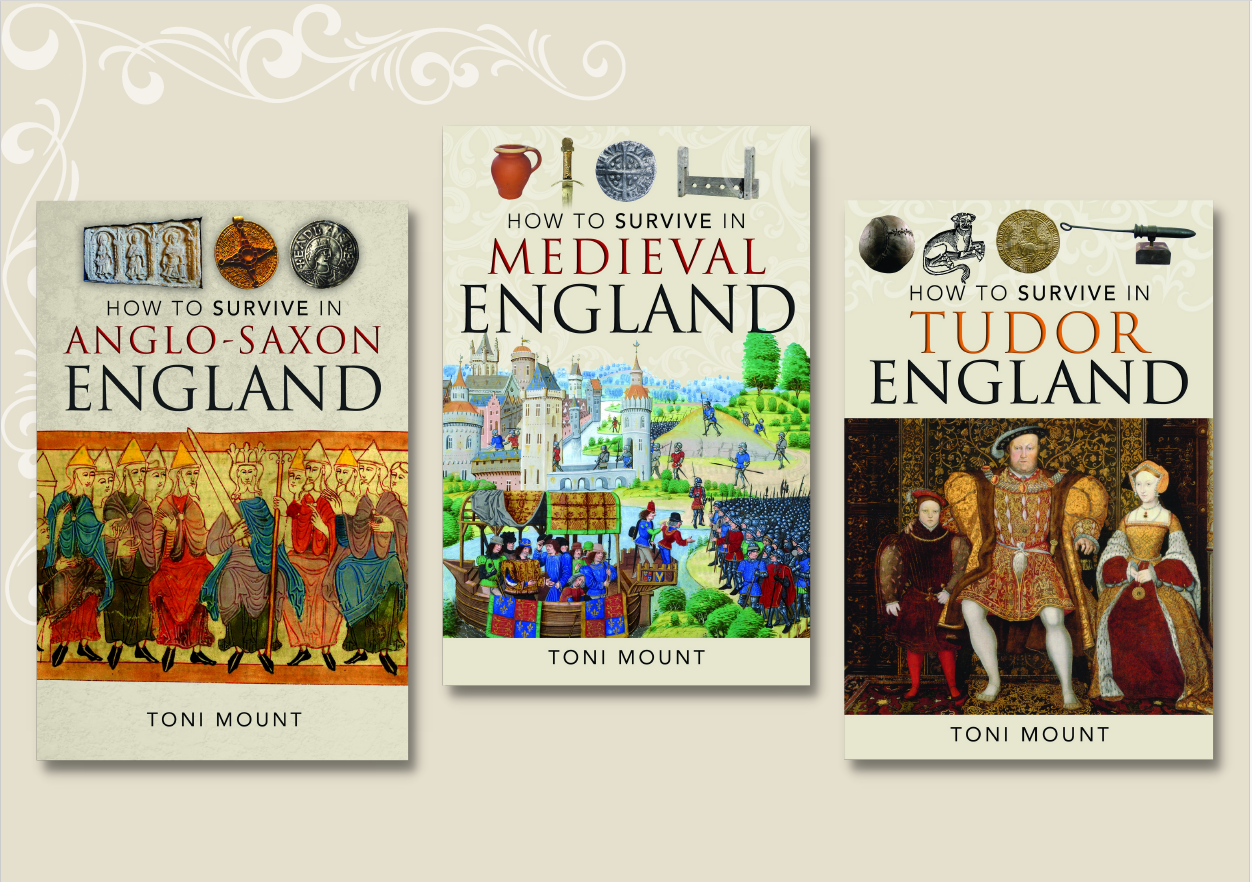
Toni: I’ve had 30+ books published, half of them novels. My most successful non-fiction books are ‘Everyday Life in Medieval London’ and ‘Medieval Medicine’ both published by Amberley, and ‘How to Survive in Medieval England’ published by Pen & Sword which was recently a no.1 best seller on Amazon. The How to Survive series – my fourth: ‘How to Survive in Ration-Book Britain’ is due to be out in November 2025 – is written for the armchair time-traveller and puts a light-hearted slant on history. ‘How to Survive in Tudor England’ and ‘How to Survive in Anglo-Saxon England’ are the other titles.

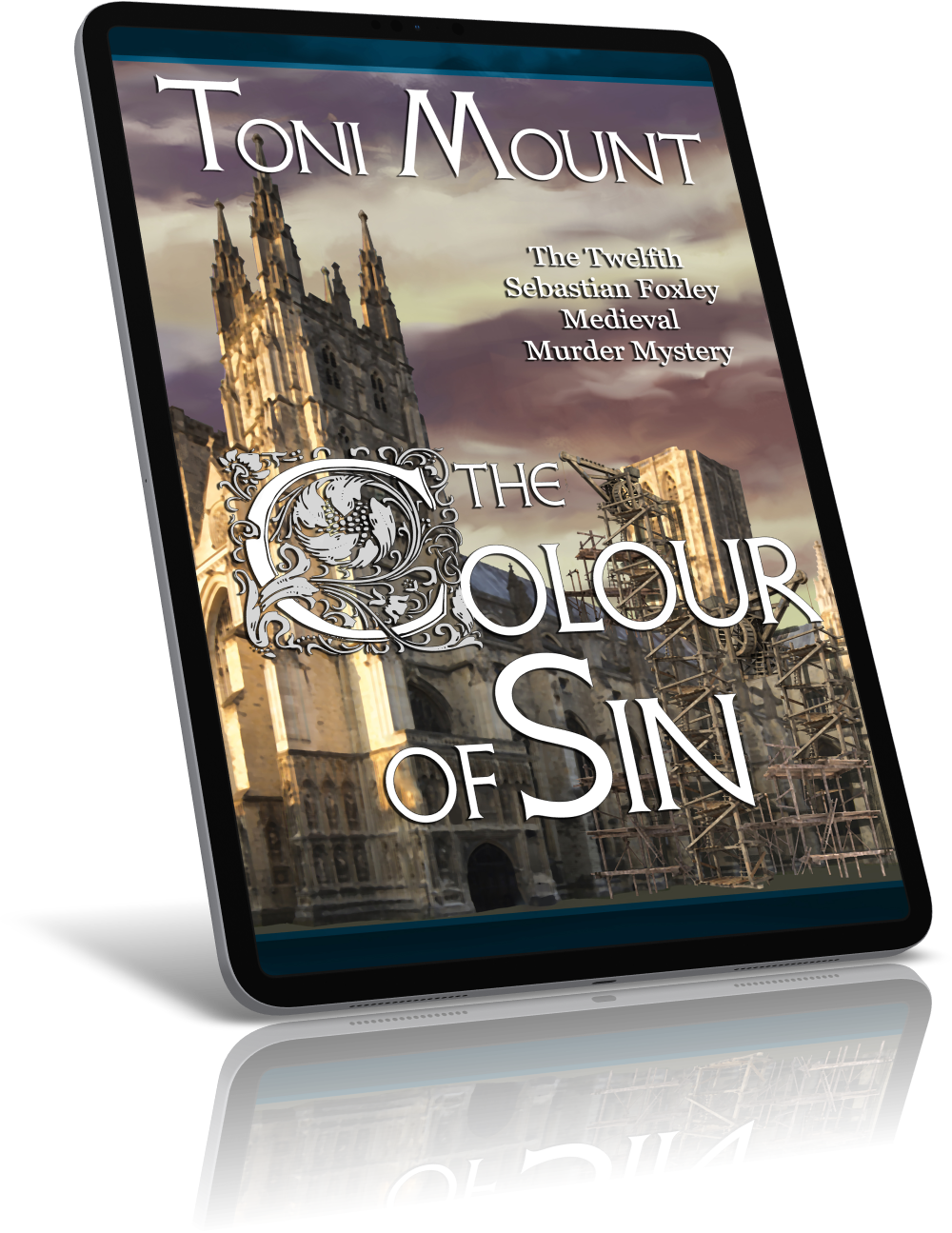
My Sebastian Foxley Medieval Murder Mystery series has quite a following – book 13 ‘The Colour of Darkness’ has just gone off to the publisher MadeGlobal. Seb is a London-based scribe and illuminator in the 1470s-80s whose eye for detail means he spots clues that others miss to solve crimes. Many are true crimes which were recorded in the Mayor’s Court Rolls and remain unsolved – until now. I love the way my characters take over the story, sometimes doing things that never occurred to me. Seb has become a family member, so much so that my sons commissioned a portrait of him for my 65th birthday and it hangs above the fireplace.

Sharon: What attracts you to the period?

Toni: Whether fact or fiction, the Plantagenet period from the 1150s to 1485 is by far the most intriguing for me. Who doesn’t love to puzzle out a mystery? But modern policing is too boring to write about with so much paperwork, hours of CCTV footage to trawl through, fingerprinting, DNA, ballistics, etc. Give me Sherlock Holmes with his magnifying glass every time. The medieval period has even fewer technical complications.

Sharon: Who is your favourite medieval or Tudor personality and why?

Toni: Richard III obviously. I love the controversy. Was he a saint or a sinner? Or simply a human being?

Sharon: Who is your least favourite medieval or Tudor personality and why?

Toni: Henry VIII – a vicious paranoid megalomaniac. What’s to like? (Sharon: I could not agree more!)

Sharon: How do you approach researching your topic?

Toni: I read all I can around the subject; get a feel for the period and ‘live it’ in my head. As I write, if I realise I don’t know something, I make a note of it, check it out and list sources as I go. This is vital for a book which will have references and footnotes but even if I’m working on a novel, I may want to return to a source for further info or to mention it in my Author’s Notes – this is where I tell readers what’s true in the novel, which characters really existed, etc. In ‘The Colour of Darkness’, I did additional research into Medieval Mystery Plays and the ‘Duke of Exeter’s Daughter [a torture device], among other things. For the next novel, I’m reading up on medieval ships and firearms – I think it’s time somebody got shot with a ‘gunne’.

Sharon: Tell us your ‘favourite’ medieval or Tudor story you have come across in your research.

Toni: John/Eleanor Rykenor was a cross-dresser in the 1390s. He claimed to have had sex with nuns ‘as a man’ and didn’t charge them for it but did charge a group of Oxford priests-in-training for his services ‘as a woman’. He/she also said he’d spent a year or more living as a man’s wife. When caught in flagranti in a stable, wearing women’s attire and charging a man for sex, as Eleanor she appeared in court. The authorities weren’t sure what crime to charge her with – homosexuality wasn’t made a criminal offence until Tudor times – so she was charged with misrepresenting the product for sale, i.e. advertising her services as a female without having the appropriate ‘equipment’ for the job. She had to pay a fine for flouting what we would call the Trades Description Act. John/Eleanor is a character in my Foxley novels although he/she lived a century before they’re set. I couldn’t resist using such a fantastic character.

Sharon: Tell us your least ‘favourite’ medieval or Tudor story you have come across in your research.

Toni: The discovery of RIII’s skeleton in a Leicester car park ruined my first ever trilogy [written in 1980s and unpublished]. My premise for the series of novels was that Richard, though wounded, survives the battle of Bosworth and goes on to have further adventures. Henry Tudor, frustrated when he can’t find Richard’s corpse to prove the king is dead, substitutes a crippled beggar to be buried instead. I was about to rewrite the trilogy when the dig discovered the bones and DNA proved it was Richard. How annoying!

Sharon: Are there any other eras you would like to write about?

Toni: Apart from writing about the medieval and Tudor eras, I’ve also written a Victorian who dunnit – ‘The Death Collector’ – making use of unsolved murders from the 1880s, including those attributed to Jack the Ripper. That was great fun to write and I fancy doing a sequel. Also, I wrote a non-fiction book ‘The World of Isaac Newton’ and I think Isaac, with his brilliant brain, has definite possibilities as a sleuth. I’ve published books ranging from Anglo-Saxon England to the 1950s and everything in between has at least been touched upon. Maybe more on the Anglo-Saxons would be interesting.

Sharon: What are you working on now?

Toni: The next novel is brewing: ‘The Colour of Malice’ and two self-published booklets are being prepped. ‘Medieval Christmas’ will do what it says on the tin. ‘Warriors – Men-o’-War’ is a very different beast as a collection of my short stories, something I’ve not done before, from Agincourt to Afghanistan. There are no new titles for non-fiction books at the moment.

Sharon: And finally, what is the best thing about being a writer?

Toni: Playing God with characters [in fiction] and the beauty of words – choosing how best to express your ideas and imaginings on the page. Marvellous!

About the Author:

Toni studies, teaches and writes about medieval history. She is a successful author writing the popular Sebastian Foxley medieval murder series and several non-fiction volumes, including her collection of How to Survive in books. She has created several online courses for http://www.MedievalCourses.com, she teaches history to adults and is an experienced speaker giving talks to groups and societies. Toni enjoys attending history events as a costumed interpreter and is a member of the Research Committee of the Richard III Society.

Toni earned her Masters Degree by Research from the University of Kent in 2009 through study of a medieval medical manuscript held at the Wellcome Library in London. Her first-class honours degree, Diploma in Literature and Creative Writing and her Diploma in European Humanities are from the Open University. Toni also holds a Cert. Ed (in Post-Compulsory Education and Training) from the University of Greenwich.

Find Toni Mount’s books here

Find Toni on Social Media:

Amazon; Website; Seb Foxley website; Facebook: Medieval England Facebook; Seb Foxley Facebook; Twitter

*

My books

Signed, dedicated copies of all my books are available through my online store.

Out now: Scotland’s Medieval Queens

Scotland’s history is dramatic, violent and bloody. Being England’s northern neighbour has never been easy. Scotland’s queens have had to deal with war, murder, imprisonment, political rivalries and open betrayal. They have loved and lost, raised kings and queens, ruled and died for Scotland. From St Margaret, who became one of the patron saints of Scotland, to Elizabeth de Burgh and the dramatic story of the Scottish Wars of Independence, to the love story and tragedy of Joan Beaufort, to Margaret of Denmark and the dawn of the Renaissance, Scotland’s Medieval Queens have seen it all. This is the story of Scotland through their eyes.

Available now from Amazon and Pen and Sword Books

Also by Sharon Bennett Connolly:

Heroines of the Tudor World tells the stories of the most remarkable women from European history in the time of the Tudor dynasty, 1485-1603. These are the women who ruled, the women who founded dynasties, the women who fought for religious freedom, their families and love. Heroines of the Tudor World is now available for pre-order from Amberley Publishing and Amazon UK. Women of the Anarchy demonstrates how Empress Matilda and Matilda of Boulogne, unable to wield a sword themselves, were prime movers in this time of conflict and lawlessness. It shows how their strengths, weaknesses, and personal ambitions swung the fortunes of war one way – and then the other. Available from Bookshop.orgAmberley Publishing and Amazon UKKing John’s Right-Hand Lady: The Story of Nicholaa de la Haye is the story of a truly remarkable lady, the hereditary constable of Lincoln Castle and the first woman in England to be appointed sheriff in her own right. Available from all good bookshops Pen & Sword Booksbookshop.org and Amazon

Defenders of the Norman Crown: The Rise and Fall of the Warenne Earls of Surrey tells the fascinating story of the Warenne dynasty, from its origins in Normandy, through the Conquest, Magna Carta, the wars and marriages that led to its ultimate demise in the reign of Edward III. Available from Pen & Sword BooksAmazon in the UK and US, and Bookshop.orgLadies of Magna Carta: Women of Influence in Thirteenth Century England looks into the relationships of the various noble families of the 13th century, and how they were affected by the Barons’ Wars, Magna Carta and its aftermath; the bonds that were formed and those that were broken. It is now available in paperback and hardback from Pen & SwordAmazon, and Bookshop.orgHeroines of the Medieval World tells the stories of some of the most remarkable women from Medieval history, from Eleanor of Aquitaine to Julian of Norwich. Available now from Amberley Publishing and Amazon, and Bookshop.orgSilk and the Sword: The Women of the Norman Conquest traces the fortunes of the women who had a significant role to play in the momentous events of 1066. Available now from Amazon,  Amberley Publishing, and Bookshop.org.

Alternate Endings: An anthology of historical fiction short stories including Long Live the King… which is my take what might have happened had King John not died in October 1216. Available in paperback and kindle from Amazon.

Podcast:

Have a listen to the A Slice of Medieval podcast, which I co-host with Historical fiction novelist Derek Birks. Derek and I welcome guests, such as Bernard Cornwell, Elizabeth Chadwick and Michael Jecks, and discuss a wide range of topics in medieval history, from significant events to the personalities involved. Every episode is also now available on YouTube.

*

Don’t forget! Signed and dedicated copies of all my books are available through my online store.

For forthcoming online and in-person talks, please check out my Events Page.

You can be the first to read new articles by clicking the ‘Follow’ button, liking our Facebook page or joining me on TwitterThreadsBluesky and Instagram.

*

©2025 Sharon Bennett Connolly, FRHistS and Toni Mount

Book Corner: Sun Ascendant by C.F. Dunn

Two men. One woman. And a lie.

Strong-willed and single-minded, young Isobel Fenton is determined that nothing will separate her from her beloved manor of Beaumancote; but as unseen witness to a summary execution, she is propelled into a world of personal feud and national politics as the houses of York and Lancaster threaten to tear the country apart. Now unwilling mistress of the formidable Earl, Isobel despairs of ever being free to follow her own heart. But events take a sinister turn, and as the Earl of Warwick and King Edward IV vie for power, Isobel must face her own battle for survival. What is the bitter Countess prepared to do to be rid of her rival? And divided by love and loyalty, how will Isobel contend with the decaying relationship of the two brothers who seek her love? 

This year I have had the pleasure of reading two books by C.F Dunn, the first two books of a series entitled The Tarnished Crown. And what a treat it was!

In Wheel of Fortune, C.F. Dunn made a fabulous start to what promises to be an interesting series set towards the end of the Wars of the Roses. Wheel of Fortune traced the life of Isobel Fenton during the tumultuous events of 1469, when King Edward IV is embroiled in a power struggle with Richard Neville, Earl of Warwick. Isobel herself has her life turned upside down by the death of her father, when she is forced to leave her manor and live under the protection of the local earl, at Tickhill Castle. As a South Yorkshire lass, it took me a while to get used the book being set around an area I know so well, with a fictional earl in residence at Tickhill Castle. But once the book draws you in, you stop thinking about what you know and start caring about those lives within the walls of the famous landmark. The story is intriguing and has many twists and turns. Most of the characters are fictional, dropped into the existing history, though Richard, Duke of Gloucester puts in an appearance once in a while.

Sun Ascendant continues the story against the backdrop of the political crisis that, literally, split Edward IV’s reign in two. Edward IV’s falling out with the Kingmaker – Richard Neville, Earl of Warwick – led to him losing the throne and the readeption of Henry VI, though only for a short time. It was one of the most dramatic and violent periods of the Wars of the Roses.

Living in Tickhill Castle, in Yorkshire, Isobel Fenton is far from the fighting, but not the political wranglings and machinations. And Isobel had her own wars to fight. Forced to become the earl’s mistress, she has to navigate the family dynamic and atmosphere instigated by her nemesis, the Countess. Sun Ascendant clearly demonstrates how women are not immune to a form of domestic warfare – nor to the shifting political landscape.

Isobel removed the chess pieces and selected the discs of green and white bone. “Will you be away long, my lord?”

“Ah, is that why you are quiet?” Taking the green counters, he began laying them on his side of the board. “I must see to the affairs of my estates, and I will be paying a visit to your own manors to ensure their security. His Grace will also expect me at Court. But I should be back for Margaret’s wedding, and that is nigh on six weeks from now.” He mistook her silence for regret. “I would take you with me, but the days in the saddle are long and I ride hard. Estate business makes for a poor companion, Isobel; you must remember when it took your father from home.”

She nodded, but she had had her servant Buena and Alfred her dog, and her garden and own things around her. And no Countess to avoid. Talking of whom… “My lord, might I be permitted to see Lady Margaret before she weds?”

He finished setting up the counters and sat back with his fingers interlaced over his stomach, watching her place her last piece. “You know that is not possible.”

“I know that I am not permitted, but that is not the same.”

“Nonetheless.” His fingers jerked restlessly. “Why is it so important that you see her?”

“I would like to know whether she has kept up with her Latin studies…” He raised a brow, so obviously wasn’t taken in by that. She tried again. “She is so young. She is not ready for marriage.”

“She is prepared; she knows her duty as a wife and will be obedient. More so than you,” he added, in an attempt to lighten her mood. She responded with a barely constrained huff. Why did men have to be so blind? Or was it that they knew, but chose not to see?

“My lord, I am not speaking of saying ‘yea‘ or ‘nay‘ to her husband, but of those other… duties men expect. She is still a girl in a child’s body, and he is such an old cog… I mean,” she amended hastily, “Lady Margaret is delicate in her manner, and he is… not.”

Sun Ascendant by C.F. Dunn is not always comfortable reading. It brings home the truth of how powerless women could be – and how women could so easily be blamed for the violence committed against them. It also demonstrates how women can come to accept that violence and even empathise with their tormentor. It makes you think of the dynamics and complications involved in a controlling relationship – especially where the women can see no way out. She feels – and is – powerless.

The setting is perfect. And C.F. Dunn has certainly done her research of the area in which the story is set, South Yorkshire and North Lincolnshire. This is my home turf; I grew up in South Yorkshire and now live a stone’s throw from North Lincs. One part of me – the Yorkshire lass – was trying to catch the author out in her portrayal of the landscape, Tickhill Castle and the Isle of Axholme. But I failed. I was impressed with Dunn’s ability to find alternative routes into Doncaster and her use of the abbeys, priories and ferries in the area, to get friend and foe alike to where they needed to go. I was disappointed no one stopped at Conisbrough Castle for refreshments- but maybe in the next book?

In Sun Ascendant, C.F. Dunn has written a masterpiece that puts a fictional earl at the heart of the Wars of the Roses, while being the cause of drama and strife at home.

All in all, Sun Ascendant is a fascinating, captivating novel that will enthrall the reader, taking them through the full range of emotions. You will get angry, worried, nervous for the fate of the characters. And you will cry. And you will spend days – weeks, even – thinking about the book long after you have finished it.

I just hope it is not too long a wait to the next instalment….

To Buy the Books:

Sun Ascendant by C.F. Dunn is available in paperback from Amazon

Wheel of Fortune, Book 1 in The Tarnished Crown series, is also available in paperback and on Kindle from Amazon. In fact, it’s only 99p on Kindle currently – so the perfect time to give these books a go!

About the Author:

C.F. Dunn is an award-winning novelist of history, mystery and suspense. Studying medieval history at university, C.F. Dunn has always been acutely aware of the impact of the past. Vibrant characters and meticulous research seamlessly weave threads of history to bring an authenticity to her richly-hued, suspenseful stories of intense love, loyalty and treachery. She has previously published The Secret of the Journal, an award-winning series of 5 suspense novels. Now living in the South West of England, her love of history is equalled only by her delight in the natural world and the unruly sea by which she lives with her family in suitably rambling historic surroundings.

*

My Books:

Signed, dedicated copies of all my books are available through my online bookshop.

Coming 30 January 2025: Scotland’s Medieval Queens

Scotland’s history is dramatic, violent and bloody. Being England’s northern neighbour has never been easy. Scotland’s queens have had to deal with war, murder, imprisonment, political rivalries and open betrayal. They have loved and lost, raised kings and queens, ruled and died for Scotland. From St Margaret, who became one of the patron saints of Scotland, to Elizabeth de Burgh and the dramatic story of the Scottish Wars of Independence, to the love story and tragedy of Joan Beaufort, to Margaret of Denmark and the dawn of the Renaissance, Scotland’s Medieval Queens have seen it all. This is the story of Scotland through their eyes.

Available for pre-order now.

Also by Sharon Bennett Connolly:

Heroines of the Tudor World tells the stories of the most remarkable women from European history in the time of the Tudor dynasty, 1485-1603. These are the women who ruled, the women who founded dynasties, the women who fought for religious freedom, their families and love. Heroines of the Tudor World is now available for pre-order from Amberley Publishing and Amazon UK. Women of the Anarchy demonstrates how Empress Matilda and Matilda of Boulogne, unable to wield a sword themselves, were prime movers in this time of conflict and lawlessness. It shows how their strengths, weaknesses, and personal ambitions swung the fortunes of war one way – and then the other. Available from Bookshop.orgAmberley Publishing and Amazon UKKing John’s Right-Hand Lady: The Story of Nicholaa de la Haye is the story of a truly remarkable lady, the hereditary constable of Lincoln Castle and the first woman in England to be appointed sheriff in her own right. Available from all good bookshops Pen & Sword Booksbookshop.org and Amazon

Defenders of the Norman Crown: The Rise and Fall of the Warenne Earls of Surrey tells the fascinating story of the Warenne dynasty, from its origins in Normandy, through the Conquest, Magna Carta, the wars and marriages that led to its ultimate demise in the reign of Edward III. Available from Pen & Sword BooksAmazon in the UK and US, and Bookshop.orgLadies of Magna Carta: Women of Influence in Thirteenth Century England looks into the relationships of the various noble families of the 13th century, and how they were affected by the Barons’ Wars, Magna Carta and its aftermath; the bonds that were formed and those that were broken. It is now available in paperback and hardback from Pen & SwordAmazon, and Bookshop.orgHeroines of the Medieval World tells the stories of some of the most remarkable women from Medieval history, from Eleanor of Aquitaine to Julian of Norwich. Available now from Amberley Publishing and Amazon, and Bookshop.orgSilk and the Sword: The Women of the Norman Conquest traces the fortunes of the women who had a significant role to play in the momentous events of 1066. Available now from Amazon,  Amberley Publishing, and Bookshop.org.

Alternate Endings: An anthology of historical fiction short stories including Long Live the King… which is my take what might have happened had King John not died in October 1216. Available in paperback and kindle from Amazon.

Podcast:

Have a listen to the A Slice of Medieval podcast, which I co-host with Historical fiction novelist Derek Birks. Derek and I welcome guests, such as Bernard Cornwell, and discuss a wide range of topics in medieval history, from significant events to the personalities involved.

*

Don’t forget! Signed and dedicated copies of all my books are available through my online bookshop.

For forthcoming online and in-person talks, please check out my Events Page.

You can be the first to read new articles by clicking the ‘Follow’ button, liking our Facebook page or joining me on TwitterThreadsBluesky and Instagram.

©2024 Sharon Bennett Connolly FRHistS

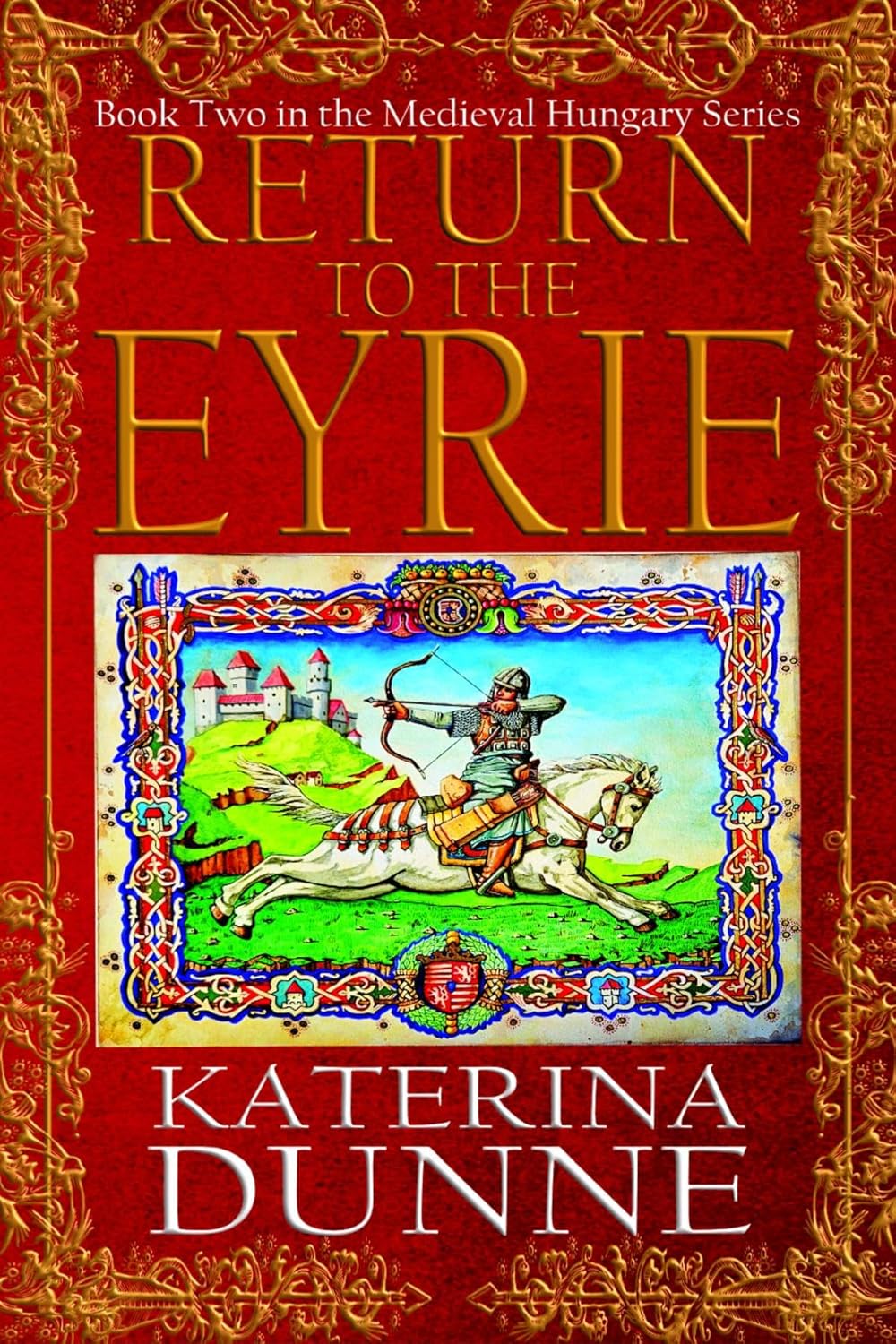
Book Corner: Return to the Eyrie by Katerina Dunne

Honour, revenge, and the quest for justice.

Belgrade, Kingdom of Hungary, 1470

Raised in exile, adolescent noblewoman Margit Szilágyi dreams of returning to her homeland of Transylvania to avenge her father’s murder and reclaim her stolen legacy. To achieve this, she must break the constraints of her gender and social status and secretly train in combat. When the king offers her a chance at justice, she seizes it – even if it means disguising herself as a man to infiltrate the vultures’ nest that now occupies her ancestral ‘eyrie’. Plagued by childhood trauma and torn between two passionate loves, Margit faces brutal battles, her murderous kin’s traps and inner demons on her quest for vengeance. Only by confronting the past can she reclaim her honour – if she can survive long enough to see it through. Return to the Eyrie is an epic coming-of-age tale of a young woman’s unwavering pursuit of justice and destiny in 15th century Hungary.

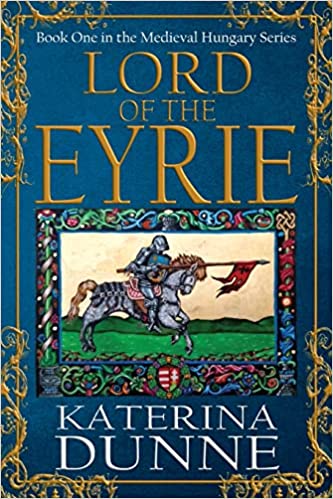
A couple of years ago, I had the pleasure of reading and reviewing Lord of the Eyrie by Katerina Dunne, a novel set in late medieval Hungary. It was a fascinating introduction to a country whose History I know very little about. And the story was incredible, a family drama, with vivid battle scenes and intricately woven plotlines. It certainly left me wanting more. It was an absolute pleasure to read. So, when Katerina told me she had written a sequel, I jumped at the chance to read it. I was intrigued as to how the story would continue.

And it is a stunning sequel to Lord of the Eyrie, following the daughter of Sandor, the hero in the first book, who is trying to find out exactly what happened to her father. She also wants to clear his name. unscrupulous enemies branded Sandor a traitor. Margit aims to prove he wasn’t.

Margit grew up without family, protected by her nurse and her father’s best friend, and knowing that she had been deprived of her inheritance and position in the world. The search for the truth drives her. But she is not the traditional Hungarian girl. A born leader, she learns to fight – against her father’s enemies and against the life that is planned out for her.

In the lambent glow of the oil lamp, Ahmed traced a thumb down the flat of Margit’s blade, carefully like touching a precious gem. “Beautiful,” he murmured.

“Will you show me how to use it?”

Fixed on the etching, Ahmed’s eyes narrowed, and his forehead wrinkled as though his mind was caughter by a distant recollection. “Where did you find this?”

Margit swallowed back her sudden apprehension. “Why do you ask?”

“You didn’t steal it, did you?”

“No!” She snatched the dagger from Ahmed’s hand, placed it back in its box and slammed the lid shut. “It’s mine.” She wrapped her arms about her precious possession.

“Why are you so angry?” Adnan ventured but shrank back at once, cowering under her fierce gaze.

“Forgive me,” Ahmed said. “I don’t know the family, but I remember the coat of arms.”

Margit’s stomach tightened. “You do?”

“An old story. Some other time. You don’t keep Erzsi waiting outside.”

He waved Margit away, but she let the canvas bag with her other gifts drop from her shoulder. “Erzsi will not mind waiting. Please, tell me.”

Ahmed cleared his throat. His eyes wandered away to times long past. “When Sultan Mehmed besieged Belgrade fifteen years ago, I fought beside Janissaries against Hunyadi’s army -“

“General Janos Hunyadi? The king’s late father?” Margit interrupted him, eyes wide open with excitement.

The general was her own father’s overlord. Hungary’s bravest protector as Imre always referred to him, tearing every time he uttered his name.

Ahmed nodded. “Yes. His defenders trapped us in the town. I killed many but then saw this tall and skilled knight. No Shield; just a sword in one hand and axe in the other, slaying Janissaries like untrained peasants.” He pointed at Margit’s box. “He wore this coat of arms. I thought I must stop him. I attacked. But I never fought anyone like him. By Allah, he had no fear; didn’t care if he lives or dies.”

Margit is a wonderful heroine, determined to seek out the truth, and to forge her own path. Not always aware of, or concerned for, the feelings of others, the teenager searches out her own destiny and confronts her enemies, putting herself and those who love her in danger.

Margit is not always a likeable heroine. She is sometimes selfish. But, she is a teenage girl who has lost practically everything – family, home, identity. In trying to recover what is lost, she becomes a more sympathetic character, learning to compromise and reach an understanding with those around her. The reader will become invested in her journey.

Return to the Eyrie by Katerina Dunne is set in medieval Hungary, a land which Katerina Dunne recreates in astonishing detail. The landscape, the settlements, castles and people help to draw the reader into the story. Hungary is a land rich in resources but beset by enemies, both within and without, and the heroine, Margit, must navigate not only national politics, international enemies but also her own identity as a young woman and the daughter of an accused traitor.

It is a wonderful, rich and absorbing story. I highly recommend it!

To Buy the Book:

Return to the Eyrie is available in paperback and on Kindle from Amazon – and is currently only 49p, so snap it up!

About the author:

Katerina Dunne is the pen-name of Katerina Vavoulidou. Originally from Athens, Greece, Katerina has been living in Ireland since 1999. She has a degree in English Language and Literature from the University of Athens, an MA in Film Studies from University College Dublin and an MPhil in Medieval History from Trinity College Dublin. While she used to write short stories for family and friends in her teenage years, she only took up writing seriously in 2016-17, when she started work on her first novel.

Katerina’s day job is in financial services, but in her free time she enjoys reading historical fiction and watching historically-themed movies and TV series. She is passionate about history, especially medieval history, and her main area of interest is 13th to 15th century Hungary. Although the main characters of her stories are fictional, Katerina uses real events and personalities as part of her narrative in order to bring to life the fascinating history of the medieval Kingdom of Hungary, a location and time period not so well-known to English-speaking readers.

*

My Books:

Signed, dedicated copies of all my books are available through my online bookshop.

Coming 30 January 2025: Scotland’s Medieval Queens

Scotland’s history is dramatic, violent and bloody. Being England’s northern neighbour has never been easy. Scotland’s queens have had to deal with war, murder, imprisonment, political rivalries and open betrayal. They have loved and lost, raised kings and queens, ruled and died for Scotland. From St Margaret, who became one of the patron saints of Scotland, to Elizabeth de Burgh and the dramatic story of the Scottish Wars of Independence, to the love story and tragedy of Joan Beaufort, to Margaret of Denmark and the dawn of the Renaissance, Scotland’s Medieval Queens have seen it all. This is the story of Scotland through their eyes.

Available for pre-order now.

Also by Sharon Bennett Connolly:

Heroines of the Tudor World tells the stories of the most remarkable women from European history in the time of the Tudor dynasty, 1485-1603. These are the women who ruled, the women who founded dynasties, the women who fought for religious freedom, their families and love. Heroines of the Tudor World is now available for pre-order from Amberley Publishing and Amazon UK. Women of the Anarchy demonstrates how Empress Matilda and Matilda of Boulogne, unable to wield a sword themselves, were prime movers in this time of conflict and lawlessness. It shows how their strengths, weaknesses, and personal ambitions swung the fortunes of war one way – and then the other. Available from Bookshop.orgAmberley Publishing and Amazon UKKing John’s Right-Hand Lady: The Story of Nicholaa de la Haye is the story of a truly remarkable lady, the hereditary constable of Lincoln Castle and the first woman in England to be appointed sheriff in her own right. Available from all good bookshops Pen & Sword Booksbookshop.org and Amazon

Defenders of the Norman Crown: The Rise and Fall of the Warenne Earls of Surrey tells the fascinating story of the Warenne dynasty, from its origins in Normandy, through the Conquest, Magna Carta, the wars and marriages that led to its ultimate demise in the reign of Edward III. Available from Pen & Sword BooksAmazon in the UK and US, and Bookshop.orgLadies of Magna Carta: Women of Influence in Thirteenth Century England looks into the relationships of the various noble families of the 13th century, and how they were affected by the Barons’ Wars, Magna Carta and its aftermath; the bonds that were formed and those that were broken. It is now available in paperback and hardback from Pen & SwordAmazon, and Bookshop.orgHeroines of the Medieval World tells the stories of some of the most remarkable women from Medieval history, from Eleanor of Aquitaine to Julian of Norwich. Available now from Amberley Publishing and Amazon, and Bookshop.orgSilk and the Sword: The Women of the Norman Conquest traces the fortunes of the women who had a significant role to play in the momentous events of 1066. Available now from Amazon,  Amberley Publishing, and Bookshop.org.

Alternate Endings: An anthology of historical fiction short stories including Long Live the King… which is my take what might have happened had King John not died in October 1216. Available in paperback and kindle from Amazon.

Podcast:

Have a listen to the A Slice of Medieval podcast, which I co-host with Historical fiction novelist Derek Birks. Derek and I welcome guests, such as Bernard Cornwell, and discuss a wide range of topics in medieval history, from significant events to the personalities involved.

*

Don’t forget! Signed and dedicated copies of all my books are available through my online bookshop.

For forthcoming online and in-person talks, please check out my Events Page.

You can be the first to read new articles by clicking the ‘Follow’ button, liking our Facebook page or joining me on TwitterThreadsBluesky and Instagram.

©2024 Sharon Bennett Connolly FRHistS

Guest Post: In the Footsteps of Royalty: Exploring the Plantagenets on Our First Historic Adventure by Maxine Sommer

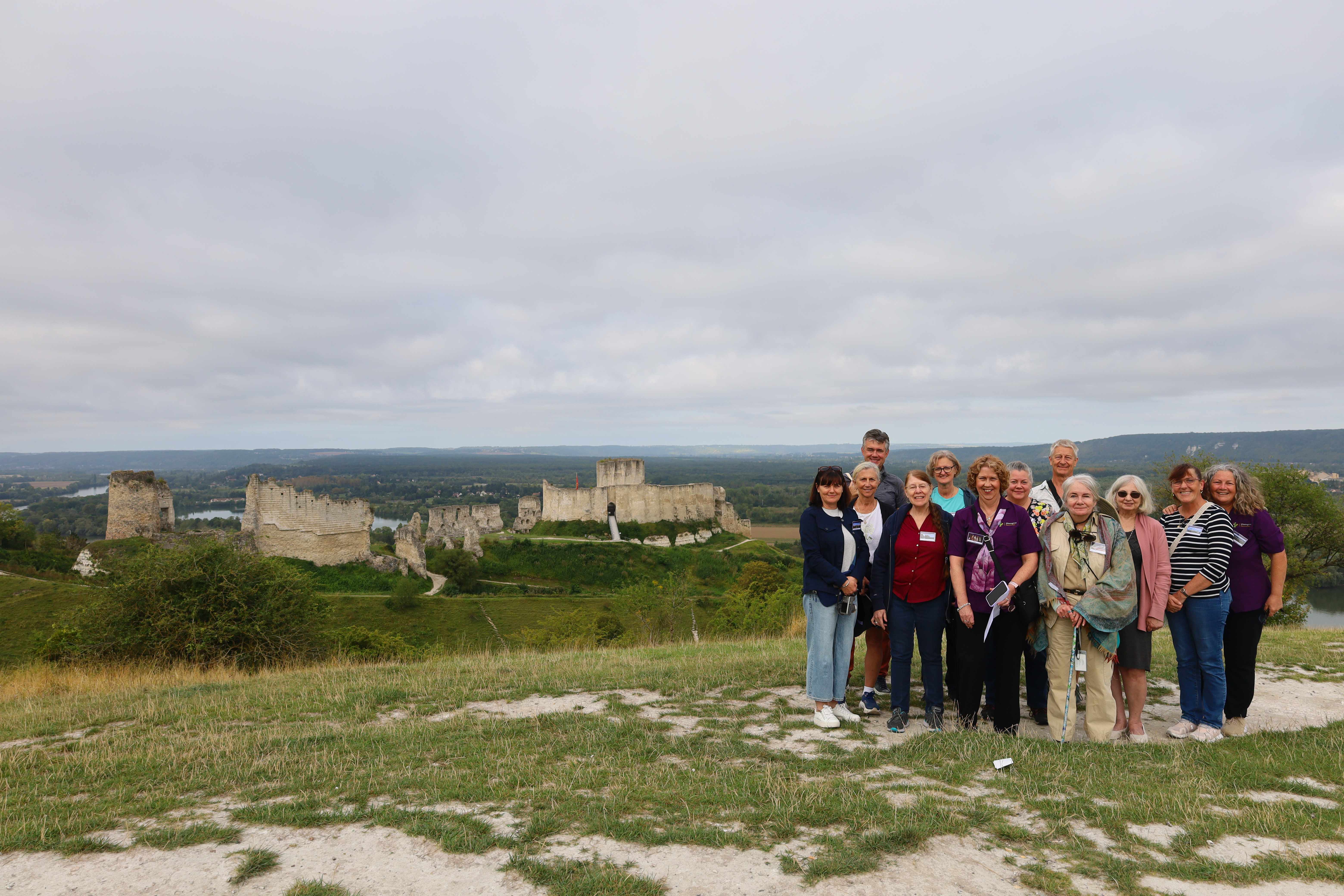
Today, it is a pleasure to welcome my friend Maxine Sommer back to History…the Interesting Bits. This summer, Maxine led a tour group of History fans through France in search of the Plantagenets, stopping at some iconic landmarks associated with Henry II, Eleanor of Aquitaine and the rest of the most famous – and at times, infamous – medieval royal family.

Over to Maxine….

In the Footsteps of Royalty: Exploring the Plantagenets on Our First Historic Adventure

“Journeying Through Medieval Masterpieces and Iconic Landmarks”

Château Gaillard: A Castle of Triumph and Tragedy

Château Gaillard

From day one, we dove into history headfirst with a visit to the imposing ruins of Château Gaillard. Though often hailed as Richard the Lionheart’s crowning achievement, this fortress holds layers of much more history than that. In 1314, it became the prison of two daughters-in-law of King Philip IV, key figures in the infamous Tour de Nesle Affair, a scandal that rocked the French court. A couple of decades later, the castle played host to Scotland’s child king, David II, and his bride, offering a royal respite before his return to reclaim his kingdom.

With the help of our brilliant guide Ange, we traced the rise and fall of Chateau Gaillard, from its hasty construction under Richard I to its swift capture by King Philip Augustus of France after John’s ill-fated reign. Standing among the weathered stone walls, it was easy to imagine its days of glory and power, but also to understand how quickly a once-unstoppable fortress could be toppled under weaker leadership. Chateau Gaillard’s story is not just one of medieval might but also a reminder of the delicate balance of power that shaped the Plantagenet era.

The Magnificent Bayeux Tapestry: A Stitch in Time

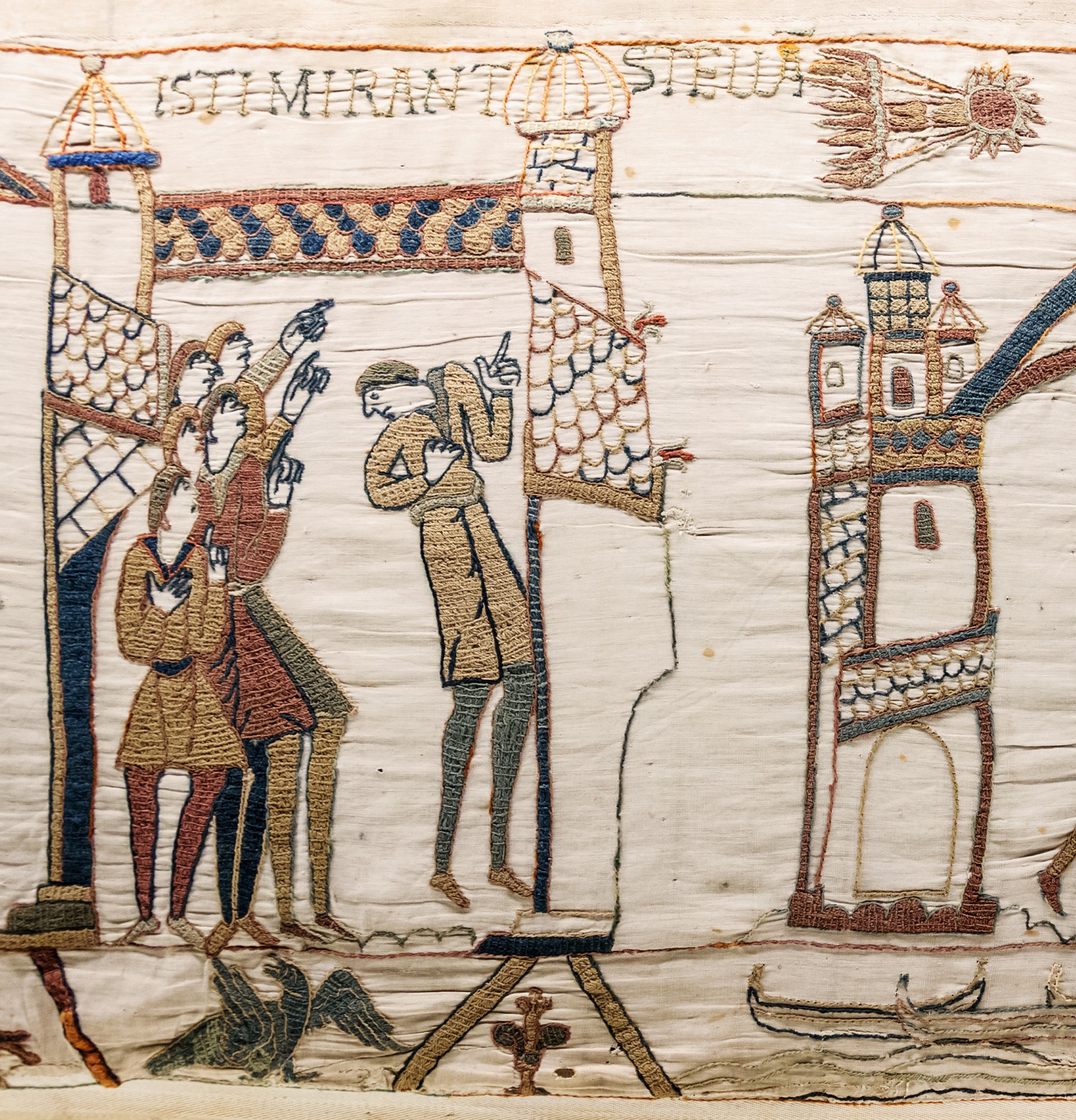
Though the Bayeux Tapestry predates the Plantagenets by nearly a century, it remains an essential highlight for anyone captivated by the medieval period. No amount of reading can prepare you for the sheer grandeur of this stunning masterpiece, meticulously crafted by hand to narrate the dramatic lead-up to the Norman invasion of England. The vibrant details leap to life, showcasing a vivid display that is nothing short of extraordinary.

One moment that particularly struck me was a scene depicting King Harold’s hasty departure for Normandy—his men, so rushed, they left without their shoes, splashing barefoot through the water as they headed to their ships. It’s these small yet poignant details that bring the narrative to life, showcasing the dedication of the women who painstakingly wove this epic tale.

Beyond the tapestry itself, the adjoining museum is a treasure trove of information, shedding light not just on this remarkable artifact but also on the broader historical context of the era. Visiting the Bayeux Tapestry is an unforgettable experience that will truly immerse you in the rich history of Normandy.

Mont Saint-Michel: A Dreamlike Retreat

Mont St Michel

This tidal island certainly lives up to its UNESCO World Heritage status, sadly though, as with most sites like this, the allure of their fame can bring overwhelming crowds, making it challenging to fully appreciate their beauty. To create an unforgettable experience for my group, I arranged for us to stay overnight on the island—a decision that transformed our visit into something truly magical. As the day’s tourists departed, we found ourselves wandering the winding paths of Mont Saint-Michel in peaceful solitude. The island’s enchanting atmosphere became even more pronounced as twilight descended, allowing us to immerse ourselves in its rich history without the jostle of crowds.

The journey across the causeway to Mont Saint-Michel feels like a step back in time, as the abbey loomed larger, the closer we got to the gate. Approaching the island in this way adds to the otherworldly feeling, transporting you to a different realm entirely.

One of my guests, Dianne, perfectly captured the essence of our experience in her review: “The highlight for me was staying overnight on the island of Mont Saint-Michel. I will never forget watching the sun come up and the light making the abbey glow.” Her words echo the indescribable wonder we all felt, creating memories that will last a lifetime.

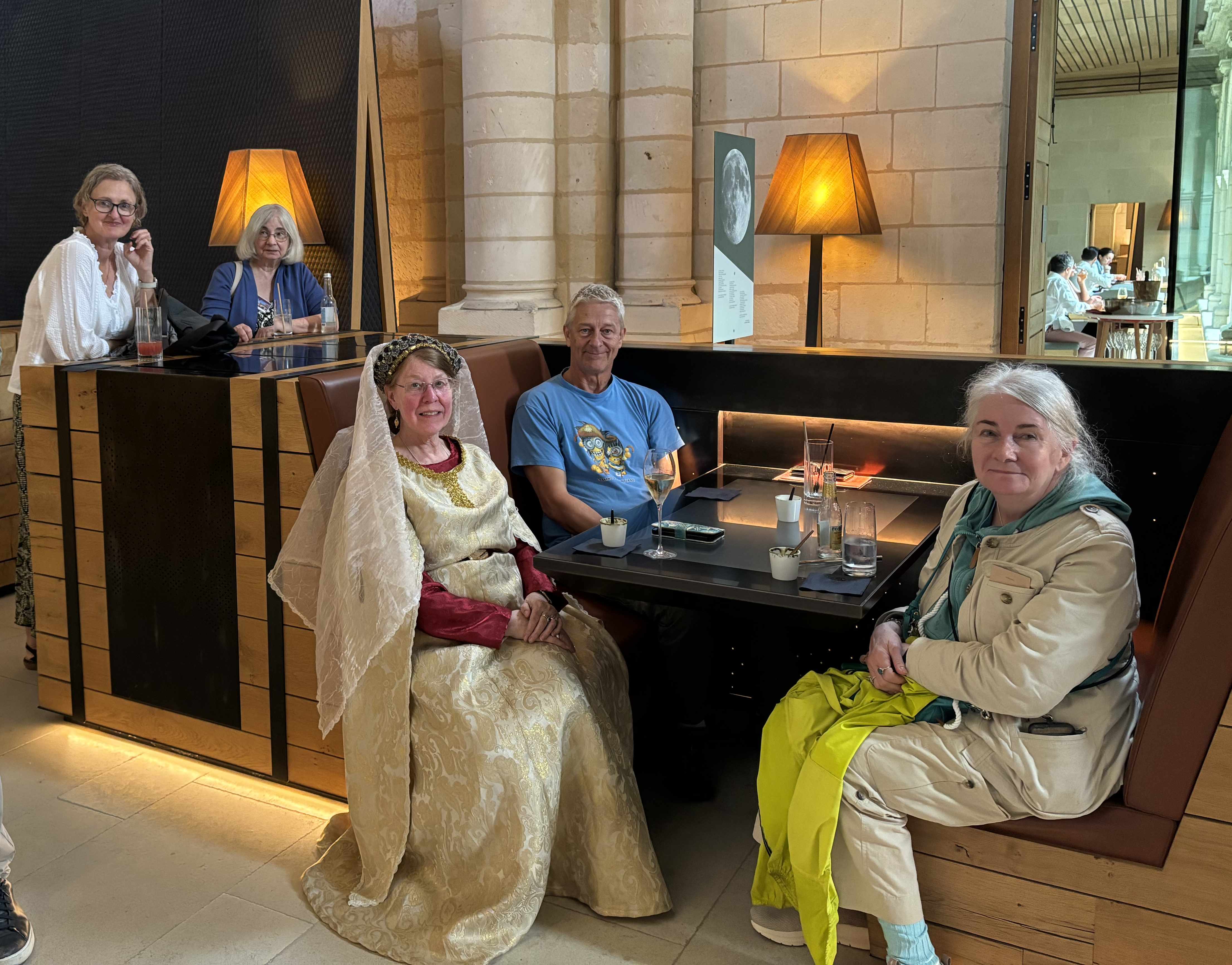
Fontevraud Abbey: Where History, Serenity, and Culinary Splendour Meet

Queen Eleanor at the Abbey

For anyone captivated by the Plantagenets, a visit to Fontevraud Abbey—final resting place of the indomitable Eleanor of Aquitaine—is often a dream come true. Several of my group members had long wished to stand before her effigy, so it was clear that this site would be a highlight of our tour. Yet, what awaited us at Fontevraud far exceeded expectations.

Our stay at Fontevraud l’Hôtel, situated within the abbey grounds, offered the unique luxury of exploring the abbey well into the night, with its tranquil beauty only deepening as the moonlight bathed its ancient stones. But what truly made this visit unforgettable was the dining experience. I selected the abbey’s famed “lunar menu,” a modern interpretation of the simple yet refined meals once enjoyed by the monks and nuns who lived here centuries ago. What followed was a culinary journey that transcended time—an extraordinary feast of countless, artfully prepared courses that delighted the senses.

To top it all off, we were treated to a special visit from “Queen Eleanor” herself, brought to life by our talented group member Donna in costume, creating an enchanting atmosphere that perfectly rounded out our unforgettable night at the Abbey.

Guédelon: A Medieval Masterpiece in the Making

Guedelon Medieval Site

Though its connection to the Plantagenets lies only in the era, Guédelon captivated us with its sheer ambition and authenticity. This extraordinary project, set within an unused quarry, is an ongoing attempt to build a 13th-century castle using only the materials and techniques of the medieval period. It was like stepping back in time—without the school excursion chaos! We had the chance to speak with the craftsmen, each dedicated to recreating history one stone at a time. It’s mind-boggling to witness the painstaking effort that goes into building each section of the castle by hand, giving us a new appreciation for the scale of historical construction.

As we walked through Guédelon, I couldn’t help but reflect on Château Gaillard, which we visited earlier in the tour—a fortress that Richard the Lionheart had built in just two years. While Richard’s team had far more manpower in 1196, the ongoing construction of Guédelon, which began in 1997, has taken 27 years and is still far from complete.

Adding to the authenticity, the village that houses the volunteers lives strictly by 13th-century standards. They grow their own food, dress in period-appropriate clothing, and cook using medieval techniques. It’s a living glimpse into the past and an absolute must-visit for history enthusiasts.

“Unraveling the Tales of an Intriguing Plantagenet Legacy”

Richard I, the Lionheart

Château Châlus-Chabrol

A Plantagenet-themed tour through France wouldn’t be complete without constant references to the Angevins. Unsurprisingly, Richard the Lionheart was a recurring figure throughout our journey, from the stunning ruins of Château Gaillard—Richard’s pride and joy—to his embalmed heart at Rouen Cathedral, and finally to Château Châlus-Chabrol, where he met his end after receiving a fatal crossbow wound. Along the way, there were lively debates about his merits as a king and husband, discussions that seemed to spill over into several coach rides and castle visits!

But the most amusing conversation of all came after our visit to Château Châlus-Chabrol. According to local legend, Richard’s entrails were buried in the chapel of the castle where he died, the very castle he had been besieging when he was fatally wounded. As we travelled on, our group began to ponder this curious story—if Richard was the enemy, how likely was it that the castle’s defenders would have invited him into their chapel to die comfortably by the fire? Surely, the reality was less cozy than that! This debate sparked plenty of laughs and camaraderie, as we cheerfully unraveled the mystery of Richard’s final days. It was moments like this that truly made the tour so memorable, blending history with humour and shared insights.

Henry II

Chinon Castle

On the evening of Day 4, just outside Poitiers, I arranged a lively group discussion before dinner, with the spotlight on none other than Henry II. The topic was particularly fitting after our earlier visit to the impressive Chinon Castle, a stronghold that played a key role in his reign. Over a glass or two of wine, our conversation quickly sparked debates about the enigmatic first Plantagenet king.

For many, Henry II is synonymous with the infamous murder of Thomas Becket in December 1170—a crime that shocked Europe, with Becket killed on the very floor of Canterbury Cathedral. Henry’s tumultuous relationships with his sons, often called the ‘Devil’s Brood,’ and the long imprisonment of his formidable wife, Eleanor of Aquitaine, have painted a rather dark image of him in the pages of history. And yet, I have a dear friend who defends Henry passionately, believing history has judged him too harshly. This made me eager to hear the views of my group.

I was not disappointed. What followed was a fascinating and animated discussion about Henry’s complexity, revealing both his flaws and strengths. Like many moments on our journey, everyone felt welcome to share their opinions, creating a warm and open exchange that deepened our collective understanding of this remarkable, yet often misunderstood, king.

The Hundred Years’ War

Group discussion: Hundred Years’ War

Beyond the Angevins, one of the most pivotal topics of our journey through France was the prolonged struggle for the French crown between the Plantagenet kings of England and the Valois kings of France, famously known as The Hundred Years’ War. This conflict defined a significant part of Plantagenet history in France, so I was especially excited to organize another pre-dinner group discussion on Day 8.

I am sure most of the group had read accounts of this struggle from an English perspective, however I was curious to explore its impact on the French people. Now, what better way to do that, than by hearing the insights of our

exceptional guide, Ange, a native Frenchman, who provided a fresh and compelling view of the war from the French side. His perspective gave us a different and not unbalanced understanding of this conflict.

It’s not often us history ‘nerds’ can engage in such thoughtful debates over a glass of wine, and this particular evening felt like another one of those perfect moments of camaraderie and learning that made our journey so incredible.

Eleanor of Aquitaine

Great Hall at Poitiers

No 10-night Plantagenet-themed tour through France would be complete without a deep dive into the life of the most remarkable queen of them all, Eleanor of Aquitaine. Our journey took us to some of the most significant places in her life, from the serene beauty of Fontevraud Abbey, where we had the privilege of visiting her effigy and reflecting on her final days, to the lively city of Poitiers, where she held court with unmatched influence for so many years.

We also ventured to Bordeaux, a region now synonymous with world-class wine, a commodity that owes much of its early prominence to Eleanor’s marriage to Henry, Duke of Normandy—later Henry II of England. Despite the challenges and turbulence of their union, the marriage of these two dynamic figures laid the foundation for a dynasty that ruled for 331 years.

Our discussions about Eleanor were as vibrant as her extraordinary life. From her imprisonment at the hands of her own husband to her daring voyages to the Holy Land—one of which took place when she was nearly 70 years old—we marveled at her resilience and power. And finally, we reflected on the peace she found at Fontevraud, where she spent her final days in quiet reflection at the abbey she so loved.

I hope you’ve enjoyed this glimpse into our amazing journey. For more stories and discoveries from my first tour, visit my blog and uncover all the memorable experiences we shared beyond just mere history: plantagenetdiscoveries.com.

We’re gearing up for the next adventure in July, and you won’t want to miss it! Mention this article when you reach out http://www.plantagenetdiscoveries.com/contact for an exclusive discount—I’d love to welcome you on board for our next historical journey.

*

My Books:

Signed, dedicated copies of all my books are available through my online store.

OUT NOW! Heroines of the Tudor World

Heroines of the Tudor World tells the stories of the most remarkable women from European history in the time of the Tudor dynasty, 1485-1603. These are the women who ruled, the women who founded dynasties, the women who fought for religious freedom, their families and love. These are the women who made a difference, who influenced countries, kings and the Reformation. In the era dominated by the Renaissance and Reformation, Heroines of the Tudor World examines the threats and challenges faced by the women of the era, and how they overcame them. From writers to regents, from nuns to queens, Heroines of the Tudor World shines the spotlight on the women helped to shape Early Modern Europe.

Heroines of the Tudor World is now available for pre-order from Amberley Publishing and Amazon UK.

Coming 30 January 2025: Scotland’s Medieval Queens

Scotland’s history is dramatic, violent and bloody. Being England’s northern neighbour has never been easy. Scotland’s queens have had to deal with war, murder, imprisonment, political rivalries and open betrayal. They have loved and lost, raised kings and queens, ruled and died for Scotland. From St Margaret, who became one of the patron saints of Scotland, to Elizabeth de Burgh and the dramatic story of the Scottish Wars of Independence, to the love story and tragedy of Joan Beaufort, to Margaret of Denmark and the dawn of the Renaissance, Scotland’s Medieval Queens have seen it all. This is the story of Scotland through their eyes.

Available for pre-order now.

Also by Sharon Bennett Connolly:

Women of the Anarchy demonstrates how Empress Matilda and Matilda of Boulogne, unable to wield a sword themselves, were prime movers in this time of conflict and lawlessness. It shows how their strengths, weaknesses, and personal ambitions swung the fortunes of war one way – and then the other. Available from Bookshop.orgAmberley Publishing and Amazon UKKing John’s Right-Hand Lady: The Story of Nicholaa de la Haye is the story of a truly remarkable lady, the hereditary constable of Lincoln Castle and the first woman in England to be appointed sheriff in her own right. Available from all good bookshops Pen & Sword Booksbookshop.org and AmazonDefenders of the Norman Crown: The Rise and Fall of the Warenne Earls of Surrey tells the fascinating story of the Warenne dynasty, from its origins in Normandy, through the Conquest, Magna Carta, the wars and marriages that led to its ultimate demise in the reign of Edward III. Available from Pen & Sword BooksAmazon in the UK and US, and Bookshop.org

Ladies of Magna Carta: Women of Influence in Thirteenth Century England looks into the relationships of the various noble families of the 13th century, and how they were affected by the Barons’ Wars, Magna Carta and its aftermath; the bonds that were formed and those that were broken. It is now available in paperback and hardback from Pen & SwordAmazon, and Bookshop.orgHeroines of the Medieval World tells the stories of some of the most remarkable women from Medieval history, from Eleanor of Aquitaine to Julian of Norwich. Available now from Amberley Publishing and Amazon, and Bookshop.orgSilk and the Sword: The Women of the Norman Conquest traces the fortunes of the women who had a significant role to play in the momentous events of 1066. Available now from Amazon,  Amberley Publishing, and Bookshop.org.

Alternate Endings: An anthology of historical fiction short stories including Long Live the King… which is my take what might have happened had King John not died in October 1216. Available in paperback and kindle from Amazon.

Podcast:

Have a listen to the A Slice of Medieval podcast, which I co-host with Historical fiction novelist Derek Birks. Derek and I welcome guests, such as Bernard Cornwell, and discuss a wide range of topics in medieval history, from significant events to the personalities involved.

*

Don’t forget! Signed and dedicated copies of all my books are available through my online store.

For forthcoming online and in-person talks, please check out my Events Page.

You can be the first to read new articles by clicking the ‘Follow’ button, liking our Facebook page or joining me on TwitterThreads and Instagram.

*

©2024 Sharon Bennett Connolly FRHistS and Maxine Sommer

Guest Post: Empresses, Saints and Female-Kings: The Four Great-Granddaughters of King Ladislaus the Elbow-High by Katarzyna Ogrodnik-Fujcik

Today it is a pleasure to welcome my good friend, Kasia Ogrodnik to History…the Interesting Bits with a little bit of Polish history for us. I have been wanting to tell the story of King Jadwiga since writing about her in Heroines of the Medieval World. But Kasia is far better qualified to write about her compatriot, Poland’s famous female king and saint, and Jadwiga’s influential female relatives.

So, over to Kasia…

Empresses, Saints and Female-Kings: The Four Great-Granddaughters of King Ladislaus the Elbow-High

Charles IV, King of Bohemia and Holy Roman Emperor and Anna of Schweidnitz [Anna Świdnicka], c. 1357, Chapel of St. Katherine, Karlstejn

The night of 19 May 1365 saw a young girl leaving Pisa on horseback. With her hair loose, clad only in her nightgown she was galloping to safety after fire broke out in Palazzo degli Anziani. Judging by her looks no one would have guessed this girl was in fact Holy Roman Empress and Queen of Bohemia. 

Anna of Schweidnitz, Silesia (today Poland), was the only child of Duke Henry II, the grandson of King Ladislaus the Elbow-High of Cracow (Poland). Upon her father’s death she was placed under the care of his elder brother, her uncle, Bolko II the Small. The ruler of the small, but politically important duchy, Bolko was the last independent Silesian Piast. Since Charles IV of Luxembourg intended to annex the entirety of Silesia to the Kingdom of Bohemia, Bolko’s duchy, being the only missing part, was crucial to his plans. To secure the Schweidnitz inheritance Charles married Anna and this is how her journey began. Of course, she was not the only great-granddaughter of King Ladislaus to make an illustrious career. His three other great-granddaughters were to leave their marks on the world, too, and indelible ones. Two of them were to be crowned ”kings” and one proclaimed  saint. 

Anna of Schweidnitz [Anna Świdnicka], bust in St Vitus Cathedral, Prague, c. 1370

Anna of Schweidnitz (b.1339), Queen of Bohemia and Holy Roman Empress, was Charles IV of Luxembourg’s third wife. Initially she was betrothed to his son, Wenceslaus, but the boy died while still very young. His mother, Charles’s second wife died too shortly afterwards. To secure the Schweidnitz succession Charles decided to marry his late son’s fiancee himself. Anna was raised and educated at the splendid court of Queen Elizabeth of Poland (her late father’s aunt) at Buda, where she was sent by her uncle and official guardian, Duke Bolko II the Small. It was there where she and Charles were married in the closing days of  May 1353. Shortly afterwards the newlyweds returned to Prague and paid a visit to Schweidnitz, where the succession treaty was signed according to which the duchy was to be inherited by Anna and her children by Charles upon the death of her uncle Bolko and his wife Agnes of Habsburg. On 28 July 1353, Anna was crowned Queen of Bohemia and the following year, on 9 February 1354, Queen of Germany. The year 1355 saw the royal couple in Italy, where on Easter Sunday (5 April 1355) they were crowned Holy Roman Emperor and Holy Roman Empress in a splendid ceremony in the Basilica of Saint Peter, Rome.

Anna and Charles’s first child, a daughter, Elizabeth, was born in 1358. Charles was overjoyed, but Anna felt she failed her husband (which we know thanks to her surviving correspondence with Petrarch). A much awaited son and heir arrived three years later, named Wenceslaus, traditional name of the rulers of Bohemia. He was to become Charles’ beloved and favoured child. Anna died on 11 July 1362, in childbirth, aged 23. The child did not survive, either, and they were buried together in St Vitus Cathedral, Prague. Anna was remembered for her personal charm and sweet nature. Not only did she receive a bluestocking education, but she was also considered one of the style icons of her time, her reputation as a great beauty resting on the surviving images created during her lifetime and shortly after her untimely death. Tradition has it that of Charles’ four wives it was Anna he loved most. Stricken with grief upon her passing, he did not remarry until a political situation forced him to. His fourth wife was Anna’s kin, Elizabeth of Pomerania, also great-granddaughter of King Ladislaus the Elbow-High. 

Elizabeth of Pomerania (Eliška Pomořanská, Elżbieta Pomorska)

 
Reliquary Shrine of Elizabeth of Poland, Queen of Hungary, Maria and Jadwiga’s paternal grandmother, attributed to Jean de Touyl, ca. 1350 . Metropolitan Museum of Art, New York

Elizabeth was a daughter of Duke Bogusław the Great of Pomerania and Princess Elżbieta of Poland. In 1362 her maternal grandfather, King Casimir the Great of Poland together with his nephew, Louis the Great of Hungary, dukes of Austria and Bavaria formed a coalition against Charles IV of Luxembourg. The opposing parties found themselves on the verge of war, which did not break out, however, perhaps due to Anne of Schweidnitz’s untimely death. The rulers came to terms instead and a marriage was forged to consolidate their agreement. Charles was to marry Elizabeth. He was thrice her age, shorter than her and not very attractive. She was described as beautiful, full of life, and as fit as a fiddle. Stories had it that she could break horseshoes with her own hands. She was an avid horse rider and hunter. 

The wedding ceremony was celebrated in Kraków on 21 May 1363. Afterwards the couple travelled together to Prague where Elizabeth was crowned Queen of Bohemia. Five years later her imperial coronation at Rome followed. Despite the age difference she and Charles got along well, being married for fifteen years. Their union produced six children, four of whom were to reach adulthood. Charles and Elizabeth’s eldest child, a daughter Anne, was to marry Richard II and become Queen Consort of England. Their son, Sigismund was to be crowned King of Bohemia, Hungary and Holy Roman Emperor. Charles IV died in 1378. Elizabeth herself was to outlive her husband for fifteen years. She died in 1393 and like his three wives before her, she was buried in St Vitus Cathedral, Prague.

Mária [Mary] of Anjou, King of Hungary

The coats of arms of Hungary and Poland, c. 1340. Treasury of Aachen Cathedral, Germany

Mary was one of the three daughters of Louis the Great of Hungary and his second wife, Elizabeth of Bosnia. In 1379, Mary’s elder sister Catherine died, leaving her and her sister Jadwiga Louis’s sole surviving children. The matter of Polish succession had been on the agenda long before Mary was born. Upon King Casimir the Great’s death in 1370 his nephew, Mary’s father, Louis was crowned king of Poland. Initially it was Mary, who was to succeed him as the king of Poland, but the events took a different turn, and in the end she was replaced by her younger sister, Jadwiga [Hedwig]. 

Mary was crowned “king” of Hungary on 17 September 1382, seven days after her father’s death. However, the idea of a female monarch was not popular among the Hungarian nobility. Many nobles considered Charles III of Naples, Mary’s distant cousin, the lawful heir. 

Charles landed in Dalmatia in September 1385. In October Mary was married to Sigismund of Luxembourg, however, this  could not prevent Charles from entering the capital.  Mary was forced to renounce the throne and Charles’s coronation took place on 31 December 1385. He did not rule for long. Two months later, in February 1386, he was murdered, most probably at the instigation of Mary’s mother. Mary was restored, but in July she and her mother were captured by the dead king’s supporters. Famed for her beauty, but not for her political decisions, Mary’s mother met a violent end. After imprisonment by her opponents in Novigrad castle, she was found guilty of the murder of Charles III of Naples and strangled to death before her daughter’s own eyes, her body put on display, hanging on a rope from the castle walls. Mary survived and was rescued by her husband, Sigismund, who was crowned king of Hungary afterwards. Mary officially remained his co-ruler, but had no real influence on the government. She died on 17 May 1395 after falling from a horse during a hunting accident. She was pregnant at the time. Her prematurely born son did not survive either. 

Jadwiga [Hedwig] of Anjou, king and patron saint of Poland

Jadwiga and Maria, their mother and their sister Catherine as depicted on the St Simeon’s casket, Zadar, Croatia

Mary’s younger sister, Hedwig was born on 18 February 1374, being the youngest of the three daughters of Louis the Great of Hungary and Elizabeth of Bosnia. 

Both Mary and Jadwiga received a bluestocking education, Jadwiga both at the cultivated court of Hungary and in Vienna, at the court of her future father-in-law. Not only could Jadwiga read and write, but she also spoke fluent Latin and German. As the king of Poland she owned a big library and always  showed an active and generous support of scholars and learning institutions.

Since Polish nobles did not like the idea of Mary’s consort, Sigismund of Bohemia, becoming de facto their king, they appealed to Elizabeth of Bosnia, the dowager queen, who had assumed regency, asking to send the younger of her two surviving daughters to Kraków. Elizabeth agreed and absolved the Polish nobles from the oath of loyalty they had pledged to Mary. 

Jadwiga’s coronation took place on 16 October 1384 in Wawel Cathedral, Kraków, where she was crowned ”king” of Poland. On 18 January 1385 the Lithuanian delegation came to the capital and a meeting was held with the representatives of the Polish nobility. Jadwiga was to marry the ruler of pagan Lithuania, Jogaila. In the opening days of 1386, Jadwiga publicly called off her engagement to Wilhelm Habsburg and married newly baptised Jogaila, who was to come down in history under his new name, Władysław Jagiełło [Ladislaus Jagiellon]. At the time of their wedding she was twelve, he was thirty-five. Władyslaw was crowned king on 4 March 1386. 

Despite her young age Jadwiga continued to play an active role in the administration and politics of her realm. She conducted the negotiations with the knights of the Teutonic Order, but also on the Hungarian front. Jadwiga conferred with her sister Mary on numerous occasions. Their meetings were held both in Hungary and in Lesser Poland. She also intervened in Lithuania, where she peacefully resolved dynastic disputes between the ruling fractions.

Jadwiga’s tomb effigy from 1902 by Antoni Madeyski, Wawel Cathedral, Kraków, Poland. The queen’s earthly remains were transferred here from her original resting place at the high altar in 1949 and stayed here till 1987. Then they were transferred to the altar with the Black Crucifix

She was famed for her charity and showing great care to the poor and the ill. Her active and generous support of scholars and learning institutions did not waver over the years. In her last will she donated all her jewelry, her rich dresses and other valuable objects to the Kraków Academy (the first Polish university founded by Kazimierz Wielki), now the Jagiellonian University. Additionally, she founded a dormitory for Polish students at the University of Prague. 

Jadwiga died from complications in childbirth on 17 July 1399. She was twenty-five at the time. Her daughter did not survive, either. Almost immediately after her death, Jadwiga’s tomb became the focus of miracles and the destination of pilgrimages. Her cult flourished, with her canonization first mentioned during the funeral ceremony. However, it was to take seven centuries before she was actually canonised by Pope John Paul II. Ever since she has been recognised as patron saint of Poland and considered Polish national hero. 

About the author:

Katarzyna Ogrodnik-Fujcik specializes in British literature and history, her area of expertise being the first Plantagenets (the Angevins). She lives in Poland. She writes for different magazines and websites on Polish and European Middle Ages. She runs a blog dedicated to Henry the Young King. She consulted a BBC documentary on William Marshal.

*

My Books:

Signed, dedicated copies of all my books are available through my online store.

OUT NOW! Heroines of the Tudor World

Heroines of the Tudor World tells the stories of the most remarkable women from European history in the time of the Tudor dynasty, 1485-1603. These are the women who ruled, the women who founded dynasties, the women who fought for religious freedom, their families and love. These are the women who made a difference, who influenced countries, kings and the Reformation. In the era dominated by the Renaissance and Reformation, Heroines of the Tudor World examines the threats and challenges faced by the women of the era, and how they overcame them. From writers to regents, from nuns to queens, Heroines of the Tudor World shines the spotlight on the women helped to shape Early Modern Europe.

Heroines of the Tudor World is now available for pre-order from Amberley Publishing and Amazon UK.

Coming 30 January 2025: Scotland’s Medieval Queens

Scotland’s history is dramatic, violent and bloody. Being England’s northern neighbour has never been easy. Scotland’s queens have had to deal with war, murder, imprisonment, political rivalries and open betrayal. They have loved and lost, raised kings and queens, ruled and died for Scotland. From St Margaret, who became one of the patron saints of Scotland, to Elizabeth de Burgh and the dramatic story of the Scottish Wars of Independence, to the love story and tragedy of Joan Beaufort, to Margaret of Denmark and the dawn of the Renaissance, Scotland’s Medieval Queens have seen it all. This is the story of Scotland through their eyes.

Available for pre-order now.

Also by Sharon Bennett Connolly:

Women of the Anarchy demonstrates how Empress Matilda and Matilda of Boulogne, unable to wield a sword themselves, were prime movers in this time of conflict and lawlessness. It shows how their strengths, weaknesses, and personal ambitions swung the fortunes of war one way – and then the other. Available from Bookshop.orgAmberley Publishing and Amazon UKKing John’s Right-Hand Lady: The Story of Nicholaa de la Haye is the story of a truly remarkable lady, the hereditary constable of Lincoln Castle and the first woman in England to be appointed sheriff in her own right. Available from all good bookshops Pen & Sword Booksbookshop.org and AmazonDefenders of the Norman Crown: The Rise and Fall of the Warenne Earls of Surrey tells the fascinating story of the Warenne dynasty, from its origins in Normandy, through the Conquest, Magna Carta, the wars and marriages that led to its ultimate demise in the reign of Edward III. Available from Pen & Sword BooksAmazon in the UK and US, and Bookshop.org

Ladies of Magna Carta: Women of Influence in Thirteenth Century England looks into the relationships of the various noble families of the 13th century, and how they were affected by the Barons’ Wars, Magna Carta and its aftermath; the bonds that were formed and those that were broken. It is now available in paperback and hardback from Pen & SwordAmazon, and Bookshop.orgHeroines of the Medieval World tells the stories of some of the most remarkable women from Medieval history, from Eleanor of Aquitaine to Julian of Norwich. Available now from Amberley Publishing and Amazon, and Bookshop.orgSilk and the Sword: The Women of the Norman Conquest traces the fortunes of the women who had a significant role to play in the momentous events of 1066. Available now from Amazon,  Amberley Publishing, and Bookshop.org.

Alternate Endings: An anthology of historical fiction short stories including Long Live the King… which is my take what might have happened had King John not died in October 1216. Available in paperback and kindle from Amazon.

Podcast:

Have a listen to the A Slice of Medieval podcast, which I co-host with Historical fiction novelist Derek Birks. Derek and I welcome guests, such as Bernard Cornwell, and discuss a wide range of topics in medieval history, from significant events to the personalities involved.

*

Don’t forget! Signed and dedicated copies of all my books are available through my online store.

For forthcoming online and in-person talks, please check out my Events Page.

You can be the first to read new articles by clicking the ‘Follow’ button, liking our Facebook page or joining me on TwitterThreads and Instagram.

*

©2024 Sharon Bennett Connolly FRHistS and Katarzyna Ogrodnik-Fujcik

Guest Post: Medieval Hungary by Katerina Dunne

Today, it is a pleasure to welcome author Katerina Dunne to History…the Interesting Bits. With her fabulous novel, Lord of the Eyrie, Katerina introduced me to the fascinating history of medieval Hungary, something a knew very little about. And I wanted to know more. Katerina has just released a sequel, Return to the Eyrie and has joined me to give us a little historical background to her stories.

Medieval Hungary by Katerina Dunne

The history of medieval Hungary is fascinating, yet few in the English-speaking world know much about it. From groups of nomadic people raiding across Europe in the 9th – 10th century, the Hungarian conquerors settled in the Carpathian basin, converted to Christianity and, together with the peoples they found already living there, created a powerful multi-ethnic and multi-lingual kingdom, which at its peak stretched from Southern Poland to the Adriatic Sea and from lower Austria to Central Romania as the below map of 15th century Europe demonstrates:

My two historical fiction novels, Lord of the Eyrie (released in February 2022) and Return to the Eyrie (released in April 2024) make up a family saga that spans forty years (1440 to 1480) and two generations. They are set mostly in Transylvania (a province of the medieval Kingdom of Hungary) The noble family is fictional, but I have presented them as branches of powerful baronial clans from Transylvania and Eastern Hungary, so they interact with real historical figures and participate in real historical events.

The 15th century was a turbulent time for the Kingdom of Hungary due to internal conflict as well as the expansionist efforts of the Ottoman Empire towards the west and north. After the Ottoman conquest of Serbia and Bosnia, and the submission of Wallachia to the Sultan as a vassal state, Hungary became the last frontier holding back the Ottoman advance towards Central Europe.

The years between 1440 and 1456 were dominated by the formidable personality of János Hunyadi, a lesser nobleman with obscure origins (likely Wallachian or possibly Cuman), whose military successes against the Ottomans elevated him to the ranks of the most powerful barons and earned him the title of Voivode (governor) of Transylvania and later Captain General and Regent of the Kingdom. At the peak of his power, Hunyadi was the richest landowner in the Kingdom of Hungary, holding about 2 million acres of land spread over 5 modern-day countries (Hungary, Romania, Serbia, Slovakia and Ukraine) He even loaned money to the king at times.

János Hunyadi in the Chronica Hungarorum by János Thuróczy – picture from Wikipedia

Although Hunyadi lost two major pitched battles against the Ottomans (the battle of Varna in 1444 and the battle of Kosovo in 1448), he achieved several victories against them in various campaigns and sieges. His last and biggest triumph was at the siege of Belgrade in July 1456, when the united forces of the city’s Serbian defenders, Hunyadi’s Transylvanian and mercenary army and a motley crowd of crusaders from lesser nobility, burghers, students, clergy and peasants defeated the mighty Sultan Mehmed the Second, the conqueror of Contstantinople. Hunyadi died in August 1456 of the plague which had spread in Belgrade in the aftermath of the siege.

As it often happens, when a powerful leader dies, chaos ensues among those who strive to take advantage. Hunyadi’s eldest son, László, inherited his father’s vast estates and titles. However, Hunyadi’s old rival, Count Ulrich of Cilli (modern-day Celje in Slovenia) – who was the Hungarian king’s relative – was not going to let this go. Cilli and László Hunyadi got involved in an incident during the king’s visit to Belgrade (which was under the Hunyadi family’s control) that led to Cilli’s death. Although the king (also called László) forgave the younger Hunyadi, he changed his mind when he returned to his palace in Buda. Under the influence of several powerful barons who opposed the Hunyadi family, the king arrested both Hunyadi’s sons, László and fourteen-year-old Mátyás, in the spring of 1457. While he had László executed, he imprisoned Mátyás and many of their supporters.

Furious about the events, Hunyadi’s widow, Erzsébet Szilágyi and her brother Mihály, started a rebellion in Transylvania which almost brought the kingdom to its knees. King László fled to Vienna but took Mátyás with him. When the king died suddenly at the young age of 17 from an illness, the Bohemian ruler George of Podebrady became Mátyás’ captor.

But the king’s death meant that Hungary was in need of a new ruler. After intense negotiations (which probably included promises, bribes and intimidation), Erzsébet and Mihály Szilágyi won the support of the other barons and declared the absent young Mátyás as the new king in January 1458. The legend has it that the Royal Council deliberated in Buda Castle and made the public announcement while the crowds of lesser nobles stood literally on the river Danube, the waters of which had frozen solid.

Following negotiations and a large ransom of 60,000 gold florins, Podebrady released Mátyás to his family, and the teenager was finally enthroned in February 1458. He could not be crowned though because the Hungarian Holy Crown was in the hands of the Holy Roman Emperor, Frederick III. How the crown had ended up there is another story—one of the most fascinating episodes in late medieval Hungarian history— which deserves a separate post. It took another four years and the astronomical sum of 80,000 gold florins to recover the crown. Mátyás was finally crowned with all the appropriate ceremony on 29 March 1464.

King Mátyás Hunyadi in the Chronica Hungarorum by János Thuróczy – picture from Wikipedia

He became known as Mátyás Corvinus (nicknamed The Raven King because of the Hunyadi coat of arms, which depicted a raven with a golden ring in its beak) One of the most important rulers in 15th century Europe, he brought the Italian Renaissance and Humanism to Hungary, upgraded the royal palance in Buda, established the famous Corvina Library and was the patron of many scholars and artists. Due to the fact that he was a member of the nobility rather than of royal blood, he faced strong opposition both from inside Hungary and from abroad (Holy Roman Empire, Bohemia and Poland) and he had to fight several wars to secure his grip on the throne. He kept a defensive stance towards the Ottomans, with relative success, and competed with them in his efforts to influence politics in neighbouring Wallachia, Moldavia and Bosnia. Mátyás is well-known for keeping Prince Vlad III of Wallachia (Vlad the Impaler) imprisoned for several years before finally releasing him in 1475 in order to place him on the Wallachian throne as an ally.

Mátyás conquered Vienna in 1485 and was negotiating his possible future designation as Holy Roman Emperor when he died in April 1490.

He has since become the subject of many legends not only in Hungary, but in several neighbouring Central European countries.

About the books:

János Hunyadi appears as a secondary character in my first book, Lord of the Eyrie, while King Mátyás plays a small but pivotal role in the sequel, Return to the Eyrie.

Even though these are parts of a two-volume family saga, each book can be read as a standalone.

Both novels are available in ebook and paperback format on Amazon:

To Buy:

Lord of the Eyrie is available from Amazon in the UK and the US.

Return to the Eyrie is now available in the UK and the US.

About the Author:

Katerina Dunne is the pen-name of Katerina Vavoulidou. Originally from Athens, Greece, Katerina has been living in Ireland since 1999. She has a degree in English Language and Literature from the University of Athens, an MA in Film Studies from University College Dublin and an MPhil in Medieval History from Trinity College Dublin.

Katerina is passionate about history, especially medieval history, and her main area of interest is 13th to 15th century Hungary. Although the main characters of her stories are fictional, Katerina uses real events and personalities as part of her narrative in order to bring to life the fascinating history of the medieval Kingdom of Hungary, a location and time period not so well-known to English-speaking readers.

You can contact Katerina by email: through her FB page: and on Goodreads.

*

My Books:

Signed, dedicated copies of all my books are available through my online bookshop.

Out Now! Women of the Anarchy

Two cousins. On the one side is Empress Matilda, or Maud. The sole surviving legitimate child of Henry I, she is fighting for her birthright and that of her children. On the other side is her cousin, Queen Matilda, supporting her husband, King Stephen, and fighting to see her own son inherit the English crown. Women of the Anarchy demonstrates how these women, unable to wield a sword, were prime movers in this time of conflict and lawlessness. It show how their strengths, weaknesses, and personal ambitions swung the fortunes of war one way – and then the other.

Available from Bookshop.orgAmberley Publishing and Amazon UK.

Coming on 15 June 2024: Heroines of the Tudor World

Heroines of the Tudor World tells the stories of the most remarkable women from European history in the time of the Tudor dynasty, 1485-1603. These are the women who ruled, the women who founded dynasties, the women who fought for religious freedom, their families and love. These are the women who made a difference, who influenced countries, kings and the Reformation. In the era dominated by the Renaissance and Reformation, Heroines of the Tudor World examines the threats and challenges faced by the women of the era, and how they overcame them. From writers to regents, from nuns to queens, Heroines of the Tudor World shines the spotlight on the women helped to shape Early Modern Europe.

Heroines of the Tudor World is now available for pre-order from Amberley Publishing and Amazon UK.

Also by Sharon Bennett Connolly:

King John’s Right-Hand Lady: The Story of Nicholaa de la Haye is the story of a truly remarkable lady, the hereditary constable of Lincoln Castle and the first woman in England to be appointed sheriff in her own right. Available from all good bookshops or direct from Pen & Sword Booksbookshop.org and AmazonDefenders of the Norman Crown: The Rise and Fall of the Warenne Earls of Surrey tells the fascinating story of the Warenne dynasty, from its origins in Normandy, through the Conquest, Magna Carta, the wars and marriages that led to its ultimate demise in the reign of Edward III. Available from Pen & Sword BooksAmazon in the UK and US, and Bookshop.org

Ladies of Magna Carta: Women of Influence in Thirteenth Century England looks into the relationships of the various noble families of the 13th century, and how they were affected by the Barons’ Wars, Magna Carta and its aftermath; the bonds that were formed and those that were broken. It is now available in paperback and hardback from Pen & Sword,  Amazon, and Bookshop.orgHeroines of the Medieval World tells the stories of some of the most remarkable women from Medieval history, from Eleanor of Aquitaine to Julian of Norwich. Available now from Amberley Publishing and Amazon, and Bookshop.orgSilk and the Sword: The Women of the Norman Conquest traces the fortunes of the women who had a significant role to play in the momentous events of 1066. Available now from Amazon,  Amberley Publishing, and Bookshop.org.

Alternate Endings: An anthology of historical fiction short stories including Long Live the King… which is my take what might have happened had King John not died in October 1216. Available in paperback and kindle from Amazon.

Podcast:

Have a listen to the A Slice of Medieval podcast, which I co-host with Historical fiction novelist Derek Birks. Derek and I welcome guests, such as Bernard Cornwell and Elizabeth Chadwick, and discuss a wide range of topics in medieval history, from significant events to the personalities involved.

*

Don’t forget! Signed and dedicated copies of all my books are available through my online bookshop.

For forthcoming online and in-person talks, please check out my Events Page.

You can be the first to read new articles by clicking the ‘Follow’ button, liking our Facebook page or joining me on Twitter and Instagram.

*

©2024 Katerina Dunne and Sharon Bennett Connolly FRHistS.

Book Corner: Anthony Woodville, Sophisticate or Schemer? by Danielle Burton

The Woodville family are synonymous with the Wars of the Roses. While much has been published on the family as a whole, especially Elizabeth, wife of Edward IV, Anthony Woodville – the favourite sibling of Elizabeth – has been largely overlooked by history. He is famed for his arrest and execution in June 1483, but there is much more to learn from his life. Woodville was a man with an important cultural role. He was a knight, had a successful jousting career, and worked with the printing pioneer William Caxton. He was the printer’s only long-lasting patron in England and acted as translator for him, using the books printed by Caxton to educate Edward, Prince of Wales, the future Edward V.

This book seeks to bring Anthony Woodville out of the shadows of history, giving him the recognition he deserves and challenging the negative perceptions around him by investigating his personality and personal achievements in military, diplomatic and literary capacities.

I have always had the impression that Anthony Woodville would have stood out in any period of history. A Renaissance man, he championed the arts, patronised the printing press, was a renowned jouster and so well respected by his king that he was entrusted with the education and upbringing of the Prince of Wales – the future King Edward V.

I do think Woodville would have stood out in any generation, but it didn’t hurt that his sister was Elizabeth Woodville, Queen of England.

Anthony Woodville, as the queen’s brother, was at the centre of events during the reign of Edward IV. He accompanied his brother-in-law into exile when Henry VI briefly reclaimed the throne in 1470-71. He appeared in tournaments to celebrate the marriage of the king’s sister, Margaret, to the future duke of Burgundy. He was a poet and writer and was a patron of William Caxton, the man who brought the printing press to England. Caxton printed and published Woodville’s English translation of The Dictes and Sayings of the Philosophers. So why is there not a larger body of work on him?

Danielle Burton has rectified this omission with her fascinating, in-depth study, Anthony Woodville, Sophisticate or Schemer? She delves deep into Woodville’s life, family, loves and career.

The Woodville family are often viewed as grasping and power hungry. This is true of some of the family members, particularly Thomas Grey, Marquess of Dorset, who was the eldest son of Anthony’s sister Elizabeth by her first marriage to John Grey. However, Anthony, while of course benefitting from the advancement of his sister to the status of queen, notably avoided meddling wherever possible. His interests in piety, tutoring Edward, the Prince of Wales, jousting, and translating books let him play a background role in the Wars of the Roses.

While Anthony Woodville may have been a secondary figure in political terms, it is clear that he had a significant part in transforming English culture, especially through his patronage of William Caxton, as well as his tutelage of Edward. Prince of Wales, who resided at Ludlow Castle for around ten years. According to Dominic Mancini, and Italian visitor who stayed in England between late summer 1482 and July 1483, Anthony Woodville was ‘always considered a kind, serious and just man’ who was ‘tested by every vicissitude of life.’ It was for this reason that he had been entrusted with the ‘care and direction’ of the prince. Further to Mancini’s description of Anthony, he purposefully contrasts his character with that of other Woodvilles, who were ‘detested by the nobles.’ There is a certain amount of truth in this, for unlike some other family members Anthony preferred to stay away from court life, favouring more academic and religious pursuits.

As a debut work, Anthony Woodville, Sophisticate or Schemer? is very impressive. It is clear that Danielle Burton has done her research, thoroughly, using primary sources where possible. She uses her extensive knowledge of Anthony Woodville to suggest reasons for his actions and to fill in the gaps of our knowledge, clearly indicating her theories and supporting arguments. There are some minor errors, which other reviewers have highlighted, but nothing that changes the thrust of the arguments nor detracts from the enjoyment of reading. They certainly do not devalue the biography as a whole and are more a sign of the writer’s inexperience of the editing process. I certainly would not expect it to put a reader off.

I suspect Anthony Woodville is Danielle’s historical crush, but this adds to the passion in her retelling of his story. We all fall in love with our subjects, just a little bit. You cannot spend years studying a person without doing so.

Danielle Burton’s arguments are balanced and do not present Anthony Woodville and some flawless super hero. Rather, he is an accomplished knight who had his flaws and would often look to his own advantage. Who wouldn’t? He was, however, loyal to Edward IV and his nephew, Edward V. And, having been the younger Edward’s guardian since his early years, was probably a great influence on the teenage king. This would Explain why Richard, Duke of Gloucester – the future Richard III – saw him as a threat. In Anthony Woodville, Sophisticate or Schemer? Danielle looks into the events of 1483 in great detail, examining the relationship between Richard and Anthony and analysing what went wrong and why. Anthony Woodville’s execution at Pontefract Castle is a tragic consequence of the power struggle that followed the death of Edward IV and accession of Anthony’s charge, Edward V.

All in all, Anthony Woodville, Sophisticate or Schemer? by Danielle Burton is a much-needed addition to the study of the Wars of the Roses, highlighting a man of great influence who is often overlooked in favour of his royal contemporaries. It is an impressive piece of work.

Listen to: Danielle Burton talking about Anthony Woodville, Sophisticate or Schemer? with myself and Derek Birks on our podcast, on A Slice of Medieval.

To Buy the Book: Anthony Woodville, Sophisticate or Schemer? is available from Amazon or direct from Amberly Publishing.

About the Author: Danielle Burton has had a keen interest in the Wars of the Roses from a young age, including being a member of the Richard III Society since the age of 9. She has presented aspects of her research into the life of Anthony Woodville at various academic conferences, and works in the heritage sector.

*

My Books:

Signed, dedicated copies of all my books are available through my online bookshop.

Out Now! Women of the Anarchy

Two cousins. On the one side is Empress Matilda, or Maud. The sole surviving legitimate child of Henry I, she is fighting for her birthright and that of her children. On the other side is her cousin, Queen Matilda, supporting her husband, King Stephen, and fighting to see her own son inherit the English crown. Women of the Anarchy demonstrates how these women, unable to wield a sword, were prime movers in this time of conflict and lawlessness. It show how their strengths, weaknesses, and personal ambitions swung the fortunes of war one way – and then the other.

Available from Bookshop.orgAmberley Publishing and Amazon UK.

Coming on 15 June 2024: Heroines of the Tudor World

Heroines of the Tudor World tells the stories of the most remarkable women from European history in the time of the Tudor dynasty, 1485-1603. These are the women who ruled, the women who founded dynasties, the women who fought for religious freedom, their families and love. These are the women who made a difference, who influenced countries, kings and the Reformation. In the era dominated by the Renaissance and Reformation, Heroines of the Tudor World examines the threats and challenges faced by the women of the era, and how they overcame them. From writers to regents, from nuns to queens, Heroines of the Tudor World shines the spotlight on the women helped to shape Early Modern Europe.

Heroines of the Tudor World is now available for pre-order from Amberley Publishing and Amazon UK.

Also by Sharon Bennett Connolly:

King John’s Right-Hand Lady: The Story of Nicholaa de la Haye is the story of a truly remarkable lady, the hereditary constable of Lincoln Castle and the first woman in England to be appointed sheriff in her own right. Available from all good bookshops or direct from Pen & Sword Booksbookshop.org and AmazonDefenders of the Norman Crown: The Rise and Fall of the Warenne Earls of Surrey tells the fascinating story of the Warenne dynasty, from its origins in Normandy, through the Conquest, Magna Carta, the wars and marriages that led to its ultimate demise in the reign of Edward III. Available from Pen & Sword BooksAmazon in the UK and US, and Bookshop.org

Ladies of Magna Carta: Women of Influence in Thirteenth Century England looks into the relationships of the various noble families of the 13th century, and how they were affected by the Barons’ Wars, Magna Carta and its aftermath; the bonds that were formed and those that were broken. It is now available in paperback and hardback from Pen & Sword,  Amazon, and Bookshop.orgHeroines of the Medieval World tells the stories of some of the most remarkable women from Medieval history, from Eleanor of Aquitaine to Julian of Norwich. Available now from Amberley Publishing and Amazon, and Bookshop.orgSilk and the Sword: The Women of the Norman Conquest traces the fortunes of the women who had a significant role to play in the momentous events of 1066. Available now from Amazon,  Amberley Publishing, and Bookshop.org.

Alternate Endings: An anthology of historical fiction short stories including Long Live the King… which is my take what might have happened had King John not died in October 1216. Available in paperback and kindle from Amazon.

Podcast:

Have a listen to the A Slice of Medieval podcast, which I co-host with Historical fiction novelist Derek Birks. Derek and I welcome guests, such as Bernard Cornwell and Elizabeth Chadwick, and discuss a wide range of topics in medieval history, from significant events to the personalities involved.

*

Don’t forget! Signed and dedicated copies of all my books are available through my online bookshop.

For forthcoming online and in-person talks, please check out my Events Page.

You can be the first to read new articles by clicking the ‘Follow’ button, liking our Facebook page or joining me on Twitter and Instagram.

*

©2024 Sharon Bennett Connolly FRHistS