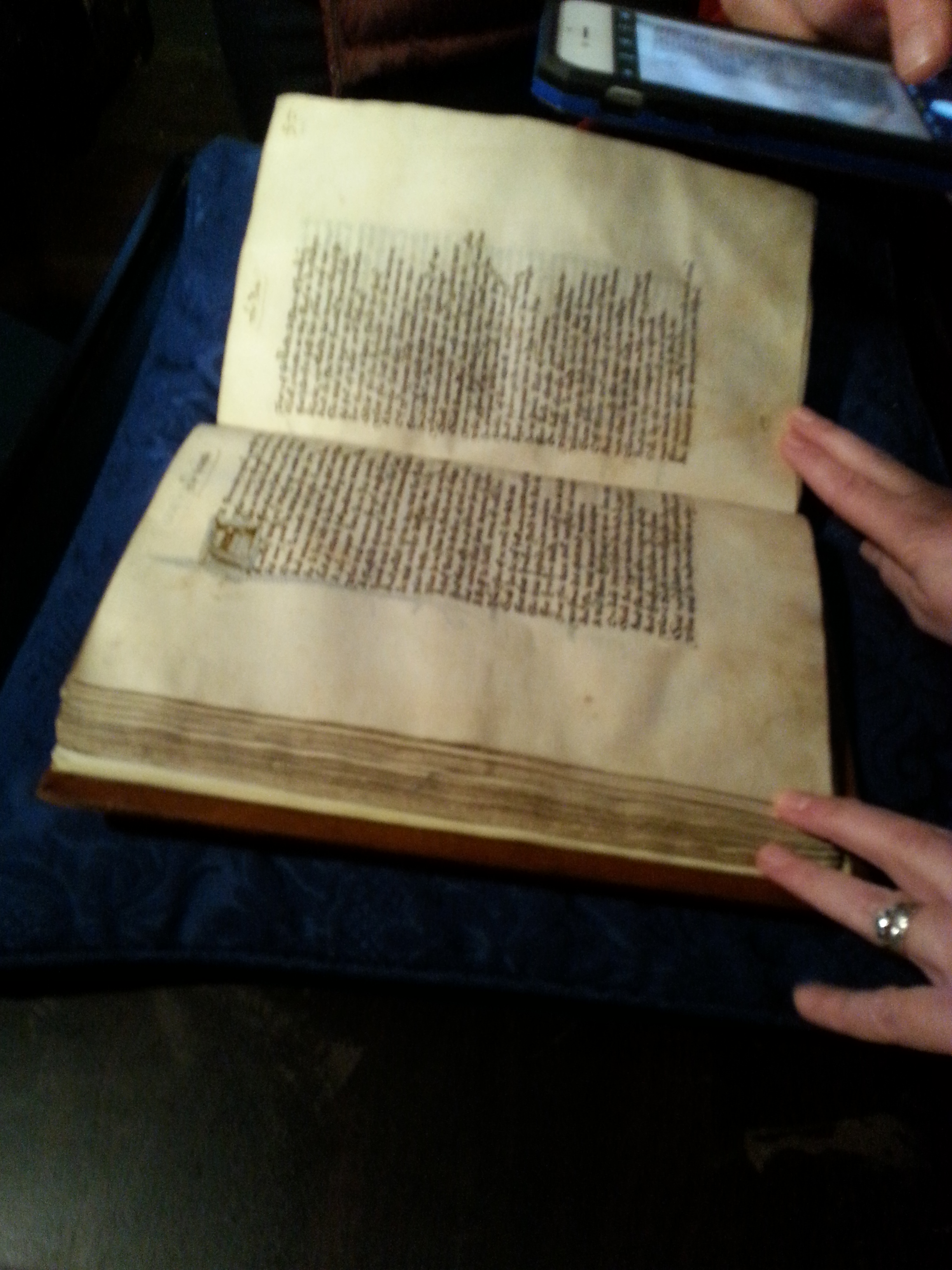
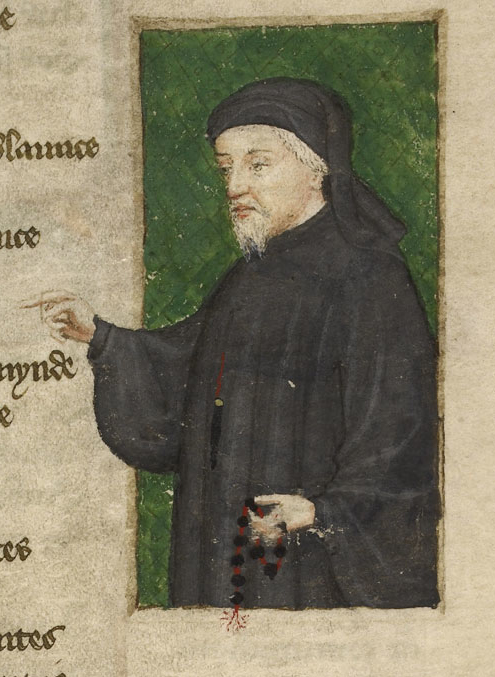
Geoffrey Chaucer is often referred to as the father of English Literature. The author of The Canterbury Tales was patronised by John of Gaunt, Duke of Lancaster. after entering the household of Elizabeth de Burgh, Countess of Ulster and wife of Lionel of Antwerp, Duke of Clarence, as a page, he rose high, to become a clerk, diplomat and courtier. Geoffrey Chaucer had married Philippa de Roelt (or Rouet), sister of Katherine Swynford, the third wife and Duchess of John of Gaunt, and the mother of Gaunt’s legitimised children, the Beauforts, loyal supporters of their Lancastrian half-brother, King Henry IV.
The granddaughter of the famous poet, Alice Chaucer was the only child, and heir, of Geoffrey’s son, Thomas Chaucer. Alice’s mother was Maud (or Matilda) Burghersh, co-heir of the Burghersh estates, which included the manor of Ewelme in Oxfordshire, where Alice was probably born, sometime around 1404. Nothing is known of Alice’s childhood, although, given her later success in estate management and preserving her son’s inheritance, we can assume that she had some level of education.
She is first mentioned in 1414, when she was around ten years old. Alice became the wife of Sir John Phelip, who was some twenty-four years her senior. Poor Alice had little time to get used to married life, and was still not old enough to consummate the marriage when she was widowed. Phelip died of dysentery at the Siege of Harfleur, a prelude to the Battle of Agincourt, on 2 October 1415. In his will, Alice was left a gold cup and all the furniture from one room of Phelip’s house at Grovebury. Still a minor, Alice probably returned home to her family after Phelip’s death, if she had ever left home.
Alice was married again by 1421, this time to Thomas Montagu, Earl of Salisbury. Salisbury’s daughter by his first wife, Eleanor Holland, was also called Alice, and was of a similar age to her new stepmother. Alice Montagu would marry Richard Neville, son of Joan Beaufort and Ralph Neville, Earl of Westmorland. Through his mother, Richard Neville was a grandson of John of Gaunt and first cousin, once removed, of Alice Chaucer.
Alice’s new husband was a soldier, and fought in the Hundred Years War in France. It was during a visit to France in 1424, to her husband, that Alice was at a banquet in Paris, hosted by Philip the good, Duke of Burgundy. Renowned for her beauty, it appears that Duke Philip was far too attentive to the Earl of Salisbury’s wife, infuriating the earl in his attempts to seduce poor Alice. Relations between the duke and the earl soured significantly, with Salisbury going against the interests of Burgundy in besieging Orléans. The siege was a disaster for Salisbury, the French were rallied by Joan of Arc. During the fighting, Salisbury was struck in the face by a splinter from a French cannon on 27 October 1428. He died a week later, on 3 November. In the same engagement, Salisbury’s good friend, William de la Pole, Earl of Suffolk, was captured by the French. Suffolk, it seems, was also fond of Alice and it is thought Alice was the mystery woman to whom he wrote love poetry during his two years of captivity.
Salisbury’s death left Alice a widow for a second time, but this time she was a very wealthy one. According to the terms of Salisbury’s will, Alice was left half of his net goods, 100 marks in gold and 3,000 marks in jewellery and plate, plus the revenues of his Norman lands. As a sign of his trust in Alice and her abilities, Salisbury had also named her as the supervisor of the will. A wealthy and beautiful widow, and still in her twenties, it is not surprising that by 1432, and possibly as early as 1430, Alice had made her third and final marriage. Her husband was the same William de la Pole, Earl of Suffolk, friend of her husband and, apparently, an admirer of Alice. It seems likely that they married shortly after his release from his French imprisonment.
The de la Pole family had risen from being wealthy wool merchants to the nobility, to nobility themselves. William’s grandfather, Michael de la Pole, was a favourite of Richard II, who had been promoted to the peerage as Earl of Suffolk. However, when Richard II’s personal rule was curbed by the Lords Appellant, Suffolk was one of those to take the brunt of the criticism. He fled into exile in 1388 and was sentenced to death in absentia; he died in Paris the following year. His son, another Michael and William’s father, was allied with the Appellant Lords and saw his goods and titles forfeit when Richard II regained control.
They were restored to him in 1398. Michael de la Pole, 2nd Earl of Suffolk, had five sons, of whom William was the second oldest. The de la Pole family gave everything fighting in the French wars, the second earl died of dysentery in 1415, during the same siege of Harfleur during which Alice’s first husband died, and his oldest son, another Michael, died in October of the same year, as one of the few noble casualties of the Battle of Agincourt; he was nineteen and had held the title Earl of Suffolk for just one month. William therefore succeeded to the earldom of Suffolk, but would lose his three remaining brothers to the French over the next twenty years: Alexander was killed in 1429, at the Battle of Jargeau, John died a prisoner in France and Thomas died while acting as hostage for William.
William himself spent decades fighting in France, as one of Henry VI’s senior commanders. This military service may well be the reason why, although William and Alice were married in the early 1430s, their only known child, John de la Pole, was not born until 27 September 1442. When still a child, John would be betrothed to his parents’ ward, Margaret Beaufort, sole heiress of Alice’s cousin, John Beaufort, Duke of Somerset.
William and Alice appear to have had a genuinely close, affectionate and trusting relationship. In his will of 1448, William appoints Alice as his sole executrix, giving her guardianship of their son, John, stating; ‘And last of all, with the blessing of God and of me as heartily as I can give it, my dear and true son, I bequeath between him and his mother love and all good accord and give him to her wholly’.1
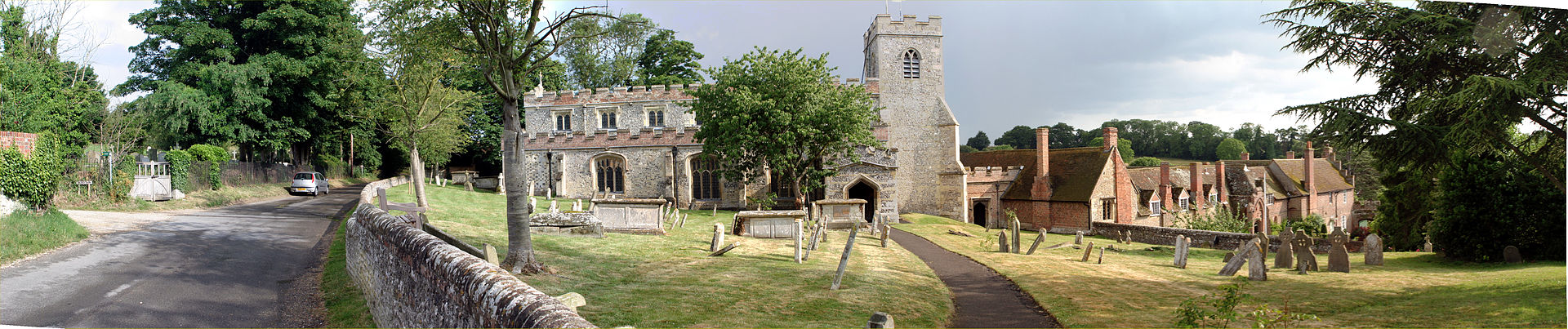
Although William’s family seat was a house at Wingfield, the couple spent most of their time at Alice’s house at Ewelme, where they enlarged the manor house, even receiving a papal dispensation to have a font installed in the chapel. They also rebuilt the parish church of St Mary the Virgin and established a school to educate local boys, the master of which was to be selected from the University of Oxford. William and Alice also built a series of almshouses, known as God’s House, to house thirteen almsmen and two priests, one of whom was to be the schoolmaster.
William de la Pole was deeply involved in the politics of the time. One of Henry VI’s most trusted advisers, it was William who led the embassy to arrange the king’s marriage to Margaret of Anjou, a cousin of the King of France. In November 1444, Alice accompanied her husband to France, along with the Earls of Shrewsbury and Salisbury, to bring back the king’s bride. Alice was to act as Margaret’s senior lady-in-waiting for the journey home and became her close friend; Queen Margaret would visit Alice at her husband’s manor of Wingfield during a progress through the Midlands in 1452. William, however, was to receive the brunt of the criticism for the marriage, which brought no benefit to England, as Margaret came without a dowry, and a secret clause in the marriage contract returned the conquered counties of Maine and Anjou to France.
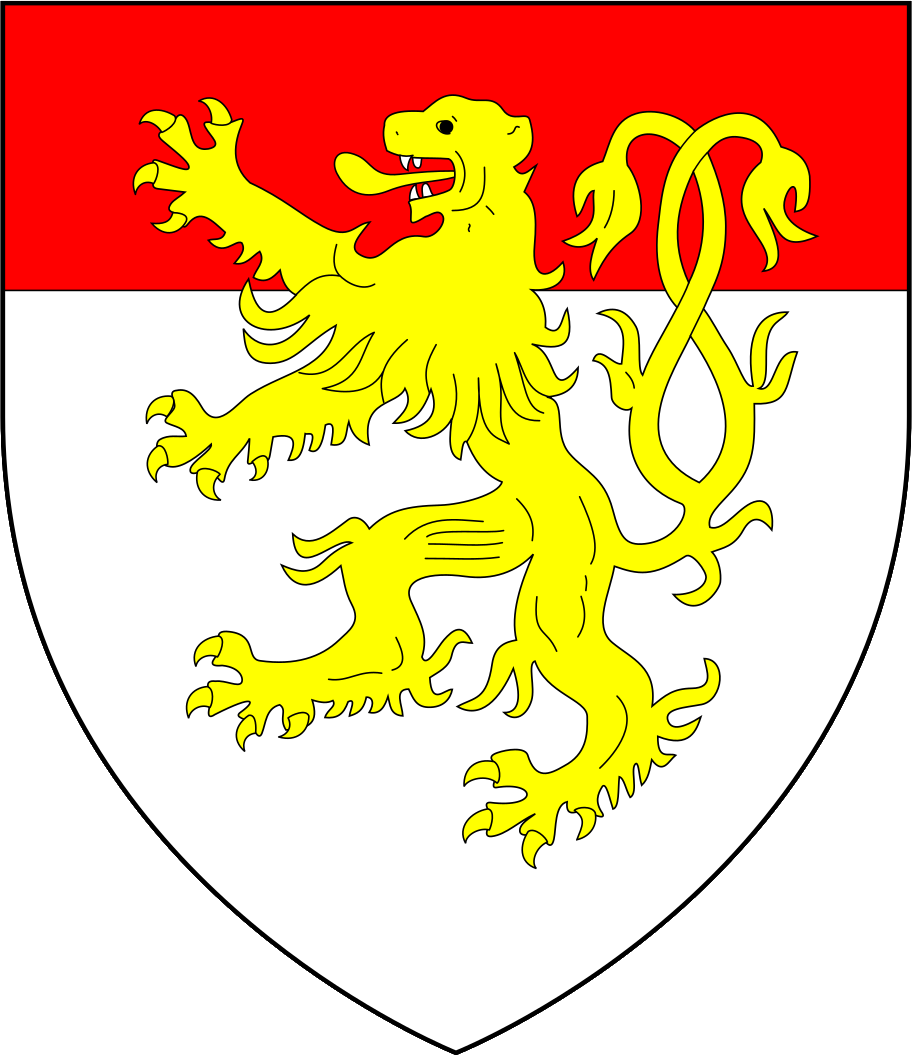
In 1448 William was created Duke of Suffolk by Henry VI. However, while he still had the confidence of the king, the lords turned against him and his downfall soon followed. He had fallen foul of the powerful Duke of York and became the scapegoat for the ineptitude of Henry VI’s policies. On 7 February 1450, the Paston Letters recorded Suffolk’s impeachment, which charged that:
William de la Pole, Duke of Suffolk, late of Ewelme, in the county of Oxford, falsely and traitorously hath imagined, compassed, purposed forethought, done and committed divers high, great, heinous, and horrible treasons against your most royal person, your commons of your realms of England and France, your duchy of Guienne and Normandy, and your whole inheritance of your county of Anjou and Maine, the estate and dignity of the same, and the universal wele and prosperity of all your true subjects.2
The king tried to stand by Suffolk, and refused to accept the charges of treason; he banished the Duke from the realm for five years. William de la Pole was given six weeks to set his affairs in order before leaving England on 1 May 1450. The Duke wrote a moving letter to his six-year-old son, John, full of fatherly advice and commending him to his mother, saying: ‘Thirdly, in the same wise, I charge you, my dear son, always, as you’re bound by the commandment of God to do, to love, to worship your lady and mother, and also that you obey always her commandments and to believe her councils and advice in all your works, the which dread not, but shall be best and truest to you. And if any other body would stir you to the contrary, to flee the counsel in any wise, for you shall find it nought and evil.’3

The letter is all the more poignant, as it turned out to be William de la Pole’s last communication with his son. He left England on the ship Nicholas of the Tower, but it was intercepted by unknown persons and on 2 May, 1450, the Duke of Suffolk was forced to endure a mock trial before he was gruesomely beheaded with a rusty sword. His body was left on the beach at Dover and his head stuck on a pole beside it. He was later buried at his family’s manor of Wingfield in Suffolk.
Widowed for a third and final time, Alice devoted her time and energies to protecting her son’s inheritance. On 8 May she secured the keeping of all the lands belonging to her husband. However, she was still an object of derision among the malcontents; she was one of those mentioned by name in a Commons petition to have people removed from court. Henry initially acquiesced, but failed to keep his promise to banish the twenty-nine people named in the petition and Alice remained at court as one of Queen Margaret’s ladies. She was with the queen at her churching on 18 November 1453, following the birth of Edward, prince of Wales. The magnificent ceremony was attended by six duchesses, including Alice, eight countesses and seven baronesses.
Alice proved to be a formidable Duchess, pursuing her family’s interests with the utmost vigour. Following her husband’s death, she continued in his claims to some manors in East Anglia, which belonged to John Fastolf. The Pastons, a prominent East Anglian
family who wrote a remarkable number of letters during this period, also laid claim to the lands following Fastolf’s death in 1459. The dispute over Caistor Castle continued long into the next decade. In 1469, John Paston wrote to his younger brother, another John, that ‘the Quene hath sent a letter unto my Lady of Suffolk the elder [Alice] desyryng theym to common [speak] with my lordis that all such matters as the Kyng wrote unto them fore mabe kept so that no defaute be founden in them, as ye may understand by youre lettre sent frome the Quene’.4 Suffolk’s claim on the properties had been dubious, but Alice’s litigation was successful, despite the opposition of the Pastons.
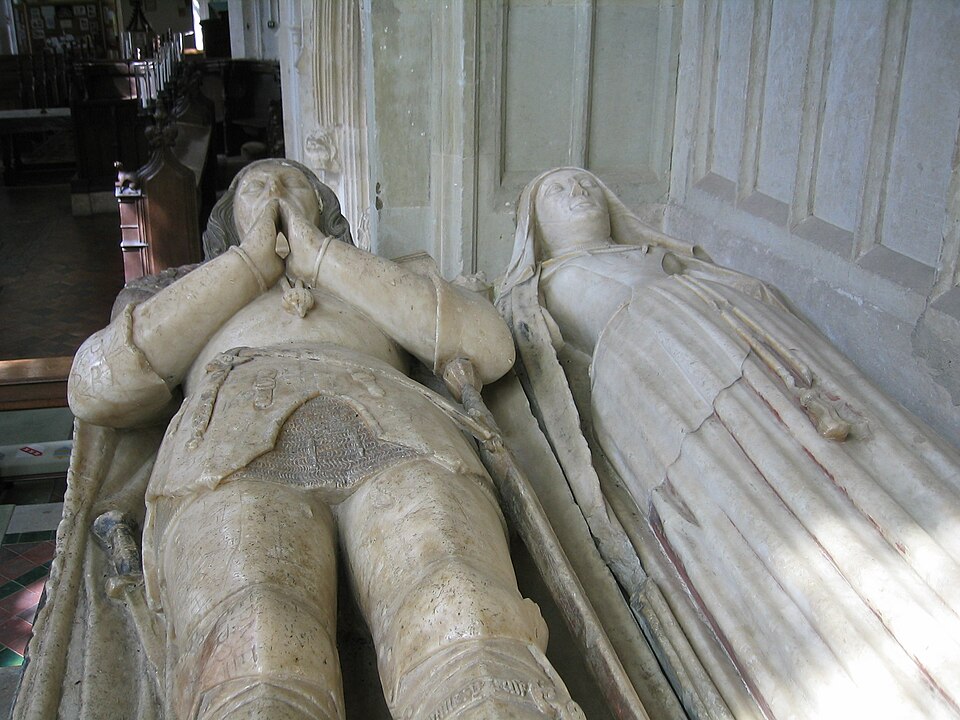
The mid-15th century was a dangerous time. Powerful lords were squaring up to each other, looking to take advantage of Henry VI’s weak rule. A woman alone, with her son’s inheritance to protect, Alice needed powerful allies. And so, she broke her son’s betrothal to the Lancastrian heiress, Margaret Beaufort, and turned to the House of York. In 1458, Alice negotiated John’s marriage with Elizabeth, daughter of Richard, Duke of York and Cecily Neville. Her son and grandsons would become stalwarts of the Yorkist cause. Of the eleven children of John and Elizabeth, their eldest son, another John, having been named as his heir by Richard III, was killed fighting Henry VII’s Lancastrian army at the Battle of Stoke Field, the final engagement of the Wars of the Roses, in 1487. He was succeeded as Duke of Suffolk by his brother, Edmund, who was executed, because of his Yorkist blood, by Henry VIII in 1513.
Alice was favoured by Edward IV, who won the throne for the Yorkists in 1461, gaining exemptions in his Acts of Resumption. She was among the more honoured guests at the sumptuous feast, hosted by Richard Neville, Earl of Warwick, for the enthronement of his brother, George Neville, as Archbishop of York. The feast was held at the Archbishop’s castle of Cawood in 1465, and Alice was given a place of honour at a high table in a second chamber – a sign of distinction as opposed to a place on a secondary table in the great hall – alongside the Countess of Warwick and the new Archbishop’s sisters, the Countess of Oxford, Lady Hastings and Lady Fitzhugh.
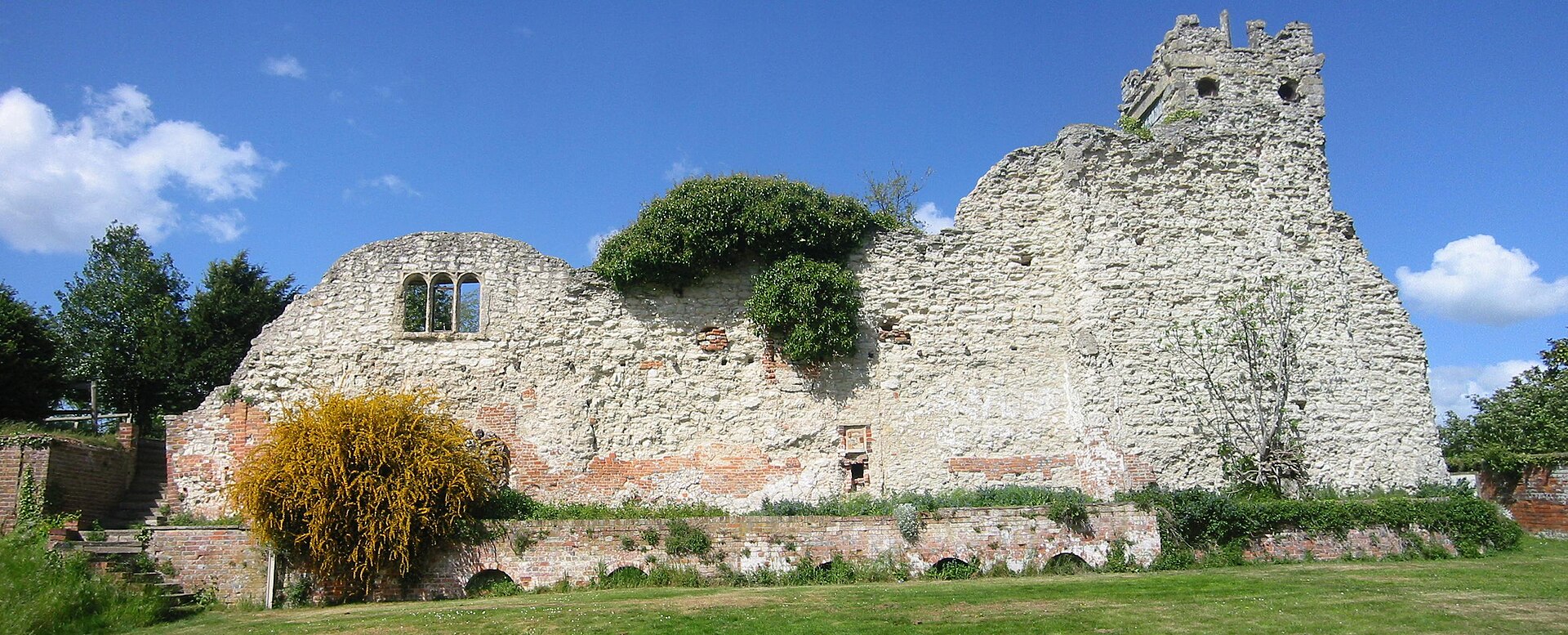
A further sign of trust came in 1471; following the Battle of Tewkesbury and the capture of Margaret of Anjou. Edward entrusted the former queen to Alice’s custody. Margaret was held at Wallingford Castle, which was held by Alice and was close to her estate at Ewelme. The Duchess was the queen’s jailer for the last four years of her life. Following Alice’s death, Margaret of Anjou was ransomed by Louis XI of France, and returned to France in 1476.
Through her family inheritance and three marriages, Alice Chaucer had become an incredibly wealthy woman. She held estates in twenty-two counties; in 1454 she received an income of £1300 from three of them alone. Given that her grandfather was Geoffrey Chaucer, it is no surprise that Alice was a patron of the arts, particularly literature, including John Lydgate. An inventory of her goods, taken in 1466 during a move back to Ewelme, included many books.
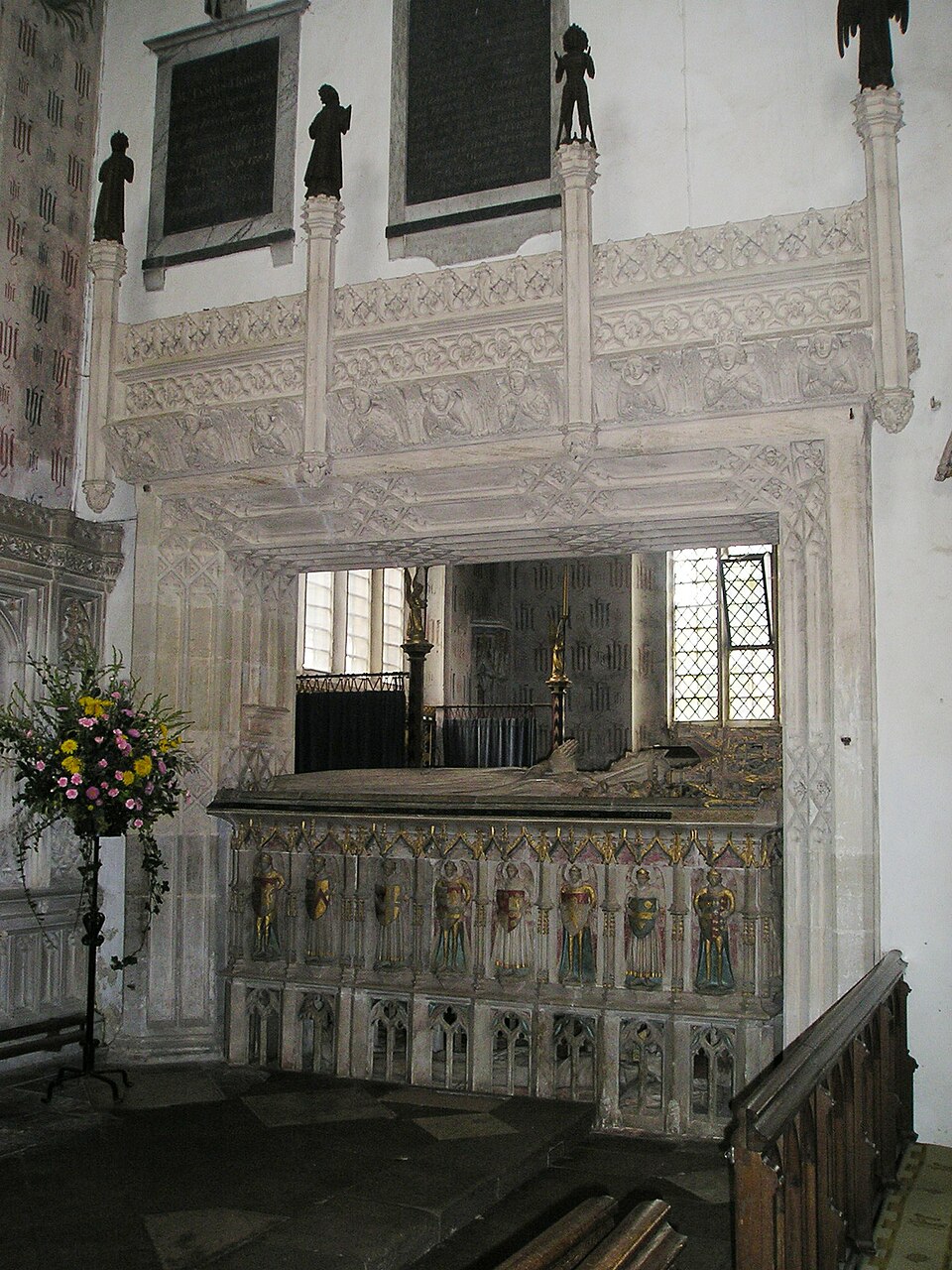
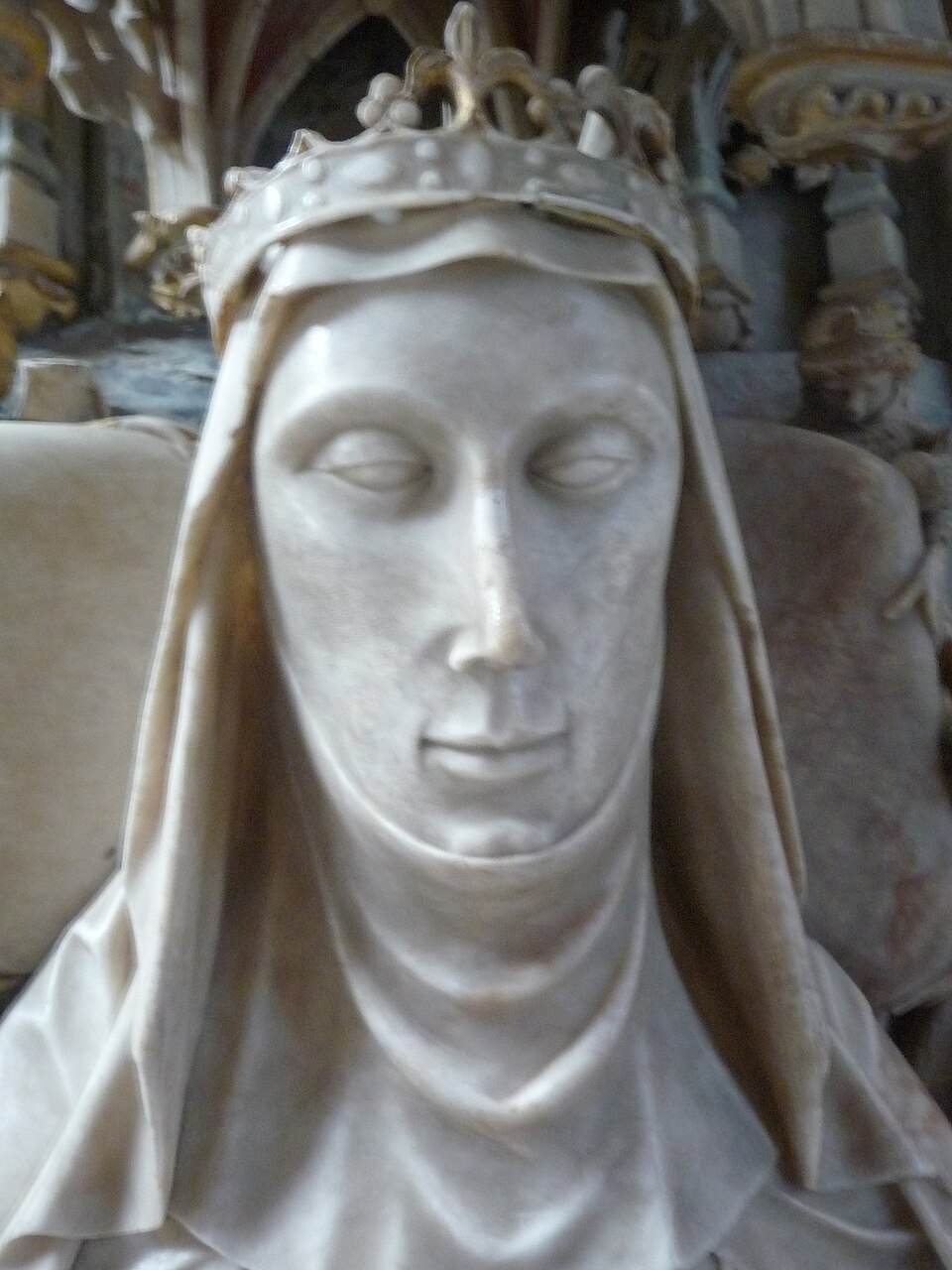
Alice died sometime between 20 May and 9 June, 1475, aged around seventy-one. She was laid to rest in the church of St Mary the Virgin, at Ewelme, where her parents were also buried. Her magnificent tomb lies between the nave and the chapel of St John the Baptist, an effigy of Alice lies atop the tomb, with the Duchess wearing a ducal coronet and the Order of the Garter on her arm.
Alice had led a remarkable life, successfully weathering the political turmoil that claimed the life of her third husband. She was a survivor, successfully negotiating the pitfalls and dangers of the medieval world – and particularly the turmoil of the 15th century – forging her own path to see herself and her son safely through.
Notes:
Notes: 1. K.L. Clark, The Nevills of Middleham: England’s Most Powerful Family in the Wars of the Roses; 2. Matthew Lewis, Richard Duke of York, King by Right; 3. Clark, The Nevills of Middleham; 4. David Baldwin, Elizabeth Woodville, Mother of the Princes in the Tower.
Images:
Courtesy of Wikimedia except The Canterbury Tales which is ©2026 Sharon Bennett Connolly FRHistS
Further Reading:
Rowena E. Archer, Chaucer, Alice, Duchess of Suffolk (c.1404–1475) (ODNB); K.L. Clark, The Nevills of Middleham: England’s Most Powerful Family in the Wars of the Roses; Kristie Dean, On the Trail of the Yorks; Matthew Lewis, Richard Duke of York, King by Right; David Baldwin, Elizabeth Woodville, Mother of the Princes in the Tower; John Gillingham, The Wars of the Roses; Martin J Dougherty, The Wars of the Roses; Susan Higginbotham, The Woodvilles, the Wars of the Roses and England’s Most Infamous Family; Amy Licence, Red Roses, Blanche of Gaunt to Margaret Beaufort; David Santuiste, Edward IV and the Wars of the Roses; Amy Licence, Henry VI and Margaret of Anjou: A Marriage of Unequals
*
My Books
Signed, dedicated copies of all my books are available through my online bookshop. or by contacting me.
Coming 30 March: Princesses of the Early Middle Ages
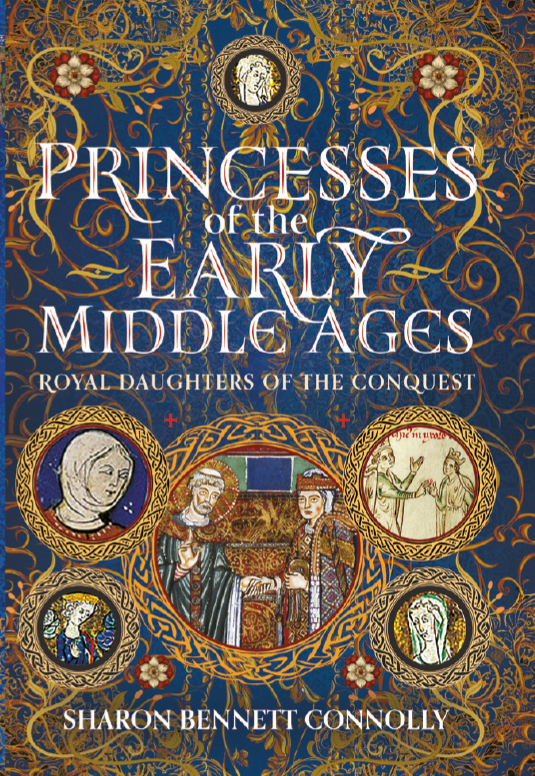
Daughters of kings were often used to seal treaty alliances and forge peace with England’s enemies. Princesses of the Early Middle Ages: Royal Daughters of the Conquest explores the lives of these young women, how they followed the stereotype, and how they sometimes managed to escape it. It will look at the world they lived in, and how their lives and marriages were affected by political necessity and the events of the time. Princesses of the Early Middle Ages will also examine how these girls, who were often political pawns, were able to control their own lives and fates. Whilst they were expected to obey their parents in their marriage choices, several princesses were able to exert their own influence on these choices, with some outright refusing the husbands offered to them.
Their stories are touching, inspiring and, at times, heartbreaking.
Princesses of the Early Middle Ages: Royal Daughters of the Conquest is now available for pre-order from Pen & Sword and Amazon.
Also by Sharon Bennett Connolly:
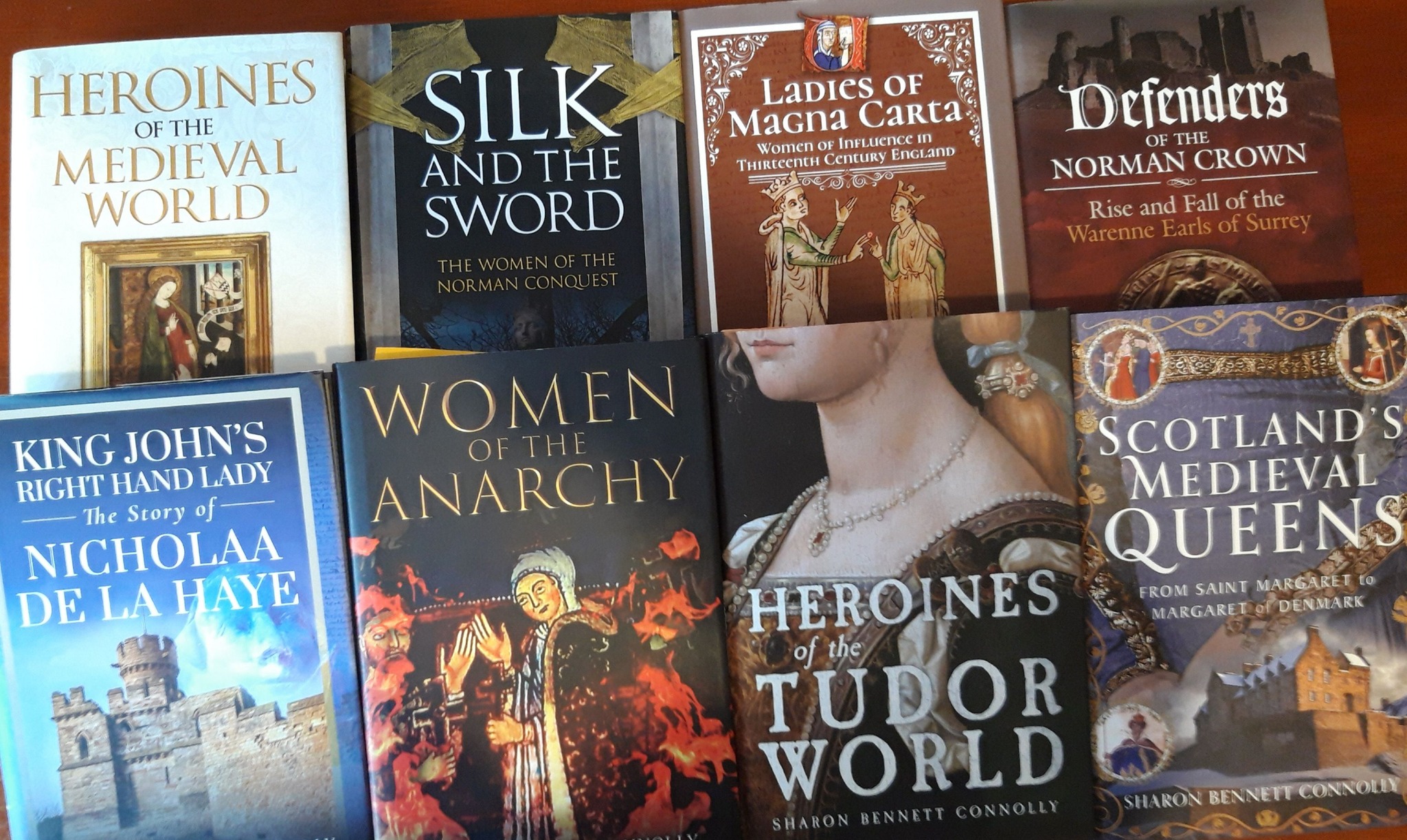
Scotland’s history is dramatic, violent and bloody and Scotland’s Medieval Queens have seen it all. This is the story of Scotland through their eyes. Available now from Amazon and Pen and Sword Books. Heroines of the Tudor World tells the stories of the most remarkable women from European history in the time of the Tudor dynasty, 1485-1603. These are the women who ruled, the women who founded dynasties, the women who fought for religious freedom, their families and love. Heroines of the Tudor World is now available from Amberley Publishing and Amazon UK. Women of the Anarchy demonstrates how Empress Matilda and Matilda of Boulogne, unable to wield a sword themselves, were prime movers in this time of conflict and lawlessness. It shows how their strengths, weaknesses, and personal ambitions swung the fortunes of war one way – and then the other. Available from Bookshop.org, Amberley Publishing and Amazon UK. King John’s Right-Hand Lady: The Story of Nicholaa de la Haye is the story of a truly remarkable lady, the hereditary constable of Lincoln Castle and the first woman in England to be appointed sheriff in her own right. Available from all good bookshops Pen & Sword Books, bookshop.org and Amazon.
Defenders of the Norman Crown: The Rise and Fall of the Warenne Earls of Surrey tells the fascinating story of the Warenne dynasty, from its origins in Normandy, through the Conquest, Magna Carta, the wars and marriages that led to its ultimate demise in the reign of Edward III. Available from Pen & Sword Books, Amazon in the UK and US, and Bookshop.org. Ladies of Magna Carta: Women of Influence in Thirteenth Century England looks into the relationships of the various noble families of the 13th century, and how they were affected by the Barons’ Wars, Magna Carta and its aftermath; the bonds that were formed and those that were broken. It is now available in paperback and hardback from Pen & Sword, Amazon, and Bookshop.org. Heroines of the Medieval World tells the stories of some of the most remarkable women from Medieval history, from Eleanor of Aquitaine to Julian of Norwich. Available now from Amberley Publishing and Amazon, and Bookshop.org. Silk and the Sword: The Women of the Norman Conquest traces the fortunes of the women who had a significant role to play in the momentous events of 1066. Available now from Amazon, Amberley Publishing, and Bookshop.org.
Alternate Endings: An anthology of historical fiction short stories including Long Live the King… which is my take what might have happened had King John not died in October 1216. Available in paperback and kindle from Amazon.
Podcast:
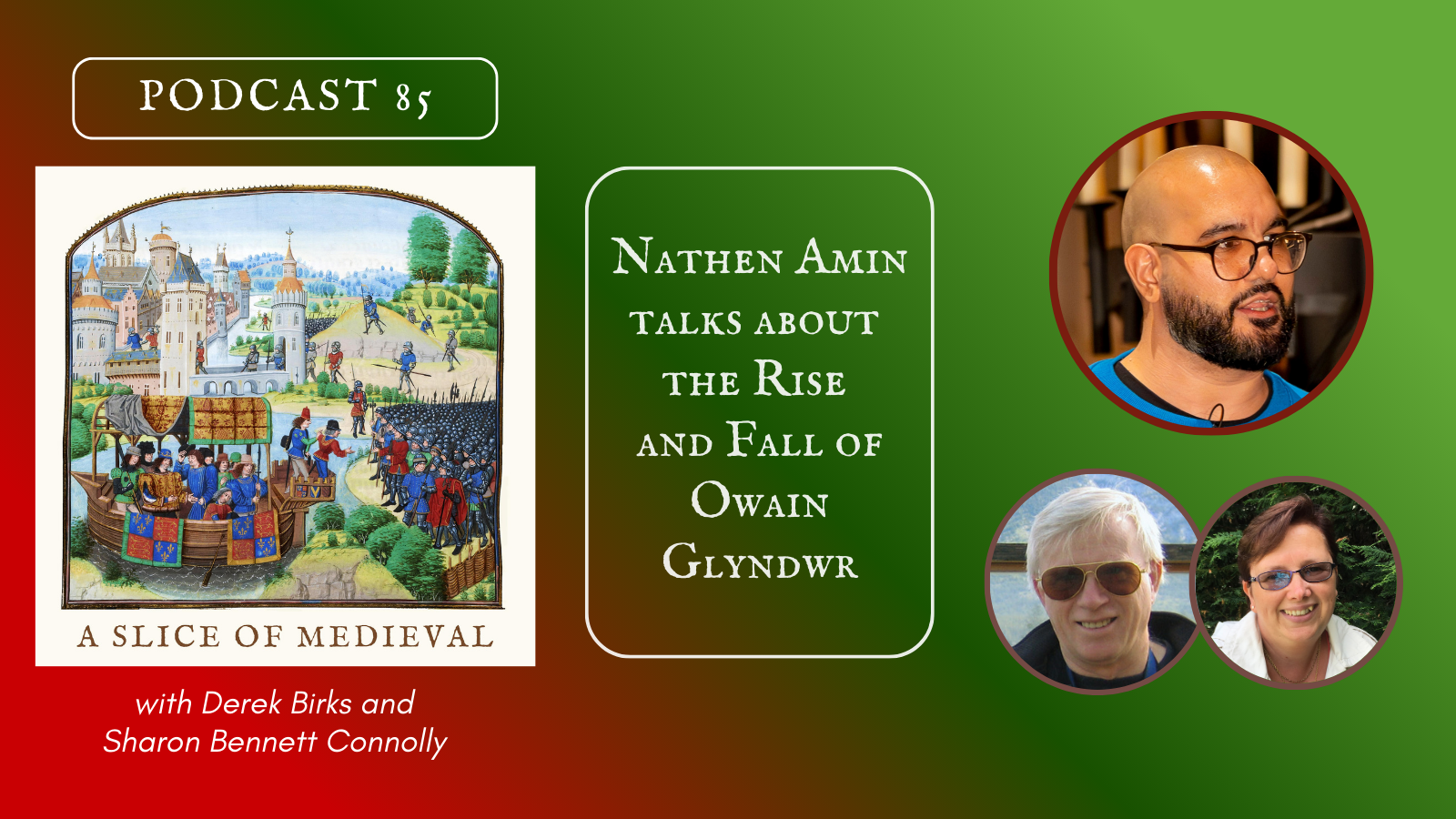
Have a listen to the A Slice of Medieval podcast, which I co-host with Historical fiction novelist Derek Birks. Derek and I welcome guests, such as Ian Mortimer, Bernard Cornwell, Elizabeth Chadwick and Scott Mariani, and discuss a wide range of topics in medieval history, from significant events to the personalities involved.
Every episode is also now available on YouTube.
*
Don’t forget! Signed and dedicated copies of all my books are available through my online bookshop.
For forthcoming online and in-person talks, please check out my Events Page.
You can be the first to read new articles by clicking the ‘Follow’ button, liking our Facebook page or joining me on Twitter, Threads, Bluesky and Instagram.
*
©2026 Sharon Bennett Connolly FRHistS
 History... the interesting bits!
One thought on “Alice Chaucer: the Making of a Duchess”