Guest Post: Anne Boleyn Forces Legal Reform by Heather R. Darsie

History ... the Interesting Bits

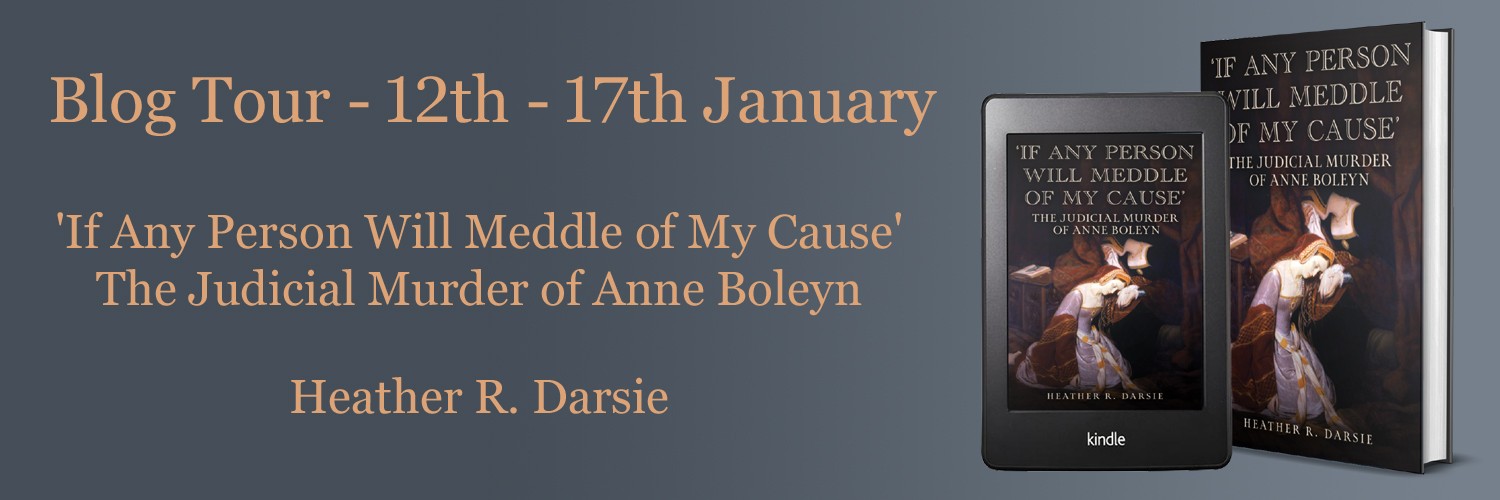
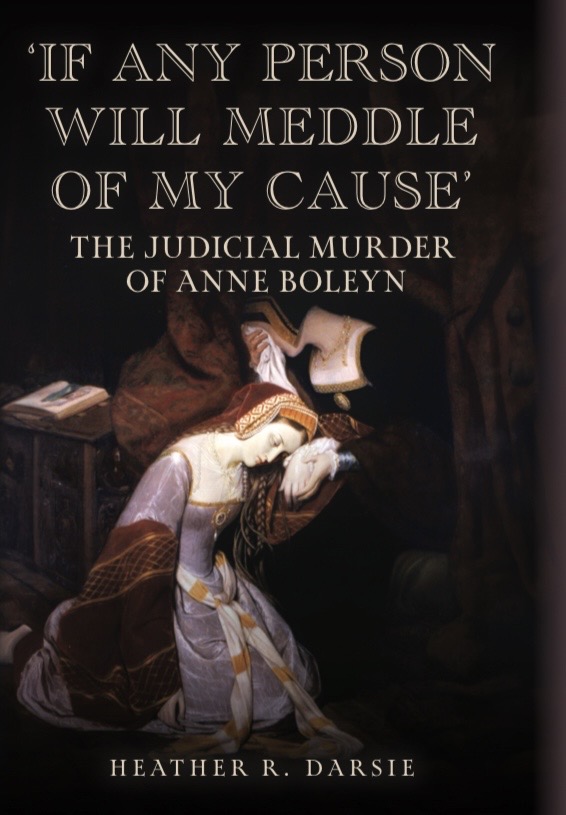
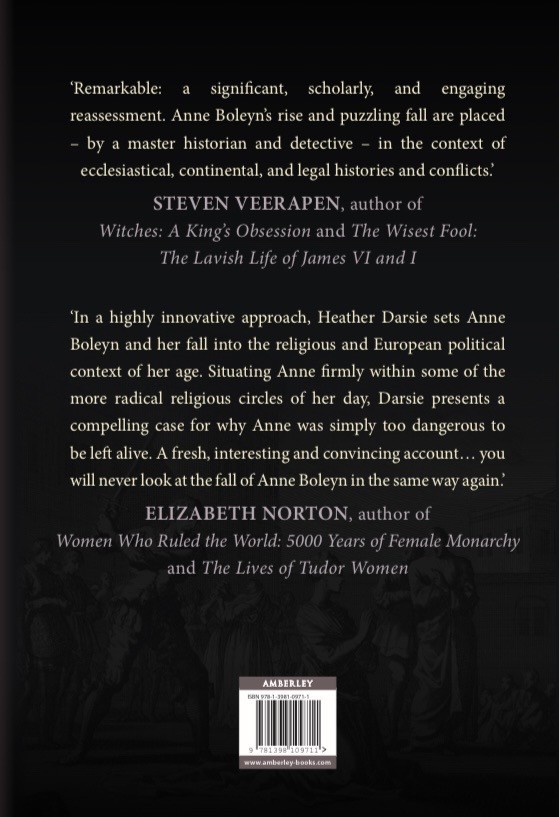
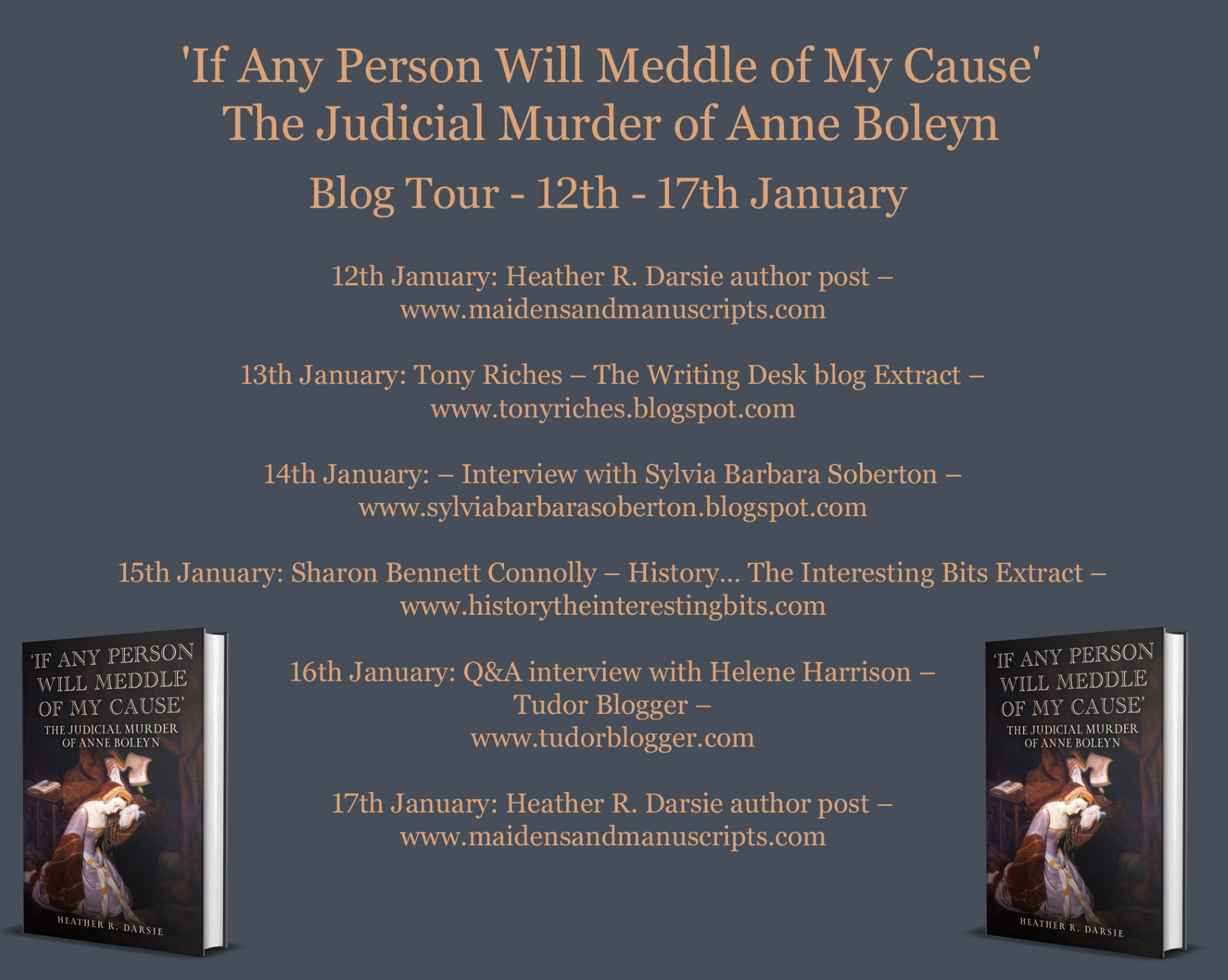
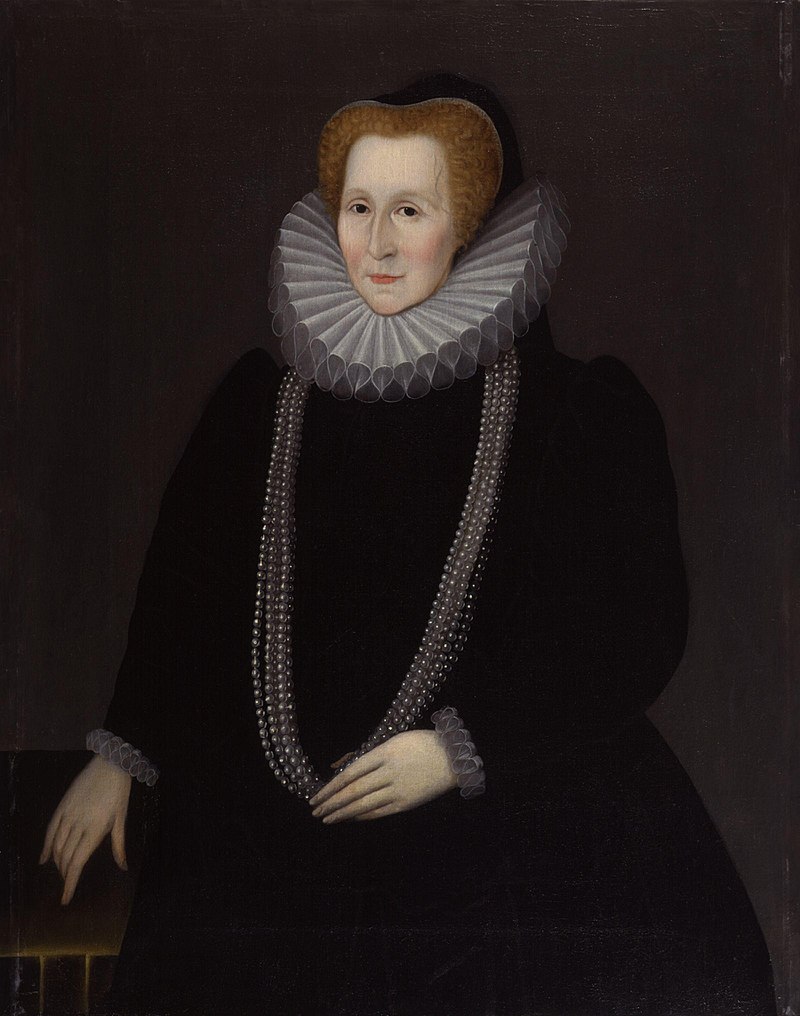
Anne Boleyn is one of the great enigmas of English history. Credited – or blamed – for Henry VIII’s break with Rome and the English Reformation, she is also the mother of one of England’s greatest monarchs, Queen Elizabeth I. Moreover, Anne Boleyn holds the tragic distinction of being the first queen of England to ever be executed. Historian Heather R. Darsie‘s new book, If Any Person Will Meddle of My Cause: The Judicial Murder of Anne Boleyn, looks into Anne’s queenship and execution – and how the law made her death possible.

And today we have a treat! An extract from the book, to give you a taste of what’s in store….

Welcome Heather!

Anne Boleyn Forces Legal Reform

By Heather R. Darsie, J. D.

History ... the Interesting Bits

Anne Boleyn is famously seen as the reason for Henry VIII breaking from the Catholic church. Her interest in at least reforming religion in England, if not going more toward the way of Martin Luther, made her a figurehead in some ways for underground efforts. In reality, Henry was finishing the work of his forbears from centuries before. He also quickly learned that he needed to pull away from Rome so that he could have full control of legal matters within his kingdom, without outside meddling or dawdling,

“Although Henry had grown frustrated over the confounding dithering of Clement VII and ineptitude of Cardinal Thomas Wolsey in the handling of his Great Matter, the issue of Henry VIII’s annulment from Katharine of Aragon was not the biggest problem. The biggest problem was, Henry rapidly learned, that he had no control over his legal system in very important arenas when he needed it most. Aside from not having legal control, the lag time in communications being sent from London to Rome and back again contributed to the delay in Henry’s annulment proceedings, too.

Once Henry was set on his path inspired by Anne Boleyn, he learned just how much money was being kept out his coffers. Cardinal Wolsey started the process before his death, but Thomas Cromwell and Anne spurred Henry to continue shutting down religious institutions in an effort to redistribute the nation’s wealth in favour of crown and kingdom. None of these ideas were novel….

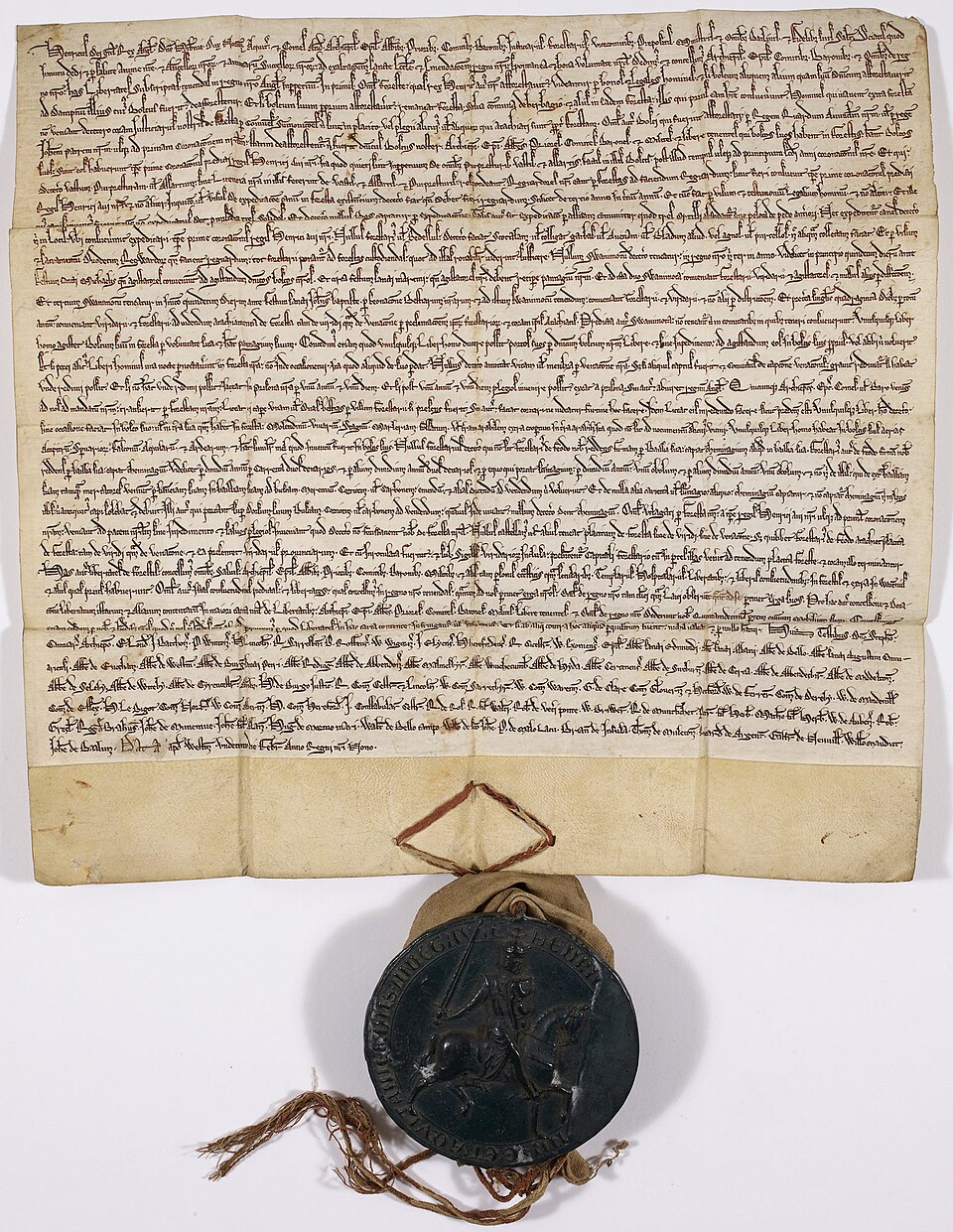
Loosening the church’s powers with England began at the very tail end of the High Middle Ages with Edward I of England. At the beginning of the thirteenth century with the enaction of Magna Carta, the passing of land to a corporation, like a church, without royal consent was forbidden. …Edward I enacted the Statutum de Viris Religiosis, or Statute of Religious Men, in 1279…It forbade the passage of any lands in mortmain [meaning “deadhand”] to any religious man. If anyone did pass their lands to a religious man, then those lands were forfeited…The goals of the Mortmain statutes were not achieved until Henry VIII’s Parliament passed several statutes in 1529 and one directly addressing mortmain in 1531. Henry then began dissolving the monasteries in the 1530s, something he arguably would not have done without being encouraged by his fixation on and love for Anne Boleyn…

Henry VIII was not the first king of England to challenge the pope’s authority. He was the fourth, although the laws of the first two kings were more or less forgotten by the time Henry started taking action. Edward III passed the first, overtly aggressive statutes against papal power, with his successor Richard II taking even stronger action…The laws fell by the wayside during the fifteenth century, not to be fully revived until Henry VIII needed to assert stronger control….

History ... the Interesting Bits

[Edward III] enacted the Statute of Praemunire Facias, or simply the Statute of Praemunire, in 1353. This statute severely curtailed the influence and outright meddling of papal authority and other foreign powers within England… The punishments for the Statute of Praemunire were…severe. Anyone who effectively requested foreign interference with any legal matter, temporal or ecclesiastical, that rightly was under the purview of the king of England’s courts, was at risk of imprisonment, being outlawed and forfeiting all their property, goods, lands, and chattel. These were extremely serious penalties.

Being outlawed meant that the person had no rights or legal protection. Effectively, they were stripped of personhood and did not exist. If the person were robbed and killed after being outlawed, no crime was committed because the person existed outside of the law. Being outlawed was a desperate state of living and reserved for only the worst criminals, as in some ways it was a fate worse than death. The only positive element of being outlawed was that a person, if they survived their term of outlawry, they could be allowed back into society. Once recognised as a legal person again, they were usually at a diminished station, but at least they were alive and had rights… [Updates] were made to the Statute of Praemunire in 1365, curtailing the ability of the papal court to act as a court of first impression or a court of appeal for matters arising in England…

Roughly twenty-five years later, Richard II continued his grandfather Edward III’s work… The 1393 Statute of Praemunire Facias, enhancing the law passed in 1353, did not allow the papal curia to hear any non-spiritual matters that were prejudicial to the king, or went against the customs and laws of England. Spiritual matters could still be heard in Rome, such as divorces and annulments. Anyone who violated the 1393 statute risked punishment by forfeiting all that they owned and being outlawed. The same punishment applied to anyone who aided and abetted them. This was where Henry VIII suffered from the decisions of his great-great-great-granduncle Richard II in Henry’s Great Matter with Katharine of Aragon. This is why Henry’s annulment proceeding simply had to be heard by the pope in Rome, unless Cardinal Wolsey could figure out a solution.…”

History ... the Interesting Bits

Henry VIII’s need for Anne Boleyn opened his eyes to the restrictions of his legal control within England. Their passion inspired Henry to complete the work that was begun hundreds of years before anyone conjured the name of ‘Anne Boleyn’.

For more, pick up a copy of If Any Person Will Meddle of My Cause: The Judicial Murder of Anne Boleyn, available via hardback and Kindle in the UK, or via Kindle internationally. Hardbacks are available for international pre-order, with release on 21 April 2026.

About the book:

Many people know about the dramatic rise and fall of Anne Boleyn, Henry VIII’s controversial second wife, but this is the first book to look at her life from a Continental perspective. Her role models for queenship came from the Low Countries and France, and this contributed to her tragic end. Heather R. Darsie reviews the political missteps and implications of Anne Boleyn’s queenship, delving into the threat she posed to Henry, and why legal changes made during the early years of the English Reformation allowed the English king to judicially murder his inconvenient queen.

Historically, certain things have been overlooked about Anne’s execution: she wore colours usually associated with martyrdom, announced that she did not come to preach, was killed by beheading instead of burning, and had a very crude burial in an unmarked grave. Anne tried to portray herself as a martyr, and Henry did everything he could to prevent her from reaching that status. If Any Person Will Meddle of My Cause is about Anne Boleyn, but not the Anne Boleyn you know.

About the Author:

History ... the Interesting Bits

Heather R. Darsie is an independent researcher in the US specializing in early modern history. She focuses on researching the Holy Roman Empire and England in the early 16th century. She is the author of ‘Anna, Duchess of Cleves‘, ‘Children of the House of Cleves‘ and ‘Katharine of Aragon, Spanish Princess‘. Her primary career is as an attorney. She runs the website MaidensAndManuscripts.com.

*

My Books

Signed, dedicated copies of all my books are available through my online bookshop. or by contacting me.

Coming 30 March: Princesses of the Early Middle Ages

Books by Sharon Bennett Connolly

Daughters of kings were often used to seal treaty alliances and forge peace with England’s enemies. Princesses of the Early Middle Ages: Royal Daughters of the Conquest explores the lives of these young women, how they followed the stereotype, and how they sometimes managed to escape it. It will look at the world they lived in, and how their lives and marriages were affected by political necessity and the events of the time. Princesses of the Early Middle Ages will also examine how these girls, who were often political pawns, were able to control their own lives and fates. Whilst they were expected to obey their parents in their marriage choices, several princesses were able to exert their own influence on these choices, with some outright refusing the husbands offered to them.

Their stories are touching, inspiring and, at times, heartbreaking.

Princesses of the Early Middle Ages: Royal Daughters of the Conquest is now available for pre-order from Pen & Sword and Amazon.

Also by Sharon Bennett Connolly:

Books by Sharon Bennett Connolly

Scotland’s history is dramatic, violent and bloody and Scotland’s Medieval Queens have seen it all. This is the story of Scotland through their eyes. Available now from Amazon and Pen and Sword BooksHeroines of the Tudor World tells the stories of the most remarkable women from European history in the time of the Tudor dynasty, 1485-1603. These are the women who ruled, the women who founded dynasties, the women who fought for religious freedom, their families and love. Heroines of the Tudor World is now available from Amberley Publishing and Amazon UK. Women of the Anarchy demonstrates how Empress Matilda and Matilda of Boulogne, unable to wield a sword themselves, were prime movers in this time of conflict and lawlessness. It shows how their strengths, weaknesses, and personal ambitions swung the fortunes of war one way – and then the other. Available from Bookshop.orgAmberley Publishing and Amazon UKKing John’s Right-Hand Lady: The Story of Nicholaa de la Haye is the story of a truly remarkable lady, the hereditary constable of Lincoln Castle and the first woman in England to be appointed sheriff in her own right. Available from all good bookshops Pen & Sword Booksbookshop.org and Amazon

Royal Historical Society

Defenders of the Norman Crown: The Rise and Fall of the Warenne Earls of Surrey tells the fascinating story of the Warenne dynasty, from its origins in Normandy, through the Conquest, Magna Carta, the wars and marriages that led to its ultimate demise in the reign of Edward III. Available from Pen & Sword BooksAmazon in the UK and US, and Bookshop.orgLadies of Magna Carta: Women of Influence in Thirteenth Century England looks into the relationships of the various noble families of the 13th century, and how they were affected by the Barons’ Wars, Magna Carta and its aftermath; the bonds that were formed and those that were broken. It is now available in paperback and hardback from Pen & SwordAmazon, and Bookshop.orgHeroines of the Medieval World tells the stories of some of the most remarkable women from Medieval history, from Eleanor of Aquitaine to Julian of Norwich. Available now from Amberley Publishing and Amazon, and Bookshop.orgSilk and the Sword: The Women of the Norman Conquest traces the fortunes of the women who had a significant role to play in the momentous events of 1066. Available now from Amazon,  Amberley Publishing, and Bookshop.org.

Alternate Endings: An anthology of historical fiction short stories including Long Live the King… which is my take what might have happened had King John not died in October 1216. Available in paperback and kindle from Amazon.

Podcast:

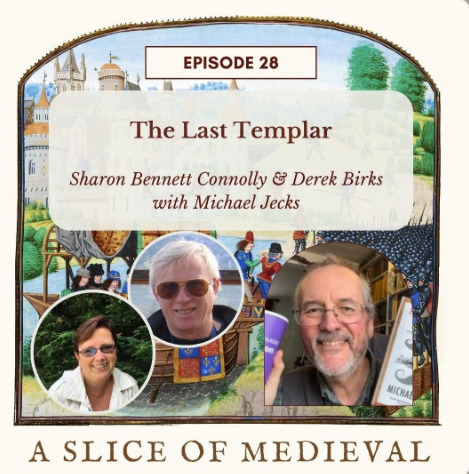
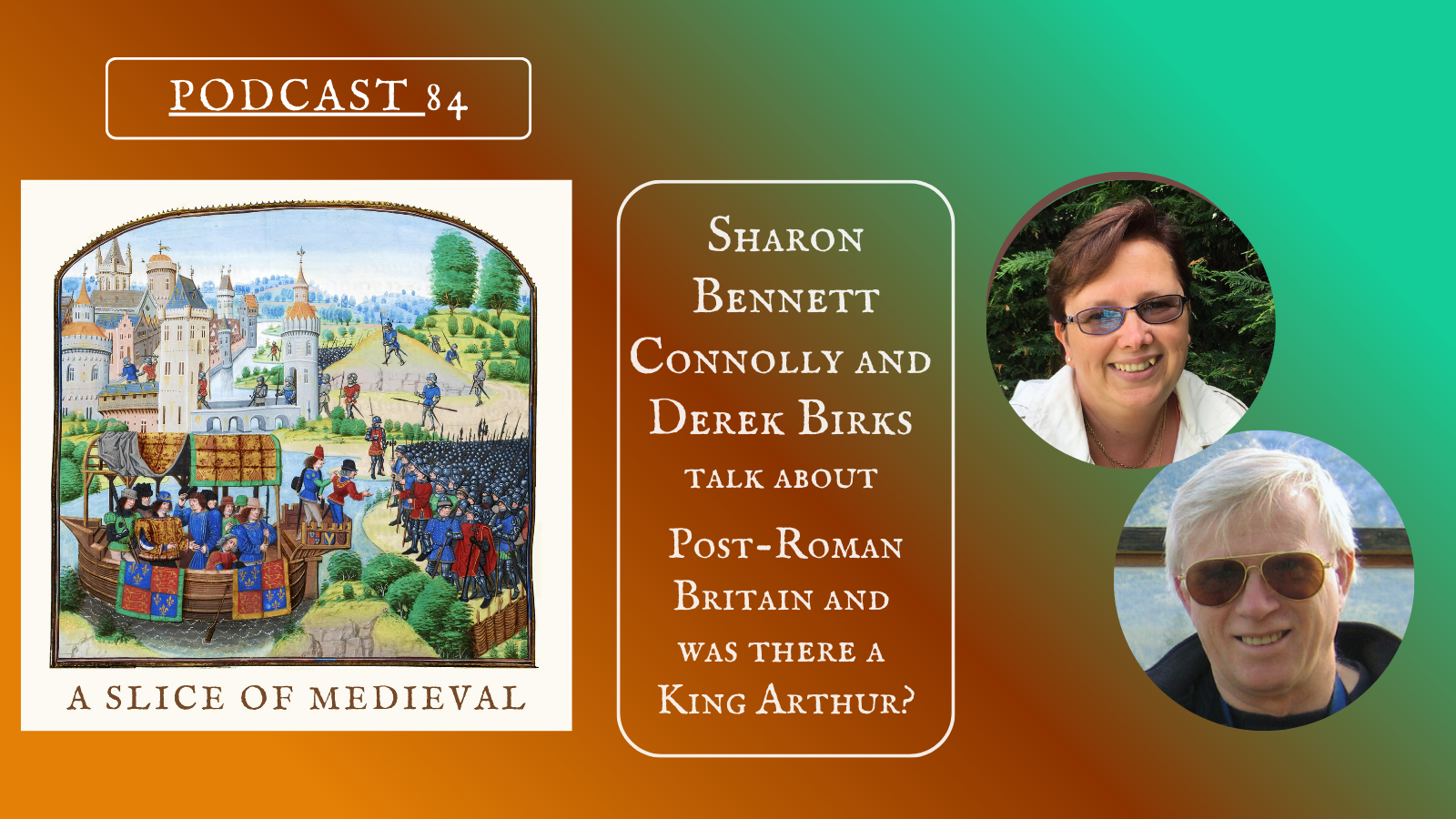
Have a listen to the A Slice of Medieval podcast, which I co-host with Historical fiction novelist Derek Birks. Derek and I welcome guests, such as Ian Mortimer, Bernard Cornwell, Elizabeth Chadwick and Scott Mariani, and discuss a wide range of topics in medieval history, from significant events to the personalities involved. 

Every episode is also now available on YouTube.

*

Don’t forget! Signed and dedicated copies of all my books are available through my online bookshop.

For forthcoming online and in-person talks, please check out my Events Page.

You can be the first to read new articles by clicking the ‘Follow’ button, liking our Facebook page or joining me on TwitterThreadsBluesky and Instagram.

*

©2026 Sharon Bennett Connolly FRHistS and Heather R. Darsie

Wordly Women: Catherine Hokin

History...the Interesting Bits

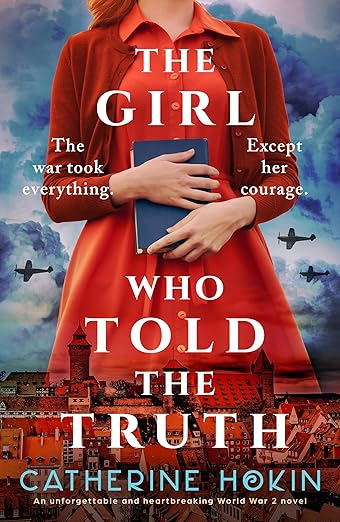
I am stepping out of my medieval comfort zone today to chat with Catherine Hokin. It is always nice to stray into other eras and see what they have to offer; Catherine is a historical fiction author who focuses on the twentieth century. Her new book, The Girl Who Told The Truth, hits the shops this week and I have included the synopsis at the end of the interview, as a little teaser for you all.

Sharon: Hi Catherine, welcome! What got you into writing?

Catherine: Like most people who become writers, I’ve always loved stories but I’ve also always been a very visual person and, when I was younger, I originally wanted to be a fashion designer. I used to spend hours drawing fabulous dresses and, I realise with hindsight, spinning stories about who would wear them. I’m still a fashion buff now, which is why my novel What Only We Know is set in the haute couture world of 1930s and 1940s Berlin and Christian Dior’s gorgeous Bar Suit makes an appearance in my new book, The Girl Who Told the Truth. Actual writing was a long burning itch for me because the demands of life made the reality of doing it impossible. I started with short stories and had some success with those and then the bug truly bit. I think it’s only since I began writing full time that I’ve realised how much I always wanted to do it. (Sharon: I know that feeling!)

Sharon: Tell us about your books.

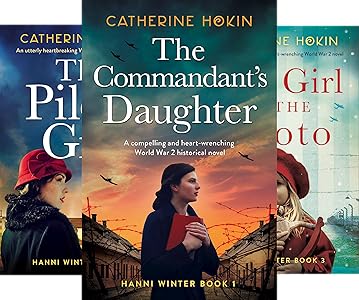
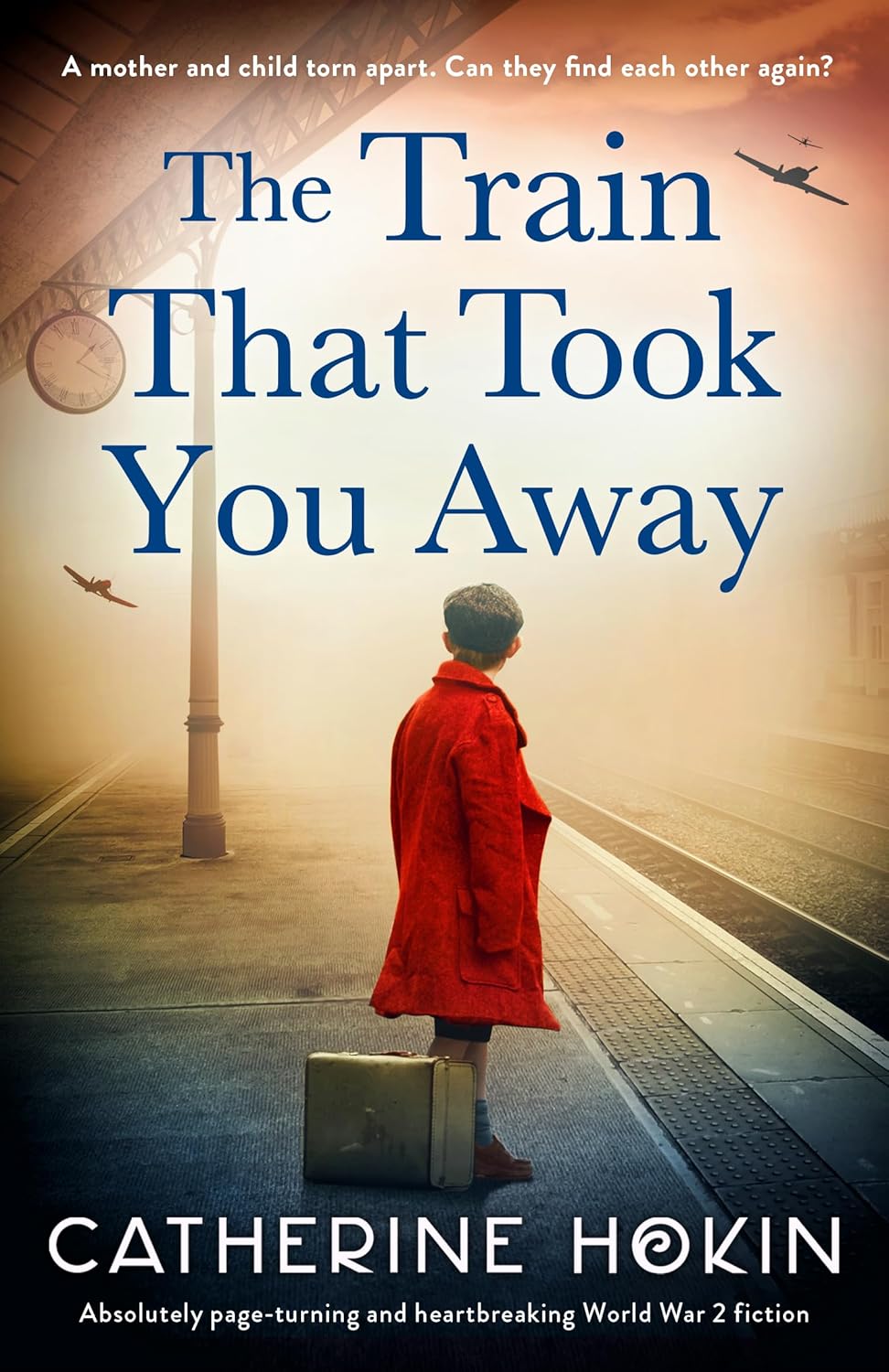
Catherine: I write historical fiction set between 1930 and 1990, so World War Two and Cold War, and set primarily in Berlin and Eastern Europe. That sounds rather niche when I write it down! My novels are about the long shadows cast by war and the impact of terrible events on ordinary people. They ask a lot of questions about the way people act, or don’t act, about where courage comes from and how we define evil. They usually have a secret or two, sometimes they are dual timeline and they frequently have a very bad character in them because they are great fun to write. Most of the twelve published to date by Bookouture (number 13, The Girl Who Told the Truth, comes out in January 2026) are stand-alones, but there is also the Hanni Winter series: four books about a young photographer and a detective, set in Berlin between 1930 and the 1950s. It’s got so many twists and it was brilliant to be able to write over such a long arc. And exhausting!

Sharon: What attracts you to the period you write in?

History...the Interesting Bits

Catherine: So many reasons. With World War Two I think it’s perhaps because my parents (who were very small children in 1939) were so marked by their experiences of the blitz in Liverpool and the difficult post war years, and I grew up in that shadow. War is also such a testing time: it brings out the best and the worst in people, and so many of those involved only talk about their experiences as they draw towards the end of their life, so we are constantly learning about it. There is also a personal element for me when it comes to the Cold War, and the Berlin Wall which features in my novels a lot. I was born in 1961, the year it went up, and my daughter was born in 1990, the year it came down. If we had lived in East Germany, our experiences would have poles apart from each other which fascinates me. Germany was also the first country I visited outside the UK and seeing the Wall when I was seventeen made a huge impression. I’ve never forgotten talking to a woman who hadn’t seen her sister for almost twenty years. They were physically less than two miles apart, but the Wall lay across that two miles and made contact impossible.

Sharon: Who is your favourite 20th century person and why?

Catherine: Oh that is a hard question as we know so much about everyone’s flaws nowadays! At the moment I would probably have to say Frieda Kahlo as I’ve recently got back from an incredible two week stay in Mexico City and I visited her house. Her courage in the face of dreadful pain was remarkable, as is her art.

Sharon: Who is your least favourite 20th century person and why?

Catherine: Another hard one with so many contenders. All the dictators aside, I think it’s the people who follow blindly and have no compassion that fall into that category for me. Again, thinking about people I’ve encountered more recently, in the research for The Girl Who Told the Truth, I would say Magda Goebbels was high on the list. Reading the accounts of her murdering her children in the bunker was tough. I’m also no fan of Diana Mosley who also appears in the novel: I find the way some of the Mitford sisters (of which she was one) have been romanticised over the years a little disturbing.

Sharon: How do you approach researching your topic?
History...the Interesting Bits

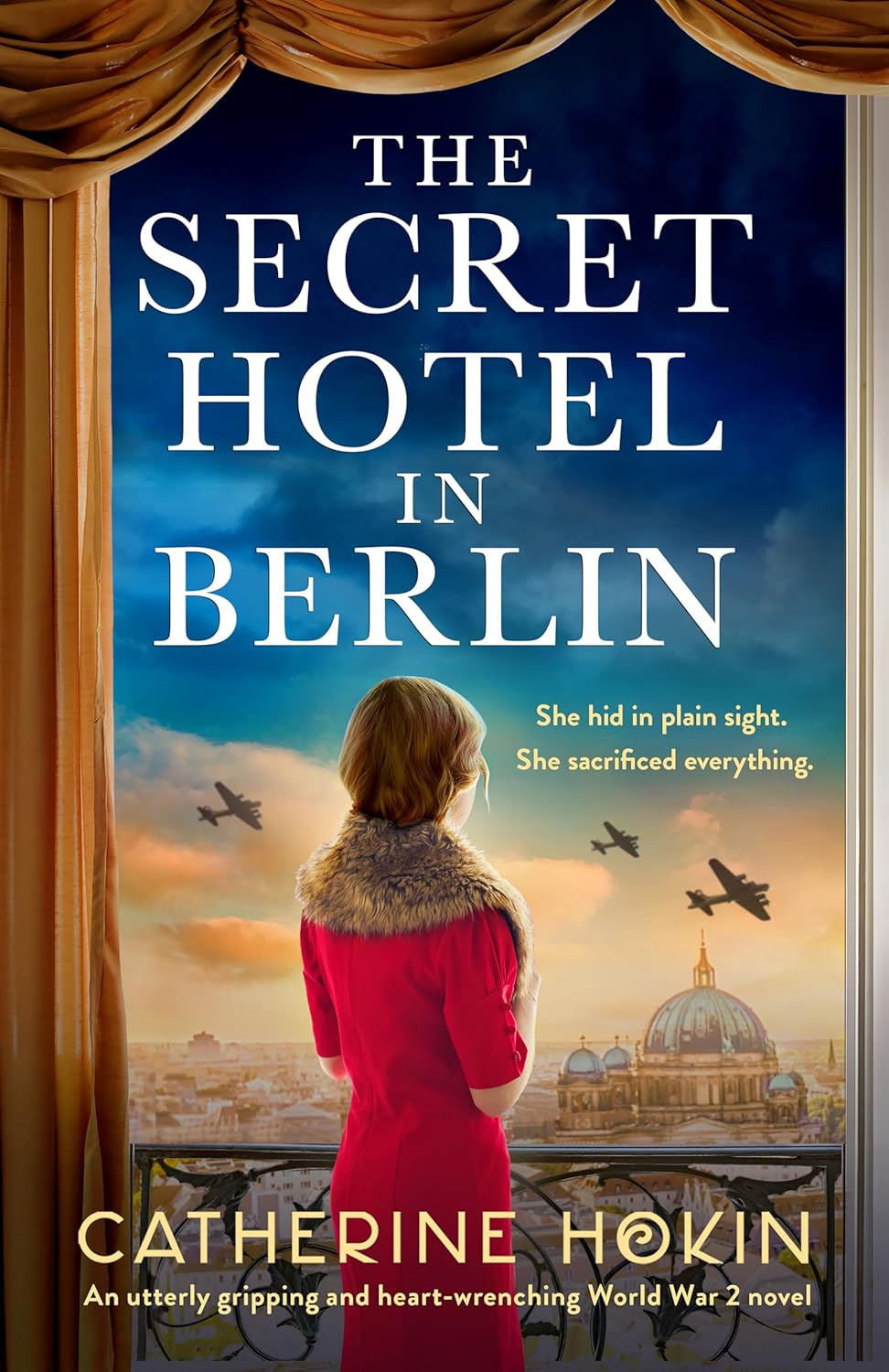
Catherine: With great joy! I love the research part, it is very varied, and I did a history degree so I feel I know what I’m doing – the skills learned then have helped me to be very disciplined so I don’t lose days down rabbit holes. In terms of time, there’s at least three solid months of nothing but research and then more ongoing bits while I’m writing. Once I have my initial idea, I do a huge resource search which includes primary and secondary sources in English and German, and also films and artworks and music, whatever is relevant. I keep detailed notes and cross-reference these to characters and plot points. I am also lucky enough to be able to visit the places I write about, so I walk in my characters’ footsteps and do a lot of photography. And I draw a lot of maps. For The Secret Hotel in Berlin, I also drew the interiors. It’s a very immersive process. And about 70% never gets used, because it’s what I need to know, not the reader…

Sharon: Tell us your ‘favourite’ 20th century story you have come across in your research.

Catherine: That has to be the story of Else Krüger, which I used as the basis for Margarete in The Girl Who Told The Truth. I first came across her via historian Mark Felton’s YouTube video, which is well worth a watch. Krüger was Martin Bormann’s secretary, and she escaped from the Berlin bunker after Hitler’s death, allegedly carrying a copy of his final testament and a bag of diamonds. She was arrested in Hamburg, taken to Nuremberg and married her interrogator before she settled in England, where she passed herself off as a Danish war bride. It’s an amazing story, but that’s where it ends – unlike the other secretaries and survivors of the bunker, Else never wrote a memoir or discussed her experiences, and the truth about the documents and the diamonds died with her. My character Margarete is, of course, fictional, but how could any writer walk away from a nugget like that?

Sharon: Tell us your least ‘favourite’ 20th century story you have come across in your research.

History...the Interesting Bits

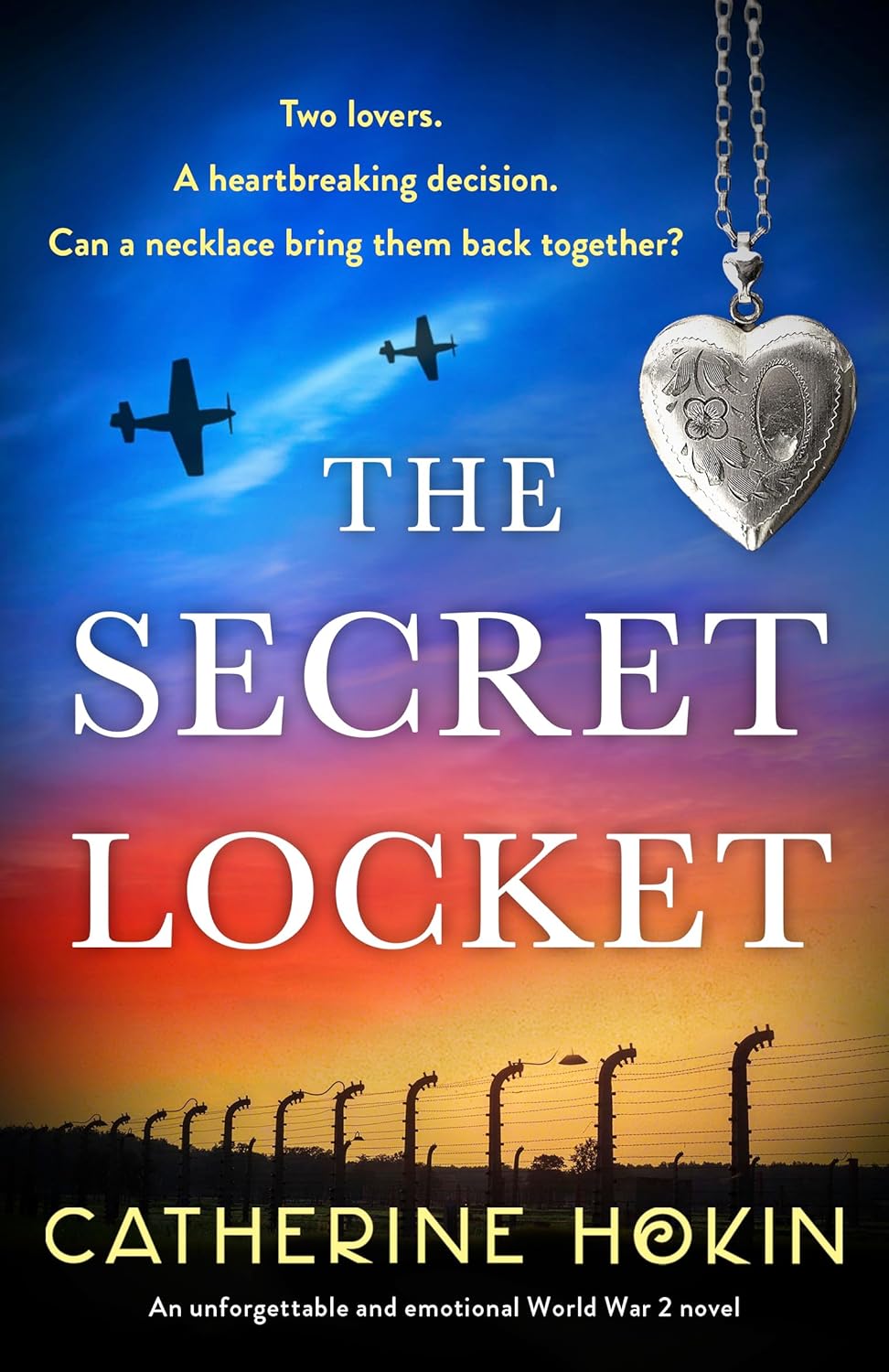
Catherine: So much of what I read and reference is deeply tragic. The experiments on female prisoners at Ravensbrook plays a part in the background to What Only We Know, the terrible fate of Warsaw and its ghetto is a key component in The Secret Locket and the T4 Euthanasia programme is part of the Hanni Winter series. All my stories have the Holocaust and the dreadful carnage of WW2 looming behind them, so I can’t choose one but I do have a cardinal rule when writing about the atrocities and that is, get in late and leave early. I don’t want to dwell on suffering, or take advantage of that to write a book. It’s better to tread lightly.

Sharon: Are there any other eras you would like to write about?

Catherine: There are! My next two novels, after The Girl Who Told the Truth, are set against the background of German involvement in the Spanish Civil War which I’ve been obsessed with for years. I’m really excited about that. And I am also fascinated by the Vietnam War, so who knows. There’s still a mass of books to be written about my current area though and I’ve plenty of new ideas.

Sharon: What are you working on now?

Catherine: My current WIP is a two part series, set in Berlin and Spain between 1934 and 1948 and due to be published in July 2026 and January 2027. It’s set against the Spanish Civil War and Germany’s involvement in that, World War Two and the story of the Nazis who fled to Spain after 1945. And it’s about a brother and a sister, a lot of lies and a terrible choice…

Sharon: And finally, what is the best thing about being a writer?
Catherine: So many things. I love that I get to spend my days weaving stories. I love the reader engagement and the fact that I can make a living out of what is essentially a dream job. I am very lucky, and happy!

About the book:

History...the Interesting Bits

The Girl Who Told The Truth: Blood surges through Annie’s veins as she stares into the cold eyes of the Nazi who hurt her mother. She knows she must finally make it right… Germany, 1946. Annie draws a deep breath, trying to stop her hands shaking as she takes notes at the Nuremberg Trials. She isn’t just here to expose the horrors the Nazis committed, she also has a personal stake. And as soon as she lays eyes on Margarete, the Nazi who destroyed her family, a flame burns bright in her to deliver justice for her mother too. Only Annie knows how dangerous Margarete truly is. Not only was she one of the last people inside Hitler’s bunker, she left there with a mission to continue his work. A mission that almost led to the murder of Annie’s mother. Now Annie must make a choice. Revealing Margarete’s true identity will also mean exposing her father’s secret relationship with the German woman. In telling the world the truth, can Annie show the world who Margarete really is? Or will speaking out betray her father and destroy her family forever? An achingly emotional page-turner about risking everything to protect those you love. Perfect for fans of Kristin Hannah, Roberta Kagan and Ellie Midwood.

Buy The Girl Who Told the Truth

About the Author:

History...the Interesting Bits

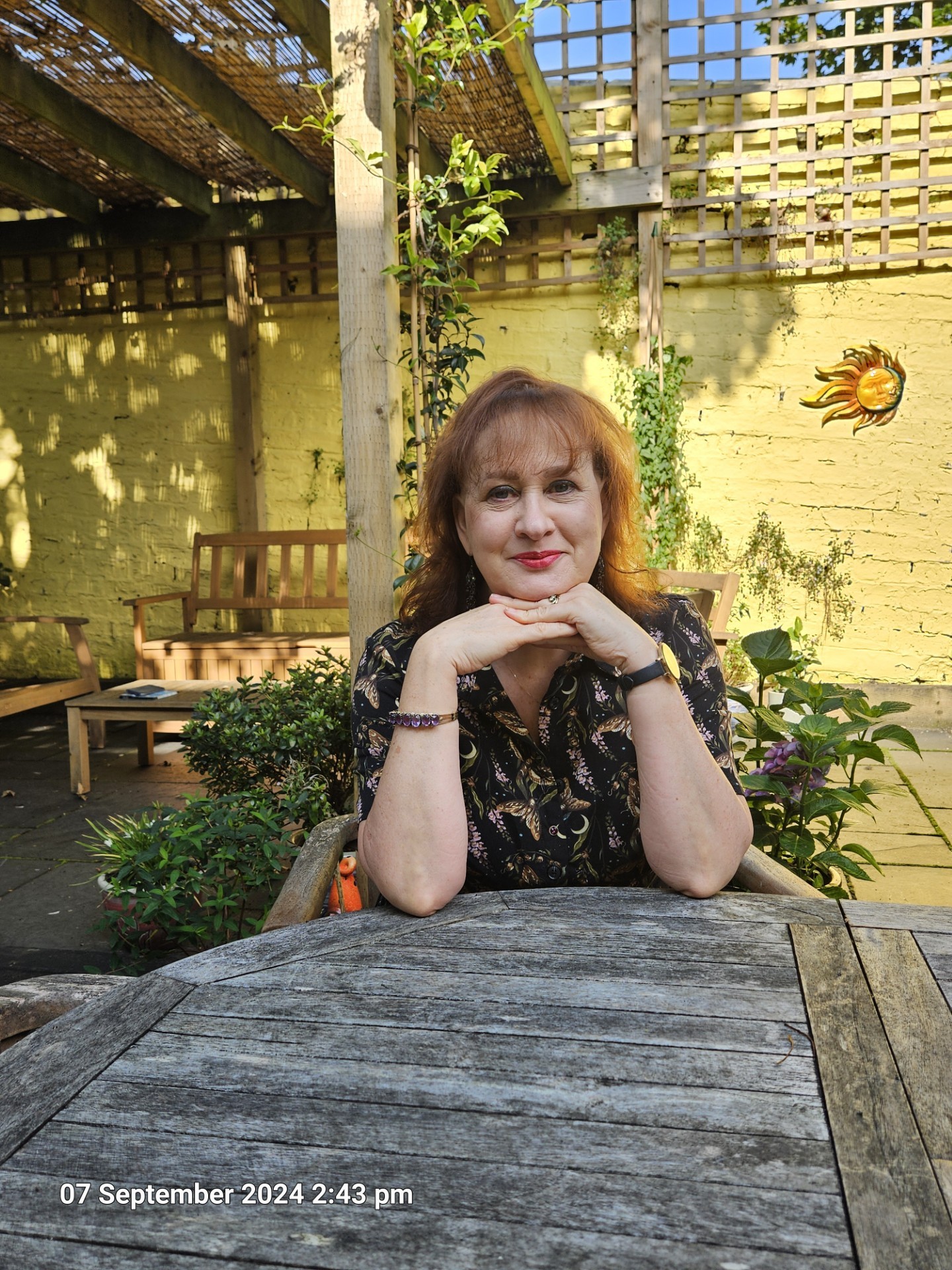
Catherine writes historical fiction set primarily in Berlin, covering the period from the 1930s up to the fall of the Berlin Wall and dealing with the long shadows left by war. The Secret Locket will be her twelfth novel with Bookouture and there are more to come. Her books have been published by Grand Central Publishing in the USA and translated into a number of languages including French, Italian and, most recently, German. She has a degree in History from Manchester University and has worked in a variety of roles from the fashion business via politics and teaching to the world of climate technology before happily becoming a full-time writer.

She is from the North of England but now lives in Glasgow with her American husband. She loves to travel and spends as much time as she can in Berlin, where her son also lives. If she’s not at her desk, you’ll find her at the cinema or just follow the sound of very loud music.

Details of all her books can be found on her Amazon page or at her website.

Social Media Links: Facebook; Instagram; bookouture (Sign up here and get a free WW2 short story, The Last Casualty)

*

My Books

Signed, dedicated copies of all my books are available through my online bookshop. or by contacting me.

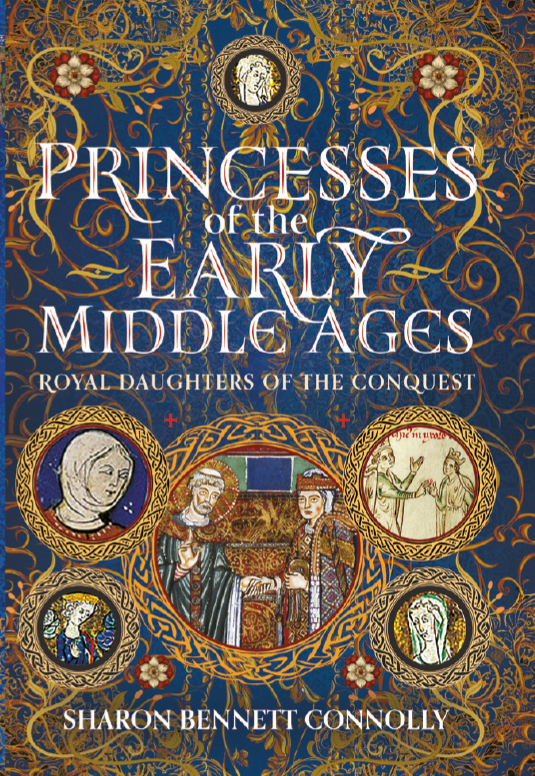
Coming 30 March: Princesses of the Early Middle Ages
Books by Sharon Bennett Connolly

Daughters of kings were often used to seal treaty alliances and forge peace with England’s enemies. Princesses of the Early Middle Ages: Royal Daughters of the Conquest explores the lives of these young women, how they followed the stereotype, and how they sometimes managed to escape it. It will look at the world they lived in, and how their lives and marriages were affected by political necessity and the events of the time. Princesses of the Early Middle Ages will also examine how these girls, who were often political pawns, were able to control their own lives and fates. Whilst they were expected to obey their parents in their marriage choices, several princesses were able to exert their own influence on these choices, with some outright refusing the husbands offered to them.

Their stories are touching, inspiring and, at times, heartbreaking.

Princesses of the Early Middle Ages: Royal Daughters of the Conquest is now available for pre-order from Pen & Sword and Amazon.

Also by Sharon Bennett Connolly:

Books by Sharon Bennett Connolly

Scotland’s history is dramatic, violent and bloody and Scotland’s Medieval Queens have seen it all. This is the story of Scotland through their eyes. Available now from Amazon and Pen and Sword BooksHeroines of the Tudor World tells the stories of the most remarkable women from European history in the time of the Tudor dynasty, 1485-1603. These are the women who ruled, the women who founded dynasties, the women who fought for religious freedom, their families and love. Heroines of the Tudor World is now available from Amberley Publishing and Amazon UK. Women of the Anarchy demonstrates how Empress Matilda and Matilda of Boulogne, unable to wield a sword themselves, were prime movers in this time of conflict and lawlessness. It shows how their strengths, weaknesses, and personal ambitions swung the fortunes of war one way – and then the other. Available from Bookshop.orgAmberley Publishing and Amazon UKKing John’s Right-Hand Lady: The Story of Nicholaa de la Haye is the story of a truly remarkable lady, the hereditary constable of Lincoln Castle and the first woman in England to be appointed sheriff in her own right. Available from all good bookshops Pen & Sword Booksbookshop.org and Amazon

Royal Historical Society

Defenders of the Norman Crown: The Rise and Fall of the Warenne Earls of Surrey tells the fascinating story of the Warenne dynasty, from its origins in Normandy, through the Conquest, Magna Carta, the wars and marriages that led to its ultimate demise in the reign of Edward III. Available from Pen & Sword BooksAmazon in the UK and US, and Bookshop.orgLadies of Magna Carta: Women of Influence in Thirteenth Century England looks into the relationships of the various noble families of the 13th century, and how they were affected by the Barons’ Wars, Magna Carta and its aftermath; the bonds that were formed and those that were broken. It is now available in paperback and hardback from Pen & SwordAmazon, and Bookshop.orgHeroines of the Medieval World tells the stories of some of the most remarkable women from Medieval history, from Eleanor of Aquitaine to Julian of Norwich. Available now from Amberley Publishing and Amazon, and Bookshop.orgSilk and the Sword: The Women of the Norman Conquest traces the fortunes of the women who had a significant role to play in the momentous events of 1066. Available now from Amazon,  Amberley Publishing, and Bookshop.org.

Alternate Endings: An anthology of historical fiction short stories including Long Live the King… which is my take what might have happened had King John not died in October 1216. Available in paperback and kindle from Amazon.

Podcast:
A Slice of Medieval

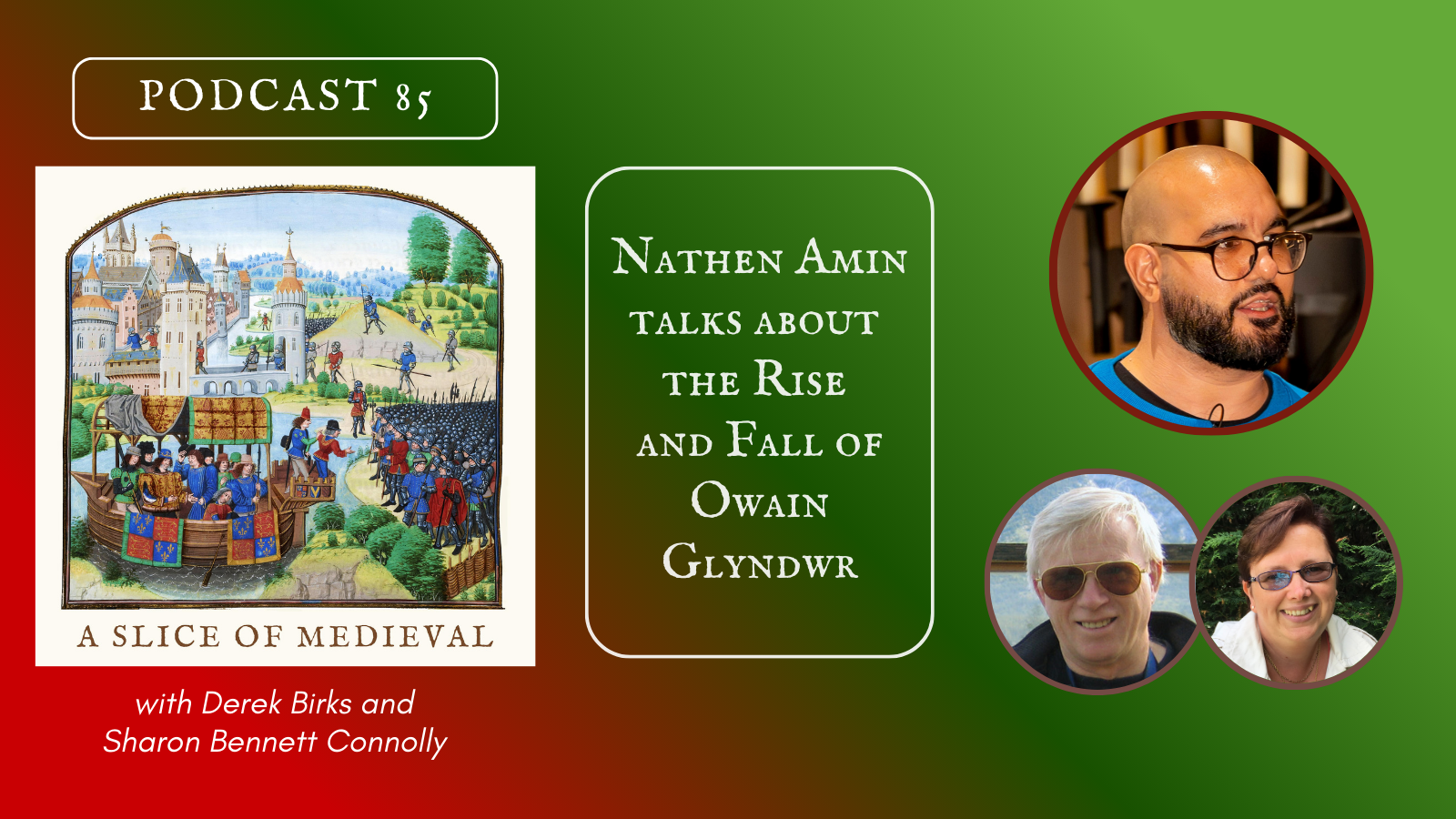
Have a listen to the A Slice of Medieval podcast, which I co-host with Historical fiction novelist Derek Birks. Derek and I welcome guests, such as Ian Mortimer, Bernard Cornwell, Elizabeth Chadwick and Scott Mariani, and discuss a wide range of topics in medieval history, from significant events to the personalities involved. 

Every episode is also now available on YouTube.

*

Don’t forget! Signed and dedicated copies of all my books are available through my online bookshop.

For forthcoming online and in-person talks, please check out my Events Page.

You can be the first to read new articles by clicking the ‘Follow’ button, liking our Facebook page or joining me on TwitterThreadsBluesky and Instagram.

*

©2026 Sharon Bennett Connolly FRHistS and Catherine Hokin

Wordly Women: Carol Ann Lloyd

HAPPY NEW YEAR!

History...the Interesting Bits

I hope you have all had a wonderful Christmas and enjoyed the New Year celebrations. Thankfully, my Wordly Women series is still going strong. I wonder if I can keep it going the whole year? We’ll see. I have at least 2 more interviews lined up, so we are starting the year strong!

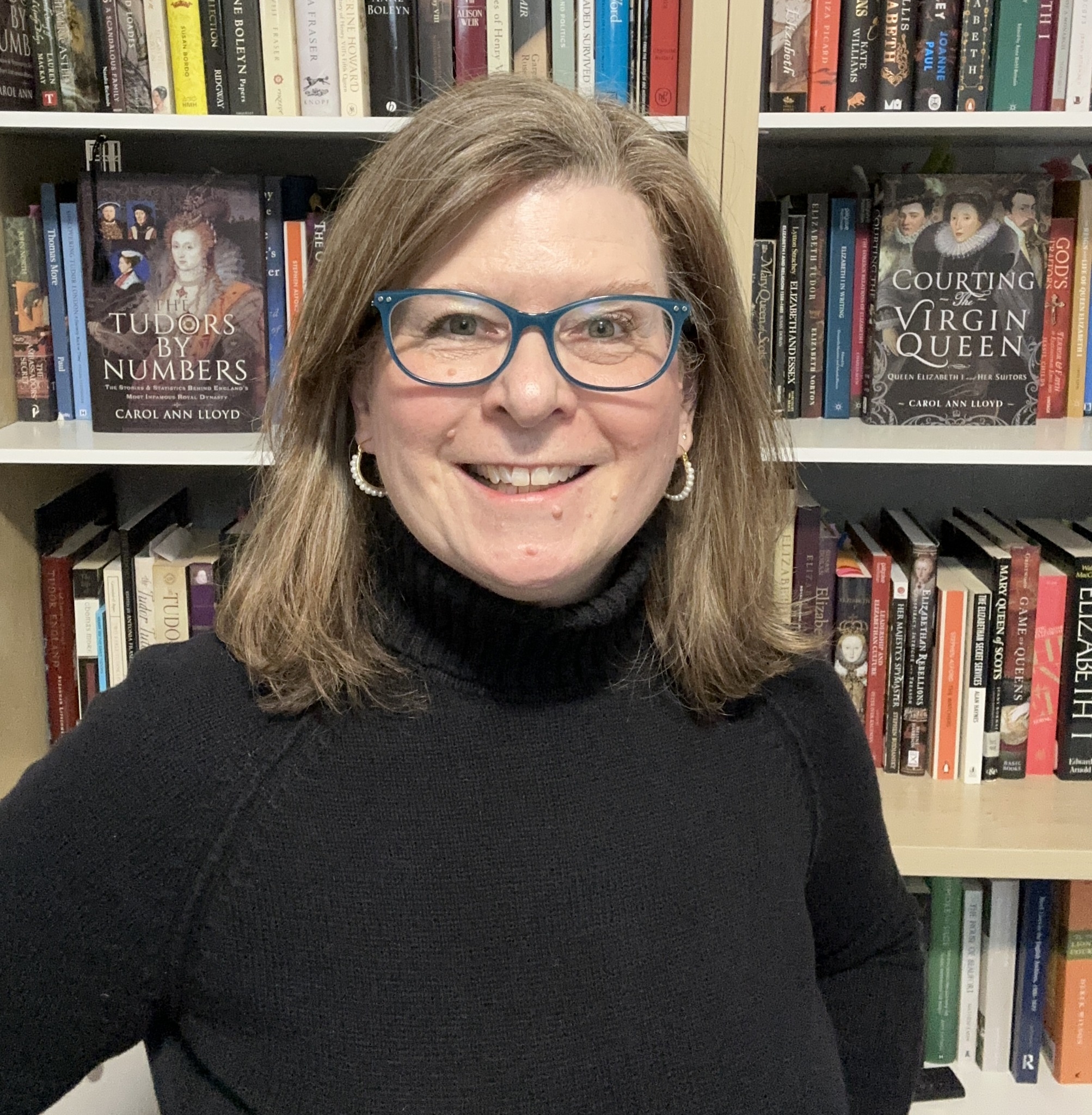
My first guest of the year is a lady I have never met in person, but who feels like an old friend. I regularly chat with Carol Ann Lloyd on her podcast, Royals, Rebels and Romantics, when we have a lot of fun and ALWAYS go over time. Once we get talking, it is hard to stop us!

So, welcome to Carol Ann!

Sharon: Carol Ann, can I ask, what got you into writing?

Carol Ann: I have always really enjoyed writing. In fact, my mom kept a very silly story I wrote as a young school child called “Sam the Clam.” I illustrated it myself. It was pretty terrible, about a clam who of course spoke and moved around. It all rhymed. What I remember, though, it how much fun it was to create a little world.

Sharon: Tell us about your books.

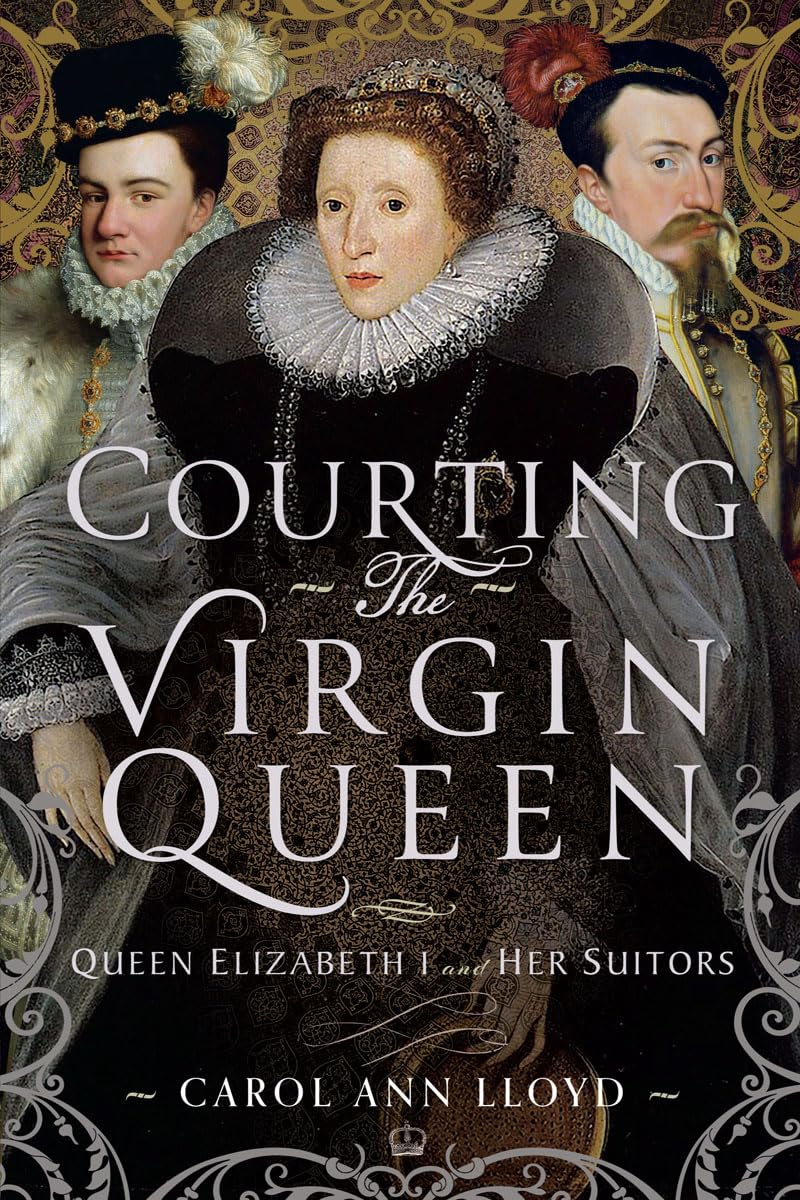
Carol Ann: I’ve published two books about Tudor history: The Tudors by Numbers and Courting the Virgin Queen.

I got the idea for The Tudors by Numbers when I was working on something about the coronations of Mary I and Elizabeth I. We usually think of the two half-sisters as opposing each other: Catholic and Protestant, daughter of Katherine of Aragon and daughter of Anne Boleyn, etc. But I started thinking of them as two succeeding Queens Regnant. When we put them together, the ruled for 50 years, which is a total of 42 percent of the Tudor dynasty. Those are important numbers, and I don’t think we usually consider the Tudor dynasty as having such a high percentage of female rule. Then, if you consider Jane Grey a Queen (which I do), there are three Tudor kings and three Tudor queens: 50 percent each. So I know the number six is the most famous, but I think there are other Tudor numbers that are equally important.

For Courting the Virgin Queen, I was asked to explore Elizabeth’s suitors. That was really interesting for me to take on. We know she never married, but why? I was struck by one of the first diplomatic comments about her reign, when the Count of Feria, the Spanish ambassador, wrote to Philip that “everything depends upon the husband this woman may take.” EVERYTHING. That got me thinking. He was right is so many ways. The foreign policy, the religious policy, trade partners and trade routes, future alliances, standing in Europe and around the world, the future of England—all that depended on the man Elizabeth chose as her husband. And, of course, there were no really good options. Elizabeth saw first-hand the problems with Mary’s Spanish marriage. And she saw all around her how women lost so much by marrying. She may have loved Robert Dudley, but she would have lost enormous credibility in England and abroad by marrying a subject. A foreign alliance might have proven handy at some points, but she would have linked her kingdom to another with no way out. There were no good options. Even though it infuriated her own council and dismayed the foreign picture, remaining the Virgin Queen was her best option.

Sharon: What attracts you to the Tudor period?

History...the Interesting Bits
Bess of Hardwick

Carol Ann: The women! (Sharon: Yes! This is why we get along so well!) I love Tudor women. Of course, the Queens and the Queen Consorts are terrific. But so many other women are fascinating. Right now, I’m digging into Bess of Hardwick. She blows my mind. She was born around 1520 to a small landowner in Hardwick. The family had some standing, but when Bess’s father John. Hardwick died, the King took control of the lands because the John’s oldest son was just two years old. Bess was around 15 when she married the first time, but Robert Barlow died about 18 months later and she was a widow. She then married Sir William Cavendish of Chatsworth, gaining land and money. Bess and Cavendish had several children, and Bess enjoyed supervising the building works. But Sir William was accused of embezzlement and went into debt, and his death brought her into debt. She became a lady-in-waiting to Elizabeth I and met Sir William St Loe, who became her third husband. She was able to indulge in her passion for building, and the couple seem to have been genuinely in love (if their letters are to be believed).

When St Loe died, his daughters from his first wife had been excluded from his will. Bess’s reputation was tarnished. Still, she was very well off and returned to her home at Chatsworth. When she returned to court in 1566, she met and charmed the very wealthy George Talbot, marrying him in 1567 and becoming the Countess of Shrewsbury. This final marriage was a stormy one, not all that surprising as the couple had to play host to Mary, Queen of Scots. Although Bess and Mary seemed to get along well initially, working on embroidery together, as time went on the relationship soured. Bess also fell out of favour with Queen Elizabeth, although she tried to present herself as one of the Queen’s “most true and faith servants”. It was not entirely successful. Bess hoped her granddaughter Arbella, whom she helped raise, would become Queen after Elizabeth’s death. Her rocky marriage with Shrewsbury ended with his death in 1590. Bess moved back to Hardwick, where she built the new Hardwick Hall (known for being “more glass than wall”). She outlived Elizabeth I and saw James VI of Scotland succeed the English Queen. Bess of Hardwick died in 13 February, around 87 years old. She outlived four husbands and several monarchs (Henry VIII, Edward VI, Jane, Mary I, and Elizabeth I). What an inspiration for making the most of every opportunity!

Sharon: Who is your favourite Tudor and why?

Carol Ann: Anne Boleyn. I know it’s a cliché, but I can’t help it. She caught my eye when I was just a kid, watching the PBS (originally BBC) production of The Six Wives of Henry VIII. I saw how she was standing up to the men around her, and I was hooked. She is complicated, both generous and selfish, intelligent and foolish, ambitious and over-reaching. Everything about her intrigues me.

Sharon: Who is your least favourite Tudor and why?

Carol Ann: I’m not crazy about either of Jane Seymour’s brothers. I think they are self-absorbed and ruthless, with little or no thought to the people around them.

Sharon: How do you approach researching your topic?

History...the Interesting Bits

Carol Ann: I love reading. I can start reading one article, find a reference to something that sounds interesting, and then I’m off down that rabbit hole. More often than not, that new area leads me into several more. There is nothing more fun for me than just losing myself in the little details and wonderful stories of history! I know I should be much more organized, so I’m afraid my approach also includes a lot of “where did I write that down?” searches through piles of paper as well.

Sharon: Tell us your ‘favourite’ true historical story you have come across in your research.

Carol Ann: Anne Boleyn and the Thomas Wyatt versus Henry VIII game of bowls story. Which might or might not be “true”, but it’s in some accounts.

Sharon: Tell us your least ‘favourite’ true historical story you have come across in your research.

Carol Ann: Katherine Parr helping Thomas Seymour hold Elizabeth down while he cut her dress to shreds. I hope against hope she was doing so because her presence there was the only way she could limit how far he would go. But it’s a tough story to read.

Sharon: Are there any other eras you would like to write about?

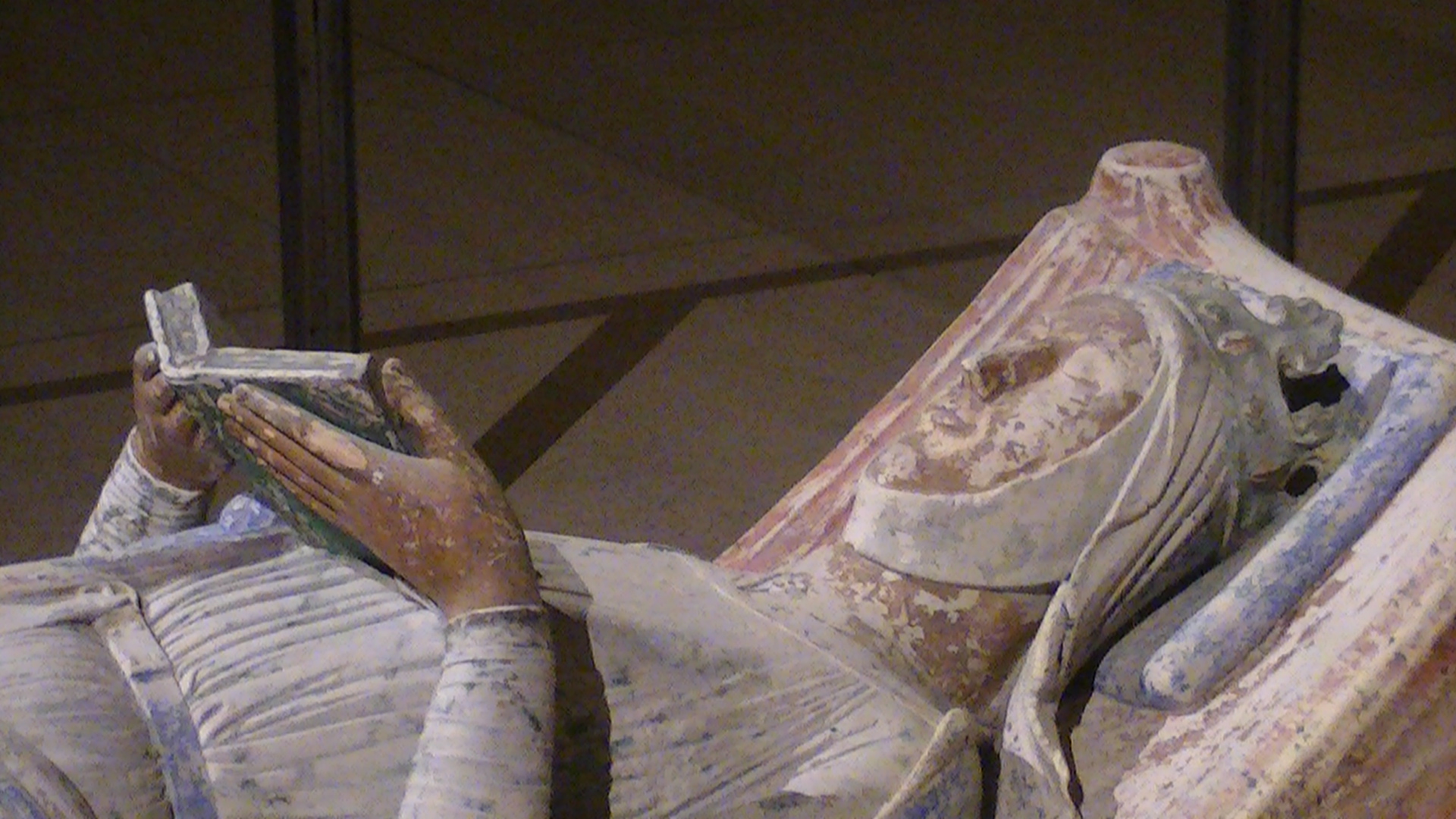
Eleanor of Aquitaine

Carol Ann: I’m working on a book now that starts in early times with the story of King Arthur and then highlights the time of Eleanor of Aquitaine. I am crazy about her, and it’s been great to explore her through this book. I would love to spend more time there. (Sharon: Oooooh, that sounds amazing. Can’t wait!)

Sharon: What are you working on now?

Carol Ann: I’m working on a book about the history of courtly love (and a bit about chivalry as well), looking closely at two of my favorite historical women: Eleanor of Aquitaine and Anne Boleyn. Two queen consorts who completely rewrote the book and who played courtly love at the highest levels.

Sharon: And finally, what is the best thing about being a writer?

Carol Ann: I love research! (Sharon: oh, me too!) I love traveling to England and heading to the National Archives at Kew and the British Library. I remember holding a seal of Henry VIII and one of Elizabeth I in my hands. In MY hands. It was amazing. I also was able to see the letters patent creating Anne Boleyn as Marchioness of Pembroke at the British Library. The falcon emblem was blazing with gold leaf and nearly as large as my hand. I couldn’t believe I was not dreaming. I also love researching closer to home at Folger Shakespeare Library. Again, I can’t believe I’m holding a document signed by Elizabeth I. I even have been in the room with her red velvet Bible. How can anything match that?!

About the author:

History...the Interesting Bits

Carol Ann Lloyd turned an obsession with the Tudors into a speaking and writing career. She shares her love of history with Smithsonian Associates, Royal Oak Foundation, Agecroft Hall, Folger Shakespeare Library and other organizations. She holds degrees in Literature and Education and hosts a popular podcast, _British History: Royals, Rebels, and Romantics_. She also offers workshops about using Shakespeare strategies to improve communication skills and is a member of National Speakers Association.

Where to find Carol Ann:

Website: www.carolannlloyd.com; Twitter/X: @shakeuphistory; Podcast: BRITISH HISTORY-Royals, Rebels, Romantics; Books: The Tudors by Numbers (2023)and Courting the Virgin Queen (2024)

*

My Books

Signed, dedicated copies of all my books are available through my online bookshop. or by contacting me.

Coming 30 March 2026: Princesses of the Early Middle Ages

Books by Sharon Bennett Connolly

Daughters of kings were often used to seal treaty alliances and forge peace with England’s enemies. Princesses of the Early Middle Ages: Royal Daughters of the Conquest explores the lives of these young women, how they followed the stereotype, and how they sometimes managed to escape it. It will look at the world they lived in, and how their lives and marriages were affected by political necessity and the events of the time. Princesses of the Early Middle Ages will also examine how these girls, who were often political pawns, were able to control their own lives and fates. Whilst they were expected to obey their parents in their marriage choices, several princesses were able to exert their own influence on these choices, with some outright refusing the husbands offered to them.

Their stories are touching, inspiring and, at times, heartbreaking.

Princesses of the Early Middle Ages: Royal Daughters of the Conquest is now available for pre-order from Pen & Sword and Amazon.

Also by Sharon Bennett Connolly:

Books by Sharon Bennett Connolly

Scotland’s history is dramatic, violent and bloody and Scotland’s Medieval Queens have seen it all. This is the story of Scotland through their eyes. Available now from Amazon and Pen and Sword Books. Heroines of the Tudor World tells the stories of the most remarkable women from European history in the time of the Tudor dynasty, 1485-1603. These are the women who ruled, the women who founded dynasties, the women who fought for religious freedom, their families and love. Heroines of the Tudor World is now available from Amberley Publishing and Amazon UK. Women of the Anarchy demonstrates how Empress Matilda and Matilda of Boulogne, unable to wield a sword themselves, were prime movers in this time of conflict and lawlessness. It shows how their strengths, weaknesses, and personal ambitions swung the fortunes of war one way – and then the other. Available from Bookshop.orgAmberley Publishing and Amazon UKKing John’s Right-Hand Lady: The Story of Nicholaa de la Haye is the story of a truly remarkable lady, the hereditary constable of Lincoln Castle and the first woman in England to be appointed sheriff in her own right. Available from all good bookshops Pen & Sword Booksbookshop.org and Amazon

Royal Historical Society

Defenders of the Norman Crown: The Rise and Fall of the Warenne Earls of Surrey tells the fascinating story of the Warenne dynasty, from its origins in Normandy, through the Conquest, Magna Carta, the wars and marriages that led to its ultimate demise in the reign of Edward III. Available from Pen & Sword BooksAmazon in the UK and US, and Bookshop.orgLadies of Magna Carta: Women of Influence in Thirteenth Century England looks into the relationships of the various noble families of the 13th century, and how they were affected by the Barons’ Wars, Magna Carta and its aftermath; the bonds that were formed and those that were broken. It is now available in paperback and hardback from Pen & SwordAmazon, and Bookshop.orgHeroines of the Medieval World tells the stories of some of the most remarkable women from Medieval history, from Eleanor of Aquitaine to Julian of Norwich. Available now from Amberley Publishing and Amazon, and Bookshop.orgSilk and the Sword: The Women of the Norman Conquest traces the fortunes of the women who had a significant role to play in the momentous events of 1066. Available now from Amazon,  Amberley Publishing, and Bookshop.org.

Alternate Endings: An anthology of historical fiction short stories including Long Live the King… which is my take what might have happened had King John not died in October 1216. Available in paperback and kindle from Amazon.

Podcast:

A Slice of Medieval

Have a listen to the A Slice of Medieval podcast, which I co-host with Historical fiction novelist Derek Birks. Derek and I welcome guests, such as Ian Mortimer, Bernard Cornwell, Elizabeth Chadwick and Scott Mariani, and discuss a wide range of topics in medieval history, from significant events to the personalities involved. 

Every episode is also now available on YouTube.

*

Don’t forget! Signed and dedicated copies of all my books are available through my online bookshop.

For forthcoming online and in-person talks, please check out my Events Page.

You can be the first to read new articles by clicking the ‘Follow’ button, liking our Facebook page or joining me on TwitterThreadsBluesky and Instagram.

*

©2025 Sharon Bennett Connolly FRHistS and Carol Ann Lloyd

Happy New Year!

History...the Interesting Bits

I just popped in to say Happy New Year to all my readers.

Thank you for your support in 2025 and here’s to a fabulous 2026 for all of us!

Lots of love,

Sharon xx

Books by Sharon Bennett Connolly