Wordly Women: Susan Abernethy

When I started writing my blog way back in 2015, Susan Abernethy already had a successful website telling the stories from History. Despite that, she never saw me as competition. Susan offered me advice and encouragement. And I will never forget that. So, today, it is so nice to be able to pay a little of that back by welcoming Susan to my author spotlight series, Wordly Women, to tell us a little of her writing journey – and about her two books, the second of which, The Formidable Women who Shaped Medieval Europe: Power and Patronage at the Burgundian Court, hits the shops at the end of October.

Welcome Susan!

Sharon: So, What got you into writing?

Susan: A friend of mine from high school started a women’s history blog in 2012 and put out a call for someone to join her in writing articles. I didn’t even know if I could write but I answered and wrote an article on Queen Emma of Normandy. It got a really good reception, and the writing took off from there. Later, I decided it would be good to write not only about women, but other topics in history and so The Freelance History Writer blog began.

Sharon: Tell us about your books.

History ... the Interesting Bits

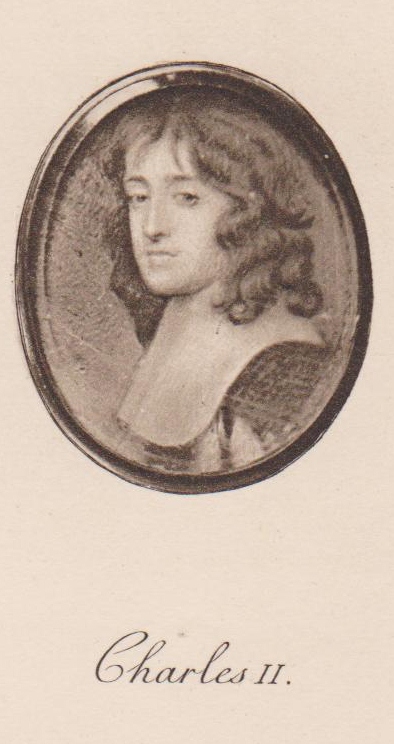
Susan: Many years ago, I found the books of Jean Plaidy in the library and read every one I could get my hands on. This included The Merry Monarch’s Wife, about Catherine of Braganza, wife of King Charles II. When I started the blog in 2012, one of my plans was to write an article about every Queen of England. While doing some research on Catherine of Braganza, it seemed like there wasn’t a great deal of information about her available, especially in English. It turned out most of the biographies were old, published in 1915 and in the 1930’s and 40’s.

Also, people, including myself, believed Catherine was miserable and nearly forgotten because of her unfaithful husband and his glamourous mistresses. I wondered if this was true. Having very little knowledge of Portuguese history, I ended up reading dozens of history books about the country and their seaborne empire, which is pretty fascinating stuff. This research was necessary to put Catherine in historical context and to explain why the ports of Tangier and Bombay were included in her dowry.

So the adventure began. Charles II’s Portuguese Queen: The Legacy of Catherine of Braganza is my debut book which was published in April 2025 in the UK and June 2025 in the US.

The second book is called The Formidable Women Who Shaped Medieval Europe: Power and Patronage in the Burgundian Court. This is the result of a mountain of research beginning with an article about Isabel of Portugal. She was the daughter of King John I of Portugal and his wife, Philippa of Lancaster, the daughter of John of Gaunt and Blanche of Lancaster and the only English queen of Portugal.

Isabel, at the age of thirty, married Philip the Good, the third Valois Duke of Burgundy and was the mother of the fourth duke, Charles the Bold. After reading biographies of Isabel and Charles, they seemed to me to be captivating characters, both strong and powerful. Charles also appeared to be a real character and possibly suffering from some kind of mental illness. After writing articles about both of them, I decided to delve further into Burgundian history, which covers the Low Countries, northern France and part of the Holy Roman Empire. Richard Vaughan wrote excellent biographies of all four of the Valois Dukes so that is where the research started.

Philip the Bold, one of the greatest diplomats in his era, began a program of amassing an empire which included the marriages of his daughters, granddaughters, nieces and many others into various houses of Europe. This book is a collection of 31 women related to the Valois dukes by blood and marriage. It includes the wives of kings, dauphins, dukes, counts, and others along with a few queens and a queen regnant, even a saint. In telling their stories, you discover a great variety of history of many principalities of western Europe.

Sharon: Is there a book you’ve read recently that influenced your research?

Susan: A year or so ago, I read Sharon L Jansen’s book The Monstrous Regiment of Women: Female Rulers in Early Modern Europe. Her main point is that historical family trees basically only show the descendants of men. If the women are mentioned at all, it is as the wife or maybe the daughter if she married an important man. She says we need to look at the women and their connections, not just their husbands and children. How did they interact with other women? A total eye-opener for me, now I cannot look at history in any other way. It really guided me in the research and writing of my second book on the Valois royal and aristocratic women. Some of these women lived in luxurious comfort while others had to scrape and fight to keep their patrimonies from being wrested from them by powerful men.

Sharon: This is soooooo true!

Sharon: Who is your favorite historical person and why?

History ... the Interesting Bits

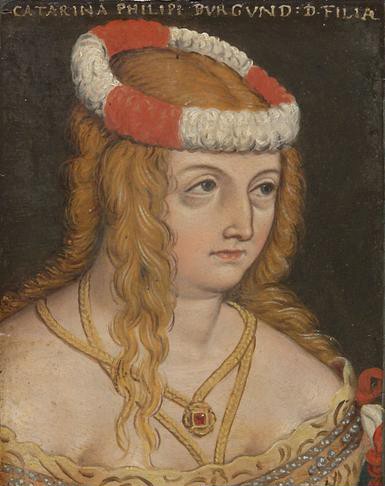
Susan: I have many favorites so it’s hard to choose one. Margaret of Austria, Regent of the Netherlands and Anne de Beaujeu, Duchess of  Bourbon and Regent of France, come to mind, both of whom are in the second book. But while I was researching the formidable women, I came across Catherine of Burgundy, Duchess of Austria and Countess of Ferrette, the daughter of Philp the Bold. Her life really captivated me for several reasons. When her father didn’t pay the balance of her dowry, she convinced her husband to give her the county of Ferrette, not just for the income but to rule on her own.

Catherine took full advantage of this opportunity. She acted as diplomat for her brother, John the Fearless and her nephew Philip the Good. She engaged in feuds and even started a small conflict with the city of Basel. She must have had remarkable charisma and a forceful personality. But the best part is she made a marriage without the permission of her brother. I haven’t come across many women who did such a thing. She may have done it to have an ally for her feuds and to maintain her position as countess. But she also may have been in love with the man. When her nephew Philip forced her to back out of the marriage, she seems to have lost her will to live which is pretty sad. But she’s my current favorite medieval historical person.

Sharon: Who is your least favorite historical person and why?
History ... the Interesting Bits

Susan: At the moment, I’m going to say Ferdinand of Aragon for several reasons. One the one hand, I have to admire his political acumen and diplomatic panache. In the era of Isabella of Castile, King Henry VIII, King Francis I and Holy Roman Emperor Charles V, he held his own. But his treatment of women is abominable.

He appears to have navigated his relationship with Isabella really well. They were on equal footing and managed to share their responsibilities. But once Isabella was gone, he engaged in antics like marrying again to try to have another child to displace his daughter Juana as queen of Aragon, as well as not supporting his younger daughter Katherine of Aragon once her husband Arthur Tudor died. He also is responsible, along with her husband Philip as well as her son HRE Charles V, for spreading terrible rumors about Juana of Castile’s mental health and for her eventual captivity which lasted for 45 years. It’s not a pretty story.

Sharon: How do you approach researching your topic?

Susan: The process of research starts with reading. Lots of reading. After finding as many books as I can on my topic, I start reading and find more resources. This process also involves searches on the internet for sources. Then, I make notes from my reading. I treat each chapter of the book as if it were an extended post for my blog. The notes are combined into a narrative which then becomes a chapter, and the chapters are assimilated into the book.  

Sharon: Tell us your ‘favourite’ story you have come across in your research.

Susan: This is a good one! Many years ago, I read a turn of the century biography of Philippa of Hainault, queen of King Edward III of England. The king and queen arranged a marriage for their eldest daughter Isabella to Louis II, Count of Flanders, also known as Louis of Male. The author relates the story of how Louis jilted Isabella at the altar, fleeing to France to avoid the wedding ceremony. Louis had promised his ally, King Philip VI of France that he would marry Margaret, the middle daughter of the Duke of Brabant and he eventually did.

Now Louis was not a faithful husband to Margaret and had something along the lines of 18 illegitimate children. Margaret was 7 years older than Louis. She gave birth to her daughter Margaret of Male in 1350 who eventually married the first Duke of Burgundy, Philip the Bold in 1369. Two years later, Countess Margaret deserted the court of Flanders to live in the country.

The author of the biography of Philippa of Hainault casually mentions that Margaret, Countess of Flanders, ordered the nose of Louis’ mistress cut off after the mistress gave birth to twins. As a result of her injuries, the mistress died. She insinuates this was the reason for Margaret abandoning the court. This sensational story really piqued my curiosity, and I searched for the truth for a long time.

Why did Margaret desert the Flemish court, something Belgian historians have debated for years? Did Louis abandon her? Did she abandon him? Was she mentally ill? Is there a history of mental illness in the House of Reginar of Brabant?

It seems an unknown chronicler from Bruges, in 1430, is the instigator of the report of Margaret cutting off the nose of Louis’ lover. He wrote this sixty years after the alleged event. It is entirely possible he spoke with someone who knew the truth of the matter from oral tradition. It is also possible he made up the entire scenario. Since then, a chronicler restated the story in 1531, and popular historians have repeated it down through the ages. While there is still the possibility the story is true, it is highly unlikely, and these chroniclers may have had their own agenda in spreading the rumors.

The stories of the jilting of Isabella, the marriage of Margaret of Brabant to Louis, Count of Flanders and her daughter Margaret of Male, wife of Philip the Bold, Duke of Burgundy, are all in the Formidable Women book.

Sharon: Tell us your least ‘favourite’ story you have come across in your research.

Susan: That has to be the story of Blanche II, Titular Queen of Navarre. Her father was King Juan II of Aragon, and her mother was Blanche I, Queen of Navarre. King Juan was crafty and sly and ruled Navarre by right of his wife. But once Blanche I died, a family feud ensued and King Juan did everything in his power to retain the governance of Navarre, even going so far as to ignore the rights of Blanche II and her brother Charles who had both gained the approval of the Cortes of Navarre as the legal heirs of Blanche I.

This state of affairs lasted for years. Blanche II had been married to Enrique IV of Castile, but the marriage was not a happy one and eventually, the union was annulled and Blanche II returned to Aragon. Her father locked her up in prison to prevent her from gaining the throne of Navarre to which she was legally entitled. Blanche remained in prison from 1453 until her death under suspicious circumstances in December 1464.

What makes this story even sadder is the fact that King Juan II of Aragon married again and had a son, Ferdinand of Aragon, who married Isabella of Castile and was the father of Queen Juana of Castile. In an eerie twist of fate, similar to Blanche II of Navarre, Ferdinand managed to declare his daughter Juana mentally unstable and locked her up for 45 years in Tordesillas. History repeats itself.

Sharon: Are there any other eras you would like to write about?
History ... the Interesting Bits

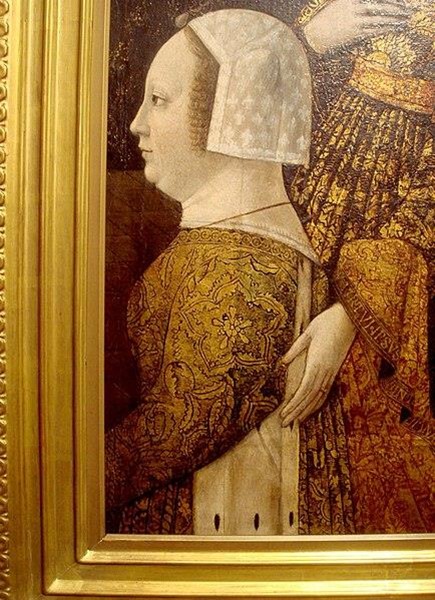
Susan: My interest in the medieval, early modern and Renaissance eras is pretty passionate and I’ve been out of my element by writing about the Stuart era. But the Stuart’s need an update and more scrutiny. If I did look at a different era, it might be Italian medieval and Renaissance history, a subject I’ve tried to avoid for many years because I found it to be meandering and complicated. But recently, I’ve delved into the stories of women such as Bona of Savoy, who features in my second book, as well as Bianca Maria Visconti, mother of Bona’s husband, Galeazzo Maria Sforza, Duke of Milan, and Valentina Visconti, wife of Louis I, Duke of Orleans who was assassinated by John the Fearless, Duke of Burgundy. These are tremendous women’s stories and pique my interest for more.

Sharon: What are you working on now?

Susan: I’m currently in the research stage of writing a biography of Mary Beatrice d’Este, second wife of King James II of England. She was the sister-in-law of Catherine of Braganza and the only Italian Queen of England. This book will be along the same lines as the biography of Catherine.

The research into Mary Beatrice brought up another intriguing subject. Her mother was Laura Martinozzi, Duchess of Modena, one of the many nieces of Cardinal Mazarin, the prime minister of Kings Louis XIII and XIV of France. Seems like another intriguing topic to look into.

Sharon: What is the best thing about being writer?

Susan: Having been an avid reader all my life, being a writer allows me to keep reading and to read about any topic that interests me. I love learning! I probably should have been a history teacher but never pursued it. By writing books and for the blog it allows me to educate people who are interested in the fascinating stories of history. My main goal is to get someone to read a book and hopefully enjoy the history as much as I do.

About the Author:

History ... the Interesting Bits

Susan Abernethy’s passion for history dates back fifty years and led her to study for a Bachelor of Arts degree in history at the University of North Carolina at Charlotte. She is currently a member of the Rocky Mountain Medieval and Renaissance Association, the Society for Renaissance Studies and the Historical Association. Her work has appeared on several historical websites and in magazines and includes guest appearances on historical podcasts. Her blog, The Freelance History Writer, has continuously published over five hundred historical articles since 2012, with an emphasis on European, Tudor, Medieval, Renaissance, Early Modern and women’s history. She is currently working on her third non-fiction book.

Buy the books:

Charles II’s Portuguese Queen: The Legacy of Catherine of Braganza; The Formidable Women Who Shaped Medieval Europe: Power and Patronage in the Burgundian Court

*

My Books:

Signed, dedicated copies of all my books are available through my online bookshop.

Out now: Scotland’s Medieval Queens

Books by Sharon Bennett Connolly

Scotland’s history is dramatic, violent and bloody. Being England’s northern neighbour has never been easy. Scotland’s queens have had to deal with war, murder, imprisonment, political rivalries and open betrayal. They have loved and lost, raised kings and queens, ruled and died for Scotland. From St Margaret, who became one of the patron saints of Scotland, to Elizabeth de Burgh and the dramatic story of the Scottish Wars of Independence, to the love story and tragedy of Joan Beaufort, to Margaret of Denmark and the dawn of the Renaissance, Scotland’s Medieval Queens have seen it all. This is the story of Scotland through their eyes.

Scotland’s Medieval Queens gives a thorough grounding in the history of the women who ruled Scotland at the side of its kings, often in the shadows, but just as interesting in their lives beyond the spotlight. It’s not a subject that has been widely covered, and Sharon is a pioneer in bringing that information into accessible history.’ Elizabeth Chadwick (New York Times bestselling author)

Available now from Amazon and Pen and Sword Books

Also by Sharon Bennett Connolly:

Books by Sharon Bennett Connolly

Heroines of the Tudor World tells the stories of the most remarkable women from European history in the time of the Tudor dynasty, 1485-1603. These are the women who ruled, the women who founded dynasties, the women who fought for religious freedom, their families and love. Heroines of the Tudor World is now available for pre-order from Amberley Publishing and Amazon UK. Women of the Anarchy demonstrates how Empress Matilda and Matilda of Boulogne, unable to wield a sword themselves, were prime movers in this time of conflict and lawlessness. It shows how their strengths, weaknesses, and personal ambitions swung the fortunes of war one way – and then the other. Available from Bookshop.orgAmberley Publishing and Amazon UKKing John’s Right-Hand Lady: The Story of Nicholaa de la Haye is the story of a truly remarkable lady, the hereditary constable of Lincoln Castle and the first woman in England to be appointed sheriff in her own right. Available from all good bookshops Pen & Sword Booksbookshop.org and Amazon

Royal Historical Society

Defenders of the Norman Crown: The Rise and Fall of the Warenne Earls of Surrey tells the fascinating story of the Warenne dynasty, from its origins in Normandy, through the Conquest, Magna Carta, the wars and marriages that led to its ultimate demise in the reign of Edward III. Available from Pen & Sword BooksAmazon in the UK and US, and Bookshop.orgLadies of Magna Carta: Women of Influence in Thirteenth Century England looks into the relationships of the various noble families of the 13th century, and how they were affected by the Barons’ Wars, Magna Carta and its aftermath; the bonds that were formed and those that were broken. It is now available in paperback and hardback from Pen & SwordAmazon, and Bookshop.orgHeroines of the Medieval World tells the stories of some of the most remarkable women from Medieval history, from Eleanor of Aquitaine to Julian of Norwich. Available now from Amberley Publishing and Amazon, and Bookshop.orgSilk and the Sword: The Women of the Norman Conquest traces the fortunes of the women who had a significant role to play in the momentous events of 1066. Available now from Amazon,  Amberley Publishing, and Bookshop.org.

Alternate Endings: An anthology of historical fiction short stories including Long Live the King… which is my take what might have happened had King John not died in October 1216. Available in paperback and kindle from Amazon.

Podcast:

A Slice of Medieval

Have a listen to the A Slice of Medieval podcast, which I co-host with Historical fiction novelist Derek Birks. Derek and I welcome guests, such as Bernard Cornwell and Elizabeth Chadwick, and discuss a wide range of topics in medieval history, from significant events to the personalities involved.

Every episode is also now available on YouTube.

*

Don’t forget! Signed and dedicated copies of all my books are available through my online bookshop.

For forthcoming online and in-person talks, please check out my Events Page.

You can be the first to read new articles by clicking the ‘Follow’ button, liking our Facebook page or joining me on TwitterThreadsBluesky and Instagram.

*

©2025 Susan Abernethy and Sharon Bennett Connolly FRHistS.

Helena Snakenborg: A Swedish Woman Living in Tudor England

History ... the Interesting Bits
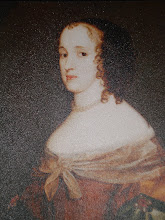
Helena Snakenborg, Marchioness of Northampton, in coronation robes, 1603

An Elizabethan whose story I became aware of through a novel is Helena Snakenborg, who features in Tracy Borman’s novel, The King’s Witch. I had to know more about this Swedish lady living in Tudor England, and include her in my own Heroines of the Tudor World. Even more so after I learned that Helena was the only foreigner amongst Queen Elizabeth’s ladies. Helena was born in 1548, into an ancient Swedish baronial family. Her father, Ulf Henriksson, had been a trusted supporter of King Gustav I Vasa of Sweden. Her mother, Agneta Knuttson, was a descendant of the earls of Orkney and it is from her mother’s family that Helena took her name, Snakenborg.

In 1564, at the age of fifteen, Helena was appointed a maid of honour to Gustav Vasa’s daughter, and the sister of the new King Eric XIV, Princess Cecilia. Later that same year, Princess Cecilia embarked on a voyage to England, taking Helena with her. Cecilia claimed that as a committed Anglophile, she wanted to meet the queen of England. She may also have been hoping to revive her brother’s suit for Queen Elizabeth’s hand in marriage. Their overland journey to England was long and arduous.

They travelled through Poland and Germany in order to avoid hostile countries and were hampered by bad weather. The princess was accompanied by her husband and fell pregnant during the journey, necessitating further delays. Almost a year had passed by the time they arrived in London in September 1565, with the Spanish ambassador reporting to Philip II,

‘On the 11th instant [of September] the king of Sweden’s sister entered London at 2 o’clock in the afternoon. She is very far advanced in pregnancy, and was dressed in a black velvet robe with a mantle of black cloth of silver, and wore on her head a golden crown… She had with her six Ladies dressed in crimson taffety with mantles of the same.’1

The arrival of the Swedish princess caused a great deal of excitement at court and the queen gave them a lavish reception. Among Cecilia’s six ladies was Helena Snakenborg and in a letter to her mother, Helena wrote of their reception in England: ‘There came so many to visit us that there was no end to it. All wished us a hearty welcome to England.’2 After the official ceremonies were completed, Princess Cecilia was taken at once to the place designated for her confinement, where she gave birth to a son on 14 September. The princess was given the use of Bedford House as her London residence. She did not remain long in seclusion after the birth and she and her entourage soon became regular visitors at court, treated to receptions and entertainments.

History ... the Interesting Bits
William Parr, Marquess of Northampton

Helena was by all accounts a beautiful young woman, with large brown eyes, red hair and a pink and white complexion. She attracted the attention of William Parr, Marquess of Northampton, a man thirty-five years her senior whose sister, Kateryn Parr, had been Henry VIII’s sixth and final wife. In a letter to her mother, Helena told her about the marquess’s attention:

‘Amongst the gentlemen was a courtier who always came with the earliest arrivals and left amongst the last. When my gracious Lady had been “churched” after the baby was born, the Marquess of Northampton (for that was the courtier’s name) talked to my gracious lady about me.’3

The marquess of Northampton wasted no time in pressing his suit with Helena, sending her lavish gifts of clothes and jewels, and ‘being an impressionable and romantic young girl, Helena was swept off her feet by the experienced older man.’4 Helena was beguiled by Northampton, who wanted to marry her but felt prevented from doing so because, although divorced in 1551, his first wife Lady Anne Bourchier was still alive and there were some doubts as to the validity of the divorce.

In the meantime, Princess Cecilia had run up some rather large debts due to her lavish lifestyle in England. Her debts, in excess of £3,000, had been amassed as a result of the purchase of poultry, articles of plate and jewellery, a kirtle wrought with gold, a Venice lute – the list goes on. The princess left England in order to escape her creditors, though she had been obliged by the queen to sell whatever she could in order to raise as much money as she could to pay off at least some of the debt, leaving England in April 1566. The princess had wanted to take Helena with her, but the young woman was enjoying life in England, and the attentions of the marquess of Northampton, and wanted to stay.

History ... the Interesting Bits
Queen Elizabeth I

Queen Elizabeth came to Helena’s rescue by offering her a place in her household, appointing her a maid of honour in 1567 and later promoting her to Gentlewoman of the Privy Chamber. Although unpaid, the queen awarded her new maid of honour additional privileges, including lodgings at court, servants and a horse. It seems Queen Elizabeth had grown fond of Helena and was keen to help the budding romance of Helena and Northampton. Helena, in her turn, was in the queen’s thrall, emulating her dress and manners and even her signature, underlining the ‘H’ with the same flourish Elizabeth did with her ‘E’. Helena was diligent and conscientious in her duties and became an indispensable member of the queen’s household.

Helena’s relationship with Northampton was still hindered by Northampton’s ambiguous marital status, but the marquess was still generous with Helena, assigning ten of his own servants to care for her and giving her everything she needed or wanted. Helena told her mother: ‘I cannot imagine I shall ever want for anything however beautiful or expensive that his Lordship can buy without his getting it at once for his Elin.’5 The couple’s patience was eventually rewarded, so to speak, with the death of Anne Bourchier in January 1571. William Parr was finally free to marry.

History ... the Interesting Bits
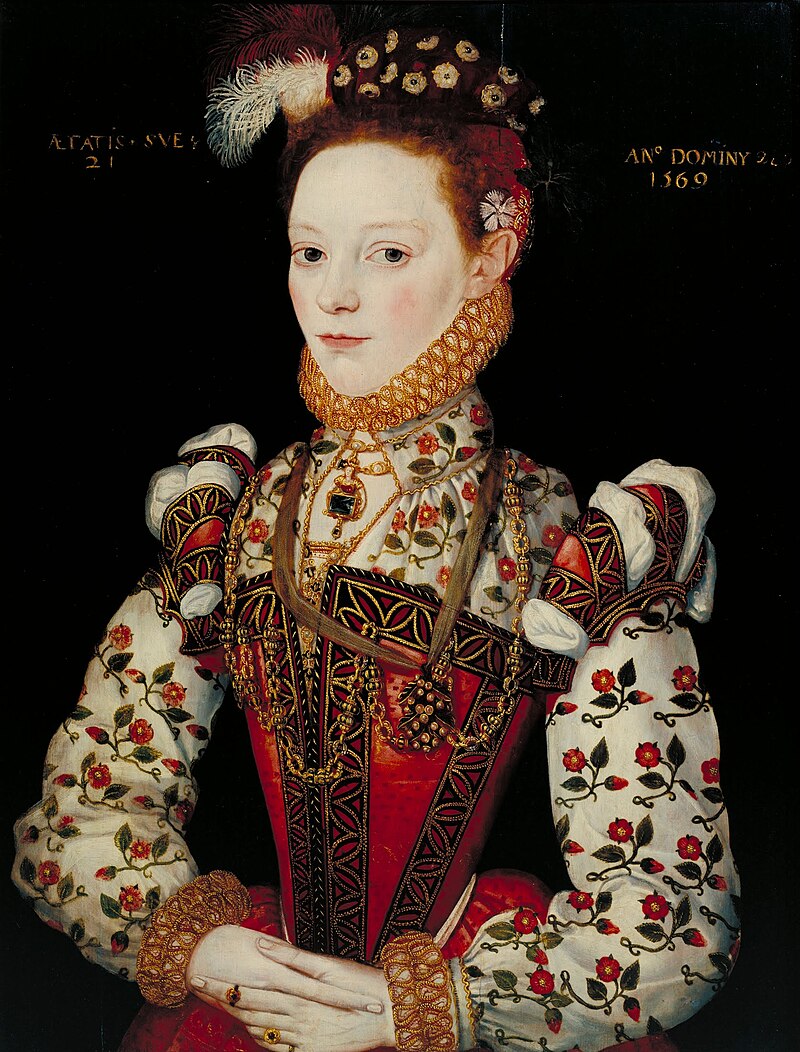
A Young Lady Aged 21 in 1569, tentatively identified as a portrait of Helena Snakenborg

The wedding took place in May in the presence of Queen Elizabeth, who had offered her own closet in Whitehall Palace for the ceremony. The bride was twenty-two and the groom fifty-seven. The newlyweds divided their time between their houses in Guildford, Surrey, and Stanstead Hall, Essex, close enough to London that Helena could attend court regularly. The happy marriage came to a sudden end within just a few months, when the marquess fell ill at Warwick in September 1571. He had been suffering from gout for some time and it now took a turn for the worse. Helena nursed her ailing husband through the ensuing weeks, but the earl succumbed to his illness on 28 October. They had been married just five months. The queen bore the costs of the funeral and even provided material from her own wardrobe for the mourning outfits.

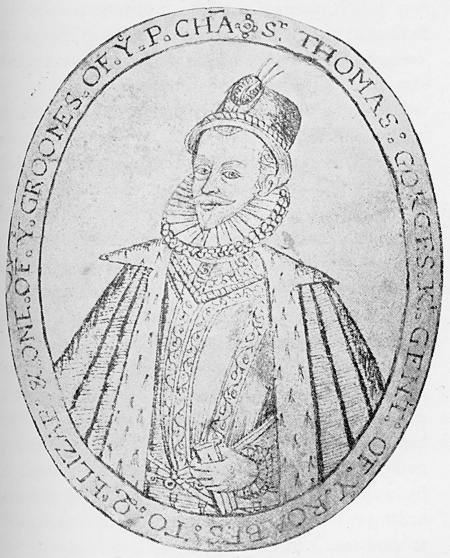
Helena was left a young widow with a substantial dower of £368 per annum from her husband’s estates in Cumberland. She could have retired from court and lived in comfort for the rest of her life, but Helena chose to return to the queen’s service just as soon as her husband’s affairs were settled. It was not long, however, before she attracted a new admirer in Thomas Gorges. Although the queen was initially in favour of the match, she refused to consent to a marriage, either out of jealousy or concern for the disparity in their statuses. Helena was a marchioness, whereas Thomas was merely a gentleman, serving as a Groom of the Privy Chamber. In spite of the queen’s objections, the couple married in secret in 1576, earning themselves Elizabeth’s wrath.

Dismissed from court, Helena wrote to the queen to beg forgiveness, describing herself as ‘a poure, desolate, and banished creature’.6

History ... the Interesting Bits
Thomas Gorges

Helena was soon forgiven and welcomed back to court, with the queen granting Helena manors in Huntingdonshire and Wiltshire. Her second marriage appears to have been as happy as the first, if not happier. Two years later, Helena left court to give birth to her first child, a daughter named after Elizabeth for whom the queen acted as godmother, presenting Helena with a silver-gilt bowl at the christening. A son, Francis, was probably born the following year, with at least six more children after that, two more daughters and four more sons, the last being born in 1589.

Despite her growing brood Helena still served the queen, acting as her deputy at the baptisms of children of distinguished noblemen, especially towards the end of the reign as the queen’s health was deteriorating. Helena was with Elizabeth during her final illness at Richmond and remained with the queen’s body after her death on 24 March 1603, watching over the corpse as it was laid in a lead coffin and then accompanied it as it was taken by barge from Richmond to Whitehall Palace in a sombre torchlit procession. As senior peeress, Helena was chief mourner at Elizabeth’s funeral at Westminster Abbey on 28 April.

History ... the Interesting Bits
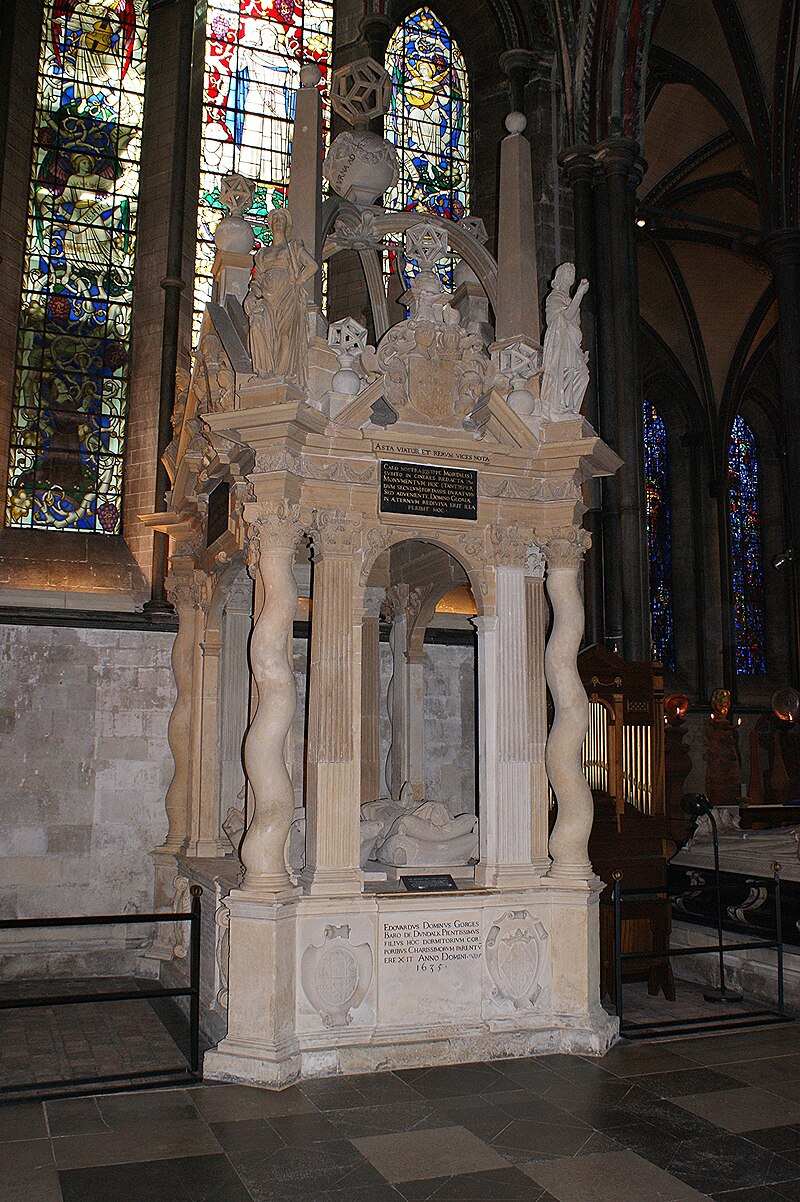
Joint tomb of Helena and Sir Thomas Gorges, Salisbury Cathedral

The reign of King James I (VI of Scots) inevitably meant changes at court and Thomas Gorges was demoted. Helena, too, lost some of her privileges. And with the death of Thomas on 30 March 1610, she increasingly retreated from public life. A devoted member of the Church of England, she died on 10 April 1635, having lived in England for almost exactly seventy years. She granted over £1,700 in annuities and bequests in her will. At the time of her death, Helena had ninety-two living, direct descendants.

Helen Snakenborg, Marchioness of Northampton, was buried in Salisbury Cathedral, beside her second husband Thomas Gorges who had been laid to rest there in 1610.

In her long life, Helena Snakenborg had been lucky enough to enjoy two happy marriages, both made for love, and to have enjoyed the love and patronage of Queen Elizabeth. Even when she had faced the wrath of the queen, Helena had managed to win back her favour.

*

Images:

Courtesy of Wikipedia

Notes:

1. CSPS, Elizabeth 1558-67, I, 475 quoted in Tracy Borman, Elizabeth’s Women, p. 278; 2. ibid; 3. ibid; 4. Paul Harrington, ‘Gorges [née Snakenborg], Helena, Lady Gorges [other married name Helena Parr, marchioness of Northampton],’ Oxforddnb.com; 5. Tracy Borman, Elizabeth’s Women, p. 281; 6. BM Cotton MS Titus B II, f. 346 quoted in Tracy Borman, Elizabeth’s Women, p. 357

Sources:

Tracy Borman, Elizabeth’s Women; Paul Harrington, ‘Gorges [née Snakenborg], Helena, Lady Gorges [other
married name Helena Parr, marchioness of Northampton],’ Oxforddnb.com; Calendar of State Papers Domestic: Edward VI, Mary and Elizabeth, 1547-80, ed. Robert Lemon; Elizabeth Norton, The Lives of Tudor Women; Amy Licence, Tudor Roses: From Margaret Beaufort to Elizabeth I; Paul Kendall, Queen Elizabeth I: Life & Legacy of the Virgin Queen; Lisa Hilton, Elizabeth I: Renaissance Prince, A Biography; John Guy, Elizabeth: The Forgotten Years; Laura Brennan, Elizabeth I: The Making of a Queen; R.E. Pritchard, Sex, Love & Marriage in the Elizabethan Age; Alison Weir, Elizabeth the Queen; Neville Williams, The Life and Times of Elizabeth I; Sarah Gristwood, The Tudors in Love: The Courtly Code Behind the Last Medieval Dynasty

*

My Books:

Signed, dedicated copies of all my books are available through my online bookshop.

Out now: Scotland’s Medieval Queens

Books by Sharon Bennett Connolly

Scotland’s history is dramatic, violent and bloody. Being England’s northern neighbour has never been easy. Scotland’s queens have had to deal with war, murder, imprisonment, political rivalries and open betrayal. They have loved and lost, raised kings and queens, ruled and died for Scotland. From St Margaret, who became one of the patron saints of Scotland, to Elizabeth de Burgh and the dramatic story of the Scottish Wars of Independence, to the love story and tragedy of Joan Beaufort, to Margaret of Denmark and the dawn of the Renaissance, Scotland’s Medieval Queens have seen it all. This is the story of Scotland through their eyes.

Scotland’s Medieval Queens gives a thorough grounding in the history of the women who ruled Scotland at the side of its kings, often in the shadows, but just as interesting in their lives beyond the spotlight. It’s not a subject that has been widely covered, and Sharon is a pioneer in bringing that information into accessible history.’ Elizabeth Chadwick (New York Times bestselling author)

Available now from Amazon and Pen and Sword Books

Also by Sharon Bennett Connolly:

Books by Sharon Bennett Connolly

Heroines of the Tudor World tells the stories of the most remarkable women from European history in the time of the Tudor dynasty, 1485-1603. These are the women who ruled, the women who founded dynasties, the women who fought for religious freedom, their families and love. Heroines of the Tudor World is now available for pre-order from Amberley Publishing and Amazon UK. Women of the Anarchy demonstrates how Empress Matilda and Matilda of Boulogne, unable to wield a sword themselves, were prime movers in this time of conflict and lawlessness. It shows how their strengths, weaknesses, and personal ambitions swung the fortunes of war one way – and then the other. Available from Bookshop.orgAmberley Publishing and Amazon UKKing John’s Right-Hand Lady: The Story of Nicholaa de la Haye is the story of a truly remarkable lady, the hereditary constable of Lincoln Castle and the first woman in England to be appointed sheriff in her own right. Available from all good bookshops Pen & Sword Booksbookshop.org and Amazon

Royal Historical Society

Defenders of the Norman Crown: The Rise and Fall of the Warenne Earls of Surrey tells the fascinating story of the Warenne dynasty, from its origins in Normandy, through the Conquest, Magna Carta, the wars and marriages that led to its ultimate demise in the reign of Edward III. Available from Pen & Sword BooksAmazon in the UK and US, and Bookshop.orgLadies of Magna Carta: Women of Influence in Thirteenth Century England looks into the relationships of the various noble families of the 13th century, and how they were affected by the Barons’ Wars, Magna Carta and its aftermath; the bonds that were formed and those that were broken. It is now available in paperback and hardback from Pen & SwordAmazon, and Bookshop.orgHeroines of the Medieval World tells the stories of some of the most remarkable women from Medieval history, from Eleanor of Aquitaine to Julian of Norwich. Available now from Amberley Publishing and Amazon, and Bookshop.orgSilk and the Sword: The Women of the Norman Conquest traces the fortunes of the women who had a significant role to play in the momentous events of 1066. Available now from Amazon,  Amberley Publishing, and Bookshop.org.

Alternate Endings: An anthology of historical fiction short stories including Long Live the King… which is my take what might have happened had King John not died in October 1216. Available in paperback and kindle from Amazon.

Podcast:

A Slice of Medieval

Have a listen to the A Slice of Medieval podcast, which I co-host with Historical fiction novelist Derek Birks. Derek and I welcome guests, such as Bernard Cornwell and Elizabeth Chadwick, and discuss a wide range of topics in medieval history, from significant events to the personalities involved.

Every episode is also now available on YouTube.

*

Don’t forget! Signed and dedicated copies of all my books are available through my online bookshop.

For forthcoming online and in-person talks, please check out my Events Page.

You can be the first to read new articles by clicking the ‘Follow’ button, liking our Facebook page or joining me on TwitterThreadsBluesky and Instagram.

*

©2025 Sharon Bennett Connolly FRHistS.

Wordly Women: Gillian Bagwell

History ... the Interesting Bits: Wordly Women
Near Dunvegan Castle, Isle of Skye

Time for another edition of Wordly Women! I am blown away by how receptive people have been to this little series and I am thoroughly enjoying having the chance to highlight the careers and writing experiences of the best of women writers in both history and and historical fiction. Today is another ‘fan girl’ edition as I get to chat with one of my favourite writers, Gillian Bagwell, who has written a wonderful novel about one of my Tudor Heroines, Bess of Hardwick.

Sharon: Firstly, welcome Gillian, what got you into writing?

Gillian: Both of my parents were writers, among other talents and accomplishments, interests, and they both read to my sisters and me a lot when we were kids, so I guess it seemed natural to write. I think I took my first writing class in junior high school. I’d had the idea for one of my novels (not yet published) long ago, and I recently discovered a story that I’d written based on that idea for that class when I was about thirteen. I’d forgotten about it.

Sharon: Tell us about your books.

Gillian: The three books that I have published are all based on the lives of real English women, two in the seventeenth century and one in the sixteenth century. My first novel, The Darling Strumpet, is based on the life of Nell Gwynn, one of the first English actresses and a longtime mistress of Charles II. She was a poor urchin who got her big break in life when Charles reopened the theatres soon after he was restored to the throne, and she got a job selling oranges. She caught the eye of Charles Hart, one of the leading actors, and he became her lover and mentor, teaching her to act, and they became an enormously popular duo onstage, with many “gay couple” (not as we use that phrase today!) comedies written specifically for them. Her career took place during one of the most amazing and important periods in the history of English theatre, when over the space of about fifteen years, performance practices went from Elizabethan/Jacobean to what remained essentially unchanged until the end of the nineteenth century.

History ... the Interesting Bits: Wordly Women
Experiencing the battlefield of Worcester

I learned about Jane Lane, the heroine of my second novel, when I was researching Nell Gwynn. Her story isn’t much remembered now, but she played a big part in helping Charles escape after the disastrous Battle of Worcester in 1651, saving not only his life but likely the future of the monarchy. She had a pass to travel with a manservant, so he disguised himself and travelled hundreds of miles with her. There were notices all along their way offering a reward of £1000 pounds for information leading to his capture—an enormous amount of money then—and they so narrowly escaped discovery so many times that his six-week odyssey became known as the Royal Miracle. The US title of the book is The September Queen. The UK published it as The King’s Mistress.

My third novel tells the story of Bess of Hardwick, who rose from genteel poverty to become probably the wealthiest and most powerful woman in England after Queen Elizabeth. She’s probably best known for building Hardwick Hall and the original Chatsworth, and for surviving four husbands. I didn’t think I could do justice to her very long and remarkable life in one novel, so Venus in Winter really only covers the first half of it, which included acting as keeper to Mary Queen of Scots for several years, and her granddaughter Arbella nearly succeeding Queen Elizabeth.

My fourth novel, The Tower on the Sea, not yet published, is a Gothic thriller with a heavy dose of romance set mostly on a tiny and remote Scottish island in 1901-1902. I’ve been working on a novel based on the life of Dame Flora MacLeod, who was chief of the Clan MacLeod from 1935 to her death in 1976, but as biographical fiction seems to be hard to sell these days, I’ve set it aside temporarily and am working on something completely different, which I’ll discuss below.

Sharon: What attracts you to the periods in which you write?

History ... the Interesting Bits: Wordly Women
William Shakespeare

Gillian: I became enamoured of Shakespeare very early on, and so was interested in sixteenth-century England. Around the time I turned fourteen, my father was hired as the director of education for the non-profit educational branch of the company that invented and produced the original Renaissance Pleasure Faires, a re-creation of a country fair in Elizabethan England with food, crafts, music, dancing, shows on stage and peformers improvising in the street with each other and the patrons. I know the concept of a Renaissance fair may be unfamiliar to many British people, but that original event inspired hundreds of copycats, mostly in the US but also in other countries. I wrote an article for Smithsonian Magazine about how the first Faire came about: The Surprisingly Radical Roots of the Renaissance Fair.

My whole family became involved and I performed at the Faires from when I was fourteen to when I was twenty—six weekends each at the Renaissance Faires in Southern and Northern California, and six weekends at the Great Dickens Christmas Fair, an indoor recreation of Victorian London at Christmastime. So I spent a lot of time in the sixteenth century and the nineteenth centuries!

Sharon: Who is your favourite Tudor and why?

Gillian: I think that would have to be Elizabeth. She survived an incredibly difficult childhood and youth, with her mother dead and vilified and her own future uncertain, and also managed to come through perilous times as a young woman, especially under the reign of her sister Mary. When she finally became queen, she ushered in a time of great change, mostly in good ways, and I think in general was a great leader—not an easy thing to be, especially for a woman, in those days.

Sharon: Who is your least favourite Tudor and why?

    Gillian: Henry VIII. It may be that he became the erratic tyrant he was especially later in life as the result of the injury to his leg and other medical problems, but it doesn’t erase the harm he caused to the six women who had the misfortune to marry him, his dissolution of the church and destruction not only of so many beautiful buildings but of the lives of so many people, both those who were of the church and those they helped, and much, much more.

    Sharon: How do you approach researching your books?
    Gillian: I read whatever I can find about my heroines, of course, as well as the period they lived in and the events that my books cover. But sometimes there isn’t much information available. The story of Jane Lane, for instance was very well known when Charles II was restored to the throne, but no one’s written a biography of her. There are several biographies of Bess of Hardwick, but they focus on her later life. One of them dispenses with her life up until her second marriage in the first twenty pages. So I have to piece together information, surmise what seems likely, and fill in the gaps with invention—of course mentioning in my author’s notes what historical facts I’ve taken liberty with. I’ve almost always gone to the UK on research trips, too, to find the places my main characters lived and where the action of their stories took place.

    History ... the Interesting Bits: Wordly Women
    Jane Lane

    There’s nothing like it not only for learning new things but getting inspiration. When I was researching The September Queen/The King’s Mistress, a good friend from London joined me on a trip following in the footsteps of Charles II from Worcester to Staffordshire and Shropshire, and then the route that he and Jane Lane took together. I didn’t know it at the time, but the Monarch’s Way is a marked footpath, which the Monarch’s Way Association maintains and has published maps of. When we went to Boscobel, it was near the end of the day and almost no one else was there. I found myself alone in a closet peering down into the priest hole where Charles hid. And at Trent, the lady at Trent Manor showed us around the house, including her bedroom, with the priest hole where Charles hid there. I also visit libraries and archives to use primary sources. I’ve done research at the British Library, the Theatre Museum in Covent Garden, the National Library and the National Records of Scotland, and the office of the Lord Lyon in Edinburgh. For my current work in progress, I recently I spent eight days at the Bodleian Library doing research and spent the rest of my time exploring Oxford, visiting places where the main characters lived and knew well. I even got a private tour of St. Hugh’s College, where each was principal, from the archivist.

    Sharon: Tell us your ‘favourite’ Stuart story you have come across in your research.

    History ... the Interesting Bits: Wordly Women
    A young Charles II

    Gillian: I’d say that’s the story of Charles II’s six-week odyssey trying to get out of England after the Battle of Worcester. Many, many common people risked their lives to help him, and it was a formative period in his life. He was only twenty-one at the time. He told the stories of his adventures for the rest of his life. Fortunately, the diarist Samuel Pepys sat him down decades later and over the course of a couple of days, took down the story in his famous shorthand. He then gathered all the accounts people had published of their parts in the story and bound them together. It’s an amazing resource, giving us a day-by-day and sometimes hour-by-hour account of what Charles did, said, wore, and ate. In the run-up to the publication of my book about Jane Lane, I blogged the daily events of those weeks. Here’s a link to the story, beginning with the Battle of Worcester: http://theroyalmiracle.blogspot.com/2011/09/september-3-1651-battle-of-worcester.html.

    Sharon: And do you have a favourite Tudor story?

    Gillian: There are many great stories about the Tudors, of course, but I became fascinated with this nugget mentioned in Robert Hutchinson’s The Last Days of Henry VIII, and have thought of writing a story or play about it. In the bitter cold of early February 1547, the body of Henry VIII lay at Windsor Castle, and amid clouds of incense, requiem masses were being held night and day to waft the soul of the dead tyrant to heaven. Fierce struggles for power raged at court, as the new king, Edward VI, was a child, and who controlled him would effectively rule. Against this backdrop of intrigue, John de Vere, the sixteenth Earl of Oxford, planned a dramatic event of his own: the presentation of a play he had written on the death of the king, to be performed by his own company of players. But as the actors rehearsed for their day in the winter sun, Bishop Gardiner, though recently banned from the Palace of Westminster, intended to claw his way back to power, and he would do whatever he must to prevent Oxford’s play from coming to the stage.

    I find a lot intriguing about this story, not least the fact that John de Vere was the father of Edward DeVere, the seventeenth Earl of Oxford, whom many serious people believe could have been the author of the plays attributed to William Shakespeare. He was almost seven years old at the time of this cancelled performance, and it’s interesting to think that he might have witnessed the drama offstage as well as on. The evidence for the argument for Oxford as the author includes a wealth of similarities in his life and experience and the plays; the fact that he was familiar with theatre from an early age, as his father kept a company of players; and that he was regarded as an accomplished and playwright, though none of his plays survive. Charlton Ogburn’s 600-page tome The Mysterious William Shakespeare is an exhaustive study of the evidence in favor of Oxford.

    Notable authorship skeptics include included Mark Rylance, Derek Jacobi, John Gielgud, Tyrone Guthrie, David McCullough, and Supreme Court Justices Sandra Day O’Connor, John Paul Stevens, Harry A. Blackmun, and Lewis F. Powell (Declaration of Reasonable Doubt, Shakespeare Oxford Fellowship – Famous Authorship Skeptics).

      Sharon: Tell us your least ‘favourite’ Tudor story you have come across in your research.

      Gillian: Many of the Tudors were responsible for a lot of bloodshed and cruelty, of course. I think Henry VIII’s persecution and elimination of the Pole family, who he considered a threat to his keeping the throne, ranks high, especially the murder of Lady Margaret Pole, the Countess of Salisbury, who was sixty-seven and had spent her life serving the Tudors. The executioner botched the job terribly, and it was a gruesome death. Here’s Tracy Borman’s post on the Historic Royal Palaces’ website: The Extraordinary Life and Death of Lady Margaret Pole, Countess of Salisbury.

      History ... the Interesting Bits: Wordly Women

      Sharon: Are there any other eras you would like to write about?

      Gillian: Well, I’ve moved into the early twentieth century with The Tower on the Sea, and both Flora MacLeod’s story and my current work in progress take me further into the 1900s and has a contemporary timeline too. There are other stories I’d love to write about, including from the eighteenth and nineteenth centuries.

      Sharon: What are you working on now?

      Gillian: I’m working on a novel with dual timelines inspired by the true story of Eleanor Jourdain and Charlotte Anne Moberly, two Oxford academics who visited Versailles in 1901, had a very strange experience, encountering people in eighteenth-century dress who behaved oddly, and came to believe they’d walked into the eighteenth century. I learned about this story from Miss Morison’s Ghosts, a British movie made in 1981, and I’ve wanted to write about it ever since. Having gone through the seventeen boxes of their notes, correspondence, drawings, photos, maps, and other documentation of their eight or so years of research about their experience at Versailles, I can say that something extraordinary happened to them, though I don’t know exactly what and neither did they.

      Sharon: And finally, what is the best thing about being a writer?

      Gillian: Exploring the worlds of my characters is endlessly fascinating. I get chills when I experience or discover something that connects me viscerally with the people I’m writing about, for instance holding letters they wrote, or being in the rooms where important things took place. And much as I like adventure and travel, all my life, I’ve been something of a homebody, too, so I love being able to work at home, especially on days when I don’t have to do anything but write.

        About Gillian Bagwell:

        History ... the Interesting Bits: Wordly Women
        Gillian Bagwell

        Gillian Bagwell’s historical novels have been praised for their vivid and lifelike characters and richly textured, compelling evocation of time and place. Her first career was in theatre, as an actress and later as a director and producer, and she founded the Pasadena Shakespeare Company and produced thirty-seven shows over ten years. Gillian has found her acting experience helpful to her writing, and many of the workshops and classes she’s taught at the annual Historical Novel Society Conferences in the US and the UK relate to her life in theatre, including writing effective historical dialogue, using acting tools to bring characters to life on the page, and giving effective public readings. She’s also a professional editor and provides writing coaching and manuscript evaluations. Gillian lives in Berkeley, California in the house where she grew up, her life enlivened by her five rescue cats.

        *

        My Books

        Signed, dedicated copies of all my books are available through my online bookshop.

        Out now: Scotland’s Medieval Queens

        Books by Sharon Bennett Connolly

        Scotland’s history is dramatic, violent and bloody. Being England’s northern neighbour has never been easy. Scotland’s queens have had to deal with war, murder, imprisonment, political rivalries and open betrayal. They have loved and lost, raised kings and queens, ruled and died for Scotland. From St Margaret, who became one of the patron saints of Scotland, to Elizabeth de Burgh and the dramatic story of the Scottish Wars of Independence, to the love story and tragedy of Joan Beaufort, to Margaret of Denmark and the dawn of the Renaissance, Scotland’s Medieval Queens have seen it all. This is the story of Scotland through their eyes.

        Scotland’s Medieval Queens gives a thorough grounding in the history of the women who ruled Scotland at the side of its kings, often in the shadows, but just as interesting in their lives beyond the spotlight. It’s not a subject that has been widely covered, and Sharon is a pioneer in bringing that information into accessible history.’ Elizabeth Chadwick (New York Times bestselling author)

        Available now from Amazon and Pen and Sword Books

        Also by Sharon Bennett Connolly:

        Books by Sharon Bennett Connolly

        Heroines of the Tudor World tells the stories of the most remarkable women from European history in the time of the Tudor dynasty, 1485-1603. These are the women who ruled, the women who founded dynasties, the women who fought for religious freedom, their families and love. Heroines of the Tudor World is now available for pre-order from Amberley Publishing and Amazon UK. Women of the Anarchy demonstrates how Empress Matilda and Matilda of Boulogne, unable to wield a sword themselves, were prime movers in this time of conflict and lawlessness. It shows how their strengths, weaknesses, and personal ambitions swung the fortunes of war one way – and then the other. Available from Bookshop.orgAmberley Publishing and Amazon UKKing John’s Right-Hand Lady: The Story of Nicholaa de la Haye is the story of a truly remarkable lady, the hereditary constable of Lincoln Castle and the first woman in England to be appointed sheriff in her own right. Available from all good bookshops Pen & Sword Booksbookshop.org and Amazon

        Royal Historical Society

        Defenders of the Norman Crown: The Rise and Fall of the Warenne Earls of Surrey tells the fascinating story of the Warenne dynasty, from its origins in Normandy, through the Conquest, Magna Carta, the wars and marriages that led to its ultimate demise in the reign of Edward III. Available from Pen & Sword BooksAmazon in the UK and US, and Bookshop.orgLadies of Magna Carta: Women of Influence in Thirteenth Century England looks into the relationships of the various noble families of the 13th century, and how they were affected by the Barons’ Wars, Magna Carta and its aftermath; the bonds that were formed and those that were broken. It is now available in paperback and hardback from Pen & SwordAmazon, and Bookshop.orgHeroines of the Medieval World tells the stories of some of the most remarkable women from Medieval history, from Eleanor of Aquitaine to Julian of Norwich. Available now from Amberley Publishing and Amazon, and Bookshop.orgSilk and the Sword: The Women of the Norman Conquest traces the fortunes of the women who had a significant role to play in the momentous events of 1066. Available now from Amazon,  Amberley Publishing, and Bookshop.org.

        Alternate Endings: An anthology of historical fiction short stories including Long Live the King… which is my take what might have happened had King John not died in October 1216. Available in paperback and kindle from Amazon.

        Podcast:

        A Slice of Medieval

        Have a listen to the A Slice of Medieval podcast, which I co-host with Historical fiction novelist Derek Birks. Derek and I welcome guests, such as Elizabeth Chadwick, Helen Castor, Ian Mortimer, Scott Mariani and Bernard Cornwell and discuss a wide range of topics in medieval history, from significant events to the personalities involved.

        Every episode is also now available on YouTube.

        *

        Don’t forget! Signed and dedicated copies of all my books are available through my online bookshop.

        For forthcoming online and in-person talks, please check out my Events Page.

        You can be the first to read new articles by clicking the ‘Follow’ button, liking our Facebook page or joining me on TwitterThreadsBluesky and Instagram.

        *

        ©2025 Sharon Bennett Connolly FRHistS

        Anna of Kyiv, Queen of France

        History ... the Interesting Bits
        Anna of Kyiv

        Few women in the medieval era were able to take the reins of government. Their role was primarily confined to the domestic sphere, with men taking on the job of governance – whether of lands, as a count or duke, or of a country, as king – because that was seen as their domain. Some women, however, did manage to rule, and to rule efficiently, although not without opposition. Most examples of women who took the reins of power follow the early deaths of their husbands, when they were called upon to rule as regents until their sons were old enough to rule alone.

        One such woman was Anna of Kyiv, sometimes called Agnes. Born some time between 1024 and 1036, Anna was the daughter of Yaroslav the Wise, Grand-Duke of Kyiv, and Ingegerd of Sweden. Yaroslav and Ingegerd had nine children, several of whom had made royal marriages. Of their daughters, Anastasia had married Andrew I of Hungary, and Elizabeth (Elisiv) was the wife of Harold (Hardrada) of Norway. One son, Isiaslav, was married to the sister of the king of Poland, while another son, Vsevolod, married a daughter of the Byzantine emperor.

        In 1051, Anna was to make the most prestigious marriage of all, when she became the second wife of Henry I, King of France. Following the death of his first wife, Matilda of Frisia, during childbirth, and in an attempt to find a wife who was not related to him within the Church’s prohibited degrees of kinship, Henry had sent an ambassador to Kyiv, laden with gifts, in search of a bride. Anna is said to have been renowned throughout Europe for her ‘exquisite beauty, literacy and wisdom’.1 Anna and Henry were married at the Cathedral of Reims on 19 May 1051; Anna was probably around twenty years old, while Henry was around forty-three.

        History ... the Interesting Bits
         Fresco at Saint Sophia’s Cathedral, Kyiv, Anna may be the one on the far left

        As a demonstration of her superior level of education, Anna signed the marriage contract in her own hand, using her full name, whereas Henry could only manage a cross. At her coronation at Reims, Anna used a Slavic gospel to say her vows, which she had brought with her from Kyiv, rather than the traditional Latin Bible. Anne brought no land with her marriage dowry, but she did bring connections and wealth. The jewels she brought with her probably included a jacinth, which Abbot Suger later mounted in a reliquary of St Denis.2

        Although it lasted only nine years, Anna and Henry’s marriage appears to have been a great success. The couple had three sons, of whom the oldest, Philip, born in 1052, succeeded his father as Philip I. He was known as Philip ‘the Amorous’ and reigned for forty-eight years, marrying twice; firstly to Bertha of Holland and secondly to Bertrade de Montfort, having three children – two sons and a daughter – with each wife. Anne and Henry’s second son, Robert, born in 1054/5, died young and the youngest, Hugh, born in 1057, became Count of Vermandois on his marriage to Adelaide, Countess of Vermandois. Hugh was vilified for failing to fulfil his Crusader vows by returning home early from the First Crusade, he died, in 1101, of wounds received in battle with the Turks after returning to the Holy Land. One of Hugh’s nine children, his daughter, Isabel de Vermandois, was married to Robert de Beaumont, Earl of Leicester, before her father departed on crusade, even though she was only aged 10 or 11 at the time. Isabel would marry, as her second husband, William de Warenne, 2nd Earl of Warenne and Surrey.

        History ... the Interesting Bits
        Seal of Henry I

        Anna appears to have thought of France as provincial compared to her homeland of Kyiv; she is said to have written to her father in 1050 saying, ‘What a barbarous country you sent me to – the dwellings are sombre, the churches horrendous and the morals – terrible’.3 Anna, however, appears to have made an effort to settle into her adopted country, she learned the language and participated, to some extent, in government; she and Henry worked in partnership as king and queen. Several decrees include the phrase ‘With the consent of my wife Anna’ or ‘In the presence of Queen Anna’.4

        Towards the end of Henry’s reign, Anna was counter-signatory to at least four charters, including a 1058 charter of concession to the monastery of St Maur-les-Fosses, signed ‘including my wife Anna and sons Philip, Robert and Hugh’ and a donation to the monastery at Hasnon, which was signed by King Henry, Prince Philip and Queen Anna.5

        History ... the Interesting Bits
        Charter issued jointly by Anna and her son, Philip I of France

        The situation changed in 1060 when King Henry died. With Anna’s son Philip then only seven years old, a regency was set up with Baldwin V of Flanders as regent. He was the husband of King Henry’s sister Adele, and father of Matilda of Flanders, Queen of England. However, at the time, the Bishop of Chartres described Philip and his mother Anna as his sovereigns; moreover, Philip himself declared that, as a child, he ruled the kingdom jointly with his mother. The young king valued his mother’s advice and Anna signed numerous royal acts during her son’s reign; her signature was always either the first signature on the document or the second after that of King Philip. The acts included donations to monasteries, the renunciation of customs grants of exemptions and a charter to the Abbot of Marmoutier to build a church. In all, there are at least twenty-three acts that mentioned Anna, or carried her signature, between 1060 and 1075.6

        Anna was held in high regard by many. Among her admirers was Pope Nicholas II himself, who wrote to her with high praise;

        Nicholas, Bishop, servant of the servants of God, to the glorious queen, greeting and apostolic benediction. We give proper thanks to almighty God, the author of good will, because we have heard that the virile strength of virtues lives in a womanly breast. Indeed it has come to our ears, most distinguished daughter, that your serenity overflows with the munificence of pious generosity for the poor, sweats forth with the zeal of most devoted prayer, administers the force of punishment on behalf of those who are violently oppressed, and fulfills with other good works, insofar as it belongs to you, the office of royal dignity…7

        History ... the Interesting Bits
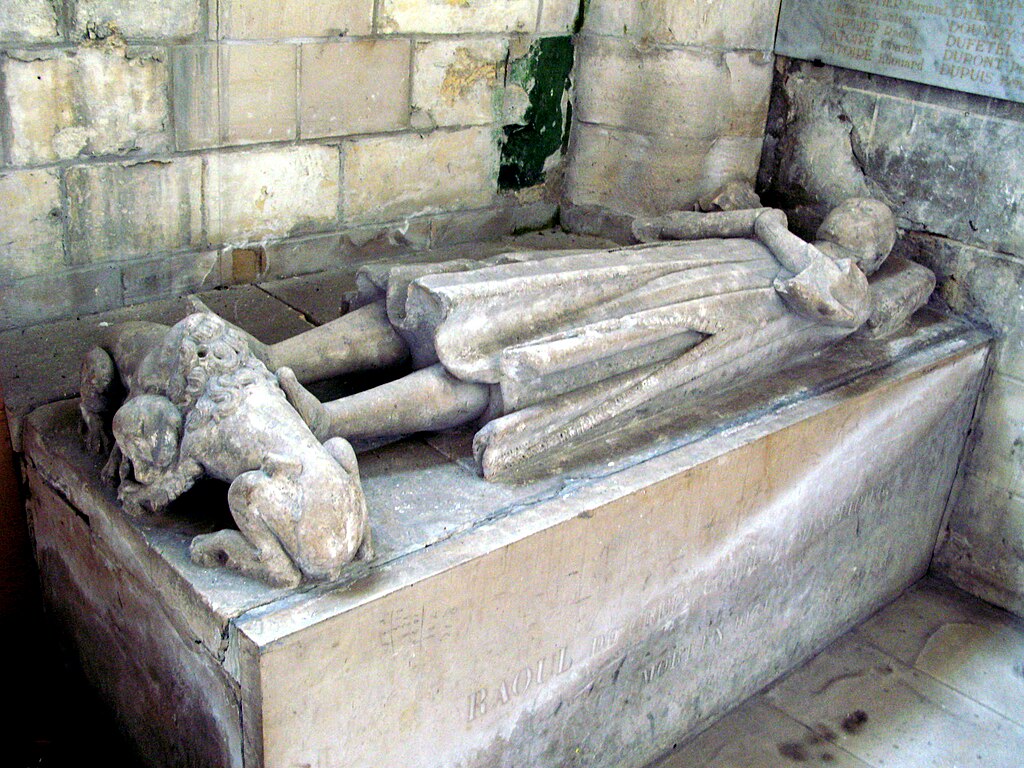
        Tomb of Ralph IV in the church of Saint-Pierre in Montdidier.

        In 1061 Anna was involved in a scandal in France when she married Raoul, Count of Crepy and Valois, in what appears to have been a love-match. Raoul was an ally of the young king, but was already married to Eleanor. Eleanor’s family name is identified as “Haquenez” in two primary sources, but her origins are obscure. The count had repudiated Eleanor, on the grounds of adultery, in order to marry Queen Anna. However, Eleanor appealed to the pope, Alexander II, who ordered the Archbishop of Reims to investigate the matter.

        Raoul was ordered to take Eleanor back, and was excommunicated when he refused; he and Anna left court as a result of the furore. However, Raoul and Anna were both important allies of the king, and continued advising Philip and acting as signatories to his royal acts, despite being exiled from the court. The king eventually forgave his mother and she was welcomed back to court following Raoul’s death in 1074. Her return to her family was probably short-lived, however, as it seems likely that Anna died in 1075, although the exact date of her death, and her final resting place, are lost to the thousand years that have passed since then.

        History ... the Interesting Bits
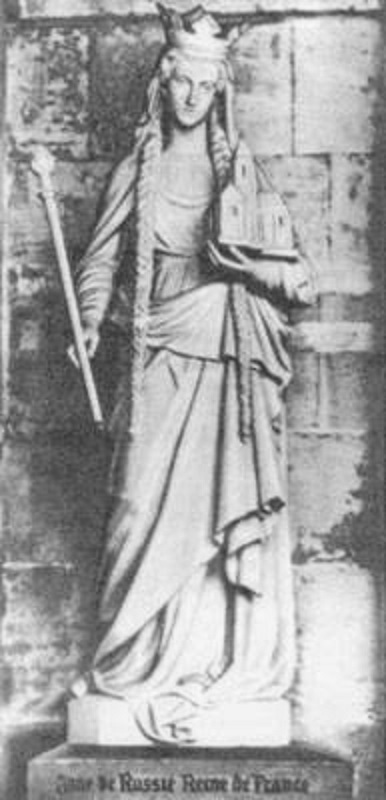
        Statue of Anne at the Abbey of Saint-Vincent

        Anna of Kyiv left a mark on history in the remarkably high regard in which both her husband, Henry I, and her son Philip held her. She was a well-educated, pious woman whose advice and opinions were respected, not only within her family, but by such exalted persons as the pope and French bishops.

        She proved that a woman could act wisely, at least in politics, if not in her second marriage, at a time when women were not expected, or allowed, to rule. The nature of her rule appears to have been a gentle hand on the shoulder of her son, whereas other women were more forceful as rulers – such as Adela of Normandy, Countess of Blois, the daughter of William the Conqueror, King of England, and Matilda of Flanders.

        *

        Images:

        Courtesy of Wikipedia

        Notes:

        1. Prominent Russians: Anna Yaroslavna (article), russiapedia.rt.com/prominent-russians/the-ryurikovich-dynasty/anna-yaroslavna; 2. epistolae.ccnmtl.columbia.edu, Anne of Kiev (Anna Yaroslavna) (article). Quoted from Bauthier, 550; Hallu, 168, citing Comptes de Suger; 3. Prominent Russians: Anna Yaroslavna; 4. Moniek Bloks, Anne of Kiev, the First Female Regent of France; 5. epistolae.ccnmtl.columbia.edu, Anne of Kiev (Anna Yaroslavna) (article). The St Maur-les-Fosses charter reads ‘annuente mea conjuge Anna et prole Philippo, Roberto ac Hugone’; 6. epistolae.ccnmtl.columbia.edu, Anne of Kiev (Anna Yaroslavna) (article); 7. Letter from Pope Nicholas II to Anne of Kiev, October 1059, epistolae.ccnmtl.columbia.edu/letter/1190, translated by Ashleigh Imus.

        Sources:

        Prominent Russians: Anna Yaroslavna (article), russiapedia.rt.com/prominent-russians/the-ryurikovich-dynasty/anna-yaroslavna; epistolae.ccnmtl.columbia.edu, Anne of Kiev (Anna Yaroslavna) (article); Moniek Bloks, Anne of Kiev, the First Female Regent of France; Heroines of the Medieval World by Sharon Bennett Connolly; Silk and the Sword: The Women of the Norman Conquest by Sharon Bennett Connolly; Matilda by Tracy Borman; The Norman Conquest by Marc Morris; Elisabeth M.C. Van Houts and Rosalind C. Love (eds and trans), The Warenne (Hyde) Chronicle; W.S. Davis, A History of France from the Earliest Times to the Treaty of Versailles; Emily Joan Ward, Anne of Kiev (c.1024–c.1075) and a reassessment of maternal power in the minority kingship of Philip I of France (article); Charlotte M. Yonge, History of France; Pierre Goubert, The Course of French History

        *

        My Books

        Signed, dedicated copies of all my books are available through my online store.

        Out now: Scotland’s Medieval Queens

        Books by Sharon Bennett Connolly

        Scotland’s history is dramatic, violent and bloody. Being England’s northern neighbour has never been easy. Scotland’s queens have had to deal with war, murder, imprisonment, political rivalries and open betrayal. They have loved and lost, raised kings and queens, ruled and died for Scotland. From St Margaret, who became one of the patron saints of Scotland, to Elizabeth de Burgh and the dramatic story of the Scottish Wars of Independence, to the love story and tragedy of Joan Beaufort, to Margaret of Denmark and the dawn of the Renaissance, Scotland’s Medieval Queens have seen it all. This is the story of Scotland through their eyes.

        Scotland’s Medieval Queens gives a thorough grounding in the history of the women who ruled Scotland at the side of its kings, often in the shadows, but just as interesting in their lives beyond the spotlight. It’s not a subject that has been widely covered, and Sharon is a pioneer in bringing that information into accessible history.’ Elizabeth Chadwick (New York Times bestselling author)

        Available now from Amazon and Pen and Sword Books

        Also by Sharon Bennett Connolly:

        Books by Sharon Bennett Connolly

        Heroines of the Tudor World tells the stories of the most remarkable women from European history in the time of the Tudor dynasty, 1485-1603. These are the women who ruled, the women who founded dynasties, the women who fought for religious freedom, their families and love. Heroines of the Tudor World is now available for pre-order from Amberley Publishing and Amazon UK. Women of the Anarchy demonstrates how Empress Matilda and Matilda of Boulogne, unable to wield a sword themselves, were prime movers in this time of conflict and lawlessness. It shows how their strengths, weaknesses, and personal ambitions swung the fortunes of war one way – and then the other. Available from Bookshop.orgAmberley Publishing and Amazon UKKing John’s Right-Hand Lady: The Story of Nicholaa de la Haye is the story of a truly remarkable lady, the hereditary constable of Lincoln Castle and the first woman in England to be appointed sheriff in her own right. Available from all good bookshops Pen & Sword Booksbookshop.org and Amazon

        Royal Historical Society

        Defenders of the Norman Crown: The Rise and Fall of the Warenne Earls of Surrey tells the fascinating story of the Warenne dynasty, from its origins in Normandy, through the Conquest, Magna Carta, the wars and marriages that led to its ultimate demise in the reign of Edward III. Available from Pen & Sword BooksAmazon in the UK and US, and Bookshop.orgLadies of Magna Carta: Women of Influence in Thirteenth Century England looks into the relationships of the various noble families of the 13th century, and how they were affected by the Barons’ Wars, Magna Carta and its aftermath; the bonds that were formed and those that were broken. It is now available in paperback and hardback from Pen & SwordAmazon, and Bookshop.orgHeroines of the Medieval World tells the stories of some of the most remarkable women from Medieval history, from Eleanor of Aquitaine to Julian of Norwich. Available now from Amberley Publishing and Amazon, and Bookshop.orgSilk and the Sword: The Women of the Norman Conquest traces the fortunes of the women who had a significant role to play in the momentous events of 1066. Available now from Amazon,  Amberley Publishing, and Bookshop.org.

        Alternate Endings: An anthology of historical fiction short stories including Long Live the King… which is my take what might have happened had King John not died in October 1216. Available in paperback and kindle from Amazon.

        Podcast:

        A Slice of Medieval

        Have a listen to the A Slice of Medieval podcast, which I co-host with Historical fiction novelist Derek Birks. Derek and I welcome guests, such as Bernard Cornwell, Helen Castor and Michael Jecks, and discuss a wide range of topics in medieval history, from significant events to the personalities involved. 

        Every episode is also now available on YouTube.

        *

        Don’t forget! Signed and dedicated copies of all my books are available through my online store.

        For forthcoming online and in-person talks, please check out my Events Page.

        You can be the first to read new articles by clicking the ‘Follow’ button, liking our Facebook page or joining me on TwitterThreadsBluesky and Instagram.

        *

        ©2025 Sharon Bennett Connolly FRHistS

        Book Corner: Templar Traitor by Angus Donald

        Angus Donald

        “Do not lie to me, Templar, or it will be the last thing you do.”

        July 1241. Western Europe cowers in terror before the threat of a Mongol invasion. The swift cavalry columns of Genghis Khan have smashed the steel-clad warriors of Russia, Poland and Hungary – and now Austria lies directly in their path.

        At a skirmish outside the walls of Vienna, German knights capture a squad of Mongol scouts and are astonished to discover one of their number is an Englishman – a former Templar – who has been riding with these Devil’s horsemen for more than twenty years.

        Interrogator Father Ivo of Narbonne is summoned to draw the truth from the prisoner before his impending trial, to find out why he abandoned his faith, his Brethren and his homeland to become… a traitor to Christendom.

        Based on a true story, this is the first novel in a new blockbuster trilogy from ‘master of the genre’ Angus Donald.

        My first thought when I heard about Templar Traitor by Angus Donald was “ooh, Templars – love anything Templar related. And by Angus Donald, too! Must read.” My second was “a Templar fighting with the Mongols? Yeah, right!” And with those conflicting thoughts in mind, I decided to give it a go. Angus Donald is a great writer, so even if it is more fantasy than reality, he may be able to pull it off. How surprised was I to discover, from the very first pages, that this wasn’t a fantasy, nor a King & Conqueror-esque rewriting of History. (Forgive me for mentioning King & Conqueror, but when someone butchers History like that, the pain is real!)

        This was a true story!

        A clever, original plot is the more remarkable for the fact it derives from the true story of a Templar knight fighting with the Mongol horde, in the army of Genghis Khan, no less!

        Templar Traitor gives a unique angle on the Templars, the Crusades and the Mongols. It also gives an insight into events we rarely hear about and rebuffs the Euro-centric view of the Middle Ages. In Templar Traitor Angus Donald expertly portrays the contrast and melding of the different civilisations of the European Christian and the Mongol. The clash of cultures adds an intensity top the story, beyond the warmongering and empire-building. The human toll of ambition and deceit is evident.

        It seemed to Robert a desperate last throw of the dice for the Latin kingdoms. If this attempt on Damietta failed, the Christians would likely be swept into the Mediiterranean.

        Yet, despite the importance of this expedition, Robert was concerned for his brother, who, he knew, would soon be hurled into the fury of battle. Gilly was not a weakling, but there was an air of fragility about him that inspired protectiveness in Robert. It had been like this since childhood.

        ‘I have just written to Father,’ continued Gilbert, ‘and told him about your predicament. And that I am to be dispatched to Egypt with the first of our knights. I only pray that the old man lives long enough to receive the letter. You knew that Henry had taken to his bed before I left England? I do not think he will ever walk or ride again.’

        ‘You told me, Gilly. Our earthly father will soon be with our Heavenly one.’

        ‘What will they do with you, Rob? said Gilbert. ‘Will they show mercy?’

        ‘God chose me as his servant, Gilly – He will not abandon me. And I have served the Order faithfully these past ten years. That must count for something.’

        ‘I shall pray for you,’ said Gilbert. ‘I shall pray for you every night, Rob.’

        ‘And I you. I want you to promise me something, Gilly. You are not to court danger unnecessarily in Damietta. They will call for volunteers, they will ask you to risk your life for the cause. Do not do this again. If you love me, brother, remain silent when the call goes out for brave knights to undertake some fresh perilous mission.’

        ‘Would you do that, brother?’ asked Gilbert. ‘The Robert of Hadlow I know prizes risk and danger more highly than anything else. Would he duck a challenge? No. The knight who won the First Lance badge for skill at arms three years in a row? A feat no other Templar has ever achieved. Would he shirk his duty? I think not.’

        ‘It is not shirking. You already serve God by serving the Order. And to serve God is to serve mankind. There is no need to risk your life further. Others also seek glory. Let them step forward.

        ‘There is a whiff of hypocrisy in your words, brother. I know that you would never dodge a chance to strike a blow for Christ. How can you ask that of me?’

        ‘This is not about me. This is about you, your life. Father will soon be gone to his reward and I … Well, look at me, in this cell, awaiting trial for my foolishness. Learn from my example. Do not seek out unnecessary risk in Egypt – that is all I ask.’

        ‘I shall do as I think fit. As you would do. But I shall pray for God’s guidance.’

        I cannot imagine the amount of research that must have gone into recreating the lands the Mongols conquered. Legendary cities such as Samarkand are rebuilt and brought to life. The Nomadic lifestyle of the Mongols means the marauding army takes its own sheep, goats and herds of horses campaigning with it. The women accompany the army, making a home in the encampment wherever they stop.

        Angus Donald sheds light on the knight’s story, fleshing out the gaps in the known history to create a remarkable adventure that will leave the reader eager for more. The Templar knight, Robert of Hadlow, has his own secrets, motives and family concerns. Add to this a private feud with a priest, the need to rescue his baby brother and forbidden love, and Robert’s story has all the ingredients for a magnificent adventure.

        Robert of Hadlow is a likeable character, even if the reader feels they cannot wholly trust him. The author implants that niggling doubt in the reader’s subconscious and I’m not quite sure how and when he did it!

        All in all, Templar Traitor is definitely in my Top 10 of Books of 2025. The originality of the story is refreshing. The attention to detail and the layers of plot make it a gripping, fascinating read. Oh, and there’s enough single combat and vivid battle scenes to satisfy anyone who likes a jolly good battle! From the first page, the story is intriguing. I enjoyed the fact that I didn’t know what the endgame was. This is far from formulaic historical fiction where the hero knight saves the day. There is mystery and deceit throughout – on both sides – with ulterior motives and hidden agendas.

        Templar Traitor is probably the best book Angus Donald has written, possibly even better than his Holcroft Blood series – and that was excellent! I cannot recommend it highly enough.

        Look out for Angus chatting with Derek and I about Templar Traitor and the Mongols on A Slice of Medieval soon.

        Buy the book:

        Templar Traitor by Angus Donald is out now.

        About the author:

        Angus Donald is the author of the bestselling Outlaw Chronicles, a series of ten novels set in the 12th/13th centuries and featuring a gangster-ish Robin Hood. Angus has also published the Holcroft Blood trilogy about a mildly autistic 17th-century English artillery officer, son of notorious Crown Jewels thief Colonel Thomas Blood. Before becoming an author, Angus worked as a fruit-picker in Greece, a waiter in New York City and as an anthropologist studying magic and witchcraft in Indonesia. For fifteen years he was a journalist working in Hong Kong, India, Afghanistan and London. He now writes full time from a medieval farmhouse in Kent. http://www.angusdonaldbooks.com.

        *

        My Books

        Signed, dedicated copies of all my books are available through my online bookshop.

        Out now: Scotland’s Medieval Queens

        Books by Sharon Bennett Connolly

        Scotland’s history is dramatic, violent and bloody. Being England’s northern neighbour has never been easy. Scotland’s queens have had to deal with war, murder, imprisonment, political rivalries and open betrayal. They have loved and lost, raised kings and queens, ruled and died for Scotland. From St Margaret, who became one of the patron saints of Scotland, to Elizabeth de Burgh and the dramatic story of the Scottish Wars of Independence, to the love story and tragedy of Joan Beaufort, to Margaret of Denmark and the dawn of the Renaissance, Scotland’s Medieval Queens have seen it all. This is the story of Scotland through their eyes.

        Scotland’s Medieval Queens gives a thorough grounding in the history of the women who ruled Scotland at the side of its kings, often in the shadows, but just as interesting in their lives beyond the spotlight. It’s not a subject that has been widely covered, and Sharon is a pioneer in bringing that information into accessible history.’ Elizabeth Chadwick (New York Times bestselling author)

        Available now from Amazon and Pen and Sword Books

        Also by Sharon Bennett Connolly:

        Books by Sharon Bennett Connolly

        Heroines of the Tudor World tells the stories of the most remarkable women from European history in the time of the Tudor dynasty, 1485-1603. These are the women who ruled, the women who founded dynasties, the women who fought for religious freedom, their families and love. Heroines of the Tudor World is now available for pre-order from Amberley Publishing and Amazon UK. Women of the Anarchy demonstrates how Empress Matilda and Matilda of Boulogne, unable to wield a sword themselves, were prime movers in this time of conflict and lawlessness. It shows how their strengths, weaknesses, and personal ambitions swung the fortunes of war one way – and then the other. Available from Bookshop.orgAmberley Publishing and Amazon UKKing John’s Right-Hand Lady: The Story of Nicholaa de la Haye is the story of a truly remarkable lady, the hereditary constable of Lincoln Castle and the first woman in England to be appointed sheriff in her own right. Available from all good bookshops Pen & Sword Booksbookshop.org and Amazon

        Royal Historical Society

        Defenders of the Norman Crown: The Rise and Fall of the Warenne Earls of Surrey tells the fascinating story of the Warenne dynasty, from its origins in Normandy, through the Conquest, Magna Carta, the wars and marriages that led to its ultimate demise in the reign of Edward III. Available from Pen & Sword BooksAmazon in the UK and US, and Bookshop.orgLadies of Magna Carta: Women of Influence in Thirteenth Century England looks into the relationships of the various noble families of the 13th century, and how they were affected by the Barons’ Wars, Magna Carta and its aftermath; the bonds that were formed and those that were broken. It is now available in paperback and hardback from Pen & SwordAmazon, and Bookshop.orgHeroines of the Medieval World tells the stories of some of the most remarkable women from Medieval history, from Eleanor of Aquitaine to Julian of Norwich. Available now from Amberley Publishing and Amazon, and Bookshop.orgSilk and the Sword: The Women of the Norman Conquest traces the fortunes of the women who had a significant role to play in the momentous events of 1066. Available now from Amazon,  Amberley Publishing, and Bookshop.org.

        Alternate Endings: An anthology of historical fiction short stories including Long Live the King… which is my take what might have happened had King John not died in October 1216. Available in paperback and kindle from Amazon.

        Podcast:

        A Slice of Medieval

        Have a listen to the A Slice of Medieval podcast, which I co-host with Historical fiction novelist Derek Birks. Derek and I welcome guests, such as Elizabeth Chadwick, Helen Castor, Ian Mortimer, Scott Mariani and Bernard Cornwell and discuss a wide range of topics in medieval history, from significant events to the personalities involved. Look out for Angus chatting with Derek and I about Templar Traitor and the Mongols on A Slice of Medieval soon.

        Every episode is also now available on YouTube.

        *

        Don’t forget! Signed and dedicated copies of all my books are available through my online bookshop.

        For forthcoming online and in-person talks, please check out my Events Page.

        You can be the first to read new articles by clicking the ‘Follow’ button, liking our Facebook page or joining me on TwitterThreadsBluesky and Instagram.

        *

        ©2025 Sharon Bennett Connolly FRHistS