Guest Post: The Formidable Women Who Shaped Medieval Europe: Power and Patronage at the Burgundian Court by Susan Abernethy

Today, it is a pleasure to welcome Susan Abernethy back to History… the Interesting Bits, to chat about her fabulous new book, The Formidable Women Who Shaped Medieval Europe: Power and Patronage at the Burgundian Court.

How I Decided to Write The Formidable Women Who Shaped Medieval Europe: Power and Patronage at the Burgundian Court

History...the Interesting Bits

It all started with the random purchase of a used copy of a biography of Isabel of Portugal by Aline S Taylor. It just so happened that Isabel was the daughter of King John I of Portugal and Philippa, daughter of John of Gaunt, Duke of Lancaster and son of King Edward III of England. To my surprise, Isabel was married, at the venerable age of 33, to Philip the Good, Duke of Burgundy as his third wife. At the time, I had no idea who Philip was and knew nothing about the duchy of Burgundy.

Isabel had a son who succeeded his father with the moniker of Charles the Bold. It turned out I owned a reprint of a turn of the century biography of Charles by Ruth Putnam in my library. Both Isabel and Charles greatly intrigued me as tenacious and resolute characters. I had to learn more. My research began with Putnam’s biography and progressed to the four volume biographies of each of the Valois dukes of Burgundy by Richard Vaughan.

As my knowledge of Burgundian history expanded, more women in history emerged. From the wives, daughters, grand-daughters and nieces, they were all used as pawns in the dukes’ diplomatic efforts to expand as well as govern the Burgundian Empire. The dukes could not have amassed their empire, the size of England and Wales combined, without their women. Some of these women lived lives of comfort and supreme authority while others were relentlessly bullied and badgered into surrendering their patrimony. This book is a collection of thirty-one of these women, related to the Valois dukes by blood, marriage and politics.

History...the Interesting Bits
Isabel of Portugal

Many of them had a major role in the history of Western Europe, spreading their influence across numerous countries, including France, Germany, England, the Low Countries, Italy, Spain and many more. The first chapter of the book is a concise summary of how the Valois dukes grew their empire, beginning with the death of the Philip I, the last duke of the House of Burgundy. With his death, the duchy of Burgundy reverted to the French crown, and it was up to King John II of France to determine its fate. John had a younger son, Philip, who had distinguished himself as a fighter during the Hundred Years’ War.

As a reward for his faithful service, his father gave him the duchy of Touraine. Philip would later trade this small principality for the more prestigious duchy of Burgundy in 1363. He had a long-time dream of merging his new duchy to the county of Burgundy, otherwise known as the Franche-Comté and to do this, he needed to marry the heiress. So in the summer of 1369, he married Margaret of Male, who stood to inherit not just the Franche-Comté, but also Flanders and the counties of Rethel and Nevers, along with other territories.

So we have the first formidable woman, Margaret of Male, who not only gave birth to many children but aided her husband in ruling his newly acquired conglomeration of territories. Philip the Bold instituted a deliberate program of marrying his daughters into various regions around his provinces, not just as respectable mates for the grooms but to increase his territories. Richard Vaughan says Philip the Bold was one of the most talented diplomats of his age.

History...the Interesting Bits
Margaret of Male

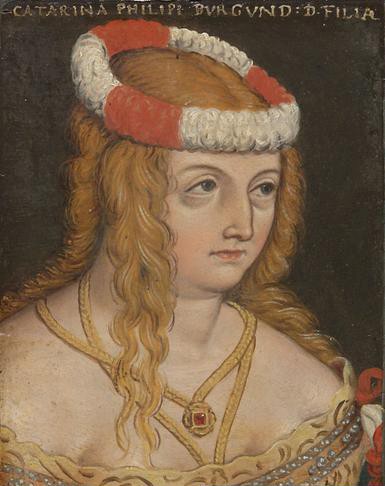
Two of Margaret’s daughters were exceedingly influential but for different reasons. One of my favorite discoveries in writing this book was Catherine of Burgundy, Duchess of Austria and Countess of Ferrette. Philip had is eye on the county of Ferrette (now a part of Alsace in northeastern France), which was under the influence of Leopold IV, Duke of Austria. Catherine’s marriage to Leopold would be a success in that the couple got along well; however, they had no children. When Philip the Bold failed to pay Catherine’s dowry she convinced Leopold to grant her the governance of the county of Ferrette which would give her an income.

She ruled the county competently, acting as a diplomat for her Burgundian ducal brother and nephew, John the Fearless and Philip the Good respectively, making economic and trade alliances and waging petty wars in the surrounding area. Catherine is one of the few women I’ve found who operated as a man would have in the medieval era which makes her pretty unique. Even more exceptionally, once Catherine became a widow, she married a handsome young nobleman without her brother’s permission, to the astonishment of just about everyone around her. She certainly must have been charming and persuasive.

Catherine’s sister Mary married Amadeus VIII, Duke of Savoy in the spring of 1401 but did not arrive in her new home until September 1403. Mary and Amadeus had many children, the most influential being their son Louis, who succeeded his father as duke of Savoy in 1440. He married Anne of Cyprus and together they had about nineteen children. Mary of Burgundy’s legacy lies among these grandchildren.
History...the Interesting Bits
Catherine of Burgundy

Louis and Anne of Cyprus’ eldest son, Amadeus IX, married Yolande of France, the daughter of King Charles VII and Marie of Anjou. Yolande’s story looms large as one of the formidable women in the book. At the age of two, she left France to live in Savoy to be educated and to learn the language and customs of her new home. Her husband died young from various congenital ailments and Yolande acted as regent for her son during his minority.

As the leader of her country, Yolande became entangled in the web of the Spider King, her brother Louis XI of France and his mortal enemy, Charles the Bold, Duke of Burgundy as well as her numerous brothers-in-law and the crafty Duke of Milan. With authority and finesse, Yolande navigated these treacherous times. The intrepid Yolande would be captured and held captive twice along with her children. In both cases, she made brave and daring escapes.

Louis and Anne of Cyprus had two other daughters who made their mark in history. At one time, the English monarch Edward IV considered Bona of Savoy as a wife. The negotiations stalled when Edward married the enchanting Elizabeth Woodville in 1464. By 1468, negotiations for her marriage to Galeazzo Maria Sforza, Duke of Milan were completed. Bona immediately gave birth to an heir and spare and modelled the perfect Italian Renaissance wife as her husband descended into paranoia and mental illness.
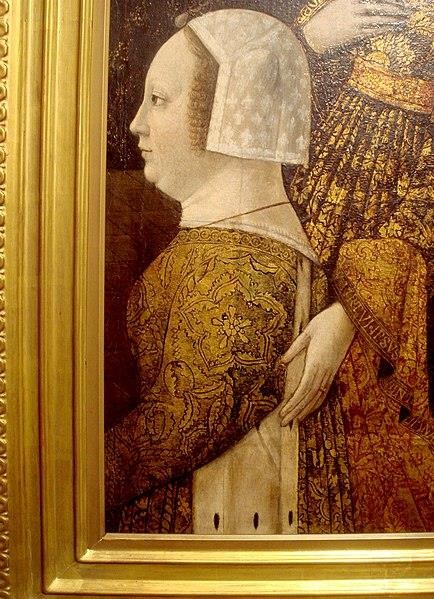
History...the Interesting Bits
Bona of Savoy

When Galeazzo Maria was assassinated in 1476, Bona acted as regent for her minor son. At first, she met with great success but eventually she ran into trouble with her brother-in-law, Ludovico Sforza, who wrested power from her, forcing her to struggle for the rest of her life with being separated from her children and inconsistent income.

Bona’s sister Charlotte of Savoy married the Spider King Louis XI of France when she was nine years old and Louis twenty-seven. Of course, the marriage was not consummated until Charlotte came of age and she had three remarkable children. Her son would succeed his father in 1483 as King Charles VIII. Her daughter Anne of France, Duchess of Bourbon acted as regent for her minor brother for eight years and steered France through several crises.

Anne’s greatest achievement would be the annexation to France of the significant duchy of Brittany, one of her lifelong dreams, when her brother married the Breton duchess, Anne. Charlotte’s youngest daughter, Jeanne, born with several severe disabilities, would eventually become Queen of France as the wife of King Louis XII. The marriage would be extremely unhappy, and Louis XII did all in his power to obtain a divorce. After numerous attempts and following the payment of an enormous bribe to Pope Alexander VI, he obtained his annulment, and Louis XII married the widowed queen, Anne of Brittany.
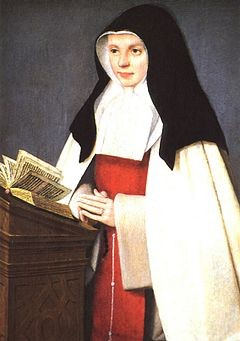
History...the Interesting Bits
Jeanne of France

King Louis made sure Jeanne had abundant properties to guarantee a steady and ample income. Jeanne had a lifelong dream of living a monastic life. She used her funds to successfully build a convent and found a monastic order in Bourges. Her Order of the Virgin Mary, dedicated to the Renunciation, was so successful, it is still in existence to this day in monasteries in France, Belgium, Poland, Costa Rica, Guatemala and Africa. Jeanne was canonized in May 1950.

These and other stories of courageous, intelligent, audacious and fearless women populate this book. Some of the relationships between the women are complex so included in the back of the book are several family trees that illustrate their associations. We are lucky enough to have numerous portraits of  most of the women in the collection and these are included in the plate section. My purpose in writing the book is to feature these women and shed light on the history of the Burgundian Empire.

Order your copy of The Formidable Women Who Shaped Medieval Europe: Power and Patronage at the Burgundian Court here.

About the Author:
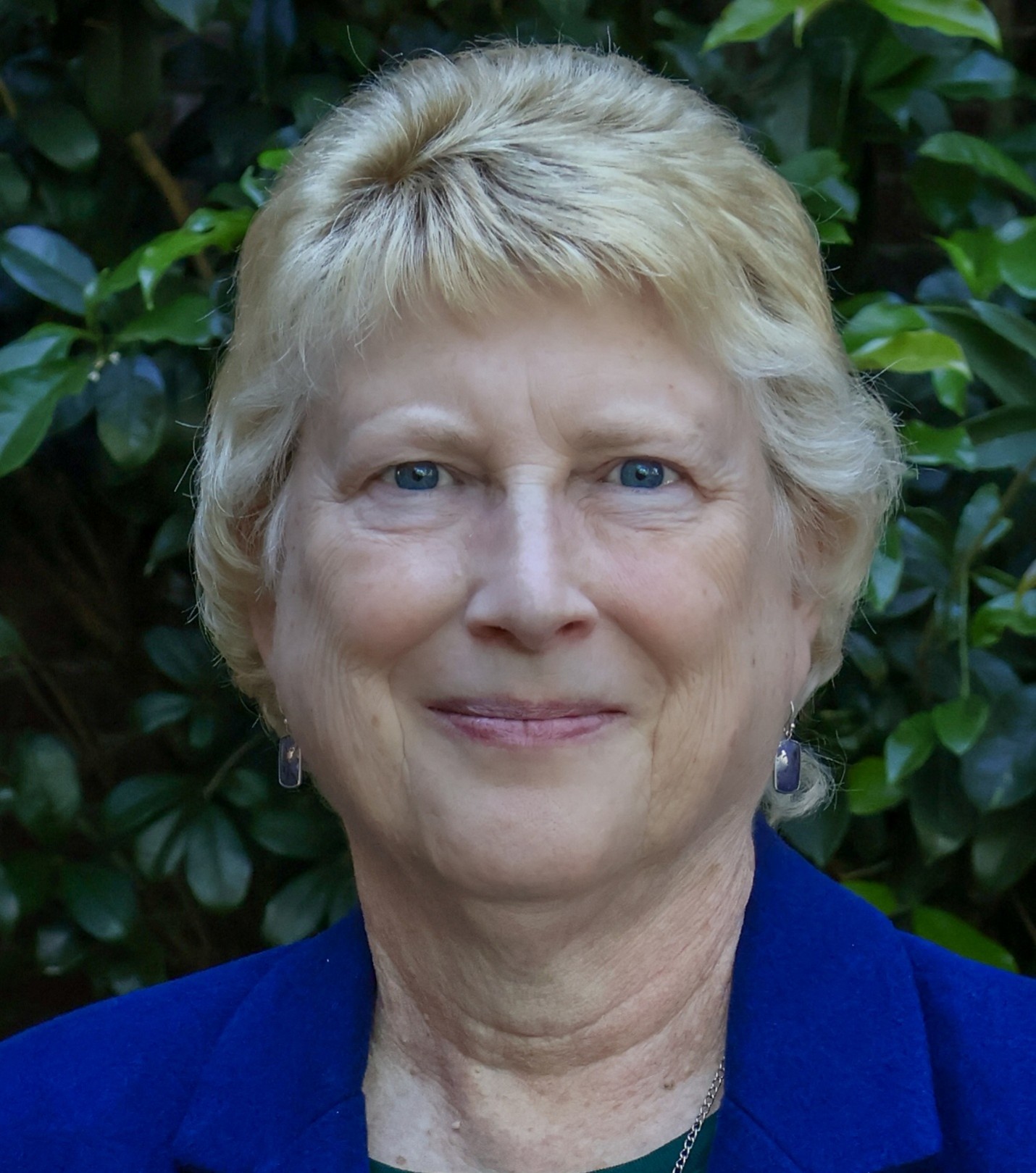
Susan’s passion for history dates back fifty years and led her to study for a Bachelor of Arts degree in history at the University of North Carolina at Charlotte. She is currently a member of the Rocky Mountain Medieval and Renaissance Association, the Society for Renaissance Studies, The Historical Writers Association, and the Historical Association. Her work has appeared on several historical websites and in magazines and includes guest appearances on historical podcasts. Her blog, The Freelance History Writer, has continuously published over five hundred historical articles since 2012, with an emphasis on European, Tudor, Medieval, Renaissance, Early Modern and women’s history. She is currently working on her third non-fiction book.

*

My Books:

Signed, dedicated copies of all my books are available through my online bookshop.

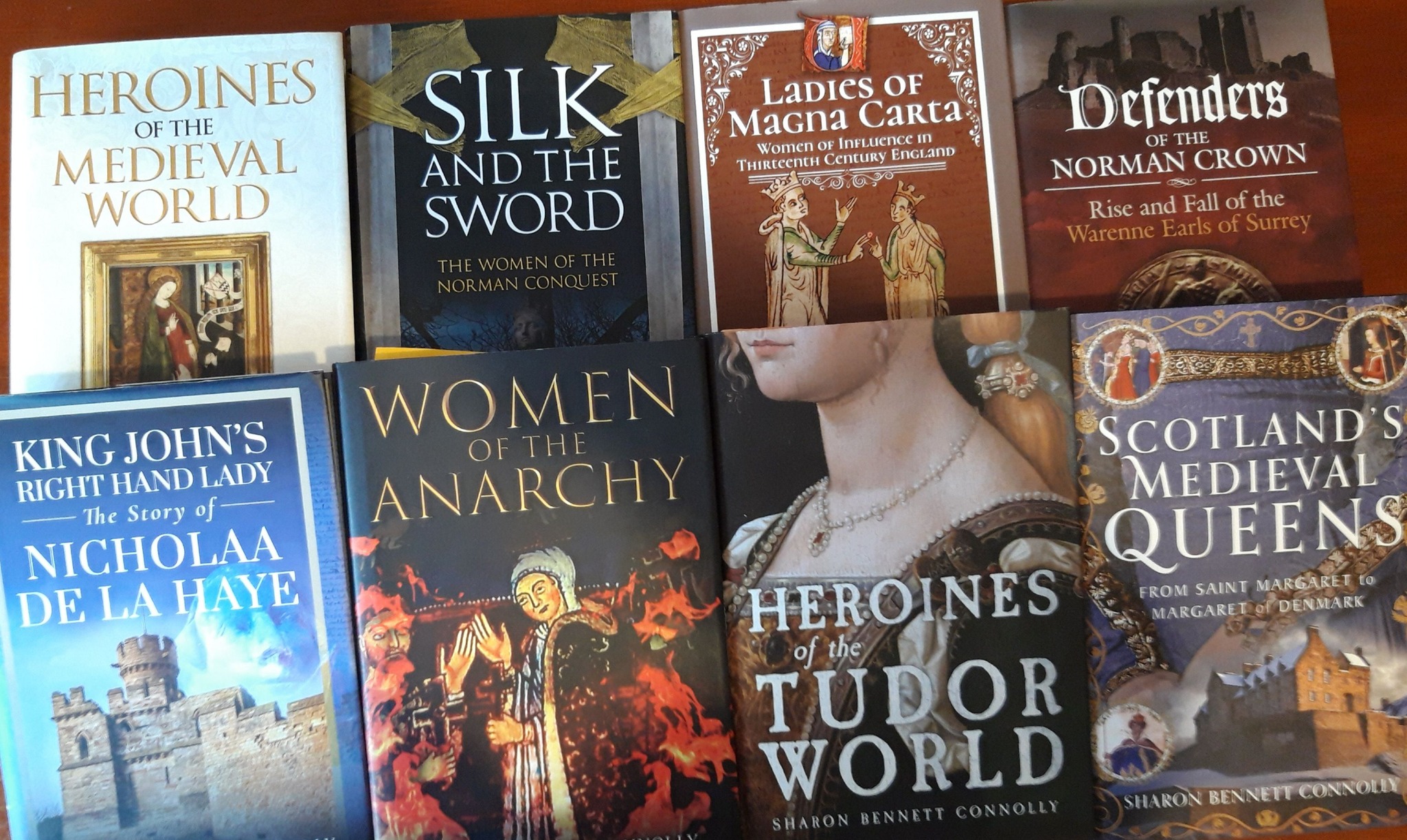
Out now: Scotland’s Medieval Queens

Books by Sharon Bennett Connolly

Scotland’s history is dramatic, violent and bloody. Being England’s northern neighbour has never been easy. Scotland’s queens have had to deal with war, murder, imprisonment, political rivalries and open betrayal. They have loved and lost, raised kings and queens, ruled and died for Scotland. From St Margaret, who became one of the patron saints of Scotland, to Elizabeth de Burgh and the dramatic story of the Scottish Wars of Independence, to the love story and tragedy of Joan Beaufort, to Margaret of Denmark and the dawn of the Renaissance, Scotland’s Medieval Queens have seen it all. This is the story of Scotland through their eyes.

Scotland’s Medieval Queens gives a thorough grounding in the history of the women who ruled Scotland at the side of its kings, often in the shadows, but just as interesting in their lives beyond the spotlight. It’s not a subject that has been widely covered, and Sharon is a pioneer in bringing that information into accessible history.’ Elizabeth Chadwick (New York Times bestselling author)

Available now from Amazon and Pen and Sword Books

Also by Sharon Bennett Connolly:

Books by Sharon Bennett Connolly

Heroines of the Tudor World tells the stories of the most remarkable women from European history in the time of the Tudor dynasty, 1485-1603. These are the women who ruled, the women who founded dynasties, the women who fought for religious freedom, their families and love. Heroines of the Tudor World is now available for pre-order from Amberley Publishing and Amazon UK. Women of the Anarchy demonstrates how Empress Matilda and Matilda of Boulogne, unable to wield a sword themselves, were prime movers in this time of conflict and lawlessness. It shows how their strengths, weaknesses, and personal ambitions swung the fortunes of war one way – and then the other. Available from Bookshop.orgAmberley Publishing and Amazon UKKing John’s Right-Hand Lady: The Story of Nicholaa de la Haye is the story of a truly remarkable lady, the hereditary constable of Lincoln Castle and the first woman in England to be appointed sheriff in her own right. Available from all good bookshops Pen & Sword Booksbookshop.org and Amazon

Royal Historical Society

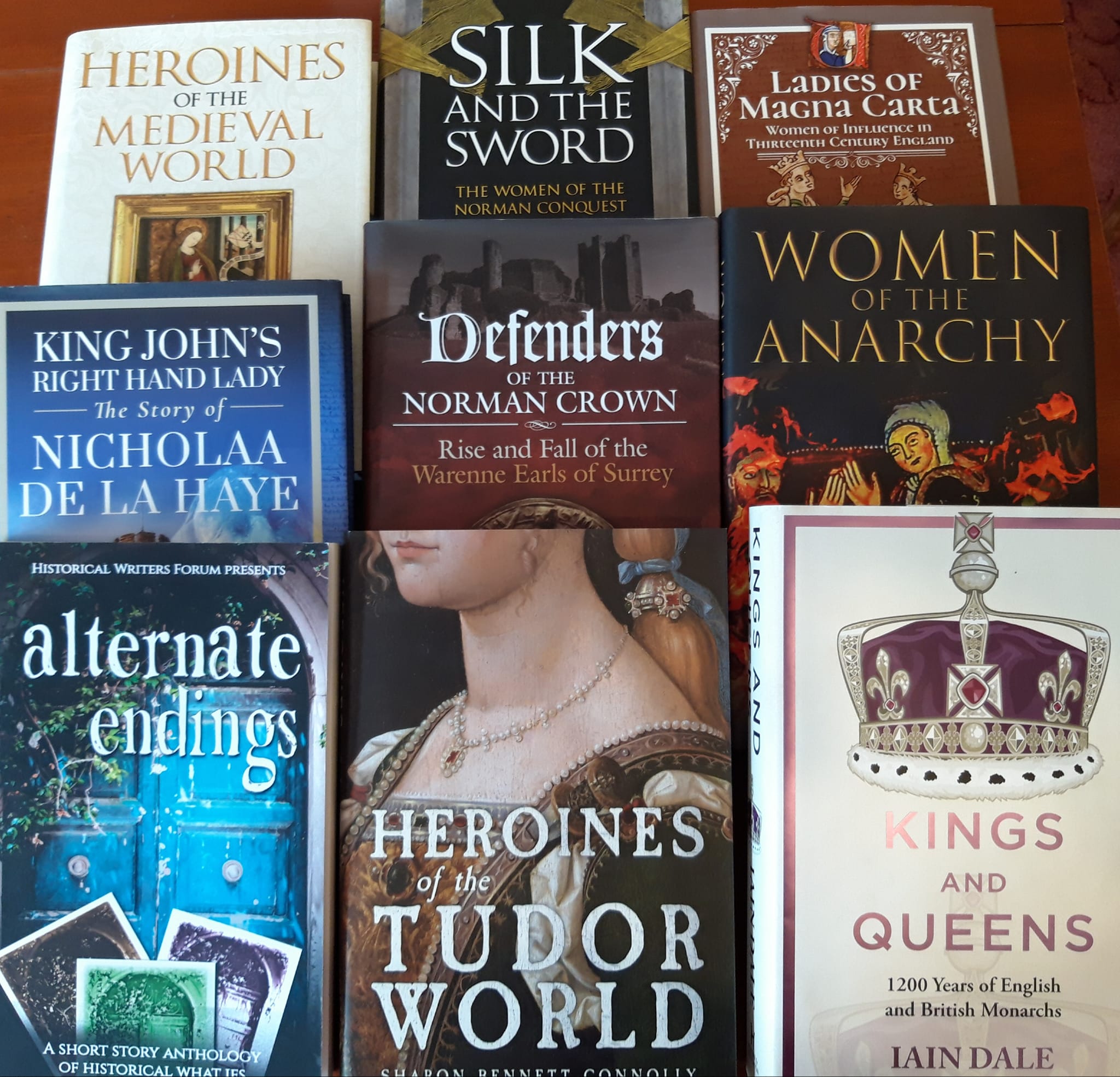
Defenders of the Norman Crown: The Rise and Fall of the Warenne Earls of Surrey tells the fascinating story of the Warenne dynasty, from its origins in Normandy, through the Conquest, Magna Carta, the wars and marriages that led to its ultimate demise in the reign of Edward III. Available from Pen & Sword BooksAmazon in the UK and US, and Bookshop.orgLadies of Magna Carta: Women of Influence in Thirteenth Century England looks into the relationships of the various noble families of the 13th century, and how they were affected by the Barons’ Wars, Magna Carta and its aftermath; the bonds that were formed and those that were broken. It is now available in paperback and hardback from Pen & SwordAmazon, and Bookshop.orgHeroines of the Medieval World tells the stories of some of the most remarkable women from Medieval history, from Eleanor of Aquitaine to Julian of Norwich. Available now from Amberley Publishing and Amazon, and Bookshop.orgSilk and the Sword: The Women of the Norman Conquest traces the fortunes of the women who had a significant role to play in the momentous events of 1066. Available now from Amazon,  Amberley Publishing, and Bookshop.org.

Alternate Endings: An anthology of historical fiction short stories including Long Live the King… which is my take what might have happened had King John not died in October 1216. Available in paperback and kindle from Amazon.

Podcast:

A Slice of Medieval

Have a listen to the A Slice of Medieval podcast, which I co-host with Historical fiction novelist Derek Birks. Derek and I welcome guests, such as Bernard Cornwell and Elizabeth Chadwick, and discuss a wide range of topics in medieval history, from significant events to the personalities involved.

There are now over 70 episodes to listen to!

Every episode is also now available on YouTube.

*

Don’t forget! Signed and dedicated copies of all my books are available through my online bookshop.

For forthcoming online and in-person talks, please check out my Events Page.

You can be the first to read new articles by clicking the ‘Follow’ button, liking our Facebook page or joining me on TwitterThreadsBluesky and Instagram.

*

©2025 Sharon Bennett Connolly FRHistS and Susan Abernethy
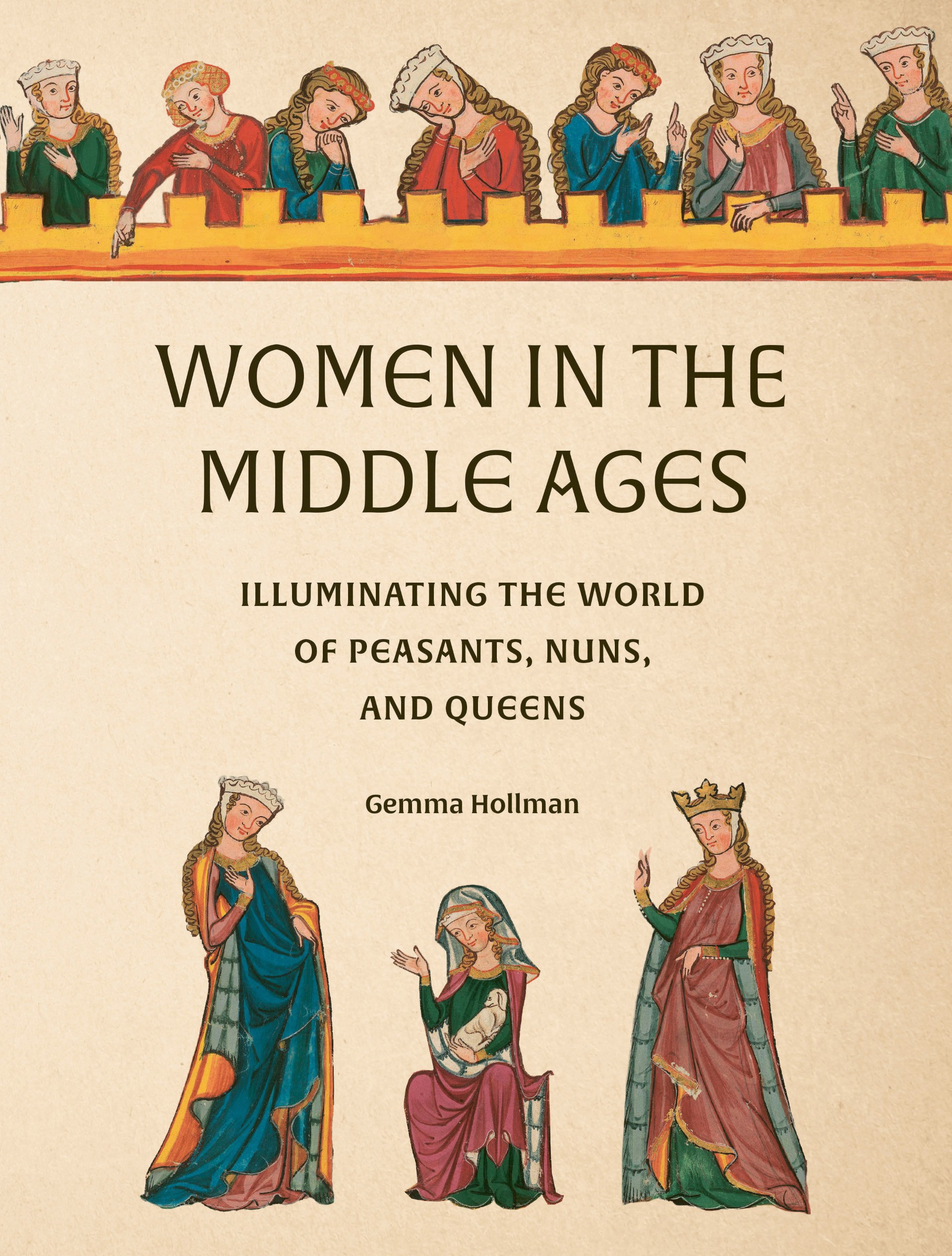
Wordly Women: Gemma Hollman

Today I am continuing my Wordly Women series with a historian who, just like me, concentrates on bringing the women to the fore. Gemma Hollman has written about Royal Witches, queens and mistresses. Her last book, Women in the Middle Ages: Illuminating the World of Peasants, Nuns, and Queens came out at the end of 2024, and is gorgeous! It was lovely to get the chance to have a chat with Gemma about her writing journey.

Sharon: So, Gemma, what got you into writing?

Gemma: It’s kind of a mix of completely by accident, and something I’ve always enjoyed doing. Whilst at school and university I would write bits of fiction for fun, never for anyone to look at, so I’ve always had a bit of a writing bug. But when I finished university, it felt so weird to go from four years of researching and writing history to quitting cold turkey. At this time, it seemed like everyone was making blogs, including loads of my friends, so I decided to join the trend and establish my blog, Just History Posts.

I loved writing there, and by the second year I was gathering a load of steam. One of my most popular posts was about Joan of Navarre, a fifteenth-century Queen of England who was accused of using witchcraft against the king – and one of the focuses of my Masters dissertation. That, combined with lots of people I knew in real life saying my dissertation would make an amazing book, made me think maybe people would like to learn about these women and their stories which are not that well-known. I pitched the book to The History Press and it eventually turned into my debut non-fiction book, Royal Witches. The rest, as they say, is history.

Sharon: Tell us about your books.

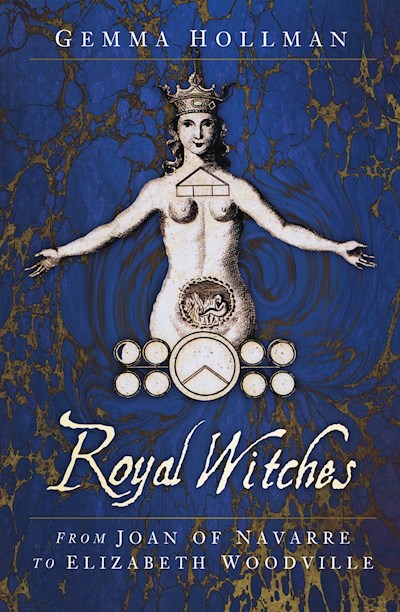
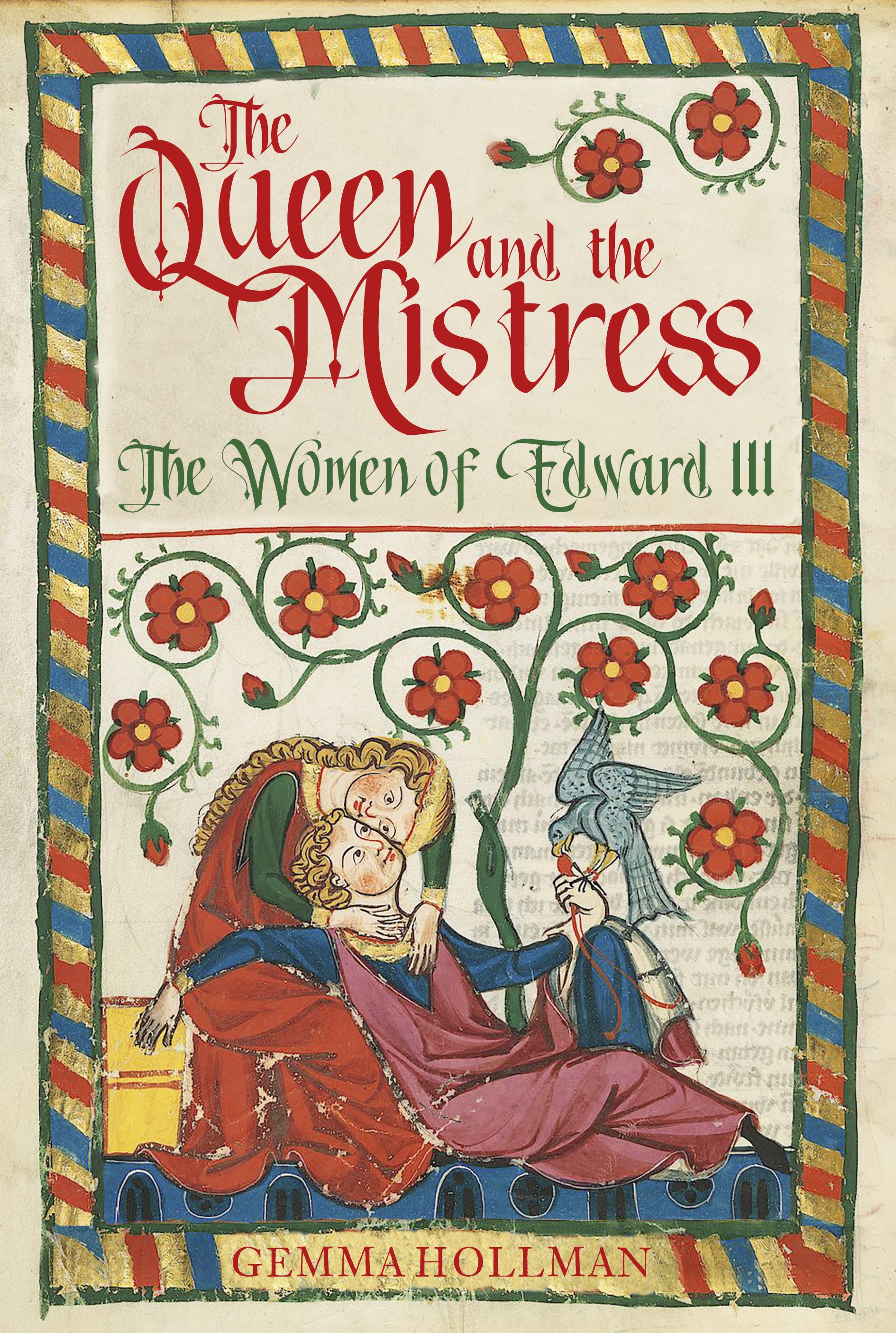
Gemma: Well, I already gave you a little bit of a taster about Royal Witches (the other three women, beyond Joan, are Eleanor Cobham, Jacquetta of Luxembourg and Elizabeth Woodville), about fifteenth-century women in the English Royal Family who were all accused of witchcraft. My second book goes back to the previous century and the court of Edward III of England, and is a dual biography of the two women who dominated his court and his heart – his queen, Philippa of Hainault, and his mistress, Alice Perrers. Both women are absolutely fascinating in their own right, but by looking at them together I think you can understand them, Edward, and the fourteenth century a lot better.

My final book came out at the end of last year, and is called Women in the Middle Ages. A slight departure from my first two books, which were both focused biographies, this is a much broader look at women across much of Europe from roughly 1000-1500. The best thing about it, though, is that it is an illustrated history, featuring just shy of 200 images of artwork and artefacts from the medieval period. I explore how these objects can illuminate the real lives of these women in far more detail than written records alone. It is a beautiful, full-colour experience which was so special to pull together.

Sharon: What attracts you to the medieval period?

Gemma: I’ve always loved all periods of history, and studied a huge range of history at university, but I found that I enjoyed writing medieval history much more than I did modern history. I enjoyed acting almost like a detective and trying to extract bits about people’s lives and personalities with such limited sources. And the more I researched and wrote it, the more I fell in love with it. The medieval world was so incredibly different from today in every aspect, that it can sometimes feel like another world. But, at the same time, people themselves are so similar to today. I always love reading stories that connects us through the centuries, feeling that human connection to someone so far removed from myself today. Although it was a time of huge strife, poverty, and difficulty, there is something intrinsically magical about it – it’s no coincidence so much of our fantasy media today has medieval vibes!

Sharon: Who is your favourite 14th century person and why?

Gemma: Oh gosh, that is such a difficult question! Of course there is no one favourite, as that would be impossible, but someone who has grabbed my attention ever since I first learnt about her is Isabella of France, the queen of Edward II of England. She was so self-assured of her lineage, her rights, the respect due to her by virtue of her position, and she was not going to let anyone tell her otherwise. She was loved and sympathised with whilst the neglected spouse, then inspired the entire country to stand with her and overthrow her husband, and went on to pretty much rule England with her lover for several years. Even after her son, Edward III, forcibly took control of the kingdom again, she continued to wield significant influence at court. I think she is just so utterly fascinating – and she of course perfectly sets the scene for the start of my second book, The Queen and the Mistress!

Sharon: Who is your least favourite 14th century and why?

Gemma: Ooh. I don’t know that there’s really anyone I actively dislike, but for playfulness I will put forward Thomas Walsingham, chronicler and monk at St Albans Abbey in Hertfordshire. His chronicles are invaluable for our knowledge of the late fourteenth century, but he is a bit of a villain in my second book for his treatment of Alice Perrers. As a religious man, Alice’s position as a mistress at the heart of the court was unconscionable (and it didn’t help that she was embroiled in legal conflicts with his abbey for many years). He is responsible for a lot of the negative propaganda against Alice which lasted for centuries, including the baseless accusation that she stole the rings from Edward’s fingers after he died. Even today, the way he spoke about her is the main way people approach her and assume how she really was. Talk about negative PR.

Sharon: How do you approach researching your topic?

Gemma: Mostly I already have a theme or a person in mind for what I want to research, and generally I already have an amount of knowledge about the topic. But I always find it most helpful to start with secondary sources, ie by reading a load of books and journal articles on the subject. I write copious notes, start creating timelines where necessary, and jot down the names of other books and sources from the footnotes. I then go to the original sources and make a load of notes on those, too, and I then dive in to writing. I always find once I start writing I then become aware of areas where my notes might be lacking, like missing any information about what someone was doing in a particular year of their life, and so I then go back to the sources and secondary material to fill in these gaps. I also find that it’s only by starting to write do I truly know which direction my piece is going in, and thus am able to tailor my research much more specifically, rather than reading about anything in the hope it might be useful, but finding that I don’t use it at all (as happens with much of my early research).

Sharon: Tell us your ‘favourite’ medieval story you have come across in your research.

Gemma: One of my favourites definitely comes from a story I read in a chronicle at university, and which I recounted in one of my very first blog posts. This is a story from the court of Henry II of England, and is one that very much exemplifies what I said earlier about people never changing. The king’s steward, a man named Thurston, came to him and complained that another man, Adam of Yarmouth, refused to seal a writ for him free of charge (something which was to be expected amongst people working in the government). After some investigation, it was revealed that Adam was upset at Thurstan because at a party Thurstan had been hosting, he refused to allow Adam to eat two cakes! Such a petty squabble had disrupted the king’s business, and he settled the squabble by having Adam seal the writ in return for Thurstan serving him two cakes on bended knee. It sounds like something out of fiction rather than reality!

Sharon: Are there any other eras you would like to write about?

Gemma: I definitely have found my comfort zone in the medieval era, but I do think from time to time about writing about other periods, as I think is only natural. I know of some amazing women from the Georgian and Victorian periods that I’ve been drawn to writing about several times, so maybe that’s something I can set my sights on one day.

Sharon: What are you working on now?

Gemma: At the moment, I am in the midst of my fourth book which is set in the court of Richard II. The book is largely a biography about Richard, but it also aims to take a look at his wider court, too, particularly some of the other large and important figures – and, particularly, women. It’s due next year, so wish me luck with getting it done in time!

Sharon: And finally, what is the best thing about being a writer?

Gemma: This question is definitely easy for me – spreading the knowledge I have and seeing people enjoy it and learn something new. Every time I get a review, or speak to a person at a talk I am giving, where the person said they’ve loved what I’ve written/how I’ve spoken, and that they’ve learnt something is just as special as the last. I love writing, and I love that I get to learn so many interesting things myself in the process, but the whole point of me writing is to share all the things I’ve learnt with other people. Each time I hear that I’ve done that, and done it well, makes all of the late nights researching after a full day’s work, or the times I can’t see my friends and family because I have a deadline worth it.

About the author:

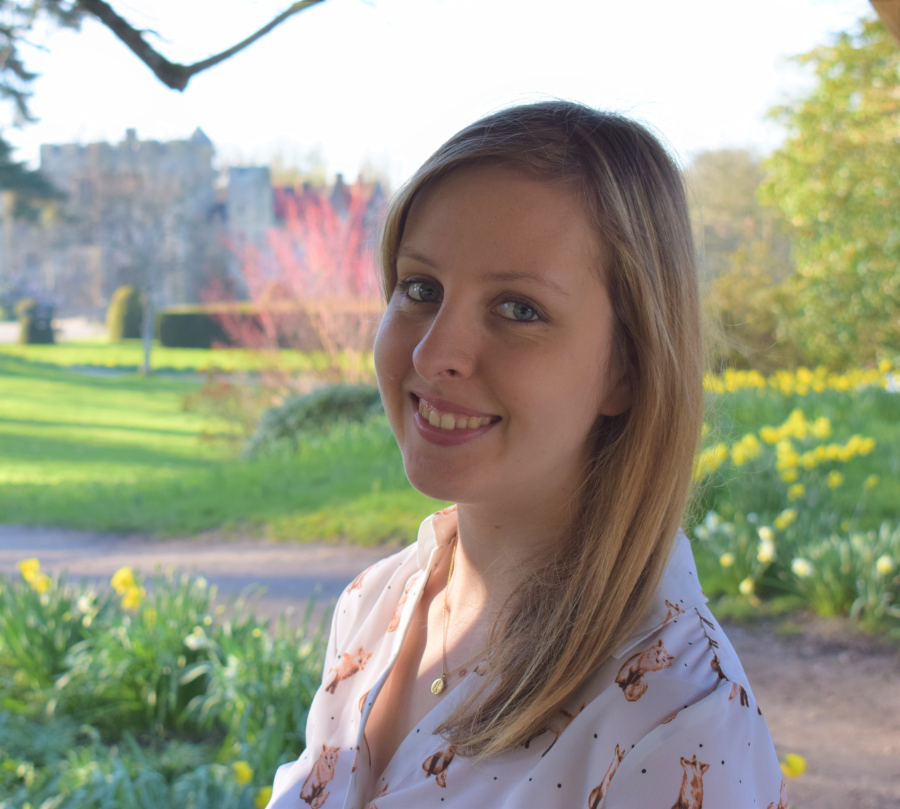
Author bio: Gemma Hollman is a historian and author who specialises in late medieval English history. A Fellow of the Royal Historical Society, she has a particular interest in the plethora of strong, intriguing and complicated women from the medieval period, a time she had always been taught was dominated by men. Gemma also works full-time in the heritage industry whilst running her historical blog, Just History Posts, which explores all periods of history in more depth. Gemma’s first book, Royal Witches, was a bestseller, and two more books have since followed: The Queen and the Mistress, and Women in the Middle Ages.

Where to find Gemma:

Website: https://justhistoryposts.com/; Link for books: https://lnk.bio/GemmaHAuthor; Social media: Bluesky https://bsky.app/profile/gemmahauthor.bsky.social.

*

My books

Signed, dedicated copies of all my books are available through my online store.

Out now: Scotland’s Medieval Queens

Books by Sharon Bennett Connolly

Scotland’s history is dramatic, violent and bloody. Being England’s northern neighbour has never been easy. Scotland’s queens have had to deal with war, murder, imprisonment, political rivalries and open betrayal. They have loved and lost, raised kings and queens, ruled and died for Scotland. From St Margaret, who became one of the patron saints of Scotland, to Elizabeth de Burgh and the dramatic story of the Scottish Wars of Independence, to the love story and tragedy of Joan Beaufort, to Margaret of Denmark and the dawn of the Renaissance, Scotland’s Medieval Queens have seen it all. This is the story of Scotland through their eyes.

Scotland’s Medieval Queens gives a thorough grounding in the history of the women who ruled Scotland at the side of its kings, often in the shadows, but just as interesting in their lives beyond the spotlight. It’s not a subject that has been widely covered, and Sharon is a pioneer in bringing that information into accessible history.’ Elizabeth Chadwick (New York Times bestselling author)

Available now from Amazon and Pen and Sword Books

Also by Sharon Bennett Connolly:

Books by Sharon Bennett Connolly

Heroines of the Tudor World tells the stories of the most remarkable women from European history in the time of the Tudor dynasty, 1485-1603. These are the women who ruled, the women who founded dynasties, the women who fought for religious freedom, their families and love. Heroines of the Tudor World is now available from Amberley Publishing and Amazon UK. Women of the Anarchy demonstrates how Empress Matilda and Matilda of Boulogne, unable to wield a sword themselves, were prime movers in this time of conflict and lawlessness. It shows how their strengths, weaknesses, and personal ambitions swung the fortunes of war one way – and then the other. Available from Bookshop.orgAmberley Publishing and Amazon UKKing John’s Right-Hand Lady: The Story of Nicholaa de la Haye is the story of a truly remarkable lady, the hereditary constable of Lincoln Castle and the first woman in England to be appointed sheriff in her own right. Available from all good bookshops Pen & Sword Booksbookshop.org and Amazon

Books by Sharon Bennett Connolly

Defenders of the Norman Crown: The Rise and Fall of the Warenne Earls of Surrey tells the fascinating story of the Warenne dynasty, from its origins in Normandy, through the Conquest, Magna Carta, the wars and marriages that led to its ultimate demise in the reign of Edward III. Available from Pen & Sword BooksAmazon in the UK and US, and Bookshop.orgLadies of Magna Carta: Women of Influence in Thirteenth Century England looks into the relationships of the various noble families of the 13th century, and how they were affected by the Barons’ Wars, Magna Carta and its aftermath; the bonds that were formed and those that were broken. It is now available in paperback and hardback from Pen & SwordAmazon, and Bookshop.orgHeroines of the Medieval World tells the stories of some of the most remarkable women from Medieval history, from Eleanor of Aquitaine to Julian of Norwich. Available now from Amberley Publishing and Amazon, and Bookshop.orgSilk and the Sword: The Women of the Norman Conquest traces the fortunes of the women who had a significant role to play in the momentous events of 1066. Available now from Amazon,  Amberley Publishing, and Bookshop.org.

Alternate Endings: An anthology of historical fiction short stories including Long Live the King… which is my take what might have happened had King John not died in October 1216. Available in paperback and kindle from Amazon.

Podcast:

A Slice of Medieval

Have a listen to the A Slice of Medieval podcast, which I co-host with Historical fiction novelist Derek Birks. Derek and I welcome guests, such as Bernard Cornwell and Michael Jecks, and discuss a wide range of topics in medieval history, from significant events to the personalities involved. Every episode is also now available on YouTube.

*

Don’t forget! Signed and dedicated copies of all my books are available through my online store.

For forthcoming online and in-person talks, please check out my Events Page.

You can be the first to read new articles by clicking the ‘Follow’ button, liking our Facebook page or joining me on TwitterThreadsBluesky and Instagram.

*

©2025 Sharon Bennett Connolly, FRHistS and Gemma Hollman, FRHistS

Guest Post: Feisty Females: Writing Lincolnshire’s Medieval Women by Rosanna McGlone

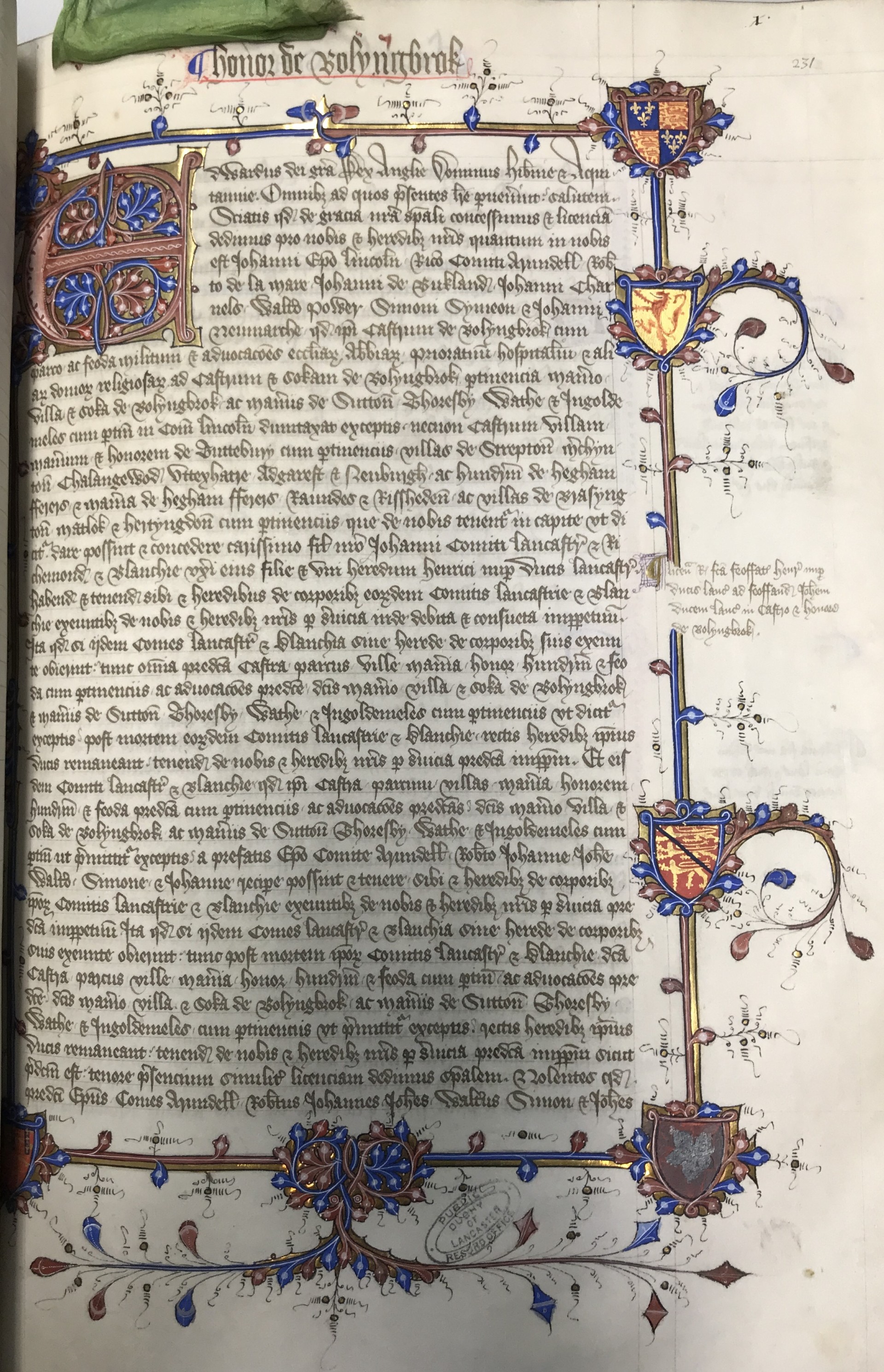
The great Cowcher Book
The Great Cowcher Book

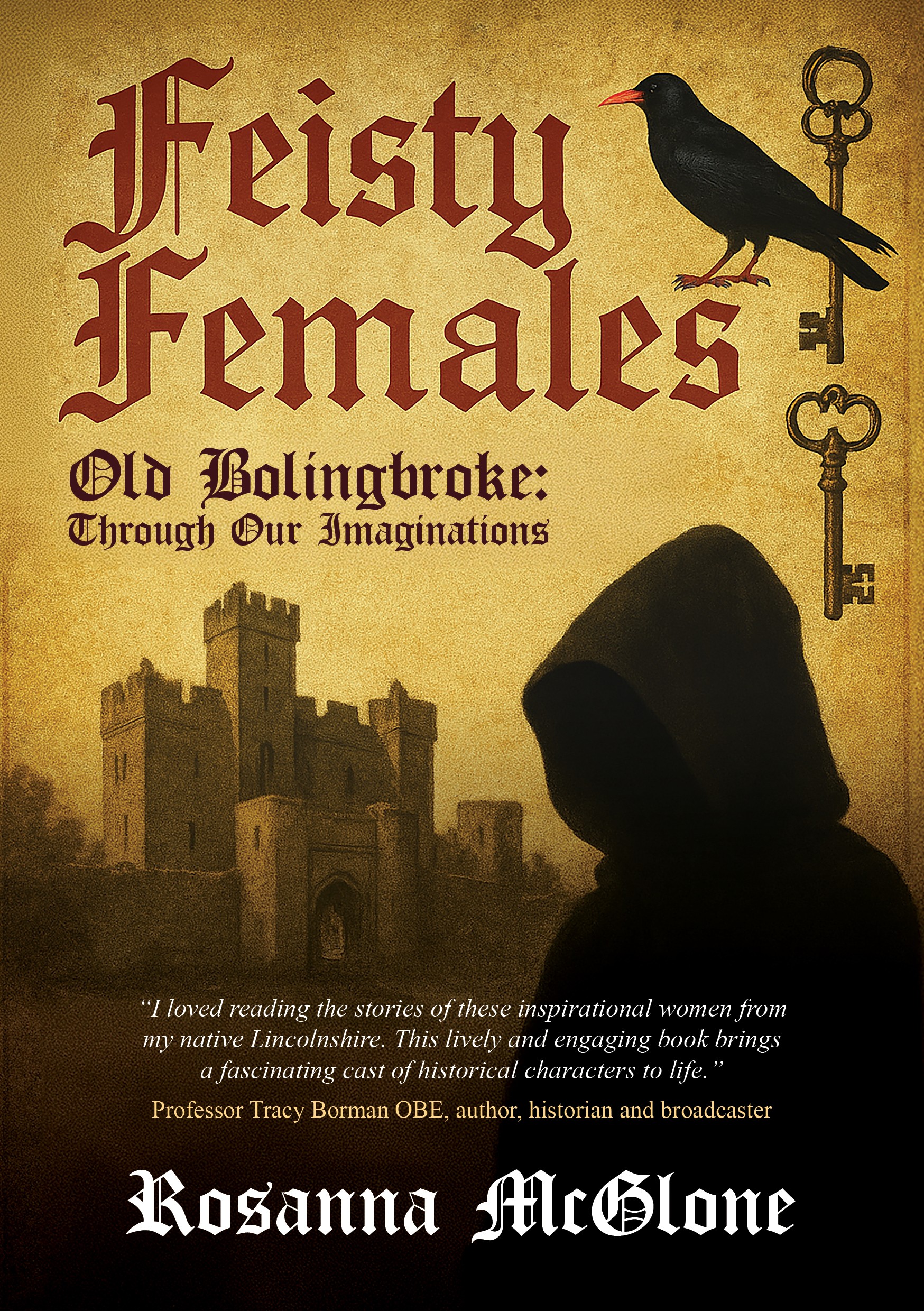
It is a pleasure to welcome my good friend Rosanna McGlone to History … the Interesting Bits to chat about her new book, Feisty Females, a series of short stories inspired by The Great Cowcher Book. Although Feisty Females is Rosanna’s ‘baby’, I feel like its Godmother as we have chatted frequently, over coffee, about the women she included, included Nicholaa de la Haye, Alice de Lacey, Blanche of Lancaster and Gwenllian of Wales – women my readers, I know, are well acquainted with!

Rosanna would meet me, armed with questions about the history of these women and the world they lived in. Then she went away and came back having put her own mark on their stories. And what a fascinating collection of stories it is!

It is a joy to see this project come to fruition. So, over to Rosanna to tell you a little about the process of researching and writing Feisty Females: Old Bolingbroke through our Imaginations.

Feisty Females: Writing Lincolnshire’s Medieval Women by Rosanna McGlone

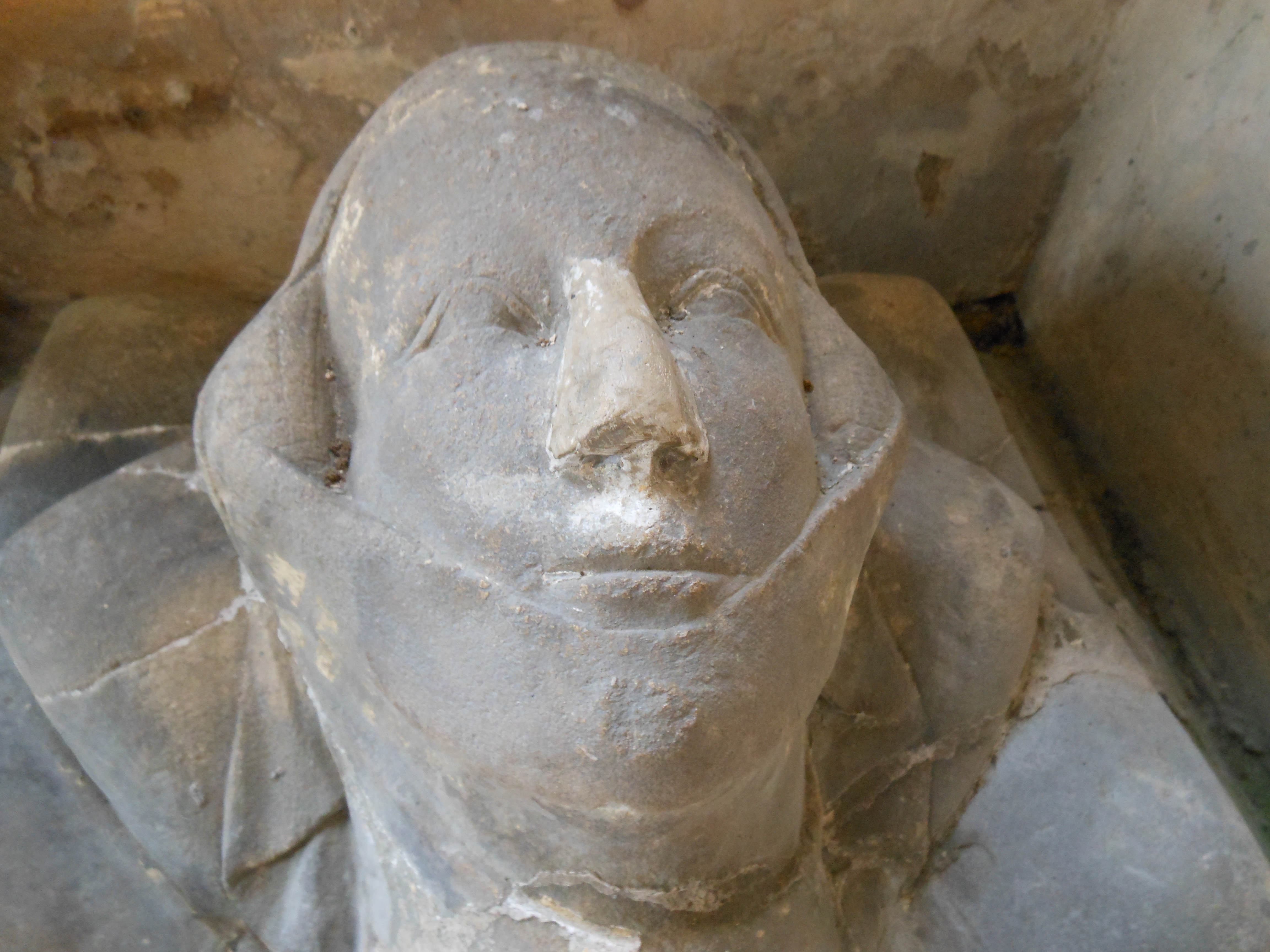
Henry IV effigy
Henry IV, Canterbury Cathedral

You’ve heard of the Domesday Book, right? But do you know the second most important medieval record book? If you don’t, let me reassure you. Until I received this commission, neither did I. According to staff at the National Archives it’s The Great Cowcher Book, a medieval land registry commissioned by Henry IV to provide a record of lands within the Duchy of Lancaster. Receiver General John Leventhorpe was assigned to visit the 18,000 hectares of rural estates in England and Wales including Cheshire and Lancashire in the West and The Honor of Bolingbroke in Lincolnshire in the East which make up the Duchy of Lancaster. In doing so, he gathered a total of 161 folios and 2,433 charters written in either Latin or medieval French.

What exactly do the two volumes of The Great Cowcher Book contain? As well as including transactions such as the bestowing of Old Bolingbroke Castle to John of Gaunt and his wife Blanche of Lancaster, the book also covers more minor land transactions between people of much lower status.

Additionally, the Great Cowcher Book provides a record of disputes which had been brought before the court seeking resolution.

I was commissioned, and funded, by a number of organisations including the Arts Council, Lincoln County Council, the community of Old Bolingbroke and others to write a creative response to this unique material. Thus, it is from this medieval register that my book of short stories, Feisty Females: Old Bolingbroke through our Imaginations was crafted.

Feisty Females

The beautiful medieval manuscripts have recently been translated into English and I received the information on a rather less romanticised, Excel spreadsheet! The columns display the following headings, however not all of them have been populated for each of the more than 5,000 entries: regnal year, name of vendor, name of buyer, land to be purchased; witnesses to the contract; any special conditions, the original language of the manuscript.

As I poured over in excess of 1,200 entries pertaining to The Honor of Bolingbroke, my key focus, I was struck by the names: Walter son of Andrew; Adam, Hugh, Odo Galle of Saltfletby; Gilbert, Ranulf, Clement Prior of Spaldying, William de Rusmar, Henry de Lascy, Simon le Bret, God and his church.

Where were all of the women? As I note in the introduction to my book, His-tory is so often that, a record of the past through the male lens. For me, it was important to offer a different perspective. Out of the more than 5,000 entries within the Great Cowcher Book there are few female landowners. Yet, I was mindful that any females who did appear would have something remarkable about them to succeed in the male dominated medieval world.

Nicholaa de la Haye effigy
Tomb effigy of Nicholaa de la Haye

Women such as Nicholaa de la Haye, the first female Sheriff of Lincoln and Castellan of Lincoln Castle who withstood not one, but three separate sieges on the castle and earned the respect of King John himself.

Another feisty female for whom I have particular affection is Alice de Lacy, a woman whose story is too incredible to be true, at least that’s what I thought when I read it. Kidnappings, rape, imprisonment by the king, threats of being burnt to death, really how could I possibly capture all of Alice’s turbulent life in a mere 3,000 words? The answer is, I couldn’t. Therefore, I focused upon the catalyst for her troubles, her inheritance. Two bizarre childhood accidents occurred to her brothers which, in my opinion, determined the course of Alice’s life. Firstly, her young brother Edmund fell down a well at Denbigh Castle and died. Then, barely six months later, her other brother, John fell off the battlements at Pontefract Castle. He too perished leaving Alice- still a child herself- as sole heir to her parents, Henry de Lacy, Earl of Lincoln, and Margaret Longespee, Countess of Salisbury.

Whilst all of the other stories are set in medieval times, for Alice’s story I use the framework of a police interview in which she is pushed to reveal the truth of those inciting incidents.

The women with the most charters in the Great Cowcher Book is Hawise de Quincy, first Countess of Lincoln, who has a remarkable 40 entries. Whilst the vast majority of these relate to land acquisitions, the one upon which my tale focuses concerns a dispute was between Hawise and Philip de Kyma. To quote the Great Cowcher, this disagreement was

‘…concerning a certain obstruction of a certain watercourse made by the said Philip in Torp to the nuisance of the port of the said Hawise in Weynfled. Because it was then clear the land of both sides of that watercourse towards the port of Weynfled is of the said Philip…’

And so on… In essence, Philip de Kyma was preventing Hawise de Quincy from accessing her port and, therefore, the valuable port fees. So, what was she to do? This is what my story explores. Does pragmatism work, or must Hawise resort to womanly wiles?

Gwenllian of Wales
Memorial to Gwenllian, Sempringham Priory

An incredibly wronged female in Feisty Females is Gwenllian, the last Princess of Wales who was incarcerated in a Lincolnshire Priory from which there was little chance of escape, unless she had inside help…

In all cases, bar one, the women come from the Great Cowcher book, however in Matilda’s case my desire to write on the specific topic of that story arose first, based on a certain building referenced in The Great Cowcher. Matilda’s Story begins thus:

It was the day after Candlemas that we held my brother’s funeral. There was just one problem: he wasn’t dead.

It has been a pleasure to learn more about these characters and to bring them to life for readers, giving them voices after 800 years, or more, of silence. The book is a celebration of the female power which was understood by Chaucer who, himself, makes an appearance in Blanche’s Story. In the epigraph to my book Chaucer describes women thus:

‘And what is better than wisedoom? Womman.

And what is better than a good woman? Nothyng.’1

*

Notes: 1. Geoffrey Chaucer, ‘The Tale of Melibee’ The Canterbury Tales.

Images: The Great Cowcher Book (DL 42/2, fol. 231r, the property of His Majesty The King in Right of His Duchy of Lancaster and is reproduced by permission of the Chancellor and Council of the Duchy of Lancaster.); Photos of Henry IV, Nicholaa de la Haye and Gwenllian of Wales are ©Sharon Bennett Connolly FRHistS.

To Buy the Book:

Just click on the link to buy: Feisty Females

About the Author:

Rosanna McGlone

Rosanna McGlone is a writer and journalist. Her book, The Process of Poetry -which explores the development of early drafts of poems by some of the country’s leading poets- was number 1 on Amazon and featured on Radio 4’s Front Row. The sequel, The Making of a Poem, focuses on the work of Australian foremost poets. She has written more than 100 features for the national press, including: The GuardianThe IndependentThe Sydney Morning Herald and The Australian. Rosanna has written memoirs, community plays and collected oral histories. Feisty Females, a creative response to The Great Cowcher Book, a medieval book, is out on June 8th 2025.

To find out more follow Rosanna at @rosannamcglone.bsky.social

*

My Books:

Signed, dedicated copies of all my books are available through my online bookshop.

Out Now! Scotland’s Medieval Queens

Books by Sharon Bennett Connolly

Scotland’s history is dramatic, violent and bloody. Being England’s northern neighbour has never been easy. Scotland’s queens have had to deal with war, murder, imprisonment, political rivalries and open betrayal. They have loved and lost, raised kings and queens, ruled and died for Scotland. From St Margaret, who became one of the patron saints of Scotland, to Elizabeth de Burgh and the dramatic story of the Scottish Wars of Independence, to the love story and tragedy of Joan Beaufort, to Margaret of Denmark and the dawn of the Renaissance, Scotland’s Medieval Queens have seen it all. This is the story of Scotland through their eyes.

Scotland’s Medieval Queens gives a thorough grounding in the history of the women who ruled Scotland at the side of its kings, often in the shadows, but just as interesting in their lives beyond the spotlight. It’s not a subject that has been widely covered, and Sharon is a pioneer in bringing that information into accessible history.’ Elizabeth Chadwick (New York Times bestselling author)

Available now from Amazon and Pen and Sword Books

Also by Sharon Bennett Connolly:

Books by Sharon Bennett Connolly

Heroines of the Tudor World tells the stories of the most remarkable women from European history in the time of the Tudor dynasty, 1485-1603. These are the women who ruled, the women who founded dynasties, the women who fought for religious freedom, their families and love. Heroines of the Tudor World is now available for pre-order from Amberley Publishing and Amazon UK. Women of the Anarchy demonstrates how Empress Matilda and Matilda of Boulogne, unable to wield a sword themselves, were prime movers in this time of conflict and lawlessness. It shows how their strengths, weaknesses, and personal ambitions swung the fortunes of war one way – and then the other. Available from Bookshop.orgAmberley Publishing and Amazon UKKing John’s Right-Hand Lady: The Story of Nicholaa de la Haye is the story of a truly remarkable lady, the hereditary constable of Lincoln Castle and the first woman in England to be appointed sheriff in her own right. Available from all good bookshops Pen & Sword Booksbookshop.org and Amazon

Royal Historical Society

Defenders of the Norman Crown: The Rise and Fall of the Warenne Earls of Surrey tells the fascinating story of the Warenne dynasty, from its origins in Normandy, through the Conquest, Magna Carta, the wars and marriages that led to its ultimate demise in the reign of Edward III. Available from Pen & Sword BooksAmazon in the UK and US, and Bookshop.orgLadies of Magna Carta: Women of Influence in Thirteenth Century England looks into the relationships of the various noble families of the 13th century, and how they were affected by the Barons’ Wars, Magna Carta and its aftermath; the bonds that were formed and those that were broken. It is now available in paperback and hardback from Pen & SwordAmazon, and Bookshop.orgHeroines of the Medieval World tells the stories of some of the most remarkable women from Medieval history, from Eleanor of Aquitaine to Julian of Norwich. Available now from Amberley Publishing and Amazon, and Bookshop.orgSilk and the Sword: The Women of the Norman Conquest traces the fortunes of the women who had a significant role to play in the momentous events of 1066. Available now from Amazon,  Amberley Publishing, and Bookshop.org.

Alternate Endings: An anthology of historical fiction short stories including Long Live the King… which is my take what might have happened had King John not died in October 1216. Available in paperback and kindle from Amazon.

Podcast:

A Slice of Medieval

Have a listen to the A Slice of Medieval podcast, which I co-host with Historical fiction novelist Derek Birks. Derek and I welcome guests, such as Bernard Cornwell and Michael Jecks, and discuss a wide range of topics in medieval history, from significant events to the personalities involved. 

Every episode is also now available on YouTube.

*

Don’t forget! Signed and dedicated copies of all my books are available through my online store.

For forthcoming online and in-person talks, please check out my Events Page.

You can be the first to read new articles by clicking the ‘Follow’ button, liking our Facebook page or joining me on TwitterThreadsBluesky and Instagram.

*

©2025 Sharon Bennett Connolly, FRHistS and Rosanna McGlone

Interview with Gemma Hollman, author of Women in the Middle Ages

This week, I have had the distinct pleasure of chatting with author and historian Gemma Hollman about her new book, Women in the Middle Ages: Illuminating the World of Peasants, Nuns, and Queen.

I cannot wait to get my hands on this book!

Sharon: Tell me about your new book, Women in the Middle Ages: Illuminating the World of Peasants, Nuns, and Queens

Gemma: The book is an illustrated history which aims to shed light on the lives of medieval women. Focusing on roughly 500 years, from 1000 – 1500, I take a look at European women from all levels of society. By using surviving artwork, we see what the visual record can tell us about these women that might be lost in the written record. We often have this idea that the medieval period was a male-dominated world, with women at the sidelines, but this is not quite the case and art is an excellent place to see this. Women appear everywhere in it, but they were also very often the makers of it, too. Women ran households, worked in taverns and textile hubs, invested money in businesses, created books and paintings, saved souls through their prayers and ruled countries. And in a visually-dominated culture, where the majority of people were illiterate, women were able to leave their mark on tapestries, manuscripts, beads, bowls, and more. The book is hopefully a marvellous romp through time with something for anyone, whether it’s your first time learning about medieval women, or the hundredth book you’ve read.

Sharon: What inspired you to write the book?

Gemma: My first two books were biographies, and I already had a vision for my third book as another biography, but I was also keen to do something more general. I was pondering how to do this, when a contact at Abbeville Press got in touch with me and let me know they were wanting to publish an art book centred on medieval women. This immediately sparked dozens of ideas in my head, and a chat with my future editor revealed that we had very similar visions for the book. It seemed like the perfect opportunity to dive in, and I relished the idea of doing such an image-heavy book. There are so many beautiful objects and artworks from the medieval period that I haven’t had the chance to showcase in my previous books, and I was excited to learn something new myself. I didn’t want to regret turning it down, so I didn’t!

Sharon: Do you have a favourite woman you highlighted in the book?

Tamar of Georgia

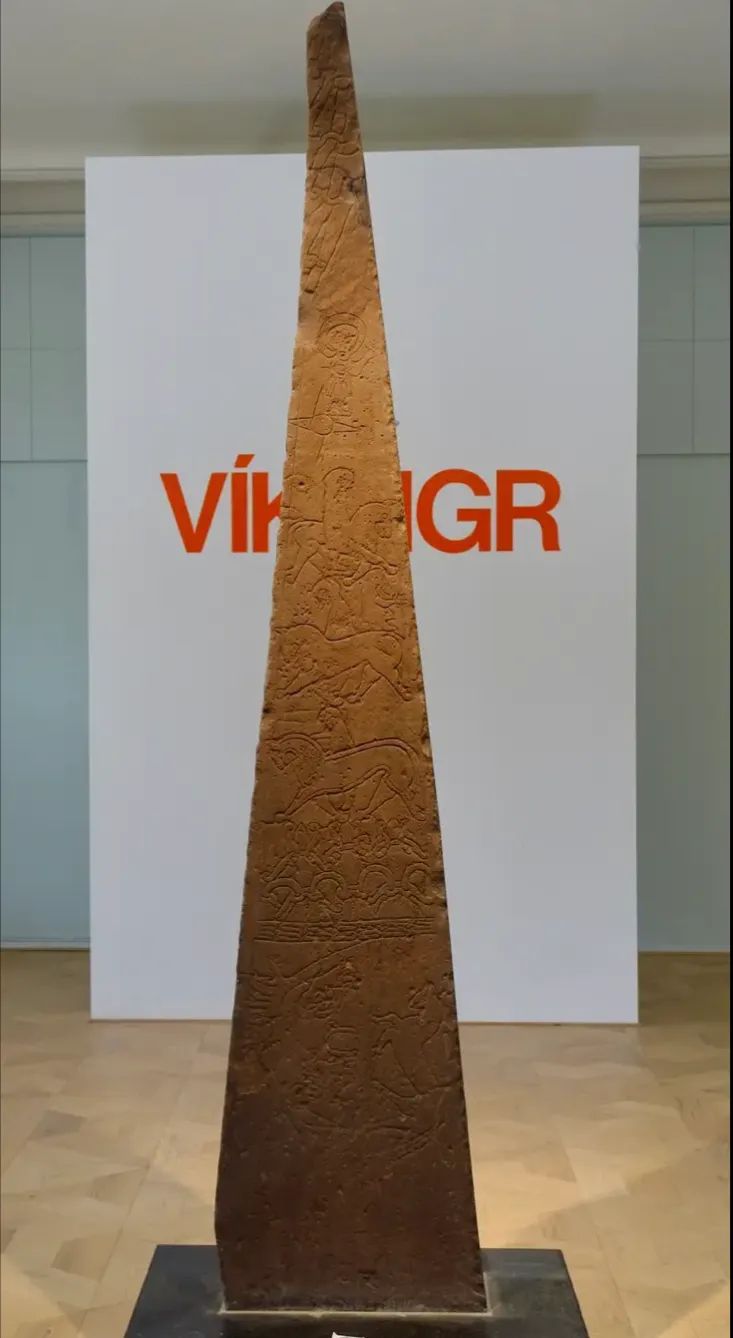
Gemma: Oh gosh, that’s such a difficult question because there are so many featured within! I don’t know that I can pick just one, but certainly one of my favourite stories is that of Astrid, Gunnvor and the Dynna Stone. The Dynna Stone is an 11th century runestone from Norway that commemorates a woman named Astrid. It was erected in her memory by her mother, Gunnvor, and commemorates Astrid as “the handiest maiden in Hadeland”, suggesting Astrid was skilled at some kind of craft. We know little else about the two women, but the runestone is also important as being one of the earliest instances of Christian pictorial art in the country. In a book about medieval women and art, having an object commissioned by a woman for her daughter, who may also have been an artist of some form, is really special.

Sharon: Who was the hardest person to write about?

Gemma: I don’t know that I struggled so much to write about a particular person – I cover so many countries and centuries that there was always someone you could find – but more particular groups of people. Being someone who specialises much more on Western Europe, it was easy to think of examples of significant people to write about, but I was keen that the book would make sure to cover as much of Europe as possible, and so I sometimes had to do some real digging to find an example of a woman who fit in with what I was talking about from different regions. In the same vein, it was sometimes tricky finding specific examples of women to use in my Peasants and Professionals section. Although we do know the names of some craftswomen from the later Middle Ages, due to increased record-keeping, finding names of ordinary, lower-class women is really, really difficult. There were often few reasons for these women to turn up in the written record. This is, of course, where the art was an excellent filler, as we at least have visual representations of them, but it was almost impossible to tell individual stories of particular women in the same way as in other chapters.

Sharon: Did you come across a particularly interesting or obscure character?

Gemma: One woman who really struck a chord with me was Marietta Barovier, who was part of a well-known Venetian glassmaking family. Her father had invented cristallo glass, and had clearly given equal weighting to the talents of his daughter as well as his son. When he died, he bestowed his workshop to his two children jointly. Marietta gained a significant reputation of her own, and in the 1480s she invented the rosette or chevron bead, which became an iconic Venetian glass bead. Women in Italy were in many ways more restricted in the world of work than other women in Europe, and yet here you have a woman who was not only allowed equal inheritance, but became famous in her own right for her exceptional skill.

Sharon: Was there a particular image or manuscript that struck you?

Margaret von Zurich

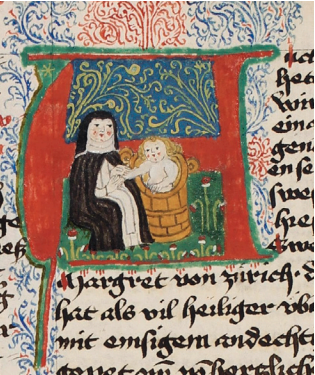
Gemma: Another difficult question as there are so many wonderful images! I think I’ll go with a simple little manuscript initial from a German nunnery. The picture shows a nun named Margaret von Zurich bathing the Christ Child in a barrel bath. It’s a very simple, small drawing, with some beautiful colour, and to modern eyes it is nothing extraordinary. But this small picture is actually incredibly subversive. The Catholic Church had forbidden women from touching Christ, and so not only was Margaret’s vision dangerous, but so was the recording of it in a manuscript. Religious women in Europe were often at the spearhead of reform and religious fervour, and this small drawing really succinctly demonstrates that.

Sharon: Did you have to leave anyone out through time constraints, lack of images or word count? If so, who?

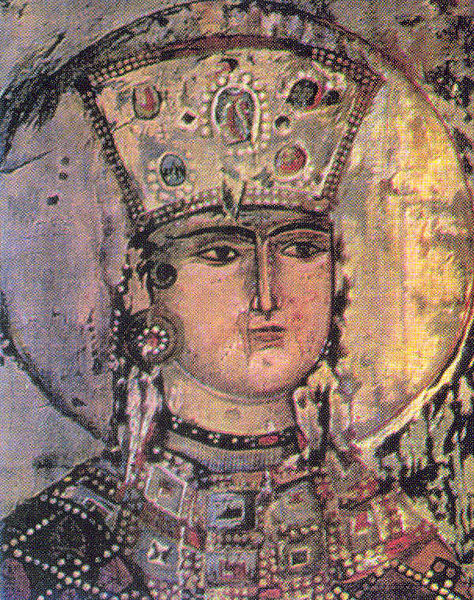
Gemma: Oh, most certainly! The book is not very long by history book standards, and yet it aims to cover a continent and five centuries of history! I could have written so, so much more and there are always people you wish you could include or expand upon but can’t. In the early days of writing and researching, I realised I needed to find a way to narrow the scope a little to make the book somewhat more manageable, and so I made the decision to focus on Catholic Europe, which thus excluded many eastern countries. This was a disappointment as one woman I wrote about in a sample chapter was Queen Tamar of Georgia. She ruled from 1184 to 1213 and was the first woman to rule the country in her own right. Despite early objections to her reign, her time as queen went on to be seen as a Golden Age, and her story is so fascinating. It was a shame to have to cut her out, but maybe she can find her way in to a future project of mine!

Sharon: What was your biggest challenge when writing about women in history?

Dynna Stone

Gemma: I think for this book in particular, it was trying to correctly balance what women did, with what people at the time thought about what women did. There was a lot of misogyny in the Middle Ages and so lots of written sources or pieces of art criticise women for working too much, for being too involved in politics, for being too promiscuous, for being too…. But we also have to remember that just a fraction of what existed in the medieval period has survived to today, and the people creating these sources were sometimes the very people most likely to criticise women – monks sequestered away from the world, courtiers who didn’t like submitting to female authority, and so on. And so just because we might have some of these thoughts that have made it to today, it doesn’t mean that everyone or even the majority of people thought that. You don’t want to belittle the struggles that women at the time went through; some women did lose their kingdoms because people wanted a male ruler instead, and some peasant women who had to work in taverns to support their families were derided as prostitutes. But those female leaders also had thousands of men willing to fight for them, and there were popular ballads and texts that praised women for all the hard work they did to keep their families afloat. And you also want to try and avoid praising certain women for their exceptionalism, especially when some of their contemporaries used exceptionalism as back-handed compliments, a way to deride the rest of the female sex.

Sharon: What are you working on now?

Gemma: I am now busy getting started on my next book! I’ve gone back to England and will be looking at the court of Richard II, and I’m really excited to see which threads I’ll choose to pull at. It’s such an interesting and tumultuous reign, there is plenty to choose from! But I am definitely keen to return to a similar style book as Women in the Middle Ages in the future so my mind is already whirring with possibilities…

About the Author: 

Gemma Hollman is a historian and author of The Queen and the Mistress: The Women of Edward III and Royal Witches: From Joan of Navarre to Elizabeth Woodville. A Fellow of the Royal Historical Society, she works full-time in the heritage industry whilst running her historical blog, Just History Posts. You can find Gemma on Twitter: @GemmaHAuthor, and Facebook: facebook.com/JustHistoryPosts,

To Buy the book:

You can buy Women in the Middle Ages: Illuminating the World of Peasants, Nuns, and Queen in the UK from Waterstones and Amazon. And in the US from Barnes & Noble and Amazon.

*

My Books:

Signed, dedicated copies of all my books are available through my online store.

OUT NOW! Heroines of the Tudor World

Heroines of the Tudor World tells the stories of the most remarkable women from European history in the time of the Tudor dynasty, 1485-1603. These are the women who ruled, the women who founded dynasties, the women who fought for religious freedom, their families and love. These are the women who made a difference, who influenced countries, kings and the Reformation. In the era dominated by the Renaissance and Reformation, Heroines of the Tudor World examines the threats and challenges faced by the women of the era, and how they overcame them. From writers to regents, from nuns to queens, Heroines of the Tudor World shines the spotlight on the women helped to shape Early Modern Europe.

Heroines of the Tudor World is now available for pre-order from Amberley Publishing and Amazon UK.

Coming 30 January 2025: Scotland’s Medieval Queens

Scotland’s history is dramatic, violent and bloody. Being England’s northern neighbour has never been easy. Scotland’s queens have had to deal with war, murder, imprisonment, political rivalries and open betrayal. They have loved and lost, raised kings and queens, ruled and died for Scotland. From St Margaret, who became one of the patron saints of Scotland, to Elizabeth de Burgh and the dramatic story of the Scottish Wars of Independence, to the love story and tragedy of Joan Beaufort, to Margaret of Denmark and the dawn of the Renaissance, Scotland’s Medieval Queens have seen it all. This is the story of Scotland through their eyes.

Available for pre-order now.

Also by Sharon Bennett Connolly:

Women of the Anarchy demonstrates how Empress Matilda and Matilda of Boulogne, unable to wield a sword themselves, were prime movers in this time of conflict and lawlessness. It shows how their strengths, weaknesses, and personal ambitions swung the fortunes of war one way – and then the other. Available from Bookshop.orgAmberley Publishing and Amazon UKKing John’s Right-Hand Lady: The Story of Nicholaa de la Haye is the story of a truly remarkable lady, the hereditary constable of Lincoln Castle and the first woman in England to be appointed sheriff in her own right. Available from all good bookshops Pen & Sword Booksbookshop.org and AmazonDefenders of the Norman Crown: The Rise and Fall of the Warenne Earls of Surrey tells the fascinating story of the Warenne dynasty, from its origins in Normandy, through the Conquest, Magna Carta, the wars and marriages that led to its ultimate demise in the reign of Edward III. Available from Pen & Sword BooksAmazon in the UK and US, and Bookshop.org

Ladies of Magna Carta: Women of Influence in Thirteenth Century England looks into the relationships of the various noble families of the 13th century, and how they were affected by the Barons’ Wars, Magna Carta and its aftermath; the bonds that were formed and those that were broken. It is now available in paperback and hardback from Pen & SwordAmazon, and Bookshop.orgHeroines of the Medieval World tells the stories of some of the most remarkable women from Medieval history, from Eleanor of Aquitaine to Julian of Norwich. Available now from Amberley Publishing and Amazon, and Bookshop.orgSilk and the Sword: The Women of the Norman Conquest traces the fortunes of the women who had a significant role to play in the momentous events of 1066. Available now from Amazon,  Amberley Publishing, and Bookshop.org.

Alternate Endings: An anthology of historical fiction short stories including Long Live the King… which is my take what might have happened had King John not died in October 1216. Available in paperback and kindle from Amazon.

Podcast:

Have a listen to Gemma talking about the two women in the life of Edward III on the A Slice of Medieval podcast, which I co-host with Historical fiction novelist Derek Birks.

*

Don’t forget! Signed and dedicated copies of all my books are available through my online store.

For forthcoming online and in-person talks, please check out my Events Page.

You can be the first to read new articles by clicking the ‘Follow’ button, liking our Facebook page or joining me on TwitterThreads and Instagram.

*

©2024 Sharon Bennett Connolly FRHistS and Gemma Hollman