Wordly Women: Anna Belfrage

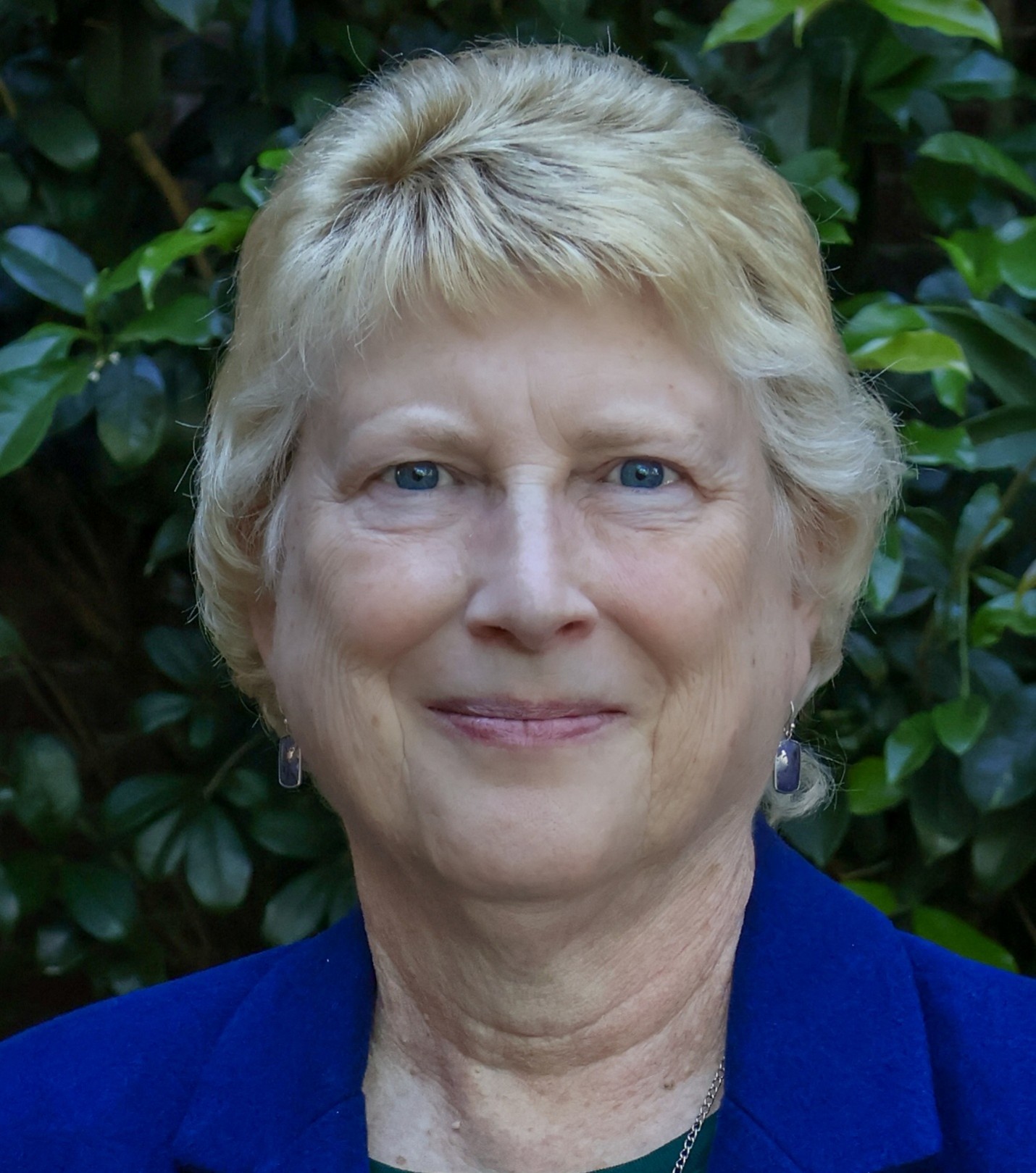
For my latest edition of Wordly Women, it is an absolute pleasure to welcome my dear friend, Anna Belfrage. Anna writes both historical fiction and time slip and is a magician with the written word. Her Castilian Saga books are something special and I loved the King’s Greatest Enemy books!

So, welcome Anna!

Sharon: What got you into writing?

Anna: I think many writers start like readers—that is how it was for me. I was like eight and felt the world needed a book about a girl who dressed up as a boy and accompanied Richard Lionheart as a page. My take on history was vague, my take on Richard was way too heroic, and my vocabulary was horribly tedious—and full of attempted medieval “speak” Agh! Many years later, I decided to really give writing a go, and once again I wrote a book that resonated with what I wanted to read. Seeing as I have always wanted to time travel—well, for short visits, deffo not to stay—my protagonist ended up being thrown back into the seventeenth century, because at the time, I was so fascinated by this period.

Sharon: Tell us about your books.
History...the Interesting Bits

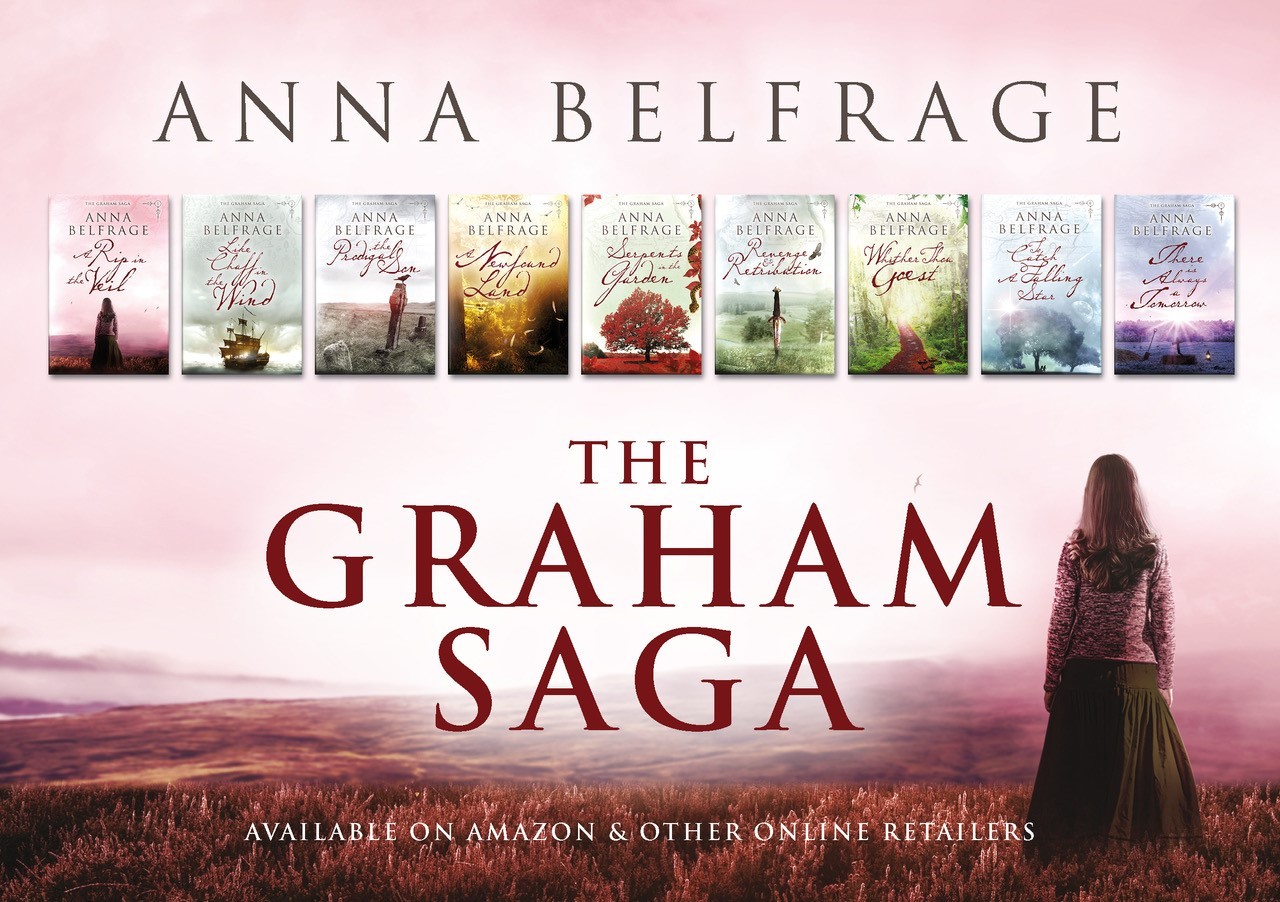
Anna: Well, I have just—today!—finished my 24th novel, supposedly a stand-alone, but according to my editor, I must write the rest of the story. So I probably will. Insert Graham Saga pic here! This is what always happens, you see. I start off writing ONE book and end up with one series after the other. My first series is The Graham Saga and is the story of Alex, my alter-ego time traveller who ends up in the 17th century where she meets Matthew Graham. Life will never be the same—not for Alex, not for Matthew, who has his doubts about this strange, borderline heathen woman who has landed at his feet. All in all, The Graham Saga is a ten (!!!!) book series, following Alex, Matthew and their expanding family through the latter half of the 17th century. Things happen to the Grahams—a lot of things, actually. Alex sometimes complains that it is too much, but between the two of us, she loves the adrenaline rushes I put her through! (“No, I don’t!” Alex growls. I just smirk) My second series is The King’s Greatest Enemy. I give you Adam de Guirande, an honourable knight who ends up torn between his love for his first lord, Roger Mortimer , and his loyalty to the young Edward III. Fortunately, he has a strong helpmeet in his wife, Kit. One book turned into four in this instance…
History...the Interesting Bits

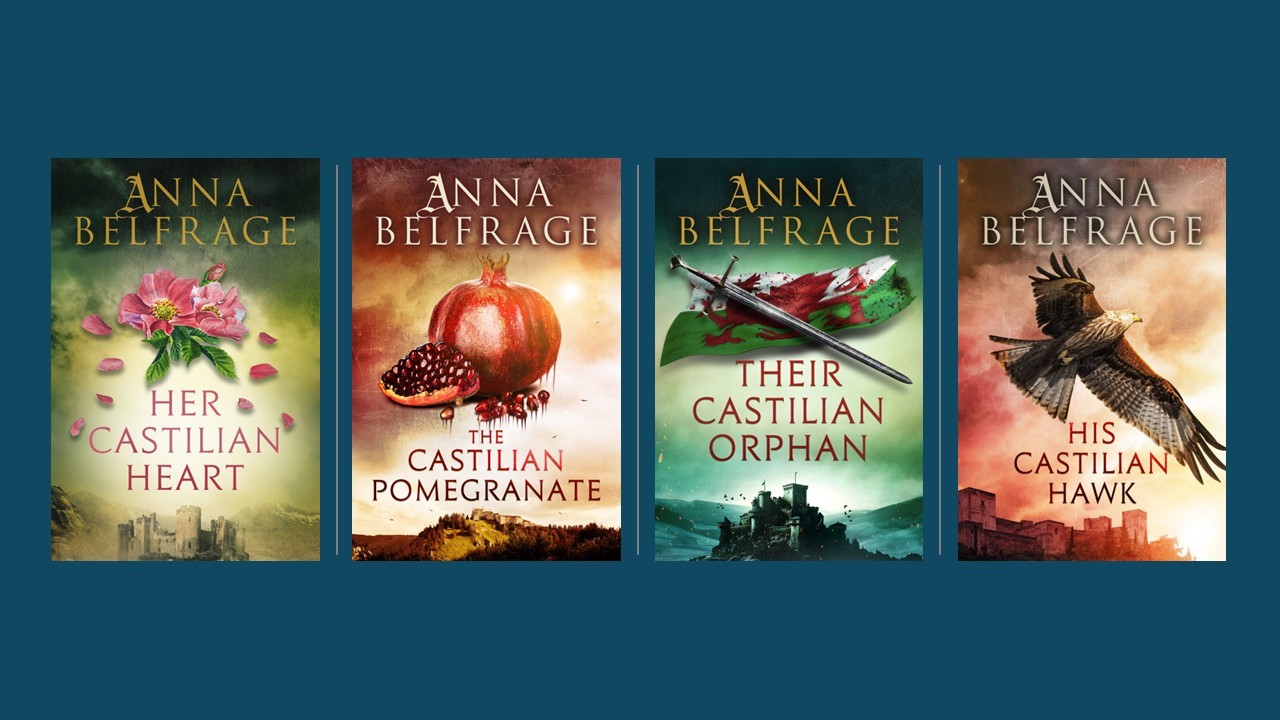
My third series is called The Castilian Saga and is set in the late 13th century. The lives and adventures of Robert FitzStephan, loyal captain to Edward I, and his wife, Eleanor d’Outremer, play out against the background of the conquest of Wales and the general upheaval in Castile and Aragon at the time. Yet another four book series…

I have also authored a three-book series called The Wanderer, which tells the story of Jason and Helle, brutally torn apart 3 000 years ago. After endless lives searching for his Helle, Jason finally finds her again and there is a HEA hovering on the horizon—had it not been for their nemesis last time round who has just gate-crashed the party. I loved writing this borderline fantasy/romantic suspense/ steamy series – but historical fiction is my first love and always will be.
History...the Interesting Bits

I have an ongoing series called The Time Locket—and yes, it has a time travelling protagonist. Erin is of mixed race and find it very hard to navigate the early 18th century in the American Colonies—well, she finds it hard to navigate life in the 18th century, full stop. Fortunately, she has Duncan at her side. I’ve written two books in this series and have started on number three –but for some odd reason we seem to be going to St Petersburg—well, the building site that will become St Petersburg—and I am dragging my feet, despite Erin and Duncan constantly sending me evil looks.

And then, finally, we have my just finished Queen of Shadows. (The one that I now need to write a sequel to according to my editor) We are in 14th century Castile where King Alfonso XI is married to one woman, but loves another. Quite the soap opera—except it is a true story. Along the way, our stalwart king must vanquish Marinid invaders, rebellious nobles and handle a most incensed father-in-law. I don’t think I’ve ever spent as much time researching a novel as I have done with this one—I started toying with the idea already back in 2016.

I have also contributed to various short-story collections: Betrayal: Historical stories, Historical Stories of Exile and Fate: Tales of History, Mystery and Magic.

Phew! Quite a list, isn’t it? (Anna looks quite, quite pleased)

Sharon: What attracts you to the periods you write in?

Anna: The history. An event or a personage catches my attention, and off I go. During my recent visit to Dresden, I discovered just how complicated and delicious the history of Saxony is, but I hesitate re writing a book set there, because I don’t speak German, and I have learned the hard way that it helps if you know the language of the country you are writing about. Writing about Castile in the 14th century has required reading my way through bits and pieces of medieval Castilian chronicles—but as I am fluent in Spanish, I managed. I also had the opportunity to revisit all my old text books about the development of the Spanish language)

Sharon: Who is your favourite medieval person and why?

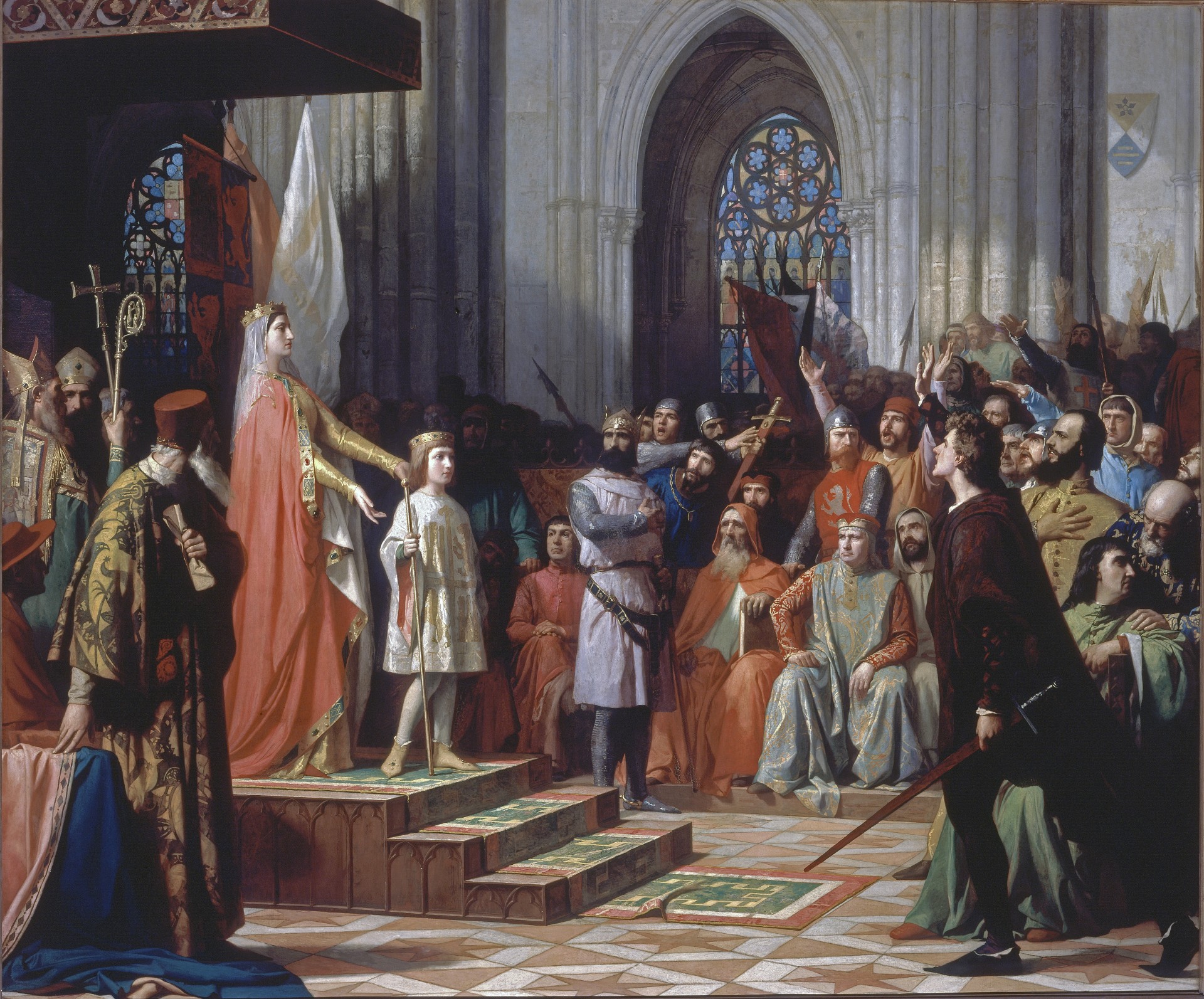
Anna: Seriously, ONE person? No, no, Sharon, how am I supposed to choose?? *Scratches head* Okay: in Castile, it would have to be Maria de Molina, I think. Wife of Sancho IV, she was firt regent to her son, Fernando IV, and when he was “summoned” (Yup, he’s known as Fernando the Summoned, given the odd circumstances of his death) she once again had to act as regent, now for her grandson, Alfonso XI. An extremely competent and wise woman, who suffered so much loss, so much heartbreak, but never gave up.
History...the Interesting Bits

In England, I am going to say Edward I. Yes, yes, I can hear people going WHAT? THAT RAT BASTARD? – and yes, he deffo had rat bastard qualities, especially vis-à-vis Scotland and Wales, but he was also a competent, hard-working ruler who never quite got over the loss of his wife, Eleanor. When she died, his soft side more or less disappeared (although his second wife seems to have brought it out in him on occasion). Also, we must remember that Edward is a product of his time and of the events that shook his kingdom when he was still a young man—namely the rebellions that more or less stripped Edward’s father of all his kingly power.

Sharon: Who is your least favourite medieval person and why?
History...the Interesting Bits

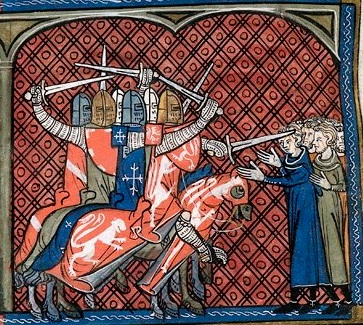
Anna: I’m not a big fan of The Black Prince, but my least favourite? Ah, yes: Simon Montfort the Elder, the man who led the Albigensian Crusade—or maybe Arnaud Amalric, the Cistercian abbot who purportedly ordered his men to kill all the people of Beziers during said crusade, stating that God would recognise his own (after death). Okay, so this is probably not true, but just the fact that an abbot actively participated in the massacre of the Cathars is rather icky, IMO. Sharon: I have to admit, I’m not a fan of either Simon de Montfort!

Sharon: How do you approach researching your topic?
History...the Interesting Bits
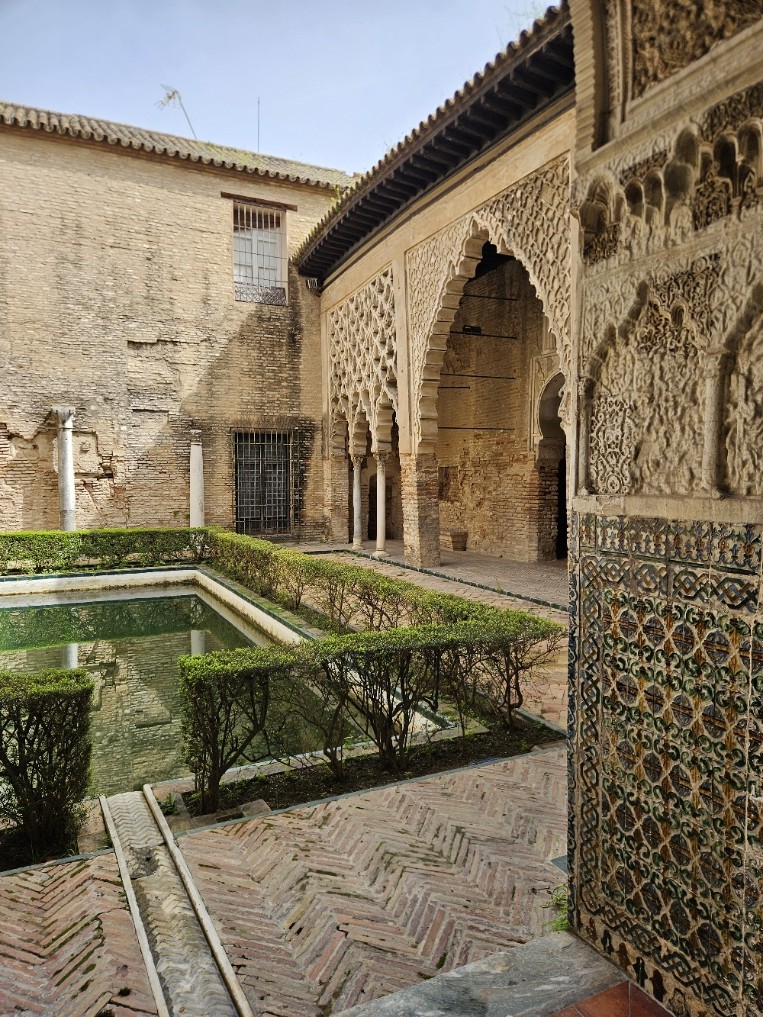
Sevilla

Anna: I start with one person, map out persons Person A interacted with and so on and so on. Plus, I always read an overview of the period first, highlighting things I will need to dig into. In my latest, it’s been a lot about sheep, about the Black Death, about coinage, about food—the Moors left a delicious legacy—about architecture. I also try to visit, to get a feel for the land as such. Good thing I did re my latest WIP, as it made me realise I was off by some kilometres from the sea in one of the more crucial scenes! insert pic of Sevilla

Sharon: Tell us your ‘favourite’ true historical story you have come across in your research.

Anna: Hmm. I am rather fond of the Edward-Eleanor love story. There he was, the future Edward I, all of fifteen when he married thirteen-year-old Eleanor. From that moment on, where he went, there went she.

Sharon: Tell us your least ‘favourite’ true historical story you have come across in your research.

Anna: Well, that is easy. In 1575, a seven-year-old little boy, Gustav Eriksson, was brutally exiled by his uncle, king Johan III of Sweden. Gustav was carried across the Baltic sea to Poland and there more or less abandoned, totally alone. No mother, no sister, no money. I have written about this sad little boy in Historical Stories of Exile (Sharon: How sad!)

Sharon: Are there any other eras you would like to write about?

Anna: I am rather fascinated by the period of the Second Great Awakening, i.e. the decades after the Napoleonic Wars. (Sharon: oooooooooh, yes please!)

Sharon: What are you working on now?

Anna: Well . . . I am dithering: should I start on that unplanned sequel by describing a wedding in 1353 at which an unwilling royal groom weds a French princess? Or should I dig into the mystery of the dead man in the barrel, come all the way from Russia before it ends up in Arabella Sterling’s warehouse? Or maybe I should work on both in parallel! (Sharon: Decisions! Decisions!)

Sharon: And finally, what is the best thing about being a writer?

Anna: I step into a world where I am totally in control (Muffled laughter from all my characters) OK, I escape into a world where I have some control—assuming my pesky characters cooperate. Somewhat more seriously, I love recreating life in the past, building that distant world brick by brick. Is the end creation an entirely correct representation? Of course not: there is so much we don’t know about that distant life—but I hope it gives a flavour!

Books by Anna Belfrage:

The Graham Saga Amazon US; Amazon UK; The King’s Greatest Enemy Amazon US; Amazon UK; The Castilian Saga Amazon US; Amazon UK; The Time Locket Amazon US; Amazon UK; The Wanderer Amazon US Amazon UK

About the Author:

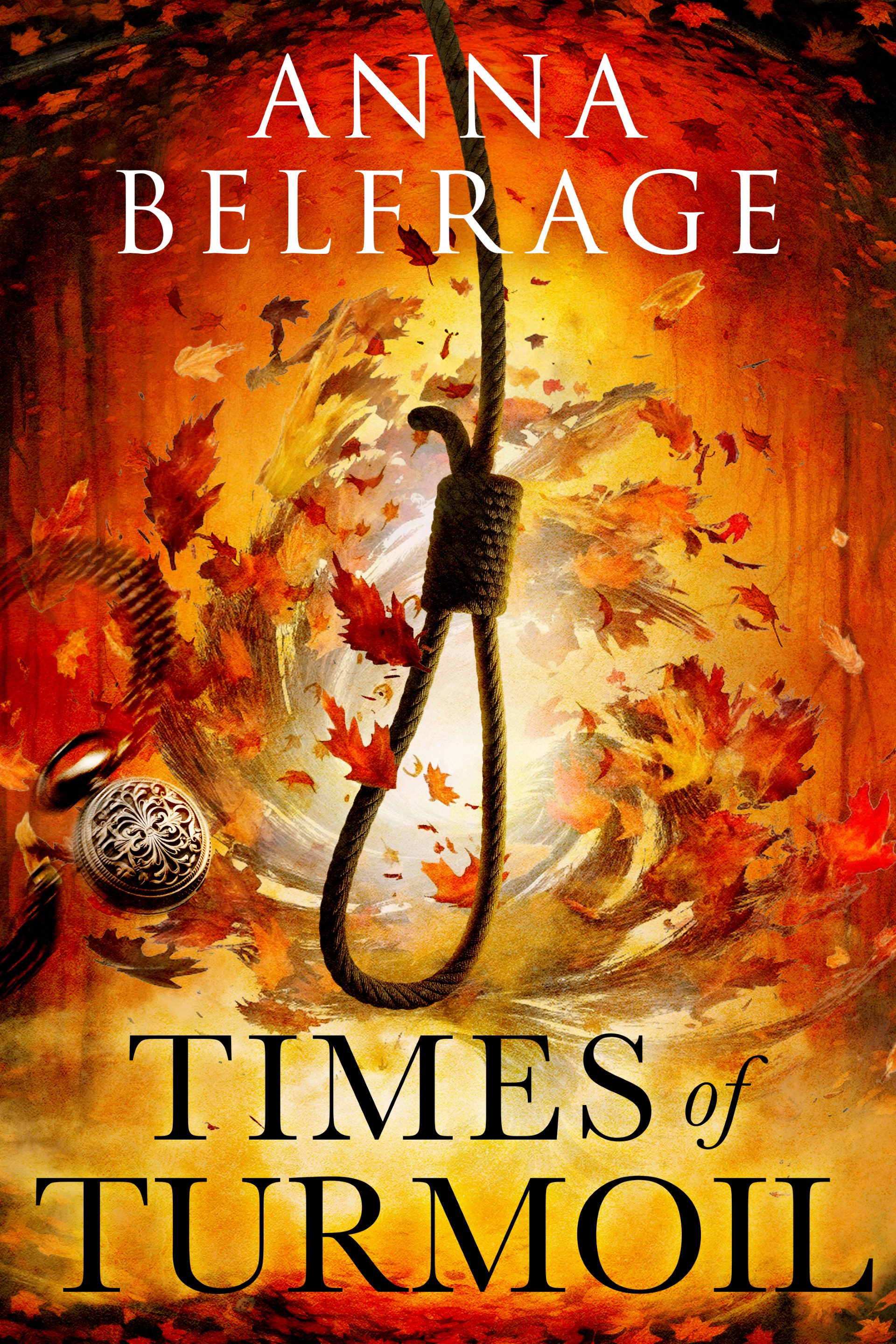
Had Anna been allowed to choose, she’d have become a time-traveller. As this was impossible, she became a financial professional with three absorbing interests: history, romance and writing. Anna has authored the acclaimed time travelling series The Graham Saga, set in 17th century Scotland and Maryland, as well as the equally acclaimed medieval series The King’s Greatest Enemy which is set in 14th century England, and The Castilian Saga ,which is set against the medieval conquest of Wales. She has also published a time travel romance, The Whirlpools of Time, and its sequel Times of Turmoil, and is now considering just how to wiggle out of setting the next book in that series in Peter the Great’s Russia, as her characters are demanding. . .

All of Anna’s books have been awarded the IndieBRAG Medallion, she has several Historical Novel Society Editor’s Choices, and one of her books won the HNS Indie Award in 2015. She is also the proud recipient of various Reader’s Favorite medals as well as having won various Gold, Silver and Bronze Coffee Pot Book Club awards.

“A master storyteller” “This is what all historical fiction should be like. Superb.”

Find out more about Anna, her books and enjoy her eclectic historical blog on her website, http://www.annabelfrage.com

Social Media Links:

Bluesky: Facebook: Amazon Author Page

*

My books

Signed, dedicated copies of all my books are available through my online store.

Out now: Scotland’s Medieval Queens

Books by Sharon Bennett Connolly

Scotland’s history is dramatic, violent and bloody. Being England’s northern neighbour has never been easy. Scotland’s queens have had to deal with war, murder, imprisonment, political rivalries and open betrayal. They have loved and lost, raised kings and queens, ruled and died for Scotland. From St Margaret, who became one of the patron saints of Scotland, to Elizabeth de Burgh and the dramatic story of the Scottish Wars of Independence, to the love story and tragedy of Joan Beaufort, to Margaret of Denmark and the dawn of the Renaissance, Scotland’s Medieval Queens have seen it all. This is the story of Scotland through their eyes.

Scotland’s Medieval Queens gives a thorough grounding in the history of the women who ruled Scotland at the side of its kings, often in the shadows, but just as interesting in their lives beyond the spotlight. It’s not a subject that has been widely covered, and Sharon is a pioneer in bringing that information into accessible history.’ Elizabeth Chadwick (New York Times bestselling author)

Available now from Amazon and Pen and Sword Books

Also by Sharon Bennett Connolly:
Books by Sharon Bennett Connolly

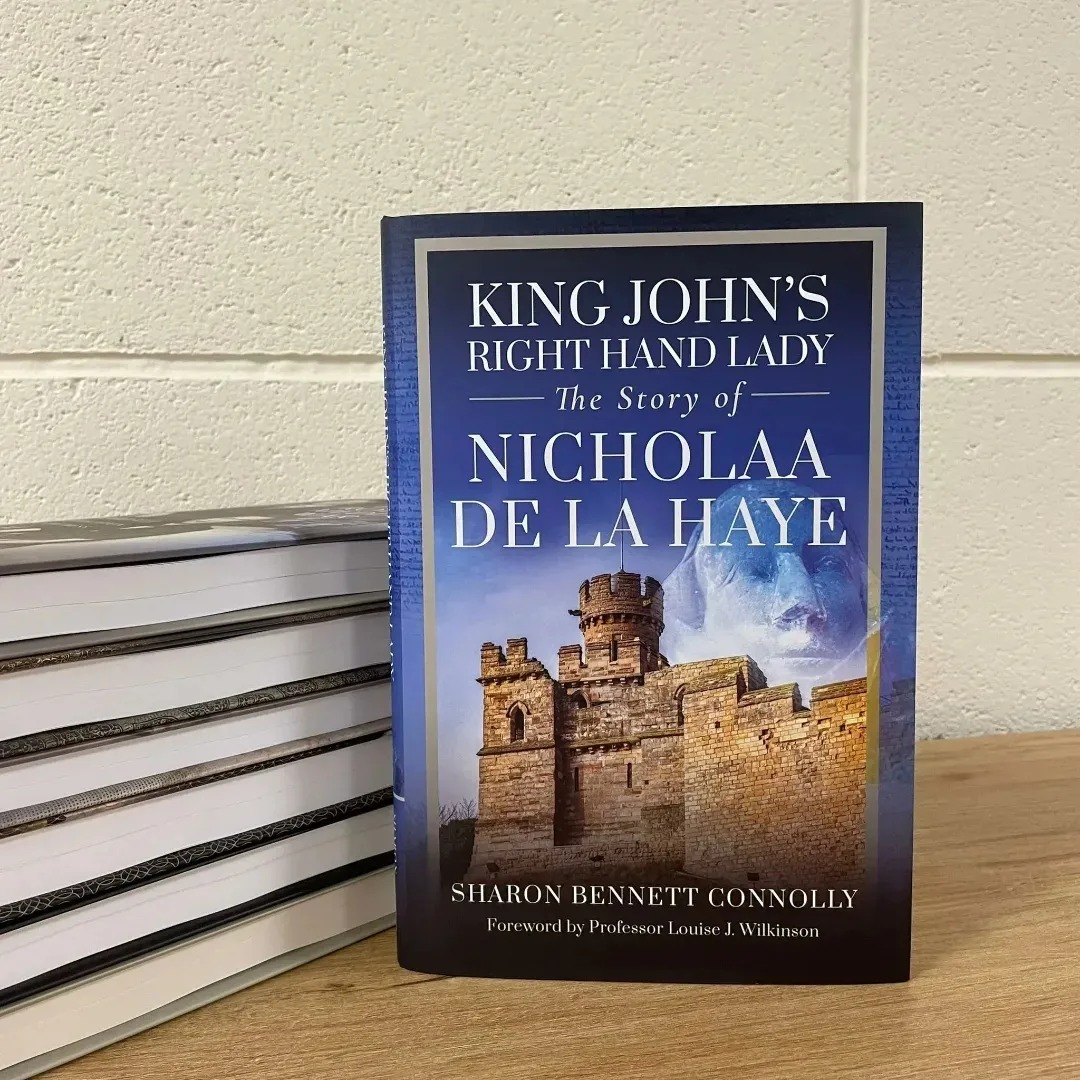
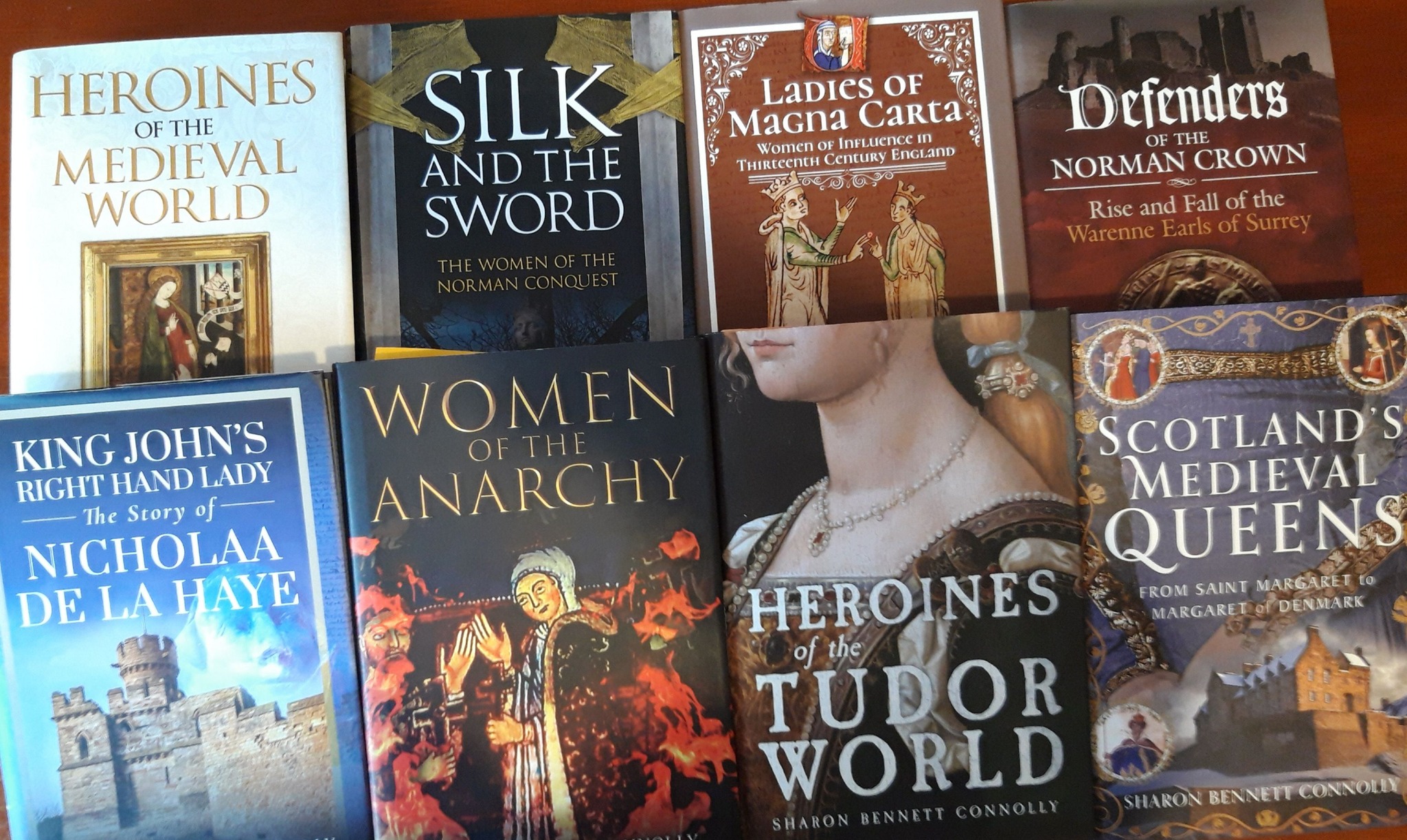
Heroines of the Tudor World tells the stories of the most remarkable women from European history in the time of the Tudor dynasty, 1485-1603. These are the women who ruled, the women who founded dynasties, the women who fought for religious freedom, their families and love. Heroines of the Tudor World is now available from Amberley Publishing and Amazon UK. Women of the Anarchy demonstrates how Empress Matilda and Matilda of Boulogne, unable to wield a sword themselves, were prime movers in this time of conflict and lawlessness. It shows how their strengths, weaknesses, and personal ambitions swung the fortunes of war one way – and then the other. Available from Bookshop.orgAmberley Publishing and Amazon UKKing John’s Right-Hand Lady: The Story of Nicholaa de la Haye is the story of a truly remarkable lady, the hereditary constable of Lincoln Castle and the first woman in England to be appointed sheriff in her own right. Available from all good bookshops Pen & Sword Booksbookshop.org and Amazon

Royal Historical Society

Defenders of the Norman Crown: The Rise and Fall of the Warenne Earls of Surrey tells the fascinating story of the Warenne dynasty, from its origins in Normandy, through the Conquest, Magna Carta, the wars and marriages that led to its ultimate demise in the reign of Edward III. Available from Pen & Sword BooksAmazon in the UK and US, and Bookshop.orgLadies of Magna Carta: Women of Influence in Thirteenth Century England looks into the relationships of the various noble families of the 13th century, and how they were affected by the Barons’ Wars, Magna Carta and its aftermath; the bonds that were formed and those that were broken. It is now available in paperback and hardback from Pen & SwordAmazon, and Bookshop.orgHeroines of the Medieval World tells the stories of some of the most remarkable women from Medieval history, from Eleanor of Aquitaine to Julian of Norwich. Available now from Amberley Publishing and Amazon, and Bookshop.orgSilk and the Sword: The Women of the Norman Conquest traces the fortunes of the women who had a significant role to play in the momentous events of 1066. Available now from Amazon,  Amberley Publishing, and Bookshop.org.

Alternate Endings: An anthology of historical fiction short stories including Long Live the King… which is my take what might have happened had King John not died in October 1216. Available in paperback and kindle from Amazon.

Podcast:

A Slice of Medieval

Have a listen to the A Slice of Medieval podcast, which I co-host with Historical fiction novelist Derek Birks. Derek and I welcome guests, such as Bernard Cornwell and Michael Jecks, and discuss a wide range of topics in medieval history, from significant events to the personalities involved. There’s even an episode where we chat with Anna Belfrage about Edward I and Eleanor of Castile.

There are now over 75 episodes to listen to!

Every episode is also now available on YouTube.

*

Don’t forget! Signed and dedicated copies of all my books are available through my online store.

For forthcoming online and in-person talks, please check out my Events Page.

You can be the first to read new articles by clicking the ‘Follow’ button, liking our Facebook page or joining me on TwitterThreadsBluesky and Instagram.

*

©2025 Sharon Bennett Connolly and Anna Belfrage

Guest Post: The Formidable Women Who Shaped Medieval Europe: Power and Patronage at the Burgundian Court by Susan Abernethy

Today, it is a pleasure to welcome Susan Abernethy back to History… the Interesting Bits, to chat about her fabulous new book, The Formidable Women Who Shaped Medieval Europe: Power and Patronage at the Burgundian Court.

How I Decided to Write The Formidable Women Who Shaped Medieval Europe: Power and Patronage at the Burgundian Court

History...the Interesting Bits

It all started with the random purchase of a used copy of a biography of Isabel of Portugal by Aline S Taylor. It just so happened that Isabel was the daughter of King John I of Portugal and Philippa, daughter of John of Gaunt, Duke of Lancaster and son of King Edward III of England. To my surprise, Isabel was married, at the venerable age of 33, to Philip the Good, Duke of Burgundy as his third wife. At the time, I had no idea who Philip was and knew nothing about the duchy of Burgundy.

Isabel had a son who succeeded his father with the moniker of Charles the Bold. It turned out I owned a reprint of a turn of the century biography of Charles by Ruth Putnam in my library. Both Isabel and Charles greatly intrigued me as tenacious and resolute characters. I had to learn more. My research began with Putnam’s biography and progressed to the four volume biographies of each of the Valois dukes of Burgundy by Richard Vaughan.

As my knowledge of Burgundian history expanded, more women in history emerged. From the wives, daughters, grand-daughters and nieces, they were all used as pawns in the dukes’ diplomatic efforts to expand as well as govern the Burgundian Empire. The dukes could not have amassed their empire, the size of England and Wales combined, without their women. Some of these women lived lives of comfort and supreme authority while others were relentlessly bullied and badgered into surrendering their patrimony. This book is a collection of thirty-one of these women, related to the Valois dukes by blood, marriage and politics.

History...the Interesting Bits
Isabel of Portugal

Many of them had a major role in the history of Western Europe, spreading their influence across numerous countries, including France, Germany, England, the Low Countries, Italy, Spain and many more. The first chapter of the book is a concise summary of how the Valois dukes grew their empire, beginning with the death of the Philip I, the last duke of the House of Burgundy. With his death, the duchy of Burgundy reverted to the French crown, and it was up to King John II of France to determine its fate. John had a younger son, Philip, who had distinguished himself as a fighter during the Hundred Years’ War.

As a reward for his faithful service, his father gave him the duchy of Touraine. Philip would later trade this small principality for the more prestigious duchy of Burgundy in 1363. He had a long-time dream of merging his new duchy to the county of Burgundy, otherwise known as the Franche-Comté and to do this, he needed to marry the heiress. So in the summer of 1369, he married Margaret of Male, who stood to inherit not just the Franche-Comté, but also Flanders and the counties of Rethel and Nevers, along with other territories.

So we have the first formidable woman, Margaret of Male, who not only gave birth to many children but aided her husband in ruling his newly acquired conglomeration of territories. Philip the Bold instituted a deliberate program of marrying his daughters into various regions around his provinces, not just as respectable mates for the grooms but to increase his territories. Richard Vaughan says Philip the Bold was one of the most talented diplomats of his age.

History...the Interesting Bits
Margaret of Male

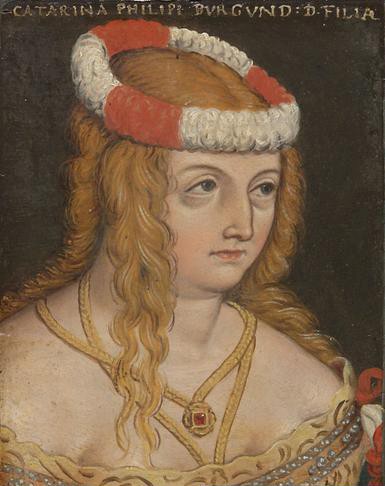
Two of Margaret’s daughters were exceedingly influential but for different reasons. One of my favorite discoveries in writing this book was Catherine of Burgundy, Duchess of Austria and Countess of Ferrette. Philip had is eye on the county of Ferrette (now a part of Alsace in northeastern France), which was under the influence of Leopold IV, Duke of Austria. Catherine’s marriage to Leopold would be a success in that the couple got along well; however, they had no children. When Philip the Bold failed to pay Catherine’s dowry she convinced Leopold to grant her the governance of the county of Ferrette which would give her an income.

She ruled the county competently, acting as a diplomat for her Burgundian ducal brother and nephew, John the Fearless and Philip the Good respectively, making economic and trade alliances and waging petty wars in the surrounding area. Catherine is one of the few women I’ve found who operated as a man would have in the medieval era which makes her pretty unique. Even more exceptionally, once Catherine became a widow, she married a handsome young nobleman without her brother’s permission, to the astonishment of just about everyone around her. She certainly must have been charming and persuasive.

Catherine’s sister Mary married Amadeus VIII, Duke of Savoy in the spring of 1401 but did not arrive in her new home until September 1403. Mary and Amadeus had many children, the most influential being their son Louis, who succeeded his father as duke of Savoy in 1440. He married Anne of Cyprus and together they had about nineteen children. Mary of Burgundy’s legacy lies among these grandchildren.

History...the Interesting Bits
Catherine of Burgundy

Louis and Anne of Cyprus’ eldest son, Amadeus IX, married Yolande of France, the daughter of King Charles VII and Marie of Anjou. Yolande’s story looms large as one of the formidable women in the book. At the age of two, she left France to live in Savoy to be educated and to learn the language and customs of her new home. Her husband died young from various congenital ailments and Yolande acted as regent for her son during his minority.

As the leader of her country, Yolande became entangled in the web of the Spider King, her brother Louis XI of France and his mortal enemy, Charles the Bold, Duke of Burgundy as well as her numerous brothers-in-law and the crafty Duke of Milan. With authority and finesse, Yolande navigated these treacherous times. The intrepid Yolande would be captured and held captive twice along with her children. In both cases, she made brave and daring escapes.

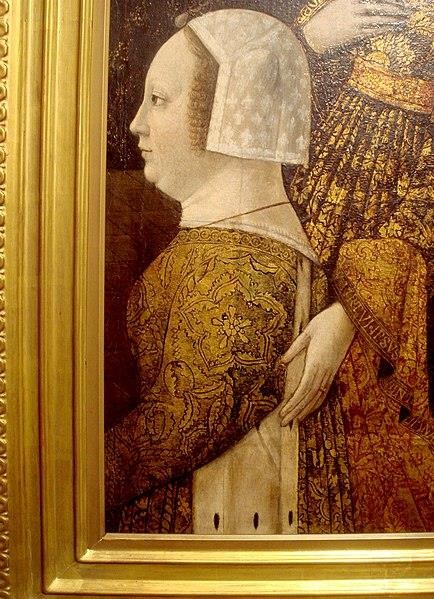
Louis and Anne of Cyprus had two other daughters who made their mark in history. At one time, the English monarch Edward IV considered Bona of Savoy as a wife. The negotiations stalled when Edward married the enchanting Elizabeth Woodville in 1464. By 1468, negotiations for her marriage to Galeazzo Maria Sforza, Duke of Milan were completed. Bona immediately gave birth to an heir and spare and modelled the perfect Italian Renaissance wife as her husband descended into paranoia and mental illness.

History...the Interesting Bits
Bona of Savoy

When Galeazzo Maria was assassinated in 1476, Bona acted as regent for her minor son. At first, she met with great success but eventually she ran into trouble with her brother-in-law, Ludovico Sforza, who wrested power from her, forcing her to struggle for the rest of her life with being separated from her children and inconsistent income.

Bona’s sister Charlotte of Savoy married the Spider King Louis XI of France when she was nine years old and Louis twenty-seven. Of course, the marriage was not consummated until Charlotte came of age and she had three remarkable children. Her son would succeed his father in 1483 as King Charles VIII. Her daughter Anne of France, Duchess of Bourbon acted as regent for her minor brother for eight years and steered France through several crises.

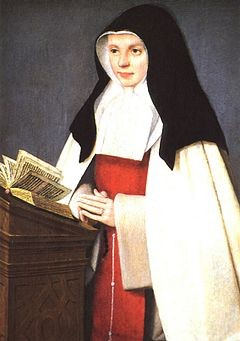
Anne’s greatest achievement would be the annexation to France of the significant duchy of Brittany, one of her lifelong dreams, when her brother married the Breton duchess, Anne. Charlotte’s youngest daughter, Jeanne, born with several severe disabilities, would eventually become Queen of France as the wife of King Louis XII. The marriage would be extremely unhappy, and Louis XII did all in his power to obtain a divorce. After numerous attempts and following the payment of an enormous bribe to Pope Alexander VI, he obtained his annulment, and Louis XII married the widowed queen, Anne of Brittany.

History...the Interesting Bits
Jeanne of France

King Louis made sure Jeanne had abundant properties to guarantee a steady and ample income. Jeanne had a lifelong dream of living a monastic life. She used her funds to successfully build a convent and found a monastic order in Bourges. Her Order of the Virgin Mary, dedicated to the Renunciation, was so successful, it is still in existence to this day in monasteries in France, Belgium, Poland, Costa Rica, Guatemala and Africa. Jeanne was canonized in May 1950.

These and other stories of courageous, intelligent, audacious and fearless women populate this book. Some of the relationships between the women are complex so included in the back of the book are several family trees that illustrate their associations. We are lucky enough to have numerous portraits of  most of the women in the collection and these are included in the plate section. My purpose in writing the book is to feature these women and shed light on the history of the Burgundian Empire.

Order your copy of The Formidable Women Who Shaped Medieval Europe: Power and Patronage at the Burgundian Court here.

About the Author:

Susan’s passion for history dates back fifty years and led her to study for a Bachelor of Arts degree in history at the University of North Carolina at Charlotte. She is currently a member of the Rocky Mountain Medieval and Renaissance Association, the Society for Renaissance Studies, The Historical Writers Association, and the Historical Association. Her work has appeared on several historical websites and in magazines and includes guest appearances on historical podcasts. Her blog, The Freelance History Writer, has continuously published over five hundred historical articles since 2012, with an emphasis on European, Tudor, Medieval, Renaissance, Early Modern and women’s history. She is currently working on her third non-fiction book.

*

My Books:

Signed, dedicated copies of all my books are available through my online bookshop.

Out now: Scotland’s Medieval Queens

Books by Sharon Bennett Connolly

Scotland’s history is dramatic, violent and bloody. Being England’s northern neighbour has never been easy. Scotland’s queens have had to deal with war, murder, imprisonment, political rivalries and open betrayal. They have loved and lost, raised kings and queens, ruled and died for Scotland. From St Margaret, who became one of the patron saints of Scotland, to Elizabeth de Burgh and the dramatic story of the Scottish Wars of Independence, to the love story and tragedy of Joan Beaufort, to Margaret of Denmark and the dawn of the Renaissance, Scotland’s Medieval Queens have seen it all. This is the story of Scotland through their eyes.

Scotland’s Medieval Queens gives a thorough grounding in the history of the women who ruled Scotland at the side of its kings, often in the shadows, but just as interesting in their lives beyond the spotlight. It’s not a subject that has been widely covered, and Sharon is a pioneer in bringing that information into accessible history.’ Elizabeth Chadwick (New York Times bestselling author)

Available now from Amazon and Pen and Sword Books

Also by Sharon Bennett Connolly:

Books by Sharon Bennett Connolly

Heroines of the Tudor World tells the stories of the most remarkable women from European history in the time of the Tudor dynasty, 1485-1603. These are the women who ruled, the women who founded dynasties, the women who fought for religious freedom, their families and love. Heroines of the Tudor World is now available for pre-order from Amberley Publishing and Amazon UK. Women of the Anarchy demonstrates how Empress Matilda and Matilda of Boulogne, unable to wield a sword themselves, were prime movers in this time of conflict and lawlessness. It shows how their strengths, weaknesses, and personal ambitions swung the fortunes of war one way – and then the other. Available from Bookshop.orgAmberley Publishing and Amazon UKKing John’s Right-Hand Lady: The Story of Nicholaa de la Haye is the story of a truly remarkable lady, the hereditary constable of Lincoln Castle and the first woman in England to be appointed sheriff in her own right. Available from all good bookshops Pen & Sword Booksbookshop.org and Amazon

Royal Historical Society

Defenders of the Norman Crown: The Rise and Fall of the Warenne Earls of Surrey tells the fascinating story of the Warenne dynasty, from its origins in Normandy, through the Conquest, Magna Carta, the wars and marriages that led to its ultimate demise in the reign of Edward III. Available from Pen & Sword BooksAmazon in the UK and US, and Bookshop.orgLadies of Magna Carta: Women of Influence in Thirteenth Century England looks into the relationships of the various noble families of the 13th century, and how they were affected by the Barons’ Wars, Magna Carta and its aftermath; the bonds that were formed and those that were broken. It is now available in paperback and hardback from Pen & SwordAmazon, and Bookshop.orgHeroines of the Medieval World tells the stories of some of the most remarkable women from Medieval history, from Eleanor of Aquitaine to Julian of Norwich. Available now from Amberley Publishing and Amazon, and Bookshop.orgSilk and the Sword: The Women of the Norman Conquest traces the fortunes of the women who had a significant role to play in the momentous events of 1066. Available now from Amazon,  Amberley Publishing, and Bookshop.org.

Alternate Endings: An anthology of historical fiction short stories including Long Live the King… which is my take what might have happened had King John not died in October 1216. Available in paperback and kindle from Amazon.

Podcast:

A Slice of Medieval

Have a listen to the A Slice of Medieval podcast, which I co-host with Historical fiction novelist Derek Birks. Derek and I welcome guests, such as Bernard Cornwell and Elizabeth Chadwick, and discuss a wide range of topics in medieval history, from significant events to the personalities involved.

There are now over 70 episodes to listen to!

Every episode is also now available on YouTube.

*

Don’t forget! Signed and dedicated copies of all my books are available through my online bookshop.

For forthcoming online and in-person talks, please check out my Events Page.

You can be the first to read new articles by clicking the ‘Follow’ button, liking our Facebook page or joining me on TwitterThreadsBluesky and Instagram.

*

©2025 Sharon Bennett Connolly FRHistS and Susan Abernethy

Guest Post: Finding Isabelle, a Mother and a Queen by Terri Lewis

When writing non-fiction biographies, you can tell the life of a person. You can say what happened to them, how they affected events and how they were perceived by others. But there are gaps. If you do not have the evidence, you cannot just make it up. If you are looking for reasons, you can offer different scenarios. It is hard to get to the heart of a person, though. You cannot put words in their mouths, or attribute feelings and emotions. Fiction can go where non fiction cannot tread. It can give you a vivid retelling of a fabulous story. It is not always historically accurate, there are some things we cannot know, but fiction can fill in the gaps. It can bring the past to life and give you a sense of the era that no other medium can.

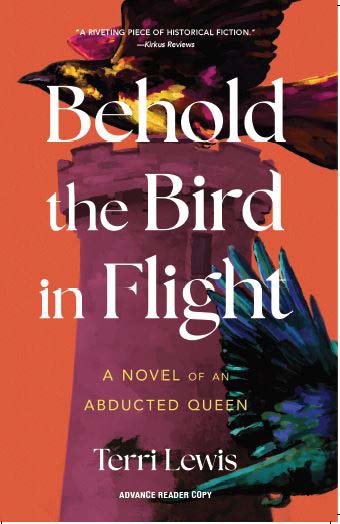
And that is what Terri Lewis has achieved with remarkable skill in her novel if Isabelle d’Angoulême, Behold the Bird in Flight. And it is a pleasure to welcome Terri to History…the Interesting Bits to talk a little about her research behind her novel.

Finding Isabelle, a Mother and a Queen

by Terri Lewis

History...the Interesting Bits
A birthing stool

I was in high school when I first asked my history teacher, “Where are the women?” An unsatisfactory answer gave impetus to what became a need to find forgotten women. Eventually I became obsessed with Isabelle d’Angoulême, King John’s second wife, and decided to resurrect her by writing a novel.

There are a few documented facts about her life: Historians think she was about twelve years old when John abducted her from her French fiancé, took her to England, and crowned her queen. The chronicles, when they bothered to mention her, were not kind; Matthew Paris called her a “Jezebel” and “slut” who kept John in bed until noon, an assessment most likely reflecting John’s reputation, not the reality of his wife. Isabelle apparently didn’t receive the normal queen’s gold—a percentage of John’s income—or the rents from lands given to her at the time of their marriage; John kept the monies for himself. In “history,” I found only men – fighting, amassing money and enemies, riding off to conquer unknown lands, signing writs, allowing fairs, courting and dancing and always fighting. Isabelle’s life, like the lives of most medieval women, was mainly blank.

But. . . she bore John five children.

My research on medieval childbirth uncovered dire statistics: 20% to 33% of medieval women died from childbearing. The mortality rate per single birth was only slightly higher than in modern times, but multiple pregnancies compounded the risk. Birth control was forbidden by the all-powerful Church so basically a fertile woman had children until menopause or until she died. Because kings had to have sons, as did counts and dukes and other lords—a child to inherit land and carry on the family name. Daughters were less important. An only-child daughter could inherit a kingdom , but not for herself, for her husband. Girls who had brothers would serve as bargaining chips in marriages that formed diplomatic alliances or enlarged territory for their fathers.

In another statistic, infants were uncertain to live to inheritance. Nicholas Orme wrote, “It has been suggested that 25% of [medieval children] may have died in their first year, half as many (12.5%) between one and four, and a quarter as many (6%) between five and nine.” Danger was everywhere. A cut could become infected and penicillin was years in the future. Children fell into wells and down stone stairs, or into the fire that burned in the middle of the great hall, the main source of heat. Many died of illnesses for which bleeding or herbal concoctions were the only cure. Multiple pregnancies mitigated this danger. I note that Isabelle, in addition to the five children with John, had nine more children with her second husband. But two of her own daughters died in childbirth.

History...the Interesting Bits
Isabelle in her innocence

Isabelle wouldn’t have gone to a hospital. She’d have had a lying-in chamber removed from the main keep and furnished with a birthing stool, a midwife with practical experience but not a doctor because childbirth was a woman’s domain and doctors were men, and a room full of ladies-in-waiting who watched and prayed with her. If the birth was difficult, window shutters would be opened to release the new soul into life. If that failed, an arrow could be shot heavenward to waken God to the peril and ask for his help.

Since history decreed that Isabelle would live through childbirth, I decided to have her observe the suffering of her best friend. That scene became an important milestone in Isabelle’s growing up.

What kind of mother would Isabelle have been? I’d never read about a medieval mother. Women in 1200 who appeared in the chronicles were queens, royalty, or religious. Motherhood was important only for the child, preferable a boy, a gift to the father. The woman was just a bearing body.

I decided that Isabelle learned from her own mother, Alice de Courtney, the granddaughter of Louis le Gros of France. Alice would have been familiar with expectations for noble daughters. And she was married three times. I tried to imagine the experience of being handed to various husbands like a package—the decisions being made by fathers and kings. Perhaps she had grounded herself in her new household with a new husband by following the rules. The first “courtesy book” setting forth standards of behavior— Liber Urbani or the book of civilized man— appeared in England late in the 12th century. Written in Latin, the long poem contained general advice such as honor your parents, hold your tongue, don’t mount your horse in the great hall, and such gems as “when you pick up food with a spoon, do not shovel it on board with your thumb.”

History...the Interesting Bits
Midwife swaddling the child

I needed to imagine a relationship between Isabelle and her mother. When I was twelve, my mother was the center of everything; I’d come home from school and stand in the kitchen to tell stories about my friends or things the teacher said. But Isi’s mother wouldn’t be in the kitchen. She was a countess; she’d have cooks and laundresses and maids. I couldn’t imagine that she was anything to Isabelle but a rule-maker. And Isabelle’s position required rules. When she was of age, she would be married – handed off in essence – to another count. The marriage would presumably involve a castle and her husband would go off to war or crusade or to visit a king, and Isabelle would be required to manage the vast operation of the castle while he was gone. Even when he was home, she would oversee household tasks, her belt laden with keys to various chests of fabric or spices, to rooms holding barrels of wine and other supplies. So I made her mother strict, set Isabelle chafing against her, then allowed her to escape, grow up a bit, marry John, and have her children.

Two boys first. Then three girls. Today one can find numerous mothers writing how overpowering love when their baby was laid on their breast changed their lives. But as queen of an itinerant court, Isabelle lived on the road with John who visited barons, trying to bring them to heel. So breastfeeding was impractical. It also acted as a form of contraception and Isabelle’s job was to conceive as often as possible and give John heirs. This meant that her babies would be handed over at birth to a wet-nurse, a hired woman who’d breast feed them as if her own. So the first attachment of mother to child was cut off and understandably, wet nurses often developed close relationships with their charges, particularly as children were generally breastfed for longer than they are today – boys often up to the age of two.

History...the Interesting Bits
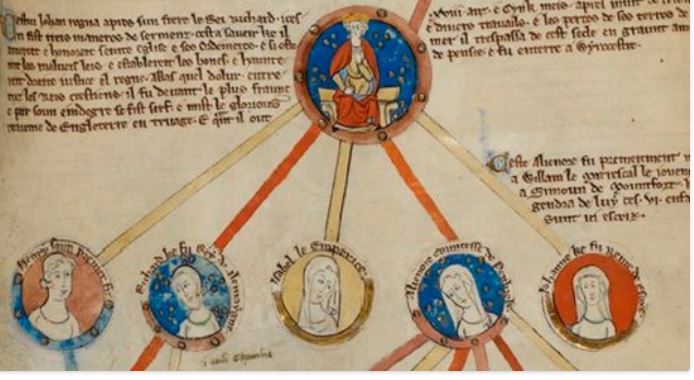
13th century depiction of John’s children (Isabelle not included)

At age seven, the boys would have sent to other noble castles for education. Perhaps the idea was that those other educators would have less attachment to the children and thus they would supply a strict upbringing without coddling. Isabelle’s girls would have remained with her as the kingdom fell deeper into chaos. The Barons were revolting, the Pope had excommunicated John, the French were threatening to invade and conquer. With a growing sense that the throne would be gone before her ten-year-old son Henry could assume it, Isabelle would have known the French would kill him along with the rest of her children, leaving no pretenders. How best to save them? I’ll leave that inside the novel and just say she managed as best she could. History has condemned her ultimate decision, but I understand how she came to it.

About the book:

History...the Interesting Bits

Romantic and stubborn, eleven-year-old Isi plans to marry for love and be mistress of her own castle. But life in 1198 is full of threat and a series of tragic events teaches her growing up is hard. When Isi falls for Hugh, a French nobleman, he consents to marry her, but only for her dowry. She longs for more. Hoping a jealous man will fall in love, she flirts with a king. The flirtation backfires: King John abducts and marries her. Now trapped in cold, warring England with a malicious husband, Isi must hide her yearning for Hugh and find her own power. If she fails, she won’t live to return to her beloved. Inspired by real historical figures—Isabelle d’Angoulême, Hugh de Lusignan, and King John of Magna Carta fame—Behold the Bird in Flight is set in a period that valued women only for their dowries and childbearing. Isabelle’s story has been mainly erased by men, but the medieval chronicles suggest a woman who developed her own power and wielded it. And as the woman behind the throne, who’s to say she didn’t influence history?

About the Author:

History...the Interesting Bits

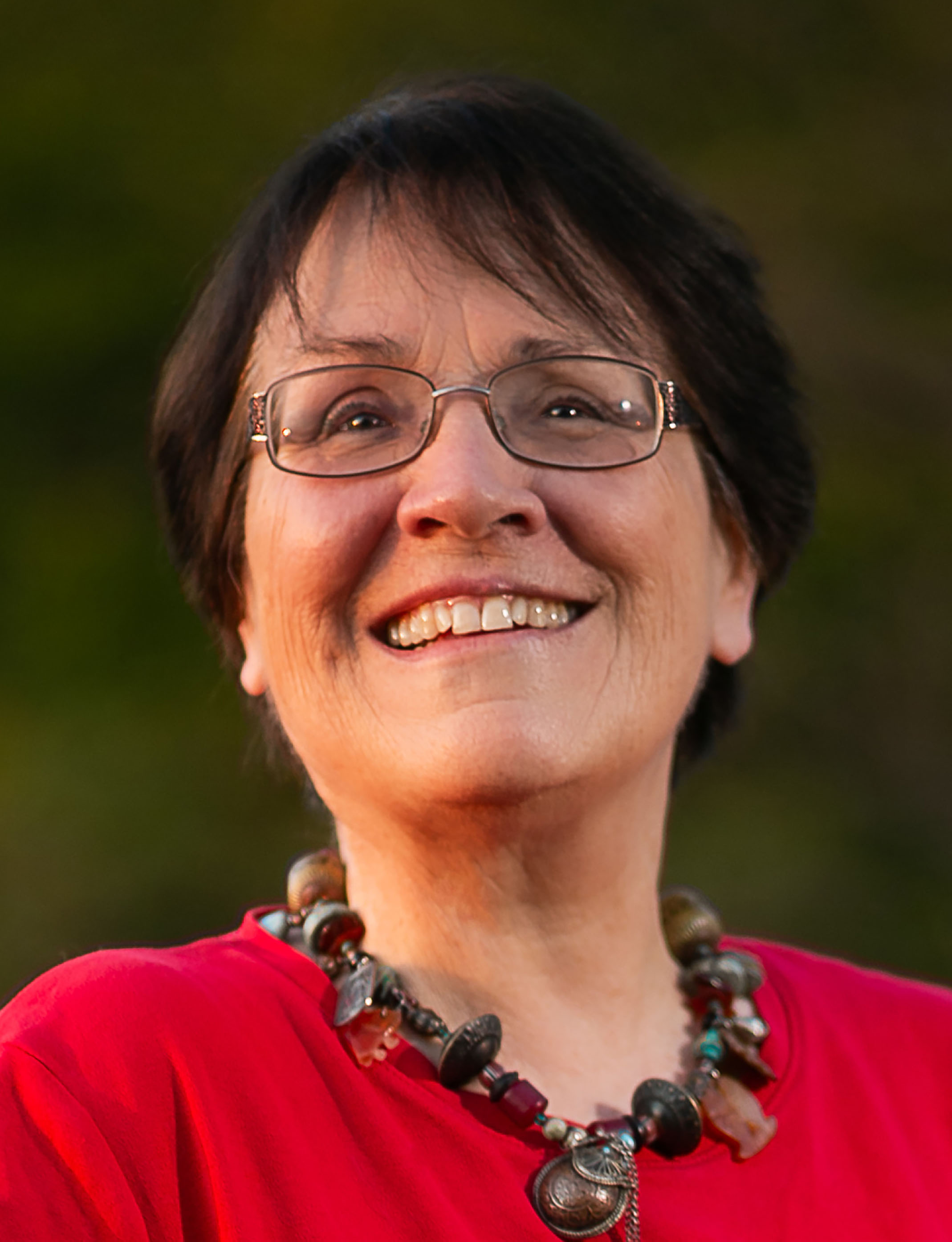
Terri Lewis fell in love with medieval history in college. Not the dates or wars, but the mysterious daily lives of the people. Finally two sentences in a book bought at Windsor Castle led her to write her debut novel, Behold the Bird in Flight, A Novel of an Abducted Queen.

Published in Denver Quarterly, Blue Mesa Review, and Chicago Quarterly Review among others, and accepted to the Sewanee Writers’ Conference, she has worked with Laura van den Berg, Jill McCorkle, and Rebecca Makkai. Shortlisted for LitMag’s Virginia Woolf Award for Short Fiction, she won the 2025 Miami University Press Novella Prize. She reviews for The Washington Independent Review of Books.

Before she was an author, she had career as a ballet dancer in Denver and Germany, ran a dance company in Arkansas, earned a B.A. in history and education, and an M.A. in theater, not necessarily in that order. She lives with her husband and two lively dogs in Denver, Colorado.

Where to find Terri:

Website: Substack: Instagram: terri.lewis1: Facebook: terri lewis author

Buy the book at Amazon.com (in $), Amazon.co.uk (in £), and Amazon.Fr (in €)

*

My Books:

Signed, dedicated copies of all my books are available through my online bookshop.

Out now: Scotland’s Medieval Queens

Books by Sharon Bennett Connolly

Scotland’s history is dramatic, violent and bloody. Being England’s northern neighbour has never been easy. Scotland’s queens have had to deal with war, murder, imprisonment, political rivalries and open betrayal. They have loved and lost, raised kings and queens, ruled and died for Scotland. From St Margaret, who became one of the patron saints of Scotland, to Elizabeth de Burgh and the dramatic story of the Scottish Wars of Independence, to the love story and tragedy of Joan Beaufort, to Margaret of Denmark and the dawn of the Renaissance, Scotland’s Medieval Queens have seen it all. This is the story of Scotland through their eyes.

Scotland’s Medieval Queens gives a thorough grounding in the history of the women who ruled Scotland at the side of its kings, often in the shadows, but just as interesting in their lives beyond the spotlight. It’s not a subject that has been widely covered, and Sharon is a pioneer in bringing that information into accessible history.’ Elizabeth Chadwick (New York Times bestselling author)

Available now from Amazon and Pen and Sword Books

Also by Sharon Bennett Connolly:

Books by Sharon Bennett Connolly

Heroines of the Tudor World tells the stories of the most remarkable women from European history in the time of the Tudor dynasty, 1485-1603. These are the women who ruled, the women who founded dynasties, the women who fought for religious freedom, their families and love. Heroines of the Tudor World is now available for pre-order from Amberley Publishing and Amazon UK. Women of the Anarchy demonstrates how Empress Matilda and Matilda of Boulogne, unable to wield a sword themselves, were prime movers in this time of conflict and lawlessness. It shows how their strengths, weaknesses, and personal ambitions swung the fortunes of war one way – and then the other. Available from Bookshop.orgAmberley Publishing and Amazon UKKing John’s Right-Hand Lady: The Story of Nicholaa de la Haye is the story of a truly remarkable lady, the hereditary constable of Lincoln Castle and the first woman in England to be appointed sheriff in her own right. Available from all good bookshops Pen & Sword Booksbookshop.org and Amazon

Royal Historical Society

Defenders of the Norman Crown: The Rise and Fall of the Warenne Earls of Surrey tells the fascinating story of the Warenne dynasty, from its origins in Normandy, through the Conquest, Magna Carta, the wars and marriages that led to its ultimate demise in the reign of Edward III. Available from Pen & Sword BooksAmazon in the UK and US, and Bookshop.orgLadies of Magna Carta: Women of Influence in Thirteenth Century England looks into the relationships of the various noble families of the 13th century, and how they were affected by the Barons’ Wars, Magna Carta and its aftermath; the bonds that were formed and those that were broken. It is now available in paperback and hardback from Pen & SwordAmazon, and Bookshop.orgHeroines of the Medieval World tells the stories of some of the most remarkable women from Medieval history, from Eleanor of Aquitaine to Julian of Norwich. Available now from Amberley Publishing and Amazon, and Bookshop.orgSilk and the Sword: The Women of the Norman Conquest traces the fortunes of the women who had a significant role to play in the momentous events of 1066. Available now from Amazon,  Amberley Publishing, and Bookshop.org.

Alternate Endings: An anthology of historical fiction short stories including Long Live the King… which is my take what might have happened had King John not died in October 1216. Available in paperback and kindle from Amazon.

Podcast:

A Slice of Medieval

Have a listen to the A Slice of Medieval podcast, which I co-host with Historical fiction novelist Derek Birks. Derek and I welcome guests, such as Bernard Cornwell and Elizabeth Chadwick, and discuss a wide range of topics in medieval history, from significant events to the personalities involved.

Every episode is also now available on YouTube.

*

Don’t forget! Signed and dedicated copies of all my books are available through my online bookshop.

For forthcoming online and in-person talks, please check out my Events Page.

You can be the first to read new articles by clicking the ‘Follow’ button, liking our Facebook page or joining me on TwitterThreadsBluesky and Instagram.

*

©2025 Sharon Bennett Connolly FRHistS and Terri Lewis

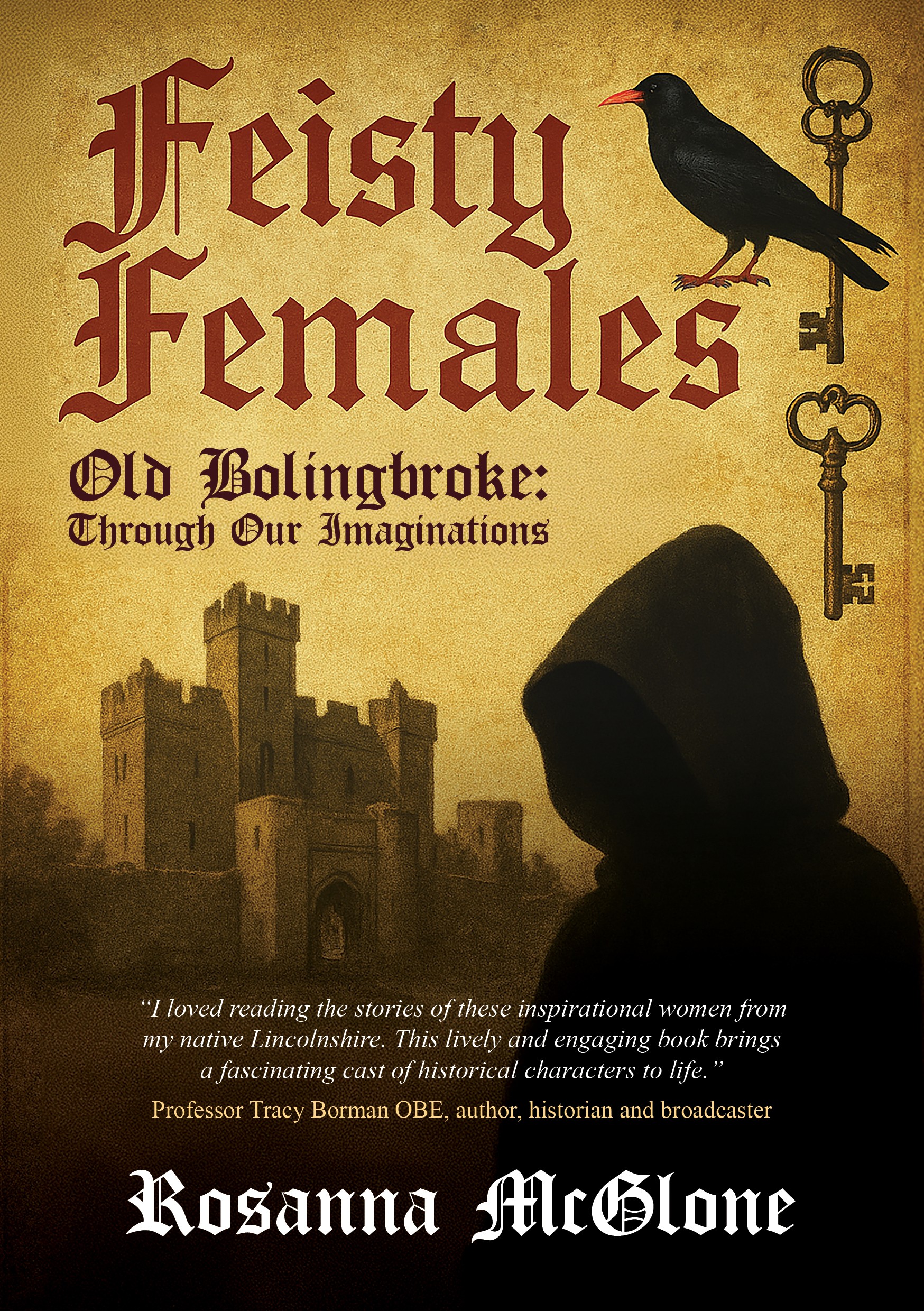
Guest Post: Feisty Females: Writing Lincolnshire’s Medieval Women by Rosanna McGlone

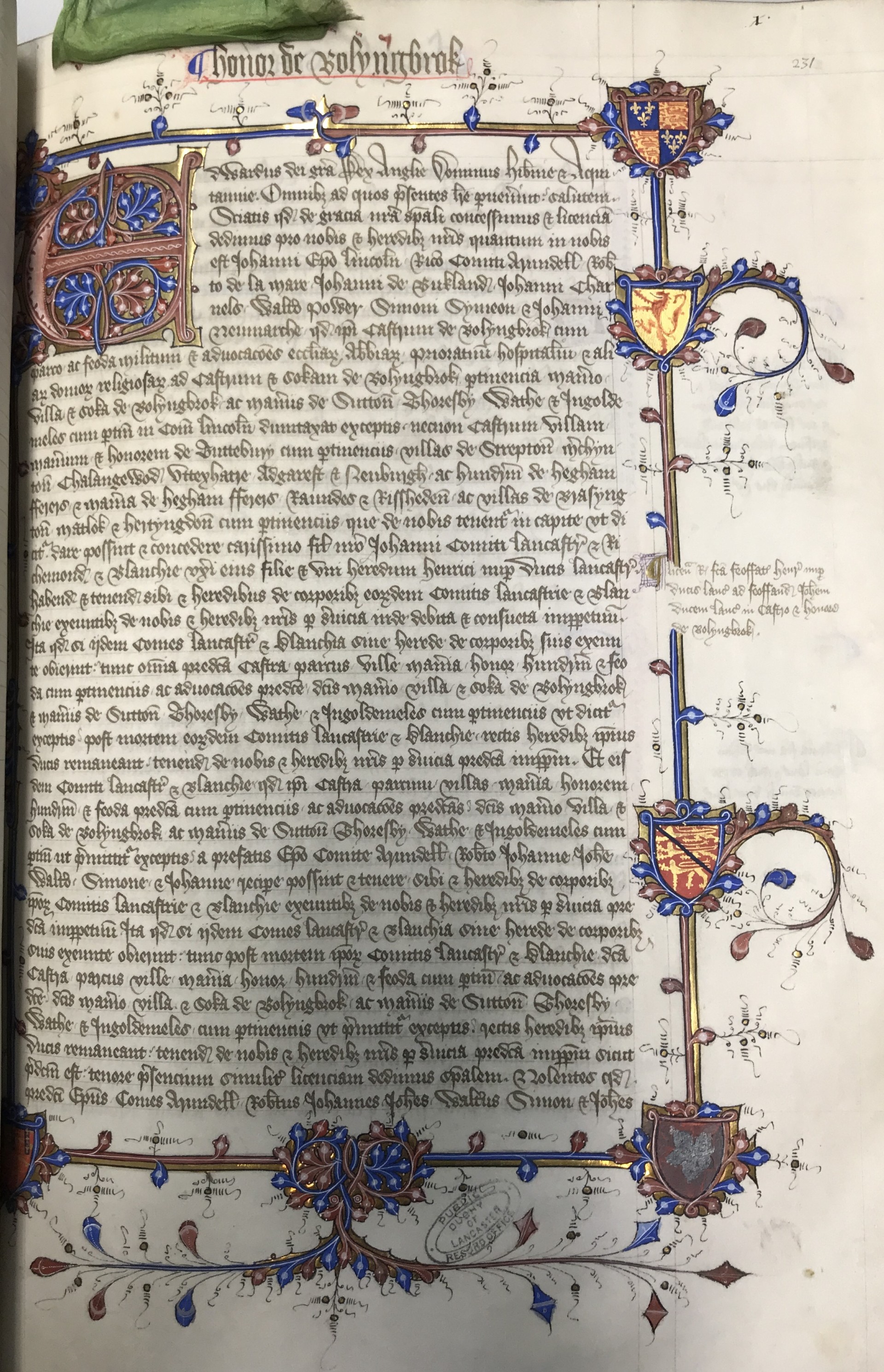
The great Cowcher Book
The Great Cowcher Book

It is a pleasure to welcome my good friend Rosanna McGlone to History … the Interesting Bits to chat about her new book, Feisty Females, a series of short stories inspired by The Great Cowcher Book. Although Feisty Females is Rosanna’s ‘baby’, I feel like its Godmother as we have chatted frequently, over coffee, about the women she included, included Nicholaa de la Haye, Alice de Lacey, Blanche of Lancaster and Gwenllian of Wales – women my readers, I know, are well acquainted with!

Rosanna would meet me, armed with questions about the history of these women and the world they lived in. Then she went away and came back having put her own mark on their stories. And what a fascinating collection of stories it is!

It is a joy to see this project come to fruition. So, over to Rosanna to tell you a little about the process of researching and writing Feisty Females: Old Bolingbroke through our Imaginations.

Feisty Females: Writing Lincolnshire’s Medieval Women by Rosanna McGlone

Henry IV effigy
Henry IV, Canterbury Cathedral

You’ve heard of the Domesday Book, right? But do you know the second most important medieval record book? If you don’t, let me reassure you. Until I received this commission, neither did I. According to staff at the National Archives it’s The Great Cowcher Book, a medieval land registry commissioned by Henry IV to provide a record of lands within the Duchy of Lancaster. Receiver General John Leventhorpe was assigned to visit the 18,000 hectares of rural estates in England and Wales including Cheshire and Lancashire in the West and The Honor of Bolingbroke in Lincolnshire in the East which make up the Duchy of Lancaster. In doing so, he gathered a total of 161 folios and 2,433 charters written in either Latin or medieval French.

What exactly do the two volumes of The Great Cowcher Book contain? As well as including transactions such as the bestowing of Old Bolingbroke Castle to John of Gaunt and his wife Blanche of Lancaster, the book also covers more minor land transactions between people of much lower status.

Additionally, the Great Cowcher Book provides a record of disputes which had been brought before the court seeking resolution.

I was commissioned, and funded, by a number of organisations including the Arts Council, Lincoln County Council, the community of Old Bolingbroke and others to write a creative response to this unique material. Thus, it is from this medieval register that my book of short stories, Feisty Females: Old Bolingbroke through our Imaginations was crafted.

Feisty Females

The beautiful medieval manuscripts have recently been translated into English and I received the information on a rather less romanticised, Excel spreadsheet! The columns display the following headings, however not all of them have been populated for each of the more than 5,000 entries: regnal year, name of vendor, name of buyer, land to be purchased; witnesses to the contract; any special conditions, the original language of the manuscript.

As I poured over in excess of 1,200 entries pertaining to The Honor of Bolingbroke, my key focus, I was struck by the names: Walter son of Andrew; Adam, Hugh, Odo Galle of Saltfletby; Gilbert, Ranulf, Clement Prior of Spaldying, William de Rusmar, Henry de Lascy, Simon le Bret, God and his church.

Where were all of the women? As I note in the introduction to my book, His-tory is so often that, a record of the past through the male lens. For me, it was important to offer a different perspective. Out of the more than 5,000 entries within the Great Cowcher Book there are few female landowners. Yet, I was mindful that any females who did appear would have something remarkable about them to succeed in the male dominated medieval world.

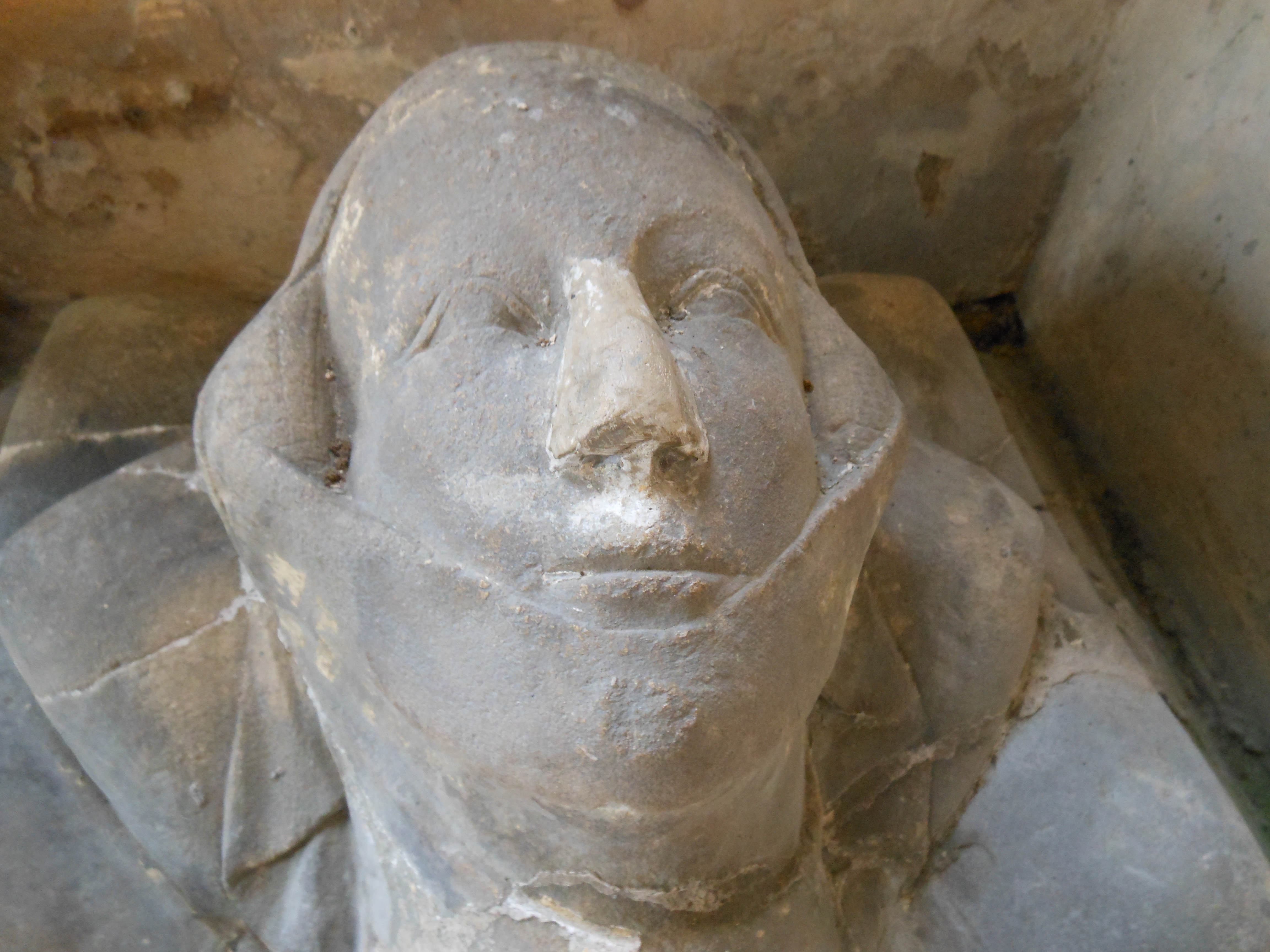
Nicholaa de la Haye effigy
Tomb effigy of Nicholaa de la Haye

Women such as Nicholaa de la Haye, the first female Sheriff of Lincoln and Castellan of Lincoln Castle who withstood not one, but three separate sieges on the castle and earned the respect of King John himself.

Another feisty female for whom I have particular affection is Alice de Lacy, a woman whose story is too incredible to be true, at least that’s what I thought when I read it. Kidnappings, rape, imprisonment by the king, threats of being burnt to death, really how could I possibly capture all of Alice’s turbulent life in a mere 3,000 words? The answer is, I couldn’t. Therefore, I focused upon the catalyst for her troubles, her inheritance. Two bizarre childhood accidents occurred to her brothers which, in my opinion, determined the course of Alice’s life. Firstly, her young brother Edmund fell down a well at Denbigh Castle and died. Then, barely six months later, her other brother, John fell off the battlements at Pontefract Castle. He too perished leaving Alice- still a child herself- as sole heir to her parents, Henry de Lacy, Earl of Lincoln, and Margaret Longespee, Countess of Salisbury.

Whilst all of the other stories are set in medieval times, for Alice’s story I use the framework of a police interview in which she is pushed to reveal the truth of those inciting incidents.

The women with the most charters in the Great Cowcher Book is Hawise de Quincy, first Countess of Lincoln, who has a remarkable 40 entries. Whilst the vast majority of these relate to land acquisitions, the one upon which my tale focuses concerns a dispute was between Hawise and Philip de Kyma. To quote the Great Cowcher, this disagreement was

‘…concerning a certain obstruction of a certain watercourse made by the said Philip in Torp to the nuisance of the port of the said Hawise in Weynfled. Because it was then clear the land of both sides of that watercourse towards the port of Weynfled is of the said Philip…’

And so on… In essence, Philip de Kyma was preventing Hawise de Quincy from accessing her port and, therefore, the valuable port fees. So, what was she to do? This is what my story explores. Does pragmatism work, or must Hawise resort to womanly wiles?

Gwenllian of Wales
Memorial to Gwenllian, Sempringham Priory

An incredibly wronged female in Feisty Females is Gwenllian, the last Princess of Wales who was incarcerated in a Lincolnshire Priory from which there was little chance of escape, unless she had inside help…

In all cases, bar one, the women come from the Great Cowcher book, however in Matilda’s case my desire to write on the specific topic of that story arose first, based on a certain building referenced in The Great Cowcher. Matilda’s Story begins thus:

It was the day after Candlemas that we held my brother’s funeral. There was just one problem: he wasn’t dead.

It has been a pleasure to learn more about these characters and to bring them to life for readers, giving them voices after 800 years, or more, of silence. The book is a celebration of the female power which was understood by Chaucer who, himself, makes an appearance in Blanche’s Story. In the epigraph to my book Chaucer describes women thus:

‘And what is better than wisedoom? Womman.

And what is better than a good woman? Nothyng.’1

*

Notes: 1. Geoffrey Chaucer, ‘The Tale of Melibee’ The Canterbury Tales.

Images: The Great Cowcher Book (DL 42/2, fol. 231r, the property of His Majesty The King in Right of His Duchy of Lancaster and is reproduced by permission of the Chancellor and Council of the Duchy of Lancaster.); Photos of Henry IV, Nicholaa de la Haye and Gwenllian of Wales are ©Sharon Bennett Connolly FRHistS.

To Buy the Book:

Just click on the link to buy: Feisty Females

About the Author:

Rosanna McGlone

Rosanna McGlone is a writer and journalist. Her book, The Process of Poetry -which explores the development of early drafts of poems by some of the country’s leading poets- was number 1 on Amazon and featured on Radio 4’s Front Row. The sequel, The Making of a Poem, focuses on the work of Australian foremost poets. She has written more than 100 features for the national press, including: The GuardianThe IndependentThe Sydney Morning Herald and The Australian. Rosanna has written memoirs, community plays and collected oral histories. Feisty Females, a creative response to The Great Cowcher Book, a medieval book, is out on June 8th 2025.

To find out more follow Rosanna at @rosannamcglone.bsky.social

*

My Books:

Signed, dedicated copies of all my books are available through my online bookshop.

Out Now! Scotland’s Medieval Queens

Books by Sharon Bennett Connolly

Scotland’s history is dramatic, violent and bloody. Being England’s northern neighbour has never been easy. Scotland’s queens have had to deal with war, murder, imprisonment, political rivalries and open betrayal. They have loved and lost, raised kings and queens, ruled and died for Scotland. From St Margaret, who became one of the patron saints of Scotland, to Elizabeth de Burgh and the dramatic story of the Scottish Wars of Independence, to the love story and tragedy of Joan Beaufort, to Margaret of Denmark and the dawn of the Renaissance, Scotland’s Medieval Queens have seen it all. This is the story of Scotland through their eyes.

Scotland’s Medieval Queens gives a thorough grounding in the history of the women who ruled Scotland at the side of its kings, often in the shadows, but just as interesting in their lives beyond the spotlight. It’s not a subject that has been widely covered, and Sharon is a pioneer in bringing that information into accessible history.’ Elizabeth Chadwick (New York Times bestselling author)

Available now from Amazon and Pen and Sword Books

Also by Sharon Bennett Connolly:

Books by Sharon Bennett Connolly

Heroines of the Tudor World tells the stories of the most remarkable women from European history in the time of the Tudor dynasty, 1485-1603. These are the women who ruled, the women who founded dynasties, the women who fought for religious freedom, their families and love. Heroines of the Tudor World is now available for pre-order from Amberley Publishing and Amazon UK. Women of the Anarchy demonstrates how Empress Matilda and Matilda of Boulogne, unable to wield a sword themselves, were prime movers in this time of conflict and lawlessness. It shows how their strengths, weaknesses, and personal ambitions swung the fortunes of war one way – and then the other. Available from Bookshop.orgAmberley Publishing and Amazon UKKing John’s Right-Hand Lady: The Story of Nicholaa de la Haye is the story of a truly remarkable lady, the hereditary constable of Lincoln Castle and the first woman in England to be appointed sheriff in her own right. Available from all good bookshops Pen & Sword Booksbookshop.org and Amazon

Royal Historical Society

Defenders of the Norman Crown: The Rise and Fall of the Warenne Earls of Surrey tells the fascinating story of the Warenne dynasty, from its origins in Normandy, through the Conquest, Magna Carta, the wars and marriages that led to its ultimate demise in the reign of Edward III. Available from Pen & Sword BooksAmazon in the UK and US, and Bookshop.orgLadies of Magna Carta: Women of Influence in Thirteenth Century England looks into the relationships of the various noble families of the 13th century, and how they were affected by the Barons’ Wars, Magna Carta and its aftermath; the bonds that were formed and those that were broken. It is now available in paperback and hardback from Pen & SwordAmazon, and Bookshop.orgHeroines of the Medieval World tells the stories of some of the most remarkable women from Medieval history, from Eleanor of Aquitaine to Julian of Norwich. Available now from Amberley Publishing and Amazon, and Bookshop.orgSilk and the Sword: The Women of the Norman Conquest traces the fortunes of the women who had a significant role to play in the momentous events of 1066. Available now from Amazon,  Amberley Publishing, and Bookshop.org.

Alternate Endings: An anthology of historical fiction short stories including Long Live the King… which is my take what might have happened had King John not died in October 1216. Available in paperback and kindle from Amazon.

Podcast:

A Slice of Medieval

Have a listen to the A Slice of Medieval podcast, which I co-host with Historical fiction novelist Derek Birks. Derek and I welcome guests, such as Bernard Cornwell and Michael Jecks, and discuss a wide range of topics in medieval history, from significant events to the personalities involved. 

Every episode is also now available on YouTube.

*

Don’t forget! Signed and dedicated copies of all my books are available through my online store.

For forthcoming online and in-person talks, please check out my Events Page.

You can be the first to read new articles by clicking the ‘Follow’ button, liking our Facebook page or joining me on TwitterThreadsBluesky and Instagram.

*

©2025 Sharon Bennett Connolly, FRHistS and Rosanna McGlone

Guest Post: Margaret More Roper by Aimee Fleming

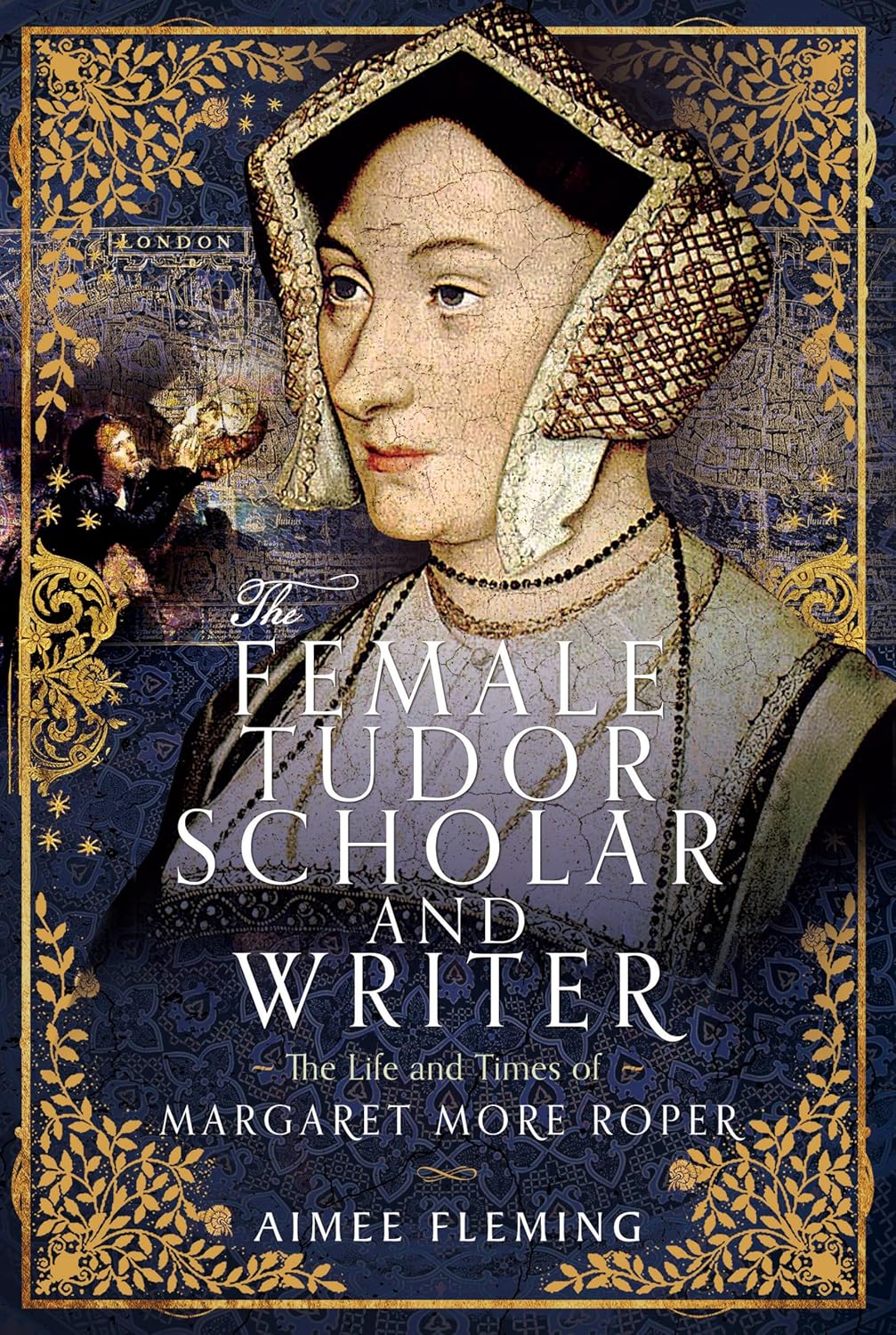
Today, it is a pleasure to welcome Aimee Fleming to History…the Interesting Bits. Aimee’s first book, The Female Tudor Scholar and Writer: The Life and Times of Margaret More Roper came out earlier this year. Now, Margaret Roper, the daughter of Sir Thomas More, did appear in my own Heroines of the Tudor World, as a true Literary Heroine, but Aimee covers her in much greater detail. She is a fascinating character and it is about time that this remarkable woman gets her own biography.

So, I will leave it to Aimee to give you an introduction….

Margaret More Roper

Margaret More Roper is mostly known simply for being the eldest daughter of the stateman Sir Thomas More, and his influence on her is undeniable. However, she, alongside the rest of her extensive family, was important as an individual and for an array of different reasons.  

    Her Education

    Margaret Roper

    Thomas More, unusually for the time, insisted that his whole family received an education in a wide range of subjects. The range was far wider that traditionally given, and saw all of the children, including the girls, learn about classics, languages, and other subjects, in what came to be known as ‘The More School’. From the age of six or seven, when it was normal for the children to start their education, Margaret and her siblings were taught by tutors and others who came into the house and it was all overseen and coordinated by Thomas himself.

    Margaret was the eldest, and from an early age she showed an aptitude for learning; for languages and for writing generally. However, all the girls all learned mathematics and there are references to Margaret Giggs, the ward of the More family who grew up alongside Margaret and her sisters, having a ‘algorism stone’ for use in mathematical calculations. Astronomy was a particularly popular subject for the girls and in a letter home, Thomas writes about how they,

    ‘…are so far advances in that science that you can point out the pole-star or the dog star or any of the constellations.’

    The example set by the More school would go on to influence several other families who would loom large in Tudor history. The Grey sisters (one of whom was Queen Jane) and the Cooke sisters, and also Katherine Parr, Henry VIII’s sixth Queen, would all receive a broader education that women had traditionally done beforehand. Even Henry VIII himself was convinced by his friend’s activities and gave Princesses Mary and Elizabeth and education in the same fashion. All of this was influenced by what was seen of the More sisters, particularly Margaret.

    Her Writing

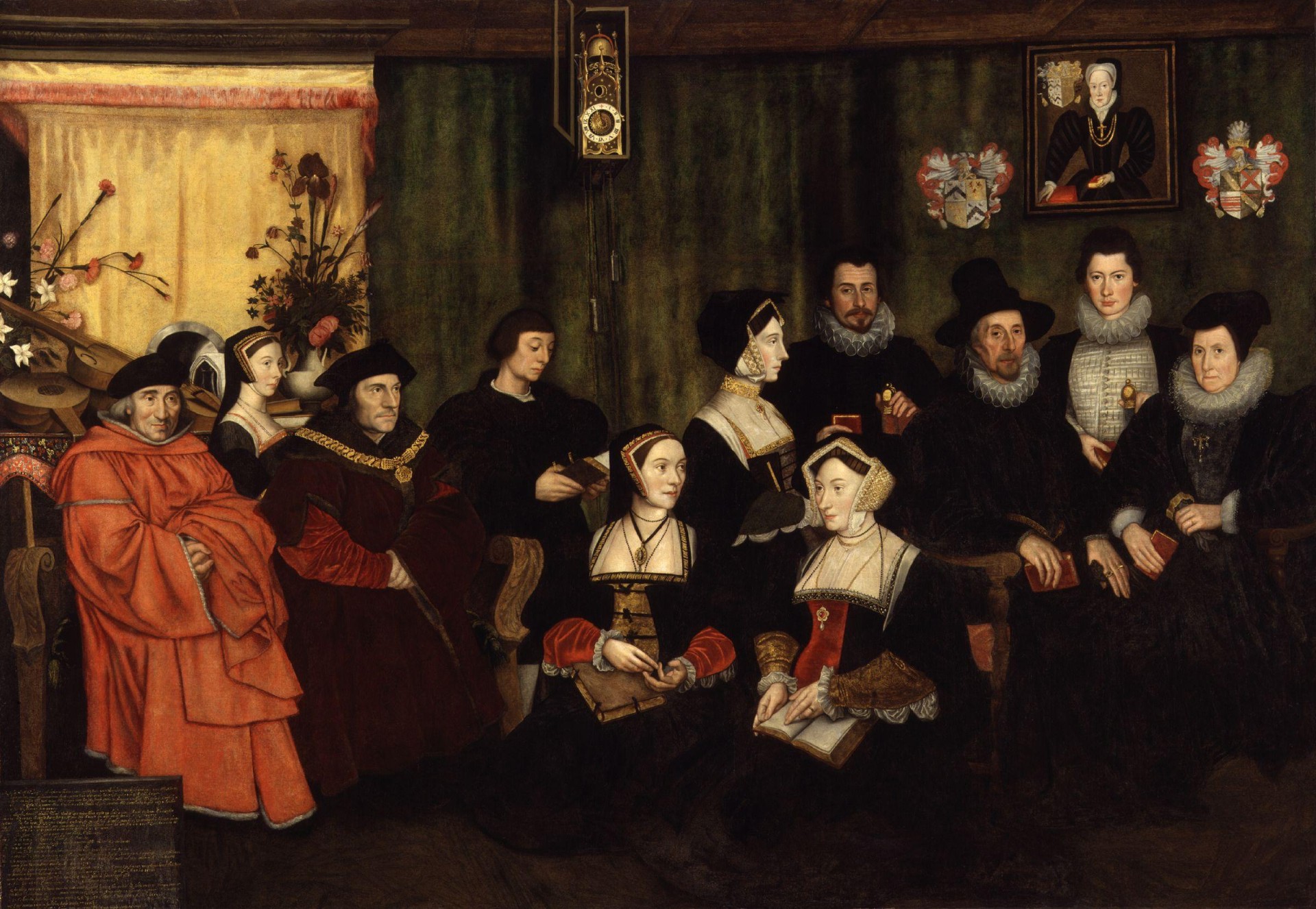
    Sir Thomas More his father his household and his descendants by Rowland Lockey after Hans Holbein the Younger

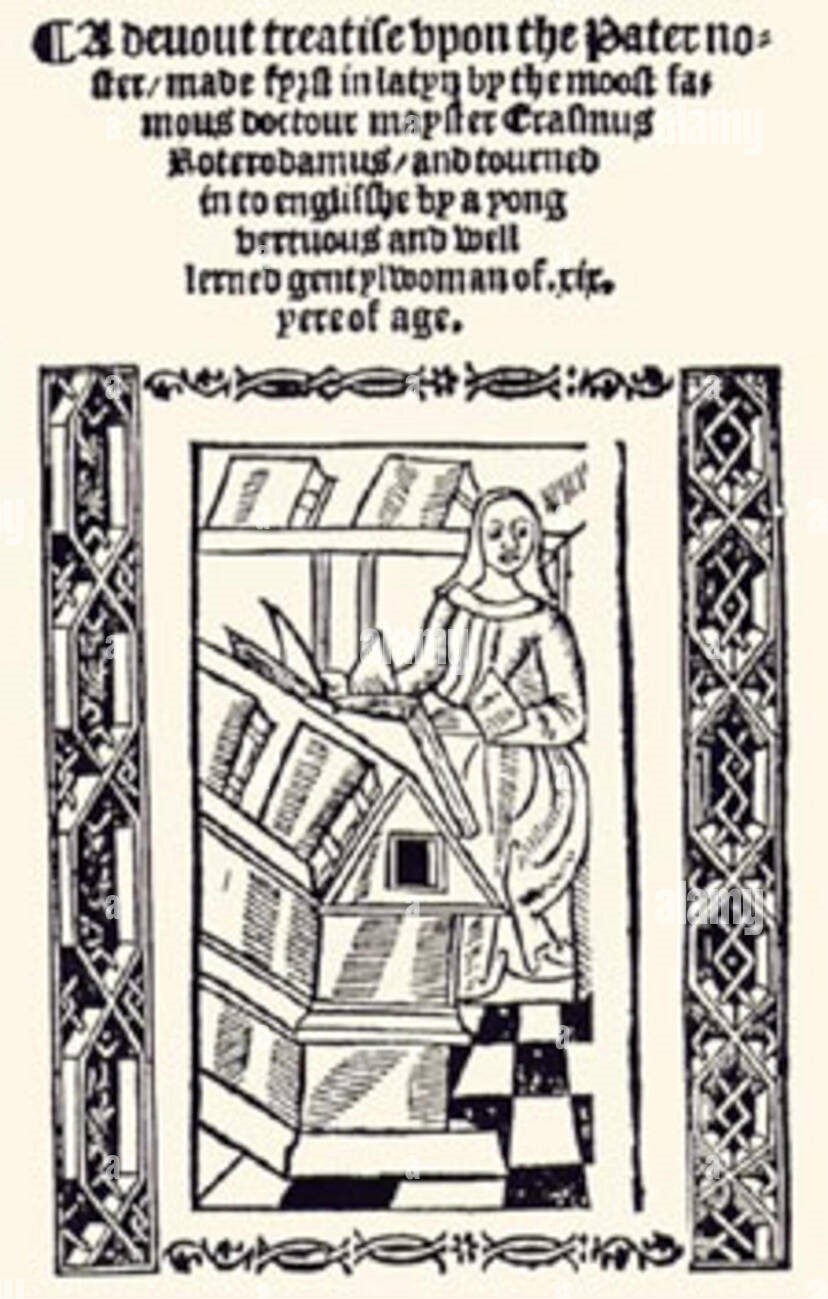
    Margaret’s example particularly came to the fore as she got older and began to build a reputation through her scholarly work. In 1524 she translated and then published her ‘Devout Treatise on the Paternoster’, a translation of Erasmus’s Precatio Domenica, a study of the Lord’s Prayer.

    While Margaret’s name does not appear overtly on the cover her identity was simple to figure out for those who were familiar with Sir Thomas and his family. The cover reads,

    A devout treatise upon the Paternoster made fyrst in latyn by the moost famous doctour mayster Erasmus Roterodamus and tourned into englisshe by a young vertuous and well lerned gentylwoman of nineteen yere of age.’

    The inclusion of details such as her age and other references to her perceived virtuousness, give us an insight into how Margaret was viewed, or wanted to be viewed, for her work. As much as Margaret may have tried to keep her identity away from the work, the Devout Treatise was the first work of this kind published by any woman, and this alone means that Margaret had broken new ground for Tudor women once again.

    Her Loyalty

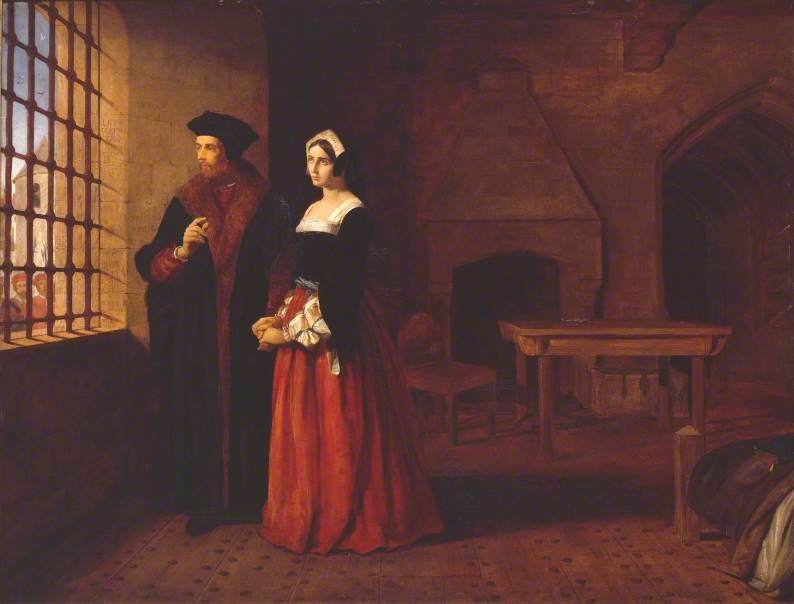
    Sir Thomas More and his Daughter by Herbert John Rogers

    Perhaps though Margaret is best known for her devotion to her father, and his to her. He referred to her as his ‘Meg’ in their letters to one another, and he wrote constantly while he travelled around Europe while working for King Henry VIII, and also while he was imprisoned in the tower.

    While her was in the tower she wrote often to him, but also acted as his advocate, negotiating to make his conditions more comfortable, ensuring he had his books and writing things, as well as better food and access to doctors when he was ill. During his imprisonment it was Margaret who visited him often and helped him to write down his version of events.

    After his death her dedication to him continued when she retrieved his head from it’s spike on London Bridge. This was at great personal risk and when it was discovered that she had done this, she was brought to appear before the king’s council. According to Thomas Stapleton she defended herself by saying that she,

    ‘had saved her father’s head from being devoured by the fishes and with the intention of burying it.’

    When Margaret died the head was to be buried with her, and she eventually was laid to rest, next to her husband William, in the Roper family crypt in St Dunstan’s Church in Canterbury. In this crypt there is also a head, encased in lead, that is believed to be the head of Sir Thomas More.

    Her Legacy

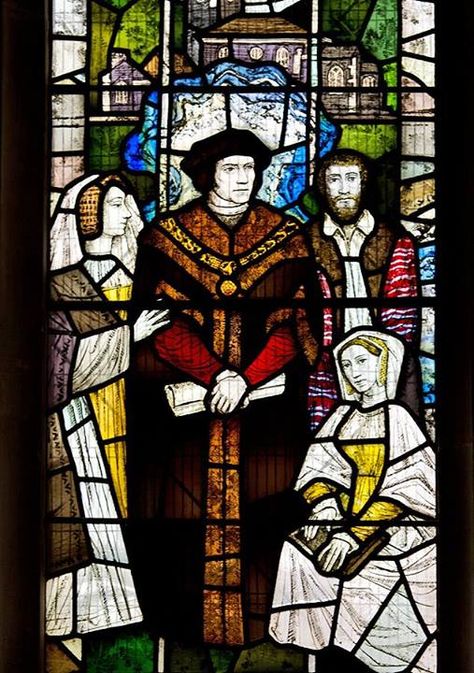
    Sir Thomas More

    Sir Thomas’s head was not the only thing that Margaret preserved, as after his death she worked to collect and save her father’s work, letters and even some of his belongings. After Margaret’s death in 1544, the collections she had managed to bring together was broken up in an attempt to protect her family from persecution, or even prosecution, for having artefacts belonging to Sir Thomas, a traitor.

    However, this collection of work was then used, first by William Roper to write his biography of Sir Thomas More titled ‘A Man of Singular Virtue’. This was the first time Sir Thomas’s life story was written down and in order to write it he referred to the letters, books and documents that his wife had so meticulously curated.

    Historians and writers that have followed since have also relied on the same letters and books in order to write and learn about Sir Thomas and the wider world of the Tudor court. None of this research would have been possible had Margaret not worked so hard to preserve her father’s legacy for the generations to come. Without Margaret’s devotion our knowledge of the Tudor world would be severely diminished.

    While Margaret can often be overshadowed by her father, or portrayed merely as his loyal, devoted daughter, I believe she deserves a great deal more credit and attention. Her abilities, natural intellect, loyalty and bravery should not be underestimated in their important, and certainly not forgotten.

    About the author:

    Aimee Fleming is a historian and author from North Yorkshire. She is happily married, with three growing boys and a whole host of pets. She studied history at the University of Wales, Bangor and then later completed a masters in Early Modern History at the University of York as a mature student. She has a passion for history, particularly the Tudors, and worked for over a decade in the heritage industry in a wide variety of roles and historic places.

    Website: https://historyaimee.wordpress.com/; Social Media – On Threads, Blue Sky and Instagram: @historyaimee.

    Book link: https://mybook.to/FemaleTudorScholar

    *

    My Books:

    Signed, dedicated copies of all my books are available through my online bookshop.

    Coming 30 January 2025: Scotland’s Medieval Queens

    Scotland’s history is dramatic, violent and bloody. Being England’s northern neighbour has never been easy. Scotland’s queens have had to deal with war, murder, imprisonment, political rivalries and open betrayal. They have loved and lost, raised kings and queens, ruled and died for Scotland. From St Margaret, who became one of the patron saints of Scotland, to Elizabeth de Burgh and the dramatic story of the Scottish Wars of Independence, to the love story and tragedy of Joan Beaufort, to Margaret of Denmark and the dawn of the Renaissance, Scotland’s Medieval Queens have seen it all. This is the story of Scotland through their eyes.

    Available for pre-order now.

    Also by Sharon Bennett Connolly:

    Heroines of the Tudor World tells the stories of the most remarkable women from European history in the time of the Tudor dynasty, 1485-1603. These are the women who ruled, the women who founded dynasties, the women who fought for religious freedom, their families and love. Heroines of the Tudor World is now available for pre-order from Amberley Publishing and Amazon UK. Women of the Anarchy demonstrates how Empress Matilda and Matilda of Boulogne, unable to wield a sword themselves, were prime movers in this time of conflict and lawlessness. It shows how their strengths, weaknesses, and personal ambitions swung the fortunes of war one way – and then the other. Available from Bookshop.orgAmberley Publishing and Amazon UKKing John’s Right-Hand Lady: The Story of Nicholaa de la Haye is the story of a truly remarkable lady, the hereditary constable of Lincoln Castle and the first woman in England to be appointed sheriff in her own right. Available from all good bookshops Pen & Sword Booksbookshop.org and Amazon

    Defenders of the Norman Crown: The Rise and Fall of the Warenne Earls of Surrey tells the fascinating story of the Warenne dynasty, from its origins in Normandy, through the Conquest, Magna Carta, the wars and marriages that led to its ultimate demise in the reign of Edward III. Available from Pen & Sword BooksAmazon in the UK and US, and Bookshop.orgLadies of Magna Carta: Women of Influence in Thirteenth Century England looks into the relationships of the various noble families of the 13th century, and how they were affected by the Barons’ Wars, Magna Carta and its aftermath; the bonds that were formed and those that were broken. It is now available in paperback and hardback from Pen & SwordAmazon, and Bookshop.orgHeroines of the Medieval World tells the stories of some of the most remarkable women from Medieval history, from Eleanor of Aquitaine to Julian of Norwich. Available now from Amberley Publishing and Amazon, and Bookshop.orgSilk and the Sword: The Women of the Norman Conquest traces the fortunes of the women who had a significant role to play in the momentous events of 1066. Available now from Amazon,  Amberley Publishing, and Bookshop.org.

    Alternate Endings: An anthology of historical fiction short stories including Long Live the King… which is my take what might have happened had King John not died in October 1216. Available in paperback and kindle from Amazon.

    Podcast:

    Have a listen to the A Slice of Medieval podcast, which I co-host with Historical fiction novelist Derek Birks. Derek and I welcome guests, such as Bernard Cornwell, and discuss a wide range of topics in medieval history, from significant events to the personalities involved. Our latest episode is a fascinating discussion with Dr Ian Mortimer about the speed of travel and communications in medieval times. Definitely worth a listen!

    *

    Don’t forget! Signed and dedicated copies of all my books are available through my online bookshop.

    For forthcoming online and in-person talks, please check out my Events Page.

    You can be the first to read new articles by clicking the ‘Follow’ button, liking our Facebook page or joining me on TwitterThreadsBluesky and Instagram.

    ©2024 Sharon Bennett Connolly FRHistS

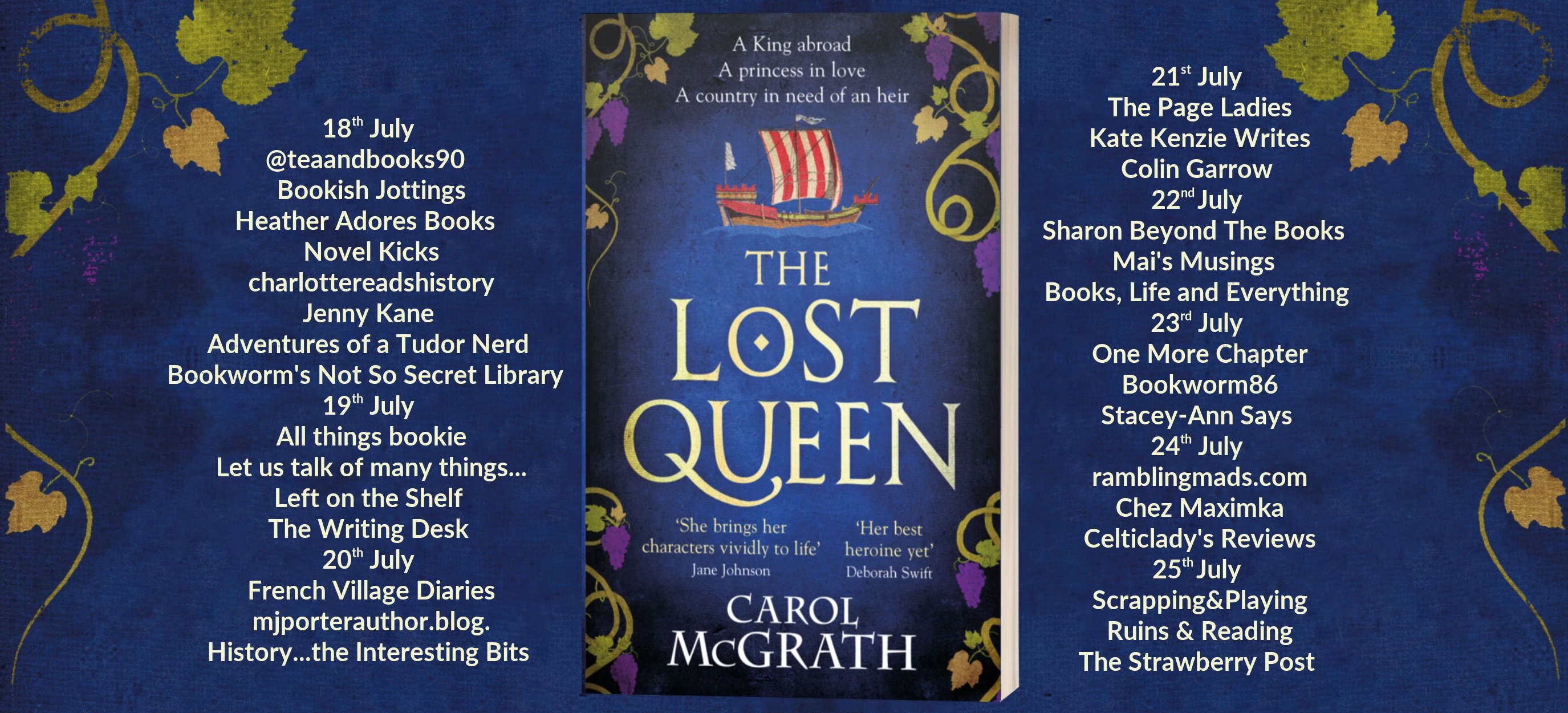
    Book Corner: The Lost Queen by Carol McGrath

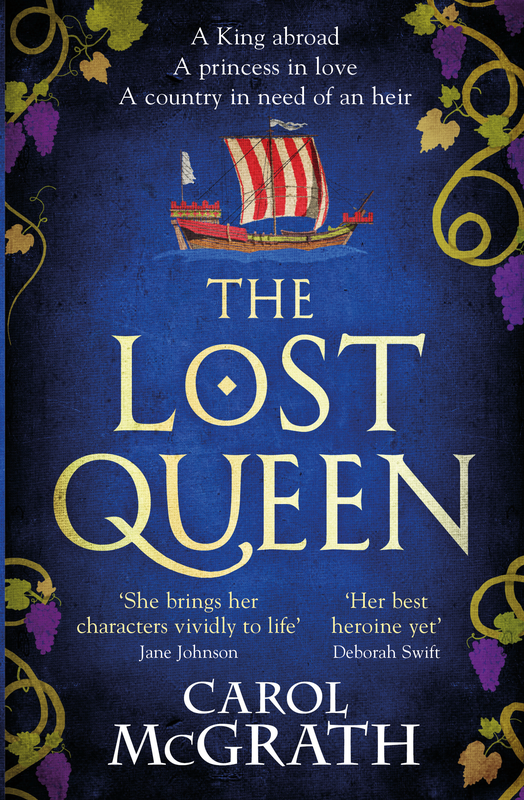
    1191 and the Third Crusade is underway . . .

    It is 1191 and King Richard the Lionheart is on crusade to pitch battle against Saladin and liberate the city of Jerusalem and her lands. His mother, the formidable Eleanor of Aquitaine and his promised bride, Princess Berengaria of Navarre, make a perilous journey over the Alps in midwinter. They are to rendezvous with Richard in the Sicilian port of Messina.

    There are hazards along the way – vicious assassins, marauding pirates, violent storms and a shipwreck. Berengaria is as feisty as her foes and, surviving it all, she and Richard marry in Cyprus and continue to the Holy Land. England needs an heir. But first, Richard and his Queen must return home . . .

    The Lost Queen is a thrilling medieval story of high adventure, survival, friendship and the enduring love of a Queen for her King.

    At last! Attention is being paid to Berengaria of Navarre, wife and queen of King Richard I (the Lionheart. There is an excellent new biography out, by my good friend Dr Gabrielle Story, entitled Berengaria of Navarre: Queen of England and Lord of Le Mans. And now there is a wonderful novel, The Lost Queen by Carol McGrath.

    Carol expertly weaves fact and fiction together to bring us am engaging, entertaining and informative story on the life of the one queen of England who is said to have never set foot in the country (actually, it seems that she did, but only after Richard’s death).

    The Lost Queen follows Berengaria from the moment she is collected by her future mother-in-law, Eleanor of Aquitaine, on her journey through the Alps and Italy, to her first meeting with her husband Richard I. She is then drawn into the grand enterprise that was the Third Crusade, with the conquest of Cyprus along the way.

    Food tasters sampled every dish before offering Queen Eleanor the best of everything, placing small morsels on her plate when she inclined her head in assent. Don Sancho never took any chances in case a dish was spoiled – or worse, might contain poison. Only once the Dowager and Don Sancho were served was Berengaria able to make selections for her own plate. As she ate, carefully making sure not to appear greedy, she noticed that Queen Eleanor had a hearty appetite, sampling everything and complimenting Don Sancho on his well-presented feast. Lifting a goblet to her mouth and sipping daintily, she praised the Gascon wine served in her honour.

    Over custard tarts, a speciality of the palace pastry cooks, the Dowager broached plans for their journey. She tapped the table with an impatient gesture. ‘Don Sancho, may I assume Berengaria will be ready by this week’s end with her baggage mules packed? She will need suitable clothing for travel to Sicily, along with her confessor and her ladies.’

    ‘Indeed. We shall provide a well-armed guard under Sancho’s command for the first part of the journey,’ Don Sancho said. ‘Berengaria and her ladies will ride. They are all of them fine horsewomen.’

    ‘We will need stout covered wagons and apothecaries in case of illness, though I expect none,’ the Dowager responded. Berengaria wondered if Queen Eleanor had ever been in need of apothecaries in her whole life, other than for childbirth. Suddenly she grew nervous at the thought that the arrangements thay had made for her wedding in Sicily might not be good enough.

    Don Sancho nodded in assent, then added, ‘All is ready, including priests and two bishops who will travel with your train as far as Rome.’ He gave Eleanor a broad smile.

    Berengaria looked at her father with a confidence she did not feel. ‘So my brother and his knights will escort us through French territories?’ she asked.

    ‘Not France, but the county of Toulouse. And indeed, my daughter, Sancho will ride with you as far as Les Baux. Arrangements have been made. travel passes have been granted.’

    Her brother nodded. ‘My dear sister, I have business in Aragon, but I intend guarding you to the very borders of the German Empire.’

    Berengaria loved her bear-like brother. ‘I am glad of your escort, dear Sancho.’

    She looked over to see Eleanor’s reaction, but the Dowager simply thanked Sancho for his care of them. Her expression remained composed as she added, ‘We hope to have Philip of Flanders as our escort through the Alps and on to Sicily. The Count is intent on joining the Crusade.’

    Carol McGrath recreates the world of the late 12th century, from medieval England to the Holy Land – you can almost feel that sand between your toes and the burning sun on your face. Neither does the author shy away from the more unpleasant episodes of the Crusades. Richard I’s execution of 3,000 prisoners is depicted through Berengaria’s eyes, and with the understanding of the constraints and political wranglings of the time. I love the depiction of Richard I’s relationship with his mother, Eleanor of Aquitaine, and Carol McGrath’s exploration of how this may have affected Richard and Berengaria’s marriage.

    My favourite part of the book is Berengaria’s relationship with her sister-in-law, Joanna, dowager queen of Sicily and sister of Richard the Lionheart. Joanna is, as any regular reader will know, one of my favourite medieval women. And I love how Carol McGrath portrays the developing friendship between the two women, thrown together by necessity, but appreciating each other’s strengths and character.

    Whilst the attention of the book is very firmly on Berengaria of Navarre, a more intimate, fictional story, of a young lady named Avelina, travelling to the Holy Land in search of her husband, offers the reader a more intimate experience of the non-royal crusaders and the lives of them and their families. As well as the dangers inherent in women travelling to far-off places. Carol McGrath uses Avelina’s story, and the stories of those around her, to demonstrate the different people and events – and personal tragedies – associated with the Crusades. It also serves to remind the modern-day reader that news travelled slowly in medieval times and that letters that were lost or waylaid could have a huge impact on people’s lives.

    The characters portrayed in The Lost Queen by Carol McGrath are rich and vivid. They come to life on the page.

    This is a must-read book for anyone interested in the Plantagenets!

    To Buy The Lost Queen

    About the Author:

    Following a first degree in English and History, Carol McGrath completed an MA in Creative Writing from The Seamus Heaney Centre, Queens University Belfast, followed by an MPhil in English from University of London.The Handfasted Wife, first in a trilogy about the royal women of1066 was shortlisted for the RoNAS in 2014.The Swan-Daughter and The Betrothed Sister complete this highly acclaimed trilogy.Mistress Cromwell, a best-selling historical novel about Elizabeth Cromwell, wife of Henry VIII’s statesman, Thomas Cromwell, was republished by Headline in 2020.The Silken Rose,first in a medieval She-Wolf Queens Trilogy, featuring Ailenor of Provence, saw publication in April 2020. This was followed by The Damask Rose.The Stone Rose was published April2022. Carol is writing Historical non-fiction as well as fiction.Sex and Sexuality in Tudor England waspublished in February 2022.The Stolen Crown2023 and The Lost Queen will be published 18thJuly2024. Carol lives in Oxfordshire, England and in Greece.Find Carol on her website:www.carolcmcgrath.co.uk.

    Follow Carol on:

    Amazon: @CarolMcGrath, Facebook: https://www.facebook.com/CarolMcGrathAuthor1, Pinterest: http://www.pinterest.co.uk/carol0275/the-handfasted-wife/ Twitter: twitter.com/carolmcgrath, website: scribbling-inthemargins.blogspot.com/ LinkedIn: https://www.linkedin.com/in/carol-mcgrath-906723a

    *

    My Books

    Signed, dedicated copies of all my books are available through my online bookshop.

    OUT NOW! Heroines of the Tudor World

    Heroines of the Tudor World tells the stories of the most remarkable women from European history in the time of the Tudor dynasty, 1485-1603. These are the women who ruled, the women who founded dynasties, the women who fought for religious freedom, their families and love. These are the women who made a difference, who influenced countries, kings and the Reformation. In the era dominated by the Renaissance and Reformation, Heroines of the Tudor World examines the threats and challenges faced by the women of the era, and how they overcame them. From writers to regents, from nuns to queens, Heroines of the Tudor World shines the spotlight on the women helped to shape Early Modern Europe.

    Heroines of the Tudor World is now available for pre-order from Amberley Publishing and Amazon UK.

    Also by Sharon Bennett Connolly:

    Women of the Anarchy demonstrates how Empress Matilda and Matilda of Boulogne, unable to wield a sword themselves, were prime movers in this time of conflict and lawlessness. It shows how their strengths, weaknesses, and personal ambitions swung the fortunes of war one way – and then the other. Available from Bookshop.orgAmberley Publishing and Amazon UKKing John’s Right-Hand Lady: The Story of Nicholaa de la Haye is the story of a truly remarkable lady, the hereditary constable of Lincoln Castle and the first woman in England to be appointed sheriff in her own right. Available from all good bookshops Pen & Sword Booksbookshop.org and AmazonDefenders of the Norman Crown: The Rise and Fall of the Warenne Earls of Surrey tells the fascinating story of the Warenne dynasty, from its origins in Normandy, through the Conquest, Magna Carta, the wars and marriages that led to its ultimate demise in the reign of Edward III. Available from Pen & Sword BooksAmazon in the UK and US, and Bookshop.org

    Ladies of Magna Carta: Women of Influence in Thirteenth Century England looks into the relationships of the various noble families of the 13th century, and how they were affected by the Barons’ Wars, Magna Carta and its aftermath; the bonds that were formed and those that were broken. It is now available in paperback and hardback from Pen & Sword,  Amazon, and Bookshop.orgHeroines of the Medieval World tells the stories of some of the most remarkable women from Medieval history, from Eleanor of Aquitaine to Julian of Norwich. Available now from Amberley Publishing and Amazon, and Bookshop.orgSilk and the Sword: The Women of the Norman Conquest traces the fortunes of the women who had a significant role to play in the momentous events of 1066. Available now from Amazon,  Amberley Publishing, and Bookshop.org.

    Alternate Endings: An anthology of historical fiction short stories including Long Live the King… which is my take what might have happened had King John not died in October 1216. Available in paperback and kindle from Amazon.

    Podcast:

    Have a listen the A Slice of Medieval podcast, which I co-host with Historical fiction novelist Derek Birks. Derek and I welcome guests, such as Bernard Cornwell and discuss a wide range of topics in medieval history, from significant events to the personalities involved. In episode #43, Derek and I chat with Carol about Berengaria of Navarre and The Lost Queen.

    *

    Don’t forget! Signed and dedicated copies of all my books are available through my online bookshop.

    For forthcoming online and in-person talks, please check out my Events Page.

    You can be the first to read new articles by clicking the ‘Follow’ button, liking our Facebook page or joining me on Twitter and Instagram.

    ©2024 Sharon Bennett Connolly FRHistS

    Book Corner: Two Queenly Biographies from Joanna Arman

    I am very fond of Joanna Arman as an author. She has a habit of bringing often-forgotten or ignored – or maligned – women to the fore and reassessing their role in history. Her biography of Æthelflæd, The Warrior Queen: The Life and Legend of Æthelflæd, Daughter of Alfred the Great, was an engaging and illuminating book, despite the challenges of writing about a woman who lived over a thousand years ago. Writing about any woman in history is challenging. Women are rarely mentioned in the chronicles. And when they are, contemporary sources are rarely balanced and often trying to advance a moral judgement of how women fell below the standard expected of them in their society. Which is why we need reappraisals of significant historic women, books which reassess their stories and apply the filter against the casual misogyny that women have suffered from throughout the centuries. Joanna Arman has set out to do that with books about two very different queens consort of England; Matilda of Scotland and Margaret of Anjou.

    Matilda II: The Forgotten Queen

    The wife of King Henry I and the mother of the Empress Maud is a woman and a Queen forgotten to history. She is frequently conflated with her daughter or her mother-in-law. She was born the daughter of the King of Scotland and an Anglo-Saxon princess. Her name was Edith, but her name was changed to Matilda at the time of her marriage. The Queen who united the line of William the Conqueror with the House of Wessex lived during an age marked by transition and turbulence. She married Henry in the first year of the 12th century and for the eighteen years of her rule aided him in reforming the administrative and legal system due to her knowledge of languages and legal tradition. Together she and her husband founded a series of churches and arranged a marriage for their daughter to the Holy Roman Emperor. Matilda was a woman of letters to corresponded with Kings, Popes, and prelates, and was respected by them all. Matilda’s greatest legacy was continuity: she united two dynasties and gave the Angevin Kings the legitimacy they needed so much. It was through her that the Empress Matilda and Henry II were able to claim the throne. She was the progenitor of the Plantagenet Kings, but the war and conflict which followed the death of her son William led to a negative stereotyping by Medieval Chroniclers. Although they saw her as pious, they said she was a runaway nun and her marriage to Henry was cursed. This book provides a much-needed re-evaluation of Edith/Matilda’s role and place in the history of the Queens of England.

    Now, this is a book I have been waiting for!

    And it is a book that has needed to be written for a long time. How useful it would have been when I was writing my own book, Women of the Anarchy. A complete biography of Matilda of Scotland – also referred to as Matilda II to distinguish her from her predecessor, Matilda of Flanders. As the wife of Henry I of England Matilda of Scotland is a woman often neglected and overlooked by historians. And yet, Queen Matilda was a truly remarkable queen and one who was well respected during her lifetime. Born as the eldest daughter of Malcolm III Canmore, King of Scots, and his saintly wife, Margaret of Wessex, and given the name Edith at birth, her name was changed to the more Norman name, Matilda, on her marriage to Henry I.

    Joanna Arman expertly guides us through Queen Matilda’s life, from her childhood in a convent, supervised by her mother’s sister, Christina, through the various suitors who came calling to the controversy over her marriage to King Henry. Matilda II: The Forgotten Queen delves deep into the investigation into whether or not Matilda had ever been professed as a nun and presents the evidence and arguments for both sides. It is a fascinating study.

    Queen Matilda’s role, as a queen, wife and mother, is examined in great detail, demonstrating her influence, both on her family and on England and Normandy. Matilda’s piety is shown as an anchoring force throughout her life, influencing the way she approaches problems and relationships. The queen is shown to be a deeply devout, kind and benevolent woman, with a strong sense of purpose and destiny.

    Matilda II: The Forgotten Queen covers every aspect of the queen’s life, drawing on chronicles and charters to present what we know in a clear, engaging narrative that brings this often-overlooked queen to life. The book is accompanied by extensive notation and a through bibliography – I was flattered to discover my own book, Defenders of the Norman Crown: Rise and Fall of the Warenne Earls of Surrey, cited as a refence. It is an excellent biography, thoroughly researched and beautifully presented. I loved reading every word.

    To buy Matilda II: The Forgotten Queen: Amazon

    Margaret of Anjou: She-Wolf of France, Twice Queen of England

    In 1445 a fifteen-year-old French girl left her homeland to marry the son of the great warrior Henry V. Sixteen years later, her husband had lost his throne and she had fled into exile. For a decade, she struggled to reclaim the throne of England before her final and shattering defeat at the Battle of Tewkesbury. It marked the final destruction of the House of Lancaster by Yorkist King Edward IV and his brothers. Margaret lost more than her family: she was also vilified. Shakespeare cast her as a sadistic killer who murdered the noble Richard, Duke of York. History cast her as a manipulative seductress whose destructive ambition was a major cause of the Wars of the Roses. Margaret of Anjou remains one of the most notorious consorts in medieval history, the queen we love to hate. But is her reputation deserved, or was she simply caught between the machinations and rivalries of powerful men? By examining Margaret’s life and actions in detail, this biography reveals a new side to the last foreign-born queen of medieval England. Margaret came from a family of strong women. Faced with hardship in the first years of her marriage, Margaret’s choices arose from a conviction that it was natural for a woman to take control in the absence of male leadership. A wealth of records have been left behind, allowing historians to investigate Margaret’s career as a beloved wife and, later, as the leader of a political faction struggling to secure the crown for her family. If the course of history had run differently, would she instead be considered a heroic warrior queen today – perhaps even England’s Joan of Arc?

    At last! A balanced, objective biography of Margaret of Anjou that does not just regurgitate the ‘she-wolf’ trope (despite it being in the title).Peeling away the centuries of misogyny, Joanna Arman takes a new look at the historical record and presents a version of Margaret of Anjou, the long-suffering wife of the mentally-fragile king, Henry VI, that is much closer to the living, breathing woman she was. This does not mean that Margaret’s actions are excused away, that she is suddenly assessed as a saint. Rather, Joanna Arman presents Margaret of Anjou’s actions against the backdrop of the times; the challenges she was facing, and the actions she had to take in order to preserve her husband’s crown and her son’s inheritance.

    Margaret is presented as a human being, prone to making mistakes just like the rest of us. She is also a woman, challenged with holding her own in a man’s world – and in a time of war. Joanna Arman presents the complete queen; a woman, a wife, a mother. And a leading protagonist in the Wars of the Roses. The book is a fascinating analysis of this influential queen, of her life, decisions and struggles that eventually led to her losing everything; her son, her husband and her crown.

    Told with empathy, balance and passion, I defy anyone to not feel moved and invigorated by this fascinating study of a woman who had fought hard to hold on to everything, but lost it all. Faced with her husband’s mental illness and military ineptitude, Margaret tried to fill the void, to be king and queen. The male dominated society of 15th century England would not permit it. One wonders what Margaret might have achieved had she been allowed to take the reins of government. Her deadly rivalry with Richard, Duke of York, however, meant court factions would always manoeuvre against her, even after York’s death at Wakefield.

    Joanna Arman has taken great care to ensure that Margaret of Anjou: She-Wolf of France, Twice Queen of England, is a biography of the queen. It is not a Lancastrian whitewash, nor a Yorkist hate-filled pamphlet. Margaret of Anjou is the centre of attention, the woman held out for appraisal, for assessment, for praise and criticism. That it is at once balanced, critical and empathetic is testament to Joanna Arman’s skill as the queen’s biographer.

    To buy Margaret of Anjou: She-Wolf of France, Twice Queen of England: Amazon

    *

    My Books:

    Signed, dedicated copies of all my books are available through my online bookshop.

    Out Now! Women of the Anarchy

    Two cousins. On the one side is Empress Matilda, or Maud. The sole surviving legitimate child of Henry I, she is fighting for her birthright and that of her children. On the other side is her cousin, Queen Matilda, supporting her husband, King Stephen, and fighting to see her own son inherit the English crown. Women of the Anarchy demonstrates how these women, unable to wield a sword, were prime movers in this time of conflict and lawlessness. It show how their strengths, weaknesses, and personal ambitions swung the fortunes of war one way – and then the other.

    Available from Bookshop.orgAmberley Publishing and Amazon UK.

    Coming on 15 June 2024: Heroines of the Tudor World

    Heroines of the Tudor World tells the stories of the most remarkable women from European history in the time of the Tudor dynasty, 1485-1603. These are the women who ruled, the women who founded dynasties, the women who fought for religious freedom, their families and love. These are the women who made a difference, who influenced countries, kings and the Reformation. In the era dominated by the Renaissance and Reformation, Heroines of the Tudor World examines the threats and challenges faced by the women of the era, and how they overcame them. From writers to regents, from nuns to queens, Heroines of the Tudor World shines the spotlight on the women helped to shape Early Modern Europe.

    Heroines of the Tudor World is now available for pre-order from Amberley Publishing and Amazon UK.

    Also by Sharon Bennett Connolly:

    King John’s Right-Hand Lady: The Story of Nicholaa de la Haye is the story of a truly remarkable lady, the hereditary constable of Lincoln Castle and the first woman in England to be appointed sheriff in her own right. Available from all good bookshops or direct from Pen & Sword Booksbookshop.org and AmazonDefenders of the Norman Crown: The Rise and Fall of the Warenne Earls of Surrey tells the fascinating story of the Warenne dynasty, from its origins in Normandy, through the Conquest, Magna Carta, the wars and marriages that led to its ultimate demise in the reign of Edward III. Available from Pen & Sword BooksAmazon in the UK and US, and Bookshop.org

    Ladies of Magna Carta: Women of Influence in Thirteenth Century England looks into the relationships of the various noble families of the 13th century, and how they were affected by the Barons’ Wars, Magna Carta and its aftermath; the bonds that were formed and those that were broken. It is now available in paperback and hardback from Pen & Sword,  Amazon, and Bookshop.orgHeroines of the Medieval World tells the stories of some of the most remarkable women from Medieval history, from Eleanor of Aquitaine to Julian of Norwich. Available now from Amberley Publishing and Amazon, and Bookshop.orgSilk and the Sword: The Women of the Norman Conquest traces the fortunes of the women who had a significant role to play in the momentous events of 1066. Available now from Amazon,  Amberley Publishing, and Bookshop.org.

    Alternate Endings: An anthology of historical fiction short stories including Long Live the King… which is my take what might have happened had King John not died in October 1216. Available in paperback and kindle from Amazon.

    Podcast:

    Have a listen to the A Slice of Medieval podcast, which I co-host with Historical fiction novelist Derek Birks. Derek and I welcome guests, such as Bernard Cornwell and Elizabeth Chadwick, and discuss a wide range of topics in medieval history, from significant events to the personalities involved.

    *

    Don’t forget! Signed and dedicated copies of all my books are available through my online bookshop.

    For forthcoming online and in-person talks, please check out my Events Page.

    You can be the first to read new articles by clicking the ‘Follow’ button, liking our Facebook page or joining me on Twitter and Instagram.

    *

    ©2024 Sharon Bennett Connolly FRHistS

    Le Charte aux Lacs d’Amour

    When writing medieval non-fiction, you don’t get to tell many love stories. Most marriages were arranged between families for mutual gain or assistance. As a consequence, you don’t really expect to come across many tales of love – and actual love tokens are rare indeed. But in researching the story of Nicholaa de la Haye, I came across just that: a rather unique love token. 

    Unfortunately, the love token did not belong to Nicholaa, the defender of Lincoln Castle and first ever female sheriff in England, it belonged to one of her sisters. Nicholaa was the eldest of three sisters and while she inherited Lincoln Castle and her family’s English lands, her sisters, Julia (or Gila) and Isabel, married and settled in Normandy. The story of the love token is Julia’s.

    Julia, whose name appears as Gille in French but appears on charters in the Latin, Gila, was married to Richard du Hommet, who died around 1199/1200. Richard was the eldest son and heir of William du Hommet (or Hummez), constable of Normandy, who died around 1204 and his wife, Lucy. According to a charter dated 1232, recording donations to the monks of Saint-Sauveur-le-Vicomte, Lucy was the granddaughter and heir of Adam de Bruys. As constable, William du Hommet appeared as a witness to a charter of 1 March 1190 in which King Richard I ‘confirms to the archbishop and church of Rouen and all the bishops and mother churches of Normandy, concerning those who break the trêve de Dieu (a truce organised by the church).’ 

    As with most medieval women, we know very little of Julia’s actual dates, so we have to generalise or make educated guesses. Julia was probably born sometime in the late 1150s, and would have grown up on her family’s lands in Lincolnshire. She will have probably married Richard du Hommet some time in the 1170s, when she was in her mid-to-late teens. She died in the 1190s and her husband remarried before his own death at the turn of the century. Julia and Richard had at least three sons and two or more daughters; two of these sons were the last two constables of Normandy from the Hommet family, succeeding their grandfather in the role. Richard du Hommet had certainly married Julia by the mid-1170s at the latest, when his grandfather, another Richard du Hommet, was still constable of Normandy, and while the younger Richard was still underage. The couple’s first child was born around 1180. 

    Richard du Hommet predeceased his father by four or five years, so never became constable of Normandy in his own right, though he does appear to have assisted his father in his duties. In June 1190, Richard appears as a witness, alongside his father, to a charter of Richard I in which he ‘confirms to St Martin’s, Troarn and the monks there serving God the vill and island of Reimberhome etc., with the right of presentation to the church of St Mary there, as given, with his assent, by John son of William count of Ponthieu, etc.’ Father and son are recorded as ‘Willelmo de Humeto constabulario; Richardo de Humeto’ in the witness list. 

    Richard and Julia are also the subjects of a unique charter, issued by King Richard I in June 1190. The charter was preserved by the Abbey of Aunai, which had been founded by the du Hommet family. It conferred the manors of Varreville and Pouppeville upon the couple, naming both ‘Ricardo de Humetis’ and ‘Gila, uxor sue’ (his wife) in the grant.  

    And it has very famous laces by which the seal was attached. 

    These laces are made of silk and each one is 50cm in length; one of the laces is green, now turning yellow, and the other is blue, speckled with brown. An Old French poem was embroidered on the laces: 

     “Jo sui druerie. Ne me dunez mie ; ki nostre amur deseivre la mort pu”,

    (In French, ‘Je suis gage d’amour. Ne me donnez pas. Que celui qui sépare notre amour puisse recevoir la mort’  and in English, ‘I am a pledge of love. Do not give me away. May death come to whoever separates our love’).  

    For this reason, the charter is known as the charte aux lacs d’amour (the charter with the laces of love). And while the idea of a love poem being attached to a charter issued in relation to a royal land grant is charming, the reasons behind it remain elusive. At first glance, the grant appears to have no special significance that would justify such a declaration of love, nor such careful detail and precision work being undertaken on its creation.  

    I can’t help thinking that Richard I – the Lionheart – who was a fan of the troubadour tradition and courtly love, would have heartily approved of turning the charter into a token of enduring love.

    Unfortunately, while the laces are still attached to the document, the words, which were still visible in the nineteenth century, have now faded away. At least someone thought to record them before they faded from existence. 

    Under Henry I, the lands of Varreville and Pouppeville had been in the hands of Roger, Bishop of Salisbury, and had returned to the crown on his death. King Henry II had granted the same lands to Richard de la Haye, but they had reverted to the crown on his death in 1169, and were accounted for in the Exchequer accounts of 1180. So, it seems that in granting Varreville and Pouppeville to Julia and Richard du Hommet, Richard I was returning them to their former, rightful owners. This may explain why Julia is specifically mentioned in the charter and the grant stipulates that the lands pass to Richard’s children by Julia, rather than Richard’s children by any wife.  

    According to Léopold De Lisle, in his study of the charter, the two manors formed Julia’s dowry, though she and her husband were unable to take possession of the lands immediately after the marriage. In the charter King Richard ‘gives, renderes and confirms to Richard du Hommet, and to Gila [Julia] his wife, and to their heirs, Pouppeville and Varreville with all their dependencies, for them to hold from the king with their barony, by right of the said Gila [Julia].’ De Lisle goes on to suggest that the laces used, with the accompanying love poem, were once a love token, perhaps given by Julia to Richard on their wedding day, and that Richard du Hommet persuaded the king to attach them to the charter that gave him possession of Julia’s lands, as a symbol of their union.  

    If so, the fact that they have survived the centuries is particularly poignant. 

    When Julia died in the 1190s, she was buried in Blanchelande Abbey, a religious community of the Premonstratensian order, known as the White Canons, in Neufmesnil. The abbey had been founded by Julia’s parents, and it was where her father, Richard de la Haye, had been interred after his death in 1169. On her death, Julia’s mother, Matilda de Vernon, with the approval of her son-in-law, Richard du Hommet, made a donation to the abbey in her daughter’s name. After a short period as a widower, Richard du Hommet married for a second time, to Alienor, widow of Robert de la Haie, who may well have been a distant cousin of Julia (I did not have time to delve into  the familial relationship, unfortunately). 

    The enduring love of Richard and Julia is forever entwined in the laces attached to the land charter. Even if we can no longer see the words, we know they were there and survived seven centuries before they faded away… 

    *

    This article first appeared on ElizabethChadwick.com

    Images:

    Les archives du Calvados

    Sources:

    Les archives du Calvados; Leopold Deslisle, “Notice sur les attaches d’un sceau de Richard Coeur-de-Lion”; Richard of Devizes, The Chronicle of Richard of Devizes; Roger of Howden (Hoveden), The Annals of Roger of HowdenThe Plantagenet Chronicles edited by Elizabeth Hallam; Brassey’s Battles by John Laffin; 1215 The Year of Magna Carta by Danny Danziger & John Gillingham; The Life and times of King John by Maurice Ashley; The Plantagenets, the Kings Who Made England by Dan Jones; England Under the Norman and Angevin Kings  by Robert Bartlett; lincolnshirelife.co.uk; catherinehanley.co.uk; magnacarta800th.com; lothene.org; lincolncastle.com; The Sheriff: The Man and His Office by Irene Gladwin; Louise Wilkinson, Women in Thirteenth Century Lincolnshire; Richard Huscraft, Tales from the Long Twelfth Century; J.W.F. Hill, Medieval Lincoln; swaton.org.uk; oxforddnb.com; Ingulph, Ingulph’ Chronicle of the Abbey of Croyland; Stephen Church, King John: England, Magna Carta and the Making of a Tyrant; Marc Morris, King John; Pipe Rolls; Red Book of the Exchequer

    *

    My Books

    Christmas is coming!

    Signed, dedicated copies of all my books are available through my online bookshop.

    Out now! Scotland’s Medieval Queens

    Scotland’s history is dramatic, violent and bloody. Being England’s northern neighbour has never been easy. Scotland’s queens have had to deal with war, murder, imprisonment, political rivalries and open betrayal. They have loved and lost, raised kings and queens, ruled and died for Scotland. From St Margaret, who became one of the patron saints of Scotland, to Elizabeth de Burgh and the dramatic story of the Scottish Wars of Independence, to the love story and tragedy of Joan Beaufort, to Margaret of Denmark and the dawn of the Renaissance, Scotland’s Medieval Queens have seen it all. This is the story of Scotland through their eyes.

    Available now from Amazon and Pen and Sword Books

    Also by Sharon Bennett Connolly:

    Heroines of the Tudor World tells the stories of the most remarkable women from European history in the time of the Tudor dynasty, 1485-1603. These are the women who ruled, the women who founded dynasties, the women who fought for religious freedom, their families and love. Heroines of the Tudor World is now available for pre-order from Amberley Publishing and Amazon UK. Women of the Anarchy demonstrates how Empress Matilda and Matilda of Boulogne, unable to wield a sword themselves, were prime movers in this time of conflict and lawlessness. It shows how their strengths, weaknesses, and personal ambitions swung the fortunes of war one way – and then the other. Available from Bookshop.orgAmberley Publishing and Amazon UKKing John’s Right-Hand Lady: The Story of Nicholaa de la Haye is the story of a truly remarkable lady, the hereditary constable of Lincoln Castle and the first woman in England to be appointed sheriff in her own right. Available from all good bookshops Pen & Sword Booksbookshop.org and Amazon

    Defenders of the Norman Crown: The Rise and Fall of the Warenne Earls of Surrey tells the fascinating story of the Warenne dynasty, from its origins in Normandy, through the Conquest, Magna Carta, the wars and marriages that led to its ultimate demise in the reign of Edward III. Available from Pen & Sword BooksAmazon in the UK and US, and Bookshop.orgLadies of Magna Carta: Women of Influence in Thirteenth Century England looks into the relationships of the various noble families of the 13th century, and how they were affected by the Barons’ Wars, Magna Carta and its aftermath; the bonds that were formed and those that were broken. It is now available in paperback and hardback from Pen & SwordAmazon, and Bookshop.orgHeroines of the Medieval World tells the stories of some of the most remarkable women from Medieval history, from Eleanor of Aquitaine to Julian of Norwich. Available now from Amberley Publishing and Amazon, and Bookshop.orgSilk and the Sword: The Women of the Norman Conquest traces the fortunes of the women who had a significant role to play in the momentous events of 1066. Available now from Amazon,  Amberley Publishing, and Bookshop.org.

    Alternate Endings: An anthology of historical fiction short stories including Long Live the King… which is my take what might have happened had King John not died in October 1216. Available in paperback and kindle from Amazon.

    Podcast:

    Have a listen to the A Slice of Medieval podcast, which I co-host with Historical fiction novelist Derek Birks. Derek and I welcome guests, such as Bernard Cornwell and discuss a wide range of topics in medieval history, from significant events to the personalities involved. Every episode is also now available on YouTube.

    *

    Don’t forget! Signed and dedicated copies of all my books are available through my online bookshop.

    For forthcoming online and in-person talks, please check out my Events Page.

    You can be the first to read new articles by clicking the ‘Follow’ button, liking our Facebook page or joining me on Twitter and Instagram.

    ©2023 Sharon Bennett Connolly FRHistS

    10 Facts about Nicholaa de la Haye that you may not know…

    King John’s Right Hand Lady: The Story of Nicholaa de la Haye
    Tomb effigy of Nicholaa de la Haye, St Michael’s Church, Swaton

    As you may have noticed, Nicholaa de la Haye is a favourite of mine. She is the subject of my 5th book, King John’s Right Hand Lady: The Story of Nicholaa de la Haye. She was one of King John’s most stalwart supporters. She held Lincoln Castle against all-comers during the First Barons’ War which followed the sealing of Magna Carta in 1215. Her career is the more remarkable because Nicholaa was a woman in command of a castle in her own right. And she masterminded its defence against the might of the rebel barons and their French allies, even though the city of Lincoln was also against her.

    So, who was she?

    10 Things about Nicholaa de la Haye that you may not know…

    1. Nicholaa had both English and Norman ancestry. Unlike many Normans, Nicholaa could trace her Lincolnshire roots, through her paternal grandmother, Muriel, to before the Norman Conquest; her grandmother’s grandfather was Colswein of Lincoln, an Englishman who had found favour with William the Conqueror in the years after the Conquest. Nicholaa’s father was Richard de la Haye, whose family originated from La Haye-du-Puits in Normandy, and was distantly related, through marriage, to William the Conqueror. Nicholaa’s mother was Matilda de Vernon, a niece of Baldwin de Redvers, Earl of Devon, the first magnate to rebel against King Stephen when he stole the throne from Empress Matilda.

    2. Nicholaa was hereditary constable of Lincoln Castle. Just like her father and grandfather before her, Nicholaa held Lincoln Castle for the king. A charter dated between 1155 and 1158, issued by Henry II, confirmed the succession of Richard de la Haye to his father in all of his father’s lands in Lincolnshire, including the constableship of Lincoln Castle.

    King John’s Right Hand Lady: The Story of Nicholaa de la Haye
    The Charte aux lacs d’Amour

    3. Nicholaa was the oldest of three sisters. Her sister Gila (or Julia) married Richard du Hommet, the grandson and son of successive constables of Normandy. In 1191 a charter was issued to Gila and Richard, known as the charte aux lacs d’amour (the charter of the laces of love), which had laces attached to the seal on which was written a love poem: ‘I am a pledge of love. Do not give me away. May whoever separates our love receive death’. Nicholaa’s other sister, Isabel de la Haye married William de Rollos, who was probably from Bourne, in Lincolnshire. The Rollos family returned to Normandy during the reign of King John.

    4. Nicholaa’s first husband was William Fitz Erneis, who may have been a younger son of Robert Fitz Erneis, a minor Lincolnshire lord. Nicholaa and William had one surviving child, a daughter named Matilda, before William died in 1178. Nicholaa would later pay a fine of 300 marks to King Richard I so that she could marry her daughter to whomever she wished except, of course, to an enemy of the king. Nicholaa was still accounting for this debt until 1212. In 1201, she still owed 40 marks and a palfrey (a horse).

    5. Before 1185, Nicholaa had remarried, this time to Gerard de Camville, son of Richard de Camville, lord of Middleton Stoney in Oxfordshire. A family with an impressive record of royal service, Richard had died in Italy in 1176 while escorting the king’s daughter, Joanna, to her wedding with King William of Sicily. Gerard’s half-brother, also called Richard, accompanied Richard the Lionheart on Crusade; this Richard de Camville was made governor of Cyprus before dying at Acre in 1191. Gerard himself served the kings Henry II, Richard the Lionheart and John. He was Constable of Lincoln Castle by right of his wife and sheriff of Lincolnshire on two occasions.

    6. Nicholaa first comes to the attention of the chroniclers in 1191, when Prince John led the opposition to, William Longchamp, the man left in charge of England during Richard the Lionheart’s absence on crusade. Longchamp wanted Lincoln Castle for one of his friends and determined to take it. Gerard sought the help of Prince John swearing fealty to him at Nottingham, leaving to Nicholaa to hold the castle. William Longchamp hired a force of mercenaries and laid siege to the castle in Gerard’s absence. The formidable Nicholaa refused to yield, holding out for 40 days before Longchamp gave up and went home. Amusingly, Richard of Devizes said of this defence of Lincoln Castle, that she did it ‘without thinking of anything womanly’.

    King John’s Right Hand Lady: The Story of Nicholaa de la Haye
    The kings Nicholaa served: Henry II, Richard I King John and Henry III, Lincoln Cathedral

    7. By the time the king arrived home in 1194, John had fled to France, leaving his supporters to face the music. On 31 March 1194, on the first day of his council at Nottingham, King Richard dispossessed Gerard de Camville of the castle and shrievalty of Lincoln. And on 2 April, Gerard was charged with harbouring outlaws (wonder if they mean Robin Hood?), treason for failing to answer the king’s justices’ summons over the harbouring of the said outlaws, and for taking up arms and aiding John in taking the castles of Tickhill and Nottingham. The outcome of the proceedings is not recorded, but given that Gerard was fined 2,000 marks to recover the king’s good will and his lands, we can assume that the judges did not find in his favour.

    8. When Richard the Lionheart died on 6 April 1199 and was succeeded by his brother, John, Nicholaa and Gerard de Camville were restored to favour and to Lincoln Castle. Gerard was also appointed sheriff of Lincolnshire and served in that office for the next six years, becoming ‘a greater man than ever.’ In November 1200, Nicholaa and Gerard welcomed the kings of England and Scotland to Lincoln, where King William the Lion paid homage to King John outside the city walls.

    King John’s Right Hand Lady: The Story of Nicholaa de la Haye
    The Observatory Tower, Lincoln Castle

    9. Gerard died in December 1214, leaving Nicholaa in command of Lincoln Castle. In 1216, she was besieged by a force of rebel barons who had taken up arms against King John in the aftermath of the issuing of Magna Carta. Nicholaa paid them off – they stopped attacking the castle but remained in the city. In the same year, Nicholaa met King John at the East Gate of Lincoln Castle, with the castle’s keys in her hand, offering to resign her position as constable, citing her weariness and great age (she was in her 60s). John refused, telling her to remain in post until he ordered otherwise.

    10. On 18 October 1216, at Newark Castle, in one of his final acts and just hours before his death, King John appointed Nicholaa de la Haye as sheriff of Lincolnshire. She was the first woman in English history to be appointed to the office of sheriff in her own right – but she would not be the last.

    King John’s Right Hand Lady: The Story of Nicholaa de la Haye
    Depiction of the 1217 Battle of Lincoln from Matthew Paris

    11. (Oops!) For 7 months, from October 1216 to May 1217, Lincoln Castle was once again under siege by a force of English rebel barons and their French allies under the command of the Comte de Perche. Nicholaa directed the castle’s defence until royalist forces could come to her aid. On 20 May 1217, William Marshal and the royalist army came to her relief, fighting the Battle of Lincoln through the city’s streets.

    12. (double oops!) There was a rise in the number of baby girls named Nicholaa, in Lincolnshire, in the 13th century.

    13. Have a listen to the A Slice of Medieval episode dedicated to Nicholaa de la Haye, where Derek Birks and I discuss the ins and outs – and highs and lows – of Nicholaa’s career.

    Sources:

    Richard of Devizes, The Chronicle of Richard of Devizes; Roger of Howden (Hoveden), The Annals of Roger of HowdenThe Plantagenet Chronicles edited by Elizabeth Hallam; Brassey’s Battles by John Laffin; 1215 The Year of Magna Carta by Danny Danziger & John Gillingham; The Life and times of King John by Maurice Ashley; The Plantagenets, the Kings Who Made England by Dan Jones; England Under the Norman and Angevin Kings  by Robert Bartlett; lincolnshirelife.co.uk; catherinehanley.co.uk; magnacarta800th.com; lothene.org; lincolncastle.com; The Sheriff: The Man and His Office by Irene Gladwin; Louise Wilkinson, Women in Thirteenth Century Lincolnshire; Richard Huscraft, Tales from the Long Twelfth Century; J.W.F. Hill, Medieval Lincoln; swaton.org.uk; oxforddnb.com; Ingulph, Ingulph’ Chronicle of the Abbey of Croyland; Stephen Church, King John: England, Magna Carta and the Making of a Tyrant; Marc Morris, King John; Pipe Rolls; Red Book of the Exchequer

    *

    My Books

    Signed, dedicated copies of all my books are available through my online store.

    Out now: Scotland’s Medieval Queens

    Books by Sharon Bennett Connolly

    Scotland’s history is dramatic, violent and bloody. Being England’s northern neighbour has never been easy. Scotland’s queens have had to deal with war, murder, imprisonment, political rivalries and open betrayal. They have loved and lost, raised kings and queens, ruled and died for Scotland. From St Margaret, who became one of the patron saints of Scotland, to Elizabeth de Burgh and the dramatic story of the Scottish Wars of Independence, to the love story and tragedy of Joan Beaufort, to Margaret of Denmark and the dawn of the Renaissance, Scotland’s Medieval Queens have seen it all. This is the story of Scotland through their eyes.

    Scotland’s Medieval Queens gives a thorough grounding in the history of the women who ruled Scotland at the side of its kings, often in the shadows, but just as interesting in their lives beyond the spotlight. It’s not a subject that has been widely covered, and Sharon is a pioneer in bringing that information into accessible history.’ Elizabeth Chadwick (New York Times bestselling author)

    Available now from Amazon and Pen and Sword Books

    Also by Sharon Bennett Connolly:

    Books by Sharon Bennett Connolly

    Heroines of the Tudor World tells the stories of the most remarkable women from European history in the time of the Tudor dynasty, 1485-1603. These are the women who ruled, the women who founded dynasties, the women who fought for religious freedom, their families and love. Heroines of the Tudor World is now available for pre-order from Amberley Publishing and Amazon UK. Women of the Anarchy demonstrates how Empress Matilda and Matilda of Boulogne, unable to wield a sword themselves, were prime movers in this time of conflict and lawlessness. It shows how their strengths, weaknesses, and personal ambitions swung the fortunes of war one way – and then the other. Available from Bookshop.orgAmberley Publishing and Amazon UKKing John’s Right-Hand Lady: The Story of Nicholaa de la Haye is the story of a truly remarkable lady, the hereditary constable of Lincoln Castle and the first woman in England to be appointed sheriff in her own right. Available from all good bookshops Pen & Sword Booksbookshop.org and Amazon

    Royal Historical Society

    Defenders of the Norman Crown: The Rise and Fall of the Warenne Earls of Surrey tells the fascinating story of the Warenne dynasty, from its origins in Normandy, through the Conquest, Magna Carta, the wars and marriages that led to its ultimate demise in the reign of Edward III. Available from Pen & Sword BooksAmazon in the UK and US, and Bookshop.orgLadies of Magna Carta: Women of Influence in Thirteenth Century England looks into the relationships of the various noble families of the 13th century, and how they were affected by the Barons’ Wars, Magna Carta and its aftermath; the bonds that were formed and those that were broken. It is now available in paperback and hardback from Pen & SwordAmazon, and Bookshop.orgHeroines of the Medieval World tells the stories of some of the most remarkable women from Medieval history, from Eleanor of Aquitaine to Julian of Norwich. Available now from Amberley Publishing and Amazon, and Bookshop.orgSilk and the Sword: The Women of the Norman Conquest traces the fortunes of the women who had a significant role to play in the momentous events of 1066. Available now from Amazon,  Amberley Publishing, and Bookshop.org.

    Alternate Endings: An anthology of historical fiction short stories including Long Live the King… which is my take what might have happened had King John not died in October 1216. Available in paperback and kindle from Amazon.

    Podcast:

    Have a listen to the A Slice of Medieval podcast, which I co-host with Historical fiction novelist Derek Birks. Derek and I welcome guests, such as Bernard Cornwell and Elizabeth Chadwick, and discuss a wide range of topics in medieval history, from significant events to the personalities involved.

    Every episode is also now available on YouTube.

    *

    Signed and dedicated copies of all my books are available through my online store.

    For forthcoming online and in-person talks, please check out my Events Page.

    You can be the first to read new articles by clicking the ‘Follow’ button, liking our Facebook page or joining me on TwitterThreadsBluesky and Instagram.

    ©2023 Sharon Bennett Connolly FRHistS

    Guest Post: Childbirth and the Victorian Workhouse by Jessica Cox

    Today it is an absolute pleasure to welcome Jessica Cox to History…the Interesting Bits with a guest article offering insight into her newly released book, Confinement: The Hidden History of Maternal Bodies in Nineteenth-Century Britain

    Childbirth and the Victorian Workhouse

    by Jessica Cox

    ‘The patient […] stretched out her hand towards the child. The surgeon deposited it in her arms. She imprinted her cold white lips passionately on its forehead; passed her hands over her face; gazed wildly round; shuddered; fell back – and died’

    So ends the life of the eponymous hero’s mother in the opening of Charles Dickens’s Oliver Twist (1838). Her infant son initially appears likely to follow in her footsteps:

    For some time he lay gasping on a little flock mattress, rather unequally poised between this world and the next: the balance being decidedly in favour of the latter. Now, if, during this brief period, Oliver had been surrounded by careful grandmothers, anxious aunts, experienced nurses, and doctors of profound wisdom, he would most inevitably and indubitably have been killed in no time. There being nobody by, however, but a pauper old woman, who was rendered rather misty by an unwonted allowance of beer; and a parish surgeon who did such matters by contract; Oliver and Nature fought out the point between them.

    Though fictional, the circumstances of Oliver’s birth reflect those of many thousands of babies born in the workhouses of Victorian Britain. Between 1861 and 1865 in London alone, almost twelve thousand women gave birth in workhouses. Giving birth in the workhouse was risky, with an average maternal mortality rate of 0.8 per cent. Overall, maternal mortality rates remained relatively steady throughout the Victorian period, with approximately one in two hundred births (0.5 per cent) resulting in the death of the mother, but this varied according to circumstances and locale. As these figures suggest, the maternal mortality risk in workhouses was somewhat higher than average, and in some of these institutions, it was higher still: in Islington workhouse in 1865, for instance, it was over five per cent.

    Clerkenwell Workhouse 1882

    As Dickens’s description suggests, Oliver’s survival was against the odds. Infant mortality was high throughout the Victorian period – averaging around twenty per cent, but as high as fifty per cent in some areas. Amongst infants born in the workhouse whose mothers died in childbirth, it was even higher. If mother and baby did survive, they might be relocated to the workhouse nursery, and, as with the lying-in wards, these places were often far from sanitary, and unlikely to contribute to the recovery of mothers or the healthy development of infants. The Medical Officer at the Strand Workhouse in London included a description of the nursery there when testifying to a House of Commons select committee looking at conditions in the workhouse in 1861:

    [The nursery] was a wretchedly damp and miserable room, nearly always overcrowded with young mothers and their infant children. That death relieved these young women of their illegitimate offspring was only what was to be expected, and that frequently the mothers followed in the same direction was only too true. I used to dread to go into this ward, it was so depressing. Scores and scores of distinctly preventable deaths of both mothers and children took place during my continuance in office through their being located in this horrible den.

    The care which Oliver and his mother received also parallels the reality for many birthing women who ended up in one of Britain’s many workhouses. Such places, as the above description suggests, were often unsanitary, and medical assistance could not be guaranteed, though of course medical aid was no guarantee of a successful outcome anyway – especially in lying-in wards such as those found in the workhouses, where infections could be easily spread between patients. Whilst all workhouses were required to employ a medical officer, he was not necessarily summonsed to births, and in some instances, women were attended in childbirth only by fellow paupers. Whilst Dickens is guilty of perpetuating the stereotype of the drunken, incompetent midwife in his fiction (Martin Chuzzlewit’s Mrs Gamp being the most notable example), it was nonetheless the case that many of the women who gave birth in the Victorian workhouse received inadequate – and sometimes no – medical attention.

    Dinnertime at St Pancras Workhouse, London, 1911

    Like many of those born in the workhouse, Oliver Twist is illegitimate. The various lying-in hospitals in Victorian Britain, which provided support for poorer women in childbirth, typically offered aid only to married women, so poor unmarried mothers often had no choice but to attend the workhouse. By and large, these were far from welcoming institutions: concerns were raised about women taking advantage of the care provided and entering the workhouse too early. This resulted in some women being turned away. In one tragic case in 1857, an eighteen-year old woman was turned away from Bradford Workhouse after the matron decided the birth was not imminent. Shortly afterwards, she collapsed in the street, where she gave birth to a stillborn child without any medical assistance. In addition, some workhouses participated in the widespread moral condemnation of unmarried mothers, by forcing them to wear particular colours or items of clothing as a marker of their ‘disgrace’.
    Despite the harsh conditions and attitudes associated with giving birth in the workhouse, it did at least – assuming the mother survived – allow for rest after childbirth: women were generally permitted to stay in the lying-in ward for one month following delivery. Whilst there is no doubt that the workhouse was not a particularly desirable option, all things considered, the alternative for poorer women was often to return to hard labour – domestic or paid – soon after giving birth. Prior to the establishment of the National Health Service, the workhouse represented one of the only means of state support for poorer citizens. Today, women who once would have had little choice but to give birth in the workhouse, risking their own and their babies’ lives, have undisputed rights to hospital and medical care. The last workhouses in Britain closed their doors in 1948 – the same year the NHS was formed.

    Jessica Cox’s book Confinement: The Hidden History of Maternal Bodies in Nineteenth-Century Britain is published by The History Press and is available now.

    About the book:

    Covering a fascinating period of population growth, high infant mortality and deep social inequality, rapid medical advances and pseudoscientific quackery, Confinement is the untold history of pregnancy and childbirth in Victorian Britain.

    During the nineteenth century, having children was frequently viewed as a woman’s central function and destiny – and yet the pregnant and postnatal body, as well as the birthing room, are almost entirely absent from the public conversation and written histories of the period. Confinement corrects this omission by exploring stories of pregnancy and motherhood across this period. Drawing on a range of contemporary sources, Jessica Cox charts the maternal experiences of women, examining fertility, pregnancy, miscarriage, childbirth, maternal mortality, unwanted pregnancies, infant loss, breastfeeding, and postnatal bodies and minds.
    From the royal family to inhabitants of the workhouse, this absorbing history reveals what motherhood was truly like for the women of nineteenth-century Britain.

    About the author:

    Jessica Cox is a Reader in English Literature at Brunel University, London. She specialises in maternal histories, Victorian sensation fiction, the Brontes, and neo-Victorianism.

    *

    My Books

    Signed, dedicated copies of all my books are available, please get in touch by completing the contact me form.

    Out now: King John’s Right-Hand Lady: The Story of Nicholaa de la Haye

    In a time when men fought and women stayed home, Nicholaa de la Haye held Lincoln Castle against all-comers, gaining prominence in the First Baron’s War, the civil war that followed the sealing of Magna Carta in 1215. A truly remarkable lady, Nicholaa was the first woman to be appointed sheriff in her own right. Her strength and tenacity saved England at one of the lowest points in its history. Nicholaa de la Haye is one woman in English history whose story needs to be told…

    King John’s Right-Hand Lady: The Story of Nicholaa de la Haye is now available from Pen & Sword Booksbookshop.org and Amazon.

    Coming 15 January 2024: Women of the Anarchy

    On the one side is Empress Matilda, or Maud. The sole surviving legitimate child of Henry I, she is fighting for her birthright and that of her children. On the other side is her cousin, Queen Matilda, supporting her husband, King Stephen, and fighting to see her own son inherit the English crown. Both women are granddaughters of St Margaret, Queen of Scotland and descendants of Alfred the Great of Wessex. Women of the Anarchy demonstrates how these women, unable to wield a sword, were prime movers in this time of conflict and lawlessness. It show how their strengths, weaknesses, and personal ambitions swung the fortunes of war one way – and then the other.

    Available for pre-order from Amberley Publishing and Amazon UK.

    Also by Sharon Bennett Connolly:

    Defenders of the Norman Crown: The Rise and Fall of the Warenne Earls of Surrey tells the fascinating story of the Warenne dynasty, of the successes and failures of one of the most powerful families in England, from its origins in Normandy, through the Conquest, Magna Carta, the wars and marriages that led to its ultimate demise in the reign of Edward III. Defenders of the Norman Crown: Rise and Fall of the Warenne Earls of Surrey is now available from Pen & Sword BooksAmazon in the UK and US, and  Bookshop.org.

    Ladies of Magna Carta: Women of Influence in Thirteenth Century England looks into the relationships of the various noble families of the 13th century, and how they were affected by the Barons’ Wars, Magna Carta and its aftermath; the bonds that were formed and those that were broken. It is now available in paperback and hardback from Pen & Sword,  Amazon, and Bookshop.org.

    Heroines of the Medieval World tells the stories of some of the most remarkable women from Medieval history, from Eleanor of Aquitaine to Julian of Norwich. Available now from Amberley Publishing and Amazon, and Bookshop.org.

    Silk and the Sword: The Women of the Norman Conquest traces the fortunes of the women who had a significant role to play in the momentous events of 1066. Available now from Amazon,  Amberley Publishing, and Bookshop.org.

    Alternate Endings: An anthology of historical fiction short stories including Long Live the King… which is my take what might have happened had King John not died in October 1216. Available in paperback and kindle from Amazon.

    Podcast:

    Have a listen to the A Slice of Medieval podcast, which I co-host with Historical fiction novelist Derek Birks. Derek and I welcome guests, such as Bernard Cornwell and discuss a wide range of topics in medieval history, from significant events to the personalities involved.

    *

    For forthcoming online and in-person talks, please check out my Events Page.

    You can be the first to read new articles by clicking the ‘Follow’ button, liking our Facebook page or joining me on Twitter and Instagram.

    ©2023 Jessica Cox and Sharon Bennett Connolly FRHistS