Wordly Women: Wendy J. Dunn

In the third edition of my Author Spotlight series, Wordly Women, I chat with Wendy J. Dunn, author of both historical fiction and non-fiction based in the Tudor period

Sharon: What got you into writing?

Wendy: I cannot remember a time in my life when I didn’t read – or love books. By eight, I knew I wanted to be an author. I was ten when a friend had given me a child’s book of English history for my tenth birthday. That book, or rather its chapter about Elizabeth I, changed the course of my life.

But claiming a writer’s mantle meant walking a hard, long and challenging road. I was born into a working-class family. My parents never encouraged me to write—or even to complete High School. They expected me to follow the normal narrative for a working-class girl: work until I found a husband. I found him at seventeen, married him at eighteen. Ten months later (LOL), we welcomed the first of our four children.

By the time I married, life had done a good job of knocking down my confidence about ever becoming a writer. I also had this silly, working-class imposed idea that I could not write because I was now a wife and mother. I believed my class and world would not allow it. As I say, I had a lot of silly ideas. But I was very young. It took the traumatic birth of my second son to wake me up at twenty-two and make me remember I had other choices, and my dreams of authoring books. A few months after that, I applied to a local university’s Early Leaver Scheme, and they accepted me. Completing my Bachelor of Arts restored my confidence and returned me to writing.

With raising a family, working as a primary teacher, and a lot of health challenges along the way, the road was still difficult. Also, my family always comes first. LOL – I can hear them protesting that is not how they see it, but I know it is true. I would have written far more books by this stage of my life if writing came first. While family is at the core of my existence, writing keeps me sane. Writing is also where I have found my authentic life.

Sharon: You write both fiction and non-fiction – is one harder than the other?
Wendy: Both are hard – but nonfiction is harder because I am far more passionate about writing fiction than writing nonfiction. I love surrendering to my imagination and being there – back then – with my characters. On a good writing day, I emerge feeling so alive, I could float on air.

But what makes me passionate about writing nonfiction is my love of research – of finding answers that deepen my understanding of people of the past and sharing that knowledge with others.

Sharon: Tell us about your books….

Dear Heart, How Like You This? was my first published novel, and so will forever hold a special place in my heart because it was the novel that proved I could complete a novel, and one also good enough to be published. It tells the story of Anne Boleyn from the point of view of Sir Thomas Wyatt, the elder. Tom and I developed an extraordinary relationship when I wrote that book. He became so real we often argued about the direction of the story – and the story would just come to a stop until he got his own way.

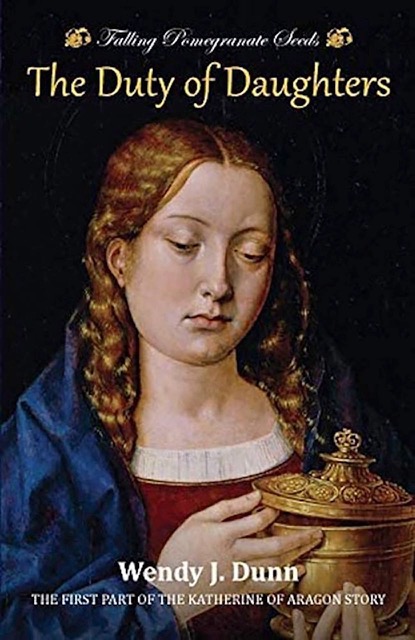
Dear Heart ignited my desire to write about the life of Katherine of Aragon. I wrote the first version of The Duty of Daughtersthe novel about Katherine of Aragon’s early life in Castille – through the point of view of the child Maria de Salinas and then faced the fact I needed to write it through an adult point of view. I knew it just had to be Beatriz Galindo, the scholar who may have been Katherine of Aragon’s tutor, but I despaired about pulling apart the book and starting again. So much so, it took completing my Masters of Writing and then my PhD – when I wrote The Light in the Labyrinth as my creative artefact – before I returned to this work, for it to be published in 2016.
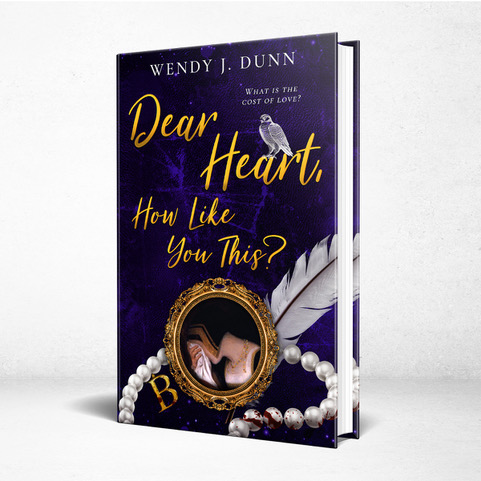
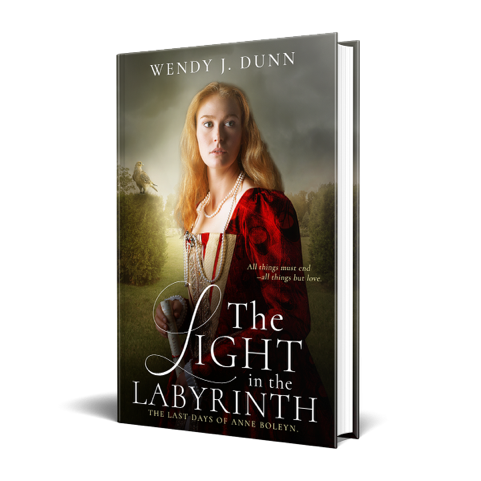
Dear Heart also ignited the inspiration for The Light in the Labyrinth because my first novel left me with so many questions about why Henry VIII murdered the woman he had turned his kingdom upside to marriage. I decided to target this novel to young adults, with the hope adults would like it, too. LOL – I suspect far more adults have read and enjoyed it than young adults. As it became a bestseller in its early published life, I have no complaints about that.

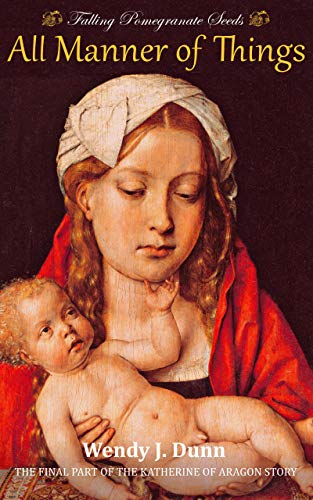
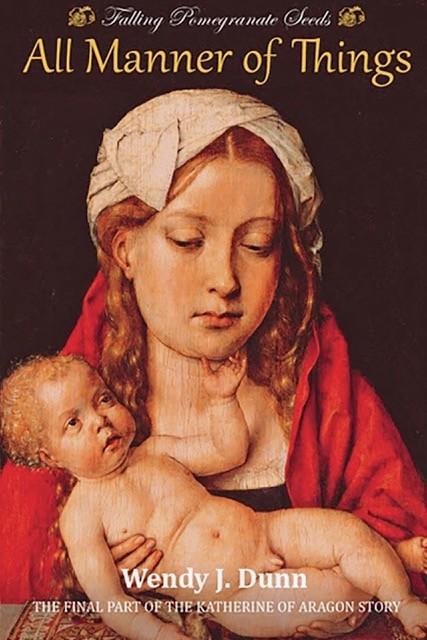
All Manner of Things is the conclusion to my Falling Pomegranate Seeds duology. All Manner of Things imagines Katherine of Aragon time in England from her arrival in 1501 to 1520, with an epilogue that takes the reader to her deathbed. I used Maria de Salinas, one of Katherine’s closest friends and a fellow Castilian exile, as my narrator, which offered a close view of Katherine’s life.

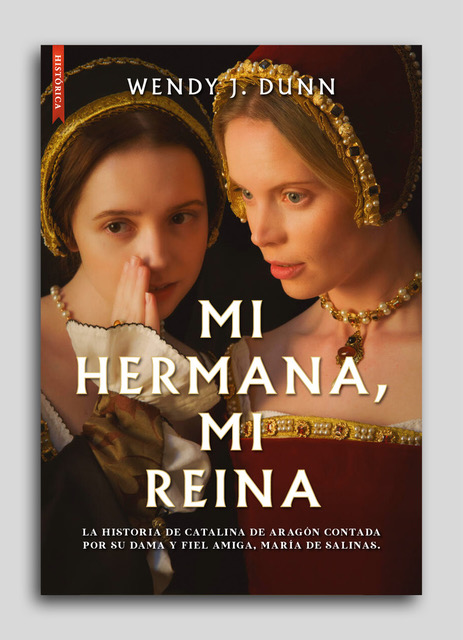
All Manner of Things has done me proud since its publication by gaining quite a few awards and being translated into Spanish and published as Mi Hermana, Mi Reina.

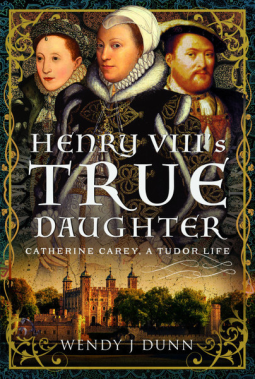
Henry VIII’s True Daughter: Catherine Carey, A Tudor Life is my first published major work of nonfiction. COVID lockdowns made researching that book difficult. I was stuck in Melbourne, Australia, when I should have been researching in England. But we are fortunate to have a wealth of archival material now available online.

Sharon: What attracts you to the Tudor period?

Wendy: I have loved the Tudor period since my childhood. It is a fascinating period with so many fascinating people. For me, this period offers a wealth of stories to draw from for my storytelling, with a cast of archetypes, heroes and villains, with stories of adultery, murder, lust, love, passion, betrayal, tragedy and triumph, family secrets, ambition and vainglory. The Tudors offer a treasure trove of multilayered tales that speak to our shared humanity.

Sharon: Who is your favourite Tudor and why?

Wendy: No question about it. Elizabeth I. I know she was not perfect, but she was an exceptionally intelligent human being. The fact she ended up the queen of England, after years of walking a road where any misstep could lead to her death, is such a story of triumph. And the triumph continued all through her life. Elizabeth remained queen for close to forty-four years, despite all the plots to bring her down.  

Sharon: Who is your least favourite Tudor and why?
Wendy: Henry VIII. I don’t think I could ever like any man who murders his wives. I confess I wrote The Light in the Labyrinth hoping I’d find him more likeable. Alas, I liked him far less after completing my second Anne Boleyn novel. He was a bully, a tyrant (especially after 1536), possessed little empathy, emotionally abused his eldest daughter and forced her to betray the memory of her mother, all of which broke her spirit, made it harder for women to work in professions – for example, a law early in his reign excluded women from the medical profession, and was, many times, simply cruel.  

OMG – he annulled his marriage to Anne Boleyn just days before her execution, so how could she be accused of adultery then? But he still executed her!

Sharon: How do you approach researching your topic?

Wendy: Books. Many books. And more books. Academic papers. Hours of searching for primary sources to help me with my topic. Living in hope of having funds to get to the places where my people once lived, just so I can walk in their footsteps.

I build my people – real and imagined – through thorough research. I love researching history and deepening my knowledge about people of the past, which means every book I write increases my own personal reference library.

Sharon: Tell us your ‘favourite’ Tudor story.

Wendy: The day they crowned Elizabeth. Whenever I read the primary sources about her coronation, I am always swept away by the joy of the day. By Elizabeth’s joy. And I get an extra shiver up and down my backbone to know Anne Boleyn was remembered on this day. What Elizabeth must have felt to see her mother included in the processional display that celebrated her lineage.

I have written about this day in Henry VIII’s True Daughter, and also touched on this scene in FIRE FROM THE COMET’S TAIL, one of my short stories:

One of the honoured women helping carry Elizabeth’s long, heavy mantle up the steps, Kate couldn’t resist doing a dancing step, far too excited and happy to mind the cold.

Drums rolled and trumpets blared. A thousand voices roared in triumph: Long live the queen. Long live the queen.
Bess looked over her shoulder at the crowds, and waved. In the sudden hushed silence, before the crowd shouted out as if in one voice, “Elizabeth! God Save Elizabeth!” the wind carried to Kate the well-remembered laugh of another queen. One more shout mounted up, God save the queen.

Out of the corner of her eye, her aunt seemed standing beside her. Love. Love never dies, or is forgotten, her aunt’s voice said in her mind. Strange. She had no memory of her saying that while she lived.

Snow-light blinding her again, Kate rubbed her eyes. When she opened them, Bess had entered the ancient doors of Westminster.

I really look forward to revisiting this day in the novel I am writing now.

Sharon: Tell us your least ‘favourite’ Tudor story.

Wendy: The execution of Anne Boleyn. Such an unjust end to her life. I also believe she only gave up hope of a reprieve in her last moments. How awful it must have been for her, knowing Henry wanted her dead so much he set in motion her execution. He may have given her the mercy of the French swordman, but he was merciless in other ways. And to die knowing she was leaving behind her infant daughter who would no longer have her protection. My heart breaks for her!

Sharon: Are there any other eras you would like to write about?
Wendy: I hope to live long enough to write about a few women from medieval Spanish history who have caught my attention. Researching Katherine of Aragon’s life has left me with a deep love of Spain and its history.

Sharon: What are you working on now?

Wendy: I’m working through the edits of Shades of Yellow, my novel about an Australian woman writing a Tudor novel (not me!), which is scheduled for publication on September 7th. I am also writing a novel inspired by the life of Frances Newton Brooke, a woman who served Elizabeth I even before she became queen until 1592. She is also subject I’m researching for my next nonfiction book for Pen& Sword Books

Sharon: And finally, what is the best thing about being a writer?

Wendy: Oh – finding kindred spirits, like you, Sharon! I feel so blessed with the friendships I have made along the way on this writing road of mine – and blessed to have this passion that helps me grow as a human being. Writing turned my life into a true adventure.

About the Author:
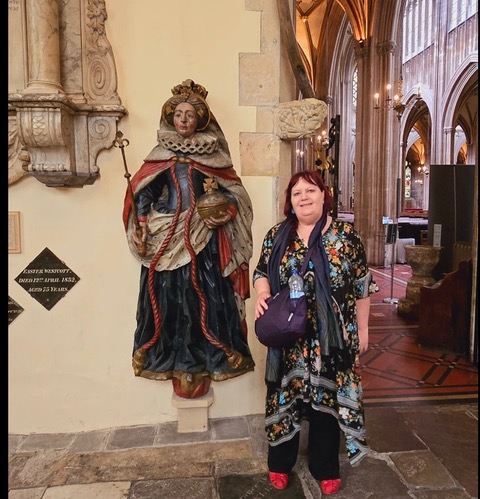
Wendy J. Dunn is an award-winning Australian writer fascinated by Tudor history – so much so she was not surprised to discover a family connection to the Tudors, not long after the publication of her first Anne Boleyn novel, which narrated the Anne Boleyn story through the eyes of Sir Thomas Wyatt, the elder. Her family tree reveals the intriguing fact that one of her ancestral families – possibly over three generations – had purchased land from both the Boleyn and Wyatt families to build up their own holdings. It seems very likely Wendy’s ancestors knew the Wyatts and Boleyns personally. Wendy is married, the mother of three sons and one daughter—named after a certain Tudor queen, surprisingly, not Anne. She is also the grandmother of two amazing small boys. She gained her PhD in 2014 and loves walking in the footsteps of the historical people she gives voice to in her novels. Wendy also tutors at Swinburne University of Technology, Australia.

Where to find Wendy’s books:.
Original version of Dear Heart, How Like You This?, New edition of Dear Heart, How like You This?

Original version of The Light in the Labyrinth. New version of The Light in the Labyrinth.

Falling Pomegranate Seeds duology: Part One, 
The Duty of Daughtershttps://mybook.to/FPS, Part two: All Manner of Things.

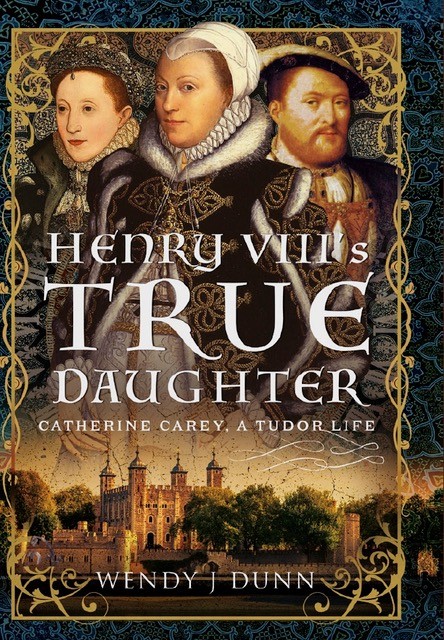
Pen and Sword Books: Henry VIIIs True Daughter: Catherine Carey, A Tudor Life

Mi hermana, mi reina: La historia de Catalina de Aragn contada por su dama y fiel amiga Mara de Salinas (Spanish Edition)

Where to find Wendy::

WebsiteNewsletter Facebook – Instagram: wendyjdunnauthor, Bluesky: wendyjdunn.bsky.social, LinkedIn: Dr Wendy Dunn – Academic Tutor and LecturerGoodreadsBookbub

*

My books

Signed, dedicated copies of all my books are available through my online store.

Out now: Scotland’s Medieval Queens

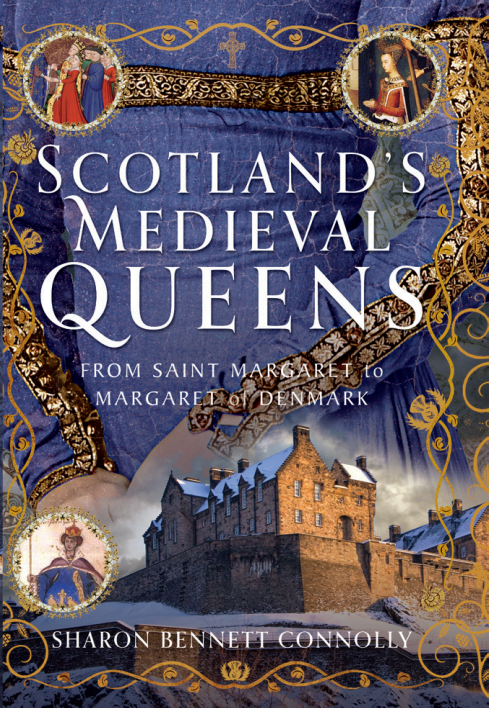
Scotland’s history is dramatic, violent and bloody. Being England’s northern neighbour has never been easy. Scotland’s queens have had to deal with war, murder, imprisonment, political rivalries and open betrayal. They have loved and lost, raised kings and queens, ruled and died for Scotland. From St Margaret, who became one of the patron saints of Scotland, to Elizabeth de Burgh and the dramatic story of the Scottish Wars of Independence, to the love story and tragedy of Joan Beaufort, to Margaret of Denmark and the dawn of the Renaissance, Scotland’s Medieval Queens have seen it all. This is the story of Scotland through their eyes.

Available now from Amazon and Pen and Sword Books

Also by Sharon Bennett Connolly:
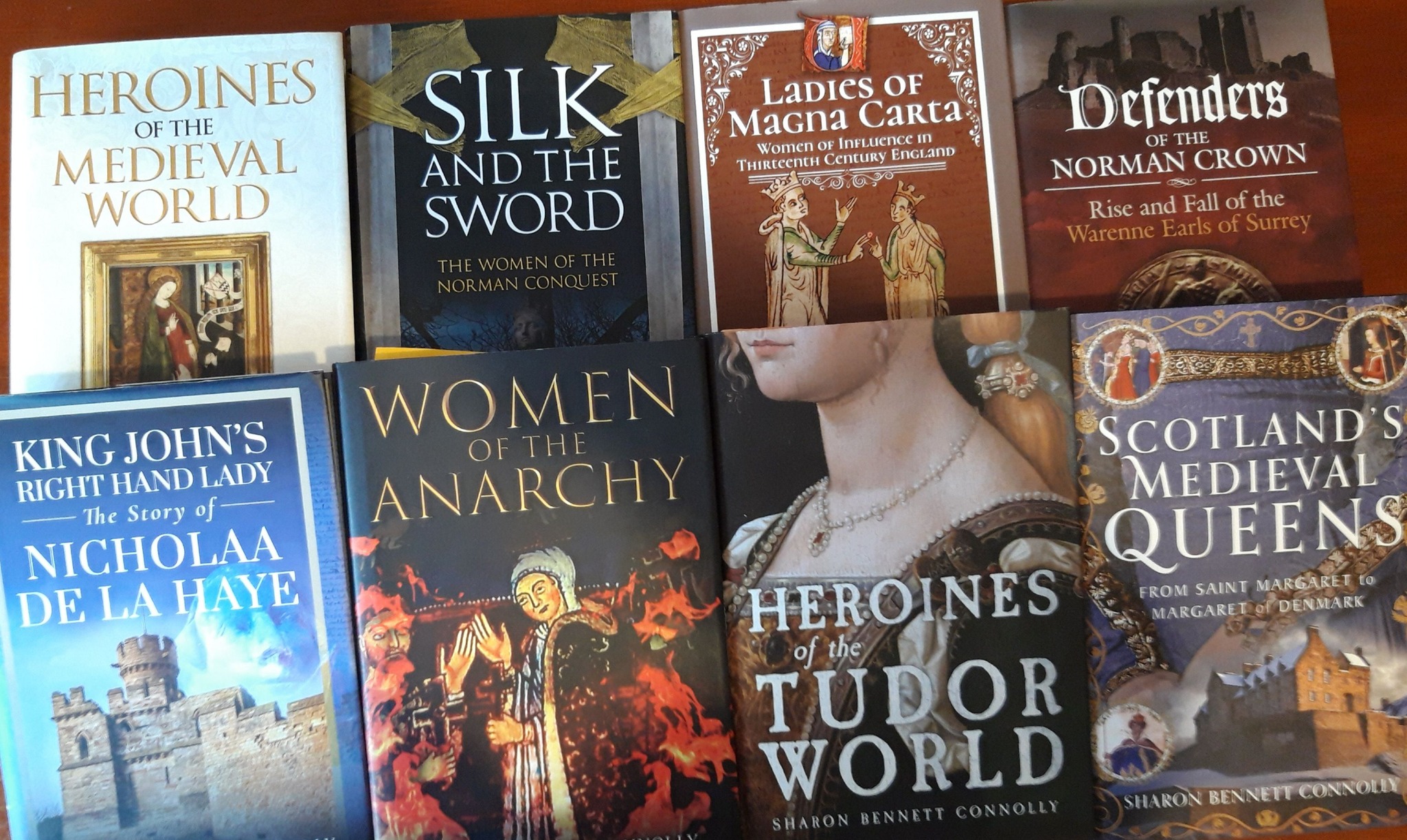
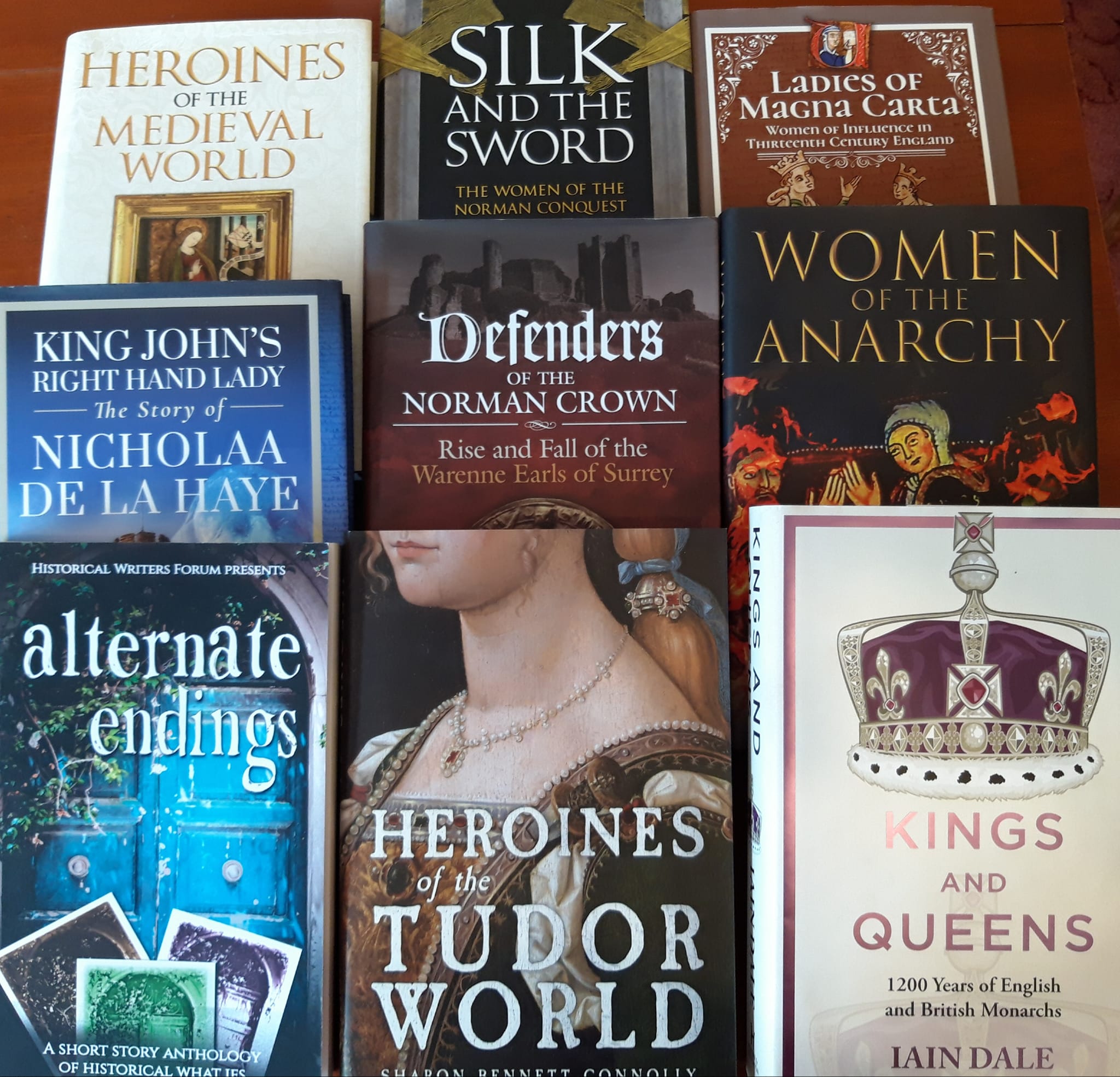
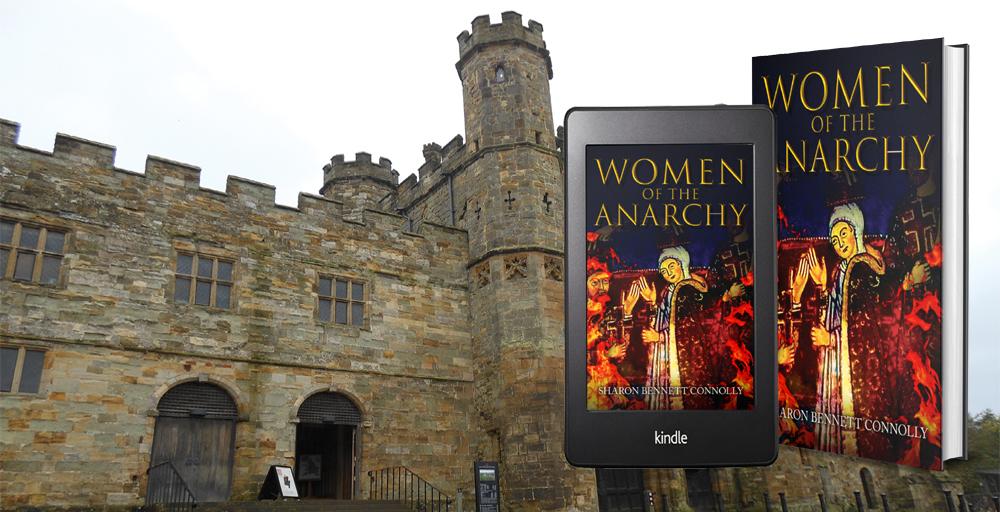
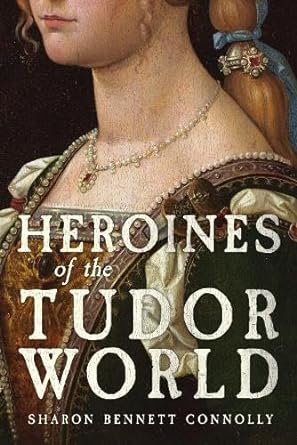
Heroines of the Tudor World tells the stories of the most remarkable women from European history in the time of the Tudor dynasty, 1485-1603. These are the women who ruled, the women who founded dynasties, the women who fought for religious freedom, their families and love. Heroines of the Tudor World is now available for pre-order from Amberley Publishing and Amazon UK. Women of the Anarchy demonstrates how Empress Matilda and Matilda of Boulogne, unable to wield a sword themselves, were prime movers in this time of conflict and lawlessness. It shows how their strengths, weaknesses, and personal ambitions swung the fortunes of war one way – and then the other. Available from Bookshop.orgAmberley Publishing and Amazon UKKing John’s Right-Hand Lady: The Story of Nicholaa de la Haye is the story of a truly remarkable lady, the hereditary constable of Lincoln Castle and the first woman in England to be appointed sheriff in her own right. Available from all good bookshops Pen & Sword Booksbookshop.org and Amazon

Defenders of the Norman Crown: The Rise and Fall of the Warenne Earls of Surrey tells the fascinating story of the Warenne dynasty, from its origins in Normandy, through the Conquest, Magna Carta, the wars and marriages that led to its ultimate demise in the reign of Edward III. Available from Pen & Sword BooksAmazon in the UK and US, and Bookshop.orgLadies of Magna Carta: Women of Influence in Thirteenth Century England looks into the relationships of the various noble families of the 13th century, and how they were affected by the Barons’ Wars, Magna Carta and its aftermath; the bonds that were formed and those that were broken. It is now available in paperback and hardback from Pen & SwordAmazon, and Bookshop.orgHeroines of the Medieval World tells the stories of some of the most remarkable women from Medieval history, from Eleanor of Aquitaine to Julian of Norwich. Available now from Amberley Publishing and Amazon, and Bookshop.orgSilk and the Sword: The Women of the Norman Conquest traces the fortunes of the women who had a significant role to play in the momentous events of 1066. Available now from Amazon,  Amberley Publishing, and Bookshop.org.

Alternate Endings: An anthology of historical fiction short stories including Long Live the King… which is my take what might have happened had King John not died in October 1216. Available in paperback and kindle from Amazon.

Podcast:

Have a listen to the A Slice of Medieval podcast, which I co-host with Historical fiction novelist Derek Birks. Derek and I welcome guests, such as Bernard Cornwell and Michael Jecks, and discuss a wide range of topics in medieval history, from significant events to the personalities involved. Every episode is also now available on YouTube.

*

Don’t forget! Signed and dedicated copies of all my books are available through my online store.

For forthcoming online and in-person talks, please check out my Events Page.

You can be the first to read new articles by clicking the ‘Follow’ button, liking our Facebook page or joining me on TwitterThreadsBluesky and Instagram.

*

©2025 Sharon Bennett Connolly, FRHistS and Wendy J. Dunn
Book Corner: 2 Books About Tudor Heirs

It is time for me to get back to some serious book reviewing. So, in order to catch up, I thought I’d do two reviews in one post. Both books are from the Tudor period and look into the heirs to the Tudor throne, and the impact of Henry VIII’s actions on those children. Each books provide a fascinating insight into the lives of prominent Tudors and shows a side of Henry VIII that is often overlooked.

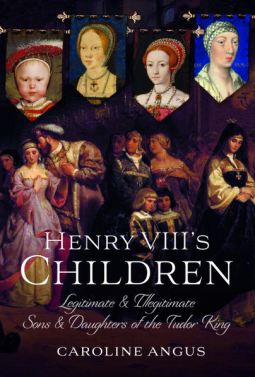
Henry VIII’s Children by Caroline Angus

Of the five Tudor monarchs, only one was ever born to rule. While much of King Henry VIII’s reign is centred on his reckless marriage choices, it was the foundations laid by Henry and Queen Katherine of Aragon that shaped the future of the crown. Among the suffering of five lost heirs, the royal couple placed all their hopes in the surviving Princess Mary. Her early life weaves a tale of promise, diplomacy, and pageantry never again seen in King Henry’s life, but a deep-rooted desire for a son, a legacy of his own scattered childhood, pushed Henry VIII to smother Mary’s chance to rule. An affair soon produced an unlikely heir in Henry Fitzroy, and while one child was pure royalty, the other illegitimate, the comparison of their childhoods would show a race to throne closer than many wished to admit.

King Henry’s cruelty saw his heirs’ fates pivot as wives came and went, and the birth Princess Elizabeth, saw long-term plans upended for short-term desires. With the death of one heir hidden from view, the birth of Prince Edward finally gave the realm an heir born to rule, but King Henry’s personal desires and paranoia left his heirs facing constant uncertainty for another decade until his death. Behind the narrative of Henry VIII’s wives, wars, reformation and ruthlessness, there were children, living lives of education among people who cared for them, surrounded by items in generous locations which symbolised their place in their father’s heart. They faced excitement, struggles, and isolation which would shape their own reigns. From the heights of a surviving princess destined and decreed to influence Europe, to illegitimate children scattered to the winds of fortune, the childhoods of Henry VIII’s heirs is one of ambition, destiny, heartache, and triumph.

Henry VIII left a long shadow, especially for his children. Caroline Angus looks into the lives and experiences of Henry’s 3 legitimate children, Edward VI, Mary I and Elizabeth I, alongside his only recognised illegitimate child, Henry Fitzroy, Duke of Richmond. And the other possible candidates to be Henry’s offspring, including Catherine Carey.

Henry VIII’s Children is a very easy and enjoyable read. You get absorbed into Caroline Angus’s love of her subject. Her research is thorough and all her arguments are supported by evidence. Where there is conjecture, the author presents both sides and lets the reader find their own conclusion, while presenting what she thinks most likely. I did not agree with all her conclusions, particularly when it comes to Catherine Carey – I am not convinced she was Henry VIII’s daughter, not that Henry’s relationship with Mary Boleyn lasted as long as some historians suggest. I just don’t think we have enough information. But it was interesting to read Caroline’s thoughts on the subject and see how she came to her conclusions.
It certainly gave me food for thought!

The Tudors are always a fascinating subject and Caroline Angus does a wonderful job of igniting the reader’s passion in her subject.

The strength of Henry VIII’s Children lies in its fascinating investigation into the lives of Henry’s 3 ‘legitimate’ children and how their fates were manipulated and directed by Henry’s obsession for a male heir, and his multiple marriages. Poor Mary I had 5 stepmothers! just imagine how she must have felt, watching her mother shunned and sidelined by the father she adored, not being allowed to visit her on her deathbed, nor being allowed to receive her mother’s comfort when she was ill and scared. The mind games Henry VIII played with his eldest child, in order to get her acquiescence, are something to behold.

And then there’s poor Elizabeth, her mother executed before her 3rd birthday, and yet she is the one who surpassed all Henry’s dreams for his children. Elizabeth is the one who had a golden age named after her. She is also the one who always lived in the shadow of her mother’s fate. Caroline Angus looks into all aspects of Elizabeth’s life, especially the childhood and adolescence that shaped her future.

And Edward! the golden boy. The heir who was so desired that his father broke with Rome to get. A boy who was the hope of a nation but died so tragically young.

Caroline Angus looks at them all with such enthusiasm and animation that they jump off the page.

An eminently readable nook that I have no hesitation in recommending.

To Buy Henry VIII’s Children

About the Author:

Caroline Angus is a New Zealand-based author raising four sons. Caroline studied history at Universitat de València, Spain, spending ten years dedicated to the Spanish Civil War and the resulting dictatorship. Caroline went on to study with King’s College London, specialising in Shakespeare and British royal history. After a decade of writing fiction, including the Secrets of Spain series, focusing on the lives of Valencian interviewees between 1939 and 1975, and the more recent Queenmaker Trilogy, eleven years of Thomas Cromwell and his fictional attendant Nicòla Frescobaldi, Caroline is now creating non-fiction works on the surviving papers of Thomas Cromwell.

Henry VIII’s True Daughter by Wendy J Dunn

The lives of Tudor women often offer faint but fascinating footnotes on the pages of history. The life of Catherine – or Katryn as her husband would one day pen her name – Carey, the daughter of Mary Boleyn and, as the weight of evidence suggests, Henry VIII, is one of those footnotes.

As the possible daughter of Henry VIII, the niece of Anne Boleyn and the favourite of Elizabeth I, Catherine’s life offers us a unique perspective on the reigns of Henry and his children. In this book, Wendy J. Dunn takes these brief details of Catherine’s life and turns them into a rich account of a woman who deserves her story told. Following the faint trail provided of her life from her earliest years to her death in service to Queen Elizabeth, Dunn examines the evidence of Catherine’s parentage and views her world through the lens of her relationship with the royal family she served.

This book presents an important story of a woman who saw and experienced much tragedy and political turmoil during the reigns of Henry VIII, Edward VI, and Mary I – all of which prepared her to take on the vital role of one of Elizabeth I closest and most trusted women. It also prepared her to become the wife of one of Elizabeth’s privy councillors – a man also trusted and relied on by the queen. Catherine served Elizabeth during the uncertain and challenging first years of her reign, a time when there was a question mark over whether she would succeed as queen regnant after the failures of England’s first crowned regnant, her sister Mary.

Through immense research and placing her in the context of her period, HENRY VIII’S TRUE DAUGHTER: CATHERINE CAREY, A TUDOR LIFE draws Catherine out of the shadows of history to take her true place as the daughter of Henry VIII and shows how vital women like Catherine were to Elizabeth and the ultimate victory of her reign.

Henry VIII’s True Daughter: Catherine Carey, A Tudor Life by Wendy J. Dunn is a perfect accompaniment to Henry VIII’s Children. Focusing on the eldest child of Mary Boleyn and William Carey, Wendy J. Dunn investigates Catherine’s origins and the stories around her conception and birth – in particular, her mother’s relationship with Henry VIII. It has long been thought possible that Catherine was Henry’s daughter and that Mary Boleyn’s marriage to William Carey was arranged to conceal the king’s affair. Henry himself admitted he had slept with Mary Boleyn when he was once accused of sleeping with Anne Boleyn’s mother, replying along the lines of ‘the sister but never the mother.’

So, we know they had a relationship, but how long it lasted and whether Catherine was the result of that relationship is still uncertain. Wendy attempts to lift away that uncertainty and presents all the evidence and conjecture that has been gather over the years to give us her own conclusions.

But this book is so much more! Henry VIII’s True Daughter gives us insights into the life of a prominent Tudor woman. Whether or not she was the daughter of Henry VIII, she was still at the heart of the Tudor court, especially in the reign of her sister/cousin, Elizabeth I. Catherine was one of Elizabeth’s favourites and was loyal to the queen to the very end of her life. Wendy gives stunning insight into Catherine’s life and career, as well as her marriage and family.

Even if I don’t necessarily agree with all its conclusion, Henry VIII’s True Daughter by Wendy J Dunn is a wonderful, engaging book, giving the reader ample food for thought in her theories and explanations of the life and origins of Catherine Carey. It is a must-read for any fan of Tudor history.

To Buy Henry VIII’s True Daughter

About the Author:

Wendy J. Dunn is an award-winning Australian writer fascinated by Tudor history – so much so she was not surprised to discover a family connection to the Tudors, not long after the publication of her first Anne Boleyn novel, which narrated the Anne Boleyn story through the eyes of Sir Thomas Wyatt, the elder. Her family tree reveals the intriguing fact that one of her ancestral families – possibly over three generations – had purchased land from both the Boleyn and Wyatt families to build up their holdings. It seems very likely Wendy’s ancestors knew the Wyatts and Boleyns personally. Wendy is married, the mother of four adult children and the grandmother of two amazing small boys. She gained her PhD in 2014 and loves walking in the footsteps of the historical people she gives voice to in her books. Wendy also tutors writing at Swinburne University of Technology, Australia. HENRY VIII’S TRUE DAUGHTER: CATHERINE CAREY, A TUDOR LIFE is her first full-length nonfiction work.

*

My Books:

Signed, dedicated copies of all my books are available through my online store.

OUT NOW! Heroines of the Tudor World

Heroines of the Tudor World tells the stories of the most remarkable women from European history in the time of the Tudor dynasty, 1485-1603. These are the women who ruled, the women who founded dynasties, the women who fought for religious freedom, their families and love. These are the women who made a difference, who influenced countries, kings and the Reformation. In the era dominated by the Renaissance and Reformation, Heroines of the Tudor World examines the threats and challenges faced by the women of the era, and how they overcame them. From writers to regents, from nuns to queens, Heroines of the Tudor World shines the spotlight on the women helped to shape Early Modern Europe.

Heroines of the Tudor World is now available for pre-order from Amberley Publishing and Amazon UK.

Coming 30 January 2025: Scotland’s Medieval Queens

Scotland’s history is dramatic, violent and bloody. Being England’s northern neighbour has never been easy. Scotland’s queens have had to deal with war, murder, imprisonment, political rivalries and open betrayal. They have loved and lost, raised kings and queens, ruled and died for Scotland. From St Margaret, who became one of the patron saints of Scotland, to Elizabeth de Burgh and the dramatic story of the Scottish Wars of Independence, to the love story and tragedy of Joan Beaufort, to Margaret of Denmark and the dawn of the Renaissance, Scotland’s Medieval Queens have seen it all. This is the story of Scotland through their eyes.

Available for pre-order now.

Also by Sharon Bennett Connolly:

Women of the Anarchy demonstrates how Empress Matilda and Matilda of Boulogne, unable to wield a sword themselves, were prime movers in this time of conflict and lawlessness. It shows how their strengths, weaknesses, and personal ambitions swung the fortunes of war one way – and then the other. Available from Bookshop.orgAmberley Publishing and Amazon UKKing John’s Right-Hand Lady: The Story of Nicholaa de la Haye is the story of a truly remarkable lady, the hereditary constable of Lincoln Castle and the first woman in England to be appointed sheriff in her own right. Available from all good bookshops Pen & Sword Booksbookshop.org and AmazonDefenders of the Norman Crown: The Rise and Fall of the Warenne Earls of Surrey tells the fascinating story of the Warenne dynasty, from its origins in Normandy, through the Conquest, Magna Carta, the wars and marriages that led to its ultimate demise in the reign of Edward III. Available from Pen & Sword BooksAmazon in the UK and US, and Bookshop.org

Ladies of Magna Carta: Women of Influence in Thirteenth Century England looks into the relationships of the various noble families of the 13th century, and how they were affected by the Barons’ Wars, Magna Carta and its aftermath; the bonds that were formed and those that were broken. It is now available in paperback and hardback from Pen & Sword, Amazon, and Bookshop.orgHeroines of the Medieval World tells the stories of some of the most remarkable women from Medieval history, from Eleanor of Aquitaine to Julian of Norwich. Available now from Amberley Publishing and Amazon, and Bookshop.orgSilk and the Sword: The Women of the Norman Conquest traces the fortunes of the women who had a significant role to play in the momentous events of 1066. Available now from Amazon,  Amberley Publishing, and Bookshop.org.

Alternate Endings: An anthology of historical fiction short stories including Long Live the King… which is my take what might have happened had King John not died in October 1216. Available in paperback and kindle from Amazon.

Podcast:

Have a listen to the A Slice of Medieval podcast, which I co-host with Historical fiction novelist Derek Birks. Derek and I welcome guests, such as Bernard Cornwell, and discuss a wide range of topics in medieval history, from significant events to the personalities involved.

*

Don’t forget! Signed and dedicated copies of all my books are available through my online store.

For forthcoming online and in-person talks, please check out my Events Page.

You can be the first to read new articles by clicking the ‘Follow’ button, liking our Facebook page or joining me on TwitterThreads and Instagram.

*

©2024 Sharon Bennett Connolly FRHistS.

Guest Post: Catherine Carey by Wendy J. Dunn

Today it is an absolute pleasure to welcome author Wendy J. Dunn to History…the Interesting Bits, to talk about her latest book, Henry VIII’s True Daughter: Catherine Carey, A Tudor Life. Wendy is an award-winning historical novelist but Henry VIII’s True Daughter: Catherine Carey, A Tudor Life is her first foray into historical non-fiction. It is a fascinating investigation into the life and paternity of Catherine Carey, daughter of Mary Boleyn and … well, that’s the question!

Over to Wendy…

Catherine Carey

There’s a question I am answering a lot since the publication of Henry VIII’s True Daughter: Catherine Carey, A Tudor Life.

Why did I decide to write a nonfiction book about Catherine Carey?

Well, the answer is a story in itself, and it all began when a commissioning editor for Pen & Sword Books approached me on twitter and asked me if I would be interested in writing a book for them. After spending some time googling her and establishing she was, in fact, who she claimed to be, I asked her to tell me more, and she offered me three projects to select from. One project was about the life and times of Catherine Carey. The teenage Catherine was my point of view character in The Light in the Labyrinth, my second Anne Boleyn novel —so I was well and truly already fascinated by Catherine’s story that pointed to her being the unrecognised daughter of Henry VIII. The opportunity to discover more about her and life was too tempting and too good an opportunity to pass up.

What makes her fascinating?

For me, it is because she is yet another important Tudor woman whose life story should be better known. The fact we know so little about her – even the year of her birth is a mystery —intrigued me.

 Catherine was the daughter of Mary Boleyn, the sister of Anne Boleyn, Henry VIII’s second queen. She was born during Mary Boleyn’s marriage to William Carey — a man of good birth but not high in the Tudor hierarchy who closely served Henry VIII in his private chambers. The years put forward for Catherine’s birth are also years when Mary was sexually involved with Henry VIII. 

Henry Carey, Catherine’s brother

We don’t know when or where Catherine was born. A strong possibility is for her birthplace is Chilton Folist, Wiltshire, the place where William Carey was born. Hever Castle is also a possibility, when you consider it was usual for Tudor women to give birth to their children supported by their close women kin, and Mary’s mother and grandmother lived at Hever Castle. As for her birthyear, what little information history provides for us seems to point to early 1524.

William Carey died early in Catherine’s life. Mary Boleyn returned to Hever Castle at this time — and I believe she returned with both her children. Henry, her son, soon left her care as six-year-old and her sister Anne Boleyn took over as his guardian.

As a well born Tudor girl, Catherine would have received her first training from the adult women in her family. Catherine belonged to the Boleyn family — a family that believed in educating their daughters – and that points to Catherine receiving a good education. We also have Elizabeth’s heartfelt ‘Cor Rotto’ letter to her cousin Catherine (and, I believe, also her half-sister) in 1553 that supports this. Elizabeth is writing to someone with intelligence, someone who understood Latin and also mythology.

When Catherine was eight or perhaps ten, Mary married William Stafford for love and ended up in her family’s bad books and cut off financially. A big question lingers over where Mary and William lived after their marriage, but Catherine had reached the age to be ‘put out’ to another household by this stage. I suspect the Boleyn family placed her either in the household of Anne Boleyn, or her Uncle George Boleyn. Anne was already looking after Mary’s son, Henry, so why not her daughter too? That there are many gaps in the household records of this time could explain the non-mention of Catherine’s name as part of either her aunt or uncle’s household.

 There’s no doubt in my mind that Henry VIII sired Catherine. Writing True Daughter has now made me believe the king also was the father of Henry Carey. What evidence do I have to support this? I will share some of what other historians have put forward — as for the evidence I have put forward in True Daughter— well, I am hoping people will buy my book to find out.

First and most powerful bit of evidence is that Mary Boleyn was in a sexual relationship with Henry VIII – something that Henry admitted and also used to annul his marriage with Anne Boleyn just days before her execution. Henry VIII’s involvement with Mary lasted for years – and throughout the years put forward as possible birth years for Catherine Carey.

Even before Catherine’s birth, we are provided with smoke about the possibility of Mary’s pregnancy when the king named one of his ships in Mary’s honour. After Catherine’s birth, William Carey received several grants from Henry VIII – and the money provided from at least one of these grants continued to go to Mary Boleyn after his death.

While Henry VIII lived, it appears he was more than simply an interested bystander in Catherine’s life. Before her marriage, Catherine gained a very sought for position as one of Anne of Cleves’ ‘Maid of honours, despite the fact she was the niece of Anne Boleyn. The Boleyns, by this time, were a family no longer favoured by Henry VIII. When Catherine Carey married Francis Knollys, the king granted them ownership of property in both their names.

What to know more about Catherine’s story?

For that, you need to read ‘Henry VIII’s True Daughter: Catherine Carey, A Tudor Life’.

About the author:

Wendy J. Dunn is an award-winning Australian writer fascinated by Tudor history – so much so she was not surprised to discover a family connection to the Tudors, not long after the publication of her first Anne Boleyn novel, which narrated the Anne Boleyn story through the eyes of Sir Thomas Wyatt, the elder. Her family tree reveals the intriguing fact that one of her ancestral families – possibly over three generations – had purchased land from both the Boleyn and Wyatt families to build up their own holdings. It seems very likely Wendy’s ancestors knew the Wyatts and Boleyns personally. Wendy is married, the mother of three sons and one daughter—named after a certain Tudor queen, surprisingly, not Anne. She is also the grandmother of two amazing small boys. She gained her PhD in 2014 and loves walking in the footsteps of the historical people she gives voice to in her novels. Wendy also tutors at Swinburne University of Technology, Australia.

*

My Books:

Signed, dedicated copies of all my books are available through my online bookshop.

Out Now! Women of the Anarchy

Two cousins. On the one side is Empress Matilda, or Maud. The sole surviving legitimate child of Henry I, she is fighting for her birthright and that of her children. On the other side is her cousin, Queen Matilda, supporting her husband, King Stephen, and fighting to see her own son inherit the English crown. Women of the Anarchy demonstrates how these women, unable to wield a sword, were prime movers in this time of conflict and lawlessness. It show how their strengths, weaknesses, and personal ambitions swung the fortunes of war one way – and then the other.

Available from Bookshop.orgAmberley Publishing and Amazon UK.

Coming on 15 June 2024: Heroines of the Tudor World

Heroines of the Tudor World tells the stories of the most remarkable women from European history in the time of the Tudor dynasty, 1485-1603. These are the women who ruled, the women who founded dynasties, the women who fought for religious freedom, their families and love. These are the women who made a difference, who influenced countries, kings and the Reformation. In the era dominated by the Renaissance and Reformation, Heroines of the Tudor World examines the threats and challenges faced by the women of the era, and how they overcame them. From writers to regents, from nuns to queens, Heroines of the Tudor World shines the spotlight on the women helped to shape Early Modern Europe.

Heroines of the Tudor World is now available for pre-order from Amberley Publishing and Amazon UK.

Also by Sharon Bennett Connolly:

King John’s Right-Hand Lady: The Story of Nicholaa de la Haye is the story of a truly remarkable lady, the hereditary constable of Lincoln Castle and the first woman in England to be appointed sheriff in her own right. Available from all good bookshops or direct from Pen & Sword Booksbookshop.org and AmazonDefenders of the Norman Crown: The Rise and Fall of the Warenne Earls of Surrey tells the fascinating story of the Warenne dynasty, from its origins in Normandy, through the Conquest, Magna Carta, the wars and marriages that led to its ultimate demise in the reign of Edward III. Available from Pen & Sword BooksAmazon in the UK and US, and Bookshop.org

Ladies of Magna Carta: Women of Influence in Thirteenth Century England looks into the relationships of the various noble families of the 13th century, and how they were affected by the Barons’ Wars, Magna Carta and its aftermath; the bonds that were formed and those that were broken. It is now available in paperback and hardback from Pen & Sword,  Amazon, and Bookshop.orgHeroines of the Medieval World tells the stories of some of the most remarkable women from Medieval history, from Eleanor of Aquitaine to Julian of Norwich. Available now from Amberley Publishing and Amazon, and Bookshop.orgSilk and the Sword: The Women of the Norman Conquest traces the fortunes of the women who had a significant role to play in the momentous events of 1066. Available now from Amazon,  Amberley Publishing, and Bookshop.org.

Alternate Endings: An anthology of historical fiction short stories including Long Live the King… which is my take what might have happened had King John not died in October 1216. Available in paperback and kindle from Amazon.

Podcast:

Have a listen to the A Slice of Medieval podcast, which I co-host with Historical fiction novelist Derek Birks. Derek and I welcome guests, such as Bernard Cornwell and Elizabeth Chadwick, and discuss a wide range of topics in medieval history, from significant events to the personalities involved.

*

Don’t forget! Signed and dedicated copies of all my books are available through my online bookshop.

For forthcoming online and in-person talks, please check out my Events Page.

You can be the first to read new articles by clicking the ‘Follow’ button, liking our Facebook page or joining me on Twitter and Instagram.

*

©2024 Wendy J. Dunn and Sharon Bennett Connolly FRHistS.

Book Corner: All Manner of Things by Wendy J. Dunn

Winter, 1539: María de Salinas is dying. Too ill to travel, she writes a letter to her daughter Katherine, the young duchess of Suffolk. A letter telling of her life: a life intertwined with her friend and cousin Catalina of Aragon, the youngest child of Isabel of Castile. It is a letter to help her daughter understand the choices she has made in her life, beginning from the time she keeps her vow to Catalina to share her life of exile in England.

Friendship.

Betrayal.

Hatred.

Forgiveness.

Love wins out in the end.

All Manner of Things by Wendy J. Dunn is the second book in the Falling Pomegranate Seeds series, although it works perfectly well as a standalone. In fact, if you didn’t know it was part of a series, nothing in the pages would tell you. You do not feel as if you are missing part of the story, or need to read the first book in the series, The Duty of Daughters, to grasp what is going on. Which makes it eminently readable for everyone.

And what a fabulous book it is!

All Manner of Things follows the story of Infanta Catalina (Katherine of Aragon) from her journey to the English court to marry Arthur Tudor, Prince of Wales, to the Field of the Cloth of Gold of 1520, when Henry VIII met Francis I in a spectacular display of pageantry and might. The event also marked the introduction of Anne Boleyn to English affairs; Anne was still in the service of Queen Claude of France but returned to England soon afterwards.

The story tells of the pitifully short marriage of Catalina and Arthur, the lonely years following Arthur’s death, when Catalina was a hostage, in all but name, of the English king, Henry VII, and the early years of her marriage to King Henry VIII. Historically, it documents how the relationship between Henry and Catalina changed over time, how a promising marriage and love was soured by Henry’s frequent infidelities, Catalina’s miscarriages and the many lost infants that turned a loving relationship sour.

All Manner of Things by Wendy J. Dunn is told through the eyes of Maria de Salinas, Catalina’s closest friend and companion, though no fan of Henry VIII, which puts an interesting slant on the story and shows Henry in two lights: how he is adored by his wife, and how his wife’s friend sees him. It is an interesting dichotomy that works wonderfully in the novel and demonstrates the author’s deep understanding of the Tudor court and the personalities involved.

The overriding theme of this book is friendship and love; the sisterly love and friendship between Catalina (Katherine of Aragon) and her childhood friend and almost-constant companion, Maria de Salinas.

When Maria returned to the bedchamber, Catalina was awake and at her writing desk. She lifted her head, put aside her quill and smiled at her. “You have been gone for a while.”

“I have been talking to our companions.”

“Mm…” Catalina picked up her quill again, her attention returned to the parchment in front of her.

“Catalina – could you please listen to e for a moment?”

Catalina twisted around. “What is it?”

“I think it would be wiser if we are not alone so much. The other women are your companions too. They are unhappy. I do not believe it is simply due to this long journey.”

Catalina pursed her mouth. “Do you know what troubles them?”

“They are jealous.” Maria sighed.

“Jealous?” A frown so alike her mother’s knotted between Catalina’s thinned eyebrows.

Maria sighed again. “Of me. They are jealous of me.”

Catalina looked taken aback. “But you and I have always been together.”

Maria shrugged. “I think it would be wise to remember the queen’s advice not to have obvious favourites. Once we are in England, your companions will form your inner court within your court.”

“But I think of you as my sister,” Catalina said. “Even mother kept those she trusted close to her, your mother for one.”

“Si, and like my mother for your mother, I vow to serve you to the day of our death. But the other girls begin to worry me. They are scared too about the sea voyage and, like us, they are leaving behind everything they love for England. Pray, for my sake, let us eat with them and spend more time getting to know them. I think if you befriend them, really befriend them, they won’t be so jealous and cause mischief. I do not like their black looks.”

Having researched Maria’s story myself, Maria’s life at court, marriage and constant support for her friend and queen, it is obvious that Wendy J. Dunn has done her homework. In All Manner of Things, Wendy J. Dunn captures wonderfully not only the friendship between Catalina (Katherine of Aragon’s name in her native Castilian) and Maria, but also the complications that arise from life at the Tudor court, and a friendship with a queen.

Wendy J. Dunn expertly recreates the Tudor court, the glamour of the royal family and the drama associated with all aspects of their lives – and of the lives of those who serve them. The reader is drawn into the relationships, the intrigues and the underlying falsehoods that accompany any court, expertly contrasting the ‘show’ with the friendships and relationships behind the scenes, of the queen with her ladies. The glamour of court life itself reveals the contradictions, and the changing relationships as the characters grow and are affected by the challenges they face and the secrets they have to keep.

Wendy J. Dunn wonderfully combines the history and fiction to create a gripping drama, where you will find it hard to know where fact ends and fiction begins. The storytelling is first class!

Falling Pomegranate Seeds: All Manner of Things by Wendy J. Dunn is available from Amazon.

About the Author:

Wendy J. Dunn is an Australian author, playwright and poet who has been obsessed by Anne Boleyn and Tudor History since she was ten-years-old. She is the author of two Tudor novels: Dear Heart, How Like You This?, the winner of the 2003 Glyph Fiction Award and 2004 runner up in the Eric Hoffer Award for Commercial Fiction, and The Light in the Labyrinth, her first young adult novel.

While she continues to have a very close and spooky relationship with Sir Thomas Wyatt, the elder, serendipity of life now leaves her no longer wondering if she has been channeling Anne Boleyn and Sir Tom for years in her writing, but considering the possibility of ancestral memory. Her family tree reveals the intriguing fact that her ancestors – possibly over three generations – had purchased land from both the Boleyn and Wyatt families to build up their own holdings. It seems very likely Wendy’s ancestors knew the Wyatts and Boleyns personally.

Wendy tutors at Swinburne University in their Master of Arts (Writing) program.

*

My books

Ladies of Magna Carta: Women of Influence in Thirteenth Century England looks into the relationships of the various noble families of the 13th century, and how they were affected by the Barons’ Wars, Magna Carta and its aftermath; the bonds that were formed and those that were broken. It is now available from Pen & Sword,  Amazon and from Book Depository worldwide.

Also by Sharon Bennett Connolly:

Heroines of the Medieval World tells the stories of some of the most remarkable women from Medieval history, from Eleanor of Aquitaine to Julian of Norwich. Available now from Amberley Publishing and Amazon and Book Depository.

Silk and the Sword: The Women of the Norman Conquest traces the fortunes of the women who had a significant role to play in the momentous events of 1066.  Available now from Amazon,  Amberley Publishing, Book Depository.

*

You can be the first to read new articles by clicking the ‘Follow’ button, liking our Facebook page or joining me on Twitter and Instagram.

©2021 Sharon Bennett Connolly.