Wordly Women: C.F. Dunn

Last year, I discovered two novels by an author who was previously unknown to me, Wheel of Fortune and Sun Ascendant and I read them one after the other. I loved them. Set just down the road from me in Tickhill, I loved the details of the countryside I had grown up in. Then, in September, I had the pleasure of meeting the author Claire Dunn, writing as C.F. Dunn, at the Historical Novel Society conference. Claire joined our dinner party, which also included Derek Birks, Elizabeth Chadwick, Matthew Harffy and Steven A. McKay. As you can imagine, the talk was all about history! But I did also get the chance to chat with Claire on her own, and grill her about her characters and her love of the Wars of the Roses. So, I had to ask her to take part in my Wordly Women author interviews.

Welcome Claire!

Sharon: What got you into writing?

Claire: I can’t remember a time when I didn’t write. Even before I learned how to commit thoughts to paper, I wrote stories in my head. I devoured books as soon as I learned, late, how to read, so it wasn’t ever a question of whether I would write one day, but rather when. There were obstacles to that ambition, however, the major one being dyslexia. It was more a problem of other people’s perceptions than my own limitations. Growing up when I did, a career immersed in history and literature for someone who had initially struggled to read and write, was considered untenable. I wasn’t deterred; the stories were in my head and it was only a matter of time before one escaped onto paper.

Sharon: Tell us about your books.
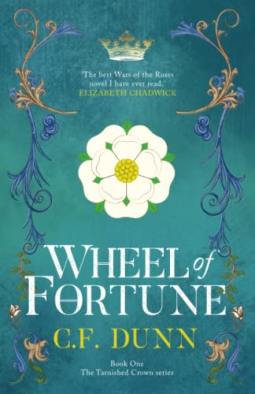
Claire: As a child and young adult, I loved books with historical action and a mystery at their core, whatever the period in which they were set. I also enjoyed cold war thrillers and, later, classic 19th century British and European literature. It was the combination of a strong story, believable characters and powerfully evocative language that was all important. So, when I came to write my own books, I suppose all those years of being drip fed such fiction found its way into my work. I didn’t start committing ideas to paper until much later and during one of the busiest times of my life running a school. In 2009, in Avila cathedral, I told my daughter about an idea I had for a story. That became my debut novel Mortal Fire (published by Lion Fiction) which went on to win a gold medal for Best Adult Romance in 2012. That was the first of five books in my contemporary gothic Secret of the Journal series, featuring a young historian, a hidden 17th century journal, and a historic anomaly that needed solving.

Almost as soon as I started the Secret of the Journal series, I also began work on my current historical series The Tarnished Crown. It took over a decade of research before Wheel of Fortune was ready for publication. The new edition of the second book – Sun Ascendant – is out in April 2025. There are going to be about 8 books in the series. I like writing longer stories and enjoy establishing characters that grow and develop throughout the series. This is especially the case when dealing with highly involved periods. I don’t see the Wars of the Roses as a succession of battles and memorable names, but a complex web of relationships affecting the highest to the lowest in the land, and stretching across the country and to the realms beyond.

By bringing fictional characters into real events with historical individuals, I’m able to explore different scenarios and outcomes while always keeping as close to what is known as possible. I don’t play fast and loose with facts and I won’t change something that has been established for the sake of the story. Sometimes, though, I have to take a fair stab at it if details are a bit sketchy, but that’s just part of the territory a fiction writer has to negotiate.

Sharon: What attracts you to the Wars of the Roses?
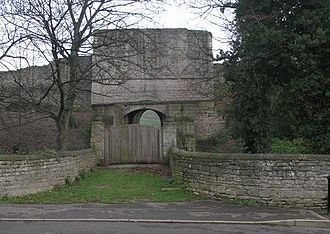
Tickhill Castle gatehouse

Claire: It’s fair to say that I am slightly obsessed. The last decades of the Plantagenet dynasty have been the bedrock of my historical interest. It has led to a degree in Medieval History and a lifetime of research. It’s a period packed with contention – both then and now – and individuals whose personalities spring from the page. Intense loyalties, treachery, ambiguous allegiances – as a writer, what more could anyone want?

Sharon: Who is your favourite 15th century person and why?

Claire: It has always been Richard III. I first became aware of the controversy surrounding him when about 8 or 9 and was hooked on history from then on. There have been brief flirtations with other people and periods along the way, but he has remained the reason for my fascination with the Wars of the Roses and the focus of my research. I wish I could say why; it’s not as if there isn’t an abundance of enigmatic figures dotted throughout history; but it was he who caught my imagination as a child, and so it has remained. It isn’t the controversy that I find interesting, however, but the complex personality and the weaving of relationships that I mentioned before. Richard’s life as Duke of Gloucester is far more revealing of the man than his few years as king.

Sharon: Who is your least favourite 15th century person and why?

Claire: Without a doubt it’s Henry VII. I have never forgiven him for winning Bosworth and even less so for almost succeeding in destroying Richard III’s reputation.

Sharon: How do you approach researching your topic?

Claire: I do acres of research, and then research the research just to make sure. I have a real thing about doing justice to the people of the past – they were just people after all – but a stroke of a pen can make or break a reputation. I believe I have a responsibility to represent them as accurately and fairly as possible, and try to do so while keeping the story gripping. Depending upon the period I’m researching, I’ll start with the historical record and delve into as many contemporary accounts as I can. If they are thin on the ground, as they often are in earlier periods or where written records have been destroyed, then I’ll look at archaeological reports. Here, geography and topography can play their role, as an understanding of the land and human interaction with it can speak volumes.

Primary physical and pictorial sources are also important – sculpture, buildings, paintings, and made artefacts such as jewellery, ceramics, textiles, represent the cultures that created them. There’s a place for ‘living’ history as well, something re-enactors understand, because nothing beats living in the past for understanding the practicalities of life in another era. How do you collect water, make fire, survive a harsh winter? Sometimes I’ll run my own experiments. I’ve been growing saffron for the past 5 years (saffron crops up – pun intended – in one of my future books). I didn’t know that mice could be a problem until a few days ago when I discovered that nearly all my corms have been eaten. Imagine that happening to someone whose livelihood depended upon bringing in a decent harvest. My corm-munching mice might very well feature in a future book.

Sharon: Are there any other eras in History you would like to write about?

Claire: My first series – a contemporary gothic mystery – had a 17th century twist, a period I find interesting and which I would like to explore further. Otherwise, it’s back to the fifteenth century and other people and themes that are begging to be explored.

Sharon: What are you working on now?
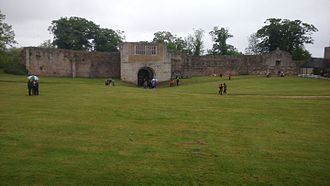
The bailey of Tickhill Castle

Claire: I’m currently writing the first book in a Victorian Gothic series, an eerie tale set in Scotland where not everything is as it seems. It’s one of those stories which has me checking the shadows and keeping the lights on in the evening. I am really enjoying researching all sorts of aspects of life in the later part of the nineteenth century, although I sometimes have to take stock when I remember that my Scottish grandfather was born in 1880. The past is not so very far away.

Sharon: And finally, what is the best thing about being a writer?

Claire: I’ve spent my life in a sort of nether world of betwixt and between. On the one hand I’ve been rooted in reality, running a school for neurodiverse children and young adults. On the other, I’m attached to a past that at times has felt more real than reality. No longer running the school, I now explore all manner of themes, topics, people and places, and get to call it work.

About the author:
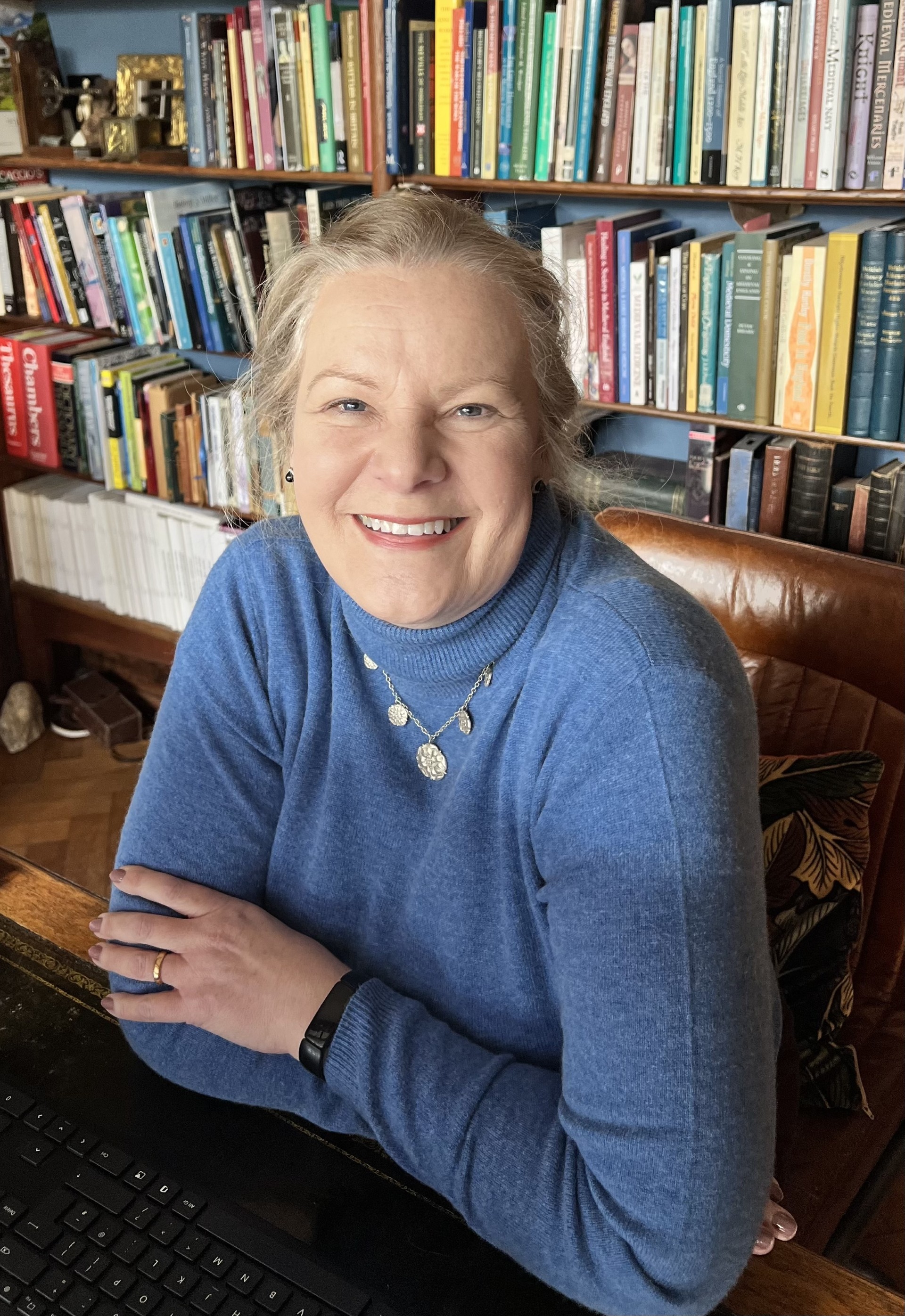
CF Dunn is an award-winning novelist of history, mystery and suspense.

Acutely aware of the impact of the past, Claire’s vibrant characters and meticulous research weave threads of history to bring an authenticity to her suspenseful stories of love, treachery and loyalty.

She is currently writing The Tarnished Crown series, the first of which, Wheel of Fortune, is described by renowned historical novelist, Elizabeth Chadwick as ‘The best Wars of the Roses novel I have ever read. ’

Now living in the South West of England, Claire frequently tries out new plot ideas on her clutch of chickens. Her love of history is equaled only by her delight in the natural world and the unruly sea by which she lives with her family, assorted animals, and overworked coffee machine.

The Tarnished Crown series:

Wheel of Fortune – ‘Dunn’s world is utterly believable, the research meticulous, the characters deep and rich. A triumph.’ Matthew Lewis. To buy Wheel of Fortune.  

Sun Ascendant. – ‘Vivid, engaging and so incredibly captivating.’ The Book Magnet. To buy Sun Ascendant

Degrees of Affinity – (October 2025)

Where to find C.F. Dunn:

You can find Claire on Instagram at @claire.f.dunn, on Facebook at CF Dunn and sign up for her quarterly newsletter on her website.

Tickhill Castle images are ©Sharon Bennett Connolly 2025

*

My books

Signed, dedicated copies of all my books are available through my online store.

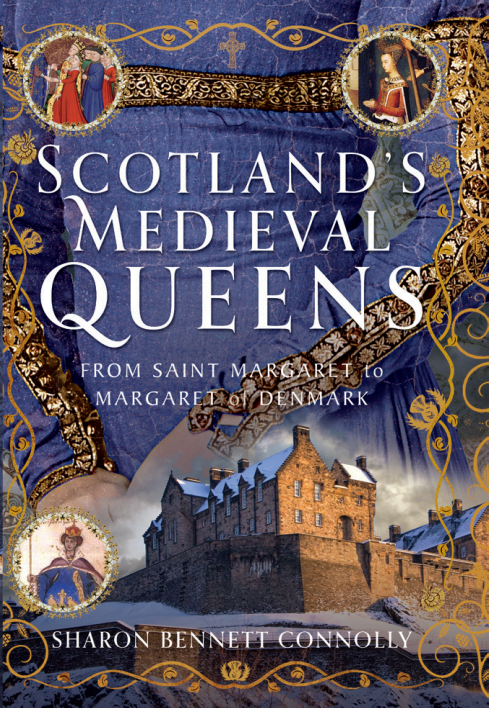
Out now: Scotland’s Medieval Queens

Scotland’s history is dramatic, violent and bloody. Being England’s northern neighbour has never been easy. Scotland’s queens have had to deal with war, murder, imprisonment, political rivalries and open betrayal. They have loved and lost, raised kings and queens, ruled and died for Scotland. From St Margaret, who became one of the patron saints of Scotland, to Elizabeth de Burgh and the dramatic story of the Scottish Wars of Independence, to the love story and tragedy of Joan Beaufort, to Margaret of Denmark and the dawn of the Renaissance, Scotland’s Medieval Queens have seen it all. This is the story of Scotland through their eyes.

Scotland’s Medieval Queens gives a thorough grounding in the history of the women who ruled Scotland at the side of its kings, often in the shadows, but just as interesting in their lives beyond the spotlight. It’s not a subject that has been widely covered, and Sharon is a pioneer in bringing that information into accessible history.’ Elizabeth Chadwick (New York Times bestselling author)

Available now from Amazon and Pen and Sword Books

Also by Sharon Bennett Connolly:

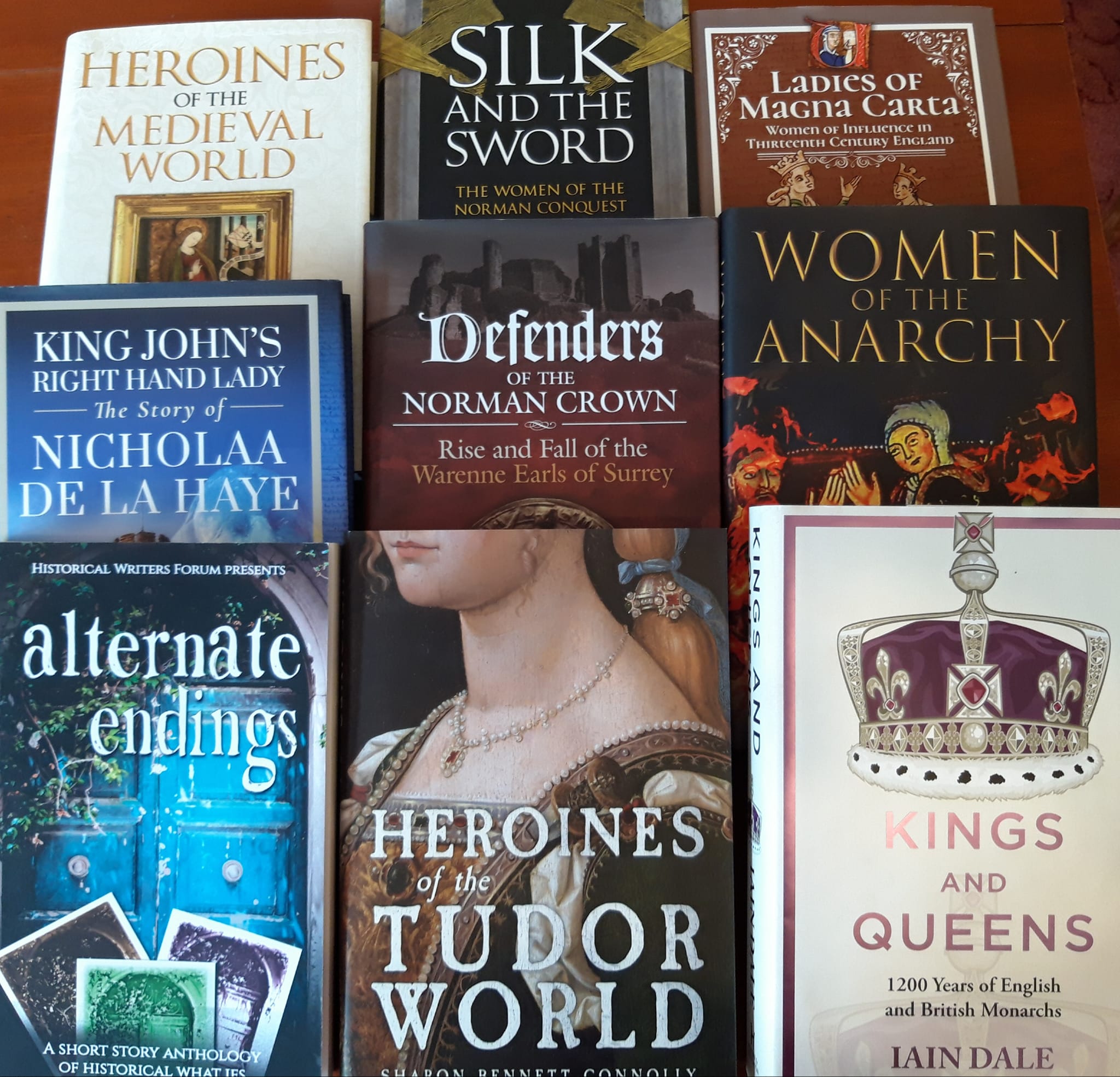
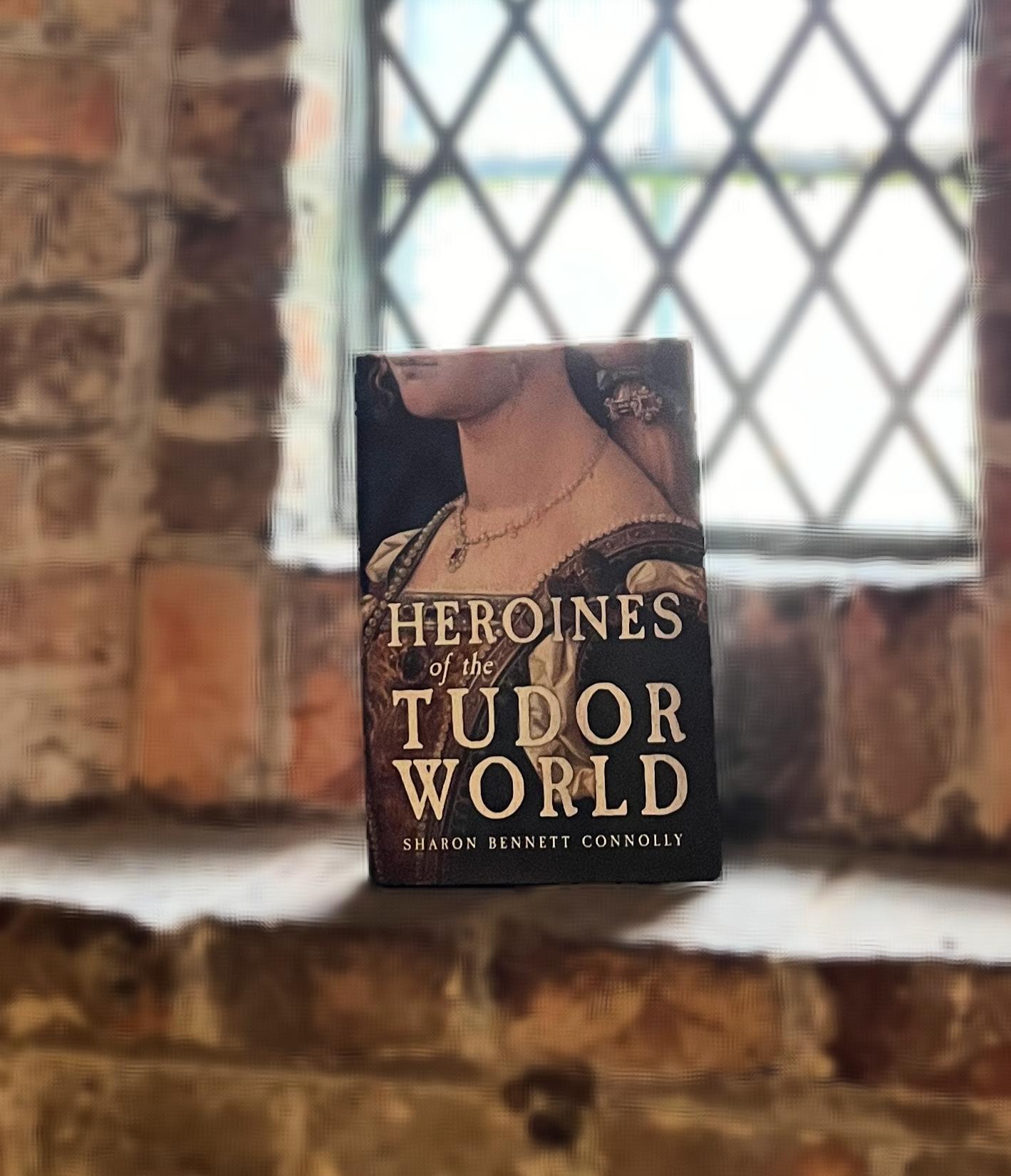
Heroines of the Tudor World tells the stories of the most remarkable women from European history in the time of the Tudor dynasty, 1485-1603. These are the women who ruled, the women who founded dynasties, the women who fought for religious freedom, their families and love. Heroines of the Tudor World is now available from Amberley Publishing and Amazon UK. Women of the Anarchy demonstrates how Empress Matilda and Matilda of Boulogne, unable to wield a sword themselves, were prime movers in this time of conflict and lawlessness. It shows how their strengths, weaknesses, and personal ambitions swung the fortunes of war one way – and then the other. Available from Bookshop.orgAmberley Publishing and Amazon UKKing John’s Right-Hand Lady: The Story of Nicholaa de la Haye is the story of a truly remarkable lady, the hereditary constable of Lincoln Castle and the first woman in England to be appointed sheriff in her own right. Available from all good bookshops Pen & Sword Booksbookshop.org and Amazon

Defenders of the Norman Crown: The Rise and Fall of the Warenne Earls of Surrey tells the fascinating story of the Warenne dynasty, from its origins in Normandy, through the Conquest, Magna Carta, the wars and marriages that led to its ultimate demise in the reign of Edward III. Available from Pen & Sword BooksAmazon in the UK and US, and Bookshop.orgLadies of Magna Carta: Women of Influence in Thirteenth Century England looks into the relationships of the various noble families of the 13th century, and how they were affected by the Barons’ Wars, Magna Carta and its aftermath; the bonds that were formed and those that were broken. It is now available in paperback and hardback from Pen & SwordAmazon, and Bookshop.orgHeroines of the Medieval World tells the stories of some of the most remarkable women from Medieval history, from Eleanor of Aquitaine to Julian of Norwich. Available now from Amberley Publishing and Amazon, and Bookshop.orgSilk and the Sword: The Women of the Norman Conquest traces the fortunes of the women who had a significant role to play in the momentous events of 1066. Available now from Amazon,  Amberley Publishing, and Bookshop.org.

Alternate Endings: An anthology of historical fiction short stories including Long Live the King… which is my take what might have happened had King John not died in October 1216. Available in paperback and kindle from Amazon.

Podcast:

Have a listen to the A Slice of Medieval podcast, which I co-host with Historical fiction novelist Derek Birks. Derek and I welcome guests, such as Bernard Cornwell and Michael Jecks, and discuss a wide range of topics in medieval history, from significant events to the personalities involved. Every episode is also now available on YouTube.

*

Don’t forget! Signed and dedicated copies of all my books are available through my online store.

For forthcoming online and in-person talks, please check out my Events Page.

You can be the first to read new articles by clicking the ‘Follow’ button, liking our Facebook page or joining me on TwitterThreadsBluesky and Instagram.

*

©2025 Sharon Bennett Connolly, FRHistS and C.F. Dunn
Book Corner: Sun Ascendant by C.F. Dunn

Two men. One woman. And a lie.

Strong-willed and single-minded, young Isobel Fenton is determined that nothing will separate her from her beloved manor of Beaumancote; but as unseen witness to a summary execution, she is propelled into a world of personal feud and national politics as the houses of York and Lancaster threaten to tear the country apart. Now unwilling mistress of the formidable Earl, Isobel despairs of ever being free to follow her own heart. But events take a sinister turn, and as the Earl of Warwick and King Edward IV vie for power, Isobel must face her own battle for survival. What is the bitter Countess prepared to do to be rid of her rival? And divided by love and loyalty, how will Isobel contend with the decaying relationship of the two brothers who seek her love? 

This year I have had the pleasure of reading two books by C.F Dunn, the first two books of a series entitled The Tarnished Crown. And what a treat it was!

In Wheel of Fortune, C.F. Dunn made a fabulous start to what promises to be an interesting series set towards the end of the Wars of the Roses. Wheel of Fortune traced the life of Isobel Fenton during the tumultuous events of 1469, when King Edward IV is embroiled in a power struggle with Richard Neville, Earl of Warwick. Isobel herself has her life turned upside down by the death of her father, when she is forced to leave her manor and live under the protection of the local earl, at Tickhill Castle. As a South Yorkshire lass, it took me a while to get used the book being set around an area I know so well, with a fictional earl in residence at Tickhill Castle. But once the book draws you in, you stop thinking about what you know and start caring about those lives within the walls of the famous landmark. The story is intriguing and has many twists and turns. Most of the characters are fictional, dropped into the existing history, though Richard, Duke of Gloucester puts in an appearance once in a while.

Sun Ascendant continues the story against the backdrop of the political crisis that, literally, split Edward IV’s reign in two. Edward IV’s falling out with the Kingmaker – Richard Neville, Earl of Warwick – led to him losing the throne and the readeption of Henry VI, though only for a short time. It was one of the most dramatic and violent periods of the Wars of the Roses.

Living in Tickhill Castle, in Yorkshire, Isobel Fenton is far from the fighting, but not the political wranglings and machinations. And Isobel had her own wars to fight. Forced to become the earl’s mistress, she has to navigate the family dynamic and atmosphere instigated by her nemesis, the Countess. Sun Ascendant clearly demonstrates how women are not immune to a form of domestic warfare – nor to the shifting political landscape.

Isobel removed the chess pieces and selected the discs of green and white bone. “Will you be away long, my lord?”

“Ah, is that why you are quiet?” Taking the green counters, he began laying them on his side of the board. “I must see to the affairs of my estates, and I will be paying a visit to your own manors to ensure their security. His Grace will also expect me at Court. But I should be back for Margaret’s wedding, and that is nigh on six weeks from now.” He mistook her silence for regret. “I would take you with me, but the days in the saddle are long and I ride hard. Estate business makes for a poor companion, Isobel; you must remember when it took your father from home.”

She nodded, but she had had her servant Buena and Alfred her dog, and her garden and own things around her. And no Countess to avoid. Talking of whom… “My lord, might I be permitted to see Lady Margaret before she weds?”

He finished setting up the counters and sat back with his fingers interlaced over his stomach, watching her place her last piece. “You know that is not possible.”

“I know that I am not permitted, but that is not the same.”

“Nonetheless.” His fingers jerked restlessly. “Why is it so important that you see her?”

“I would like to know whether she has kept up with her Latin studies…” He raised a brow, so obviously wasn’t taken in by that. She tried again. “She is so young. She is not ready for marriage.”

“She is prepared; she knows her duty as a wife and will be obedient. More so than you,” he added, in an attempt to lighten her mood. She responded with a barely constrained huff. Why did men have to be so blind? Or was it that they knew, but chose not to see?

“My lord, I am not speaking of saying ‘yea‘ or ‘nay‘ to her husband, but of those other… duties men expect. She is still a girl in a child’s body, and he is such an old cog… I mean,” she amended hastily, “Lady Margaret is delicate in her manner, and he is… not.”

Sun Ascendant by C.F. Dunn is not always comfortable reading. It brings home the truth of how powerless women could be – and how women could so easily be blamed for the violence committed against them. It also demonstrates how women can come to accept that violence and even empathise with their tormentor. It makes you think of the dynamics and complications involved in a controlling relationship – especially where the women can see no way out. She feels – and is – powerless.

The setting is perfect. And C.F. Dunn has certainly done her research of the area in which the story is set, South Yorkshire and North Lincolnshire. This is my home turf; I grew up in South Yorkshire and now live a stone’s throw from North Lincs. One part of me – the Yorkshire lass – was trying to catch the author out in her portrayal of the landscape, Tickhill Castle and the Isle of Axholme. But I failed. I was impressed with Dunn’s ability to find alternative routes into Doncaster and her use of the abbeys, priories and ferries in the area, to get friend and foe alike to where they needed to go. I was disappointed no one stopped at Conisbrough Castle for refreshments- but maybe in the next book?

In Sun Ascendant, C.F. Dunn has written a masterpiece that puts a fictional earl at the heart of the Wars of the Roses, while being the cause of drama and strife at home.

All in all, Sun Ascendant is a fascinating, captivating novel that will enthrall the reader, taking them through the full range of emotions. You will get angry, worried, nervous for the fate of the characters. And you will cry. And you will spend days – weeks, even – thinking about the book long after you have finished it.

I just hope it is not too long a wait to the next instalment….

To Buy the Books:

Sun Ascendant by C.F. Dunn is available in paperback from Amazon

Wheel of Fortune, Book 1 in The Tarnished Crown series, is also available in paperback and on Kindle from Amazon. In fact, it’s only 99p on Kindle currently – so the perfect time to give these books a go!

About the Author:

C.F. Dunn is an award-winning novelist of history, mystery and suspense. Studying medieval history at university, C.F. Dunn has always been acutely aware of the impact of the past. Vibrant characters and meticulous research seamlessly weave threads of history to bring an authenticity to her richly-hued, suspenseful stories of intense love, loyalty and treachery. She has previously published The Secret of the Journal, an award-winning series of 5 suspense novels. Now living in the South West of England, her love of history is equalled only by her delight in the natural world and the unruly sea by which she lives with her family in suitably rambling historic surroundings.

*

My Books:

Signed, dedicated copies of all my books are available through my online bookshop.

Coming 30 January 2025: Scotland’s Medieval Queens

Scotland’s history is dramatic, violent and bloody. Being England’s northern neighbour has never been easy. Scotland’s queens have had to deal with war, murder, imprisonment, political rivalries and open betrayal. They have loved and lost, raised kings and queens, ruled and died for Scotland. From St Margaret, who became one of the patron saints of Scotland, to Elizabeth de Burgh and the dramatic story of the Scottish Wars of Independence, to the love story and tragedy of Joan Beaufort, to Margaret of Denmark and the dawn of the Renaissance, Scotland’s Medieval Queens have seen it all. This is the story of Scotland through their eyes.

Available for pre-order now.

Also by Sharon Bennett Connolly:

Heroines of the Tudor World tells the stories of the most remarkable women from European history in the time of the Tudor dynasty, 1485-1603. These are the women who ruled, the women who founded dynasties, the women who fought for religious freedom, their families and love. Heroines of the Tudor World is now available for pre-order from Amberley Publishing and Amazon UK. Women of the Anarchy demonstrates how Empress Matilda and Matilda of Boulogne, unable to wield a sword themselves, were prime movers in this time of conflict and lawlessness. It shows how their strengths, weaknesses, and personal ambitions swung the fortunes of war one way – and then the other. Available from Bookshop.orgAmberley Publishing and Amazon UKKing John’s Right-Hand Lady: The Story of Nicholaa de la Haye is the story of a truly remarkable lady, the hereditary constable of Lincoln Castle and the first woman in England to be appointed sheriff in her own right. Available from all good bookshops Pen & Sword Booksbookshop.org and Amazon

Defenders of the Norman Crown: The Rise and Fall of the Warenne Earls of Surrey tells the fascinating story of the Warenne dynasty, from its origins in Normandy, through the Conquest, Magna Carta, the wars and marriages that led to its ultimate demise in the reign of Edward III. Available from Pen & Sword BooksAmazon in the UK and US, and Bookshop.orgLadies of Magna Carta: Women of Influence in Thirteenth Century England looks into the relationships of the various noble families of the 13th century, and how they were affected by the Barons’ Wars, Magna Carta and its aftermath; the bonds that were formed and those that were broken. It is now available in paperback and hardback from Pen & SwordAmazon, and Bookshop.orgHeroines of the Medieval World tells the stories of some of the most remarkable women from Medieval history, from Eleanor of Aquitaine to Julian of Norwich. Available now from Amberley Publishing and Amazon, and Bookshop.orgSilk and the Sword: The Women of the Norman Conquest traces the fortunes of the women who had a significant role to play in the momentous events of 1066. Available now from Amazon,  Amberley Publishing, and Bookshop.org.

Alternate Endings: An anthology of historical fiction short stories including Long Live the King… which is my take what might have happened had King John not died in October 1216. Available in paperback and kindle from Amazon.

Podcast:

Have a listen to the A Slice of Medieval podcast, which I co-host with Historical fiction novelist Derek Birks. Derek and I welcome guests, such as Bernard Cornwell, and discuss a wide range of topics in medieval history, from significant events to the personalities involved.

*

Don’t forget! Signed and dedicated copies of all my books are available through my online bookshop.

For forthcoming online and in-person talks, please check out my Events Page.

You can be the first to read new articles by clicking the ‘Follow’ button, liking our Facebook page or joining me on TwitterThreadsBluesky and Instagram.

©2024 Sharon Bennett Connolly FRHistS

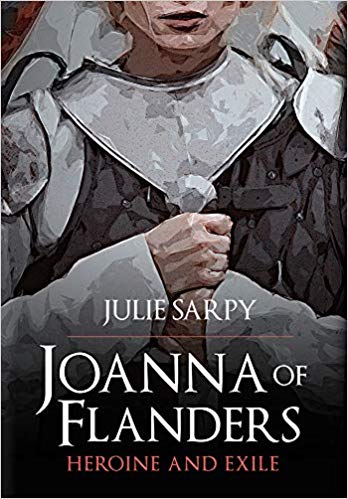
Book Corner: Joanna of Flanders, Heroine and Exile by Julie Sarpy

The new research in this biography solves the riddle of the disappearance of Joanna of Flanders early in the Hundred Years’ War, a leader described by David Hume as ‘the most extraordinary woman of the age’.

Joanna of Flanders, Countess de Montfort and Duchess of Brittany, vanished from public life after 1343 amid the Breton Wars of Succession during the Hundred Years’ War. As wife of the late Duke John de Montfort, Joanna’s rightful place was in Brittany as regent of the duchy for their five-year-old son and heir, John of Brittany. Famed for the defence of Hennebont in 1342 during her husband’s imprisonment, she, along with her children, had accompanied Edward III to England in February 1343 and never departed. She resided in comfortable obscurity at Tickhill Castle, Yorkshire, until her death around 1374.

What happened to her and why? Her extended absence should have provoked more suspicion, but it did not. Edward III certainly orchestrated her relocation from London to Yorkshire and sanctioned her indefinite detention.

Delving deeper into her story the answers to those two questions explore the complexities of medieval social structures, notably in the care of the vulnerable and the custody of women. The 19th-century Breton historian de la Borderie asked if Joanna’s ‘many tests had reversed her intelligence and thrown her into the abyss of madness’, a position accepted by many modern historians – but not by Julie Sarpy.

When my publishers, Amberley, asked if I would like to review Julie Sarpy’s Joanna of Flanders: Heroine and Exile I jumped at the chance. I first came across Joanna of Flanders when writing an article about her son, John V, Duke of Brittany; and I remember thinking, ‘I must look into this woman’. I have not yet had the opportunity (though I will write a blog post if I ever get the time). So, although I was aware of Joanna, I know only the bare bones of her story. Which is why this book intrigued me so much!

Julie Sarpy has done an incredible job of researching the story of Joanna of Flanders. Her investigation has uncovered some remarkable facts about Joanna’s life, the times she lived through and the treatment she received at the hands of her supposed ally, Edward III. This is a balanced, in-depth study of a woman who deserves her time in the limelight. Joanna of Flanders is, in short, an amazing woman, whose story deserves to be known by a much wider audience.

I have to admit to a personal interest in the tale, in grew up not far from Tickhill Castle, South Yorkshire, the site of Joanna’s imprisonment. And though everyone in the area knows about the castle’s connections to King John, to the de Warennes and to the dukes of Lancaster (it is now owned by the duchy of Lancaster), no one seems to know of its role as the prison of poor Joanna.

Joanna of Flanders’ life has not been given its full measure. One wonders how such a remarkable woman has been lost to the ages and ostensibly marginalised. For Joanna of Flanders, Countess of Montfort and Richmond, Duchess of Brittany, was, in her time, the heroine of Hennebont, the pivotal siege during the first half of the Breton Civil War (1341-1365) that prevented the French from taking over Brittany and routing the English early in the Hundred Years’ War (1337-1453). That was no small feat for anyone, especially a fourteenth-century woman. In fact, she seems to have been exceptional in many ways. Medieval French chronicler and contemporary Jean Froissart professed Joanna of Flanders ‘to possess the courage of a man and the heart of a lion.’ Breton historian Dom Lobineau said of the Countess of Montfort, ‘no adversity could crush her. her consistency in the most desperate circumstances always reassured those who attached [themselves] to her.’ She marshalled men and resources, unlike her rival the Breton-French Jeanne de Penthievre’s husband. Joanna of Flanders rallied her husband’s supporters, the pro-English Montfortist faction, in his absence during the Siege of Hennebont and then secured the safety of his heirs in England, with the aid of Edward III.

Julie Sarpy’s investigation into the life and imprisonment of Joann of Flanders is a fascinating study. The author follows the evidence from the records and chronicles of the time and reconstructs Joanna’s story, dispelling the false stories of her madness and clearly presenting Joanna of Flanders as a political prisoner; a remarkable woman whose imprisonment was essential to furthering the ambitions of her ally, Edward III.

Well written, entertaining and informative, this is an engaging and enjoyable book that should attract any history fan who wants to learn more about Joanna’s life and the wider story of the the Breton Civil War. From the first page, the author draws you in with the mystery of Joanna’ imprisonment and the teaser of who may benefit from having her out of the way. Julie Sarpy then takes you through the complexities of the Breton ducal family, the background and prosecution of the war before concentrating on Joanna’s imprisonment, the reasons behind it and the legal implications.

This is a thorough and absorbing study of a woman who has been largely neglected by history. It’s a story that deserves to be heard and that has been told, in Joanna of Flanders: Heroine and Exile, with remarkable skill and judgement – and a little sympathy for the heroine. I cannot recommend it highly enough.

About the author:

Originally from Louisiana, Julia Sarpy is a subject specialist librarian and adjunct faculty at Nova Southeastern University. She received her doctorate in European History from the University of Houston. A UCLA alum, she also hold master’s degrees from University of North Texas and Southern Methodist University.

Joanna of Flanders: Heroine and Exile is now available from Amberley Publishing and Amazon in the UK and will be released on 1 October 2019 in the US; it is available for pre-order on Amazon US.

*

My books

Silk and the Sword: The Women of the Norman Conquest

From Emma of Normandy, wife of both King Cnut and Æthelred II to Saint Margaret, a descendant of Alfred the Great himself, Silk and the Sword: the Women of the Norman Conquest traces the fortunes of the women who had a significant role to play in the momentous events of 1066.  Available now from Amazon UK,  Amberley Publishing, Book Depository and Amazon US.

Heroines of the Medieval World

Telling the stories of some of the most remarkable women from Medieval history, from Eleanor of Aquitaine to Julian of Norwich, Heroines of the Medieval World,  is available now on kindle and in paperback in the UK from from both Amberley Publishing and Amazon, in the US from Amazon and worldwide from Book Depository.

*

You can be the first to read new articles by clicking the ‘Follow’ button, liking our Facebook page or joining me on Twitter and Instagram.

*

©2019 Sharon Bennett Connolly

The Struggles of Alice

tickhill_castle
The bailey of Tickhill Castle, South Yorkshire

Alice, Countess of Eu, was born into 2 of the noblest families of England and France, and married into a third. The daughter of Henry, Count of Eu and Lord Hastings, her mother was Matilda, daughter of Hamelin and Isabel de Warenne, Earl and Countess of Surrey.

Through her maternal grandparents, Alice was closely related to the kings of England. Her grandfather, Hamelin, was the illegitimate  half-brother of King Henry II of England. Richard I and King John, therefore, were her cousins. Alice’s grandmother, Isabel de Warenne, had been one of the richest, most prized heiresses in England and had first been married to the younger son of King Stephen, before she married Hamelin.

Alice’s father, Henry, held lands in England and Normandy. The Honour of Tickhill, in Yorkshire, had been granted to Henry’s father John, Count of Eu, by King Stephen, in 1139, after proving his rights as heir to the original owners, the de Busil family, through Beatrice, the sister of Roger de Busil, who died in 1102. However, in 1141, Empress Matilda captured the castle after Count John was taken prisoner at the Battle of Lincoln. The castle seems to have stayed in  royal hands for many years afterwards, with Richard I taking possession on his accession; he then gave it to his brother John, as part of his holdings. As a consequence, the castle was besieged by the Bishop of Durham when John rebelled against Richard in 1194 and was surrendered only when the king returned to England following his capture and imprisonment in Germany, 3 years after Henry’s death.

Matilda and Henry had 4 children, 2 sons and 2 daughters. Alice was the eldest of the daughters, her sister Jeanne being younger. Sadly, both sons, Raoul and Guy, died young and in consecutive years, with Guy dying in 1185 and Raoul in 1186, leaving Alice as heir to her father’s lands.

Alice’s father died in 1191, and Alice became suo jure Countess of Eu and Lady Hastings. Alice’s mother, Matilda, later married again; her second husband was Henry d’Estouteville of Eckington, Lord of Valmont and Rames in Normandy. Matilda had a son, John, by d’Estouteville, and it was Alice’s half-brother, therefore, who became the heir to all the lands Matilda held in her own right, leaving Alice solely with the inheritance from her father.

Very little is known of Alice’s early years; we do not even have a year for her birth. Given that her grandparents did not marry until 1164, her parents would not have married until the early 1180s, which would mean is likely that Alice was born sometime around the mid-1180s. On her father’s death in 1191, she came into possession of lands in both England and Normandy, France. In August, 1209, Alice officially received the Comté of Eu from Philip II Augustus, King of France, when she also made a quitclaim of all rights to Neufchatel, Mortemer and Arques. Mortemer was a part of the de Warenne ancestral lands in Normandy, given to William I de Warenne by Willliam the Conqueror; suggesting that Alice was renouncing her own rights to the French de Warenne lands, as a granddaughter of Isabel de Warenne, Countess of Surrey.

Alice made a prestigious marriage to Raoul de Lusignan, the brother of Hugh IX de Lusignan and a powerful Poitevin lord. It was Raoul’s nephew, Hugh X, who would repudiate Joanna, the daughter of King John, in order to marry the dead king’s widow and queen, Isabelle d’Angoulême.

Raoul had been previously married to Marguerite de Courtney, but the marriage had been annulled by 1213, suggesting Alice and Raoul married around that time. On marrying Alice, Raoul became Raoul I, Count of Eu by right of his wife.

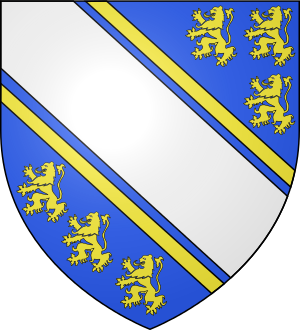
Arms of Humphrey de Bohun, 2nd Earl of Hereford and Earl of Essex, Constable of England

Raoul and Alice had four children together. Raoul II de Lusignan, Count of Eu and Guînes, was married 3 times and had one daughter, Marie de Lusignan, by his second wife, Yolande de Dreux. Raoul died sometime between 1245 and 1250 and was buried at the Abbey of Foucarmont. Mathilde married Humphgrey de Bohun, 2nd Earl of Hereford and Earl of Essex, and had 7 children together, including 4 boys. Mathilde died in August 1241 and was buried in Llanthony Secunda Priory, Gloucester. Her husband was buried beside her when he died in September 1275. Another son, Guerin (or Warin) de Lusignan died sometime after 29 September 1217, when he is granted the castle at Tickhill by Henry III. A second daughter, Jeanne, is mentioned in the necrology of the church of Eu, which records the anniversary of her death as 3 October, though no year is given.

In 1214 Alice, as Countess of Eu, was restored to the Honour of Tickhill by King John as part of the conditions of an agreement with her husband’s family, the de Lusignans. However, Robert de Vipont, who was in physical possession of the castle, refused to relinquish it, and claimed the castle in his own right. It took many years and much litigation before Alice finally took possession of the castle in 1222. Her husband, Raoul, died on 1st May, 1219, and was succeeded as Count of Eu by their son, Raoul II, still only a child.

It was left to Alice, now Dowager Countess, to administer the Eu inheritance. She paid 15,000 silver marks to the French King to receive the county of Eu in her own name and regained control of her English lands, entrusted to her uncle, the Earl of Surrey, as her representative, following her husband’s death.

Alice was a shrewd political survivor. However, with lands in France and England, two countries often at war, she found herself caught between a rock and a hard place. In 1225 she handed Tickhill Castle to Henry III, until the end of hostilities with France, as a means of safeguarding her lands. Nevertheless, this did not save her when she was ordered to levy troops for the French king, Louis IX, as Countess of Eu, and send her forces to fight for him. Henry III seized Tickhill Castle, although it was only permanently attached to the English crown after Alice’s death.

Alice was renowned for her wide patronage, both secular and religious, and has left numerous charters as testament. She was a benefactor of both French and English religious houses, including Battle Abbey and Christ Church, Canterbury in England and Eu and Foucarmont – where her son would be laid to rest – in France. Alice issued a charter in 1219, to Roche Abbey, which was witnessed by her uncle William, Earl de Warenne. She also granted an annual allowance to Loretta, Countess of Leicester, who was living as a recluse at Hackington.

Alice also granted several lands to others, such as Greetwell in the county of Lincoln, which had previously been held by Walter de Tylly in Alice’s name and was given to Earl de Warenne in August 1225; the earl was to annually render a sparrowhawk to Philippa de Tylly in payment.  In 1232 Alice issued a charter to Malvesin de Hersy, of Osberton in the county of Nottingham, providing him with all customs due to Tickhill in return for 2 knights’ fees. Malvesin had been constable of Tickhill in 1220-1 and his brother Sir Baldwin de Hersy was Constable of Consibrough Castle, seat of Earl de Warenne.

The gatehouse of Tickhill Castle

Having spent most of her life fighting for her rights to her lands in England and France, caught between 2 great nations, whose relations were acrimonious to say the least, Alice appears to have conducted herself admirably. Her connections to the powerful de Lusignan and de Warenne families could not have harmed her situation.

Now in her early 60s, and having been a widow for almost 30 years, Alice died sometime in May 1246, probably between the 13th and 15th, at La Mothe St Héray in Poitou, France, leaving a will. It seems likely that she was buried at her husband’s foundation of Fontblanche Priory in Exoudon.

*

Alice’s story features in my book, Defenders of the Norman Crown: Rise and Fall of the Warenne Earls of Surrey.

Pictures courtesy of Wikipedia.

*

Sources: Early Yorkshire Charters Volume 8: The Honour of Warenne, Edited by William Farrer and Charles Travis Clay; England Under the Norman and Angevin Kings by Robert Bartlett; Brewer’s British Royalty by David Williamson; Britain’s Royal Families, the Complete Genealogy by Alison Weir; british-history.ac.uk; kristiedean.com; English Heritage Guidebook for Conisbrough Castle by Steven Brindle and Agnieszka Sadrei; oxforddnb.com; Tickhill Castle Guide Leaflet, Lords of the Honour of Tickhill; fmg.ac.

*

My Books

Signed, dedicated copies of all my books are available through my online store.

OUT NOW! Heroines of the Tudor World

Heroines of the Tudor World tells the stories of the most remarkable women from European history in the time of the Tudor dynasty, 1485-1603. These are the women who ruled, the women who founded dynasties, the women who fought for religious freedom, their families and love. These are the women who made a difference, who influenced countries, kings and the Reformation. In the era dominated by the Renaissance and Reformation, Heroines of the Tudor World examines the threats and challenges faced by the women of the era, and how they overcame them. From writers to regents, from nuns to queens, Heroines of the Tudor World shines the spotlight on the women helped to shape Early Modern Europe.

Heroines of the Tudor World is now available for pre-order from Amberley Publishing and Amazon UK.

Coming 30 January 2025: Scotland’s Medieval Queens

Scotland’s history is dramatic, violent and bloody. Being England’s northern neighbour has never been easy. Scotland’s queens have had to deal with war, murder, imprisonment, political rivalries and open betrayal. They have loved and lost, raised kings and queens, ruled and died for Scotland. From St Margaret, who became one of the patron saints of Scotland, to Elizabeth de Burgh and the dramatic story of the Scottish Wars of Independence, to the love story and tragedy of Joan Beaufort, to Margaret of Denmark and the dawn of the Renaissance, Scotland’s Medieval Queens have seen it all. This is the story of Scotland through their eyes.

Available for pre-order now.

Also by Sharon Bennett Connolly:

Women of the Anarchy demonstrates how Empress Matilda and Matilda of Boulogne, unable to wield a sword themselves, were prime movers in this time of conflict and lawlessness. It shows how their strengths, weaknesses, and personal ambitions swung the fortunes of war one way – and then the other. Available from Bookshop.orgAmberley Publishing and Amazon UKKing John’s Right-Hand Lady: The Story of Nicholaa de la Haye is the story of a truly remarkable lady, the hereditary constable of Lincoln Castle and the first woman in England to be appointed sheriff in her own right. Available from all good bookshops Pen & Sword Booksbookshop.org and AmazonDefenders of the Norman Crown: The Rise and Fall of the Warenne Earls of Surrey tells the fascinating story of the Warenne dynasty, from its origins in Normandy, through the Conquest, Magna Carta, the wars and marriages that led to its ultimate demise in the reign of Edward III. Available from Pen & Sword BooksAmazon in the UK and US, and Bookshop.org

Ladies of Magna Carta: Women of Influence in Thirteenth Century England looks into the relationships of the various noble families of the 13th century, and how they were affected by the Barons’ Wars, Magna Carta and its aftermath; the bonds that were formed and those that were broken. It is now available in paperback and hardback from Pen & SwordAmazon, and Bookshop.orgHeroines of the Medieval World tells the stories of some of the most remarkable women from Medieval history, from Eleanor of Aquitaine to Julian of Norwich. Available now from Amberley Publishing and Amazon, and Bookshop.orgSilk and the Sword: The Women of the Norman Conquest traces the fortunes of the women who had a significant role to play in the momentous events of 1066. Available now from Amazon,  Amberley Publishing, and Bookshop.org.

Alternate Endings: An anthology of historical fiction short stories including Long Live the King… which is my take what might have happened had King John not died in October 1216. Available in paperback and kindle from Amazon.

Podcast:

Have a listen to the A Slice of Medieval podcast, which I co-host with Historical fiction novelist Derek Birks. Derek and I welcome guests, such as Bernard Cornwell, and discuss a wide range of topics in medieval history, from significant events to the personalities involved.

*

Don’t forget! Signed and dedicated copies of all my books are available through my online store.

For forthcoming online and in-person talks, please check out my Events Page.

You can be the first to read new articles by clicking the ‘Follow’ button, liking our Facebook page or joining me on TwitterThreads and Instagram.

*

©2017 Sharon Bennett Connolly, FRHistS