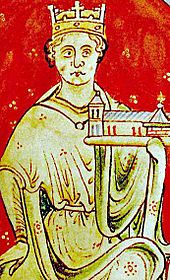
The year of 1214 ended badly for King John. Attempts to appease his continental enemies had not had the desired results and he was at war in France. As a consequence, John sought a reconciliation with the Lusignans, agreeing to grant them Saintes and Oléron and to marry his daughter Joan to Hugh X de Lusignan, the son of Hugh IX de Lusignan, who had been betrothed to John’s wife, Isabelle d’Angoulême, in return for their support. A similar peace offering, of the earldom of Richmond, to Pierre, Duke of Brittany, was less well received and the duke remained aloof.
John’s campaign was successful at first, with him entering Angers unopposed before he laid siege to Roche-au-Moine. However, he was forced to retreat on 2 July, with the approach of the army of Prince Louis of France and the refusal of the Poitevins to fight by his side.
Although he was able to keep his own army intact, John’s fate was sealed on 27 July when his half-brother William Longespée, Earl of Salisbury, and John’s German and Flemish allies faced King Philip II of France at the battle of Bouvines. They were decisively defeated. Otto IV managed to escape, but William Longespée was captured and taken to Paris, along with the counts of Flanders and Boulogne. With the threat in the north neutralised, Philip was now able to join his army to that of his son, Prince Louis, and challenge John in the south. John had no choice but to seek peace and a 5-year truce was agreed on 13 October, with Ralph of Coggeshall reporting rumours that it had cost John 60,000 marks.1
At home, John’s policy of reform of the sheriffs and forest officials in 1212–1213 had resulted in a significant reduction in royal revenue, and the military campaign had drained John’s treasury further. He was no longer a wealthy king. In October 1214 John returned to England; the defeat by the French at the Battle of Bouvines had ended the king’s hopes of regaining the lost Angevin empire. Baronial opposition to John now gathered pace. The refusal to pay scutage of 3 marks on the knights’ fee demonstrating a coordinated effort by the magnates, rather than the individual disobedience that had been seen earlier in the reign.

The barons’ objections to John were almost beyond number. He had failed to face the French and had lost not only his family’s Continental possessions, but also those of his barons. Few had forgotten his treachery against his brother in trying to take the throne whilst Richard was on crusade. Added to these catastrophes was the character and personality of John himself. By nature, John was paranoid, secretive and distrustful. His cruelty was widely known. He stood accused of killing his nephew, Arthur, a rival claimant to the English throne; he had hanged twenty-eight Welsh hostages (sons of rebel chieftains); and he had hounded William de Braose and his family all the way to Ireland and back. De Braose’s wife and son died in one of John’s prisons, probably from starvation.
The History of William Marshal, a biography of the great knight and statesman, claimed that John treated his prisoners harshly and with such indignity that it was a disgrace to all involved.2 His barons even complained that he forced himself on their wives and daughters. With such military losses, accusations of murder and seemingly acute character flaws stacked against him, it is no wonder England’s king faced opposition by many of the most powerful in his realm.
In January 1215 John arranged to meet with his challengers in London to hear their demands, and it was agreed that they would reconvene at Northampton on 26 April to hear the king’s response. The disaffected barons demanded reform and the confirmation of the coronation charter of King Henry I, in which the king promised;
‘Know that by the mercy of God and by the common counsel of the barons of England I have been crowned king of this realm. And because the kingdom has been oppressed by unjust exactions, being moved by reverence towards God and by the love I bear you all, I make free the Church of God … I abolish all the evil customs by which the kingdom of England has been unjustly oppressed.’ 3
Although many of the clauses of this charter, also referred to as the Charter of Liberties, were now outdated, several still resonated with the barons, including that a baron’s widow could not be married without her consent, that an heiress could not be married without the consent of her relatives and that, on the death of a baron, his heir would only pay a relief that was ‘just and lawful.’4
Whilst John was ruminating on these demands, both sides were preparing for war. John borrowed from the Templars to pay his mercenaries and on 4 March he took the cross. This latter move was seen as highly cynical and no one seems to have believed that John would actually go on crusade. His purpose for doing so was political: a crusader’s lands and properties were protected by the church and this action firmly identified the king’s opponents as the ‘bad guys’.
John failed to appear at Northampton in April. He did, however, send messages to the rebels. According to the Barnwell annalist the king ‘tried to win them back through many emissaries, and there was much discussion amongst them, the archbishop, bishops and other barons acting as intermediaries, the king himself staying at Oxford.’5 On 5 May the rebels formally renounced their fealty. John retained the support of some magnates, such as William Marshal and William de Warenne, but the majority were now standing against him. As was London, which opened its gates to the rebels on 17 May, despite John’s granting the city the right to elect its mayor only eight days before. In the Welsh Marches the Braose family had allied with Llywelyn ap Iorwerth and had taken Shrewsbury.
The rebels were ready to fight. After occupying London, they made one final attempt to prevent war, presenting the king with a list of their demands. John had no choice but to make concessions and on 10 June agreed to further discussions of the rebels’ terms. Following these negotiations, a long, detailed document was produced, dealing with the particular grievances of the time and with injustices in general. It touched on the whole system of royal government. And it was granted to ‘all free men of the realm and their heirs forever.’6
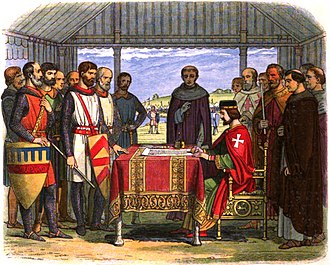
Of its sixty-three clauses some terms were asking for immediate remedies, such as the removal of corrupt administrators and the sending home of foreign mercenaries. A clause stating that fighting outside of the kingdom could not be imposed by the king was a reaction to John’s recent attempts to force his English barons to help him recover his Continental domains. Others had long-term aims. The document sought to guarantee the privileges of the church and the City of London. Restrictions were placed on the powers of regional officials, such as sheriffs, to prevent abuses. The royal court was fixed at Westminster, for justice to be obtainable by all, and royal judges were to visit each county regularly. Taxes could no longer be levied without the consent of the church and the barons.
Clauses included the fixing of inheritance charges and the protection from exploitation for under-age heirs; the king was to take only what was reasonable from an estate (although ‘reasonable’ remained undefined). From henceforth a widow was to be free to choose whether or not to remarry and her marriage portion (dowry) would be made available to her immediately on her husband’s death. Another clause sought to prevent the seizure of land from Jews and the king’s debtors. Magna Carta even went so far as to regulate weights and measures. It also reduced the size of the king’s forests and limited the powers of forest justices.
Although most of the sixty-three clauses of Magna Carta are now defunct, three still remain as major tenets of British law, including ‘to no one will we sell, to no one will we deny or delay right or justice.’ That no person would be imprisoned, outlawed or deprived of his lands except by judgement of his peers and the law of the land has remained the cornerstone of the English legal system ever since.
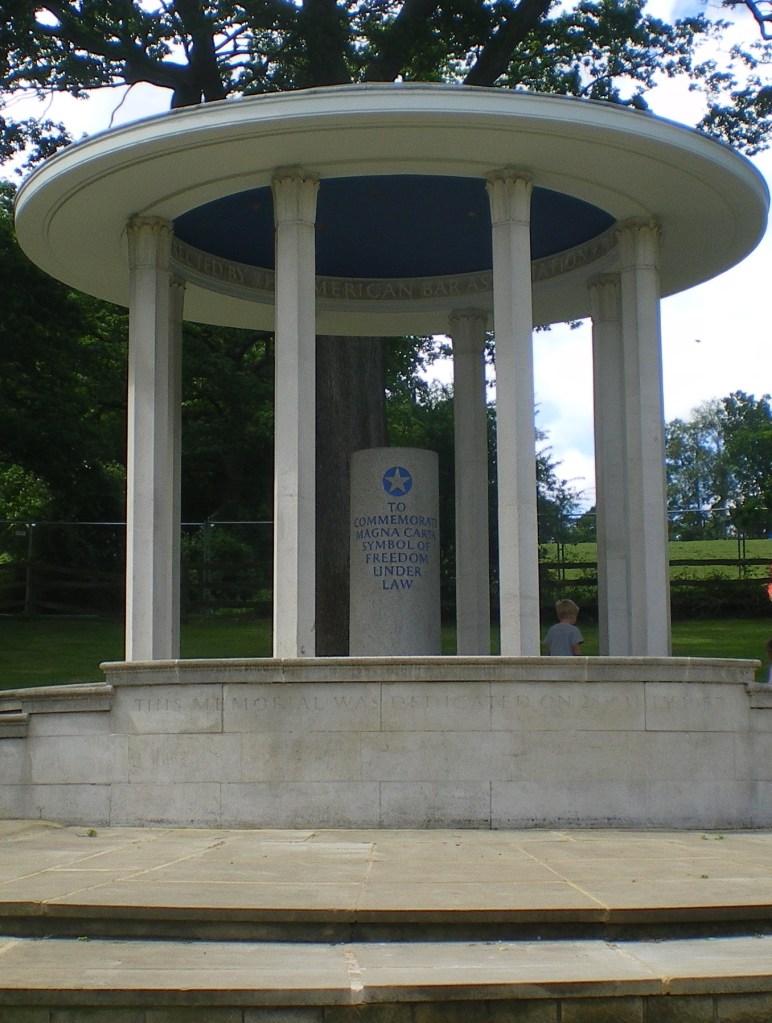
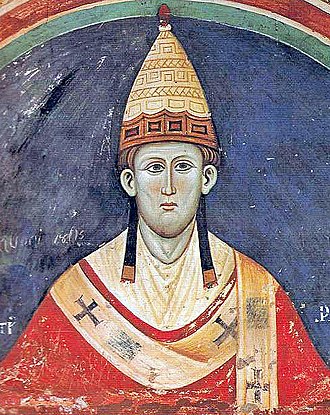
Magna Carta was sealed at Runnymede, Berkshire, on 15 June 1215. John ordered that the charter be circulated around the towns and villages, throughout the realm; only 4 original copies survive today, 2 at the British Library and 1 each at Lincoln and Salisbury. As a peace agreement between the king and his rebellious barons, however, it failed miserably. By July, John was appealing to the pope for help. Pope Innocent III’s response arrived in England in September. The treaty was declared null and void; according to Innocent, Magna Carta was:
‘not only shameful and base but also illegal and unjust. We refuse to overlook such shameless presumption which dishonours the Apostolic See, injures the king’s right, shames the English nation, and endangers the crusade. Since the whole crusade would be undermined if concessions of this sort were extorted from a great prince who had taken the cross, we, on behalf of Almighty God, Father, Son and Holy Ghost, and by the authority of Saints Peter and Paul His apostles, utterly reject and condemn this settlement. Under threat of excommunication we order that the king should not dare to observe and the barons and their associates should not insist on it being observed. The charter with all its undertakings and guarantees we declare to be null and void of all validity for ever.’7
The letter was accompanied by more papal letters, excommunicating rebels, including nine barons and the Londoners. However, by the time the letters arrived in England, the dispute had already erupted into the Barons’ War. John laid siege to Rochester Castle with his mercenaries and the castle surrendered on 30 November, after a seven-week siege. Deciding they could no longer deal with John’s perfidy, the rebel barons had invited the King of France, Philip II Augustus, to claim the throne.
Philip’s son and heir, the future Louis VIII, accepted the offer. He sent an advanced guard, which arrived in December of 1215. Louis himself would arrive in the spring of 1216. He landed on the south coast and marched for London, where he was proclaimed King of England on 2 June 1216, just 13 days before the 1st anniversary of Magna Carta…
*
For a study into the influence of women on the clauses and creation of Magna Carta, and its impact on the lives of women, my book, Ladies of Magna Carta: Women of Influence in Thirteenth Century England is out now!
Footnotes:
1 John Gillingham, John (1167–1216), Oxforddnb.com; 2 L’Histoire de Guillaume le Maréchale quoted in John Gillingham, John (1167–1216), Oxforddnb.com; 3 Coronation Charter of Henry I in bl.uk; 4 Select Charters quoted in Marc Morris, King John: Treachery, Tyranny and the Road to Magna Carta; 5 The Barnwell annalist quoted in Elizabeth Hallam (editor), The Plantagenet Chronicles; 6 Danny Danziger and John Gillingham, 1215: The Year of Magna Carta; 7 Letter from Pope Innocent III, quoted in Danny Danziger and John Gillingham, 1215: The Year of Magna Carta
Images:
Courtesy of Wikipedia. Except: Magna Carta ©2015 Sharon Bennett Connolly and Runnymede ©2020 Jayne Smith
Further reading:
Robert Bartlett England Under the Norman and Angevin Kings 1075-1225; Dan Jones The Plantagenets; the Kings who Made England; The Plantagenet Chronicle Edited by Elizabeth Hallam; Maurice Ashley The Life and Times of King John; Roy Strong The Story of Britain; Oxford Companion to British History; Mike Ashley British Kings & Queens; David Williamson Brewer’s British Royalty; Danny Danziger and John Gillingham, 1215: The Year of Magna Carta; John Gillingham, John (1167–1216), Oxforddnb.com; Marc Morris, King John: Treachery, Tyranny and the Road to Magna Carta
*
My books
Signed, dedicated copies of all my books are available through my online bookshop.
Coming 30 January 2025: Scotland’s Medieval Queens

Scotland’s history is dramatic, violent and bloody. Being England’s northern neighbour has never been easy. Scotland’s queens have had to deal with war, murder, imprisonment, political rivalries and open betrayal. They have loved and lost, raised kings and queens, ruled and died for Scotland. From St Margaret, who became one of the patron saints of Scotland, to Elizabeth de Burgh and the dramatic story of the Scottish Wars of Independence, to the love story and tragedy of Joan Beaufort, to Margaret of Denmark and the dawn of the Renaissance, Scotland’s Medieval Queens have seen it all. This is the story of Scotland through their eyes.
‘Scotland’s Medieval Queens gives a thorough grounding in the history of the women who ruled Scotland at the side of its kings, often in the shadows, but just as interesting in their lives beyond the spotlight. It’s not a subject that has been widely covered, and Sharon is a pioneer in bringing that information into accessible history.’ Elizabeth Chadwick (New York Times bestselling author)
Available now from Amazon and Pen and Sword Books
Also by Sharon Bennett Connolly:
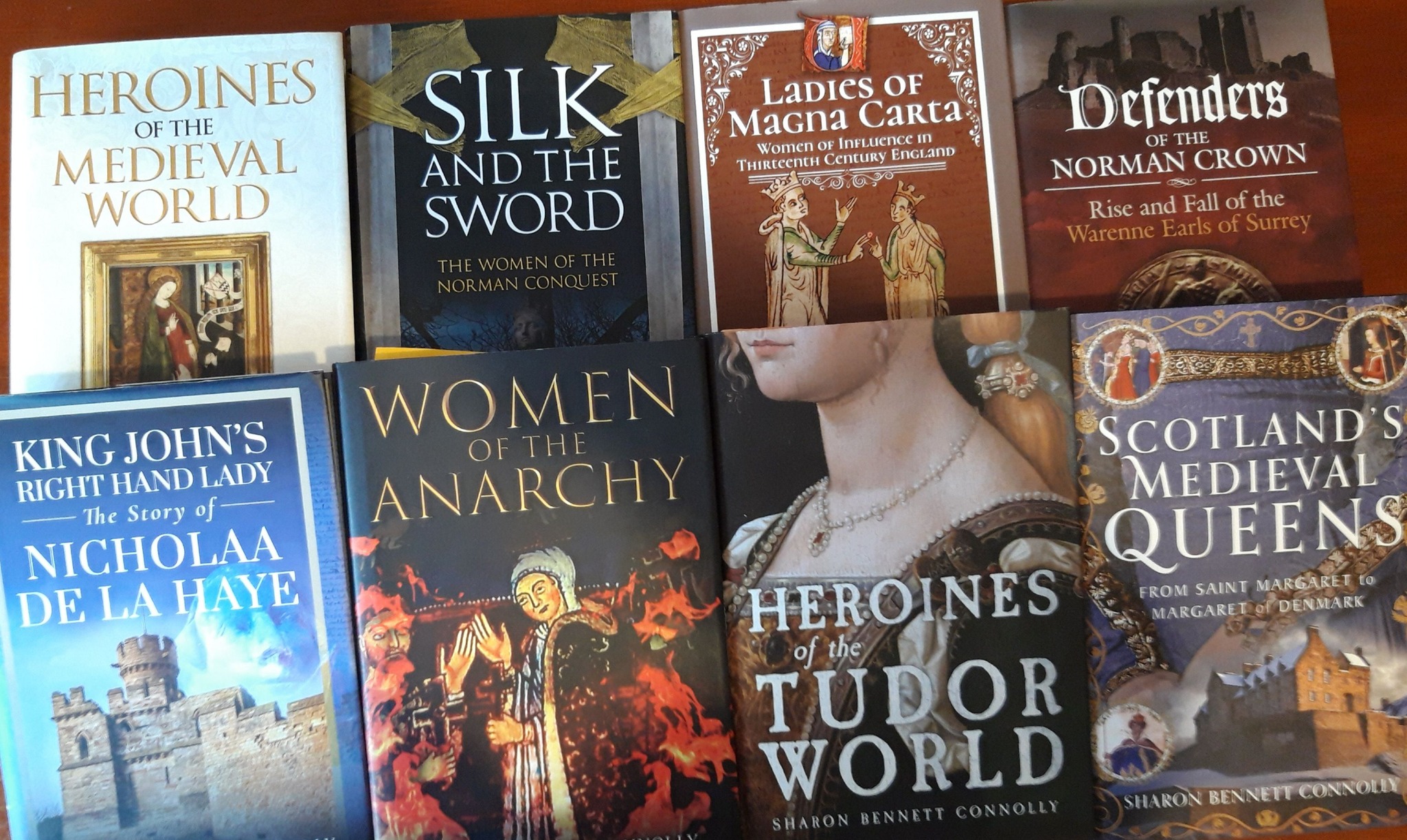
Heroines of the Tudor World tells the stories of the most remarkable women from European history in the time of the Tudor dynasty, 1485-1603. These are the women who ruled, the women who founded dynasties, the women who fought for religious freedom, their families and love. Heroines of the Tudor World is now available for pre-order from Amberley Publishing and Amazon UK. Women of the Anarchy demonstrates how Empress Matilda and Matilda of Boulogne, unable to wield a sword themselves, were prime movers in this time of conflict and lawlessness. It shows how their strengths, weaknesses, and personal ambitions swung the fortunes of war one way – and then the other. Available from Bookshop.org, Amberley Publishing and Amazon UK. King John’s Right-Hand Lady: The Story of Nicholaa de la Haye is the story of a truly remarkable lady, the hereditary constable of Lincoln Castle and the first woman in England to be appointed sheriff in her own right. Available from all good bookshops Pen & Sword Books, bookshop.org and Amazon.
Defenders of the Norman Crown: The Rise and Fall of the Warenne Earls of Surrey tells the fascinating story of the Warenne dynasty, from its origins in Normandy, through the Conquest, Magna Carta, the wars and marriages that led to its ultimate demise in the reign of Edward III. Available from Pen & Sword Books, Amazon in the UK and US, and Bookshop.org. Ladies of Magna Carta: Women of Influence in Thirteenth Century England looks into the relationships of the various noble families of the 13th century, and how they were affected by the Barons’ Wars, Magna Carta and its aftermath; the bonds that were formed and those that were broken. It is now available in paperback and hardback from Pen & Sword, Amazon, and Bookshop.org. Heroines of the Medieval World tells the stories of some of the most remarkable women from Medieval history, from Eleanor of Aquitaine to Julian of Norwich. Available now from Amberley Publishing and Amazon, and Bookshop.org. Silk and the Sword: The Women of the Norman Conquest traces the fortunes of the women who had a significant role to play in the momentous events of 1066. Available now from Amazon, Amberley Publishing, and Bookshop.org.
Alternate Endings: An anthology of historical fiction short stories including Long Live the King… which is my take what might have happened had King John not died in October 1216. Available in paperback and kindle from Amazon.
Podcast:
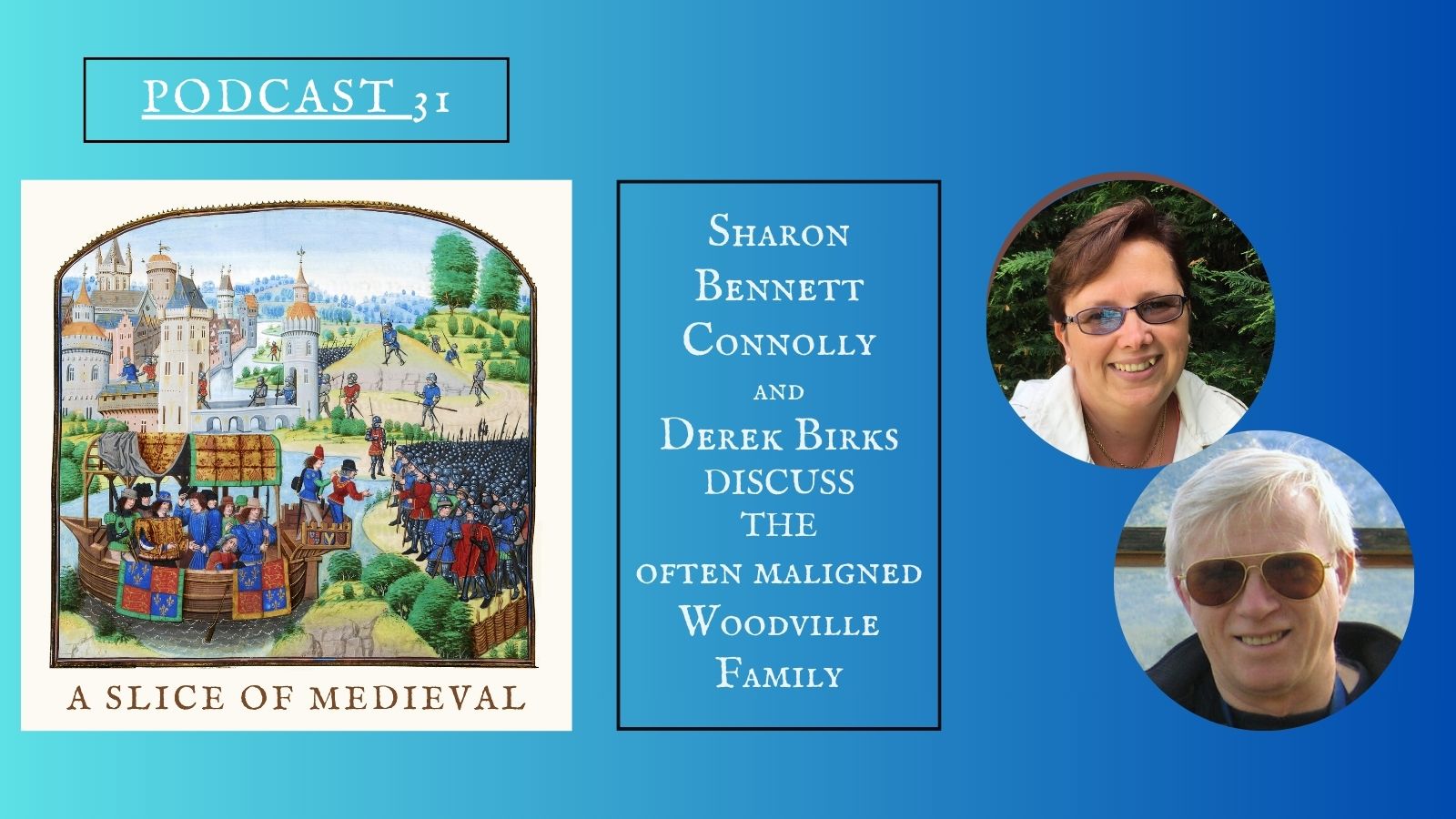
Have a listen to the A Slice of Medieval podcast, which I co-host with Historical fiction novelist Derek Birks. Derek and I welcome guests, such as Bernard Cornwell and Michael Jecks, and discuss a wide range of topics in medieval history, from significant events to the personalities involved.
Every episode is also now available on YouTube.
*
Don’t forget! Signed and dedicated copies of all my books are available through my online store.
For forthcoming online and in-person talks, please check out my Events Page.
You can be the first to read new articles by clicking the ‘Follow’ button, liking our Facebook page or joining me on Twitter, Threads, Bluesky and Instagram.
**
©2020 Sharon Bennett Connolly FRHistS
 History... the interesting bits!