
While researching the history of Lincoln a few years ago I came across the unhappy story of Little St Hugh, a young boy whose death caused a lethal backlash of blame and recrimination which attracted the attention of the king, Henry III, himself.
The story revolves around a young boy called Hugh. Born around 1246 he was probably 9 years old when he disappeared on 31st July 1255. No one seems to know who Hugh’s father was, or even if he had one – some sources suggest he was illegitimate – but his mother is identified as a Lincoln woman named Beatrice.
According to reports young Hugh had been doing what all boys do at that age – he’d been out playing with friends. But when it got late the lad could not be found. One can imagine how desperate his mother became. She spent days looking for him and apparently was eventually told by some neighbours that he had last been seen ‘playing with some Jewish boys of his own age, and going into the house of a Jew.’¹
According to Matthew Paris it was Beatrice, herself, who had discovered Hugh’s body sometime around 27th August 1255, after marching into the house Hugh had been seen going into. Little Hugh’s body was supposedly found in a well at the property of a Lincoln Jew, named Copin (or Jopin, Joscefin or Koppin).
Poor Copin was immediately seized by those present when the body was found; Beatrice and her neighbours and the city’s bailiffs all appear to have been in attendance. In no time at all a dreadful tale of ritual murder and the ‘blood libel’ (where it was believed Christian children were tortured and killed in Jewish rituals, supposedly mimicking the crucifixion of Christ) was woven around the tragedy of the little boy’s death.
According to Paris:
… having shut him up in a room quite out of the way, where they fed him on milk and other childish nourishment, they sent to almost all the cities of England where the Jews lived, and summoned some of their sect from each city to be present at a sacrifice to take place at Lincoln; for they had, as they stated, a boy hidden for the purpose of being crucified. In accordance with the summons, a great many of them came to Lincoln, and on assembling, they at once appointed a Jew of Lincoln as judge to take the place of Pilate, by whose sentence, and with the concurrence of all, the boy was subjected to divers tortures. They beat him till blood flowed and he was quite livid, they crowned him with thorns, derided him and spat upon him. Moreover, he was pierced by each of them with a wood knife, was made to drink gall, was overwhelmed with approaches and blasphemies, and was repeatedly called Jesus the false prophet by his tormentors, who surrounded him, grinding and gnashing their teeth. After tormenting him in divers ways, they crucified him, and pierced him to the heart with a lance.²
It is still unclear whether or not Little Hugh was murdered; some sources suggest that it could have been a terrible accident or the boy lost his footing and fell down the well (although the well in question was apparently only dug in 1910)3. And even if the boy was murdered, it is far from clear that Copin was the culprit. However, one man took the initiative and played on the prejudices of the people, not only, create a scapegoat but use the anti-Semitism prevalent at the time in order to blame the Jewish population of England as a whole.

John of Lexington was one of the witnesses at the discovery of the body and appears to have been the one to investigate the accusation of ritual murder levelled at Copin, probably by the distraught Beatrice. He may have been familiar with the case, just over a century earlier, of William of Norwich, who died in 1144 and whose death was said to involve a mock execution at the hands of a converted Jew named Theobald.
Lexington, described as ‘a man of learning, prudent and discreet‘² by Matthew Paris, managed to persuade Copin to confess and describe the murder in return for a promise of protection from torture and execution. Copin is said to have confessed to his involvement, and described the scourging, disembowelling, crowning with thorns and crucifixion of the young boy. He went on, it seems, to implicate the rest of his people, saying ‘nearly all the Jews of England agreed to the death of this boy.’4
At the time of the death many prominent Jewish families had congregated in Lincoln; not to commit murder, but to celebrate the marriage of Bellaset, the daughter of Berechiah de Nicole. The wedding guests were suddenly caught up in the tragedy and more than 90 of them were arrested and charged with practicing ritual murder. They were sent to London and imprisoned in the Tower to await trial.
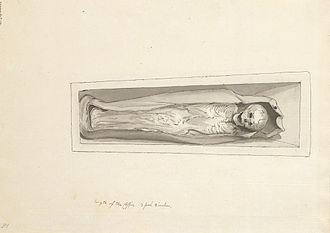
In the mean time rumours of miracles started circulating and being attributed to Little Hugh. It was said his body had been thrown down the well because when Copin had tried to bury him the earth had thrown the corpse back out. In another miracle attributed to him a blind woman regained her sight by bathing her eyes in water from the well in which Hugh’s remains had been found. Having heard of the miracles associated with Little Hugh, the canons of Lincoln Cathedral requested the body and Little Hugh ‘was honourably buried in the church of Lincoln as if it had been the corpse of a precious martyr,’² with the Cathedral even raising a shrine to the memory of Little Saint Hugh.
As for Copin; the story of a boy’s murder by England’s Jews had attracted the attention of England’s king, Henry III. According to Paris the king himself reproached John of Lexington for having promised life to such a ‘wicked being’ and the poor man was condemned to death. He was tied to the tail of a horse and dragged through the streets to the gallows, and hung.
Just 6 months before Hugh’s death the king had sold his rights to tax the Jews to his younger brother Richard, earl of Cornwall. However, he retained the right to receive the goods and property of any Jew implicated in a crime. This made the 90 Jews arrested alongside Copin extremely valuable to the king if they were guilty – and to his brother if they were innocent. Of these 90 or so Jews caught up in the aftermath of the tragedy, 18 ‘of the richer and higher order of Jews of the city of Lincoln’5 were condemned to death and dragged to gibbets erected especially and hung; their property confiscated by the king.
The remaining prisoners were eventually released, following payment of their ransom by the Earl of Cornwall, the king’s brother; his personal Jew had probably been caught up in the arrests and so it was in Cornwall’s interests to get the Jews released. Among those freed was Berechiah de Nicole, the father of the bride for whose wedding the Jews had been gathered in Lincoln.
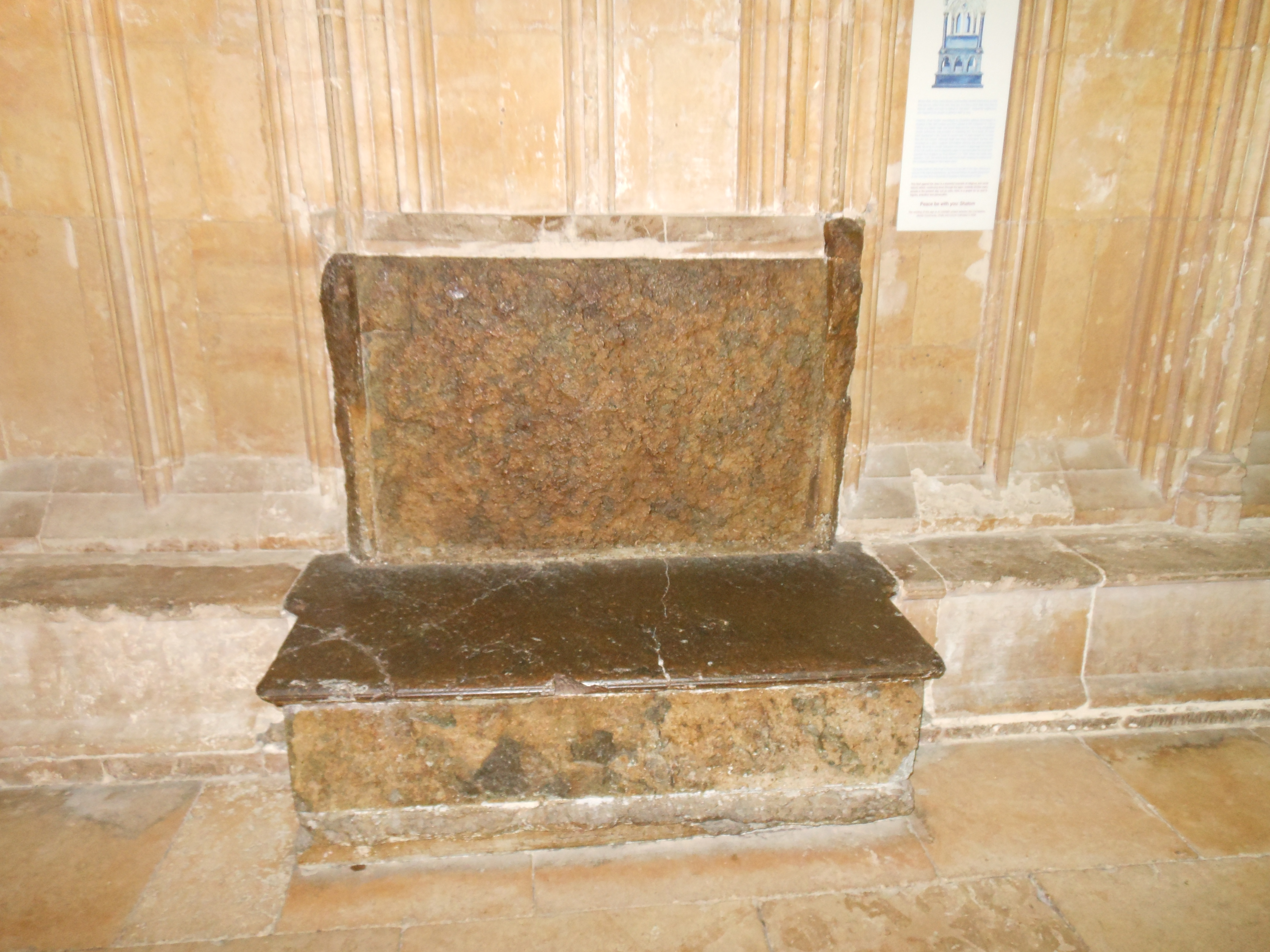
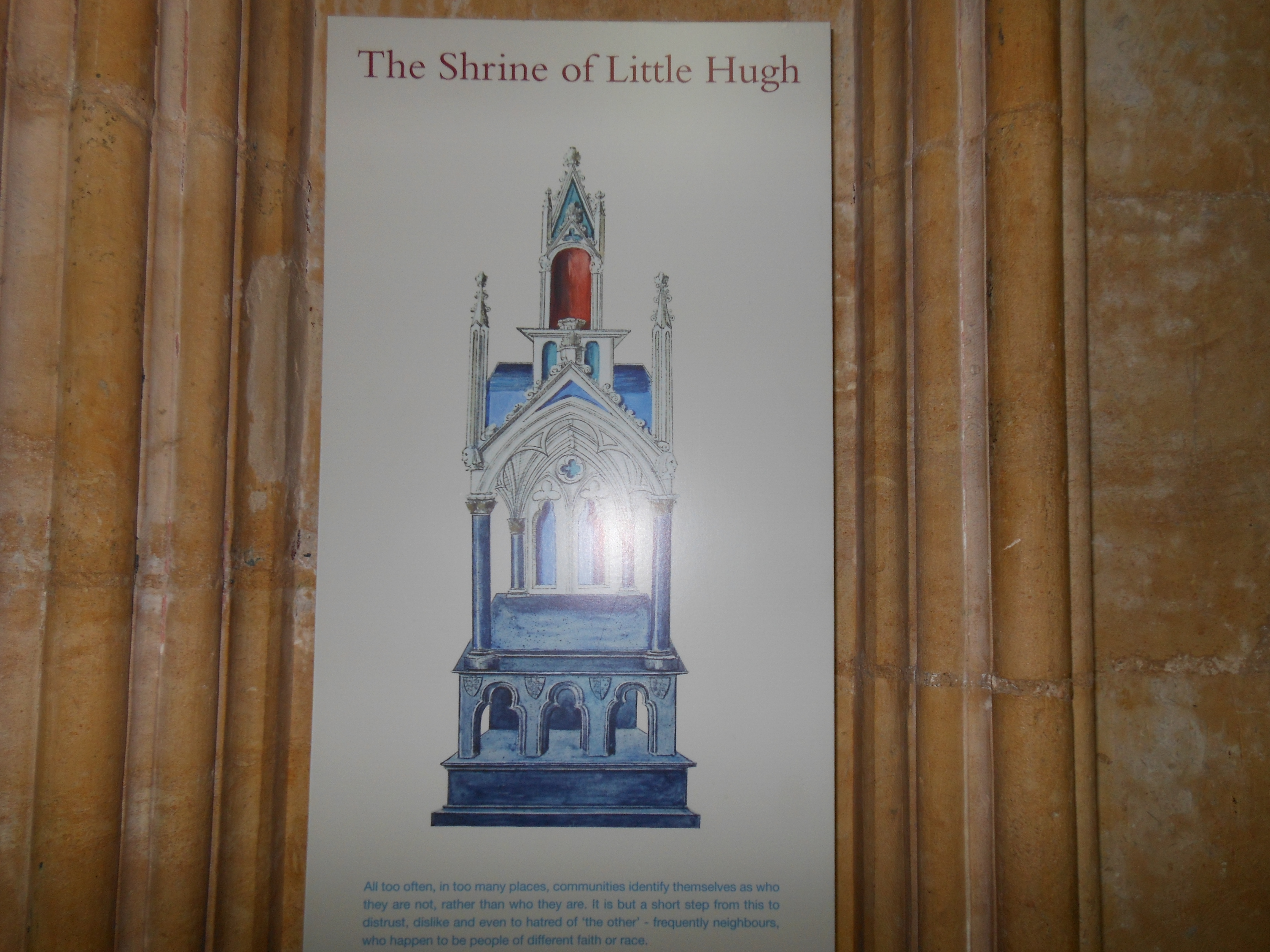
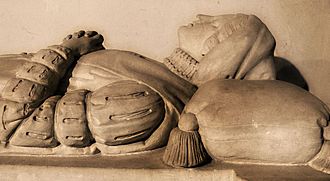
The tragedy of Little Hugh’s death was only worsened by the judicial murders of so many innocent Jews in revenge. Little St Hugh is the best known of the ‘blood libel’ saints and although a shrine was erected in Lincoln Cathedral, with a feast day of 27th August, Little Hugh was never canonised by the Vatican and has never been included in the official roll of Catholic martyrs. The shrine inside the cathedral, although still there, has lost its canopy and now has a sign at the side, explaining the legend and telling the sad tale of the boy’s death and its dreadful aftermath.
Little Hugh’s story would continue to be told in the succeeding centuries. It has been the subject of ballads in both English, Scottish and French poetry and is referred to by Chaucer in The Prioress’s Tale and by Marlowe in the Jew of Malta.
*
Footnotes:
1.Matthew Paris, quoted by Haidee J Lorrey from oxforddnb.com; 2. Matthew Paris, Of the cruel treatment of the Jews for having crucified a boy from arts.cornell.edu; 3. It’s About Lincolnshire via Twitter; 4. Matthew Paris, quoted by Haidee J Lorrey from oxforddnb.com; 5. Matthew Paris, Of the cruel treatment of the Jews for having crucified a boy from arts.cornell.edu
With thanks to Dr Dean Irwin for clarifying some points for me.
*
Article and photos of Lincoln Cathedral and precincts ©2015 Sharon Bennett Connolly; Picture of the Body of Little Hugh courtesy of Wikipedia.
Sources:
arts.cornell.edu; oxforddnb.com; pillingswritingcorner.blogspot.co.uk; britannica.com; Who’s Buried Where in England by Douglas Greenwood; Chronicles of the Age of Chivalry Edited by Elizabeth Hallam; The Plantagenets, the Kings that made Britain by Derek Wilson; England Under the Norman and Angevin Kings 1075-1225 by Robert Bartlett; jewishencyclopedia.com.
*
My books
Signed, dedicated copies of all my books are available through my online bookshop.
OUT NOW! Heroines of the Tudor World
Heroines of the Tudor World tells the stories of the most remarkable women from European history in the time of the Tudor dynasty, 1485-1603. These are the women who ruled, the women who founded dynasties, the women who fought for religious freedom, their families and love. These are the women who made a difference, who influenced countries, kings and the Reformation. In the era dominated by the Renaissance and Reformation, Heroines of the Tudor World examines the threats and challenges faced by the women of the era, and how they overcame them. From writers to regents, from nuns to queens, Heroines of the Tudor World shines the spotlight on the women helped to shape Early Modern Europe.
Heroines of the Tudor World is now available for pre-order from Amberley Publishing and Amazon UK.
Also by Sharon Bennett Connolly:
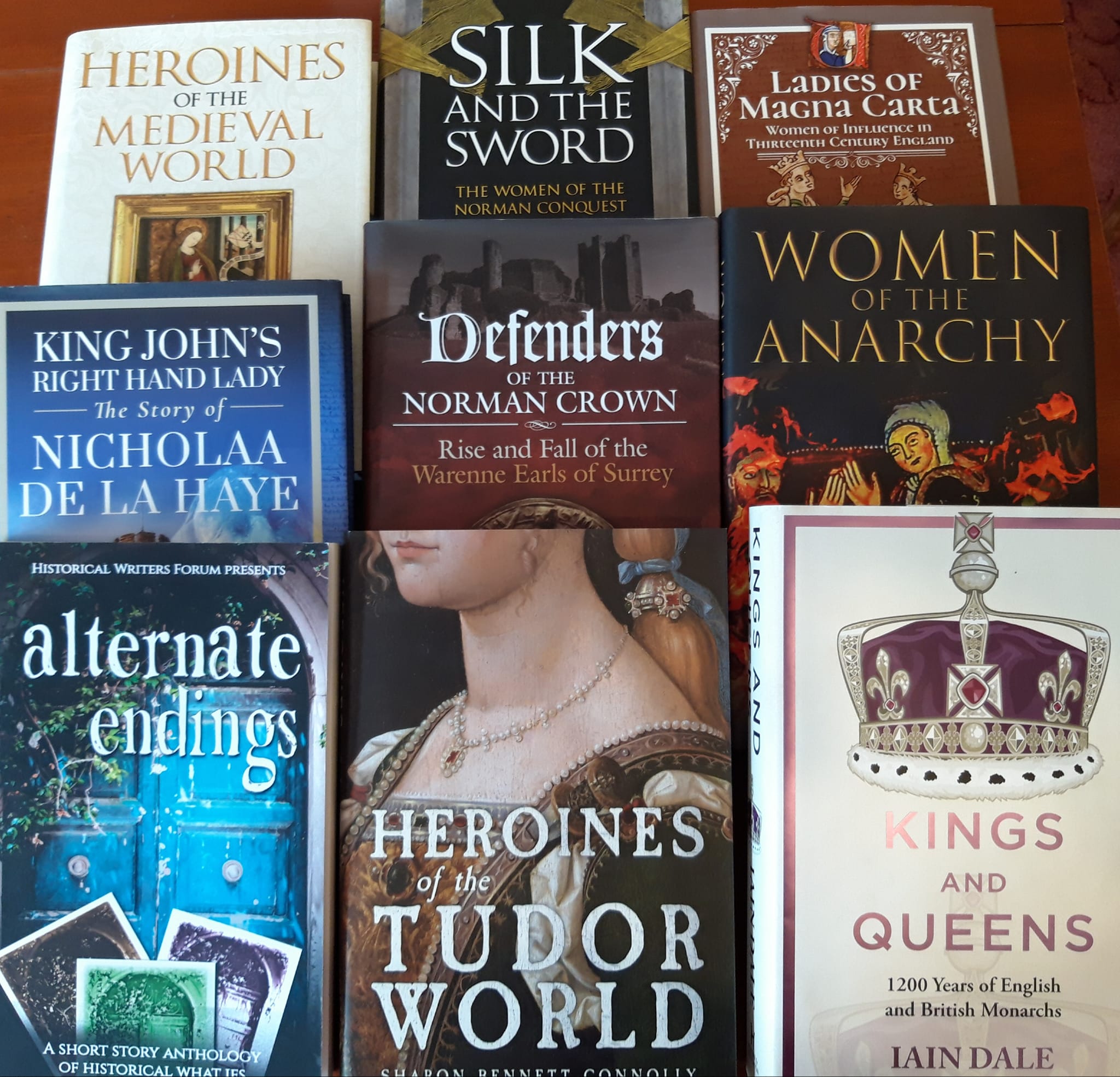
Women of the Anarchy demonstrates how Empress Matilda and Matilda of Boulogne, unable to wield a sword themselves, were prime movers in this time of conflict and lawlessness. It shows how their strengths, weaknesses, and personal ambitions swung the fortunes of war one way – and then the other. Available from Bookshop.org, Amberley Publishing and Amazon UK. King John’s Right-Hand Lady: The Story of Nicholaa de la Haye is the story of a truly remarkable lady, the hereditary constable of Lincoln Castle and the first woman in England to be appointed sheriff in her own right. Available from all good bookshops Pen & Sword Books, bookshop.org and Amazon. Defenders of the Norman Crown: The Rise and Fall of the Warenne Earls of Surrey tells the fascinating story of the Warenne dynasty, from its origins in Normandy, through the Conquest, Magna Carta, the wars and marriages that led to its ultimate demise in the reign of Edward III. Available from Pen & Sword Books, Amazon in the UK and US, and Bookshop.org.
Ladies of Magna Carta: Women of Influence in Thirteenth Century England looks into the relationships of the various noble families of the 13th century, and how they were affected by the Barons’ Wars, Magna Carta and its aftermath; the bonds that were formed and those that were broken. It is now available in paperback and hardback from Pen & Sword, Amazon, and Bookshop.org. Heroines of the Medieval World tells the stories of some of the most remarkable women from Medieval history, from Eleanor of Aquitaine to Julian of Norwich. Available now from Amberley Publishing and Amazon, and Bookshop.org. Silk and the Sword: The Women of the Norman Conquest traces the fortunes of the women who had a significant role to play in the momentous events of 1066. Available now from Amazon, Amberley Publishing, and Bookshop.org.
Alternate Endings: An anthology of historical fiction short stories including Long Live the King… which is my take what might have happened had King John not died in October 1216. Available in paperback and kindle from Amazon.
Podcast:

Have a listen to the A Slice of Medieval podcast, which I co-host with Historical fiction novelist Derek Birks. Derek and I welcome guests, such as Bernard Cornwell and discuss a wide range of topics in medieval history, from significant events to the personalities involved. There are now over 40 episodes to listen to!
*
Don’t forget! Signed and dedicated copies of all my books are available through my online bookshop.
For forthcoming online and in-person talks, please check out my Events Page.
You can be the first to read new articles by clicking the ‘Follow’ button, liking our Facebook page or joining me on Twitter and Instagram.
©2016 Sharon Bennett Connolly FRHistS




 History... the interesting bits!