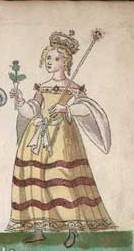
Sybilla of Normandy, Queen of Scots

History ... the Interesting Bits
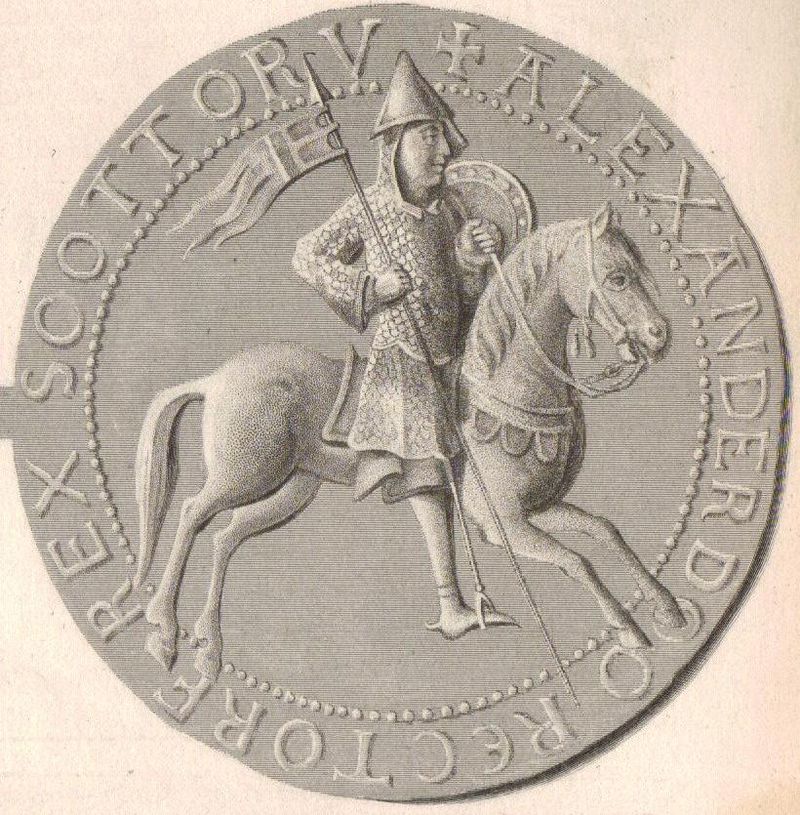
Alexander I, King of Scots

Alexander I was the second-to-youngest son of Malcolm III Canmore and his sainted wife Margaret of Wessex. Born around 1077 or 1078, he was thirty-or-so when he ascended the throne in 1107, ‘as the King Henry granted him.’1 Like his brother Edgar before him, Alexander succeeded to the throne as a vassal of the English crown. He had probably spent the years between his father’s death and Edgar’s accession in exile in England, with Edgar and their younger brother, David. John of Fordun provides a largely flattering assessment of Alexander I as king:

‘Now the king was a lettered and godly man ; very humble and amiable towards the clerics and regulars, but terrible beyond measure to the rest of his subjects; a man of large heart, exerting himself in all things beyond his strength. He was most zealous in building churches, in searching for relics of saints, in providing and arranging priestly vestments and sacred books; most open-handed, even beyond his means, to all newcomers; and so devoted to the poor, that he seemed to delight in nothing so much as in supporting them, washing, nourishing, and clothing them.’2

One of the primary duties of a king is to marry and produce heirs; at least one son, preferably two – the heir and the spare. This guarantees the succession and offers stability to a country. Even daughters were useful to a king, their marriages cementing alliances with friends and enemies alike. Alexander I was married shortly after his accession to the throne. His bride was offered to him by his brother-in-law, King Henry I of England. She was Sybilla, also known as Sybilla of Normandy, one of the King of England’s many illegitimate offspring.
History ... the Interesting Bits
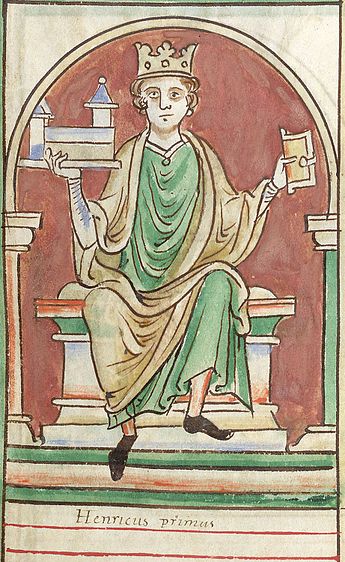
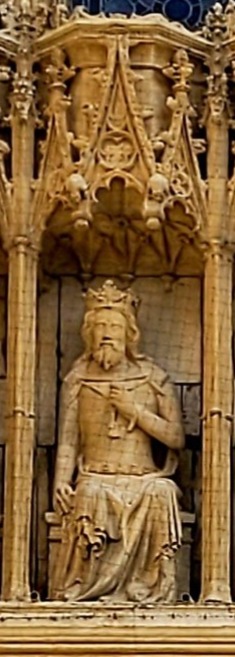
Henry I, Lincoln Cathedral

King Henry had more than twenty illegitimate children and as many as five were by the same mother, his mistress, or concubine, Sybilla Corbet. Orderic Vitalis refers to Sybilla of Normandy as ‘the daughter of King Henry by a concubine’.3 It is highly likely that Sybilla Corbet was Sybilla’s mother, one indication being their shared Christian name. She was the daughter of a Shropshire landowner named Robert Corbet. Her children with the king included Reginald, Earl of Cornwall, and a young man named William, who was described as the queen’s brother when he accompanied the younger Sybilla to Scotland. Sybilla Corbet is also reputed to have been the mother of Robert, Earl of Gloucester, Henry I’s oldest son and the stalwart supporter of his legitimate sister, Empress Matilda, during the Anarchy. After the end of her relationship with the king, Sybilla Corbet would go on to marry Herbert FitzHerbert, who held lands in Yorkshire and Gloucestershire, and have a further five children.

The date of Alexander’s marriage to Sybilla is unknown, though it is thought to have been shortly after his accession to the throne, possibly in 1107 or 1108, and before his involvement in the English campaign in Wales in 1114. It was in a charter dated to 1114 or 1115 that Alexander and Sybilla jointly refounded Scone Abbey, whereby they are referred to as ‘Alexander … King of Scots, son of King Malcolm and Queen Margaret and … Sybilla, Queen of Scots, daughter of King Henry of England.’4

Another unknown is Sybilla’s age at the time of her marriage as her birth was unrecorded. Alexander was in his 30s, while most historians agree that it is likely that Sybilla was born in the mid-to-late 1090s and probably in her mid-teens. Although born out of wedlock, as the acknowledged daughter of King Henry I of England, Sybilla was considered a suitable wife for King Alexander. Henry I’s illegitimate daughters played an important role in his foreign and domestic policies; no fewer than ten of them were married into the upper classes of the Norman-French nobility to cement political alliances. Sybilla’s illegitimate status was of less significance than the fact her father was the King of England.
History ... the Interesting Bits
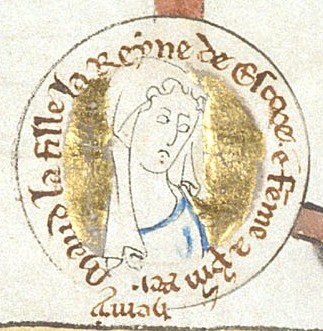
Matilda of Scotland, Queen of England

The marriage was intended to bind Alexander even closer to England and to King Henry personally, who was already his brother-in-law, having married Alexander’s sister, Matilda of Scotland, shortly after becoming king. The union was also aimed at securing peace along the Anglo-Scottish border. In his chronicle, William of Malmesbury recorded the marriage, though did not name Sybilla and added ‘there was … some defect about the lady either in correctness of manners or elegance of person.’5 Malmesbury stated that Alexander ‘did not sigh much when she died before him, for the woman lacked, as is said, what was desired, either in modest manners, or in elegant body’.6 Unfortunately, William of Malmesbury does not elaborate further on this defect, nor on the reasons behind such an unflattering description of the Scottish queen. No other chronicler mentions any flaws in the queen. It is possible that Malmesbury was playing down the queen’s attributes, and the impact of her death on the king, in order to find favour with her brother-in-law David, Alexander I’s younger brother and heir.

Some historians have interpreted the childless marriage as also being loveless, perhaps drawing on Malmesbury’s depiction of Sybilla, most actually agree that, although there were no children, it was a happy and loving marriage. With this distance of time, it would be difficult to be certain either way. However, despite the lack of an heir, Alexander did not repudiate his wife, though that could always be as a result of who her father was. Rosalind Marshal suggests that Alexander loved Sybilla, and mourned her deeply when she died, founding a church in her memory.
History ... the Interesting Bits
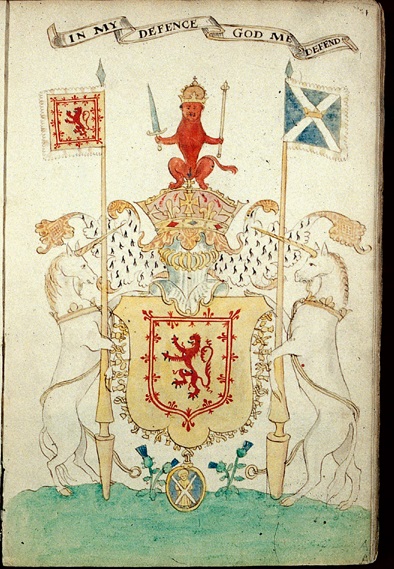
Arms of Scotland

Alexander and Sybilla’s court is said to have been one of splendour, with reference to Arab stallions and Turkish men-at-arms. They issued a number of charters together, including the one founding Scone Abbey, mentioned above. Scone was the ancient site for the installation and crowning of Scotland’s kings, it was the centre of royal power in Scotland. Sybilla’s inclusion in the foundation of the Augustinian priory there demonstrates how she had become an integral part of the Scottish ruling dynasty. She and Alexander also made a joint offering to the cathedral church of St Andrews.

Sybilla also made grants, as an ecclesiastical patron, in her own right. She granted the manor of Beath in Fife to Dunfermline Abbey, the monastery founded by her husband’s parents, Malcolm III and Queen Margaret, their final resting place. Sybilla attested one of the four surviving charters from Alexander I’s reign, demonstrating her presence at court and involvement in the affairs of state. Significantly, it may have been Sybilla who acted as peacemaker between the king and Eadmer, when he became Bishop of St Andrews. Due to the investiture controversy that was causing issues throughout Europe, with kings and bishops in disagreement over the validity of lay investiture, Eadmer accepted the ring of office from King Alexander, but not the staff. The staff had been placed on the altar at the cathedral of St Andrews and it seems likely that Sybilla was the one who broached the compromise whereby Eadmer would take the episcopal ring from the king, but the pastoral staff from the altar. When Eadmer arrived at the cathedral church of St Andrews to take up the pastoral staff, Queen Sybilla was there to greet him.
History ... the Interesting Bits
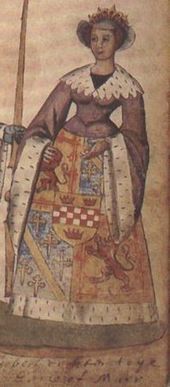
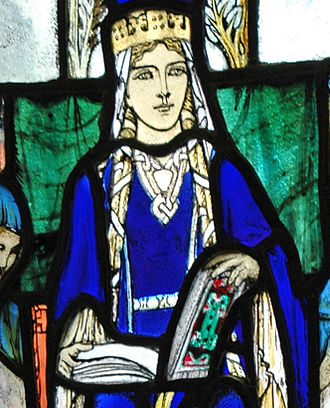
Saint Margaret, Queen of Scots

Queen Sybilla died suddenly on the Island of the Women at ‘Loch Tay, the cell of the canons of Scone’ on 12 or 13 July 1122 and was buried at Dunfermline Abbey. Afterwards, the king granted the island on Loch Tay, and its surrounding lands, to the canons at Scone, to pray for the soul of Queen Sybilla, and himself. Alexander did not remarry after Sybilla’s death, leaving the crown to his brother, David, on his own death in 1124.

Queen Sybilla has left little imprint on history, beyond her name as a witness on a surviving charter and the founding of Scone Abbey. That she did not bear children, and therefore an heir for Alexander I, means that she did not have living descendants to keep her memory alive and memorialise her life and deeds, as Queen Margaret had. Her significance is, perhaps, not in her impact on Scotland but rather the physical link that she represented between the kingdoms and dynasties of England and Scotland, and thus demonstrating Scottish acceptance of Norman rule in England.

***

Notes:

1. Manuscript E, The Anglo-Saxon Chronicles, edited and translated by Michael Swanton, p. 241; 2. John of Fordun’s Chronicle of the Scottish nation, pp. 217-218; 3. ‘filiam Henrici regis Anglorun ex concubine’ Orderic Vitalis cited in Danna Messer, Medieval Monarchs, Female Illegitimacy and Modern Genealogical Matters: Part 1: Sybilla, Queen of Scotland, c. 1090-1122, fmg.ac; 4. ‘Alexander…rex Scottorum filius regis Malcolmi et regine Margerete et…Sibilla regina Scottorum filia Henrici regis Anglie’ Scone, 1, p. 1.  Quoted in fmg.ac/Projects/MedLands/SCOTLAND; 5. William of Malmesbury, 400, p. 349, quoted in fmg.ac/Projects/MedLands/SCOTLAND; 6. William of Malmesbury, quoted in Messer, Medieval Monarchs, Female Illegitimacy and Modern Genealogical Matters: Part 1: Sybilla, Queen of Scotland, c. 1090-1122

Images:

Courtesy of Wikipedia except Henry I which is ©2025 Sharon Bennett Connolly

Sources:

The Anglo-Saxon Chronicles, edited and translated by Michael Swanton; John of Fordun’s Chronicle of the Scottish nation; Danna Messer, Medieval Monarchs, Female Illegitimacy and Modern Genealogical Matters: Part 1: Sybilla, Queen of Scotland, c. 1090-1122; fmg.ac/Projects/MedLands/SCOTLAND; Jessica Nelson, Sybilla (d. 1122), queen of Scots and consort of Alexander I, Oxforddnb.com; Walter Bower, Scotichronicon; A.A.M. Duncan, Alexander I, Oxforddnb.com; Forester, The Chronicle of John Florence of Worcester with the two continuations; David Ross, Scotland, History of a Nation; Rosalind K. Marshall, Scottish Queens 1034-1714; Mike Ashley, A Brief History of British Kings & Queens; Richard Oram, editor, The Kings & Queens of Scotland

*

My books

Signed, dedicated copies of all my books are available through my online store.

Out now: Scotland’s Medieval Queens

Books by Sharon Bennett Connolly

Scotland’s history is dramatic, violent and bloody. Being England’s northern neighbour has never been easy. Scotland’s queens have had to deal with war, murder, imprisonment, political rivalries and open betrayal. They have loved and lost, raised kings and queens, ruled and died for Scotland. From St Margaret, who became one of the patron saints of Scotland, to Elizabeth de Burgh and the dramatic story of the Scottish Wars of Independence, to the love story and tragedy of Joan Beaufort, to Margaret of Denmark and the dawn of the Renaissance, Scotland’s Medieval Queens have seen it all. This is the story of Scotland through their eyes.

Scotland’s Medieval Queens gives a thorough grounding in the history of the women who ruled Scotland at the side of its kings, often in the shadows, but just as interesting in their lives beyond the spotlight. It’s not a subject that has been widely covered, and Sharon is a pioneer in bringing that information into accessible history.’ Elizabeth Chadwick (New York Times bestselling author)

Available now from Amazon and Pen and Sword Books

Also by Sharon Bennett Connolly:

Books by Sharon Bennett Connolly

Heroines of the Tudor World tells the stories of the most remarkable women from European history in the time of the Tudor dynasty, 1485-1603. These are the women who ruled, the women who founded dynasties, the women who fought for religious freedom, their families and love. Heroines of the Tudor World is now available from Amberley Publishing and Amazon UK. Women of the Anarchy demonstrates how Empress Matilda and Matilda of Boulogne, unable to wield a sword themselves, were prime movers in this time of conflict and lawlessness. It shows how their strengths, weaknesses, and personal ambitions swung the fortunes of war one way – and then the other. Available from Bookshop.orgAmberley Publishing and Amazon UKKing John’s Right-Hand Lady: The Story of Nicholaa de la Haye is the story of a truly remarkable lady, the hereditary constable of Lincoln Castle and the first woman in England to be appointed sheriff in her own right. Available from all good bookshops Pen & Sword Booksbookshop.org and Amazon

Royal Historical Society

Defenders of the Norman Crown: The Rise and Fall of the Warenne Earls of Surrey tells the fascinating story of the Warenne dynasty, from its origins in Normandy, through the Conquest, Magna Carta, the wars and marriages that led to its ultimate demise in the reign of Edward III. Available from Pen & Sword BooksAmazon in the UK and US, and Bookshop.orgLadies of Magna Carta: Women of Influence in Thirteenth Century England looks into the relationships of the various noble families of the 13th century, and how they were affected by the Barons’ Wars, Magna Carta and its aftermath; the bonds that were formed and those that were broken. It is now available in paperback and hardback from Pen & SwordAmazon, and Bookshop.orgHeroines of the Medieval World tells the stories of some of the most remarkable women from Medieval history, from Eleanor of Aquitaine to Julian of Norwich. Available now from Amberley Publishing and Amazon, and Bookshop.orgSilk and the Sword: The Women of the Norman Conquest traces the fortunes of the women who had a significant role to play in the momentous events of 1066. Available now from Amazon,  Amberley Publishing, and Bookshop.org.

Alternate Endings: An anthology of historical fiction short stories including Long Live the King… which is my take what might have happened had King John not died in October 1216. Available in paperback and kindle from Amazon.

Podcast:

A Slice of Medieval

Have a listen to the A Slice of Medieval podcast, which I co-host with Historical fiction novelist Derek Birks. Derek and I welcome guests, such as Bernard Cornwell and Michael Jecks, and discuss a wide range of topics in medieval history, from significant events to the personalities involved. 

Every episode is also now available on YouTube.

*

Don’t forget! Signed and dedicated copies of all my books are available through my online store.

For forthcoming online and in-person talks, please check out my Events Page.

You can be the first to read new articles by clicking the ‘Follow’ button, liking our Facebook page or joining me on TwitterThreadsBluesky and Instagram.

*

©2025 Sharon Bennett Connolly
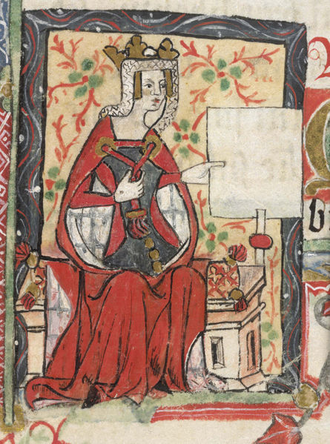
Queen of Scots

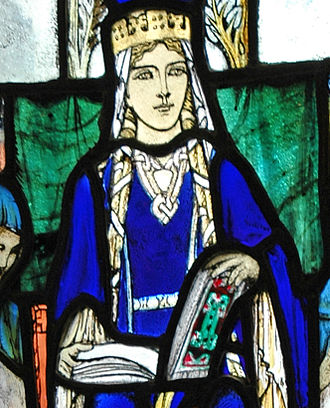
St Margaret, Queen of Scots

The Queens of Scots of the medieval era are a fascinating variety of women and I can only hope that I have done them justice in my latest book, Scotland’s Medieval Queens: From St Margaret to Margaret of Denmark.

Scottish history is fascinating! It is violent, politically charged and passionate. Being inconveniently situated on England’s northern border was never easy for Scotland, but it has made for some great stories over the centuries. Scotland’s story is often that of brother against brother, ambition and family rivalries causing feuds that threatened the stability of the crown itself. Such fissures, of course, grew and ruptured with the aid of English interference and encouragement. The King of England was always happy to play one side off against the other if it weakened Scotland’s position.

And Scotland’s medieval queens, be they Scottish, English, Danish or French, formed a big part of that story.

More often than not, these disputes north and south of the border were resolved in peace treaties, sealed by wedding bells. A number of English princesses and noblewomen found themselves married to Scotland’s kings as a consequence.

Queen Elizabeth de Burgh

For over 400 years, Shakespeare’s version of Lady Macbeth has been the woman most people are familiar with. In the bard’s famous drama, also known as ‘The Scottish Play’, Lady Macbeth is not even given her name. Presented as a scheming, manipulative woman, Shakespeare did as good a hatchet job on Gruoch, a royal princess in her own right, as he had on Richard III. Unfortunately, there is no society established to repair Gruoch’s reputation.

The scheming, ambitious woman who will stop at nothing to put her husband on the Scottish throne – and commit murder to keep him there. But is that the real Lady Macbeth? The story of Queen Gruoch, Lady Macbeth, is one shrouded in mystery, tantalisingly obscure. If only we could know more. The lack of information on Gruoch makes it easy for Shakespeare’s interpretation to be accepted as fact, but it is more than likely an injustice to a woman who survived her first husband’s gruesome death, protected her son and came to an agreement with Macbeth to become his wife, securing her son’s future in the process, and later becoming queen as a consequence.

Queen Gruoch is the first queen of Scots for whom we have a name.

From the highly educated and pious Margaret of Wessex to the glamorous Margaret of Denmark, their lives and experiences tell the story of their nation. Some, such as Matilda de Senlis and Ermengarde de Beaumont, barely make an impression on history, though merely by producing a son, they each guaranteed that Scotland would persevere. And Isabella de Warenne, wife of John Balliol, who is a ghost on the pages of Scotland’s history. And it is not that these made no impression. Their influence was in the domestic sphere, raising children and supporting their husbands, rather than on the political or the international stage. Although Isabella’s story is even more obscure by the fact all mention of the Balliol dynasty was forbidden by the Bruce regime.

Marrying an English princess, for example, did not always guarantee the peace with England that was intended. As the wife of Alexander II, Joan of England did her best to maintain cordial relations with her brother Henry III, often using private letters to broker diplomatic solutions. And Henry III’s own daughter Margaret, in marrying Alexander III, brought Scotland more years of peace with England. As a consequence, Scotland and England enjoyed over 70 years of peaceful relations. These years were shattered dramatically by the deaths of Alexander III, his three children and his little granddaughter, Margaret, the Maid of Norway. Little Margaret’s death left the Scots throne vacant, with thirteen Competitors vying for the crown, staking their claims as Edward I of England acted as adjudicator.

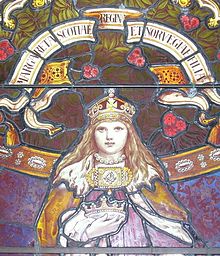
Margaret, Maid of Norway

Edward I took advantage of this to try to assert his overlordship of Scotland, but William Wallace, Robert the Bruce and countless others pushed back, ushering in decades of war with England, the Scottish Wars of Independence.

Edward III’s sister Joan of the Tower was to have no such legacy of peace as the earlier Joan and Queen Margaret could boast. Her brother’s ambition would blight her marriage for years. Edward leant his support to the rival claimant to the Scottish throne, Edward Balliol. If he had not been so keen to exploit Scotland’s dynastic divisions, maybe Joan and David II would have had a happier marriage. We will never know.

One cannot help but feel sympathy for Elizabeth de Burgh, seeing her fortunes rise and fall at the whim of England’s king, Edward I, held captive for eight years when she should have been sitting in splendour on Scotland’s throne.

Or poor Marjorie Bruce, whose childhood was torn from her by that same English king, held far away from everyone she loved, only to be married as she tasted freedom, and dead in childbirth by the age of 19. Passed over for the throne because she was a woman, she still managed to give birth to a dynasty, the Stewarts.

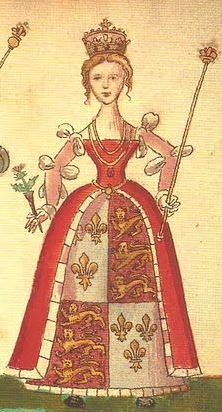
Joan Beaufort, Queen of Scots

Scotland was the first nation in the British Isles to accept a queen regnant when Margaret, Maid of Norway, was recognised as its queen in 1290. How her queenship would have developed, we have no way of knowing. The poor girl died before she even landed in mainland Scotland. Her significance is in that she was proclaimed queen and the possibilities that heralded, even if it got no further. We can only speculate as to how a successful rule by a queen regnant in the thirteenth century may have changed the lives and experiences of women in subsequent centuries. Her death was a tragedy, not just to her family, but to women’s rights to rule.

But then again, as her father-in-law, it may well be that Edward I would have taken Scotland under his wing … and never let go.

Although we have charters and chronicles, and evidence of religious and charitable donations, most of these women remain elusive. They are enigmas.

We do not – and cannot – know them intimately as the one thing that is missing is their own voice. Their thoughts and personalities are lost to us. Even letters to family members are often formulaic and rarely speak of their true feelings, of their happiness – or not – and their cares and concerns for themselves. We know what they endured for the sake of Scotland, the risk of death in childbirth, the grief of lost children, or the grief of no children. Every woman in medieval Europe was exposed to similar experiences. Scottish queens, however, had to endure imprisonment, scheming noblemen and the early deaths of their husbands more times than they should have had to.

Anabella Drummond, Queen of Scots

But, once in a while, we come across a marriage that is a true partnership. A love story, even. And we discover moments of affection, of amusement, of unity and mutual support. Little moments that remind us that these people are not just stories. They are lives that were lived to the full, however short or long a time they had.

Scotland’s story is often violent and suffered greatly from the machinations if its powerful southern neighbour. However, Scotland did emerge from the Middle Ages as, still, an independent, sovereign nation. And Scotland’s medieval queens had each made their own contribution to the country’s continuing survival and independence. From Saint Margaret – even from Gruoch – to Margaret of Denmark, each queen, to varying degrees of success, made their own indelible imprint on Scotland’s remarkable story.

Images:

Courtesy of Wikipedia

Selected Bibliography:

John of Fordun’s Chronicle of the Scottish Nation; Walter Bower, Scotichronicon; Andrew Wyntoun, The orygynale cronykil of Scotland; Calendar of documents relating to Scotland preserved in Her Majesty’s Public Record Office; Richard Oram, editor, The Kings and Queens of Scotland; Rosalind K. Marshall, Scottish Queens 1034–1714; Nigel Tranter, The Story of Scotland; David Ross Scotland, History of a Nation; Liber pluscardensis, edited by Felix James Henry Skene; Mediaeval chronicles of Scotland: the chronicles of Melrose and Holyrood, translated by Joseph Stephenson; The Chronicle of Lanercost, edited by Sir Herbert Maxwell; The Ecclesiastical History of England and Normandy by Ordericus Vitalis; The historie and cronicles of Scotland … by Robert Lindesay of Pitscottie, 3 volumes, A.J.G. Mackay, editor.

*

My books

Signed, dedicated copies of all my books are available through my online store.

Out now: Scotland’s Medieval Queens

Scotland’s history is dramatic, violent and bloody. Being England’s northern neighbour has never been easy. Scotland’s queens have had to deal with war, murder, imprisonment, political rivalries and open betrayal. They have loved and lost, raised kings and queens, ruled and died for Scotland. From St Margaret, who became one of the patron saints of Scotland, to Elizabeth de Burgh and the dramatic story of the Scottish Wars of Independence, to the love story and tragedy of Joan Beaufort, to Margaret of Denmark and the dawn of the Renaissance, Scotland’s Medieval Queens have seen it all. This is the story of Scotland through their eyes.

Scotland’s Medieval Queens gives a thorough grounding in the history of the women who ruled Scotland at the side of its kings, often in the shadows, but just as interesting in their lives beyond the spotlight. It’s not a subject that has been widely covered, and Sharon is a pioneer in bringing that information into accessible history.’ Elizabeth Chadwick (New York Times bestselling author)

Available now from Amazon and Pen and Sword Books

Also by Sharon Bennett Connolly:

Heroines of the Tudor World tells the stories of the most remarkable women from European history in the time of the Tudor dynasty, 1485-1603. These are the women who ruled, the women who founded dynasties, the women who fought for religious freedom, their families and love. Heroines of the Tudor World is now available for pre-order from Amberley Publishing and Amazon UK. Women of the Anarchy demonstrates how Empress Matilda and Matilda of Boulogne, unable to wield a sword themselves, were prime movers in this time of conflict and lawlessness. It shows how their strengths, weaknesses, and personal ambitions swung the fortunes of war one way – and then the other. Available from Bookshop.orgAmberley Publishing and Amazon UKKing John’s Right-Hand Lady: The Story of Nicholaa de la Haye is the story of a truly remarkable lady, the hereditary constable of Lincoln Castle and the first woman in England to be appointed sheriff in her own right. Available from all good bookshops Pen & Sword Booksbookshop.org and Amazon

Defenders of the Norman Crown: The Rise and Fall of the Warenne Earls of Surrey tells the fascinating story of the Warenne dynasty, from its origins in Normandy, through the Conquest, Magna Carta, the wars and marriages that led to its ultimate demise in the reign of Edward III. Available from Pen & Sword BooksAmazon in the UK and US, and Bookshop.orgLadies of Magna Carta: Women of Influence in Thirteenth Century England looks into the relationships of the various noble families of the 13th century, and how they were affected by the Barons’ Wars, Magna Carta and its aftermath; the bonds that were formed and those that were broken. It is now available in paperback and hardback from Pen & SwordAmazon, and Bookshop.orgHeroines of the Medieval World tells the stories of some of the most remarkable women from Medieval history, from Eleanor of Aquitaine to Julian of Norwich. Available now from Amberley Publishing and Amazon, and Bookshop.orgSilk and the Sword: The Women of the Norman Conquest traces the fortunes of the women who had a significant role to play in the momentous events of 1066. Available now from Amazon,  Amberley Publishing, and Bookshop.org.

Alternate Endings: An anthology of historical fiction short stories including Long Live the King… which is my take what might have happened had King John not died in October 1216. Available in paperback and kindle from Amazon.

Podcast:

Have a listen to the A Slice of Medieval podcast, which I co-host with Historical fiction novelist Derek Birks. Derek and I welcome guests, such as Bernard Cornwell and Michael Jecks, and discuss a wide range of topics in medieval history, from significant events to the personalities involved. Every episode is also now available on YouTube.

*

Don’t forget! Signed and dedicated copies of all my books are available through my online store.

For forthcoming online and in-person talks, please check out my Events Page.

You can be the first to read new articles by clicking the ‘Follow’ button, liking our Facebook page or joining me on TwitterThreadsBluesky and Instagram.

*

©2025 Sharon Bennett Connolly, FRHistS

The Ætheling and the Tragedy of the White Ship

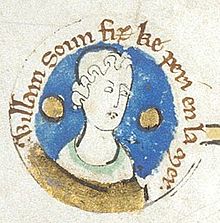
220px-Vilém_syn
William the Atheling

In the late summer of 1103 England’s queen, Matilda of Scotland, gave birth to a son. Named after his grandfather, William the Conqueror, the young prince would be known to history as William the Ætheling. He is one of those historical figures who resides in the shadows, more famous for his death than his all-too-short life as the heir to England’s throne.

William’s father, Henry, was a younger son of William the Conqueror and Matilda of Flanders. When his father had died in 1087, the patrimony of England and Normandy was divided between Henry’s older brothers; the eldest, Robert Curthose, inherited Normandy while William II Rufus became King of England. Henry was given money and lands. It has been said that Henry was intended for a life in the church; however, when his father died, Henry was already 18 and would have joined the church as a child if that was the career set out for him. Instead, the little brother seems to have set his sights on greater things and, as a result, was distrusted by William II, who kept him close, so he could not cause any mischief.

On 2 August, 1100, while out hunting in the New Forest, William was struck by a stray arrow and killed. Some say it was planned, others that it was an accident; I guess we’ll never know for sure…

Henry, however, did not waste the opportunity. With his older brother Robert still on his way back from Crusading in the Holy Land, Henry seized the initiative, the treasury and the kingdom; he was crowned at Westminster Abbey just 3 days after his brother’s death. Within months Henry had found himself a bride with impeccable parentage. Matilda had been born Edith of Scotland and was the daughter of Malcolm III, King of Scots. Through her mother, St Margaret, she was the great-granddaughter of Edmund II Ironside, the Anglo-Saxon king of England who died in 1016. She changed her name on marrying Henry, as Edith was considered ‘too Saxon’ for Norman tastes.

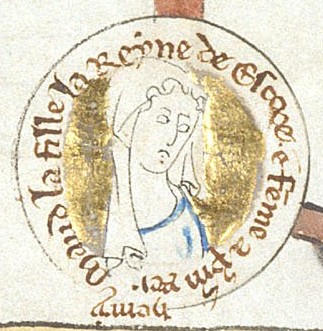
Matylda_zena
Matilda of Scotland

Henry and Matilda were married in November 1100 and within 3 years were the proud parents of 2 children. Their daughter, Adelaide, was born in 1102; she would adopt the name Matilda on her marriage to the Holy Roman Emperor, Henry V, and would be known to history as the Empress Matilda (or Maud, though this appears to have been a later nickname). Although some historians suggest they were twins, it is most likely that Matilda’s younger brother, William, was born in 1103; a message of congratulations was sent to Henry I by Pope Paschal II on 23 November of that year.

The soubriquet of Ætheling is attributed to chronicler Orderic Vitalis and harks back to Anglo-Saxon times as a title given to the king’s designated heir. According to William of Malmesbury, William, with an Anglo-Saxon mother and Norman father, represented the hope of reconciliation between the conquered and conquerors of England.

Although the king and queen had only 2 children – a possible third child is thought to have died young – the king had numerous illegitimate offspring by various women, several of whom were raised alongside his legitimate children. William and a number of his illegitimate brothers, including Robert, Earl of Gloucester, were tutored by Otuel (or Othuer) fitzEarl, natural son of Hugh, Earl of Chester. fitzEarl had been made castellan of the Tower of London and so it is likely that the prince and his brothers were frequently in residence there, in order to pursue their education.

330px-Empress_Mathilda
William’s sister, Empress Matilda

According to William of Malmesbury, William was trained for his future role ‘with fond hope and immense care’. In 1108, while their father was away in Normandy, William and his sister were entrusted to the spiritual care of Anselm, the revered Archbishop of Canterbury.

In 1110 William’s sister, Matilda, left for Germany; she was to continue her education at the court of her future husband, but would not be married until January 1114, just before her 12th birthday. William was still only 6 years old when his sister left; Matilda was 8. It’s sad to think the young siblings would never meet again.

Following his sister’s departure, William’s education continued apace. By 1113, aged just 10, William began to attest royal documents. While still only 9, in February of that year, William was betrothed, at Alençon, to Alice (who changed her name to Matilda on her marriage), the daughter of Fulk V, count of Anjou and Maine. The betrothal formed part of his father’s wider diplomacy, which had also included his sister’s marriage to the Holy Roman Emperor.

Henry I spent the early part of his reign fighting against his brother, Robert Curthose, and, later, Robert’s son, William Clito, trying to secure a smooth succession for William. Robert had been decisively defeated at Tinchebrai in 1106 and spent his remaining years – until his death in 1134 – a prisoner of his brother. Henry subsequently claimed Normandy for the English crown, but William Clito was still a thorn in his side. Clito was supported by the French king, Louis VI; who used him as a counter to Henry’s attempts to conquer Maine.

345px-Henry1
Henry I

In 1115, according to the Anglo-Saxon Chronicle, Henry arranged for the Norman barons to do homage and swear fealty to William, in an attempt to counter the claims of William Clito. A similar ceremony was arranged in England in 1116, for all the great men and barons of England to swear fealty to William as the king’s heir. The Warenne (Hyde) Chronicle referred to William as ‘rex Norman-Angllorum, ut putabatur futurus’ (assumed to be the future king of the Norman-English).

On 1st May 1118 William’s mother, Queen Matilda, died at Westminster and was laid to rest in Westminster Abbey. We do not know how the young prince felt at the loss of his mother – he was 15 at the time. However, it is from this point that William took on more responsibility, acting as regent whenever the king was away in Normandy.

In December 1118 Henry’s troops defeated the Angevins, under Fulk of Anjou, at Alençon. To counteract the defeat, William and Alice/Matilda of Anjou were married, with the Count settling Maine on them as their marriage gift, thus deserting the cause of the French king. Inevitably, war with Louis VI followed.

On 20 August 1119, 16-year-old William was with his father at the Battle of Brémule. Henry won the fight against the forces of Louis VI of France and William Clito. During the battle, William had captured the palfrey of his cousin, William Clito, which he chivalrously returned at the end of the battle.

In the same year William witnessed a charter at Rouen, in which he was described as ‘dei gratia, rex designatus’ (by the grace of God, king designate). And continuing his education in diplomacy, in November 1119, William accompanied his father to a meeting with Pope Calixtus II, (William’s second cousin once removed).

330px-Sceau_de_Louis_VI
Louis VI of France

At the turn of the year, it must have seemed to Henry that his dynasty – and the future of England – was secure in the hands of his son; at the age of 16 he was experienced in warfare and diplomacy and married to Matilda, though she was probably still under 10 years of age, who brought with her the county of Maine as her marriage portion (and the promise of Anjou should her father die whilst on Crusade).

In 1120 peace was finally achieved with France, with William being created Duke of Normandy by his father, and paying homage for the duchy to King Louis; a precedent that would be used  by future English kings, in order to avoid a king paying homage to a fellow king for part of his holdings. William, in turn, then received the homage of the Norman barons. Accompanied by his father, wife and several of his half brothers and sisters, it must have been a time of great rejoicing and festivities.

The final entry of the Warenne (Hyde) Chronicle set the scene:

At last King Henry restored peace with his diligence and money and decided to come to England with much triumph and joy, but God omnipotent, who, just as the blessed Job says, ‘loosens the belt of kings, and girds their kidneys with a rope’, out of his just judgment turned the king’s joy into grief and victory into sorrow. Having descended with his two sons, William and Richard, and with Theobald count of Blois, his nephew, and with many relatives and a crowd of nobles, to the seaport, called Barfleur, on the designated day he began to board his ship with favourable winds and a prosperous sea…

The Warenne (Hyde) Chronicle, edited by Elisabeth m.C. Van Houts and Rosalind C. Love

Indeed, when the large party prepared to cross the Channel, to return to England, it seems several of them were still celebrating. While Henry made the crossing in his own ship, taking with him several nobles and his daughter-in-law, the prince took the offer of a newly built ship, the Blanche Nef – or White Ship – which its owner, Thomas fitzStephen, claimed would guarantee a swift, safe passage. William the Ætheling was accompanied by many of the young nobles of the great families of England, including his half-sister, Matilda, and half-brother, Richard of Lincoln.

WhiteShipSinking
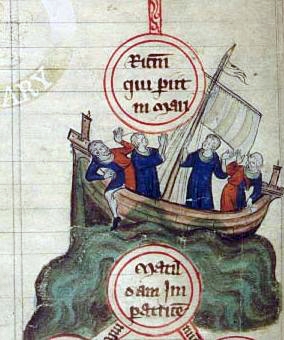
The Sinking of the White Ship

Most of the passengers and crew were still drunk from celebrating when the ship finally left the harbour of Barfleur, in the dark, on the evening of 25 November, 1120. Oderic Vitalis described the scene:

At length he gave the signal to put to sea. Then the rowers made haste to take up their oars and, in high spirits because they knew nothing of what lay ahead, put the rest of the equipment ready and made the ship lean forward and race through the sea. As the drunken oarsmen were rowing with all their might, and the luckless helmsman paid scant attention to steering the ship though he sea, the port side of the White Ship struck violently against a huge rock, which was uncovered each day as the tide ebbed and covered once more at high tide. Two planks were shattered and, terrible to relate, the ship capsized without warning. Everyone cried out at once in their great peril, but the water pouring into the boat soon drowned their cries and all alike perished.

William was ushered into a small boat and was being rowed to safety when he is said to have heard the cries of his half-sister, Matilda. The prince insisted on rowing to her aid, but the little boat was overwhelmed by those trying to make it to safety, and capsized, taking everyone with it.

Vitalis, Oderic, The Ecclesiastical History of Oderic Vitalis.

William the Ætheling was 17-years-old.

With only one survivor, a butcher from Rouen, over 300 souls were lost – drowned – and only a handful of bodies were ever recovered. With the sinking of the White Ship Henry I lost his son; England and Normandy lost their next ruler.

Young Matilda had lost her husband. Still only a child, Matilda had made the crossing of the Channel with the King, rather than her husband, and sometime after the disaster she returned to her father’s court. In 1121 Matilda became a nun, eventually becoming abbess of the convent at Fontevrault. She died in 1158.

With the uncertainty that followed, Louis VI renewed his support of William Clito, who continued to be a thorn in Henry I’s side until his death fighting in Flanders in 1128. Henry himself, in the hope of producing another son, married  again in 1121; to Adeliza of Louvain. Unfortunately, the marriage proved childless and Henry spent the final years of his reign trying to secure the throne for his daughter, Matilda. Empress Matilda had returned to Henry’s court in England following the death of her husband in 1125 and was married again,  in 1128, to Geoffrey, Count of Anjou – the brother of Matilda of Anjou – in the hope that the union would strengthen her claim to the throne.

In the end, however, despite the fact Henry had made the barons of England swear fealty to Matilda as his successor Henry’s nephew, Stephen, claimed the throne on the old king’s death in 1135; thus ushering in 19 years of warfare, an era which became known as The Anarchy.

Reading_Abbey_03
Chapter house of Reading Abbey

William’s death was a tragedy, not only on a national scale, but also a personal one, for Henry I. According to the Anglo-Saxon Chronicle the disaster was ‘a double grief: first that they lost their lives so swiftly; second that few of their bodies were found afterwards’. The young prince’s body was never recovered, leaving no monument to his life, save for Reading Abbey, established as a priory – and later an abbey – in 1121 by Henry I,

‘for the salvation of my soul and that of king William my father and king William my brother and William my son and queen Matilda my mother and queen Matilda my wife and all of my predecessors and successors.’

*

Sources: oxforddnb.com; Oderic Vitalis, The Ecclesiastical History of Orderic Vitalis; Donald Matthew, King Stephen; Robert Bartlett, England Under the Norman and Angevin Kings; David Williamson, Brewer’s British Royalty; the History Today Companion to British History; Dan Jones, the Plantagenets; englishmonarchs.co.uk; The Oxford Companion to British History Edited by John Cannon; Mike Ashley, The Mammoth Book of British kings & Queens; Alison Weir, Britain’s Royal Families, the Complete Genealogy; medievalilsts.net; The Plantagenet Chronicles Edited by Elizabeth Hallam; The Warenne (Hyde) Chronicle, edited by Elisabeth Van Houts and Rosalind C. Love .

*

Pictures courtesy of Wikipedia

*

My Books

Signed, dedicated copies of all my books are available through my online bookshop.

Out now! Scotland’s Medieval Queens

Books by Sharon Bennett Connolly

Scotland’s history is dramatic, violent and bloody. Being England’s northern neighbour has never been easy. Scotland’s queens have had to deal with war, murder, imprisonment, political rivalries and open betrayal. They have loved and lost, raised kings and queens, ruled and died for Scotland. From St Margaret, who became one of the patron saints of Scotland, to Elizabeth de Burgh and the dramatic story of the Scottish Wars of Independence, to the love story and tragedy of Joan Beaufort, to Margaret of Denmark and the dawn of the Renaissance, Scotland’s Medieval Queens have seen it all. This is the story of Scotland through their eyes.

Scotland’s Medieval Queens gives a thorough grounding in the history of the women who ruled Scotland at the side of its kings, often in the shadows, but just as interesting in their lives beyond the spotlight. It’s not a subject that has been widely covered, and Sharon is a pioneer in bringing that information into accessible history.’ Elizabeth Chadwick (New York Times bestselling author)

Available now from Amazon and Pen and Sword Books

Also by Sharon Bennett Connolly:

Books by Sharon Bennett Connolly

Heroines of the Tudor World tells the stories of the most remarkable women from European history in the time of the Tudor dynasty, 1485-1603. These are the women who ruled, the women who founded dynasties, the women who fought for religious freedom, their families and love. Heroines of the Tudor World is now available for pre-order from Amberley Publishing and Amazon UK. Women of the Anarchy demonstrates how Empress Matilda and Matilda of Boulogne, unable to wield a sword themselves, were prime movers in this time of conflict and lawlessness. It shows how their strengths, weaknesses, and personal ambitions swung the fortunes of war one way – and then the other. Available from Bookshop.orgAmberley Publishing and Amazon UKKing John’s Right-Hand Lady: The Story of Nicholaa de la Haye is the story of a truly remarkable lady, the hereditary constable of Lincoln Castle and the first woman in England to be appointed sheriff in her own right. Available from all good bookshops Pen & Sword Booksbookshop.org and Amazon

Royal Historical Society

Defenders of the Norman Crown: The Rise and Fall of the Warenne Earls of Surrey tells the fascinating story of the Warenne dynasty, from its origins in Normandy, through the Conquest, Magna Carta, the wars and marriages that led to its ultimate demise in the reign of Edward III. Available from Pen & Sword BooksAmazon in the UK and US, and Bookshop.orgLadies of Magna Carta: Women of Influence in Thirteenth Century England looks into the relationships of the various noble families of the 13th century, and how they were affected by the Barons’ Wars, Magna Carta and its aftermath; the bonds that were formed and those that were broken. It is now available in paperback and hardback from Pen & SwordAmazon, and Bookshop.orgHeroines of the Medieval World tells the stories of some of the most remarkable women from Medieval history, from Eleanor of Aquitaine to Julian of Norwich. Available now from Amberley Publishing and Amazon, and Bookshop.orgSilk and the Sword: The Women of the Norman Conquest traces the fortunes of the women who had a significant role to play in the momentous events of 1066. Available now from Amazon,  Amberley Publishing, and Bookshop.org.

Alternate Endings: An anthology of historical fiction short stories including Long Live the King… which is my take what might have happened had King John not died in October 1216. Available in paperback and kindle from Amazon.

Podcast:

A Slice of Medieval

Have a listen to the A Slice of Medieval podcast, which I co-host with Historical fiction novelist Derek Birks. Our very first episode was on The Anarchy. Derek and I welcome guests, such as Bernard Cornwell, and discuss a wide range of topics in medieval history, from significant events to the personalities involved.

There are now over 75 episodes to listen to!

Every episode is also now available on YouTube.

*

Don’t forget! Signed and dedicated copies of all my books are available through my online bookshop.

For forthcoming online and in-person talks, please check out my Events Page.

You can be the first to read new articles by clicking the ‘Follow’ button, liking our Facebook page or joining me on TwitterThreadsBluesky and Instagram.

*

©2016 Sharon Bennett Connolly FRHistS