Love, Adultery and a Fake Kidnapping? The story of Isabel de Vermandois

Adelaide_of_Vermandois
Adelaide de Vermandois, mother of Isabel

Born around 1085, Isabel de Vermandois had the blood of kings flowing through her veins. Her father was Hugh Capet, younger son of King Henry I of France. Her mother was Adelaide de Vermandois, a descendant of the ancient Carolingian dynasty. She was one of her parents’ 9 surviving children; 4 boys and 5 girls.

As with many medieval women, there are no images of Isabel; not even a description of her appearance. Her life can be pieced together, somewhat, through her marriages and through her children. When researching her, her name also frequently appears as Elisabeth; Elisabeth being the Latin version of her name, whereas Isabelle/Isabel appears to derive from the French/Spanish languages.

From her birth, as the granddaughter of the King of France, Isabel was a valuable prize. Her childhood proved to be  depressingly short. By 1096 a marriage was mooted between Isabel and Robert de Beaumont, Count of Meulan, who was 35 years her senior.

Robert de Beaumont was a seasoned warrior and courtier, with lands in both England and Normandy. He had fought alongside William the conqueror at the Battle of Hastings and was with William II Rufus when he was killed in a hunting accident in the New Forest. A loyal supporter of Henry I, he would fight for his king at the Battle of Tinchebrai in 1106, and receive the earldom of Leicester in 1107.

Hugh_I_of_Vermandois
Hugh I, Count of Vermandois, Isabel’s father

The marriage was originally opposed by the church; the prospective couple were related within the prohibited degrees and Isabel was not yet at the minimum legal age to marry – 12. Before leaving on Crusade, however, Isabel’s father was able to persuade Pope Urban to issue a dispensation and the marriage went ahead in 1096.

Isabel was around 11 years old, Robert de Beaumont was about 46.

Isabel gave Robert 9 children; the first was a daughter, Emma, born in 1102. Twin boys followed in 1104; Waleran and Robert de Beaumont, earls of Worcester and Leicester, respectively. The brothers were active supporters of King Stephen during the conflict with Empress Matilda, popularly known as the Anarchy, but while Robert would come to terms with Matilda’s son, the future Henry II, in 1153, Waleran was distrusted due to his support of Louis VII of France.

Another daughter, Isabel, was a mistress of Henry I before being married to Gilbert de Clare, 1st Earl of Pembroke. Through her son Richard de Clare, 2nd Earl of Pembroke, she would be the grandmother of Isabel de Clare, wife of the great knight and Regent for Henry III, William Marshal.
Sharon Bennett Connolly
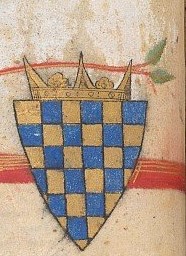
Arms of Isabel de Vermandois assumed by William de Warenne following their marriage.

Isabel’s marriage to Robert de Beaumont seems to have ended in scandal and controversy. The chronicler Henry of Huntingdon reported that she was seduced by William de Warenne, 2nd Earl of Surrey, suggesting they had a love affair, which lasted for several years. It’s hard to blame a young woman of 30, in an arranged marriage to a man more than twice her age, for looking elsewhere for love and comfort.

William de Warenne had failed, in 1093, to obtain a royal bride for himself in a match with Matilda of Scotland (she went on to marry Henry I), and so looked elsewhere for a bride. It seems that de Warenne hatched a plot to kidnap Isabel – possibly with her approval – after de Beaumont refused to grant his wife a divorce. Huntingdon has the aged warrior dying of shame following his wife’s betrayal:

But when he was at the height of his fame, it happened that another count stole his wife, by intrigue and violent treachery. Because of this, in his old age his mind was troubled, and, darkened by anguish, he passed into the shadows of grief, and never again experienced happiness or cheerfulness. After days given over to sorrow he fell into an illness that heralded his death …

Henry of Huntingdon, The History of the English People 1000-1154

However … Henry of Huntingdon’s accusations may well be a misinterpretation of the facts; and be based on rumours arising from Isabel and William marrying within only a few months of her first husband’s death, that they must have been having an affair if they married so soon afterwards. Wealthy widows were a target for ambitious men, though. They were at risk of being kidnapped, raped and forced to marry their rapist. Isabel circumvented this risk by marrying William de Warenne, a man she knew and was of equal rank with her late husband.

Whether the story is true, or not, is highly questionable, but great for the novelists. However, Robert de Beaumont died soon after, on 5th June 1118, and William and Isabel married as soon as they could; William was approaching 50, had been Earl of Surrey for 30 years and, as yet, had no heir to succeed him.

Sharon Bennett Connolly
Castle Acre, residence of the Earls of Surrey

William de Warenne, 2nd Earl of Surrey, had a chequered career. He had succeeded his father in 1088, but was disinherited by Henry I for his support of Henry’s brother Robert Curthose, Duke of Normandy, in his attempt on the English throne. De Warenne was restored to favour in 1103 and thereafter remained loyal. He would be one of the earls present at Henry I’s death on 1st December 1135 at Lyons-la-Foret.

On his marriage to Isabel, William assumed the Vermandois coat of arms as his own and the blue and yellow checks became known as the ‘Warenne chequer’.

Isabel and William had several children; their son and heir, William, the future 3rd earl was born in 1119. He would die on Crusade in January 1148 in the Battle of Mount Cadmus, at Laodicea in Turkey, whilst fighting in the elite royal guard of his cousin, King Louis VII of France. His only child, a daughter, Isabel, became the greatest heiress in England.

Another 2 sons followed, Ralph and Rainald, and 2 daughters. Gundreda married Roger de Beaumont, Earl of Warwick and Ada married Prince Henry of Scotland, Earl of Huntingdon, son and heir of David I of Scotland. Two of Ada’s sons became kings of Scotland; Malcolm IV and William the Lion.

Sharon Bennett Connolly
Lewes Priory, final resting place of Isabel de Vermandois, Countess of Leicester and Surrey

Isabel’s two families seem to have got on quite well. Not only did Gundreda de Warenne marry a  cousin of her Beaumont siblings, but William de Warenne also had both his son and step sons with him when he attended Henry I on his deathbed. The Beaumont and Warenne half-brothers looked after each other, and their interests, during the period known as the Anarchy, when King Stephen and Empress Matilda were vying for the crown. Young William de Warenne, the 3rd Earl, was only 18 or 19 when his father died, and was guided and advised by his half-brothers Waleran and Robert, 15 years his senior.

Although her life was tinged with scandal, Isabel of Vermandois has had a great influence on the history of England and Scotland. From her are descended the greatest families of England and all subsequent Scottish monarchs.

William de Warenne died in 1138, having held the earldom of Surrey for 50 years; he was buried at his father’s feet at Lewes Priory. Isabel survived him by almost 10 years, dying around 1147/8. She was also buried at Lewes Priory, close to her husband.

*

Pictures taken from Wikipedia, except Castle Acre and Lewes Priory, which are ©2019, Sharon Bennett Connolly FRHistS

Sources: Early Yorkshire Charters Volume 8: The Honour of Warenne, Edited by William Farrer and Charles Travis Clay; England Under the Norman and Angevin Kings by Robert Bartlett; Brewer’s British Royalty by David Williamson; The History of the English People 1000-1154 by Henry of Huntingdon; Britain’s Royal Families, the Complete Genealogy by Alison Weir; british-history.ac.uk; kristiedean.com; knight-france.com; Rev. John Watson, Memoirs of the Ancient Earls of Warren and Surrey, and Their Descendants to the Present Time, Volume I; Elisabeth M.C. Van Houts and Rosalind C. Love (eds and trans), The Warenne (Hyde) Chronicle; Elisabeth Van Houts, ‘The Warenne View of the Past’, in Proceedings of the Battle Conference 2003, edited by John Gillingham.

*

My Books

Signed, dedicated copies of all my books are available through my online bookshop.

Out now: Scotland’s Medieval Queens

Books by Sharon Bennett Connolly

Scotland’s history is dramatic, violent and bloody. Being England’s northern neighbour has never been easy. Scotland’s queens have had to deal with war, murder, imprisonment, political rivalries and open betrayal. They have loved and lost, raised kings and queens, ruled and died for Scotland. From St Margaret, who became one of the patron saints of Scotland, to Elizabeth de Burgh and the dramatic story of the Scottish Wars of Independence, to the love story and tragedy of Joan Beaufort, to Margaret of Denmark and the dawn of the Renaissance, Scotland’s Medieval Queens have seen it all. This is the story of Scotland through their eyes.

Scotland’s Medieval Queens gives a thorough grounding in the history of the women who ruled Scotland at the side of its kings, often in the shadows, but just as interesting in their lives beyond the spotlight. It’s not a subject that has been widely covered, and Sharon is a pioneer in bringing that information into accessible history.’ Elizabeth Chadwick (New York Times bestselling author)

Available now from Amazon and Pen and Sword Books

Also by Sharon Bennett Connolly:
Books by Sharon Bennett Connolly

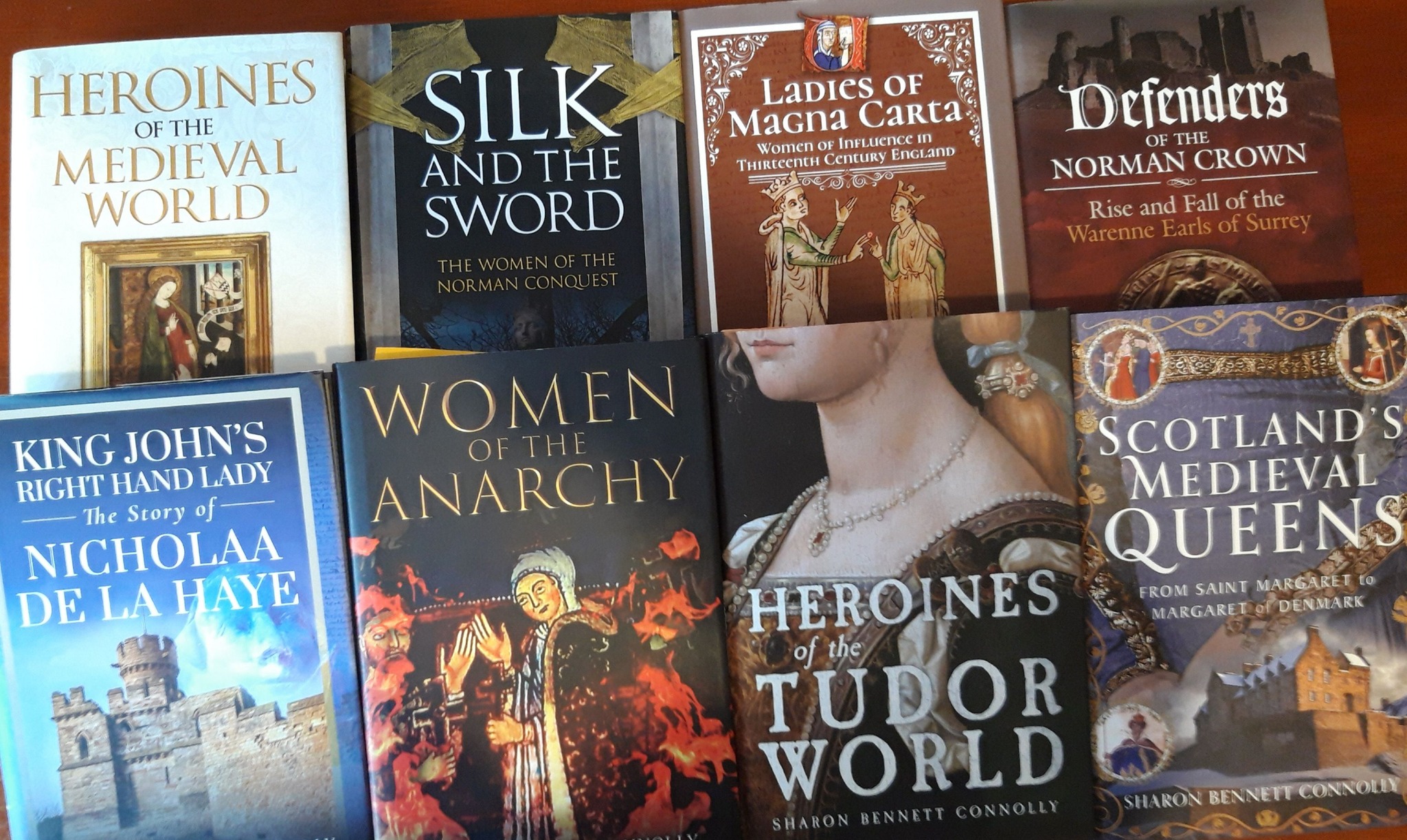
Heroines of the Tudor World tells the stories of the most remarkable women from European history in the time of the Tudor dynasty, 1485-1603. These are the women who ruled, the women who founded dynasties, the women who fought for religious freedom, their families and love. Heroines of the Tudor World is now available from Amberley Publishing and Amazon UK. Women of the Anarchy demonstrates how Empress Matilda and Matilda of Boulogne, unable to wield a sword themselves, were prime movers in this time of conflict and lawlessness. It shows how their strengths, weaknesses, and personal ambitions swung the fortunes of war one way – and then the other. Available from Bookshop.orgAmberley Publishing and Amazon UKKing John’s Right-Hand Lady: The Story of Nicholaa de la Haye is the story of a truly remarkable lady, the hereditary constable of Lincoln Castle and the first woman in England to be appointed sheriff in her own right. Available from all good bookshops Pen & Sword Booksbookshop.org and Amazon

Books by Sharon Bennett Connolly

Defenders of the Norman Crown: The Rise and Fall of the Warenne Earls of Surrey tells the fascinating story of the Warenne dynasty, from its origins in Normandy, through the Conquest, Magna Carta, the wars and marriages that led to its ultimate demise in the reign of Edward III. Available from Pen & Sword BooksAmazon in the UK and US, and Bookshop.orgLadies of Magna Carta: Women of Influence in Thirteenth Century England looks into the relationships of the various noble families of the 13th century, and how they were affected by the Barons’ Wars, Magna Carta and its aftermath; the bonds that were formed and those that were broken. It is now available in paperback and hardback from Pen & SwordAmazon, and Bookshop.orgHeroines of the Medieval World tells the stories of some of the most remarkable women from Medieval history, from Eleanor of Aquitaine to Julian of Norwich. Available now from Amberley Publishing and Amazon, and Bookshop.orgSilk and the Sword: The Women of the Norman Conquest traces the fortunes of the women who had a significant role to play in the momentous events of 1066. Available now from Amazon,  Amberley Publishing, and Bookshop.org.

Alternate Endings: An anthology of historical fiction short stories including Long Live the King… which is my take what might have happened had King John not died in October 1216. Available in paperback and kindle from Amazon.

Podcast:

Books by Sharon Bennett Connolly

Have a listen to the A Slice of Medieval podcast, which I co-host with Historical fiction novelist Derek Birks. Derek and I welcome guests, such as Bernard Cornwell and Michael Jecks, and discuss a wide range of topics in medieval history, from significant events to the personalities involved. Every episode is also now available on YouTube.

*

Don’t forget! Signed and dedicated copies of all my books are available through my online bookshop.

For forthcoming online and in-person talks, please check out my Events Page.

You can be the first to read new articles by clicking the ‘Follow’ button, liking our Facebook page or joining me on TwitterThreadsBluesky and Instagram.

©2015 Sharon Bennett Connolly FRHistS

Hamelin de Warenne, the King’s Brother

A short while ago I wrote about Isabel de Warenne, Countess of Surrey and then her first husband, William of Blois (youngest son of King Stephen). So, I think it’s about time I finished the story by looking at Isabel’s second husband, Hamelin Plantagenet, the other 4th Earl of Surrey.

The illegitimate son of Geoffrey, Count of Anjou, Hamelin was born sometime around 1130, when Geoffrey was estranged from his wife, Empress Matilda. His mother was, possibly, Adelaide of Angers, though this is by no means certain. Geoffrey had a second illegitimate child, Emma, who was possibly Hamelin’s full sister. Emma married the Welsh prince, Davydd ap Owain of Gwynedd. Geoffrey of Anjou was the second husband to Empress Matilda, daughter of Henry I of England and would be the mother of the future Henry II, Hamelin’s half-brother.

The de Warenne arms, Trinity Church, Southover

Hamelin was incredibly loyal to Henry and his marriage to an heiress was reward for his support, whilst at the same time giving him position and influence within England. Hamelin and Isabel married in April 1164, Hamelin even taking the de Warenne surname after the marriage; Isabel’s trousseau cost an impressive £41 10s 8d.

Hamelin became Earl of Surrey by right of his wife, though was more habitually called Earl Warenne. In some references, he is named as the 5th Earl of Surrey and in others the 4th: this confusion arises from the fact that the earldom belonged to his wife, Isabel, and her two husbands both held the earldom, sometimes being numbered the 4th and 5th earls to avoid confusion. They were, in fact, both, the 4th Earl of Surrey.

Hamelin supported his brother the king in the contest of wills that Henry was engaged in with his archbishop of Canterbury, Thomas Becket. When Henry called for the archbishop to appear at a great council at Northampton Castle on 12 October 1164, to answer to the charges laid against him, Hamelin was at the trial and spoke in support of his brother. Indeed, the new earl and the archbishop appear to have started a war of words; Hamelin defended Henry’s dignity and called Becket a traitor. The archbishop’s retort was ‘Were I a knight instead of a priest, my fist would prove you a liar!’ Ironically, it is thought that Hamelin’s denunciation of Becket was motivated by the injury caused to the royal family in Becket’s refusal to allow Henry’s brother, William – Hamelin’s half-brother – to marry Isabel de Warenne; who was now Hamelin’s wife.

Hamelin’s animosity to Becket was not to survive the archbishop’s martyrdom and he actively participated in the cult that grew up around Thomas Becket after his violent death. In later life, the earl claimed that the cloth covering Becket’s tomb had cured his blindness, caused by a cataract, in one eye.

Hamelin was an influential and active member of the English barony. He supported Henry against his sons’ rebellion in 1173, and formed part of the entourage which escorted Princess Joanna (daughter of Henry and Eleanor of Aquitaine) to Sicily for her marriage to King William. Joanna’s escort was ordered not to return home until they had seen ‘the King of Sicily and Joanna crowned in wedlock’.

Hamelin remained close to the crown even after Henry’s death, supporting his nephew, Richard I. Hamelin was among the earls present at Richard’s first coronation in September 1189; and carried one of the three swords at his second coronation in April 1194.

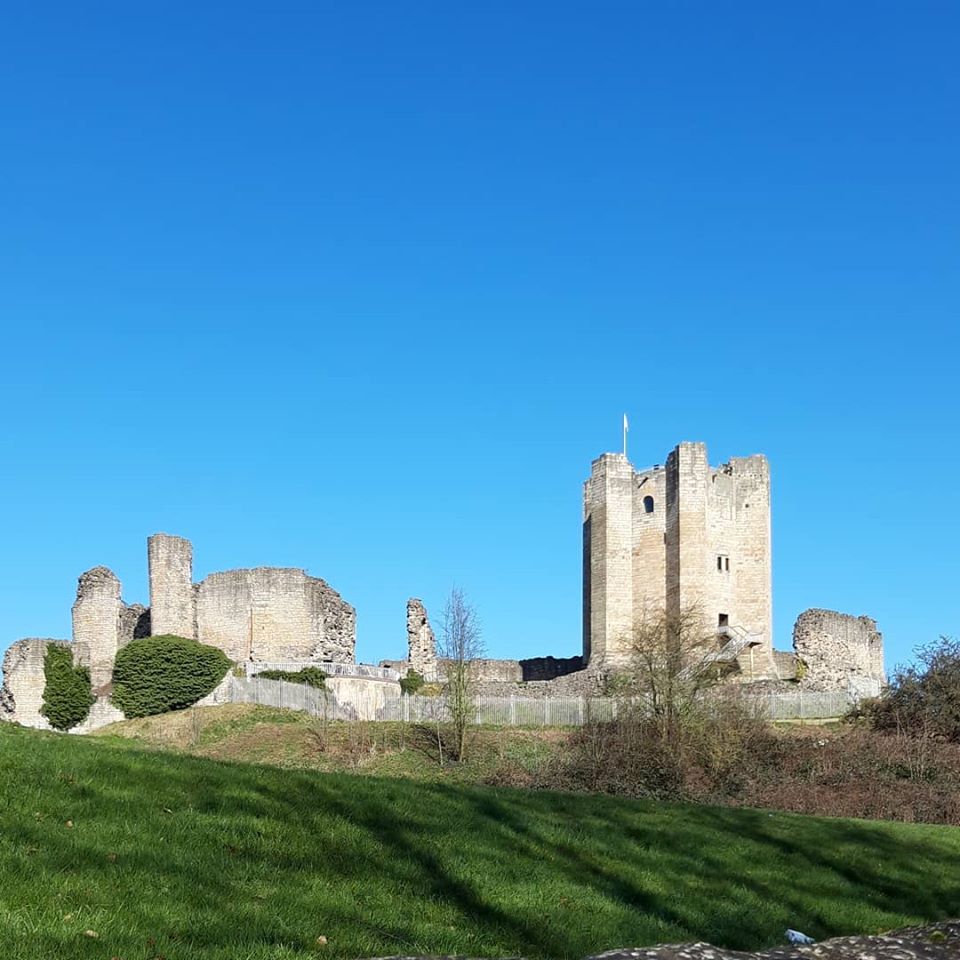
Conisbrough Castle

During Richard’s absence on Crusade, Hamelin sided with the Regent, William Longchamp, against the intrigues of Richard’s brother John. Hamelin held great store in the rule of law, attested by the legend on his seal, ‘pro lege, per lege’. This adherence to the law explains Hamelin’s support for Longchamp against that of his own nephew, John, and even as the justiciar’s overzealous actions alienated others. Hamelin was one of only two magnates entrusted with the collection and storage of the king’s ransom, when he was held captive by Duke Leopold of  Austria, appointed by Eleanor of Aquitaine; ; the other was William d’Aubigny, Earl of Arundel.

Hamelin’s involvement with the court continued into the reign of King John; he was present at John’s coronation and at Lincoln when William, King of Scots, gave his oath of homage in November 1200.

Away from court, Hamelin appears to have been an avid builder; he built a cylindrical keep at his manor of Mortemer in Normandy. He then constructed a larger and improved version, using all the latest techniques of castle design, at his manor of Conisbrough, South Yorkshire. He may also have been the one to build Peel Castle at Thorne, a hunting lodge which had a 3-sided donjon that was of smaller, but similar, design to Conisbrough.

He was also involved in a famous dispute with Hugh, abbot of Cluny, over the appointment of a new prior to Lewes priory. Abbot Hugh was known as a man of great piety and honour; he had been prior of Lewes but was elected as abbot of Reading in 1186 and became abbot of Cluny in 1199. In 1200, Abbot Hugh appointed one Alexander to the vacant position of prior of Lewes but Hamelin refused to accept the nomination. In establishing the priory at Lewes, the abbots of Cluny had apparently reserved the right to appoint the prior, and to admit all monks seeking entry into the order; however, Hamelin claimed that the patronage of the priory belonged to him, and it was his right to appoint the prior.

The dispute dragged on. It was only after intervention from King John that agreement was eventually reached whereby, should the position of prior become vacant, the earl and the monks should send representatives to the abbot, who would nominate two candidates, of whom the earl’s proctors should choose one to be appointed prior.

Hamelin and Isabel had four surviving children. Their son and heir, William, would become the 5th Earl of Surrey and married Matilda, daughter of the great William Marshal, Earl of Pembroke and regent of England during the minority of Henry III. There were also three daughters, Ela, Isabel and Matilda.

Lewes priory, Sussex

Ela married twice, firstly to a Robert de Newburn, of whom nothing else is known, and secondly to William Fitzwilliam of Sprotborough, a village just a few miles from Conisbrough. Isabel was married, firstly, to Robert de Lascy, who died in 1193, and secondly, no later than the spring of 1196, to Gilbert de L’Aigle, Lord of Pevensey.

Matilda, or Maud, married Henry, Count of Eu, who died around 1190; by Henry, she was the mother of Alice de Lusignan, who struggled to maintain her inheritance during the reign of King John. Matilda then married Henry d’Estouteville, a Norman lord. However, it was once thought that Matilda was the daughter of Hamelin by an earlier relationship, due to the supposed death date of Matilda’s husband, Henry, Count of Eu. This was due to the mistaken belief that Henry had died in 1172, which would mean that Matilda could not have been a daughter of the marriage of Isabel and Hamelin, who were married in 1164, as she would have been too young to have married and borne children with Henry. The Chronicle of the Counts of Eu records Henry’s death as 1183, which also appears to be an error as Henry was assessed for scutage for Wales at Michaelmas 1190; with this later death date it was entirely possible, and indeed likely, that Matilda was the legitimate daughter of both Hamelin and Countess Isabel.

One of the daughters  – although it is not clear which – bore an illegitimate son, Richard Fitzroy, Baron Chilham, who was born, possibly, around 1190, by her cousin, John (the future King John).

The motte of Peel Castle, Thorne

Hamelin spent a lot of time and money on Conisbrough Castle, which took almost 10 years to complete, and it appears to have been a favourite family residence. King John visited him there in 1201, and two of Hamelin’s daughters married landowners from the nearby manors of Tickhill and Sprotborough. His son, William de Warenne, the 5th earl, would complete the castle, rebuilding the curtain wall in stone.

Hamelin died on 7th May 1202, in his early 70s and was buried in the chapter house at Lewes Priory, in Sussex; Isabel died the following year and was buried alongside him.

*

Further reading: East Yorkshire Charters Volume 8: The Honour of Warenne, edited by William Farrer & Charles Travis Clay; Britain’s Royal Families and Eleanor of Aquitaine by Alison Weir; The Plantagenets: the Kings who Made England by Dan Jones.

Photos: The de Warenne arms, Conisbrough Castle, Peel Castle and Lewes Priory ©Sharon Bennett Connolly.

*

My Books:

Signed, dedicated copies of all my books are available through my online bookshop.

Out now: Scotland’s Medieval Queens

Scotland’s history is dramatic, violent and bloody. Being England’s northern neighbour has never been easy. Scotland’s queens have had to deal with war, murder, imprisonment, political rivalries and open betrayal. They have loved and lost, raised kings and queens, ruled and died for Scotland. From St Margaret, who became one of the patron saints of Scotland, to Elizabeth de Burgh and the dramatic story of the Scottish Wars of Independence, to the love story and tragedy of Joan Beaufort, to Margaret of Denmark and the dawn of the Renaissance, Scotland’s Medieval Queens have seen it all. This is the story of Scotland through their eyes.

Scotland’s Medieval Queens gives a thorough grounding in the history of the women who ruled Scotland at the side of its kings, often in the shadows, but just as interesting in their lives beyond the spotlight. It’s not a subject that has been widely covered, and Sharon is a pioneer in bringing that information into accessible history.’ Elizabeth Chadwick (New York Times bestselling author)

Available now from Amazon and Pen and Sword Books

Also by Sharon Bennett Connolly:

Heroines of the Tudor World tells the stories of the most remarkable women from European history in the time of the Tudor dynasty, 1485-1603. These are the women who ruled, the women who founded dynasties, the women who fought for religious freedom, their families and love. Heroines of the Tudor World is now available for pre-order from Amberley Publishing and Amazon UK. Women of the Anarchy demonstrates how Empress Matilda and Matilda of Boulogne, unable to wield a sword themselves, were prime movers in this time of conflict and lawlessness. It shows how their strengths, weaknesses, and personal ambitions swung the fortunes of war one way – and then the other. Available from Bookshop.orgAmberley Publishing and Amazon UKKing John’s Right-Hand Lady: The Story of Nicholaa de la Haye is the story of a truly remarkable lady, the hereditary constable of Lincoln Castle and the first woman in England to be appointed sheriff in her own right. Available from all good bookshops Pen & Sword Booksbookshop.org and Amazon

Defenders of the Norman Crown: The Rise and Fall of the Warenne Earls of Surrey tells the fascinating story of the Warenne dynasty, from its origins in Normandy, through the Conquest, Magna Carta, the wars and marriages that led to its ultimate demise in the reign of Edward III. Available from Pen & Sword BooksAmazon in the UK and US, and Bookshop.orgLadies of Magna Carta: Women of Influence in Thirteenth Century England looks into the relationships of the various noble families of the 13th century, and how they were affected by the Barons’ Wars, Magna Carta and its aftermath; the bonds that were formed and those that were broken. It is now available in paperback and hardback from Pen & SwordAmazon, and Bookshop.orgHeroines of the Medieval World tells the stories of some of the most remarkable women from Medieval history, from Eleanor of Aquitaine to Julian of Norwich. Available now from Amberley Publishing and Amazon, and Bookshop.orgSilk and the Sword: The Women of the Norman Conquest traces the fortunes of the women who had a significant role to play in the momentous events of 1066. Available now from Amazon,  Amberley Publishing, and Bookshop.org.

Alternate Endings: An anthology of historical fiction short stories including Long Live the King… which is my take what might have happened had King John not died in October 1216. Available in paperback and kindle from Amazon.

Podcast:

Have a listen to the A Slice of Medieval podcast, which I co-host with Historical fiction novelist Derek Birks. Derek and I welcome guests, such as Bernard Cornwell and Michael Jecks, and discuss a wide range of topics in medieval history, from significant events to the personalities involved. Every episode is also now available on YouTube.

*

Don’t forget! Signed and dedicated copies of all my books are available through my online bookshop.

For forthcoming online and in-person talks, please check out my Events Page.

You can be the first to read new articles by clicking the ‘Follow’ button, liking our Facebook page or joining me on TwitterThreadsBluesky and Instagram.

*

©2015 Sharon Bennett Connolly, FRHistS