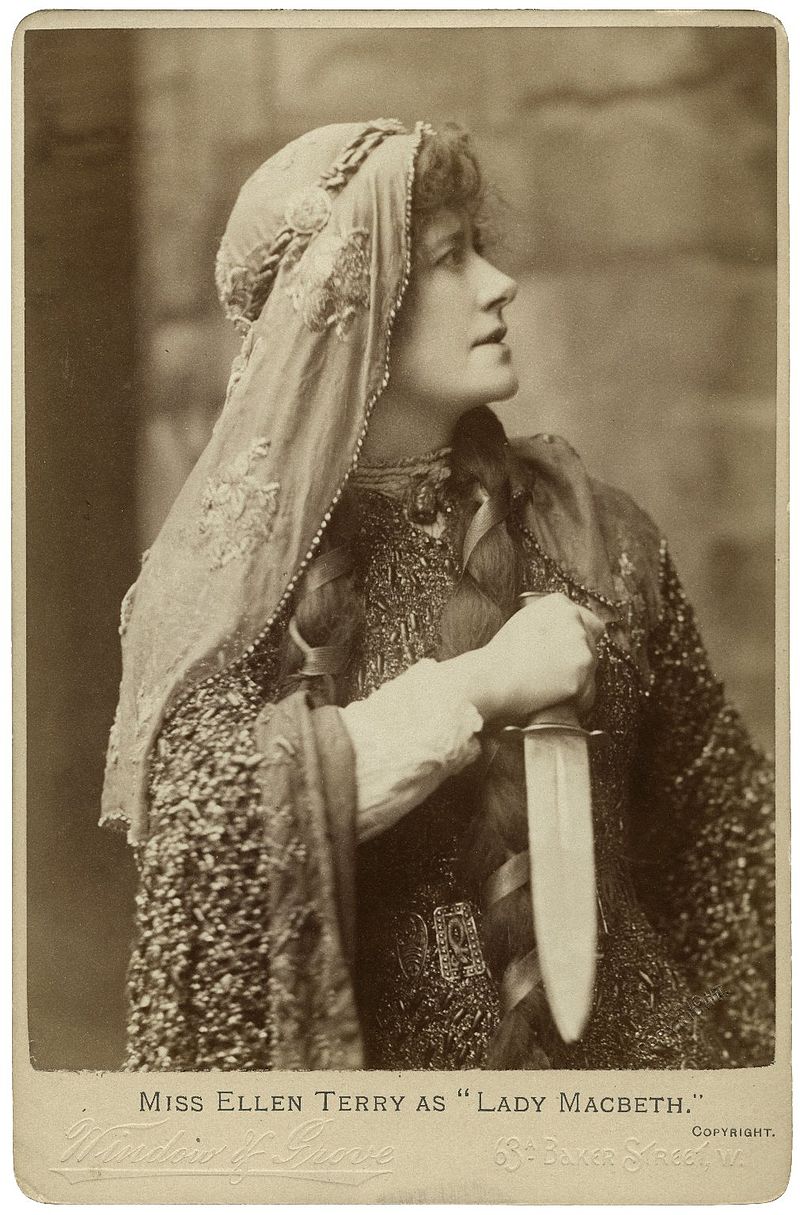
Everyone complains about William Shakespeare’s portrayal of Richard III and how that kings posthumous reputation has been damaged – possibly beyond repair – by the bard’s now-infamous play. His greed, ambition and murderous shenanigans enshrined in literature and history. But Richard III was not the only historical figure whose true history was subjected to defamation and misinformation in the name of drama, by that same playwright. For over 400 years, William Shakespeare’s version of Lady Macbeth has been the woman most people are familiar with. The scheming, ambitious wife who will stop at nothing to put her husband on the Scottish throne – and commit murder to keep him there.
In Macbeth, also known as ‘The Scottish Play’, the eponymous character’s wife is not even given her own name. She is ‘Lady Macbeth’, and she is imbued with evil and ambition. She is a character to be vilified and hated, driving her husband to yet greater crimes for the sake of a crown. She never professes love, nor sentimentality throughout the play. She is an intelligent, beautiful woman, but her passions are for power and supremacy.
But is that the real Lady Macbeth?
As many fans of Richard III will say, Shakespeare is fiction. He is telling a story to entertain, imbuing it with the moral judgements of his time, the early modern era. Unlike with Richard III, Lady Macbeth has no following with a desire to seek out the truth and right the wrongs done to her. Historians have tried to address the bard’s inaccuracies.
But Shakespeare’s shadow is long…
So, who was Lady Macbeth?
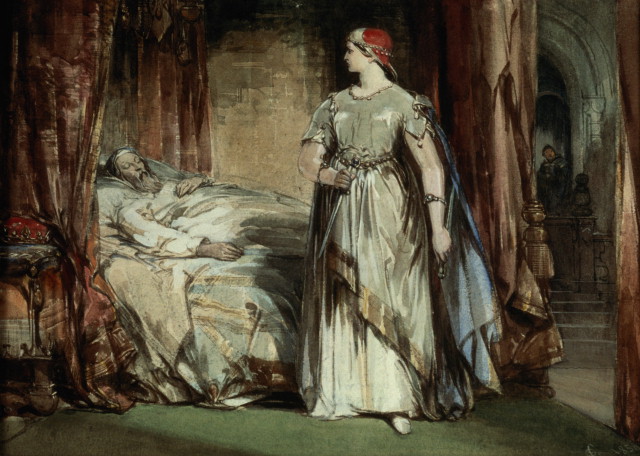
As you can imagine, with the passing of nearly a thousand years, the information on Lady Macbeth is scarce. We know her name was Gruoch, and she was a royal princess, the granddaughter of a king. Gruoch’s date of birth is unknown, but she appears to have been married at some point in the 1020s to a man named Gille Comgáin, which may mean she was born in the first decade of the eleventh century, perhaps somewhere around 1005-1010. We know that she and Gille Comgáin had a son, named Lulach.
Gille Comgáin, was involved in a particularly nasty family feud. He was a first cousin of Macbethad mac Findláech – Macbeth MacFinlay in English – Macbeth. Macbeth’s father, Findlaech mac Ruidrí was mormaer of Moray and may have been some relation to Malcolm II, King of Scots. The other possibility, though the evidence is later and uncertain, is that Findlaech was married to the unnamed youngest daughter of Malcolm II. Although the family relationship is confusing, this may explain why Macbeth is identified as a nephew or grandson of Malcolm II in various sources.
Gille Comgáin he and his brother, Máel Coluim, had murdered Macbeth’s father, and claimed the lands of Moray, with Máel Coluim succeeding his uncle as Mormaer of Moray, a semi-independent region of north-eastern Scotland. Literally translated, mormaer means great steward and the holders of the title enjoyed semi-royal status, which may explain why they are sometimes referred to as kings. Máel Coluim was in turn succeeded by his younger brother Gille Comgáin, on his death in 1029. Macbeth, younger than his murderous cousins, and probably only a teenager at the time, fled, perhaps to Ireland.
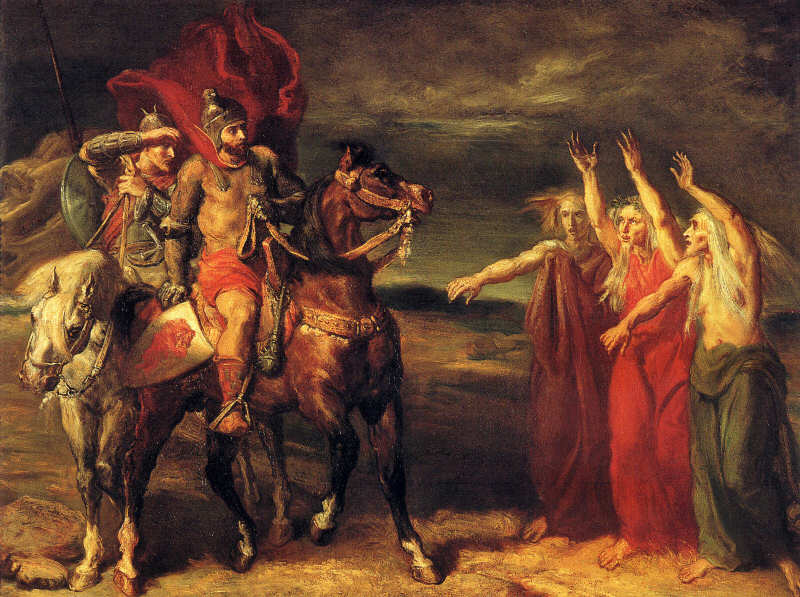
In 1032, Gille Comgáin was murdered, along with 50 of his men. Although Macbeth is not mentioned as the perpetrator, many, certainly, lay the blame at his door. Given the number of dead involved, it is possible that Gille Comgáin and his followers were trapped in his hall as it was burned down, perhaps during a feast, the doors barred from the outside to prevent escape. If Gruoch was Gille Comgáin’s wife, she did not share her husband’s fate. It is possible that she and her small son were away from home at the time, otherwise they would have perished alongside the others. Another possibility is that Gruoch escaped – or was rescued – from the hall with Lulach before the fire took hold.
Macbeth succeeded his cousin as mormaer of Moray, and it was only a short time after Gille Comgáin’s death that Gruoch and Macbeth were married, putting an end to the murderous family feud. We may feel uneasy about Gruoch marrying her husband’s murderer, if he was, but the union was political common sense. Gruoch, a mother with a young son and royal blood, was low on male protection; her brother had just been murdered, possibly by Malcolm II, and her infant nephew would be killed the following year. As the wife of Macbeth, Gruoch could feel secure in his protection as the new mormaer and may have extracted guarantees that Macbeth would look after Lulach’s interests, given the way he raised the boy and even designated him as his heir. For Macbeth, Gruoch’s royal blood and lands would strengthen his own claim to the Scots throne, if he was thinking that far ahead in 1032.
In 1034, on 25 November, King Malcolm II died at Glamis and was peacefully succeeded by his grandson, Duncan, helped no doubt by Malcolm’s campaign of eliminating potential rivals. Duncan was probably in his mid-20s when he was invested as King of Scots at Scone just five days after his grandfather’s death: he was certainly not the old man as depicted by Shakespeare. When Duncan led an army north against Thorfinn of Orkney, Thorfinn allied with Macbeth to form a league to challenge the Scots king. Duncan led an army against Moray, apparently unaware of Macbeth’s alliance with Thorfinn and the two armies met at Pitgaveny, near Elgin, on 15 August 1040. Macbeth won the contest, with Duncan lying dead on the field of battle at the end of the day – not murdered as in ‘the Scottish play’. With Duncan’s sons still only children, taken into exile, beyond Macbeth’s reach, Macbeth assumed the kingship unchallenged, with Gruoch by his side.
Gruoch is the first Scottish queen whose name is known to history.
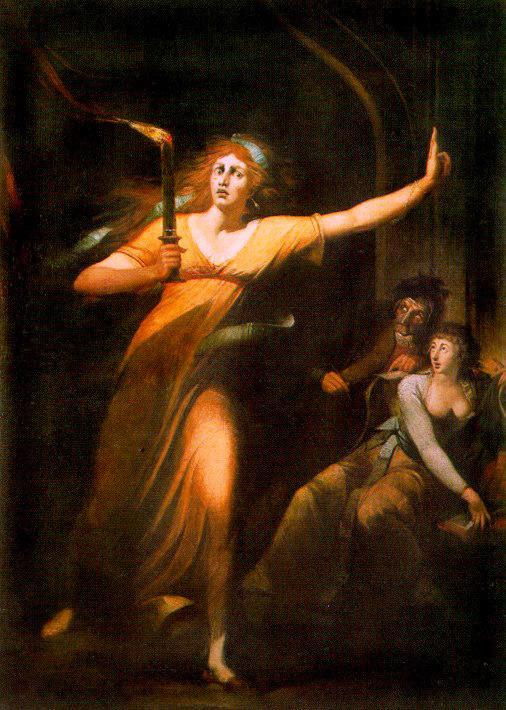
In the early years of his reign, Macbeth faced challenges from the dead King Duncan’s father and from Siward, Earl of Northumbria, who mounted an invasion of Scotland in the name of Malcolm, Duncan I’s oldest son and heir. Although the invasion initially succeeded in defeating Macbeth, the king gathered reinforcements from his heartlands in the north and expelled Siward’s forces.
There followed 8 years of peace in Scotland. By 1050, King Macbeth was in such a strong position that he was able to leave the kingdom and go on pilgrimage to Rome, where he ‘scattered money like seed to the poor’.1 The pilgrimage would have been a combination of religious devotion and diplomatic networking; a chance for the King of Scots to be seen on the wider European stage. The generosity of Macbeth and Gruoch towards the church, during the pilgrimage, had monastic writers recording that ‘in his reign there were productive seasons’.2
In those 8 years, Duncan’s sons were growing to adulthood and in 1054, Earl Siward again invaded Scotland, hoping to place Malcolm on the throne, as a client king of England’s Edward the Confessor. Although the battle at Dunsinane was lost, Macbeth’s men sold their lives dearly; Siward’s oldest son was killed, and the earl was unable to press any advantage. Scotland was divided, with Malcolm establishing himself in Lothian and the southern kingdom of Strathclyde, while Macbeth continued to control Scotland’s heartlands north of the Forth. The subsequent campaign was long and bloody as Malcolm extended his influence northwards. It was not until 1057 that Malcolm crossed the Mounth, ambushing Macbeth, cut off from his main army, at Lumphanan, west of Aberdeen, on 15 August. Macbeth was killed in the battle, along with his personal bodyguard.
The Scots king was buried on the island of Iona, where his rival King Duncan was also interred. Macbeth was succeeded, briefly, by his stepson, Lulach. His reign lasted less than a year and he was defeated and killed, ‘by treachery’, on 17 March 1058, at Essie in Strathbogie.
Macbeth’s reputation as a strong, wise, generous and pious king has been overshadowed by the Macbeth of Shakespeare. He is described as ‘a tall man with a ruddy complexion and fair hair’.3 Of his wife Gruoch, we have no description. We have very little record of Gruoch’s movements, either as Macbeth’s wife or before. We can assume that she spent the early years of her marriage to Macbeth in creating a household and raising her young son, Lulach.
Once Macbeth attained the throne, Gruoch may well have assumed the traditional roles associated with queens, as an intercessor for those seeking the king’s mercy or patronage, as a hostess in welcoming foreign envoys and powerful magnates to the Scottish court, and as a religious benefactor. In one charter, Gruoch is identified with her husband as ‘Macbeth son of Finlach… and Gruoch daughter of Bodhe, King and Queen of Scots’.4 The fact that we have a grant given jointly by Macbeth and Gruoch suggests that the couple worked together during Macbeth’s reign. Gruoch also accompanied her husband on his pilgrimage to Rome, a journey that must have been an exciting adventure for both of them.
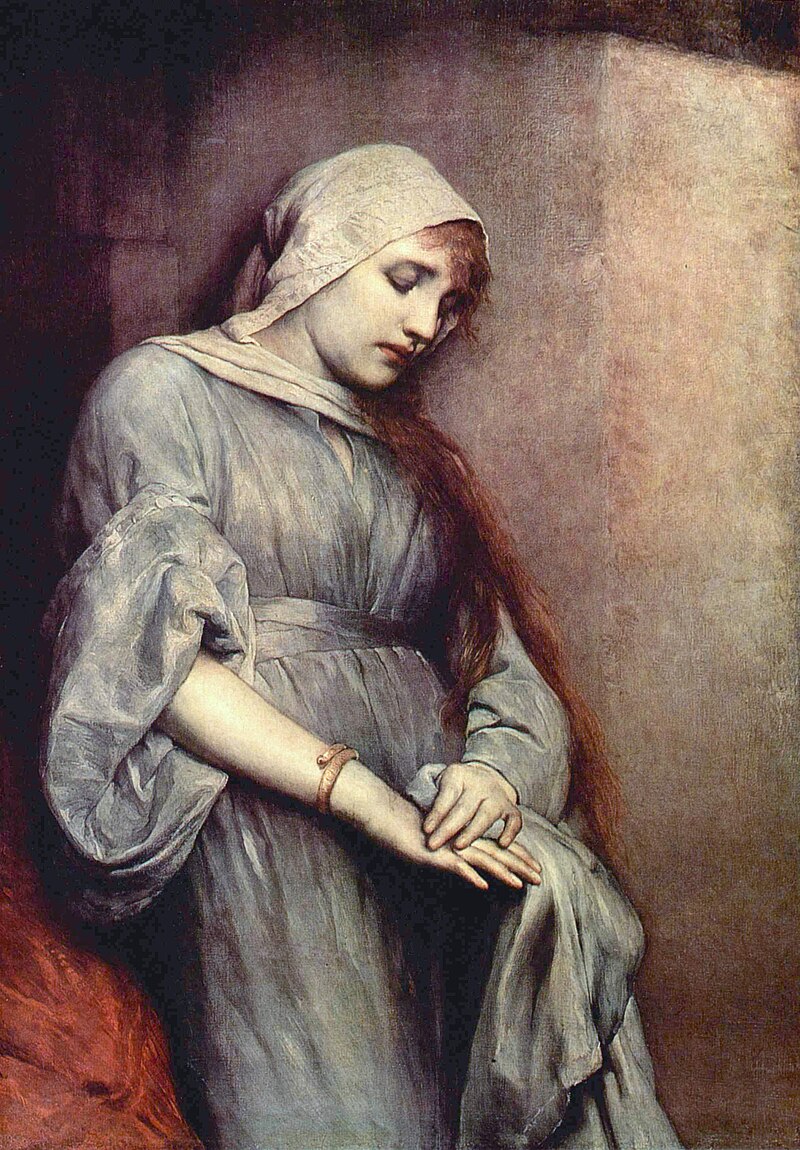
There is no record in the chronicles of any disharmony in the marriage but we know little else of Queen Gruoch. Despite already bearing a son, Lulach, she and Macbeth had no children that we know of; although it may be that she lost children by miscarriage or in early childhood before they came to the notice of chroniclers. This lack of a surviving heir of his own may have been what prompted Macbeth to adopt Gruoch’s son as his successor.
We know nothing of Gruoch’s death, no date is recorded nor even hinted at. She may have lived through the grief of losing her husband and son in battle and seeing Malcolm III Canmore ascend the throne and assert his authority over the whole of Scotland. Or she may have died some years beforehand. William Shakespeare had her dying by her own hand, driven insane by her evil deeds:
Of his dead butcher and his fiend-like queene,
Who, as ’t is thought, by selfe and violent hands
Tooke off her life.5
But this was almost definitely fiction.
Gruoch’s final resting place, the one site that may give us a clue, is also lost to history.
The story of Queen Gruoch, Lady Macbeth, is one shrouded in mystery, tantalisingly obscure…
*
Notes:
1. Anderson, Early Sources, 1.588, quoted in Dauvit Broun, Macbeth [Macbethad mac Findlaich] (d. 1057), king of Scots, Oxforddnb.com; 2. Richard Oram, editor, The Kings and Queens of Scotland; 3. Mike Ashley, The Mammoth Book of British Kings and Queens; 4. ‘Macbeth filius Finlach … et Gruoch filia Bodhe, Rex et Regina Scottorum’, Early Scottish charters prior to A.D. 1153: with notes and an index, edited by Archibald
Campbell Lawrie; 5. Act V, Scene VIII, Shakespeare, William, The tragedie of Macbeth; a new edition of Shakspere’s works with critical text in Elizabethan English and brief notes, illustrative of Elizabethan life, thought and idiom, edited by Mark Harvey Liddell.
Sources:
Shakespeare, William, The tragedie of Macbeth; a new edition of Shakspere’s works with critical text in Elizabethan English and brief notes, illustrative of Elizabethan life, thought and idiom, edited by Mark Harvey Liddell; The Chronicle of John of Worcester, edited by R. R. Darlington and P. McGurk; Early Scottish charters prior to A.D. 1153: with notes and an index, edited by Archibald Campbell Lawrie; fmg.ac/Projects/MedLands/SCOTLAND; Oxforddnb.com; Richard Oram, editor, The Kings and Queens of Scotland; Mike Ashley, The Mammoth Book of British Kings and Queens; Kate Braithwaite, Gruoch: The Real Lady Macbeth, historyofroyalwomen.com; Henry of Huntingdon: The History of the English People 1000-1154, edited by Diana Greenway; Chronicles of the Picts, chronicles of the Scots, and other early memorials of Scottish history, edited by W. F. Skene; Rosalind K. Marshall, Scottish Queens 1034–1714; Chronicle of the Scots, 1165, Cronica Regum Scottorum; Annals of Ulster; David Ross, Scotland: History of a Nation.
Images:
Courtesy of Wikipedia
*
My books
Signed, dedicated copies of all my books are available through my online store.
Out now: Scotland’s Medieval Queens

Scotland’s history is dramatic, violent and bloody. Being England’s northern neighbour has never been easy. Scotland’s queens have had to deal with war, murder, imprisonment, political rivalries and open betrayal. They have loved and lost, raised kings and queens, ruled and died for Scotland. From St Margaret, who became one of the patron saints of Scotland, to Elizabeth de Burgh and the dramatic story of the Scottish Wars of Independence, to the love story and tragedy of Joan Beaufort, to Margaret of Denmark and the dawn of the Renaissance, Scotland’s Medieval Queens have seen it all. This is the story of Scotland through their eyes.
‘Scotland’s Medieval Queens gives a thorough grounding in the history of the women who ruled Scotland at the side of its kings, often in the shadows, but just as interesting in their lives beyond the spotlight. It’s not a subject that has been widely covered, and Sharon is a pioneer in bringing that information into accessible history.’ Elizabeth Chadwick (New York Times bestselling author)
Available now from Amazon and Pen and Sword Books
Also by Sharon Bennett Connolly:

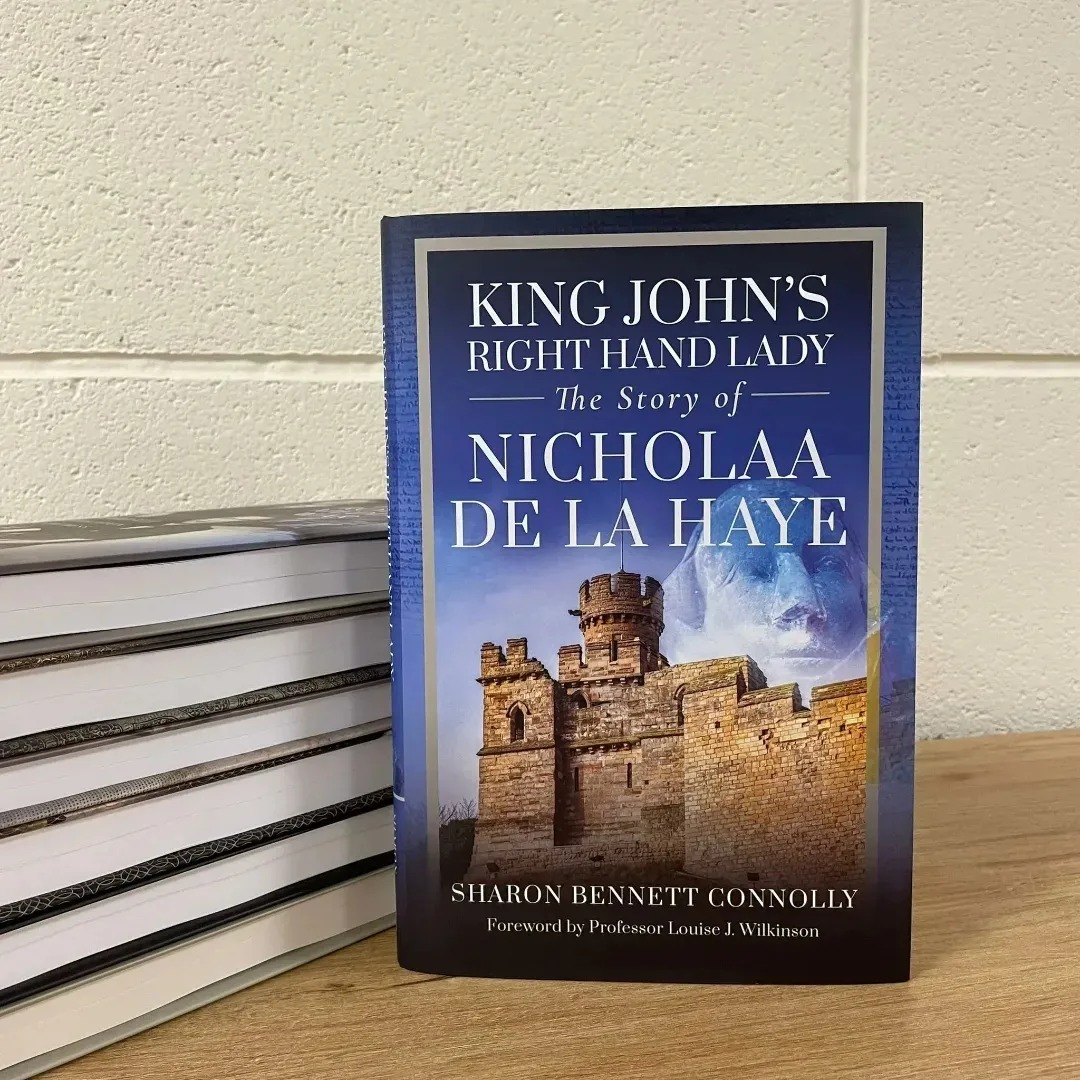
Heroines of the Tudor World tells the stories of the most remarkable women from European history in the time of the Tudor dynasty, 1485-1603. These are the women who ruled, the women who founded dynasties, the women who fought for religious freedom, their families and love. Heroines of the Tudor World is now available from Amberley Publishing and Amazon UK. Women of the Anarchy demonstrates how Empress Matilda and Matilda of Boulogne, unable to wield a sword themselves, were prime movers in this time of conflict and lawlessness. It shows how their strengths, weaknesses, and personal ambitions swung the fortunes of war one way – and then the other. Available from Bookshop.org, Amberley Publishing and Amazon UK. King John’s Right-Hand Lady: The Story of Nicholaa de la Haye is the story of a truly remarkable lady, the hereditary constable of Lincoln Castle and the first woman in England to be appointed sheriff in her own right. Available from all good bookshops Pen & Sword Books, bookshop.org and Amazon.
Defenders of the Norman Crown: The Rise and Fall of the Warenne Earls of Surrey tells the fascinating story of the Warenne dynasty, from its origins in Normandy, through the Conquest, Magna Carta, the wars and marriages that led to its ultimate demise in the reign of Edward III. Available from Pen & Sword Books, Amazon in the UK and US, and Bookshop.org. Ladies of Magna Carta: Women of Influence in Thirteenth Century England looks into the relationships of the various noble families of the 13th century, and how they were affected by the Barons’ Wars, Magna Carta and its aftermath; the bonds that were formed and those that were broken. It is now available in paperback and hardback from Pen & Sword, Amazon, and Bookshop.org. Heroines of the Medieval World tells the stories of some of the most remarkable women from Medieval history, from Eleanor of Aquitaine to Julian of Norwich. Available now from Amberley Publishing and Amazon, and Bookshop.org. Silk and the Sword: The Women of the Norman Conquest traces the fortunes of the women who had a significant role to play in the momentous events of 1066. Available now from Amazon, Amberley Publishing, and Bookshop.org.
Alternate Endings: An anthology of historical fiction short stories including Long Live the King… which is my take what might have happened had King John not died in October 1216. Available in paperback and kindle from Amazon.
Podcast:

Have a listen to the A Slice of Medieval podcast, which I co-host with Historical fiction novelist Derek Birks. Derek and I welcome guests, such as Bernard Cornwell and Michael Jecks, and discuss a wide range of topics in medieval history, from significant events to the personalities involved.
Every episode is also now available on YouTube.
*
Don’t forget! Signed and dedicated copies of all my books are available through my online store.
For forthcoming online and in-person talks, please check out my Events Page.
You can be the first to read new articles by clicking the ‘Follow’ button, liking our Facebook page or joining me on Twitter, Threads, Bluesky and Instagram.
*
©2025 Sharon Bennett Connolly, FRHistS



 History... the interesting bits!