Helena Snakenborg: A Swedish Woman Living in Tudor England

History ... the Interesting Bits
Helena Snakenborg, Marchioness of Northampton, in coronation robes, 1603

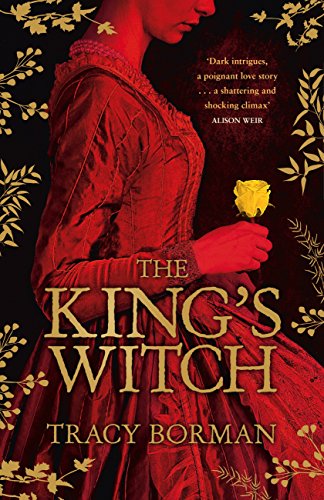
An Elizabethan whose story I became aware of through a novel is Helena Snakenborg, who features in Tracy Borman’s novel, The King’s Witch. I had to know more about this Swedish lady living in Tudor England, and include her in my own Heroines of the Tudor World. Even more so after I learned that Helena was the only foreigner amongst Queen Elizabeth’s ladies. Helena was born in 1548, into an ancient Swedish baronial family. Her father, Ulf Henriksson, had been a trusted supporter of King Gustav I Vasa of Sweden. Her mother, Agneta Knuttson, was a descendant of the earls of Orkney and it is from her mother’s family that Helena took her name, Snakenborg.

In 1564, at the age of fifteen, Helena was appointed a maid of honour to Gustav Vasa’s daughter, and the sister of the new King Eric XIV, Princess Cecilia. Later that same year, Princess Cecilia embarked on a voyage to England, taking Helena with her. Cecilia claimed that as a committed Anglophile, she wanted to meet the queen of England. She may also have been hoping to revive her brother’s suit for Queen Elizabeth’s hand in marriage. Their overland journey to England was long and arduous.

They travelled through Poland and Germany in order to avoid hostile countries and were hampered by bad weather. The princess was accompanied by her husband and fell pregnant during the journey, necessitating further delays. Almost a year had passed by the time they arrived in London in September 1565, with the Spanish ambassador reporting to Philip II,

‘On the 11th instant [of September] the king of Sweden’s sister entered London at 2 o’clock in the afternoon. She is very far advanced in pregnancy, and was dressed in a black velvet robe with a mantle of black cloth of silver, and wore on her head a golden crown… She had with her six Ladies dressed in crimson taffety with mantles of the same.’1

The arrival of the Swedish princess caused a great deal of excitement at court and the queen gave them a lavish reception. Among Cecilia’s six ladies was Helena Snakenborg and in a letter to her mother, Helena wrote of their reception in England: ‘There came so many to visit us that there was no end to it. All wished us a hearty welcome to England.’2 After the official ceremonies were completed, Princess Cecilia was taken at once to the place designated for her confinement, where she gave birth to a son on 14 September. The princess was given the use of Bedford House as her London residence. She did not remain long in seclusion after the birth and she and her entourage soon became regular visitors at court, treated to receptions and entertainments.

History ... the Interesting Bits
William Parr, Marquess of Northampton

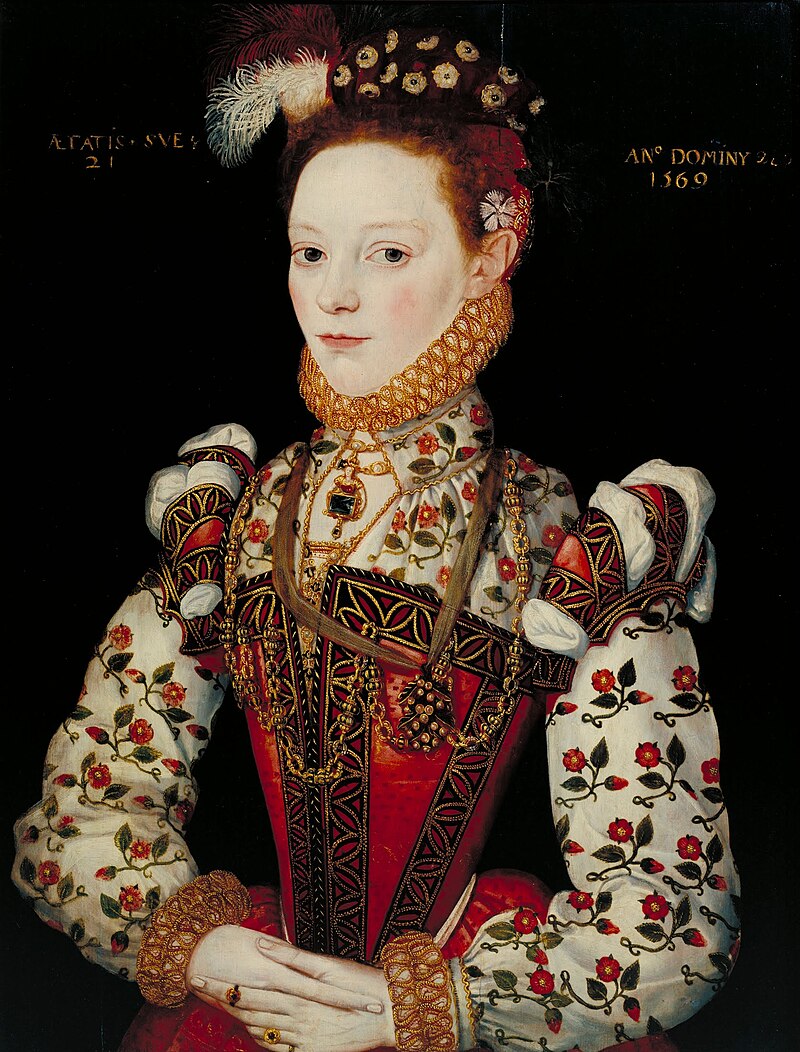
Helena was by all accounts a beautiful young woman, with large brown eyes, red hair and a pink and white complexion. She attracted the attention of William Parr, Marquess of Northampton, a man thirty-five years her senior whose sister, Kateryn Parr, had been Henry VIII’s sixth and final wife. In a letter to her mother, Helena told her about the marquess’s attention:

‘Amongst the gentlemen was a courtier who always came with the earliest arrivals and left amongst the last. When my gracious Lady had been “churched” after the baby was born, the Marquess of Northampton (for that was the courtier’s name) talked to my gracious lady about me.’3

The marquess of Northampton wasted no time in pressing his suit with Helena, sending her lavish gifts of clothes and jewels, and ‘being an impressionable and romantic young girl, Helena was swept off her feet by the experienced older man.’4 Helena was beguiled by Northampton, who wanted to marry her but felt prevented from doing so because, although divorced in 1551, his first wife Lady Anne Bourchier was still alive and there were some doubts as to the validity of the divorce.

In the meantime, Princess Cecilia had run up some rather large debts due to her lavish lifestyle in England. Her debts, in excess of £3,000, had been amassed as a result of the purchase of poultry, articles of plate and jewellery, a kirtle wrought with gold, a Venice lute – the list goes on. The princess left England in order to escape her creditors, though she had been obliged by the queen to sell whatever she could in order to raise as much money as she could to pay off at least some of the debt, leaving England in April 1566. The princess had wanted to take Helena with her, but the young woman was enjoying life in England, and the attentions of the marquess of Northampton, and wanted to stay.

History ... the Interesting Bits
Queen Elizabeth I

Queen Elizabeth came to Helena’s rescue by offering her a place in her household, appointing her a maid of honour in 1567 and later promoting her to Gentlewoman of the Privy Chamber. Although unpaid, the queen awarded her new maid of honour additional privileges, including lodgings at court, servants and a horse. It seems Queen Elizabeth had grown fond of Helena and was keen to help the budding romance of Helena and Northampton. Helena, in her turn, was in the queen’s thrall, emulating her dress and manners and even her signature, underlining the ‘H’ with the same flourish Elizabeth did with her ‘E’. Helena was diligent and conscientious in her duties and became an indispensable member of the queen’s household.

Helena’s relationship with Northampton was still hindered by Northampton’s ambiguous marital status, but the marquess was still generous with Helena, assigning ten of his own servants to care for her and giving her everything she needed or wanted. Helena told her mother: ‘I cannot imagine I shall ever want for anything however beautiful or expensive that his Lordship can buy without his getting it at once for his Elin.’5 The couple’s patience was eventually rewarded, so to speak, with the death of Anne Bourchier in January 1571. William Parr was finally free to marry.
History ... the Interesting Bits
A Young Lady Aged 21 in 1569, tentatively identified as a portrait of Helena Snakenborg

The wedding took place in May in the presence of Queen Elizabeth, who had offered her own closet in Whitehall Palace for the ceremony. The bride was twenty-two and the groom fifty-seven. The newlyweds divided their time between their houses in Guildford, Surrey, and Stanstead Hall, Essex, close enough to London that Helena could attend court regularly. The happy marriage came to a sudden end within just a few months, when the marquess fell ill at Warwick in September 1571. He had been suffering from gout for some time and it now took a turn for the worse. Helena nursed her ailing husband through the ensuing weeks, but the earl succumbed to his illness on 28 October. They had been married just five months. The queen bore the costs of the funeral and even provided material from her own wardrobe for the mourning outfits.

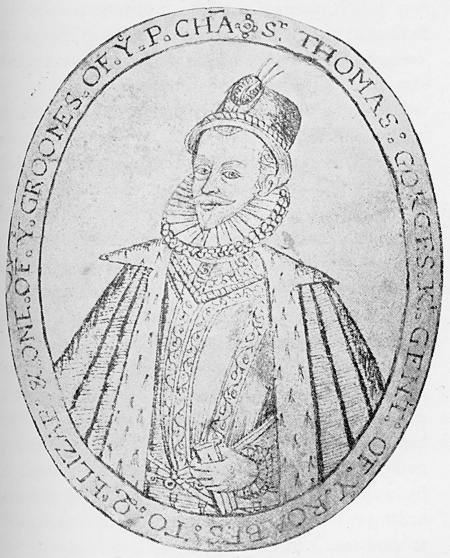
Helena was left a young widow with a substantial dower of £368 per annum from her husband’s estates in Cumberland. She could have retired from court and lived in comfort for the rest of her life, but Helena chose to return to the queen’s service just as soon as her husband’s affairs were settled. It was not long, however, before she attracted a new admirer in Thomas Gorges. Although the queen was initially in favour of the match, she refused to consent to a marriage, either out of jealousy or concern for the disparity in their statuses. Helena was a marchioness, whereas Thomas was merely a gentleman, serving as a Groom of the Privy Chamber. In spite of the queen’s objections, the couple married in secret in 1576, earning themselves Elizabeth’s wrath.

Dismissed from court, Helena wrote to the queen to beg forgiveness, describing herself as ‘a poure, desolate, and banished creature’.6
History ... the Interesting Bits
Thomas Gorges

Helena was soon forgiven and welcomed back to court, with the queen granting Helena manors in Huntingdonshire and Wiltshire. Her second marriage appears to have been as happy as the first, if not happier. Two years later, Helena left court to give birth to her first child, a daughter named after Elizabeth for whom the queen acted as godmother, presenting Helena with a silver-gilt bowl at the christening. A son, Francis, was probably born the following year, with at least six more children after that, two more daughters and four more sons, the last being born in 1589.

Despite her growing brood Helena still served the queen, acting as her deputy at the baptisms of children of distinguished noblemen, especially towards the end of the reign as the queen’s health was deteriorating. Helena was with Elizabeth during her final illness at Richmond and remained with the queen’s body after her death on 24 March 1603, watching over the corpse as it was laid in a lead coffin and then accompanied it as it was taken by barge from Richmond to Whitehall Palace in a sombre torchlit procession. As senior peeress, Helena was chief mourner at Elizabeth’s funeral at Westminster Abbey on 28 April.
History ... the Interesting Bits
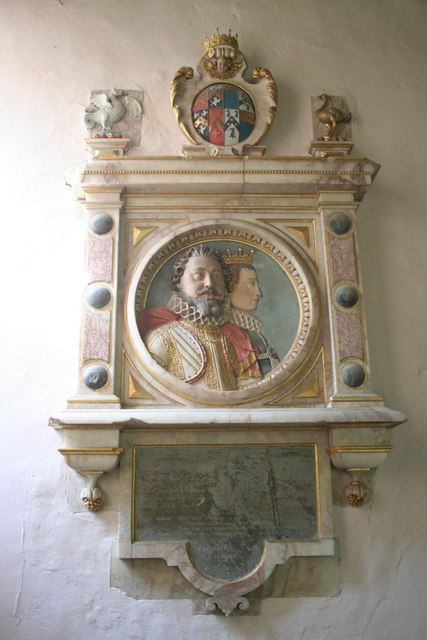
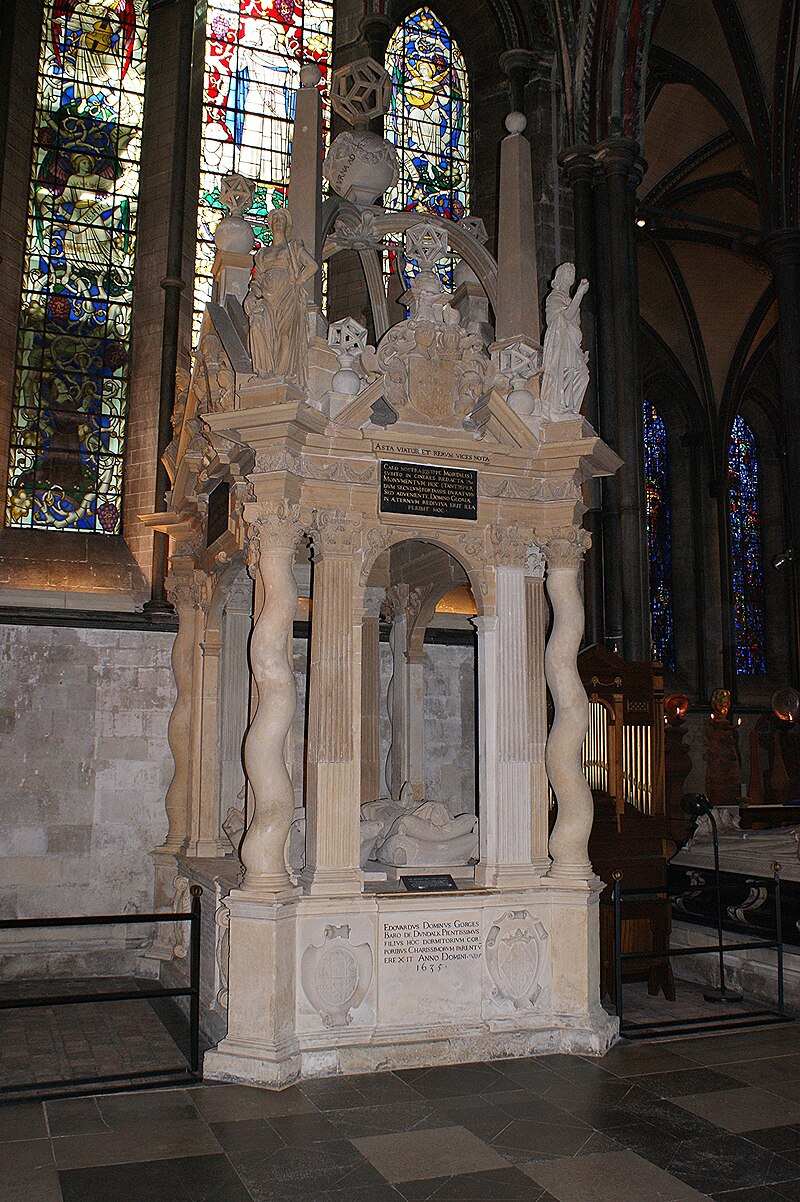
Joint tomb of Helena and Sir Thomas Gorges, Salisbury Cathedral

The reign of King James I (VI of Scots) inevitably meant changes at court and Thomas Gorges was demoted. Helena, too, lost some of her privileges. And with the death of Thomas on 30 March 1610, she increasingly retreated from public life. A devoted member of the Church of England, she died on 10 April 1635, having lived in England for almost exactly seventy years. She granted over £1,700 in annuities and bequests in her will. At the time of her death, Helena had ninety-two living, direct descendants.

Helen Snakenborg, Marchioness of Northampton, was buried in Salisbury Cathedral, beside her second husband Thomas Gorges who had been laid to rest there in 1610.

In her long life, Helena Snakenborg had been lucky enough to enjoy two happy marriages, both made for love, and to have enjoyed the love and patronage of Queen Elizabeth. Even when she had faced the wrath of the queen, Helena had managed to win back her favour.

*

Images:

Courtesy of Wikipedia

Notes:

1. CSPS, Elizabeth 1558-67, I, 475 quoted in Tracy Borman, Elizabeth’s Women, p. 278; 2. ibid; 3. ibid; 4. Paul Harrington, ‘Gorges [née Snakenborg], Helena, Lady Gorges [other married name Helena Parr, marchioness of Northampton],’ Oxforddnb.com; 5. Tracy Borman, Elizabeth’s Women, p. 281; 6. BM Cotton MS Titus B II, f. 346 quoted in Tracy Borman, Elizabeth’s Women, p. 357

Sources:

Tracy Borman, Elizabeth’s Women; Paul Harrington, ‘Gorges [née Snakenborg], Helena, Lady Gorges [other
married name Helena Parr, marchioness of Northampton],’ Oxforddnb.com; Calendar of State Papers Domestic: Edward VI, Mary and Elizabeth, 1547-80, ed. Robert Lemon; Elizabeth Norton, The Lives of Tudor Women; Amy Licence, Tudor Roses: From Margaret Beaufort to Elizabeth I; Paul Kendall, Queen Elizabeth I: Life & Legacy of the Virgin Queen; Lisa Hilton, Elizabeth I: Renaissance Prince, A Biography; John Guy, Elizabeth: The Forgotten Years; Laura Brennan, Elizabeth I: The Making of a Queen; R.E. Pritchard, Sex, Love & Marriage in the Elizabethan Age; Alison Weir, Elizabeth the Queen; Neville Williams, The Life and Times of Elizabeth I; Sarah Gristwood, The Tudors in Love: The Courtly Code Behind the Last Medieval Dynasty

*

My Books:

Signed, dedicated copies of all my books are available through my online bookshop.

Out now: Scotland’s Medieval Queens

Books by Sharon Bennett Connolly

Scotland’s history is dramatic, violent and bloody. Being England’s northern neighbour has never been easy. Scotland’s queens have had to deal with war, murder, imprisonment, political rivalries and open betrayal. They have loved and lost, raised kings and queens, ruled and died for Scotland. From St Margaret, who became one of the patron saints of Scotland, to Elizabeth de Burgh and the dramatic story of the Scottish Wars of Independence, to the love story and tragedy of Joan Beaufort, to Margaret of Denmark and the dawn of the Renaissance, Scotland’s Medieval Queens have seen it all. This is the story of Scotland through their eyes.

Scotland’s Medieval Queens gives a thorough grounding in the history of the women who ruled Scotland at the side of its kings, often in the shadows, but just as interesting in their lives beyond the spotlight. It’s not a subject that has been widely covered, and Sharon is a pioneer in bringing that information into accessible history.’ Elizabeth Chadwick (New York Times bestselling author)

Available now from Amazon and Pen and Sword Books

Also by Sharon Bennett Connolly:

Books by Sharon Bennett Connolly

Heroines of the Tudor World tells the stories of the most remarkable women from European history in the time of the Tudor dynasty, 1485-1603. These are the women who ruled, the women who founded dynasties, the women who fought for religious freedom, their families and love. Heroines of the Tudor World is now available for pre-order from Amberley Publishing and Amazon UK. Women of the Anarchy demonstrates how Empress Matilda and Matilda of Boulogne, unable to wield a sword themselves, were prime movers in this time of conflict and lawlessness. It shows how their strengths, weaknesses, and personal ambitions swung the fortunes of war one way – and then the other. Available from Bookshop.orgAmberley Publishing and Amazon UKKing John’s Right-Hand Lady: The Story of Nicholaa de la Haye is the story of a truly remarkable lady, the hereditary constable of Lincoln Castle and the first woman in England to be appointed sheriff in her own right. Available from all good bookshops Pen & Sword Booksbookshop.org and Amazon

Royal Historical Society

Defenders of the Norman Crown: The Rise and Fall of the Warenne Earls of Surrey tells the fascinating story of the Warenne dynasty, from its origins in Normandy, through the Conquest, Magna Carta, the wars and marriages that led to its ultimate demise in the reign of Edward III. Available from Pen & Sword BooksAmazon in the UK and US, and Bookshop.orgLadies of Magna Carta: Women of Influence in Thirteenth Century England looks into the relationships of the various noble families of the 13th century, and how they were affected by the Barons’ Wars, Magna Carta and its aftermath; the bonds that were formed and those that were broken. It is now available in paperback and hardback from Pen & SwordAmazon, and Bookshop.orgHeroines of the Medieval World tells the stories of some of the most remarkable women from Medieval history, from Eleanor of Aquitaine to Julian of Norwich. Available now from Amberley Publishing and Amazon, and Bookshop.orgSilk and the Sword: The Women of the Norman Conquest traces the fortunes of the women who had a significant role to play in the momentous events of 1066. Available now from Amazon,  Amberley Publishing, and Bookshop.org.

Alternate Endings: An anthology of historical fiction short stories including Long Live the King… which is my take what might have happened had King John not died in October 1216. Available in paperback and kindle from Amazon.

Podcast:

A Slice of Medieval

Have a listen to the A Slice of Medieval podcast, which I co-host with Historical fiction novelist Derek Birks. Derek and I welcome guests, such as Bernard Cornwell and Elizabeth Chadwick, and discuss a wide range of topics in medieval history, from significant events to the personalities involved.

Every episode is also now available on YouTube.

*

Don’t forget! Signed and dedicated copies of all my books are available through my online bookshop.

For forthcoming online and in-person talks, please check out my Events Page.

You can be the first to read new articles by clicking the ‘Follow’ button, liking our Facebook page or joining me on TwitterThreadsBluesky and Instagram.

*

©2025 Sharon Bennett Connolly FRHistS.
Guest Post: Researching the Elizabethan Court, by Tony Riches

Today, it is an absolute pleasure to welcome my friend and fellow author Tony Riches to History…the Interesting Bits to talk about the research behind his latest book Penelope – Tudor Baroness, the fourth book in his Elizabethan series.

Researching the Elizabethan Court, by Tony Riches

I’ve spent the past five years immersed in the strange world of the court of Queen Elizabeth I researching my Elizabethan series. I wanted to keep the books as historically accurate and consistent as possible. My favourite source is Marion E. Colthorpe’s fascinating website, ‘The Elizabethan Court Day by Day’. This is the result of her decades of research, and includes details of other useful sources.

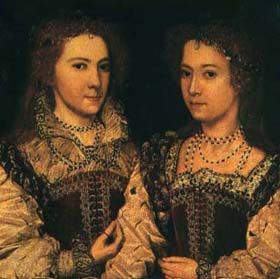
Penelope and her sister Dorothy (Wikimedia Commons)

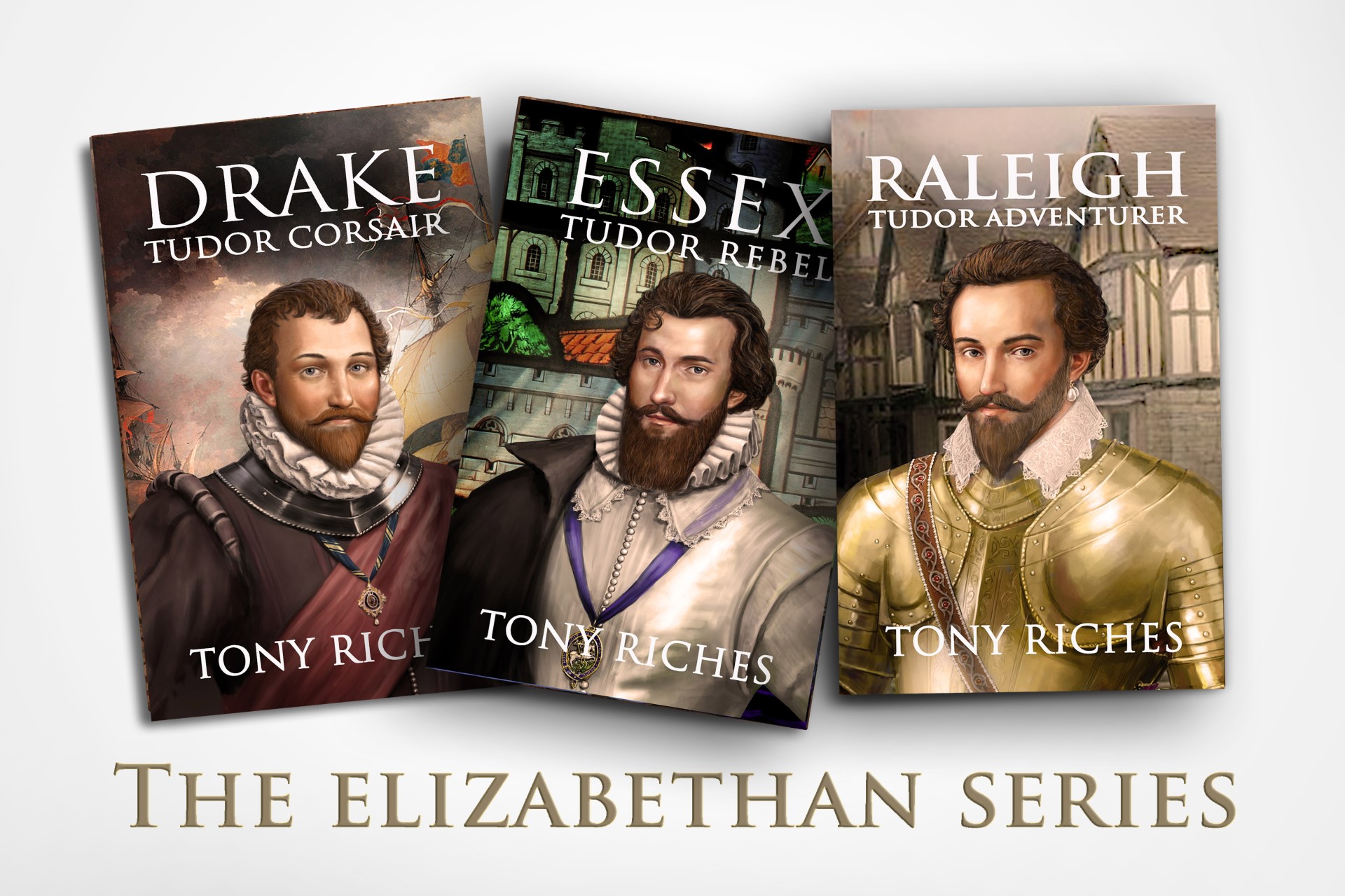
To show the many complex facets of the last Tudor queen, I decided the first three books of the series would see her through the eyes of three of her favourites, Drake, Essex, and Raleigh – each of whom knew a different side of their queen. Drake was in awe of her, and showered her with (looted) jewels, Essex was like the son she never had, and Raleigh was the captain of her guard.

These are to be followed by books about three of Queen Elizabeth’s ladies. Less well known, they all had close contact with her, a certain amount of influence with her advisors, and the opportunity to see behind the queen’s carefully contrived façade.

I chose the life of Lady Penelope Devereux as the fourth book in Elizabethan series. Penelope’s great-grandmother was Queen Elizabeth I’s aunt, Mary Boleyn. Her father was Sir Walter Devereux, 1st Earl of Essex, and her mother was Lady Lettice Knollys, banished from court for her secret marriage to the queen’s great favourite, Sir Robert Dudley.

A famous beauty, Penelope was well educated, an accomplished dancer and musician. Fluent in Italian, French and Spanish. Penelope became a prominent figure in the courts of Queen Elizabeth I and King James I. She was also involved in political intrigue, influencing the succession and her brother’s ill-fated Essex rebellion.

A measure of the challenges in researching Elizabethan ladies is the range and number of primary sources, such as letters. When I researched Penelope’s brother Robert for my book Essex – Tudor Rebel, I had Walter Bourchier Devereux’s ‘Lives and Letters of the Devereux, Earls of Essex’ – a two volume collection of his letters and papers, complete with detailed analysis and context.

Baron Robert Rich (Wikimedia Commons)

In Penelope’s case, I managed to track down only twenty-seven letters in English, six in French and seven letters in Spanish. Interestingly, many use code words or are deliberately obscure, although analysis of them all reveal an invaluable sense of Penelope’s character, and how she related to others.

I began my research expecting Penelope to have been greatly disadvantaged by her mother’s banishment from court, yet she became a Maid of Honour to Queen Elizabeth until her stepfather, Sir Robert Dudley arranged her marriage to Baron Rich. (An unlikely choice of husband for her, he was the grandson of Richard Rich, Thomas Cromwell’s right hand man in the Dissolution of the monasteries.)

Another surprise was the inconsistent records of Penelope’s many children. Some biographers have them in the wrong order and others omit some entirely. The situation is not helped by the question of who their fathers were, and several premature or stillbirths with no baptism. My solution was to create my own list from the best information I could find, (and I updated her Wikipedia page accordingly.)

To avoid too many spoilers, I shall not say here what I made of her brother accusing Penelope of encouraging his rebellion, or her relationship with Queen Elizabeth after he was executed for treason. Her story does take readers past the end of the Tudors with the death of Elizabeth, and how she became a lady of the bedchamber to Queen Anne.

Lord Byron’s saying ‘Tis strange — but true; for truth is always strange; Stranger than fiction; if it could be told.’ is proven right by my research. Although historical fiction, I have only had to ‘fill in the gaps’, and believe my new book is therefore one of the most comprehensive accounts of Penelope’s amazing story.

Tony Riches

About the book:

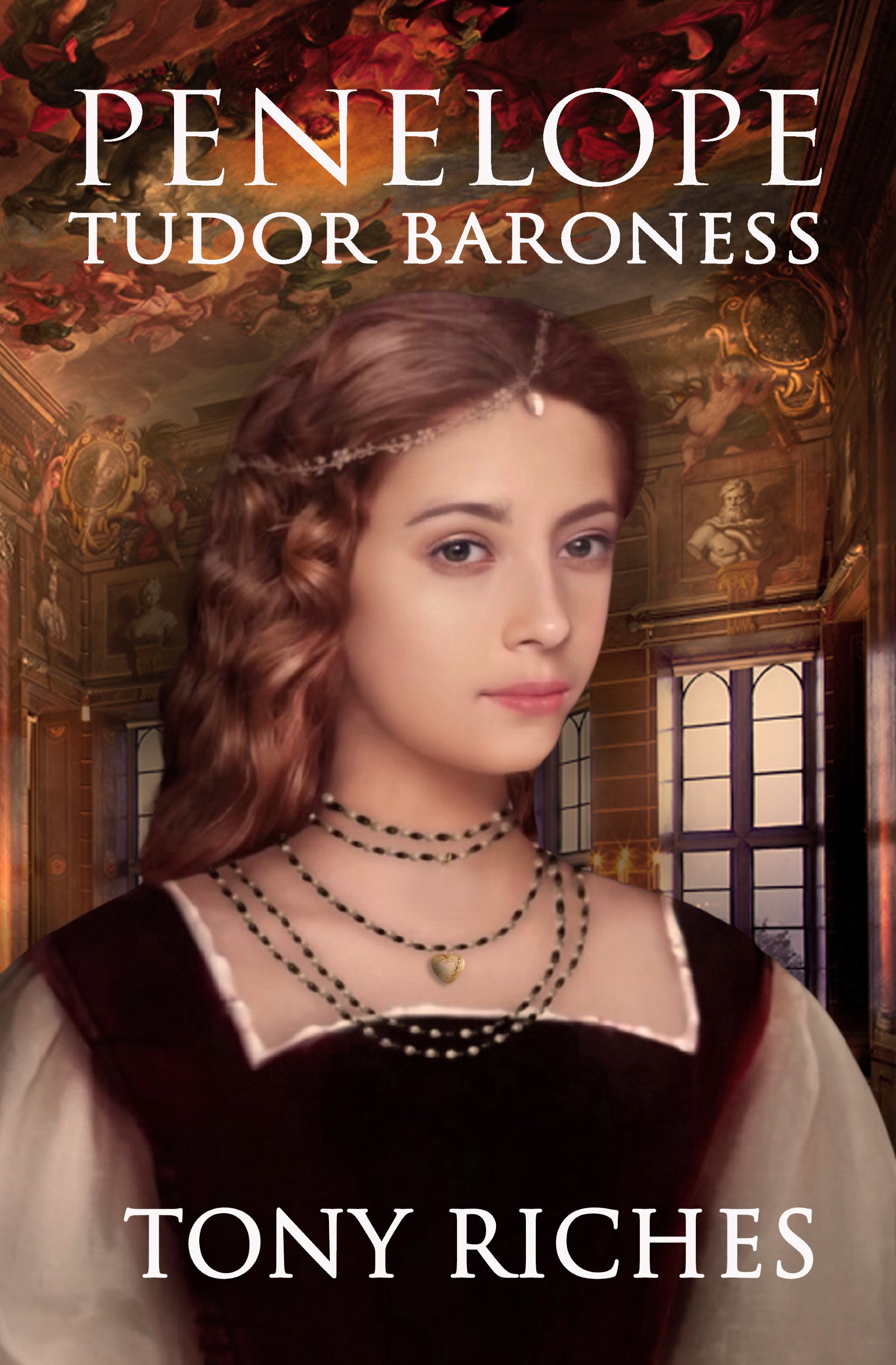
Penelope – Tudor Baroness (Book Four of The Elizabethan Series)

Penelope’s life is full of love and scandal. The inspiration for Sir Philip Sidney’s sonnet Astrophel and Stella, she is inevitably caught up in her brother Robert’s fateful rebellion.

A complex and fascinating woman, her life is a story of love, betrayal, and tragedy. Discover how Penelope charms her way out of serious charges of treason, adultery, and forgery, and becomes one of the last truly great ladies of the Tudor court.

A maid of honour to Queen Elizabeth, Penelope outlives the end of the Tudors with the death of the old queen and the arrival of King James, becoming a favourite lady-in-waiting to the new queen, Anne of Denmark.

“This is the story of a woman who lived life on her own terms, and one that will stay with you long after you finish reading it.”

To Buy the Book:

Amazon US: https://www.amazon.com/dp/B0C78KDRK3

Amazon UK: https://www.amazon.co.uk/dp/B0C78KDRK3

Amazon CA: https://www.amazon.ca/dp/B0C78KDRK3

Amazon AU: https://www.amazon.com.au/dp/B0C78KDRK3

About the Author:

Tony Riches is a full-time UK author of Tudor historical fiction. He lives with his wife in Pembrokeshire, West Wales and is a specialist in the lives of the early Tudors. As well as his new Elizabethan series, Tony’s historical fiction novels include the best-selling Tudor trilogy and his Brandon trilogy, (about Charles Brandon and his wives). For more information about Tony’s books please visit his website tonyriches.com and his blog, The Writing Desk and find him on Facebook and Twitter @tonyriches.

Find Tony at: Amazon UK: https://www.amazon.co.uk/Tony-Riches/e/B006UZWOXA Amazon US: https://www.amazon.com/Tony-Riches/e/B006UZWOXA Website: https://www.tonyriches.com/ Writing blog: https://tonyriches.blogspot.com/ Twitter: https://twitter.com/tonyriches Facebook: https://www.facebook.com/tonyriches.author Instagram: https://www.instagram.com/tonyriches.author/ TikTok: https://www.tiktok.com/@tonyriches.author Podcasts: https://tonyriches.podbean.com/ Goodreads: https://www.goodreads.com/author/show/5604088.Tony_Riches

*

My Books:

Signed, dedicated copies of all my books are available, please get in touch by completing the contact me form.

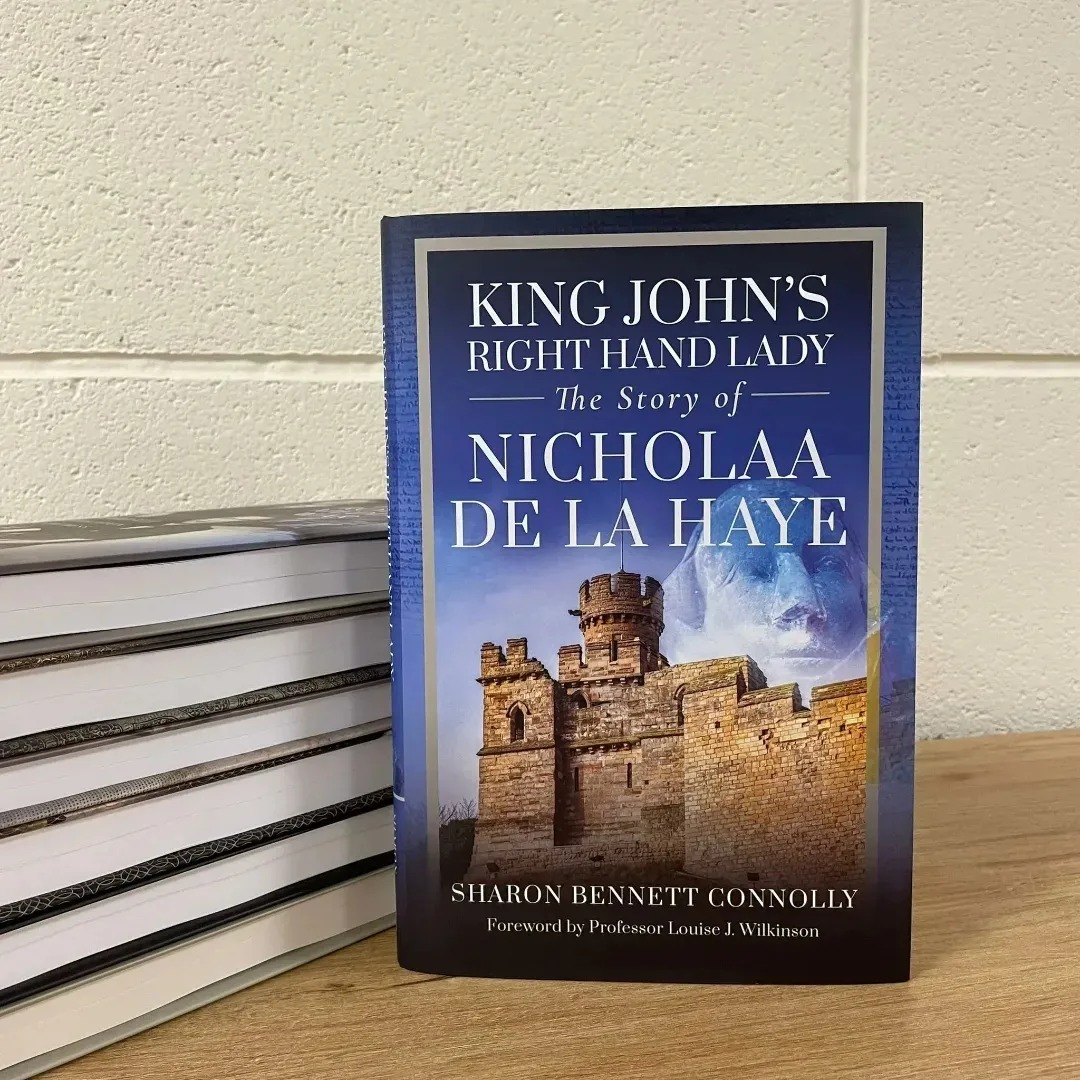
King John’s Right-Hand Lady: The Story of Nicholaa de la Haye is now available for pre-order from Pen & Sword Booksbookshop.org and Amazon UK. (I will hopefully have a US release date shortly)

In a time when men fought and women stayed home, Nicholaa de la Haye held Lincoln Castle against all-comers. Not once, but three times, earning herself the ironic praise that she acted ‘manfully.’ Nicholaa gained prominence in the First Baron’s War, the civil war that followed the sealing of Magna Carta in 1215.

A truly remarkable lady, Nicholaa was the first woman to be appointed sheriff in her own right. Her strength and tenacity saved England at one of the lowest points in its history. Nicholaa de la Haye is one woman in English history whose story needs to be told…

Also by me:

Defenders of the Norman Crown: The Rise and Fall of the Warenne Earls of Surrey tells the fascinating story of the Warenne dynasty, of the successes and failures of one of the most powerful families in England, from its origins in Normandy, through the Conquest, Magna Carta, the wars and marriages that led to its ultimate demise in the reign of Edward III. Defenders of the Norman Crown: Rise and Fall of the Warenne Earls of Surrey is now available from Pen & Sword BooksAmazon in the UK and US, and  Bookshop.org.

Ladies of Magna Carta: Women of Influence in Thirteenth Century England looks into the relationships of the various noble families of the 13th century, and how they were affected by the Barons’ Wars, Magna Carta and its aftermath; the bonds that were formed and those that were broken. It is now available in paperback and hardback from Pen & Sword,  Amazon, and Bookshop.org.

Heroines of the Medieval World tells the stories of some of the most remarkable women from Medieval history, from Eleanor of Aquitaine to Julian of Norwich. Available now from Amberley Publishing and Amazon, and Bookshop.org.

Silk and the Sword: The Women of the Norman Conquest traces the fortunes of the women who had a significant role to play in the momentous events of 1066. Available now from Amazon,  Amberley Publishing, and Bookshop.org.

Alternate Endings: An anthology of historical fiction short stories including Long Live the King… which is my take what might have happened had King John not died in October 1216. Available in paperback and kindle from Amazon.

*

Podcast:

Have a listen to my A Slice of Medieval podcast

For forthcoming online and in-person talks, please check out my Events Page.

You can be the first to read new articles by clicking the ‘Follow’ button, liking our Facebook page or joining me on Twitter and Instagram.

*

©2023 Tony Riches and Sharon Bennett Connolly FRHistS

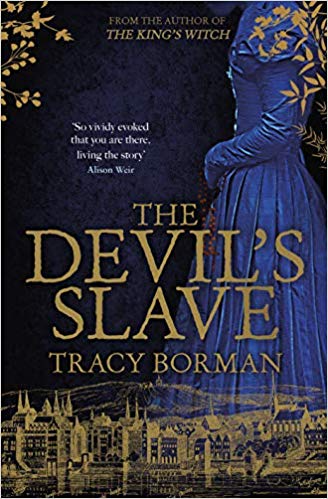
Book Corner: The Devil’s Slave by Tracy Borman

Frances Gorges has already survived the accusation of witchcraft.

But if her torturers at the court of King James knew of her love for Tom Wintour, one of the executed members of the gunpowder plot, it would mean certain death.

Pregnant with Tom’s child, hiding under the reluctant protection of her spiteful and ambitious brother, Frances lives in fear – until she is offered the chance to make a respectable – if loveless – marriage and return to court.

She will not be expected to sleep with her husband. The only price she must pay for safety is to give up the cause for which her lover died.

But old loyalties are hard to deny, and soon Frances is drawn back into the snake-pit scheming of the factions trying to take the throne.

Everywhere she turns, it seems that someone has the power to force her deeper into danger until, all too late, Frances hears the warnings of her own heart.

Compelling, sensual, suspenseful, The Devil’s Slave is a standalone sequel to The King’s Witch and further evidence that one of our finest historians is also a brilliant novelist.

Another stunning instalment of the Frances Gorges story from Tracy Borman. The young woman who barely escaped the fallout of the Gunpowder Plot with her life is once again drawn into the intrigues of the fledgling Stuart court. Skilled with herbs and a secret Catholic make her twice the target for the staunchly protestant witch-hunter King James and his minister, Robert Cecil. Frances’s return to court with her husband and son sees her trying to negotiate her way through the various Catholic plots that surround the crown and court.

Tracy Borman weaves a tale that is fraught with tension, with danger lurking around every corner, or behind every rose bush. At times, it seems that everyone is a chameleon – and no one is as they seem. And, just like the heroine, the reader is drawn into the plots and intrigues of the court. This engaging, entertaining story will keep the reader enthralled until the very last page.

The history and story are effortlessly woven together.

She looked down at her hands as she struggled to maintain her composure. Dorothy reached forward and took them in her own. ‘I understand your fears, Frances,’ she said softly. ‘These are dangerous times for those of us who share the true faith. I know that you wish to protect your son, as I do mine. But you cannot condemn him – and yourself – to life of falsehood, of heresy. To do so would be to damn him in the next life, as well as this one. You cannot think that is what Tom would have wished for his son.’

‘Tom would have wished him to stay alive!’ Frances cried, the tears now streaming down her cheeks. ‘What would you have me do? Parade him as the son of a condemned traitor? Forfeit his safety, his happiness, his life? And all for what? A cause that died with Tom and the rest?’

Dorothy fell silent, but her grip on Frances’s hands tightened. ‘It did not die, Fraces,’ she said. ‘It is stronger now than ever. The death of Tom and his companions has intensified people’s hatred of this heretic king and drawn thousands more to our cause. I don not speak out of blind faith,’ she continued, as if reading Frances’s thoughts. ‘We have learned from the lessons of the past. Cecil’s spies are now outnumbered by those of our cause. How do you suppose I was able to find out about my nephew? The time is almost ripe to act. We have powerful supporters at court, and the King of Spain stands in readiness with a huge army.’

Frances’s mind was reeling…

Tracy Borman’s vast knowledge of the Stuart court and the various royal palaces in which The Devil’s Slave is set, serve to add a level of authenticity into the story that is rarely seen in a novel, whilst the subtlety in delivering the facts avoids giving the reader a lecture in Stuart history. The blend of fact and fiction is indistinguishable, leaving the reader with many avenues of research to pursue later, if they are so inclined.

The locations of lavish palaces, manor houses and the Tower of London are recreated in great detail. Tracy Borman uses her extensive knowledge to rebuild the Stuart world for the modern reader. The prose is a pleasure to read and devour, while the plot delves deep into the dark corners of Stuart history.

However, her greatest creations in the book are the characters, whether real or imagined. The personalities of Sir Walter Raleigh and Arbella Stuart, alongside the various members of the royal family, are wonderfully deep, complex individuals who serve to add spice and colour to an already fabulous story. The heroine, Frances Gorges, is a woman with whom many can feel empathy. Drawn into the various intrigues much against her inclination, but with a desire to protect her family, she is forced to navigate her way through the various dangers, always with the knowledge of what faces her should she fail.

The Devil’s Slave, as with The King’s Witch, is a story that is not to be missed. For the reader, it provides a truly enjoyable sojourn in the realm of early Stuart England and must appeal to all with an interest in history, intrigue and adventure. I cannot recommend it highly enough!

The Devil’s Slave by Tracy Borman is available from Amazon.

About the Author:

Tracy Borman is joint Chief Curator of Historic Royal Palaces and Chief Executive of the Heritage Education Trust. She studied and taught history at the University of Hull and was awarded a PhD in 1997. 

Tracy is the author of a number of highly acclaimed books, including Thomas Cromwell: The Untold Story of Henry VIII’s Most Faithful Servant, Matilda: Wife of the Conqueror, First Queen of England, Elizabeth’s Women: The Hidden Story of the Virgin Queen and Witches: A Tale of Sorcery, Scandal and Seduction. Tracy is also a regular broadcaster and public speaker, giving talks on her books across the UK and abroad. She lives in Surrey with her daughter.

*

My Books

Silk and the Sword: The Women of the Norman Conquest

From Emma of Normandy, wife of both King Cnut and Æthelred II to Saint Margaret, a descendant of Alfred the Great himself, Silk and the Sword: the Women of the Norman Conquest traces the fortunes of the women who had a significant role to play in the momentous events of 1066.  Available now from Amazon UK,  Amberley Publishing, Book Depository and Amazon US.

Heroines of the Medieval World

Telling the stories of some of the most remarkable women from Medieval history, Heroines of the Medieval World,  is now available in hardback in the UK from Amazon UK, and in the US from Amazon US. It is available now in paperback in the UK from from both Amberley Publishing and Amazon and worldwide from Book Depository.

*

You can be the first to read new articles by clicking the ‘Follow’ button, liking our Facebook page or joining me on Twitter.

©2019 Sharon Bennett Connolly

Book Corner: The King’s Witch by Tracy Borman

As she helps to nurse the dying Queen Elizabeth, Frances Gorges longs for the fields and ancient woods of her parents’ Hampshire estate, where she has learned to use the flowers and herbs to become a much-loved healer.

Frances is happy to stay in her beloved countryside when the new King arrives from Scotland, bringing change, fear and suspicion. His court may be shockingly decadent, but James’s religion is Puritan, intolerant of all the old ways; he has already put to death many men for treason and women for witchcraft.

So when her ambitious uncle forcibly brings Frances to court, she is trapped in a claustrophobic world of intrigue and betrayal – and a ready target for the twisted scheming of Lord Cecil, the King’s first minister. Surrounded by mortal dangers, Frances finds happiness only with the precocious young Princess Elizabeth, and Tom Wintour, the one courtier she can trust.

Or can she?

I was lucky enough to receive a copy of Tracy Borman’s first novel, The King’s Witch through NetGalley.

I have often read and enjoyed Tracy Borman’s non-fiction works. Indeed, her book on Matilda of Flanders, queen of William the Conqueror, was very helpful in my research for my own books, Heroines of the Medieval World and Silk and the Sword: the Women of the Norman Conquest. However, there is a great difference in writing non-fiction and fiction and not every author can make the jump. As a result I was unsure what tot expect from The King’s Witch  but discovered that Tracy Borman has managed to create a masterpiece of literary fiction at the first attempt.

Set in the court of James VI and I shortly after his arrival in England, The King’s Witch weaves a wonderful tale of love, intrigue, betrayal and suspense, set against the backdrop of the king’s obsession with eradicating witchcraft within his realm and the persecution of catholics. The officers of the old regime of Elizabeth I are trying to curry favour with the new king by taking on his obsessions and making them their own, so that those out of favour are hunted on every side.

As curator of the Historic Royal Palaces, Tracy Borman uses the wealth of inside  knowledge and information she has acquired to vividly recreate the world of early Stuart Britain in vibrant detail. She breathes life into her characters, both historical and invented, so that it is impossible to tell where the fact ends and the fiction begins. Her expertise is demonstrated not only in court etiquette, dress and manners, but also in the seedier side of Stuart Britain, in the treatment and punishment of prisoners, the oppression of catholic families and priests. The extent of research the author pursued in the writing of the book is demonstrated in the knowledge of herbs and their healing qualities, and how a girl may gain and use the knowledge to help others, if not always successfully.

There was silence for a few moments, then Helena bade her daughter sit with her again, and clasped both of Frances’s hands in her own.

‘My daughter.’ She pronounced the word as ‘dotter’, a rare hint of her native tongue. ‘You are my precious jewel. If only I could keep you as safe as these trifles -‘ she gestured to the coffers surrounding them, each secured with a brightly polished lock, the keys to which were only entrusted to her highest-ranking attendant.

Frances looked up into her mother’s dark brown eyes. She had long since seen her fiftieth year, but with her pale skin, high cheekbones, and small rosebud mouth, she was still beautiful.

‘Lady Mother?’

‘Frances, you must know that the court – the kingdom – is greatly changed,’ Helena began, her voice low. ‘King James has no patience with the traditions upheld by the late queen. Already the court is beset with scandal and vice. It will bring shame upon the kingdom.’ A scornful look crossed her face.  ‘Yet neither does he respect our former mistress’s moderation in matters of religion, but insists upon the strict observance of the Protestant faith. He seems determined to bend his subjects to his will.

Helena looked down at her hands for a moment, and when she raised her eyes to Frances again they were clouded with anxiety.

‘He has declared a war on witches, Frances. He says that they are a canker in our midst, and that God has appointed him to destroy them all. He will not leave a stone unturned in his search for the “whores of Satan”, as he calls them. Already Cecil is drafting a new Act against witchcraft. Any practice that is deemed to be sorcery will be punishable by death.’ She paused, eyeing Frances closely. ‘Even the arts of healing are under suspicion. There is to be no mercy.’

Frances looked doubtful. ‘Surely the king does not mean to hunt down the wise women and cunning folk? His officials would have to scour every village in the kingdom, and to what purpose? Their skills have always been used for good, not evil.’


The heroine of the story, Frances Gorges, as lady-in-waiting to King James’ pampered daughter, Elizabeth, has to navigate the Stuart court, despite being suspected as a witch by the king’s chief adviser, Robert Cecil. A skilled healer, Frances’ kind and trusting nature is tested to the extremes. While her skill with herbs and healing leads her into a dark place, her love for one of the men of the court leads her into the heart of a dangerous conspiracy and she doesn’t know who to trust. As the story unfolds, the reader is taken on a journey into the heart of a plot could change the course of history….

Tracy Borman has succeeded wonderfully in attaining that often difficult balance with historical fiction, of keeping to the historical fact while weaving an enchanting story which will keep the reader gripped to the very last page. Her obvious expertise in the era means that she is able to get into the heads of the characters she is depicting, thus relating their thoughts feelings and motivations with an uncanny accuracy which serves to transport the reader back in time, to the court and country of James VI and I. The author accurately depicts the sense of unease and apprehension at the change in regime from Elizabethan to Jacobean, demonstrating the distrust and unfamiliarity that accompanies the Scottish king to his new court; and conflict between those who find favour with the new king and those who hanker after the times and tolerance of the old queen, Elizabeth I.

Tracy Borman’s heroine, Frances Gorges, must traverse this difficult terrain of shifting allegiances and changing favourites, searching for a way to survive the plots and machinations of those who would see her fall. The King’s Witch is an exquisitely crafted novel, recreating the essence of Stuart Britain in wonderful detail.

The King’s Witch is available from Amazon.

About the author

81jjBI51lTL._SY200_

Tracy Borman is joint Chief Curator of Historic Royal Palaces and Chief Executive of the Heritage Education Trust. She studied and taught history at the University of Hull and was awarded a PhD in 1997.

Tracy is the author of a number of highly acclaimed books, including Thomas Cromwell: The Untold Story of Henry VIII’s Most Faithful Servant, Matilda: Wife of the Conqueror, First Queen of England, Elizabeth’s Women: The Hidden Story of the Virgin Queen and Witches: A Tale of Sorcery, Scandal and Seduction. Tracy is also a regular broadcaster and public speaker, giving talks on her books across the UK and abroad. She lives in Surrey with her daughter.

*

My books

Heroines of the Medieval World tells the stories of women, famous, infamous and unknown, who shaped the course of medieval history. It is available in hardback in the UK from both Amberley Publishing and Amazon UK. It is now available in Hardback from Amazon US  and worldwide from Book Depository.

From Emma of Normandy, wife of both King Cnut and Æthelred II to Saint Margaret, a descendant of Alfred the Great himself, Silk and the Sword: the Women of the Norman Conquest traces the fortunes of the women who had a significant role to play in the momentous events of 1066. Silk and the Sword: the Women of the Norman Conquest will be released in the UK on 15 November 2018 and is available for pre-order on Amazon UKAmazon USAmberley Publishing and Book Depository.

You can be the first to read new articles by clicking the ‘Follow’ button, liking our Facebook page or joining me on Twitter.

*

©2018 Sharon Bennett Connolly