Wordly Women: Samantha Wilcoxson

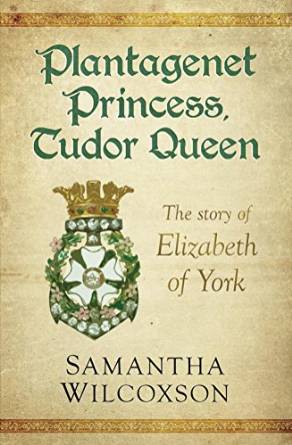
Today we are hopping across the pond for the next chat in my Wordly Women series. Joining me is Samantha Wilcoxson. Author of fiction novels mainly based in the late medieval and Tudor eras and and non-fiction books on the American Revolution, Samantha’s books – literally – span the Atlantic divide. Samantha has a knack for getting into the heads of the people she is writing about. Her book, Plantagenet Princess, Tudor Queen, about Elizabeth of York, is still one of the most insightful novels I have ever read.

Sharon: What got you into writing?

Samantha: What got you into writing? I have always loved reading and used to write dozens of book reviews every year. Many of those books were historical fiction and nonfiction. When I was considering ways to earn money while a stay-at-home mom, my husband suggested I write a book. I had never considered taking this step, so the first obstacle was deciding what I would want to write about. It didn’t take me long to settle on Elizabeth of York, and I quickly became passionate about the project. That novel turned into a series, and I’ve ventured into other historical eras since then.

Sharon: Tell us about your books.
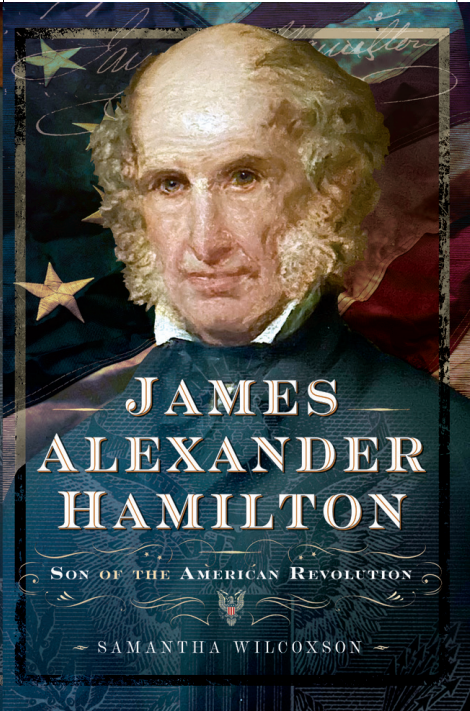
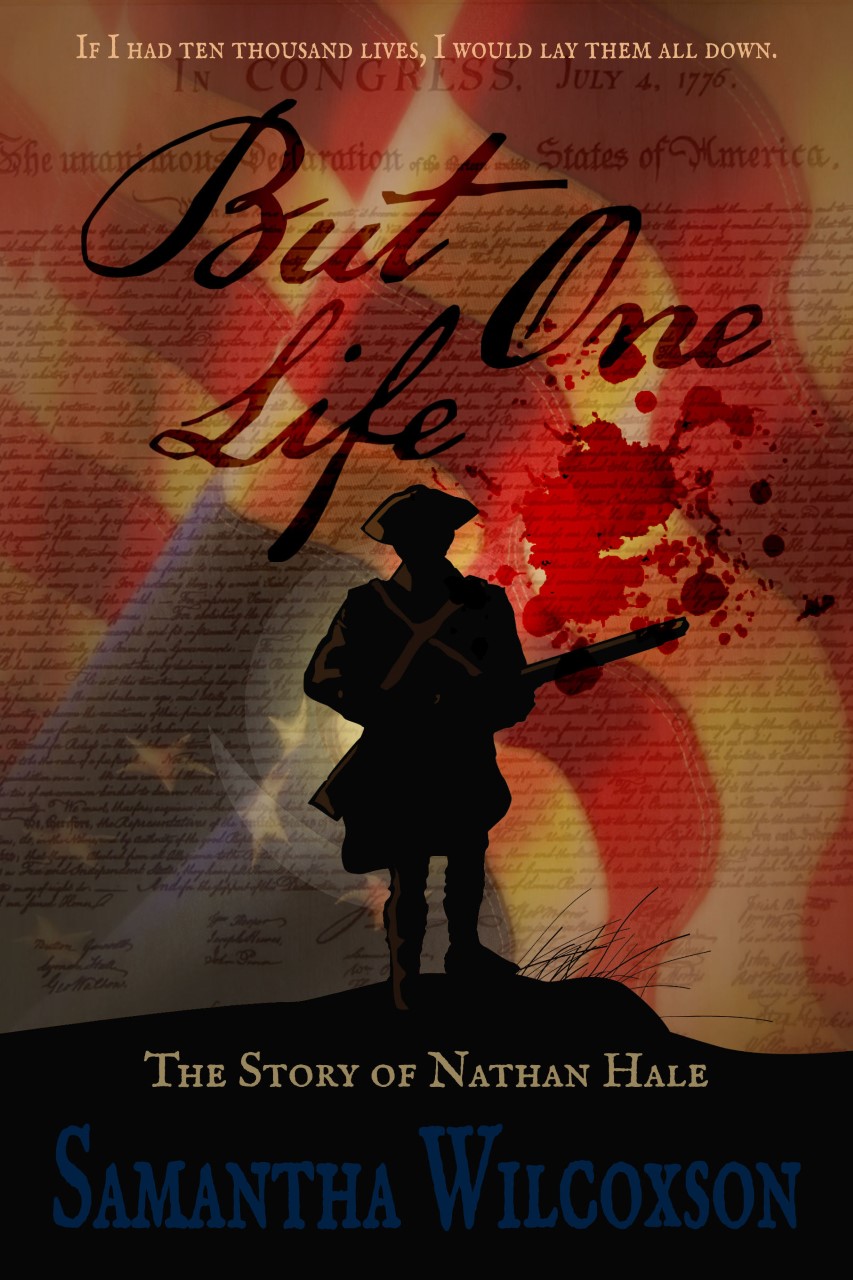
Samantha: Each of my novels explores the life of a real historical figure in a way that helps readers connect with them on a personal level. My Plantagenet Embers series includes three novels featuring Elizabeth of York, Margaret Pole, and Mary I. It also has three novellas that offer new points of view of the same events by focusing on Margaret Beaufort, Elizabeth Woodville, and Reginald Pole. Then I moved into US history with my next two novels. Luminous is biographical fiction of real life radium girl Catherine Wolfe Donohue, and But One Life explores the life of American Revolution soldier Nathan Hale. My nonfiction books are Women of the American Revolution and a newly released biography of James Alexander Hamilton.

Sharon: What attracted you to the Tudors?

Samantha: When I started writing the series that ended up covering the early Tudor era, I was actually obsessed with the Wars of the Roses. I thought Elizabeth of York was an unsung heroine, so I started with her with no real intention of writing about the Tudors! This is actually a great insight into my writing. I never know what is coming next.

Sharon: So, what is coming next?

Samantha: I am currently writing a trilogy set during the Wars of the Roses for Sapere Books. It includes multiple women’s points of view. For example, book one has chapters featuring Marguerite of Anjou, Cecily Neville, and Anne Beauchamp. That one is in editing, and I’m working on book two, which will add the perspective of Elizabeth Woodville and others.

Sharon: How do you approach researching your topic?
Samantha: This depends a lot on whether I’m writing fiction or nonfiction. For novels, I largely depend on biographies already written, but for nonfiction I look for more primary resources like personal letters and diaries. For either, I like to visit locations important to the people I’m writing about so that I can include details about the places they experienced.

Sharon: You also write US history non-fiction.

Samantha: Tell us your ‘favourite’ story you have come across in your research? My research into James Alexander Hamilton uncovered loads of interesting discoveries, partly because nobody else has really written about him. I held letters written between James and Andrew Jackson, Martin Van Buren, John Quincy Adams, and so many others. (Gotta admit, it was tempting to try sneak that JQA letter into my bag!) I think the most fun story I came across, besides John Quincy writing about being too old to stay up all night at a lively Hamilton party, was learning that James was part of the crew of the schooner America for which the America’s Cup is named.

Sharon: Tell us your least ‘favourite’ US history story you have come across in your research?

Samantha: I don’t know if I would call it a least favorite, but I decided to write a novel about Nathan Hale because I often came across quotes attributed to him such as, “I only regret that I have but one life to give for my country” but very little else about who Hale was. What happened in this young man’s life to create such bravery and patriotism? Few references to him offered much, so I decided to dig in and reveal the story of Nathan Hale before his famous execution during the American Revolution.

Sharon: Are there any other eras you would like to write about?
Samantha: I always have a few ideas brewing but am committed to the next couple of books on the Wars of the Roses right now. I have started a bit of research into a historical event that occurred near my home in Michigan in 1847 that I would like to consider for a future project. I’m not one of those writers who has the next five years planned out and I tend to impetuously strike out in new directions, so we’ll see what happens.

Sharon: And finally, what is the best thing about being a writer?

Samantha: Besides spending my day reading, writing, and learning about history, I love the flexibility of being a writer. I began as a stay-at-home mom, and I still appreciate the ability to easily set my work aside for a few days if one of my adult children needs anything. I’ve also made many friends in the writing community who make me feel less alone as a history nerd and have provided amazing support and encouragement for each of my book projects.

About the Author:

Samantha Wilcoxson is an author of emotive biographical fiction and nonfiction featuring history’s unsung heroes. Her novel Luminous has been named Book of the Year by Ruins & Reading and Yarde Book Reviews. Samantha’s most recent work is the first biography of James Alexander Hamilton, published by Pen & Sword History. She is currently writing a Wars of the Roses trilogy for Sapere Books. When not reading or writing, Samantha loves sharing trips to historic places with her family and spending time by the lake with a glass of wine.

Where to find Samantha Wilcoxson:

Website; Instagram; Amazon Author Page; Newsletter Signup; Goodreads; Pinterest; Twitter; Shop Direct; Audible

*

My books

Signed, dedicated copies of all my books are available through my online store.

Out now: Scotland’s Medieval Queens

Scotland’s history is dramatic, violent and bloody. Being England’s northern neighbour has never been easy. Scotland’s queens have had to deal with war, murder, imprisonment, political rivalries and open betrayal. They have loved and lost, raised kings and queens, ruled and died for Scotland. From St Margaret, who became one of the patron saints of Scotland, to Elizabeth de Burgh and the dramatic story of the Scottish Wars of Independence, to the love story and tragedy of Joan Beaufort, to Margaret of Denmark and the dawn of the Renaissance, Scotland’s Medieval Queens have seen it all. This is the story of Scotland through their eyes.

Scotland’s Medieval Queens gives a thorough grounding in the history of the women who ruled Scotland at the side of its kings, often in the shadows, but just as interesting in their lives beyond the spotlight. It’s not a subject that has been widely covered, and Sharon is a pioneer in bringing that information into accessible history.’ Elizabeth Chadwick (New York Times bestselling author)

Available now from Amazon and Pen and Sword Books

Also by Sharon Bennett Connolly:
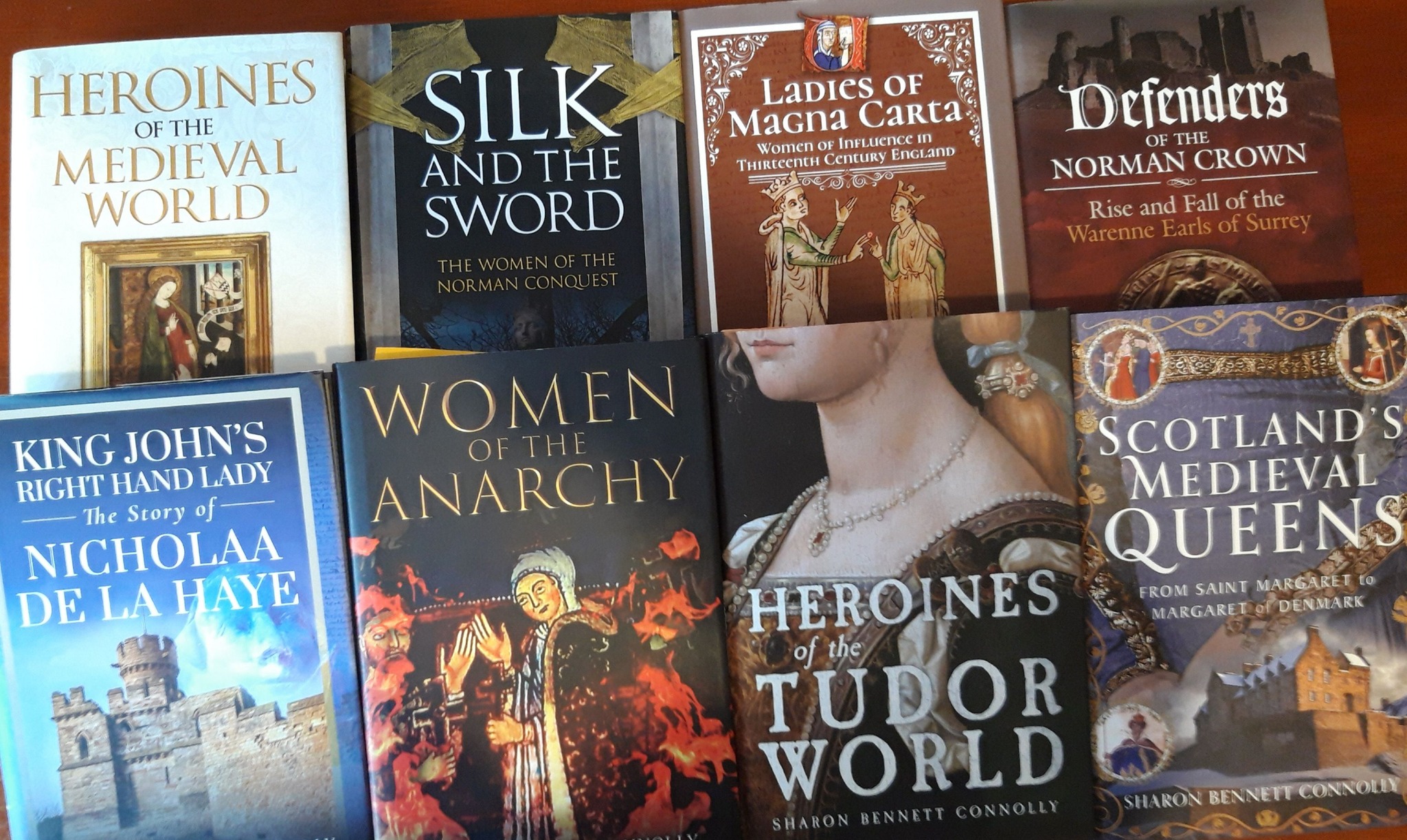
Heroines of the Tudor World tells the stories of the most remarkable women from European history in the time of the Tudor dynasty, 1485-1603. These are the women who ruled, the women who founded dynasties, the women who fought for religious freedom, their families and love. Heroines of the Tudor World is now available from Amberley Publishing and Amazon UK. Women of the Anarchy demonstrates how Empress Matilda and Matilda of Boulogne, unable to wield a sword themselves, were prime movers in this time of conflict and lawlessness. It shows how their strengths, weaknesses, and personal ambitions swung the fortunes of war one way – and then the other. Available from Bookshop.orgAmberley Publishing and Amazon UKKing John’s Right-Hand Lady: The Story of Nicholaa de la Haye is the story of a truly remarkable lady, the hereditary constable of Lincoln Castle and the first woman in England to be appointed sheriff in her own right. Available from all good bookshops Pen & Sword Booksbookshop.org and Amazon

Defenders of the Norman Crown: The Rise and Fall of the Warenne Earls of Surrey tells the fascinating story of the Warenne dynasty, from its origins in Normandy, through the Conquest, Magna Carta, the wars and marriages that led to its ultimate demise in the reign of Edward III. Available from Pen & Sword BooksAmazon in the UK and US, and Bookshop.orgLadies of Magna Carta: Women of Influence in Thirteenth Century England looks into the relationships of the various noble families of the 13th century, and how they were affected by the Barons’ Wars, Magna Carta and its aftermath; the bonds that were formed and those that were broken. It is now available in paperback and hardback from Pen & SwordAmazon, and Bookshop.orgHeroines of the Medieval World tells the stories of some of the most remarkable women from Medieval history, from Eleanor of Aquitaine to Julian of Norwich. Available now from Amberley Publishing and Amazon, and Bookshop.orgSilk and the Sword: The Women of the Norman Conquest traces the fortunes of the women who had a significant role to play in the momentous events of 1066. Available now from Amazon,  Amberley Publishing, and Bookshop.org.

Alternate Endings: An anthology of historical fiction short stories including Long Live the King… which is my take what might have happened had King John not died in October 1216. Available in paperback and kindle from Amazon.

Podcast:

Have a listen to the A Slice of Medieval podcast, which I co-host with Historical fiction novelist Derek Birks. Derek and I welcome guests, such as Bernard Cornwell and Michael Jecks, and discuss a wide range of topics in medieval history, from significant events to the personalities involved. Every episode is also now available on YouTube.

*

Don’t forget! Signed and dedicated copies of all my books are available through my online store.

For forthcoming online and in-person talks, please check out my Events Page.

You can be the first to read new articles by clicking the ‘Follow’ button, liking our Facebook page or joining me on TwitterThreadsBluesky and Instagram.

*

©2025 Sharon Bennett Connolly, FRHistS and Samantha Wilcoxson
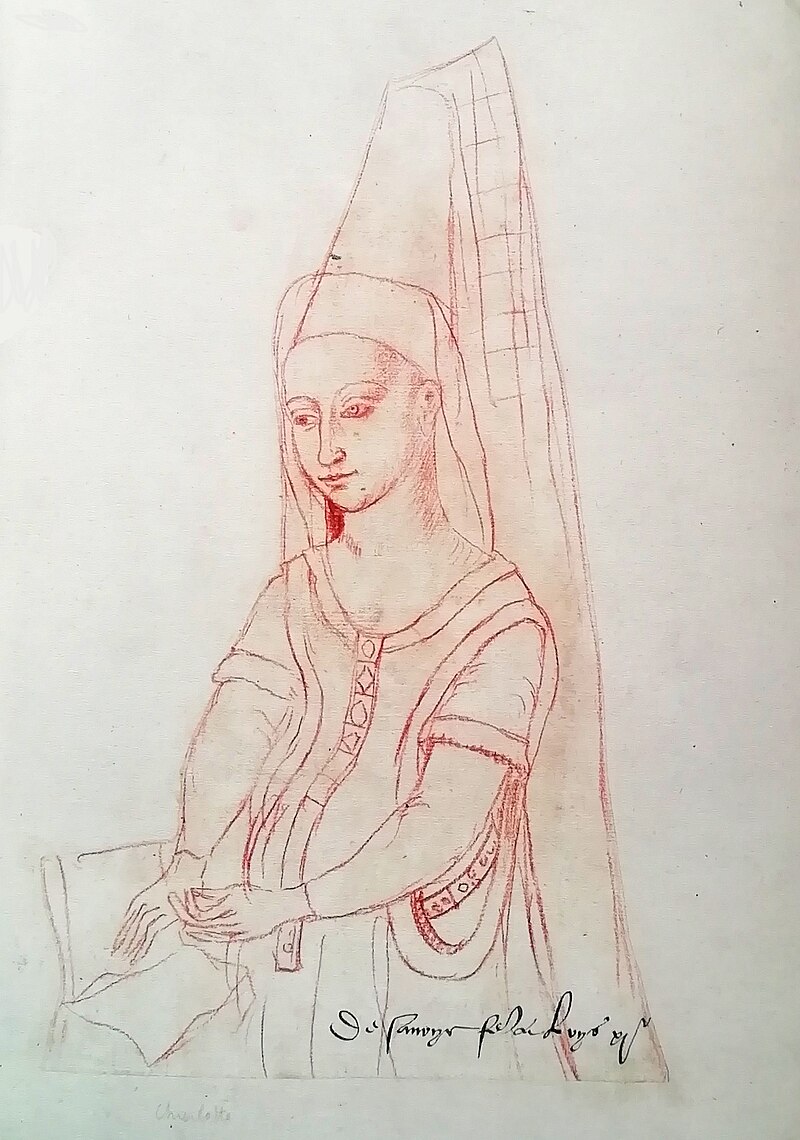
The Poetic Life of Margaret of Scotland, Dauphine of France

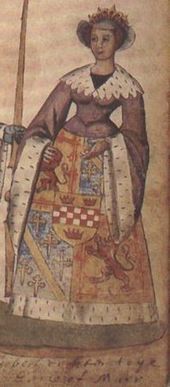
Margaret Stewart, Dauphine of France

Margaret of Scotland was the eldest daughter of James I, King of Scots, and his wife, Joan Beaufort. James had been king since the age of 12, though the first 18 years of his reign had been spent in English captivity, where he had fallen in love with Joan, the granddaughter of John of Gaunt and Katherine Swynford. James’s release had been successfully negotiated in 1423 and the marriage was politically favourable to the English, who saw it as an opportunity to improve relations with Scotland while, at the same time, drawing Scotland away from France, their traditional ally.

James I returned to Scotland in April 1424, with his new bride – and queen– at his side. Margaret was born in the royal apartments at the Dominican Friary in Perth, on Christmas Day in 1424. She was joined in the nursery by five sisters during the next ten years, Isabella, Eleanor, Joan, Mary and Annabella. Twin brothers were born in 1430, Alexander and James, but only James survived past the first few months.

In 1425, an embassy arrived from France, seeking little Margaret’s hand in marriage for Louis, son and heir of Charles VII:

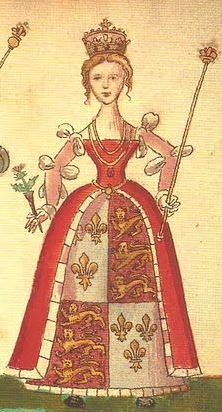
Margaret’s mother, Joan Beaufort

The king [of Scots] was pleased to respond favourably to so distinguished an embassy, and forthwith sent as a solemn embassy to the king of France with a specific brief and commission the venerable men sir Henry Lychton bishop of Aberdeen, sir Edward Lauder archdeacon of Lothian, and Sir Patrick Ogilvie knight (the sheriff of Angus and justiciar of Scotland). Whereupon there was an agreement on both sides; and five years later, when each was of marriageable age, there came as envoys from the king of France La Hire the king’s maitre d’hôtel along with the distinguished cleric Master Aymer; and in terms of their commission they arranged the betrothal of the said eldest daughter of the king. The girl was sent to France by her father a little later, namely 1436, surrounded by a distinguished following of attendants, and in the following year she was married.1
The marriage proposal was to accompany the renewal the Franco-Scottish alliance. France’s king, Charles VII had given his ambassadors the task of asking for Margaret’s hand in marriage for his son, Louis, the dauphin. Born in July 1423, Louis was just 18 months older than his future bride. However, James I hesitated, reluctant to give the French the army of 6,000 men that they wanted as part of the alliance. Charles VII was in a precarious position in France at the time. The Hundred Years War was raging and, despite the fact his father had died in 1422, he would not actually be crowned king until July 1429. In fact, Henry VI of England had already been crowned King of France and it was only due to the efforts of Joan of Arc that Charles VII’s fortunes would change. James, therefore, held off from agreeing to the alliance, and used it to strengthen his position in negotiations with the English.

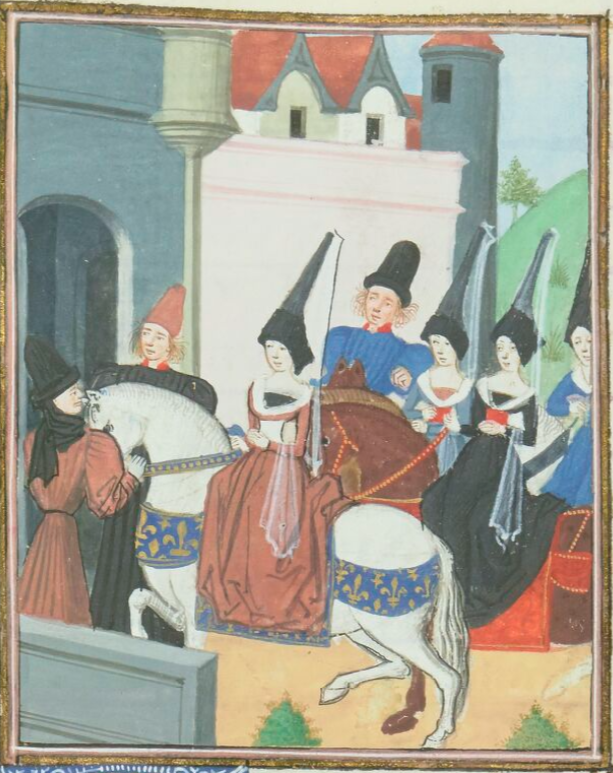
Margaret arrives in Tours for her wedding, from a 15th-century work by Jean Chartier.

In 1435, the marriage of Margaret and the dauphin was finally agreed and the young bride, still only eleven years old, set out for France the following year. The princess only narrowly escaped her father’s fate when the English fleet attempted to capture her en route:

the dauphiness luckily made her escape and landed at La Rochelle. She rested at Nieul Priory which is two leagues from La Rochelle without notice being taken of her until such time as the [arch-] bishop of Rheims, with the bishops of Poitiers and Saintes and the worthy sires de Graville, Gaucourt and ‘Pontissey’ welcomed her and lodged her honourably in a splendid place for more than two months until the marriage was celebrated at Tours in Touraine. This was performed there by the archbishop of Rheims with the greatest possible ceremony, in the presence of the king and queen and also of the queen of Sicily (the mother of the queen of France). Once the wedding had been formally celebrated, the Scots (except the few who remained with the dauphiness) were much gratified with various presents and after a safe voyage arrived home.2

She left by ship from Dumbarton in March 1436, with an entourage worthy of a princess; she was escorted by several of the leading lords of the realm, a household of 140 persons in royal livery and more than 1,000 troops. The French fleet in which she sailed landed on the Île de Ré, near La Rochelle, on 17 April and made a formal progress to Tours. On 24 June she met her future husband for the first time, in the great hall of the castle at Tours, and the young couple embraced formally. They were married the next day, in the castle’s chapel.

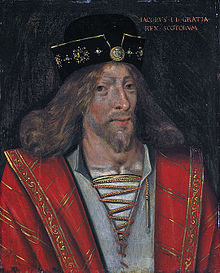
Margaret’s father, James I, King of Scots

Celebrated by the Archbishop of Reims, it was a rather subdued affair, for a royal wedding. The continuing state of warfare with England had stretched the French royal finances to the limit. The reception was not as lavish as the Scottish guests might have expected and was cut short to preserve funds, the scandalised Scots being quickly ushered out. And almost immediately after the wedding celebrations, most of Margaret’s Scottish household was sent home, with just a handful of her native attendants allowed to stay with the new dauphine. Owing to the tender age of the young couple, they were not expected to consummate the marriage for another few years, so Margaret was given into the guardianship of Queen Marie, Charles VII’s wife, and continued her education under the queen’s supervision. Petite, pretty and delicate, Margaret soon became the darling of the French King and Queen.

Louis, on the other hand, had a strained relationship with his father, one that would eventually be expressed in open rebellion; as a result, he was rarely at court. When Louis asked the king for an allowance with which to set up a household for himself and his young wife, his father refused, despite being happy to give Margaret money to indulge herself. At one time, Charles VII gave Margaret 2,000 livres to buy herself furs and silks, and yet he refused to pay off Louis’ debts. Margaret also received grants directly from the king, rather than her husband, as might have been expected.

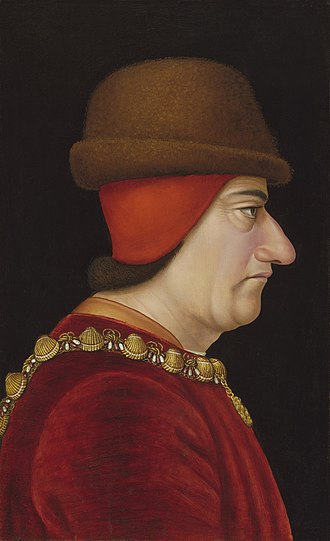
Margaret’s husband, the future King Louis XI

In 1437 the marriage was consummated and Margaret, now approaching her thirteenth birthday, was given her own household. Relations between the dauphin and dauphine were not helped by Louis’ strained relationship with his father and it seems that comparisons were made between Louis’ unimpressive looks and Margaret’s beauty – although malicious English chroniclers would insist that Louis was repelled by Margaret’s ‘evil soured breath’.

Margaret was allowed no part in court politics. The dauphine’s role in France was limited to formal occasions and court ceremonials, such as the celebrations for the marriage of the king’s niece, Margaret of Anjou, to Henry VI of England, which Margaret attended in 1445. As with her father before her, Margaret had a passion and talent for writing poetry and, although she enjoyed court life, she became increasingly bored with it. She retreated more and more to her own chambers with her ladies and spent her days and evenings writing and reading poetry. Her evenings were so taken up in this style, that she often retired to bed long after Louis had fallen asleep.

Margaret was also renowned as a patroness of literature. She had several poets in her household, including Jehanne Filleul, whose works have survived to this day, and the Viscount de Blosseville. De Blosseville wrote one of the three laments to the dauphine, written before her death. Another such lament was possibly written by her sister Isabella, it was certainly in her possession.

As the years passed and the couple remained childless, Margaret’s lifestyle caused further discontent within the marriage, and more unhappiness for the young princess as her husband expressed his displeasure. There is some suggestion that Margaret deliberately prevented herself from falling pregnant by drinking vinegar, and by tightly lacing her bodices – although this may also have been for vanity, and to keep her svelte figure. There were also followed accusations of impropriety within Margaret’s rooms when, at Christmas 1444, Jamet de Tillay, a member of the king’s household, entered her chamber during one of her private poetry evenings and subsequently spread rumours about ‘wanton princesses’.

Margaret perceived it as a personal attack and became increasingly distressed, complaining that Jamet had turned the king and dauphin against her. Although Jamet tried to apologise, Margaret would not hear of it. By the summer of 1445 the dauphine was very ill.

Tomb of Margaret Stewart in the Saint-Laon Church, Thouars

Having accompanied the court on pilgrimage she fell ill on 7 August and by the next day she was feverish and suffering from fits of coughing. Her doctors diagnosed an inflammation of the lungs. In her delirium, she blamed Jamet de Tillay for her impending demise and swore she had never done Louis any wrong. As she approached death, Margaret calmed down and forgave Jamet, on her ladies’ instigation. Having received the last rites, Margaret died on 16 August 1445, at Châlons-sur-Marne; she was just twenty years old. The dauphine was laid to rest in the Cathedral of St Étienne in Châlons; in 1479 her body was moved by her husband, now Louis XI, to the chapel of the Holy Sepulchre in the Abbey Church of Saint-Laon in Thouars, where Margaret had founded a chaplaincy.

Following her death, Louis destroyed every piece of poetry and writing that Margaret had ever produced. None of her work survived her husband’s purge. However, her patronage of poets has at least ensured she had a worthy legacy. Louis went on to marry Charlotte of Savoy and was the father of Anne de Beaujeu, regent of France for her brother King Charles VIII.

Notes:

1. Bower, Scotichronicon, V 8, p. 249; 2. ibid, p. 251

Sources:

Calendar of documents relating to Scotland, Vol. 4; M. H. Brown, ‘Joan [née Joan Beaufort]’, oxforddnb.com; Amy Licence, Red Roses: Blanche of Gaunt to Margaret Beaufort; Nigel Tranter, The Story of Scotland; John of Fordun’s Chronicle of the Scottish Nation; Walter Bower, Scotichronicon; Andrew Wyntoun, The orygynale cronykil of Scotland; Richard Oram, editor, The Kings and Queens of Scotland; Rosalind K. Marshall, Scottish Queens 1034–1714; Nigel Tranter, The Story of Scotland; David Ross Scotland, History of a NationLiber pluscardensis, edited by Felix James Henry Skene; James I, King of Scots, The Kingis Quair, edited by James, William MacKean, Walter W. Skeat, Alexander Gardner

Images:

Courtesy of Wikipedia

*

My books

Signed, dedicated copies of all my books are available through my online store.

Out now: Scotland’s Medieval Queens

Scotland’s history is dramatic, violent and bloody. Being England’s northern neighbour has never been easy. Scotland’s queens have had to deal with war, murder, imprisonment, political rivalries and open betrayal. They have loved and lost, raised kings and queens, ruled and died for Scotland. From St Margaret, who became one of the patron saints of Scotland, to Elizabeth de Burgh and the dramatic story of the Scottish Wars of Independence, to the love story and tragedy of Joan Beaufort, to Margaret of Denmark and the dawn of the Renaissance, Scotland’s Medieval Queens have seen it all. This is the story of Scotland through their eyes.

Scotland’s Medieval Queens gives a thorough grounding in the history of the women who ruled Scotland at the side of its kings, often in the shadows, but just as interesting in their lives beyond the spotlight. It’s not a subject that has been widely covered, and Sharon is a pioneer in bringing that information into accessible history.’ Elizabeth Chadwick (New York Times bestselling author)

Available now from Amazon and Pen and Sword Books

Also by Sharon Bennett Connolly:

Heroines of the Tudor World tells the stories of the most remarkable women from European history in the time of the Tudor dynasty, 1485-1603. These are the women who ruled, the women who founded dynasties, the women who fought for religious freedom, their families and love. Heroines of the Tudor World is now available from Amberley Publishing and Amazon UK. Women of the Anarchy demonstrates how Empress Matilda and Matilda of Boulogne, unable to wield a sword themselves, were prime movers in this time of conflict and lawlessness. It shows how their strengths, weaknesses, and personal ambitions swung the fortunes of war one way – and then the other. Available from Bookshop.orgAmberley Publishing and Amazon UKKing John’s Right-Hand Lady: The Story of Nicholaa de la Haye is the story of a truly remarkable lady, the hereditary constable of Lincoln Castle and the first woman in England to be appointed sheriff in her own right. Available from all good bookshops Pen & Sword Booksbookshop.org and Amazon

Defenders of the Norman Crown: The Rise and Fall of the Warenne Earls of Surrey tells the fascinating story of the Warenne dynasty, from its origins in Normandy, through the Conquest, Magna Carta, the wars and marriages that led to its ultimate demise in the reign of Edward III. Available from Pen & Sword BooksAmazon in the UK and US, and Bookshop.orgLadies of Magna Carta: Women of Influence in Thirteenth Century England looks into the relationships of the various noble families of the 13th century, and how they were affected by the Barons’ Wars, Magna Carta and its aftermath; the bonds that were formed and those that were broken. It is now available in paperback and hardback from Pen & SwordAmazon, and Bookshop.orgHeroines of the Medieval World tells the stories of some of the most remarkable women from Medieval history, from Eleanor of Aquitaine to Julian of Norwich. Available now from Amberley Publishing and Amazon, and Bookshop.orgSilk and the Sword: The Women of the Norman Conquest traces the fortunes of the women who had a significant role to play in the momentous events of 1066. Available now from Amazon,  Amberley Publishing, and Bookshop.org.

Alternate Endings: An anthology of historical fiction short stories including Long Live the King… which is my take what might have happened had King John not died in October 1216. Available in paperback and kindle from Amazon.

Podcast:

Have a listen to the A Slice of Medieval podcast, which I co-host with Historical fiction novelist Derek Birks. Derek and I welcome guests, such as Bernard Cornwell and Michael Jecks, and discuss a wide range of topics in medieval history, from significant events to the personalities involved. Every episode is also now available on YouTube.

*

Don’t forget! Signed and dedicated copies of all my books are available through my online store.

For forthcoming online and in-person talks, please check out my Events Page.

You can be the first to read new articles by clicking the ‘Follow’ button, liking our Facebook page or joining me on TwitterThreadsBluesky and Instagram.

*

©2025 Sharon Bennett Connolly, FRHistS

Wordly Women: Heather R. Darsie

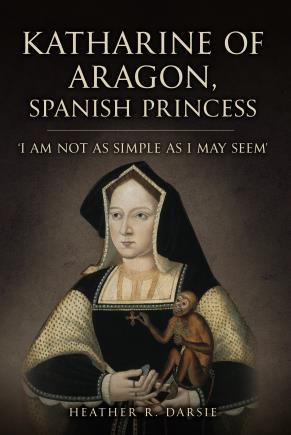
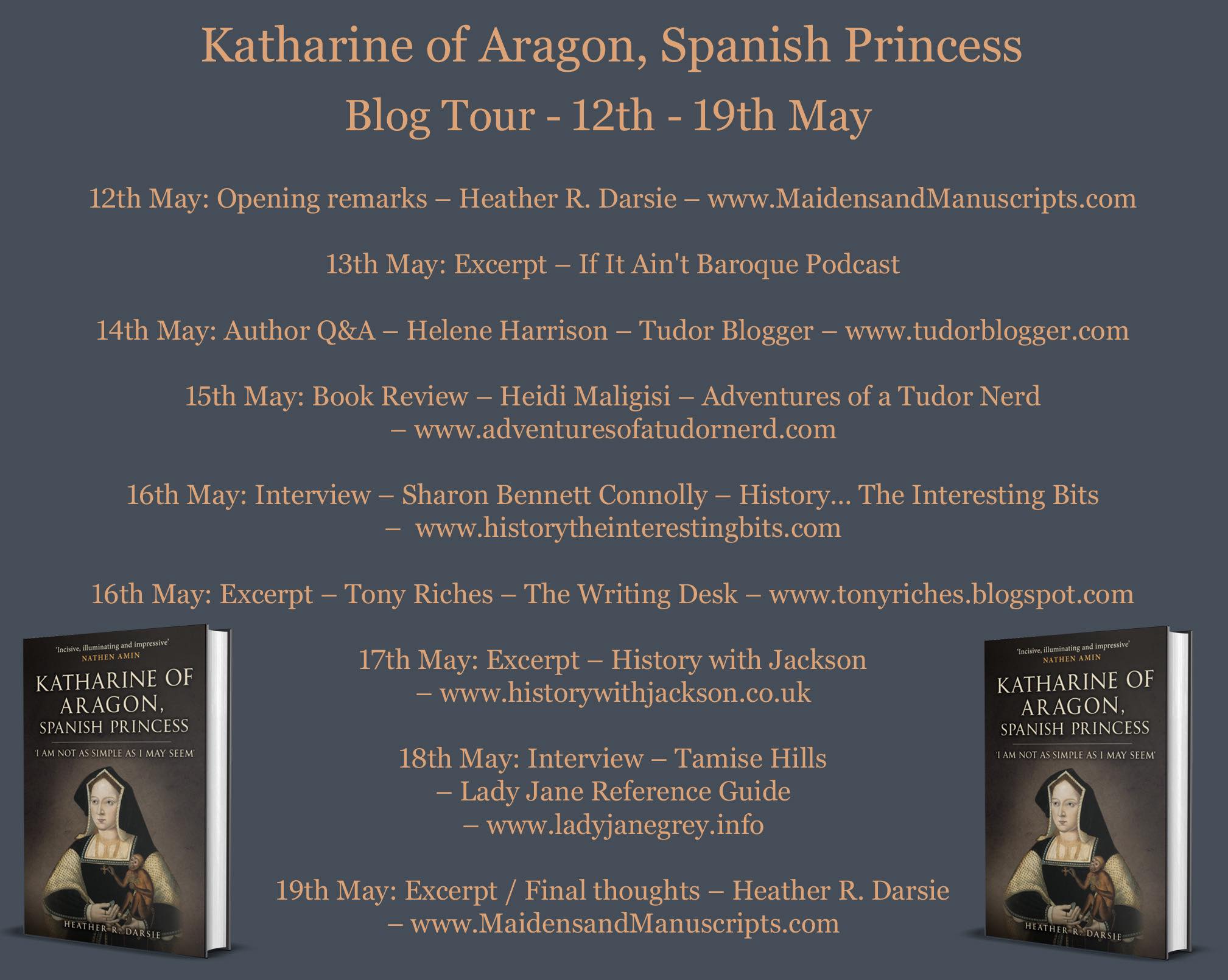
In a special episode of my Wordly Women interview series, Heather R. Darsie drops by on her blog tour celebrating the publication of her new book, Katharine of Aragon, Spanish Princess: ‘I am Not as Simple as I May Seem’. Do have a look at the other stops on the tour to geta taste of this wonderful new biography.

So, Heather, What got you into writing?

Heather: As silly as this sounds, I can’t remember originally. My dad had an electric typewriter that he let me use to write stories beginning when I was probably eight years old. I continued writing stories and poems through high school (14 to 18 years old in the USA), which culminated in a play based off Edgar Allen Poe’s “Annabel Lee” when I was in my final year of high school. My play was called Annalise, wherein the wife was dying of amyotrophic lateral sclerosis of which my paternal grandfather passed away. The husband slowly went mad, to the point where the wife’s had to intervene. The theme of the play was tragedy. My high school put on the play, I was in the local newspaper, and invited to host a workshop at the statewide high school theatre festival.

After graduating from high school, I went to university and majored in German Languages and Literature, then pursued my Juris Doctorate in American Jurisprudence. Along the way, I studied abroad in Costa Rica and France, learning Spanish and French, too. I have had numerous opportunities to travel to France, Spain, Germany, and various countries in Central America, which have all contributed to keeping my language skills sharp.

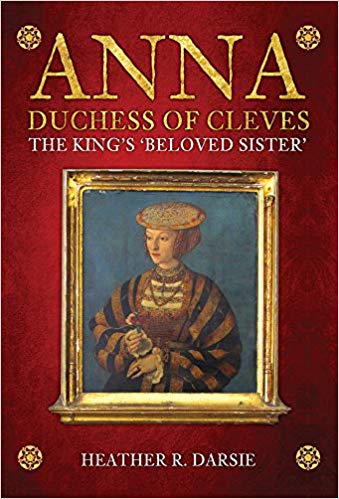
I became heavily interested in Tudor history in around 2010. By early 2015, I grew tired of reading the same-old, same-old about Anna of Cleves, a German woman. I asked Claire Ridgeway of the Anne Boleyn Files if I could contribute a post on Anna to her website, to which Claire kindly agreed. Thereafter encouraged and emboldened, I sent a letter in my very best German to the mayor of the current City of Cleves, and my research took off from there. The combination of a life-long interest in writing, linguistic education, research and analytical skills from my juris doctorate, combined with the history community’s encouragement is how I arrived here, ten years on.

Sharon: Tell us about your books.

Heather: I view myself as a Tudor-adjacent historian. The persons and events I choose to focus on should be recognizable am most interested in the Holy Roman Empire of the German Nation, which began recognizing itself that way in the early 16th century. Specifically, anyone or anything connected to the von der Marks, which is Anna of Cleves’ family (she was “of Cleves” much like Princess Mary Tudor would be “Mary of England” in another country) or the Habsburgs. My first two nonfiction books, Anna, Duchess of Cleves: The King’s Beloved Sister and Children of the House of Cleves: Anna and Her Siblings are effectively German history books. My third nonfiction book, Stuart Spouses: A Compendium of Consorts from James I of Scotland to Queen Anne of Great Britain looks at just that, the husbands and wives of the Scottish-to-English Stuart dynasty. The dynastic intermingling with continental European families is fascinating. I wrote a novella during the pandemic, Diary of a Plague Doctor’s Wife, set during the last outbreak of the Black Death in 1720s Marseille. The parallels to our own experiences 300 years later with Covid-19 were eerie to me at the time of writing.

Sharon: What attracts you to the Catherine of Aragon?

Heather: Like Anna of Cleves, I felt there was more to her than the end of her marriage with Henry VIII. Specifically, I wanted to know more about Katharine’s family dynasty and Katharine’s early time in England, and share that with readers.

Sharon: Who is your favourite Tudor and why?

Heather: For queens, I am drawn to Catherine Parr. She seemed the most savvy when it came to navigating Henry VIII and the dangerous politics of the Tudor court. I am very intrigued by Thomas Cromwell in his position as a lawyer. He was very clever; I hope to write about him someday.

Sharon: Who is your least favourite Tudor and why?

Heather: I do not have a least favorite, but I do think the most tragic was Anne Boleyn, who was foisted by her own petard. I am finding that more and more as I work on my next book, If any Person will Meddle with My Cause: The Judicial Murder of Anne Boleyn.

Sharon: How do you approach researching your topic, especially when most of the sources are Spanish?

Heather: I start with finding articles on JSTOR, then checking the footnotes for sources. From there, I go to Google Play, Archive.org, the Spanish library websites, etc. for old manuscripts. Like many English books, several of the old, out-of-copyright ones are available for free. The Spanish language is not a barrier for me, since I hear or read it most days a week at work.

Sharon: Tell us your ‘favourite’ Catherine of Aragon story you have come across in your research.

Heather: I really enjoyed reading about all of the pageants she viewed during her formal entry into London. It must have been quite the time for her.

Sharon: Tell us your least ‘favourite’ Catherine of Aragon story you have come across in your research.

Heather: Katharine was having a difficult time with Spanish grammar in her letters toward the very late 1520s and early 1530s. This could be indicative of the extreme stress that she was under during that time, or the isolation she was experiencing and being unable to speak Spanish with anyone, or both. I found it tragic and poignant. I don’t believe I remarked on that in my book.

Sharon: Are there any other eras you would like to write about?

Heather: I am interested in doing a little more on the late 16th to early 17th century. Otherwise, I am fairly happy with the time frame that I work in now, but exploring more individuals and courts.

Sharon: What are you working on now?

Heather: I am finishing up the aforementioned book, If any Person will Meddle with My Cause: The Judicial Murder of Anne Boleyn. I am completing an epic as well, which I will self publish likely later this year, that has heavy Greek mythology themes. Our heroes go on a quest to bring back the Olympians and restore justice to the human world. The epic is clocking in at about 3, 600 lines right now. I suppose it makes me a poet along with an author.

Sharon: And finally, what is the best thing about being a writer?

Heather: Sharing knowledge.

About the book:

Katharine of Aragon is more in the public consciousness now due to the TV show ‘Spanish Princess’. Katharine has of course been an interesting historical figure for quite some time because she is the first wife of the infamous Henry VIII. This book provides a new perspective on Katharine because it includes far more background on her Spanish upbringing, Spanish culture, and how that continued to define her in England during her first fifteen years in the country. Additionally, Heather uses rich primary sources, such as ‘The Receyt of Ladie Kateryne’, which have either not been sourced or infrequently referred to in other biographies about Katharine. In this, Heather’s multilingual abilities – especially her fluent Spanish – are put to good use. No one, for example, has considered he rippling impact of terminating Katharine’s marriage on the Trastamara and Habsburg dynasties in Europe. Katherine was as important abroad as she was in England.

Buy Katharine of Aragon, Spanish Princess: ‘I am Not as Simple as I May Seem’

About the author:

Heather R. Darsie, J. D. is an independent researcher specializing in early modern history. She describes herself as a “Tudor-adjacent” historian, focusing on the Holy Roman Empire and England in the early 16th century. She is the author of four nonfiction books: Anna, Duchess of Cleves: The King’s Beloved Sister, Children of the House of Cleves: Anna and Her Siblings, Stuart Spouses: A Compendium of Consorts from James I of Scotland to Queen Anne of Great Britain, and Katharine of Aragon, Spanish Princess: I am not as Simple as I May Seem. She self-published the novella Diary of a Plague Doctor’s Wife. Her primary career is as an attorney. Heather lives in Illinois with her loving husband, wonderful stepchildren, and three raucous parrots.

Where to find Heather:

Website: MaidensAndManuscripts.com; Instagram: @hdarsiehistory; X: @hrdarsiehistory; Threads: hdarsiehistory; Facebook: Heather R. Darsie, Historian; BlueSky: @hrdarsiehistory.bsky.social

*

My books

Signed, dedicated copies of all my books are available through my online store.

Out now: Scotland’s Medieval Queens

Scotland’s history is dramatic, violent and bloody. Being England’s northern neighbour has never been easy. Scotland’s queens have had to deal with war, murder, imprisonment, political rivalries and open betrayal. They have loved and lost, raised kings and queens, ruled and died for Scotland. From St Margaret, who became one of the patron saints of Scotland, to Elizabeth de Burgh and the dramatic story of the Scottish Wars of Independence, to the love story and tragedy of Joan Beaufort, to Margaret of Denmark and the dawn of the Renaissance, Scotland’s Medieval Queens have seen it all. This is the story of Scotland through their eyes.

Scotland’s Medieval Queens gives a thorough grounding in the history of the women who ruled Scotland at the side of its kings, often in the shadows, but just as interesting in their lives beyond the spotlight. It’s not a subject that has been widely covered, and Sharon is a pioneer in bringing that information into accessible history.’ Elizabeth Chadwick (New York Times bestselling author)

Available now from Amazon and Pen and Sword Books

Also by Sharon Bennett Connolly:

Heroines of the Tudor World tells the stories of the most remarkable women from European history in the time of the Tudor dynasty, 1485-1603. These are the women who ruled, the women who founded dynasties, the women who fought for religious freedom, their families and love. Heroines of the Tudor World is now available from Amberley Publishing and Amazon UK. Women of the Anarchy demonstrates how Empress Matilda and Matilda of Boulogne, unable to wield a sword themselves, were prime movers in this time of conflict and lawlessness. It shows how their strengths, weaknesses, and personal ambitions swung the fortunes of war one way – and then the other. Available from Bookshop.orgAmberley Publishing and Amazon UKKing John’s Right-Hand Lady: The Story of Nicholaa de la Haye is the story of a truly remarkable lady, the hereditary constable of Lincoln Castle and the first woman in England to be appointed sheriff in her own right. Available from all good bookshops Pen & Sword Booksbookshop.org and Amazon

Defenders of the Norman Crown: The Rise and Fall of the Warenne Earls of Surrey tells the fascinating story of the Warenne dynasty, from its origins in Normandy, through the Conquest, Magna Carta, the wars and marriages that led to its ultimate demise in the reign of Edward III. Available from Pen & Sword BooksAmazon in the UK and US, and Bookshop.orgLadies of Magna Carta: Women of Influence in Thirteenth Century England looks into the relationships of the various noble families of the 13th century, and how they were affected by the Barons’ Wars, Magna Carta and its aftermath; the bonds that were formed and those that were broken. It is now available in paperback and hardback from Pen & SwordAmazon, and Bookshop.orgHeroines of the Medieval World tells the stories of some of the most remarkable women from Medieval history, from Eleanor of Aquitaine to Julian of Norwich. Available now from Amberley Publishing and Amazon, and Bookshop.orgSilk and the Sword: The Women of the Norman Conquest traces the fortunes of the women who had a significant role to play in the momentous events of 1066. Available now from Amazon,  Amberley Publishing, and Bookshop.org.

Alternate Endings: An anthology of historical fiction short stories including Long Live the King… which is my take what might have happened had King John not died in October 1216. Available in paperback and kindle from Amazon.

Podcast:

Have a listen to the A Slice of Medieval podcast, which I co-host with Historical fiction novelist Derek Birks. Derek and I welcome guests, such as Bernard Cornwell and Michael Jecks, and discuss a wide range of topics in medieval history, from significant events to the personalities involved. Every episode is also now available on YouTube.

*

Don’t forget! Signed and dedicated copies of all my books are available through my online store.

For forthcoming online and in-person talks, please check out my Events Page.

You can be the first to read new articles by clicking the ‘Follow’ button, liking our Facebook page or joining me on TwitterThreadsBluesky and Instagram.

*

©2025 Sharon Bennett Connolly, FRHistS and Heather R. Darsie

Wordly Women: Catherine Hanley

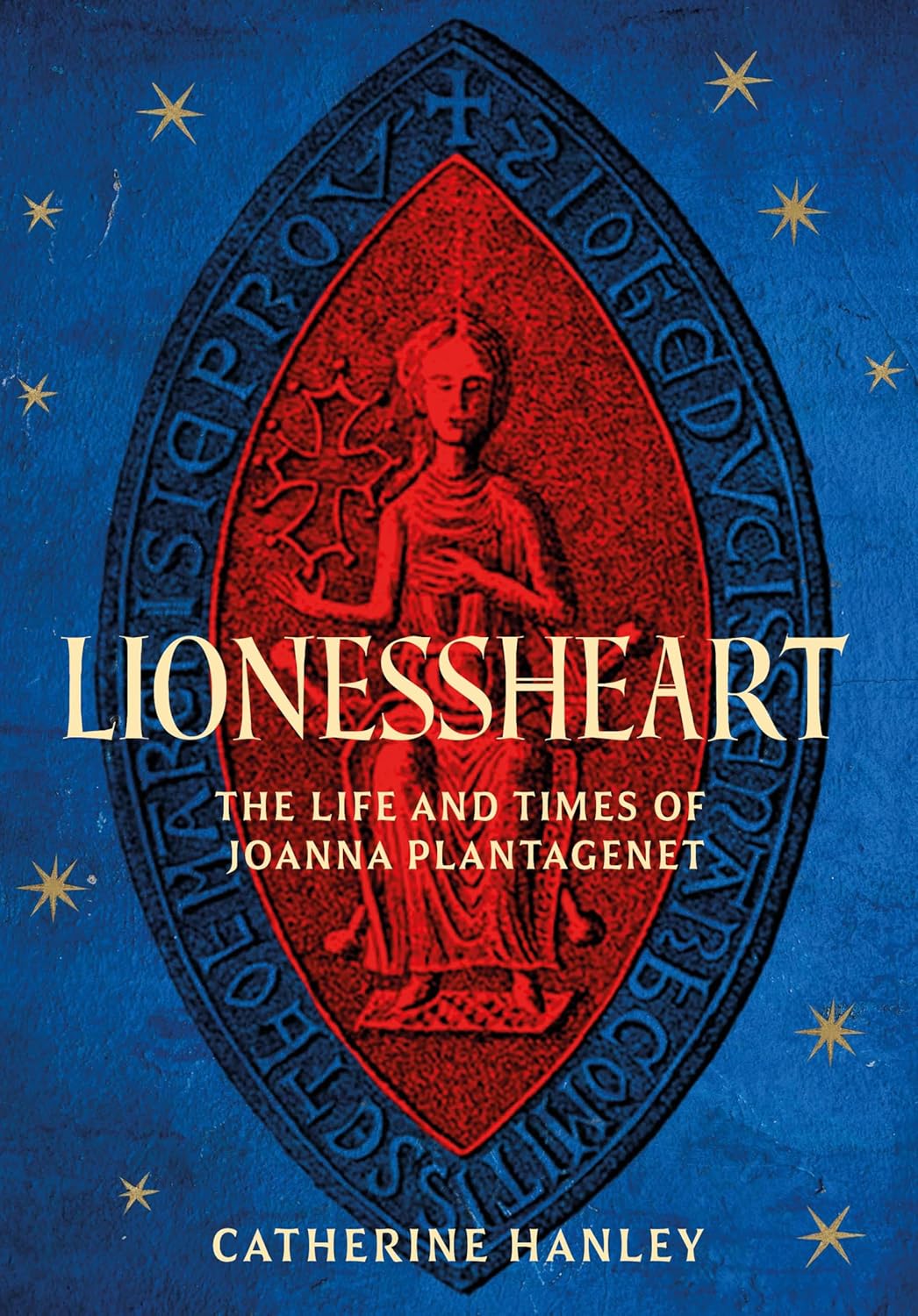
I am very happy today to welcome historian Catherine Hanley to History…the Interesting Bits in a new instalment of my Author Spotlight series, Wordly Women. Catherine is the author of Matilda, 1217 and her latest book, Lionessheart, about Joanna, the sister of Richard the Lionheart. Catherine also writes a historical fiction A Medieval Mystery series under the name C.B. Hanley, following the adventures of Edwin Weaver, bailiff of Conisbrough Castle and its lord, William de Warenne, 5th Earl of Warenne and Surrey. It is a fabulous series that I can highly recommend!

Sharon: So, Catherine, what got you into writing?

Catherine: Oddly, that question is kind of the wrong way round for me. When I did my PhD I was reading and writing all day every day for years; after it was finished and I got a full-time job that didn’t involve writing, I missed it so much that I just had to take it up on top of work. As the cliché goes, I write because I simply can’t *not* write. Eventually, over the years, it came to replace the day job rather than being an add-on.

Sharon: You write both fiction and non-fiction – is one harder than the other?

Catherine: On a day when I’m writing fiction, I’d say non-fiction was easier, and vice versa …

Sharon: Tell us about your books.

Catherine: My non-fiction mainly explores different facets of war and politics in the twelfth and thirteenth centuries – sometimes via biographies of individuals, and sometimes in the form of more wide-ranging surveys.

My fiction is a series of murder mysteries set during the early thirteenth century, during and just after the French invasion that followed the Magna Carta wars. My main characters are fictional, but the stories are set against a factual backdrop, with some real people in the background. It all started because, during some academic research, I discovered that a certain high-profile individual had changed sides twice during that war, but nobody knew why. So I decided to make up a (plausible!) story about why this had happened, and then once I’d started I just kept going.

Sharon: What attracts you to the 13th century?

Catherine: It is the best century, and I will be taking no further questions and entering into no arguments on this subject. (Sharon: no argument from me! I totally agree with this analysis!)

Sharon: Who is your favourite 13th century personality and why?

Catherine: OK, so this is very niche, but it’s Philip of Dreux, a member of a cadet branch of the Capetian royal house, who was the bishop of Beauvais in France. He was a younger son, so he’d been ‘donated’ to the Church by his family early in life. Unfortunately for him this had been done purely on the basis of birth order rather than aptitude or inclination, and he was one of the most bellicose men you could imagine. He fought in the Third Crusade, during which he travelled to Cyprus to tell Richard the Lionheart to his face that he should stop ‘arrogantly persecuting innocent Christians when close by there were still so many thousands of Saracens whom he should be attacking’, which went down about as well as you might expect. He was still going decades later, and fought in battle of Bouvines when aged in his sixties; there he battered the much younger earl of Salisbury to the ground with a mace ‘that he happened to have in his hand’, which is one of the best primary-source lines you’ll ever read.

If I ever decide to write a new series of novels when my current one is finished, the bishop of Beauvais and his mace are going to have starring roles …

Sharon: Who is your least favourite 13th century personality and why?

Catherine: It’s unfortunate for the purposes of this question that Richard the Lionheart died in 1199, thus making him a personality of the twelfth century, so I can’t nominate him! I also think that William Marshal has been vastly overrated.

Sharon: How do you approach researching your topic?

Catherine: I read A LOT, making sure that I’m consulting a wide range of primary sources rather than merely relying on what other people have said in secondary sources.

Sharon: Tell us your ‘favourite’ medieval story you have come across in your research.

Catherine: Basically the entire career of Philip Augustus of France, but I can’t give you too many spoilers on that just now …

Sharon: Tell us your least ‘favourite’ medieval story you have come across in your research.

Catherine: It’s always difficult reading about the many atrocities that took place in the past. One that got to me quite recently was the sad tale of Owain ap Dafydd, the son of Welsh prince Dafydd ap Gruffudd. Dafydd was captured by Edward I and then hanged, drawn and quartered, and his two sons were sentenced to harsh imprisonment. The elder of them died not long afterwards, but Owain, who was 7 when he was incarcerated, lived on for more than 40 years. He was kept in solitary confinement (and, as an adult, actually in a cage), and this stunted his mental as well as his physical development. A sad letter was later sent on his behalf asking if he could please have more adequate food and clothing, and whether he might be allowed out of his cell occasionally ‘to play’. He was at that point 37.

Sharon: Are there any other eras you would like to write about?

Catherine: Not really. There’s still so much to be discovered and said about the twelfth and thirteenth centuries that I can happily spend the rest of my career there, although I do venture occasionally into the fourteenth. The thought of writing about anything post-medieval gives me a nosebleed.

Sharon: What are you working on now?

Catherine: *Takes a deep breath* As ever, I have several projects on the go, all at different stages. In non-fiction, I’m at page-proof stage for Nemesis: Medieval England’s Greatest Enemy (about the French king Philip Augustus), for publication in September 2025; almost at manuscript delivery stage for Women in Medieval Families (for 2026 publication) and in the early stages of a whopping volume called The English at War in the Middle Ages for 2027.

In fiction, A Pale Horse, number 9 in my series of medieval mysteries, is due out in June 2025, and I’m having some initial thoughts about book 10.

That’s probably enough to be getting on with!

Sharon: And finally, what is the best thing about being a writer?

Catherine: Being able to sit in a roomful of books by myself all day and lose myself in the Middle Ages. It’s such a privilege that I can still hardly believe it’s happening.

About the Author:

Dr Catherine Hanley holds a PhD in Medieval Studies and is a Fellow of the Royal Historical Society. After producing several scholarly publications she decided to write something more interesting, and she now splits her time between writing popular history and historical fiction.

Catherine: I have no social media (anyone who wants to contact me may do so by writing in ink on parchment and then sending it via a messenger on a fast horse).

Bookshop link: https://uk.bookshop.org/shop/catherinehanley

*

My books

Signed, dedicated copies of all my books are available through my online store.

Out now: Scotland’s Medieval Queens

Scotland’s history is dramatic, violent and bloody. Being England’s northern neighbour has never been easy. Scotland’s queens have had to deal with war, murder, imprisonment, political rivalries and open betrayal. They have loved and lost, raised kings and queens, ruled and died for Scotland. From St Margaret, who became one of the patron saints of Scotland, to Elizabeth de Burgh and the dramatic story of the Scottish Wars of Independence, to the love story and tragedy of Joan Beaufort, to Margaret of Denmark and the dawn of the Renaissance, Scotland’s Medieval Queens have seen it all. This is the story of Scotland through their eyes.

Scotland’s Medieval Queens gives a thorough grounding in the history of the women who ruled Scotland at the side of its kings, often in the shadows, but just as interesting in their lives beyond the spotlight. It’s not a subject that has been widely covered, and Sharon is a pioneer in bringing that information into accessible history.’ Elizabeth Chadwick (New York Times bestselling author)

Available now from Amazon and Pen and Sword Books

Also by Sharon Bennett Connolly:

Heroines of the Tudor World tells the stories of the most remarkable women from European history in the time of the Tudor dynasty, 1485-1603. These are the women who ruled, the women who founded dynasties, the women who fought for religious freedom, their families and love. Heroines of the Tudor World is now available for pre-order from Amberley Publishing and Amazon UK. Women of the Anarchy demonstrates how Empress Matilda and Matilda of Boulogne, unable to wield a sword themselves, were prime movers in this time of conflict and lawlessness. It shows how their strengths, weaknesses, and personal ambitions swung the fortunes of war one way – and then the other. Available from Bookshop.orgAmberley Publishing and Amazon UKKing John’s Right-Hand Lady: The Story of Nicholaa de la Haye is the story of a truly remarkable lady, the hereditary constable of Lincoln Castle and the first woman in England to be appointed sheriff in her own right. Available from all good bookshops Pen & Sword Booksbookshop.org and Amazon

Defenders of the Norman Crown: The Rise and Fall of the Warenne Earls of Surrey tells the fascinating story of the Warenne dynasty, from its origins in Normandy, through the Conquest, Magna Carta, the wars and marriages that led to its ultimate demise in the reign of Edward III. Available from Pen & Sword BooksAmazon in the UK and US, and Bookshop.orgLadies of Magna Carta: Women of Influence in Thirteenth Century England looks into the relationships of the various noble families of the 13th century, and how they were affected by the Barons’ Wars, Magna Carta and its aftermath; the bonds that were formed and those that were broken. It is now available in paperback and hardback from Pen & SwordAmazon, and Bookshop.orgHeroines of the Medieval World tells the stories of some of the most remarkable women from Medieval history, from Eleanor of Aquitaine to Julian of Norwich. Available now from Amberley Publishing and Amazon, and Bookshop.orgSilk and the Sword: The Women of the Norman Conquest traces the fortunes of the women who had a significant role to play in the momentous events of 1066. Available now from Amazon,  Amberley Publishing, and Bookshop.org.

Alternate Endings: An anthology of historical fiction short stories including Long Live the King… which is my take what might have happened had King John not died in October 1216. Available in paperback and kindle from Amazon.

Podcast:

Have a listen to the A Slice of Medieval podcast, which I co-host with Historical fiction novelist Derek Birks. Derek and I welcome guests, such as Bernard Cornwell and Michael Jecks, and discuss a wide range of topics in medieval history, from significant events to the personalities involved. Every episode is also now available on YouTube.

And we will be chatting with Catherine Hanley about Joanna Plantagenet, Lionessheart, in a couple of months!

*

Don’t forget! Signed and dedicated copies of all my books are available through my online store.

For forthcoming online and in-person talks, please check out my Events Page.

You can be the first to read new articles by clicking the ‘Follow’ button, liking our Facebook page or joining me on TwitterThreadsBluesky and Instagram.

*

©2025 Sharon Bennett Connolly, FRHistS and Dr Catherine Hanley, FRHistS

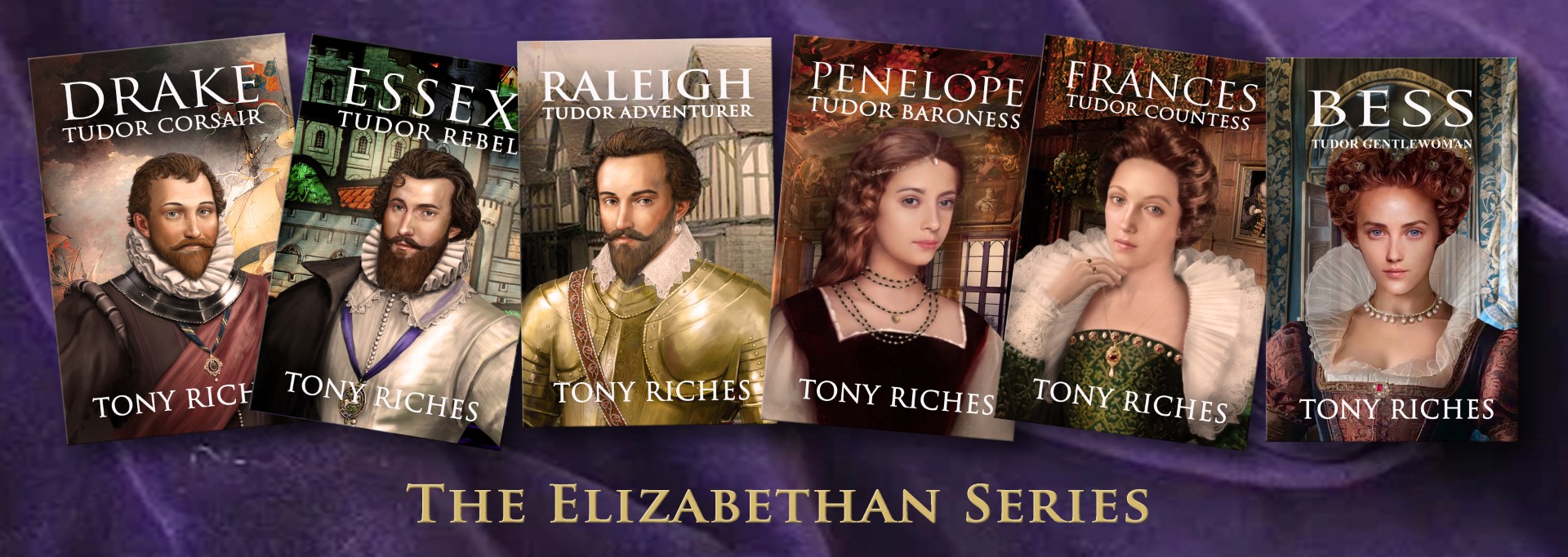
Book Corner: Bess – Tudor Gentlewoman by Tony Riches

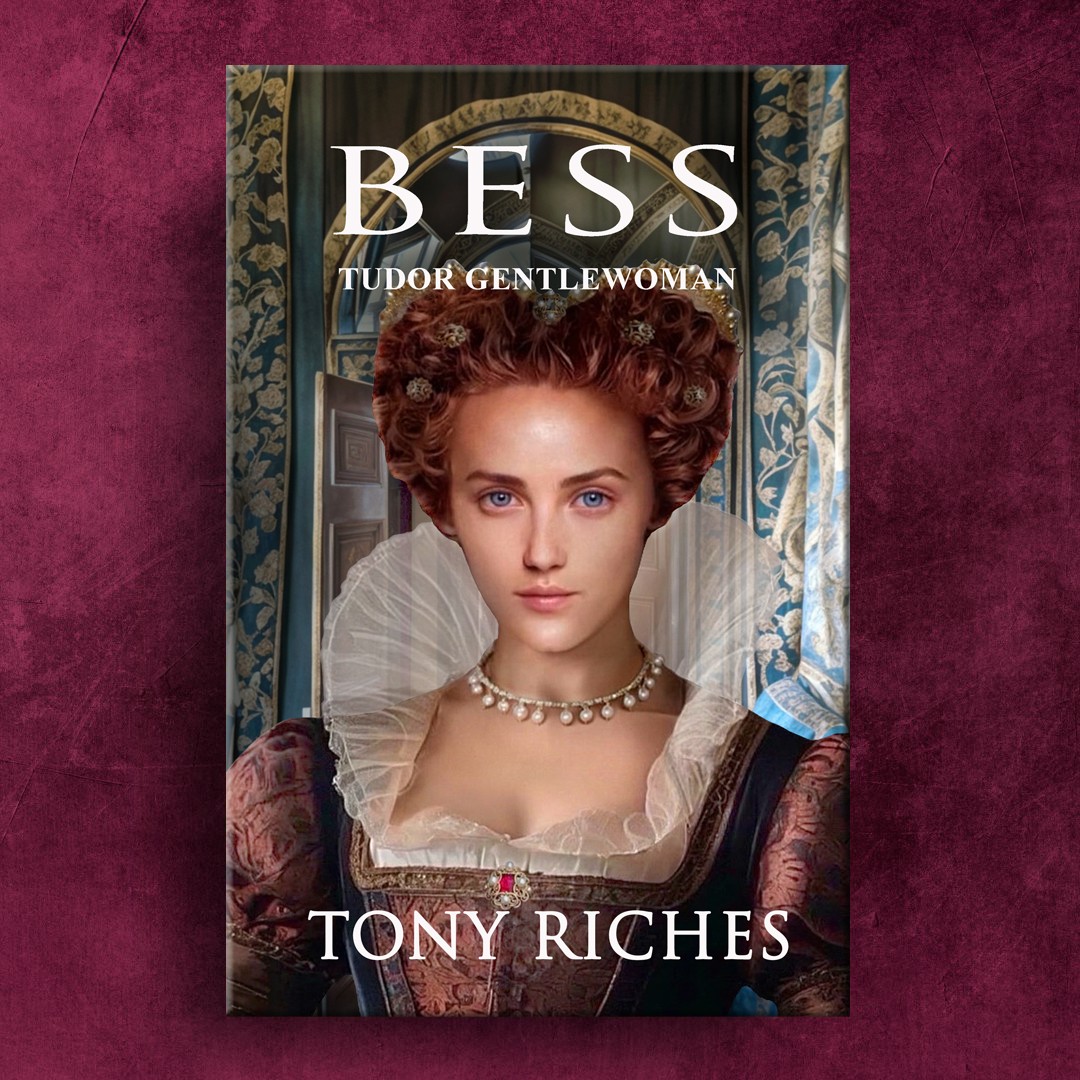
Today, it is an absolute pleasure to welcome Tony Riches back to History … the Interesting Bits for a little chat about his latest book, Bess: Tudor Gentlewoman, the sixth and final book in his magnificent, and enthralling, Elizabeth series.

Sharon: So, Tony, what made you pick Bess Throckmorton as the subject of your sixth and final book in your Tudor series?

Tony: The idea behind the Elizabethan series was to see the enigmatic Queen Elizabeth through the eyes of three of her favourite men and three of her ladies. Each had a very different relationship with the queen, as Drake was in awe of ‘Gloriana’, Essex was like the son she never had and Raleigh was the captain of her guard. I had plenty of ladies to choose from, and was intrigued by Essex’s sister Penelope Devereux (who he blamed for encouraging his ‘rebellion’). His wife, Frances, seemed an unlikely choice, but as I looked into her life as the daughter of the queen’s spymaster, Sir Francis Walsingham, I found she was closely involved with the key events of the Elizabethan era.

Bess’ story allowed me to complete the story of Walter Raleigh (which ended with the death of Queen Elizabeth), and I was intrigued at how she remained so loyal to Walter, even living in his cell at the Tower of London to keep him company. As my research continued, I found she lived until the age of eighty two – well past the end of the Tudors and into the Stuart era, making her one of the last true Elizabethans.

Sharon: Who has been your favourite Tudor to write about?

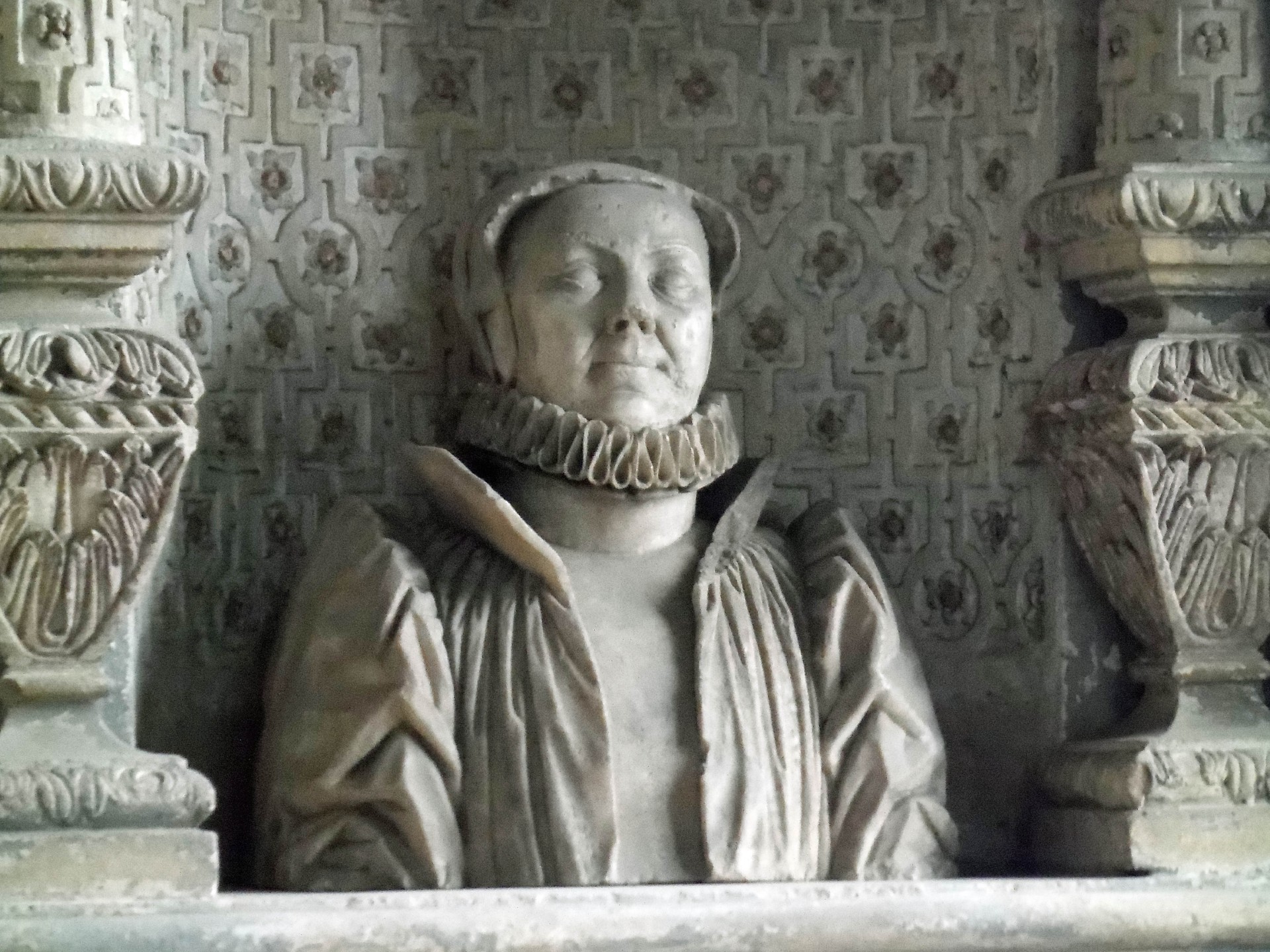
Tomb of Katherine Willoughby

Tony: I would have to say Bess Raleigh, as she was a remarkable woman, (and I’ve been living with her every day for the past eighteen months), but if time travel is perfected I would love to visit Katherine Willoughby, as she knew every one of the wives and children of King Henry VIII, and must have a lot of secrets! I visited Katherine’s home at Grimsthorpe Castle during my research, and felt a real connection with her at her tomb in Spilsby parish church.

Sharon: Are there any Tudors you would still like to write about?

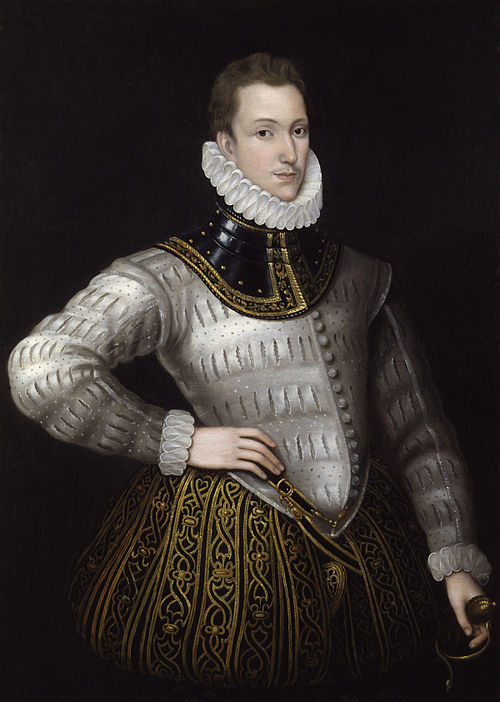
Sir Philip Sidney (Wikimedia Commons)

Tony: The ‘one who got away’ is Sir Philip Sidney, the fascinating and brilliant warrior poet. He features in three of my books, as he was the Earl of Essex’s mentor, Lady Penelope Devereux’s lover and Frances Walsingham’s first husband.

Sharon: Who is your favourite Tudor?

Tony: I never tire of reading about Queen Elizabeth I, who appears in seven of my books. Every time I think I understand her, I discover something new that makes me think again.

Sharon: And who is your least favourite Tudor?

Tony: The villain of the piece, Sir Richard Rich, who oversaw the trials of Catholic martyrs Thomas More and Bishop John Fisher, as well as the Protestant martyr Anne Askew. Richard Rich can never be forgiven for what he did to poor Anne Askew, who never betrayed Katherine Willoughby – even when tortured on the rack and burned at the stake.

Sharon: What’s next?

Tony: I am now researching the life of the first Stuart queen, Anna of Denmark, who I introduce in my last book, when she visits Bess and Walter at the Tower of London to speak with Walter about his herbal potions. Although I covered the English Civil War in my history lessons, the Stuart queens had only a brief mention, so I would like to help restore them to the place in history they deserve by bringing their stories to life.

About the book:

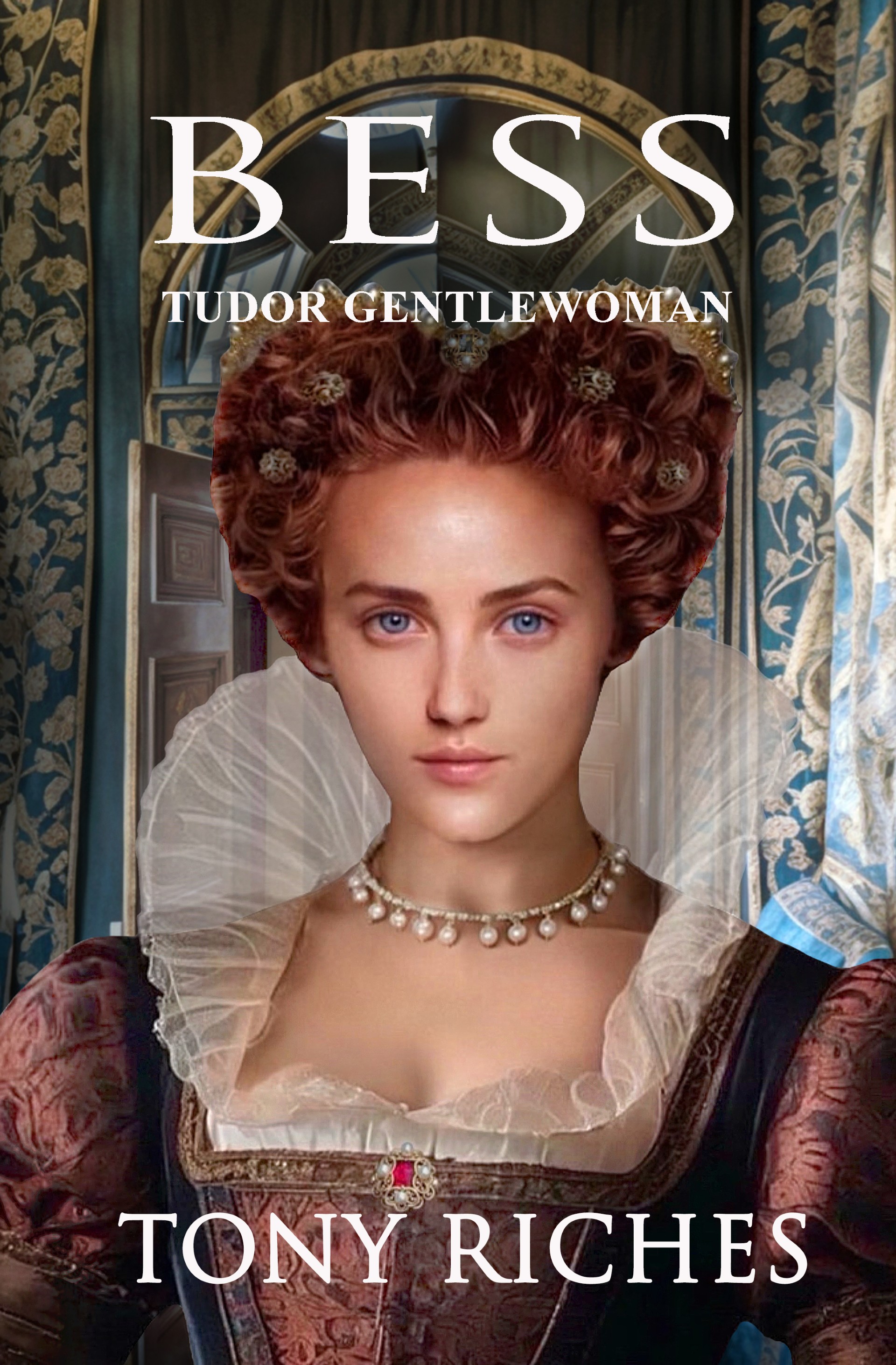
Bess: Tudor Gentlewoman

“A thrilling portrait of a remarkable woman who witnessed the key events of Elizabethan England.”

Bess Throckmorton defies her notorious background and lack of education to become Queen Elizabeth’s Gentlewoman and trusted confidante.

Forced to choose between loyalty and love, duty and desire, will she risk her queen’s anger by marrying adventurer Sir Walter Raleigh without permission?

Entangled in a web of intrigue, from the glittering Palace of Whitehall to the cells of the Tower of London, Bess endures tragedy and injustice, becoming a resilient, determined woman, who takes nothing for granted.

Can she outwit her enemies, protect her family, and claim her destiny in a world where women are pawns and survival is a game of deadly consequences?

This is the true story of the last of the Elizabethans, which ends the story of the Tudor dynasty – and introduces their successors, the Stuarts.

Buy the book

About the author:

Tony Riches is a full-time UK author of Tudor historical fiction. He lives with his wife in Pembrokeshire, West Wales and is a specialist in the lives of the early Tudors. As well as his Elizabethan series, Tony’s historical fiction novels include the best-selling Tudor trilogy and his Brandon trilogy, (about Charles Brandon and his wives). For more information about Tony’s books please visit his website tonyriches.com and his blog, The Writing Desk and find him on Facebook, Instagram, Bluesky and Twitter @tonyriches.

Links:

Website: Facebook: Twitter: Bluesky: Instagram: Amazon Author Page: Goodreads: LinkedIn.

*

My books

Signed, dedicated copies of all my books are available through my online store.

Out now: Scotland’s Medieval Queens

Scotland’s history is dramatic, violent and bloody. Being England’s northern neighbour has never been easy. Scotland’s queens have had to deal with war, murder, imprisonment, political rivalries and open betrayal. They have loved and lost, raised kings and queens, ruled and died for Scotland. From St Margaret, who became one of the patron saints of Scotland, to Elizabeth de Burgh and the dramatic story of the Scottish Wars of Independence, to the love story and tragedy of Joan Beaufort, to Margaret of Denmark and the dawn of the Renaissance, Scotland’s Medieval Queens have seen it all. This is the story of Scotland through their eyes.

Scotland’s Medieval Queens gives a thorough grounding in the history of the women who ruled Scotland at the side of its kings, often in the shadows, but just as interesting in their lives beyond the spotlight. It’s not a subject that has been widely covered, and Sharon is a pioneer in bringing that information into accessible history.’ Elizabeth Chadwick (New York Times bestselling author)

Available now from Amazon and Pen and Sword Books

Also by Sharon Bennett Connolly:

Heroines of the Tudor World tells the stories of the most remarkable women from European history in the time of the Tudor dynasty, 1485-1603. These are the women who ruled, the women who founded dynasties, the women who fought for religious freedom, their families and love. Heroines of the Tudor World is now available for pre-order from Amberley Publishing and Amazon UK. Women of the Anarchy demonstrates how Empress Matilda and Matilda of Boulogne, unable to wield a sword themselves, were prime movers in this time of conflict and lawlessness. It shows how their strengths, weaknesses, and personal ambitions swung the fortunes of war one way – and then the other. Available from Bookshop.orgAmberley Publishing and Amazon UKKing John’s Right-Hand Lady: The Story of Nicholaa de la Haye is the story of a truly remarkable lady, the hereditary constable of Lincoln Castle and the first woman in England to be appointed sheriff in her own right. Available from all good bookshops Pen & Sword Booksbookshop.org and Amazon

Defenders of the Norman Crown: The Rise and Fall of the Warenne Earls of Surrey tells the fascinating story of the Warenne dynasty, from its origins in Normandy, through the Conquest, Magna Carta, the wars and marriages that led to its ultimate demise in the reign of Edward III. Available from Pen & Sword BooksAmazon in the UK and US, and Bookshop.orgLadies of Magna Carta: Women of Influence in Thirteenth Century England looks into the relationships of the various noble families of the 13th century, and how they were affected by the Barons’ Wars, Magna Carta and its aftermath; the bonds that were formed and those that were broken. It is now available in paperback and hardback from Pen & SwordAmazon, and Bookshop.orgHeroines of the Medieval World tells the stories of some of the most remarkable women from Medieval history, from Eleanor of Aquitaine to Julian of Norwich. Available now from Amberley Publishing and Amazon, and Bookshop.orgSilk and the Sword: The Women of the Norman Conquest traces the fortunes of the women who had a significant role to play in the momentous events of 1066. Available now from Amazon,  Amberley Publishing, and Bookshop.org.

Alternate Endings: An anthology of historical fiction short stories including Long Live the King… which is my take what might have happened had King John not died in October 1216. Available in paperback and kindle from Amazon.

Podcast:

Have a listen to the A Slice of Medieval podcast, which I co-host with Historical fiction novelist Derek Birks. Derek and I welcome guests, such as Bernard Cornwell and Michael Jecks, and discuss a wide range of topics in medieval history, from significant events to the personalities involved. Every episode is also now available on YouTube.

*

Don’t forget! Signed and dedicated copies of all my books are available through my online store.

For forthcoming online and in-person talks, please check out my Events Page.

You can be the first to read new articles by clicking the ‘Follow’ button, liking our Facebook page or joining me on TwitterThreadsBluesky and Instagram.

*

©2025 Sharon Bennett Connolly, FRHistS and Tony Riches

Queen of Scots

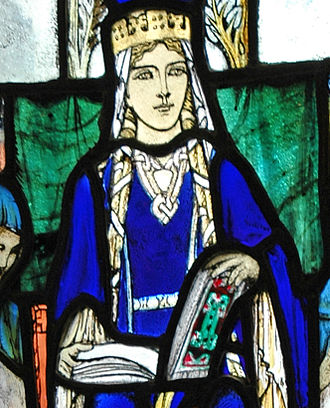
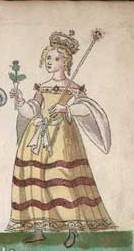
St Margaret, Queen of Scots

The Queens of Scots of the medieval era are a fascinating variety of women and I can only hope that I have done them justice in my latest book, Scotland’s Medieval Queens: From St Margaret to Margaret of Denmark.

Scottish history is fascinating! It is violent, politically charged and passionate. Being inconveniently situated on England’s northern border was never easy for Scotland, but it has made for some great stories over the centuries. Scotland’s story is often that of brother against brother, ambition and family rivalries causing feuds that threatened the stability of the crown itself. Such fissures, of course, grew and ruptured with the aid of English interference and encouragement. The King of England was always happy to play one side off against the other if it weakened Scotland’s position.

And Scotland’s medieval queens, be they Scottish, English, Danish or French, formed a big part of that story.

More often than not, these disputes north and south of the border were resolved in peace treaties, sealed by wedding bells. A number of English princesses and noblewomen found themselves married to Scotland’s kings as a consequence.

Queen Elizabeth de Burgh

For over 400 years, Shakespeare’s version of Lady Macbeth has been the woman most people are familiar with. In the bard’s famous drama, also known as ‘The Scottish Play’, Lady Macbeth is not even given her name. Presented as a scheming, manipulative woman, Shakespeare did as good a hatchet job on Gruoch, a royal princess in her own right, as he had on Richard III. Unfortunately, there is no society established to repair Gruoch’s reputation.

The scheming, ambitious woman who will stop at nothing to put her husband on the Scottish throne – and commit murder to keep him there. But is that the real Lady Macbeth? The story of Queen Gruoch, Lady Macbeth, is one shrouded in mystery, tantalisingly obscure. If only we could know more. The lack of information on Gruoch makes it easy for Shakespeare’s interpretation to be accepted as fact, but it is more than likely an injustice to a woman who survived her first husband’s gruesome death, protected her son and came to an agreement with Macbeth to become his wife, securing her son’s future in the process, and later becoming queen as a consequence.

Queen Gruoch is the first queen of Scots for whom we have a name.

From the highly educated and pious Margaret of Wessex to the glamorous Margaret of Denmark, their lives and experiences tell the story of their nation. Some, such as Matilda de Senlis and Ermengarde de Beaumont, barely make an impression on history, though merely by producing a son, they each guaranteed that Scotland would persevere. And Isabella de Warenne, wife of John Balliol, who is a ghost on the pages of Scotland’s history. And it is not that these made no impression. Their influence was in the domestic sphere, raising children and supporting their husbands, rather than on the political or the international stage. Although Isabella’s story is even more obscure by the fact all mention of the Balliol dynasty was forbidden by the Bruce regime.

Marrying an English princess, for example, did not always guarantee the peace with England that was intended. As the wife of Alexander II, Joan of England did her best to maintain cordial relations with her brother Henry III, often using private letters to broker diplomatic solutions. And Henry III’s own daughter Margaret, in marrying Alexander III, brought Scotland more years of peace with England. As a consequence, Scotland and England enjoyed over 70 years of peaceful relations. These years were shattered dramatically by the deaths of Alexander III, his three children and his little granddaughter, Margaret, the Maid of Norway. Little Margaret’s death left the Scots throne vacant, with thirteen Competitors vying for the crown, staking their claims as Edward I of England acted as adjudicator.

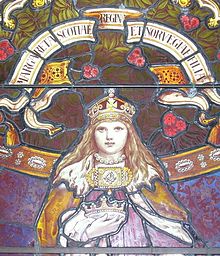
Margaret, Maid of Norway

Edward I took advantage of this to try to assert his overlordship of Scotland, but William Wallace, Robert the Bruce and countless others pushed back, ushering in decades of war with England, the Scottish Wars of Independence.

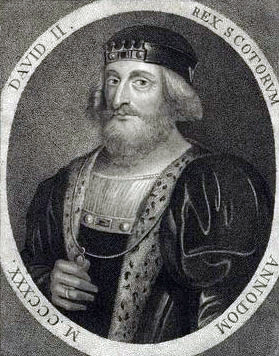
Edward III’s sister Joan of the Tower was to have no such legacy of peace as the earlier Joan and Queen Margaret could boast. Her brother’s ambition would blight her marriage for years. Edward leant his support to the rival claimant to the Scottish throne, Edward Balliol. If he had not been so keen to exploit Scotland’s dynastic divisions, maybe Joan and David II would have had a happier marriage. We will never know.

One cannot help but feel sympathy for Elizabeth de Burgh, seeing her fortunes rise and fall at the whim of England’s king, Edward I, held captive for eight years when she should have been sitting in splendour on Scotland’s throne.

Or poor Marjorie Bruce, whose childhood was torn from her by that same English king, held far away from everyone she loved, only to be married as she tasted freedom, and dead in childbirth by the age of 19. Passed over for the throne because she was a woman, she still managed to give birth to a dynasty, the Stewarts.

Joan Beaufort, Queen of Scots

Scotland was the first nation in the British Isles to accept a queen regnant when Margaret, Maid of Norway, was recognised as its queen in 1290. How her queenship would have developed, we have no way of knowing. The poor girl died before she even landed in mainland Scotland. Her significance is in that she was proclaimed queen and the possibilities that heralded, even if it got no further. We can only speculate as to how a successful rule by a queen regnant in the thirteenth century may have changed the lives and experiences of women in subsequent centuries. Her death was a tragedy, not just to her family, but to women’s rights to rule.

But then again, as her father-in-law, it may well be that Edward I would have taken Scotland under his wing … and never let go.

Although we have charters and chronicles, and evidence of religious and charitable donations, most of these women remain elusive. They are enigmas.

We do not – and cannot – know them intimately as the one thing that is missing is their own voice. Their thoughts and personalities are lost to us. Even letters to family members are often formulaic and rarely speak of their true feelings, of their happiness – or not – and their cares and concerns for themselves. We know what they endured for the sake of Scotland, the risk of death in childbirth, the grief of lost children, or the grief of no children. Every woman in medieval Europe was exposed to similar experiences. Scottish queens, however, had to endure imprisonment, scheming noblemen and the early deaths of their husbands more times than they should have had to.

Anabella Drummond, Queen of Scots

But, once in a while, we come across a marriage that is a true partnership. A love story, even. And we discover moments of affection, of amusement, of unity and mutual support. Little moments that remind us that these people are not just stories. They are lives that were lived to the full, however short or long a time they had.

Scotland’s story is often violent and suffered greatly from the machinations if its powerful southern neighbour. However, Scotland did emerge from the Middle Ages as, still, an independent, sovereign nation. And Scotland’s medieval queens had each made their own contribution to the country’s continuing survival and independence. From Saint Margaret – even from Gruoch – to Margaret of Denmark, each queen, to varying degrees of success, made their own indelible imprint on Scotland’s remarkable story.

Images:

Courtesy of Wikipedia

Selected Bibliography:

John of Fordun’s Chronicle of the Scottish Nation; Walter Bower, Scotichronicon; Andrew Wyntoun, The orygynale cronykil of Scotland; Calendar of documents relating to Scotland preserved in Her Majesty’s Public Record Office; Richard Oram, editor, The Kings and Queens of Scotland; Rosalind K. Marshall, Scottish Queens 1034–1714; Nigel Tranter, The Story of Scotland; David Ross Scotland, History of a Nation; Liber pluscardensis, edited by Felix James Henry Skene; Mediaeval chronicles of Scotland: the chronicles of Melrose and Holyrood, translated by Joseph Stephenson; The Chronicle of Lanercost, edited by Sir Herbert Maxwell; The Ecclesiastical History of England and Normandy by Ordericus Vitalis; The historie and cronicles of Scotland … by Robert Lindesay of Pitscottie, 3 volumes, A.J.G. Mackay, editor.

*

My books

Signed, dedicated copies of all my books are available through my online store.

Out now: Scotland’s Medieval Queens

Scotland’s history is dramatic, violent and bloody. Being England’s northern neighbour has never been easy. Scotland’s queens have had to deal with war, murder, imprisonment, political rivalries and open betrayal. They have loved and lost, raised kings and queens, ruled and died for Scotland. From St Margaret, who became one of the patron saints of Scotland, to Elizabeth de Burgh and the dramatic story of the Scottish Wars of Independence, to the love story and tragedy of Joan Beaufort, to Margaret of Denmark and the dawn of the Renaissance, Scotland’s Medieval Queens have seen it all. This is the story of Scotland through their eyes.

Scotland’s Medieval Queens gives a thorough grounding in the history of the women who ruled Scotland at the side of its kings, often in the shadows, but just as interesting in their lives beyond the spotlight. It’s not a subject that has been widely covered, and Sharon is a pioneer in bringing that information into accessible history.’ Elizabeth Chadwick (New York Times bestselling author)

Available now from Amazon and Pen and Sword Books

Also by Sharon Bennett Connolly:

Heroines of the Tudor World tells the stories of the most remarkable women from European history in the time of the Tudor dynasty, 1485-1603. These are the women who ruled, the women who founded dynasties, the women who fought for religious freedom, their families and love. Heroines of the Tudor World is now available for pre-order from Amberley Publishing and Amazon UK. Women of the Anarchy demonstrates how Empress Matilda and Matilda of Boulogne, unable to wield a sword themselves, were prime movers in this time of conflict and lawlessness. It shows how their strengths, weaknesses, and personal ambitions swung the fortunes of war one way – and then the other. Available from Bookshop.orgAmberley Publishing and Amazon UKKing John’s Right-Hand Lady: The Story of Nicholaa de la Haye is the story of a truly remarkable lady, the hereditary constable of Lincoln Castle and the first woman in England to be appointed sheriff in her own right. Available from all good bookshops Pen & Sword Booksbookshop.org and Amazon

Defenders of the Norman Crown: The Rise and Fall of the Warenne Earls of Surrey tells the fascinating story of the Warenne dynasty, from its origins in Normandy, through the Conquest, Magna Carta, the wars and marriages that led to its ultimate demise in the reign of Edward III. Available from Pen & Sword BooksAmazon in the UK and US, and Bookshop.orgLadies of Magna Carta: Women of Influence in Thirteenth Century England looks into the relationships of the various noble families of the 13th century, and how they were affected by the Barons’ Wars, Magna Carta and its aftermath; the bonds that were formed and those that were broken. It is now available in paperback and hardback from Pen & SwordAmazon, and Bookshop.orgHeroines of the Medieval World tells the stories of some of the most remarkable women from Medieval history, from Eleanor of Aquitaine to Julian of Norwich. Available now from Amberley Publishing and Amazon, and Bookshop.orgSilk and the Sword: The Women of the Norman Conquest traces the fortunes of the women who had a significant role to play in the momentous events of 1066. Available now from Amazon,  Amberley Publishing, and Bookshop.org.

Alternate Endings: An anthology of historical fiction short stories including Long Live the King… which is my take what might have happened had King John not died in October 1216. Available in paperback and kindle from Amazon.

Podcast:

Have a listen to the A Slice of Medieval podcast, which I co-host with Historical fiction novelist Derek Birks. Derek and I welcome guests, such as Bernard Cornwell and Michael Jecks, and discuss a wide range of topics in medieval history, from significant events to the personalities involved. Every episode is also now available on YouTube.

*

Don’t forget! Signed and dedicated copies of all my books are available through my online store.

For forthcoming online and in-person talks, please check out my Events Page.

You can be the first to read new articles by clicking the ‘Follow’ button, liking our Facebook page or joining me on TwitterThreadsBluesky and Instagram.

*

©2025 Sharon Bennett Connolly, FRHistS

Wordly Women: Annie Whitehead

Joining me today as part of my Wordly Women series is the wonderful Annie Whitehead. Author of both fiction and non-fiction books based in Anglo-Saxon Mercia, Annie’s latest book, Murder in Anglo-Saxon England: Justice, Wergild and Revenge is replete with dastardly murder stories.

Sharon: What got you into writing?

Annie: It was just something I always wanted to do – I remember writing ‘The Adventures of Ferdinand the Hedgehog’ when I was around 7 or 8. I think the desire to write history came later, partly influenced by the sorts of novels I preferred reading, and partly from a growing love of history generally, probably beginning when I lived in York for six months. Living there, even as a child, you can’t not notice the history all around you.

Sharon: You write both fiction and non-fiction – is one harder than the other?

Annie: I think they are both equally hard, but they are different. The research is pretty much the same, although with fiction you need every day details as well as the actual historical events, but where they differ is that in fiction you are free to fill in the gaps in the history (although in a way that fits with your plot and with your characters), but if you take them on a journey you need to give details, whereas in nonfiction you can just say, ‘The king took an army to York.’ On the other hand, with nonfiction, you can’t make stuff up, and if you make any pronouncements you have to back those up.

Sharon: Tell us about your books.

Annie: I’ve written four novels, featuring prominent Mercian characters, including Æthelflæd, Lady of the Mercians, and Penda, the last pagan king. I’ve also written three nonfiction books, one about the history of Mercia, one about Women of the era, and my latest release, Murder in Anglo-Saxon England. I’ve also contributed to two nonfiction anthologies and three and a half fiction collections (the ‘half’ is one that’ll be published later this year).

Sharon: What attracts you to the Anglo-Saxon period?

Annie: I think there’s an element of romanticism, a Tolkien-esque aura if you will. The names are very noble sounding, including one of the main characters of my second novel, Alvar the Kingmaker, whose real name was Ælfhere. I like the characteristics that set the period apart from the rest of the (mainly Norman) Middle Ages and I like, on the whole, their values. Particularly, their treatment of women, which was in many ways better than that of their later medieval counterparts. I also find the personalities interesting and characterful – rich pickings for the novelist.

Sharon: Who is your favourite Anglo-Saxon and why?

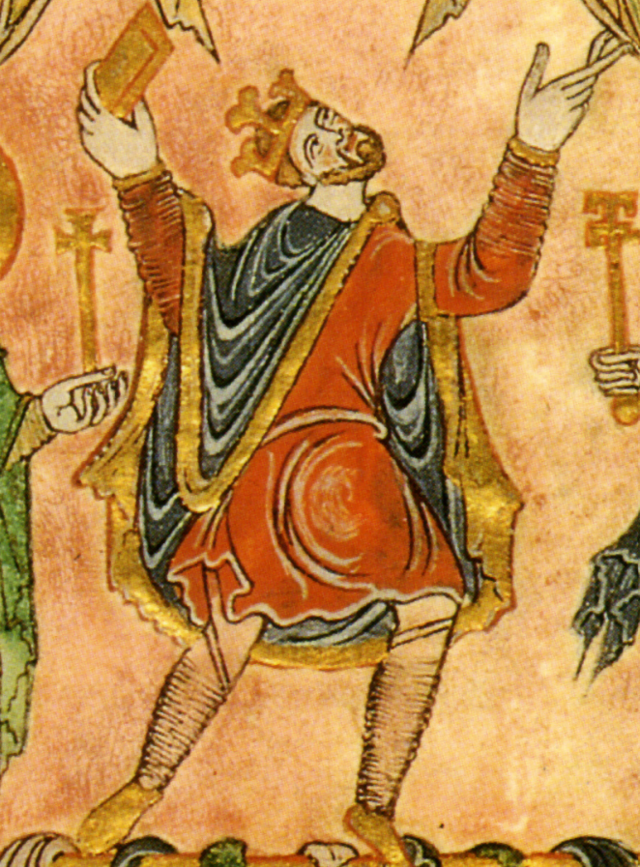
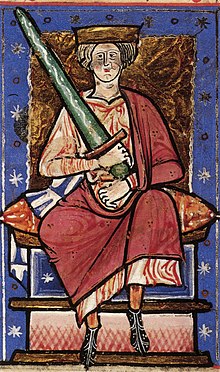
King Edgar

Annie: There are so many to choose from! I’ve already mentioned three, but I also find the little-known King Edgar (959-975) fascinating because he breaks the mould. His reign was not especially violent – it was more a time of politics and scheming nobles and there were no ‘Viking’ raids – and Edgar’s love life was, shall we say, interesting. He might have had up to three wives, one of whom was said by some – unreliable – chroniclers to have been a nun!

Sharon: Who is your least favourite Anglo-Saxon and why?

Annie: I’m going to get into a lot of trouble with this, especially from some of my writer friends, but it’s Harold Godwineson. Obviously I’d rather he’d won at Hastings, not William, but I do find his whole family rather unappealing, treacherous and self-entitled. (Sorry, Harold fans!)

Sharon: How do you approach researching your topic?

Annie: I always start with the primary sources, contemporary if possible, looking for any reference to the characters I’m planning to write about. I find out, or remind myself, about the timelines, then I look at the later, usually Anglo-Norman sources, to see where they embellish and flesh out the tales. If I’m writing fiction, I might use some of their more detailed and frankly at times outrageous stories, but if it’s nonfiction, I have to use a lot of scepticism in the pursuit of the truth, or at least getting as close to the truth as I can.

Sharon: Tell us your ‘favourite’ Anglo-Saxon story you have come across in your research.

Annie: I have so many! But one is the tale of King Offa’s daughter, accused of poisoning her husband’s advisor and accidentally poisoning her husband too. He was the king of Wessex. She fled to the Continent where the Emperor Charlemagne set her up in an abbey but she was caught in debauchery there and died in poverty. It’s highly unlikely to be a true story, as we have evidence that her husband probably died in battle and if she fled, she was most likely fleeing the wrath of his successor, who’d been forced into exile by her father and her husband.

Sharon: Tell us your least ‘favourite’ Anglo-Saxon story you have come across in your research.

King Æthelred the Unready

Annie: It has to be the story of the St Brice’s Day Massacre, sanctioned by King Æthelred the Unready, where a number of Danes were chased through Oxford into a church which was then set on fire. It sounds like the scene from a bad Hollywood historical film, but it really happened. We know this a) because we have a charter from the king himself saying that he ordered it and b) charred bones dating to the right time unearthed at the location.

Sharon: Are there any other eras you would like to write about?

Annie: I’ve always been interested in the seventeenth century and the early Stuarts in particular. They are coming out of the shadows a bit more now and there have been some excellent books, both fiction and nonfiction, published recently, but they still take second place to the Tudors, which for me is a shame as it’s such an interesting period of history.

Sharon: What are you working on now?

Annie: I’m working on the novel which I shelved to research and write Murder in Anglo-Saxon England. It’s set in the tenth century and features Mercians, Northumbrians, Vikings and Scots and also has a murder or two thrown in!

Sharon: And finally, what is the best thing about being a writer?

Annie: Something I’ve enjoyed from a very early age is reading – I loved being transported to other times and places, meeting new characters and learning their stories. Writing, for me, is almost the same, and to spend my working days making up similar stories and spending time with those characters is a dream come true. It’s a form of escapism and it’s bliss!

About the Author:

Annie is a Fellow of the Royal Historical Society, and has written four award-winning novels set in ‘Anglo-Saxon’ Mercia. She has contributed to fiction and nonfiction anthologies and written for various magazines. She has twice been a prize winner in the Mail on Sunday Novel Writing Competition, and won First Prize in the 2012 New Writer Magazine’s Prose and Poetry Competition. She has been a finalist in the Tom Howard Prize for nonfiction and was shortlisted for the Exeter Story Prize and Trisha Ashley Award 2021. She was the winner of the inaugural Historical Writers’ Association (HWA)/Dorothy Dunnett Prize 2017 and was subsequently a judge for that same competition. She has also been a judge for the HNS (Historical Novel Society) Short Story Competition, and was a 2024 judge for the HWA Crown Nonfiction Award. Her nonfiction books are Mercia: The Rise and Fall of a Kingdom (published by Amberley books) and Women of Power in Anglo-Saxon England (Pen & Sword Books). In 2023 she contributed to a new history of English monarchs, published by Hodder & Stoughton, and in February 2025 Murder in Anglo-Saxon England was published by Amberley Books.

Find Annie at: Website; Buy Annie’s Books; Blog; Facebook; Twitter/X; Instagram; BlueSky.

*

My books

Signed, dedicated copies of all my books are available through my online store.

Out now: Scotland’s Medieval Queens

Scotland’s history is dramatic, violent and bloody. Being England’s northern neighbour has never been easy. Scotland’s queens have had to deal with war, murder, imprisonment, political rivalries and open betrayal. They have loved and lost, raised kings and queens, ruled and died for Scotland. From St Margaret, who became one of the patron saints of Scotland, to Elizabeth de Burgh and the dramatic story of the Scottish Wars of Independence, to the love story and tragedy of Joan Beaufort, to Margaret of Denmark and the dawn of the Renaissance, Scotland’s Medieval Queens have seen it all. This is the story of Scotland through their eyes.

Available now from Amazon and Pen and Sword Books

Also by Sharon Bennett Connolly:

Heroines of the Tudor World tells the stories of the most remarkable women from European history in the time of the Tudor dynasty, 1485-1603. These are the women who ruled, the women who founded dynasties, the women who fought for religious freedom, their families and love. Heroines of the Tudor World is now available for pre-order from Amberley Publishing and Amazon UK. Women of the Anarchy demonstrates how Empress Matilda and Matilda of Boulogne, unable to wield a sword themselves, were prime movers in this time of conflict and lawlessness. It shows how their strengths, weaknesses, and personal ambitions swung the fortunes of war one way – and then the other. Available from Bookshop.orgAmberley Publishing and Amazon UKKing John’s Right-Hand Lady: The Story of Nicholaa de la Haye is the story of a truly remarkable lady, the hereditary constable of Lincoln Castle and the first woman in England to be appointed sheriff in her own right. Available from all good bookshops Pen & Sword Booksbookshop.org and Amazon

Defenders of the Norman Crown: The Rise and Fall of the Warenne Earls of Surrey tells the fascinating story of the Warenne dynasty, from its origins in Normandy, through the Conquest, Magna Carta, the wars and marriages that led to its ultimate demise in the reign of Edward III. Available from Pen & Sword BooksAmazon in the UK and US, and Bookshop.orgLadies of Magna Carta: Women of Influence in Thirteenth Century England looks into the relationships of the various noble families of the 13th century, and how they were affected by the Barons’ Wars, Magna Carta and its aftermath; the bonds that were formed and those that were broken. It is now available in paperback and hardback from Pen & SwordAmazon, and Bookshop.orgHeroines of the Medieval World tells the stories of some of the most remarkable women from Medieval history, from Eleanor of Aquitaine to Julian of Norwich. Available now from Amberley Publishing and Amazon, and Bookshop.orgSilk and the Sword: The Women of the Norman Conquest traces the fortunes of the women who had a significant role to play in the momentous events of 1066. Available now from Amazon,  Amberley Publishing, and Bookshop.org.

Alternate Endings: An anthology of historical fiction short stories including Long Live the King… which is my take what might have happened had King John not died in October 1216. Available in paperback and kindle from Amazon.

Podcast:

Have a listen to the A Slice of Medieval podcast, which I co-host with Historical fiction novelist Derek Birks. Derek and I welcome guests, such as Bernard Cornwell and Michael Jecks, and discuss a wide range of topics in medieval history, from significant events to the personalities involved. Every episode is also now available on YouTube.

*

Don’t forget! Signed and dedicated copies of all my books are available through my online store.

For forthcoming online and in-person talks, please check out my Events Page.

You can be the first to read new articles by clicking the ‘Follow’ button, liking our Facebook page or joining me on TwitterThreadsBluesky and Instagram.

*

©2025 Sharon Bennett Connolly, FRHistS

‘Margaret of Logie, of high and noble birth’

Joan of the Tower, Queen of Scotland

When she died in September 1362, Joan of the Tower (also known as Joan Makepeace) had been Queen of Scots for thirty-three years. She had never borne a child, nor is there any mention of her ever having become pregnant. So, on her death, David II was still without a son and heir. The heir to the Scottish throne was Robert Stewart, the nephew he despised, who had six legitimate sons by 1362.

Following the murder of his lover, Katherine Mortimer, in 1360, and before Joan’s death, King David had fallen in love with Margaret Drummond. The first reference to Margaret and David’s relationship is in a charter of 20 January 1363, to the Friars Preacher, for the souls of David himself and of ‘our beloved’ Margaret Logie. Margaret was the daughter of a lowly Scottish knight, Sir Malcolm Drummond. She had been married to Sir John Logie of Logie and had at least one son, also called John.

The relationship with Margaret further alienated David’s heir, Robert Stewart, who was involved in a violent feud with Margaret’s brothers, John and Maurice Drummond. It also threatened to disinherit Robert, should Margaret give birth to a son. This could explain Robert’s involvement in a rebellion early in 1363, in which a petition was presented to the king, demanding that he set aside Margaret and dismiss his current advisers.

Despite the opposition to the relationship, ‘in the year 1363, the aforesaid lord David, king of Scotland, took to wife, at Inchmurdach, a great lady, named Margaret of Logie, of high and noble birth, and born in his kingdom; and he endowed her with many lands and possessions, and raised her to reign in honour with him, with the royal diadem.’1 They were married at Inchmurdoch, in the Fife manor house of the Bishop of St Andrews, though ‘Thai ware togiddyr bot schort quhile.’2

Crest badge of the Clan Drummond

According to the chroniclers, Margaret was very beautiful, but her character left much to be desired, ‘With the aim therefore of providing for the succession to the kingdom from the fruit of her womb (if God granted it), King David chose a most beautiful lady, Margaret Logie, the widow of John Logie, perhaps not so much for the excellence of her character as a woman as for the pleasure he took in her desirable appearance.’3 Once married, David gave preferential treatment to Margaret’s family, granting them lands and prestigious marriages. One such marriage, possibly inspired by Margaret herself, was between her niece, Annabella Drummond, and John, the eldest son and heir of Robert Stewart.

If Margaret herself did not produce a son and heir for Scotland, her niece might one day become queen. This must have angered Robert Stewart, who was still embroiled in the feud with Margaret’s brothers. Demonstrating her own influence over King David, in the winter of 1368, the queen went as far as to persuade her husband to order the arrest and imprisonment of Robert and some of his sons. The continued lack of an heir, however, may have begun to rankle with King David, who released his nephew after a short time. David also favoured his stepson. On 6 December 1363, John Logie, ‘the son of the Queen of Scotland’, was among the ‘divers lords and others, who came to England in the retinue of the K. of Scotland about a treaty of peace between the Kings’ and was gifted ‘a parcelgilt cup, weight 75s., value 6l. 5s. 4d’.4 He received further gifts such as that on 16 December 1365, when the king ‘of Scotland, Sir Archibald, and other lords of Scotland came to Annandale, and gave seisin of it to one John de Logy son of the Queen of Scotland’.5

Annabella Drummond, Margaret’s niece

The Liber Pluscardensis suggests that the queen, knowing David was tiring of her, faked a pregnancy in order to maintain her influence over her husband, and save her marriage. It did not work. Margaret is always portrayed as an ‘arrogant, demanding wife’, and it may be that she was, though I cannot help but wonder that harsh words are used to describe her because she was lowly born, the daughter of a mere knight, rather than a princess. She was seen as unworthy for the high office to which David had elevated her. It cannot have been easy for her, being reminded constantly of her low social position in respect of the others who surrounded the king. It would go some way to explain her haughty attitude; she was trying to live up to her queenship. David had also started an affair with Agnes Dunbar, sister of George, Earl of March.

Whether it was for the lack of an heir, the demanding nature of his wife, or a desire to marry a new love, the result was the same: ‘he lived with her for a short time, [but following animosity that arose between them,] he divorced her about the beginning of Lent 1369.’6 King David applied for a divorce, which was granted, relegating Margaret to the position of ‘Lady Margaret Logie, onetime Queen’. Margaret, however, was not going to go quietly and live in retirement on the pension of £100 a year the king had awarded her. Margaret decided to appeal to a higher power and

On this account she secretly boarded a ship in the Firth of Forth [well supplied with money] and made for the papal court. She arrived at Avignon where the pope was then to be found. By making an appeal she transferred her case there, and disturbed the whole kingdom by her legal action. And so once the king’s proctors had travelled to the apostolic see, the case was bitterly disputed, and the pleading between the advocates of the contending parties was so prolonged that a book compiled from that source and certified by notarial marks is longer [in] wordage (in my judgment, for I who have written this have seen this pleading) than the contents of the text of four Psalters. For her case was many times committed for hearing by auditors and cardinals, so that if she had lived, she would have subjected the kingdom to an interdict; but she died on a pilgrimage to Rome.7

David II, King of Scots


King David II Bruce died, childless, at Edinburgh Castle on 22 February 1371, having reigned for forty-two of his forty-seven years. The king’s death did not stop Margaret from continuing with her lawsuit against him for some years, despite how much it was costing the former queen. There was a

Notarial instrument dated 23d June 1372, attesting obligation of same date by the Lady Margaret Queen of Scotland, widow of the late David Bruys K. of Scotland, acknowledging a loan of 500 marks from Adam Franceys and two other London merchants, made to her at Avignon, repayable at Caleys at Pentecost following. Done in the house of the said Queen Margaret at Avignon ut supra.8

Scotland was under the threat of a papal interdict as a result. Reprieve only came with Margaret’s death, during a pilgrimage to Rome in early 1375. The rule of the house of Bruce had lasted just sixty-five years and had been punctuated by the country’s fight for Scotland’s sovereignty. Eventually, however, it was not England that ensured the downfall of the House of Bruce. It was the failure of King David to have an heir.

David II (left) and Edward III

There is always a tendency to blame the woman when a king dies childless, but the fact that David was married twice and had a number of mistresses, but never became a father, even of an illegitimate child, would suggest that the problem lay with David. Though the point is moot.

In the end, David’s heir was his nephew, as he had been from the moment David ascended the throne. David was succeeded by the first of the Stewart kings, Robert II, son of Robert the Bruce’s eldest daughter, Marjorie and her husband, Walter Stewart. The royal House of Stewart would rule Scotland until 1714 and England from 1603 until 1714.

Notes:

1. John of Fordun’s Chronicle of the Scottish Nation; 2. ‘They were together but a short while’, Wyntoun, The orygynale cronykil of Scotland; 3. Bower, Scotichronicon, V 7; 4. Calendar of documents relating to Scotland, Vol. 4, no. 93; 5. ibid.; 6. Bower, Scotichronicon, V 7; 7. ibid,; 8. Calendar of documents relating to Scotland, Vol. 4, no. 197

Bibliography:

John of Fordun’s Chronicle of the Scottish Nation; Walter Bower, Scotichronicon; Andrew Wyntoun, The orygynale cronykil of Scotland; Calendar of documents relating to Scotland preserved in Her Majesty’s Public Record Office; Richard Oram, editor, The Kings and Queens of Scotland; Rosalind K. Marshall, Scottish Queens 1034–1714; Ian Mortimer, The Perfect King: The Life of Edward III, Father of the English Nation; Dr Callum Watson, ‘Ane Lady Bricht’: A Life of Annabella Drummond, Queen of Scots, c. 1350–1401; Bruce Webster, Margaret [née Margaret Drummond], Oxforddnb.com; Nigel Tranter, The Story of Scotland; B. Webster, ‘David II and the Government of Fourteenth-Century Scotland’ (article); David Ross Scotland, History of a Nation; Phil Carradice, Robert the Bruce: Scotland’s True Braveheart; G. Barrow ‘The Aftermath of War: Scotland and England in the late Thirteenth and early Fourteenth Centuries’ (article); Colm MacNamee, Robert Bruce: Our Most Valiant Prince and Lord; Stephen Spinks, Robert the Bruce: Champion of a Nation; Fiona J. Warson, Robert the Bruce; Bruce Webster, ‘David II’, Oxforddnb.com

*

My Books

Signed, dedicated copies of all my books are available through my online bookshop.

Out now: Scotland’s Medieval Queens

Scotland’s history is dramatic, violent and bloody. Being England’s northern neighbour has never been easy. Scotland’s queens have had to deal with war, murder, imprisonment, political rivalries and open betrayal. They have loved and lost, raised kings and queens, ruled and died for Scotland. From St Margaret, who became one of the patron saints of Scotland, to Elizabeth de Burgh and the dramatic story of the Scottish Wars of Independence, to the love story and tragedy of Joan Beaufort, to Margaret of Denmark and the dawn of the Renaissance, Scotland’s Medieval Queens have seen it all. This is the story of Scotland through their eyes.

Available now from Amazon and Pen and Sword Books

Also by Sharon Bennett Connolly:

Heroines of the Tudor World tells the stories of the most remarkable women from European history in the time of the Tudor dynasty, 1485-1603. These are the women who ruled, the women who founded dynasties, the women who fought for religious freedom, their families and love. Heroines of the Tudor World is now available for pre-order from Amberley Publishing and Amazon UK. Women of the Anarchy demonstrates how Empress Matilda and Matilda of Boulogne, unable to wield a sword themselves, were prime movers in this time of conflict and lawlessness. It shows how their strengths, weaknesses, and personal ambitions swung the fortunes of war one way – and then the other. Available from Bookshop.orgAmberley Publishing and Amazon UKKing John’s Right-Hand Lady: The Story of Nicholaa de la Haye is the story of a truly remarkable lady, the hereditary constable of Lincoln Castle and the first woman in England to be appointed sheriff in her own right. Available from all good bookshops Pen & Sword Booksbookshop.org and Amazon

Defenders of the Norman Crown: The Rise and Fall of the Warenne Earls of Surrey tells the fascinating story of the Warenne dynasty, from its origins in Normandy, through the Conquest, Magna Carta, the wars and marriages that led to its ultimate demise in the reign of Edward III. Available from Pen & Sword BooksAmazon in the UK and US, and Bookshop.orgLadies of Magna Carta: Women of Influence in Thirteenth Century England looks into the relationships of the various noble families of the 13th century, and how they were affected by the Barons’ Wars, Magna Carta and its aftermath; the bonds that were formed and those that were broken. It is now available in paperback and hardback from Pen & SwordAmazon, and Bookshop.orgHeroines of the Medieval World tells the stories of some of the most remarkable women from Medieval history, from Eleanor of Aquitaine to Julian of Norwich. Available now from Amberley Publishing and Amazon, and Bookshop.orgSilk and the Sword: The Women of the Norman Conquest traces the fortunes of the women who had a significant role to play in the momentous events of 1066. Available now from Amazon,  Amberley Publishing, and Bookshop.org.

Alternate Endings: An anthology of historical fiction short stories including Long Live the King… which is my take what might have happened had King John not died in October 1216. Available in paperback and kindle from Amazon.

Podcast:

Have a listen to the A Slice of Medieval podcast, which I co-host with Historical fiction novelist Derek Birks. Derek and I welcome guests, such as Bernard Cornwell and discuss a wide range of topics in medieval history, from significant events to the personalities involved. Every episode is also now available on YouTube.

*

Don’t forget! Signed and dedicated copies of all my books are available through my online bookshop.

For forthcoming online and in-person talks, please check out my Events Page.

You can be the first to read new articles by clicking the ‘Follow’ button, liking our Facebook page or joining me on Twitter and Instagram.

©2025 Sharon Bennett Connolly FRHistS

Wordly Women: Toni Mount

In today’s spotlight on Wordly Women, I welcome my good friend, novelist and historian, Toni Mount back to History… the Interesting Bits. Toni writes the fabulous Seb Foxley mystery novels and the non-fiction series How to Survive in…

Sharon: What got you into writing?

Toni: I’ve always been a story-teller. Aged 6, when the teacher was called away – before the days of teaching assistants – she would have me sit at the front of the class and tell them a story. It was usually a mix of various fairytales with princes, princesses, witches and dragons. I like to think I became more sophisticated when I started writing them down in English Composition lessons aged 7 or 8. My imagined ‘First Flight of Concorde’ – the supersonic plane – won the school prize and my head has been full of stories for as long as I can remember. A good many have made it to the page but not all.

Sharon: You write both fiction and non-fiction – is one harder than the other?

Toni: Fiction needs your own ideas; in non-fiction the facts are there, waiting for you to use. Since my novels are as authentic to the period as I can make them, but without the ‘gadzooks’ and ‘forsooths’, they take as much research as the non- fiction books. In both cases, I’m looking to tell a good story. The difference is that non-fiction may have gaps where historians don’t know the answers, such as what was Edward II thinking when he gave Piers Gaveston the queen’s jewellery but in a novel the writer is allowed to tell you why.

Sharon: Tell us about your books.

Toni: I’ve had 30+ books published, half of them novels. My most successful non-fiction books are ‘Everyday Life in Medieval London’ and ‘Medieval Medicine’ both published by Amberley, and ‘How to Survive in Medieval England’ published by Pen & Sword which was recently a no.1 best seller on Amazon. The How to Survive series – my fourth: ‘How to Survive in Ration-Book Britain’ is due to be out in November 2025 – is written for the armchair time-traveller and puts a light-hearted slant on history. ‘How to Survive in Tudor England’ and ‘How to Survive in Anglo-Saxon England’ are the other titles.

My Sebastian Foxley Medieval Murder Mystery series has quite a following – book 13 ‘The Colour of Darkness’ has just gone off to the publisher MadeGlobal. Seb is a London-based scribe and illuminator in the 1470s-80s whose eye for detail means he spots clues that others miss to solve crimes. Many are true crimes which were recorded in the Mayor’s Court Rolls and remain unsolved – until now. I love the way my characters take over the story, sometimes doing things that never occurred to me. Seb has become a family member, so much so that my sons commissioned a portrait of him for my 65th birthday and it hangs above the fireplace.

Sharon: What attracts you to the period?

Toni: Whether fact or fiction, the Plantagenet period from the 1150s to 1485 is by far the most intriguing for me. Who doesn’t love to puzzle out a mystery? But modern policing is too boring to write about with so much paperwork, hours of CCTV footage to trawl through, fingerprinting, DNA, ballistics, etc. Give me Sherlock Holmes with his magnifying glass every time. The medieval period has even fewer technical complications.

Sharon: Who is your favourite medieval or Tudor personality and why?

Toni: Richard III obviously. I love the controversy. Was he a saint or a sinner? Or simply a human being?

Sharon: Who is your least favourite medieval or Tudor personality and why?

Toni: Henry VIII – a vicious paranoid megalomaniac. What’s to like? (Sharon: I could not agree more!)

Sharon: How do you approach researching your topic?

Toni: I read all I can around the subject; get a feel for the period and ‘live it’ in my head. As I write, if I realise I don’t know something, I make a note of it, check it out and list sources as I go. This is vital for a book which will have references and footnotes but even if I’m working on a novel, I may want to return to a source for further info or to mention it in my Author’s Notes – this is where I tell readers what’s true in the novel, which characters really existed, etc. In ‘The Colour of Darkness’, I did additional research into Medieval Mystery Plays and the ‘Duke of Exeter’s Daughter [a torture device], among other things. For the next novel, I’m reading up on medieval ships and firearms – I think it’s time somebody got shot with a ‘gunne’.

Sharon: Tell us your ‘favourite’ medieval or Tudor story you have come across in your research.

Toni: John/Eleanor Rykenor was a cross-dresser in the 1390s. He claimed to have had sex with nuns ‘as a man’ and didn’t charge them for it but did charge a group of Oxford priests-in-training for his services ‘as a woman’. He/she also said he’d spent a year or more living as a man’s wife. When caught in flagranti in a stable, wearing women’s attire and charging a man for sex, as Eleanor she appeared in court. The authorities weren’t sure what crime to charge her with – homosexuality wasn’t made a criminal offence until Tudor times – so she was charged with misrepresenting the product for sale, i.e. advertising her services as a female without having the appropriate ‘equipment’ for the job. She had to pay a fine for flouting what we would call the Trades Description Act. John/Eleanor is a character in my Foxley novels although he/she lived a century before they’re set. I couldn’t resist using such a fantastic character.

Sharon: Tell us your least ‘favourite’ medieval or Tudor story you have come across in your research.

Toni: The discovery of RIII’s skeleton in a Leicester car park ruined my first ever trilogy [written in 1980s and unpublished]. My premise for the series of novels was that Richard, though wounded, survives the battle of Bosworth and goes on to have further adventures. Henry Tudor, frustrated when he can’t find Richard’s corpse to prove the king is dead, substitutes a crippled beggar to be buried instead. I was about to rewrite the trilogy when the dig discovered the bones and DNA proved it was Richard. How annoying!

Sharon: Are there any other eras you would like to write about?

Toni: Apart from writing about the medieval and Tudor eras, I’ve also written a Victorian who dunnit – ‘The Death Collector’ – making use of unsolved murders from the 1880s, including those attributed to Jack the Ripper. That was great fun to write and I fancy doing a sequel. Also, I wrote a non-fiction book ‘The World of Isaac Newton’ and I think Isaac, with his brilliant brain, has definite possibilities as a sleuth. I’ve published books ranging from Anglo-Saxon England to the 1950s and everything in between has at least been touched upon. Maybe more on the Anglo-Saxons would be interesting.

Sharon: What are you working on now?

Toni: The next novel is brewing: ‘The Colour of Malice’ and two self-published booklets are being prepped. ‘Medieval Christmas’ will do what it says on the tin. ‘Warriors – Men-o’-War’ is a very different beast as a collection of my short stories, something I’ve not done before, from Agincourt to Afghanistan. There are no new titles for non-fiction books at the moment.

Sharon: And finally, what is the best thing about being a writer?

Toni: Playing God with characters [in fiction] and the beauty of words – choosing how best to express your ideas and imaginings on the page. Marvellous!

About the Author:

Toni studies, teaches and writes about medieval history. She is a successful author writing the popular Sebastian Foxley medieval murder series and several non-fiction volumes, including her collection of How to Survive in books. She has created several online courses for http://www.MedievalCourses.com, she teaches history to adults and is an experienced speaker giving talks to groups and societies. Toni enjoys attending history events as a costumed interpreter and is a member of the Research Committee of the Richard III Society.

Toni earned her Masters Degree by Research from the University of Kent in 2009 through study of a medieval medical manuscript held at the Wellcome Library in London. Her first-class honours degree, Diploma in Literature and Creative Writing and her Diploma in European Humanities are from the Open University. Toni also holds a Cert. Ed (in Post-Compulsory Education and Training) from the University of Greenwich.

Find Toni Mount’s books here

Find Toni on Social Media:

Amazon; Website; Seb Foxley website; Facebook: Medieval England Facebook; Seb Foxley Facebook; Twitter

*

My books

Signed, dedicated copies of all my books are available through my online store.

Out now: Scotland’s Medieval Queens

Scotland’s history is dramatic, violent and bloody. Being England’s northern neighbour has never been easy. Scotland’s queens have had to deal with war, murder, imprisonment, political rivalries and open betrayal. They have loved and lost, raised kings and queens, ruled and died for Scotland. From St Margaret, who became one of the patron saints of Scotland, to Elizabeth de Burgh and the dramatic story of the Scottish Wars of Independence, to the love story and tragedy of Joan Beaufort, to Margaret of Denmark and the dawn of the Renaissance, Scotland’s Medieval Queens have seen it all. This is the story of Scotland through their eyes.

Available now from Amazon and Pen and Sword Books

Also by Sharon Bennett Connolly:

Heroines of the Tudor World tells the stories of the most remarkable women from European history in the time of the Tudor dynasty, 1485-1603. These are the women who ruled, the women who founded dynasties, the women who fought for religious freedom, their families and love. Heroines of the Tudor World is now available for pre-order from Amberley Publishing and Amazon UK. Women of the Anarchy demonstrates how Empress Matilda and Matilda of Boulogne, unable to wield a sword themselves, were prime movers in this time of conflict and lawlessness. It shows how their strengths, weaknesses, and personal ambitions swung the fortunes of war one way – and then the other. Available from Bookshop.orgAmberley Publishing and Amazon UKKing John’s Right-Hand Lady: The Story of Nicholaa de la Haye is the story of a truly remarkable lady, the hereditary constable of Lincoln Castle and the first woman in England to be appointed sheriff in her own right. Available from all good bookshops Pen & Sword Booksbookshop.org and Amazon

Defenders of the Norman Crown: The Rise and Fall of the Warenne Earls of Surrey tells the fascinating story of the Warenne dynasty, from its origins in Normandy, through the Conquest, Magna Carta, the wars and marriages that led to its ultimate demise in the reign of Edward III. Available from Pen & Sword BooksAmazon in the UK and US, and Bookshop.orgLadies of Magna Carta: Women of Influence in Thirteenth Century England looks into the relationships of the various noble families of the 13th century, and how they were affected by the Barons’ Wars, Magna Carta and its aftermath; the bonds that were formed and those that were broken. It is now available in paperback and hardback from Pen & SwordAmazon, and Bookshop.orgHeroines of the Medieval World tells the stories of some of the most remarkable women from Medieval history, from Eleanor of Aquitaine to Julian of Norwich. Available now from Amberley Publishing and Amazon, and Bookshop.orgSilk and the Sword: The Women of the Norman Conquest traces the fortunes of the women who had a significant role to play in the momentous events of 1066. Available now from Amazon,  Amberley Publishing, and Bookshop.org.

Alternate Endings: An anthology of historical fiction short stories including Long Live the King… which is my take what might have happened had King John not died in October 1216. Available in paperback and kindle from Amazon.

Podcast:

Have a listen to the A Slice of Medieval podcast, which I co-host with Historical fiction novelist Derek Birks. Derek and I welcome guests, such as Bernard Cornwell, Elizabeth Chadwick and Michael Jecks, and discuss a wide range of topics in medieval history, from significant events to the personalities involved. Every episode is also now available on YouTube.

*

Don’t forget! Signed and dedicated copies of all my books are available through my online store.

For forthcoming online and in-person talks, please check out my Events Page.

You can be the first to read new articles by clicking the ‘Follow’ button, liking our Facebook page or joining me on TwitterThreadsBluesky and Instagram.

*

©2025 Sharon Bennett Connolly, FRHistS and Toni Mount

Wordly Women: Paula Lofting

In the third episode of my Wordly Women interviews, I welcome Paula Lofting to History…the Interesting Bits to talk about her writing journey. Paula is the author of the Sons of the Wolf series of novels and has recently published her first none fiction work Searching for the Last Anglo-Saxon King: Harold Godwinson, England’s Golden Warrior.

Welcome Paula….

Sharon: What got you into writing? 

Paula: When I was a little girl as soon as I could write straight, I used to come home from school sit at the coffee table in our lounge on my feet and write stories. I was particularly fond of ‘composition’ class at school where the teacher would put several titles up for us to choose from to write about. I often had my stories read out to class. 

I guess it was something I always wanted to do. I remember in my teens, writing an epic historical fiction based on the years after the Romans left Britain, but I hand wrote it because I hadn’t learned to type and the typewriter, I had was useless. I thought I was never going to submit because it never occurred to me to just type with one finger! So, I gave up on that idea. I’d written plays, poems, and all sorts of stuff, but I was also in a bad relationship with a man who didn’t want to share me with a pen, so it was difficult until the relationship ended, and I had moved on. It was when the advent of personal computers came along when I realised that I could actually achieve my dream if I wanted to. 

    Sharon: Tell us about your books. 

    Paula: I have been writing a series set in the years leading up to the Norman Invasion of 1066. There are currently two books I have published in the series, and of course a nearly finished 3rd WIP. The series is called Sons of the Wolf, which is the name of book 1 and book 2 is The Wolf Banner, and 3 which I am working on is called Wolf’s Bane. As you can see there is a recurring theme. The theme is not something to do with real wolves but has its origins in my hero’s family history whose ancestors believed that they were descended from wolves. 

    The books tell the story of Wulfhere, a Sussex thegn, and follows the fortunes of his family in the years before the Battle of Hastings took place. It explores the lives of the ordinary people who lived against the backdrop of the political landscape of the time. 

    The series is a chronological account of events that are woven into the tapestry of the family’s lives and also tells the story of the main historical players of the time, such as Harold Godwinson and his clan. The two men’s lives run parallel alongside each other, and their contrasting stories are intricately woven together as is their fate.  

    The books all run consecutively, and you will find there are no gaps in the saga, so where one book ends, the new book starts. I have plans to continue after the catastrophic events of 1066 into the rebellion years. 

    Sharon: What attracts you to the 11th century? 

    Paula: I think that there is a lot of romance around the whole story of two men who fought over their claims to be king of England which people are drawn to. There is the tragedy of the last ‘Anglo-Saxon king’ who is butchered to death on the battlefield: the tall, handsome, charismatic, affable, warrior who fights for his people and his country. There is the underdog and the overdog theme which comes after the conquest and lasts for some time before England begins to melt as though seamlessly into the new regime.  

    Then you have the original Robin Hood type story of Hereward who sort of appears from nowhere to fight the good fight against the baddies after coming back to England from abroad to find a lot of things have changed and his ancestral lands commandeered by invaders. There is so much to play with there, a passionate conglomerate of rich history that evokes and inspires in the most amazing manner. It is an era that sets itself apart from what happens later – the cusp of change from the old world to the new. 

    I find it fascinating. Love… Betrayal… Battles… Bloodfeud. 

    What’s not to love! 

    I have also written a book about Harold Godwinson which is due for release any day now with Pen and Sword. 

    Sharon: Who is your favourite Anglo-Saxon and why? 

    Paula: There were so many extraordinary characters, and a lot I could choose from. For now, I have to go with Harold Godwinson, simply because, although we will never know what his true nature was for certain, what is written in the sources is constant and conjures up a vision of a man who loved his wife, his family, and his country. A man who avoided internal conflict, forced to navigate intrigue, family skirmishes, and the jealousy of the other aristocracy. He was not a perfect man, but in comparison to many rulers and sub rulers in medieval times, there were a lot more who were far more undesirable. During his early tenure as king, knowing that his country was in danger on many fronts, he acted swiftly to gather his armies together and deploy them to defend the shores. He even found time to see to some of his admin duties, all this in the early weeks of his reign. Who knows what he might have achieved if his life had not been so cruelly taken from him so early into his reign. 

    Sharon: Who is your least favourite Anglo-Saxon – or Viking – and why? 

    Paula: Ooo – Can I have one of each?  

    In that case I have to say, the Anglo-Saxon Ealdorman Eadric Streona whose betrayal of King Edmund lost him the battle of Assandun.  

    My least favourite Viking would have been Sweyn Forkbeard who was invading England from the 990s up until 1013. He became king for about 6 weeks before he died in February 1014. His pillaging and burning of England really stank. 

    Sharon: How do you approach researching your topic? 

    Paula: Well, currently I am taking notes from the two major annals, the Anglo-Saxon Chronicles and the Chronicon ex Chronicis which was the work of the monk, John of Worcester and also in part, someone called Florence. I plan to augment them with other sources that I read, both primary and secondary, to try and find sources that correlate and contradict each other so I can make sure I have all the facts in one place when I come to write the narrative. I am always very grateful to those historians who came before me for having done the hard part of digging through the foundations of the information available to me and try to see the original sources for myself. Its helpful that these authors give guidance in their own work for us new historians to build upon and come up with new ideas. 

    For Historical fiction I have the privilege of being a reenactor and learning the everyday tasks and the little detailed things that experimental archaeology gives us like clothing, food, buildings and battle strategies that often history texts can’t give us. This helps me to build my world as authentically as I possibly can.  

    Sharon: Tell us your ‘favourite’ Anglo-Saxon story you have come across in your research? 

    Paula: Oo I love this question! 

      I have a few, actually: The research carried by Dan Armstrong regarding the Papal Banner. It seems there is little evidence for it in 1066. Readers will need to read the book to find out more about what Armstrong uncovered. 

      Another is the version of Harold’s trip to Normandy that the English chronicler, Eadmer of Canterbury writes in his History of Recent Events in England, a story that makes far more sense, even though it is the only version of this you can find. And considering that Eadmer was not particularly pro Harold, I think it is far more reliable than the Norman sources. 

      I also love the anecdotal tale of Bishop Wulfstan who carried a pair of snips with him to cut the hair long hair of the young men who came before him. He didn’t approve of men with long hair, obviously. Can you imagine, you’re an elite, well-respected member of the elite huscarls kneeling before him as you get to the front to receive holy communion and he reaches over your head and grips your neatly combed and beautifully tied back pony-tail and with one snip, you lose it! And there was nothing you could do about it!  

      Sharon: Tell us your least ‘favourite’ Anglo-Saxon story you have come across in your research?  

      Paula: Oh gosh, I can name lots, but probably the worst, I have to say, is the cruel propaganda used by the Norman scribes such as Poitiers, who was the first one to mention the Papal Banner, and the way they defiled Harold’s character to detract from William’s regicide of an anointed king and make him seem like a saint! 

        Sharon: Are there any other eras you would like to write about? 

        Paula: Yes indeed, but I’m probably never going to achieve them all, here are just a few: 

          Staying in the so-called dark ages, I once started to write an epic about the post Roman Britain era, centring on Ambrosius Aurelianus. It never came to anything because my circumstances were not right at the time, but I would love to give it ago one day.  

          Another is Macbeth, and coming right out of my comfort zone, a story about a highway man. 

          Sharon: What are you working on now? 

          Paula: Edmund Ironside is my new project for Pen and Sword – a non-fiction book, and fiction wise, I am working on finishing the third novel in my series, Wolf’s Bane 

            Sharon: And finally, what is the best thing about being a writer? 

            Paula: Escaping into other times, other places, and building a different world. It gives me a sense of release and I enjoy creating characters I love. 

            It has never really been my aim to sell loads of books and earn loads of money from writing because its not going to be achievable in this day and age. Its more of a hobby really, but if people read my work, then I am very happy, especially if they enjoy it. That’s the most important part to me.  

            About the author:

            Paula was born in the ancient Saxon county of Middlesex in 1961. She grew up in Australia hearing stories from her dad of her homeland and its history. As a youngster she read books by Rosemary Sutcliff and Leon Garfield and her love of English history grew. At 16 her family decided to travel back to England and resettle. She was able to visit the places she’d dreamt about as a child, bringing the stories of her childhood to life. It wasn’t until later in life that Paula realised her dream to write and publish her own books. Her debut historical novel Sons of the Wolf, was first published in 2012 and then revised and republished in 2016 along with the sequel, The Wolf Banner, in 2017. The third in the series, Wolf’s Bane, will be ready for publishing later this year.   

            In this midst of all this, Paula has acquired contracts for nonfiction books with the prestigious Pen & Sword publishers. Searching for the Last Anglo-Saxon King, Harold Godwinson, England’s golden Warrior is due to be published at the end of February, and a biographic of King Edmund Ironside is also in the pipeline. She has also written a short essay about Edmund for Iain Dale’s Kings and Queens, articles for historical magazines. When she is not writing, she is a psychiatric nurse, mother of three grown up kids and grandmother of two and also re-enacts the Anglo-Saxon/Viking period with the awesome Regia Anglorum. 

            Social Media:

            Website: www.threadstothepast.com, Facebook: https://www.facebook.com/Wulfsuna?locale=en_GB, Instagram: https://www.instagram.com/paulaloftingwilcox/, x: https://x.com/longshippub, Threads: www.threadstothepast.com, Blue Sky: @paulaloftingauthor.bsky.social 

            Book Links: Sons of the Wolf; Wolf’s Bane; Searching for the Last Anglo-Saxon King: Harold Godwinson, England’s Golden Warrior.

            *

            My books

            Signed, dedicated copies of all my books are available through my online store.

            Out now: Scotland’s Medieval Queens

            Scotland’s history is dramatic, violent and bloody. Being England’s northern neighbour has never been easy. Scotland’s queens have had to deal with war, murder, imprisonment, political rivalries and open betrayal. They have loved and lost, raised kings and queens, ruled and died for Scotland. From St Margaret, who became one of the patron saints of Scotland, to Elizabeth de Burgh and the dramatic story of the Scottish Wars of Independence, to the love story and tragedy of Joan Beaufort, to Margaret of Denmark and the dawn of the Renaissance, Scotland’s Medieval Queens have seen it all. This is the story of Scotland through their eyes.

            Available now from Amazon and Pen and Sword Books

            Also by Sharon Bennett Connolly:

            Heroines of the Tudor World tells the stories of the most remarkable women from European history in the time of the Tudor dynasty, 1485-1603. These are the women who ruled, the women who founded dynasties, the women who fought for religious freedom, their families and love. Heroines of the Tudor World is now available for pre-order from Amberley Publishing and Amazon UK. Women of the Anarchy demonstrates how Empress Matilda and Matilda of Boulogne, unable to wield a sword themselves, were prime movers in this time of conflict and lawlessness. It shows how their strengths, weaknesses, and personal ambitions swung the fortunes of war one way – and then the other. Available from Bookshop.orgAmberley Publishing and Amazon UKKing John’s Right-Hand Lady: The Story of Nicholaa de la Haye is the story of a truly remarkable lady, the hereditary constable of Lincoln Castle and the first woman in England to be appointed sheriff in her own right. Available from all good bookshops Pen & Sword Booksbookshop.org and Amazon

            Defenders of the Norman Crown: The Rise and Fall of the Warenne Earls of Surrey tells the fascinating story of the Warenne dynasty, from its origins in Normandy, through the Conquest, Magna Carta, the wars and marriages that led to its ultimate demise in the reign of Edward III. Available from Pen & Sword BooksAmazon in the UK and US, and Bookshop.orgLadies of Magna Carta: Women of Influence in Thirteenth Century England looks into the relationships of the various noble families of the 13th century, and how they were affected by the Barons’ Wars, Magna Carta and its aftermath; the bonds that were formed and those that were broken. It is now available in paperback and hardback from Pen & SwordAmazon, and Bookshop.orgHeroines of the Medieval World tells the stories of some of the most remarkable women from Medieval history, from Eleanor of Aquitaine to Julian of Norwich. Available now from Amberley Publishing and Amazon, and Bookshop.orgSilk and the Sword: The Women of the Norman Conquest traces the fortunes of the women who had a significant role to play in the momentous events of 1066. Available now from Amazon,  Amberley Publishing, and Bookshop.org.

            Alternate Endings: An anthology of historical fiction short stories including Long Live the King… which is my take what might have happened had King John not died in October 1216. Available in paperback and kindle from Amazon.

            Podcast:

            Have a listen to the A Slice of Medieval podcast, which I co-host with Historical fiction novelist Derek Birks. Derek and I welcome guests, such as Bernard Cornwell and Michael Jecks, and discuss a wide range of topics in medieval history, from significant events to the personalities involved. Every episode is also now available on YouTube.

            *

            Don’t forget! Signed and dedicated copies of all my books are available through my online store.

            For forthcoming online and in-person talks, please check out my Events Page.

            You can be the first to read new articles by clicking the ‘Follow’ button, liking our Facebook page or joining me on TwitterThreadsBluesky and Instagram.

            *

            ©2025 Sharon Bennett Connolly, FRHistS and Paula Lofting