Lady Mary Seymour, the Queen’s Orphan Daughter

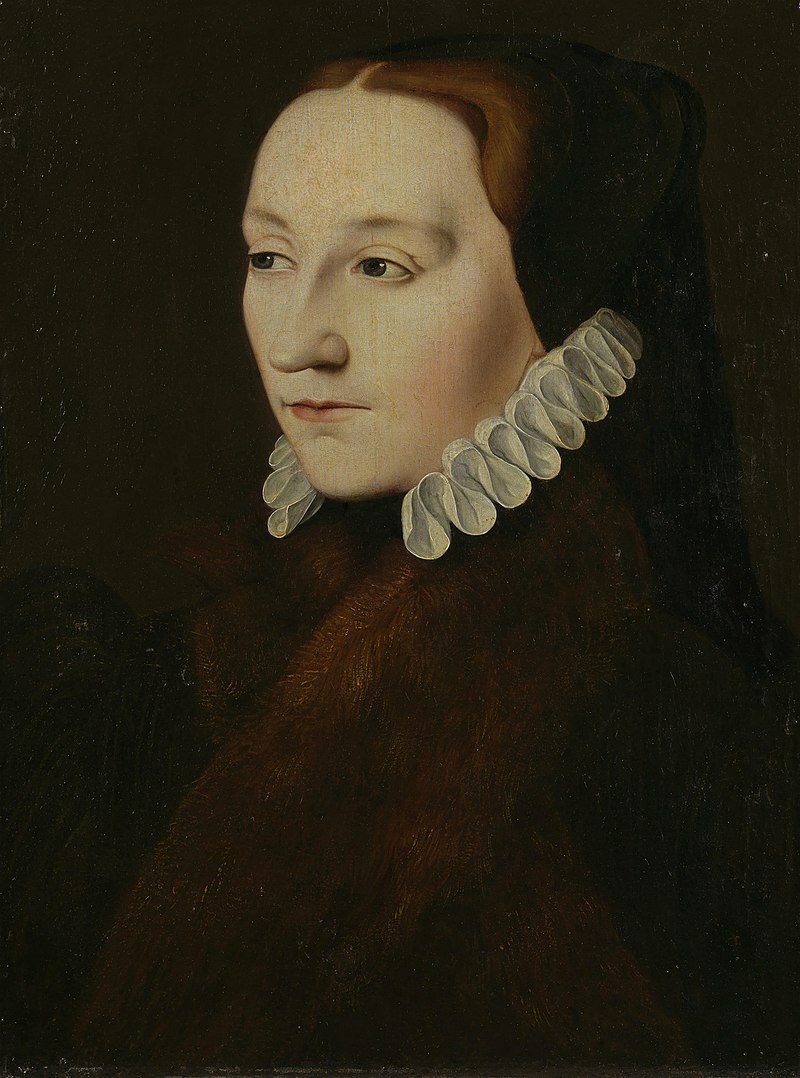
Katherine Parr by an unknown artist, NPG

Little Lady Mary Seymour was the daughter of dowager Queen Kateryn Parr and her fourth, and final, husband, Thomas Seymour, Baron Seymour of Sudeley. Kateryn Parr was widowed for a third time with the death of Henry VIII in January 1547. By May of the same year, Queen Kateryn was married to the new king Edward VI’s uncle, Thomas Seymour, Lord High Admiral of England and Baron Seymour of Sudeley. This was said to be a love match and within months Kateryn found herself pregnant for what may have been the first time in her life. In the months before the birth, the queen had fitted out a nursery for her baby, decorated in Kateryn’s favourite colours of crimson and gold: the nursery had views of the gardens and the castle’s chapel. The queen’s joy was tempered by the scandal that had arisen from her husband’s attentions towards Kateryn’s stepdaughter, Elizabeth.

She wrote to Thomas Seymour of how active the unborn child was:

I gave your little knave your blessing, who like an honest man stirred apace after and before. For Mary Odell [one of her ladies] being abed with me had laid her hand upon my belly to feel it stir. It hath stirred these three days every morning and evening so that I trust when you come it will make you some pastime. And thus I end bidding my sweetheart and loving husband better to fare than myself.1

Kateryn gave birth to her only child, Mary, named after the dowager queen’s stepdaughter, Princess Mary, on 30 August 1548. At the age of 37, Kateryn was old to be having her first child, but both she and the baby had come through the labour safely and there doesn’t appear to have been any disappointment that the child was a girl rather than a boy.
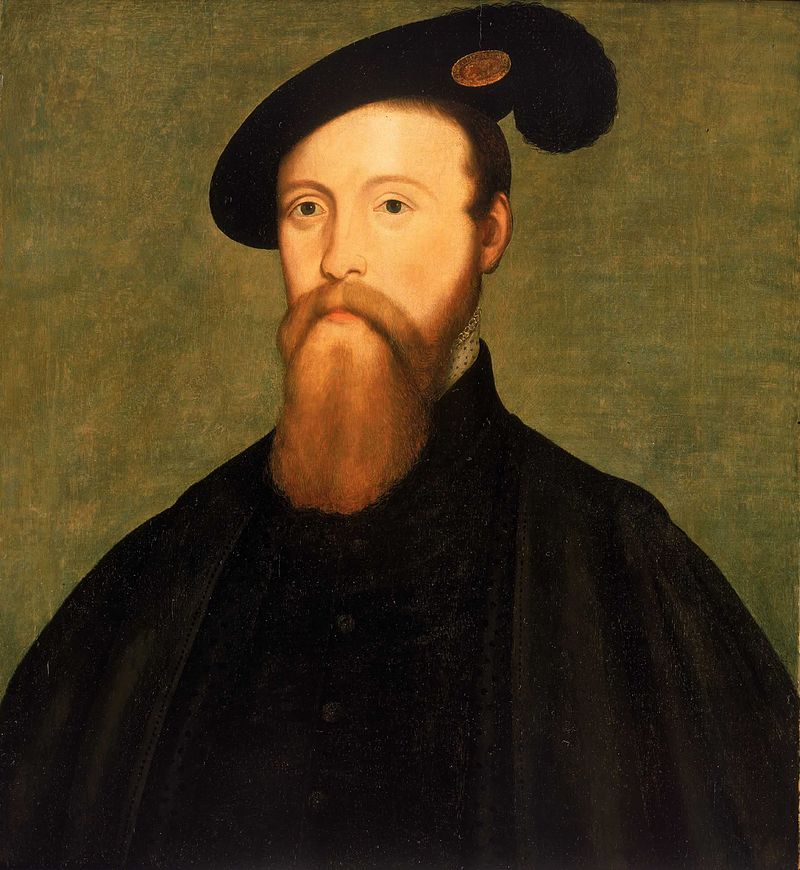
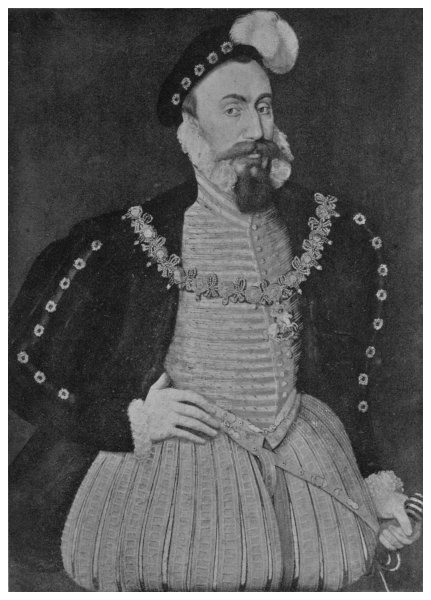
Thomas Seymour painted by Nicolas Denisot

Within just a few days of the birth, Kateryn was showing signs of puerperal fever, a bacterial complication of childbirth that was very dangerous in the centuries before antibiotics. As her condition worsened, Kateryn suffered bouts of delirium and moments of calm, when she appeared to rally. In her delirium, Kateryn railed against her husband, saying

‘I am not well handled, for those that be about me careth not for me but standith laughing at my grief and the more good I will to them, the less good they will to me.’2

Strongly denying her accusations, Seymour replied

‘Why, sweetheart, I would you no hurt.’3

Whether Kateryn truly believed Seymour wanted her dead, or was still smarting from how close he had got to the Princess Elizabeth, or the words, reported by Lady Tyrwitt, who was not a friend of Seymour’s, were misinterpreted, we will never know. Her pain, delirium and suspicion of her husband made Kateryn’s last days even more wretched.

Kateryn Parr died 6 days after little Mary’s birth, on 5 September 1548, at Sudeley Castle. She was laid to rest beneath the floor of St Mary’s Chapel in the castle grounds, with Lady Jane Grey acting as her chief mourner. Despite her fears that her husband had poisoned her, in her will, dictated as she was close to death, she left everything to Seymour, making him a very wealthy man.

Thomas Seymour was stunned by Kateryn’s death and grieved deeply. He abandoned Sudeley Castle and returned to London, seeking refuge at Syon House, the home of his brother, Edward Seymour, Duke of Somerset and his wife. Little Lady Mary was placed in the care of his mother, Margery Seymour.
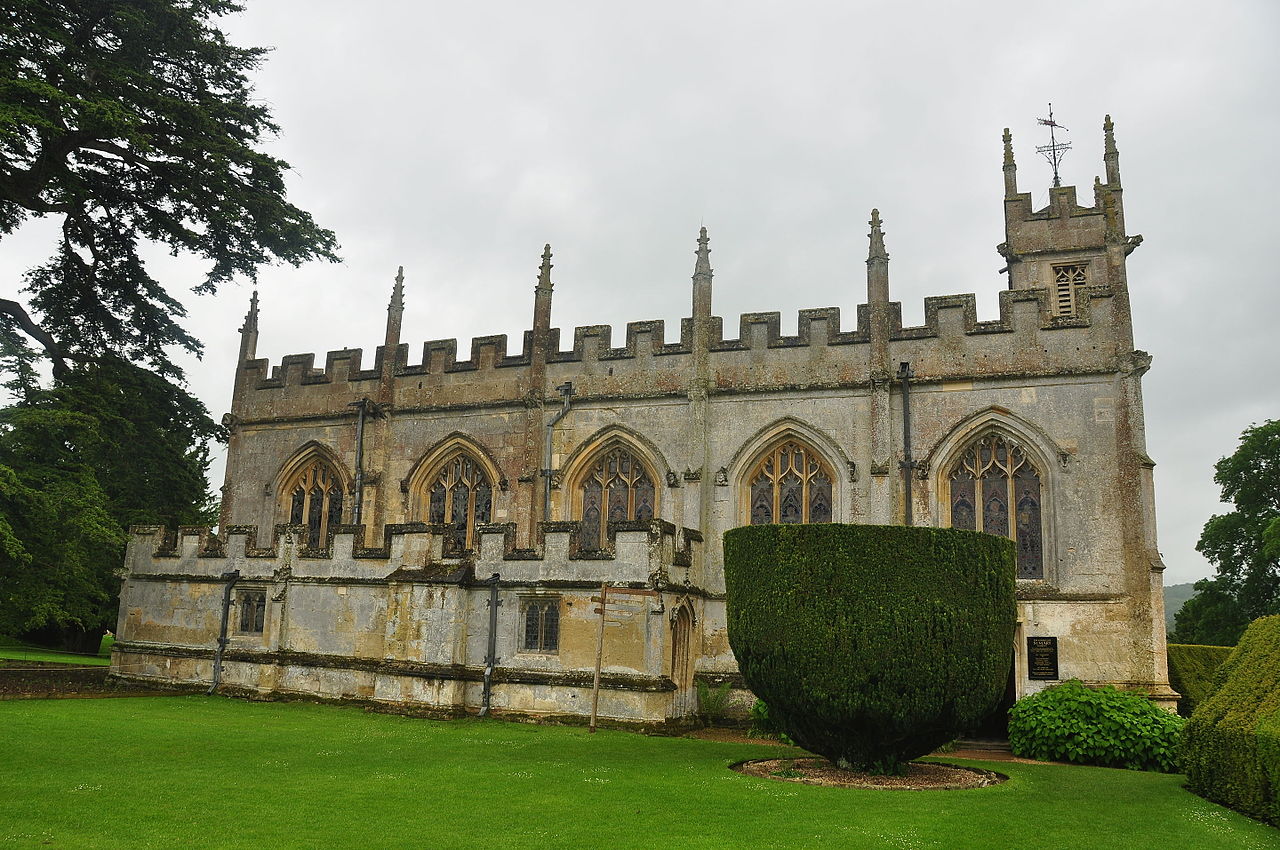
St Mary’s Chapel, Sudeley Castle

Mary was eventually taken into the care of Edward Seymour and his wife, Duchess Anne. Anne had herself given birth to a little boy shortly before Mary’s birth and had a house full of children, little Mary’s cousins. However, when her father was arrested for treason, having plotted to marry the Princess Elizabeth, and was being held in the Tower awaiting execution, he asked that his daughter should be given into the care of Katherine Willoughby (now Brandon), Duchess of Suffolk. Katherine had been a good friend of Kateryn Parr. She had herself been widowed in 1545 and was the mother of 2 teenage boys, Henry and Charles Brandon.

Mary could have been given into the care of Kateryn Parr’s brother, William Parr, Marquess of Northampton, but he had recently found himself out of favour with Edward Seymour, the Lord Protector, as he had tried to divorce his wife, Anne Bourchier, in order to marry Elisabeth Brooks, who had served Seymour’s sister Jane when she was queen. This remarriage was considered illegal and outrageous and so, with such a scandal attached to him, Parr was not a suitable guardian to his niece; not that he appears to have paid any attention to Mary, nor expressed any desire to play a part in her life. Neither did Kateryn’s sister, Anne Herbert, Countess of Pembroke, show any interest in taking care of her niece, despite her own children being close in age to Mary.

With Thomas Seymour’s execution on 20 March 1549, Lady Mary Seymour, at just short of 7 months old, was a dispossessed orphan. Three days before her father’s death, whilst she was still in the custody of her uncle at Syon House, Mary had been granted £500 a year by the Privy Council. The money was for ‘dyettes, wages and lyvereyes of the household of Mistres Mary Seymour for a yere and a half ended at the Feast of the annunciation of Our Lady next cummyng [25 March].’4 However, that income was not transferred to Katherine Willoughby when the baby was moved to her residence at Grimsthorpe Castle in Lincolnshire. This left the duchess short of funds. The daughter of a queen, though not royal, was expected to be maintained to a certain standard. The little orphan arrived at Grimsthorpe Castle with her own household; her full complement of staff included her governess, a nurse and two maids. And it was left to Katherine, Duchess of Suffolk, to pay their wages.

Katherine Willoughby, Duchess of Suffolk, Mary Seymour’s guardian

By 24 July 1549, Katherine was writing to William Cecil, a secretary in Edward Seymour’s household at the time, in the hope that he may assist her in recovering payment for her expenses. She wrote:

‘It is said that the best means of remedy to the sick is first plainly to confess and disclose the disease, wherefore, both for remedy and again for that my disease is so strong that it will not be hidden. … All the world knoweth … what a very beggar I am.’5

Katherine said that her finances were worsening for numerous reasons but,

‘amongst others … if you will understand, not least the queen’s child hath layen, and still doth lie at my house, with her company about her, wholly at my charges. I have written to my lady of Somerset at large, that there be some pension allotted unto her according to my lord grace’s promise. Now, good Cecil, help at a pinch all that you may help.’6

The duchess included a list of items that Duchess Anne had promised to send on, including the plate and other items that had been intended for Mary’s nursery at Sudeley Castle. The duchess also complained that the baby’s governess, ‘with the maid’s nurse and others, daily call for their wages, whose voices my ears can hardly bear, but my coffers much worse.’7

It is saddening to read how little affection is given to this child who was so wanted by her parents. That she went from being the centre of Kateryn Parr’s world to being an unwanted burden on the late queen’s good friend. It seems that Katherine Willoughby’s pleas did eventually have an effect. In January 1550, application was made to the House of Commons for the restitution of Lady Mary Seymour, ‘daughter of Thomas Seymour, knight, late Lord Seymour of Sudeley and late High Admiral of England, begotten of the body of Queen Katherine, late queen of England’.8
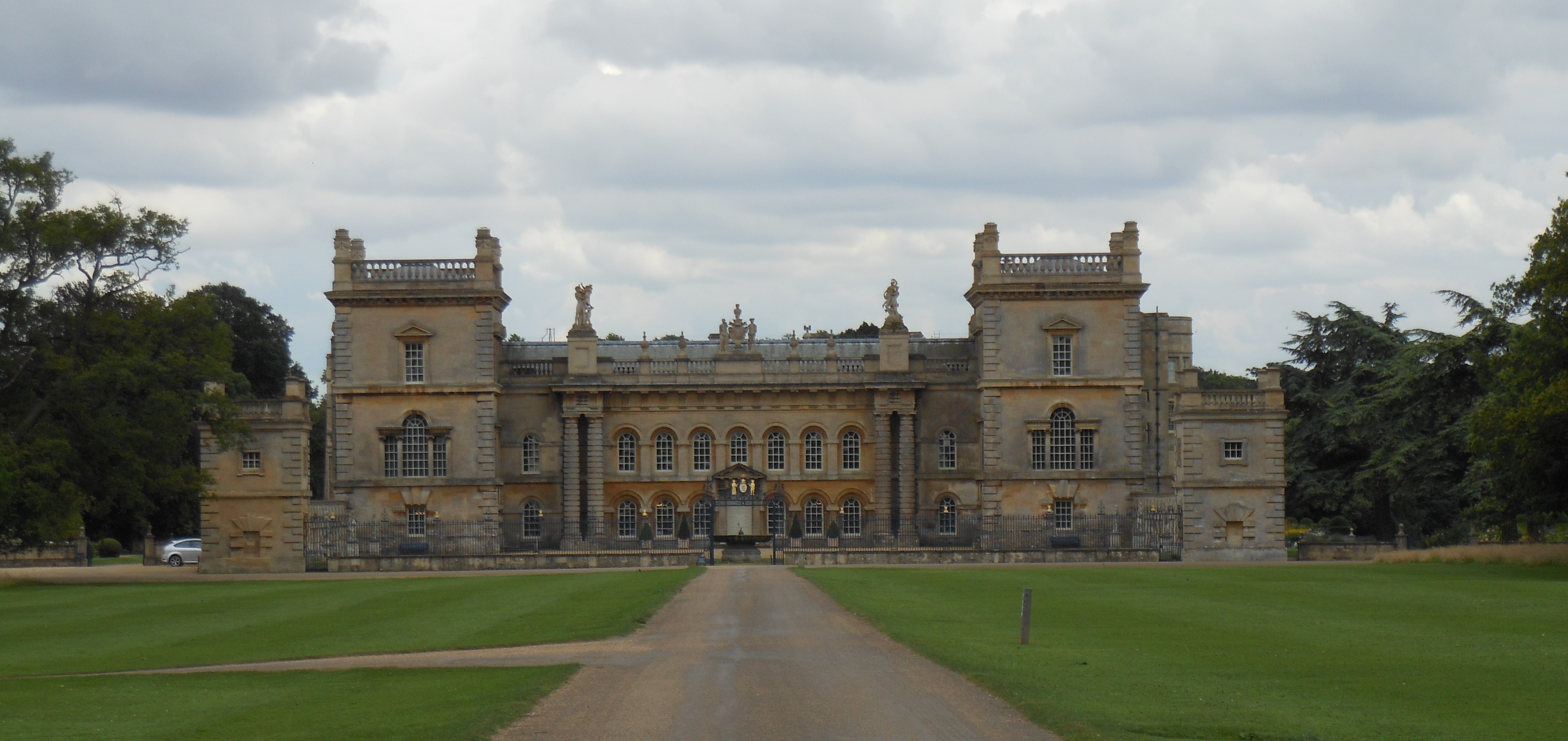
Grimsthorpe Castle, Lincolnshire

By this act, the little girl, now 16 months old, was permitted to inherit any remaining property that had not been returned to the crown by her father’s attainder. This did not particularly improve Mary’s situation, as most of the property she would be allowed to inherit had already passed into the hands of others. This Act of Parliament is the last mention we have of Lady Mary Seymour in the historical record. The grant was not renewed when it became due in September 1550 and Lady Mary never claimed any of the remaining portion of her father’s estate.

It seems likely that the little orphan had died at Grimsthorpe Castle before her second birthday, her burial place now unknown. There are traditions that she survived. One such has her raised by her governess, eventually marrying Sir Edward Bushell, while a family in Sussex also claims to be descended from her. While neither of these scenarios are impossible, there is no historical record to substantiate the claims.

That we cannot say for certain is one more sad note in the life of a little girl whose birth was met with such joy by both her parents, but whose short life was replete with tragedy. She was a little pawn in the machinations of her elders.

Images:

Courtesy of Wikipedia except Grimsthorpe Castle which is ©2024 Sharon Bennett Connolly FRHistS

Notes:

1. Linda Porter, Katherine the Queen: The Remarkable Life of Katherine Parr, the Last Wife of Henry VIII, p. 318; 2. ibid, p. 322; 3. ibid, p. 323; 4. Rebecca Larson, ‘The Disappearance of Lady Mary Seymour’, tudorsdynasty.com; 5. Linda Porter, Katherine the Queen, p. 341; 6. ibid, pp. 341-342; 7. ibid, p. 342; 8. ibid

Sources:

Linda Porter, Katherine the Queen: The Remarkable Life of Katherine Parr, the Last Wife of Henry VIII; Rebecca Larson, ‘The Disappearance of Lady Mary Seymour’, tudorsdynasty.com; Don Matzat, Katherine Parr: Opportunist, Queen, Reformer; Amy Licence, The Sixteenth Century in 100 Women; Anne Crawford, editor, Letters of the Queens of England; Oxforddnb.com; Elizabeth Norton, Catherine Parr; Elizabeth Norton, The Lives of Tudor Women; Sarah Morris and Natalie Grueninger, In the Footsteps of the Six Wives of Henry VIII.

*

My Books:

Signed, dedicated copies of all my books are available through my online store.

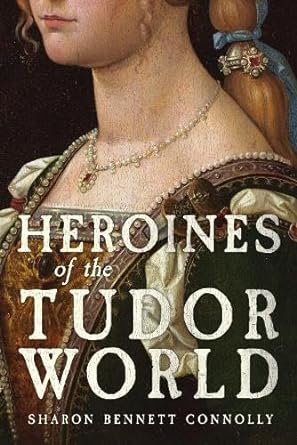
OUT NOW! Heroines of the Tudor World
Heroines of the Tudor World tells the stories of the most remarkable women from European history in the time of the Tudor dynasty, 1485-1603. These are the women who ruled, the women who founded dynasties, the women who fought for religious freedom, their families and love. These are the women who made a difference, who influenced countries, kings and the Reformation. In the era dominated by the Renaissance and Reformation, Heroines of the Tudor World examines the threats and challenges faced by the women of the era, and how they overcame them. From writers to regents, from nuns to queens, Heroines of the Tudor World shines the spotlight on the women helped to shape Early Modern Europe.

Heroines of the Tudor World is now available for pre-order from Amberley Publishing and Amazon UK.

Coming 30 January 2025: Scotland’s Medieval Queens
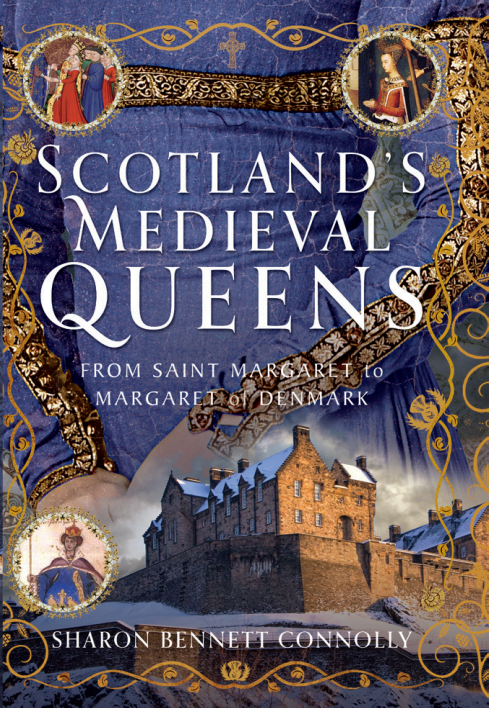
Scotland’s history is dramatic, violent and bloody. Being England’s northern neighbour has never been easy. Scotland’s queens have had to deal with war, murder, imprisonment, political rivalries and open betrayal. They have loved and lost, raised kings and queens, ruled and died for Scotland. From St Margaret, who became one of the patron saints of Scotland, to Elizabeth de Burgh and the dramatic story of the Scottish Wars of Independence, to the love story and tragedy of Joan Beaufort, to Margaret of Denmark and the dawn of the Renaissance, Scotland’s Medieval Queens have seen it all. This is the story of Scotland through their eyes.

Available for pre-order now.

Also by Sharon Bennett Connolly:
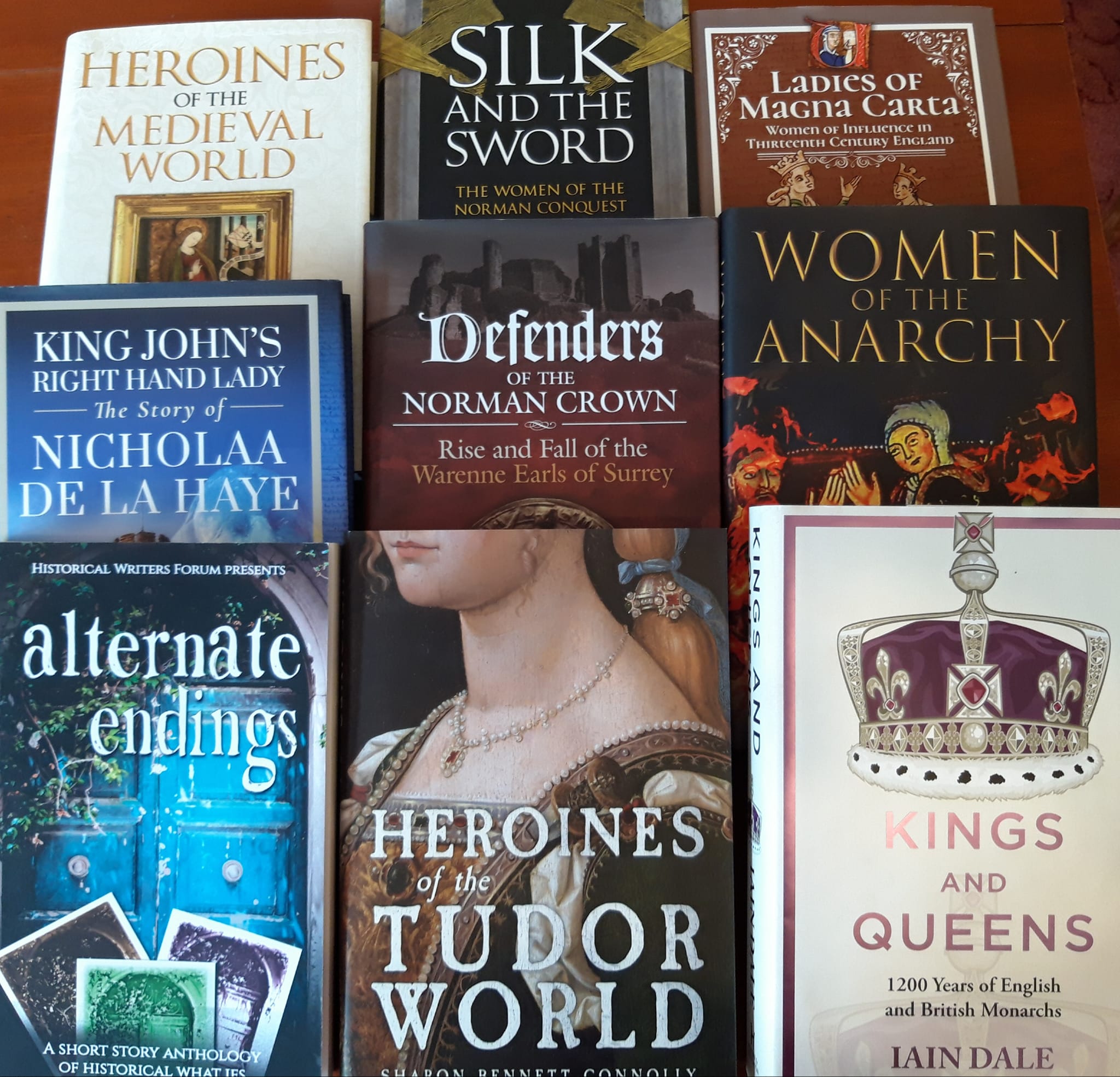
Women of the Anarchy demonstrates how Empress Matilda and Matilda of Boulogne, unable to wield a sword themselves, were prime movers in this time of conflict and lawlessness. It shows how their strengths, weaknesses, and personal ambitions swung the fortunes of war one way – and then the other. Available from Bookshop.orgAmberley Publishing and Amazon UKKing John’s Right-Hand Lady: The Story of Nicholaa de la Haye is the story of a truly remarkable lady, the hereditary constable of Lincoln Castle and the first woman in England to be appointed sheriff in her own right. Available from all good bookshops Pen & Sword Booksbookshop.org and AmazonDefenders of the Norman Crown: The Rise and Fall of the Warenne Earls of Surrey tells the fascinating story of the Warenne dynasty, from its origins in Normandy, through the Conquest, Magna Carta, the wars and marriages that led to its ultimate demise in the reign of Edward III. Available from Pen & Sword BooksAmazon in the UK and US, and Bookshop.org

Ladies of Magna Carta: Women of Influence in Thirteenth Century England looks into the relationships of the various noble families of the 13th century, and how they were affected by the Barons’ Wars, Magna Carta and its aftermath; the bonds that were formed and those that were broken. It is now available in paperback and hardback from Pen & Sword,  Amazon, and Bookshop.orgHeroines of the Medieval World tells the stories of some of the most remarkable women from Medieval history, from Eleanor of Aquitaine to Julian of Norwich. Available now from Amberley Publishing and Amazon, and Bookshop.orgSilk and the Sword: The Women of the Norman Conquest traces the fortunes of the women who had a significant role to play in the momentous events of 1066. Available now from Amazon,  Amberley Publishing, and Bookshop.org.

Alternate Endings: An anthology of historical fiction short stories including Long Live the King… which is my take what might have happened had King John not died in October 1216. Available in paperback and kindle from Amazon.

Podcast:

Have a listen to the A Slice of Medieval podcast, which I co-host with Historical fiction novelist Derek Birks. Derek and I welcome guests, such as Bernard Cornwell, and discuss a wide range of topics in medieval history, from significant events to the personalities involved.

*

Don’t forget! Signed and dedicated copies of all my books are available through my online store.

For forthcoming online and in-person talks, please check out my Events Page.

You can be the first to read new articles by clicking the ‘Follow’ button, liking our Facebook page or joining me on TwitterThreads and Instagram.

*

©2024 Sharon Bennett Connolly FRHistS.

The Remarkable Courage of Anne Askew

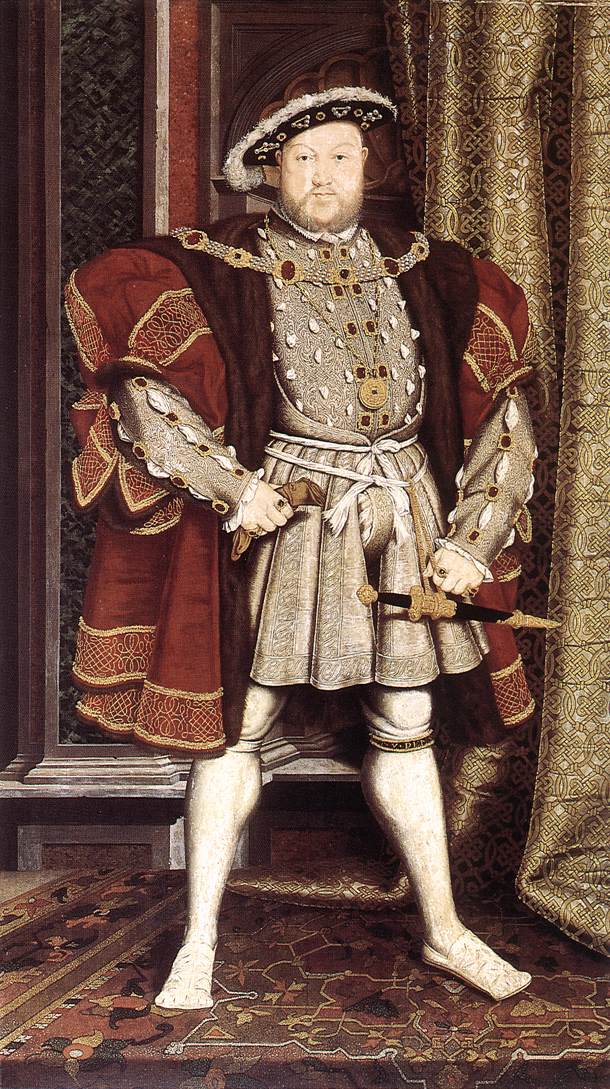
Portrait of Henry VIII after Hans Holbein the Younger

When Henry VIII decided to break with Rome, he was making that decision not just for himself but for his entire nation. But Henry was still a conservative Catholic and while others embraced the Reformation and the tenets of Calvinism or Lutheranism, Henry remained Catholic to his dying day, just not Roman Catholic. His break with Rome led to the Dissolution of the Monasteries, where monastic institutions and communities were broken up and sold off.

This, in turn led to the Pilgrimage of Grace, a popular revolt in Yorkshire in October 1536, led by Robert Aske, which spread to other parts of northern England. The rebellion was inspired by the failed Lincolnshire Rising, which had started on 1 October 1536 and it was said 22,000 people followed a monk and shoemaker, the vicar of Louth and Nicholas Melton (known as Captain Cobbler) to protest against the closing of the monasteries and the seizure of church land and plate. The figure was probably much smaller, perhaps some 3,000 rebels. However, by the time they marched on Lincoln and occupied Lincoln Cathedral, some 40,000 rebels were demanding the right to worship as Roman Catholics and protection for the treasures of Lincolnshire’s churches. The Rising was all but over by 4 October, when Henry sent word that the protesters should disperse or face retribution at the hands of Charles Brandon, Duke of Suffolk, who had mobilised his troops to put down the revolt.

By 14 October, most of the host had returned home. The two ringleaders were hanged at Tyburn, while other leading rebels were executed in the following days. It was against this background and the fear that the Rising must have invoked throughout Lincolnshire, that Anne Askew came to the fore. Anne Askew, also spelt Ayscough or Ainscough, was born around 1521, probably at the family home at Stallingborough, near Grimsby in Lincolnshire. She was the daughter of Sir William Askew and his first wife, Elizabeth Wrottesley.

Portrait of Anne Askew by Hans Eworth

Anne was the second oldest of five children, with an older sister Martha, a younger sister Jane, and two younger brothers, Francis and Edward. Her father, a landowner in Lincolnshire and Nottinghamshire, was knighted in 1513. He attended the king at the Field of the Cloth of Gold in France in 1520 and in 1521 he was appointed High Sheriff of Lincolnshire. From 1529, he was a member of Parliament for Grimsby. After the death of Anne’s mother, he married twice more. He married the daughter of a Struxley or Streichley of Nottinghamshire, whose name is sadly now lost to history and married again in 1522 to Elizabeth, the daughter of John Hutton of Tudhoe, Co. Durham and the widow of Sir William Hansard of South Kelsey, Lincolnshire, with whom he had two more sons, Christopher and Thomas.

By about 1523, the family had moved to South Kelsey, just 20 miles from Lincoln. Anne was well educated, possibly by tutors, though we do not know the specifics of her education. Anne’s writings were published posthumously by reformist scholar John Bale, and it is from these that we get most of her story.

Anne’s future was decided following the tragic early death of her older sister, Martha. Sir William had arranged for Martha to marry Thomas Kyme of Friskney, the son and heir of a neighbouring landowner. Sadly, Martha died before the wedding could take place. Rather than suffer a financial loss with the failure of the arrangement, Sir William offered 15-year-old Anne as a replacement bride, ‘so that in the ende she was compelled against her will or fre consent to marrye with hym,’ and, as John Bale put it, Anne ‘demeaned her selfe lyke a Christen wife’.1 Anne and Thomas had two children together.

It was about the time that Anne was preparing for her wedding, in 1536, that the Lincolnshire Rising erupted, starting in Louth and making its way towards Lincoln. Her father Sir William was one of the commissioners for the king’s tax subsidy who were due to sit in Caistor as the rebels arrived in the town. Sir William attempted to ride for home, ahead of the rebellious host. He was soon captured, aware that his own servants who were accompanying him supported the rebels. Anne’s brothers were also arrested by the rebels and their house watched. Sir William was then forced to write to the king to inform him of what had happened, with the complaint that ‘the common voice and fame was that all jewels and goods of the churches of the country should be taken from them and brought to Your Grace’s Council, and also that your said loving and faithful subjects should be put off new enhancements and other importunate charges.’2

With the failure of the rebellion, Sir William and his sons returned home. One wonders if the treatment of her menfolk, at the hands of those who were defending Roman Catholicism, was not a factor in Anne turning to the reformed faith. However the transformation came about, and in spite of her husband’s devout Catholicism, Anne did become a committed Protestant. She acquired a copy of an English Bible and began reading aloud from it, though her husband and brother had both forbidden her to do so. Anne explained that ‘in processe of tyme by oft reading of the sacred Bible, she fell clerelye from all olde superstycyons of papystrye, to a perfyght believe in Jhesus Christ.’3

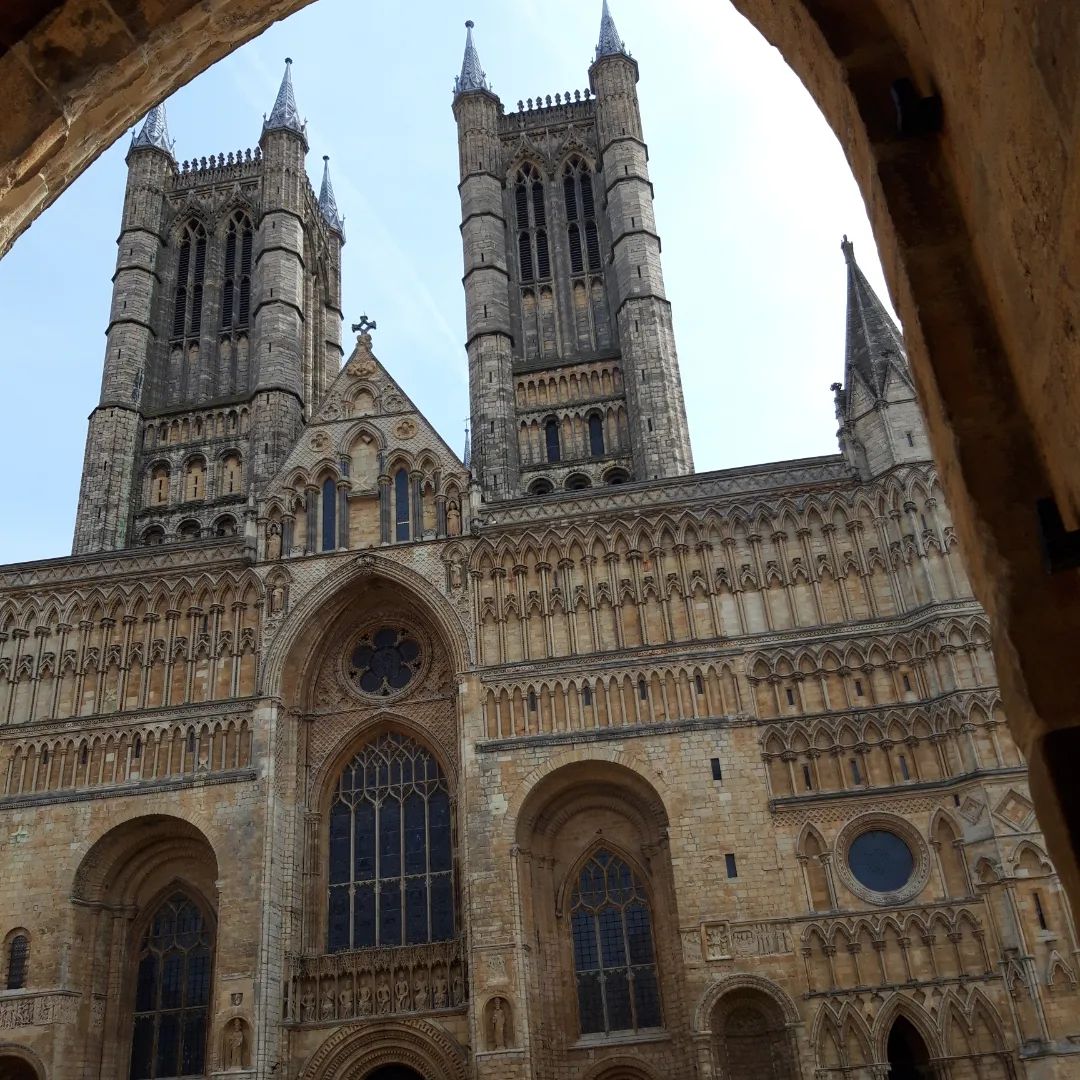
Lincoln Cathedral

In May 1543, the Act for the Advancement of True Religion was passed, forbidding any woman below the rank of noblewoman or gentlewoman from reading the Bible; and forbidding any woman, of any rank, from reading the Bible aloud. Anne was a gentlewoman and therefore still permitted to read the Bible, but only in private. She wanted to travel to Lincoln to see the cathedral’s Bible, but Kyme forbade it. Anne had been apprised of the hostility this would engender: ‘For my fryndes told me, if I ded come to Lyncolne, the prestes wolde assault me and put me to great trouble, as thereof they had made their boast.’4 Anne did travel to Lincoln and stayed there for about six days, reading her Bible in the cathedral. She said that one man confronted her, but he had said so little of significance that she could not recall his words.

This incident, and the fact that Anne continued to read aloud to whoever would listen, to such an extent that the local priest complained to her husband, infuriated Thomas Kyme. Angry and embarrassed at his wife’s actions, Kyme drove her from the house, with some violence. Driven from hearth and home – and from her children, Anne resumed her maiden name and sought a divorce. In late 1544 she travelled to London, accompanied by only a maid, in order to obtain a legal separation in the court of chancery. Two of her brothers were already in London. Edward, who had previously been in the service of Archbishop Thomas Cranmer, was cup-bearer to Henry VIII and her half-brother, Christopher, who died around this time, was a Gentleman of the Privy Chamber.

Her cousin, Christopher Brittayn, was a lawyer at the Temple and Anne’s sister Jane was married to George St Poll, a lawyer in the service of the duke and duchess of Suffolk. Anne lodged in a house close to the Temple, London’s legal centre, and soon met others with like-minded religious views, many with connections. Several gentlewomen gave Anne money, including the countess of Hertford and the wife of Sir Anthony Denny. They both sent messengers to Anne with money.

Queen Kateryn Parr

Anne found herself moving in exalted circles, these ladies were close friends of Henry VIII’s new queen, Kateryn Parr, though whether the queen and Anne ever met is uncertain. Anne made other connections in the city, including her religious advisor John Lascels and the chronicler Edward Hall. She was also close to the Kentish Anabaptist Joan Bocher, who would be executed in 1550.

After preaching publicly in the streets of the capital, Anne came to the attention of the authorities. According to Anne’s nephew, writing after her death, she was arrested following the interception of a letter she was trying to send, while attempting to communicate with the queen. She was detained on 10 March 1545, under the Six Articles Act, which made deviation from the official tenets of the English church a civil offence. Anne was brought before Sir Martin Bowes, Lord Mayor of London, and the bishop of London’s chancellor, and interrogated as to her beliefs. She was told that St Paul forbade women from talking of the word of God, but Anne countered that St Paul only barred women from instructing a congregation.

Still only 24 years of age, Anne was confident, fearless and bold in dealing with the great men of the city of London. Women were not meant to behave in such a way, they were supposed to be contrite and accept the superior intellect and authority of the men in charge. As a consequence, the Lord Mayor ordered her imprisonment. She spent 12 days in prison, visited daily by a priest sent by Edmund Bonner, Bishop of London. Her cousin, Brittayn, failed in his petition to have her released on bail, but succeeded in having her examined before the bishop himself, on 25 March. She was accused of subscribing to reformist beliefs concerning transubstantiation and the other sacraments and the dominion of the priesthood and asked to sign a declaration of orthodox faith.

Anne took the paper and wrote ‘I, Anne Askewe do beleve all maner thynges contayned in the faythe of the Catholyck churche.’5 Bishop Bonner flew into a fury, but her cousin, Brittayn, persuaded him that she acted from her ‘weak woman’s wit’ and with the added voices of her friends, Hall, Hugh Weston and Francis Spilman, Anne was returned to prison for one more night before being freed on bail the next day. Whether or not Anne abjured is open to interpretation; the authorities say she did, Anne denied it.

The torture of Anne Askew

Once freed, Anne continued to pursue her divorce from Thomas Kyme. The Privy Council became involved and ordered both Anne and Thomas to appear before them within ten days. Anne and Kyme were brought before the Council at Greenwich and were questioned about their relationship. The questioning, under the direction of Stephen Gardiner, Bishop of Winchester, turned to the matter of Anne’s views in the sacrament and after an exchange of words whereby Anne evaded Gardiner’s questions, she was again committed to prison for the night, this time to Newgate, a harrowing place. Kyme returned home. Anne was brought before the Council the next day and questioned further by Bishop Gardiner, who declared that she should be burnt.

According to Anne herself, they charged her ‘upon my obedience to show them if I knew any man or woman of my sect. Answered that I knew none. Then they asked me of my lady of Suffolk, my lady of Sussex, my lady of Hertford, my lady Denny and my lady Fitzwilliam.’6 These women were close associates of the queen, Kateryn Parr. The queen’s chambers were searched for heretical texts, though none were found.

On 28 June 1546, Anne Askew was arraigned for heresy at the Guildhall in London, alongside Nicholas Shaxton, former Bishop of Salisbury, and two other men. Shaxton abjured but Anne was condemned ‘without any triall of a jurie’.7

The next day, Anne was sent to the Tower and subjected to further questioning. It was hoped that this would force Anne to reveal her associates at court and, by extension, their husbands. When she refused to name anyone, her interrogators, Thomas Wriothesley and Richard Rich, took the exceptional step of having her undress to her shift and fastened to the rack. In Anne’s own words:

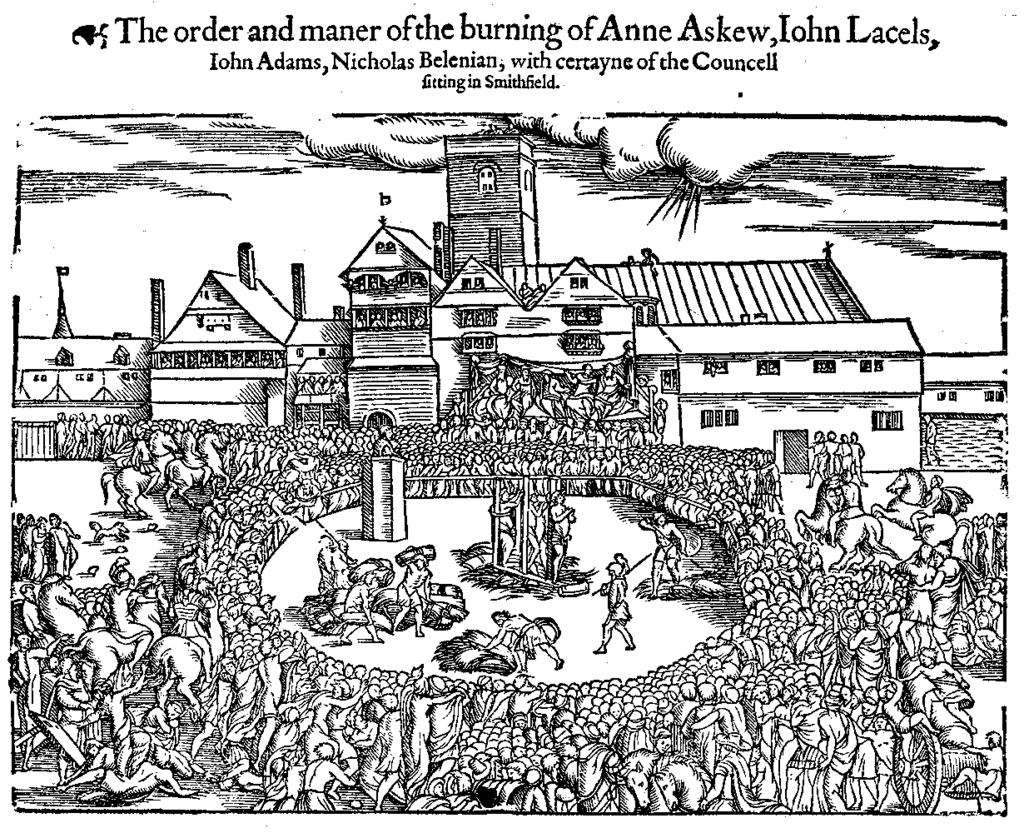
Woodcut of the burning of Anne Askew

Then they put me on the rack because I confessed no ladies or gentlewomen to be of my opinion; and there they kept me a long time, and because I lay still and did not cry, my lord chancellor and Master Rich took pains to rack me with their own hands till I was nigh dead. Then the lieutenant (of the Tower) caused me to be loosed from the rack. Immediately, I swooned away, and then they recovered me again. After that I sat two long hours reasoning with my lord chancellor upon the bare floor.8

As a woman, gently born and already condemned, Anne should have been exempt from such treatment. Anne was so severely tortured that by the end of it her body was broken, all four limbs were dislocated and she was unable to stand. She was eventually returned to Newgate from where, on 16 July 1546, Anne was carried to the site of her execution at Smithfield, sat on a chair in a cart, every movement causing her more pain. She was tied to another chair at the stake, where she was given one more chance to recant and receive a pardon.

She refused.

She died alongside three other Protestants, John Lascels, John Hadlam, who was a tailor, and John Hemley, formerly an Observant friar.

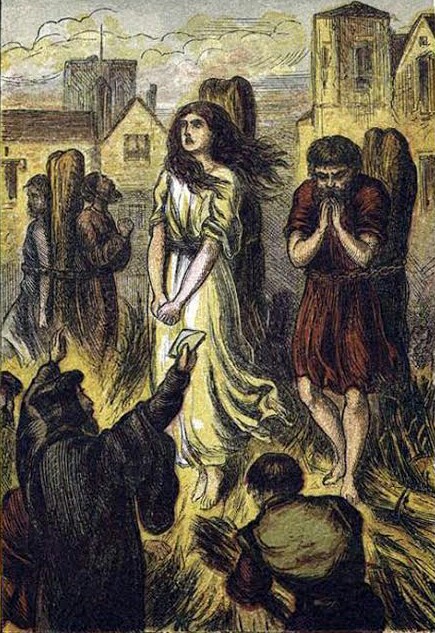
The Martyrdom of Anne Askew

Anne Askew holds the terrible distinction of being one of only two women to have ever been tortured in the Tower of London, the other being Margaret Cheyne, who had been involved in the Pilgrimage of Grace and was also burnt for heresy. Anne died bravely, never revealing her connections at court, thus, perhaps, saving a queen of England from the same fate. She was 25 years old.

On a national level, her death was a consequence of the growing fear that accompanied Henry’s failing health. On a personal level, although Anne’s journey to London had arisen from her marriage troubles, these troubles were always entwined within her own spiritual journey. Anne’s supreme confidence in her faith and her courage under torture deservedly earned her a place in the Protestant martyrology. Her own, first-hand account of her story was edited and published by John Bale and reprinted in John Foxe’s Book of Martyrs, ensuring her legacy would pass down through the generations.

*

Notes:

1. The examinations of Anne Askew, edited by E. V. Beilin, quoted in Diane Watt, ‘Askew [married name Kyme], Anne’, Oxforddnb.com; 2. & P, Vol XI, p. 534, quoted in Elizabeth Norton, The Lives of Tudor Women; 3. The examinations of Anne Askew, edited by E. V. Beilin, quoted in Diane Watt, ‘Askew [married name Kyme], Anne’; 4. ibid; 5. ibid; 6. The examinations of Anne Askew, quoted in Amy Licence, The Sixteenth Century in 100 Women; 7. Thomas Wriothesley quoted in Diane Watt, ‘Askew [married name Kyme], Anne’; 8. Mickey Mayhew, House of Tudor: A Grisly History

Sources:

Diane Watt, ‘Askew [married name Kyme], Anne’, Oxforddnb.com; Amy Licence, The Sixteenth Century in 100 Women; The examinations of Anne Askew, edited by E. V. Beilin; Elizabeth Norton, The Lives of Tudor Women; Don Matzat, Katherine Parr: Opportunist, Queen, Reformer; Mickey Mayhew, House of Tudor: A Grisly History; J.D. Mackie, The Earlier Tudors 1485-1558; Arthur D. Innes, A History of England Under the Tudors; Sarah Bryson, The Brandon Men: In the Shadow of Kings; Steven Gunn, Charles Brandon: Henry VIII’s Closest Friend; Sarah Bryson, La Reine Blanche: Mary Tudor, A Life in Letters; John Paul Davis, A Hidden History of the Tower of London: England’s Most; Robert Lacey, The Life and Times of Henry VIII; David Loades, editor, Chronicles of the Tudor Kings: The Tudor Dynasty from 1485 to 1553: Henry VII, Henry VIII and Edward VI in the Words of their Contemporaries.

Images:

Courtesy of Wikipedia except Lincoln Cathedral which is ©2024 Sharon Bennett Connolly FRHistS

*

My Books

Signed, dedicated copies of all my books are available through my online bookshop.

Out now: Scotland’s Medieval Queens

Books by Sharon Bennett Connolly

Scotland’s history is dramatic, violent and bloody. Being England’s northern neighbour has never been easy. Scotland’s queens have had to deal with war, murder, imprisonment, political rivalries and open betrayal. They have loved and lost, raised kings and queens, ruled and died for Scotland. From St Margaret, who became one of the patron saints of Scotland, to Elizabeth de Burgh and the dramatic story of the Scottish Wars of Independence, to the love story and tragedy of Joan Beaufort, to Margaret of Denmark and the dawn of the Renaissance, Scotland’s Medieval Queens have seen it all. This is the story of Scotland through their eyes.

Scotland’s Medieval Queens gives a thorough grounding in the history of the women who ruled Scotland at the side of its kings, often in the shadows, but just as interesting in their lives beyond the spotlight. It’s not a subject that has been widely covered, and Sharon is a pioneer in bringing that information into accessible history.’ Elizabeth Chadwick (New York Times bestselling author)

Available now from Amazon and Pen and Sword Books

Also by Sharon Bennett Connolly:

Books by Sharon Bennett Connolly

Heroines of the Tudor World tells the stories of the most remarkable women from European history in the time of the Tudor dynasty, 1485-1603. These are the women who ruled, the women who founded dynasties, the women who fought for religious freedom, their families and love. Heroines of the Tudor World is now available for pre-order from Amberley Publishing and Amazon UK. Women of the Anarchy demonstrates how Empress Matilda and Matilda of Boulogne, unable to wield a sword themselves, were prime movers in this time of conflict and lawlessness. It shows how their strengths, weaknesses, and personal ambitions swung the fortunes of war one way – and then the other. Available from Bookshop.orgAmberley Publishing and Amazon UKKing John’s Right-Hand Lady: The Story of Nicholaa de la Haye is the story of a truly remarkable lady, the hereditary constable of Lincoln Castle and the first woman in England to be appointed sheriff in her own right. Available from all good bookshops Pen & Sword Booksbookshop.org and Amazon

Defenders of the Norman Crown: The Rise and Fall of the Warenne Earls of Surrey tells the fascinating story of the Warenne dynasty, from its origins in Normandy, through the Conquest, Magna Carta, the wars and marriages that led to its ultimate demise in the reign of Edward III. Available from Pen & Sword BooksAmazon in the UK and US, and Bookshop.orgLadies of Magna Carta: Women of Influence in Thirteenth Century England looks into the relationships of the various noble families of the 13th century, and how they were affected by the Barons’ Wars, Magna Carta and its aftermath; the bonds that were formed and those that were broken. It is now available in paperback and hardback from Pen & SwordAmazon, and Bookshop.orgHeroines of the Medieval World tells the stories of some of the most remarkable women from Medieval history, from Eleanor of Aquitaine to Julian of Norwich. Available now from Amberley Publishing and Amazon, and Bookshop.orgSilk and the Sword: The Women of the Norman Conquest traces the fortunes of the women who had a significant role to play in the momentous events of 1066. Available now from Amazon,  Amberley Publishing, and Bookshop.org.

Alternate Endings: An anthology of historical fiction short stories including Long Live the King… which is my take what might have happened had King John not died in October 1216. Available in paperback and kindle from Amazon.

Podcast:

Have a listen to the A Slice of Medieval podcast, which I co-host with Historical fiction novelist Derek Birks. Derek and I welcome guests, such as Bernard Cornwell and Elizabeth Chadwick, and discuss a wide range of topics in medieval history, from significant events to the personalities involved.

There are now over 70 episodes to listen to!

Every episode is also now available on YouTube.

*

Don’t forget! Signed and dedicated copies of all my books are available through my online bookshop.

For forthcoming online and in-person talks, please check out my Events Page.

You can be the first to read new articles by clicking the ‘Follow’ button, liking our Facebook page or joining me on TwitterThreadsBluesky and Instagram.

©2024 Sharon Bennett Connolly FRHistS


Guest post: All the Queen’s Men by Carol Ann Lloyd

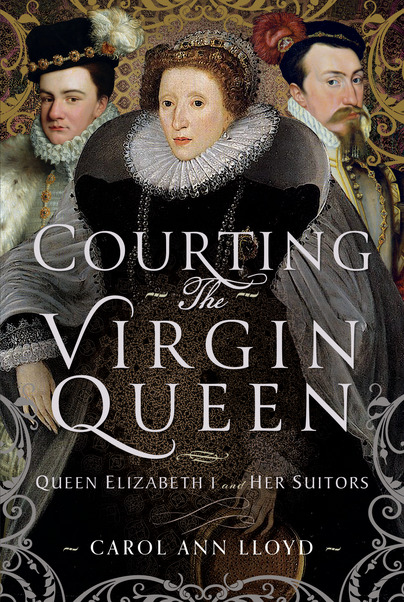
Today, it is a pleasure to welcome my dear friend, Carol Ann Lloyd, to History… the Interesting Bits, with an article on the love life of Queen Elizabeth I. Carol Ann’s new book Courting the Virgin Queen: Queen Elizabeth I and Her Suitors is due to be released on 30 July by Pen and Sword. If it is anything like her first book, The Tudors By Numbers: The Stories and Statistics Behind England’s Most Infamous Royal Dynasty, it will be a fabulous read!

“All the Queen’s Men: The Courtships of the Virgin Queen”

Carol Ann Lloyd

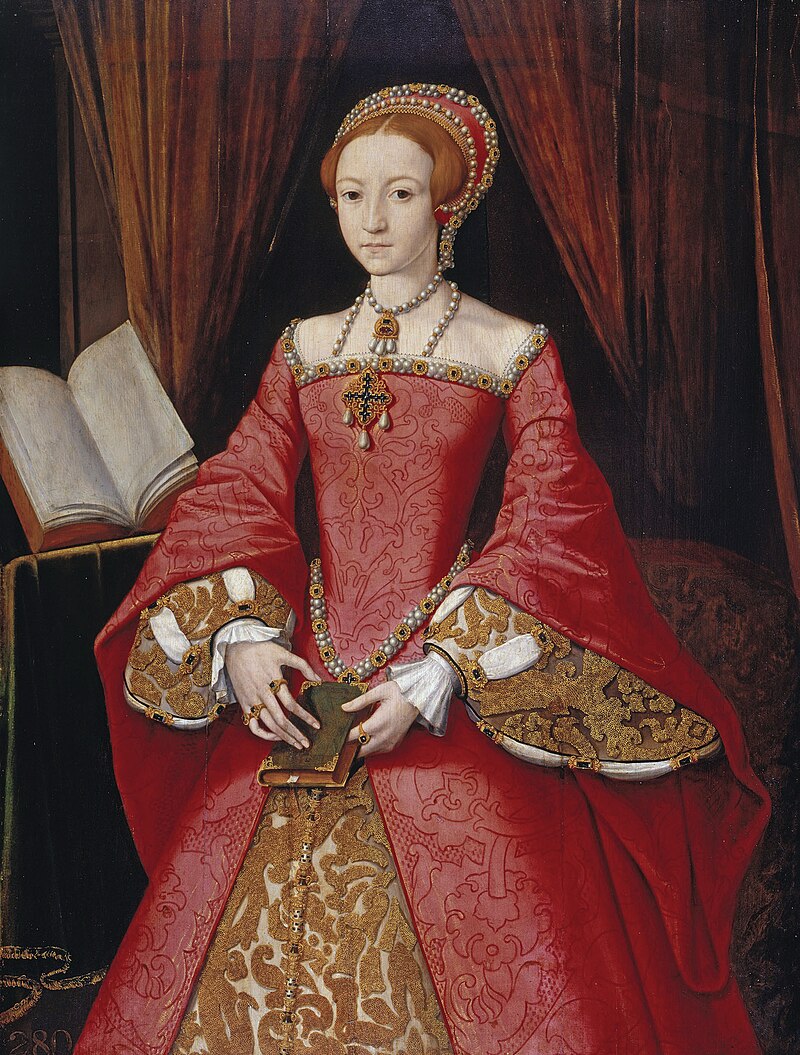
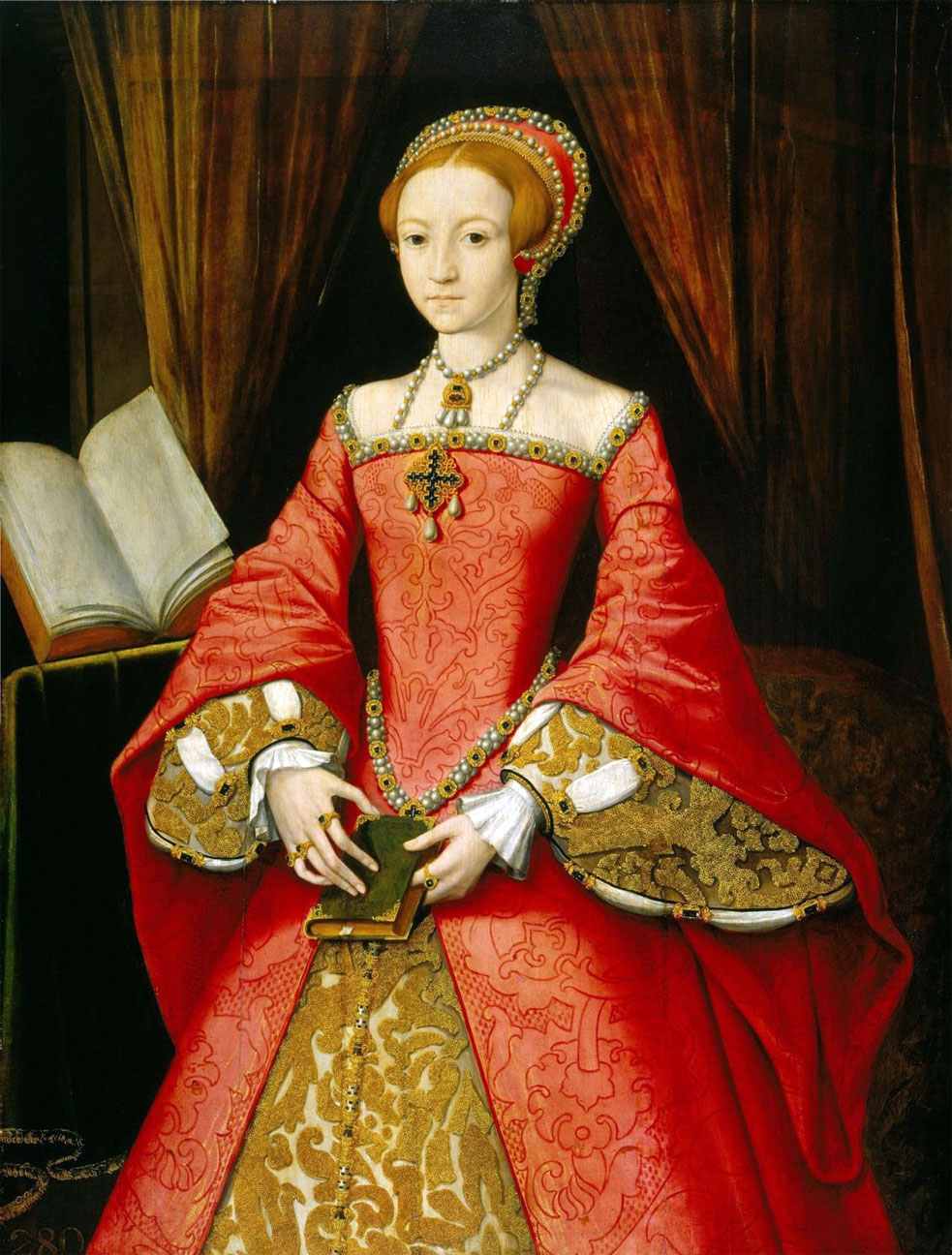
Elizabeth I, aged 14

It’s ironic that the child of the most-married English monarch ever is the only English monarch to rule as an adult and never marry! Elizabeth I, daughter of the famous (infamous?) Henry VIII never married. But it was not for lack of options.

The big question is “Why?” Did Elizabeth really want to marry anyone? What kept her from marrying? Did she ever intend to marry, or was she just keeping all her options open as she navigated the perilous landscape of European politics on her own?

I think there are many ways on answering this question. Let’s start at the beginning of her reign. Elizabeth was the least likely of Henry VIII’s children to come to the throne, and when she did everyone had the same question on their mind. As the Spanish Ambassador, the Count of Feria, reflected in the early days of the reign, “The more I think over this business the more certain I am that everything depends upon the husband this woman may take.” Elizabeth was questioned about her choice of husband by her council, ambassadors, and parliament. It was considered a public not a private matter, and the queen was repeatedly encouraged and counseled to get married and produce an heir for the good of the kingdom.

So, if everything depended on the husband her would take, what realistically were her options?

Some people might be surprised to learn that one of her first suitors was the husband of her recently deceased sister. Philip of Spain had been married to Mary I until her death, and the couple had no children. Still committed to bringing England back into the Catholic fold, Philip believed he could marry and control Elizabeth. I was surprised as I read his correspondence how convinced Philip was that Elizabeth was desperate for a husband and eager for his offer. Many Catholics never accepted the validity of the marriage between Henry VIII and Anne Boleyn, so Elizabeth’s hold on the throne was possibly tenuous. Philip believed he was the answer to Elizabeth’s problem. He thought she would jump at the chance.

Robert Dudley, Earl of Leicester

Philip could not have been more wrong. Elizabeth knew very well that Philip would seek to involve England in Spain’s wars, as he had during Mary I’s reign. Using her skills in language, Elizabeth dallied with Feria and postponed giving a firm answer until it suited her. That answer was a definite “no.”

The offer from Philip was only the beginning. I discovered in my research that Elizabeth used the many marriage possibilities as a way of strengthening her position with the international community. She managed to keep several foreign leaders eager for an alliance with England and a marriage with her. Over the years, the king of Sweden, European dukes and archdukes, and even all three of Catherine de Medici’s sons in France were offered as possible husband. And that doesn’t take into account the Scottish and English nobles who wanted to marry the queen.

Speaking of men in England, was it really Robert Dudley who kept Elizabeth from marrying? He most likely was the love of her life, perhaps the only man she might have married if she had not been the queen. He was at the center of her life, from the day she learned Mary I had died, and she was queen. He became Elizabeth’s Master of the Horse, which meant he was always with her when she went riding, one of her favorite activities. And he was the only man in the kingdom with permission to touch the queen as he helped her onto and off horse.

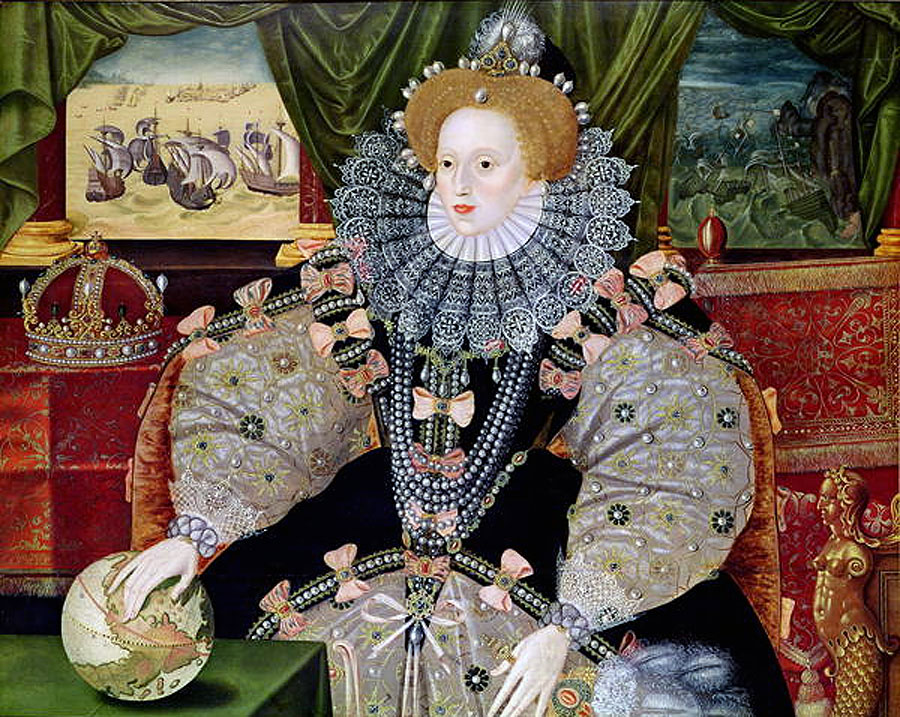
Queen Elizabeth I

Even with Dudley’s favored position, there were a few problems in the way. For one thing, he was married. And then his wife died in very suspicious circumstances, making a future marriage potentially devastating for Elizabeth’s reputation. Dudley was unpopular among the council. And ultimately, I believe Elizabeth meant what she is reported to have shouted at him in anger: “I will have but one mistress here and no master.”

So, did everything depend upon the husband Elizabeth took? Yes, it turns out it did. I realized through the research that the one suitor that Elizabeth courted throughout her reign was the husband she had declared herself wed to when she became queen: her country and her people. Early in her reign, Elizabeth had responded to parliament’s request that she marry by responding that she was “already bound unto a husband which is the kingdom of England.” From the time she became queen, Elizabeth wooed her nation and her people, seeking their approval, favor, and love. That was the husband she took, and it meant everything to her.

About the book:

The many courtships of the woman who became Elizabeth I began when she was an infant, displayed before foreign ambassadors who considered her as a possible clause of a contract between England and France. From such an unromantic beginning, Elizabeth grew to see her father marry multiple times and experienced frequent changes in stepmothers and status in the family. Eventually, she became the most eligible woman in Europe. From start to finish, her marriage prospects were as much political as they were personal.

When she came to the throne in 1558, the primary question facing everyone from foreign monarchs to English nobles and ministers was which of her many suitors would finally win her hand. Through the longest Tudor reign, Elizabeth used courtship as a tool to consider foreign alliances, hold ambitious English courtiers in check, and navigate her role as a woman ruler in a world that considered her unnatural without a man at her side.

Elizabeth was, in fact, always the ‘Virgin Queen’, from the early days as a twenty-five-year-old presenting herself as a potential royal bride to her final years as an ageing and unmarried woman who was destined to end the Tudor dynasty. Ultimately, she became the only monarch in England to rule as an adult and never marry. Through it all, as friends and potential lovers faded away, she clung to the one true love of her life: England.

Courting the Virgin Queen: Queen Elizabeth I and Her Suitors is available from Pen and Sword and Amazon.

About the author:

Carol Ann Lloyd turned an obsession with the Tudors into a speaking and writing career. She shares her love of history with Smithsonian Associates, Royal Oak Foundation, Agecroft Hall, Folger Shakespeare Library and other organizations. She holds degrees in Literature and Education and hosts a popular podcast, _British History: Royals, Rebels, and Romantics_. She also offers workshops about using Shakespeare strategies to improve communication skills and is a member of National Speakers Association.

*

My Books

Signed, dedicated copies of all my books are available through my online bookshop.

OUT NOW! Heroines of the Tudor World

Heroines of the Tudor World tells the stories of the most remarkable women from European history in the time of the Tudor dynasty, 1485-1603. These are the women who ruled, the women who founded dynasties, the women who fought for religious freedom, their families and love. These are the women who made a difference, who influenced countries, kings and the Reformation. In the era dominated by the Renaissance and Reformation, Heroines of the Tudor World examines the threats and challenges faced by the women of the era, and how they overcame them. From writers to regents, from nuns to queens, Heroines of the Tudor World shines the spotlight on the women helped to shape Early Modern Europe.

Heroines of the Tudor World is now available for pre-order from Amberley Publishing and Amazon UK.

Also by Sharon Bennett Connolly:

Women of the Anarchy demonstrates how Empress Matilda and Matilda of Boulogne, unable to wield a sword themselves, were prime movers in this time of conflict and lawlessness. It shows how their strengths, weaknesses, and personal ambitions swung the fortunes of war one way – and then the other. Available from Bookshop.orgAmberley Publishing and Amazon UKKing John’s Right-Hand Lady: The Story of Nicholaa de la Haye is the story of a truly remarkable lady, the hereditary constable of Lincoln Castle and the first woman in England to be appointed sheriff in her own right. Available from all good bookshops Pen & Sword Booksbookshop.org and AmazonDefenders of the Norman Crown: The Rise and Fall of the Warenne Earls of Surrey tells the fascinating story of the Warenne dynasty, from its origins in Normandy, through the Conquest, Magna Carta, the wars and marriages that led to its ultimate demise in the reign of Edward III. Available from Pen & Sword BooksAmazon in the UK and US, and Bookshop.org

Ladies of Magna Carta: Women of Influence in Thirteenth Century England looks into the relationships of the various noble families of the 13th century, and how they were affected by the Barons’ Wars, Magna Carta and its aftermath; the bonds that were formed and those that were broken. It is now available in paperback and hardback from Pen & Sword,  Amazon, and Bookshop.orgHeroines of the Medieval World tells the stories of some of the most remarkable women from Medieval history, from Eleanor of Aquitaine to Julian of Norwich. Available now from Amberley Publishing and Amazon, and Bookshop.orgSilk and the Sword: The Women of the Norman Conquest traces the fortunes of the women who had a significant role to play in the momentous events of 1066. Available now from Amazon,  Amberley Publishing, and Bookshop.org.

Alternate Endings: An anthology of historical fiction short stories including Long Live the King… which is my take what might have happened had King John not died in October 1216. Available in paperback and kindle from Amazon.

Podcast:

Have a listen to the A Slice of Medieval podcast, which I co-host with Historical fiction novelist Derek Birks. Derek and I welcome guests, such as Bernard Cornwell and discuss a wide range of topics in medieval history, from significant events to the personalities involved. There are now over 40 episodes to listen to!

*

Don’t forget! Signed and dedicated copies of all my books are available through my online bookshop.

For forthcoming online and in-person talks, please check out my Events Page.

You can be the first to read new articles by clicking the ‘Follow’ button, liking our Facebook page or joining me on Twitter and Instagram.

©2024 Sharon Bennett Connolly FRHistS

Lady Jane: The 9 Days’ Queen

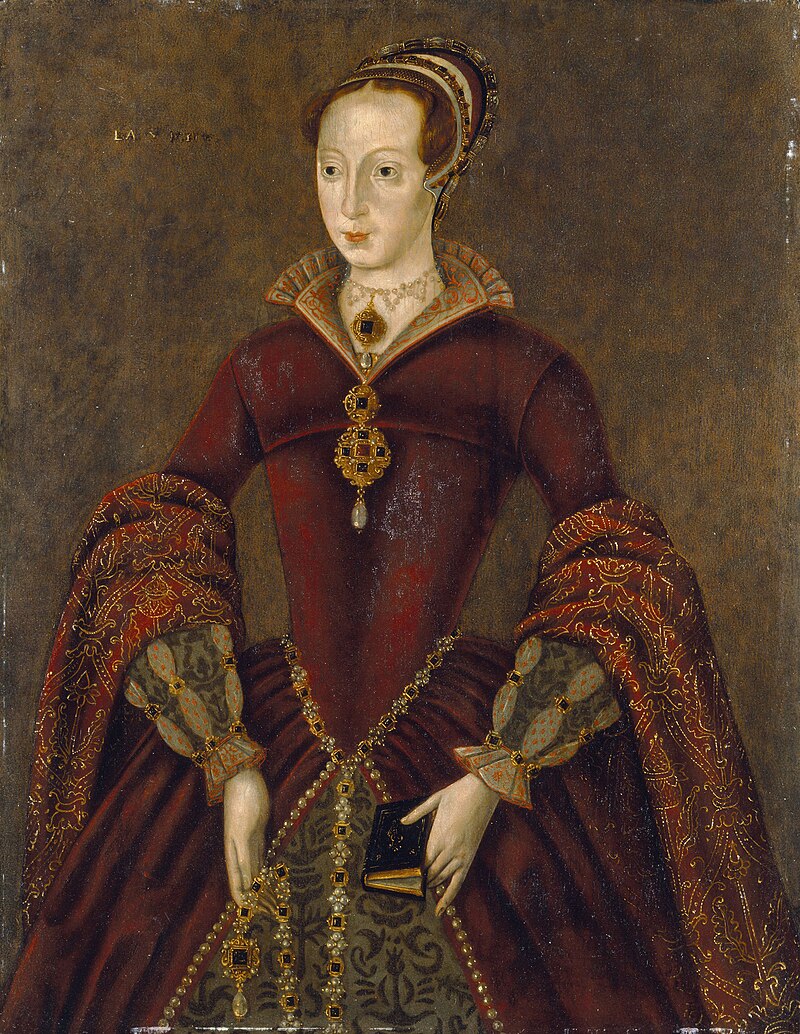
The Streatham Portrait of Jane Grey

Frances and Henry Grey were married in 1533, at her parent’s residence of Suffolk Place in Southwark. As the eldest surviving child of Mary Tudor, dowager Queen of France and Duchess of Suffolk, Frances was fourth in line to the throne after the children of Henry VIII, Edward, Mary and Elizabeth. When settling the succession, the king had instructed that his younger sister Mary’s line should be preferred over that of his older sister, Margaret. As a consequence, Frances was frequently at court.

The couple’s first child, a son, died young. They had three surviving daughters. The eldest, Jane, was born in October 1537, about the same time as her cousin Edward, the future King Edward VI; with the birth of the longed-for heir to the throne, Jane’s own birth went almost unnoticed. Jane would have been named after Henry VIII’s tragic queen, Jane Seymour, who died within two weeks of Edward’s birth.

Jane Grey would be known to history as the Nine Days’ Queen.

 She was raised at the family home of Bradgate Park, near Leicester. Frances and Henry Grey are said to have been very strict parents who were not prone to expressions of love and affection; the children were used to sarcasm, cuffs and criticism. In her teenage years, Jane herself is said to have complained to the visiting scholar Roger Ascham:

‘When I am in the presence either of father or mother, whether I speak, keep silence, sit, stand or go, eat, drink, be merry or sad, be sewing, playing, dancing, or doing anything else, I must do it as it were in such weight, measure and number, even so perfectly as God made the world; or else I am so sharply taunted, so cruelly threatened, yea presently sometimes with pinches, nips and bobs and other ways (which I will not name for the honour I bear them) … that I think myself in hell.’1

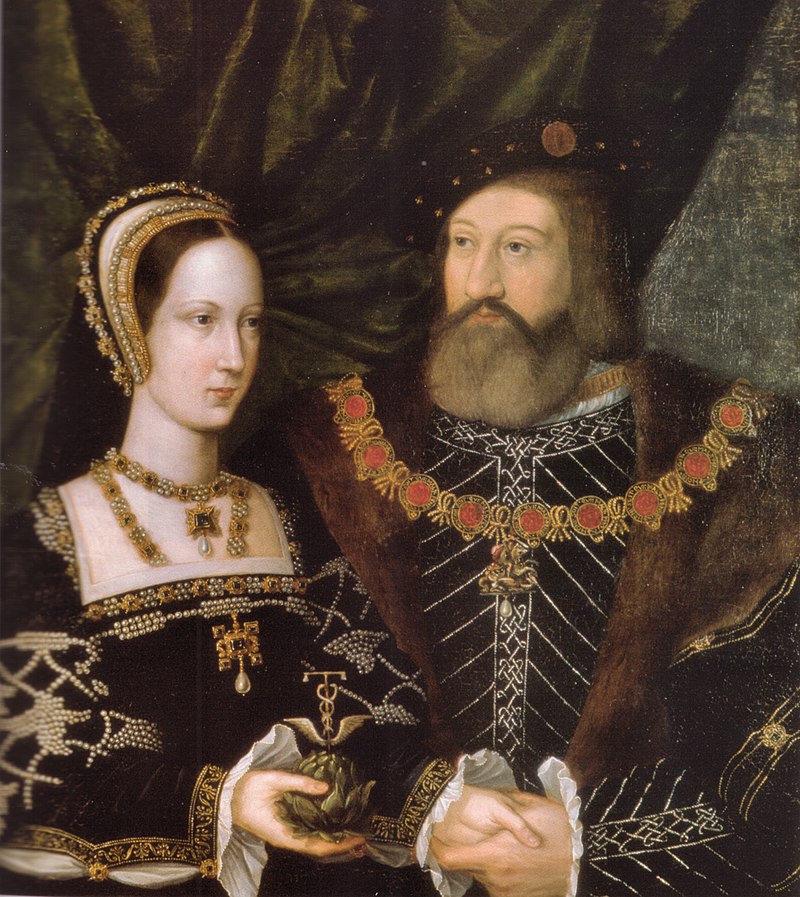
Mary Tudor and Charles Brandon, Jane’s maternal grandparents

Jane enjoyed study and excelled in all fields, including Greek and philosophy. She was afforded a first-class education and from 1545 her tutor was John Aylmer. Aylmer had been sponsored through his studies at Cambridge by Jane’s father, the Marquess of Dorset, and was a brilliant academic. As a future courtier, Jane was given lessons in dance and music; probably including the popular instruments, the lute, spinet and virginal. In religion, Jane and her sisters were raised as ‘evangelicals’, the common word in the first half of the sixteenth century for Protestants. From the age of nine, Jane’s mother would have taken her to court from time to time, to familiarise her daughter with the court and her future duties as a Maid of Honour. Frances was at the time serving as a Lady of the Privy Chamber to the king’s sixth wife, Kateryn Parr, Henry VIII’s 6th and final wife.

In January 1547, King Henry VIII died and was succeeded by his 9-year-old son, Edward VI. Jane and Edward were first cousins, once removed,and it is entirely possible – even likely – that Frances and Henry harboured hopes that Jane would marry the young king. It was Henry VIII’s will that shaped and dominated Jane’s future. More than ten years before his death, Parliament had granted Henry the right to bequeath the crown where he desired, rather than by strict primogeniture. In his final will, dated 26 December 1546, Henry excluded the Stuart line of his elder sister Margaret and settled the succession, should his children die without heirs, on the descendants of his younger sister, Mary, Duchess of Suffolk. Should Edward, Mary and Elizabeth all die without producing a child of their own, Jane would be queen; although Henry probably still held out hope that Frances would produce a son who could inherit ahead of the sisters.

Henry Grey, Marquess of Dorset

The government of England was now in the hands of the boy-king’s uncle Edward Seymour, Earl of Somerset – soon to become duke of Somerset. Somerset and Henry Grey did not get along well and Grey, though he was the only marquess in England he was not appointed to the new king’s privy council. The younger brother of Somerset, Thomas Seymour, the Lord High Admiral of England and first Baron Seymour of Sudeley, having recently – and rather scandalously – married the king’s widow, proposed that he take on the wardship of Lady Jane. Henry Grey was reluctant, given the scandal attached to the hasty marriage of Queen Kateryn and Seymour just four months after the king’s death. However, Princess Elizabeth had already joined the dowager queen’s household and Seymour hinted at arranging a marriage between Jane and the young king when they were old enough, sweetening the deal with the offer of a payment of £2,000 for Jane’s wardship.

Joining the household of the dowager queen was a great opportunity for Jane, which would provide her with connections that would benefit herself and her family. And so, at ten years-old, Jane was given into the custody of Thomas Seymour and from then on was frequently in the household of Kateryn Parr, at Chelsea and later at Sudeley Castle. This was one of the happiest periods of Jane’s short life.

During her time in the dowager queen’s household, Jane got to know her cousin, Princess Elizabeth, better, though they never grew close. At thirteen, Elizabeth was too old to pay much attention to ten-year-old Jane. And despite her tender years, Elizabeth was rather self-contained and distant; she had already experienced the highs and lows of royal life, from being lauded as her father’s heir to being declared a bastard and knowing her mother was executed as a traitor. The princess had learned not to trust easily and to keep her own counsel. That Jane was, technically, Elizabeth’s heir, must have made the relationship more fractious in a world where one’s inheritance could be erased by an act of parliament.

Frances Brandon, Duchess of Suffolk

Jane must have enjoyed living in a household of well educated, inquisitive women. One wonders, though, if she was aware of other goings-on in the household, as Thomas Seymour paid excessive attention to Princess Elizabeth. This caused tensions within the household, especially after the queen fell pregnant and began to fear that Seymour saw Elizabeth as a suitable replacement should she die in childbirth. Fearful for the princess’s reputation – and of her husband’s intentions – Elizabeth was sent away by Kateryn. Jane was now the most senior lady in the queen dowager’s household. And when Kateryn died a week after giving birth to her only child, Lady Mary Seymour, it was 11-year-old Jane who acted as chief mourner at her funeral, walking behind the queen’s coffin from the house to the chapel at Sudeley.

After the funeral, the queen’s household was broken up and Jane sent home to her parents. Within a few weeks, however, Thomas Seymour, now over the first stages of grief at losing his wife, given the blow to his finances and status the queen’s death had caused, realised that he could yet regain some standing if he resumed his guardianship of Jane. It took some persuading, but Seymour assured Henry and Frances that Jane would be well cared for and under the supervision of his mother. Although the late dowager queen’s women were still in Seymour’s household, the atmosphere had changed; and as Seymour’s ambitions came under suspicion from the Privy Council, it must have been an uncomfortable place for Jane to be. Amid rumours that Thomas Seymour was intending to marry Princess Elizabeth, he was arrested, as were Elizabeth’s servants. Elizabeth herself continued to insist that she would never agree to marry anyone without the Council’s permission.

Seymour was condemned for high treason by Act of Attainder and executed on 20 March 1549. On Seymour’s arrest, Jane had returned to Dorset House, her family’s London residence. Henry Grey may have seen his own hopes of advancement and Jane’s marriage to Edward VI disappear at Seymour’s arrest, but he must have been relieved that at least he had survived the affair with his head still on his shoulders. Besides, the wheel of fortune was about to turn his way. People were becoming increasingly disenchanted with Somerset’s rule and in the wake of Kett’s Rebellion in Norfolk, by 14 October it was Edward Seymour, Duke of Somerset, who was lodged in the Tower under arrest. John Dudley, Earl of Warwick and future Duke of Northumberland, took the reins of government. Henry Grey was finally appointed to the Privy Council and received numerous rewards of office and grants of lands and lordships.

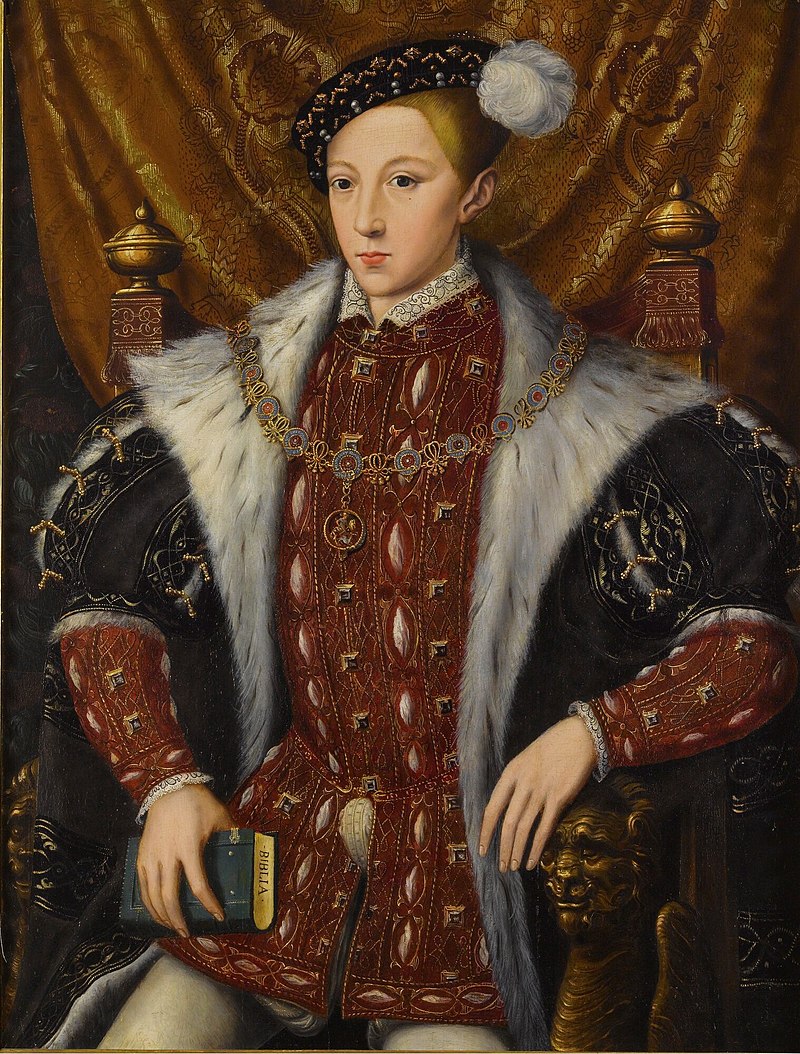
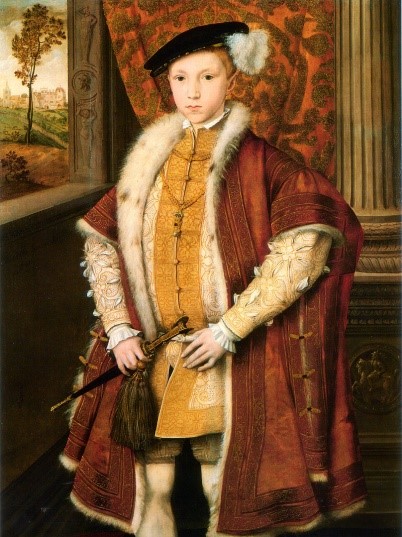
King Edward VI

Jane’s marriage was never far from the minds of those in power. Edward Seymour, Duke of Somerset had wanted to marry Jane to his oldest son and heir, the earl of Hertford, also called Edward. Nothing had come of this plan by the time of Somerset’s fall. Before that, as early as 1541, the French Ambassador had proposed that she marry Charles, Duke of Orléans, third son of King Francis I, but the boy died in 1545. John Dudley initially favoured a marriage between Jane and the king. The children born of such a marriage would secure the succession and guarantee the continuance of the new religion within England’s borders. It would also resolve the problems associated with the succession of Mary or Elizabeth. Jane and Edward were good friends and corresponded regularly, but neither Jane nor Edward appeared enthusiastic about the suggestion and the idea was dropped, for the time being.

By February of 1553, the point was moot.

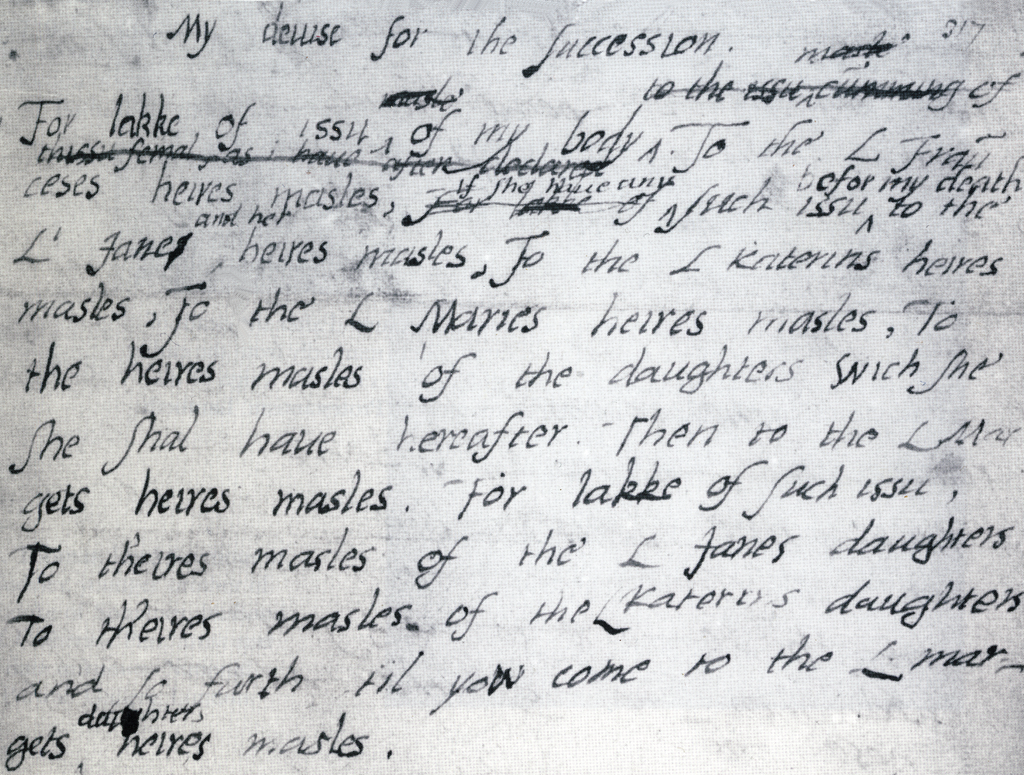
The young king was ill again, and it was becoming apparent that he was dying. Those around him started looking to the problem of the succession. The next in line was Princess Mary, a committed Catholic who would undo all the work Edward had done in advancing the Reformation. Edward could not pass over Mary’s claim to the crown in favour of Elizabeth, so chose to exclude all females from the succession and his ‘Device’ would leave the crown to ‘the Lady Jane’s heirs male’. As his health failed him, in June King Edward changed the wording of the Device to ‘The Lady Jane and her heirs male.’ Further arguments for excluding Mary and Elizabeth centred on their legitimacy – open to question after Henry VIII had, at various times, declared them both illegitimate – and the fear that they would marry outside of England.

Jane, on the other hand, was married to Lord Guildford Dudley, the fifteen-year-old son of John Dudley, now Duke of Northumberland and Lord President of the Council. Their parents saw the young couple as an alternative, Protestant king and queen to the Catholic Mary. The wedding had taken place in May 1553 in Dudley’s London home, Durham House. The young couple had been reluctant to marry and were bullied into it by their parents.

Edward VI’s ‘Devise for the Succession’

Aged just fifteen, King Edward VI died at Greenwich Palace on 6 July 1553. He was unmarried and left no heir. As the king lay dying Mary was summoned to the council, but instead rode to Kenninghall in Norfolk, with Robert Dudley despatched to intercept her with orders to take the princess to a place of safety. On 8 July, Mary heard the news of the king’s death and the following day proclaimed herself queen, despatching a letter to the Privy Council, ordering them to endorse her claim. She then moved to the formidable fortress of Framlingham Castle, where thousands flocked to her standard. Princess Elizabeth initially stayed away, pleading illness, watching and waiting to see how events played out. On 9 July the Privy Council summoned Lady Jane, recuperating from an illness at Chelsea, to appear before them. Dudley’s daughter, Mary Sidney, was sent to escort Jane by barge to Syon House, where she was greeted by two nobles who knelt before her, kissed her and informed her that Edward had nominated her as his successor. John Dudley, Duke of Northumberland and now father-in-law of the new queen, gave a lengthy speech, informing all present that King Edward’s wish had been for Jane to succeed him. Jane was left trembling and speechless before she fell to the ground, crying and declaring

I am insufficient to fill the role.2

Jane’s reaction to the proclamation of her accession to the throne suggests that she was not aware of the plans of Edward, Dudley and her father to make her queen. Though she was a clever girl and may well have suspected what was afoot. The next morning, dressed in the green and white of the Tudors and accompanied by her husband Guildford dressed equally splendidly in white and gold, Jane was escorted to the Tower in a procession of barges. There were no flags being waved, and no crowds lining the river to get a glimpse of their new queen. London was only just learning of the king’s death. Jane was greeted at the Tower by the Marquess of Winchester and Sir John Bridges, Lieutenant of the Tower, and various other civilian and military officials. Winchester knelt before the young queen and presented the keys to the fortress. John Dudley stepped forward and took them. Jane then made her ceremonial entrance into the White Tower and, with flags flying, a fanfare of trumpets and guns firing in salute, was seated under the canopy of state. The crown was brought to her, but she initially refused to wear it, only putting it on when Winchester persuaded her that he wished to see how it suited her.

Mary I

On one matter, Jane was adamant. She refused to make Guildford king: ‘If the crown belongs to me, I would be content to make my husband a duke. But I will never consent to make him king.’3 Royal blood flowed through Jane’s veins, not her husband’s. Apparently, Guildford fled the room in tears, but his parents were hopeful that Jane could be persuaded to change her mind. After all, they lived in a patriarchal society and no one expected that a woman could actually rule in her own right.

The Privy Council and leading judges declared Jane the new Queen of England.

That Sunday, at St Paul’s Cross, Bishop Ridley preached that as bastards, Mary and Elizabeth were unfit for the crown and that Mary’s Catholicism was a particular threat to the country, exposing it to foreign influence. A devout Protestant, Jane was seen as the symbol of continuity for the Protestant faith, untainted by any previous declarations of illegitimacy. However, there was no rejoicing and only the herald could be heard to shout ‘Long live the Queen!’

For 9 days, Jane was England’s first female monarch.

By 12 July, Mary and her supporters had gathered at Framlingham, Suffolk. Within days, the duke of Northumberland rode out of London with 3,000 men, promising to capture or kill Mary. Jane ordered the gates to the Tower be locked and the keys given to her. On 18 July, Jane began raising troops to be led against rebels in Buckinghamshire. But as Northumberland left London, everything began to fall apart. Rumours circulated that Mary had a force of 30,000. Londoners refused to rally to the duke’s army.

Northumberland’s coup collapsed.

On 19 July, Henry Grey, Duke of Suffolk, declared in favour of Mary. He entered his daughter’s chamber, where she sat at dinner under a canopy of state, and dramatically tore down the hangings. The next day, the Privy Council proclaimed Mary as Queen of England. And Jane went from being queen to a prisoner in the Tower of London; she was taken from the royal apartments to the Gentleman Gaoler’s lodgings. Her mother and ladies-in-waiting were allowed to return home, which they did without delay.

Mary was crowned on 1 October 1533, and Jane’s younger sisters Katherine and Mary became maids of honour to the new queen. Frances, too, was welcomed at court. John Dudley, Duke of Northumberland, Jane’s father-in-law, had been tried and convicted of high treason and executed on 22 August 1553. After just a few days in the Tower, Henry Grey, Duke of Suffolk, was pardoned and allowed to go home to his wife.

As for Jane, in November, she, her husband and two of his brothers were tried and convicted of high treason. Mary was willing to be merciful and spared their lives, for the moment. Jane was kept in comfortable confinement and may have hoped that she would eventually be released, had her father not involved himself in yet another plot…

Princess Elizabeth, the future Queen Elizabeth I

Opposed to Mary’s proposed marriage to Philip of Spain, the Wyatt rebellion, led by Sir Thomas Wyatt, the son of the poet who was an admirer of Anne Boleyn, aimed to overthrow Mary. The intent was to marry Princess Elizabeth to Edward Courtney, Earl of Devon and a descendant of Edward IV, and put Elizabeth on the throne. As Wyatt raised an army in Kent, Grey was raising forces in the Midlands. However, Wyatt’s forces were overwhelmed as London closed its gates to them and Grey was arrested at his manor of Astley. He was taken prisoner, arraigned for his treason, condemned, and executed at the Tower on 23 February 1554, less than a month after his brief rebellion began.

Though she was in no way implicated in the rebellion, her father’s actions had already sealed Jane’s fate; her very existence as a possible figurehead for Protestant discontent made her an unacceptable danger to the state. The queen could no longer afford to be merciful, and Mary signed the death warrant for Jane and Guildford; the sentence for Jane was commuted from burning to beheading. She received a few days’ stay of execution while Mary sent the dean of St Paul’s, John Feckenham, to her to try and persuade Jane to accept the Catholic faith. But Jane remained steadfast, writing ‘Lord, thou God and father of my life, hear me poor and desolute woman, arm me, I beseech thee, with thy armour, that I may stand fast.’4

The night before her execution, aware that her father, by now also imprisoned in the Tower, was in great distress over her fate, Jane wrote a final letter to him:

‘Father, although it pleases God to hasten my death by one by whom my life should rather have been lengthened; yet can I so patiently take it, that I yield God more hearty thanks for shortening my woeful days, than if all the world had been given into my possession, with life lengthened at my own will. And albeit I am assured for your impatient dolours redoubled manifold ways, both in bewailing your own woe, and especially, as I hear, my unfortunate state; yet, dear father (if I may without offence rejoice in my own mishaps), herein I may account myself blessed, that washing my hands with the innocence of my fact, my guiltless blood may cry before the Lord, ‘Mercy to the innocent!’5

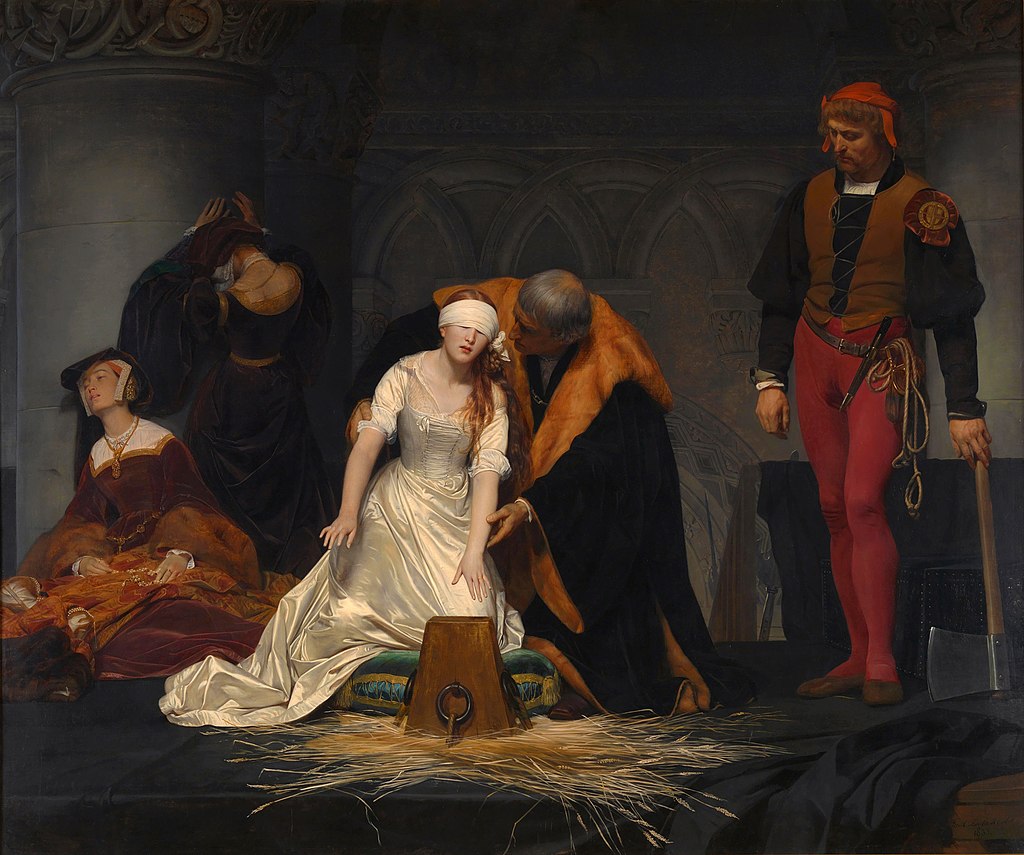
The Execution of Lady Jane Grey by Paul Delaroche

At ten the next morning Guildford Dudley was taken from the Tower and escorted to Tower Hill for his execution. Jane watched him leave from her window. As Jane walked to her own execution, Guildford’s body was carried into the Tower’s chapel, St Peter Ad Vincula, for burial. Dressed in black, Jane mounted the scaffold by the White Tower. Speaking to the assembled crowd, she performed the traditional admission of guilt, saying that she had acted against the queen’s highness, though qualified it with:

‘Touching the procurement and desire thereof by me or on my behalf, I do wash my hands thereof in innocence.’6

Having said her piece, and her prayers, Jane gave her gloves and handkerchief to Elizabeth Tilney and her prayer book to Thomas Bridges, the brother of the Lieutenant of the Tower. Jane then removed her gown, headdress and neckerchief as the executioner knelt to ask her forgiveness, which Jane gave willingly.

Jane knelt and, with her handkerchief tied over her eyes, she had to feel for the block and cried out ‘What shall I do? Where is it?’ when she couldn’t find it.7 One of those close by guided her to the block.

Her final words were ‘Lord, into thy hands I commend my spirit!’8

She was despatched with one stroke of the axe.

Notes:

1 .Lady jane Grey quoted in Jill Armitage, Four Queens and a Countess: Mary Queen of Scots, Elizabeth I, Mary I, Lady Jane Grey and Bess of Hardwick, p. 54; 2. Jill Armitage, Four Queens and a Countess: Mary Queen of Scots, Elizabeth I, Mary I, Lady Jane Grey and Bess of Hardwick, p. 68; 3. ibid; 4. Leanda de Lisle, The Sisters Who Would Be Queen, p. 146; 5. ibid, p. 148; 6. ibid, p. 150; 7. ibid, p. 151; 8. ibid, p. 152

Images:

Courtesy of Wikipedia

Sources:

Jill Armitage, Four Queens and a Countess: Mary Queen of Scots, Elizabeth I, Mary I, Lady Jane Grey and Bess of Hardwick; Leanda de Lisle, The Sisters Who Would Be Queen; Amy Licence, Tudor Roses; Amy Licence, The Sixteenth Century in 100 Women; Haynes (ed.), State papers, Vol. VI; Amy Licence, In Bed with the Tudors; Erin Lawless, Forgotten Royal Women: The King and I; David Loades, editor, Chronicles of the Tudor Kings: The Tudor Dynasty from 1485 to 1553: Henry VII, Henry VIII and Edward VI in the Words of their Contemporaries;  ODNB.com; Tracy Borman, The Private Lives of the Tudors; Sarah Gristwood, The Tudors in Love: The Courtly Code Behind the Last Medieval Dynasty; John Cannon, editor, The Oxford Companion to British History; Arthur D. Innes, A History of England Under the Tudors; J.D. Mackie, The Earlier Tudors 1485-1558

*

My Books

Signed, dedicated copies of all my books are available through my online bookshop.

OUT NOW! Heroines of the Tudor World

Heroines of the Tudor World tells the stories of the most remarkable women from European history in the time of the Tudor dynasty, 1485-1603. These are the women who ruled, the women who founded dynasties, the women who fought for religious freedom, their families and love. These are the women who made a difference, who influenced countries, kings and the Reformation. In the era dominated by the Renaissance and Reformation, Heroines of the Tudor World examines the threats and challenges faced by the women of the era, and how they overcame them. From writers to regents, from nuns to queens, Heroines of the Tudor World shines the spotlight on the women helped to shape Early Modern Europe.

Heroines of the Tudor World is now available for pre-order from Amberley Publishing and Amazon UK.

Women of the Anarchy

Two cousins. On the one side is Empress Matilda, or Maud. The sole surviving legitimate child of Henry I, she is fighting for her birthright and that of her children. On the other side is her cousin, Queen Matilda, supporting her husband, King Stephen, and fighting to see her own son inherit the English crown. Women of the Anarchy demonstrates how these women, unable to wield a sword, were prime movers in this time of conflict and lawlessness. It show how their strengths, weaknesses, and personal ambitions swung the fortunes of war one way – and then the other.

Available from Bookshop.orgAmberley Publishing and Amazon UK.

Also by Sharon Bennett Connolly:

King John’s Right-Hand Lady: The Story of Nicholaa de la Haye is the story of a truly remarkable lady, the hereditary constable of Lincoln Castle and the first woman in England to be appointed sheriff in her own right. Available from all good bookshops Pen & Sword Booksbookshop.org and AmazonDefenders of the Norman Crown: The Rise and Fall of the Warenne Earls of Surrey tells the fascinating story of the Warenne dynasty, from its origins in Normandy, through the Conquest, Magna Carta, the wars and marriages that led to its ultimate demise in the reign of Edward III. Available from Pen & Sword BooksAmazon in the UK and US, and Bookshop.org

Ladies of Magna Carta: Women of Influence in Thirteenth Century England looks into the relationships of the various noble families of the 13th century, and how they were affected by the Barons’ Wars, Magna Carta and its aftermath; the bonds that were formed and those that were broken. It is now available in paperback and hardback from Pen & Sword,  Amazon, and Bookshop.orgHeroines of the Medieval World tells the stories of some of the most remarkable women from Medieval history, from Eleanor of Aquitaine to Julian of Norwich. Available now from Amberley Publishing and Amazon, and Bookshop.orgSilk and the Sword: The Women of the Norman Conquest traces the fortunes of the women who had a significant role to play in the momentous events of 1066. Available now from Amazon,  Amberley Publishing, and Bookshop.org.

Alternate Endings: An anthology of historical fiction short stories including Long Live the King… which is my take what might have happened had King John not died in October 1216. Available in paperback and kindle from Amazon.

Podcast:

Have a listen to the A Slice of Medieval podcast, which I co-host with Historical fiction novelist Derek Birks. Derek and I welcome guests, such as Bernard Cornwell – and Tony Riches. We discuss a wide range of topics in medieval history, from significant events to the personalities involved.

*

Don’t forget! Signed and dedicated copies of all my books are available through my online bookshop.

For forthcoming online and in-person talks, please check out my Events Page.

You can be the first to read new articles by clicking the ‘Follow’ button, liking our Facebook page or joining me on Twitter and Instagram.

*

©2024 Sharon Bennett Connolly FRHistS 

Publication Day: Heroines of the Tudor World

In 2017, when I published Heroines of the Medieval World, it was a dream come true – to actually write and publish a book! I never imagined, then, that I would still be writing books 7 years later, nor that I would get the opportunity to write a sequel!

But here it is!

Continue reading for a chance to win a signed copy of Heroines of the Tudor World in my Publication Day GIVEAWAY!

Heroines of the Tudor World tells the stories of the most remarkable women from European history in the time of the Tudor dynasty, 1485-1603.

These are the women who ruled, the women who founded dynasties, the women who fought for religious freedom, their families and love.

These are the women who made a difference, who influenced countries, kings and the Reformation. In the era dominated by the Renaissance and Reformation, Heroines of the Tudor World examines the threats and challenges faced by the women of the era, and how they overcame them. Some famous, some infamous, some less well known, including Anne Boleyn, Elizabeth Barton, Catherine de Medici, Bess of Hardwick and Elizabeth I.

From writers to regents, from nuns to queens, Heroines of the Tudor World shines the spotlight on the women helped to shape Early Modern Europe.

I am so excited to be able to announce that Heroines of the Tudor World is now available from – everywhere! Including Amberley Publishing, Bookshop.org and Amazon UK.

Publication Day GIVEAWAY!

For the chance to win a signed copy of Heroines of the Tudor World simply leave a comment below.

The draw fro the winner will be made at noon Friday 21 June 2024.

Competition Closed: and the winner is Andria van Buskirk!

Book Launch

Do join me for the Heroines of the Tudor World book launch, including a talk and book signing will be held at the gorgeous historic venue, The Lincoln County Assembly Rooms, Monday 24 June, 2024, at 7pm.

Tickets in-store or online from £7 – ticket with book deals available.

To reserve your ticket, call in at Lindum Books on Bailgate, Lincoln, or click here!

Reviews:

And the first reviews are in – and amazing!

Tony Riches was the first to give his views: ⭐️⭐️⭐️⭐️⭐️

Heroines of the Tudor World is “is perfect for ‘dipping in’ at a random page or section – where you can be sure of discovering something interesting. I also liked the way some Tudor women pop up in several categories, highlighting the complexity of their lives.  As with her medieval heroines, some of the categories are thought provoking, such as the idea of heroic mistresses and scandalous heroines, but this makes for a lively and engaging read.” Read the whole 5* review over at The Writing Desk.

And Medieval Madame, on Instagram, also gave Heroines of the Tudor World 5 stars: ⭐️⭐️⭐️⭐️⭐️

“Automatically, when we think of the Tudor woman we tend to think of King Henry VIII’s wives, ladies in waiting or mistresses like Lady Jane Parker and Mary Boleyn. Yet so many women played a vital role, and they are lesser known but those who are more widely known don’t get enough recognition. Women, the weaker, frailer, gentler sex who should have a purpose: ‘stay at home, do embroidery, bear children – hope to survive!’ Not forgetting obey your Husband!

This book centres around women who, either by chance or decision, step out of the mould society cast upon them, even if it meant death. Remember, the Tudor World was one of the most vicious times in English history.

In this 12 chapter book, Sharon Bennett Connolly looks at many women from different backgrounds, and placed into chapters that’s what made their names live on. Take for example chapter 11 we see, “Literary Heroines,” here you can read about Margaret Roper, daughter of Sir Thomas More. Religious reformist, published, Queen Katherine Parr. Then French royalty who could well handle a quill!

Other heroines include: Caterina Sforza, Elizabeth Barton, Katherine Willoughby, Mary Queen of Scots, Anne de Vere and so many more – the list is vast! That is what makes an interesting read. Whether by religion, royalty, nobility or scandal.

Sharon has achieved another piece of thought provoking literature by shining a light on this enjoyable and contemporary read. As a sequel to her “Heroines of the Medieval World,” this certainly does not disappoint, and I enjoyed it equally.

For an in-depth view on many resilient, defiant and warrior women, who could very well be the first step to what we know in modern times as feminism. This is it! This is an excellent read, most certainly in the top three reads of the year. Sharon has crafted her creative writing once more for our educational enjoyment.

[Gifted] To Be Released 15 June 2024″

All About History ⭐️⭐️⭐️⭐️

All About History magazine gave Heroines of the Tudor World 4 stars, highlighting that the book ‘reminds readers that the lot of women in this era was not an easy one, but in these fascinating stories she reminds us too that there have always been women who dared to challenge the status quo. Whether standing up for country, crown, family or love, the women who spring to life in these pages are richly deserving of their place in history.’

The first review on Amazon was ⭐️⭐️⭐️⭐️⭐️ from Helen Musson. It was short but oh so very, very sweet:

Brilliant!

And what an incredible review of Heroines of the Tudor World from Heidi Malagisi at Adventures of a Tudor Nerd:

“Connolly gave her readers a thrilling look into the 16th century….my only complaint is that it was not a longer book…”If you have enjoyed Sharon Bennett Connolly’s previous books and you are a Tudor nerd, I highly suggest you read, ‘Heroines of the Tudor World.'”

Interviews, podcasts and YouTube

You can find me talking about my choice of Heroines of the Tudor World on some of the best Tudor podcasts:

On Tudors Dynasty I may have mentioned to Rebecca Larsen that I don’t think much of Henry VIII. And I had a fabulous time, chatting with Natalie Grueninger over at On the Tudor Trail.

And I am on Books & Brews, over on You Tube, talking about my favourite Heroines of the Past. You can even watch the outtakes!

To Buy Heroines of the Tudor World

You can order signed, dedicated copies of Women of the Anarchy through my online bookshop. Heroines of the Tudor World is now available from – everywhere! Including Amberley Publishing, Bookshop.org and Amazon UK.

*

Also by Sharon Bennett Connolly:

Women of the Anarchy demonstrates how Empress Matilda and Matilda of Boulogne, unable to wield a sword, were prime movers in this time of conflict and lawlessness. It show how their strengths, weaknesses, and personal ambitions swung the fortunes of war one way – and then the other. Available from Bookshop.orgAmberley Publishing and Amazon UK. King John’s Right-Hand Lady: The Story of Nicholaa de la Haye is the story of a truly remarkable lady, the hereditary constable of Lincoln Castle and the first woman in England to be appointed sheriff in her own right. It is is available from Pen & Sword Booksbookshop.org and AmazonDefenders of the Norman Crown: The Rise and Fall of the Warenne Earls of Surrey tells the fascinating story of the Warenne dynasty, from its origins in Normandy, through the Conquest, Magna Carta, the wars and marriages that led to its ultimate demise in the reign of Edward III. Available from Pen & Sword BooksAmazon in the UK and US, and Bookshop.org.
Ladies of Magna Carta: Women of Influence in Thirteenth Century England looks into the relationships of the various noble families of the 13th century, and how they were affected by the Barons’ Wars, Magna Carta and its aftermath; the bonds that were formed and those that were broken. It is now available in paperback and hardback from Pen & Sword,  Amazon, and Bookshop.orgHeroines of the Medieval World tells the stories of some of the most remarkable women from Medieval history, from Eleanor of Aquitaine to Julian of Norwich. Available now from Amberley Publishing and Amazon, and Bookshop.orgSilk and the Sword: The Women of the Norman Conquest traces the fortunes of the women who had a significant role to play in the momentous events of 1066. Available now from Amazon,  Amberley Publishing, and Bookshop.org.

Alternate Endings: An anthology of historical fiction short stories including Long Live the King… which is my take what might have happened had King John not died in October 1216. Available in paperback and kindle from Amazon.

Podcast:

Have a listen to the A Slice of Medieval podcast, which I co-host with Historical fiction novelist Derek Birks. Derek and I welcome guests, such as Bernard Cornwell and discuss a wide range of topics in medieval history, from significant events to the personalities involved.

*

Don’t forget! Signed and dedicated copies of all my books are available through my online bookshop.

For forthcoming online and in-person talks, please check out my Events Page.

*You can be the first to read new articles by clicking the ‘Follow’ button, liking our Facebook page or joining me on Twitter and Instagram.

*

Article: 2024 © Sharon Bennett Connolly FRHistS

Guest Post: A Fairy Step-mother by Laura Adkins

We have another fabulous guest post to celebrate Women’s History Month 2024. Laura Adkins is visiting History … the Interesting Bits to talk about my favourite of Henry VIII’s six queens, Katherine (or Kateryn, as she would have written it) Parr.

Over to Laura…

A Fairy Step-mother – Kateryn Parr

Kateryn Parr

Although she only had one biological child, two of Kateryn Parr’s marriages would bring her five stepchildren whom she loved dearly as if they were her own.

Katheryn first foray into motherhood was when she became stepmother to Lord Latimer’s teenage son and daughter. It is more than likely that Latimer, when looking for a wife, was after someone who could be a mother to his children and be present in their lives as he was away a lot. He may have seen those motherly qualities in Kateryn. It would be his daughter, Margaret, 9 years old at the time of her father’s marriage to Kateryn, who would grow close to her new stepmother.

Margaret’s own mother had died in 1527 and her first stepmother died in 1530. This led to Kateryn becoming the only mother figure in the young girl’s life, and at an impressionable age. Kateryn would fill the role of mother, treating Margaret as if she were her own, even after Latimer’s death. Kateryn not only had a legal duty to the two teenagers at this time but a sense of parental duty and love.

Margaret’s father had been strongly Catholic, therefore, his children would have been Catholic. However, times were changing and in Margaret’s will there are curtain wordings which give an indication that she was more inclined towards the reformed religion. Could Kateryn have played a role in this? We do not know for certain, but Kateryn would certainly have been aware of Margaret’s beliefs and most likely had some impact on it. The only thing that would separate the two was Margaret’s death at the young age of 21, in 1545. In her will Margaret thanks Kateryn for ‘the godly education and tender love and bountiful goodness which I have ever found in her highness’. Kathryn had provided a mother figure for Margaret during her short life. She had provided the young girl with companionship when an alternative could have been a very lonely existence. Throughout her marriage to Henry, she was then able to bring her stepdaughter into court life and provide her with connections which she may never have had initially.

Mary I, Queen of England

Of Latimer’s eldest child, John, things would be slightly different; however not as a result of Kateryn’s parenting. John was 14 years old when Kateryn and his father married, an age where he would have already established his own views, thoughts and personality. The young boy had been without a mother figure through puberty and his adolescent development. We know, from Kateryn’s own words, that things had been a bit more difficult between stepmother and son than with Kateryn and Margaret. His father did not leave his properties to John, nor appoint him executor of his will. That his father did not have much faith in his sensitive, sulking and lying teenager gives an indication that John was maybe a bit more of a handful than most. And given what he went on to do later in his life (arrested for attempted rape of one of his servants in 1557 and murder in 1563) one can quite believe his upbringing was not an easy task for Kateryn. There must have been some mutual fondness for one another, as when she became queen, she gave his wife a place as one of her ladies-in-waiting. Also, the fact that his aggressive nature came to the surface after her death shows that maybe she had some influence on his nature.

On her marriage to Henry VIII in 1543, Kateryn found herself a stepmother once more, this time to two daughters and a son. These royal children would be familiar to Kateryn and were all at various stages of their lives. Mary was only four years younger than her new stepmother; Elizabeth Tudor was 9, the same age that Margaret had been when Kateryn entered her life and Edward who was approaching the age of 6. Kateryn had a real impact on all three of Henry’s children, so much so that it helped shape their future as monarchs and for Elizabeth as a woman. All three have left in their own words their affection for Kateryn, the first of Henry’s wives that they all accepted and most likely loved.

It was through her love for her stepchildren and not a power play which made Kateryn try to reunite them with their father. She wanted to reconcile the broken family and bring happiness back to the court. She knew such love and happiness growing up and sadness with the loss of her father and wanted to try and assist her stepchildren to have some happiness like she did. Henry had both Mary and Elizabeth re-established in the line of succession, something which Kateryn at least had some part in. It would be at Ashridge in August 1543 where the three Tudor children, Kateryn and their father would stay together for the first time.

Edward VI, King of England

During her role as regent all three of the royal children would stay at the court, with their stepmother. It would be Elizabeth’s longest stay since she was a baby and one which most historians agree had a huge impact on her. Here both Mary and Elizabeth witnessed a woman governing and imposing her authority on her male counsellors. And not just a woman from afar but their stepmother, one who loved them and could and most likely help guide and mentor them, preparing them for their potential futures as powerful women in a world of men.

With Mary, the relationship was more of close friendship. Kateryn was not stupid to try and push herself as stepmother to Mary. She used her new position as queen to try and help Mary, not only to restore her in the line of succession but also to reunite her with her father. The two bonded over their love of fashion, jewellery and music. This friendship had already been established when Kateryn was a lady in Mary’s household after the death of Latimer. Mary would also see Kateryn as another female of learning and virtue and held her stepmother in high regard. The Spanish ambassadors wrote that Kateryn has behaved affectionately towards her [Mary] and go on to thank Kateryn for the kindness shown to the princess. Even their opposing religious beliefs did not seem to hinder their relationship. Kateryn had nothing but love for Mary. and it was through this love which brought her, for the first time in over a decade, some sense of peace, happiness and a form of stability.

For Elizabeth and Edward, her role was ever more impressionable. Edward’s mother, Jane Seymour had died when he was only a few days old. The next two of Henry’s wives were in and out of his life so quickly the young boy barely had time get to know them. A boy who had only had one parent in his life, the distant albeit slightly affectionate Henry. Edward lacked someone who showed him love and affection. It seems he grew with a fence up from female affection. When Kateryn came along, she wanted to knock down the fence and show the boy that it is ok to love and that he was loved and displays of affection were allowed. And she succeeded. From an early stage he was referring to her as his dearest mother and signing himself as her most abundant son. This young boy, who was a secretive cold and judgmental child who showed genuine fondness for very few people had grown attached to his new stepmother and finally had a mother whom he could love and who would love him in return.

For Elizabeth, Kateryn appeared at the time when she was needed the most. The stepmother and daughter were most likely the closest of the Tudor children. Elizabeth was at an age when she needed guidance and understanding; she also needed a mother’s love and someone who could match her growing intelligence. It would be Kateryn who also brought William Grindle onboard to teach Elizabeth, which led to the future queen’s love of the humanist principles. The earliest surviving letter of Elizabeth’s in existence is one she had written to her stepmother, dated 31 July 1544 . She despairs of not seeing Kateryn’s illustrious presence for a whole year and appeals to Kateryn’s clemency to speak to the king on her behalf so she can join them at court. Here Elizabeth feels she can approach her stepmother without repercussions and that her stepmother loved her greatly. She wanted to be not only with the king but Kateryn too at court.

Elizabeth would always sign her letters to Kateryn as ‘Your most obedient daughter and most faithful servant…’ Kateryn had captured the young princess’s heart and interest.

Elizabeth was a bright and intelligent child and noticed what was going on around her. She would not fail to miss the authority of her new stepmother and how she wielded her own power whilst keeping the right balance of femininity, and without, most of the time offending Henry or the men around her.

Elizabeth I, Queen of England

After the death of Henry, Kateryn set up her home at Chelsea, along with Elizabeth. It would be at Chelsea where Elizabeth and Kateryn’s relationship was tested to its limit, nearly severing the close ties these two had for good. Kateryns forth husband, Thomas Seymour began to grow an unhealthy interest in Elizabeth. He started to enter her bedchamber in the early morning before she was dressed and wearing only her undergarments. Her governess, Kat Ashley had tried to dissuade him from doing so and even approached Kateryn herself. There was even an occasion where Kateryn held Elizabeth in a supposed playful jest while Thomas cut Elizabeth’s gown to shreds. Not appropriate behaviour from either of them. It was eventually evident to Kateryn that Elizabeth had feelings for Thomas. Because of his lust for her stepdaughter and for reasons of propriety, Kateryn sent Elizabeth away from Chelsea. Kateryn had by this time found out she was pregnant; she wanted Thomas to only have eyes for her and knew the implications that could happen should word get out of what was going on, and under her own roof. It had to stop, and more importantly she needed it to stop for the love she bore Elizabeth as her stepmother, even though she was hurt by Elizabeth’s actions. Although this flirtation with Thomas and the danger it had put them in had been a huge thrust of the knife at Kateryn, her love for Elizabeth did not wane. Within weeks Kateryn had written to Elizabeth, and she had written back. Both were declaring their love for one another, with Kateryn missing her young charge.

Kateryn approached the role of motherhood with all her heart and passion for her stepchildren as if they were her own flesh and blood. Lord Latimer certainly saw something in her when he chose her to be his wife, he wanted not only a companion but a mother to John and Margaret. Kateryn’s involvement with Henry’s children’s lives was accepted, encouraged and appreciated by the king. He may have even finally enjoyed playing happy families after all the turmoil of the previous few decades. Her warmth and affection assisted her in persuading him to place his daughters back into the line of succession. For Mary it was a little different as she had experienced it from her biological mother, but this love had been torn from her when she needed it most. Maybe Kateryn had helped bring back those cherished memories to her. Kateryn was able to provide her stepdaughters with a female role model, who they could look up to and learn from. Particularly as two of her stepdaughters were of royal blood who might one day become queens. This mother’s love she provided would have certainly made an impact on how they approached womanhood and their confidence that they could perform their role as queen.

About the Author:

Ever since being inspired by her history teacher in secondary school and the 1997 movie Titanic, Laura has had a passion for history, especially medieval and Tudor eras. She writes her blog the Local History Blogger which focuses on her home county of Essex, England. In her past jobs, she has been fortunate to work in historic locations such as the Tower of London and Banqueting House, Whitehall where she gave public talks on its history and talks on the Tudors and Stuarts. Her other passion in life is her daughter who now joins Laura on her history trips and outings. When she is not exploring Laura enjoys reading and adding to her growing collection of books. Katheryn Parr: Henry VIII’s Sixth Queen is her first book.

To Buy the Book:

Laura’s book Kateryn Parr: Henry VIII’s sixth queen is now available in Hardback from Pen and Sword.

Find Laura Adkins on social media at:

Website: http://www.thelocalhistoryblogger.co.uk; Instagram – @localhistoryblogger; X – @TLHBlogger

Images:

1. Kateryn Parr – after Master John, c.1545. Oil on panel. The original portrait was initially thought to be of Lady Jane Grey and was only recently attributed to be Kateryn. Public domain image, via Wikimedia Common

2. Queen Mary Tudor – Anthonis Mor, 1554. Oil on panel. Public domain image, via Wikimedia Commons

3. King Edward VI – Workshop of Master John, c.1547. Public domain image, via Wikimedia Common

4. The young Princess Elizabeth – attributed to William Scrots, c.1546-1547. Oil on oak panel .Public domain image, via Wikimedia Commons

*

My Books:

Signed, dedicated copies of all my books are available through my online bookshop.

Out Now! Women of the Anarchy

Two cousins. On the one side is Empress Matilda, or Maud. The sole surviving legitimate child of Henry I, she is fighting for her birthright and that of her children. On the other side is her cousin, Queen Matilda, supporting her husband, King Stephen, and fighting to see her own son inherit the English crown. Women of the Anarchy demonstrates how these women, unable to wield a sword, were prime movers in this time of conflict and lawlessness. It show how their strengths, weaknesses, and personal ambitions swung the fortunes of war one way – and then the other.

Available from Bookshop.orgAmberley Publishing and Amazon UK.

Coming on 15 June 2024: Heroines of the Tudor World

Heroines of the Tudor World tells the stories of the most remarkable women from European history in the time of the Tudor dynasty, 1485-1603. These are the women who ruled, the women who founded dynasties, the women who fought for religious freedom, their families and love. These are the women who made a difference, who influenced countries, kings and the Reformation. In the era dominated by the Renaissance and Reformation, Heroines of the Tudor World examines the threats and challenges faced by the women of the era, and how they overcame them. From writers to regents, from nuns to queens, Heroines of the Tudor World shines the spotlight on the women helped to shape Early Modern Europe.

Heroines of the Tudor World is now available for pre-order from Amberley Publishing and Amazon UK.

Also by Sharon Bennett Connolly:

King John’s Right-Hand Lady: The Story of Nicholaa de la Haye is the story of a truly remarkable lady, the hereditary constable of Lincoln Castle and the first woman in England to be appointed sheriff in her own right. Available from all good bookshops or direct from Pen & Sword Booksbookshop.org and AmazonDefenders of the Norman Crown: The Rise and Fall of the Warenne Earls of Surrey tells the fascinating story of the Warenne dynasty, from its origins in Normandy, through the Conquest, Magna Carta, the wars and marriages that led to its ultimate demise in the reign of Edward III. Available from Pen & Sword BooksAmazon in the UK and US, and Bookshop.org

Ladies of Magna Carta: Women of Influence in Thirteenth Century England looks into the relationships of the various noble families of the 13th century, and how they were affected by the Barons’ Wars, Magna Carta and its aftermath; the bonds that were formed and those that were broken. It is now available in paperback and hardback from Pen & Sword,  Amazon, and Bookshop.orgHeroines of the Medieval World tells the stories of some of the most remarkable women from Medieval history, from Eleanor of Aquitaine to Julian of Norwich. Available now from Amberley Publishing and Amazon, and Bookshop.orgSilk and the Sword: The Women of the Norman Conquest traces the fortunes of the women who had a significant role to play in the momentous events of 1066. Available now from Amazon,  Amberley Publishing, and Bookshop.org.

Alternate Endings: An anthology of historical fiction short stories including Long Live the King… which is my take what might have happened had King John not died in October 1216. Available in paperback and kindle from Amazon.

Podcast:

Have a listen to the A Slice of Medieval podcast, which I co-host with Historical fiction novelist Derek Birks. Derek and I welcome guests, such as Bernard Cornwell and Elizabeth Chadwick, and discuss a wide range of topics in medieval history, from significant events to the personalities involved.

*

Don’t forget! Signed and dedicated copies of all my books are available through my online bookshop.

For forthcoming online and in-person talks, please check out my Events Page.

You can be the first to read new articles by clicking the ‘Follow’ button, liking our Facebook page or joining me on Twitter and Instagram.

*

©2024 Sharon Bennett Connolly FRHistS and Laura Adkins

Guest Post: Margaret of Austria by Rozsa Gaston

For Women’s History Month it is my pleasure to welcome Rozsa Gaston to History…the Interesting Bits, with an article on Margaret of Austria. Rozsa is here to share with you why Margaret is important to history as a founding figure of European coalition politics.  

Over to Rozsa….

Margaret knew, or was related to, most of early 16th century Europe’s rulers. 

Her action-packed childhood prepared her for a lifetime of leadership as ruler of the Burgundian-Habsburg Netherlands, and as one of the most important treaty negotiators of her era. 

Let’s look at the players in Margaret of Austria’s life:  

Maximilian I, archduke of Austria and the future Holy Roman Emperor – was Margaret’s father.  

Charles V –future King of Spain and Holy Roman Emperor, is her nephew and ward.  Margaret was Charles V’s legal guardian until he was 15 years old. 

Henry VIII of England –Margaret’s trade partner. English sheep provided the wool for Flanders’ cloth industry. Flanders, in the Low Countries, was world renown from the 12th century on for its fine cloth textiles and its tapestries, which were sought after the world over as a display of wealth and power.  

Catherine of Aragon, Henry VIII’s queen – was Margaret’s former sister-in-law.  

Anne Boleyn, Henry VIII’s 2nd queen  -maid-of-honor at Margaret’s Court of Savoy in Mechelen (Malines) in the Burgundian-Habsburg Low Countries (now Belgium).  

Philip the Handsome, Duke of Burgundywas Margaret’s brother.  

Juana the Mad – the daughter of Isabella and Ferdinand of Spain was Philip’s wife and Margaret’s sister-in-law.  

Isabella and Ferdinand of Spain – Margaret’s former in-laws. 

Louise of Savoy – former sister-in-law & the mother of Francis the First, King of France, Louise was the power behind the throne during her son’s reign. 

Margaret of Austria was born in 1480 in Brussels, the only daughter of the heads of two of Europe’s top dynastic houses: the House of Burgundy and the House of Habsburg. Her mother, Mary of Burgundy, was ruler of Burgundy, the only child of Burgundy’s last duke. She was known throughout Europe as Mary the Rich.   

Margaret’s father was Maximilian the First of Austria, head of the House of Habsburg and later to become Holy Roman Emperor. Mary and Maximilian’s dramatic love story is told in the 2017 Starz Mini Series Maximilian. Well worth viewing.  

Margaret lost her mother in a riding accident at age two. One year later her father contracted with the French king, Louis the Eleventh, known as the Spider King, to marry Margaret to Louis’ son and heir, the future Charles VIII of France. Margaret was sent to France at age 3 to be raised at the French court to prepare her to become Queen of France one day. 

Margaret’s statue towers over the main market square of Mechelen  (pronounced “Meh ku luhn”) Belgium, 18 miles, or 29 kilometers, north of Brussels. Erected in 1849, it was made by sculptor Joseph Tuerlinckx. 

Her palace in Mechelen is called the Court of Savoy. It was the first Renaissance palace built in the Low Countries and is a main tourist destination. The Low Countries are now known as the Benelux countries: Belgium, the Netherlands and Luxembourg. 

Margaret held one of Europe’s most important Renaissance courts at her Court of Savoy for the duration of her career from 1507-1530 as ruler of the Burgundian-Habsburg Netherlands. 

Here is Margaret’s palace, the Court of Savoy, in Mechelen, Belgium. Despite her title, Margaret of Austria hailed from what is now called Belgium, a country that was created in 1830, 300 years after she died.  

In the 16th century the northern part of Belgium was known as Flanders, a Low Countries province within the realm of Burgundy. Everything in orange on this map is Burgundy. Burgundy now no longer exists, but it was the wealthiest realm in Europe in the 14th to late 15th centuries.

Margaret’s native tongue was French. She ruled the Burgundian-Habsburg Netherlands for 23 years, with the exception of two years, from 1515-1517. During those two years, her nephew and ward, Charles the Fifth, came of age, and typical of a teenage boy, he wanted to take control of his realm for himself.  

But after two years of seeing how difficult it was to manage the Netherlands’ 17 different provinces all with conflicting economic interests, he handed back control to his aunt Margaret, who was a master at negotiating trade agreements and at putting together coalitions for the greater good of the Netherlands’ economic prosperity.  

Margaret was confident, self-possessed, well-organized, and enjoyed being in charge. She did not show her hand. An excellent bluffer at both diplomatic negotiations and the gaming table, she played cards and gambled with heads of state and diplomats to the Low Countries who were sent to her Court of Savoy in Mechelen. 

Margaret’s travels by the age of twenty-seven made her one of Europe’s most cosmopolitan princesses. 

Jan. 10, 1480 – Margaret of Austria is born in Brussels. 
 
Age 3 – She’s sent to France to be raised under Anne of France or Anne de Beaujeu to become its queen one day. 
 
Age 11 –Margaret is jilted by Charles VIII of France, who marries Anne of Brittany instead. 

Age 13- Margaret returns to Flanders in the Low Countries and waits for her father to make another match for her. 
 
Age 17 – Margaret goes to Spain to marry Isabella and Ferdinand’s son Juan, heir to the Spanish throne.  But – he dies six months after they marry.    

Ages 19-21 – Back in Flanders in the Low Countries, Margaret awaits her father’s next marriage choice for her. 

Age 21 – Margaret moves to Savoy when luck arrives with her marriage to Philibert, Duke of Savoy, a childhood friend who becomes the love of her life.  

Age 24 – Luck departs when Philibert dies. 
 
Age 26 – Margaret’s life changes completely when her brother, Philip the Handsome, Duke of Burgundy, dies in Spain, possibly of poisoning, and Margaret takes over rulership of the Burgundian-Habsburg Netherlands. She also takes over guardianship of Philip’s children, the future Charles the Fifth and his three sisters, all Habsburg royals who live in Brussels, and are now functionally orphaned, as their father has died and their mother, Juana of Castile, has gone insane and remains in Spain. 

Ages 27-50 – Margaret lives in Mechelen where she rules the Netherlands and conducts her government from her palace, the Court of Savoy. 

Age 50 – Margaret dies. Two years later her body is transported to Brou, France, where she is buried next to her beloved 2nd husband Philibert of Savoy. Savoy was a region between France, Switzerland and the duchy of Milan, which was very strategic in the 16th century because it controlled the pass through the Alps for French soldiers to march to Milan. At that time in history all the great European powers were interested in gaining a piece of Italy. 

Margaret lived just at the moment that the feudal age gave way to the Renaissance.  

Stuck at the French court for two years after being jilted by the French king, an unexpected friendship formed between Margaret and Anne of Brittany, who was three years older and who took her place as Queen of France.  

Instead of hating each other, Margaret and Anne were both politically astute enough to recognize that they were pawns in the hands of the French. They became lifelong friends and wrote to each other until Anne of Brittany’s death. They sent scholars to serve at each other’s courts and were both instrumental in bringing Renaissance art and humanist learning to their respective courts of Burgundy and France. 

After returning to the Low Countries from France at age 13, Margaret’s father Maximilian arranges a match for her with Isabella and Ferdinand of Spain’s son and heir, Juan. Maximilian also arranges for Margaret’s older brother Philip, Duke of Burgundy, to marry Juan’s sister, Juana, known to history as Juana the Mad. At age 17 Margaret is on track to become Queen of Spain. But after only 6 months of marriage her 19-year-old husband dies. 6 months later Margaret gives birth to their child, a stillborn daughter. She never has another child.  

Margaret spends the year after Juan’s death at Isabella and Ferdinand’s Alhambra Palace in Granada, teaching French to their youngest daughter Catherine of Aragon, future  Queen of England. 

Queen Isabella of Spain is a huge influence on Margaret, who spends two years observing her ruling her kingdom as well as managing her husband Ferdinand, whose kingdom of Aragon is much smaller than Isabella’s kingdom of Castile. 

Margaret and Catherine of Aragon remained lifelong friends. 

At age 19 Margaret leaves Spain and returns to the Low Countries to await her father’s next marriage choice for her. Margaret’s 2nd husband, Philibert, Duke of Savoy, was a childhood friend from Amboise, where he also grew up at the French court with his sister Louise of Savoy. The same age as Margaret, he and she fell madly in love.  

But Philibert was not interested in ruling Savoy and had left it to his illegitimate half brother to manage. Soon after Margaret arrived, she ousted his half brother and took over ruling Savoy herself. Philibert was not a natural-born leader, but an excellent athlete and hunter, very good-looking with a faithful heart. He was happy for Margaret to take the reins and he supported her leadership.  

But at age 24, Philibert went out hunting on a hot day and developed a lung inflammation after drinking ice cold water from a mountain stream. He died 9 days later. Margaret remained in Savoy as Duchess and ruler for two more years, devoting herself to building a church to honor Philibert, and where she intended to be buried with him.  

Margaret’s church at Brou is a masterpiece of flamboyant Gothic architecture. It’s a must-see for visitors to the Geneva-Lyon area. Commissioned by her in 1506 it took 26 years to build. Margaret is buried there with her husband Philibert and his mother, Margaret of Bourbon, who was from the same Bourbon or Bourbon dynasty that rules Spain today with King Felipe of Spain at its head. 

The Church and Royal Monastery at Brou is 69 miles west of Geneva and 50 miles north of Lyon. Author of the foreword to my book on Margaret of Austria, Austrian archduke Géza von Habsburg has visited and says that the restaurant in its town square serves the best coq au vin (or chicken in wine sauce) in all of France.

These are the tomb effigies of Philibert and Margaret. Someone has placed a rose on Philibert’s chest, undoubtedly because he was so handsome. 

Margaret designed the placement of Philibert’s effigy so that he appears to be looking at her. 

The standard Renaissance style of the day was to place the lying-in-state effigy on top and the deathbed effigy on the bottom. Their actual tombs are in the crypt below the church nave. Unusually, they were not desecrated during the French Revolution because Brou was so obscurely located that the revolutionaries couldn’t find it. When Margaret’s tomb was opened in the 19th century, her long dark blonde hair was still intact. 

Margaret of Austria and her father Maximilian I both hated the French. Why?  

They had both been jilted by the French, due to the land grab of Charles the Eighth’s powerful older sister, Anne of France, who ruled France as regent while Charles was still a child. 

In 1490 when Anne of Brittany was 13 and ruling Brittany, she was married by proxy to Margaret’s father Maximilian I. But he failed to come to her rescue when France invaded Brittany the next year. Anne never actually met Maximilian. 

Charles, the 21-year-old king of France, was betrothed to Margaret, who was only 11 at that time. But in Dec. of 1491 Charles wed Anne of Brittany in order to acquire Brittany for France.  

Margaret spent the next two years from ages 11-13 in limbo in France, while Charles VIII of France and Maximilian I argued over the return of her dowry.  

Anne of France was one of Europe’s most politically powerful women of the late 15th century. She escorted Margaret of Austria at age 3 from the Low Countries border to the French court in Amboise where Margaret lived for the next 10 years under her guardianship. 

Plans to marry Margaret to the French king changed when Anne of France decided Brittany was a bigger plum for France to acquire than Margaret’s dowry lands on the French/Low Countries border. After eight years of overseeing Margaret’s education Anne of France cast Margaret aside overnight and replaced her with Anne of Brittany as Charles’ wife.  

Margaret never forgave Anne of France or her younger brother Charles for their betrayal. But — the lessons Margaret learned from Anne of France in self-control and political maneuvering honed Margaret’s political skills as governor of the Netherlands and as an important treaty negotiator years later. 

Game of Queens by well-known British historian and author Sarah Gristwood opens with a chapter on Margaret of Austria. I highly recommend Game of Queens to those interested in women who held political power in 16th century Europe.  

Margaret not only ruled the Netherlands but negotiated pan-European treaties on behalf of her father Maximilian, the Holy Roman Emperor, her father-in-law Ferdinand of Aragon, and her nephew, Charles V, King of Spain and Holy Roman Emperor.  

Treaty of Cambrai by Francisco Jover y Casanova, 1871 

Margaret’s most important treaty was the 1529 Treaty of Cambrai that she negotiated with her sister-in-law Louise of Savoy. Louise of Savoy was the power behind the throne of her son Francis, King of France. The 1529 Treaty of Cambrai took 2 and a half weeks to negotiate and ended the war between the Holy Roman Empire and France. It is known to history as The Ladies’ Peace. 

Margaret on the left signs on behalf of her nephew, Charles the Fifth, King of Spain and Holy Roman Emperor. 

Louise of Savoy on the right signs on behalf of her son, Francis I, King of France.  

In 1529 Charles V and Francis I were Europe’s two most powerful rulers. A close third was Henry VIII of England, but he was still up-and-coming in those days, and England was still a bit of a backwater compared to continental Europe.  

All three of these men were young and ambitious, all ruled by powers behind the throne: Francis by his mother Louise, Henry by his chancellor Cardinal Wolsey, and Charles V by his aunt Margaret.  

Charles V’s title of Holy Roman Emperor was an elected position. He ran against Francis I and Henry VIII for that office and won in 1519, due to Margaret’s gifts, visits, trade incentives, and bribes to the seven German Prince-Electors who voted him into office. 

What was the secret of Margaret’s success? She had strong female mentors. She was mentored by Europe’s most powerful female political leaders of her times, Anne of France, and Isabella of Spain.  

Secondly, Margaret had a devoted support team. She was supported in her political leadership by both her father, Maximilian of Austria, and her 2nd husband, Philibert of Savoy. She brought a team of six counselors with her to the Low Countries in 1507 from Savoy, including her legal counsel and two private secretaries. These men were devoted to her and served at her court for their entire lives. 

The Card Players by Lucas van Leyden, c. 1525, Thyssen-Bornemisza Museum, Madrid 

Another secret to Margaret’s success was that Margaret was a master bluffer both at cards and at the diplomatic negotiating table. She never showed her hand. 

Henry VIII’s chancellor Cardinal Thomas Wolsey is thought to be on the right. You can see how worried he looks, up against master card shark Margaret.  Margaret got a lot of deals done over the gaming table at her evening parties at the Court of Savoy. She was sociable, vivacious, charming, and careful not to let anyone know what she was really thinking. Her evening entertainments functioned in the same way as present-day CEO’s golf outings do where important decisions are made on the golf course.  

This is a painting of Margaret of Austria’s nephew Charles V’s palace in Brussels, to give you an idea of the scope of Burgundian splendor. Coudenberg Palace burned down in 1731. You can tour its ruins today on Coudenberg Hill in the Royal Quarter neighborhood of Brussels in Belgium. 

Without a doubt, I would say that Margaret of Austria was one of the most powerful and influential historical figures of the northern European Renaissance.  

She set the precedent for successful female rule in the Netherlands, a tradition that continues to this day with unbroken female rulership from 1890 to 2013 thru Queens Wilhelmina, Juliana, and Beatrix.  

Discover more of Margaret’s story in my 2023 book on her life, Margaret of Austria, with a foreword by noted historian Susan Abernethy of The Freelance Writer’s blog and European Women in History.  

*

About the author: 

Rozsa Gaston is a historical fiction author who writes books on women who reach for what they want out of life.  

She is the author of Margaret of Austria, 2023 Chaucer Book Awards finalist for Pre-1750s Historical Fiction, the Anne of Brittany Series: Anne and Charles; Anne and Louis, General Fiction Winner of the 2018 Publishers Weekly Booklife Prize; Anne and Louis: Rulers and Lovers; and Anne and Louis Forever Bound, First Place Winner of the 2022 Chaucer Book Award for Pre-1750s Historical Fiction. 

Other works include Sense of Touch, Marguerite and Gaston, and The Least Foolish Woman in France. 

Gaston studied European history at Yale and received her master’s degree in international affairs from Columbia. She worked at Institutional Investor magazine, then as a columnist for The Westchester Guardian.  

She is currently working on a book on Anne Boleyn at Margaret of Austria’s court. She lives in Bronxville, New York with her family. 

Gaston can be found online on Facebook, or at her website.

Her motto? History matters. 

My Books:

Signed, dedicated copies of all my books are available through my online bookshop.

Out Now! Women of the Anarchy

Two cousins. On the one side is Empress Matilda, or Maud. The sole surviving legitimate child of Henry I, she is fighting for her birthright and that of her children. On the other side is her cousin, Queen Matilda, supporting her husband, King Stephen, and fighting to see her own son inherit the English crown. Women of the Anarchy demonstrates how these women, unable to wield a sword, were prime movers in this time of conflict and lawlessness. It show how their strengths, weaknesses, and personal ambitions swung the fortunes of war one way – and then the other.

Available from Bookshop.orgAmberley Publishing and Amazon UK.

Coming on 15 June 2024: Heroines of the Tudor World

Heroines of the Tudor World tells the stories of the most remarkable women from European history in the time of the Tudor dynasty, 1485-1603. These are the women who ruled, the women who founded dynasties, the women who fought for religious freedom, their families and love. These are the women who made a difference, who influenced countries, kings and the Reformation. In the era dominated by the Renaissance and Reformation, Heroines of the Tudor World examines the threats and challenges faced by the women of the era, and how they overcame them. From writers to regents, from nuns to queens, Heroines of the Tudor World shines the spotlight on the women helped to shape Early Modern Europe.

Heroines of the Tudor World is now available for pre-order from Amberley Publishing and Amazon UK.

Also by Sharon Bennett Connolly:

King John’s Right-Hand Lady: The Story of Nicholaa de la Haye is the story of a truly remarkable lady, the hereditary constable of Lincoln Castle and the first woman in England to be appointed sheriff in her own right. Available from all good bookshops or direct from Pen & Sword Booksbookshop.org and AmazonDefenders of the Norman Crown: The Rise and Fall of the Warenne Earls of Surrey tells the fascinating story of the Warenne dynasty, from its origins in Normandy, through the Conquest, Magna Carta, the wars and marriages that led to its ultimate demise in the reign of Edward III. Available from Pen & Sword BooksAmazon in the UK and US, and Bookshop.org

Ladies of Magna Carta: Women of Influence in Thirteenth Century England looks into the relationships of the various noble families of the 13th century, and how they were affected by the Barons’ Wars, Magna Carta and its aftermath; the bonds that were formed and those that were broken. It is now available in paperback and hardback from Pen & Sword,  Amazon, and Bookshop.orgHeroines of the Medieval World tells the stories of some of the most remarkable women from Medieval history, from Eleanor of Aquitaine to Julian of Norwich. Available now from Amberley Publishing and Amazon, and Bookshop.orgSilk and the Sword: The Women of the Norman Conquest traces the fortunes of the women who had a significant role to play in the momentous events of 1066. Available now from Amazon,  Amberley Publishing, and Bookshop.org.

Alternate Endings: An anthology of historical fiction short stories including Long Live the King… which is my take what might have happened had King John not died in October 1216. Available in paperback and kindle from Amazon.

Podcast:

Have a listen to the A Slice of Medieval podcast, which I co-host with Historical fiction novelist Derek Birks. Derek and I welcome guests, such as Bernard Cornwell and Elizabeth Chadwick, and discuss a wide range of topics in medieval history, from significant events to the personalities involved.

*

Don’t forget! Signed and dedicated copies of all my books are available through my online bookshop.

For forthcoming online and in-person talks, please check out my Events Page.

You can be the first to read new articles by clicking the ‘Follow’ button, liking our Facebook page or joining me on Twitter and Instagram.

*

©2024 Sharon Bennett Connolly FRHistS and Rozsa Gaston.

Guest Post: Catherine Carey by Wendy J. Dunn

Today it is an absolute pleasure to welcome author Wendy J. Dunn to History…the Interesting Bits, to talk about her latest book, Henry VIII’s True Daughter: Catherine Carey, A Tudor Life. Wendy is an award-winning historical novelist but Henry VIII’s True Daughter: Catherine Carey, A Tudor Life is her first foray into historical non-fiction. It is a fascinating investigation into the life and paternity of Catherine Carey, daughter of Mary Boleyn and … well, that’s the question!

Over to Wendy…

Catherine Carey

There’s a question I am answering a lot since the publication of Henry VIII’s True Daughter: Catherine Carey, A Tudor Life.

Why did I decide to write a nonfiction book about Catherine Carey?

Well, the answer is a story in itself, and it all began when a commissioning editor for Pen & Sword Books approached me on twitter and asked me if I would be interested in writing a book for them. After spending some time googling her and establishing she was, in fact, who she claimed to be, I asked her to tell me more, and she offered me three projects to select from. One project was about the life and times of Catherine Carey. The teenage Catherine was my point of view character in The Light in the Labyrinth, my second Anne Boleyn novel —so I was well and truly already fascinated by Catherine’s story that pointed to her being the unrecognised daughter of Henry VIII. The opportunity to discover more about her and life was too tempting and too good an opportunity to pass up.

What makes her fascinating?

For me, it is because she is yet another important Tudor woman whose life story should be better known. The fact we know so little about her – even the year of her birth is a mystery —intrigued me.

 Catherine was the daughter of Mary Boleyn, the sister of Anne Boleyn, Henry VIII’s second queen. She was born during Mary Boleyn’s marriage to William Carey — a man of good birth but not high in the Tudor hierarchy who closely served Henry VIII in his private chambers. The years put forward for Catherine’s birth are also years when Mary was sexually involved with Henry VIII. 

Henry Carey, Catherine’s brother

We don’t know when or where Catherine was born. A strong possibility is for her birthplace is Chilton Folist, Wiltshire, the place where William Carey was born. Hever Castle is also a possibility, when you consider it was usual for Tudor women to give birth to their children supported by their close women kin, and Mary’s mother and grandmother lived at Hever Castle. As for her birthyear, what little information history provides for us seems to point to early 1524.

William Carey died early in Catherine’s life. Mary Boleyn returned to Hever Castle at this time — and I believe she returned with both her children. Henry, her son, soon left her care as six-year-old and her sister Anne Boleyn took over as his guardian.

As a well born Tudor girl, Catherine would have received her first training from the adult women in her family. Catherine belonged to the Boleyn family — a family that believed in educating their daughters – and that points to Catherine receiving a good education. We also have Elizabeth’s heartfelt ‘Cor Rotto’ letter to her cousin Catherine (and, I believe, also her half-sister) in 1553 that supports this. Elizabeth is writing to someone with intelligence, someone who understood Latin and also mythology.

When Catherine was eight or perhaps ten, Mary married William Stafford for love and ended up in her family’s bad books and cut off financially. A big question lingers over where Mary and William lived after their marriage, but Catherine had reached the age to be ‘put out’ to another household by this stage. I suspect the Boleyn family placed her either in the household of Anne Boleyn, or her Uncle George Boleyn. Anne was already looking after Mary’s son, Henry, so why not her daughter too? That there are many gaps in the household records of this time could explain the non-mention of Catherine’s name as part of either her aunt or uncle’s household.

 There’s no doubt in my mind that Henry VIII sired Catherine. Writing True Daughter has now made me believe the king also was the father of Henry Carey. What evidence do I have to support this? I will share some of what other historians have put forward — as for the evidence I have put forward in True Daughter— well, I am hoping people will buy my book to find out.

First and most powerful bit of evidence is that Mary Boleyn was in a sexual relationship with Henry VIII – something that Henry admitted and also used to annul his marriage with Anne Boleyn just days before her execution. Henry VIII’s involvement with Mary lasted for years – and throughout the years put forward as possible birth years for Catherine Carey.

Even before Catherine’s birth, we are provided with smoke about the possibility of Mary’s pregnancy when the king named one of his ships in Mary’s honour. After Catherine’s birth, William Carey received several grants from Henry VIII – and the money provided from at least one of these grants continued to go to Mary Boleyn after his death.

While Henry VIII lived, it appears he was more than simply an interested bystander in Catherine’s life. Before her marriage, Catherine gained a very sought for position as one of Anne of Cleves’ ‘Maid of honours, despite the fact she was the niece of Anne Boleyn. The Boleyns, by this time, were a family no longer favoured by Henry VIII. When Catherine Carey married Francis Knollys, the king granted them ownership of property in both their names.

What to know more about Catherine’s story?

For that, you need to read ‘Henry VIII’s True Daughter: Catherine Carey, A Tudor Life’.

About the author:

Wendy J. Dunn is an award-winning Australian writer fascinated by Tudor history – so much so she was not surprised to discover a family connection to the Tudors, not long after the publication of her first Anne Boleyn novel, which narrated the Anne Boleyn story through the eyes of Sir Thomas Wyatt, the elder. Her family tree reveals the intriguing fact that one of her ancestral families – possibly over three generations – had purchased land from both the Boleyn and Wyatt families to build up their own holdings. It seems very likely Wendy’s ancestors knew the Wyatts and Boleyns personally. Wendy is married, the mother of three sons and one daughter—named after a certain Tudor queen, surprisingly, not Anne. She is also the grandmother of two amazing small boys. She gained her PhD in 2014 and loves walking in the footsteps of the historical people she gives voice to in her novels. Wendy also tutors at Swinburne University of Technology, Australia.

*

My Books:

Signed, dedicated copies of all my books are available through my online bookshop.

Out Now! Women of the Anarchy

Two cousins. On the one side is Empress Matilda, or Maud. The sole surviving legitimate child of Henry I, she is fighting for her birthright and that of her children. On the other side is her cousin, Queen Matilda, supporting her husband, King Stephen, and fighting to see her own son inherit the English crown. Women of the Anarchy demonstrates how these women, unable to wield a sword, were prime movers in this time of conflict and lawlessness. It show how their strengths, weaknesses, and personal ambitions swung the fortunes of war one way – and then the other.

Available from Bookshop.orgAmberley Publishing and Amazon UK.

Coming on 15 June 2024: Heroines of the Tudor World

Heroines of the Tudor World tells the stories of the most remarkable women from European history in the time of the Tudor dynasty, 1485-1603. These are the women who ruled, the women who founded dynasties, the women who fought for religious freedom, their families and love. These are the women who made a difference, who influenced countries, kings and the Reformation. In the era dominated by the Renaissance and Reformation, Heroines of the Tudor World examines the threats and challenges faced by the women of the era, and how they overcame them. From writers to regents, from nuns to queens, Heroines of the Tudor World shines the spotlight on the women helped to shape Early Modern Europe.

Heroines of the Tudor World is now available for pre-order from Amberley Publishing and Amazon UK.

Also by Sharon Bennett Connolly:

King John’s Right-Hand Lady: The Story of Nicholaa de la Haye is the story of a truly remarkable lady, the hereditary constable of Lincoln Castle and the first woman in England to be appointed sheriff in her own right. Available from all good bookshops or direct from Pen & Sword Booksbookshop.org and AmazonDefenders of the Norman Crown: The Rise and Fall of the Warenne Earls of Surrey tells the fascinating story of the Warenne dynasty, from its origins in Normandy, through the Conquest, Magna Carta, the wars and marriages that led to its ultimate demise in the reign of Edward III. Available from Pen & Sword BooksAmazon in the UK and US, and Bookshop.org

Ladies of Magna Carta: Women of Influence in Thirteenth Century England looks into the relationships of the various noble families of the 13th century, and how they were affected by the Barons’ Wars, Magna Carta and its aftermath; the bonds that were formed and those that were broken. It is now available in paperback and hardback from Pen & Sword,  Amazon, and Bookshop.orgHeroines of the Medieval World tells the stories of some of the most remarkable women from Medieval history, from Eleanor of Aquitaine to Julian of Norwich. Available now from Amberley Publishing and Amazon, and Bookshop.orgSilk and the Sword: The Women of the Norman Conquest traces the fortunes of the women who had a significant role to play in the momentous events of 1066. Available now from Amazon,  Amberley Publishing, and Bookshop.org.

Alternate Endings: An anthology of historical fiction short stories including Long Live the King… which is my take what might have happened had King John not died in October 1216. Available in paperback and kindle from Amazon.

Podcast:

Have a listen to the A Slice of Medieval podcast, which I co-host with Historical fiction novelist Derek Birks. Derek and I welcome guests, such as Bernard Cornwell and Elizabeth Chadwick, and discuss a wide range of topics in medieval history, from significant events to the personalities involved.

*

Don’t forget! Signed and dedicated copies of all my books are available through my online bookshop.

For forthcoming online and in-person talks, please check out my Events Page.

You can be the first to read new articles by clicking the ‘Follow’ button, liking our Facebook page or joining me on Twitter and Instagram.

*

©2024 Wendy J. Dunn and Sharon Bennett Connolly FRHistS.

Cover Reveal: Heroines of the Tudor World

I am so excited!

It’s finally here!

Heroines of the Tudor World – the long-awaited (well, by me, if no one else) sequel to Heroines of the Medieval World – is now available for pre-order on Amazon in the UK (I will hopefully have a US release date shortly). It will be released in the UK on 15 June 2024.

So, here is the stunning cover, designed by the fabulous cover design team at Amberley Publishing.

And what a cover!

About the book:

Heroines of the Tudor World tells the stories of the most remarkable women from European history in the time of the Tudor dynasty, 1485-1603. These are the women who ruled, the women who founded dynasties, the women who fought for religious freedom, their families and love.

These are the women who made a difference, who influenced countries, kings and the Reformation. In the era dominated by the Renaissance and Reformation, Heroines of the Tudor World examines the threats and challenges faced by the women of the era, and how they overcame them. Some famous, some infamous, some less well known, including Anne Boleyn, Elizabeth Barton, Catherine de Medici, Bess of Hardwick and Elizabeth I.

From writers to regents, from nuns to queens, Heroines of the Tudor World shines the spotlight on the women helped to shape Early Modern Europe.

To buy the book:

Heroines of the Tudor World is now available for pre-order from Amberley Publishing and Amazon UK.

About me:

Sharon Bennett Connolly is the best-selling author of several non-fiction history books. A Fellow of the Royal Historical Society, Sharon has studied history academically and just for fun – and has even worked as a tour guide at a castle. She also writes the popular history blog, http://www.historytheinterestingbits.com and co-hosts the podcast A Slice of Medieval, alongside historical novelist Derek Birks. Sharon regularly gives talks on women’s history. Sharon is a feature writer for All About History and Living Medieval magazines and her TV work includes Australian Television’s ‘Who Do You Think You Are?

Her previous books include: Heroines of the Medieval World; Silk and the Sword: The Women of the Norman Conquest; Ladies of Magna Carta: Women of Influence in Thirteenth Century England; Defenders of the Norman Crown: Rise and Fall of the Warenne Earls of Surrey; King John’s Right-Hand Lady: The Story of Nicholaa de la Haye; Women of the Anarchy

*

My Books

Christmas is coming!

Signed, dedicated copies of all my books are available through my online bookshop.

Coming 15 January 2024: Women of the Anarchy

On the one side is Empress Matilda, or Maud. The sole surviving legitimate child of Henry I, she is fighting for her birthright and that of her children. On the other side is her cousin, Queen Matilda, supporting her husband, King Stephen, and fighting to see her own son inherit the English crown. Both women are granddaughters of St Margaret, Queen of Scotland and descendants of Alfred the Great of Wessex. Women of the Anarchy demonstrates how these women, unable to wield a sword, were prime movers in this time of conflict and lawlessness. It show how their strengths, weaknesses, and personal ambitions swung the fortunes of war one way – and then the other.

Available for pre-order from Amberley Publishing and Amazon UK.

Also by Sharon Bennett Connolly:

Out nowKing John’s Right-Hand Lady: The Story of Nicholaa de la Haye is the story of a truly remarkable lady. Nicholaa de la Haye was the hereditary constable of Lincoln Castle and the first woman in England to be appointed sheriff in her own right. Her strength and tenacity saved England at one of the lowest points in its history. Nicholaa de la Haye is one woman in English history whose story needs to be told…

King John’s Right-Hand Lady: The Story of Nicholaa de la Haye is now available from Pen & Sword Booksbookshop.org and Amazon.

Defenders of the Norman Crown: The Rise and Fall of the Warenne Earls of Surrey tells the fascinating story of the Warenne dynasty, of the successes and failures of one of the most powerful families in England, from its origins in Normandy, through the Conquest, Magna Carta, the wars and marriages that led to its ultimate demise in the reign of Edward III. Defenders of the Norman Crown: Rise and Fall of the Warenne Earls of Surrey is now available from Pen & Sword BooksAmazon in the UK and US, and Bookshop.org.

Ladies of Magna Carta: Women of Influence in Thirteenth Century England looks into the relationships of the various noble families of the 13th century, and how they were affected by the Barons’ Wars, Magna Carta and its aftermath; the bonds that were formed and those that were broken. It is now available in paperback and hardback from Pen & Sword,  Amazon, and Bookshop.org.

Heroines of the Medieval World tells the stories of some of the most remarkable women from Medieval history, from Eleanor of Aquitaine to Julian of Norwich. Available now from Amberley Publishing and Amazon, and Bookshop.org.

Silk and the Sword: The Women of the Norman Conquest traces the fortunes of the women who had a significant role to play in the momentous events of 1066. Available now from Amazon,  Amberley Publishing, and Bookshop.org.

Alternate Endings: An anthology of historical fiction short stories including Long Live the King… which is my take what might have happened had King John not died in October 1216. Available in paperback and kindle from Amazon.

Podcast:

Have a listen to the A Slice of Medieval podcast, which I co-host with Historical fiction novelist Derek Birks. Derek and I welcome guests, such as Bernard Cornwell, and discuss a wide range of topics in medieval history, from significant events to the personalities involved.

*

Don’t forget! Signed and dedicated copies of all my books are available through my online bookshop.

For forthcoming online and in-person talks, please check out my Events Page.

You can be the first to read new articles by clicking the ‘Follow’ button, liking our Facebook page or joining me on Twitter and Instagram.

*

©2023 Sharon Bennett Connolly FRHistS

Guest Post: Fabric as Power by Judith Arnopp

It is an absolute pleasure to welcome novelist and historian Judith Arnopp to History…the Interesting Bits today. Judith’s new book, How to Dress Like a Tudor, is one I have been excited to get my hands on ever since I heard she was writing it. The Tudors had a special talent for sumptuous gowns and bright, vibrant colours. They knew how to steal the show!

So, here’s Judith to give you a little taster of her research.

The Evolving Tudor Image: fabric as power

We have all become so familiar with royal Tudor images that we no longer really see them. One glance tells us who they are. We think we know them. They exude power, majesty and the iron fist of mastery.

Earlier portraits of the Plantagenet kings, and even the early portraits of Henry VII are very different to that of his son and grandchildren. But it was Henry VII, the first ‘Tudor’ king who began to develop the ‘Tudor’ brand.

The Tudors were the new kids on the block; nobody could foresee what sort of King Henry would make and his popularity depended very much on that of his wife, Elizabeth of York. Yorkist propaganda demeaned his claim to the throne, declaring that his mother’s line was illegitimate; that Lancaster had stolen the crown in 1399.

Henry, realising he needed to reinforce his hold on the country, embellished his family history to create an impressive Tudor dynasty. He stressed the royal connection of his mother, Margaret Beaufort, and her descent from John of Gaunt and, to strengthen his claim further, he legally removed the stigma of bastardy from the family. He reiterated the royal descent of his grandmother, Katherine of Valois and, more surprisingly, claimed descent from the ancient Welsh King Cadwaladr, and King Arthur. To further cement his link to Arthur he named his first-born son in his honour and embellished the round table at Winchester with the Tudor rose.

With the blood of both York and Lancaster flowing in the veins of his two sons and several daughters, the Tudor line looked set to continue but Arthur’s sudden death in 1502 taught Henry that a king can never have too many sons. He lost no time in teaching his remaining son, later to become Henry VIII, the finer points of kingship. He stressed the importance of his role, the unreliability of the fickle populace, and the crucial need for strong male heirs to perpetuate the dynasty. The importance of heirs was a lesson young Henry never forgot, and one he fought hard to achieve for the rest of his life.

The blooming of the Renaissance and the introduction of men like Holbein to the royal court helped to reinforce this new Tudor image and during Henry VIII’s reign new style of royal portraiture began.

I think of them as ‘power portraits’ that were loud declarations of Tudor permanence and dominance.

The one with which we are most familiar was painted by Holbein the younger after 1537, at a time when Henry was at the height of his power. He had freed himself from Anne Boleyn, and the Pope, and Jane Seymour had finally provided the son and heir he’d been craving.

Everything in this portrait is designed to impress and I certainly succeeds; we cannot take our eyes from the breadth of shoulder, the sumptuous quality of his clothes, his immovable stance, the potent codpiece, and the unflinching expression in his eye. The portrait exudes wealth, power and uncompromising control. It is an unspoken challenge.

Edward VI, and Mary I also used art to illustrate their power but it was Elizabeth, arguably the greatest Tudor of them all, who exploited royal portraiture to the full. The queen was very aware of the power of image and iconography. Encouraged by her adviser, John Dee, her portraits became more and more extreme. In every image she is majestic and fabulously dressed, her tiny frame all but

obliterated by satin, velvet, lace and jewels. In looks, Elizabeth resembled her great grandmother, Margaret Beaufort and her grandfather, Henry VII but by nature she was very much like her father.

Elizabeth’s portraits are perfect examples of Renaissance iconography. Every item represents a characteristic, not of the woman within but of the nature of her reign. It is all there; virginity, wisdom, power, world domination, military genius, and the all-seeing eye of queenship.

In The Armada Portrait c.1588 Elizabeth’s femininity is eclipsed by her magnificent clothing. She has so much padding, she appears every bit as broad and powerful as her father.

If Elizabeth’s grandfather and father had coveted England and parts of France, Elizabeth cast her ambitious eye farther – to the New World. Her hand rests on a globe and just in case the viewer should forget who wears it, the crown of England is just above. If you look closely her famously long white fingers are covering the Americas and, behind her are commemorations of the Spanish fleet being driven onto a rocky shore by a storm that became known as the ‘Protestant wind,’ inferring God’s approval in England’s victory over Spain. Elizabeth is proclaiming herself as the saviour of her people; the mother of her expanding empire; a victorious, virgin queen, blessed by God.

These are the things she wanted the world to see and believe. Her private, inner feelings were none of our concern and so they turned their faces into masks – a blank page, devoid of personality yet replete with majesty.

The portraits of the Tudors reveal so much about that far off world. Holbein in particular is invaluable to anyone studying the period. It is solely due to Holbein’s sketches taken at the court that we know exactly what was going on behind the gabled hoods of Catherine of Aragon and Jane Seymour. A particular favourite sketch of mine is of a woman on a settle which shows her sons dressed in replica garments of adult men. His sketches provide a behind the scenes glimpse of life at court, something the formality of the finished portraits don’t convey.

One of the best parts of writing How to dress like a Tudor for Pen and Sword books was the chance to closely examine the court portraits, and the informal sketches of the royal painters and trace the evolving fashions, styles, fabrics of the era. The Tudors were the new icons, monarchs to be worshipped, feared and respected and their portraits a shield, concealing every vestige of human frailty from common view.

How to Dress like a Tudor doesn’t just examine the clothing of royalty but of courtiers, commoners, children, monks and fools.

About the Author:

Judith Arnopp writes historical fiction set during the late medieval and Tudor period. Her usual focus is on the women who lived close to the monarch, women like Margaret Beaufort, Elizabeth of York and Mary Tudor but more recently has been writing from the perspective of Henry VIII himself. Her books are on Kindle, Audible and Paperback. You can find her fiction books here: http://author.to/juditharnoppbooks

She also writes non-fiction, her work featuring in many anthologies and online magazines. Her latest non-fiction, How to Dress like a Tudor published by Pen & Sword Books is available now. http://mybook.to/howtodress

Judith is a founder member of a reenactment group The Fyne Company of Cambria, and began making Tudor costumes for herself, her husband, John, and other members of the group. It was this that inspired How to Dress like a Tudor and she hopes to write more non-fiction Tudor history in the future. You can find Judith on Facebook, Twitter, Linked-in, Goodreads, Bluesky, Instagram, webpage

Illustrations

Eliz I The Armada Portrait Wikimedia commons [[File:Elizabeth I (Armada Portrait).jpg|Elizabeth I (Armada Portrait)]]

Henry VIII After Hans Holbein the Younger, Public domain, via Wikimedia Commons

Edward VI Attributed to William Scrots (active 1537-1553) [1], Public domain, via Wikimedia Commons

*

My Books

Christmas is coming!

Signed, dedicated copies of all my books are available through my online bookshop.

Coming 15 January 2024: Women of the Anarchy

On the one side is Empress Matilda, or Maud. The sole surviving legitimate child of Henry I, she is fighting for her birthright and that of her children. On the other side is her cousin, Queen Matilda, supporting her husband, King Stephen, and fighting to see her own son inherit the English crown. Both women are granddaughters of St Margaret, Queen of Scotland and descendants of Alfred the Great of Wessex. Women of the Anarchy demonstrates how these women, unable to wield a sword, were prime movers in this time of conflict and lawlessness. It show how their strengths, weaknesses, and personal ambitions swung the fortunes of war one way – and then the other.

Available for pre-order from Amberley Publishing and Amazon UK.

Also by Sharon Bennett Connolly:

Out nowKing John’s Right-Hand Lady: The Story of Nicholaa de la Haye is the story of a truly remarkable lady. Nicholaa de la Haye was the hereditary constable of Lincoln Castle and the first woman in England to be appointed sheriff in her own right. Her strength and tenacity saved England at one of the lowest points in its history. Nicholaa de la Haye is one woman in English history whose story needs to be told…

King John’s Right-Hand Lady: The Story of Nicholaa de la Haye is now available from Pen & Sword Booksbookshop.org and Amazon.

Defenders of the Norman Crown: The Rise and Fall of the Warenne Earls of Surrey tells the fascinating story of the Warenne dynasty, of the successes and failures of one of the most powerful families in England, from its origins in Normandy, through the Conquest, Magna Carta, the wars and marriages that led to its ultimate demise in the reign of Edward III. Defenders of the Norman Crown: Rise and Fall of the Warenne Earls of Surrey is now available from Pen & Sword BooksAmazon in the UK and US, and Bookshop.org.

Ladies of Magna Carta: Women of Influence in Thirteenth Century England looks into the relationships of the various noble families of the 13th century, and how they were affected by the Barons’ Wars, Magna Carta and its aftermath; the bonds that were formed and those that were broken. It is now available in paperback and hardback from Pen & Sword,  Amazon, and Bookshop.org.

Heroines of the Medieval World tells the stories of some of the most remarkable women from Medieval history, from Eleanor of Aquitaine to Julian of Norwich. Available now from Amberley Publishing and Amazon, and Bookshop.org.

Silk and the Sword: The Women of the Norman Conquest traces the fortunes of the women who had a significant role to play in the momentous events of 1066. Available now from Amazon,  Amberley Publishing, and Bookshop.org.

Alternate Endings: An anthology of historical fiction short stories including Long Live the King… which is my take what might have happened had King John not died in October 1216. Available in paperback and kindle from Amazon.

Podcast:

Have a listen to the A Slice of Medieval podcast, which I co-host with Historical fiction novelist Derek Birks. Derek and I welcome guests, such as Bernard Cornwell, and discuss a wide range of topics in medieval history, from significant events to the personalities involved.

*

Don’t forget! Signed and dedicated copies of all my books are available through my online bookshop.

For forthcoming online and in-person talks, please check out my Events Page.

You can be the first to read new articles by clicking the ‘Follow’ button, liking our Facebook page or joining me on Twitter and Instagram.

*

©2023 Judith Arnopp and Sharon Bennett Connolly FRHistS