It’s December!
And to get us in the Christmas spirit, I have a wonderful guest post from Grace Tierney, looking into the history of two of our greatest Christmas traditions.
The Festive History of Gingerbread and “The Twelve Days of Christmas”

I’ve spent the last three years researching the words and traditions Christmas gave to the English language for my book “Words Christmas Gave Us”. The old roots of festive traditions are truly fascinating and a doorway to history. You can use Crusader spices in your mince pies and honour the Vikings by kissing under mistletoe. Two such doorways are the histories of gingerbread and the stories behind the lyrics of “The Twelve Days of Christmas”.
I always make gingerbread at Christmas and if your family makes (or eats) a gingerbread house at Christmas you have a fairytale to thank for it, and you’re continuing a history which goes back 5,000 years.
Gingerbread entered the English language in the late 1200s, spelled as gingerbrar but at that time the word was for preserved ginger. It arrived from Old French ginginbrat (ginger preserve) and Medieval Latin gingimbratus (gingered). By the mid 1300s the end of the word had changed to brede (bread) as the idea of sweet cakes spiced with ginger gained popularity, probably thanks to Crusaders returning to Europe with spices.
Ginger root had been used in medicine and food long before the 1300s, however. The plant was grown in China around 5,000 years ago and used in their traditional medicines. Some food historians claim early recipes for gingerbread date to 2400 B.C. in Greece. Certainly by the 1400s there are references to a gingerbread bakers’ guild in Germany.

Gingerbread figures are popular too, just as they are today. These date back to Tudor times. Shakespeare mentions them in “Love’s Labour’s Lost” in 1598. They were made to resemble important guests at the court of Queen Elizabeth I so they were much more elaborate and unique than the gingerbread man we cut out in our festive kitchens today. The giving of such figures on religious feast days at that time may explain gingerbread’s modern association with Christmas, although children’s stories about gingerbread men in the 1800s probably helped too.
The fairytale connection gives us the Christmas classic, the gingerbread house, thanks to the two folk-tale collectors, the famous Brothers Grimm. When they published the tale of Hansel and Gretel in 1812 the idea of a witch’s house made from bread sparked the readers’ imaginations. German bakers were quick to create the houses to sell to their customers and in the process started another tasty Christmas tradition. In fact in later editions of the tale, the word bread was changed to gingerbread in response to these new, and quickly beloved, gingerbread houses.
Thus the gingerbread house has a 5,000 year old history spanning Greece, Crusaders, German folk-tales, and the Tudor court before it reaches our homes at Christmas.
The chances of you hearing a choir or radio warbling “The Twelve Days of Christmas” in December this year are pretty high, but the rather strange lyrics provide another doorway into history and are well worth exploring as you listen to the tune.
First published in the late 1700s, “The Twelve Days of Christmas” is a popular English carol which lists the gifts given to the singer by their true love. The gift-giver is a very generous friend or romantic suitor who wants to celebrate on each day of the Christmas season with their loved one.

The origin of the song is obscure. Some sources believe it was originally chanted by children as a memory game. Each child would add a line and you paid a forfeit if you forgot one.
The twelve days refer to the traditional English Christmas season from Christmas Day until Twelfth Night which falls on the 5th of January, although there was a version called “The Ten Days of Christmas” in the north of England.
One theory, dating to the 1990s and well debunked by now, arose that the lyrics were reminders to Catholic children of the articles of their faith when it was outlawed in England. The “two turtle doves” were the old and new testaments, the “ten lords “were the ten commandments, and the “true love: was from God at baptism.
Apparently it would cost your true love £28,000 to send these gifts in the 2020s which is very generous by most people’s standards. It rises closer to £119,000 if the gifts are bought repeatedly each time they’re mentioned in the song’s cumulative verses.
Now let’s take a look at each of the gifts and what meanings they may contain.
A Partridge in a Pear Tree – It should be noted that partridges are ground birds and don’t perch in trees, although this particular line may come from an earlier song which had a line about a pie sitting in a pear tree. This doesn’t refer to the classic Tudor love of a festive pie, it’s a magpie which is perching in the tree this time which is feasible.
Two Turtle Doves – It’s mentioned in the Bible that two turtle doves were sacrificed at the circumcision of Jesus, so this one may be a reference to that ceremony or even to love with the birds representing a pair of lovers.
Three French Hens – French in this case simply means foreign, and is probably included to make them seem special or expensive relative to local hens.
Four Calling Birds – Earlier versions of the lyrics presented the receiver with four canary birds, four mockingbirds, or four colly (or collie) birds which is an archaic term for blackbirds. Blackbirds were called colly birds because of coal, which is black. Coal is associated with Christmas in two other ways – the coal you bring if you are First Footing in Scotland and the coal in your stocking if you’ve been naughty and have found yourself on the wrong list.
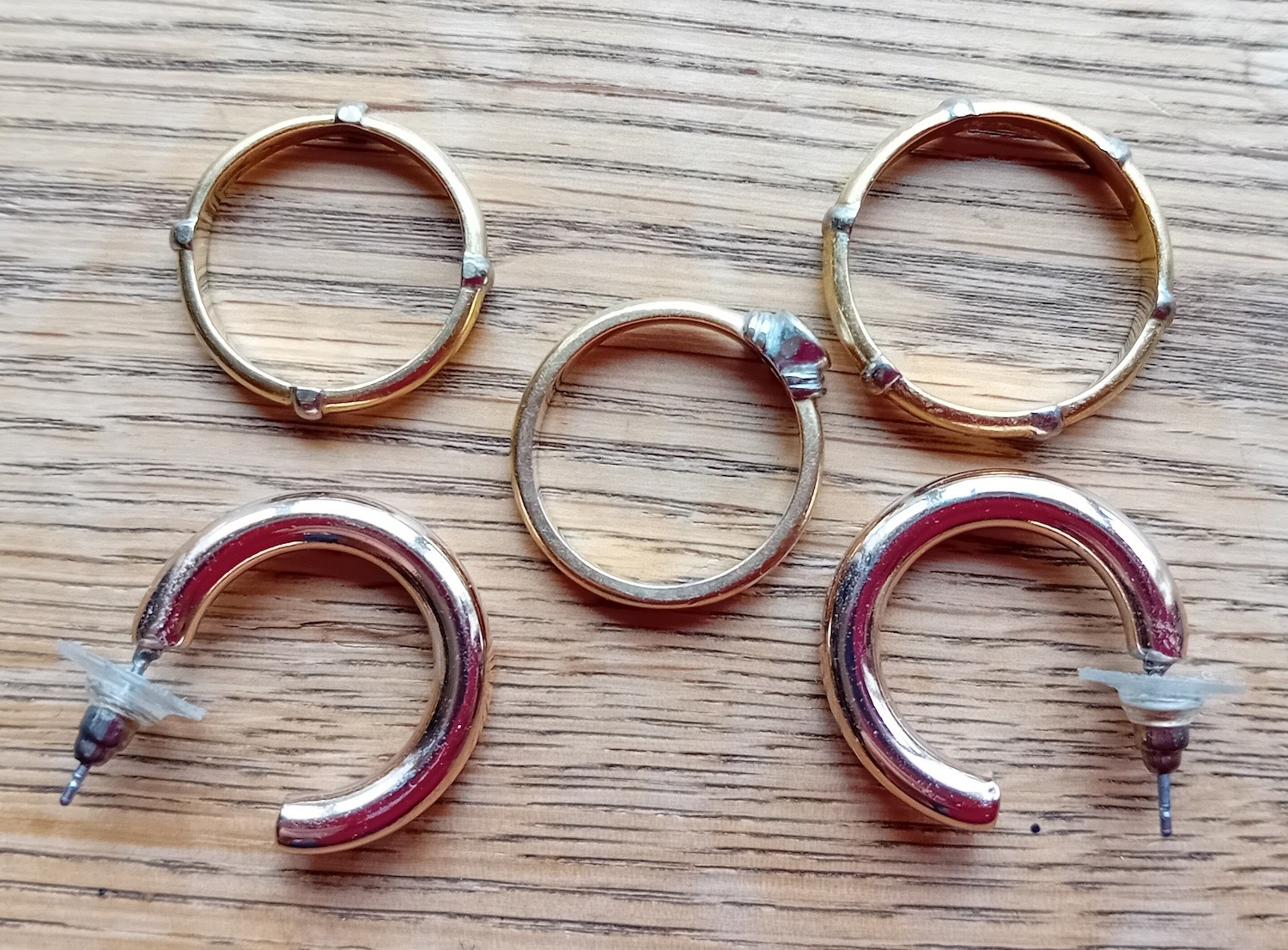
Five Golden Rings – The rings are perhaps the most obvious choice of gift from a lover (although five seems excessive) but this may be a mishearing of goldspinks, an alternative word for goldfinches, yet another bird. Certainly by 1780 song illustrations show the rings as being jewellery.
Six Geese a-Laying – the goose was the bird of choice for Christmas feasting until relatively recent times in the British Isles.
Seven Swans a-Swimming – Since the 1100s the British monarch owns the mute swans on the River Thames. The British Royal Family still maintains a Royal Swan Keeper and this is historically because swans were eaten at special feasts. This makes the seven swans here a very valuable gift indeed, although thankfully swans are now a protected species and nobody eats them.
Eight Maids a-Milking – These particular maidens appear to be dairy maids at work, perhaps creating cheese and butter for the feasting.
Nine Ladies Dancing – Having gathered all the items for decoration and feasting the giver now moves on to inviting guests and creating some music. The ladies get the party started.
Ten Lords a-Leaping – If you have pretty ladies dancing it won’t be long before gentlemen arrive to join them. Tudor era dances involved leaping, and lifting of the ladies, so the gents are in perfect form here.
Eleven Pipers Piping – Small pipes and flutes would provide the melody for the dance.
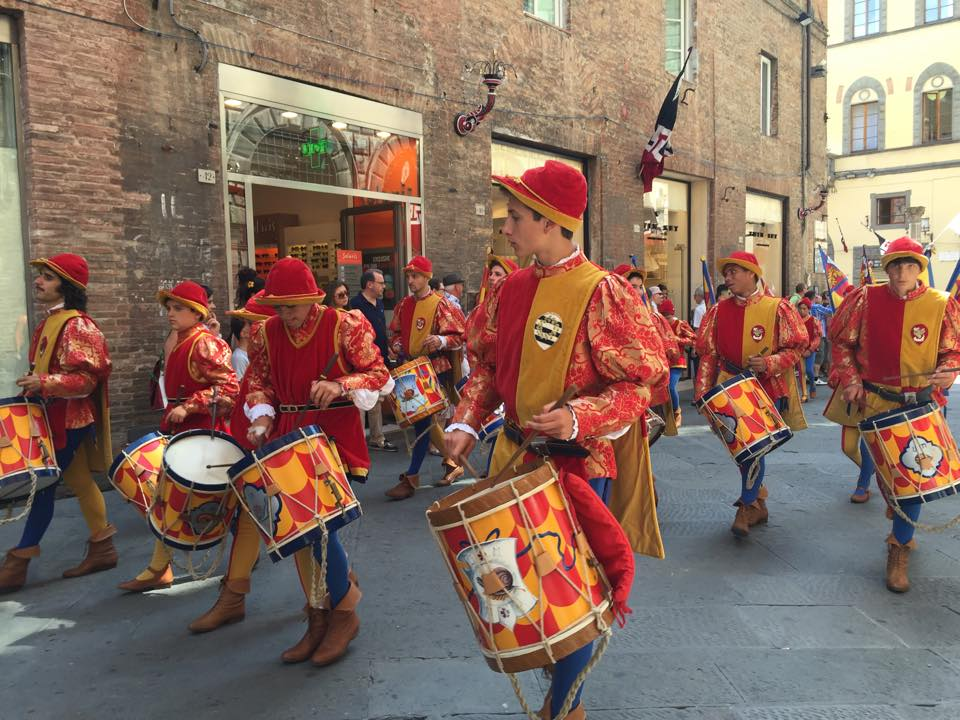
Twelve Drummers Drumming – Add some percussion and the scene is set for a perfect Twelfth Night revel. The true love had a passion for party planning as well as gift giving.
While we no longer party for the entire twelve days between the 25th of December and the 5th of January, if you need to plan a Tudor style revel this year, the song might well be your guide (although please leave the swans alone or sculpt them in chocolate or marzipan). The song gives us a glimpse back in time to some serious next level gift giving and yuletide feasting.
Finally, if you enjoy parodies, look up Frank Kelly’s “Christmas Countdown”, a classic comedy sketch which recounts how the generous gifts recounted in the song ruined Christmas for one Irish recipient. You might know Frank better as the alcoholic Father Jack in the sitcom “Father Ted”.
Wishing you all a very Merry Christmas and hoping it lasts for twelve days and includes plenty of gingerbread.
About Grace Tierney
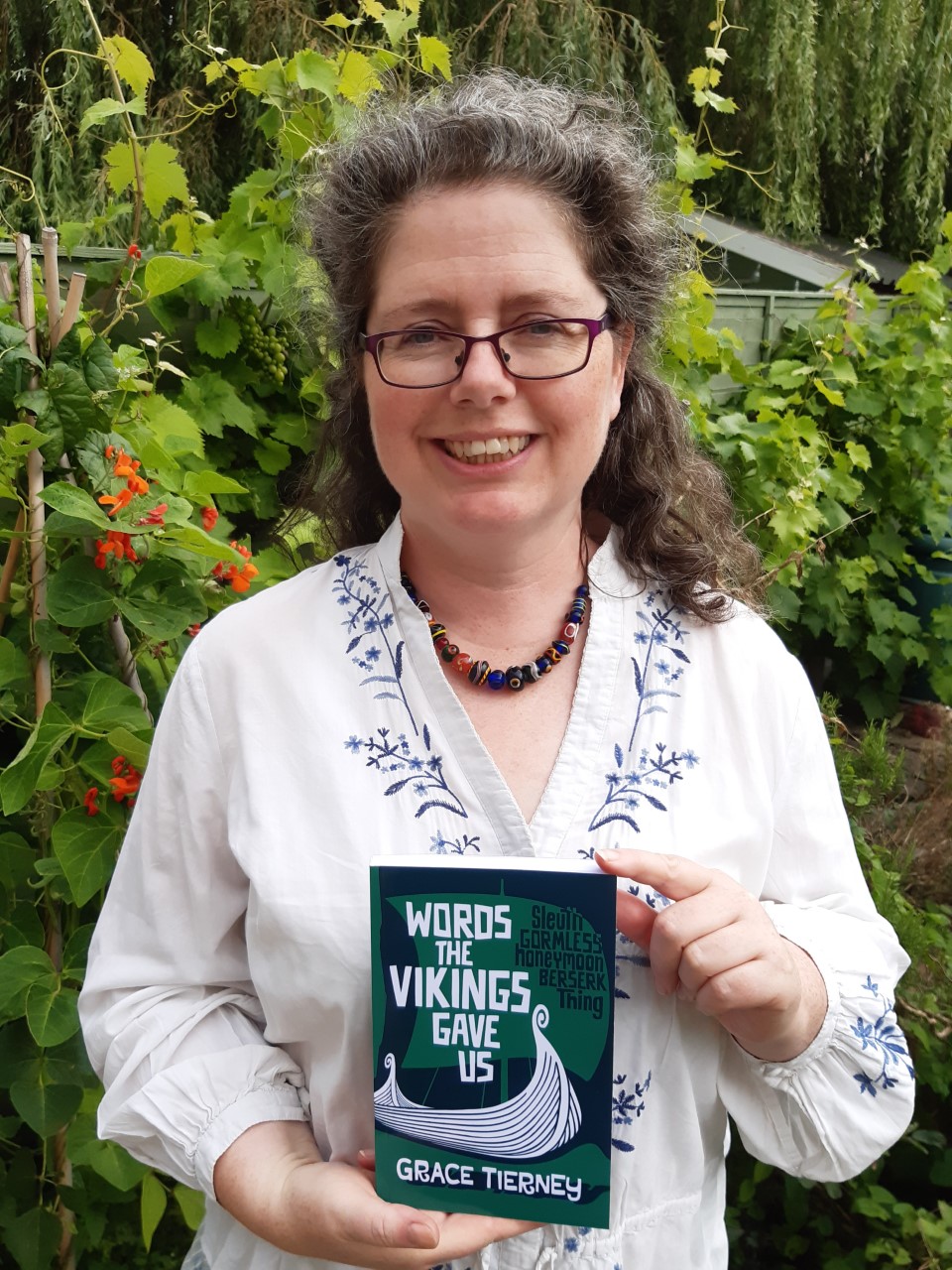
Grace Tierney is an author, and blogger writing on Ireland’s coast. She blogs about the history of unusual words at http://wordfoolery.wordpress.com every Monday and broadcasts a monthly slot about etymology on LMFM radio since 2020.
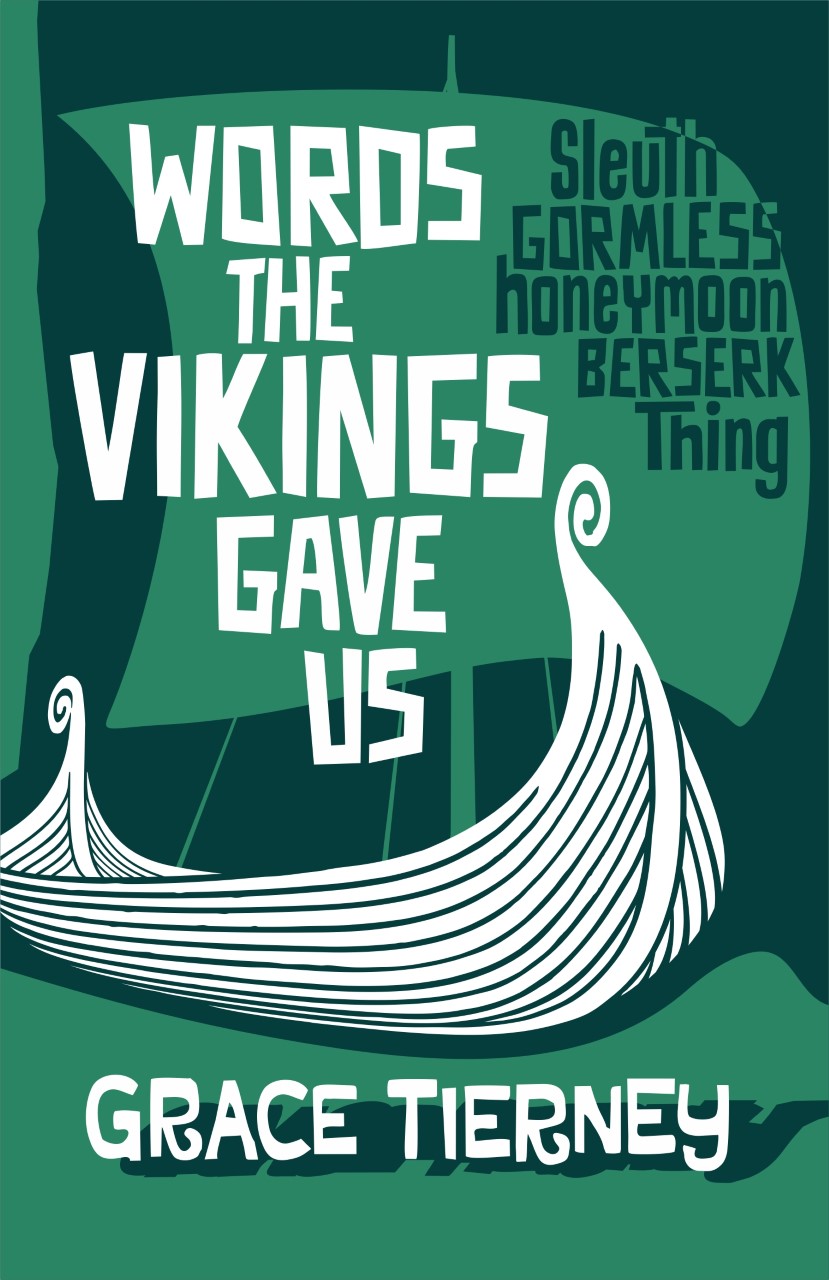
Her books about words are “Words Christmas Gave Us”, “How To Get Your Name in the Dictionary” (the extraordinary lives of those who gave their names as eponyms to English), “Words The Sea Gave Us” (nautical nouns from fishermen, pirates, and explorers), “Words the Vikings Gave Us” (how Vikings gave us everyday English words), and “Modern Words with Old Roots” (the ancient histories of 50 modern words).
Her favourite Christmas word is twixtmas because it’s the quiet part of the season, spent with family, friends, and a heap of new books.
Grace’s Social Media Links
http://www.twitter.com/Wordfoolery
http://www.facebook.com/gracetierneywriter
http://www.bsky.app/profile/wordfoolery.bsky.social
http://www.instagram.com/wordfoolery/
Where to Buy “Words Christmas Gave Us”
“Words Christmas Gave Us” by Grace Tierney is out now in hardback, paperback, and ebook format.
Physical copies are available from Amazon worldwide, waterstones.com , and foyles.co.uk as well as select independent bookstores and libraries.
All the links are at https://wordfoolery.wordpress.com/my-books/
Signed copies are available directly from the author via https://wordfoolery.wordpress.com/would-you-like-a-signed-copy/
“Words Christmas Gave Us” unwraps the stories behind the season, via festive words from advent to yule and grinch to scurryfunge. This book, the third in the series, explores the influence of Greeks, Romans, Vikings, Tudors, Dickens, and of course Santa Claus, on worldwide traditions, merry music, decorations, feasts, and more. Discover why Jean-Paul Sartre wrote a nativity play, when Jingle Bells was sung in space, what Christmas decoration used to contain false teeth, how a newspaper typo started Santa tracking, and plenty of festive folklore traditions.
Ideal for word geeks, Christmas enthusiasts, and anybody who’s ever said Bah Humbug or Ho Ho Ho.
*
My Books
Signed, dedicated copies of all my books are available through my online bookshop.
Out now: Scotland’s Medieval Queens

Scotland’s history is dramatic, violent and bloody. Being England’s northern neighbour has never been easy. Scotland’s queens have had to deal with war, murder, imprisonment, political rivalries and open betrayal. They have loved and lost, raised kings and queens, ruled and died for Scotland. From St Margaret, who became one of the patron saints of Scotland, to Elizabeth de Burgh and the dramatic story of the Scottish Wars of Independence, to the love story and tragedy of Joan Beaufort, to Margaret of Denmark and the dawn of the Renaissance, Scotland’s Medieval Queens have seen it all. This is the story of Scotland through their eyes.
‘Scotland’s Medieval Queens gives a thorough grounding in the history of the women who ruled Scotland at the side of its kings, often in the shadows, but just as interesting in their lives beyond the spotlight. It’s not a subject that has been widely covered, and Sharon is a pioneer in bringing that information into accessible history.’ Elizabeth Chadwick (New York Times bestselling author)
Available now from Amazon and Pen and Sword Books
Coming 30 March 2026: Princesses of the Early Middle Ages
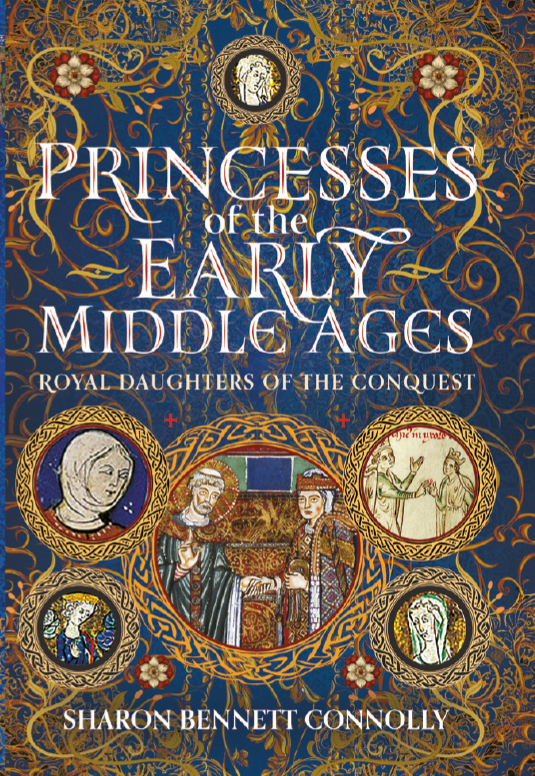
Daughters of kings were often used to seal treaty alliances and forge peace with England’s enemies. Princesses of the Early Middle Ages: Royal Daughters of the Conquest explores the lives of these young women, how they followed the stereotype, and how they sometimes managed to escape it. It will look at the world they lived in, and how their lives and marriages were affected by political necessity and the events of the time. Princesses of the Early Middle Ages will also examine how these girls, who were often political pawns, were able to control their own lives and fates. Whilst they were expected to obey their parents in their marriage choices, several princesses were able to exert their own influence on these choices, with some outright refusing the husbands offered to them.
Their stories are touching, inspiring and, at times, heartbreaking.
Princesses of the Early Middle Ages: Royal Daughters of the Conquest is now available for pre-order.
Also by Sharon Bennett Connolly:

Heroines of the Tudor World tells the stories of the most remarkable women from European history in the time of the Tudor dynasty, 1485-1603. These are the women who ruled, the women who founded dynasties, the women who fought for religious freedom, their families and love. Heroines of the Tudor World is now available from Amberley Publishing and Amazon UK. Women of the Anarchy demonstrates how Empress Matilda and Matilda of Boulogne, unable to wield a sword themselves, were prime movers in this time of conflict and lawlessness. It shows how their strengths, weaknesses, and personal ambitions swung the fortunes of war one way – and then the other. Available from Bookshop.org, Amberley Publishing and Amazon UK. King John’s Right-Hand Lady: The Story of Nicholaa de la Haye is the story of a truly remarkable lady, the hereditary constable of Lincoln Castle and the first woman in England to be appointed sheriff in her own right. Available from all good bookshops Pen & Sword Books, bookshop.org and Amazon.
Defenders of the Norman Crown: The Rise and Fall of the Warenne Earls of Surrey tells the fascinating story of the Warenne dynasty, from its origins in Normandy, through the Conquest, Magna Carta, the wars and marriages that led to its ultimate demise in the reign of Edward III. Available from Pen & Sword Books, Amazon in the UK and US, and Bookshop.org. Ladies of Magna Carta: Women of Influence in Thirteenth Century England looks into the relationships of the various noble families of the 13th century, and how they were affected by the Barons’ Wars, Magna Carta and its aftermath; the bonds that were formed and those that were broken. It is now available in paperback and hardback from Pen & Sword, Amazon, and Bookshop.org. Heroines of the Medieval World tells the stories of some of the most remarkable women from Medieval history, from Eleanor of Aquitaine to Julian of Norwich. Available now from Amberley Publishing and Amazon, and Bookshop.org. Silk and the Sword: The Women of the Norman Conquest traces the fortunes of the women who had a significant role to play in the momentous events of 1066. Available now from Amazon, Amberley Publishing, and Bookshop.org.
Alternate Endings: An anthology of historical fiction short stories including Long Live the King… which is my take what might have happened had King John not died in October 1216. Available in paperback and kindle from Amazon.
Podcast:
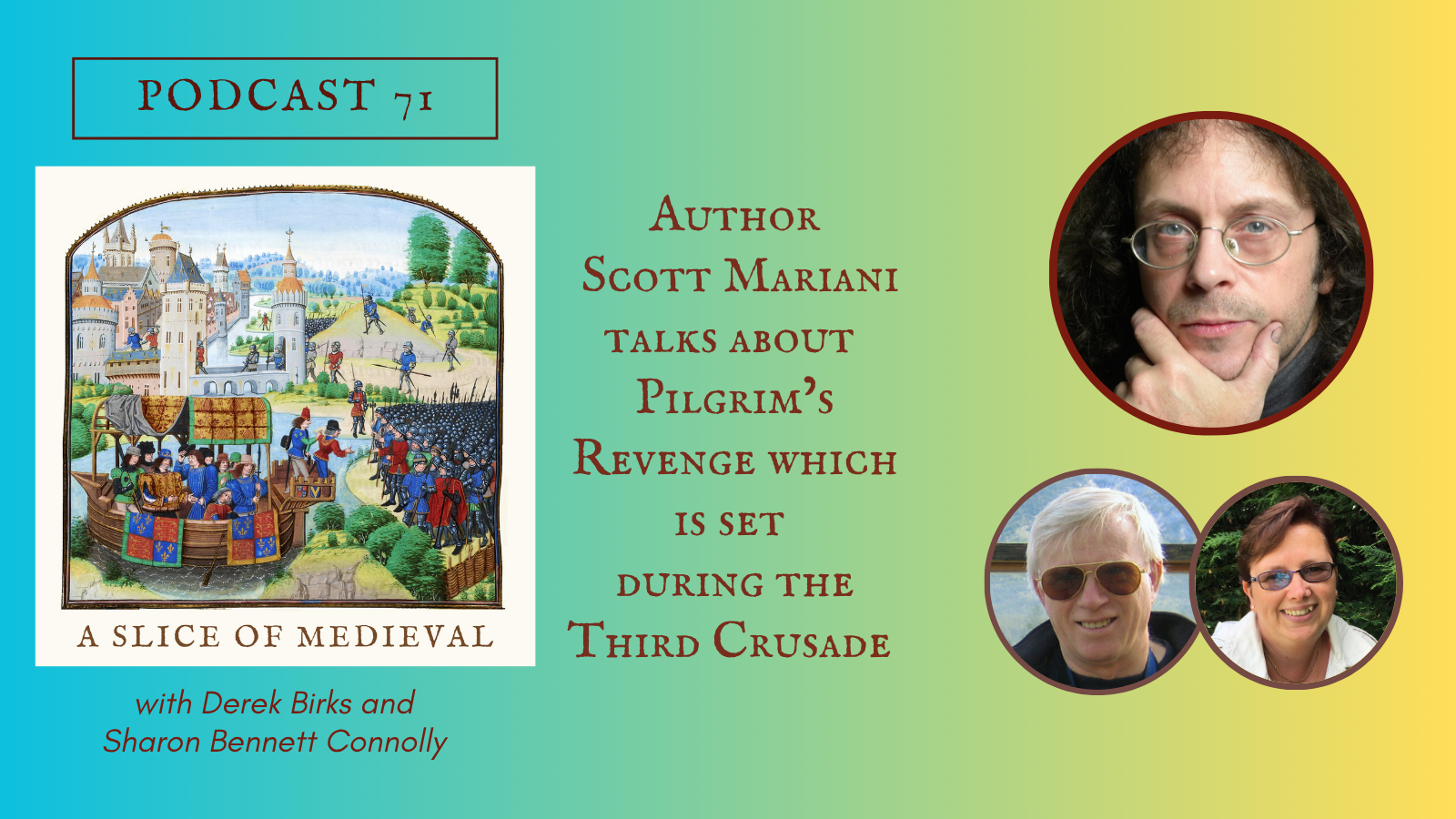
Have a listen to the A Slice of Medieval podcast, which I co-host with Historical fiction novelist Derek Birks. Derek and I welcome guests, such as Bernard Cornwell, Elizabeth Chadwick and Scott Mariani, and discuss a wide range of topics in medieval history, from significant events to the personalities involved.
There are now over 80 episodes to listen to!
Every episode is also now available on YouTube.
*
Don’t forget! Signed and dedicated copies of all my books are available through my online bookshop.
For forthcoming online and in-person talks, please check out my Events Page.
You can be the first to read new articles by clicking the ‘Follow’ button, liking our Facebook page or joining me on Twitter, Threads, Bluesky and Instagram.
*
©2025 Sharon Bennett Connolly FRHistS and Grace Tierney


 History... the interesting bits!