Wordly Women: Gemma Hollman

Today I am continuing my Wordly Women series with a historian who, just like me, concentrates on bringing the women to the fore. Gemma Hollman has written about Royal Witches, queens and mistresses. Her last book, Women in the Middle Ages: Illuminating the World of Peasants, Nuns, and Queens came out at the end of 2024, and is gorgeous! It was lovely to get the chance to have a chat with Gemma about her writing journey.

Sharon: So, Gemma, what got you into writing?

Gemma: It’s kind of a mix of completely by accident, and something I’ve always enjoyed doing. Whilst at school and university I would write bits of fiction for fun, never for anyone to look at, so I’ve always had a bit of a writing bug. But when I finished university, it felt so weird to go from four years of researching and writing history to quitting cold turkey. At this time, it seemed like everyone was making blogs, including loads of my friends, so I decided to join the trend and establish my blog, Just History Posts.

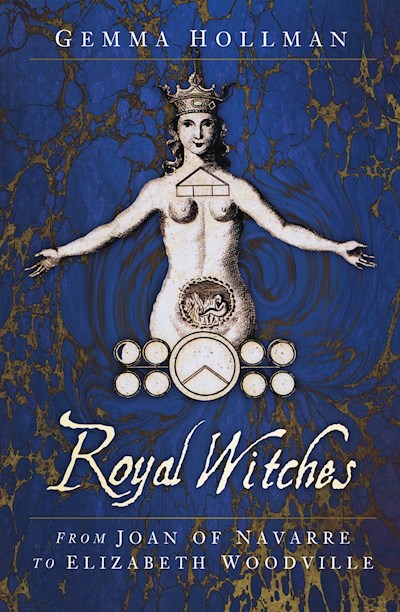
I loved writing there, and by the second year I was gathering a load of steam. One of my most popular posts was about Joan of Navarre, a fifteenth-century Queen of England who was accused of using witchcraft against the king – and one of the focuses of my Masters dissertation. That, combined with lots of people I knew in real life saying my dissertation would make an amazing book, made me think maybe people would like to learn about these women and their stories which are not that well-known. I pitched the book to The History Press and it eventually turned into my debut non-fiction book, Royal Witches. The rest, as they say, is history.

Sharon: Tell us about your books.

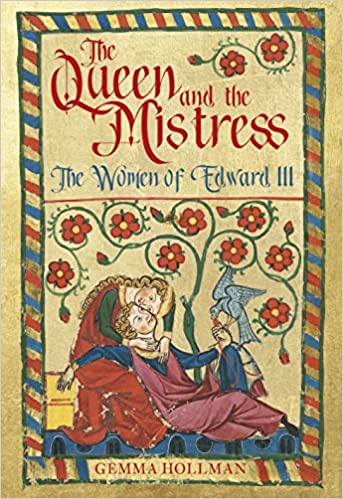
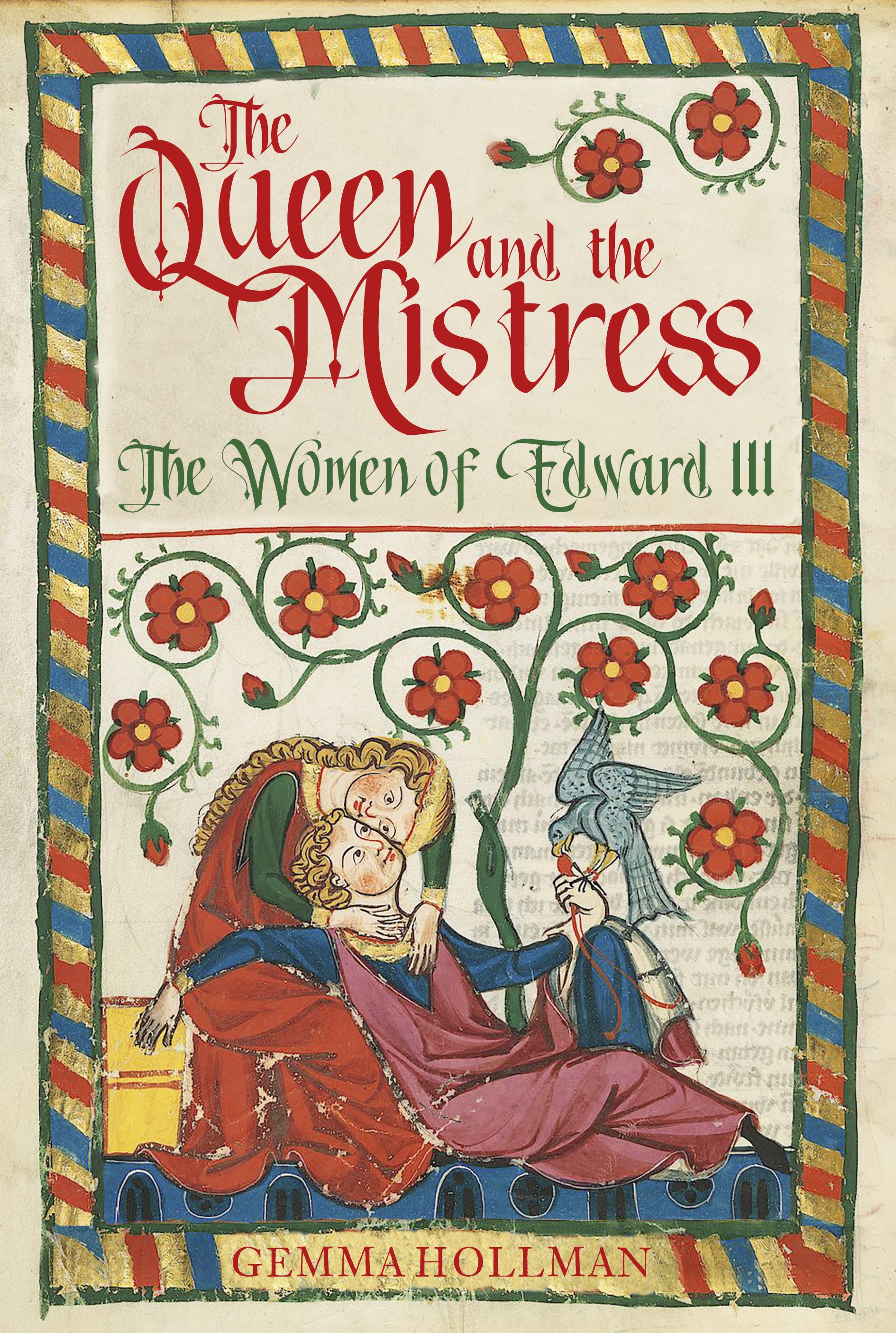
Gemma: Well, I already gave you a little bit of a taster about Royal Witches (the other three women, beyond Joan, are Eleanor Cobham, Jacquetta of Luxembourg and Elizabeth Woodville), about fifteenth-century women in the English Royal Family who were all accused of witchcraft. My second book goes back to the previous century and the court of Edward III of England, and is a dual biography of the two women who dominated his court and his heart – his queen, Philippa of Hainault, and his mistress, Alice Perrers. Both women are absolutely fascinating in their own right, but by looking at them together I think you can understand them, Edward, and the fourteenth century a lot better.

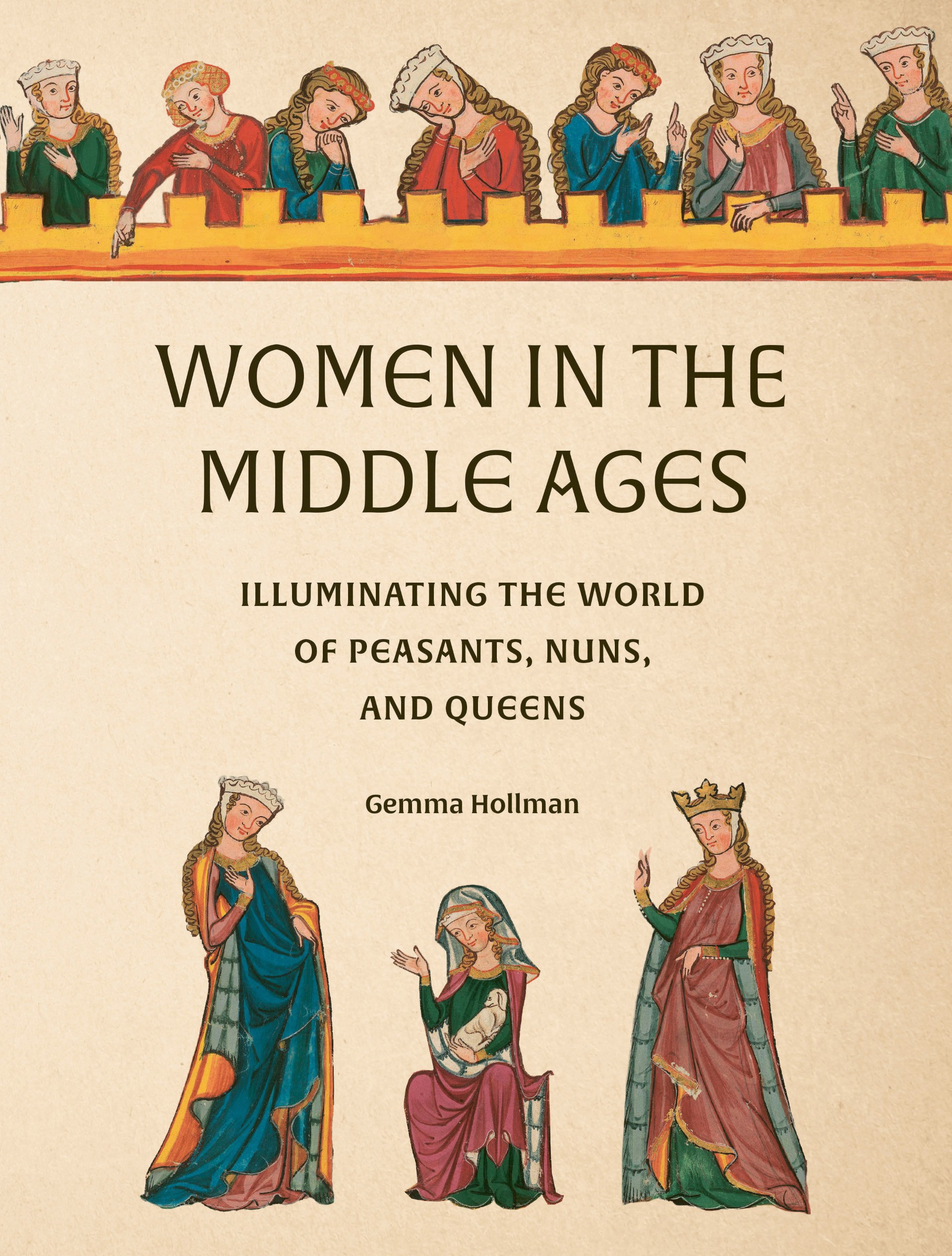
My final book came out at the end of last year, and is called Women in the Middle Ages. A slight departure from my first two books, which were both focused biographies, this is a much broader look at women across much of Europe from roughly 1000-1500. The best thing about it, though, is that it is an illustrated history, featuring just shy of 200 images of artwork and artefacts from the medieval period. I explore how these objects can illuminate the real lives of these women in far more detail than written records alone. It is a beautiful, full-colour experience which was so special to pull together.

Sharon: What attracts you to the medieval period?
Gemma: I’ve always loved all periods of history, and studied a huge range of history at university, but I found that I enjoyed writing medieval history much more than I did modern history. I enjoyed acting almost like a detective and trying to extract bits about people’s lives and personalities with such limited sources. And the more I researched and wrote it, the more I fell in love with it. The medieval world was so incredibly different from today in every aspect, that it can sometimes feel like another world. But, at the same time, people themselves are so similar to today. I always love reading stories that connects us through the centuries, feeling that human connection to someone so far removed from myself today. Although it was a time of huge strife, poverty, and difficulty, there is something intrinsically magical about it – it’s no coincidence so much of our fantasy media today has medieval vibes!

Sharon: Who is your favourite 14th century person and why?

Gemma: Oh gosh, that is such a difficult question! Of course there is no one favourite, as that would be impossible, but someone who has grabbed my attention ever since I first learnt about her is Isabella of France, the queen of Edward II of England. She was so self-assured of her lineage, her rights, the respect due to her by virtue of her position, and she was not going to let anyone tell her otherwise. She was loved and sympathised with whilst the neglected spouse, then inspired the entire country to stand with her and overthrow her husband, and went on to pretty much rule England with her lover for several years. Even after her son, Edward III, forcibly took control of the kingdom again, she continued to wield significant influence at court. I think she is just so utterly fascinating – and she of course perfectly sets the scene for the start of my second book, The Queen and the Mistress!

Sharon: Who is your least favourite 14th century and why?

Gemma: Ooh. I don’t know that there’s really anyone I actively dislike, but for playfulness I will put forward Thomas Walsingham, chronicler and monk at St Albans Abbey in Hertfordshire. His chronicles are invaluable for our knowledge of the late fourteenth century, but he is a bit of a villain in my second book for his treatment of Alice Perrers. As a religious man, Alice’s position as a mistress at the heart of the court was unconscionable (and it didn’t help that she was embroiled in legal conflicts with his abbey for many years). He is responsible for a lot of the negative propaganda against Alice which lasted for centuries, including the baseless accusation that she stole the rings from Edward’s fingers after he died. Even today, the way he spoke about her is the main way people approach her and assume how she really was. Talk about negative PR.

Sharon: How do you approach researching your topic?
Gemma: Mostly I already have a theme or a person in mind for what I want to research, and generally I already have an amount of knowledge about the topic. But I always find it most helpful to start with secondary sources, ie by reading a load of books and journal articles on the subject. I write copious notes, start creating timelines where necessary, and jot down the names of other books and sources from the footnotes. I then go to the original sources and make a load of notes on those, too, and I then dive in to writing. I always find once I start writing I then become aware of areas where my notes might be lacking, like missing any information about what someone was doing in a particular year of their life, and so I then go back to the sources and secondary material to fill in these gaps. I also find that it’s only by starting to write do I truly know which direction my piece is going in, and thus am able to tailor my research much more specifically, rather than reading about anything in the hope it might be useful, but finding that I don’t use it at all (as happens with much of my early research).

Sharon: Tell us your ‘favourite’ medieval story you have come across in your research.

Gemma: One of my favourites definitely comes from a story I read in a chronicle at university, and which I recounted in one of my very first blog posts. This is a story from the court of Henry II of England, and is one that very much exemplifies what I said earlier about people never changing. The king’s steward, a man named Thurston, came to him and complained that another man, Adam of Yarmouth, refused to seal a writ for him free of charge (something which was to be expected amongst people working in the government). After some investigation, it was revealed that Adam was upset at Thurstan because at a party Thurstan had been hosting, he refused to allow Adam to eat two cakes! Such a petty squabble had disrupted the king’s business, and he settled the squabble by having Adam seal the writ in return for Thurstan serving him two cakes on bended knee. It sounds like something out of fiction rather than reality!

Sharon: Are there any other eras you would like to write about?

Gemma: I definitely have found my comfort zone in the medieval era, but I do think from time to time about writing about other periods, as I think is only natural. I know of some amazing women from the Georgian and Victorian periods that I’ve been drawn to writing about several times, so maybe that’s something I can set my sights on one day.

Sharon: What are you working on now?

Gemma: At the moment, I am in the midst of my fourth book which is set in the court of Richard II. The book is largely a biography about Richard, but it also aims to take a look at his wider court, too, particularly some of the other large and important figures – and, particularly, women. It’s due next year, so wish me luck with getting it done in time!

Sharon: And finally, what is the best thing about being a writer?

Gemma: This question is definitely easy for me – spreading the knowledge I have and seeing people enjoy it and learn something new. Every time I get a review, or speak to a person at a talk I am giving, where the person said they’ve loved what I’ve written/how I’ve spoken, and that they’ve learnt something is just as special as the last. I love writing, and I love that I get to learn so many interesting things myself in the process, but the whole point of me writing is to share all the things I’ve learnt with other people. Each time I hear that I’ve done that, and done it well, makes all of the late nights researching after a full day’s work, or the times I can’t see my friends and family because I have a deadline worth it.

About the author:
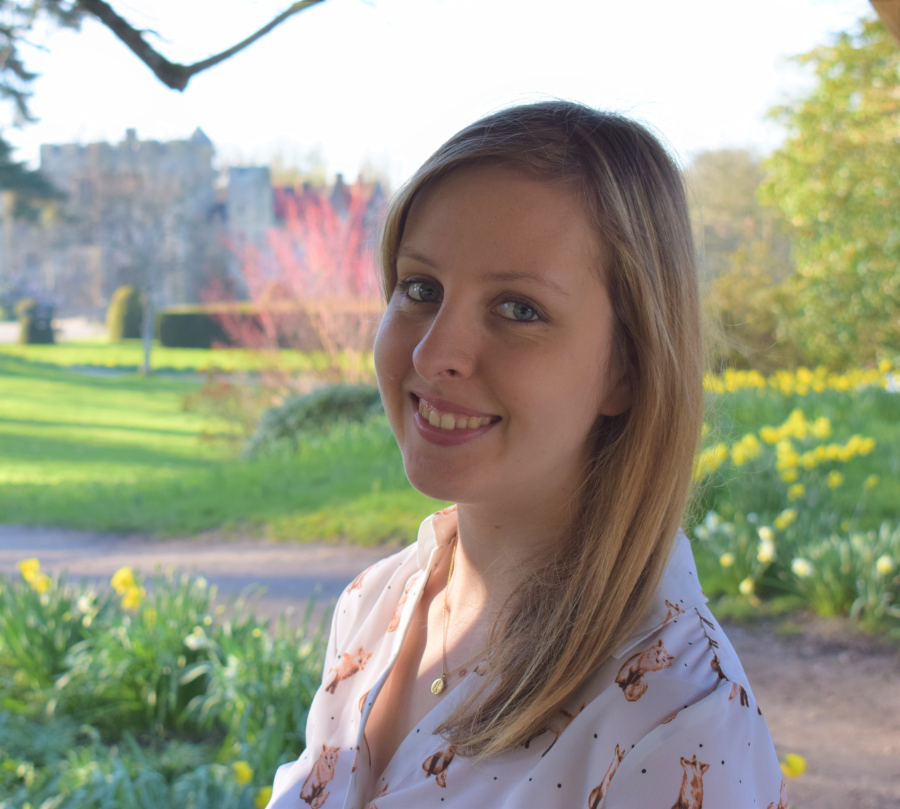
Author bio: Gemma Hollman is a historian and author who specialises in late medieval English history. A Fellow of the Royal Historical Society, she has a particular interest in the plethora of strong, intriguing and complicated women from the medieval period, a time she had always been taught was dominated by men. Gemma also works full-time in the heritage industry whilst running her historical blog, Just History Posts, which explores all periods of history in more depth. Gemma’s first book, Royal Witches, was a bestseller, and two more books have since followed: The Queen and the Mistress, and Women in the Middle Ages.

Where to find Gemma:

Website: https://justhistoryposts.com/; Link for books: https://lnk.bio/GemmaHAuthor; Social media: Bluesky https://bsky.app/profile/gemmahauthor.bsky.social.

*

My books

Signed, dedicated copies of all my books are available through my online store.

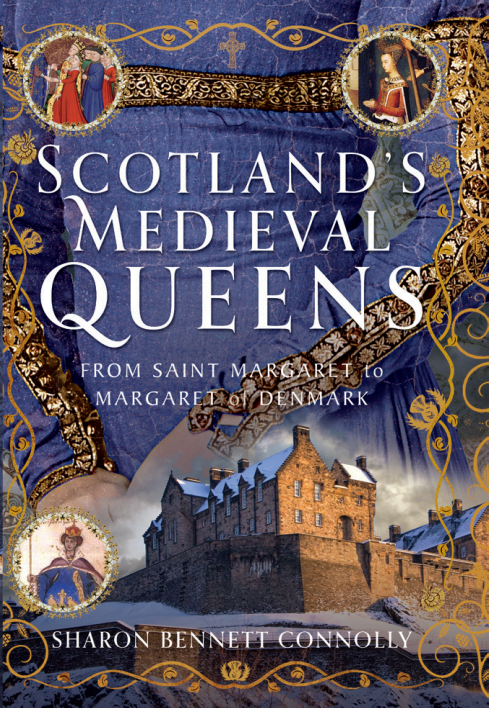
Out now: Scotland’s Medieval Queens

Books by Sharon Bennett Connolly

Scotland’s history is dramatic, violent and bloody. Being England’s northern neighbour has never been easy. Scotland’s queens have had to deal with war, murder, imprisonment, political rivalries and open betrayal. They have loved and lost, raised kings and queens, ruled and died for Scotland. From St Margaret, who became one of the patron saints of Scotland, to Elizabeth de Burgh and the dramatic story of the Scottish Wars of Independence, to the love story and tragedy of Joan Beaufort, to Margaret of Denmark and the dawn of the Renaissance, Scotland’s Medieval Queens have seen it all. This is the story of Scotland through their eyes.

Scotland’s Medieval Queens gives a thorough grounding in the history of the women who ruled Scotland at the side of its kings, often in the shadows, but just as interesting in their lives beyond the spotlight. It’s not a subject that has been widely covered, and Sharon is a pioneer in bringing that information into accessible history.’ Elizabeth Chadwick (New York Times bestselling author)

Available now from Amazon and Pen and Sword Books

Also by Sharon Bennett Connolly:
Books by Sharon Bennett Connolly

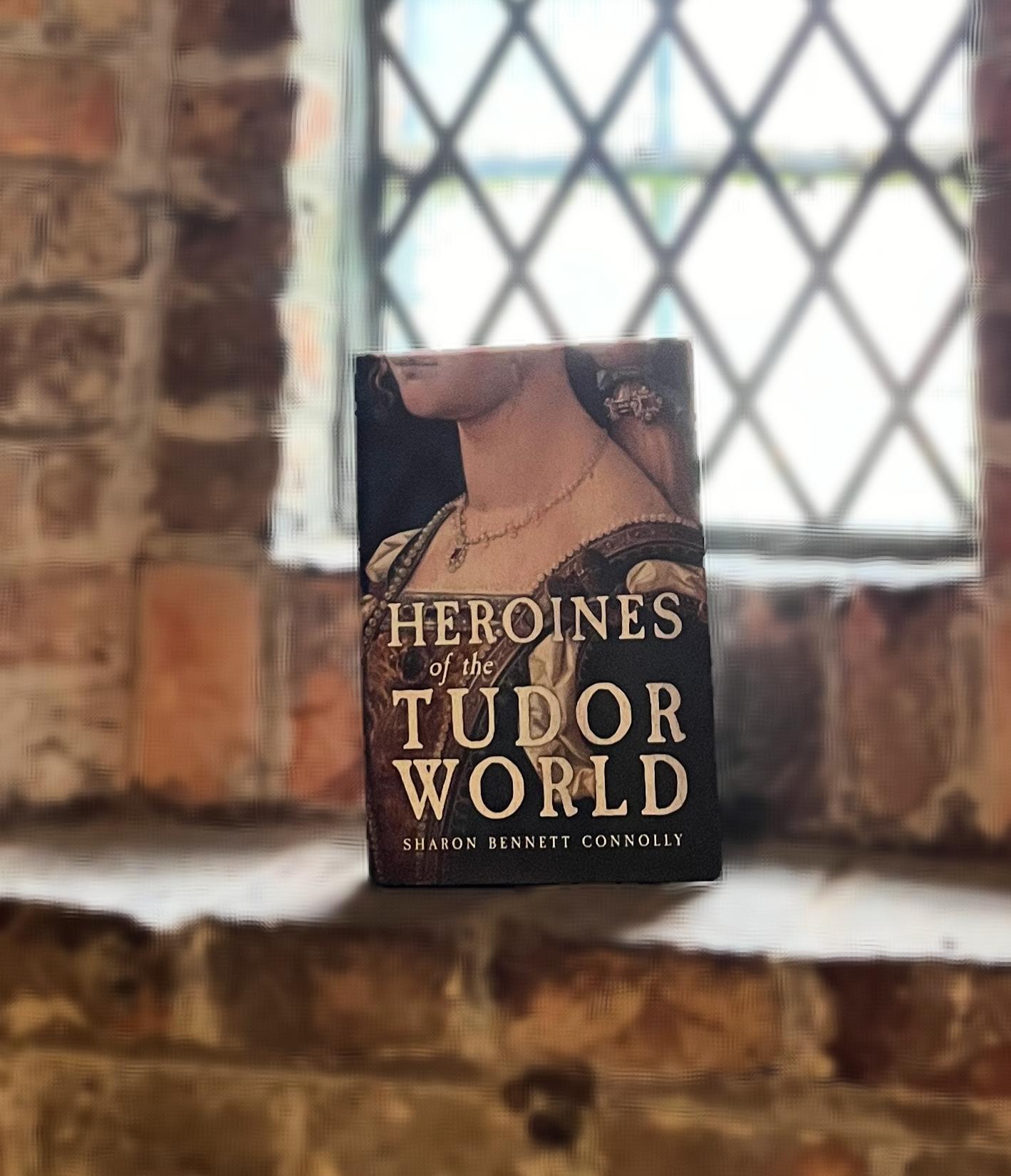
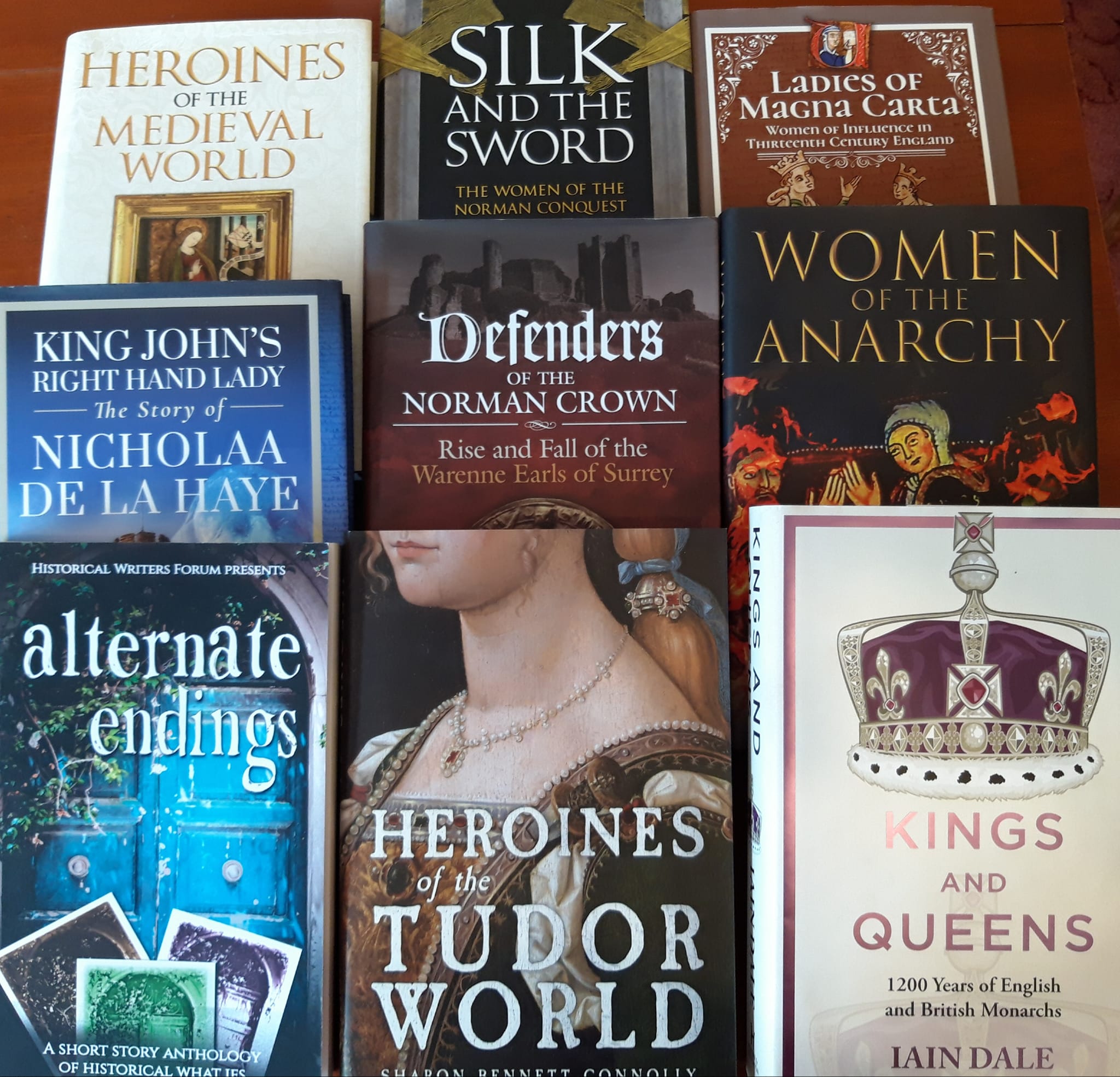
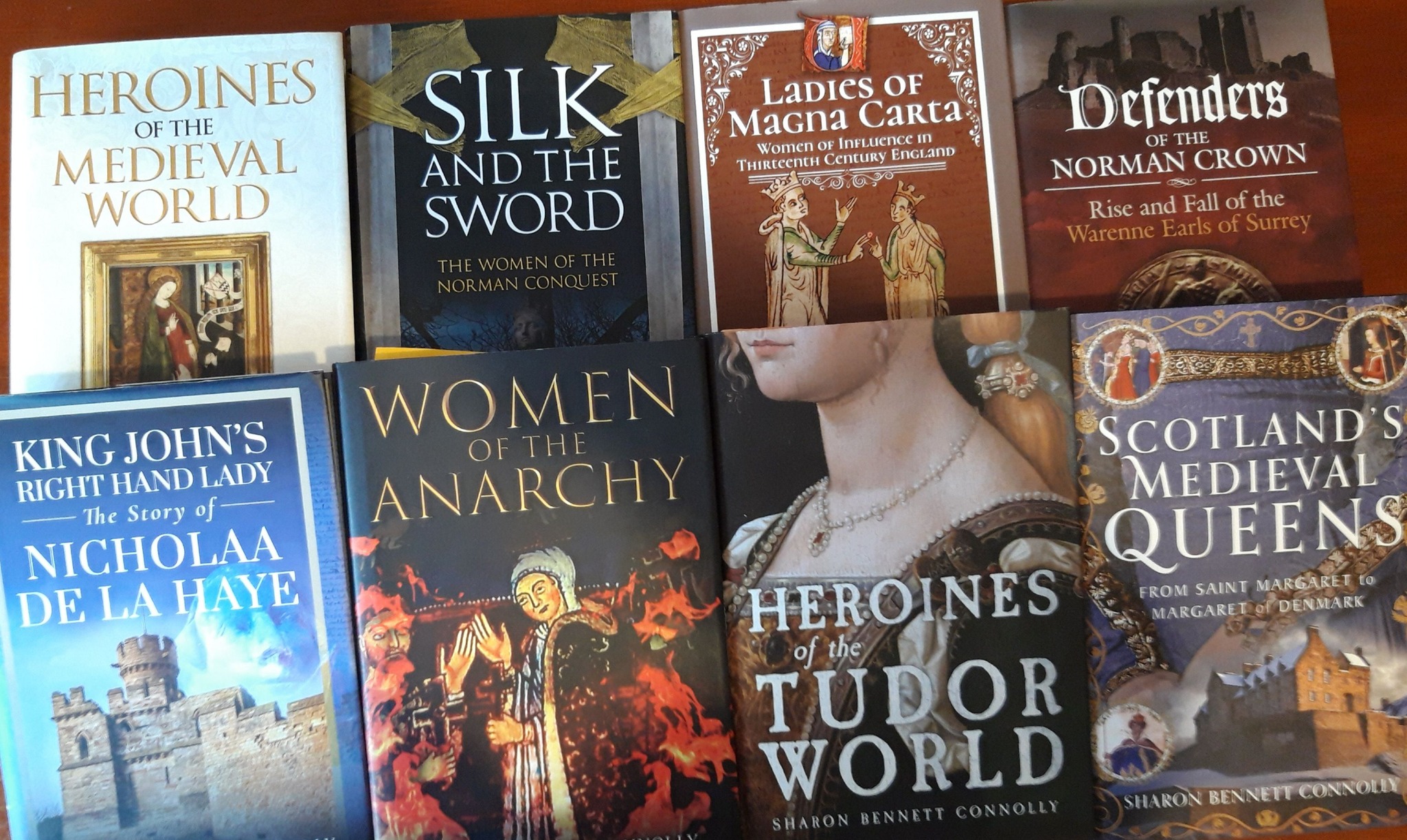
Heroines of the Tudor World tells the stories of the most remarkable women from European history in the time of the Tudor dynasty, 1485-1603. These are the women who ruled, the women who founded dynasties, the women who fought for religious freedom, their families and love. Heroines of the Tudor World is now available from Amberley Publishing and Amazon UK. Women of the Anarchy demonstrates how Empress Matilda and Matilda of Boulogne, unable to wield a sword themselves, were prime movers in this time of conflict and lawlessness. It shows how their strengths, weaknesses, and personal ambitions swung the fortunes of war one way – and then the other. Available from Bookshop.orgAmberley Publishing and Amazon UKKing John’s Right-Hand Lady: The Story of Nicholaa de la Haye is the story of a truly remarkable lady, the hereditary constable of Lincoln Castle and the first woman in England to be appointed sheriff in her own right. Available from all good bookshops Pen & Sword Booksbookshop.org and Amazon

Books by Sharon Bennett Connolly

Defenders of the Norman Crown: The Rise and Fall of the Warenne Earls of Surrey tells the fascinating story of the Warenne dynasty, from its origins in Normandy, through the Conquest, Magna Carta, the wars and marriages that led to its ultimate demise in the reign of Edward III. Available from Pen & Sword BooksAmazon in the UK and US, and Bookshop.orgLadies of Magna Carta: Women of Influence in Thirteenth Century England looks into the relationships of the various noble families of the 13th century, and how they were affected by the Barons’ Wars, Magna Carta and its aftermath; the bonds that were formed and those that were broken. It is now available in paperback and hardback from Pen & SwordAmazon, and Bookshop.orgHeroines of the Medieval World tells the stories of some of the most remarkable women from Medieval history, from Eleanor of Aquitaine to Julian of Norwich. Available now from Amberley Publishing and Amazon, and Bookshop.orgSilk and the Sword: The Women of the Norman Conquest traces the fortunes of the women who had a significant role to play in the momentous events of 1066. Available now from Amazon,  Amberley Publishing, and Bookshop.org.

Alternate Endings: An anthology of historical fiction short stories including Long Live the King… which is my take what might have happened had King John not died in October 1216. Available in paperback and kindle from Amazon.

Podcast:

A Slice of Medieval

Have a listen to the A Slice of Medieval podcast, which I co-host with Historical fiction novelist Derek Birks. Derek and I welcome guests, such as Bernard Cornwell and Michael Jecks, and discuss a wide range of topics in medieval history, from significant events to the personalities involved. Every episode is also now available on YouTube.

*

Don’t forget! Signed and dedicated copies of all my books are available through my online store.

For forthcoming online and in-person talks, please check out my Events Page.

You can be the first to read new articles by clicking the ‘Follow’ button, liking our Facebook page or joining me on TwitterThreadsBluesky and Instagram.

*

©2025 Sharon Bennett Connolly, FRHistS and Gemma Hollman, FRHistS

Interview with Gemma Hollman, author of Women in the Middle Ages

This week, I have had the distinct pleasure of chatting with author and historian Gemma Hollman about her new book, Women in the Middle Ages: Illuminating the World of Peasants, Nuns, and Queen.

I cannot wait to get my hands on this book!

Sharon: Tell me about your new book, Women in the Middle Ages: Illuminating the World of Peasants, Nuns, and Queens

Gemma: The book is an illustrated history which aims to shed light on the lives of medieval women. Focusing on roughly 500 years, from 1000 – 1500, I take a look at European women from all levels of society. By using surviving artwork, we see what the visual record can tell us about these women that might be lost in the written record. We often have this idea that the medieval period was a male-dominated world, with women at the sidelines, but this is not quite the case and art is an excellent place to see this. Women appear everywhere in it, but they were also very often the makers of it, too. Women ran households, worked in taverns and textile hubs, invested money in businesses, created books and paintings, saved souls through their prayers and ruled countries. And in a visually-dominated culture, where the majority of people were illiterate, women were able to leave their mark on tapestries, manuscripts, beads, bowls, and more. The book is hopefully a marvellous romp through time with something for anyone, whether it’s your first time learning about medieval women, or the hundredth book you’ve read.

Sharon: What inspired you to write the book?

Gemma: My first two books were biographies, and I already had a vision for my third book as another biography, but I was also keen to do something more general. I was pondering how to do this, when a contact at Abbeville Press got in touch with me and let me know they were wanting to publish an art book centred on medieval women. This immediately sparked dozens of ideas in my head, and a chat with my future editor revealed that we had very similar visions for the book. It seemed like the perfect opportunity to dive in, and I relished the idea of doing such an image-heavy book. There are so many beautiful objects and artworks from the medieval period that I haven’t had the chance to showcase in my previous books, and I was excited to learn something new myself. I didn’t want to regret turning it down, so I didn’t!

Sharon: Do you have a favourite woman you highlighted in the book?

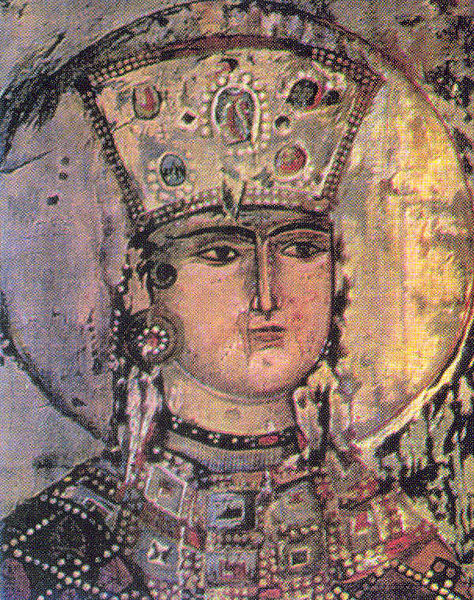
Tamar of Georgia

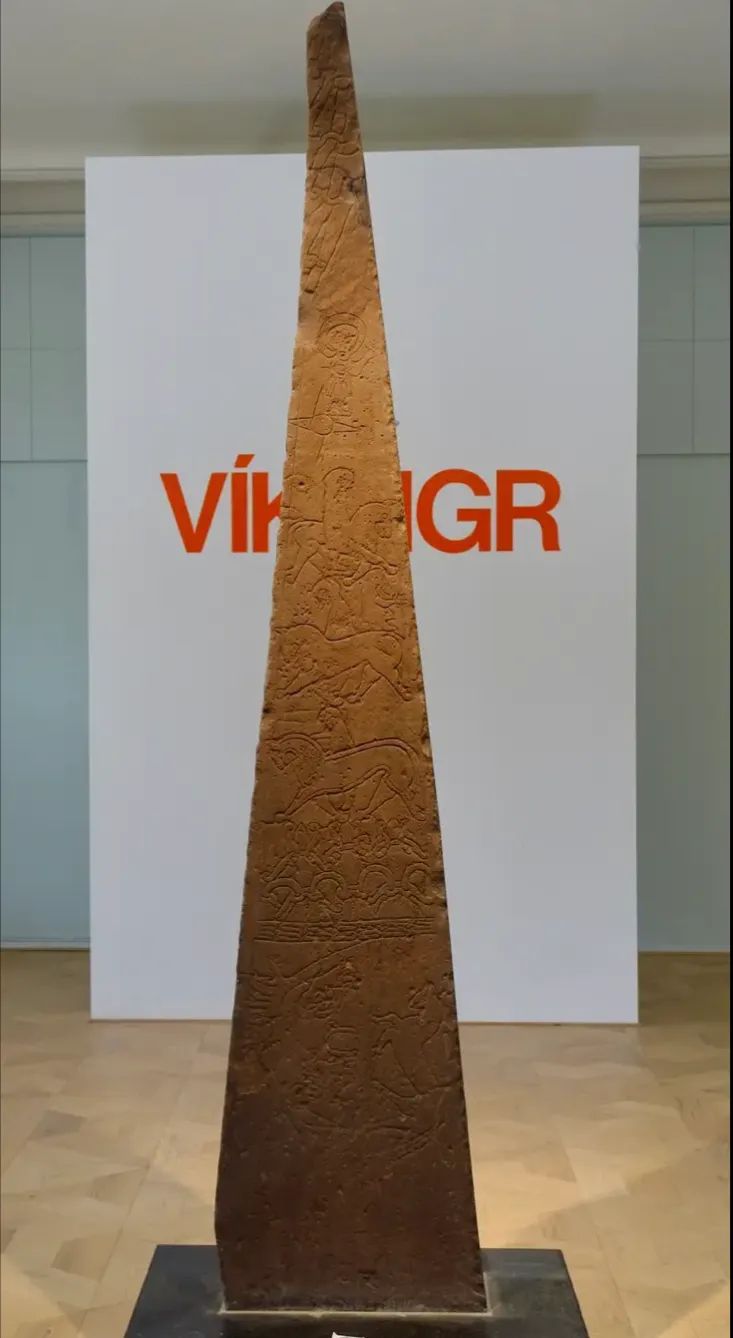
Gemma: Oh gosh, that’s such a difficult question because there are so many featured within! I don’t know that I can pick just one, but certainly one of my favourite stories is that of Astrid, Gunnvor and the Dynna Stone. The Dynna Stone is an 11th century runestone from Norway that commemorates a woman named Astrid. It was erected in her memory by her mother, Gunnvor, and commemorates Astrid as “the handiest maiden in Hadeland”, suggesting Astrid was skilled at some kind of craft. We know little else about the two women, but the runestone is also important as being one of the earliest instances of Christian pictorial art in the country. In a book about medieval women and art, having an object commissioned by a woman for her daughter, who may also have been an artist of some form, is really special.

Sharon: Who was the hardest person to write about?

Gemma: I don’t know that I struggled so much to write about a particular person – I cover so many countries and centuries that there was always someone you could find – but more particular groups of people. Being someone who specialises much more on Western Europe, it was easy to think of examples of significant people to write about, but I was keen that the book would make sure to cover as much of Europe as possible, and so I sometimes had to do some real digging to find an example of a woman who fit in with what I was talking about from different regions. In the same vein, it was sometimes tricky finding specific examples of women to use in my Peasants and Professionals section. Although we do know the names of some craftswomen from the later Middle Ages, due to increased record-keeping, finding names of ordinary, lower-class women is really, really difficult. There were often few reasons for these women to turn up in the written record. This is, of course, where the art was an excellent filler, as we at least have visual representations of them, but it was almost impossible to tell individual stories of particular women in the same way as in other chapters.

Sharon: Did you come across a particularly interesting or obscure character?

Gemma: One woman who really struck a chord with me was Marietta Barovier, who was part of a well-known Venetian glassmaking family. Her father had invented cristallo glass, and had clearly given equal weighting to the talents of his daughter as well as his son. When he died, he bestowed his workshop to his two children jointly. Marietta gained a significant reputation of her own, and in the 1480s she invented the rosette or chevron bead, which became an iconic Venetian glass bead. Women in Italy were in many ways more restricted in the world of work than other women in Europe, and yet here you have a woman who was not only allowed equal inheritance, but became famous in her own right for her exceptional skill.

Sharon: Was there a particular image or manuscript that struck you?

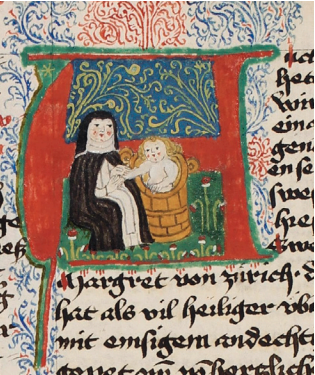
Margaret von Zurich

Gemma: Another difficult question as there are so many wonderful images! I think I’ll go with a simple little manuscript initial from a German nunnery. The picture shows a nun named Margaret von Zurich bathing the Christ Child in a barrel bath. It’s a very simple, small drawing, with some beautiful colour, and to modern eyes it is nothing extraordinary. But this small picture is actually incredibly subversive. The Catholic Church had forbidden women from touching Christ, and so not only was Margaret’s vision dangerous, but so was the recording of it in a manuscript. Religious women in Europe were often at the spearhead of reform and religious fervour, and this small drawing really succinctly demonstrates that.

Sharon: Did you have to leave anyone out through time constraints, lack of images or word count? If so, who?

Gemma: Oh, most certainly! The book is not very long by history book standards, and yet it aims to cover a continent and five centuries of history! I could have written so, so much more and there are always people you wish you could include or expand upon but can’t. In the early days of writing and researching, I realised I needed to find a way to narrow the scope a little to make the book somewhat more manageable, and so I made the decision to focus on Catholic Europe, which thus excluded many eastern countries. This was a disappointment as one woman I wrote about in a sample chapter was Queen Tamar of Georgia. She ruled from 1184 to 1213 and was the first woman to rule the country in her own right. Despite early objections to her reign, her time as queen went on to be seen as a Golden Age, and her story is so fascinating. It was a shame to have to cut her out, but maybe she can find her way in to a future project of mine!

Sharon: What was your biggest challenge when writing about women in history?

Dynna Stone

Gemma: I think for this book in particular, it was trying to correctly balance what women did, with what people at the time thought about what women did. There was a lot of misogyny in the Middle Ages and so lots of written sources or pieces of art criticise women for working too much, for being too involved in politics, for being too promiscuous, for being too…. But we also have to remember that just a fraction of what existed in the medieval period has survived to today, and the people creating these sources were sometimes the very people most likely to criticise women – monks sequestered away from the world, courtiers who didn’t like submitting to female authority, and so on. And so just because we might have some of these thoughts that have made it to today, it doesn’t mean that everyone or even the majority of people thought that. You don’t want to belittle the struggles that women at the time went through; some women did lose their kingdoms because people wanted a male ruler instead, and some peasant women who had to work in taverns to support their families were derided as prostitutes. But those female leaders also had thousands of men willing to fight for them, and there were popular ballads and texts that praised women for all the hard work they did to keep their families afloat. And you also want to try and avoid praising certain women for their exceptionalism, especially when some of their contemporaries used exceptionalism as back-handed compliments, a way to deride the rest of the female sex.

Sharon: What are you working on now?

Gemma: I am now busy getting started on my next book! I’ve gone back to England and will be looking at the court of Richard II, and I’m really excited to see which threads I’ll choose to pull at. It’s such an interesting and tumultuous reign, there is plenty to choose from! But I am definitely keen to return to a similar style book as Women in the Middle Ages in the future so my mind is already whirring with possibilities…

About the Author: 

Gemma Hollman is a historian and author of The Queen and the Mistress: The Women of Edward III and Royal Witches: From Joan of Navarre to Elizabeth Woodville. A Fellow of the Royal Historical Society, she works full-time in the heritage industry whilst running her historical blog, Just History Posts. You can find Gemma on Twitter: @GemmaHAuthor, and Facebook: facebook.com/JustHistoryPosts,

To Buy the book:

You can buy Women in the Middle Ages: Illuminating the World of Peasants, Nuns, and Queen in the UK from Waterstones and Amazon. And in the US from Barnes & Noble and Amazon.

*

My Books:

Signed, dedicated copies of all my books are available through my online store.

OUT NOW! Heroines of the Tudor World

Heroines of the Tudor World tells the stories of the most remarkable women from European history in the time of the Tudor dynasty, 1485-1603. These are the women who ruled, the women who founded dynasties, the women who fought for religious freedom, their families and love. These are the women who made a difference, who influenced countries, kings and the Reformation. In the era dominated by the Renaissance and Reformation, Heroines of the Tudor World examines the threats and challenges faced by the women of the era, and how they overcame them. From writers to regents, from nuns to queens, Heroines of the Tudor World shines the spotlight on the women helped to shape Early Modern Europe.

Heroines of the Tudor World is now available for pre-order from Amberley Publishing and Amazon UK.

Coming 30 January 2025: Scotland’s Medieval Queens

Scotland’s history is dramatic, violent and bloody. Being England’s northern neighbour has never been easy. Scotland’s queens have had to deal with war, murder, imprisonment, political rivalries and open betrayal. They have loved and lost, raised kings and queens, ruled and died for Scotland. From St Margaret, who became one of the patron saints of Scotland, to Elizabeth de Burgh and the dramatic story of the Scottish Wars of Independence, to the love story and tragedy of Joan Beaufort, to Margaret of Denmark and the dawn of the Renaissance, Scotland’s Medieval Queens have seen it all. This is the story of Scotland through their eyes.

Available for pre-order now.

Also by Sharon Bennett Connolly:

Women of the Anarchy demonstrates how Empress Matilda and Matilda of Boulogne, unable to wield a sword themselves, were prime movers in this time of conflict and lawlessness. It shows how their strengths, weaknesses, and personal ambitions swung the fortunes of war one way – and then the other. Available from Bookshop.orgAmberley Publishing and Amazon UKKing John’s Right-Hand Lady: The Story of Nicholaa de la Haye is the story of a truly remarkable lady, the hereditary constable of Lincoln Castle and the first woman in England to be appointed sheriff in her own right. Available from all good bookshops Pen & Sword Booksbookshop.org and AmazonDefenders of the Norman Crown: The Rise and Fall of the Warenne Earls of Surrey tells the fascinating story of the Warenne dynasty, from its origins in Normandy, through the Conquest, Magna Carta, the wars and marriages that led to its ultimate demise in the reign of Edward III. Available from Pen & Sword BooksAmazon in the UK and US, and Bookshop.org

Ladies of Magna Carta: Women of Influence in Thirteenth Century England looks into the relationships of the various noble families of the 13th century, and how they were affected by the Barons’ Wars, Magna Carta and its aftermath; the bonds that were formed and those that were broken. It is now available in paperback and hardback from Pen & SwordAmazon, and Bookshop.orgHeroines of the Medieval World tells the stories of some of the most remarkable women from Medieval history, from Eleanor of Aquitaine to Julian of Norwich. Available now from Amberley Publishing and Amazon, and Bookshop.orgSilk and the Sword: The Women of the Norman Conquest traces the fortunes of the women who had a significant role to play in the momentous events of 1066. Available now from Amazon,  Amberley Publishing, and Bookshop.org.

Alternate Endings: An anthology of historical fiction short stories including Long Live the King… which is my take what might have happened had King John not died in October 1216. Available in paperback and kindle from Amazon.

Podcast:

Have a listen to Gemma talking about the two women in the life of Edward III on the A Slice of Medieval podcast, which I co-host with Historical fiction novelist Derek Birks.

*

Don’t forget! Signed and dedicated copies of all my books are available through my online store.

For forthcoming online and in-person talks, please check out my Events Page.

You can be the first to read new articles by clicking the ‘Follow’ button, liking our Facebook page or joining me on TwitterThreads and Instagram.

*

©2024 Sharon Bennett Connolly FRHistS and Gemma Hollman

Guest Post: Alice Perrers, from Goldsmith’s Daughter to Lady of the Sun by Gemma Hollman

Today it is an absolute pleasure to welcome author and historian Gemma Hollman to History…the Interesting Bits as a stop on her blog tour for her latest book. The Queen and the Mistress: The Women of Edward III is a fascinating dual biography of Philippa of Hainault, queen of Edward III, and Alice Perrers, the king’s mistress.

Alice Perrers: From Goldsmith’s Daughter to Lady of the Sun

King Edward III

In the medieval period, a popular image came to be used to describe human life and society: that of the Wheel of Fortune. The idea was that the ancient goddess Fortuna was in control of a wheel which she would spin. People sat at various points on the wheel, and as Fortuna turned the wheel people would rise up to great heights, or drop to great lows. Medieval writers became enamoured with the symbolism of great people having a great fall because of the spinning of Fortune’s Wheel. One fourteenth-century courtier who epitomised the wheel was a woman named Alice Perrers, who was lucky enough to rise higher than her contemporaries could have imagined – but who also spun back down again.

Alice Perrers has been an enigma for centuries. Even many of her contemporaries did not really know who she was or where she came from, with chroniclers like Thomas Walsingham of St Albans Abbey making disparaging guesses to her lowly origins. Recent research has shown that Alice most likely came from a goldsmithing family in London, and so whilst she was not close to the upper echelons of society, when looking at the country as a whole she would have had a reasonable upbringing. The merchant classes had seen an upturn in their wealth during the reign of Edward III, who had been on the throne officially since 1327, and so Alice’s family probably enjoyed the benefits of this.

As the daughter of a trade family, Alice may have had some basic education, and her life initially followed the path of the majority of women of her time. She was married off, likely as a teenager, to another London goldsmith, and the couple found further wealth through the favour of the king; her husband was known to have supplied jewels to Edward III himself. But soon, Alice’s life took a turn when her husband died. The couple had no children, and her future was uncertain. Prospects for young widows were not always promising.

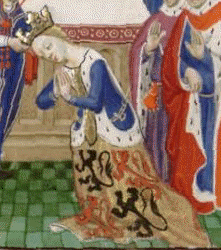
Queen Philippa of Hainault

Here, Fortuna turned her wheel and set Alice onto the path of greatness. She somehow found her way to court, in one of the most coveted positions in the kingdom as she became a damsel to Edward III’s wife, Queen Philippa of Hainault. Alice was catapulted into the wealth and glamour of the English monarchy. The court was filled with many of the greatest nobles of the period, including at times the captured French king, and it was a place filled with feasting, jousting, jewels, music, and writing. As one of the queen’s damsels, Alice had a place at centre stage to all that was going on. She would accompany the queen as she travelled across her various castles and attended events, and she was entitled to luxurious clothes. It must have seemed like life could not get better.

But Alice was an intelligent, ambitious, shrewd woman. Not content to simply receive the gifts afforded to her as a lady-in-waiting, Alice started to build up connections at court. She wined and dined with many powerful knights, merchants, and members of the nobility. She began to lend money and make property deals, extracting favourable terms for herself. Soon she had pieces of land of her own – quite a feat for a single woman of her status. But that was not all that Alice had obtained at court, for she had caught the eye of the king himself. Soon, a relationship began between them.

Edward III had been a loyal husband to his wife for over 30 years, but by the 1360s Philippa was severely unwell. It was clear she was not going to live for many more years, and this may have provided the impetus for Edward’s eyes to wander. Alice was a perfect choice for him. Young, likely beautiful, headstrong, it is easy to see why Edward found her attractive. But Edward had spent decades cultivating an image as a loyal, family man, and so the couple did their best to keep their relationship secret. If nothing else, to save the queen public humiliation.

The secrecy did not dampen their relationship, and within a few years Alice had given birth to 3 children with the king. At the end of the decade, the great queen died, and it was not long before Alice shifted to a more prominent place at court. Soon everybody knew that Alice had the king’s heart – and with it, a significant share of power. People were soon rushing to Alice to obtain favours with the king, offering her pieces of property and whatever else they thought she might like in the hope she may get them something in return. Even the Pope petitioned this mistress for help.

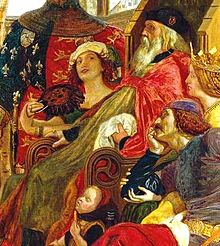
Alice Perrers and Edward III, painted by Ford Maddox Brown

As the 1370s wore on, Alice rose to the greatest heights of the wheel, almost taking on the position of unofficial queen. During the king’s jubilee year, Alice took centre stage in celebrations dressed as the Lady of the Sun. But as medieval writers loved to point out, the wheel also was fond of dropping people into a fall, and so too was this to happen to Alice. Eventually, the men at court got fed up with the undue influence of Alice and her friends on the king. They felt that those of old noble blood should be the only ones to advise the king, and finally the knights of the land gathered together at the Good Parliament to end their evil influence once and for all. Alice was banished from the king’s presence, and after his death the full weight of the law came for her. She was banished further – this time from the entire kingdom of England – and all of her hard-earned lands, jewels, and goods were taken from her.

But Alice was clever, and she had made contingency plans. She knew that her presence at court grated on those around her, and she had found powerful allies. It emerged that she had undertaken a secret marriage to a powerful knight, and he wasn’t going to give up Alice’s wealth. The couple fought for years to obtain the return of Alice’s possessions, and it was a fight that she carried with her to her death. Many of Alice’s female contemporaries had two paths in life: marriage or a nunnery. But Alice chose to forge one of her own, that of mistress and a powerful single woman. Was she as evil as her later reputation suggested? Or was there something more underneath the surface?

*

About the book:

IN A WORLD WHERE MAN IS KING, CAN WOMEN REALLY HAVE IT ALL – AND KEEP IT?

Philippa of Hainault was Queen of England for forty-one years. Her marriage to Edward III, when they were both teenagers, was more political transaction than romantic wedding, but it would turn into a partnership of deep affection. The mother of twelve children, she was the perfect medieval queen: pious, unpolitical and fiercely loyal to both her king and adopted country.

Alice Perrers entered court as a young widow and would soon catch the eye of an ageing king whose wife was dying. Born to a family of London goldsmiths, this charismatic and highly intelligent woman would use her position as the king’s favourite to build up her own portfolio of land, wealth and prestige, only to see it all come crashing down as Edward himself neared death.

The Queen and the Mistress is a story of female power and passion, and how two very different women used their skills and charms to navigate a tumultuous royal court – and win the heart of the same man.

To buy the book: Amazon

About the author:

Gemma Hollman is a historian and author who specialises in late medieval English history. A Fellow of the Royal Historical Society, her first book ‘Royal Witches’ was published in 2019 and her second book ‘The Queen and the Mistress’ will be released in November 2022. She has a particular interest in the plethora of strong, intriguing and complicated women from the medieval period, a time she had always been taught was dominated by men.

Gemma also works full-time in the heritage industry whilst running her historical blog, Just History Posts, which explores all periods of history in more depth.

*

My Books:

Signed, dedicated copies of all my books are available, please get in touch by completing the contact me form.

Defenders of the Norman Crown: The Rise and Fall of the Warenne Earls of Surrey tells the fascinating story of the Warenne dynasty, of the successes and failures of one of the most powerful families in England, from its origins in Normandy, through the Conquest, Magna Carta, the wars and marriages that led to its ultimate demise in the reign of Edward III. Defenders of the Norman Crown: Rise and Fall of the Warenne Earls of Surrey is now available from Pen & Sword BooksAmazon in the UK and US, Bookshop.org and Book Depository.

1 family. 8 earls. 300 years of English history!

Also by Sharon Bennett Connolly:

Ladies of Magna Carta: Women of Influence in Thirteenth Century England looks into the relationships of the various noble families of the 13th century, and how they were affected by the Barons’ Wars, Magna Carta and its aftermath; the bonds that were formed and those that were broken. It is now available in paperback and hardback from Pen & Sword, AmazonBookshop.org and from Book Depository worldwide.

Heroines of the Medieval World tells the stories of some of the most remarkable women from Medieval history, from Eleanor of Aquitaine to Julian of Norwich. Available now from Amberley Publishing and Amazon, Bookshop.org and Book Depository.

Silk and the Sword: The Women of the Norman Conquest traces the fortunes of the women who had a significant role to play in the momentous events of 1066.  Available now from Amazon,  Amberley Publishing, Bookshop.org and Book Depository.

Alternate Endings: An anthology of historical fiction short stories including Long Live the King… which is my take what might have happened had King John not died in October 1216. Available in paperback and kindle from Amazon.

*

You can be the first to read new articles by clicking the ‘Follow’ button, liking our Facebook page or joining me on Twitter and Instagram.

©2022 Sharon Bennett Connolly FRHistS