Book Corner: Dominion of Dust by Matthew Harffy

History...the Interesting Bits

Hunlaf risks the wrath of the mighty Byzantine Empire on a dangerous voyage to the Holy Land. A rip-roaring Viking-era adventure from the author of the Bernicia Chronicles.

‘Extremely satisfying and rewarding, Dominion of Dust rampages across the page with slicing action’ LoveReading

AD 797, Cyprus. Warrior-monk Hunlaf and his crew are on a voyage to acquire an important Christian relic before it falls into the hands of Byzantium’s scheming Empress Eirene.

Hunlaf’s crew receive unexpected help as they seek their treasure, but soon find themselves betrayed. About to leave for home empty-handed, the adventurers instead sail further east: to Jerusalem, the Holy Land, abundant in relics.

And dangerous intrigues.

Hunlaf and his friends will face a deadly race against time as they attempt to secure a holy treasure, outwit Byzantium’s zealous agents, and avoid grisly deaths at the hands of the local rulers.

What I like about Matthew Harffy’s books is that you never know what is going to happen. Knowing the hero doesn’t always win means you are kept on the edge of your seat throughout.

Dominion of Dust is a spectacular adventure that pits West against East.

The 4th instalment in Harffy’s A Time of Swords series takes us from the court of Charlemagne, through Cyprus to Jerusalem itself, in the search for Holy relics. And because it is Hunlaf, danger is never far away. From agents of Byzantium, to enemies made along the way, people want Hunlaf and his friends to fail and – preferably – die.

But don’t get too attached to any of the characters – Matthew Harffy is not averse to killing off your favourite. But the, that’s what he does. He makes you, the reader, care about his characters. They jump off the page and play with your emotions. You feel their pain (and they’re warriors, so there’s a lot of pain).

Matthew Harffy’s writing style is engaging from the very beginning, immersing you in the story, the period and the landscape! You can practically feel the sand between your toes.

I pulled my fingers back quickly, frightened at what might be hidden inside the coffer. But there was no movement in the box’s interior, just the dusty, crumbling remains of what looked like a silk-covered pillow. Atop that pillow, dull with the grime of centuries, rested the blade of a spear. The metal was dark and I wondered whether it might be stained with the very blood of Christ. Or perhaps it was simply iron-rot, the red dust of age that smeared and pitted the surface of the relic. Whatever caused the dark hue of the metal, there could be no doubt that this was the item Ahlwin had sent us after.

The others crowded forward, trying to peer into the coffer. But I knew from their positions they would not be able to make out what I was looking at. Mine were the first eyes in generations to contemplate the relic. That sudden realisation made me giddy. I held out my hand above the metal, imagining for a moment that I could feel something akin to heat shimmering from it, a murmuring tremor in the air, testament to its immense power.

Unbreathing, I took hold of the relic, and lifted it up, turning towards the others so that they all might see this thing of wonder.

“Behold,” I said, my voice catching, ” the Spear of Longinus.”

Of course, it was not the spear, merely its metal head, and it measured no more than two hand’s lengths. I had expected it to be hot, or somehow pulsing with its holy power, but it was cool to the touch and I felt no jolt of energy. It was just a piece of old metal.

In Dominion of Dust Matthew Harffy is an equal opportunities author. Two of the villains are particularly despicable – and they’re women! And, of course, Hunlaf has a habit of making enemies, so there’s more than one set of bad guys to contend with. And this is Hunlaf’s story. Headed to the Holy Land in search of the greatest of relics for Charlemagne, Hunlaf hopes to visit the sites associated with Christ himself, and to tread the same streets He did. Though, knowing his luck, you may not be surprised that he has to race through some of those streets to escape pursuers!

Matthew Harffy is the master of adventure storytelling. And with the hunt for relics, Dominion of Dust has the feel of an Indiana Jones movie – only set 1,000 years earlier. Only Hunlaf isn’t crossing swords with Nazis, he’s fighting the agents of Byzantium. The story is woven around the greatest relics of Christendom and the competition between Charlemagne and Empress Irene to take possession of them. Though, fiction, Dominion of Dust has its origins in historical fact; the desire to possess religious relics and the belief in their divine power was a part of medieval life.

And there are some surprises in this one. Matthew Harffy has taken care to include the wildlife. The story of Abul-Abbas, the elephant gifted to Charlemagne, may be fantastical, but it is true. And he has a surprising part in the story. As does a rather vicious, relentless and determined lion, reminding us that not all predators are human!

Dominion of Dust is a wonderful, exciting adventure that any fan of Indiana Jones will want to read. There is action in abundance; treasure maps, despicable enemies and secret passages are all part of one incredible story.

To buy the book: Amazon

About the Author:

History...the Interesting Bits

Matthew Harffy lived in Northumberland as a child and the area had a great impact on him. The rugged terrain, ruined castles and rocky coastline made it easy to imagine the past. Decades later, a documentary about Northumbria’s Golden Age sowed the kernel of an idea for a series of historical fiction novels. The first of them is the action-packed tale of vengeance and coming of age, The Serpent Sword.

Matthew has worked in the IT industry, where he spent all day writing and editing, just not the words that most interested him. Prior to that he worked in Spain as an English teacher and translator. Matthew lives in Wiltshire, England, with his wife and their two daughters.

For all the latest news and exclusive competitions, join Matthew online: http://www.matthewharffy.com; twitter.com/@MatthewHarffy; http://www.facebook.com/MatthewHarffyAuthor

*

My Books

Signed, dedicated copies of all my books are available through my online bookshop.

Out now: Scotland’s Medieval Queens

Books by Sharon Bennett Connolly

Scotland’s history is dramatic, violent and bloody. Being England’s northern neighbour has never been easy. Scotland’s queens have had to deal with war, murder, imprisonment, political rivalries and open betrayal. They have loved and lost, raised kings and queens, ruled and died for Scotland. From St Margaret, who became one of the patron saints of Scotland, to Elizabeth de Burgh and the dramatic story of the Scottish Wars of Independence, to the love story and tragedy of Joan Beaufort, to Margaret of Denmark and the dawn of the Renaissance, Scotland’s Medieval Queens have seen it all. This is the story of Scotland through their eyes.

Scotland’s Medieval Queens gives a thorough grounding in the history of the women who ruled Scotland at the side of its kings, often in the shadows, but just as interesting in their lives beyond the spotlight. It’s not a subject that has been widely covered, and Sharon is a pioneer in bringing that information into accessible history.’ Elizabeth Chadwick (New York Times bestselling author)

Available now from Amazon and Pen and Sword Books

Also by Sharon Bennett Connolly:

Books by Sharon Bennett Connolly

Heroines of the Tudor World tells the stories of the most remarkable women from European history in the time of the Tudor dynasty, 1485-1603. These are the women who ruled, the women who founded dynasties, the women who fought for religious freedom, their families and love. Heroines of the Tudor World is now available for pre-order from Amberley Publishing and Amazon UK. Women of the Anarchy demonstrates how Empress Matilda and Matilda of Boulogne, unable to wield a sword themselves, were prime movers in this time of conflict and lawlessness. It shows how their strengths, weaknesses, and personal ambitions swung the fortunes of war one way – and then the other. Available from Bookshop.orgAmberley Publishing and Amazon UKKing John’s Right-Hand Lady: The Story of Nicholaa de la Haye is the story of a truly remarkable lady, the hereditary constable of Lincoln Castle and the first woman in England to be appointed sheriff in her own right. Available from all good bookshops Pen & Sword Booksbookshop.org and Amazon

Royal Historical Society

Defenders of the Norman Crown: The Rise and Fall of the Warenne Earls of Surrey tells the fascinating story of the Warenne dynasty, from its origins in Normandy, through the Conquest, Magna Carta, the wars and marriages that led to its ultimate demise in the reign of Edward III. Available from Pen & Sword BooksAmazon in the UK and US, and Bookshop.orgLadies of Magna Carta: Women of Influence in Thirteenth Century England looks into the relationships of the various noble families of the 13th century, and how they were affected by the Barons’ Wars, Magna Carta and its aftermath; the bonds that were formed and those that were broken. It is now available in paperback and hardback from Pen & SwordAmazon, and Bookshop.orgHeroines of the Medieval World tells the stories of some of the most remarkable women from Medieval history, from Eleanor of Aquitaine to Julian of Norwich. Available now from Amberley Publishing and Amazon, and Bookshop.orgSilk and the Sword: The Women of the Norman Conquest traces the fortunes of the women who had a significant role to play in the momentous events of 1066. Available now from Amazon,  Amberley Publishing, and Bookshop.org.

Alternate Endings: An anthology of historical fiction short stories including Long Live the King… which is my take what might have happened had King John not died in October 1216. Available in paperback and kindle from Amazon.

Podcast:

A Slice of Medieval

Have a listen to the A Slice of Medieval podcast, which I co-host with Historical fiction novelist Derek Birks. Derek and I welcome guests, such as Elizabeth Chadwick, Helen Castor, Ian Mortimer, Scott Mariani and Bernard Cornwell and discuss a wide range of topics in medieval history, from significant events to the personalities involved. And Matthew Harffy himself will be on a forthcoming episode. An old friend of the podcast, Matthew joined us on one of our very first episodes to talk about the Saxons.

Every episode is also now available on YouTube.

*

Don’t forget! Signed and dedicated copies of all my books are available through my online bookshop.

For forthcoming online and in-person talks, please check out my Events Page.

You can be the first to read new articles by clicking the ‘Follow’ button, liking our Facebook page or joining me on TwitterThreadsBluesky and Instagram.

*

©2025 Sharon Bennett Connolly FRHistS

Wordly Women: Cathie Dunn

History...the Interesting Bits

Time for another edition of Wordly Women! It has been great fun, meeting all these amazing authors. I do hope everyone is enjoying it as much as I am. Today, I want to introduce you to a very dear friend, historical novelist Cathie Dunn. Cathie and I have known each other a good few years on Facebook, so much so that the first time we met in real life, there was no awkwardness. I love that about social media!

So, let me introduce you to Cathie!

Sharon: Hi, Cathie, first things first, what got you into writing?

Cathie: Ooh, that takes me back decades! It was the romantic historical novels by the likes of M.M. Kaye, Victoria Holt / Philippa Carr (Eleanor Burford’s pseudonyms), in my late teens that got me hooked. I loved Ms Holt’s gothic romance novels in particular, at the time. They were so atmospheric, and – growing up in Germany – I loved the vision of historic and haunted English manors. During the late 1990s and 2000s, after my move to the UK, I learnt a lot about how to create a compelling plot, within a realistic historical setting, by devouring novels by Helen Hollick, Elizabeth Chadwick, and Barbara Wood, amongst others. It was enough to make me embark on HE Certificate in Creative Writing (online) at Lancaster University (though at the time, I was the only one on the course who wrote historical fiction). But at least, it provided me with deeper insights into the writing craft.

Sharon: Tell us about your books.

Cathie: I started off with a project which went from romance to murder mystery to spy novel to (supposedly) a series of events set during the Anarchy – one of my favourite eras. To date, Dark Deceit is an undefined mix, which I’ll need to untangle at some point in time.

Sharon: Yes please! I want to read it!

Cathie: In 2009, I took part in NaNoWriMo, working on a Scottish romance set after the 1715 Jacobite rebellion. I used real locations and studied the background history in depth – too much for traditional romance publishers, who duly rejected it. Fortunately, Highland Arms was picked up by a fabulous US indie press, and my path was clear! I later wrote a second Scottish romance, A Highland Captive, set during the Wars of Independence.

After my move from Scotland to France, my focus changed to medieval French history, with a dual-timeline mystery inspired by my surroundings. Love Lost in Time delves into the distant past of the county of Carcassonne. And the novel immortalised a young cat I lost too soon, Shadow.

Next, I wrote a novel set at the court of Louis XIV. The Shadows of Versailles deals with a dark side of the otherwise glittering court: the Affair of the Poisons. It may be too dark for some readers, as it contains disturbing scenes of child abductions and black masses. Tragically, it’s all based on real, credible accounts of the time. Researching history can be revolting, at times.

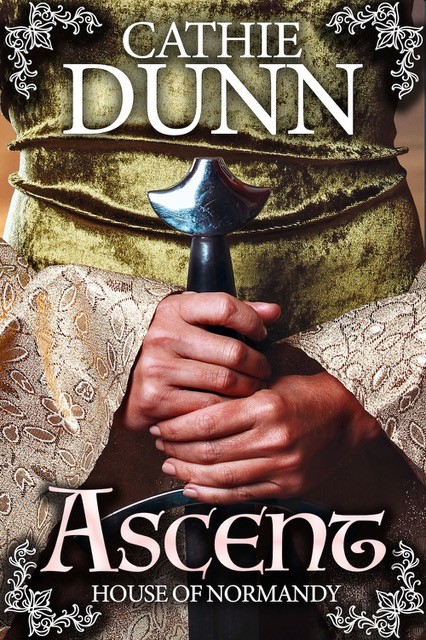
After that serious topic, I needed a more positive distraction, and I promptly delved into the foundation years of Normandy, a county I love. Ascent tells the forgotten story of Poppa of Bayeux. Everyone with a TV now knows her more danico husband – Rollo – but who was the mother of his children? Sadly, she was overlooked in the recent series, Vikings. Ascent tells her (fictionalised) story.

Sharon: What attracts you to the early medieval period?

Cathie: It was an era of great change, all across the British Isles and the European continent. The old ways and beliefs had been discarded, to make way for a Church growing in political influence, and it all makes for fascinating research. New hierarchies were formed amidst a continuing power struggle between different families. As the appointments of ‘nobility’ grew into fashion, so did the influence of favourites and allies on rulers. It was a fascinating time.

Sharon: Who is your favourite early medieval character and why?

History...the Interesting Bits
Image of the statue of Poppa of Bayeux, Bayeux – Photochrom Print Collection

Cathie: Ooh, that’s a tricky one. There are so many real people we know little about, especially women.

(So, a big *Thank You* to you for shining a light on them with your brilliant books!)

I do think Poppa of Bayeux deserves a lot more credit. She had to deal with so many challenges – married to a marauding stranger who was likely a decade or two older, and a Pagan; bearing his children; fleeing with him to Anglia; returning to see his power increase, while she is quietly forgotten. I quite like her to be my favourite early medieval character.

Charles Martel is another. He was a fascinating man, paving the way for a greater Frankish kingdom with his conquests across what is now France. Whilst most people know his grandson, Charlemagne, without Charles, Charlemagne’s ascent in the political sphere of central Europe would not have been possible. Was Charles likeable? Hm, I’m not sure. We know he was ruthless, efficient, and a capable leader of men. Did he have time to be nice? Perhaps that’s a question for another writing project…

Sharon: Who is your least favourite early medieval character and why?

Cathie: That would probably be Charles the Fat, Carolingian King of the Franks and Holy Roman Emperor for a few years in the 880s. He was ineffective, and hopeless at controlling different sections of his empire. He was deposed and died in early 888, and the crown went to Odo of Paris. The Carolingian dynasty was restored after Odo’s reign, though the crown of Frankia went back and forth for a while. This is the era Ascent is set in, and it made for intriguing research.

The real Rollo surely had his work cut out, having to deal with all these changing rulers and their agendas.

Sharon: How do you approach researching your topic?

Cathie: I love history books. I think by now I own more history books than novels! Usually, I start with checking online resources. Jstor is a useful site, where you can read a number of articles for free each month; Medievalists.net is another helpful resource.

But most online sites just give you only an overview, so you need to check books that focus on the relevant era. I have an array of history books on early, high & late medieval England, Tudor England, and medieval & Jacobite Scotland on my shelves. For my France-based novels, I consult non-fiction books in French, many of which I find (handily!) in second-hand bookshops. I also use German resources, where needed.

I find that having a range of resources from different countries to consult is the best way to get a fair overview of historic events. We know that original sources were often (though not always) based on what rulers wanted the rest of the world to know – that being not necessarily the full truth. The winner records history in his favour. So, drawing from sources in different languages adds to the experience in discovering the past.

Sharon: That is so true!

Sharon: Tell us your ‘favourite’ medieval story you have come across in your research.

History... the Interesting Bits
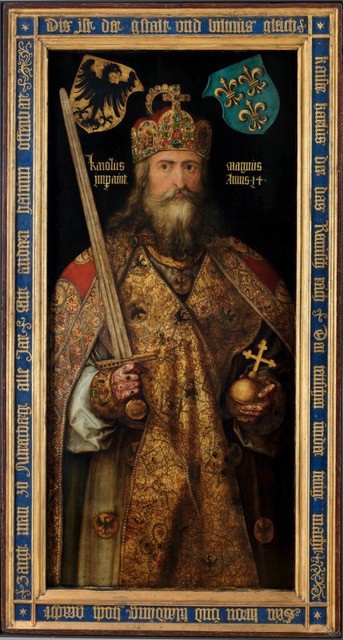
Image of Albrecht Dürer’s painting of Charlemagne

Cathie: Unfortunately, it is difficult to find credible stories about early medieval characters, unless they were major players like Charlemagne, due to the loss (or deliberate omission) of references for lesser-known individuals.

Therefore, I’ve chosen Charlemagne’s wives and concubines as a story I find entertaining, and enlightening! I mean – how on earth did the man have the time to marry four times, have several concubines after the death of his last wife (and possibly before) – and father an estimated twenty (20!) children? His court was always travelling across his ever-expanding realm (and later, his empire), though it is said that his main seat at Aachen (Aix-la-Chapelle) became his favourite.

He insisted his illegitimate children were raised alongside his legitimate offspring, ensuring they all received an education deserving of their Royal bloodline. After his son Pepin’s untimely death, he even took his grandchildren in to be educated with the others.

This is a fact I recently discovered, and now I’m curious to find out more! With daughters, and especially illegitimate ones, usually being swept off into marriage or convents, his insistence that they are all educated is telling. Clearly, here was a man who valued learning – be that in practical skills or reading and writing.

For a man who ruthlessly expanded his territories, responsible for subjugation of peoples and a great number of deaths ranging from Germanic Saxony to the Iberian Peninsula, this shows an entirely different side of the ‘great Charles’.

Sharon: Tell us your least ‘favourite’ medieval story you have come across in your research.

Cathie: That has to be Charlemagne’s darkest episode – the subjugation of Germanic Pagan tribes in Saxony. The wars lasted – on and off – for three decades, and they were brutal. The Saxons did not give in easily, much to Charlemagne’s frustration, and their conversion to Christianity was slow. Their skirmishes into his territory vexed him immensely.

Eventually, according to the Royal Frankish Annals, the infamous ‘Blood Court’ massacre at Verden, in October 882, saw the execution of approx. 4,500 Saxon ‘rebels’ captured after recent battles. Their leader, Widukind, had managed to flee north.

Although later historians disputed the figure quoted in the annals, with several trying to make ridiculous excuses for Charlemagne’s actions, there seems to have been a great slaughter of thousands of prisoners, regardless. Charlemagne wanted to set an example, an effective deterrent.

Warfare continued for three more years, then it was all over for the Saxons, especially after Widukind converted to Christianity. But it was the massacre at Verden that remained like a blood stain on his otherwise pristine reputation.

Sharon: Are there any other eras you would like to write about?

Cathie: I do love different eras, as you know. The Anarchy is definitely high on my list, and I’ll have to revisit Dark Deceit to see where it takes me. (Sharon: Do it! Please!)

But I also love the court of Louis XIV of France, with all its superficial splendour and dark secret plots. The Affair of the Poisons is such an intriguing event, with many prolific nobles implicated in trying to influence the king’s opinion through nefarious deeds. Deeply disturbing, and utterly fascinating.

And then, of course, is the time of the Scottish Wars of Independence. It wasn’t easy to mess with a remarkable, power-hungry king like Edward I! (Sharon: Ooh, yes!)

But, ultimately, it’s the late Dark Ages (do we still call it that, as they weren’t really that dark?) and early Middle Ages that keep me hooked. Oh, to travel to Frankia for one day only…

Sharon: What are you working on now?

Cathie: My current WIP is called Treachery, and it’s the story of Sprota the Breton, handfasted wife of William Longsword – Poppa’s and Rollo’s son. Like his father and his two wives, William married Sprota in more danico (in the Danish custom), and Luitgarde of Vermandois in a proper Church blessing, for political reasons.

Even less is known of Sprota than of Poppa; mainly that she was mother to William’s only son, Richard, likely the first Duke of Normandy. (Rollo and William never were dukes.) I introduced her towards the end of Ascent, when she had to flee to Bayeux as William’s enemies closed in on him at his fortress in Fécamp. Following William’s assassination by Count Arnulf of Flanders in 842, Sprota had to remarry to keep her young son’s inheritance secure. And to ensure his safety!

Her responsibility as the mother of William’s heir, and her struggles for them to survive, make for an intriguing story. So many powerful men had set their sights on Normandy, wanting Richard out of the way. I hope to do Sprota justice, as, again, she has been forgotten in time.

The third and final instalment of my House of Normandy trilogy about the early ladies of Normandy will conclude in Reign, about Richard’s second wife (and previous lover), Gunnora.

Then there’s Poppa’s daughter Adela, married to the Count of Poitou. Perhaps a companion novel? 😉 Sigh…

Sharon: And finally, what is the best thing about being a writer?

Cathie: Exploring past histories is utterly fascinating, and I can only recommend it. That goes for the good and the bad we discover in our research.

Reliving the distant past is fun, but also a great responsibility, as we should stay as close to the few known facts as possible. An ogre can’t just turn into a Prince Charming, although looking at Charlemagne, he definitely had two sides to his character – the caring father interested in learning and culture, and ruthless ruler chopping off heads of his prisoners. A man of his times. But what about his women? (Cathie, behave! One novel at a time…)

And though my earlier works focused more on events and fictional characters, I now find it far more rewarding to bring forgotten women from the distant past back to life, even ‘just’ in fictionalised format. Their stories must be told.

Thank you again for letting me ramble on about my research and writing. It’s been fabulous revisiting my stories, and the real characters involved in them, and I hope your readers enjoy my interview.

Sharon: Cathie, thank you so much! It has been a pleasure! No wonder you and I get on so well!

About the Author:

Cathie Dunn is an Amazon-bestselling author of historical fiction, dual-timeline, mystery, and romance. She loves to infuse her stories with a strong sense of place and time, combined with a dark secret or mystery – and a touch of romance. Often, you can find her deep down the rabbit hole of historical research…

In addition, she is also a historical fiction book promoter with The Coffee Pot Book Club, a novel-writing tutor, and a keen book reviewer on her blog, Ruins & Reading.

After having lived in Scotland for almost two decades, Cathie is now enjoying the sunshine in the south of France with her husband, and her rescued pets, Ellie Dog & Charlie Cat.

She is a member of the Historical Novel Society, the Richard III Society, the Alliance of Independent Authors, and the Romantic Novelists’ Association.

Where to find Cathie:

Website: Amazon; Facebook Author Page; Twitter / X; Bluesky.

To Buy Cathie’s books: Ascent: Love Lost in Time

*

My Books:

Signed, dedicated copies of all my books are available through my online bookshop.

Out now: Scotland’s Medieval Queens

Books by Sharon Bennett Connolly

Scotland’s history is dramatic, violent and bloody. Being England’s northern neighbour has never been easy. Scotland’s queens have had to deal with war, murder, imprisonment, political rivalries and open betrayal. They have loved and lost, raised kings and queens, ruled and died for Scotland. From St Margaret, who became one of the patron saints of Scotland, to Elizabeth de Burgh and the dramatic story of the Scottish Wars of Independence, to the love story and tragedy of Joan Beaufort, to Margaret of Denmark and the dawn of the Renaissance, Scotland’s Medieval Queens have seen it all. This is the story of Scotland through their eyes.

Scotland’s Medieval Queens gives a thorough grounding in the history of the women who ruled Scotland at the side of its kings, often in the shadows, but just as interesting in their lives beyond the spotlight. It’s not a subject that has been widely covered, and Sharon is a pioneer in bringing that information into accessible history.’ Elizabeth Chadwick (New York Times bestselling author)

Available now from Amazon and Pen and Sword Books

Also by Sharon Bennett Connolly:

Books by Sharon Bennett Connolly

Heroines of the Tudor World tells the stories of the most remarkable women from European history in the time of the Tudor dynasty, 1485-1603. These are the women who ruled, the women who founded dynasties, the women who fought for religious freedom, their families and love. Heroines of the Tudor World is now available for pre-order from Amberley Publishing and Amazon UK. Women of the Anarchy demonstrates how Empress Matilda and Matilda of Boulogne, unable to wield a sword themselves, were prime movers in this time of conflict and lawlessness. It shows how their strengths, weaknesses, and personal ambitions swung the fortunes of war one way – and then the other. Available from Bookshop.orgAmberley Publishing and Amazon UKKing John’s Right-Hand Lady: The Story of Nicholaa de la Haye is the story of a truly remarkable lady, the hereditary constable of Lincoln Castle and the first woman in England to be appointed sheriff in her own right. Available from all good bookshops Pen & Sword Booksbookshop.org and Amazon

Royal Historical Society

Defenders of the Norman Crown: The Rise and Fall of the Warenne Earls of Surrey tells the fascinating story of the Warenne dynasty, from its origins in Normandy, through the Conquest, Magna Carta, the wars and marriages that led to its ultimate demise in the reign of Edward III. Available from Pen & Sword BooksAmazon in the UK and US, and Bookshop.orgLadies of Magna Carta: Women of Influence in Thirteenth Century England looks into the relationships of the various noble families of the 13th century, and how they were affected by the Barons’ Wars, Magna Carta and its aftermath; the bonds that were formed and those that were broken. It is now available in paperback and hardback from Pen & SwordAmazon, and Bookshop.orgHeroines of the Medieval World tells the stories of some of the most remarkable women from Medieval history, from Eleanor of Aquitaine to Julian of Norwich. Available now from Amberley Publishing and Amazon, and Bookshop.orgSilk and the Sword: The Women of the Norman Conquest traces the fortunes of the women who had a significant role to play in the momentous events of 1066. Available now from Amazon,  Amberley Publishing, and Bookshop.org.

Alternate Endings: An anthology of historical fiction short stories including Long Live the King… which is my take what might have happened had King John not died in October 1216. Available in paperback and kindle from Amazon.

Podcast:

A Slice of Medieval

Have a listen to the A Slice of Medieval podcast, which I co-host with Historical fiction novelist Derek Birks. Derek and I welcome guests, such as Bernard Cornwell and Elizabeth Chadwick, and discuss a wide range of topics in medieval history, from significant events to the personalities involved.

Every episode is also now available on YouTube.

*

Don’t forget! Signed and dedicated copies of all my books are available through my online bookshop.

For forthcoming online and in-person talks, please check out my Events Page.

You can be the first to read new articles by clicking the ‘Follow’ button, liking our Facebook page or joining me on TwitterThreadsBluesky and Instagram.

*

©2025 Sharon Bennett Connolly FRHistS and Cathie Dunn

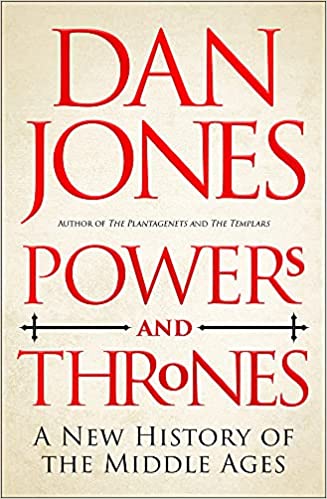
Book Corner: Powers and Thrones by Dan Jones

Dan Jones’s epic new history tells nothing less than the story of how the world we know today came to be built. It is a thousand-year adventure that moves from the ruins of the once-mighty city of Rome, sacked by barbarians in AD 410, to the first contacts between the old and new worlds in the sixteenth century. It shows how, from a state of crisis and collapse, the West was rebuilt and came to dominate the entire globe. The book identifies three key themes that underpinned the success of the West: commerce, conquest and Christianity.

Across 16 chapters, blending Dan Jones’s trademark gripping narrative style with authoritative analysis, Powers and Thrones shows how, at each stage in this story, successive western powers thrived by attracting – or stealing – the most valuable resources, ideas and people from the rest of the world. It casts new light on iconic locations – Rome, Paris, Venice, Constantinople – and it features some of history’s most famous and notorious men and women.

This is a book written about – and for – an age of profound change, and it asks the biggest questions about the West both then and now. Where did we come from? What made us? Where do we go from here?

Well, isn’t this an epic undertaking. The history of the Middle Ages, across Europe and into the four corners of the world (except Australia because it still hadn’t been discovered) – in 16 chapters, 633 pages and about 25 hours of reading. And it is awesome!

I couldn’t read this book at a leisurely pace because I was actually scheduled to interview Dan Jones on 29 September, for Lindum Books in Lincoln and I desperately wanted to make sure I had read the whole thing beforehand. So, I had 10 days to read it and I am quite proud of myself that I managed it. I put all other books aside and concentrated on this, hoping it would keep my attention. I was a little worried. It is a long book and covers such a wide historical arena. Could it keep my interest? Well, the simple answer is YES!

Powers and Thrones by Dan Jones is a thoroughly enthralling read encompassing over a thousand years of history, from the Sack of Rome in 410AD to the sack of Rome in 1527. Writing the story of the entire medieval era was a massive undertaking that Dan said he wanted to do, both as his 10th book and to mark his 40th birthday. And it is, indeed, a magnum opus to be proud of. Powers and Thrones is a perfectly balanced book, giving just enough attention to each area of interest and geographical location, going from Rome, to Byzantium and on to the rise of Islam, Dan Jones manages to cover the significant events and influences that drove change and development through the entire Middle Ages.

Powers and Thrones demonstrates how climate change, disease, technology and ideology were often the forces behind change. For example, the Guttenberg Press was revolutionary in every way, allowing the mass production of books, pamphlets and the dissemination of knowledge to a far-wider audience. It was the medieval equivalent to our social media, both in its reach and influence, and Dan Jones highlights how significant it was in Europe’s emergence from the medieval era, with its impact on learning, communication and – perhaps above all – religion.

For those alert to signs hidden in the fabric of the world, the Roman Empire’s collapse in the west was announced by a series of omens. In Antioch, dogs howled like wolves, night-birds let out hideous shrieks and people muttered that the emperor should be burned alive. In Thrace, a dead man lay in the road and fixed passers-by with a unnerving, lifelike glare, until after a few days the corpse suddenly disappeared. And in the city of Rome itself, citizens persisted in going to the theatre: an egregious and insanely sinful pastime, which, according to one Christian writer, practically invited the wrath of the Almighty. Human beings have been superstitious in all ages and we are especially good at adducing portents when we have the benefit of hindsight. Hence the opinion of the historian Ammianus Marcellinus, who looked back on the end of the fourth century into which he was born and reflected that this was a time when fortune’s wheel, ‘which is perpetually alternating prosperity and adversity’, was turning fast.

In the 370s, when Rome’s fatal malady set in, the Roman state – monarchy, republic and empire – had existed for more than a millennium. Yet within little more than one hundred years, by the end of the fifth century AD, every province west of the Balkans had slipped from Roman control. In the ancient heartlands of empire, Roman institutions, tax systems and trade networks were falling apart. The physical signs of Roma elite culture – palatial villas, cheap imported consumer goods, hot running water – were fading from everyday life. The Eternal City had been sacked several times, the western crown had passed between a succession of dimwits, usurpers, tyrants and children, until eventually it had been abolished; and territory that formerly comprised the core of a powerful mega-state had been parcelled among peoples whom the proud-hearted citizens of Rome’s imperial heyday had previously scorned as savages and subhumans. These were the ‘barbarians’: a derogatory word which encompassed a huge range of people from itinerant nomadic tribes quite new to the west and ignorant or dismissive of Roman mores, through to longstanding near-neighbours, whose lives were heavily influenced by Roman-ness, but who had not been able to share in the fruits of citizenship.

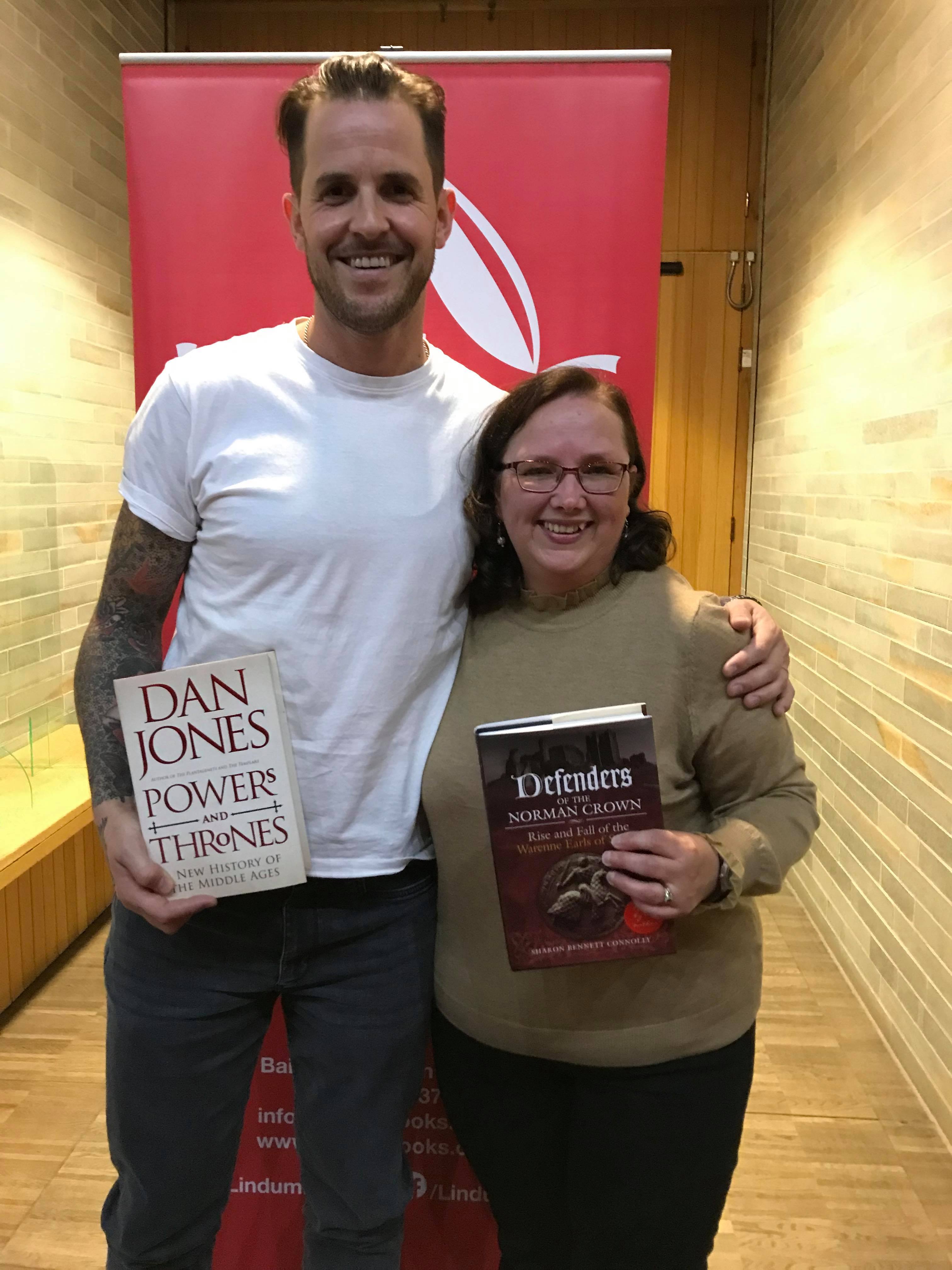
With Dan Jones at The Collection, Lincoln

What makes this book special is the way Dan Jones manages to make Powers and Thrones relevant to today. Writing it in the midst of a pandemic certainly must have helped to give Dan a sense of history all around him and he alludes to this in the book. When interviewing him, Dan told me that living through Covid gave him a better understanding of the plague years of 14th century Europe, of the fear and panic that must have consumed people. And by referring to modern-day equivalents, such as world leaders, the pandemic and the rise of social media, Dan is able to draw the reader in and make medieval history relevant in the modern age.

Dan Jones does not shy away from the harsh questions, either, examining the development and morals of slavery, the reasoning behind the crusades and the rise of Protestantism. What may surprise readers is the facts this book is essentially Euro-centric – it made me realise how Anglo-centric my study of history has been over the years. By focusing on change and development in mainland Europe, whilst encompassing England and the British Isles in various guises where appropriate, it gives the reader a whole new outlook on the medieval era, whilst also demonstrates how events in Europe – even back then – could influence events in England, Scotland, Wales and Ireland. Powers and Thrones highlights the driving forces of change, whether it was people, ideas or technology, and demonstrates how such change effected Europe in general and individuals in particular, whether it was the empire of Charlemagne, the rise of monasticism, or even the development of the humble stirrup that led to the emergence of the knightly class.

In Powers and Thrones, Dan Jones combines a narrative of international events with case studies that focus on individual people, organisations and movements. By highlighting such diverse subjects as Empress Theodora, the rise of Islam, El Cid and the magnificent Lincoln Cathedral, the author manages to personalise what might otherwise have been a wide, sweeping narrative. The Warennes also get a mention in the involvement of William de Warenne, the 1st Earl, and his wife, Gundrada, in founding the first Cluniac priory in England, St Pancras Priory in Lewes, Sussex. From my personal point of view, it is fabulous that Dan Jones chose to include Empress Theodora so prominently – a woman who rose from extremely humble roots to become Empress of Byzantium and a woman who was influential in holding that empire together, especially in adroitly soothing religious dissension. It is impossible to get everything from 1,000 years of history in one book, but by showing the big picture, whilst highlighting particular events, ideas, buildings or people, Dan Jones manages to provide a fascinating narrative that is fast-paced and engaging without being overwhelming.

Powers and Thrones is, quite simply, an amazing book. It is chock full of little snippets of information that you may never have known, it relates medieval events to our modern day equivalents, such as the Black Death to Covid. Such references to the modern era could easily have backfired, but they serve to make the book more accessible and entertaining and not a little amusing. The moments of light-heartedness often provide an extra depth to the reading experience and make the book accessible to every reader.

Powers and Thrones was certainly an ambitious project, but in the hour-long interview I had with Dan Jones, he spoke about every aspect of it with passion and enthusiasm an that same passion and enthusiasm comes across throughout the book. The book is a pleasure to read and would be a welcome addition to any bookshelf.

Powers and Thrones by Dan Jones is available from Amazon and Bookshop.org.

My Books

Signed, dedicated copies of all my books are available, please get in touch by completing the contact me form.

Defenders of the Norman Crown: The Rise and Fall of the Warenne Earls of Surrey tells the fascinating story of the Warenne dynasty, of the successes and failures of one of the most powerful families in England, from its origins in Normandy, through the Conquest, Magna Carta, the wars and marriages that led to its ultimate demise in the reign of Edward III. Defenders of the Norman Crown: Rise and Fall of the Warenne Earls of Surrey is now available from Pen & Sword BooksAmazon in the UK and US and Book Depository.

1 family. 8 earls. 300 years of English history!

Also by Sharon Bennett Connolly:

Ladies of Magna Carta: Women of Influence in Thirteenth Century England looks into the relationships of the various noble families of the 13th century, and how they were affected by the Barons’ Wars, Magna Carta and its aftermath; the bonds that were formed and those that were broken. It is now available in paperback and hardback from Pen & Sword,  Amazon and from Book Depository worldwide.

Heroines of the Medieval World tells the stories of some of the most remarkable women from Medieval history, from Eleanor of Aquitaine to Julian of Norwich. Available now from Amberley Publishing and Amazon and Book Depository.

Silk and the Sword: The Women of the Norman Conquest traces the fortunes of the women who had a significant role to play in the momentous events of 1066.  Available now from Amazon,  Amberley Publishing, Book Depository.

*

You can be the first to read new articles by clicking the ‘Follow’ button, liking our Facebook page or joining me on Twitter and Instagram.

©2021 Sharon Bennett Connolly

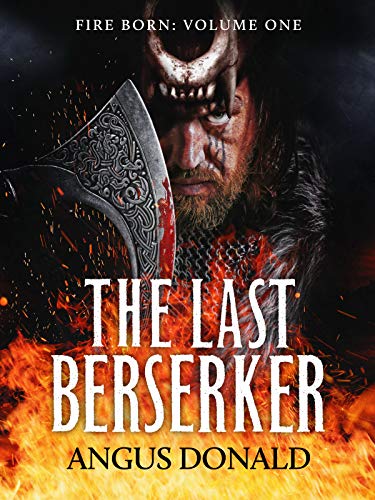
Book Corner: The Last Berserker by Angus Donald

The greatest warriors are forged in the flames

Two pagan fighters

771AD, Northern Europe. Bjarki Bloodhand and Tor Hildarsdottir are journeying south into Saxony. Their destination is the Irminsul, the One Tree that links the Nine Worlds of the Middle-Realm. In this most holy place, they hope to learn how to summon their animal spirits so they can enter the ranks of the legendary berserkir: the elite frenzied fighters of the North.

One Christian king

Karolus, newly crowned King of the Franks, has a thorn in his side: the warlike Saxon tribes on his northern borders who shun the teachings of the Church, blasphemously continuing to worship their pagan gods.

An epic battle for the soul of the North

The West’s greatest warlord vows to stamp out his neighbours’ superstitions and bring the light of the True Faith to the Northmen – at the point of a sword. It will fall to Bjarki, Tor and the men and women of Saxony to resist him in a struggle for the fate of all Europe.

I have read Angus Donald’s books since the first of his Robin Hood series, Outlaw, came out many moons ago. And I absolutely adored his series set around the 1688 Glorious Revolution with unlikely hero Holcroft Blood. But there is always a risk when an author starts a new series; will it live up to previous stories?

Well, with The Last Berserker there is no need to worry. From the first few lines you are reassured that Angus Donald starts as he means to go on; with an action-filled storyline that will take the reader on a breathtaking journey through the turbulent years of the 8th century. It is quite the adventure!

The story derives from the many tales of the berserkers, men who went wild in battle, killing dozens at a time. Angus Donald has created a world in which the berserkers were not just mad men, but legendary fighters who honed their skills through belief, training and discipline. They were heroes who used their unique talents to lead men into battle and deliver victory after victory. Set in the time when the great Charlemagne was waging his campaign of conquest against the German tribes, The Last Berserker tells the story of Bjarki Bloodhand, who joins the fight to defend his homelands.

‘How about you, son? You look like a strapping fellow. Care to try your strength? Bjarki realised the tall blond man was speaking to him.

He shook his head.

‘No need to be afraid. I’ll tell Black Svein to go easy on you.’

‘I’m not afraid,’ Bjarki said.

‘Then come inside the hazel square and prove it.’

Bjarki shook his head. He smiled.

The straw-haired man turned away. ‘There must be one or two here today who are not snivelling cowards,’ he said, his back turned to Bjarki.

Bjarki stopped smiling. He felt suddenly cold. He took a step forward.

‘He’s not a coward,’ said a voice at his elbow, a cool hand there, too, restraining him. ‘He just doesn’t want to fight your friend today. And calling him one won’t change his mind.’

The straw-haired man turned back and looked at Bjarki – and Tor, who was now standing beside him.

‘You his girl then?’ he said. Then to Bjarki: ‘Aren’t you a one – getting your little girlie to speak for you. I see now why you won’t fight.’

‘He won’t fight your friend,’ said Tor, ‘but I will. You said you had quarterstaffs? Yes? All right then, I accept your challenge.’

The straw-haired man was nonplussed. This scrawny young woman, with arms like kindling sticks, was about half of the weight of Black Svein – and a head shorter than him too. It was a ridiculous match.

‘You can’t fight him,’ he said.

‘Oh yes? Why is that? Is he afraid of me?’

That started a howl of laughter from the crowd, which had thickened considerably by now. The straw-haired man flushed pink with irritation.

‘You cannot fight him, girlie. It would not be a fair contest.’

‘What if I go really easy on him?’ said Tor. ‘I promise I won’t hurt him all that much – hardly at all. I’ll be as gentle as a lamb with the poor idiot.’

Angus Donald weaves together, myth, legend and history to recreate a world where the berserker not only flourished, but was revered as a great warrior.

As an author, Donald is very adept at creating unique, interesting protagonists. Holcroft Blood was an autistic officer who had a knack for uncovering spies and a skill in artillery that was unrivalled. Robin Hood was a vicious killer, not the cuddly Robin Hood from legend. And with Bjarki Bloodhand, we have another individual who is not, at first sight, your typical hero. He is a rather dull, awkward boy; quite unassuming in fact. He comes across as naive, a little too trusting and not overly ambitious. He is, however, loyal to ahis friends, a good fighter and as brave as they come. He doesn’t shirk from a fight, but doesn’t necessarily seek it out. And he is incredibly likeable.

Bjarki’s sidekick, for want of a better word, is Tor, a slip of a girl with an attitude that belies her size. A born fighter, she is always looking to prove herself. Tor is a fascinating character who has secrets of her own to hide and ‘issues’ to work through. The two make an unlikely pairing but a firm friendship that helps them through their many trials.

Angus Donald wonderfully recreates the world of 8th century central Europe, from the landscape and the natural borders that separate the various nations, to the contrasting religious beliefs – both Christian and pagan – that lie at the centre of the conflict. A natural storyteller when it comes to warfare, Donald vividly evokes the song of battle, with seax, sword, axe and shield. The frenetic energy of the battle scenes leave the reader breathless and eager for more. The intricacies of the story, with its various twists and turns, some rather surprising, keep the reader on the edge of their seat throughout.

The Last Berserker is a truly enthralling story, not easy to put down – and a thoroughly enjoyable reading experience. It is one book that is not to be missed!

The Last Berserker by Angus Donald is available in paperback and ebook from Amazon.

*

About the Author:

Angus Donald is the author of the bestselling Outlaw Chronicles, a series of ten novels set in the 12th/13th centuries and featuring a gangster-ish Robin Hood. Angus has also published the Holcroft Blood trilogy about a mildly autistic 17th-century English artillery officer, son of notorious Crown Jewels thief Colonel Thomas Blood. Before becoming an author, Angus worked as a fruit-picker in Greece, a waiter in New York City and as an anthropologist studying magic and witchcraft in Indonesia. For fifteen years he was a journalist working in Hong Kong, India, Afghanistan and London. He now writes full time from a medieval farmhouse in Kent.

*

My books

Ladies of Magna Carta: Women of Influence in Thirteenth Century England looks into the relationships of the various noble families of the 13th century, and how they were affected by the Barons’ Wars, Magna Carta and its aftermath; the bonds that were formed and those that were broken. It is now available from Pen & Sword,  Amazon and from Book Depository worldwide.

Also by Sharon Bennett Connolly:

Heroines of the Medieval World tells the stories of some of the most remarkable women from Medieval history, from Eleanor of Aquitaine to Julian of Norwich. Available now from Amberley Publishing and Amazon and Book Depository.

Silk and the Sword: The Women of the Norman Conquest traces the fortunes of the women who had a significant role to play in the momentous events of 1066.  Available now from Amazon,  Amberley Publishing, Book Depository.

*

You can be the first to read new articles by clicking the ‘Follow’ button, liking our Facebook page or joining me on Twitter and Instagram.

©2021 Sharon Bennett Connolly.