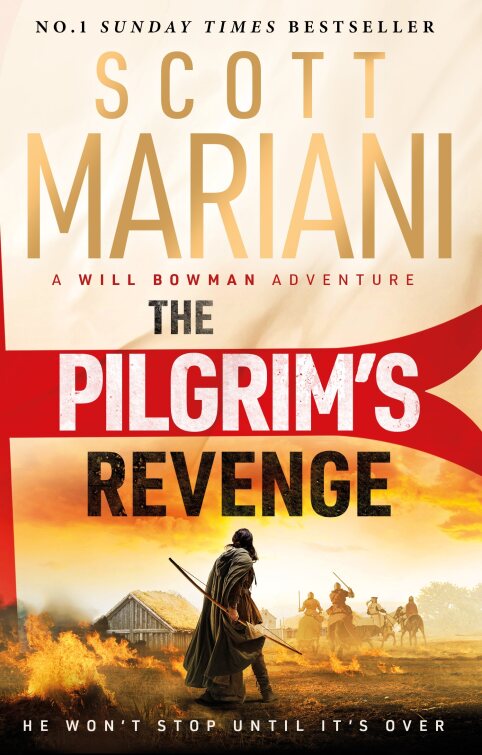
Book Corner: The Pilgrim’s Revenge by Scott Mariani

1190 – Humble layman Will Bowman lives in the countryside with his pregnant wife, when soldiers from Richard Lionheart’s army tear through his home. Will is beaten unconscious, and awakes to find his wife murdered, his farm burnt down, and his life forever changed.

In vengeance, Will infiltrates Richard’s army to find the marauding gang, and finds himself swept along in the march of the Crusades. With the help of new allies and fuelled by his loss, Will crosses Europe with the King’s army.

Can Will avenge his wife? Or will he be swept away by the unstoppable force of Richard’s Crusade?

I have been a Scott Mariani fan for a while now and was disappointed that Ben Hope has finally retired, though relieved for Ben that he survived 30 books of people trying to kill him. When one brilliant series ends, you begin to worry that what comes next will be a disappointment, or not as addictive, that you will not feel so invested in the new characters. Especially when the author moves genre. It is a big risk that author and reader take together.

So, when Scott Mariani moved from thriller with a historical twist to full-blown historical fiction, I was a tad concerned. Fans of historical fiction can be pedants. If there is a grey squirrel out of place, ie, in medieval England, someone will notice. If a character lives longer than he actually did (I am looking at Sweyn Forkbeard in Vikings Valhalla) someone will notice. There is a knack to historical fiction, to weaving the story within the known facts, to introducing fictional characters and creating their interactions with historical figures. The story has to have that essence of authenticity.

I needn’t have worried!

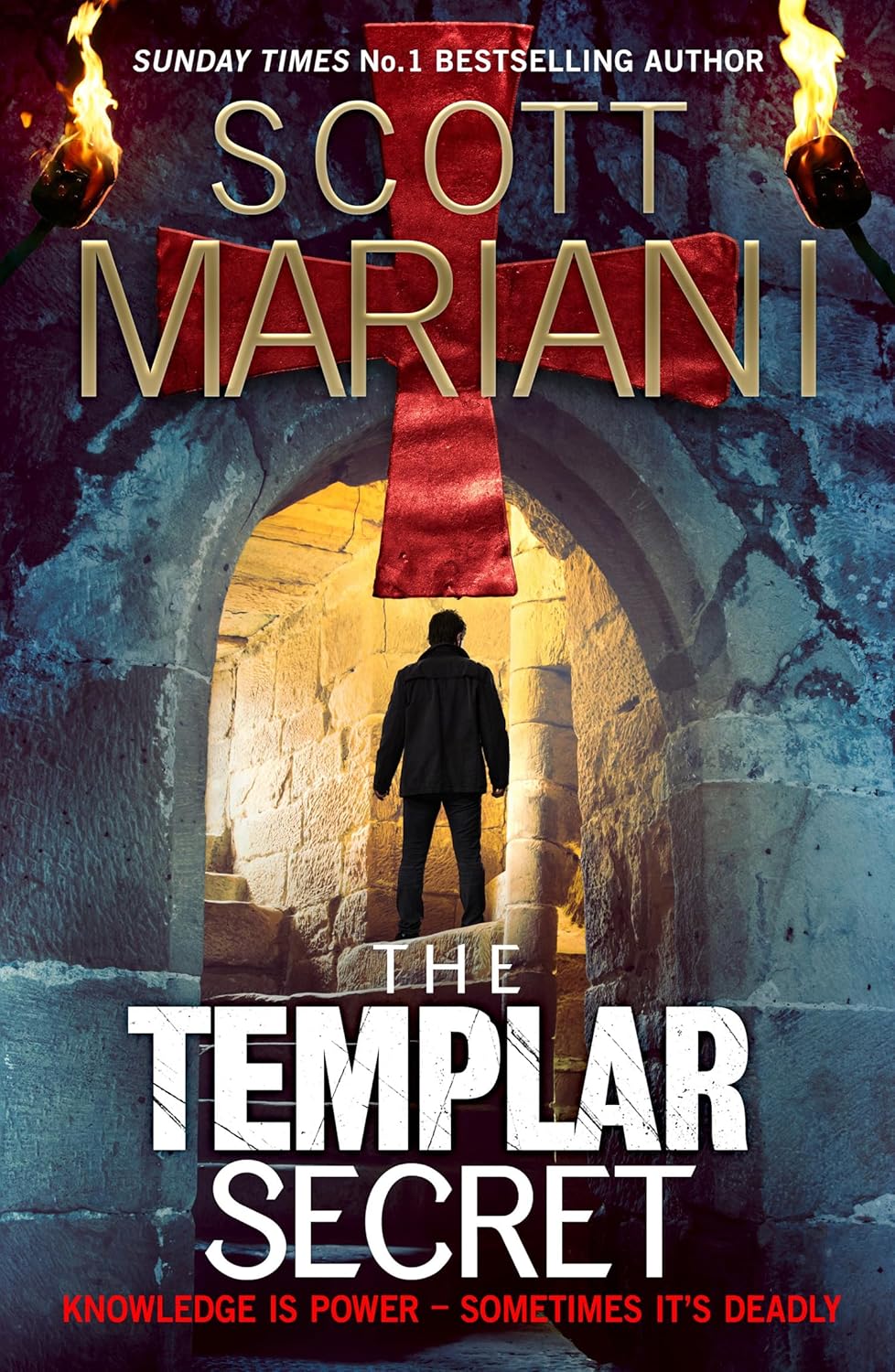
In fact, I probably should have trusted that Scott Mariani knew what he was doing. Though I may not have agreed with some of his theories in The Tudor Deception, the actual history was spot on. Having read the last Ben Hope book, The Templar Secret, after Christmas, I should have known a historical fiction book was around the corner. It is obvious the author loves his history. And, given the topic of that last Hope book, it should come as no surprise that Mariani’s first foray into historical fiction involved the crusades – the Third Crusade, to be precise.

Not that we get more than a glimpse of the Holy Land in this first book – all that is still to come.

By now Will had almost reached the nearest of the horsemen on his side of the yard. Up close, the rider was an intimidating figure looming far above him in the saddle with the blade of his drawn arming sword glinting in the sunlight. Before Will reached him the horseman saw his approach and wheeled his mount around to face him, dust flying from its hooves. With an angry shout the rider spurred the horse towards Will, swinging his sword down at him. Will ducked, and the double-edged blade hissed through the air above him.

It had been a blow meant to separate his head from his shoulders, and it had only narrowly missed its mark. The horse thundered past, shaking the ground. The rider reined it brutally around and charged at Will again.

Nothing like this had ever happened or even been heard of in Will’s experience. He had never been in a real fight, except a minor scuffle once when he was a lad, settled quickly with a couple of punches. This was deadly serious combat, and he was unprepared for it. But the terrible shocking sight of Beatrice in the soldiers’ clutches and the sound of her screams was enough to dispel his confusion and fear, filling him with rage and determination to do anything he could to drive these raiders away and make this stop. And the obvious realisation suddenly occurred to him, for the first time, that he was holding the very means of doing that in his hands. His bow was still unstrung, no more than a long wooden shaft with its hemp cord loosely attached to the bottom end. But practice had made him very adept at readying the weapon in moments; as the horseman bore down on him with the sword raised high, he bent the stave against his foot and looped the string into place.

The rider was almost on him. Will snatched an arrow from his quiver, nocked it to the string and simultaneously raised his bow and pulled it to full draw. He had never before pointed any weapon in anger at another human being, but there was little time to reflect on that fact, or even to take aim, as his enemy closed in. Will stood his ground until the last moment, released his arrow and saw it fly and hit the rider full in the chest.

The soldier flinched violently at the arrow strike. A normal opponent would have been a dead man, his heart split in two by the power of the longbow at such close range. But instead of piercing deep into his flesh the iron point glanced off his heavy chain mail and the broken pieces of the arrow shaft spun away through the air. Then Will had to leap out of the way of the charging horse, and he threw himself to the ground.

The Pilgrims’ Revenge starts in England and follows the journey of a crusader fleet to Outremer, with adventures that are often overlooked by historical fiction authors eager to get to the nitty gritty of the crusade. But what a story they miss out! Scott Mariani includes the little-known excursion of part of the fleet, into Portugal to help with the crusades there. Then, of course, we arrive in Sicily, where Richard the Lionheart frees his sister, Joanna, meets his bride Berengaria and antagonises his ‘ally’ Philip II of France. And then we get a wonderful, vivid depiction of the conquest of Cyprus.

All is seen through the eyes of our hero, Will Bowman, a men seeking revenge for the murder of his wife and unborn child. He only joins the crusade to chase the murderers but finds a purpose, a talent for soldiering, comradeship and a bent to command along the way. Scott Mariani seamlessly blends together the wider story of Richard the Lionheart’s crusading enterprise with Will’s personal story and experiences.

The Pilgrims’ Revenge is the first of what promises to be a fast-paced, exhilarating – and, hopefully, long – series. Punctuated by bloody battles, exquisite swordplay and a thrilling storyline, the action is relentless and Scott Mariani fans will not be disappointed. The research is exemplary, especially with regard to the conflict in Portugal, which is usually ignored. The historical figures are wonderfully written and the locations evocative, dusty, hot and exotic.

Will Bowman is a character I look forward to hearing much more about.

The Pilgrim’s Revenge will be available from 24 April 2025

Order The Pilgrim’s Revenge.

About the author:

Scott Mariani is the No.1 Sunday Times bestselling author of the multi-million-selling Ben Hope thrillers. From 2025 he is launching into a new historical adventure series featuring medieval English hero Will Bowman, who is forced from his home to join King Richard ‘the Lionheart’ on the Third Crusade and rises up to become a knight. Book 1,THE PILGRIM’S REVENGE, is available from April 2025 and is published by Hodder & Stoughton.

Scott lives and writes in west Wales, UK. You can find out more about his work by visiting his official website.

*

My books

Signed, dedicated copies of all my books are available through my online store.

Out now: Scotland’s Medieval Queens

Scotland’s history is dramatic, violent and bloody. Being England’s northern neighbour has never been easy. Scotland’s queens have had to deal with war, murder, imprisonment, political rivalries and open betrayal. They have loved and lost, raised kings and queens, ruled and died for Scotland. From St Margaret, who became one of the patron saints of Scotland, to Elizabeth de Burgh and the dramatic story of the Scottish Wars of Independence, to the love story and tragedy of Joan Beaufort, to Margaret of Denmark and the dawn of the Renaissance, Scotland’s Medieval Queens have seen it all. This is the story of Scotland through their eyes.

Scotland’s Medieval Queens gives a thorough grounding in the history of the women who ruled Scotland at the side of its kings, often in the shadows, but just as interesting in their lives beyond the spotlight. It’s not a subject that has been widely covered, and Sharon is a pioneer in bringing that information into accessible history.’ Elizabeth Chadwick (New York Times bestselling author)

Available now from Amazon and Pen and Sword Books

Also by Sharon Bennett Connolly:
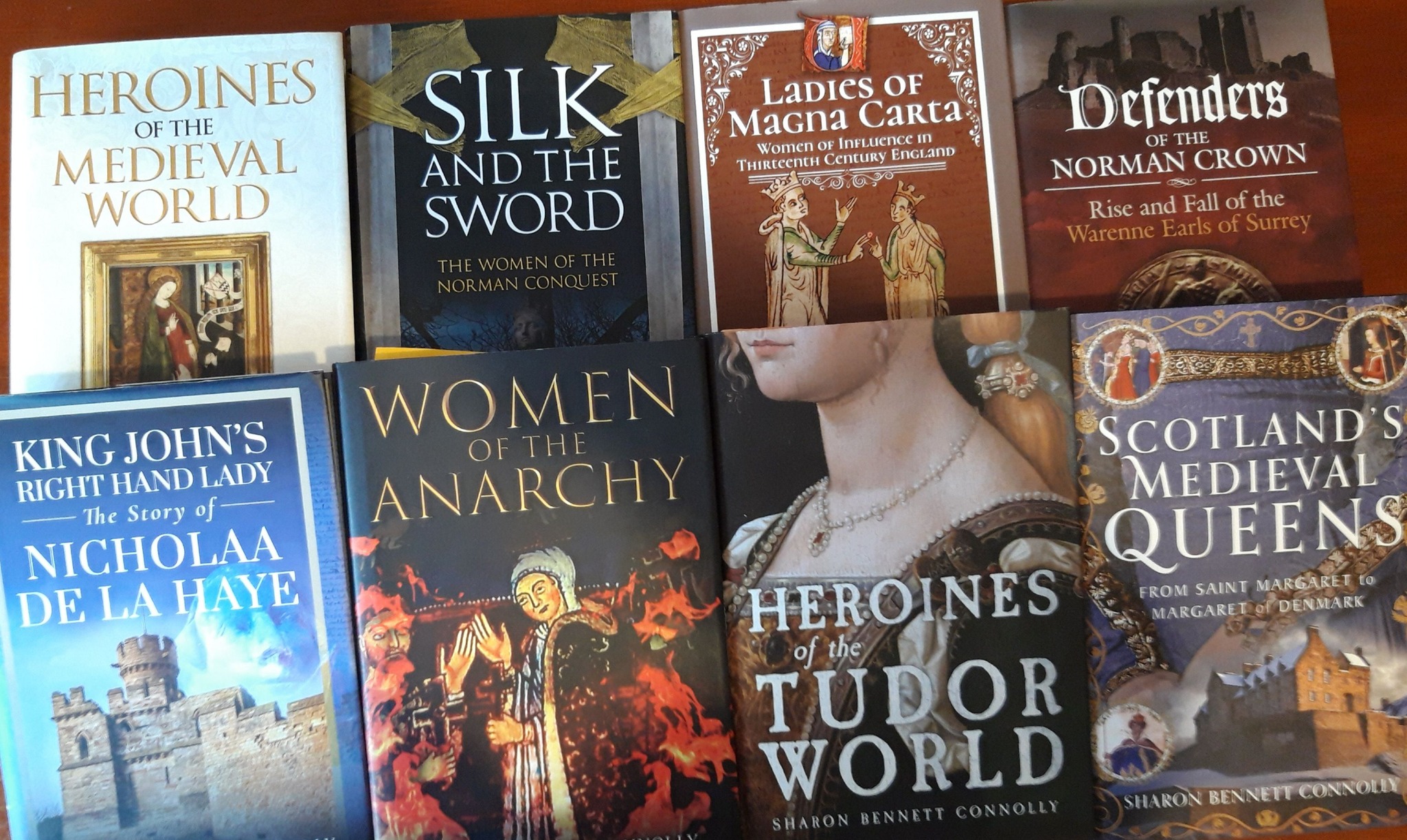
Heroines of the Tudor World tells the stories of the most remarkable women from European history in the time of the Tudor dynasty, 1485-1603. These are the women who ruled, the women who founded dynasties, the women who fought for religious freedom, their families and love. Heroines of the Tudor World is now available for pre-order from Amberley Publishing and Amazon UK. Women of the Anarchy demonstrates how Empress Matilda and Matilda of Boulogne, unable to wield a sword themselves, were prime movers in this time of conflict and lawlessness. It shows how their strengths, weaknesses, and personal ambitions swung the fortunes of war one way – and then the other. Available from Bookshop.orgAmberley Publishing and Amazon UKKing John’s Right-Hand Lady: The Story of Nicholaa de la Haye is the story of a truly remarkable lady, the hereditary constable of Lincoln Castle and the first woman in England to be appointed sheriff in her own right. Available from all good bookshops Pen & Sword Booksbookshop.org and Amazon

Defenders of the Norman Crown: The Rise and Fall of the Warenne Earls of Surrey tells the fascinating story of the Warenne dynasty, from its origins in Normandy, through the Conquest, Magna Carta, the wars and marriages that led to its ultimate demise in the reign of Edward III. Available from Pen & Sword BooksAmazon in the UK and US, and Bookshop.orgLadies of Magna Carta: Women of Influence in Thirteenth Century England looks into the relationships of the various noble families of the 13th century, and how they were affected by the Barons’ Wars, Magna Carta and its aftermath; the bonds that were formed and those that were broken. It is now available in paperback and hardback from Pen & SwordAmazon, and Bookshop.orgHeroines of the Medieval World tells the stories of some of the most remarkable women from Medieval history, from Eleanor of Aquitaine to Julian of Norwich. Available now from Amberley Publishing and Amazon, and Bookshop.orgSilk and the Sword: The Women of the Norman Conquest traces the fortunes of the women who had a significant role to play in the momentous events of 1066. Available now from Amazon,  Amberley Publishing, and Bookshop.org.

Alternate Endings: An anthology of historical fiction short stories including Long Live the King… which is my take what might have happened had King John not died in October 1216. Available in paperback and kindle from Amazon.

Podcast:

Have a listen to the A Slice of Medieval podcast, which I co-host with Historical fiction novelist Derek Birks. Derek and I welcome guests, such as Bernard Cornwell and Michael Jecks, and discuss a wide range of topics in medieval history, from significant events to the personalities involved. Every episode is also now available on YouTube.

*

Don’t forget! Signed and dedicated copies of all my books are available through my online store.

For forthcoming online and in-person talks, please check out my Events Page.

You can be the first to read new articles by clicking the ‘Follow’ button, liking our Facebook page or joining me on TwitterThreadsBluesky and Instagram.

*

©2025 Sharon Bennett Connolly, FRHistS

Author Spotlight: Scott Mariani

Do excuse me if a get a little giddy and fan girly with this one! One of my favourite thriller writers is about to release the first book in a new series – in historical fiction!

I absolutely love Scott’s Ben Hope books and got the last in the series, The Templar Secret, for Christmas. They are modern day thrillers with a historical twist – and are great fun to read.

And Scott agreed to do an interview with me!

I also have an advance copy of the new novel, The Pilgrim’s Revenge, so expect a review shortly. And Scott will be joining Derek and I for a chat in an upcoming episode of A Slice of Medieval. But, in the meantime, Scott and I had a chat….

Hi Scott, thank you for joining me, how did you start your writing career?

It came about both gradually, and suddenly. I’d always been interested in stories – as a kid I used to mess around with drawing and writing, and sometimes combining the two to create my own stupid little cartoon strips which were usually pretty unoriginal rehashes of things like King Kong or Jaws or Tintin, as well as historical themes based on Ivanhoe or Chevalier Ardent – I was into all sorts of things at that young age! Aged about eight, I think, I wrote a sci-fi horror story in which the entire male population of the human race was wiped out in a war against giant robot dinosaur creatures; but we won in the end because ‘the women bred’ (that’s a quote) and repopulated the army so that humans could defeat the monsters. It was not a promising start to my career. Later, in my early twenties, I dabbled with various ideas and projects, one or two of which were completed but have never seen the light of day – for which the world can be thankful, as they weren’t very good either.

Then one day after moving to Wales – this is in about 2006 – while out walking the dogs in the fields the idea for a character called Ben Hope popped into my head more or less fully-formed. What emerged from that was a novel called The Fulcanelli Manuscript, which ended up in the hands of the world’s worst London literary agent and being published by a hardback-only library publisher who printed 400 copies and had no intention of ever doing more. That could have been, and nearly was, the end for me. The book lay dead and buried for a year until I (not the literary agent) managed to gain interest from Avon, then a new imprint of HarperCollins UK, for the paperback rights which, thank God, the library publisher hadn’t been interested in grabbing. Suddenly – overnight really – the Ben Hope series was rebooted with Avon offering a deal for four books. The Fulcanelli Manuscript became retitled The Alchemist’s Secret . . . and that’s how it all began. I still can’t believe the series ended up thirty books long!

What is the best thing about being a writer?

Assuming that you’re able to drag your way up to a reasonable level in the industry: working from home, setting your own hours, not having to commute anywhere, seldom needing to travel unless you’re into doing a lot of physical research, being about as free and independent as it’s possible to get whilst still remaining gainfully employed . . . and getting paid for indulging the interests and passions that you would be preoccupied with even if they were just a hobby. It suits me perfectly.

What is the worst thing about being a writer?

When you’re starting out, the competition is crushing – especially if you had a bad start as I did. Unless you’re fortunate to have strong backing from a good agent, you may feel you’re embarking on an impossible quest that will only end in heartbreak or madness: I know, I suffered from both at various times! It can also be a horribly cruel and unjust industry. So many talented writers get crushed under the wheels of the machine and never get anywhere, while success very often doesn’t depend on the quality of the work. While most editors are lovely folks, you may be unlucky enough to have to work with people who have great control and leverage over what you do, and don’t necessarily have your best interests at heart. I could talk a lot about the high number of truly decent writers I’ve known who have fallen by the wayside, some very sad stories among them. It is a tough world.

You have been writing modern thrillers with a historical twist for years, what made you take the leap into full-on historical fiction?

I’ve always loved history. I wish I had had the sense when I was seventeen to want to study it at university! And it was a fascinating, highly educational and satisfying experience to write all those Ben Hope novels, each featuring its own historical backstory or mystery to a greater or lesser degree. The downside was that, because I’ve always produced two books a year, every six months I would have to uproot myself from whatever fascinating historical world I’d been so immersed in, clear it all from my head and plunge straight into the next. One minute you’re delving into ancient Babylon or Egypt, the next you’re off to the Chinese Cultural Revolution or the American Civil War. All wonderful stuff, of course, but it’s like being a perpetual globetrotter, always on the move, and never being able to stay in one location for long even though you might have fallen in love with the place and wanted to live there forever. Then one day while I was working on Ben Hope 28, The Tudor Deception, and deep into all the intrigues of medieval England, I thought: ‘You know what, I really love being here reading and writing about all this medieval stuff. What if I could just keep on doing that, and remain in one setting rather than having to jump about all the time?’ So, to cut a long story short, that’s what I’ve done. It wasn’t as simple or easy a decision as I’m perhaps making it sound – and of course the end of the Ben Hope series has upset a lot of fans – but nonetheless I’m really happy that I took the plunge.

I’m going to miss Ben Hope…

What were your main challenges when you switched from thrillers (Ben Hope was excellent, by the way) to historical fiction?

Because you’re going much deeper into just one time setting, it becomes all the more important to get the details as correct and authentic as possible: hence the research process is that bit more intensive. The good news for me is that I love research! I’ve accrued such a library of books on my favourite areas of history that when I get stuck in, they pile up so high around me on the desk that it’s like being inside a canyon. Because I’ve picked a medieval time / place setting that’s so well chronicled (the events of the Third Crusade), and because I want to stay as faithful to the true facts and timelines as possible, my plotline is already laid out for me to some extent by the historical sources. That’s been an unusual experience for someone who’s used to having to make it all up themselves! But although it might make life easier in some regards, it also creates the new challenge having to insert, or you might say superimpose, a fictitious main protagonist into the mix, through whose eyes we experience those well-known events in a fresh and dramatic way. Having to blending the worlds of fiction and non-fiction together like that, so that the (non-historian) reader hopefully can’t see the joins, is a whole new kind of fun. I’ve enjoyed being able to create scenes where my fictitious character is in dialogue with famous real-life figures like King Richard I and Eleanor of Aquitaine.

Tell us about The Pilgrim’s Revenge. What attracted you to writing about the Crusades?

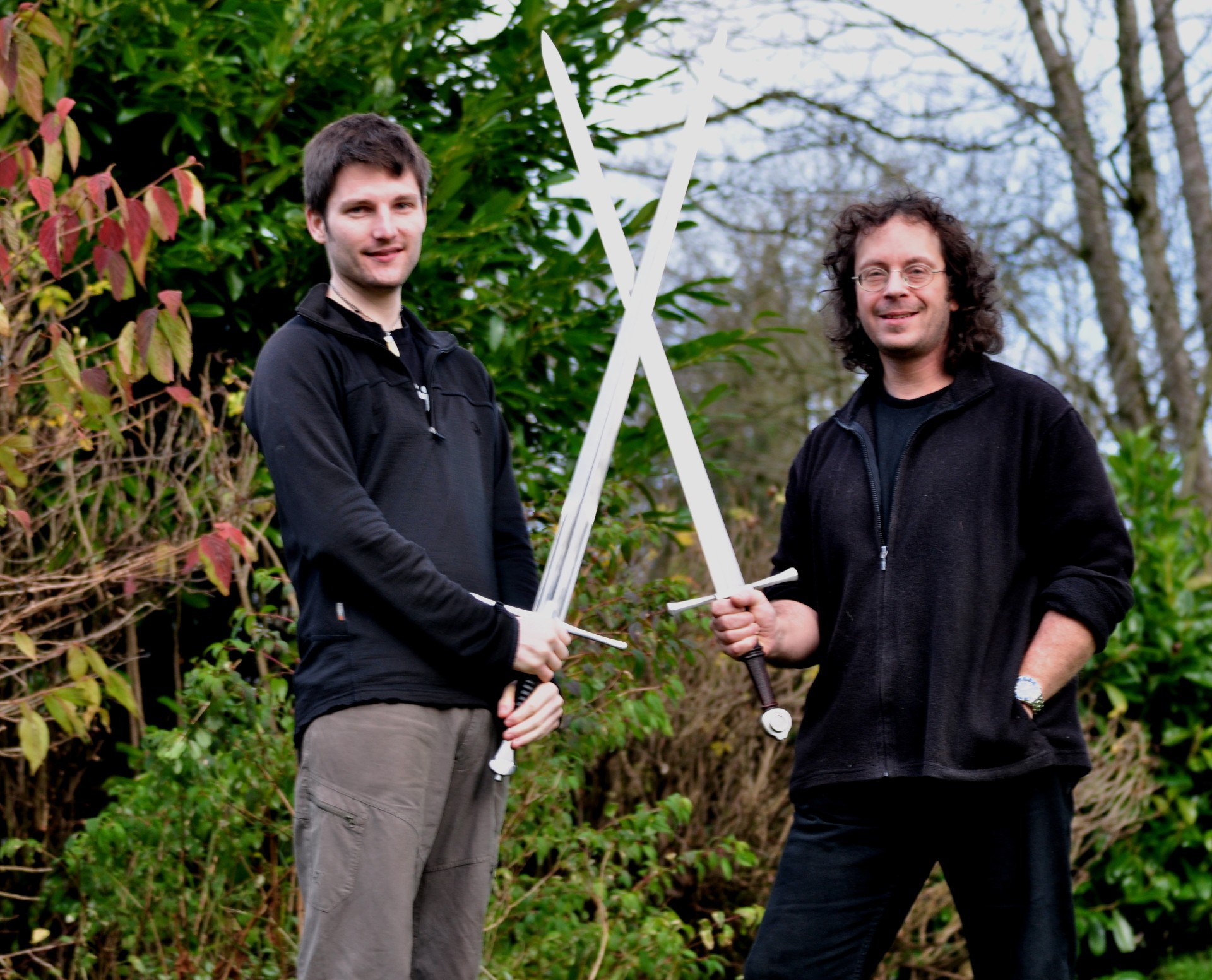
The Pilgrim’s Revenge is the first book in my new series introducing the character of Will the Bowman, or just Will Bowman. The story begins in the year 1190, when Will, a young Englishman, has his happy married life torn apart by marauding soldiers who raid his home, and he’s forced to join up with King Richard’s expedition to the Holy Land as a means of catching up with the villains who did it. Actually we don’t quite reach the Holy Land in Book 1 – that’s for the next. But I hope there’s plenty there to excite and interest the reader. I adore the medieval period – grew up in a historic town, wept as a child when taken to the spot in Rouen where they burned poor Jeanne d’Arc, later read medieval French at University, learned to play with great big swords and shoot a bow – but the whole crusades period has a particular fascination for me. And what could be more cool than the most iconic crusade of them all, the conquest that pitted Richard the Lionheart against the great Saladin? Will Bowman and his comrades get embroiled right in the thick of the drama, and it’s a ride! At any rate it has been for me. I hope readers will love it too . . .

How are you going to cope with the lack of guns? Will the body count be lower?

Are you kidding? We don’t need guns. We have bows and arrows that can pierce chain mail armour from a long way off; we have double-edged swords and scimitars that’ll whip off arms, legs and heads; we have great big siege catapults that can take down massive stone ramparts from two hundred paces; we have thundering great charges of heavy cavalry bearing down on the enemy with lances; we have crossbows and axes and flails and daggers and all sorts of goodies to play with! And did I mention Greek Fire? It’s like The Iliad out there . . . No question, the body count and general level of mayhem and destruction are considerably higher than anything in the Ben Hope books . . . not that that makes it better, of course!

Phew! That’s a relief!

What comes first, the story or the research?

When I was constantly hunting around for fresh material for the Ben Hope books, it was more a question of finding the basic idea first. That could come, and did come, from all kinds of possible places as I was (and am) constantly reading. The basic idea for The Mozart Conspiracy came about from an old book I’d had for years about Mozart’s last year and just happened to revisit one day. The Babylon Idol popped into my head while driving and listening to a Louis Armstrong gospel number about King Nebuchadnezzar’s golden idol. The Forgotten Holocaust, dealing with the Irish famine of 1847, was a subject I’d wanted to do for years and nearly did as a historical stand-alone because I’d no idea at first how to make it work as a Ben Hope book. But in general, that initial concept could come from anywhere. Then you’d have to delve a little deeper to see if your idea had any legs or not – sometimes it did, sometimes it didn’t and you’d need to go and find something else. From there, the story and the research would generally develop in parallel. There was no particular system, but I’m pleased to say it worked pretty well. Now with the Will Bowman series, the case is slightly altered: the historical backdrop dictates a lot about the trajectory of the storyline, and the depth of research required fleshes out what’s going on while also providing inspiration for new story and character angles. If you can get all those stars lined up for you, then it all happens in an organic kind of way that feels very natural.

Have you got the historical fiction bug now? What comes next?

This is going to be the shortest answer. Yes, for sure! What comes next? More Will Bowman books. I’ve got four to do to begin with, but I would like to do more. A lot more. Mustn’t jinx it by saying too much, though.

Are there any other eras – or writing genres – you would like to write about?

As I think anyone who’s read much of my backlist knows already, my historical interests are pretty wide-ranging. Who can say if something else would come up in the future? Never say never: and that goes for genres too. Right now, however, I’m very content to stay exactly where I am. I no longer have to worry about where I’m going next: I’m free to trace the story arc of Will Bowman for as long as I’m able to. What better way to create a truly immersive experience for readers interested in our rich and exciting past?

The Pilgrim’s Revenge will be available from 24 April 2025

Pre-order The Pilgrim’s Revenge.

About Scott Mariani:

Scott Mariani is the No.1 Sunday Times bestselling author of the multi-million-selling Ben Hope thrillers. From 2025 he is launching into a new historical adventure series featuring medieval English hero Will Bowman, who is forced from his home to join King Richard ‘the Lionheart’ on the Third Crusade and rises up to become a knight. Book 1,THE PILGRIM’S REVENGE, is available from April 2025 and is published by Hodder & Stoughton.

Scott lives and writes in west Wales, UK. You can find out more about his work by visiting his official website.

*

My books

Signed, dedicated copies of all my books are available through my online store.

Out now: Scotland’s Medieval Queens

Scotland’s history is dramatic, violent and bloody. Being England’s northern neighbour has never been easy. Scotland’s queens have had to deal with war, murder, imprisonment, political rivalries and open betrayal. They have loved and lost, raised kings and queens, ruled and died for Scotland. From St Margaret, who became one of the patron saints of Scotland, to Elizabeth de Burgh and the dramatic story of the Scottish Wars of Independence, to the love story and tragedy of Joan Beaufort, to Margaret of Denmark and the dawn of the Renaissance, Scotland’s Medieval Queens have seen it all. This is the story of Scotland through their eyes.

Available now from Amazon and Pen and Sword Books

Also by Sharon Bennett Connolly:

Heroines of the Tudor World tells the stories of the most remarkable women from European history in the time of the Tudor dynasty, 1485-1603. These are the women who ruled, the women who founded dynasties, the women who fought for religious freedom, their families and love. Heroines of the Tudor World is now available for pre-order from Amberley Publishing and Amazon UK. Women of the Anarchy demonstrates how Empress Matilda and Matilda of Boulogne, unable to wield a sword themselves, were prime movers in this time of conflict and lawlessness. It shows how their strengths, weaknesses, and personal ambitions swung the fortunes of war one way – and then the other. Available from Bookshop.orgAmberley Publishing and Amazon UKKing John’s Right-Hand Lady: The Story of Nicholaa de la Haye is the story of a truly remarkable lady, the hereditary constable of Lincoln Castle and the first woman in England to be appointed sheriff in her own right. Available from all good bookshops Pen & Sword Booksbookshop.org and Amazon

Defenders of the Norman Crown: The Rise and Fall of the Warenne Earls of Surrey tells the fascinating story of the Warenne dynasty, from its origins in Normandy, through the Conquest, Magna Carta, the wars and marriages that led to its ultimate demise in the reign of Edward III. Available from Pen & Sword BooksAmazon in the UK and US, and Bookshop.orgLadies of Magna Carta: Women of Influence in Thirteenth Century England looks into the relationships of the various noble families of the 13th century, and how they were affected by the Barons’ Wars, Magna Carta and its aftermath; the bonds that were formed and those that were broken. It is now available in paperback and hardback from Pen & SwordAmazon, and Bookshop.orgHeroines of the Medieval World tells the stories of some of the most remarkable women from Medieval history, from Eleanor of Aquitaine to Julian of Norwich. Available now from Amberley Publishing and Amazon, and Bookshop.orgSilk and the Sword: The Women of the Norman Conquest traces the fortunes of the women who had a significant role to play in the momentous events of 1066. Available now from Amazon,  Amberley Publishing, and Bookshop.org.

Alternate Endings: An anthology of historical fiction short stories including Long Live the King… which is my take what might have happened had King John not died in October 1216. Available in paperback and kindle from Amazon.

Podcast:

Have a listen to the A Slice of Medieval podcast, which I co-host with Historical fiction novelist Derek Birks. Derek and I welcome guests, such as Bernard Cornwell and Michael Jecks, and discuss a wide range of topics in medieval history, from significant events to the personalities involved. Every episode is also now available on YouTube.

*

Don’t forget! Signed and dedicated copies of all my books are available through my online store.

For forthcoming online and in-person talks, please check out my Events Page.

You can be the first to read new articles by clicking the ‘Follow’ button, liking our Facebook page or joining me on TwitterThreadsBluesky and Instagram.

*

©2025 Sharon Bennett Connolly, FRHistS and Scott Mariani