
It’s Wordly Women time again!
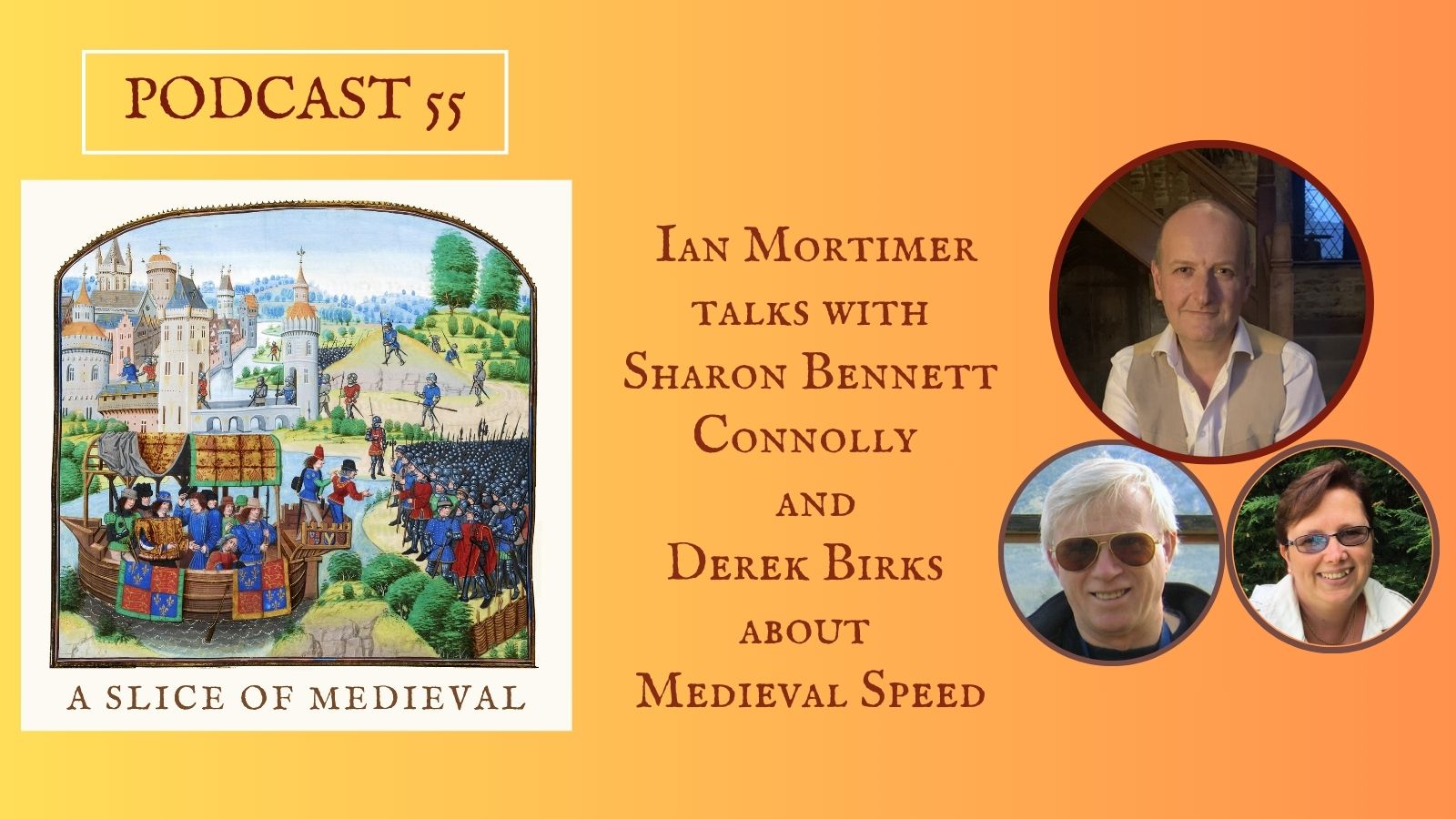
And today I am joined by an author who I could chat with all day, and never run out of things to talk about, M.J. Porter. MJ writes both fiction and non-fiction and can write a jolly good battle. Last year, MJ joined Derek Birks and I on A Slice of Medieval to chat about Athelstan and the Battle of Brunanburh. And what a fascinating discussion it was.
So, I was really excited to invite MJ Porter to take part in my Wordly Women series.
Sharon: Hi MJ! Firstly, can I ask what got you into writing?
MJ: My big dream was to write historical fantasy based on the Viking Age in Iceland. I know it’s both random and very specific. I only turned to historical fiction when I discovered a character during the research for my Master’s, I realised deserved to have his story told. Ealdorman Leofwine of the Hwicce, alive at the end of the tenth century ( a part of the Saxon Mercian kingdom), and his family were, in my view, far more influential and important than the Godwine family, who everyone knows about. I decided to write the story of the last 100 years of Saxon England through their eyes in the Earls of Mercia series. Not a small endeavour, and one which I’m continuing to pursue (I’ve made it to about AD1050 so everything is about to get quite serious), but since then (back in 2013), I’ve moved backwards through the Saxon era, picking for my subjects and stories those lesser-known characters (men or women) and events to share with my readers. I’m a little bit obsessed with the Saxon kingdom of Mercia.
Sharon: You write both fiction and non-fiction – is one harder than the other?
MJ: I’ve written one non-fiction title, The Royal Women of the Tenth Century, and the rest are fiction. What I would say is that non-fiction uses a very different part of my brain from writing fiction. With non-fiction, I struggled to stop each day. I could work on the title for upwards of 12 hours a day without feeling any fatigue. When writing fiction (and I mean writing, not editing), there’s a greater strain as I create as I go. So, my brain gets tired more quickly with fiction writing than non-fiction writing. I imagine that, as I know what’s going to happen with non-fiction, I don’t have that constant pressure when I’m writing. I’m a pantser, so my stories unfold as I write them.
Sharon: Tell us about your books.

MJ: I write mostly in the Saxon era, c.540 to 1066. (I do still dabble in fantasy using a pen-name, and I also write quirky 20th-century mysteries). My stories often revolve around either the kingdom of Mercia or the emerging kingdom of England from the tenth century onwards.
I’m attracted to characters and events people don’t know about, or for which evidence is now painting a different picture. However, my stories can range from a blood-and-guts battle fest (with lots of very strong language) to stories about politics. My most recent completed trilogy has been an attempt to recreate events in the true ‘Dark Ages’ in about AD540. It was fascinating but really hard. It was a passion project. I’ve been fascinated by the era for a very long time. My next trilogy will be about the Mercian Civil War of 757, with the future King Offa as the main character. And in the background, I’m continuing my two series set in the ninth century in Mercia, the one following a young Icel as he struggles to become a warrior, not a healer, and the later one, about Mercia’s ‘last king’ King Coelwulf II. The scope for the imagination is immense, and sometimes even I don’t know what form the next story is going to take.
Sharon: What attracts you to the period?
MJ: So, I’m lazy and also, I like to reassess current interpretations, so there are far fewer ‘named’ individuals for me to worry about getting correct in the era, and the scope for reassessing events is immense. We don’t know far more than we know for this period of early English (and wider British) history.
Sharon: Who is your favourite medieval person and why?
MJ: I don’t think I have a favourite. There are too many to pick and choose only one. I do have a very soft spot for William the Marshall, although he’s not in my preferred era.
Sharon: Who is your least favourite medieval person and why?
MJ: Again, I don’t think I have one, but one of my characters, King Coelwulf II of Mercia, really doesn’t like his contemporary, King Alfred of Wessex, and I think he’s probably correct to be suspicious. As historians have commented (to paraphrase), we only know King Alfred was ‘great’ because he made sure to tell us he was (through his Life, written by Asser). That smacks of self-aggrandisement in my books.
Sharon: How do you approach researching your topic?
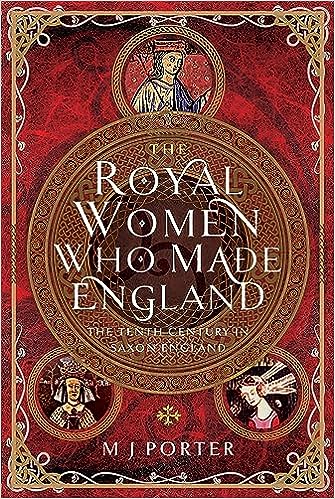
MJ: My process has changed significantly over the years. I began my first historical fiction story by seeing what the Anglo-Saxon Chronicles had to say about events, as well as the surviving charter evidence, but now I tend to start with more general information and then dive deeper. The Anglo-Saxon Chronicle, in all its many forms, is a great place to hunt out stories, but I now consult many more sources, including archaeological finds and the more ‘lived’ experiences. I’ve been studying Saxon England on and off for thirty years, and I suspect I’ve forgotten more than I remember, but I have a general feeling, and I weave the narrative through it, being mindful of what comes before, and what comes after (and also, what I might have written before – which has sometimes caused me more heartache than the alleged historical ‘facts’). I do like to add Easter Eggs through my later stories.
I have a huge collection of reference books these days, and I know where to find information. Additionally, I’m wise enough to realise that sometimes there will be gaps.
I often find that when characters and events are given flesh, they make more sense than in stark non-fiction titles, and this also adds to my confidence in writing stories that counter the current narratives. Some elements simply don’t ‘make sense’ when you add people to them. And others of them suddenly do. The ‘hook’ for my Dark Age trilogy was that after the ‘end’ of Roman Britain, the ability to forge iron from ironstone was lost (although many items were recycled). Abruptly, I realised that when the lost skills were rediscovered, this would have allowed those with sharper blades to dominate those who lacked the ability. I don’t know if that’s true, but it’s a fascinating hypothesis.
Sharon: Tell us your ‘favourite’ true historical story you have come across in your research.
MJ: I don’t know if I have a favourite, but for my last mystery, I discovered something very tragic, regarding a munitions explosion close to RAF Fauld near Burton upon Trent in November 1944. I grew up not far from there, and I’d never heard of it, so I resolved to include it in The Secret Sauce, and now more and more readers are informing me they didn’t know either. I love being able to share these neglected stories with my readers and giving these forgotten individuals some recognition.
Sharon: Tell us your least ‘favourite’ true historical story you have come across in your research.
MJ: I don’t know if I have a least favourite either, but I was devastated when I had to ‘kill off’ my first historical fiction creation, Ealdorman Leofwine, because he disappeared from the historical record. It was so tough. History can be cruel sometimes.
Sharon: Are there any other eras you would like to write about?
MJ: I’ve also written a few 20th-century mysteries, and I’ve dabbled with the Tudors as part of a fantasy trilogy. I might one day be tempted by a little bit of the Roman era as well, but I’m somewhat terrified by how much is known about military units and the way the Romans fought, as my characters are often as disorganised as I am, and I fear I’d offend readers.
Sharon: What are you working on now?
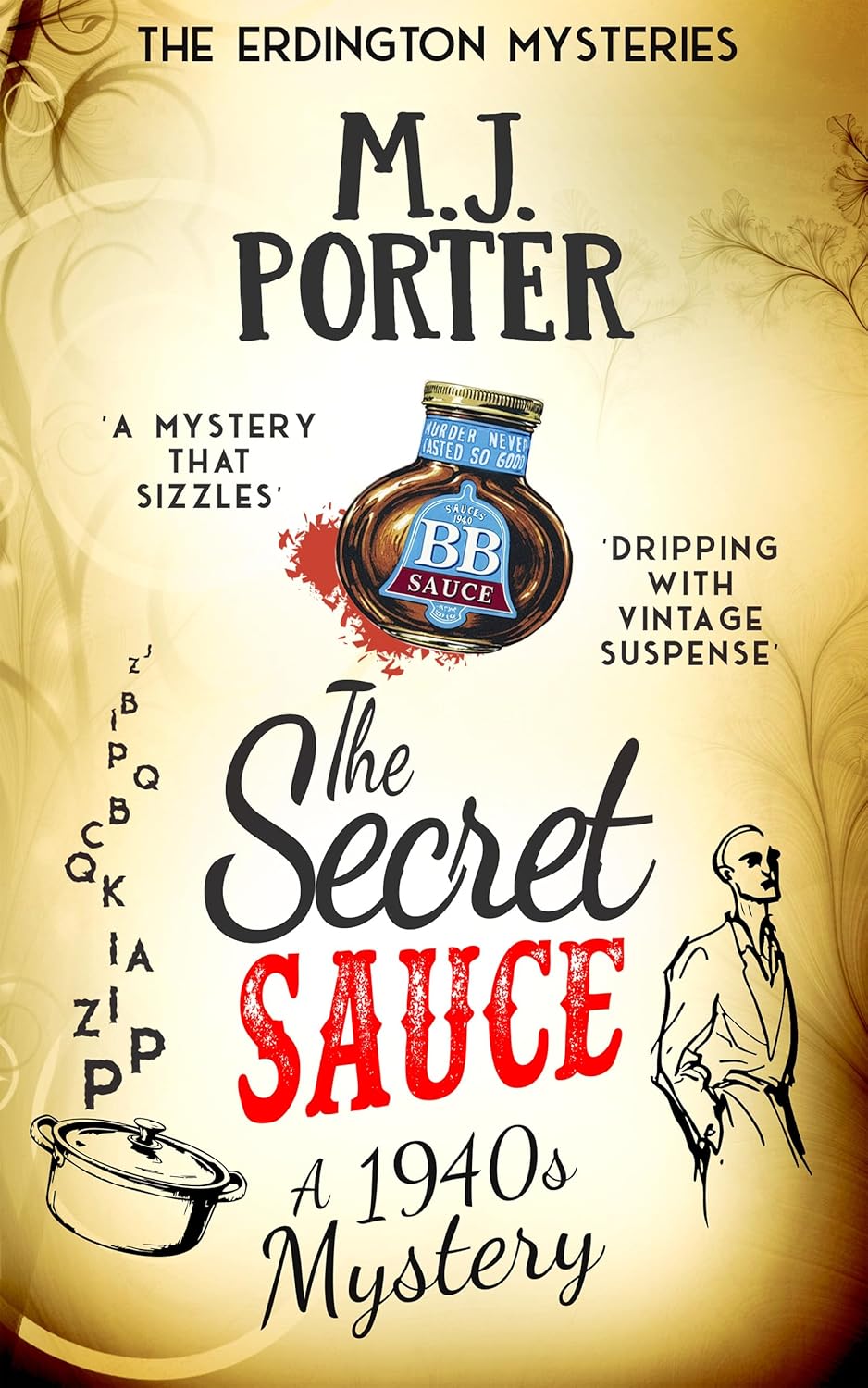
MJ: I’m currently writing the first book in The House of Mercia, which will focus on the Civil War in Mercia in 757, with the future King Offa as a main character, while King Æthelbald, his predecessor, is also a character. I’m also in the throes of solving my latest 20th-century mystery, called The Barrage Body. I love the variety, and the convenience of being able to drive and use a telephone as opposed to having a horse and relying on messengers and messages.
Sharon: And finally, what is the best thing about being a writer?
MJ: There’s a lot of freedom to being a writer, once you’ve acknowledged it’s also hard work. I have my processes and routine, but provided I stick to that, I can spend much of my time doing the things I love – writing and researching. I’m very lucky to be able to (just about) earn a living from doing that. I also get to spend my time with characters I either love (or hate), and that is also very freeing.
Books by MJ Porter:
The Secret Sauce; Men of Iron; The House of Mercia; The Earls of Mercia; The Royal Women Who Made England
About the Author:
MJ Porter writes: I’m an author of historical fiction (Early English/Saxon, Vikings and the British Isles as a whole before the Norman Conquest, as well as five 20th-century historical mysteries) and fantasy (now published under a different name).
I was born in the old Mercian kingdom at some point since 1066. Raised in the shadow of a strange little building, told from a very young age that it housed the bones of long-dead kings of Mercia and that our garden was littered with old pieces of pottery from a long-ago battle, it’s little wonder that my curiosity in Early England ran riot. I can only blame my parents! I like to write. You’ve been warned!
linktr.ee/MJPorterauthor
*
My books
Signed, dedicated copies of all my books are available through my online store.
Out now: Scotland’s Medieval Queens

Scotland’s history is dramatic, violent and bloody. Being England’s northern neighbour has never been easy. Scotland’s queens have had to deal with war, murder, imprisonment, political rivalries and open betrayal. They have loved and lost, raised kings and queens, ruled and died for Scotland. From St Margaret, who became one of the patron saints of Scotland, to Elizabeth de Burgh and the dramatic story of the Scottish Wars of Independence, to the love story and tragedy of Joan Beaufort, to Margaret of Denmark and the dawn of the Renaissance, Scotland’s Medieval Queens have seen it all. This is the story of Scotland through their eyes.
‘Scotland’s Medieval Queens gives a thorough grounding in the history of the women who ruled Scotland at the side of its kings, often in the shadows, but just as interesting in their lives beyond the spotlight. It’s not a subject that has been widely covered, and Sharon is a pioneer in bringing that information into accessible history.’ Elizabeth Chadwick (New York Times bestselling author)
Available now from Amazon and Pen and Sword Books
Also by Sharon Bennett Connolly:
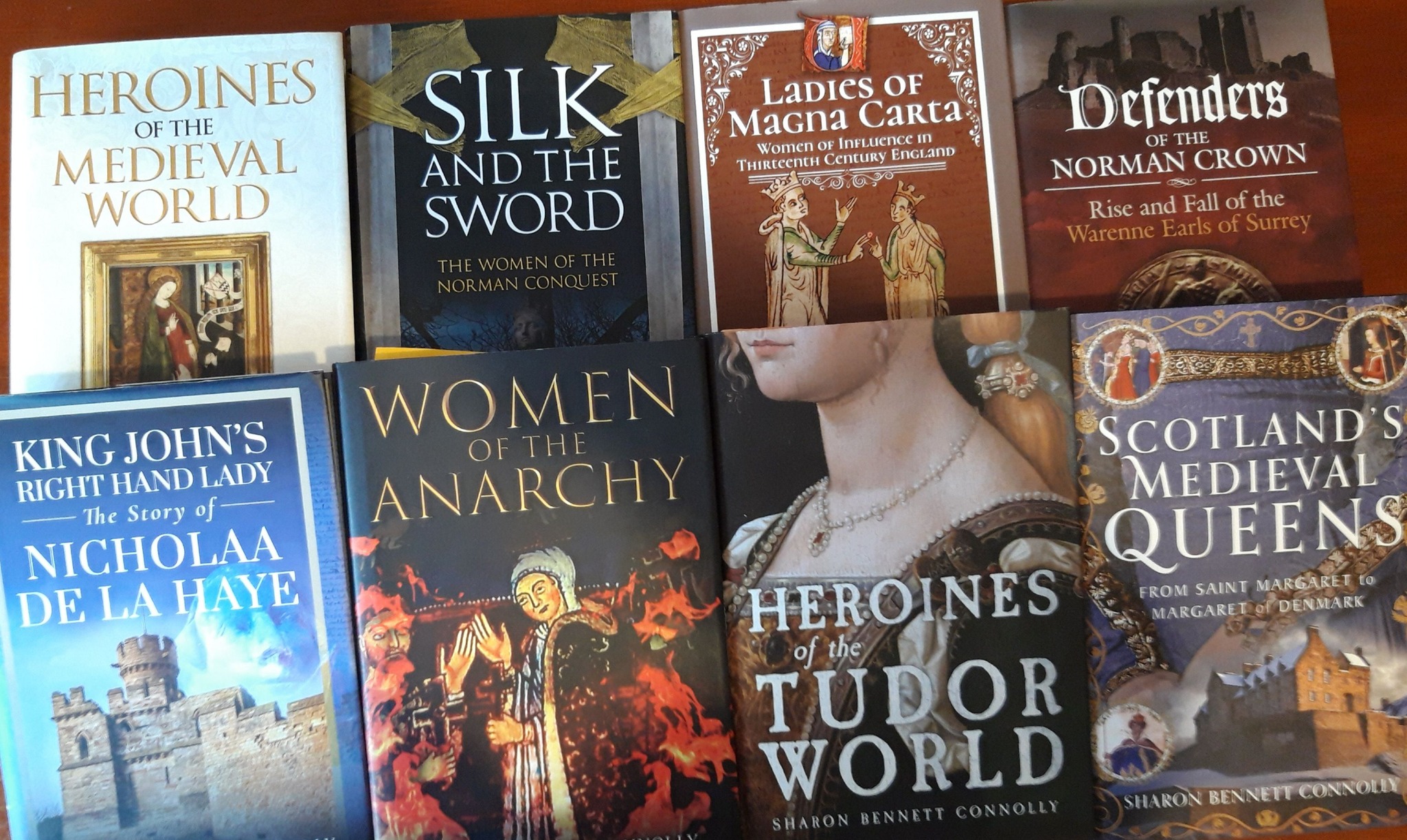
Heroines of the Tudor World tells the stories of the most remarkable women from European history in the time of the Tudor dynasty, 1485-1603. These are the women who ruled, the women who founded dynasties, the women who fought for religious freedom, their families and love. Heroines of the Tudor World is now available from Amberley Publishing and Amazon UK. Women of the Anarchy demonstrates how Empress Matilda and Matilda of Boulogne, unable to wield a sword themselves, were prime movers in this time of conflict and lawlessness. It shows how their strengths, weaknesses, and personal ambitions swung the fortunes of war one way – and then the other. Available from Bookshop.org, Amberley Publishing and Amazon UK. King John’s Right-Hand Lady: The Story of Nicholaa de la Haye is the story of a truly remarkable lady, the hereditary constable of Lincoln Castle and the first woman in England to be appointed sheriff in her own right. Available from all good bookshops Pen & Sword Books, bookshop.org and Amazon.

Defenders of the Norman Crown: The Rise and Fall of the Warenne Earls of Surrey tells the fascinating story of the Warenne dynasty, from its origins in Normandy, through the Conquest, Magna Carta, the wars and marriages that led to its ultimate demise in the reign of Edward III. Available from Pen & Sword Books, Amazon in the UK and US, and Bookshop.org. Ladies of Magna Carta: Women of Influence in Thirteenth Century England looks into the relationships of the various noble families of the 13th century, and how they were affected by the Barons’ Wars, Magna Carta and its aftermath; the bonds that were formed and those that were broken. It is now available in paperback and hardback from Pen & Sword, Amazon, and Bookshop.org. Heroines of the Medieval World tells the stories of some of the most remarkable women from Medieval history, from Eleanor of Aquitaine to Julian of Norwich. Available now from Amberley Publishing and Amazon, and Bookshop.org. Silk and the Sword: The Women of the Norman Conquest traces the fortunes of the women who had a significant role to play in the momentous events of 1066. Available now from Amazon, Amberley Publishing, and Bookshop.org.
Alternate Endings: An anthology of historical fiction short stories including Long Live the King… which is my take what might have happened had King John not died in October 1216. Available in paperback and kindle from Amazon.
Podcast:

Have a listen to the A Slice of Medieval podcast, which I co-host with Historical fiction novelist Derek Birks. Derek and I welcome guests, such as Bernard Cornwell and Michael Jecks, and discuss a wide range of topics in medieval history, from significant events to the personalities involved.
There are now over 75 episodes to listen to!
Every episode is also now available on YouTube.
*
Don’t forget! Signed and dedicated copies of all my books are available through my online store.
For forthcoming online and in-person talks, please check out my Events Page.
You can be the first to read new articles by clicking the ‘Follow’ button, liking our Facebook page or joining me on Twitter, Threads, Bluesky and Instagram.
*
©2025 Sharon Bennett Connolly and M.J. Porter






 History... the interesting bits!