Wordly Women: Patricia Bracewell

Patricia Bracewell

Today in my Wordly Women, author spotlight series, I have a chat with Patricia Bracewell. Patricia is one of those people I can spend a day with, just discussing history from dawn to dusk. Indeed, we have done on a couple of occasions, both in person and online.

So, it was wonderful to get the chance to talk with Patricia about her writing, and her love of the 11th century.

Over to Patricia…

Sharon: What got you into writing?

    Patricia: Blame Louisa May Alcott because at the age of 10 my hero was Jo March. I decided that when I grew up I would write a novel like Little Women or The Secret Garden, books that I loved. At university I majored in Literature, but there was no course titled How to Write a Best Selling Novel. It was only after college, while I was teaching high school and then raising a family, that I took writing classes that helped me focus on what I really wanted to do. My first efforts at publication were personal essays and short stories, but what they really taught me was that the novel was the genre that really spoke to me, and I threw myself into that.

    Sharon: Tell us about your books.
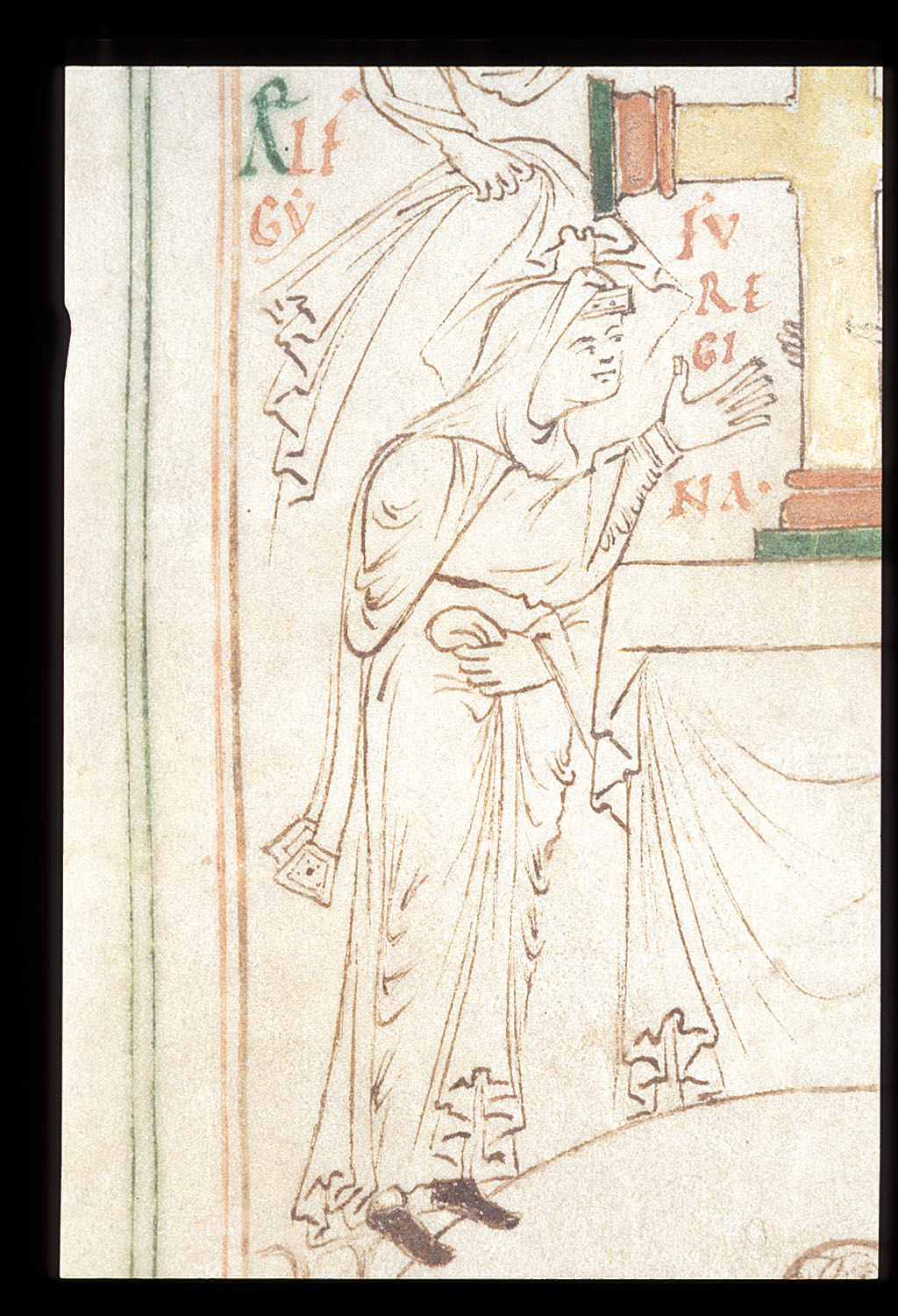
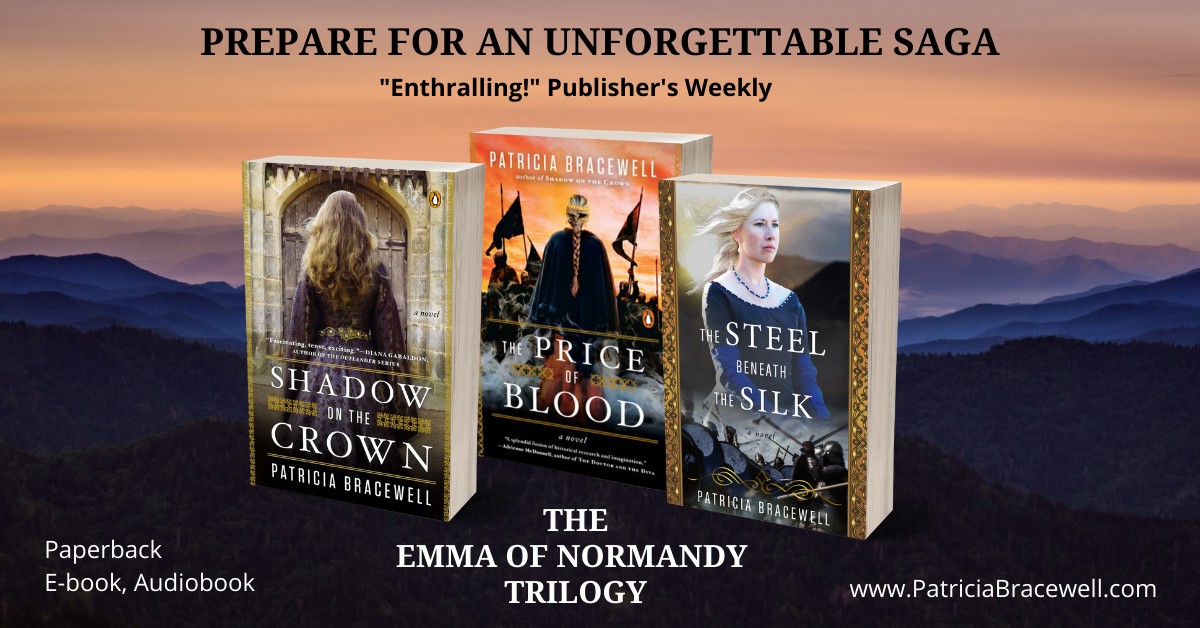
    Emma of Normandy
    Emma of Normandy

      Patricia: I have written three historical novels about Emma of Normandy, who was a queen of England in the 11th century, before the Norman Conquest. Emma was the consort of two kings of England, and that is only one of the things that make her so fascinating. Each of my books, Shadow on the Crown, The Price of Blood, and The Steel Beneath the Silk is a stand-alone, but together they form a trilogy that covers the years of Emma’s first marriage and lead up to the very dramatic events that resulted in her second marriage. It was a time when England was under constant assault by Viking armies, and while the history of the time tells us about the battles and the men who fought them, the women who lived through that time are ignored. In my books I wanted to explore what Emma’s life, and the lives of the women around her, might have been like. As it turned out, my novels are nothing like Little Women.

      Sharon: What attracts you to the 11th century?

        Patricia: That was Queen Emma. Before I discovered her I knew very little about the history of that period, other than the names of a few kings and a vague understanding of what happened in 1066. In college I had read Beowulf and some Old English poetry, and I took an English History course, but that just skimmed over the Anglo-Saxon period. Once I began researching the 11th century, though, that Anglo-Saxon world felt familiar because I had read Tolkien’s trilogy numerous times throughout my life, and I could see that he had drawn on Anglo-Saxon history to create his Middle Earth. He certainly based the Riders of Rohan and their hall at Meduseld on the Anglo-Saxons, and I suspect, too, that there’s a lot of Emma’s first husband, King Æthelred, in Tolkien’s character of King Théodan. And too, that elegiac tone that permeates The Lord of the Rings, also permeates the poetry of the Anglo-Saxons as well as the Anglo-Saxon Chronicle entries that I was using as the basis for my novels. So, in a way, although Emma brought me into the 11th century, it was Tolkien who introduced me to Anglo-Saxon England at a very young age, and it’s that world of heroism, loyalty, and yearning for the past that I continue to find so appealing.

        Sharon: Who is your favourite medieval person and why?
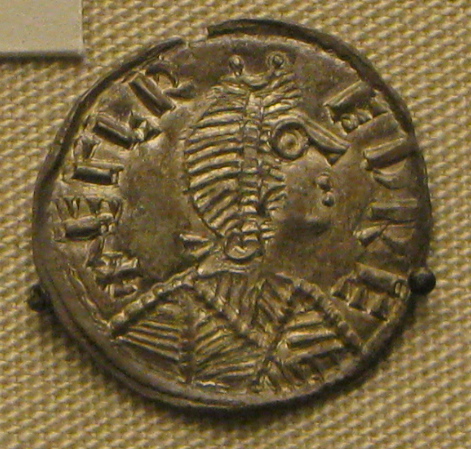
        Alfred the Great
        Coin of Alfred the Great

          Patricia: My favorite medieval person, aside from Queen Emma, is Alfred the Great. From what I know of him at a millennium’s distance I believe that he was a good man and an intelligent ruler. He must have been courageous, a king who protected his kingdom and his people to the best of his ability in the face of overwhelming foes and physical pain. He strikes me as a brilliant, forward-thinking ruler, very much ahead of his time in many ways.

          Sharon: Who is your least favourite medieval person and why?

            Patricia: I have to give that distinction to King Æthelred who sat on the English throne for 38 long years. I made him a villain in my novels, a character haunted by guilt and paranoia, and I suppose that has influenced my opinion of him. But he was obviously ruthless and vengeful and, I suspect, a coward. He ordered the murder of several of his powerful nobles—not their executions, but their murders. In a world where it was so important to be cleansed of your sins before death, he gave those men no chance to repent. He also ordered the St. Brice’s Day Massacre of Danes, setting fire to a church where men, women and children had sought refuge. In 1014 he led his army against his own people in Mercia who had aided the Danes the year before, and when his son Edmund Ironside begged for his help in 1016 to lead an army against the Danish invasion Æthelred refused for fear that someone would kill him. Yes, it was a brutal time, and men were cruel, but I’ve found few redeeming qualities in old Æthelred.

            Sharon: How do you approach researching your topic?

              Patricia: I live in the U.S. so I’ve done ‘boots on the ground’ research in England, Normandy and Denmark, including a 2-week summer course on the Anglo-Saxon period at Cambridge University. I spent a very long day in the Viking Ship Museum in Roskilde, as well as attending a re-enactment of the Battle of Hastings. But the really in-depth research began, for me, with digging into history books that covered the 11th century in England, Normandy and Denmark to give me a broad understanding of the period. After that I focused mostly on the Anglo-Saxons, the events taking place in the years I was covering in each novel, and on the historical figures who would be the characters in my novels. I spent hours in the library stacks at the Univ. of California at Berkeley, reading everything about the period that I could get my hands on, as well as building my own research library at home. Every time I started writing a new book I had to go back into research mode to really grasp the events, the people, and the places that I was going to be writing about. 

              Sharon: Tell us your ‘favourite’ 11th century story you have come across in your research.
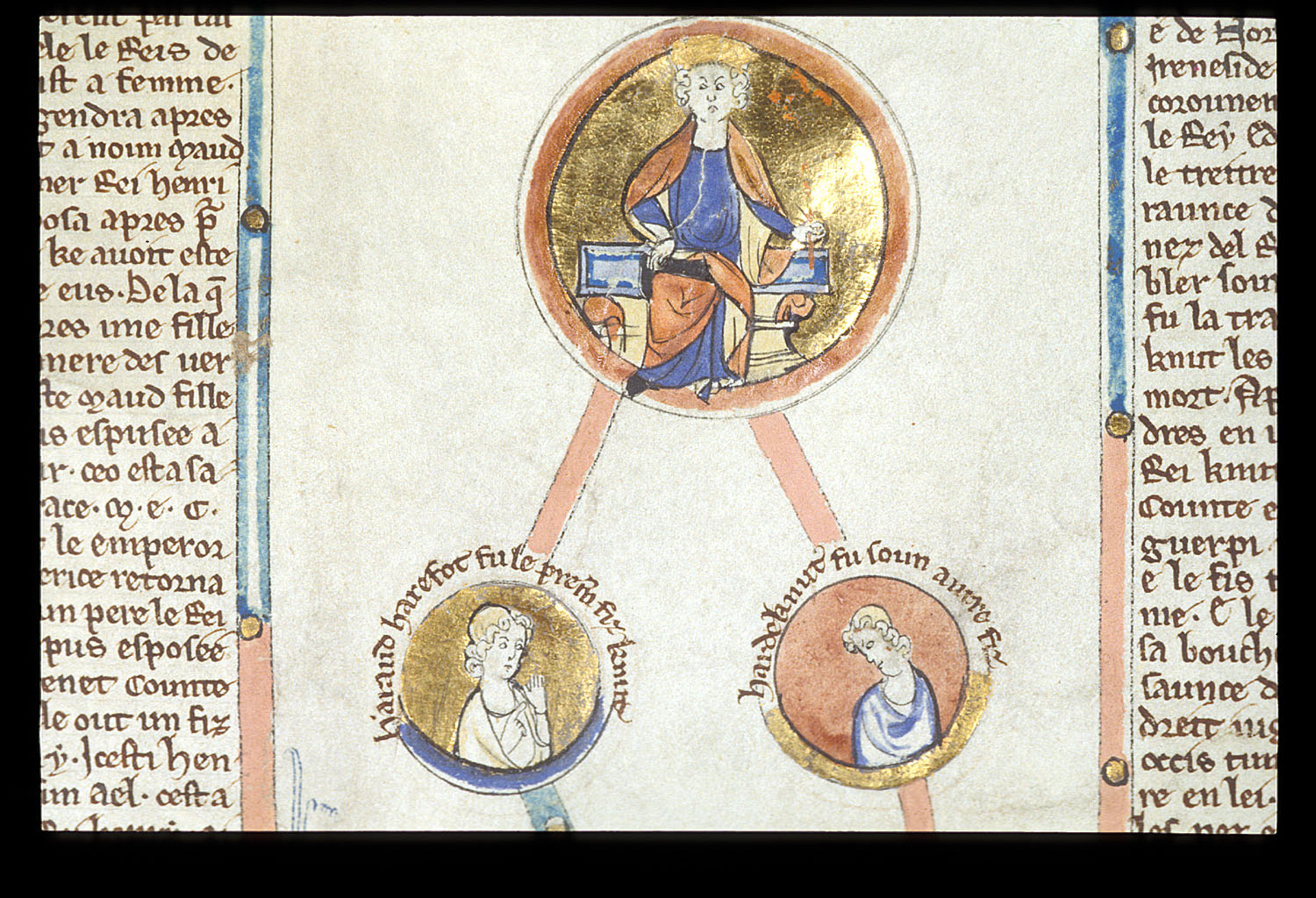
              Genealogical table of Cnut, Harold I and Harthacnut
              Genealogical table of Cnut, Harold I and Harthacnut

                Patricia: It’s the story of Thorkell’s beard. Thorkell the Tall was a powerful Viking warlord during the Danish conquest of England. When Cnut became king in 1017, he made Thorkell the Earl of East Anglia, but 4 years later Cnut outlawed him, and Thorkell had to flee to Denmark. The Anglo-Saxon Chronicle doesn’t say why Thorkell was banished. But the Ramsey Chronicle relates that Thorkell’s wife was implicated in the murder of his son. Thorkell and his wife were each called to swear to their innocence on holy relics, and Thorkell did this. Then he swore by his beard that his wife, too, was innocent, but at that point his beard fell off! He was convicted of perjury and his wife of murder, and they were banished. Assuming that there is some truth to this story, did Thorkell really lose his beard? And if not, then how was perjury proved? It’s quite a juicy tale.

                Sharon: Tell us your least ‘favourite’ 11th century story you have come across in your research.

                  Patricia: Queen Emma and the Ploughshares appears in the Annals of Winchester, written by Richard of Devizes in the late 12th century, a century after Emma’s death. In the story, the Norman Archbishop of Canterbury tells Emma’s son, King Edward that she is utterly evil. He claims that she agreed to the murder of her other son, Alfred, that she plotted to poison Edward, and that she was sleeping with the Bishop of Winchester. Emma protests her innocence and to prove it she agrees to walk barefoot across 9 burning hot plough shares without being injured. The night before the ordeal St. Swithin appears to her in a dream to tell her she’ll be fine, and sure enough, she survives it untouched. The entire story is bogus, of course, and the worst of it is that what is remembered are the crimes that Emma was falsely accused of, and not the point of the story, which is that her innocence was proven through saintly intervention. The only thing I like about this story is the ending, where a bunch of bishops beat a remorseful King Edward with rods and Emma gets to slap him 3 times. 

                  Sharon: Are there any other eras you would like to write about?

                    Patricia: Not just eras, but genre, too. I’d love to write a high medieval fantasy, although it’s not something I’ll be tackling any time soon!

                    Sharon: What are you working on now?

                      Patricia: I am still deeply ensconced in the 11th century and the life of Queen Emma. My original intent was to write a trilogy about the queen, and I accomplished that. But there is more to Emma’s story and I really want to tell it, so I’m in the thick of that right now.

                      Sharon: And finally, what is the best thing about being a writer?

                      Patricia: It’s the people who have, in one way or another, entered my life. Readers who reach out to me, other writers who I have come to know as colleagues and friends, scholars like you, Sharon, who have given me advice and have been so helpful and encouraging. Because of my books, my world has expanded exponentially. It’s a gift that I treasure. 

                      About the Author:
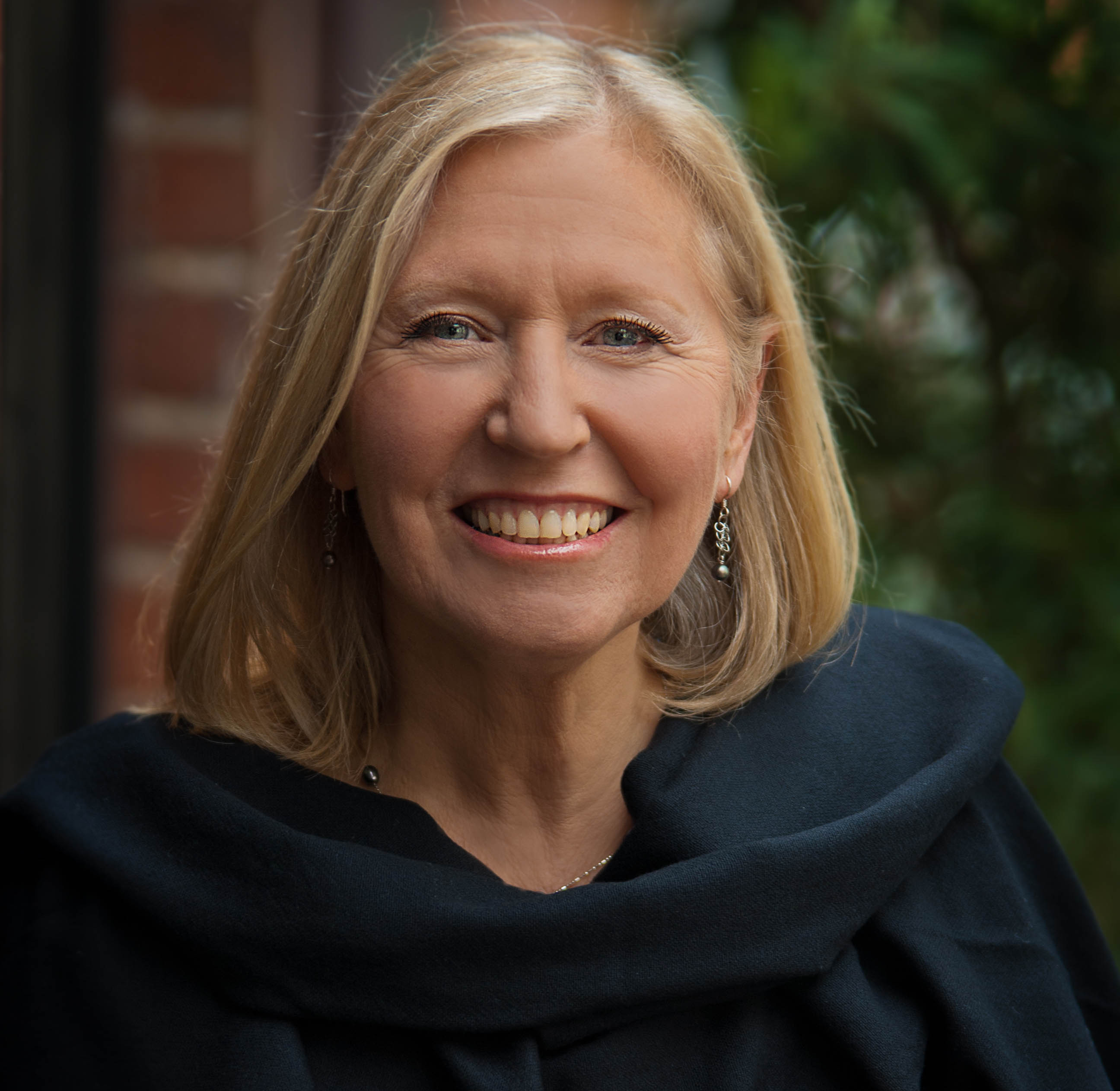
                      Patricia Bracewell

                      Patricia Bracewell taught high school English before embarking on her writing career. Her historical novel, Shadow on the Crown, was published in 2013 in the U.S. and Britain, and has been translated into Italian, German, Portuguese and Russian. Its sequel, The Price of Blood, continues the gripping tale of the 11th century queen of England, Emma of Normandy. Her third novel, The Steel Beneath the Silk, continuing the story of England’s only twice-crowned queen was published in 2021. Patricia’s research has taken her to France, Denmark and Britain, including a summer course on Anglo-Saxon history at Downing College, Cambridge, as well as academic conferences on medieval studies in the U.S. and the U.K. She has served as Writer-in-Residence at Gladstone’s Library in Wales, has been a panelist at Historical Novel Society conferences in the U.S. and Britain, was a guest on BBC Radio 4s Great Lives, and has spoken to numerous book groups and school groups about her novels and the history that infuses them. She lives in California and is currently working on her fourth historical novel about Emma of Normandy.

                      Where to find Patricia:

                      Social Media: Bluesky; Instagram.

                      Website: www.PatriciaBracewell.com

                      Buy Links: All books are available as ebooks, audiobooks and paperbacks; KOBOAPPLEAMAZON U.S.AMAZON U.K.

                      *

                      My books

                      Signed, dedicated copies of all my books are available through my online store.

                      Out now: Scotland’s Medieval Queens

                      Books by Sharon Bennett Connolly

                      Scotland’s history is dramatic, violent and bloody. Being England’s northern neighbour has never been easy. Scotland’s queens have had to deal with war, murder, imprisonment, political rivalries and open betrayal. They have loved and lost, raised kings and queens, ruled and died for Scotland. From St Margaret, who became one of the patron saints of Scotland, to Elizabeth de Burgh and the dramatic story of the Scottish Wars of Independence, to the love story and tragedy of Joan Beaufort, to Margaret of Denmark and the dawn of the Renaissance, Scotland’s Medieval Queens have seen it all. This is the story of Scotland through their eyes.

                      Scotland’s Medieval Queens gives a thorough grounding in the history of the women who ruled Scotland at the side of its kings, often in the shadows, but just as interesting in their lives beyond the spotlight. It’s not a subject that has been widely covered, and Sharon is a pioneer in bringing that information into accessible history.’ Elizabeth Chadwick (New York Times bestselling author)

                      Available now from Amazon and Pen and Sword Books

                      Also by Sharon Bennett Connolly:

                      Books by Sharon Bennett Connolly

                      Heroines of the Tudor World tells the stories of the most remarkable women from European history in the time of the Tudor dynasty, 1485-1603. These are the women who ruled, the women who founded dynasties, the women who fought for religious freedom, their families and love. Heroines of the Tudor World is now available from Amberley Publishing and Amazon UK. Women of the Anarchy demonstrates how Empress Matilda and Matilda of Boulogne, unable to wield a sword themselves, were prime movers in this time of conflict and lawlessness. It shows how their strengths, weaknesses, and personal ambitions swung the fortunes of war one way – and then the other. Available from Bookshop.orgAmberley Publishing and Amazon UKKing John’s Right-Hand Lady: The Story of Nicholaa de la Haye is the story of a truly remarkable lady, the hereditary constable of Lincoln Castle and the first woman in England to be appointed sheriff in her own right. Available from all good bookshops Pen & Sword Booksbookshop.org and Amazon

                      Royal Historical Society

                      Defenders of the Norman Crown: The Rise and Fall of the Warenne Earls of Surrey tells the fascinating story of the Warenne dynasty, from its origins in Normandy, through the Conquest, Magna Carta, the wars and marriages that led to its ultimate demise in the reign of Edward III. Available from Pen & Sword BooksAmazon in the UK and US, and Bookshop.orgLadies of Magna Carta: Women of Influence in Thirteenth Century England looks into the relationships of the various noble families of the 13th century, and how they were affected by the Barons’ Wars, Magna Carta and its aftermath; the bonds that were formed and those that were broken. It is now available in paperback and hardback from Pen & SwordAmazon, and Bookshop.orgHeroines of the Medieval World tells the stories of some of the most remarkable women from Medieval history, from Eleanor of Aquitaine to Julian of Norwich. Available now from Amberley Publishing and Amazon, and Bookshop.orgSilk and the Sword: The Women of the Norman Conquest traces the fortunes of the women who had a significant role to play in the momentous events of 1066. Available now from Amazon,  Amberley Publishing, and Bookshop.org.

                      Alternate Endings: An anthology of historical fiction short stories including Long Live the King… which is my take what might have happened had King John not died in October 1216. Available in paperback and kindle from Amazon.

                      Podcast:
                      A Slice of Medieval

                      Have a listen to the A Slice of Medieval podcast, which I co-host with Historical fiction novelist Derek Birks. Derek and I welcome guests, such as Bernard Cornwell and Michael Jecks, and discuss a wide range of topics in medieval history, from significant events to the personalities involved. 

                      Every episode is also now available on YouTube.

                      *

                      Don’t forget! Signed and dedicated copies of all my books are available through my online store.

                      For forthcoming online and in-person talks, please check out my Events Page.

                      You can be the first to read new articles by clicking the ‘Follow’ button, liking our Facebook page or joining me on TwitterThreadsBluesky and Instagram.

                      *

                      ©2025 Sharon Bennett Connolly, FRHistS and Patricia Bracewell

                        Æthelflæd, Lady of the Mercians

                        Books by Sharon Bennett Connolly
                        Æthelflæd (from The Cartulary and Customs of Abingdon Abbey, c. 1220)

                        12th June 2018 marked the 1100th anniversary of one of England’s greatest ever women. The daughter of Alfred the Great, Æthelflæd, Lady of the Mercians, led the resistance against Danish invasion, alongside her brother, Edward the Elder. And yet, she is virtually unknown to the people of today.

                        Æthelflæd was born about 870, the eldest child of King Alfred and his wife, Ealhswith. Alfred’s biographer, Asser, says Ealhswith was a member of the Mercian royal house through her mother, Eadburh. Around 886 Æthelflæd was married to Æthelred, ealdorman of Mercia and a trusted lieutenant of her father. Æthelred ruled over the English half of the Mercian kingdom, which had been dissected by the Vikings, but submitted to King Alfred’s overlordship. The marriage was a political alliance, intended to strengthen Saxon resistance to the Danes, who were now occupying Northumbria, Yorkshire and East Anglia. The resulting close relationship of Mercia and Wessex was only further strengthened by the renewed Viking attacks of the 890s.

                        During the early years of their marriage the young couple appear to have settled in London, the city that had been entrusted to Æthelred’s care by Alfred. Æthelflæd seems to have taken after her father – she was a strong, brave woman and is often regarded more as a partner to Æthelred than a meek, obedient wife. The couple jointly presided over provincial courts. The ‘Mercian Register’, a fragment of a Mercian chronicle, included in some versions of the Anglo-Saxon Chronicle, records that Æthelflæd was exercising regal powers in the region even before her husband’s death. In his final years Æthelred increasingly suffered from illness, during which time Æthelflæd assumed greater authority. The couple had only one child, a daughter, Ælfwynn. Writing 2 centuries later William of Malmesbury claimed the lack of more children was due to Æthelflæd’s avoidance of marital relations, possibly due to a fear of dying in childbirth. Malmesbury quotes her as saying it was ‘unbecoming a daughter of a king to give way to a delight, which after a time produced such painful consequences’. Æthelred died in 911, though whether this was from wounds received in battle or from illness remains unclear. He was buried at Gloucester.

                        Books by Sharon Bennett Connolly
                        Charter S 221 dated 901 of Æthelred and Ætheflæd donating land and a golden chalice to Much Wenlock Church

                        Wessex had already adjusted to a change in ruler when Æthelflæd’s father had died in 899 and had been succeeded by her younger brother, Edward ‘the Elder’. When Æthelred died, Edward was happy to support his sister as sole ruler of Mercia, but he took personal control of the cities of London and Oxford, cities that could be used as bases from which Edward would be able to launch campaigns against the Danes of the Midlands. The siblings seem to have had a trusting relationship for many years; Edward had entrusted his son Æthelstan, often viewed as the first king of England, to Æthelflæd and her husband, to be educated at the Mercian court.

                        The first woman to rule an Anglo-Saxon kingdom  – albeit as a client of her brother’s more powerful kingdom of Wessex, Æthelflæd was accorded the title the Lady of the Mercians. She proved to be a vital ally to her brother and the siblings worked together to combat the threats of the Danes. In 909, according to the Anglo-Saxon Chronicle, Edward sent an army, made up of West Saxons and Mercians, into Danish territory in the north. It was probably this army that brought back to Mercia the relics of St Oswald, the 7th century Northumbrian saint. They had been taken from Bardney in Lincolnshire and Æthelflæd had them translated to the new minster at Gloucester, which was renamed St Oswald in his honour.

                        Æthelflæd continued the policy, started by her father, of building burhs and established a ring of fortified centres around western Mercia. The burhs not only provided protection against the Danes, but served as bases from which to launch attacks on Danish occupied regions. Each burh could provide a refuge for all villagers within a 20-mile radius; it would have a large garrison, depot and its own water supply. During Æthelred’s lifetime, burhs had been established at ‘Bremesburh’, Worcester (between 887 and 899) and Chester (907). Later, on Æthelflæd’s orders, in 913, fortresses were built at several further sites, including Bridgnorth, Tamworth and Stafford, in response to Viking raids into Edward’s territories.

                        Edward built two further burhs at Buckingham in 914, plugging a defensive gap between Tamworth and Hertford. At the same time, Æthelflæd built one at Warwick and another at Eddisbury; this latter, with a new burh at Runcorn in 915, helped to strengthen her northern defences. While the Danes appeared to be the greatest risk, Æthelflæd did not neglect her defences along the Welsh border, building a burh at Chirbury and one at the now-lost location of ‘Wearburh’. In the same year, Edward fortified Bedford and in 916 he built a burh at Maldon to fortify Essex against seaborne raiding. While this building programme was going on, it also seems highly likely that Æthelflæd rebuilt and strengthened the defences of Gloucester and Hereford.

                        Books by Sharon Bennett Connolly
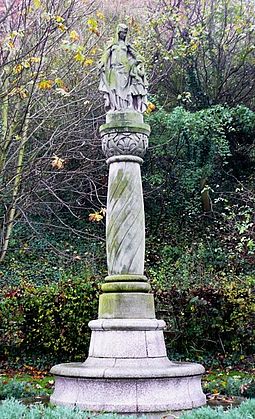
                        Statue of Æthelflæd and her nephew, Athelstan, Tamworth

                        Æthelflæd was no silent partner in Edward’s reconquest of England. Most remarkably, she personally led successful military campaigns against the Welsh, the Norse and the Danes of York. The Anglo-Saxon Chronicle relates that on the feast of St Cyriac the Martyr, 16 June 916, the abbot Egbert and his retainers, were murdered for no known reason. The Mercian abbot had been travelling in the Welsh mountain kingdom of Brycheiniog when he was attacked. Æthelflæd seems to have taken the murder as a personal affront; the abbot was, after all, under her protection. Three days later she invaded Wales; her army ravaged Brycheiniog, burning the little kingdom. Although King Tewdr escaped, Æthelflæd took his wife, Queen Angharad, as a hostage, with 33 others, many of whom were relatives of the Welsh king. Eventually, the king submitted to Æthelflæd, promising to serve her faithfully and to pay compensation. The incident not only demonstrates Æthelflæd’s commitment to her people, but also shows her strength and determination, attributes she was to put to good use against the Danes.

                        In 917 Æthelflæd turned her attention to those Danes. Danish forces had taken the offensive, raiding English territories. By the end of the year Edward had subdued East Anglia, with all the Scandinavian armies of the region submitting to him. While her brother was raiding in  the East Midlands, Æthelflæd led her forces across the West Midlands. She marched on the Viking stronghold of Derby, personally leading the army on campaign. It would be the first of the Danes’ ‘Five Boroughs’, which made up the Danelaw, to fall. Although she managed to successfully storm the fort, her army suffered heavy casualties, including four of her most trusted and senior thegns (thegns were the army’s commanders and officers). The Anglo-Saxon Chronicle reported; ‘With God’s help Ethelfleda, lady of Mercia, captured the fortress known as Derby with all its assets. Four of her favoured ministers were slain inside the gates’.¹

                        The Saxon victory was a great shock to the Danes. Their Viking myths told of an invincible woman who would appear at Ragnarok, the Norse apocalypse, and make brave warriors cower before her. Æthelflæd was relentless  – in early 918 she and her army moved on to Leicester, while Edward headed for Stamford. Leicester was the centre of a heavily settled Danish colony, and Æthelflæd ravaged the countryside around the settlement. The Danes had no choice but to surrender in the face of her indefatigable forces. However, she was magnanimous in victory, displaying mercy and charity by distributing alms as she progressed into town.

                        Books by Sharon Bennett Connolly
                        Æthelflæd in the thirteenth century Genealogical Chronicle of the English Kings

                        The inexorable advance of Æthelflæd’s army combined with her compassion for the defeated was to prove to be a clever strategy, demonstrating to those regions still controlled by the Danes that she was prepared to offer compromise if they would only submit to her. The Danes of York, the Viking capital, in particular, began to look at submitting to Æthelflæd as a serious option to avoid continued conflict. Their new king was Ragnall, a Viking pirate from Dublin, who had taken the throne by force; but the Danes knew that Edward and Æthelflæd would never make peace with him. In the summer of 918 the noblemen and magnates of York sent emissaries to Æthelflæd, promising that they would surrender to her.

                        In May, King Edward had marched his army to Stamford, building a new fort south of the river and accepting the surrender of the local Danes, who submitted to him as their new ruler. It was while he was still at Stamford that Edward received word of his sister, The Anglo-Saxon Chronicle made a cold, clinical report:

                        918 While he was there his sister Æthelflæd died at Tamworth two weeks before midsummer. The king took possession of Tamworth and the whole province of Mercia which she had governed.²

                        Æthelflæd died suddenly at Tamworth on 12 June 918. She was buried beside her husband, in the east chapel of the cathedral she had founded, St Oswald’s Minister, Gloucester. Although she did not live long enough to see the successful conclusion to the work she and her brother had carried out, her achievements cannot be lightly brushed off. Between 910 and 920 all Danish territories south of Yorkshire had been conquered. Her nephew Athelstan consolidated the kingdom that had been created by the efforts of Edward and Æthelflæd. If Æthelflæd did not live to see the extent of her success, neither did she live to see her daughter, Ælfwynn, nearly thirty and still unmarried, briefly become the nominal ruler of Mercia; only to be ‘deprived of all authority’ six months later and taken to Wessex, from where nothing more is heard of her.

                        Books by Sharon Bennett Connolly
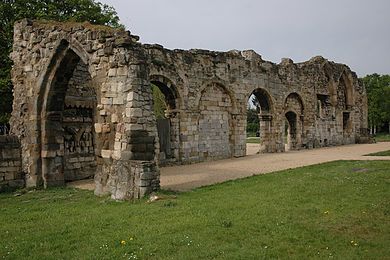
                        St Oswald’s Priory, Gloucester, where Æthelflæd and her husband are buried

                        The story of Æthelflæd mainly comes from the Mercian Register, embedded largely in the B, C and D texts of the Anglo-Saxon Chronicle. She appears only rarely in the primary text, text A, which focuses on Edward and Wessex. Text A tries to minimise Æthelflæd’s significance, but could not wholly obscure her achievements. She was, after all, the daughter of Alfred the Great, the wife of the ealdorman of Mercia and a prominent woman in her own right, in an era when this was an incredible rarity. It is thought that it was Æthelflæd, the Lady of the Mercians, who inspired the 10th century poem, ‘Judith’ who is ‘white and shining’, ‘noble and courageous’. In the poem, Æthelflæd is depicted as the ‘valorous virgin’ who struck off the head of the hostile foe with her gleaming sword and ‘ascribed the glory of all that to the Lord of Hosts’. Recognising her vital role in the creation of England, the 12th century Henry of Huntingdon declared Æthelflæd ‘to have been so powerful that in praise and exaltation of her wonderful gifts, some call her not only lady, but even king’. In a poem he described her as ‘worthy of a man’s name’ and ‘more illustrious than Caesar’, apparently high praise indeed – for a woman.

                        In the 21st century Æthelflæd’s story is becoming more widely known than it has ever been. She is one of the major influences of my book, Heroines of the Medieval World and appears, appropriately, in the chapter on Warrior Heroines. Joanna Arman’s non-fiction book The Warrior Queen: the Life and Legend of Æthelflæd, Daughter of Alfred the Great is well worth a perusalIn addition, with her appearance in Bernard Cornwell’s wonderful The Last Kingdom books and television series, and Annie Whitehead’s non-fiction book, Mercia: the rise and Fall of a Kingdom, as well as her novel, To Be A Queen, Æthelflæd’s story is finally being brought into the light. On the 1100th anniversary of her death, her incredible achievements were being celebrated in the heart of Mercia, in Gloucester and Tamworth. And not before time; Æthelflæd should be the inspiration for future generations of strong, influential women and stand out as an example of what can be achieved if you are determined enough.

                        *

                        Footnotes: ¹ The Anglo-Saxon Chronicles by Michael Swanton; ² ibid.

                        Pictures courtesy of Wikipedia

                        Further Reading: The Anglo-Saxon Chronicles by Michael Swanton; The Anglo-Saxon Chronicle by James Ingram; Chronicles of the Kings of England, From the Earliest Period to the Reign of King Stephen, c. 1090–1143 by William of Malmesbury; The Chronicle of Henry of Huntingdon by Thomas Forester; Alfred the Great by David Sturdy; Brewer’s British Royalty by David Williamson;  History Today Companion to British History Edited by Juliet Gardiner & Neil Wenborn; The mammoth Book of British kings & Queen by Mike Ashley; Britain’s Royal Families, the Complete Genealogy by Alison Weir; The Wordsworth Dictionary of British History by JP Kenyon; The Anglo-Saxons in 100 Facts by Martin Wall; Kings, Queens, Bones and Bastards by David Hilliam; The Oxford Companion to British History Edited by John Cannon; oxforddnb.com.

                        *

                        My Books

                        Signed, dedicated copies of all my books are available through my online bookshop.

                        Out now: Scotland’s Medieval Queens

                        Books by Sharon Bennett Connolly

                        Scotland’s history is dramatic, violent and bloody. Being England’s northern neighbour has never been easy. Scotland’s queens have had to deal with war, murder, imprisonment, political rivalries and open betrayal. They have loved and lost, raised kings and queens, ruled and died for Scotland. From St Margaret, who became one of the patron saints of Scotland, to Elizabeth de Burgh and the dramatic story of the Scottish Wars of Independence, to the love story and tragedy of Joan Beaufort, to Margaret of Denmark and the dawn of the Renaissance, Scotland’s Medieval Queens have seen it all. This is the story of Scotland through their eyes.

                        Scotland’s Medieval Queens gives a thorough grounding in the history of the women who ruled Scotland at the side of its kings, often in the shadows, but just as interesting in their lives beyond the spotlight. It’s not a subject that has been widely covered, and Sharon is a pioneer in bringing that information into accessible history.’ Elizabeth Chadwick (New York Times bestselling author)

                        Available now from Amazon and Pen and Sword Books

                        Also by Sharon Bennett Connolly:

                        Books by Sharon Bennett Connolly

                        Heroines of the Tudor World tells the stories of the most remarkable women from European history in the time of the Tudor dynasty, 1485-1603. These are the women who ruled, the women who founded dynasties, the women who fought for religious freedom, their families and love. Heroines of the Tudor World is now available from Amberley Publishing and Amazon UK. Women of the Anarchy demonstrates how Empress Matilda and Matilda of Boulogne, unable to wield a sword themselves, were prime movers in this time of conflict and lawlessness. It shows how their strengths, weaknesses, and personal ambitions swung the fortunes of war one way – and then the other. Available from Bookshop.orgAmberley Publishing and Amazon UKKing John’s Right-Hand Lady: The Story of Nicholaa de la Haye is the story of a truly remarkable lady, the hereditary constable of Lincoln Castle and the first woman in England to be appointed sheriff in her own right. Available from all good bookshops Pen & Sword Booksbookshop.org and Amazon

                        Books by Sharon Bennett Connolly

                        Defenders of the Norman Crown: The Rise and Fall of the Warenne Earls of Surrey tells the fascinating story of the Warenne dynasty, from its origins in Normandy, through the Conquest, Magna Carta, the wars and marriages that led to its ultimate demise in the reign of Edward III. Available from Pen & Sword BooksAmazon in the UK and US, and Bookshop.orgLadies of Magna Carta: Women of Influence in Thirteenth Century England looks into the relationships of the various noble families of the 13th century, and how they were affected by the Barons’ Wars, Magna Carta and its aftermath; the bonds that were formed and those that were broken. It is now available in paperback and hardback from Pen & SwordAmazon, and Bookshop.orgHeroines of the Medieval World tells the stories of some of the most remarkable women from Medieval history, from Eleanor of Aquitaine to Julian of Norwich. Available now from Amberley Publishing and Amazon, and Bookshop.orgSilk and the Sword: The Women of the Norman Conquest traces the fortunes of the women who had a significant role to play in the momentous events of 1066. Available now from Amazon,  Amberley Publishing, and Bookshop.org.

                        Alternate Endings: An anthology of historical fiction short stories including Long Live the King… which is my take what might have happened had King John not died in October 1216. Available in paperback and kindle from Amazon.

                        Podcast:

                        A Slice of Medieval

                        Have a listen to the A Slice of Medieval podcast, which I co-host with Historical fiction novelist Derek Birks. Derek and I welcome guests, such as Bernard Cornwell and discuss a wide range of topics in medieval history, from significant events to the personalities involved.

                        Every episode is also now available on YouTube.

                        *

                        Don’t forget! Signed and dedicated copies of all my books are available through my online bookshop.

                        For forthcoming online and in-person talks, please check out my Events Page.

                        You can be the first to read new articles by clicking the ‘Follow’ button, liking our Facebook page or joining me on TwitterThreadsBluesky and Instagram.

                        *

                        ©2018 Sharon Bennett Connolly FRHistS