Wordly Women: Annie Whitehead

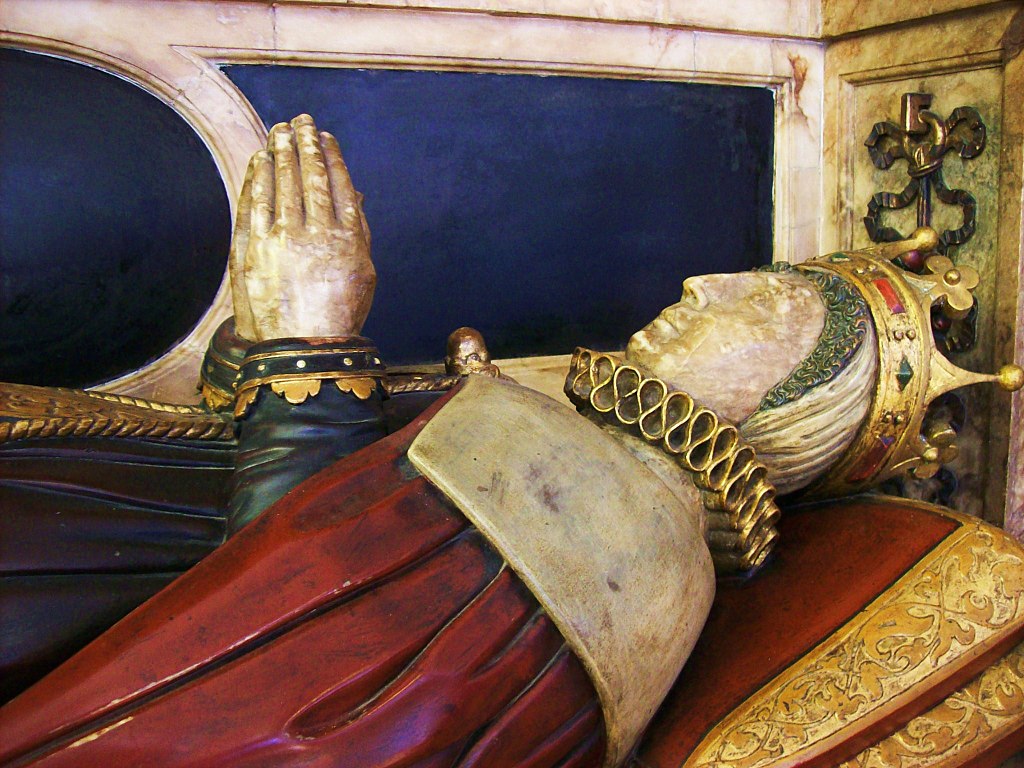
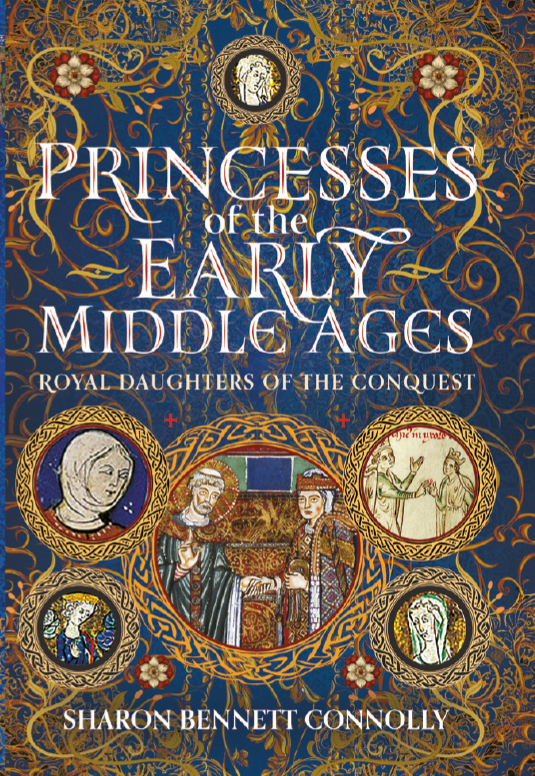
Joining me today as part of my Wordly Women series is the wonderful Annie Whitehead. Author of both fiction and non-fiction books based in Anglo-Saxon Mercia, Annie’s latest book, Murder in Anglo-Saxon England: Justice, Wergild and Revenge is replete with dastardly murder stories.

Sharon: What got you into writing?

Annie: It was just something I always wanted to do – I remember writing ‘The Adventures of Ferdinand the Hedgehog’ when I was around 7 or 8. I think the desire to write history came later, partly influenced by the sorts of novels I preferred reading, and partly from a growing love of history generally, probably beginning when I lived in York for six months. Living there, even as a child, you can’t not notice the history all around you.

Sharon: You write both fiction and non-fiction – is one harder than the other?

Annie: I think they are both equally hard, but they are different. The research is pretty much the same, although with fiction you need every day details as well as the actual historical events, but where they differ is that in fiction you are free to fill in the gaps in the history (although in a way that fits with your plot and with your characters), but if you take them on a journey you need to give details, whereas in nonfiction you can just say, ‘The king took an army to York.’ On the other hand, with nonfiction, you can’t make stuff up, and if you make any pronouncements you have to back those up.

Sharon: Tell us about your books.

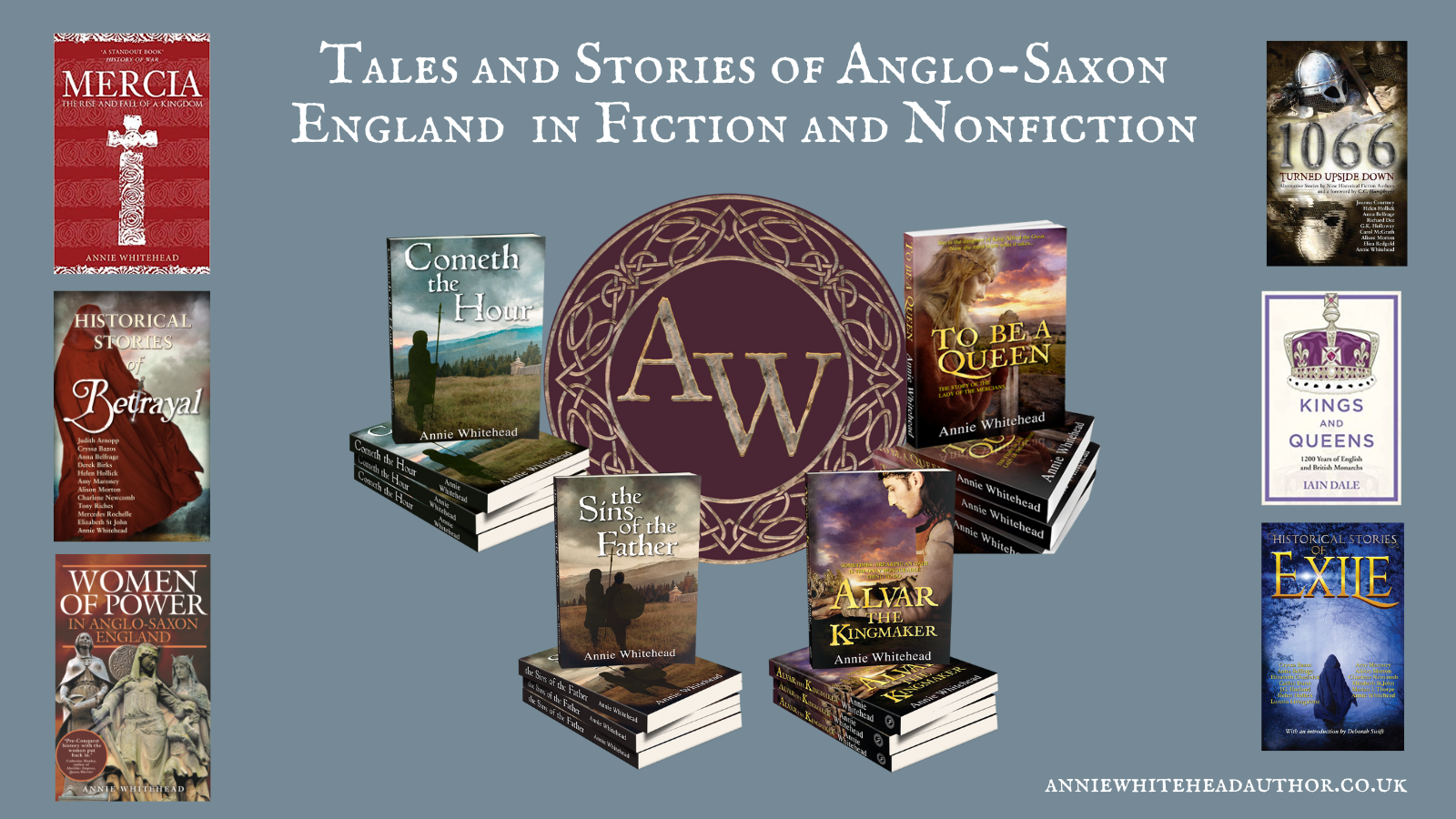
Annie: I’ve written four novels, featuring prominent Mercian characters, including Æthelflæd, Lady of the Mercians, and Penda, the last pagan king. I’ve also written three nonfiction books, one about the history of Mercia, one about Women of the era, and my latest release, Murder in Anglo-Saxon England. I’ve also contributed to two nonfiction anthologies and three and a half fiction collections (the ‘half’ is one that’ll be published later this year).

Sharon: What attracts you to the Anglo-Saxon period?

Annie: I think there’s an element of romanticism, a Tolkien-esque aura if you will. The names are very noble sounding, including one of the main characters of my second novel, Alvar the Kingmaker, whose real name was Ælfhere. I like the characteristics that set the period apart from the rest of the (mainly Norman) Middle Ages and I like, on the whole, their values. Particularly, their treatment of women, which was in many ways better than that of their later medieval counterparts. I also find the personalities interesting and characterful – rich pickings for the novelist.

Sharon: Who is your favourite Anglo-Saxon and why?

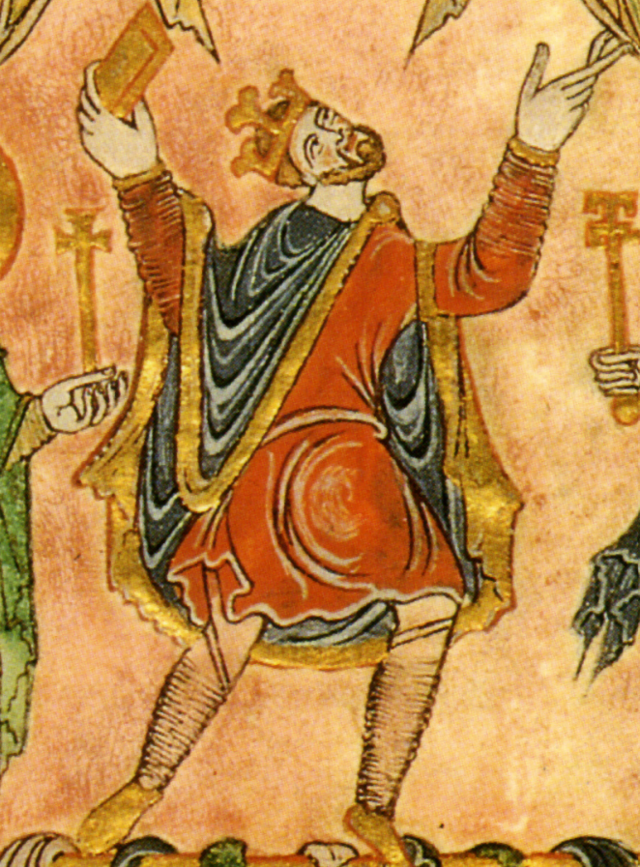
King Edgar

Annie: There are so many to choose from! I’ve already mentioned three, but I also find the little-known King Edgar (959-975) fascinating because he breaks the mould. His reign was not especially violent – it was more a time of politics and scheming nobles and there were no ‘Viking’ raids – and Edgar’s love life was, shall we say, interesting. He might have had up to three wives, one of whom was said by some – unreliable – chroniclers to have been a nun!

Sharon: Who is your least favourite Anglo-Saxon and why?

Annie: I’m going to get into a lot of trouble with this, especially from some of my writer friends, but it’s Harold Godwineson. Obviously I’d rather he’d won at Hastings, not William, but I do find his whole family rather unappealing, treacherous and self-entitled. (Sorry, Harold fans!)

Sharon: How do you approach researching your topic?

Annie: I always start with the primary sources, contemporary if possible, looking for any reference to the characters I’m planning to write about. I find out, or remind myself, about the timelines, then I look at the later, usually Anglo-Norman sources, to see where they embellish and flesh out the tales. If I’m writing fiction, I might use some of their more detailed and frankly at times outrageous stories, but if it’s nonfiction, I have to use a lot of scepticism in the pursuit of the truth, or at least getting as close to the truth as I can.

Sharon: Tell us your ‘favourite’ Anglo-Saxon story you have come across in your research.

Annie: I have so many! But one is the tale of King Offa’s daughter, accused of poisoning her husband’s advisor and accidentally poisoning her husband too. He was the king of Wessex. She fled to the Continent where the Emperor Charlemagne set her up in an abbey but she was caught in debauchery there and died in poverty. It’s highly unlikely to be a true story, as we have evidence that her husband probably died in battle and if she fled, she was most likely fleeing the wrath of his successor, who’d been forced into exile by her father and her husband.

Sharon: Tell us your least ‘favourite’ Anglo-Saxon story you have come across in your research.

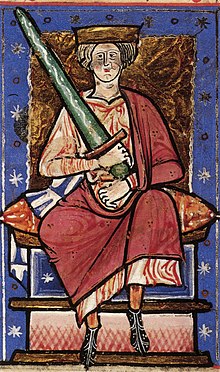
King Æthelred the Unready

Annie: It has to be the story of the St Brice’s Day Massacre, sanctioned by King Æthelred the Unready, where a number of Danes were chased through Oxford into a church which was then set on fire. It sounds like the scene from a bad Hollywood historical film, but it really happened. We know this a) because we have a charter from the king himself saying that he ordered it and b) charred bones dating to the right time unearthed at the location.

Sharon: Are there any other eras you would like to write about?

Annie: I’ve always been interested in the seventeenth century and the early Stuarts in particular. They are coming out of the shadows a bit more now and there have been some excellent books, both fiction and nonfiction, published recently, but they still take second place to the Tudors, which for me is a shame as it’s such an interesting period of history.

Sharon: What are you working on now?

Annie: I’m working on the novel which I shelved to research and write Murder in Anglo-Saxon England. It’s set in the tenth century and features Mercians, Northumbrians, Vikings and Scots and also has a murder or two thrown in!

Sharon: And finally, what is the best thing about being a writer?

Annie: Something I’ve enjoyed from a very early age is reading – I loved being transported to other times and places, meeting new characters and learning their stories. Writing, for me, is almost the same, and to spend my working days making up similar stories and spending time with those characters is a dream come true. It’s a form of escapism and it’s bliss!

About the Author:

Annie is a Fellow of the Royal Historical Society, and has written four award-winning novels set in ‘Anglo-Saxon’ Mercia. She has contributed to fiction and nonfiction anthologies and written for various magazines. She has twice been a prize winner in the Mail on Sunday Novel Writing Competition, and won First Prize in the 2012 New Writer Magazine’s Prose and Poetry Competition. She has been a finalist in the Tom Howard Prize for nonfiction and was shortlisted for the Exeter Story Prize and Trisha Ashley Award 2021. She was the winner of the inaugural Historical Writers’ Association (HWA)/Dorothy Dunnett Prize 2017 and was subsequently a judge for that same competition. She has also been a judge for the HNS (Historical Novel Society) Short Story Competition, and was a 2024 judge for the HWA Crown Nonfiction Award. Her nonfiction books are Mercia: The Rise and Fall of a Kingdom (published by Amberley books) and Women of Power in Anglo-Saxon England (Pen & Sword Books). In 2023 she contributed to a new history of English monarchs, published by Hodder & Stoughton, and in February 2025 Murder in Anglo-Saxon England was published by Amberley Books.

Find Annie at: Website; Buy Annie’s Books; Blog; Facebook; Twitter/X; Instagram; BlueSky.

*

My books

Signed, dedicated copies of all my books are available through my online store.

Out now: Scotland’s Medieval Queens

Scotland’s history is dramatic, violent and bloody. Being England’s northern neighbour has never been easy. Scotland’s queens have had to deal with war, murder, imprisonment, political rivalries and open betrayal. They have loved and lost, raised kings and queens, ruled and died for Scotland. From St Margaret, who became one of the patron saints of Scotland, to Elizabeth de Burgh and the dramatic story of the Scottish Wars of Independence, to the love story and tragedy of Joan Beaufort, to Margaret of Denmark and the dawn of the Renaissance, Scotland’s Medieval Queens have seen it all. This is the story of Scotland through their eyes.

Available now from Amazon and Pen and Sword Books

Also by Sharon Bennett Connolly:

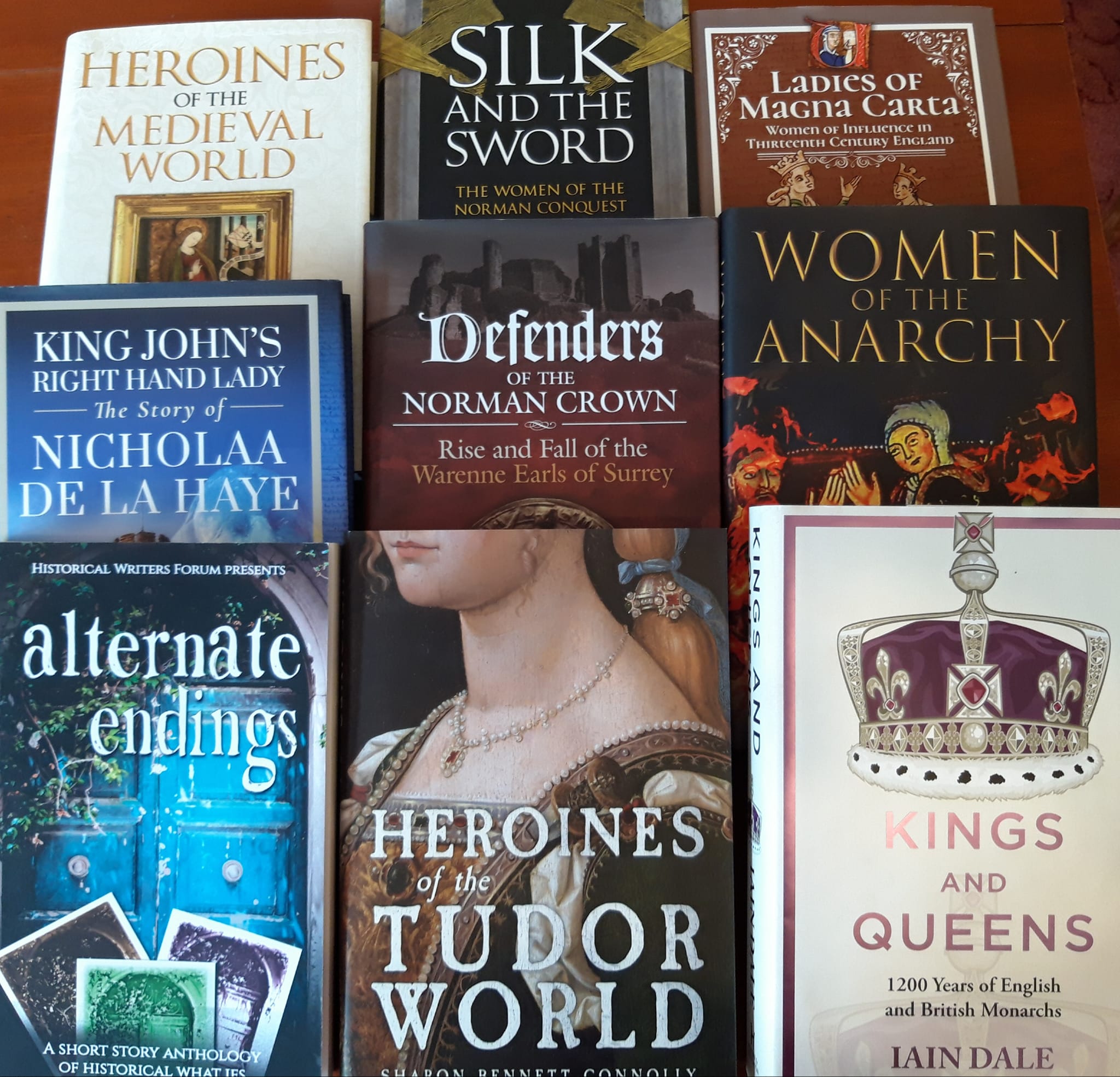
Heroines of the Tudor World tells the stories of the most remarkable women from European history in the time of the Tudor dynasty, 1485-1603. These are the women who ruled, the women who founded dynasties, the women who fought for religious freedom, their families and love. Heroines of the Tudor World is now available for pre-order from Amberley Publishing and Amazon UK. Women of the Anarchy demonstrates how Empress Matilda and Matilda of Boulogne, unable to wield a sword themselves, were prime movers in this time of conflict and lawlessness. It shows how their strengths, weaknesses, and personal ambitions swung the fortunes of war one way – and then the other. Available from Bookshop.orgAmberley Publishing and Amazon UKKing John’s Right-Hand Lady: The Story of Nicholaa de la Haye is the story of a truly remarkable lady, the hereditary constable of Lincoln Castle and the first woman in England to be appointed sheriff in her own right. Available from all good bookshops Pen & Sword Booksbookshop.org and Amazon

Defenders of the Norman Crown: The Rise and Fall of the Warenne Earls of Surrey tells the fascinating story of the Warenne dynasty, from its origins in Normandy, through the Conquest, Magna Carta, the wars and marriages that led to its ultimate demise in the reign of Edward III. Available from Pen & Sword BooksAmazon in the UK and US, and Bookshop.orgLadies of Magna Carta: Women of Influence in Thirteenth Century England looks into the relationships of the various noble families of the 13th century, and how they were affected by the Barons’ Wars, Magna Carta and its aftermath; the bonds that were formed and those that were broken. It is now available in paperback and hardback from Pen & SwordAmazon, and Bookshop.orgHeroines of the Medieval World tells the stories of some of the most remarkable women from Medieval history, from Eleanor of Aquitaine to Julian of Norwich. Available now from Amberley Publishing and Amazon, and Bookshop.orgSilk and the Sword: The Women of the Norman Conquest traces the fortunes of the women who had a significant role to play in the momentous events of 1066. Available now from Amazon,  Amberley Publishing, and Bookshop.org.

Alternate Endings: An anthology of historical fiction short stories including Long Live the King… which is my take what might have happened had King John not died in October 1216. Available in paperback and kindle from Amazon.

Podcast:

Have a listen to the A Slice of Medieval podcast, which I co-host with Historical fiction novelist Derek Birks. Derek and I welcome guests, such as Bernard Cornwell and Michael Jecks, and discuss a wide range of topics in medieval history, from significant events to the personalities involved. Every episode is also now available on YouTube.

*

Don’t forget! Signed and dedicated copies of all my books are available through my online store.

For forthcoming online and in-person talks, please check out my Events Page.

You can be the first to read new articles by clicking the ‘Follow’ button, liking our Facebook page or joining me on TwitterThreadsBluesky and Instagram.

*

©2025 Sharon Bennett Connolly, FRHistS

‘Margaret of Logie, of high and noble birth’

Joan of the Tower, Queen of Scotland

When she died in September 1362, Joan of the Tower (also known as Joan Makepeace) had been Queen of Scots for thirty-three years. She had never borne a child, nor is there any mention of her ever having become pregnant. So, on her death, David II was still without a son and heir. The heir to the Scottish throne was Robert Stewart, the nephew he despised, who had six legitimate sons by 1362.

Following the murder of his lover, Katherine Mortimer, in 1360, and before Joan’s death, King David had fallen in love with Margaret Drummond. The first reference to Margaret and David’s relationship is in a charter of 20 January 1363, to the Friars Preacher, for the souls of David himself and of ‘our beloved’ Margaret Logie. Margaret was the daughter of a lowly Scottish knight, Sir Malcolm Drummond. She had been married to Sir John Logie of Logie and had at least one son, also called John.

The relationship with Margaret further alienated David’s heir, Robert Stewart, who was involved in a violent feud with Margaret’s brothers, John and Maurice Drummond. It also threatened to disinherit Robert, should Margaret give birth to a son. This could explain Robert’s involvement in a rebellion early in 1363, in which a petition was presented to the king, demanding that he set aside Margaret and dismiss his current advisers.

Despite the opposition to the relationship, ‘in the year 1363, the aforesaid lord David, king of Scotland, took to wife, at Inchmurdach, a great lady, named Margaret of Logie, of high and noble birth, and born in his kingdom; and he endowed her with many lands and possessions, and raised her to reign in honour with him, with the royal diadem.’1 They were married at Inchmurdoch, in the Fife manor house of the Bishop of St Andrews, though ‘Thai ware togiddyr bot schort quhile.’2

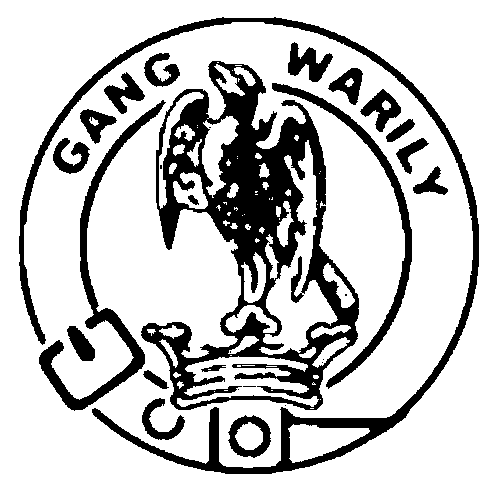
Crest badge of the Clan Drummond

According to the chroniclers, Margaret was very beautiful, but her character left much to be desired, ‘With the aim therefore of providing for the succession to the kingdom from the fruit of her womb (if God granted it), King David chose a most beautiful lady, Margaret Logie, the widow of John Logie, perhaps not so much for the excellence of her character as a woman as for the pleasure he took in her desirable appearance.’3 Once married, David gave preferential treatment to Margaret’s family, granting them lands and prestigious marriages. One such marriage, possibly inspired by Margaret herself, was between her niece, Annabella Drummond, and John, the eldest son and heir of Robert Stewart.

If Margaret herself did not produce a son and heir for Scotland, her niece might one day become queen. This must have angered Robert Stewart, who was still embroiled in the feud with Margaret’s brothers. Demonstrating her own influence over King David, in the winter of 1368, the queen went as far as to persuade her husband to order the arrest and imprisonment of Robert and some of his sons. The continued lack of an heir, however, may have begun to rankle with King David, who released his nephew after a short time. David also favoured his stepson. On 6 December 1363, John Logie, ‘the son of the Queen of Scotland’, was among the ‘divers lords and others, who came to England in the retinue of the K. of Scotland about a treaty of peace between the Kings’ and was gifted ‘a parcelgilt cup, weight 75s., value 6l. 5s. 4d’.4 He received further gifts such as that on 16 December 1365, when the king ‘of Scotland, Sir Archibald, and other lords of Scotland came to Annandale, and gave seisin of it to one John de Logy son of the Queen of Scotland’.5

Annabella Drummond, Margaret’s niece

The Liber Pluscardensis suggests that the queen, knowing David was tiring of her, faked a pregnancy in order to maintain her influence over her husband, and save her marriage. It did not work. Margaret is always portrayed as an ‘arrogant, demanding wife’, and it may be that she was, though I cannot help but wonder that harsh words are used to describe her because she was lowly born, the daughter of a mere knight, rather than a princess. She was seen as unworthy for the high office to which David had elevated her. It cannot have been easy for her, being reminded constantly of her low social position in respect of the others who surrounded the king. It would go some way to explain her haughty attitude; she was trying to live up to her queenship. David had also started an affair with Agnes Dunbar, sister of George, Earl of March.

Whether it was for the lack of an heir, the demanding nature of his wife, or a desire to marry a new love, the result was the same: ‘he lived with her for a short time, [but following animosity that arose between them,] he divorced her about the beginning of Lent 1369.’6 King David applied for a divorce, which was granted, relegating Margaret to the position of ‘Lady Margaret Logie, onetime Queen’. Margaret, however, was not going to go quietly and live in retirement on the pension of £100 a year the king had awarded her. Margaret decided to appeal to a higher power and

On this account she secretly boarded a ship in the Firth of Forth [well supplied with money] and made for the papal court. She arrived at Avignon where the pope was then to be found. By making an appeal she transferred her case there, and disturbed the whole kingdom by her legal action. And so once the king’s proctors had travelled to the apostolic see, the case was bitterly disputed, and the pleading between the advocates of the contending parties was so prolonged that a book compiled from that source and certified by notarial marks is longer [in] wordage (in my judgment, for I who have written this have seen this pleading) than the contents of the text of four Psalters. For her case was many times committed for hearing by auditors and cardinals, so that if she had lived, she would have subjected the kingdom to an interdict; but she died on a pilgrimage to Rome.7

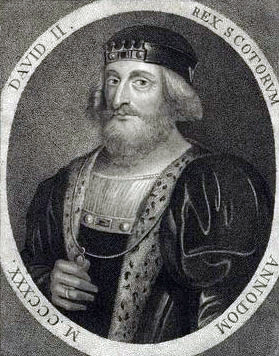
David II, King of Scots


King David II Bruce died, childless, at Edinburgh Castle on 22 February 1371, having reigned for forty-two of his forty-seven years. The king’s death did not stop Margaret from continuing with her lawsuit against him for some years, despite how much it was costing the former queen. There was a

Notarial instrument dated 23d June 1372, attesting obligation of same date by the Lady Margaret Queen of Scotland, widow of the late David Bruys K. of Scotland, acknowledging a loan of 500 marks from Adam Franceys and two other London merchants, made to her at Avignon, repayable at Caleys at Pentecost following. Done in the house of the said Queen Margaret at Avignon ut supra.8

Scotland was under the threat of a papal interdict as a result. Reprieve only came with Margaret’s death, during a pilgrimage to Rome in early 1375. The rule of the house of Bruce had lasted just sixty-five years and had been punctuated by the country’s fight for Scotland’s sovereignty. Eventually, however, it was not England that ensured the downfall of the House of Bruce. It was the failure of King David to have an heir.

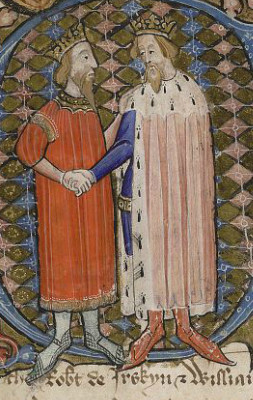
David II (left) and Edward III

There is always a tendency to blame the woman when a king dies childless, but the fact that David was married twice and had a number of mistresses, but never became a father, even of an illegitimate child, would suggest that the problem lay with David. Though the point is moot.

In the end, David’s heir was his nephew, as he had been from the moment David ascended the throne. David was succeeded by the first of the Stewart kings, Robert II, son of Robert the Bruce’s eldest daughter, Marjorie and her husband, Walter Stewart. The royal House of Stewart would rule Scotland until 1714 and England from 1603 until 1714.

Notes:

1. John of Fordun’s Chronicle of the Scottish Nation; 2. ‘They were together but a short while’, Wyntoun, The orygynale cronykil of Scotland; 3. Bower, Scotichronicon, V 7; 4. Calendar of documents relating to Scotland, Vol. 4, no. 93; 5. ibid.; 6. Bower, Scotichronicon, V 7; 7. ibid,; 8. Calendar of documents relating to Scotland, Vol. 4, no. 197

Bibliography:

John of Fordun’s Chronicle of the Scottish Nation; Walter Bower, Scotichronicon; Andrew Wyntoun, The orygynale cronykil of Scotland; Calendar of documents relating to Scotland preserved in Her Majesty’s Public Record Office; Richard Oram, editor, The Kings and Queens of Scotland; Rosalind K. Marshall, Scottish Queens 1034–1714; Ian Mortimer, The Perfect King: The Life of Edward III, Father of the English Nation; Dr Callum Watson, ‘Ane Lady Bricht’: A Life of Annabella Drummond, Queen of Scots, c. 1350–1401; Bruce Webster, Margaret [née Margaret Drummond], Oxforddnb.com; Nigel Tranter, The Story of Scotland; B. Webster, ‘David II and the Government of Fourteenth-Century Scotland’ (article); David Ross Scotland, History of a Nation; Phil Carradice, Robert the Bruce: Scotland’s True Braveheart; G. Barrow ‘The Aftermath of War: Scotland and England in the late Thirteenth and early Fourteenth Centuries’ (article); Colm MacNamee, Robert Bruce: Our Most Valiant Prince and Lord; Stephen Spinks, Robert the Bruce: Champion of a Nation; Fiona J. Warson, Robert the Bruce; Bruce Webster, ‘David II’, Oxforddnb.com

*

My Books

Signed, dedicated copies of all my books are available through my online bookshop.

Out now: Scotland’s Medieval Queens

Scotland’s history is dramatic, violent and bloody. Being England’s northern neighbour has never been easy. Scotland’s queens have had to deal with war, murder, imprisonment, political rivalries and open betrayal. They have loved and lost, raised kings and queens, ruled and died for Scotland. From St Margaret, who became one of the patron saints of Scotland, to Elizabeth de Burgh and the dramatic story of the Scottish Wars of Independence, to the love story and tragedy of Joan Beaufort, to Margaret of Denmark and the dawn of the Renaissance, Scotland’s Medieval Queens have seen it all. This is the story of Scotland through their eyes.

Available now from Amazon and Pen and Sword Books

Also by Sharon Bennett Connolly:

Heroines of the Tudor World tells the stories of the most remarkable women from European history in the time of the Tudor dynasty, 1485-1603. These are the women who ruled, the women who founded dynasties, the women who fought for religious freedom, their families and love. Heroines of the Tudor World is now available for pre-order from Amberley Publishing and Amazon UK. Women of the Anarchy demonstrates how Empress Matilda and Matilda of Boulogne, unable to wield a sword themselves, were prime movers in this time of conflict and lawlessness. It shows how their strengths, weaknesses, and personal ambitions swung the fortunes of war one way – and then the other. Available from Bookshop.orgAmberley Publishing and Amazon UKKing John’s Right-Hand Lady: The Story of Nicholaa de la Haye is the story of a truly remarkable lady, the hereditary constable of Lincoln Castle and the first woman in England to be appointed sheriff in her own right. Available from all good bookshops Pen & Sword Booksbookshop.org and Amazon

Defenders of the Norman Crown: The Rise and Fall of the Warenne Earls of Surrey tells the fascinating story of the Warenne dynasty, from its origins in Normandy, through the Conquest, Magna Carta, the wars and marriages that led to its ultimate demise in the reign of Edward III. Available from Pen & Sword BooksAmazon in the UK and US, and Bookshop.orgLadies of Magna Carta: Women of Influence in Thirteenth Century England looks into the relationships of the various noble families of the 13th century, and how they were affected by the Barons’ Wars, Magna Carta and its aftermath; the bonds that were formed and those that were broken. It is now available in paperback and hardback from Pen & SwordAmazon, and Bookshop.orgHeroines of the Medieval World tells the stories of some of the most remarkable women from Medieval history, from Eleanor of Aquitaine to Julian of Norwich. Available now from Amberley Publishing and Amazon, and Bookshop.orgSilk and the Sword: The Women of the Norman Conquest traces the fortunes of the women who had a significant role to play in the momentous events of 1066. Available now from Amazon,  Amberley Publishing, and Bookshop.org.

Alternate Endings: An anthology of historical fiction short stories including Long Live the King… which is my take what might have happened had King John not died in October 1216. Available in paperback and kindle from Amazon.

Podcast:

Have a listen to the A Slice of Medieval podcast, which I co-host with Historical fiction novelist Derek Birks. Derek and I welcome guests, such as Bernard Cornwell and discuss a wide range of topics in medieval history, from significant events to the personalities involved. Every episode is also now available on YouTube.

*

Don’t forget! Signed and dedicated copies of all my books are available through my online bookshop.

For forthcoming online and in-person talks, please check out my Events Page.

You can be the first to read new articles by clicking the ‘Follow’ button, liking our Facebook page or joining me on Twitter and Instagram.

©2025 Sharon Bennett Connolly FRHistS

Wordly Women: Paula Lofting

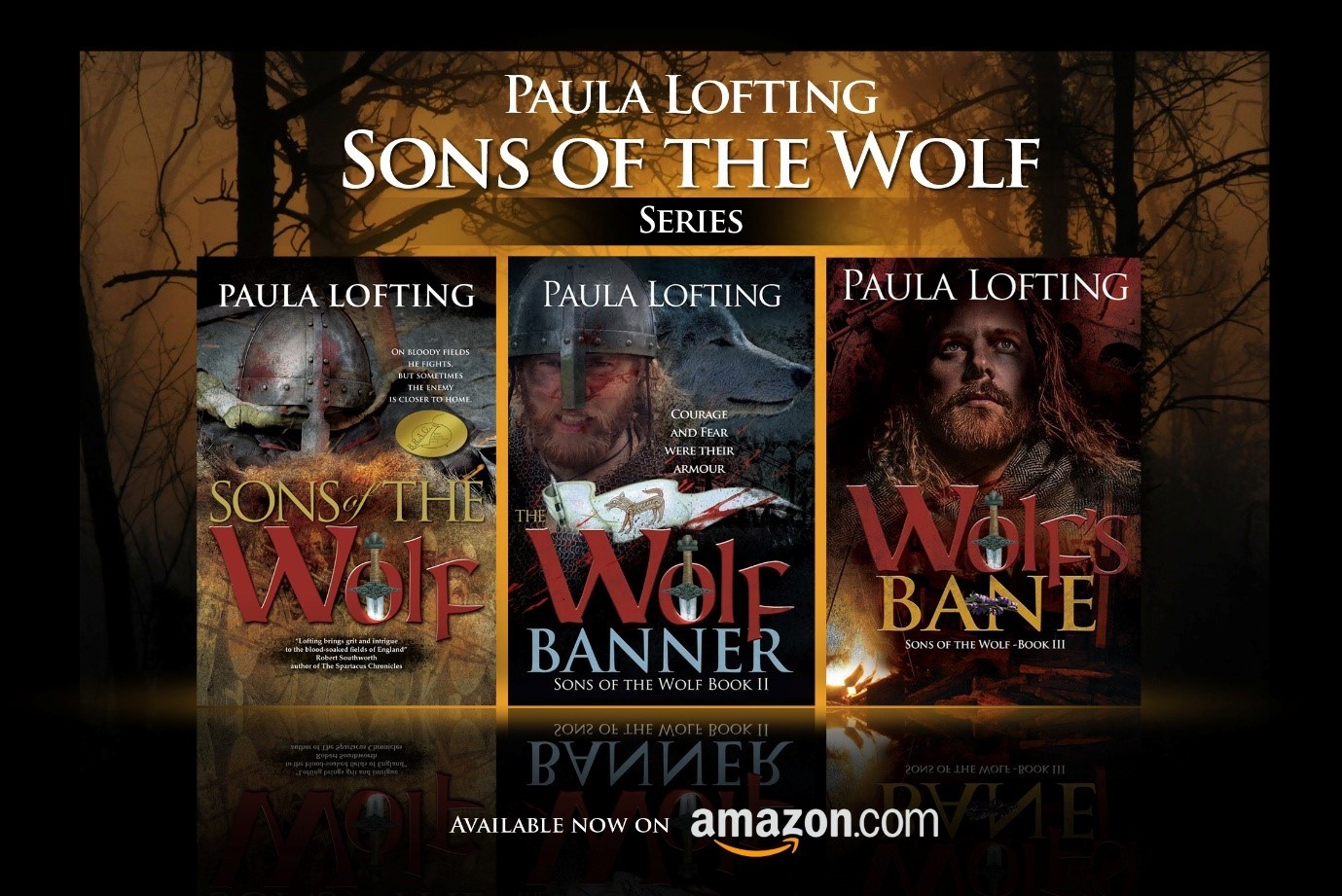
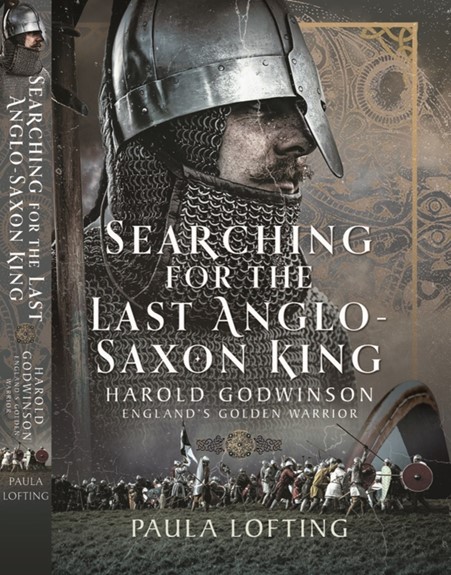
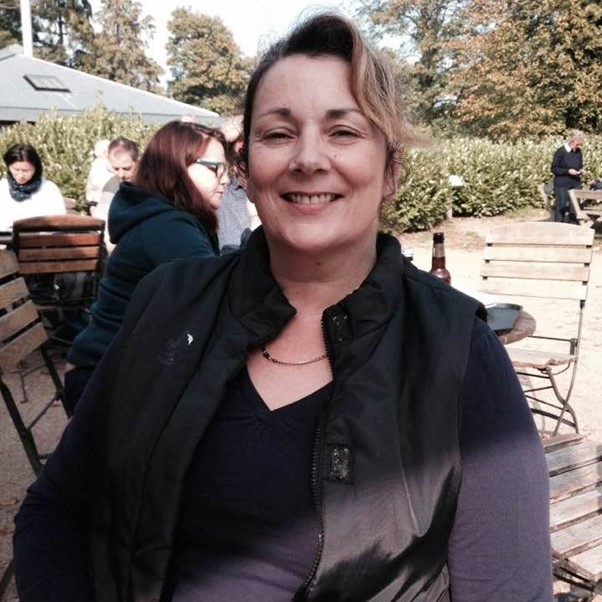
In the third episode of my Wordly Women interviews, I welcome Paula Lofting to History…the Interesting Bits to talk about her writing journey. Paula is the author of the Sons of the Wolf series of novels and has recently published her first none fiction work Searching for the Last Anglo-Saxon King: Harold Godwinson, England’s Golden Warrior.

Welcome Paula….

Sharon: What got you into writing? 

Paula: When I was a little girl as soon as I could write straight, I used to come home from school sit at the coffee table in our lounge on my feet and write stories. I was particularly fond of ‘composition’ class at school where the teacher would put several titles up for us to choose from to write about. I often had my stories read out to class. 

I guess it was something I always wanted to do. I remember in my teens, writing an epic historical fiction based on the years after the Romans left Britain, but I hand wrote it because I hadn’t learned to type and the typewriter, I had was useless. I thought I was never going to submit because it never occurred to me to just type with one finger! So, I gave up on that idea. I’d written plays, poems, and all sorts of stuff, but I was also in a bad relationship with a man who didn’t want to share me with a pen, so it was difficult until the relationship ended, and I had moved on. It was when the advent of personal computers came along when I realised that I could actually achieve my dream if I wanted to. 

    Sharon: Tell us about your books. 

    Paula: I have been writing a series set in the years leading up to the Norman Invasion of 1066. There are currently two books I have published in the series, and of course a nearly finished 3rd WIP. The series is called Sons of the Wolf, which is the name of book 1 and book 2 is The Wolf Banner, and 3 which I am working on is called Wolf’s Bane. As you can see there is a recurring theme. The theme is not something to do with real wolves but has its origins in my hero’s family history whose ancestors believed that they were descended from wolves. 

    The books tell the story of Wulfhere, a Sussex thegn, and follows the fortunes of his family in the years before the Battle of Hastings took place. It explores the lives of the ordinary people who lived against the backdrop of the political landscape of the time. 

    The series is a chronological account of events that are woven into the tapestry of the family’s lives and also tells the story of the main historical players of the time, such as Harold Godwinson and his clan. The two men’s lives run parallel alongside each other, and their contrasting stories are intricately woven together as is their fate.  

    The books all run consecutively, and you will find there are no gaps in the saga, so where one book ends, the new book starts. I have plans to continue after the catastrophic events of 1066 into the rebellion years. 

    Sharon: What attracts you to the 11th century? 

    Paula: I think that there is a lot of romance around the whole story of two men who fought over their claims to be king of England which people are drawn to. There is the tragedy of the last ‘Anglo-Saxon king’ who is butchered to death on the battlefield: the tall, handsome, charismatic, affable, warrior who fights for his people and his country. There is the underdog and the overdog theme which comes after the conquest and lasts for some time before England begins to melt as though seamlessly into the new regime.  

    Then you have the original Robin Hood type story of Hereward who sort of appears from nowhere to fight the good fight against the baddies after coming back to England from abroad to find a lot of things have changed and his ancestral lands commandeered by invaders. There is so much to play with there, a passionate conglomerate of rich history that evokes and inspires in the most amazing manner. It is an era that sets itself apart from what happens later – the cusp of change from the old world to the new. 

    I find it fascinating. Love… Betrayal… Battles… Bloodfeud. 

    What’s not to love! 

    I have also written a book about Harold Godwinson which is due for release any day now with Pen and Sword. 

    Sharon: Who is your favourite Anglo-Saxon and why? 

    Paula: There were so many extraordinary characters, and a lot I could choose from. For now, I have to go with Harold Godwinson, simply because, although we will never know what his true nature was for certain, what is written in the sources is constant and conjures up a vision of a man who loved his wife, his family, and his country. A man who avoided internal conflict, forced to navigate intrigue, family skirmishes, and the jealousy of the other aristocracy. He was not a perfect man, but in comparison to many rulers and sub rulers in medieval times, there were a lot more who were far more undesirable. During his early tenure as king, knowing that his country was in danger on many fronts, he acted swiftly to gather his armies together and deploy them to defend the shores. He even found time to see to some of his admin duties, all this in the early weeks of his reign. Who knows what he might have achieved if his life had not been so cruelly taken from him so early into his reign. 

    Sharon: Who is your least favourite Anglo-Saxon – or Viking – and why? 

    Paula: Ooo – Can I have one of each?  

    In that case I have to say, the Anglo-Saxon Ealdorman Eadric Streona whose betrayal of King Edmund lost him the battle of Assandun.  

    My least favourite Viking would have been Sweyn Forkbeard who was invading England from the 990s up until 1013. He became king for about 6 weeks before he died in February 1014. His pillaging and burning of England really stank. 

    Sharon: How do you approach researching your topic? 

    Paula: Well, currently I am taking notes from the two major annals, the Anglo-Saxon Chronicles and the Chronicon ex Chronicis which was the work of the monk, John of Worcester and also in part, someone called Florence. I plan to augment them with other sources that I read, both primary and secondary, to try and find sources that correlate and contradict each other so I can make sure I have all the facts in one place when I come to write the narrative. I am always very grateful to those historians who came before me for having done the hard part of digging through the foundations of the information available to me and try to see the original sources for myself. Its helpful that these authors give guidance in their own work for us new historians to build upon and come up with new ideas. 

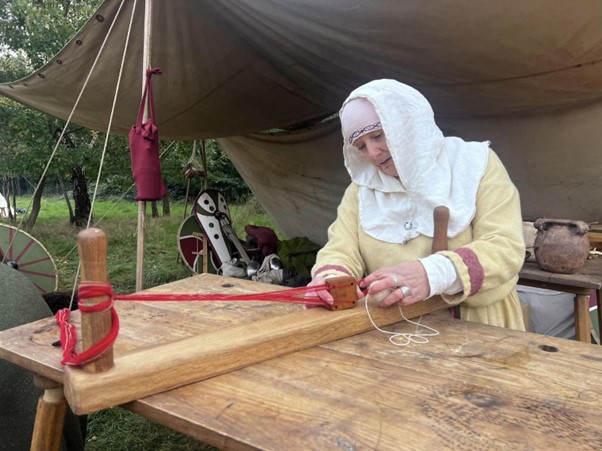
    For Historical fiction I have the privilege of being a reenactor and learning the everyday tasks and the little detailed things that experimental archaeology gives us like clothing, food, buildings and battle strategies that often history texts can’t give us. This helps me to build my world as authentically as I possibly can.  

    Sharon: Tell us your ‘favourite’ Anglo-Saxon story you have come across in your research? 

    Paula: Oo I love this question! 

      I have a few, actually: The research carried by Dan Armstrong regarding the Papal Banner. It seems there is little evidence for it in 1066. Readers will need to read the book to find out more about what Armstrong uncovered. 

      Another is the version of Harold’s trip to Normandy that the English chronicler, Eadmer of Canterbury writes in his History of Recent Events in England, a story that makes far more sense, even though it is the only version of this you can find. And considering that Eadmer was not particularly pro Harold, I think it is far more reliable than the Norman sources. 

      I also love the anecdotal tale of Bishop Wulfstan who carried a pair of snips with him to cut the hair long hair of the young men who came before him. He didn’t approve of men with long hair, obviously. Can you imagine, you’re an elite, well-respected member of the elite huscarls kneeling before him as you get to the front to receive holy communion and he reaches over your head and grips your neatly combed and beautifully tied back pony-tail and with one snip, you lose it! And there was nothing you could do about it!  
      Sharon: Tell us your least ‘favourite’ Anglo-Saxon story you have come across in your research?  

      Paula: Oh gosh, I can name lots, but probably the worst, I have to say, is the cruel propaganda used by the Norman scribes such as Poitiers, who was the first one to mention the Papal Banner, and the way they defiled Harold’s character to detract from William’s regicide of an anointed king and make him seem like a saint! 

        Sharon: Are there any other eras you would like to write about? 

        Paula: Yes indeed, but I’m probably never going to achieve them all, here are just a few: 

          Staying in the so-called dark ages, I once started to write an epic about the post Roman Britain era, centring on Ambrosius Aurelianus. It never came to anything because my circumstances were not right at the time, but I would love to give it ago one day.  

          Another is Macbeth, and coming right out of my comfort zone, a story about a highway man. 

          Sharon: What are you working on now? 

          Paula: Edmund Ironside is my new project for Pen and Sword – a non-fiction book, and fiction wise, I am working on finishing the third novel in my series, Wolf’s Bane 

            Sharon: And finally, what is the best thing about being a writer? 

            Paula: Escaping into other times, other places, and building a different world. It gives me a sense of release and I enjoy creating characters I love. 

            It has never really been my aim to sell loads of books and earn loads of money from writing because its not going to be achievable in this day and age. Its more of a hobby really, but if people read my work, then I am very happy, especially if they enjoy it. That’s the most important part to me.  

            About the author:

            Paula was born in the ancient Saxon county of Middlesex in 1961. She grew up in Australia hearing stories from her dad of her homeland and its history. As a youngster she read books by Rosemary Sutcliff and Leon Garfield and her love of English history grew. At 16 her family decided to travel back to England and resettle. She was able to visit the places she’d dreamt about as a child, bringing the stories of her childhood to life. It wasn’t until later in life that Paula realised her dream to write and publish her own books. Her debut historical novel Sons of the Wolf, was first published in 2012 and then revised and republished in 2016 along with the sequel, The Wolf Banner, in 2017. The third in the series, Wolf’s Bane, will be ready for publishing later this year.   

            In this midst of all this, Paula has acquired contracts for nonfiction books with the prestigious Pen & Sword publishers. Searching for the Last Anglo-Saxon King, Harold Godwinson, England’s golden Warrior is due to be published at the end of February, and a biographic of King Edmund Ironside is also in the pipeline. She has also written a short essay about Edmund for Iain Dale’s Kings and Queens, articles for historical magazines. When she is not writing, she is a psychiatric nurse, mother of three grown up kids and grandmother of two and also re-enacts the Anglo-Saxon/Viking period with the awesome Regia Anglorum. 

            Social Media:

            Website: www.threadstothepast.com, Facebook: https://www.facebook.com/Wulfsuna?locale=en_GB, Instagram: https://www.instagram.com/paulaloftingwilcox/, x: https://x.com/longshippub, Threads: www.threadstothepast.com, Blue Sky: @paulaloftingauthor.bsky.social 

            Book Links: Sons of the Wolf; Wolf’s Bane; Searching for the Last Anglo-Saxon King: Harold Godwinson, England’s Golden Warrior.

            *

            My books

            Signed, dedicated copies of all my books are available through my online store.

            Out now: Scotland’s Medieval Queens

            Scotland’s history is dramatic, violent and bloody. Being England’s northern neighbour has never been easy. Scotland’s queens have had to deal with war, murder, imprisonment, political rivalries and open betrayal. They have loved and lost, raised kings and queens, ruled and died for Scotland. From St Margaret, who became one of the patron saints of Scotland, to Elizabeth de Burgh and the dramatic story of the Scottish Wars of Independence, to the love story and tragedy of Joan Beaufort, to Margaret of Denmark and the dawn of the Renaissance, Scotland’s Medieval Queens have seen it all. This is the story of Scotland through their eyes.

            Available now from Amazon and Pen and Sword Books

            Also by Sharon Bennett Connolly:

            Heroines of the Tudor World tells the stories of the most remarkable women from European history in the time of the Tudor dynasty, 1485-1603. These are the women who ruled, the women who founded dynasties, the women who fought for religious freedom, their families and love. Heroines of the Tudor World is now available for pre-order from Amberley Publishing and Amazon UK. Women of the Anarchy demonstrates how Empress Matilda and Matilda of Boulogne, unable to wield a sword themselves, were prime movers in this time of conflict and lawlessness. It shows how their strengths, weaknesses, and personal ambitions swung the fortunes of war one way – and then the other. Available from Bookshop.orgAmberley Publishing and Amazon UKKing John’s Right-Hand Lady: The Story of Nicholaa de la Haye is the story of a truly remarkable lady, the hereditary constable of Lincoln Castle and the first woman in England to be appointed sheriff in her own right. Available from all good bookshops Pen & Sword Booksbookshop.org and Amazon

            Defenders of the Norman Crown: The Rise and Fall of the Warenne Earls of Surrey tells the fascinating story of the Warenne dynasty, from its origins in Normandy, through the Conquest, Magna Carta, the wars and marriages that led to its ultimate demise in the reign of Edward III. Available from Pen & Sword BooksAmazon in the UK and US, and Bookshop.orgLadies of Magna Carta: Women of Influence in Thirteenth Century England looks into the relationships of the various noble families of the 13th century, and how they were affected by the Barons’ Wars, Magna Carta and its aftermath; the bonds that were formed and those that were broken. It is now available in paperback and hardback from Pen & SwordAmazon, and Bookshop.orgHeroines of the Medieval World tells the stories of some of the most remarkable women from Medieval history, from Eleanor of Aquitaine to Julian of Norwich. Available now from Amberley Publishing and Amazon, and Bookshop.orgSilk and the Sword: The Women of the Norman Conquest traces the fortunes of the women who had a significant role to play in the momentous events of 1066. Available now from Amazon,  Amberley Publishing, and Bookshop.org.

            Alternate Endings: An anthology of historical fiction short stories including Long Live the King… which is my take what might have happened had King John not died in October 1216. Available in paperback and kindle from Amazon.

            Podcast:

            Have a listen to the A Slice of Medieval podcast, which I co-host with Historical fiction novelist Derek Birks. Derek and I welcome guests, such as Bernard Cornwell and Michael Jecks, and discuss a wide range of topics in medieval history, from significant events to the personalities involved. Every episode is also now available on YouTube.

            *

            Don’t forget! Signed and dedicated copies of all my books are available through my online store.

            For forthcoming online and in-person talks, please check out my Events Page.

            You can be the first to read new articles by clicking the ‘Follow’ button, liking our Facebook page or joining me on TwitterThreadsBluesky and Instagram.

            *

            ©2025 Sharon Bennett Connolly, FRHistS and Paula Lofting

            Guest Post: The Book and the Duchess by Katarzyna Ogrodnik-Fujcik

            Last month, we lost one of the great historians of medieval history, Martin Aurell. A few years ago, I had the honour of translating one of Martin’s essays on Eleanor of Aquitaine for a compilation on England’s medieval queens. He had a wonderful insight into Eleanor and I would have loved to meet him. So, when my dear friend Kasia asked if I would publish her tribute to Martin, I jumped at the chance.

            The Book and the Duchess: Eleanor of Aquitaine and her Artistic Legacy….

            In memory of Professor Martin Aurell

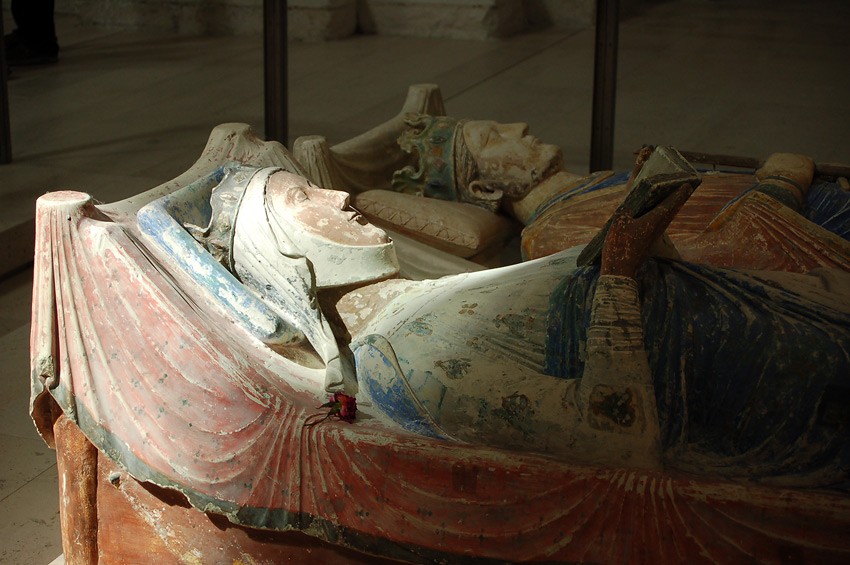
            Eleanor of Aquitaine’s tomb effigy, Fontevraud Abbey

            Richard of Devizes called her femina incomparabilis “a woman without compare” and in many respects she was. Queen of both France and England respectively, duchess of a great duchy in her own right, rebel wife who openly went to war against her husband, Eleanor of Aquitaine needs no introduction. And yet very little is actually known about one of the most famous women in history. Thus we should not find it surprising that all the myths and misconceptions about her got so firmly established in the popular consciousness. One of them is Eleanor as a very active artistic patron. However, if we raise the question, her artistic legacy is rather modest. There are only few surviving objects that can be safely associated with her.

            First and foremost, there is her tomb effigy at Fontevraud Abbey, which is the earliest funerary monument that we know of to depict a woman with a book. Also, as it seems, it is the only one to depict a man or a woman in the act of reading. The book Eleanor is holding is a restoration. The original had been destroyed during the Revolution. It is probably devotional work…. book of prayers, psalter or gospel book.

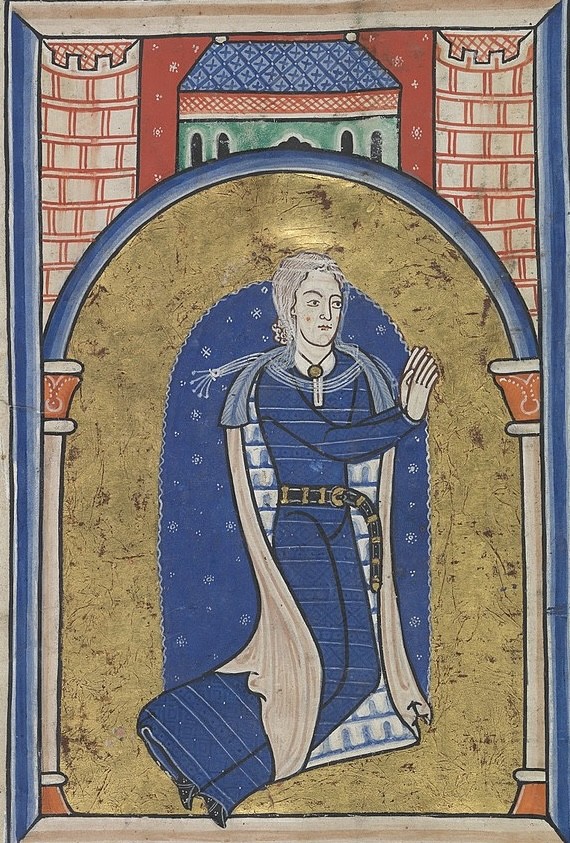
            A noble lady kneeling in a psalter of Eleanor of Aquitaine

            The effigy is one of the few instances when Eleanor can be safely identified as an artistic patron. She most probably commissioned it herself. Also the effigies of Henry II and Richard I the Lionheart (the one of Isabelle of Angouleme was commissioned more than forty years later) which were created at the same time (as stylistic similarities indicate). Made from tuffeau limestone from the Loire valley they successfully stood the test of time. despite different vagaries of history. What makes us believe Eleanor was a commissioner? First and foremost, Eleanor’s presence at Fontevraud Abbey at the time. After Richard’s death in 1199 she left the walls of the abbey, but stayed in Anjou, defending it for John. Later she retreated to the abbey again and spent her last years there. The effigies must have been created between the death of Richard and her own death in 1204 (also the year Anjou fell to the Capetians).

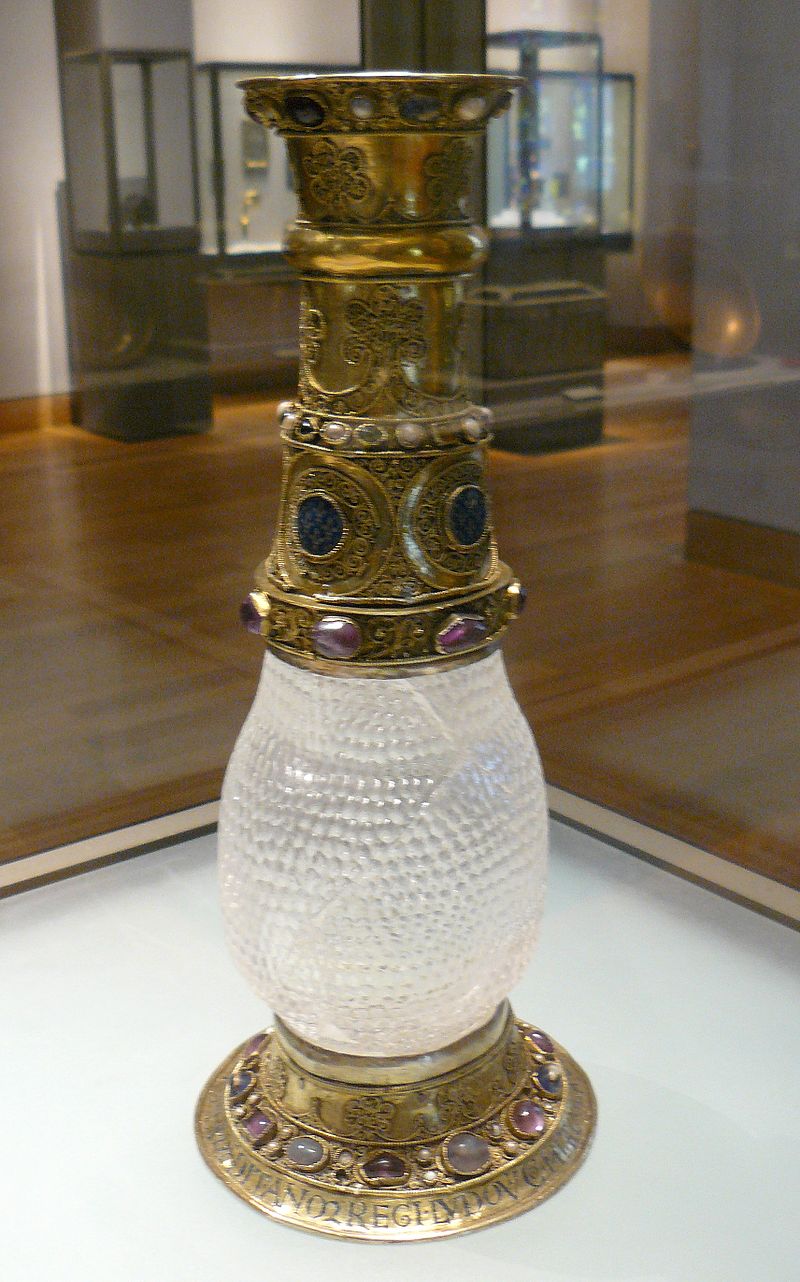
            Another object connected with Eleanor is the afore-mentioned Eleanor’s vase, which was a wedding gift she presented to her first husband Louis VII of France. It had stayed in her family since the reign of her famous/infamous grandfather, William IX the Troubadour, who had brought it with him from Spain. Louis gave it to Abbot Suger as a gift for St Denis. Suger added all the ornamentation. It was a classic crystal rock vessel when Eleanor presented it to Louis.

            Another work of art associated with Eleanor is the so-called Fecamp Psalter (or Psalter of Eleanor of Aquitaine), one of the oldest manuscripts preserved at the Dutch Royal Library at the Hague. With 27 full-page miniatures, 36 calendar miniatures depicting the Labours of the Months, and 11 historiated initials illustrating the major divisions of the psalter it is exquisitely beautiful. By the end of the 11th century Fécamp was a leading centre for manuscript copying in Normandy and in the late 12th century (c. 1180) this beautifully illuminated psalter was probably commissioned by Eleanor herself. In 2016 student Jesus Rodriguez Veijo identified the figure on the Beatus page of the psalter with Eleanor, relying in part on the scholarship relating to the Radegonde mural. You can view the manuscript on the official site of Koninklijke Bibliotheek, Hague.

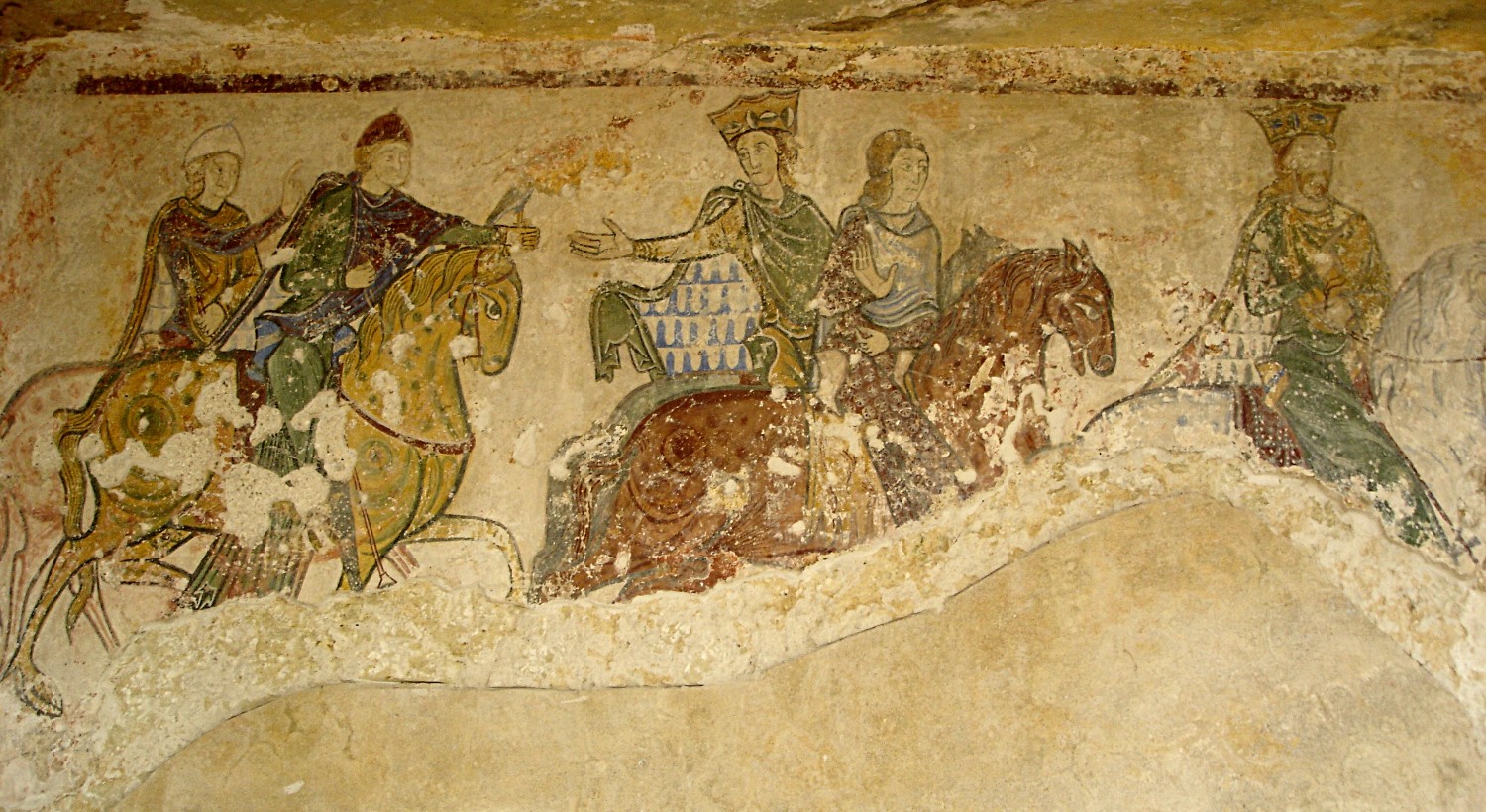
            An image of the chase in a fresco in the chapel of St Radegonde

            The so-called Poitiers Window is one of the few contemporary depictions of Eleanor. She, Henry and their four sons are shown in a small scene, being a part of a larger depiction of Crucifixion, in the area reserved for patrons. Eleanor and Henry hold an image that represents the window itself. This image is not a part of the original, but a result of 19th-century restoration by Adolphe Steiheil. The window must have been commissioned between 1166 and 1173, the birth of John and the outbreak of the Great Revolt, when the royal family was still undivided.

            The famous Radegonde Mural preserved in the chapel of Sainte Radegonde, Chinon has been a subject of heated debates since its discovery in 1964 by Albert Heron. This representation has been widely accepted as a depiction of the Plantagenet family, identifying the central ”crowned” figure as Eleanor. Later research, however, helped to determine that all the figures were actually male. This led the historians to believe that the central crowned figure was in fact Eleanor’s eldest surviving son, Henry the Young King.

            The Eleanor Vase

            In her article entitled Two reputed representations of Eleanor of Aquitaine from her lifetime – a re-evaluation Sara Cockerill, the author of the latest Eleanor biography, revisits the evidence for both these representations and formulates yet one more theory that the scene is in fact a representation of the characters from St Radegonde’s legend. This led her to the following conclusion: while the same person may well have commissioned both depictions, only one, the Psalter, should be regarded as attempting to portray Eleanor herself.

            By Katarzyna Ogrodnik-Fujcik

            About the author:

            Katarzyna Ogrodnik-Fujcik specializes in British literature and history, her area of expertise being the first Plantagenets (the Angevins). She lives in Poland. She writes for different magazines and websites on Polish and European Middle Ages. She runs a blog dedicated to Henry the Young King. She consulted a BBC documentary on William Marshal.

            *

            My books

            Signed, dedicated copies of all my books are available through my online store.

            Out now: Scotland’s Medieval Queens

            Scotland’s history is dramatic, violent and bloody. Being England’s northern neighbour has never been easy. Scotland’s queens have had to deal with war, murder, imprisonment, political rivalries and open betrayal. They have loved and lost, raised kings and queens, ruled and died for Scotland. From St Margaret, who became one of the patron saints of Scotland, to Elizabeth de Burgh and the dramatic story of the Scottish Wars of Independence, to the love story and tragedy of Joan Beaufort, to Margaret of Denmark and the dawn of the Renaissance, Scotland’s Medieval Queens have seen it all. This is the story of Scotland through their eyes.

            Available now from Amazon and Pen and Sword Books

            Also by Sharon Bennett Connolly:

            Heroines of the Tudor World tells the stories of the most remarkable women from European history in the time of the Tudor dynasty, 1485-1603. These are the women who ruled, the women who founded dynasties, the women who fought for religious freedom, their families and love. Heroines of the Tudor World is now available for pre-order from Amberley Publishing and Amazon UK. Women of the Anarchy demonstrates how Empress Matilda and Matilda of Boulogne, unable to wield a sword themselves, were prime movers in this time of conflict and lawlessness. It shows how their strengths, weaknesses, and personal ambitions swung the fortunes of war one way – and then the other. Available from Bookshop.orgAmberley Publishing and Amazon UKKing John’s Right-Hand Lady: The Story of Nicholaa de la Haye is the story of a truly remarkable lady, the hereditary constable of Lincoln Castle and the first woman in England to be appointed sheriff in her own right. Available from all good bookshops Pen & Sword Booksbookshop.org and Amazon

            Defenders of the Norman Crown: The Rise and Fall of the Warenne Earls of Surrey tells the fascinating story of the Warenne dynasty, from its origins in Normandy, through the Conquest, Magna Carta, the wars and marriages that led to its ultimate demise in the reign of Edward III. Available from Pen & Sword BooksAmazon in the UK and US, and Bookshop.orgLadies of Magna Carta: Women of Influence in Thirteenth Century England looks into the relationships of the various noble families of the 13th century, and how they were affected by the Barons’ Wars, Magna Carta and its aftermath; the bonds that were formed and those that were broken. It is now available in paperback and hardback from Pen & SwordAmazon, and Bookshop.orgHeroines of the Medieval World tells the stories of some of the most remarkable women from Medieval history, from Eleanor of Aquitaine to Julian of Norwich. Available now from Amberley Publishing and Amazon, and Bookshop.orgSilk and the Sword: The Women of the Norman Conquest traces the fortunes of the women who had a significant role to play in the momentous events of 1066. Available now from Amazon,  Amberley Publishing, and Bookshop.org.

            Alternate Endings: An anthology of historical fiction short stories including Long Live the King… which is my take what might have happened had King John not died in October 1216. Available in paperback and kindle from Amazon.

            Podcast:

            Have a listen to the A Slice of Medieval podcast, which I co-host with Historical fiction novelist Derek Birks. Derek and I welcome guests, such as Bernard Cornwell and Michael Jecks, and discuss a wide range of topics in medieval history, from significant events to the personalities involved. Every episode is also now available on YouTube.

            *

            Don’t forget! Signed and dedicated copies of all my books are available through my online store.

            For forthcoming online and in-person talks, please check out my Events Page.

            You can be the first to read new articles by clicking the ‘Follow’ button, liking our Facebook page or joining me on TwitterThreadsBluesky and Instagram.

            *

            ©2025 Sharon Bennett Connolly, FRHistS and Katarzyna Ogrodnik-Fujcik

            Happy 10th Birthday to Me!

            Well no, not me, I’m slightly older than that. But History…the Interesting Bits is 10 years old! It was 10 years ago today, on 8th January 2015, that I published my very first article, Isabella of Castile, the Controversial First Duchess of York, c.1355-1392. Since then, I have published 542 more posts, including articles, book reviews, interviews, news updates and giveaways; this article will be post no. 544.

            First and foremost, I would like to thank each and every one of my readers for sticking with me for a whole decade!

            Secondly…

            We need to celebrate!

            How to celebrate?

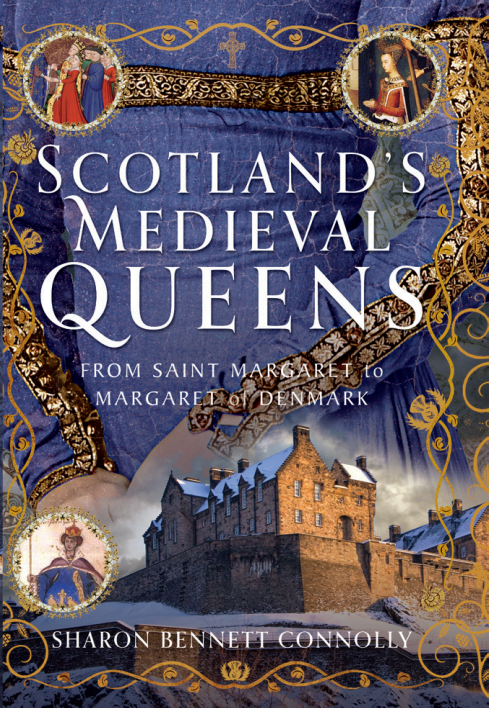
            Well, many of you will know (hopefully) that may latest book, Scotland’s Medieval Queens: From St Margaret to Margaret of Denmark is being published by Pen & Sword Books in 3 weeks’ time – on Thursday 30 January.

            So, how about a competition?

            A giveaway?

            About Scotland’s Medieval Queens:

            Scotland’s history is dramatic, violent and bloody.

            Being England’s northern neighbour has never been easy.

            Scotland’s queens have had to deal with war, murder, imprisonment, political rivalries and open betrayal. They have loved and lost, raised kings and queens, ruled and died for Scotland.

            From St Margaret, who became one of the patron saints of Scotland, to Elizabeth de Burgh and the dramatic story of the Scottish Wars of Independence, to the love story and tragedy of Joan Beaufort, to Margaret of Denmark and the dawn of the Renaissance, Scotland’s Medieval Queens have seen it all.

            This is the story of Scotland through their eyes.

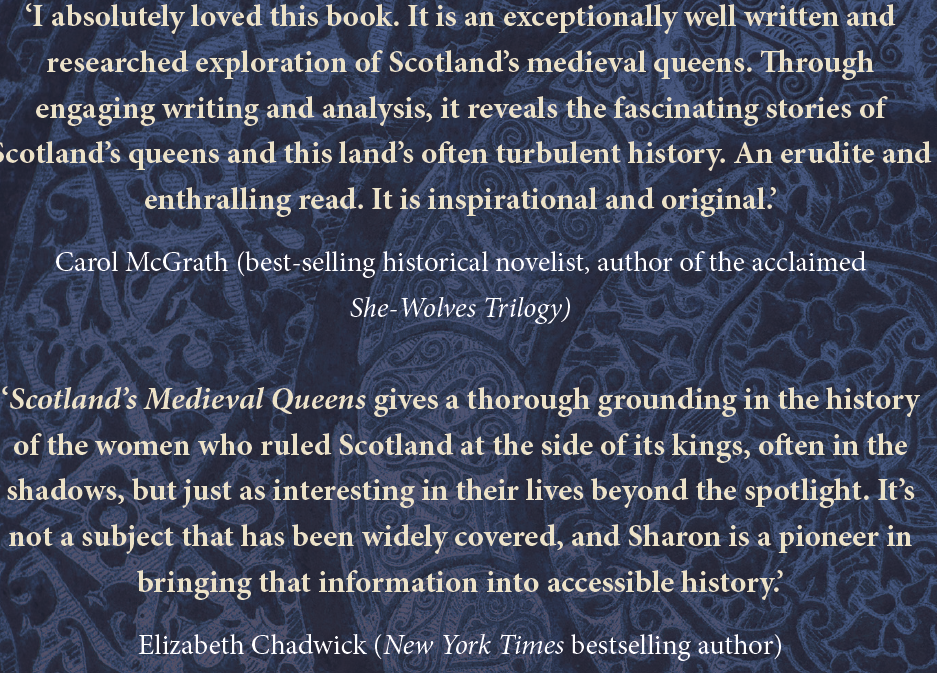
            Early feedback has been fantastic, with Elizabeth Chadwick and Carol McGrath both giving Scotland’s Medieval Queens a rather glowing – a humbling – endorsement. I received a wonderful review from Heidi Malagisi over at Adventures of a Tudor Nerd, who says “If you want a fantastic introduction to the turbulent world of medieval Scotland and the women who helped shape the monarchy, I strongly recommend you read, ‘Scotland’s Medieval Queens….'”

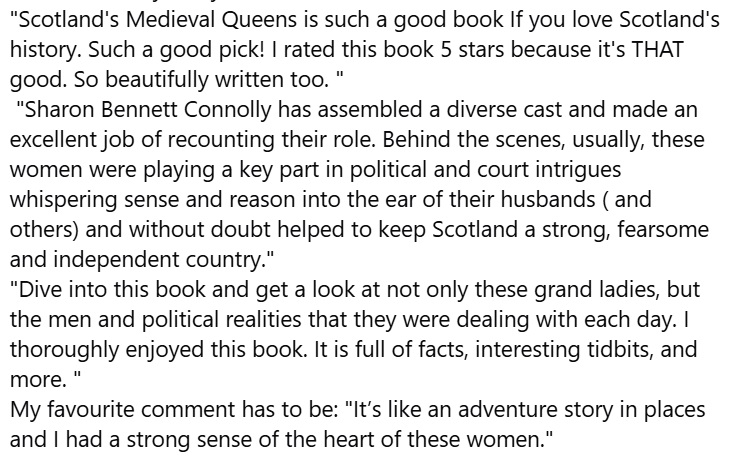
            And NetGalley readers have unanimously (so far!) given it rave reviews:

            Scotland’s Medieval Queens: From St Margaret to Margaret of Denmark is available for pre-order now.

            I cannot wait for you to read – and hopefully enjoy – Scotland’s Medieval Queens: From St Margaret to Margaret of Denmark. So, as a joint celebration – publication day and History … the Interesting Bits’ 10th birthday, here’s the competition…

            A Giveaway!

            One signed copy of the brand spanking new hardback of Scotland’s Medieval Queens will go to the lucky competition winner.

            It’s easy to enter!

            The competition is open to everyone, wherever you are in the world. To win a signed and dedicated copy of Scotland’s Medieval Queens, simply leave a comment below or on social media via my Facebook pageTwitterThreads, or Bluesky and I will include you in the prize draw.

            The draw will be made on Saturday 18 January.

            GOOD LUCK!

            About me:

            Sharon Bennett Connolly, has been fascinated by history her whole life. She has studied history academically and just for fun – and even worked as a tour guide at historical sites, including Conisbrough Castle. For Christmas 2014, her husband gave her a blog as a gift – http://www.historytheinterestingbits.com – and Sharon started researching and writing about the stories that have always fascinated. Sharon also co-hosts the podcast A Slice of Medieval, alongside historical novelist Derek Birks. She regularly gives talks on women’s history, for historical groups, festivals and in schools; her book Silk and the Sword: The Women of the Norman Conquest is a recommended text for teaching the events of 1066 in the National Curriculum. She is a feature writer for All About History, Tudor Places, and Living Medieval magazines and her TV work includes Australian Television’s ‘Who Do You Think You Are?

            Also by Sharon Bennett Connolly:

            Heroines of the Tudor World tells the stories of the most remarkable women from European history in the time of the Tudor dynasty, 1485-1603. These are the women who ruled, the women who founded dynasties, the women who fought for religious freedom, their families and love. Heroines of the Tudor World is now available for pre-order from Amberley Publishing and Amazon UK. Women of the Anarchy demonstrates how Empress Matilda and Matilda of Boulogne, unable to wield a sword themselves, were prime movers in this time of conflict and lawlessness. It shows how their strengths, weaknesses, and personal ambitions swung the fortunes of war one way – and then the other. Available from Bookshop.orgAmberley Publishing and Amazon UKKing John’s Right-Hand Lady: The Story of Nicholaa de la Haye is the story of a truly remarkable lady, the hereditary constable of Lincoln Castle and the first woman in England to be appointed sheriff in her own right. Available from all good bookshops Pen & Sword Booksbookshop.org and Amazon

            Defenders of the Norman Crown: The Rise and Fall of the Warenne Earls of Surrey tells the fascinating story of the Warenne dynasty, from its origins in Normandy, through the Conquest, Magna Carta, the wars and marriages that led to its ultimate demise in the reign of Edward III. Available from Pen & Sword BooksAmazon in the UK and US, and Bookshop.orgLadies of Magna Carta: Women of Influence in Thirteenth Century England looks into the relationships of the various noble families of the 13th century, and how they were affected by the Barons’ Wars, Magna Carta and its aftermath; the bonds that were formed and those that were broken. It is now available in paperback and hardback from Pen & SwordAmazon, and Bookshop.orgHeroines of the Medieval World tells the stories of some of the most remarkable women from Medieval history, from Eleanor of Aquitaine to Julian of Norwich. Available now from Amberley Publishing and Amazon, and Bookshop.orgSilk and the Sword: The Women of the Norman Conquest traces the fortunes of the women who had a significant role to play in the momentous events of 1066. Available now from Amazon,  Amberley Publishing, and Bookshop.org.

            Alternate Endings: An anthology of historical fiction short stories including Long Live the King… which is my take what might have happened had King John not died in October 1216. Available in paperback and kindle from Amazon.

            Podcast:

            Have a listen to the A Slice of Medieval podcast, which I co-host with Historical fiction novelist Derek Birks. Derek and I welcome guests, such as Bernard Cornwell and DrIan Mortimer, and discuss a wide range of topics in medieval history, from significant events to the personalities involved. 

            *

            Don’t forget! Signed and dedicated copies of all my books are available through my online bookshop.

            For forthcoming online and in-person talks, please check out my Events Page.

            You can be the first to read new articles by clicking the ‘Follow’ button, liking our Facebook page or joining me on TwitterThreadsBluesky and Instagram.

            ©2025 Sharon Bennett Connolly FRHistS

            Merry Christmas

            I would just like to take this opportunity to wish all of my readers, near and far, a very MERRY CHRISTMAS and a wonderfully HAPPY NEW YEAR.

            And to THANK YOU all for your support and encouragement over the last 10 years.

            See you in 2025!

            With love and Best Wishes
            Sharon xxx

            Christmas Podcast:

            Have a listen to the 2024 A Slice of Medieval Christmas Special. Derek and I talk pantomime dames, mince pies, feasting and gift giving and a whole host medieval Christmas traditions with author and historian Toni Mount. It is great fun!

            *

            Don’t forget! Signed and dedicated copies of all my books are available through my online bookshop.
            For forthcoming online and in-person talks, please check out my Events Page.

            You can be the first to read new articles by clicking the ‘Follow’ button, liking our Facebook page or joining me on TwitterThreadsBluesky and Instagram.

            ©2024 Sharon Bennett Connolly FRHistS

            The Many Marriages of Bess of Hardwick

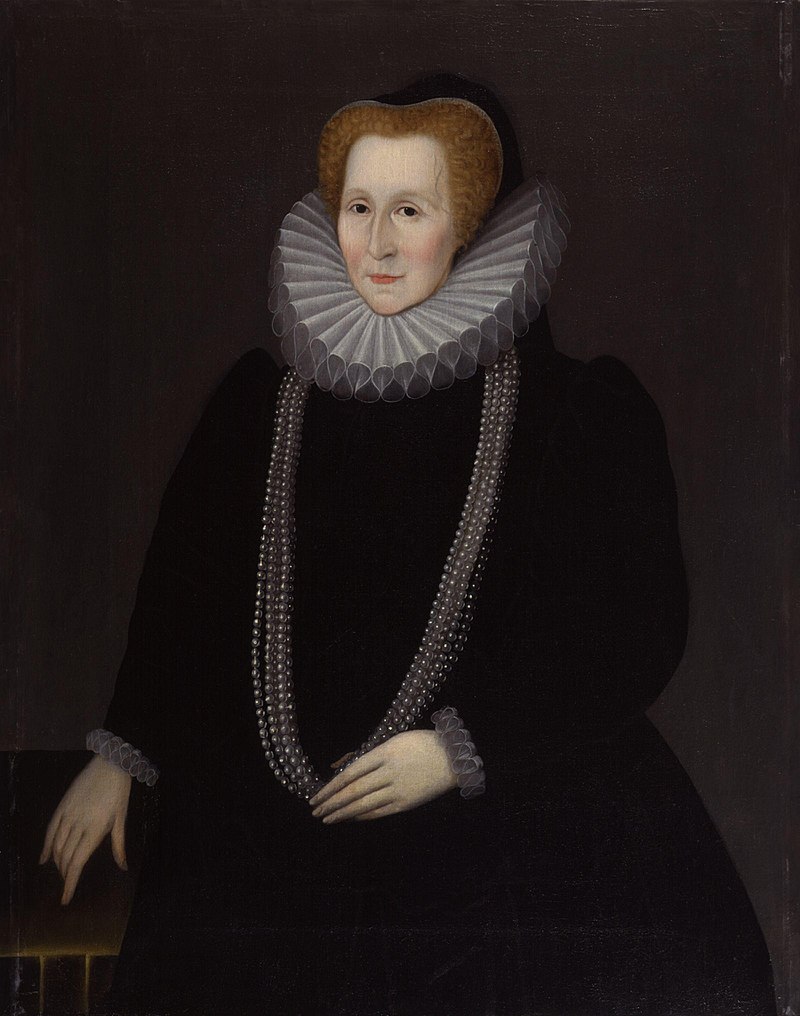
            Bess of Hardwick

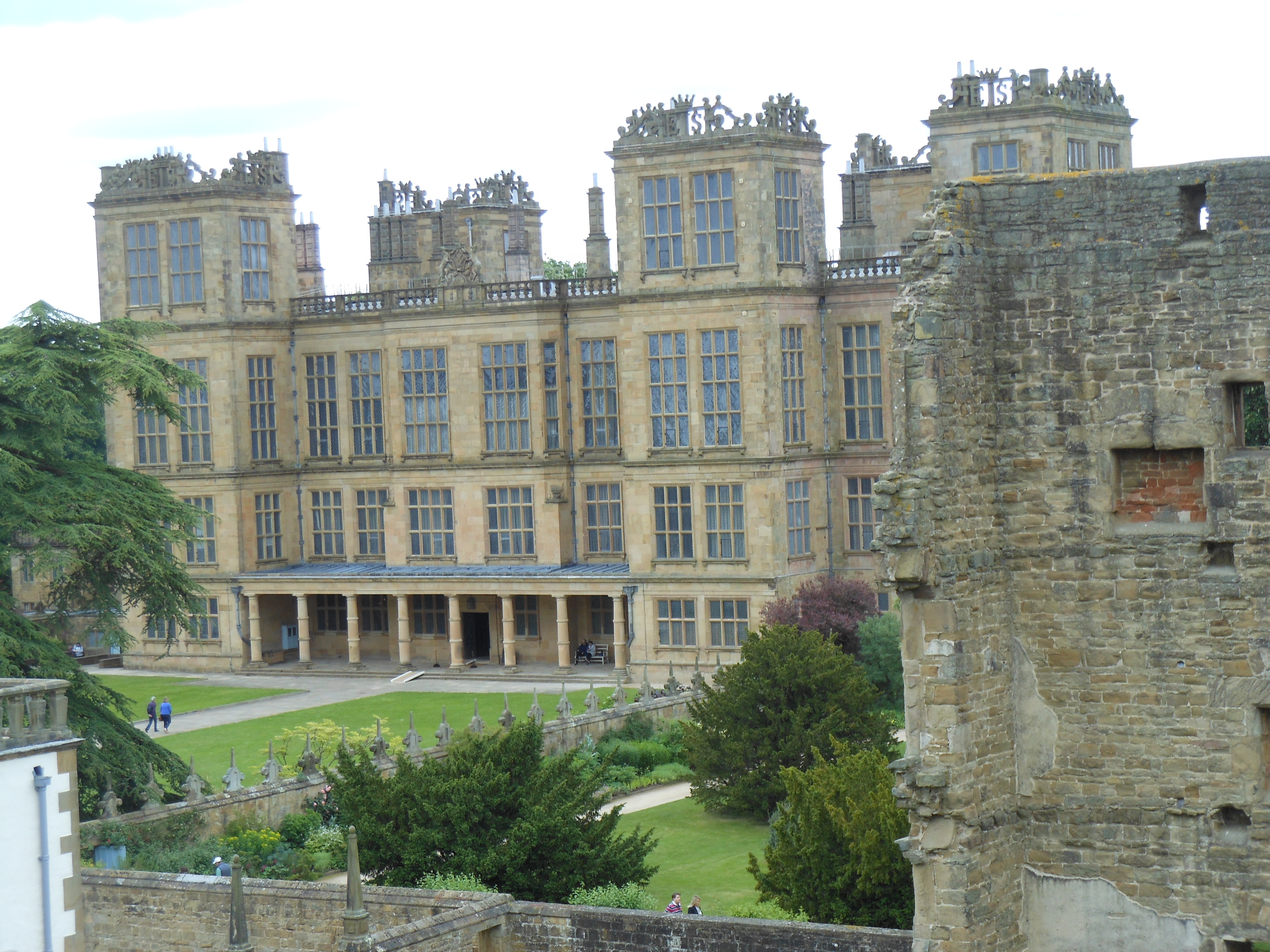
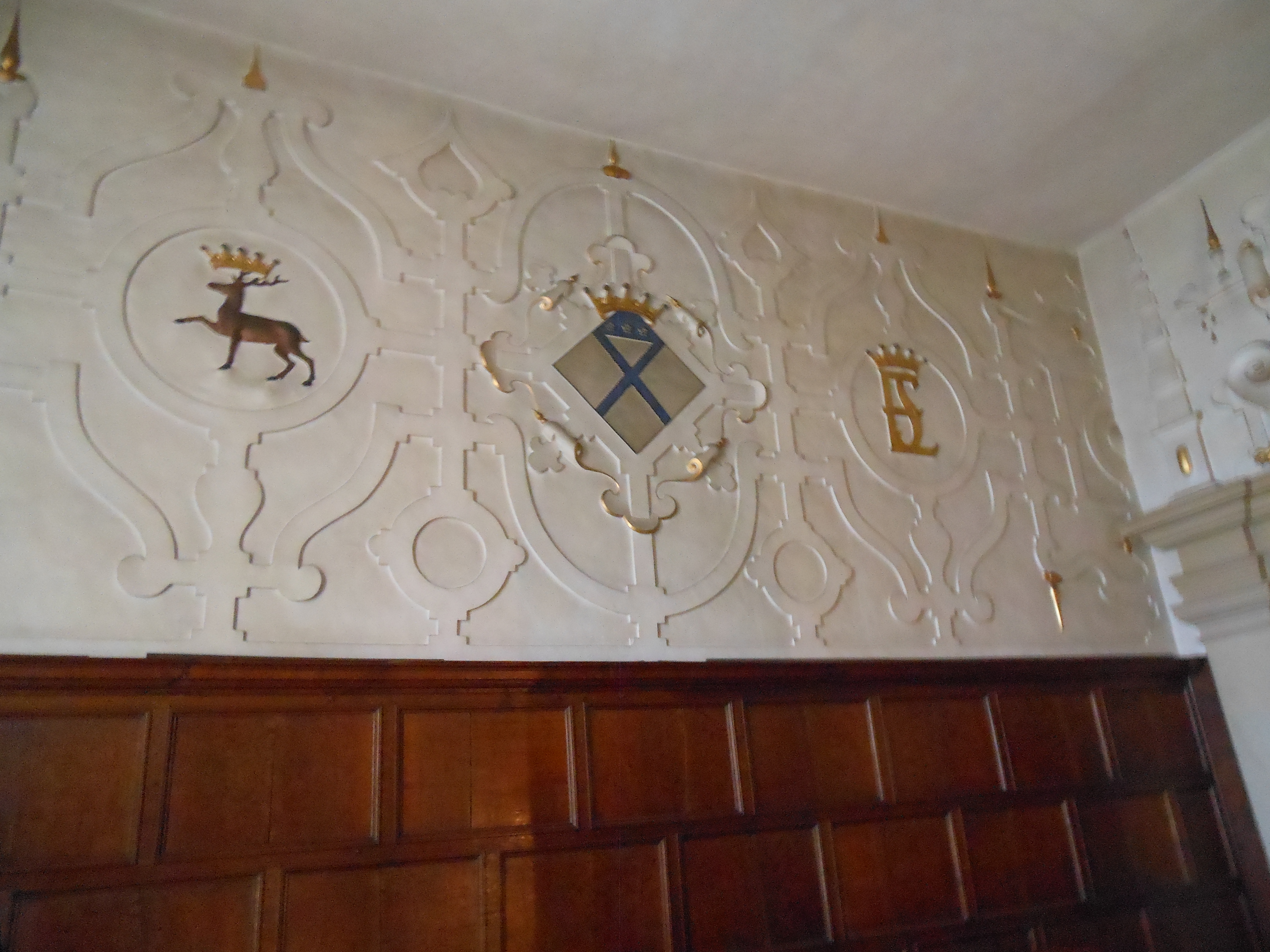
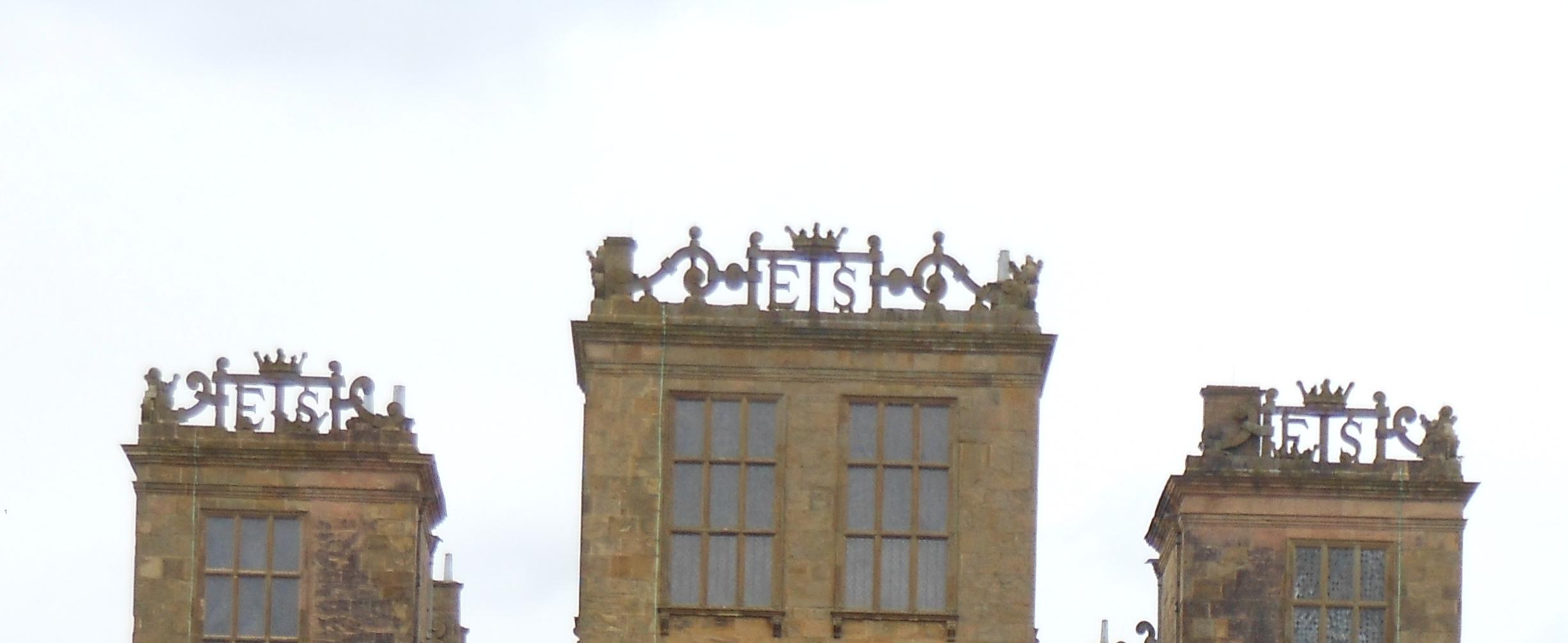
            Bess of Hardwick is perhaps the most famous Tudor woman, outside of the extended Tudor royal family. A friend of Queen Elizabeth I, and confidant of Katherine Grey, she was also gaoler to Mary, Queen of Scots. An accomplished needlewoman, she is probably best known having built Chatsworth House and Hardwick Hall in Derbyshire; indeed, Hardwick Hall even bears her initials ES (Elizabeth Shrewsbury) in its external stonework.

            Bess’s marital history is just as remarkable.

            Bess was born around 1527, one of four daughters and a son born to John Hardwick of Hardwick, Derbyshire. It was a moderately prosperous gentry family. When her father died in 1528, When her father died in 1528, most of the family lands were taken into royal wardship until her brother James came of age. Bess’s mother, Elizabeth Leeke, remarried around 1529, to Ralph Leche of nearby Chatsworth, and had three more children, stretching the family finances even tighter. Leche’s constant problems with money meant that Leche spent the years from 1538 to 1544 in the Fleet Prison for debt and in 1545 he was committed to the debtors’ prison in Derby

            With no dowry to attract a husband, 11-year-old Bess was sent into service in the household of Sir George and Lady Anne Zouche of Codnor Castle, a neighbouring family. Lady Zouche was a distant cousin of both of Bess’s parents and a friend and lady-in-waiting to Queen Anne Boleyn; following the queen’s downfall, she served her successor, Jane Seymour. Sir George was a gentleman pensioner to the king. It was in this household that Bess would have learned the ways of the aristocracy, whilst acting as a lady-in-waiting. Bess would have also made connections with various families through the other young people of the household.

            Husband no. 1.

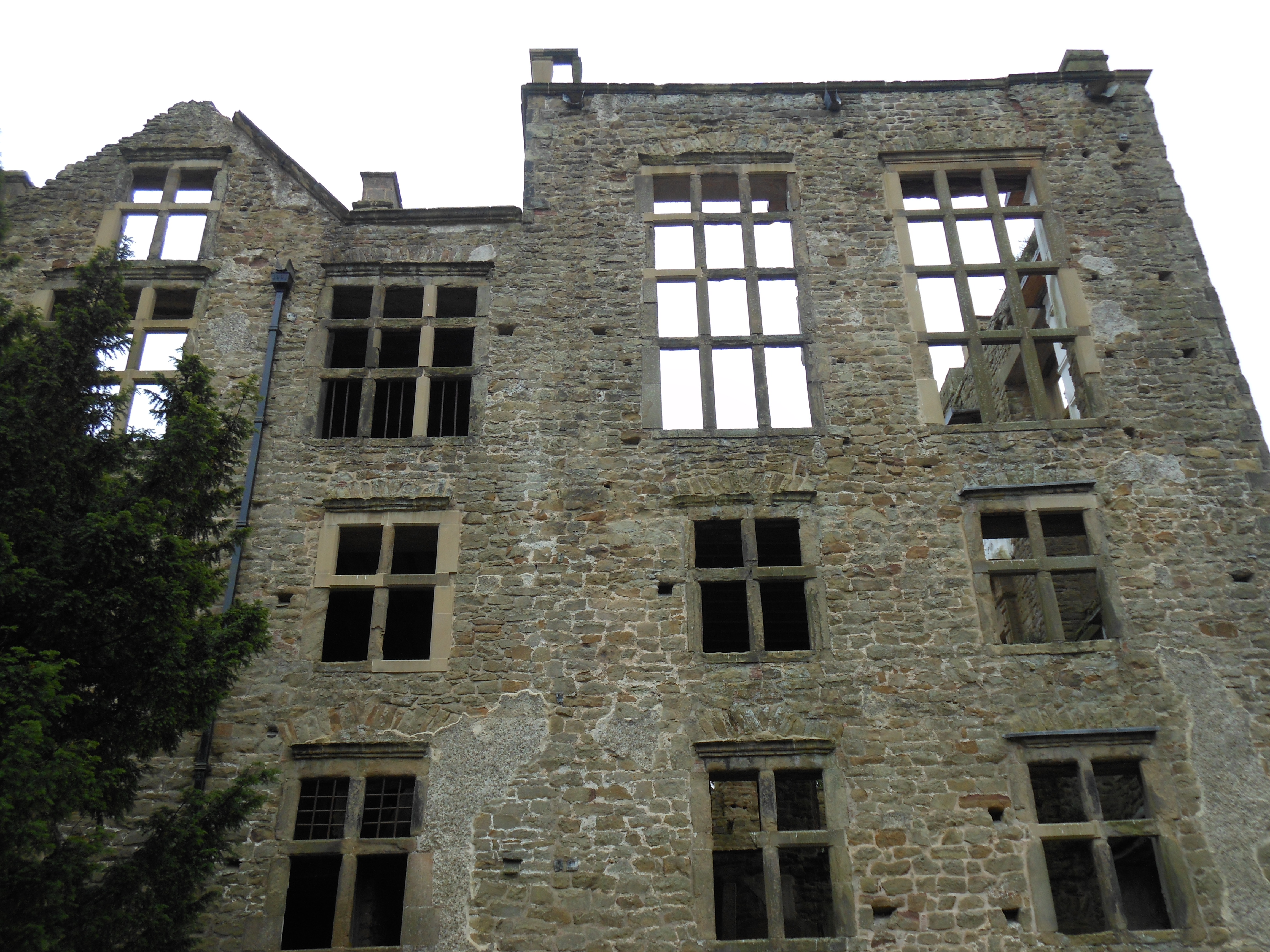
            The ‘old’ Hardwick Hall

            It was while she was living in the Zouche’s household that Bess met her first husband, Robert Barlow. The Barlows were acquainted with Bess’s stepfather, who was owed money on a land deal by Robert’s father, Arthur Barlow. It may well be that Arthur offered his oldest son and heir in marriage to Bess, with the amount owing from the court case written off in lieu of Bess’s dowry. Bess and Robert were married in the spring of 1543, with Bess being about fifteen and Robert a couple of months short of his fourteenth birthday.

            The marriage was short-lived and possibly unconsummated, given their ages. Robert fell ill and died within eighteen months of their wedding day, on Christmas Eve 1544. When Bess applied to the Barlows for her widow’s dower, one-third of the income in rents and revenues from her husband’s estates, she was refused and a lengthy court battle ensued. A settlement was finally in 1546. It did not make her rich, but the annual income of £30 gave Bess a measure of independence when she was only 17 years of age.

            Husband no. 2.

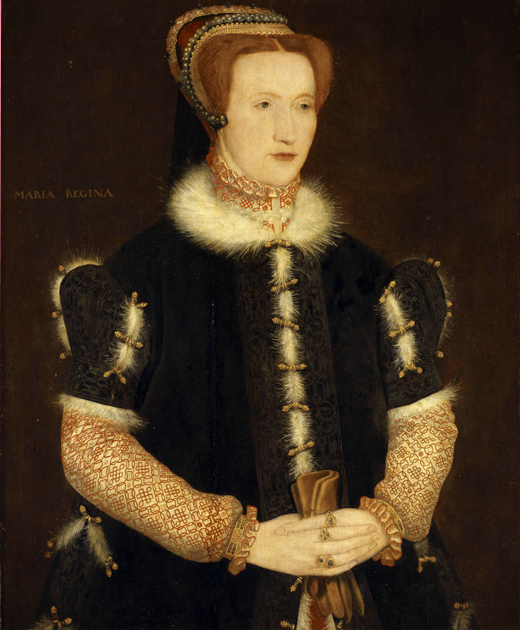
            Bess of Hardwick, 1550s

            Bess may have met Sir William Cavendish, while staying at Bradgate Park with Lady Frances Brandon, Marchioness of Dorset. Frances was a granddaughter of King Henry VII and the mother of the ill-fated Lady Jane Grey, the Nine Days Queen. Cavendish was twice-widowed, mature and rather rich, with 3 surviving daughters and no male heir. An experienced government official, he had been appointed Treasurer of the King’s Chamber in 1546 and had been knighted by the king on Easter Sunday of the same year. He had a portfolio of properties throughout the Midlands and a fine house in London.

            When he met Bess in 1547, she was 19 and he was 40. A strong friendship developed, despite the age gap. They were married in the family chapel at Bradgate Park on 20 August 1547. Bess had a deep interest in astrology and the timing of the wedding, at two in the morning, was calculated as being the most propitious. Cavendish recorded the event in his notebook:

            ‘Memorandum. That I was married unto Elizabeth Hardwicke my third wife in Leestersheer at Bradgate House, on 20th August in the first year of King Edward’s reign, at two of the clock after midnight.’1

            After the wedding, the couple travelled to Sir William’s manor at Northaw in Hertfordshire where Bess probably met her three stepdaughters for the first time, Catherine, Mary and Anne. At twelve, the eldest was only seven years younger than Bess. Though managing a household and acting as stepmother to 3 girls not much younger than herself must have been a daunting prospect, within a year Bess was keeping the books, paying bills and recording rents. The proximity of the manor to London also meant that shortly after the wedding Bess was presented at court to the young king Edward VI.

            Bess and Cavendish would have 8 children together, of which 6 would survive childhood, including 3 boys. And it was with Cavendish that Bess acquired the lands of her stepfather at Chatsworth for £600. There was an old manor house on the property that the family lived in until the completion of Chatsworth House. Bess and Sir William continued to buy land in Derbyshire, including 8,000 acres from the earl of Westmorland. All the Derbyshire properties were in both their names, which meant that when Sir William died before his heir came of age, the properties remained in Bess’s hands rather than being taken into wardship. Sir William died in October 1557, leaving Bess in a precarious financial position, owing £5,237 to the crown over funds that had disappeared during his time at the Exchequer, apparently pilfered by an assistant.

            The ‘new’ Hardwick Hall, taken from the old hall

            Facing bankruptcy, Bess only avoided the confiscation of her lands by writing to many of her husband’s friends asking for their help and support. These friends voted against the bill when it was presented to Parliament. Her lands were safe, but she still owed the money. Bess made the final entry in Sir William’s notebook:

            ‘Sir William Cavendish Knight, my most dear and well-loved husband, departed this present life on Monday, being the 25th day of October … on whose soul I most humbly beseech the Lord to have mercy, and to rid me and his poor children of our great misery.’2

            Husband no. 3.

            In 1559, Bess married her late husband’s friend Sir William St Loe, a widower with 2 surviving daughters, Mary and Margaret. From an ancient and noble family and considerably wealthier than Cavendish had been, St Loe was Captain of Elizabeth I’s Yeoman Guard. St Loe’s father, Sir John St Loe, died and Bess took the opportunity to visit her husband’s old friend and offer her condolences. As the months progressed, so did their relationship. In January 1559, Sir William St Loe played a major role in Queen Elizabeth’s coronation, seeing to her security and, as Chief Butler of England, it was St Loe who ceremonially offered the first cup of wine to the new sovereign.

            In July 1559, Sir William St Loe announced his betrothal to Bess and a wedding invitation sent by the groom to Bess’s old friend, Sir John Thynne, still exists:

            Saving your promise … and not forgetting your friendship, these lines are to satisfy you that the day of my marriage is by my Mistress appointed upon Sunday this sennight [27 August]. At which time both her ladyship and myself [hope] to see you there. She hath with terrible threatenings commanded me not to forget making of her hearty commendations unto you and to my lady your wife, unto whom I pray you let me also commended … from Somerset this Tuesday 15th August. William Seyntlo.3

            Bess’s initials and the Talbot dog, Hardwick Hall

            Once married, St Loe’s duties often separated the couple, until  Bess was appointed a Lady of the Privy Chamber. Due to his relationship with Queen Elizabeth, St Loe was able to reduce the debt Bess owed and paid the £1,000 fine on her behalf. The marriage of Bess and St Loe was a happy one and he treated Bess’s children as his own. However, Sir William and his younger brother, Edward, became involved in a property dispute. Edward visited Sir William and Bess in London to resolve the issue but shortly after the visit, Bess fell ill, poisoned. William St Loe suspected his brother Edward and 3 of Edward’s associates were punished, though Edward was not.

            Bess was visiting her family in Derbyshire in 1565 when she received a note from London informing her that St Loe was critically ill. By the time she arrived back in the city, her husband was dead. As his brother Edward had visited recently, poison was suspected but could not be proven. St Loe had left everything to
            Bess. His will was unequivocal, though the fact St Loe had left nothing to his daughters meant that it was challenged, and Bess found herself fighting yet another court case for her rights.

            Husband no. 4.

            Bess of Hardwick’s initials on Hardwick Hall, Derbyshire

            On 1 November 1567, Bess married her fourth and final husband, George Talbot, Earl of Shrewsbury. At the same time, four of their children were married, with Bess’s daughter Mary marrying George’s second son, Gilbert, and Henry Cavendish marrying George’s daughter, Grace. A wealthy widow until that point, Bess was well aware that all her lands and property would be controlled by Shrewsbury from the moment of their marriage. However, Bess had a clause written into the marriage contract that in exchange for this, one-third of Shrewsbury’s unsettled income would go to Bess on his death. Arrangements were also made regarding Chatsworth, which would automatically go to Henry Cavendish on Bess’s death.

            Bess and Shrewsbury spent the first few months of their married life away from court but sent the queen a gift of venison through Bess’s nephew, Anthony Wingfield. When the young man said he did not know when Bess would be returning to court, the queen said,

            ‘I am assured that if she have her own will she would not be long before she would see me. I have been glad to see my lady St Loe, but am I now more desirous to see my Lady Shrewsbury. I hope my Lady hath known my good opinion of her… I assure you there is no Lady in this land that I better love and like.’4

            Bess of Hardwick’s bedchamber, Hardwick Hall

            In 1568, Shrewsbury and Bess were given the custody of Mary, Queen of Scots, who remained in their charge until 1584. Famed for her needlework, Bess and Queen Mary would work on samples together. It was whilst they had custody of the Scots queen that Bess and Shrewsbury’s relationship began to break down. Bess repeatedly accused the earl of infidelities, including with their queenly prisoner, and Shrewsbury was feeling the strain of acting gaoler, with mounting debts as a result of the expenses incurred. In 1584, Bess separated from Shrewsbury and went to live at Chatsworth. She had to fight yet another legal battle when Shrewsbury claimed Chatsworth was his under the terms of their marriage settlement, but the court found in Bess’s favour, awarding her Chatsworth and a sizeable income from her husband.

            By the time of the settlement, however, Bess had already moved on from Chatsworth and started a new building project at Hardwick, rebuilding her family’s old Hall, which was completed by 1591. Her estranged husband, Shrewsbury, died in 1590, leaving Bess with a third of his disposable lands. As a result, as soon as the Old Hall was completed, Bess embarked on a new project, building an entirely new Hardwick Hall right next door. Bess’s final years were occupied with building and furnishing the new hall.

            In 1601, she made her will, leaving Hardwick to her second and favourite son, William, while her eldest son Henry was to have Chatsworth. Bess also made provision for her other children and her grandchildren, as well as her servants and the residents of the almshouse that she had founded in Derby. However, she altered the will in March 1603, after quarrelling with both Henry and her granddaughter Arbella, both of whom she now disinherited.

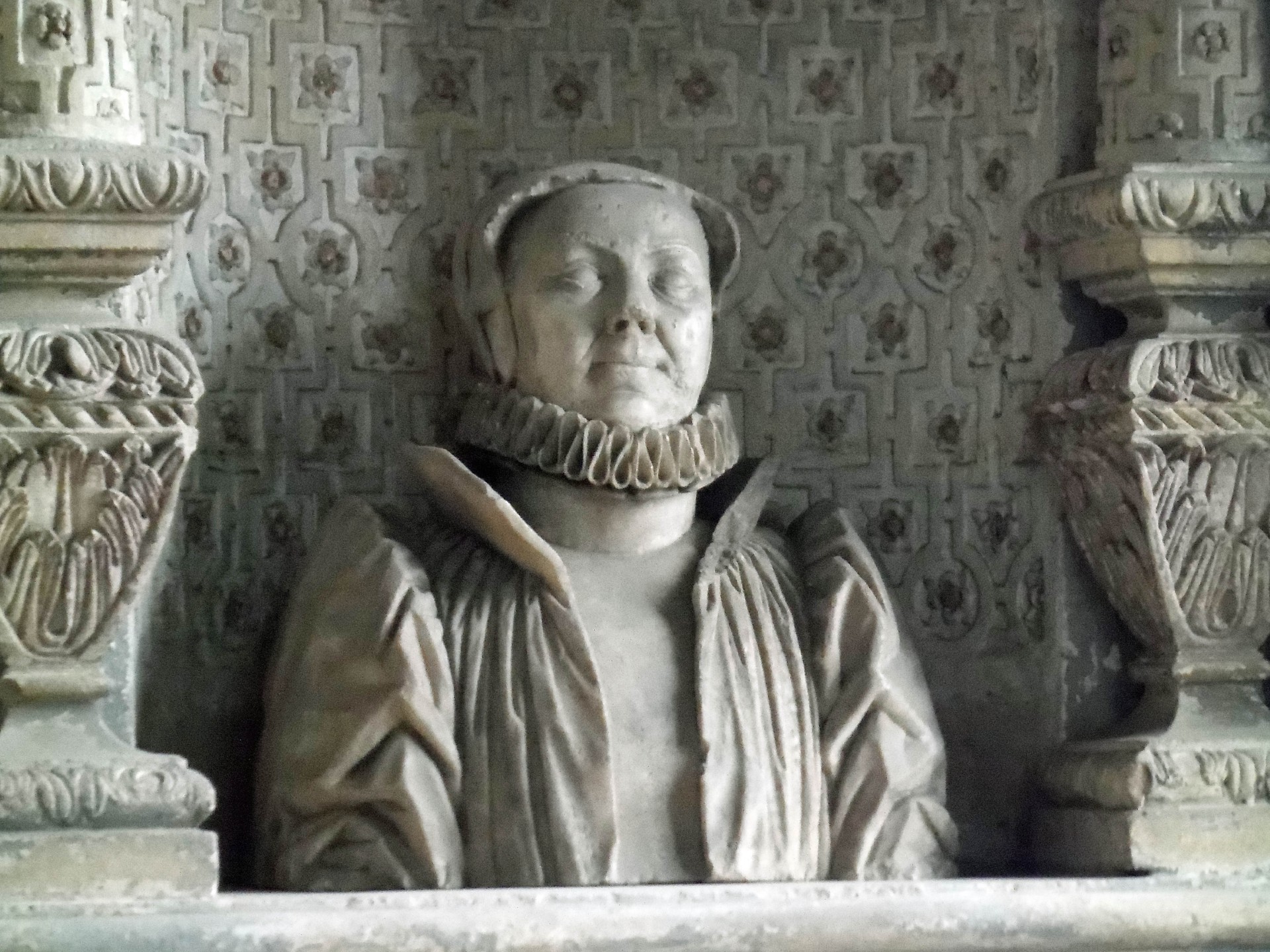
            Effigy of Bess of Hardwick wearing a coronet of a countess. Derby Cathedral

            At the time of her death, Bess was one of the richest people in England. She had survived childbirth eight times and the rollercoaster that was the English Reformation. She is famed both as the builder of Chatsworth House and Hardwick Hall and as the founder of a great dynasty. Her descendant, Peregrine Cavendish, the twelfth and current duke of Devonshire, still resides at Chatsworth House. Bess is also famed for her needlework, many examples of it still survive in her various properties. She and Mary, Queen of Scots would work on samples together when the Scots queen was in the custody of Bess and her husband.

            Having survived all four husbands, various legal challenges, poisoning and scandal, Bess died at Hardwick on 13 February 1610 and was buried at All Hallows, Derby, now Derby Cathedral.

            Notes:

            1. Collins, Historical Collections of the Noble Families of Cavendish quoted in Mary S. Lovell, Bess of Hardwick, p. 36; 2. Collins, Historical Collections of the Noble Families of Cavendish, quoted in Jill Armitage, Four Queens and a Countess, p. 93; 3. Mary S. Lovell, Bess of Hardwick, p. 147; 4. Jill Armitage, Four Queens and a Countess, p. 125

            Sources;

            Mary S. Lovell, Bess of Hardwick: First Lady of Chatsworth; Jill Armitage, Four Queens and a Countess: Mary Queen of Scots, Elizabeth I, Mary I, Lady Jane Grey and Bess of Hardwick; Nathaniel Johnson, Lives of the Earls of Shrewsbury; Arthur Barlow’s Inquisition Post Mortem; Calendar of State Papers, Letters and Papers September 1536; Lisa Hilton, Elizabeth I: Renaissance Prince, A Biography; Annie Bullen, Hardwick Hall (guidebook); Tracy Borman, Elizabeth’s Women; Leanda de Lisle, The Sisters Who Would Be Queen: The Tragedy of Mary, Katherine and Jane Grey; Nicola Tallis, Crown of Blood: The Deadly Inheritance of Lady Jane Grey; Alison Weir, Elizabeth the Queen; Elizabeth Norton, The Lives of Tudor Women; Victoria Sylvia Evans, Ladies-in-Waiting: Women who Served at the Tudor Court; Amy Licence, The Sixteenth Century in 100 Women.

            Images:

            Portraits of Bess and her tomb are courtesy of Wikipedia. All images of Hardwick Hall ©2024 Sharon Bennett Connolly FRHistS

            *

            My Books

            Signed, dedicated copies of all my books are available through my online bookshop.

            Coming 30 January 2025: Scotland’s Medieval Queens

            Scotland’s history is dramatic, violent and bloody. Being England’s northern neighbour has never been easy. Scotland’s queens have had to deal with war, murder, imprisonment, political rivalries and open betrayal. They have loved and lost, raised kings and queens, ruled and died for Scotland. From St Margaret, who became one of the patron saints of Scotland, to Elizabeth de Burgh and the dramatic story of the Scottish Wars of Independence, to the love story and tragedy of Joan Beaufort, to Margaret of Denmark and the dawn of the Renaissance, Scotland’s Medieval Queens have seen it all. This is the story of Scotland through their eyes.

            Available for pre-order now.

            Also by Sharon Bennett Connolly:

            Heroines of the Tudor World tells the stories of the most remarkable women from European history in the time of the Tudor dynasty, 1485-1603. These are the women who ruled, the women who founded dynasties, the women who fought for religious freedom, their families and love. Heroines of the Tudor World is now available for pre-order from Amberley Publishing and Amazon UK. Women of the Anarchy demonstrates how Empress Matilda and Matilda of Boulogne, unable to wield a sword themselves, were prime movers in this time of conflict and lawlessness. It shows how their strengths, weaknesses, and personal ambitions swung the fortunes of war one way – and then the other. Available from Bookshop.orgAmberley Publishing and Amazon UKKing John’s Right-Hand Lady: The Story of Nicholaa de la Haye is the story of a truly remarkable lady, the hereditary constable of Lincoln Castle and the first woman in England to be appointed sheriff in her own right. Available from all good bookshops Pen & Sword Booksbookshop.org and Amazon

            Defenders of the Norman Crown: The Rise and Fall of the Warenne Earls of Surrey tells the fascinating story of the Warenne dynasty, from its origins in Normandy, through the Conquest, Magna Carta, the wars and marriages that led to its ultimate demise in the reign of Edward III. Available from Pen & Sword BooksAmazon in the UK and US, and Bookshop.orgLadies of Magna Carta: Women of Influence in Thirteenth Century England looks into the relationships of the various noble families of the 13th century, and how they were affected by the Barons’ Wars, Magna Carta and its aftermath; the bonds that were formed and those that were broken. It is now available in paperback and hardback from Pen & SwordAmazon, and Bookshop.orgHeroines of the Medieval World tells the stories of some of the most remarkable women from Medieval history, from Eleanor of Aquitaine to Julian of Norwich. Available now from Amberley Publishing and Amazon, and Bookshop.orgSilk and the Sword: The Women of the Norman Conquest traces the fortunes of the women who had a significant role to play in the momentous events of 1066. Available now from Amazon,  Amberley Publishing, and Bookshop.org.

            Alternate Endings: An anthology of historical fiction short stories including Long Live the King… which is my take what might have happened had King John not died in October 1216. Available in paperback and kindle from Amazon.

            Podcast:

            Have a listen to the A Slice of Medieval podcast, which I co-host with Historical fiction novelist Derek Birks. Derek and I welcome guests, such as Bernard Cornwell, and discuss a wide range of topics in medieval history, from significant events to the personalities involved. Our latest episode is 2024 Christmas Special with Toni Mount, A Medieval Christmas.

            *

            Don’t forget! Signed and dedicated copies of all my books are available through my online bookshop.

            For forthcoming online and in-person talks, please check out my Events Page.

            You can be the first to read new articles by clicking the ‘Follow’ button, liking our Facebook page or joining me on TwitterThreadsBluesky and Instagram.

            ©2024 Sharon Bennett Connolly FRHistS

            Book Corner: Sun Ascendant by C.F. Dunn

            Two men. One woman. And a lie.

            Strong-willed and single-minded, young Isobel Fenton is determined that nothing will separate her from her beloved manor of Beaumancote; but as unseen witness to a summary execution, she is propelled into a world of personal feud and national politics as the houses of York and Lancaster threaten to tear the country apart. Now unwilling mistress of the formidable Earl, Isobel despairs of ever being free to follow her own heart. But events take a sinister turn, and as the Earl of Warwick and King Edward IV vie for power, Isobel must face her own battle for survival. What is the bitter Countess prepared to do to be rid of her rival? And divided by love and loyalty, how will Isobel contend with the decaying relationship of the two brothers who seek her love? 

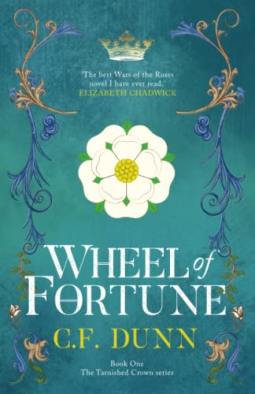
            This year I have had the pleasure of reading two books by C.F Dunn, the first two books of a series entitled The Tarnished Crown. And what a treat it was!

            In Wheel of Fortune, C.F. Dunn made a fabulous start to what promises to be an interesting series set towards the end of the Wars of the Roses. Wheel of Fortune traced the life of Isobel Fenton during the tumultuous events of 1469, when King Edward IV is embroiled in a power struggle with Richard Neville, Earl of Warwick. Isobel herself has her life turned upside down by the death of her father, when she is forced to leave her manor and live under the protection of the local earl, at Tickhill Castle. As a South Yorkshire lass, it took me a while to get used the book being set around an area I know so well, with a fictional earl in residence at Tickhill Castle. But once the book draws you in, you stop thinking about what you know and start caring about those lives within the walls of the famous landmark. The story is intriguing and has many twists and turns. Most of the characters are fictional, dropped into the existing history, though Richard, Duke of Gloucester puts in an appearance once in a while.

            Sun Ascendant continues the story against the backdrop of the political crisis that, literally, split Edward IV’s reign in two. Edward IV’s falling out with the Kingmaker – Richard Neville, Earl of Warwick – led to him losing the throne and the readeption of Henry VI, though only for a short time. It was one of the most dramatic and violent periods of the Wars of the Roses.

            Living in Tickhill Castle, in Yorkshire, Isobel Fenton is far from the fighting, but not the political wranglings and machinations. And Isobel had her own wars to fight. Forced to become the earl’s mistress, she has to navigate the family dynamic and atmosphere instigated by her nemesis, the Countess. Sun Ascendant clearly demonstrates how women are not immune to a form of domestic warfare – nor to the shifting political landscape.

            Isobel removed the chess pieces and selected the discs of green and white bone. “Will you be away long, my lord?”

            “Ah, is that why you are quiet?” Taking the green counters, he began laying them on his side of the board. “I must see to the affairs of my estates, and I will be paying a visit to your own manors to ensure their security. His Grace will also expect me at Court. But I should be back for Margaret’s wedding, and that is nigh on six weeks from now.” He mistook her silence for regret. “I would take you with me, but the days in the saddle are long and I ride hard. Estate business makes for a poor companion, Isobel; you must remember when it took your father from home.”

            She nodded, but she had had her servant Buena and Alfred her dog, and her garden and own things around her. And no Countess to avoid. Talking of whom… “My lord, might I be permitted to see Lady Margaret before she weds?”

            He finished setting up the counters and sat back with his fingers interlaced over his stomach, watching her place her last piece. “You know that is not possible.”

            “I know that I am not permitted, but that is not the same.”

            “Nonetheless.” His fingers jerked restlessly. “Why is it so important that you see her?”

            “I would like to know whether she has kept up with her Latin studies…” He raised a brow, so obviously wasn’t taken in by that. She tried again. “She is so young. She is not ready for marriage.”

            “She is prepared; she knows her duty as a wife and will be obedient. More so than you,” he added, in an attempt to lighten her mood. She responded with a barely constrained huff. Why did men have to be so blind? Or was it that they knew, but chose not to see?

            “My lord, I am not speaking of saying ‘yea‘ or ‘nay‘ to her husband, but of those other… duties men expect. She is still a girl in a child’s body, and he is such an old cog… I mean,” she amended hastily, “Lady Margaret is delicate in her manner, and he is… not.”

            Sun Ascendant by C.F. Dunn is not always comfortable reading. It brings home the truth of how powerless women could be – and how women could so easily be blamed for the violence committed against them. It also demonstrates how women can come to accept that violence and even empathise with their tormentor. It makes you think of the dynamics and complications involved in a controlling relationship – especially where the women can see no way out. She feels – and is – powerless.

            The setting is perfect. And C.F. Dunn has certainly done her research of the area in which the story is set, South Yorkshire and North Lincolnshire. This is my home turf; I grew up in South Yorkshire and now live a stone’s throw from North Lincs. One part of me – the Yorkshire lass – was trying to catch the author out in her portrayal of the landscape, Tickhill Castle and the Isle of Axholme. But I failed. I was impressed with Dunn’s ability to find alternative routes into Doncaster and her use of the abbeys, priories and ferries in the area, to get friend and foe alike to where they needed to go. I was disappointed no one stopped at Conisbrough Castle for refreshments- but maybe in the next book?

            In Sun Ascendant, C.F. Dunn has written a masterpiece that puts a fictional earl at the heart of the Wars of the Roses, while being the cause of drama and strife at home.

            All in all, Sun Ascendant is a fascinating, captivating novel that will enthrall the reader, taking them through the full range of emotions. You will get angry, worried, nervous for the fate of the characters. And you will cry. And you will spend days – weeks, even – thinking about the book long after you have finished it.

            I just hope it is not too long a wait to the next instalment….

            To Buy the Books:

            Sun Ascendant by C.F. Dunn is available in paperback from Amazon

            Wheel of Fortune, Book 1 in The Tarnished Crown series, is also available in paperback and on Kindle from Amazon. In fact, it’s only 99p on Kindle currently – so the perfect time to give these books a go!

            About the Author:

            C.F. Dunn is an award-winning novelist of history, mystery and suspense. Studying medieval history at university, C.F. Dunn has always been acutely aware of the impact of the past. Vibrant characters and meticulous research seamlessly weave threads of history to bring an authenticity to her richly-hued, suspenseful stories of intense love, loyalty and treachery. She has previously published The Secret of the Journal, an award-winning series of 5 suspense novels. Now living in the South West of England, her love of history is equalled only by her delight in the natural world and the unruly sea by which she lives with her family in suitably rambling historic surroundings.

            *

            My Books:

            Signed, dedicated copies of all my books are available through my online bookshop.

            Coming 30 January 2025: Scotland’s Medieval Queens

            Scotland’s history is dramatic, violent and bloody. Being England’s northern neighbour has never been easy. Scotland’s queens have had to deal with war, murder, imprisonment, political rivalries and open betrayal. They have loved and lost, raised kings and queens, ruled and died for Scotland. From St Margaret, who became one of the patron saints of Scotland, to Elizabeth de Burgh and the dramatic story of the Scottish Wars of Independence, to the love story and tragedy of Joan Beaufort, to Margaret of Denmark and the dawn of the Renaissance, Scotland’s Medieval Queens have seen it all. This is the story of Scotland through their eyes.

            Available for pre-order now.

            Also by Sharon Bennett Connolly:

            Heroines of the Tudor World tells the stories of the most remarkable women from European history in the time of the Tudor dynasty, 1485-1603. These are the women who ruled, the women who founded dynasties, the women who fought for religious freedom, their families and love. Heroines of the Tudor World is now available for pre-order from Amberley Publishing and Amazon UK. Women of the Anarchy demonstrates how Empress Matilda and Matilda of Boulogne, unable to wield a sword themselves, were prime movers in this time of conflict and lawlessness. It shows how their strengths, weaknesses, and personal ambitions swung the fortunes of war one way – and then the other. Available from Bookshop.orgAmberley Publishing and Amazon UKKing John’s Right-Hand Lady: The Story of Nicholaa de la Haye is the story of a truly remarkable lady, the hereditary constable of Lincoln Castle and the first woman in England to be appointed sheriff in her own right. Available from all good bookshops Pen & Sword Booksbookshop.org and Amazon

            Defenders of the Norman Crown: The Rise and Fall of the Warenne Earls of Surrey tells the fascinating story of the Warenne dynasty, from its origins in Normandy, through the Conquest, Magna Carta, the wars and marriages that led to its ultimate demise in the reign of Edward III. Available from Pen & Sword BooksAmazon in the UK and US, and Bookshop.orgLadies of Magna Carta: Women of Influence in Thirteenth Century England looks into the relationships of the various noble families of the 13th century, and how they were affected by the Barons’ Wars, Magna Carta and its aftermath; the bonds that were formed and those that were broken. It is now available in paperback and hardback from Pen & SwordAmazon, and Bookshop.orgHeroines of the Medieval World tells the stories of some of the most remarkable women from Medieval history, from Eleanor of Aquitaine to Julian of Norwich. Available now from Amberley Publishing and Amazon, and Bookshop.orgSilk and the Sword: The Women of the Norman Conquest traces the fortunes of the women who had a significant role to play in the momentous events of 1066. Available now from Amazon,  Amberley Publishing, and Bookshop.org.

            Alternate Endings: An anthology of historical fiction short stories including Long Live the King… which is my take what might have happened had King John not died in October 1216. Available in paperback and kindle from Amazon.

            Podcast:

            Have a listen to the A Slice of Medieval podcast, which I co-host with Historical fiction novelist Derek Birks. Derek and I welcome guests, such as Bernard Cornwell, and discuss a wide range of topics in medieval history, from significant events to the personalities involved.

            *

            Don’t forget! Signed and dedicated copies of all my books are available through my online bookshop.

            For forthcoming online and in-person talks, please check out my Events Page.

            You can be the first to read new articles by clicking the ‘Follow’ button, liking our Facebook page or joining me on TwitterThreadsBluesky and Instagram.

            ©2024 Sharon Bennett Connolly FRHistS

            Guest Post: Nameless Not Faceless by Virginia Crow

            Today, it is a pleasure to welcome my friend and colleague at Historical Writers Forum, Virginia Crow, to History…the Interesting Bits to talk about her contribution to the latest Historical Writers Forum Anthology, To Wear A Heart So White: An Anthology of Historical Short Stories About Crime and Punishment.

            Nameless Not Faceless: The Possible Lives of the Bocksten Man

            The remains of the Bocksten Man

            I love a mystery. Right from childhood, I’ve been fascinated by the things we do not – and cannot – know. The quest for knowledge is human nature, but it can only be maintained so long as the unknown exists. Sometimes, this is frustrating, other times it is tantalising.

            Cue: one such example…

            Usually in history we know the names of people whose appearances we are left to imagine based on contemporaneous portraits or remarks made about them. But, when I discovered the story of The Bocksten Man, this was turned on its head. Here was a man who – through the wonders of forensic archaeology – we knew almost exactly what he looked like, and yet we have no idea what his name was.

            My imagination was piqued!

            Aside from his appearance, the one thing we do know for certain is that someone – or most likely more than one person – really didn’t like him. Aside from the blow to his head, which almost certainly killed him, he was pegged down at the bottom of the lake by two shafts, including one through the heart. It is this act which led this nameless man to become something of a celebrity 700 years later.

            There are as many theories as there are theorists about who he was and why he was executed in such a way. Many of these ideas have him being a criminal, no doubt seeing it as easier to accept that he merited such an end, or as a sorcerer on a charge of witchcraft. Both these seem unlikely to me, as he was clearly well-cared for and appears to have had all the benefits of a backing from the Roman Catholic church. The only theory which stars him as an antagonist which I deem likely (just playing a game of probability, here!) is that he was discovered to be a charlatan, concealing himself behind stolen or falsely-gained clothing and belongings.

            The reconstruction of the Bocksten Man

            But I did not like the thought of him going to this watery grave without having someone to speak for him, albeit a few centuries too late. I’m a sucker for an underdog, and it was time to help him emerge from the shame of some of these theories. This is where his nameless status became a very handy tool. Usually I dislike writing real historical figures as so many people have preconceived ideas about them, so I have to invent my own characters to brush shoulders with the greats of history, tucking them in to various mysteries throughout the ages. But The Bocksten Man was the perfect balance between reality and possibility. How could any writer resist?

            I’m not going to tell you the story I created for him – you’ll have to read it in the anthology! – but I would love to know your theories about him. Better still, write him as you think he would have been. Whoever he was, he had an adventure, and isn’t that what we all look for in our stories? A fellow author wrote to me and said: you’ve got to love a bog body, and he was absolutely right!

            You can find out all about The Bocksten Man through the Halland Kulturhistoriska Museum: https://museumhalland.se/en/the-bocksten-man/

            Images:

            The Remains of The Bocksten Man (Peter Lindberg, https://creativecommons.org/licenses/by/2.0, via Wikimedia Commons); The Reconstruction of The Bocksten Man (Toxophilus, https://creativecommons.org/licenses/by-sa/4.0, via Wikimedia Commons)

            About the book:

            To Wear A Heart So White: An Anthology of Historical Short Stories About Crime and Punishment

            A cost for every action, and a price for every deed.

            The Historical Writers’ Forum proudly presents seven stories of Crime and Punishment, from across the ages. From an anchoress to a war hero; from Italy to Missouri; this anthology has a story for everyone.

            Included stories are:

            The Ignoble Defence – Virginia Crow

            Agatha’s Eyes – Rachel Aanstad

            A Pact Fulfilled – Eleanor Swift-Hook

            Carte de Viste – Ronan Beckman

            A Dish Served Cold – Brenda W. Clough

            Shadows of the Adriatic – Tessa Floreano

            A Dangerous Road – D. Apple

            Click here to Buy the book: To Wear A Heart So White: An Anthology of Historical Short Stories About Crime and Punishment

            About the Author:

            Virginia Crow is an award-winning author of historical fiction. Her writing borders on the edge of reality, challenging the beliefs and superstitions of bygone days.

            She lives in Caithness, where her life is dictated by Orlando and Jess, her two spaniels.

            *

            My Books:

            Signed, dedicated copies of all my books are available through my online bookshop.

            Coming 30 January 2025: Scotland’s Medieval Queens

            Scotland’s history is dramatic, violent and bloody. Being England’s northern neighbour has never been easy. Scotland’s queens have had to deal with war, murder, imprisonment, political rivalries and open betrayal. They have loved and lost, raised kings and queens, ruled and died for Scotland. From St Margaret, who became one of the patron saints of Scotland, to Elizabeth de Burgh and the dramatic story of the Scottish Wars of Independence, to the love story and tragedy of Joan Beaufort, to Margaret of Denmark and the dawn of the Renaissance, Scotland’s Medieval Queens have seen it all. This is the story of Scotland through their eyes.

            Available for pre-order now.

            Also by Sharon Bennett Connolly:

            Heroines of the Tudor World tells the stories of the most remarkable women from European history in the time of the Tudor dynasty, 1485-1603. These are the women who ruled, the women who founded dynasties, the women who fought for religious freedom, their families and love. Heroines of the Tudor World is now available for pre-order from Amberley Publishing and Amazon UK. Women of the Anarchy demonstrates how Empress Matilda and Matilda of Boulogne, unable to wield a sword themselves, were prime movers in this time of conflict and lawlessness. It shows how their strengths, weaknesses, and personal ambitions swung the fortunes of war one way – and then the other. Available from Bookshop.orgAmberley Publishing and Amazon UKKing John’s Right-Hand Lady: The Story of Nicholaa de la Haye is the story of a truly remarkable lady, the hereditary constable of Lincoln Castle and the first woman in England to be appointed sheriff in her own right. Available from all good bookshops Pen & Sword Booksbookshop.org and Amazon

            Defenders of the Norman Crown: The Rise and Fall of the Warenne Earls of Surrey tells the fascinating story of the Warenne dynasty, from its origins in Normandy, through the Conquest, Magna Carta, the wars and marriages that led to its ultimate demise in the reign of Edward III. Available from Pen & Sword BooksAmazon in the UK and US, and Bookshop.orgLadies of Magna Carta: Women of Influence in Thirteenth Century England looks into the relationships of the various noble families of the 13th century, and how they were affected by the Barons’ Wars, Magna Carta and its aftermath; the bonds that were formed and those that were broken. It is now available in paperback and hardback from Pen & SwordAmazon, and Bookshop.orgHeroines of the Medieval World tells the stories of some of the most remarkable women from Medieval history, from Eleanor of Aquitaine to Julian of Norwich. Available now from Amberley Publishing and Amazon, and Bookshop.orgSilk and the Sword: The Women of the Norman Conquest traces the fortunes of the women who had a significant role to play in the momentous events of 1066. Available now from Amazon,  Amberley Publishing, and Bookshop.org.

            Alternate Endings: An anthology of historical fiction short stories including Long Live the King… which is my take what might have happened had King John not died in October 1216. Available in paperback and kindle from Amazon.

            Podcast:

            Have a listen to the A Slice of Medieval podcast, which I co-host with Historical fiction novelist Derek Birks. Derek and I welcome guests, such as Bernard Cornwell, and discuss a wide range of topics in medieval history, from significant events to the personalities involved.

            *

            Don’t forget! Signed and dedicated copies of all my books are available through my online bookshop.

            For forthcoming online and in-person talks, please check out my Events Page.

            You can be the first to read new articles by clicking the ‘Follow’ button, liking our Facebook page or joining me on TwitterThreadsBluesky and Instagram.

            ©2024 Sharon Bennett Connolly FRHistS and Virginia Crow

            Interview with Gemma Hollman, author of Women in the Middle Ages

            This week, I have had the distinct pleasure of chatting with author and historian Gemma Hollman about her new book, Women in the Middle Ages: Illuminating the World of Peasants, Nuns, and Queen.

            I cannot wait to get my hands on this book!

            Sharon: Tell me about your new book, Women in the Middle Ages: Illuminating the World of Peasants, Nuns, and Queens

            Gemma: The book is an illustrated history which aims to shed light on the lives of medieval women. Focusing on roughly 500 years, from 1000 – 1500, I take a look at European women from all levels of society. By using surviving artwork, we see what the visual record can tell us about these women that might be lost in the written record. We often have this idea that the medieval period was a male-dominated world, with women at the sidelines, but this is not quite the case and art is an excellent place to see this. Women appear everywhere in it, but they were also very often the makers of it, too. Women ran households, worked in taverns and textile hubs, invested money in businesses, created books and paintings, saved souls through their prayers and ruled countries. And in a visually-dominated culture, where the majority of people were illiterate, women were able to leave their mark on tapestries, manuscripts, beads, bowls, and more. The book is hopefully a marvellous romp through time with something for anyone, whether it’s your first time learning about medieval women, or the hundredth book you’ve read.

            Sharon: What inspired you to write the book?

            Gemma: My first two books were biographies, and I already had a vision for my third book as another biography, but I was also keen to do something more general. I was pondering how to do this, when a contact at Abbeville Press got in touch with me and let me know they were wanting to publish an art book centred on medieval women. This immediately sparked dozens of ideas in my head, and a chat with my future editor revealed that we had very similar visions for the book. It seemed like the perfect opportunity to dive in, and I relished the idea of doing such an image-heavy book. There are so many beautiful objects and artworks from the medieval period that I haven’t had the chance to showcase in my previous books, and I was excited to learn something new myself. I didn’t want to regret turning it down, so I didn’t!

            Sharon: Do you have a favourite woman you highlighted in the book?

            Tamar of Georgia

            Gemma: Oh gosh, that’s such a difficult question because there are so many featured within! I don’t know that I can pick just one, but certainly one of my favourite stories is that of Astrid, Gunnvor and the Dynna Stone. The Dynna Stone is an 11th century runestone from Norway that commemorates a woman named Astrid. It was erected in her memory by her mother, Gunnvor, and commemorates Astrid as “the handiest maiden in Hadeland”, suggesting Astrid was skilled at some kind of craft. We know little else about the two women, but the runestone is also important as being one of the earliest instances of Christian pictorial art in the country. In a book about medieval women and art, having an object commissioned by a woman for her daughter, who may also have been an artist of some form, is really special.

            Sharon: Who was the hardest person to write about?

            Gemma: I don’t know that I struggled so much to write about a particular person – I cover so many countries and centuries that there was always someone you could find – but more particular groups of people. Being someone who specialises much more on Western Europe, it was easy to think of examples of significant people to write about, but I was keen that the book would make sure to cover as much of Europe as possible, and so I sometimes had to do some real digging to find an example of a woman who fit in with what I was talking about from different regions. In the same vein, it was sometimes tricky finding specific examples of women to use in my Peasants and Professionals section. Although we do know the names of some craftswomen from the later Middle Ages, due to increased record-keeping, finding names of ordinary, lower-class women is really, really difficult. There were often few reasons for these women to turn up in the written record. This is, of course, where the art was an excellent filler, as we at least have visual representations of them, but it was almost impossible to tell individual stories of particular women in the same way as in other chapters.

            Sharon: Did you come across a particularly interesting or obscure character?

            Gemma: One woman who really struck a chord with me was Marietta Barovier, who was part of a well-known Venetian glassmaking family. Her father had invented cristallo glass, and had clearly given equal weighting to the talents of his daughter as well as his son. When he died, he bestowed his workshop to his two children jointly. Marietta gained a significant reputation of her own, and in the 1480s she invented the rosette or chevron bead, which became an iconic Venetian glass bead. Women in Italy were in many ways more restricted in the world of work than other women in Europe, and yet here you have a woman who was not only allowed equal inheritance, but became famous in her own right for her exceptional skill.

            Sharon: Was there a particular image or manuscript that struck you?

            Margaret von Zurich

            Gemma: Another difficult question as there are so many wonderful images! I think I’ll go with a simple little manuscript initial from a German nunnery. The picture shows a nun named Margaret von Zurich bathing the Christ Child in a barrel bath. It’s a very simple, small drawing, with some beautiful colour, and to modern eyes it is nothing extraordinary. But this small picture is actually incredibly subversive. The Catholic Church had forbidden women from touching Christ, and so not only was Margaret’s vision dangerous, but so was the recording of it in a manuscript. Religious women in Europe were often at the spearhead of reform and religious fervour, and this small drawing really succinctly demonstrates that.

            Sharon: Did you have to leave anyone out through time constraints, lack of images or word count? If so, who?

            Gemma: Oh, most certainly! The book is not very long by history book standards, and yet it aims to cover a continent and five centuries of history! I could have written so, so much more and there are always people you wish you could include or expand upon but can’t. In the early days of writing and researching, I realised I needed to find a way to narrow the scope a little to make the book somewhat more manageable, and so I made the decision to focus on Catholic Europe, which thus excluded many eastern countries. This was a disappointment as one woman I wrote about in a sample chapter was Queen Tamar of Georgia. She ruled from 1184 to 1213 and was the first woman to rule the country in her own right. Despite early objections to her reign, her time as queen went on to be seen as a Golden Age, and her story is so fascinating. It was a shame to have to cut her out, but maybe she can find her way in to a future project of mine!

            Sharon: What was your biggest challenge when writing about women in history?

            Dynna Stone

            Gemma: I think for this book in particular, it was trying to correctly balance what women did, with what people at the time thought about what women did. There was a lot of misogyny in the Middle Ages and so lots of written sources or pieces of art criticise women for working too much, for being too involved in politics, for being too promiscuous, for being too…. But we also have to remember that just a fraction of what existed in the medieval period has survived to today, and the people creating these sources were sometimes the very people most likely to criticise women – monks sequestered away from the world, courtiers who didn’t like submitting to female authority, and so on. And so just because we might have some of these thoughts that have made it to today, it doesn’t mean that everyone or even the majority of people thought that. You don’t want to belittle the struggles that women at the time went through; some women did lose their kingdoms because people wanted a male ruler instead, and some peasant women who had to work in taverns to support their families were derided as prostitutes. But those female leaders also had thousands of men willing to fight for them, and there were popular ballads and texts that praised women for all the hard work they did to keep their families afloat. And you also want to try and avoid praising certain women for their exceptionalism, especially when some of their contemporaries used exceptionalism as back-handed compliments, a way to deride the rest of the female sex.

            Sharon: What are you working on now?

            Gemma: I am now busy getting started on my next book! I’ve gone back to England and will be looking at the court of Richard II, and I’m really excited to see which threads I’ll choose to pull at. It’s such an interesting and tumultuous reign, there is plenty to choose from! But I am definitely keen to return to a similar style book as Women in the Middle Ages in the future so my mind is already whirring with possibilities…

            About the Author: 

            Gemma Hollman is a historian and author of The Queen and the Mistress: The Women of Edward III and Royal Witches: From Joan of Navarre to Elizabeth Woodville. A Fellow of the Royal Historical Society, she works full-time in the heritage industry whilst running her historical blog, Just History Posts. You can find Gemma on Twitter: @GemmaHAuthor, and Facebook: facebook.com/JustHistoryPosts,

            To Buy the book:

            You can buy Women in the Middle Ages: Illuminating the World of Peasants, Nuns, and Queen in the UK from Waterstones and Amazon. And in the US from Barnes & Noble and Amazon.

            *

            My Books:

            Signed, dedicated copies of all my books are available through my online store.

            OUT NOW! Heroines of the Tudor World

            Heroines of the Tudor World tells the stories of the most remarkable women from European history in the time of the Tudor dynasty, 1485-1603. These are the women who ruled, the women who founded dynasties, the women who fought for religious freedom, their families and love. These are the women who made a difference, who influenced countries, kings and the Reformation. In the era dominated by the Renaissance and Reformation, Heroines of the Tudor World examines the threats and challenges faced by the women of the era, and how they overcame them. From writers to regents, from nuns to queens, Heroines of the Tudor World shines the spotlight on the women helped to shape Early Modern Europe.

            Heroines of the Tudor World is now available for pre-order from Amberley Publishing and Amazon UK.

            Coming 30 January 2025: Scotland’s Medieval Queens

            Scotland’s history is dramatic, violent and bloody. Being England’s northern neighbour has never been easy. Scotland’s queens have had to deal with war, murder, imprisonment, political rivalries and open betrayal. They have loved and lost, raised kings and queens, ruled and died for Scotland. From St Margaret, who became one of the patron saints of Scotland, to Elizabeth de Burgh and the dramatic story of the Scottish Wars of Independence, to the love story and tragedy of Joan Beaufort, to Margaret of Denmark and the dawn of the Renaissance, Scotland’s Medieval Queens have seen it all. This is the story of Scotland through their eyes.

            Available for pre-order now.

            Also by Sharon Bennett Connolly:

            Women of the Anarchy demonstrates how Empress Matilda and Matilda of Boulogne, unable to wield a sword themselves, were prime movers in this time of conflict and lawlessness. It shows how their strengths, weaknesses, and personal ambitions swung the fortunes of war one way – and then the other. Available from Bookshop.orgAmberley Publishing and Amazon UKKing John’s Right-Hand Lady: The Story of Nicholaa de la Haye is the story of a truly remarkable lady, the hereditary constable of Lincoln Castle and the first woman in England to be appointed sheriff in her own right. Available from all good bookshops Pen & Sword Booksbookshop.org and AmazonDefenders of the Norman Crown: The Rise and Fall of the Warenne Earls of Surrey tells the fascinating story of the Warenne dynasty, from its origins in Normandy, through the Conquest, Magna Carta, the wars and marriages that led to its ultimate demise in the reign of Edward III. Available from Pen & Sword BooksAmazon in the UK and US, and Bookshop.org

            Ladies of Magna Carta: Women of Influence in Thirteenth Century England looks into the relationships of the various noble families of the 13th century, and how they were affected by the Barons’ Wars, Magna Carta and its aftermath; the bonds that were formed and those that were broken. It is now available in paperback and hardback from Pen & SwordAmazon, and Bookshop.orgHeroines of the Medieval World tells the stories of some of the most remarkable women from Medieval history, from Eleanor of Aquitaine to Julian of Norwich. Available now from Amberley Publishing and Amazon, and Bookshop.orgSilk and the Sword: The Women of the Norman Conquest traces the fortunes of the women who had a significant role to play in the momentous events of 1066. Available now from Amazon,  Amberley Publishing, and Bookshop.org.

            Alternate Endings: An anthology of historical fiction short stories including Long Live the King… which is my take what might have happened had King John not died in October 1216. Available in paperback and kindle from Amazon.

            Podcast:

            Have a listen to Gemma talking about the two women in the life of Edward III on the A Slice of Medieval podcast, which I co-host with Historical fiction novelist Derek Birks.

            *

            Don’t forget! Signed and dedicated copies of all my books are available through my online store.

            For forthcoming online and in-person talks, please check out my Events Page.

            You can be the first to read new articles by clicking the ‘Follow’ button, liking our Facebook page or joining me on TwitterThreads and Instagram.

            *

            ©2024 Sharon Bennett Connolly FRHistS and Gemma Hollman