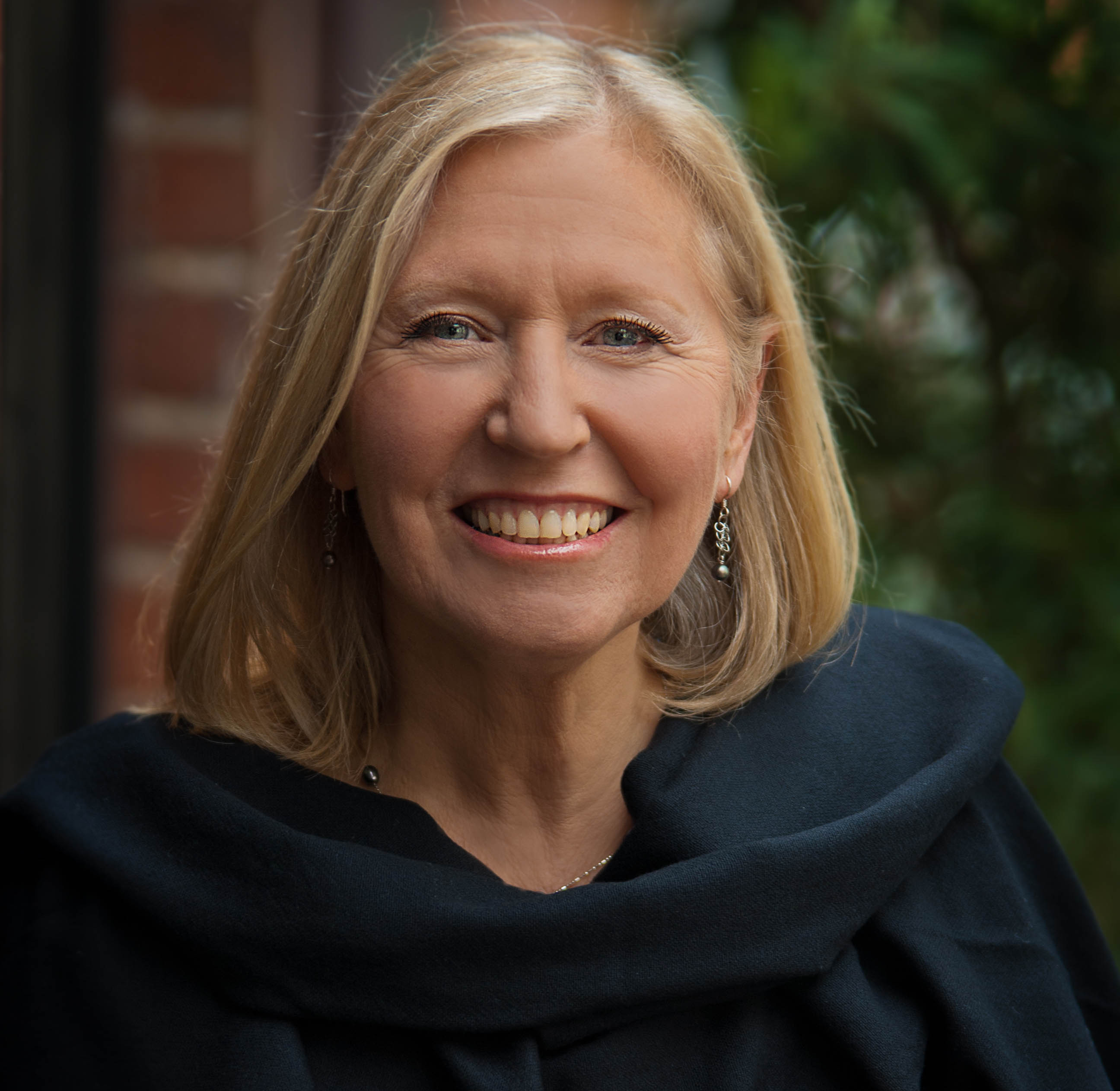
Wordly Women: Gemma Hollman

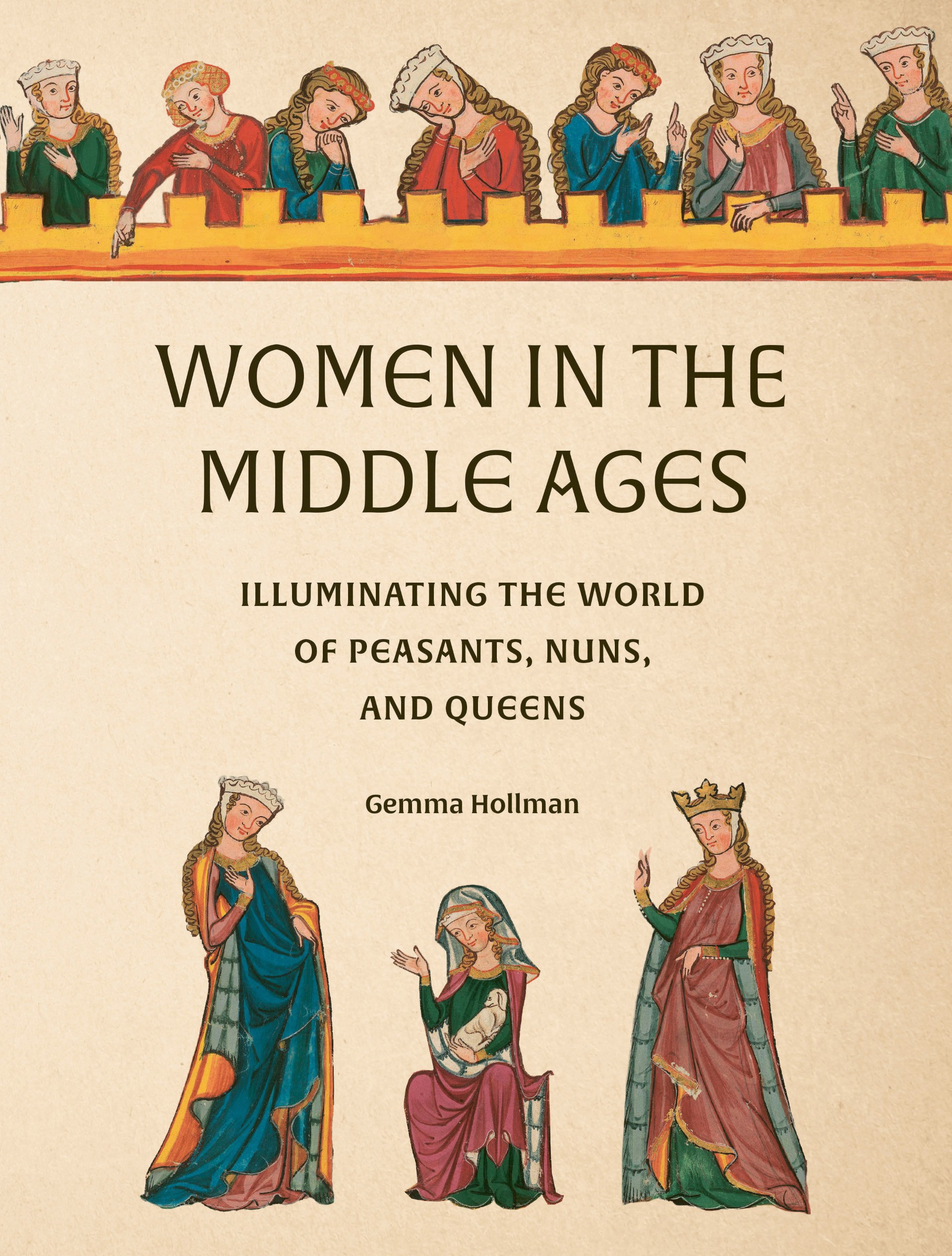
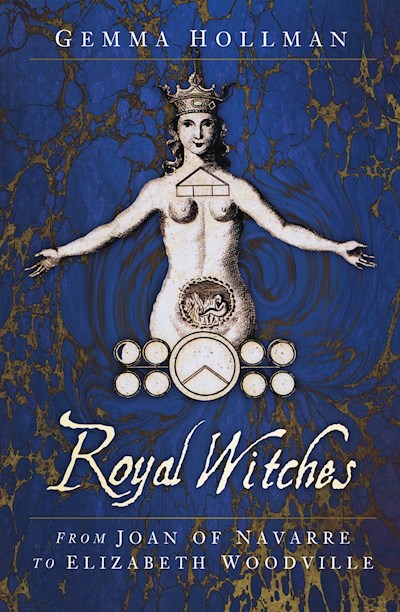
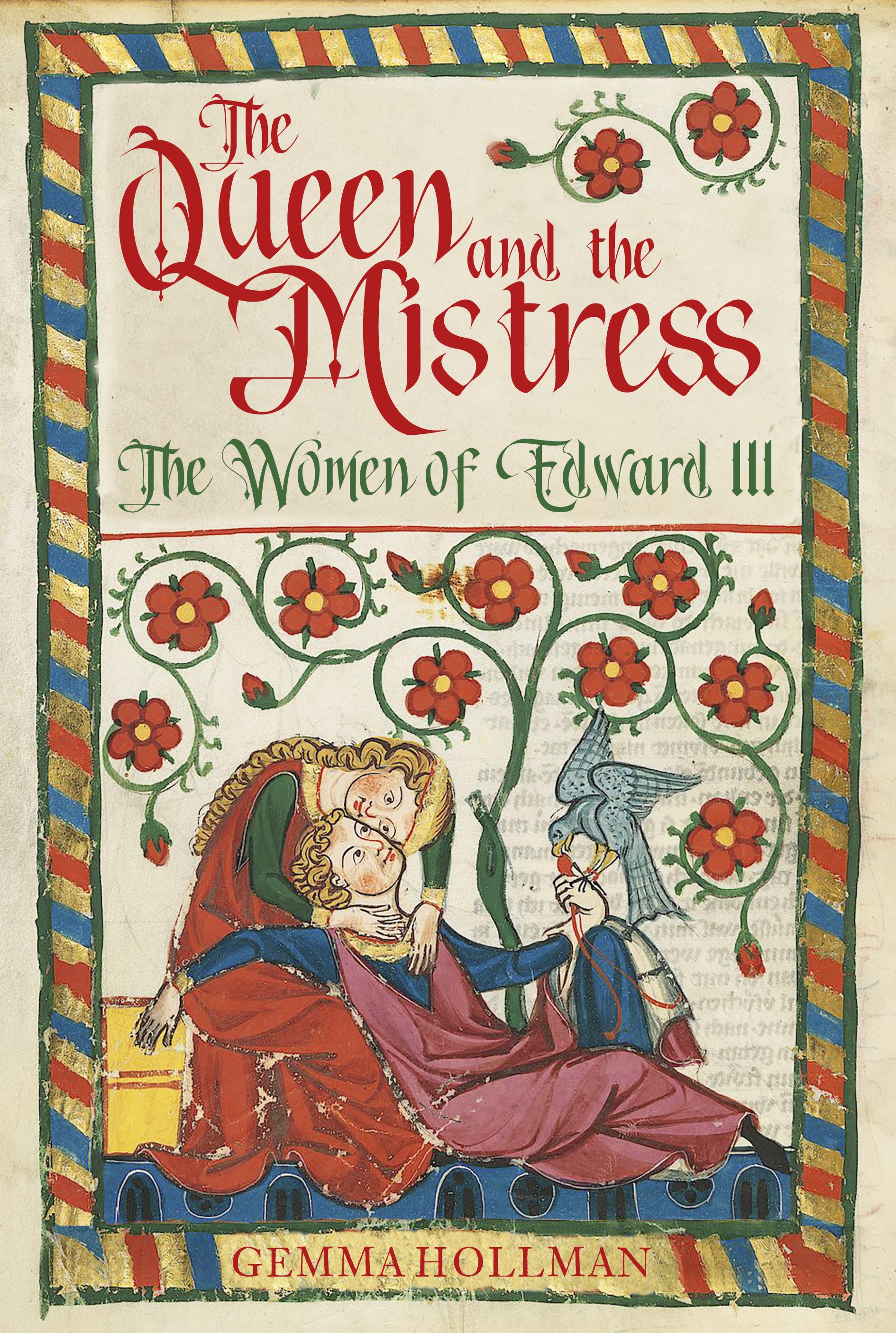
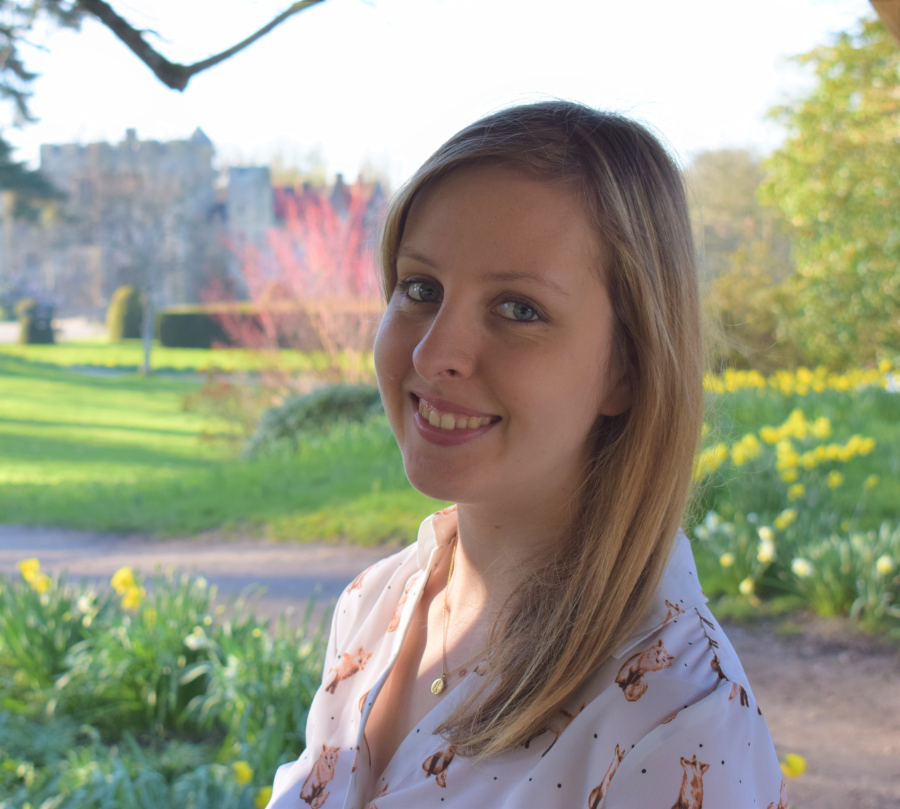
Today I am continuing my Wordly Women series with a historian who, just like me, concentrates on bringing the women to the fore. Gemma Hollman has written about Royal Witches, queens and mistresses. Her last book, Women in the Middle Ages: Illuminating the World of Peasants, Nuns, and Queens came out at the end of 2024, and is gorgeous! It was lovely to get the chance to have a chat with Gemma about her writing journey.

Sharon: So, Gemma, what got you into writing?

Gemma: It’s kind of a mix of completely by accident, and something I’ve always enjoyed doing. Whilst at school and university I would write bits of fiction for fun, never for anyone to look at, so I’ve always had a bit of a writing bug. But when I finished university, it felt so weird to go from four years of researching and writing history to quitting cold turkey. At this time, it seemed like everyone was making blogs, including loads of my friends, so I decided to join the trend and establish my blog, Just History Posts.

I loved writing there, and by the second year I was gathering a load of steam. One of my most popular posts was about Joan of Navarre, a fifteenth-century Queen of England who was accused of using witchcraft against the king – and one of the focuses of my Masters dissertation. That, combined with lots of people I knew in real life saying my dissertation would make an amazing book, made me think maybe people would like to learn about these women and their stories which are not that well-known. I pitched the book to The History Press and it eventually turned into my debut non-fiction book, Royal Witches. The rest, as they say, is history.

Sharon: Tell us about your books.

Gemma: Well, I already gave you a little bit of a taster about Royal Witches (the other three women, beyond Joan, are Eleanor Cobham, Jacquetta of Luxembourg and Elizabeth Woodville), about fifteenth-century women in the English Royal Family who were all accused of witchcraft. My second book goes back to the previous century and the court of Edward III of England, and is a dual biography of the two women who dominated his court and his heart – his queen, Philippa of Hainault, and his mistress, Alice Perrers. Both women are absolutely fascinating in their own right, but by looking at them together I think you can understand them, Edward, and the fourteenth century a lot better.

My final book came out at the end of last year, and is called Women in the Middle Ages. A slight departure from my first two books, which were both focused biographies, this is a much broader look at women across much of Europe from roughly 1000-1500. The best thing about it, though, is that it is an illustrated history, featuring just shy of 200 images of artwork and artefacts from the medieval period. I explore how these objects can illuminate the real lives of these women in far more detail than written records alone. It is a beautiful, full-colour experience which was so special to pull together.

Sharon: What attracts you to the medieval period?

Gemma: I’ve always loved all periods of history, and studied a huge range of history at university, but I found that I enjoyed writing medieval history much more than I did modern history. I enjoyed acting almost like a detective and trying to extract bits about people’s lives and personalities with such limited sources. And the more I researched and wrote it, the more I fell in love with it. The medieval world was so incredibly different from today in every aspect, that it can sometimes feel like another world. But, at the same time, people themselves are so similar to today. I always love reading stories that connects us through the centuries, feeling that human connection to someone so far removed from myself today. Although it was a time of huge strife, poverty, and difficulty, there is something intrinsically magical about it – it’s no coincidence so much of our fantasy media today has medieval vibes!

Sharon: Who is your favourite 14th century person and why?

Gemma: Oh gosh, that is such a difficult question! Of course there is no one favourite, as that would be impossible, but someone who has grabbed my attention ever since I first learnt about her is Isabella of France, the queen of Edward II of England. She was so self-assured of her lineage, her rights, the respect due to her by virtue of her position, and she was not going to let anyone tell her otherwise. She was loved and sympathised with whilst the neglected spouse, then inspired the entire country to stand with her and overthrow her husband, and went on to pretty much rule England with her lover for several years. Even after her son, Edward III, forcibly took control of the kingdom again, she continued to wield significant influence at court. I think she is just so utterly fascinating – and she of course perfectly sets the scene for the start of my second book, The Queen and the Mistress!

Sharon: Who is your least favourite 14th century and why?

Gemma: Ooh. I don’t know that there’s really anyone I actively dislike, but for playfulness I will put forward Thomas Walsingham, chronicler and monk at St Albans Abbey in Hertfordshire. His chronicles are invaluable for our knowledge of the late fourteenth century, but he is a bit of a villain in my second book for his treatment of Alice Perrers. As a religious man, Alice’s position as a mistress at the heart of the court was unconscionable (and it didn’t help that she was embroiled in legal conflicts with his abbey for many years). He is responsible for a lot of the negative propaganda against Alice which lasted for centuries, including the baseless accusation that she stole the rings from Edward’s fingers after he died. Even today, the way he spoke about her is the main way people approach her and assume how she really was. Talk about negative PR.

Sharon: How do you approach researching your topic?

Gemma: Mostly I already have a theme or a person in mind for what I want to research, and generally I already have an amount of knowledge about the topic. But I always find it most helpful to start with secondary sources, ie by reading a load of books and journal articles on the subject. I write copious notes, start creating timelines where necessary, and jot down the names of other books and sources from the footnotes. I then go to the original sources and make a load of notes on those, too, and I then dive in to writing. I always find once I start writing I then become aware of areas where my notes might be lacking, like missing any information about what someone was doing in a particular year of their life, and so I then go back to the sources and secondary material to fill in these gaps. I also find that it’s only by starting to write do I truly know which direction my piece is going in, and thus am able to tailor my research much more specifically, rather than reading about anything in the hope it might be useful, but finding that I don’t use it at all (as happens with much of my early research).

Sharon: Tell us your ‘favourite’ medieval story you have come across in your research.
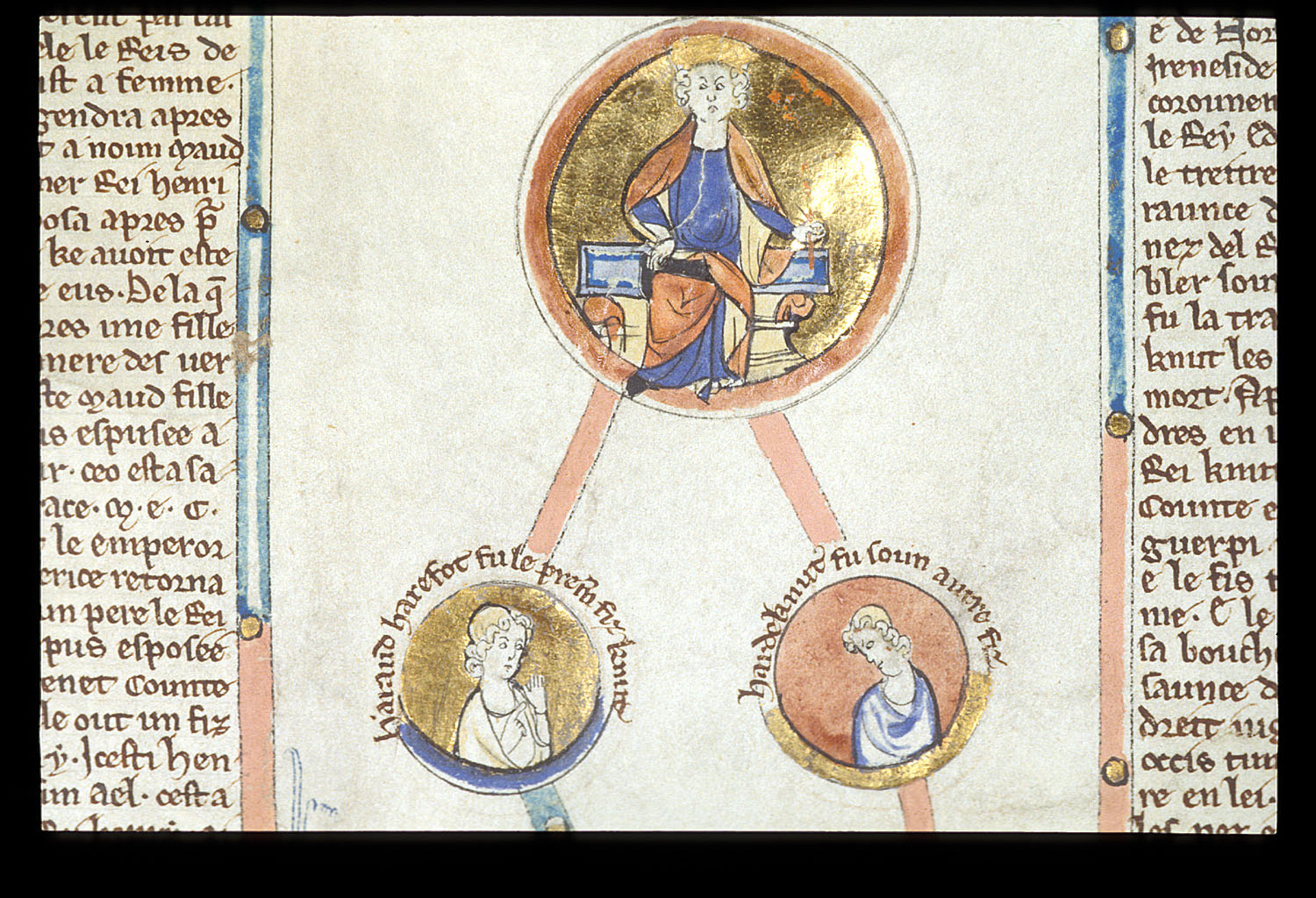
Gemma: One of my favourites definitely comes from a story I read in a chronicle at university, and which I recounted in one of my very first blog posts. This is a story from the court of Henry II of England, and is one that very much exemplifies what I said earlier about people never changing. The king’s steward, a man named Thurston, came to him and complained that another man, Adam of Yarmouth, refused to seal a writ for him free of charge (something which was to be expected amongst people working in the government). After some investigation, it was revealed that Adam was upset at Thurstan because at a party Thurstan had been hosting, he refused to allow Adam to eat two cakes! Such a petty squabble had disrupted the king’s business, and he settled the squabble by having Adam seal the writ in return for Thurstan serving him two cakes on bended knee. It sounds like something out of fiction rather than reality!

Sharon: Are there any other eras you would like to write about?

Gemma: I definitely have found my comfort zone in the medieval era, but I do think from time to time about writing about other periods, as I think is only natural. I know of some amazing women from the Georgian and Victorian periods that I’ve been drawn to writing about several times, so maybe that’s something I can set my sights on one day.

Sharon: What are you working on now?

Gemma: At the moment, I am in the midst of my fourth book which is set in the court of Richard II. The book is largely a biography about Richard, but it also aims to take a look at his wider court, too, particularly some of the other large and important figures – and, particularly, women. It’s due next year, so wish me luck with getting it done in time!

Sharon: And finally, what is the best thing about being a writer?

Gemma: This question is definitely easy for me – spreading the knowledge I have and seeing people enjoy it and learn something new. Every time I get a review, or speak to a person at a talk I am giving, where the person said they’ve loved what I’ve written/how I’ve spoken, and that they’ve learnt something is just as special as the last. I love writing, and I love that I get to learn so many interesting things myself in the process, but the whole point of me writing is to share all the things I’ve learnt with other people. Each time I hear that I’ve done that, and done it well, makes all of the late nights researching after a full day’s work, or the times I can’t see my friends and family because I have a deadline worth it.

About the author:

Author bio: Gemma Hollman is a historian and author who specialises in late medieval English history. A Fellow of the Royal Historical Society, she has a particular interest in the plethora of strong, intriguing and complicated women from the medieval period, a time she had always been taught was dominated by men. Gemma also works full-time in the heritage industry whilst running her historical blog, Just History Posts, which explores all periods of history in more depth. Gemma’s first book, Royal Witches, was a bestseller, and two more books have since followed: The Queen and the Mistress, and Women in the Middle Ages.

Where to find Gemma:

Website: https://justhistoryposts.com/; Link for books: https://lnk.bio/GemmaHAuthor; Social media: Bluesky https://bsky.app/profile/gemmahauthor.bsky.social.

*

My books

Signed, dedicated copies of all my books are available through my online store.

Out now: Scotland’s Medieval Queens

Books by Sharon Bennett Connolly

Scotland’s history is dramatic, violent and bloody. Being England’s northern neighbour has never been easy. Scotland’s queens have had to deal with war, murder, imprisonment, political rivalries and open betrayal. They have loved and lost, raised kings and queens, ruled and died for Scotland. From St Margaret, who became one of the patron saints of Scotland, to Elizabeth de Burgh and the dramatic story of the Scottish Wars of Independence, to the love story and tragedy of Joan Beaufort, to Margaret of Denmark and the dawn of the Renaissance, Scotland’s Medieval Queens have seen it all. This is the story of Scotland through their eyes.

Scotland’s Medieval Queens gives a thorough grounding in the history of the women who ruled Scotland at the side of its kings, often in the shadows, but just as interesting in their lives beyond the spotlight. It’s not a subject that has been widely covered, and Sharon is a pioneer in bringing that information into accessible history.’ Elizabeth Chadwick (New York Times bestselling author)

Available now from Amazon and Pen and Sword Books

Also by Sharon Bennett Connolly:

Books by Sharon Bennett Connolly

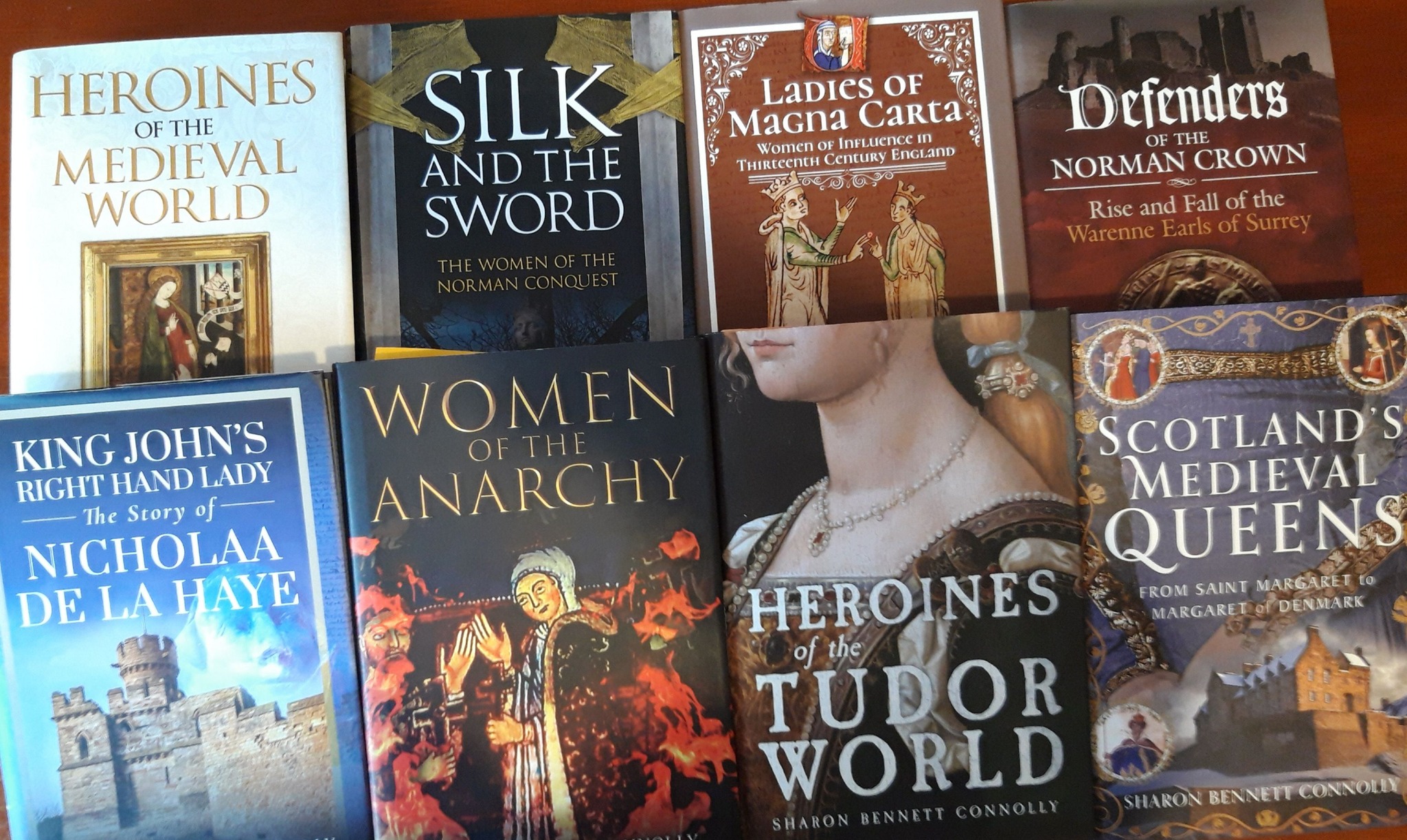
Heroines of the Tudor World tells the stories of the most remarkable women from European history in the time of the Tudor dynasty, 1485-1603. These are the women who ruled, the women who founded dynasties, the women who fought for religious freedom, their families and love. Heroines of the Tudor World is now available from Amberley Publishing and Amazon UK. Women of the Anarchy demonstrates how Empress Matilda and Matilda of Boulogne, unable to wield a sword themselves, were prime movers in this time of conflict and lawlessness. It shows how their strengths, weaknesses, and personal ambitions swung the fortunes of war one way – and then the other. Available from Bookshop.orgAmberley Publishing and Amazon UKKing John’s Right-Hand Lady: The Story of Nicholaa de la Haye is the story of a truly remarkable lady, the hereditary constable of Lincoln Castle and the first woman in England to be appointed sheriff in her own right. Available from all good bookshops Pen & Sword Booksbookshop.org and Amazon

Books by Sharon Bennett Connolly

Defenders of the Norman Crown: The Rise and Fall of the Warenne Earls of Surrey tells the fascinating story of the Warenne dynasty, from its origins in Normandy, through the Conquest, Magna Carta, the wars and marriages that led to its ultimate demise in the reign of Edward III. Available from Pen & Sword BooksAmazon in the UK and US, and Bookshop.orgLadies of Magna Carta: Women of Influence in Thirteenth Century England looks into the relationships of the various noble families of the 13th century, and how they were affected by the Barons’ Wars, Magna Carta and its aftermath; the bonds that were formed and those that were broken. It is now available in paperback and hardback from Pen & SwordAmazon, and Bookshop.orgHeroines of the Medieval World tells the stories of some of the most remarkable women from Medieval history, from Eleanor of Aquitaine to Julian of Norwich. Available now from Amberley Publishing and Amazon, and Bookshop.orgSilk and the Sword: The Women of the Norman Conquest traces the fortunes of the women who had a significant role to play in the momentous events of 1066. Available now from Amazon,  Amberley Publishing, and Bookshop.org.

Alternate Endings: An anthology of historical fiction short stories including Long Live the King… which is my take what might have happened had King John not died in October 1216. Available in paperback and kindle from Amazon.

Podcast:
A Slice of Medieval

Have a listen to the A Slice of Medieval podcast, which I co-host with Historical fiction novelist Derek Birks. Derek and I welcome guests, such as Bernard Cornwell and Michael Jecks, and discuss a wide range of topics in medieval history, from significant events to the personalities involved. Every episode is also now available on YouTube.
*

Don’t forget! Signed and dedicated copies of all my books are available through my online store.

For forthcoming online and in-person talks, please check out my Events Page.

You can be the first to read new articles by clicking the ‘Follow’ button, liking our Facebook page or joining me on TwitterThreadsBluesky and Instagram.

*

©2025 Sharon Bennett Connolly, FRHistS and Gemma Hollman, FRHistS

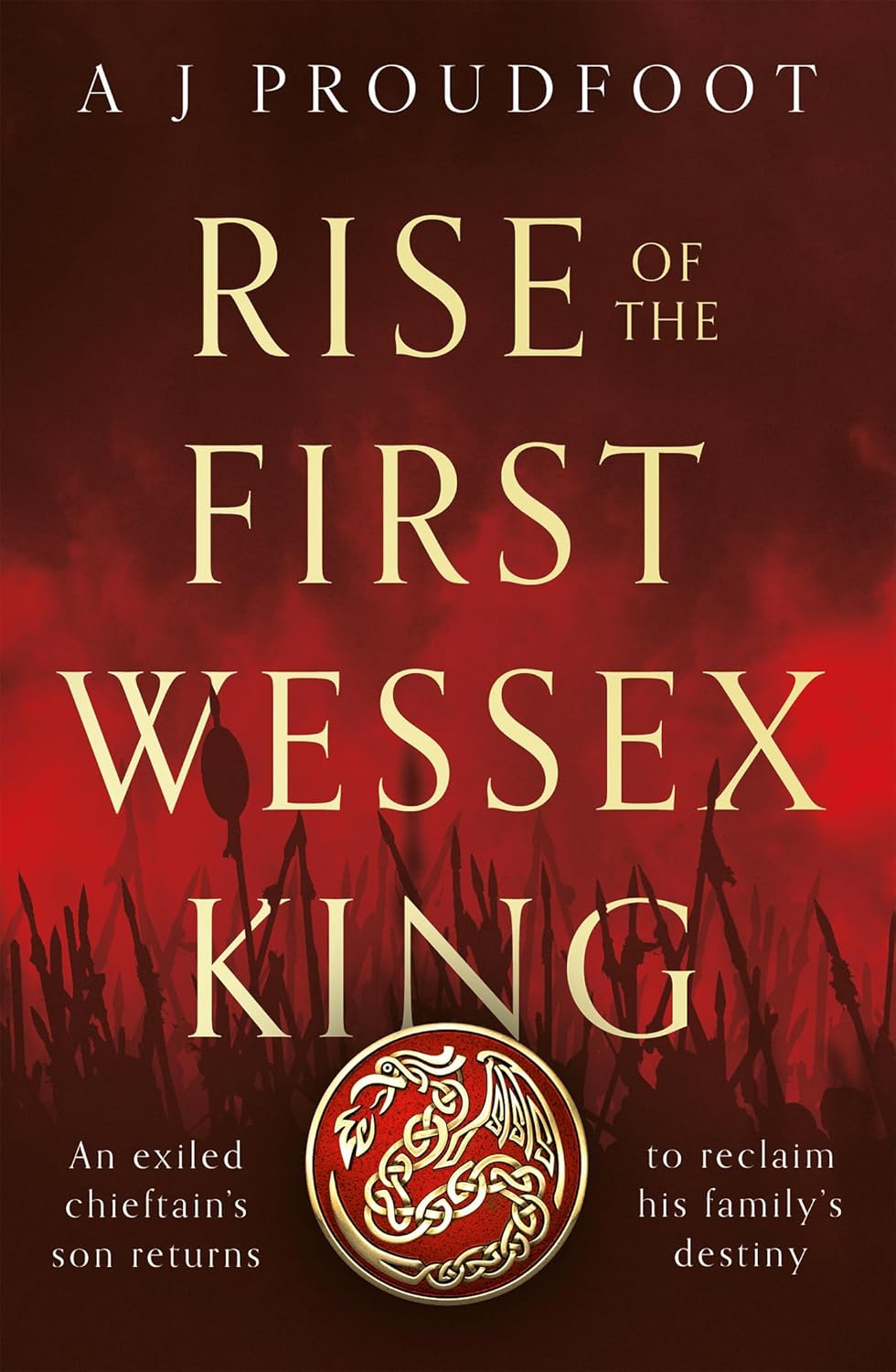
Book Corner: Rise of the First Wessex King by A.J. Proudfoot

A.J. Proudfoot

When the Saxons, invited to settle in Britannia by King Wyrtgeorn, brutally murder the father and brother of Ceredig, the second son of a fifth century Romano-British chieftain, he flees the land of his birth.

While the Saxons expand their control over Britannia, Ceredig grows up in Armorica, learning the ways of the Gewisse, and ultimately taking command of this elite force of warriors, who had remained loyal to his father, Elisedd.

Despite ruling as a chieftain in Armorica, Ceredig remains determined to return to his homeland, avenge his father and brother’s murder, and finally reclaim the lands his father had once ruled in southern Britannia.

After over forty years in exile, Ceredig, his son and a force of Gewisse warriors return to Britannia, joining a large army of Britons who are preparing to take on the Saxons in battle at Badonbyrg.

What happens next will go down in history…

As a debut novel, Rise of the First Wessex King by A.J. Proudfoot is a winner. And as a special treat, alongside my review, I have an interview with the author, who is currently working on book no. 2 in what promises to be a fascinating series. Cerdic, or Ceredig, is the founder of the kingdom of Wessex and a royal house that would reach its zenith under Ceredig’s descendants, King Alfred the Great, Æthelflæd, Lady of the Mercians, her brother Edward the Elder and Edward’s son Athelstan, first king of England.

And it all started with Ceredig.

In Rise of the First Wessex King, A.J. Proudfoot recreates Ceredig’s world, post-Roman Britain, breathing life into this 1,500-year-old story. And what a fascinating story it is. Though our knowledge is limited, Proudfoot fills in the gaps to create a lively and energetic retelling of the foundation of the royal house of Wessex. This is the story of the fight of the native Britons against the invading Saxons, of a war that must have felt never-ending, at times. It is a story of conflict and betrayal, but also of family and comradeship, and of a young man who had to patiently wait for the time to be right to achieve his dream of pushing back the Saxons and going home.

The characters, particularly our hero, are wonderfully vivid. And I love how Proudfoot weaves the legends of Arthur and Hengist and Horsa in to the story, bringing a little-known period of history back to life. Who doesn’t like to see a little bit of King Arthur thrown into the mix? The inclusion of Artorius and Ambrosius made me smile – and want to read more!

This is a debut novel, so Proudfoot sometimes fall into the trap of giving summaries, telling, rather than showing the action and debate, but this does not detract from the pace of the book. Overall, it is a fabulous read, imbued with a sense of adventure. It is a great start to what promises to be an impressive series.

Overall, it is a great story, told well!

If you’re looking for a new author to sink your teeth into, I don’t hesitate to recommend A.J. Proudfoot’s Rise of the First Wessex King.

To Buy the Book:

Books2Read; The Book GuildBookshop.org (UK)

Interview with A.J. Proudfoot

A.J. Proudfoot

Sharon: So, Alex, what got you into writing historical fiction?

Alex: This may come as a surprise, but I didn’t originally set out to become an author and write historical fiction novels. I was simply trying to trace the origins of my unusual Proudfoot surname, and was continuing the research into our Proudfoot family history that my parents and aunt had begun many years before.

After several years’ research, I was amazed to find that I had traced my family ancestry back 1500 years to a mysterious chieftain called Cerdic, at the end of the fifth century, who founded the Anglo-Saxon kingdom of Wessex. There are many interesting ancestors in the Proudfoot family tree, whose lives would make an excellent novel, but when I discovered more about Cerdic’s life, I realised that there was an Arthurian story that was worth writing.

Sharon: What made you want to tell Cerdic’s story?

Alex: I was intrigued why this important figure in early English history has been largely ignored by historical writers, so I undertook my own research into the life of Cerdic, finding crucial inconsistencies in what is written about Cerdic’s Saxon heritage, which I put down to a desire, by early Saxon chroniclers, to establish King Alfred’s Saxon ancestry.

Instead, I found evidence that Cerdic was more likely to be descended from a Romano-British family, who originally hailed from an ancient Welsh kingdom, and was more than likely called Ceredig, given his Brythonic heritage, and to the phonetic similarities. As a result, I felt compelled to use what I had learned to tell the story about my earliest known ancestor and his crucial role in history, based on recorded events in the early Anglo-Saxon era. To paraphrase John Wade, the rest is historical fiction!
Sharon: How do you go about researching a historical character from 1500 years ago?

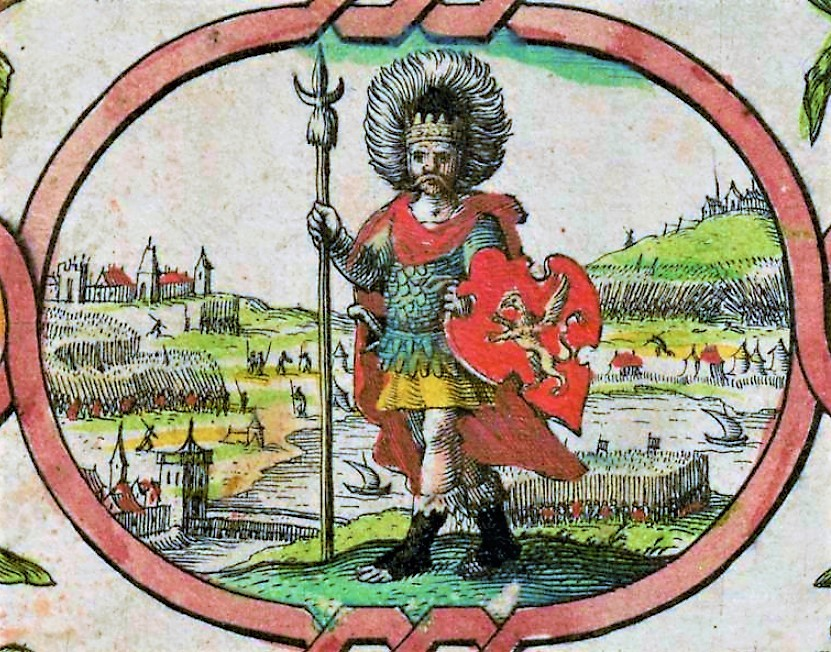
Imaginary depiction from John Speed’s 1611 “Saxon Heptarchy”

Alex: The great difficulty in researching a historical figure from so far back is the lack of contemporary records. My starting point was, naturally, the Anglo-Saxon Chronicle, but it only mentions six events relating to Cerdic’s life, and is written from a Saxon perspective. I read all I could about Cerdic in research papers by modern Anglo-Saxon historians, including JNL Myers and Richard Coates, which is where I found clues to Cerdic’s Romano-British connections. There was also a story about 5th century Bishop Germanus meeting a regional chieftain in southern Britain, called Elasius, whose name is remarkably similar to Elesa, the recorded name of Cerdic’s father in the Anglo-Saxon Chronicle.

Eventually, I had built a picture of the young son of a Romano-British chieftain, ruling and defending the southern coastline of Britain against Saxon invaders, who suddenly disappeared from Britain, returning nearly fifty years later to take control over a region in the Upper Thames Valley, before expanding his lands south before becoming king and ruling a kingdom of the Gewisse that would eventually become known as Wessex, named after the West Saxons.

My research raised more questions than answers, so I used what I had learned about events during that period to write a dramatic reconstruction of Cerdic’s life, and the formation of the Anglo-Saxon kingdom of Wessex. Based on fact, but mostly fiction.

Sharon: What are you working on now?

Alex:I am currently working on a sequel to Rise of the First Wessex King, which will follow the lives of Cunorix and his son, Ceawlin, as they try to build on Ceredig’s legacy in ruling the kingdom of the Gewisse, whilst facing threats from the Saxons in the east, and Britons in the west, as well as challenges they could not anticipate.

Sharon: What is the best – and worse – thing about being a writer?

Alex: Personally, the hardest part about writing my historical fiction novels is that the stories are based in the south of England and I live just outside Edinburgh, in Scotland. This meant that I have had to make several research trips down south, visiting locations featured in my novels. Whilst there is very little evidence to reveal what it would be like when the books are set, I have found this a useful exercise in understanding the topography, as well as encouraging the creative writing juices.

The best part of being a writer is that I love history and solving puzzles. This has been useful in writing about a period in history where facts are limited, so deciphering my characters’ motives behind their decisions has been crucial in building the story of their lives.

About the Author

A J (Alex) Proudfoot lives in Musselburgh, near Edinburgh. He started his career as an accountant, working in the brewing, publishing and financial sectors, before qualifying as a chartered marketer, working at the University of Edinburgh for over twenty years. After retiring early in 2018, he has spent his free time researching his Proudfoot family history, back 1500 years to his earliest known ancestor, which led to the publication of his debut historical fiction novel, Rise of the First Wessex King.

Social media links

Facebook – https://www.facebook.com/ajproudfootwriter

YouTube – https://www.youtube.com/@ajproudfoot

Book trailer – https://www.youtube.com/watch?v=4gpZMOMzwZs&t

*

My books

Signed, dedicated copies of all my books are available through my online store.

Out now: Scotland’s Medieval Queens

Books by Sharon Bennett Connolly

Scotland’s history is dramatic, violent and bloody. Being England’s northern neighbour has never been easy. Scotland’s queens have had to deal with war, murder, imprisonment, political rivalries and open betrayal. They have loved and lost, raised kings and queens, ruled and died for Scotland. From St Margaret, who became one of the patron saints of Scotland, to Elizabeth de Burgh and the dramatic story of the Scottish Wars of Independence, to the love story and tragedy of Joan Beaufort, to Margaret of Denmark and the dawn of the Renaissance, Scotland’s Medieval Queens have seen it all. This is the story of Scotland through their eyes.

Scotland’s Medieval Queens gives a thorough grounding in the history of the women who ruled Scotland at the side of its kings, often in the shadows, but just as interesting in their lives beyond the spotlight. It’s not a subject that has been widely covered, and Sharon is a pioneer in bringing that information into accessible history.’ Elizabeth Chadwick (New York Times bestselling author)

Available now from Amazon and Pen and Sword Books

Also by Sharon Bennett Connolly:

Books by Sharon Bennett Connolly

Heroines of the Tudor World tells the stories of the most remarkable women from European history in the time of the Tudor dynasty, 1485-1603. These are the women who ruled, the women who founded dynasties, the women who fought for religious freedom, their families and love. Heroines of the Tudor World is now available from Amberley Publishing and Amazon UK. Women of the Anarchy demonstrates how Empress Matilda and Matilda of Boulogne, unable to wield a sword themselves, were prime movers in this time of conflict and lawlessness. It shows how their strengths, weaknesses, and personal ambitions swung the fortunes of war one way – and then the other. Available from Bookshop.orgAmberley Publishing and Amazon UKKing John’s Right-Hand Lady: The Story of Nicholaa de la Haye is the story of a truly remarkable lady, the hereditary constable of Lincoln Castle and the first woman in England to be appointed sheriff in her own right. Available from all good bookshops Pen & Sword Booksbookshop.org and Amazon

Royal Historical Society

Defenders of the Norman Crown: The Rise and Fall of the Warenne Earls of Surrey tells the fascinating story of the Warenne dynasty, from its origins in Normandy, through the Conquest, Magna Carta, the wars and marriages that led to its ultimate demise in the reign of Edward III. Available from Pen & Sword BooksAmazon in the UK and US, and Bookshop.orgLadies of Magna Carta: Women of Influence in Thirteenth Century England looks into the relationships of the various noble families of the 13th century, and how they were affected by the Barons’ Wars, Magna Carta and its aftermath; the bonds that were formed and those that were broken. It is now available in paperback and hardback from Pen & SwordAmazon, and Bookshop.orgHeroines of the Medieval World tells the stories of some of the most remarkable women from Medieval history, from Eleanor of Aquitaine to Julian of Norwich. Available now from Amberley Publishing and Amazon, and Bookshop.orgSilk and the Sword: The Women of the Norman Conquest traces the fortunes of the women who had a significant role to play in the momentous events of 1066. Available now from Amazon,  Amberley Publishing, and Bookshop.org.

Alternate Endings: An anthology of historical fiction short stories including Long Live the King… which is my take what might have happened had King John not died in October 1216. Available in paperback and kindle from Amazon.

Podcast:

A Slice of Medieval

Have a listen to the A Slice of Medieval podcast, which I co-host with Historical fiction novelist Derek Birks. Derek and I welcome guests, such as Bernard Cornwell and Michael Jecks, and discuss a wide range of topics in medieval history, from significant events to the personalities involved. 

Every episode is also now available on YouTube.

*

Don’t forget! Signed and dedicated copies of all my books are available through my online store.

For forthcoming online and in-person talks, please check out my Events Page.

You can be the first to read new articles by clicking the ‘Follow’ button, liking our Facebook page or joining me on TwitterThreadsBluesky and Instagram.

*

©2025 Sharon Bennett Connolly, FRHistS

Gruoch, Lady Macbeth, Queen of Scots

Scotland’s Medieval Queens
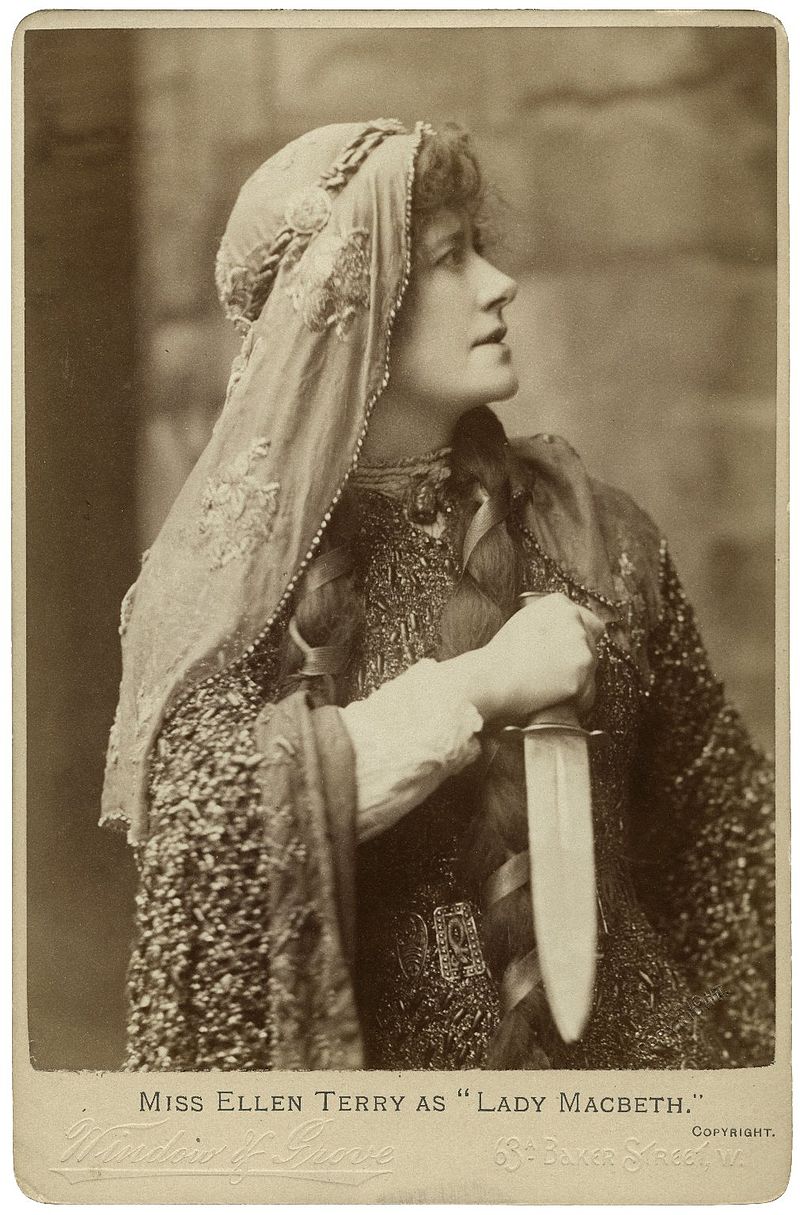
Ellen Terry as Lady Macbeth

Everyone complains about William Shakespeare’s portrayal of Richard III and how that kings posthumous reputation has been damaged – possibly beyond repair – by the bard’s now-infamous play. His greed, ambition and murderous shenanigans enshrined in literature and history. But Richard III was not the only historical figure whose true history was subjected to defamation and misinformation in the name of drama, by that same playwright. For over 400 years, William Shakespeare’s version of Lady Macbeth has been the woman most people are familiar with. The scheming, ambitious wife who will stop at nothing to put her husband on the Scottish throne – and commit murder to keep him there.

In Macbeth, also known as ‘The Scottish Play’, the eponymous character’s wife is not even given her own name. She is ‘Lady Macbeth’, and she is imbued with evil and ambition. She is a character to be vilified and hated, driving her husband to yet greater crimes for the sake of a crown. She never professes love, nor sentimentality throughout the play. She is an intelligent, beautiful woman, but her passions are for power and supremacy.

But is that the real Lady Macbeth?

As many fans of Richard III will say, Shakespeare is fiction. He is telling a story to entertain, imbuing it with the moral judgements of his time, the early modern era. Unlike with Richard III, Lady Macbeth has no following with a desire to seek out the truth and right the wrongs done to her. Historians have tried to address the bard’s inaccuracies.

But Shakespeare’s shadow is long…

So, who was Lady Macbeth?

Scotland’s Medieval Queens
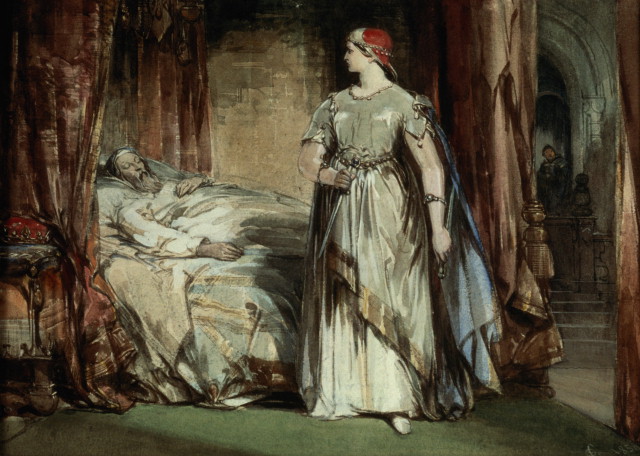
Lady Macbeth by George Cattermole

As you can imagine, with the passing of nearly a thousand years, the information on Lady Macbeth is scarce. We know her name was Gruoch, and she was a royal princess, the granddaughter of a king. Gruoch’s date of birth is unknown, but she appears to have been married at some point in the 1020s to a man named Gille Comgáin, which may mean she was born in the first decade of the eleventh century, perhaps somewhere around 1005-1010. We know that she and Gille Comgáin had a son, named Lulach.

Gille Comgáin, was involved in a particularly nasty family feud. He was a first cousin of Macbethad mac Findláech – Macbeth MacFinlay in English – Macbeth. Macbeth’s father, Findlaech mac Ruidrí was mormaer of Moray and may have been some relation to Malcolm II, King of Scots. The other possibility, though the evidence is later and uncertain, is that Findlaech was married to the unnamed youngest daughter of Malcolm II. Although the family relationship is confusing, this may explain why Macbeth is identified as a nephew or grandson of Malcolm II in various sources.

Gille Comgáin he and his brother, Máel Coluim, had murdered Macbeth’s father, and claimed the lands of Moray, with Máel Coluim succeeding his uncle as Mormaer of Moray, a semi-independent region of north-eastern Scotland. Literally translated, mormaer means great steward and the holders of the title enjoyed semi-royal status, which may explain why they are sometimes referred to as kings. Máel Coluim was in turn succeeded by his younger brother Gille Comgáin, on his death in 1029. Macbeth, younger than his murderous cousins, and probably only a teenager at the time, fled, perhaps to Ireland.

Scotland’s Medieval Queens
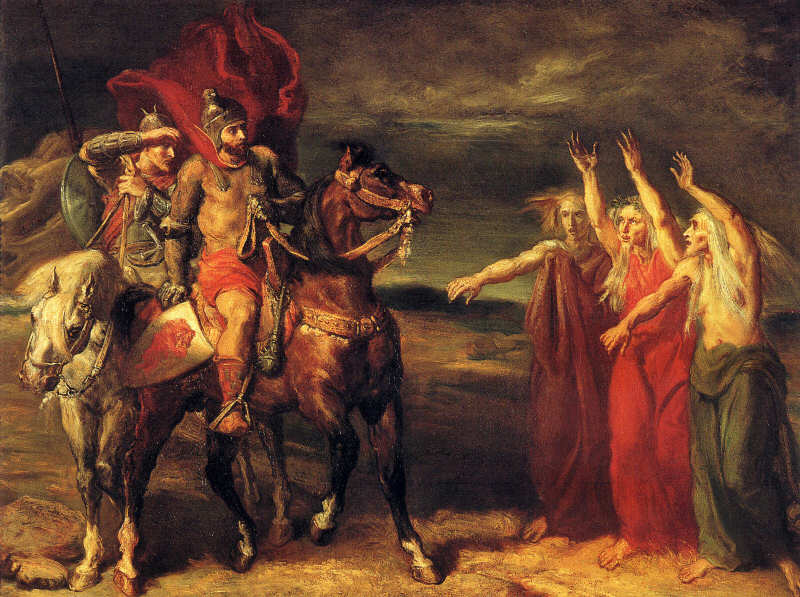
Macbeth and Banquo

In 1032, Gille Comgáin was murdered, along with 50 of his men. Although Macbeth is not mentioned as the perpetrator, many, certainly, lay the blame at his door. Given the number of dead involved, it is possible that Gille Comgáin and his followers were trapped in his hall as it was burned down, perhaps during a feast, the doors barred from the outside to prevent escape. If Gruoch was Gille Comgáin’s wife, she did not share her husband’s fate. It is possible that she and her small son were away from home at the time, otherwise they would have perished alongside the others. Another possibility is that Gruoch escaped – or was rescued – from the hall with Lulach before the fire took hold.

Macbeth succeeded his cousin as mormaer of Moray, and it was only a short time after Gille Comgáin’s death that Gruoch and Macbeth were married, putting an end to the murderous family feud. We may feel uneasy about Gruoch marrying her husband’s murderer, if he was, but the union was political common sense. Gruoch, a mother with a young son and royal blood, was low on male protection; her brother had just been murdered, possibly by Malcolm II, and her infant nephew would be killed the following year. As the wife of Macbeth, Gruoch could feel secure in his protection as the new mormaer and may have extracted guarantees that Macbeth would look after Lulach’s interests, given the way he raised the boy and even designated him as his heir. For Macbeth, Gruoch’s royal blood and lands would strengthen his own claim to the Scots throne, if he was thinking that far ahead in 1032.

In 1034, on 25 November, King Malcolm II died at Glamis and was peacefully succeeded by his grandson, Duncan, helped no doubt by Malcolm’s campaign of eliminating potential rivals. Duncan was probably in his mid-20s when he was invested as King of Scots at Scone just five days after his grandfather’s death: he was certainly not the old man as depicted by Shakespeare. When Duncan led an army north against Thorfinn of Orkney, Thorfinn allied with Macbeth to form a league to challenge the Scots king. Duncan led an army against Moray, apparently unaware of Macbeth’s alliance with Thorfinn and the two armies met at Pitgaveny, near Elgin, on 15 August 1040. Macbeth won the contest, with Duncan lying dead on the field of battle at the end of the day – not murdered as in ‘the Scottish play’. With Duncan’s sons still only children, taken into exile, beyond Macbeth’s reach, Macbeth assumed the kingship unchallenged, with Gruoch by his side.

Gruoch is the first Scottish queen whose name is known to history.

Scotland’s Medieval Queens
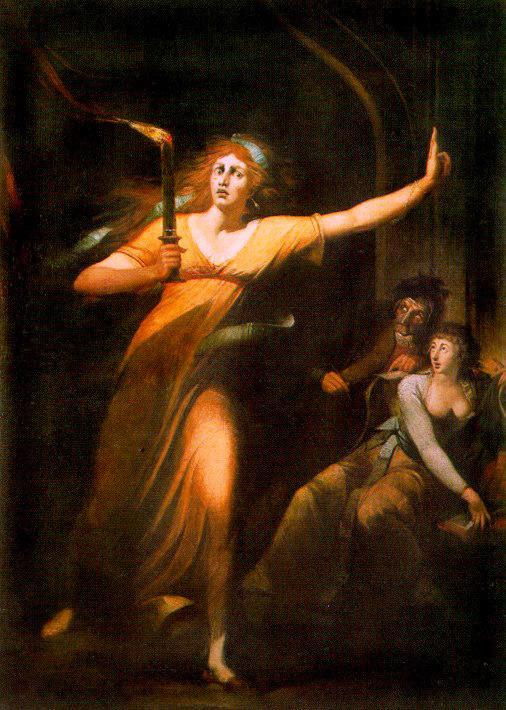
Lady Macbeth sleepwalking by Johann Heinrich Füssli

In the early years of his reign, Macbeth faced challenges from the dead King Duncan’s father and from Siward, Earl of Northumbria, who mounted an invasion of Scotland in the name of Malcolm, Duncan I’s oldest son and heir. Although the invasion initially succeeded in defeating Macbeth, the king gathered reinforcements from his heartlands in the north and expelled Siward’s forces.

There followed 8 years of peace in Scotland. By 1050, King Macbeth was in such a strong position that he was able to leave the kingdom and go on pilgrimage to Rome, where he ‘scattered money like seed to the poor’.1 The pilgrimage would have been a combination of religious devotion and diplomatic networking; a chance for the King of Scots to be seen on the wider European stage. The generosity of Macbeth and Gruoch towards the church, during the pilgrimage, had monastic writers recording that ‘in his reign there were productive seasons’.2

In those 8 years, Duncan’s sons were growing to adulthood and in 1054, Earl Siward again invaded Scotland, hoping to place Malcolm on the throne, as a client king of England’s Edward the Confessor. Although the battle at Dunsinane was lost, Macbeth’s men sold their lives dearly; Siward’s oldest son was killed, and the earl was unable to press any advantage. Scotland was divided, with Malcolm establishing himself in Lothian and the southern kingdom of Strathclyde, while Macbeth continued to control Scotland’s heartlands north of the Forth. The subsequent campaign was long and bloody as Malcolm extended his influence northwards. It was not until 1057 that Malcolm crossed the Mounth, ambushing Macbeth, cut off from his main army, at Lumphanan, west of Aberdeen, on 15 August. Macbeth was killed in the battle, along with his personal bodyguard.

The Scots king was buried on the island of Iona, where his rival King Duncan was also interred. Macbeth was succeeded, briefly, by his stepson, Lulach. His reign lasted less than a year and he was defeated and killed, ‘by treachery’, on 17 March 1058, at Essie in Strathbogie.

Macbeth’s reputation as a strong, wise, generous and pious king has been overshadowed by the Macbeth of Shakespeare. He is described as ‘a tall man with a ruddy complexion and fair hair’.3 Of his wife Gruoch, we have no description. We have very little record of Gruoch’s movements, either as Macbeth’s wife or before. We can assume that she spent the early years of her marriage to Macbeth in creating a household and raising her young son, Lulach.

Once Macbeth attained the throne, Gruoch may well have assumed the traditional roles associated with queens, as an intercessor for those seeking the king’s mercy or patronage, as a hostess in welcoming foreign envoys and powerful magnates to the Scottish court, and as a religious benefactor. In one charter, Gruoch is identified with her husband as ‘Macbeth son of Finlach… and Gruoch daughter of Bodhe, King and Queen of Scots’.4 The fact that we have a grant given jointly by Macbeth and Gruoch suggests that the couple worked together during Macbeth’s reign. Gruoch also accompanied her husband on his pilgrimage to Rome, a journey that must have been an exciting adventure for both of them.

Scotland’s Medieval Queens
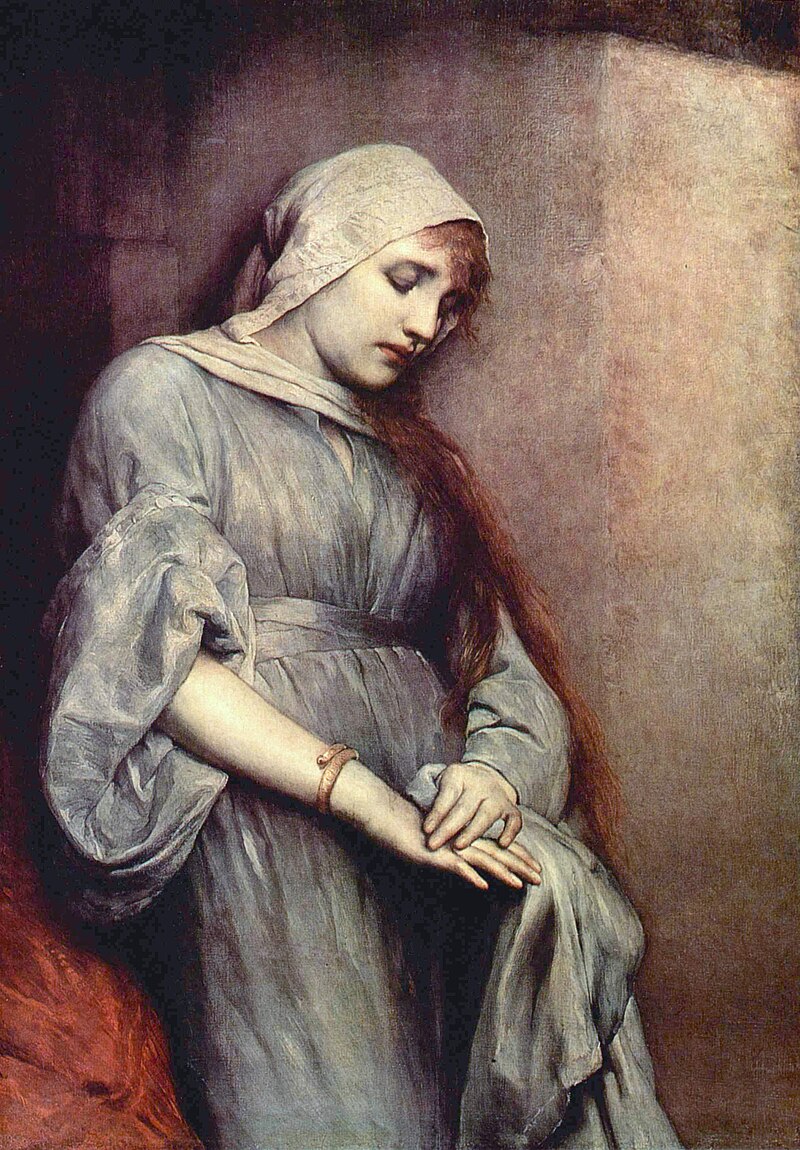
Gabriel von Max’s depiction of Lady Macbeth

There is no record in the chronicles of any disharmony in the marriage but we know little else of Queen Gruoch. Despite already bearing a son, Lulach, she and Macbeth had no children that we know of; although it may be that she lost children by miscarriage or in early childhood before they came to the notice of chroniclers. This lack of a surviving heir of his own may have been what prompted Macbeth to adopt Gruoch’s son as his successor.

We know nothing of Gruoch’s death, no date is recorded nor even hinted at. She may have lived through the grief of losing her husband and son in battle and seeing Malcolm III Canmore ascend the throne and assert his authority over the whole of Scotland. Or she may have died some years beforehand. William Shakespeare had her dying by her own hand, driven insane by her evil deeds:

Of his dead butcher and his fiend-like queene,
Who, as ’t is thought, by selfe and violent hands
Tooke off her life.5

But this was almost definitely fiction.

Gruoch’s final resting place, the one site that may give us a clue, is also lost to history.

The story of Queen Gruoch, Lady Macbeth, is one shrouded in mystery, tantalisingly obscure…

*

Notes:

1. Anderson, Early Sources, 1.588, quoted in Dauvit Broun, Macbeth [Macbethad mac Findlaich] (d. 1057), king of Scots, Oxforddnb.com; 2. Richard Oram, editor, The Kings and Queens of Scotland; 3. Mike Ashley, The Mammoth Book of British Kings and Queens; 4. ‘Macbeth filius Finlach … et Gruoch filia Bodhe, Rex et Regina Scottorum’, Early Scottish charters prior to A.D. 1153: with notes and an index, edited by Archibald
Campbell Lawrie; 5. Act V, Scene VIII, Shakespeare, William, The tragedie of Macbeth; a new edition of Shakspere’s works with critical text in Elizabethan English and brief notes, illustrative of Elizabethan life, thought and idiom, edited by Mark Harvey Liddell.

Sources:

Shakespeare, William, The tragedie of Macbeth; a new edition of Shakspere’s works with critical text in Elizabethan English and brief notes, illustrative of Elizabethan life, thought and idiom, edited by Mark Harvey Liddell; The Chronicle of John of Worcester, edited by R. R. Darlington and P. McGurk; Early Scottish charters prior to A.D. 1153: with notes and an index, edited by Archibald Campbell Lawrie; fmg.ac/Projects/MedLands/SCOTLAND; Oxforddnb.com; Richard Oram, editor, The Kings and Queens of Scotland; Mike Ashley, The Mammoth Book of British Kings and Queens; Kate Braithwaite, Gruoch: The Real Lady Macbeth, historyofroyalwomen.com; Henry of Huntingdon: The History of the English People 1000-1154, edited by Diana Greenway; Chronicles of the Picts, chronicles of the Scots, and other early memorials of Scottish history, edited by W. F. Skene; Rosalind K. Marshall, Scottish Queens 1034–1714; Chronicle of the Scots, 1165, Cronica Regum Scottorum; Annals of Ulster; David Ross, Scotland: History of a Nation.

Images:

Courtesy of Wikipedia

*

My books

Signed, dedicated copies of all my books are available through my online store.

Out now: Scotland’s Medieval Queens

Books by Sharon Bennett Connolly

Scotland’s history is dramatic, violent and bloody. Being England’s northern neighbour has never been easy. Scotland’s queens have had to deal with war, murder, imprisonment, political rivalries and open betrayal. They have loved and lost, raised kings and queens, ruled and died for Scotland. From St Margaret, who became one of the patron saints of Scotland, to Elizabeth de Burgh and the dramatic story of the Scottish Wars of Independence, to the love story and tragedy of Joan Beaufort, to Margaret of Denmark and the dawn of the Renaissance, Scotland’s Medieval Queens have seen it all. This is the story of Scotland through their eyes.

Scotland’s Medieval Queens gives a thorough grounding in the history of the women who ruled Scotland at the side of its kings, often in the shadows, but just as interesting in their lives beyond the spotlight. It’s not a subject that has been widely covered, and Sharon is a pioneer in bringing that information into accessible history.’ Elizabeth Chadwick (New York Times bestselling author)

Available now from Amazon and Pen and Sword Books

Also by Sharon Bennett Connolly:

Books by Sharon Bennett Connolly

Heroines of the Tudor World tells the stories of the most remarkable women from European history in the time of the Tudor dynasty, 1485-1603. These are the women who ruled, the women who founded dynasties, the women who fought for religious freedom, their families and love. Heroines of the Tudor World is now available from Amberley Publishing and Amazon UK. Women of the Anarchy demonstrates how Empress Matilda and Matilda of Boulogne, unable to wield a sword themselves, were prime movers in this time of conflict and lawlessness. It shows how their strengths, weaknesses, and personal ambitions swung the fortunes of war one way – and then the other. Available from Bookshop.orgAmberley Publishing and Amazon UKKing John’s Right-Hand Lady: The Story of Nicholaa de la Haye is the story of a truly remarkable lady, the hereditary constable of Lincoln Castle and the first woman in England to be appointed sheriff in her own right. Available from all good bookshops Pen & Sword Booksbookshop.org and Amazon

Royal Historical Society

Defenders of the Norman Crown: The Rise and Fall of the Warenne Earls of Surrey tells the fascinating story of the Warenne dynasty, from its origins in Normandy, through the Conquest, Magna Carta, the wars and marriages that led to its ultimate demise in the reign of Edward III. Available from Pen & Sword BooksAmazon in the UK and US, and Bookshop.orgLadies of Magna Carta: Women of Influence in Thirteenth Century England looks into the relationships of the various noble families of the 13th century, and how they were affected by the Barons’ Wars, Magna Carta and its aftermath; the bonds that were formed and those that were broken. It is now available in paperback and hardback from Pen & SwordAmazon, and Bookshop.orgHeroines of the Medieval World tells the stories of some of the most remarkable women from Medieval history, from Eleanor of Aquitaine to Julian of Norwich. Available now from Amberley Publishing and Amazon, and Bookshop.orgSilk and the Sword: The Women of the Norman Conquest traces the fortunes of the women who had a significant role to play in the momentous events of 1066. Available now from Amazon,  Amberley Publishing, and Bookshop.org.

Alternate Endings: An anthology of historical fiction short stories including Long Live the King… which is my take what might have happened had King John not died in October 1216. Available in paperback and kindle from Amazon.

Podcast:

A Slice of Medieval

Have a listen to the A Slice of Medieval podcast, which I co-host with Historical fiction novelist Derek Birks. Derek and I welcome guests, such as Bernard Cornwell and Michael Jecks, and discuss a wide range of topics in medieval history, from significant events to the personalities involved. 

Every episode is also now available on YouTube.

*

Don’t forget! Signed and dedicated copies of all my books are available through my online store.

For forthcoming online and in-person talks, please check out my Events Page.

You can be the first to read new articles by clicking the ‘Follow’ button, liking our Facebook page or joining me on TwitterThreadsBluesky and Instagram.

*

©2025 Sharon Bennett Connolly, FRHistS

Wordly Women: Carol McGrath

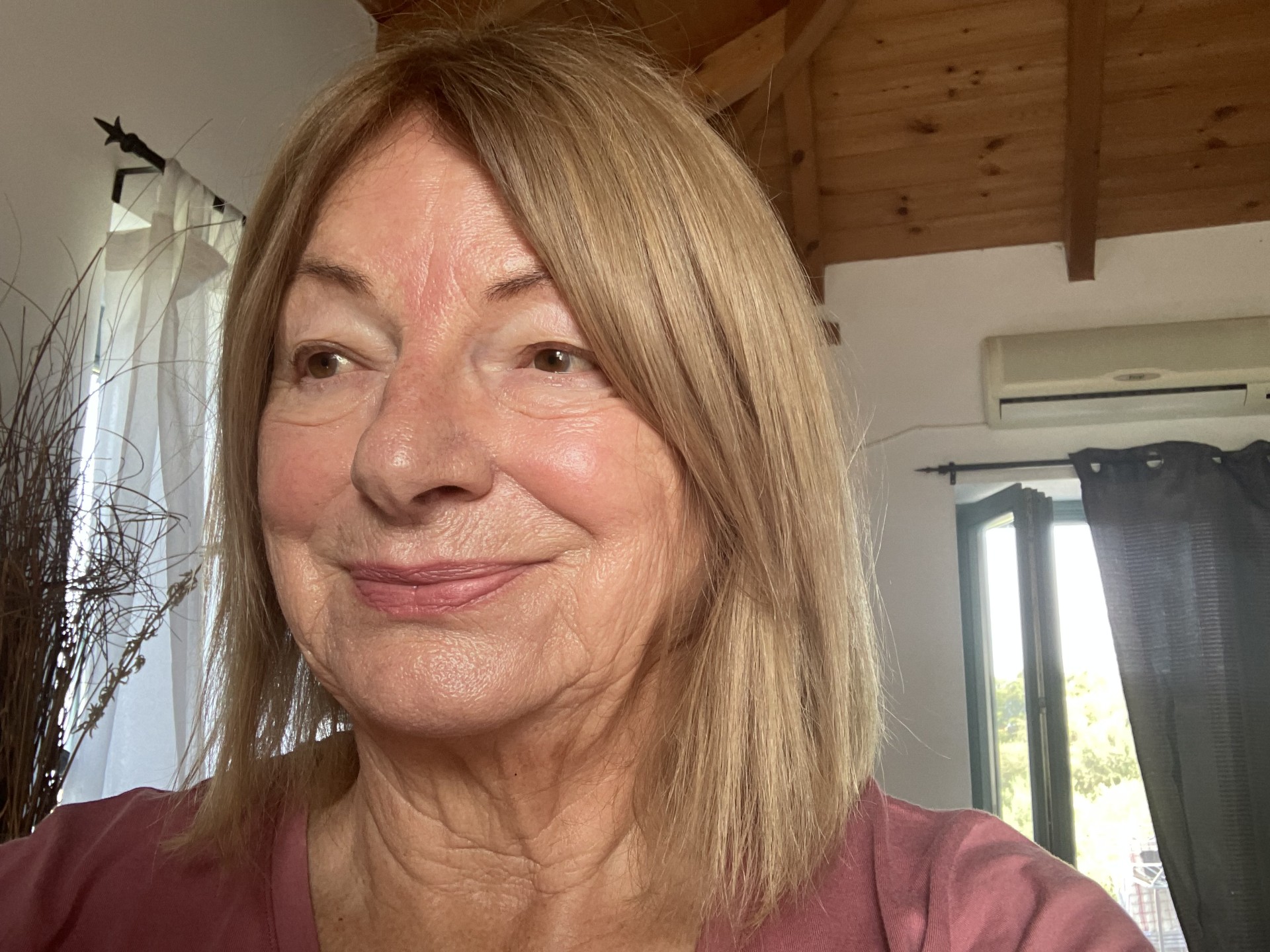
Today in my Wordly Women, author spotlight series, I have a chat with Carol McGrath. Carol is one of those people I can spend a day with, just discussing history from dawn to dusk. Indeed, we have done on a couple of occasions.

So, it was wonderful to get the chance to talk with Carol about her writing, both fiction and non-fiction.

Over to Carol…

Sharon: Carol, what got you into writing?

Carol: I loved writing as a child and even made my own little books, mostly mysteries. Originally loving art, I wanted to be a book illustrator. However, I came to be passionate about the stories of the past and, as a child, was very influenced by writers such as Rosemary Sutcliff and Geoffrey Treece. Later, of course, Jean Plaidy took over and, after her, Anya Seton. It was an honour when at the age of thirteen I was asked to present my own story about the Children’s Crusade to an English inspector at my school. I wrote poetry as well. So, I guess my own reading and interest in History inspired me to write. As it can do, life got in the way and I became a teacher and loved it. I was even Head of a History Department for a time so there was no time to pursue writing. In those days teaching was a wonderful career and all consuming. Family, too, was all consuming. From the 1990s onwards, I began to take evening courses to keep up my interest in writing. There was a two year certificate in creative writing at Oxford, an MA in creative writing from Queens University Belfast and finally a Phd programme at Royal Holloway. It’s not for everyone to go an academic route but it was wonderful for me and helped me find my voice as well as specific writing interests and genres. The MA and Phd courses focused me. They enhanced what I hope was always there, the ability and love of writing.

Sharon: You write both fiction and non-fiction-is one harder than the other?

Carol: That’s a great question. I studied English, Medieval History and interestingly Russian History and politics at University, Q.U.B. I enjoy both kinds of writing. They are different disciplines. I feel the Phd programme helped me with writing non-fiction because of thesis work. When I research and write it’s all consuming for me, whether for fiction or non-fiction. What I do find hard is to research and write both disciplines at the same time. I am currently in contract for Headline for two Tudor novels. After this, maybe another non-fiction. Pen & Sword still approach me with wonderful suggestions but since these books do take time, a lot of time, the non-fiction is on hold. To answer your question, I guess for me fiction is easier although I like writing both. I adore the research and am a member of the Bodleian Library Oxford which is fabulous.

Sharon: Tell us about your books

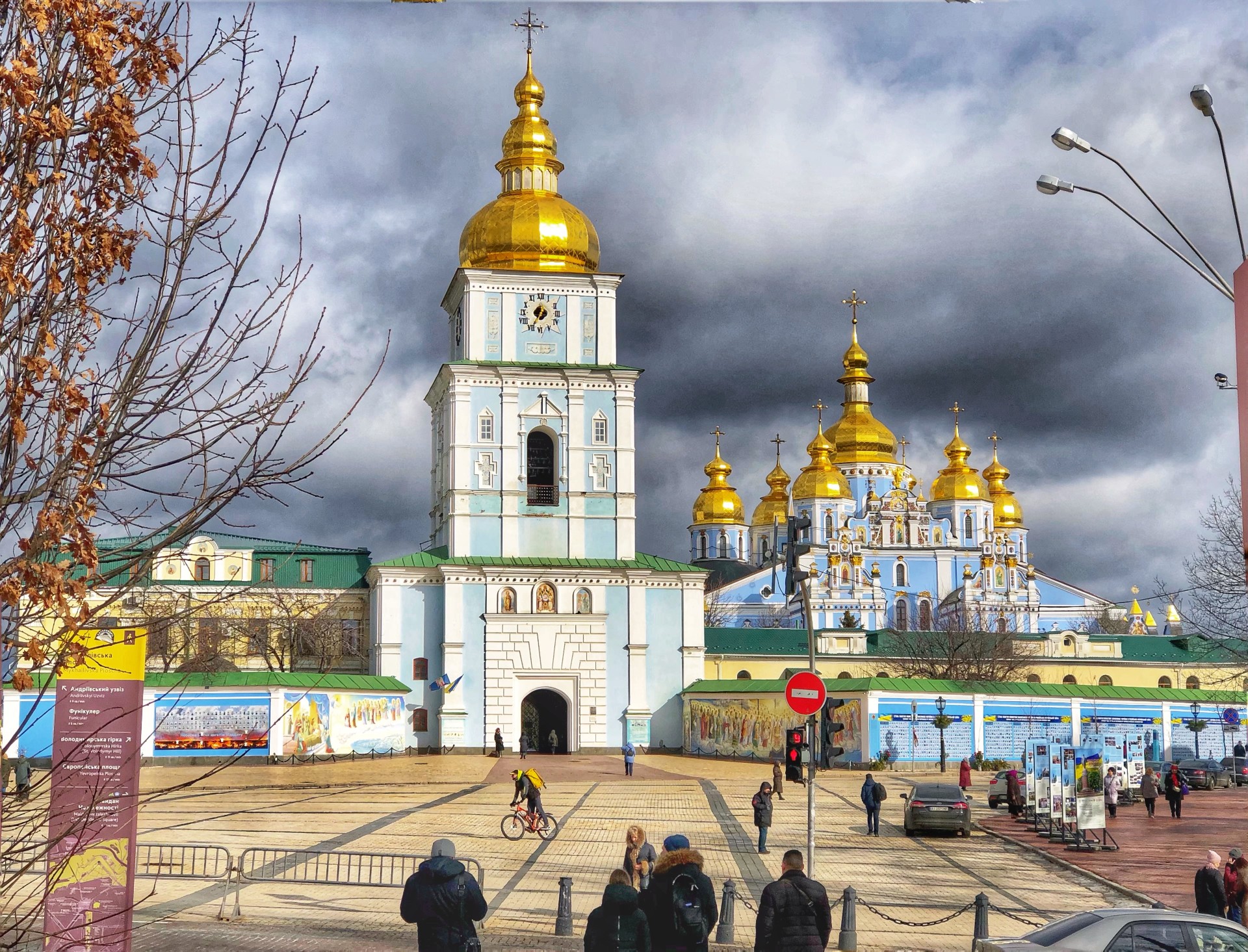
St Sophia, Kyiv

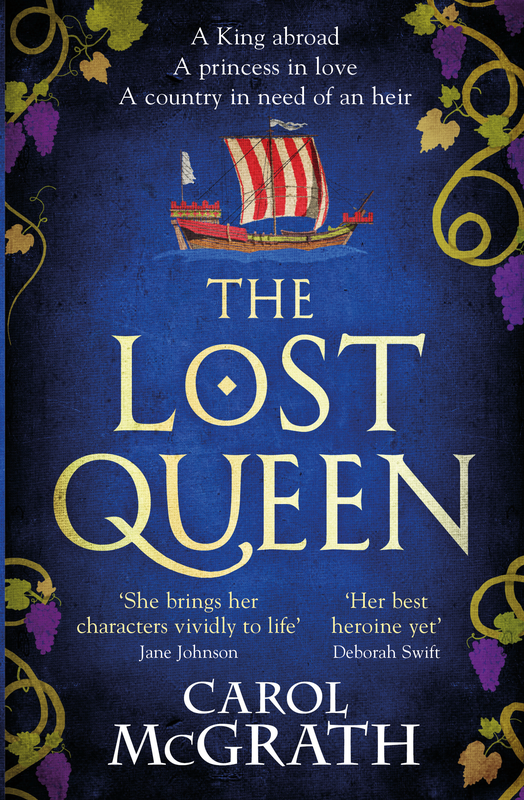
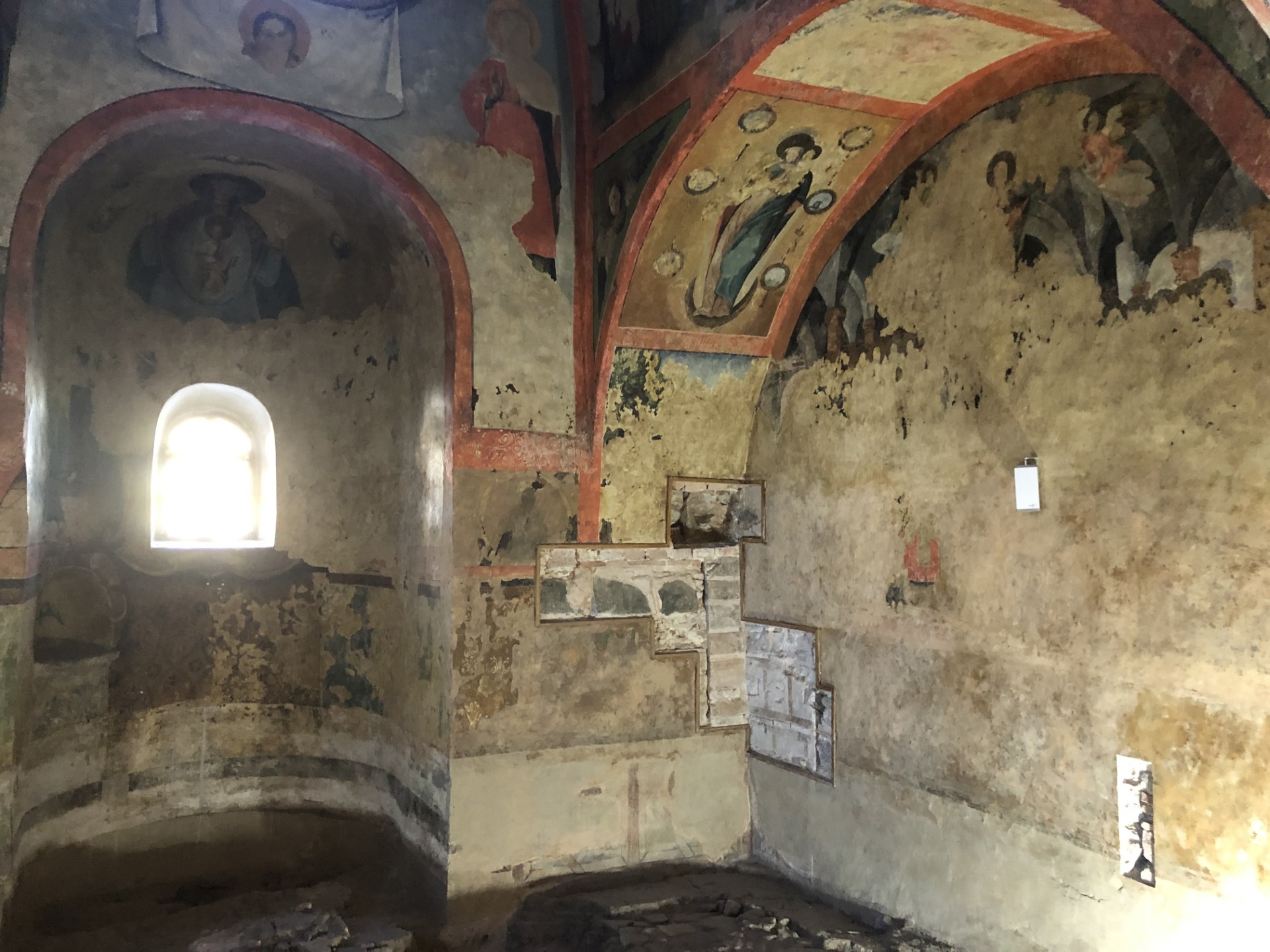
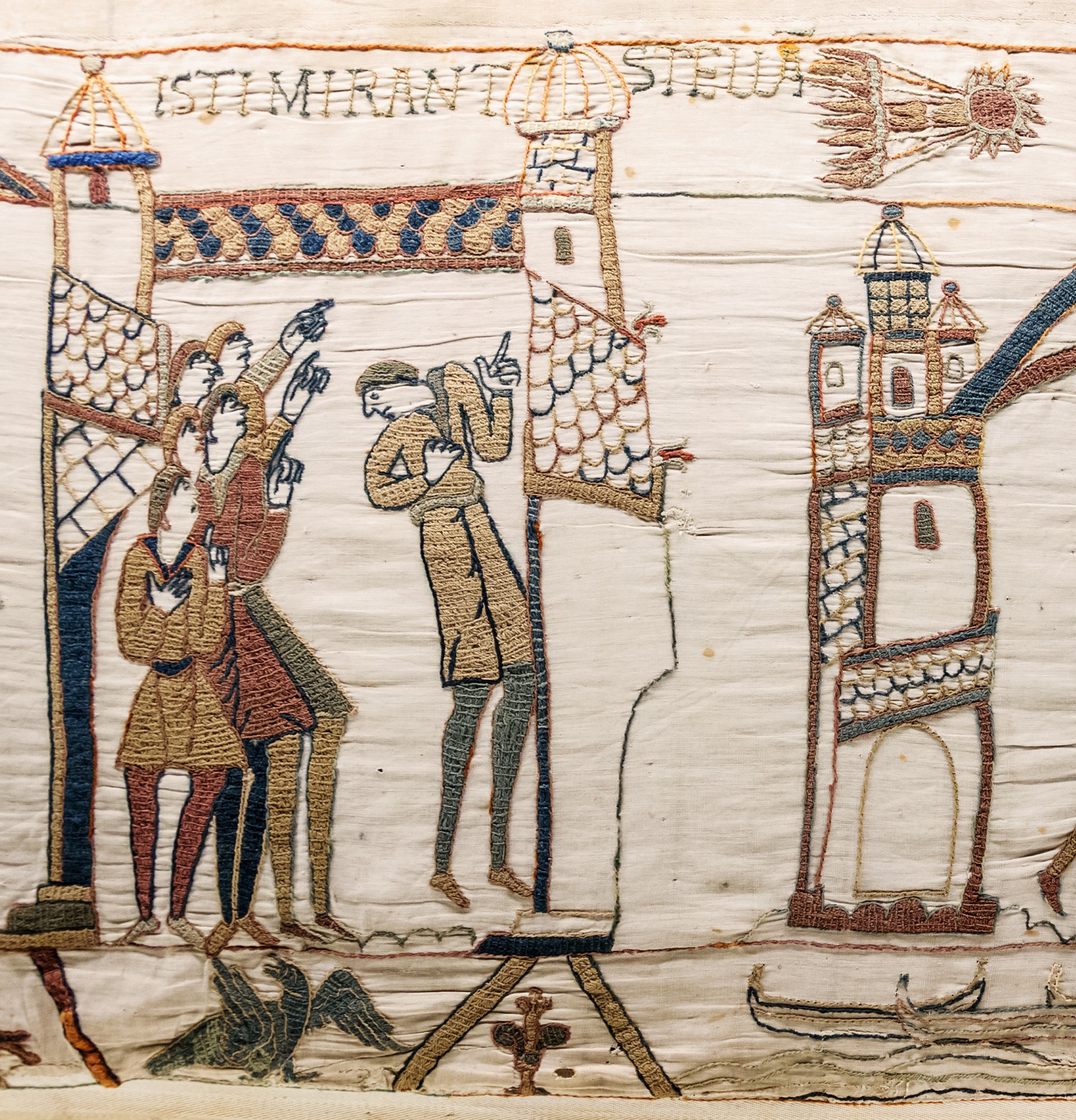
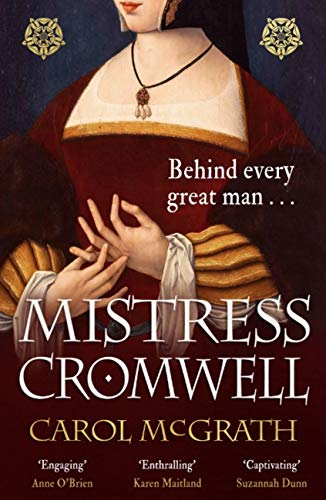
Carol: I write both Medieval and Tudor novels currently. I wrote my debut novel that was easily published on the PhD programme. The Handfasted Wife was inspired by the Bayeaux Tapestry, specifically the image of The Burning House. I believe it represents Edith Swan-Neck and her son fleeing from the Normans probably from Harold’s estate at Crowhurst. Some Historians think this too. This novel is about Edith Swanneck and what happened to her after the Battle of Hastings. It was followed by novels about Harold’s daughters, The Swan-Daughter and The Betrothed Sister. I researched them carefully but for The Betrothed Sister about his elder daughter , Gytha, I had much knowledge about the medieval Rus, Kyiv and life in the region of Rus lands now known as Ukraine. I have spent time seeking Gytha out in Kyiv, especially The Church of St Sophia. The Swan-Daughter about Gunnhild, Harold’s second daughter is my favourite of all my books. Creatively, I linked it to the story of Tristram and Iseult. Gunnhild eloped from Wilton Abbey with Alan of Richmond, a cousin of William of Normandy. Talk about ‘sleeping with the enemy’. Again, these books were closely researched and they all follow the Historical record where it exists. The Hastings Trilogy was followed by a Tudor novel Mistress Cromwell, looking at Thomas Cromwell through his wife’s eyes. By the way, it’s on an Amazon kindle offer for April. I am currently writing the sequel, The Queen’s Sister, to be published May 2026. I have also written The Rose Trilogy about three high medieval queens and a novel called The Stolen Crown about Stephen and Matilda but really it is mostly Matilda’s story. In non-fiction Tudor Sex and Sexuality is my great debut. It’s published by Pen & Sword. It’s simply a great fun look at this topic.

Sharon: What Attracts you to the Period?

Harold’s daughter’s burial place in St Sophia Kyiv

Carol: I studied Medieval History and enjoy researching it. It’s not as brutal a time as one might think. I find I can lose myself in this era especially the twelfth century. As for the Tudors, they are absolutely fascinating with many interesting female stories to write. Besides, it’s an excuse to visit great Tudor houses such as Hever Castle. I love the portraiture from this era. Holbein is a character in my current work. As for Henry VIII, he’s larger than life. I am interested in Historical landscape and attracted to a less populated time with its villages and towns. The crafts from both eras are fabulous. I love to include crafts persons in my medieval novels.

Sharon: Who is your favourite Tudor and Why?

Carol: I am about to write Margaret Douglas’s story. It will be called The Tudor Rebel. At the moment she is my favourite Tudor because she had a clandestine love affair and was involved with fascinating Devonshire Manuscript. Ladies of Queen Anne Bullen’s court wrote poems and shared them in a similar way as we did with Twitter now X. They commented and added to each other’s verses. Meg Douglas was right in the thick of it , as was her suitor, young Tom Howard. What’s not to love about a Courtly Romance and clandestine love affair that caused terrible consequences for this pair of love birds. I studied Renaissance poetry so another favourite Tudor of mine is Sir Thomas Wyatt. He, too, has an interesting story.

Sharon: Who is your least favourite Tudor

Hever Castle

Carol: My least favourite Tudor is the sleezy, snobbish Duke of Norfolk. He was incredibly underhand to get what he wanted. And the mean, creepy Duke was an infamous wife beater although not alone in that. Very ambitious and manipulative. I’m not too keen on Stephen Gardiner either. However, I need to research that particular man further. Motivation always interests me, that and the atmosphere in which these people lived.

Sharon: How do you approach researching your topic

Carol: I read everything I can find on it in primary and secondary source material. I love notebooks so I am a great pen and paper writer. I adore burying myself in the Bodleian Library. I find great original source material there. Mind you I occasionally wonder about translations. When you come across boats that serviced King Richard’s march south from Acre on the third crusade translated as ‘snacks’ you have to smile. A misprint? I have never found out. I visit houses and castles, museums and enactments. When writing about stone masons, I learned how to carve in stone myself. I work hard at understanding an Historical mindset but I do believe a writer of fiction is always there in her novels too. It’s all about point of views and voice.

Sharon: What is your favourite Medieval or Tudor Story found in Research

Carol: Has to be the fact that Harold’s youngest son Ulf, a young hostage at the time of The Norman Conquest who was raised at the Norman Court by Robert Curthose and as a knight he likely went on the First Crusade. I found a reference in a chronicle (John of Worcester) to Ulf’s fate. I am going to write his story someday in fiction. I like the Crusades and I love tidbits about personalities that can inspire elaboration.

Sharon: What is your least Favourite Story

Carol: I could say it is how Thomas Cromwell set up Anne Bullen. When you examine this closely it has to have been a ghastly, rather complete conspiracy. Thomas Cromwell is a mixed bag as a character. He’s redeemed by Hilary Mantel and to some extent by Dermot McCullagh whose book on Cromwell is excellent. However, even if sincere, Cromwell’s reformist opinions grew completely suspect when he fell out with Anne Bullen over what to do with monastic lands. He, himself, by the way, benefited greatly. You will find out more about this in The Queen’s Sister when it is published. So, the story of Anne Bullen’s downfall is utterly horrendous. Even worse, were the accusations against the men who died with her. By the way, she was no paragon of virtue either. She was hideous to Catherine of Aragon and Lady Mary, motivated, I believe, by fear of their supporters undoing her.

Sharon: Are there any other eras you would like to write about?

Carol: Absolutely The English Civil War. I have a novel that’s unfinished called The Queen’s Tulip so watch this space. I also have a bottom drawer novel I may polish up that’s set in Edwardian Ireland. To my credit, Andrew Motion, my MA outside examiner, praised the first five chapters of The Damask Maker and it won me, along with short stories, a distinction on my MA.

Sharon: What are you working on now?

Carol: I am editing The Queen’s Sister about Elizabeth Seymour who married Gregory Cromwell. It’s her story but also covers Thomas Cromwell’s downfall. It’s due in to my editor at Headline on May 1st. My agent beta read it and says she loves it so that’s encouraging. I am now researching and planning The Tudor Rebel about Meg Douglas, Henry VIII’s errant niece.

Sharon: What do you love most about being a writer

Carol: It is the opportunity to express myself creatively. I feel very privileged to be busily doing something I thoroughly love. I never expected to be published and I am fortunate because it just happened for me, initially with a small publisher who was bought out by Headline in 2019.

About the Author

Following a first degree in English and History, Carol McGrath completed an MA in Creative Writing from The Seamus Heaney Centre, Queens University Belfast, followed by an MPhil in English from University of London. She is published by Headline. The Handfasted Wife, first in a trilogy about the royal women of 1066 was shortlisted for the RoNAS in 2014. The Swan-Daughter and The Betrothed Sister complete this highly acclaimed trilogy. Mistress Cromwell, a best-selling historical novel about Elizabeth Cromwell, wife of Henry VIII’s statesman, Thomas Cromwell, was republished by Headline in 2020. The Silken Rose, first in a Medieval She-Wolf Queens Trilogy, featuring Ailenor of Provence, saw publication in April 2020. This was followed by The Damask Rose. The Stone Rose was published April 2022. The Stolen Crown 2023 and July 2024 The Lost Queen about Berengaria of Navarre and The Third Crusade. Carol writes Historical non-fiction as well as fiction. Sex and Sexuality in Tudor England was published in February 2022 by Pen & Sword. She speaks at Conferences and gives interviews. Her new novel The Queen’s Sister will be published in May 2026. She lives in Oxfordshire and in the Mani, Greece.

Where to find Carol

Website (Subscribe to her newsletter via the drop down menu on the web-site Home Page); Amazon; The Stolen Crown

*

My books

Signed, dedicated copies of all my books are available through my online store.

Out now: Scotland’s Medieval Queens

Scotland’s history is dramatic, violent and bloody. Being England’s northern neighbour has never been easy. Scotland’s queens have had to deal with war, murder, imprisonment, political rivalries and open betrayal. They have loved and lost, raised kings and queens, ruled and died for Scotland. From St Margaret, who became one of the patron saints of Scotland, to Elizabeth de Burgh and the dramatic story of the Scottish Wars of Independence, to the love story and tragedy of Joan Beaufort, to Margaret of Denmark and the dawn of the Renaissance, Scotland’s Medieval Queens have seen it all. This is the story of Scotland through their eyes.

Scotland’s Medieval Queens gives a thorough grounding in the history of the women who ruled Scotland at the side of its kings, often in the shadows, but just as interesting in their lives beyond the spotlight. It’s not a subject that has been widely covered, and Sharon is a pioneer in bringing that information into accessible history.’ Elizabeth Chadwick (New York Times bestselling author)

Available now from Amazon and Pen and Sword Books

Also by Sharon Bennett Connolly:

Heroines of the Tudor World tells the stories of the most remarkable women from European history in the time of the Tudor dynasty, 1485-1603. These are the women who ruled, the women who founded dynasties, the women who fought for religious freedom, their families and love. Heroines of the Tudor World is now available from Amberley Publishing and Amazon UK. Women of the Anarchy demonstrates how Empress Matilda and Matilda of Boulogne, unable to wield a sword themselves, were prime movers in this time of conflict and lawlessness. It shows how their strengths, weaknesses, and personal ambitions swung the fortunes of war one way – and then the other. Available from Bookshop.orgAmberley Publishing and Amazon UKKing John’s Right-Hand Lady: The Story of Nicholaa de la Haye is the story of a truly remarkable lady, the hereditary constable of Lincoln Castle and the first woman in England to be appointed sheriff in her own right. Available from all good bookshops Pen & Sword Booksbookshop.org and Amazon

Defenders of the Norman Crown: The Rise and Fall of the Warenne Earls of Surrey tells the fascinating story of the Warenne dynasty, from its origins in Normandy, through the Conquest, Magna Carta, the wars and marriages that led to its ultimate demise in the reign of Edward III. Available from Pen & Sword BooksAmazon in the UK and US, and Bookshop.orgLadies of Magna Carta: Women of Influence in Thirteenth Century England looks into the relationships of the various noble families of the 13th century, and how they were affected by the Barons’ Wars, Magna Carta and its aftermath; the bonds that were formed and those that were broken. It is now available in paperback and hardback from Pen & SwordAmazon, and Bookshop.orgHeroines of the Medieval World tells the stories of some of the most remarkable women from Medieval history, from Eleanor of Aquitaine to Julian of Norwich. Available now from Amberley Publishing and Amazon, and Bookshop.orgSilk and the Sword: The Women of the Norman Conquest traces the fortunes of the women who had a significant role to play in the momentous events of 1066. Available now from Amazon,  Amberley Publishing, and Bookshop.org.

Alternate Endings: An anthology of historical fiction short stories including Long Live the King… which is my take what might have happened had King John not died in October 1216. Available in paperback and kindle from Amazon.

Podcast:

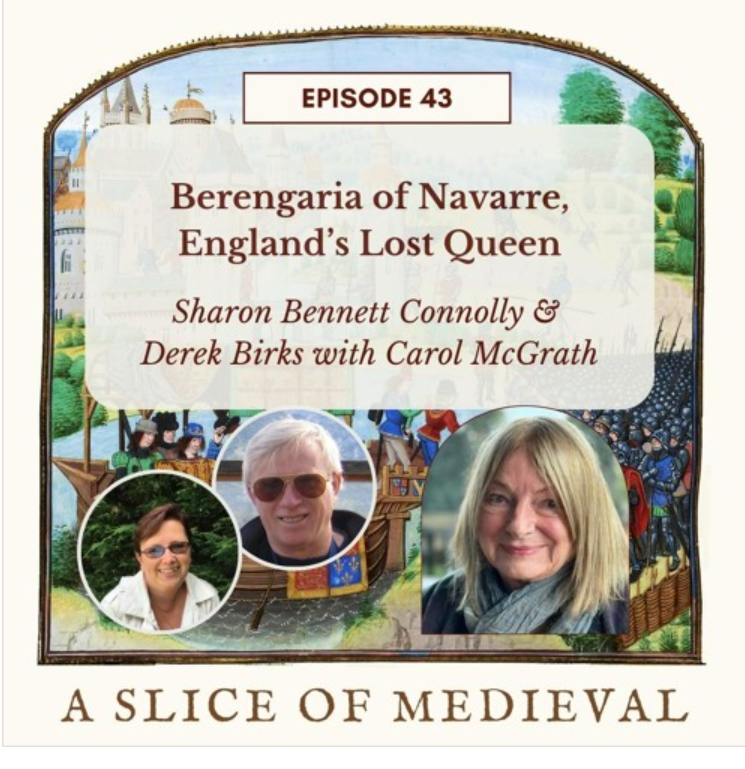
Have a listen the A Slice of Medieval podcast, which I co-host with Historical fiction novelist Derek Birks. Derek and I welcome guests, such as Bernard Cornwell and discuss a wide range of topics in medieval history, from significant events to the personalities involved. In episode #43, Derek and I chat with Carol about Berengaria of Navarre and The Lost Queen. 

Every episode is also now available on YouTube.

*

Don’t forget! Signed and dedicated copies of all my books are available through my online store.

For forthcoming online and in-person talks, please check out my Events Page.

You can be the first to read new articles by clicking the ‘Follow’ button, liking our Facebook page or joining me on TwitterThreadsBluesky and Instagram.

*

©2025 Sharon Bennett Connolly, FRHistS and CarolMcGrath

Cover Reveal!

Princesses of the Early Middle Ages: Royal Daughters from the Conquest
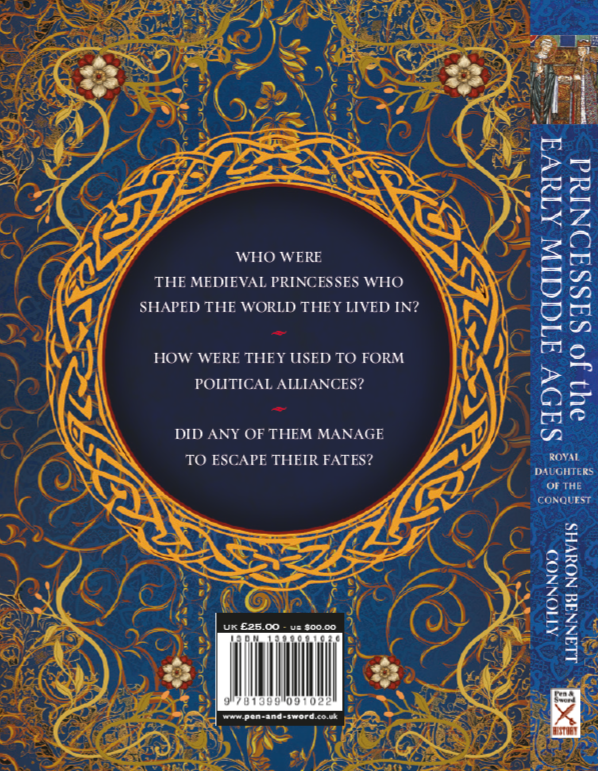
Here’s a taster – the back cover….

Don’t scroll down!

Be patient!

As many of you may know I have spent the last year on a project that was originally titled ‘The Medieval Princess: Royal Daughters from the Conquest to the Wars of the Roses’. It was one of those projects that seemed to go on and on, with no end in sight. But then, at the end of April, it was done. With one tiny snag. The reason it had seemed never-ending was the word count: a whopping 143,000 words!

Cover reveal coming – be patient!

What does that mean in terms of a physical book? Well, it was 50% more words than in my contract and would come out at a book-and-a-half – about 500 pages.

Just wait a little longer…

It is not a surprise, really, Mary Anne Everett Green’s The Lives of the Princesses of England from the Norman Conquest was published in six volumes in the19th century; the first 3 volumes covered the medieval period. So, I knew all along it was going to be a challenge to bring the book in at under 100,000 words.

And I failed miserably!

Stop scrolling – cover reveal coming soon….

Luckily, I have a very understanding editor and her first words, when I confessed my massive word count, was, ‘well, we’re not going to make you cut 20,000 words. Let’s split it in two!

What a relief!

Not long now…

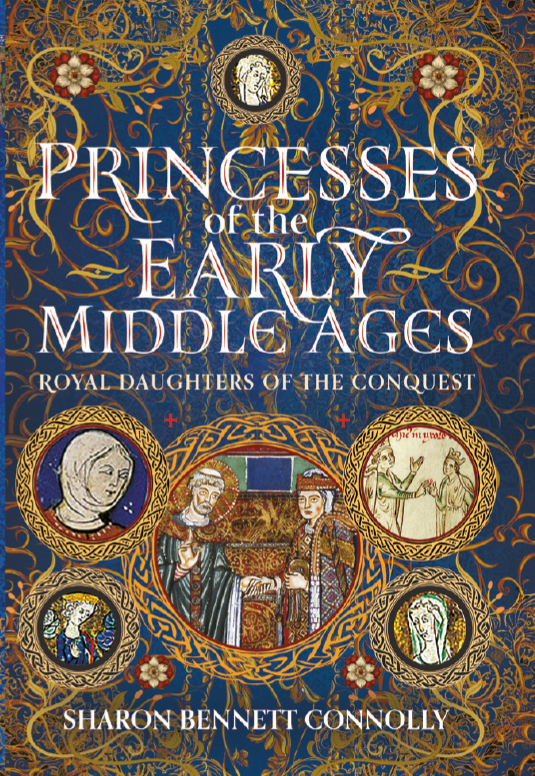
So, I have spent May splitting the books, polishing off book no. 1 and changing the introduction and conclusions so they are relevant to that particular book. And we have settled on titles. The first book is entitled Princesses of the Early Middle Ages: Royal Daughters of the Conquest and will look at the English princesses from the daughters of Harold II to King John.

Nearly there….

I still have work to do on book no. 2, Princesses of the Later Middle Ages: Royal Daughters of the Plantagenets, which will include all the royal daughters from Henry III to Edward IV. There will be more on that at the end of the summer…

It’s time!

Did you peek?

So, here it is. The cover for Princesses of the Early Middle Ages: Royal Daughters from the Conquest

Drum roll please….

Princesses of the Early Middle Ages: Royal Daughters from the Conquest

Daughters of kings were often used to seal treaty alliances and forge peace with England’s enemies. Princesses of the Early Middle Ages: Royal Daughters from the Conquest will explore the lives of these young women, how they followed the stereotype, and how they sometimes managed to escape it. It will look at the world they lived in, and how their lives and marriages were affected by political necessity and the events of the time.

Princesses of the Early Middle Ages: Royal Daughters from the Conquest

Almost as interesting as the marriages these girls made are the ones that were never realised. Many English princesses were betrothed, or proposed as brides, three or more times before they were married. Their failed marriage proposals demonstrated their influence and worth on the international royal marriage market, as well as the changing allegiances between countries and the making and breaking of international friendships.

Princesses of the Early Middle Ages will also examine how these girls, who were often political pawns, were able to control their own lives and fates. Whilst they were expected to obey their parents in their marriage choices, several princesses were able to exert their own influence on these choices, with some outright refusing the husbands offered to them. Their stories are touching, inspiring and, at times, heartbreaking.

Princesses of the Early Middle Ages: Royal Daughters from the Conquest is due for release in the spring of 2026, with Princesses of the Later Middle Ages: Royal Daughters of the Plantagenets coming in the summer.

I can’t wait for you to read them!

About the Author:

Sharon Bennett Connolly

Sharon Bennett Connolly is the bestselling author of several non-fiction history books. A Fellow of the Royal Historical Society, Sharon has studied history academically and just for fun – and has even worked as a tour guide at a castle. She also writes the popular history blog, http://www.historytheinterestingbits.com and co-hosts the podcast A Slice of Medieval, alongside historical novelist Derek Birks. Sharon regularly gives talks on women’s history, for historical groups, festivals and in schools; her book Silk and the Sword: The Women of the Norman Conquest is a recommended text for teaching the Norman Conquest in the National Curriculum. She is a feature writer for All About History, Tudor Places and Living Medieval magazines and her TV work includes Australian Television’s Who Do You Think You Are?

Her previous books include: Heroines of the Medieval World, Silk and the Sword: The Women of the Norman Conquest, Ladies of Magna Carta: Women of Influence in Thirteenth-Century England, Defenders of the Norman Crown: Rise and Fall of the Warenne Earls of Surrey, King John’s Right-Hand Lady: The Story of Nicholaa de la Haye, Women of the Anarchy, Heroines of the Tudor World and Scotland’s Medieval Queens: From St Margaret to Margaret of Denmark.

Wordly Women: Samantha Wilcoxson

Today we are hopping across the pond for the next chat in my Wordly Women series. Joining me is Samantha Wilcoxson. Author of fiction novels mainly based in the late medieval and Tudor eras and and non-fiction books on the American Revolution, Samantha’s books – literally – span the Atlantic divide. Samantha has a knack for getting into the heads of the people she is writing about. Her book, Plantagenet Princess, Tudor Queen, about Elizabeth of York, is still one of the most insightful novels I have ever read.

Sharon: What got you into writing?

Samantha: What got you into writing? I have always loved reading and used to write dozens of book reviews every year. Many of those books were historical fiction and nonfiction. When I was considering ways to earn money while a stay-at-home mom, my husband suggested I write a book. I had never considered taking this step, so the first obstacle was deciding what I would want to write about. It didn’t take me long to settle on Elizabeth of York, and I quickly became passionate about the project. That novel turned into a series, and I’ve ventured into other historical eras since then.

Sharon: Tell us about your books.

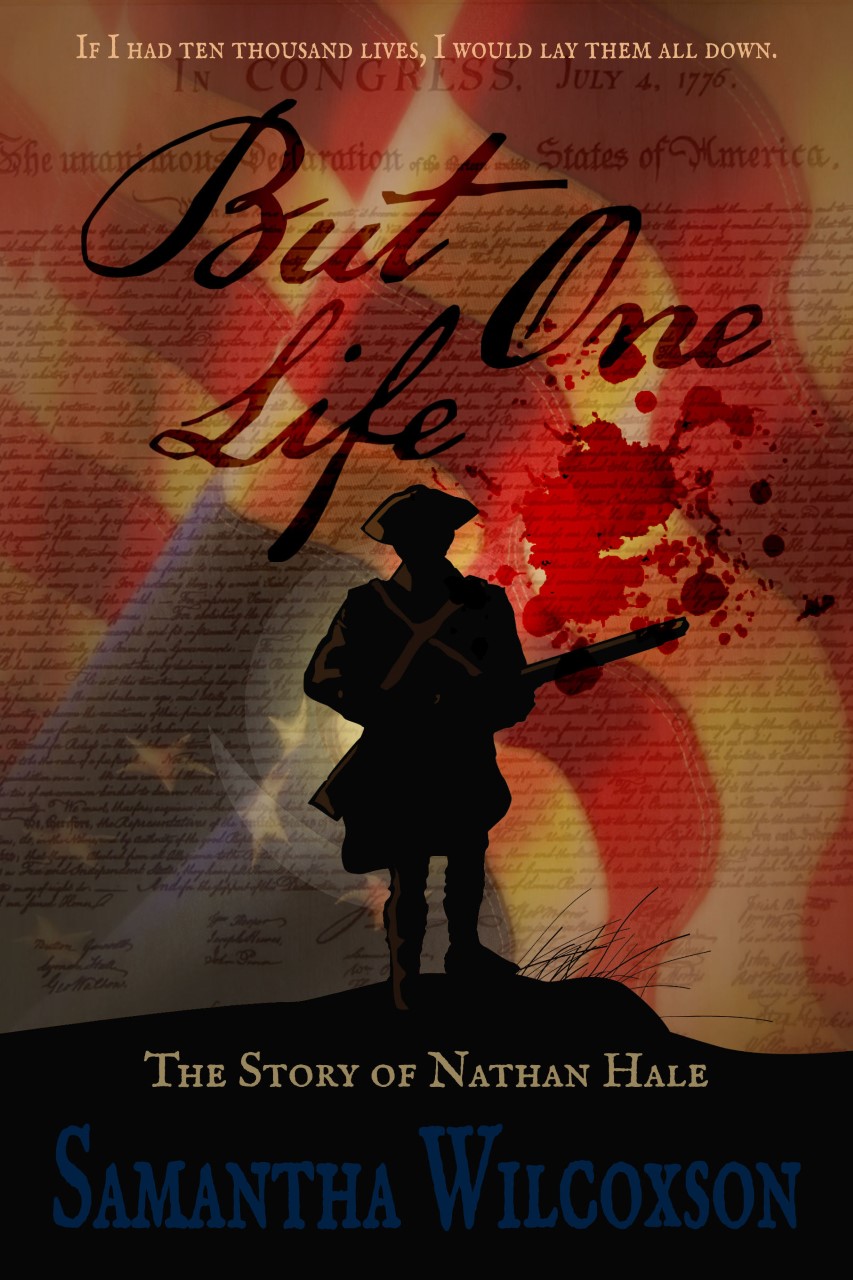
Samantha: Each of my novels explores the life of a real historical figure in a way that helps readers connect with them on a personal level. My Plantagenet Embers series includes three novels featuring Elizabeth of York, Margaret Pole, and Mary I. It also has three novellas that offer new points of view of the same events by focusing on Margaret Beaufort, Elizabeth Woodville, and Reginald Pole. Then I moved into US history with my next two novels. Luminous is biographical fiction of real life radium girl Catherine Wolfe Donohue, and But One Life explores the life of American Revolution soldier Nathan Hale. My nonfiction books are Women of the American Revolution and a newly released biography of James Alexander Hamilton.

Sharon: What attracted you to the Tudors?

Samantha: When I started writing the series that ended up covering the early Tudor era, I was actually obsessed with the Wars of the Roses. I thought Elizabeth of York was an unsung heroine, so I started with her with no real intention of writing about the Tudors! This is actually a great insight into my writing. I never know what is coming next.

Sharon: So, what is coming next?

Samantha: I am currently writing a trilogy set during the Wars of the Roses for Sapere Books. It includes multiple women’s points of view. For example, book one has chapters featuring Marguerite of Anjou, Cecily Neville, and Anne Beauchamp. That one is in editing, and I’m working on book two, which will add the perspective of Elizabeth Woodville and others.

Sharon: How do you approach researching your topic?

Samantha: This depends a lot on whether I’m writing fiction or nonfiction. For novels, I largely depend on biographies already written, but for nonfiction I look for more primary resources like personal letters and diaries. For either, I like to visit locations important to the people I’m writing about so that I can include details about the places they experienced.

Sharon: You also write US history non-fiction.

Samantha: Tell us your ‘favourite’ story you have come across in your research? My research into James Alexander Hamilton uncovered loads of interesting discoveries, partly because nobody else has really written about him. I held letters written between James and Andrew Jackson, Martin Van Buren, John Quincy Adams, and so many others. (Gotta admit, it was tempting to try sneak that JQA letter into my bag!) I think the most fun story I came across, besides John Quincy writing about being too old to stay up all night at a lively Hamilton party, was learning that James was part of the crew of the schooner America for which the America’s Cup is named.

Sharon: Tell us your least ‘favourite’ US history story you have come across in your research?

Samantha: I don’t know if I would call it a least favorite, but I decided to write a novel about Nathan Hale because I often came across quotes attributed to him such as, “I only regret that I have but one life to give for my country” but very little else about who Hale was. What happened in this young man’s life to create such bravery and patriotism? Few references to him offered much, so I decided to dig in and reveal the story of Nathan Hale before his famous execution during the American Revolution.

Sharon: Are there any other eras you would like to write about?

Samantha: I always have a few ideas brewing but am committed to the next couple of books on the Wars of the Roses right now. I have started a bit of research into a historical event that occurred near my home in Michigan in 1847 that I would like to consider for a future project. I’m not one of those writers who has the next five years planned out and I tend to impetuously strike out in new directions, so we’ll see what happens.

Sharon: And finally, what is the best thing about being a writer?

Samantha: Besides spending my day reading, writing, and learning about history, I love the flexibility of being a writer. I began as a stay-at-home mom, and I still appreciate the ability to easily set my work aside for a few days if one of my adult children needs anything. I’ve also made many friends in the writing community who make me feel less alone as a history nerd and have provided amazing support and encouragement for each of my book projects.

About the Author:

Samantha Wilcoxson is an author of emotive biographical fiction and nonfiction featuring history’s unsung heroes. Her novel Luminous has been named Book of the Year by Ruins & Reading and Yarde Book Reviews. Samantha’s most recent work is the first biography of James Alexander Hamilton, published by Pen & Sword History. She is currently writing a Wars of the Roses trilogy for Sapere Books. When not reading or writing, Samantha loves sharing trips to historic places with her family and spending time by the lake with a glass of wine.

Where to find Samantha Wilcoxson:

Website; Instagram; Amazon Author Page; Newsletter Signup; Goodreads; Pinterest; Twitter; Shop Direct; Audible

*

My books

Signed, dedicated copies of all my books are available through my online store.

Out now: Scotland’s Medieval Queens

Scotland’s history is dramatic, violent and bloody. Being England’s northern neighbour has never been easy. Scotland’s queens have had to deal with war, murder, imprisonment, political rivalries and open betrayal. They have loved and lost, raised kings and queens, ruled and died for Scotland. From St Margaret, who became one of the patron saints of Scotland, to Elizabeth de Burgh and the dramatic story of the Scottish Wars of Independence, to the love story and tragedy of Joan Beaufort, to Margaret of Denmark and the dawn of the Renaissance, Scotland’s Medieval Queens have seen it all. This is the story of Scotland through their eyes.

Scotland’s Medieval Queens gives a thorough grounding in the history of the women who ruled Scotland at the side of its kings, often in the shadows, but just as interesting in their lives beyond the spotlight. It’s not a subject that has been widely covered, and Sharon is a pioneer in bringing that information into accessible history.’ Elizabeth Chadwick (New York Times bestselling author)

Available now from Amazon and Pen and Sword Books

Also by Sharon Bennett Connolly:

Heroines of the Tudor World tells the stories of the most remarkable women from European history in the time of the Tudor dynasty, 1485-1603. These are the women who ruled, the women who founded dynasties, the women who fought for religious freedom, their families and love. Heroines of the Tudor World is now available from Amberley Publishing and Amazon UK. Women of the Anarchy demonstrates how Empress Matilda and Matilda of Boulogne, unable to wield a sword themselves, were prime movers in this time of conflict and lawlessness. It shows how their strengths, weaknesses, and personal ambitions swung the fortunes of war one way – and then the other. Available from Bookshop.orgAmberley Publishing and Amazon UKKing John’s Right-Hand Lady: The Story of Nicholaa de la Haye is the story of a truly remarkable lady, the hereditary constable of Lincoln Castle and the first woman in England to be appointed sheriff in her own right. Available from all good bookshops Pen & Sword Booksbookshop.org and Amazon

Defenders of the Norman Crown: The Rise and Fall of the Warenne Earls of Surrey tells the fascinating story of the Warenne dynasty, from its origins in Normandy, through the Conquest, Magna Carta, the wars and marriages that led to its ultimate demise in the reign of Edward III. Available from Pen & Sword BooksAmazon in the UK and US, and Bookshop.orgLadies of Magna Carta: Women of Influence in Thirteenth Century England looks into the relationships of the various noble families of the 13th century, and how they were affected by the Barons’ Wars, Magna Carta and its aftermath; the bonds that were formed and those that were broken. It is now available in paperback and hardback from Pen & SwordAmazon, and Bookshop.orgHeroines of the Medieval World tells the stories of some of the most remarkable women from Medieval history, from Eleanor of Aquitaine to Julian of Norwich. Available now from Amberley Publishing and Amazon, and Bookshop.orgSilk and the Sword: The Women of the Norman Conquest traces the fortunes of the women who had a significant role to play in the momentous events of 1066. Available now from Amazon,  Amberley Publishing, and Bookshop.org.

Alternate Endings: An anthology of historical fiction short stories including Long Live the King… which is my take what might have happened had King John not died in October 1216. Available in paperback and kindle from Amazon.

Podcast:

Have a listen to the A Slice of Medieval podcast, which I co-host with Historical fiction novelist Derek Birks. Derek and I welcome guests, such as Bernard Cornwell and Michael Jecks, and discuss a wide range of topics in medieval history, from significant events to the personalities involved. Every episode is also now available on YouTube.

*

Don’t forget! Signed and dedicated copies of all my books are available through my online store.

For forthcoming online and in-person talks, please check out my Events Page.

You can be the first to read new articles by clicking the ‘Follow’ button, liking our Facebook page or joining me on TwitterThreadsBluesky and Instagram.

*

©2025 Sharon Bennett Connolly, FRHistS and Samantha Wilcoxson

The Poetic Life of Margaret of Scotland, Dauphine of France

Margaret Stewart, Dauphine of France

Margaret of Scotland was the eldest daughter of James I, King of Scots, and his wife, Joan Beaufort. James had been king since the age of 12, though the first 18 years of his reign had been spent in English captivity, where he had fallen in love with Joan, the granddaughter of John of Gaunt and Katherine Swynford. James’s release had been successfully negotiated in 1423 and the marriage was politically favourable to the English, who saw it as an opportunity to improve relations with Scotland while, at the same time, drawing Scotland away from France, their traditional ally.

James I returned to Scotland in April 1424, with his new bride – and queen– at his side. Margaret was born in the royal apartments at the Dominican Friary in Perth, on Christmas Day in 1424. She was joined in the nursery by five sisters during the next ten years, Isabella, Eleanor, Joan, Mary and Annabella. Twin brothers were born in 1430, Alexander and James, but only James survived past the first few months.

In 1425, an embassy arrived from France, seeking little Margaret’s hand in marriage for Louis, son and heir of Charles VII:

Margaret’s mother, Joan Beaufort

The king [of Scots] was pleased to respond favourably to so distinguished an embassy, and forthwith sent as a solemn embassy to the king of France with a specific brief and commission the venerable men sir Henry Lychton bishop of Aberdeen, sir Edward Lauder archdeacon of Lothian, and Sir Patrick Ogilvie knight (the sheriff of Angus and justiciar of Scotland). Whereupon there was an agreement on both sides; and five years later, when each was of marriageable age, there came as envoys from the king of France La Hire the king’s maitre d’hôtel along with the distinguished cleric Master Aymer; and in terms of their commission they arranged the betrothal of the said eldest daughter of the king. The girl was sent to France by her father a little later, namely 1436, surrounded by a distinguished following of attendants, and in the following year she was married.1

The marriage proposal was to accompany the renewal the Franco-Scottish alliance. France’s king, Charles VII had given his ambassadors the task of asking for Margaret’s hand in marriage for his son, Louis, the dauphin. Born in July 1423, Louis was just 18 months older than his future bride. However, James I hesitated, reluctant to give the French the army of 6,000 men that they wanted as part of the alliance. Charles VII was in a precarious position in France at the time. The Hundred Years War was raging and, despite the fact his father had died in 1422, he would not actually be crowned king until July 1429. In fact, Henry VI of England had already been crowned King of France and it was only due to the efforts of Joan of Arc that Charles VII’s fortunes would change. James, therefore, held off from agreeing to the alliance, and used it to strengthen his position in negotiations with the English.

Margaret arrives in Tours for her wedding, from a 15th-century work by Jean Chartier.

In 1435, the marriage of Margaret and the dauphin was finally agreed and the young bride, still only eleven years old, set out for France the following year. The princess only narrowly escaped her father’s fate when the English fleet attempted to capture her en route:

the dauphiness luckily made her escape and landed at La Rochelle. She rested at Nieul Priory which is two leagues from La Rochelle without notice being taken of her until such time as the [arch-] bishop of Rheims, with the bishops of Poitiers and Saintes and the worthy sires de Graville, Gaucourt and ‘Pontissey’ welcomed her and lodged her honourably in a splendid place for more than two months until the marriage was celebrated at Tours in Touraine. This was performed there by the archbishop of Rheims with the greatest possible ceremony, in the presence of the king and queen and also of the queen of Sicily (the mother of the queen of France). Once the wedding had been formally celebrated, the Scots (except the few who remained with the dauphiness) were much gratified with various presents and after a safe voyage arrived home.2

She left by ship from Dumbarton in March 1436, with an entourage worthy of a princess; she was escorted by several of the leading lords of the realm, a household of 140 persons in royal livery and more than 1,000 troops. The French fleet in which she sailed landed on the Île de Ré, near La Rochelle, on 17 April and made a formal progress to Tours. On 24 June she met her future husband for the first time, in the great hall of the castle at Tours, and the young couple embraced formally. They were married the next day, in the castle’s chapel.

Margaret’s father, James I, King of Scots

Celebrated by the Archbishop of Reims, it was a rather subdued affair, for a royal wedding. The continuing state of warfare with England had stretched the French royal finances to the limit. The reception was not as lavish as the Scottish guests might have expected and was cut short to preserve funds, the scandalised Scots being quickly ushered out. And almost immediately after the wedding celebrations, most of Margaret’s Scottish household was sent home, with just a handful of her native attendants allowed to stay with the new dauphine. Owing to the tender age of the young couple, they were not expected to consummate the marriage for another few years, so Margaret was given into the guardianship of Queen Marie, Charles VII’s wife, and continued her education under the queen’s supervision. Petite, pretty and delicate, Margaret soon became the darling of the French King and Queen.

Louis, on the other hand, had a strained relationship with his father, one that would eventually be expressed in open rebellion; as a result, he was rarely at court. When Louis asked the king for an allowance with which to set up a household for himself and his young wife, his father refused, despite being happy to give Margaret money to indulge herself. At one time, Charles VII gave Margaret 2,000 livres to buy herself furs and silks, and yet he refused to pay off Louis’ debts. Margaret also received grants directly from the king, rather than her husband, as might have been expected.

Margaret’s husband, the future King Louis XI

In 1437 the marriage was consummated and Margaret, now approaching her thirteenth birthday, was given her own household. Relations between the dauphin and dauphine were not helped by Louis’ strained relationship with his father and it seems that comparisons were made between Louis’ unimpressive looks and Margaret’s beauty – although malicious English chroniclers would insist that Louis was repelled by Margaret’s ‘evil soured breath’.

Margaret was allowed no part in court politics. The dauphine’s role in France was limited to formal occasions and court ceremonials, such as the celebrations for the marriage of the king’s niece, Margaret of Anjou, to Henry VI of England, which Margaret attended in 1445. As with her father before her, Margaret had a passion and talent for writing poetry and, although she enjoyed court life, she became increasingly bored with it. She retreated more and more to her own chambers with her ladies and spent her days and evenings writing and reading poetry. Her evenings were so taken up in this style, that she often retired to bed long after Louis had fallen asleep.

Margaret was also renowned as a patroness of literature. She had several poets in her household, including Jehanne Filleul, whose works have survived to this day, and the Viscount de Blosseville. De Blosseville wrote one of the three laments to the dauphine, written before her death. Another such lament was possibly written by her sister Isabella, it was certainly in her possession.

As the years passed and the couple remained childless, Margaret’s lifestyle caused further discontent within the marriage, and more unhappiness for the young princess as her husband expressed his displeasure. There is some suggestion that Margaret deliberately prevented herself from falling pregnant by drinking vinegar, and by tightly lacing her bodices – although this may also have been for vanity, and to keep her svelte figure. There were also followed accusations of impropriety within Margaret’s rooms when, at Christmas 1444, Jamet de Tillay, a member of the king’s household, entered her chamber during one of her private poetry evenings and subsequently spread rumours about ‘wanton princesses’.

Margaret perceived it as a personal attack and became increasingly distressed, complaining that Jamet had turned the king and dauphin against her. Although Jamet tried to apologise, Margaret would not hear of it. By the summer of 1445 the dauphine was very ill.

Tomb of Margaret Stewart in the Saint-Laon Church, Thouars

Having accompanied the court on pilgrimage she fell ill on 7 August and by the next day she was feverish and suffering from fits of coughing. Her doctors diagnosed an inflammation of the lungs. In her delirium, she blamed Jamet de Tillay for her impending demise and swore she had never done Louis any wrong. As she approached death, Margaret calmed down and forgave Jamet, on her ladies’ instigation. Having received the last rites, Margaret died on 16 August 1445, at Châlons-sur-Marne; she was just twenty years old. The dauphine was laid to rest in the Cathedral of St Étienne in Châlons; in 1479 her body was moved by her husband, now Louis XI, to the chapel of the Holy Sepulchre in the Abbey Church of Saint-Laon in Thouars, where Margaret had founded a chaplaincy.

Following her death, Louis destroyed every piece of poetry and writing that Margaret had ever produced. None of her work survived her husband’s purge. However, her patronage of poets has at least ensured she had a worthy legacy. Louis went on to marry Charlotte of Savoy and was the father of Anne de Beaujeu, regent of France for her brother King Charles VIII.

Notes:

1. Bower, Scotichronicon, V 8, p. 249; 2. ibid, p. 251

Sources:

Calendar of documents relating to Scotland, Vol. 4; M. H. Brown, ‘Joan [née Joan Beaufort]’, oxforddnb.com; Amy Licence, Red Roses: Blanche of Gaunt to Margaret Beaufort; Nigel Tranter, The Story of Scotland; John of Fordun’s Chronicle of the Scottish Nation; Walter Bower, Scotichronicon; Andrew Wyntoun, The orygynale cronykil of Scotland; Richard Oram, editor, The Kings and Queens of Scotland; Rosalind K. Marshall, Scottish Queens 1034–1714; Nigel Tranter, The Story of Scotland; David Ross Scotland, History of a NationLiber pluscardensis, edited by Felix James Henry Skene; James I, King of Scots, The Kingis Quair, edited by James, William MacKean, Walter W. Skeat, Alexander Gardner

Images:

Courtesy of Wikipedia

*

My books

Signed, dedicated copies of all my books are available through my online store.

Out now: Scotland’s Medieval Queens

Scotland’s history is dramatic, violent and bloody. Being England’s northern neighbour has never been easy. Scotland’s queens have had to deal with war, murder, imprisonment, political rivalries and open betrayal. They have loved and lost, raised kings and queens, ruled and died for Scotland. From St Margaret, who became one of the patron saints of Scotland, to Elizabeth de Burgh and the dramatic story of the Scottish Wars of Independence, to the love story and tragedy of Joan Beaufort, to Margaret of Denmark and the dawn of the Renaissance, Scotland’s Medieval Queens have seen it all. This is the story of Scotland through their eyes.

Scotland’s Medieval Queens gives a thorough grounding in the history of the women who ruled Scotland at the side of its kings, often in the shadows, but just as interesting in their lives beyond the spotlight. It’s not a subject that has been widely covered, and Sharon is a pioneer in bringing that information into accessible history.’ Elizabeth Chadwick (New York Times bestselling author)

Available now from Amazon and Pen and Sword Books

Also by Sharon Bennett Connolly:

Heroines of the Tudor World tells the stories of the most remarkable women from European history in the time of the Tudor dynasty, 1485-1603. These are the women who ruled, the women who founded dynasties, the women who fought for religious freedom, their families and love. Heroines of the Tudor World is now available from Amberley Publishing and Amazon UK. Women of the Anarchy demonstrates how Empress Matilda and Matilda of Boulogne, unable to wield a sword themselves, were prime movers in this time of conflict and lawlessness. It shows how their strengths, weaknesses, and personal ambitions swung the fortunes of war one way – and then the other. Available from Bookshop.orgAmberley Publishing and Amazon UKKing John’s Right-Hand Lady: The Story of Nicholaa de la Haye is the story of a truly remarkable lady, the hereditary constable of Lincoln Castle and the first woman in England to be appointed sheriff in her own right. Available from all good bookshops Pen & Sword Booksbookshop.org and Amazon

Defenders of the Norman Crown: The Rise and Fall of the Warenne Earls of Surrey tells the fascinating story of the Warenne dynasty, from its origins in Normandy, through the Conquest, Magna Carta, the wars and marriages that led to its ultimate demise in the reign of Edward III. Available from Pen & Sword BooksAmazon in the UK and US, and Bookshop.orgLadies of Magna Carta: Women of Influence in Thirteenth Century England looks into the relationships of the various noble families of the 13th century, and how they were affected by the Barons’ Wars, Magna Carta and its aftermath; the bonds that were formed and those that were broken. It is now available in paperback and hardback from Pen & SwordAmazon, and Bookshop.orgHeroines of the Medieval World tells the stories of some of the most remarkable women from Medieval history, from Eleanor of Aquitaine to Julian of Norwich. Available now from Amberley Publishing and Amazon, and Bookshop.orgSilk and the Sword: The Women of the Norman Conquest traces the fortunes of the women who had a significant role to play in the momentous events of 1066. Available now from Amazon,  Amberley Publishing, and Bookshop.org.

Alternate Endings: An anthology of historical fiction short stories including Long Live the King… which is my take what might have happened had King John not died in October 1216. Available in paperback and kindle from Amazon.

Podcast:

Have a listen to the A Slice of Medieval podcast, which I co-host with Historical fiction novelist Derek Birks. Derek and I welcome guests, such as Bernard Cornwell and Michael Jecks, and discuss a wide range of topics in medieval history, from significant events to the personalities involved. Every episode is also now available on YouTube.

*

Don’t forget! Signed and dedicated copies of all my books are available through my online store.

For forthcoming online and in-person talks, please check out my Events Page.

You can be the first to read new articles by clicking the ‘Follow’ button, liking our Facebook page or joining me on TwitterThreadsBluesky and Instagram.

*

©2025 Sharon Bennett Connolly, FRHistS

Wordly Women: Catherine Hanley

I am very happy today to welcome historian Catherine Hanley to History…the Interesting Bits in a new instalment of my Author Spotlight series, Wordly Women. Catherine is the author of Matilda, 1217 and her latest book, Lionessheart, about Joanna, the sister of Richard the Lionheart. Catherine also writes a historical fiction A Medieval Mystery series under the name C.B. Hanley, following the adventures of Edwin Weaver, bailiff of Conisbrough Castle and its lord, William de Warenne, 5th Earl of Warenne and Surrey. It is a fabulous series that I can highly recommend!

Sharon: So, Catherine, what got you into writing?

Catherine: Oddly, that question is kind of the wrong way round for me. When I did my PhD I was reading and writing all day every day for years; after it was finished and I got a full-time job that didn’t involve writing, I missed it so much that I just had to take it up on top of work. As the cliché goes, I write because I simply can’t *not* write. Eventually, over the years, it came to replace the day job rather than being an add-on.

Sharon: You write both fiction and non-fiction – is one harder than the other?

Catherine: On a day when I’m writing fiction, I’d say non-fiction was easier, and vice versa …

Sharon: Tell us about your books.

Catherine: My non-fiction mainly explores different facets of war and politics in the twelfth and thirteenth centuries – sometimes via biographies of individuals, and sometimes in the form of more wide-ranging surveys.

My fiction is a series of murder mysteries set during the early thirteenth century, during and just after the French invasion that followed the Magna Carta wars. My main characters are fictional, but the stories are set against a factual backdrop, with some real people in the background. It all started because, during some academic research, I discovered that a certain high-profile individual had changed sides twice during that war, but nobody knew why. So I decided to make up a (plausible!) story about why this had happened, and then once I’d started I just kept going.

Sharon: What attracts you to the 13th century?

Catherine: It is the best century, and I will be taking no further questions and entering into no arguments on this subject. (Sharon: no argument from me! I totally agree with this analysis!)

Sharon: Who is your favourite 13th century personality and why?

Catherine: OK, so this is very niche, but it’s Philip of Dreux, a member of a cadet branch of the Capetian royal house, who was the bishop of Beauvais in France. He was a younger son, so he’d been ‘donated’ to the Church by his family early in life. Unfortunately for him this had been done purely on the basis of birth order rather than aptitude or inclination, and he was one of the most bellicose men you could imagine. He fought in the Third Crusade, during which he travelled to Cyprus to tell Richard the Lionheart to his face that he should stop ‘arrogantly persecuting innocent Christians when close by there were still so many thousands of Saracens whom he should be attacking’, which went down about as well as you might expect. He was still going decades later, and fought in battle of Bouvines when aged in his sixties; there he battered the much younger earl of Salisbury to the ground with a mace ‘that he happened to have in his hand’, which is one of the best primary-source lines you’ll ever read.

If I ever decide to write a new series of novels when my current one is finished, the bishop of Beauvais and his mace are going to have starring roles …

Sharon: Who is your least favourite 13th century personality and why?

Catherine: It’s unfortunate for the purposes of this question that Richard the Lionheart died in 1199, thus making him a personality of the twelfth century, so I can’t nominate him! I also think that William Marshal has been vastly overrated.

Sharon: How do you approach researching your topic?

Catherine: I read A LOT, making sure that I’m consulting a wide range of primary sources rather than merely relying on what other people have said in secondary sources.

Sharon: Tell us your ‘favourite’ medieval story you have come across in your research.

Catherine: Basically the entire career of Philip Augustus of France, but I can’t give you too many spoilers on that just now …

Sharon: Tell us your least ‘favourite’ medieval story you have come across in your research.

Catherine: It’s always difficult reading about the many atrocities that took place in the past. One that got to me quite recently was the sad tale of Owain ap Dafydd, the son of Welsh prince Dafydd ap Gruffudd. Dafydd was captured by Edward I and then hanged, drawn and quartered, and his two sons were sentenced to harsh imprisonment. The elder of them died not long afterwards, but Owain, who was 7 when he was incarcerated, lived on for more than 40 years. He was kept in solitary confinement (and, as an adult, actually in a cage), and this stunted his mental as well as his physical development. A sad letter was later sent on his behalf asking if he could please have more adequate food and clothing, and whether he might be allowed out of his cell occasionally ‘to play’. He was at that point 37.

Sharon: Are there any other eras you would like to write about?

Catherine: Not really. There’s still so much to be discovered and said about the twelfth and thirteenth centuries that I can happily spend the rest of my career there, although I do venture occasionally into the fourteenth. The thought of writing about anything post-medieval gives me a nosebleed.

Sharon: What are you working on now?

Catherine: *Takes a deep breath* As ever, I have several projects on the go, all at different stages. In non-fiction, I’m at page-proof stage for Nemesis: Medieval England’s Greatest Enemy (about the French king Philip Augustus), for publication in September 2025; almost at manuscript delivery stage for Women in Medieval Families (for 2026 publication) and in the early stages of a whopping volume called The English at War in the Middle Ages for 2027.

In fiction, A Pale Horse, number 9 in my series of medieval mysteries, is due out in June 2025, and I’m having some initial thoughts about book 10.

That’s probably enough to be getting on with!

Sharon: And finally, what is the best thing about being a writer?

Catherine: Being able to sit in a roomful of books by myself all day and lose myself in the Middle Ages. It’s such a privilege that I can still hardly believe it’s happening.

About the Author:

Dr Catherine Hanley holds a PhD in Medieval Studies and is a Fellow of the Royal Historical Society. After producing several scholarly publications she decided to write something more interesting, and she now splits her time between writing popular history and historical fiction.

Catherine: I have no social media (anyone who wants to contact me may do so by writing in ink on parchment and then sending it via a messenger on a fast horse).

Bookshop link: https://uk.bookshop.org/shop/catherinehanley

*

My books

Signed, dedicated copies of all my books are available through my online store.

Out now: Scotland’s Medieval Queens

Scotland’s history is dramatic, violent and bloody. Being England’s northern neighbour has never been easy. Scotland’s queens have had to deal with war, murder, imprisonment, political rivalries and open betrayal. They have loved and lost, raised kings and queens, ruled and died for Scotland. From St Margaret, who became one of the patron saints of Scotland, to Elizabeth de Burgh and the dramatic story of the Scottish Wars of Independence, to the love story and tragedy of Joan Beaufort, to Margaret of Denmark and the dawn of the Renaissance, Scotland’s Medieval Queens have seen it all. This is the story of Scotland through their eyes.

Scotland’s Medieval Queens gives a thorough grounding in the history of the women who ruled Scotland at the side of its kings, often in the shadows, but just as interesting in their lives beyond the spotlight. It’s not a subject that has been widely covered, and Sharon is a pioneer in bringing that information into accessible history.’ Elizabeth Chadwick (New York Times bestselling author)

Available now from Amazon and Pen and Sword Books

Also by Sharon Bennett Connolly:

Heroines of the Tudor World tells the stories of the most remarkable women from European history in the time of the Tudor dynasty, 1485-1603. These are the women who ruled, the women who founded dynasties, the women who fought for religious freedom, their families and love. Heroines of the Tudor World is now available for pre-order from Amberley Publishing and Amazon UK. Women of the Anarchy demonstrates how Empress Matilda and Matilda of Boulogne, unable to wield a sword themselves, were prime movers in this time of conflict and lawlessness. It shows how their strengths, weaknesses, and personal ambitions swung the fortunes of war one way – and then the other. Available from Bookshop.orgAmberley Publishing and Amazon UKKing John’s Right-Hand Lady: The Story of Nicholaa de la Haye is the story of a truly remarkable lady, the hereditary constable of Lincoln Castle and the first woman in England to be appointed sheriff in her own right. Available from all good bookshops Pen & Sword Booksbookshop.org and Amazon

Defenders of the Norman Crown: The Rise and Fall of the Warenne Earls of Surrey tells the fascinating story of the Warenne dynasty, from its origins in Normandy, through the Conquest, Magna Carta, the wars and marriages that led to its ultimate demise in the reign of Edward III. Available from Pen & Sword BooksAmazon in the UK and US, and Bookshop.orgLadies of Magna Carta: Women of Influence in Thirteenth Century England looks into the relationships of the various noble families of the 13th century, and how they were affected by the Barons’ Wars, Magna Carta and its aftermath; the bonds that were formed and those that were broken. It is now available in paperback and hardback from Pen & SwordAmazon, and Bookshop.orgHeroines of the Medieval World tells the stories of some of the most remarkable women from Medieval history, from Eleanor of Aquitaine to Julian of Norwich. Available now from Amberley Publishing and Amazon, and Bookshop.orgSilk and the Sword: The Women of the Norman Conquest traces the fortunes of the women who had a significant role to play in the momentous events of 1066. Available now from Amazon,  Amberley Publishing, and Bookshop.org.

Alternate Endings: An anthology of historical fiction short stories including Long Live the King… which is my take what might have happened had King John not died in October 1216. Available in paperback and kindle from Amazon.

Podcast:

Have a listen to the A Slice of Medieval podcast, which I co-host with Historical fiction novelist Derek Birks. Derek and I welcome guests, such as Bernard Cornwell and Michael Jecks, and discuss a wide range of topics in medieval history, from significant events to the personalities involved. Every episode is also now available on YouTube.

And we will be chatting with Catherine Hanley about Joanna Plantagenet, Lionessheart, in a couple of months!

*

Don’t forget! Signed and dedicated copies of all my books are available through my online store.

For forthcoming online and in-person talks, please check out my Events Page.

You can be the first to read new articles by clicking the ‘Follow’ button, liking our Facebook page or joining me on TwitterThreadsBluesky and Instagram.

*

©2025 Sharon Bennett Connolly, FRHistS and Dr Catherine Hanley, FRHistS

Book Corner: Bess – Tudor Gentlewoman by Tony Riches

Today, it is an absolute pleasure to welcome Tony Riches back to History … the Interesting Bits for a little chat about his latest book, Bess: Tudor Gentlewoman, the sixth and final book in his magnificent, and enthralling, Elizabeth series.

Sharon: So, Tony, what made you pick Bess Throckmorton as the subject of your sixth and final book in your Tudor series?

Tony: The idea behind the Elizabethan series was to see the enigmatic Queen Elizabeth through the eyes of three of her favourite men and three of her ladies. Each had a very different relationship with the queen, as Drake was in awe of ‘Gloriana’, Essex was like the son she never had and Raleigh was the captain of her guard. I had plenty of ladies to choose from, and was intrigued by Essex’s sister Penelope Devereux (who he blamed for encouraging his ‘rebellion’). His wife, Frances, seemed an unlikely choice, but as I looked into her life as the daughter of the queen’s spymaster, Sir Francis Walsingham, I found she was closely involved with the key events of the Elizabethan era.

Bess’ story allowed me to complete the story of Walter Raleigh (which ended with the death of Queen Elizabeth), and I was intrigued at how she remained so loyal to Walter, even living in his cell at the Tower of London to keep him company. As my research continued, I found she lived until the age of eighty two – well past the end of the Tudors and into the Stuart era, making her one of the last true Elizabethans.

Sharon: Who has been your favourite Tudor to write about?

Tomb of Katherine Willoughby

Tony: I would have to say Bess Raleigh, as she was a remarkable woman, (and I’ve been living with her every day for the past eighteen months), but if time travel is perfected I would love to visit Katherine Willoughby, as she knew every one of the wives and children of King Henry VIII, and must have a lot of secrets! I visited Katherine’s home at Grimsthorpe Castle during my research, and felt a real connection with her at her tomb in Spilsby parish church.

Sharon: Are there any Tudors you would still like to write about?

Sir Philip Sidney (Wikimedia Commons)

Tony: The ‘one who got away’ is Sir Philip Sidney, the fascinating and brilliant warrior poet. He features in three of my books, as he was the Earl of Essex’s mentor, Lady Penelope Devereux’s lover and Frances Walsingham’s first husband.

Sharon: Who is your favourite Tudor?

Tony: I never tire of reading about Queen Elizabeth I, who appears in seven of my books. Every time I think I understand her, I discover something new that makes me think again.

Sharon: And who is your least favourite Tudor?

Tony: The villain of the piece, Sir Richard Rich, who oversaw the trials of Catholic martyrs Thomas More and Bishop John Fisher, as well as the Protestant martyr Anne Askew. Richard Rich can never be forgiven for what he did to poor Anne Askew, who never betrayed Katherine Willoughby – even when tortured on the rack and burned at the stake.

Sharon: What’s next?

Tony: I am now researching the life of the first Stuart queen, Anna of Denmark, who I introduce in my last book, when she visits Bess and Walter at the Tower of London to speak with Walter about his herbal potions. Although I covered the English Civil War in my history lessons, the Stuart queens had only a brief mention, so I would like to help restore them to the place in history they deserve by bringing their stories to life.

About the book:

Bess: Tudor Gentlewoman

“A thrilling portrait of a remarkable woman who witnessed the key events of Elizabethan England.”

Bess Throckmorton defies her notorious background and lack of education to become Queen Elizabeth’s Gentlewoman and trusted confidante.

Forced to choose between loyalty and love, duty and desire, will she risk her queen’s anger by marrying adventurer Sir Walter Raleigh without permission?

Entangled in a web of intrigue, from the glittering Palace of Whitehall to the cells of the Tower of London, Bess endures tragedy and injustice, becoming a resilient, determined woman, who takes nothing for granted.

Can she outwit her enemies, protect her family, and claim her destiny in a world where women are pawns and survival is a game of deadly consequences?

This is the true story of the last of the Elizabethans, which ends the story of the Tudor dynasty – and introduces their successors, the Stuarts.

Buy the book

About the author:

Tony Riches is a full-time UK author of Tudor historical fiction. He lives with his wife in Pembrokeshire, West Wales and is a specialist in the lives of the early Tudors. As well as his Elizabethan series, Tony’s historical fiction novels include the best-selling Tudor trilogy and his Brandon trilogy, (about Charles Brandon and his wives). For more information about Tony’s books please visit his website tonyriches.com and his blog, The Writing Desk and find him on Facebook, Instagram, Bluesky and Twitter @tonyriches.

Links:

Website: Facebook: Twitter: Bluesky: Instagram: Amazon Author Page: Goodreads: LinkedIn.

*

My books

Signed, dedicated copies of all my books are available through my online store.

Out now: Scotland’s Medieval Queens

Scotland’s history is dramatic, violent and bloody. Being England’s northern neighbour has never been easy. Scotland’s queens have had to deal with war, murder, imprisonment, political rivalries and open betrayal. They have loved and lost, raised kings and queens, ruled and died for Scotland. From St Margaret, who became one of the patron saints of Scotland, to Elizabeth de Burgh and the dramatic story of the Scottish Wars of Independence, to the love story and tragedy of Joan Beaufort, to Margaret of Denmark and the dawn of the Renaissance, Scotland’s Medieval Queens have seen it all. This is the story of Scotland through their eyes.

Scotland’s Medieval Queens gives a thorough grounding in the history of the women who ruled Scotland at the side of its kings, often in the shadows, but just as interesting in their lives beyond the spotlight. It’s not a subject that has been widely covered, and Sharon is a pioneer in bringing that information into accessible history.’ Elizabeth Chadwick (New York Times bestselling author)

Available now from Amazon and Pen and Sword Books

Also by Sharon Bennett Connolly:

Heroines of the Tudor World tells the stories of the most remarkable women from European history in the time of the Tudor dynasty, 1485-1603. These are the women who ruled, the women who founded dynasties, the women who fought for religious freedom, their families and love. Heroines of the Tudor World is now available for pre-order from Amberley Publishing and Amazon UK. Women of the Anarchy demonstrates how Empress Matilda and Matilda of Boulogne, unable to wield a sword themselves, were prime movers in this time of conflict and lawlessness. It shows how their strengths, weaknesses, and personal ambitions swung the fortunes of war one way – and then the other. Available from Bookshop.orgAmberley Publishing and Amazon UKKing John’s Right-Hand Lady: The Story of Nicholaa de la Haye is the story of a truly remarkable lady, the hereditary constable of Lincoln Castle and the first woman in England to be appointed sheriff in her own right. Available from all good bookshops Pen & Sword Booksbookshop.org and Amazon

Defenders of the Norman Crown: The Rise and Fall of the Warenne Earls of Surrey tells the fascinating story of the Warenne dynasty, from its origins in Normandy, through the Conquest, Magna Carta, the wars and marriages that led to its ultimate demise in the reign of Edward III. Available from Pen & Sword BooksAmazon in the UK and US, and Bookshop.orgLadies of Magna Carta: Women of Influence in Thirteenth Century England looks into the relationships of the various noble families of the 13th century, and how they were affected by the Barons’ Wars, Magna Carta and its aftermath; the bonds that were formed and those that were broken. It is now available in paperback and hardback from Pen & SwordAmazon, and Bookshop.orgHeroines of the Medieval World tells the stories of some of the most remarkable women from Medieval history, from Eleanor of Aquitaine to Julian of Norwich. Available now from Amberley Publishing and Amazon, and Bookshop.orgSilk and the Sword: The Women of the Norman Conquest traces the fortunes of the women who had a significant role to play in the momentous events of 1066. Available now from Amazon,  Amberley Publishing, and Bookshop.org.

Alternate Endings: An anthology of historical fiction short stories including Long Live the King… which is my take what might have happened had King John not died in October 1216. Available in paperback and kindle from Amazon.

Podcast:

Have a listen to the A Slice of Medieval podcast, which I co-host with Historical fiction novelist Derek Birks. Derek and I welcome guests, such as Bernard Cornwell and Michael Jecks, and discuss a wide range of topics in medieval history, from significant events to the personalities involved. Every episode is also now available on YouTube.

*

Don’t forget! Signed and dedicated copies of all my books are available through my online store.

For forthcoming online and in-person talks, please check out my Events Page.

You can be the first to read new articles by clicking the ‘Follow’ button, liking our Facebook page or joining me on TwitterThreadsBluesky and Instagram.

*

©2025 Sharon Bennett Connolly, FRHistS and Tony Riches

Queen of Scots

St Margaret, Queen of Scots

The Queens of Scots of the medieval era are a fascinating variety of women and I can only hope that I have done them justice in my latest book, Scotland’s Medieval Queens: From St Margaret to Margaret of Denmark.

Scottish history is fascinating! It is violent, politically charged and passionate. Being inconveniently situated on England’s northern border was never easy for Scotland, but it has made for some great stories over the centuries. Scotland’s story is often that of brother against brother, ambition and family rivalries causing feuds that threatened the stability of the crown itself. Such fissures, of course, grew and ruptured with the aid of English interference and encouragement. The King of England was always happy to play one side off against the other if it weakened Scotland’s position.

And Scotland’s medieval queens, be they Scottish, English, Danish or French, formed a big part of that story.

More often than not, these disputes north and south of the border were resolved in peace treaties, sealed by wedding bells. A number of English princesses and noblewomen found themselves married to Scotland’s kings as a consequence.

Queen Elizabeth de Burgh

For over 400 years, Shakespeare’s version of Lady Macbeth has been the woman most people are familiar with. In the bard’s famous drama, also known as ‘The Scottish Play’, Lady Macbeth is not even given her name. Presented as a scheming, manipulative woman, Shakespeare did as good a hatchet job on Gruoch, a royal princess in her own right, as he had on Richard III. Unfortunately, there is no society established to repair Gruoch’s reputation.

The scheming, ambitious woman who will stop at nothing to put her husband on the Scottish throne – and commit murder to keep him there. But is that the real Lady Macbeth? The story of Queen Gruoch, Lady Macbeth, is one shrouded in mystery, tantalisingly obscure. If only we could know more. The lack of information on Gruoch makes it easy for Shakespeare’s interpretation to be accepted as fact, but it is more than likely an injustice to a woman who survived her first husband’s gruesome death, protected her son and came to an agreement with Macbeth to become his wife, securing her son’s future in the process, and later becoming queen as a consequence.

Queen Gruoch is the first queen of Scots for whom we have a name.

From the highly educated and pious Margaret of Wessex to the glamorous Margaret of Denmark, their lives and experiences tell the story of their nation. Some, such as Matilda de Senlis and Ermengarde de Beaumont, barely make an impression on history, though merely by producing a son, they each guaranteed that Scotland would persevere. And Isabella de Warenne, wife of John Balliol, who is a ghost on the pages of Scotland’s history. And it is not that these made no impression. Their influence was in the domestic sphere, raising children and supporting their husbands, rather than on the political or the international stage. Although Isabella’s story is even more obscure by the fact all mention of the Balliol dynasty was forbidden by the Bruce regime.

Marrying an English princess, for example, did not always guarantee the peace with England that was intended. As the wife of Alexander II, Joan of England did her best to maintain cordial relations with her brother Henry III, often using private letters to broker diplomatic solutions. And Henry III’s own daughter Margaret, in marrying Alexander III, brought Scotland more years of peace with England. As a consequence, Scotland and England enjoyed over 70 years of peaceful relations. These years were shattered dramatically by the deaths of Alexander III, his three children and his little granddaughter, Margaret, the Maid of Norway. Little Margaret’s death left the Scots throne vacant, with thirteen Competitors vying for the crown, staking their claims as Edward I of England acted as adjudicator.

Margaret, Maid of Norway

Edward I took advantage of this to try to assert his overlordship of Scotland, but William Wallace, Robert the Bruce and countless others pushed back, ushering in decades of war with England, the Scottish Wars of Independence.

Edward III’s sister Joan of the Tower was to have no such legacy of peace as the earlier Joan and Queen Margaret could boast. Her brother’s ambition would blight her marriage for years. Edward leant his support to the rival claimant to the Scottish throne, Edward Balliol. If he had not been so keen to exploit Scotland’s dynastic divisions, maybe Joan and David II would have had a happier marriage. We will never know.

One cannot help but feel sympathy for Elizabeth de Burgh, seeing her fortunes rise and fall at the whim of England’s king, Edward I, held captive for eight years when she should have been sitting in splendour on Scotland’s throne.

Or poor Marjorie Bruce, whose childhood was torn from her by that same English king, held far away from everyone she loved, only to be married as she tasted freedom, and dead in childbirth by the age of 19. Passed over for the throne because she was a woman, she still managed to give birth to a dynasty, the Stewarts.

Joan Beaufort, Queen of Scots

Scotland was the first nation in the British Isles to accept a queen regnant when Margaret, Maid of Norway, was recognised as its queen in 1290. How her queenship would have developed, we have no way of knowing. The poor girl died before she even landed in mainland Scotland. Her significance is in that she was proclaimed queen and the possibilities that heralded, even if it got no further. We can only speculate as to how a successful rule by a queen regnant in the thirteenth century may have changed the lives and experiences of women in subsequent centuries. Her death was a tragedy, not just to her family, but to women’s rights to rule.

But then again, as her father-in-law, it may well be that Edward I would have taken Scotland under his wing … and never let go.

Although we have charters and chronicles, and evidence of religious and charitable donations, most of these women remain elusive. They are enigmas.

We do not – and cannot – know them intimately as the one thing that is missing is their own voice. Their thoughts and personalities are lost to us. Even letters to family members are often formulaic and rarely speak of their true feelings, of their happiness – or not – and their cares and concerns for themselves. We know what they endured for the sake of Scotland, the risk of death in childbirth, the grief of lost children, or the grief of no children. Every woman in medieval Europe was exposed to similar experiences. Scottish queens, however, had to endure imprisonment, scheming noblemen and the early deaths of their husbands more times than they should have had to.

Anabella Drummond, Queen of Scots

But, once in a while, we come across a marriage that is a true partnership. A love story, even. And we discover moments of affection, of amusement, of unity and mutual support. Little moments that remind us that these people are not just stories. They are lives that were lived to the full, however short or long a time they had.

Scotland’s story is often violent and suffered greatly from the machinations if its powerful southern neighbour. However, Scotland did emerge from the Middle Ages as, still, an independent, sovereign nation. And Scotland’s medieval queens had each made their own contribution to the country’s continuing survival and independence. From Saint Margaret – even from Gruoch – to Margaret of Denmark, each queen, to varying degrees of success, made their own indelible imprint on Scotland’s remarkable story.

Images:

Courtesy of Wikipedia

Selected Bibliography:

John of Fordun’s Chronicle of the Scottish Nation; Walter Bower, Scotichronicon; Andrew Wyntoun, The orygynale cronykil of Scotland; Calendar of documents relating to Scotland preserved in Her Majesty’s Public Record Office; Richard Oram, editor, The Kings and Queens of Scotland; Rosalind K. Marshall, Scottish Queens 1034–1714; Nigel Tranter, The Story of Scotland; David Ross Scotland, History of a Nation; Liber pluscardensis, edited by Felix James Henry Skene; Mediaeval chronicles of Scotland: the chronicles of Melrose and Holyrood, translated by Joseph Stephenson; The Chronicle of Lanercost, edited by Sir Herbert Maxwell; The Ecclesiastical History of England and Normandy by Ordericus Vitalis; The historie and cronicles of Scotland … by Robert Lindesay of Pitscottie, 3 volumes, A.J.G. Mackay, editor.

*

My books

Signed, dedicated copies of all my books are available through my online store.

Out now: Scotland’s Medieval Queens

Scotland’s history is dramatic, violent and bloody. Being England’s northern neighbour has never been easy. Scotland’s queens have had to deal with war, murder, imprisonment, political rivalries and open betrayal. They have loved and lost, raised kings and queens, ruled and died for Scotland. From St Margaret, who became one of the patron saints of Scotland, to Elizabeth de Burgh and the dramatic story of the Scottish Wars of Independence, to the love story and tragedy of Joan Beaufort, to Margaret of Denmark and the dawn of the Renaissance, Scotland’s Medieval Queens have seen it all. This is the story of Scotland through their eyes.

Scotland’s Medieval Queens gives a thorough grounding in the history of the women who ruled Scotland at the side of its kings, often in the shadows, but just as interesting in their lives beyond the spotlight. It’s not a subject that has been widely covered, and Sharon is a pioneer in bringing that information into accessible history.’ Elizabeth Chadwick (New York Times bestselling author)

Available now from Amazon and Pen and Sword Books

Also by Sharon Bennett Connolly:

Heroines of the Tudor World tells the stories of the most remarkable women from European history in the time of the Tudor dynasty, 1485-1603. These are the women who ruled, the women who founded dynasties, the women who fought for religious freedom, their families and love. Heroines of the Tudor World is now available for pre-order from Amberley Publishing and Amazon UK. Women of the Anarchy demonstrates how Empress Matilda and Matilda of Boulogne, unable to wield a sword themselves, were prime movers in this time of conflict and lawlessness. It shows how their strengths, weaknesses, and personal ambitions swung the fortunes of war one way – and then the other. Available from Bookshop.orgAmberley Publishing and Amazon UKKing John’s Right-Hand Lady: The Story of Nicholaa de la Haye is the story of a truly remarkable lady, the hereditary constable of Lincoln Castle and the first woman in England to be appointed sheriff in her own right. Available from all good bookshops Pen & Sword Booksbookshop.org and Amazon

Defenders of the Norman Crown: The Rise and Fall of the Warenne Earls of Surrey tells the fascinating story of the Warenne dynasty, from its origins in Normandy, through the Conquest, Magna Carta, the wars and marriages that led to its ultimate demise in the reign of Edward III. Available from Pen & Sword BooksAmazon in the UK and US, and Bookshop.orgLadies of Magna Carta: Women of Influence in Thirteenth Century England looks into the relationships of the various noble families of the 13th century, and how they were affected by the Barons’ Wars, Magna Carta and its aftermath; the bonds that were formed and those that were broken. It is now available in paperback and hardback from Pen & SwordAmazon, and Bookshop.orgHeroines of the Medieval World tells the stories of some of the most remarkable women from Medieval history, from Eleanor of Aquitaine to Julian of Norwich. Available now from Amberley Publishing and Amazon, and Bookshop.orgSilk and the Sword: The Women of the Norman Conquest traces the fortunes of the women who had a significant role to play in the momentous events of 1066. Available now from Amazon,  Amberley Publishing, and Bookshop.org.

Alternate Endings: An anthology of historical fiction short stories including Long Live the King… which is my take what might have happened had King John not died in October 1216. Available in paperback and kindle from Amazon.

Podcast:

Have a listen to the A Slice of Medieval podcast, which I co-host with Historical fiction novelist Derek Birks. Derek and I welcome guests, such as Bernard Cornwell and Michael Jecks, and discuss a wide range of topics in medieval history, from significant events to the personalities involved. Every episode is also now available on YouTube.

*

Don’t forget! Signed and dedicated copies of all my books are available through my online store.

For forthcoming online and in-person talks, please check out my Events Page.

You can be the first to read new articles by clicking the ‘Follow’ button, liking our Facebook page or joining me on TwitterThreadsBluesky and Instagram.

*

©2025 Sharon Bennett Connolly, FRHistS